0001104659-21-090720.txt : 20210709 0001104659-21-090720.hdr.sgml : 20210709 20210709173057 ACCESSION NUMBER: 0001104659-21-090720 CONFORMED SUBMISSION TYPE: 1-A PUBLIC DOCUMENT COUNT: 37 FILED AS OF DATE: 20210709 DATE AS OF CHANGE: 20210709 FILER: COMPANY DATA: COMPANY CONFORMED NAME: LYONS BANCORP INC CENTRAL INDEX KEY: 0000816332 STANDARD INDUSTRIAL CLASSIFICATION: NATIONAL COMMERCIAL BANKS [6021] IRS NUMBER: 000000000 STATE OF INCORPORATION: NY FISCAL YEAR END: 1231 FILING VALUES: FORM TYPE: 1-A SEC ACT: 1933 Act SEC FILE NUMBER: 024-11576 FILM NUMBER: 211083671 BUSINESS ADDRESS: STREET 1: 35 WILLIAM STREET CITY: LYONS STATE: NY ZIP: 14489 BUSINESS PHONE: 3159464871 MAIL ADDRESS: STREET 1: 35 WILLIAM STREET CITY: LYONS STATE: NY ZIP: 14489 1-A 1 primary_doc.xml 1-A LIVE 0000816332 XXXXXXXX LYONS BANCORP INC NY 1987 0000816332 6712 00-0000000 215 13 35 WILLIAM STREET LYONS NY 14489 315-718-5007 Gregory W. Gribben, Esq. Banking 16881921.80 287466069.45 1019696244.99 27703952.99 1423146632.19 10972567.06 1285967239.89 20891217.33 1327685097.13 95461535.06 1423146632.19 46546960.12 7033166.49 1329852.71 10268328.67 3.16 3.12 Bonadio & Co. Common Stock 3156444 552112104 Other OTC Preferred Stock 5000 00000None None Debt Securities 80 00000None None true true Tier2 Audited Equity (common or preferred stock) N N N Y N N 252121 3157575 37.5000 9454537.50 0.00 0.00 0.00 9454537.50 Bonadio & Co. 7500.00 Woods Oviatt Gilman LLP 112500.00 Woods Oviatt Gilman LLP 8525.00 9329537.50 true AL CA CO CT DE FL GA IL IN MD MA MS MT NV NY NC OH OK PA SC SD TN TX UT VT VA Lyons Bancorp, Inc. Subordinated Promissory Notes 15810000 0 15810000 Lyons Bancorp, Inc. Common Stock 1131 0 43753.21 Rule 506(b) (subordinated notes); Rule 701 (shares issued to officer under Defered Compensation Plan) PART II AND III 2 tm2121584d1_1a.htm PART II AND III


An offering statement pursuant to Regulation A relating to these securities has been filed with the Securities and Exchange Commission. Information contained in this Preliminary Offering Circular is subject to completion or amendment. These securities may not be sold nor may offers to buy be accepted prior to the time an offering circular which is not designated as a Preliminary Offering Circular is delivered and the offering statement filed with the Commission is qualified. This Preliminary Offering Circular shall not constitute an offer to sell or the solicitation of an offer to buy nor may there be any sales of these securities in any state in which such offer, solicitation or sale would be unlawful prior to registration or qualification under the laws of any such state. We may elect to satisfy our obligation to deliver a Final Offering Circular by sending you a notice within two business days after the completion of our sale to you that contains the URL where the Final Offering Circular or the offering statement in which such Final Offering Circular was filed may be obtained.


Preliminary Offering Circular



35 William Street, Lyons, New York 14489

(315) 781-5007

bankwithlnb.com


Best Efforts Offering of Common Stock


Offering Price:  $[35] to $[40] per share


Offering: [252,121] shares for $[_______]


We are distributing to our shareholders, free of charge, non-transferable subscription rights to purchase up to [252,121] shares of our common stock, par value $0.50 per share, at an offering price of $[35] to $[40] per share. You will receive one right for each thirteen shares of common stock, and for each thirteen shares of common stock underlying our Series A convertible preferred stock, that you hold of record as of 5:00 p.m., Lyons, New York time, on ______ __, 2021. If you exercise your subscription rights for all of the shares that you hold of record, then you may also subscribe to purchase additional shares, subject to the conditions and limitations described later in this offering circular, at the same price of $[35] to $[40] per share. The shares in this rights offering will be sold on a best efforts basis.


We also plan to offer any unsold shares in the rights offering to beneficial owners and other investors in a supplemental offering. Neither the rights offering nor the supplemental offering is contingent upon the occurrence of any event or the sale of a minimum number of shares. We have not made arrangements to place funds we receive from subscribers in trust or similar account.


Your subscription rights may be exercised at any time during the period starting on XXX, 2021 and ending at 5:00 p.m., Lyons, New York time, on XXX, 2021, unless we extend the rights offering period, in our sole discretion. At the expiration of the rights offering, and after taking into consideration all over-subscription requests, we may sell shares to the public at $[35] to $[40] per share in the supplemental offering. Under no circumstances will we issue more than [252,121] shares in the combined rights and supplemental offerings. The supplemental offering will end on XXX, 2021, subject to extension in our sole discretion. We may cancel the rights offering or the supplemental offering, or both, at any time and for any reason.


Our stock is quoted on the OTCQX under the symbol “LYBC.” The two most recent sales occurred on July 6, 2021, at a price of $42.55 per share, and on June 28, 2021, at a price of $ 43.00 per share. See “Description of Securities”.


Generally, no sale may be made to you in this offering if the aggregate purchase price you pay is more than 10% of the greater of your annual income or net worth. Different rules apply to accredited investors and non-natural persons. Before making any representation that your investment does not exceed applicable thresholds, we encourage you to review Rule 251(d)(2)(i)(C) of Regulation A. For general information on investing, we encourage you to refer to www.investor.gov.


This Offering Circular is following the offering circular format described in Part II of Form 1-A.


The United States Securities and Exchange Commission does not pass upon the merits of or give its approval to any securities offered or the terms of the offering, nor does it pass upon the accuracy or completeness of any offering circular or other selling literature. These securities are offered pursuant to an exemption from registration with the Commission; however, the commission has not made an independent determination that the securities offered hereunder are exempt from registration.


    Price to the Public   Underwriting
Discount and Commissions(1)
    Proceeds to the
Company(2)
  Proceeds to Other
Persons
 
Per share   [      ]   $ -0-     [      ]   $ 0.00  
Maximum Total   [      ]   $ -0-     [      ]   $ 0.00  


(1)     We will not pay any commission or other compensation to our officers based on their selling efforts in the offering.


(2)      Before deducting $125,000 in estimated offering expenses payable by us, including, among others, printing, mailing and marketing expenses as well as legal and accounting fees.


This investment involves risk. See “Risk Factors” beginning on page 18.


The date of this Preliminary Offering Circular is July 9, 2021.


i


NEITHER THE SUBSCRIPTION RIGHTS NOR THE SHARES OF COMMON STOCK ARE A DEPOSIT OR AN ACCOUNT OF OUR BANK SUBSIDIARY AND ARE NOT INSURED BY THE FEDERAL DEPOSIT INSURANCE CORPORATION OR ANY OTHER GOVERNMENT AGENCY.


THIS OFFERING CIRCULAR CONTAINS ALL OF THE REPRESENTATIONS BY US CONCERNING THIS OFFERING, AND NO PERSON SHALL MAKE DIFFERENT OR BROADER STATEMENTS THAN THOSE CONTAINED HEREIN. INVESTORS ARE CAUTIONED NOT TO RELY UPON ANY INFORMATION NOT EXPRESSLY SET FORTH IN THIS OFFERING CIRCULAR.


ii


TABLE OF CONTENTS


Page


Questions and Answers Relating to the Rights Offering 4
Summary11
Selected Financial and Other Data 16
Risk Factors 18
Note Regarding Forward-Looking Statements 37
Use of Proceeds 38
The Rights Offering 38
Market for Our Common Stock and Related Shareholder Matters 49
Our Policy Regarding Common Stock Dividends 51
Determination of Offering Price and Dilution 51
Capitalization 52
Plan of Distribution 54
Our Company 56
Management’s Discussion and Analysis of Financial Condition and Results of Operations 78
Supervision and Regulation 91
United States Federal Income Taxation 102
ERISA Considerations 106
Management 109
Description of Securities 116
Transfer Agent and Registrar 118
Disclosure of Commission Position on Indemnification for Securities Act Liabilities 119
Certain Restrictions on Acquisition of Lyons Bancorp, Inc. 120
Experts 122
Legal Opinion 122
Additional Information 122
Index to Financial Statements F-1


- 3 -


Questions and Answers Relating to the Rights Offering


As used through this offering circular, the terms “we,” “us,” “our,” “the Company” and “Lyons Bancorp, Inc.” refers to Lyons Bancorp, Inc. and its subsidiaries. “Bank” refers to our wholly-owned subsidiary, The Lyons National Bank.


The following are examples of what we anticipate will be common questions about the rights offering. The answers are based on selected information included elsewhere in this offering circular. The following questions and answers do not contain all of the information that may be important to you and may not address all of the questions that you may have about the rights offering. This offering circular contains a more detailed description of the terms and conditions of the rights offering and provides additional information about us and our business, including potential risks related to the rights offering, the common stock of the Bank, and our business. See the section entitled “The Rights Offering” beginning on page [35] below.


What is being offered?


We are distributing, at no cost or charge to our shareholders subscription rights to purchase up to [252,121] shares of our common stock. The purchase price is $[35] to $[40] per share. These rights may be exercised only by the shareholders to whom they are distributed, and may not be sold, transferred or assigned to anyone else. The rights will be issued to holders of our common stock and holders of our Series A Non-Cumulative Convertible Preferred Stock, and which we refer to as our Series A preferred stock. Holders of our common stock and our Series A preferred stock will receive one subscription right for each thirteen shares of common stock, and for each thirteen shares of common stock underlying our Series A preferred stock, held of record as of 5:00 p.m., Lyons, New York time on XXXX, 2021, the record date of the rights offering. The subscription rights will be evidenced by Subscription Election Forms. Each subscription right will entitle you to purchase one share of common stock, at a subscription price equal to $[35] to $[40] per share. Any unsold shares from the basic subscription privilege will be available for purchase under the over-subscription opportunity, described below, and in the supplemental offering. You may exercise any number of your subscription rights, or you may choose not to exercise any subscription rights.


Fractional shares resulting from the exercise of the basic subscription privilege or the over-subscription opportunity, each as described below, will be eliminated by rounding down to the nearest whole share, with the total subscription payment being adjusted accordingly. As a result, we may not issue the full number of shares authorized for issuance in connection with the rights offering. Any excess subscription payments received by us will be returned, without interest or penalty, as soon as practicable.


Why are we conducting the rights offering?


We are conducting the rights offering as a way of raising equity capital in a cost-effective manner that gives all of our shareholders an opportunity to participate. We cannot predict the number of shares that will be sold. We intend to add the proceeds from the sales to our general funds to be used for general corporate purposes. See section entitled “Use of Proceeds” beginning on page [34] below.


- 4 -


How will the shares be offered?


The shares will be offered in the rights offering to our current shareholders. These shareholders have a right to buy shares pursuant to their basic subscription privilege, and the ability to subscribe for additional shares through an over-subscription opportunity in our discretion. The shares will also be offered for subscription in our discretion to our shareholders, including beneficial owners, and to others in the supplemental offering. Our marketing for this offering will be accomplished through a combination of telephone calls, mail and personal visits and meetings.


What is the basic subscription privilege?


For each right that you own, you will have a basic subscription privilege to buy from us one share of common stock at the subscription price. You may exercise your basic subscription privilege for some or all of your subscription rights, or you may choose not to exercise any subscription rights. Holders of our common stock and Series A preferred stock will receive one subscription right for each 13 shares of common stock, and for each 13 shares of common stock underlying our Series A preferred stock.


For example, if you owned 1,000 shares of our common stock, or Series A preferred stock convertible into 1,000 shares of our common stock as of 5:00 p.m., Lyons, New York time on the record date, you would receive 76 subscription rights and would have the right to purchase 76 shares of common stock for $[35] to $[40] per share with your basic subscription privilege.


What is the over-subscription opportunity?


If you exercise your basic subscription privilege in full, you, together with other shareholders that exercise their basic subscription privilege in full, will be entitled to subscribe to purchase additional shares subject to certain conditions and limitations. The subscription price per share that applies to the over-subscription opportunity is the same subscription price per share that applies to the basic subscription privilege.


What are the limitations on the over-subscription opportunity?


We reserve the right to reject in whole or in part any over-subscription request, regardless of the availability of shares to satisfy these requests. Subject to this right, we will honor over-subscription requests in full to the extent sufficient shares are available following the exercise of rights under the basic subscription privilege, taking into account our right to facilitate sales of shares in the supplemental offering that we are undertaking concurrently with the rights offering. If over-subscription requests exceed the shares that are available to satisfy the requests, then, subject to our right to reject in whole or in part any over-subscription request, we will allocate the available shares, first, by satisfying the first 250 shares requested in each over-subscription, and then second, pro rata based on the number of shares each over-subscribing shareholder purchased under the basic subscription privilege. Any excess subscription payments will be returned, without interest or penalty.


- 5 -


What will happen if less than all of the subscription rights are exercised?


In the event shares remain available for sale after taking into account the exercise of basic subscription rights and such over-subscription requests as we choose to satisfy, we will offer those remaining shares to others at the $[35] to $[40] per share subscription price in the supplemental offering.


Am I required to exercise the rights I receive in the rights offering?


No. You may exercise any number of your subscription rights, or you may choose not to exercise any subscription rights. However, if you choose not to fully exercise your basic subscription privilege and other shareholders fully exercise their basic subscription privilege, the percentage of our common stock owned by these other shareholders will increase relative to your ownership percentage, and your voting rights, if any, and other rights will likewise be diluted. In addition, if you do not exercise your basic subscription privilege in full, you will not be entitled to subscribe to purchase additional shares pursuant to the over-subscription opportunity and your ownership percentage in our common stock and any related voting and other rights may be further diluted.


How soon must I act to exercise my subscription rights?


The subscription rights may be exercised at any time during the 30- day subscription period, which commences on XXX 2021, through the expiration date for the rights offering, which is 5:00 p.m., Lyons, New York time, on XXX, 2021. If you elect to exercise any subscription rights, the Bank must actually receive all required documents and payments from you at or prior to the expiration date. Although we have the option of extending the subscription period at our sole discretion, we do not currently intend to do so.


May I transfer my subscription rights?


No. You may not sell, transfer or assign your subscription rights to anyone else.


Are we requiring a minimum subscription to complete the rights offering?


No.


Are there any limitations on the number of subscription rights I may exercise in the rights offering?


You may only purchase the number of shares purchasable upon exercise of the number of basic subscription rights distributed to you in the rights offering, plus up to the number of shares that may be made available pursuant to the over-subscription opportunity. Accordingly, the number of shares you may purchase in the rights offering is limited by the number of shares of our common stock or shares of our Series A preferred stock you held on the record date and by the extent to which other shareholders exercise their subscription rights, including any over-subscription requests, as well as by our determination as to the number of shares, if any, that we will offer to sell to beneficial owners in the supplemental offering.


- 6 -


However, no sale may be made to you in this offering if the aggregate purchase price you would pay exceeds 10% of the greater of your annual income or net worth. Different rules apply to accredited investors and non-natural persons. Before making any representation that your investment does not exceed applicable thresholds, we encourage you to review Rule 251(d)(2)(i)(C) of Regulation A. For general information on investing, we encourage you to refer to www.investor.gov.


In addition, under applicable federal banking laws, any purchase of shares may also require the prior clearance or approval of, or prior notice to, federal bank regulatory authorities if the purchase will result in any person or entity or group of persons or entities acting in concert owning or controlling shares in excess of 10.0% of our outstanding shares of common stock following the completion of the rights offering.


Can the rights offering be cancelled?


Yes. We may cancel the rights offering at any time prior to the expiration date for any reason.


How do I exercise my subscription rights?


If you wish to participate in the rights offering, you must properly complete the enclosed Subscription Election Form and deliver it, along with the full subscription price (including any amounts in respect of your over-subscription request), to the Bank before 5:00 p.m., Lyons, New York time, on XXX, 2021. If you use the mail, we recommend that you use insured, registered mail, return receipt requested.


If you send a payment that is insufficient to purchase the number of shares you requested, or if the number of shares you requested is not specified in the forms, the payment received will be applied to exercise your basic subscription right and, if applicable, any over-subscription request that we have accepted to the fullest extent possible based on the amount of the payment received, subject to the elimination of fractional shares. If the payment exceeds the subscription price for the full exercise of your basic subscription right and any applicable over-subscription request that we have accepted, or if you subscribe for more shares than you are eligible to purchase pursuant to the over-subscription opportunity, then the excess will be returned to you as soon as practicable. You will not receive interest on any payments refunded to you under the rights offering.


- 7 -


If the rights offering or supplemental offering is not completed, will my subscription payment be refunded to me?


Yes. We will hold all funds received in a segregated account until completion of the rights offering. If the rights offering or supplemental offering is not completed, we will promptly return, without interest or penalty, all subscription payments.


What form of payment must I use to pay the subscription price?


You must timely pay the full subscription price for the full number of shares you wish to acquire under the basic subscription privilege and any over-subscription request by delivering to the Bank a certified or cashier’s check, a bank draft drawn on a U.S. bank, a U.S. postal or express money order, a personal check that clears before the expiration date of the rights offering, or an authorization to deduct payment from your checking or savings account with the Bank. If you wish to use any other form of payment, then you must make arrangements in advance with the Bank for the delivery of such payment.


What should I do if I want to participate in the rights offering, but my shares are held in the name of my broker, dealer, custodian bank or other nominee?


If you hold your shares in the name of a broker, dealer, bank or other nominee and you wish to participate in the Rights Offering or Supplemental Offering and purchase our Common Shares, you should complete and return to your Subscription Form along with payment in full for the number of shares you are subscribing. DO NOT SEND THE RIGHTS SUBSCRIPTION AGREEMENT AND PAYMENT TO YOUR BROKER, DEALER, BANK OR OTHER NOMINEE UNLESS YOU ARE SIMPLY INSTRUCTING THEM TO FORWARD THEM TO US. You should receive the form from your broker, dealer, bank or other nominee with the other offering materials. We assume no responsibility in respect of the timely administration of your broker, dealer, bank or other nominee to perform its obligations on your behalf.


After I exercise my subscription rights, can I change my mind?


No. All exercises of subscription rights are irrevocable by the shareholders, even if you later learn information about us that you consider unfavorable. You should not exercise your subscription rights unless you are certain that you wish to purchase. However, we may cancel, extend or otherwise amend the rights offering at any time prior to the expiration date.


Does exercising my subscription rights involve risk?


Yes. The exercise of your subscription rights involves risks. Exercising your subscription rights involves the purchase of additional shares of our common stock and should be considered as carefully as you would consider other equity investments. Among other things, you should carefully consider the risks described under the heading “Risk Factors” beginning on page 18 of this offering circular.


- 8 -


Has our Board of Directors made a recommendation to our shareholders regarding the rights offering?


No. Our Board of Directors is making no recommendations regarding your exercise of subscription rights. You could risk investment loss on new money invested. We cannot assure you that the trading price for our common stock will be above the subscription price at the time of exercise or at the expiration of the rights offering period or that anyone purchasing shares at the subscription price will be able to sell those shares in the future at the same price or a higher price. You are urged to decide whether or not to exercise your subscription rights based on your own assessment of our business and the rights offering. See the section entitled “Risk Factors” beginning on page [19] of this offering circular.


What fees or charges apply if I exercise my subscription rights?


We are not charging any fees or sales commissions to issue subscription rights to you or to issue shares to you if you exercise your subscription rights. If you exercise your subscription rights through a broker or other record holder of your shares, you are responsible for paying any fees that person may charge.


When will I receive my new shares of common stock?


As soon as practicable after the expiration of the rights offering period, we will direct our transfer agent, Broadridge Corporate Issuer Solutions, Inc., to issue the Common Stock in book-entry form. Shortly thereafter, shareholders whose subscriptions are accepted will receive a statement of ownership from our transfer agent reflecting the Common Stock purchased in the offering. Shares purchased pursuant to the over-subscription opportunity and in the supplemental offering will be issued in the same manner as soon as practicable after the expiration date of the rights offering and following the completion of any pro-rations as may be necessary in the event the over-subscription requests exceed the number of shares available to satisfy such requests. Thereafter, the shares should be available for delivery to you or your broker as soon as reasonably possible.


Will the subscription rights be listed on a stock exchange or trading market?


The subscription rights may not be sold, transferred or assigned to anyone else and will not be listed on any other stock exchange or trading market or on the OTC Markets. Our common stock is quoted on the OTC Markets OTCQX tier under the symbol “LYBC”.


What are the U.S. federal income tax consequences of exercising my subscription rights?


The receipt and exercise of your subscription rights will generally not be taxable under U.S. federal income tax laws. You should, however, seek specific tax advice from your personal tax advisor in light of your personal tax situation and as to the applicability of any other tax laws. See the section below entitled “United States Federal Income Taxation”.


- 9 -


Is the supplemental offering subject to any minimum or maximum subscription amount?


We are offering shares in the supplemental offering to beneficial owners of our shares as of the record date. There is no minimum or maximum amount of shares you can subscribe for as long as we have shares remaining available for sale after our rights offering is completed. You may not revoke or change your subscription after you have submitted your subscription agreement. We may choose to reject your subscription entirely or accept it for only a portion of the shares for which you subscribe.


In addition, under applicable federal and state banking laws, any purchase of shares may also require the prior clearance or approval of, or prior notice to, federal and state bank regulatory authorities if the purchase will result in any person or entity or group of persons or entities acting in concert owning or controlling shares in excess of 10.0% of our outstanding shares of common stock following the completion of the supplemental.


How can I get further information about the rights offering?


This offering circular describes the rights offering in detail. If you would like further information, please call Robert A. Schick, Chairman of the Board and President at (315) 946-8260, or Carol Snook, Corporate Secretary (315) 781-5007 to set up an appointment or pick up additional materials. Neither the subscription rights nor the shares being offered are a deposit or an account of the Bank, are not insured by the Federal Deposit Insurance Corporation or any other government agency, and are not offered through normal banking channels.


- 10 -


Summary


As used through this offering circular, the terms “we,” “us,” “our,” “the Company” and “Lyons Bancorp, Inc.” refers to Lyons Bancorp, Inc. and its subsidiaries. “Bank” refers to our wholly-owned subsidiary, The Lyons National Bank.


This summary highlights selected information from this offering circular and may not contain all the information that you should consider before investing in the securities we are offering. To understand the offered securities properly, you should read the entire document carefully, including the risk factors and our consolidated financial statements and the related notes.


Lyons Bancorp, Inc. and its Subsidiaries


Lyons Bancorp, Inc. is a bank holding company under the Federal Bank Holding Company Act of 1956. We were incorporated in 1987 under the laws of New York.


We own and operate The Lyons National Bank, which is our principal subsidiary. We also own all of the common beneficial interest of Lyons Capital Statutory Trust II, which is a Delaware statutory trust, which we formed in August 2004 in connection with the issuance of $5,000,000 of trust preferred capital securities.


The Lyons National Bank is a full service, nationally chartered, commercial bank serving Wayne County and portions of Cayuga, Monroe, Onondaga, Ontario, Seneca and Yates Counties in New York through sixteen full-service banking offices located in Lyons (two offices), Wolcott, Newark, Macedon, Ontario, Jordan, Clyde, Geneva, Penn Yan, Waterloo, Canandaigua, Perinton, Auburn (two offices) and Farmington, New York, an ATM network and Internet and telephone banking services. The Bank owns all of the common stock of Lyons Realty Associates Corp., a real estate investment trust which holds a portfolio of real estate mortgages. The Bank also provides brokerage investment and insurance products and services to its customers through an arrangement with LPL Financial.


We are a community oriented bank, emphasizing personal service and customer convenience in serving the financial needs of the individuals, families and businesses residing in our markets. We attract deposits from the general public in the markets we serve and use those funds, together with funds generated from operations and borrowings, to originate commercial real estate loans, residential mortgage loans, commercial and agricultural loans and consumer loans. We also invest in mortgage-backed securities and other permissible investments.


Over the past several years, we have experienced significant growth in our assets, deposit base, loan portfolio and net worth. As of December 31, 2020, we had $1,423 million in total assets, $1,020 million in total loans, $1,286 million in total deposits and $95 million in stockholders’ equity.


Our main office is located at 35 William Street, Lyons, New York 14489. Our telephone number is (315) 946-4871, and our web site is www.bankwithlnb.com. Information on our web site is not a part of this offering circular.


- 11 -


The Offering


The following summary describes the principal terms of the rights offering, but is not intended to be complete. See the section of this offering circular below entitled “The Rights Offering” for a more detailed description of the terms and conditions of the rights offering.


Securities Offered


We are distributing, at no cost or charge to our shareholders of record subscription rights to purchase up to [252,121] shares of common stock. Holders of our common stock and our Series A preferred stock will receive one subscription right for each thirteen shares of common stock, and for each thirteen shares of common stock underlying our Series A preferred stock, held of record as of 5:00 p.m., Lyons, New York time on_XXXX, 2021, the record date of the rights offering. These rights may be exercised only by you, and cannot be sold, transferred or assigned to anyone else.


Basic Subscription Privilege


For each right that you own, you will have a basic subscription privilege to buy from us one share of common stock at the subscription price. You may exercise your basic subscription privilege for some or all of your subscription rights, or you may choose not to exercise your subscription rights.


Over-subscription opportunity


If you exercise your basic subscription privilege in full, you will also have an opportunity to subscribe to purchase any shares that our other subscription rights holders do not purchase under their basic subscription privilege. The subscription price for shares purchased pursuant to the over-subscription opportunity will be the same as the subscription price for the basic subscription privilege. We reserve the right to reject in whole or in part any or all over-subscription requests, and we may choose to issue some or all of the shares that we may issue beyond the number necessary to satisfy properly exercised basic subscription rights to beneficial owners in the supplemental offering.


Subscription Price


The subscription price per share shall be equal to $[35] to $[40] per share. To be effective, any payment related to the exercise of a subscription right, or over-subscription, must clear prior to the expiration of the rights offering period.


Record Date


The record date will be XXXX, 2021.


- 12 -


Expiration Date


The subscription rights will expire at 5:00 p.m., Lyons, New York time, on XXX, 2021 unless the expiration date is extended. We reserve the right to extend the subscription rights period at our sole discretion.


Supplemental Offering


If shares remain available for sale after the closing of the rights offering, we will offer and sell those remaining shares in a supplemental offering to beneficial owners of our shares as of the record date at the $[35] to $[40] per share subscription price. Initially, we anticipate that any shares offered in the supplemental offering will be offered with a preference given to beneficial owners of our common stock.


We have the right to accept or reject, in our sole discretion, any orders received in the supplemental offering.


Procedure for Exercising Subscription Rights


The subscription rights may be exercised at any time during the subscription period, which commences on XXX, 2021. To exercise your subscription rights, you must properly complete the enclosed Subscription Election Form and deliver it, along with the full subscription price (including any amounts in respect of an over-subscription request), to the Bank before 5:00 p.m., Lyons, New York time, on XXX, 2021, unless the expiration date is extended.


If you use the mail, we recommend that you use insured, registered mail, return receipt requested.


Net Proceeds of Offering


The net proceeds to us will depend on the number of subscription rights that are exercised, including over-subscription requests, and the number of shares, if any, that are sold in the supplemental offering. If we issue all shares available for the exercise of basic subscription rights in the rights offering, the net proceeds to us, after deducting estimated offering expenses, will be approximately $9.88 million. We estimate that the expenses of the combined rights and supplemental offerings will be approximately $125,000. We intend to use the net proceeds to fund future asset growth and for general corporate purposes. See the section below entitled “Use of Proceeds”.


Non-Transferability of Subscription Rights


The subscription rights may not be sold, transferred or assigned to anyone else and will not be listed for trading on any other stock exchange or trading market or on the OTCQX.


- 13 -


No Revocation of Exercise by Shareholders


All exercises of subscription rights are irrevocable, even if you later learn information about us that you consider unfavorable. You should not exercise your subscription rights unless you are certain that you wish to purchase the shares of common stock offered pursuant to the rights offering.


Conditions to the Rights Offering


The completion of the rights offering is subject to the conditions described in the section below entitled “The Rights Offering—Conditions and Cancellation”.


Amendment; Cancellation


We may amend the terms of the rights offering or extend the rights offering period. We also reserve the right to cancel the rights offering at any time prior to the expiration date for any reason.


No Board Recommendation


Our Board of Directors is making no recommendations regarding your exercise of the subscription rights. You are urged to make your own decision whether or not to exercise your subscription rights based on your own assessment of our business and the rights offering. See the section below entitled “Risk Factors”.


Issuance of Common Stock


If you purchase shares through the rights offering, we will issue those shares of common stock to you as soon as practicable after the completion of the rights offering.


Trading of Common Stock


Our common stock is quoted on the OTC Markets OTCQX tier under the symbol “LYBC.”


Certain Material U.S. Federal Income Tax Considerations


The receipt and exercise of your subscription rights will generally not be taxable under U.S. federal income tax laws. However, you should seek specific tax advice from your personal tax advisor in light of your personal tax situation and as to the applicability and effect of any other tax laws. See the section entitled “United States Federal Income Taxation” on page [110] below.


Subscription Agent


Our subscription agent is The Lyons National Bank.


- 14 -


Shares of Common Stock Outstanding Before the Rights Offering


As of December 31, 2020, there were 3,156,444 shares of our common stock outstanding. In addition, holders of our Series A preferred stock may elect to convert their holdings into 120,000 shares of common stock, which would increase the diluted total of shares outstanding to 3,276,444.


Shares of Common Stock Outstanding After Completion of the Rights Offering


We will issue up to [252,121] shares of common stock in the rights offering, depending on the number of subscription rights that are exercised. Assuming no Series A preferred stock are converted prior to the expiration of the rights offering period, and based on the number of shares of common stock outstanding as of XXXX, 2021, if we issue all [252,121] shares of common stock available for the exercise of basic subscription rights in the rights offering and any supplemental offering, we would have [3,409,696] shares of common stock outstanding following the completion of the rights offering and any supplemental offering.


How We Determined the Subscription Price  


Our Board of Directors determined the terms of the rights offering, including the subscription price, in its sole discretion. In determining the subscription price, our Board of Directors considered a number of factors, including:


·the size and timing of the rights offering and the price at which our stockholders might be willing to participate in a rights offering offered on a pro rata basis to all stockholders with an over-subscription opportunity;


·historical and current trading prices for our common stock; and


·analysis of information related to other recent rights offerings and the range of discounts that the subscription prices represented to the then prevailing and historical trading prices for those offerings.


The subscription price is not necessarily related to our book value, results of operations, cash flows, financial condition or net worth or any other established criteria of value and may or may not be considered the fair value of our common stock at the time the rights offering was approved by our Board or during the rights offering period. We cannot assure you that the trading price of our common stock will not decline during or after the rights offering. We also cannot assure you that you will be able to sell shares purchased in this offering at a price equal to or greater than the subscription price. We do not intend to change the subscription price in response to changes in the trading price of our common stock prior to the closing of the rights offering.


- 15 -


Selected Financial and Other Data


The following table sets forth our selected consolidated historical financial and other data for the years and at the dates indicated. The information at December 31, 2020 and 2019, and for the years then ended is derived in part from and should be read together with our consolidated financial statements and notes thereto beginning at page F-1 of this offering circular. The information at December 31, 2018 and for the fiscal year then ended is derived in part from our audited consolidated financial statements not contained in this offering circular. The selected consolidated financial data below should be read in conjunction with our consolidated financial statements and the accompanying notes and “Management's Discussion and Analysis of Financial Condition and Results of Operations.” The historical results are not necessarily indicative of results that may be expected for any future period.


- 16 -


Dollars in thousands  For the year ended December 31, 
   2020   2019   2018 
Interest income  $46,547   $44,985   $40,589 
Interest expense   7,033    8,571    5,962 
Provision for loan losses   6,258    2,341    2,133 
Net interest income after provision for loan losses   33,256    34,073    32,494 
Noninterest income   16,436    13,431    11,207 
Noninterest expense   37,207    34,010    30,926 
Income tax expense   2,212    2,484    2,778 
Net income attributable to noncontrolling interests   5    5    5 
Net income  $10,268   $11,005   $9,992 
Per share data:               
Basic earnings per share  $3.16   $3.38   $3.06 
Diluted income per share  $3.12   $3.33   $3.03 
Book value per share  $28.99   $26.38   $23.61 
Cash dividends declared  $1.24   $1.22   $1.14 
Weighted average shares outstanding-basic   3,171,206    3,182,515    3,180,057 
Weighted average shares outstanding-diluted   3,291,206    3,302,515    3,300,057 
Period End Balance Sheet Summary:               
Total assets  $1,423,147   $1,163,683   $1,081,697 
Investment securities   292,293    214,341    191,919 
Loans   1,019,696    862,509    810,136 
Allowance for loan losses   17,382    11,555    10,035 
Deposits   1,285,967    1,029,485    945,837 
Total equity   95,462    86,792    78,009 
Selected Financial Ratios:               
Return on average assets   0.78%   0.98%   0.95%
Return on average stockholders' equity   10.47%   12.99%   13.37%
Dividends declared to net income   39.24%   36.10%   39.98%
Loans to deposits   79.29%   83.78%   85.65%
Average equity to average total assets   7.43%   7.52%   7.14%
Capital Ratios (Bank only):               
Leverage ratio   8.41%   8.41%   8.50%
Common equity tier 1   12.24%   10.62%   10.50%
Tier 1 risk-based capital   12.37%   11.03%   11.09%
Total risk-based capital   13.63%   12.29%   12.33%


- 17 -


Risk Factors


An investment in the securities offered hereby involves certain risks. You should carefully read the following risk factors about our business and this offering, together with the other information in this offering circular, before making a decision to purchase any shares.


If any of the following risks actually occurs, our business, assets, liquidity, operating results, prospects and financial condition could be seriously harmed. This could cause the trading price of our securities to decline, resulting in a loss of all or part of your investment.


Risks Relating to the Company and the Offered Stock


You may have difficulty in selling your securities or selling them at a fair price because there is little trading activity.


Our common stock is quoted on the OTC Market's OTCQX tier under the symbol “LYBC.” We have no plans to list any of our securities on any exchange. As a result, you may not be able to sell your shares without delay, or be able to sell your shares at a fair price. We cannot predict when, if ever, a fully developed active and liquid public trading market for our securities will occur. If a developed public trading market for our securities does develop at a future time, such developed public trading market may not be sustained for any period of time.


The future trading price of our common stock may be less than the purchase price in this offering.


While the trading price for our common stock has been relatively stable, we cannot assure you that the market price will not decline if and after you acquire our common shares. The trading price of our stock could fluctuate substantially based on a variety of factors, including, but not limited to, the following:


·future announcements concerning us, our competitors or the businesses with whom we have relationships, including new competition from former officers and employees of Lyons Bancorp, Inc. in our market area;


·changes in government regulations and the financial services industry, generally that affect our costs, and the types and mix of our products;


·the overall volatility of the stock markets and the economy generally;


·our growth and ability to implement our expansion strategy, especially given the competition in the banking industry in our market area; and


·changes in our operating results from quarter to quarter.


- 18 -


In addition, the trading volume of our stock has been limited, which may increase the volatility of the trading price of our stock. Further, the economic impact of the COVID-19 pandemic has caused and may continue to cause the price of our stock to fluctuate.


Fluctuating interest rates may reduce our profitability.


Fluctuations in interest rates will ultimately affect both the level of income and expense we record on a large portion of the Bank’s assets and liabilities, and the market value of all interest-earning assets, other than interest-earning assets that mature in the short term. The Bank’s interest rate management strategy is designed to stabilize net interest income and preserve capital over a broad range of interest rate movements by matching the interest rate sensitivity of assets and liabilities. Although we believe that our current mix of loans, securities and deposits is reasonable, significant fluctuations in interest rates may have a negative effect on our profitability.


Persistently low interest rates could erode our core profitability.


We derive a significant portion of our net revenues (net interest income plus noninterest income) from the difference between what we earn on our interest-bearing assets such as loans and investment securities and what we pay for our interest-bearing liabilities. Of the $[56.0] million of net revenues for the fiscal year ended December 31, 2020, 70.6% was attributable to this difference.


Part of the core profitability of a community bank such as ours is the lower cost inherent in the deposits it gathers at its branch offices compared to those that could be obtained in the wholesale money markets. This benefit has been eroding as market lending rates remain at low levels. In such an environment, our ability to save on funding costs is reduced and few additional savings will accrue to us for a longer period of time. In addition, as many of our interest-bearing assets prepay or mature, we will be forced to replace them with assets at lower current market yields. This asymmetrical impact could reduce our net interest income and adversely affect our operating results.


We may experience difficulties in managing our organic growth.


The success of our organic growth strategy will depend primarily on our ability to generate an increasing level of loans and deposits at acceptable risk levels and terms without significant increases in noninterest expenses relative to revenues generated. Our growth strategy involves a variety of risks, including our ability to:


·attract the talent needed to maintain adequate depth of management throughout our organization as we continue to grow;


·maintain adequate sources of funding at attractive pricing;


·maintain adequate underwriting practices and monitoring systems to maintain credit quality and manage a growing loan portfolio in the future; and


·implement appropriate policies, procedures and operating systems necessary to support a larger organization while keeping expenses under control.


- 19


If we fail to effectively identify or mitigate our risks, we could suffer unexpected losses and could be materially adversely affected.


Our risk management framework seeks to mitigate risk and appropriately balance risk and return. We have established processes and procedures intended to identify, measure, monitor and report the types of risk to which we are subject, including credit, liquidity, interest rate sensitivity, compliance, reputation, and operations. We seek to monitor and control our risk exposure through a framework of policies, procedures and reporting requirements. Management of our risks in some cases depends upon the use of analytical and/or forecasting models. If the models that we use to mitigate these risks are inadequate, we may incur increased losses. In addition, there may be risks that exist, or that develop in the future, that we have not appropriately anticipated, identified or mitigated. If our risk management framework does not effectively identify or mitigate our risks, we could suffer unexpected losses and could be materially adversely affected.


We may experience difficulties in assimilating future acquisitions into our business model.


As part of our general growth strategy, we may acquire banks and businesses that we believe provide a strategic fit with our business. We do not have a history of growth by acquisitions. To the extent that we grow by acquisition, we cannot assure you that we will be able to manage our growth adequately and profitably. Acquiring other banks and businesses will involve risks commonly associated with acquisitions, including:


·potential exposure to liabilities of banks and businesses we acquire;


·difficulty and expense of integrating the operations and personnel of banks and businesses we acquire;


·potential disruption to our business;


·potential diversion of our management’s time and attention; and


·impairment of relationships with and the possible loss of key employees and customers of the banks and businesses we acquire.


Failure to successfully address the issues of growth either internally or by acquisition could adversely affect our results of operations and financial condition.


- 20


Because we primarily serve Wayne County and several counties in a close proximity, a decline in the economy of this local region could lower our profitability and adversely affect our growth.


We serve Wayne County and portions of Cayuga, Monroe, Onondaga, Ontario, Seneca and Yates counties with 16 banking offices, 27 ATMs and our Internet and telephone banking services. Our profits depend on providing products and services to customers in this local region. An increase in unemployment, a decrease in real estate values, inclement weather, natural disasters and adverse trends or events affecting various industry groups such as agriculture are among the factors that could weaken the local economy. With a weaker local economy:


·customers may not want or need our products and services;


·borrowers may be unable to repay their loans;


·the value of the collateral securing our loans to borrowers may decline; and


·the overall quality of our loan portfolio may decline.


Making mortgage loans, consumer loans, commercial loans and agricultural loans is a significant source of our profits. If customers in the local area do not want these loans, our profits may decrease. Although we could make other investments, we may earn less revenue on these investments than on loans. Also, our losses on loans may increase if borrowers are unable to make payments on their loans. Increases in delinquent and non-accrual loans may result in an additional provision for loan losses which will negatively affect earnings. All of these factors could lower our profitability and adversely affect our growth.


We operate in a highly competitive industry and market area.


Competition for commercial banking and other financial services is strong in our market area. In one or more aspects of business, the Company’s subsidiaries compete with other commercial banks, savings and loan associations, credit unions, finance companies, Internet-based financial services companies, mutual funds, insurance companies, brokerage and investment banking companies, and other financial intermediaries. Some of these competitors have substantially greater resources and lending capabilities and may offer services we do not currently provide. In addition, many of our non-banking competitors are not subject to the same extensive Federal regulations that govern bank holding company and federally insured banks. We focus on providing unparalleled customer service, which includes offering a strong suite of products and services. Based upon our ability to grow our customer base in recent years, management believes this business model allows us to compete effectively in the markets we serve, but there can be no assurance that this business model will be successful.


- 21


We may suffer more severely than other lenders if the local agricultural economy experiences a downturn in its economic performance as a business segment.


Our agricultural lending activities are an important part of the growth and profitability of the Company, with approximately 11.43% of our loan portfolio as of December 31, 2020, in either agriculture-related real estate or business loans. Based on Federal Reserve data for bank holding companies as of December 31, 2020, our peers held approximately 1.1% of their loan portfolios in agriculture-related loans. To the extent that the fortunes of the farm economy are adversely affected by general economic conditions, we may suffer more than our peers.


The COVID-19 outbreak has adversely affected, and is likely to continue to adversely affect, our business and results of operations.


The ongoing COVID-19 pandemic and measures intended to prevent its spread have had, and likely will continue to have, a material adverse effect on our business, financial condition, liquidity, and results of operations. The nature and extent of these effects will depend on future developments, which are highly uncertain and are difficult to predict.


In December 2019, a novel coronavirus was reported in China, and, in March 2020, the World Health Organization declared COVID-19 a pandemic. In March 2020, the United States declared the COVID-19 outbreak a national emergency. The COVID-19 pandemic has caused significant economic dislocation in the United States as many state and local governments, including New York, ordered non-essential businesses to close and residents to restrict their activities. This resulted in an unprecedented slow-down in economic activity and a related increase in unemployment. In response to the COVID-19 outbreak, the Federal Reserve has reduced the benchmark federal funds rate to a target range of 0% to 0.25% and the yields on 10 and 30-year treasury notes have declined to historic lows. Various state governments and federal agencies are requiring lenders to provide forbearance and other relief to borrowers (e.g., waiving late payment and other fees). Federal banking agencies have encouraged financial institutions to prudently work with affected borrowers and recently passed legislation has provided relief from reporting loan classifications due to modifications related to the COVID-19 outbreak. Certain industries have been particularly impacted, including the travel and hospitality industry, the restaurant industry, and the retail industry. In response to COVID-19, we have modified our business practices, including employee travel, employee work locations, and cancellation of physical participation in meetings, events and conferences. We also have had employees working remotely and may be required to take further actions required by government authorities or that we determine are in the best interests of our employees, customers and business partners.


- 22


Given the ongoing and dynamic nature of the circumstances, it is difficult to predict the full impact of the COVID-19 outbreak on our business. The extent of this impact will depend on future developments, which are highly uncertain, including the extent to which the outbreak can be controlled or abated, and the recovery of the economy generally. As the result of the COVID-19 pandemic and the related adverse local and national economic consequences, we may be subject to the following risks, any of which could have a material, adverse effect on our business, financial condition, liquidity, and results of operations:


·demand for our products and services may decline, making it difficult to grow assets and income;
·if the economy is unable to substantially reopen, and high levels of unemployment continue for an extended period of time, loan delinquencies, problem assets, and foreclosures may increase, resulting in increased charges and reduced income;
·collateral for loans, especially real estate, may decline in value, which could cause loan losses to increase;
·our allowance for loan losses may have to be increased if borrowers experience financial difficulties beyond forbearance periods, which will adversely affect net income;
·the net worth and liquidity of loan guarantors may decline, impairing their ability to honor commitments;
·as the result of the decline in the Federal Reserve Board’s target federal funds rate to near 0%, the yield on our assets may decline to a greater extent than the decline in our cost of interest-bearing liabilities, reducing our net interest margin and spread and reducing net income;
·a material decrease in net income or a net loss over several quarters could result in a decrease in the rate of Company dividends;
·cyber security risks are increased as the result of an increase in the number of employees working remotely; and
·our reliance on third party vendors for certain services and the unavailability of a critical service due to the COVID-19 outbreak could have an adverse effect on our operations.


Moreover, our future success and profitability substantially depends on our executive officers and key employees, many of whom have held positions with us for many years. The unanticipated loss or unavailability of executive officers or key employees due to the outbreak could harm our ability to execute our business strategy, and we might not be successful in finding and integrating suitable successors in the event of executive officer or key employee loss or unavailability. Any of the factors identified above could negatively impact our business, financial condition and results of operations and prospects.


We are subject to regulatory, litigation, reputation and other risks related to our participation in the Paycheck Protection Program.


In response to the COVID-19 outbreak and related economic hardships, the CARES Act provided for the Paycheck Protection Program (“PPP”) as a loan program administered through the Small Business Administration (“SBA”). Under the PPP, small businesses and other entities and individuals can apply for loans from existing SBA lenders and other lenders, subject to detailed qualifications and eligibility criteria. Beginning in 2020, we have participated in the PPP, adding new commercial customers and $166 million in PPP loans.


- 23


Because of the short timeframe between the passing of the CARES Act and implementation of the PPP, some of the rules and guidance relating to PPP were issued after lenders began processing PPP applications. There continues to be uncertainty in the laws, rules and guidance relating to the PPP. Since the opening of the PPP, several banks have been subject to litigation regarding the procedures used in processing PPP applications and the payment of fees to agents that assisted borrowers in obtaining PPP loans. In addition, some banks and borrowers have received negative media attention associated with PPP loans. Although we believe that we have administered the PPP in accordance with all applicable laws, regulations and guidance, we may be exposed to litigation risk and negative media attention related to our participation in the PPP. Any such litigation may result in significant financial liability to us or adversely affect our reputation.


Federal and state regulators can also impose or request that we consent to substantial sanctions, restrictions and requirements if they determine there are violations of laws, rules or regulations or weaknesses or failures with respect to general standards of safety and soundness, including with respect to our PPP lending, which could adversely affect our business, reputation, results of operation and financial condition.


Further, there is a risk that PPP borrowers may not qualify for the loan forgiveness feature of the program due to the conduct of the borrower after the loan is originated. We also have credit risk with respect to PPP loans given that the SBA may determine that there is a deficiency in the manner in which we originated, funded or serviced loans, including any issue with the eligibility of a borrower to receive a PPP loan. These factors may result in us having to hold a significant amount of these low-yield loans on our books for a significant period of time. Moreover, in the event of a loss resulting from a default on a PPP loan and a determination by the SBA that there was a deficiency in the manner in which we originated, funded or serviced a PPP loan, the SBA may deny its liability under the guaranty, reduce the amount of the guaranty or, if the SBA has already paid under the guaranty, seek recovery of any loss related to the deficiency from us.


A significant portion of our loans are commercial real estate and commercial loans, which carry greater credit risk than loans secured by owner-occupied one-to-four family real estate.


At December 31, 2020, commercial real estate loans totaled $252.3 million or approximately 24% of our loan portfolio, and commercial loans, including term loans and revolving lines of credit, totaled $180.4 million, or approximately 18% of our total loan portfolio. Given their larger balances and the complexity of the underlying collateral, commercial real estate and commercial loans generally expose a lender to greater credit risk than loans secured by owner-occupied one- to four-family real estate. Commercial real estate and commercial loans also have greater credit risk than residential real estate loans because repayment is dependent on income being generated in amounts sufficient to cover operating expenses, property maintenance and debt service, and because repayment is generally dependent upon the successful operation of the borrower’s business.


If loans that are collateralized by real estate of other business assets become troubled and the value of the collateral has been significantly impaired, then we may not be able to recover the full contractual amount of principal and interest that we anticipated at the time we originated the loan. This could cause us to increase our provision for loan losses and adversely affect our operation results and financial condition.


- 24


Our business may be adversely affected by credit risk associated with residential property.


At December 31, 2020, $440.9 million, or approximately 42% of our total loan portfolio, was secured by one-to-four family residential real estate mortgage and home equity loans that may be generally sensitive to regional and local economic conditions that significantly impact the ability of borrowers to meet their loan repayment obligations, making loss levels difficult to predict. The national residential market experienced such conditions during the recession of 2008.


Although the Upstate New York State markets we serve have not historically experienced the "boom/bust" market conditions that other parts of the country have experienced, we cannot assure that will continue to be the case. A decline in residential real estate values as a result of the weakness of the housing market in the areas we serve would reduce the value of the real estate collateral securing residential real estate mortgage and increase the risk that we would incur losses if borrowers default on their loans. A decline in home values in our market areas would result in our residential loans being secured by first mortgages on properties in which the borrowers have little or no equity. Residential loans with combined higher loan-to-value ratios would be more sensitive to declining property values than those with lower combined loan-to-value ratios and therefore may experience a higher incidence of default and severity of losses. In addition, if the borrowers sell their homes, they may be unable to repay their loans in full from the sale proceeds. Further, a significant amount of our home equity loans, and lines of credit consist of second mortgage loans. For home equity loans and lines of credit secured by a second mortgage, it is unlikely that we would be successful in recovering all or a portion of our loan proceeds in the event of default. For these reasons, declining property values in our market areas would adversely affect our results of operations and financial condition.


Our profitability and ability to grow would be adversely affected if a change in the law occurs that precludes our municipal customers from maintaining deposits with us or if those customers withdraw their deposits from us for other reasons.


Public deposits historically have been very important to us. As of December 31, 2020, 15.9% of our deposits were provided by municipal customers, which we believe to be significantly greater than our peers. If legislation to liberalize the options for municipal deposits were passed, or if our relationships with local municipalities were to deteriorate, this important source of funding could erode and/or become more expensive. This could affect our profitability and our ability to fund our growth strategies.


If our allowance for loan losses is not sufficient to cover actual loan losses, our earnings would decrease.


Lending money is an essential part of the banking business. However, borrowers do not always repay their loans. The risk of non-payment is affected by:


·credit risks of a particular borrower;


·changes in economic and industry conditions;


- 25 -


·the duration and other terms of the loan; and


·in the case of a collateralized loan, uncertainties as to the future value of the collateral.


If our borrowers do not repay their loans, we may suffer loan losses. Loan losses are inherent in the lending business and could have a materially adverse effect on our operating results. We make various assumptions and judgments about the collectability of our loan portfolio and provide an allowance for loan losses for loan defaults and non-performance. The amount of future losses is susceptible to changes in economic, operating and other conditions, including changes in interest rates, beyond our control. Such losses may exceed current estimates. If our assumptions are wrong, our allowance for loan losses may not be sufficient to cover our future losses, thereby having an adverse effect on our earnings. In addition, this may cause us to increase the allowance for loan losses in the future, thereby decreasing our future earnings. In addition, bank regulators periodically review our allowance for loan losses and may require us to increase our provision for loan losses or recognize further loan charge-offs. Any increase in our allowance for loan losses or loan charge-offs required by these regulatory authorities would decrease our earnings.


We may lose customers or be unable to grow our customer base if our competitors develop and invest in technological improvements that consumer’s desire, but which are beyond our financial ability to adopt and implement.


The financial services industry continues to undergo rapid technological change with frequent introductions of new technology-driven products and services. In addition, the effective uses of technology to better serve customers increases efficiency and enables financial institutions to reduce costs. Our future success and ability to implement our growth strategy will depend in part upon our ability to use technology to provide products and services that will satisfy customer demands for convenience as well as to create additional efficiencies in our operations. Many of our competitors have substantially greater resources to invest in technological improvements.


Our ability to compete successfully in the future will depend on whether we can anticipate and respond to technological changes. To develop these and other new technologies we will likely have to make additional capital investments. Although we continually invest in new technology, we cannot assure you that we will have sufficient resources or access to the necessary proprietary technology to remain competitive in the future. We may not be able to effectively implement new technology-driven products and services or be successful in marketing such products and services to our customers. This could result in a loss of customers or an inability to grow our customer base, either of which would adversely affect our profitability and ability to grow.


We are a community bank and our ability to maintain our reputation is critical to the success of our business and the failure to do so may materially adversely affect our performance.


Our subsidiary bank is a community bank, and its reputation is one of the most valuable aspects of our business. A key component of our business strategy is to rely on our reputation for customer service and knowledge of local markets to expand our presence by taking advantage of new business opportunities with existing and prospective customers in our current market areas. As a result, we strive to conduct our business in a manner that enhances our reputation. This is done, in part, by recruiting, hiring and retaining employees who share our core values of being an integral part of the communities we serve, delivering superior service to our customers and addressing the needs of our customers and employees. If our reputation is negatively affected, by the actions of our employees, by our inability to conduct our operations in a manner that is appealing to current or prospective customers, or otherwise, our business and operating results may be adversely affected.


- 26 -


Our Business requires the Collection and Retention of Large Volumes of Sensitive Data, which is subject to Extensive Regulation and Oversight and Exposes our Business to Additional Risks.


In our ordinary course of business, we collect and retain large volumes of customer data, including personally identifiable information in various information systems that we maintain and in systems maintained by third parties with whom we contract to provide data services. We also maintain important internal Company data such as personally identifiable information about our employees and information relating to our operations. Our customers and employees have been, and will continue to be, targeted by cybersecurity threats attempting to misappropriate passwords, bank account information or other personal information. Our attempts to mitigate these threats may not be successful as cybercrimes are complex and continue to evolve. Publicized information concerning security and cyber-related problems could cause us to incur reputational harm and discourage our customers from using our electronic or web-based applications or solutions, which could harm their utility as a means of conducting commercial transactions.


Even well-protected information, networks, systems and facilities remain potentially vulnerable because the techniques used in breach attempts or other disruptions are constantly evolving and generally are not recognized until launched against a target, and in some cases are designed not to be detected and, in fact, may not be detected. Accordingly, we may be unable to anticipate these techniques or to implement adequate security barriers or other preventative measures. A security breach or other significant disruption of our information systems or those related to our customers and our third party vendors, including as a result of cyberattacks, could:


·disrupt the proper functioning of our internal, or our third-party vendors’, networks and systems and therefore our operations and those of our customers,
·result in the unauthorized access to, and destruction, loss, theft, misappropriation or release of our confidential, sensitive or otherwise valuable information or our customers’ information,
·result in a violation of applicable privacy, data breach and other laws, subjecting us to additional regulatory scrutiny and expose the us to civil litigation, governmental fines and possible financial liability
·require significant management attention and resources to remedy the damages that result, or
·harm our reputation or cause a decrease in the number of customers that choose to do business with us.


- 27 -


The occurrence of any of the foregoing could have a material adverse effect on our business, financial condition and results of operations.


A Breach of Information or Other Technological Security, including as a result of Cyberattacks, could have a Material Adverse Effect on our Business, Financial Condition and Results of Operations.


We cannot be certain that all of our systems, or third-party systems upon which we rely, are free from vulnerability to cyberattack or other technological difficulties or failures. Information security breaches and cybersecurity-related incidents may include attempts to access information, including customer and company information, malicious code, computer viruses, phishing, denial of service attacks and other means of intrusion that could result in unauthorized access, misuse, loss or destruction of data (including confidential customer or employee information), account takeovers, unavailability of service or other events. These types of threats may derive from human error, fraud or malice on the part of external or internal parties, or may result from accidental technological failure. Further, to access our products and services our customers may use computers and mobile devices that are beyond our security control systems. If information security is breached or difficulties or failures occur, despite the controls we and our third party vendors have instituted, information may be lost or misappropriated, resulting in financial loss or costs, reputational harm or damages and litigation, regulatory investigation costs or remediation costs to us or others. While we maintain specific “cyber” insurance coverage, which would apply in the event of many breach scenarios, the amount of coverage may not be adequate in any particular case. Furthermore, because cyber threat scenarios are inherently difficult to predict and can take many forms, some breaches may not be covered under our cyber insurance coverage. Any of these consequences could have a material adverse effect on our financial condition and results of operations.


The risk of a security breach or disruption, particularly through cyber-attack or cyber intrusion, has significantly increased, in part due to the expansion of new technologies, the increased use of the Internet and mobile services and the increased intensity and sophistication of attempted attacks and intrusions from around the world. The threat from cyber-attacks is severe, attacks are sophisticated and increasing in volume, and attackers respond rapidly to changes in defensive measures. Our systems and those of our customers and third-party service providers are under constant threat and it is possible that we could experience a significant event in the future. Our technologies, systems, networks and software, and those of other financial institutions have been, and are likely to continue to be, the target of cybersecurity threats and attacks, which may range from uncoordinated individual attempts to sophisticated and targeted measures directed at us. Risks and exposures related to cybersecurity attacks are expected to remain high for the foreseeable future due to the rapidly evolving nature and sophistication of these threats as well as the expanding use of Internet banking, mobile banking and other technology-based products and services by us and our customers.


We are also subject to data security standards and privacy and data breach notice requirements established by federal and state regulators. Banking agencies have adopted guidelines to encourage financial institutions to address cybersecurity risks and identify, assess and mitigate these risks, both internally and at critical third party service providers. For example, federal banking regulators have highlighted that financial institutions should establish several lines of defense and design their risk management processes to address the risk posed by compromised customer credentials. In addition, financial institutions are expected to maintain sufficient business continuity planning processes designed to facilitate a recovery, resumption and maintenance of the institution’s operations after a cyberattack.


- 28 -


As cyber threats continue to evolve, we may be required to expend significant additional resources to modify our protective measures or to investigate and remediate any information security vulnerabilities.


We cannot guarantee the future payment of dividends on our Common Stock.


Holders of our common stock are only entitled to receive such dividends as our Board of Directors may declare out of funds legally available for such payments. The payment of future dividends will depend upon our financial resources, the earnings and the financial condition of the Bank and its subsidiaries, restrictions under applicable law and regulations and other factors relevant at the time the Board of Directors considers any declaration of dividends. In addition, if a default occurs in the payment due on the trust preferred securities issued by Lyons Capital Statutory Trust II in which we own all of the common beneficial interest or in the payment of dividends on our Series A preferred stock, we would be prohibited from paying dividends on our common stock. Accordingly, dividends, if any, may not be paid at historical levels or may be increased, or such an increase may not occur.


Monetary policies and economic factors could adversely affect our financial performance.


The success of the Company will depend in significant part upon its ability to attract deposits and extend loans and to maintain a sufficient interest margin between the rates of interest it receives on loans and other investments and the rates it pays out on deposits and other liabilities. This is affected by the monetary policies of federal regulatory authorities, particularly the Federal Reserve, and by economic conditions in our service area and the United States generally, including the following:


·changes in governmental economic and monetary policies;


·the Internal Revenue Code and banking and credit regulations;


·national, state, and local economic growth rates;


·employment rates; and


·population trends.


We cannot predict the nature and timing of any changes in such policies and conditions or their impact on us or our bank subsidiary. Any such changes may have a material adverse impact on our financial performance.


- 29 -


We may be Adversely Impacted by the Transition from LIBOR as a Reference Rate.


In 2017, the United Kingdom’s Financial Conduct Authority announced that after 2021, it would no longer compel banks to submit the rates required to calculate the London Interbank Offered Rate (“LIBOR”). In November 2020, the administrator of LIBOR announced it will consult on its intention to extend the retirement date of certain offered rates whereby the publication of the one week and two month LIBOR offered rates will cease after December 31, 2021, but the publication of the remaining LIBOR offered rates will continue until June 30, 2023. In light of consumer protection, litigation, and reputation risks, the bank regulatory agencies have indicated that entering into new contracts that use LIBOR as a reference rate after December 31, 2021, would create safety and soundness risks and that they will examine bank practices accordingly. Therefore, those agencies encouraged banks to cease entering into new contracts that use LIBOR as a reference rate as soon as practicable and in any event by December 31, 2021.


It is not possible to predict what rate or rates may become accepted alternatives to LIBOR, or what the effect of any such changes in views or alternatives may be on the markets for LIBOR-indexed financial instruments. In particular, regulators, industry groups and certain committees (e.g., the Alternative Reference Rates Committee) have, among other things, published recommended fallback language for LIBOR-linked financial instruments, identified recommended alternatives for certain LIBOR rates (e.g., AMERIBOR or the Secured Overnight Financing Rate as the recommended alternative to U.S. Dollar LIBOR), and proposed implementations of the recommended alternatives in floating rate instruments. At this time, it is not possible to predict whether these specific recommendations and proposals will be broadly accepted, whether they will continue to evolve, and what the effect of their implementation may be on the markets for floating-rate financial instruments.


We have issued debt with attributes that are either directly or indirectly dependent on LIBOR. The transition from LIBOR could create costs and additional risk. Uncertainty as to the nature of alternative reference rates and as to potential changes or other reforms to LIBOR may adversely affect LIBOR rates and the value of LIBOR-based loans, and securities in our portfolio. If LIBOR rates are no longer available, and we are required to implement substitute indices for the calculation of interest rates under our loan agreements with our borrowers, we may experience significant expenses in effecting the transition, and may be subject to disputes or litigation with customers and creditors over the appropriateness or comparability to LIBOR of the substitute indices, which could have an adverse effect on our results of operations. Further, since proposed alternative rates are calculated differently, payments under contracts referencing new rates will differ from those referencing LIBOR. Although we are currently unable to assess what the ultimate impact of the transition from LIBOR will be, failure to adequately manage the transition could have an adverse effect on our business, financial condition and results of operations.


- 30 -


Our growth and return to investors may be limited by the laws and government agencies that regulate us and changes in these laws that may adversely affect our results of operation and financial condition.


We are a bank holding company, and our principal subsidiary is a national bank. Both entities operate in a highly regulated environment and are subject to examination, supervision and comprehensive regulation by federal regulatory agencies. Under regulatory capital adequacy guidelines and other regulatory requirements, our company and our subsidiary bank must meet guidelines subject to qualitative judgments by regulators about components, risk weightings and other factors. From time to time, the regulators implement changes to these regulatory capital adequacy guidelines. Banking regulations, designed primarily for the safety of depositors and not shareholders of Lyons Bancorp, Inc., may limit our growth and the return to investors by restricting activities such as the payment of dividends; mergers with, or acquisitions by, other institutions; investments; loans and interest rates; interest rates paid on deposits and the creation of branch banking offices. Furthermore, if we fail to meet these minimum capital guidelines and other regulatory requirements, our financial condition would be materially and adversely affected.


Future governmental regulation and legislation could limit our future growth.


We are subject to extensive state and federal regulation, supervision, and legislation which govern almost all aspects of our operations. These laws may change from time to time and are primarily intended for the protection of customers, depositors, and the deposit insurance funds. The impact of any changes to these laws may negatively impact our ability to expand our services and to increase the value of our business. The Dodd-Frank Act, enacted in July 2010, represents a comprehensive overhaul of the financial services industry in the United States and requires federal agencies to implement many new rules. While we cannot predict what effect any presently contemplated or future changes in the laws or regulations or their interpretations would have on us, these changes could be materially adverse to our shareholders. See “Supervision and Regulation” for more information about applicable banking regulations.


A loss of our senior officers could impair our relationship with our customers and adversely affect our revenue.


We rely upon our senior officers to develop business and maintain customer relationships. If any of these individuals were to leave for any reason or something were to happen to one of them, and we were unable to hire highly qualified and experienced personnel to replace them, we could lose valuable customer relationships and associated revenue, especially if they were to work with a competitor.


Our management will have broad discretion in allocating the net proceeds from the offering and may not allocate the proceeds in the most profitable manner.


Neither we nor the Bank have specifically allocated the use of the net proceeds from this offering. Until utilized, we anticipate that net offering proceeds will be invested in short-term and intermediate-term securities or deposits in our Bank subsidiary. Therefore, management will have broad discretion as to the timing and specific application of the net proceeds and investors will not have the opportunity to evaluate the economic, financial and other relevant information that we will use in applying the net proceeds. Although we intend to use the net proceeds to serve Lyons Bancorp, Inc.’s best interests, our application may not ultimately reflect the most profitable application of the net proceeds and you may not agree with such application. As a result, it is possible that our return on equity will decrease following the offering.


- 31 -


A decline in the market value of our investments could negatively impact shareholders' equity.


Approximately 95.34% of our securities investment portfolio as of December 31, 2020 has been designated as available-for-sale. Unrealized gains and losses in the estimated value of the available-for-sale portfolio are reflected as a separate item in stockholders’ equity, net of tax. If the market value of our investment portfolio declines, this would cause a decline in stockholders’ equity which could be material.


Given current economic and market conditions, declines in the value of individual securities within our investment portfolio that are considered “other-than-temporarily-impaired” could have a negative impact on stockholders’ equity.


At December 31, 2020, approximately 28% of our securities investment portfolio is invested in New York State and local government obligations. These issuers are affected by political, economic and regulatory factors. The concerns facing the State of New York and its municipalities may lead nationally recognized rating agencies to downgrade its debt obligations. We periodically, but not less than quarterly, evaluate these investments for impairment indicators. Under U.S. generally accepted accounting principles, declines in the fair value of held-to-maturity and available-for-sale securities below their cost that are deemed to be other-than-temporary are reflected in earnings to the extent the impairment is related to credit losses. If impairment is deemed other-than-temporary, the resulting charge to earnings relating to credit quality may be significant.


If we issue additional stock in the future, your percentage of ownership of Lyons Bancorp, Inc. could be reduced.


As a shareholder of Lyons Bancorp, Inc., you will not have preemptive rights with respect to the issuance of additional shares of common stock or the issuance of any other class of stock. This means that if we decide to issue additional shares of stock in an offering other than a rights offering, you will not automatically be entitled to purchase additional shares to maintain your percentage of ownership of our outstanding common stock. In addition, if we sell additional shares in the future, it is possible that those shares may be issued on terms more favorable, including a lower share price, than the terms hereunder.


- 32 -


Substantial regulatory limitations on changes of control and anti-takeover provisions in our Certificate of Incorporation and Bylaws may make it more difficult for you to receive a change in control premium.


With certain limited exceptions, federal regulations prohibit a person or company or a group of persons deemed to be “acting in concert” from, directly or indirectly, acquiring more than 10% (5% if the acquirer is a bank holding company or financial holding company) of any class of our voting stock or obtaining the ability to control in any manner the election of a majority of our directors or otherwise direct the management or policies of our company without prior notice or application to and the approval of the Federal Reserve. Also our Certificate of Incorporation and Bylaws contain certain provisions that can slow down or limit a hostile takeover. The provisions are intended to discourage costly takeover battles and lessen our vulnerability to a hostile change in control, thereby enhancing the possibility that our Board of Directors can maximize shareholder value in connection with an offer to acquire us. However, anti-takeover provisions can discourage activities such as unsolicited merger proposals, acquisitions, or tender offers by which shareholders might otherwise receive a change of control premium for their shares above the market price.


Our directors and executive officers control a significant percentage of outstanding shares and may influence shareholder actions in a manner that may be adverse to your personal investment objectives.


As of June 30, 2021, our directors and executive officers beneficially control 15.1% of our outstanding shares of common stock before this offering. Our directors and executive officers have indicated that they intend to participate under this offering. Combined with the anti-takeover provisions in our Certificate of Incorporation and Bylaws, these holdings can effectively block any attempted takeover of us. In addition, if our directors and executive officers vote together as a single group, they will significantly influence the outcome of our shareholder votes, such as election of directors, amendments to our Certificate of Incorporation, mergers and asset sales. The interests of our directors and executive officers may differ from the interests of other shareholders with respect to control issues such as these.


Risks Related to the Rights Offering


If you do not fully exercise your basic subscription privilege, your interest in us will be diluted. In addition, if you do not exercise your basic subscription privilege in full and the subscription price is less than the fair value of our common stock, then you would experience an immediate dilution of the aggregate fair value of your shares.


Up to [252,121] shares are issuable in the rights offering, with any remaining shares available to satisfy over-subscription requests and/or to facilitate sales of shares to beneficial owners in the supplemental offering that we are undertaking concurrently with the rights offering. This includes up to [252,121] shares of common stock issuable immediately on the closing. If you do not choose to fully exercise your basic subscription privilege, your percentage ownership interest in us will decrease. In addition, if you do not exercise your over-subscription opportunity and other shareholders exercise their over-subscription opportunity, or we otherwise issue additional shares to beneficial owners in the supplemental offering, the percentage of our common stock owned by all other shareholders will increase.


- 33 -


The subscription price determined for the rights offering is not necessarily an indication of the fair value of our common stock.


Our Board of Directors determined the terms of the rights offering, including the subscription price, in its sole discretion. In determining the subscription price, our Board of Directors considered a number of factors, including:


·the size and timing of the rights offering and the price at which our shareholders might be willing to participate in a rights offering offered on a pro rata basis to all shareholders with an over-subscription opportunity;


·historical and current trading prices for our common stock; and


·analysis of information related to other recent public offerings of community banks and the range of discounts that the subscription prices represented to the then prevailing and historical trading prices for those offerings.


The subscription price is not necessarily related to our book value, results of operations, cash flows, financial condition or net worth or any other established criteria of value and may or may not be considered the fair value of our common stock at the time the rights offering was approved by our Board or during the rights offering period. On July 6, 2021, the closing sale price for a trade of 100 shares of our common stock on the OTCQX was $42.55 per share. Prior to July 6, 2021, the most recent closing sale price for our common stock was $43.00 per share, which was for a trade of 200 shares. We cannot assure you that the trading price of our common stock will not decline during or after the rights offering. We also cannot assure you that you will be able to sell shares purchased in the rights offering at a price equal to or greater than the subscription price. We do not intend to change the subscription price in response to changes in the trading price of our common stock prior to the closing of the rights offering.


Because we do not have any formal commitments from any of our shareholders to participate in the rights offering, the net proceeds we receive from the rights offering may be lower than currently anticipated.


We do not have any formal commitments from any of our shareholders to participate in the rights offering, and we cannot assure you that our other shareholders will exercise all or any part of their basic subscription privilege or their over-subscription opportunity. If our shareholders subscribe for fewer shares of our common stock than anticipated, the net proceeds we receive from the rights offering could be significantly reduced and we could incur damage to our reputation.


Because there is no minimum offering amount, purchasers in the rights offering may be one of a few to purchase and management’s plans for offering proceeds may not be met.


There is no minimum amount of subscriptions required to complete the rights offering. Therefore, purchasers in the rights offering could be one of a relatively small number of investors in the rights offering. Further, if there are only a small number of investors in the rights offering, the offering proceeds may not be sufficient to complete management’s planned use for the proceeds.


- 34 -


The rights offering may cause the price of our common stock to decline.


Depending upon the trading price of our common stock at the time of our announcement of the rights offering, the announcement of the rights offering and its terms, including the subscription price, together with the number of shares we could issue if the offering is completed, may result in an immediate decrease in the trading price of our common stock. This decrease may continue after the completion of the rights offering. If that occurs, your purchase of shares in the rights offering may be at a price greater than the prevailing trading price of our common stock. Further, if a substantial number of subscription rights are exercised and the holders of the shares received upon exercise of those subscription rights choose to sell some or all of those shares, the resulting sales could also depress the trading price of our common stock.


We may cancel the rights offering at any time prior to the expiration of the rights offering period, and we will have no obligation to you except to return your subscription payment.


We may at our sole discretion cancel the rights offering at any time prior to the expiration of the rights offering period. If we elect to cancel the rights offering, we will have no obligation with respect to the subscription rights except to return to you, without interest or penalty, as soon as practicable any subscription payments. In addition, we may suffer reputational harm if the rights offering is cancelled prior to the expiration date.


Because you may not revoke or change your exercise of the subscription rights, you could be committed to buying shares above the prevailing trading price of our common stock at the time the rights offering is completed.


Once you exercise your subscription rights, you may not revoke or change the exercise. The trading price of our common stock may decline before the subscription rights expire. If you exercise your subscription rights, and, afterwards, the trading price of our common stock decreases below the $[35] to $[40] per share subscription price, you will have committed to buying shares at a price above the prevailing trading price and could have an immediate unrealized loss. Our common stock is traded on the OTCQX under the symbol, “LYBC.” On July 6, 2021, the closing sale price for a trade of 100 shares of our common stock on the OTCQX was $42.55 per share. Prior to July 6, 2021, the most recent closing sale price for our common stock was $43.00 per share, which was for a trade of 200 shares. The trading price of our common stock may not be equal to or exceed the subscription price at the time of exercise or at the expiration of the subscription rights offering period.


There is no legal obligation for our directors or senior management to subscribe for any shares in the rights offering.


None of our directors or members of senior management is legally obligated to subscribe for any shares of common stock in the rights offering. Because our directors and senior management are not required to subscribe for any shares of common stock in the rights offering, they may choose to subscribe for less than the number of shares of common stock that they are entitled to purchase in the rights offering. Any failure on the part of our directors and senior management to participate significantly in the rights offering may jeopardize the likelihood of success for the rights offering and could result in damage to our reputation.


- 35 -


If you do not act promptly and follow the subscription instructions, your exercise of subscription rights will be rejected.


Shareholders that desire to purchase shares in the rights offering must act promptly to ensure that all required forms and payments are actually received by the Bank prior to the expiration date of the rights offering. If you fail to complete and sign the required subscription forms, send an incorrect payment amount or otherwise fail to follow the subscription procedures that apply to your exercise in the rights offering prior to the expiration of the rights offering period, the Bank may, depending on the circumstances, reject your subscription or accept it only to the extent of the payment received. Neither we nor the Bank undertakes to contact you concerning, or attempt to correct, an incomplete or incorrect subscription form. We have no obligation to contact you or any broker, dealer, bank or other nominee that holds your Common Shares on your behalf regarding any deficiencies or delays. We have the sole discretion to determine whether the exercise of your subscription rights properly and timely follows the subscription procedures.


Because the subscription rights are non-transferable, there is no market for the subscription rights.


You may not sell, transfer or assign your subscription rights to anyone else, and we do not intend to seek to have the subscription rights quoted on the OTCQX or any other stock exchange or trading market. Because the subscription rights are non-transferable, there is no market or other means for you to directly realize any value associated with the subscription rights. You must exercise the subscription rights and acquire additional shares of our common stock to realize any value that may be embedded in the subscription rights.


If you make payment of the subscription price by uncertified personal check, your check may not clear in sufficient time to enable you to purchase shares in the rights offering.


Any uncertified personal check used to pay the subscription price in the rights offering must clear prior to the expiration date of the rights offering, and the clearing process may require five or more business days. As a result, if you choose to use an uncertified personal check to pay the subscription price, it may not clear prior to the expiration date, in which event you would not be eligible to exercise your subscription rights. You may eliminate this risk by paying the subscription price by certified or cashier’s check or bank draft drawn on a U.S. bank or by a U.S. postal or express money order, wire transfer or authorized withdrawal from a depository account at the Bank.


- 36 -


We will continue to incur certain costs as a result of conducting a Tier 2 offering under Regulation A and in the administration of our organizational structure.


After the offering, we may incur legal, accounting, insurance and other expenses at higher levels than we are currently experiencing. We also have incurred and will continue to incur costs associated with conducting the Tier 2 offering under Regulation A, and related rules implemented by the SEC. We will also incur the costs of the ongoing reporting requirements relating to the Tier 2 offering under Regulation A, and we will continue to incur ongoing periodic expenses in connection with the administration of our organizational structure. Accordingly, we expect our legal and financial compliance costs will increase, and some activities will be more time consuming and costly. However, we are unable to estimate these costs with certainty. Compliance requirements, laws, and regulations could also make it more difficult or costly for us to obtain certain types of insurance, including director and officer liability insurance, and we may be forced to accept reduced policy limits and coverage or incur substantially higher costs to obtain the same or similar coverage. These compliance requirements, laws, and regulations could also make it more difficult for us to attract and retain qualified persons to serve on our board of directors or as our executive officers. Furthermore, if we are unable to satisfy our compliance obligations relating to the ongoing reporting requirements relating to the Tier 2 offering under Regulation A, we could be subject to delisting, fines, sanctions and other regulatory action, and potentially civil litigation.


Note Regarding Forward-Looking Statements


In this offering circular we make forward-looking statements concerning trends and future conditions, including the future of the banking industry, our business strategy (including the possibility of future openings of banking offices and acquisitions), continued acceptance and growth of our assets, loans and deposits, development and addition of products and dependence on significant customers such as agricultural and municipal customers. These statements can be identified by the use of forward-looking terminology such as “may,” “expect,” “plan,” “intend,” “seek,” “anticipate,” “estimate,” “continue” or other similar words. These statements and similar expressions discuss expectations of the future and are intended to identify forward-looking statements. When considering forward-looking statements, you should keep in mind the risk factors and other cautionary statements contained in this offering circular. We caution readers not to place undue reliance on any of these forward-looking statements, which reflect our views on the date of this offering circular. The “Risk Factors” and other factors identified throughout this offering circular could cause our actual results to differ significantly from those contained in any forward-looking statement.


All forward-looking statements attributable to us or persons acting on our behalf are expressly qualified in their entirety by the cautionary statements set forth in this offering circular. Forward-looking statements speak only as of the date they are made, and we undertake no obligation to update publicly any of these statements in light of new information or future events.


- 37


Use of Proceeds


The estimated net proceeds from the rights offering depend upon the total number of shares we sell. Although we do not plan on using a broker or underwriter to assist in the sale of shares, and have therefore not included any sales commissions in our offering expenses, we reserve the right to retain a broker or underwriter if we believe it would be in the Company’s best interests, given market conditions. If we retain a broker of underwriter, our offering expenses will be significantly higher and our net proceeds will be lower than disclosed in this offering circular.


The following table sets forth the calculation of our net proceeds from the rights offering at an offering price of $[35] to $[40] per share and the use of these proceeds. Because this is a best efforts offering and there is no minimum number of shares to be sold, we are presenting this information assuming that we sell 10%, 50% and 100% of the shares that we are offering.


    10%   50%   100%
Shares sold   [     ]    [     ]    [     ] 
Gross offering proceeds  $[     ]   $[     ]   $[     ] 
Less estimated expense of the offering  $125,000   $125,000   $125,000 
Less net proceeds to Lyons National Bank1  $[     ]   $[     ]   $[     ] 
Net cash  proceeds retained by Lyons Bancorp  $[     ]   $[     ]   $[     ] 


1. Assuming the distribution of 80% of the net proceeds from the Offering to the Bank, subject to the sole discretion of our management and its evaluation of the economic, financial and other relevant information it will use to determine the final application of the net proceeds as described above in the section entitled “Risk Factors” beginning on page [19].


We are raising equity capital at this time to increase the Company’s regulatory capital levels. See "Management's Discussion and Analysis of Financial Condition and Results of Operations – Capital”; and “Supervision and Regulation – Capital Requirements”. We intend to add the proceeds from the sale to our general funds to be used for general corporate purposes, including without limitation, paying interest due on subordinated debt; investing in short-term and intermediate-term interest bearing securities or in deposits in our Bank subsidiary, or for injecting additional capital into the Bank. We expect our investment in the Bank to qualify as Tier I regulatory capital for the Bank under regulatory capital guidelines. The Bank plans to use the portion of the net proceeds it receives to invest in new loans and investment securities. The Bank may also consider other growth strategies, such as future acquisition opportunities or de novo branching. We have otherwise not specifically allocated the net proceeds from this offering. Until we apply the net proceeds, we intend to invest such proceeds in short-term and intermediate-term interest-bearing securities or in deposits in our Bank.


The Rights Offering


The following describes the rights offering in general and assumes, unless specifically provided otherwise, that you are a record holder of our common stock on the record date.


Before deciding whether to exercise your subscription rights, you should carefully read this offering circular, including the information set forth under the heading “Risk Factors” in this offering circular.


- 38


The Subscription Rights


We are distributing, at no cost or charge to our shareholders subscription rights to purchase up to [252,121] shares. The purchase price is $[35] to $[40] per share in this offering. You will receive one subscription right for each thirteen shares of common stock, and for each thirteen shares of common stock underlying Series A preferred stock, you owned as of 5:00 p.m., Lyons, New York time, on the record date of XXXX, 2021. The subscription rights will be evidenced by a Subscription Election Form to be provided to each record holder of our common stock. Subscription rights may be exercised at any time during the subscription period, which commences on XXX, 2021, through the expiration date for the rights offering, which is 5:00 p.m., Lyons, New York time, on XXX, 2021. You are not required to exercise any of your subscription rights.


Basic Subscription Privilege


Each subscription right will entitle you to purchase one share, with each share consisting of one share of common stock for each thirteen shares of common stock, and for each thirteen shares of common stock underlying Series A preferred stock, you currently hold at a subscription price of $[35] to $[40] per whole share. You may exercise any number of your subscription rights, or you may choose not to exercise any subscription rights.


Over-subscription Opportunity


If you exercise your basic subscription privilege in full, you will also have an opportunity to subscribe to purchase any shares that our other subscription rights holders do not purchase pursuant to their basic subscription privilege. We may elect to issue additional shares to satisfy over-subscription requests and/or to facilitate sales of shares to beneficial owners in the supplemental offering. The subscription price for shares purchased pursuant to the over-subscription opportunity will be the same as the subscription price for the basic subscription privilege.


You may exercise your over-subscription opportunity only if you exercise your basic subscription privilege in full. To determine if you have fully exercised your basic subscription privilege, we will consider only the basic subscription privilege held by you in the same capacity. For example, if you are granted subscription rights for shares of our common stock that you own individually and shares of our common stock that you own jointly with your spouse, you may exercise your over-subscription opportunity with respect to the subscription rights you own individually, as long as you fully exercise your basic subscription privilege with respect to your individually owned subscription rights. You will not, however, be able to exercise the over-subscription opportunity you have collectively with your spouse unless the basic subscription privilege collectively held by you and your spouse is fully exercised. You do not have to subscribe for any shares under the basic subscription privilege owned jointly with your spouse to exercise your individual over-subscription opportunity.


- 39


When you complete the portion of your Subscription Election Form to exercise your over-subscription opportunity, you will be representing and certifying that you have fully exercised your basic subscription privilege as to shares of our common stock that you hold in that capacity. You must exercise your over-subscription opportunity at the same time you exercise your basic subscription privilege in full.


We reserve the right to reject in whole or in part any or all over-subscription requests regardless of the availability of shares. We also reserve the right to issue some or all of the shares that we may issue beyond the number necessary to satisfy properly exercised basic subscription rights solely to beneficial owners in the supplemental offering.


If holders exercise their over-subscription opportunity for more shares than are available to be purchased pursuant to the over-subscription opportunity, we will allocate the shares of our common stock to be issued pursuant to the exercise of the over-subscription opportunity, first, by satisfying the first 250 shares requested in each over-subscription, and then second, pro rata among those over-subscribing rights holders, subject to our right to reject in whole or in part any over-subscription request. “Pro rata” means in proportion to the number of shares that you and the other subscription rights holders have agreed to purchase by exercising the basic subscription privilege. If there is a pro rata allocation of the remaining shares and you would otherwise receive an allocation of a greater number of shares than you subscribed for under your over-subscription opportunity, then, subject to our accepting your over-subscription request, we will allocate to you only the number of shares for which you over-subscribed. We will allocate the remaining shares among all other holders exercising their over-subscription opportunity, again subject to our right to reject in whole or in part any over-subscription request. If you are not allocated the full amount of shares for which you over-subscribe, you will receive a refund of the subscription price, without interest or penalty, which you delivered for those shares that are not allocated to you. The Bank will mail such refunds as soon as practicable after the completion of the offering.


Subscription Price


The subscription price per share shall be $[35] to $[40].


Expiration Time and Date; Amendments


The subscription rights will expire at 5:00 p.m., Lyons, New York time, on XXX, 2021, unless we extend it. We reserve the right to extend the subscription period at our sole discretion. In no event, however, will the offering be extended beyond 5:00 p.m., Lyons, New York time, on XXX, 2021. We will notify you of any extension of the expiration date by issuing a press release. You must properly complete the enclosed Subscription Election Form and deliver it, along with the full subscription price (including any amounts in respect of an over-subscription request), to the Bank prior to 5:00 p.m., Lyons, New York time, on XXX, 2021, unless the expiration date is extended. After the expiration of the rights offering period, all unexercised subscription rights will be null and void. We will not be obligated to honor any purported exercise of subscription rights which the Bank receives after the expiration of the offering, regardless of when you sent the documents regarding that exercise. Any subscription payments for shares not allocated or validly purchased will be returned to you, without interest or penalty, as soon as practicable following the expiration date of the rights offering. We reserve the right, at our sole discretion, to amend or modify the terms of the rights offering.


- 40


Reasons for the Rights Offering


We are conducting the rights offering as a way of raising equity capital in a cost-effective manner that gives our shareholders the first opportunity to participate. This equity capital will be used to support future asset growth and will otherwise be used for various corporate purposes. We believe that the current economic environment, in which many larger regional and national banking institutions have tightened their lending standards and concentrated on addressing their deteriorated asset quality and reduced capital levels, has created significant opportunities for well-positioned community banks, such as the Company and its wholly-owned subsidiary, The Lyons National Bank, to expand geographically and to increase market share.


Anticipated Proceeds From the Rights Offering


The net proceeds to us from the rights offering will depend on the number of subscription rights exercised in the rights offering, including oversubscription requests, and whether any remaining shares are sold in the supplemental offering. If we issue all [252,121] shares available for the exercise of basic subscription rights in the rights offering, the net proceeds to us, after deducting estimated offering expenses, will be approximately [$ ]. We estimate that the expenses of the combined rights and supplemental offerings will be approximately $125,000. See the section of this offering circular above entitled “Use of Proceeds”.


Method of Exercising Subscription Rights


The exercise of subscription rights is irrevocable and may not be cancelled or modified. You may exercise your subscription rights as follows:


Subscription by Registered Holders


To exercise your basic subscription privilege and your over-subscription opportunity, you must properly complete and execute the Subscription Election Form, together with any required signature guarantees, and forward it, together with payment in full of the subscription price for each share you are subscribing for, including any shares you subscribe for pursuant to the over-subscription opportunity, to the Bank at the address set forth below under the heading entitled “—Submission of Subscriptions”, on or prior to the expiration date.


- 41


Payment Method


Your payment of the subscription price must be made in U.S. dollars for the full number of shares you wish to acquire under the basic subscription privilege and the over-subscription opportunity. Your payment must be delivered in one of the following ways:


·uncertified personal check payable to “The Lyons National Bank”;
·certified or cashier’s check or bank draft drawn upon a U.S. bank and payable to “The Lyons National Bank”;
·U.S. postal or express money order payable to “The Lyons National Bank;” or
·your authorized withdrawal(s) from your account(s) at the Bank.


If you wish to use any other form of payment, then you must obtain the prior approval of the Bank and make arrangements in advance with the Bank for the delivery of such payment.


Receipt of Payment


Your payment will be considered received by the Bank only upon:


·clearance of any uncertified personal check deposited by the Bank into our account; or
·receipt by the Bank of any certified check or cashier’s check or bank draft drawn upon a U.S. bank or any U.S. postal or express money order; or
·your authorized withdrawal(s) from your account(s) at the Bank.


Payment received after the expiration of the rights offering period will not be honored, and, in that case, your payment will be returned to you, without interest or penalty, as soon as practicable.


Clearance of Uncertified Personal Checks


If you are paying by uncertified personal check, please note that payment will not be deemed to have been received by the Bank until the check has cleared, which could take at least five or more business days to clear. If you wish to pay the subscription price by uncertified personal check, we urge you to make payment sufficiently in advance of the time the rights offering expires to ensure that your payment is received by us and clears by the rights offering expiration date. We urge you to consider using a certified or cashier’s check or bank draft drawn on a U.S. bank or U.S. postal or express money order.


Instructions for Completing Your Subscription Election Form


You should read the instruction letter accompanying the Subscription Election Form carefully and strictly follow it. We will not consider your subscription received until the Bank has received delivery of a properly completed and duly executed Subscription Election Form and payment of the full subscription amount. The risk of delivery of all documents and payments is borne by you or your nominee, not us.


The method of delivery of Subscription Election Forms and payment of the subscription amount to the Bank will be at the risk of the holders of subscription rights. If sent by mail, we recommend that you send those Subscription Election Forms and payments by overnight courier or by registered mail, properly insured, with return receipt requested, and that a sufficient number of days be allowed to ensure delivery to the Bank and clearance of payment before the expiration of the subscription period for the rights offering. Because uncertified personal checks may take at least five or more business days to clear, we strongly urge you to pay or arrange for payment by means of certified or cashier’s check or bank draft or U.S. postal or express money order to avoid missing the opportunity to exercise your subscription rights should you decide to exercise your subscription rights.


- 42


Missing or Incomplete Subscription Information


If you do not indicate the number of subscription rights being exercised, or do not forward full payment of the total subscription price payment for the number of subscription rights that you indicate are being exercised, then you will be deemed to have exercised your subscription rights with respect to the maximum number of subscription rights that may be exercised with the aggregate subscription price payment you delivered to the Bank. If your aggregate subscription price payment is greater than the amount you would owe for exercise of your basic subscription privilege in full, you will be deemed to have exercised your over-subscription opportunity to purchase the maximum number of shares that could be purchased with your over-payment. If we do not apply your full subscription price payment to your purchase of shares, the subscription agent will return the excess amount to you by mail, without interest or penalty, as soon as practicable after the expiration date of the rights offering.


Conditions and Cancellation


We reserve the right to cancel the rights offering on or prior to the expiration date of the rights offering for any reason. We may cancel, extend or otherwise amend the rights offering, in whole or in part, if at any time before completion of the rights offering there is any judgment, order, decree, injunction, statute, law or regulation entered, enacted, amended or held to be applicable to the rights offering that in the sole judgment of our Board of Directors would or might make the rights offering or its completion, whether in whole or in part, illegal or otherwise restrict or prohibit completion of the rights offering. We may waive any of these conditions and choose to proceed with the rights offering even if one or more of these events occur. If we cancel the rights offering, in whole or in part, all affected subscription rights will expire without value, and all subscription payments received by us will be returned, without interest or penalty, as soon as practicable.


Cancellation Rights


Our Board of Directors may cancel, extend or otherwise amend the rights offering at its sole discretion at any time prior to the time the rights offering expires for any reason. If we cancel the rights offering, we will issue a press release notifying shareholders of the cancellation, and any funds you paid to us will be returned, without interest or penalty, as soon as practicable.


- 43


Submission of Subscriptions


All Subscription Election Forms and payments of the subscription price must be delivered to The Lyons National Bank as follows:


By First Class Mail: The Lyons National Bank, Attention: Robert Schick, 399 Exchange Street, Geneva, New York 14456


By Express Mail or Overnight Delivery: The Lyons National Bank, Attention: Robert Schick, 399 Exchange Street, Geneva, New York 14456


You should direct any questions or requests for assistance concerning the method of subscribing for the shares or for additional copies of this offering circular to Robert Schick or Carol Snook at (315) 946-8260, or (315) 781-5007, respectively.


If you deliver subscription documents, including the Subscription Election Forms, in a manner different than that described in this offering circular, we may not honor the exercise of your subscription rights.


Fees and Expenses


We will pay all fees in connection with preparing and sending the rights offering materials to holders of our common stock. You are responsible for paying all costs associated with returning subscriptions to us, including any other commissions, fees, taxes or other expenses incurred in connection with the exercise of the subscription rights. We will not pay such expenses.


No Fractional Shares


We will not issue fractional shares. Fractional shares resulting from the exercise of the basic subscription privilege or the over-subscription opportunity will be eliminated by rounding down to the nearest whole share. Any excess subscription payments received by us will be returned, without interest or penalty, as soon as practicable.


Shares Held by Brokers and Nominees


If you hold your shares in the name of a broker, dealer, bank or other nominee and you wish to participate in the Rights Offering or Supplemental Offering and purchase our Common Shares, you should complete and return to your Subscription Form along with payment in full for the number of shares you are subscribing. DO NOT SEND THE RIGHTS SUBSCRIPTION AGREEMENT AND PAYMENT TO YOUR BROKER, RATHER RETURN BOTH DIRECTLY TO THE COMPANY. You should receive the form from your broker, dealer, bank or other nominee with the other offering materials. We assume no responsibility in respect of the timely administration of your broker, dealer, bank or other nominee to perform its obligations on your behalf.


- 44 -


Questions about Exercising Subscription Rights


If you have any questions or require assistance regarding the method of exercising your subscription rights or requests for additional copies of any documents, you should contact us at (315) 781-5007 or stop by our office located at 399 Exchange Street, Geneva, New York 14456.


Transferability of Subscription Rights


The subscription rights granted to you may be exercised only by you, and, therefore, you may not sell, transfer or assign your subscription rights to anyone else.


Validity of Subscriptions


We will resolve all questions regarding the validity and form of the exercise of your subscription privileges, including time of receipt and eligibility to participate in the rights offering. Our determination will be final and binding. Once made, subscriptions and directions are irrevocable, and we will not accept any alternative, conditional or contingent subscriptions or directions. We reserve the absolute right to reject any subscriptions or directions not properly submitted or the acceptance of which would be unlawful. You must resolve any irregularities in connection with your subscriptions before the subscription period expires, unless waived by us at our sole discretion. We shall not be under any duty to notify you or your representative of defects in your subscriptions. A subscription will be considered accepted, subject to our right to cancel the rights offering, only when a properly completed and duly executed Subscription Election Form and any other required documents and payment of the full subscription amount have been received by the Bank. Our interpretations of the terms and conditions of the rights offering will be final and binding.


Cancellation of Rights Offering; Return of Funds


The Bank will hold funds received in payment for the shares pending completion of the rights offering. The Bank will hold this money until the rights offering is completed or is cancelled. If the rights offering is cancelled for any reason, the Bank will return this money to subscribers, without interest or penalty, as soon as practicable.


Delivery of Shares of Common Stock


As soon as practicable after the expiration of the rights offering period, we will direct our transfer agent, Broadridge Corporate Issuer Solutions, Inc., to issue the Common Stock in book-entry form. Shortly thereafter, shareholders whose subscriptions are accepted will receive a statement of ownership from our transfer agent reflecting the Common Stock that you have purchased in the offering. Shares purchased pursuant to the over-subscription opportunity and in the supplemental offering will be issued in the same manner as soon as practicable after the expiration date of the rights offering and following the completion of any pro-rations as may be necessary in the event the over-subscription requests exceed the number of shares available to satisfy such requests. Thereafter, the shares should be available for delivery to you or your broker as soon as reasonably possible.


- 45 -


Rights of Subscribers


You will have no rights as a shareholder of our common stock until you are issued certificates for shares of our common stock purchased in the rights offering. You will have no right to revoke your subscriptions after you deliver your completed Subscription Election Form, payment and any other required documents to the Bank.


No Revocation or Change


Once you submit the form of Subscription Election Form to exercise any subscription rights, you are not allowed to revoke or change the exercise or request a refund of monies paid. All exercises of subscription rights are irrevocable, even if you learn information about us that you consider to be unfavorable. You should not exercise your subscription rights unless you are certain that you wish to purchase the shares of common stock offered pursuant to the rights offering.


Regulatory Limitation


We will not be required to accept your subscription for shares pursuant to the rights offering if, in our opinion, you are required to obtain prior clearance or approval from, or submit a prior notice to, any state or federal regulatory authorities to acquire, own or control the shares and if, at the time the rights offering expires, we determine that you have not properly obtained such clearance or approval or submitted such notice.


U.S. Federal Income Tax Treatment of Subscription Rights Distribution


Based upon discussions with our advisors, we believe that our distribution or any shareholder’s exercise of these subscription rights to purchase shares should generally not be taxable to our shareholders. See the section entitled “United States Federal Income Taxation” on page [103] below.


You are urged to consult with your own tax advisor with respect to the particular Federal, State and local tax consequences of the receipt of subscription rights in this offering and the ownership, exercise and disposition of the subscription rights applicable to your own particular tax situation.


No Recommendation to Subscription Rights Holders


Our Board of Directors is making no recommendations regarding your exercise of the subscription rights. You are urged to make your own decision whether or not to exercise your subscription rights based on your own assessment of our business and the rights offering. See the section entitled “Risk Factors” in this offering circular.


- 46 -


Listing


The subscription rights may not be sold, transferred or assigned to anyone else and will not be listed on any other stock exchange or trading market or on the OTCQX. The shares of common stock issuable upon exercise of the subscription rights will be quoted on the OTC Markets OTCQX tier under the symbol “LYBC”.


Shares of Common Stock Outstanding After the Rights Offering


Based on the 3,157,575 shares of our common stock outstanding as of June 30, 2021, if we issue all [252,121] shares of common stock comprising the shares available for the exercise of basic subscription rights in the rights offering, we would have [3,409,696] shares of common stock outstanding following the completion of the rights offering, which would represent an increase in the number of outstanding shares of our common stock of approximately [8.0%].


Other Matters


We are not making the rights offering in any state or other jurisdiction in which it is unlawful to do so, nor are we distributing or accepting any offers to purchase any shares from subscription rights holders who are residents of those states or other jurisdictions or who are otherwise prohibited by federal or state laws or regulations from accepting or exercising the subscription rights. We may delay the commencement of the rights offering in those states or other jurisdictions, or change the terms of the rights offering, in whole or in part, in order to comply with the securities laws or other legal requirements of those states or other jurisdictions. Subject to state securities laws and regulations, we also have the discretion to delay allocation and distribution of any shares you may elect to purchase by exercise of your subscription rights in order to comply with state securities laws. We may decline to make modifications to the terms of the rights offering requested by those states or other jurisdictions, in which case, if you are a resident in those states or jurisdictions or if you are otherwise prohibited by federal or state laws or regulations from accepting or exercising the subscription rights you will not be eligible to participate in the rights offering.


The Supplemental Offering


Acceptance of Subscriptions During Pendency of Rights Offering


We are also offering shares to the beneficial owners of our shares as of the record date in the supplemental offering. During the rights offering they may submit subscriptions to purchase shares at a purchase price of $[35] to $[40] per share as and to the extent that any shares remain available for purchase following the expiration date of the rights offering, subject to the purchase priority rights of the holders of subscription rights.


Prospective purchasers should complete, date and sign the subscription agreement that accompanies this offering circular and return it, together with a check, bank draft or money order payable to “The Lyons National Bank” for the full amount of the total subscription price for the shares that you subscribe for under the subscription agreement, to The Lyons National Bank, at the appropriate address set forth above in this offering circular in the subsection entitled “The Rights Offering”—Submission of Subscriptions”.


- 47 -


Supplemental offering subscriptions are binding on subscribers.


If you send an uncertified personal check, payment will not be deemed to have been received by us until the check has cleared. If you send a certified or cashier’s check or bank draft, drawn on a U.S. bank, or a U.S. postal or express money order, payment will be deemed to have been received immediately upon receipt of such instruments.


Any uncertified personal check used to pay for shares must clear the appropriate financial institutions prior to 5:00 p.m., Lyons, New York time, on XXX, 2021, which is the expiration date of the supplemental offering. The clearance of an uncertified personal check may require five or more business days. Accordingly, persons who wish to acknowledge their subscription by means of an uncertified personal check are urged to make payment sufficiently in advance of the expiration of the supplemental offering to ensure such payment is received and clears by such date.


If you wish to use any other form of payment in subscribing for shares in the supplemental offering, then you must obtain the prior approval of the Bank and make arrangements in advance with the Bank for the delivery of such payment.


Expiration Date and Cancellation Rights


The supplemental offering will expire ten (10) days following the expiration of the rights offering, or at 5:00 p.m., Lyons, New York time, on XXX, 2021, unless we extend the supplemental offering in our sole discretion. In no event, however, will the offering be extended beyond 5:00 p.m., Lyons, New York time, on September 30, 2021.


We may cancel the supplemental offering at any time for any reason, including following the rights offering expiration date. If we cancel the supplemental offering, we will return all subscription payments, without interest or deduction, as soon as practicable.


Discretion to Accept Subscriptions


We reserve the right, in our sole discretion, to accept or reject in whole or in part any subscription that may be properly delivered to the Bank pursuant to the supplemental offering. As a result, you may not receive any or all of the shares for which you subscribe. We will notify subscribers as soon as practicable following the expiration date of the supplemental offering as to whether and to what extent their subscriptions have been accepted. If we do not accept all or a portion of a subscription, we will return to the subscriber the unaccepted portion of the subscription funds, without interest or deduction, as soon as practicable.


- 48 -


Escrow Arrangements; Return of Funds


The Bank will hold funds received with a subscription in connection with the supplemental offering. The Bank will hold these funds in escrow until such time as we accept or reject the subscription in whole or in part or until the supplemental offering is cancelled. If the supplemental offering is cancelled, the Bank will return the subscription payments, without interest or deduction, as soon as practicable.


No Revocation or Change


Once you submit your subscription and payment in connection with the supplemental offering, you will not be allowed to revoke your subscription or request a refund of monies paid. All subscriptions delivered pursuant to the supplemental offering are irrevocable, even if you learn information about us that you consider to be unfavorable. You should not submit a subscription to purchase shares in the supplemental offering unless you are certain that you wish to purchase shares at the subscription price.


Market for Our Common Stock and Related Shareholder Matters


Our stock is quoted in the over-the-counter market on the OTC Markets OTCQX tier under the symbol “LYBC.”


We do not currently have outstanding options, or warrants to purchase, common stock. We do have shares of Series A preferred stock that are convertible into common stock. We have not agreed to register any common stock under the Securities Act of 1933, as amended, or Securities Act, for sale by our security holders, although we reserve the right to do so in the future.


The following table describes for the quarters indicated the high and low sales for our stock as quoted on the OTCQX and dividends paid with respect to our stock since January 1, 2018.


- 49 -


    High     Low   Dividends  
2018:                      
First Quarter   $ 38.39     $ 33.40   $ 0.27  
Second Quarter   $ 38.00     $ 35.77   $ 0.27  
Third Quarter   $ 39.00     $ 35.65   $ 0.30  
Fourth Quarter   $ 50.00     $ 36.25   $ 0.30  
2019:                      
First Quarter   $ 49.00     $ 40.00   $ 0.30  
Second Quarter   $ 75.00     $ 39.46   $ 0.30  
Third Quarter   $ 42.99     $ 38.70   $ 0.31  
Fourth Quarter   $ 40.22     $ 37.25   $ 0.31  
2020:                      
First Quarter   $ 39.25     $ 32.00   $ 0.31  
Second Quarter   $ 36.49     $ 34.00   $ 0.31  
Third Quarter   $ 35.60     $ 34.00   $ 0.31  
Fourth Quarter   $ 40.06     $ 33.51   $ 0.31  
2021:                      
First Quarter   $ 45.00     $ 39.69   $ 0.31  
Second Quarter   $ 47.00     $ 42.55 $ 0.31  


The above over-the-counter market quotations reflect inter-dealer prices, without retail mark-up, mark-down or commission, and may not necessarily represent actual transactions. The quotation of our common stock on the OTCQX does not assure that a meaningful, consistent and liquid market for such securities currently exists.


As of June 30, 2021, there were 610 holders of record of our common stock.


- 50 -


Our Policy Regarding Common Stock Dividends


Since our formation in 1987, we, as the holding company of the Bank, have continued the payment of cash dividends to common shareholders in keeping with the historical payment of cash dividends to common shareholders to the Bank. We (or the Bank prior to our formation) have paid consecutive annual cash dividends for more than 50 years to common shareholders. Our Board of Directors currently intends to continue the policy of paying dividends. Dividend payments at historical levels following the offering may not be sustained or may be increased, or such increase may not occur. Future payment of dividends must necessarily depend upon our financial resources, the earnings and financial condition of the Bank, restrictions under applicable law and regulations, and other factors relevant at the time the Board of Directors considers any declaration of dividends. To the extent we have insufficient cash available for the payment of dividends; we must receive dividends from the Bank. Therefore, the restrictions on the Bank’s dividend payments are directly applicable to us. For a description of limitations on the ability of the Bank to pay any dividends to us, see “Supervision and Regulation.”


We will be restricted in our ability to pay common stock dividends if we default on certain of our obligations related to the Lyons Capital Statutory Trust II in which we own all of the common beneficial interest. We formed the trust in August 2004 for the sole purpose of issuing trust preferred securities that are fully and unconditionally guaranteed by us. In connection with each formation, we also sold subordinated debentures to Trust II in the principal amount of $5,155,000. If we default on our obligations under the guarantees of the subordinated debentures, we would be prohibited from paying dividends under the indentures governing the trust preferred securities.


In addition, so long as any shares of Series A preferred stock are outstanding, no dividends or distributions shall be declared or paid with respect to our common stock, and we may not purchase, redeem, or acquire for any consideration, any shares of our common stock, unless (i) we are not in default of any of our obligations to redeem shares of Series A preferred stock, and (ii) dividends on the Series A preferred stock for the then current dividend period have been paid or declared and funds set aside therefor.


Determination of Offering Price and Dilution


If you purchase shares in this offering, you may pay a higher effective price per share than the prices paid to us by certain of our officers and directors during the past year.


The most recent trade of our common stock occurred on July 6, 2021 at a price of $42.55 per share, for a trade of 100 shares of our common stock. Prior to July 6, 2021, the most recent closing sale price for our common stock was $43.00 per share, which was for a trade of 200 shares. The following table summarizes the total consideration paid to us and the average price paid by our executive officers from January 1, 2020 through June 30, 2021 for shares in the Company. These are shares of common stock underlying stock units awarded to our executive officers under our 2019 Deferred Compensation Plan, and the prices represent the price of the common stock underlying the stock unit as determined under the plan:


- 51 -


    Shares
Deemed
Purchased
     Total
Consideration
    Average
Price Per
Share
 
Executive Officers as a Group (7 persons)     13,351 (1)   $ 504,047     $ 37.62  


(1) Represents shares underlying stock units awarded to the following executives under our 2019 Deferred Compensation Plan in the following amounts at the prices as determined under such plan:

- During 2020: Schick – 3,374; Britt – 1,262; Kime – 2,095; DeRaddo – 1,116; Proper – 408; Juffs – 408; Mittiga – 601 (no longer with the Company); at an average price per share of $36.63; and

- During 2021 through June 30, 2021: Schick – 1,644; Britt – 615; Kime s– 1,020; DeRaddo – 544; Proper – 214; Juffs – 214; Mittiga – 16 (no longer with the Company); at an average price of $38.60.


Capitalization


The following table sets forth as of December 31, 2020:


  a. our historical capitalization; and


b.on a pro forma basis, our capitalization reflecting the sale of up to [ ] shares of common equity at an assumed price of $[35] to $[40] per share.


You should read the information in this table together with the “Selected Financial and Other Data,” our consolidated financial statements and notes thereto and the other information in this offering circular.


- 52 -


      Pro Forma 
(in thousands)  Actual   10% of
shares
offered
   50% of
shares
offered
   100% of
shares
offered
 
# shares offered      [          ]   [          ]   [          ] 
Net proceeds (in thousands)      [          ]   [          ]   [          ] 
                 
Junior Subordinated Debt  $20,891   $20,891   $20,891   $20,891 
                     
Stockholders' Equity                    
Common stock, par value $0.50 per share, 7,500,000 shares authorized, 3,198,660 shares issued as of December 31, 20201  $1,599   $[          ]   $[          ]   $[          ] 
Series A preferred stock, par value $0.50 per share, 5,000 shares authorized and outstanding   3    3    3    3 
Additional paid-in capital  $19,374   $[          ]   $[          ]   $[          ] 
Retained earnings   76,665    76,665    76,665    76,665 
Accumulated other comprehensive loss   (1,275)   (1,275)   (1,275)   (1,275)
                     
Less: Treasury stock (25,322 shares) at cost   (960)   (960)   (960)   (960)
Total Stockholders’ Equity  $95,462   $[          ]   $[          ]   $[          ] 
Noncontrolling interest   56    56    56    56 
Total Equity  $95,518   $[          ]   $[          ]   $[          ] 
                     
Capital Ratios                    
Stockholders’ Equity to Total Assets   6.71%   [          ]%   [          ]%   [          ]%
Tier I Capital to Average Assets (Leverage)   6.90%   [          ]%   [          ]%   [          ]%
Tier I Capital to Risk-Weighted Assets   10.20%   [          ]%   [          ]%   [          ]%
Total Capital to Risk-Weighted Assets   11.50%   [          ]%   [          ]%   [          ]%


1. Includes 16,894 shares of common stock underlying stock units awarded under the Company’s 2019 Deferred Compensation Plan.


- 53 -


Plan of Distribution


Rights Offering


On or about the date hereof, we will distribute the subscription rights, Subscription Election Forms and copies of this offering circular to individuals who owned shares of common stock of record as of 5:00 p.m., Lyons, New York time, on XXXX, 2021, the record date for the rights offering. If you wish to exercise your subscription rights and purchase shares, you should complete the Subscription Election Form and return it with payment for the shares, to the Bank. See the subsection above entitled “The Rights Offering—Method of Exercising Subscription Rights”. If you have any questions, you should contact Robert Schick or Carol Snook, at (315) 946-8260 or (315) 781-5007, respectively. The subscription rights will not be listed on any stock exchange or trading market or on the OTC Market. The shares of common stock issuable upon exercise of the subscription rights will be quoted on the OTC Markets OTCQX tier under the symbol “LYBC.”


Except as described in this section, we are not paying any other commissions, placement agent fees or discounts in connection with the rights offering. Some of our employees may solicit responses from you as a holder of subscription rights, but we will not pay our employees any commissions or compensation for these services other than their normal employment compensation. We estimate that our total expenses in connection with the combined rights and supplemental offerings will be approximately $125,000.


Robert A. Schick, Chairman of the Board and President, Chad J. Proper, Senior Vice President and Treasurer, both executive officers of the Company, along with Thomas L. Kime, Bank President and CEO and Clair J. Britt, Jr., Executive Vice President and Senior Commercial Loan Officer of the Bank, will likely participate in the selling efforts for Lyons Bancorp.


Supplemental Offering


We are also offering shares to the beneficial owners of our shares as of the record date in the supplemental offering. During the rights offering they may submit subscriptions to purchase shares at a purchase price of $[35] to $[40] per share as and to the extent that any shares remain available for purchase following the expiration date of the rights offering, subject to the purchase priority rights of the holders of subscription rights.


Neither the rights offering nor the supplemental offering is contingent upon the occurrence of any event or the sale of a minimum number of shares. Funds received in the offering will be deposited with and held in a non-interest bearing account until the closing of the both the rights offering and supplemental offering. Closing of both offerings is expected to occur no later than XXX, 2021.


- 54 -


Investment Limitations


Generally, no sale may be made to you in this offering if the aggregate purchase price you would pay exceeds more than 10% of the greater of your annual income or net worth. Different rules apply to accredited investors and non-natural persons. Before making any representation that your investment does not exceed applicable thresholds, we encourage you to review Rule 251(d) (2) (i)(C) of Regulation A. For general information on investing, we encourage you to refer to www.investor.gov.


As a Tier 2, Regulation A offering, investors must comply with the 10% limitation to investment in the offering. The only investor in this offering exempt from this limitation is an accredited investor, an “Accredited Investor,” as defined under Rule 501 of Regulation D. If you meet one of the following tests you should qualify as an Accredited Investor:


(1) You are a natural person who has had individual income in excess of $200,000 in each of the two most recent years, or joint income with your spouse in excess of $300,000 in each of these years, and have a reasonable expectation of reaching the same income level in the current year;


(2) You are a natural person and your individual net worth, or joint net worth with your spouse, exceeds $1,000,000 at the time you purchase shares in this offering (please see below on how to calculate your net worth);


(3) You are an organization described in Section 501(c)(3) of the Internal Revenue Code of 1986, as amended, or the Code, a corporation, a Massachusetts or similar business trust or a partnership, not formed for the specific purpose of acquiring the shares in this offering, with total assets in excess of $5,000,000;


(4) You are an entity (including an Individual Retirement Account trust) in which each equity owner is an accredited investor;


(5) You are a trust with total assets in excess of $5,000,000, your purchase of shares in this offering is directed by a person who either alone or with his purchaser representative(s) (as defined in Regulation D promulgated under the Securities Act) has such knowledge and experience in financial and business matters that he is capable of evaluating the merits and risks of the prospective investment, and you were not formed for the specific purpose of investing in the shares in this offering;


(6) You are a natural person who holds, in good standing, one of the following professional licenses: the General Securities Representative license (Series 7), the Private Securities Offerings Representative license (Series 82), or the Investment Adviser Representative license (Series 65);


(7) You are a family office, as defined in Rule 202(a)(11)(G)-1 under the Investment Advisers Act of 1940, that (i) has assets under management in excess of $5 million; (ii) is not formed for the specific purpose of acquiring the Securities and (iii) has a person directing the prospective investment who has such knowledge and experience in financial and business matters so that the family office is capable of evaluating the merits and risks of the prospective investment; or


(8) You are a family client, as defined in Rule 202(a)(11)(G)-1 under the Investment Advisers Act of 1940, of a family office meeting the requirements of clause (p) above and whose prospective investment in the Issuer is directed by that family office pursuant to clause (p)(iii) above.


- 55 -


Under Rule 251 of Regulation A, non-accredited, non-natural investors are subject to the investment limitation and may only invest funds which do not exceed 10% of the greater of the purchaser’s revenue or net assets (as of the purchaser’s most recent fiscal year end). A non-accredited, natural person may only invest funds which do not exceed 10% of the greater of the purchaser’s annual income or net worth (please see below on how to calculate your net worth).


Net Worth Calculation


Your net worth is defined as the difference between your total assets and total liabilities. This calculation must exclude the value of your primary residence and may exclude any indebtedness secured by your primary residence (up to an amount equal to the value of your primary residence). In the case of fiduciary accounts, net worth and/or income suitability requirements may be satisfied by the beneficiary of the account or by the fiduciary, if the fiduciary directly or indirectly provides funds for the purchase of the shares in the offering.


In order to purchase shares in this offering and prior to the acceptance of any funds from an investor, an investor will be required to represent, to the company’s satisfaction, that he or she is either an accredited investor or is in compliance with the 10% of net worth or annual income limitation on investment in this offering.


Our Company 


General


Lyons Bancorp, Inc., which is a bank holding company under the Federal Bank Holding Company Act of 1956, owns all of the outstanding capital stock of The Lyons National Bank and all of the common beneficial interest of the Lyons Capital Statutory Trust II. Lyons Bancorp, Inc. was incorporated under the laws of the State of New York on April 15, 1987.


The Lyons National Bank is a community oriented bank, emphasizing personal service and customer convenience in serving the financial needs of the individuals, families and businesses residing in our markets. We attract deposits from the general public in the areas surrounding our banking offices and use those funds, together with funds generated from operations and borrowings, to originate commercial real estate loans, residential mortgage loans, commercial and agricultural loans and consumer loans. We also invest in mortgage-backed securities and other permissible investments.


Over the past several years, we have experienced significant growth in our assets, deposit base, loan portfolio and net worth. As of December 30, 2020, we had $1,423 million in total assets, $1,020 million in total loans, $1,286 million in total deposits and $95 million in stockholders’ equity.


Lyons Bancorp’s primary asset is The Lyons National Bank. Lyons Bancorp, Inc. is staffed by three part-time employees; Robert A. Schick, Chairman of the Board and President, Chad J. Proper, Treasurer and Carol Snook, Secretary. Mr. Schick has a consulting contract with the Company. Mr. Proper and Ms. Snook do not receive compensation from Lyons Bancorp, Inc. Mr. Proper is Senior Vice President and Chief Financial Officer; and Ms. Snook is Corporate Executive Secretary of the Lyons National Bank and full-time employees of the Bank.


Our main office is located at 35 William Street, Lyons, New York 14489.


Our telephone number is (315) 781-5007 and our web-site is www.bankwithlnb.com. Information at our web site is not part of this offering circular


- 56 -


Lyons National Bank


The Lyons National Bank commenced business operations in 1852 as the Palmyra Bank of Lyons and later changed its name to The Lyons National Bank. In 1933, the Bank merged with Gavitt National Bank to create The Lyons National Bank. The Bank opened its first branch banking office in Lyons in 1986 and added a second in Wolcott, New York in 1990. Our pace of expansion accelerated as we entered the Newark, New York market in 1996 and upgraded to a new facility there in 2000. Our first supermarket location commenced operations in Macedon, New York in 1997 and in 2007, was moved to a full-service banking office. We opened full service banking offices in Ontario, New York in 1999, in Jordan, New York in 2001, in Clyde, New York in 2002, in Geneva, New York in 2003, in Penn Yan, New York in 2004, and Waterloo, New York in 2010. We constructed new facilities for our Geneva and Penn Yan offices in 2005. We opened offices in Canandaigua and Perinton, in 2013 and 2015, respectively. Because of the diversity and size of the City of Auburn in Cayuga County, we opened two branches there in 2018. We opened our latest office in the Town of Farmington in Ontario County in the summer of 2020.


The Bank is a full service community oriented commercial bank, without trust powers. We believe the Bank presents an alternative to large national or regional financial institutions by offering local ownership, local decision-making and other personalized service characteristics of community banks.


The Bank has one subsidiary, Lyons Realty Associates Corp. (Lyons Realty). The Bank owns all of the common stock and 93.5% of the non-voting preferred stock of Lyons Realty. A group of investors owns approximately 6.5% of Lyons Realty’s non-voting preferred stock. 


Other Subsidiaries


Lyons Realty Associates Corp. is a New York corporation formed by the Bank in June 2001 to operate as a real estate investment trust under the Internal Revenue Code of 1986, as amended. Lyons Realty primarily acquires, owns and holds a portfolio of real estate mortgages and related assets. To date, our Bank has originated all of the mortgages held by Lyons Realty. As of December 31, 2020, Lyons Realty held $147.0 million in real estate mortgages. Lyons Realty does not provide any services or products to third parties.


Lyons Capital Statutory Trust II, or Trust II, is a Delaware statutory business trust we formed in August 2004. This trust is not authorized and does not conduct any trade or business and was formed for the sole purpose of the issuance, sale and administration of the trust preferred capital securities. The trusts’ principal assets are subordinated debentures issued by Lyons Bancorp, Inc. In August 2004, concurrently with Trust II's acquisition of these subordinated debentures, Trust II issued $5.0 million of trust preferred capital securities to investors.


- 57 -


The capital securities issued by these trusts are classified as long-term debt for financial statements purposes, but Tier 1 capital for regulatory purposes. For a further description of the details of these transactions see “Banking Operations – Sources of Funds – Borrowings;” and “Management's Discussion and Analysis of Financial Condition and Results of Operations - Capital.”


Products and Services


The Company, through our banking subsidiary, provides a wide range of traditional commercial and retail banking products and services for individuals and small to medium sized businesses primarily in our market area. The Bank’s services include accepting time, demand and savings deposits, and making secured and unsecured loans. See “-- Sources of Funds – Deposits.” Deposits in the Bank are insured to applicable limits by the Federal Deposit Insurance Corporation. The Bank offers enhanced delivery system options such as telephone and online banking options and helps business customers manage their cash flow with Automatic Clearing House origination and cash management services. Other services the Bank offers include safe deposit boxes, money orders, wire transfers, drive-through facilities, 24-hour depositories, and ATMs. The Bank’s lending products include residential and commercial real estate loans, agricultural, commercial, and consumer loans. See “Banking Operations - Lending Activities.”


The Bank, through an arrangement with LPL Financial (LPL), a non-affiliated entity, makes non-insured financial services and products available to its customers and potential customers. These products range from stocks, bonds and mutual funds to life insurance and annuities. LPL also offers advisory services to the Bank under this arrangement. LPL sells the product or service to the customer and the Bank receives a referral commission from LPL for the sale. The commissions we receive from these transactions are intended to help offset some of the risk associated with our net interest margin because it can provide a recurring source of revenue. During the first quarter of 2021, the amount of revenue we generated from these products was $439,000.


Business Strategy


Our mission is to increase shareholder value by offering financial services to a constantly changing market. Our strategy includes:


·Growing our community banking franchise mainly with de novo branch expansion in selected markets where we can gain a competitive advantage by providing our customers with personal service;


·Expanding our relationships with commercial and agricultural customers through utilizing lending officers who know our customers’ businesses and can offer competitive products to meet their needs;


·Cementing retail market loyalty by focusing on core consumer needs for transaction services and residential mortgages;


·Continuing to expand our sales of non-bank financial services to produce stronger and more diversified sources of fee income and to broaden our customer base; and


·Purchasing branches from other institutions or acquiring whole financial institutions.


Franchise Growth


All of the growth in the Company’s modern history has been organic. We are not averse to purchasing other banks or strategically located branches our competitors may sell from time-to-time, or other related financial services companies that we believe are compatible with us. We do however, have a profitability model we adhere to when entertaining such purchases.


- 58 -


Since the end of 2015, we have grown our customer base by almost 40%; from approximately 27,600 customers to approximately 38,200. According to Federal Deposit Insurance Corporation (FDIC) data since that time, we have increased our market share in all of the seven counties we serve or have maintained our number one market share status.


Our main consumer loan product is residential mortgages. We both hold mortgages on our balance sheet as well as sell, but service, a portion of what we originate. In the past five years, the mortgages we have retained on our balance sheet have increased from approximately $183 million as of December 31, 2015 to approximately $329 million as of December 31, 2020. Our sold, but serviced mortgages total $424 million as of December 31, 2020. The latest available FDIC data and as of December 31, 2020 depict us to be the number one residential mortgage originator in three of the seven counties we serve, second in another county and third in another.


As bank net interest margins continue to narrow, obtaining critical mass is essential to cover ever-increasing operational expenses. At the end of 2020, the average size of our deposits per branch office was $96 million as compared to $39 million at the end of 2010. Four of our branches exceeded $100 million in deposits and one exceeded $200 million.


Deepen Commercial and Agricultural Relationships


On December 31, 2020, we had $1,020 million of total loans. The most significant concentration of our loans is commercial and agricultural loans, which as of December 31, 2020 totaled $548.4 million and constituted 53.8% of our total loans.


We have increased our loan portfolio by 69% from December 31, 2015 to December 31, 2020. We have a professional staff consisting of eleven commercial/agricultural lending officers and nine residential mortgage and consumer loan officers. These loan officers are supported by a credit administration department consisting of a chief credit administrator, a credit administrator manager, four analysts and an administrative assistant. Further, our loan operations department consists of two supervisors, and eighteen clerical employees.


Cement Retail Loyalty


In order to attract consumers, we offer products that address consumers’ needs to manage their funds on a day-to-day basis and finance homes. We offer checking and savings products, which are accessible by either visiting our local offices or by electronic means. We have a large network of ATMs and offer full access for our customers in all of the major domestic ATM networks. Internet and telephone banking provide customers additional alternatives to access their accounts.


The decision to purchase or refinance a home is a significant financial transaction for most of our customers. If the loan is a plain-vanilla mortgage that meets all of the standards of the secondary marketplace, we can originate, sell, and service the loan. This allows customers to take advantage of national funding options while retaining a local contact should any problems develop. The Bank benefits because it can generate fees for these services. Another advantage of this approach is that the loan will not impose regulatory capital requirements on us, allowing us to originate additional loans. For those properties that do not fit into the one-size-fits-all box of the secondary market, we can originate and hold the loan, and do so at a premium rate.


We intend to continue emphasizing the core consumer deposit and mortgage products in our market and to continue to build our serviced mortgage portfolio.


Expand Sales of Non-Bank Financial Services


Making noninterest income a larger part of our total revenue stream and broadening our base of customers and increasing customer retention through sales of these products and services is an integral part of our strategy. The Bank, through an arrangement with Linsco/Private Ledger, makes non-insured financial services and products available to its customers and potential customers. These products range from stocks, bonds and mutual funds to life insurance and annuities.


Purchase Branches or Banks


We have contacted various larger financial institutions to determine if any are interested in selling certain branches that are within our geographic footprint. We periodically review opportunities for full bank acquisitions as well. Currently, we do not have any agreements, arrangements or understandings for acquisitions of any kind.


- 59 -


Business Support Strategies


To support our business growth we believe that we need to execute the following five key business support strategies.


Marketing and Sales Approach


To generate increased revenues in the fast-changing financial services marketplace, we believe that we must balance our community banking culture with an effective marketing and sales approach. As we compete for customers, we strive to project a consistent image to the consumer. We also train our staff to identify the needs of our customers so that we can offer them the products and services that will generate our future profits.


Expanded Product Lines


In addition to our current arrangement with Linsco/Private Ledger, we plan to support better marketing and training by developing and offering additional products and services to our customers. We expect to develop products in-house and offer them through our own systems and customer representatives. In addition, we will consider utilizing out-sourcing options that offer a good trade-off between time to market and revenues generated. New product lines we are considering include: insurance, brokerage, financial planning, investment management, and trust services.


Infrastructure


We have increased the assets of the Company from $868.1 million on December 31, 2015 to $1,423.1 million on December 31, 2020, an increase of 64.0%. During this time the staff has increased to 226 full-time equivalent employees or 22.1%. In order for us to continue our success we plan to deepen the organizational structure of the Company by adding expertise in certain specialized areas, such as additional information technology support and by adding to staff positions throughout the Company.


In August of 2007, we updated our core operating system with software from a company called Open Solutions, Inc. Open Solutions, Inc. is a leading provider of banking software and data center solutions and currently provides us with a robust suite of products and services designed to help us meet our customer needs. With Open Solutions, Inc. providing our data center services, the responsibility for the technical aspects of technology lies with experts while keeping the responsibility for strategy within the Company. A key portion of our future success will rest on our ability to utilize the capabilities of our systems to provide timely information upon which to make decisions. Open Solutions, Inc. was purchased by Fiserv in 2013.


Manage Risk


The key risks we face include credit, liquidity, interest rate sensitivity, compliance, reputation, and operations. We manage each of these areas in a structured fashion. Although each of our risks is managed by individuals and systems unique to the particular risk in question, we maintain a global risk management process as well. This approach allows us to monitor the various risks we face in an integrated fashion. We feel it is important to review risk trends in all areas at the same time to make sure that we are not subject to a correlated increase in risk that could feed on itself. Our internal Enterprise Risk Management Committee is charged with the responsibility to gather information from each risk area, collate it, and review the implications in an enterprise-wide fashion. We self-rate the Company in the different areas and take care to compare these ratings to those provided by outside parties (auditors, examiners, etc.) for consistency.


The potential risk to our reputation from rumor or unauthorized activities could cause severe harm to our business. We take any comments made about the Company seriously and counter any inaccuracies we find as quickly as we can. All of our employees and directors are subject to our internal Code of Conduct Policy that provides strict guidelines for actions and formal penalties for violations. Our corporate governance policies have been enhanced, meeting many of the guidelines in place for much larger institutions.


Operating risk, including cyber risk, has become a much more important consideration in the past few years as new threats have been presented. We have established strict privacy requirements in all of our customer dealings. We have taken steps to secure our data processing areas from attack both physical and through electronic means. We believe our disaster recovery procedures are adequate.


Capital Management


Capital raising activities generally take place at Lyons Bancorp, Inc. while capital use other than dividend and interest payments is primarily related to the Bank’s business and regulatory needs. We work to closely integrate the capital needs of Lyons Bancorp, Inc. and the Bank so that capital movement between the two entities is both timely and appropriately sized. See “Management's Discussion and Analysis of Financial Condition and Results of Operations– Capital”


Banking Operations


Market Area


The Finger Lakes region offers many opportunities which fit within our business model. During June 2003, we opened our first location in Ontario County, New York by adding a banking office on Seneca Street in Geneva, New York. We relocated that office to our new facility at 399 Exchange Street in June of 2005. Geneva proper is one of the largest markets in our service area with a population of over 16,500 and bankable deposits of approximately $624 million. When we opened our branch, we became but the fourth bank to establish a presence in the city.


While opening our first banking office in Ontario County is important in its own right, being in Geneva has afforded us the opportunity to springboard into other markets in Ontario County. The Canandaigua market is strategically important to us, with a population of over 20,000 and bankable deposits of approximately $1.007 billion, it provides us with a gateway into the Rochester area. We opened a temporary office in Canandaigua in 2013 and built our permanent location in 2014.


- 60 -


In May of 2004 we opened our branch in Penn Yan, in Yates County, in a temporary storefront and moved into our permanent facility in January of 2005. In May 2010, we opened an office in Waterloo, Seneca County, in a temporary location, and moved into our permanent facility in December 2010.


In September of 2015, we opened our Perinton office, our first banking office in Monroe County.


In the Fall of 2017, we opened our first Auburn office in downtown. The following February, we opened the second office on the main retail strip on the east side of the City.


In August 2020, we opened our newest branch office in the Town of Farmington, in northern Ontario County. With the opening of the Farmington location, the Bank now operates sixteen banking offices within its primary market area, which is centered around Lyons, New York. The Bank’s primary market area now encompasses Wayne County and portions of Cayuga, Monroe, Onondaga, Ontario, Seneca and Yates Counties in New York State.


The following maps show the Bank’s primary market area:


- 61 -
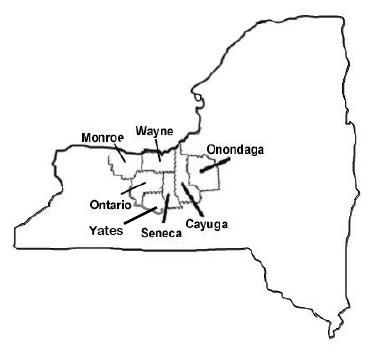


Lending Activities


The principal lending activity of the Bank has been the origination for its own portfolio of adjustable and fixed-rate loans secured by various forms of collateral. The Bank also originates fixed rate residential mortgages, some of which it sells to third parties and retains the servicing rights. The value of the servicing rights associated with these sold mortgages was $2,700,000, and $2,600,000 as of December 31, 2020 and 2019, respectively.


The following tables set forth the composition of our loan portfolio, by type of loan at the dates indicated, the maturities of loans and fixed rate vs. variable rate:


- 62 -


Summary of Loan Portfolio

By Type

(In thousands)


   As of December 31, 
Type  2020   2019   2018   2017   2016 
Construction real estate  $11,960   $18,594   $17,274   $17,287   $16,414 
Residential real estate   428,909    341,256    321,626    303,386    273,639 
Commercial real estate   252,314    212,947    198,756    169,649    149,230 
Agriculture real estate   77,609    73,894    66,715    54,792    48,688 
Total mortgage loans on real estate   770,792    646,691    604,371    545,114    487,971 
Commercial loans   179,515    134,769    127,471    120,637    122,214 
Agriculture loans   38,974    47,370    46,245    44,824    40,870 
Consumer installment loans   30,415    33,679    32,049    31,285    27,636 
Total loans  $1,019,696   $862,509   $810,136   $741,860   $678,691 
Allowance for loan losses   (17,382)   (11,555)   (10,035)   (8,629)   (7,796)
Total loans, net of allowance  $1,002,314   $850,954   $800,101   $733,231   $670,895 


Remaining Maturity of Selected Loans

At December 31, 2020    


(In thousands)  Within 1 Year   1-5 Years   5 Years +   Total 
Commercial loans  $8,404    107,221    67,410    183,035 
Agricultural loans   1,679    13,882    22,797    38,358 
Commercial real estate   12,954    22,399    228,557    263,910 
Agricultural real estate   1,300    5,187    71,184    77,671 
Residential real estate   606    19,708    412,263    432,577 
Total   24,943    168,397    802,211    995,551 


- 63 -


Sensitivity of Loans to Changes in Interest Rates

(Dollars in thousands)


   As of December 31, 2020 
   Fixed Rate   Variable Rate 
Due within one year  $19,954   $4,989 
Due after one but within five years   144,481    23,916 
Due after five years   665,478    136,733 


Asset Quality


The Bank maintains written loan policies that require certain underwriting, documentation, and credit standards to be met for the approval and funding of loans. Management has safeguards and procedures in place that track adherence to policies. In addition, independent third parties the Bank retains for loan review periodically sample the loan portfolio and report to Bank management and our Board of Directors any identified discrepancies. Generally, exceptions to policy, when made, are documented, justified, and approved by management. Lending authorities are recommended by management and approved by our Board of Directors. Management reports measures of both loan quality and loan portfolio growth on a regular basis to our Board.


Our allowance for loan losses represents management’s estimate of an amount adequate to provide for potential losses inherent in our loan portfolio. In its continuing evaluation of the allowance and its adequacy, management considers the Bank’s loan loss experience, the amount of past-due and nonperforming loans, current and anticipated economic conditions, underlying collateral values securing loans and other factors which affect the allowance for potential credit losses. Bank management monitors the adequacy of the allowance through the use of a model designed to comply with the requirements of the Office of the Comptroller of the Currency.


While it is the Bank’s policy to charge-off loans in the period in which a loss is considered probable, there are additional factors impacting potential future losses which cannot be quantified precisely or attributed to particular loans or classes of loans. These factors include such items as the general state of the economy and value of collateral. Management’s judgment as to the adequacy of the allowance is, therefore, necessarily approximate. The allowance is also subject to regulatory examinations as to adequacy, which may include reviews of the methodology used to arrive at the allowance and comparison of the allowance to peer institutions.


The commercial loan policy provides that the accrual of interest on commercial and real estate loans ceases when there is significant, undermining deterioration of the borrower’s financial position, or payment in full of principal or interest is not expected; this may result in the placement of a contractually performing loan into nonaccrual status. In addition, a loan with principal or interest that has been in default for a period of ninety (90) days or more may be placed in nonaccrual status, unless the asset is both well secured and in the process of immediate collection. An asset is “well secured” if it is secured by collateral in the form of liens on or pledges of real or personal property, or marketable securities, having a realizable value sufficient to discharge the debt (including accrued interest) in full, or, by the guarantee of a financially responsible party. An asset is “in the process of collection” if collection of the asset is proceeding in due course either (1) through legal action, including judgment enforcement procedures, or (2) in appropriate circumstances, through collection efforts not involving legal action which are reasonably expected to result in repayment of the debt or in its restoration to a current status in the near future.


Our consumer loan policy provides that accrual of interest on residential mortgages generally ceases whenever payment of principal or interest becomes 90 days delinquent. It also provides that consumer loans, whether secured or unsecured, are considered for charge-off to the allowance for loan loss when they reach 90 days delinquent.


The following tables present a summary of the “Allocation of Allowance for Loan Losses by Loan Type” and an “Analysis of Changes in Allowance for Loan Losses”:


- 64 -


Allocation of Allowance for Loan Losses

By Loan Type

(In thousands)


   Year ended December 31, 
   2020   2019   2018   2017   2016 
Total loans outstanding at end of period  $1,019,696   $862,509   $810,136   $741,860   $678,691 
ALLOCATION OF THE ALLOWANCE BY LOAN TYPE:                         
Commercial  $4,848   $2,773   $3,030   $2,875   $2,167 
Commercial real estate   5,571    3,630    2,274    1,659    1,762 
Agriculture   1201    943    715    496    465 
Agriculture real estate   970    565    599    508    464 
Residential real estate   4,275    2,206    2,058    1,944    1,782 
Consumer installment   517    555    394    470    363 
Unallocated   0    883    965    677    793 
Total  $17,382   $11,555   $10,035   $8,629   $7,796 
ALLOCATION OF THE ALLOWANCE AS A PERCENTAGE OF TOTAL ALLOWANCE:                         
Commercial   28%   24%   30%   33%   28%
Commercial real estate   32%   31%   23%   19%   23%
Agriculture   7%   8%   7%   6%   6%
Agriculture real estate   6%   5%   6%   6%   6%
Residential real estate   25%   19%   21%   23%   23%
Consumer installment   3%   5%   4%   5%   5%
Unallocated   0%   8%   9%   8%   10%
Total   100%   100%   100%   100%   100%
LOAN AND LEASE TYPES AS A PERCENTAGE OF TOTAL LOANS AND LEASES:                         
Commercial   18%   16%   16%   16%   18%
Commercial real estate   24%   25%   25%   24%   23%
Agriculture   4%   6%   6%   6%   6%
Agriculture real estate   8%   9%   8%   8%   7%
Residential real estate   42%   40%   40%   41%   42%
Consumer installment   4%   5%   5%   5%   4%
Total   100%   100%   100%   100%   100%


- 65 -


The allowance has been increasing over the past five years, with the majority of the growth in the allowance allocated to commercial loans. The general increase during 2020 reflects the unstable financial situation due to the Coronavirus Pandemic. The World Health Organization declared the outbreak as a global pandemic on March 11, 2020. The financial situation of the United States has since stabilized and is beginning to recover.


- 66 -


Analysis of Changes in Allowance for Loan Losses

(Dollars In thousands)


   Year ended December 31, 
   2020   2019   2018   2017   2016 
Balance at beginning of period   $11,555   $10,035   $8,629   $7,796   $8,188 
Loans charged off:                         
Commercial   (127)   (326)   (342)   (461)   (245)
Agriculture   -    (40)   -    -    - 
Commercial real estate   (25)   (298)   (244)   (87)   (1,084)
Residential real estate   (128)   (27)   (15)   (26)   (48)
Consumer installment   (290)   (341)   (205)   (187)   (259)
Total loans charged off   (570)   (1,032)   (806)   (761)   (1,636)
Recoveries of loans previously charged off:                         
Commercial   64    143    11    17    11 
Commercial real estate   -    5    9    9    34 
Residential real estate   12    4    3    -    18 
Consumer installment   63    59    56    68    81 
Total recoveries of loans previously charged off:   139    211    79    94    144 
Net loans charged off   (431)   (821)   (727)   (667)   (1,492)
Provision charged to operations   6,258    2,341    2,133    1,500    1,100 
Balance at end of period  $17,382   $11,555   $10,035   $8,629   $7,796 
Net loans charged off as a % of average loans   0.04%   0.10%   0.09%   0.09%   0.22%
Allowance as a % of total loans   1.70%   1.34%   1.24%   1.16%   1.15%
Allowance as a % of nonperforming loans   522.30%   224.63%   308.67%   449.66%   532.15%


The provision for loan losses represents management’s estimate of the expense necessary to maintain the allowance for loan losses at an adequate level. The provision for loan and lease losses was $6.3 million for 2020 and $2.3 million for 2019. In 2020, the provision was higher than historical levels due to the financial uncertainties related to the Coronavirus Pandemic.


- 67 -


The level of future charge-offs is dependent upon a variety of factors such as national and local economic conditions, trends in various industries, underwriting characteristics, and conditions unique to each borrower. Given uncertainties surrounding these factors, it is difficult to estimate future losses.


The following tables summarize the Bank’s nonperforming loans by class over the periods indicated:


Nonperforming Loans

(Dollars in Thousands)


   As of December 31, 
Type  2020   2019   2018   2017   2016 
Residential real estate:                         
1-4 family  $824   $1,133   $624   $202   $- 
Home equity   233    325    -    85    167 
Commercial real estate   75    218    73    368    - 
Agriculture real estate   735    588    437    -    - 
Commercial loans   554    1,643    879    1,243    1,298 
Agriculture loans   842    1,148    1,132    -    - 
Consumer installment:                         
Direct   -    76    17    -    - 
Indirect   65    13    89    21    - 
Total nonperforming loans  $3,328   $5,144   $3,251   $1,919   $1,465 
Total nonperforming loans as a % of total assets   0.23%   0.44%   0.30%   0.19%   0.15%
Total nonperforming loans as a % of total loans   0.33%   0.60%   0.40%   0.26%   0.22%


The difference between the interest income that would have been recorded if these loans had been paid in accordance with their original terms and the interest income that was recorded for the years ended December 31, 2020 and 2019, was $122,000 and $73,000 respectively.


Management reviews the loan portfolio continuously for evidence of potential problem loans. Potential problem loans are loans that are currently performing in accordance with contractual terms, but where known information about possible credit problems of the related borrowers causes management to have doubt as to the ability of such borrowers to comply with the present loan payment terms and may result in such loans becoming nonperforming at some time in the future. Management considers loans classified as Substandard, which continue to accrue interest, to be potential problem loans. Through our internal loan review function, we have identified 59 commercial relationships totaling approximately $13.5 million at December 31, 2020 that are classified as Substandard, and continued to accrue interest. We continue to monitor these relationships; however, we cannot predict the extent to which continued weak economic conditions or other factors may further impact borrowers. These loans remain in a performing status due to a variety of factors, including payment history, the value of collateral supporting the credits, and personal or government guarantees. These factors, when considered in the aggregate, give management reason to believe that the current risk exposure on these loans does not warrant accounting for these loans as nonperforming. However, these loans do exhibit certain risk factors, which have the potential to cause them to become nonperforming. Accordingly, management’s attention is focused on these credits, which are reviewed on at least a quarterly basis.


- 68 -


Past Due and Restructured Loans

(In Thousands)


   As of December 31, 
   2020   2019   2018   2017   2016 
Loans past due 90 days or more and accruing:                         
Consumer installment loans:  $108   $-   $-   $-   $- 
Total  $108   $-   $-   $-   $- 


Nonperforming loans (loans in nonaccrual status and loans past due 90 days or more and still accruing interest) were $3.3 million at December 31, 2020, and $5.1 million at December 31, 2019. A breakdown of nonperforming loans by portfolio segment is shown above.


Loans are considered modified in a troubled debt restructuring (TDR) when, due to a borrower’s financial difficulties, we make a concession(s) to the borrower that we would not otherwise consider. When modifications are provided for reasons other than as a result of the financial distress of the borrower, these loans are not classified as TDR’s or impaired. These modifications may include, among others, an extension of the term of the loan, and granting a period when interest-only payments can be made, with the principal payments made over the remaining term of the loan or at maturity.  TDRs of $2.1 million and $500,000 as of December 31, 2020 and 2019, respectively are included in the above table within nonaccrual loans. The TDR amounts at December 31, 2020 consist of three commercial relationships and a total of six loans. The TDR amount as of December 31, 2019 consists of one commercial relationship and one loan.


In general, we place a loan on nonaccrual status if principal or interest payments become 90 days or more past due and/or management deems the collectability of the principal and/or interest to be in question, as well as when required by regulatory requirements. Although in nonaccrual status, we may continue to receive payments on these loans. These payments are generally recorded as a reduction to principal and interest income is recorded only after principal recovery is reasonably assured. As of December 31, 2020, we were regularly receiving payments on approximately 31% of the loans categorized as nonaccrual.


- 69 -


The recorded investment in loans and leases that are considered impaired totaled $2.2 million at December 31, 2020 and $3.6 million at December 31, 2019. A loan is impaired when, based on current information and events, it is probable that we will be unable to collect all amounts due according to the contractual terms of the loan agreement. Specific allowance on individually identified impaired loans that are not collateral dependent are measured based on the present value of expected future cash flows discounted at the original effective interest rate of each loan. For loans that are collateral dependent, impairment is measured based on the fair value of the collateral less estimated selling costs.


The average recorded investment in impaired loans was $2.8 million in 2020 and $3.9 million in 2019. At December 31, 2020, $3.3 million of impaired loans had specific allocations of $675,000 and $2.0 million had no specific allocation. At December 31, 2019, $5.1 million of impaired loans had specific allocations of $775,000 and $2.5 million had no specific allocations. Interest payments on impaired loans are typically applied to principal unless collectability of the principal amount is reasonably assured.


Investment Activities


Our securities portfolio is comprised of interest-bearing notes, bonds and pass-through securities issued by the United States government and its direct and sponsored agencies, as well as state and local municipal obligations. Our available-for-sale portfolio provides a source of liquidity, collateral for repurchase agreements and public funds as well as being a means of diversifying our interest earning asset portfolio. While we generally intend to hold our investment portfolio assets until maturity, a significant portion of the portfolio is classified as available-for-sale. Securities so classified are accounted for at fair value with the unrealized appreciation and depreciation reported as a separate component of stockholders’ equity, net of income tax effects. Securities not classified as available-for-sale are recorded in the held to maturity category and accounted for at amortized cost. We invest in securities for the yield they produce and not to profit from trading the securities.


The securities portfolio also includes non-marketable equity securities that are carried at cost because they are not readily marketable or have no quoted market value.


- 70 -


The following tables summarize the fair values of the investment portfolio as of the dates indicated:


Investment Securities 

(In thousands)


   As of December 31, 
   2020   2019   2018 
Available for Sale:               
Treasuries  $-   $9,987   $- 
United State agencies   122,378    81,628    41,986 
State and local governments   72,654    39,805    68,486 
Corporate   7,777    8,907    2,000 
Mortgage-backed securities   75,863    65 ,063    72,193 
Total Available for Sale  $278,672    $ 205 ,390   $184,665 
Held to Maturity:               
State and local governments  $8,794   $2,071   $- 
Total Held to Maturity  $8,794   $2,071   $- 
Restricted Equity Securities:  $4,827   $6,880   $7,254 


All of our mortgage-backed securities are residential direct pass through securities or collateralized mortgage obligations issued or backed by government sponsored enterprises.


The fair value (Available–for-Sale), amortized cost (Held-to-Maturity), and weighted average yield of the combined investment portfolios of the Company and the Bank as of December 31, 2020, by final contractual maturity or repricing date, are as follows:


- 71 -


Investment Portfolio

(Dollars in thousands)


   As of 
   December 31, 2020 
   Fair   Average 
Available for Sale  Value   Yield (1) 
Due in one year or less  $13,201    2.35%
Due after one to five years   13,187    2.24%
Due five to ten years   118,127    1.62%
Due after ten years   50,518    1.77%
Securities not due at a single maturity date   83,639    2.38%
Total  $278,672    1.77%


   Amortized   Average 
Held to Maturity  Cost   Yield (1) 
Due in one year or less  $4,766    1.62%
Due after one to five years   1,926    3.05%
Due five to ten years   1,483    4.31%
Due after ten years   619    4.84%
Securities not due at a single maturity date   -    - 
Total  $8,794    2.61%
Total Investment Securities (2)  $287,466    1.80%


(1)    Average yields are stated on a tax equivalent basis.

(2)    Total does not include equity securities.


At December 31, 2020, there were no holdings of any one issuer, other than the U.S. Government sponsored entities, in an amount greater than 10% of the Company’s stockholders’ equity.


- 72 -


Sources of Funds


General. The major sources of our funds for lending and other investment purposes are deposits, scheduled principal repayments, prepayment of loans and mortgage-backed securities, maturities and calls of investment securities, equity capital investment, borrowings, and cash flows from operations. Scheduled loan principal repayments are a relatively stable source of funds, while deposit inflows and outflows and loan prepayments are significantly influenced by general interest rates and market conditions.


Deposits. We attract customer deposits principally from within our primary market area by offering a broad selection of deposit instruments, including demand deposit accounts, checking accounts, savings, money market deposit, term certificate accounts and individual retirement accounts. Deposit account terms vary according to the minimum balance required, the time period the funds must remain on deposit and the interest rate. All deposit accounts are insured by the Federal Deposit Insurance Corporation up to the maximum amount permitted by law.


The following table is a summary of our deposits for our last three fiscal years:


Deposits - Average Balances and Rates

(Dollars in thousands)


   2020   2019   2018 
   Average   Average   Average   Average   Average   Average 
   Balances   Rate   Balances   Rate   Balances   Rate 
Noninterest-bearing demand deposits  $331,864    0.00%  $250,697    0.00%  $223,381    0.00%
NOW accounts   143,888    0.24%   118,366    0.41%   123,522    0.32%
Money market & savings accounts   452,012    0.38%   389,509    0.51%   393,999    0.43%
Time deposits   260,304    1.42%   258,679    1.98%   198,096    1.53%
   $      1,188,068    0.76%  $      1,017,251    1.03%  $938,999    0.55%


- 73 -


The maturity distribution of time deposits of $250,000 or more was:


   As of December 
   31, 2020 
Three Months or Less  $14,485 
Over three Months through six months   30,365 
Over six months through one year   30,021 
Over one year   6,971 
Total  $81,842 


Borrowings. To help fund our loan growth from time to time we obtain advances from the Federal Home Loan Bank of New York. The following table summarizes these borrowings as of December 31 for the years indicated:


Borrowings

(Dollars in thousands)


   As of December 31, 
   2020   2019   2018 
       Average       Average       Average 
   Amount   Cost   Amount   Cost   Amount   Cost 
Borrowings from Federal Home Loan Bank  $-    0.00%  $25,000    1.81%  $42,000    2.60%


As of December 31, 2020, the Bank had $162.9 million and $42.3 million of availability from Federal Home Loan Bank of New York and the Federal Reserve Bank, respectively, subject to collateral availability. In addition, at December 31, 2020, the Bank had available unsecured lines of credit agreements with correspondent banks, permitting borrowings to a maximum of $40.0 million. There were no outstanding advances against those lines at December 31, 2020. The Bank may access funds through general markets such as national repurchase agreements. At December 31, 2020, the Bank had no national repurchase agreements.


- 74 -


The following tables present additional information concerning borrowings for the indicated years ended December 31:


Borrowings

(Dollars in thousands)

        
   For the years ended December 31, 
   2020   2019   2018 
Average Balance  $4,005   $7,118   $17,661 
Maximum Month-end balance  $25,000   $42,000   $53,000 


We currently own one statutory trust company which we formed for the sole purpose of issuing trust preferred securities that are fully and unconditionally guaranteed by us. In each case, we issued junior subordinated debentures to the trusts, which, in turn, issued trust preferred securities to the respective trust investors in the same amount. The junior subordinated debentures are the principal asset of the trusts. The trust preferred securities are classified as long-term debt for the financial statements, but are included as Tier 1 capital for regulatory purposes. See “Management Discussion and Analysis of Financial Condition and Results of Operations -- Capital.”


In August 2004, we formed Lyons Capital Statutory Trust II, a Delaware statutory business trust, or Trust II. We issued $5.2 million of subordinated debentures to Trust II who issued $5.0 million in trust preferred securities to investors. The interest rate on this security, 3.03% at December 31, 2015, is variable, adjusting quarterly at three-month LIBOR plus 2.65%. The interest is payable quarterly. The trust preferred securities mature in August 2034, or may be redeemed at any time in the event that the deduction of related interest for federal income tax purposes is prohibited, treatment as Tier 1 capital is no longer permitted, or certain other contingencies arise.


Our subordinated debentures issued to Trust II also mature on August 23, 2034 and bear interest at the three-month LIBOR plus 2.65% (3.03% at December 31, 2015), payable quarterly. We have the option to defer interest payments from time to time for up to 20 consecutive quarterly periods without defaulting on the debentures. We also have the option to redeem the debentures in whole or in part, on a quarterly basis beginning on August 23, 2009, and the option to redeem the debentures in whole or in part, throughout the entire term of the debentures, within 90 days of one or more of the following events relating to the debentures: (a) the deduction of related interest for federal income tax purposes is prohibited, (b) treatment as Tier I capital is no longer permitted, or (c) certain other events occur. The redemption price, expressed as a percentage of the principal amount of the debentures being redeemed, is 100%.


If we elect to defer interest payments as described above on Trust II trust preferred securities, or if the debentures are in default, we are, among other things, prohibited from declaring or paying dividends.


On October 28, 2020, the Company completed the sale of approximately $16 million of subordinated promissory notes to accredited investors. The notes mature on December 31, 2027. The interest rate is fixed at 4.25% for the first five years, increases to 4.75% in the sixth year and increases again to 5.25% in the seventh year. The Company retains the right to redeem the notes, in whole or in part, any time on or after December 31, 2025. We have been using the proceeds for general corporate purposes to support organic growth of the Bank and intend to continue to do so, and also to fund possible acquisitions. The net proceeds of the sale, after deducting estimated offering expenses, were $15.7 million.


- 75 -


The sale of the notes was made in a private placement to accredited investors in reliance on the exemption from registration provided by Rule 506 of Regulation D under the Securities Act of 1933, as amended ("Securities Act").


For regulatory purposes, the subordinated promissory notes capital securities qualify as Tier I capital of the Company subject to a 25% of capital limitation under risk-based capital guidelines. The portion that exceeds the 25% of capital limitation qualifies as Tier II capital. At December 31, 2020, $14.7 million in subordinated promissory notes capital securities qualified as Tier I capital.


Legal Proceedings


Currently, we are not subject to any pending lawsuits in which claims for material monetary damages are asserted.


Competition


We face intense and increasing competition in making loans, attracting deposits and providing other financial products and services. The Bank competes with other financial institutions and service providers such as commercial banks, savings banks, savings and loan associations, credit unions, mortgage banking companies, finance companies, brokerage firms and mutual fund companies. Interest rates, both on loans and deposits, and prices of services are significant competitive factors among financial institutions generally. Important competitive factors, such as office location, types and quality of services and products, office hours, customer service, a local presence, community reputation and continuity of personnel, among others, are and continue to be a focus of the Bank.


Some of the largest banks in the Country have offices in our markets. These institutions have greater financial resources and lending limits, better name recognition, more locations, more advanced technology and more financial products to offer than we do and may offer various services we do not offer. In addition, these institutions may be able to better afford and make broader use of media advertising, support services and electronic technology that we may. To offset these competitive disadvantages, the Bank depends on its reputation as an independent and locally-owned community bank, its personal service, its greater community involvement and its ability to make credit and other business decisions quickly and locally.


Employees


As of June 30, 2021, we employed 228 persons, of which 215 were full time. The Bank provides a variety of employment benefits and considers its relationship with its employees to be good. We have no collective bargaining agreements with any employees.


- 76 -


Properties


The location of the sixteen banking offices and an operations center operated by the Bank and certain other information related to these offices is set forth below:


Location  Owned or Leased  
      
35 William Street, Lyons, New York 14489  Owned  
Routes 14 & 31, Lyons, New York 14489  Owned  
4 Williams Street, Clyde, New York 14433  Leased  
2 North Main Street, Jordan, New York 13080  Owned  
5996 New Hartford Street, Wolcott, New York 14590  Owned  
750 West Miller Street, Newark, New York 14513  Leased  
359 NYS Route 31, Macedon, New York 14502  Owned  
399 Exchange Street, Geneva, New York 14456  Owned  
Tops Plaza, 6280 Furnace Road, Ontario, New York 14519  Leased  
205 Liberty Street, Penn Yan, New York 14527  Owned  
2433 State Route 414, Waterloo, New York 13165  Owned  
Roseland Center Plaza, Canandaigua, New York 14424  Leased  
1314 Fairport Road, Fairport, New York 14450  Owned  
470 Exchange Street, Geneva, New York 14456  Leased  
63 Genesee Street, Auburn, New York 13021  Leased  
311 Grant Avenue Road, Auburn, New York 13021  Owned  
1423 Hathaway Drive, Farmington, New York 14425   Owned  


We consider all of these banking offices to be well located and suitably equipped to serve as banking facilities. In the opinion of management the properties are adequately covered by insurance.


- 77 -


Management’s Discussion and Analysis of Financial Condition and Results of Operations


The following discussion is intended to assist readers in understanding and evaluating the results of operations and financial condition of Lyons Bancorp, Inc., The Lyons National Bank and Lyons Realty Associates Corp. on a consolidated basis as of and for the period ended December 31, 2020. This discussion and analysis should be read in conjunction with our consolidated financial statements and the notes relating thereto appearing elsewhere in this offering circular.


Overview


Lyons Bancorp, Inc. is the holding company for The Lyons National Bank and its subsidiary, Lyons Realty Associates Corp. Lyons Bancorp, Inc.’s business is conducted through The Lyons National Bank, a federally chartered and regulated bank with sixteen full-service banking offices in Monroe, Onondaga, Ontario, Seneca, Wayne and Yates Counties in New York, an ATM network and Internet and telephone banking services. In addition, the Bank services customers in Cayuga County. The Bank's main office is located in Lyons, New York.


Our principal sources of revenue consist of income from commercial and residential real estate loans, including mortgage servicing fees, consumer loans made by the Bank and its subsidiary, investment securities held by us and the Bank and from a variety of deposit services offered by the Bank to its customers. We fund our operations through cash flows from operations, the Bank's deposits, maturing and called investment securities, the sale of investment securities, borrowings and capital raising transactions.


Results of Operations


Results of Operations For Years Ended December 31, 2020 and 2019


Summary of Performance


Net income was $10.3 million for 2020 compared to net income of $11.0 million for 2019, a decrease of $737,000, or 6.9% over the prior fiscal year. Diluted earnings per share were $3.12 for 2020, compared to $3.33 in 2019. The decline in earnings year over year was primarily due to the negative impact of the pandemic, prompting the Bank to increases the provision for loan loss.


Return on average assets was 0.78% in 2020, compared to 0.98% in 2019. Return on average equity was 10.47% in 2020, compared to 12.99% in 2019. Our dividend payout ratio was 39.2% in 2020, compared to 36.1% in 2019, while our average equity as a percentage of average assets was 7.43% in 2020, compared to 7.52% in 2019.


- 78 -


Average Balances and Interest Rates


The following table presents, for the periods indicated, the total dollar amount of interest income from average interest-earning assets, the resultant yields, and the interest expense on average interest-bearing liabilities, expressed both in dollars and rates. Average balances are derived from average daily balances. The yield on securities available-for-sale is included in investment securities and is calculated based on the historical amortized cost. All interest has been adjusted to a fully taxable equivalent amount using the federal statutory rate of 21%. The yields and rates are established by dividing income or expense dollars by the average balance of the asset or liability.


- 79 -


AVERAGE BALANCES AND INTEREST RATES

(Dollars in thousands)

YTD Ended December 31,


       2020           2019           2018     
    Average    Income/    Yields/    Average    Income/    Yields    Average    Income    Yields/ 
    Balances    Expense    Rates    Balances    Expense    Rates    Balances    Expense    Rates 
Assets:                                             
Loans (1)  $953,973   $41,577    4.36%  $816,969   $39,173    4.79%  $771,046   $35,597    4.62%
Investment securities (2)                                             
Taxable   175,019    3,872    2.21%   164,069    3,967    2.42%   133,196    3,245    2.44%
Tax-exempt   49,323    945    1.92%   47,240    979    2.07%   71,049    1,388    1.95%
Total securities   224,342    4,817    2.15%   211,309    4,946    2.34%   204,244    4,633    2.27%
                                              
Other interest-earning deposits   72,897    153    0.21%   37,832    866    2.28%   19,156    359    1.87%
Total interest-earning assets   1,251,212    46,547    3.72%   1,066,109    44,985    4.22%   994,446    40,589    4.08%
Other assets   67,799              60,514              52,369           
Total Assets  $1,319,011             $1,126,623             $1,046,815           
                                              
Liabilities and Stockholders' Equity:                                             
Interest-bearing Deposits                                             
NOW accounts  $143,888   $367    0.26%  $118,366   $423    0.36%  $123,522   $396    0.32%
Money Market & savings accounts   452,012    1,775    0.39%   389,508    2,091    0.54%   393,999    1,691    0.43%
Time Deposits   260,304    4,379    1.68%   258,679    5,414    2.09%   198,096    3,038    1.53%
Total interest-bearing deposits   856,204    6,522    0.76%   766,553    7,928    1.03%   715,617    5,125    0.72%
                                              
Borrowings/other interest exp (including FHLB)   7,598    141    1.85%   7,118    219    3.08%   17,661    418    2.37%
Junior subordinated debentures   8,726    370    4.24%   6,190    423    6.83%   6,190    419    6.77%
Total interest-bearing liabilities   872,529    7,033    0.81%   779,861    8,570    1.10%   739,468    5,962    0.81%
                                              
Noninterest-bearing deposits   331,312              249,492              223,381           
Other Liabilities   17,109              12,573              9,256           
Total Liabilities   1,220,950              1,041,926              972,105           
                                              
Other Liabilities                                             
Lyons Bancorp, Inc. Stockholders' equity   98,005              84,641              74,654           
Noncontrolling interest   56              56              56           
Total Equity   98,061              84,697              74,710           
                                              
Total Liabilities and Stockholders' Equity  $1,319,011             $1,126,623             $1,046,815           
                                              
Net interest margin on earning assets       $39,514    3.16%       $36,414    3.42%       $34,627    3.48%
Tax equivalent adjustment        237              241              347      
Net interest income as adjusted       $39,751             $36,655             $34,974      


(1) Nonaccrual loans are included in the average asset totals presented above.

(2) Average balances and yields on available for sale securities are based on historical amortized cost.


- 80 -


Net Interest Income


The above table shows average interest-earning assets and interest-bearing liabilities, and the corresponding yield or cost associated with each. Tax-equivalent net interest income for the twelve months ended December 31, 2020 was $9.8 million, an increase of $3.1 million, or 8.4%, compared to the same period in 2019. The increase primarily resulted from overall balance sheet growth, funded by strong loan and core deposit growth. Average interest earning assets for the twelve months ended December 31, 2020, grew by $185.1 million or 17.4% compared to the same period in 2019.


The net interest margin for the twelve months ended December 31, 2020 was 3.16%, a decrease of 26 basis points compared to the net interest margin of 3.42% for the same period in 2019.


The following table presents the effects of changing rates and volumes on our net interest income for the years indicated. The rate column shows the effects attributable to changes in rate (changes in rate multiplied by prior volume). The volume column shows the effects attributable to changes in volume (changes in volume multiplied by prior rate). The total column represents the sum of the prior columns. For purposes of this table, changes attributable to both rate and volume, which cannot be segregated, have been allocated proportionately, based on the changes due to rate and the changes due to volume.


Volume Rate Analysis
(In thousands)


   2020 Compared to 2019   2019 Compared to 2018 
   Increase (Decrease) Due to Change In   Increase (Decrease) Due to Change In 
       Average           Average     
Interest Income:  Volume   Yield/Rate   Total   Volume   Yield/Rate   Total 
Loans  $6,847   $(4,444)  $2,403   $2,171   $1,407   $3,577 
Investment Securities:                              
Taxable   256    (351)   (95)   700    21    721 
Tax-exempt   49    (82)   (34)   (540)   131    (409)
Other interest earning assets   799    (1,512)   (713)   350    156    507 
Total interest income  $7,951   $(6,390)  $1,562   $2,681   $1,715   $4,396 
Interest Expense:                              
Interest-bearing deposits:                              
NOW accounts   107    (156)   (48)   20    7   $27 
Money market and   327    -649    (323)   -2    402    400 
savings accounts                              
Time deposits   84    (1,119)   (1,034)   945    1,431    2,376 
Borrowings from Federeal   15    (94)   (79)   (249)   51    (198)
Home Loan Bank                              
Junior subordinated   48    (101)   (53)   -    4    4 
debentures                              
Total interest expense   581    (2,119)   (1,537)   713    1,896    2,609 
Net interest income  $7,370   $(4,271)  $3,099   $1,968   $(181)  $1,787 


- 81 -


Provision for Loan Losses


The provision for loan losses represents management’s estimate of the amount necessary to maintain the allowance for loan losses at an adequate level. The provision for loan losses was $6.3 million for 2020, compared to $2.3 million for 2019. The increase in the provision for 2020 over 2019 reflects uncertainty due to the Coronavirus Pandemic, as well as loan portfolio growth. Net charge-offs, as a percent of average loans, were 0.04% and 0.10% in 2020 and 2019 respectively. The ratio of nonperforming loans to total loans was 0.33% at December 31, 2020, as compared to 0.60% as of December 31, 2019. The allowance for loan losses as a percentage of period end loans was 1.70% at December 31, 2020, compared to 1.34% at December 31, 2019.


Noninterest Income


Noninterest income is a significant source of income for us, representing 31.1% of total revenues for 2020 and 25.4% for 2019. The main components of noninterest income include service charges on deposit accounts, cardholder fees, financial services fees, loan servicing fees, and gains on sale of loans and investment securities.


Our largest source of noninterest income is from gain on sale of loans. Gain on sale of loans was $5.6 million for 2020, an increase of 175.9% from 2019. The large increase can be attributed to the large amount of refinancing and purchases due to the substantial decrease in interest rates. Cardholder fee income was $3.3 million for 2020, up 16.4% compared to 2019, due primarily to an increase in debit card usage. Fee income from our financial services activities was $1.4 million for 2020, an increase of 10.8% over the same period last year, due primarily to an increase in the number of relationships under management. Loan servicing income for 2020 was $2.8 million, an increase of 42.3% over the same period last year. An increase in both mortgage loan closings and an increased servicing portfolio were the primary reason for the increase period over period. For 2020, service charges on deposit accounts totaled $2.5 million, compared to $3.2 million for 2019. The decrease in service charges on deposit accounts is mainly attributable to the Coronavirus Pandemic and government stimulus packages. Depositors may have been more conscious of their spending/saving habits, worked from home, were temporarily out of work or saw additional income due to the stimulus packages.


In 2020, net gains on the sales of available-for-sale securities totaled $217,000, compared to net losses of $222,000 in 2019. Management may periodically sell available-for-sale securities for liquidity purposes, to improve yields, or to adjust the risk profile of the portfolio.


Other income totaled $235,000 for 2020, down $458,000 or 66.1% over the same period in 2019 mainly due to a decrease in income from mortgage servicing rights.


Noninterest Expense


Noninterest expense for 2020 was $37.2 million, an increase of 9.4% over noninterest expense for 2019. The main components of noninterest expense include salaries and wages, pensions and benefits, occupancy expenses, data processing expenses, professional fees, FDIC and OCC assessments, advertising expenses, cardholder expenses and office supplies.


Salary and wage expenses totaled $16.2 million in 2020, an increase of 13.7% over 2019. The primary reason for the increase is relating to the opening of our new full service office in Farmington in the third quarter of 2020, as well as additional staff bonuses relating to the Coronavirus Pandemic.


- 82 -


Pensions and other benefits were $5.4 million in 2020, a decrease of $99,000 or 1.8% compared to the prior year.


Occupancy expenses related to bank premises and furniture and fixtures were up $263,000 or 8.3% in 2020 compared to the prior year. A partial year of expense relating to the opening of our new full service office in Farmington in the third quarter of 2020, as well as an increase in insurance expense, are the primarily reasons for the increase year over year.


Data processing expenses totaled $2.3 million in 2020, an increase of 18.8% over the prior year. The costs associated with operating the Company’s core processing system contributed to the increase, as well as increased maintenance costs of the Company’s hardware and software investments. Some changes in software contributed to the increase in data processing expenses.


Professional fees as of December 31, 2020, increased 3.8% year over year. We incurred slightly higher consultant fees during 2020 relating to additional projects throughout the year.


FDIC and OCC assessment expense for 2020, increased $454,000 or 135.6%, compared to 2019, as a result of and one-time assessment credit given by the FDIC. Both the FDIC assessment and OCC assessment include asset size in the calculation of premiums charged.


Advertising expenses totaled $775,000 in 2020, a decrease of $269,000 or 25.8% over the same period in 2019. Due to the Coronavirus Pandemic, many events that the Bank typically sponsors or contributes to did not take place.


Cardholder expenses as of December 31, 2020 were $1.4 million, an increase of $143,000 or 11.0% over the same period in 2019. Increased debit card usage drove the increase in expense year over year.


Office supplies totaled $317,000 in 2020, an increase of $85,000 or 36.6% over last year. This increase was due primarily to expenses relating to the opening of our new full service office in Farmington in the third quarter of 2020, additional supplies were needed due to the Coronavirus Pandemic


Other expenses increased by $148,000 or 3.7% for 2020 over the prior year. We incurred higher fees during 2020 relating to cybersecurity, customer payouts, cashback rewards and bill payer


Income Tax Expense


The provision for income taxes provides for Federal and New York State income taxes. The provision for 2020 was $2.2 million, compared to $2.5 million in 2019. The effective tax rate for 2020 was 17.8% compared to 18.4% for 2019. The effective rates differ from federal and state rates due to the effect of tax-exempt income from securities and life insurance assets along with other permanent differences.


Financial Condition


Total assets were $1,423 million at December 31, 2020, up $259.5 million or 22.3% over December 31, 2019. Asset growth during 2020 was funded by strong deposit growth, due in part to the government stimulus packages relating to the Coronavirus Pandemic. Total loans were $1,019.7 million at December 31, 2020, up $157.2 million or 18.2% from December 31, 2019. Total deposits at December 31, 2020 were $1,286.0 million, up $256.5 million or 24.9% over December 31, 2019.


- 83 -


Investment securities totaled $292.3 million at December 31, 2020, compared to $214.3 million at the end of 2019. The increase can mainly be attributable making prudent use of excess liquidity.


Loans totaled $1,019.7 million or 71.7% of total assets at December 31, 2020, compared to $862.5 million or 74.1% of total assets at December 31, 2019. Commercial loans at December 31, 2020, which include commercial and agriculture real estate, and commercial and agriculture loans, were up $79.4 million or 16.9% over December 31, 2019. The consumer portfolios at December 31, 2020, which include residential real estate and consumer installment loans, were up $77.8 million or 19.8% compared to year-end 2019, primarily in residential mortgage loans and home equity loans. During 2020, PPP loans brought an increase to the commercial loan portfolio and a combination of increased volume and sold/portfolio mix in residential mortgages contributed to the increase in consumer loan portfolio.


Composition of Loan Portfolio

(Dollars in thousands)


   31-Dec-20   31-Dec-19   31-Dec-18 
   Balances   Percentage   Balances   Percentage   Balances   Percentage 
Commercial Loans                              
Commercial real estate  $252,314    24.74%  $212,947    24.69%  $203,890    25.17%
Agriculture real estate   77,609    7.61%   73,894    8.57%   66,715    8.24%
Commercial loans   179,515    17.60%   134,769    15.63%   127,471    15.73%
Agriculture loans   38,974    3.82%   47,370    5.49%   46,245    5.71%
Total Commercial loans   548,412    53.77%   468,980    54.38%   444,321    54.86%
                               
Consumer Loans                              
1-4 family   329,452    32.31%   238,761    27.68%   211,499    26.11%
Home equity   111,417    10.93%   121,089    14.04%   122,267    15.09%
Direct installment   22,017    2.16%   23,382    2.71%   21,756    2.69%
Indirect installment   8,398    0.83%   10,297    1.19%   10,293    1.27%
Total Consumer loans   471,284    46.23%   393,529    45.62%   365,815    45.14%
                               
Total Loans   1,019,696    100.00%   862,509    100.00%   810,136    100.00%
                               
Allowance for loan losses   (17,382)        (11,555)        (10,035)     
                               
Total loans, net  $1,002,314        $850,954        $800,101      


Nonperforming loans totaled 0.33% of total loans outstanding at December 31, 2020 as compared with 0.60% at December 31, 2019. The allowance for loan losses totaled $17.4 million or 1.70% of total loans outstanding at December 31, 2020 as compared with $11.6 million or 1.34% of total loans at December 31, 2019.


84


The adequacy of our allowance for loan losses is reviewed quarterly by management with consideration given to loan concentrations, charge-off history, delinquent loan percentages, and general economic conditions. Management believes the allowance for loan losses is adequate to absorb losses from existing loans.


Total deposits were $1,286.0 million at December 31, 2020, up $256.5 million over December 31, 2019. The growth in total deposits from December 31, 2019 came in all categories except time deposits, as customers are more reluctant to lock in their funds for longer periods of time without the attraction of higher rates. Noninterest-bearing deposit balances were up $111.0 million or 43.5%. Interest-bearing checking accounts totaled $158.6 million, up $39.2 million or 32.8% over the prior year end, while savings and money market accounts totaled $510.4 million, up $135.6 million or 36.2%. Time deposit balances were down $35.1 million or 13.2%. The growth can be attributed to the federal stimulus packages for our retail customers, funds deposited from PPP loans for our commercial customers and overall organic growth.


The following is a summary of deposit balances for the dates indicated:


   31-Dec-20  31-Dec-19   31-Dec-18 
Dollars in Thousands  Balances   Percentage   Balances   Percentage   Balances   Percentage 
Demand deposits  $366,093    28.47%  $255,062    24.78%  $230,977    24.42%
NOW accounts   158,589    12.33%   119,418    11.60%   108,363    11.46%
Savings and money market   510,366    39.69%   374,806    36.41%   376,441    39.80%
Time deposits   230,385    17.92%   265,518    25.79%   212,592    22.48%
Oher deposits   20,534    1.60%   14,682    1.42%   17,463    1.84%
Total Deposits  $1,285,967    100.00%  $1,029,485    100.00%  $945,837    100.00%


Other funding sources include borrowings from the Federal Home Loan Bank, junior subordinated debentures and a subordinated debt offering. These funding sources totaled $20.9 million at December 31, 2020, down $10.3 million or 33.0% from $31.2 million at December 31, 2019. There were no borrowed funds at December 31, 2020.


On October 28, 2020, the Company completed the sale of approximately $16 million of subordinated promissory notes to accredited investors. The notes mature on December 31, 2027. The interest rate is fixed at 4.25% for the first five years, increases to 4.75% in the sixth year and increases again to 5.25% in the seventh year. The Company retains the right to redeem the notes, in whole or in part, any time on or after December 31, 2025. We have been using the proceeds for general corporate purposes to support organic growth of the Bank and intend to continue to do so, and also to fund possible acquisitions. The net proceeds of the sale, after deducting estimated offering expenses, were $15.7 million.


The sale of the notes was made in a private placement to accredited investors in reliance on the exemption from registration provided by Rule 506 of Regulation D under the Securities Act.


For regulatory purposes, the subordinated promissory notes qualify as Tier I capital of the Company subject to a 25% of capital limitation under risk-based capital guidelines. The portion that exceeds the 25% of capital limitation qualifies as Tier II capital. At December 31, 2020, $14.7 million in subordinated promissory notes qualified as Tier I capital.


85


Stockholders’ Equity


Total stockholders’ equity was up $8.7 million or 10.0% to $95.5 million at December 31, 2020, from $86.8 million at December 31, 2019. The increase was mainly due to our strong earnings, reflecting net income of $10.3 million, less common dividends declared of $3.9 million. Additional paid-in capital decreased by $12,000 during 2020, due entirely to the deferred compensation plan’s purchase of treasury stock.


Accumulated other comprehensive loss totaled $1.3 million at December 31, 2020, posting a net gain of $2.4 million during the year. The change resulted from a $3.0 million increase in unrealized gains on available-for-sale securities, net of tax, due to lower market rates, a $630,000 decrease in net losses related to pension and postretirement benefit plans, net of tax, and an increase of $45,000 in net unrealized losses relating to our interest rate swap, net of tax. Under regulatory requirements, amounts reported as accumulated other comprehensive income/loss related to net unrealized gain or loss on available-for-sale securities, unrealized gain or loss on restricted equity securities, the funded status of the defined benefit and post-retirement benefit plans, the net unrealized loss on securities transferred to held to maturity and the net unrealized gain or loss on interest rate swaps do not increase or reduce regulatory capital and are not included in the calculation of risk-based capital and leverage ratios.


Quantitative and Qualitative Disclosures About Market Risk


Our primary market risk is interest rate risk, which is defined as the potential variability of our earnings that arises from changes and volatility in market interest rates. Changes in market interest rates, whether they are increases or decreases, and the pace at which the changes occur can trigger repricings and changes in the pace of payments, which individually or in combination may affect our net interest income and net interest margin, either positively or negatively.


Most of the yields on our earning assets, including floating-rate loans and investments, are related to market interest rates. So is our cost of funds, which includes the rates we pay on interest-bearing deposits and borrowings. Interest rate sensitivity occurs when the interest income (yields) we earn on our assets changes at a pace that differs from the interest expense (rates) we pay on liabilities.


Our Asset and Liability Committee (ALCO), monitors our sensitivity to interest rates and approves strategies to manage our exposure to interest rate risk. Our goal is to maximize the growth of net interest income on a consistent basis by minimizing the effects of fluctuations associated with changing market interest rates. In other words, we want changes in loans and deposit balances, rather than changes in the market interest rates, to be the primary drivers of growth in net interest income.


We measure net interest income at-risk by estimating the changes in net interest income resulting from instantaneous and sustained parallel shifts in interest rates of plus 200 basis points or minus 100 basis points over a twelve-month period. This provides a basis or benchmark for the ALCO to manage our interest rate risk profile.


85


Presented below is a table showing the Bank’s interest rate risk profile at December 31, 2020, December 31, 2019 and December 31, 2018:


   Estimated 
   Percentage Change in 
Changes in Interest  Future Net Interest Income 
Rates  December 31,   December 31,   December 31, 
(Basis Points)  2020   2019   2018 
+200   6.10%   1.30%   (1.5)%
-100   (1.5)%   (2.3)%   (0.2)%


Our model suggests the Bank’s interest rate risk at December 31, 2020 has improved from December 31, 2019 in an increasing rate environment. The same holds true in a falling rate environment, as our interest rate risk has decreased slightly. This is due primarily to the decrease in the Federal Reserve’s target rate in the 1st quarter of 2020, which in turn repriced some of our loans. Some of these assets may have little risk to falling rates, as they may be at their floors. Although the model is useful in identifying potential exposure to interest rate movements, actual results may differ from those modeled, as the repricing, maturity, and prepayment characteristics of financial instruments may change to a different degree than modeled. In addition, the model does not reflect actions that management may employ to manage the Bank’s interest rate risk exposure.


Interest Sensitivity


An important element of both earnings performance and liquidity is management of interest rate sensitivity. Interest rate sensitivity management involves comparison between the maturity and re-pricing dates of interest-earning assets and interest-bearing liabilities, with the goal being to minimize the impact on net interest income in periods of extreme fluctuations in interest rates.


A useful measure of the Company’s interest rate risk is “interest sensitivity gap,” the difference between interest sensitive assets and interest sensitive liabilities in a specific time interval. Interest rate “gap” analysis measures the relative dollar amounts on interest-earning assets and interest-bearing liabilities which re-price within a specific time period, either through maturity or rate adjustment. A “positive” gap for a given period means that the amount of interest earning assets maturing or otherwise re-pricing exceeds the amount of interest-bearing liabilities maturing or otherwise re-pricing within the same period. Accordingly, in a rising interest rate environment, an institution with a positive gap would generally be expected, absent the effects of other factors, to experience a greater increase in the yields of its assets relative to the cost of its liabilities. Conversely, the cost of funds for an institution with a positive gap would generally be expected to decline less quickly in a falling interest rate environment. Changes in interest rates generally have the opposite effect on an institution with a “negative” gap.


The Bank currently has a positive gap over the short term, which suggests that the net yield on interest earning assets and liabilities may increase during periods of rising interest rates. However, a simple interest rate 'gap' analysis by itself may not be an accurate indicator of how net interest income will be affected by changes in interest rates. Income associated with interest-earning assets and costs associated with interest-bearing liabilities may not be affected uniformly by changes in interest rates. In addition, the magnitude and duration of changes in interest rates may have a significant impact on net interest income. Although certain assets and liabilities may have similar maturities or periods of re-pricing, they may react in different degrees to changes in market interest rates. Interest rates on certain types of assets and liabilities fluctuate in advance of changes in general market interest rates, while interest rates on other types may lag behind changes in general market rates. In the event of a change in interest rates, prepayment and early withdrawal levels also could deviate significantly from those assumed in calculating the interest-rate gap. The ability of many borrowers to service their debts also may decrease in the event of an interest rate increase.


86


The table below presents the Company's interest rate sensitivity at December 31, 2020. Determinations of investment and loan maturities are based upon contractual terms of each asset. Because certain categories of securities and loans are prepaid before their maturity date even without regard to interest rate fluctuations, certain assumptions have been made to calculate the expected maturity of securities and loans.


   Interest Rate Sensitivity             
   0-3   4-6   7-12   1-5         
(In thousands)  Months   Months   Months   Years   5 Years +   Total 
Assets:                              
                               
Fed funds sold  $-   $-   $-   $-   $-   $- 
Interest bearing deposits in banks   44,341    -    -    -    -    44,341 
Investments securities, at amortized cost   23,026    18,705    39,163    108,770    98,916    288,580 
Loans   240,438    47,142    85,437    381,661    269,899    1,024,577 
                               
Total interest sensitive assets  $307,805   $65,847   $124,600   $490,431   $368,815   $1,357,498 
                               
Liabilities:                              
Demand/NOW  $9,246   $9,246   $18,493   $228,908   $264,036   $587,156 
Money market and savings   43,267    -    -    293,403    177,399    514,069 
Time deposits   51,586    70,044    103,338    19,109    9    244,085 
Borrowings from Federal Home Loan Bank   -    -    -    -    -    - 
Junior subordinated debentures   5,155    -    -    15,737    -    20,892 
Total interest sensitive liabilties  $109,254   $79,290   $121,831   $557,157   $441,443   $1,366,201 
                               
GAP:                              
Period  $198,551   $(13,443)  $2,769   $(66,726)  $(72,628)  $(8,703)
                               
Cumulative  $198,551   $185,108   $187,877   $121,152   $48,524      


Liquidity


Lyons Bancorp, Inc., as the parent corporation of the Bank, is a company separate and apart from the Bank that must provide for its own liquidity. Lyons Bancorp, Inc.’s main sources of liquidity, as a holding company, are dividends from the Bank, and net proceeds from borrowings and capital securities offerings. Our main uses of liquidity are the payment of dividends to our shareholders, the payment of interest on our subordinated debentures and limited expenses. The ability of the Bank to pay dividends is subject to various regulatory limitations. During 2021, we expect that we can meet our holding company liquidity needs from the reserves we hold. See “Supervision and Regulation – Limits on Dividends and Other Payments” for more information.


On a consolidated basis, liquidity describes our ability to meet the financial obligations that arise during the ordinary course of business for us and our subsidiaries. Liquidity is primarily needed to meet the borrowing and deposit withdrawal requirements of the Bank's customers and to fund current and planned expenditures. Our funding sources include cash flows from operations, deposits, scheduled amortization and prepayments of loan principal and mortgage-backed securities, maturities and calls of securities, borrowings and capital raising transactions.


87


The Bank's first preference is to fund liquidity needs with core deposits, which include interest-bearing and noninterest bearing deposits, if available in the marketplace. Core deposits are generated from a large base of consumer, corporate, agricultural and municipal customers, which over the past several years have become more geographically diverse as a result of the expansion of the Bank’s businesses. Nevertheless, in recent years the Bank has faced increased competition in offering services and products from a large array of financial market participants, including banks, thrifts, credit unions, mutual funds, securities dealers and others. Core deposits financed 78.3% of the Bank’s earning assets at December 31, 2020 compared with 77.1% at December 31, 2019. This increase is a result of our continued success in developing relationships with new customers as well as expanding relationships with existing customers. For 2021, cash for asset growth is expected to continue to come from core deposit growth.


The Bank’s retail “core” deposit base has been historically loyal. An overwhelming percentage of customers with time deposit accounts maintain their deposits with the Bank upon maturity. Moreover, concurrent with the Bank’s growth strategies, similar new retail markets have been entered into during the last twelve years expanding the Bank’s customer base. Historically, these new markets reflect the same customer loyalty patterns. In addition, the Bank has focused on garnering a larger deposit share of the markets it currently services.


The Bank supplements funding provided through core deposits with various short-term and long-term wholesale sources, including brokered certificates of deposit, federal funds purchased, and borrowings from the Federal Home Loan Bank of New York (FHLB). As of December 31, 2020 and December 31, 2019, the Bank had $162.9 million and $125.2 million, respectively, of availability from the Federal Home Loan Bank of New York, subject to collateral availability. The increase in funds availability at the end of 2020 was due to the increased level of deposits held at the Bank, eliminating any need for short term borrowing.


The Bank also has the ability to borrow from the Federal Reserve Bank of New York (FRB). The amount of borrowing capacity at the FRB is dependent upon the balance of loans and securities pledged as collateral. There were no borrowings outstanding under this facility, December 31, 2020 or December 31, 2019. Additional sources of funding are available to the Bank through arrangements for unsecured short-term borrowings from other banks. There were no unsecured short-term borrowings from other banks outstanding December 31, 2020 or December 31, 2019. In general, these borrowings would be unsecured and would mature within one to five business days. Should the Bank experience a substantial deterioration in its financial condition or should the availability of short-term funding become restricted, the Bank’s ability to obtain funding from these sources could be negatively impacted.


Other sources of liquidity include maturities of investment securities, repayment of loans and cash generated from operations, such as fees collected for services. See “Business - Investments” for a maturity distribution of the Bank’s investment securities portfolio. We also engage in various capital management strategies such as the rights offering and supplemental offering being made by this offering circular to assist us in meeting our liquidity needs.


Management closely monitors the Bank’s liquidity positions for compliance with internal policies and believes the available sources of liquidity are adequate to meet funding needs anticipated in the normal course of business. Management does not anticipate engaging in any activities, either currently or in the long-term, which would cause a significant strain on our liquidity.


88


The relationship between our consolidated gross loans and consolidated total deposits provides a useful measure of our liquidity. Repayment of loans tends to be less predictable than the maturity of investments and other liquid resources; therefore, the higher our consolidated loan-to-deposit ratio the lower our long-term liquidity. On the other hand, since we realize greater yields and higher interest income on loans than we do on investments, a lower loan-to-deposit ratio can adversely affect interest income and earnings. As a result, management's goal is to achieve a loan-to-deposit ratio that appropriately balances the requirements of liquidity and the need to generate a fair return on assets. At December 31, 2020, the ratio of loans-to-deposits was 79.3% compared to 83.8% at December 31, 2019.


The Company has not identified any trends or circumstances that are reasonably likely to result in material increases or decreases in liquidity in the near term.


Off-Balance-Sheet Obligations


The Bank is a party to financial instruments with off-balance-sheet risk in the normal course of business to meet the financing needs of its customers. These financial instruments include commitments to extend credit and standby letters of credit. Those instruments involve, to varying degrees, elements of credit risk in excess of the amount recognized in the balance sheet. The Bank's exposure to credit loss in the event of non-performance by the other party to the financial instrument for commitments to extend credit and standby letters of credit is represented by the contractual notional amount of those instruments. The Bank uses the same credit policies in making commitments and conditional obligations as it does for on-balance-sheet instruments.


The Bank's contingent liabilities and commitments as of December 31, 2020, December 31, 2019 and December 31, 2018 are as follows:


(In thousands)

   December 31,   December 31,   December 31, 
   2020   2019   2018 
Commitments to grant loans  $153,252   $59,263   $75,483 
Unfunded commitments under commercial lines of credit   138,289    106,722    102,865 
Unfunded commitments under consumer lines of credit   103,365    91,075    85,939 
Standby letters of credit   9,513    9,389    10,396 
Total  $404,419   $266,449   $274,683 


Capital


Capital adequacy refers to the level of capital required to sustain asset growth over time and to fund our dividend and interest payments. Our objective is to maintain a level of capitalization that is sufficient to take advantage of profitable growth opportunities while meeting regulatory requirements. The primary measures used by management to monitor our capital adequacy are the bank regulatory capital requirements.


Our primary source of capital has been the Bank’s retained earnings and our capital raising transactions. During the last three years our stockholders’ equity has increased to $95.4 million as of December 31, 2020, from $78.0 million at December 31, 2018.


The proceeds from the current offering of common stock are part of management's capital planning policy to ensure compliance with regulations, including Basel III which requires higher capital levels, and to permit future expansion. The infusion of this new capital is expected to increase our capital resources and to have a positive impact on the consolidated capital position of Lyons Bancorp, Inc. and the Bank.


89


Critical Accounting Policies, Judgments and Estimates


Our accounting and reporting policies conform with accounting principles generally accepted in the United States of America and general practices within the financial services industry. The preparation of financial statements in conformity with accounting principles generally accepted in the United States requires management to make estimates and the assumptions that affect the amounts reported in the financial statements and the accompanying notes. Actual results could differ from those estimates.


We have developed a methodology to measure the amount of estimated loan loss exposure inherent in the loan portfolio to assure that an adequate allowance is maintained. Our methodology is based upon guidance provided in SEC Staff Accounting Bulletin No. 102, Selected Loan Loss Allowance Methodology and Documentation Issues and includes allowance allocations calculated in accordance with Accounting Standards Codification (“ASC”) Topic 310, Receivables, and allowance allocations calculated in accordance with ASC Topic 450 Contingencies. The Company’s methodology for determining and allocating the allowance for loan losses focuses on ongoing reviews of larger individual loans and leases, historical net charge-offs, delinquencies in the loan portfolio, the level of impaired and nonperforming assets, values of underlying loan collateral, the overall risk characteristics of the portfolios, changes in character or size of the portfolios, geographic location, current economic conditions, changes in capabilities and experience of lending management and staff, and other relevant factors. The various factors used in the methodologies are reviewed on a periodic basis.


The determination of the adequacy of the allowance for loan losses is based on estimates that are particularly susceptible to significant changes in the economic environment and market conditions. While management uses available information to recognize losses on loans, further reductions in the carrying amounts of loans may be necessary because of uncertainties associated with local economic conditions, collateral values and future cash flows on impaired loans. In addition, regulatory agencies, as an integral part of their examination process, periodically review the estimated losses on loans. Such agencies may require the Bank to recognize additional losses based on their judgments about information available to them at the time of their examination. Because of these factors, it is reasonably possible that the estimated losses on loans may change materially in the near term. However, the amount of the change that is reasonably possible cannot be estimated.


Another critical accounting policy is the policy for pensions and other post-retirement benefits. The calculation of the expenses and liabilities related to pensions and post-retirement benefits requires estimates and assumptions of key factors including, but not limited to, discount rate, return on plan assets, future salary increases, employment levels, employee retention, and life expectancies of plan participants. We use an actuarial firm in making these estimates and assumptions. Changes in these assumptions due to market conditions, governing laws and regulations, or Company specific circumstances may result in material changes to our pension and other post-retirement expenses and liabilities.


Another critical accounting policy is the policy for reviewing available-for-sale securities and held-to-maturity securities to determine if declines in fair value below amortized cost are other-than-temporary as required by FASB ASC Topic 320, Investments – Debt and Equity Securities. When an other-than-temporary impairment has occurred, the amount of the other-than-temporary impairment recognized in earnings depends on whether we intend to sell the security or more likely than not will be required to sell the security before recovery of its amortized cost basis less any current-period credit loss. If we intend to sell the security or more likely than not will be required to sell the security before recovery of its amortized cost basis less any current-period credit loss, the other-than-temporary impairment is recognized in earnings equal to the entire difference between the investment’s amortized cost basis and its fair value at the balance sheet date. If we do not intend to sell the security and it is not more likely than not that we will be required to sell the security before recovery of its amortized cost basis less any current-period credit loss, the other-than-temporary impairment is separated into the amount representing the credit loss and the amount related to all other factors. The amount of the total other-than-temporary impairment related to the credit loss is recognized in earnings. In estimating other-than-temporary impairment losses, management considers, among other factors, the length of time and extent to which the fair value has been less than cost, the financial condition and near term prospects of the issuer, underlying collateral of the security, and the structure of the security.


90


Supervision and Regulation


Bank holding companies, financial holding companies and national banks are extensively regulated under both state and federal law. The following is a summary of certain laws and regulations that affect Lyons Bancorp, Inc. and the Bank. It is not intended to be an exhaustive description of the laws and regulations applicable to Lyons Bancorp, Inc. and the Bank. To the extent that the following information describes statutory or regulatory provisions, it is qualified in its entirety by reference to the actual statutes and regulations. Any change in applicable laws or regulations may have a material adverse effect on our business and prospects and those of the Bank.


Supervision, regulation and examination of Lyons Bancorp, Inc. and the Bank are designed primarily for the protection of depositors and not for Lyons Bancorp, Inc. or its shareholders.


Bank Holding Company Regulation


General


Lyons Bancorp, Inc. is a bank holding company under the Bank Holding Company Act of 1956 (the “BHCA”) and the Gramm-Leach-Bliley Act of 1999 (the “GLB Act”). As such, we are regulated by the Board of Governors of the Federal Reserve System (the “Federal Reserve Board”). As a bank holding company, we are required to file with the Federal Reserve Board an annual report and additional information as required by the Federal Reserve Board pursuant to the BHCA. The Federal Reserve Board makes regular examinations of us and may make examinations of our subsidiaries.


Acquisition of Banks


The BHCA requires prior approval of the Federal Reserve Board where a bank holding company proposes to acquire direct or indirect ownership of control of more than 5% of the voting shares of any bank (unless it owns a majority of such bank’s voting shares) or otherwise to control a bank or to merge or consolidate with any other financial or bank holding company. This requirement could have the effect of delaying or preventing any potential merger with, or acquisitions by, other institutions, which could limit our growth and the return to investors.


Permitted Activities


In November 1999, Congress enacted the GLB Act, which made substantial revisions to the statutory restrictions separating banking activities from certain other financial activities. Under the GLB Act, bank holding companies that are well capitalized and well managed and meet certain other conditions can elect to become “financial holding companies.”


A bank holding company may acquire direct or indirect ownership or control of voting shares of any company that is engaged directly or indirectly in banking, managing or controlling banks, or performing services for its authorized subsidiaries. A bank holding company may also engage in or acquire an interest in a company that engages in activities which the Federal Reserve has determined by regulation or order to be so closely related to banking as to be a proper incident to these activities.


91


Source of Financial Strength


The Federal Reserve Board policy requires that a bank holding company serve as a source of financial and managerial strength to its subsidiary banks and not conduct its operations in an unsafe or unsound manner. In addition, it is the Federal Reserve Board’s policy that, in serving as a source of strength to its subsidiary banks, a financial holding company should stand ready to use available resources to provide adequate capital funds to its subsidiary banks. This support may be required during periods of financial stress or adversity, in circumstances where we might not do so absent such policy. A bank holding company is expected to maintain the financial flexibility and capital-raising capacity to obtain additional resources for assisting its subsidiary banks. The failure of a bank holding company to serve as a source of strength to its subsidiary banks generally would be considered by the Federal Reserve Board to be an unsafe and unsound banking practice, a violation of Federal Reserve Board regulations, or both. This policy could, however, limit our growth and the return to investors by restricting activities in which we may engage, such as the payment of dividends and mergers with or acquisitions by other institutions.


Transactions With Affiliates


Lyons Bancorp, Inc. is a legal entity separate and distinct from the Bank. The Bank is subject to restrictions under federal law which limits the extensions of credit to, and certain other transactions with, affiliates. Lyons Bancorp, Inc. and the Bank are subject to Section 23A of the Federal Reserve Act. Section 23A defines “covered transactions,” which include extensions of credit, and limits a bank’s covered transactions with any affiliate to 10% of that bank’s capital and surplus. All covered and exempt transactions between a bank and its affiliates must be on terms and conditions consistent with safe and sound banking practices, and banks and their subsidiaries are prohibited from purchasing low-quality assets from the bank’s affiliates. Finally, Section 23A requires that all of a bank’s extensions of credit to an affiliate be appropriately secured by acceptable collateral, generally United States government or agency securities.


Bank Regulation


Office of the Comptroller of the Currency Supervision


The Bank is a national bank and as such is supervised and regularly examined by the Office of the Comptroller of the Currency (“OCC”). The various laws and regulations administered by the OCC affect corporate practices such as payment of dividends, incurring debt and acquisition of financial institutions and other companies, and affect business practices such as payment of interest on deposits, the charging of interest on loans, types of business conducted and location of offices. There are no regulatory orders or outstanding issues resulting from regulatory examinations of the Bank. These regulations could have the effect of limiting our growth and the return to investors by restricting our ability as parent company to the Bank, to declare dividends or engage in mergers with, or acquisitions by, other institutions.


FDIC Insurance Assessments


The Bank’s deposits are insured primarily by the Federal Deposit Insurance Corporation’s (“FDIC”) Bank Insurance Fund. The Bank is subject to FDIC deposit insurance assessments. It is possible that insurance assessments could be increased and it is possible that there may be additional special assessments.


92


FDIA/FIRA


Under the Federal Deposit Insurance Act (“FDIA”), the OCC possesses the power to prohibit institutions regulated by it (such as the Bank) from engaging in any activity that would be unsafe and unsound banking practice or would otherwise be in violation of law. Moreover, the Financial Institutions and Interest Rate Control Act of 1978 (“FIRA”) sets forth circumstances under which officers or directors of a bank may be removed by the institution’s federal supervisory agency, restricts lending by a bank to its executive officers, directors, principal shareholders or related interests thereof, restricts management personnel of a bank from serving as directors or in other management positions with certain depository institutions whose assets exceed a specific amount or which have an office within a specified geographic area, and restricts management personnel from borrowing from another institution that has a correspondent relationship with their bank. Additionally, FIRA provides that no person may acquire control of a bank unless the appropriate federal supervisory agency has been given 60 days prior written notice and within that time has not disapproved the acquisition or extended the period for disapproval. This requirement could have the effect of delaying or preventing any potential merger with, or acquisitions by, other institutions, which could limit our growth and the return to investors.


Fiscal and Monetary Policies


Our operations and those of the Bank are affected not only by general economic conditions, but also by the economic and monetary policies of various regulatory authorities. In particular, the Federal Reserve Board (“FRB”) regulates money, credit and interest rates in order to influence general economic conditions. These policies have a significant influence on overall growth and distribution of loans, investments and deposits, and affect interest rates charged on loans or paid for time and savings deposits. FRB monetary policies have had a significant effect on the operating results of commercial banks in the past, including the Bank, and are expected to continue to do so in the future.


Limits on Dividends and Other Payments


Under the New York Business Corporation Law, or BCL, Lyons Bancorp, Inc. may pay dividends only if it is not insolvent and the payment would not render it insolvent. “Insolvent” means unable to pay debts as they become due in the usual course of business. Under the BCL, dividends may only be paid out of earned (and, under limited circumstances, capital) surplus, and its net assets remaining after the payment of the dividend must be at least equal to the amount of its stated capital.


We expect dividends from the Bank to constitute our major source of funds for servicing our debt and paying cash dividends on our common stock. Federal statutes, regulations and policies limit the circumstances under which the Bank may pay dividends, extend credit or otherwise supply funds to us. For example, as a national bank subject to the jurisdiction of the Federal Reserve Board and the OCC, the Bank must obtain approval for any dividend if the total of all dividends declared in any calendar year would exceed the total of its net profits, as defined by applicable regulations, for that year, combined with its retained net profits for the preceding two years. Furthermore, the Bank may not pay a dividend in an amount greater than its undivided profits then on hand after deducting its losses and bad debts, as defined by applicable regulations. At December 31, 2020, the Bank had approximately $19.0 million in retained earnings legally available for the payment of dividends without regulatory approval.


In addition, the FRB and the OCC are authorized to determine under certain circumstances that the payment of dividends would be unsafe or unsound practice and to prohibit payment of such dividends. The payment of dividends that deplete a bank’s capital base could be deemed to constitute such an unsafe or an unsound practice. The FRB has indicated that banking organizations should generally pay dividends only out of current operating earnings.


93


Capital Requirements


Regulators have established minimum capital ratios for bank holding companies and depository institutions. As a bank holding company, Lyons Bancorp, Inc. is required to maintain Tier 1 capital and “total capital” (the sum of Tier 1, Tier 2 and Tier 3 capital) equal to at least 6.0% and 8.0%, respectively, of its total risk-weighted assets. The Bank, like other depository institutions, is required to maintain similar capital levels under capital adequacy guidelines. For a depository institution to be “well capitalized” under the regulatory framework for prompt corrective action, its Tier 1 and total capital ratios must be at least 8.0% and 10.0% on a risk-adjusted basis, respectively.


Bank holding companies and banks are also required to comply with minimum leverage ratio requirements. The leverage ratio is the ratio of a banking organization’s Tier 1 capital to its total adjusted quarterly average assets. The minimum permissible leverage ratio is 3.0% for bank holding companies and banks that either have the highest supervisory rating or have implemented the appropriate federal regulatory authority’s risk-adjusted measure for market risk. All other financial holding companies and banks are required to maintain a minimum leverage ratio of 4.0%, unless a different minimum is specified by an appropriate regulatory authority. For a depository institution to be considered “well capitalized” under the regulatory framework for prompt corrective action, its leverage ratio must be at least 5.0%.


All bank holding companies and banks are expected to hold capital commensurate with the level and nature of their risks, including the volume and severity of their problem loans. Federal Reserve’s guidelines indicate that the Federal Reserve will continue to consider a “Tangible Tier 1 Leverage Ratio,” calculated by deducting all intangibles, in evaluating proposals for expansion or new activity. The Federal Reserve has not advised us of any specific minimum Leverage Ratio or Tangible Tier 1 Leverage Ratio.


In July 2013, the FRB approved and published the final Basel III Capital Rules establishing a new comprehensive capital framework for U.S. banking organizations. The rules implement the Basel Committee’s December 2010 framework known as “Basel III” for strengthening international capital standards as well as certain provisions of the Dodd-Frank Act. The Basel III Capital Rules substantially revise the risk-based capital requirements applicable to bank holding companies and depository institutions, compared to the prior U.S. risk-based capital rules. The Basel III Capital Rules define the components of capital and address other issues affecting the numerator in banking institutions’ regulatory capital ratios. The Basel III Capital Rules also address risk weights and other issues affecting the denominator in banking institutions’ regulatory capital ratios and replace the existing risk-weighting approach, which was derived from the Basel I capital accords of the Basel Committee, with a more risk-sensitive approach based, in part, on the standardized approach in the Basel Committee’s 2004 “Basel II” capital accords. The Basel III Capital Rules also implement the requirements of Section 939A of the Dodd-Frank Act to remove references to credit ratings from the federal banking agencies’ rules. The Basel III Capital Rules were effective on January 1, 2015 (subject to a phase-in period).


The Basel III Capital Rules, among other things, (i) introduce a new capital measure called “Common Equity Tier 1” (“CET1”), (ii) specify that Tier 1 capital consists of CET1 and “Additional Tier 1 capital” instruments meeting specified requirements, (iii) define CET1 narrowly by requiring that most deductions/adjustments to regulatory capital measures be made to CET1 and not to the other components of capital and (iv) expand the scope of the deductions/adjustments as compared to existing regulations.


94


Under the Basel III Capital Rules, the initial minimum capital ratios as of March 31, 2020 are as follows:


·4.5% CET1 to risk-weighted assets;
·6.0% Tier 1 capital (CET1 plus Additional Tier 1 capital) to risk-weighted assets;
·8.0% Total capital (Tier 1 capital plus Tier 2 capital) to risk-weighted assets; and
·When fully phased in on January 1, 2019, the Basel III Capital Rules will require us to maintain (i) a minimum ratio of CET1 to risk-weighted assets of at least 4.5%, plus a 2.5% “capital conservation buffer” (which is added to the 4.5% CET1 ratio as that buffer is phased in, effectively resulting in a minimum ratio of CET1 to risk-weighted assets of at least 7% upon full implementation), (ii) a minimum ratio of Tier 1 capital to risk-weighted assets of at least 6.0%, plus the capital conservation buffer (which is added to the 6.0% Tier 1 capital ratio as that buffer is phased in, effectively resulting in a minimum Tier 1 capital ratio of 8.5% upon full implementation), (iii) a minimum ratio of Total capital (that is, Tier 1 plus Tier 2) to risk-weighted assets of at least 8.0%, plus the capital conservation buffer (which is added to the 8.0% total capital ratio as that buffer is phased in, effectively resulting in a minimum total capital ratio of 10.5% upon full implementation) and (iv) a minimum leverage ratio of 4.0%, calculated as the ratio of Tier 1 capital to average assets.


The aforementioned capital conservation buffer is designed to absorb losses during periods of economic stress. Banking institutions with a ratio of CET1 to risk-weighted assets above the minimum but below the conservation buffer will face constraints on dividends, equity repurchases and compensation based on the amount of the shortfall.


The Basel III Capital Rules impose stricter regulatory capital deductions from and adjustments to capital, with most deductions and adjustments taken against CET1 capital. These include, for example, the requirement that (i) mortgage servicing assets, net of associated deferred tax liabilities; (ii) deferred tax assets, which cannot be realized through net operating loss carrybacks, net of any relative valuation allowances and net of deferred tax liabilities; and (iii) significant investments (i.e. 10% or more ownership) in unconsolidated financial institutions be deducted from CET1 to the extent that any one such category exceeds 10% of CET1 or all such categories in the aggregate exceed 15% to CET1. Under the Basel III Capital Rule, the effect of certain accumulated other comprehensive items are not excluded, which could result in significant variations in the level of capital depending upon the impact of interest rate fluctuations on the fair value of our securities portfolio. Based on our asset size, there was a one-time option of deciding whether to permanently opt-out of the inclusion of accumulated other comprehensive income in the capital calculations, which we elected to do.


The Basel III Capital Rules also require the phase-out of certain hybrid securities, such as trust preferred securities, as Tier 1 capital of bank holding companies in equal installments between 2013 and 2021. Trust preferred securities no longer included in Tier 1 capital may nonetheless be included as a component of Tier 2 capital. However, because our trust preferred securities were issued prior to May 19, 2010, and because our total consolidated assets were less than $15.0 billion as of December 31, 2009, the trust preferred securities are permanently grandfathered under the final rule and may continue to be included as Tier 1 capital.


Implementation of the deductions and other adjustments to CET1 began on January 1, 2015 and will be phased-in over a four-year period (beginning at 40% on January 1, 2015 and an additional 20% per year thereafter). The implementation of the capital conservation buffer began on January 1, 2021 at the 0.625% level and be phased in over a four-year period (increasing by that amount on each subsequent January 1, until it reaches 2.5% on January 1, 2019).


95


The Standardized Approach Proposal expanded the risk-weighting categories from the current four Basel I-derived categories (0%, 20%, 50% and 100%) to a much larger and more risk-sensitive number of categories, depending on the nature of the assets, generally ranging from 0% for U.S. government and agency securities, to 600% for certain equity exposures, and resulting in higher risk weights for a variety of asset categories, including many residential mortgages and certain commercial real estate. Specifics include, among other things:


·Applying a 150% risk-weight instead of a 100% risk-weight for certain high volatility commercial real estate acquisition, development and construction loans.
·Assigning a 150% risk-weight to exposures (other than residential mortgage exposures) that are 90 days past due.


The OCC imposes on the Bank the same capital requirements as apply to Lyons Bancorp, Inc. under the Federal Reserve Board risk-based guidelines. As of December 31, 2020, all of the capital ratios of Lyons Bancorp, Inc. and the Bank exceeded the required minimums. These requirements, however, could limit our growth and the return to investors by restricting the activities in which we may engage such as the payment of dividends and mergers with, or acquisitions by, other institutions.


The following table shows the risk-based capital ratios and leverage ratio for Lyons Bancorp, Inc., compared to regulatory requirements for each at December 31, 2020:


   Regulatory   Lyons Bancorp, Inc. 
Capital Ratio  Minimum   Amount   Percentage 
Total risk based:   8.00%          
Actual       $109,685    11.5%
Minimum required(1)       $95,534    10.0%
Tier 1 risk based:   6.00%          
Actual       $97,620    10.2%
Minimum required(1)       $76,427    8.0%
Common equity tier 1:   4.50%          
Actual       $96,363    10.1%
Minimum required(1)       $62,097    6.5%
Leverage Ratio:   4.00%          
Actual       $97,620    6.9%
Minimum required(1)       $70,245    5.0%


(1)Represents the highest (well-capitalized) minimum requirement. Financial institutions that are contemplating acquisitions or are anticipating or experiencing significant growth may be required to maintain substantially higher capital ratios.


Community Reinvestment Act


The Community Reinvestment Act of 1977 (“CRA”) requires the OCC to assess the record of all financial institutions regulated by it to determine if these institutions are meeting the credit needs of their communities (including low and moderate income neighborhoods) and to take this record into account in its evaluation of any application made by any such institutions for, among other things, approval of branch or other deposit facilities, office relocations, and mergers or acquisitions of bank shares. The CRA does not establish specific lending requirements or programs for financial institutions, nor does it limit an institution’s discretion to develop the types of products and services that it believes are best suited to its particular community, consistent with the CRA. The Financial Institutions Reform, Recovery and Enforcement Act (see below) amended the Community Reinvestment Act to require, among other things, which the OCC make available to the public an evaluation of each bank’s record meeting the credit needs of its entire community, including low and moderate income neighborhoods. This evaluation includes a rating of “outstanding,” “satisfactory,” “needs to improve” or “substantial noncompliance” and a statement describing the basis for the rating. In its last examination issued on December 2, 2013, the OCC assigned a rating of “satisfactory” to the Bank.


96


In the case of a bank holding company applying for approval to acquire a bank or other bank holding company, the Federal Reserve will assess the records of each subsidiary depository institution of the applicant bank holding company, and such records may be the basis for denying the application. A less than satisfactory CRA rating will slow, if not preclude expansion of banking activities. This could limit our growth and the return to investors by restricting these activities.


Current CRA regulations rate institutions based on their actual performance in meeting community credit needs. CRA performance is evaluated by the FDIC, Lyons Bancorp, Inc.’s primary federal regulator using a lending test, an investment test, and a service test. The FDIC also will consider: (a) demographic data about the community; (b) the institution’s capacity and constraints; (c) the institution’s product offerings and business strategy; and (d) data on the prior performance of the institution and similarly situated lenders. Bank holding company subsidiaries must receive “satisfactory” or better CRA ratings to engage in bank holding company or subsidiary activities permitted by the GLB Act.


The GLB Act requires banks and their affiliates companies to adopt and disclose privacy policies, including policies regarding the sharing of personal information they obtain from customers with third parties.


Financial Institutions Reform, Recovery and Enforcement Act


The Financial Institutions Reform Recovery and Enforcement Act (“FIRREA”) gives federal banking agencies broader and more stringent enforcement authorities reaching a wider range of persons and entities. For example, FIRREA (1) increases civil and criminal penalties; and (2) expands the universe of persons subject to enforcement under FDIA by specifying that an “institution-affiliated party” subject to enforcement means (a) any director, officer, employee, or controlling shareholder (other than a bank holding company) of, or agent for, an insured depository institution; (b) any other person who has filed or is required to file a change-in-control notice; (c) any shareholder (other than a bank holding company), consultant, joint venture partner, and any other person as determined by the appropriate federal banking agency (by regulation or on a case-by-case basis) who participates in the conduct of the affairs of an insured depository institution; and (d) any independent contractor (including an attorney, appraiser or accountant) who knowingly or recklessly participates in any violation of any law or regulation, any breach of fiduciary duty or any unsafe or unsound practice which caused or is likely to cause more than a minimal financial loss to, or a significant adverse effect on, the institution.


FIRREA also provides that, in addition to any other rights of the FDIC under applicable law, a director or officer of a depository institution may be held personally liable for monetary damages in any action brought by or for the benefit of the FDIC as conservator or receiver, assigned from the FDIC as conservator or receiver, or assigned in connection with an assistance transaction, if the director or officer was grossly negligent or engaged in more culpable conduct (such as intentional malfeasance). This provision preempts any contrary state law, including presumably, state law provisions designed to impose a lower standard of conduct for the culpability of corporate directors.


97


Federal Deposit Insurance Corporation Improvement Act of 1991


In 1991, the Congress enacted the FDICIA. FDICIA substantially revises the depository institution regulatory and funding provisions of the Federal Deposit Insurance Act and makes revisions to several other federal banking statutes.


FDICIA requires the federal banking regulators to take prompt corrective action in respect of depository institutions that do not meet minimum capital requirements. FDICIA establishes five capital categories: “well capitalized,” “adequately capitalized,” “undercapitalized,” “significantly undercapitalized,” and “critically undercapitalized.”


Under the regulations, a “well capitalized” institution has a minimum total capital to total risk-weighted assets ratio of at least 10%, a minimum Tier 1 capital to total risk-weighted assets ratio of at least 6%, a minimum leverage ratio of at least 5% and is not subject to any written order, agreement, or directive; an “adequately capitalized” institution has a total capital to total risk-weighted assets ratio of at least 8%, a Tier 1 capital to total risk-weighted assets ratio of at least 4%, and a leverage ratio of at least 4% (3% if given the highest regulatory rating and not experiencing significant growth), but does not qualify as “well capitalized.” An “undercapitalized” institution fails to meet any one of the three minimum capital requirements. A “significantly undercapitalized” institution has a total capital to total risk-weighted assets ratio of less than 6%, a Tier 1 capital to total risk-weighted assets ratio of less than 3% or a Tier 1 leverage ratio of less than 3%. A “critically undercapitalized” institution has a Tier 1 leverage ratio of 2% or less. Under certain circumstances, a “well capitalized,” “adequately capitalized” or “undercapitalized” institution may be required to comply with supervisory actions as if the institution was in the next lowest capital category. The Bank is currently classified by the FDIC as “well capitalized.”


FDICIA generally prohibits a depository institution from making any capital distribution (including payment of dividend) or paying any management fee to its holding company if the depository institution would thereafter be undercapitalized. Undercapitalized depository institutions are also subject to restrictions on borrowing from the Federal Reserve System. In addition, undercapitalized depository institutions are subject to growth and activity limitations and are required to submit “acceptable” capital restoration plans. Such a plan will not be accepted unless, among other things, the depository institution’s holding company guarantees the capital plan, up to an amount equal to the lesser of five percent of the depository institution’s assets at the time it becomes undercapitalized or the amount of the capital deficiency when the institution fails to comply with the plan. The federal banking agencies may not accept a capital plan without determining, among other things, that the plan is based on realistic assumptions and is likely to succeed in restoring the depository institution’s capital. If a depository institution fails to submit an acceptable plan, it is treated as if it is significantly undercapitalized and may be placed into conservatorship or receivership.


Significantly undercapitalized depository institutions may be subject to a number of requirements and restrictions, including orders to sell sufficient voting stock to become adequately capitalized, more stringent requirements to reduce total assets, cessation of receipt of deposits from correspondent banks, further activity restricting prohibitions on dividends to the holding company and requirements that the holding company divest its bank subsidiary, in certain instances. Subject to certain exceptions, critically undercapitalized depository institutions must have a conservator or receiver appointed for them within a certain period after becoming critically undercapitalized.


98


Consumer Regulations


Interest and certain other charges collected or contracted for by the Bank are subject to state usury laws and certain federal laws concerning interest rates. The Bank’s loan operations are also subject to certain federal laws applicable to credit transactions, such as:


·the federal Truth-In-Lending Act governing disclosures of credit terms to consumer borrowers;


·the Home Mortgage Disclosure Act of 1975 requiring financial institutions to provide information to enable the public and public officials to determine whether a financial institution is fulfilling its obligation to help meet the housing needs and the community it serves;


·the Equal Credit Opportunity Act prohibiting discrimination on the basis of race, creed or other prohibited factors in extending credit;


·the Fair Credit Reporting Act of 1978 governing the use and provision of information to credit reporting agencies; and


·the Fair Debt Collection Act governing the manner in which consumer debts may be collected by collection agencies.


The Dodd-Frank Act created the Consumer Financial Protection Bureau (“CFPB”) to centralize responsibility for consumer financial protection. The CFPB is responsible for implementing, examining and enforcing compliance with consumer protection laws. The CFPB has examination authority over all banks and savings associations with more than $10 billion in assets. For banks and savings associations less than $10 billion, the CFPB provides the prudential regulators with consumer compliance examination authority.


On January 10, 2013, the CFPB issued a final rule implementing the ability-to-repay and qualified mortgage (QM) provisions of the Truth in Lending Act, as amended by the Dodd-Frank Act (the “QM Rule”). The ability-to-repay provision requires creditors to make reasonable, good faith determinations that borrowers are able to repay their mortgages before extending the credit based on a number of factors and consideration of financial information about the borrower from reasonably reliable third-party documents. Under the Dodd-Frank Act and the QM Rule, loans meeting the definition of “qualified mortgage” are entitled to a presumption that the lender satisfied the ability-to-repay requirements. The presumption is a conclusive presumption/safe harbor for prime loans meeting the QM requirements, and a rebuttable presumption for higher-priced/subprime loans meeting the QM requirements. The definition of a “qualified mortgage” incorporates the statutory requirements, such as not allowing negative amortization or terms longer than 30 years. The QM Rule also adds an explicit maximum 43% debt-to-income ratio for borrowers if the loan is to meet the QM definition, though some mortgages that meet GSE, FHA and VA underwriting guidelines may, for a period not to exceed seven years, meet the QM definition without being subject to the 43% debt-to-income limits. The QM Rule became effective January 10, 2014. In October 2014, the CFPB published a final rule that allows lenders to cure loans that do not meet the “points and fees” test under the QM definition, but that otherwise satisfy the requirements of the QM. Pursuant to the final rule, lenders will be able to “cure” loans for which the points and fees exceed the 3% cap for QM by refunding the points and fees that exceed the 3% cap, with interest within 210 days after closing of the loan. The cure mechanism is available for loans closed on or after November 3, 2014 and before January 10, 2021. In November 2014, the CFPB published proposed amendments to the Mortgage Servicing Rules, which would further amend both Regulation X and Regulation Z. The proposed rule would, among other things, require servicers to provide certain borrowers with foreclosure protections more than once over the life of the loan, expand consumer protections to surviving family members and other homeowners, require servicers to notify borrowers when loss mitigation applications are complete, clarify when a borrower becomes delinquent and provide more information to borrower in bankruptcy.


99


USA Patriot Act of 2001


In October 2001, the USA Patriot Act of 2001 was enacted in response to the terrorist attacks in New York, Pennsylvania and Washington D.C. which occurred on September 11, 2001. The Patriot Act is intended to strengthen U.S. law enforcement's and the intelligence communities' abilities to work cohesively to combat terrorism on a variety of fronts. The potential impact of the Patriot Act on financial institutions of all kinds is significant and wide ranging. The Patriot Act contains sweeping anti-money laundering and financial transparency laws and imposes various regulations, including standards for verifying client identification at account opening, and rules to promote cooperation among financial institutions, regulators and law enforcement entities in identifying parties that may be involved in terrorism or money laundering. Our failure to comply with these requirements could have serious legal and reputational consequences for us.


International Money Laundering Abatement and Financial Anti-Terrorism Act of 2001


As part of the USA Patriot Act, Congress adopted the International Money Laundering Abatement and Financial Anti-Terrorism Act of 2001 (“IMLAFATA”). IMLAFATA amended the Bank Secrecy Act and adopted certain additional measures that increase the obligation of financial institutions, including Lyons Bancorp, Inc. and the Bank, to identify their customers, watch for and report upon suspicious transactions, respond to requests for information by federal banking regulatory authorities and law enforcement agencies, and share information with other financial institutions. The Secretary of the Treasury has adopted several regulations to implement these provisions. Lyons Bancorp, Inc. is also barred from dealing with foreign “shell” banks. In addition, IMLAFATA expands the circumstances under which funds in a bank account may be forfeited. IMLAFATA also amended the BHC Act and the Bank Merger Act to require the federal banking regulatory authorities to consider the effectiveness of a financial institution's anti-money laundering activities when reviewing an application to expand operations. Lyons Bancorp, Inc. has in place a Bank Secrecy Act compliance program.


Dodd-Frank Wall Street Reform and Consumer Protection Act of 2010


The Dodd-Frank Wall Street Reform and Consumer Protection Act (the “Dodd-Frank Act”), which was enacted in July 2010, significantly restructures the financial regulatory regime in the United States. Many of the Dodd-Frank Act’s provisions are subject to final rulemaking by the U.S. financial regulatory agencies, and the implications of the Dodd-Frank Act for our business will depend to a large extent on how such rules are adopted and implemented by the primary U.S. financial regulatory agencies. We continue to analyze the impact of rules adopted under the Dodd-Frank Act on our Company’s businesses. However, the full impact will not be known until the rules, and other regulatory initiatives that overlap with the rules are finalized and their combined impacts can be understood. Because we have total consolidated assets of less than $50 billion, we will be exempt from certain provisions of the Dodd-Frank Act which pertain only to larger institutions.


100


The Dodd-Frank Act broadened the base for FDIC insurance assessments. Beginning in the second quarter of 2011, assessments are based on average consolidated total assets less average Tier 1 capital and certain allowable deductions of a financial institution. The Dodd-Frank Act also permanently increased the maximum amount of deposit insurance for banks, savings institutions and credit unions to $250,000 per depositor retroactive to January 1, 2009. The Dodd-Frank Act also directs the FRB to promulgate rules prohibiting excessive compensation paid to bank holding company executives, regardless of whether the company is publicly traded. The Dodd-Frank Act established a new Bureau of Consumer Financial Protection (“CFPB”) with broad powers to supervise and enforce consumer protection laws. The CFPB has broad rule-making authority for a wide range of consumer protection laws that apply to all banks and savings institutions, including the authority to prohibit “unfair, deceptive or abusive” acts and practices. The CFPB has examination and enforcement authority over all banks and savings institutions with more than $10 billion in assets.


In addition, the Dodd-Frank Act, among other things:


·weakened the federal preemption rules that have been applicable for national banks and gives the state attorneys general the ability to enforce federal consumer protection laws;
·amended the Electronic Fund Transfer Act, which resulted in, among other things, the Federal Reserve Board issuing rules aimed at limiting debit-card interchange fees;
·applied the same leverage and risk-based capital requirements that apply to insured depository institutions to most bank holding companies;
·provided for an increase in the FDIC assessment for depository institutions with assets of $10 billion or more and increased the minimum reserve ratio for the deposit insurance fund from 1.15% to 1.35%;
·imposed comprehensive regulation of the over-the-counter derivatives market, which would include certain provisions that would effectively prohibit insured depository institutions from conducting certain derivatives businesses in the institution itself;
·repealed the federal prohibitions on the payment of interest on demand deposits, thereby permitting depository institutions to pay interest on business transaction and other accounts;
·provided mortgage reform provisions regarding a customer’s ability to repay, restricting variable-rate lending by requiring the ability to repay to be determined for variable-rate loans by using the maximum rate that will apply during the first five years of a variable-rate loan term, and making more loans subject to provisions for higher cost loans, new disclosures and certain other revisions; and
·created the Financial Stability Oversight Council, which will recommend to the FRB rules for capital, leverage, liquidity, risk management and other requirements as companies grow in size and complexity.


The Dodd-Frank Act requires the federal financial regulatory agencies to adopt rules that prohibit banks and their affiliates from engaging in proprietary trading and investing in and sponsoring certain unregistered investment companies (defined as hedge funds and private equity funds). The statutory provision is commonly called the “Volcker Rule.” On December 10, 2013, the federal banking regulators and the SEC adopted final rules to implement the Volcker Rule. Although the Volcker Rule became effective on July 21, 2012 and the final rules are effective April 1, 2014, in connection with the adoption of the final rules on December 10, 2013 by the responsible agencies, the Federal Reserve issued an order extending the period during which institutions have to conform their activities and investments to the requirements of the Volcker Rule to July 21, 2015. We do not currently anticipate that the Volker Rule will have a material effect on us because we do not engage in the prohibited activities.


Future Legislation and Regulatory Initiatives


It is likely that additional legislation will be considered by Congress that, if enacted, could have a significant impact on the operations of banks and bank holding companies, including the Company and the Bank.


101


United States Federal Income Taxation


PROSPECTIVE INVESTORS ARE HEREBY INFORMED THAT ANY UNITED STATES FEDERAL TAX DISCUSSION OR CONCLUSIONS CONTAINED IN THIS OFFERING ARE NOT INTENDED OR WRITTEN TO BE USED, AND CANNOT BE USED, BY ANY TAXPAYER FOR THE PURPOSE OF: (1) AVOIDING UNITED STATES FEDERAL TAX PENALTIES OR (2) PROMOTING, MARKETING OR RECOMMENDING TO ANOTHER PARTY THE TRANSACTIONS OR MATTERS DESCRIBED IN THIS OFFERING. EACH TAXPAYER SHOULD SEEK ADVICE BASED ON THE TAXPAYER’S PARTICULAR CIRCUMSTANCES FROM AN INDEPENDENT TAX ADVISOR.


General


This summary is based upon provisions of the Internal Revenue Code of 1986, as amended (the "Code"), applicable U.S. Treasury Regulations, administrative rulings, judicial authorities and other applicable existing U.S. federal income tax authorities, all of which are subject to change or differing interpretations, possibly with retroactive effect, which could result in U.S. federal income tax consequences different from those discussed below.


The federal income tax considerations discussed below are necessarily general in nature, and their application may vary depending on an investor’s particular circumstances. Further, no representations are made in this offering as to state and local tax considerations. The discussion below is directed primarily to individual taxpayers who are citizens of the United States. You should consult your own tax adviser to ascertain how the federal income tax consequences of the ownership, exercise, and disposition of the subscription rights will impact your specific tax situation.


You should note that this discussion does not fully address the tax issues specific to corporations, tax-exempt entities subject to Subchapter F of the Code, including pension plans, profit sharing plans, IRAs and other tax-exempt retirement plans, and foreign taxpayers subject to Subchapter N of the Code, nor does it address state, local, and foreign tax considerations. This discussion addresses the major federal tax consequences to individuals of the ownership, exercise, and disposition of the subscription rights and ownership of any shares of common stock acquired upon the exercise of subscription rights and is intended to summarize the federal income tax considerations material to the receipt and exercise of subscription rights in the rights offering and the ownership and disposition of our common stock received on exercise of the subscription offering. There is uncertainty concerning a number of the tax issues discussed herein, and there can be no assurance that the positions taken by the Lyons Bancorp, Inc. or an investor will not be challenged by the IRS. The defense of such a challenge could result in substantial legal and accounting costs to an investor, even if the IRS proves unsuccessful. Further, we do not intend to request a ruling from the IRS with respect to any of the federal income tax matters discussed below, and on certain matters no ruling could be obtained even if requested.


This summary does not provide a complete analysis of all potential tax considerations. This summary is only applicable to U.S. holders (as defined below) of common stock who acquire the subscription rights pursuant to the terms of the rights offering, have held the common stock, as applicable, and will hold the subscription rights and any shares of common stock acquired upon the exercise of subscription rights, as capital assets (generally, property held for investment) within the meaning of Section 1221 of the Code. This summary does not deal with all tax consequences that may be relevant to holders in light of their personal circumstances or particular situations, such as holders who may be subject to special tax treatment under the Code, including (without limitation) partnerships, dealers in securities or currencies, financial institutions, insurance companies, regulated investment companies, real estate investment trusts, tax-exempt entities or traders in securities that elect to use a mark-to-market method of accounting for their securities, persons holding subscription rights or common stock as part of a hedging, integrated or conversion transaction or a straddle, persons deemed to sell subscription rights or common stock under the constructive sale provisions of the Code, persons whose "functional currency" is not the U.S. dollar, investors in pass-through entities, foreign taxpayers and holders who acquired our common stock pursuant to the exercise of compensatory stock options or otherwise as compensation. This summary does not deal with any federal non-income, state, local or foreign tax consequences, estate or gift tax consequences, or alternative minimum tax consequences.


102


As used herein, the term "U.S. holder" means a beneficial owner of common stock that is, for U.S. federal income tax purposes, (1) an individual who is a citizen or resident of the United States, including an alien individual who is a lawful permanent resident of the United States or meets the substantial presence test under Section 7701(b) of the Code; (2) a corporation or other entity treated as a corporation for U.S. federal income tax purposes, created or organized in or under the laws of the United States, any state thereof or the District of Columbia; (3) an estate the income of which is subject to U.S. federal income taxation regardless of its source; or (4) a trust, if it (i) is subject to the primary supervision of a court within the United States and one or more U.S. persons have the authority to control all substantial decisions of the trust, or (ii) has a valid election in effect under applicable U.S. Treasury Regulations to be treated as a U.S. person.


If a partnership (or entity or arrangement treated as a partnership for U.S. federal income tax purposes) holds our common stock, the tax treatment of a partner in the partnership will depend upon the status of the partner and the activities of the partnership. Partnerships and their partners should consult their tax advisors concerning the tax treatment of the receipt and exercise of subscription rights in the rights offering and the ownership and disposition of our common stock received on exercise of subscription rights.


For the foregoing reasons, you are urged to consult with your own tax advisor with respect to specific federal, state, and local income tax consequences arising from the acquisition and exercise of the subscription rights and the ownership and disposition of our common stock received on exercise of subscription rights.


Distribution of Subscription Rights


Although the tax consequence of the receipt of subscription rights by a U.S. holder are not free from doubt, Lyons Bancorp, Inc. believes that a U.S. holder should not be required to include any amount of income for U.S. federal income tax purposes as a result of the receipt of subscription rights. However, it is possible that the IRS may take a contrary view and require a U.S. holder to include in income the fair market value of subscription rights on the date of their distribution. We intend to treat the distribution of subscription rights pursuant to offering as a non-taxable transaction for U.S. federal income tax purposes and the remainder of this discussion assumes that the receipt of subscription rights will not be a taxable event for U.S. federal income tax purposes.


Stockholder Basis and Holding Period of the Subscription Rights


In general, your basis in the subscription rights received in the offering will be zero. However, if either: (i) the fair market value of the subscription rights on their date of distribution is 15% or more of the fair market value on such date of the common stock with respect to which they are received; or (ii) you properly elect on your U.S. federal income tax return for the taxable year in which you receive the subscription rights to allocate part of the basis of such common stock to the subscription rights, then a percentage of your basis in our common stock with respect to which the subscription rights are received will be allocated to the subscription rights. Such percentage will equal the product of your basis in our common stock with respect to which the subscription rights are received and a fraction, the numerator of which is the fair market value of a subscription right and the denominator of which is the fair market value of a share of our common stock plus the fair market value of a subscription right, all as determined on the date the subscription rights are distributed. A U.S. holder who wishes to make this election must attach a statement to this effect to the holder's U.S. federal income tax return for the tax year in which the subscription rights are received. The election will apply to all of the subscription rights received by the U.S. holder pursuant to the offering and, once made, will be irrevocable. We have not obtained, and do not currently intend to obtain, an appraisal of the fair market value of the subscription rights on the date the subscription rights are distributed. In determining the fair market value of the subscription rights, you should consider all relevant facts and circumstances, including any difference between the subscription price of the subscription rights and the trading price of our common stock on the date that the subscription rights are distributed, the length of the period during which the subscription rights may be exercised and the fact that the subscription rights are non-transferable.


Your holding period with respect to the subscription rights you receive will include your holding period for the common stock with respect to which the subscription rights were distributed.


103


Lapse of the Subscription Rights


If you allow the subscription rights you receive to expire unexercised, you will not recognize any gain or loss on the expiration of your subscription rights, and the tax basis of the common stock you own with respect to which such subscription rights were distributed will equal the tax basis in such common stock immediately before the receipt of the subscription rights in this rights offering.


Exercise of the Subscription Rights; Basis and Holding Period of Common Stock Acquired Upon Exercise


You will not recognize any gain or loss upon the exercise of your subscription rights. Your basis in the shares of common stock acquired through exercise of the subscription rights will be equal to the sum of the subscription price you paid to exercise the subscription rights and your basis in such subscription rights, if any. The holding period for the shares of common stock acquired through exercise of the subscription rights will begin on the date you exercise your subscription rights.


Distributions on Common Stock Received Upon Exercise of Subscription Rights


You will recognize income tax dividends upon the receipt of any dividend or other distribution on the shares of common stock you acquire upon exercise of the subscription rights to the extent of our current and accumulated earnings and profits for the taxable year in which the distribution is made. If you are a non-corporate holder, distributions paid out of current and accumulated earnings and profits will be qualified dividends and under current law will be taxed at the holder's long-term capital gains tax rate (a maximum rate of 15%, unless the taxpayer has 2021 taxable income of at least $445,851 if an individual or $501,601 if married filing jointly, then 20%), provided that the holder meets applicable holding period and other requirements. Distributions paid out of our current and accumulated earnings and profits received by corporate holders are taxable at ordinary corporate tax rates, subject to any applicable dividends-received deduction. A distribution in excess of our current and accumulated earnings and profits will constitute a non-taxable return of capital to the extent of your adjusted tax basis in your shares of common stock acquired upon exercise of the subscription rights, and thereafter will constitute capital gain from the sale or exchange of such shares of common stock.


Sale of Common Stock Acquired Upon Exercise of Subscription Rights


If you sell or exchange shares of common stock acquired upon exercise of the subscription rights, you generally will recognize gain or loss on the transaction equal to the difference between the amount realized and your basis in the shares of common stock. Such gain or loss upon the sale or exchange of the shares of common stock will be long-term or short-term capital gain or loss, depending on whether the shares of common stock have been held for more than one year. Under current law, long-term capital gains recognized by non-corporate holders are taxed at a maximum rate of 15%, unless the taxpayer has 2021 taxable income of at least $445,851 if an individual or $501,601 if married filing jointly, then 20%. Long-term capital gains recognized by corporations are taxable at ordinary corporate tax rates. Short-term capital gains of both corporate and non-corporate holders are taxed at a maximum rate equal to the maximum rate applicable to ordinary income. The deductibility of capital losses is subject to limitations.


104


Information Reporting and Backup Withholding


Under the backup withholding rules of the Code, you may be subject to information reporting and/or backup withholding with respect to payments of dividends on and proceeds from the sale, exchange or redemption of our shares of common stock unless you: (i) are a corporation or come within certain other exempt categories and, when required, demonstrate this fact; or (ii) provide a correct taxpayer identification number and certify under penalties of perjury that the taxpayer identification number is correct and that you are not subject to backup withholding because of a failure to report all dividends and interest income. Any amount withheld under these rules is allowable as a credit against (and may entitle you to a refund with respect to) your federal income tax liability, provided that the required information is furnished to the IRS. We may require you to establish your exemption from backup withholding or to make arrangements satisfactory to us with respect to the payment of backup withholding.


The foregoing summary is included for general information only. Accordingly, you are urged to consult with your own tax advisor with respect to the particular Federal, State, local and foreign tax consequences of the receipt and exercise of subscription rights in this offering and the ownership and disposition of our common stock received on exercise of subscription rights applicable to your own particular tax situation.


105


ERISA Considerations


The following is a summary of certain considerations associated with the purchase of shares by employee benefit plans that are subject to Title I of the Employee Retirement Income Security Act of 1974, as amended (“ERISA”), plans, individual retirement accounts, Keogh plans and other arrangements that are subject to Section 4975 of the Code or provisions under any federal, state, local, non-U.S. or other laws, rules or regulations that are similar to such provisions of ERISA and the Code, which is referred to collectively as similar laws, and entities whose underlying assets are considered to include “plan assets” of such plans, accounts and arrangements, which is referred to collectively as plans.


Subject to the considerations discussed below, we may accept subscriptions from investors (“Benefit Plan Investors”) using the plan assets of employee benefit plans and retirement arrangements (“Plans”), including, without limitation, (i) employee benefit plans subject to ERISA; (ii) plans and accounts subject to Section 4975 of the Code (including, without limitation, individual retirement accounts, individual retirement annuities, Archer MSAs, health savings accounts, Coverdell education savings accounts); and (iii) any entity deemed to hold “plan assets” of any such employee benefit plan or other plan described in (i) through (iii).


This discussion does not purport to constitute a thorough analysis of ERISA. ERISA and its accompanying regulations are complex, and to a great extent, have not yet been interpreted by the courts or administrative agencies. Fiduciaries of Benefit Plan Investors are encouraged to consult legal counsel before investing. Prospective Benefit Plan Investors are particularly advised to read and seek further advice concerning material in this offering that addresses the nature, volatility, diversification, and liquidity of an investment in shares of Lyons Bancorp, Inc.


General Fiduciary Matters


ERISA imposes certain duties on persons who are fiduciaries of a Plan subject to Title I of ERISA, and prohibits certain transactions involving the assets of an ERISA plan and its fiduciaries or other interested parties. Under ERISA and the Code, any person who exercises discretionary authority or control over the administration of such a Plan or the management or disposition of the assets of such a Plan, or who renders investment advice for a fee or other compensation to such a Plan, is generally considered to be a fiduciary of the Plan.


In considering an investment in shares of Lyons Bancorp, Inc. common stock of a portion of the assets of any Plan, a fiduciary should, at a minimum, consider:


·whether the investment is in accordance with the documents and instruments governing such Plan;


·whether the investment is reasonably designed to further the Plan’s purposes, taking into consideration the risk of loss and the opportunity for gain (or other return) associated with the investment;


·whether the investment satisfies the prudence and diversification requirements of ERISA, if applicable;


·whether the investment will result in Unrelated Business Taxable Income (“UBTI”) to the Plan;


·whether there is sufficient liquidity for the Plan, considering the minimum distribution requirements under the Code and the liquidity needs of such Plan, after taking this investment into account;


·the need to value the assets of the Plan annually; and


·whether the investment would constitute or give rise to a direct or indirect prohibited transaction under ERISA or the Code, if applicable.


106


In addition, a fiduciary’s evaluation of an investment must be based only on factors the fiduciary prudently determines are expected to have a material effect on the risk and/or return of an investment based on appropriate investment horizons consistent with the Plan’s objectives and funding policy, unless the fiduciary is unable to distinguish on the basis of such pecuniary factors alone and satisfies certain documentation requirements with respect to the investment decision.


ERISA also requires generally that the assets of employee benefit plans be held in trust and that the trustee, or a duly authorized investment manager (within the meaning of Section 3(38) of ERISA), has exclusive authority and discretion to manage and control the assets of the Plan. Persons who are fiduciaries of employee benefit plans subject to ERISA have certain duties imposed on them by ERISA and certain transactions between an employee benefit plan and the parties in interest with respect to such Plan (including fiduciaries) are prohibited. Similar prohibitions apply to retirement plans under the Code and IRAs and Keogh plans covering only self-employed individuals, which are not subject to ERISA but are, nevertheless, subject to the prohibited transaction rules under the Code. For purposes of both ERISA and the Code, any person who exercises any authority or control with respect to the management or disposition of the assets of a retirement plan is considered to be a fiduciary of such retirement plan (subject to certain exceptions not relevant here).


Annual Valuation Requirement


Fiduciaries of Benefit Plan Investors are required to determine the fair market value of the assets of such Plans at least on an annual basis. If the fair market value of any particular asset is not readily available, the fiduciary is required to make a good faith determination of that asset’s value. Currently, neither the IRS nor the Department of Labor (“DOL”) has promulgated regulations specifying how “fair market value” should be determined.


Prohibited Transaction and Related Issues


Section 406 of ERISA and Section 4975 of the Code generally prohibit all Plans, including ERISA Plans from engaging in certain specified transactions involving plan assets with persons who are parties in interest within the meaning of Section 3(14) of ERISA or disqualified persons within the meaning of Section 4975 of the Code with respect to the Plan, referred to as parties in interest. A violation of these prohibited transaction rules may result in civil penalties or other liabilities under ERISA and/or an excise tax under Section 4975 of the Code for those persons, unless exemptive relief is available under an applicable statutory, regulatory or administrative exemption. Certain Plans including those that are governmental plans, as defined in Section 3(32) of ERISA and Section 414(d) of the Code, certain church plans, as defined in Section 3(33) of ERISA and Section 414(e) of the Code with respect to which the election provided by Section 410(d) of the Code has not been made, and foreign plans (as described in Section 4(b)(4) of ERISA) are not subject to the requirements of ERISA or Section 4975 of the Code but may be subject to similar provisions under similar laws.


The acquisition or holding of shares of Lyons Bancorp, Inc. common stock by a Plan with respect to which the Company or certain affiliates of the Company is or becomes a party in interest may constitute or result in prohibited transactions under Section 406 of ERISA or Section 4975 of the Code, unless the common stock is acquired or held pursuant to and in accordance with an applicable exemption. Accordingly, shares of the Company’s common stock may not be purchased or held by any Plan or any person investing Plan assets of any Plan, unless the purchase or holding is eligible for the exemptive relief available under a Prohibited Transaction Class Exemption, or PTE, such as PTE 96-23, PTE 95-60, PTE 91-38, PTE 90-01 or PTE 84-14, issued by the U.S. Department of Labor, or the purchase and holding of shares of the Company’s common stock is not prohibited on some other basis, such as the exemption under Section 408(b)(17) of ERISA and Section 4975(d)(20) of the Code, for certain transactions with non-fiduciary service providers for transactions that are for adequate consideration.


Any person, Plan or other entity who or that acquires or holds Lyons Bancorp, Inc. common stock shall be deemed to have represented that such acquisition or holding will not violate the prohibited transaction provisions of ERISA nor create any excise tax liability under Section 4975 of the Code.


107


Plans Having Prior Relationships with Lyons Bancorp, Inc. or any of its Affiliates.


Certain prospective Benefit Plan Investors may currently maintain relationships with Lyons Bancorp, Inc. or other entities affiliated entities. Each of such persons may be deemed to be a party in interest to, or a fiduciary of, any Plan to which any of them provide investment management, investment advisory or other services. ERISA prohibits Plan assets to be used for the benefit of a party in interest and also prohibits a Plan fiduciary from using its position to cause the Plan to make an investment from which it or certain third parties in which such fiduciary has an interest would receive a fee or other consideration. Similar provisions are imposed by the Code. Benefit Plan Investors should consult with their counsel to determine if participation in the offering is a transaction which is prohibited by ERISA or the Code.


Also, similar laws governing the investment and management of the assets of governmental or non-United States plans may contain fiduciary and prohibited transaction requirements similar to those under ERISA and the Code discussed above. Accordingly, fiduciaries of such governmental or non-United States plans, in consultation with their advisors, should consider the impact of their respective laws and regulations on an investment in the common stock and the considerations discussed above, if applicable.


The discussion of ERISA and the Code in this offering is general in nature and is not intended to be all inclusive. Any person considering an investment in the common stock on behalf of a Plan should consult with its legal advisors regarding the consequences of such investment and consider whether the plan can make the representations noted above.


Further, the sale of investments to Plans is in no respect a representation by Lyons Bancorp, Inc. or any other person associated with the sale of the common stock that such securities meet all relevant legal requirements with respect to investments by Plans generally or by any particular Plan, or that such securities are otherwise appropriate for Plans generally or any particular Plan.


108


Management


Directors


Our Board of Directors currently consists of 13 persons. In accordance with our bylaws, our Board is divided into three classes as nearly equal in number as possible. The members of each class are elected for a term of three years with one class of directors elected annually. Each of our directors is also a director of the Bank.


The following table sets forth certain information with respect to our directors:


Name   Position   Age   Term of Office
Joseph P. Bartolotta   Director   50   Since November 2018
David J. Breen, Jr.   Director   64   Since May 2000
Clair J. Britt, Jr.   Director & Exec V-P of the Bank   58   Since December 2000
John A. Colaruotolo   Director   64   Since October 2018
Joseph Fragnoli   Director   66   Since December 2011
Dale H. Hemminger   Director   62   Since September 2004
James A. Homburger   Director   76   Since December 1994
Teresa M. Jackson   Director   58   Since January 2018
Thomas L. Kime   Director & President/CEO of the Bank   67   Since March 2005
Case Marshall   Director   50   Since November 2013
Bradley A. Person   Director   52   Since November 2010
Robert A. Schick   Chairman of the Board and President   72   Since January 1998
Kaye Stone-Gansz   Director   56   Since November 2013


Our Executive Officers and Those of the Bank


The following table sets forth certain information about our executive officers and those of the Bank. Each executive officer is elected by our Board of Directors and the Bank and each executive officer holds office at the discretion of the Board of Directors.


Name   Position   Age   Term of Office   Approximate
Hours/Week for Part-
Time Employees
Clair J. Britt, Jr.   Exec. V-P, Chief Comm. Lending Officer - Bank   58   Since April 2003   N/A
Stephen DeRaddo   Exec. V-P, Chief Credit Officer -Bank   61   Since March 2004   N/A
Thomas L. Kime   President, CEO - Bank   67   Since March 2004   N/A
Robert A. Schick   President & Chairman   72   Since January 1998   N/A
Chad J. Proper   Senior V-P, CFO - Bank, Treasurer and CFO   47   Since December 2016   N/A
Todd F. Juffs   Exec. V-P, Chief Tech. & Cybersecurity Officer - Bank   46   Since November 1997   N/A


There are no arrangements or understandings between our directors and officers and any other person pursuant to which they were selected to his or her office or position.


Family Relationships. There are no family relationships between any Director, Executive Officer or significant employees.


109


Business Experience of Directors and Executive Officers


The following is a brief description of the principal occupation and business experience of each of our directors and executive officers and those of the Bank for the last 5 years.


Robert A. Schick (Director; President and Chairman of the Board). Mr. Schick has been a Director and President of Lyons Bancorp, Inc. since January 1998; was the President and Chief Executive Officer of the Lyons National Bank from January 1998 until December 2020. Mr. Schick also served as Executive Vice President of Lyons Realty Associates Corp. during that time.


Clair J. Britt, Jr. (Director; Executive Vice President and Senior Commercial Lending Officer). Mr. Britt has been employed by the Bank as Executive Vice President and Chief Commercial Lending Officer since April 1998 and has been a Director since 2003. He is also President of Lyons Realty Associates Corp.


Thomas L. Kime (Director; President and Chief Executive Officer). Mr. Kime has been employed by the Bank since 2004 and has been a Director of Lyons Bancorp, Inc. since 2004. Since that time he served as Executive Vice-President and Chief Operating Officer of the Bank. In 2017, he became President of the Bank. In January 2021, Mr. Kime became President and Chief Executive Officer of the Bank. Prior to joining the Bank, Mr. Kime served as the President of The National Bank of Geneva from June 1989 to February 2003.


Chad J. Proper (Senior Vice President and Chief Financial Officer). Mr. Proper joined the Bank in 2016 as Treasurer of Lyons Bancorp, Inc. and Chief Financial Officer of The Lyons National Bank. Prior to joining the bank he was a Controller at BonaDent Dental Laboratories.


Stephen DeRaddo (Executive Vice President and Chief Credit Officer). Mr. DeRaddo joined the Bank in 2004 as Vice President, Commercial Loan Officer. In July 2006, Mr. DeRaddo was promoted to Senior Vice President, Retail Lending Officer and served in that capacity until January 2009. From January 2009 until 2019, he has served as the Executive Vice President, Senior Retail Lending Officer. In 2019, Mr. DeRaddo was promoted to Chief Credit Officer. Prior to joining the Bank he was employed as a Vice President of National Bank of Geneva.


David J. Breen, Jr. (Director). Mr. Breen, who is retired, was President and owner of KD Breen Inc., a supermarket operating company since 2007. Prior to 2007, he was Vice President of three retail supermarkets in Newark, Palmyra and Williamson, New York.


Joseph A. Fragnoli (Director). Mr. Fragnoli has been the President of Super Casuals since 1978. a clothing and apparel retail company. Mr. Fragnoli’s past and present board involvements include the Geneva YMCA, the Geneva Chamber of Commerce, the Geneva Business Improvement District and the Geneva Salvation Army.


Dale H. Hemminger (Director). Mr. Hemminger is a principal in Hemdale Farms, Inc., a New York corporation formed in 1976, a multi-enterprise vegetable, dairy and greenhouse farming operation.


James A. Homburger (Director). Mr. Homburger has been a licensed real estate broker since 1975, and owns several businesses throughout Wayne County, including Performance Properties, Spacemaker 14, Inc. and Filspace, Inc. He is also a partner in Silver Hills Associates, located in Newark, New York.


110


Case A. Marshall (Director). Mr. Marshall has been the Vice President and Chief Financial Officer of Marshall Brothers, Inc. and E&V Energy Corp, since 1996. Marshall Brothers, Inc. operates 18 convenience stores throughout Wayne, Cayuga, Oswego, Ontario, and Onondaga counties. E&V Energy Corp. offers home heating fuels and services with eight divisions located in Wayne, Cayuga, Cortland, Oswego, Ontario, Jefferson, Madison and Tompkins counties. Mr. Marshall is also the Chief Financial Officer and Secretary for Patriot Tank Lines, Inc. and Pyrus Energy, Inc.


Bradley A. Person (Director). Mr. Person is the President and owner of Nuttall Golf Cars, Inc. and Nuttall Golf Leasing, LLC, headquartered in Sodus, New York with branch offices in Sherman, New York and Butler, Pennsylvania. Prior to Nuttall Golf Cars, Inc., Mr. Person was employed for ten years as the controller for a commercial general contractor in Rochester, New York.


Teresa M. Jackson (Director). Ms. Jackson is the owner of Dudley Poultry Company, a wholesale food distributor and has been since 2001.


Kaye Stone-Gansz (Director). Ms. Stone-Gansz is the President and Chief Executive Officer of Stone Goose Enterprises, Inc., President of LaGasse Machine and Fabrication and President of Keg Rag Cellars located in Sodus, New York.


John A. Colaruotolo (Director). Mr. Colaruotolo is the President and Owner of Anco Properties/Builders, Inc., a developer and building contractor focusing on residential housing, and Casa Larga Vineyards.


Joseph P. Bartolotta (Director). Mr. Bartolotta is Senior Managing Director of R&M Associates, LLC, a family owned and operated real estate development and management company located in Auburn, NY.


Todd F. Juffs (Executive Vice President and Chief Technology & Cyber Security Officer. Mr. Juffs has served as Executive Vice President and Chief Technology & Cyber Security Officer of the Bank since November 1997.


Compensation of Directors


Directors, other than those employed by the Lyons Bancorp, Inc. or any of its subsidiaries in other capacities, receive a fee of $1,400 for each Board meeting and $250 for each committee meeting and a $10,000 retainer. The lead independent director receives a $20,000 retainer. Directors who are also officers of Lyons Bancorp, Inc. or any of its subsidiaries receive no compensation for attendance at a Board or Committee meeting. The aggregate annual compensation for the Company’s directors as a group for the fiscal year ended December 31, 2020 was $403,375. The group consisted of nine non-employee directors. In addition, four of our directors are eligible to receive compensation following separation of service under a Director Fee Continuation Agreement. Participating directors accrue benefits under the agreement based on the years of service. Following separation, these benefits are paid out over a term provided in the individual agreement with the director, or receive a long-term care policy.


111


Compensation of Executive Officers


The following table sets forth the annual remuneration of each of the highest paid persons who are officers or directors as a group during the Company’s last fiscal year.


Name   Capacities In Which
Compensation Was Received
  Cash
Compensation
    Other
Compensation1
    Total
Compensation
 
Robert A. Schick   President, Chief Executive Officer2   $ 500,000     $ 50,000     $ 550,000  
Thomas L. Kime   Exec. V-P, Chief Operating Officer3     $ 432,150     $ 51,177     $ 483,327  
Stephen V. DeRaddo   Exec. V-P, Chief Credit Officer   $ 242,689     $ 26,606     $ 269,292  


(1)Comprised of deferred compensation, supplemental employee retirement payment, 401(k) contributions, split dollar life insurance and other benefits and compensation which does not exceed 10% of the total compensation earned by officer in fiscal year.
(2)

Mr. Schick retired as President and CEO of the Bank effective December 31, 2020. Beginning in January 2021, Mr. Schick is continuing as Chairman and President of the Company, and he and the Company have a general consulting arrangement relating to the services he is providing. Under this consulting arrangement, the Company pays Mr. Schick $161,475 annually.

(3)Mr. Kime became President and Chief Executive Officer of the Bank effective January 1, 2021.


Deferred Compensation Arrangements


Deferred Compensation Agreements with Certain Executives


The Company has deferred compensation agreements with Messrs., Schick, Kime, Britt and DeRaddo whereby Company stock was awarded and vested each year. Awarded shares under these agreements are restricted from being sold until employment is terminated. The amount of awarded shares was based on the amount of deferred compensation earned divided by the value of the shares. Under these prior arrangements, the value of the shares purchased on the open market was the price paid and the value of shares from treasury was the average daily closing price of the stock for each day within the past quarter. In 2019, these agreements were amended to provide for the award of stock units under the 2019 Deferred Compensation Plan, described below.


2019 Deferred Compensation Plan


The Company has adopted the 2019 Deferred Compensation Plan. The purpose of the plan is to encourage the selected executives of the Bank to continue in their employment by providing the ability to earn additional retirement income. Participants in the plan are credited each quarter with a number of stock units equal to (i) a dollar amount set the award agreement; divided by (ii) fair market value of the Company's common stock for the applicable quarter. Stock units in the account are subject to vesting as set forth in the participant's award agreement. Upon one of the qualifying events under the plan, including, termination of employment, disability, death, or termination of employment within 18 months of a change in control, or hardship distribution, the participants are entitled to begin receiving distributions from the account. Distributions are paid in shares of the Company's common stock. The number of shares of common stock issued upon a distribution is the number equivalent to the number of stock units in the participant's account. The stock is distributed according to the distribution schedule in each participant's award agreement.


112


Supplemental Retirement Benefits


The Bank maintains supplemental employee retirement plans (the “SERP”) for certain executives, including Messrs. Schick, Kime, DeRaddo, Britt, Proper and Juffs. All benefits provided under the SERP are unfunded and, as these executives retire, the Bank will make payments to plan participants.


Severance Agreements


The Company has entered into severance agreements with key executives, providing for the one time lump sum payment in the amount of one and one-half times the executive’s annual base salary immediately preceding a change in control. In addition, to the extent the payment to be made to the executive is deemed an “excess parachute payment” under the Code and the executive may be obligated to pay an excise tax associated with such excess parachute payment. In such an event, the Company is obligated to reimburse the executive in full for both the amount of any such excise tax owed upon such excise parachute payments and any excise or ordinary income taxes owed in connection with the payment.


Interest of Management and Others in Certain Transactions


Certain of our directors and officers and those of the Bank, members of their families and companies or firms with which they are associated, are customers of the Bank and have banking transactions and other transactions with the Bank in the ordinary course of business. All loans and commitments to loan included in such transactions were made on substantially the same terms, including interest rates and collateral, as those prevailing at the time for comparable transactions with other persons and, in the opinion of management, did not involve more than a normal risk of collectability or present other unfavorable features. None of such loans outstanding to our directors or officers, members of their families or firms with whom our directors or officers are associated were nonperforming as of June 30, 2021. Maximum credit exposure to all of our directors and executive officers and those of the Bank amounted to $15.2 million at June 30, 2021.


The following table sets forth information regarding loans made by the Bank over $120,000 since January 1, 2019, to its directors and affiliates, executive officers and immediate family members of directors and officers and outstanding balances as of June 30, 2021:


Name  Position  Date  Amount 
Robert A. Schick  President & Chairman  June 2020  $197,275 
            
James A. Homburger
JBJ Leasing Inc.
  Director  February 2020  $1,775,000 
            
Dale H. Hemminger
Hemdale Farms, Inc.
  Director  June 2020  $5,592,934 
            
Bradley Person
Spacemaker Marion, LLC
  Director  May 2019  $5,945,626 
            
Todd F. Juffs  EVP & Chief Technology Officer  July 2020  $526,046 
            
Case A. Marshall
Erie Drive Holdings, LLC
  Director  April 2020  $3,352,154 
            
Teresa M. Jackson
Dudley Poultry Company, Inc.
  Director  September 2020  $795,600 
            
John Colaruotolo  Director  March 2020  $3,273,423 


In October 2020, David Breen, Joseph Fragnoli, and Robert Schick purchased $300,000, $200,000, and $200,000, respectively, of the Company’s subordinated promissory notes due 2027. Except for these notes and the loans set forth in the table above, there have been no transactions in the last two fiscal years that exceeded, nor is there any currently proposed transactions between a related party and the Company or the Bank that exceeds or would exceed, $120,000.


113


Security Ownership of Certain Beneficial Owners and Management


Lyons Bancorp, Inc.


The following table sets forth, as of June 30, 2021, certain information regarding the beneficial ownership of common stock of the Company, by (1) each of our directors and named executive officers as a group. There are no persons known by us to own beneficially more than 10% of the common stock.


  Amount and Nature
of Beneficial Ownership(1)
 
Name and Address of Beneficial Owner   Common
Stock
    Common Stock
Acquirable(2)  
    Percent  
Directors and Executive Officers as a group (16 persons)
c/o The Lyons National Bank
35 William Street
Lyons, New York 14489
    481,962       33,350       15.1 %


(1)These amounts assume subscriptions of officers and directors up to their basic subscription privilege and full subscription of the offering. Calculated based on 3,157,575 shares of common stock outstanding, plus the number of shares of common stock underlying shares of Series A preferred stock and underlying stock units held by the person or persons in the group.
(2)"Common Stock Acquirable" represents shares of common stock underlying shares of Series A preferred stock and vested stock units awarded under our 2019 Deferred Compensation Plan, as amended, held by the person.


114


Lyons Realty Associates, Inc.


We own all of the outstanding common stock of Lyons Realty Associates, Inc. and 93.5% of the preferred stock of Lyons Realty Associates. The following table shows the number and percentage of the outstanding preferred stock of Lyons Realty owned by our directors, executive officers and directors and executive officers as a group as of June 30, 2021:


  Amount and Nature
of Beneficial Ownership
 
Name and Principal Address of Beneficial Owner  Amount   Percent 

Directors and officers as a group (4 persons)
c/o The Lyons National Bank

35 William Street
Lyons, New York 14489

   8    0.467%


Trusts


We own all of the outstanding common capital securities of Lyons Capital Statutory Trust II. The outstanding trust preferred securities of Lyons Capital Statutory Trust II are owned by U.S. Capital Funding III, Ltd.


Series A Preferred Stock


The following table sets forth, as of June 30, 2021, certain information regarding the beneficial ownership of our Series A preferred stock by our directors and executive officers as a group. There are no persons known by us to own beneficially more than 10% of the Series A preferred stock. Percentage of beneficial ownership is based on 5,000 shares of Series A preferred stock outstanding as of the record date.


   Amount and Nature
of Beneficial Ownership
 
Name and Principal Address of Beneficial Owner  Number
of Shares
   Percent of
Class
   Number of Shares
Issuable upon
Conversion(1)
 
Directors and Executive Officers as a group (4 persons)
c/o The Lyons National Bank
35 William Street
Lyons, New York 14489
   555    11.1%   13,320 


(1)The number of shares issuable upon conversion is calculated based on the present conversion rate of 24 shares of common stock per 1 share of Series A preferred stock.


115


Description of Securities


The following information concerning the Common Stock summarizes provisions of our Certificate of Incorporation and Bylaws and statutes regulating the rights of holders of our common stock. This information is not a complete description of these matters and is qualified in all respects by the actual provisions of our Certificate of Incorporation and Bylaws and the corporate laws of the State of New York.


General


Our Certificate of Incorporation authorizes us to issue 7,500,000 shares of common stock having a par value of $0.50 per share, and 5,000 shares of preferred stock, having a par value of $0.50 per share, and a stated value of $1,000.00 per share. At June 30, 2021, we had 3,157,575 shares of common stock issued and outstanding, 41,085 shares of common stock held in treasury and reserved for future issuances under executive employment agreements, and 5,000 shares of Series A preferred stock outstanding.


Subscription Rights


For each right that you own, you will have a basic subscription privilege to buy from us one share of common stock at the subscription price of $[35] to $[40]. You may exercise your basic subscription privilege for some or all of your subscription rights, or you may choose not to exercise any subscription rights. Subscription rights are not transferable, and do not entitle the holder to any other rights, preferences or privileges, including without limitation with respect to any voting rights, dividends, or liquidation rights.


Common Stock


Each share of our common stock has the same relative rights as, and will be identical in all respects with, each other share of common stock.


Dividends. We can pay dividends if, as and when declared by our Board of Directors, subject to compliance with limitations which are imposed by law. See “Our Policy Regarding Dividends.” The holders of our common stock are entitled to receive and share equally in any dividends declared by our Board of Directors out of legally available funds.


Voting Rights. The holders of our common stock possess exclusive voting rights in Lyons Bancorp, Inc. Each share of common stock entitles the holder to one vote. A shareholder will not have any right to cumulate votes in the election of directors. As a result, the holders of more than 50% of our outstanding common stock voting in the election of directors, subject to the voting rights of any preferred shares then outstanding, can elect all of the directors then standing for election, if they choose to do so. In this event, the holders of the remaining less than 50% of the shares voting for election of directors are not able to elect any person or persons to our Board of Directors. Our shareholders may remove directors only with cause by majority of the votes cast.


The approval of any business combination, including any merger, exchange offer or sale of all or substantially all of our assets, requires the affirmative vote of the holders of two-thirds of our outstanding common stock, with certain exceptions. See “Certain Restrictions On Acquisition of Lyons Bancorp, Inc. – Certificate of Incorporation” for more information.


Liquidation. In the event of any liquidation, dissolution or winding-up of the Bank, we, as holder of the Bank’s common stock, have the right to receive, after payment or provision for payment of all debts and liabilities of the Bank, including all deposit accounts and accrued interest thereon, all assets of the Bank available for distribution. In the event we liquidate, dissolve or wind-up, the holders of our common stock have the right to receive, after payment or provision for payment of all our debts and liabilities, all of our assets available for distribution.


Rights to Buy Additional Shares. Holders of our common stock do not have preemptive rights with respect to the issuance of additional shares. A preemptive right is a priority right to buy additional shares if we issue more shares in the future. Our common stock is not subject to redemption.


116


Series A Preferred Stock


General. All 5,000 shares of our authorized preferred stock have been designated as “Series A Non-Cumulative Convertible Preferred Stock”, which we refer to as our Series A preferred stock. The Series A preferred stock has a par value of $0.50 per share and an original issue price of $1,000.00 per share.


Dividend Rights. Holders of Series A preferred stock are entitled to receive dividends, as may be declared from time to time by the board of directors, or an authorized committee of the board, out of legally available funds at a dividend rate per annum of 5.00% applied to the original issue price, and in preference and priority to any declaration or payment of any distribution on our common stock. Dividends on the Series A preferred stock are not cumulative, and, to the extent that any dividends on the Series A preferred stock for any quarterly dividend period are not declared and paid, in full or otherwise, on the related dividend payment date, the unpaid dividends do not accumulate, and we are not obligated to pay dividends accrued for that dividend period after the corresponding dividend payment date, whether or not dividends are subsequently declared for any dividend period with respect to the Series A preferred stock. So long as any shares of Series A preferred stock are outstanding, no dividends or distributions shall be declared or paid with respect to our common stock, and we may not purchase, redeem, or acquire for any consideration, any shares of our common stock, unless (i) we are not in default of any of our obligations to redeem shares of Series A preferred stock, and (ii) dividends on the Series A preferred stock for the then current dividend period have been paid or declared and funds set aside therefor.


Voting Rights. So long as any shares of Series A preferred stock remain outstanding, we may not, without first obtaining the affirmative vote of the holders of at least two-thirds of the Series A preferred stock outstanding, voting separately as a class:


·authorize or create, or increase the authorized or issued amount of, any class or series of stock senior to the Series A preferred stock, or reclassify any authorized shares of our capital stock into stock senior to the Series A preferred stock, or
·amend, alter or repeal the provisions of our certificate of incorporation, whether by merger, consolidation or otherwise, so as to materially and adversely affect any right, preference, privilege or voting power of the Series A preferred stock or its holders.


Each holder of Series A preferred stock shall have one vote per share on any matter on which the holders of the Series A preferred stock are entitled to vote, as provided in our certificate of incorporation or by applicable law. Holders of Series A preferred stock do not have any voting rights except as provided in our certificate of incorporation or otherwise provided by applicable law.


Liquidation Rights. In the event of our liquidation, dissolution, or winding up, holders of Series A preferred stock are entitled to a liquidation preference superior to holders of our common stock, in accordance with our certificate of incorporation. Upon any liquidation, dissolution, or winding up, the holders of Series A preferred stock shall be entitled to receive, out of legally available funds, subject to the rights of any class or series of stock senior to the Series A preferred stock but before any distribution of any assets to the holders of our common stock, by reason of their ownership of Series A preferred stock, an amount per share for each share of Series A preferred stock equal to (i) the original issue price, plus (ii) any declared and unpaid dividends for prior periods, plus (iii) a pro rata portion of any declared and unpaid dividends for periods in which the liquidation event occurs. If our assets legally available for distribution to the holders of the Series A preferred stock upon a liquidation event are insufficient to permit payment to holders of the Series A preferred stock of the full amounts specified, then our assets legally available for distribution will distributed ratably among the holders of the Series A preferred stock in proportion to the full amounts payable.


117


Conversions Rights. Each share of the Series A preferred stock is convertible, at the option of the holder at any time and from time to time, into 24 fully-paid and nonassessable shares of our common stock, as provided in our certificate of incorporation. The number of shares of our common stock into which the Series A preferred stock may be converted will be adjusted from time to time as described below under “Anti-Dilution Rights”.


Redemption. We may, at our option, and subject to the approval of the appropriate Federal banking agencies, upon notice redeem shares of the Series A preferred stock outstanding in whole or in part, from time to time, on any dividend payment date occurring on or after the fifth anniversary of the original issue date, which we refer to as an Optional Redemption. In addition, within 90 days following our good faith determination that there is more than an insubstantial risk that we will not be entitled to treat the full liquidation preference of the shares of Series A preferred stock then outstanding as “Tier 1 Capital” (or its equivalent) for purposes of the capital adequacy regulations of the Board of Governors of the Federal Reserve System (or, if applicable, the capital adequacy rules or regulations of any successor Appropriate Federal Banking Agency), as then in effect and applicable, we may, at our option, and subject to the approval of the appropriate Federal banking agencies, upon notice redeem shares of the Series A preferred stock, which we refer to as a Regulatory Event Redemption. The risk comprising the basis for a Regulatory Event Redemption must be the result of (i) an amendment to or change in the laws or regulations of the United States or any political subdivision of or in the United States enacted or that becomes effective after the original issue date; (ii) a proposed change in those laws or regulations announced after the original issue date; or (iii) an official administrative decision or judicial decision or administrative action or other official pronouncement interpreting or applying those laws or regulations that is announced after the original issue date.


In an Optional Redemption, the redemption price per share of Series A preferred stock is cash in an amount equal to (i) the original issue price multiplied by a percentage ranging from 100% to 105%, depending upon the date of redemption, plus (ii) any declared and unpaid dividends for any prior dividend periods.


In a Regulatory Event Redemption, the redemption price per share of Series A preferred stock is cash in an amount equal (i) the original issue price, plus (ii) any declared and unpaid dividends for prior periods, plus (iii) a pro rata portion of any declared and unpaid dividends for periods in which the liquidation event occurs


The Series A preferred stock is not subject to any sinking fund or other obligation of the Company to redeem, repurchase or retire the Series A preferred stock.


Anti-Dilution Rights. Holders of our Series A preferred stock have the benefit of anti-dilution protective provisions that will be applied to adjust the number of shares of our common stock issuable upon conversion of the shares of the Series A preferred stock. If we (i) declare a dividend, or make a distribution, on our common stock in shares of our common stock; or (ii) subdivide our outstanding shares of common stock into a greater number of shares of common stock; or (iii) combine our outstanding shares of common stock into a smaller number of shares of common stock, then the number of shares of our common stock into which the Series A preferred stock may be converted shall be adjusted proportionately, at the time of the record date for the dividend or distribution or the effective date of the subdivision or a combination, to the number of shares of our Common Stock that a holder of Series A preferred stock would have owned immediately following such action had the holder’s shares of Series A preferred stock been converted immediately prior thereto. In addition, following the occurrence of a reorganization, recapitalization, reclassification, consolidation or merger (other than those expressly permitted by the certificate of incorporation) in which the shares of our common stock are converted into or exchanged for securities, cash or other property, each share of Series A preferred stock will be convertible into the kind and amount of securities, cash or other property which a holder of the number of shares of our common stock issuable upon conversion of Series A preferred stock immediately prior to such reorganization, recapitalization, reclassification, consolidation or merger would have been entitled to receive in the transaction, subject to appropriate adjustment (as determined in good faith by our board of directors).


In addition, at any time during which any Series A preferred stock is outstanding, in the event we issue rights to all holders of our common stock entitling them to purchase shares of common stock, each holder of Series A preferred stock will be entitled to participate in the rights offering together with the holders of our common stock on an as-converted basis.


Transfer Agent and Registrar


The transfer agent and registrar for our common stock is Broadridge Corporate Issuer Solutions, LLC.


118


Disclosure of Commission Position on Indemnification for Securities Act Liabilities


Our certificate of incorporation permits us to indemnify our officers and directors against various liabilities to the full extent permitted under New York law. Sections 721 through 726, inclusive, of the BCL authorize New York corporations to indemnify their officers and directors under certain circumstances against expenses and liabilities incurred in legal proceedings involving such persons because of their being or having been officers or directors. We believe that these provisions will facilitate our ability to continue to attract and retain qualified individuals to serve as our directors and officers.


Insofar as indemnification for liabilities arising under the Securities Act may be permitted to our directors, officers and controlling persons pursuant to the foregoing provisions, or otherwise, we have been advised that, in the opinion of the Securities and Exchange Commission, such indemnification is against public policy as expressed in the Act and is, therefore, unenforceable.


119


Certain Restrictions on Acquisition of Lyons Bancorp, Inc.


Our Certificate of Incorporation and Bylaws contain provisions that may be deemed to affect the ability of a person, firm or entity to acquire us. The following is a summary of those provisions. However, this summary is qualified in its entirety by reference to our actual Certificate of Incorporation and Bylaws.


Certificate of Incorporation


Our Certificate of Incorporation requires, under certain circumstances, an affirmative vote by the holders of 80% of our outstanding common stock for the approval of certain business transactions with related persons. Our certificate of incorporation defines a related person as an individual or entity that owns at least 10% of our outstanding stock: (a) at the time the agreement providing for the transaction is entered into; (b) at the time a resolution approving the transaction was adopted by our Board of Directors; or, (c) as of the record date for the determination of our shareholders entitled to notice of and to vote on, or consent to, the transaction.


The business transactions requiring the 80% vote approval include:


·the merger of Lyons Bancorp, Inc. or the Bank with a related person;


·the sale of Lyons Bancorp, Inc.’s stock or the Bank’s stock to a related person;


·the sale or lease of a substantial part of Lyons Bancorp, Inc.’s or the Bank’s assets to a related person;


·the sale of all of or a substantial part of the assets of a related person to Lyons Bancorp, Inc. or the Bank;


·the recapitalization or reclassification of Lyons Bancorp, Inc.’s stock that would have the effect of increasing the voting power of a related person; or


·the liquidation, spin-off, split-up, or dissolution of Lyons Bancorp, Inc.


Our certificate of incorporation sets forth certain circumstances where an 80% vote for the above-mentioned transactions is not required. The 80% voting requirement is not applicable if the transaction is approved by at least two-thirds vote of continuing directors, and the continuing directors constitute at least a majority of our entire Board of Directors. The certificate of incorporation defines a continuing director as a director who either was a member of our Board of Directors prior to the time the related person became a related person or who subsequently became a director and whose election or nomination for election by our shareholders, was approved by a vote of at least three-quarters of the continuing directors then on our Board of Directors.


Further, the 80% voting requirement is not required if all of the following conditions are satisfied:


·The business transaction is a merger and the consideration to be received per share by our shareholders is at least equal in value to the related person’s highest purchase price;


·After the related person becomes the owner of at least 10% of our stock and prior to the consummation of the business transaction, the related person has not become the owner of any additional shares of stock except: (a) as part of the transaction which resulted in the related person becoming the owner of at least 10% of our stock; or (b) as a result of a pro rata stock dividend or stock split; and


120


·Prior to the consummation of the business transaction, the related person shall not have, directly or indirectly: (a) received the benefit (except proportionately as a shareholder) of any loan, advances, guarantees, pledges, or other financial assistance or tax credits provided by Lyons Bancorp, Inc. or the Bank; or (b) caused any material change in our business or equity capital structure, including issuance of shares of our capital stock to any third party.


For purposes of the above, our certificate of incorporation defines highest purchase price as the highest amount of consideration paid by the related person for a share of our stock within two years prior to the date the related person became the owner of at least 10% of our stock.


Our Certificate of Incorporation also states when our Board of Directors considers a proposed business transaction, the Board, in addition to considering the adequacy of the amount to be paid in connection with the transaction, shall consider other facts that are deemed relevant including:


·The social and economic effects of the transaction on us and the Bank and the Bank’s employees, depositors, loan and other customers, creditors and other elements of the communities in which we and the Bank operate and are located;


·The business and financial conditions and earnings prospects of the individual or entity proposing the business transaction, including, debt service and other existing or likely financial obligation of the individual or entity, and the possible effect of such conditions upon us, the Bank and other elements of the communities in which we and the Bank operate or are located; and


·The competence, experience, and integrity of the individual or entity proposing the business transaction and its or their management.


Bylaws


Our Bylaws provide for the election and term of directors. Our directors are divided into three classes with the term of office for one class expiring each year. Vacancies in the Board of Directors, and any newly created directorships resulting from an increase in the number of directors may be filled by the Board of Directors, acting by a majority of directors then in office and any new directors chosen shall hold office until the next election of the class for which the new directors shall have been chosen and until their successor shall be elected and qualified. Further, the Bylaws provide that no decrease in the number of directors shall shorten the term of any incumbent director.


The Bylaws also require that at each annual meeting of our shareholders, the successors to the class of directors whose term shall then expire shall be elected to hold office for a term expiring at the third succeeding annual meeting. The Bylaws require an affirmative vote by the holders of two-thirds our outstanding common stock to amend these classified director provisions of the Bylaws.


121


Experts


The consolidated financial statements of Lyons Bancorp, Inc. and subsidiary included in this offering circular have been so included in reliance on the report of Bonadio & Co., LLP, an independent registered public accounting firm, appearing elsewhere in this offering circular, given on the authority of said firm as experts in auditing and accounting.


Legal Opinion


Woods Oviatt Gilman LLP, Rochester, New York will issue a legal opinion concerning the validity of the common stock being sold in this offering.


Additional Information


Financial information filed by us and the Bank with the Federal Reserve Bank of New York and the Office of the Comptroller of the Currency is available from those agencies and over the Internet at www.ffiec.gov.


122


PART F/S


INDEX TO FINANCIAL STATEMENTS


Page

Audited Consolidated Financial Statements of Lyons Bancorp, Inc., as of December 31, 2019, and 2020, and for the Years Ended December 31, 2019, and 2020  
Report of Independent Registered Public Accounting Firm F-3
Consolidated Balance Sheets F-5
Consolidated Statements of Income F-6
Consolidated Statements of Comprehensive Income F-7
Consolidated Statements of Stockholders’ Equity F-8
Consolidates Statements of Cash Flows F-9
Notes to Consolidated Financial Statements F-10


F-1 


Lyons Bancorp, Inc.


Consolidated Financial Report


December 31, 2020


F-2 



432 North Franklin Street, #60


Syracuse, New York 13204
p (315) 476-4004
f (315) 254-2384
 
www.bonadio.com


REPORT OF INDEPENDENT REGISTERED PUBLIC ACCOUNTING FIRM


February 23, 2021


To the Stockholders and the 

Board of Directors of Lyons Bancorp Inc.:


Opinion on the Financial Statements


We have audited the accompanying consolidated balance sheets of Lyons Bancorp Inc. and subsidiary as of December 31, 2020 and 2019, and the related consolidated statements of income, comprehensive income, stockholders’ equity, and cash flows for the years then ended, and the related notes (collectively referred to as the consolidated financial statements). In our opinion, the consolidated financial statements present fairly, in all material respects, the financial position of the Company as of December 31, 2020 and 2019, and the results of its operations and its cash flows for the years then ended in conformity with accounting principles generally accepted in the United States of America.


We also have audited, in accordance with the standards of the Public Company Accounting Oversight Board (United States) (PCAOB), the Company’s internal control over financial reporting as of December 31, 2020, based on criteria established in Internal Control—Integrated Framework (2013) issued by the Committee of Sponsoring Organizations of the Treadway Commission (COSO), and our report dated February 23, 2021, expressed an unqualified opinion.


Basis for Opinion


These consolidated financial statements are the responsibility of the Company's management. Our responsibility is to express an opinion on these consolidated financial statements based on our audits. We are a public accounting firm registered with the Public Company Accounting Oversight Board (United States) (PCAOB) and are required to be independent with respect to Lyons Bancorp Inc. and subsidiary in accordance with the relevant ethical requirements relating to our audits, and the U.S. federal securities laws and the applicable rules and regulations of the Securities and Exchange Commission and the PCAOB.


We conducted our audits in accordance with the auditing standards of the PCAOB and in accordance with auditing standards generally accepted in the United States of America. Those standards require that we plan and perform the audits to obtain reasonable assurance about whether the consolidated financial statements are free of material misstatement, whether due to error or fraud. Our audits included performing procedures to assess the risks of material misstatement of the consolidated financial statements, whether due to error or fraud, and performing procedures that respond to those risks. Such procedures included examining, on a test basis, evidence regarding the amounts and disclosures in the consolidated financial statements. Our audits also included evaluating the accounting principles used and significant estimates made by management, as well as evaluating the overall presentation of the consolidated financial statements. We believe that our audits provide a reasonable basis for our opinion.


(Continued)


ALBANY • BATAVIA • BUFFALO • DALLAS • EAST AURORA • NY METRO AREA • ROCHESTER • RUTLAND • SYRACUSE • UTICA


F-3


Critical Audit Matters


The critical audit matter communicated below is a matter arising from the current period audit of the consolidated financial statements that was communicated or required to be communicated to the audit committee and that: (1) relates to accounts or disclosures that is material to the consolidated financial statements and (2) involved our especially challenging, subjective, or complex judgments. The communication of a critical audit matter does not alter in any way our opinion on the consolidated financial statements, taken as a whole, and we are not, by communicating the critical audit matter below, providing separate opinions on the critical audit matter or on the accounts or disclosures to which it relates.


Allowance for Loan Losses


The Company’s loan portfolio totaled $1.02 billion as of December 31, 2020, and the associated allowance for loan losses (allowance) was $17 million. As discussed in Note 1 and 4 of the consolidated financial statements, the allowance represents management’s estimate of incurred credit losses inherent in the loan portfolio at the consolidated balance sheet date. Management estimates the allowance by applying expected loss rates derived from a statistical analysis of historical default and loss severity experience to existing loans with similar characteristics. The allowance also considers adjustments to reflect management’s assessment of qualitative factors that may not be measured in the statistical analysis of expected losses, including external factors, along with Company and portfolio specific factors.


Auditing management’s allowance is complex and involves a high degree of subjectivity due to the judgment required in evaluating management’s determination of the qualitative external, Company and portfolio specific factor adjustments to the allowance described above.


We obtained an understanding, evaluated the design and tested the operating effectiveness of controls over the Company’s allowance process, including controls over the appropriateness of the allowance methodology, the reliability and accuracy of data used to support qualitative factor adjustments to the allowance, and management’s review and approval process over qualitative factor adjustments to the allowance.


To test the qualitative factor adjustments, our audit procedures included, among others, assessing management’s methodology and considering whether relevant risks were reflected in the modeled provision and whether adjustments to modeled calculations were appropriate. We tested the underlying data used to estimate the qualitative adjustments to determine whether it was accurate, complete and relevant. We evaluated whether qualitative adjustments were reasonable based on changes in the loan portfolio and changes in management’s policies, procedures and lending personnel. For example, we performed a sensitivity analysis by assessing whether qualitative adjustments were consistent with publicly available information (e.g. macroeconomic and peer bank data). Further, regarding measurement of the qualitative factors, we evaluated and tested external market data as well as internal data used in the Company’s calculation by agreeing significant inputs and underlying data used in the determination of the qualitative adjustments to internal and external sources. We searched for and evaluated information that corroborates or contradicts the Company’s identification and measurement of qualitative factors as of the consolidated balance sheet date.


We have served as the Company’s auditor since 2011.


Bonadio & Co., LLP
Syracuse, New York

F-4


Lyons Bancorp, Inc.


Consolidated Balance Sheets

December 31, 2020 and 2019


   2020   2019 
          
  (In thousands) 
Assets    
Cash and due from banks  $17,777   $15,900 
Interest-bearing deposits in banks   43,446    21,456 
Investment securities:          
Available for sale   278,672    205,390 
Held to maturity   8,794    2,071 
Restricted equity securities   4,827    6,880 
Total Investment Securities   292,293    214,341 
Loans   1,019,696    862,509 
Less allowance for loan losses   (17,382)   (11,555)
Net Loans   1,002,314    850,954 
Land, premises and equipment, net   27,704    24,322 
Bank-owned life insurance   19,062    18,666 
Accrued interest receivable and other assets   20,551    18,044 
Total Assets  $1,423,147   $1,163,683 
Liabilities and Equity          
Liabilities          
Deposits:          
Interest-bearing  $915,050   $770,625 
Non-interest-bearing   370,917    258,860 
Total Deposits   1,285,967    1,029,485 
Borrowings from Federal Home Loan Bank   -    25,000 
Junior subordinated debentures   5,155    6,190 
Subordinated debt offering   15,736    - 
Accrued interest payable and other liabilities   20,827    16,216 
Total Liabilities   1,327,685    1,076,891 

Stockholders' Equity

          
Lyons Bancorp, Inc. stockholders’ equity:          
Preferred stock   3    3 
Common stock   1,599    1,599 
Paid-in capital   19,374    19,385 
Retained earnings   76,665    70,558 
Accumulated other comprehensive loss   (1,275)   (3,709)
Treasury stock, at cost   (960)   (1,100)
Total Lyons Bancorp, Inc. Stockholders’ Equity   95,406    86,736 
Noncontrolling interest   56    56 
Total Equity   95,462    86,792 
Total Liabilities and Equity  $1,423,147   $1,163,683 


See notes to consolidated financial statements.


F-5


Lyons Bancorp, Inc.

Consolidated Statements of Income

Years Ended December 31, 2020 and 2019


   2020   2019 
   (In thousands, except per share data) 
Interest Income          
Loans  $41,577   $39,173 
Investment securities:          
Taxable   4,025    4,833 
Non-taxable   945    979 
Total Interest Income   46,547    44,985 
Interest Expense          
Deposits   6,522    7,928 
Borrowings   511    643 
Total Interest Expense   7,033    8,571 
           
Net Interest Income   39,514    36,414 
           
Provision for Loan Losses   6,258    2,341 
Net Interest Income after Provision for Loan Losses   33,256    34,073 
Noninterest Income          
Realized gains on loans sold   5,576    2,021 
Cardholder fees   3,337    2,867 
Loan servicing fees   2,797    1,966 
Service charges on deposit accounts   2,478    3,247 
Financial services fees   1,400    1,263 
Earnings on investment in bank owned life insurance (BOLI)   396    369 
Net realized gains(losses) from sales of securities   217    (222)
Gain from BOLI death benefit   -    1,227 
Other   235    693 
Total Noninterest Income   16,436    13,431 
Noninterest Expense          
Salaries and wages   16,164    14,216 
Pensions and benefits   5,438    5,537 
Occupancy   3,408    3,145 
Professional fees   2,468    2,378 
Data processing   2,312    1,877 
Cardholder expense   1,441    1,298 
FDIC and OCC assessments   788    335 
Advertising   775    1,044 
Office supplies   317    232 
Other   4,096    3,948 
Total Noninterest Expense   37,207    34,010 
           
Income before Income Taxes   12,485    13,494 
           
Income Tax Expense   2,212    2,484 
Net income attributable to noncontrolling interest and Lyons Bancorp, Inc.   10,273    11,010 
           
Net income attributable to noncontrolling interest   5    5 
Net income attributable to Lyons Bancorp, Inc.   10,268    11,005 
Preferred stock dividends   250    250 
Net Income available to common shareholders  $10,018   $10,755 
Earnings Per Share – basic  $3.16   $3.38 
Earnings Per Share – diluted  $3.12   $3.33 


See notes to consolidated financial statements.


F-6


Lyons Bancorp, Inc.

Consolidated Statements of Comprehensive Income

Years Ended December 31, 2020 and 2019


    2020     2019  
    (in thousands)   
Net Income   $ 10,273     $ 11,010  
Other Comprehensive Income (loss)                
Securities Available for Sale:                
Net unrealized gains during the year     4,257       4,834  
Reclassification adjustment for (gains) losses included in income     (217 )     222  
Pension and Postretirement Benefits:                
Amortization of prior service credit     (4 )     (4 )
Amortization of net loss     263       152  
Net actuarial loss     (1,176 )     (1,625 )
Cash Flow Hedge:                
Gains (losses) on the effective portion of cashflow hedge     85       (117 )
Reclassification adjustment for losses included in income     37       113  
      3,245       3,575  
Net Tax Expense     (811 )     (894 )
                 
Other Comprehensive Income     2,434       2,681  
                 
Comprehensive Income attributable to noncontrolling interest   $ 12,707     $ 13,691  
Noncontrolling Interest Expense   $ (5 )   $ (5 )
Comprehensive Income attributable to Lyons Bancorp, Inc.   $ 12,702     $ 13,686  


See notes to consolidated financial statements.


F-7


Lyons Bancorp, Inc.

Consolidated Statements of Stockholders’ Equity

Years Ended December 31, 2020 and 2019


(In thousands, except per share data)  Common
Stock
   Preferred Stock   Additional
Paid-In
Capital
   Retained
Earnings
   Accumulated
Other
Comprehensive
(Loss)
   Treasury
Stock
   Noncontrolling Interest   Total 
BALANCE, January 1, 2019  $1,599   $3   $19,342   $63,949   $(6,404)  $(536)  $56   $78,009 
Net income for 2019   -    -    -    11,005    -    -    5    11,010 
Total other comprehensive loss, Net   -    -    -    -    2,681    -    -    2,681 
Reclassification of lease ASU 2016-02 (2)   -    -    -    (262)   -    -    -    (262)
Reclassification of stranded tax effect (1)   -    -    -    (14)   14    -    -    - 
Purchase of treasury stock, net of purchase fee   -    -    -    -    -    (858)   -    (858)
Deferred Comp shares issued from treasury   -    -    43    -    -    294    -    337 
Dividends to noncontrolling interests   -    -    -    -    -    -    (5)   (5)
Dividends declared Preferred Series A $50.00 per share   -    -    -    (250)   -    -    -    (250)
Cash dividends declared-$1.22 per share   -    -    -    (3,870)   -    -    -    (3,870)
BALANCE, December 31, 2019  $1,599   $3   $19,385   $70,558   $(3,709)  $(1,100)  $56   $86,792 
Net income for 2020   -    -    -    10,268    -    -    5    10,273 
Total other comprehensive loss, Net   -    -    -    -    2,434    -    -    2,434 
Purchase of treasury stock, net of purchase fee   -    -    -    -    -    (209)   -    (209)
Deferred Comp shares issued from treasury   -    -    (11)   -    -    349    -    338 
Dividends to noncontrolling interests   -    -    -    -    -    -    (5)   (5)
Dividends declared Preferred Series A $50.00 per share   -    -    -    (250)   -    -    -    (250)
Cash dividends declared-$1.24 per share   -    -    -    (3,911)   -    -    -    (3,911)
BALANCE, December 31, 2020  $1,599   $3   $19,374   $76,665   $(1,275)  $(960)  $56   $95,462 


(1)Reclassification adjustment from accumulated other comprehensive loss to retained earnings for stranded tax effects resulting from the change in the Federal corporate income tax rate in accordance with the early adoption of ASU 2018-02.


(2)Cumulative effect adjustment to retained earnings based on the adoption of ASU 2016-02 Leases (Topic 842).


See notes to consolidated financial statements.


F-8


Lyons Bancorp, Inc.

Consolidated Statements of Cash Flows

Years Ended December 31, 2020 and 2019


   2020   2019 
         
   (In thousands) 
Cash Flows from Operating Activities          
Net income   10,273    11,010 
Adjustments to reconcile net income to net cash provided by operating activities:          
Provision for loan losses   6,258    2,341 
Earnings on investment in bank owned life insurance   (396)   (369)
Gain on bank owned life insurance death benefit   -    (1,227)
Net realized loss (gain) from sales of securities   (217)   222 
Realized gain on loans sold   (5,555)   (1,948)
Gain on sale of real estate owned and other repossessed assets   (21)   (72)
Deferred compensation expense   1,350    1,786 
Net amortization on securities   450    188 
Depreciation and amortization   1,330    1,237 
Deferred income tax expense (benefit)   (2,653)   (274)
Contribution to defined benefit pension plan   -    (1,500)
Decrease in accrued interest receivable and other assets   (983)   (1,540)
Increase in accrued interest payable and other liabilities   2,747    806 
Impaiment of Mortgage Serving Rights   391    - 
Loans originated for sale   (147,180)   (92,469)
Proceeds from sales of loans   154,847    89,322 
Net Cash Provided by Operating Activities   20,641    7,513 
Cash Flows from Investing Activities          
Net change in Interest Bearing Deposits at other Financial Institutions   (21,990)   (4,019)
Purchases of securities available for sale   (176,802)   (121,655)
Proceeds from sales of securities available for sale   22,967    38,870 
Proceeds from maturities and calls of securities available for sale   80,333    66,704 
Purchases of held to maturity securities   (6,500)   (2,071)
Proceeds from maturities and calls of held to maturity securities   3,804    - 
Net decrease in restricted equity securities   2,053    374 
Net increase in portfolio loans   (159,730)   (48,099)
Purchase of bank owned life insurance   -    (2,700)
Proceeds from bank owned life insurance death benefit   -    2,007 
Premises and equipment purchases   (4,712)   (1,423)
Net Cash Used in Investing Activities   (260,577)   (72,012)
Cash Flows from Financing Activities          
Net increase in demand and savings deposits   288,002    34,699 
Net increase (decrease) in time deposits   (31,520)   48,949 
Net decrease in overnight borrowings from Federal Home Loan Bank   (25,000)   (17,000)
Preferred stock dividend   (250)   (250)
Issuance of subordinated debt, net of debt issuance costs   15,736    - 
Net decrease in trust preferred   (1,035)   - 
Purchase of treasury stock   (209)   (858)
Dividends paid   (3,911)   (3,837)
Net Cash Provided by Financing Activities   241,813    61,703 
    1,877    (2,796)
Cash and Cash Equivalents – Beginning   15,900    18,696 
Cash and Cash Equivalents – Ending   17,777    15,900 
Supplementary Cash Flow Information          
Interest paid   7,103    8,478 
Income taxes paid, net of refund received   2,556    3,085 
Transfer of available for sale securities to held to maturity   3,806    - 


See notes to consolidated financial statements.


F-9


Lyons Bancorp, Inc.

Notes to Consolidated Financial Statements

December 31, 2020 and 2019


Note 1 - Summary of Significant Accounting Policies


Nature of Operations


Lyons Bancorp, Inc. (the Company) provides a full range of commercial and retail banking services to individual and small business customers through its wholly-owned subsidiary, The Lyons National Bank (the Bank). The Bank's operations are conducted in sixteen branches located in Wayne, Onondaga, Yates, Ontario, Monroe, Seneca and Cayuga Counties, New York. The Company and the Bank are subject to the regulations of certain federal agencies and undergo periodic examinations by those regulatory authorities.


The Company owns all of the voting common shares of Lyons Capital Statutory Trust II (Trust II) and Lyons Statutory Trust IV (Trust IV). Trust II was formed in 2004 and Trust IV was formed in 2016. The Trusts were each formed for the purpose of securitizing trust preferred securities, the proceeds of which were advanced to the Company and contributed to the Bank as additional capital.


The Bank owns all of the voting stock of Lyons Realty Associates Corp. (LRAC). LRAC is a real estate investment trust which holds a portfolio of real estate mortgages. In order to maintain its status as a real estate investment trust, LRAC holds the real estate mortgages until they are paid. The real estate mortgages held by LRAC are included in loans on the consolidated balance sheets.


Basis of Presentation


The consolidated financial information included herein combines the results of operations, the assets, liabilities, and shareholders’ equity (including comprehensive income or loss) of the Company and all entities in which the Company has a controlling financial interest. All significant intercompany balances and transactions are eliminated in consolidation.


Reclassification


Amounts in the prior year consolidated financial statements are reclassified when necessary to conform to the current year’s presentation. The effects of such reclassifications, if any, did not have a material impact on the consolidated financial statements.


Use of Estimates


The preparation of consolidated financial statements in conformity with accounting principles generally accepted in the United States of America (GAAP) requires management to make estimates and assumptions that affect the reported amounts of assets and liabilities and disclosure of contingent assets and liabilities at the date of the consolidated financial statements and the reported amounts of revenues and expenses during the reporting period. Actual results could differ from those estimates. Material estimates that are particularly susceptible to significant change in the near future relate to the determination of the allowance and provision for loan losses, actuarial assumptions associated with the Company’s benefit plans and deferred tax assets and liabilities.


Coronavirus Pandemic


In December 2019, an outbreak of coronavirus (COVID-19) began in China and has since spread to numerous other countries including the U.S. Due to the spread of the virus throughout the world, the World Health Organization declared the outbreak as a global pandemic on March 11, 2020. In the U.S. as the virus began to spread, multiple Federal and State jurisdictions, including New York, made emergency declarations and issued executive orders to limit the spread of the virus. Some of these orders included travel restrictions, business operation restrictions, limitations on public gatherings, school closures, shelter in place orders and closing non-essential businesses to the public. Since that time, some of the restrictions have been lifted and/or modified. As a result of the virus and restrictions that were placed, there have been significant adverse effects on numerous businesses including layoffs, reduced hours and furloughs of employees in the Company’s market areas. Numerous business customers and consumer customers’ ability to repay their debt obligations have been impacted. The Company experienced disruptions and/or restrictions on employees ability to work, increased demand for residential mortgages, lower demand for commercial loans, impacts on interest income and an increase in the provision for loan losses.


F-10


Lyons Bancorp, Inc.

Notes to Consolidated Financial Statements

December 31, 2020 and 2019


Note 1 - Summary of Significant Accounting Policies (Continued)


The Coronavirus Aid, Relief and Economic Security Act (CARES Act) and subsequent relief, in addition to providing financial assistance to both businesses and consumers, creates a forbearance program for federally-backed mortgage loans, protects borrowers from negative credit reporting due to loan accommodations related to the national emergency and provides financial institutions the option to temporarily suspend certain requirements under GAAP related to troubled debt restructurings for a limited period of time to account for the effects of COVID-19. Guidance from the Federal and New York State banking and regulatory agencies, concurrence of the Financial Accounting Standards Board and provisions of the CARES Act allow modifications made on a good faith basis in response to COVID-19 to borrowers who were generally current with their payments prior to any relief, to not be treated as troubled debt restructurings. The Company has worked with its customers affected by COVID-19 and accommodated a number of modifications across its loan portfolios.


The CARES Act also provided authorization to the Small Business Administration (SBA) to temporarily guarantee loans under a new 7(a) loan program called the Paycheck Protection Program (PPP). An eligible business could apply for a PPP loan up to the greater of: (1) 2.5 times its average monthly “payroll costs”; or (2) $10.0 million. PPP loans have: (a) an interest rate of 1%, (b) a 2-5 year loan term to maturity, and (c) principal and interest payments deferred for six months from the date of disbursement. The SBA guarantees 100% of the PPP loans made to eligible borrowers. The entire principal amount of the borrower’s PPP loan, including any accrued interest, is eligible to be reduced by the loan forgiveness amount under PPP so long as the employee and compensation levels of the business are maintained and at least 60% of the loan proceeds are used for payroll expenses, with the remaining 40%, or less, of the loan proceeds used for other qualifying purchases.


At this point, the extent to which COVID-19 may impact our future financial condition or results of operations is uncertain and not currently estimable, however the impact could be material.


Investment Securities


Securities are classified as held to maturity and carried at amortized cost when management has the positive intent and ability to hold them until maturity. Debt securities to be held for indefinite periods of time are classified as available for sale and carried at fair value, with the unrealized holding gains and losses reported as a component of other comprehensive income, net of tax. Securities held for resale for liquidity purposes are classified as trading and are carried at fair value, with changes in unrealized holding gains and losses included in income. Management determines the appropriate classification of securities at the time of purchase.


Purchase premiums and discounts are recognized in interest income using the interest method or methods that approximate the interest method over the terms of the securities. Interest and dividends on securities are recognized in interest income using the interest method over the terms of the securities. Gains and losses on the sale of securities are determined using the specific identification method and are recorded on the trade date.


On a quarterly basis, the Company performs an assessment to determine whether there have been any events or economic circumstances indicating that a security with an unrealized loss has suffered other-than-temporary impairment. A security is considered impaired if the fair value is less than its amortized cost basis at the reporting date. If impaired, the Company then assesses whether the unrealized loss is other-than-temporary. The assessment considers (i) whether the Company intends to sell the security prior to recovery and/or maturity, (ii) whether it is more likely than not that the Company will have to sell the security prior to recovery and/or maturity and (iii) if the present value of the expected cash flows is not sufficient to recover the entire amortized cost basis. If a debt security is deemed to be other-than-temporarily impaired, the credit loss component of an other-than-temporary impairment write-down is recorded in earnings while the remaining portion of the impairment loss is recognized, net of tax, in other comprehensive income provided that the Company does not intend to sell the underlying security and it is more-likely-than not that the Company would not have to sell the security prior to recovery.


F-11


Lyons Bancorp, Inc.

Notes to Consolidated Financial Statements

December 31, 2020 and 2019


Note 1 - Summary of Significant Accounting Policies (Continued)
Investment Securities


The Company considers the following factors in determining whether a credit loss exists and the period over which the security is expected to recover:


●          The length of time and the extent to which the fair value has been less than the amortized cost basis;


     The level of credit enhancement provided by the structure which includes, but is not limited to, credit subordination positions, excess spreads, overcollateralization, protective triggers;


          Changes in the near term prospects of the issuer or underlying collateral of a security, such as changes in default rates, loss severities given default and significant changes in prepayment assumptions;


          The level of excess cash flow generated from the underlying collateral supporting the principal and interest payments of the debt securities; and


          Any adverse change to the credit conditions of the issuer of the security such as credit downgrades by the rating agencies.


Loans


The Bank grants real estate, commercial and consumer loans to its customers. A substantial portion of the loan portfolio is represented by real estate loans in Wayne, Ontario, Monroe, Yates, Onondaga, Seneca and Cayuga Counties. The Company’s loan portfolio includes residential real estate, commercial real estate, agricultural real estate, commercial and agricultural loans, and consumer installment classes. Residential real estate loans include classes for 1-4 family and home equity loans. Consumer installment loans include classes for direct and indirect loans.


Loans that management has the intent and ability to hold for the foreseeable future or until maturity or payoff are stated at their outstanding unpaid principal balances, net of an allowance for loan losses and any deferred fees or costs. Interest income is accrued on the unpaid principal balance. Loan origination fees, net of certain direct origination costs, are deferred and recognized as an adjustment of the yield (interest income) of the related loans. The Bank is generally amortizing these amounts over the contractual life of the loan. Premiums and discounts on purchased loans are amortized as adjustments to interest income using the effective yield method.


Interest income is accrued on the unpaid principal balance. The accrual of interest on loans is discontinued at the time the loan is 90 days past due unless the credit is well-secured and in process of collection. Credit card loans and other personal loans are typically charged off no later than 180 days past due. Past due status is based on contractual terms of the loan. In all cases, loans are placed on nonaccrual or charged-off at an earlier date if collection of principal or interest is considered doubtful. All interest accrued but not collected for loans that are placed on nonaccrual or charged off is reversed against interest income or the allowance for loan losses if the interest income was earned in a prior period. The interest on these loans is accounted for on the cash-basis or cost-recovery method, until qualifying for return to accrual. Loans are returned to accrual status when all the principal and interest amounts contractually due are brought current and future payments are reasonably assured.


F-12


Lyons Bancorp, Inc.

Notes to Consolidated Financial Statements

December 31, 2020 and 2019


Note 1 - Summary of Significant Accounting Policies (Continued)
Loans – (Continued)


Management, considering current information and events regarding the borrowers’ ability to repay their obligations, considers a loan to be impaired when it is probable that the Company will be unable to collect all amounts due according to the contractual terms of the loan agreement. When a loan is considered to be impaired, the amount of the impairment is measured based on the present value of expected future cash flows discounted at the loan’s effective interest rate, or at the loan’s observable fair value or the fair value of underlying collateral if the loan is collateral-dependent. Impairment losses are included in the allowance for loan losses through a charge to the provision for loan losses. Cash receipts on impaired loans are generally applied to reduce the principal balance outstanding. In considering loans for evaluation of impairment, management generally excludes smaller balance, homogeneous loans: residential mortgage loans, home equity loans, and all consumer loans, unless subject to a troubled debt restructuring. These loans are collectively evaluated for risk of loss.


Loans Held for Sale


Generally, loans held for sale consist of residential mortgage loans that are originated and are intended to be sold through agreements the Bank has with the Federal Home Loan Bank (FHLB) and the Federal Home Loan Mortgage Corporation (Freddie Mac). Realized gains and losses on sales are computed using the specific identification method. These loans are carried on the consolidated balance sheets at the lower of cost or estimated fair value determined in the aggregate. Residential loans held for sale totaled $7.5 million and $9.6 million at December 31, 2020 and 2019, respectively, and are included in loans on the consolidated balance sheets.


During 2020 and 2019, the Company sold residential mortgage loans totaling $154.8 million and $89.3 million, respectively, and realized gains on these sales were $5.6 million and $2.0 million, respectively. These residential real estate loans are generally sold without recourse in accordance with standard secondary market loan sale agreements. When residential mortgage loans are sold, the Company typically retains all servicing rights, which provides the Company with a source of fee income. In connection with the sales in 2020 and 2019, the Company recorded mortgage-servicing assets of $1.4 million and $942,000, respectively. Amortization of mortgage-servicing assets amounted to $1.3 million in 2020 and $447,000 in 2019. Net mortgage-servicing assets included in the consolidated balance sheets totaled $2.7 million and $2.6 million, net of amortization, as of December 31, 2020 and 2019, respectively.


Government-guaranteed loans which may be sold after origination are not classified as held for sale in as much as sale of such loans is largely dependent upon the extent to which gains may be realized.


During 2020 and 2019, the Company sold no commercial loans. There were no commercial loans held for sale at December 31, 2020 or 2019.


Total loans serviced for others and excluded from the consolidated balance sheet of the Company amounted to $437.0 million and $398.0 million at December 31, 2020 and 2019, respectively.


F-13


Lyons Bancorp, Inc.

Notes to Consolidated Financial Statements

December 31, 2020 and 2019


Note 1 - Summary of Significant Accounting Policies (Continued)
Allowance for Loan Losses


The allowance for loan losses (allowance) is established as losses are estimated to have occurred in the loan portfolio. The allowance is recorded through a provision for loan losses charged to earnings. Loan losses are charged against the allowance when management believes the uncollectibility of a loan balance is confirmed. Subsequent recoveries, if any, are credited to the allowance.


The allowance is evaluated on a regular basis by management and is based upon management’s periodic review of the collectability of the loans in light of historical experience, the nature and volume of the loan portfolio, adverse situations that may affect the borrower’s ability to repay, estimated value of any underlying collateral and prevailing economic conditions. This evaluation is inherently subjective, as it requires estimates that are susceptible to significant revision as more information becomes available.


Under the Paycheck Protection Program (PPP), small businesses may, subject to certain regulatory requirements, obtain low interest (1%), government-guaranteed SBA loans. As the PPP loans are 100% guaranteed by the SBA, no allowance is attributed to these loans.


The allowance consists of general, specific and unallocated components as further described below.


General Component


The general component of the allowance is based on historical loss experience adjusted for qualitative factors stratified by the following loan classes: residential real estate, commercial real estate, agricultural real estate, commercial and agricultural loans, and consumer installment segments. Management uses a rolling average of historical losses based on a time frame appropriate to capture relevant loss data for each loan class. The historical loss factor is adjusted for the following qualitative factors: levels and trends in delinquencies; trends in volume and terms of loans; effects of changes in risk selection and underwriting standards and other changes in lending policies, procedures and practices; experience/ability/depth of lending management and staff; and national and local economic trends and conditions. As a result of the COVID-19 pandemic, during the year ended December 31, 2020, the Company increased certain qualitative loan portfolio risk factors in relation to current local and national economic conditions. Based on our analysis by loan portfolio segmentation, we deemed there to be a heightened risk present in the current year as a result of the pandemic and therefore increased our provisioning in the current year in an effort to mitigate this risk. There were no changes in the Company’s policies or its methodology pertaining to the general component of the allowance during 2019.


The qualitative factors are determined based on the various risk characteristics of each loan type. Risk characteristics relevant to each loan type are as follows:


Residential real estate - The Company generally does not originate loans with a loan-to-value ratio greater than 80 percent and does not grant subprime loans. The majority of loans in this segment are collateralized by owner-occupied residential real estate and repayment is dependent on the credit quality of the individual borrower. The overall health of the economy, including unemployment rates and housing prices, will have an effect on the credit quality in this class.


Commercial real estate - Loans in this class represent both extensions of credit for owner-occupied real estate and income-producing properties throughout the local region. The underlying cash flows of the operating commercial businesses (owner-occupied) and income properties (non-owner-occupied) can be adversely impacted by a downturn in the economy as evidenced by increased vacancy rates, which in turn, will have an effect on the credit quality in this class. In a majority of cases, the Company obtains rent rolls annually and continually monitors the cash flows of non-owner occupied loans commensurate with sound lending practices.


F-14


Lyons Bancorp, Inc.

Notes to Consolidated Financial Statements

December 31, 2020 and 2019


Note 1 - Summary of Significant Accounting Policies (Continued)
Allowance for Loan Losses – (Continued)


Agricultural real estate – Loans in this class represent extensions of credit for owner-occupied agricultural real estate throughout the local region. The underlying cash flows generated by the agribusinesses can be adversely impacted by adverse climate and a weakened economy, which in turn, will have an effect on the credit quality in this class. Management obtains annual tax returns and continually monitors the cash flows of these loans commensurate with sound lending practices.


Commercial and Agricultural loans – Loans in these classes are made to businesses and generally secured by the assets of the business. Repayment is expected from the cash flows of the business. A weakened economy, and resultant decreased consumer spending, will have an effect on the credit quality in this class.


Consumer installment loans – Loans in this segment may be secured or unsecured and repayment is dependent on the credit quality of the individual borrower. Unemployment rates will have an effect on the credit quality in this class.


Specific Component


The specific component relates to loans that are classified as impaired. Impairment is measured on a loan by loan basis for commercial and agricultural loans, commercial real estate and agricultural real estate by either the present value of expected future cash flows discounted at the loan’s effective interest rate or the fair value of the collateral, less costs to sell, if determined to be more appropriate. An allowance is established when the discounted cash flow or collateral value of the impaired loan is lower than the carrying value of that loan. Large groups of smaller balance homogeneous loans are collectively evaluated for impairment. Accordingly, the Company does not separately identify individual consumer or residential real estate loans for impairment disclosures, unless such loans are subject to a troubled debt restructuring agreement.


A loan is considered impaired when, based on current information and events, it is probable that the Company will be unable to collect the scheduled payments of principal or interest when due according to the contractual terms of the loan agreement. Factors considered by management in determining impairment include payment status, collateral value, and the probability of collecting scheduled principal and interest payments when due.


All impaired loans require appraisals and/or chattel evaluations within 180 days of impairment, unless existing evaluation is less than 24 months old and no market or physical deterioration is noted. Re-appraisals and/or re-evaluations are conducted whenever deemed appropriate, but typically performed on a 24-month cycle if repayment is predicated upon liquidation of collateral and evidence suggests collateral values may have deteriorated.


Loans that experience insignificant payment delays and payment shortfalls generally are not classified as impaired. Management determines the significance of payment delays and payment shortfalls on a case-by-case basis, taking into consideration all of the circumstances surrounding the loan and the borrower, including the length of the delay, the reason for the delay, the borrower’s prior payment record, and the amount of the shortfall in relation to the principal and interest owed.


Unallocated Component


An unallocated component is maintained to cover uncertainties that could affect management’s estimate of probable losses. The unallocated component of the allowance reflects the margin of imprecision inherent in the underlying assumptions used in the methodologies for estimating allocated and general reserves in the portfolio.


F-15


Lyons Bancorp, Inc.

Notes to Consolidated Financial Statements

December 31, 2020 and 2019


Note 1 - Summary of Significant Accounting Policies (Continued)
Troubled Debt Restructurings


A modification of a loan constitutes a troubled debt restructuring (“TDR”) when a borrower is experiencing financial difficulty and the modification constitutes a concession. Loans modified in a TDR often involve temporary interest-only payments, term extensions, reducing the interest rate for the remaining term of the loan, extending the maturity date at an interest rate lower than the current market rate for new debt with similar risk, requesting additional collateral, releasing collateral for consideration, or substituting or adding a new borrower or guarantor. TDRs are measured at the present value of estimated future cash flows using the loans effective rate at inception. For TDRs that subsequently default, the Company determines the amount of the allowance on that loan in accordance with the accounting policy for the allowance for loan losses on loans individually identified as impaired.


Nonaccrual loans that are restructured remain on nonaccrual status, but may move to accrual status after they have performed according to the restructured terms for a period of time of at least six months.


Section 4013 of the CARES Act and subsequent federal legislation permits the suspension of ASC 310-40 for loan modifications that are made by financial institutions in response to the COVID-19 pandemic if (1) the borrower was not more than 30 days past due as of December 31, 2019, and (2) the modifications are related to arrangements that defer or delay the payment of principal or interest, or change the interest rate on the loan. Such modifications are not considered a troubled debt restructuring and are excluded from being reported as a troubled debt restructuring.


Land, Premises and Equipment


Land is stated at cost. Premises and equipment are recorded at cost and are generally depreciated by the straight-line method over the estimated useful lives of the assets. Buildings are generally depreciated over a useful life of thirty-nine and one half years, furniture and equipment over a useful life of three to seven years, and leasehold improvements over the lesser of the asset’s useful life or the term of the lease.


Bank Owned Life Insurance


Bank owned life insurance (BOLI) was purchased by the Bank as a financing tool for employee benefits and to fund discriminatory retirement benefits for the Board of Directors and executive management. The value of life insurance financing is the tax preferred status of increases in life insurance cash values and death benefits and the cash flow generated at the death of the insured. The proceeds or increases in cash surrender value of the life insurance policy results in tax-exempt income to the Company. The largest risk to the BOLI program is credit risk of the insurance carriers. To mitigate this risk, annual financial condition reviews are completed on all carriers. BOLI is stated on the Company’s consolidated balance sheets at its current cash surrender value. Increases in BOLI’s cash surrender value are reported as noninterest income in the Company’s consolidated statements of income.


Due to the passing of an executive officer in September 2019, we recognized a gain on BOLI in the amount of $1,227,000.


Foreclosed Real Estate


Included in other assets are real estate properties acquired through, or in lieu of, loan foreclosure. These properties are initially recorded at fair value less estimated selling costs at the date of foreclosure establishing a new cash basis. Any write-downs based on the asset's fair value at date of foreclosure are charged to the allowance for loan losses. After foreclosure, property held for sale is carried at the lower of the new basis or fair value less any costs to sell. Costs of significant property improvements are capitalized, whereas costs relating to holding property are expensed. Valuations are periodically performed by management, and any subsequent write-downs are recorded as a charge to operations, if necessary, to reduce the carrying value of the property to the lower of its cost or fair value less cost to sell. The recorded investment in residential real estate in process of foreclosure at December 31, 2020 and 2019 was $418,000 and $892,000, respectively. There was no foreclosed real estate at December 31, 2020 or 2019.


F-16


Lyons Bancorp, Inc.

Notes to Consolidated Financial Statements

December 31, 2020 and 2019


Note 1 - Summary of Significant Accounting Policies (Continued)
Foreclosed Real Estate – (Continued)


Mortgage Servicing Rights


When mortgage loans are sold with servicing retained, servicing rights are initially recorded at fair value with the income statement effect recorded in gains on sales of loans. Fair value is based on market prices for comparable mortgage servicing contracts, when available or alternatively, is based on a valuation model that calculates the present value of estimated future net servicing income. All classes of servicing assets are subsequently measured using the amortization method which requires servicing rights to be amortized into noninterest income in proportion to, and over the period of, the estimated future net servicing income of the underlying costs.


Servicing rights are evaluated for impairment based on the fair value of the rights as compared to carrying amount. Impairment is determined by stratifying rights into groupings based on predominant risk characteristics, such as interest rate, loan type and investor type. Impairment is recognized through a valuation allowance for an individual grouping, to the extent that fair value is less than the carrying amount. If the Company later determines that all or a portion of the impairment no longer exists for a particular grouping, a reduction of the allowance may be recorded as an increases to income. The fair value of servicing rights are subject to significant fluctuations as a result of changes in estimated and actual prepayment speeds and default rates and losses.


Servicing fee income, which is reported on the income statement as loan servicing fees, is recorded for fees earned for servicing loans. The fees are based on a contractual percentage of the outstanding principal; or a fixed amount per loan and are recorded as income when earned. The amortization of mortgage servicing rights is netted against loan servicing fee income. Servicing fees totaled $2,797,000 and $1,966,000 for the years ended December 31, 2020 and 2019. Late fees and ancillary fees related to loan servicing are not material. For the year ended December 31, 2020, the Company recognized $391,000 of impairment on mortgage servicing rights.


Restricted Equity Securities


The Bank is a member of the FHLB system. Members are required to own a certain amount of stock based on the level of borrowings and other factors, and may invest in additional amounts. FHLB stock is carried at cost, classified as a restricted security and periodically evaluated for impairment based on ultimate recovery of par value. Both cash and stock dividends are reported as income.


The Bank is a member of its regional Federal Reserve Bank. FRB stock is carried at cost, classified as a restricted equity security, and periodically evaluated for impairment based on ultimate recovery of par value. Both cash and stock dividends are reported as income.


Treasury Stock


Treasury stock is recorded at cost. Shares are reissued on the average cost method on a first in, first out basis, except for issuance of deferred compensation shares, which are discussed in Note 11.


F-17


Lyons Bancorp, Inc.

Notes to Consolidated Financial Statements

December 31, 2020 and 2019


Note 1 - Summary of Significant Accounting Policies (Continued)
Interest Rate Swap Agreements


The Company utilizes interest rate swap agreements as part of its management of interest rate risk to modify the repricing characteristics of its floating-rate junior subordinate debentures and to hedge fixed rate assets on the consolidated balance sheets that are funded by short-term and variable liabilities. For these swap agreements, amounts receivable or payable are recognized as accrued under the terms of the agreement, and the net differential is recorded as an adjustment to interest expense of the related hedged item. The interest rate swap agreements are designated as a cash flow hedge. Therefore, the effective portion of the swap’s unrealized gain or loss was initially recorded as a component of other comprehensive income, net of tax. The ineffective portion of the unrealized gain or loss, if any, is immediately reported in other operating income. The Company’s interest rate swap agreement matured in 2020 and it did not recorded any gains or losses in earnings during 2020 or 2019.


Advertising Costs


Advertising costs are expensed as incurred.


Noncontrolling Interest


Noncontrolling interest represents the portion of ownership and interest expense that is attributable to the minority owners of LRAC. The minority ownership is in the form of 8.50% cumulative preferred stock, and the dividends paid are included in noncontrolling interest as a charge against income.


Income Taxes


Income taxes are provided for the tax effects of certain transactions reported in the consolidated financial statements. Income taxes consist of taxes currently due plus deferred taxes related primarily to temporary differences between the financial reporting and income tax basis of available for sale securities, the allowance for loan losses, premises and equipment, and prepaid and accrued employee benefits. The deferred tax assets and liabilities represent the future tax return consequences of the temporary differences, which will either be taxable or deductible when the assets and liabilities are recovered or settled. Deferred tax assets and liabilities are reflected at income tax rates applicable to the period in which the deferred tax assets and liabilities are expected to be realized or settled. As changes in tax laws or rates are enacted, deferred tax assets and liabilities are adjusted through the provision for income taxes. The Company recognizes interest and penalties accrued on any unrecognized tax benefits as a component of income tax expense.


Transfers of Financial Assets


Transfers of financial assets are accounted for as sales when control over the assets has been surrendered. Control over transferred assets is deemed to be surrendered when (1) the assets have been isolated from the Company, (2) the transferee obtains the right (free of conditions that constrain it from taking advantage of that right) to pledge or exchange the transferred assets, and (3) the Company does not maintain effective control over the transferred assets through an agreement to repurchase them before their maturity.


Earnings Per Share


Basic earnings per share represents income available to common shareholders divided by the weighted-average number of common shares outstanding during the period. Diluted earnings per share reflects additional common shares that would have been outstanding if dilutive potential common shares had been issued. Treasury shares are not deemed outstanding for earnings per share calculations. See Note 12 for earnings per share calculations.


F-18


Lyons Bancorp, Inc.


Notes to Consolidated Financial Statements

December 31, 2020 and 2019


Note 1 - Summary of Significant Accounting Policies (Continued)
Comprehensive Income


Accounting principles generally require that recognized revenue, expenses, gains and losses be included in net income. Although certain changes in assets and liabilities are reported as a separate component of the equity section of the consolidated balance sheets, such items, along with net income, are components of comprehensive income. Other comprehensive includes unrealized gains and losses on securities held for sale, changes in the funded status of the pension plan and unrealized gains and losses on cash flow hedges.


Statements of Cash Flows


For the purpose of presentation in the consolidated statements of cash flows, cash and cash equivalents are defined as the sum of cash and due from banks and federal funds sold.


Off-Balance-Sheet Financial Instruments


In the ordinary course of business, the Bank has entered into off-balance-sheet financial instruments consisting of commitments to extend credit and standby letters of credit. Such financial instruments are recorded in the consolidated financial statements when they are funded or related fees are incurred or received.


Segment Reporting


The Company has evaluated the activities relating to its strategic business units, and determined that these strategic business units are similar in nature, and managed accordingly. The strategic business units are not reviewed separately to make operating decisions or assess performance. Therefore, the Company has determined it has no reportable segments.


Recently Issued Accounting Pronouncements


In March 2020, the FASB issued an Update (ASU 2020-04), Reference Rate Reform (Topic 848). The amendments in this Update provide optional expedients and exceptions for applying generally accepted accounting principles (GAAP) to contracts, hedging relationships, and other transactions affected by reference rate reform if certain criteria are met. The amendments in this Update apply only to contracts, hedging relationships, and other transactions that reference LIBOR or another reference rate expected to be discontinued because of reference rate reform. The expedients and exceptions provided by the amendments do not apply to contract modifications made and hedging relationships entered into or evaluated after December 31, 2022, except for hedging relationships existing as of December 31, 2022, that an entity has elected certain optional expedients for and that are retained through the end of the hedging relationship. The following optional expedients for applying the requirements of certain Topics or Industry Subtopics in the Codification are permitted for contracts that are modified because of reference rate reform and that meet certain scope guidance: (1) Modifications of contracts within the scope of Topics 310, Receivables, and 470, Debt, should be accounted for by prospectively adjusting the effective interest rate. (2) Modifications of contracts within the scope of Topics 840, Leases, and 842, Leases, should be accounted for as a continuation of the existing contracts with no reassessments of the lease classification and the discount rate (for example, the incremental borrowing rate) or remeasurements of lease payments that otherwise would be required under those Topics for modifications not accounted for as separate contracts. (3) Modifications of contracts do not require an entity to reassess its original conclusion about whether that contract contains an embedded derivative that is clearly and closely related to the economic characteristics and risks of the host contract under Subtopic 815-15, Derivatives and Hedging— Embedded Derivatives. The amendments in this Update are effective for all entities as of March 12, 2020 through December 31, 2022. An entity may elect to apply the amendments for contract modifications by Topic or Industry Subtopic as of any date from the beginning of an interim period that includes or is subsequent to March 12, 2020, or prospectively from a date within an interim period that includes or is subsequent to March 12, 2020, up to the date that the financial statements are available to be issued. Once elected for a Topic or an Industry Subtopic, the amendments in this Update must be applied prospectively for all eligible contract modifications for that Topic or Industry Subtopic. An entity may elect to apply the amendments in this Update to eligible hedging relationships existing as of the beginning of the interim period that includes March 12, 2020 and to new eligible hedging relationships entered into after the beginning of the interim period that includes March 12, 2020. The Company is in the early stages of evaluation of the guidance.


F-19


Lyons Bancorp, Inc.


Notes to Consolidated Financial Statements

December 31, 2020 and 2019


Note 1 - Summary of Significant Accounting Policies (Continued)
Recently Issued Accounting Pronouncements (Continued)


In June 2016, the FASB issued an Update (ASU 2016-13) to its guidance on “Financial Instruments – Credit Losses (Topic 326): Measurement of Credit Losses on Financial Instruments”. ASU 2016-13 requires credit losses on most financial assets measured at amortized cost and certain other instruments to be measured using an expected credit loss model (referred to as the current expected credit loss (CECL) model). Under this model, entities will estimate credit losses over the entire contractual term of the instrument (considering estimated prepayments, but not expected extensions or modifications unless reasonable expectation of a troubled debt restructuring exists) from the date of initial recognition of that instrument. The ASU also replaces the current accounting model for purchased credit impaired loans and debt securities. The allowance for credit losses for purchased financial assets with a more-than insignificant amount of credit deterioration since origination (“PCD assets”), should be determined in a similar manner to other financial assets measured on an amortized cost basis. However, upon initial recognition, the allowance for credit losses is added to the purchase price (“gross up approach”) to determine the initial amortized cost basis. The subsequent accounting for PCD financial assets is the same expected loss model described above. Further, the ASU made certain targeted amendments to the existing impairment model for available-for-sale (AFS) debt securities. For an AFS debt security for which there is neither the intent nor a more-likely-than-not requirement to sell, an entity will record credit losses as an allowance rather than a write-down of the amortized cost basis. For public business entities that are U.S. Securities and Exchange Commission (SEC) filers, the amendments in this Update are effective for fiscal years beginning after December 15, 2019, including interim periods within those fiscal years. For all other public business entities, the adoption date is for fiscal years beginning after December 2020. An entity will apply the amendments in this Update through a cumulative-effect adjustment to retained earnings as of the beginning of the first reporting period in which the guidance is effective (that is, a modified-retrospective approach). In November 2018, the FASB issued ASU 2018-19, Codification Improvements to Topic 326, Financial Instruments-Credit Losses, which aligns the implementation date for nonpublic entities’ annual financial statements with the implementation date for their interim financial statements and clarifies the scope of the guidance in the amendments in ASU 2016-13. The Company will adopt ASU 2016-13 January 1, 2023. The Company is currently evaluating the potential impact on our consolidated results of operations or financial position. The initial adjustment will not be reported in earnings and therefore will not have any material impact on our consolidated results of operations, but it is expected that it will have an impact on our consolidated financial position at the date of adoption of this Update. At this time, we have not calculated the estimated impact that this Update will have on our Allowance for Loan Losses, however, we anticipate it will have a minimal impact on the methodology process we utilize to calculate the allowance. A vendor has been selected and alternative methodologies are currently being considered. Data requirements and integrity are being reviewed and enhancements incorporated into standard processes. The Company is in the early stages of evaluation and implementation of the guidance.


In August 2018, the FASB has issued an Update (ASU No. 2018-14), “Compensation—Retirement Benefits—Defined Benefit Plans—General (Subtopic 715-20): Disclosure Framework—Changes to the Disclosure Requirements for Defined Benefit Plans”, that applies to all employers that sponsor defined benefit pension or other postretirement plans. The amendments modify the disclosure requirements for employers that sponsor defined benefit pension or other postretirement plans. The following disclosure requirements were removed from Subtopic 715-20: (1) the amounts in accumulated other comprehensive income expected to be recognized as components of net periodic benefit cost over the next fiscal year; (2) the amount and timing of plan assets expected to be returned to the employer; (3) the disclosures related to the June 2001 amendments to the Japanese Welfare Pension Insurance Law; related party disclosures about the amount of future annual benefits covered by insurance and annuity contracts and significant transactions between the employer or related parties and the plan; (4) for nonpublic entities, the reconciliation of the opening balances to the closing balances of plan assets measured on a recurring basis in Level 3 of the fair value hierarchy. However, nonpublic entities will be required to disclose separately the amounts of transfers into and out of Level 3 of the fair value hierarchy and purchases of Level 3 plan assets; and (5) for public entities, the effects of a one-percentage-point change in assumed health care cost trend rates on the (a) aggregate of the service and interest cost components of net periodic benefit costs and (b) benefit obligation for postretirement health care benefits. The following disclosure requirements were added to Subtopic 715-20: (1) the weighted-average interest crediting rates for cash balance plans and other plans with promised interest crediting rates; and (2) an explanation of the reasons for significant gains and losses related to changes in the benefit obligation for the period. The amendments also clarify the disclosure requirements in paragraph 715-20-50-3, which state that the following information for defined benefit pension plans should be disclosed: (1) the projected benefit obligation (PBO) and fair value of plan assets for plans with PBOs in excess of plan assets; and (2) the benefit accumulated benefit obligation (ABO) and fair value of plan assets for plans with ABOs in excess of plan assets. ASU No. 2018-14 is effective for fiscal years ending after December 15, 2020 for public business entities and for fiscal years ending after December 15, 2021 for all other entities. Early adoption is permitted for all entities. The adoption of this guidance is not expected to have a material impact on the Company’s consolidated results of operations or financial position.


F-20


Lyons Bancorp, Inc.


Notes to Consolidated Financial Statements

December 31, 2020 and 2019


Note 2 - Restrictions on Cash and Due from Banks


The Bank is required to maintain reserve funds in cash and/or on deposit with the Federal Reserve Bank. There was no reserve required at December 31, 2020. The required reserve at December 31, 2019 was $21.1 million.


Note 3 - Investments


The amortized cost and fair value of investment securities, with gross unrealized gains and losses, are as follows at December 31, 2020 and 2019:


(In Thousands)  Amortized
Cost
   Gross
Unrealized
Gains
   Gross
Unrealized
Losses
   Fair
Value
 
December 31, 2020:                    
Available for Sale:                    
United State Agencies  $122,209   $474   $(305)  $122,378 
State and local governments   71,447    1,309    (102)   72,654 
Corporate   7,750    35    (8)   7,777 
Mortgage-backed securities   73,553    2,321    (11)   75,863 
Total Available for Sale  $274,959   $4,139   $(426)  $278,672 
Held to Maturity:                    
State and local governments  $8,794   $-   $-   $8,794 
   $8,794   $-   $-   $8,794 
Restricted Equity Securities:  $4,827   $-   $-   $4,827 


F-21


Lyons Bancorp, Inc.


Notes to Consolidated Financial Statements

December 31, 2020 and 2019


Note 3 – Investments (Continued)


(In Thousands)  Amortized
Cost
  

Gross

Unrealized
Gains

   Gross
Unrealized
Losses
   Fair
Value
 
December 31, 2019:                    
Available for Sale:                    
Treasuries  $9,946   $41   $-   $9,987 
United State Agencies   82,286    242    (900)   81,628 
State and local governments   39,176    629    -    39,805 
Corporate   9,000    -    (93)   8,907 
Mortgage-backed securities   65,309    287    (533)   65,063 
Total Available for Sale  $205,717   $1,199   $(1,526)  $205,390 
Held to Maturity:                    
State and local governments  $2,071   $-   $-   $2,071 
Restricted Equity Securities:  $6,880   $-   $-   $6,880 


The Company reassessed classification of certain investments and effective July 22, 2020, the Company transferred $3.8 million of tax exempt state and local governments and $2.0 million in corporate securities from available-for-sale to held-to-maturity securities. The transferred occurred at fair value. There was no unrealized gain. No gain or loss was recorded at the time of transfer.


The Company’s current policies generally limit securities investments to U.S. Government and securities of government sponsored enterprises, federal funds sold, municipal bonds, corporate debt obligations including subordinated debt of banks and certain mutual funds. In addition, the Company’s policies permit investments in mortgage-backed securities, including securities issued and guaranteed by Fannie Mae, Freddie Mac, and GNMA, and collateralized mortgage obligations issued by these entities. At December 31, 2020, all mortgage-backed securities including collateralized mortgage obligations were securities of government sponsored enterprises, no private-label mortgage-backed securities or collateralized mortgage obligations were in the securities portfolio. The Company’s investments in state and political subdivisions securities generally are municipal obligations that are general obligations supported by the general taxing authority of the issuer, and in some cases are insured. The obligations issued by school districts are primarily supported by state aid. Primarily, these investments are issued by municipalities within New York State. Restricted equity securities primarily include non-marketable Federal Home Loan Bank New York (FHLBNY) stock and non-marketable Federal Reserve Bank (FRB) stock, both of which are required to be held for regulatory purposes and for borrowing availability. The required investment in FHLBNY stock is tied to both the Company’s borrowing levels with the FHLB and commitments to sell residential mortgage loans to the FHLB. Holdings of FHLBNY stock and FRB stock totaled $3.6 million and $648,000 at December 31, 2020, respectively, and $5.7 million and $648,000 at December 31, 2019, respectively. These securities are carried at par, which is also cost. The Company has an investment in Federal Agricultural Mortgage Corp (Farmer Mac) class A stock totaling $148,000 and $168,000 at December 31, 2020 and 2019, respectively, in order to participate in certain lending activities with Farmer Mac. The stock is actively traded on the NYSE, pays a dividend, and is reflective of current market value. Restricted equity securities also include miscellaneous investments carried at par, which is also cost.


F-22


Lyons Bancorp, Inc.


Notes to Consolidated Financial Statements

December 31, 2020 and 2019


Note 3 – Investments (Continued)


Restricted equity securities are held as a long-term investment and value is determined based on the ultimate recoverability of the par value. Impairment of these investments is evaluated quarterly and is a matter of judgment that reflects management’s view of the issuer’s long-term performance, which includes factors such as the following: its operating performance; the severity and duration of declines in the fair value of its net assets related to its capital stock amount; its commitment to make payments required by law or regulation and the level of such payments in relation to its operating performance; and its liquidity and funding position. After evaluating these considerations, the Company concluded that the par value of these investments will be recovered and, as such, has not recognized any impairment on its holdings of restricted equity securities during the current year.


The following table sets forth the Company’s investment in securities with unrealized losses of less than twelve months and unrealized losses of twelve months or more at December 31:


   Less than 12 Months   12 Months or More   Total 
   Fair   Unrealized   Fair   Unreailzed   Fair   Unrealized 
(In thousands)  Value   Losses   Value   Losses   Value   Losses 
December 31,2020:                        
United States agencies  $34,035   $(305)  $-   $-   $34,035   $(305)
State and Local Governments   12,177    (102)   -    -    12,177    (102)
Corporate   3,492    (8)   -    -    3,492    (8)
Mortgage-backed securities   5,367    (11)   -    -    5,367    (11)
   $55,071   $(426)  $      -   $       -   $55,071   $(426)
                               
    Less than 12 Months    12 Months or More    Total  
    Fair    Unrealized    Fair    Unrealized    Fair    Unrealized 
(In thousands)   Value    Losses    Value    Losses    Value    Losses 
December 31,2019:                              
United States agencies  $47,072   $(895)  $1,266   $(5)  $48,338   $(900)
Corporate   8,907    (93)   -    -    8,907    (93)
Mortgage-backed securities   16,430    (120)   26,415    (413)   42,845    (533)
   $72,409   $(1,108)  $27,681   $(418)  $100,090   $(1,526)


On a quarterly basis, the Company performs an assessment to determine whether there have been any events or economic circumstances indicating that a security with an unrealized loss has suffered other-than-temporary impairment. Consideration is given to (1) the length of time and the extent to which the fair value has been less than the amortized cost basis, (2) the financial condition of the issuer (and guarantor, if any) and adverse conditions specifically related to the security, industry or geographic area, (3) failure of the issuer of the security to make scheduled interest or principal payments, (4) any changes to the rating of a security by a rating agency, (5) the presence of credit enhancements, if any, including the guarantee of the federal government or any of its agencies, (6) whether the Company intends to sell or more likely than not be required to sell the debt security, and (7) if the present value of the expected cash flow is not sufficient to recover the entire amortized cost.


F-23


Lyons Bancorp, Inc.

Notes to Consolidated Financial Statements

December 31, 2020 and 2019


Note 3 – Investments (Continued)


There were 34 securities with unrealized losses at December 31, 2020, all of those securities with a value of $55.1 million, that were less than 12 months. On December 31, 2019 there were 60 securities with unrealized losses, 48 securities with a value of $72.4 million were less than 12 months and 12 securities with a value of $27.7 million were greater than 12 months. Substantially all of the unrealized losses on the Company's securities were caused by market interest rate changes from those in effect when the securities were purchased by the Company. The contractual terms of these securities do not permit the issuer to settle the securities at a price less than par value. Except for certain state and local government obligations, all securities rated by an independent rating agency carry an investment grade rating. Financial information relating to unrated state and government obligations is reviewed for indications of adverse conditions that may indicate other-than-temporary impairment. The Company did not consider these investment securities to be other than temporarily impaired at December 31, 2020 and 2019.


The amortized cost and fair value of debt securities at December 31, 2020, by contractual maturity, are shown below. Expected maturities may differ from contractual maturities because borrowers may have the right to call or prepay obligations without call or prepayment penalties.


   Available for Sale   Held to Maturity 
   Amortized   Fair   Amortized   Fair 
(In thousands)  Cost   Value   Cost   Value 
Due in one year or less  $13,101   $13,201   $4,766   $4,766 
Due after one year through five years   12,738    13,187    1,926    1,926 
Due after five years through ten years   117,266    118,127    1,483    1,483 
Due after ten years   50,551    50,518    619    619 
Securities not due at a single maturity date   81,303    83,639    -    - 
   $274,959   $278,672   $8,794   $8,794 


During 2020, the Company sold $23.0 million of securities available for sale, while in 2019 the Company sold $38.9 million. Gross gains on the sale of investments in 2020 was $217,000. Gross losses on the sale of investment securities in 2019 was $222,000. Investment securities with carrying amounts of $130.2 million and $88.2 million at December 31, 2020 and 2019, respectively, were pledged to secure deposits as required or permitted by law.


F-24


Lyons Bancorp, Inc.

Notes to Consolidated Financial Statements

December 31, 2020 and 2019


Note 4 – Loans


Loans consisted of the following at December 31:


   2020   2019 
         
   (In thousands) 
Real estate:        
Residential:        
1-4 family  $329,452   $238,761 
Home equity   111,417    121,089 
Commercial   252,314    212,947 
Agriculture   77,609    73,894 
Total mortgage loans on real estate   770,792    646,691 
           
Commercial loans   179,515    134,769 
Agriculture loans   38,974    47,370 
Consumer installment loans:          
Direct   22,017    23,382 
Indirect   8,398    10,297 
Total consumer installment loans   30,415    33,679 
           
Total loans  $1,019,696   $862,509 


Net unamortized loan origination (fees) costs totaled $(435,000) at December 31, 2020 and $2.0 million December 31, 2019, respectively and are included with their related loan class.


The Company has transferred a portion of its originated commercial, commercial real estate, agriculture and agriculture real estate loans to participating lenders. The amounts transferred have been accounted for as sales and are therefore not included in the Company’s accompanying consolidated balance sheets. The Company and participating lenders share ratably in cash flows and any gains or losses that may result from a borrower’s lack of compliance with contractual terms of the loan. The Company continues to service the loans on behalf of the participating lenders and, as such, collects cash payments from the borrowers, remits payments (net of servicing fees) to participating lenders and disburses required escrow funds to relevant parties. At December 31, 2020 and 2019, the Company was servicing loans for participants aggregating $13.2 million and $15.4 million, respectively.


Under the PPP, small businesses may, subject to certain regulatory requirements, obtain low interest (1%), government-guaranteed SBA loans. These loans may be forgiven if the funds are used for designated expenses and meet certain designated requirements. If our borrowers fail to qualify for PPP loan forgiveness, or if the PPP loans are not fully guaranteed by the US government or if the SBA determines that there is a deficiency in the manner in which we originated, funded or serviced the PPP loans, we risk holding loans with unfavorable terms and may experience loss related to our PPP loans. The Company originated 1,177 loans in the amount of $116.3 million. These loans are recorded as commercial loans on the balance sheet. As of December 31, 2020, the Company has received forgiveness for 669 loans in the amount of $60.4 million. The Company has 635 loans in the amount of $55.9 million remaining on its balance sheet as of December 31, 2020. As of December 31, 2020, the Company has recorded $2.4 million of deferred fees as a yield adjustment to loans interest income and processing fees with a remaining fees of $2.2 million to be recorded.


Loans are considered past due if the required principal and interest payments have not been received as of the date such payments are due. Generally, loans are placed on nonaccrual status if principal or interest payments become 90 days or more past due and/or management deems the collectability of the principal and/or interest to be in question, as well as when required by regulatory requirements.


F-25


Lyons Bancorp, Inc.
Notes to Consolidated Financial Statements
December 31, 2020 and 2019


Note 4 — Loans (Continued)


The following table presents past due loans by classes of the loan portfolio at December 31, 2020 and 2019:


           90 Days         
       30-89 Days   and   Total   Loans on 
(In thousands)  Current   Past Due   Greater   Loans   Nonaccrual 
December 31, 2020:                         
Commercial loans  $178,834   $360   $321   $179,515   $554 
Commercial real estate   251,128    1,111    75    252,314    75 
Agriculture loans   38,251    -    723    38,974    842 
Agriculture real estate   77,074    535    -    77,609    735 
Residential real estate:                         
1-4 family   328,086    939    427    329,452    824 
Home equity   111,094    83    240    111,417    233 
Consumer installment loans:                         
Direct   21,988    29    -    22,017    - 
Indirect   8,352    46    -    8,398    65 
Total  $1,014,807   $3,103   $1,786   $1,019,696   $3,328 


(In thousands)  Current   30-89 Days
Past Due
   90 Days
and
Greater
   Total
Loans
   Loans on
Nonaccrual
 
December 31, 2019:                         
Commercial loans  $132,346   $879   $1,544   $134,769   $1,643 
Commercial real estate   212,148    678    121    212947    218 
Agriculture loans   46,202    43    1,125    47,370    1,148 
Agriculture real estate   73,063    396    435    73,894    588 
Residential real estate:                         
1-4 family   236,659    1,590    512    238,761    1,133 
Home equity   120,782    124    183    121,089    325 
Consumer installment loans:                         
Direct   23,327    55         23,382    76 
Indirect   10,181    116         10,297    13 
Total  $854,708   $3,881   $3920   $862,509   $5,144 


F-26


Lyons Bancorp, Inc.
Notes to Consolidated Financial Statements
December 31, 2020 and 2019


Note 4 — Loans (Continued)


At December 31, 2020, there was one home equity loan in the amount of $108,000 over 90 days' delinquent and still accruing interest. At December 31, 2019, there were no loans that were over 90 days' delinquent and still accruing interest.


Activity in the allowance for loan losses for the years ended December 31, 2020 and 2019 follows:


   Commercial   Commercial
Real Estate
   Agriculture   Agriculture
Real Estate
   Residential
Real Estate
   Consumer   Unallocated   Total 
2020                                        
Beginning balance  $2,773   $3,630   $943   $565   $2,206   $555   $883   $11,555 
Provisions for loan losses   2,138    1,966    258    405    2,185    189    (883)   6,258 
Recoveries of loans previously charged off   64    -    -    -    12    63    -    139 
Loans charged off   (127)   (25)   -    -    (128)   (290)   -    (570)
Ending balance  $4,848   $5,571   $1,201   $970   $4,275   $517   $-   $17,382 
2019                                        
Beginning balance  $3,030   $2,274   $715   $599   $2,058   $394   $965   $10,035 
Provisions for loan losses   (74)   1,649    268    (34)   171    443    (82)   2,341 
Recoveries of loans previously charged off   143    5    -    -    4    59    -    211 
Loans charged off   (326)   (298)   (40)   -    (27)   (341)   -    (1,032)
Ending balance  $2,773   $3,630   $943   $565   $2,206   $555   $883   $11,555 


The allocation of the allowance for loan losses by loan class is as follows at December 31, 2020 and 2019:


(In thousands)                             
December 31, 2020  Commercial   Commercial
Real Estate
   Agriculture   Agriculture
Real Estate
   Residential
Real Estate
   Consumer   Unallocated   Total 
Amount of allowance for loan losses on loans individually evaluated for impairment  $300   $-   $350   $25   $-   $-   $-   $675 
Amount of allowance for loan losses on loans collectively evaluated for impairment  4,548   5,571   851   945   4,275   517   -   16,707 
Total allowance for loan losses  $4,848   $5,571   $1,201   $970   $4,275   $517   $-   $17,382 
Loans individually evaluated for impairment  $553   $75   $841   $736   $-   $-   $-   $2,205 
Loans collectively evaluated for impairment  178,962   252,239   38,133   76,873   440,869   30,415   -   1,017,491 
Total Loans  $179,515   $252,314   $38,974   $77,609   $440,869   $30,415   $      -   $1,019,696 


December 31,2019  Commercial   Commercial
Real Estate
   Agriculture   Agriculture
Real Estate
   Residential
Real Estate
   Consumer   Unallocated   Total 
Amount of allowance for loan losses on loans individually evaluated for impairment  $423   $-   $300   $52   $-   $-   $-   $775 
Amount of allowance for loan losses on loans collectively evaluated for impairment  2,350   3,630   643   513   2,206   555   883   10,780 
Total allowance for loan losses   $2,773   $3,630   $943   $565   $2,206   $555   $883   $11,555 
Loans individually evaluated for impairment  $1,642   $218   $731   $1,005   $-   $-   $-   $3,596 
Loans collectively evaluated for impairment  133,127   212,729   46,639   72,889   359,850   33,679   -   858,913 
Total Loans  $134,769   $212,947   $47,370   $73,894   $359,850   $33,679   $-   $862,509 


F-27


Lyons Bancorp, Inc.

Notes to Consolidated Financial Statements

December 31, 2020 and 2019


Note 4 – Loans (Continued)


Management is committed to early recognition of loan problems and to maintaining an adequate allowance. At least quarterly, management reviews all commercial and commercial real estate loans and leases and agriculturally related loans with an outstanding principal balance of over $100,000 that are internally risk rated substandard or worse, giving consideration to payment history, debt service payment capacity, collateral support, strength of guarantors, local market trends, industry trends, and other factors relevant to the particular borrowing relationship. Through this process, management identifies impaired loans. For loans considered impaired, estimated exposure amounts are based upon collateral values or present value of expected future cash flows discounted at the original effective interest rate of each loan. For commercial loans, commercial mortgage loans, agricultural mortgages and agricultural loans not specifically reviewed, and for homogenous loan portfolios such as residential mortgage loans and consumer loans, estimated exposure amounts are assigned based upon historical net loss experience and current charge-off trends, past due status, and management’s judgment of the effects of current economic conditions on portfolio performance. In determining and assigning historical loss factors to the various homogeneous portfolios, the Company calculates average net losses over a period of time and compares this average to current levels and trends to ensure that the calculated average loss factor is reasonable.


Significant factors that could give rise to changes in these estimates may include, but are not limited to, changes in economic conditions in the local area, concentration of risk, changes in interest rates, and declines in local property values. While management uses available information to recognize losses on loans, future additions to the allowance may be necessary. In addition, various regulatory agencies, as an integral part of their examination process, periodically review the Company’s allowance for loan losses. Such agencies may require the Company to recognize additions to the allowance based on their judgments about information available to them at the time of their examination.


The above allocation is neither indicative of the specific amounts or the loan categories in which future charge-offs may occur, nor is it an indicator of future loss trends. The allocation of the allowance to each category does not restrict the use of the allowance to absorb losses in any category.


The following table summarizes information regarding impaired loans by loan portfolio class as of December 31, 2020 and 2019:


(In thousands)  Recorded
Investment
   Unpaid
Principal
Balance
   Related
Allowance
   Average
Recorded
Investment
   Cash Basis
Income
Recognized
 
December 31, 2020                         
With no related allowance recorded:                         
Commercial loans  $196   $240   $-   $468   $- 
Commercial real estate   75    75    -    72    - 
Agricultural loans   118    121    -    129    - 
Agricultural real estate   225    234    -    291    - 
Total  $614   $670   $-   $960   $                - 
With an allowance recorded:                         
Commercial Loans  $358   $841   $300   $646   $- 
Commercial real estate   -    -    -    42    - 
Agricultural loans   723    738    350    723    - 
Agricultural real estate   510    583    25    390    - 
Total  $1,591   $2,162   $675   $1,801   $              - 
Summary:                         
Commercial loans  $553   $1,081   $300   $1,114   $- 
Commercial real estate   75    75    -    114    - 
Agricultural loans   841    859    350    852    - 
Agricultural real estate   736    817    25    681    - 
Total  $2,205   $2,832   $675   $2,761   $                 - 


F-28


Lyons Bancorp, Inc.

Notes to Consolidated Financial Statements

December 31, 2020 and 2019


Note 4 – Loans (Continued)


(In thousands)  Recorded
Investment
   Unpaid
Principal
Balance
   Related
Allowance
   Average
Recorded
Investment
   Cash Basis
Income
Recognized
 
December 31, 2019                    
With no related allowance recorded:                         
Commercial loans  $274   $305   $-   $490   $- 
Commercial real estate   97    99    -    34    - 
Agricultural loans   -    -    -    334    - 
Agricultural real estate   -    -    -    349    - 
Total  $371   $404   $-   $1,207   $                       - 
With an allowance recorded:                         
Commercial loans  $1,368   $1,676   $423   $1,487   $- 
Commercial real estate   121    121    -    136    - 
Agricultural loans   731    743    300    750    - 
Agricultural real estate   1,005    1,017    52    298    - 
Total  $3,225   $3,557   $775   $2,671   $           - 
Summary:                         
Commercial loans  $1,642   $1,981   $423   $1,977   $- 
Commercial real estate   218    220    -    170    - 
Agricultural loans   731    743    300    1,084    - 
Agricultural real estate   1,005    1,017    52    647    - 
Total  $3,596   $3,961   $775   $3,878   $- 


As of December 31, 2020 and 2019, the Company has a recorded investment in troubled debt restructurings of $2.1 million and $500,000, respectively. The Company has allocated $650,000 and $300,000 of specific allowance for those loans at December31, 2020 and 2019 respectively.


The modification of the terms of such commercial loans, agriculture loan and commercial real estate loan performed during the year ended December 31, 2020 included an extension of the maturity date. The modification of the terms of such agriculture loan performed during December 31, 2019 included a reduction in interest rate.


(in thousands)  Number of Loans   Pre-Modification
Outstanding
Recorded
Investment
   Post-Modification
Outstanding
Recorded
Investment
 
December 31, 2020               
Troubled Debt Restructurings:               
Commercial   4   $1,038   $1,038 
Agriculture   1    500    496 
Commercial Real Estate   1    602    602 
Total   6   $2,140   $2,136 


F-29


Lyons Bancorp, Inc.

Notes to Consolidated Financial Statements

December 31, 2020 and 2019


Note 4 – Loans (Continued)


The troubled debt restructurings described above did not increase the allowance for loan losses and did not result in charge-offs during the year ended December 31, 2020.


(in thousands)  Number of Loans   Pre-Modification
Outstanding
Recorded
Investment
   Post-Modification
Outstanding
Recorded
Investment
 
December 31, 2019               
Troubled Debt Restructurings:               
Agriculture   1   $500   $500 
Total   1   $500   $500 


The troubled debt restructuring described above did not increase the allowance for loan losses and did not result in charge-offs during the year ended December 31, 2019.


The following table presents loans by class modified as troubled debt restructurings for which there was a payment default within the first twelve months following the modification during the year ended December 31, 2020 and 2019:


Troubled Deb Restructurings  Number of    Recorded 
That Subsequently Defaulted:  Loans   Investment 
December 31, 2020          
Agriculture:   1   $496 
Total   1   $496 


The troubled debt restructuring described above did not increase the allowance for loan losses and did not result in additional charge-offs during the year ended December 31, 2020.


Troubled Deb Restructurings  Number of    Recorded 
That Subsequently Defaulted:  Loans   Investment 
December 31, 2019          
Agriculture:   1   $500 
Total   1   $500 


The troubled debt restructuring described above did not increase the allowance for loan losses and did not result in additional charge-offs during the year ended December 31, 2019.


A loan is considered to be in payment default once it is 15 days contractually past due under the modified terms.


Additionally, the Company is working with borrowers impacted by COVID-19 and providing modifications to include principal and interest deferral. These modifications are excluded from troubled debt restructuring classification under Section 4013 of the CARES Act or under applicable interagency guidance of the federal banking regulators. As of December 31, 2020, the Company has remaining loan modifications of 9 commercial loans with outstanding balances of $3.2 million, no agriculture loans, 6 residential mortgage loans with outstanding balances of $713,000 and 3 consumer loans with outstanding balances of $21,000.


F-30


Lyons Bancorp, Inc.

Notes to Consolidated Financial Statements

December 31, 2020 and 2019


Note 4 – Loans (Continued)


Credit Quality


The Company utilizes a ten grade internal loan rating system for commercial, commercial real estate, agriculture and agriculture real estate loans. Loans that are rated “1” through “6” are considered “pass” rated loans with low to average risk.


Loans rated a “7” are considered “special mention”. These loans have potential weaknesses that deserve management’s close attention. These weaknesses may, if not checked or corrected, weaken the asset or inadequately protect the Company’s position at some future date. Borrowers may be experiencing adverse operating trends, or an ill-proportioned balance sheet. Adverse economic or market conditions may also support a special mention rating. These assets pose elevated risks, but their weakness does not yet justify a substandard classification.


Loans rated an “8” are considered “substandard”. Generally, a loan is considered substandard if it is inadequately protected by the current net worth and paying capacity of the obligors and/or the collateral pledged. Substandard loans have a high probability of payment default or they have other well-defined weaknesses. They require more intensive supervision by Company management. Substandard loans are generally characterized by current or unexpected unprofitable operations, inadequate debt service coverage, inadequate liquidity, or marginal capitalization.


Loans rated a “9” are considered “doubtful”. Loans classified as doubtful have all the weaknesses inherent in those classified as substandard with the added characteristic that the weaknesses make collection or liquidation in full, on the basis of currently existing facts, highly questionable and improbable. There were no doubtful loans at December 31, 2020 or 2019.


Loans rated a “10” are considered uncollectible (“loss”) and of such little value that their continuance as loans is not warranted. This classification does not mean that the loan has absolutely no recovery or salvage value, but rather that it is not practical or desirable to defer writing off this basically worthless loan even though partial recovery may be affected in the future. There were no loss loans at December 31, 2020 or 2019.


On an annual basis, or more often if needed, the Company formally reviews the ratings on all commercial, commercial real estate, agriculture and agriculture real estate loans. The Company also annually engages an independent third party to review a significant portion of loans within these classes. Management uses the results of these reviews as part of its annual review process.


F-31


Lyons Bancorp, Inc.

Notes to Consolidated Financial Statements

December 31, 2020 and 2019


Note 4 – Loans (Continued)
Credit Quality – Continued


The following table presents the classes of the commercial and agriculture loan portfolios summarized by the aggregate pass rating and the criticized and classified ratings of special mention and substandard within the Company's internal risk rating system as of December 31, 2020 and 2019:


   Commercial   Commercial
Real Estate
   Agriculture   Agriculture
Real Estate
   Total 
December 31, 2020                         
Grade:                         
Pass  $173,340   $246,207   $38,088   $75,628   $533,263 
Special Mention   690    2,441    783    320    4,234 
Substandard   5,485    3,666    103    1,661    10,915 
Total  $179,515   $252,314   $38,974   $77,609   $548,412 
December 31, 2019                         
Grade:                         
Pass  $131,116   $208,849   $43,467   $70,053   $453,485 
Special Mention   1,191    1,961    1,450    1,402    6,004 
Substandard   2,462    2,137    2,453    2,439    9,491 
Total  $134,769   $212,947   $47,370   $73,894   $468,980 


Loans within the residential real estate and consumer portfolios do not have an internal loan rating system. Instead, they are monitored for past due status. If a residential real estate or consumer loan becomes 90 days past due, it is placed into nonaccrual status and the accrual of interest is discontinued.


Past due status is based on contractual terms of the loan. In all cases, loans are placed on nonaccrual if collection of principal or interest is considered doubtful.


The following table presents the classes of the residential real estate and consumer loan portfolios summarized by performing or nonaccrual as of December 31, 2020 and 2019:


(In thousands)  1-4 Family   Home Equity   Consumer -
Direct
   Consumer -
Indirect
   Total 
December 31,2020                         
Performing  $328,628   $111,184   $22,017   $8,333   $470.162 
Noncrual   824    233    -    65    1122 
Total  $329.452   $111.417   $22.017   $8,398   $471,284 
                          
December 31, 2019                         
Performing  $237,628   $120.764   $23,369   $10,221   $391,982 
Noncrual   1133    325    13    76    1.547 
Total  $238.761   $121.089   $23.382   $10.297   $5393.529 


F-32


Lyons Bancorp, Inc.

Notes to Consolidated Financial Statements

December 31, 2020 and 2019


Note 5 - Land, Premises and Equipment


Land, premises and equipment, net consist of the following at December 31, 2020 and 2019:


   2020   2019 
   (In thousands) 
Land  $5,875   $5,240 
Building   23,139    18,933 
Furniture and equipment   9,092    8,414 
Leasehold improvements   3,055    3,055 
Construction in progress   -    807 
    41,161    36,449 
Less: Accumulated depreciation   (13,457)   (12,127)
   $27,704   $24,322 


Depreciation and amortization expense in 2020 and 2019 are included in noninterest expense as follows:        
         
   2020   2019 
   (In thousands) 
Building  $508   $482 
Furniture and equipment   676    607 
Leasehold improvements   146    148 
   $1,330   $1,237 


At December 31, 2020, the Bank leased out space under non-cancelable operating leases. Future minimum rental payments to be received by the Company under these leases are as follows:


Years Ending December 31,  (In thousands) 
2021  $81 
2022   14 
2023   - 
2024   - 
2025   - 
Thereafter   - 
   $95 


Rent income under the operating leases totaled $94,000 and $98,000 in 2020 and 2019, respectively.


F-33


Lyons Bancorp, Inc.

Notes to Consolidated Financial Statements

December 31, 2020 and 2019


Note 6 - Deposits


Certificates of deposit in denominations of $250,000 and over were $81.8 million and $88.0 million at December 31, 2020 and 2019, respectively.


At December 31, 2020, scheduled maturities of time deposits are as follows:


Years Ending December 31,  (In thousands) 
2021  $224,968 
2022   9,281 
2023   7,268 
2024   2,162 
2025   406 
   $244,085 


Included within certificates of deposits in December 31, 2020 and 2019 were $10.0 million and $4.9 million in brokered certificates of deposits.


Note 7 - Borrowings


Borrowings consist of overnight advances with the Federal Home Loan Bank. At December 31, 2020 and 2019, there were $0.0 million and $25.0 million in overnight advances outstanding, respectively. The table below details additional information related to overnight advances for the years ended December 31, 2020 and 2019:


   2020   2019 
   (Dollars in thousands) 
Maximum outstanding balance  $25,000   $42,000 
Average outstanding balance  $4,005   $7,118 
Interest expense  $35   $156 
Weighted average interest rate during the year   1.75%   2.21%
Weighted average interest rate at end of year   0.00%   1.81%


There was no long term debt at December 31, 2020 and 2019.


As a member of the FHLB, the Bank can use certain otherwise unencumbered mortgage-related assets to secure borrowings from the FHLB. At December 31, 2020, total unencumbered mortgage-related loans were $162.9 million. At December 31, 2019, total unencumbered mortgage-related loans were $100.2 million. Additional assets may also qualify as collateral for FHLB advances.


The Company, through the Bank, can use certain otherwise unencumbered collateral to secure borrowings at the Federal Reserve Bank. At December 31, 2020, total unencumbered collateral in the form of home equity loans and other consumer loans was $42.3 million. At December 31, 2019, total otherwise unencumbered collateral in the form of home equity loans and other consumer loans was $64.1 million.


F-34


Lyons Bancorp, Inc.


Notes to Consolidated Financial Statements

December 31, 2020 and 2019


Note 7 – Borrowings (Continued)


The Company, through the Bank, had available unsecured line of credit agreements with correspondent banks permitting borrowings to a maximum of $40.0 million at December 31, 2020 and December 31, 2019. There were no outstanding advances against those lines at December 31, 2020 or 2019.


From time to time, the Bank enters into interest rate swap contracts with counterparties for the purpose of limiting the interest rate risk related to variable rate funding costs for overnight advances used to fund long-term fixed rate assets, including loans made to certain of the Bank’s customers.


In May 2018, the Bank entered into an interest rate swap agreement with a counterparty under which the Bank pays a fixed rate of 2.765% and receives a variable rate (which resets quarterly) equal to 3-month LIBOR Flat. The derivative and hedging accounting guidance requires the Bank recognize all derivative instruments as either assets or liabilities at fair value in the consolidated balance sheets. In accordance with this guidance, the Bank designates this interest rate swap as a cash flow hedge. If certain hedging criteria specified in derivatives and hedge accounting guidance are met, including testing for hedge effectiveness, hedge accounting may be applied. The hedge effectiveness assessment methodologies for similar hedges are performed in a similar manner and are used consistently throughout the hedging relationships. The Bank determined that the entire amount of the interest rate swap contract described above was an effective cash flow hedging instrument.


The agreement has a notional amount of $10,000,000. This interest rate swap matured on May 14, 2020.


Note 8 - Junior Subordinated Debentures


On June 27, 2003, the Company issued $1.035 million in junior subordinated debentures due June 27, 2033, to Trust I. The Company owns all of the $35,000 in common equity of Trust I and the debentures are the sole asset of Trust I. Trust I issued $1.0 million of floating-rate trust capital securities in a non-public offering. The floating-rate capital securities provide for quarterly distributions at a variable annual coupon rate, reset quarterly, based on three-month LIBOR plus 2.75%. In October 2020, Trust I was dissolved and the $1.0 million of floating-rate trust capital securities were exchanged for $1.0 million of the Lyons Bancorp subordinate debt offering (see Note 20).


On August 23, 2004, the Company issued $5.155 million in junior subordinated debentures due August 23, 2034, to Trust II. The Company owns all of the $155,000 in common equity of Trust II and the debentures are the sole asset of Trust II. Trust II issued $5.0 million of floating-rate trust capital securities in a non-public offering. The floating-rate capital securities provide for quarterly distributions at a variable annual coupon rate, reset quarterly, based on three-month LIBOR plus 2.65%. The coupon rate was 2.86% at December 31, 2020 and 4.56% at December 31, 2019. The securities are callable by the Company subject to any required regulatory approval, at par.


In December 2009, the Company entered into an interest rate swap agreement (swap) with an effective date of February 23, 2011. The Company designated the swap as a cash flow hedge and it is intended to protect against the variability of cash flows associated with Trust II. The swap modifies the pricing characteristic of Trust II, wherein the Company receives interest at three-month LIBOR plus 2.65% from a counterparty and pays a fixed rate of interest of 6.80% to the same counterparty calculated on a notional amount of $5.0 million. This agreement expired on November 23, 2019 and any pledged collateral was returned to the Company.


The Company unconditionally guarantees the Trust II capital securities. The terms of the junior subordinated debentures and the common equity of Trust II mirror the terms of the trust capital securities issued by Trust II. The Company used the net proceeds from this offering to fund an additional $5.0 million capital investment in the Bank to fund its operations and future growth.


F-35


Lyons Bancorp, Inc.


Notes to Consolidated Financial Statements

December 31, 2020 and 2019


Note 8 – Junior Subordinated Debentures (Continued)


The accounts of Trust I and Trust II are not included in the consolidated financial statements of the Company. However, for regulatory purposes, the trust capital securities qualify as Tier I capital of the Company subject to a 25% of capital limitation under risk-based capital guidelines. The portion that exceeds the 25% of capital limitation qualifies as Tier II capital. At December 31, 2020 and 2019, $5.0 million and $6.0 million in trust capital securities qualified as Tier I capital, respectively.


Note 9 - Income Taxes


The provision for income taxes consists of the following for the years ended December 31:


   2020   2019 
         
   (In thousands) 
Current Tax Provision           
Federal   $4,279   $2,527 
State   586    231 
Total current tax provision   4,865    2,758 
Deferred tax (benefit)          
Federal   (2,161)   (233)
State   (492)   (41)
Total deferred tax (benefit)   (2,653)   (274)
   $2,212   $2,484 


Income tax expense differed from the statutory federal income tax rate for the years ended December 31 as follows:


   2020   2019 
Statutory federal tax rate   21.0%   21.0%
Increase (decrease) resulting from:          
Tax-exempt interest income   (1.6)   (1.6)
Non-taxable earnings on bank-owned life insurance   (0.6)   (2.5)
Disallowed interest expense   0.1    0.1 
State taxes   (0.2)   1.1 
Other, net   (0.9)   0.3 
Effective tax rate   17.8%   18.4%


Deferred income taxes reflect the net tax effects of temporary differences between the carrying amounts of assets and liabilities for financial reporting purposes and the amounts used for tax purposes. Components of the Company’s net deferred tax assets at December 31, included in other assets in the accompanying consolidated balance sheets, are as follows:


F-36


Lyons Bancorp, Inc.


Notes to Consolidated Financial Statements

December 31, 2020 and 2019


Note 9 - Income Taxes (Continued)


   2020   2019 
         
   (In thousands) 
Deferred tax assets          
Allowance for loan losses  $4,455   $2,956 
Compensation and benefits   2,374    2,020 
Net unrealized loss on available for sale securities   -    82 
Prepaid pension   795    234 
Other   542    620 
Total deferred tax assets  $8,166   $5,912 
           
Deferred tax liabilities:          
Net unrealized gain on available for sale securities  $928    - 
Depreciation   769    595 
Other   628    1,323 
Total deferred tax liabilities  $2,325   $1,918 
Net deferred tax assets  $5,841   $3,994 


Management believes it is more likely than not that all of the deferred tax assets will be realized. The amount of the deferred tax asset considered realizable, however, could be reduced in the near term if estimates of future taxable income are reduced.


Note 10 - Stockholders’ Equity


Preferred Stock – The Company is authorized to issue 5,000 shares of preferred stock having a par value of $0.50 per share and a stated value of $1,000 per share. The board of directors is authorized to issue these shares of preferred stock without stockholder approval in different classes and series and, with respect to each class or series, to determine the dividend rate, the redemption provisions, conversion provisions, liquidation preference, and other rights, privileges, and restrictions.


On November 15, 2016, the Company offered a private placement of 5,000 shares, par value of $0.50 per share, Series A Non-Cumulative Convertible Preferred Stock at $1,000 per share. The preferred stock is convertible, at any time, into shares of common stock, par value $0.50 per share, at the option of the holder.


Upon a deemed liquidation event of Lyons Bancorp, the holders of the preferred shares are entitled to receive a liquidation distribution of $1,000 per share plus any declared and unpaid dividends, before any distribution of assets to holders of common stock. Dividends will be paid quarterly, if declared by the board of directors, at a rate per annum equal to 5%. As of December 31, 2020 and 2019, all 5,000 shares, par value $0.50 per share, of the authorized preferred stock have been issued and are outstanding.


Common Stock – The holders of the Company’s common stock are entitled to receive dividends, if any, the board of directors may declare from time to time from funds legally available therefore, subject to the preferential rights of the holders of any shares of preferred stock that the Company may issue in the future. The holders of the Company’s common stock are entitled to one vote per share on any matter to be voted upon by stockholders.


F-37


Lyons Bancorp, Inc.


Notes to Consolidated Financial Statements

December 31, 2020 and 2019


Note 10 - Stockholders’ Equity (Continued)


The common stock and treasury stock of the Company at December 31, 2020 and 2019 are as follows:


   2020   2019 
Common stock, authorized shares, $0.50 par value   7,500,000    7,500,000 
Issued shares   3,198,660    3,198,660 
Less: treasury stock shares   (25,322)   (28,412)
Outstanding shares   3,173,338    3,170,248 


The amounts of income tax expense (benefit) allocated to each component of other comprehensive income (loss) are as follows for the Years Ended December 31, 2020 and 2019:


   2020   2019 
         
  (in thousands) 
Securities available for sale:    
Net unrealized (losses) during the year  $1,064   $1,208 
Reclassification adjustment for losses (gains) included in income   (54)   56 
Pension and Postretirement benefit:          
Amortization of Prior service credit   (1)   (1)
Amortization of net loss   65    38 
Net Actuarial loss   (351)   (406)
Cash Flow Hedge:          
Gains (losses) on the effective portion of cash flow hedge   79    (29)
Reclassification adjustment for losses included in income   9    28 
Tax expense  $811   $894 


F-38


Lyons Bancorp, Inc.

Notes to Consolidated Financial Statements

December 31, 2020 and 2019


Note 10 - Stockholders’ Equity (Continued)


Reclassifications out of accumulated other comprehensive (loss) income for the years ended December 31, 2020 and 2019 are as follows:


Details About .accumulated Other Comprehensive Loss Components  Amount Reclassified frctn .accumulated Other
Comprehensive Loss
   Affected line Item In The Statement Where
Net Income is Presented
   2020   2019    
            
    (in thousands)    
Unrealized Gains and Losses on avaliable for sale securities (before tax)  $217   $(222)  Net reaked gain (loss) from sales of securities
Tax (Expense) Benefit   (54)   56   Income tax expense
Net of Tax   163    (166)   
              
Amortization of Pension and postretirement benefit plan items             
Prior service credit   4    4    
Net Losses   (263)   (152)   
    (259)   (148)  Pensions and benefits expense
Tax Benefit   65    37   Income tax expense
Net of Tax   (194)   (111)   
              
Gains and losses on Cash flaw hedge (before tax)   (37)   (113)  Interest expense - borrowings
Tax Benefit   9    28   Income tax expense
Net of Tax   (28)   (85)   
              
Total Reclassification for the year, net of tax  $(59)  $(362)   


The balances and changes in the components of accumulated other comprehensive loss, net of tax, are as follows:


   Unrealized
gains (losses)
on securities
available for
sale and
restricted
equity
   Pension and
postretirement
   Unrealized
losses on cash
     
(In thousands)  securities   benefits   flow hedge   Total 
Balance – January 1, 2019  $(4,038)  $(2,303)  $(63)  $(6,404)
Other comprehensive income (loss) before reclassifications   3,626    (1,219)   (88)   2,319 
Amounts reclassified from accumulated other comprehensive income   166    111    85    362 
Other comprehensive income (loss) for 2019   3,792    (1,108)   (3)   2,681 
Cumulative effect of change in measurement of equity securities   -    -    14    14 
Balance – December 31, 2019  $(246)  $(3,411)  $(52)  $(3,709)
Other comprehensive income (loss) before reclassifications  $3,193   $(824)  $6   $2,375 
Amounts reclassified from accumulated other comprehensive income   (163)   194    28    59 
Other comprehensive income (loss) for 2020   3,030    (630)   34    2,434 
Balance – December 31, 2020  $2,784   $(4,041)  $(18)  $(1,275)


F-39


Lyons Bancorp, Inc.
Notes to Consolidated Financial Statements
December 31, 2020 and 2019


Note 11 - Pension and Postretirement Benefit Plans


The Company participates in the New York State Bankers Retirement System (the “System”), a non-contributory defined benefit pension plan (the “Pension Plan”) covering substantially all employees. The benefits are based on years of service and the employee’s highest average compensation during five consecutive years of employment.


The Company also maintains an unfunded postretirement health insurance plan (the “Healthcare Plan”) for certain employees meeting eligibility requirements.


The Company engages independent, external actuaries to compute the amounts of liabilities and expense relating to these plans, subject to the assumptions that the Company selects. The benefit obligation for these plans represents the liability of the Company for current and retired employees, and is affected primarily by the following: service cost (benefits attributed to employee service during the period); interest cost (interest on the liability due to the passage of time); actuarial gains/losses (experience during the year different from that assumed and changes in plan assumptions); and benefits paid to participants.


The following table provides a reconciliation of the changes in the Pension Plan’s benefit obligations and fair value of assets and the accumulated benefit obligation for the Healthcare Plan for the years ending December 31, 2020 and 2019:


   Pension Plan   Healthcare Plan 
   2020   2019   2020   2019 
                 
   (In thousands) 
Change in benefit obligation:                    
Benefit obligation at beginning of year  $20,612   $15,396   $407   $396 
Service cost   1,567    1,193    7    5 
Interest cost   725    681    21    24 
Actuarial (gain) loss   4,059    3,905    25    15 
Expected expenses   (141)   (141)   -    - 
Benefits paid "expected"   (422)   (422)   (34)   (33)
Benefit obligation at end of year   26,400    20,612    426    407 
                     
Change in plan assets:                    
Fair value of plan assets at beginning of year  $19,599   $15,396    -    - 
Actual return on plan assets   4,163    3,253    -    - 
Employer contribution   -    1,500    34    33 
Actual expenses paid   (148)   (138)   -    - 
Benefits paid   (443)   (412)   (34)   (33)
Fair value of plan assets at end of year   23,171    19,599    -    - 
(Unfunded) Funded status recognized  $(3,229)  $(1,013)  $(426)  $(407)
                     
Accumulated benefit obligation  $21,557   $17,009   $(712)  $(634)


The unfunded status of the Pension and Healthcare Plans as of December 31, 2020 and 2019 has been recognized in other liabilities in the consolidated balance sheets.


F-40


Lyons Bancorp, Inc.
Notes to Consolidated Financial Statements
December 31, 2020 and 2019


Note 11 - Pension and Postretirement Benefit Plans (Continued)


The components of net periodic benefit cost and other comprehensive income are as follows:


   Pension Plan   Healthcare Plan 
   2020   2019   2020   2019 
                 
   (In thousands) 
Components of net periodic benefit cost:                
Service cost  $1,567   $1,193   $7   $5 
Interest cost   725    681    21    24 
Expected return on plan assets   (1,158)   (979)   -    - 
Amortization of prior service cost (credits)   -    -    (4)   (4)
Amortization of net loss   234    133    29    19 
Net periodic benefit cost  $1,368   $1,028   $53   $44 


Other changes in plan assets and benefit obligations recognized in other comprehensive income:                    
                     
Net (gain) loss  $1,081   $1,618   $95   $37 
Recognized actuarial loss   (234)   (133)  $(29)  $(19)
Recognized prior service (cost) credit   -    -    4    4 
Recognized in other comprehensive income   847    1,485    70    22 
Total recognized in net periodic benefit cost and other comprehensive income  $2,215   $2,513   $123   $66 


The following table presents the components of accumulated other comprehensive loss, net of taxes, as of December 31:


   Pension Plan   Healthcare Plan 
   2020   2019   2020   2019 
                 
   (In thousands) 
Prior service cost (credit)  $-   $-   $(1)  $(4)
Other   -    -    (64)   (15)
Net actuarial loss   3,891    3,255    215    175 
   $3,891   $3,255   $150   $156 


F-41


Lyons Bancorp, Inc.
Notes to Consolidated Financial Statements
December 31, 2020 and 2019


Note 11 - Pension and Postretirement Benefit Plans (Continued)


The estimated costs that will be amortized from accumulated other comprehensive loss into net periodic cost during 2021 are as follows:


   Pension Plan   Healthcare Plan   Total 
             
   (In thousands) 
Prior service cost (credit)  $-   $(4)  $(4)
Net actuarial loss   261    44    305 
Total  $261   $40   $301 


Weighted-average assumptions used in accounting for the plans were as follows:


   Pension Plan   Healthcare Plan 
   2020   2019   2020   2019 
Discount rates:                    
Benefit cost for Plan Year   3.57%   4.52%   3.13%   4.14%
Benefit obligation at end of Plan Year   2.82%   3.57%   2.39%   3.13%
Expected long-term return on plan assets   5.25%   6.50%   N/A    N/A 
Rate of compensation increase:                    
Benefit cost for Plan Year   3.00%   3.00%   N/A    N/A 
Benefit obligation at end of Plan Year   3.00%   3.00%   N/A    N/A 


The assumed health care cost trend rate used in the postretirement health care plan at December 31, 2020 was 4.00%. Assumed health care trend rates may have a significant effect on the amounts reported for this plan. A 1% increase in the trend rate would increase the periodic benefit cost by $4,000 and increase the accumulated postretirement benefit obligation by $100,000.


The discount rate used for each period was based upon the rates of return on high-quality fixed income investments. The objective of using this approach is to measure the single amount that, if invested at the measurement date in a portfolio of high-quality debt instruments, would provide the necessary future cash flows to pay benefits when they became due. The discount rates are evaluated at each measurement date to give effect to changes in the general level of interest rates.


The Company utilizes Total Data Set Employee/Retiree Sex-distinct Mortality Tables with Contingent Survivor Tables for current beneficiaries (Pri-2012), with full generational projection using Scale MP-2020. The change in projection scale from MP-2019 to MP-2020 decreased the projected benefit obligation by $129,000.


The Company’s funding policy is to contribute, at a minimum, an actuarially determined amount that will satisfy the minimum funding requirements determined under the appropriate sections of the Internal Revenue Code. The Company made no contribution in 2020 and a contribution of $1,500,000 in 2019.


Estimated future benefit payments, which reflect expected future service, as appropriate, are as follows:


F-42


Lyons Bancorp, Inc.

Notes to Consolidated Financial Statements

December 31, 2020 and 2019


Note 11 - Pension and Postretirement Benefit Plans (Continued)


   Pension Plan   Healthcare Plan 
         
Years Ending December 31,  (In thousands) 
2021  $496   $34 
2022  $538   $34 
2023  $591   $34 
2024  $639   $34 
2025  $764   $42 
         2026-2030  $5,198   $207 
Total  $8,226   $385 


The fair value of the Company’s pension plan assets at December 31, 2020 and 2019 by asset category are as follows:


       (Level 1)   (Level 2)     
       Quoted Prices   Significant   (Level 3) 
       in Active   Other   Significant 
       Markets for   Observable   Unobservable 
   Total   Identical Assets   Inputs   Inputs 
                 
   (In thousands) 
December 31, 2020                    
Cash equivalent:                    
Foreign currencies  $1   $1   $-   $- 
Short tern investment funds   -    -    -                - 
Total cash equivalents   1    1    -    - 
                     
Equity Securitties:                    
Common stock   -    -    -    - 
Depository receipts   -    -    -    - 
Commingled pension trust funds   -    -    -    - 
Preferred stock   -    -    -    - 
Total equity securities   -    -    -    - 
                     
Fixed income securites                    
Collateralized mortgage obligations   -    -    -    - 
Commingled pension trust fund   -    -    -    - 
Corporate bonds   1    -    1    - 
Government National Mortgage Association II   -    -    -    - 
Government Issues   -    -    -    - 
Other securities   -    -    -    - 
Total fixed income securities   1    -    1    - 
                     
Other financial instruments                    
Commingled pension financial instruments   -    -    -    - 
Total other financial instruments   -    -    -    - 
Subtotal:   2    1    1    - 
Investment valued using Net Asset Value   23,169                
Total  $23,171                


F-43


Lyons Bancorp, Inc.

Notes to Consolidated Financial Statements

December 31, 2020 and 2019


Note 11 - Pension and Postretirement Benefit Plans (Continued)


       (Level 1)   (Level 2)     
       Quoted Prices   Significant   (Level 3) 
       in Active   Other   Significant 
       Markets for   Observable   Unobservable 
   Total   Identical Assets   Inputs   Inputs 
                 
   (In thousands) 
December 31, 2019                    
Cash equivalent:                    
Foreign currencies  $4   $4   $-   $          - 
Short tern investment funds   -    -    -    - 
Total cash equivalents   4    4    -    - 
                     
Equity Securitties:                    
Common stock   -    -    -    - 
Depository receipts   -    -    -    - 
Commingled pension trust funds   -    -    -    - 
Preferred stock   -    -    -    - 
Total equity securities   -    -    -    - 
                     
Fixed income securites                    
Collateralized mortgage obligations   -    -    -    - 
Commingled pension trust fund   -    -    -    - 
Corporate bonds   1    -    1    - 
Government National Mortgage Association II   -    -    -    - 
Government Issues   -    -    -    - 
Other securities   -    -    -    - 
Total fixed income securities   1    -    1    - 
                     
Other financial instruments                    
Commingled pension financial instruments   -    -    -    - 
Total other financial instruments   -    -    -    - 
Subtotal:   5    4    1    - 
Investment valued using Net Asset Value   19,594                
Total  $19,599                


At December 31, 2020 and 2019, the portfolio was substantially managed by one investment firm who controlled approximately 99% and 98%, respectively, of the System’s assets. In addition, as of December 31, 2020 and 2019, approximately $284,000 and $425,000, respectively, of Pension Plan monies had not yet been allocated to an investment manager.


At December 31, 2020 and 2019, the System had an investment concentration of approximately 99% and 98% respectively, of its total portfolio in the JPMCD LDI Diversified Balanced Fund, a commingled pension trust fund.


F-44


Lyons Bancorp, Inc.

Notes to Consolidated Financial Statements

December 31, 2020 and 2019


Note 11 - Pension and Postretirement Benefit Plans (Continued)


Fair value is defined as the exchange price that would be received for an asset or paid to transfer a liability (an exit price) in the principal or most advantageous market for the asset or liability in an orderly transaction between market participants on the measurement date.


Valuation techniques used to measure fair value under ASC 820 must maximize the use of observable inputs and minimize the use of unobservable inputs. The standard describes a fair value hierarchy based on three levels of inputs, of which the first two are considered observable and the last unobservable, that may be used to measure fair value which are the following:


·Level 1—Quoted prices in active markets for identical assets or liabilities.


·Level 2—Inputs other than Level 1 that are observable, either directly or indirectly, such as quoted prices for similar assets or liabilities; quoted prices in markets that are not active; or other inputs that are observable or can be corroborated by observable market data for substantially the full term of the assets or liabilities.


·Level 3—Unobservable inputs that are supported by little or no market activity and that are significant to the fair value of the assets or liabilities.


The Fund is valued utilizing the valuation policies set forth by a JP Morgan’s asset management committee. Underlying investments for which market quotations are readily available are valued at their market value. Underlying investments for which market quotations are not readily available are fair valued by approved affiliated and/or unaffiliated pricing vendors, third-party broker-deals or methodologies as approved by the asset management committee. Fixed income instruments are valued based on prices received from approved affiliated and unaffiliated pricing vendors or third party broker-dealers (collectively referred to as “Pricing Services”). The Pricing Services use multiple valuation techniques to determine the valuation of fixed income instruments. In instances where sufficient market activity exists, the Pricing services may utilize a market-based approach through which trades or quotes from market makers are used to determine the valuation of these instruments. In instances where sufficient market activity may not exist, the Pricing Services also utilize proprietary valuation models which may consider market transactions in comparable securities and the various relationships between securities in determining fair value and/or market characteristics in order to estimate the relevant cash flows, which are then discounted to calculate the fair values. Equities and other exchange-traded instruments are valued at the last sales price or official market closing price on the primary exchange on which the instrument is traded before the net asset values (“NAV”) of the Funds are calculated on a valuation date. Futures contracts are generally valued on the basis of available market quotations. Forward foreign currency exchange contracts are valued utilizing market quotations from approved Pricing Services. The Fund invests in the Commingled Pension Trust Fund (“Strategic Property Fund”) of JPMorgan Chase Bank, N.A. (the “SPF”), which holds significant amounts of investments which have been fair valued at December 31, 2020 and 2019.


The following is a table of the pricing methodology and unobservable inputs at December 31, 2020 and 2019 used by JPMorgan in pricing commingled pension trust funds: 


Commingled Pension Trust Funds (CPTF) - Other Principal Valuation Technique(s)
Used
 
Unobservable Inputs
CPTF (Strategic Property) of JPMorgan Chase Bank, N.A. Market, Income Approach, Debt Service and Sales Comparison Credit Spreads, Discount Rate, Loan to Value Ratio, Terminal Capitalization Rate and Value per Square Foot


F-45


Lyons Bancorp, Inc.


Notes to Consolidated Financial Statements

December 31, 2020 and 2019


Note 11 - Pension and Postretirement Benefit Plans (Continued)


The following table sets forth a summary of the changes in Level 3 assets for the years ended December 31, 2020 and 2019:


January 1, 2019  $593 
Transfer of assets now measured   - 
at net asset value per share   (593)
Balances, December 31, 2019  $- 
No change   - 
Balances, December 31, 2020  $- 


There were no transfers in or out of Level 3 in the Years Ended December 31, 2020 and 2019.


The Pension Plan was established in 1938 to provide for the payment of benefits to employees of participating banks. The Pension Plan is overseen by a Board of Trustees who meet quarterly and set the investment policy guidelines.


The New York Bankers Retirement System (“System”) overall investment strategy is to invest in a diversified portfolio while managing the variability between the assets and projected liabilities of underfunded pension plans. The System’s Board Members approved a migration (the “Migration”) of substantially all of the System’s assets to one fund, Commingled Pensions Trust Fund (LDI Diversified Balanced) of JPMorgan Chase Bank, N.A. (“JPMCB LDI Diversified Balanced Fund” or the “Fund”). The Board made the election in their December 2018 meeting and the Migration had an effective trade date of February 28, 2019. The Fund employs a liability driven investing (“LDI”) strategy for pension plans that are seeking a solution that is balanced between growth and hedging. The Bloomberg Barclays Long A U.S. Corporate Index, the Fund’s primary liability-performance benchmark, is used as a proxy for plan projected liabilities. The growth-oriented portion of the Fund invests in a mix of asset classes that the Fund’s Trustee believes will collectively maximize total risk-adjusted return through a combination of capital appreciation and income. This portion of the Fund will comprise between 35% and 90% of the portfolio and will invest directly or indirectly via underlying funds in a broad mix of global equity, credit, global fixed income, real estate and cash-plus strategies. The remaining portion of the Fund, between 10% and 65% of the portfolio, provides exposure to U.S. long duration fixed income and is used to minimize volatility relative to a plan’s projected liabilities. This portion of the Fund will invest directly or indirectly via underlying funds in investment grade corporate bonds and securities issued by the U.S. Treasury and its agencies or instrumentalities.


Prior to the Migration, the System’s overall investment strategy was to achieve a mix of approximately 97% of investments for long-term growth and 3% for near-term benefit payments with a wide diversification of asset types, fund strategies, and fund managers. The Board made the election in their December 2018 meeting and the Migration had an effective trade date of February 28, 2019. The Fund employs a liability driven investing (“LDI”) strategy for pension plans that are seeking a solution that is balanced between growth and hedging. The Bloomberg Barclays Long A U.S. Corporate Index, the Fund’s primary liability-performance benchmark, is used as a proxy for plan projected liabilities. The growth-oriented portion of the Fund invests in a mix of asset classes that the Fund’s Trustee believes will collectively maximize total risk-adjusted return through a combination of capital appreciation and income. This portion of the Fund will comprise between 35% and 90% of the portfolio and will invest directly or indirectly via underlying funds in a broad mix of global equity, credit, global fixed income, real estate and cash-plus strategies. The remaining portion of the Fund, between 10% and 65% of the portfolio, provides exposure to U.S. long duration fixed income and is used to minimize volatility relative to a plan’s projected liabilities. This portion of the Fund will invest directly or indirectly via underlying funds in investment grade corporate bonds and securities issued by the U.S. Treasury and its agencies or instrumentalities.


F-46


Lyons Bancorp, Inc.


Notes to Consolidated Financial Statements

December 31, 2020 and 2019


Note 11 - Pension and Postretirement Benefit Plans (Continued)


The target allocation for 2020 and actual allocation of plan assets as of December 31, 2020 and 2019 are as follows:


   Target Allocation   % of Plan Assets at December 31, 
Asset Category  2020   2020   2019 
Cash equivalents   0%   0.0%   0.0%
Equity securities   28%   31.6%   31.8%
Fixed income securities   60%   62.6%   57.7%
Other financial instruments   12%   5.8%   3.9%


Defined Contribution Plan


The Bank has a contributory 401(k) Plan for substantially all employees. Employees are eligible to contribute a percentage of their salary up to the maximum as determined by the Internal Revenue Service. The Bank is required to match 75% of the employees' contributions up to a maximum of 6% of the employees' salaries. The Bank contributed $558,000 and $491,000 under these provisions during 2020 and 2019, respectively.


Supplemental Employee Retirement Plans


The Company maintains supplemental employee retirement plans (the “SERP”) for certain executives. All benefits provided under the SERP are unfunded and, as these executives retire, the Company will make payments to plan participants. The unfunded status of the SERP at December 31, 2020 and 2019 was $6.6 million and $5.4 million, respectively, and is recorded in other liabilities in the consolidated balance sheets. Compensation expense related to the SERP was $1,136,000 and $1,717,000 for the years ended December 31, 2020 and 2019.


Deferred Compensation Plans


Prior to 2007, the Company had entered into employment agreements with key executives. These employment agreements established deferred compensation plans whereby Company stock was awarded and vested each year. In 2007, the Company terminated the employment agreements and related deferred compensation plans and established new deferred compensation plans for key executives. The new plans require a vesting period of three years from the original date the executive entered the plan. Awarded shares from both the prior plan and the current plan are restricted from being sold until employment is terminated.


The Company obtains shares for the new deferred compensation plan either through open market purchases or from treasury shares. The amount of awarded shares is based on the amount earned by each executive under the deferred compensation plan. The executives are awarded a number of shares based on the amount of deferred compensation earned divided by the value of the shares. The value of the shares purchased on the open market is the price paid. The value of the shares from treasury is the average daily closing price of the stock for each day within the past quarter. Total deferred compensation shares were 159,830 and 150,842 at December 31, 2020 and 2019 respectively. Total shares awarded were 8,712 and 8,182 for 2020 and 2019, respectively. Compensation expense is recognized over the vesting period, and is based upon the total amount of the value of the shares awarded to each executive. Compensation expense related to the plan was approximately $228,000 and $226,000 for the years ended December 31, 2020 and 2019, respectively.


F-47


Lyons Bancorp, Inc.


Notes to Consolidated Financial Statements

December 31, 2020 and 2019


Note 12 - Earnings Per Share


The following table presents a reconciliation of the earnings and shares used in calculating basic and diluted EPS for each of the years ended December 31:

 
   2020   2019 
         
   (In thousands, except per share data) 
Net Income  $10,268   $11,005 
Adjustments for dilutive potential common shares   -    - 
Preferred stock dividends   250    250 
Net income available for diluted common shares  $10,018   $10,755 
           
Weighted average common shares used to calculate basic EPS   3,171,206    3,182,515 
Add: effect of common stock equivalents1   120,000    120,000 
Weighted average common shares used to calculate diluted EPS   3,291,206    3,302,515 
           
Earnings per common share:          
Basic  $3.16   $3.38 
Diluted  $3.12   $3.33 


(1) 5,000 shares of convertible preferred stock are convertible into 120,000 shares of LYBC common stock


Note 13 - Related Party Transactions


In the ordinary course of business, the Bank has and expects to continue to have transactions, including loans and deposit accounts, with the Company's and the Bank's executive officers and directors and their affiliates. In the opinion of management, such transactions were on substantially the same terms, including interest rates and collateral, as those prevailing at the time of comparable transactions with other unrelated persons and did not involve more than a normal risk of collectability or present any other unfavorable features.


The roll-forward of loans to related parties for the years ended December 31, 2020 and December 31, 2019 is as follows:


   2020   2019 
         
   (In Thousand's) 
Beginning Balance  $16,752   $14,852 
New Loans   3,874    4,933 
Change in Related Party Status   -    331 
Sold Loans   (312)   (988)
Repayments   (5,124)   (2,376)
Ending Balance  $15,190   $16,752 


F-48


Lyons Bancorp, Inc.


Notes to Consolidated Financial Statements

December 31, 2020 and 2019


Note 14 - Commitments and Contingent Liabilities


The Bank is a party to financial instruments with off-balance-sheet risk in the normal course of business to meet the financing needs of its customers. These financial instruments include commitments to extend credit and standby letters of credit. These instruments involve, to varying degrees, elements of credit and interest rate risk in excess of the amounts recognized in the consolidated balance sheets. The Bank uses the same credit policies in making commitments and conditional obligations as it does for on-balance-sheet instruments.


The Bank’s exposure to credit loss in the event of nonperformance by the other party to the financial instrument for commitments to extend credit and standby letters of credit is represented by the contractual notional amount of those instruments summarized as follows at December 31:

 
   2020   2019 
         
   (In thousands) 
Commitments to extend credit:          
Commitments to grant loans  $153,252   $59,263 
Unfunded commitments under commercial lines of credit   138,289    106,722 
Unfunded commitments under consumer lines of credit   103,365    91,075 
Standby letters of credit   9,513    9,389 
   $404,419   $266,449 


Commitments to extend credit are agreements to lend to a customer as long as there is no violation of any condition established in the contract. Commitments generally have fixed expiration dates or other termination clauses and may require payment of a fee. Since many of the commitments are expected to expire without being drawn upon, the total commitment amounts do not necessarily represent future cash requirements.


The Bank evaluates each customer’s credit worthiness on a case-by-case basis. The amount and type of collateral obtained, if deemed necessary by the Bank upon extension of credit, varies and is based on management’s credit evaluation of the counterparty.


Standby letters of credit are conditional lending commitments issued by the Bank to guarantee the performance of a customer to a third party. These letters of credit are primarily issued to support public and private borrowing arrangements. Generally, letters of credit issued have expiration dates within one year. The credit risk involved in issuing letters of credit is essentially the same as that involved in extending loan facilities to customers. The Bank’s policy for obtaining collateral, and the nature of such collateral, is essentially the same as that involved in making commitments to extend credit. The Bank generally holds collateral supporting those commitments. Such collateral amounted to $8.2 million and $8.2 million at December 31, 2020 and 2019, respectively. The amount of the liability related to guarantees under standby letters of credit was not material at December 31, 2020 and 2019.


In addition to other investors, the Bank sells residential mortgage loans to the FHLB. The agreement with the FHLB includes a maximum credit enhancement liability of $6.2 million and $5.8 million at December 31, 2020 and 2019 respectively, which the Bank may be required to pay if realized losses on any of the sold mortgages exceed the amount held in the FHLB’s spread account. The FHLB is funding the spread account annually based on the outstanding balance of loans sold. The Bank’s historical losses on residential mortgages have been lower than the amount being funded to the spread account. As such, the Bank does not anticipate recognizing any losses and, accordingly, has not recorded a liability for the credit enhancement.


F-49


Lyons Bancorp, Inc.


Notes to Consolidated Financial Statements

December 31, 2020 and 2019


Note 14 - Commitments and Contingent Liabilities (Continued)


In addition to pledging investment securities to secure deposits, the Bank has entered into an agreement with the FHLB whereby the FHLB agrees to issue letters of credit for the benefit of securing deposits. In the event the FHLB makes a payment under this agreement, such payment will constitute an advance to the Bank and shall be immediately due and payable. The Bank has pledged otherwise unencumbered mortgage-related assets to secure letters of credit from the FHLB. As of December 31, 2020 the Bank had letters of credit outstanding with FHLB of $63.8 million and as of December 31, 2019 the Bank had letters of credit outstanding with the FHLB of $70.7 million.


Note 15 - Concentrations of Credit


The Company’s loan customers are located primarily in the New York communities served by the Bank. Investments in state and local government securities also involve governmental entities within the Company’s market area. Although operating in numerous communities in New York State, the Company is still dependent on the general economic conditions of New York. The largest concentration of credit by industry is Lessors of Residential Buildings and Dwellings, with loans outstanding of $63.3 million or 6.21% of total loans as of December 31, 2020. The largest concentration of credit by industry is Lessors of Nonresidential Buildings and Dwellings, with loans outstanding of $63.5 million or 7.37% of total loans as of December 31, 2019. Risk related to this concentration is controlled through adherence to loan policy guidelines, including appropriate debt service coverage, adequate property values substantiated by current appraisals, and obtaining guarantors where appropriate. The Company, as a matter of policy, does not extend credit to any single borrower, or group of related borrowers, in excess of its legal lending limit. Further information on the Company’s lending activities is provided in “Note 4 Loans” in Notes to Consolidated Financial Statements.


Note 16 - Regulatory Matters


The supervision and regulation of financial and bank holding companies and their subsidiaries is intended primarily for the protection of depositors, the deposit insurance funds regulated by the Federal Deposit Insurance Corporation (“FDIC”) and the banking system as a whole, and not for the protection of shareholders or creditors of bank holding companies. The various bank regulatory agencies have broad enforcement power over financial holding companies and banks, including the power to impose substantial fines, operational restrictions and other penalties for violations of laws and regulations and for safety and soundness considerations.


Capital


The Company (on a consolidated basis) and the Bank are subject to various regulatory capital requirements administered by federal banking agencies. Failure to meet minimum capital requirements can initiate certain mandatory, and possibly additional discretionary, actions by regulators that, if undertaken, could have a direct material effect on the Company’s and the Bank’s consolidated financial statements. Under capital adequacy guidelines and the regulatory framework for prompt corrective action, the Company and the Bank must meet specific capital guidelines that involve quantitative measures of their assets, liabilities, and certain off-balance-sheet items as calculated under regulatory accounting practices. The capital amounts and classification are also subject to qualitative judgments by the regulators about components, risk weightings, and other factors.


F-50


Lyons Bancorp, Inc. 


Notes to Consolidated Financial Statements

December 31, 2020 and 2019


Note 16 - Regulatory Matters (Continued)
Capital (Continued)


Quantitative measures established by regulation to ensure capital adequacy require the Company and the Bank to maintain minimum amounts and ratios (set forth in the table below) of total and Tier I capital (as defined by regulation) and of Tier I capital (as defined) to average assets (as defined). The Company’s and the Bank’s capital amounts and ratios are also presented in the table below.


In July 2013, the Federal Reserve approved and published the final Basel III Capital Rules establishing a new comprehensive capital framework for U.S. banking organizations. The rules implement the Basel Committee’s December 2010 framework known as “Basel III” for strengthening international capital standards as well as certain provisions of the Dodd-Frank Act. The Basel III Capital Rules substantially revise the risk-based capital requirements applicable to bank holding companies and depository institutions, including the Company and the Bank, compared to the current U.S risk-based capital rules. The Basel III Capital Rules define the components of capital, and address risk weights and other issues affecting the denominator in the banking institutions’ regulatory capital ratios. It also replaces the existing risk-weighting approach, with a more risk-sensitive approach based, in part, on the standardized approach in the Basel Committee’s 2004 “Basel II” capital accords and implements the requirements of Section 939A of the Dodd-Frank Act to remove references to credit ratings utilized in the federal banking agencies’ rules.


The Basel III Capital Rules were effective for the Company and the Bank on January 1, 2015 (subject to a phase-in period).


As required under Dodd-Frank, a new capital ratio, “common equity tier 1 capital ratio” (CET1) was established. This ratio allows only common equity to qualify as tier 1 capital. The new CET1 ratio also will include most elements of accumulated other comprehensive income, including unrealized securities gains and losses, as part of both total regulatory capital (numerator) and total assets (denominator).


Community banks, however, were given the opportunity to make a one-time irrevocable election to include or not to include certain elements of other comprehensive income, most notably unrealized securities gains or losses. The Company and the Bank elected to not include the certain items of other comprehensive income in their capital calculations.


In addition to setting higher minimum capital ratios, the new rules introduce a capital conservation buffer, which must be added to each of the minimum capital ratios and is designed to absorb losses during periods of economic stress. The capital conservation buffer was phased-in over five years that began on January 1, 2016 and is now set at 2.5% when fully phased-in. If a banking organization fails to hold capital above minimum capital ratios, including the capital conservation buffer, it will be subject to certain restrictions on capital distribution and discretionary bonus payments.


The final rules eliminated the proposed phase-out over 10 years or Trust Preferred Securities, or “TRUPs” as tier 1 capital for bank holding companies and banks, such as the Company and the Bank, that have less than $15 billion in total assets. Under the final rule, grandfathered TRUPs continue to qualify as tier 1 capital until they mature or are redeemed, up to a limit of 25% of tier 1 capital (for grandfathered TRUPs and other grandfathered tier 1 capital components).


F-51


Lyons Bancorp, Inc.


Notes to Consolidated Financial Statements

December 31, 2020 and 2019


Note 16 - Regulatory Matters (Continued)


Actual  

    For Capital Adequacy
Purposes
    To be Well Capitalized under
Prompt Corrective Action
Provisions
    Minimum for Capital Adequacy with
Buffer, Fully Phased in 2020
 
    Amount     Ratio     Amount     Ratio     Amount     Ratio     Amount     Ratio  
December 31, 2020:
                                                               
Total risk-based capital                                                                
Consolidated   $ 109,685       11.5 %   $ 76,427       8.0%     $ 95,534       ≥l0.0%     $ 100,311       ≥l0.5%  
Bank   $ 130,173       13.6 %   $ 76,399       8.0%     $ 95,499       ≥l0.0%     $ 100,274       ≥l0.5%  
Tier 1 capital                                                                
Consolidated   $ 97,620       10.2 %   $ 57,321       ≥6.0%     $ 76,427       ≥8.0%     $ 81,204       ≥8.5%  
Bank   $ 118,112       12.4 %   $ 57,300       ≥6.0%     $ 76,399       ≥8.0%     $ 81,174       ≥8.5%  
Tier 1 leverage                                                                
Consolidated   $ 97,620       6.9 %   $ 56,196       4.0%     $ 70,245       ≥5.0%     $ 70,245       ≥5.0%  
Bank   $ 118,112       8.4 %   $ 56,187       4.0%     $ 70,234       ≥5.0%     $ 70,234       ≥5.0%  
Common Equity Tier 1                                                                
Consolidated   $ 96,363       10.1 %   $ 42,990       4.5%     $ 62,097       ≥6.5%     $ 66,874       ≥7.0%  
Bank   $ 116,855       12.2 %   $ 42,975       4.5%     $ 62,074       ≥6.5%     $ 66,849       ≥7.0%  


    Actual      For Capital Adequacy
Purposes
    To be Well Capitalized under
Prompt Corrective Action
Provisions
    Minimum for Capital Adequacy with
Buffer, Fully Phased in 2019
 
    Amount     Ratio     Amount     Ratio     Amount     Ratio     Amount     Ratio  
December 31, 2019:
                                                               
Total risk-based capital                                                                
Consolidated   $ 101,559       11.5 %   $ 70,478       ≥8.0%     $ 88,098       ≥l0.0%     $ 92,503       ≥l0.5%  
Bank   $ 108,211       12.3 %   $ 70,457       ≥8.0%     $ 88,072       ≥l0.0%     $ 92,475       ≥l0.5%  
Tier 1 capital                                                                
Consolidated   $ 90,491       10.3 %   $ 52,859       ≥6.0%     $ 70,478       ≥8.0%     $ 74,883       ≥8.5%  
Bank   $ 97,146       11.0 %   $ 52,843       ≥6.0%     $ 70,457       ≥8.0%     $ 74,861       ≥8.5%  
Tier 1 leverage                                                                
Consolidated   $ 90,491       7.8 %   $ 46,068       ≥4.0%     $ 57,585       ≥5.0%     $ 57,585       ≥5.0%  
Bank   $ 97,146       8.4 %   $ 46,064       ≥4.0%     $ 57,580       ≥5.0%     $ 57,580       ≥5.0%  
Common Equity Tier 1                                                                
Consolidated   $ 86,834       9.9 %   $ 39,644       ≥4.5%     $ 57,264       ≥6.5%     $ 61,669       ≥7.0%  
Bank   $ 93,490       10.6 %   $ 39,632       ≥4.5%     $ 57,246       ≥6.5%     $ 61,650       ≥7.0%  


F-52


Lyons Bancorp, Inc.

Notes to Consolidated Financial Statements

December 31, 2020 and 2019


Note 16 - Regulatory Matters (Continued)


Management believes, as of December 31, 2020, that the Company and the Bank meet all capital adequacy requirements to which they are subject.


As of the most recent notification from the Office of the Comptroller of the Currency, the Bank was categorized as well capitalized. There are no conditions or events since the notification that management believes have changed the institution’s category


Dividend Restrictions


In the ordinary course of business, the Company is dependent upon dividends from the Bank to provide funds for the payment of interest expense on the junior subordinated debentures, dividends to shareholders and to provide for other cash requirements. Banking regulations may limit the amount of dividends that may be paid. Approval by regulatory authorities is required if the effect of dividends declared would cause the regulatory capital of the Bank to fall below specified minimum levels. Approval is also required if dividends declared exceed the net profits for that year combined with the retained net profits for the preceding two years.


At December 31, 2020, the Bank’s retained earnings available for the payment of dividends were approximately $19.0 million. At December 31, 2019, the Bank’s retained earnings available for the payment of dividends were approximately $16.6 million.


Note 17 - Fair Value Measurements and Fair Values of Financial Instruments


Determination of Fair Value


The Company uses fair value measurements to record fair value adjustments to certain assets and liabilities and to determine fair value disclosures. The fair value of a financial instrument is the price that would be received to sell an asset or paid to transfer a liability in an orderly transaction between market participants at the measurement date. Fair value is best determined based upon quoted market prices. However, in many instances, there are no quoted market prices for the Company’s various assets and liabilities. In cases where quoted market prices are not available, fair values are based on estimates using present value or other valuation techniques. Those techniques are significantly affected by the assumptions used, including the discount rate and estimates of future cash flows. Accordingly, the fair value estimates may not be realized in an immediate settlement of the instrument.


Fair value guidance provides a consistent definition of fair value, which focuses on exit price in an orderly transaction (that is, not a forced liquidation or distressed sale) between market participants at the measurement date under current market conditions. If there has been a significant decrease in the volume and level of activity for the asset or liability, a change in valuation technique or the use of multiple valuation techniques may be appropriate. In such instances, determining the price at which willing market participants would transact at the measurement date under current market conditions depends on the facts and circumstances and requires the use of significant judgment.


F-53


Lyons Bancorp, Inc.

Notes to Consolidated Financial Statements

December 31, 2020 and 2019


Note 17 - Fair Value Measurements and Fair Values of Financial Instruments (Continued)


Fair Value Hierarchy


The Company groups its financial assets and financial liabilities generally measured at fair value in three levels, based on the markets in which the assets and liabilities are traded and the reliability of the assumptions used to determine fair value.


Level 1: Valuation is based on unadjusted quoted prices in active markets for identical assets or liabilities that are accessible at the measurement date. Level 1 assets and liabilities generally include debt and equity securities that are traded in an active exchange market.


Level 2: Valuation is based upon inputs other than quoted prices included within level 1 that are observable either directly or indirectly. The valuation may be based on quoted prices for similar assets or liabilities, quoted prices in markets that are not active, or other inputs that are observable or can be corroborated by observable market data for substantially the full term of the asset or liability.


Level 3: Valuation is based on unobservable inputs that are supported by little or no market activity and that are significant to the fair value measurement. Level 3 assets and liabilities include financial instruments whose value is determined using pricing models, discounted cash flow methodologies, or similar techniques, as well as instruments for which determination of fair value requires significant management judgment or estimation.


An asset’s or liability’s level within the fair value hierarchy is based on the lowest level of input that is significant to the fair value measurement.


The following information should not be interpreted as an estimate of the fair value of the entire Company since a fair value calculation is only provided for a limited portion of the Company’s assets and liabilities. Due to a wide range of valuation techniques and the degree of subjectivity used in making the estimates, comparisons between the Company’s disclosures and those of other companies may not be meaningful. The following methods and assumptions were used to estimate the fair values of the Company’s financial instruments at December 31, 2020 and 2019:


Cash, Due From Banks, and Interest-bearing Deposits in Banks


The carrying amounts reported in the consolidated balance sheets for these assets approximate fair values based on the short-term nature of the assets.


Investment Securities


The fair value of securities available for sale and held to maturity are determined by obtaining quoted market prices on nationally recognized securities exchanges (Level 1), or pricing models (Level 2), which consider standard input factors such as observable market data, benchmark yields, interest rate volatilities, broker/dealer quotes, credit spreads and new issue data. For certain securities which are not traded in active markets or are subject to transfer restrictions, valuations are adjusted to reflect illiquidity and/or non-transferability, and such adjustments are generally based on available market evidence (Level 3). In the absence of such evidence, management’s best estimate is used.


Management’s best estimate consists of external support on certain Level 3 investments. Management has determined that the fair value of local government securities in the held to maturity portfolio approximate their carrying value. Restricted equity securities have restrictions on their sale and are primarily carried at cost due to their limited marketability. The fair value of the Company’s investment in Farmer Mac is determined by obtaining quoted market prices on nationally recognized securities exchanges (Level 1).


F-54


Lyons Bancorp, Inc.

Notes to Consolidated Financial Statements

December 31, 2020 and 2019


Note 17 - Fair Value Measurements and Fair Values of Financial Instruments (Continued)


Loans Held for Sale


The fair value of loans held for sale is determined using quoted secondary-market prices. If no such quoted prices exist, the fair value of a loan is determined using quoted prices for a similar loan or loans, adjusted for the specific attributes of that loan, resulting in a Level 2 classification.


Loans


The fair values of loans held in portfolio are estimated using discounted cash flow analyses. The discount rate considers a market participant’s cost of funds, liquidity premiums, capital charges, servicing charges, and expectations of future rate movements (for variable rate loans), resulting in a Level 3 classification. Projected future cash flows are calculated based upon contractual maturity or call dates, projected repayments and prepayments of principal, and adjusted for potential defaulted loans.


Impaired Loans


The fair value of loans considered impaired is generally determined based upon independent third party appraisals of the properties (market approach), or discounted cash flows based upon the expected proceeds. These assets are included as Level 3 fair values, based upon the lowest level of input that is significant to the fair value measurements. The fair value consists of the loan balances of $2.2 million and $3.6 million, net of valuation allowances of $675,000 and $775,000 as of December 31, 2020 and 2019, respectively.


Accrued Interest Receivable and Payable


The carrying amount of accrued interest receivable and accrued interest payable approximates fair value.


Mortgage Servicing Rights


The carrying amount of mortgage servicing rights approximates their fair value.


Deposits


The fair values disclosed for demand and savings deposits are equal to carrying amounts at the reporting date. Fair values of fixed rate certificates of deposit are estimated using discounted cash flows and interest rates currently being offered in the market on similar certificates, resulting in a Level 2 classification.


Borrowings from the Federal Home Loan Bank


Fair values of borrowings from the FHLB are estimated using discounted cash flow analysis, based on quoted prices for new borrowings from the FHLB with similar credit risk characteristics, terms and remaining maturity, resulting in a Level 2 classification. These prices obtained from this active market represent a market value that is deemed to represent the transfer price if the liability were assumed by a third party.


Junior Subordinated Debentures


The fair values of junior subordinated debentures are estimated using discounted cash flow analysis, based on market rates currently offered on such debt with similar credit risk characteristics, terms and remaining maturity, resulting in a Level 2 classification.


F-55


Lyons Bancorp, Inc.

Notes to Consolidated Financial Statements

December 31, 2020 and 2019


Note 17 - Fair Value Measurements and Fair Values of Financial Instruments (Continued)


Subordinated Debt Offering


The fair values of the subordinated debt offering are estimated using discounted cash flow analysis, based on market rates currently offered on such debt with similar credit risk characteristics, terms and remaining maturity. Carrying value approximates fair value.


Interest Rate Swap Agreements


The fair value of the interest rate swap derivative is calculated based on a discounted cash flow model. All future floating cash flows are projected and both floating and fixed cash flows are discounted to the valuation date. The curve utilized for discounting and projecting is built by obtaining publicly available third party market quotes for various swap maturity terms, resulting in a Level 2 classification.


Off-Balance Sheet Financial Instruments


Fair values for off-balance sheet financial instruments (lending commitments and letters of credit) are based on fees currently charged in the market to enter into similar agreements, taking into account, the remaining terms of the agreements and the counterparties’ credit standing.


Assets and Liabilities Measured at Fair Value on a Recurring Basis


For financial assets and liabilities measured at fair value on a recurring basis, the fair value measurements by level within the fair value hierarchy used at December 31, 2020 and 2019 are as follows:


F-56


Lyons Bancorp, Inc.

Notes to Consolidated Financial Statements

December 31, 2020 and 2019


Note 17 - Fair Value Measurements and Fair Values of Financial Instruments (Continued)


       (Level 1)   (Level 2)   (Level 3) 
       Quoted         
       Prices in   Significant     
       Active   Other   Significant 
      Markets   Observable   Unobservable 
   Carrying Value   for   Inputs   Inputs 
      (In thousands)      
December 31, 2020:                    
Securities available for sale:                    
United States agencies  $122,378   $-   $122,378   $- 
State and local governments   72,654    -    72,654    - 
Mortgage-backed securities   75,863    -    75,863                - 
Corporate securities   7,777    -    7,777    - 
Total securities available for sale  $278,672   $-   $278,672   $- 
                     
Restricted equity security  $148   $148   $-   $- 
                     
December 31, 2019:                    
Securities available for sale:                    
United States agencies  $81,628   $-   $81,628   $- 
State and local governments   39,806    -    39,806    - 
Mortgage-backed securities   65,063    -    65,063    - 
Treasuries   9,986         9,986      
Corporate securities   8,907    -    8,907    - 
Total securities available for sale  $205,390   $-   $205,390   $- 
                     
Restricted equity security  $168   $168   $-   $- 
                     
Interest rate swap agreements  $(46)  $-   $(46)  $- 


F-57


Lyons Bancorp, Inc.

Notes to Consolidated Financial Statements

December 31, 2020 and 2019


Note 17 - Fair Value Measurements and Fair Values of Financial Instruments (Continued) Assets Measured at Fair Value on a Nonrecurring Basis


Impaired loans (level 3), mortgage servicing rights (level 2) and loans held for sale (level 2) are measured at fair value on a nonrecurring basis at December 31, 2020 and 2019.


The carrying amounts and estimated fair values of the Company’s financial instruments at December 31, 2020 and 2019 are as follows:

 
       2020   2019 
   Fair Value Hierarchy   Carrying
Amount
   Fair Value   Carrying
Amount
   Fair Value 
                     
Financial assets:  (In thousands) 
Cash and due from banks  1   $17,777   $17,777   $15,900   $15,900 
Interest-bearing deposits in banks  1    43,446    43,446    21,456    21,456 
Investment securities  1 and 2    292,293    278,840    214,341    205,550 
Loans, net of allowance  2 and 3    1,002,314    1,023,835    850,954    857,297 
Accrued interest receivable  1    4,783    4,783    4,148    4,148 
Mortgage servicing rights  2    2,708    2,708    2,606    2,606 
Financial liabilities:                        
Demand and savings deposits  1   $1,041,883   $1,041,883   $755,842   $755,842 
Certificates of deposit  2    244,084    244,948    273,894    274,202 
Borrowings from FHLB  2    -    -    25,000    25,000 
Junior subordinated debentures  2    5,155    5,155    6,190    6,190 
Subordinated debt offering  2    15,736    15,736    -    - 
Interest rate swap agreements  2    -    -    46    46 
Accrued interest payable  1    354    354    423    423 


Amounts in the preceding table are included in the consolidated balance sheets under the applicable captions. The fair values of off-balance sheet financial instruments are not significant.


Note 18 – Revenue Recognition


The majority of the Company's revenue-generating transactions are not subject to Accounting Standards Codification ASC Topic 606, including revenue generated from financial instruments, such as loans and investment securities which are presented in our consolidated income statements as components of net interest income. All of the Company's revenue from contracts with customers in the scope of ASC 606 is recognized within non-interest income, with the exception of net gains and losses from sales of foreclosed real estate, which is recognized within non-interest expense when applicable. The following table presents revenues subject to ASC 606 for the years ended December 31, 2020 and 2019, respectively.


F-58


Lyons Bancorp, Inc.

Notes to Consolidated Financial Statements

December 31, 2020 and 2019


Note 18 – Revenue Recognition (Continued)


   For the years ended
December 31,
(In thousands)
 
   2020   2019 
Service charges on deposit accounts          
Insufficient funds fees  $1,314   $1,856 
Deposit related fees   402    442 
ATM/point of sale fees   762    949 
    2,478    3,247 
Cardholder fees          
Debit card interchange fees   2,793    2,502 
Other cardholder fees   544    365 
    3,337    2,867 
Loan servicing fees and realized gain on sales of loans          
Loan Servicing Fees   2,797    1,966 
Realized gain on sale of loans   5,576    2,021 
    8,373    3,987 
Financial services fees   1,400    1,263 
Other miscellaneous income   848    2,067 
   $16,436   $13,431 


Service Charges on Deposit Accounts: The Company earns fees from its deposit customers for transaction-based, account maintenance, and overdraft services. Transaction-based fees, which included services such as ATM use fees, stop payment charges, statement rendering, and ACH fees, are recognized at the time the transaction is executed as that is the point in time the Company fulfills the customer's request. Account maintenance fees, which relate primarily to monthly maintenance, are recognized at the time the maintenance occurs. Overdraft fees are recognized at the point in time that the overdraft occurs. Service charges on deposits are withdrawn from the customer's account balance.


Cardholder Fees: The Company earns interchange fees from debit cardholder transactions conducted through the Fiserv payment network. Interchange fees from cardholder transactions represent a percentage of the underlying transaction value and are recognized daily, concurrently with the transaction processing services provided to cardholder.


Loan Servicing Fees and Realized Gain on sale of Loans: Revenue from mortgage fee income, commercial loan fees, and realized gain on sales of loans is earned through the origination of residential mortgages and sales of one-to-four family residential mortgages loans and is recognized as transactions occur.


F-59


Lyons Bancorp, Inc.

Notes to Consolidated Financial Statements

December 31, 2020 and 2019


Note 18 – Revenue Recognition (Continued)


Financial Services Fees: The Company earns commissions from investment brokerage services provided to its customers by a third-party service provider. The Company receives fees from the third-party service provider on a monthly basis based upon customer activity for the month. The Company (i) acts as an agent in arranging the relationship between the customer and the third-party service provider and (ii) does control the selection of services but does not control the services rendered to the customers. Investment brokerage fees are presented net of related costs.


Note 19 – Leases


The Company enters into leases in the normal course of business for five of its branch locations and its back-office operations center. During the year ended December 31, 2020, the Company had a lease agreement expire at one of its branch locations and subsequently entered into a new lease agreement for that branch location.


The Company’s leases have remaining terms that vary from less than one year up to 26 years, some of which include options to extend the leases for various renewal periods. All options to renew are included in the current lease term when the Company believes it is reasonably certain that the renewal options will be exercised.


The components of the lease expense are as follows:        
   For the year   For the year 
   ended December 31,   ended December 31, 
(In thousands)  2020   2019 
Operating lease cost  $383   $384 
Total  $383   $384 


Supplemental cash flow information related to leases was as follows:


   For the year   For the year 
   ended December 31,   ended December 31, 
(In thousands)  2020   2019 
Cash paid for amount included in the measurement of operating lease liabilities:          
Operating cash flows from operating leases  $383   $384 


F-60


Lyons Bancorp, Inc.

Notes to Consolidated Financial Statements

December 31, 2020 and 2019


Note 19 – Leases (Continued)


Supplemental consolidated balance sheet information related to leases was as follows:


   Balance Sheet  December 31,   December 31, 
(In thousands, except lease term and discount rate)  Classification  2020   2019 
Operating Leases             
Operating lease right-of-use assets  Other assets  $4,194   $3,793 
Operating lease liabilities  Other liabilities  $4,478   $4,050 
              
Weighted Average Remaining Lease Term             
Operating Leases      18.6 years    20.7 years 
              
Weighted Average Discount Rate             
Operating Leases      3.66%   3.75%
              
Maturities of operating lease liabilities were as follows:             
              
Year Ending December 31,             
(In thousands)             
2021     $199      
2022      198      
2023      206      
2024      217      
2025      241      
Thereafter      3,417      
Total minimum lease payments     $4,478      


Note 20 – Subordinated Debentures


In October 28, 2020, Lyons Bancorp, Inc. successfully completed the sale of approximately $16 million of subordinated promissory notes to accredited investors. The Notes are dated October 23, 2020, and mature on December 31, 2027. The interest rate on the Notes is fixed at 4.25% for the first five years, increases to 4.75% in the sixth year and increases again to 5.25% in the seventh year. The Company retains the right to redeem the Notes, in whole or in part, any time on or after December 31, 2025. The Company intends to use the proceeds from the sale of the Notes for general corporate purposes, to provide capital to support organic growth of the Bank, and to fund possible acquisitions. The net proceeds of the sale, after deducting estimated offering expenses, were $15.7 million.


The sale of the Notes was made in a private placement to accredited investors under the exemption from registration provided under Securities and Exchange Commission Rule 506. The Notes are not registered under the Securities Act of 1933, as amended ("Securities Act"), and may not be offered or sold in the United States absent registration or an applicable exemption from registration requirements.


F-61


Lyons Bancorp, Inc.

Notes to Consolidated Financial Statements

December 31, 2020 and 2019


Note 20 – Subordinated Debentures (Continued)


For regulatory purposes, the subordinated promissory notes capital securities qualify as Tier I capital of the Company subject to a 25% of capital limitation under risk-based capital guidelines. The portion that exceeds the 25% of capital limitation qualifies as Tier II capital. At December 31, 2020, $14.7 million in subordinated promissory notes capital securities qualified as Tier I capital.


Note 21 – Subsequent Events


The Small Business Administration (SBA), in consultation with the U.S. Treasury Department, reopened the Paycheck Protection Program (PPP) for First Draw PPP loans the week of January 11, 2021. The SBA began accepting applications for Second Draw PPP loans on January 13, 2021. At least $25 billion is being set aside for Second Draw PPP loans to eligible borrowers with a maximum of 10 employee or for loans of $250,000 or less to eligible borrowers in low or moderate-income neighborhoods. The PPP now allows certain eligible borrowers that previously received a PPP loan to apply for a Second Draw PPP loan with the same general loan terms as their First Draw PPP loan. Second Draw PPP loans can be used to help fund payroll costs, including benefits. Funds can also be used to pay for mortgage interest, rent, utilities, worker protection costs related to COVID-19, uninsured property damage costs caused by looting or vandalism during 2020, and certain supplier costs and expenses for operations. For most borrowers, the maximum loan amount of a Second Draw PPP Loan is 2.5x average monthly 2019 or 2020 payroll costs up to $2 million. For borrowers in the Accommodation and Food Services sector, the maximum loan amount for a Second Draw PPP Loan is 3.5x average monthly 2019 or 2020 payroll costs up to $2 million. A borrower is generally eligible for a Second Draw PPP loan if the borrower:


oPreviously received a First Draw PPP Loan and will or has used the full amount only for authorized uses
oHas no more than 300 employees; and
oCan demonstrate at least a 25% reduction in gross receipts between comparable quarters in 2019 and 2020.


Second Draw PPP loans made to eligible borrowers qualify for full loan forgiveness if during the 8- to 24-week covered period following loan disbursement:


oEmployee and compensation levels are maintained in the same manner as required for the First Draw PPP loan;
oThe loan proceeds are spent on payroll costs and other eligible expenses; and
oAt least 60 percent of the proceeds are spent on payroll costs.


PPP loans have: (a) an interest rate of 1%, (b) a 5 year loan term to maturity, and (c) principal and interest payments deferred for six months from the date of disbursement. The SBA guarantees 100% of the PPP loans made to eligible borrowers. Under the PPP, small businesses may, subject to certain regulatory requirements, obtain low interest (1%), government-guaranteed SBA loans. These loans may be forgiven if the funds are used for designated expenses and meet certain designated requirements. If our borrowers fail to qualify for PPP loan forgiveness, or if the PPP loans are not fully guaranteed by the US government or if the SBA determines that there is a deficiency in the manner in which we originated, funded or serviced the PPP loans, we risk holding loans with unfavorable terms and may experience loss related to our PPP loans.


As of February 12, 2021, the Company originated 170 loans in the amount of $19.3 million. These loans are recorded as commercial loans on the balance sheet. The Company has yet to determine the amount of fee income it will record for this round of PPP loans.


F-62


INDEX OF EXHIBITS


2.1 Certificate of Incorporation of Lyons Bancorp, Inc., filed with the New York Department of State on April 15, 1987.
2.2 Certificate of Amendment of the Certificate of Incorporation of Lyons Bancorp, Inc. filed with the New York Department of State on July 29, 1987.
2.3 Certificate of Amendment of the Certificate of Incorporation of Lyons Bancorp, Inc. filed with the New York Department of State on March 31, 1997.
2.4 Certificate of Amendment of the Certificate of Incorporation of Lyons Bancorp, Inc. filed with the New York Department of State on December 30, 2003.
2.5 Certificate of Amendment of the Certificate of Incorporation of Lyons Bancorp, Inc. filed with the New York Department of State on February 28, 2012.
2.6 Certificate of Amendment of the Certificate of Incorporation of Lyons Bancorp, Inc. filed with the New York Department of State on March 10, 2016.
2.7 Certificate of Amendment of the Certificate of Incorporation of Lyons Bancorp, Inc. filed with the New York State Department of State on December 22, 2016
2.8 Certificate of Amendment of the Certificate of Incorporation of Lyons Bancorp, Inc. filed with the New York Department of State on May 29, 2018
2.9 Amended and Restated Bylaws of Lyons Bancorp, Inc.
3.1 Floating Rate Junior Subordinated Debt Security of Lyons Bancorp, Inc. due 2034, dated as of August 23, 2004, in favor of Wilmington Trust Company, as Institutional Trustee for Lyons Capital Statutory Trust II (omitted pursuant to Part III, Item 3(b), but the issuer agrees to provide to the Commission upon request).
3.2 Indenture, dated as of August 23, 2004, between Lyons Bancorp, Inc. and Wilmington Trust Company, as debenture trustee (omitted pursuant to Part III, Item 3(b), but the issuer agrees to provide to the Commission upon request).
3.3 Form of Subordinated Promissory Note Due 2027 of Lyons Bancorp, Inc.
4.1 Rights Offering Subscription Agreement
4.2 Supplemental Offering Subscription Agreement
6.1 Form of Severance Agreement by and between The Lyons National Bank, Lyons Bancorp Inc. and Executive Officers, and Schedule.
6.2 Form of Director Fee Continuation Agreement between The Lyons National Bank and Non-Employee Directors, and Schedule.
6.3 409A Amendment to the Director Fee Continuation Agreement between The Lyons National Bank and David J. Breen, Jr. effective January 1, 2005, and Schedule.
6.4 Form of Deferred Compensation Agreement between The Lyons National Bank, Lyons Bancorp, Inc. for certain executive officers dated January 1, 2007, as amended January 1, 2014, January 1, 2016, May 1, 2019, November 13, 2019 and May 1, 2020 and Schedule


2


6.5 Executive Salary Continuation Agreement between The Lyons National Bank and Clair J. Britt, Jr., dated September 26, 2001, as amended July 22, 2008.
6.6 Executive Salary Continuation Agreement between The Lyons National Bank and Stephen DeRaddo, dated December 31, 2007.
6.7 Executive Salary Continuation Agreement between The Lyons National Bank and Thomas L. Kime, dated December 27, 2007.
6.8 Executive Salary Continuation Agreement between The Lyons National Bank and Robert A. Schick, dated September 26, 2001, as amended January 1, 2005.
6.9 Life Insurance Endorsement Method Split Dollar Plan Agreement between The Lyons National Bank and Clair J. Britt, dated September 26, 2001, as amended February 5, 2007, December 27, 2007, and January 20, 2009.
6.10 Life Insurance Endorsement Method Split Dollar Plan Agreement between The Lyons National Bank and Stephen V. DeRaddo, effective February 28, 2007, as amended January 20, 2009.
6.11 Life Insurance Endorsement Method Split Dollar Plan Agreement between The Lyons National Bank and Thomas L. Kime, dated December 27, 2007, as amended January 20, 2009.
6.12 Life Insurance Endorsement Method Split Dollar Plan Agreement between The Lyons National Bank and Robert A. Schick, dated September 26, 2001, as amended December 26, 2007,  May 14, 2014,and December 15, 2015.
6.13 Written description of consulting arrangement between Lyons Bancorp, Inc. and Robert A. Schick.
6.14 The Lyons National Bank 2019 Deferred Compensation Plan, as amended, and Schedule.
10.1 Power of Attorney (included on signature page)
11.1 Consent of Bonadio & Co., LLP
11.2 Consent of Woods Oviatt Gilman LLP*
12.1 Legal Opinion of Woods Oviatt Gilman LLP*
99.1 Form of Cover Letter


* To be filed by amendment.


3


SIGNATURES


Pursuant to the requirements of Regulation A, the issuer certifies that it has reasonable grounds to believe that it meets all of the requirements for filing on Form 1-A and has duly caused this offering statement to be signed on its behalf by the undersigned, thereunto duly authorized, in the Village of Lyons, State of New York, on July 9, 2021.


  LYONS BANCORP, INC.
   
  By:   /s/ Robert A. Schick
    Robert A. Schick
    Chairman of the Board and President


KNOW ALL PERSONS BY THESE PRESENTS, that each person whose signature appears below constitutes and appoints Robert A. Schick and Chad J. Proper, and each of them (with full power to act alone), as his or her true and lawful attorneys-in-fact and agents, with full powers of substitution and resubstitution, for him or her and in his or her name, place and stead, in any and all capacities, to sign any and all amendments to this Regulation A Offering Statement on Form 1-A, and to file the same, with all exhibits thereto, and other documents in connection therewith, with the Securities and Exchange Commission, granting unto said attorneys-in-fact and agents full power and authority to do and perform each and every act and thing requisite or necessary to be done in and about the premises, as fully to all intents and purposes as he or she might or could do in person, hereby ratifying and confirming all that said attorneys-in-law and agents, or their substitute or substitutes, may lawfully do or cause to be done by virtue hereof.


In accordance with the requirements of the Securities Act of 1933, as amended, this Offering Statement has been signed by the following persons in the capacities and on the dates stated.


Name   Title   Date
         
/s/ Robert A. Schick   Chairman of the Board and President   July 9, 2021
         
/s/ Chad J. Proper     Senior Vice President, Treasurer and Chief Financial Officer   July 9, 2021
         
/s/ Thomas L. Kime   President, Chief Executive Officer and Director   July 9, 2021
         
/s/ Joseph P. Bartolotta   Director   July 9, 2021
         
/s/ David J. Breen, Jr.   Director   July 9, 2021
         
/s/ Clair J. Britt, Jr.   Director, Exec V-P, Senior Comm Lending Officer   July 9, 2021
         
/s/ John A. Colaruotolo   Director   July 9, 2021
         
/s/ Joseph Fragnoli   Director   July 9, 2021
         
/s/ Teresa Jackson   Director   July 9, 2021
         
/s/ Dale H. Hemminger   Director   July 9, 2021
         
/s/ James A. Homburger   Director   July 9, 2021
         
/s/ Case Marshall   Director   July 9, 2021
         
/s/ Bradley A. Person   Director   July 9, 2021
         
/s/ Kaye Stone-Gansz   Director   July 9, 2021


4


EX1A-2A CHARTER 3 tm2121584d1_ex2-1.htm EXHIBIT 2.1


Exhibit 2.1


CERTIFICATE OF INCORPORATION

OF

LYONS BANCORP, INC.

(Under Section 402 of the Business Corporation Law)


THE UNDERSIGNED, being of the age of eighteen years or over, under Section 402 of the New York Business Corporation Law, does hereby set forth:


(1) The name of the Corporation is


LYONS BANCORP, INC.


(2) The purposes for which it is formed are: to engage in any lawful act or activity for which corporations may be formed under the New York Business Corporation Law; provided, however, that this Corporation is not formed to engage in any act or activity requiring the consent or approval of any state official, department, board, agency or other body without such consent or approval first being obtained.


(3) The office of the Corporation is to be located in the County of Wayne, State of New York.


(4) The aggregate number of shares which the Corporation shall have the authority to issue is nineteen thousand five hundred (19,500) shares, of the par value of ten dollars ($10) each.


(5) The name and address of the agent of service of process is:


Secretary of state, State of New York

162, Washington Street

Albany, New York 12231


Said agent of service of process is to be the agent of the Corporation upon whom process against it may be served.


The post office address, to which the secretary of state shall mail a copy of any process served upon him, acting as agent of service of process for Lyons Bancorp, Inc., is:


35 Williams Street

Lyons, New York 14489


(6) No holder of shares of the Corporation of any class as such, shall have the preemptive right to subscribe for or to purchase any shares of any class of the Corporation or any other securities of the Corporation, whether such shares of such class are now or hereafter authorized.


(7) The following provisions are hereby agreed to for the purpose of defining, limiting and regulating the exercise of the authority of the Corporation, or of the directors, or of all of the shareholders:


(i) The Board of Directors is expressly authorized to set apart out of any of the funds of the Corporation available for dividends a reserve or reserves for any proper purpose or to abolish any such reserve in the manner in which it was created, and to purchase on behalf of the Corporation any shares issued by it to the extent of the surplus of the aggregate of its assets over the aggregate of its liabilities plus stated capital.


(ii) The Corporation, may in its bylaws confer powers upon its Board of Directors in addition to the powers and authorities conferred upon it expressly by the New York Business Corporation Law.


Any meeting of the shareholders or the Board of Directors may be held at any place within or without the State of New York in the manner provided for in the bylaws of the Corporation.


(iii) With the exception of Article (8) hereof, which may be amended only by the requisite shareholder vote specified therein, any amendments to the certificate of incorporation may be made from time to time, and any proposal or proposition requiring the action of shareholders may be authorized from time to tine by the affirmative vote of the holders of shares entitling them to exercise a majority of the voting power of the Corporation.


2 


(8) Evaluation of Business Transaction.


In connection with the exercise of its judgment in determining what is in the best interest of the Corporation and its shareholders when evaluating a Business Transaction or a proposal by another Person or Persons to make a Business Transaction or a tender exchange offer or a proposal by another Person or Persons to make a tender or exchange offer, the Board of Directors of the Corporation shall, in addition to considering the adequacy of the amount to be paid in connection with any such transaction, consider all the following factors and any other factors which it deems relevant: (i) the social and economic effects of the transaction on the Corporation and its subsidiaries, employees, depositors, loan and other customers, creditors and other elements of the communities in which the Corporation, and its subsidiaries operate or are located; (ii) the business and financial conditions and earnings prospects of the acquiring Person or Persons, including, but not limited to debt service and other existing or likely financial obligations of the acquiring Person or Persons, and the possible effect of such conditions upon the Corporation and its subsidiaries and the other elements of the communities in which the Corporation and its subsidiaries operate, or are located, and (iii) the competence, experience, and integrity of the acquiring Person or Persons and its or their management.


3 


Therefore, the affirmative vote of the holders of not less than eighty percent (80%) of the Voting Stock shall be required for the approval or authorization of any Business Transactions with a Related Person, or any Business Transaction in which a Related Person has an interest (except proportionately as a shareholder); provided, however, that the eighty percent (80%) voting requirement shall not be applicable if (i) the Continuing Directors, who at the time constitute at least a majority of the entire Board of Directors of the Corporation, have expressly resolved, by at least a two-thirds vote of such Continuing Directors, to recommend to the shareholders the Business Transaction, or (ii) all of; the following conditions are satisfied;


(A) The Business Transaction is a merger or consolidation and cash or fair market value of property, securities or other consideration to be received per share by all holders of the then outstanding Common Stock of the Corporation (other than such Related Person) in the Business Transaction is at least equal in value to such Related Persons Highest Purchase Price;


(B) After such Related Person has become the Beneficial Owner of not less than ten percent (10%) of the Voting Stock of the Corporation and prior to the consummation of such Business Transaction, such Related person shall not have become the Beneficial Owner of any additional shares of Voting Stock or securities convertible into Voting Stock, except (i) as a part of the transaction which resulted in such Related Person becoming the Beneficial Owner of not less than ten percent (10%) of the Voting Stock or (ii) as a result of a pro rata stock dividend or stock split; and


(c) Prior to the consummation of such Business Transaction, such Related Person shall not have, directly or indirectly, (i) received the benefit (except proportionately as a shareholder) of any loan, advances, guarantees, pledges, or other financial assistance or tax credits provided by the Corporation or any of its subsidiaries, or (ii) caused any material change in the corporation’s business or equity capital structure, including the issuance of shares of capital stock of the corporation to any third party.


4 


Amendment of the Article (8)


Amendment or repeal of Article (8), in whole, or in part shall require the affirmative vote of not less than eighty percent (80%) of the Voting Stock of this Corporation.


For The Purposes of This Article


(i) The term “Business Transaction” shall mean (a) any merger or consolidation involving the corporation or a subsidiary of the corporation, (b) any sale, lease, exchange, transfer or other disposition (in one transaction or a series of transactions), including without limitation a mortgage or any other security device, of all or any substantial part of the assets either of the corporation or of a subsidiary of a corporation, (c) any sale, lease, exchange, transfer or other disposition of all or any Substantial Part of the assets of an entity, to the corporation or a subsidiary of the Corporation, (d) the issuance, sale, exchange, transfer or other disposition by the Corporation or a subsidiary of the Corporation of any securities, of the Corporation or any subsidiary of the Corporation, (e) any recapitalization or reclassification of the Corporation’s securities (including, without limitation, any reverse stock split) or other transaction that would have the effect of increasing the voting power of a Related Person, (f) any liquidation, spin-off, split-up dissolution of the Corporation and (g) any agreement, contract or other arrangement providing for any or the transactions described in this definition of Business Transaction.


(ii) The term “Related Person” shall (a) mean and include any individual, corporation, partnership, group, association or other person or entity which, together with its Affiliates and the Associates, is the Beneficial owner of not less than ten percent (10%) of the voting stock of the corporation (1) at the time the definitive agreement providing for the Business Transaction (including any amendment thereof) was entered into, (2) at the time a resolution approving the Business Transaction was adopted by the Board of Directors of the Corporation, or (3) as Of the record date for the determination of Shareholders entitled to notice of and to vote on, or consent to, the Business Transaction, and (b) shall mean and include any Affiliate or Associate of any such individual, corporation, partnership, group, association or other person or entity; provided, however, and notwithstanding anything in the foregoing to the contrary, the term “Related Person” shall not include the Corporation, a wholly owned subsidiary of the Corporation, or any trustee of, or fiduciary with respect to, any such plan when acting in such capacity.


5 


(iii) The term “Beneficial Owner” shall be defined by reference to Rule 13d-3 under the Securities Exchange Act of 1934, as in effect on March 1,1984; provided, however, and without limitation, any individual, corporation, partnership, group, association or other person or entity which has the right to acquire any Voting Stock at any time in the future, whether such right is contingent or absolute, pursuant to any agreement arrangement or understanding upon exercise of the rights, warrants or options, or otherwise, shall be beneficial owner of such Voting Stock.


(iv) The term “Highest Purchase Price” shall mean the highest amount of consideration paid by such Related Person for a share of Common Stock of the Corporation within two years prior to the date such Related Person became the Beneficial Owner of not less than ten percent (10%) of the Voting Stock; and if such stock is not listed on any principal exchange, the highest closing bid quotation with respect to a share of stock during the 30 day period preceding the date in question -- or if no quotations are available, the fair market value on the date in question of a share of such stock as determined by the Board in good faith.


(v) The term “Voting Stock” shall mean all outstanding shares of capital stock of the Corporation entitled to vote generally in the election of directors, considered for the purpose of this Article as one class; provided, however, that if the Corporation has shares of Voting Stock entitled to more or leas than one vote for any such share, each reference to a proportion of shares of Voting Stock shall be deemed to refer to such proportion of the votes entitled to be cast by such shares.


6 


(vi) The term “Continuing Director” shall mean a director who either was a member of the Board of Directors of the corporation prior to the time such Related Person became a Related Person or Who subsequently became a director of the Corporation and whose election, or nomination for election by the Corporation’s stockholder, was approved by a vote of at least three-quarters of the Continuing Directors then on the Board.


(9) The Corporation Shall have the power to indemnify its present and past directors, officers, employees and agents, and such other persons as it shall have the power to indemnify, to the full extent permitted under, and subject to the limitations of, New York Business Corporation Laws.


The corporation may, upon the affirmative vote of a majority of its Board of Directors, purchase insurance for the purpose of indemnifying its directors, officers, employees and agents to the extent that such indemnification is allowed in the preceding paragraph.


(10) The corporation reserves the right to amend, alter, change or repeal any provision contained in its certificate of incorporation, in the manner now or hereafter prescribed by the New York Business Laws, and all rights conferred upon shareholders herein are granted subject to this reservation.


  /s/ Charles D. Niehaus
  Charles D. Niehaus, Incorporator
  3178 Republic Blvd. N., Suite 2
  Toledo, Ohio 43615


7 


State or Ohio )

S.S. :

County of Lucas )


On this 10th day of December, 1986, before me personally came, Charles D. Niehaus, to me known, and known to me to be the person described in and who executed the foregoing certificate of incorporation.


  [ILLEGIBLE]
  Notary Public
   
  My commission expires 9/1/87
   
  CRAIG D. BERNARD
  NOTARY PUBLIC, STATE OF OHIO
  MY COMMISSION EXPIRES SEPTEMBER 1, 1987


8 


State of new york,


Banking Department


I, PETER M. PHILBIN, Deputy Superintendent of Banks of the State of New York, DO HEREBY APPROVE, pursuant to Section 301 (a)(5)(b) of the Business Corporation Law, as amended, the use of ‘a derivative of the word “bank” in the corporate title of Lyons Bancorp, Inc.


Witness, my hand and official seal of the Banking Department at the City of New York, this 30th day of March in the Year of out Lord one thousand nine hundred and eighty seven.


  [ILLEGIBLE]
  Deputy Superintendent of Banks.


9 


  STATE OF NEW YORK    
  DEPARTMENT OF STATE    
  FILED APR 15 1987    
  AMT. OF CHECK  $207.50 
  FILING FEE  $100 
  TAX  $99.50 
  COUNTY FEE  $  
  COPY  $  
  CERT  $  
  REFUND  $  
  SPEC HANDLE  $10 


  BY: [ILLEGIBLE] 
    [ILLEGIBLE]


Certificate of Incorporation  


of  


Lyons Bancorp, Inc.  

(under section 402 of Business  

Corporate Law)  


  Filer Charles D. Niehaus, Esq.
3178 republic Blvd. N.,
Suite 2
Toledo, Ohio 43615


EX1A-2A CHARTER 4 tm2121584d1_ex2-2.htm EXHIBIT 2.2


Exhibit 2.2


CERTIFICATE OF AMENDMENT

OF THE

CERTIFICATE OF INCORPORATION

OF

LYONS BANCORP, INC.


(Under Section 805 of the Business Corporation Law)


The undersigned, being Incorporator does hereby certify and set forth:


(1)       The name of the corporation is


LYONS BANCORP, INC.


(2)       The certificate of incorporation was filed by the Department of State on the 15th day of April, 1987.


(3)       Paragraph (4) of the certificate of Incorporation of LYONS BANCORP, INC., which sets forth the aggregate the Corporation shall have the authority to issue, is hereby amended to read as follows:


The aggregate number of shares which the Corporation shall have the authority to issue is twenty thousand two hundred fifty (20,250) shares, of the par value of ten dollars ($10) each, such shares shall be redeemable at the option of the Corporation.


(4)       A Board of Directors has not yet been appointed, there are no directors, officers, shareholders or subscribers of stock, therefore, authorization of this amendment is by Charles D. Niehaus, Incorporator.


IN WITNESS WHEREOF, the undersigned have (has) executed and signed this certificate this 15 day of July, 1987.


  /s/ Charles D. Niehaus
  Charles D. Niehaus, Incorporator


State of Ohio  )

SS:

County of Lucas )


I hereby certify that the above, Charles D. Niehaus, did appear before me on this 15th day of July, 1987, and acknowledge the signing of his name to his voluntary act and deed.


IN WITNESS WHEREOF, I have hereunto subscribed my name and affixed my official seal on this 15th day of July, 1987.


  /s/ [ILLEGIBLE]
  Notary Public
  SALLY A. OBERSKI
  Notary Public, State of Ohio
  My Commission Expires March 28, 1987


VERIFICATION

STATE OF OHIO )

SS:

COUNTY OF LUCAS )


I, Charles D. Niehaus, being duly sworn, depose and state that I am the Incorporator of Lyons Bancorp, Inc. the corporation named in and described in the foregoing certificate and that I have read the foregoing certificate and know the contents thereof to be true, except as to the matters therein stated to be alleged upon information and belief, and as to those matters I believe them to be true.


  X /s/ [ILLEGIBLE]


Sworn to before the this 23rd


day of July 1987


/s/ [ILLEGIBLE]  
Notary Public  

SALLY A. OBERSKI
Notary Public, State of Ohio
My Commission Expires March 28, 1990

[ILLEGIBLE]


CERTIFICATE OF AMENDMENT

TO

CERTIFICATE OF INCORPORATION

FOR

LYONS BANCORP, INC.

35 WILLIAM STREET

LYONS, NEW YORK 14489

FILE NO: 33-15048


STATE OF NEW YORK  
DEPARTMENT OF STATE  
   
FILED JUL 29 1987      
       
AMT. OF CHECK $ 80  
FILING FEE $ 60  
TAX $ 10  
COUNTY FEE $    
COPY $    
CERT $    
REFUND $    
SPEC HANDLE $    
       
By:  Wayne  


EX1A-2A CHARTER 5 tm2121584d1_ex2-3.htm EXHIBIT 2.3


Exhibit 2.3


F970331000889


MAR. 31, 1997 10:52AM P 4

FROM : ACCELERATED INFO AND DOCUMENT  PHONE NO.: 518 434 3641


AIDF-24

CERTIFICATE OF AMENDMENT

of the

CERTIFICATED OF INCORPORATION

of


LYONS BANCORP, INC.


 Under Section 805 of the

Business Corporation Law 


Pursuant to the provisions of Section 805 of the Business Corporation Law, the undersigned John J. werner, Jr. and Shirley A. Sharpe, being respectively the President & CEO and Secretary of the Lyons Bancorp, Inc., do hereby certify as follows:


1.The name of the corporation is LYONS BANCORP, inc.


2.The Certification of Incorporation of the corporation was filed by the Department of State of the State of New York on April 15, 1987.


3.Paragraph (4) of the Certificate of Incorporation of the corporation, which sets forth the aggregate number of shares which the corporation shall have the authority to issue, is hereby amended so as to (a) change the authorized shares of the corporation from 20,250shares, having a par value of $10.00 per share (“Old Shares”), into 500,000 common shares, having a par value of $.50 per share (“New Shares”), and (b) change each of the 15,200 presently issued Old Shares into 20 New Shares (304,000 common shares in the aggregate). As a result of the foregoing changes, the there will be 196,000 authorized and unissued New Shares in place of 5,050 authorized and unissued Old Shares. The stated capital of the corporation will not be changed as a result of the amendment. In order to effect such changes in the corporation’s shares, paragraph (4) of the Certificate of Incorporation of the corporation, as heretofore amended, is hereby amended to read in entirety as follows:


“(4) The total number of shares which the corporation shall have the authority to issue is 500,000 common shares, par value $.50 per share.


MAR. 31, 1997 10:52AM P 5

FROM : ACCELERATED INFO AND DOCUMENT  PHONE NO.: 518 434 3641


4.The foregoing amendment of the Certificate of Incorporation was authorized by the affirmative vote of the Board of Directors of the corporation followed by the affirmative vote of the holders of a majority of all outstanding common shares of the corporation entitled to vote thereon at a meeting of the shareholders duly called and held on the 26th day of March 1997.


IN WITNESS WHEREOF, the undersigned have signed this Certificate and affirmed the statements made herein as true under the penalties of perjury this 26 day of March 1997.


  /s/ John J. Werner
  John J. Werner, Jr., President & CEO
   
  /s/ Shirley A. Sharpe
  Shirley A. Sharpe, Secretary


MAR. 31, 1997 10:53AM P 6

FROM : ACCELERATED INFO AND DOCUMENT  PHONE NO.: 518 434 3641


F970331000889

AIDF-24

CERTIFICATE OF


AMENDMENT


OF


LYONS BANCORP, INC.


  STATE OF NEW YORK
  DEPARTMENT OF STATE
  FILED MAR 31 1997
  TAX $ 23.75
  BY: [ILLEGIBLE]
    Wayne
    AIDF-24
    BILLED


Filed by:


Khristine E. Peacock

Accelerated Information & Document Filing, Inc.

90 State Street, Suite 836

Albany, New York 12207


970331000908


EX1A-2A CHARTER 6 tm2121584d1_ex2-4.htm EXHIBIT 2.4


Exhibit 2.4


Relyea-75 F031230001        060


CERTIFICATE OF AMENDMENT

OF THE

CERTIFICATE OF INCORPORATION

OF

LYONS BANCORP, INC.


Under Section 805 of the Business Corporation Law


The undersigned, being the President of LYONS BANCORP, INC., pursuant to Section 805 of the Now York Business Corporation Law, does hereby certify as follows:


1.       The name of the corporation is LYONS BANCORP, INC.


2.       The Certificate of Incorporation of the Corporation was filed by the Department of State on April 15, 1987.


3.       The Certificate of Incorporation, as now in full force and effect, is amended, as authorized by Section 801 of the Now York Business Corporation Law to increase the number of authorized shares of the corporation from 500,000 shares having a par value of $.50 per share, into 2,000,000 common shares, having a par value of $.50 per share. To accomplish the foregoing amendment, Paragraph 4 of the Certificate of Incorporation, as heretofore amended, is hereby amended to read in its entirety as follows:


The total number of shares which the corporation shall have authority to issue is 2,000,000 common shares, par value $.50 per share.


4.          The foregoing amendment of the Certificate of Incorporation was duly authorized by the affirmative vote of the Board of Directors of the corporation followed by the affirmative vote of the holders of a majority of the outstanding common shares of the corporation entitled to vote thereon at a meeting of shareholders duly called and held on December 29, 2003.


IN WITNESS WHEREOF, the undersigned has executed this Certificate of Amendment in the name and on behalf of Lyons Bancorp, Inc., on the 29-day of December, 2003, and docs affirm, under the penalties of perjury, that the statements contained herein have been examined and are true, correct and complete.


  LYONS BANCORP, INC.
     
  By: /s/ Robert Schick
    Robert Schick, President


Relyea-75 F031230001        060


CERTIFICATE OF AMENDMENT

OF THE

CERTIFICATE OF INCORPORATION

OF

LYONS BANCORP, INC.


Under Section 805 of the Business Corporation Law


Filed By:

Relyea Services LLC

P.O. Box 5167

Albany, New York

12205-0167

Customer Reference #-29347


STATE OF NEW YORK

DEPARTMENT OF STATE


DEC 30 2003


FILED  
TAX $ 375
BY: /s/ [ILLEGIBLE]
  Wayne


RELYEA-75


EX1A-2A CHARTER 7 tm2121584d1_ex2-5.htm EXHIBIT 2.5


Exhibit 2.5


CERTIFICATE OF AMENDMENT

OF THE

CERTIFICATE OF INCORPORATION

OF

LYONS BANCORP, INC.


Under Section 805 of the Business Corporation Law


The undersigned, being the President of LYONS BANCORP, INC., pursuant to Section 805 of the New York Business Corporation Law, does hereby certify as follows: oration Law, does hereby certify as follows:


1.            The name of the corporation is LYONS BANCORP, INC. (the “Corporation”).


2.            The Certificate of Incorporation of the Corporation was filed by the Department of State on April 15, 1987.


3.            The Certificate of Incorporation, as now in full force and effect, is amended, as authorized by Section 801 of the New York Business Corporation Law to increase the number of authorized shares of the corporation from 2,000,000 common shares, having a par value of $.50 per share into 5,000,000 common shares, having a par value of $.50 per share, and to create a of the Corporation with rights, preferences and limitations as fixed by the Board of Directors before the issuance of such series, under authority contained in the Certificate of Incorporation, and further to permit the Board of Directors to designate different Certificate of Incorporation, and further to permit the Board of Directors to designate different series of preferred stock in the future without shareholder approval. To accomplish the foregoing amendments:


A.Paragraph 4 of the Certificate of Incorporation, as heretofore amended, shall be deleted in its entirety and is hereby amended to read in its entirety as follows:


A      The total number of shares which the corporation shall have authority to issue is 5,005,000 shares which shall consist of 5,000,000 common shares, par value $.50 per share, (the Common Stock) and 5,000 preferred shares, having a par value of $ 50 per share (the Preferred Stock). The Preferred Stock shall have a stated value of $1,000 per share (as adjusted for any stock dividends, combinations or splits with respect to such shares) (the Stated Value).


B.       The Preferred Stock may be issued in series, and each series shall be so designated by the Board of Directors to distinguish them from shares of all other series. The Preferred Stock shall be convertible into shares of Common Stock to the extent provided by the Board of Directors.


C.       The Corporations Board of Directors is hereby expressly authorized at any time before December 31, 2014, and from time to time, to issue additional shares of Preferred Stock as shares of any series of Preferred Stock and, in connection with the creation of each such series, to fix by the resolution or resolutions providing for the issue of shares thereof, the number of shares of such series, the voting powers, full or limited, or no voting powers, and, consistent with Paragraph 4.B., the designations, powers, preferences, and rights, and the qualifications, limitations, and restrictions, of such series, including without limitation, dividend rights, conversion rights, redemption privileges and liquidation preferences to the full extent now or hereafter permitted by New York law, without shareholder approval.


4.            The foregoing amendment of the Certificate of Incorporation was duly authorized by the affirmative vote of the Board of Directors of the corporation followed by the affirmative vote of the holders of a majority of the outstanding common shares of the corporation entitled to vote thereon at a meeting of shareholders duly called and held on February 15, 2012.


IN WITNESS WHEREOF, the undersigned has executed this Certificate of Amendment in the name and on behalf of Lyons Bancorp, Inc., on the 28th day of February 2012, and does affirm, under the penalties of perjury, that the statements contained herein have been examined and are true, correct and complete.


  LYONS BANCORP, INC.
     
  By: /s/ Robert Schick
    Robert Schick, President


CERTIFICATE OF AMENDMENT

TO THE

CERTIFICATE OF INCORPORATION

OF

LYONS BANCORP, INC.


UNDER SECTION 805 OF THE

BUSINESS CORPORATION LAW 


STATE OF NEW YORK

DEPARTMENT OF STATE

FILED


FEB 28 2012


TAX $ [ILLEGIBLE]
   
BY: /s/ [ILLEGIBLE]
  Wayne


LCS

DRAWDOWN - #AL


WOODS OVIATT GILMAN LLP

700 CROSSROADS BUILDING

2 STATE STREET

ROCHESTER, NEW YORK 14614


Customer Ref.# 40399


EX1A-2A CHARTER 8 tm2121584d1_ex2-6.htm EXHIBIT 2.6


Exhibit 2.6


CERTIFICATE OF AMENDMENT

OF THE

CERTIFICATE OF INCORPORATION

OF

LYONS BANCORP, INC.


Under Section 805 of the Business Corporation Law


The undersigned, being n officer of LYONS BANCORP, INC., pursuant to Section 805 of the New York Business Corporation Law, does hereby certify as follows:


1.The name of the corporation is LYONS BANCORP, INC, (the “Corporation”).


2.The Certificate of Incorporation of the Corporation was filed by the Department of State on April 15, 1987.


3.       The Certificate of Incorporation, as now in full force and effect, is amended, as authorized by Section 801 of the New York Business Corporation Law, to extend the period of time during which the Board of Directors is authorized to issue shares of preferred as shares of any series of preferred stock, and to fix the rights, preferences and limitations of such series, without shareholder approval, pursuant to Paragraph 4.C of the Certificate of Incorporation, from December 31, 2014 to December 31, 2017. To accomplish the foregoing amendments:


A.Paragraph 4 of the Certificate of Incorporation, as heretofore amended, shall be deleted in its entirety and is hereby amended to read in its entirety as follows:


“A.     The total number of shares which the corporation shall have authority to issue is 5,005,000 shares which shall consist of 5,000,000 common shares, par value $.50 per share, (the “Common Stock”) and 5,000 preferred shares, having a par value of $.50 per share (the “Preferred Stock”), The Preferred Stock shall have a stated value of $1,000 per share (as adjusted for any stock dividends, combinations or splits with respect to such shares) (the “Stated Value”).


B.       The Preferred Stock may be issued in series, and each series shall be so designated by the Board of Directors to distinguish them from shares of all other series. The Preferred Stock shall be convertible into shares of Common Stock to the extent provided by the Board of Directors.


C.            The Corporation’s Board of Directors is hereby expressly authorized at any time before December 31, 2017, and from time to time, to issue additional shares of Preferred Stock as shares of any series of Preferred Stock and, in connection with the creation of each such series, to fix by the resolution or resolutions providing for the issue of shares thereof the number of shares of such series, the voting powers, full or limited, or no voting powers, and, consistent with Paragraph 4.B., the designations, powers, preferences, and. rights, and the qualifications, limitations, and restrictions, of such series, including without limitation, dividend rights, conversion rights, redemption privileges and liquidation preferences to the full extent now or hereafter permitted by New York law, without shareholder approval.”


4.       The foregoing amendment of the Certificate of Incorporation was duly authorized by the affirmative vote of the Board of Directors of the corporation followed by the affirmative vote of the holders of a majority of the outstanding common shares of the corporation entitled to vote thereon at a meeting of shareholders duly called and held on May 21, 2014.


IN WITNESS WHEREOF, the undersigned has executed this Certificate of Amendment in the name and on behalf of Lyons Bancorp, Inc., on the 10th day of March, 2016, and does affirm, under the penalties of perjury, that the statements contained herein have been examined and are true, correct and complete.


  LYONS BANCORP, INC.
   
  By: /s/ Diana R. Johnson
  Name: Diana R. Johnson
  Title: Executive Vice President & Chief Financial
    Officer


CERTIFICATE OF AMENDMENT

TO THE

CERTIFICATE OF INCORPORATION

OF

LYONS BANCORP, INC.


UNDER SECTION 805 OF THE

BUSINESS CORPORATION LAW


  STATE OF NEW YORK
  DEPARTMENT OF STATE
  FILED MAR 10 2016 
  TAX  $  
  BY:   [ILLEGIBLE]


WOODS OVIATT GILMAN LLP

700 CROSSROADS BUILDING

2 STATE STREET

ROCHESTER, NEW YORK 14614


EX1A-2A CHARTER 9 tm2121584d1_ex2-7.htm EXHIBIT 2.7


Exhibit 2.7 


CERTIFICATE OF AMENDMENT OF THE

CERTIFICATE OF INCORPORATION OF

LYONS BANCORP, INC.


Under Section 805 of the Business Corporation Law


The undersigned, being the Chief Executive Officer and President of Lyons Bancorp, Inc., pursuant to Section 805 of the New York Business Corporation Law, does hereby certify as follows:


1.       The name of the corporation is Lyons Bancorp, Inc. (the “Corporation”)


2.       The Certificate of Incorporation of the Corporation was filed by the Department of State on April 15, 1987.


3.       The Certificate of Incorporation, as now in full force and effect, is amended, as authorized by Section 801 of the New York Business Corporation Law (the “NYBCL”), to fix the rights, preferences and limitations of a new series of the Corporation’s preferred shares, par value $0.50 per share (the “Preferred Stock”), to be designated “Series A Non-Cumulative Convertible Preferred Stock.” To accomplish the foregoing amendment, Paragraph 4 of the Certificate of Incorporation, as heretofore amended, is hereby amended by adding thereto new Paragraph 4.D to read in its entirety as follows:


“D.     Designation of Series A Non-Cumulative Convertible Preferred Stock. There shall be a series of Preferred Stock with the following terms, preferences, limitations, and relative rights, in addition to those otherwise expressed in this Certificate of Incorporation or any amendment thereto.


(i)       Designation. The designation of such series is “Series A Non-Cumulative Convertible Preferred Stock” (“Series A Preferred Stock”).


(iii)     Number of Shares. The number of shares of Series A Preferred Stock shall be 5,000. Such number may from time to time be increased (but not in excess of the total number of authorized shares of Preferred Stock that have not been designated as another series of Preferred Stock) or decreased (but not below the number of shares of Series A Preferred Stock then outstanding) by the Board of Directors.


(iii)       Definitions. As used herein with respect to the Series A Preferred Stock:


Appropriate Federal Banking Agency” means the “appropriate Federal banking agency” with respect to the Corporation as defined in Section 3(q) of the Federal Deposit Insurance Act (12 U.S.C. Section 1813(q)), or any successor provision.


Business Day” means each Monday, Tuesday, Wednesday, Thursday or Friday on which banking institutions in the City of New York arc not authorized or obligated by law, regulation or executive order to close.


Dividend Parity Stock” has the meaning assigned to such term in Section (iv)(f)(II).


Dividend Payment Date” has the meaning assigned to such term in Section (iv)(a).


“Dividend Period” means each period commencing on (and including) a Dividend Payment Date and continuing to (but not including) the next succeeding Dividend Payment Date (except that the first Dividend Period (i) for the initial issuance of Series A Preferred Stock shall commence upon (and include) the Original Issue Date and (ii) for Series A Preferred Stock issued after the Original Issue Date, shall commence upon (and include) the applicable Start Date).


Dividend Rate” means a rate per annum equal to 5.00%.


Dividend Record Date” has the meaning assigned to such term in Section (iv)(a).


Junior Stock” means the Common Stock and any class or series of the Corporation’s capital stock currently existing or hereafter authorized other than Senior Stock and Parity Stock.


Liquidation Event” has the meaning assigned to such term in Section (vii)(a).


Optional Redemption” has the meaning assigned to such term in Section (vi)(a).


Original Issue Date” means the initial date of issuance of shares of Series A Preferred Stock.


Original Issue Price” means $1,000,00 per share.


Parity Stock” means any class or series of the Corporation’s capital stock currently existing or hereafter authorized that is expressly stated to be on parity with the Series A Preferred Stock with respect to the payment of dividends or in the distribution of assets on any liquidation, dissolution or winding up of the Corporation.


Person” means any individual, corporation, partnership, joint venture, trust, limited liability company or corporation, unincorporated organization or government or any agency or political subdivision thereof.


Regulatory Capital Treatment Event” means the good faith determination by the Corporation that, as a result of (i) any amendment to, or change in, the laws or regulations of the United States (including, for the avoidance of doubt, any agency or instrumentality of the United States, including the Board of Governors of the Federal Reserve System and other federal bank regulatory agencies) or any political subdivision of or in the United States that is enacted or becomes effective after the Original Issue Date; (ii) any proposed change in those laws or regulations that is announced after the Original Issue Date; or (iii) any official administrative decision or judicial decision or administrative action or other official pronouncement interpreting or applying those laws or regulations that is announced after the Original Issue Date, there is more than an insubstantial risk that the Corporation will not be entitled to treat the full liquidation preference of the shares of Series A Preferred Stock then outstanding as “Tier 1 Capital” (or its equivalent) for purposes of the capital adequacy regulations of the Board of Governors of the Federal Reserve System (or, as and if applicable, the capital adequacy rules or regulations of any successor Appropriate Federal Banking Agency), as then in effect and applicable, for as long as any share of Series A Preferred Stock is outstanding.


Regulatory Event Redemption” has the meaning assigned to such term in Section (vi)(b).


Senior Stock” means any class or series of the Corporation’s capital stock currently existing or hereafter authorized that is expressly stated to be senior to the Series A Preferred Stock with respect to the payment of dividends or in the distribution of assets on any liquidation, dissolution or winding up of the Corporation.


Start Date” means, for each share of Series A Preferred Stock, (x) the Original Issue Date, if such share was issued on the Original Issue Date, (y) if such share was not issued on the Original Issue Date, the date of issue, if issued on a Dividend Payment Date, or (z) otherwise, the most recent Dividend Payment Date preceding the date of issue of such share.


(iv)       Dividends.


(a)       Dividend Payment Dates, Dividend Rate, Etc. Holders of Series A Preferred Stock shall be entitled to receive, only when, as and if declared by the Board of Directors, or a duly authorized committee of the Board of Directors, but only out of funds legally available therefor, cash dividends at the Dividend Rate applied to the Original Issue Price per share of Series A Preferred Stock, computed in accordance with Section (iv)(c) and payable quarterly in arrears on the 15th day of each March, June, September and December in each year (each such date a “Dividend Payment Date”), commencing on March 15, 2017, to holders of record on the 15th calendar day before such Dividend Payment Date or such other record date not more than sixty (60) nor less than ten (10) days preceding such Dividend Payment Date fixed for that purpose by the Board of Directors or such committee in advance of payment of each particular dividend (each, a “Dividend Record Date”). Any such day that is a Dividend Record Date shall be a Dividend Record Date whether or not such day is a Business Day. Notwithstanding any other provision hereof, dividends on the Series A Preferred Stock shall not be declared, paid or set aside for payment to the extent such act would cause the Corporation to fail to comply with laws and regulations applicable thereto, including applicable capital adequacy rules or regulations.


(b)       Business Day Convention. If a Dividend Payment Date is not a Business Day, the applicable dividend will be paid on the first Business Day following that day without adjustment in the amount of the dividend per share of Series A Preferred Stock.


(c)       Dividend Computation. Dividends payable on the Series A Preferred Stock in respect of each Dividend Period shall be computed on the basis of a 360-day year consisting of twelve 30-day months.


(d)       Dividends Non-Cumulative. Dividends on shares of the Series A Preferred Stock shall not be cumulative. To the extent that any dividends on the shares of the Series A Preferred Stock for any Dividend Period are not declared and paid, in full or otherwise, on the related Dividend Payment Date, then such unpaid dividends shall not cumulate and shall cease to accrue and be payable, and the Corporation shall have no obligation to pay, and the holders of Series A Preferred Stock shall have no right to receive, dividends accrued for such Dividend Period after the Dividend Payment Date for such Dividend Period or interest with respect to such dividends not declared, whether or not dividends are declared for any subsequent Dividend Period with respect to the Series A Preferred Stock.


(e)       Priority of Dividends.


(I)       So long as any of the shares of the Series A Preferred Stock are outstanding, (A) no dividends (other than dividends payable on Junior Stock in Junior Stock and (ii) cash in lieu of fractional shares in connection with any such dividend) shall be paid or declared, in cash or otherwise, nor shall any other distribution be made, on the Common Stock or on any other Junior Stock and (B) the Corporation shall not purchase, redeem or otherwise acquire for consideration any Junior Stock or shares of any other series of Preferred Stock, unless, in either case (A) or (B), on the payment date for such dividend, purchase, redemption, or other acquisition, (a) the Corporation shall not be in default on its obligation to redeem any of the shares of its Series A Preferred Stock called for redemption, and (b) dividends in an amount computed in accordance with Section (iv)(a) for each share of Series A Preferred Stock as of the Dividend Payment Date for the then current Dividend Period have been paid or declared and funds set aside therefore.


(II)       On any Dividend Payment Date for which full dividends are not paid, or declared and funds set aside therefor, on the Series A Preferred Stock and on any other class or series of Preferred Stock of the Corporation ranking on a parity with Series A Preferred Stock as to payment of dividends (any such class or series being herein referred to as “Dividend Parity Stock”), all dividends paid or declared for payment on that Dividend Payment Date with respect to the Series A Preferred Stock and any Dividend Parity Stock shall be shared (1) first ratably by the holders of such shares, if any, who have the right to receive dividends with respect to dividend periods prior to the then current Dividend Period (which shall not include the Series A Preferred Stock) but for which such dividends were (i) not declared and paid or (ii) declared but not paid, in proportion to the respective amounts of such undeclared and/or unpaid dividends relating to prior Dividend Periods, and (2) thereafter by the holders of shares of Series A Preferred Stock and Dividend Parity Stock on a pro rata basis.


(V)       Conversion


(a)       Right to Convert. Each share of Series A Preferred Stock shall be convertible, at the option of the holder thereof, at any time and from time to time, and Without payment of any conversion price or other consideration into twenty-four (24) fully paid and non-assessable shares of Common Stock, subject to adjustment as set forth in Section (v)(e) (the “Series A Conversion Rate”).


(b)       Conversion Procedure. The right to convert shares of Series A Preferred Stock under this Section (v) may be exercised as to all or a portion of a holder’s shares of Series A Preferred Stock. Each holder of shares of Series A Preferred Stock who desires to convert the same into shares of Common Stock pursuant to this Section (v) shall surrender the certificate or certificates therefor (or, if such holder alleges that such certificate has been lost, stolen or destroyed, a lost certificate affidavit reasonably acceptable to the Corporation and, if requested by the Corporation at its discretion, a bond sufficient to indemnify the Corporation against any claim that may be made against the Corporation with respect to the certificate alleged to have been lost, stolen or destroyed or the issuance of Common Stock upon the conversion of the shares of Series A Preferred Stock represented thereby), duly endorsed, together with a conversion notice that states (i) that the holder elects to convert the same, and (ii) the number of shares of Series A Preferred Stock being converted. Promptly thereafter, the Corporation shall issue and deliver to the holder a certificate or certificates for the number of shares of Common Stock to which the holder is entitled (and pay in cash the value of any fractional share of Common Stock otherwise issuable, as set forth in Section (v)(d)). If the right to convert is exercised as to fewer than all of the holder’s shares of Series A Preferred Stock, the Corporation will issue to the record holder of the converted shares of Series A Preferred Stock one or more certificates for the remaining shares of Series A Preferred Stock.


(c)       Effective Time of Conversion. Each conversion will be deemed to have been effective immediately prior to the close of business on the date on which the holder shall surrender the certificate or certificates representing shares of Series A Preferred Stock to be converted or an affidavit of lost certificate as the case may be, duly endorsed, at the office of the Corporation (or any transfer agent designated by the Corporation) and shall give the conversion notice to the Corporation (the “Series A Conversion Date”). The person(s) in whose name(s) any certificate(s) for shares of Common Stock will be issuable upon the conversion will be deemed to have become the holder(s) of record of the shares of Common Stock on the Series A Conversion Date.


(d)       No Fractional Shares. No fractional share shall be issued upon the conversion of any shares of Series A Preferred Stock. All shares of Common Stock (including fractions thereof) issuable upon conversion of more than one share of Series A Preferred Stock by a holder thereof shall be aggregated for purposes of determining whether the conversion would result in the issuance of any fractional share. If, after the aforementioned aggregation, the conversion would result in the issuance of a fraction of a share of Common Stock, the Corporation shall, in lieu of issuing any fractional share, pay the holder otherwise entitled to such fraction a sum in cash equal to the fair market value of such fraction on the date of conversion as determined in good faith by the Board of Directors.


(c)       Adjustment to Series A Conversion Rate


(I)       If the Corporation at any time or from time to time shall (A) declare a dividend, or make a distribution, on the shares of Common Stock in shares of Common Stock; or (B) subdivide its outstanding shares of Common Stock into a greater number of shares of Common Stock; or (C) combine its outstanding shares of Common Stock into a smaller number of shares of Common Stock, then the Series A Conversion Rate shall be proportionately adjusted at the time of the record date for the dividend or distribution or the effective date of the subdivision or a combination to the number of shares of Common Stock that a holder of a share of Series A Preferred Stock would have owned immediately following such action had such share of Series A Preferred Stock been converted immediately prior thereto.


(II)       If at any time or from time to time there shall occur any reorganization, recapitalization, reclassification, consolidation or merger (other than a subdivision or combination of shares provided for in Section (v)(e)(I)) involving the Corporation in which the shares of Common Stock are converted into or exchanged for securities, cash or other property, then, following any such reorganization, recapitalization, reclassification, consolidation or merger, each share of Series A Preferred Stock shall be convertible (in lieu of the shares of Common Stock into which it was convertible prior to such event) into the kind and amount of securities, cash or other property which a holder of the number of shares of Common Stock issuable upon conversion of one share of Series A Preferred Stock immediately prior to such reorganization, recapitalization, reclassification, consolidation or merger would have been entitled to receive pursuant to such transaction; and, in such case, appropriate adjustment (as determined in good faith by the Board of Directors) shall be made in the application of the provisions in this Section (v) with respect to the rights and interests thereafter of the holders of the shares of Series A Preferred Stock, to the end that the provisions set forth in this Section (v) shall thereafter be applicable, as nearly as reasonably may be, in relation to any securities or other property thereafter deliverable upon the conversion of the shares of Series A Preferred Stock.


(III)       Upon the occurrence of each adjustment or readjustment of the Series A Conversion Rate pursuant to this Section (v)(e), the Corporation at its expense shall promptly compute such adjustment or readjustment in accordance with the terms hereof and prepare and furnish to each holder of shares of Series A Preferred Stock a certificate executed by the Corporation’s President or Chief Financial Officer setting forth such adjustment or readjustment and showing in detail the facts upon which such adjustment or readjustment is based. The Corporation shall, upon the written request at any time of any holder of shares of Series A Preferred Stock, furnish or cause to be furnished to such holder a like certificate setting forth (i) such adjustments and readjustments, (ii) the Series A Conversion Rate at the time in effect, and (iii) the number of shares of Common Stock and the amount, if any, of other property which at the time would be received upon the conversion of one share of Series A Preferred Stock.


(f)       Notice of Corporate Actions. Upon (A) any taking by the Corporation of a record of the holders of any class of securities for the purpose of determining the holders thereof who are entitled to receive any dividend or other distribution, or (B) any capital reorganization of. the Corporation, any reclassification or recapitalization of the capital stock of the Corporation, any merger or consolidation of the Corporation with or into any other corporation, or any voluntary or involuntary dissolution, liquidation or winding up of the Corporation, the Corporation shall mail to each holder of shares of Series A Preferred Stock at least ten (10) days prior to the record date specified therein a notice specifying (1) the date on which any such record is to be taken for the purpose of such dividend or distribution and a description of such dividend or distribution, (2) the date on which any such reorganization, reclassification, transfer, consolidation, merger, or dissolution, liquidation or winding up is expected to become effective, and (3) the date, if any, that is to be fixed as to when the holders of record of shares of Common Stock (or other securities) shall be entitled to exchange their shares of shares of Common Stock (or other securities) for securities or other property deliverable upon such or reorganization, reclassification, transfer, consolidation, merger, or dissolution, liquidation or winding up.


(g)       Taxes. The Corporation shall pay any and all issue and other taxes that may be payable in respect of any issue or delivery of shares of Common Stock on conversion of shares of Series A Preferred Stock pursuant hereto; provided, however, that the Corporation shall not be obligated to pay any transfer taxes resulting from any transfer requested by any holder in connection with any such conversion, and no such issuance or delivery shall be made unless and until the person or entity requesting such issuance has paid to the Corporation the amount of any such tax or has established, to the satisfaction of the Corporation, that such tax has been paid.


(h)       Reservation of Common Stock. The Corporation shall at all times reserve and keep available out of its authorized but unissued shares of Common Stock, solely for the purpose of effecting the conversion of the shares of Series A Preferred Stock, such number of its shares of Common Stock as shall from time to time be sufficient to effect the conversion of all outstanding shares of Series A Preferred Stock; and if at any time the number of authorized but unissued shares of Common Stock shall not be sufficient to effect the conversion of all then outstanding shares of Series A Preferred Stock, the Corporation will take such corporate action as may, in the opinion of its counsel, be necessary to increase its authorized but unissued shares of Common Stock to such number of shares as shall be sufficient for such purpose, including, without limitation, engaging in best efforts to obtain the requisite stockholder approval of any necessary amendment to this Certificate of Incorporation.


(vi)       Redemption.


(a)       Optional Redemption. Subject to the further terms and conditions provided herein, the Corporation, at its option, subject to the approval of the Appropriate Federal Banking Agency, may, upon notice given as provided in Section (vi)(b), redeem shares of the Series A Preferred Stock at the time outstanding in whole or in part, from time to time, on any Dividend Payment Date beginning on the fifth (5th) anniversary of the Original Issue Date (“Optional Redemption”).


(b)       Regulatory Event Redemption Notwithstanding the foregoing, within ninety (90) days following the occurrence of a Regulatory Capital Treatment Event, the Corporation, at its option, subject to the approval of the Appropriate Federal Banking Agency, may redeem, at any time, all (but not less than all) of the shares of Series A Preferred Stock at the time outstanding, upon notice given as provided in Section (vi)(d) at the redemption price applicable on such date of redemption (“Regulatory Event Redemption”).


(c)       Redemption Price.


(I)       In the case of an Optional Redemption, the redemption price per share of Series A Preferred Stock shall be cash in an amount equal to (i) 105.0% of the Original Issue Price plus an amount equal to any declared and unpaid dividends for any prior Dividend Periods if redeemed on or after the fifth (5th) anniversary of the Original Issue Date but prior to the sixth (6th) anniversary of the Original Issue Date, (ii) 104.0% of the Original Issue Price plus an amount equal to any declared and unpaid dividends for any prior Dividend Periods if redeemed on or after the sixth (6th) anniversary of the Original Issue Date but prior to the seventh (7th) anniversary of the Original Issue Date, (iii) 103.0% of the Original Issue Price plus an amount equal to any declared and unpaid dividends for any prior Dividend Periods if redeemed on or after the seventh (7th) anniversary of the Original Issue Date but prior to the eighth (8th) anniversary of the Original Issue Date, (iv) 102.0% of the Original Issue Price plus an amount equal to any declared and unpaid dividends for any prior Dividend Periods if redeemed on or after the eighth (8th) anniversary of the Original Issue Date but prior to the ninth (9th) anniversary of the Original Issue Date, (v) 101.0% of the Original Issue Price plus an amount equal to any declared and unpaid dividends for any prior Dividend Periods if redeemed on or after the ninth (9th) anniversary of the Original Issue Date but prior to the tenth (10th) anniversary of the Original Issue Date and (vi) 100.0% of the Original Issue Price plus an amount equal to any declared and unpaid dividends for any prior Dividend Periods if redeemed on or after the tenth (10th) anniversary of the Original Issue Date.


(II)       In the case of a Regulatory Event Redemption, the redemption price per share of Series A Preferred Stock shall be cash in an amount equal to the Original Issue Price plus an amount equal to (i) any declared and unpaid dividends for any prior Dividend Periods plus (ii) any accrued but unpaid and undeclared dividends for the Dividend Period in which the redemption date occurs (if applicable) multiplied by a fraction, the numerator of which is the number of days in such Dividend Period prior to the redemption date, and the denominator of which is the total number of days in such Dividend Period.


(III)       Any declared but unpaid dividends payable on a redemption date that occurs subsequent to a Dividend Record Date for a Dividend Period shall not be paid to the holder entitled to receive the redemption price on the redemption date, but rather shall be paid to the holder of record of the redeemed shares on such Dividend Record Date relating to the Dividend Payment Date as provided in Section (iv) above.


(IV)       The Series A Preferred Stock will not be subject to any sinking fund or other obligation of the Corporation to redeem, repurchase or retire the Series A Preferred Stock.


(d)       Notice of Redemption. Notice of every redemption of shares of Series A Preferred Stock shall be mailed by first class mail, postage prepaid, addressed to the holders of record of the shares to be redeemed at their respective last addresses appearing on the books of the Corporation. Such mailing shall be at least thirty (30) days and not more than sixty (60) days before the date fixed for redemption. Any notice mailed as provided in this Section (vi)(d) shall be conclusively presumed to have been duly given, whether or not the holder receives such notice, and failure duly to give such notice by mail, or any defect in such notice or in the mailing thereof, to any holder of shares of Series A Preferred Stock designated for redemption shall not affect the validity of the proceedings for the redemption of any other shares of Series A Preferred Stock. Notwithstanding the foregoing, if the Series A Preferred Stock or any depositary shares representing interests in the Series A Preferred Stock are issued in book-entry form through The Depositary Trust Company or any other similar facility, notice of redemption may be given to the holders of Series A Preferred Stock at such time and in any manner permitted by such facility. Each notice shall state (i) the redemption date; (ii) the number of shares of Series A Preferred Stock to be redeemed and, if less than all the shares held by the holder are to be redeemed, the number of shares to be redeemed from the holder; (iii) the redemption price; and (iv) the place or places where the shares of Series A Preferred Stock are to be surrendered for payment of the redemption price.


(e)       Partial Redemption. In case of any redemption of only part of the shares of Series A Preferred Stock at the time outstanding, the shares to be redeemed shall be selected either pro rata or by lot. Subject to the provisions hereof, the Board of Directors or such committee shall have full power and authority to prescribe the terms and conditions upon which shares of Series A Preferred Stock shall be redeemed from time to time.


(f)       Effectiveness of Redemption. If notice of redemption has been duly given and if on or before the redemption date specified in the notice all funds necessary for the redemption have been segregated by the Corporation, separate and apart from its other funds, and held in trust by the Corporation (or at the option of the Corporation with a payment agent selected by the Corporation at its sole discretion) for the pro rata benefit of the holders of the shares called for redemption, so as to be and continue to be available therefor, then, notwithstanding that any certificate for any share so called for redemption has not been surrendered for cancellation, on and after the redemption date all shares so called for redemption shall cease to be outstanding and all rights with respect to such shares shall forthwith on such redemption date cease and terminate, except only the right of the holders thereof to receive the amount payable on such redemption without interest. Any funds unclaimed at the end of three years from the redemption date shall, to the extent permitted by law, be released to the Corporation, after which time the holders of the shares so called for redemption shall look only to the Corporation for payment of the redemption price of such shares.


(vii)       Liquidation Rights.


(a)       Liquidation. In the event of any voluntary or involuntary dissolution, liquidation or winding up of the affairs of the Corporation or a Deemed Liquidation Event (as defined below) (each a “Liquidation Event”), the holders of Series A Preferred Stock shall be entitled to receive, out of the net assets of the Corporation legally available for distribution to stockholders, subject to the rights of the holders of any Senior Stock and Parity Stock and before any distribution to the holders of shares of Common Stock or any other Junior Stock, for each share of Series A Preferred Stock, an amount (the “Series A Liquidation Amount”) equal to (i) the Original Issue Price plus (ii) any declared and unpaid dividends for any prior Dividend Periods plus (iii) any declared and unpaid dividends for the Dividend Period in which the Liquidation Event occurs (if applicable) multiplied by a fraction, the numerator of which is the number of days in such Dividend Period prior to the date of the Liquidation Event, and the denominator of which is the total number of days in such Dividend Period.


(b)       Partial Payment. If the net assets of the Corporation legally available for distribution to stockholders in connection with a Liquidation Event are insufficient to permit the payment in full of the Series A Liquidation Amount to the holders of the Series A Preferred Stock and amount then payable to the holders of any Parity Stock, then the assets legally available for distribution to holders of the Series A Preferred Stock and any Parity Stock shall be distributed ratably to the holders of the Series A Preferred Stock and each such other series of Preferred Stock in proportion to the full preferential amounts payable on their respective shares upon the Liquidation Event.


(c)       Deemed Liquidation Events.


(I)       Definition. Each of the following events shall be considered a “Deemed Liquidation Event” unless the holders of a majority of the shares of Series A Preferred Stock outstanding elect otherwise by written notice sent to the Corporation prior to the effective date of any such event:


(A)       a merger or consolidation in which the Corporation or a subsidiary of, the Corporation is a constituent party and the Corporation issues shares of its capital stock pursuant to such merger or consolidation, except any such merger or consolidation involving the Corporation or a subsidiary in which the shares of capital stock of the Corporation outstanding immediately prior to such merger or consolidation continue to represent, or are converted into or exchanged for shares of capital stock that represent, immediately following such merger or consolidation, at least a majority, by voting power, of the capital stock of (1) the surviving or resulting corporation or (2) if the surviving or resulting corporation is a wholly owned subsidiary of another corporation immediately following such merger or consolidation, the parent corporation of such surviving or resulting corporation; or


(B)       the sale, lease, transfer, exclusive license or other disposition, in a single transaction or series of related transactions, by the Corporation or any subsidiary of the Corporation of all or substantially all the assets of the Corporation and its subsidiaries taken as a whole, or the sale or disposition (whether by merger or otherwise) of one or more subsidiaries of the Corporation if substantially all of the assets of the Corporation and its subsidiaries taken as a whole are held by such subsidiary or subsidiaries, except where such sale, lease, transfer, exclusive license or other disposition is to a wholly owned subsidiary of the Corporation.


(II)       Effecting a Deemed Liquidation Event.


(A)       The Corporation shall not have the power to effect a Deemed Liquidation Event unless the agreement or plan of merger or consolidation for such transaction (the “Merger Agreement”) provides that the consideration payable to the stockholders of the Corporation shall be allocated among the holders of capital stock of the Corporation in accordance with Sections (vii)(a) and (vii)(b).


(B)       In the event of a Deemed Liquidation Event, if the Corporation does not effect a dissolution of the Corporation under the NYBCL within ninety (90) days after such Deemed Liquidation Event, then (i) the Corporation shall send a written notice to each holder of Series A Preferred Stock no later than the ninetieth (90th) day after the Deemed Liquidation Event advising such holders of their right (and the requirements to be met to secure such right) pursuant to this Section to require the redemption of such shares of Series A Preferred Stock and, if the holders of a majority of the shares of Series A Preferred Stock then outstanding request in a written instrument delivered to the Corporation not later than one hundred twenty (120) days after such Deemed Liquidation Event, the Corporation shall use the consideration received by the Corporation for such Deemed Liquidation Event (net of any retained liabilities associated with the assets sold or technology licensed, as determined in good faith by the Board of Directors and subject to the rights of any Senior Stock and Parity Stock), together with any other assets of the Corporation legally available for distribution to its stockholders (the “Available Proceeds”), on the one hundred fiftieth (150th) day after such Deemed Liquidation Event, to redeem all outstanding shares of Series A Preferred Stock at a price per share equal to the Series A Liquidation Amount. Notwithstanding the foregoing, in the event of a redemption pursuant to the preceding sentence, if the Available Proceeds are not sufficient to redeem all outstanding shares of Series A Preferred Stock, the Corporation shall ratably redeem each holder’s shares of Series A Preferred Stock to the fullest extent of such Available Proceeds, and shall redeem the remaining shares as soon as it may lawfully do so under New York State law governing distributions to stockholders. Prior to the distribution or redemption provided for in this Section (vii)(c)(II)(B), the Corporation shall not expend or dissipate the consideration received for such Deemed Liquidation Event, except to discharge expenses incurred in connection with such Deemed Liquidation Event, to satisfy obligations to holders of any Senior Stock in connection with such Deemed Liquidation Event or in the ordinary course of business.


(III)       Amount Deemed Paid or Distributed. The amount deemed paid or distributed to the holders of capital stock of the Corporation upon any such merger, consolidation, sale, transfer, exclusive license, other disposition or redemption shall be the cash or the value of the property, rights or securities paid or distributed to such holders by the Corporation or the acquiring person, firm or other entity. The value of such property, rights or securities shall be determined in good faith by the Board of Directors of the Corporation.


(IV)       Allocation of Escrow. In the event of a Deemed Liquidation Event, if any portion of the consideration payable to the stockholders of the Corporation is placed into escrow and/or is payable to the stockholders of the Corporation subject to contingencies, the Merger Agreement shall provide that (a) the portion of such consideration that is not placed in escrow and not subject to any contingencies (the “Initial Consideration”) shall be allocated among the holders of capital stock of the Corporation in accordance with Sections (vii)(a) and (vii)(b) as if the Initial Consideration were the only consideration payable in connection with such Deemed Liquidation Event and (b) any additional consideration which becomes payable to the stockholders of the Corporation upon release from escrow or satisfaction of contingencies shall be allocated among the holders of capital stock of the Corporation in accordance with Sections (vii)(a) and (vii)(b) after taking into account the previous payment of the Initial Consideration as part of the same transaction.


(viii)       Voting Rights.


(a)       So long as any shares of Series A Preferred Stock remain outstanding, the Corporation shall not, without the affirmative vote of the holders of at least two-thirds of the Series A Preferred Stock outstanding at the time (voting separately as a class): (i) authorize or create, or increase the authorized or issued amount of, any class or series of Senior Stock or winding up, or reclassify any authorized shares of capital stock of the Corporation into Senior Stock, or (ii) amend, alter or repeal the provisions of this Certificate of Incorporation, whether by merger, consolidation or otherwise, so as to materially and adversely affect any right, preference, privilege or voting power of the Series A Preferred Stock or the holders thereof; provided, however, that (A) with respect to the occurrence of any event set forth in clause (ii) above (I) so long as the shares of the Series A Preferred Stock outstanding immediately prior to such event remain outstanding immediately thereafter with the terms thereof materially unchanged or new shares of the surviving corporation or entity are issued having immediately after such event the same terms as the Series A Preferred Stock as in effect immediately prior to such event, in each case taking into account that upon the occurrence of an event the Corporation may not be the surviving entity, the occurrence of any such event shall not be deemed to materially and adversely affect any right, preference, privilege or voting power of the Series A Preferred Stock or the holders thereof and (II) the occurrence of any Deemed Liquidation Event shall not be deemed to materially and adversely affect any right, preference, privilege or voting power of the Series A Preferred Stock or the holders thereof if the applicable Merger Agreement complies with the requirements of Section (vii)(c)(II)(A); and (B) any increase in the amount of the authorized Common Stock or Preferred Stock or the creation or issuance of any Junior Stock or Parity Stock (whether dividends on such Junior Stock or Parity are cumulative or non-cumulative), shall not be deemed to materially and adversely affect such rights, preferences, privileges or voting powers.


(b)       On any matter on which the holders of the Series A Preferred Stock shall be entitled to vote (as provided herein or by applicable law), including any action by written consent, each share of Series A Preferred Stock shall have one vote per share.


(c)       The foregoing voting provisions will not apply if, at or prior to the time when the act with respect to which such vote would otherwise be required shall be effected, all outstanding Series A Preferred Stock shall have been redeemed or called for redemption upon proper notice and sufficient funds shall have been set aside by the Corporation for the benefit of the holders of Series A Preferred Stock to effect such redemption.


(d)       The holders of Series A Preferred Stock shall not have any voting rights except as set forth in this Section (viii) or as otherwise required by law.


(ix)       Rights Offerings. If the Corporation shall, while any Series A Preferred Stock is outstanding, issue rights to all holders of the Common Stock entitling them to purchase shares of Common Stock (a “Rights Offering”) then each holder of Series A Preferred Stock shall be entitled to participate in the Rights Offering together with the holders of Common Stock on an as converted basis.


(x)       Other Rights. The shares of Series A Preferred Stock shall not have any voting powers, preferences or relative, participating, optional or other special rights, or qualifications, limitations or restrictions thereof, other than as set forth herein or in the Certificate of Incorporation.


(xi)       Additional Preferred Stock. The Corporation may authorize and issue additional shares of Junior Stock and on any other class or series of Preferred Stock of the Corporation ranking on a parity with Series A Preferred Stock with respect to payment of dividends (whether such dividends are cumulative or non-cumulative) or in the distribution of assets upon liquidation, dissolution or winding up of the Corporation, without the consent of the holders of the Series A Preferred Stock.”


4.       This Certificate of Amendment was authorized by resolutions duly adopted by the Board of Directors pursuant to authority granted to the Board under Paragraph 4, Subsection C of the Certificate of Incorporation of the Corporation, and in accordance with Section 502(c) of the NYBCL.


[signature page follows]


IN WITNESS WHEREOF, the undersigned has executed this Certificate of Amendment in the name and on behalf of Lyons Bancorp, Inc., on December 21, 2016, and docs affirm, under the penalties of perjury, that the statements contained herein have been examined and are true, correct and complete.


  LYONS BANCORP, INC.
     
  By: /s/ Robert Schick
  Name: Robert Schick
  Title: Chief Executive Officer and President


CERTIFICATE OF AMENDMENT OF THE


CERTIFICATE OF INCORPORATION OF


LYONS BANCORP, INC.


Under Section 805 of the Business Corporation Law


  STATE OF NEW YORK
  DEPARTMENT OF STATE
  FILED DEC 22 2016 
WOODS OVIATT GILMAN LLP  
700 Crossroads Building TAX  $           
Rochester, New York 14614 BY:  


EX1A-2A CHARTER 10 tm2121584d1_ex2-8.htm EXHIBIT 2.8


Exhibit 2.8


CERTIFICATE OF AMENDMENT

OF THE

CERTIFICATE OF INCORPORATION

OF

LYONS BANCORP, INC.


Under Section 805 of the Business Corporation Law


The undersigned being the President of LYONS BANCORP, INC., pursuant to Section 805 of the New York Business Corporation Law, does hereby certify as follows:


1.       The name of the corporation is LYONS BANCORP, INC. (the “Corporation”).


2.       The Certificate of Incorporation of the corporation was filed by the Department of State on April 15, 1987.


3.       The certificate of Incorporation, as now in full force and effect, is amended as authorized by Section 801 of the New York Business Corporation Law to increase the number of authorized shares of the corporation from 5,000,000 common shares, having a par value of $.50 per share, to 7,500,000 common shares, having a par value of $.50 per share. To accomplish foregoing amendment:


A.Paragraph 4.A. of the Certificate of Incorporation, as heretofore amended, shall be deleted in its entirety and is hereby amended to read in its entirety as follows:


“A.       The total number of shares which the corporation shall have authority to issue is 7,505,000 shares which shall consist of 7,500,000 common shares, par value $.50 per share, (the “Common Stock”) and 5,000 preferred shares, having a par value °of $.50 per Share (the “Preferred Stock”). The Preferred Stock shall have a stated value of $1,000 per share (as adjusted for any stock dividends, combinations or splits with respect to such shares) (the “Staled Value”).


4.       The foregoing amendment of the Certificate of Incorporation was duly authorized by the affirmative vote of the Board of Directors of the corporation followed by the affirmative vote of the holders of a majority of the outstanding common shares of the corporation entitled to vote thereon at a meeting of shareholders duly called and held on May 16, 2018.


[SIGNATURE PAGE FOLLOWS]


IN WITNESS WHEREOF, the undersigned has executed this Certificate of Amendment in the name and on behalf of Lyons Bancorp, Inc., on the 17th day of May 2018, and does affirm, under the penalties of perjury, that the statements contained herein have been examined and are true, correct and complete.


  LYONS BANCORP, INC.
     
  By: /s/ Robert A. Schick
    Robert A. Schick, President


UNI-37


CERTIFICATE OF AMENDMENT

TO THE

CERTIFICATE OF INCORPORATION

OF

LYONS BANCORP, INC.


UNDER SECTION 805 OF THE

BUSINESS CORPORATION LAW


STATE OF NEW YORK

DEPARTMENT OF STATE


FILED MAY 29 2018
TAX $  
BY: [ILLEGIBLE]


WOODS OVIATT GILMAN LLP

700 CROSSROADS BUILDING

2 STATESTREET

ROCHESTER, NEW YORK 14614 

Cust Ref     LYONS 77518


EX1A-2B BYLAWS 11 tm2121584d1_ex2-9.htm EXHIBIT 2.9


Exhibit 2.9


LYONS BANCORP, INC.

LYONS, NEW YORK


AMENDED & RESTATED BYLAWS

(06/29/2021)

Organized Under New York Business Corporation Law.


ARTICLE I

OFFICES


SECTION 1.    PRINCIPAL OFFICE. The principal office of the Corporation shall be located in the Village of Lyons, County of Wayne, State of New York.


SECTION 2.    OTHER OFFICES. Corporation may also have such other offices, as the board of directors may from time to time determine or the business of the corporation may require.


ARTICLE II


SECTION 1.     PLACE OF MEETING OF SHAREHOLDERS. Meetings of shareholders may be held at the main office of this Corporation, or at such places or no place, either in person or by electronic means, as may be fixed by the board of directors and as permitted by New York law.


SECTION 2.    ANNUAL MEETING OF SHAREHOLDERS. A meeting of shareholders shall be held annually, on such day and at such hour as may be fixed by the Board of Directors. Such meetings shall be for the election of directors and the transaction of such other business as may come before them.


SECTION 3.    SPECIAL MEETING OF SHAREHOLDERS. Special meeting of shareholders may be called by the board of directors (or by the President or the Secretary and shall be called by the President or the Secretary upon the written request of the majority of the board of directors or upon the written request of the holders of not less than 25 percent (25%) of the outstanding shares entitled to vote on the action proposed to be taken). Such call and written request shall state the purpose or purposes of the proposed meeting. Business transacted at any special meeting shall be confined to the purpose or purposes for which the meeting is called.


SECTION 4.    FIXING RECORD DATE. A board of directors may fix, in advance, as the record date for the purpose of determining the shareholders entitled to notice of or to vote at any meeting of shareholders or any adjournment thereof, or to express consent to or dissent from any proposal without a meeting, or for the purpose of determining shareholders entitled to receive payment of any dividend or the allotment of any rights, or for the purpose of any other action.


1


SECTION 5.    NOTICE OF MEETING OF SHAREHOLDERS. Written notice of every meeting of shareholders shall state the place, date and hour of meeting, and unless it is the annual meeting, indicated that it is being issued by or at the direction of the person or persons calling the meeting. Notice of a special meeting shall also state the purpose or purposes for which the meeting is called. If, at any meeting, action is proposed to be taken which would, if taken, entitle shareholders fulfilling the statutory requirements to receive payment for their shares, a notice of such meeting shall include a statement of that purpose and to that effect. A copy of the notice of any meeting shall be given, personally or by mail, not less than ten (10) or more than fifty (50) days before the date of the meeting to each shareholder entitled to vote at such meeting.


SECTION 6.    QUORUM OF SHAREHOLDERS. The holders of a majority of the shares entitled to vote thereat shall constitute a quorum at a meeting of shareholders for the transaction of any business. Despite the absence of a quorum, the shareholders present may adjourn the meeting.


SECTION 7.    PROXIES. Every shareholder entitled to vote at a meeting of shareholders or to express consent or dissent without a meeting may authorize another person or persons to act for him by proxy. Every proxy must be signed by the shareholder or his attorney-in-fact. Every proxy shall be revocable at the pleasure of the shareholder executing it, except in those cases where an irrevocable proxy is provided by law.


ARTICLE III

DIRECTORS


SECTION 1.    BOARD OF DIRECTORS. The business of the Corporation shall be managed under the direction of its board of directors.


SECTION 2.    QUALIFICATION OF DIRECTORS. Each director shall be at least 18 years of age. Each director is required to own a minimum of 1,000 shares of LYBC common stock by the end of their 6th year anniversary (two terms) on the Board. Nominees for the election of director shall be given to the board of directors with pertinent information concerning each nominee not less than sixty (60) days prior to the date of the meeting for the election of directors. Such information pertaining to said nominee shall include the name, current address, occupation, and brief description of employment history.


2


SECTION 3.    NUMBER OF DIRECTORS. The number of directors constituting the entire board shall not be less than five (5) nor more than twenty-five (25), the exact number of directors to be determined from time to time by a majority vote of the whole board of directors of the Corporation, and such exact number shall be nine (9) until otherwise so determined.


SECTION 4.    ELECTION AND TERM OF DIRECTORS. The board of directors shall be divided into three classes, as nearly equal in number as the then total number of directors constituting the whole board permits, with the term of office of one class expiring each year. At the annual meeting of stockholders in 1988, directors for the first class shall be elected to hold office for a term expiring at the next succeeding annual meeting, directors of the second class shall be elected to hold office for a term expiring at the second succeeding annual meeting, and directors of the third class shall be elected to hold office for a term expiring at the third succeeding annual meeting. Any vacancies in the board of directors for any reason, and any newly created directorships resulting from any increase in the number of directors, may be filled by the board of directors, acting by a majority of the directors then in office, although less than a quorum, and any directors so chosen shall hold office until the next election of the class for which such directors shall have been chosen and until their successors shall be elected and qualified. No decrease in the number of directors shall shorten the term of any incumbent director. Notwithstanding the foregoing, and except as otherwise required by law, the terms of the director or directors elected by such holders shall expires at the next succeeding annual meeting of stockholders. Subject to the foregoing, at each annual meeting of stockholders, the successors to the class of directors whose term shall then expire shall be elected to hold office for a term expiring at the third succeeding annual meeting. Revision of this Article III, Section 4—Election and Term of Directors shall require a 66 2/3 majority vote of the common stock outstanding and qualified to vote at a special or annual meeting of shareholders.


SECTION 5.    REMOVAL OF DIRECTORS. Any or all of the directors shall only be removed with cause by a vote of a majority of shareholders.


SECTION 6.    QUORUM OF DIRECTORS. A majority of the entire board of directors shall constitute a quorum for the transaction of business of any specified item of business.


SECTION 7.    ACTION BY THE BOARD OF DIRECTORS. The vote of a majority of the directors present at a meeting of the board of directors at the time of the vote, if a quorum is present at such time, shall, except as otherwise provided by law, be the act of the board of directors.


SECTION 8.    WRITTEN CONSENT OF DIRECTORS WITHOUT A MEETING. Any action required or permitted to be taken by the board of directors of a committee thereof may be taken without a meeting if all members of the board or the committee consent in writing to the adoption of a resolution authorizing the action. The resolution and the written consents thereto by the members of the board or committee shall be filed with the minutes of the proceedings of the board or committee.


3


SECTION 9.    PLACE AND TIME OF MEETINGS OF THE BOARD OF DIRECTORS. The first meeting of each newly elected board of directors shall be held immediately following the annual meeting of shareholders and at the place thereof. Other meetings of the board of directors, regular or special, may be held at any place duly designated.


SECTION 10.    NOTICE OF MEETING OF THE BOARD OF DIRECTORS. Regular meetings of the board of directors may be held without notice if time and place of such meetings are fixed by the Bylaws or by the board of directors. Special meetings of the board of directors shall be held upon notice to the directors. The notice shall state the place, date and hour of the meeting, and indicate that it is being issued by or at the direction of the person or persons calling the meeting. The notice shall be given personally (including telephone) or by mail, not less than three (3) days before the date of the meeting, to each director.


SECTION 11.    EXECUTIVE COMMITTEE AND OTHER COMMITTEES. The board of directors, by resolution adopted by a majority of the entire board of directors, may designate among its members an executive committee and other committees, each consisting of two (2) or more directors, and each of which shall have such authority as provided by the resolution, provided that no such committee shall have the authority as to the following matters:


1.Submission to shareholders of any action that needs shareholders’ approval under law.
2.The filling of vacancies to the board of directors or in any committee.
3.The fixing of compensation of the directors for serving on the board of directors or any committee.


ARTICLE IV

OFFICERS


SECTION 1.    NUMBER. The officers of the Corporation shall be a President, one or more Vice Presidents, a Secretary, and a Treasurer, each of whom shall be elected or appointed by the board of directors. Such other officers and assistant officers as the board of directors may determine may be elected or appointed by the board of directors. Any two or more offices may be held by the same person, except the offices of President and Secretary.


SECTION 2.    ELECTION AND TERM OF OFFICE. The officers of the Corporation to be elected or appointed by the board of directors shall be elected or appointed at the discretion of the board of directors in such term of office for each individual officer as so designated by the board of directors.


4


SECTION 3.    REMOVAL. Any officers elected or appointed by the board of directors may be removed by the board of directors with or without cause.


SECTION 4.    PRESIDENT. The President shall be the principal executive officer of the Corporation and, subject to the control of the board of directors, shall in general supervise and control all of the business and affairs of the Corporation. He shall, when present, preside at all meetings of the shareholders. He may sign, with the Secretary, or any other proper officer of the Corporation thereunto authorized by the board of directors, certificates representing shares of the corporation, any deeds, mortgages, bonds, contracts, or other instruments which the board of directors has authorized to be executed, except in cases where the signing and execution thereof shall be expressly delegated by the board of directors.


SECTION 5.    VICE PRESIDENT(S). In the absence of the President or in the event of his death, inability or refusal to act, the Vice President shall perform the duties of the President, and when so acting, shall have the authority of and be subject to all restrictions upon the President.


SECTION 6.    SECRETARY. The secretary shall: 1) keep the minutes of the proceedings of its shareholders, board of directors, and executive committee and other committees, if any, in one of more books provided for that purpose; 2) see that all notices are duly given in accordance with the provisions of these Bylaws or as required by law; 3) be custodian of the corporate records and of the Seal of the Corporation and see that the Seal of the Corporation is affixed to all documents, the execution of which on behalf of the Corporation under its seal is duly authorized; 4) sign with the President certificates representing shares of the Corporation, issuance of which shall have been authorized by resolution of the board of directors; 5) have general charge of the record of shareholders of the Corporation; and 6) in general, perform all duties incident to the office of Secretary and such other duties as from time to time may be assigned to him by the President or by the board of directors.


SECTION 7.    TREASURER. If required by the board of directors, the Treasurer shall give a bond for the faithful discharge of his duties in such sum and with such surety or sureties as the board of directors shall determine. He shall: 1) have charge and custody of and be responsible for all funds and securities of the Corporation, receive and give receipts for monies due and payable to the Corporation from any source whatsoever, and deposit all such monies in the name of the Corporation in such banks, trust companies or other depositories as shall be designated by these Bylaws or by the board of directors; 2) have charge and custody and be responsible for keeping of correct and complete books and records of accounts of the Corporation; and 3) In general, perform all of the duties incident to the office of Treasurer and such other duties as from time to time may be assigned to him by the President or by the board of directors.


SECTION 8.    COMPENSATION OF OFFICERS. The compensation of officers shall be fixed from time to time by the board of directors and no officer shall be prevented from receiving such compensation by reason of the fact that he is also a director of the Corporation.


5


ARTICLE V

CERTIFICATE REPRESENTING SHARES, RECORD OF SHAREHOLDERS,

TRANSFER OF SHARES


SECTION 1.    CERTIFICATES.


(a)     Except as provided in Section 1(b) , the share certificates of the Corporation shall be numbered and registered in a share register as they are issued; shall bear the name of the registered holder, the number and class of shares represented thereby, the par value of each share or a statement that such shares are without par value, as the case may be; shall be signed by the President or a Vice President and the Secretary or the Treasurer or any other person properly authorized by the Board of Directors, and shall bear the corporate seal, which seal may be a facsimile engraved or printed. Where the certificate is signed by a transfer agent or a registrar, the signature of any corporate officer on such certificate may be a facsimile engraved or printed. In case any officer who has signed, or whose facsimile signature has been placed upon, any share certificate shall have ceased to be such officer because of death, resignation or otherwise before the certificate is issued, it may be issued by the Corporation with the same effect as if the officer had not ceased to be such at the date of its issue.


(b)     Notwithstanding anything herein to the contrary, any or all classes and series of shares, or any part thereof, may be represented by uncertificated shares to the extent determined by the Board of Directors, except that shares represented by a certificate that is issued and outstanding shall continue to be represented thereby until the certificate is surrendered to the Corporation. Within a reasonable time after the issuance or transfer of uncertificated shares, the Corporation shall send to the registered owner thereof a written notice containing the information required to be set forth or stated on certificates. The rights and obligations of the holders of shares represented by certificates and the rights and obligations of the holders of uncertificated shares of the same class shall be identical. Notwithstanding anything herein to the contrary, the provisions of Section 1(a) shall not apply to uncertificated shares and, in lieu thereof, the Board of Directors shall adopt alternative procedures for registration of transfers.


SECTION 2.    LOST, DESTROYED OR WRONGFULLY TAKEN CERTIFICATES. The board of directors may direct a new certificate or certificates to be issued in place of any certificate or certificates therefore issued by the Corporation, alleged to have been lost, apparently destroyed or wrongfully taken, upon the making of any affidavit of that fact by the person claiming the certificate to be lost, apparently destroyed or wrongfully taken.


6


SECTION 3.    RECORD OF SHAREHOLDERS. The Corporation shall keep at its principal office, or at the office of its transfer agent, or registrar in the State of New York, a record containing the names and addresses of all shareholders, the number and class of shares held by each and the dates when they respectively became the owners of record thereof. The Corporation shall be protected in treating the persons whose names stand on the record of shareholders as the owners thereof for all purposes.


SECTION 4.    TRANSFER OF SHARES. Upon surrender to the Corporation or the transfer agent of the Corporation of the certificate representing shares duly endorsed or accompanied by proper evidence of succession, assignment or authority to transfer, it shall be the duty of the Corporation to issue a new certificate; every such transfer of shares shall be entered on the record of shareholders of the Corporation.


ARTICLE VI

DIVIDEND


The board of directors may from time to time require, and the Corporation may pay, dividends on its outstanding shares in the manner and upon the terms and conditions provided by law and in the discretion of the board of directors.


ARTICLE VII

SEAL


The Seal of the Corporation shall be circular in form and contain the name of the Corporation.


ARTICLE VIII

WAIVER OF NOTICE


SECTION 1.    WAIVER OF NOTICE TO SHAREHOLDER. Notice of meeting need not be given to any shareholder who signs a waiver of notice, in person or by proxy, whether before or after the meeting. The attendance of any shareholder at a meeting, in person or by proxy, without protesting prior to the conclusion of the meeting, the lack of notice of such meeting, shall constitute a waiver of notice by him.


SECTION 2.    WAIVER OF NOTICE TO DIRECTOR. Notice of a meeting not be given to any director who signs a waiver of notice whether before or after the meeting, or who attends the meeting without protesting, prior thereto or at its commencement, the lack of notice to him. The waiver of notice need not specify the purpose of any regular or special meeting of the board of directors.


7


ARTICLE IX

AMENDMENT AND REPEAL


SECTION 1.    AMENDMENT AND REPEAL BY THE SHAREHOLDER. These Bylaws may be amended or repealed by vote of the shareholders entitled to vote in the election of any director. Such amendment or repeal by shareholders is only made effective with the approval vote of a simple majority of a quorum of shareholders brought together at a special or annual meeting, unless such amendment or repeal of a specific bylaw requires a greater shareholder vote.


SECTION 2.    AMENDMENT AND REPEAL BY THE BOARD OF DIRECTORS. These Bylaws may also be amended or repealed by a majority of the board of directors, unless such amendments or repeal of a specific bylaw requires a majority or greater shareholder vote.


8


EX1A-3 HLDRS RTS 12 tm2121584d1_ex3-3.htm EXHIBIT 3.3


Exhibit 3.3


THIS SUBORDINATED NOTE IS AN UNSECURED SUBORDINATED DEBT OBLIGATION OF LYONS BANCORP, INC. (THE "COMPANY"). THIS SUBORDINATED NOTE IS NOT A DEPOSIT OR SAVINGS ACCOUNT AND IS NOT INSURED BY THE FEDERAL DEPOSIT INSURANCE CORPORATION OR ANY OTHER GOVERNMENTAL AGENCY OR INSTRUMENTALITY. THIS OBLIGATION IS SUBORDINATED TO THE CLAIMS OF GENERAL CREDITORS OF THE COMPANY AS PROVIDED HEREIN.


THIS SUBORDINATED NOTE HAS NOT BEEN REGISTERED UNDER THE SECURITIES ACT OF 1933, AS AMENDED (THE "SECURITIES ACT") OR ANY STATE SECURITIES LAWS OR ANY OTHER APPLICABLE SECURITIES LAW. NEITHER THIS SUBORDINATED NOTE NOR ANY INTEREST OR PARTICIPATION HEREIN MAY BE REOFFERED, SOLD, ASSIGNED, TRANSFERRED, PLEDGED, ENCUMBERED OR OTHERWISE DISPOSED OF IN THE ABSENCE OF SUCH REGISTRATION OR AN OPINION OF COUNSEL IN A FORM SATISFACTORY TO THE COMPANY THAT SUCH REGISTRATION IS NOT REQUIRED UNDER THE SECURITIES ACT.


COPIES OF THE SUBSCRIPTION AGREEMENT COVERING THE PURCHASE OF THESE SECURITIES AND RESTRICTION ON THEIR TRANSFER MAY BE OBTAINED AT NO COST BY WRITTEN REQUEST MADE BY THE HOLDER OF RECORD OF THIS INSTRUMENT TO THE SECRETARY OF THE COMPANY AT THE PRINCIPAL EXECUTIVE OFFICES OF THE COMPANY.


LYONS BANCORP, INC.


SUBORDINATED PROMISSORY NOTE DUE 2027


Cert. No. _____


$_____________ Date:  


FOR VALUE RECEIVED, Lyons Bancorp, Inc., a New York corporation (the "Company"), promises to pay to the order of ______________________________, or its registered assigns ("Holder"), the principal sum of ______________________________ and 00/100 Dollars ($__________), in the lawful currency of the United States of America, or such lesser or greater amount as will then remain outstanding under this Subordinated Note, on December 31, 2027 (the "Stated Maturity Date"), or such other date upon which this Subordinated Note will become due and payable, whether by reason of extension, acceleration or otherwise. Interest on this Subordinated Note will be payable in arrears on the Interest Payment Dates (as defined below), in each case to the Holder of record on the 15th calendar day of the month in which the relevant Interest Payment Date occurs, without regard to whether such date is a Business Day (such date being referred to herein as the "Regular Record Date").


1.             Subordinated Notes. This note is one of a duly authorized issue of notes of the Company designated as the "Subordinated Promissory Notes due 2027" (the "Subordinated Note," and collectively, the "Subordinated Notes") limited in aggregate principal amount to $17,000,000 and initially issued on _______________, 2020 (the "Issue Date") pursuant to that certain Subscription Agreement by and between the Company and Holder dated as of the Issue Date (the "Subscription Agreement"). The Subordinated Notes are intended to be treated as tier 2 capital (or its then equivalent if the Company were subject to such capital requirement) for purposes of capital adequacy guidelines of the Board of Governors of the Federal Reserve System (or any successor regulatory authority with jurisdiction over bank holding companies) (the "Federal Reserve") as then in effect and applicable to the Company.


2.             Interest. This Subordinated Note will bear interest on any outstanding principal: (i) from and including the Issue Date to, and including, December 31, 2025, at a fixed rate equal to 4.25% per annum; (ii) from and including January 1, 2026, to, and including, December 31, 2026, unless redeemed prior to such date, at a fixed rate equal to 4.75% per annum; and (iii) from and including January 1, 2027, to and including the Stated Maturity Date, unless redeemed prior to such date, at a fixed rate equal to 5.25% per annum. Interest under this Subordinated Note shall be payable semi-annually in arrears on June 30 and December 31 of each year, commencing on June 30, 2021, and continuing with a final payment due no later than the Stated Maturity Date (each, an "Interest Payment Date"). The payments of interest and principal, if any, due on any Interest Payment Date will be paid to the holders of record on Regular Record Date. Interest will be computed on the basis of 30-day months and a year of 360 days and, for any period of less than a month, on the number of days actually elapsed. Payments of principal of and interest on this Subordinated Note will be made by transfer of immediately available funds to a bank account designated to the Company by the Holder or otherwise by check mailed to the registered Holder, as such Person’s address appears on the Security Register.


3.             Non-Business Days. Whenever any payment to be made by the Company hereunder will be stated to be due on a day that is not a business day, such payment will be made on the next succeeding business day without change in any computation of interest with respect to such payment or any succeeding payment. "Business Day" means any day other than a Saturday, Sunday or any other day on which banking institutions in the State of New York are permitted or required by any applicable law or executive order to close.


4.             Transfer; Security Register. The Company or its agent (the "Registrar") will maintain a register of each holder of the Subordinated Notes and the exchange and transfer thereof (the "Security Register"). The Subordinated Notes will be issued in certificated form. Except as otherwise provided herein, this Subordinated Note may be transferred in whole or in part, and may be exchanged for a like aggregate principal amount of Subordinated Notes of other authorized denominations, at the principal office of the Company or Registrar, and such other office(s) of the Company or the Registrar as may be designated for such purpose, by the Holder in person, or by his attorney duly authorized in writing, upon due endorsement or written instrument of transfer in form satisfactory to the Company. Upon surrender or presentation of this Subordinated Note for exchange or registration of transfer, the Company or the Registrar will issue and deliver one of more Subordinated Notes, in authorized denominations, with an aggregate principal amount equal to the aggregate principal amount of this Subordinated Note and registered in such name or names requested by the Holder. Such transferee will be solely responsible for delivering to the Company or the Registrar a mailing address or other information necessary for the Company or the Registrar to deliver notices and payments to such transferee. The Company or the Registrar may also request evidence of compliance with any restrictive legends appearing on this Subordinated Note in connection with any such proposed transfer. The Company will not be required to register the transfer of or exchange this Subordinated Note within 15 calendar days of the Stated Maturity Date or with respect to any portion of this Subordinated Note called for redemption. Prior to due presentment of this Subordinated Note for registration of transfer, the Company may treat the holder in whose name this Subordinated Note is registered in the Security Register as the absolute owner of this Subordinated Note for receiving payments of principal and interest on this Subordinated Note and for all other purposes whatsoever, whether or not this Subordinated Note be overdue, and the Company will not be affected by any notice to the contrary.


 2


5.             Covenants.


(a)               The Company will not declare or pay any dividend or make any distribution on capital stock or other equity securities of any kind of the Company, except for dividends payable solely in shares of common stock, if either the Company (but only to the extent the Company is required to measure and report such ratios on a consolidated basis under applicable law) or The Lyons National Bank (the "Bank"), both immediately prior to the declaration of such dividend or distribution and after giving effect to the payment of such dividend or distribution, would not maintain regulatory capital ratios that are at "well capitalized" levels for regulatory capital purposes.


(b)               Other than in connection with a transaction that complies with Section 9 hereof, the Company will not take any action, omit to take any action or enter into any other transaction that would have the effect of (i) the Company ceasing to be a bank holding Company or financial holding Company under the Bank Holding Company Act of 1956, as amended, (ii) the liquidation or dissolution of the Company or the Bank, (iii) the Bank ceasing to be an "insured depository institution" under Section 3(c)(2) of the Federal Deposit Insurance Act, as amended, or (iv) the Company owning less than all of the issued and outstanding shares of capital stock of the Bank.


6.             Paying Agent and Registrar. The Company will act as the initial Paying Agent and Registrar. The Company may change any Paying Agent or Registrar without notice to any Holder. The Company or any of its subsidiaries may act in any such capacity.


7.             Subordination.


(a)               The indebtedness of the Company evidenced by this Subordinated Note, including the principal and interest, is subordinate and junior in right of payment to its obligations to the holders of all Senior Indebtedness (as defined below), and such subordination is for the benefit of and enforceable by the holders of such Senior Indebtedness.


 3


(b)               In the event of any insolvency, receivership, conservatorship, reorganization, readjustment of debt, marshaling of assets and liabilities or similar proceedings or any liquidation or winding up of or relating to the Company, whether voluntary or involuntary, all Senior Indebtedness will be entitled to be paid in full before any payment will be made on account of the principal of or interest on this Subordinated Note. In the event of any such proceedings, after payment in full of all sums owing on such prior obligations, the Holder, together with holders of any obligations of the Company ranking on a parity with this Subordinated Note, will be entitled to be paid from the remaining assets of the Company the unpaid principal thereof and any interest thereon before any payment or other distribution, whether in cash, property or otherwise, will be made on account of any capital stock or any obligations of the Company ranking junior to this Subordinated Note. 


(c)                If there will have occurred and be continuing a default in any payment with respect to Senior Indebtedness or any event of default with any Senior Indebtedness as a result of which the maturity thereof is accelerated, unless and until such payment default or event of default will have been cured or waived or will have ceased to exist, no payments will be made by the Company with respect to the Subordinated Notes.


(d)               Nothing herein will impair the obligation of the Company, which is absolute and unconditional, to pay the principal of and interest on this Subordinated Note according to its terms. Further, nothing herein shall act to prohibit, limit or impede the Company from issuing additional debt of the Company having the same rank as the Subordinated Notes or which may be junior or senior in rank to the Subordinated Notes. Holder, by its acceptance hereof, agrees to and shall be bound by the provisions of this Section 7. Holder, by its acceptance hereof, further acknowledges and agrees that the foregoing subordination provisions are, and are intended to be, an inducement and a consideration for each holder of any Senior Indebtedness, whether such Senior Indebtedness was created or acquired before or after the issuance of the Subordinated Notes, to acquire and continue to hold, or to continue to hold, such Senior Indebtedness, and such holder of Senior Indebtedness shall be deemed conclusively to have relied on such subordination provisions in acquiring and continuing to hold or in continuing to hold such Senior Indebtedness.


(e)               For purposes of this Subordinated Note, "Senior Indebtedness" means all existing claims of creditors of the Company and depositors of the Bank, whether now outstanding or subsequently created, assumed, guaranteed or incurred, including without limitation the following:


(i)                 all indebtedness and obligations of, or guaranteed or assumed by, the Company for money borrowed, whether or not evidenced by bonds, debentures, securities, notes or other similar instruments, and including, but not limited to, deposits of the Bank, and all obligations to the Company’s general and secured creditors;


(ii)                 any deferred obligations of the Company for the payment of the purchase price of property or assets acquired other than in the ordinary course of business;


 4


(iii)                 all obligations, contingent or otherwise, of the Company in respect of any letters of credit, bankers’ acceptances, security purchase facilities and similar direct credit substitutes;


(iv)                 any capital lease obligations of the Company;


(v)                 all obligations of the Company in respect of interest rate swap, cap or other agreements, interest rate future or option contracts, currency swap agreements, currency future or option contracts, commodity contracts and other similar arrangements or derivative products;


(vi)                 all obligations that are similar to those in clauses (i) through (v) of other Persons for the payment of which the Company is responsible or liable as obligor, guarantor or otherwise arising from an off-balance sheet guarantee;


(vii)               all obligations of the types referred to in clauses (i) through (vi) of other Persons secured by a lien on any property or asset of the Company; and


(viii)               in the case of (i) through (vii) above, all amendments, renewals, extensions, modifications and refundings of such indebtedness and obligations;


provided, however, that "Senior Indebtedness" does not include (A) the Subordinated Notes, (B) any obligation that by its terms expressly is junior to, or ranks equally in right of payment with, the Subordinated Notes, (C) the existing junior subordinated debentures of the Company (underlying the outstanding trust preferred securities) as of the date of the issuance of this Subordinated Note to which this Subordinated Note shall be senior, or (D) any indebtedness between the Company and any of its subsidiaries or Affiliates. This Subordinated Note is not secured by any assets of the Company or any subsidiary or Affiliate of the Company. The term “Affiliate(s)” means, with respect to any Person, such Person’s immediate family members, partners, members or parent and subsidiary corporations, and any other Person directly or indirectly controlling, controlled by, or under common control with said Person and their respective Affiliates. The term "Person" means an individual, a corporation (whether or not for profit), a partnership, a limited liability company, a joint venture, an association, a trust, an unincorporated organization, a government or any department or agency thereof (including a governmental agency) or any other entity or organization.


Notwithstanding the foregoing, if the Federal Reserve (or other competent regulatory agency or authority) promulgates any rule or issues any interpretation that defines general creditor(s), the main purpose of which is to establish a criteria for determining whether the subordinated debt of a bank holding company is to be included in its capital, then the term "general creditors" as used herein the definition of Senior Indebtedness will have the meaning as described in that rule or interpretation.


 5


8.             Events of Default; Acceleration.


(a)               An "Event of Default" means the occurrence of one or more of the following events:


(i)                   the Company fails to pay any principal of or installment of interest on this Subordinated Note when due (or, in the case of interest, after a 15-day grace period);


(ii)                  the Company fails to keep or perform any of its agreements, undertakings, obligations, covenants or conditions under this Subordinated Note not expressly referred to in another clause of this Section 8 and such failure continues for a period of 30 days after the date on which notice specifying such failure is given to the Company by any holder of Subordinated Notes;


(iii)                 the Company or the Bank becomes insolvent or unable to pay its debts as they mature, makes an assignment for the benefit of creditors, or admits in writing its inability to pay its debts as they mature; or


(iv)                the Company or the Bank becomes subject to a receivership, insolvency, liquidation, or similar proceeding.


(b)               Remedies of Holder. Upon the occurrence of any Event of Default, the Holder will have the right, if such Event of Default will then be continuing, in addition to all the remedies conferred upon the Holder by the terms of this Subordinated Note, to do any or all of the following, concurrently or successively, without notice to the Company:


(i)                   solely with respect to a default under Section 8(a)(iv), declare this Subordinated Note to be, and it will thereupon become, immediately due and payable, without presentment, demand, protest or notice of any kind, all of which are expressly waived, notwithstanding anything contained herein or in this Subordinated Note to the contrary; or


(ii)                  exercise all of its rights and remedies at law or in equity, excluding the right, if any, to declare this Subordinated Note to be immediately due and payable (such right to acceleration being governed solely by Section 8(b)(i)).


EXCEPT AS DESCRIBED IN SUBPARAGRAPH (b)(i) ABOVE, THERE IS NO RIGHT OF ACCELERATION IN THE CASE OF A DEFAULT IN THE PAYMENT OF THE PRINCIPAL OF, PREMIUM, IF ANY, OR INTEREST ON THIS SUBORDINATED NOTE OR IN THE PERFORMANCE OF ANY OTHER OBLIGATION OF THE COMPANY HEREUNDER.


 6


(c)               Distribution Limitations Upon Event of Default. Upon the occurrence of any Event of Default and until such Event of Default is cured by the Company, the Company will not (i) declare, pay, or make any dividends or distributions on, or redeem, purchase, acquire, or make a liquidation payment with respect to, any of the Company’s capital stock, other than (1) dividends or distributions in shares of, or options, warrants or rights to subscribe for or purchase shares of, any class of the Company’s common stock; (2) any declaration of a non-cash dividend in connection with the implementation of a shareholders’ rights plan, or the issuance of stock under any such plan in the future, or the redemption or repurchase of any such rights pursuant thereto; (3) as a result of a reclassification of the Company’s capital stock or the exchange or conversion of one class or series of the Company’s capital stock for another class or series of the Company’s capital stock; (4) the purchase of fractional interests in shares of the Company’s capital stock pursuant to the conversion or exchange provisions of such capital stock or the security being converted or exchanged; or (5) purchases of any class of the Company’s common stock related to the issuance of common stock or rights under any benefit plans for the Company’s directors, officers or employees or any of the Company’s dividend reinvestment plans, (ii) make any payment of principal or interest or premium, if any on or repay, repurchase or redeem any debt securities of the Company that rank equal with or junior to the Subordinated Notes, or (iii) make any payments under any guarantee that ranks equal with or junior to the Subordinated Notes. The limitations imposed by the provisions of this Section 8(c) will apply whether or not notice of an Event of Default has been given.


(d)               Other Remedies. Nothing in this Section 8 is intended to restrict Holder’s rights under this Subordinated Note, other related documents, or at law or in equity, and Holder may exercise such rights and remedies as and when they are available to the extent permitted by Section 8(b).


9.             Merger or Sale of Assets. The Company will not merge into another entity or convey, transfer or lease substantially all of its properties and assets to any Person, unless (i) the continuing entity into which the Company is merged or the Person which acquires by conveyance or transfer or which leases substantially all of the properties and assets of the Company will be a corporation, association or other legal entity organized and existing under the laws of the United States of America, any State thereof or the District of Columbia and expressly assumes the due and punctual payment of the principal of and any premium and interest on the Subordinated Notes according to their terms, and the due and punctual performance of all covenants and conditions hereof on the part of the Company to be performed or observed; and (ii) immediately after giving effect to such transaction, no Event of Default, and no event which, after notice or lapse of time or both, would become an Event of Default, will have occurred and be continuing.


10.           Amendments and Waivers.


(a)               Amendment of Subordinated Notes. Except as otherwise provided in Section 10 hereof, and subject to any necessary regulatory approval, the Subordinated Notes may, with the consent of the Company and the holders of more than 50% of the aggregate outstanding principal amount of the Subordinated Notes then outstanding, be amended or any provision, past default, or non-compliance thereof waived; providedhowever, that, without the consent of each Holder of an affected Subordinated Note, no such amendment or waiver may:


(i)                   reduce the principal amount of the Subordinated Note;


(ii)                  reduce the rate of or change the time for payment of interest on any Subordinated Note;


 7


(iii)                extend the maturity of any Subordinated Note;


(iv)                 make any change in Sections 7 through 10 hereof; 


(v)                make any change in Section 12 hereof that adversely affects the rights of any holder of a Subordinated Note; or


(vi)                disproportionately affect any of the holders of the then outstanding Subordinated Notes.


(b)               Effectiveness of Amendments and Waivers. An amendment or waiver becomes effective in accordance with its terms and thereafter binds every holder of the Subordinated Notes, unless otherwise provided by Section 10(a) above. After an amendment or waiver becomes effective, the Company will mail to the Holder a copy of such amendment or waiver. The Company may require the Holder to surrender this Subordinated Note so that an appropriate notation concerning the amendment or waiver may be placed thereon or a new Subordinated Note, reflecting the amendment or waiver, exchanged therefor. Even if such a notation is not made or such a new Subordinated Note is not issued, such amendment or waiver and any consent given thereto by a Holder of this Subordinated Note will be binding according to its terms on any subsequent Holder of this Subordinated Note.


(c)               Amendments Without Consent of Holders. Notwithstanding Section 10(a) hereof but subject to the proviso contained in subsections (i) through (vi) therein, the Company may amend or supplement this Subordinated Note without the consent of the holders of the Subordinated Notes to provide for uncertificated Subordinated Notes in addition to or in place of certificated Subordinated Notes.


11.           Order of Payments; Pari Passu. Any payments made hereunder will be applied first against interest due hereunder; and then against principal due hereunder. Holder acknowledges and agrees that the payment of all or any portion of the outstanding principal amount of this Subordinated Note and all interest hereon will be pari passu in right of payment and in all other respects to the other Subordinated Notes and subordinated debt issued by the Company in the future which by its terms are pari passu with the Subordinated Notes. In the event Holder receives payments in excess of its pro rata share of the Company’s payments to the holders of all of the Subordinated Notes, then Holder will hold in trust all such excess payments for the benefit of the holders of the other Subordinated Notes and will pay such amounts held in trust to such other holders upon demand by such holders.


12.           Redemption.


(a)               Redemption Prior to December 31, 2025. This Subordinated Note will not be redeemable by the Company prior to December 31, 2025, except upon a Tier 2 Capital Event, a Tax Event or an Investment Company Event, each as defined below. Upon the occurrence of a Tier 2 Capital Event, a Tax Event or an Investment Company Event, the Company may redeem this Subordinated Note, in whole but not in part, at any time upon giving not less than 10 days’ notice to the Holder at an amount equal to 100% of the outstanding principal amount plus accrued but unpaid interest to but excluding the date fixed for redemption (the "Redemption Date"). "Tier 2 Capital Event" means the determination of the Company, in the exercise of its reasonable judgment, to the effect that there is a material risk that this Subordinated Note no longer qualifies as tier 2 capital (as defined by the Federal Reserve or its then equivalent) as a result of a change in interpretation or application of law or regulation by any judicial, legislative or regulatory authority that becomes effective after the Issue Date. "Tax Event" means the receipt by the Company of an opinion of counsel to the Company that as a result of any amendment to, or change (including any final and adopted (or enacted) prospective change) in, the laws (or any regulations thereunder) of the United States or any political subdivision or taxing authority thereof or therein, or as a result of any official administrative pronouncement or judicial decision interpreting or applying such laws or regulations, there exists a material risk that interest payable by the Company on the Subordinated Notes is not, or within 120 days after the receipt of such opinion will not be, deductible by the Company, in whole or in part, for United States federal income tax purposes. "Investment Company Event" means the receipt by the Company of an opinion of counsel to the Company to the effect that there is a material risk that the Company is or, within 120 days after the receipt of such opinion will be, required to register as an investment company pursuant to the Investment Company Act of 1940, as amended.


 8


(b)               Redemption on or after December 31, 2025. On or after December 31, 2025, upon giving the notice required in Section 12(c), this Subordinated Note will be redeemable at the option of and by the Company, in whole or in part at any time or from time to time, at an amount equal to 100% of the outstanding principal amount outstanding plus accrued but unpaid interest to but excluding the Redemption Date. In addition, the Company may redeem all or a portion of this Subordinated Note at any time upon the occurrence of a Tier 2 Capital Event, Tax Event or an Investment Company Event.


(c)             Notice of Redemption. Notice of redemption of this Subordinated Note will be given by first class mail, postage prepaid, addressed to the Holder at its last address appearing on the books of the Registrar. In the case of redemption under Section 12(b), such notice will be mailed at least 30 days and not more than 45 days before the Redemption Date. Any notice mailed as provided in this Subordinated Note will be conclusively presumed to have been duly given, whether or not the Holder receives such notice, but failure duly to give such notice by mail, or any defect in such notice or in the mailing thereof, to the Holder will not affect the validity of the proceedings for the redemption of any other holders of the Subordinated Notes. Each notice of redemption given to the Holder will state the Redemption Date, the principal amount of this Subordinated Note to be redeemed, the redemption price and the place or places where this Subordinated Note is to be surrendered for payment of the redemption price.


(d)               Partial Redemption. If less than the then outstanding principal amount of this Subordinated Note is redeemed, (i) a new note will be issued representing the unredeemed portion without charge to the Holder thereof and (ii) such redemption will be effected on a pro rata basis as to the holders of all of the outstanding Subordinated Notes, subject to adjustments in the discretion of the Company (which will be provided to the Paying Agent and Registrar in writing) to ensure the unredeemed portion of this Subordinated Note remains in an authorized denomination hereunder. For purposes of clarity, upon a partial redemption, a like percentage of the principal amount of every Subordinated Note held by every Holder will be redeemed; provided however that the Company may round the portion to be redeemed of this Subordinated Note up or down so that the unredeemed amount remains an authorized denomination hereunder, without any impact on the pro rata amount to be redeemed from other holders of the Subordinated Notes (which will be provided to the Paying Agent in writing).


 9


(e)               Effectiveness of Redemption. If notice of redemption has been duly given and if on or before the redemption date all funds necessary for the redemption have been deposited by the Company in trust for the pro rata benefit of the holders of the Subordinated Notes called for redemption, so as to be and continue to be available solely therefor, then, notwithstanding that any Subordinated Notes so called for redemption have not been surrendered for cancellation, on and after the Redemption Date interest will cease to accrue on all Subordinated Notes so called for redemption, all Subordinated Notes so called for redemption will no longer be deemed outstanding and all rights with respect to such Subordinated Notes will forthwith on such Redemption Date cease and terminate, except only the right of the holders thereof to receive the amount payable on such redemption held in trust, without interest. Any funds unclaimed at the end of two years from the Redemption Date will, to the extent permitted by law, be released to the Company, after which time the holders of the Subordinated Notes so called for redemption will look only to the Company for payment of the redemption price of such Subordinated Notes.


(f)                No Redemption at Option of Holder. This Subordinated Note is not subject to redemption at the option of the Holder.


(g)               Regulatory Approvals. Any redemption or prepayment of this Subordinated Note shall be subject to receipt of any and all required federal and state regulatory approvals, including, but not limited to, the consent of the Federal Reserve (or any successor Federal bank regulatory agency having supervisory authority over the Company).


(h)               Purchase and Resale of the Subordinated Notes. Subject to any required regulatory approvals and the provisions of this Subordinated Note, the Company will have the right to purchase any of the Subordinated Notes at any time in the open market, private transactions or otherwise. If the Company purchases any Subordinated Notes, it may, in its discretion, hold, resell or cancel any of the purchased Subordinated Notes.


13.           Notices. All notices and other communications hereunder will be in writing and will be delivered personally or by nationally recognized overnight courier service or sent by U.S. mail or by facsimile transmission, at the respective addresses or transmission numbers set forth below and will be deemed delivered in the case of personal delivery, facsimile transmission, when received; in the case of mail, upon the earlier of actual receipt or five business days after deposit in the United States Postal Service, first class certified or registered mail, postage prepaid, return receipt requested; and in the case of an overnight courier service, one business day after delivery to such courier service with instructions for overnight delivery. Each party may change its contact information by written notice to the other party sent as provided in this Section. All communications must be in writing and addressed as follows:


 10


If to the Company: Lyons Bancorp, Inc.
  35 William Street
  Lyons, New York 14489
  Attention: Robert A. Schick
   
If to a Holder:to the address indicated for the Holder on the Security Register.


14.           Conflicts; Governing Law; Interpretation. In the case of any conflict between the provisions of this Subordinated Note and the Subscription Agreement, the provisions of this Subordinated Note will control. This Subordinated Note will be construed in accordance with, and be governed by, the laws of the State of New York without giving effect to any conflicts of law provisions of such laws. This Subordinated Note is intended to meet the criteria for qualification of the outstanding principal as tier 2 capital under the regulatory guidelines of the Federal Reserve. If at any time the Company is subject to consolidated capital requirements under applicable regulations of the Federal Reserve and after such time all or any portion of this Subordinated Note ceases to be deemed to be tier 2 capital, other than due to the limitation imposed on the capital treatment of subordinated debt during the five years immediately preceding the Stated Maturity Date, the Company will promptly notify the Holder, and thereafter, subject to the Company’s right to redeem this Subordinated Note under such circumstances pursuant to the terms of this Subordinated Note, if requested by the Company, the Company and the Holder will work together in good faith to execute and deliver all agreements as reasonably necessary in order to restructure the applicable portions of the obligations evidenced by this Subordinated Note to qualify as tier 2 capital. All references in this Subordinated Note to days are to calendar days, unless otherwise expressly noted.


15.           Successors and Assigns. This Subordinated Note will be binding upon the Company and inure to the benefit of the Holder and its respective successors and permitted assigns. Subject to any restrictions on transfer under federal or state securities laws and compliance with the requirements of Section 4, the Holder may assign this Subordinated Note along with the Holder’s rights and benefits hereunder. The Company may not assign this Subordinated Note or its obligations hereunder except as provided in Section 9 hereto or with the prior written consent of the Holder to the extent set forth in Section 10.


16.           Notes Solely Corporate Obligations. No recourse under or upon any obligation, covenant or agreement contained in this Subordinated Note, or for any claim based thereon or otherwise in respect thereof, will be had against any past, present or future shareholder, employee, officer, or director, as such, of the Company or of any predecessor or successor, either directly or through the Company or any predecessor or successor, under any rule of law, statute or constitutional provision or by the enforcement of any assessment or by any legal or equitable proceeding or otherwise, all such liability being expressly waived and released by the acceptance of this Subordinated Note by the Holder and as part of the consideration for the issuance of this Subordinated Note.


17.           Charges and Transfer Taxes. No service charge will be made for any registration of transfer or exchange of this Subordinated Note, or any redemption or repayment of this Subordinated Note, or any conversion or exchange of this Subordinated Note for other types of securities or property, but the Company may require payment of a sum sufficient to pay all taxes, assessments or other governmental charges that may be imposed in connection with the transfer or exchange of this Subordinated Note from the Holder requesting such transfer or exchange.


 11


18.           Priority. The Subordinated Notes rank pari passu among themselves and pari passu, in the event of any insolvency proceeding, dissolution, assignment for the benefit of creditors, reorganization, restructuring of debt, marshaling of assets and liabilities or similar proceeding or any liquidation or winding up of the Company, with all other present or future unsecured subordinated debt obligations of the Company, except any unsecured subordinated debt that, by its express terms, is senior or subordinate in right of payment to the Subordinated Notes.


19.          Unsecured; Unguaranteed Obligation. This Subordinated Note is not: (a) secured by any assets of the Company or any Affiliate of the Company; (b) guaranteed by the Company or any Affiliate of the Company; and (c) subject to any other arrangement that legally or economically enhances the seniority of the instrument in relation to more senior claims.


20.           No Sinking Fund; Convertibility. This Subordinated Note is not entitled to the benefit of any sinking fund. This Subordinated Note is not convertible into or exchangeable for any of the equity securities, other securities or assets of the Company or any subsidiary of the Company.


21.           Further Issues. The Company may, from time to time, without the consent of the Holder, create and issue additional notes having the same terms and conditions as the Subordinated Notes (except for the issue date, issue price and initial Interest Payment Date) so that such additional notes will be consolidated and form a single series with the Subordinated Notes and rank equally and ratably with the Subordinated Notes. In addition, nothing herein will act to prohibit, limit or impede Company from issuing additional debt of Company having the same rank as the Subordinated Notes or which may be junior or senior in rank to the Subordinated Notes.


[Signature Page Follows]


 12


IN WITNESS WHEREOF, the Company has caused this instrument to be duly executed.


  LYONS BANCORP, INC.
   
  By:  
  Name:  
  Title:  


EX1A-4 SUBS AGMT 13 tm2121584d1_ex4-1.htm EXHIBIT 4.1


Exhibit 4.1


LYONS BANCORP, INC.

RIGHTS OFFERING


Your properly completed Subscription Election Form MUST be received by The Lyons National Bank before 5:00 p.m., Lyons, New York time on [__________], 2021


[INSERT SHAREHOLDER NAME]

[INSERT SHAREHOLDER ADDRESS]

[INSERT SHAREHOLDER CITY, STATE, ZIP]


Dear Shareholder:


This letter is being distributed by Lyons Bancorp, Inc. (“us”, “we”, “our” or the “Corporation”) in connection with the offering (the “Rights Offering”) by the Corporation to our shareholders, free of charge, non-transferable subscription rights to purchase up to [252,121] shares of our common stock, par value $0.50 per share, at an offering price of [$35 to $40] per share (the “Subscription Rights”).


Holders of our Common Stock (the “Common Stock”) will receive one Subscription Right for each thirteen shares of Common Stock, and for each thirteen shares of Common Stock underlying our Series A convertible preferred stock, held by them of record as of 5:00 p.m., Lyons, New York time on __________ (the “Record Date”). The Subscription Rights and the Rights Offering are described in the offering circular dated [_____________], 2021, as may be amended or supplemented from time to time, which is available at __________(the “Offering Circular”) , which is available at _____________________as well as on the EDGAR website of the SEC at www.sec.gov ..


In the Rights Offering, we are offering up to an aggregate of [252,121] shares of Common Stock to be issued upon the exercise of the Subscription Rights. The Subscription Rights will expire, if not exercised earlier, at 5:00 p.m., Lyons, New York time, on [______], 2021, unless we elect in our sole discretion to extend the period of the Rights Offering beyond this date (such date, as may be extended, the “Expiration Date”). As described in the Offering Circular, you will receive one Subscription Right for each thirteen shares of Common Stock, and for each thirteen shares of Common Stock underlying our Series A convertible preferred stock, that you owned as of 5:00 p.m., Lyons, New York time, on the Record Date. Each Subscription Right will allow you to subscribe to purchase one share of Common Stock (the “Basic Subscription Right”) at a subscription price of $[____] per share.


You owned [INSERT NUMBER] shares of our Common Stock, or shares of our Common Stock underlying our Series A convertible preferred stock, as of the Record Date. As such, your Basic Subscription Right entitles you to subscribe for up to [INSERT NUMBER] share (rounded down to the nearest whole number of shares, with the total subscription payment being adjusted accordingly, as explained in the Offering Circular) for $[____] per share.


In addition, if you exercise your Basic Subscription Right in full, you will be eligible to subscribe to purchase additional shares, subject to the conditions and limitations described further in the Offering Circular (the “Over-Subscription Opportunity”). We offer no assurances that any subscription requests that you may submit pursuant to the Over-Subscription Opportunity will be fulfilled in whole or in part.


You will be required to submit payment in full for all of the shares you wish to buy under your Basic Subscription Right and pursuant to the Over-Subscription Opportunity to The Lyons National Bank (the “Subscription Agent”), by no later than 5:00 p.m., Lyons, New York time, on the Expiration Date. Any fractional shares resulting from the exercise of your Subscription Rights, including under the Basic Subscription Right and the Over-Subscription Opportunity, will be eliminated by rounding down to the nearest whole share, with the total subscription payment being adjusted accordingly. Any excess subscription payments that you may pay to the Subscription Agent in the Rights Offering will be returned, without interest, to you by the Subscription Agent as soon as practicable following the completion of the Rights Offering.


Your Subscription Rights are evidenced by this Subscription Election Form. Your Subscription Rights are non-transferable, meaning that you may not sell, transfer or assign your Subscription Rights to anyone else.


Enclosed for your additional information are copies of the following documents:


    ·         Your Subscription Election Form;


    ·         A return envelope addressed to The Lyons National Bank, acting as our Subscription Agent.


The documents listed above and the Offering Circular provide important additional information on the Rights Offering, the Corporation and the steps you must take if you wish to exercise all or some of your Subscription Rights. You should read all of these documents carefully in their entirety.


In order to purchase shares of Common Stock in this offering and prior to any acceptance of any funds from you, you will be required to represent to us, to our satisfaction that you are either an accredited investor or in compliance with the 10% of net worth or annual income limitation on investment in this Rights Offering.


Actions Required


Your prompt action is requested. To exercise your Subscription Rights, you must deliver your properly completed and signed Subscription Election Form, together with your payment in full of the total subscription amount that is required for all of the shares of Common Stock that you intend to purchase under your Basic Subscription Right and any additional shares of Common Stock that you wish to purchase pursuant to the Over-Subscription Opportunity, to the Lyons National Bank, our Subscription Agent, as described further in the Offering Circular.


ALL CHECKS AND MONEY ORDERS SHOULD BE MADE PAYABLE TO “THE LYONS NATIONAL BANK.”


Your properly completed and signed Subscription Election Form accompanied by full payment of your total subscription amount must be received by The Lyons National Bank, our Subscription Agent, by no later than 5:00 p.m., Lyons, New York time, on the Expiration Date. Once you have exercised your Subscription Rights, you may not cancel, revoke or otherwise amend the exercise of your Subscription Rights. Any Subscription Rights that are not exercised prior to 5:00 p.m., Lyons, New York time on the Expiration Date will expire and you will have no further Subscription Rights.


Additional copies of the enclosed materials and our Offering Circular may be obtained from us by calling (315) 781-5007 or stopping by our office located at 399 Exchange Street, Geneva, New York 14456.


Sincerely,


Robert A. Schick

Chairman and President

Lyons Bancorp, Inc.


SUBSCRIPTION ELECTION FORM


LYONS BANCORP, INC.

RIGHTS OFFERING


THIS PROPERLY COMPLETED SUBSCRIPTION ELECTION FORM MUST BE RECEIVED BY THE LYONS NATIONAL BANK BEFORE 5:00 P.M., LYONS, NEW YORK TIME ON [______________], 2021


ALL CHECKS AND MONEY ORDERS SHOULD BE MADE PAYABLE TO “THE LYONS NATIONAL BANK.”


BASIC
SUBSCRIPTION
RIGHT


Your Basic Subscription Right entitles you to subscribe for up to [INSERT NUMBER] of shares.


Indicate the number of shares and the total subscription amount you wish to subscribe for pursuant to your Basic Subscription Right:


________________________

[INSERT NUMBER OF SHARES]


times $[____] per share


$________________________

[INSERT BASIC SUBSCRIPTION AMOUNT]


OVER-
SUBSCRIPTION
OPPORTUNITY


Indicate the number of additional shares of Common Stock you would desire to purchase above your Basic Subscription Right if available pursuant to the Over-Subscription Opportunity:


________________________

[INSERT NUMBER OF SHARES]


times $[____] per share


$________________________

[INSERT OVER-SUBSCRIPTION AMOUNT]


METHOD OF
PAYMENT


Indicate your method of payment (including both the Basic Subscription Amount and any Over-Subscription Amount):

¨    Certified or cashier’s check, bank draft or money order or a personal check that clears before the Expiration Date, payable to The Lyons National Bank, is enclosed in envelope provided


¨    I authorize withdrawal(s) from the following The Lyons National Bank accounts:


Account Number(s)                     Amount(s)

______________________     $ _______________

______________________     $ _______________

______________________     $ _______________


CONTACT
INFORMATION


Please provide daytime and evening telephone numbers and email address where you may be contacted in the event we cannot execute your subscription as provided:

Daytime:     (_______) ______________________


Evening:     (_______) ______________________


Email: ___________________________________


STATE OF
RESIDENCE


The undersigned represents and warrants that he/she/it is a resident of the State of ______________________.


INVESTOR
LIMITATIONS


The undersigned represents and warrants that either:

- the amount of this investment by the undersigned, together with any other amounts previously used to purchase Common Stock in this offering, does not exceed 10% of the greater of the undersigned's net worth, not including the value of his/her primary residence, or his/her annual income in the prior full calendar year, as calculated in accordance with Rule 501 of Regulation D promulgated under Section 4(a)(2) of the Securities Act of 1933, as amended (the "Securities Act"), or revenue or net assets for the undersigned's most recently completed fiscal year end if a non-natural person, or


- the undersigned is an “accredited investor" as the term is defined in Rule 501 of Regulation D promulgated under Section 4(a)(2) of the Securities Act (see definition in the Offering Circular under the heading "Plan of Distribution – Investment Limitation")


(Check one box)

¨ Yes


¨ No


The undersigned understands that the Common Stock is not being registered under the Securities Act on the ground that the issuance thereof is exempt under Regulation A of Section 3(b) of the Securities Act and that reliance on such exemption is predicated in part on the truth and accuracy of the undersigned’s representations and warranties, and those of the other purchasers of Common Stock.


The undersigned understands that the Common Stock is not being registered under the securities laws of certain states on the basis that the issuance thereof is exempt as an offer and sale not involving a registerable public offering in such state, since the shares are “covered securities” under the National Securities Market Improvement Act of 1996. The undersigned understands that reliance on such exemptions is predicated in part on the truth and accuracy of the undersigned’s representations and warranties and those of other purchasers of Common Stock. The undersigned covenants not to sell, transfer or otherwise dispose of the Common Stock unless such shares have been registered under the applicable state securities laws, or an exemption from registration is available.


By executing this Subscription Election Form, you acknowledge receipt of the Offering Circular dated [_______], 2021, and agree to all of the terms and conditions of the offering as described in the Offering Circular with respect to the shares of Common Stock subscribed for herein (including any riders attached to the Offering Circular). You agree that once this Subscription Election Form is tendered to the Subscription Agent, it may not be withdrawn and that the agreement created hereby shall survive the death or disability of the undersigned. This Subscription Election Form is not binding on Lyons Bancorp, Inc. until accepted by Lyons Bancorp, Inc. By submitting this Subscription Election Form, you also certify that you are not subject to back-up withholding and that you are purchasing the Common Stock for your own account and that you have no agreement or understanding for the sale or transfer of such shares of Common Stock.


  ACCEPTED AND AGREED:
     
  Print Name:  
     
  Title:  
  (if applicable)  
     
  Signature:  
     
  Date:  


COMPLETED SUBSCRIPTIONS SHOULD BE RETURNED TO:


The Lyons National Bank

Attn: Rights Offering Subscription

399 Exchange Street

Geneva, NY 14456


ALL CHECKS AND MONEY ORDERS SHOULD BE MADE PAYABLE TO “THE LYONS NATIONAL BANK.”


IMPORTANT INFORMATION


NEITHER THE SUBSCRIPTION RIGHTS NOR THE COMMON STOCK OFFERED HEREUNDER ARE A DEPOSIT OR AN ACCOUNT OF OUR BANK SUBSIDIARY AND ARE NOT INSURED BY THE FEDERAL DEPOSIT INSURANCE CORPORATION OR ANY OTHER GOVERNMENT AGENCY.


BY EXECUTING THIS SUBSCRIPTION ELECTION FORM, THE UNDERSIGNED ACKNOWLEDGES THAT THE UNDERSIGNED IS NOT WAIVING ANY RIGHTS HE, SHE OR IT MAY HAVE UNDER THE FEDERAL SECURITIES LAWS, INCLUDING THE SECURITIES ACT OF 1933 AND THE SECURITIES EXCHANGE ACT OF 1934.


EX1A-4 SUBS AGMT 14 tm2121584d1_ex4-2.htm EXHIBIT 4.2


Exhibit 4.2 


LYONS BANCORP, INC.

SUPPLEMENTAL OFFERING


Your properly completed Subscription Form MUST be received by The Lyons National Bank before 5:00 p.m., Lyons, New York time on [__________], 2021


[INSERT SHAREHOLDER NAME]

[INSERT SHAREHOLDER ADDRESS]

[INSERT SHAREHOLDER CITY, STATE, ZIP]


Dear Shareholder:


This letter is being distributed by Lyons Bancorp, Inc. (“us”, “we”, “our” or the “Corporation”) in connection with the offering by the Corporation to beneficial owners of shares of our common stock, par value $0.50 per share ("Common Stock"), at an offering price of [$35 to $40] per share (the “Supplemental Offering”). This is being made in conjunction with the rights offering to holders of record of our Common Stock of one subscription right for each thirteen shares of Common Stock held by them of record (the "Rights Offering") as of 5:00 p.m., Lyons, New York time on __________ (the “Record Date”). The Rights Offering and the Supplemental Offering are described in the offering circular dated [_____________], 2021, as may be amended or supplemented from time to time (the “Offering Circular”), which is available at ____________ and at the SEC's website www.sec.gov. You should read the Offering Circular carefully in its entirety before completing and returning this Subscription Agreement.


We are offering up to an aggregate of [252,121] shares of Common Stock to be issued in the Rights Offering and Supplemental Offering. Although we are not distributing subscription rights to beneficial owners of our Common Stock, we are offering the chance to participate in the Supplemental Offering. If shares remain available for sale after the closing of the Rights Offering, the Corporation will offer and sell those remaining shares in a Supplemental Offering to beneficial owners of our shares as of the record date. We have the right to accept or reject, in our sole discretion, any orders received in the Supplemental Offering. In allocating subscriptions in the Supplemental Offering, the Corporation plans to consider the number of shares a beneficial owner would be eligible to subscribe in the Rights Offering if it were a holder of record under both the Basic Subscription Privilege and Over-Subscription Privilege (each as described in the Offering Circular).


For your information, we, or your broker or custodian, have indicated below the number of shares of Common Stock you beneficially owned as of the Record Date according the Non-Objecting Beneficial Owner list gathered by our transfer agent, or according to your broker or custodian. A sample calculation of how many shares of Common Stock a holder of record may subscribe in the Rights Offering is contained in the Offering Circular under "Questions and Answers Relating to the Rights Offering – What is the Basic Subscription Privilege?"


Number of Shares Beneficially Owned as of Record Date ____________________


Enclosed for your additional information are copies of the following documents:


    ·         Your Subscription Election Form;
     
    ·         Form W-9
     
    ·         A return envelope addressed to The Lyons National Bank, acting as our Subscription Agent.


The documents listed above, and our Offering Circular, provide important additional information on the Rights Offering, the Corporation and the steps you must take if you wish to subscribe. You should read all of these documents carefully in their entirety.


In order to purchase shares of Common Stock in this offering and prior to any acceptance of any funds from you, you will be required to represent to us, to our satisfaction that you are either an accredited investor or in compliance with the 10% of net worth or annual income limitation on investment in this Rights Offering.


Actions Required


Your prompt action is requested. To subscribe, you must deliver your properly completed and signed Subscription Agreement, together with your payment in full of the total subscription amount that is required for all of the shares of Common Stock that you intend to purchase, to the Lyons National Bank, our Subscription Agent, as described further in the Offering Circular, and completed Form W-9. 


ALL CHECKS AND MONEY ORDERS SHOULD BE MADE PAYABLE TO “THE LYONS NATIONAL BANK.”


Your properly completed and signed Subscription Agreement accompanied by signed Form W-9 and full payment of your total subscription amount must be received by The Lyons National Bank, our Subscription Agent, by no later than 5:00 p.m., Lyons, New York time, on the XXXX, 2021. Once you have submitted your subscription, you may not cancel, revoke or otherwise amend the exercise of your subscription.


Additional copies of the enclosed materials and our Offering Circular may be obtained from us by calling (315) 781-5007 or stopping by our office located at 399 Exchange Street, Geneva, New York 14456.


Sincerely,


Robert A. Schick

Chairman and President

Lyons Bancorp, Inc.


SUBSCRIPTION FORM


LYONS BANCORP, INC.

SUPPLEMENTAL OFFERING


THIS PROPERLY COMPLETED SUBSCRIPTION FORM MUST BE RECEIVED BY THE LYONS NATIONAL BANK BEFORE 5:00 P.M., LYONS, NEW YORK TIME ON [______________], 2021


ALL CHECKS AND MONEY ORDERS SHOULD BE MADE PAYABLE TO “THE LYONS NATIONAL BANK.”


SUBSCRIPTION
AMOUNT


Indicate the number of shares and the subscription amount you wish to subscribe for:


________________________

[INSERT NUMBER OF SHARES]


times $[____] per share


$________________________

[INSERT SUBSCRIPTION AMOUNT]

(Note: Insert number of shares here that you would qualify to purchase if exercising the Basic Subscription Privilege as a holder of record).


ADDITIONAL
SUBSCRIPTION
AMOUNT


Indicate the number of shares and the additional subscription amount you wish to subscribe for:


________________________

[INSERT NUMBER OF SHARES]


times $[____] per share


$________________________

[INSERT ADDITIONAL SUBSCRIPTION AMOUNT]

(Note: Insert number of shares you would subscribe if a holder of record that has exercised in full the Basic Subscription Privilege and elected to exercise the Over-Subscription Privilege)


METHOD OF
PAYMENT


Indicate your method of payment:


¨    Certified or cashier’s check, bank draft or money order or a personal check that clears before the expiration of the Supplemental Offering, payable to The Lyons National Bank, is enclosed in envelope provided


¨    I authorize withdrawal(s) from the following The Lyons National Bank accounts:


Account Number(s)                     Amount(s)

______________________     $ _______________

______________________     $ _______________

______________________     $ _______________


CONTACT
INFORMATION


Please provide daytime and evening telephone numbers and email address where you may be contacted in the event we cannot execute your subscription as provided:

Daytime:     (_______) ______________________


Evening:     (_______) ______________________


Email: ___________________________________


STATE OF
RESIDENCE


The undersigned represents and warrants that he/she/it is a resident of the State of ______________________.


BENEFICIAL
OWNERSHIP
REPRESENTATION


The undersigned represents that he/she/it is a beneficial owner of Common Stock of the Corporation as of the Record Date.


INVESTOR
LIMITATIONS


The undersigned represents and warrants that either:

- the amount of this investment by the undersigned, together with any other amounts previously used to purchase Common Stock in this offering, does not exceed 10% of the greater of the undersigned's net worth, not including the value of his/her primary residence, or his/her annual income in the prior full calendar year, as calculated in accordance with Rule 501 of Regulation D promulgated under Section 4(a)(2) of the Securities Act of 1933, as amended (the "Securities Act"), or revenue or net assets for the undersigned's most recently completed fiscal year end if a non-natural person, or


- the undersigned is an “accredited investor" as the term is defined in Rule 501 of Regulation D promulgated under Section 4(a)(2) of the Securities Act (see definition in the Offering Circular under the heading "Plan of Distribution – Investment Limitation")


(Check one box)

¨ Yes


¨ No


The undersigned understands that the Common Stock is not being registered under the Securities Act on the ground that the issuance thereof is exempt under Regulation A of Section 3(b) of the Securities Act and that reliance on such exemption is predicated in part on the truth and accuracy of the undersigned’s representations and warranties, and those of the other purchasers of Common Stock.


The undersigned understands that the Common Stock is not being registered under the securities laws of certain states on the basis that the issuance thereof is exempt as an offer and sale not involving a registerable public offering in such state, since the shares are “covered securities” under the National Securities Market Improvement Act of 1996. The undersigned understands that reliance on such exemptions is predicated in part on the truth and accuracy of the undersigned’s representations and warranties and those of other purchasers of Common Stock. The undersigned covenants not to sell, transfer or otherwise dispose of the Common Stock unless such shares have been registered under the applicable state securities laws, or an exemption from registration is available.


By executing this Subscription Form, you acknowledge receipt of the Offering Circular dated [_______], 2021, and agree to all of the terms and conditions of the offering as described in the Offering Circular with respect to the shares of Common Stock subscribed for herein (including any riders attached to the Offering Circular). You agree that once this Subscription Form is tendered to the Subscription Agent, it may not be withdrawn and that the agreement created hereby shall survive the death or disability of the undersigned. This Subscription Form is not binding on Lyons Bancorp, Inc. until accepted by Lyons Bancorp, Inc. By submitting this Subscription Form, you also certify that you are not subject to back-up withholding and that you are purchasing the Common Stock for your own account and that you have no agreement or understanding for the sale or transfer of such shares of Common Stock.


  ACCEPTED AND AGREED:
     
  Print Name:  
     
  Title:  
  (if applicable)  
     
  Signature:  
     
  Date:  


COMPLETED SUBSCRIPTIONS SHOULD BE RETURNED TO:


The Lyons National Bank

Attn: Rights Offering Subscription

399 Exchange Street

Geneva, NY 14456


ALL CHECKS AND MONEY ORDERS SHOULD BE MADE PAYABLE TO “THE LYONS NATIONAL BANK.”


IMPORTANT INFORMATION


THE COMMON STOCK OFFERED HEREUNDER ARE NOT A DEPOSIT OR AN ACCOUNT OF OUR BANK SUBSIDIARY AND ARE NOT INSURED BY THE FEDERAL DEPOSIT INSURANCE CORPORATION OR ANY OTHER GOVERNMENT AGENCY.


BY EXECUTING THIS SUBSCRIPTION ELECTION FORM, THE UNDERSIGNED ACKNOWLEDGES THAT THE UNDERSIGNED IS NOT WAIVING ANY RIGHTS HE, SHE OR IT MAY HAVE UNDER THE FEDERAL SECURITIES LAWS, INCLUDING THE SECURITIES ACT OF 1933 AND THE SECURITIES EXCHANGE ACT OF 1934.


EX1A-6 MAT CTRCT 15 tm2121584d1_ex6-1.htm EXHIBIT 6.1


Exhibit 6.1


SEVERANCE AGREEMENT


THIS SEVERANCE AGREEMENT (this “Agreement”) is made effective as of the ___ day __________, by and between THE LYONS NATIONAL BANK, a federally chartered banking organization (the “Company”) with its principal offices located at 35 William Street, Lyons, New York 14489, LYONS BANCORP INC., a New York business corporation (the “Holding Company”) with its principal offices located at 35 William Street, Lyons, New York 14489, and ________________________, an individual residing at _____________________ (the “Executive”).


WHEREAS, Executive has been, and is currently, employed by the Company in a critical managerial position with the Company; and


WHEREAS, Executive is currently employed by the Company on an at-will basis; and


WHEREAS, Executive, the Company and the Holding Company, after considering the continued availability of the Executive’s services, management skills and business experience, each believe it to be in their respective best interests to provide the Executive with certain severance protections.


NOW, THEREFORE, in consideration of the mutual covenants and agreements contained in this Agreement, the Company and Executive agree as follows:


1.             Employment and Termination of Employment. The Executive shall at all times be considered an employee-at-will and, therefore, the Company or the Executive may terminate the employment relationship at any time, with or without cause, with or without notice. Upon termination of employment by the Company or by the Executive, Executive shall immediately resign from any position he may then hold on the Board of Directors of the Company or Holding Company or any office he may then hold with the Company or Holding Company. Resignation from the Board of Directors or as an officer shall be deemed effective immediately upon the termination of Executive’s employment with the Company, without the requirement that a written resignation be delivered.


2.             Confidential Information. The Executive shall hold in a fiduciary capacity for the benefit of the Company and its affiliated companies all secret or confidential information, and all data relating to the Company or any of its affiliated companies, and their respective businesses, which shall have been obtained by the Executive during the Executive’s employment by the Company or any of its affiliated companies and which shall not be or become public knowledge (other than by acts by the Executive or representatives of the Executive in violation of this Agreement). After termination of the Executive’s employment with the Company, the Executive shall not, without the prior written consent of the Company or as may otherwise be required by law or legal process, communicate or divulge any such information or data to anyone other than the Company and those designated by it.


3.            Severance Payment. Upon one of the “Severance Events” (as hereinafter defined) contained in paragraph 4 of this Agreement, the Company shall make a one time lump sum payment to the Executive in the amount of one and one-half (1 ½) times the higher of (a) the Executive’s annual base salary immediately preceding said Severance Event, or (b) the Executive’s annual base salary immediately preceding a Change in Control (the “Severance Payment”).


4.             Severance Events.


A.       Upon a “Change in Control” (as hereinafter defined), and the occurrence of one of the following events, the Severance Payment shall be distributed to Executive:


(1)               The Company terminates the Executive without “Cause” (as hereinafter defined) within six (6) months prior to, or within eighteen (18) months after, said Change in Control; or


(2)               The Executive, who has “executive officer” status, as such term is defined in Regulation O (12 CFR 215.2(e)(1)), upon a Change in Control, loses said “executive officer” status within six (6) months prior to, or within eighteen (18) months after, the Change in Control and then voluntarily resigns from the Company within said eighteen (18) month period.


(3)               The Executive’s base salary is decreased by any amount within six (6) months prior to, or within eighteen (18) months after, a Change in Control and the Executive voluntarily resigns within said eighteen (18) month period.


Each of the above-described events in paragraphs 4.A.(1), (2), and (3) shall each be a “Severance Event”.


B.     The term “Change in Control” shall include a “change in the ownership” of the Holding Company, a “change in the effective control” of the Holding Company, or a “change in the ownership of a substantial portion of the assets” of the Holding Company, as each term is defined hereafter.


(1)               For purposes of this Agreement, a “change in the ownership” of the Holding Company occurs on the date that any one person, or more than one person acting as a group (as such term is defined in Treas. Reg. § 1.409A-3(i)(5)(v)(B)) acquires ownership of stock of the Holding Company, that together with stock held by such person or group of persons, constitutes more than fifty percent (50%) of the total fair market value or fifty percent (50%) of the total voting power of the stock of the Holding Company.


(2)               For purposes of this Agreement, a “change in the effective control” of the Holding Company occurs only on the date that either: (1) any one person, or more than one person acting as a group (as such term is defined in Treas. Reg. § 1.409A-3(i)(5)(v)(B)), acquires (or has acquired during the 12-month period ending on the date of the most recent acquisition by such person or persons) ownership of stock of the Holding Company possessing thirty percent (30%) or more of the total voting power of the stock of the Holding Company; or (2) a majority of members of the Holding Company’s Board of Directors is replaced during a 12-month period by directors whose appointment or election is not endorsed by a majority of the members of the Board of Directors prior to the date of the appointment or election.


(3)               For purposes of this Agreement, a “change in the ownership of a substantial portion of the assets” of the Holding Company occurs on the date that any one person, or more than one person acting as a group (as such term is defined in Treas. Reg. § 1.409A-3(i)(5)(v)(B)), acquires (or has acquired during the 12-month period ending on the date of the most recent acquisition by such person or persons) assets from the Holding Company that have a total gross fair market value equal to or more than forty percent (40%) of the total gross fair market value of all assets of the Holding Company immediately prior to such acquisition or acquisitions. For purposes of this paragraph, gross fair market value means the value of the assets of the Holding Company, or the value of the assets being disposed of, determined without regard to any liabilities associated with such assets.


C.     “Cause” shall mean:


(1)               Executive’s repeated violation of his obligations of employment (other than as a result of incapacity due to physical or mental illness) which are demonstrably willful and deliberate on the Executive’s part, which are committed in bad faith or without reasonable belief that said violations are in the best interests of the Holding Company and the Company, and which are not remedied in a reasonable period of time after receipt of written notice from the Holding Company and/or the Company specifying such violations. In establishing a termination for cause under this subparagraph (1), it shall be incumbent upon the Holding Company or the Company to establish that the conduct constituted either (a) a violation of a written policy (including but not limited to a violation of paragraph 2, Confidential Information, of this Agreement) or (b) a violation of a prior oral or written communication to the Executive regarding the Executive’s conduct or duties; or


(2)               the conviction of the Executive of a felony.


D.    The Severance Payment shall be distributed to the Executive on the first day of the month following the Severance Event.


5.             Gross Up for Tax Treatment.    The Company and the Holding Company agree that if:


A.       because of the operation of any of the provisions of this Agreement, the Severance Payment to be made to Executive hereunder is deemed an “excess parachute payment” under the Internal Revenue Code of 1986, as amended, and


B.        Executive is obligated to pay an excise tax associated with such excess parachute payment, then


the Company shall reimburse the Executive in full for both (i) the amount of any such excise tax owed upon such excise parachute payments and (ii) any excise or ordinary income taxes owed in connection with the payment of the amount described in the preceding clause (i).


6.             Failure, Delay or Waiver. No course of action or failure to act by the Company, the Holding Company or the Executive shall constitute a waiver by the Company, the Holding Company or the Executive, as applicable, of any right or remedy under this Agreement, and no waiver by the Company or the Executive of any right or remedy under this Agreement shall be effective unless made in writing.


7.             Partial Invalidity and Severability. Whenever possible, this Agreement and each provision, paragraph, subparagraph and any other portion hereof shall be interpreted in such manner as to be legally effective, valid and enforceable, but if this Agreement or any provision, paragraph, subparagraph or any other portion hereof is adjudged by a court of competent jurisdiction to be void or unenforceable, in whole or in part, for any reason whatsoever, any such provision, paragraph, subparagraph or any other portion of this Agreement adjudged to be unenforceable shall be severed, but only to the extent necessary to make enforceable the otherwise unenforceable Agreement, provision, paragraph, subparagraph, or any other portion of this Agreement.


8.             Notices. Any notice provided for in this Agreement must be in writing and must be either (i) personally delivered, (ii) mailed by registered or certified first class mail, prepaid with return receipt requested, or (iii) sent by a nationally recognized overnight courier service, to the recipient at the address below indicated:


  if to the Holding Company  
  or to the Company: The Lyons National Bank
    35 William Street
    Lyons, New York 14489
    Attn: Chairman of the Compensation Committee
    of the Board of Directors


  if to the Executive:    


or such other address or to the attention of such other person as the recipient party shall have specified by prior written notice to the sending party. Any notice under this Agreement will be deemed to have been given (a) on the date such notice is personally delivered, (b) three (3) days after the date of mailing if sent by certified or registered mail, or (c) the next succeeding business day after the date such notice is delivered to the overnight courier service if sent by overnight courier.


9.             Consent to Jurisdiction.


A.    Executive hereby irrevocably submits to the nonexclusive jurisdiction of any United States federal or New York state court sitting in Wayne County, New York, in any action or proceeding arising out of or relating to this Agreement. Executive hereby irrevocably agrees that all claims in respect of such action or proceeding may be heard and determined in any such court and irrevocably waives any objection he may now or hereafter have as to personal jurisdiction, the venue of any such action or proceeding brought in such a court or the fact that such court is an inconvenient forum.


B.     Executive irrevocably and unconditionally consents to the service of process in any such action or proceeding in any of the aforesaid courts by the mailing of copies of such process to it, by certified mail, return receipt requested at its address listed in paragraph 8 of this Agreement.


10.           Entire Agreement. There are no oral agreements in connection with this Agreement. This Agreement constitutes the entire agreement of the parties hereto and supersedes any prior agreements or understandings, whether oral or written, between the parties hereto with respect to the subject matter hereof, specifically including, but not limited to the Employment Agreement. This Agreement may not be terminated, modified or amended orally or by any course of conduct or usage of trade but only by an agreement in writing duly executed by the parties hereto.


11.           Amendments.  Any provision of this Agreement may be amended if and only if such amendment is in writing and signed by all parties hereto.


12.           Governing Law.  This Agreement shall be construed in accordance with and governed by the internal domestic laws of the State of New York without regard to principles of conflicts of laws.


13.           Non-Assignability.  This Agreement is personal to the Executive and may not be assigned by him.


14.           Binding Effect. This Agreement shall be binding upon and inure to the benefit of the parties and their respective heirs, legal representatives, successors and permitted assigns.


15.           Waiver Of Jury Trial. The Executive, the holding company And The Company Hereby Waive Trial By Jury In Any Action Or Proceeding Involving, Directly Or Indirectly, Any Matter (Whether Sounding In Tort, Contract Or Otherwise), In Any way Arising Out Of, Related To, Or Connected With This Agreement.


16.           Paragraph Headings. Headings and subheadings herein are for convenience of reference only and are not of substantive effect.


[Remainder of page intentionally left blank.]


In Witness Whereof, The Company and the Executive have executed this Agreement as of the date first above written, as conclusive evidence of their acceptance of the terms and conditions of this Agreement.


COMPANY:   THE LYONS NATIONAL BANK
     
    By:
Name:    
Title:    
     
HOLDING COMPANY:   LYONS BANCORP, INC.
     
    By:
Name:    
Title:    
     
EXECUTIVE:    


SCHEDULE TO EXHIBIT 6.1

FORM OF SEVERANCE AGREEMENT

BY AND AMONG THE LYONS NATIONAL BANK, LYONS BANCORP, INC.

AND EXECUTIVE OFFICERS


The Severance Agreement attached as Exhibit 6.1 is substantially identical in all material respects to the Severance Agreements entered into by the Lyons National Bank, Lyons Bancorp Inc. and the following executive officers, except as follows:


Name  Dated
Clair J. Britt, Jr.  January 1, 2007
Stephen V. DeRaddo  January 1, 2007
Thomas L. Kime  January 1, 2007
Robert A. Schick  January 1, 2007
Chad Proper  December 5, 2016
Todd Juffs  January 1, 2017


EX1A-6 MAT CTRCT 16 tm2121584d1_ex6-2.htm EXHIBIT 6.2

Exhibit 6.2


DIRECTOR FEE CONTINUATION AGREEMENT


THIS AGREEMENT, made and entered into this 26th day of September, 2001 by and between The Lyons National Bank, a Bank organized and existing under the laws of the United States, (hereinafter referred to as the, “Bank”), and David J. Breen, Jr., a member of the Board of Directors of the Bank (hereinafter referred to as the “Director”).


WITNESSETH:


WHEREAS, it is the consensus of the Board of Directors (hereinafter referred to as the, “Board”) that the Director’s services to the Bank in the past have been of exceptional merit and have constituted an invaluable contribution to the general welfare of the Bank and in bringing it to its present status of operating efficiency, and its present position in its field of activity;


WHEREAS, the Director’s experience, knowledge of the affairs of the Bank, reputation, and contacts in the industry are so valuable that assurance of the Director’s continued services is essential for the future growth and profits of the Bank and it is in the best interests of the Bank to arrange terms of continued employment for the Director so as to reasonably assure the Director’s remaining in the Bank’s employment during the Director’s lifetime or until the age of retirement;


WHEREAS, it is the desire of the Bank that the Director’s services be retained as herein

provided;


WHEREAS, the Director is willing to continue in the service of the Bank provided the Bank agrees to pay the Director’s or the Director’s beneficiary(ies) certain benefits in accordance with the terms and conditions hereinafter set forth;


ACCORDINGLY, it is the desire of the Bank and the Director to enter into this agreement under which the Bank will agree to make certain payments to the Director at retirement or the Director’s beneficiary(ies) in the event of the Director’s death pursuant to this Agreement;


FURTHERMORE, it is the intent of the parties hereto that this Director Plan be considered an unfunded arrangement maintained primarily to provide supplemental retirement benefits for the Director, and to be considered a non-qualified benefit plan for purposes of the Employee Retirement Security Act of 1974, as amended (“ERISA”). The Director is fully advised of the Bank’s financial status and has had substantial input in the design and operation of this benefit plan; and


NOW, THEREFORE, in consideration of services performed in the past and to be performed in the future as well as of the mutual promises and covenants herein contained it is agreed as follows:


I.             SERVICE


The Director will continue to serve the Bank in such capacity and with such duties and responsibilities as may be assigned, and with such compensation as may be determined from time to time by the Board of Directors of the Bank.


II.            FRINGE BENEFITS


The fee continuation benefits provided by this Agreement are granted by the Bank as a fringe benefit to the Director and are not part of any fee reduction plan or an arrangement deferring a bonus or a fee increase. The Director has no option to take any current payment or bonus in lieu of these fee continuation benefits except as set forth hereinafter.


III.          ELIGIBILITY


Director must be elected to Board. Upon the election to the Board of Directors, the Director begins eligible service.


IV.          RETIREMENT DATE, NORMAL RETIREMENT AGE, AND EARLY RETIREMENT


A.           Retirement Date:


If the Director continuously serves the Bank, the Director shall retire from active service with the Bank on the December 31st nearest the Director’s seventieth (70th) birthday, unless by action of the Board of Directors this period of active service shall be shortened or extended.


B.            Normal Retirement Age:


Normal Retirement Age shall mean the date on which the Director attains age seventy (70).


C.           Early Retirement:


The Director may retire early provided the Director has attained age sixty (60), has completed ten (10) full years of service on the Board of the Bank from the date of first service, and has completed five (5) full years of service on the Board of the Bank from the Effective Date of this Agreement unless waived by the Board of the Bank. Upon early retirement, the Director shall receive the benefits set forth in Paragraph V commencing as set forth in Paragraph V, and, if the Director chooses Option A in Paragraph V, the benefit shall be based upon the Director’s average final three (3) years fees at the early retirement and the vesting schedule set forth in Paragraph VIII.


RETIREMENT BENEFIT AND POST-RETIREMENT DEATH BENEFIT


Upon eligibility to participate in the Plan, the Director will choose either option A or B.


A.           Upon said retirement, the Bank, commencing with the first day of the month following the date of such retirement, shall pay the Director an annual benefit equal to seventy-five percent (75%) of average final three (3) years fees. Said amount shall be paid for a period of five (5) years, provided that if less than five (5) such annual payments have been made prior to the death of the Director, the Bank shall either, at the discretion of the Bank, continue such annual payments to the individual or individuals the Director may have designated in writing and filed with the Bank until the full number of five (5) payments have been made, or make the total amount of said payments due in a lump sum reduced to present value as set forth in Subparagraph XIII (K) to said beneficiary(ies). In the absence of any effective designation of beneficiary, any such amounts becoming due and payable upon the death of the Director shall be payable to the duly qualified executor or administrator of the Director’s estate. Said payments due hereunder shall begin the first day of the second month following the decease of the Director. Provided, however, in the event of suicide, no death benefit shall be payable hereunder if the Director dies on or before the 12th day of September, 2003. OR


B.           May choose to take if insurable a Nursing Home and Professional Home Care policy providing $200 per day, five percent (5%) inflation rider, six (6) year benefit and 90 day elimination period (or similar policy of this type).


VI.          DEATH BENEFIT PRIOR TO RETIREMENT


In the event the Director should die while actively serving the Bank at any time after the date of this Agreement but prior to the Director attaining the age of seventy (70) years and the Director chooses option A above, the Bank will pay an annual benefit equal to seventy-five percent (75%) of average final three (3) years’ fees for a period of five (5) years to said beneficiary(ies). If the Director chooses option B under Paragraph V hereinabove the nursing home and professional home care policy shall cease. In the absence of any effective designation of beneficiary, any such amounts becoming due and payable upon the death of the Director shall be payable to the duly qualified executor or administrator of the Director’s estate. Said payments due hereunder shall begin the first day of the second month following the decease of the Director. Provided, however, in the event of suicide, no death benefit shall be payable hereunder if the Director dies on or before the 12th day of September, 2003.


VII.         BENEFIT ACCOUNTING


The Bank shall account for this benefit using the regulatory accounting principles of the Bank’s primary federal regulator. The Bank shall establish an accrued liability retirement account for the Director into which appropriate reserves shall be accrued.


VIII.        VESTING


The Director shall be vested in the benefits provided in this Agreement as follows that corresponds to the number of full years the Director has served the Bank from the date of first service on the Board of the Bank.


  Vesting  
Years of Service  (to a maximum of 100%  
     
0 – 9 0%  
10 or more 100%  


IX.          OTHER TERMINATION OF SERVICE


Subject to Subparagraph IX (i) herein, in the event that the service of the Director shall terminate prior to retirement from active service, as provided in Paragraph IV, by the Director’s voluntary or involuntary action (other than “for cause”), then this Agreement shall terminate upon the date of such termination of service and the Bank shall pay to the Director, if Option A were selected in Paragraph V, an amount of money equal to the accrued balance of Director’s liability reserve account multiplied by Director’s cumulative vested percentage as set forth in Paragraph VIII hereinabove, said payments to begin, at the sole discretion of the Bank, thirty (30) days following the date of the termination of service, or at the Director’s Retirement Date (Paragraph IV). This severance compensation shall be paid in ten (10) equal annual installments with interest equal to the average Federal Funds rate for the prior twelve (12) months as reported in the Federal Reserve Bulletin #H-25, or such replacement document, as of the date of termination. If, however, the Director chooses Option B in Paragraph V, then the nursing home and professional home care policy shall continue to exist only if the director has served ten (10) or more full years on the Board of Directors from the date of first service. Otherwise, said nursing home and professional home care policy premiums shall no longer be the responsibility of the Bank.


Subject to Subparagraph IX (i) herein, in the event that the service of the Director shall terminate prior to retirement from active employment, as provided in Paragraph III, by the Director’s discharge “for cause”, then this Agreement shall terminate upon the date of such termination of service and all benefits shall be forfeited.


Discharge for Cause: Should the Director be discharged for cause at any time, all benefits under this Agreement shall be forfeited. The term “for cause” shall mean gross negligence or gross neglect or willful violation of any law that results in any adverse effect on the Bank. If a dispute arises as to discharge “for cause”, such dispute shall be resolved by arbitration as set forth in this Agreement.


In the event the Director’s death should occur after such termination but prior to the Director receiving the amounts due hereunder, the Bank shall either, at the discretion of the Bank, continue such annual payments to the individual or individuals the Director may have designated in writing and filed with the Bank until the full number of ten (10) payments have been made, or make the total amount of said payments due in a lump sum reduced to present value as set forth in Subparagraph XIII (K) to said beneficiary(ies). In the absence of any effective designation of beneficiary, any such amounts becoming due and payable upon the death of the Director shall be payable to the duly qualified executor or administrator of the Director’s estate. Said payments due hereunder shall, begin the first day of the second month following the decease of the Director. Provided, however, in the event of suicide, no death benefit shall be payable hereunder if the Director dies on or before the 12th day of September, 2003.


X.           DEFERRAL BENEFITS


A.           Deferral Election:


Any Director wishing to defer any portion or all of the Director’s fees may elect to defer up to one hundred percent (100%) of said fees. The Director will make the election to defer by filing with the Bank a written statement setting forth the amount of the deferrals. This statement must be filed prior to having earned the deferred income.


B.           Deferred Compensation Account:


The Bank shall establish a Deferred Compensation Account in the name of the Director and credit that account with the deferrals. The Bank shall also credit interest to the Deferred Compensation Account balance on December 31st of each year. The interest rate credited shall be the Bank’s highest certificate of deposit rate for each Plan Year [Subparagraph XIII (M)].


C.            Retirement, Termination of Service or Death:


Upon the Director’s Retirement Date or Termination of Service from the Board, the balance of the Director’s Deferred Compensation Account shall be payable in five (5) annual installments, payable to the Director beginning January 1st of the year after termination. Should the Director die while there is a balance in the Director’s Deferred Compensation Account, such balance shall be paid in a lump sum to such individual or individuals as the Director may have designated in writing and filed with the Bank. In the absence of any effective designation of beneficiary, any such amounts shall be payable to the duly qualified executor or administrator of the Director’s estate. Said payment due hereunder shall be on the first day of the second month following the decease of the Director.


CHANGE OF CONTROL


In the event there is change in control as described in Subparagraph XI (A) herein below, and if the Director’s service shall terminate, or the Director’s fee or position shall decrease, subsequent to said conversion and change of control then the Director shall immediately receive the value of the Director’s accrued liability account. The Director shall be one hundred percent (100%) vested in said benefits, and said benefits shall begin without regard to the Director’s Retirement Date (Paragraph IV).


(A)          For purposes of this Agreement, a Change of Control shall mean:


1.            The acquisition by any one or more individuals, entities or groups (within the meaning of Section 13(d)(3) or 14(d)(2) of the Securities Exchange Act of 1934, as amended (the “Exchange Act”)) (a “Person”) of beneficial ownership (within the meaning of Rule 13d-3 promulgated under the Exchange Act) of 35% or more of either (i) the then outstanding shares of common stock of the Holding Company (the then outstanding shares of common stock of the Holding Company (the “Outstanding Holding Company Common Stock”) or (ii) the combined voting power of the then outstanding voting securities of the Holding Company entitled to vote generally in the election of directors (the “Outstanding Holding Company Voting Securities”).


Irrespective of the foregoing, however, any transfer made as the result of the death of a shareholder whereby said shares pass to a beneficiary as designated under the shareholder’s duly probated Last Will and Testament, or as a result of intestacy should the deceased shareholder not have a duly probated Last Will and Testament, or by joint tenancy should the shares be owned by the deceased shareholder jointly with a spouse, or deceased shareholder’s issue, shall not be deemed to be a transfer for purposes of determining a change of control as set forth in this section. In addition, any transfer made by a shareholder which has been consented to by the Executive within thirty (30) days of said transfer, or which occurred more than three (3) years previously, shall be excluded from any computation of Change of Control under the provisions of this section. Any such transfer by death or approved transfer by Executive is hereinafter referred to as an “Exempt Transfer”; or


2.             Individuals who, as of the date hereof, constitute the Board (the “Incumbent Board”) cease for any reason to constitute at least a majority of the Board; provided, however, that any individual becoming a director subsequent to the date hereof whose election, or nomination for election by the Holding Company’s shareholders, was approved by a vote of at least a majority of the directors then comprising the Incumbent Board shall be considered as though such individual were a member of the Incumbent Board, but excluding, for this purpose, any such individual whose initial assumption of office occurs as a result of either an actual or threatened election contest (as such terms as used in Rule 14a-11 of Regulation 14A promulgated under the Exchange Act) or other actual or threatened solicitation of proxies or consents by or on behalf of a person other than the Board; or


3.            Approval by the shareholders of the Holding Company of a reorganization, merger or consolidation, in each case, unless, following such reorganization, merger or consolidation, (i) more than 65% of, respectively, the then outstanding shares of common stock of the corporation resulting from such reorganization, merger or consolidation and the combined voting power of the then outstanding voting securities of such corporation entitled to vote generally in the election of directors is then beneficially owned, directly or indirectly, by all or substantially all of the individuals and entities who were the beneficial owners, respectively, of the Outstanding Holding Company Common Stock and the Outstanding Holding Company Voting Securities immediately prior to such reorganization, merger or consolidation in substantially the same proportions as their ownership, immediately prior to such reorganization, merger or consolidation of the Outstanding Holding Company Common Stock and Outstanding Holding Company Voting Securities, as the case may be (excepting the exempt transfers noted in (1) above, (ii) no Person (excluding the Holding Company, any employee benefit plan (or related trust) of the Holding Company, or such corporation resulting from such reorganization, merger or consolidation, and any Person beneficially owning, immediately prior to such reorganization, merger or consolidation, directly or indirectly, 35% or more of the Outstanding Holding Company Common Stock or Outstanding Holding Company Voting Securities, as the case may be) beneficially owns, directly or indirectly, 35% or more of, respectively, of the then outstanding shares of common stock of the corporation resulting from such reorganization, merger or consolidation or the combined voting power of the then outstanding voting securities of such corporation, and (iii) at least a majority of the members of the board of directors of the corporation resulting from such reorganization, merger or consolidation were members of the Incumbent Board at the time of the execution of the initial agreement providing for such reorganization, merger or consolidations; or


4.            Approval by the shareholders of the Holding Company of (i) a complete liquidation or dissolution of the Holding Company or (ii) the sale or other disposition of all or substantially all of the assets of the Holding Company, other than to a corporation, with respect to which following such sale or other disposition, (a) more than 65% of, respectively, the then outstanding shares of common stock of such corporation and the combined voting power of the then outstanding voting securities of such corporation entitled to vote generally in the election of directors in then beneficially owned, directly or indirectly, by all or substantially all of the individuals and entities who were the beneficial owners, respectively, of the Outstanding Holding Company Common Stock and the Outstanding Holding Company Voting Securities immediately prior to such sale or other disposition in substantially the same proportion as their ownership, immediately prior to such sale or other disposition, of the Outstanding Holding Company Common Stock and the Outstanding Holding Company Voting Securities, as the case may be, (b) no Person (excluding the Holding Company and any employee benefit plan (or related trust) of the Holding Company, or such corporation and any Person beneficially owning, immediately prior to such sale or other disposition, directly or indirectly, 35% or more of the Outstanding Holding Company Common Stock or the Outstanding Holding Company Voting Securities, as the case may be) beneficially owns, directly or indirectly, 35% or more of, respectively, of the then outstanding voting shares of common stock of such corporation and the combined voting power of the then outstanding voting securities of such corporation entitled to vote generally in the election of directors and (c) at least a majority of the members of the board of directors of such corporation were members of the Incumbent Board at the time of the execution of the initial agreement or action of the Board providing for such sale or other disposition of assets of the Holding Company; or


5.            The issuance or transfer of sufficient shares of stock, or a merger, reorganization or consolidation, which results in (i) more than 50% of the then outstanding shares of common stock of the Company, or (ii) securities having more than 50% of the combined voting power of the then outstanding voting securities of the Company entitled to vote generally in the election of directors, being owned by other than the Holding Company or persons who owned securities having more that 65% of the combined voting power of the outstanding voting securities of the Holding Company entitled to vote generally in the election of directors of the Holding Company prior to the transaction (but expressly excluding Exempt Transfers as set forth in subparagraph (1) herein.


XII.         RESTRICTIONS ON FUNDING


The Bank shall have no obligation to set aside, earmark or entrust any fund or money with which to pay its obligations under this Director Plan. The Directors, their beneficiary(ies), or any successor in interest shall be and remain simply a general creditor of the Bank in the same manner as any other creditor having a general claim for matured and unpaid compensation.


The Bank reserves the absolute right, at its sole discretion, to either fund the obligations undertaken by this Director Plan or to refrain from funding the same and to determine the extent, nature and method of such funding. Should the Bank elect to fund this Director Plan, in whole or in part, through the purchase of life insurance, mutual funds, disability policies or annuities, the Bank reserves the absolute right, in its sole discretion, to terminate such funding at any time, in whole or in part. At no time shall any Director be deemed to have any lien nor right, title or interest in or to any specific funding investment or to any assets of the Bank.


If the Bank elects to invest in a life insurance, disability or annuity policy upon the life of the Director, then the Director shall assist the Bank by freely submitting to a physical exam and supplying such additional information necessary to obtain such insurance or annuities.


XIII.       MISCELLANEOUS


A.           Alienability and Assignment Prohibition:


Neither the Director, nor the Director’s surviving spouse, nor any other beneficiary(ies) under this Director Plan shall have any power or right to transfer, assign, anticipate, hypothecate, mortgage, commute, modify or otherwise encumber in advance any of the benefits payable hereunder nor shall any of said benefits be subject to seizure for the payment of any debts, judgments, alimony or separate maintenance owed by the Director or the Director’s beneficiary(ies), nor be transferable by operation of law in the event of bankruptcy, insolvency or otherwise. In the event the Director or any beneficiary attempts assignment, commutation, hypothecation, transfer or disposal of the benefits hereunder, the Bank’s liabilities shall forthwith cease and terminate.


B.            Binding Obligation of the Bank and any Successor in Interest:


The Bank shall not merge or consolidate into or with another bank or sell substantially all of its assets to another bank, firm or person until such bank, firm or person expressly agrees, in writing, to assume and discharge the duties and obligations of the Bank under this Director Plan. This Director Plan shall be binding upon the parties hereto, their successors, beneficiaries, heirs and personal representatives.


C.            Amendment or Revocation:


It is agreed by and between the parties hereto that, during the lifetime of the Director, this Director Plan may be amended or revoked at any time or times, in whole or in part, by the mutual written consent of the Director and the Bank.


D.           Gender:


Whenever in this Director Plan words are used in the masculine or neuter gender, they shall be read and construed as in the masculine, feminine or neuter gender, whenever they should so apply.


E.            Effect on Other Bank Benefit Plans:


Nothing contained in this Director Plan shall affect the right of the Director to participate in or be covered by any qualified or non-qualified pension, profit-sharing, group, bonus or other supplemental compensation or fringe benefit plan constituting a part of the Bank’s existing or future compensation structure.


F.            Headings:


Headings and subheadings in this Director Plan are inserted for reference and convenience only and shall not be deemed a part of this Director Plan.


G.           Applicable Law:


The validity and interpretation of this Agreement shall be governed by the laws of the State of New York.


H.           12 U.S.C. § 1828(k):


Any payments made to the Director pursuant to this Director Plan, or otherwise, are subject to and conditioned upon their compliance with 12 U.S.C. § 1828(k) or any regulations promulgated thereunder.


I.             Partial Invalidity:


If any term, provision, covenant, or condition of this Director Plan is determined by an arbitrator or a court, as the case may be, to be invalid, void, or unenforceable, such determination shall not render any other term, provision, covenant, or condition invalid, void, or unenforceable, and the Director Plan shall remain in full force and effect notwithstanding such partial invalidity.


J.             Continuation as Director:


Neither this Agreement nor the payments of any benefits thereunder shall be construed as giving to the Director any right to be retained as a member of the Board of Directors of the Bank.


K.           Present Value:


All present value calculations under this Agreement shall be based on the following discount rate:

Discount Rate: The discount rate as used in the calculations for the Director plan.


L.            Effective Date:


The Effective Date of the Plan shall be September 12, 2001.


M.           Plan Year:


Any reference to the “Plan Year” shall mean a calendar year from January 1st to December 31st. In the year of implementation, the term the “Plan Year” shall mean the period from the Effective Date to December 31st of the year of the Effective Date.


XIV.       ERISA PROVISION


A.           Named Fiduciary and Plan Administrator:


The “Named Fiduciary and Plan Administrator” of this Director Plan shall be The Lyons National Bank until its resignation or removal by the Board. As Named Fiduciary and Plan Administrator, the Bank shall be responsible for the management, control and administration of the Director Plan. The Named Fiduciary may delegate to others certain aspects of the management and operation responsibilities of the Director Plan including the employment of advisors and the delegation of ministerial duties to qualified individuals.


B.            Claims Procedure and Arbitration:


In the event a dispute arises over benefits under this Director Plan and benefits are not paid to the Director (or to the Director’s beneficiary(ies) in the case of the Director’s death) and such claimants feel they are entitled to receive such benefits, then a written claim must be made to the Named Fiduciary and Plan Administrator named above within sixty (60) days from the date payments are refused. The Named Fiduciary and Plan Administrator shall review the written claim and if the claim is denied, in whole or in part, they shall provide in writing within sixty (60) days of receipt of such claim its specific reasons for such denial, reference to the provisions of this Director Plan upon which the denial is based and any additional material or information necessary to perfect the claim. Such written notice shall further indicate the additional steps to be taken by claimants if a further review of the claim denial is desired. A claim shall be deemed denied if the Named Fiduciary and Plan Administrator fail to take any action within the aforesaid sixty-day period.


If claimants desire a second review they shall notify the Named Fiduciary and Plan Administrator in writing within sixty (60) days of the first claim denial. Claimants may review this Director Plan or any documents relating thereto and submit any written issues and comments it may feel appropriate. In their sole discretion, the Named Fiduciary and Plan Administrator shall then review the second claim and provide a written decision within sixty (60) days of receipt of such claim. This decision shall likewise state the specific reasons for the decision and shall include reference to specific provisions of the Plan Agreement upon which the decision is based.


If claimants continue to dispute the benefit denial based upon completed performance of this Director Plan or the meaning and effect of the terms and conditions thereof, then claimants may submit the dispute to an Arbitrator for final arbitration. The Arbitrator shall be selected by mutual agreement of the Bank and the claimants. The Arbitrator shall operate under any generally recognized set of arbitration rules. The parties hereto agree that they and their heirs, personal representatives, successors and assigns shall be bound by the decision of such Arbitrator with respect to any controversy properly submitted to it for determination.


Where a dispute arises as to the Bank’s discharge of the Director for “cause”, such dispute shall likewise be submitted to arbitration as above described and the parties hereto agree to be bound by the decision thereunder.


XV.         TERMINATION OR MODIFICATION OF AGREEMENT BY REASON OF CHANGES IN THE LAW, RULES OR REGULATIONS


The Bank is entering into this Agreement upon the assumption that certain existing tax laws, rules and regulations will continue in effect in their current form. If any said assumptions should change and said change has a detrimental effect on this. Director Plan, then the Bank reserves the right to terminate or modify this Agreement accordingly. Upon a Change of Control (Paragraph XI), this paragraph shall become null and void effective immediately upon said Change of Control.


IN WITNESS WHEREOF, the parties hereto acknowledge that each has carefully read this Agreement and executed the original thereof on the first day set forth herein above and that, upon execution, each has received a conforming copy.


  THE LYONS NATIONAL BANK,  
  Lyons, New York  
       
  By:             
    Robert A. Schick, President/CEO  
       
  EXECUTIVE:  


SCHEDULE TO EXHIBIT 6.2

FORM OF DIRECTOR FEE CONTINUATION AGREEMENT

BY AND AMONG THE LYONS NATIONAL BANK AND

NON-EMPLOYEE DIRECTORS


The Director Fee Continuation Agreement filed as Exhibit 6.2 is substantially identical in all material respects to the Director Fee Continuation Agreements entered into by the Lyons National Bank and the following additional non-employee directors:


David J. Breen, Jr.

Joseph Fragnoli

Dale Hemminger

James Homburger


EX1A-6 MAT CTRCT 17 tm2121584d1_ex6-3.htm EXHIBIT 6.3


Exhibit 6.3


409A Amendment
to
The Lyons National Bank
Director Fee Continuation Agreement for
David J. Breen, Jr.


The Lyons National Bank (“Bank”) and David J. Breen, Jr. (“Director”) originally entered into The Lyons National Bank Director Fee Continuation Agreement (“Agreement”) on September 26, 2001. Pursuant to Subparagraph XIII (C) of the Agreement, the Bank and the Director hereby adopt this 409A Amendment, effective January 1, 2005.


RECITALS


This Amendment is intended to bring the Agreement into compliance with the requirements of Internal Revenue Code Section 409A. Accordingly, the intent of the parties hereto is that the Agreement shall be operated and interpreted consistent with the requirements of Section 409A. Therefore, the following changes shall be made:


1.Subparagraph IV (A), “Retirement Date”, shall be deleted in its entirety and replaced with the following Subparagraph IV (A): Retirement Date:


If the Director continuously serves the Bank, the Director shall retire from active service with the Bank on the later of the December 31st nearest the Director’s seventieth (70th) birthday or such other date as the Director may actually retire.


2.Subparagraph IV (C), “Early Retirement”, shall be amended to delete the words “unless waived by the Board of the Bank” from the first sentence; and to delete the second sentence in its entirety and to replace it with the following sentence:


Upon early retirement, the Director shall receive the benefits set forth in Section V in the same form and with the same timing, commencing thirty (30) days following said early retirement and, if the Director chooses Option A in Section V, the benefit shall be based upon the Director’s average final three (3) years fees at the early retirement and the vesting schedule set forth in Section VIII.


3.The following provision regarding “Separation from Service” distributions shall be added as a new subparagraph (D) under Section IV, as follows:


Separation from Service:


Notwithstanding anything to the contrary in this Agreement, to the extent that any benefit under this Agreement is payable upon a “Termination of Employment,” “Termination of Service,” or other event involving the Director’s cessation of services, such payment(s) shall not be made unless such event constitutes a “Separation from Service” as defined in Treasury Regulations Section 1.409A-1(h).


4.Section V, “Retirement Benefit and Post-Retirement Death Benefit”, shall be amended to delete the words “either, at the discretion of the Bank” and “or make the total amount of said payments due in a lump sum reduced to present value as set forth in Subparagraph XIII (K) to said beneficiary(ies)” from the second sentence of Subparagraph (A).
   
5.Section IX, “Other Termination of Employment”, shall be amended to delete the words “retirement from active service, as provided in Paragraph IV” from the first sentence of the first paragraph and to replace them with the words “the Director meeting the age and years of service requirements as set forth in Subparagraph IV (C) above”; to delete the words “at the sole discretion of the Bank” and “or at the Director’s Retirement Date (Paragraph IV)” from the first sentence of the first paragraph; and to delete the words “either, at the discretion of the Bank” and “or make the total amount of said payments due in a lump sum reduced to present value as set forth in Subparagraph XIII (K) to said beneficiary(ies)” from the first sentence of the last paragraph.


6.Subparagraph X (A), “Deferral Election”, shall be deleted in its entirety and replaced with the following Subparagraph X (A): Deferral Election:


Any Director wishing to “defer any portion or all of the Director’s fees may elect to defer up to one hundred percent (100%) of said fees. The Director will make the election to defer by filing with the Bank a written statement setting forth the amount of the deferrals. This statement must be filed prior to having earned the income.


(i)       Deferral Elections - In General:


In any Plan Year during which Director defers compensation (as defined herein), Director shall file a Deferral Election Form for any compensation deferred. Such form shall be filed with the Plan Administrator no later than the close of the Director’s taxable year next preceding the service year, and such election and is effective only to defer compensation that has not yet been earned by the Director at the time of the election.


A deferral election submitted for a particular year may continue to be valid for succeeding years until changed or modified. Deferral elections, once made, however, are irrevocable as of the last permissible date on which such deferral elections may be made.


(ii)       Initial Deferral Election(s): Upon notification of eligibility in this Agreement during the initial Plan Year, and if Director elects to defer compensation, Director shall deliver to the Plan Administrator:


(a)a Deferral Election Form, signed and dated;


(b)a Beneficiary Form, signed and dated.


Director shall deliver such forms to the Plan Administrator within thirty (30) days of notification of eligibility, and shall set forth on the forms the amount of compensation to be deferred.


(iii)       Subsequent Changes to Time and Form of Payment:


The Bank may permit a subsequent change to form and timing of payments (a “subsequent deferral election”). Any such change shall be considered made only when it becomes irrevocable under the terms of the Agreement. Any subsequent deferral election will be considered irrevocable not later than thirty (30) days following acceptance of the change by the Plan Administrator, subject to the following rules:


(1)the subsequent deferral election may not take effect until at least twelve (12) months after the date on which the election is made;
(2)the payment (except in the case of death, disability, or unforeseeable emergency) upon which the subsequent deferral election is made is deferred for a period of not less than five years from the date such payment would otherwise have been paid; and
(3)in the case of a payment made at a specified time, the election must be made not less than twelve (12) months before the date the payment is scheduled to be paid.


7.Subparagraph X (C), “Retirement, Termination of Service or Death”, shall be amended to insert the word “equal” after the word “(5)” in the first sentence.


8.Section XI, “Change of Control”, shall be deleted in its entirety and replaced with the following Section XI:


2


CHANGE IN CONTROL


“Change in Control” shall mean a change in ownership or control of the Bank as defined in Treasury Regulation §1.409A-3(i)(5) or any subsequently applicable Treasury Regulation. In the event there is a Change in Control as defined above, the Director shall immediately receive the value of the Director’s accrued liability account in a lump sum. The Director shall be one hundred percent (100%) vested in said benefits, and said benefits shall begin without regard to the Director’s Retirement Date (Section IV).


9.A new Subparagraph XIII (N) shall be added as follows: Restriction on Timing of Distribution:


Notwithstanding any provision of this Agreement to the contrary, distributions under this Agreement may not commence earlier than six (6) months after the date of a Separation from Service (as described under the “Separation from Service” provision herein) if, pursuant to Internal Revenue Code Section 409A, the participant hereto is considered a “specified employee” (under Internal Revenue Code Section 416(i)) of the Bank if any stock of the Bank is publicly traded on an established securities market or otherwise. In the event a distribution is delayed pursuant to this Section, the originally scheduled distribution shall be delayed for six (6) months, and shall commence instead on the first day of the seventh month following Separation from Service. If payments are scheduled to be made in installments, the first six (6) months of installment payments shall be delayed, aggregated, and paid instead on the first day of the seventh month, after which all installment payments shall be made on their regular schedule. If payment is scheduled to be made in a lump sum, the lump sum payment shall be delayed for six (6) months and instead be made on the first day of the seventh month.


10.A new Subparagraph XIII (O) shall be added as follows: Certain Accelerated Payments:


The Bank may make any accelerated distribution permissible under Treasury Regulation 1.409A-3(j)(4) to the Director of deferred amounts, provided that such distribution(s) meets the requirements of Section 1.409A-3(j)(4).


Therefore, the foregoing changes are agreed to.


/s/ Robert A. Schick   /s/ David J. Breen Jr.
     
For the Bank   David J. Breen, Jr.
     
Date 7/22/08   Date 7-22-08


3


SCHEDULE TO EXHIBIT 6.3 FORM OF

409A AMENDMENT TO THE DIRECTOR FEE CONTINUATION AGREEMENT BY

AND AMONG THE LYONS NATIONAL BANK AND NON-EMPLOYEE DIRECTORS


The 409A Amendment to the Director Fee Continuation Agreement filed as Exhibit 6.6 is substantially identical in all material respects to the 409A Amendment to the Director Fee Continuation Agreements which have been entered into by the Lyons National Bank and the following non-employee directors:


David J. Breen, Jr.

Joseph Fragnoli

Dale Hemminger

James Homburger


EX1A-6 MAT CTRCT 18 tm2121584d1_ex6-4.htm EXHIBIT 6.4


Exhibit 6.4


DEFERRED COMPENSATION AGREEMENT


THIS DEFERRED COMPENSATION AGREEMENT (this "Agreement") is made effective as of the1st day of January 2007 by and between THE LYONS NATIONAL BANK, a federally chartered banking organization (the "Company") with its principal offices located at 35 William Street, Lyons, New York 14489, LYONS BANCORP INC., a New York business corporation (the "Holding Company") with its principal offices located at 35 William Street, Lyons, New York 14489, and                                            an individual residing at                                                         (the "Executive").


WHEREAS, the Company, Holding Company, and Executive have previously entered into an Employment Agreement and have been operating pursuant to the terms of said Employment Agreement since its inception; and


[or, in case of oral agreement, WHEREAS, the Company, Holding Company, and Executive have previously operated under a oral agreement deferring certain compensation for the Executive; and]


WHEREAS, the Company, Holding Company, and Executive desire to terminate Executive's Employment Agreement, continue Executive's employment with the Company without a formal written agreement, and enter into a formal written deferred compensation agreement; and


WHEREAS, the Company and Holding Company consider the continued availability of the Executive's services, managerial skills and business experience to be in the best interests of the Company and the Holding Company; and


WHEREAS, the Company and the Holding Company believe it is imperative to encourage the Executive's full attention and dedication to the Company currently and to provide the Executive with deferred compensation benefits.


NOW, THEREFORE, in consideration of the mutual covenants and agreements contained in this Agreement, the Company and Executive agree as follows:


1.             Employment and Termination of Employment. The Executive shall at all times be considered an employee-at-will and, therefore, the Company or the Executive may terminate the employment relationship at any time, with or without cause, with or without notice. Upon termination of employment by the Company or by the Executive, Executive shall immediately resign from any position he may then hold on the Board of Directors of the Company or Holding Company or any office he may then hold with the Company or Holding Company. Resignation from the Board of Directors or as an officer shall be deemed effective immediately upon the termination of Executive's employment with the Company, without the requirement that a written resignation be delivered.


2.             Confidential Information. The Executive shall hold in a fiduciary capacity for the benefit of the Company and its affiliated companies all secret or confidential information, and all data relating to the Company or any of its affiliated companies, and their respective businesses, which shall have been obtained by the Executive during the Executive's employment by the Company or any of its affiliated companies and which shall not be or become public knowledge (other than by acts by the Executive or representatives of the Executive in violation of this Agreement). After termination of the Executive's employment with the Company, the Executive shall not, without the prior written consent of the Company or as may otherwise be required by law or legal process, communicate or divulge any such information or data to anyone other than the Company and those designated by it.


3.             Deferred Compensation Payments. During the Executive's period of employment with the Company following execution of this Agreement, the Company shall make an annual payment to a separate account maintained for the Executive. The annual payment to Executive shall be Ten Thousand Dollars ($10,000) (the "Payment"). The Payment shall be invested in the common stock of the Holding Company. If a dividend is paid on the shares credited to the Executive's separate account, the Executive's separate account shall be credited with such dividend (the "Dividend", which together with the Payment, shall hereinafter be referred to as the "Benefit"), which dividend shall be reinvested in the common stock of the Holding Company, except that no fractional shares shall be credited to the Executive's separate account. The price per share for all shares of the Holding Company purchased by the Company for the benefit of Executive shall be the average of the daily closing price of the stock for each day within the past quarter. The closing price on Fridays will be used to determine the closing price for Saturdays and Sundays and the closing price on the last business day before a holiday that results in the closure of the financial markets will be used to determine the closing price for that holiday.


4.             Vesting and Distribution.


A.            The Benefit shall vest according to the vesting schedule set forth in subparagraph B of this Paragraph 4. If the Executive shall be terminated by the Employer for Cause (as hereinafter defined), the Executive shall not be entitled to receive any of the Benefit. If the Executive is terminated by the Company for any reason other than for Cause, the Benefit shall immediately vest. If the Executive terminates his employment for any reason whatsoever before the Benefit fully vests (according to the vesting schedule set forth in subparagraph B of this Paragraph 4), the Executive shall only be entitled to a distribution of the amount of the Benefit that has vested as of the date of his separation from service.


B.             The Benefit shall vest as follows: (1) on December 31, 2007, 50% of all of the Benefit credited to the Executive's account during the 2007 calendar year shall vest with the Executive; (2) on December 31, 2008, 75% of all of the Benefit credited to the Executive's account during the 2007 and 2008 calendar years shall vest with the Executive; (3) on December 31, 2009, 100% of the Benefit credited to the Executive's account during the 2007, 2008, and 2009 calendar years shall vest with the Executive; and (4) all of the Benefit credited to the Executive's account subsequent to December 31, 2009 shall immediately vest with the Executive.


C.             The term Cause shall mean:


(1)       Executive's repeated violation of his obligations of employment (other than as a result of incapacity due to physical or mental illness) which are demonstrably willful and deliberate on the Executive's part, which are committed in bad faith or without reasonable belief that said violations are in the best interests of the Holding Company and the Company, and which are not remedied in a reasonable period of time after receipt of written notice from the Holding Company and/or the Company specifying such violations. In establishing a termination for cause under this subparagraph (1), it shall be incumbent upon the Holding Company or the Company to establish that the conduct constituted either (a) a violation of a written policy (including but not limited to a violation of paragraph 2, Confidential Information, of this Agreement) or (b) a violation of a prior oral or written communication to the Executive regarding the Executive's conduct or duties; or


(2)       the conviction of the Executive of a felony.


D.            The Executive shall be entitled to receive distribution of the Benefit upon the earlier of the following:


(1)       The death of the Executive;

(2)       The separation from service of the Executive;

(3)       A "change in the ownership" (as hereinafter defined) of the Holding Company; or

(4)       A "change in the effective control" (as hereinafter defined) of the Holding Company; or

(5)       A "change in the ownership of a substantial portion of the assets" of the Holding Company; or

(6)       The Executive becoming "disabled" (as hereinafter defined); or

(7)       The occurrence of an "unforeseeable emergency" (as hereinafter defmed).


Together subparagraphs (3) through (5) shall be referred to as a "Change of Control". Together, subparagraphs (1) through (7) shall be referred to hereinafter as the "Distribution Events", or singly, a "Distribution Event".


E.             For purposes of this Agreement, a "change in the ownership" of the Holding Company occurs on the date that any one person, or more than one person acting as a group (as such term is defined in Treas. Reg. § 1.409A-3(i)(5)(v)(B)) acquires ownership of stock of the Holding Company, that together with stock held by such person or group of persons, constitutes more than fifty percent (50%) of the total fair market value or fifty percent (50%) of the total voting power of the stock of the Holding Company.


F.             For purposes of this Agreement, a "change in the effective control" of the Holding Company occurs only on the date that either: (1) any one person, or more than one person acting as a group (as such term is defined in Treas. Reg. § 1.409A-3(i)(5)(v)(B)), acquires (or has acquired during the 12-month period ending on the date of the most recent acquisition by such person or persons) ownership of stock of the Holding Company possessing thirty percent (30%) or more of the total voting power of the stock of the Holding Company; or (2) a majority of members of the Holding Company's Board of Directors is replaced during a 12-month period by directors whose appointment or election is not endorsed by a majority of the members of the Board of Directors prior to the date of the appointment or election.


G.             For purposes of this Agreement, a "change in the ownership of a substantial portion of the assets" of the Holding Company occurs on the date that any one person, or more than one person acting as a group (as such term is defined in Treas. Reg. § 1.409A-3(i)(5)(v)(B)), acquires (or has acquired during the 12-month period ending on the date of the most recent acquisition by such person or persons) assets from the Holding Company that have a total gross fair market value equal to or more than forty percent (40%) of the total gross fair market value of all assets of the Holding Company immediately prior to such acquisition or acquisitions. For purposes of this paragraph, gross fair market value means the value of the assets of the Holding Company, or the value of the assets being disposed of, determined without regard to any liabilities associated with such assets.


H.           For purposes of this Agreement, the Executive is considered "disabled" if he or she meets one of the following requirements:


(1)       The Executive is unable to engage in any substantial gainful activity by reason of any medically determinable physical or mental impairment that can be expected to result in death or can be expected to last for a continuous period of not less than 12 months.


(2)       The Executive is, by reason of any medically determinable physical or mental impairment that can be expected to result in death or can be expected to last for a continuous period of not less than 12 months, receiving income replacement benefits for a period of not less than three months under an accident and health plan covering employees of the Executive's employer.


I.              For purposes of this Agreement, an "unforeseeable emergency" is a severe financial hardship of the Executive resulting from an illness or accident of the Executive, the Executive's spouse, or the Executive's dependent; loss of the Executive's property due to casualty; or other similar extraordinary and unforeseeable circumstances arising as a result of events beyond the control of the Executive. A distribution on account of an unforeseeable emergency may not be made to the extent that such emergency is or may be relieved through reimbursement or compensation from Insurance or otherwise, by liquidation of the Executive's assets, to the extent the liquidation of such assets would not cause severe financial hardship, or by cessation of deferrals under this Agreement. Distributions due to an unforeseeable emergency must be limited to the amount reasonably necessary to satisfy the emergency need.


J.             Distribution.


(1)       The Benefit shall be distributed to the Executive in substantially equal annual payments of the common stock of the Holding Company that have been credited to the Executive's separate account over a period of 1 years. The first annual payment of the Benefit shall be distributed to the Executive or his beneficiary on the first day of the month following the Distribution Event, but in no case in less than fifteen (15) days following a Distribution Event. All other annual payments shall be made January 10 of the following 1 years.


(2)       Notwithstanding the foregoing, if the Executive is or becomes a "specified employee", distribution shall not be made before the date which is six (6) months after the Distribution Event. A specified employee is a key employee (as defined in section 4I6(i) of the Internal Revenue Code without regard to paragraph (5) thereof) of the Company or the Holding Company which is publicly traded on an established securities market or otherwise.


5.             Failure Delay or Waiver. No course of action or failure to act by the Company, the Holding Company or the Executive shall constitute a waiver by the Company, the Holding Company or the Executive, as applicable, of any right or remedy under this Agreement, and no waiver by the Company or the Executive of any right or remedy under this Agreement shall be effective unless made in writing.


6.             Partial Invalidity and Severability. Whenever possible, this Agreement and each provision, paragraph, subparagraph and any other portion hereof shall be interpreted in such manner as to be legally effective, valid and enforceable, but if this Agreement or any provision, paragraph, subparagraph or any other portion hereof is adjudged by a court of competent jurisdiction to be void or unenforceable, in whole or in part, for any reason whatsoever, any such provision, paragraph, subparagraph or any other portion of this Agreement adjudged to be unenforceable shall be severed, but only to the extent necessary to make enforceable the otherwise unenforceable Agreement, provision, paragraph, subparagraph, or any other portion of this Agreement.


7.             Internal Revenue Code Section 409A. This Agreement is intended to comply with Internal Revenue Code Section 409A and the regulations promulgated thereunder. If any portion of this Agreement is found to not comply with said Code section and regulations, this Agreement shall be modified so as to comply.


8.             Notices. Any notice provided for in this Agreement must be in writing and must be either (i) personally delivered, (ii) mailed by registered or certified first class mail, prepaid with return receipt requested, or (iii) sent by a nationally recognized overnight courier service, to the recipient at the address below indicated:


  to the Holding Company      
  or to the Company: The Lyons National Bank
    35 William Street
    Lyons, New York 14489
    Attn: Chairman of the Compensation Committee of
    the Board of Directors
         
  to the Executive:      


or such other address or to the attention of such other person as the recipient party shall have specified by prior written notice to the sending party. Any notice under this Agreement will be deemed to have been given (a) on the date such notice is personally delivered, (b) three (3) days after the date of mailing if sent by certified or registered mail, or (c) the next succeeding business day after the date such notice is delivered to the overnight courier service if sent by overnight courier.


9.             Consent to Jurisdiction.


A.            Executive hereby irrevocably submits to the nonexclusive jurisdiction of any United States federal or New York state court sitting in Wayne County, New York, in any action or proceeding arising out of or relating to this Agreement. Executive hereby irrevocably agrees that all claims in respect of such action or proceeding may be heard and determined in any such court and irrevocably waives any objection he may now or hereafter have as to personal jurisdiction, the venue of any such action or proceeding brought in such a court or the fact that such court is an inconvenient forum.


Executive irrevocably and unconditionally consents to the service of process in any such action or proceeding in any of the aforesaid courts by the mailing of copies of such process to it, by certified mail, return receipt requested at its address set forth in paragraph 8 of this Agreement.


10.           Entire Agreement. There are no oral agreements in connection with this Agreement. This Agreement constitutes the entire agreement of the parties hereto and supersedes any prior agreements or understandings, whether oral or written, between the parties hereto with respect to the subject matter hereof, specifically including, but not limited to the Employment Agreement. This Agreement may not be terminated, modified or amended orally or by any course of conduct or usage of trade but only by an agreement in writing duly executed by the parties hereto.


11.           Prior Employment Agreement. This Agreement terminates any and all prior Employment Agreements entered into by and between the Executive and the Company and/or the Holding Company.


12.           Amendments. Any provision of this Agreement may be amended if and only if such amendment is in writing and signed by all parties hereto, and such amendment does not violate Internal Revenue Code Section 409A and the regulations promulgated thereunder.


13.           Governing Law. This Agreement shall be construed in accordance with and governed by the internal domestic laws of the State of New York without regard to principles of conflicts of laws.


14.           Non-Assignability.. This Agreement is personal to the Executive and may not be assigned by him.


15.           Binding Effect. This Agreement shall be binding upon and inure to the benefit of the parties and their respective heirs, legal representatives, successors and permitted assigns.


16.           WAIVER OF JURY TRIAL. THE EXECUTIVE, THE HOLDING COMPANY AND THE COMPANY HEREBY WAIVE TRIAL BY JURY IN ANY ACTION OR PROCEEDING INVOLVING, DIRECTLY OR INDIRECTLY, ANY MATTER (WHETHER SOUNDING IN TORT, CONTRACT OR OTHERWISE), IN ANY WAY ARISING OUT OF, RELATED TO, OR CONNECTED WITH THIS AGREEMENT.


17.           Paragraph Headings. Headings and subheadings herein are for convenience of reference only and are not of substantive effect.


IN WITNESS WHEREOF, The Company and the Executive have executed this Agreement as of the date first above written, as conclusive evidence of their acceptance of the terms and conditions of this Agreement.


COMPANY: THE LYONS NATIONAL BANK
       
  By: /s/ James E. Santelli  
  Name: James E. Santelli  
  Title: Chair Compensation Committee
       
HOLDING COMPANY: LYONS BANCORP, INC.
       
  By: /s/ James E. Santelli  
  Name: James E. Santelli  
  Title: Chair Compensation Committee
       
EXECUTIVE:      


AMENDMENT

To the Deferred Compensation Agreement for:                                                      


THIS AMENDMENT, made and entered into this 1st day of January 2014, by and between The Lyons National Bank, a bank organized and existing under the laws of the United States of America (hereinafter referred to as the "Bank"), and                                                       , an Executive of the Bank (hereinafter referred to as the "Executive"), shall effectively amend the Lyons National Bank Deferred Compensation Agreement effective January 1, 2014 (hereinafter referred to as the "Agreement") as specifically set forth herein. Pursuant to number three (3) of the Agreement (page #2), the Bank and the Executive herby adopt the following:


In December of 2013, the Compensation Committee of the Board of Directors approved to increase the annual Deferred Compensation payment to the Executive from Ten Thousand Dollars ($10,000) to Fifteen Thousand Dollars ($15,000) to be effective January 1, 2014.


Number three (3) of the Agreement shall now read:


Deferred Compensation Payments - During the Executive's period of employment with the Company following execution of this Agreement, the Company shall make an annual payment to a separate account maintained for the Executive. The annual payment to Executive shall be Fifteen Thousand Dollars ($15.000) (the "Payment"). The Payment shall be invested in the common stock of the Holding Company. If a dividend is paid on the shares credited to the Executive's separate account, the Executive's separate account shall be credited with such dividend (the "Dividend", which together with the Payment, shall hereinafter be referred to as the "Benefit"), which dividend shall be reinvested in the common stock of the Holding Company, except that no fractional shares shall be credited to the Executive's separate account. The price per share for all shares of the Holding Company purchased by the Company for the benefit of Executive shall be the average of the daily closing price of the stock for each day within the past quarter. The closing price on Fridays will be used to determine the closing price for Saturdays and Sundays and the closing price on the last business day before a holiday that results in the closure of the financial markets will be used to determine the closing price for that holiday.


This Amendment shall be effective the 1st day of January 2014. To the extent that any term, provision, or paragraph of the Agreement is not specifically amended herein, or in any other amendment thereto, said term, provision, or paragraph shall remain in full force and effect as set forth in said Agreement.


IN WITNESS WHEREOF, the parties hereto acknowledge that each has carefully read this Amendment and executed the original thereof on the first day set forth hereinabove, and that upon execution, each has received a conforming copy.


COMPANY: THE LYONS NATIONAL BANK
  Lyons, New York
       
  By: /s/ James E. Santelli  
  Name: James E. Santelli  
  Title: Chair Compensation Committee  
       
HOLDING COMPANY: LYONS BANCORP, INC.  
       
  By: /s/ James E. Santelli  
  Name: James E. Santelli  
  Title: Chair Compensation Committee  
       
EXECUTIVE:      


AMENDMENT

To the Deferred Compensation Agreement for:                                


THIS AMENDMENT, made and entered into this 1st day of January 2016, by and between The Lyons National Bank, a bank organized and existing under the laws of the United States of America (hereinafter referred to as the "Bank"), and                             , an Executive of the Bank (hereinafter referred to as the "Executive"), shall effectively amend the Lyons National Bank Deferred Compensation Agreement effective January 1, 2016 (hereinafter referred to as the "Agreement") as specifically set forth herein. Pursuant to number three (3) of the Agreement (page #2), the Bank and the Executive herby adopt the following:


In December of 2015, the Compensation Committee of the Board of Directors approved to increase the annual Deferred Compensation payment to the Executive from $                 to $                    to be effective January 1, 2016.


Number three (3) of the Agreement shall now read:


Deferred Compensation Payments - During the Executive's period of employment with the Company following execution of this Agreement, the Company shall make an annual payment to a separate account maintained for the Executive. The annual payment to Executive shall be Twenty Thousand Dollars ($20,000) (the "Payment"). The Payment shall be invested in the common stock of the Holding Company. If a dividend is paid on the shares credited to the Executive's separate account, the Executive's separate account shall be credited with such dividend (the "Dividend", which together with the Payment, shall hereinafter be referred to as the "Benefit"), which dividend shall be reinvested in the common stock of the Holding Company, except that no fractional shares shall be credited to the Executive's separate account. The price per share for all shares of the Holding Company purchased by the Company for the benefit of Executive shall be the average of the daily closing price of the stock for each day within the past quarter. The closing price on Fridays will be used to determine the closing price for Saturdays and Sundays and the closing price on the last business day before a holiday that results in the closure of the financial markets will be used to determine the closing price for that holiday.


This Amendment shall be effective the 1st day of January 2016. To the extent that any term, provision, or paragraph of the Agreement is not specifically amended herein, or in any other amendment thereto, said term, provision, or paragraph shall remain in full force and effect as set forth in said Agreement.


IN WITNESS WHEREOF, the parties hereto acknowledge that each has carefully read this Amendment and executed the original thereof on the first day set forth hereinabove, and that upon execution, each has received a conforming copy.


COMPANY: THE LYONS NATIONAL BANK
  Lyons, New York
       
  By: /s/ James E. Santelli  
  Name: James E. Santelli  
  Title: Chair Compensation Committee  
       
HOLDING COMPANY: LYONS BANCORP, INC.
       
  By: /s/ James E. Santelli  
  Name: James E. Santelli  
  Title: Chair Compensation Committee  
       
EXECUTIVE:      


AMENDMENT TO DEFERRED COMPENSATION AGREEMENT


This Amendment to Deferred Compensation Agreement (“Amendment”) is dated the 1st day of May, 2019 (the “Effective Date”), by and among THE LYONS NATIONAL BANK, a federally chartered banking organization (the “Company”) with its principal offices located at 35 William Street, Lyons, New York 14489, LYONS BANCORP INC., a New York business corporation (the “Holding Company”) with its principal offices located at 35 William Street, Lyons, New York 14489, and                                          , an individual residing at ___________________ (the “Executive”).


RECITALS


A.            The Company, the Holding Company and the Executive are parties to that certain Deferred Compensation Agreement dated as of January 1, 2007, as subsequently amended periodically between 2007 and 2019 to increase the annual Payment made to the Executive’s separate account (collectively, the “Agreement”).


B.            The parties hereto desire to amend the Agreement on the terms and subject to the conditions set forth herein.


NOW THEREFORE, for good and valuable consideration, the receipt and sufficiency of which are hereby acknowledged, the parties hereby agree as follows:


1.             Capitalized terms used herein and not defined herein shall have the respective meanings given to such terms in the Agreement.


2.             The annual Payments for 2017 and 2018 have not yet been invested in common stock of the Holding Company as provided in Section 3 of the Agreement. The Company and the Holding Company have now adopted the 2019 Deferred Compensation Plan as of the Effective Date ("2019 Plan"). Notwithstanding Section 3 of the Agreement, Payments for 2017 and 2018 and any Payments made in 2019 by the Company before the Effective Date shall be invested in "Stock Units" authorized under the 2019 Plan (as defined therein). Article IV of the 2019 Plan, "Contributions and Adjustments," shall apply to the terms of said Stock Units but the remaining terms shall be governed by the terms of this Agreement, as amended from time to time. Investment of said Payments in Stock Units shall be in lieu of any investment in common stock of the Holding Company and in full satisfaction of the obligations to Executive under this Agreement for 2017, 2018 and 2019 before the Effective Date. In the event of any conflict between the terms of this Agreement and the 2019 Plan with respect to the Payments to Executive for 2017, 2018 and 2019 before the Effective Date, the terms of this Agreement shall apply. Notwithstanding the foregoing, the Benefit set forth in the Agreement shall be distributed out in accordance with Subsection 4.J of the Agreement.


3.             Executive is a "Participant" under the 2019 Plan (as defined therein). Effective as of the Effective Date, the Company shall no longer have any further obligation to make any Payments to the Executive’s separate account maintained for the Executive as set forth under Section 3 of the Agreement and Executive shall not be entitled to receive any Payments under the Agreement, except for the crediting of Dividends or Dividend Equivalent Amounts (as defined in the 2019 Plan).


4.             Except as provided herein, all other provisions, terms and conditions of the Agreement shall remain in full force and effect. As amended hereby, the Agreement is ratified and confirmed in all respects.


5.             This Amendment may be executed in counterparts, each of which shall constitute one agreement.


IN WITNESS WHEREOF, the parties have executed this Amendment as of the Effective Date.


  THE LYONS NATIONAL BANK      
           
  By: /s/ Dale H. Hemminger      
  Name: Dale H. Hemminger      
  Title: Chair, Compensation Committee      
           
  LYONS BANCORP, INC.      
           
  By: /s/ Dale H. Hemminger      
  Name: Dale H. Hemminger      
  Title: Chair, Compensation Committee      
           
  EXECUTIVE      


AMENDMENT TO

DEFERRED COMPENSATION AGREEMENT


This Amendment to Deferred Compensation Agreement (“Amendment”) is made this 1st day of May, 2019 to be effective as of the 1st day of May, 2020 (the “Effective Date”), by and among THE LYONS NATIONAL BANK, a federally chartered banking organization (the “Company”) with its principal offices located at 35 William Street, Lyons, New York 14489, LYONS BANCORP INC., a New York business corporation (the “Holding Company”) with its principal offices located at 35 William Street, Lyons, New York 14489, and                                            , an individual residing at                                         (the “Executive”).


RECITALS


A.            The Company, the Holding Company and the Executive are parties to that certain Deferred Compensation Agreement dated as of January 1, 2007, as subsequently amended periodically between 2007 and 2019 to increase the annual Payment made to the Executive’s separate account and as amended by that certain amendment dated as of even date herewith, (collectively, the “Agreement”).


B.            The parties hereto desire to amend the Agreement to be compliant with Section 409A of Internal Revenue Code of 1986, as amended (the “Code”) on the terms and subject to the conditions set forth herein.


NOW THEREFORE, for good and valuable consideration, the receipt and sufficiency of which are hereby acknowledged, the parties hereby agree as follows:


1.             Capitalized terms used herein and not defined herein shall have the respective meanings given to such terms in the Agreement.


2.             Effective as of the Effective Date, Subsection 4.D of the Agreement is hereby deleted in its entirety and replaced with the following:


D.       The Executive shall be entitled to receive distribution of the Benefit upon the earlier of the following:


(1)       The death of the Executive;


(2)       The separation from service of the Executive from the Company;


(3)       a “change in the ownership” (as hereinafter defined) of the Holding Company; or


(4)       a “change in the ownership of a substantial portion of the assets” of the Holding Company; or


(5)       The consummation of a merger or consolidation of the Holding Company with any other corporation; provided, however, a Change in Control shall not be deemed to have occurred if such merger or consolidation would result in all or a portion of the voting securities of the Holding Company outstanding immediately prior thereto continuing to represent (either by remaining outstanding or by being converted into voting securities of the surviving entity) either directly or indirectly more than 50% of the combined voting power of the voting securities of the Holding Company or such surviving entity outstanding immediately after such merger or consolidation.


(6)       The Executive becoming “disabled” (as hereinafter defined); or


(7)       The occurrence of an “unforeseeable emergency” (as hereinafter defined).


Together subparagraphs (3), (4) and (5) shall be referred to as a “Change of Control”. Together, subparagraphs (1) through (7) shall be referred to hereinafter as the “Distribution Events”, or singly, a “Distribution Event”.


4.             Effective as of the Effective Date, Subsection 4.F of the Agreement is hereby deleted in its entirety.


5.             Effective as of the Effective Date Subsection 4.G is hereby deleted in its entirety and replaced with the following:


G.             For purposes of this Agreement, a “change in the ownership of a substantial portion of the assets” of the Holding Company occurs on the date that any one person, or more than one person acting as a group (as such term is defined in Treas. Reg. § 1.409A-3(i)(5)(v)(B)), acquires (or has acquired during the 12-month period ending on the date of the most recent acquisition by such person or persons) assets from the Holding Company that have a total gross fair market value equal to or more than fifty percent (50%) of the total gross fair market value of all assets of the Holding Company immediately prior to such acquisition or acquisitions. For purposes of this paragraph, gross fair market value means the value of the assets of the Holding Company, or the value of the assets being disposed of, determined without regard to any liabilities associated with such assets.


6.             This Amendment is intended to comply with the subsequent deferral election rules under Treasury Regulation Section 1.409A-2(b). Notwithstanding anything contrary in the Agreement, (i) this amendment shall take effect one year from the signing of this Amendment; (ii) any payment that is required by Treasury Regulation Section 1.409A-2(b)(1)(ii) to be delayed by five years as result of this Amendment, including, but not limited, to a Change in Control event, shall be delayed by five years from the date it otherwise would have been distributed under the Agreement, unless the Agreement is terminated by irrevocable action by the Company within thirty (30) days prior or 12 months following a Change in Control event pursuant to Treasury Regulation Section 1.409A-3(j)(4)(ix); and (iii) this Amendment is being made more than 12 months prior to any payment described in Treasury Regulation Section 1.409A-3(a)(4) is scheduled to be paid. Notwithstanding the foregoing, the parties intend that this Amendment only affects the distribution of Company stock upon a Change in Control and not any other payment event described in Treasury Regulation Section 1.409A-3(a). This determination is made in accordance with Treasury Regulation Section 1.409A-2(b)(6). Therefore, no distribution of stock upon an Executive having a Separation from Service shall be required to be delayed by five years as set forth in Treasury Regulation Section 1.409A-2(b)(1)(ii).


7.             Except as provided herein, all other provisions, terms and conditions of the Agreement shall remain in full force and effect. As amended hereby, the Agreement is ratified and confirmed in all respects.


8.             This Amendment may be executed in counterparts, each of which shall constitute one agreement.


[Signature page follows]


IN WITNESS WHEREOF, the parties have executed this Amendment on this 1st day of May, 2019 to be effective as of the Effective Date.


  THE LYONS NATIONAL BANK  
       
  By: /s/ Dale H. Hemminger  
  Name: Dale H. Hemminger  
  Title: Chair, Compensation Committee  
       
  LYONS BANCORP, INC.  
       
       
  By: /s/ Dale H. Hemminger  
  Name: Dale H. Hemminger  
  Title: Chair, Compensation Committee  
       
  EXECUTIVE  


FOURTH AMENDMENT TO DEFERRED COMPENSATION AGREEMENT


This Fourth Amendment to Deferred Compensation Agreement (“Amendment”) is dated the 13th day of November, 2019 (the “Effective Date”), by and among THE LYONS NATIONAL BANK, a federally chartered banking organization (the “Company”) with its principal offices located at 35 William Street, Lyons, New York 14489, LYONS BANCORP INC., a New York business corporation (the “Holding Company”) with its principal offices located at 35 William Street, Lyons, New York 14489, and , an individual residing at (the “Executive”).


RECITALS


A.            The Company, the Holding Company and the Executive are parties to that certain Deferred Compensation Agreement dated as of January 1, 2007, as subsequently amended effective as of March 1, 2013, May 1, 2019, and May 1, 2020 (collectively, the “Agreement”).


B.            Due to banking regulations, the parties hereto desire to amend the Agreement on the terms and subject to the conditions set forth herein.


PROVISIONS


NOW THEREFORE, the parties hereby agree as follows:


1.             Section 3 of the Agreement entitled “Deferred Compensation Payments” shall be amended and restated in its entirety as follows:


3.             Deferred Compensation Payments. During the Executive's period of employment with the Company following execution of this Agreement, the Company shall make an annual payment to a separate account maintained for the Executive. The annual payment to Executive shall be Fifty Thousand Dollars ($50,000) (the “Payment”). The Payment may be invested in the common stock of the Holding Company or in stock units whereby each unit represents the right to receive one share of common stock of the Holding Company (a “Stock Unit”). If the Payment is so invested and the Holding Company declares a dividend on its shares, then on the payment date of the dividend the Executive's separate account shall be credited with an amount equal to the dividends that would have been paid to the Executive if the common stock credited to the account or underlying the Stock Units had been granted to the Executive (the “Dividend,” which together with the Payment, shall hereinafter be referred to as the “Benefit”). The Dividend may be reinvested in the common stock or Stock Units of the Holding Company. The price per share for all shares of the Holding Company purchased or underlying any Stock Units shall be the average of the daily closing price of the stock for each day within the past quarter. The closing price on Fridays will be used to determine the closing price for Saturdays and Sundays and the closing price on the last business day before a holiday that results in the closure of the financial markets will be used to determine the closing price for that holiday. Any investment or reinvestment of all or any portion of the Benefit in shares of common stock or Stock Units shall reduce the number of shares of common stock reserved for future awards of Stock Units under the 2019 Plan.


2.             The Board has duly approved this Amendment.


3.             Except as provided herein, all other provisions, terms and conditions of the Agreement shall remain in full force and effect. As amended hereby, the Agreement is ratified and confirmed in all respects.


4.             This Amendment may be executed in counterparts, each of which shall constitute one agreement.


IN WITNESS WHEREOF, the parties have executed this Amendment as of the Effective Date.


  THE LYONS NATIONAL BANK  
       
  By: /s/ Dale H. Hemminger  
  Name: Dale H. Hemminger  
  Title: Chair, Compensation Committee  
       
  LYONS BANCORP, INC.  
       
  By: /s/ Dale H. Hemminger  
  Name: Dale H. Hemminger  
  Title: Chair, Compensation Committee  
       
  EXECUTIVE  


SCHEDULE TO EXHIBIT 6.4


FORM OF DEFERRED COMPENSATION AGREEMENT AND AMENDMENTS BY AND AMONG THE LYONS NATIONAL BANK AND CERTAIN EXECUTIVES


The Deferred Compensation Agreement and amendments attached as Exhibit 6.4 are substantially identical in all material respects to the Deferred Compensation Agreements entered into by the Lyons National Bank, Lyons Bancorp Inc. and the following executive officers, except as follows:


Name   Annual Payment   Section 4.J Distribution
         
Clair J. Britt, Jr. $20,000   Over 5 year
         
Stephen V. DeRaddo   $20,000   Over 5 year
         
Thomas L. Kime   $25,000   Over 5 year
         
Robert A. Schick   $50,000   Over 10 years


EX1A-6 MAT CTRCT 19 tm2121584d1_ex6-5.htm EXHIBIT 6.5


Exhibit 6.5


EXECUTIVE SALARY CONTINUATION AGREEMENT


THE AGREEMENT, made and entered into this 26th day of September, 2001 by and between The Lyons National Bank, a banking corporation organized and existing under the laws of the United States (hereinafter called “Bank”), and Clair J. Britt (hereinafter called the “Executive”).


WITNESSETH:


WHEREAS, the Executive has been and continues to be a valued Executive of the Bank, and is now serving the Bank as its Executive Vice President and Senior Lending Officer; and,


WHEREAS, it is the consensus of the Board of Directors that the Executive’s services to the Bank in the past have been of exceptional merit and have constituted an invaluable contribution to the general welfare of the Bank and in bringing it to its present status of operating efficiency, and its present position in its field of activity; and,


WHEREAS, the experience of the Executive, his knowledge of the affairs of the Bank, his reputation and contacts in the industry are so valuable that assurance of his continued services is essential for the future growth and profits of the Bank and it is in the best interests of the Bank to arrange terms of continued employment for the Executive so as to reasonably assure his remaining in the Bank’s employment during his lifetime or until the age of retirement; and,


WHEREAS, it is the desire of the Bank that his services be retained as herein provided; and,


WHEREAS, the Executive is willing to continue in the employ of the Bank provided the Bank agrees to pay to him or his beneficiaries certain benefits in accordance with the terms and conditions hereinafter set forth:


ACCORDINGLY, it is the desire of the Bank and the Executive to enter into this agreement under which the Bank will agree to make certain payments to the Executive at retirement or his beneficiary in the event of his premature death while employed by the Bank; and,


FURTHERMORE, it is the intent of the parties hereto that this agreement be considered an unfunded arrangement maintained primarily to provide supplemental benefits for the Executive, as a member of a select group of management or highly compensated employees of the Bank for the purposes of the Employee Retirement Income Security Act of 1974, (E.R.I.S.A.):


NOW, THEREFORE, in consideration of services performed in the past and to be performed in the future as well as of the mutual promises and covenants herein contained it is agreed as follows:


I.EMPLOYMENT


The Bank agrees to employ the Executive in such capacity as the Bank may from time to time determine. The Executive will continue in the employ of the Bank in such capacity and with such duties and responsibilities as may be assigned to him, and with such compensation as may be determined from time to time by the Board of Directors of the Bank. Active employment shall include temporary disability not to exceed six (6) months (26 weeks) and other “leave of absences” specifically granted by the Board of Directors.


II.FRINGE BENEFITS


The salary continuation benefits provided by this agreement are granted by the Bank as a fringe benefit to the Executive and are not part of any salary reduction plan or an arrangement deferring a bonus or a salary increase. The Executive has no option to take any current payment or bonus in lieu of these salary continuation benefits except as set forth hereinafter.


III.RETIREMENT DATE


If Executive remains in the continuous employ of the Bank, he shall retire from active employment with the Bank thirty (30) days after attaining his sixty-second (62nd) birthday, unless by action of the Board of Directors his period of active employment shall be shortened or extended.


IV.EARLY RETIREMENT


The Executive may retire early provided the Executive has attained age fifty-five (55) and has been employed by the Bank for twenty (20) full years from the date of first service. Upon said early retirement, the Executive shall receive the benefits set forth in Paragraph V subject to vesting schedule in Paragraph VIII, and based upon the Executive’s compensation at said early retirement.


2


V.RETIREMENT BENEFIT AND POST-RETIREMENT DEATH BENEFIT


Subject to Subparagraph IX (A), upon said retirement the Bank shall pay Executive an annual benefit equal to seventy-five percent (75%) of Executive’s average of highest three (3) years (salary, bonus and deferred compensation) immediately prior to his retirement, said amount to be reduced by the following amounts the Executive would be entitled to at age sixty-two (62): (i) The amount available to the Executive from the Bank’s pension plan assuming lifetime with fifteen (15) years certain; (ii) The Bank’s contribution to the Executive’s 401(k) plan annuitized assuming the Executive would be paid for fifteen (15) years certain using a rate of return equal to the average one-year Federal funds rate for the twelve (12) months immediately preceding the Executive’s retirement. It shall further be assumed that the Executive has contributed the maximum voluntary contribution to the 401 (k) plan thereby being eligible for maximum Bank contribution and assume seven percent (7%) interest on Bank contribution. And, (iii) fifty percent (50%) of the Executive’s age sixty-two (62) Social Security benefit. Beginning January 1st following the Executive’s retirement date, the benefits shall be payable annually until the death of the Executive. If, however, the Executive retires on a date other than December 31st, then the payment made January 1st of the year following retirement shall be an amount that is prorated based on the date of retirement. For example, if the Executive retires on April 1, 2002, then the payment made on January 1, 2003 shall be based upon the full annual benefit amount the Executive would have received for a full twelve months prorated for the nine (9) months retired in the year 2002.


Provided that if less than one hundred and eighty (180) such monthly payments have been made prior to the death of the Executive, the Bank shall continue such monthly payments to whomever the Executive shall designate in writing and filed with the Bank, until the full number of one hundred and eighty (180) monthly payments have been made. In the absence of any effective designation of beneficiary, any such amounts becoming due and payable upon the death of the Executive shall be payable to the duly qualified executor or administrator of his estate.


VI.DEATH BENEFIT PRIOR TO RETIREMENT


In the event the Executive should die while actively employed by the Bank at any time after the date of this Agreement but prior to his attaining the age of sixty-two (62) years (or such later date as may be agreed upon), the Executive shall become 100% vested in the value of his accrued liability account. The benefit shall be payable in either, at the discretion of the Bank, fifteen (15) annual payments using a rate of return equal to the average one year Federal funds rate for the twelve (12) months immediately preceding the Executive’s date of death, or in a lump sum. Further, as set forth in this Agreement, the benefits shall be payable to such individual or individuals as the Executive may have designated in writing and filed with the Bank. The said monthly payments shall begin the first day of the month following the death of the Executive. In the absence of any effective designation of beneficiary, any such amounts becoming due and payable upon the death of the Executive shall be payable to the duly qualified executor or administrator of his estate. Provided, however, that anything hereinabove to the contrary notwithstanding, no death benefit shall be payable hereunder if it is determined that the Executive’s death was caused by suicide on or before September 12, 2003.


3


VII.BENEFIT ACCOUNTING


The Bank shall account for this benefit using the regulatory accounting principles of the Bank’s primary federal regulator. The Bank shall establish an accrued liability retirement account for the Executive into which appropriate reserves shall be accrued.


VIII.VESTING


The Executive shall be entitled to receive five percent (5%) times the number of full years the Executive has been employed by the Bank from the date of this Agreement.


IX.OTHER TERMINATION OF EMPLOYMENT AND DISABILITY


Subject to Subparagraph IX (A) herein, in the event that the employment of the Executive shall terminate prior to retirement from active employment, as provided in Paragraph III, by the Executive’s voluntary action, then this Agreement shall terminate upon the date of such termination of employment. The Bank shall pay to the Executive an amount of money equal to the accrued balance of Executive’s liability reserve account, at termination, multiplied by Executive’s cumulative vested percentage as set forth in Paragraph VIII hereinabove. The payments are to begin thirty (30) days following the date of the Executive’s termination of service. This severance compensation shall be paid in ten (10) equal annual installments without interest.


Subject to Subparagraph IX (A) herein, in the event that the employment of the Executive shall terminate prior to retirement from active employment, as provided in Paragraph III, due to the Executive’s discharge by the Bank, then this Agreement shall terminate upon the date of such termination of employment. The Bank shall pay to the Executive an amount of money equal to the accrued balance of Executive’s liability reserve account at termination. These payments shall begin thirty (30) days following the date of the termination of service. This severance compensation shall be paid in ten (10) equal annual installments with interest equal to the average Federal Funds rate for the twelve (12) months immediately preceding the termination of the Executive.


In the event the Executive’s death should occur after such severance but prior to the completion of the monthly payments provided for in this Paragraph IX, the remaining installments shall be paid to such individual or individuals as the Executive may have designated in writing, and filed with the Bank. In the absence of any effective designation of beneficiary, any such amounts shall be payable to the duly qualified executor or administrator of his estate.


4


A.)Discharge for Cause:


Should the Executive be discharged for cause at any time, all benefits under this Agreement shall be forfeited. The term “for cause” shall mean gross negligence or gross neglect or willful violation of any law that results in any adverse effect on the Bank. If a dispute arises as to discharge “for cause”, such dispute shall be resolved by arbitration as set forth in this Agreement.


B.)Disability Provision:


In the event the Executive’s employment should terminate due to a total disability, as determined by the Executive’s individual disability insurance policy, one hundred percent (100%) of the balance in the Executive’s accrued liability account (at the time of said disability) shall be paid to the Executive for ten (10) years using the average Federal funds rate for the twelve (12) months preceding the Executive’s date of disability, or in lump sum at Bank’s discretion. Said payment shall commence thirty (30) days following termination due to disability. It is further agreed that in conjunction with this benefit plan the Bank will apply for and pay for a disability income policy in an amount providing at least sixty percent (60%) of the Executive’s annual total compensation and sixty percent (60%) of the Executive’s insurable retirement benefit plan contributions. This Plan shall have an elimination period of one (1) year.


X.PARTICIPATION IN OTHER PLANS


The benefits provided hereunder shall be in addition to Executive’s annual salary as determined by the Board of Directors, and shall not affect the right of Executive to participate in any current or future Bank Retirement Plan, group insurance, bonus, or in any supplemental compensation arrangement which constitutes a part of the Bank’s regular compensation structure.


XI.NON-COMPETE


The payment of benefits under this Agreement shall be contingent upon the Executive’s not engaging in any activity that directly or indirectly competes with the Banks interests, within 25 miles of any physical office of the Bank existing at the time of Executive’s retirement or voluntary termination. This provision shall last for three (3) years from termination of employment. However, this provision shall not apply in the event of a Change of Control as described in Section XII below.


5


XII.CHANGE OF CONTROL


After a Change of Control as set forth herein, if the Executive subsequently suffers a Termination of Employment, voluntary or involuntary, except for cause, then the Executive shall be entitled to receive the benefits in Paragraph V. Said benefit shall be based on the Executive’s salary bonus, and deferred compensation at the time of said termination, reduced by the factors set forth in said Paragraph V. Said benefit shall commence thirty (30) days following said termination of employment.


(A)For purposes of this Agreement, a Change of Control shall mean:


1.The acquisition by any one or more individuals, entities or groups (within the meaning of Section 13(d)(3) or 14(d)(2) of the Securities Exchange Act of 1934, as amended (the “Exchange Act”)) (a “Person”) of beneficial ownership (within the meaning of Rule 13d-3 promulgated under the Exchange Act) of 35% or more of either (i) the then outstanding shares of common stock of the Holding Company (the then outstanding shares of common stock of the Holding Company (the “Outstanding Holding Company Common Stock”) or (ii) the combined voting power of the then outstanding voting securities of the Holding Company entitled to vote generally in the election of directors (the “Outstanding Holding Company Voting Securities”).


Irrespective of the foregoing, however, any transfer made as the result of the death of a shareholder whereby said shares pass to a beneficiary as designated under the shareholder’s duly probated Last Will and Testament, or as a result of intestacy should the deceased shareholder not have a duly probated Last Will and Testament, or by joint tenancy should the shares be owned by the deceased shareholder jointly with a spouse, or deceased shareholder’s issue, shall not be deemed to be a transfer for purposes of determining a change of control as set forth in this section. In addition, any transfer made by a shareholder which has been consented to by the Executive within thirty (30) days of said transfer, or which occurred more than three (3) years previously, shall be excluded from any computation of Change of Control under the provisions of this section. Any such transfer by death or approved transfer by Executive is hereinafter referred to as an “Exempt Transfer”; or


6


2.Individuals who, as of the date hereof, constitute the Board (the “Incumbent Board”) cease for any reason to constitute at least a majority of the Board; provided, however, that any individual becoming a director subsequent to the date hereof whose election, or nomination for election by the Holding Company’s shareholders, was approved by a vote of at least a majority of the directors then comprising the Incumbent Board shall be considered as though such individual were a member of the Incumbent Board, but excluding, for this purpose, any such individual whose initial assumption of office occurs as a result of either an actual or threatened election contest (as such terms as used in Rule 14a-11 of Regulation 14A promulgated under the Exchange Act) or other actual or threatened solicitation of proxies or consents by or on behalf of a person other than the Board; or


3.Approval by the shareholders of the Holding Company of a reorganization, merger or. consolidation, in each case, unless, following such reorganization, merger or consolidation, (i) more than 65% of, respectively, the then outstanding shares of common stock of the corporation resulting from such reorganization, merger or consolidation and the combined voting power of the then outstanding voting securities of such corporation entitled to vote generally in the election of directors is then beneficially owned, directly or indirectly, by all or substantially all of the individuals and entities who were the beneficial owners, respectively, of the Outstanding Holding Company Common Stock and the Outstanding Holding Company Voting Securities immediately prior to such reorganization, merger or consolidation in substantially the same proportions as their ownership, immediately prior to such reorganization, merger or consolidation of the Outstanding Holding Company Common Stock and Outstanding Holding Company Voting Securities, as the case may be (excepting the exempt transfers noted in (1) above, (ii) no Person (excluding the Holding Company, any employee benefit plan (or related trust) of the Holding Company, or such corporation resulting from such reorganization, merger or consolidation, and any Person beneficially owning, immediately prior to such reorganization, merger or consolidation, directly or indirectly, 35% or more of the Outstanding Holding Company Common Stock or Outstanding Holding Company Voting Securities, as the case may be) beneficially owns, directly or indirectly, 35% or more of, respectively, of the then outstanding shares of common stock of the corporation resulting from such reorganization, merger or consolidation or the combined voting power of the then outstanding voting securities of such corporation, and (iii) at least a majority of the members of the board of directors of the corporation resulting from such reorganization, merger or consolidation were members of the Incumbent Board at the time of the execution of the initial agreement providing for such reorganization, merger or consolidations; or


7


4.Approval by the shareholders of the Holding Company of (i) a complete liquidation or dissolution of the Holding Company or (ii) the sale or other disposition of all or substantially all of the assets of the Holding Company, other than to a corporation, with respect to which following such sale or other disposition, (a) more than 65% of, respectively, the then outstanding shares of common stock of such corporation and the combined voting power of the then outstanding voting securities of such corporation entitled to vote generally in the election of directors in then beneficially owned, directly or indirectly, by all or substantially all of the individuals and entities who were the beneficial owners, respectively, of the Outstanding Holding Company Common Stock and the Outstanding Holding Company Voting Securities immediately prior to such sale or other disposition in substantially the same proportion as their ownership, immediately prior to such sale or other disposition, of the Outstanding Holding Company Common Stock and the Outstanding Holding Company Voting Securities, as the case may be, (b) no Person (excluding the Holding Company and any employee benefit plan (or related trust) of the Holding Company, or such corporation and any Person beneficially owning, immediately prior to such sale or other disposition, directly or indirectly, 35% or more of the Outstanding Holding Company Common Stock or the Outstanding Holding Company Voting Securities, as the case may be) beneficially owns, directly or indirectly, 35% or more of, respectively, of the then outstanding voting shares of common stock of such corporation and the combined voting power of the then outstanding voting securities of such corporation entitled to vote generally in the election of directors and (c) at least a majority of the members of the board of directors of such corporation were members of the Incumbent Board at the time of the execution of the initial agreement or action of the Board providing for such sale or other disposition of assets of the Holding Company; or


5.The issuance or transfer of sufficient shares of stock, or a merger, reorganization or consolidation, which results in (i) more than 50% of the then outstanding shares of common stock of the Company, or (ii) securities having more than 50% of the combined voting power of the then outstanding voting securities of the Company entitled to vote generally in the election of directors, being owned by other than the Holding Company or persons who owned securities having more that 65% of the combined voting power of the outstanding voting securities of the Holding Company entitled to vote generally in the election of directors of the Holding Company prior to the transaction (but expressly excluding Exempt Transfers as set forth in subparagraph (1) herein.


8


XIII.BANK CAPITAL


If after the retirement of Executive, the Tier 1 capital of the Bank should fall below the minimum required by the Bank’s regulatory authority and/or the Bank fails to make a profit in any two (2) successive years, Executive may, at his option, demand that the Bank pay him the balance of the benefits due him in a lump sum. The balance due Executive shall be an amount of money equal to his accrued liability benefit account balance and shall be paid to him by the Bank within thirty (30) days of his demand.


XIV.ALIENABILITY


It is agreed that neither Executive, nor his/her spouse, nor any other assignee, shall have any right to commute, sell, assign, transfer or otherwise convey the right to receive any payments hereunder, which payments and the right thereto are expressly declared to be non-assignable and non-transferable; and, in the event of any attempted assignment or transfer, the Bank shall have no further liability hereunder.


XV.RESTRICTIONS ON FUNDING


The Bank shall have no obligation to set aside, earmark, or-entrust any fund or money with which to pay its obligations under this Agreement. The Bank reserves the absolute right at its sole discretion to either fund the obligations undertaken by this Agreement or to refrain from funding the same and determine the extent, nature, and method of such funding.


XVI.GENERAL ASSETS OF THE BANK


The rights of the Executive under this Agreement and of any beneficiary of the Executive shall be solely those of an unsecured creditor of the Bank. If the Bank shall acquire an insurance policy or any other asset in connection with the liabilities assumed by it hereunder, it is expressly understood and agreed that neither Executive nor any beneficiary of Executive shall have any right with respect to, or claim against, such policy or other asset. Such policy or asset shall not be deemed to be held under any trust for the benefit of Executive or his beneficiary or to be held in any way as collateral security for the fulfilling of the obligations of the Bank under this Agreement. It shall be and remain a general, unpledged, unrestricted asset of the Bank and Executive or his beneficiary shall not have a greater claim to the insurance policy or other assets, or any interest in either of them, than any other general creditor of the Bank.


9


XVII.REORGANIZATION


The Bank agrees that if the Bank merges or consolidates with any other company or organization, or permits its business activities to be taken over by any other organization, or ceases its business activities or terminates its existence. The Executive will be considered to be vested in one hundred percent (100%) of the retirement benefit to be paid to the Executive pursuant to Paragraph V above.


XVIII.AMENDMENT


This Agreement may be amended in whole or in part from time to time by the mutual consent of both the Executive and the Bank.


XIX.NOT A CONTRACT OF EMPLOYMENT


This Agreement shall not be deemed to constitute a contract of employment between the parties hereto, nor shall any provision hereof restrict the right of the Bank to discharge the Executive, or restrict the right of the Executive to terminate his employment.


XX.HEADINGS


Headings and subheadings of this Agreement are inserted for reference and convenience only and shall not be deemed a part of this agreement.


XXI.APPLICABLE LAW


The validity and interpretation of this Agreement shall be governed by the laws of the State of New York.


XXII.EFFECTIVE DATE


The Effective Date of this Agreement shall be September 12, 2001.


XXIII.CLAIMS PROCEDURE


In the event that benefits under this Agreement are not paid to the Executive (or his beneficiary in the case of the Executive’s death), and such person feels entitled to receive them, a claim shall be made in writing to the Plan Administrator within ninety (90) days from the date payments are not made. Such claim shall be reviewed by the Plan Administrator and the Bank. If the claim is denied, in full or in part, the Plan Administrator shall provide a written notice within ninety (90) days setting forth the specific reasons for denial, specific reference to the provisions of this Agreement upon which the denial is based, and any additional material or information necessary to perfect the claim, if any. Also, such written notice shall indicate the steps to be taken if a review of the denial is desired.


10


If a claim is denied and a review is desired, the Executive (or his beneficiary in the case of the Executive’s death), shall notify the Plan Administrator in writing within ninety (90) days [and a claim shall be deemed denied if the Plan Administrator does not take any action within the aforesaid ninety (90) day period]. In requesting a review, the Executive or his beneficiary may review this Agreement or any documents relating to it and submit any written issues and comments he or she may feel appropriate. In its sole discretion the Plan Administrator shall then review the claim and provide a written decision within ninety (90) days. This decision likewise shall state the specific provisions of the Agreement on which the decision is based.


If claimants continue to dispute the benefit denial based upon completed performance of this Agreement or the meaning and effect of the terms and conditions thereof, then claimants may submit the dispute to a Board of Arbitration for final arbitration. Said Board shall consist of one member selected by the claimant, one member selected by the Bank, and the third member selected by the first two members. The Board shall operate under any generally recognized set of arbitration rules. The parties hereto agree that they and their heirs, personal representatives, successors and assigns shall be bound by the decision of such Board with respect to any controversy properly submitted to it for determination.


Where a dispute arises as to the Bank’s discharge of the Executive “for cause,” such dispute shall likewise be submitted to arbitration as above described and the parties hereto agree to be bound by the decision thereunder.


XXIV.NAMED FIDUCIARY AND PLAN ADMINISTRATOR


For purposes of implementing this claims procedure (but not for any other purpose), The Lyons National Bank, is hereby designated as the Named Fiduciary and Plan Administrator of Plan Agreement. As Named Fiduciary and Plan Administrator, The Lyons National Bank shall be responsible for the management, control, and administration of the agreement as established herein. The Named Fiduciary may delegate to others certain aspects of the management and operation responsibilities of the Plan including the employment of advisors and the delegation of ministerial duties to qualified individuals.


11


IN WITNESS WHEREOF, the Bank has caused this Agreement to be signed in its corporate name by its duly authorized officer, and attested by its Secretary, and Executive hereunto set his hand and seal, all on the day and year first above written.


    THE LYONS NATIONAL BANK
    Lyons, New York
         
/s/ Jan Mastracy   By: /s/ Robert A. Schick   President/CEO
Secretary       Title
         
/s/ Jan Mastracy   /s/ Clair J. Britt
Witness   Clair J. Britt    


12


409A Amendment
to
 

The Lyons National Bank
Executive Salary Continuation Agreement for
 

Clair J. Britt


The Lyons National Bank (“Bank”) and Clair J, Britt (“Executive”) originally entered into The Lyons National Bank Executive Salary Continuation Agreement (“Agreement”) on September 26, 2001. Pursuant to Section XVIII of the Agreement, the Bank and the Executive hereby adopt this 409A Amendment,


RECITALS


This Amendment is intended to bring the Agreement into compliance with the requirements of Internal Revenue Code Section 409A. Accordingly, the intent of the parties hereto is that the Agreement shall be operated and interpreted consistent with the requirements of Section 409A. Therefore, the following changes shall be made:


1,Section III, “Retirement Date”, shall be deleted in its entirety and replaced with the following Section III:


RETIREMENT DATE


If the Executive remains in the continuous employ of the Bank, he shall retire from active employment with the Bank thirty (30) days after attaining his sixty-second (62nd) birthday, or such later date as he may actually retire.


2.Section IV, “Early Retirement”, shall be amended to insert the words “in the same form and with the same timing, commencing thirty (30) days following said Early Retirement” after the word “V” in the second sentence.


3.Section V, “Retirement Benefit and Post-Retirement Death Benefit”, shall be amended to delete the word “bonus” from the first sentence of the first paragraph; to delete the words “lifetime with fifteen (15) years certain” from the first sentence of the first paragraph and to replace them with the words “fifty percent (50%) joint and survivor”; and to delete the second paragraph in its entirety and to replace it with the following paragraph:


Provided that if less than fifteen (15) such annual payments have been made prior to the death of the Executive, the Bank shall continue such annual payments on the same schedule as they would have been made to the Executive to whomever the Executive shall designate in writing and filed with the Bank, until the full number of fifteen (15) annual payments have been made. In the absence of any effective designation of beneficiary, any such amounts becoming due and payable upon the death of the Executive shall be payable to the duly qualified executor or administrator of his estate.


1


4.Section VI, “Death Benefit Prior to Retirement”, shall be amended to delete the words “(or such later date as may be agreed upon)” from the first sentence; to delete the words “either, at the discretion of the Bank”, and “or in a lump sum” from the second sentence; and to delete the word “monthly” from the fourth sentence and to replace it with the word “annual”.


5.Section IX, “Other Termination of Employment and Disability”, shall be amended to delete the words “retirement from active employment, as provided in Paragraph III” from the first and second paragraphs and to replace them with the words “attaining age fifty-five (55) and completing twenty (20) years of employment with the Bank”; to delete the word “monthly” from the first sentence of the third paragraph and to replace it with the word “annual”; and to insert the words “on the same schedule as they would have been paid to the Executive” after the word “paid” in the first sentence of the third paragraph.


6.Subparagraph IX (B), “Disability Provision”, shall be amended to delete the words “for ten (10) years” from the first sentence and to replace them with the words “in ten (10) equal annual installments”; to delete the words “or in lump sum at Bank’s discretion” from the first sentence; and to insert the words “only if insurable” after the word “policy” in the third sentence.


7.Section XII, “Change of Control”, shall be amended to insert the words “in ten (10) equal annual installments” after the word “V” in the first sentence of the first paragraph; and to delete the word “bonus” from the second sentence of the first paragraph.


8.Section XIII, “Bank Capital”, shall be deleted in its entirety and intentionally left blank.


9.The following provision regarding “Separation from Service” distributions shall be added as a new Section XXV, as follows:


Separation from Service:


Notwithstanding anything to the contrary in this Agreement, to the extent that any benefit under this Agreement is payable upon a “Termination of Employment,” “Termination of Service,” or other event involving the Executive’s cessation of services, such payment(s) shall not be made unless such event constitutes a “Separation from Service” as defined in Treasury Regulations Section 1.409A-1(h).


2


10. A new Section XXVI shall be added as follows:


Restriction on Timing of Distribution:


Notwithstanding any provision of this Agreement to the contrary, distributions under this Agreement may not commence earlier than six (6) months after the date of a Separation from Service (as described under the “Separation from Service” provision herein) if, pursuant to Internal Revenue Code Section 409A, the participant hereto is considered a “specified employee” (under Internal Revenue Code Section 416(i)) of the Bank if any stock of the Bank is publicly traded on an established securities market or otherwise. In the event a distribution is delayed pursuant to this Section, the originally scheduled distribution shall be delayed for six (6) months, and shall commence instead on the first day of the seventh month following Separation from Service. If payments are scheduled to be made in installments, the first six (6) months of installment payments shall be delayed, aggregated, and paid instead on the first day of the seventh month, after which all installment payments shall be made on their regular schedule. If payment is scheduled to be made in a lump sum, the lump sum payment shall be delayed for six (6) months and instead be made on the first day of the seventh month.


11. A new Section XXVII shall be added as follows:


Certain Accelerated Payments:


The Bank may make any accelerated distribution permissible under Treasury Regulation 1.409A-3(j)(4) to the Executive of deferred amounts, provided that such distribution(s) meets the requirements of Section 1.409A-3(j)(4).


12. A new Section XXVIII shall be added as follows:


Subsequent Changes to Time and Form of Payment:


The Bank may permit a subsequent change to form and timing of payments (a “subsequent deferral election”). Any Such change shall be considered made only when it becomes irrevocable under the terms of the Agreement. Any subsequent deferral election will be considered irrevocable not later than thirty (30) days following acceptance of the change by the Plan Administrator, subject to the following rules:


(1)the subsequent deferral election may not take effect until at least twelve (12) months after the date on which the election is made;
(2)the payment (except in the case of death, disability, or unforeseeable emergency) upon which the subsequent deferral election is made is deferred for a period of not less than five years from the date such payment would otherwise have been paid; and
(3)in the case of a payment made at a specified time, the election must be made not less than twelve (12) months before the date the payment is scheduled to be paid.


3


Therefore, the foregoing changes are agreed to.    
     
/s/ Robert A. Schick   /s/ Clair J. Britt
For the Bank   Clair J. Britt
     
Date 7/22/08   Date 7/22/08


4


EX1A-6 MAT CTRCT 20 tm2121584d1_ex6-6.htm EXHIBIT 6.6


Exhibit 6.6


EXECUTIVE SALARY CONTINUATION AGREEMENT


THIS AGREEMENT, made and entered into this 31st day of December, 2007, by and between The Lyons National Bank, a bank organized and existing under the laws of the United States of America (hereinafter referred to as the “Bank”), and Stephen V. DeRaddo, an Executive of the Bank (hereinafter referred to as the “Executive”), a member of a select group of management and highly compensated employees of the Bank.


WITNESSETH:


WHEREAS, the Executive has been and continues to be a valued Executive of the Bank;


WHEREAS, the purpose of this Agreement is to further the growth and development of the Bank by providing the Executive with supplemental retirement income, and thereby encourage the Executive’s productive efforts on behalf of the Bank and the Bank’s shareholders, and to align the interests of the Executive and those shareholders.


WHEREAS, it is the desire of the Bank and the Executive to eater into this Agreement under which the Bank will agree to make certain payments to the Executive at retirement or the Executive’s Beneficiary in the event of the Executive’s death pursuant to this Agreement;


ACCORDINGLY, it is intended that the Agreement be “unfunded” for purposes of the Employee Retirement Income Security Act of 1974, as amended (“ERISA”) and not be construed to provide income to the participant or beneficiary under the Internal Revenue Code of 1986, as amended (the “Code”), particularly Section 409A of the Code and guidance or regulations issued thereunder, prior to actual receipt of benefit; and


THEREFORE, it is agreed as follows:


I.    EFFECTIVE DATE


II.FRINGE BENEFITS


The salary continuation benefits provided by this agreement are granted by the Bank as a fringe benefit to the Executive and are not part of any salary reduction plan or an arrangement deferring a bonus or a salary increase. The Executive has no option to take any current payment or bonus in lieu of these salary continuation benefits except as set forth hereinafter.


III.DEFINITIONS


A.Beneficiary:


The Executive shall have the right to name a Beneficiary of the Death Benefit. The Executive shall have the right to name such Beneficiary at any time prior to the Executive’s death and submit it to the Plan Administrator (or Plan Administrator’s representative) on the form provided. Once received and acknowledged by the Plan Administrator, the form shall be effective. The Executive may change a Beneficiary designation at any time by submitting a new form to the Plan Administrator. Any such change shall follow the same rules as for the original Beneficiary designation and shall automatically supersede the existing Beneficiary form on file with the Plan Administrator.


If the Executive dies without a valid Beneficiary designation on file with the Plan Administrator, death benefits shall be paid to the Executive’s estate.


If the Plan Administrator determines in its discretion that a benefit is to be paid to a minor, to a person declared incompetent, or to a person incapable of handling the disposition of that person’s property, the Plan Administrator may direct distribution of such benefit to the guardian, legal representative or person having the care or custody of such minor, incompetent person or incapable person. The Plan Administrator may require proof of incompetence, minority or guardianship as it may deem appropriate prior to distribution of the benefit, Any distribution of a benefit shall be a distribution for the account of the Executive and the Beneficiary, as the case may be, and shall be a complete discharge of any liability under the Agreement for such distribution amount.


B.Change in Control:


“Change in Control” shall mean a change in ownership or control of the Bank as defined in Treasury Regulation Section 1.409A-3(i)(5) or any subsequently applicable Treasury Regulation.


C.Disability or Disabled:


“Disability or Disabled” shall mean the Executive: (i) is unable to engage in any substantial gainful activity by reason of any medically determinable physical or mental impairment which can be expected to result in death or can be expected to last for a continuous period of not less than twelve (12) months, or (ii) is, by reason of any medically determinable physical or mental impairment which can be expected to result in death or can be expected to last for a continuous period of not less than twelve (12) months, receiving income replacement benefits for a period of not less than three (3) months under an accident and health plan covering employees of the Bank. Medical determination of Disability may be made by either the Social Security Administration or by the provider of an accident or health plan covering Executives of the Bank, provided that the definition of Disability applied under such Disability insurance programs complies with the requirements of Section 409A. Upon the request of the Plan Administrator, the Executive must submit proof to the Plan Administrator of Social Security Administration’s or the provider’s determination.


2


  D.      Discharge for Cause:


The term “for cause” shall mean any of the following that result in an adverse effect on the Bank: (i) the commission of a felony or gross misdemeanor involving fraud or dishonesty; (ii) the willful violation of any banking law, rule, or banking regulation (other than a traffic violation or similar offense); (iii) an intentional failure to perform stated duties; or (iv) a breach of fiduciary duty involving personal profit. If a dispute arises as to discharge “for cause,” such dispute shall be resolved by arbitration as set forth in this Agreement.


E.Early Retirement Date:


The Executive may retire early provided the Executive has attained age fifty-five (55) and has been employed by the Bank for twenty (20) full years from the date of first service.


F.Normal Retirement Age:


“Normal Retirement Age” shall mean the date on which the Executive attains age sixty-two (62).


G.Plan Year:


Any reference to “Plan Year” shall mean a calendar year from January 1st to December 31st. In the year of implementation, the term “Plan Year” shall mean the period from the Effective Date to December 31st of the year of the Effective Date.


3


H.Restriction on Timing of Distribution:


Notwithstanding any provision of this Agreement to the contrary, distributions to the Executive may not commence earlier than six (6) months after the date of a Separation from Service, as that term is used under Section 409A if, pursuant to Internal Revenue Code Section 409A, the Executive is considered a “specified employee” under Internal Revenue Code Section 416(i), of the Bank if any stock of the Bank is publicly traded on an established securities market or otherwise. In the event a distribution is delayed pursuant to this paragraph, the originally scheduled payment shall be delayed for six (6) months, and shall commence instead on the first day of the seventh month following Separation from Service. If payments are scheduled to be made in installments, the first six (6) months of installment payments shall be delayed, aggregated, and paid instead on the first day of the seventh month, after which all installment payments shall be made on their regular schedule. If payment is scheduled to be made in a lump sum, the lump payment shall be delayed for six (6) months and instead be made on the first day of the seventh month.


I.Retirement Date:


“Retirement Date” shall mean the later of the Executive’s sixty-second (62nd) birthday (February 25, 2022) or Separation from Service.


J.Separation from Service:


“Separation from Service” shall mean the Executive has experienced a termination of employment with the Bank. For purposes of this Agreement, whether a termination of employment or service has occurred is determined based on whether the facts and circumstances indicate that the Bank and Executive reasonably anticipated that no further services would be performed after a certain date or that the level of bona fide services the Executive would perform after such date (whether as an Executive or as an independent contractor) would permanently decrease to no more than twenty percent (20%) of the average level of bona fide services performed (whether as an Executive or an independent contractor) over the immediately preceding thirty-six (36) month period (or the full period of services to the Bank if the Executive has been providing services to the Bank less than 36 months). Facts and circumstances to be considered in making this determination include, but are not limited to, whether the Executive continues to be treated as an Executive for other purposes (such as continuation of salary and participation in Executive benefit programs), whether similarly situated service providers have been treated consistently, and whether the Executive is permitted, and realistically available, to perform services for other service recipients in the same line of business. An Executive will be presumed not to have separated from service where the level of bona fide services performed continues at a level that is fifty percent (50%) or more of the average level of service performed by the Executive during the immediately preceding thirty-six (36) month period.


4


K.Contingent Disability Trust (attached as Exhibit “A”):


The Trust shall remain unfunded until the Executive experiences any qualifying period of Disability. Following any qualifying period of disability, the Trustee shall receive deposits from Mass Mutual in the form of disbursements made arising out of the disability policy on the Executive (hereafter “Contributions”). The Trustee is also authorized to accept deposits from the Bank, or other sources, Any and all deposits made to the Trust will constitute the Trust Account (“Account”) which shall be held, administered and disposed of by Trustee as provided in the Trust Agreement.


The principal of the Trust, and any earning therefrom shall be held separate and apart from other funds of the Bank and shall be used exclusively for the uses and purposes of the Executive. No part of the Trust corpus is intended at any time or under any circumstances to revert to the Bank. All deposits so received with the income therefrom and any other increment thereon shall be held, managed and administered by the Trustee pursuant to the terms of this Trust.


IV.        EARLY RETIREMENT


Subject to Subparagraph III (E), upon Separation from Service as previously defined, the Executive shall receive the benefits set forth in Paragraph V subject to the vesting stated in Paragraph VIII, and based upon the Executive’s compensation at said Separation from Service. Said Early Retirement benefit shall be paid thirty (30) days following the Executive’s Separation from Service. This benefit shall be paid in ten (10) equal annual installments.


V.RETIREMENT BENEFIT AND POST-RETIREMENT DEATH BENEFIT


Upon attainment of the Retirement Date, the Bank shall pay the Executive an annual benefit equal to twenty-five percent (25%) of the Executive’s average of highest three (3) years (salary and deferred compensation) prior to the Executive’s retirement. The benefit shall be payable beginning thirty (30) days following retirement, subject to Subparagraph III (I), in equal monthly installments (1/12th of the annual benefit) for one hundred and eighty (180) months. However, if less than one hundred and eighty (180) such monthly payments have been made prior to the death of the Executive, the Bank shall continue such monthly payments to the Beneficiary, until the full number of one hundred and eighty (180) monthly payments have been made.


5


VI.        DEATH BENEFIT PRIOR TO RETIREMENT


In the event the Executive should die at any time after the Effective Date of this Agreement, the Executive shall become one hundred percent (100%) vested in the value of the Executive’s Accrued Liability Retirement Account. The benefit shall be payable in a lump sum to the Executive’s Beneficiary within sixty (60) days of the Executive’s death.


VII.      BENEFIT ACCOUNTING/ACCRUED LIABILITY RETIREMENT ACCOUNT


The Bank shall account for this benefit using the regulatory accounting principles of the Bank’s primary federal regulator. The Bank shall establish an Accrued Liability Retirement Account for the Executive into which appropriate reserves shall be accrued.


VIII.      VESTING


The Executive shall be entitled to receive six and sixty seven one hundredths percent (6.67%) times the number of full years the Executive has been employed by the Bank from the date of this Agreement, to a maximum of one hundred percent (100%).


IX.        TERMINATION PRIOR TO NORMAL RETIREMENT AGE


Subject to Subparagraph X, in the event that the active employment of the Executive shall terminate prior to retirement, as provided in Paragraph III (D), by the Executive’s voluntary action, then this Agreement shall terminate upon the date of such termination of employment. The Bank shall pay to the Executive an amount of money equal to the balance of Executive’s Accrued Liability Retirement Account, on the date of Separation from Service, multiplied by Executive’s cumulative vested percentage as set forth in Paragraph VIII hereinabove. The payments are to begin thirty (30) days following the Executive’s Separation from Service. This benefit shall be paid in ten (10) equal annual installments without interest.


Subject to Subparagraph X, in the event that the active employment of the Executive shall terminate prior to retirement, as provided in Paragraph III (D), due to the Executive’s discharge by the Bank without cause, then this Agreement shall terminate upon the date of such termination of employment. The Bank shall pay to the Executive an amount of money equal to the accrued balance of Executive’s liability retirement account at termination. These payments shall begin thirty (30) days following Separation from Service. This benefit shall be paid in ten (10) equal annual installments with interest equal to the average of Federal funds rate for the twelve (12) months immediately preceding the Executive’s Separation from Service.


6


In the event the Executive’s death should occur after such severance but prior to the completion of the annual payments provided for in this paragraph, the Bank shall continue to pay such annual installments to the Beneficiary, until the full number of ten (10) annual payments have been made.


X.        DISCHARGE FOR CAUSE


Not withstanding anything to the contrary, in the event the Executive shall be Discharged for Cause at any time, this Agreement shall terminate and all benefits provided herein shall be forfeited.


XI.        DISABILITY OR DISABLED


In the event that there is a finding of any qualified period of Disability for the Executive, the Bank will deposit into the Contingent Disability Trust (hereafter “Trust” and attached as Exhibit “A”) for the Executive, an amount equal to the Accrued Liability Retirement Account established on the Executive’s behalf pursuant to this Agreement. No other benefits will be owed to the Executive under this Agreement during the period of Disability.


The Trust shall be an unfunded Trust until such time that the Executive is deemed Disabled, as previously defined.


If the Executive is Disabled on the date the Executive reaches Normal Retirement Age, this Agreement shall automatically terminate and the Executive shall not be entitled to any further benefits under this Agreement.


If the period of Disability ends prior to Normal Retirement Age and the Executive returns to active employment with the Bank, the Bank will pay the Executive a reduced retirement benefit amount. The retirement benefit amount shall be reduced by the twenty (20) year annual annuity that would be payable from the Trust assuming the trust assets earned on a net of four percent (4%) annually starting from the date of the existence of said Trust.


XII.        NON-COMPETE


The payment of benefits under this Agreement shall be contingent upon the Executive’s not engaging in any activity that directly or indirectly competes with the Banks interests, within twenty-five (25) miles of any physical office of the Bank existing at the time of Executive’s retirement or voluntary termination. This provision shall last for three (3) years from termination of employment. However, this provision shall not apply in the event of a Change in Control as defined in Subparagraph III (B).


7


XIII.     CHANGE IN CONTROL


Upon a Change in Control, the Executive shall become one hundred percent (100%) vested in the Retirement Benefit. The Executive shall receive the Retirement Benefit as if the Executive had been continuously employed by the Bank until the Executive’s Normal Retirement Age. Such benefit shall be paid in a lump sum within thirty (30) days following the Change in Control.


XIV.     MISCELLANEOUS


A.Alienability and Assignment Prohibition:


Neither the Executive nor any other Beneficiary under this Agreement shall have any power or right to transfer, assign, anticipate, hypothecate, mortgage, commute, modify or otherwise encumber in advance any of the benefits payable hereunder without prior approval of the Bank, nor shall any of said benefits be subject to seizure for the payment of any debts, judgments, alimony or separate maintenance owed by the Executive or the Executive’s Beneficiary, nor be transferable by operation of law in the event of bankruptcy, insolvency or otherwise. In the event the Executive or any Beneficiary attempts assignment, commutation, hypothecation, transfer or disposal of the benefits hereunder, such attempt shall be void and have no effect and shall not be recognized by the Bank.


B.Amendment or Revocation:


It is agreed by and between the parties hereto that, during the lifetime of the Executive, this Agreement may be amended or revoked at any time or times, in whole or in part, by the mutual written consent of the Executive and the Bank. Any such amendment shall not be effective to decrease or restrict any Executive’s accrued benefit under this Agreement, determined as of the date of amendment, unless agreed to in writing by the Executive, and provided further, no amendment shall be made, or if made, shall be effective, if such amendment would cause the Agreement to violate Internal Revenue Code Section 409A.


C.Applicable Law:


The validity and interpretation of this Agreement shall be governed by the laws of the State where the principal corporate office of the Bank is located.


8


D.Binding Obligation of the Bank and any Successor in Interest:


The Bank shall not merge or consolidate into or with another bank or sell substantially all of its assets to another bank, firm or person until such bank, firm or person expressly agree, in writing, to assume and discharge the duties and obligations of the Bank under this Agreement. This Agreement shall be binding upon the parties hereto, their successors, beneficiaries, heirs and personal representatives.


E.Gender:


Whenever in this Agreement words are used in the masculine or neutral gender, they shall be read and construed as in the masculine, feminine or neutral gender, whenever they should so apply.


F.Headings:


Headings and subheadings in this Agreement are inserted for reference and convenience only and shall not be deemed a part of this Agreement.


G.Not a Contract of Employment:


This Agreement shall not be deemed to constitute a contract of employment between the parties hereto, nor shall any provision hereof restrict the right of the Bank to discharge the Executive, or restrict the right of the Executive to terminate employment.


H.Opportunity to Consult with Independent Advisors:


If any term, provision, covenant, or condition of this Agreement is determined by an arbitrator or a court, as the case may be, to be invalid, void, or unenforceable, such determination shall not render any other term, provision, covenant, or condition invalid, void, or unenforceable, and the Agreement shall remain in full force and effect notwithstanding such partial invalidity.


I.Permissible Acceleration Provision:


Under Treasury Regulation Section 1.409A-3(j)(4), a payment of deferred compensation may not be accelerated except as provided in regulations by the Internal Revenue Code. This Agreement allows all permissible payment accelerations under 1.409A-3(j)(4) that include but are not limited to payments necessary to comply with a domestic relations order, payments necessary to comply with certain conflict of interest rules, payments intended to pay employment taxes, and other permissible payments are allowed as permitted by statute or regulation.


9


J.Subsequent Changes to Time and Form of Payment:


The Bank may permit subsequent changes to the time and form of payment. Any such change shall be considered made only when it becomes irrevocable under the terms of the Agreement. Any subsequent time and form of payment changes will be considered irrevocable not later than thirty (30) days following acceptance of the change by the Plan Administrator, subject to the following rules:


a.the subsequent change may not take effect until at least twelve (12) months after the date on which the change is made;


b.the payment (except in the case of death, disability, or unforeseeable emergency) upon which the change is made is deferred for a period of not less than five (5) years from the date such payment would otherwise have been paid; and


c.in the case of a payment made at a specified time, the change must be made not less than twelve (12) months before the date the payment is scheduled to be paid.


K.Tax Withholding:


The Bank shall withhold any taxes that are required to be withheld from the benefits provided under this Agreement. The Executive acknowledges that the Bank’s sole liability regarding taxes is to forward any amounts withheld to the appropriate taxing authority(ies).


XV.     ADMINISTRATIVE AND CLAIMS PROCEDURES


A.Plan Administrator:


The “Plan Administrator” of this Agreement shall be The Lyons National Bank. As Plan Administrator, the Bank shall be responsible for the management, control and administration of the Agreement. The Plan Administrator may delegate to others certain aspects of the management and operation responsibilities of the Agreement including the employment of advisors and the delegation of ministerial duties to qualified individuals.


10


B.Claims Procedure:


a.Filing a Claim for Benefits:


Any insured, Beneficiary, or other individual, (“Claimant”) entitled to benefits under this Agreement will file a claim request with the Plan Administrator. The Plan Administrator will, upon written request of a Claimant, make available copies of all forms and instructions necessary to file a claim for benefits or advise the Claimant where such forms and instructions may be obtained. If the claim relates to disability benefits, then the Plan Administrator shall designate a sub-committee to conduct the initial review of the claim (and applicable references below to the Plan Administrator shall mean such sub-committee).


b.Denial of Claim:


A claim for benefits under this Agreement will be denied if the Bank determines that the Claimant is not entitled to receive benefits under the Agreement. Notice of a denial shall be furnished the Claimant within a reasonable period of time after receipt of the claim for benefits by the Plan Administrator. This time period shall not exceed more than ninety (90) days after the receipt of the properly submitted claim. In the event that the claim for benefits pertains to disability, the Plan Administrator shall provide written notice within forty-five (45) days. However, if the Plan Administrator determines, in its discretion, that an extension of time for processing the claim is required, such extension shall not exceed an additional ninety (90) days. In the case of a claim for disability benefits, the forty-five (45) day review period may be extended for up to thirty (30) days if necessary due to circumstances beyond the Plan Administrator’s control, and for an additional thirty (30) days, if necessary. Any extension notice shall indicate the special circumstances requiring an extension of time and the date by which the Plan Administrator expects to render the determination on review.


c.Content of Notice:


The Plan Administrator shall provide written notice to every Claimant who is denied a claim for benefits which notice shall set forth the following:


(i.)The specific reason or reasons for the denial;


(ii.)Specific reference to pertinent Agreement provisions on which the denial is based;


(iii.)A description of any additional material or information necessary for the Claimant to perfect the claim, and any explanation of why such material or information is necessary; and


(iv.)Any other information required by applicable regulations, including with respect to disability benefits.


11


d.Review Procedure:


The purpose of the Review Procedure is to provide a method by which a Claimant may have a reasonable opportunity to appeal a denial of a claim to the Plan Administrator for a full and fair review. The Claimant, or his duly authorized representative, may:


(i.)Request a review upon written application to the Plan Administrator. Application for review must be made within sixty (60) days of receipt of written notice of denial of claim. If the denial of claim pertains to disability, application for review must be made within one hundred eighty (180) days of receipt of written notice of the denial of claim;


(ii.)Review and copy (free of charge) pertinent Agreement documents, records and other information relevant to the Claimant’s claim for benefits;


(iii.)Submit issues and concerns in writing, as well as documents, records, and other information relating to the claim.


e.Decision on Review:


A decision on review of a denied claim shall be made in the following manner:


(i.)The Plan Administrator may, in its sole discretion, hold a hearing on the denied claim. If the Claimant’s initial claim is for disability benefits, any review of a denied claim shall be made by members of the Plan Administrator other than the original decision maker(s) and such person(s) shall not be a subordinate of the original decision maker(s). The decision on review shall be made promptly, but generally not later than sixty (60) days after receipt of the application for review. In the event that the denied claim pertains to disability, such decision shall not be made later than forty-five (45) days after receipt of the application for review. If the Plan Administrator determines that an extension of time for processing is required, written notice of the extension shall be furnished to the Claimant prior to the termination of the initial sixty (60) day period. In no event shall the extension exceed a period of sixty (60) days from the end of the initial period. In the event the denied claim pertains to disability, written notice of such extension shall be furnished to the Claimant prior to the termination of the initial forty-five (45) day period. In no event shall the extension exceed a period of thirty (30) days from the end of the initial period. The extension notice shall indicate the special circumstances requiring an extension of time and the date by which the Plan Administrator expects to render the determination on review.


12


  (ii.) The decision on review shall be in writing and shall include specific reasons for the decision written in an understandable manner with specific references to the pertinent Agreement provisions upon which the decision is based.
     
  (iii.)

The review will take into account all comments, documents, records and other information submitted by the Claimant relating to the claim without regard to whether such information was submitted or considered in the initial benefit determination. Additional considerations shall be required in the case of a claim for disability benefits. For example, the claim will be reviewed without deference to the initial adverse benefits determination and, if the initial adverse benefit determination was based in whole or in part on a medical judgment, the Plan Administrator will consult with a health care professional with appropriate training and experience in the field of medicine involving the medical judgment. The health care professional who is consulted on appeal will not be the same individual who was consulted during the initial determination or the subordinate of such individual. If the Plan Administrator obtained the advice of medical or vocational experts in making the initial adverse benefits determination (regardless of whether the advice was relied upon), the Plan Administrator will identify such experts.

     
  (iv.)

The decision on review will include a statement that the Claimant is entitled to receive, upon request and free of charge, reasonable access to, and copies of, all documents, records or other information relevant to the Claimant’s claim for benefits.


13


  f. Exhaustion of Remedies:
   
    A Claimant must follow the claims review procedures under this Agreement and exhaust his or her administrative remedies before taking any further action with respect to a claim for benefits.


C.Arbitration:


If claimants continue to dispute the benefit denial based upon completed performance of this Agreement or the meaning and effect of the terms and conditions thereof, then claimants may submit the dispute to an Arbitrator for final arbitration. The Arbitrator shall be selected by mutual agreement of the Bank and the claimants. The Arbitrator shall operate under any generally recognized set of arbitration rules. The parties hereto agree that they and their heirs, personal representatives, successors and assigns shall be bound by the decision of such Arbitrator with respect to any controversy properly submitted to it for determination.


Where a dispute arises as to the Bank’s discharge of the Executive “for cause,” such dispute shall likewise be submitted to arbitration as above described and the parties hereto agree to be bound by the decision thereunder.


IN WITNESS WHEREOF, the Bank has caused this Agreement to be signed in its corporate name by its duly authorized officer, and attested by its Secretary, and Executive hereunto set his hand and seal, all on the day and year first above written.


    THE LYONS NATIONAL BANK    
    Lyons, New York    
         
/s/ Carol Snook   By: Robert A. Schick   President/CEO
Secretary     (Bank Officer other than Executive)   Title
           
/s/ Carol Snook     /s/ Stephen V. DeRaddo    
Witness     Stephen V. DeRaddo    


14


EX1A-6 MAT CTRCT 21 tm2121584d1_ex6-7.htm EXHIBIT 6.7


Exhibit 6.7


EXECUTIVE SALARY CONTINUATION AGREEMENT


THIS AGREEMENT, made and entered into this 27th day of December, 2007, by and between The Lyons National Bank, a bank organized and existing under the laws of the United States of America (hereinafter referred to as the “Bank”), and Thomas L. Kime, an Executive of the Bank (hereinafter referred to as the “Executive”), a member of a select group of management and highly compensated employees of the Bank.


WITNESSETH:


WHEREAS, the Executive has been and continues to be a valued Executive of the Bank;


WHEREAS, the purpose of this Agreement is to further the growth and development of the Bank by providing the Executive with supplemental retirement income, and thereby encourage the Executive’s productive efforts on behalf of the Bank and the Bank’s shareholders, and to align the interests of the Executive and those shareholders.


WHEREAS, it is the desire of the Bank and the Executive to enter into this Agreement under which the Bank will agree to make certain payments to the Executive at retirement or the Executive’s Beneficiary in the event of the Executive’s death pursuant to this Agreement;


ACCORDINGLY, it is intended that the Agreement be “unfunded” for purposes of the Employee Retirement Income Security Act of 1974, as amended (“ERISA”) and not be construed to provide income to the participant or beneficiary under the Internal Revenue Code of 1986, as amended (the “Code”), particularly Section 409A of the Code and guidance or regulations issued thereunder, prior to actual receipt of benefits; and


THEREFORE, it is agreed as follows:


I. EFFECTIVE DATE


II. FRINGE BENEFITS


The salary continuation benefits provided by this agreement are granted by the Bank as a fringe benefit to the Executive and are not part of any salary reduction plan or an arrangement deferring a bonus or a salary increase. The Executive has no option to take any current payment or bonus in lieu of these salary continuation benefits except as set forth hereinafter.


III. DEFINITIONS


  A. Beneficiary:


The Executive shall have the right to name a Beneficiary of the Death Benefit. The Executive shall have the right to name such Beneficiary at any time prior to the Executive’s death and submit it to the Plan Administrator (or Plan Administrator’s representative) on the form provided. Once received and acknowledged by the Plan Administrator, the form shall be effective. The Executive may change a Beneficiary designation at any time by submitting a new form to the Plan Administrator. Any such change shall follow the same rules as for the original Beneficiary designation and shall automatically supersede the existing Beneficiary form on file with the Plan Administrator.


If the Executive dies without a valid Beneficiary designation on file with the Plan Administrator, death benefits shall be paid to the Executive’s estate.


If the Plan Administrator determines in its discretion that a benefit is to be paid to a minor, to a person declared incompetent, or to a person incapable of handling the disposition of that person’s property, the Plan Administrator may direct distribution of such benefit to the guardian, legal representative or person having the care or custody of such minor, incompetent person or incapable person. The Plan Administrator may require proof of incompetence, minority or guardianship as it may deem appropriate prior to distribution of the benefit. Any distribution of a benefit shall be a distribution for the account of the Executive and the Beneficiary, as the case may be, and shall be a complete discharge of any liability under the Agreement for such distribution amount.


  B. Change in Control:


“Change in Control” shall mean a change in ownership or control of the Bank as defined in Treasury Regulation Section 1.409A-3(i)(5) or any subsequently applicable Treasury Regulation.


  C. Disability or Disabled:


“Disability or Disabled” shall mean the Executive: (i) is unable to engage in any substantial gainful activity by reason of any medically determinable physical or mental impairment which can be expected to result in death or can be expected to last for a continuous period of not less than twelve (12) months, or (ii) is, by reason of any medically determinable physical or mental impairment which can be expected to result in death or can be expected to last for a continuous period of not less than twelve (12) months, receiving income replacement benefits for a period of not less than three (3) months under an accident and health plan covering employees of the Bank. Medical determination of Disability may be made by either the Social Security Administration or by the provider of an accident or health plan covering Executives of the Bank, provided that the definition of Disability applied under such Disability insurance programs complies with the requirements of Section 409A. Upon the request of the Plan Administrator, the Executive must submit proof to the Plan Administrator of Social Security Administration’s or the provider’s determination.


  D. Discharge for Cause:


The term “for cause” shall mean any of the following that result in an adverse effect on the Bank: (i) the commission of a felony or gross misdemeanor involving fraud or dishonesty; (ii) the willful violation of any banking law, rule, or banking regulation; (iii) an intentional failure to perform stated duties; or (iv) a breach of fiduciary duty involving personal profit. If a dispute arises as to discharge “for cause,” such dispute shall be resolved by arbitration as set forth in this Agreement.


  E. Normal Retirement Age:


“Normal Retirement Age” shall mean the date on which the Executive attains age sixty (60).


  F. Plan Year:


Any reference to “Plan Year” shall mean a calendar year from January 1st to December 31st. In the year of implementation, the term “Plan Year” shall mean the period from the Effective Date to December 31st of the year of the Effective Date.


  G. Restriction on Timing of Distribution:


Notwithstanding any provision of this Agreement to the contrary, distributions to the Executive may not commence earlier than six (6) months after the date of a Separation from Service, as that term is used under Section 409A if, pursuant to Internal Revenue Code Section 409A, the Executive is considered a “specified employee” under Internal Revenue Code Section 416(i), of the Bank if any stock of the Bank is publicly traded on an established securities market or otherwise. In the event a distribution is delayed pursuant to this paragraph, the originally scheduled payment shall commence instead on the first day of the seventh month following Separation from Service. If payments are scheduled to be made in installments, the first six (6) months of installment payments shall be delayed, aggregated, and paid instead on the first day of the seventh month, after which all installment payments shall be made on their regular schedule. If payment is scheduled to be made in a lump sum, the lump payment shall be delayed for six (6) months and instead be made on the first day of the seventh month.


2 


  H. Retirement Date:


“Retirement Date” shall mean the later of the Executive’s sixtieth (60th) birthday (January 28, 2014) or Separation from Service.


  I. Separation from Service:


“Separation from Service” shall mean the Executive has experienced a termination of employment with the Bank. For purposes of this Agreement, whether a termination of employment or service has occurred is determined based on whether the facts and circumstances indicate that the Bank and Executive reasonably anticipated that no further services would be performed after a certain date or that the level of bona fide services the Executive would perform after such date (whether as an Executive or as an independent contractor) would permanently decrease to no more than twenty percent (20%) of the average level of bona fide services performed (whether as an Executive or an independent contractor) over the immediately preceding thirty-six (36) month period (or the full period of services to the Bank if the Executive has been providing services to the Bank less than 36 months). Facts and circumstances to be considered in making this determination include, but are not limited to, whether the Executive continues to be treated as an Executive for other purposes (such as continuation of salary and participation in Executive benefit programs), whether similarly situated service providers have been treated consistently, and whether the Executive is permitted, and realistically available, to perform services for other service recipients in the same line of business. An Executive will be presumed not to have separated from service where the level of bona fide services performed continues at a level that is fifty percent (50%) or more of the average level of service performed by the Executive during the immediately preceding thirty-six (36) month period.


  J. Contingent Disability Trust (attached as Exhibit “A”):


The Trust shall remain unfunded until the Executive experiences any qualifying period of Disability. Following any qualifying period of disability, the Trustee shall receive deposits from Mass Mutual in the form of disbursements made arising out of the disability policy on the Executive (hereafter “Contributions”). The Trustee is also authorized to accept deposits from the Bank, or other sources. Any and all deposits made to the Trust will constitute the Trust Account (“Account”) which shall be held, administered and disposed of by Trustee as provided in the Trust Agreement.


The principal of the Trust, and any earning therefrom shall be held separate and apart from other funds of the Bank and shall be used exclusively for the uses and purposes of the Executive. No part of the Trust corpus is intended at any time or under any circumstances to revert to the Bank. All deposits so received with the income therefrom and any other increment thereon shall be held, managed and administered by the Trustee pursuant to the terms of this Trust.


IV. RETIREMENT BENEFIT AND POST-RETIREMENT DEATH BENEFIT


Upon attainment of the Retirement Date, the Bank shall pay the Executive an annual benefit equal to twenty-five percent (25%) of the Executive’s average of highest three (3) years (salary and deferred compensation) prior to the Executive’s retirement. The benefit shall be payable beginning thirty (30) days following retirement, subject to Subparagraph III (H), in equal monthly installments (1/12th of the annual benefit) for one hundred and eighty (180) months. However, if less than one hundred and eighty (180) such monthly payments have been made prior to the death of the Executive, the Bank shall continue such monthly payments to the Beneficiary, until the full number of one hundred and eighty (180) monthly payments have been made.


3 


V. DEATH BENEFIT PRIOR TO RETIREMENT


In the event the Executive should die at any time after the Effective Date of this Agreement, the Executive shall become one hundred percent (100%) vested in the value of the Executive’s Accrued Liability Retirement Account. The benefit shall be payable in a lump sum to the Executive’s Beneficiary within sixty (60) days of the Executive’s death.


VI. BENEFIT ACCOUNTING/ACCRUED LIABILITY RETIREMENT ACCOUNT


The Bank shall account for this benefit using the regulatory accounting principles of the Bank’s primary federal regulator. The Bank shall establish an Accrued Liability Retirement Account for the Executive into which appropriate reserves shall be accrued.


VII. VESTING


The Executive shall be entitled to receive ten percent (10%) times the number of full years the Executive has been employed by the Bank from the date of first service, to a maximum of one hundred percent (100%) at age sixty (60).


VIII. TERMINATION PRIOR TO NORMAL RETIREMENT AGE


Subject to Subparagraph IX, in the event that the active employment of the Executive shall terminate prior to retirement by the Executive’s voluntary action, then this Agreement shall terminate upon the date of such termination of employment. The Bank shall pay to the Executive an amount of money equal to the balance of Executive’s Accrued Liability Retirement Account, on the date of Separation from Service, multiplied by Executive’s cumulative vested percentage as set forth in Paragraph VII hereinabove. The payments are to begin thirty (30) days following the Executive’s Separation from Service. This benefit shall be paid in ten (10) equal annual installments without interest.


Subject to Subparagraph IX, in the event that the active employment of the Executive shall terminate prior to retirement, as provided in Paragraph III (D), due to the Executive’s discharge by the Bank without cause, then this Agreement shall terminate upon the date of such termination of employment. The Bank shall pay to the Executive an amount of money equal to the accrued balance of Executive’s liability retirement account at termination. These payments shall begin thirty (30) days following Separation from Service. This benefit shall be paid in ten (10) equal annual installments with interest equal to the average of Federal funds rate for the twelve (12) months immediately preceding the Executive’s Separation from Service.


In the event the Executive’s death should occur after such severance but prior to the completion of the annual payments provided for in this paragraph, the Bank shall continue to pay annual installments to the Beneficiary, until the full number of ten (10) annual payments have been made.


IX. DISCHARGE FOR CAUSE


Not withstanding anything to the contrary, in the event the Executive shall be Discharged for Cause at any time, this Agreement shall terminate and all benefits provided herein shall be forfeited.


X. DISABILITY OR DISABLED


In the event that there is a finding of any qualified period of Disability for the Executive, the Bank will deposit into the Contingent Disability Trust (hereafter “Trust” and attached as Exhibit “A”) for the Executive, an amount equal to the Accrued Liability Retirement Account established on the Executive’s behalf pursuant to this Agreement. No other benefits will be owed to the Executive under this Agreement during the period of Disability.


The Trust shall be an unfunded Trust until such time that the Executive is deemed Disabled, as previously defined.


4 


If the Executive is Disabled on the date the Executive reaches Normal Retirement Age, this Agreement shall automatically terminate and the Executive shall not be entitled to any further benefits under this Agreement.


If the period of Disability ends prior to Normal Retirement Age and the Executive returns to active employment with the Bank, the Bank will pay the Executive a reduced retirement benefit amount. The retirement benefit amount shall be reduced by the twenty (20) year annual annuity that would be payable from the Trust assuming the trust assets earned on a net of four percent (4%) annually starting from the date of the existence of said Trust.


XI. NON-COMPETE


The payment of benefits under this Agreement shall be contingent upon the Executive’s not engaging in any activity that directly or indirectly competes with the Banks interests, within twenty-five (25) miles of any physical office of the Bank existing at the time of Executive’s retirement or voluntary termination. This provision shall last for three (3) years from termination of employment. However, this provision shall not apply in the event of a Change in Control as defined in Subparagraph III (B).


XII. CHANGE IN CONTROL


Upon a Change in Control, the Executive shall become one hundred percent (100%) vested in the Retirement Benefit. The Executive shall receive the Retirement Benefit as if the Executive had been continuously employed by the Bank until the Executive’s Normal Retirement Age. Such benefit shall be paid in a lump sum within thirty (30) days following the Change in Control.


XIII. MISCELLANEOUS


  A. Alienability and Assignment Prohibition:


Neither the Executive nor any other Beneficiary under this Agreement shall have any power or right to transfer, assign, anticipate, hypothecate, mortgage, commute, modify or otherwise encumber in advance any of the benefits payable hereunder without prior approval of the Bank, nor shall any of said benefits be subject to seizure for the payment of any debts, judgments, alimony or separate maintenance owed by the Executive or the Executive’s Beneficiary, nor be transferable by operation of law in the event of bankruptcy, insolvency or otherwise. In the event the Executive or any Beneficiary attempts assignment, commutation, hypothecation, transfer or disposal of the benefits hereunder, such attempt shall be void and have no effect and shall not be recognized by the Bank.


  B. Amendment or Revocation:


It is agreed by and between the parties hereto that, during the lifetime of the Executive, this Agreement may be amended or revoked at any time or times, in whole or in part, by the mutual written consent of the Executive and the Bank. Any such amendment shall not be effective to decrease or restrict any Executive’s accrued benefit under this Agreement, determined as of the date of amendment, unless agreed to in writing by the Executive, and provided further, no amendment shall be made, or if made, shall be effective, if such amendment would cause the Agreement to violate Internal Revenue Code Section 409A.


  C. Applicable Law:


The validity and interpretation of this Agreement shall be governed by the laws of the State where the principal corporate office of the Bank is located.


5 


  D. Binding Obligation of the Bank and any Successor in Interest:


The Bank shall not merge or consolidate into or with another bank or sell substantially all of its assets to another bank, firm or person until such bank, firm or person expressly agree, in writing, to assume and discharge the duties and obligations of the Bank under this Agreement. This Agreement shall be binding upon the parties hereto, their successors, beneficiaries, heirs and personal representatives.


  E. Gender:


Whenever in this Agreement words are used in the masculine or neutral gender, they shall be read and construed as in the masculine, feminine or neutral gender. whenever they should so apply.


  F. Headings:


Headings and subheadings in this Agreement are inserted for reference and convenience only and shall not be deemed a part of this Agreement.


  G. Not a Contract of Employment:


This Agreement shall not be deemed to constitute a contract of employment between the parties hereto, nor shall any provision hereof restrict the right of the Bank to discharge the Executive, or restrict the right of the Executive to terminate employment.


  H. Opportunity to Consult with Independent Advisors:


If any term, provision, covenant, or condition of this Agreement is determined by an arbitrator or a court, as the case may be, to be invalid, void, or unenforceable, such determination shall not render any other term, provision, covenant, or condition invalid, void, or unenforceable, and the Agreement shall remain in full force and effect notwithstanding such partial invalidity.


  I. Permissible Acceleration Provision:


Under Treasury Regulation Section 1.409A-3(j)(4), a payment of deferred compensation may not be accelerated except as provided in regulations by the Internal Revenue Code. This Agreement allows all permissible payment accelerations under 1.409A-3(j)(4) that include but are not limited to payments necessary to comply with a domestic relations order, payments necessary to comply with certain conflict of interest rules, payments intended to pay employment taxes, and other permissible payments are allowed as permitted by statute or regulation.


  J. Subsequent Changes to Time and Form of Payment:


The Bank may permit subsequent changes to the time and form of payment upon mutual agreement of the Bank and the Executive. Any such change shall be considered made only when it becomes irrevocable under the terms of the Agreement. Any subsequent time and form of payment changes will be considered irrevocable not later than thirty (30) days following acceptance of the change by the Plan Administrator, subject to the following rules:


  a. the subsequent change may not take effect until at least twelve (12) months after the date on which the change is made;


  b. the payment (except in the case of death, disability, or unforeseeable emergency) upon which the change is made is deferred for a period of not less than five (5) years from the date such payment would otherwise have been paid; and


  c. in the case of a payment made at a specified time, the change must be made not less than twelve (12) months before the date the payment is scheduled to be paid.


6 


  K. Tax Withholding:


The Bank shall withhold any taxes that are required to be withheld from the benefits provided under this Agreement. The Executive acknowledges that the Bank’s sole liability regarding taxes is to forward any amounts withheld to the appropriate taxing authority(ies).


XIV. ADMINISTRATIVE AND CLAIMS PROCEDURES


  A. Plan Administrator:


The “Plan Administrator” of this Agreement shall be The Lyons National Bank. As Plan Administrator, the Bank shall be responsible for the management, control and administration of the Agreement. The Plan Administrator may delegate to others certain aspects of the management and operation responsibilities of the Agreement including the employment of advisors and the delegation of ministerial duties to qualified individuals.


  B. Claims Procedures:


  a. Filing a Claim for Benefits:


Any insured, Beneficiary, or other individual, (“Claimant”) entitled to benefits under this Agreement will file a claim request with the Plan Administrator. The Plan Administrator will, upon written request of a Claimant, make available copies of all forms and instructions necessary to file a claim for benefits or advise the Claimant where such forms and instructions may be obtained. If the claim relates to disability benefits, then the Plan Administrator shall designate a sub-committee to conduct the initial review of the claim (and applicable references below to the Plan Administrator shall mean such sub-committee).


  b. Denial of Claim:


A claim for benefits under this Agreement will be denied if the Bank determines that the Claimant is not entitled to receive benefits under the Agreement. Notice of a denial shall be furnished the Claimant within a reasonable period of time after receipt of the claim for benefits by the Plan Administrator. This time period shall not exceed more than ninety (90) days after the receipt of the properly submitted claim. In the event that the claim for benefits pertains to disability, the Plan Administrator shall provide written notice within forty-five (45) days. However, if the Plan Administrator determines, in its discretion, that an extension of time for processing the claim is required, such extension shall not exceed an additional ninety (90) days. In the ease of a claim for disability benefits, the forty-five (45) day review period may be extended for up to thirty (30) days if necessary due to circumstances beyond the Plan Administrator’s control, and for an additional thirty (30) days, if necessary. Any extension notice shall indicate the special circumstances requiring an extension of time and the date by which the Plan Administrator expects to render the determination on review.


7 


  c. Content of Notice:


The Plan Administrator shall provide written notice to every Claimant who is denied a claim for benefits which notice shall set forth the following:


  (i.) The specific reason or reasons for the denial;


  (ii.) Specific reference to pertinent Agreement provisions on which the denial is based;


  (iii.) A description of any additional material or information necessary for the Claimant to perfect the claim, and any explanation of why such material or information is necessary; and


  (iv.) Any other information required by applicable regulations, including with respect to disability benefits.


  d. Review Procedure:


The purpose of the Review Procedure is to provide a method by which a Claimant may have a reasonable opportunity to appeal a denial of a claim to the Plan Administrator for a full and fair review. The Claimant, or his duly authorized representative, may:


  (i.) Request a review upon written application to the Plan Administrator. Application for review must be made within sixty (60) days of receipt of written notice of denial of claim. If the denial of claim pertains to disability, application for review must be made within one hundred eighty (180) days of receipt of written notice of the denial of claim;


  (ii.) Review and copy (free of charge) pertinent Agreement documents, records and other information relevant to the Claimant’s claim for benefits;


  (iii.) Submit issues and concerns in writing, as well as documents, records, and other information relating to the claim.


  e. Decision on Review:


A decision on review of a denied claim shall be made in the following manner:


  (i.) The Plan Administrator may, in its sole discretion, hold a hearing on the denied claim. If the Claimant’s initial claim is for disability benefits, any review of a denied claim shall be made by members of the Plan Administrator other than the original decision maker(s) and such person(s) shall not be a subordinate of the original decision maker(s). The decision on review shall be made promptly, but generally not later than sixty (60) days after receipt of the application for review. In the event that the denied claim pertains to disability, such decision shall not be made later than forty-five (45) days after receipt of the application for review. If the Plan Administrator determines that an extension of time for processing is required, written notice of the extension shall be furnished to the Claimant prior to the termination of the initial sixty (60) day period. In no event shall the extension exceed a period of sixty (60) days from the end of the initial period. In the event the denied claim pertains to disability, written notice of such extension shall be furnished to the Claimant prior to the termination of the initial forty-five (45) day period. In no event shall the extension exceed a period of thirty (30) days from the end of the initial period. The extension notice shall indicate the special circumstances requiring an extension of time and the date by which the Plan Administrator expects to render the determination on review.


  (ii.) The decision on review shall be in writing and shall include specific reasons for the decision written in an understandable manner with specific references to the pertinent Agreement provisions upon which the decision is based.


8 


  (iii.) The review will take into account all comments, documents, records and other information submitted by the Claimant relating to the claim without regard to whether such information was submitted or considered in the initial benefit determination. Additional considerations shall be required in the case of a claim for disability benefits. For example, the claim will be reviewed without deference to the initial adverse benefits determination and, if the initial adverse benefit determination was based in whole or in part on a medical judgment, the Plan Administrator will consult with a health care professional with appropriate training and experience in the field of medicine involving the medical judgment. The health care professional who is consulted on appeal will not be the same individual who was consulted during the initial determination or the subordinate of such individual. If the Plan Administrator obtained the advice of medical or vocational experts in making the initial adverse benefits determination (regardless of whether the advice was relied upon), the Plan Administrator will identify such experts.


  (iv.) The decision on review will include a statement that the Claimant is entitled to receive, upon request and free of charge, reasonable access to, and copies of, all documents, records or other information relevant to the Claimant’s claim for benefits.


  f. Exhaustion of Remedies:


A Claimant must follow the claims review procedures under this Agreement and exhaust his or her administrative remedies before taking any further action with respect to a claim for benefits.


  C. Arbitration:


If claimants continue to dispute the benefit denial based upon completed performance of this Agreement or the meaning and effect of the terms and conditions thereof, then claimants may submit the dispute to an Arbitrator for final arbitration. The Arbitrator shall be selected by mutual agreement of the Bank and the claimants. The Arbitrator shall operate under any generally recognized set of arbitration rules. The parties hereto agree that they and their heirs, personal representatives, successors and assigns shall be bound by the decision of such Arbitrator with respect to any controversy properly submitted to it for determination.


Where a dispute arises as to the Bank’s discharge of the Executive “for cause,” such dispute shall likewise be submitted to arbitration as above described and the parties hereto agree to be bound by the decision thereunder.


9 


IN WITNESS WHEREOF, the Bank has caused this Agreement to be signed in its corporate name by its duly authorized officer, and attested by its Secretary, and Executive hereunto set his hand and seal, all on the day and year first above written.


  THE LYONS NATIONAL BANK
  Lyons, New York


/s/ Carol Snook   By:  /s/ Robert A. Schick President/CEO
Secretary     (Bank Officer other than Executive) Title
       
/s/ Carol Snook     /s/ Thomas L. Kime
Witness     Thomas L. Kime


10 


EX1A-6 MAT CTRCT 22 tm2121584d1_ex6-8.htm EXHIBIT 6.8


Exhibit 6.8


EXECUTIVE SALARY CONTINUATION AGREEMENT


THE AGREEMENT, made and entered into this 26th day of September, 2001 by and between The Lyons National Bank, a banking corporation organized and existing under the laws of the United States (hereinafter called “Bank”), and Robert A. Schick (hereinafter called the “Executive”).


WITNESSETH:


WHEREAS, the Executive has been and continues to be a valued Executive of the Bank, and is now serving the Bank as its President and Chief Executive Officer; and,


WHEREAS, it is the consensus of the Board of Directors that the Executive’s services to the Bank in the past have been of exceptional merit and have constituted an invaluable contribution to the general welfare of the Bank and in bringing it to its present status of operating efficiency, and its present position in its field of activity; and,


WHEREAS, the experience of the Executive, his knowledge of the affairs of the Bank, his reputation and contacts in the industry are so valuable that assurance of his continued services is essential for the future growth and profits of the Bank and it is in the best interests of the Bank to arrange terms of continued employment for the Executive so as to reasonably assure his remaining in the Bank’s employment during his lifetime or until the age of retirement; and,


WHEREAS, it is the desire of the Bank that his services be retained as herein provided; and,


WHEREAS, the Executive is willing to continue in the employ of the Bank provided the Bank agrees to pay to him or his beneficiaries certain benefits in accordance with the terms and conditions hereinafter set forth:


ACCORDINGLY, it is the desire of the Bank and the Executive to enter into this agreement under which the Bank will agree to make certain payments to the Executive at retirement or his beneficiary in the event of his premature death while employed by the Bank; and,


FURTHERMORE, it is the intent of the parties hereto that this agreement be considered an unfunded arrangement maintained primarily to provide supplemental benefits for the Executive, as a member of a select group of management or highly compensated employees of the Bank for the purposes of the Employee Retirement Income Security Act of 1974, (E.R.I.S.A.):


NOW, THEREFORE, in consideration of services performed in the past and to be performed in the future as well as of the mutual promises and covenants herein contained it is agreed as follows:


I.EMPLOYMENT


The Bank agrees to employ the Executive in such capacity as the Bank may from time to time determine. The Executive will continue in the employ of the Bank in such capacity and with such duties and responsibilities as may be assigned to him, and with such compensation as may be determined from time to time by the Board of Directors of the Bank. Active employment shall include temporary disability not to exceed six (6) months (26 weeks) and other “leave of absences” specifically granted by the Board of Directors.


II.FRINGE BENEFITS


The salary continuation benefits provided by this agreement are granted by the Bank as a fringe benefit to the Executive and are not part of any salary reduction plan or an arrangement deferring a bonus or a salary increase. The Executive has no option to take any current payment or bonus in lieu of these salary continuation benefits except as set forth hereinafter.


III.RETIREMENT DATE


If Executive remains in the continuous employ of the Bank, he shall retire from active employment with the Bank thirty (30) days after attaining his sixty-second (62nd) birthday, unless by action of the Board of Directors his period of active employment shall be shortened or extended.


IV.EARLY RETIREMENT


The Executive may retire early provided the Executive has attained his sixtieth (60th) birthday. Upon said early retirement, the Executive shall receive the benefits set forth in Paragraph V subject to vesting schedule in Paragraph VIII, and based upon the Executive’s compensation at said early retirement.


2 


V.RETIREMENT BENEFIT AND POST-RETIREMENT DEATH BENEFIT


Subject to Subparagraph IX (A), upon said retirement the Bank, commencing each January 1st following said retirement, shall pay Executive an annual benefit equal to seventy-five percent (75%) of Executive’s average of highest three (3) years (salary, bonus and deferred compensation) immediately prior to his retirement, said amount to be reduced by the following amounts the Executive would be entitled to at age sixty-two (62): (i) The amount available to the Executive from the Bank’s pension plan assuming lifetime with fifteen (15) years certain; (ii) The Bank s contribution to the Executive’s 401(k) plan annuitized assuming the Executive would be paid for fifteen (15) years certain using a rate of return equal to the average one-year Federal funds rate for the twelve (12) months immediately preceding the Executive’s retirement. It shall further be assumed that the Executive has contributed the maximum voluntary contribution to the 401(k) plan thereby being eligible for maximum Bank contribution and assume seven percent (7%) interest on Bank contribution. And, (iii) fifty percent (50%) of the Executive’s age sixty-two (62) Social Security benefit. The benefit shall be payable beginning thirty (30) days following retirement in equal monthly installments (of 1/12 of the annual benefit) until the death of the Executive, provided that if less than one hundred and eighty (180) such monthly payments have been made prior to the death of the Executive, the Bank shall continue such monthly payments to whomever the Executive shall designate in writing and filed with the Bank, until the full number of one hundred and eighty (180) monthly payments have been made. In the absence of any effective designation of beneficiary, any such amounts becoming due and payable upon the death of the Executive shall be payable to the duly qualified executor or administrator of his estate.


VI.DEATH BENEFIT PRIOR TO RETIREMENT


In the event the Executive should die while actively employed by the Bank at any time after the date of this Agreement but prior to his attaining the age of sixty-two (62) years (or such later date as may be agreed upon), the Executive shall become 100% vested in the value of his accrued liability account. The benefit shall be payable in either, at the discretion of the Bank, fifteen (15) annual payments using a rate of return equal to the average one year Federal funds rate for the twelve (12) months immediately preceding the Executive’s date of death, or in a lump sum. Further, as set forth in this Agreement, the benefits shall be payable to such individual or individuals as the Executive may have designated in writing and filed with the Bank. The said monthly payments shall begin the first day of the month following the death of the Executive. In the absence of any effective designation of beneficiary, any such amounts becoming due and payable upon the death of the Executive shall be payable to the duly qualified executor or administrator of his estate. Provided, however, that anything hereinabove to the contrary notwithstanding, no death benefit shall be payable hereunder if it is determined that the Executive’s death was caused by suicide on or before September 12, 2003.


VII.BENEFIT ACCOUNTING


The Bank shall account for this benefit using the regulatory accounting principles of the Bank’s primary federal regulator. The Bank shall establish an accrued liability retirement account for the Executive into which appropriate reserves shall be accrued.


3 


VIII.VESTING


The Executive shall be entitled to receive ten percent (10%) times the number of full years the Executive has been employed by the Bank from the date of this Agreement.


IX.OTHER TERMINATION OF EMPLOYMENT AND DISABILITY


Subject to Subparagraph IX (A) herein, in the event that the employment of the Executive shall terminate prior to retirement from active employment, as provided in Paragraph III, by the Executive’s voluntary action, then this Agreement shall terminate upon the date of such termination of employment. The Bank shall pay to the Executive an amount of money equal to the accrued balance of Executive’s liability reserve account, at termination, multiplied by Executive’s cumulative vested percentage as set forth in Paragraph VIII hereinabove. The payments are to begin thirty (30) days following the Executive’s Retirement Date (Paragraph III). This severance compensation shall be paid in ten (10) equal annual installments without interest.


Subject to Subparagraph IX (A) herein, in the event that the employment of the Executive shall terminate prior to retirement from active employment, as provided in Paragraph III, due to the Executive’s discharge by the Bank, then this Agreement shall terminate upon the date of such termination of employment. The Bank shall pay to the Executive an amount of money equal to the accrued balance of Executive’s liability reserve account at termination. These payments shall begin thirty (30) days following the date of the termination of service. This severance compensation shall be paid in ten (10) equal annual installments with interest equal to the average of Federal funds rate for the twelve (12) months immediately preceding the termination of the Executive.


In the event the Executive’s death should occur after such severance but prior to the completion of the monthly payments provided for in this Paragraph IX, the remaining installments shall be paid to such individual or individuals as the Executive may have designated in writing, and filed with the Bank. In the absence of any effective designation of beneficiary, any such amounts shall be payable to the duly qualified executor or administrator of his estate.


A.)Discharge for Cause:


Should the Executive be discharged for cause at any time, all benefits under this Agreement shall be forfeited. The term “for cause” shall mean gross negligence or gross neglect or willful violation of any law that results in any adverse effect on the Bank. If a dispute arises as to discharge “for cause”, such dispute shall be resolved by arbitration as set forth in this Agreement.


4 


B.)Disability Provision:


In the event the Executive’s employment should terminate due to a total disability, as determined by the Executive’s individual disability insurance policy, one hundred percent (100%) of the balance in the Executive’s accrued liability account (at the time of said disability) shall be paid to the Executive for ten (10) years using the average Federal funds rate for the twelve (12) months preceding the Executive’s date of disability, or in lump sum at Bank’s discretion. Said payment shall commence thirty (30) days following termination due to disability. It is further agreed that in conjunction with this benefit plan the Bank will apply for and pay for a disability income policy in an amount providing at least sixty percent (60%) of the Executive’s annual total compensation and sixty percent (60%) of the Executive’s insurable retirement benefit plan contributions. This Plan shall have an elimination period of one (1) year.


X.PARTICIPATION IN OTHER PLANS


The benefits provided hereunder shall be in addition to Executive’s annual salary as determined by the Board of Directors, and shall not affect the right of Executive to participate in any current or future Bank Retirement Plan, group insurance, bonus, or in any supplemental compensation arrangement which constitutes a part of the Bank's regular compensation structure.


XI.NON-COMPETE


The payment of benefits under this Agreement shall be contingent upon the Executive’s not engaging in any activity that directly or indirectly competes with the Banks interests, within 25 miles of any physical office of the Bank existing at the time of Executive’s retirement or voluntary termination. This provision shall last for three (3) years from termination of employment. However, this provision shall not apply in the event of a Change of Control as described in Section XII below.


XII.CHANGE OF CONTROL


After a Change of Control as set forth herein, if the Executive subsequently suffers a Termination of Employment, voluntary or involuntary, except for cause, then the Executive shall be entitled to receive the benefits in Paragraph V. Said benefit shall be based on the Executive’s salary bonus, and deferred compensation at the time of said termination, reduced by the factors set forth in said Paragraph V. Said benefit shall commence thirty (30) days following said termination of employment.


5 


(A)       For purposes of this Agreement, a Change of Control shall mean:


1.The acquisition by any one or more individuals, entities or groups (within the meaning of Section 13(d)(3) or 14(d)(2) of the Securities Exchange Act of 1934, as amended (the “Exchange Act”)) (a “Person”) of beneficial ownership (within the meaning of Rule 13d-3 promulgated under the Exchange Act) of 35% or more of either (i) the then outstanding shares of common stock of the Holding Company (the then outstanding shares of common stock of the Holding Company (the “Outstanding Holding Company Common Stock”) or (ii) the combined voting power of the then outstanding voting securities of the Holding Company entitled to vote generally in the election of directors (the “Outstanding Holding Company Voting Securities”).

Irrespective of the foregoing, however, any transfer made as the result of the death of a shareholder whereby said shares pass to a beneficiary as designated under the shareholder’s duly probated Last Will and Testament, or as a result of intestacy should the deceased shareholder not have a duly probated Last Will and Testament, or by joint tenancy should the shares be owned by the deceased shareholder jointly with a spouse, or deceased shareholder’s issue, shall not be deemed to be a transfer for purposes of determining a change of control as set forth in this section. In addition, any transfer made by a shareholder which has been consented to by the Executive within thirty (30) days of said transfer, or which occurred more than three (3) years previously, shall be excluded from any computation of Change of Control under the provisions of this section. Any such transfer by death or approved transfer by Executive is hereinafter referred to as an “Exempt Transfer”; or


2.Individuals who, as of the date hereof, constitute the Board (the “Incumbent Board”) cease for any reason to constitute at least a majority of the Board; provided, however, that any individual becoming a director subsequent to the date hereof whose election, or nomination for election by the Holding Company’s shareholders, was approved by a vote of at least a majority of the directors then comprising the Incumbent Board shall be considered as though such individual were a member of the Incumbent Board, but excluding, for this purpose, any such individual whose initial assumption of office occurs as a result of either an actual or threatened election contest (as such terms as used in Rule 14a-11 of Regulation 14A promulgated under the Exchange Act) or other actual or threatened solicitation of proxies or consents by or on behalf of a person other than the Board; or


6 


3.Approval by the shareholders of the Holding Company of a reorganization, merger or consolidation, in each case, unless, following such reorganization, merger or consolidation, (i) more than 65% of, respectively, the then outstanding shares of common stock of the corporation resulting from such reorganization, merger or consolidation and the combined voting power of the then outstanding voting securities of such corporation entitled to vote generally in the election of directors is then beneficially owned, directly or indirectly, by all or substantially all of the individuals and entities who were the beneficial owners, respectively, of the Outstanding Holding Company Common Stock and the Outstanding Holding Company Voting Securities immediately prior to such reorganization, merger or consolidation in substantially the same proportions as their ownership, immediately prior to such reorganization, merger or consolidation of the Outstanding Holding Company Common Stock and Outstanding Holding Company Voting Securities, as the case may be (excepting the exempt transfers noted in (1) above, (ii) no Person (excluding the Holding Company, any employee benefit plan (or related trust) of the Holding Company, or such corporation resulting from such reorganization, merger or consolidation, and any Person beneficially owning, immediately prior to such reorganization, merger or consolidation, directly or indirectly, 35% or more of the Outstanding Holding Company Common Stock or Outstanding Holding Company Voting Securities, as the case may be) beneficially owns, directly or indirectly, 35% or more of, respectively, of the then outstanding shares of common stock of the corporation resulting from such reorganization, merger or consolidation or the combined voting power of the then outstanding voting securities of such corporation, and (iii) at least a majority of the members of the board of directors of the corporation resulting from such reorganization, merger or consolidation were members of the Incumbent Board at the time of the execution of the initial agreement providing for such reorganization, merger or consolidations; or


4.Approval by the shareholders of the Holding Company of (i) a complete liquidation or dissolution of the Holding Company or (ii) the sale or other disposition of all or substantially all of the assets of the Holding Company, other than to a corporation, with respect to which following such sale or other disposition, (a) more than 65% of, respectively, the then outstanding shares of common stock of such corporation and the combined voting power of the then outstanding voting securities of such corporation entitled to vote generally in the election of directors in then beneficially owned, directly or indirectly, by all or substantially all of the individuals and entities who were the beneficial owners, respectively, of the Outstanding Holding Company Common Stock and the Outstanding Holding Company Voting Securities immediately prior to such sale or other disposition in substantially the same proportion as their ownership, immediately prior to such sale or other disposition, of the Outstanding Holding Company Common Stock and the Outstanding Holding Company Voting Securities, as the case may be, (b) no Person (excluding the Holding Company and any employee benefit plan (or related trust) of the Holding Company, or such corporation and any Person beneficially owning, immediately prior to such sale or other disposition, directly or indirectly, 35% or more of the Outstanding Holding Company Common Stock or the Outstanding Holding Company Voting Securities, as the case may be) beneficially owns, directly or indirectly, 35% or more of, respectively, of the then outstanding voting shares of common stock of such corporation and the combined voting power of the then outstanding voting securities of such corporation entitled to vote generally in the election of directors and (c) at least a majority of the members of the board of directors of such corporation were members of the Incumbent Board at the time of the execution of the initial agreement or action of the Board providing for such sale or other disposition of assets of the Holding Company; or


7 


5.The issuance or transfer of sufficient shares of stock, or a merger, reorganization or consolidation, which results in (i) more than 50% of the then outstanding shares of common stock of the Company, or (ii) securities having more than 50% of the combined voting power of the then outstanding voting securities of the Company entitled to vote generally in the election of directors, being owned by other than the Holding Company or persons who owned securities having more that 65% of the combined voting power of the outstanding voting securities of the Holding Company entitled to vote generally in the election of directors of the Holding Company prior to the transaction (but expressly excluding Exempt Transfers as set forth in subparagraph (1) herein.


XIII.BANK CAPITAL


If after the retirement of Executive, the capital of the Bank should fall below the minimum required by the Bank’s regulatory authority and/or the Bank fails to make a profit in any two (2) successive years, Executive may, at his option, demand that the Bank pay him the balance of the benefits due him in a lump sum. The balance due Executive shall be an amount of money equal to his accrued liability benefit account balance and shall be paid to him by the Bank within thirty (30) days of his demand.


XIV.ALIENABILITY


It is agreed that neither Executive, nor his/her spouse, nor any other assignee, shall have any right to commute, sell, assign, transfer or otherwise convey the right to receive any payments hereunder, which payments and the right thereto are expressly declared to be non-assignable and non-transferable; and, in the event of any attempted assignment or transfer, the Bank shall have no further liability hereunder.


8 


XV.RESTRICTIONS ON FUNDING


The Bank shall have no obligation to set aside, earmark, or entrust any fund or money with which to pay its obligations under this Agreement. The Bank reserves the absolute right at its sole discretion to either fund the obligations undertaken by this Agreement or to refrain from funding the same and determine the extent, nature, and method of such funding.


XVI.GENERAL ASSETS OF THE BANK


The rights of the Executive under this Agreement and of any beneficiary of the Executive shall be solely those of an unsecured creditor of the Bank. If the Bank shall acquire an insurance policy or any other asset in connection with the liabilities assumed by it hereunder, it is expressly understood and agreed that neither Executive nor any beneficiary of Executive shall have any right with respect to, or claim against, such policy or other asset. Such policy or asset shall not be deemed to be held under any trust for the benefit of Executive or his beneficiary or to be held in any way as collateral security for the fulfilling of the obligations of the Bank under this Agreement. It shall be and remain a general, unpledged, unrestricted asset of the Bank and Executive or his beneficiary shall not have a greater claim to the insurance policy or other assets, or any interest in either of them, than any other general creditor of the Bank.


XVII.REORGANIZATION


The Bank agrees that if the Bank merges or consolidates with any other company or organization, or permits its business activities to be taken over by any other organization, or ceases its business activities or terminates its existence. The Executive will be considered to be vested in one hundred percent (100%) of the retirement benefit to be paid to the Executive pursuant to Paragraphs IV, V, VI, IX, and XI.


9 


XVIII.AMENDMENT


This Agreement may be amended in whole or in part from time to time mutual consent of the Executive and the Bank.


XIX.NOT A CONTRACT OF EMPLOYMENT


This Agreement shall not be deemed to constitute a contract of employment between the parties hereto, nor shall any provision hereof restrict the right of the Bank to discharge the Executive, or restrict the right of the Executive to terminate his employment.


XX.HEADINGS


Headings and subheadings of this Agreement are inserted for reference and convenience only and shall not be deemed a part of this agreement.


XXI.APPLICABLE LAW


The validity and interpretation of this Agreement shall be governed by the laws of the State of New York.


XXII.EFFECTIVE DATE


The Effective Date of this Agreement shall be September 12, 2001.


XXIII.CLAIMS PROCEDURE


In the event that benefits under this Agreement are not paid to the Executive (or his beneficiary in the case of the Executive’s death), and such person feels entitled to receive them, a claim shall be made in writing to the Plan Administrator within ninety (90) days from the date payments are not made. Such claim shall be reviewed by the Plan Administrator and the Bank. If the claim is denied, in full or in part, the Plan Administrator shall provide a written notice within ninety (90) days setting forth the specific reasons for denial, specific reference to the provisions of this Agreement upon which the denial is based, and any additional material or information necessary to perfect the claim, if any. Also, such written notice shall indicate the steps to be taken if a review of the denial is desired.


If a claim is denied and a review is desired, the Executive (or his beneficiary in the case of the Executive’s death), shall notify the Plan Administrator in writing within ninety (90) days of receiving notice of said denial [and a claim shall be deemed denied if the Plan Administrator does not take any action within the aforesaid ninety (90) day period]. In requesting a review, the Executive or his beneficiary may review this Agreement or any documents relating to it and submit any written issues and comments he or she may feel appropriate. In its sole discretion the Plan Administrator shall then review the claim and provide a written decision within ninety (90) days. This decision likewise shall state the specific provisions of the Agreement on which the decision is based.


10 


If claimants continue to dispute the benefit denial based upon completed performance of this Agreement or the meaning and effect of the terms and conditions thereof, then claimants may submit the dispute to a Board of Arbitration for final arbitration. Said Board shall consist of one member selected by the claimant, one member selected by the Bank, and the third member selected by the first two members. The Board shall operate under any generally recognized set of arbitration rules. The parties hereto agree that they and their heirs, personal representatives, successors and assigns shall be bound by the decision of such Board with respect to any controversy properly submitted to it for determination.


Where a dispute arises as to the Bank’s discharge of the Executive “for cause”, such dispute shall likewise be submitted to arbitration as above described and the parties hereto agree to be bound by the decision thereunder.


XXIV.NAMED FIDUCIARY AND PLAN ADMINISTRATOR


For purposes of implementing this claims procedure (but not for any other purpose), The Lyons National Bank, is hereby designated as the Named Fiduciary and Plan Administrator of Plan Agreement. As Named Fiduciary and Plan Administrator, The Lyons National Bank shall be responsible for the management, control, and administration of the agreement as established herein. The Named Fiduciary may delegate to others certain aspects of the management and operation responsibilities of the Plan including the employment of advisors and the delegation of ministerial duties to qualified individuals.


IN WITNESS WHEREOF, the Bank has caused this Agreement to be signed in its corporate name by its duly authorized officer, and attested by its Secretary, and Executive hereunto set his hand and seal, all on the day and year first above written.


    THE LYONS NATIONAL BANK
    Lyons, New York  
       
/s/ [ILLEGIBLE]   By: /s/ [ILLEGIBLE] Director
Secretary       Title
         
/s/ [ILLEGIBLE]     /s/ Robert A. Schick  
Witness     Robert A. Schick  


11 


DESIGNATION OF BENEFICIARY


Pursuant to the terms of a Salary Continuation Agreement, dated September 26, 2001 between myself and The Lyons National Bank of Lyons, New York, I hereby designated the following beneficiary (ies) to receive payments, which may be due under such Agreement after my death:


PRIMARY BENEFICIARY:        
         
½ SHARE        
ROBERT A. SCHICK   FAMILY TRUST   ½ SHARE LAURA J. SCHICK, TRUST
Name   Address   Relationship
         
SECONDARY BENEFICIARY(IES):        
         
         
Name   Address   Relationship
         
         
Name   Address   Relationship


The Primary Beneficiary named above shall be the designated beneficiary referred to in said Agreement if he or she is living at the time a death benefit payment thereunder becomes due and payable, and the Secondary Beneficiary named above shall be the designated beneficiary referred to in said Agreement only if he or she is living at the time a death benefit payment becomes payable and the Primary Beneficiary is not then living.


This designation hereby revokes any prior designation which may have been in effect.


    Dated: 10/16/01
     
/s/ [ILLEGIBLE]   /s/ Robert A. Schick
Witness   Robert A. Schick
     
/s/ [ILLEGIBLE]   /s/ [ILLEGIBLE]
Witness   Bank Officer


12 


409A Amendment

to

The Lyons National Bank

Executive Salary Continuation Agreement for
Robert A. Schick


The Lyons National Bank (“Bank”) and Robert A. Schick (“Executive”) originally entered into The Lyons National Bank Executive Salary Continuation Agreement (“Agreement”) on September 26, 2001. Pursuant to Section XVIII of the Agreement, the Bank and the Executive hereby adopt this 409A Amendment, effective January 1, 2005.


RECITALS


This Amendment is intended to bring the Agreement into compliance with the requirements of Internal Revenue Code Section 409A. Accordingly, the intent of the parties hereto is that the Agreement shall be operated and interpreted consistent with the requirements of Section 409A. Therefore, the following changes shall be made:


1.Section III, “Retirement Date”, shall be deleted in its entirety and replaced with the following Section III:


RETIREMENT DATE


If the Executive remains in the continuous employ of the Bank, he shall retire from active employment with the Bank thirty (30) days after attaining his sixty- second (62nd) birthday, or such later date as he may actually retire.


2.Section IV, “Early Retirement”, shall be amended to insert the words “in the same form and with the same timing, commencing thirty (30) days following said Early Retirement” after the word “V” in the second sentence.


3.Section V, “Retirement Benefit and Post-Retirement Death Benefit”, shall be amended to delete the words “commencing each January 1st following said retirement” from the first sentence; to delete the word “bonus” from the first sentence; and to delete the words “lifetime with fifteen (15) years certain” from the first sentence and to replace them with the words “fifty percent (50%) joint and survivor”; and to insert the words “on the same schedule as they would have been made to the Executive” after the word “payments” in the fourth sentence.


4.Section VI, “Death Benefit Prior to Retirement”, shall be amended to delete the words “(or such later date as may be agreed upon)” from the first sentence; and to delete the words “either, at the discretion of the Bank”, and “or in a lump sum” from the second sentence.


1 


5.Section IX, “Other Termination of Employment and Disability”, shall be amended to delete the words “retirement from active employment, as provided in Paragraph III” from the first sentences of the first and second paragraphs and to replace them with the words “attaining age sixty (60)”; to delete the words “Retirement Date (Paragraph III)” from the third sentence of the first paragraph and to replace them with the word “termination”; to delete the words “ten (10) equal annual” from the fourth sentences of the first and second paragraphs and to replace them with the words “one hundred twenty (120) equal monthly”; and to insert the words “on the same schedule as they would have been paid to the Executive” after the word “paid” in the first sentence of the third paragraph,


6.Subparagraph IX (B), “Disability Provision”, shall be amended to insert the words “in equal monthly installments” between the words “Executive” and “for” in the first sentence; to delete the words “or in lump sum at Bank’s discretion” from the first sentence; and to insert the words “only if insurable” after the word “policy” in the third sentence.


7.Section XII, “Change of Control”, shall be amended to insert the words “in one hundred twenty (120) equal monthly installments” after the word “V” in the first sentence of the first paragraph; and to delete the word “bonus” from the second sentence of the first paragraph.


8.Section XIII, “Bank Capital”, shall be deleted in its entirety and intentionally left blank.


9.The following provision regarding “Separation from Service” distributions shall be added as a new Section XXV, as follows:


Separation from Service:


Notwithstanding anything to the contrary in this Agreement, to the extent that any benefit under this Agreement is payable upon a “Termination of Employment,” “Termination of Service.” or other event involving the Executive’s cessation of services, such payment(s) shall not be made unless such event constitutes a “Separation from Service” as defined in Treasury Regulations Section 1.409A- 1(h).


10.A new Section XXVI shall be added as follows:


Restriction on Timing of Distribution:


Notwithstanding any provision of this Agreement to the contrary, distributions under this Agreement may not commence earlier than six (6) months after the date of a Separation from Service (as described under the “Separation from Service” provision herein) if, pursuant to Internal Revenue Code Section 409A, the participant hereto is considered a “specified employee” (under Internal Revenue Code Section 416(i)) of the Bank if any stock of the Bank is publicly traded on an established securities market or otherwise. In the event a distribution is delayed pursuant to this Section, the originally scheduled distribution shall be delayed for six (6) months, and shall commence instead on the first day of the seventh month following Separation from Service. If payments are scheduled to be made in installments, the first six (6) months of installment payments shall be delayed, aggregated, and paid instead on the first day of the seventh month, after which all installment payments shall be made on their regular schedule. If payment is scheduled to be made in a lump sum, the lump sum payment shall be delayed for six (6) months and instead be made on the first day of the seventh month.


2 


11.A new Section XXVII shall be added as follows:


Certain Accelerated Payments:


The Bank may make any accelerated distribution permissible under Treasury Regulation 1.409A-3(j)(4) to the Executive of deferred amounts, provided that such distribution(s) meets the requirements of Section 1.409A-3(j)(4),


12.A new Section XXVIII shall be added as follows:


Subsequent Changes to Time and Form of Payment:


The Bank may permit a subsequent change to form and timing of payments (a “subsequent deferral election”). Any such change shall be considered made only when it becomes irrevocable under the terms of the Agreement. Any subsequent deferral election will be considered irrevocable not later than thirty (30) days following acceptance of the change by the Plan Administrator, subject to the following rules:


(1) the subsequent deferral election may not take effect until at least twelve (12) months after the date on which the election is made;

(2) the payment (except in the case of death, disability, or unforeseeable emergency) upon which the subsequent deferral election is made is deferred for a period of not less than five years from the date such payment would otherwise have been paid; and

(3) in the case of a payment made at a specified time, the election must be made not less than twelve (12) months before the date the payment is scheduled to be paid.


3 


Therefore, the foregoing changes are agreed to.


/s/ [ILLEGIBLE]   /s/ Robert A. Schick
For the Bank   Robert A. Schick
     
Date 7/22/08   Date 7/22/08


4 


8-K DISCLOSURE NOTICE


Institutions subject to SEC regulation may be required to disclose certain information regarding this amendment within four days following implementation of this or any other executive or director compensation program. Institutions should consult with SEC counsel as to applicability of this requirement to this amendment.


IMPORTANT NOTICE ABOUT THE PRACTICE OF LAW AND ACCOUNTING


Nothing in this document should be construed as tax, legal, or accounting advice. Renaissance Bank Advisors, LLC does not practice law or accounting. The attached 409A Amendment contains recommended changes intended to facilitate discussion between you and your legal and/or tax advisor. Renaissance Bank Advisors strongly recommends that you seek review by outside counsel before signing this amendment.


EX1A-6 MAT CTRCT 23 tm2121584d1_ex6-9.htm EXHIBIT 6.9


Exhibit 6.9 


LIFE INSURANCE


ENDORSEMENT METHOD SPLIT DOLLAR PLAN


AGREEMENT


Insurer: ING Southland Life Insurance Company
  Union Central Life Insurance Company
   
Policy Number: 0660014919
  U200001297
   
Bank: The Lyons National Bank
   
Insured: Clair J. Britt, Executive Vice President
   
Relationship of Insured to Bank: Executive
   
Trust: Rabbi Trust for the Executive Salary Continuation Agreement, Director Fee Continuation Agreement, and The Endorsement Method Split Dollar Plan Agreement


The respective rights and duties of the Bank and the Insured in the above-referenced policy shall be pursuant to the terms set forth below:


I.DEFINITIONS


Refer to the policy contract for the definition of any terms in this Agreement that are not defined herein. If a definition of a term in the policy is inconsistent with the definition of a term in this Agreement, then the definition of the term as set forth in this Agreement shall supersede and replace the definition of the terms as set forth in the policy.


II.POLICY TITLE AND OWNERSHIP


Title and ownership shall reside in the Trustee for the Rabbi Trust for the Executive Salary Continuation Agreement, Director Fee Continuation Agreement, and the Endorsement Method Split Dollar Plan Agreement for its use and for the use of the Insured all in accordance with this Agreement. The Trustee at the direction of the Bank may, to the extent of its interest, exercise the right to borrow or withdraw on the policy cash values. Where the Trustee at the direction of the Bank and the Insured (or assignee, with the consent of the Insured) mutually agree to exercise the right to increase the coverage under the subject Split Dollar policy, then, in such event, the rights, duties and benefits of the parties to such increased coverage shall continue to be subject to the terms of this Agreement.


III.BENEFICIARY DESIGNATION RIGHTS


The Insured (or assignee) shall have the right and power to designate a beneficiary or beneficiaries to receive the Insured’s share of the proceeds payable upon the death of the Insured, and to elect and change a payment option for such beneficiary, subject to any right or interest the Trustee at the direction of the Bank or the Trust may have in such proceeds, as provided in this Agreement.


IV. PREMIUM PAYMENT METHOD


The Bank or the Trustee at the direction of the Bank shall pay an amount equal to the planned premiums and any other premium payments that might become necessary to keep the policy in force.


V. TAXABLE BENEFIT


Annually the Insured will receive a taxable benefit equal to the assumed cost of insurance as required by the Internal Revenue Service. The Bank or the Trustee at the direction of the Bank will report to the Insured the amount of imputed income each year on Form W-2 or its equivalent.


VI. DIVISION OF DEATH PROCEEDS


Subject to Paragraphs VII and IX herein, the division of the death proceeds of the policy is as follows:


A.Should the Insured be employed by the Bank at the time of death, the Insured’s beneficiary(ies), designated in accordance with Paragraph III, shall be entitled to an amount equal to three times (3x’s) the Insured’s total compensation (including salary, bonus and deferred compensation) at the time of death, or Five Hundred Thousand Dollars ($500,000), whichever is greater.


B.Should the Insured be retired from the Bank, involuntarily terminated (without cause) from the Bank, or terminated from the Bank due to disability, at the time of death, the Insured’s beneficiary(ies), designated in accordance with Paragraph III, shall be entitled to an amount equal to three times (3x’s) the Insured’s total compensation (including salary, bonus and deferred compensation) at the time of said termination, or Five Hundred Thousand Dollars ($500,000), whichever is greater.


C.Should the Insured not be employed by the Bank for reasons other than retirement, involuntary termination, or disability, at the time of his or her death, no death benefits are payable.


D.The Bank shall be entitled to the remainder of such proceeds.


E.The Bank and the Insured (or assignees) shall share in any interest due on the death proceeds on a pro rata basis as the proceeds due each respectively bears to the total proceeds, excluding any such interest.


VII. DIVISION OF THE CASH SURRENDER VALUE OF THE POLICY


The Bank or the Trust shall at all times be entitled to an amount equal to the policy’s cash value, as that term is defined in the policy contract, less any policy loans and unpaid interest or cash withdrawals previously incurred by the Bank or the Trustee at the direction of the Bank and any applicable surrender charges. Such cash value shall be determined as of the date of surrender or death as the case may be.


VIII. RIGHTS OF PARTIES WHERE POLICY ENDOWMENT OR ANNUITY ELECTION EXISTS


In the event the policy involves an endowment or annuity element, the Bank’s or the Trust’ right and interest in any endowment proceeds or annuity benefits, on expiration of the deferment period, shall be determined under the provisions of this Agreement by regarding such endowment proceeds or the commuted value of such annuity benefits as the policy’s cash value. Such endowment proceeds or annuity benefits shall be considered to be like death proceeds for the purposes of division under this Agreement.


IX. TERMINATION OF AGREEMENT


This Agreement shall terminate upon the occurrence of any one of the following:


A.Should the Executive be discharged for cause at any time, all benefits under this Agreement shall be forfeited. The term “for cause” shall mean gross negligence or gross neglect or willful violation of any law that results in any adverse effect on the Bank. If a dispute arises as to discharge “for cause”, such dispute shall be resolved by arbitration as set forth in this Agreement; or


  B. Voluntary termination of employment by the Executive.


Upon such termination, the Insured (or assignee) shall have a fifteen (15) day option to receive from the Bank or the Trustee at the direction of the Bank an absolute assignment of the policy in consideration of a cash payment to the Bank or the Trustee at the direction of the Bank, whereupon this Agreement shall terminate. Such cash payment referred to hereinabove shall be the greater of:


A.The Bank’s or the Trust’ share of the cash value of the policy on the date of such assignment, as defined in this Agreement; or


B.The amount of the premiums, which have been paid by the Bank or the Trustee at the direction of the Bank prior to the date of such assignment.


If, within said fifteen (15) day period, the Insured fails to exercise said option, fails to procure the entire aforestated cash payment, or dies, then the option shall terminate and the Insured (or assignee) agrees that all of the Insured’s rights, interest and claims in the policy shall terminate as of the date of the termination of this Agreement.


The Insured expressly agrees that this Agreement shall constitute sufficient written notice to the Insured of the Insured’s option to receive an absolute assignment of the policy as set forth herein.


Except as provided above, this Agreement shall terminate upon distribution of the death benefit proceeds in accordance with Paragraph VI above.


X. INSURED’S OR ASSIGNEE’S ASSIGNMENT RIGHTS


The Insured may not, without the written consent of the Bank, assign to any individual, trust or other organization, any right, title or interest in the subject policy nor any rights, options, privileges or duties created under this Agreement.


XI. AGREEMENT BINDING UPON THE PARTIES


This Agreement shall bind the Insured and the Bank or the Trustee at the direction of the Bank, their heirs, successors, personal representatives and assigns.


XII. ERISA PROVISIONS


The following provisions are part of this Agreement and are intended to meet the requirements of the Employee Retirement Income Security Act of 1974 (“ERISA”):


A.Named Fiduciary and Plan Administrator.


The “Named Fiduciary and Plan Administrator” of this Endorsement Method Split Dollar Agreement shall be The Lyons National Bank until its resignation or removal by the Board of Directors. As Named Fiduciary and Plan Administrator, the Bank or the Trustee at the direction of the Bank shall be responsible for the management, control, and administration of this Split Dollar Plan as established herein. The Named Fiduciary may delegate to others certain aspects of the management and operation responsibilities of the Plan, including the employment of advisors and the delegation of any ministerial duties to qualified individuals.


B.Funding Policy.


The funding policy for this Split Dollar Plan shall be to maintain the subject policy in force by paying, when due, all premiums required.


C.Basis of Payment of Benefits.


Direct payment by the Insurer is the basis of payment of benefits under this Agreement, with those benefits in turn being based on the payment of premiums as provided in this Agreement.


D.Claim Procedures.


Claim forms or claim information as to the subject policy can be obtained by contacting Benmark, Inc. (800-544-6079). When the Named Fiduciary has a claim which may be covered under the provisions described in the insurance policy, they should contact the office named above, and they will either complete a claim form and forward it to an authorized representative of the Insurer or advise the named Fiduciary what further requirements are necessary. The Insurer will evaluate and make a decision as to payment. If the claim is payable, a benefit check will be issued in accordance with the terms of this Agreement.


In the event that a claim is not eligible under the policy, the Insurer will notify the Named Fiduciary of the denial pursuant to the requirements under the terms of the policy. If the Named Fiduciary is dissatisfied with the denial of the claim and wishes to contest such claim denial, they should contact the office named above and they will assist in making an inquiry to the Insurer. All objections to the Insurer’s actions should be in writing and submitted to the office named above for transmittal to the Insurer.


XIII. GENDER


Whenever in this Agreement words are used in the masculine or neuter gender, they shall be read and construed as in the masculine, feminine or neuter gender, whenever they should so apply.


XIV. INSURANCE COMPANY NOT A PARTY TO THIS AGREEMENT


The Insurer shall not be deemed a party to this Agreement, but will respect the rights of the parties as herein developed upon receiving an executed copy of this Agreement. Payment or other performance in accordance with the policy provisions shall fully discharge the Insurer from any and all liability.


XV. CHANGE OF CONTROL


After a Change of Control as set forth herein, if the Executive subsequently suffers a Termination of Employment, voluntary or involuntary, except for cause, then the Executive’s beneficiary(ies) shall be entitled to receive the benefits in Paragraph VI (A) as if the Executive had been employed by the Bank at the time of death.


(A)For purposes of this Agreement, a Change of Control shall mean:


1.The acquisition by any one or more individuals, entities or groups (within the meaning of Section 13(d)(3) or 14(d)(2) of the Securities Exchange Act of 1934, as amended (the “Exchange Act”)) (a “Person”) of beneficial ownership (within the meaning of Rule 13d-3 promulgated under the Exchange Act) of 35% or more of either (i) the then outstanding shares of common stock of the Holding Company (the then outstanding shares of common stock of the Holding Company (the “Outstanding Holding Company Common Stock”) or (ii) the combined voting power of the then outstanding voting securities of the Holding Company entitled to vote generally in the election of directors (the “Outstanding Holding Company Voting Securities”).


Irrespective of the foregoing, however, any transfer made as the result of the death of a shareholder whereby said shares pass to a beneficiary as designated under the shareholder’s duly probated Last Will and Testament, or as a result of intestacy should the deceased shareholder not have a duly probated Last Will and Testament, or by joint tenancy should the shares be owned by the deceased shareholder jointly with a spouse, or deceased shareholder’s issue, shall not be deemed to be a transfer for purposes of determining a change of control as set forth in this section. In addition, any transfer made by a shareholder which has been consented to by the Executive within thirty (30) days of said transfer, or which occurred more than three (3) years previously, shall be excluded from any computation of Change of Control under the provisions of this section. Any such transfer by death or approved transfer by Executive is hereinafter referred to as an“Exempt Transfer”; or


2.Individuals who, as of the date hereof, constitute the Board (the “Incumbent Board”) cease for any reason to constitute at least a majority of the Board; provided, however, that any individual becoming a director subsequent to the date hereof whose election, or nomination for election by the Holding Company’s shareholders, was approved by a vote of at least a majority of the directors then comprising the Incumbent Board shall be considered as though such individual were a member of the Incumbent Board, but excluding, for this purpose, any such individual whose initial assumption of office occurs as a result of either an actual or threatened election contest (as such terms as used in Rule 14a-11 of Regulation 14A promulgated under the Exchange Act) or other actual or threatened solicitation of proxies or consents by or on behalf of a person other than the Board; or


3.Approval by the shareholders of the Holding Company of a reorganization, merger or consolidation, in each case, unless, following such reorganization, merger or consolidation, (i) more than 65% of, respectively, the then outstanding shares of common stock of the corporation resulting from such reorganization, merger or consolidation and the combined voting power of the then outstanding voting securities of such corporation entitled to vote generally in the election of directors is then beneficially owned, directly or indirectly, by all or substantially all of the individuals and entities who were the beneficial owners, respectively, of the Outstanding Holding Company Common Stock and the Outstanding Holding Company Voting Securities immediately prior to such reorganization, merger or consolidation in substantially the same proportions as their ownership, immediately prior to such reorganization, merger or consolidation of the Outstanding Holding Company Common Stock and Outstanding Holding Company Voting Securities, as the case may be (excepting the exempt transfers noted in (1) above, (ii) no Person (excluding the Holding Company, any employee benefit plan (or related trust) of the Holding Company, or such corporation resulting from such reorganization, merger or consolidation, and any Person beneficially owning, immediately prior to such reorganization, merger or consolidation, directly or indirectly, 35% or more of the Outstanding Holding Company Common Stock or Outstanding Holding Company Voting Securities, as the case may be) beneficially owns, directly or indirectly, 35% or more of, respectively, of the then outstanding shares of common stock of the corporation resulting from such reorganization, merger or consolidation or the combined voting power of the then outstanding voting securities of such corporation, and (iii) at least a majority of the members of the board of directors of the corporation resulting from such reorganization, merger or consolidation were members of the Incumbent Board at the time of the execution of the initial agreement providing for such reorganization, merger or consolidations; or


4.Approval by the shareholders of the Holding Company of (i) a complete liquidation or dissolution of the Holding Company or (ii) the sale or other disposition of all or substantially all of the assets of the Holding Company, other than to a corporation, with respect to which following such sale or other disposition, (a) more than 65% of, respectively, the then outstanding shares of common stock of such corporation and the combined voting power of the then outstanding voting securities of such corporation entitled to vote generally in the election of directors in then beneficially owned, directly or indirectly, by all or substantially all of the individuals and entities who were the beneficial owners, respectively, of the Outstanding Holding Company Common Stock and the Outstanding Holding Company Voting Securities immediately prior to such sale or other disposition in substantially the same proportion as their ownership, immediately prior to such sale or other disposition, of the Outstanding Holding Company Common Stock and the Outstanding Holding Company Voting Securities, as the case may be, (b) no Person (excluding the Holding Company and any employee benefit plan (or related trust) of the Holding Company, or such corporation and any Person beneficially owning, immediately prior to such sale or other disposition, directly or indirectly, 35% or more of the Outstanding Holding Company Common Stock or the Outstanding Holding Company Voting Securities, as the case may be) beneficially owns, directly or indirectly, 35% or more of, respectively, of the then outstanding voting shares of common stock of such corporation and the combined voting power of the then outstanding voting securities of such corporation entitled to vote generally in the election of directors and (c) at least a majority of the members of the board of directors of such corporation were members of the Incumbent Board at the time of the execution of the initial agreement or action of the Board providing for such sale or other disposition of assets of the Holding Company; or


5.The issuance or transfer of sufficient shares of stock, or a merger, reorganization or consolidation, which results in (i) more than 50% of the then outstanding shares of common stock of the Company, or (ii) securities having more than 50% of the combined voting power of the then outstanding voting securities of the Company entitled to vote generally in the election of directors, being owned by other than the Holding Company or persons who owned securities having more that 65% of the combined voting power of the outstanding voting securities of the Holding Company entitled to vote generally in the election of directors of the Holding Company prior to the transaction (but expressly excluding Exempt Transfers as set forth in subparagraph (1) herein.


XVI. AMENDMENT OR REVOCATION


It is agreed by and between the parties hereto that, during the lifetime of the Insured, this Agreement may be amended or revoked at any time or times, in whole or in part, by the mutual written consent of the Insured and the Bank.


XVII. EFFECTIVE DATE


XVIII. SEVERABILITY AND INTERPRETATION


If a provision of this Agreement is held to be invalid or unenforceable, the remaining provisions shall nonetheless be enforceable according to their terms. Further, in the event that any provision is held to be over broad as written, such provision shall be deemed amended to narrow its application to the extent necessary to make the provision enforceable according to law and enforced as amended.


XIX. APPLICABLE LAW


The validity and interpretation of this Agreement shall be governed by the laws of the State of New York.


Executed at Lyons, New York this 26th day of September, 2001.


    THE LYONS NATIONAL BANK
    Lyons, New York  
       
/s/ Jan Mastracy   By: /s/ Robert A. Schick President/CEO
Witness     Title
       
/s/ Jan Mastracy   /s/ Clair J. Britt  
Witness   Clair J. Britt  


FIRST AMENDMENT 

TO THE LIFE INSURANCE ENDORSEMENT METHOD SPLIT DOLLAR 

PLAN AGREEMENT EFFECTIVE SEPTEMBER 12, 2001


This Amendment, made and entered into this 5th day of February, 2007, by and between The Lyons National Bank, a banking corporation organized and existing under the laws of the United States of America, hereinafter referred to as the, “Bank”, and Clair J. Britt, a Key Employee and Executive of the Bank, hereinafter referred to as the, “Executive”, shall effectively amend the Life Insurance Endorsement Method Split Dollar Plan Agreement, effective September 12, 2001, as follows:


1. Life Insurance Endorsement Method Split Dollar Plan Agreement, The ING Southland Life “Insurer” and “Policy Number” shall be deleted from page one (1) and replaced with the following:


  Insurer: New York Life Insurance and Annuity Corporation


  Policy Number: 56311895


This Amendment shall be effective the 5th day of February, 2007. To the extent that any paragraph, term, or provision of said agreement is not specifically amended herein, or in any other amendment thereto, said paragraph, term, or provision shall remain in full force and effect as set forth in said Agreements.


IN WITNESS WHEREOF, the parties hereto acknowledge that each has carefully read this Amendment and executed the original thereof on the first day set forth hereinabove, and that, upon execution, each has received a conforming copy.


    THE LYONS NATIONAL BANK  
    Lyons, New York  
       
/s/ Carol Snook   By: /s/ Robert A. Schick  
Witness     (Bank Officer other than Insured) Title
         
/s/ Carol Snook   /s/ Clair J. Britt  
Witness   Clair J. Britt  


AMENDMENT 

TO THE LIFE INSURANCE ENDORSEMENT METHOD 

SPLIT DOLLAR PLAN AGREEMENT 

EFFECTIVE SEPTEMBER 12, 2001


THIS AMENDMENT, made and entered into this 27th day of December, 2007, by and between The Lyons National Bank, a bank organized and existing under the laws of the United States of America, (hereinafter referred to as the “Bank”), and Clair J. Britt, Jr., an Executive of the Bank, (hereinafter referred to as the “Executive”), shall effectively amend the Life Insurance Endorsement Method Split Dollar Plan Agreement effective September 12, 2001 as follows:


1.)           Paragraph VI, Division of Death Proceeds, Subparagraphs (A), (B) and (C), shall be deleted in its entirety and replaced with the following:


A.Should the Insured be employed by the Bank at the time of death, the Insured’s beneficiary(ies), designated in accordance with Paragraph III, shall be entitled to an amount equal to three times (3x’s) the Insured's total compensation (including salary and deferred compensation) at the time of death, or Five Hundred Thousand and 00/100th Dollars ($500,000.00), whichever is greater.


B.Should the Insured be retired from the Bank or terminated from the Bank due to disability, at the time of death, the Insured’s beneficiary(ies), designated in accordance with Paragraph III, shall be entitled to an amount equal to three times (3x’s) the Insured’s total compensation (including salary and deferred compensation) at the time of said termination, or Five Hundred Thousand and 00/100th Dollars ($500,000.00), whichever is greater,


C.Should the Insured not be employed by the Bank for reasons other than retirement or disability, at the time of the Insured's death, no death benefit shall be paid.


2.)           Paragraph IX, Termination of Agreement, subparagraph (B), shall be deleted in its entirety and replaced with the following:


  B. Voluntary or involuntary termination of employment by the Executive.


3.)           Paragraph IX, Termination of Agreement, subparagraph (C), shall be added with the following:


  C. The earlier of age seventy (70) or termination of employment.


This Amendment shall be effective the 27th day of December, 2007. It is intended that this Amendment not be a material modification pursuant to final accounting regulations for Post-Retirement Split Dollar Arrangements. Additionally, the reduction of the benefit to the Insured’s beneficiary(ies) in Paragraph VI (A) and (B) above shall not be deemed a material modification. To the extent that any term, provision, or paragraph of said Agreement is not specifically amended herein, or in any other amendment thereto, said term, provision, or paragraph shall remain in full force and effect as set forth in said September 12, 2001 Agreement.


IN WITNESS WHEREOF, the parties hereto acknowledge that each has carefully read this Amendment and executed the original thereof on the first day set forth hereinabove, and that, upon execution, each has received a conforming copy.


    THE LYONS NATIONAL BANK  
    Lyons, NY  
       
/s/ Carol Snook   By: /s/ Robert A. Schick President/CEO
Witness   (Bank Officer other than Insured) Title
       
/s/ Carol Snook   /s/ Clair J. Britt  
Witness   Clair J. Britt, Jr.  


AMENDMENT 

TO THE LIFE INSURANCE ENDORSEMENT METHOD SPLIT 

DOLLAR PLAN AGREEMENT FOR CLAIR J. BRITT, JR.


THIS AMENDMENT, made and entered into this 20th day of January, 2009, by and between The Lyons National Bank, a bank organized and existing under the laws of the United States of America (hereinafter referred to as the “Bank”), and Clair J. Britt, Jr., an Executive of the Bank (hereinafter referred to as the “Executive”), shall effectively amend the Lyons National Bank Life Insurance Endorsement Method Split Dollar Plan Agreement dated September 26, 2001 (hereinafter referred to as the “Agreement”) as specifically set forth herein. Pursuant to Section XVI of the Agreement, the Bank and the Executive hereby adopt the following amendment:


1.) Paragraph VI, “Division of Death Proceeds,” Subparagraph (B), shall be deleted in its entirety and intentionally left blank.


2.)Paragraph VI, “Division of Death Proceeds,” Subparagraph (C), shall be amended to delete the words “for reasons other than retirement or disability” in their entirety.


This Amendment shall be effective the 27th day of December, 2007. To the extent that any term, provision, or paragraph of the Agreement is not specifically amended herein, or in any other amendment thereto, said term, provision, or paragraph shall remain in full force and effect as set forth in said Agreement.


IN WITNESS WHEREOF, the parties hereto acknowledge that each has carefully read this Amendment and executed the original thereof on the first day set forth hereinabove, and that, upon execution, each has received a conforming copy.


  THE LYONS NATIONAL BANK
  Lyons, New York
   
  By: /s/ Robert A. Schick
    (Bank Officer other than Insured)
     
  Title: President/CEO
     
  EXECUTIVE
   
  /s/ Clair J. Britt
  Clair J. Britt, Jr.


EX1A-6 MAT CTRCT 24 tm2121584d1_ex6-10.htm EXHIBIT 6.10


Exhibit 6.10


LIFE INSURANCE


ENDORSEMENT METHOD SPLIT DOLLAR PLAN


AGREEMENT


Insurer:  Massachusetts Mutual Life Insurance Company
    
Policy Number:  0075547
    
Bank:  The Lyons National Bank
    
Insured:  Stephen V. DeRaddo
    
Relationship of Insured to Bank:  Executive
    
Trust: 

Rabbi Trust for the Executive Salary Continuation Agreement, Director Fee Continuation Agreement, and The Endorsement Method Split Dollar Plan Agreement


The respective rights and duties of the Bank and the, Insured in the above-referenced policy shall be pursuant to the terms set forth below:


I.DEFINITIONS


Refer to the policy contract for the definition of any terms in this Agreement that are not defined herein. If the definition of a term in the policy is inconsistent with the definition of a term in this Agreement, then the definition of the term as set forth in this Agreement shall supersede and replace the definition of the terms as set forth in the policy.


II.POLICY TITLE AND OWNERSHIP


Title and ownership shall reside in the Trustee for the Rabbi Trust for the Executive Salary Continuation Agreement, Director Fee Continuation Agreement, and the Endorsement Method Split Dollar Plan Agreement for its use and for the use of the Insured all in accordance with this Agreement. The Trustee at the direction of the Bank may, to the extent of its interest, exercise the right to borrow or withdraw on the policy cash values. Where the Trustee at the direction of the Bank and the Insured (or assignee, with the consent of the Insured) mutually agree to exercise the right to increase the coverage under the subject Beneficiary Designation Agreement, then, in such event, the rights, duties and benefits of the parties to such increased coverage shall continue to be subject to the terms of this Agreement.


III.

BENEFICIARY DESIGNATION RIGHTS


The Insured (or assignee) shall have the right and power to designate a beneficiary or beneficiaries to receive the Insured’s share of the proceeds payable upon the death of the Insured, and to elect and change a payment option for such beneficiary, subject to any right or interest the Trustee at the direction of the Bank or the Trust may have in such proceeds, as provided in this Agreement.


IV.PREMIUM PAYMENT METHOD


Subject to the Bank’s absolute right to surrender or terminate the policy at any time and for any reason, the Bank or the Trustee at the direction of the Bank shall pay an amount equal to the planned premiums and any other premium payments that might become necessary to keep the policy in force.


V.TAXABLE BENEFIT


Annually the Insured will receive a taxable benefit equal to the imputed value of insurance as required by the Internal Revenue Service. The Bank (or its administrator) will report to the Insured the amount of imputed income each year on Form W-2 or its equivalent.


VI.DIVISION OF DEATH PROCEEDS


Subject to Paragraphs VII and IX herein, the division of the death proceeds of the policy is as follows:


A.Should the Insured be employed by the Bank at the time of death, the Insured’s beneficiary(ies), designated in accordance with Paragraph III, shall be entitled to an amount equal to three times (3x’s) the Insured’s total compensation (including salary and deferred compensation) at the time of death, or Five Hundred Thousand Dollars ($500,000), whichever is greater.


B.Should the Insured be retired from the Bank or terminated from the Bank due to disability, at the time of death, the Insured’s beneficiary(ies), designated in accordance with Paragraph III, shall be entitled to an amount equal to three times (3x’s) the Insured’s total compensation (including salary and deferred compensation) at the time of said termination, or Five Hundred Thousand Dollars ($500,000), whichever is greater.


C.Should the Insured not be employed by the Bank for reasons other than retirement or disability, at the time of the Insured’s death, no death benefit shall be paid.


D.The Bank shall be entitled to the remainder of such proceeds.


E.The Bank and the Insured (or assignees) shall share in any interest due on the death proceeds on a pro rata basis as the proceeds due each respectively bears to the total proceeds, excluding any such interest.


VII.DIVISION OF THE CASH SURRENDER VALUE OF THE POLICY


The Bank or the Trust shall at all times be entitled to an amount equal to the policy’s cash value, as that term is defined in the policy contract, less any policy loans and unpaid interest or cash withdrawals previously incurred by the Bank or the Trustee at the direction of the Bank and any applicable surrender charges. Such cash value shall be determined as of the date of surrender or death as the case may be.


VIII.RIGHTS OF PARTIES WHERE POLICY ENDOWMENT OR ANNUITY ELECTION EXISTS


In the event the policy involves an endowment or annuity element, the Bank’s or the Trust’ right and interest in any endowment proceeds or annuity benefits, on expiration of the deferment period, shall be determined under the provisions of this Agreement by regarding such endowment proceeds or the commuted value of such, annuity benefits as the policy’s cash value. Such endowment proceeds or annuity benefits shall be considered to be like death proceeds for the purposes of division under this Agreement.


IX.TERMINATION OF AGREEMENT


A.This Agreement shall terminate upon the occurrence of any one of the following:


1.This Agreement terminates at the earlier of age seventy (70) or termination of employment;


2.The Insured shall be discharged from employment with the Bank for cause. The term “for cause” shall mean any of the following that result in an adverse effect on the Bank: (i) gross negligence or gross neglect; (ii) the commission of a felony or gross misdemeanor involving fraud or dishonesty; (iii) the willful violation of any law, rule, or regulation (other than a traffic violation or similar offense) that has a negative impact on the Bank; (iv) an intentional failure to perform stated duties; or (v) a breach of fiduciary duty involving personal profit;


3.Voluntary or involuntary termination of employment by the Executive; or


B.Except as provided above, this Agreement shall terminate upon distribution of the death benefit proceeds in accordance with Paragraph VI above.


X.INSURED’S OR ASSIGNEE’S ASSIGNMENT RIGHTS


The Insured may not, without the written consent of the Bank or the Trustee at the direction of the Bank, assign to any individual, trust or other organization, any right, title or interest in the subject policy nor any rights, options, privileges or duties created under this Agreement.


XI.AGREEMENT BINDING UPON THE PARTIES


This Agreement shall bind the Insured and the Bank or the Trustee at the direction of the Bank, their heirs, successors, personal representatives and assigns.


XII.ADMINISTRATIVE AND CLAIMS PROVISIONS


The following provisions are part of this Agreement and are intended to meet the requirements of the Employee Retirement Income Security Act of 1974 (“ERISA”):


A.Plan Administrator.


The “Plan Administrator” of this Joint Beneficiary Designation Agreement shall be The Lyons National Bank. As Plan Administrator, the Bank or the Trustee at the direction of the Bank shall be responsible for the management, control, and administration of this Joint Beneficiary Designation Agreement as established herein. The Plan Administrator may delegate to others certain aspects of the management and operation responsibilities of the Plan, including the employment of advisors and the delegation of any ministerial duties to qualified individuals.


B.Basis of Payment of Benefits.


Direct payment by the Insurer is the basis of payment of benefits under this Agreement, with those benefits in turn being based on the payment of premiums as provided in this Agreement.


C.Claim Procedures.


Claim forms or claim information as to the subject policy can be obtained by contacting Benmark, Inc. (800-544-6079). When the Plan Administrator has a claim which may be covered under the provisions described in the insurance policy, they should contact the office named above, and they will either complete a claim form and forward it to an authorized representative of the Insurer or advise the Plan Administrator what further requirements are necessary. The Insurer will evaluate and make a decision as to payment. If the claim is payable, a benefit check will be issued in accordance with the terms of this Agreement.


In the event that a claim is not eligible under the policy, the Insurer will notify the Plan Administrator of the denial pursuant to the requirements under the terms of the policy. If the Plan Administrator is dissatisfied with the denial of the claim and wishes to contest such claim denial, they should contact the office named above and they will assist in making an inquiry to the Insurer. All objections to the Insurer’s actions should be in writing and submitted to the office named above for transmittal to the Insurer.


XIII.GENDER


Whenever in this Agreement words are used in the masculine or neutral gender, they shall be read and construed as in the masculine, feminine or neutral gender, whenever they should so apply.


XIV.INSURANCE COMPANY NOT A PARTY TO THIS AGREEMENT


The Insurer shall not be deemed a party to this Agreement, but will respect the rights of the parties as herein developed upon receiving an executed copy of this Agreement. Payment or other performance in accordance with the policy provisions shall fully discharge the Insurer from any and all liability.


XV.CHANGE OF CONTROL


After a Change of Control as set forth herein, if the Executive subsequently suffers a Termination of Employment, voluntary or involuntary, except for cause, then the Executive’s beneficiaiy(ies) shall be entitled to receive the benefits in Paragraph VI (A) as if the Executive had been employed by the Bank at the time of death. Change of Control shall include, a “change in the ownership” of the Holding Company, a “change in the effective control” of the Holding Company, or a “change in the ownership of a substantial portion of the assets” of the Holding Company, as each term is defined hereafter.


A.For purposes of this Agreement, a “change in the ownership” of the Holding Company occurs on the date that any one person, or more than one person acting as a group acquires ownership of stock of the Holding Company, that together with stock held by such person or group of persons, constitutes more than fifty percent (50%) of the total fair market value or total voting power of the stock of the Holding Company.


B.For purposes of this Agreement, a “change in the effective control” of the Holding Company occurs only on the date that either: (1) any one person, or more than one person acting as a group, acquires (or has acquired during the 12-month period ending on the date of the most recent acquisition by such person or persons) ownership of stock of the Holding Company possessing thirty five percent (35%) or more of the total voting power of the stock of the Holding Company; or (2) a majority of members of the Holding Company’s Board of Directors is replaced during a 12-month period by directors whose appointment or election is not endorsed by a majority of the members of the Board of Directors prior to the date of the appointment or election.


C.For purposes of this Agreement, a “change in the ownership of a substantial portion of the assets” of the Holding Company occurs on the date that any one person, or more than one person acting as a group, acquires (or has acquired during the 12-month period ending on the date of the most recent acquisition by such person or persons) assets from the Holding Company that have a total gross fair market value equal to or more than forty percent (40%) of the total gross fair market value of all assets of the Holding Company immediately prior to such acquisition or acquisitions. For purposes of this paragraph, gross fair market value means the value of the assets of the Holding Company, or the value of the assets being disposed of, determined without regard to any liabilities associated with such assets.


XVI.AMENDMENT OR REVOCATION, AND EXCHANGE OF POLICY


It is agreed by and between the parties hereto that, during the lifetime of the Insured, this Agreement may be amended or revoked at any time or times, in whole or in part, by the mutual written consent of the Insured and the Bank.


XVII.EFFECTIVE DATE


The Effective Date of this Agreement shall be February 28, 2007.


XVIII.SEVERABILITY AND INTERPRETATION


If a provision of this Agreement is held to be invalid or unenforceable, the remaining provisions shall nonetheless be enforceable according to their terms. Further, in the event that any provision is held to be overbroad as written such provision shall be deemed amended to narrow its application to the extent necessary to make the provision enforceable according to law and enforced as amended.


XIX.APPLICABLE LAW


The laws of the State of New York shall govern the validity and interpretation of this Agreement.


Executed at Lyons, New York this 31st day of December, 2007.


    THE LYONS NATIONAL BANK
    Lyons, NY
     
/s/ Carol Snook   By: /s/ Robert A. Schick                                            President/CEO
Witness     (Bank Officer other than Insured)                       Title
     
/s/ Carol Snook   /s/ Stephen V. DeRaddo
Witness   Stephen V. DeRaddo


AMENDMENT

TO THE LIFE INSURANCE ENDORSEMENT METHOD SPLIT

DOLLAR PLAN AGREEMENT FOR STEPHEN V. DERADDO


THIS AMENDMENT, made and entered into this 20th day of January, 2009, by and between The Lyons National Bank, a bank organized and existing under the laws of the United States of America (hereinafter referred to as the “Bank”), and Stephen V. DeRaddo, an Executive of the Bank (hereinafter referred to as the “Executive”), shall effectively amend the Lyons National Bank Life Insurance Endorsement Method Split Dollar Plan Agreement dated        (hereinafter referred to as the “Agreement”) as specifically set forth herein. Pursuant to Section XVI of the Agreement, the Bank and the Executive hereby adopt the following amendment:


1.)Paragraph VI, “Division of Death Proceeds,” Subparagraph (B), shall be deleted in its entirety and intentionally left blank.


2.)Paragraph VI, “Division of Death Proceeds,” Subparagraph (C), shall be amended to delete the words “for reasons other than retirement or disability” in their entirety.


This Amendment shall be effective the 2nd day of February, 2007. To the extent that any term, provision, or paragraph of the Agreement is not specifically amended herein, or in any other amendment thereto, said term, provision, or paragraph shall remain in full force and effect as set forth in said Agreement.


IN WITNESS WHEREOF, the parties hereto acknowledge that each has carefully read this Amendment and executed the original thereof on the first day set forth hereinabove, and that, upon execution, each has received a conforming copy.


  THE LYONS NATIONAL BANK
  Lyons, New York
   
  By: /s/ Robert A. Schick
    (Bank Officer other than Insured)
     
  Title: President/CEO
   
  EXECUTIVE
   
  /s/ Stephen V. DeRaddo
  Stephen V. DeRaddo


EX1A-6 MAT CTRCT 25 tm2121584d1_ex6-11.htm EXHIBIT 6.11


Exhibit 6.11


LIFE INSURANCE


ENDORSEMENT METHOD SPLIT DOLLAR PLAN


AGREEMENT


Insurer: Massachusetts Mutual Life Insurance Company
   
Policy Number: 0075548
   
Bank: The Lyons National Bank
   
Insured: Thomas L. Kime
   
Relationship of Insured to Bank: Executive
   
Trust: Rabbi Trust for the Executive Salary Continuation Agreement, Director Fee Continuation Agreement, and The Endorsement Method Split Dollar Plan Agreement


The respective rights and duties of the Bank and the Insured in the above-referenced policy shall be pursuant to the terms set forth below:


I.DEFINITIONS


Refer to the policy contract for the definition of any terms in this Agreement that are not defined herein. If the definition of a term in the policy is inconsistent with the definition of a term in this Agreement, then the definition of the term as set forth in this Agreement shall supersede and replace the definition of the terms as set forth in the policy.


II.POLICY TITLE AND OWNERSHIP


Title and ownership shall reside in the Trustee for the Rabbi Trust for the Executive Salary Continuation Agreement, Director Fee Continuation Agreement, and the Endorsement Method Split Dollar Plan Agreement for its use and for the use of the Insured all in accordance with this Agreement. The Trustee at the direction of the Bank may, to the extent of its interest, exercise the right to borrow or withdraw on the policy cash values. Where the Trustee at the direction of the Bank and the Insured (or assignee, with the consent of the Insured) mutually agree to exercise the right to increase the coverage under the subject Beneficiary Designation Agreement, then, in such event, the rights, duties and benefits of the parties to such increased coverage shall continue to be subject to the terms of this Agreement.


III.BENEFICIARY DESIGNATION RIGHTS


The Insured (or assignee) shall have the right and power to designate a beneficiary or beneficiaries to receive the Insured’s share of the proceeds payable upon the death of the Insured, and to elect and change a payment option for such beneficiary, subject to any right or interest the Trustee at the direction of the Bank or the Trust may have in such proceeds, as provided in this Agreement.


IV.PREMIUM PAYMENT METHOD


Subject to the Bank’s absolute right to surrender or terminate the policy at any time and for any reason, the Bank or the Trustee at the direction of the Bank shall pay an amount equal to the planned premiums and any other premium payments that might become necessary to keep the policy in force.


V.TAXABLE BENEFIT


Annually the Insured will receive a taxable benefit equal to the imputed value of insurance as required by the Internal Revenue Service. The Bank (or its administrator) will report to the Insured the amount of imputed income each year on Form W-2 or its equivalent.


VI.DIVISION OF DEATH PROCEEDS


Subject to Paragraphs VII and IX herein, the division of the death proceeds of the policy is as follows:


A.Should the Insured be employed by the Bank at the time of death, the Insured’s beneficiary(ies), designated in accordance with Paragraph III, shall be entitled to an amount equal to three times (3x’s) the Insured’s total compensation (including salary and deferred compensation) at the time of death, or Five Hundred Thousand Dollars ($500,000), whichever is greater.


B.Should the Insured be retired from the Bank or terminated from the Bank due to disability, at the time of death, the Insured’s beneficiary(ies), designated in accordance with Paragraph III, shall be entitled to an amount equal to three times (3x’s) the Insured’s total compensation (including salary and deferred compensation) at the time of said termination, or Five Hundred Thousand Dollars ($500,000), whichever is greater.


C.Should the Insured not be employed by the Bank for reasons other than retirement or disability, at the time of the Insured’s death, no death benefit shall be paid.


D.The Bank shall be entitled to the remainder of such proceeds.


E.The Bank and the Insured (or assignees) shall share in any interest due on the death proceeds on a pro rata basis as the proceeds due each respectively bears to the total proceeds, excluding any such interest.


VII.DIVISION OF THE CASH SURRENDER VALUE OF THE POLICY


The Bank or the Trust shall at all times be entitled to an amount equal to the policy’s cash value, as that term is defined in the policy contract, less any policy loans and unpaid interest or cash withdrawals previously incurred by the Bank or the Trustee at the direction of the Bank and any applicable surrender charges. Such cash value shall be determined as of the date of surrender or death as the case may be.


VIII.RIGHTS OF PARTIES WHERE POLICY ENDOWMENT OR ANNUITY ELECTION EXISTS


In the event the policy involves an endowment or annuity element, the Bank’s or the Trust’ right and interest in any endowment proceeds or annuity benefits, on expiration of the deferment period, shall be determined under the provisions of this Agreement by regarding such endowment proceeds or the commuted value of such annuity benefits as the policy’s cash value. Such endowment proceeds or annuity benefits shall be considered to be like death proceeds for the purposes of division under this Agreement.


IX.TERMINATION OF AGREEMENT


A.This Agreement shall terminate upon the occurrence of any one of the following:


1.This Agreement terminates at the earlier of age seventy (70) or termination of employment;


2.The Insured shall be discharged from employment with the Bank for cause. The term “for cause” shall mean any of the following that result in an adverse effect on the Bank: (i) the commission of a felony or gross misdemeanor involving fraud or dishonesty; (ii) the willful violation of any banking law, rule, or banking regulation; (iii) an intentional failure to perform stated duties; or (iv) a breach of fiduciary duty involving personal profit. If a dispute arises as to discharge "for cause,” such dispute shall be resolved by arbitration between the parties;


 3.Voluntary or involuntary termination of employment by the Executive; or


B.Except as provided above, this Agreement shall terminate upon distribution of the death benefit proceeds in accordance with Paragraph VI above.


X.INSURED’S OR ASSIGNEE’S ASSIGNMENT RIGHTS


The Insured may not, without the written consent of the Bank or the Trustee at the direction of the Bank, assign to any individual, trust or other organization, any right, title or interest in the subject policy nor any rights, options, privileges or duties created under this Agreement.


XI.AGREEMENT BINDING UPON THE PARTIES


This Agreement shall bind the Insured and the Bank or the Trustee at the direction of the Bank, their heirs, successors, personal representatives and assigns.


XII.ADMINISTRATIVE AND CLAIMS PROVISIONS


The following provisions are part of this Agreement and are intended to meet the requirements of the Employee Retirement Income Security Act of 1974 (“ERISA”):


A.Plan Administrator.


The “Plan Administrator” of this Joint Beneficiary Designation Agreement shall be The Lyons National Bank. As Plan Administrator, the Bank or the Trustee at the direction of the Bank shall be responsible for the management, control, and administration of this Joint Beneficiary Designation Agreement as established herein. The Plan Administrator may delegate to others certain aspects of the management and operation responsibilities of the Plan, including the employment of advisors and the delegation of any ministerial duties to qualified individuals.


B.Basis of Payment of Benefits.


Direct payment by the Insurer is the basis of payment of benefits under this Agreement, with those benefits in turn being based on the payment of premiums as provided in this Agreement.


C.Claim Procedures.


Claim forms or claim information as to the subject policy can be obtained by contacting Renaissance Bank Advisors. (800-544-6079). When the Plan Administrator has a claim which may be covered under the provisions described in the insurance policy, they should contact the office named above, and they will either complete a claim form and forward it to an authorized representative of the Insurer or advise the Plan Administrator what further requirements are necessary. The Insurer will evaluate and make a decision as to payment. If the claim is payable, a benefit check will be issued in accordance with the terms of this Agreement.


In the event that a claim is not eligible under the policy, the Insurer will notify the Plan Administrator of the denial pursuant to the requirements under the terms of the policy. If the Plan Administrator is dissatisfied with the denial of the claim and wishes to contest such claim denial, they should contact the office named above and they will assist in making an inquiry to the Insurer. All objections to the Insurer’s actions should be in writing and submitted to the office named above for transmittal to the Insurer.


XIII.GENDER


Whenever in this Agreement words are used in the masculine or neutral gender, they shall be read and construed as in the masculine, feminine or neutral gender, whenever they should so apply.


XIV.INSURANCE COMPANY NOT A PARTY TO THIS AGREEMENT


The Insurer shall not be deemed a party to this Agreement, but will respect the rights of the parties as herein developed upon receiving an executed copy of this Agreement. Payment or other performance in accordance with the policy provisions shall fully discharge the Insurer from any and all liability.


XV.CHANGE OF CONTROL


After a Change of Control as set forth herein, if the Executive subsequently suffers a Termination of Employment, voluntary or involuntary, except for cause, then the Executive’s beneficiary(ies) shall be entitled to receive the benefits in Paragraph VI (A) as if the Executive had been employed by the Bank at the time of death. Change of Control shall include a “change in the ownership” of the Holding Company, a “change in the effective control” of the Holding Company, or a “change in the ownership of a substantial portion of the assets” of the Holding Company, as each term is defined hereafter.


A.For purposes of this Agreement, a “change in the ownership” of the Holding Company occurs on the date that any one person, or more than one person acting as a group acquires ownership of stock of the Holding Company, that together with stock held by such person or group of persons, constitutes more than fifty percent (50%) of the total fair market value or total voting power of the stock of the Holding Company.


B.For purposes of this Agreement, a “change in the effective control” of the Holding Company occurs only on the date that either: (1) any one person, or more than one person acting as a group, acquires (or has acquired during the 12-month period ending on the date of the most recent acquisition by such person or persons) ownership of stock of the Holding Company possessing thirty five percent (35%) or more of the total voting power of the stock of the Holding Company; or (2) a majority of members of the Holding Company’s Board of Directors is replaced during a 12-month period by directors whose appointment or election is not endorsed by a majority of the members of the Board of Directors prior to the date of the appointment or election.


C.For purposes of this Agreement, a “change in the ownership of a substantial portion of the assets” of the Holding Company occurs on the date that any one person, or more than one person acting as a group, acquires (or has acquired during the 12-month period ending on the date of the most recent acquisition by such person or persons) assets from the Holding Company that have a total gross fair market value equal to or more than forty percent (40%) of the total gross fair market value of all assets of the Holding Company immediately prior to such acquisition or acquisitions. For purposes of this paragraph, gross fair market value means the value of the assets of the Holding Company, or the value of the assets being disposed of, determined without regard to any liabilities associated with such assets.


XVI.AMENDMENT OR REVOCATION, AND EXCHANGE OF POLICY


It is agreed by and between the parties hereto that, during the lifetime of the Insured, this Agreement may be amended or revoked at any time or times, in whole or in part, by the mutual written consent of the Insured and the Bank.


XVII.EFFECTIVE DATE


XVIII.SEVERABILITY AND INTERPRETATION


If a provision of this Agreement is held to be invalid or unenforceable, the remaining provisions shall nonetheless be enforceable according to their terms. Further, in the event that any provision is held to be overbroad as written such provision shall be deemed amended to narrow its application to the extent necessary to make the provision enforceable according to law and enforced as amended.


XIX.APPLICABLE LAW


The laws of the State of New York shall govern the validity and interpretation of this Agreement.


Executed at Lyons, New York this 27th day of December, 2007.        
         
    THE LYONS NATIONAL BANK
    Lyons, NY
     
/s/ Carol Snook   By: /s/ Robert A. Schick   President/CEO
Witness     (Bank Officer other than Insured)   Title
         
/s/ Carol Snook     /s/ Thomas L. Kime  
Witness     Thomas L. Kime  


AMENDMENT 

TO THE LIFE INSURANCE ENDORSEMENT METHOD SPLIT 

DOLLAR PLAN AGREEMENT FOR THOMAS L. KIME


THIS AMENDMENT, made and entered into this 20th day of Jan, 2009, by and between The Lyons National Bank, a bank organized and existing under the laws of the United States of America (hereinafter referred to as the “Bank”), and Thomas L. Kime, an Executive of the Bank (hereinafter referred to as the “Executive”), shall effectively amend the Lyons National Bank Life Insurance Endorsement Method Split Dollar Plan Agreement dated December 27, 2007 (hereinafter referred to as the “Agreement”) as specifically set forth herein. Pursuant to Section XVI of the Agreement, the Bank and the Executive hereby adopt the following amendment:


1.)Paragraph VI, “Division of Death Proceeds,” Subparagraph (B), shall be deleted in its entirety and intentionally left blank.


2.)Paragraph VI, “Division of Death Proceeds,” Subparagraph (C), shall be amended to delete the words “for reasons other than retirement or disability” in their entirety.


This Amendment shall be effective the 2nd day of February, 2007. To the extent that any term, provision, or paragraph of the Agreement is not specifically amended herein, or in any other amendment thereto, said term, provision, or paragraph shall remain in full force and effect as set forth in said Agreement.


IN WITNESS WHEREOF, the parties hereto acknowledge that each has carefully read this Amendment and executed the original thereof on the first day set forth hereinabove, and that, upon execution, each has received a conforming copy.

   
  THE LYONS NATIONAL BANK
  Lynos, New York
   
  By: /s/ Robert A. Schick
    (Bank Officer other than Insured)
   
  Title: President/CEO
 
  EXECUTIVE
   
  /s/ Thomas L. Kime
  Thomas L. Kime


EX1A-6 MAT CTRCT 26 tm2121584d1_ex6-12.htm EXHIBIT 6.12


Exhibit 6.12


LIFE INSURANCE


ENDORSEMENT METHOD SPLIT DOLLAR PLAN


AGREEMENT


Insurer: Union Central Life Insurance Company
 
Policy Number: U200001372
 
Bank: The Lyons National Bank
 
Insured: Robert A. Schick, President
 
Relationship of Insured to Bank: Executive
 
Trust: Rabbi Trust for the Executive Salary Continuation Agreement, Director Fee Continuation Agreement, and The Endorsement Method Split Dollar Plan Agreement


The respective rights and duties of the Bank and the Insured in the above-referenced policy shall be pursuant to the terms set forth below:


I.DEFINITIONS


Refer to the policy contract for the definition of any terms in this Agreement that are not defined herein. If a definition of a term in the policy is inconsistent with the definition of a term in this Agreement, then the definition of the term as set forth in this Agreement shall supersede and replace the definition of the terms as set forth in the policy.


II.POLICY TITLE AND OWNERSHIP


Title and ownership shall reside in the Trustee for the Rabbi Trust for the Executive Salary Continuation Agreement, Director Fee Continuation Agreement, and the Endorsement Method Split Dollar Plan Agreement for its use and for the use of the Insured all in accordance with this Agreement. The Trustee at the direction of the Bank may, to the extent of its interest, exercise the right to borrow or withdraw on the policy cash values. Where the Trustee at the direction of the Bank and the Insured (or assignee, with the consent of the Insured) mutually agree to exercise the right to increase the coverage under the subject Split Dollar policy, then, in such event, the rights, duties and benefits of the parties to such increased coverage shall continue to be subject to the terms of this Agreement.


III.BENEFICIARY DESIGNATION RIGHTS


The Insured (or assignee) shall have the right and power to designate a beneficiary or beneficiaries to receive the Insured’s share of the proceeds payable upon the death of the Insured, and to elect and change a payment option for such beneficiary, subject to any right or interest the Trustee at the direction of the Bank or the Trust may have in such proceeds, as provided in this Agreement.


IV.PREMIUM PAYMENT METHOD


The Bank or the Trustee at the direction of the Bank shall pay an amount equal to the planned premiums and any other premium payments that might become necessary to keep the policy in force.


V.TAXABLE BENEFIT


Annually the Insured will receive a taxable benefit equal to the assumed cost of insurance as required by the Internal Revenue Service. The Bank or the Trustee at the direction of the Bank will report to the Insured the amount of imputed income each year on Form W-2 or its equivalent.


VI.DIVISION OF DEATH PROCEEDS


Subject to Paragraphs VII and IX herein, the division of the death proceeds of the policy is as follows:


A.Should the Insured be employed by the Bank at the time of death, the Insured’s beneficiary(ies), designated in accordance with Paragraph III, shall be entitled to an amount equal to three times (3x’s) the Insured’s total compensation (including salary, bonus and deferred compensation) at the time of death, or Seven Hundred and Fifty Thousand Dollars ($750,000), whichever is greater.


B.Should the Insured be retired from the Bank, involuntarily terminated (without cause) from the Bank, or terminated from the Bank due to disability, at the time of death, the Insured’s beneficiary(ies), designated in accordance with Paragraph III, shall be entitled to an amount equal to three times (3x’s) the Insured’s total compensation (including salary, bonus and deferred compensation) at the time of said termination, or Seven Hundred and Fifty Thousand Dollars ($750,000), whichever is greater.


 2


C.Should the Insured not be employed by the Bank for reasons other than retirement, involuntary termination, or disability, at the time of his or her death, no death benefits are payable.


D.The Bank shall be entitled to the remainder of such proceeds.


E.The Bank and the Insured (or assignees) shall share in any interest due on the death proceeds on a pro rata basis as the proceeds due each respectively bears to the total proceeds, excluding any such interest.


VII.DIVISION OF THE CASH SURRENDER VALUE OF THE POLICY


The Bank or the Trust shall at all times be entitled to an amount equal to the policy’s cash value, as that term is defined in the policy contract, less any policy loans and unpaid interest or cash withdrawals previously incurred by the Bank or the Trustee at the direction of the Bank and any applicable surrender charges. Such cash value shall be determined as of the date of surrender or death as the case may be.


VIII.RIGHTS OF PARTIES WHERE POLICY ENDOWMENT OR ANNUITY ELECTION EXISTS


In the event the policy involves an endowment or annuity element, the Bank’s or the Trust’ right and interest in any endowment proceeds or annuity benefits, on expiration of the deferment period, shall be determined under the provisions of this Agreement by regarding such endowment proceeds or the commuted value of such annuity benefits as the policy’s cash value. Such endowment proceeds or annuity benefits shall be considered to be like death proceeds for the purposes of division under this Agreement.


IX.TERMINATION OF AGREEMENT


This Agreement shall terminate upon the occurrence of any one of the following:


A.Should the Executive be discharged for cause at any time, all benefits under this Agreement shall be forfeited. The term “for cause” shall mean gross negligence or gross neglect or willful violation of any law that results in any adverse effect on the Bank. If a dispute arises as to discharge “for cause”, such dispute shall be resolved by arbitration as set forth in this Agreement; or


B.Voluntary termination of employment by the Executive.


 3


Upon such termination, the Insured (or assignee) shall have a fifteen (15) day option to receive from the Bank or the Trustee at the direction of the Bank an absolute assignment of the policy in consideration of a cash payment to the Bank or the Trustee at the direction of the Bank, whereupon this Agreement shall terminate. Such cash payment referred to hereinabove shall be the greater of:


A.The Bank’s or the Trust’ share of the cash value of the policy on the date of such assignment, as defined in this Agreement: or


B.The amount of the premiums, which have been paid by the Bank or the Trustee at the direction of the Bank prior to the date of such assignment.


If, within said fifteen (15) day period, the Insured fails to exercise said option, fails to procure the entire aforestated cash payment, or dies, then the option shall terminate and the Insured (or assignee) agrees that all of the Insured’s rights, interest and claims in the policy shall terminate as of the date of the termination of this Agreement.


The Insured expressly agrees that this Agreement shall constitute sufficient written notice to the Insured of the Insured’s option to receive an absolute assignment of the policy as set forth herein.


Except as provided above, this Agreement shall terminate upon distribution of the death benefit proceeds in accordance with Paragraph VI above.


X.INSURED’S OR ASSIGNEE’S ASSIGNMENT RIGHTS


The Insured may not, without the written consent of the Bank, assign to any individual, trust or other organization, any right, title or interest in the subject policy nor any rights, options, privileges or duties created under this Agreement.


XI.AGREEMENT BINDING UPON THE PARTIES


This Agreement shall bind the Insured and the Bank or the Trustee at the direction of the Bank, their heirs, successors, personal representatives and assigns.


XII.ERISA PROVISIONS


The following provisions are part of this Agreement and are intended to meet the requirements of the Employee Retirement Income Security Act of 1974 (“ERISA”):


 4


A.Named Fiduciary and Plan Administrator.


The “Named Fiduciary and Plan Administrator” of this Endorsement Method Split Dollar Agreement shall be The Lyons National Bank until its resignation or removal by the Board of Directors. As Named Fiduciary and Plan Administrator, the Bank or the Trustee at the direction of the Bank shall be responsible for the management, control, and administration of this Split Dollar Plan as established herein. The Named Fiduciary may delegate to others certain aspects of the management and operation responsibilities of the Plan, including the employment of advisors and the delegation of any ministerial duties to qualified individuals.


B.Funding Policy.


The funding policy for this Split Dollar Plan shall be to maintain the subject policy in force by paying, when due, all premiums required.


C.Basis of Payment of Benefits.


Direct payment by the Insurer is the basis of payment of benefits under this Agreement, with those benefits in turn being based on the payment of premiums as provided in this Agreement.


D.Claim Procedures.


Claim forms or claim information as to the subject policy can be obtained by contacting Benmark, Inc. (800-544-6079). When the Named Fiduciary has a claim which may be covered under the provisions described in the insurance policy, they should contact the office named above, and they will either complete a claim form and forward it to an authorized representative of the Insurer or advise the named Fiduciary what further requirements are necessary. The Insurer will evaluate and make a decision as to payment. If the claim is payable, a benefit check will be issued in accordance with the terms of this Agreement.


In the event that a claim is not eligible under the policy, the Insurer will notify the Named Fiduciary of the denial pursuant to the requirements under the terms of the policy. If the Named Fiduciary is dissatisfied with the denial of the claim and wishes to contest such claim denial, they should contact the office named above and they will assist in making an inquiry to the Insurer. All objections to the Insurer’s actions should be in writing and submitted to the office named above for transmittal to the Insurer.


 5


XIII.GENDER


Whenever in this Agreement words are used in the masculine or neuter gender, they shall be read and construed as in the masculine, feminine or neuter gender, whenever they should so apply.


XIV.INSURANCE COMPANY NOT A PARTY TO THIS AGREEMENT


The Insurer shall not be deemed a party to this Agreement, but will respect the rights of the parties as herein developed upon receiving an executed copy of this Agreement. Payment or other performance in accordance with the policy provisions shall fully discharge the Insurer from any and all liability.


XV.CHANGE OF CONTROL


After a Change of Control as set forth herein, if the Executive subsequently suffers a Termination of Employment, voluntary or involuntary, except for cause, then the Executive’s beneficiary(ies) shall be entitled to receive the benefits in Paragraph VI (A) as if the Executive had been employed by the Bank at the time of death.


(A)For purposes of this Agreement, a Change of Control shall mean:


1.The acquisition by any one or more individuals, entities or groups (within the meaning of Section 13(d)(3) or 14(d)(2) of the Securities Exchange Act of 1934, as amended (the “Exchange Act”)) (a “Person”) of beneficial ownership (within the meaning of Rule 13d-3 promulgated under the Exchange Act) of 35% or more of either (i) the then outstanding shares of common stock of the Holding Company (the then outstanding shares of common stock of the Holding Company (the “Outstanding Holding Company Common Stock”) or (ii) the combined voting power of the then outstanding voting securities of the Holding Company entitled to vote generally in the election of directors (the “Outstanding Holding Company Voting Securities”).


Irrespective of the foregoing, however, any transfer made as the result of the death of a shareholder whereby said shares pass to a beneficiary as designated under the shareholder’s duly probated Last Will and Testament, or as a result of intestacy should the deceased shareholder not have a duly probated Last Will and Testament, or by joint tenancy should the shares be owned by the deceased shareholder jointly with a spouse, or deceased shareholder’s issue, shall not be deemed to be a transfer for purposes of determining a change of control as set forth in this section. In addition, any transfer made by a shareholder which has been consented to by the Executive within thirty (30) days of said transfer, or which occurred more than three (3) years previously, shall be excluded from any computation of Change of Control under the provisions of this section. Any such transfer by death or approved transfer by Executive is hereinafter referred to as an “Exempt Transfer”; or


 6


2.Individuals who, as of the date hereof, constitute the Board (the “Incumbent Board”) cease for any reason to constitute at least a majority of the Board; provided, however, that any individual becoming a director subsequent to the date hereof whose election, or nomination for election by the Holding Company’s shareholders, was approved by a vote of at least a majority of the directors then comprising the Incumbent Board shall be considered as though such individual were a member of the Incumbent Board, but excluding, for this purpose, any such individual whose initial assumption of office occurs as a result of either an actual or threatened election contest (as such terms as used in Rule 14a-ll of Regulation 14A promulgated under the Exchange Act) or other actual or threatened solicitation of proxies or consents by or on behalf of a person other than the Board; or


3.Approval by the shareholders of the Holding Company of a reorganization, merger or consolidation, in each case, unless, following such reorganization, merger or consolidation, (i) more than 65% of, respectively, the then outstanding shares of common stock of the corporation resulting from such reorganization, merger or consolidation and the combined voting power of the then outstanding voting securities of such corporation entitled to vote generally in the election of directors is then beneficially owned, directly or indirectly, by all or substantially all of the individuals and entities who were the beneficial owners, respectively, of the Outstanding Holding Company Common Stock and the Outstanding Holding Company Voting Securities immediately prior to such reorganization, merger or consolidation in substantially the same proportions as their ownership, immediately prior to such reorganization, merger or consolidation of the Outstanding Holding Company Common Stock and Outstanding Holding Company Voting Securities, as the case may be (excepting the exempt transfers noted in (1) above, (ii) no Person (excluding the Holding Company, any employee benefit plan (or related trust) of the Holding Company, or such corporation resulting from such reorganization, merger or consolidation, and any Person beneficially owning, immediately prior to such reorganization, merger or consolidation, directly or indirectly, 35% or more of the Outstanding Holding Company Common Stock or Outstanding Holding Company Voting Securities, as the case may be) beneficially owns, directly or indirectly, 35% or more of, respectively, of the then outstanding shares of common stock of the corporation resulting from such reorganization, merger or consolidation or the combined voting power of the then outstanding voting securities of such corporation, and (iii) at least a majority of the members of the board of directors of the corporation resulting from such reorganization, merger or consolidation were members of the Incumbent Board at the time of the execution of the initial agreement providing for such reorganization, merger or consolidations; or


 7


4.Approval by the shareholders of the Holding Company of (i) a complete liquidation or dissolution of the Holding Company or (ii) the sale or other disposition of all or substantially all of the assets of the Holding Company, other than to a corporation, with respect to which following such sale or other disposition, (a) more than 65% of, respectively, the then outstanding shares of common stock of such corporation and the combined voting power of the then outstanding voting securities of such corporation entitled to vote generally in the election of directors in then beneficially owned, directly or indirectly, by all or substantially all of the individuals and entities who were the beneficial owners, respectively, of the Outstanding Holding Company Common Stock and the Outstanding Holding Company Voting Securities immediately prior to such sale or other disposition in substantially the same proportion as their ownership, immediately prior to such sale or other disposition, of the Outstanding Holding Company Common Stock and the Outstanding Holding Company Voting Securities, as the case may be, (b) no Person (excluding the Holding Company and any employee benefit plan (or related trust) of the Holding Company, or such corporation and any Person beneficially owning, immediately prior to such sale or other disposition, directly or indirectly, 35% or more of the Outstanding Holding Company Common Stock or the Outstanding Holding Company Voting Securities, as the case may be) beneficially owns, directly or indirectly, 35% or more of, respectively, of the then outstanding voting shares of common stock of such corporation and the combined voting power of the then outstanding voting securities of such corporation entitled to vote generally in the election of directors and (c) at least a majority of the members of the board of directors of such corporation were members of the Incumbent Board at the time of the execution of the initial agreement or action of the Board providing for such sale or other disposition of assets of the Holding Company; or


 8


5.The issuance or transfer of sufficient shares of stock, or a merger, reorganization or consolidation, which results in (i) more than 50% of the then outstanding shares of common stock of the Company, or (ii) securities having more than 50% of the combined voting power of the then outstanding voting securities of the Company entitled to vote generally in the election of directors, being owned by other than the Holding Company or persons who owned securities having more that 65% of the combined voting power of the outstanding voting securities of the Holding Company entitled to vote generally in the election of directors of the Holding Company prior to the transaction (but expressly excluding Exempt Transfers as set forth in subparagraph (1) herein.


XVI.AMENDMENT OR REVOCATION


It is agreed by and between the parties hereto that, during the lifetime of the Insured, this Agreement may be amended or revoked at any time or times, in whole or in part, by the mutual written consent of the Insured and the Bank.


XVII.EFFECTIVE DATE


The Effective Date of this Agreement shall be September 12, 2001.


XVIII.SEVERABILITY AND INTERPRETATION


If a provision of this Agreement is held to be invalid or unenforceable, the remaining provisions shall nonetheless be enforceable according to their terms. Further, in the event that any provision is held to be over broad as written, such provision shall be deemed amended to narrow its application to the extent necessary to make the provision enforceable according to law and enforced as amended.


XIX.APPLICABLE LAW


The validity and interpretation of this Agreement shall be governed by the laws of the State of New York.


 9


Executed at Lyons, New York this 26th day of September, 2001.


    THE LYONS NATIONAL BANK
    Lyons, New York
     
/s/ Jan Mastracy   By: /s/ James Santelli   Director
Witness         Title
           
/s/ Jan Mastracy   /s/ Robert A. Schick
Witness    Robert A. Schick


 10


AMENDMENT

TO THE LIFE INSURANCE ENDORSEMENT METHOD

SPLIT DOLLAR PLAN AGREEMENT

EFFECTIVE SEPTEMBER 12, 2001


THIS AMENDMENT, made and entered into this 26th day of December, 2007, by and between The Lyons National Bank, a bank organized and existing under the laws of the United States of America, (hereinafter referred to as the “Bank”), and Robert A. Schick, an Executive of the Bank, (hereinafter referred to as the “Executive”), shall effectively amend the Life Insurance Endorsement Method Split Dollar Plan Agreement effective September 12, 2001 as follows:


1.) Paragraph VI, Division of Death Proceeds, Subparagraphs (A), (B) and (C), shall be deleted in its entirety and replaced with the following:


A.Should the Insured be employed by the Bank at the time of death, the Insured’s beneficiary(ies), designated in accordance with Paragraph III, shall be entitled to an amount equal to three times (3x’s) the Insured’s total compensation (including salary and deferred compensation) at the time of death, or Seven Hundred Fifty Thousand and 00/100th Dollars ($750,000.00), whichever is greater.


B.Should the Insured be retired from the Bank or terminated from the Bank due to disability, at the time of death, the Insured's beneficiary(ies), designated in accordance with Paragraph III, shall be entitled to an amount equal to three times (3x’s) the Insured’s total compensation (including salary and deferred compensation) at the time of said termination, or Seven Hundred Fifty Thousand and 00/100th Dollars ($750,000.00), whichever is greater.


C.Should the Insured not be employed by the Bank for reasons other than retirement or disability, at the time of the Insured’s death, no death benefit shall be paid.


2.) Paragraph IX, Termination of Agreement, subparagraph (B), shall be deleted in its entirety and replaced with the following:


B.       Voluntary or involuntary termination of employment by the Executive.


3.) Paragraph IX, Termination of Agreement, subparagraph (C), shall be added with the following:


C.      The earlier of age seventy (70) or termination of employment.


This Amendment shall be effective the 26th day of December, 2007. It is intended that this Amendment not be a material modification pursuant to final accounting regulations for Post-Retirement Split Dollar Arrangements. Additionally, the reduction of the benefit to the Insured’s beneficiary(ies) in Paragraph VI (A) and (B) above shall not be deemed a material modification. To the extent that any term, provision, or paragraph of said Agreement is not specifically amended herein, or in any other amendment thereto, said term, provision, or paragraph shall remain in full force and effect as set forth in said September 12, 2001 Agreement.


IN WITNESS WHEREOF, the parties hereto acknowledge that each has carefully read this Amendment and executed the original thereof on the first day set forth hereinabove, and that, upon execution, each has received a conforming copy.


    THE LYONS NATIONAL BANK
    Lyons, New York
 
/s/ Carol Snook   By: /s/ Diana R. Johnson   Chief Financial Officer
Witness     (Bank Officer other than Insured)   Title
       
/s/ Carol Snook   /s/ Robert A. Schick
Witness     Robert A. Schick  


AMENDMENT

TO THE DEFERRED COMPENSATION AGREEMENT FOR

ROBERT A. SCHICK


This Amendment, made and entered into this 26th day of February, 2013, by and between The Lyons National Bank, a bank organized and existing under the laws of the United States of America (herein referred to as the “Bank”), and Robert A. Schick, an Executive of the Bank (herein referred to as the “Executive”) shall effectively amend the Lyons National Bank Deferred Compensation Agreement dated January 1, 2007 (herein referred to as the “Agreement”) as specifically set forth herein:


1.       Section 3 – Deferred Compensation Payments shall be deleted in its entirety and replaced with the following:


“Section 3 – Deferred Compensation Payments. During the Executive’s period of employment with the Company following the execution of the Agreement, the Company shall make an annual payment to a separate account maintained for the Executive. The annual payment to the Executive shall be Fifty Thousand Dollars ($50,000) (the “Payment”). If a dividend is paid on shares of common stock of the Holding Company previously credited to the Executive’s separate account, the Executive’s separate account will be credited with such dividend (the “Dividend”), which dividend will be reinvested in the common stock of the Holding Company. The funds in the separate account shall earn interest, calculated on an actual/actual basis, equal to the dividend yield of the common stock of the Holding Company, as calculated on a calendar quarter by the annualized dividend paid during the quarter divided by the closing price of the stock as of the close of business of the last business day of the preceding quarter. The Executive’s separate account will be credited with such interest (which together with the Payment and the Dividend shall hereinafter be referred to as the “Benefit”).”


The amendment shall be effective the 1st day of January, 2013. To the extent that any term, provision, or paragraph of the Agreement is not specifically amended herein, or in any other amendment thereto, said term, provision, or paragraph shall remain in full force and effect as set forth in said Agreement.


IN WITNESS WHEREOF, the parties hereto acknowledge that each has carefully read this Amendment and executed the original thereof on the first day set forth hereinabove, and that, upon execution, each has received a conforming copy.


COMPANY: THE LYONS NATIONAL BANK
  Lyons, New York
   
  BY:   /s/ James Santelli
    Name:
    Title:


HOLDING COMPANY: LYONS BANCORP, INC.
  Lyons, New York
   
  By:  /s/ James Santelli
    Name: James Santelli
    Title: Director
     
EXECUTIVE: /s/ Robert A. Schick


THE LYONS NATIONAL BANK

LIFE INSURANCE ENDORSEMENT METHOD SPLIT DOLLAR PLAN AGREEMENT


AMENDMENT

TO THE 

LIFE INSURANCE ENDORSEMENT METHOD SPLIT DOLLAR

PLAN AGREEMENT

FOR

ROBERT A. SCHICK


THIS AMENDMENT, made and entered into this 14th day of May, 2014, by and between The Lyons National Bank, a bank organized and existing under the laws of the United States of America (hereinafter referred to as the “Bank”), and Robert A. Schick, an Executive of the Bank (hereinafter referred to as the “Insured”), shall effectively amend The Lyons National Bank Life Insurance Endorsement Method Split Dollar Plan Agreement dated September 26, 2001 (hereinafter referred to as the “Agreement”) as specifically set forth herein. Pursuant to Section XVI of the Agreement, the Bank and the Insured hereby adopt the following amendment:


1.)The “Lincoln Benefit Life” Insurer and “01N1061916” Policy Number shall be deleted in their entirety from Page One (1) of the Agreement and shall be replaced with the following:


Insurer:     New York Life Insurance Company


Policy Number:     77260446


This Amendment shall be effective the 16th day of January, 2014. To the extent that any term, provision, or paragraph of the Agreement is not specifically amended herein, or in any other amendment thereto, said term, provision, or paragraph shall remain in full force and effect as set forth in said Agreement.


IN WITNESS WHEREOF, the parties hereto acknowledge that each has carefully read this Amendment and executed the original thereof on the first day set forth hereinabove, and that, upon execution, each has received a conforming copy.


THE LYONS NATIONAL BANK   INSURED
Lyons, New York    
     
By: /s/ Diana R. Johnson   /s/ Robert A. Schick
  (Bank Officer other than Insured)   Robert A. Schick
       
Title: EVP & CFO    


AMENDMENT

TO THE LIFE INSURANCE ENDORSEMENT METHOD SPLIT DOLLAR

PLAN AGREEMENT FOR ROBERT A. SCHICK


THIS AMENDMENT, made and entered into this 15th day of December, 2015, by and between The Lyons National Bank, a bank organized and existing under the laws of the United States of America (hereinafter referred to as the “Bank”), and Robert A. Schick, an Executive of the Bank (hereinafter referred to as the “Executive”), shall effectively amend the Lyons National Bank Life Insurance Endorsement Split Dollar Plan Agreement dated September 26, 2001 (hereinafter referred to as the “Agreement”) as specifically set forth herein. Pursuant to Section XVI of the Agreement, the Bank and the Executive hereby adopt the following amendment:


1.Paragraph VI, “Division of Death Proceeds”, subparagraph (A) should be deleted in its entirety and replaced with the following:


A.Should the insured be employed by the Bank at the time of death, the Insured’s beneficiary(ies), designated in accordance with Paragraph III, shall be entitled to an amount equal to 50% of the Net At Risk value of policies #17116879 (issued by Northwestern Mutual Life) and #01N1061916 (issued by Lincoln Benefit Life Company). Net At Risk is defined as the total death benefit less the cash surrender value of the policy.


This Amendment shall be effective the 15th day of December, 2015. To the extent that any term, provision, or paragraph of the Agreement is not specifically amended herein, or in any other amendment thereto, said term, provision, or paragraph shall remain in full force and effect as set forth in said Agreement.


IN WITNESS WHEREOF, the parties hereto acknowledge that each has carefully read this Amendment and executed the original thereof on the first day set forth hereinabove, and that, upon execution, each has received a conforming copy.


  THE LYONS NATIONAL BANK
  Lyons, New York
   
  By: /s/ James E. Santelli
    (Bank Officer other than Insured)
   
  Title: Director
   
  EXECUTIVE:
   
  /s/ Robert A. Schick
  Robert A. Schick


EX1A-6 MAT CTRCT 27 tm2121584d1_ex6-13.htm EXHIBIT 6.13


Exhibit 6.13


Terms of consulting arrangement between Lyons Bancorp, Inc. and Robert A. Schick


The Company and Robert A. Schick, Director and Chairman of the board of directors of the Company, have a general consulting arrangement, approved by the board of directors of the Company in January 2021, in accordance with which Mr. Schick was hired as the Company’s President and appointed Chairman of the board of directors of the Company.  Under this consulting arrangement, Mr. Schick provides the Company with a variety of services including, but not limited to, presiding over board and shareholders meetings, reviewing corporate documents and policies, and assisting the Company and Bank in maintaining strong relationships with shareholders, representatives of the Federal Reserve Bank of NY, and other industry participants.  Pursuant to this consulting arrangement, the Company pays Mr. Schick $161,475 annually and reimburses Mr. Schick quarterly for medical and dental insurance at the same levels of reimbursement provided to employees of the Bank.


EX1A-6 MAT CTRCT 28 tm2121584d1_ex6-14.htm EXHIBIT 6.14


Exhibit 6.14


THE LYONS NATIONAL BANK


2019 DEFERRED COMPENSATION PLAN


Effective May 1, 2019


THE LYONS NATIONAL BANK 

2019 DEFERRED COMPENSATION PLAN


This 2019 Deferred Compensation Plan (the “Plan”), is made and entered into as of May 1, 2019 (the “Effective Date”), by The Lyons National Bank (the “Bank”), a federally-chartered national bank with its principal administrative office located at 35 William Street, Lyons, NY 14489 for the benefit of certain executives of the Bank (the “Executives”).


The purpose of this Plan is to encourage the selected Executives to continue in their employment with the Bank by providing the Executives with the ability to earn additional retirement income to supplement the retirement income to which the Executives may be entitled under other plans or arrangements maintained by the Bank.


This Plan is intended to constitute a nonqualified deferred compensation plan which, in accordance with Sections 201(2), 301(a)(3) and 401(a)(1) of the Employee Retirement Income Security Act of 1974, as amended (“ERISA”), is unfunded and established primarily for the purpose of providing deferred compensation for a select group of management or highly compensated employees. It is intended that all benefits payable under this Plan will be subject to Section 409A of the Internal Revenue Code of 1986, as amended (“Code”), and this Plan shall be administered in good faith compliance with applicable requirements of Code Section 409A.


RECITALS:


WHEREAS, the Bank wishes to compensate certain Executives selected by the Board for their valuable service to the Bank by providing additional supplemental retirement benefits to such Executives; and


WHEREAS, the Bank also wishes to encourage the Executives’ continued employment and to provide the Executive with additional incentive to achieve corporate objectives.


NOW, THEREFORE, in consideration of the premises and of the mutual promises herein contained, the Bank hereby undertakes as follows:


ARTICLE I 

DEFINITIONS


When used herein, the following words and phrases shall have the meanings below unless the context clearly indicates otherwise:


1.1          Account” means the bookkeeping account to which a Participant’s employer contributions, Stock Units, Dividend Equivalent Amounts and earnings of which any of the foregoing are credited, which shall include amounts credited pursuant to this Plan.


1.2          Account Balance” means the balance of the Executive’s Account as of the applicable distribution date under the Plan.


2 


1.3          Beneficiary” means the person(s) designated by the Executive as the beneficiary to whom the deceased Executive’s benefits are payable. Such beneficiary designation shall be made in the Participation Agreement and filed with the Bank. If no Beneficiary is so designated or is deceased, then the beneficiary will be Executive’s estate.


1.4          Board” means the Board of Directors of the Bank, unless specifically noted otherwise. “Boards” means the Boards of Directors of the Bank and the Company.


1.5          Cause” means (a) the Participant’s repeated violation of his or her obligations of employment (other than as a result of incapacity due to physical or mental illness) which are demonstrably willful and deliberate on the Participant’s part, which are committed in bad faith or without reasonable belief that said violations are in the best interests the Bank and the Company, and which are not remedied in a reasonable period of time after receipt of written notice from the Company and/or the Bank specifying such violations. In establishing a termination for Cause under this subparagraph (a), it shall be incumbent upon the Company or the Bank to establish that the conduct constituted either (1) a violation of a written policy or (2) violation of prior oral or written communication to the Participant regarding the Participant’s conduct or duties; or (b) the conviction of Executive of a felony.


1.6          Change in Control” means any of the events as set forth below as defined in accordance with Code Section 409A. For purposes of this Section 1.6, the term “Corporation” shall be defined to include the Bank, the Company or any of their successors, as applicable.


(a)A change in the ownership of a Corporation occurs on the date that any one person, or more than one person acting as a group (as defined in Treasury Regulation Section 1.409A-3(i)(5)(v)(B)), acquires ownership of stock of the Corporation that, together with stock held by such person or group, constitutes more than 50 percent of the total fair market value or total voting power of the stock of such Corporation.


(b)A change in a substantial portion of the Corporation’s assets occurs on the date that any one person or more than one person acting as a group (as defined in Treasury Regulation Section 1.409A-3(i)(5)(vii)(C)) acquires (or has acquired during the 12-month period ending on the date of the most recent acquisition by such person or persons) assets from the Corporation that have a total gross fair market value of more than 50 percent of the total gross fair market value of (i) all of the assets of the Corporation, or (ii) the value of the assets being disposed of, either of which is determined without regard to any liabilities associated with such assets.


(c)The consummation of a merger or consolidation of the Corporation with any other corporation; provided, however, a Change in Control shall not be deemed to have occurred if such merger or consolidation would result in all or a portion of the voting securities of the Company outstanding immediately prior thereto continuing to represent (either by remaining outstanding or by being converted into voting securities of the surviving entity) either directly or indirectly more than 50% of the combined voting power of the voting securities of the Company or such surviving entity outstanding immediately after such merger or consolidation;


3 


For all purposes hereunder, the definition of Change in Control shall be construed to be consistent with the requirements of Treasury Regulation Section 1.409A-3(i)(5), except to the extent that such regulations are superseded by subsequent guidance or as otherwise provided in this Section 1.6.


1.7          Code” means the Internal Revenue Code of 1986, as amended.


1.8          Company” means Lyons Bancorp, Inc.


1.9         Disability” means Participant (a) has been determined to be totally disabled by the Social Security Administration; or (b) has been determined to be disabled in accordance with the Bank’s disability insurance program, provided the definition of disability applied under such disability insurance program complies with the requirements of Treasury Regulation Section 1.409A-3(i)(4).


1.10       Dividend Equivalent Amount” means an amount equal to the cash dividend declared per share of Stock, multiplied by the number of shares of Stock Units credited to the Participant’s Account.


1.11        Effective Date” means May 1, 2019.


1.12        Fair Market Value” means the average daily closing price of the Stock for each day in a Quarterly Period. For purposes of determining the Fair Market Value of the Stock, the preceding Friday’s closing price will be used for each Saturday and Sunday and the closing price of the Stock on the day before a holiday will be used to determine the closing price for that holiday.


1.13        Quarterly Contribution Amount” means 25% of the Participant’s annual contribution amount specified in the Participant’s Participation Agreement. Such Quarterly Contribution Amount shall only be made hereunder if the Participant is employed with the Bank on the last day of each Quarterly Period. The Boards of the Bank and Company shall have the sole and absolute discretion to adjust the annual contribution amount specified in the Participant’s Participation Agreement on a yearly basis.


1.14        Qualifying Event” shall have the meaning set forth in Section 5.1 of the Plan.


1.15        Quarterly Period” means the quarterly period ending on March 31, June 30, September 30 and December 31 of each year.


1.16        Participant” means an Executive who is designated by the Board as eligible to participate in the Plan pursuant to Section 2.1 below.


4 


1.17        Participation Agreement” means the written agreement and schedule, in the form attached hereto as Exhibit A, approved by the Boards of the Bank and the Company and executed by the Bank, Company and the Executive who has been selected to participate in the Plan and who consents to participate in the Plan, which sets forth the specific terms of the Plan applicable to the Executive’s participation.


1.18       Predecessor Deferred Compensation Agreement” means a Deferred Compensation Agreement entered into among the Participant, the Bank and the Company.


1.19        Stock” means the common stock of the Company.


1.20       Stock Unit” means an amount equal to, on the date as of which such determination is made, the Fair Market Value of one (1) share of Stock.


1.21        “Subsequent Deferral Election” shall have the meaning set forth in Section 5.4 of the Plan.”


1.22        Termination of Employment” means a “Separation from Service,” as defined in Section 409A of the Code and the final regulations issued thereunder, for any reason (both involuntary or voluntary) other than for Cause.


1.23        Unforeseeable Emergency” means a severe financial hardship to the Participant resulting from an illness or accident of the Participant, the Participant’s spouse, dependent (as defined in Code Section 152 without regard to section 152(b)(1), (b)(2) and (d)(1)(B)) or beneficiary; loss of the Participant’s property due to casualty (including the need to rebuild a home following damage to a home not otherwise covered by insurance); or other similar extraordinary and unforeseeable circumstances arising as a result of events beyond the control of the service provider. Following are examples of items that will qualify as an Unforeseeable Emergency: (i) the imminent foreclosure of or eviction from the Participant’s primary residence; (ii) the need to pay for medical expenses, including nonrefundable deductibles, as well as the costs of prescription drug medication; (iii) the need to pay for the funeral expenses of a spouse, a beneficiary or a dependent. The purchase of a home and payment of college tuition are not Unforeseeable Emergencies. Whether the Participant has an Unforeseeable Emergency within the meaning of Code Section 409A is to be determined based on the relevant facts and circumstances, but in any case, a distribution on account of an Unforeseeable Emergency may not be made to the extent that such emergency is or may be relieved through reimbursement or compensation from insurance or otherwise, by liquidation of the Participant’s assets, to the extent the liquidation of such assets would not cause severe financial hardship.


ARTICLE II
ELIGIBILITY AND VESTING


2.1          Eligibility. The Plan is available to a select group of management and/or highly compensated employees of the Bank, determined from time to time by the Board. Each Executive who is eligible to participate in the Plan shall enroll in the Plan by executing the Participation Agreement and completing all election forms and other forms as the Committee may request. An Executive’s participation in the Plan shall commence as of the date specified in the Participation Agreement.


5 


2.2          Vesting. The Participant’s Account Balance shall be subject to the vesting schedule set forth in his or her Participation Agreement. Notwithstanding the vesting schedule, the Participant’s accrued Account Balance on the date of a Change in Control shall automatically become 100% vested upon such Change in Control. Any Quarterly Contribution Amount made after the Change in Control shall remain subject to the vesting schedule in the Participation Agreement. If a Qualifying Event as set forth in Section 5.1 occurs or the Participant dies prior to the vesting of the Participant’s Account Balance, and upon which vesting is not accelerated, any unvested Stock Units shall be forfeited.


ARTICLE III
ACCOUNT


3.1          Account. The Bank will maintain for each Participant an Account to which it shall credit all amounts allocated thereto in accordance with Article IV of the Plan. Each Participant’s Account will be adjusted no less often than annually to reflect the credits made to the Account and the earnings thereon pursuant to Section 4.3 of the Plan. Such adjustments shall be made as long any amount remains credited to the Participant’s Account.


3.2          Unsecured Creditor. The Participant’s interest in his or her Account is limited to the right to receive payments under the Plan, and the Participant’s position is that of a general unsecured creditor of the Bank. Notwithstanding the foregoing, the Board, in its discretion, may elect to establish a fund containing assets equal to the amounts credited to the Participant’s Account, and may elect in its discretion to designate a trustee and/or custodian to hold the fund in trust, provided, however that the fund shall remain a general asset of the Bank, subject to the rights of creditors of the Bank.


ARTICLE IV
CONTRIBUTIONS AND ADJUSTMENTS


4.1          Stock Unit Contributions. On, or as soon as practicable after, the last day of each Quarterly Period, the Bank will credit the Participant’s Account with a number of Stock Units equal to: (i) the Quarterly Contribution Amount; divided by (ii) Fair Market Value of one share of Stock during such applicable Quarterly Period.


4.2          Dividend Equivalent Amounts. The Participant’s Dividend Equivalent Amount will be credited to the Participant’s Account at the same time any cash dividends would payable to holders of the Company’s outstanding shares of Stock in the normal course. The credited Dividend Equivalent Amount will immediately be converted to a number of Stock Units equal to: (i) the amount of such Dividend Equivalent Amount credited; divided by (ii) Fair Market Value of one share of Stock during the Quarterly Period immediately preceding the Quarterly Period during which the Company declares a cash dividend on its Stock.


4.3.         Prior Contributions. The Participant’s Account will not reflect nor be credited with any Stock, Stock Units, dividends, dividend equivalents and/or earnings that were accrued or earned pursuant to the Predecessor Deferred Compensation Agreement. The Participant’s Account should be maintained separate and apart from Participant's account created for the crediting of Stock or Stock Units under a Predecessor Deferred Compensation Agreement.


6 


4.4          Number of Shares Available for Stock Unit Contributions. Subject to adjustment as provided in Section 4.5 herein, the number of shares of Stock reserved for awards of Stock Units under this Plan shall be 50,000.


4.5          Corporate Transactions. In the event of any recapitalization, forward or reverse stock split, reorganization, merger, consolidation, spin-off, combination, repurchase or exchange of shares of Stock or other securities, stock dividend or other special and nonrecurring dividend or distribution, liquidation, dissolution or other similar corporate transaction or event that affects the shares of Stock such that an adjustment is appropriate to prevent dilution or enlargement of the rights of the Participants under the Plan, the Board shall, in an equitable manner, adjust (1)  the number and class of any Stock or Stock Units credited to the Participants’ Accounts, and (2) the number and class of any Stock available for awards under the Plan, and the Board's determination shall be conclusive.


ARTICLE V 

DISTRIBUTION OF BENEFITS


5.1          Qualifying Event. Participant shall be entitled to his or her accrued and vested Account Balance upon the earlier of: (1) the Participant’s Termination of Employment with the Bank; (2) the Participant’s Disability; or (3) a Change in Control and the Participant’s Termination of Employment with the Bank within eighteen (18) months after a Change in Control (each a “Qualifying Event”), payable at the time and in the manner specified in Section 5.4.


5.2          Unforeseeable Emergency. In the event the Participant has an Unforeseeable Emergency, the Participant may file a written request with the Bank for a hardship distribution. The request shall set forth the particulars of the need for the hardship distribution and shall certify that the Participant is unable to satisfy the need through reimbursement or compensation from insurance or otherwise, or by liquidation of the Participant’s assets, other than a liquidation that would itself result in a hardship to the Participant. Within thirty (30) days of receipt of such request, the Bank shall, based on the facts and circumstances, determine if the Participant’s hardship constitutes an Unforeseeable Emergency within the meaning of Code Section 409A. If the Participant’s hardship is deemed to be an Unforeseeable Emergency, the Bank shall make a lump sum distribution to the Executive of an amount necessary to satisfy the emergency need (which may include amounts necessary to pay any Federal, state or local income taxes or penalties reasonably anticipated to result from the distribution). If a hardship distribution is made, the Bank will take into consideration the distribution and will offset the distribution from any payments made to the Executive under Sections 5.1 or 5.3 hereof.


7 


5.3          Death. Upon the death of the Participant, the Bank will pay to the Participant’s Beneficiary an amount determined as follows:


(a)            If the Participant dies while employed with the Bank, the Participant’s Beneficiary will be entitled to his or her entire accrued and vested Account Balance, payable at the time and in the manner specified in Section 5.4.


(b)            If the Participant dies after a Qualifying Event and while receiving payments under this Plan, the Participant’s Beneficiary will receive the remaining installment payments that would have been due to the Participant under this Plan.


5.4          Time and Form of Payment.


(a)            Upon a Qualifying Event as set forth in Sections 5.1, 5.2 or 5.3, the Bank shall purchase or issue Stock equal to Participant’s accrued and vested Account Balance. The Bank shall purchase or issue the equivalent number of shares of Stock equal to the number of Stock Units that have been credited to the Participant’s Account. Payments of Stock upon a Qualifying Event as set forth in Sections 5.1 or 5.3, will be paid in substantially equal annual distributions over a period as designated in the Participant’s Participation Agreement. The first annual distribution of Stock will be distributed to the Participant or the Beneficiary on the first day of the month following the Qualifying Event or death, as applicable. All subsequent annual distributions due pursuant to the Participation Agreement will be distributed on January 1st of each calendar year thereafter. Notwithstanding the foregoing, the Stock payable upon an Unforeseeable Emergency as set forth in Section 5.2 will be paid in a lump sum as soon as practicable, but by no later than 75 days following the occurrence of the Unforeseeable Emergency.


(b)            Subsequent Changes to Time and Form of Payment. The Bank may permit a subsequent change to form and timing of payments (a “Subsequent Deferral Election”). Any such change shall be considered made only when it becomes irrevocable under the terms of the Plan. Any subsequent deferral election will be considered irrevocable not later than thirty (30) days following acceptance of the change by the Plan Administrator, subject to the following rules:


(1) the subsequent deferral election may not take effect until at least twelve (12) months after the date on which the election is made;


(2) the payment (except in the case of death, disability, or unforeseeable emergency) upon which the subsequent deferral election is made is deferred for a period of not less than five years from the date such payment would otherwise have been paid; and


(3) in the case of a payment made at a specified time, the election must be made not less than twelve (12) months before the date the payment is scheduled to be paid.


5.5          Delay in Payment. The disinterested members of the Board, pursuant to their duty to administer the Plan under Section 9.1, may delay a distribution under this Article V if making a timely payment would violate federal securities laws. In each such case, payment shall be made as soon as reasonably practicable after the reason for the delay ceases to exist.


8 


ARTICLE VI 

BENEFICIARY DESIGNATION


6.1          Beneficiary Designations. The Participant will have the right to designate at any time a Beneficiary to receive any benefits payable under this Plan upon the death of the Participant. The Beneficiary designated under this Plan may be the same as or different from the beneficiary designation under any other benefit plan of the Bank in which the Participant participates. Each Beneficiary designation shall be made in the Participation Agreement (or a similar form approved by the Bank) and will be effective only when filed with and accepted by the Bank during the Participant’s lifetime.


6.2          Beneficiary Designation Change. Any Beneficiary designation may be changed by the Participant without the consent of the previously named Beneficiary by the filing of a new Beneficiary designation with the Bank in accordance with Section 6.1 above. In the event that a Participant designates his or her spouse as Beneficiary, and subsequently becomes divorced from that spouse, then Participant’s prior Beneficiary designation is automatically revoked upon the occurrence of the divorce unless an Participant affirmatively thereafter elects to designate Participant’s then ex-spouse as Beneficiary or the Participant’s ex-spouse is entitled to be designated as the Beneficiary pursuant to a domestic relations order.


ARTICLE VII 

GENERAL LIMITATIONS


7.1          Termination for Cause. Notwithstanding any provision of this Plan to the contrary, the Bank shall not pay any benefit under this Plan if Participant’s Termination of Employment is for Cause.


7.2          12 U.S.C. § 1828(k). Notwithstanding anything herein contained to the contrary, any payments made to the Participant by the Bank, whether pursuant to this Plan or otherwise, are subject to and conditioned upon their compliance with Section 18(k) of the Federal Deposit Insurance Act (“FDI Act”), 12 U.S.C. § 1828(k), and any regulations promulgated thereunder, including FDIC regulation 12 C.F.R. Part 359, Golden Parachute and Indemnification Payments.


7.3          Restriction on Commencement of Distributions. Notwithstanding any provision of this Plan to the contrary, if the Participant is considered a Specified Employee (within the meaning of Treasury Regulation Section 1.409A-1(i)), the provisions of this Section 7.3 shall govern the timing of all distributions under this Plan. In the event the Participant is a Specified Employee, and to the extent necessary to avoid penalties under Section 409A of the Code, payments to the Participant shall not commence until the lapse of six (6) months after the date of the Termination of Employment. Any distribution which would otherwise be paid to the Participant during such period shall be accumulated and paid to the Participant in a lump sum on the first day of the month following the lapse of six months after the date of the Termination of Employment. All subsequent distributions shall be paid in the manner specified.


9 


ARTICLE VIII 

PARTICIPANT’S RIGHT TO ASSETS: 

ALIENABILITY AND ASSIGNMENT PROHIBITION


At no time shall Participant be deemed to have any lien, right, title or interest in or to any specific investment or asset of the Bank. Neither Participant nor any Beneficiary under this Plan shall have any power or right to transfer, assign, anticipate, hypothecate, mortgage, commute, modify or otherwise encumber in advance any of the benefits payable hereunder, nor shall any of said benefits be subject to seizure for the payment of any debts, judgments, alimony or separate maintenance owed by Participant or his or her Beneficiary, nor be transferable by operation of law in the event of bankruptcy, insolvency or otherwise.


ARTICLE IX 

ERISA PROVISIONS


9.1          Administrator. This Plan shall be administered by disinterested members of the Board, which will have the discretionary authority to make, amend, construe, interpret and enforce all appropriate rules and regulations for the administration of the Plan and decide or resolve any and all questions, including interpretations of the Plan, as they may arise in such administration. A majority vote of the disinterested Board members shall control any decision.


9.2          Claims. Any person or entity claiming a benefit, requesting an interpretation or ruling (hereinafter referred to as “Claimant”), or requesting information under the Plan will present the request in writing to the Board, which will respond in writing as soon as practical, but in no event later than 90 days after receiving the initial claim.


9.3          Denial of Claim. If the claim or request is denied, the written notice of denial shall state:


(a)The reasons for denial, with specific reference to the Plan provisions on which the denial is based;


(b)A description of any additional material or information required and an explanation of why it is necessary, in which event the time frames listed in Section 9.2 shall be one 180 and 75 days from the date of the initial claim respectively;


(c)An explanation of the Plan’s claim review procedure; and


(d)A description of the Claimant’s right to file suit under Section 502(a) of ERISA in the case of an adverse determination on appeal.


9.4          Review of Claim. Any Claimant whose claim or request is denied or who has not received a response within 60 days may request a review by notice given in writing to the Board. Such request must be made within 60 days after receipt by the Claimant of the written notice of denial, or in the event Claimant has not received a response 60 days after receipt by the Board of Claimant’s claim or request. The claim or request shall be reviewed by the Board which may, but shall not be required to, grant the Claimant a hearing. On review, the Claimant may have representation, examine pertinent documents, and submit issues and comments in writing.


10 


9.5          Final Decision. The decision on review shall normally be made within 60 days after the Board’s receipt of Claimant’s claim or request. If an extension of time is required for a hearing or other special circumstances, the Claimant shall be notified and the time limit shall be 120 days. The decision shall be in writing and shall state the reasons and the relevant Plan provisions, and shall include a statement of the Claimant’s right to file suit under Section 502(a) of ERISA. All decisions on review shall be final and bind all parties concerned.


ARTICLE X 

MISCELLANEOUS


10.1        No Effect on Employment Rights; Shareholder Rights. Nothing contained herein will confer upon Participant the right to be retained in the service of the Bank nor limit the right of the Bank to discharge or otherwise deal with Participant without regard to the existence of the Plan. The Participant shall have no rights as a shareholder of the Company until the Stock is distributed to the Participant in accordance with Section 5.4 and the Participant’s Participation Agreement.


10.2        State Law. The Plan is established under, and will be construed according to, the laws of the State of New York, to the extent such laws are not preempted by ERISA and valid regulations published thereunder.


10.3       Severability. In the event that any provision of this Plan is held to be inoperative or invalid by any court of competent jurisdiction, then: (1) insofar as is reasonable, effect will be given to the intent manifested in such provision; and (2) the validity and enforceability of the remaining provisions will not be affected thereby.


10.4        Unfunded Plan. The obligation of the Bank to make any distributions under this Plan shall be unfunded and unsecured. Notwithstanding the foregoing, the Bank or the Company may establish a grantor trust (or include the Plan in any previously established grantor trust), with the Bank or the Company as the grantor for federal income tax purposes, for the purpose of accumulating funds to pay benefits under this Plan. The assets of such grantor trust shall remain at all times subject to the claims of the Bank’s or Company’s general creditors in the event of insolvency or bankruptcy.


10.5        Effect on Other Corporate Benefit Plans. Nothing contained in this Plan will affect the right of Participant to participate in or be covered by any qualified or nonqualified pension, profit sharing, group, bonus or other supplemental compensation or fringe benefit Plan constituting a part of the Bank’s existing or future compensation structure.


10.6       Non-Assignability. Neither a Participant nor any other person shall have any right to commute, sell, assign, transfer, pledge, anticipate, mortgage or otherwise encumber, transfer, hypothecate or convey in advance of actual receipt the amounts, if any, payable hereunder, or any part thereof, which are, and all rights to which are, expressly declared to be unassignable and non-transferable. No part of the amounts payable shall, prior to actual payment, be subject to seizure or sequestration for the payment of any debts, judgments, alimony or separate maintenance owed by an Participant or any other person, nor be transferable by operation of law in the event of an Participant’s or any other person’s bankruptcy or insolvency.


11 


10.7       Successors to the Company and/or the Bank. The Company or the Bank, as applicable, will require any successor (whether direct or indirect, by purchase, merger, consolidation or otherwise) to all or substantially all of the business and/or assets of the Company or the Bank to assume expressly and agree to perform the duties and obligations under this Plan in the same manner and to the same extent as the Company or the Bank would be required to perform it if no such succession had taken place.


10.8.      Withholding. To the extent required by the law in effect at the time payment under the Plan is made, the Bank shall withhold from such payment any taxes or other amounts required by law to be withheld.


10.9        Entire Agreement. This Plan and Participant’s Participation Agreement sets forth the entire understanding of the parties hereto with respect to the transactions contemplated hereby, and any agreements or understandings, other than the Predecessor Deferred Compensation Agreement, between the parties hereto regarding the subject matter hereof are merged into and superseded by this Plan. Any Stock Units awarded to a Participant under this Plan in connection with a Predecessor Deferred Compensation Agreement are expressly approved as part of the approval of this Plan.


10.10      Compliance with Law. The issuance and transfer of shares of Stock shall be subject to compliance by the Company and the Participant with all applicable requirements of federal and state securities laws and with all applicable requirements of any stock exchange on which the Company's shares of Stock may be listed. No shares of Stock shall be issued or transferred unless and until any then-applicable requirements of state and federal laws and regulatory agencies have been fully complied with to the satisfaction of the Company and its counsel.


ARTICLE XI 

AMENDMENT/TERMINATION


11.1        Amendment and Termination. This Plan may be amended, modified or terminated only by a written agreement signed by the Bank and the Company, provided that any such amendment, modification or termination does not: (1) reduce or eliminate any benefit under the Plan, including Participant’s right to continue to vest/earn his or her full benefit hereunder; or (2) cause any distribution of benefits under the Plan to be made any earlier than the earliest distribution event permitted under Article V, unless both written consent is received from each affected Participant participating in the Plan and such earlier distribution does not result in adverse tax consequences under Section 409A of the Code. For purposes of this Section 11.1, the Boards’ discretion to adjust the annual contribution amount set forth in a Participant’s Participation Agreement shall not be treated as amendment or modification of the Plan. Notwithstanding the foregoing, no amendment or modification may become effective without approval of the amendment or modification if shareholder approval is required to enable the Plan to satisfy any applicable statutory or regulatory requirements, to comply with the requirements for listing on any exchange where the Shares are listed, or if the Company, on the advice of counsel, determines that Shareholder approval is otherwise necessary or desirable. Upon a termination of the Plan other than upon a Change in Control as set forth in Section 11.2, a Participant shall receive such Participant’s accrued and vested Account Balance in the form of Stock in compliance with Treasury Regulation Section 1.409A-3(j)(4)(C).


12 


11.2       Termination Following Change in Control. Notwithstanding the foregoing and Section 10.7, the Board may terminate the Plan without Participant consent by irrevocable action within the 30 days preceding, or 12 months following, a Change in Control, provided that the Plan shall only be treated as terminated if all substantially similar arrangements sponsored by the Bank are terminated so that each Participant and all participants under substantially similar arrangements are required to receive all amounts of compensation deferred under the terminated arrangements within 12 months of the date of the irrevocable termination of the arrangements. For these purposes, “Change in Control” shall be defined as set forth in Section 1.6. In the event that the Plan is terminated pursuant to this paragraph, each Participant (or Beneficiary, if applicable) shall be entitled to a lump sum payment equal to the Participant’s accrued and vested Account Balance, payable in the form of Stock.


11.3        Effective Date; Adoption. This the Lyons National Bank 2019 Deferred Compensation Plan was adopted by the Board of Directors of Lyons Bancorp, Inc. and the Lyons National Bank on May 1, 2019 to be effective on such date. This the Lyons National Bank 2019 Deferred Compensation Plan was adopted by the shareholders of Lyons Bancorp, Inc. on June 19, 2019 to be effective on the 1st day of May, 2019.


13 


Exhibit A


The Lyons National Bank 

2019 Deferred Compensation Plan 

Participation Agreement


Capitalized terms used in this Participation Agreement that are not defined shall have the same meaning as set forth in the Plan document, a copy of which is attached hereto and incorporated by reference.


Name: _____________________ (“Participant”)


Initial Annual Contribution Amount: $_________________


The Annual Contribution Amount shall be determined each year by the Boards of the Bank and the Company in their sole and absolute discretion. The Annual Contribution Amount shall be accrued quarterly in accordance with Section 4.1 of the Plan. The Participant acknowledges and agrees that the Boards may reduce, increase or keep the same the Initial Annual Contribution Amount set forth in this Participation Agreement. The Boards shall provide correspondence to the Participant within thirty (30) days of a determination of the Annual Contribution Amount for a particular calendar year. Notwithstanding the foregoing, the Boards shall have no obligation to provide such correspondence if the Annual Contribution Amount for a particular calendar year shall equal the Initial Annual Contribution Amount as set forth in this Participation Agreement.


Vesting Schedule: The Participant’s Account Balance shall vest as follows: _____________________


    .


The Participant shall vest in the percentage of the Account Balance set above each year on the anniversary date of this Agreement. If the Participant has a Termination of Employment before vesting in [his/her] entire Account Balance, the Participant shall only be entitled to the vested Account Balance as of the date of the last anniversary of this Agreement before such Termination of Employment. Notwithstanding the foregoing, the Participant’s accrued Account Balance on the date of a Change in Control shall automatically become 100% vested upon such Change in Control. Any Annual Contribution Amount made after a Change in Control will remain subject to the vesting schedule.


Time and Form of Payment: A Participant’s vested and accrued Account Balance, payable pursuant to Sections 5.1 or 5.3 of the Plan, will be paid in Stock in substantially equal annual distributions over a period of ___________ years.


**********


This Participation Agreement will become effective upon the approval of the award set forth above by the Boards and the execution of this Participation Agreement by the Participant, by a duly authorized representative of the Bank and by a duly authorized representative of the Company.


Dated _______________, 20__.


EXECUTIVE  THE LYONS NATIONAL BANK
    
      
   By:  
   Duly Authorized Representative of the Bank
    
   LYONS BANCORP, INC.
    
                  
   By:  
   Duly Authorized Representative of the Company


2


THE LYONS NATIONAL BANK


2019 DEFERRED COMPENSATION PLAN


BENEFICIARY DESIGNATION FORM


Executive:    SSN:      


Mailing Address:


City  State  Zip Code


In accordance with the terms of the Plan, I hereby designate the following Beneficiary(ies) to receive any death benefits under the Plan:


PRIMARY BENEFICIARY:


Name:    % of Benefit:  
        
Name:    % of Benefit:  
        
Name:    % of Benefit:  
        
SECONDARY BENEFICIARY (if all Primary Beneficiaries pre-decease the Participant):
        
Name:    % of Benefit:  
        
Name:    % of Benefit:  
        
Name:    % of Benefit:  


This Beneficiary Designation hereby revokes any prior Beneficiary Designation which may have been in effect and this Beneficiary Designation is revocable.


Date  Executive


3


AMENDMENT TO

2019 DEFERRED COMPENSATION PLAN


This Amendment to The Lyons National Bank 2019 Deferred Compensation Plan (“Amendment”) is made this 13th day of November, 2019 (the “Amendment Effective Date”), by THE LYONS NATIONAL BANK, a federally chartered banking organization (the “Bank”) with its principal offices located at 35 William Street, Lyons, New York 14489.


RECITALS


A.           The Bank adopted the Lyons National Bank 2019 Deferred Compensation Plan effective as of May 1, 2019 (the “Plan”) to encourage certain executives of the Bank to continue in their employment with the Bank by providing such executives with the ability to earn additional retirement income to supplement the retirement income to which the Executives may be entitled under other plans or arrangements maintained by the Bank.


B.           The Bank and Lyons Bancorp, Inc. a New York business corporation and the parent company of the Bank (the “Holding Company”), are each parties to certain deferred compensation agreements (the “Deferred Compensation Agreements”) with various executives of the Bank (“DC Executives”), pursuant to which annual payments are made to the DC Executives and invested in common stock of the Holding Company, par value $0.50 per share (“Common Stock”), with any dividends paid on such Common Stock to be credited to the DC Executives account an reinvested in Common Stock (“Dividends”).


C.           The Deferred Compensation Agreements were amended (“DCA Amendments”) to provide that, beginning as of the Amendment Effective Date, any Dividends credited to the DC Executives be invested in Stock Units under the Plan


D.           To facilitate the DCA Amendments, the Bank is hereby amending the Plan on the terms and subject to the conditions set forth herein, including an amendment to the form of Participation Agreement.


NOW THEREFORE, the Plan is hereby amended as follows:


1.           Capitalized terms used herein and not defined herein shall have the respective meanings given to such terms in the Plan.


2.           Effective as of the Amendment Effective Date, Article I of the Plan is hereby amended to amend and restate the definitions of “Account” and “Predecessor Deferred Compensation Agreement” as follows:


Account” means the bookkeeping account to which a Participant’s employer contributions, Stock Units, DCA Dividend Equivalent Amounts, Dividend Equivalent Amounts and earnings of which any of the foregoing are credited, which shall include amounts credited pursuant to this Plan.


4


Predecessor Deferred Compensation Agreement” means a deferred compensation agreement entered into among a Participant, the Company, and the Bank, pursuant to which a separate account is maintained for the Participant to receive annual payments invested in Stock.


3.             Effective as of the Amendment Effective Date, Article I of the Plan is hereby amended to add the definition of “DCA Dividend Equivalent Amount” as follows:


DCA Dividend Equivalent Amount” means an amount equal to the cash dividend declared per share of Stock, multiplied by the number of shares of Stock credited to the Participant’s account maintained under their Predecessor Deferred Compensation Agreement.


4.             Effective as of the Amendment Effective Date Section 4.2 of the Plan is hereby amended and restated in its entirety and replaced with the following:


Dividend Equivalent Amounts. The Participant’s Dividend Equivalent Amount and DCA Equivalent Amount will be credited to the Participant’s Account at the same time any cash dividends would payable to holders of the Company’s outstanding shares of Stock in the normal course. The credited Dividend Equivalent Amount will immediately be converted to a number of Stock Units equal to: (i) the amount of such Dividend Equivalent Amount credited; divided by (ii) Fair Market Value of one share of Stock during the Quarterly Period immediately preceding the Quarterly Period during which the Company declares a cash dividend on its Stock. The credited DCA Dividend Equivalent Amount will immediately be converted to a number of Stock Units equal to: (i) the amount of such DCA Dividend Equivalent Amount credited; divided by (ii) Fair Market Value of one share of Stock during the Quarterly Period immediately preceding the Quarterly Period during which the Company declares a cash dividend on its Stock.


5.             Effective as of the Amendment Effective Date Section 4.3 of the Plan is hereby amended and restated in its entirety and replaced with the following:


Prior Contributions. Except as set forth in Section 4.2, and except for any amounts credited to the Participant’s Account prior to the Amendment Effective Date, the Participant’s Account will not reflect nor be credited with any Stock, Stock Units, dividends, dividend equivalents and/or earnings that were accrued or earned pursuant to the Predecessor Deferred Compensation Agreement. Except as set forth in Section 4.2, and except for any amounts credited to the Participant’s Account prior to the Amendment Effective Date, the Participant’s Account should be maintained separate and apart from Participant's account created for the crediting of Stock or Stock Units under a Predecessor Deferred Compensation Agreement.


5


6.            Effective as of the Amendment Effective Date, the form of Participation Agreement to the Plan is hereby amended and restated in its entirety and replaced with the form of Participation Agreement set forth in Exhibit A, attached hereto.


7.            Except as provided herein, all other provisions, terms and conditions of the Plan shall remain in full force and effect. As amended hereby, the Plan is ratified and confirmed in all respects.


[Signature page follows]


6


The Bank has duly adopted this Amendment as of the Amendment Effective Date


By: /s/ Robert A. Schick   
Name: Robert A. Schick   
Title:   CEO  


7


Exhibit A


The Lyons National Bank 

2019 Deferred Compensation Plan 

Participation Agreement


Capitalized terms used in this Participation Agreement that are not defined shall have the same meaning as set forth in the Plan document, a copy of which is attached hereto and incorporated by reference.


Name: _____________________ (“Participant”)


Initial Annual Contribution Amount: $_________________


The Annual Contribution Amount shall be determined each year by the Boards of the Bank and the Company in their sole and absolute discretion. The Annual Contribution Amount shall be accrued quarterly in accordance with Section 4.1 of the Plan. The Participant acknowledges and agrees that the Boards may reduce, increase or keep the same the Initial Annual Contribution Amount set forth in this Participation Agreement. The Boards shall provide correspondence to the Participant within thirty (30) days of a determination of the Annual Contribution Amount for a particular calendar year. Notwithstanding the foregoing, the Boards shall have no obligation to provide such correspondence if the Annual Contribution Amount for a particular calendar year shall equal the Initial Annual Contribution Amount as set forth in this Participation Agreement.


Vesting Schedule: The Participant’s Account Balance shall vest as follows:


The Participant shall vest in the percentage of the Account Balance set above each year on the anniversary date of this Agreement. If the Participant has a Termination of Employment before vesting in [his/her] entire Account Balance, the Participant shall only be entitled to the vested Account Balance as of the date of the last anniversary of this Agreement before such Termination of Employment. Notwithstanding the foregoing, the Participant’s accrued Account Balance on the date of a Change in Control shall automatically become 100% vested upon such Change in Control. Any Annual Contribution Amount made after a Change in Control will remain subject to the vesting schedule.


Time and Form of Payment: A Participant’s vested and accrued Account Balance, payable pursuant to Sections 5.1 or 5.3 of the Plan, will be paid in Stock in substantially equal annual distributions over a period of ___________ years.


**********


8


This Participation Agreement will become effective upon the approval of the award set forth above by the Boards and the execution of this Participation Agreement by the Participant, by a duly authorized representative of the Bank and by a duly authorized representative of the Company.


Dated _______________, 20__.


EXECUTIVE  THE LYONS NATIONAL BANK
    
      
   By:  
   Duly Authorized Representative of the Bank
    
   LYONS BANCORP, INC.
    
                  
   By:  
   Duly Authorized Representative of the Company


9


SCHEDULE TO EXHIBIT 6.17 

FORM OF 2019 DEFERRED COMPENSATION PLAN


The 2019 Deferred Compensation Plan filed as Exhibit 6.17 is substantially identical in all material respects to the 2019 Deferred Compensation Plan entered into by the Lyons National Bank and the following additional executives:


Executive  Vesting  Annual Payment Amount 
Clair J. Britt, Jr.  fully vested 1/1/2010  $25,000 
Stephen V. DeRaddo  fully vested 1/1/2010  $25,000 
Thomas L. Kime  fully vested 1/1/2010  $50,000 
Chad J. Proper  fully vested 1/1/2020  $15,000 
Todd F. Juffs  fully vested 1/1/2020  $15,000 


10

EX1A-11 CONSENT 29 tm2121584d1_ex11-1.htm EXHIBIT 11.1

Exhibit 11.1


CONSENT OF INDEPENDENT REGISTERED PUBLIC ACCOUNTING FIRM


We consent to the inclusion in the Offering Circular of our report dated February 23, 2021, relating to the consolidated financial statements of Lyons Bancorp, Inc. and subsidiary as of and for the years ended December 31, 2020 and 2019. We also consent to the reference to our firm under the heading “Experts” in the Offering Circular.


  /s/ Bonadio & Co., LLP


Bonadio & Co., LLP

Pittsford, New York

July 9, 2021


ADD EXHB 30 tm2121584d1_ex99-1.htm EXHIBIT 99.1


Exhibit 99.1


Robert A. Schick
Chairman of the Board & President
35 William Street, Lyons, NY 14489
RSchick@BankwithLNB.com
Phone: 315-946-8260 ● Cell: 585-474-2604
www.BankwithLNB.com


July , 2021


Robert A. Schick

477 South Main Street

Geneva, New York 14456


Dear Bob,


In the last fiscal year government economic stimulus programs have helped grow our balance sheet by over 22%, or $295 million over the prior fiscal year. To support this rapid growth, I am pleased to tell you that your Board has approved a new common stock sale that is being offered to current Lyons Bancorp common and preferred shareholders at a discount to our stock’s current trading price.


This sale is known as a Rights Offering and it gives you the “right” to purchase one (1) new share of Lyons Bancorp common stock for a price of $XXXX per share for each thirteen (13) shares you currently own. Furthermore, you may have the opportunity to purchase additional shares, at the same discounted price through the over-subscription opportunity if all current shareholders do not fully participate in this offering. We also plan to offer any unsold shares in the rights offering to beneficial owners and other investors in a supplemental offering.


You are not obligated to participate in this offering, nor are you required to purchase the full amount of your subscription rights.


Please read the enclosed material. I strongly encourage you to also read the official offering circular which describes this sale in detail. You can review the circular by clicking on the following link _______________________. If you decide to purchase shares, complete and sign the Subscription Election Form and return the same, along with your payment to my attention.


Shares that are purchased through this offering will be held in electronic format at our transfer agent, Broadridge Corporate Issuer Solutions, Inc. You will receive quarterly account statements from Broadridge. Only whole shares will be sold; fractional shares will be dropped.


As always, please call me or Carol Snook, our Corporate Secretary if you have any questions.


Sincerely,


Robert A. Schick

Chairman and President


For our preferred shareholders: To determine the number of common shares you have a right to purchase in the basic subscription right, multiply each share of preferred stock you own by 24 and divide that product by 13. For example, a preferred shareholder who owns 25 shares of our preferred stock has a right to purchase 46 shares of common stock in this offering (25x24)/13 = 46. Please note that by participating in this offering, you are NOT converting your preferred shares.


For our common shareholders: To determine the number of common shares you have a right to purchase in the basic subscription right, divided the number of common shares you currently own by 13. For example, if you currently own 250 shares you have a right to purchase 19 shares of common stock in this offering (250/13 = 19).


GRAPHIC 31 image_051.jpg GRAPHIC begin 644 image_051.jpg M_]C_X 02D9)1@ ! 0$ 8 !@ #_VP!# H'!PD'!@H)" D+"PH,#QD0#PX. M#QX6%Q(9)" F)2,@(R(H+3DP*"HV*R(C,D0R-CL]0$! )C!&2T4^2CD_0#W_ MP +" ! $! 1$ _\0 'P 04! 0$! 0$ $" P0%!@<("0H+ M_\0 M1 @$# P($ P4%! 0 %] 0(# 01!1(A,4$&$U%A!R)Q%#*!D:$( M(T*QP152T? D,V)R@@D*%A<8&1HE)B7J#A(6&AXB)BI*3E)66EYB9FJ*CI*6FIZBI MJK*SM+6VM[BYNL+#Q,7&Q\C)RM+3U-76U]C9VN'BX^3EYN?HZ>KQ\O/T]?;W 1^/GZ_]H " $! _ /9J_]D! end GRAPHIC 32 image_052.jpg GRAPHIC begin 644 image_052.jpg M_]C_X 02D9)1@ ! 0 0 ! #_VP!# @&!@<&!0@'!P<)"0@*#!0-# L+ M#!D2$P\4'1H?'AT:'!P@)"XG("(L(QP<*#7J#A(6&AXB)BI*3E)66EYB9FJ*CI*6FIZBIJK*SM+6VM[BYNL+#Q,7& MQ\C)RM+3U-76U]C9VN'BX^3EYN?HZ>KQ\O/T]?;W^/GZ_\0 'P$ P$! 0$! M 0$! 0 $" P0%!@<("0H+_\0 M1$ @$"! 0#! <%! 0 0)W $" M Q$$!2$Q!A)!40=A<1,B,H$(%$*1H;'!"2,S4O 58G+1"A8D-.$E\1<8&1HF M)R@I*C4V-S@Y.D-$149'2$E*4U155E=865IC9&5F9VAI:G-T=79W>'EZ@H.$ MA8:'B(F*DI.4E9:7F)F:HJ.DI::GJ*FJLK.TM;:WN+FZPL/$Q<;'R,G*TM/4 MU=;7V-G:XN/DY>;GZ.GJ\O/T]?;W^/GZ_]H # ,! (1 Q$ /P#W^BBB@#__ !V0$! end GRAPHIC 33 tm2121500d23_fwpsp01img015.jpg GRAPHIC begin 644 tm2121500d23_fwpsp01img015.jpg M_]C_X 02D9)1@ ! 0$ 8 !@ #_VP!# @&!@<&!0@'!P<)"0@*#!0-# L+ M#!D2$P\4'1H?'AT:'!P@)"XG("(L(QP<*#7J#A(6&AXB)BI*3E)66EYB9FJ*CI*6FIZBIJK*SM+6VM[BYNL+#Q,7& MQ\C)RM+3U-76U]C9VN'BX^3EYN?HZ>KQ\O/T]?;W^/GZ_\0 'P$ P$! 0$! M 0$! 0 $" P0%!@<("0H+_\0 M1$ @$"! 0#! <%! 0 0)W $" M Q$$!2$Q!A)!40=A<1,B,H$(%$*1H;'!"2,S4O 58G+1"A8D-.$E\1<8&1HF M)R@I*C4V-S@Y.D-$149'2$E*4U155E=865IC9&5F9VAI:G-T=79W>'EZ@H.$ MA8:'B(F*DI.4E9:7F)F:HJ.DI::GJ*FJLK.TM;:WN+FZPL/$Q<;'R,G*TM/4 MU=;7V-G:XN/DY>;GZ.GJ\O/T]?;W^/GZ_]H # ,! (1 Q$ /P#VO4=1FL[A M8XU0@H&^8'U/O53^W+G^Y#^1_P :-<_X_4_ZYC^9K,KT*5*#@FTTGW-/^W+G^Y#^1_QH_MRY_N0_D?\ &LRBCV-/L'M)]S3_ M +TGW-/\ MRY_N0_D?\:/[TGW-/^W+G^Y#^1_QH_MRY_N0_D?\ &LRBCV-/L'M)]S3_ +TGW-/\ MRY_N0_D?\:/[TGW-/^W+G^Y#^1_QH_MRY_N0_D?\ &LRBCV-/L'M)]S3_ +TGW-/\ MRY_N0_D?\:/[TGW-/^W+G^Y#^1_QI/[QI]@]I/N:AUVY_YYP_D M?\:8WB"Y7^"'_OD_XUE$N[JD:%V/8'!JU:Q2P,SM9O)+P K$=.Y ]N._>LJK MH4E[RU-(>TGLRQ_PD=RN#(L")P-Q5N^<=#['\JEC\3Q2 ;)(GSW56(/.!C^5 M0V[S2.@FT^5&8XWM@@#D\^G3\\5:EMU'+0(X7OM!(Z]/S/YUYLYRJ=.7T.N, M5'KAJ8Q:ZL;= MQUKN?]ZI,@\J:BV1RW!9D5MJ@ D>M*\DU=AH]B2PU*6\OIX6C"QQHC [2#D]< MUIUCV QKMWMZ&&/=]0]Q@?A_G-/R6) Z>M1H-DV,D_)U/UKQZLG*2D^YWQ22LB:J]TWR M;4<"0D87/)YZ=1V!J2&9)XA(F=ISU]CBH+O3;6]='GB#LGW22>/R/N?SJFFM M 6I#IR7$059Y,]1@]?8XSP,=JT:R)-#L5RR6B$G.<,PSG\:U(G$D88<9[&CS M S$]?K4E%%Q#/F##OC\*=N Z\?6D7.,GJ:7H*0QDAR\:C M^]G\,5)4,8#2-(!\N,*?7U-35$-;R[C8THI.<<^M5))_L@9BDLF9 IV+G'RY M)/MQ5VJ*3MYI.Y#YFT[=OJ0,9SUQR1CM3DFVK F)I%TL^M7)57 >%3AE(Z'' M]:WZQ]-4'5[YP/NJB?IG^HK8I4/A?J_S*J;KT1F:E#=2S*(;A84V@']WN;J> MAS_2H8K&VBC""%&]2R@ECZD]ZLWA+78C64JVS=@+GC/K69'J2/@QO,Q./E>/ M'7''MUJ)1BI.3C?\?N0U)VLF6'TNQDZVD/X*!_*JT^CV"QLPBD4]O+ M&#$D$@8YZ=15]+6"*0.J'([@?P/(J/9<*"6@D"COC/Z"NG"@C/S?F:@GEEA0"--[$$@?3T]3S_.K MA6Q$-IW]4G^.A#ITG]G[F<^KLR[@"1ZCD4HE%;<%O!/;Q2-!$2PYW1Y-,^P6 MLP?]S'RQ V#&,<=C6\&CT;,D2#UI=PJX^CJHPD[9 R X'],& MHTTN4'<9(G&,[22/Y5LL?#K%_G^I'U:71K^OD0[A2@U')!<02A7B8*QPK Y! M/IFE!()5@01U!KII5J=57@[V,9TY0^)$E%)2UH0%%%% !1110 4444 %%%% M!1110 4444 %%%% !1110 4444 %%%% !11FDS0 M(:0FFLX%%@'9Q3&<"I[ M6TDN\MD*@Z9[FEN+8PO;6_#2$%GVCMZUFZL$[7U*4)-7':;;">?S)/NIR!ZF MMP9"\U!9PF&W"MRQY-22-A".IQT'6O,JU74?-([*<.56'1@A!FFG_CY7W0_S M%(+F$G E3/INYILDJ+-&2PY! ]_IZUS3E%JZ?8V29/14(N8B,JQ;Z*34;7N' M.V,E%SDG(/&.V/\ :%4IQ>S$TT6JR)K(K?[MW$N57G[ISG(XZ\8Z_E6EYW_3 M.3_OFJMY.]5(KR&ZP MD+Q2OM#\,",>M0?V,N0?MUZI&<;9< ?I2YKNR'8TZJ7TVR, ,@SS\W0D$?+U M'7^E)%;301^6)GE7<3EF.['89.>E2*(PX&&$F?X^N*ASN^5K[QI=26)MT8/' MU'0^XI418T"J, 4ZBM20J/'^D'C^#^M25'_RW_X#_6IET]1HS- U9;K7;RW\ MHQF1/- )ST"#_P!F%=/6)HD$(O;^XCB13)*0650"V !U^N:VZJFX.-X*R_X+ M"7,G:6Y5N?\ 6#Z5#3[R/?,#O=?EZ*<57\EATFD'Y'^E2Y2OL"2[D"6&V?S/ M-; & !D?U_I5CR1_STD_[Z--/FHP 0]5L2K""&RTG7_ )Z'_&EC*QNZ%NXP&;)_6FV]W;SDI%,KN!N( M!^G^(J8HKYW*#]10X):Q%?N1.51-Y!;Y@/E7)Y.*S6OX)F7=;S-&6QAH"<-S MU'X?K6D;>$C_ %29S_=J/[.OGN%"J0JD$#W-3-STNBE8EC&^-6&0" 0#D$Y]3[U6/VI)W)"E!GY=F![K2K+'$%_=C QG)IRE[ZT MZ"6P[<51N./7)H)<)_#PM5KF">8$1W@CX'1 ?7W_ ,XI;**90'FNQ)E>!L"X MK12UU$T1WLL,^6%]BPJ'."W8U&3V1'FC M-/.GW83=M7/]W<,TPVEV/^6)/T(-)5(/[2'R2[!NI-U21Z==R DJ$]F-0/;W M,>T-;7)8C<1''N 'USU]J3KTEO(:IS?0?N%)O%1%)?GQ:WA Z Q)HKJ/V-3L5=PI0:OOI$6SY)V#?[0_I5=],NHT MW*4D]E-.->E+9@Z4UT(K46FS2Q>:YVCK@^E3.K"$>9LI1DW9(K&0"A2T@.Q2V!DX M'2MI+&!F&^%<*H '7/O4KQ(FQ8U51GH!@5SRQL4M$:J@^K,>&QN+B,2*T80] MR:L6^FQK(/M!+<=.@J]:A4EFBC0+&I&/KCG^E6B >M85<34;LG9&D*,=RJUJ M/E =D'^P<=^E5O[+9W\QKR9GP0'X&!SQT]_TK2(SCVIL7W![$BN8VLBI'82( M4S>3-MQD' SCKT]:LJN)'P3G'&>?\]*EJ)W$;D]20 .YI-I*[*W(;NSM+GB MXCWDXZ$YXY'3ZU330].F;FU 1,J!N92<]>]:<:$$NW+GK[>U$75_]XUE[S:N M/H$,,=O"L,2[448 R3C\Z4Q1LXM3,D<\11L.CC!]"*RE"6\' M\NG^9:DMI(?4;H)&"D< 9JM:N]O+]CF;=@9BD/\ &OH?<5:'^L..F.:(24XZ MKU02CRLJ7ES-9QY"AQV)ZGV/(_GVJ:.Y5H@S<'/)P0#SUS4Y&136 *^@(Y]J M=FE9"N.#*>A!^E,SBX_X#_6JC6MSYI,9M]G&"ZG=V[C'OW/:JYAU-' ,\.XK MA"H;KG)SG/85$G)6NAJQH:#Q;%,89'=6^NXUKUAZ#]J)=Y?(\J0NXV;LDENO M/:MRJH*U.*"H[S;*ER<2CZ5#D5+=QAY03N^[V8C^55_(C/8GZL:IN5]$+0&Y M9>#W[TI56.6C!/J0#4;0K'AXTP0>0.XI7N D;.8I3M!.%7)./2I4[:2#E[#1 M $F=X@JL>OR\$4_S2A.^-A[KR*SO[9@CE^:&Y5"F[+1GCO@UI+-&P'SJ#C., M\BDTEL[#UZH4,&3*D$$]?QI%_P"/A_\ =7^9JG>+>+()++RL8R0QP">>OZ?K M4<;ZIAG\NV8MR#DCZ4KNZ3!(OS-]P=LY/T'-*LBR?,A!4=SQ5"6_,),DL8^1 M,/G. < G'!/I5M+B!QDD#GG/;MUZ4XR6LF]PL]D3'=GH,COFH8Q,L2X*8'3K M4H$;#("D>HJ,!1 K!03@'&*N6QV/'KW^E6E7 R =QII<@X+WL*E^80LH/S! MCP>.^:Y*<'SN2=KM_A8WG)0.X'TJ-9 :V450JKU& M*K26$;NSXVC_ &:]JCB[*U3[SSJE#K H%P*E:UL5R:06I$*/-N8Z:>.F,UJQVT: Q MHH 7H:D"L@[8'J??Z4TR*CN7( SV;V%<$ZTY_&SIA3C'8S!VQ2*6P"0K9_/%-FOMA?9"[JN 3\W7&>F#_GVK*,XRT3N:(P./6J(U:T>]-HLJF7@E9.,XYZ=:IWZ"+LMK'<;?.56VG*\8P?6L^[TN/8%MXHT M.3@8XZ'C\035V#S;9"MS*9/F)$FW''I[5+/@V[L.PW _2I*LU_6ASPC*$M=;F@0>QIKQA\9ZCI5662^$[B%86B)&TG.1 MQSG'OFI(9I5A9[O8I R2@. /QKE-R4;8Y -P!;L3UJ2N;OS;W&IV]PE^0IW% M8U=1')\N,/QG P6&".O'I3!J%G&662XBB(8\2.%)Y.>OT/Y&B6..4LSV<;,PQN=1G M^5.2Q@W>9)!$7)SP@_R35\UW9(+"B^A>W\Z+=(FTL"JG!_'%117+37B*]M)' M\IP2..W/TYJVD:11A(D55'15& *H65PCWDL:0A,X)*H!Z]\\_D.HI\O<+]C2 M!!&0>/6H;>2.3?L=6.XG@Y_STJ1T$D;(W1@0:K6UJL=Q+,3ER2O?USGKUY[8 M^E#M= 67)"$CK0%/\39'THD^X:=3$(>H^M+2'M]:6@"K+:M-",D++SEUZ]". M#V//![$4EK$UFC*\A92V M1;%5F0?\_&"RGL>.GXUE*+4N>/S_ *[_ )FB:<>5E^2XOEF*)8ETR<.)% Q@ M8X)SZU ;F^"A6L0ZD+D"49!XR*M6$T$MI&T&WRR!P#G!J=T);(/7IQTK16>J M9'34KVDLQA$DT!A5L$(S E>!U]/I[5-+0XZ.Y:T6ZC8Q6@5@Z6ZMG'!&!_C6U7*^$[:\5VN+E MSL9"D2,VYE4;>ISCJ#TKJJU48QC%1=]$3=MMONRG=(K2@D?PU7!",0G)IU9D=K<&YR\LIPP)^;Y3Z]\\\<8XI 7] ML:_>VYZ\TTK"2.!D>BU*%4=J0G##@GCM2LGN.YC?862W"_;+@\;3EI7],U.F%&Q<*% &<"JHM;G[RS 9]S3?L]]NI]I.*2<&_N$DI/>Q8*PLN=L+>_K3EAA(QY,;'') !-49#J:+EH8YATXD MP3^E(NJ.@8MM*J<$X/3.,CN1CGZ4XN$DVX6MW14E)65[_,LMA7**KQMGY2"< M'\*K3QWX8F.:,#G'F(3_ (5;(5/WAA(?3BET]A_9P79\V]^9J3H%QGL#@_7_ #].*JR3.D4VS5O, MS& @V\Y Y[]^/U^M:*V=HC@K$N[H,C/\ZL$@C!)(/!&13:K-/9?>_P#(:]FG MK=F79)-%=QPR74K"X3?N!QSBMM;14G))'3TIJ[L-R/O>E'LX-6:'SRWN-AB6&) M52,+TR0 ,^_%/>&*1@SQ(QZ9*@TIW;.HZ>E*<@@DC'TJDDMB=R&\=5@P\8DW M' 5AD9Z_TJM:)9W1+FQ@5@!UC&<'\/:M!E5U*LH93U!%1QHD>51%5=W88[4Q M$BJJ*%50J@8 P *4DXX/-%% "*?E% ! Y.3ZTB?=/KDYIU !3#_ *T?2GTU M.1N/4T *>G S5>>/;$^PX##!7MSQQZ58&>S:8S&&YSG<#GTXI\C_F?X";3Z$-Q M<7<7$=NTA5>D;#D_4@U81KAXQNCC&?4GG\,:G M@BN8W8S7(E4CA1&%QS]?I^5-JZM<+E4:9 #M$%O'G/W4]>O\ZM6MO' A\M<; MNM6*:F%7!XQ0H).X7'8!&*8=XX4 CU)IP((!!R#T-+5"*5R]X)<185=N>%+9 M.>GY5-:LQ@3S,"3N*GJ-1E".X8X_.@"2HX_]9+_O?T%.^_'U(R.W:HU8+<.O M7(!X'?I42W7]=!KJ1WD!E*'"NH# HQQG(QGH>E+:6\D$&QY,G.<#H/T_SFIF M8%00>AS3ZL1&0W7C\S_*G'=@\@?2E/2HKB8QB/"%@[;?E[<'FFDV#=B0H,=3 M^9JM<,ZE?+CR<9Z9I+%[E_,^T@ @\ #H*)I734((T/!1V88]"O\ B:SJ.R_ M(IRV*1N[A+MT98Q&HX..]3.9+BVRV0VX88#WJ5+?-P9"%8$G@U)*5\ID^ZV# MA5&> M2/PI [2IM.Q4/&&Y/XBL]HY+!3$S-]E.0LJ@$QY['OCWK)UI0=VKQ_+_ (!L MH*2TW_,TE&P#;R2><=J<\7FIR<$BLVP>#S=D5RBL2V O\0)&.HZ#'3GKUK1# M2( ""XQU Y'X5HZL9;:K[R>5KR&:!@0&/^*(M&WU#?\ ZJV:P]+;R]:NH]I MFC$JY&.F ?Z5N4L*[TDNVGW?TBJR]^_?4JW/^L'TJ&IKG_6#Z5#6S,PIJ_?? MZ_TIU-7[[_7^@I .IC9W#&?PQ_6GTTYW#!QQ0!#,#Y39W=0>U/)Z %^?;_ZU M).I^SR9).%)J3:#R"?;FH7QOT'T(VR4(4?,>AZX-4[**X2:0R>84R0 7SZ8[ M\\#K@5=D! R2"%Y.13(U9(=S+U^8X;%-NSL%AW0I\K=<]?:EE19HVCD4[74J M?QXJK<78@*;0';&1& M5#C/()P0?;G-5K#5SJ$QA2!48)N#*VX8SCK6D:3]Z35E?IL2YK17U_$J):WC M23Q7&HSPLX(0/T48QP00<]\Y[CTJ[;.MM(_FZFLQ. H9QA3DYQ^8_*IYIX1< MK;SQ;VV&1?W>X!>?UXJC<:A9M;A%1A&9%Y*\'##/3Z'_ #BL9.M"+M9_G\[? MF:1]G)J^AHV3A%:X"EE:1B"IQD9J^TPV;M@8'C*G.*S8V%KLF =;-QR,9V<9 MSCT]>U:0DC*;D*E&&<\<^_%:T'99;,':26,,FY0<W<95NH&1^7/]:@ATBT1, MJ9AG'25NW'^)Y]30!I$@=2!4,MY;PNJ23QHS= S 9ZG^A_*F06$%O*TL:G>P MP2S$Y_.EN+.VN,>;!&[$;* 'Q3PN=J31LS$G 89[_P"%35!'9VT4@>.! M%89Y"XZ]:GH CFD$43.02.!@>_%5K:^%Q#N5<$$ YS5P@,I# $'@@U$D2"(J MB*O)Z#'.: )JK7=PL(7<"<$,<8&![DGVJS5>ZACEC^=<\@=>V:F=N5W&MR9' M$B*Z]&&13J15"*%48 & *6J$5+J6Z20"*V$L17EMX4@Y]_:IK>262,M-#Y+9 M("[@QQZ\5(1D$4B'* T .J"YGBMU#2,!GCIG([U/4%S:1W2!9!TS@X!Z_6@" M5'5T#+T^F*=3(55(PBC %/H AM[A;E&=!\H8J#GKCO3TZL.^:@GO;:S(29Q& M,9X']!S5==9L-YQ.26Q@"-L^G3'TIMJ^@*]M30**3DJ"?I5*^T^&\VQ." M1.]KKH-=C/.E633B(M+ MO5 0-YSCIG/K3S)::;LA?>B-DAR2>1Z]ZM-"D\D-P"0R=".X/8TMS EQ"T4@ M^1QS[&M8\ETWL0^:SMN+$RRQ+)$Y*L,@GO2,&VXW9)S572KB-[98 PWQY4CU M [U93)NYE*D (N&^N:O_UJQ+F/489S<-<#M^O2K5GW#Q@8VGZ=JJ/*FD[*0.[NUL6%@>*3Y&/EXS@^M2*P*;E4D$9!X^M12SF M(/QJG**T;U)C%]%H2S1I./*EBRA[D XJJ M([RVR(Y!-'V$O#CIT/?\:O,$!X49/<#I63?QRRLPEMXWC&[8Y8H00 1GGV]1 MT]ZSG"/Q/1]_Z_4N,FM-S1TJ=+F^9\%75&4JPP0,K6S7,^&HD^URSK;+&7C^ M\&SGD9_7OWQ7356'^"][W"I\5BI=$B484GBH-Q_N']*FNG"R@8.<=A4.YNR' M\36C(#W*]NU("2FG((./S+B.YR6"A&B8DDG XQCO5^)+:&0+&B(FW@!<5(ZQ31M%(JR(P*E6 M&0PHITI.5YN^O;^OR'*44K17X_U^9CP:]IUYF(Q2AP-X5HNO..*NQ6YNMLMR M,*O^K@'1/<^I_E5:*V@L7,5K L",>0O4_CUK8;K@=R!6LHPG-V^%=#.%1V\R M(*I(((!)STIS':"/,&>F,4\X88 /Y&J%W%O0CVK40LT2R* MT>X8(PV3][US51-*M479%#' 5.5>$!3GUXJ];02B)&F!,FO$+F8XC#':%X.3[>U3_8G M9-LTTAC4@[0%4<=.U6;:UC@,KM,SR.1N?.,X'IZ5.4C&&W#([[CS44Z$>7WU MOYO_ #+G5=_=_+_@%-)XL\W",3A<[Q@@U%830+;B)9$+AV55'\0R2,?A5K[# M;84>2I^8'CU'2JTMC]CG6[MHQNCR3'C[P[X]#BG-.%I[V_+_ (!,;-VO/\B#6L90M=;,4Y3D_>W&S2K&BA5W MLQP 1COCTIUM<$<"HY[4RVTEO&HB1U(R&_IWJ M[KH9NZ6B)EFADSM=7 /;FE2,;1D<_05R.@F#3KJ^^T7TK-YTBE9FSM;<"57@ M?*,<>Q-=-%JUE,X1)LL3@#:>?T_S@^E3&5U=D4IRG#FDK%VH#<1&<1AOF4\\ M' _&I%EC?&UU;/H:A6U7SW?+X)!V]NN?KUYJC0LT49S2.RHA=B JC))["@!: MC1@&920#NZ5!;ZE:W3LD4GS+U!&#_GVJP(PPRP!.=P]J!M-:,?45PP$9!(!) M&!GKS3_,3?LWKN_NYYK@?$MOJLOB6(VTI\J9L*HSV7&!@X!#E1Z=:MIP"S7;R)MP"_0GC)/OQ^OKFCG2C[QGR- MSYD].QJTA8 @$\DX%1_:8/\ GJA^AJ![^S\WRY)%!4_Q\ $CW]C^M)3@^IIR MLM)R"WJQZ5,O^M<]^*SI?]8G7OT[^U7TW[LG +#H::6ER8O4E/3UJ"Y>5828D M9CD#Y3SUYZU(6?LG/N>*ADDD6"9WVJ%!Z=N.N:3?*KE;Z$6G^I[UFZL:?NRW[&GLY2VV*NE63_:VFD8(1G"@C.?7Z=:V,E9>0=YX.!PP_I7. MZ= RWEP$U*7S6D,K+,ZNL'"C:@X(7 X_WC6U]DDER7OIW![180'\0/ZTWC*M M;WG#]/S(C1C!6YBS))LC8D$$]L4D;((U4,#@_\C6U/:[^[_@A-K%A#.T+W 613C&T]?KC'<57 M>RDU"7[0P:U4CY=A(D8>Y[?3%.30;-+];I%="IW",-E"W][!YSP*D>WN221+ M*&#D@@C;CC'&<\8/;O5U:,:EN9Z=O/U_X8F%1PNTM?Z_KJ5;S2%CB,D;-*<< MB7YL_0]CUK)BG>2()+Y#?W6,9RO/KG/\OPKKMN\')^4]A6%+;-+;3301[XFD M+*O\1Q_$/;KP:F$:-*7)./NO\//KIW_ -9(0I3&$ '0"G64J57V<&G%J^JOIY!!J<.=W33Z:"^']4M[R_ M,4:R*QA,B[U #+E>1S[BNDK!T.TM+>[F>"-%D<'?AMV.1QUX^@K>KH]W[.QE MKU*MS_K!]*AIM_<&&X4"&>3Y<_(H(ZGO5-M0.TE[:XA4'ERH8#Z@$FL95H1= MF_S_ ,BU"35T7J8/]:Q]@*IMJUL%79(LK'H$YR?H.:BWZA=.WEQB!?[TG!_( M<_J*REB87M#WGY?U8M4I==/4T7E5.,Y8]%'4TWRVD.9#QV4=/Q]:J)97B#B_ M )ZX@6G-!?*I/VY3@9YA'^-+GF]9Q?X?YARQ6TE^/^17O#]LG%G&<[F'F8_A MC4\Y^IK5 P, 5SEYIVK10;[.Y+N[EW6+$;MGW/& >W%7[2TU..UC6>_)D YQ M&I_4]:*,)0A[62UET[()RBYBZC[B6Y6Y15B9@/N[> >._'X=1BKX48ZMW M_B-4'@NPR'[#,Z]#*6SD09#,/O"LJUCE-S]X(,8X M[GUX ^GX4.-2*TGKYI"E.'\OXLNW$9NPDMM.A0\#)W#O]?7]*L-NAMP'.[:H M!/?/K4,MA#C?;L89NN^/N?<=#1]I,0,>H*H':4#Y&^O]T_6G[245::MY]/\ M@?/[QN"?P?\ !(; %8GLG5"(3A6/.0>0:TEC39LV+MSTQQ6=MMO3I]VPZB^WW_,;Y<(ZQ+U_N4@ M2+>084QGY?DZ_I4W_+,@\]:-G.=QK?DCV,[L9Y,88$HN3[=*4PQ$@;%QCL,4 MY,#&T'U)K.FT:TDN5=X ME9R2V68DYY_^*-:U12_*R/V#8/\ +^M3*,5'1"3=QMM;QP(%1<$9[YZG)J4J M&;)[4K#(XZTHXK1)+8G?<0 8 Q34 *L#TR:?3%^^X^AH <.!@GD=:8UO \G MF-#&S_WBH)HDVQ@R9"XY/N*595=-Z'79)YA!PTA!V+[<=3[57@ MT<8 EFG91T5G^4'GD+VZU#K\[M#7SZ%^SY5[W_!"ZU"Y:!I+5%P/NJQ'F,/4 M \#\:J,TTR@3VUU*2<-OD^4?0# /^?QTK;3$CCP)[D#<#M$I &!T_K5IEVK# M'DMR 2QR3@?_ %JSE2;5ZCO_ %ZV*4]?=T,;2[&*UN3*MC*K2]6F?.P=@!6U M+;0S)MDB5E],5(.5P:C9RK;5!<^@[?C70[+WF9I=$0_V999S]FC[=O2K*A4" MQJ,*!P!V%,V2-]]\>R_XT@MX\?,N3[G-+FD]D%EW)3U'KFD9 QY[=*C,4*GA M0I_V>#1Y8+?\M,8_OG_&B\NWX_\ #02658(6FE<*J\D^E5&ENYUW&-8XB"= MH?Y\XX].^#U_PJ9[6&5T=DSL.X;B3S[U.C1K'E2O\J24W*[T7];E7BE9;E!7 MO4+!)(MI^ZK@L5XYY!YYS3;."XMX_*=3(BC]VRX!]P>:T L> ,Y/H#1A@< [ M5]ZET;RYKNX^?W>6QS^HE[6X\V&"6-F7+,@!W9..1T_S],U$O+NSN"6M))/- M16V^65^;;GTZX//OGTKHWC9Y/F.\ #&VL^]4@1R*Q 29?7C)QG]:YZ].-->T M5[KS^_3;J:TYRE[I-X?EDGUJX9[0Q*L1VOL(W9(/4^_:NHK*TT$7+ GD1_U% M:M=U-6B<\G=F3J-S)'?K$(7*>6&\SMG.,4P;)"I>4$@YVG@?E5N]C)G5U/S! M>AZ'K42LLBD$U8R3<]?QV&MA%BB5BZ(@9NK 8)I8SE=W>#RW MTI?+D_Y['_OD5G?9+N4%1>D,C+\ZQ=< Y!Y[DU$I-^[;<:5M35.T8S@>E)NY MXR?PJO!;W"1XENG=LG! '3MU%2^7)_SW;\A_A5\TNWY"LNXV42;PUJ[(J$-=ZC M\S_NK9]X=_8<5#I\+QVZ&7_6,2[?4G/]:LOC!)[#-94HOE MYGN]?Z^14WK9;(;OW=>1],?SJK';D3>8H/#'@<<=JLO*F "><\C'2GALJ-JG M';-:.*>Y%BE<7=U%.H2R:6/ RP<#'7/]/U_&-;N[<@'3W(QVE%:#=<,5Z=^* M2(JJ8' !^H_.F,JRZ?:SH1+;+SGY@.:QK^;4M.V16Y:1,8CQ!O)(Z X' Z0,\=*H7-DLS1W#2S1,FT_(^/KG\^?H*S5.$:BFEK^8W.3CRW&0W/WSDD8],4LNGP2 M2$R00,S @Y)'&<_S-0^?HW]R*3B^GXEB&]M9!\DZ?[I.#^1J<,&/!!Z]*S&T MNT=@7M495SPC\8/J/SJ&X2"R7=;>? !U"E@!GIP0<]/2J4Y;6N_N_,7*OZU- MHYP<=:1/N+CT%9H^V-&KI=. PS^\1?Z"JNHVNM26B_9KE6PGYA*"2O0%CEKG+8R3@^X%6_ MMU\&VF&U#>AG]\>GK2EB(Q;5G]S&J;:O=?>:4@X![ YIU9PNKMDW?Z']#*?R MZ>]":D44^?:S)@\E1O4#ZBCV\.MUZH/92Z:FC4%T',:A=@.*EHB[I,3"F])![BJ]]?V^GVTDT\BKL0MM)Y.!V%9]KK\-U,Z?9 MYUDCP2JH6.#G'0>U#DDG+HAI-Z&M-$L\+Q-T8$5@Q&?2;E8)&+K(/NKR.N*U M?M%Y.<0VWE+_ 'YSC'_ 1S_*J]SI:N%DE9[AQG)D;C\%Z41Q+47&,;I_+]+B MG16C;L_+4AFUP+^[A 9_NCC.3_*GVD-U>EWN)C&AQE8SR?;/;\/SK/EC+W,* M(A55/I@5TD$8CB"BLW2E2U,=9-]@>B"FL<8'J<4ZF2=4Q_>JQ#@ !2TW:?[Y_2C;GJQ- M #(P&SD9Y_6G$<#'I42)C.22 < 9I^$/ 0Y_$4 .)7.&QC/>F_)GA,Y/!QQ0 M!MVG: /7-.;H?\]J &",@XW'G/2LR_57AG4@X*D\^P//Z5JMC'S9.2 ,UGWK M*MO-,0#C)_ <5RXI)T[>OY&M+XDR[H\++ME,TK[HNC,".<>U:]9VE1F*"%"< M[8@/Y5HUT48\L$B*CO)E6Y_U@^E574Y#IC<.WJ*LW;JC@LP48')..]0)(DB[ MD=6'JIS3DD]"4[ C!T##H:4D*,FL][2=;OST9=FX$X^]C))[>_3/:KZLKKD' M(H3Z/<;749*6X ."YVCVJ15"J HP!5:2XCCEC$CX()[?Y]1^=3&XA!QYJ9]- MPJ+I2;DPW6A)147VB+^^*@DOU678@4DDA0206( /'!_O"K4HO1,&FMRQ,?D* M#[S\"E:-6CV'IV]JA$\;RQNNX@H<84^U2^E5V5'8L]M)D]>1@]/?V'Y"D9G7[JOL'4.0 M,?C3]K%6Z_UZ"Y6R?<6'W2/KWJEJ6Y;='?&U)%=L'L#D_P"?:B'5;68H4GC8 M-C #>O2J.M:M;(SV&UWE,89M@!PI//?T!JJBJU MS%=RC,$PCSC@J#Z_XC\J?97L5]9I.X@65% #>HJ&]\^.)?LW&.^W//;^M6@40!1M4#@#IBE!!Z$&F!7LVE> M(F8Y;)P2NTD?2IG1'8;U#<'J,TK#!#>G6E!!.?P%(!'4>60.!BA%PHY)XH@ ZU9W'NI_# MFD9E92I4D$8((H S6ATRXN$V(OF[R?ND9.><]CSZ^OO4LFCVKNS9E0L26VOC M.3FECTNV#F0IU8L!@#J<\X&3SSS5^AI!=F5'HJPXQWQQWJX- M*MAT#@>@; _*G)96TR1221*S[!R?H/\ "I_*8?@_K5];V%Y@6F0*N<<\=N<_B/SHFW:RW!+N4972 MVFS+P WI6J#Y(4@_NV'/^R:Q]9EBN(X7AD5U)/*\]A_G\:V;0YMT'4 #!JWA MHPI1E'=MF<)OG<7L1&]AWD89\ G/&"!U(Y[8/Y5< &!4#VD#N7:,%B,=3T[ MC]3^=.,14?NY"@],9 J6VNES30>_"DCM5625@RY.%SNI[JS1M^\EY'48%93: M9"&C*W-R!&-BJL_"J>,<^XQSZ5$W)QVL4K)FDMR(O]8"7D;@#%21WL,G1NV1 M@ALC\,^AJK!:PV]N41LU-Y=OQ'H3*O R2?:F\@\@X M!ZTT&2+AAO4?Q#J/PIDDBR.JJP&>6^;'2DZJ2UW&HA,'CWK8VIM?8!D=<'-(S!<9XR<#/TS_2G"Z?-I?[T#VM M_P L:,K)96R/*)66!0T@_C.!S^-:=8.@W$1N[FWBD#1C]Y%C^Z3SCVSFMZJ MI3HZU7AM74%I)&W'KM]6[Z41 MRQC(R< CVYJJX:Y16C=DP2.M3*SNMQ7ML2?9T/4R'ZN?\:C>V1?F5,^J^O\ M]>K-1SQF:%D$C1DX^9.H^E2Z,'T*4FBK+:P2F+;Q&S\H ,'C/ID'@?E5PX1" M0O &<"LF2RU#S2RZFX$Q)R&* ?AQ3@];,)%BHW@ MC=BQ!R>N&(!^H'6G8;U'Y4?-[&M"1C#%Q'C^ZW]*EK/1M0-X Z0%$X9E)&0? M0>O J\6Y*@:3.U!DXJF%N+R2 M-GB6&)7#D,V6..@QT'/O43ER^[#XO(J,;ZRV+$=HD**D3.B*,!0>!23VK7$+ M1M<2J#CE >#GT]JLDX%-WCW_(U?)'^KDW91MM,CCD$K3SRX4ILE?CE:6@7[E.U>Z,["=84C"C:$.3GC^N?TJX0#SW]: M@$,1N'!C3 5>-H]33_L\?92O^Z2/Y5*E-]$-I$$MY;PR,CS(C]"&! /TSQWJ MJVJVT2%UF1B.F6XZ9Y/:KLEK%@%44.3PV,D?YQ6;JF^U1"(XR#QP.%[_ -/T MJX*<'(J[3#_KT_P!TC^593@KJ1<9/8IC2+)(MJVZ'OR!1'IUJ M\15[=&5B201U)QG^0_*KQ.%)]!21C$:CVK1)(5SF[Z,*[(D*PQQN0BK_ !=! MT^G/X5H:1>!HQ;-GA3BIX=I] M#EDW&JK=3I::6[#D^E)Y@V9!!/I3@N*X#I!5VJ%]!BLZ32;&6\\PVJEPV]F8 MGJ3G@9]1G\_6M*HE_P"/F3_=7^M1/HO,:.;:.VM=1:,VB)&,H"2Q(! '<]\" MMNUTNTMY_/BA DYPX8]^O&:I:W:X9;D'K\I']:T--D,EE'N(+ 8X.:[*L8.G M&<5Y,QA*7.XLMU7O9(H[9O-^ZW'4#^=6*9*J.F'!(]C@US[&IS=G(UEJ '\) MXZ@Y!Z=.]=(Z)-$R. R.I4CU!KGM5@,-T'7?M8<%B3CVYK0T^_$J[#G&WF7NF1Q MNZ,L4C8$@))Y';^=7TGBF?9YA)+' QP>?7_/2LIHQIFHEIDW6TI^4_W><_I6 M=."J)I;]/,N),L*Q@P%6V 'E2/ZUL5FVDJ'57C+-O\@,J]L;N3 M_+_.:TJ=-))V=]0E<]:JW.[] M#78KRZ4#N8WEV.^U)-@X[8 Z=?S-(NE/'\XO;MVRL2'_@(J??\ +\0T M&JZJ7D8_>; &2<>P_&GAPZAD.0>,U6-C;W%NBLFW!W97@Y!XIR6ZVT6(F8; M5_B.00!@#\@*4')03L-VN6JB7YYBW\*<#Z]ZANL7%L$4\OC S_G_ /7BEMHA M90;&;.6R .3].@S^5-N+UOL%F1ZJR_8Q&S!?,D5/PJ:X#2WMHDAX)9]@[8&.?SJA<+)J>:P2X@"Y)7* MDD#L#ZU:A6[\H>=+%YF3G8AQC)QW],4[M+85B6/A,>AQ3ZAAW%6W-SN/05)M M!ZD_G3B[JZ$U84=3]:6F@!2>M.SQ3 9,9!#(8@IE"G8&Z$XXS^-4_-U,#FW@ MSG^_U%%Y%)=NA@V$*&!9E##G'3(QVI]K9"-'\](7=FSE4 '0#TJ;W5XCMW); M4.8A))CS&^]CH/85/444D0)B5TRIQM!%2]*(KE5@;NQIYD'H!6/K[?ZA/J?Y M5L)TR>YS7-ZU=K+J<<"?-A2#@],?Y_2NO"+]ZGV,*[]QFWIZ8T^':,?*#20W ML,DQ49RV/3CMSZ_/M2Y)(QT]:D8U88U'"+]2,G\Z< !T %4;RTDNI59 M&&T #GV.>X/7I5B&)X8%4R9('.1D"BR >P#DKM!QU)J.6!# P"*, ]!4J X) M/4TV4D0OAE7KRW2IE%-;#3:.7DC\N1T]#74QJ/*3;QP,&N5)#,Q!!&X]\UT] MFV^RA;_8%>AB;NE!_P!;(Y:.DY+^MR93N7-,DXDB/^T1^AI4(&[) RQZU%<3 M1H8@S=6SQST%>?/X3J6Y-)Q&V/2G 8&!VJ)I$D0!&!W8Z5+5"*M\_E6\C;&? M*$$*,FN=M;EX)T<13@9 (VD<&MO5+I8XFB# NPQCTSU_2LVPMO/G).=L8#<> MN>!7=0BU2E*6QS57>:2W+\.H?(0;*Z+ X;$1."1FKEK=K=JS)'*@7O(F ?I^ M53@ # H)^4GOBN$Z3,FU0I<-$$8D,5P$],=\]\^G^-7T&)Y!_LK_ %IZ?<7' MI39!M99 <'(4^X)J9]'V&BOJD?F:?*/0;ORJAI5O%=:;+#,I*-)_0&M6Z91; ML&. W'3K61H,HWS0,>2 P!_7^E=D-:$H^C,):5$RZ='M2X;=.,=A*WKGUI9O ML^EVX8B4JT@Z?-@XZX].*O#H*6N4V*4%Y;W_ ,B*V=NXJZ$Z<]K)Y] MKNVK\V.Z_P"(K=!VC/;^5+)]PGTYK6E6E2=T1.FIK4S;'R+Q6FC8I*2#(H Z M]<],D9Y__55QUCN$,%P@.1T]?<52N["2"3[58#;(/O(.C#Z5/97::A 0PVRI M]Y>X/J**M-_Q:+^7;^NC%"7V)D-M#=:?="%09;1SP>Z5B')]QTIR M+OVR-G>O!P>*=(BR(R.N4;J*SG/VJNT7&/)H-@N([E-R=*

S1S1O@+&H5@> ! MS^9K>KEO"VEK:7]],969P3"J8P N0P..Y.>M=33I1A&/N.ZNW?YZA.4F_>5B MK<_ZP?2JLKE(SC[QX'U-6;HA7!/I51F$DJ*#T.X_A_\ KI5'H[ B1%"(%'04 MZBBJ22T0ALGW#0F[!W8SDXQZ=J5ONFA.47Z4 +116?/#>2W+&"_,,:G)'E!A MT QS]">W6DVD%BY#_JEJ*Y6Z.TVSQKUW"09!]/\ /%4A9WSNT?\ :K;5'00) MW_\ U5:NO(M;=I63., #DEB>@K+G<87Z+]"[7=NY4BAU(@%3:X'RY*MP ?K4 MTSS6\",S*]Y(?+0+G;D_7L!S20V4TR WDC*H&%AC<@#ZD=3^E6HK&V@E\Q(L M/C&XDD_K64(SE!)*WY_=^5RWRQEJ[_UW(!#'IZ>=\TT[G:9'/)_P'L*KZ2OF MW5Q_Y:C'7'-17 NRP^SM"!D9$@/3G/3\*A)N?MJX;Y ,^N/3WSGVJ MU<,5MY&4X(4D?E4I7=@9GJVJQSLNVU=2<_+N&.?\*N127 B3S8?WFT;RK#&> M^/:HM,9WLHVEZ MF1);1XHCDDLP()&,?AS4NK';IE:.DG3YF^MB>? MW^4N#&.,?A03@9-(1CD4DGW:@HJPV*I=&<.QPQ(!)] /7'Z9IUU<21RB-=@! M Y;/J<_E_6GPR/D*ZMSW"\5*1N;(.,4D[@5;^[:ULU=5P[8 !/3BL72-/^W3 M-=."(A\O3!;!^O3WIVM$WNJ1:?&!N_PJ_3?^6H_P!VD ZHI8O.A*9QDGMFIE4CS89>23_(XX2M M59JF2-'=7ZYSTJO=VUM>Q*S#/EL".!QGO5+[:T]P=RXSQC YYQP0DG)/)J>RLCAONGZ4*ZMG:P..N#TJ@^J(DCQM M;3G#%/Z_X5)=7$GV- M)$0*' )WD#;]>0!_];WJ9*\6D-;EB>!;B/8Q8#V^F/ZUB7EE_9S17-ON^0@, M,]@,#\,<5M6LDDMLCRIL<]5]*?(@D0J1D$8(/<5O2J>SEGR2LMGL$)40H!GH><_F/?O5FU67[.PE)R3QSVQ]3[]S4Q/RX]3BG$A1D\ 5DM%8L% M.5!K&OL6EVE_;X(Z2JIZCUJV\T5P"@&,GY6+#@YP> *B\M/(DAD90 M[+M (^[GWITZKIU%=:/WKQ2-##$9'6,R,,X[\#ZGG_/(6T\V61A<6Q4!5*EFR.1T^O7-1*# M6GZL:=T/:%)20A+D]6/0?E4J011*J@=.F34H P!@57GMA-O!D=@XN%N!C/S+CD>G_ .NJ>J,ODP#)(2=&8_W1GO\ I3)=+8PH M%NKDE <'>$N9:[F;5MB.X4M;NHZE<5G:#(&L MVCZ,CG(^M:M9X@EMI7:SBC)=B9"YY)XQ^'6NB,TH.+ZV,W%\R9>7[[?A0X!1 M@>A'-4A)J*NJ*!M"#;CZ5#J+V?L^M[_ (#M[]_(G8@*23@8[TQV!175@5/(.>"*>RAT M*L,@C!K-.EZ=&2[0X XY9C_7VK-NQ9=GDW9*\X/I4T8BL;6..65$51M M!8A0<#/\@?RILEW;;@!/%N8$8WBE5FY2;'"/+&Q.B */88I8_N"F)<1-PK X M';FB*1'^XP*G[I]:S+):!2')'!Q[TM !6:S7XN5VE2.=RE3GVP<8QGGDYQ[U MI54NI+M+B'[-"DBD'S-S8QTQC]: +9Z4@'RU2274&D"R6T:J6&2'[=ZO4 E7+(++#( 1E@"!33P<& MO)C=K7<[HNZ&PZ1"RC]]. R#C*\#MV]ZTY@6A8=\57LV))4G(4<5;H@]!R6I MR0?9'DJ3[#_Z]$%JCWH*(=TC9?KZ8S^56-;M!%YA'"."W;@CGO3])ND\X29! M$BX&1CG->O4E&=-RM?0X(IQG:YL6=A#9;C$""X ()ST__75JFJ>2I[=*=7E' M<-3D'ZG^=-G!-O(/53_*G)]W/J*8/13:W $3,,[/O '&1ZBJ$7V_UB#WS^E+( M4"$2, K< !Z4\Z)IT>QX[55,7*@$X['IGGI M3CHFFLH'V88"E>';H?QJ9TU/<3C_3TS6R1D8-9E\RO?VL>T%E9GQW.!@?J?TJ*[ M2IN_I]Y5->\K&CI3)(&DC;6/H*BHU9H<=R:J>I6T%Q;_ .D3 M/$B<[D('\P:L,[)C(XS@G--D@2<@R#*X^Z>E6)[:&59VZW+O<"6YQ(X">9)N M^4$'.#QVQ^)J]:::MI*9/M=W,Q&")I MF!XQ6C5:\DD6/" \]6':HE9*["]BKS8H&B(> MT=@IC8\IDX^7V]JOPD@&-CDHM7'N M;Y09!IQW$8(\Y3T&0?Z5RT'JVMEI;R_R[?,VF[I/N:5,3EG/;.*K07%U,\>^ MR\N-@26,JMCTZ5:3@L/>NPQ%(R,4BGJ#U%.IO1\]B,4 9Z#R]7G'_/15?\LC M_"K<$ B>60\O(02?8# %(\"M=)*?O+D#\- M7.UNAY_$4]?E4*23@J-M=,UQ]F$C!CD%YNHK5U:5L#!_F._058* M@]17/ZF$U&U$%UIDLP?!:"6,,K8(89^AP?8TI-VT&K7U-Y)%E570Y4Y[8HEE M2*-W8\(I8@=>!FJ5M.498&M[GJ?G"?*?FQG/N1M.<'_(JI'*DJ_(P;C.172301F,D1IN49!QZ5F7NGLH:X M@^Z>?+ ^[77A*_*_92V6QA7IW]]$%EJ%K9,8[IPA?)C."3QUZ?A6C%>V%RP* MRJ[-CIG//3([5@1N61)&"Y^GYBNG@LX(5&V-">#G:/PI8JGRRYELPH2NN7L* M/+BF/(4;>YJ19HF;:LB$^@:J4>E6JR#"OB-@RC><9SGI]:MS(6@<(OS8.W'K MVKBM);'1IU(;ZW-Q$47[Y&5^HKEY5:S:3,+;./R[#WSV]":2^L$N\R9VR*,'C.ZNW#5U'W7L85:?-JBOI5\9,0EM_&4;. MR!OL\\: ]"RY(&!_7)[]:PK1Q#=0L, !QG'OUK:$-V+MG#DQYR!G MCK_AQT_QIXNFHSNNH4)-QL^@D4>HEE+7$(C# X5.2,\UH5&I?! 4<'N:23S_ M "V\OR]^#MSG&>UGK_^OO). ME]+;Q$.J2;1O$?0'C/)/(ZU,5JQLOU%*N_ SCMQ20%U0)* 2-OK_4=_P ?0U0BPLPK*TQ?M-Y<7QY!/EQ_04GB"(W6BN8V^92 M'4=C['VYJ?1;!]-TQ+>1P[[F9MHX!)S@>PZ5,H1J.+YMM;?DQQERIJV_7\S6 MMO\ 6'Z5:JG;.OV@IGYMF?U%7*VBT]B&8VK+=FY4V]M!*-@&Z4]#GGMZ533^ MTDGD"0VHX&,$@8SU_G^5;=S_ *P?2LY+J-KW9@@N,*3CG')]\8(YK.45S)I% M)Z6&VWVTP.+U8@PQ@QG.:L23J@X&3V ISN$Y.?0 =2:8B;W9Y%&[H!Z"E)N_ M+'<%W8^)=L:@\GJ3[FE?!&W/)Z4;@#M'6C&6#>V*N*4583U'#@54%G;+*\QC M 96W9&>H]JMTU/N#WYH JC5+(@'SUZ9Z'.,9Z4JZG9,R 7"$N0%]\G _/-6/ M)BY_=ISU^6CRH_[B]<].] $=U;)=V[POQGH>ZGL:JZ7=2R+);7(Q'V@\<'T]1SFK;<,#ZG%9>F2B_LUOO*590[8"L2K $C( M^O7]:TMP?RR/NL<_I6BM%\I.^I)52[N989%1+:2567.Y.Q]*MT50C-:_G5E) MT^X)PS87!Z''^?;\<307DTLP1K*6-23\[$8Q_G^E6O\ EI^%.H .])BC'-+0 M G!4\9]J3L,GV)HZ56O'O$8?9XX73C(=B#_GI0!(RA8W$9YQU-4H3!&Z[@7< MGGT%11_VE+N\Z&)$QSM8Y'!_K1'&[R *#UZ@=*YZDGS*R(D]342WC0@J#\OW M1N)"_0=!^%..\N0K #N,U'-))#;DPQ--(!PI.,_C45G=3RR2)+:/"!DAV/! MY_\ UUT%A=-*LL0!)SUV\9JY2$ D$@$CIFEJ5&S;$D%%%1SF41$P!3)Q@-TZ M\_I5#(+N_2U<(V 2!RV< *+L7\UNS/:V_"'+ M;^0?8XZ=?TXJ'2?MJVO[F. HQW$DD7^1J MJ*3KQ3_K4FH[4VSG[>-HTDB/(#_)SDX]_P!:["(%8D!Z@ &N1@)-]*A * H0 M.AYZ]OK78UV8QZ17J88?=L8O^L?\*?5 37YN%VVJ",E0S,XZ=\5<_>?[-<)T M@Z;OF!PPZ&FJ^Y%3);!=PVAT8X7 ST/KFH(TU/=*!+ M:%-YVAD;/WL^O^>*BUI7[CZ&//$8IY(C_"Q%='93_:+2-\_-C#?6LC5(G5XI MVQEU "-P^M>K67M:"GU7],XZ;Y*KB:Z=6_WJ?3%X=_?! MI]>:=8UT#KM-,RT;J"Q96XR<<&I<\X[U%)S)&O;.?RJ)JWO+=Y;;" MN[!Q]:EHH I627:@BX)!YZG.?3N<=\_I5K+CJ%/T.*>2!UJ.29(P2Q ZDG M% &'J-U*T)0VLB*[)D%@1SC-:\5S++&,P-%(>BN>0,#DX_*J%^W^E6LI0NBN M7* \G XP.^.M7+*Z2Y,C89) <%'&& [<5QQDO;2@M'I]V_Z_F;R3Y$R]91[) M6).YB#DX^E7JJ6W^M/\ NG^E6Z[8I)61@]2K<_ZP?2LUXT2=RN0^T;.A)QZ\\#/O5>VL-260/*0/DQC ..>.U144N6\1PLW9A;6MQ'.TDDB[2#M '(R>YQS]35L-LW;CGG/3K5*XL]:=Y!% M+L"X*-A2">AJ6TO;>[#""0,4 MQN'<9Z?RJT]HS#/E*6['BD6S:-LI&HR,'&!2LQA13_(F]!_G\:0PS#H@;\0* M8#:0J&&" 1Z&D"79VYML9 S^\''K^5/,4_.(O_'A0!E6?^A:C/:OQ'*WF0D] M#GJ!5U.FWNCX_P _G2WEE+<6KCR S@%D4M@[ATP<\5FV\.M(&$NGEF# ;OM" M#>..?PY_*N6%.5)V2NM?QZ?Y&LI*>O4V**KVG]I232+)3GGKU^@Q[>]7+;3KV.4O<7 M1G&W 78JX/KQ23N!.!R32'ICKG@XJ!;6_%[]UO*S]XN"/RSZ8U(SM;'Z"NI\B3^[^M4++3)E>Y>>'F23(RP/ Z522Y)=^GWD2O=6(]0*VV MF2)'_'E5'^\>?ZT[3G1;$*@R(\CY?XL$@X_$&EO]-N+F:VC$7[A&W/R.W08J M\EH8QA(E4'G P*;T@E\P6LFS.2^8W 5K=PKXQ(,E3SC@XY]?I5^D6RV3M(L* M!F'+ #-2^1)_=_6H+(F&5(]:R;Z=)+(Q$X93\IX^;'MU'%;?D2?W?UJA>:29 M%9HX 9-I ^8<>G?\*=/W:D9_UN3)7BTV:QX=%OA/& M7@P@8$G>I_K6[]GE)8E>O Y%=>,E&37*8X=-)W*"+(DZR!B\;9P,]!5I) Q( MZ,.H/6D:TF2,!( ^.,$CI44=CN_9N&[KBF3" M)5+R,$Z#?G'TYJ2.UDWM(T6&SQE@>*>]JTB[63(R#UJ[$K3LIZ&JGGWWFL%M%SC_GL.N/I^%7(1>/:>9+9^7/DCR?-4\9P#GITYJ.'[>\ MQ$FG^6IP-WG*?J<>U%@%DCFD@P'VN<P%:O MV<^M0^7G'S?SX]J MF2E;0:MU*BZ1:3,6>W3D;3R GRAPHIC 34 tm2121500d23_fwpsp01img016.jpg GRAPHIC begin 644 tm2121500d23_fwpsp01img016.jpg M_]C_X 02D9)1@ ! 0$ 8 !@ #_VP!# @&!@<&!0@'!P<)"0@*#!0-# L+ M#!D2$P\4'1H?'AT:'!P@)"XG("(L(QP<*#7J#A(6&AXB)BI*3E)66EYB9FJ*CI*6FIZBIJK*SM+6VM[BYNL+#Q,7& MQ\C)RM+3U-76U]C9VN'BX^3EYN?HZ>KQ\O/T]?;W^/GZ_\0 'P$ P$! 0$! M 0$! 0 $" P0%!@<("0H+_\0 M1$ @$"! 0#! <%! 0 0)W $" M Q$$!2$Q!A)!40=A<1,B,H$(%$*1H;'!"2,S4O 58G+1"A8D-.$E\1<8&1HF M)R@I*C4V-S@Y.D-$149'2$E*4U155E=865IC9&5F9VAI:G-T=79W>'EZ@H.$ MA8:'B(F*DI.4E9:7F)F:HJ.DI::GJ*FJLK.TM;:WN+FZPL/$Q<;'R,G*TM/4 MU=;7V-G:XN/DY>;GZ.GJ\O/T]?;W^/GZ_]H # ,! (1 Q$ /P#W^BBB@ HH MHH **** "BBB@ HHHH **** "BBB@ HHHH **** "BBB@ HHHH **** "BBB M@ HHHH **** "BBB@ HHHH **** "BFY/7M5*\UC3=._X_\ 4+6UXS^_F5/Y MD>E %^BLB#Q3X?NGV6^O:9,V,[8[N-C^AK0^U0BW$YGC\DC(DWC:1ZYZ4 3T M51_MG3/^@E9_]_T_QH_MG3/^@E9_]_U_QH O45!%* .5NO&HT]EBO]#UB"'-/&D6I'[R\U2/$V@QD M]Y@48% 'GK>!?%,JL9/B%J(+_>"6J*/T(Q5S3?A;X7M%1KK3UO;O[SW$S-ND M;N2,X_SS7;8HH YJ?X?>$KA-DGA^QQG/RQ[3^8YK,/PD\%F;S!I.!G.P2OM_ M+-=Q10!QX^%O@G'_ "+]O_WV_P#\51_PJWP3_P!"_;_]]O\ _%5V%% 'FWB7 MX>:#HOA_4M9T"&72=3L;62>"XM)F!W(-V""2"#C!&.]=KXVQ<#AF/OGM0 WPU::IXE\5#Q7JMK]FLD@,>G6SG+!6/^L([$BO0< M=/2D50JA5& .@%.H **** "BBB@ HHHH **** "BBB@#C/BG;&7P#>W4>!<6 M$D5Y"3V:-P?U&X?C75V%TE]86]W'GRYXUE4'L&&161XWL9-1\#ZW:1!C+)9R M;%49+,%R!CW(Q^-2>#[E+OP;HL\; J]C">#GG8,T ;=%%% !1110 4444 %% M%% !1110 4444 %%%% !1110 4444 %%%% !1110 4444 %%%% !1110 444 M4 %0W5S%:6TES/((XHE+.S= !R34U>>?%.YENK72?#=M(5DU>Z$4FS[PC'+' M'I0 >$],'B+Q;?>-YX!]FG18=-\T9<(O!<#MDY/XUZ$!@5!8VD=A806D*[8H M(UC08QP!BK% !1110 4444 %%%% !1110 4444 %%%% "-TKF?!4@33]2LP@ M2&RU.YMX5'9-^X#\-V![ 5TS=!]:X>&Y?P[\37TXEFL?$,374(/_ "SN8@HD M ]F38?J/>@#N0<]**:GW13J "BBB@ HHHH **** "BBB@ HHHH **** "BBB M@ HHHH **** "BBB@ HHHH **** "BBB@ HHK(\0>)--\-:;)?:E.L<:@[5S M\SG'0#O0 SQ+XCM/#>EM=7 :25CL@@3EYI#P% ^M8WA/P]J;WC>(?$LBRZM* MN(H /EM$Y^4>_/)J'P;H\NIW4OBW6(G^VWC;[6"4Y%K%T4 'H2.?QKN0,4 MXHHHH **** "BBB@ HHHH **** "BBB@ HHHH 1NE><1AO$/QMD?#&U\-V@1 M<-@+/*N3QZ,K8Z]8J]!O;J"QLI[NYD6.W@1I)7;HJ@9)_*N5^',#3>&WUF=- MEUK%S)>RKC!CW,0J>N !W[DT =>@PN/2G4#BB@ HHHH **** "BBB@ HHHH M**** "BBB@ HHHH **** "BBB@ HHHH **** "BBB@ IK.$&20!ZFG5D^)K& M]U/PWJ%CITPANYX&CCD)P 3_ )- '*7GC36-:[_3]0M-4LH;VQG2>VF&Z.5#E6'M0!:"A0 !T MI:** "BBB@ HHHH **** "BBB@ HHHH **** "BBB@#COBK>SV'PSUJ:W8*[ M1I YKF_BW;S7/POUI M(4+LBQ2L!V1)4=C^"J3^%=5IDB3:7:R1LK(T*%64Y!!48- %NBBB@ HHHH * M*** "BBB@ HHHH **** "BBB@ HHHH **** "BBB@ HHHH **** "BBB@ HH MHH X_4M.UK2O%%UK.A6<%\NH1)%!BL;X<1:KX=U: M\\(ZI-_$OB73O%^CZ/X?6S9[R%W9+G@,0>Q[5 MI>%-!UF+5;G7O$4T+:E<1+"L<'W(HP()&C#8[951Q_/J>F?@ ^AKB?"VIM9>,=>\*.F_P J M6348;A&)!69][1L,?*RF0'J#_ !8YXH WJ*HZ;JMEJL<[6,_FK!.]O(=I&'0X8<]<'OTJ[D>H MH 6BDR/44M !1110!ROCC1H;W2)=5C9H-2TR)[BUN$ZJ5!8@^JGUHM^=4 MT6ROF38UQ"LA7TR*R_'EPUMX&UJ1" PM77/H",']#6KHT4$&C6,5LRM!'"BH MRG(( QUH OT444 %%%% !1110 4444 %%%% !1110 4444 %%%% "-TKBO!, M$3>)O&5TT:FX;4_*,GBN=\(:[<:YIERE_%'#J5C=26=VD6=A=#]Y M<\[6!!'U[]:Z*@ HHHH **** "BBB@ HHHH **** "BDR*7- ')'Q]I*>)]9 M\/R)Y_LVPFD:-3 MJ#+$VX$C'4CG!/!KS?QEX \5ZGXS\1:AIEF1;ZE/:6XE\^,;K:PACGU#3K.WTZXD9"2R6X2101DI\P"DX&>W% 'I5A MXFT+5+2XNK#5[*YM[;_7RQ3JRQ<9RQSQQZU9TS5].UJT%WIE];WEN6*^9!(' M7(ZC([^U>8:MX?UOQAHGB%8M(71+F33;>QCM3-&=[QR&0C*$A5VD*,]0Q[5V M7@WPJOAQ+RY:>\DNM2D6>Y6YDC;8P& !L15Z=<"@#J&[?6OGI=(\3Q:HU]_8 MVIO'X6F"V86W?==!KXLQCX^<>4,<9XKZ%8$CBF%3G_\ 50!\_7&EZ\OA72-. MFTG5SJ$]E=7KLLL\,"7$LCL%*1(6,P!& Q"X)SU..GTA=8A\76F@7EU?F._> MVUE6>1]\:K$?.1N<@&98\KQ]X\5ZWM)()'ZUPT4-IIGQB:./385EU+2GF-ZS MR-(72108QEBJK@@X4#GK0!R8LH?E M"9Y!Z'WXQI_"NSUFWU%I+\W*"2P4W27,UU(\EQO^^?-C55;[X(5C_#]:]2V_ M6CW. 30 XD5QOB;QO-I6J1Z5HNDSZSJ'EF6:& X\E,@ D^Y/3VK*\7^/-^-_&MFVDGP]+I5E*VR9W&YW&1D>@'OZ5ZM96B65G#;1*%2-0 MHQ5C%+0 44FX9Q_2CHH 6BDW#UI>M M !1110 4444 %%%% !1110 4A[4M!.* .4\/V[67C/Q3"R",7,EO>QJ. MPG_OJ-JZOM7.6[JWQ&U#!!VZ7; ^Q\V?BNC'2@ HHHH **** "BBB@ HHHH MCN)X[:"2:5ML<:EF/H ,YK@?^%Q^%B/W?]H2#G!6T;#?2M7XF:B=,^'NKSJV MR1H?+3'YT#P^KJ#)R MESB=[[6"?7^T).?UKN-O;M2T <%-\+K5%!T[7]=LI1_$M MZ[C\B<557PM\0X1YM6FGA?EEC>5V/H"H ^I+?I0!X_K'B M'QUX$UR3Q)JFA6+V-ZJ6]RMI)A6=2=CL%?BAI'B&[33[J M*?2]3(8_9[I=H;'7:QZ_SXKKM3TJSUC3+G3KZ%9;2Y0QR1GN#_7WKSG2M,TW MQ9+=>$/%EF'U?1'Q#<(YCDGML8CE##!Y!PPZ9^N >H)-%)GRY%?']TYJGJN MKV6C6+WE]<101(#\TCA03@D+D]SBN-7X.>&X6WVUUK%N_8QWSOJ?K7&?%#P3HMO\ #W4+K3M(MDN;$II!7=Q0!UFH?$+PK MIOV;[5K-NAN8_-AYSN7!P>/7%<#>?$/QEXALKG4/"^C0PZ0K>6MU=MAF).-P M'89(.:U_"'PH\-6VFMSM-/\ !DUI;Q"& MV4+&L,0QN!8#8/3/3/O0!RWA'0I_"FJZ-%J-RUY?WL-Q+<3\MF1BAX]@._M7 MIH<5D7&BK>R6-U'.?I56&3QE<6U[?RQ16TT65@TXA7290. MN[J&/3KB@#G-,TVRMO"'A#Q%#=3_ -LW,]B99S=.3=-,Z"97&<-@-(<=MOM5 M+PS\2_$-QI^GZIK"6,UI>:5?7GDVT+(Z&V8C.2Q!WM;P_8> 8]1MM M2:UCT[5HVWK;74\BK;RN/F$<;-M')/('TKJ+7PEX8T"VLFALX[>#3X9HH/,F M=E1)3ND!W$A@3W;..U 'GTWQ&\4:5I9NKTZ;.VH:)_:]EY4)7[.L>,/$^ARW&ES3:?-J%QJ5C9VEPMLR1P?: Y.Y=Q+!?+8#N<@^U4X M)_AA%XC/A?3[1+R35E^R2O%<22*B?>$8;<=JY[*1BO1-3\):)K<5VM_9"7[9 MY9F/F,I)CSL((/RD9/3'XT >:>'=;UC3O#?B,G4Q_:3>*[FU$HLY+HL0BL5B MA4Y/W3A2P &3GBK7ASQQXG\56^C06T^G6%U):75W=SSVY=)!#*(U4#<-N>&H]+;38K&6.U:\-\1'=3*_GE=I<.'W#*D@X..361K'PITRYM M["#2&M]/BLWE=(YH'G3,F-V!YBD X^[DK_LT <]-\2M82Z\/M%E+2'M0!QO@X MF3Q1XRE<[I/[12/;?%))4N-&O]11Y/#5G*9;Y(CER^1LX[@'->AVLT M=Q:0S0_ZJ1 R<8X(XXKB_B^#_P *TU7 )P$)Q_O"NIT.17T#3F5U93;1X*G( M/RB@#1HHHH **** "N8\3QW-G>6VNP)!(EC!*LJ3.4X;;R" >1M].]=/6?K6 MEQZSH]WITLDD27"%"\?WE^E #M(U ZGHUG?M%Y1N(5D*9SMR,XS4,_A^QG\1 M6>NE62_M87@5T. \;8^5_4 C(]#FLKP_J\-CIALM2NXXIK:9X$$HV%D5B%.. M.HQ[5T%GJ%K?Q&2TN(IT#%28V! (ZB@"STK#\21"ZCTZUW[?-O4/7KM#/C_Q MVK^J:E;:3ITM[=2K'%&.2WKT _.N372?%E^\-Q-JL$:?)/&OEC=$Y&&7IT 9 M\>X'X@';YQQQGZU7OK*WU*QN+*[C$MM<1M%+&> R,,$>O0U@'P_K;M(&\4WP M0D;<11 XQS_#US56)_%VF^?:-&NI EO(N9"HV@@;=P&#P$[LA]N2B[@-Q&6 ^4?WN>/?%8::WX MVN]3N;&WL-/@D@MXY3YY/+,6!'![E20>F.]5M:E\8MIX_M.'2X['SHG=T)W1 M*''/7&0<'\* /0;?FVB/.-@Z]?QKE]'F6?X@:\D4 A$$42.PZRLPR"?H 1^- M=5&O'6N4@@DTCQ]=32H\D>KQKY;CD(T8'!^H/7VH ZSWK+UOQ' MI/ANT%SJUVMM%V)!)/T %7[E97M9E@?9,R,$;^ZV, _G7B^C_!O6=:OWN/'& MLW%W%&1Y$:3DC.>0<]!]* )/$?Q,TCQC;/H/AS2+S5+R5E<,5$2KM.X?,>?X M?R[UE/X1\;?%6==1U*^M],TT%HA;)(S%<,01M'?@=_2O:=$\,:-XI[U2\*KLO?$,?9=1.,KMX,:'I^- %'P5\-M&\&V:"*-;F^#%C= MRH-V2.=OH*[,=* ,44 %%%% !1110 4444 %%%% !1110 4444 %(1FEI&.! M0!PGPJS)HNL3NQ,LNL7+.Q_B.1S7>#@5P_PWC-A!XBTR0,LMKK,_##!*,%9& M^A!S7<4 %%%% !1110 4444 %%%% %>]LK?4;.6TNX5E@E0HZ,.&![5YGI=M M??#SQY::';DR^&M8=EMU&M8M;N1M.U\P M6KS/<>2UN')=CD@G(ROMU]ZZZL?7O$FD>&M/:\UB]CMH<[1NR6<^BJ.6/T% M&,FBW&I:S-8ZU?RWUI#'%-Y!51'(^3G/? *C _/-='J&HV.D64EY?W4-I:Q@ M;I)7VJ/\]*\KT+6O&?C;5-1O-!>#3K R&!=0OHMTL:#D+'"."> MCE8I=::XURZC.[SM3E,J[NY6(_NU_!<^] &]H^K6.NZ7#J6FW"W%G/DQRJ" MP!(/7W!J[M'I5-[^QM(MINK:)$(0 R*H7T'M4$VO:=$C@7]H9%8)M:=1\QZ M^E %#3D/_"9ZRTL@9S#;[5 X"?-@GWW;N/:G^,DSX=?8N9//AV$GC=YB[=W^ MSG&?;-4O"-X;_4]>N6EBN&%VL8GBQMVB)/D4^@))_$U=\8LH\-RY4R[I8E6, M=)"7 "D^A. 3[T 7=2UFRT2SBGU*X2!'98PQZ;CQ@?C536&@;7]#28D'S)9( M]H))8+C'TPS'\*K^+?#5OXK\*3:=/%ME\K?!\Q_=R ?*?P-<1\+?%'_"66K: M#XACD&LZ0O#M(R.5^Z3P77=DY Y_"ID\@R[?$WB* M#)_U\4F .!F-1U]>#^&*>WBN)RJP:7JQ3/#RWS:?<6 ML4YC\OSBH)P"I&U21P1UZD$>E '2T4"B@ HHHH **** "BBB@ HHHH **** M"BBB@ I#2T4 HWR132X\N( O(^3@8106()XX'4T 8^O>(M2D\ M1VWAWP^UK]J=&>[GD'F&U7^$[01R1DC.1G:,/PH ]9%+7AGA7Q+XH:&[T;2;^ 6%K%?7-C>WL+3O+; M0R(L94[AG.XKD]!SV J,>+]>;QA;:[/JNG6B/X0%Z(IXY# A9@",*2V3(-V0 M,[ %P2,T >[URNG^ M!L=>N-;DAEO-4G=G%Q>2F5HPQSM3/"@9P,#.*\_?XB M>*H;86EM/87E\=;L]/CFFM#$K+/$S8*!\C# E64UO4K'QSXET^%],L] M2GN=+M)M3>)MI9K61RS*7P>4VJ!CE@.: -[0]13P?JU_IFIPS10WEX]S%=[, M0@-V+'^+BNB\82R#PI=I;X+W(2W1L\#S&";OPW9KFM,U[6]?\*ZS RP7>H6- M])9"YL4_=S* #O4$G!YP0.XIM]KERVE6%GJ&CW=K#;RPEY9%)5@F.H('< XH M UM(^'6A6&E0V\]N9IA;B&60R-\_J>M:/_"&:#YIE^PJ7:$6Y.X\H,8[^W6M MJSN[:^MUGM9DFB;D,IS_ /JJG!XAT>YUN71K?4K:74HHS));1R!G100.0.G4 M<=>: .%\1:J_@?1O%DEM$(7<"YM9/[Q8+&>/]EAG\16OX?LK_7?A=I\5Y?%[ MRZMED\[:.I.0/Y5R_P"T!*O_ B%C$)@C27JJR _>&#G\N/SKM]+UWP[I>BV M-FFLV 2*!(XSYZ] ,?S% &AH-[<7EG+'>1Q1W5K*895B8LN0 01GU!!_&O+_ M (CZ/=>!=;3Q_P"'49[J1S'>P2#/>@#1T MO6X_$_@"/5HE6,7=DSE,\(VT@C\#4W@^\?4/#%A=2VQ@D9-I1E ( /X>E>): M7-J?A'QQ<>!=4U2:QT.[E86OR[@RN?EPW5^C79&JYS@ 9KC/ MQ+K%_KGB3RW6VU&:-+4N,$Q1*5!QVR2QQV) M([5VHX H **** "BBDR <9H 6DR.>1534-6T[2;?[1J5_:V4!;:)+F58USSQ MEB!G@_E7 2WFH?$36U@TV:YM/"T )EN$S&;P^Q[KTPO'1DBXNV8>3;\XXS@.0>HS^9!6KOAKP7#I,[ZGJ$AO\ 6YVWSW<@ M'WN<8 ' .W. < #HK#3;/3(%@LK6&WB48"Q*%'X^M6Z &H,#TIU%% ! M1110 AZ=,UF:IH.E:VB)JFF6M\L9RGVF%7VGVS_GK6I10!0_LJP5PXL;<,L! MMU(A7(B."4''W3@?+TXJG<^%- O!;K.%Y/'2MNB M@#%@\+:%:PPQV^B:;$L,B21JMJ@V.F=K#CAAN)!Z\GU-2W7AW1KX78NM)LIA M>[/M7F6ZDSE.$+G&6*]L].U:M!X[=+Y+FXO;O(M;2VB+/*00.#T M')'?/H#0!T.GZ=9Z7:)9V%I%:VR#"Q0H%4?@*Y'QA\3?"WAH/IUS+_:6H.?+ M&G6BB5V)P-K=EZC@\^@-9O7YOX0<=%P/:@#S&Q\$^-?&MVUY*O_"&Z M/(/EMXG9[EU.#@\@COUV_P"Z:Z3PQX0;X9W$HLM 74_,&!?1J3.1QP3@E1P, M@ #ZUZGN%+0!\^^)M-O)O&GA33;V#BZU!KI[21M^$W+G=GKG!Z^E>RP^$?#T M"%8]&L]I.>85/?/\ZXB;3+_5_C]!J#V%U#8Z99;4N7A;RIB1_"V,$_.?RKU2 M@"@ND:>DYG%E )2RL7"#)*\+S["KP(P*&[5P>K^(O$E_XGU/1?"D>G>;I$$4 METU^&/FO("R1KM(V_*,[N>HZ8H =\3_"5OXD\,75S'&%U*R3[1;3+]XLF6V_ MY]:C^%/CA_&OAQY+L1I?VLGE2HAZC'#8]^:NR^/[#3/LEIKEOQ0 MPM-%:-(=H\R105 +<#FH[+Q/X.L+)M9LH4@6[\\RM%:%7S;JS2!P!D8"GKUR M/44 =M17,Q>.O#\T-Q*+TK%;V$>HR.T3 "!QE6Z9.1VZTRQ\>:'>:?J-Z7N[ M:/3X$N+I;NU>)TC?=M.T@$Y"$C&>WK0!U-%8_A[Q+IWB2TEGL&F!AE,,T4\+ M121M@'#*P!&00?QK8ZT %%%% !1110 4444 %%%% !1110 4444 %$K''RS:NLC>A"1N<'U&2#^% M'2Z/I\6DZ/9Z?#_J[:%8P3U.!U/N>M7:0# Q2T %%%% !6!XSU:[T/PQ=ZA8 MB,W*M%''YH)4%Y%3)QZ;L_A6_7)_$G_D1[O_ *^+7_THCH @B^'EE>7B:EXA MN9M9U$* 7G;;$O&,)&N%53W'.3R>375VMC;65M%;6EO#!;Q#;'%$@5$'H !@ M?A5@=** "BBB@ HHHH **** "O,/$WB?QCH'B:70;:".]?6W']BW1156U(QY MBR#'S!1\P/.??MZ?65J/A^SU/6])U:=I1<:6TC0!& 4EUVG<,<\?2A;J^W]? M\#\0Z,YC7/'=SX4BD%_8K/;61AAN+N>Y6"6Y=@,M#%LPX&A S@U0@^(& MHZ2OBR^UR*"2QT_45MK58IP&!8)M0DHHV_-N+LXM9H8Y);34/ M/LU63.':=4RJC:0WR<''8YKK= U"'Q'IMMJTEG:K,I=8WBGCN5 S@F.1>QP. MP/'(%53X0+QEI?$.N27GF)(EV9T#)M! 14$6/F.04.<\YP,7O#_ (>L_#=C M+;6;2.9IGN)I92-TDC?>8A0%'3H ![4]!=C6K \9>)%\)^&KC5VM_M#1LB)% MY@0,SL%&6/ '.2?05OUB^*K&]U+0I;6QBL)I'9=\-^I,,J!@64X!QD=#@X-( M9FZ-XLF;2;V\\2V<.CI9E2T_G[[:1& *LDN &Y."!WX[BKUUXS\-V&G6M_WE,HQ* 0#M]<%@#CIFN N?ACJLVF3VVGBVTFV_M.UOX-.BN6E1/+ M#"3YV0@%MRD#8P!0<'I5^Q^'%W:_V>_FQL$BU$W"7,XE(DN50#:5B0;?E.[@ M8R<9H [&X\7^';2XLH9]9LDDOE5[53*,RJQPI'L3P#TJP/$NBMKC:(-3M3JB MKN-IY@\P#&>GKCG'7'->7VOPJUVWM8K:2^C>&2PMK2X6VN1&/W;,6^_ Y9?F MR,;>1]".FT7PAJ6C^(+Z:2VTJ[MKO6)=2%Y-N,\*NF-B+MX8<@-NZ$\4 =39 M>)=$U34KG3K#4[6YO+;/G0Q2!F3!P>/8\&L?4O!UU)KFH:MH>M-I5SJ21QWY M-NLWF!%*HR9(V,%)&>1TXXYYSPEX$\1Z7XW3Q!J]QIKC[+/;M':_(H+2[QL0 M1J .3G))W$G)S7J [\YH \VUOX77^M7R&;Q3=RV,<,*1Q77F2M&\>/FX=58L M0"Q92?3'!%71O#;:WXF\8(UEJ%AH]U%-!#]IAV$S7"A;B2,'J/W:<],L?4UZ MI3=GS T >6M\,[C3?#VL_:]0EU1Y]%CTY8+2W$3[81A"NYB"Q '![_6I=#L/ M$'B>W\0O)?ZGIEQ->SBX8A'&QMJJ>6=BPRN>3GFNM' HHH **** "BBB@ MHHHH **** "BBB@ HHHH 0G%<7XS.?%G@K_L(R?^BFKM&X%>?74S>(?BY86T M(VP>'X7EF9L_/)*BX'M@%#^+>E 'H(Z4M(O3FEH **** "N-^)DKKX46$(2D M]Y;)))CB)1*KEF/8#;U/'-=E3617!#<@C�!"E]:,BL+J$@C(/F"E^VVO\ MS\P_]_!7+R?"WP3+*TC>'K8,QR0C.H_ X'X4W_A5/@?_H7X/^_DG_Q5 '5? M;;7_ )^8?^_@H-[:@?\ 'S#_ -]BN5_X53X'_P"A?@_[^2?_ !5)_P *I\#_ M /0OP?\ ?R3_ .*H [!)%D4,C!@>A!R*=7#R_"#P-*VX:&L;_P!Z.>0?^S5% M_P *<\%?] Z7_P "'_QH [6XO;:U!,\\40ZYD<+_ #JF_B70HSA]9TY3Z-=( M/YFL"R^%/@RQE$B:.LC@Y!ED9L?K_.MN/PGX@Z8I/4BTCR?KQS0 [_A M*/#_ /T'-,_\"T_QH_X2CP__ -!S3/\ P+3_ !IW_",Z#_T!-._\!4_PH_X1 MG0?^@)IW_@*G^% #?^$H\/\ _0<_2EVCUK@?\ A!?%!Y_X6'J7_@*G^-+_ ,(+XH_Z*'J7 M_@*G^- '>[?>DVC_ #WK@_\ A!?%'_10]2_\!4_QH_X03Q1_T4/4O_ 5/\: M.]QQ][GUI1]:X'_A!?%'_10]2_\ 5/\:/\ A!?%'_10]2_\!4_QH [[<*,U MY^/A[K4SYOO'NMR*/N^0WD$?]\G!_$4\_#6=@0_C3Q.RG@J;]L$>E '>[J-W MM7 ?\*CT5EVOJ_B!P>&W:@?F^O%'_"G/"N<_\3#/_7T?\* ._P TN:X%?@YX M-Q\]E/(W=FN&R?RI?^%.>"O^@=+_ .!#_P"- ':7.HV5F,W5W! /660+_,U, MDBR ,IRK#(([UR=A\+_!FFR>9;Z' 6((;S7:16SURK$@_E4>D)8^$_%1T&W+ MP:?J$'VBPMV8F-)E8^?NC#(P0<9+8H [.BFJ<^E.H **** "BBB@ HHHH M **** $;[M<7X,MQ)XC\7W_S;IM0$!;L1&N./IG'X"NU-(O^PY<_\ MLM '54444 %%%% !1110 4444 %%%% !1110 4444 %%%% !1110 4444 %% M%% !BC%%% !BC%%% !BC%%% !BBBB@ Q1110 4444 !Z'O6!XJ\._P#"0Z6L M45P;6^MY5N+.Z"[C#*O0_3J#[&M^C% ')Z+KNNQ:O'HWB3388+B:-WM[VSDW M03[<97!^96P$[/5+B)(;F3G&>U=!X9UJZUFQN#?V2V5Y:7+6MQ$DOF+O4 Y5L#((8&MZN?O/#!:_NK_3- M4O=-NKC!D\HJ\3N !N,3@KG 4$C!.!S0!T&0>]%QQ>5YZ#AT958'C!KI]P]: %HI,@TO6@ HHHH #Q7*^">!XB!X M_P")W<_^RUU+=*XC3KG^P_B;J&CO(/LNLP_VC;Y(RLRX25/Q4*WX&@#N.M%( MO2EH **** "BBB@ HHHH **** "BBB@ HHHH **** "BBB@ HHHH **** "B MBB@ HHHH **** "BBB@ HHHH **** "BBB@ HHHH **** ,7Q#XYMWVR0N/XE/XD$=P:QX=)\>6(9(_$>DZDA/#7^G,C@>F8G _'%= ME10!RUQJOBC3;4RW7A^UO@BEI&T^]._@=0CHOY!C6WI&JVVLZ19ZE:[O(NHA M*FX8(!&<$=B.AJXR[L=*\[N/"WBG1?$]QJ'A[48FLI%:1;.8GR\DEFB*YP%+ M%F5UY4L5(*\@ ]&H)P*Y_1/%EGJK?9+F"XTS4U.UK&]4)(3ZH>DB\'YES[XS M6\6!!QUH R]>\1:;X>T][O4)U10,I$N#)*>RHO4DG_Z^!S7+65IKGBS6M&\1 MS1VNG6%D[R6T+*S73HZE2';.W!!Z#T!R1BJ]_I-LGQ1BG\1)'=P:A%LTN5B4 M6V9 -T)&<$MDL,GGYACBO1$&!@=.W% #@,"EHHH **** "BBB@ HHHH **** M "BBB@ HHHH **** "BBB@ HHHH **** "BBB@ HHHH **** "BBB@ HHHH M**** "BBB@ HHHH **** "BBB@ I"*6B@#,UK0-,\0Z>]CJUI'=6['.UQRI] M01R#]*YWX?6KVVFZA#%.\FDQW\L6GH[[_+B1BF >NW(. >G;C%=K7DEG<:A' M\//"-I%J4NGR7]^(+UXR!.1(\FX*3RI\PC..1^8(!K^-HK_Q3X@M/"]A+%%# M#Y=_=S@_O$P^% ]",JV.IXZ=_0E[\8K$\-^%-%\*V\L&CV2VRS$-*0Q8R,.Y M)_\ K5N 8H 6BBB@ HHHH **** "BBB@ HHHH **** "BBB@ HHHH **** " MBBB@ HHHH **** "BBB@ HHHH **** "BBB@ HHHH **** "BBB@ HHHH ** M** "BBB@ KD;#X<^'K'7I=8%L\MVUPUQ&9'XA9FW?*!V!Y .0.U==1B@! ,4 MM%% !1110 4444 %%%% !1110 4444 %%%% !1110 4444 %%%% !1110 44 M44 %%%% !1110 4444 %%%% !1110 4444 %%%% !1110 4444 %%%% !111 40 4444 %%%% !1110 4444 ?_]D! end GRAPHIC 35 tm2121584d1_1aspl1img001.jpg GRAPHIC begin 644 tm2121584d1_1aspl1img001.jpg M_]C_X 02D9)1@ ! 0$ 8 !@ #_VP!# @&!@<&!0@'!P<)"0@*#!0-# L+ M#!D2$P\4'1H?'AT:'!P@)"XG("(L(QP<*#7J#A(6&AXB)BI*3E)66EYB9FJ*CI*6FIZBIJK*SM+6VM[BYNL+#Q,7& MQ\C)RM+3U-76U]C9VN'BX^3EYN?HZ>KQ\O/T]?;W^/GZ_\0 'P$ P$! 0$! M 0$! 0 $" P0%!@<("0H+_\0 M1$ @$"! 0#! <%! 0 0)W $" M Q$$!2$Q!A)!40=A<1,B,H$(%$*1H;'!"2,S4O 58G+1"A8D-.$E\1<8&1HF M)R@I*C4V-S@Y.D-$149'2$E*4U155E=865IC9&5F9VAI:G-T=79W>'EZ@H.$ MA8:'B(F*DI.4E9:7F)F:HJ.DI::GJ*FJLK.TM;:WN+FZPL/$Q<;'R,G*TM/4 MU=;7V-G:XN/DY>;GZ.GJ\O/T]?;W^/GZ_]H # ,! (1 Q$ /P#WXT4&D)XI M7 &.!G--5@PR&R/:N8\3ZZ(8C:6[_O6^^1V%9_A[Q"ULXMKIB8CT8]J\Z>9T M8U_9/[S=8>;ASH[D<]Z4FF1L'4,I!!Z4ZO23OJ<^VXJG(R*6D4!1@4M PHHH MH **** "BBB@ HHHH **** "BBB@ HHHH **** "BBB@ HHHH **** "BBB@ M HHHH **** "BBB@ HHHH **** "BBB@!K=*X3Q_XSET.R>UTW;)?8R^.?*7 MUQ7=MTKPCXGZ)J&F^(Y-8AWFWGQ\X_A/H:3.W+Z5.K749_\ #D^C:\FO0,[_ M "WB#,J_WO<5:OKZWTRT:ZN6PH^ZO=CZ"O/DN6XU#3R8;F/_ %J)T/O3WFGO MR=1U:5FA7[D?3>?0#TKQ:F40G7]I?3>Q]$\)'F[+L>C>!?B'S!65CQ,UH4Z51T_D>7/:'S.<^//AJYGT./Q!IAECGM6Q<^4Y&Z/U./2MOX>^)](U3X6I.8D5 M;>,PW, .2SX_]FKJ[+6+#Q'>M:'H^G^!/#-_K<\3).T;W$P M9R=B]0@ST XKF/AO(?B8=3\0^(D,\2S>3:6I8B.)<9/ ZGIS7HWBS1CX@\*Z MEI2MM:Y@9%/OCBO.O@,DNDZ1J^@WZ>1?VMWN:)^"01U'J..M"=Y/TT!Z17KJ M8GBGQ!?_ G^(EG%97$TN@7JAFLY'+*G.&VYZ=.?B?I6@Z0OVB2VCVSNO*QY()R>V *]:U*"+3M M6\(60< 0RM&N3R0(6%.*YH*_=V]-1WM-^GXG#_"OQ&/$WAN^\)>)AYFH6&5$ MB8D MK2BNFIA> +[PIXO\/1*VH21^)6C(FG>,0Q^H(->?>*?AIX0\0Z!)XAT&:/3IUB,T=S;/M0G&?F%=+\ M([G4KOX<:;-JCRR3G?M>7[Q3<<9JKWNMA=%U.,_:%M(K30+'5+8-#>O=")Y8 MW*EEVL<''TK(\7Z=8:3\']#UZQGDLM;\N!DDBF(>9FQNR,\\9-;O[1Q'_"&: M:,C/VX MF?#J_P!5U+P%I5WK2N+]XSYA<89@&(4D>I&*\U^*7CO4-#^(>@36XD&F6$Q6 M9@?EE<@;U_!6'YUT?@/Q-?VWP@M-1U>9I+Z1FBMC,<-*2VV,?F7N>JQ20WMHD MJ$203(&4CHRD?X5\W^+;77_AUXSD\5Z,\AT<7C0^0&8H@P,HP/8Y.*[KX">+ M?[8\*OHMU-NO-.;"!CRT1Z?D]D22-@&!X7@TY M1<97B3%W5I')ZQ=:!X^\)Z1KL";S)?6L+8/#\/M"LM* MT.-([^Z4K ,9$,8XW8]IZE RKG*@B16"-[@ MC@]Q6O\ M">%KZY?3?$MG"\T=JAAN HSL&=RMCTR2#^%)\KC%[)O7RV+BGS- M/5I:'HWAWP/90:-:3:JLEWK$D2O<7DDC&0R$,=!]*KV NO 6@^)]0U>] MN;ZVMYS<6TMP^YVC\M J9]FRM=+H&LVNM>'+'5H9$\FX@20G/"DCD'Z'BLCQ M19P^.? VLZ9I\NXRHT41P'PQ-Y\3I M]3\1>)YGN+6*?R;6Q#$0QG&2<#KP0/SK.USQ1??"CXI1:>ES--XBJ04=OTMJ+>,W+?_@Z&I^T+;06= MAI6JV)>"ZNIF666)RID 48S@U>\=:#8:1\)[7Q#IK/I^J6\,$B3PRLI=F # M\\Y!)JK^TK6"?\)3\*[*YUJ#S)Y-/$S;B00^P_-[' MO^->0?"#2+3Q'H/BC^U9)7>W53#.96W0\,<@YXZ"O<-/UNRU[P%_:=DT8@EL M6;:I&(SLY4^F.E>.?L_:78:K;>(H;ZW2="\8VL3@CYO2JM>6ZALW7R9Y#D\YRN>_0?G7L9 ((/0UR6J^(O"?PY2RLID MCL5O9-L4<$74Y W'';GK76JP90PY!&152:EJAI6/FSQUIUO9_'#3-)MA)#83 MO!YD"2,%;)YXSWKO_BMX-AN]"TZ'18_LFH-.(8GC=AE1&[;>#_LXKB?B&RC] MH?122 ]MGGWKV;Q7(B7OASV\F6; MC+[B>?Q%#DW&4EO;^F))*48O8Q/ 5[J/Q6UG4=7UFXE71;63RK?3XV*QL>OS M8Z\8KM]1\)36VLZ-=Z+=7-O:6]P/M%DDA\IDVGG'J#7G_P !+TZ)-K'A;4U- MKJ"3^:D42;=[ERBN;L M?'>@ZCXKN?#5M=,VI6X)==A"\=0#W(KI*CI^#-4^T6Y)M)21&Y&0/8UCZ9I^I>*]5BM85+L>,@8 M5!ZU],ZAI=EJML;>^MTGBSG:XJ'3-!TO1U9;"RB@#==HY/XU-CVX9S*-+E:] M[N4?"GA6R\,Z:L$* S$9DDQRQKH,"@44SQJDY5); M1@"1FQ^0.*IP?#_PM:P^3;Z2D47]R.615_(-72 Y%+028EGX1T'3]-GT^STV M."UN&WRQQLPWGU)SFJ$'PV\'VUQ]H@T*WBGSGS$9PWYYKJJ*/,/(1%5$5%&% M48 ]JR]1\-Z/JTZSWMC'),!@2 E6QZ94@UJT4 9^F:%I>C(RZ=8PV^[[S(OS M-]2>3534O".@ZO?I?7^GI/>*JMI&G M/IJZD!7Y>N>GUJ[10!AOX.\//-YITN$'KM4D)_P!\@[?TK:CC2*-8 MXU5$4855& !3J* ,'6?!?AWQ#<"?5]+BO)!T,K,0/PSBH(_A]X4B,.W1;]N@.>N<_K5^B@#F=.^'WA/2+Q;S3M$M[:X7I)&6!_G5_2?#&C:'<2S MZ;9+;RRY\QE=CNSW.2>>!S6O11<""ZLK:]2-;F%)1'(LJ!AG:ZG((]P:E=$D M1DD571A@JPR"*=10!AQ>#O#\-P9XM,CC8DMA&8+D]?E!Q^E;4<:0QK'$BHBC M"JHP /84ZB@#+U'PYH^K2B:]L(I9ATE&5?\ [ZNF:+INCQM'IUE#;AOO% M%Y;ZGJ?QJ_10!SVK^!O#6O79NM5TF&[F/\4K,<<8X&<#I5RT\-Z/8Z5-I=O8 MQK8S AX"2RD8QCDGC%:M%'2P>9S<'@'PO:V,ME;Z1%%:RD,\2.X5B,]L^YIV MD^!?#.A7:W6EZ1#:3 YW1,P]N1G!ZUT5%%^H'+^,_"UOXIM[:UFT^VG*MD7$ MQY@&1DKCDDC/M73*@6(1]@NVG446 Y6;X;^#[FZ^TSZ'!)/G/FNSEL_7-7+K MP7X>O6MVN=-24VP A+2.=F.F.>OO6]10 @4!0N.,8Q4-I9V]C;B"UA2&($D( M@P 2C:Q(LM_I\,TJ]),;7'_ A@U8L=*L=,3;9VR1<8SR6(^I MYJY10!EV_AS1K769M8@TZ"/49AB2X5?F85J444 %%%% !1110 4444 %%%% M!1110 4444 %%%% !1110 4444 %%%% !1110 4444 %%%% !1110 4444 % >%%% !1110 4444 %%%% !1110 4444 %%%% '__9 end GRAPHIC 36 tm2121584d1_fin-img002.jpg GRAPHIC begin 644 tm2121584d1_fin-img002.jpg M_]C_X 02D9)1@ ! 0$ 8 !@ #_VP!# @&!@<&!0@'!P<)"0@*#!0-# L+ M#!D2$P\4'1H?'AT:'!P@)"XG("(L(QP<*#7J#A(6&AXB)BI*3E)66EYB9FJ*CI*6FIZBIJK*SM+6VM[BYNL+#Q,7& MQ\C)RM+3U-76U]C9VN'BX^3EYN?HZ>KQ\O/T]?;W^/GZ_\0 'P$ P$! 0$! M 0$! 0 $" P0%!@<("0H+_\0 M1$ @$"! 0#! <%! 0 0)W $" M Q$$!2$Q!A)!40=A<1,B,H$(%$*1H;'!"2,S4O 58G+1"A8D-.$E\1<8&1HF M)R@I*C4V-S@Y.D-$149'2$E*4U155E=865IC9&5F9VAI:G-T=79W>'EZ@H.$ MA8:'B(F*DI.4E9:7F)F:HJ.DI::GJ*FJLK.TM;:WN+FZPL/$Q<;'R,G*TM/4 MU=;7V-G:XN/DY>;GZ.GJ\O/T]?;W^/GZ_]H # ,! (1 Q$ /P#W^BN)^*=_ MJ6C^#+C5=+U*>SGMV08C5"KAF"G.Y2>,\8(K!\6:YK7@_P ,^']?L]5NKQ[B M2&.YM+G8ZS[HRQ(PN5.1V]16D:;E:W4AS2O<]4HJK>:E9Z=:KG%:=W?VEA"LUU<1PQL0JEVQN)Z >I]A3LQ718H) M &2<"J.F:SINLVSW&FWL%U#&Y1WB?(5@,D'T/(KSGXI:MI.I:-IQ^M.,6W83E97/5**QKBYN%\764"ZM9I;/;2AK!@/. MD<%2''? &?S[Y&)KKQ'HUEWS%:0#R]QPNX_PY[9QFE9CN:=% M((!!R#7G+^([J_\ &OB?1[S5I=*33K99;$1A5R-NYY&+ [L$KQTQGCO3C%L& M['HU%<[X%U;4M<\&:=J.K0^5>3(2_P NW< Q"MCMD '\:H>+/$UU;>(='\+: M3*L6I:FQ9YRH8V\(!)8*>"QVMC/'RFCE=["YE:YV-%>&1+E)U1O+D !5MP4$9Y]L_45J3>(]%@NVM9=3M4F1Q$ZF0?(YZ*3T#'T/- M*W8=S4HHI&941G8@*HR2>PI#%HK/L]=TC489IK'5+.ZB@&97@G5P@]R#QTHM MM>TB]M)[NTU2RN+:W&9IH9U=(^,\L#@<4[,5T:%%9MEXBT34IU@L=7L+J5@2 MJ0W".6 ZXP><=ZTJ35MQG!_&/_DF.I_[\/\ Z-6N<\3Z(?#W@G1O%EG=W%Q< M:5#;LMM?2>?"P?:O"M]U@6&",' ^F.\\:>&)_%^C#21J*V=K(ZM/B#S'<*00 M =P"\CT-9E_X%O\ 6=)L]%U77Q+I%OL#0P6?E2SA,;0\F\CMV45M"222;ZF4 MHMMV,&'5O^$H^*OA::=2EJ-&_M&"W8Y E<,"?<@=_P#9J2]CCB^--[8+$LEI MJNBE[V$C*.R[@"P[G"@?C76:MX1@N[S2-0TV46%_I(V6SA-R&(C:8V7(RN.. MH(J*V\(SQ:AJVLRZC&^MW\/D1W'V?]W;1]E5-V3V)RW)':CGCT[6'RO\3SG2 M+*U_X9OO93!&9)!)(S%&-;NKNXN+_ /L];;3],7!W MR,F6<9Z?*3ECP!W[%;7X=7=KX#G\)+KRM:2N")6L_G1"=SJ/GQRW(/;..:CN MOAWJDVL:%JL/B=H+S2[<6ID2T&)(P3_"6(#%6P3R#@' Z4W*+;U[DJ+26G8X M)=1O=.^'OC^6/$5S+K+0R&-B0H9P& .!QC(S@=:[#XAZ?:6WPZT"&"-1':WE MH(<<8&,?R)J[!\+84_MVSGUBXETG5&,OV4H-R2GG>7ZL01D# 'KFHKWX<:SJ M7AZPT>]\4>9#I\T;VS+9A3M3@;_F.X@<#D>^:;G%M._]6!1DE:W]7*FKHEG\ M>+2>WA19&T1Y6VKC>X,@R?4X4#\!3OAQ96^K?"F_EOCYTNJO2-U9B2N3^ M !K<'@B^_P"$PL/$;<6<"VH5[0?O8N=V\AA\Y+$[@ !Q\OJ)X&N+&PU7 M2M(U46FE:D[.\30%WM]_$@B;< 1TR#CKS20VZRH&/4HC$ ?@!C\*XR_P!*U+X@^'8O'UF(?[5M9F-O8B-60PQN?D;C M+N>O/!Z #->OZ3I%GHNC6VE6<>VTMX_+53SD=R?4DDD_6N.TSX;WF@W=Q'H? MBJ]L-(N',CV2P([ GKLD;.WC R!G@([C5-(UE;>WN9!YUC]E+1-&.V2^=_4[_4GC'%;GB?PK:^) M8K5WF>UO[*436EY$ 7A?@]#U!P,COBCFBI:;-#<6XZ[DGBG6TT/0[F<-_I;P MS?9$VD[Y5B>0#CV0UPWAG3+2Y^ 5T)Y$?[7:75S/.XSF4%SN;U*E5Y_V:ZI_ M#.IZCKVF:EK&JP31::-=7F\SF$H6T-GJ4]EIUG8O;"U7;L'3$A)_B4#OG\.

"X]23P M=;+>WTEU!_S%[K M_P!#H^'*@?#\X &;B[_]'/3-)\$:YI-B;.+Q-;M$UZU\^=-(9G)W8SYOW=P! MQC/&,TW2O ^O:5I=OIL?BF![>&>2X&=-PSLVXX8B7!4,V[ Z8S5.SOJ2KJV MAQ_@[2=1U[P?X&BLK.2&+3[^2\FOV90NU97RBC.XELXZ8X]*]KKG_!GAR;PG MX;@T:2^2\CMVBN3=M;6$22VPN@ M R%R(VZD$<\C/JN*TC"Z278QG4Y6V^_X6W)[G1?!-HI,^D:$A"[MOV6+)&"> M!CG@$_A5-;'PA+8)>Q>']",#6CW)!MX=ZXQ\I7;ZD@G/!&*-/L=.6_NXXH_, M>+38%A:5/GX#Y[?>QL]^E5;>[M#8V#!UW#09(6.WDMB/"^_1OR-:*FO,R=:7 M6R_XN:Q]087%K;)9X:X;173"#YC\T9V_7"OQ]:G:>R_MF MSU1=0>YMEE47$KJ%CBQ'*$!P 06YSTR,XHE2OK=_P!7'&LXZ67]6_(FT/P] MX?U"RN)9- T21DN98D9+&(*55B >GM52VT_0&M+&[N_">A1V]U*8BR6\9,9Y MP3E!D?*?I6WX8N(I;*^D5CL^W3ON92HVER0>?;FH/#%C:W&DV=P[22O!([*C MN2L;EFYV^N#Q]>*F5DY7_K0J+E)1L]U^HX^'/"$BQ+#I&@^9<*3 ?LD+;\#. M5&/F Z\5FZ;I/AB_\/I*FCZ"VH?9!,ZBRB)5BO4J!TS2:9>0PV_ABU<2":W= MEF'EG]V?*D7#''!SV]J2R,3Z5HC0NH:UL9?M)7^%3'C:WH2V#C_9-5[.RMY_ MY_F0JSD[^7YV_*Y:TG0?#MW9V!F\/:&9)K)+B0BUB#;B%_AV].3S5RU\/>#K MW?\ 9=&T.?8<-Y=K$VWZX%8;,KZ/;Q6XWW!T149$'S-M*[D^N W'7K75:=>Z M9=R7%S8["-B"695PI SA<^J\Y';-15A:[5S2C4YK)V_I+^F9%OHGA:?6KS31 MX:TD-;HC[OL4?S;LY_A[?+^=3+H7@IY)HUTG02\(+2@6T/R =2>.!5"9IXSI M^JQ3J6O//B "[67S063)S_"51?:HWO-/DTG2VA@9I+,0B[ C.88PR[E?_@0# M8_V2:KV5]F_^"3[>U[V_X!I#1/!+6XG&E: 8BQ0.+:'&X=1TZU)_PCG@[]0176G_\)%%J4)5;!XIE-P1B-ICY?(/3E5QGOM(J M#2IUTM[66\62-&M9O*3RR3M,V40#'7:1QUJ73TT;*5;76W]=33M;7PMI!^U6 MD&CV7F1?ZZ%(H]T9(_B&,J2![5'?Q>&=3UNVM;^PTZ\NY;%!( MYSEB /0FL;PX+7[9HSS)&&BTI\M(N"K;U[GOC=^&:6PN+>WDTUI _E-I<\*K M&#N)$B?*,<@X'X53HI-[_P!7_P B%B)-)Z+;]/\ ,U#H7@H>=G2= 'DKND_T M:'Y!ZGCBH;K2_!%K8W=U_8VARK:C,JQ6L+,I[ @#@D\W2M77/LXEU"&T";/[%946,<8R2 ,>W.*?L;-)M M_P!6%]8;3:2_J]B\-#\$LT"C2M +3@&("VA^<'ICCFNDKD;Z^@.MPW>GW ED MG,*/9R1$B= YPZ$C(*\G/3 !]*ZZL*D>5)]SII3YFUV"BBBLC4**** "BBB@ C HHHH **** "BBB@ HHHH **** "BBB@ HHHH **** /_]D! end GRAPHIC 37 tm2121584d1_ex99-1img01.jpg GRAPHIC begin 644 tm2121584d1_ex99-1img01.jpg M_]C_X 02D9)1@ ! 0$ 8 !@ #_VP!# @&!@<&!0@'!P<)"0@*#!0-# L+ M#!D2$P\4'1H?'AT:'!P@)"XG("(L(QP<*#7J#A(6&AXB)BI*3E)66EYB9FJ*CI*6FIZBIJK*SM+6VM[BYNL+#Q,7& MQ\C)RM+3U-76U]C9VN'BX^3EYN?HZ>KQ\O/T]?;W^/GZ_\0 'P$ P$! 0$! M 0$! 0 $" P0%!@<("0H+_\0 M1$ @$"! 0#! <%! 0 0)W $" M Q$$!2$Q!A)!40=A<1,B,H$(%$*1H;'!"2,S4O 58G+1"A8D-.$E\1<8&1HF M)R@I*C4V-S@Y.D-$149'2$E*4U155E=865IC9&5F9VAI:G-T=79W>'EZ@H.$ MA8:'B(F*DI.4E9:7F)F:HJ.DI::GJ*FJLK.TM;:WN+FZPL/$Q<;'R,G*TM/4 MU=;7V-G:XN/DY>;GZ.GJ\O/T]?;W^/GZ_]H # ,! (1 Q$ /P#W^BBB@ H- M(:JWU_;Z?;&>X?:@.!ZD^@J9SC!.4G9(:3;LB:2:.+'F.J[CM&XXR?2G@UYA MJVJS:K>&9R50?ZM,_='^-=-X;\1_:-EE>O\ OND*3)1AA@"06?Q1_L:#4]02Q:[@3RQ=R<*^PD9S[FDW8[,'A/K+E%.UE<]]HJO9VD5E M(80P09(W,6/YGFK%,Y':^@4444""BBB@ HHHH **** "BBD;I0 M%>)?%=KG M0]8LFTZ^O;=+B)F=$N7"E@>N,\=:ZR?P>VH>#K6YL=3U*WU+[(DJRB]E(D?8 M#A@6Z$^G_P!:D=\L%&-.%24[*?EMZGH-%>4_";Q;J.K7-WI&I3O6'J.G+^KA11108!1110 4444 %%%% !1110 444 M4 %%%% !115/4["+4K0P3>8%/.8Y&1@?4$$&@:M?4N45X'\.9+W6?&7V+4=2 MOY[>.*1S&UT^&(( S@^]>\QH(XU1>BC YS26IU8S"_5IJ'-=VO\ >/HHHIG( M%%%% !1110 4AHSR:R]=U^P\.Z:U_J$VR(':H RSMV 'K0QQBYR48J[9:O[Z M'3[1[B9L*HX'=CZ"O.=5U>XU:XWS':B_NMV-P9K+A7A/ M#6[=PP_K637R><8NM*HZ+5HK\?/T/6PN'5.[E\7Y!0"0<@X(Z&BBO#V.L[3P MYXD\[997K_O.D;B<*^9NDK]6NWF=G130?>G#I M7MGGA1110 AKP7Q.!_PO"(=OMUI_*.O>C7@OB8@_&^(^E_:?RCI,];)_XE3_ M L]Y],5ROC>_P!>T;1I]5TF> I;@&2"6'=E=0?+-2:NEJUY'._#[Q/J/BS2+R>[NXDN8G M\L)%%@)D9#=3G//Y5:TB_P!>N]=U:*YU*V_L[3IEC\Q;;:93M#,"=V!C(!_I M7E_A+6/^%?\ C#5++4-[0!'B<(,[F7E"![]!_O5Z@NF75O\ #G4(G!_M"[M9 MYY<=3+(&8C\,@?A4K8]/&4(T:KY4N6=N73:^]O3]3,T/QAJ?C/Q!>V>ERI8Z M;:+DW C#RR9.!C=\H!P3T/2J&N>-=?\ _B**TU65-3T^= Z2^4(Y ,X(^7@ MD?3G(Z5E_!"9%O-9@/WW2)Q]%+ _^A"K'QO">5HK?Q[IL?3Y/_K4=+FZH4HY MA]5<5RVMY[7O??<[+QAXEO\ 0_"ZZUI<=MH[US_AOQ!X MV\4^&YKNR;3XI?.91-,IZ #Y54#MZG/6F>(8I(/@5#'.#Y@M;;(/;YTP*O?! M['_"$'/_ #]R?R6CJNK^(7@AO%ER+K2YXQJ5H@CEB3[<]J+NQM6I8:. M*@Y+EC*-_)-HWI$\0V'B72T74I+S2[@NLXE@0-&0A(^90."1Z=O>NIKP[P;X MK\0>&_$UOX;U@2O"\JP>5,=S0EN%*M_=Y''3'2O?CL/.A*,96>FC7 M5=SQ?XWG_B::0/\ IC)_Z$*Z&?Q;KFG>#86@\+WGRV:JLY=&11M WD*2<=^< M5SWQO_Y"ND_]<'_]"%>KZ'AO#NFY'6TBX_X *2W9W5JD88*@Y1YM^_Z'G?PB MCT"**XDM;YIM6E7$LYU:;2=&BBBDAA626\N M5)C0MG"A1U;C/7 ]Z\@:UEM?C+Y&DJ4VZB,+'P N/$C\7)X8L M;3S+UG"--,^V-,KN[ D\?2A,6-H2==58KFYH\VO3_@+H-_$WA[QE%HGB M=H;F*=U598T"X#'"L" ,C/7(SP?2NH\>>)-8\+Z4+^QM[66'<$6JCS6X R3V)R3WKN?BYC_A Y>^;B/\ MG1W*G2I2JX>7*O?W73/M1UO4YM%UH*UVBLZ2A0A.TX*L!QGZ>AK4^%!!\ 6>>TDH_\?-<+X( ' MQEOU'03W>!^+4=@=.E-8BGR)I/TSFN#U#41HWQPDOK]BD2 M7 !=OX4:/:#]!G]*]R1XV0,I!5AD$'(--:G+7@L(J4E%--7=U>]^GR.3\4^, MI/"GAJUN;R*.35)U"B!6PN_;\Q_W0?YBHEC\87OAJ+4H]7C@U&2'SA:+:J8N M1D)SEL]LYK@_C3#<#Q!87#9-J]L4CYX#!B6_0K7L>EW<.H:3:7<./+GA5UQZ M$9H6K'5A&AAJ=6*3(OB!XDTGQ?!HTD5M%&)HMQMD,CR(Q' W=R#CI6!X!@=_BW-Y _=12W+/ MCH$^8#]2M3>-L?\ "YK#_KO:?^A+2OH=_P!5H1QUTNXD4+OA#>9'_$SG^$XR<<8JOXG\<>*M,\66NBK!:0B66,KY)W-* MC-C&YN!GD=.*]3MU'V>(_P"P/Y5X]\0<#XMZ%[&V_P#1IH9S8.5*M6Y735E% M_AU-KQGJOC_1H!J5NUDEBA_>1VR>88QZL6'(]P!70^ _%_\ PEFB&>942\@; M9.B=/9@.P/\ 0UK^(?*/AO5!*!Y?V27?GTV'->;_ :LI+'3-5UBZ(BM)-JJ MS' PFXLWT&?YT^IE'V=;!2DXI2BU9KK?H>N"ANAK.T76]/UZR:[TVY$\"R&, ML%(^8=>OU%:#G"GZ4'F.+B[25F>#_"?_ )*%#6]H2JW@O3 P!!T^($>O[L5YM\#_ /CX MUO\ W(?YO3ZG&U3J8:M>*3@U9KS;1VVH>+9)_%,7AK1C$]X5+7,[@LEN ,XV MC&6Z=QC(K.UT>/=+OK:72[Z/4[>60(\36JKY6>YQSM]\\5Q/@R_73?B]?K?- MM>YGN+?Y9'JW;_P NEAZYVC/7'-+5 M*?5+&UNX+6>\@BN)^(HG4D)_T>)"3'L/1E/?/<_AVK6^+^N37?B0Z0_3JEW7ZF!X<\1WOAO4/M-L0\3C;/;N?DE7T(_KVKU'_0-4TQ-7T= MV>U8XFB/+V[>C>WO7E&NZ%>^'=5DT^_CVRIRK#[KKV8'N#4WAOQ)>^&=3%W: M-N5AMFA8_+*OH?\ &N+&8.GB8C5+;6T MUW.L$$9>1N@%7+:WA\16L>IZ&-]O*VUX2<-;OW4^WOZ5SGBWQ7;Z/9RZ'HES MYEW(=MY>QG&WUC0_S/\ D?.T,HK2K.%162W?^7K^!Y4(SJR]G!>]U\O7^M1W MBOQ9'X?6;1-%='O2NVZOU/*$]4C]/<_UZ>9J7,@*EB^>".N:0!G8 L2<>Y- M>A6%A;_#NVBU;5XX[G7)TS9V!Y$ _ON?7MCZ_4?54J4:<5""LD>O&,,)#EBN M:G>)KZ--4NQ_H\4G$FS^$/_M'WZ_7-=P.@KY,O M]3O-2U*34+J=WN9'WE\]#VQZ =J^H/#M^VI^'--O7^_/;1N_^\5&?UK9.Y\[ MFF!>'Y:O\U[KHGOIY&I1113/((;H3M"RVTD<+?+*K MXELR3_$=,P?_ $94_AGP^^@6EU]IO6OKV[G,T]PR;2YX &,G@ 5T&/>L+Q=K M,^A>'Y[NUM9;FY)$<2(N<.W )]A0"J5*G[M65_)(Y:]T'2M?^+$4T2*_]GPB M6^P 5:3.(U/^UCD^RBO12HP0>:Y[P;X>.@:(B3MYE_<$S7DI.2\AY//?'3_] M=='05B:O-)03NHJR_K^M+'GZ?#I]'\1'6O#>HK9NV=]K/%OB(/5>""!WQVJ[ M?>"F\0ZK;WWB.YCN$MEQ%:6T92/).26))+9P/3I798HQ1H#QE=M2OJE:^E[> MISGBOPY<>)M';2H[Z*SMGVF3_1_,8[2" /F '3TJMX1\+7OA/3)K"/4X;J%F M:1"]J59'( YPYR..G'UKK-M&T4:$+$5%2]C?W=]EO^9YU:_#:^M/%9\1QZ]$ M;PS/*4:Q.SY@01CS,XP3WKH;C1=7A\0RZMINH6ZK/$DVB/._%GP\U+Q=?Q75WK5O'Y*;(TCLR !G/.9#S M6WI^C>)K'2(M-_MJQ*Q1B))_L3&0*!@?QXS^'YUU.*,>]%C:6+JR@J!].\/74VH&2:\U*)EU[3=5:PNRRL MY\O=AE 9<$69K0&21QGT8 #GICM MUKL<>]&*+(?UVM[NOP[:+3\#EO#'AK4?"^B-ID&IVUPBDM"\EHP*$G)R!)\P M_*L/2/AO>:/XG;7HM=CDNG>1Y$:Q(5M^=P_UG'6O1<4;>:-!+&5DY-/XM]%J M<;XT\ 6?B[RYQ,;6^C&T3*FX,OHPR*S-&\ :_9(EK=^+KS["G AM\J=OH&)R MOX5Z+BC%%AQQM>-/V5]%W2=O2YSVO^#]+U[0H]*F1HXX<>0Z'YHB!C@GK[YZ MUFZ)X<\2>']+_LNVUBRFMDR(99K9C)$#V #X..V:[/%&*#-8BHH>SO>-[ZZZ MG-^&/!FG^%H)&MBTU[,/WUU+RSG.>G89[5SNK?#6^UCQ(->FU^&.Z1XW18[$ M[ 4QC@R9[5Z-BC H+AC*T9NHGJ]V4],AO+>S2&^N8;B5 %$D4)C! Z@LW/X MUXY\4(9;CXE:7#!+Y,TD<*I)_<8R, ?P/->W,0H)/ %>$^--6M]6^(^GZCIO MF7=K:&$/)#&6!VN6.,#G@T/8[,I;>(EGP]K>J::=/US6HGMW&V46=O MY;RKZ,Q)P#[ 5 H )S]<\UIZ=J5MJD!GM6[F:<*PP0N H_,+G\:[#4([V6WV6-Q#!*>-\L)D 'T# M+S^-640(,#I3L9H%6KRJU75>[=SS7P]\,+SPUJZZG9Z_&\P4HRRV.58'KTD! MK0\7^!+WQA):_:M8AMTMP=JQ69.20,DDR>HX]/>NYQ1@461J\=7=156_>76R M,"RTK6++P]'I::I:F2*)88KC[&W"A<9*^9R>G.0/:L/P?X N_!]Y-+;:S%<1 M7 431R69!(&?ND2<'D]C7=XHQ09K%55&45M+?1' >+_AC:>(+[^T;&Z-A?,< MR-LW+(>QZC!]Q3])\#ZS&JQZUXJOKRV7_EWB=E#CT9B=Q'M^M=X1FC%&A?UV MO[-4V[I;:*Z^=KGGWB#X;'6O%MOK,>I-!$GE[H?+R0$Z;3GCIZ5Z".@HQ2T& M52O4J1C&;NHZ(\7^,7AAH;E?$$"LZSN$N,#[F%54_#Y3^E>45]8ZKI=GK.G3 M6-] )H)1AE/Z$>A'K7SMXU\%WGA+4<$-)I\K'R)\?^.M_M?S_E+1]+DV/C." MH3?O+;S7_ -#1-?M?$=E#X:\3.HC VV6HG[]NW8,3U4].?\ ZXYK7="OO#NI MR6-_"4<FKI&NW20:W",6.H2 M 2#_ )YN>_U_KU2UT.^<7A9>T@O<>Z[>:_7[SCM.UK4M($PT^]FMQ.A201M@ M,#_7WZBJ*JSN%4%F)P!U)-6]3TR\TC49;&^@:&XB."I[^A![@^M==HFCV?A2 MR7Q!XFM@\K#_ $#3G^]*W]]E/11[_P"%*QM4K4Z<>>*NY;6W?]?@B:TT_3_ M>E0:KJL:W'B&9=]I8OT@!Z.X]>__ -?D<1?ZA=ZI>RWE[.\UQ*_9>2\B2RLY]0OH;.VC,D\SA$4#J37U5I&GKI6CV5@ARMM D0/K@ 9KA?A MS\/4T6W75-7MU;4GPT2-S]G'_P 5_*O2!TJDK'S6<8Z.(J*G#:/XO_(****9 MXP445Y]XP^(>J>#]4M;2?0(;M+Z1EM'AOL,^"!\RF/@_,.Y'O0!Z#2$9'-9E MC?7ZZ?+=:W;VFGE/F(2Y\Q57')9BJ@=_\:GTW5+35[".^L9O-MI"VR3:0& ) M&1GMD=>] %K(#AO3UKT:@ HHHH *0D#K0>G%>4Z[=^+F^*.@:1)K$<=M<2FY-M9J440H2< M.QY;(4CT]J /5L\4M>4?$K4_%-AKVCV=EK"6MMJ5VL$-O;)B1AE069SSU;&! MCCUKU9>E "T444 % .17#?$_4/$&D^&;G4=(U&WLH+= 96,>^5R6"A5SPO7K MR:W_ A]K/@_1VOII)KM[2-Y7D.6+,H)R?QH VJ*** "BBB@ HHK-_MS3SKO M]BIO)_G0!VH.:6N:^ M'\E[-X#TB?4;B6XNYH/->65BS-N)89)]B*Z6@ HHHH **** "BBB@ HHHH * MH:OI-EK=A)8W\"S6\G53V/8@]C5^B@<9.+O%V9\T^-/!-YX1OLG,VGRL?(G_ M /96]#_/M[A]Z^=?&?@J]\)7WS S6$ MK'R;@#_QUO1OYU+74^MRS,UB%[*K\7Y_\$M0?$C5!# M[I^F:A/;C$-U=V^Z M1,=.,4OZ_#Y6$1'ED6.-2SL0%51DDGM7NWP_P#AQ'H!35=3Q+J17,<8 M^[!D<_5O?M2?#OX>1Z);QZIJT*OJC'=&AY%N,=/3=[]OSKTBK2L?.9IFGM+T M:+TZOOZ>7Y^@#I1113/!"BBB@ KQ_P ?#^U/C1X/TOJL 6X8?\#+'](Z]@KQ MZS8:M^TA=R [DTZU('MB-5/ZR&@#3^,VMW]AX1N+&+3F^RWI2%KTS* K%MVP M)]XY"GGIS6]X.BUF+P_9:3>Z.--MH+-81.+Q7E+!0-P4+@$G)Y/'I6)\3574 MO$W@S0V^:.XOS/*GJJ8Z_@6KT:.:*5W2.16,;;'"G.TX!P?0X(/XT 8-Q<6' M@[3[#3--LFDFN)#%:6J. TKX+,S,WL"2Q_6CPYKFMZG?ZC:ZOH7]F_9"GER+ M/YJR[@3P<#H,9^M8WQ'\-ZKKD=AJ/AV[$6LZ3(SQ+O W!@,CG@'@=>",YJW\ M/?%MSXHT>=-1MFM]4L)?L]XA7:"X[@=NG(['- '8USU[XEF_M&?3-&TYM3O; M90T^)1%%#GHK.<_,>N #QUQ3_&FKOH/@W5=3B.V6&W;RF]'/RJ?S(KF?!-]9 M^&/A=8:E>R-)/>;IWQEI;F9R2 .[,1@?ASW- %_P?XVU#Q'X@U;2;W1H[)], MPLSI=>:-Y. OW1Z'OVK.M,:I\>+^8\II6EI"/9W(;^3M4?P;4S>&;[6+@*+K M5=0EG=N[>WX'=^=5?A'+_:6I^+->D<-]NU'RXV)Y(7

=V]A[Y5N?\ M:-9RZY%XI^-FFB$'^S])LYI8Y'X63<"ID'^SRN#WQGH10!:^-=Q+-HFCZ)"V MU]2OT0X[@<8_[Z9?RJWXC^)0\.V#2Z5H-S?Z?:2+;R7A<1P CC"-@EL$8R!C M/>L/XDVP\0_%+PEH7F,(MAG8HV#M+$M@COMC/-;OQ4B5_!]GX8TV%!,\"N$^*._1/A)8Z5D>?(+:R^7J=H!/X?)5KQ[K,'A3X;'0;9B;XZ>EN(TY M\N/ C9V]!S@>I(H W/#_ (TO/$OA6;6]/T*20^>8K>V^THK2 8RQ9L!><^O2 MN+\ :CKM]XB\2:_;>'4N'O;SR#))>I&( @^YT);@KR!SBNMTHQ^#OA+&\6U9 M;/3/M#+GGS&4M^K&JWPBCCL?AWICS.JRWTTL@W'!=BS ?4[5S0!WZDD#< #W MQ7F__"SWN_'L&CVEJD6D112S75]E %\_%24>*=*TV7P]=VVGZG(([:\N3 ML:3)VA@F.F2.IS@@UUVO>)+705MDDBFN;J[D\JVM;=09)6]LD =R>!7&>-% M77?B=X1T>V!>73Y6O[K'2- 5*Y],E>CQW/F@CY3SP.S?TK M2O?%,C:M<:1HEA_:5_;('N,S"**'/16?!^8^@'Y5#_96G^%;+5-65S.-6+-'ZKE?O'CV[U3TZS_M7X\ZKJ,/-OIEFD,CCH964#;]<%ORJJ]E!X MK^.L\,Z![+1;)08S]UGX(!'<9<\?[- %W4OBZ++5M-1-!NCI%[)LCOYCY?F# M(!9%(Y R#SC(JU\8I&E\(VNEQG#ZGJ$%L,>Y+?S45F_%*U;7?%7A+0+9#),; MAKB8*/\ 5Q J"Q]!PWY5:\:SKJ7Q0\&:&O)@E>^E';"C*_\ H#?G0!VFH:EI MGA/0!/=2"WL;6-8T !)P!A54=S[5S$OQ"U"T\6Z/I%_X>:UM]5_U$K7(:1<_ MWD P#TR,\9K%^),EWK'CGPEHNGSVPRSWB?:,F%G7E=P'7[K<=\^]=EI_AFWM M-0@U?6;O^T-9 \I+F4!%CSGY8D'"]_4GUH Z:BFJP8D @D=<'I3J "BBB@ H MHHH **** "BBB@ JIJ.G6>JV3V=];I/;O]Y'&0:MT4#3:=T>:W7P8T*: M7MNA/$896 ]@2,_GFM[PW\/=#\,W(NK:.2>['"SSMN9?7 'Y9KK,4461TS MQV)J1Y)3;04444'*%%%% !1110!3U*"^N+79I]Y%:3Y'[R6#S1CN-NY>??-< M-HWPVU71/$MWK]OXH5[V\+?:/-T\%7#,&/ <8Z=J]%HH XKQ;X%NO$GB/2=7 MM=:DTY[%67='$&?GNI)P#U'(-=+I&D6^C6"VEL78;B\DDK;GE(H88-296GM[FT\T*0,#;AAT'T]\UT&@^'X-!M[@1R-- MZM-?7<4$D%H[#$=HK@@[%SUYY)YQQQ7=T4 <3X,^'J^%-.6 M*75+B]N5C>.,M\L4 "2!DGDX[5!X$^&R^$$W7.J2WTBR-+'&%V11LR M[2P7)RQ48R>W2N]HH X31OAP-/\ $FIZM=ZO<7$5Y?&\%F@V1[MY9"_.6*D\ M=!QTKNZ** /.8?A;*GBK5]0_MZYCTO4Y3)<6, V&4$DE6?/3);H,X)&13YOA M9!=>-;S6;C47&G3PI!_9\*[ T:JJ^6S _<^0< <]*]#HH X3Q5X!O-8\4:9X MATC5UTZ^L8Q$-\/F*5!..,C^\P^AK;TKPK'::K_;.HWDFI:OY?E"YD4(L:]U MC0<*#^)]ZZ"B@#C?'O@0^,!IUQ:Z@;'4-/D,D$VS>.2#@C([J"#_ (U8M/"5 MU<:A9:CXBU4ZGUG\W<8]^>,=,CFJVL_#E=3\*7>E#5)6U"\DB>YU&X7>\NP@XP", 8X X'Z MUW5% ''7'@-'\%ZCH2:E/+W/SL2N,#'0* ,8%-\'^ $\-PV;7NHS: ME=6:,ENSY6.W5NH1,]3DC<:G* MDD4UIYP<*O.[\* .AT/PS::+<7-Z9'NM3 MN\&YO9L;Y,= .%4=@/0=:YO7_A]J5WXS_X2;0-?.DWDL0BGS )0P&!T)QT MX/I7?T4 I6UD?[+TV2]NG!" 2HBH<<%BQ'&?0&N,^%WAGQ'X2L[BPU.TLS#<3F=ITN MB7!*@8V[<'IUSW- '6:-X