Pre-Qualification Amendment Number 1: Form 1-A/A for the Offering Circular first filed on November 14, 2025, for Alternative Canning Solutions, Inc. There are no material changes to the Form 1-A, Part II and III (Offering Circular) below, besides the filing date of January 21, 2026 and improved formatting. The sole purpose of this amendment is to update the date of CPA consent stated on Part III, Exhibit 11, specifically correcting the date of consent to be within thirty (30) days of the date of qualification.
THE UNITED STATES SECURITIES AND EXCHANGE COMMISSION DOES NOT PASS UPON THE MERITS OF OR GIVE ITS APPROVAL TO ANY SECURITIES OFFERED OR THE TERMS OF THE OFFERING, NOR DOES IT PASS UPON THE ACCURACY OR COMPLETENESS OF ANY OFFERING CIRCULAR OR OTHER SOLICITATION MATERIALS. THESE SECURITIES ARE OFFERED PURSUANT TO AN EXEMPTION FROM REGISTRATION WITH THE COMMISSION; HOWEVER, THE COMMISSION HAS NOT MADE AN INDEPENDENT DETERMINATION THAT THE SECURITIES OFFERED ARE EXEMPT FROM REGISTRATION.
AN OFFERING STATEMENT PURSUANT TO REGULATION A RELATING TO THESE SECURITIES HAS BEEN FILED WITH THE SECURITIES AND EXCHANGE COMMISSION. INFORMATION CONTAINED IN THIS PRELIMINARY OFFERING CIRCULAR IS SUBJECT TO COMPLETION OR AMENDMENT. THESE SECURITIES MAY NOT BE SOLD NOR MAY OFFERS TO BUY BE ACCEPTED BEFORE THE OFFERING STATEMENT FILED WITH THE COMMISSION IS QUALIFIED. THIS PRELIMINARY OFFERING CIRCULAR SHALL NOT CONSTITUTE AN OFFER TO SELL OR THE SOLICITATION OF AN OFFER TO BUY NOR MAY THERE BE ANY SALES OF THESE SECURITIES IN ANY STATE IN WHICH SUCH OFFER, SOLICITATION OR SALE WOULD BE UNLAWFUL BEFORE REGISTRATION OR QUALIFICATION UNDER THE LAWS OF ANY SUCH STATE. THE COMPANY MAY ELECT TO SATISFY ITS OBLIGATION TO DELIVER A FINAL OFFERING CIRCULAR BY SENDING YOU A NOTICE WITHIN TWO BUSINESS DAYS AFTER THE COMPLETION OF THE SALE THAT CONTAINS THE URL WHERE THE FINAL OFFERING CIRCULAR OR THE OFFERING STATEMENT IN WHICH SUCH FINAL OFFERING CIRCULAR WAS FILED MAY BE OBTAINED.
THE SECURITIES OFFERED HAVE NOT BEEN APPROVED OR DISAPPROVED BY ANY STATE REGULATORY AUTHORITY NOR HAS ANY STATE REGULATORY AUTHORITY PASSED UPON OR ENDORSED THE MERITS OF THE OFFERING OR THE ACCURACY OR ADEQUACY OF THIS OFFERING CIRCULAR. ANY REPRESENTATION TO THE CONTRARY IS UNLAWFUL.
Form 1-A/A Offering Circular
Regulation A Tier 2 Offering
Offering Circular
For
ALTERNATIVE CANNING SOLUTIONS INC. d/b/a Aqua Beato
A Florida Corporation
January 21, 2026
| SECURITIES OFFERED | : | Equity in the form of shares of Class A Preferred Stock |
| PRICE PER SHARE | : | $4.29 per share of Class A Preferred Stock |
| MAXIMUM OFFERING AMOUNT | : | $30,030,000.00 for 7,000,000 shares of Class A Preferred Stock |
| MINIMUM OFFERING AMOUNT | : | $999,999.00 for 233,100 shares of Class A Preferred Stock |
| MINIMUM INVESTMENT AMOUNT | : | $2,145 for 500 shares of Class A Preferred Stock per Investor |
| CONTACT INFORMATION | : |
Alternative Canning Solutions Inc. 105 AKRON DR WINSTON-SALEM, NC 27105 Phone: (336) 747-8712 |
Generally, no sale may be made to you in this offering if the aggregate purchase price you pay is more than ten percent (10%) of the greater of your annual income or net worth. Different rules apply to accredited investors and non-natural persons. Before making any representation that your investment does not exceed applicable thresholds, Investors are encouraged to review rule 251(d)(2)(i)(C) of Regulation A. For general information on investing, we encourage you to refer to www.investor.gov.
Alternative Canning Solutions Inc. d/b/a Aqua Beato (“ACS,” “Aqua Beato,” the “Company,” “Issuer,” “we,” “us” or “our”) is a Florida corporation formed on August 29, 2023 (see Exhibit 2A, Amended and Restated Articles of Incorporation). The purpose of the Company is to manufacture and provide premium all-natural alkaline spring water brand products sourced from the foothills of the Appalachian Mountains, known for its high-quality mineral content and naturally high pH. The Company’s brand products, titled as Aqua Beato, Italian for “hope” and “blessing,” are focused on delivering premium hydration and beverage solutions through natural spring water sourced from pristine Appalachian springs, sparkling water flavored drinks and organic tea drinks.
| 2 |
The Company is offering by means of this offering circular (the “Offering Circular”), equity in the form of shares of Class A Preferred Stock (each a “Class A Preferred Share”or, collectively, the “Class A Preferred Shares” or “Class A Preferred Stock”) on a best-efforts basis to those who meet the investor suitability standards (the “Investor(s)”) as set forth herein. See “Investor Suitability Standards” below.
The Class A Preferred Shares are priced at four dollars and twenty-nine cents ($4.29) per Class A Preferred Shares. The Minimum Investment Amounts is two thousand one hundred forty-five U.S. dollars ($2,145.00), in exchange for five hundred (500) Class A Preferred Shares. No fractional Class A Preferred Shares will be issued. The Company does not intend to list the Class A Preferred Shares or any other capital stock for trading on any exchange or other trading market, no market for the Class A Preferred Shares or any other capital stock may exist in the future. See “Securities Being Offered” below.
The Company is run by a board of directors, comprised of five (5) directors (the “Board” collectively, “Director” when referring to a director). The day-to-day management of the Company is vested in the Board and in the Officers. The Company intends to use the proceeds of this Offering (the “Proceeds”) to fund the Company’s increased development of and performance as a provider of premium all-natural alkaline spring water products, produced and canned in the United States.
Sales of the Class A Preferred Shares pursuant to this Regulation A Tier 2 Offering (the “Offering”) will commence immediately upon qualification by the Securities and Exchange Commission (the “Effective Date”) and will terminate on the earliest of: (a) the date the Company, in its sole discretion, elects to terminate, (b) the date upon which all Class A Preferred Shares have been sold, or (c) exactly twelve (12) months after the Effective Date (the “Offering Period”).
The Company will offer Class A Preferred Shares via the website invest.aquabeato.com (the “Platform”) on a continuous and ongoing basis. Texture Capital Inc. (“Texture Capital”), a FINRA broker-dealer, will act as the administrative broker-dealer for this Offering. Proceeds from this Offering will be held in escrow until the minimum offering amount of nine hundred ninety-nine thousand nine hundred ninety-nine U.S. dollars ($999,999) is met. The maximum amount of the Offering shall not exceed Thirty Million Thirty Thousand U.S. dollars ($30,030,000) in any twelve (12) month period (“Maximum Offering Amount”) in accordance with Tier II of Regulation A as set forth under the Securities Act of 1933, as amended, (“Reg A Tier II” or “Tier II”). The Company intends to offer the Shares described herein on a continuous and ongoing basis pursuant to Rule 251(d)(3)(i)(F). Further, the acceptance of Investor subscriptions, may be briefly paused at times to allow the Company to effectively and accurately process and settle subscriptions that have been received. (See “Terms of the Offering” below.) The Company may increase the Maximum Offering Amount at its sole and absolute discretion, subject to qualification by the SEC of a post-qualification amendment. The Company is following the Form 1-A format for this Offering Circular.
The escrow account is administered by Enterprise Bank & Trust, a Missouri chartered trust company with banking powers. As of the date of this Offering Circular, the Company has engaged Kore Transfer USA, LLC as the transfer agent for this Offering. See “Plan of Distribution” below.
Persons who purchase Class A Preferred Shares will be shareholders of the Company (“Class A Preferred Shareholders”) subject to the terms of the Amended and Restated Articles of Incorporation and Bylaws of the Company (see Exhibits 2A and 2B, Amended and Restated Articles of Incorporation and Bylaws) and will hereinafter be referred to as “Investors” or in the singular an “Investor.” The Company intends to use the proceeds of this Offering (“Proceeds”) to commence operations and execution of the Company’s business plan. The acceptance of Investor funds may be briefly paused at times to allow the Company to effectively and accurately process and settle subscriptions that have been received. There are no selling securityholders in this Offering.
| 3 |
Prior to this Offering, there has been no public market for the Class A Preferred Shares, and none is expected to develop. The Offering price for a Class A Preferred Share is arbitrary and does not bear any relationship to the value of the assets of the Company. The Company does not currently have plans to list any Class A Preferred Shares or other Company capital stock on any securities market. The management of the Company and Affiliates will receive compensation and income from the Company and these transactions may involve certain conflicts of interest. See “Risk Factors,” “Compensation of Directors and Officers” and “Conflicts of Interest” below. Investing in the Class A Preferred Shares are speculative and involves substantial risks, including risk of complete loss. Prospective Investors should purchase these securities only if they can afford a complete loss of their investment. See “Risk Factors” below. There are material income tax risks associated with investing in the Company that prospective investors should also consider. See “Federal Tax Treatment” below.
RULE 251(D)(3)(I)(F) DISCLOSURE. RULE 251(D)(3)(I)(F) PERMITS REGULATION A OFFERINGS TO CONDUCT ONGOING CONTINUOUS OFFERINGS OF SECURITIES FOR MORE THAN THIRTY (30) DAYS AFTER THE QUALIFICATION DATE IF: (1) THE OFFERING WILL COMMENCE WITHIN TWO (2) DAYS AFTER THE QUALIFICATION DATE; (2) THE OFFERING WILL BE MADE ON A CONTINUOUS AND ONGOING BASIS FOR A PERIOD THAT MAY BE IN EXCESS OF THIRTY (30) DAYS OF THE INITIAL QUALIFICATION DATE; (3) THE OFFERING WILL BE IN AN AMOUNT THAT, AT THE TIME THE OFFERING CIRCULAR IS QUALIFIED, IS REASONABLY EXPECTED TO BE OFFERED AND SOLD WITHIN TWO (2) YEARS FROM THE INITIAL QUALIFICATION DATE; AND (4) THE SECURITIES MAY BE OFFERED AND SOLD ONLY IF NOT MORE THAN THREE (3) YEARS HAVE ELAPSED SINCE THE INITIAL QUALIFICATION DATE OF THE OFFERING, UNLESS A NEW OFFERING CIRCULAR IS SUBMITTED AND FILED BY THE COMPANY PURSUANT TO RULE 251(D)(3)(I)(F) WITH THE SEC COVERING THE REMAINING SECURITIES OFFERED UNDER THE PREVIOUS OFFERING; THEN THE SECURITIES MAY CONTINUE TO BE OFFERED AND SOLD UNTIL THE EARLIER OF THE QUALIFICATION DATE OF THE NEW OFFERING CIRCULAR OR ONE HUNDRED EIGHTY (180) CALENDAR DAYS AFTER THE THIRD ANNIVERSARY OF THE INITIAL QUALIFICATION DATE OF THE PRIOR OFFERING CIRCULAR. THE COMPANY INTENDS TO OFFER THE SHARES DESCRIBED HEREIN ON A CONTINUOUS AND ONGOING BASIS PURSUANT TO RULE 251(D)(3)(I)(F). THE COMPANY INTENDS TO COMMENCE THE OFFERING IMMEDIATELY AND NO LATER THAN TWO (2) DAYS FROM THE INITIAL QUALIFICATION DATE. THE COMPANY REASONABLY EXPECTS TO OFFER AND SELL THE SECURITIES STATED IN THIS OFFERING CIRCULAR WITHIN TWO (2) YEARS FROM THE INITIAL QUALIFICATION DATE.
The Company will commence sales of the Class A Preferred Shares immediately upon qualification of the Offering by the SEC. The Company approximates that sales will commence during Q4-2025.
| 4 |
OFFERING PROCEEDS TABLE
| Price to Public* | Underwriting Discounts and Commissions** |
Proceeds to the Company*** |
Proceeds to other Persons**** | |
| Amount to be Raised per Share |
$4.29 | 1% | $4.2471 | $0.00 |
| Minimum Investment Amount Per Investor |
$2,145.00 | 1% | $2,123.55 | $0.00 |
|
Minimum Offering Amount |
$999,999.00 | 1% | $989,999.01 | $0.00 |
| Maximum Offering Amount |
$30,030,000.00 | 1% (up to a maximum of $300,000) | $29,730,000 | $0.00 |
*The Offering price of a Class A Preferred Share to Investors was arbitrarily determined by the Company.
** The Company is not using an underwriter for the sale of the Class A Preferred Shares. The commissions listed are those for Texture Capital, Inc. (“Texture Capital” or “BD”), a FINRA broker-dealer, acting as an administrative broker-dealer for this Offering on a best-efforts basis. Texture Capital receives a 1% commission on the aggregate sales of the Shares up to a maximum of $300,000. In addition to paying the 1% commission on aggregate sales the Issuer may pay Texture 5% of the gross proceeds from the sale of Securities resulting from the direct selling efforts of Texture not to exceed $1,500,000 from Direct Sales. The maximum total sales compensation payable to Texture in connection with this offering is $1,800,000 which does not include a one-time consulting fee of $10,000 payable by the Company to Texture. The Consulting Fee will cover expenses anticipated to be incurred by the firm such as due diligence expenses, working with the Company’s counsel in providing information to the extent necessary, and any other services necessary and required prior to the approval of the Offering. To the extent any such expenses are not actually incurred, the balance of this one-time fee will be reimbursed to the Company, pursuant to FINRA Rule 5110(g)(4)(A). See the “Plan of Distribution” below.
*** Class A Preferred Shares will be offered and sold directly by the Company, the Company’s Directors, Officers and employees. No commissions for selling Class A Preferred Shares will be paid to the Company, the Company’s Directors, Officers or employees.
**** There are no selling securityholders in this Offering. As compensation and reimbursement of expenses for the time and efforts involved in organizing the Company and related tasks.
| 5 |
TABLE OF CONTENTS
| 6 |
The following information is only a brief summary of, and is qualified in its entirety by, the detailed information appearing elsewhere in this Offering. This Offering Circular, together with the exhibits attached including, but not limited to, the Company’s Amended and Restated Articles of Incorporation and Bylaws of the Company where a copy of which are attached hereto as Exhibits 2A and 2B and should be carefully read in their entirety before any investment decision is made. If there is a conflict between the terms contained in this Offering Circular and the Amended and Restated Articles of Incorporation or Bylaws, the Amended and Restated Articles of Incorporation or Bylaws shall prevail and control, and no Investor should rely on any reference herein to the Amended and Restated Articles of Incorporation or Bylaws without consulting the actual underlying document.
The Company intends to operate production and manufacturing from the Winston-Salem, NC area. See “Description of the Business” below.
| COMPANY INFORMATION AND BUSINESS |
Alternative Canning Solutions Inc. d/b/a Aqua Beato is a Florida corporation with a principal place of business located at 105 Akron Street, Winston-Salem, NC 27105. Through this Offering, the Company is offering equity in the Company in the form of Class A Preferred Shares on a “best-efforts” and ongoing basis to qualified Investors who meet the Investor suitability standards as set forth herein See “Investor Suitability Standards.” As further described in the Offering Circular, the Company has been organized to fund the Company in the development and operation of spring water product development, packaging and distribution. |
| MANAGEMENT | The Company is a Florida corporation managed by a Board of Directors (the “Board”) and Executive Officers. The Board is comprised of five (5) Directors. The Company has three (3) Officers. The day-to-day operations and investment decisions of the Company are vested in the Board and in the executive Officers (collectively, the “Management”). See “Directors, Officers, and Significant Employees” below. |
| THE OFFERING | The Company is exclusively selling equity in the form of Class A Preferred Shares. The Company will use the Proceeds of this Offering to begin the execution of the Company’s business plan to develop, produce, package and distribute alkaline spring water products. See “Use of Proceeds” below. |
| 7 |
| SECURITIES BEING OFFERED |
The Class A Preferred Shares are being offered at a purchase price of four dollars and twenty-nine cents ($4.29) per Class A Preferred Share. The Minimum Investment is two thousand one hundred forty-five U.S. dollars ($2,145.00) for five hundred (500) Class A Preferred Shares per Investor. Upon purchase of the Class A Preferred Shares, a Class A Preferred Shareholder is granted certain rights detailed in the “Securities Being Offered” section below, the right to receive dividends or disbursements, when the Board declares such dividends or disbursements.
The Class A Preferred Shares are transferrable though no market is expected to form with respect to the Class A Preferred Shares and the Company does not intend to fund an account for the future repurchase of Class A Preferred Shares. |
|
COMPENSATION TO DIRECTORS AND OFFICERS |
Upon a successful funding of the Offering, per employment agreements between individual Officers and the Company, the Chief Operating Officer and the Chief Finance Officer shall receive a base salary. Prior to the Offering funding, Officers may continue serving under existing consulting or commission arrangements as separately agreed. The Board could determine additional compensation based on Company performance and financial status. For more information on this compensation, see “Compensation of the Directors and Officers” below.
The Directors, Officers, and employees of the Company will not be compensated through commissions for the sale of the Shares through this Offering. |
|
PRIOR EXPERIENCE OF COMPANY MANAGEMENT |
The members of the Company’s Board of Directors and its Officers are experienced professionals and, through positions with current and prior companies, have successfully engaged in related operations, products development, marketing strategies, and management activities. See also “Directors, Officers and Significant Personnel” below. |
| 8 |
| INVESTOR SUITABILITY STANDARDS |
The Class A Preferred Shares will not be sold to any person or entity unless such person or entity is a “Qualified Purchaser.” A Qualified Purchaser includes: (1) an “Accredited Investor” as that term is defined in Rule 501(a) of Regulation D promulgated under the Securities Act of 1933 (the “Securities Act”); or (2) all other Investors who meet the investment limitations set forth in Rule 251(d)(2)(i)(C) of Regulation A. Such persons as stated in (2) above must conform with the “Limitations on Investment Amount” section as described immediately below.
Each person purchasing Class A Preferred Shares will be subject to the terms of the Amended and Restated Articles of Incorporation and Bylaws, copies of which are provided in Exhibits 2A and 2B, and the Subscription Agreement which is included as Exhibit 4.
Each person or entity acquiring Class A Preferred Shares may be required to represent that he, she, or the entity is purchasing the Class A Preferred Shares for his, her, or the entity’s own account for investment purposes and not with a view to resell or distribute these securities.
Each prospective purchaser of Class A Preferred Shares may be required to furnish such information or certification as the Company may require in order to determine whether any person or entity purchasing Class A Preferred Shares is an Accredited Investor, if such is claimed by the Investor. |
|
LIMITATIONS ON INVESTMENT AMOUNT |
For Qualified Purchasers who are Accredited Investors, there is no limitation as to the amount invested in the Company through the purchase of Class A Preferred Shares. For non-Accredited Investors, the aggregate purchase price paid to the Company for the purchase of the Class A Preferred Shares cannot be more than ten percent (10%) of the greater of the purchaser’s (1) annual income or net worth, if purchaser is a natural person; or (2) revenue or net assets for the Purchaser’s most recently completed fiscal year if purchaser is a non-natural person.
Different rules apply to Accredited Investors and non-natural persons. Each Investor should review to review Rule 251(d)(2)(i)(C) of Regulation A before purchasing the Class A Preferred Shares. |
| 9 |
| COMMISSIONS FOR SELLING SHARES |
The Class A Preferred Shares will be offered and sold directly by the Company, the Directors, Officers and employees of the Company. No commissions will be paid to the Company, the Directors, Officers or employees of the Company for selling the Class A Preferred Shares.
Texture Capital Inc. (“Texture Capital”) is the administrative broker dealer for this offering and will charge 1% of the gross proceeds up to a maximum of $300,000 from aggregate sales.
In addition to paying the 1% commission on aggregate sales the Issuer may pay Texture 5% of the gross proceeds from the sale of Securities resulting from the direct selling efforts of Texture not to exceed $1,500,000 from Direct Sales. The maximum total sales compensation payable to Texture in connection with this offering is $1,800,000. The commissions due to Texture Capital are conditional on the services provided by Texture Capital with respect to any one sale. See “Plan of Distributions” below. |
| NO LIQUIDITY | There is no public market for the Class A Preferred Shares and none is expected to develop. Additionally, the Class A Preferred Shares will be non-transferable except as may be permitted or required by law and they will not be listed for trading on any exchange or automated quotation system. See “Risk Factors” and “Securities Being Offered” below. The Company will not facilitate or otherwise participate in the secondary transfer of any Class A Preferred Shares and the Company has not adopted a redemption plan designed to provide Investors with any liquidity, limited or otherwise. Prospective Investors are urged to consult their own legal advisors with respect to secondary trading or transfer of the Class A Preferred Shares. See “Risk Factors” below. |
|
CONFLICTS OF INTEREST
|
Management are the sole owners of the Company’s Common Stock and currently possess exclusive control over all corporate matters that could require a vote of Company shareholders. Common Stock possess superior voting rights relative to Preferred Stock as defined in the Amended and Restated Articles of Incorporation. See “Affiliates” and “Conflicts of Interest” below. |
| COMPANY EXPENSES |
Except as otherwise provided herein, the Company shall bear all costs and expenses associated with the costs associated with the Offering and the operation of the Company, including, but not limited to, the annual tax preparation of the Company’s tax returns, any state and federal income tax due, accounting fees, filing fees, independent audit reports, costs and expenses associated with the development, operations, production, packaging, and distribution of the proposed alkaline spring water products. |
| 10 |
Investors should not rely on forward-looking statements because they are inherently uncertain. Investors should not rely on forward-looking statements in this Offering Circular. This Offering Circular contains forward-looking statements that involve risks and uncertainties. The use of words such as “anticipated,” “projected,” “forecasted,” “estimated,” “prospective,” “believes,” “expects,” “plans,” “future,” “intends,” “should,” “can,” “could,” “might,” “potential,” “continue,” “may,” “will,” and similar expressions identify these forward-looking statements. Investors should not place undue reliance on these forward-looking statements, which may apply only as of the date of this Offering Circular.
INVESTOR SUITABILITY STANDARDS
All persons who purchase the Class A Preferred Shares of the Company pursuant to the Subscription Agreement, attached hereto as Exhibit 4, must comply with the Investor Suitability Standards as provided below. It is the responsibility of the purchaser of the Class A Preferred Shares to verify compliance with the Investor Suitability Standards. The Company may request that Investor verify compliance, but the Company is under no obligation to do so. By purchasing Class A Preferred Shares pursuant to this Offering, the Investor self-certifies compliance with the Investor Suitability Standards. If, after the Company receives Investor’s funds and transfers ownership of the Class A Preferred Shares, the Company discovers that the Investor does not comply with the Investor Suitability Standards as provided, the transfer will be deemed null and void ab initio and the Company will return Investor’s funds to the purported purchaser. The amounts returned to the purported purchaser will be equal to the purchase price paid for the Class A Preferred Shares less any costs incurred by the Company in the initial execution of the null purchase and any costs incurred by the Company in returning the Investor’s funds. These costs may include any transfer fees, sales fees/commissions, or other fees paid to transfer agents or brokers.
The Company’s Class A Preferred Shares are being offered and sold only to “Qualified Purchasers” as defined in Regulation A.
Qualified Purchasers include:
(i) “Accredited Investors” defined under Rule 501(a) of Regulation D (as explained below); and
(ii) All other Investors so long as their investment in the Company’s Class A Preferred Shares does not represent more than ten percent (10%) of the greater of the Investor’s, alone or together with a spouse or spousal equivalent, annual income or net worth (for natural persons), or ten percent (10%) of the greater of annual revenue or net assets at fiscal year-end (for non-natural persons).
| 11 |
The Class A Preferred Shares are offered hereby and sold to Investors that meet one of the two categories above, to qualify as an Accredited Investor, for purposes of satisfying one of the tests in the Qualified Purchaser definition, an Investor must meet one of the following conditions:
1) An Accredited Investor, in the context of a natural person, includes anyone who:
(i) Earned income that exceeded $200,000 (or $300,000 together with a spouse or spousal equivalent) in each of the prior two years, and reasonably expects the same for the current year, or
(ii) Has a net worth over $1,000,000, either alone, or together with a spouse or spousal equivalent (excluding the value of the person’s primary residence), or
(iii) Holds in good standing a Series 7, 65, or 82 license.
2) Additional Accredited Investor categories include:
(i) Any bank as defined in Section 3(a)(2) of the Act, or any savings and loan association or other institution as defined in Section 3(a)(5)(A) of the Securities Act, whether acting in its individual or fiduciary capacity; any broker or dealer registered pursuant to Section 15 of the Securities and Exchange Act of 1934 (the “Exchange Act”); any investment advisor registered pursuant to Section 203 of the Investment Advisers Act of 1940 (the “Investment Advisors Act”) or registered pursuant to the laws of a state; any investment adviser relying on the exemption from registering with the Commission under Section 203(l) or (m) under the Investors Advisers Act; any insurance company as defined in Section 2(a)(13) of the Securities Act; any investment company registered under the Investment Fund Act of 1940 or a business development company as defined in Section 2(a)(48) of that Act; any Small Business Investment Company (SBIC) licensed by the U.S. Small Business Administration under Section 301(c) or (d) of the Small Business Investment Act of 1958; any Rural Business Investment Company as defined in Section 384A of the Consolidated Farm and Rural Development Act; any plan established and maintained by a State, its political subdivisions, or any agency or instrumentality of a state or its political subdivisions, for the benefit of its employees, if such plan has total assets in excess of $5,000,000; any employee benefit plan within the meaning of the Employee Retirement Income Security Act of 1974 if the investment decision is made by a plan fiduciary, as defined in Section 3(21) of such Act, which is either a bank, savings and loan association, insurance company, or registered investment adviser, or if the employee benefit plan has total assets in excess of $5,000,000 or, if a self-directed plan, with investment decisions made solely by persons who are Accredited Investors;
(ii) Any private business development company as defined in Section 202(a)(22) of the Investment Advisors Act of 1940;
(iii) Any organization described in Section 501(c)(3) of the Internal Revenue Code of 1986, as amended (the “Code”), corporation, Massachusetts or similar business trust, or partnership, or limited liability company, not formed for the specific purpose of acquiring the securities offered, with total assets in excess of $5,000,000;
(iv) Any director or executive officer, or general partner of the issuer of the securities being offered or sold, or any director, executive officer, or general partner of a general partner of that issuer;
(v) Any trust, with total assets in excess of $5,000,000, not formed for the specific purpose of acquiring the securities offered, whose purchase is directed by a sophisticated person as described in Section 506(b)(2)(ii) of the Securities Act;
(vi) Any entity in which all of the equity owners are Accredited Investors as defined above;
(vii) Any natural person who is a “knowledgeable employee,” as defined in Rule 3c-5(a)(4) under the Investment Company Act (17 CFR 270.3c-5(a)(4)), of the issuer of the securities being offered or sold where the issuer would be an investment company, as defined in Section 3 of such Act, but for the exclusion provided by either Section 3(c)(1) or Section 3(c)(7) of such Act;
| 12 |
(viii) Any “family office,” as defined in Rule 202(a)(11)(G)-1 under the Investment Advisers Act (17 CFR 275.202(a)(11)(G)-1):
| (i) | With assets under management in excess of $5,000,000; |
| (ii) | That is not formed for the specific purpose of acquiring the securities offered; and |
| (iii) | Whose prospective investment is directed by a person who has such knowledge and experience in financial and business matters that such family office is capable of evaluating the merits and risks of the prospective investment. |
(ix) Any “family client,” as defined in Rule 202(a)(11)(G)-1 under the Investment Advisers Act (17 CFR 275.202(a)(11)(G)-1)), of a family office meeting the requirements defined in the immediately preceding criterion and whose prospective investment in the issuer is directed by such family office pursuant to the “family office” sub-criterion (c) above; and,
(x) Any entity, of a type not listed in criteria (i), (ii), (iii), (v) or (vi) above, not formed for the specific purpose of acquiring the securities offered, owning investments in excess of $5,000,000 where “investments” for the purposes of this criterion is defined in Rule 2a51-1(b) under the Investment Company Act (17 CFR 270.2a51-1(b)).
Each prospective purchaser of Class A Preferred Shares may be required to furnish such information as the Company may demand to determine whether any person or entity purchasing Class A Preferred Shares is an Accredited Investor.
The Company commenced preliminary business development operations on August 29, 2023 and is organized as a corporation under the laws of the State of Florida. Accordingly, the Company has only a limited history upon which an evaluation of its prospects and future performance can be made. The Company’s proposed operations are subject to all business risks associated with new enterprises. The likelihood of the Company’s success must be considered in light of the problems, expenses, difficulties, complications, and delays frequently encountered in connection with operations and beverage product manufacturing, in a competitive industry. There is a possibility that the Company could sustain losses in the future.
There can be no assurances that the Company will operate profitably. An investment in the Class A Preferred Shares involves a number of risks. Investors should carefully consider the following risks and other information in this Offering Circular before purchasing any Class A Preferred Shares. We are still subject to all the same risks that all companies in our industry, and all companies in the economy, are exposed to. These include risks relating to economic downturns, political and economic events and technological developments (such as cyber-security). Without limiting the generality of the foregoing, Investors should consider, among other things, the following risk factors:
| 13 |
Inadequacy Of Funds
Gross Offering Proceeds up to thirty million three hundred thousand dollars ($30,030,000.00) may be realized. Company’s Management believes that such Proceeds will capitalize and sustain the Company sufficiently to allow for the implementation of its business plan for the development, operations, production, packaging, and distribution of the proposed alkaline spring water products. If only a fraction of this Offering is sold, or if certain assumptions contained in Management’s business plans prove to be incorrect, Company may have inadequate funds to fully develop its business in accordance with its business model and may need debt financing or other capital investment to fully implement the Company’s business plans. Furthermore, if the funds raised through this Offering are inadequate, the percentage of equity ownership of an Investor may be reduced in the future if the Company is required to raise additional capital through the issuance of additional capital stock shares with rights and preferences as determined in the sole discretion of the Company.
Dependence On Management and Key Personnel
In the early stages of development and operational expansion, the Company’s business will be significantly dependent on the experience, knowledge, skills and abilities of the Company’s small team that makes up the Board of Directors, Officers and key employees. Any loss of key members of our management or executive team or key employees could have a negative impact on the Company’s ability to manage and grow the business effectively. The Company does not maintain a key person life insurance policy on any of the members of the Company’s senior management team. As a result, the Company would have no way to cover the financial loss if it were to lose the services of any of the Company’s directors or officers or key employees.
Limited Operating History Which Makes Future Performance Difficult to Predict
The Company has limited operating history. You should consider an investment in Class A Preferred Shares of this Offering in light of the risks, uncertainties and difficulties frequently encountered by other newly formed companies with similar objectives. The Company will possess minimal operating capital and for the foreseeable future will be dependent upon our ability to finance our operations from the sale of equity or other financing alternatives. The failure to successfully raise operating capital, could result in Company bankruptcy or other event which would have a material adverse effect on the Company and its Investors. There can be no assurance that Company will achieve its investment or operating objectives.
Investors Should Seek Their Own Independent Counsel
Investors in the Company have not been represented by independent counsel with respect to this Offering. Attorneys assisting in the formation and governance of the Company and the preparation of this Offering Circular have represented only the Company and its Management. The terms of the Company’s corporate organizational documents, including but not limited to, the Amended and Restated Articles of Incorporation, Bylaws and any employment agreements including the director’s and officer’s rights and obligations to the Company and the compensation payable to Company management and employees, were not negotiated at arm’s length. Potential investors are advised to review the corporate organizational and governance documents and seek the opinions of independent legal and tax counsel prior to investing in the Class A Preferred Shares of the Company. (See also “Conflicts of Interest” below.)
Company is Not Subject to Sarbanes-Oxley Regulations and May Lack the Financial Controls and Procedures of Public Companies
The Company may not have the internal control infrastructure that would meet the standards of a public company, including the requirements of the Sarbanes-Oxley Act of 2002. As a privately-held (non-public) Company, the Company is currently not subject to the Sarbanes-Oxley Act of 2002, and its financial and disclosure controls and procedures reflect its status as a development stage, non-public company. There can be no guarantee that there are no significant deficiencies or material weaknesses in the quality of the Company’s financial and disclosure controls and procedures. If it were necessary to implement such financial and disclosure controls and procedures, the cost to the Company of such compliance could be substantial and could have a material adverse effect on the Company’s results of operations and financial conditions.
| 14 |
Sensitivity to General Economic Conditions
The financial success of the Company may be sensitive to adverse changes in general economic conditions in the United States, such as recession, inflation, unemployment, and interest rates. Such changing conditions could reduce demand in the marketplace for the Company’s beverage products, cause an increase in productions costs, an increase in maintenance and operational costs, and reduce overall demand for Company products or services. The Company has no control over these general economic conditions and changes.
Possible Fluctuations in Market and Company Operating Results
The Company’s operating results may fluctuate significantly from period to period as a result of a variety of factors, including many factors that are not in the control of the Company. Some factors that may contribute to operating result fluctuations include, but are not limited to: potential investors’ anticipated feeling regarding our results of operations; increased competition; our ability to generate future revenues; and market perception of the future of development of beverage products. Consequently, Company revenues and expenses may vary by fiscal quarter, and the Company’s operating results may experience fluctuations.
Risks Of Borrowing and Indebtedness
Since Company is likely to incur or utilize debt in the execution of the business plan, a portion of its cash flow will have to be dedicated to the payment of principal and interest on such indebtedness. There is no guarantee that Company will be able to refinance outstanding indebtedness or refinance the indebtedness at terms that are advantageous or acceptable to Company. Typical loan agreements also might contain restrictive covenants which may impair the Company’s operating flexibility. Such loan agreements would also provide for default under certain circumstances, such as failure to meet certain financial covenants. A default under a loan agreement could result in the loan becoming immediately due and payable and, if unpaid, a judgment in favor of such lender which would be senior to the rights of owners of the Company. A judgment creditor would have the right to foreclose on any of Company’s assets resulting in a material adverse effect on its business, which in turn would result in a material adverse effect on the Company’s operating results and financial condition.
Changes to Execution of The Business Plan Possible
The Company’s business plan primarily will focus upon the expansion of its existing all natural high alkaline spring and sparkling water production and distribution operations in its existing markets and thereafter the Company anticipates expanding into prospective future markets and that primary focus may change. The Company’s primary business endeavor of producing and distributing its existing product lines as well as designing new all natural high alkaline spring and sparkling water is capital intensive and subject to statutory or regulatory requirements and variable market conditions. The Company’s management believes that the Company’s chosen activities and strategies for future growth are achievable in light of current economic and legal conditions with the background, experience, knowledge, skills, and abilities of the Company’s management, employees and agents. Company management reserves the right to make significant modifications to the Company’s stated investment strategies and business operations depending upon future events.
| 15 |
Management Discretion as To Use of Proceeds
The net proceeds from this Offering will be used for the purposes described under the “Use of Proceeds” section. The Company’s management reserves the right to use the funds obtained from this Offering for other similar purposes not presently contemplated which management deems to be in the best interests of the Company and its shareholders in order to address changed circumstances or perceived opportunities. As a result of the foregoing, the success of the Company will be substantially dependent upon the discretion and judgment of the Company’s management with respect to application and allocation of the net proceeds of this Offering. Investors in the Class A Preferred Shares offered hereby will be entrusting their funds to the Company’s management and upon whose judgment and discretion the Investors must depend.
Operational Control by Management and Exclusive to Management
The Company’s Directors, Officers and employees possess exclusive control over all investment decisions, operations, management and the day-to-day activities of the Company. Investors in this Offering will have no control or input in determining the investment strategies implemented by Company, the operations or day-to-day activities of the Company. The Company management may change investment strategies or operations from time-to-time at the sole discretion of the management without the input of shareholders and no assurances can be given that such a change in investment strategy or operations would not be adverse to the interests of the shareholders.
Company Success Depends on Performance of Co-Investors, Partners, Distributors, Contractors and Suppliers
The Company will be dependent on our co-investors, corporate partners, distributors, contractors and suppliers during the execution of the business plan. The loss of or lack of performance by the Company’s co-investors, corporate partners, contract manufacturers, component suppliers and shipping agents that provide key products or services associated with the acquisition, design, development, manufacture or delivery of a Company product could harm the Company's business, financial condition, cash flow and performance. In the event a product co-developer is unable to timely provide funds in accordance with any investment agreements or product development or manufacturing contracts, the Company may be required to provide additional funds to a product or project or possibly lose its investment in the product or project if funds are not available and the development of the new or improved product is abandoned. Similarly, in the event that a key supplier of either labor, products or components to the operations of a Company distribution facility or contract manufacturer and that party was thereafter unable to perform their duties, the Company may experience increased expenses or possibly the inability to operate until the labor, products or components are replaced. Loss of or non-performance of a co-investor, corporate partner, distributor, contract manufacturer or component supplier may cause adverse material effect on Company operating results and financial condition. Consequently, you should not invest in the Company unless you are willing to entrust the Company management in their selection of co-investors and the selection and entering into contracts with corporate partners, contract manufacturers and component suppliers to provide key products and services to the Company.
Damage to Reputation Could Negatively Impact our Business, Results of Operations and Financial Condition
The Company’s reputation and the quality of our brand, operations and properties are critical to our business success and will be instrumental to our future success as we form and enter into new projects and markets. Any incident that erodes confidence in the Company’s brand, operations or properties could significantly reduce the Company's value and damage our brand, business and future business opportunities. We may be adversely affected by any negative publicity, regardless of its source or accuracy. Also, there has been a marked increase in the use of social media platforms and similar devices, including blogs, social media websites and other forms of internet-based communications that provide individuals with access to a broad audience. The availability of information on social media platforms is virtually immediate as is its impact. Information posted may be adverse to our interests or may be inaccurate, each of which may harm our brand, performance, prospects or business. The harm may be immediate and may disseminate rapidly and broadly, without affording us an opportunity for redress or correction. The costs to the Company to correct inaccuracies or attempt to repair any reputational damage to Company’s brand, operations or properties may be significant and require material expenditures over an unknown duration. Reputational damage could result in a material adverse effect on the Company’s brand, business, operating results and financial condition.
| 16 |
Limited Transferability and Liquidity
To satisfy the requirements of certain exemptions from registration under the Securities Act, and to conform with applicable state securities laws, each Investor must acquire the Class A Preferred Shares for investment purposes only and not with a view towards sale or distribution. Consequently, certain conditions of the Securities Act may need to be satisfied prior to any sale, transfer, or other disposition of the Class A Preferred Shares. Some of these conditions may include a minimum holding period, availability of certain reports, including financial statements from the Company, limitations on the percentage of Class A Preferred Shares sold and the manner in which they are sold. The Company can prohibit any sale, transfer or disposition unless it receives an opinion of counsel provided at the holder’s expense, in a form satisfactory to the Company, stating that the proposed sale, transfer or other disposition will not result in a violation of applicable federal or state securities laws and regulations. No public market exists for the Company’s Class A Preferred Shares and no market is expected to develop. Consequently, owners of the Class A Preferred Shares may have to hold their investment indefinitely and may not be able to liquidate their investments in the Company or pledge them as collateral for a loan in the event of an emergency. Further, additional limitations on any potential or contemplated transfer of Shares are expressly defined in the Company’s Amended and Restated Articles of Incorporation.
Broker Dealer Sales of Shares
The Company’s securities are not presently included for trading on any exchange, and there can be no assurances that any of the Company’s securities including the Class A Preferred Shares will ultimately be registered on any exchange. No assurance can be given that any securities of the Company will ever qualify for inclusion on the NASDAQ System or any other trading market. As a result, the Company’s securities are covered by a Securities and Exchange Commission rule that imposes additional sales practice requirements on broker-dealers who sell such securities to persons other than established customers and investors. For transactions covered by the rule, the broker-dealer must make a special suitability determination for the purchaser and receive the purchaser’s written agreement to the transaction prior to the sale. Consequently, the rule may affect the ability of broker-dealers to sell the Company’s securities and may also affect the ability of Investors in this Offering to sell their shares in the secondary market.
Long Term Nature of Investment in Company
An investment in the Class A Preferred Shares of this Offering may be long term and illiquid. As discussed above, the offer and sale of the Class A Preferred Shares will not be registered under the Securities Act or any foreign or state securities laws by reason of exemptions from such registration which depends in part on the investment intent of the investors. Prospective investors will be required to represent in writing that they are purchasing the Class A Preferred Shares for their own account as a long-term investment and not with a view towards resale or distribution. Accordingly, purchasers of Class A Preferred Shares must be willing and able to bear the economic risk of their investment in the Company for an indefinite time period. It is likely that any investor will not be able to liquidate their investment in the Class A Preferred Shares the event of an emergency.
| 17 |
No Current or Expected Future Market for Shares
There is no current market for the Class A Preferred Shares offered in this Offering and no market for Company Shares is expected to develop in the near future.
Offering Price Arbitrarily Set by Company
The Offering price of the Class A Preferred Shares offered was arbitrarily established by the Company, considering such matters as the state of the Company’s business development and the general condition of the industry in which it operates. The Offering price bears little relationship to the assets, net worth, or any other objective criteria of value applicable to the Company.
Compliance With Securities Laws
The Class A Preferred Shares are being offered for sale in reliance upon certain exemptions from the registration requirements of the Securities Act, applicable Florida securities laws, and other applicable state securities laws. If the sale of Class A Preferred Shares were to fail to qualify for these exemptions, purchasers may seek rescission of their purchases of Shares. If a number of purchasers were to obtain rescission, the Company would face significant financial demands which could adversely affect the Company as a whole, as well as any non-rescinding purchasers.
Lack Of Firm Underwriter
The Class A Preferred Shares are offered on a “best efforts” basis by the Company, Directors, Officers and employees of the Company without compensation and on a “best efforts” basis through a FINRA registered broker-dealer via a Participating Broker-Dealer Agreement with the Company. Accordingly, there is no assurance that the Company, Management or any FINRA broker-dealer, will sell the maximum number of Class A Preferred Shares offered or any lesser amount.
The U.S. Securities and Exchange Commission (SEC) Does Not Pass Upon the Merits of the Securities or the Terms of the Offering, Nor Does the SEC Pass Upon the Accuracy or Completeness of any Offering Document or Literature
Prospective investors should not rely on the fact that a Form 1-A, filed by the Company to the SEC providing notice of an exempt offering of securities under Regulation A of the Securities Act, is accessible through the U.S. Securities and Exchange Commission’s EDGAR filing system as an approval, endorsement or guarantee of compliance as it relates to the Company’s securities, the Class A Preferred Shares and this Offering
Projections: Forward Looking Information
The Company’s management has prepared projections regarding the Company’s anticipated financial performance. The Company’s projections are hypothetical and based upon factors influencing the business of the Company. The projections are based on the management’s best estimate of the probable results of operations of the Company, based on present circumstances, and have not been reviewed by the Company’s independent accountants. These projections are based on several assumptions, set forth therein, which the management believes are reasonable. Some assumptions upon which the projections are based, however, invariably will not materialize due to the inevitable occurrence of unanticipated events and circumstances beyond the Company’s and Company management’s control. Therefore, actual results of Company operations will vary from the projections, and such variances may be material. Assumptions regarding future changes in revenues and expenses are necessarily speculative in nature.
| 18 |
In addition, projections do not and cannot take into account such factors as general economic conditions, unforeseen regulatory changes, the entry into the Company’s target market of additional competitors, the terms and conditions of future capitalization, and the many other risks inherent to the Company’s business. While the Company’s management believes that the projections accurately reflect possible future results of the Company’s operations, those results cannot be guaranteed.
Pandemic Related Risks:
The COVID-19 global pandemic has adversely affected the U.S. and global economies, resulting in an economic downturn and mitigation effects by foreign, U.S., state and local governments that significantly impacted demand for the products and services of businesses throughout the world. Any new outbreak of COVID-19 or other deadly diseases could have a material adverse impact on the Company’s operations and financial results.
Changes In The Legal And Regulatory Environment Could Limit Or Adversely Affect The Company’s Business Activities, Increase Its Operating Costs, Reduce Demand For Its Products Or Result In Litigation
The conduct of the Company’s businesses, including the production, storage, distribution, sale, display, advertising, marketing, labeling, health and safety practices, transportation and use of its products, are subject to various laws and regulations administered by federal, state and local governmental agencies in the United States, as well as to laws and regulations administered by government entities and agencies outside the United States in markets in which our products or components thereof (such as packaging) may be made, manufactured or sold. These laws and regulations and interpretations thereof may change, sometimes dramatically, because of a variety of factors, including political, economic, or social events. Such changes may include changes in:
| · | food and drug laws (including FDA regulations); |
| · | laws and programs restricting the sale and advertising of the Company’s products; |
| · | advertising and marketing laws and practices; |
| · | laws and programs restricting the sale and advertising of certain of the Company’s products; |
| · | laws and programs aimed at reducing, restricting, or eliminating ingredients present in certain of the Company’s products; |
| · | laws and programs aimed at discouraging the consumption of products or ingredients or altering the package or portion size of certain of the Company’s products; |
| · | increased regulatory scrutiny of, and increased litigation involving, product claims and concerns regarding the effects on health of ingredients in, or attributes of, certain of the Company’s products; |
| · | state consumer protection and disclosure laws; |
| · | taxation requirements, including the imposition or proposed imposition of new or increased taxes or other limitations on the sale of the Company’s products; |
| · | competition laws and anti-corruption laws; |
| · | employment laws; |
| · | privacy laws; |
| · | laws regulating the price the Company may charge for its products; |
| · | laws specifically relating to the bottled water industry; and |
| · | environmental laws. |
New laws, regulations or governmental policy and their related interpretations, or changes in any of the foregoing, including taxes or other limitations on the sale of the Company’s products, ingredients contained in the Company’s products or commodities used in the production of the Company’s products, may alter the environment in which the Company does business and, therefore, may adversely affect the Company’s revenues and the Company’s operating results or increase our costs and liabilities.
| 19 |
Changes In Consumer Product And Shopping Preferences May Reduce Demand For The Company’s Products
The beverage industry is subject to changing consumer preferences and shifts in consumer preferences may adversely affect the Company. There is increasing awareness of and concern for health, wellness, and nutrition considerations. Some consumer advocacy groups and others have expressed concerns regarding certain ingredients in alkaline water drinks. This may reduce demand for the Company’s beverages, which could reduce our revenues and adversely affect our results of operations.
The Company’s future success will depend, in part, upon its ability to develop and introduce different and innovative beverages that appeal to consumers. In order to retain and expand market share, the Company must continue to develop and introduce different and innovative beverages and be competitive in the areas of taste, quality and price. There can be no assurance that the Company will be able to do so. Product life-cycles for some beverage brands, products and/or packages may be limited to a few years before consumers’ preferences change. The Company may be unable to achieve volume growth through product and packaging initiatives. The Company may also be unable to penetrate new markets. Additionally, as shopping patterns are being affected by the digital evolution, with customers embracing shopping by way of mobile device applications, e-commerce retailers and e-commerce websites or platforms, The Company may be unable to address or anticipate changes in consumer shopping preferences.
Increased Competition In The Beverage Industry And Changing Retail Landscape Could Hurt The Company’s Business
The beverage industry is highly competitive. The principal areas of competition are pricing, packaging, development of new products, flavors, product positioning as well as promotion and marketing strategies. Important factors affecting the Company’s ability to compete successfully include the taste and flavor of our products, trade and consumer promotions, rapid and effective development of new and unique cutting-edge products, attractive and different packaging, branded product advertising and pricing.
The rapid growth in sales through e-commerce retailers, e-commerce websites, mobile commerce applications and subscription services, and closures of physical retail operations, may result in a shift away from physical retail operations to digital channels and a reduction in impulse purchases. As the Company builds its e-commerce capabilities, it may not be able to develop and maintain successful relationships with existing and new e-commerce retailers without experiencing a deterioration of its relationships with key customers operating physical retail channels. Further, the ability of consumers to compare prices on a real-time basis using digital technology puts additional pressure on the Company to maintain competitive prices.
Our Business May be Subject to Regulations, Noncompliance is Costly, and May Negatively Impact our Results of Operations
The production, marketing and sale of beverage products are subject to the rules and regulations of various federal, state, and local health agencies. If a regulatory authority finds that a current or future product or production run is not in compliance with any of these regulations, we may be fined, or production may be stopped, thus adversely affecting our business, financial condition, and results of operations. Similarly, any adverse publicity associated with any noncompliance may damage our reputation and our ability to successfully market our products. Furthermore, the rules and regulations are subject to change from time to time and while we plan to closely monitor developments in this area, we have no way of anticipating whether changes in these rules and regulations will impact our business adversely. Additional or revised regulatory requirements, whether labeling, environmental, tax or otherwise, could have an adverse effect on our business, financial condition, and results of operations.
| 20 |
Increases in Cost or Shortages of Raw Materials or Increases in Costs of Co-packing Could Harm our Business
The principal raw materials used by us are flavors and ingredient blend as well as aluminum can materials, the prices of which are subject to fluctuations. We are uncertain whether the prices of any of the above or any other raw materials or ingredients we utilize will rise in the future and whether we will be able to pass any of such increases on to our customers. We do not use hedging agreements or alternative instruments to manage the risks associated with securing sufficient ingredients or raw materials. As alternative sources of supply may unavailable, any interruption in the supply of such raw materials may negatively impact our revenues and results of operations.
We Depend Upon our Trademarks and Proprietary Rights, and Any Failure to Protect our Intellectual Property Rights or Any Claims that we are Infringing Upon the Rights of Others May Adversely Affect our Competitive Position
Our success depends, in large part, on our ability to protect our current and future brands and products and to defend our intellectual property rights. We cannot be sure that trademarks will be issued with respect to our current and future trademark applications or that our competitors will not challenge, invalidate, or circumvent any existing or future trademarks issued to, or licensed by, us.
Our products are manufactured using our proprietary blends of ingredients. These blends are created by third-party suppliers to our specifications and then supplied to our bottlers Although all of the third parties in our supply and manufacture chain execute confidentiality agreements, there can be no assurance that our trade secrets, including our proprietary ingredient blends will not become known to competitors.
Our competitors, practically all of whom are more established and have greater financial and personnel resources than we do, may be able to replicate or reverse engineer our processes, brands, flavors, or our products in a manner that could circumvent our protective safeguards. Therefore, we cannot give you any assurance that our confidential business information will remain proprietary. Any such loss of confidentiality could diminish or eliminate any competitive advantage provided by our proprietary information.
We May be Unable to Adequately Protect our Intellectual Property and Other Proprietary Rights that are Material to our Business
Our ability to compete effectively depends in part upon protection of our rights in trademarks, trade, copyrights, and other intellectual property rights. Our actual and planned use of contractual provisions, confidentiality procedures and agreements, and trademark, copyright, unfair competition, trade secret and other laws to protect our intellectual property and other proprietary rights may be inadequate. We may be unable to preclude third parties from using protected terms with respect to our beverage products. Litigation may be necessary to enforce our intellectual property rights and protect our proprietary information, or to defend against claims by third parties that our products or our use of intellectual property infringe their intellectual property rights. Any litigation or claims brought by or against us could result in substantial costs and diversion of our resources. A successful intellectual property claim prevents us from providing our products, which could negatively impact our results of operations.
| 21 |
There Can Be No Assurances of Protection for Proprietary Rights or Reliance on Trade Secrets
We may rely on trade secrets to protect intellectual property, proprietary technology, and processes, which we have acquired, developed, or may develop in the future. There can be no assurances that secrecy obligations will be honored or that others will not independently develop similar or superior products or technology. The protection of intellectual property and/or proprietary technology through claims of trade secret status has been the subject of increasing claims and litigation by various companies both to protect proprietary rights as well as for competitive reasons even where proprietary claims are unsubstantiated. The prosecution of proprietary claims or the defense of such claims is costly and uncertain given the uncertainty and rapid development of the principles of law pertaining to this area.
We May Incur Material Losses as a Result of Product Recalls and Product Liability
We may be liable if the consumption of any of our products causes injury or illness. Defects in our products or quality control failures could expose us to product liability claims, litigation that leads to increased costs and negatively impact our reputation and our results of operations. We also may be required to recall some of our products if they become contaminated or are damaged or mislabeled. A significant product liability judgment against us, or a widespread product recall, could have a material adverse effect on our business, financial condition, and results of operations.
Consumers may have Preconceptions about the Health Benefits of Spring Water; Such Health Benefits are not Guaranteed or Proven
Health benefits of spring water are not guaranteed and have not been proven. Although we do not market our products as having any potential health benefits, there is a consumer perception that drinking spring water has beneficial health effects. Consequently, negative changes in consumers' perception of the benefits of spring water or negative publicity surrounding spring water may result in loss of market share or potential market share and hence, loss of your investment. We are also prohibited from touting unconfirmed health benefits in our advertising and promotional activities for the products, both directly and indirectly through claims made by third-party endorsers when those endorsers have a material connection to our company.
Defects in our Products or Failures in Quality Control Could Impair our Ability to Sell our Products or Could Result in Product Liability Claims, Litigation and other Significant Events Involving Substantial Costs
Detection of any significant defects in our products or failure in our quality control procedures may result in, among other things, delay in time-to-market, loss of sales and market acceptance of our products, diversion of development resources, and injury to our reputation. Additionally, the costs that we may incur in correcting any product defects may be substantial, and errors, defects or other performance problems could result in financial or other damages to our customers, which could result in litigation. Product liability litigation is time consuming and costly to defend, and if we do not prevail, could result in the imposition of a damages award. We presently maintain product liability insurance; however, it may not be adequate to cover any claims.
We may be subject to significant liability should the consumption of any of our products cause or be claimed to cause illness or physical harm. We sell products for human consumption, which involves risks such as product contamination or spoilage, product tampering, other adulteration, mislabeling and misbranding. Under certain circumstances, we may be required to, or may voluntarily, recall or withdraw products, which may materially impact our sales and could result in significant losses depending on the costs of the recall, the destruction of product inventory, product availability, competitive reaction and customer and consumer reaction. We may also be subject to claims or lawsuits resulting in liability for actual or claimed injuries, illness, or death. Any of these events may result in a material adverse effect on our business. A product liability judgment against us or a product recall could have a material adverse effect on our business, consolidated financial condition, results of operations or liquidity.
| 22 |
Our Costs May Grow More Quickly than our Revenues, which May Negatively Affect our Potential Profitability
We expect our expenses to continue to increase in the future as we establish recurring revenues, expand our marketing and advertising, our product offerings, and hire additional employees. Our expenses may be greater than we anticipate which would have a negative impact on our results of operations and our ability to invest in expansion of our business.
If we Fail to Acquire Initial Customers and New Customers thereafter, or Fail to do so in a Cost-Effective Manner, we may be Unable to Increase Net Revenue per Active Customer
Our success depends on our ability to acquire customers in a cost-effective manner. In order to expand our customer base, we must appeal to and acquire customers who have historically purchased functional beverages. We will initially rely upon our organic growth and offering our products through an E-Commerce site. We cannot assure you that the net profit from new customers we acquire will ultimately exceed the cost of acquiring those customers. If we fail to deliver a quality shopping experience, or if consumers do not perceive that the products, we offer to be economically advantageous, of high value and quality, we may be unable to acquire new customers. If we are unable to acquire new customers who purchase products in numbers sufficient to grow our business, we may be unable to generate the scale necessary to drive beneficial effects with our suppliers, our net revenue may decrease, and our business, financial condition and operating results may be materially adversely affected.
Our Success Depends in part on our Ability to Increase our Net Revenue per Active Customers; if we Fail to Increase Customer Loyalty and Repeat Purchasing as well as Maintain High Levels of Customer Satisfaction and Engagement, our Growth Prospects and Revenue will be Materially Adversely Affected
Our ability to grow our business depends on our ability to retain our existing customer base and generate increased revenue and repeat purchases from this customer base and maintain high levels of customer satisfaction and engagement. To do this, we must continue to provide our customers and potential customers with a unified, convenient, efficient, and differentiated shopping experience. If we fail to increase net revenue per active customer, generate repeat purchases or maintain high levels of customer engagement and average order value, our growth prospects, operating results, and financial condition could be materially adversely affected.
Our Failure to Protect our Reputation Could have a Material Adverse Effect on our Brand Name and Profitability
The value in our brand name and its continued effectiveness in driving our sales growth are dependent to a significant degree on our ability to maintain our reputation for safety, high product quality, friendliness, service, trustworthy advice, integrity, and business ethics. Any negative publicity about these areas could damage our reputation and may result in reduced demand for our merchandise. The increasing use of technology also poses a risk as customers are able to quickly compare products and prices and use social media to provide feedback in a manner that is rapidly and broadly dispersed. Our reputation could be impacted if customers have a bad experience and share it over social media.
| 23 |
We Will Need Substantial Additional Funding to Continue our Operations, which Could Result in Dilution to our Stockholders; we May be Unable to Raise Capital When Needed, if at all, which Could Cause us to Have Insufficient Funds to Pursue our Operations, or to Delay, Reduce or Eliminate our Development of New Programs or Commercialization Efforts
We expect to incur additional costs associated with operations and to require substantial additional funding to continue to pursue our business and our expansion plans. We may also encounter unforeseen expenses, difficulties, complications, delays, and other unknown factors that may increase our capital needs and/or cause us to spend our cash resources faster than we expect. Accordingly, we expect that we will need to obtain substantial additional funding in order to continue our operations. To date, we have financed our operations entirely through equity investments by related parties and other investors and the incurrence of debt. We expect to continue to do so in the foreseeable future. Additional funding from those or other sources may not be available when or in the amounts needed, on acceptable terms, or at all. If we raise capital through the sale of equity, or securities convertible into equity, it will result in dilution to our existing stockholders, which could be significant depending on the price at which we may be able to sell our securities. If we raise additional capital through the incurrence of additional indebtedness, we will likely become subject to further covenants restricting our business activities, and holders of debt instruments may have rights and privileges senior to those of our equity investors. In addition, servicing the interest and principal repayment obligations under debt facilities could divert funds that would otherwise be available to support development of new programs and marketing to current and potential new clients. If we are unable to raise capital when needed or on attractive terms, we could be forced to delay, reduce, or eliminate development of new programs or future marketing efforts. Any of these events could significantly harm our business, financial condition, and prospects.
Changes in Consumer Product and Shopping Preferences May Reduce Demand for Some of our Products
The beverage industry is subject to ever changing consumer preferences which may negatively impact our sales, including those consumer concerns for health, wellness, nutrition considerations, and caloric intake associated with sugar-sweetened beverages. Considering, among other things, that we only have 1 current product and 1 future product, our future success may be dependent upon our ability to develop and introduce different and innovative beverages that appeal to consumers. In order to retain and expand our market share, we will need to develop and introduce different and innovative beverages. Should we fail to address or anticipate changes in consumer shopping preferences and adapt our products accordingly, our revenues will be adversely affected.
Changes In Retail Distribution Arrangements Can Result In The Temporary Loss Of Retail Shelf Space And Disrupt Sales Of Food Products, Causing The Company’s Sales To Fall
From time to time, retailers in the beverage industry may change distribution centers that supply some of their retail stores. If a new distribution center has not previously distributed the Company’s products in that region, it may take time to get that distribution center to begin distributing new products in its region. Even if a retailer approves the distribution of products in a new region, product sales may decline while the transition in distribution takes place. If the Company does not obtain approval to have its products offered in a new distribution region or if obtaining this approval takes longer than anticipated, the Company’s sales may decrease and its operating results may suffer.
Our Success Depends on the Services of our Chief Executive Officer, the Loss of whom Could Disrupt our Business
We depend to a large extent on the services of our CEO, Mr. Jerry Cox. Given his knowledge and experience, he is important to our future prospects and development as we rely on his expertise in developing our business strategies and maintaining our operations. The loss of the service of Mr. Cox and the failure to find timely replacements with comparable experience and expertise could disrupt and adversely affect our business.
| 24 |
Although Dependent on Certain Key Personnel, we do not have Any Key Person Life Insurance Policies on any Such People
We are dependent on Jerry Cox in order to conduct our operations and execute our business plan, however, we have not purchased any insurance policies with respect to him in the event of his death or disability. Therefore, if Jerry Cox dies or becomes disabled, we will not receive any compensation to assist with his absence. The loss of Jerry Cox could negatively affect us and our operations.
Possible Fluctuations In Operating Results
The Company’s operating results may fluctuate significantly from period to period as a result of a variety of factors, including purchasing patterns of customers, competitive pricing, debt service and principal reduction payments, and general economic conditions. Consequently, the Company’s revenues may vary by quarter, and the Company’s operating results may experience fluctuations.
Customer Base and Market Acceptance
The Company may be unable to further develop a customer base, and this could have a material adverse effect on the Company. The Company’s products and services may not attain market acceptance on a sustained basis or generate revenues sufficient for sustained profitable operations.
Unanticipated Obstacles To Execution Of The Business Plan
The Company’s business plans may change significantly. Many of the Company’s potential business endeavors are capital intensive and may be subject to statutory or regulatory requirements. Unanticipated changes could have a material adverse effect on the Company. Management reserves the right to make significant modifications to the Company’s business plans and strategies depending on future events.
We Face Significant Competition for our Beverage and Canning Business
The commercial beverage and bottling industry is highly competitive and we compete with a number of other companies that provide similar products. Our ability to compete successfully in the commercial beverage industry and to manage our planned growth will depend primarily upon the following factors:
| · | maintaining continuity in our management and key personnel; |
| · | ability to react to competitive product and pricing pressures; |
| · | the strength of our brand; |
| · | the ability to expand into specialized bottling, including carbonated beverages, unique sizes and shapes; |
| · | increasing the productivity of our future sales employees; |
| · | effectively marketing and selling our products; |
| · | establishing broadline distribution across all sectors; |
| · | acquiring new customers for our products; |
| · | ability to respond to complaints if necessary; |
| · | developing and improving our operational, financial and management controls; |
| · | developing and improving our information reporting systems and procedures; and |
| · | the design and functionality of our products. |
| 25 |
Many of our competitors have greater financial, technical, product development, marketing and other resources than we do. These organizations may be better known than we are and may have more customers or users than we do. We cannot provide assurance that we will be able to compete successfully against these organizations, which may lead to lower customer satisfaction, decreased demand for our solutions, loss of market share or reduction of operating profits.
Product Contamination or Tampering or Issues or Concerns with Respect to Product Quality, Safety and Integrity Could Adversely Affect our Business, Reputation, Financial Condition or Results of Operations
Product contamination or tampering, the failure to maintain high standards for product quality, safety and integrity, including with respect to raw materials and ingredients obtained from suppliers, or allegations (whether or not valid) of product quality issues, mislabeling, misbranding, spoilage, allergens, adulteration or contamination with respect to products in our portfolio may reduce demand for such products, and cause production and delivery disruptions or increase costs, each of which could adversely affect our business, reputation, financial condition or results of operations. If any of the products in our portfolio are mislabeled or become unfit for consumption or cause injury, illness or death, or if appropriate resources are not devoted to product quality and safety (particularly as we expand our portfolio into new categories) or to comply with changing food safety requirements, we could decide to, or be required to, recall products or withdraw from the marketplace and/or we may be subject to liability or government action, which could result in payment of damages or fines, cause certain products in our portfolio to be unavailable for a period of time, result in destruction of product inventory, or result in adverse publicity (whether or not valid), which could reduce consumer demand and brand equity. Moreover, even if allegations of product contamination or tampering or suggestions that our products were not fit for consumption are meritless, the negative publicity surrounding assertions against us or products in our portfolio or processes could adversely affect our reputation or brands. Our business could also be adversely affected if consumers lose confidence in product quality, safety and integrity generally, even if such loss of confidence is unrelated to products in our portfolio. Any of the foregoing could adversely affect our business, reputation, financial condition or results of operations. In addition, if we do not have adequate insurance, if we do not have enforceable indemnification from suppliers, bottlers, distributors or other third parties or if indemnification is not available, the liability relating to such product claims or disruption as a result of recall efforts could materially adversely affect our business, financial condition or results of operations.
Changes in the Non-Alcoholic Beverage Business Environment and Retail Landscape Could Adversely Impact our Financial Results
The non-alcoholic beverage business environment is rapidly evolving as a result of, among other things, changes in consumer preferences, including changes based on health and nutrition considerations and obesity concerns; shifting consumer tastes and needs; changes in consumer lifestyles; and competitive product and pricing pressures. In addition, the non-alcoholic beverage retail landscape is very dynamic and constantly evolving, not only in emerging and developing markets, where modern trade is growing at a faster pace than traditional trade outlets, but also in developed markets, where discounters and value stores, as well as the volume of transactions through e-commerce, are growing at a rapid pace. If we are unable to successfully adapt to the rapidly changing environment and retail landscape, our share of sales, volume growth and overall financial results could be negatively affected.
| 26 |
A Failure to Introduce New Products or Product Extensions into New Marketplaces Successfully Could Prevent us from Achieving Long-Term Profitability
We compete in an industry characterized by rapid changes in consumer preferences, so our ability to continue developing new products to satisfy our consumers' changing preferences will determine our long-term success. A failure to introduce new products or product extensions into new marketplaces successfully could prevent us from achieving long-term profitability. In addition, customer preferences are also affected by factors other than taste, such as the publicity. If we do not adjust to respond to these and other changes in customer preferences, our sales may be adversely affected. In addition, a failure to obtain any required regulatory approvals for our proposed products could have a material adverse effect on our business, operating results and financial condition.
Manufacturing or Design Defects, Unanticipated Use of our Products, or Inadequate Disclosure of Risks Relating to the Use of the Products Can Lead to Injury or Other Adverse Events
These events could lead to recalls or safety alerts relating to our products (either voluntary or required by governmental authorities) and could result, in certain cases, in the removal of a product from the market. Any recall could result in significant costs as well as negative publicity that could reduce demand for our products. Personal injuries relating to the use of our products can also result in product liability claims being brought against us. In some circumstances, such adverse events could also cause delays in new product approvals. Similarly, negligence in performing our services can lead to injury or other adverse events.
We Will Need to Increase Brand Awareness
Due to a variety of factors, our opportunity to achieve and maintain a significant market share may be limited. Developing and maintaining awareness of our brand name, among other factors, is critical. Further, the importance of brand recognition will increase as competition in our market increases. Successfully promoting and positioning our brand, products and services will depend largely on the effectiveness of our marketing efforts. Therefore, we may need to increase our financial commitment to creating and maintaining brand awareness. If we fail to successfully promote our brand name or if we incur significant expenses promoting and maintaining our brand name, it would have a material adverse effect on our results of operations.
Our Future Advertising and Marketing Efforts May be Costly and May Not Achieve Desired Results
We plan to incur substantial expense in connection with our advertising and marketing efforts. Although we plan to target our advertising and marketing efforts on current and potential customers who we believe are likely to be in the market for the products we plan to sell, we cannot assure you that our advertising and marketing efforts will achieve our desired results. In addition, we will periodically adjust our advertising expenditures in an effort to optimize the return on such expenditures. Any decrease in the level of our advertising expenditures, which may be made to optimize such return could adversely affect our sales.
Changes in Laws and Regulations Relating to Beverage Containers and Packaging Could Increase our Costs and Reduce Demand for our Products
We expect that our initial products will involve non-refillable recyclable containers in the United States. Legal requirements have been enacted in various jurisdictions in the United States and overseas requiring that deposits or certain eco-taxes or fees be charged in connection with the sale, marketing and use of certain beverage containers. Other proposals relating to beverage container deposits, recycling, tethered bottle caps, eco-tax and/or product stewardship have been introduced in various jurisdictions in the United States and overseas, and we anticipate that similar legislation or regulations may be proposed in the future at local, state and federal levels, both in the United States and elsewhere. Consumers' increased concerns and changing attitudes about solid waste streams and environmental responsibility and the related publicity could result in the adoption of such legislation or regulations. If these types of requirements are adopted and implemented on a large scale in any of the major markets in which we operate, they could affect our costs or require changes in our distribution model, which could reduce our net operating revenues and profitability.
| 27 |
Significant Additional Labeling or Warning Requirements or Limitations on the Marketing or Sale of our Products May Inhibit Sales of Affected Products
Various jurisdictions may seek to adopt significant additional product labeling or warning requirements or limitations on the marketing or sale of our products as a result of what they contain or allegations that they cause adverse health effects. If these types of requirements become applicable to one or more of our major products under current or future environmental or health laws or regulations, they may inhibit sales of such products.
For example, under one such law in California, known as Proposition 65, if the state has determined that a substance causes cancer or harms human reproduction, a warning must be provided for any product sold in the state that exposes consumers to that substance, unless the exposure falls under an established safe harbor level. If we were required to add Proposition 65 warnings on the labels of one or more of our beverage products produced for sale in California, the resulting consumer reaction to the warnings and possible adverse publicity could negatively affect our sales both in California and in other markets.
Increased Costs Could Affect our Company
An increase in the cost of raw materials could affect our profitability. Commodity and other price changes may result in unexpected increases in the cost of raw materials and other materials used by us. We may also be adversely affected by shortages of raw materials. In addition, energy cost increases could result in higher transportation, freight and other operating costs. We may not be able to increase our prices to offset these increased costs without suffering reduced volume, sales and operating profit, and this could have an adverse effect on your investment.
Loss of Property Utilities Could Cause Property Damage and Increase Costs
Company operational facilities may experience short-term or long-term loss of utilities such as electric, natural gas, potable water, wastewater sewer and storm sewer systems. In the event there is a loss of electric or natural gas utilities during a sustained period of below-freezing temperatures, the loss of heating systems could cause direct or indirect damage to Company’s manufacturing. Similarly, failure of a storm sewer system not owned or controlled by the Company during a high-rainfall event may cause flooding either in the vicinity of, on or inside a Company property thereby causing direct or indirect damage to the Company’s facilities due to flooding that may not be covered by an insurance policy. Lastly, loss of electricity for an extended period of time can shut down air-conditioning systems such that humidity levels increase and allow for conditions that are conducive for mold growth. Such direct or indirect damage may require unanticipated repairs, maintenance, and relocation, all of which could increase costs for Company and reduce its profitability. Insurance policies may cover the event causing property, though the expense of any deductible and the damage repair or loss of property use is not fully covered by insurance, the value of Company’s asset(s) will be reduced by any such loss(es). Loss of utilities, especially for an extended period of time, could result in a material adverse effect on the Company’s business, operating results and financial condition.
| 28 |
Terrorist Attacks or Other Acts of Violence or War May Affect the Industry in Which the Company Operates, Company Operations and Profitability
Terrorist attacks, acts of violence, riots, mayhem or war may harm Company’s real property or results of operations and either directly or indirectly an Investor’s investment. There can be no assurance that there will not be more terrorist attacks against the United States or U.S. businesses. These attacks or armed conflicts may directly or indirectly impact the value of the property Company owns or that secure its loans. Losses resulting from these types of intentional and violent events may be uninsurable or not insurable to the full extent of the loss suffered. Moreover, any of these events could cause local or regional consumer confidence and spending to decrease or result in increased volatility in the local, regional or national and worldwide financial markets and economies. They could also result in economic uncertainty in the location or region of the events or the United States as nation or abroad. Adverse economic conditions resulting from terrorist activities could reduce demand for space in Company’s properties due to the adverse effect on the local, regional or national economy and thereby reduce the value of Company’s properties or investments in real property. Terrorist attacks, riots, mayhem or other violent events could result in a material adverse effect on the Company’s business, operating results and financial condition.
Unforeseen Changes
While the Company has enumerated certain material risk factors herein, it is impossible to know all risks which may arise in the future. In particular, Investors may be negatively affected by changes in any of the following: (i) laws, rules, and regulations; (ii) regional, national, and/or global economic factors and/or health-care industry trends; (iii) the capacity, circumstances, and relationships of corporate partners, contractors, customers, Affiliates and the Company; (iv) general changes in financial or capital markets, including, without limitations, changes in interest rates, investment demand, valuations, or prevailing equity or bond market conditions; (v) the presence, availability, or discontinuation of any economic- or tax-related incentives or implementation of; or (vi) implementation of import or export tariffs or other controls imposed by either domestic or international government administrations or agencies.
We Have Broad Discretion in the Use of the Net Proceeds from this Offering, and our Use of the Offering Proceeds May Not Yield a Favorable Return on Your Investment
We intend to use the net proceeds of this offering for working capital. However, our management has broad discretion over how these proceeds are to be used and based on unforeseen technical, commercial or regulatory issues could spend the proceeds in ways with which you may not agree. Moreover, the proceeds may not be invested effectively or in a manner that yields a favorable or any return, and consequently, this could result in financial losses that could have a material adverse effect on our business, financial condition and results of operations.
COVID-19 and Future Pandemics
In December 2019, the 2019 novel coronavirus (“Covid19”) surfaced in Wuhan, China. The World Health Organization (“WHO”) declared a global emergency on January 30, 2020, with respect to the outbreak and several countries, including the United States, have initiated travel restrictions. On May 5, 2023, the WHO declared Covid19 is now an established and ongoing health issue which no longer constitutes a public health emergency. The final impacts of the outbreak, and economic consequences, are unknown and still evolving. The Covid19 health crisis adversely affected the U.S. and global economy, resulting in an economic downturn. A similar new pandemic occurrence could impact demand for the Company’s services. The future impact of the outbreak remains highly uncertain and cannot be predicted and there is no assurance that the outbreak will not have a material adverse impact on the future results of the Company. The extent of the impact, if any, will depend on future developments, including actions taken to contain the coronavirus or other rapidly transmitted viruses. Any future novel virus or pandemic could result in a material adverse effect on the Company’s business, operating results and financial condition.
| 29 |
Changes in Governmental Rules and Regulations Could Affect Company’s Profitability
Changes in governmental rules and regulations or enforcement policies affecting the use or operation of the properties, including changes to building, fire and life-safety codes, may occur which could have adverse consequences to Company, which in turn could result in a material adverse effect on the Company’s business, operating results and financial condition.
Cyber Security Threats, Attacks and Other Disruptions Could Negatively Impact Company
The Company may face advanced and persistent attacks on our information infrastructure where we manage and store various proprietary information and sensitive/confidential data relating to our operations. These attacks may include sophisticated malware (viruses, worms, and other malicious software programs) and phishing emails that attack our products or otherwise exploit any security vulnerabilities. These intrusions sometimes may be zero-day malware that are difficult to identify because they are not included in the signature set of commercially available antivirus scanning programs. Experienced computer programmers and hackers may be able to penetrate our network security and misappropriate or compromise our confidential information or that of our customers or other third-parties, create system disruptions, or cause shutdowns. Additionally, sophisticated software and applications that we produce or procure from third-parties may contain defects in design or manufacture, including “bugs” and other problems that could unexpectedly interfere with the operation of the information infrastructure. A disruption, infiltration or failure of our information infrastructure systems or any of our data centers as a result of software or hardware malfunctions, computer viruses, cyber-attacks, employee theft or misuse, power disruptions, natural disasters or accidents could cause breaches of data security, loss of critical data and performance delays, which in turn could materially adversely affect the Company’s business, results of operations and financial condition.
Tax Risks to Investors Due to Company Structure and Designations
There are a number of substantial federal income tax risks relating to the intended business of Company and which affect the advisability or suitability in investing in Class A Preferred Shares of this Offering. No rulings have been sought from the Internal Revenue Service (IRS) with respect to any tax-related matters and each potential Investor should consult his, her or the entity’s own tax advisor as to the relevant tax considerations and as to how those considerations may affect any investment and to determine whether an investment in Company is a suitable investment for that person or entity. Set forth below are some of the tax risks relating to an investment in Company and this list is intended to be informative through not all-inclusive regarding tax-related matters. POTENTIAL INVESTORS ARE NOT TO CONSTRUE ANY OF THE CONTENTS OF THIS OFFERING CIRUCLAR AS TAX ADVICE AND ARE URGED TO CONSULT WITH THEIR OWN TAX ADVISORS CONCERNING THE TAX ASPECTS RELATING TO AN INVESTMENT IN COMPANY.
Significant and fundamental changes in the federal income tax laws have been made in recent years and additional changes are likely in the future. Any such change may affect Company and its shareholders. Moreover, judicial decisions, regulations, or administrative pronouncements could unfavorably affect the tax consequences of an investment in the Company.
RISKS RELATED TO EMPLOYEE BENEFIT PLANS AND INDIVIDUAL RETIREMENT ACCOUNTS
In Some Cases, if the Investors Fails to Meet the Fiduciary and Other Standards Under the Employee Retirement Income Security Act of 1974, as Amended (“ERISA”), the Code or Common Law as a Result of an Investment in the Company’s Shares, the Investor Could be Subject to Liability for Losses as Well as Civil Penalties.
| 30 |
There are special considerations that apply to investing in the Company’s Shares on behalf of pension, profit sharing or 401(k) plans, health or welfare plans, individual retirement accounts or Keogh plans. If the investor is investing the assets of any of the entities identified in the prior sentence in the Company’s Shares, the Investor should satisfy themselves that:
| 1. | The investment is consistent with the Investor’s fiduciary obligations under applicable law, including common law, ERISA and the Code; |
| 2. | The investment is made in accordance with the documents and instruments governing the trust, plan or IRA, including a plan’s investment policy; |
| 3. | The investment satisfies the prudence and diversification requirements of Sections 404(a)(1)(B) and 404(a)(1)(C) of ERISA, if applicable, and other applicable provisions of ERISA and the Code; |
| 4. | The investment will not impair the liquidity of the trust, plan or IRA; |
| 5. | The investment will not produce “unrelated business taxable income” for the plan or IRA; |
| 6. | The Investor will be able to value the assets of the plan annually in accordance with ERISA requirements and applicable provisions of the applicable trust, plan or IRA document; and The investment will not constitute a prohibited transaction under Section 406 of ERISA or Section 4975 of the Code. |
Failure to satisfy the fiduciary standards of conduct and other applicable requirements of ERISA, the Code, or other applicable statutory or common law may result in the imposition of civil penalties and can subject the fiduciary to liability for any resulting losses as well as equitable remedies. In addition, if an investment in the Company’s Shares constitutes a prohibited transaction under the Code, the “disqualified person” that engaged in the transaction may be subject to the imposition of excise taxes with respect to the amount invested.
On September 24, 2025, the Company executed a Board of Directors and Shareholders signed written resolutions and filed an Amended and Restated Articles of Incorporation in the State of Florida (see Exhibit 2A, Amended and Restated Articles of Incorporation). The Board of Directors of the Company approved the authorization of additional shares of Stock, reclassification of classes of securities, and redesignation of issued and outstanding securities. The shareholders of the Company received a 1000:1 forward stock split of their Original Common Stock and redesignation for shares of Common Stock and Class A Preferred Stock of the Company.
Shares Issued and Outstanding
The Company currently has twenty-nine million five hundred thousand (29,500,000) shares of Common Stock and twenty million five hundred thousand (20,500,000) shares of Class A Preferred Stock authorized. As of the date of this Offering, the total shares of Common Stock issued and outstanding is twenty-nine million five hundred thousand (29,500,000) and the total shares of Class A Preferred Stock issued and outstanding is thirteen million five hundred thousand (13,500,000).
| 31 |
Total Capital Stock Shares Issuable
The following table summarizes the total maximum issued and issuable Common Stock and Class A Preferred Stock following full subscription of this Regulation A Offering.
| Issued Shares as of the Date of the Offering |
Potential Shares |
Total Issued & Potential Shares |
Effective Cash Price per Share at Issuance or Potential Conversion | |
| Common Stock | 29,500,000 | 29,500,000 | $.0001 | |
| Class A Preferred Stock | 13,500,000 | 7,000,000 | 20,500,000 | $.0001 |
| Fully Diluted Class A Preferred Stock | 5,000,0001 | 5,000,000 | $.0001 | |
| Total Class A Preferred Stock, assuming $30,030,000 Regulation A+ raised | 43,000,000 | 50,000,000 | $.0001 | |
| Total after inclusion of this Offering | 43,000,000 | 55,000,000 2 | $.0001 |
1 Class A Preferred Stock shares issuable via client services agreement to KBBAT Holdings, Inc., d/b/a Big Brand Ventures.
2 Maximum potential issuable common stock shares (the “Offering fully-diluted basis”).
Future dilution
An important way of looking at dilution is the dilution that happens due to potential future actions by a company. An investor’s stake in a company could be diluted due to the company issuing additional capital stock shares. In other words, when the company issues more shares, the percentage of the company that the investor owns will decrease, even though the value of the company may increase. An investor will own a smaller piece of a larger company. This increase in the number of shares outstanding could result from a stock offering (such as an initial public offering, another crowdfunding round, a venture capital round, angel investment), employees or another third-party exercising stock options, or by the conversion of certain instruments (e.g. convertible bonds, preferred shares or warrants) into capital stock.
If a company decides to issue more shares, an investor could experience value dilution, with each share being worth less than before, and control dilution, with the total percentage an investor owns being less than before. There may also be earnings dilution, with a reduction in the amount earned by the company per share (though this typically occurs only if the company offers dividends, and most early-stage companies are unlikely to offer dividends, preferring to invest any earnings back into the company).
| 32 |
The type of dilution that affects early-stage investors most often occurs when the company sells more capital shares in a “down round,” meaning the shares are sold at a lower company valuation than in earlier offerings. An example of how this “down round” dilution might occur is as follows (numbers provided are for illustrative purposes only):
| · | In January 2022, Mary invested twenty thousand dollars ($20,000) for shares that represent two percent (2%) of a company valued at one million dollars ($1,000,000). |
| · | In December 2022, the company was performing well and sold five million dollars ($5,000,000) in shares to venture capitalists on a valuation (before this new investment) of ten million dollars ($10,000,000). Mary then owns only one and three tenths percent (1.3%) of the company but her stake is now worth two hundred thousand dollars ($200,000). |
| · | In June 2023, the company began experiencing financial distress and in order to remain in operation issued additional shares and raised one million dollars ($1,000,000) at a company valuation of only two million dollars ($2,000,000) (the “down round”). Mary now owns only eight- tenths of one percent (0.8%) of the company and her shares are worth only twenty-six thousand dollars ($26,000). |
This type of dilution might also happen upon conversion of convertible notes into shares. Typically, the terms of convertible notes issued by early-stage companies provide that in the event of another round of financing, the holders of the convertible notes get to convert their notes into equity at a “discount” to the price paid by the new investors (i.e., the converting notes get more shares than the new investors would for the same price). Additionally, convertible notes may have a “price cap” on the conversion price, which effectively acts as a share price ceiling. Either way, the holders of the convertible notes get more shares for their money than new investors. In the event that the financing is a “down round” the holders of the convertible notes will dilute existing equity holders, and even more than the new investors, because the holders of the convertible notes get more shares for their money. Investors should pay careful attention to the number of convertible notes that the company has issued (and may issue in the future, and the terms of those notes.)
If you are making an investment in a company expecting to own a certain percentage of the company or expecting each share to hold a certain amount of value, it’s important to realize how the value of those shares can decrease by actions taken by the company. Dilution can make material changes to the value of each share, the ownership percentage of the shares, the voting control afforded by the shares, and the earnings per share.
The Company may engage in other financings including future equity raises. In the event the Company sells equity securities subsequent to an Investor’s purchase of Shares through this Offering or future offerings, the Investor’s proportionate ownership of the Company will be diluted.
The Offering will be made through general solicitation, direct solicitation, and marketing efforts whereby Investors will be directed to invest.aquabeato.com (the “Platform”) to invest. The Company has engaged Texture Capital Inc. (“Texture Capital” or “BD”), an independent FINRA broker-dealer to assist with the Class A Preferred Shares sales in exchange for, in cash, an amount equal to one percent (1.0%) of the gross proceeds for a maximum of three hundred thousand U.S. dollars ($300,000) from aggregate sales of Class A Preferred Shares and an additional five percent (5%) Direct Sales commission fee for capital directly raised by Texture Capital up to thirty million U.S. dollars ($30,000,000) of Class A Preferred Shares. Direct Sales commission fee to Texture Capital is not to exceed one million five hundred thousand U.S. dollars ($1,500,000). The total compensation amount payable to Texture Capital is not to exceed one million eight hundred thousand ($1,800,000).
| 33 |
The Offering is conducted on a “best-efforts” basis. No Commissions or any other renumeration for the Class A Preferred Shares sales will be provided to the Company, the Directors, any Officer, or any employee of the Company, relying on the safe harbor from broker-dealer registration set forth in Rule 3a4-1 under the Securities Exchange Act of 1934 (the “Exchange Act”), as amended.
The Company will not limit or restrict the sale of the Class A Preferred Shares during this twelve (12) month Offering period other than the investor suitability standard qualifications and restrictions specified above. No market exists for the Class A Preferred Shares and no market is anticipated or intended to exist in the near future, therefore there is no plan to stabilize the market for any of the Company securities to be offered.
The Company, Directors, Officers, and employees are primarily engaged in the Company’s business of corporate development and management, and none of them are, or have ever been, brokers nor dealers of securities in the United States. The Company, Directors, Officers, and employees will not be compensated in connection with the sale of securities through this Offering. The Company believes that the Directors, Officers, and employees, if any, are associated persons of the Company not deemed to be brokers under Exchange Act Rule 3a4-1 because: (1) no Director, Officer, or employee is subject to a statutory disqualification, as that term is defined in section 3(a)(39) of the Exchange Act at the time of their participation; (2) no Director, Officer, or employee will be compensated in connection with his participation by the payment of commissions or by other remuneration based either directly or indirectly on transactions in connection with the sale of securities through this Offering; (3) no Director, Officer, or employee is an associated person of a broker or dealer; (4) the Directors, Officers, and employees, if any, primarily perform substantial duties for the Company other than the sale or promotion of securities; (5) no Director, Officer, or employee has acted as a broker or dealer within the preceding twelve months of the date of this Offering Circular; (6) no Director, Officer, or employee will participate in selling this Offering after more than twelve (12) months from the Effective Date of the Offering.
Texture Capital has agreed to act as placement agent to assist in connection with this Offering. Texture Capital is not purchasing or selling any securities offered by this Offering Circular, nor is it required to arrange the purchase or sale of any specific number or dollar amount of securities. However, Texture Capital has agreed to use their best efforts to arrange for the sale of the Class A Preferred Shares offered through this Offering Circular.
The Company will also publicly market the Offering using general solicitation through methods that include e-mails to potential Investors, the internet, social media, and any other means of widespread communication.
This Offering Circular will be furnished to prospective investors via download twenty-four (24) hours per day, seven (7) days per week on the Company’s Platform at invest.aquabeato.com and via of the EDGAR filing system.
The following table shows the total discounts and commissions payable to Texture Capital in connection with this Offering by the Company:
| Price Per Share | Total Offering | |
| Public Offering Price | $4.29 per Class A Preferred Share | $30,030,000.00 |
| Placement Agent Commissions | $0.0429 per Class A Preferred Share up to $30,000,000 | $300,000 |
| Proceeds, Before Expenses | $30,030,000 | $27,730,000 |
| 34 |
Other Broker-Dealer Terms
Texture Capital has also agreed to perform the following services in exchange for the compensation discussed above:
| i. | Act as the Broker of Record for SEC Form 1-A, FINRA Rule 5110 filing. |
| ii. | Assist with use of the Client Platform website where potential and current Investors begin the process of on-boarding/investing by entering their interest, required personal information and review and sign all Offering related documentation. |
| iii. | Review of the Client Platform and other marketing materials to advise on compliance with applicable securities regulations. |
| iv. | Coordination with the registered transfer agent, escrow agent, and legal partners of the Company. |
| v. | Direct Sales of the Offering to prospective investors. |
| vi. | Performing AML/KYC checks on all Investors. |
| vii. | Providing other financial advisory services normal and customary for Regulation A offerings as may be mutually agreed upon by Texture and the Issuer. |
In addition to the compensation described above, there will be a one-time consulting fee (“Consulting Fee”) of ten thousand dollars ($10,000.00), due and payable upon execution of the Broker-Dealer Agreement. The Consulting Fee will cover expenses anticipated to be incurred by Texture Capital such as due diligence expenses, working with the Company’s counsel in providing information to the extent necessary, and any other services necessary and required prior to the approval of the Offering. To the extent any such expenses are not actually incurred, the balance of this one-time fee will be reimbursed to the Company, pursuant to FINRA Rule 5110(g)(4)(A).
The Company will also be responsible for all FINRA filing fees associated with the offering (“Filing Fees”). The Filing Fees are estimated to be $5,000, comprising of the one-time FINRA standard document fee ($500), plus 0.015% of the proposed maximum aggregate offerings of $30,000,000 ($4,500).
There are no selling securityholders in this Offering.
The Company intends for approximately one hundred percent (100%) of the net Proceeds from the Offering to be used for the development and manufacturing of the product, marketing, sales and distribution of the Company’s product, ongoing maintenance, and operating capital.
The net proceeds to the Company from the sale of up to seven million (7,000,000) Class A Preferred Shares offered at an offering price of four dollars and twenty-nine cents ($4.29) per Class A Preferred Share will vary depending upon the total number of Class A Preferred Shares sold. Regardless of the number of Class A Preferred Shares sold, the Company expects to incur Offering expenses estimated at approximately one hundred twenty-five thousand dollars ($125,000.00) for legal, accounting, marketing and other direct costs in connection with the preparation of this Offering. The table below shows the intended net proceeds from this offering, indicating scenarios where the Company sells various amounts of the Class A Preferred Shares. There is no guarantee that the Company will be successful at selling any of the securities being offered in this Offering. Accordingly, the actual amount of proceeds the Company raises in this offering, if any, may differ.
| 35 |
The offering scenarios presented below are for illustrative purposes only. The following table illustrates the Company’s intended allocation of proceeds under various raise scenarios. Amounts are estimates and actual use may vary.
| Minimum | 50% | 75% | 100% | |
| Class A Preferred Shares Sold |
233,100 | 3,500,000 | 5,250,000 | 7,000,000 |
| Gross Proceeds | $999,999.00 | $15,015,000 | $22,522,500 | $30,030,000 |
| Offering Expenses1 |
$125,000 | $125,000 | $125,000 | $125,000 |
| Selling Commissions and Fees2 |
$9,999.99 | $150,150 | $224,225 | $300,000 |
| Net Proceeds | $864,999.01 | $14,739,850 | $22,173,275 | $29,605,000 |
| Payroll – Officers & Staff3 |
$62,922 | $943,836 | $1,415,755 | $1,910,000 |
| Research & Development4 |
$2,470 | $37,062 | $55,592 | $75,000 |
| Marketing, Tradeshows & Travel5 |
$289,904 | $4,348,565 | $6,522,848 | $8,800,000 |
| Operations and Product6 |
$404,091.01 | $7,816,737 | $11,788,603 | $15,595,000 |
| Capital Expenditures & Software Development7 |
$24,078 | $370,616 | $555,925 | $750,000 |
| Legal & Outside Services8 |
$17,789 | $266,844 | $400,266 | $540,000 |
| Licenses & Certifications9 |
$5,765 | $86,477 | $129,716 | $175,000 |
| Freight10 | $57,980 | $869,713 | $1,304,570 | $1,760,000 |
| Total Use of Net Proceeds |
$864,999.01 | $14,739,850 | $22,173,275 | $29,605,000 |
The Company intends to raise Offering proceeds to engage in the following activities:
| 1. | Offering Expenses include the costs related with completing and filing this Form 1-A as well as those costs related to the services of a transfer agent, listing fees, escrow agent, initial marketing costs, audited financial statements, and legal costs. |
| 2. | Selling Commissions and Fees: The Company intends on paying selling commissions or fees in the amount equal to one percent (1%) to Texture Capital for all capital raised through the Offering as well as potentially a five percent (5%) commission sales efforts of Texture Capital and one percent (1%) for capital raised through the direct sales efforts of Texture Capital for a total potential compensation amount to Texture Capital not to exceed $1,800,000. |
| 36 |
| 3. | Payroll – Officers & Staff ($1,910,000): The Company plans to invest in experienced professionals to drive business growth, including C-Suite and Leadership positions, Marketing and Sales positions, Operations and Logistics positions, and Customer and Events positions. |
| 4. | Research & Development ($75,000): The Company is focused on product innovation and expanding Aqua Beato’s beverage line. Plans include new product formulations and testing; pilot production runs for new product lines; expansion into glass bottle production, bottled aluminum can production and expansion into home service; and submitting and receiving regulatory approvals and certifications. |
| 5. | Marketing, Tradeshows and Travel: Our marketing strategy aims to support the launch of Alternative Canning Solutions, Inc., a Regulation A+ Offering focused on raising roughly $30M. Our goal is to create a direct marketing program that balances development and product exploration with best practices and target market expansion, including: |
| a. | Digital & Marketing – $7,550,000 |
| i. | Digital Paid Advertising Spend ($1,350,000) |
| ii. | Amazon Advertising Spend ($650,000) |
| iii. | TV Media Spend ($500,000) |
| iv. | Radio Media Spend ($350,000) |
| v. | Content Creation ($600,000) |
| vi. | Public Relations ($150,000) |
| vii. | Media Sponsorships ($700,000) |
| viii. | Branding ($500,000) |
| ix. | Social Media Management ($150,000) |
| x. | Celebrity ($1,250,000) |
| xi. | Influencer ($1,000,000) |
| xii. | SEO ($200,000) |
| xiii. | MISC Marketing ($200,000) |
| b. | Trade Shows & Travels – $1,250,000 |
| i. | 12 trade & events shows a year ($25,000- $40,000 per booth) |
| ii. | Freight & logistics ($10,500 per show) |
| iii. | Marketing materials ($8,000 - $10,000 per show) |
| iv. | Outside Services |
| v. | Sponsorships ($10,000- $15,000 per show) |
| vi. | Samples / Giveaways, Fundraisers ($53,000 a year=26 pallets) |
| vii. | Staffing (5-6 employees, $500/day per person) |
| viii. | Hotel ($400 per night for 5 rooms, 5 nights per show) |
| ix. | Flights ($500 per person for 5-6 staff members) |
| x. | Ground transportation ($800-$1,200 per show) |
| 6. | Operations and Products ($15,595,000): The Company will use proceeds of the Offering for operating expenses and product development such as raw materials and ingredients procurement; supply chain and logistics management; warehousing and distribution monthly fees; warehouse staffing expenses; and |
| a. | Raw & Finished Materials & Ingredients ~ $12,145,000 i. Procurement of spring water, flavor extracts, and natural sweeteners |
ii. Packaging & shipping materials: cans, labels, cartons, films, boxes, wrap, pallets, corner boards, support straps and POS materials
| 37 |
| b. | Supply Chain, Distribution Partners & Software – $1,650,000 i. Fulfillment Partners and Agreements partners ii. Freight forwarding, fuel costs, and driver capacity reserves iii. Technology for supply chain visibility and efficiency |
| c. | Warehousing & Distribution – $1,800,000 i. Monthly warehouse fees and storage capacity expansion ii. Equipment (forklifts, pallet jacks, cold storage units) iii. Regional distribution hubs and last-mile delivery support |
| 7. | Capital Expenditures & Software Development ($750,000): Focus will be on logistics infrastructure and operational efficiency such as delivery trucks and fleet maintenance, expansion into new packaging and developments of technology and soft (i.e. CRM, logistics and ERP system). |
a. Logistics Infrastructure &
Fleet – $425,000
i. Purchase/lease of delivery trucks and vans
ii. Fleet maintenance, insurance, and compliance
iii. Fuel efficiency and sustainability upgrades
b. Packaging Expansion – $100,000
i. Development of new packaging formats (glass, aluminum, specialty cans)
ii. Design and testing for sustainable/eco-friendly packaging
iii. Supplier integration for new packaging runs
c. Technology Systems – $225,000
i. Implementation of ERP system for supply chain and inventory
ii. CRM software for sales and customer management
iii. Logistics management software for route optimization and fulfillment tracking
| 8. | Legal & Processing, Accounting Fees ($540,000) Covering monthly fees and ongoing costs. |
| 9. | Licenses & Certifications and Insurances ($175,000): This can include expenses for securing yearly water tests and recertifications, city and state licensing fees, and liability & vehicle insurances, drivers licensing and certifications, and licenses and bonding insurance for freight. |
a. Water Quality Testing &
Recertifications – $50,000
i. Annual Spring water testing and lab analysis and certifications
ii. State and federal recertifications for bottling operations
iii. Environmental and safety compliance renewals
iv. SQF or in-kind certifications
b. City & State Licensing
Fees – $20,000
i. Business licenses, permits, and renewals
ii. Local health department certifications
iii. Facility inspection and compliance filings
iv. Fines and associated tickets
| 38 |
c. Insurance & Bonding –
$80,000
i. Liability insurance (general and product)
ii. Vehicle insurance for fleet operations
iii. Freight bonding and insurance coverage
d. Driver & Staff Certifications
– $25,000
i. Commercial driver licensing (CDL) and renewals
ii. Safety training certifications
iii. Food/beverage handling certifications for staff
10. Freight – $1,760,000
a. Transportation Capacity & Driver
Payments – $650,000
i. Securing trucking and carrier capacity
ii. Driver wages and third-party carrier contracts
iii. Overtime and surge capacity during peak demand
b. Fuel & Surcharges – $460,000
i. Diesel/gasoline costs for fleet and contracted carriers
ii. Fuel surcharges applied by logistics providers
iii. Sustainability initiatives to offset fuel usage
c. Logistics Handling Fees –
$350,000
i. Lumper fees for warehouse loading/unloading
ii. Cross-docking costs at distribution hubs
iii. Temporary storage and transloading
d. Warehousing & Short-Term Storage
– $300,000
i. Overflow warehousing for freight in transit
ii. Staging facilities to balance demand across regions
iii. Handling fees for third-party logistics providers
The Company hereby reserves the right to change the anticipated or intended Use of Proceeds of this Offering as described in this Section and as described elsewhere within this Offering Circular.
INTRODUCTION
Alternative Canning Solutions Inc. d/b/a Aqua Beato (“ACS,” “Aqua Beato,” the “Company,” the “Issuer,” “we,” “us,” or “our”) began operations in August 2023 with the purpose of manufacturing and providing premium all-natural alkaline spring water brand products, known for their high-quality mineral content and naturally high pH. The Company’s brand products, titled as Aqua Beato, Italian for “hope” and “blessing,” are focused on delivering premium hydration and beverage solutions through natural spring water sourced from pristine Appalachian springs, sparkling water flavored drinks and organic tea drinks. The Company sources its all-natural spring water, and packages it at the foothills of the Appalachian Mountains through a joint venture relationship with Jerry Cox, the Company’s CEO.
| 39 |
The Company’s legal structure was formed as a corporation under the laws of the State of Florida on August 29, 2023. The primary executive managers of the Company are Jerry R. Cox, CEO, Jenny Buettner, COO, and Shereen Zernickow, CFO.
THE BUSINESS OPPORTUNITY
Aqua Beato is a premium all-natural alkaline spring water brand sourced from the foothills of the Appalachian Mountains, known for its high-quality mineral content and a naturally high pH level of 8.2+/- that meets stringent regulatory standards. It has required testing every 2-5 years by a FDA approved testing lab. North Carolina provides oversight on state regulations, particularly concerning water sourcing and environmental impact. To date, the Company is currently in compliance of all local and state regulations.
Aqua Beato is in an aggressive growth and expansion phase, actively developing its product line, distribution channels, and strategic partnerships. The Company has successfully built a brand identity around purity, sustainability, and premium hydration. Aqua Beato’s growth strategy is built on a foundation of exclusive natural resources, high volume production capabilities, and strategic partnerships that ensure scalability, operational independence, premium brand positioning and distribution. With the newly formalized partnership with Kevin Harrington and Big Brand Ventures (“BBV”), and Compass / Foodbuy, Sysco, Wesco and Schreider, Aqua Beato is now uniquely positioned to rapidly accelerate national distribution, brand recognition, and sales velocity.
The business is fully operational in the natural spring water segment, with established sales and distribution networks. The next stages involve scaling production, diversifying product offerings, and strengthening its footprint in both direct consumer and commercial markets.
Aqua Beato is focused on delivering premium hydration and beverage solutions through:
| · | Natural Spring Water: Mineral rich, non-additive spring water in fully recyclable aluminum cans. |
| · | Sparkling Water and Flavored Waters: A new naturally carbonated product line using all-natural sweeteners and light, organic flavor profiles to compete with other drinks like San Pellegrino, LaCroix, and Liquid Death. |
| · | Organic Tea Line (plans to launch in Q3-2026): A new tea product line using all-natural date sugar sweeteners to compete with tea drinks like Arizona and Tea Leaf, but with a clean, organic formulation. |
| · | Sustainable Packaging: Prioritizing recyclable aluminum cans and eco-friendly materials to align with consumer demand for sustainable choices. |
| · | Strategic Distribution Milestones: Aqua Beato has secured foundational distribution relationships with some respected names in wholesale, food service and regional direct store delivery, including Compass / Foodbuy, Sysco Foods, Wesco, Schreiber, Budweiser of North Carolina, Triangle Distributors, MR Williams and ViStar. |
Aqua Beato plans to be exclusive to special events such as Miss USA, working with event owners, retailers and end users via websites and developing social media campaigns currently in process through its sales team, marketing professionals, ad agencies and social media platforms to secure growing distribution and create wide-spread brand recognition.
AQUA BEATO PRODUCT
All-Natural Alkaline Spring Water (Flagship Product): The product is sourced from pristine Appalachian springs and is naturally high in potassium, magnesium, silica, calcium, and pH-balanced without additives. Health-conscious individuals, athletes, high-end retail and food service are target consumers. It is packaged in 12oz, 16oz and multipack recyclable aluminum cans.
| 40 |
Sparkling Water: Sparkling water is a natural water and hydration beverage that provide positive messaging that embraces hope, happiness, community and family. The product is a sparkling alkaline water sourced from Appalachian springs, offering refreshing carbonation without additives. It is packaged in sleek, recyclable aluminum cans and is positioned for high end retail and food services. Glass bottles are available for premium customers.
Flavored Sparkling Water: Flavored Sparkling Water is naturally flavored sparkling alkaline water with a focus on clean-label ingredients and no artificial sweeteners. It is positioned for premium retail, high-end restaurants, and wellness-focused consumers. The current flavors are:
| · | Blood Orange – bright citrus burst with a smooth mineral finish |
| · | Cucumber Mint – cooling and hydrating with a crisp aftertaste |
| · | Pineapple Ginger – tropical sweetness balanced with a spicy ginger kick |
| · | Limonato – a sophisticated blend of lemon and natural botanicals |
Premium Tea Line: With a planned release in Q3-2026, the Company is elevating traditional iced teas by using organic date sugar as a natural sweetener. The development of the product is focused on health benefits such as fortification with additional natural minerals from date sugar, providing a lower glycemic index compared to traditional sweeteners and forming a rich level of antioxidants and electrolytes, ideal for sustained energy and hydration. The target market focuses on health-conscious consumers, functional beverage markets, and premium wellness retailers. Flavors in development include black tea with citrus & honey, hibiscus rose herbal tea, green tea with jasmine & lemon, and chai spiced oolong.
Merchandise & Equipment: In additional to beverage products, the Company is developing branded merchandise, such as t-shirts, hats, hoodies, water bottles and tumblers, storage products, refrigerators and coolers, and items for bulk distribution and events.
AQUA BEATO PRODUCT PRODUCTION
Vision Marketing Group LLC, an Affiliate of the Company, currently produces, manufactures, packages and warehouses the products. The water is sourced directly from the natural spring and transported to our production facility located in Winston-Salem, NC.
Upon collection, the water is tested at the source to ensure purity and mineral balance, and then tested again upon arrival at the facility for consistency and safety. Once received the water is stored in a sanitized stainless steel holding tank equipped with UV lights to maintain a clean environment and prevent microbial growth. From there, the spring water is passed through a half micro filter to remove fine particulates and ozonated as a natural sterilization step to ensure all microbial contaminants are eliminated.
After purification, the water is filled into cans under sanitary, closed-loop conditions, ensuring no exposure to outside elements and maintaining the integrity of the natural spring source.
development stage of the company
Aqua Beato is in an aggressive growth and expansion phase, actively developing its product line, distribution channels, and strategic partnerships. The Company has successfully built a brand identity around purity, sustainability, and premium hydration, targeting key markets such as retail, foodservice, hospitality, and private-label partnerships.
| 41 |
The business is fully operational in the natural spring water segment, with established sales and distribution networks. The next stages involve scaling production, diversifying product offerings, and strengthening its footprint in both direct consumer and commercial markets.
Aqua Beato is executing a growth plan to scale operations, increase brand visibility, and expand market penetration. The development plans are as follows:
In Phase 1 (0-12 months), we will focus on expansion & market penetration, including plans to:
| 1. | Turbocharge Brand Awareness & Market Presence: With Kevin Harrington and Big Brand Ventures (“BBV”) now leading Aqua Beato’s strategic marketing and advisory position, the brand is positioned for immediate lift-off, including: |
| · | High-impact national marketing campaigns guided by BBV’s proven success launching consumer brands. |
| · | Media appearances, influencer integrations, and press outreach accelerated through BBV’s established networks. |
| · | Full-scale rebranding and product storytelling that resonates with premium, wellness-driven consumers. |
| 2. | Distribution Expansion: |
| · | Formalized contracts signed with leading foodservice and wholesale distributors including Compass / Foodbuy, Sysco Foods, Wesco, Schreiber, Budweiser of North Carolina, Triangle Distributors, MR Williams and ViStar. |
| · | Entry into national supply chains giving Aqua Beato critical velocity in retail and foodservice. |
| · | BBV supporting distributor integration and co-marketing efforts with professional grade playbooks. |
| 3. | Launch of New Product Lines: |
| · | Introduction of a naturally sweetened hydration tea line using date sugar — positioned to meet the growing demand for clean-label beverages. |
| · | BBV advising on packaging, launch sequencing, and influencer activation for successful adoption. |
| 4. | Operational Infrastructure Readiness: |
| · | Set up enhanced logistics, warehousing, and ERP tools to manage scaling volume. |
| · | CRM and affiliate systems optimized for omnichannel engagement. |
Long-Term (1–5 Years) Strategic Goals
1. National and International Retail Penetration:
| · | National expansion across premium grocery, fitness, hospitality, and universities. |
| · | Global market exploration in Canada, UK, Japan, and UAE with BBV guiding entry playbooks. |
2. Brand Leadership & Consumer Loyalty
| · | Forming loyalty programs and subscription offerings for direct-to-consumer (DTC) growth. |
| · | Thought leadership through event sponsorships, influencer campaigns, and cause driven partnerships (e.g., clean water). |
| 42 |
3. Innovation Pipeline:
| · | BBV collaborating on white space beverage opportunities (adaptogens, functional hydration, wellness SKUs). |
| · | Strategic celebrity and athlete collaborations for brand relevance. |
4. Sustainable Impact:
| · | Meeting high standards of social and environmental performance to embark on a path to certified B Corp and full carbon neutrality. |
| · | Packaging innovation and ESG leadership campaigns. |
MARKETING STRATEGY
In July of 2025, Aqua Beato solidified a transformative partnership with Kevin Harrington, an original Shark on ABC’s Shark Tank, and his firm Big Brand Ventures (“BBV”). Harrington and his company are a recognized leader in brand scaling, strategic consulting, and growth marketing. BBV’s track record includes success with high-growth CPG brands like Celsius and others.
This partnership replaces the need for a traditional internal marketing team, unlocking a faster, more cost-effective path to scale across consumer channels.
BBV’s proven track records, scaling brands like Celsius, positions Aqua Beato for rapid brand awareness, national visibility and market penetration. This strategy includes the following elements:
| 1. | Media, Branding & PR – Develop a national influencer strategy, content creation, NIL alignment, and full-service media advisory under Mr. Harrington and his team’s leadership. |
| 2. | Increase Brand Awareness & Recognition – Position Aqua Beato as a premium hydration brand. |
| 3. | B2B Distribution Portal – Develop streamlined logistics for wholesale and food service channels. |
| 4. | Drive Retail & Wholesale Growth – Expand partnerships with distributors, retail chains, foodservice, and hospitality industries. |
| 5. | Differentiate Through Sustainability & Health Benefits – Emphasize high-quality natural ingredients, lower glycemic tea sweeteners, and eco-friendly packaging. |
Marketing Strategy Breakdown
The Company plans to employ a comprehensive and strategic marketing plan to effectively reach our target market. Our dynamic approach may include:
1) Objectives & KPIs
| · | Drive profitable customer acquisition across DTC, retail, wholesale, and affiliate channels. |
| · | Hit and sustain ≥2.0x blended ROAS by end of Month 2 on paid media; scale thereafter. |
| · | Build brand equity via content, PR, and partnerships; leverage Aqua Beato TV for reach. |
| · | Capture and nurture leads via CRM/email/SMS with lifecycle automation and subscription focus. |
| 43 |
2) Budget Summary (“Use of Funds” Alignment)
Total Marketing, Tradeshows & Travel Allocation: $8,800,000
| Category | Amount |
| Digital Paid Advertising Spend | $1,350,000 |
| Amazon Advertising Spend | $650,000 |
| TV Media Spend | $500,000 |
| Radio Media Spend | $350,000 |
| Content Creation | $600,000 |
| Public Relations | $150,000 |
| Media Sponsorships | $700,000 |
| Branding | $500,000 |
| Marketing/Media Management | $300,000 |
| Celebrity | $1,100,000 |
| Influencer | $1,000,000 |
| SEO | $200,000 |
| MISC Marketing | $200,000 |
| Trade Shows & Travels | $1,200,000 |
| Total Marketing Allocation | $8,800,000 |
Note:
| · | BBV retainer ($25k/month for 3 months) is included within the budgeted categories. |
3) Channel Plan & Scope of Work (BBV + Partners)
Paid Media & Marketplaces
| · | Facebook/Instagram (Prospecting & Retargeting). |
| · | YouTube/Google (Video, Search, Performance Max). |
| · | TikTok (Short-form video testing and scaling). |
| · | Amazon Advertising (Sponsored Products/Brands/Display). |
| · | Native Ad Networks (as performance warrants). |
Owned Properties & Conversion Rate Optimization (CRO)
| · | Shopify landing page(s), onsite testing and UX improvements. |
| · | Email & SMS lifecycle (Welcome, Abandon Cart, Post-Purchase, Subscription). |
| · | High-level CRM (or equivalent) setup and integration. |
Content, Brand & Partnerships
| · | Content creation (UGC, testimonial, product and lifestyle shoots). |
| · | Brand storytelling, PR outreach and placements. |
| · | Sponsorships, collaborations and affiliate partnerships. |
| · | Aqua Beato TV: episode production, distribution, and performance attribution framework. |
Influence & Earned
| · | Influencer and Celebrity partnerships (contracting, content deliverables, usage rights). |
| · | Organic social (Instagram, Facebook, TikTok, YouTube) with community management. |
| · | SEO program (technical hygiene, content, backlinks). |
Events & Field Marketing
| · | 12 industry trade/events per year with lead capture, sampling and sponsor integrations. |
| · | End-to-end coordination across booths, materials, staffing, travel, and freight. |
| · | Post-event lead upload and nurture sequences. |
| 44 |
4) Pacing & Phasing
| · | Phase 0 (Weeks 1–2): Tracking/audits, creative briefs, landing page v1, CRM/email/SMS wiring. |
| · | Phase 1 (Months 1–2): Creative testing, audience exploration, channel fit; target ≥2.0x blended ROAS by end of Month 2. |
| · | Phase 2 (Months 3–6): Scale proven cells; introduce Amazon/native; begin TV/radio pilot flights tied to digital lift. |
| · | Phase 3 (Months 7–12): Optimize CAC/LTV; expand partnerships, influencer/celebrity activations; ramp tradeshows in line with retail expansion. |
5) Measurement & Governance
| · | Primary KPI: Blended ROAS; Secondary KPIs: CAC, LTV, MER, Subscription take-rate, Retail velocity. |
| · | Attribution: MMM-style triangulation using platform data + site analytics + uplift from TV/radio pilots. |
| · | Cadence: Weekly performance reviews; monthly budget reforecasting; quarterly strategy resets. |
| · | Change Control: Reallocation thresholds (±15%) require approval; >±25% requires executive sign-off. |
6) Roles & Responsibilities
| · | BBV: Paid media buying/optimization, creative iteration (ads), Amazon ads, reporting, CRO recommendations. |
| · | Aqua Beato: Brand governance, compliance review, budget approvals, product/offer decisions, logistics for sampling/tradeshows. |
| · | Specialist Vendors (as needed): PR firm, TV/Radio buying, celebrity/influencer agents, SEO specialists, production crews. |
7) Risk Management & Reallocation Policy
| · | If blended ROAS < 2.0x for 2 consecutive months, pause low-performing channels and reallocate to top quartile cells. |
| · | Media pilots (TV/Radio) must demonstrate measurable lift or be wound down within 6–8 weeks. |
| · | Maintain a contingency reserve within 'MISC Marketing' for rapid-response tests. |
We emphasize our key differentiators—sustainability, hydration, and hospitality focus—through these targeted campaigns and robust customer engagement initiatives. By consistently communicating our commitment to eco-friendly practices, personalized living, and vibrant life, we aim to attract discerning customers who share our values and vision for the future of active and healthy living.
Competitive Analysis -
Aqua Beato operates in the premium hydration and functional beverage market, competing with established brands that dominate both sparkling water, alkaline water, and specialty beverage categories. The key competitors include LaCroix, Liquid Death, and San Pellegrino, each holding strong market positions but presenting opportunities for differentiation.
| 45 |
LaCroix (National Beverage Corp.) is a strong pioneer in the sparkling water category, dominating the flavored sparkling water segment in the U.S; however, the products lack functional benefits, sustainability and contain no added health value. Aqua Beato’s products contain naturally occurring minerals and alkaline properties, providing enhanced hydration compared to LaCroix. Aqua Beato’s 100% recyclable aluminum cans and eco-friendly messaging offer a compelling alternative. The Company’s upcoming tea line sweetened with mineral-rich date sugar provides nutritional benefits, unlike LaCroix’s flavor-only profile.
Liquid Death is known for its bold marketing, punk-rock branding and sustainability mission, generating edgy branding and a strong cult-like following. It disrupted the bottled water industry by selling still and sparkling water in cans. Liquid Death thrives on marketing with a negative, demonic messaging, while Aqua Beato offers positive messaging surrounded around hope, happiness, and purity with a superior natural product with functional health benefits (alkalinity, minerals, and organic hydration). Aqua Beato aligns with wellness focused demographics, whereas Liquid Death’s branding skews toward rebellious, younger audiences.
San Pellegrino (Nestlé) is a heritage Italian mineral water brand, known for premium sparkling water and flavored beverages. While it is a well-established luxury brand, appealing itself premium consumers, Aqua Beato’s modern wellness angle can capture younger consumers who want more than tradition. Nestlé has faced environmental criticism, whereas Aqua Beato’s 100% recyclable aluminum packaging and sustainability messaging provide a stronger ESG positioning.
| 46 |
MARKET OVERVIEW
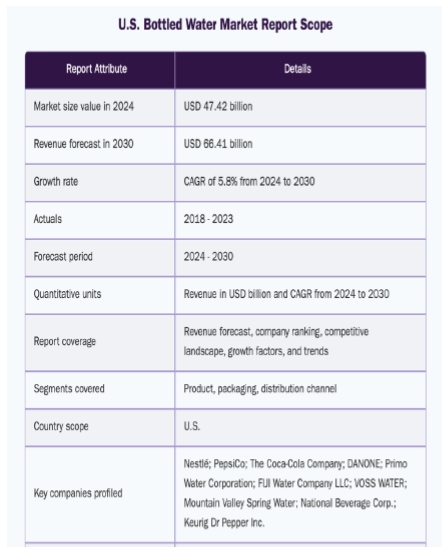
Source: www.grandviewresearch.com
Aqua Beato is positioning itself for brand recognition and growth within the premium water space with upcoming events, marketing, collaborations and placements. The Company is passionate with the latest consumer trends, including sustainability, health awareness, brand connection and taste.
Sustainability: Consumers often scrutinize a production company’s supply chain and production process, evaluating ethical and environmental claims. The water product from Aqua Beato is drawn from our ancient spring in the Appalachian Mountains, a source among the world’s most pristine ecosystems.
Health Awareness: There is rising concern on pollution and impurities in drinking water and consumers increased focus on balanced diets, well-being and demand for healthier products. Aqua Beato holds high mineral content, a pH level of 8.2+/- and is free of trace pharmaceuticals, pesticides and other impurities.
Brand Connection: Consumers are building connection and association with influencers and are exercising self-expression through brands. The Company’s halo-inspired can embodies the concept and attitude and could be recognizable on social media and advertisements.
| 47 |
Taste: Consumers are becoming more sophisticated about taste and millennials, in particular, are spending more on premium products with higher taste profiles. The Company’s differentiating tastes derived from a pristine water source could meet a broad range of consumer preferences.
TARGET MARKET
The Company is focused on families, cultural communities, college students, and older elder communities for Aqua Beato; these segments have wide space for products that bring joy and happiness with beverages.
These communities represent influential, underserved demographics with significant purchasing power. Negative messaging has the been the push on these communities. They are looking for products that support their faith and happiness. Older adults (50+) hold a large share of disposable income and are increasingly health-conscious, seeking products that support hydration and longevity. Both groups value quality and authenticity, making them key markets for growth.
Our target groups prioritize family, happiness, wellness, and sustainability. These values perfectly aligned with Aqua Beato’s natural and premium positioning.
The items below indicate how the Company plans to target them, ideally:
| 1. | Culturally & Generationally Relevant Messaging: The Company plans to launch family-focused campaigns through family entertainment, with proper language content, and happiness & wellness themes that resonate with demographics; |
| 2. | Community Engagement: The Company intends to sponsor local events, festivals, and health-focused programs; |
| 3. | Influencers: The Company may collaborate with family centered personalities, ethnic lifestyle influencers and health advocates; |
| 4. | Retail Availability: The Company’s ideal retail market includes stock in supermarkets, ethnic-frequented markets (e.g., Fiesta Mart / Bodegas) and healthy stores catering to families and older adults; and |
| 5. | Health & Sustainability: The Company plans to highlight happiness with a focus on Aqua Beato’s alkaline benefits and eco-friendly packaging, appealing to their wellness and environmental priorities. |
Location
ACS has a corporate office in Winston-Salem, North Carolina. The Appalachian spring is located at 1027 Brady Bunch Lane, Yadkinville, NC and the canning facility is located in Winston-Salem, NC. The facility is referred to as a demonstration innovation facility in an operational environment.
ADDITIONAL Use of Funds
Additional proceeds from the sale of Shares will be used for acquisition of real estate, equipment, necessary components, and certain operational expenses to have a fully operating facility in SE North Carolina.
Once the SE North Carolina facility is working in an operational environment, sections of the equipment manufactured will be exported to support the market readiness phase of the offering.
TRADEMARK AND COPYRIGHT INFORMATION
The Company submitted a pending trademark registration request with the United States Patent and Trademark Office on March 18, 2025. The element of the mark consists of Aqua Beato.
| 48 |
EXIT STRATEGY:
Alternative Canning Solutions, Inc.is pursuing a listing on a public exchange to coincide with the launch of its 100% all-natural alkaline spring water product in the US. It is anticipated to be within 12 months of the closing of this Offering.
CONCLUSION
Aqua Beato is uniquely positioned to disrupt the premium hydration market by combining pristine natural water, sustainable practices, and strategic brand storytelling. With an aggressive growth strategy and a commitment to quality, the Company is set to scale rapidly while maintaining its core values of purity, sustainability, and well-being.
During the period from January 1, 2025 through June 30, 2025, Aqua Beato’s expenses were being paid by Vision Marketing Group LLC, a related party under common ownership by virtue of CEO Jerry Cox. The Company has an outstanding payable to Vision Marketing Group LLC amounting to $147,218.
During the period from January 1, 2024 through December 31, 2024, Aqua Beato’s expenses were being paid by Vision Marketing Group LLC, a related party under common ownership by virtue of CEO Jerry Cox. The Company has an outstanding payable to Vision Marketing Group LLC amounting to $79,781.
During the period from August 2023 through December 31, 2023, Aqua Beato’s expenses were being paid by Vision Marketing Group LLC, a related party under common ownership by virtue of CEO Jerry Cox. The Company has an outstanding payable to Vision Marketing Group LLC amounting to $28,330.
During the period from January 1, 2024 through December 31, 2024, Aqua Beato executed an outstanding note payable to a related party stockholder amounting to $34,986 as of December 31, 2024. The note was due upon demand and free of interests. The note was paid over the course of Q1 and Q2 of 2025.
An Affiliate of the Company, Director, Officer or employee means any entity, directly or indirectly, through one (1) or more intermediaries that is controlled by, or under common control with the Company, Director, Officer or employee, as applicable. The term “control,” as used in the immediately preceding sentence, means the right to exercise, directly or indirectly, more than fifty percent (50%) of the voting rights of the entity or the power to direct or cause the direction of the management or policies of the affiliated entity.
There are currently three (3) Company affiliates:
| 1. | Strategic Group Partners, Inc. dba Beato Coin: A majority of Beato Coin is owned by majority rights vote holders of AquaBeato. Strategic Investment Consortium owns fifty percent (50%), Vision Marketing Group LLC, owned and managed by Aqua Beato’s Chief Executive Officer and Director Jerry Cox, holds five percent (5%), and Buettner Holdings, LLC, managed by Aqua Beato’s Chief Operating Officer, holds five percent (5%). The Beato Coin token system allows participants to purchase and to secure future water supplies. |
| 2. | Vision Marketing Group LLC is owned 100% by Jerry Cox, a Common Stock Shareholder of Aqua Beato, and the entity is currently acting as the manufacturer of Company’s products. The Company indebtedness to Vision Marketing Group LLC is referenced on the Company’s Balance Sheet dated December 31, 2024 as a “Related party payable” with an outstanding balance specified as seventy-nine thousand seven hundred eighty-one U.S. dollars ($79,781). |
| 49 |
| 3. | Buettner Global Services is owned 100% by Jenny Buettner, a Common Stock Shareholder of Aqua Beato, and the entity is currently acting as a broker of Company’s products. The Company indebtedness to Buettner Global Services is referenced on the Company’s Balance Sheet dated December 31, 2024 as a “Related party notes payable” with an outstanding balance specified as an outstanding note payable to a stockholder amounting to $34,986 as of December 31, 2024 |
The following condition may result in a conflict between the interests of an Investor and those of the Company and members of Management:
Management are the sole owners of the Company’s Common Stock and currently possess exclusive control over all corporate matters that could require a vote of Company shareholders. A member of Management that is a Common Stock shareholder with significant voting power might use their influence to prioritize personal gain, such as higher compensation for themselves or their family members, or to benefit a related business.
Buettner Global Services is an affiliate of Jenny Buettner, a Director and COO of the Company, and a conflict of interest may arise during the repayment of the outstanding Company indebtedness to Buettner Global Services if the repayment schedule materially differs from the existing contractual obligations specified between debtor and creditor.
FIDUCIARY RESPONSIBILITY OF MANAGEMENT
Management of a Florida corporation may be accountable to the Company as a fiduciary and consequently must exercise good faith and fair dealing in handling the Company's affairs. This is a rapidly developing and changing area of the law and potential Investors who have questions concerning the duties of the Management relative to the Company and its shareholders should consult with their legal counsel.
Exculpation. Management may not be liable to the Company or its shareholders for errors in judgment or other acts or omissions not amounting to fraud, bad faith or willful misconduct, since provision has been made in the Company's Amended and Restated Articles of Incorporation and Bylaws for exculpation of members of Management when the Director or Officer reasonably believed to be acting in or not opposed to the best interests of the Company and did not constitute fraud, bad faith or willful misconduct. Similarly, Management is not liable for the negligence, dishonesty or bad faith of any employee, broker or other agent of the Company, provided that such employee, broker or agent was selected, engaged or retained with reasonable care. Therefore, Investors have a more limited right of action available to them than they would absent the limitation specified in the Amended and Restated Articles of Incorporation and Bylaws.
Indemnification. The Company’s Amended and Restated Articles of Incorporation and Bylaws provide for indemnification of the Directors and Officers by the Company. The Company shall, to the fullest extent permitted by the Florida Business Corporations Act, as the same may be amended and supplemented, indemnify any and all persons whom it shall have power to indemnify under said section from and against any and all of the expenses, liabilities, or other matters referred to in or covered by said section, and the indemnification provided for herein shall not be deemed exclusive any other rights to which those indemnified may be entitled under the Amended and Restated Articles of Incorporation, Company bylaws, any law, agreement, vote of stockholders or disinterested directors or otherwise, both as to action in such person's official capacity and as to action in another capacity while holding such office, and shall continue as to a person who has ceased to be a director, officer, employee, or agent and shall inure to the benefit of the heirs, executors, and administrators of such person. To the extent that the indemnification provisions purport to include indemnification for liabilities arising under the Securities Act of 1933, in the opinion of the Securities Exchange Commission, such indemnification is contrary to the public policy and therefore unenforceable with respect to alleged securities law violations.
| 50 |
The Company current has a ninety-nine (99) year lease with Mr. Robert McRae on specific plot #11920 (the “Leased Premises”) of the Appalachian spring and water property, located at 1027 Brandy Bunch Lane, Yadkinville, NC 27055. The Company has the right to access, extract, process, and distribute water from all natural springs on the Leased Premises and to construct, install, maintain, and operate all facilities, equipment, and infrastructure necessary for commercial water production.
We do not own our own manufacturing facility but we currently produce at the outsourcing site and utilize the manufacturing and production facility of our Affiliate, Vision Marketing Group LLC.
MANAGEMENT'S DISCUSSION AND ANALYSIS OF FINANCIAL CONDITION AND RESULTS OF OPERATIONS
You should read the following discussion in conjunction with our financial statements and the related notes and the section entitled “Description of the Business” elsewhere in this Offering Circular. This discussion contains forward-looking statements that involve risks and uncertainties. Actual results and the timing of events may differ materially from those contained in these forward-looking statements due to a number of factors, including but not limited to those discussed in the section entitled “Risk Factors” and elsewhere in this Offering Circular.
General Overview
Aqua Beato is an early stage non-alcoholic beverage manufacturing and production company devoted to the development and distribution of recyclable aluminum cans with all natural high alkaline spring and sparkling water. The Company will continue to produce products directly from the water generated out of the Appalachian Mountains spring under which it has a 99 year land lease agreement and the canning facility.
The Company will collect revenue upon sale of an item or package of products and recognize the revenue when the sale is made. Operating expenses currently consist of production, packaging, distribution, advertising and marketing expenses, and general administrative expenses.
The following discussion of our financial conditions and results of operations should be read in conjunction with the financial statements and the related notes included elsewhere in this Offering Circular. The Company recognizes that due to unpredictability in the current and future United States governing administrations as the stated unpredictability relates to economic policies and treaties with individual countries and the fact that the Company sources their products from contract manufacturers located outside the United States, cost of goods sold may increase and the Company may not be able to raise sales revenues from their products equally. Due to this possible inequity in increases in costs of goods sold and sale revenues, the Company’s gross profit margin may decrease, and any gross profit margin decreases may be either transitory or durable thereby decreasing and varying the Company’s gross profit in amounts and at times not reasonably foreseeable as of the date of this Offering. The following discussion contains forward-looking statements that reflect our plans, estimates and beliefs. The Company’s actual results could differ significantly from those discussed in the forward-looking statements.
| 51 |
The financial statements included in this filing as of June 30, 2025 (“Interim 2025”) are unaudited and may not include year-end adjustments necessary to make those financial statements comparable to audited results, although in the opinion of management all adjustments necessary to make interim statements of operations not misleading have been included. Unless otherwise indicated, the latest results discussed below are as of December 31, 2024.
Revenue/Net Loss from Operating Activities
The Company is engaged in the business of development, marketing, sale and distribution canned Appalachian Mountain sparkling spring water. As of the date of this Offering Circular, the Company has not yet been profitable. For the fiscal year ended December 21, 2023 (FY2023), the Company had a net loss of thirty-five thousand one hundred seventy-two U.S. dollars ($35,172). For the fiscal year ended December 31, 2024 (FY2024) the Company had a net loss of one hundred seventy-three thousand and seventy-two U.S. dollars ($173,072). This represents an increase in net loss of one hundred thirty seven thousand nine hundred U.S. dollars ($137,900) or seventy-nine and sixty-eight hundredths percent (79.68%). Based upon the unaudited consolidated Statement of Operations for the interim period starting January 1, 2025 and ending June 30, 2025, the Company reports a net loss of Operating Income of approximately three hundred twenty-four thousand nine hundred and eight U.S. dollars ($324,904) The reason for this increase was a reduction from sales due to cost of goods sold necessary to activate initial product production procedures, heightened operating expenses to conducts sales and marketing movements and to engage professionals to actively review and conduct the operations of the Company. The Company expects to continue to grow sales revenues and plans to secure operational expense control at stable levels through the end of 2025.
Operating Expenses
The Company classifies its operating expenses as sales and marketing, advertising, professional fees, office expense, transportation and travel, meals, rental, and other expenses. In FY2024 the Company had operating expenses totaling one hundred eighty thousand nine hundred ninety-one U.S. dollars ($180,991). In FY2023 the Company had operating expenses totaling of thirty-five thousand one hundred seventy-two U.S. dollars ($35,172). This represents an increase in operating expenses of one hundred forty-five thousand eight hundred nineteen U.S. dollars ($145,819) or four hundred and fourteen and fifty-eight hundredths percent (414.58%). Based upon the unaudited consolidated Statement of Operations for the interim period starting January 1, 2025 and ending June 30, 2025, the Company reports operating expenses of approximately three hundred sixty four thousand six hundred eighty-seven U.S. dollars ($360,687). The Company reports operating expenses of approximately thirty-three thousand seven hundred eighty-nine ($33,789) for the interim period starting January 1, 2024 and ending June 30, 2024. The reason for this increase in Company expenditures was additional outside sales and marketing, advertising, professional fees, transportation and travel, and added expenditures.
Sales, Marketing, and Advertising
In fiscal year 2024, the Company experienced a material increase in Sales and Marketing, and Advertising expenditures from five thousand two hundred seventy-six U.S. dollars ($5,276), strictly Advertising, to one hundred nineteen thousand five hundred eighty-one U.S. dollars ($119,581). This increase pertains to the costs associated with the Company’s aggressive growth and expansion phase, such as actively developing its product line, engaging distribution channels, activating strategic partnerships, and introducing its themed product to the industry. The Company anticipates continuing to increase Sales and Marketing, and Advertising expenditures throughout 2025 and into the near future, utilizing net Proceeds from this Offering to enhance a direct marketing program that balances development and product exploration with best practices and focus on target market expansion.
| 52 |
Professional Fees
In FY2024, the Company spent thirty-four thousand three hundred U.S. dollars ($34,300) on professional fees. In FY2023, the Company spent twenty-seven thousand six hundred U.S. dollars ($27,600) on professional fees. The increase of six thousand seven hundred U.S. dollars ($6,700) or twenty-four percent (24%) in 2024 over 2023 was driven primarily by an increase in spending for the contract Chief Financial Officer, patent attorney, and quality assurance programs. Based upon the unaudited consolidated Statement of Operations for the interim period starting January 1, 2025 and ending June 30, 2025, the Company reports professional expenses of approximately one hundred ninety-five thousand six hundred U.S. dollars ($195,600). The Company reports operating expenses of approximately fifteen thousand U.S. dollars ($15,000) for the interim period starting January 1, 2024 and ending June 30, 2024. The Company anticipates that annual increases in professional fees will continue upon a successful Offering by the Company, as provided in Use of Proceeds discussions within this document
Meals, Transportation and Travel
In FY2024, the Company spent ten thousand seven hundred twenty-one U.S. dollars ($10,721) on meals, transportation and travel. In FY2023, the Company spent one thousand eight hundred and four U.S. dollars ($1,804) on meals, transportation and travel. The increase of eight thousand nine hundred seventeen U.S. dollars ($8,917) or four hundred ninety-four percent (494%) in 2024 over 2023 was driven primarily by an increase in the internal sales force, and coordination with potential distributors and marketing teams. The Company anticipates that increases in travel and entertainment professional fees will continue upon a successful Offering by the Company, as provided in Use of Proceeds discussions within this document.
Liquidity and Capital Resources
As of December 31, 2024, the Company had cash of one thousand one hundred thirty-four U.S. dollars ($1,134), and total assets of one hundred fifty-five thousand and nine hundred thirty U.S. dollars ($155,930). On December 31, 2023, the Company had cash of four hundred forty-seven U.S. dollars ($447) and total assets of four hundred forty-seven U.S dollars ($447). This represents an increase in six hundred eighty-seven U.S. dollars ($687) or one hundred fifty-three and sixty-nine hundredths percent (153.69%) in cash and one hundred fifty-five thousand and four hundred eighty three U.S. dollars ($155,483) or thirty four thousand seven hundred eighty-three and sixty-seven hundredths percent (34,783.67%) in total assets. For the interim period of January 1, 2025 to June 30, 2024, the Company had cash of thirteen thousand seven hundred eighty-four U.S. dollars ($13,784), and total assets of two hundred thirty-four thousand seven hundred fifty-one U.S. dollars ($234,751). While the cash and total assets increased during in the interim period ending June 30, 2025, the Company’s monthly cash burn rate can vary significantly depending upon operational schedules and other factors.
The Company has financed its operations primarily from revenues and capital contributions to equity.
The Proceeds from this Offering are expected to materially improve the Company’s liquidity position in both the short and long term. Further, the Proceeds from this Offering are anticipated to support ongoing marketing and operational activities as well as retire a portion of the long-term related-party factoring obligation. The Company will have additional capital requirements during the fiscal year ending December 31, 2025 to execute its business plan in light of the anticipated uses of the Proceeds (see “Use of Proceeds” above). Therefore, the Company will attempt to raise additional capital through the sale of its securities in this Offering for a maximum of 7,000,000 Class A Preferred Shares at a price of $4.29 per Share, with potential aggregate gross Proceeds of $30,030,000.
| 53 |
There can be no assurance that the Company will be successful in acquiring additional funding at levels sufficient to fund its future capital requirements. If the Company is unable to raise additional capital in sufficient amounts or on terms acceptable to it, the Company may have to significantly reduce, delay, scale back or discontinue the development of its technologies and patents or discontinue operations completely. In the event this Offering are both undersubscribed, the Company will continue relying on the cash flow provided by its operations and may encounter liquidity challenges. A mitigating factor to lessen the effects of possible undersubscription in both offerings, is the suspension of payments to the related party factoring obligation. Company management believes that the core operations are adequately insulated from the effects of the fund-raising activity and in the event the Company does not raise adequate proceeds from the concurrent offerings to fulfill the uses and goals identified therewith, the Company does not anticipate the necessity to materially change its existing operations to continue as a going concern.
Key Factors Affecting Performance of the Company
In Q1–Q2 2025, we onboarded two new regional distributors: Triangle Distribution and Budweiser of North Carolina). In Q3–Q4 2025, we onboarded, notably Compass/Foodbuy, Sysco Foods, Schreiber Foods, Vistar, PFG, and Wesco. These steps drove an increase in case volumes but incurred one-time onboarding costs for promotional materials, and logistics setup.
Launching four flavored sparkling waters represented a volume increase Q2 of 2025, with associated R&D and marketing to develop and introduce the product. While volume was strong, initial promotional discounts compressed gross margins in the launch month.
We shifted from sleeved cans to direct-printed cans, yielding a unit packaging cost reduction; however, this required an initial capital outlay for print tooling and setup, recognized in cost of goods sold in Q2-2025.
We incurred professional legal fees related to our contracts, land-lease agreement and intellectual property filings.
Trend Information
The Company transitioned from sleeved cans to direct-print cans, delivering a reduction in unit packaging costs. Higher production runs given drove a reduction in cost of goods sold and continuance to build inventory in anticipation of expanding future sales. The revenue growth is attributable to increased volume rather than price increases. Combined packaging and production efficiencies have improved gross margin.
Aqua Beato’s recent milestones—expanded distribution, packaging optimization, and product innovation—have driven volume growth and set the stage for margin improvement. While certain one-time expenses tempered near-term profits, they underpin sustainable cost reductions and an expanded product portfolio. Management believes these trends will favorably impact sales and margins in the coming quarters, aligning past performance with the Company’s growth objectives.
This performance from continuing operations underscores our scalable unit economics and validates the strength of both our core spring water offering and our expanding sparkling-water portfolio. The Company has experienced similar growth in its sales revenue and maintained the gross margin on the increased sales revenues into 2025. Given the opportunity to increase the Company’s cash balance from the Offering for increased marketing to drive additional sales growth with existing product inventory and the expected lower interest payments on the outstanding factoring obligations, the Company anticipates that cash flow from operations will turn positive in 2026.
| 54 |
While the Company is consistently executing with its current operations, the Company recognizes that the actions of the current and future United States governing administrations are unpredictable relative to economic policies and trade treaties with individual countries and industry classes. The Company further recognizes that the uncertainties caused by the unpredictable economic trade policies may or may not cause negative effects on the Company’s cost of goods sold, gross profit margins, operating income and net income. These uncertainties and potential variability in economic policies thereby renders the possibility that the Company’s current operating results and financial condition may materially differ from and not be indicative of future operating results and financial conditions.
Plan of Operations
The Company's first twelve (12) months plan of operations will entail directing approximately one hundred percent (100%) of the net proceeds received through this Offering to the execution of the business plan as outlined above and employ the funds it receives from the Offering in the manner described in the “Use of Proceeds” section above. Please refer to the “Use of Proceeds” and “Description of the Business” sections for a detailed discussion of how the Company intends to execute the Plan of Operations.
Forward Plans for Development & Expansion
Building on our recent successes and operational efficiencies, Aqua Beato’s roadmap for the next 12–24 months focuses on three pillars:
1. Distribution Expansion including:
| · | Expanding manufacturing capacity to meet increasing retail & foodservice demand; |
| · | Securing national distribution partners for mass retail & convenience store placement; |
| · | Onboarding two additional regional distributors, targeting the Southeast and Pacific Northwest to extend our national footprint; |
| · | Deepening penetration in key food-service verticals, such as college campuses, hospitality, health & wellness facilities, via Affiliate Buettner Global Services’ brokerage network; |
| · | Forming strategic influencer partnerships with wellness, fitness, and lifestyle leaders to increase brand visibility; |
| · | Developing exclusive collaborations with celebrity-backed platforms to elevate Aqua Beato’s positioning in the premium beverage space; and |
| · | Activating a digital-first marketing strategy focused on social media virality, direct-to-consumer subscription models, and interactive brand experiences. |
2. Product Line and Packaging Innovation including:
| · | Pursuing strategic co-branding deals with private-label partnerships (e.g., university athletics, boutique fitness studios) and using our printed-can capability for customized runs; |
| · | Transitioning all packaging to 100% post-consumer recycled (PCR) aluminum by mid-2026, reinforcing our environmental commitment; |
| · | Launching the premium tea line sweetened with date sugar, positioning it as a nutrient-rich, high-quality beverage option; |
| · | Exploring seasonal limited-edition flavors for exclusivity in specialty markets; and |
| · | Strengthening the flavored sparkling water segment by adding functional ingredients such as adaptogens and natural electrolytes. |
| 3. | Margin & Operational Leverage including: |
| · | Negotiating volume-based pricing with co-packers to push COGS down another 5% by year-end. |
| · | Option of securing a secondary spring source to mitigate risk and support projected volume growth of 40%+ year-over-year; and |
| · | Implementing ERP-driven demand forecasting and inventory optimization to reduce working capital needs by 10–15%. |
| 55 |
Neither the Company nor any member of the Company’s Management is subject to bad actor disqualifications or disclosures under any relevant U.S. securities laws including those specified in 17 CFR 230.506(d).
BANKRUPTCY AND LEGAL PROCEEDINGS
No Bankruptcy, Investigations, or Criminal Proceedings
Neither the Company nor any member of the Company’s Management have been part of any bankruptcy proceedings, proceedings whereby there was a material evaluation of the integrity or ability of Management’s members, investigations regarding moral turpitude, or criminal proceedings or convictions (excluding traffic violations).
No Legal Proceedings Material to Company
The Company and members of Company’s Management are and have not been part of any legal proceedings, including proceedings that are material to the business or the financial condition of the Company.
DIRECTORS, OFFICERS AND SIGNIFICANT PERSONNEL
Officers
| Name | Position/Title | Age | Term of Office | Approximate Hours per week |
| Jerry Cox | Chief Executive Officer | 63 | August 2023 - present | 40-50 |
| Jenny Buettner | Chief Operating Officer | 58 | August 2024 - present | 40-50 |
| Shereen Zernickow | Chief Financial Officer | 55 | June 2025 - present | 40-50 |
Business Experience of Management
Jerry Cox, Chief Executive Officer and Director: Jerry Cox formed Aqua Beato, Inc. in August of 2023, bringing over 33 years of experience in packaging fulfillment and e-commerce. He started bottling and canning operations in 2018 and currently serves as Chief Executive Officer and owner of Vision Marketing Group, LLC d/b/a Packaging Lines, Inc., the Affiliate ensuring product production and manufacturing.
The Chief Executive Officer of the Company is subject to the control of the Board of Directors, and has general and plenary power, authority, supervision, direction and control of the business and the officers of the Company.
| 56 |
Jenny Buettner, Chief Operating Officer and Director: Ms. Buettner is a highly accomplished and strategic Sales and Supply Chain Executive with vast expertise in operations, manufacturing, account development, real estate development, marketing, networking, negotiations, financial planning, and risk management. Throughout her career, she has established capabilities in manufacturing, quality control and strategic planning, leveraging transformational leadership and communication skills to train and develop staff. With over 16 years of working and creating full concept brand creations, she is an exceptional leader with proven ability to develop a collaborative culture and accountability as well as yield dynamic business performance with a real estate and manufacturing background. Her proven areas of expertise include cross-functional collaboration, motivational leadership, manufacturing management, operational development, and commercialization and distribution.
The duties of the Chief Operating Officer are primarily focused on acting in charge of long term strategic planning, the overview of C-suite and management, as well as developing manufacturing and future revenue streams.
Shereen Zernickow, Chief Financial Officer: Shereen Zernickow brings over two decades of experience in accounting, finance, and logistics management. She currently serves as Controller for Buettner Global Services, where she oversees accounting operations, financial reporting, payroll, and tax compliance, while ensuring profitability through cost analysis and margin evaluation.
In addition, Shereen has led finance and operations at Shibue Couture since 2012, managing accounting, HR, payroll, logistics, and international production. Her expertise spans accounts payable and receivable, financial reconciliations, inventory control, and staff management, with a strong focus on operational efficiency and strategic financial planning.
The duties of the Chief Financial Officer of the Company are managing financial strategy, operations, and reporting to ensure fiscal health, compliance and long-term growth.
Directors
| Name | Position/Title | Age | Term of Office | Approximate Hours per week |
| Bhavesh Patel |
Chairman
|
34 | August 2025-present | 20-30 |
| Jerry Cox | Director | 63 | August 2023-present | 40-50 |
| Jenny Buettner | Director | 58 | August 2024-present | 40-50 |
| Neil Patel | Director | 48 | November 2024-present | 20-30 |
|
Catherine Garrido, Strategic Investment Consortium Designee |
Director | 41 | August 2023-present | 20-30 |
| 57 |
Business Experience of Directors
Bhavesh Patel, Chairman: Bhavesh Patel joined the Company on August 28, 2025, and has over 9 years of experience in finance and management within the hospitality industry. His experience includes overlooking financials and portfolios to ensure month to month revenue goals are met, reviewing and researching business expansion opportunities, conducting marketing procedures to assist growth of group sales, and performing all accounting reconciliations. He holds a degree in finance and economics from the Drexel University.
Catherine Garrido, Director: Catherine Garrido is a dedicated single mother of four beautiful children and the CEO of Strategic Investment Consortium, an investment firm focused on supporting and funding innovative start-up companies. With a background in fashion and design, Catherine brings creativity, vision, and resilience into both her professional and personal life. She is passionate about fostering growth—whether in business ventures or in raising her family.
Neil Patel, Director: Mr. Patel is a highly accomplished Finance Executive with over 25 years of successfully delivering results with significant accomplishments throughout his career. He has a track record of great teamwork with Finance and Operations teams, including as a Managing Director with Forward Thinking Advisory Group, as a Portfolio Strategy Vice President with AE Industrial Partners and numerous financial positions with General Electric. His business endeavors are energetic and goal-orientated with a genuine passion in supporting a progressive organization in maximizing value creation.
Nature of Family Relationship
There are no familial relationships between Directors, Officers, employees or any persons within the Company or affiliates.
COMPENSATION OF DIRECTORS AND EXECUTIVE OFFICERS
Currently, there are five (5) Directors and three (3) Executive Officers of the Company. Directors currently receive no compensation. Directors will be reimbursed for any company-related expenses.
Prior to the Offering funding, Officers may continue serving under existing consulting or commission arrangements as separately agreed. The Board could determine additional compensation based on Company performance and financial status. The following table details the compensation of the two (2) highest paid Officers or Directors of the Company and the five (5) Company Directors as a group.
| Name | Position Receiving Compensation |
Cash Compensation |
Other Compensation2 |
| Jenny Buettner | Chief Operating Officer | $ 125,0001 | 2% of Sales |
| Shereen Zernickow | Chief Financial Officer | $ 120,0001 | - |
| Directors | Directors | $03 | - |
1 Upon a successful funding of the Offering, per employment agreements between individual Officers and the Company, the Chief Operating Officer and the Chief Finance Officer shall receive a base salary.
2 Other compensation includes compensation in the form of commission of all gross sales revenues generated from accounts originated, introduced, or managed by Affiliate, Buettner Global Services.
3 Company Directors currently do not receive cash compensation for acting in the Company in the role of Director though Directors may be compensated for their services in the future.
| 58 |
SECURITY OWNERSHIP OF MANAGEMENT AND CERTAIN SECURITYHOLDERS
The following table contains certain information as of the Effective Date as to the number of voting shares beneficially owned by (i) each person known by the Company to own beneficially more than ten percent (10%) of the Company’s voting securities, (ii) each person who is either a Director or Officer of the Company who own beneficially more than ten percent (10%) of the Company’s voting securities, (iii) all persons as a group who are Directors and Officers of the Company, and as to the percentage of the outstanding shares held by that group on such dates and as adjusted to give effect to this Offering.
As of the date of this Offering there are no option agreements or other instruments in place providing for the purchase of either Common Stock or any class of the Company’s Preferred Stock.
|
Title of |
Name and Address of Beneficial |
Amount and Nature of Beneficial Ownership |
Amount and Nature of Beneficial Ownership Acquirable |
Percent of |
| Common Stock | Jerry R. Cox | 12,500,000 Common Stock Shares | 0 | 42.37% |
| Common Stock | Strategic Investment Consortium | 10,500,000 Common Stock Shares | 0 | 35.59% |
| Common Stock | Buettner Holdings LLC | 6,500,000 Common Stock Shares | 0 | 22.03% |
INTEREST OF MANAGEMENT AND OTHERS IN CERTAIN TRANSACTIONS
The Company has not completed nor proposed any related-party transactions within the previous two (2) fiscal years or the current fiscal year.
The Company intends to continue to be taxed as a corporation in accordance with the Internal Revenue Service Code, the Treasury Regulations (the “Treasury Regulations”) promulgated thereunder (including temporary and proposed Treasury Regulations). The tax consequences of an investment in the Company are complex and will vary depending upon each investor’s individual circumstances, and this discussion does not purport to address federal income tax consequences applicable to all categories of investors, some of whom may be subject to special or other treatment under the tax laws (including, without limitation, insurance companies, qualified pension plans, tax-exempt organizations, financial institutions or broker-dealers, traders in securities that elect to mark to market, Members owning capital stock as part of a “straddle,” “hedge” or “conversion transaction,” domestic corporations, “S” corporations, REITs or regulated investment companies, trusts and estates, persons who are not citizens or residents of the United States, persons who hold their interests in the Company through a company or other entity that is a pass-through entity for U.S. federal income tax purposes or persons for whom an interest in the Company is not a capital asset or who provide directly or indirectly services to the Company). Further, this discussion does not address all of the foreign, state, local or other tax laws that may be applicable to the Company or its partners.
| 59 |
Prospective Investors are urged to consult with and rely upon their own tax advisors for advice on these and other tax matters with specific reference to their own tax situation and potential changes in applicable law.
FOREIGN INVESTORS: NON-U.S. INVESTORS ARE SUBJECT TO UNIQUE AND COMPLEX TAX CONSIDERATIONS. THE COMPANY AND MANAGEMENT MAKE NO DECLARATIONS AND OFFER NO ADVICE REGARDING THE TAX IMPLICATIONS TO SUCH FOREIGN INVESTORS, AND SUCH INVESTORS ARE URGED TO SEEK INDEPENDENT ADVICE FROM ITS OWN TAX COUNSEL OR ADVISORS BEFORE MAKING ANY INVESTMENT.
Tax Returns
Annually, if required, the Company will provide the shareholders with sufficient information from the Company's informational tax return or any report of income from dividends for such persons to prepare their individual federal, state and local tax returns. The Company's tax returns will be prepared by a tax professional selected by the Company’s Management.
In Some Cases, if the Investors Fails to Meet the Fiduciary and Other Standards Under the Employee Retirement Income Security Act of 1974, as Amended (“ERISA”), the Code or Common Law as a Result of an Investment in the Company’s Shares, the Investor Could be Subject to Liability for Losses as Well as Civil Penalties:
There are special considerations that apply to investing in the Company’s Class A Preferred Shares on behalf of pension, profit sharing or 401(k) plans, health or welfare plans, individual retirement accounts or Keogh plans. If the investor is investing the assets of any of the entities identified in the prior sentence in the Company's Class A Preferred Shares, the Investor should satisfy themselves that:
| 1. | The investment is consistent with the Investor’s fiduciary obligations under applicable law, including common law, ERISA and the Code; |
| 2. | The investment is made in accordance with the documents and instruments governing the trust, plan or IRA, including a plan’s investment policy; |
| 3. | The investment satisfies the prudence and diversification requirements of Sections 404(a)(1)(B) and 404(a)(1)(C) of ERISA, if applicable, and other applicable provisions of ERISA and the Code; |
| 4. | The investment will not impair the liquidity of the trust, plan or IRA; |
| 5. | The investment will not produce “unrelated business taxable income” for the plan or IRA; |
| 6. | The Investor will be able to value the assets of the plan annually in accordance with ERISA requirements and applicable provisions of the applicable trust, plan or IRA document; and The investment will not constitute a prohibited transaction under Section 406 of ERISA or Section 4975 of the Code. |
| 60 |
Failure to satisfy the fiduciary standards of conduct and other applicable requirements of ERISA, the Code, or other applicable statutory or common law may result in the imposition of civil penalties and can subject the fiduciary to liability for any resulting losses as well as equitable remedies. In addition, if an investment in the Company’s Class A Preferred Shares constitutes a prohibited transaction under the Code, the “disqualified person” that engaged in the transaction may be subject to the imposition of excise taxes with respect to the amount invested.
The securities being offered are equity interests in Alternative Canning Solutions Inc. in the form of Class A Preferred Shares. In the event of the Company achieving the Maximum Offering Amount, the Company’s Class A Preferred Shares, as a Class of Company Capital Shares, will constitute a total equity interest in the Company of approximately forty one percent (41%) with the remaining fifty nine percent (59%) of equity interest in the Company vesting to Common Shareholders. The percentage of ownership in the Company for the Class A Preferred Shares can be determined with a ratio whereby the number of Class A Preferred Shares owned by Investor is divided by total number of outstanding Class A Preferred Shares and Company Common Shares. Each Class A Preferred Share is being offered by the Company at four dollars and twenty-nine cents ($4.29) per Class A Preferred Share. The Minimum Investment Amount to become a Preferred Stock Shareholder in the Company is two thousand one hundred forty-five U.S. dollars ($2,145.00) or five hundred (500) Class A Preferred Shares.
By purchasing Class A Preferred Shares through this Offering, an Investor will become a Class A Preferred Stock Shareholder and will be granted rights as stated below.*
*Please note that the following is a summary of the rights granted to an Investor and is not exhaustive. For a complete description of all rights associated with being a Preferred Stock Shareholder in the Company, please see Exhibits 2A and 2B, “Amended and Restated Articles of Incorporation of Alternative Canning Solutions, Inc.” and “Bylaws.” All capitalizations in this section are defined in the Amended and Restated Articles of Incorporation or Bylaws and all references to Sections or Articles relate to the applicable Section or Article in the Amended and Restated Articles of Incorporation of Alternative Canning Solutions or Bylaws.
The business and affairs of the Company shall be managed, operated and controlled by or under the exclusive direction of the Directors and Officers of the Company. The Management shall have full and complete power, authority and discretion for, on behalf of and in the name of the Company to take such actions as the Management may deem necessary or advisable to carry out any and all of the objectives and purposes of the Company, without the consent, approval or knowledge of the Preferred Stock Shareholders. All Company investment, operations, managerial and day-to-day activity decisions shall be made by the Management.
VOTING RIGHTS
Except as otherwise provided by the Business Corporation Act of the State of Florida, §607.0101 et. seq. (“FBCA”) or the Company’s Amended and Restated Articles of Incorporation, each holder of the Company’s Class A Preferred Shares is entitled to one (1) vote per Class A Preferred Share on any matter that may be subject to the vote of the Company’s Shareholders.
Except as otherwise provided by FBCA or the Company’s Amended and Restated Articles of Incorporation, a holder of the Common Stock possesses the right to ten (10) votes for every one (1) Common Stock share.
| 61 |
DIVIDENDS
Except as otherwise provided by FBCA or the Company’s Amended and Restated Articles of Incorporation, dividends may be declared and paid on the Company’s Capital Stock, including the Preferred Stock, at such times and in such amounts as the Board, in its sole discretion, shall determine.
LIQUIDATION PREFERENCE
Except as otherwise provided by the FBCA or the Company’s Amended and Restated Articles of Incorporation, Company Class A Preferred Stock shareholders will possess a liquidation preference equal to any other Preferred Stock shareholder and superior to any Company Common Stockholder.
CONVERSION RIGHTS
The Company’s Preferred Stock and Common Stock shall not possess the rights of conversion into any Company other capital stock.
PREEMPTIVE RIGHTS
The Company’s Class A Preferred Shares possess no preemptive rights to any Company securities authorized or issued through future offerings.
SINKING FUND PROVISIONS
The Board may set apart out of any of the funds of the Company available for dividends a reserve or reserves for any proper purpose and may abolish any such reserve. The Company has not provided for, at the time of this Offering, a sinking fund for repurchase or redemption of the Class A Preferred Shares or Common Stock.
LIABILITY TO FURTHER CALLS OR TO ASSESSMENT BY THE ISSUER
The Company does not provide for further calls or to assessment on Class A Preferred Shares or Common Stock by the Company.
RESTRICTIONS ON TRANSFERS OR ALIENABILITY
Per the Bylaws, the Company has the power to enter into and perform any agreement with any number of shareholders of any one or more classes of stock of the Company to restrict the transfer of shares of stock of the Company of any one or more classes owned by such shareholders in any manner not prohibited by the FBCA. Transfers of record of shares of stock of the Company shall be made only upon its books by the holders thereof, in person or by an attorney duly authorized, and upon the surrender of a certificate for a like number of shares, properly endorsed, if such shares are certificated.
NO DISCRIMINATION PROVISIONS
There are no provisions discriminating against any existing or prospective holder of Company Class A Preferred Shares as a result of such shareholder owning a substantial amount of Company Class A Preferred Shares.
| 62 |
Financial Statements and Independent Auditor’s Report
Alternative Canning Solutions, Inc.
December 31, 2024 and 2023
| 63 |
Alternative Canning Solutions, Inc.
Table of Contents
| Independent Auditor’s Report | 1-2 |
| Financial Statements: | |
| Balance Sheets | 3 |
| Statements of Operations | 4 |
| Statements of Changes in Stockholders’ Equity (Deficit) | 5 |
| Statements of Cash Flows | 6 |
| Notes to the Financial Statements | 7-11 |

Independent Auditor’s Report
To the Shareholders of
Alternative Canning Solutions Inc.
Opinion
We have audited the accompanying financial statements of Alternative Canning Solutions Inc. (the “Company”), which comprise the balance sheets as of December 31, 2024 and 2023, and the related statements of operations, changes in stockholders' equity (deficit), and cash flow for the year ended December 31, 2024 and for the period ended from August 29, 2023 (date of inception) to December 31, 2023, and the related notes to the financial statements.
In our opinion, the financial statements referred to above present fairly, in all material respects, the financial position of the Company as of December 31, 2024 and 2023, and the related statements of operations, changes in stockholders' equity (deficit), and cash flow for the year ended December 31, 2024 and for the period ended from August 29, 2023 (date of inception) to December 31, 2023, in accordance with accounting principles generally accepted in the United States of America.
Basis for Opinion
We conducted our audits in accordance with auditing standards generally accepted in the United States of America. Our responsibilities under those standards are further described in the Auditor’s Responsibilities for the Audit of the Financial Statements section of our report. We are required to be independent of the Company and to meet our other ethical responsibilities in accordance with the relevant ethical requirements relating to our audits. We believe that the audit evidence we have obtained is sufficient and appropriate to provide a basis for our audit opinion.
Responsibilities of Management for the Financial Statements
Management is responsible for the preparation and fair presentation of the financial statements in accordance with accounting principles generally accepted in the United States of America, and for the design, implementation, and maintenance of internal control relevant to the preparation and fair presentation of financial statements that are free from material misstatement, whether due to fraud or error.
In preparing the financial statements, management is required to evaluate whether there are conditions or events, considered in the aggregate, that raise substantial doubt about the Company’s ability to continue as a going concern within one year after the date that the financial statements are available to be issued.
Auditor’s Responsibilities for the Audit of the Financial Statements
Our objectives are to obtain reasonable assurance about whether the financial statements as a whole are free from material misstatement, whether due to fraud or error, and to issue an auditor’s report that includes our opinion. Reasonable assurance is a high level of assurance but is not absolute assurance and therefore is not a guarantee that an audit conducted in accordance with generally accepted auditing standards will always detect a material misstatement when it exists. The risk of not detecting a material misstatement resulting from fraud is higher than for one resulting from error, as fraud may involve collusion, forgery, intentional omissions, misrepresentations, or the override of internal control. Misstatements are considered material if there is a substantial likelihood that, individually or in the aggregate, they would influence the judgment made by a reasonable user based on the financial statements.
ASSURANCE DIMENSIONS, LLC
also d/b/a McNAMARA and ASSOCIATES, LLC
TAMPA BAY: 4920 W Cypress Street, Suite 102 | Tampa, FL 33607 | Office: 813.443.5048 | Fax: 813.443.5053
JACKSONVILLE: 7800 Belfort Parkway, Suite 290 | Jacksonville, FL 32256 | Office: 888.410.2323 | Fax: 813.443.5053
ORLANDO: 1800 Pembrook Drive, Suite 300 | Orlando, FL 32810 | Office: 888.410.2323 | Fax: 813.443.5053
SOUTH FLORIDA: 3111 N. University Drive, Suite 621 | Coral Springs, FL 33065 | Office: 754.800.3400 | Fax: 813.443.5053
www.assurancedimensions.com
“Assurance Dimensions” is the brand name under which Assurance Dimensions, LLC including its subsidiary McNamara and Associates, LLC (referred together as “AD LLC”) and AD Advisors, LLC (“AD Advisors”), provide professional services. AD LLC and AD Advisors practice as an alternative practice structure in accordance with the AICPA Code of Professional Conduct and applicable laws, regulations, and professional standards. AD LLC is a licensed independent CPA firm that provides attest services to its clients, and AD Advisors provide tax and business consulting services to their clients. AD Advisors, and its subsidiary entities are not licensed CPA firms.
In performing an audit in accordance with generally accepted auditing standards, we:
| • | Exercise professional judgment and maintain professional skepticism throughout the audit. | |
| • | Identify and assess the risks of material misstatement of the financial statements, whether due to fraud or error, and design and perform audit procedures responsive to those risks. Such procedures include examining, on a test basis, evidence regarding the amounts and disclosures in the financial statements. | |
| • | Obtain an understanding of internal control relevant to the audit in order to design audit procedures that are appropriate in the circumstances, but not for the purpose of expressing an opinion on the effectiveness of the Company’s internal control. Accordingly, no such opinion is expressed. | |
| • | Evaluate the appropriateness of accounting policies used and the reasonableness of significant accounting estimates made by management, as well as evaluate the overall presentation of the financial statements. | |
| • | Conclude whether, in our judgment, there are conditions or events, considered in the aggregate, that raise substantial doubt about the Company’s ability to continue as a going concern for a reasonable period of time. |
Doubt about the Company's Ability to Continue as a Going Concern
The accompanying financial statements have been prepared assuming that the Company will continue as a going concern. As discussed in Note B to the financial statements, the Company has suffered recurring losses from operations and has a net capital deficit. These conditions raise substantial doubt about the Company’s ability to continue as a going concern. Management’s evaluation of the events and conditions and management's plans regarding those matters are also described in Note B. The financial statements do not include any adjustments that might result from the outcome of this uncertainty. Our opinion is not modified with respect to this matter.
We are required to communicate with those charged with governance regarding, among other matters, the planned scope and timing of the audit, significant audit findings, and certain internal control related matters that we identified during the audit.
Tampa, Florida
September 24, 2025
ASSURANCE DIMENSIONS, LLC
also d/b/a McNAMARA and ASSOCIATES, LLC
TAMPA BAY: 4920 W Cypress Street, Suite 102 | Tampa, FL 33607 | Office: 813.443.5048 | Fax: 813.443.5053
JACKSONVILLE: 7800 Belfort Parkway, Suite 290 | Jacksonville, FL 32256 | Office: 888.410.2323 | Fax: 813.443.5053
ORLANDO: 1800 Pembrook Drive, Suite 300 | Orlando, FL 32810 | Office: 888.410.2323 | Fax: 813.443.5053
SOUTH FLORIDA: 3111 N. University Drive, Suite 621 | Coral Springs, FL 33065 | Office: 754.800.3400 | Fax: 813.443.5053
www.assurancedimensions.com
“Assurance Dimensions” is the brand name under which Assurance Dimensions, LLC including its subsidiary McNamara and Associates, LLC (referred together as “AD LLC”) and AD Advisors, LLC (“AD Advisors”), provide professional services. AD LLC and AD Advisors practice as an alternative practice structure in accordance with the AICPA Code of Professional Conduct and applicable laws, regulations, and professional standards. AD LLC is a licensed independent CPA firm that provides attest services to its clients, and AD Advisors provide tax and business consulting services to their clients. AD Advisors, and its subsidiary entities are not licensed CPA firms.
Alternative Canning Solutions Inc.
Balance Sheets
December 31, 2024 and 2023
| 2024 | 2023 | |||||||
| Assets | ||||||||
| Current Assets | ||||||||
| Cash | $ | 1,134 | $ | 447 | ||||
| Accounts receivable | 33,696 | - | ||||||
| Prepaid assets | 1,000 | - | ||||||
| Total Current Assets | 35,830 | 447 | ||||||
| Non-Current Asset | ||||||||
| Prepaid shares issued for water agreement | 120,000 | - | ||||||
| TOTAL ASSETS | $ | 155,830 | $ | 447 | ||||
| Liabilities and Stockholders' Equity (Deficit) | ||||||||
| Current Liabilities | ||||||||
| Related party notes payable | $ | 34,986 | $ | - | ||||
| Related party payable | 79,781 | 28,330 | ||||||
| Total Liabilities | 114,767 | 28,330 | ||||||
| Stockholders' Equity (Deficit) | ||||||||
| Common stock, par value of $0.0001 per share, 29,500,000 shares authorized, 40,000 issued and outstanding | 4 | 4 | ||||||
| Class A preferred stock, par value of $0.0001 per share, 20,500,000 shares authorized, 0 issued and outstanding | - | - | ||||||
| Paid-in capital | 249,303 | 7,285 | ||||||
| Accumulated deficit | (208,244 | ) | (35,172 | ) | ||||
| Total Stockholders' Equity (Deficit) | 41,063 | (27,883 | ) | |||||
TOTAL LIABILITIES AND STOCKHOLDERS' EQUITY (DEFICIT) | $ | 155,830 | $ | 447 | ||||
| The accompanying notes are an integral part of these financial statements. |
Page | 3 |
Alternative Canning Solutions Inc.
Statements of Operations
For the Year Ended December 31, 2024 and the Period from August 29, 2023 to December 31, 2023
| 2024 | 2023 | |||||||
| SALES | $ | 34,776 | $ | - | ||||
| COST OF SALES | 26,857 | - | ||||||
| GROSS PROFIT | 7,919 | - | ||||||
| EXPENSES | ||||||||
| Sales and marketing | 69,445 | - | ||||||
| Advertising | 50,136 | 5,276 | ||||||
| Professional fees | 34,300 | 27,600 | ||||||
| Transportation and travel | 7,696 | 449 | ||||||
| Office expense | 4,553 | 304 | ||||||
| Meals | 3,025 | 1,335 | ||||||
| Rental | 800 | - | ||||||
| Others | 11,036 | 208 | ||||||
| Total operating expenses | 180,991 | 35,172 | ||||||
| LOSS FROM OPERATIONS | (173,072 | ) | (35,172 | ) | ||||
| OTHER INCOME (EXPENSES) | - | - | ||||||
| NET LOSS | $ | (173,072 | ) | $ | (35,172 | ) |
| The accompanying notes are an integral part of these financial statements. |
Page | 4 |
Alternative Canning Solutions Inc.
Statements of Stockholders' Equity (Deficit)
For the Year Ended December 31, 2024 and the Period from August 29, 2023 to December 31, 2023
Total | ||||||||||||||||||||
Common Stock | Paid-In | Accumulated | Shareholders’ | |||||||||||||||||
Shares | Amount | Capital | Deficit | Equity (Deficit) | ||||||||||||||||
| Balance at inception | - | $ | - | $ | - | $ | - | $ | - | |||||||||||
| Shareholder contributions | - | - | 7,289 | - | 7,289 | |||||||||||||||
| Issuance of founders shares | 40,000 | 4 | (4 | ) | - | - | ||||||||||||||
| Net loss | - | - | - | (35,172 | ) | (35,172 | ) | |||||||||||||
| Balance at December 31, 2023 | 40,000 | $ | 4 | $ | 7,285 | $ | (35,172 | ) | $ | (27,883 | ) | |||||||||
| Balance at January 1, 2024 | 40,000 | $ | 4 | $ | 7,285 | $ | (35,172 | ) | $ | (27,883 | ) | |||||||||
| Shares issued for services | - | - | 150,000 | - | 150,000 | |||||||||||||||
| Shareholder contributions | - | - | 92,018 | - | 92,018 | |||||||||||||||
| Net loss | - | - | - | (173,072 | ) | (173,072 | ) | |||||||||||||
| Balance at December 31, 2024 | 40,000 | $ | 4 | $ | 249,303 | $ | (208,244 | ) | $ | 41,063 | ||||||||||
| The accompanying notes are an integral part of these financial statements. |
Page | 5 |
Alternative Canning Solutions Inc.
Statements of Cash Flows
For the Year Ended December 31, 2024 and the Period from August 29, 2023 to December 31, 2023
2024 | 2023 | |||||||
| CASH FLOWS FROM OPERATING ACTIVITIES | ||||||||
| Net loss | $ | (173,072 | ) | $ | (35,172 | ) | ||
| Founders shares contributed for services | 30,000 | - | ||||||
| Changes in assets and liabilities: | ||||||||
| Accounts receivable | (33,696 | ) | - | |||||
| Prepaid assets | (1,000 | ) | - | |||||
| Related party payable | 30,990 | - | ||||||
| Net cash used in operating activities | (146,778 | ) | (35,172 | ) | ||||
CASH FLOWS FROM FINANCING ACTIVITIES | ||||||||
| Contributed capital | 92,018 | 7,289 | ||||||
| Advances received from related parties | 55,447 | 28,330 | ||||||
| Cash provided by financing activities | 147,465 | 35,619 | ||||||
| NET INCREASE IN CASH | 687 | 447 | ||||||
| Cash at beginning of period | 447 | - | ||||||
| Cash at end of period | $ | 1,134 | $ | 447 | ||||
| SUPPLEMENTAL DISCLOSURE OF NON-CASH FLOW INFORMATION | ||||||||
| Conversion of related party payable to note payable | $ | 34,986 | $ | - | ||||
| Founders shares contributed for future water rights asset | $ | 120,000 | $ | - | ||||
| The accompanying notes are an integral part of these financial statements. |
Page | 6 |
Alternative Canning Solutions, Inc.
Notes to the Financial Statements
December 31, 2024 and 2023
Note A – Nature of Business
Alternative Canning Solutions, Inc. (the “Company”) is a Florida for profit corporation. The Company was established on August 29, 2023 and is engaged in the business of selling canned and bottled spring water.
Note B – Going Concern
As of December 31, 2024 and 2023, the Company had cash of $1,134 and $447, respectively, and an accumulated deficit of approximately $208,000 and $35,000, respectively. During the periods ended December 31, 2024 and August 29, 2023 to December 31, 2023, the net loss was approximately $173,000 and $35,000, respectively. These conditions raise substantial doubt about the Company’s ability to continue as a going concern for one year from the issuance of the financial statements.
The Company has experienced net losses and negative cash flows from operations since inception. The Company’s ability to continue its operations is dependent upon its ability to obtain additional capital through public or private equity offerings, debt financings or other sources; however, financing may not be available to the Company on acceptable terms, or at all. The Company’s failure to raise capital as and when needed could have a negative impact on its financial condition and its ability to pursue its business strategy, and the Company may be forced to curtail or cease operations.
Management’s plans regarding these matters encompass the following actions: 1) obtain funding from new investors after completing the Regulation A offering and 2) implement a strong aggressive branding strategy to increase revenues. The Company’s continued existence is dependent upon its ability to obtain additional funding sources and to develop profitable operations. However, the outcome of management’s plans cannot be determined with any degree of certainty.
Accordingly, the accompanying financial statements have been prepared on a going concern basis, which contemplates the realization of assets and satisfaction of liabilities in the normal course of business for one year from the date the financial statements are issued. The carrying amounts of assets and liabilities presented in the financial statements do not necessarily purport to represent realizable or settlement values. The financial statements do not include any adjustments that might result should the Company be unable to continue as a going concern.
Note C – Summary of Significant Accounting Policies
Basis of Accounting
The Company prepares its financial statements using the accrual method of accounting in conformity with accounting principles generally accepted in the United States of America (“U.S. GAAP”).
Use of Estimates
The preparation of financial statements in conformity with U.S. GAAP requires management to make estimates and assumptions that affect the amounts reported in the financial statements and accompanying notes. Actual results could differ from those estimates.
Recent Accounting Pronouncements
The Company periodically reviews new accounting standards that are issued as Accounting Standards Updates (“ASU”) by the Financial Accounting Standards Board (“FASB”). The Company carefully considers all new pronouncements that alter previous U.S. GAAP, and new accounting standards that it believes merits further discussion. Other accounting standards that have been issued or proposed by FASB that do not require adoption until a future date are not expected to have a material impact on the financial statements upon adoption.
|
Page | 7 |
Alternative Canning Solutions, Inc.
Notes to the Financial Statements
December 31, 2024 and 2023
Note C – Summary of Significant Accounting Policies (continued)
Segment Reporting
In November 2023, the FASB issued ASU 2023-07, Improvements to Reportable Segment Disclosures (“ASU 2023-07”), which requires incremental disclosures about reportable segments but does not change the definition of a segment or the guidance for determining reportable segments.
The new guidance requires disclosure of significant segment expenses that are (1) regularly provided to (or easily computed from information regularly provided to) the chief operating decision maker ("CODM") and (2) included in the reported measure of segment profit or loss. The new standard also requires companies to disclose the title and position of the individual (or the name of the committee) identified as the CODM, allows companies to disclose multiple measures of segment profit or loss if those measures are used to assess performance and allocate resources, and is applicable to companies with a single reportable segment. The requirements are effective for annual reporting periods beginning on January 1, 2024, and are required to be applied retrospectively. The Company has adopted the additional disclosure requirements under ASU 2023-07. The additional requirements did not have a material impact on the financial statements.
Cash
The Company deposits cash with financial institution which management believes is of high credit quality. The Company does not believe it is exposed to significant risk. At December 31, 2024 and 2023, there were no cash equivalents.
The Company at times maintains it’s cash with a financial institution and balances from time to time may exceed the federally insured limits. At, December 31, 2024 and 2023, the cash did not exceed those federally insured limits.
Accounts Receivable
Accounts receivables are carried at the original amount less an estimate for credit losses. The Company maintains an allowance for credit losses which represents management's estimate of expected credit losses over the remaining expected life of the Company’s financial assets measured at amortized cost and comprised of three main components: (i) historical collection performance, (ii) specific collection issues, (iii) current conditions, and reasonable and supportable forecasts about the future. If the actual provision for credit losses differs from the reserves calculated based on historical trends and known customer issues and current conditions, an adjustment to the provision for credit losses is recorded in the period in which the difference occurs. Such adjustment could result in additional expenses or a reduction of expenses. The Company write off accounts to the allowance when it has determined that collection is unlikely. Some of the factors considered in reaching this determination are (i) the apparent financial condition of the customer, (ii) the success the Company has in contacting and negotiating with the customer, (iii) the current state of the industry and (iv) the number of days the account has been outstanding. When the Company’s collections do not correspond with historical performance, additional charges may be required.
As of December 31, 2024 and 2023, the Company has no allowance for credit losses.
Inventory
The Company employs a just-in-time inventory management system, whereby inventory is purchased and received only as needed for sales. This approach minimizes holding costs and reduces the risk of inventory obsolescence. As a result, inventory levels are typically low at period-end, and purchases are closely aligned with actual demand.
All inventory, if any, is finished goods and stated at the lower of cost or net realizable value with the cost measured using the first-in, first-out (FIFO) cost method. Provisions are made to reduce obsolete or slow-moving inventories to their net realizable value.
As of December 31, 2024 and 2023, management has no inventory and has not recorded any allowance for inventory write-down.
|
Page | 8 |
Alternative Canning Solutions, Inc.
Notes to the Financial Statements
December 31, 2024 and 2023
Note C – Summary of Significant Accounting Policies (continued)
Revenue Recognition
All revenues from exchange transactions are recorded in accordance with ASC 606, Revenue from Contracts with Customers, which is recognized when: (i) a contract with a customer has been identified, (ii) the performance obligation(s) in the contract have been identified, (iii) the transaction price has been determined, (iv) the transaction price has been allocated to each performance obligation in the contract, and (v) the Company has satisfied the applicable performance obligation at a point in time or over time.
The Company’s revenues are primarily generated from the sale of canned and bottled spring water and represent a single performance obligation and are earned at a point in time when the goods have been shipped. Payment for the remaining customers is due between 15-60 days. All revenue is earned in the United States.
Cost of Sales
Costs of sales are recorded at a point in time when a sale is made and includes the inventory expense and other related selling platform costs.
Income Taxes
The Company has elected under the internal revenue code to be taxed as a C corporation. The Company follows accounting for uncertainty in income taxes guidance, which clarifies the accounting for uncertainty and income taxes, recognized in the Company’s financial statements and prescribed a recognition threshold and measurement attribute for the financial statement, recognition and measurement of a tax position taken or expected to be taken in a tax return.
Deferred tax assets and liabilities are recognized for the future tax consequences attributable to differences between the financial statement carrying amounts of existing assets and liabilities and the respective tax bases and any operating loss or tax credit carry forwards. Deferred tax assets and liabilities are measured using enacted tax rates expected to apply to taxable income in the year in which those temporary differences are expected to be recovered or settled. The ultimate realization of deferred tax assets is dependent upon the generation of future taxable income in those periods in which temporary differences became deductible
Note D – Related Party Notes Payable
The Company has an outstanding note payable to a stockholder amounting to $34,986 as of December 31, 2024. The outstanding liability is presented as related party notes payable in the balance sheets and is free of interest and due upon demand. There was no similar liability in 2023.
Note E – Income Taxes
For the periods ended December 31, 2024 and August 29, 2023 to December 31, 2023, no provision or benefit for federal or state income taxes has been recorded because the Company reported a net loss and has established a full valuation allowance against its net deferred tax asset. Management has determined that it is more likely than not that the deferred tax assets will not be realized due to the Company’s history of losses and the uncertainty of future taxable income.
The significant components of the Company’s deferred tax asset as of December 31, are as follows:
| Deferred tax asset: | 2024 | 2023 | ||||||
| Net operating loss carry forward | $ | 49,370 | $ | 8,265 | ||||
| Valuation allowance | (49,370 | ) | (8,265 | ) | ||||
| Net deferred tax asset | $ | - | $ | - | ||||
|
Page | 9 |
Alternative Canning Solutions, Inc.
Notes to the Financial Statements
December 31, 2024 and 2023
Note E – Income Taxes (continued)
As of December 31, 2024 and 2023, the Company had approximately $208,000 and $35,000 federal and state net operating loss carryforwards available to offset future taxable income. These carryforwards may be carried forward indefinitely. Utilization of these net operating loss carryforwards may be subject to annual limitations under Internal Revenue Code Section 382, and for federal purposes, their use is generally limited to offsetting no more than 80% of taxable income in any given year.
Management’s determination to maintain a full valuation allowance is based on a preliminary tax analysis and the company’s cumulative losses, which create significant uncertainty regarding the realization of deferred tax assets in future periods.
Note F – Stockholders’ Equity(Deficit)
During the period ended August 29, 2023 to December 31, 2023, the Company issued 40,000 founders shares at par value of $.0001 per share.
During the year ended December 31, 2024, one of the founders provided 2,000 of their shares to an individual to secure a commitment for water rights on a piece of property. The agreement for this property was finalized in 2025, therefore the value of the shares was recorded as an other asset as of December 31, 2024. The Company valued the shares at a price of $60 a share which is consistent with what their shares had been sold for to a third party.
During the year ended December 31, 2024, one of the founders provided a total of 500 of their shares to two individuals for services to the Company. The Company recorded $30,000 to sales and marketing expense in the accompanying statements of operations for the year ended December 31, 2024. The Company valued the shares at a price of $60 a share which is consistent with what their shares had been sold for to a third party.
During the periods ended December 31, 2024 and 2023, founders contributed funds to support working capital needs that amounted to approximately $92,000 and $7,000 respectively.
Note G – Related Party Transactions
As a start-up entity, the Company’s expenses on its behalf, are being paid by Vision Marketing Group LLC, (the “Vision”), a related party under common ownership. Vision is also the manufacturer of Company’s products. The Company has an outstanding payable to Vision amounting to $79,781 and $28,330 as of December 31, 2024 and 2023, respectively. The outstanding liabilities are presented as related party payable in the balance sheets.
The Company also has an outstanding note payable to a stockholder amounting to $34,986 and nil as of December 31, 2024 and 2023, respectively (see Note D).
Note H – Segment Reporting
The Company is engaged in a single line of business as a seller of canned and bottled spring water. The Company has identified its Chief Executive Officer as the chief operating decision maker (“CODM”), who uses net income to evaluate the results of the business and manage the Company. Additionally, the CODM uses excess net capital, which is not a measure of profit and loss, to make operational decisions while maintaining capital adequacy, such as whether to reinvest profits or pay dividends, and manage the Company. The Company’s operations constitute a single operating segment and therefore, a single reportable segment, because the CODM manages the business activities using information of the Company as a whole. The accounting policies used to measure the profit and loss of the segment are the same as those described in the summary of significant accounting policies. The Company's segment revenue and expenses are in line with what is in the Company's statements of operations and includes all significant categories that are provided to the CODM for review. Also, the segment assets are the same as those reported in the Company's balance sheets.
|
Page | 10 |
Alternative Canning Solutions, Inc.
Notes to the Financial Statements
December 31, 2024 and 2023
Note I – Commitments and Contingencies
The Company is exposed to various asserted and unasserted potential claims encountered in the normal course of business. In the opinion of management, the resolution of these matters will not have a material effect on the Company’s financial position or results of operations as of December 31, 2024 and 2023.
Note J – Subsequent Events
The Company’s founders returned to the registry approximately 2,000 shares which were issued to service providers subsequent to December 31, 2024.
In August 2025, the Company granted to a service provider a total of twenty percent (20%) equity interest in the Company that becomes granted, fully vested and earned based upon the following schedule:
(a) upon the execution of the agreement - ten percent (10%) fully diluted equity ownership interest in the Company
(b) five percent (5%) upon the occurrence of either of the following milestones:
| • | the Company achieving Five Million Dollars ($5,000,000) in cumulative gross revenue; or, |
| • | the Company achieving market capitalization of Forty Million Dollars ($40,000,000); and an |
(c) additional five percent (5%) upon the occurrence of either of the following milestones:
| • | the Company achieving Ten Million Dollars ($10,000,000) in cumulative gross revenue; or |
| • | the Company achieving market capitalization of Seventy Million Dollars ($70,000,000). |
The Company had evaluated subsequent events through September 24, 2025, which is the date the financial statements were available to be issued.
|
Page | 11 |
Interim Financial Statements (Unaudited)
Alternative Canning Solutions, Inc.
June 30, 2025 and 2024
Alternative Canning Solutions, Inc.
Table of Contents
Financial Statements:
| Balance Sheets | 3 |
| Statements of Operations | 4 |
| Statements of Changes in Stockholders’ Equity (Deficit) | 5 |
| Statements of Cash Flows | 6 |
Alternative Canning Solutions Inc.
Balance Sheets
June 30, 2025 and December 31, 2024 (Unaudited)
| June 30, 2025 | December 31, 2024 | |||||||
| Assets | ||||||||
| Current Assets | ||||||||
| Cash | $ | 13,784 | $ | 1,134 | ||||
| Accounts receivable | 98,067 | 33,696 | ||||||
| Related party receivable | 1,900 | - | ||||||
| Prepaid assets | 1,000 | 1,000 | ||||||
| Total Current Assets | 114,751 | 35,830 | ||||||
| Non-Current Asset | ||||||||
| Prepaid shares issued for water agreement | 120,000 | 120,000 | ||||||
| TOTAL ASSETS | $ | 234,751 | $ | 155,830 | ||||
| Liabilities and Stockholders' Equity (Deficit) | ||||||||
| Current Liabilities | ||||||||
| Related party notes payable | $ | - | $ | 34,986 | ||||
| Related party payable | 147,216 | 79,781 | ||||||
| Total Liabilities | 147,216 | 114,767 | ||||||
| Stockholders' Equity (Deficit) | ||||||||
| Common stock, par value of $0.0001 per share, 29,500,000 shares authorized, 42,500 and 40,000 issued and outstanding as of June 30, 2025 and December 31, 2024, respectively | 4 | 4 | ||||||
| Class A preferred stock, par value of $0.0001 per share, 20,500,000 shares authorized, 0 issued and outstanding | - | - | ||||||
| Paid-in capital | 620,679 | 249,303 | ||||||
| Accumulated deficit | (533,14 | ) | (208,244 | ) | ||||
| Total Stockholders' Equity (Deficit) | 87,535 | 41,063 | ||||||
| TOTAL LIABILITIES AND STOCKHOLDERS' EQUITY (DEFICIT) | 234,751 | 155,830 | ||||||
In the opinion of management, all adjustments necessary in order to make the interim financial statements not misleading have been included. No assurance provided.
See accompanying notes to the financial statements.
| The accompanying notes are an integral part of these financial statements. | Page | 3 |
Alternative Canning Solutions Inc.
Statements of Operations
For the Six Months Ended June 30, 2025 and 2024 (Unaudited)
| 2025 | 2024 | |||||||
| SALES | $ | 153,012 | $ | - | ||||
| COST OF SALES | 117,229 | 16 | ||||||
| GROSS PROFIT | 35,783 | -16 | ||||||
| EXPENSES | ||||||||
| Professional fees | 195,600 | 15,000 | ||||||
| Advertising | 98,288 | 2,741 | ||||||
| Transportation and travel | 18,067 | 2,247 | ||||||
| Sales and marketing | 16,828 | 12,600 | ||||||
| Rental | 6,100 | - | ||||||
| Office expense | 1,658 | 242 | ||||||
| Meals | 3,784 | 103 | ||||||
| Others | 20,362 | 855 | ||||||
| Total operating expenses | 360,687 | 33,789 | ||||||
| LOSS FROM OPERATIONS | -324,904 | -33,805 | ||||||
| OTHER INCOME (EXPENSES) | - | - | ||||||
| NET LOSS | ($324,904 | ) | ($33,805 | ) | ||||
| ($120,000) due to FV of Speaker, Smith and Zernickow services in exchange for shares | ||||||||
In the opinion of management, all adjustments necessary in order to make the interim financial statements not misleading have been included. No assurance provided.
See accompanying notes to the financial statements.
| Page | 4 |
Alternative Canning Solutions Inc.
Statements of Stockholders' Equity (Deficit)
For the Six Months Ended June 30, 2025 (Unaudited)
| Common Stock | Total | |||||||||||||||||||
| Shares | Amount | Paid-in Capital | Accumulate Deficit | Stockholders Equity (Deficit) | ||||||||||||||||
| Balance at January 1, 2024 | 40,000 | $ | 4 | $ | 7,285 | ($35,172 | ) | ($27,883 | ) | |||||||||||
| Shares issued for services | - | - | - | - | - | |||||||||||||||
| Shareholder contributions | - | - | 18,948 | - | 18,948 | |||||||||||||||
| Net loss | - | - | - | -33,805 | -33,805 | |||||||||||||||
| Balance at June 30, 2024 | 40,000 | $ | 4 | $ | 26,233 | ($68,977 | ) | ($42,740 | ) | |||||||||||
| Balance at January 1, 2025 | 40,000 | $ | 4 | $ | 249,303 | ($208,244 | ) | 41,063 | ||||||||||||
| Shares issued for services | - | - | 120,000 | - | 120,000 | |||||||||||||||
| Issuance of shares for cash | 2,500 | 150,000 | 150,000 | |||||||||||||||||
| Shareholder contributions | - | - | 101,376 | - | 101,376 | |||||||||||||||
| Net loss | - | - | - | -324,904 | -324,904 | |||||||||||||||
| Balance at June 30, 2025 | 42,500 | $ | 4 | $ | 620,679 | ($533,148 | ) | $ | 87,535 | |||||||||||
In the opinion of management, all adjustments necessary in order to make the interim financial statements not misleading have been included. No assurance provided.
See accompanying notes to the financial statements.
| Page | 5 |
Alternative Canning Solutions Inc.
Statements of Cash Flows
For the Six Months Ended June 30, 2025 and 2024 (Unaudited)
| 2025 | 2024 | |||||||
| CASH FLOWS FROM OPERATING ACTIVITIES | ||||||||
| Net loss | $ | (324,904 | ) | $ | (33,805 | ) | ||
| Shares issued for services | 120,000 | - | ||||||
| Changes in assets and liabilities: | ||||||||
| Accounts receivable | (64,371 | ) | - | |||||
| Prepaid assets | - | (1,000 | ) | |||||
| Related party receivable | (1,900 | ) | - | |||||
| Net cash used in operating activities | (271,175 | ) | (34,805 | ) | ||||
| CASH FLOWS FROM FINANCING ACTIVITIES | ||||||||
| Contributed capital | 251,376 | 18,944 | ||||||
| Advances received from related parties | 67,435 | 15,855 | ||||||
| Payment of related party notes payable | (34,986 | ) | ||||||
| Net cash provided by financing activities | 283,825 | 34,799 | ||||||
| NET CHANGE IN CASH | 12,650 | (6 | ) | |||||
| Cash at beginning of period | 1,134 | 447 | ||||||
| Cash at end of period | $ | 13,784 | $ | 441 | ||||
| SUPPLEMENTAL DISCLOSURE OF NON-CASH FLOW INFORMATION | ||||||||
| Conversion of related party payable to note payable | $ | - | $ | - | ||||
| Founders shares contributed for future water rights asset | $ | - | $ | - | ||||
In the opinion of management, all adjustments necessary in order to make the interim financial statements not misleading have been included. No assurance provided.
See accompanying notes to the financial statements.
| The accompanying notes are an integral part of this financial statement. | Page | 6 |
| Alternative Canning Solutions, Inc. |
| Table of Contents |
Financial Statements:
| Notes to the Financial Statements. | 1-5 |
| Alternative Canning Solutions, Inc. |
| Notes to the Financial Statements |
| June 30, 2025 and 2024 |
Note A – Nature of Business
Alternative Canning Solutions, Inc. (the “Company”) is a Florida for profit corporation. The Company was established on August 29, 2023 and is engaged in the business of selling canned and bottled spring water.
Note B – Going Concern
As of June 30, 2025 and 2024, the Company had cash of $13,784 and $1,134, respectively, and an accumulated deficit of approximately $533,000 and $208,000, respectively. During the periods ended June 30, 2025, and June 30, 2024, the net loss was approximately $325,000 and $34,000, respectively. These conditions raise substantial doubt about the Company’s ability to continue as a going concern for one year from the issuance of the financial statements.
The Company has experienced net losses and negative cash flows from operations since inception. The Company’s ability to continue its operations is dependent upon its ability to obtain additional capital through public or private equity offerings, debt financings or other sources; however, financing may not be available to the Company on acceptable terms, or at all. The Company’s failure to raise capital as and when needed could have a negative impact on its financial condition and its ability to pursue its business strategy, and the Company may be forced to curtail or cease operations.
Management’s plans regarding these matters encompass the following actions: 1) obtain funding from new investors after completing the Regulation A offering and 2) implement a strong aggressive branding strategy to increase revenues. The Company has engaged a leading branding and marketing firm to strengthen its market presence, which is expected to enhance brand recognition, support customer acquisition, and accelerate revenue growth. The Company’s continued existence is dependent upon its ability to obtain additional funding sources and to develop profitable operations. However, the outcome of the management’s plans cannot be determined with any degree of certainty.
Accordingly, the accompanying financial statements have been prepared on a going concern basis, which contemplates the realization of assets and satisfaction of liabilities in the normal course of business for one year from the date the financial statements are issued. The carrying amounts of assets and liabilities presented in the financial statements do not necessarily purport to represent realizable or settlement values. The financial statements do not include any adjustments that might result should the Company be unable to continue as a going concern.
Note C – Summary of Significant Accounting Policies
Basis of Accounting
The Company prepares its financial statements using the accrual method of accounting in conformity with accounting principles generally accepted in the United States of America (“U.S. GAAP”).
Use of Estimates
The preparation of financial statements in conformity with U.S. GAAP requires management to make estimates and assumptions that affect the amounts reported in the financial statements and accompanying notes. Actual results could differ from those estimates.
Recent Accounting Pronouncements
The Company periodically reviews new accounting standards that are issued as Accounting Standards Updates (“ASU”) by the Financial Accounting Standards Board (“FASB”). The Company carefully considers all new pronouncements that alter previous U.S. GAAP, and new accounting standards that it believes merits further discussion. Other accounting standards that have been issued or proposed by FASB that do not require adoption until a future date are not expected to have a material impact on the financial statements upon adoption.
| 1 |
| Alternative Canning Solutions, Inc. |
| Notes to the Financial Statements |
| June 30, 2025 and 2024 |
Note C – Summary of Significant Accounting Policies (continued)
Segment Reporting
In November 2023, the FASB issued ASU 2023-07, Improvements to Reportable Segment Disclosures (“ASU 2023-07”), which requires incremental disclosures about reportable segments but does not change the definition of a segment or the guidance for determining reportable segments.
The new guidance requires disclosure of significant segment expenses that are (1) regularly provided to (or easily computed from information regularly provided to) the chief operating decision maker ("CODM") and (2) included in the reported measure of segment profit or loss. The new standard also requires companies to disclose the title and position of the individual (or the name of the committee) identified as the CODM, allows companies to disclose multiple measures of segment profit or loss if those measures are used to assess performance and allocate resources, and is applicable to companies with a single reportable segment. The requirements are effective for annual reporting periods beginning on January 1, 2024, and are required to be applied retrospectively. The Company has adopted the additional disclosure requirements under ASU 2023-07. The additional requirements did not have a material impact on the financial statements.
Cash
The Company deposits cash with a financial institution which the management believes is of high credit quality. The Company does not believe it is exposed to significant risk. At June 30, 2025 and 2024, there were no cash equivalents.
The Company at times maintains its cash with a financial institution and balances from time to time may exceed the federally insured limits. As of, June 30, 2025 and 2024, the cash did not exceed those federally insured limits.
Accounts Receivable
Accounts receivables are carried at the original amount less an estimate for credit losses. The Company maintains an allowance for credit losses which represents management's estimate of expected credit losses over the remaining expected life of the Company’s financial assets measured at amortized cost and comprised of three main components:
(i) historical collection performance, (ii) specific collection issues, (iii) current conditions, and reasonable and supportable forecasts about the future. If the actual provision for credit losses differs from the reserves calculated based on historical trends and known customer issues and current conditions, an adjustment to the provision for credit losses is recorded in the period in which the difference occurs. Such adjustment could result in additional expenses or a reduction of expenses. The Company writes off accounts to the allowance when it has determined that collection is unlikely. Some of the factors considered in reaching this determination are (i) the apparent financial condition of the customer, (ii) the success the Company has in contacting and negotiating with the customer, (iii) the current state of the industry and (iv) the number of days the account has been outstanding. When the Company’s collections do not correspond with historical performance, additional charges may be required.
As of June 30, 2025 and 2024, the Company has no allowance for credit losses.
Inventory
The Company employs a just-in-time inventory management system, whereby inventory is purchased and received only as needed for sales. This approach minimizes holding costs and reduces the risk of inventory obsolescence. As a result, inventory levels are typically low at period-end, and purchases are closely aligned with actual demand.
All inventory, if any, is finished goods and stated at the lower of cost or net realizable value with the cost measured using the first-in, first-out (FIFO) cost method. Provisions are made to reduce obsolete or slow-moving inventories to their net realizable value.
As of June 30, 2025, and 2024, management has no inventory and has not recorded any allowance for inventory write- down.
| 2 |
| Alternative Canning Solutions, Inc. |
| Notes to the Financial Statements |
| June 30, 2025 and 2024 |
Revenue Recognition
All revenues from exchange transactions are recorded in accordance with ASC 606, Revenue from Contracts with Customers, which is recognized when: (i) a contract with a customer has been identified, (ii) the performance obligation(s) in the contract have been identified, (iii) the transaction price has been determined, (iv) the transaction price has been allocated to each performance obligation in the contract, and (v) the Company has satisfied the applicable performance obligation at a point in time or over time.
The Company’s revenues are primarily generated from the sale of canned and bottled spring water and represent a single performance obligation and are earned at a point in time when the goods have been shipped. Payment for the remaining customers is due between 15-60 days. All revenue is earned in the United States.
Cost of Sales
Costs of sales are recorded at a point in time when a sale is made and includes the inventory expense and other related selling platform costs.
Income Taxes
The Company has elected under the internal revenue code to be taxed as a C corporation. The Company follows accounting for uncertainty in income taxes guidance, which clarifies the accounting for uncertainty and income taxes, recognized in the Company’s financial statements and prescribed a recognition threshold and measurement attribute for the financial statement, recognition and measurement of a tax position taken or expected to be taken in a tax return.
Deferred tax assets and liabilities are recognized for the future tax consequences attributable to differences between the financial statement carrying amounts of existing assets and liabilities and the respective tax bases and any operating loss or tax credit carry forwards. Deferred tax assets and liabilities are measured using enacted tax rates expected to apply to taxable income in the year in which those temporary differences are expected to be recovered or settled. The ultimate realization of deferred tax assets is dependent upon the generation of future taxable income in those periods in which temporary differences became deductible
Note D – Related Party Notes Payable
The Company has no related-party payable recorded as of June 30, 2025, the 2024 related party payable noted was paid off over the course of 1st and 2nd quarter of 2025. The Company had an outstanding related-party payable to a stockholder for $34,986 as of December 31, 2024. The outstanding liability is presented as a related party payable in the balance sheets and is free of interest and was due upon demand.
Note E – Income Taxes
For the periods ending June 30, 2025 and June 30, 2024, no provision or benefit for federal or state income taxes has been recorded because the Company reported a net loss and has established a full valuation allowance against its net deferred tax asset. Management has determined that it is more likely than not that the deferred tax assets will not be realized due to the Company’s history of losses and the uncertainty of future taxable income.
| 3 |
| Alternative Canning Solutions, Inc. |
| Notes to the Financial Statements |
| June 30, 2025 and 2024 |
Note E – Income Taxes (continued)
The significant components of the Company’s deferred tax asset are as follows:
| June 30, 2025 | December 31,2024 | |||||||
| Deferred tax asset: | ||||||||
| Net operating loss carry forward | $ | 533,000 | $ | 49,370 | ||||
| Valuation allowance | (533,000 | ) | (49,370 | ) | ||||
| Net deferred tax asset | $ | - | $ | - | ||||
As of June 30, 2025 and 2024, the Company had approximately $533,000 and $208,000 federal and state net operating loss carryforwards available to offset future taxable income. The carryforwards may be carried forward indefinitely. Utilization of these net operating loss carryforwards may be subject to annual limitations under Internal Revenue Code Section 382, and for federal purposes, their use is generally limited to offsetting no more than 80% of taxable income in any given year.
Management’s determination to maintain a full valuation allowance is based on a preliminary tax analysis and the company’s cumulative losses, which create significant uncertainty regarding the realization of deferred tax assets in future periods.
Note F – Stockholders’ Equity(Deficit)
During the period ended August 29, 2023 to December 31, 2023, the Company issued 40,000 founders shares at par value of $.0001 per share.
During the year ended December 31, 2024, one of the founders provided 2,000 of their shares to an individual to secure a commitment for water rights on a piece of property. The agreement for this property was finalized in 2025, therefore the value of the shares was recorded as an other asset as of December 31, 2024. The Company valued the shares at a price of $60 a share which is consistent with what their shares had been sold for to a third party.
During the year ended December 31, 2024, one of the founders provided a total of 500 of their shares to two individuals for services to the Company. The Company recorded $30,000 to sales and marketing expense in the accompanying statements of operations for the year ended December 31, 2024. The Company valued the shares at a price of $60 a share which is consistent with what their shares had been sold for to a third party.
During the periods ended December 31, 2024 and 2023, founders contributed funds to support working capital needs that amounted to approximately $92,000 and $7,000 respectively.
During the six-month period ended June 30, 2025, founders contributed funds to support working capital needs that amounted to approximately $101,000. During the six-month period ended June 30, 2025, a new shareholder purchased 2,500 shares for $60 a share that amounted to approximately $150,000. During the six-month period ended June 30, 2025 approximately $120,000 shares were issued for services.
Note G – Related Party Transactions
As a start-up entity, the Company’s expenses on its behalf, are being paid by Vision Marketing Group LLC (the “Vision”), a related party under common ownership. Vision is also the manufacturer of Company’s products. The Company has an outstanding payable to Vision amounting to $147,218 as of June 30, 2025. The outstanding liabilities are presented as related party payable in the balance sheets.
| 4 |
| Alternative Canning Solutions, Inc. |
| Notes to the Financial Statements |
| June 30, 2025 and 2024 |
Note H – Segment Reporting
The Company is engaged in a single line of business as a seller of canned and bottled spring water. The Company has identified its Chief Executive Officer as the chief operating decision maker (“CODM”), who uses net income to evaluate the results of the business and manage the Company. Additionally, the CODM uses excess net capital, which is not a measure of profit and loss, to make operational decisions while maintaining capital adequacy, such as whether to reinvest profits or pay dividends, and manage the Company. The Company’s operations constitute a single operating segment and therefore, a single reportable segment, because the CODM manages the business activities using information of the Company as a whole. The accounting policies used to measure the profit and loss of the segment are the same as those described in the summary of significant accounting policies. The Company's revenue and expenses segments are in line with what is in the Company's statements of operations and include all significant categories that are provided to the CODM for review. Also, the segment assets are the same as those reported in the Company's balance sheets.
Note I – Commitments and Contingencies
The Company is exposed to various asserted and unasserted potential claims encountered in the normal course of business. In the opinion of management, the resolution of these matters will not have a material effect on the Company’s financial position or results of operations as of June 30, 2025, and 2024.
Note J – Subsequent Events
In August 2025, the Company granted to a service provider a total of twenty percent (20%) equity interest in the Company that becomes granted, fully vested and earned based upon the following schedule:
| (a) | upon the execution of the agreement - ten percent (10%) fully diluted equity ownership interest in the Company |
| (b) | five percent (5%) upon the occurrence of either of the following milestones: |
| • | the Company achieving Five Million Dollars ($5,000,000) in cumulative gross revenue; or, |
| • | the Company achieving market capitalization of Forty Million Dollars ($40,000,000); and an |
| (c) | additional five percent (5%) upon the occurrence of either of the following milestones: |
| • | the Company achieving Ten Million Dollars ($10,000,000) in cumulative gross revenue; or |
| • | the Company achieved market capitalization of Seventy Million Dollars ($70,000,000). |
The Company had evaluated subsequent events through October 3, 2025, which is the date the financial statements were available to be issued.
| 5 |
Exhibit 2A*: Amended and Restated Articles of Incorporation
Exhibit 4*: Form of Subscription Agreement
Exhibit 6A*: Land Lease Agreement and Equity Grant Agreement
Exhibit 6B*: Client Services Agreement – KBBAT Holding, Inc.
Exhibit 6C*: Broker Agreement – Buettner Global Services
Exhibit 6D*: CEO Employment Agreement
Exhibit 6E*: COO Employment Agreement
Exhibit 6F*: CFO Employment Agreement
Exhibit 8*: Form of Escrow Agreement
Exhibit 11: Consent of Independent Auditor
Exhibit 12*: Attorney Letter Certifying Legality
Exhibit 13*: “Testing the Waters” Material
* : Incorporated by reference from Issuer’s Offering Statement on Form 1A filed with the Securities and Exchange Commission on November 14, 2025.
| 64 |
Pursuant to the requirements of Regulation A, the Issuer certifies that it has reasonable grounds to believe that it meets all of the requirements for filing on Form 1-A and has duly caused this Offering Statement to be signed on its behalf by the undersigned, thereunto duly authorized, in the City of Winston-Salem, North Carolina on January 21, 2026.
ISSUER COMPANY LEGAL NAME AND ADDRESS
Alternative Canning Solutions Inc.
105 Akron Drive
Winston-Salem, NC 27105
By: /s/ Jerry Cox
Name: Jerry R. Cox
Title: Chief Executive Officer
Date: December 30, 2025
Location signed: Winston-Salem, NC
This Offering Statement has been signed by the following principals in the capacities and on the dates indicated:
/s/_Jerry Cox
Jerry R. Cox, Chief Executive Officer of the Company and Director
Date: January 21, 2026
Location Signed: Winston-Salem, NC
/s/_Jenny Buettner
Jenny Buettner, Chief Operating Officer of the Company and Director
Date: January 21, 2026
Location Signed: Huntington Beach, CA
/s/ Shereen Zernickow
Shereen Zernickow, Chief Financial Officer of the Company
Date: January 21, 2026
Location Signed: Huntington Beach, CA
/s/_Bhavesh Patel
Bhavesh Patel, Chairman
Date: January 21, 2026
Location Signed: Somerset, NJ
| 65 |
/s/_Neil Patel
Neil Patel, Director
Date: January 21, 2026
Location Signed: Liverpool, NY
/s/_Catherine Garrido
Catherine Garrido, Director
Date: January 21, 2026
Location Signed: Lutz, FL
66