Preliminary Offering Circular dated May 29, 2026
An Offering Statement pursuant to Regulation A relating to these securities has been filed with the Securities and Exchange Commission. Information contained in this Preliminary Offering Circular is subject to completion or amendment. These securities may not be sold nor may offers to buy be accepted before the Offering Statement filed with the Commission is qualified. This Preliminary Offering Circular shall not constitute an offer to sell or the solicitation of an offer to buy nor may there be any sales of these securities in any state in which such offer, solicitation or sale would be unlawful before registration or qualification under the laws of any such state. We may elect to satisfy our obligation to deliver a Final Offering Circular by sending you a notice within two business days after the completion of our sale to you that contains the URL where the Final Offering Circular or the Offering Statement in which such Final Offering Circular was filed may be obtained.

$10,000,000
$2.00 per Share
5,000,000 Shares,
Minimum Investment 50,000 Shares ($100,000)
This is the public offering of securities of Stellar Spirits and Wines, Inc., a California Corporation. We are offering up to 5,000,000 shares of our Common Stock, par value $0.0001 (“Common Stock”), at an offering price of $2.00 per share (the “Offered Shares” or “Shares”) by the Company. See “Description of Securities” beginning on page 55 and “Securities Offered” on page 56. This Offering (the “Offering”) will terminate at the earlier of (i) the date on which the Maximum Offering is sold, (ii) the third anniversary of the date of qualification of this offering statement; or (iii) when the Company elects to terminate the offering for any reason (in each such case, the “Termination Date”). The Company will file a post-qualification amendment to this Offering Statement at least every twelve (12) months following the date on which this offering is qualified by the United States Securities and Exchange Commission (the “Commission”) in order to include the Company’s most recent financial statements. This obligation will continue for a period of up to three (3) years from the date of qualification, unless the offering is earlier terminated (such date, the “Termination Date”). The minimum purchase requirement per investor is 50,000 Offered Shares ($100,000); however, we can waive the minimum purchase requirement on a case-by-case basis in our sole discretion. As of December 31, 2025, our Sole Officer and Director, Luis Cota (our “Officer”), beneficially owns 23,000,000 shares of our common stock, representing approximately 5.13% of the 323,000,000 shares of common stock deemed outstanding as of that date. Assuming the sale of all 5,000,000 Offered Shares in this Offering, Mr. Cota’s ownership percentage would be approximately 5.07%.
These securities are speculative securities. Investment in the Company’s stock involves significant risk. You should purchase these securities only if you can afford a complete loss of your investment. See the “Risk Factors” section on page 6 of this Offering Circular.
No Escrow
The proceeds of this offering will not be placed into an escrow account. We will offer our Shares on a “best efforts” basis. As there is no minimum offering, upon the approval of any subscription to this Offering Circular, the Company shall immediately deposit said proceeds into the bank account of the Company and may dispose of the proceeds in accordance with the Use of Proceeds. The Company will not raise more than $10,000,000 in gross proceeds from this Offering.
Subscriptions are irrevocable and the purchase price is non-refundable as expressly stated in this Offering Circular. The Company, by determination of the Board of Directors, in its sole discretion, may issue the Securities under this Offering for cash, promissory notes, services, and/or other consideration without notice to subscribers. Any of the foregoing non-cash consideration received by the Company shall be valued according to the Note to Rule 251(a)(1) of Regulation A. All proceeds received by the Company from subscribers for this Offering will be available for use by the Company upon acceptance of subscriptions for the Securities by the Company.
Sale of these Shares will commence within two calendar days of the qualification date and it will be a continuous Offering pursuant to Rule 251(d)(3)(i)(F).
This Offering will be conducted on a “best-efforts” basis, which means our Officer will use his commercially reasonable best efforts in an attempt to offer and sell the Shares. Our Officer will not receive any commission or any other remuneration for these sales. In offering the securities on our behalf, our Officer will rely on the safe harbor from broker-dealer registration set out in Rule 3a4-1 under the Securities Exchange Act of 1934, as amended.
This Offering Circular shall not constitute an offer to sell or the solicitation of an offer to buy, nor shall there be any sales of these securities in any state or jurisdiction in which such offer, solicitation or sale would be unlawful, prior to registration or qualification under the laws of any such state.
This offering circular is following the offering circular format described in Part II (a)(1)(i) of Form 1-A. Our Common Stock does not currently have a public market.
Investing in our Common Stock involves a high degree of risk. See “Risk Factors” beginning on page 6 for a discussion of certain risks that you should consider in connection with an investment in our Common Stock.
Number of Shares or Shares | Per Share or Share (1)(2)(3) | Total Maximum(4) | ||||||||||
| Public Offering Price– Shares | 5,000,000 | $ | 2.00 | $ | 10,000,000 | |||||||
| Proceeds to Company – Shares | $ | 10,000,000 | ||||||||||
________________
| (1) | We are offering Shares on a continuous basis. See “Distribution – Continuous Offering. The number of Shares being sold is 5,000,000 Shares. |
| (2) | This is a “best efforts” offering. The proceeds of this offering will not be placed into an escrow account. We will offer the Shares on a best efforts basis primarily through an online platform. As there is no minimum offering, upon the approval of any subscription to this Offering Circular, the Company shall immediately deposit said proceeds into the bank account of the Company and may dispose of the proceeds in accordance with the Use of Proceeds. See “How to Subscribe.” |
| (3) | We are offering these securities without an underwriter. |
| (4) | Excludes estimated total offering expenses, including underwriting discount and commissions, will be approximately $19,000 assuming the maximum offering amount is sold. |
Our Board of Directors used its business judgment in setting a value of $2.00 per Share to the Company as consideration for the stock to be issued under the Offering. The sales price per Share bears no relationship to our book value or any other measure of our current value or worth.
THE UNITED STATES SECURITIES AND EXCHANGE COMMISSION DOES NOT PASS UPON THE MERITS OF OR GIVE ITS APPROVAL TO ANY SECURITIES OFFERED OR THE TERMS OF THE OFFERING, NOR DOES IT PASS UPON THE ACCURACY OR COMPLETENESS OF ANY OFFERING CIRCULAR OR OTHER SOLICITATION MATERIALS. THESE SECURITIES ARE OFFERED PURSUANT TO AN EXEMPTION FROM REGISTRATION WITH THE COMMISSION; HOWEVER, THE COMMISSION HAS NOT MADE AN INDEPENDENT DETERMINATION THAT THE SECURITIES OFFERED ARE EXEMPT FROM REGISTRATION.
WE ARE OFFERING TO SELL, AND SEEKING OFFERS TO BUY, OUR SHARES ONLY IN JURISDICTIONS WHERE SUCH OFFERS AND SALES ARE PERMITTED. YOU SHOULD RELY ONLY ON THE INFORMATION CONTAINED IN THIS OFFERING CIRCULAR. WE HAVE NOT AUTHORIZED ANYONE TO PROVIDE YOU WITH ANY INFORMATION OTHER THAN THE INFORMATION CONTAINED IN THIS OFFERING CIRCULAR. THE INFORMATION CONTAINED IN THIS OFFERING CIRCULAR IS ACCURATE ONLY AS OF ITS DATE, REGARDLESS OF THE TIME OF ITS DELIVERY OR OF ANY SALE OR DELIVERY OF OUR SHARES. NEITHER THE DELIVERY OF THIS OFFERING CIRCULAR NOR ANY SALE OR DELIVERY OF OUR SHARES SHALL, UNDER ANY CIRCUMSTANCES, IMPLY THAT THERE HAS BEEN NO CHANGE IN OUR AFFAIRS SINCE THE DATE OF THIS OFFERING CIRCULAR. THIS OFFERING CIRCULAR WILL BE UPDATED AND MADE AVAILABLE FOR DELIVERY TO THE EXTENT REQUIRED BY THE FEDERAL SECURITIES LAWS.
We are offering to sell, and seeking offers to buy, our securities only in jurisdictions where such offers and sales are permitted. You should rely only on the information contained in this Offering Circular. We have not authorized anyone to provide you with any information other than the information contained in this Offering Circular. The information contained in this Offering Circular is accurate only as of its date, regardless of the time of its delivery or of any sale or delivery of our securities. Neither the delivery of this Offering Circular nor any sale or delivery of our securities shall, under any circumstances, imply that there has been no change in our affairs since the date of this Offering Circular. This Offering Circular will be updated and made available for delivery to the extent required by the federal securities laws.
Continuous Offering
Under Rule 251(d)(3) to Regulation A, the following types of continuous or delayed Offerings are permitted, among others: (1) securities offered or sold by or on behalf of a person other than the issuer or its subsidiary or a person of which the issuer is a subsidiary; (2) securities issued upon conversion of other outstanding securities; or (3) securities that are part of an Offering which commences within two calendar days after the qualification date. These may be offered on a continuous basis and may continue to be offered for a period in excess of 30 days from the date of initial qualification. They may be offered in an amount that, at the time the Offering statement is qualified, is reasonably expected to be offered and sold within one year from the initial qualification date. No securities will be offered or sold “at the market.”
Sale of these shares will commence within two calendar days of the qualification date, and it will be a continuous Offering pursuant to Rule 251(d)(3)(i)(F).
Subscriptions are irrevocable and the purchase price is non-refundable as expressly stated in this Offering Circular. The Company, by determination of the Board of Directors, in its sole discretion, may issue the Securities under this Offering for cash, promissory notes, and services without notice to subscribers. Any of the foregoing non-cash consideration received by the Company shall be valued according to the Note to Rule 251(a)(1) of Regulation A. All proceeds received by the Company from subscribers for this Offering will be available for use by the Company upon acceptance of subscriptions for the Securities by the Company.
In this Offering Circular, unless the context indicates otherwise, references to “Stellar Spirits and Wines, Inc.”, “Stellar Spirits and Wines,”, “STELLAR”, “we”, the “Company”, “our” and “us” refer to the activities of and the assets and liabilities of the business and operations of Stellar Spirits and Wines, Inc.
| i |
CAUTIONARY STATEMENT REGARDING FORWARD-LOOKING STATEMENTS
__________
Some of the statements under “Summary”, “Risk Factors”, “Management’s Discussion and Analysis of Financial Condition and Results of Operations”, “Our Business” and elsewhere in this Offering Circular constitute forward-looking statements. Forward-looking statements relate to expectations, beliefs, projections, future plans and strategies, anticipated events or trends and similar matters that are not historical facts. In some cases, you can identify forward-looking statements by terms such as “anticipate”, “believe”, “could”, “estimate”, “expect”, “intend”, “may”, “plan”, “potential”, “should”, “will” and “would” or the negatives of these terms or other comparable terminology.
You should not place undue reliance on forward looking statements. The cautionary statements set forth in this Offering Circular, including in “Risk Factors” and elsewhere, identify important factors which you should consider in evaluating our forward-looking statements. These factors include, among other things:
| · | The speculative nature of the Spirit business and more specifically the Tequila business; |
| · | Our reliance on third party distillery, bottle makers, suppliers and customers; |
| · | Our dependence upon external sources for the financing of our operations, particularly given that there are concerns about our ability to continue as a “going concern;” |
| · | Our ability to effectively execute our business plan, expansion of our markets and growth of our brand; |
| · | Our ability to manage our expansion, growth and operating expenses; |
| · | Our ability to finance our businesses, through this Offering and through private offerings; |
| · | Our ability to promote our Tequila and Spirit businesses; |
| · | Our ability to compete and succeed in the highly competitive and evolving Spirit and Tequila businesses; |
| · | Our ability to respond and adapt to changes in customer behavior, potential tariffs and regulations; and |
| · | Our ability to protect our intellectual property and to develop, maintain and enhance strong brands. |
Although the forward-looking statements in this Offering Circular are based on our beliefs, assumptions and expectations, taking into account all information currently available to us and our perception and interpretation thereof, we cannot guarantee future transactions, results, performance, achievements or outcomes. No assurance can be made to any investor by anyone that the expectations reflected in our forward-looking statements will be attained, or that deviations from them will not be material and adverse. We urge you to read this Offering Circular in its entirety and not place undue reliance on forward-looking statements. We undertake no obligation, other than as may be required by law, to re-issue this Offering Circular or otherwise make public statements revising and/or updating our forward-looking statements if events occur or circumstances change.
| 1 |
Certain market data and forecasts used throughout this prospectus were obtained from internal company surveys, market research, consultant surveys, reports of governmental and international agencies and industry publications and surveys. Industry publications and third-party research, surveys and reports generally indicate that their information has been obtained from sources believed to be reliable. This information involves a number of assumptions and limitations, and you are cautioned not to give undue weight to such estimates. Our estimates involve risks and uncertainties and are subject to change based on various factors, including those discussed under the heading “Risk Factors” in this prospectus.
All forward-looking statements attributable to us are expressly qualified in their entirety by these risks and uncertainties. These risks and uncertainties, along with others, are also described below under the heading “Risk Factors.” Should one or more of these risks or uncertainties materialize, or should any of the parties’ assumptions prove incorrect, actual results may vary in material respects from those projected in these forward-looking statements. You should not place undue reliance on any forward-looking statements and should not make an investment decision based solely on these forward-looking statements. We undertake no obligation to update or revise any forward-looking statements, whether as a result of new information, future events or otherwise, except as may be required under applicable securities laws.
| 2 |
__________
This summary highlights selected information contained elsewhere in this Offering Circular. This summary is not complete and does not contain all the information that you should consider before deciding whether to invest in the Shares. You should carefully read the entire Offering Circular, including the risks associated with an investment in the company discussed in the “Risk Factors” section of this Offering Circular, before making an investment decision. Some of the statements in this Offering Circular are forward-looking statements. See the section entitled “Cautionary Statement Regarding Forward-Looking Statements.”
Company Information
Stellar Spirits and Wines, Inc. (“Stellar Spirits and Wines,” “Company,” “we” or “us”) was incorporated on July 9, 2021, in the State of California. We are a California-based producer, importer, distributor and marketer of premium brand spirits. We own the Comisario® tequila brand and also have exclusive North American, and Chinese distribution rights to Yamazakura Japanese Whiskies, Yamazakura Japanese Sake Wines, Marta Tequila, and we plan to add additional brands throughout 2026. We seek to be a leader in providing spirits that offer better value than comparable spirits.
Brand Owner/Importer
Our flagship brand, Comisario® Tequila, is one of the highest-awarded tequilas, winning USA and international competitions, including multiple Gold and Double-Gold medals, Best of Class, Tequila of the Year, 98-point ratings. Our Comisario® Tequila also recently ranked #2 Blanco and #3 Añejo in the “World Spirits Competition” as announced by Cigar and Spirits Magazine. See Exhibit 6.1 for further information about awards and ratings.
Distribution
In addition to our role as a brand owner, importer, and marketer, we have selectively chosen specific markets in which to act as a distributor:
| · | The Company is has recently signed with a North American distributor who will distribute our product to licensed retail and on-premise locations in 42 states. | |
| · | We are currently working on major retailers with 400+ locations to immediately increase our sales. As of this Offering no contracts or agreements have been entered into and there is no guarantee that we will ever enter into any contracts or agreements with those retailers. | |
| · | The Company is currently assessing further distributor opportunities in selected markets in anticipation of new product lines being introduced (whiskey, mezcal and energy drinks). |
Our Competitive Strengths
We believe that we have the following competitive strengths:
| · | Award winning, high quality, premium branded spirits with significant potential in the higher growth categories of the distilled spirits industry; | |
| · | Our sales and marketing program, which currently includes our experienced founder, and incorporate strategic sales consultants who are focused on advertising, marketing, and promotional programs, and who will then augment, direct and teach our planned distributor sales forces; | |
| · | Mr. Cota, our highly qualified and experienced sole Officer and Director, who has a successful track record in brand development, in the wines and distilled spirits industries; | |
| · | Our recent track record in establishing value added strategic partnerships; and | |
| · | Our key network of relationships in the alcoholic beverage market, through Mr. Cota our CEO, along with celebrity ambassadors, sports teams and influencers. |
| 3 |
Growth and Distribution Strategy
Our objective is to continue building a distinctive portfolio of global premium spirits brands, with a primary focus on increasing both our total and individual brand case sales. To achieve this, we intend to:
| · | Develop focused sales efforts in key markets; | |
| · | Increase market penetration of our existing spirits brands; | |
| · | Build brand awareness through innovative marketing, advertising, social media exposure and promotional activities; and | |
| · | Selectively add new premium brands to our spirits portfolio (expected to add whiskey, mezcal and energy drink projects). |
Corporate Information and History
Stellar Spirits and Wines, Inc., a California corporation, was incorporated on July 9th, 2021. Our principal office is located at 970 North Tustin Avenue, Suite 100, Anaheim, California 92807. Our telephone number is 714-242-5130.
Our fiscal year-end date is December 31.
We currently maintain and sell our products through our websites www.tequilaComisario® .com, https://stellar-sw.com/, and our email address is www.info@stellar-sw.com.
We do not incorporate the information on or accessible through our websites into this Offering Circular, and you should not consider any information on, or that can be accessed through, our websites a part of this Offering Circular.
Section 15(g) of the Securities Exchange Act of 1934
Our shares are covered by section 15(g) of the Securities Exchange Act of 1934, as amended that imposes additional sales practice requirements on broker/dealers who sell such securities to persons other than established customers and accredited investors (generally institutions with assets in excess of $10,000,000 or individuals with net worth in excess of $1,000,000 or annual income exceeding $200,000 or $300,000 jointly with their spouses). For transactions covered by the Rule, the broker/dealer must make a special suitability determination for the purchase and have received the purchaser’s written agreement to the transaction prior to the sale. Consequently, the Rule may affect the ability of broker/dealers to sell our securities and also may affect your ability to sell your shares in the secondary market.
Section 15(g) also imposes additional sales practice requirements on broker/dealers who sell penny securities. These rules require a one-page summary of certain essential items. The items include the risk of investing in penny stocks in both public offerings and secondary marketing; terms important to in understanding of the function of the penny stock market, such as bid and offer quotes, a dealers spread and broker/dealer compensation; the broker/dealer compensation, the broker/dealers’ duties to its customers, including the disclosures required by any other penny stock disclosure rules; the customers’ rights and remedies in cases of fraud in penny stock transactions; and, the FINRA’s toll free telephone number and the central number of the North American Securities Administrators Association, for information on the disciplinary history of broker/dealers and their associated persons.
Dividends
The Company has not declared or paid a cash dividend to stockholders since it was organized and does not intend to pay dividends in the foreseeable future. The board of directors presently intends to retain any earnings to finance our operations and does not expect to authorize cash dividends in the foreseeable future. Any payment of cash dividends in the future will depend upon the Company’s earnings, capital requirements and other factors.
Trading Market
Our Common Stock does not currently have a public market.
| 4 |
__________
| Issuer: | Stellar Spirits and Wines, Inc. | |
| Securities offered: | A maximum of 5,000,000 Shares, par value $0.0001 (“Shares”) at an offering price of $2.00 per Share (the “Offered Shares”). (See “Distribution.”) | |
| Number of shares of Common Stock outstanding before the offering | 323,000,000 issued and outstanding as of December 31, 2025 | |
| Number of shares of Common Stock to be outstanding after the offering | 453,848,415 shares, if the maximum amount of Offered Shares are sold. The total number of shares of our common stock outstanding assumes that the maximum number of Shares of our common stock is sold in this offering. | |
| Price per Share: | $2.00 per Share. | |
| Maximum offering amount: | 5,000,000 Shares at $2.00 per Share, or $10,000,000 (See “Distribution.”). | |
| Trading Market: | Our Common Stock does not currently have a public market. | |
| No Liquidity | There is no current public market for the Shares, and none is expected to develop. See “Risk Factors” and “Description of the Securities” below for a further discussion. The Company may facilitate or otherwise participate in the secondary transfer of any Shares on a limited basis at its discretion. Prospective Investors are urged to consult their own legal advisors with respect to secondary trading of the Shares. Further, we plan to apply for quotation on the OTC; however, there can be no assurance that we will obtain such quotation, or as to the level of trading that might occur if we do. | |
| Use of proceeds: | If we sell all of the Shares being offered, our net proceeds (after our estimated offering expenses) will be $9,981,000.00. We will use these net proceeds for working capital and other general corporate purposes. | |
| Risk factors: |
Investing in our Common Stock involves a high degree of risk, including:
Immediate and substantial dilution.
Limited market for our stock.
See the section entitled “Risk Factors” in this offering circular and other information included in this offering circular for a discussion of factors you should carefully consider before deciding to invest in our Shares. |
| 5 |
__________
The following is only a brief summary of the risks involved in investing in our Company. Investment in our Securities involves risks. You should carefully consider the following risk factors in addition to other information contained in this Disclosure Document. The occurrence of any of the following risks might cause you to lose all or part of your investment. Some statements in this Document, including statements in the following risk factors, constitute “Forward-Looking Statements.”
Our business is subject to many risks, as more fully described in the section titled “Risk Factors” in this Offering Circular. You should read and carefully consider these risks, together with the risks set forth under the section titled “Risk Factors” and all of the other information in this Offering Circular, including the financial statements and the related notes included elsewhere in this Offering Circular, before deciding whether to invest in our securities. If any of the risks discussed in this Offering Circular actually occur, our business, financial condition or operating results could be materially and adversely affected. In particular, such risks include, but are not limited to, the following:
| · | Our business is subject to risks arising from epidemic diseases, such as the COVID-19 pandemic. | |
| · | Raising additional capital may cause dilution to our stockholders. | |
| · | Regulatory and legal uncertainties could result in significant costs or otherwise harm our business. |
The following risks relate to our businesses and the effects upon us assuming we obtain financing in a sufficient amount.
We have a limited operating history upon which you can evaluate our performance. Accordingly, our prospects must be considered in light of the risks that any new company encounters.
The likelihood of our creation of a successful business must be considered in light of the problems, expenses, difficulties, complications, and delays frequently encountered in connection with the growth of a business, operation in a competitive industry, and the continued development of our products. There is no assurance that we will maintain profitability in the near future. You should consider our business, operations, and prospects in light of the risks, expenses and challenges faced as an emerging growth company.
We are dependent upon management, key personnel, and consultants to execute our business plan.
Our success is heavily dependent upon the continued active participation of our current management team, especially our current sole executive officer. Loss of this individual could have a material adverse effect upon our business, financial condition, or results of operations. Further, our success and the achievement of our growth plans depends on our ability to recruit, hire, train, and retain other highly qualified technical and managerial personnel. Competition for qualified employees among companies in our industry, and the loss of any of such persons, or an inability to attract, retain, and motivate any additional highly skilled employees required for the expansion of our activities, could have a materially adverse effect on our business. If we are unable to attract and retain the necessary personnel, consultants, and advisors, it could have a material adverse effect on our business, financial condition, or operations.
The Company needs to increase brand awareness.
Due to a variety of factors, our opportunity to achieve and maintain a significant market share may be limited. Developing and maintaining awareness of the Company’s brand names, among other factors, is critical. Further, the importance of brand recognition will increase as competition in the Company’s market increases. Successfully promoting and positioning our brand will depend largely on the effectiveness of our ability to form strategic partnerships with recognized distilleries. If we fail to successfully form these partnerships, it will have a material adverse effect on the Company’s results of operations.
| 6 |
We currently have limited existing brand identity and customer loyalty; if we fail to market our brand to promote our products, our business could suffer.
We believe that establishing and maintaining brand identity and brand loyalty is critical to attracting customers for our current and future products we offer. In order to attract customers to our Tequila Comisario®, Marta Tequila, and Yamazuakura products, we may be forced to spend substantial funds to create and maintain brand recognition among consumers. We believe that the cost of our sales campaigns could increase substantially in the future. If our branding efforts are not successful, our ability to earn revenues and sustain our operations will be harmed.
In the event we are not successful in reaching our revenue targets, additional funds may be required.
We may not be able to proceed with our business plan for the development and marketing of our alcoholic beverage products. Should this occur, we may be forced to suspend or cease operations. Management intends to raise additional funds by way of a public or private offering. While we believe in the viability of our strategy to increase revenues and in our ability to raise additional funds, there can be no assurances to that effect. Our ability to continue as a going concern is dependent upon our ability to further implement our business plan, raise additional money, and generate sufficient revenues.
Unfavorable economic conditions could negatively affect our operations and results.
Unfavorable global or regional economic conditions, including uncertainty caused by unstable geopolitical environments in many parts of the world, could adversely affect our business and financial results. For example, it is currently not possible to predict the economic and political effects of the military operations in Ukraine or of the sanctions placed on Russia. Many markets where our products are sold face significant economic challenges. Unfavorable economic conditions can cause governments to increase taxes on alcoholic beverages to attempt to raise revenue, reduce consumers’ willingness to make discretionary purchases of alcoholic beverage products, or pay for premium brands such as ours. In unfavorable economic conditions, consumers may make more value-driven and price-sensitive purchasing choices and drink more at home rather than at restaurants, hotels and bars, which tend to favor many of our premium and super-premium products.
Unfavorable economic conditions could also adversely affect our suppliers, distributors, and retailers, who in turn could experience cash flow problems, more costly or unavailable financing, credit defaults, and other financial hardships. This could lead to distributor or retailer destocking, increase our bad debt expense, or cause us to increase the levels of unsecured credit that we provide to customers. Other potential negative consequences to our business from poor economic conditions include higher interest rates, an increase in the rate of inflation, deflation, exchange rate fluctuations, or credit or capital market instability.
There are doubts about our ability to continue as a going concern.
The Company is an early-stage enterprise and has commenced principal operations. The Company had $4,427,967 in revenues and had net operating profit from operations of $498,524 for the year ended December 31, 2024. These factors raise substantial doubt about the Company’s ability to continue as a going concern.
There can be no assurance that sufficient funds required during the next year or thereafter will be generated from operations or that funds will be available from external sources, such as debt or equity financings or other potential sources. The lack of additional capital resulting from the inability to generate cash flow from operations, or to raise capital from external sources would force the Company to substantially curtail or cease operations and would, therefore, have a material adverse effect on its business. Furthermore, there can be no assurance that any such required funds, if available, will be available on attractive terms or that they will not have a significant dilutive effect on the Company’s existing stockholders.
The Company intends to overcome the circumstances that impact its ability to remain a going concern through a combination of the growth of revenues, with interim cash flow deficiencies being addressed through additional equity and debt financing. The Company anticipates raising additional funds through public or private financing, strategic relationships or other arrangements in the near future to support its business operations; however, the Company may not have commitments from third parties for a sufficient amount of additional capital. The Company cannot be certain that any such financing will be available on acceptable terms, or at all, and its failure to raise capital when needed could limit its ability to continue its operations. The Company’s ability to obtain additional funding will determine its ability to continue as a going concern. Failure to secure additional financing in a timely manner and on favorable terms would have a material adverse effect on the Company’s financial performance, results of operations and stock price and require it to curtail or cease operations, sell off its assets, seek protection from its creditors through bankruptcy proceedings, or otherwise. Furthermore, additional equity financing may be dilutive to the holders of the Company’s common stock, and debt financing, if available, may involve restrictive covenants, and strategic relationships, if necessary, to raise additional funds, and may require that the Company relinquish valuable rights. Please see Financial Statements – Note 2. Going Concern for further information.
| 7 |
Our growth is dependent on increasing sales, which, if unsuccessful, could limit our financial performance.
Our ability to increase revenues from existing customers by identifying additional opportunities to sell more of our alcoholic beverage products, and our ability to obtain new customers, depends on a number of factors, including our ability to offer high quality products at competitive prices, the strength of our competitors and the capabilities of our sales and marketing departments. If we are not able to continue to increase sales from our existing customers or to obtain new customers in the future, we may not be able to increase our revenues and could suffer a decrease in revenues as well.
There is no minimum capitalization required in this offering.
We cannot assure that all or a significant number of the Shares consisting of common stock will be sold in this offering. Investors’ subscription funds will be used by us as soon as they are received, and no refunds will be given if an inadequate amount of money is raised from this offering to enable us to conduct our business. Management has no obligation to purchase Shares. If we raise less than the entire amount that we are seeking in the offering, then we may not have sufficient capital to meet our operating requirements. We cannot assure that we could obtain additional financing or capital from any source, or that such financing or capital would be available to us on terms acceptable to us. Under such circumstances, investors in our Company could lose their investment in us. Furthermore, investors who subscribe for Shares in the earlier stages of the offering will assume a greater risk than investors who subscribe for Shares later in the offering as subscriptions approach the maximum amount.
Global crises and geopolitical events that are beyond the Company’s control, such as COVID-19, the Russo-Ukrainian War, and the Israel-Hamas War and uncertainly over the 2024 elections, can have a significant adverse effect on the business and revenue of the Company.
Drinking alcohol is a discretionary expenditure that historically has been influenced by domestic and global economic conditions. Unforeseeable and/or uncontrollable events, such as the outbreak of diseases like COVID-19, the conflict between Russia and Ukraine, the conflict between Israel and Hamas and the potential for domestic disturbances surrounding the 2024 election, have the potential to negatively impact the Company’s business operations. The Company is vulnerable to the occurrence of unpredictable and uncontrollable events, including but not limited to earthquakes, power shortages, telecommunication failures, water scarcity, floods, food and grain shortages, supply chain issues, hurricanes, typhoons, fires, extreme weather conditions, war, medical epidemics, or pandemics (such as the COVID-19 outbreak), as well as other natural or manmade disasters or disruptions to business activities. The manifestation of any of these disruptive events could have serious repercussions on our operational efficiency and financial stability, and result in escalated costs and expenses, and could result in the weaking of consumer discretionary spending.
The risks associated with an epidemic, pandemic, or health crisis like COVID-19 could result in a decline and disruption in the travel and hospitality industries or an economic downturn. This would weaken consumer discretionary spending, which could influence off-premises dining, customer traffic in our restaurants, and the average bill amount, which in turn could have a material impact on our financial performance. Material changes to governmental policy related to domestic and international fiscal concerns, and/or changes in central bank policies with respect to monetary policy, also could affect consumer discretionary spending. Any of these additional factors affecting consumer discretionary spending may further influence customer traffic in our restaurants and the average bill amount, thereby potentially having a further material impact on our financial performance.
| 8 |
The tequila segment of the spirits industry is subject to both state and federal regulatory authorities.
The tequila segment of the spirits industry is subject to both state and federal regulatory authorities. Since the Company’s products are imported from Mexico, there is risk of vulnerability if stringent trade or tariffs materially interrupt the Company’s business model. The probability of such occurring is low due to the recently enacted United States-Mexico-Canada Trade Agreement, set to expire in 2036. Trade tensions between the United States and China have affected the Cost of Goods Sold for some of our Tequila and Spirit products due to an increased cost for bottle importation – however, even if trade from China to the United States is fully prohibited, the Company could still produce its bottles domestically.
We determined the price of the Shares arbitrarily.
The offering price of the Shares has been determined by management, and bears no relationship to our assets, book value, potential earnings, net worth or any other recognized criteria of value. We cannot assure that price of the Shares is the fair market value of the Shares or that investors will earn any profit on them.
The offering price of the Company’s Shares was not established on an independent basis; the actual value of your investment may be substantially less than what investor pays for the securities.
The Company’s Board of Directors established the Offering price of the Company’s Shares on an arbitrary basis. The selling price of the Shares bears no relationship to the book or asset values or to any other established criteria for valuing Shares. Because the Offering price is not based upon any independent valuation, the Offering price may not be indicative of the proceeds that you would receive upon liquidation. Further, the Offering price may be significantly more than the price at which the Shares would trade if they were to be listed on an exchange or actively traded by broker-dealers.
Risks Relating to Our Financial Condition
Our financials are not independently audited, which could result in errors and/or omissions in our financial statements if proper standards are not applied.
Although the Company is confident with its accounting, we are not required to have our financials audited by a certified Public Company Accounting Oversight Board (“PCAOB”). As such, our accountants do not have a third party reviewing the accounting. Our accountants may also not be up to date with all publications and releases put out by the PCAOB regarding accounting standards and treatments. This could mean that our unaudited financials may not properly reflect up to date standards and treatments resulting misstated financials statements.
Our management has limited experience operating a public company and are subject to the risks commonly encountered by early-stage companies.
Although management of Stellar Spirits and Wines, Inc., has experience in operating small companies, current management has not previously had much experience managing expansion while being a public company. Many investors may treat us as an early-stage company. Because we have a limited operating history, our operating prospects should be considered in light of the risks and uncertainties frequently encountered by early-stage companies in rapidly evolving markets. These risks include:
| · | risks that we may not have sufficient capital to achieve our growth strategy; | |
| · | risks that we may not develop our products in a manner that enables us to maintain profitability and meet our customers’ requirements; | |
| · | risks that our growth strategy may not be successful; and | |
| · | risks that fluctuations in our operating results will be significant relative to our revenues. |
These risks are described in more detail below. Our future growth will depend substantially on our ability to address these and the other risks described in this section. If we do not successfully address these risks, our business could be significantly harmed.
| 9 |
As a growing company, we have only this year achieved a profit and may not maintain profitability in the near future, if at all.
We have just begun producing a net profit and we may not be able to remain profitable in the near future, if at all. While we expect our revenue to grow, we have only recently achieved profitability and cannot be certain that we will be able to sustain our current growth rate or realize sufficient revenue to continue to achieve profitability. Further, many of our competitors have a significantly larger user base and revenue stream but have yet to achieve and or maintain profitability. Our ability to continue as a going concern may be dependent upon raising capital from financing transactions, increasing revenue throughout the year and keeping operating expenses below our revenue levels in order to achieve positive cash flows, none of which can be assured.
We are highly dependent on the services of our key executive, the loss of whom could materially harm our business and our strategic direction. If we lose key management or significant personnel, cannot recruit qualified employees, directors, officers, or other personnel or experience increases in our compensation costs, our business may materially suffer.
We are highly dependent on our management, specifically Luis Cota. If we lose key management or employees, our business may suffer. Furthermore, our future success will also depend in part on the continued service of our management personnel and our ability to identify, hire, and retain additional key personnel. We do not carry “key-man” life insurance on the lives of any of our executives, employees or advisors. We experience intense competition for qualified personnel and may be unable to attract and retain the personnel necessary for the development of our business. Because of this competition, our compensation costs may increase significantly.
We may not be able to compete successfully with other established companies offering the same or similar products and, as a result, we may not achieve our projected revenue and user targets.
If we are unable to compete successfully with other businesses in our existing markets, we may not achieve our projected revenue and/or customer targets. We compete with both start-up and established companies. Compared to our business, some of our competitors may have greater financial and other resources, have been in business longer, have greater name recognition and be better established in our markets.
Our lack of adequate D&O insurance may also make it difficult for us to retain and attract talented and skilled directors and officers.
In the future we may be subject to additional litigation, including potential class action and stockholder derivative actions. Risks associated with legal liability are difficult to assess and quantify, and their existence and magnitude can remain unknown for significant periods of time. To date, we have not obtained directors and officers liability (“D&O”) insurance. Without adequate D&O insurance, the amounts we would pay to indemnify our officers and directors should they be subject to legal action based on their service to the Company could have a material adverse effect on our financial condition, results of operations and liquidity. Furthermore, our lack of adequate D&O insurance may make it difficult for us to retain and attract talented and skilled directors and officers, which could adversely affect our business.
Risks Relating to our Common Stock and Offering
We do not expect to pay dividends in the foreseeable future; any return on investment may be limited to the value of our common stock.
We do not currently anticipate paying cash dividends in the foreseeable future. The payment of dividends on our common stock will depend on earnings, financial condition and other business and economic factors affecting it at such time as the board of directors may consider relevant. Our current intention is to apply net earnings, if any, in the foreseeable future to increasing our capital base and development and marketing efforts. There can be no assurance that the Company will ever have sufficient earnings to declare and pay dividends to the holders of our common stock, and in any event, a decision to declare and pay dividends is at the sole discretion of our board of directors. If we do not pay dividends, our common stock may be less valuable because a return on your investment will only occur if its stock price appreciates.
This investment is illiquid.
Our common stock is not currently quoted or public trading. As such there is no trading in the stock and no market for reselling these securities. If you decide that you want to resell these securities in the future, you may not be able to find a buyer. Although the Company intends to apply in the future for quotation of its common stock on a national exchange, over-the-counter market, or similar, exchange, there are a number of requirements that the Company may or may not be able to satisfy in a timely manner. Even if we obtain that quotation, we do not know the extent to which investor interest will lead to the development and maintenance of a liquid trading market. You should assume that you may not be able to liquidate your investment for some time or be able to pledge these shares as collateral.
| 10 |
You will incur immediate and substantial dilution in the book value of your shares of Common Stock.
You will suffer immediate and substantial dilution in the net tangible book value of the shares of common stock that you receive in this Offering. See the section entitled “Dilution” for further information.
Our issuance of additional shares of Common Stock, or options or warrants to purchase those shares, would dilute your proportionate ownership and voting rights.
We are entitled under our articles of incorporation to issue up to 1,000,000,000 shares of common stock. We have issued and outstanding, as of December 31, 2025, 323,000,000 shares of common stock. Our board may generally issue shares of common stock, preferred stock, options, or warrants to purchase those shares, without further approval by our shareholders based upon such factors as our board of directors may deem relevant at that time. It is likely that we will be required to issue a large amount of additional securities to raise capital to further our development. It is also likely that we will issue a large amount of additional securities to directors, officers, employees and consultants as compensatory grants in connection with their services, both in the form of stand-alone grants or under our stock plans. We cannot give you any assurance that we will not issue additional shares of common stock, or options or warrants to purchase those shares, under circumstances we may deem appropriate at the time.
The elimination of monetary liability against our directors, officers and employees under our Articles of Incorporation and the existence of indemnification rights to our directors, officers and employees may result in substantial expenditures by our company and may discourage lawsuits against our directors, officers and employees.
Our Articles of Incorporation contains provisions that eliminate the liability of our directors for monetary damages to our company and shareholders. Our bylaws also require us to indemnify our officers and directors. We may also have contractual indemnification obligations under our agreements with our directors, officers and employees. The foregoing indemnification obligations could result in our company incurring substantial expenditures to cover the cost of settlement or damage awards against directors, officers and employees that we may be unable to recoup. These provisions and resulting costs may also discourage our company from bringing a lawsuit against directors, officers and employees for breaches of their fiduciary duties, and may similarly discourage the filing of derivative litigation by our shareholders against our directors, officers and employees even though such actions, if successful, might otherwise benefit our company and shareholders.
We may become involved in securities class action litigation that could divert management’s attention and harm our business.
The stock market in general, and the shares of early-stage companies in particular, have experienced extreme price and volume fluctuations. These fluctuations have often been unrelated or disproportionate to the operating performance of the companies involved. If these fluctuations occur in the future, the market price of our shares could fall regardless of our operating performance. In the past, following periods of volatility in the market price of a particular company’s securities, securities class action litigation has often been brought against that company. If the market price or volume of our shares suffers extreme fluctuations, then we may become involved in this type of litigation, which would be expensive and divert management’s attention and resources from managing our business.
We may also from time to time make forward-looking statements about future operating results and provide some financial guidance to the public markets. Our management has limited experience as a management team in a public company and as a result, projections may not be made timely or set at expected performance levels and could materially affect the price of our shares. Any failure to meet published forward-looking statements that adversely affect the stock price could result in losses to investors, stockholder lawsuits or other litigation, sanctions or restrictions issued by the SEC.
Our stockholders may experience additional dilution due to convertible securities.
On June 26, 2025 and effective as of June 1, 2024, the Company amended its outstanding notes into a promissory note with Elite Beverage International, Inc. (“Elite”), in the amount of $3,953,470, the currently outstanding amount of debt owed to Elite by the Company (the “Note”). The Note was originally due on February 1, 2026, and the maturity date has since been extended to February 1, 2027. The Note has a principal rate of interest of 12% per annum if the Interest is paid in cash or at the rate of 15% per annum if the interest is paid in shares. The Note has a conversion feature; wherein, Elite may convert the note at any time after the issuance date of the note into shares at a fixed price of $0.50 per share. The Note contains standard terms of termination and is attached hereto as Exhibit 6.4.
The Company plans on using some of the funds from this Offering to repay the Convertible Note. If the Company does not raise enough funds in this Offering, then the noteholder may convert the Convertible Note into Company shares, at the fixed price previously discussed, and would cause dilution to the Company’s common stock. The note is convertible into shares of the Company’s common stock either 1) at the option of the holders or 2) upon maturity. An additional 1,500,000 shares of Common Stock may be issued upon conversion and exercise could cause the market price of our Common Stock to decline. In addition, the securities convertible into equity securities would result in dilution of our existing stockholders’ equity interest
| 11 |
As an issuer not required to make reports to the Securities and Exchange Commission under Section 13 or 15(d) of the Securities Exchange Act of 1934, holders of restricted shares may not be able to sell shares into the open market as Rule 144 exemptions may not apply.
Under Rule 144 of the Securities Act of 1933, holders of restricted shares may avail themselves of certain exemptions from registration if the holder and the issuer meet certain requirements. As a company that is not required to file reports under Section 13 or 15(d) of the Securities Exchange Act, referred to as a non-reporting company, we may not, in the future, meet the requirements for an issuer under 144 that would allow a holder to qualify for Rule 144 exemptions. In such an event, holders of restricted stock would have to utilize another exemption from registration or rely on a registration statement to be filed by the Company registering the restricted stock. Although the Company currently plans to file either a Form 10 or S-1 with the Commission upon the conclusion of the Regulation A offering, there can be no guarantee that the Company will be able to fulfill one of these registration statements, which could have an adverse effect on our shareholders.
We are classified as an “emerging growth company” as well as a “smaller reporting company” and we cannot be certain if the reduced disclosure requirements applicable to emerging growth companies and smaller reporting companies will make our common stock less attractive to investors.
We are an “emerging growth company,” as defined in the JOBS Act, and we may take advantage of certain exemptions from various reporting requirements that are applicable to other public companies, including, but not limited to, not being required to comply with the auditor attestation requirements of Section 404 of the Sarbanes-Oxley Act, reduced disclosure obligations regarding executive compensation in our periodic reports and proxy statements, and exemptions from the requirements of holding a nonbinding advisory vote on executive compensation and shareholder approval of any golden parachute payments not previously approved. We cannot predict if investors will find our common stock less attractive because we may rely on these exemptions. If some investors find our common stock less attractive as a result, there may be a less active trading market for our common stock and our stock price may be more volatile.
Section 107 of the JOBS Act provides that an “emerging growth company” can take advantage of the extended transition period provided in Section 7(a)(2)(B) of the Securities Act for complying with new or revised accounting standards. In other words, an “emerging growth company” can delay the adoption of certain accounting standards until those standards would otherwise apply to private companies. We have irrevocably opted out of the extended transition period for complying with new or revised accounting standards pursuant to Section 107(b) of the JOBS Act.
We could remain an “emerging growth company” for up to five years, or until the earliest of (i) the last day of the first fiscal year in which our annual gross revenues exceed $1 billion, (ii) the date that we become a “large accelerated filer” as defined in Rule 12b-2 under the Exchange Act, which would occur if the market value of our common stock that is held by non-affiliates exceeds $1.07 billion as of the last business day of our most recently completed second fiscal quarter, and (iii) the date on which we have issued more than $1 billion in non-convertible debt during the preceding three-year period.
Notwithstanding the above, we are also currently a “smaller reporting company.” Specifically, similar to “emerging growth companies,” “smaller reporting companies” are able to provide simplified executive compensation disclosures in their filings; are exempt from the provisions of Section 404(b) of the Sarbanes-Oxley Act requiring that independent registered public accounting firms provide an attestation report on the effectiveness of internal control over financial reporting; and have certain other decreased disclosure obligations in their SEC filings. Decreased disclosures in our SEC filings due to our status as an “emerging growth company” or “smaller reporting company” may make it harder for investors to analyze our results of operations and financial prospects.
Although our management owns a meaningful number of shares of our common stock, our stockholders will have limited ability to influence the election of directors or the outcome of matters requiring stockholder approval.
Our shareholders are not entitled to cumulative voting rights. Consequently, the election of directors and all other matters requiring shareholder approval will be decided by majority vote. Our officers and directors beneficially own shares of our common stock and, as a result, may have the ability to influence the outcome of matters submitted to a vote of stockholders. However, no officer or director individually controls a majority of our outstanding voting power.
In addition, sales of significant amounts of shares held by our directors, officers or affiliates, or the prospect of these sales, could adversely affect the market price of our common stock. The ownership of a substantial number of shares by certain stockholders may discourage a potential acquirer from making a tender offer or otherwise attempting to obtain control of us, which in turn could reduce our stock price or prevent our stockholders from realizing a premium over our stock price.
| 12 |
Risks Relating to Our Company and Industry
We operate in a highly competitive environment, and if we are unable to compete with our competitors, our business, financial condition, results of operations, cash flows and prospects could be materially adversely affected.
We operate in a highly competitive environment. Our competition includes all other companies that are in the business of producing or distributing alcoholic beverage products. Many of our competitors have greater resources that may enable them to compete more effectively than us in the alcoholic beverage industry. Some of our competitors have a longer operating history and greater capital resources, facilities and product line diversity, which may enable them to compete more effectively in this market. Our competitors may devote their resources to developing and marketing products that will directly compete with our product lines. The Company expects to face additional competition from existing competitors and new market entrants. If a significant number of new entrants enters the market in the near term, the Company may experience increased competition for market share and may experience downward pricing pressure on the Company’s products as new entrants increase production. Such competition may cause us to encounter difficulties in generating revenues and market share, and in positioning our products in the market. If we are unable to successfully compete with existing companies and new entrants to the market, our lack of competitive advantage will have a negative impact on our business and financial condition.
We may not be able to manage future growth effectively.
If our business plan is successful, we will experience significant growth in a short period of time. Should we grow rapidly, our financial, management and operating resources may not expand sufficiently to adequately manage our growth. If we are unable to manage our growth, our costs may increase disproportionately, our future revenues may stop growing or decline, and we may face dissatisfied customers. Our failure to manage our growth may adversely impact our business and the value of your investment.
We face substantial competition in the spirits industry and have limited financial resources compared to other competitors.
We compete on the basis of product taste and quality, brand image, price, service and ability to innovate in response to consumer preferences. The global spirits industry is highly competitive and is dominated by several large, well-funded international companies. Many of our competitors have longer operating histories and have substantially greater financial, sales, marketing and other resources than we do, as well as larger installed customer bases, greater name recognition and broader product offerings. These large competitors can devote financial and other greater resources to the development, promotion, sale and support of their products. As a result, it is possible that our competitors may either respond to industry conditions or consumer trends more rapidly or effectively or resort to price competition to sustain market share, which could adversely affect our sales and profitability.
We face unique risks relating to class actions or other litigation relating to alcohol abuse or the misuse of alcohol.
Our industry faces the possibility of class action or similar litigation alleging that the continued excessive use or abuse of beverage alcohol has caused death or serious health problems or that we failed to adequately warn consumers of the risks of alcohol consumption. It is also possible that governments could assert that the use of alcohol has significantly increased government-funded healthcare costs. Litigation or assertions of this type have adversely affected companies in the tobacco industry, and it is possible that we, as well as our suppliers, could be named in litigation of this type.
Lawsuits have been brought in a number of states alleging that beverage alcohol manufacturers and marketers have improperly targeted underage consumers in their advertising. Plaintiffs in these cases allege that the defendants’ advertisements, marketing and promotions violate the consumer protection or deceptive trade practices statutes in each of these states and seek repayment of the family funds expended by the underage consumers. While we have not been named in these lawsuits, we could be named in similar lawsuits in the future. Any class action or other litigation asserted against us could be expensive and time-consuming to defend against, depleting our cash and diverting our personnel resources and, if the plaintiffs in such actions were to prevail, our business could be harmed significantly.
| 13 |
We face substantial regulatory risks including compliance with local and national laws, as well as the possibility of adverse changes in law, regulation or tax policy.
Our business is subject to extensive government regulation. This includes regulations regarding production, distribution, marketing, advertising and labelling of beverage alcohol products. We are required to comply with these regulations and to maintain various permits and licenses. We are also required to conduct business only with holders of licenses to import, warehouse, transport, distribute and sell beverage alcohol products. We cannot assure you that these and other governmental regulations applicable to our industry will not change or become more stringent. Moreover, because these laws and regulations are subject to interpretation, we may not be able to predict when and to what extent liability may arise. Additionally, due to increasing public concern over alcohol-related societal problems, including driving while intoxicated, underage drinking, alcoholism and health consequences from the abuse of alcohol, various levels of government may seek to impose additional restrictions or limits on advertising or other marketing activities promoting beverage alcohol products. Failure to comply with any of the current or future regulations and requirements relating to our industry and products could result in monetary penalties, suspension or even revocation of our licenses and permits. Costs of compliance with changes in regulations could be significant and could harm our business, as we could find it necessary to raise our prices in order to maintain profit margins, which could lower the demand for our products and reduce our sales and increase our losses.
Also, the distribution of beverage alcohol products is subject to extensive taxation (at both the federal and state government levels), and beverage alcohol products themselves are the subject of national import and excise duties in most countries around the world. An increase in taxation or in import or excise duties could also significantly harm our sales revenue and margins, both through the reduction of overall consumption and by encouraging consumers to switch to lower-taxed categories of beverage alcohol.
National and local governments may adopt regulations or undertake investigations that could limit our business activities or increase our costs.
Our business is subject to extensive regulatory requirements regarding production, exportation, importation, marketing and promotion, labeling, distribution, pricing, and trade practices, among others. Changes in laws, regulatory measures, or governmental policies, or the manner in which current ones are interpreted, could cause us to incur material additional costs or liabilities, and jeopardize the growth of our business in the affected market. Governments may prohibit, impose, or increase limitations on advertising and promotional activities or on the times or locations where alcoholic beverages may be sold or consumed, or may adopt other measures that could limit our opportunities to reach consumers or sell our products. Certain countries historically have banned all television, newspaper, magazine, and internet advertising for beverage alcohol products. Increases in regulation of this nature could substantially reduce consumer awareness of our products in the affected markets and make the introduction of new products more challenging.
Some countries where we do business have a higher risk of corruption than others. While we are committed to doing business in accordance with applicable anti-corruption and other laws, we remain subject to the risk that an employee will violate our policies, or that any of our many affiliates or agents may take an action determined to be in violation of international trade, money laundering, anti-corruption, or other laws, including the U.S. Foreign Corrupt Practices Act of 1977, or equivalent local laws. Any determination that our operations or activities are not, or were not, in compliance with U.S. or foreign laws or regulations could result in investigations, interruption of business, loss of business partner relationships, suspension or termination of licenses and permits (our own or those of our partners), imposition of fines, legal or equitable sanctions, negative publicity, and management distraction.
Additional regulation in the United States and other countries addressing climate change, use of water, land use and other environmental issues could increase our operating costs. Increasing regulation of fuel emissions could increase the cost of energy, including fuel, required to operate our facilities or transport and distribute our products, thereby substantially increasing the production, distribution, and supply chain costs associated with our products.
| 14 |
Changes in federal, state, and local laws and government regulation could adversely impact our business.
The Company is subject to legislation and regulation at the federal, state, and local. In particular, the Company is subject to the rules and regulations of the Alcohol and Tobacco Tax and Trade Bureau. New laws and regulations may impose new and significant disclosure obligations and other operational, marketing and compliance-related obligations and requirements, which may lead to additional costs, risks of non-compliance, and diversion of our management’s time and attention from strategic initiatives. Additionally, federal, state and local legislators or regulators may change current laws or regulations which could adversely impact our business. Further, court actions or regulatory proceedings could also change our rights and obligations under applicable federal, state, local and international laws, which cannot be predicted. Modifications to existing requirements or imposition of new requirements or limitations could have an adverse impact on our business.
We operate in a highly regulated environment, and if we are found to be in violation of any of the federal, state, or local laws or regulations applicable to us, our business could suffer.
We are subject to regulations promulgated by a variety of federal, state, and local regulatory authorities that govern the distribution of spirits, permitting, licensing, trade practices, advertising and marketing, distributor relationships, and various other matters. Our products are subject to alcoholic beverage control regulations that require us to apply for licenses that must be renewed annually and that may be revoked or suspended for cause at any time. We are currently selling all of our products with appropriate permits. A failure to retain a permit, or any other required license, or to continue to qualify for, or renew permits, could have a material adverse effect on operations and the Company’s ability to obtain such a permit for our products.
Our failure to comply with such laws and regulations may cause regulatory authorities, such as the Alcohol and Tobacco Tax and Trade Bureau, to assess additional taxes, interest, or penalties, to impose significant fines, or to revoke our licenses or permits, thereby restricting our ability to conduct business.
Changes in consumer spending could have a negative impact on our financial condition and business results.
Alcohol sales depend upon a number of factors related to the level of consumer spending, including the general state of the economy, income tax rates, deductibility of business entertainment expenses under relevant tax laws and consumer confidence in future economic conditions. Changes in consumer spending in these and other areas can affect both the quantity and the price of spirits that customers are willing to purchase at restaurants or through retail outlets. Reduced consumer confidence and spending may result in reduced demand for our products, limitations on our ability to increase prices and increased levels of selling and promotional expenses. These circumstances would likely have a considerable negative impact upon our overall sales and gross margins.
Adverse public opinion about alcohol may harm our business.
Many studies conclude or suggest that alcohol consumption has no health benefits and may increase the risk of stroke, cancer and other illnesses. An unfavorable report on the health effects of alcohol consumption could significantly reduce the demand for spirits, which could harm our business by reducing sales and increasing expenses. In recent years, activist groups have used advertising and other methods to inform the public about the societal harms associated with the consumption of alcoholic beverages. These groups have also sought, and continue to seek, legislation to reduce the availability of alcoholic beverages, to increase the penalties associated with the misuse of alcoholic beverages or to increase the costs associated with the production of alcoholic beverages. Over time, these efforts could cause a reduction in the consumption of alcoholic beverages generally, which could harm our business by reducing sales and increasing expenses.
Changes in the prices of supplies and raw materials could have a materially adverse effect on our business.
There have been changes in the cost of raw materials used in the production of raw spirits in recent years. The increases in prices may also take place in the future and our inability to pass on increases to consumers could reduce our margins and profits and have a material adverse effect on our business. We cannot assure you that shortages or increases in the prices of our supplies or raw materials will not have a material adverse effect on our financial condition and results of operations.
| 15 |
We may not be able to fully exploit newly developed or acquired brands.
We intend to develop and to acquire, as may be possible, third-party brands. In our experience, not every brand deployment is successful. We may incur significant costs acquiring and promoting new brands, only to have limited market acceptance and limited resulting sales. If these circumstances occur, our financial results may be negatively impacted and we may determine it to be the best course of action to no longer support that brand.
The Company faces significant competition in the United States.
The Company faces significant competition in the United States tequila marketplace. According to data from the Consejo Regulador del Tequila (The Tequila Regulatory Council or “CRT”) located in Mexico, and the tequila matchmaker database, there are around 2,270 registered tequila brands which translates to roughly over 4,000 different expressions of tequila certified to use the geographic indication “Tequila” see “Intellectual Property” below. Though some of these may not be imported to domestic markets, the number of tequilas imported and sold in the United States surely is close to such number. The result of this is a highly-saturated and competitive market. The Company may have difficulty increasing market share for our Comisario® Tequila, which may adversely affect revenues.
A disruption in distillation or importation activities could have a material adverse effect.
A prolonged disruption to distillation or importation activities (e.g., due to fire, industrial action, adverse importation issues, or any other cause) at its distillation site(s) could have a material adverse effect on the Company’s ability to produce its products. This could have a material adverse effect on the Company’s consolidated financial results and on your investment.
The Company and its distributors could have licensing, legal or regulatory problems.
The Company or its distributors could lose their licenses to import or sell alcoholic beverages or have their hours of operation curtailed as a result of hearings of the licensing boards in jurisdictions where they are located or as a result of any changes in legislation governing licensing in the various jurisdictions with a material adverse effect on the Company’s consolidated financial results and on your investment.
Changes in consumer preferences and purchases, and our ability to anticipate or react to them, could negatively affect our business results.
We are a branded consumer products company in a highly competitive market, and our success depends on our continued ability to offer consumers appealing, high-quality products. Consumer preferences and purchases may shift due to a host of factors, many of which are difficult to predict, including changes in economic conditions, demographic and social trends; public health policies and initiatives; changes in government regulation of alcoholic beverage products; the potential legalization of marijuana use on a more widespread basis within the United States or elsewhere; and changes in travel, leisure, dining, gifting, entertaining, and beverage consumption trends. Consumers may begin to shift their consumption and purchases of our premium and super-premium products, more commonly found in on-premise establishments, in favor of off-premise purchases. This includes consumption at home as a result of various factors, including shifts in social trends, proliferation of smoking bans, and stricter laws relating to driving while under the influence of alcohol. Shifts in consumption channels such as these could adversely impact our profitability. Consumers also may begin to prefer the products of competitors or may generally reduce their demand for brands produced by larger companies.
Over the past several years, the number of small, local distilleries in the United States has grown significantly. This is being driven by a trend of consumers showing increasing interest in locally produced regionally sourced products. The entry of additional competitive brands into the market may have a negative impact on the demand for our premium and super-premium brands. Moreover, we could experience unfavorable business results if we fail to attract consumers from diverse backgrounds and ethnicities in the United States and in our non-U.S. markets. Demographic forecasts in the United States in recent years indicate a slight decrease in the population segment aged 21 to 24; fewer potential consumers in this age bracket could have a negative effect on industry growth rates and our business. To continue to succeed, we must anticipate or react effectively to shifts in demographics, consumer behavior, consumer preferences, drinking tastes, and drinking occasions.
| 16 |
Production facility disruption could adversely affect our business.
Some of our largest brands are distilled at single locations. A catastrophic event causing physical damage, disruption, or failure at one of our major distillation or bottling facilities could adversely affect our business. Further, because whiskeys and some tequilas are aged for various, sometimes lengthy periods, there is a substantial inventory of aged and maturing products in warehouses at a number of different sites. The loss of a substantial amount of aged inventory—through fire, other natural or man-made disaster, contamination, or otherwise—could significantly reduce the supply of the affected product or products. A consequence of any of these or other supply or supply chain disruptions could result in our inability to meet consumer demand for the affected products for a period of time. In addition, insurance proceeds may be insufficient to cover the replacement value of our inventory of maturing products and other assets if they were to be lost. Disaster recovery plans may not prevent business disruption, and reconstruction of any damaged facilities could require a significant amount of time.
The inherent uncertainty in supply/demand forecasting could adversely affect our business, particularly with respect to our aged products.
There is an inherent risk of forecasting imprecision in determining the quantity of aged and maturing products to produce and hold in inventory in a given year for future sale. The forecasting strategies we use to balance product supply with fluctuations in consumer demand may not be effective for particular years or products. For example, our Añejo tequila is aged for 23 months, making forecasts of demand for such a product in future periods subject to significant uncertainty. There is an inherent risk of forecasting error in determining the quantity of maturing stock to lay down in a given year for future consumption as a result of changes in business strategy, market demand and preferences, macroeconomic conditions, introductions of competing products, and other changes in market conditions. Any forecasting error could lead to our inability to meet the objectives of our business strategy, future demand, or lead to a future surplus of inventory and consequent write down in value of maturing stocks. If we are unable to accurately forecast demand for our products or efficiently manage its inventory, this may have a material adverse effect on our business and financial results. Further, we cannot be certain that we will be successful in using various levers, such as pricing changes, to create the desired balance of available supply and consumer demand for particular years or products. As a consequence, we may be unable to meet consumer demand for the affected products for a period of time. Furthermore, not having our products in the market on a consistent basis may adversely affect our brand equity and future sales.
Higher costs or unavailability of materials could adversely affect our financial results, as could our inability to obtain certain finished goods or to sell used materials.
Our products use materials and ingredients that we purchase from suppliers. Our ability to make and sell our products depends upon the availability of the raw materials, product ingredients, finished products, wood, glass and PET bottles, cans, bottle closures, packaging, and other materials used to produce and package them. Without sufficient quantities of one or more key materials, our business and financial results could suffer. For instance, only a few glass producers make bottles on a scale sufficient for our requirements, and only a single producer supplies most of our glass requirements. In addition, if there was a disruption in the supply of American oak logs to produce the new charred oak barrels in which we age our Reposado and Añejo tequilas, our production capabilities would be compromised. If any of our key suppliers were no longer able to meet our timing, quality, or capacity requirements, ceased doing business with us, or significantly raised prices, and we could not promptly develop alternative cost-effective sources of supply or production, our operations and financial results could suffer.
Higher costs or insufficient availability of suitable grain, agave, water, wood, glass, closures, and other input materials, or higher associated labor costs or insufficient availability of labor, may adversely affect our financial results because we may not be able to pass along the cost increases or the cost of such shortages through higher prices to customers without reducing demand or sales. Similarly, when energy costs rise, our transportation, freight, and other operating costs, such as distilling and bottling expenses, also may increase. Our financial results may be adversely affected if we are not able to pass along energy cost increases through higher prices to our customers without reducing demand or sales.
| 17 |
Weather, the effects of climate change, diseases, and other agricultural uncertainties that affect the mortality, health, yield, quality, or price of the various raw materials used in our products also present risks for our business, including in some cases potential impairment in the recorded value of our inventory. Changes in weather patterns or intensity can disrupt our supply chain as well, which may affect production operations, insurance costs and coverage, and the timely delivery of our products.
Water is an essential component of our products, so the quality and quantity of available water is important to our ability to operate our business. If droughts become more common or severe, or if our water supply were interrupted for other reasons, high-quality water could become scarce in some key production regions for our products, including Mexico.
If the social acceptability of our products declines, or governments adopt policies disadvantageous to alcoholic beverages, our business could be adversely affected.
Our ability to market and sell our products depends heavily on societal attitudes toward drinking and governmental policies that both flow from and affect those attitudes. In recent years, increased social and political attention has been directed at the alcoholic beverage industry. For example, there remains continued attention focused largely on public health concerns related to alcohol abuse, including drunk driving, underage drinking, and the negative health impacts of the abuse and misuse of alcoholic beverages. While most people who drink enjoy alcoholic beverages in moderation, it is commonly known and well reported that excessive levels or inappropriate patterns of drinking can lead to increased risk of a range of health conditions and, for certain people, can result in alcohol dependence. Some academics, public health officials, and critics of the alcohol industry in the United States, Europe, and other parts of the world continue to seek governmental measures to make alcoholic beverages more expensive, less available, or more difficult to advertise and promote. If future high-quality scientific research indicated more widespread serious health risks associated with alcohol consumption—particularly with moderate consumption—or if for any reason the social acceptability of alcoholic beverages were to decline significantly, sales of our products could decrease.
Significant additional labeling or warning requirements or limitations on the availability of our products could inhibit sales of affected products.
Various jurisdictions have adopted or may seek to adopt significant additional product labeling or warning requirements or limitations on the availability of our products relating to the content or perceived adverse health consequences of some of our products. Several such labeling regulations or laws require warnings on any product with substances that the state lists as potentially associated with cancer or birth defects. Our products already raise health and safety concerns for some regulators, and heightened requirements could be imposed. If additional or more severe requirements of this type become applicable to one or more of our major products under current or future health, environmental, or other laws or regulations, they could inhibit sales of such products.
We face competition in our industry stemming from many new entrants into the alcoholic beverage business, consolidation among alcoholic beverage producers, wholesalers, and retailers, and changes to our route-to-consumer model, all of which could hinder the marketing, sale, or distribution of our products.
We use different business models to market and distribute our products in different geographic locations. In the United States, we sell our products either to distributors for resale to retail outlets or, in those states that control alcohol sales, to state governments that then sell them to retail customers and consumers. In our non-U.S. markets, we use a variety of route-to-consumer models—including, in many markets, reliance on others to market and sell our products. Consolidation among spirits producers, distributors, wholesalers, suppliers, or retailers could create a more challenging competitive landscape for our products. Consolidation at any level could hinder the distribution and sale of our products as a result of reduced attention and resources allocated to our brands both during and after transition periods, because our brands might represent a smaller portion of the new business portfolio.
| 18 |
Expansion into new product categories by other suppliers, or innovation by new entrants into the market, could increase competition in our product categories. For example, we are experiencing increased competition for some of our products from new entrants in the small-batch or craft spirits category. Changes to our route-to-consumer models or partners in important markets could result in temporary or longer-term sales disruption, could result in higher costs, and could negatively affect other business relationships we might have with that partner. Disruption of our distribution network or fluctuations in our product inventory levels at distributors, wholesalers, or retailers could negatively affect our results for a particular period. Further, while we believe we have sufficient scale to succeed relative to our major competitors, we nevertheless face a risk that continuing consolidation of large alcoholic beverage companies could put us at a competitive disadvantage. Our competitors may respond to industry and economic conditions more rapidly or effectively than we do. Other suppliers, as well as wholesalers and retailers of our brands, offer products that compete directly with ours for shelf space, promotional displays, and consumer purchases. Pricing (including price promotions, discounting, couponing, and free goods), marketing, new product introductions, entry into our distribution networks, and other competitive behavior by other suppliers, and by wholesalers and retailers, could adversely affect our sales, margins, and business and financial results. While we seek to take advantage of the efficiencies and opportunities that large retail customers can offer, they often seek lower pricing and purchase volume flexibility, offer competing own-label products, and represent a large number of other competing products. If the buying power of these large retail customers continues to increase, it could negatively affect our financial results.
We might not succeed in our strategies for acquisitions and dispositions.
We seek to acquire or invest in additional brands or businesses. We expect to continue to seek acquisition and investment opportunities that we believe will increase long-term shareholder value, but we may not be able to find and purchase brands or businesses at acceptable prices and terms. Acquisitions involve risks and uncertainties, including potential difficulties integrating acquired brands and personnel; the possible loss of key customers or employees most knowledgeable about the acquired business; exposure to unknown liabilities; business disruption; and management distraction. Acquisitions, investments, or joint ventures could also lead us to incur additional debt and related interest expenses, issue additional shares, become exposed to contingent liabilities, and lead to dilution in our earnings per share and reduction in our return on average invested capital. We could incur future restructuring charges or record impairment losses on the value of goodwill or other intangible assets resulting from previous acquisitions, which may also negatively affect our financial results.
We also evaluate from time to time the potential disposition of assets or businesses that may no longer meet our growth, return, or strategic objectives. In selling assets or businesses, we may not get prices or terms as favorable as we anticipated. We could also encounter difficulty in finding buyers on acceptable terms in a timely manner, which could delay our accomplishment of strategic objectives. Expected cost savings from reduced overhead relating to the sold assets may not materialize, and the overhead reductions could temporarily disrupt our other business operations. Any of these outcomes could negatively affect our financial results.
Inadequate protection of our intellectual property rights could adversely affect our business prospects.
Our brand names, trademarks, and related intellectual property rights are critical assets, and our business depends on our protecting them on-line and in the countries where we do business. We may be unsuccessful in protecting our intellectual property rights in a given market or in challenging those who infringe our rights or imitate or counterfeit our products. Although we believe that our intellectual property rights are legally protected in the markets in which we do business, the ability to register and enforce intellectual property rights varies from country to country. In some countries, for example, it may be more difficult to successfully stop counterfeiting or look-alike products, either because the law is inadequate or because of judicial or administrative decisions that are arbitrary or unjust. We may not be able to register our trademarks in every country where we want to sell a particular product, and we may not obtain favorable decisions by courts or trademark offices.
The Company needs to increase brand awareness.
Due to a variety of factors, the Company’s opportunity to achieve and maintain a significant market share may be limited. Developing and maintaining awareness of the Company’s brand name, among other factors, is critical. Further, the importance of brand recognition will increase as competition in the Company’s market increases. Successfully promoting and positioning the Company’s brand, and products will depend largely on the effectiveness of the Company’s marketing efforts. Therefore, the Company may need to increase the Company’s financial commitment to creating and maintaining brand awareness. If the Company fails to successfully promote the Company’s brand name or if the Company incurs significant expenses promoting and maintaining the Company’s brand name, it would have a material adverse effect on the Company’s consolidated results of operations.
| 19 |
Product recalls or other product liability claims could materially and adversely affect our sales.
The success of our brands depends upon the positive image that consumers have of those brands. We could decide to, or be required to, recall products due to suspected or confirmed product contamination, product tampering, spoilage, or other quality issues. Any of these events could adversely affect our sales. Actual contamination, whether deliberate or accidental, could lead to inferior product quality and even illness, injury, or death to consumers, potential liability claims, and material loss. If a product recall became necessary, or if we voluntarily recall a product in the event of contamination, damage, or other quality issue, sales of the affected product or our broader portfolio of brands could be adversely affected. A significant product liability judgment or widespread product recall may negatively impact the sales and business and financial results of the affected brand or brands. Even if a product liability claim is unsuccessful or is not fully pursued, resulting negative publicity could adversely affect our reputation with existing and potential customers and our corporate and brand image.
Litigation and legal disputes could expose our business to financial and reputational risk.
Major private or governmental litigation challenging the production, marketing, promotion, distribution, or sale of alcoholic beverages or specific brands could affect our ability to sell our products. Because litigation and other legal proceedings can be costly to defend, even actions that are ultimately decided in our favor could have a negative impact on our business reputation or financial results. Lawsuits have been brought against alcoholic beverage companies alleging problems related to alcohol abuse, negative health consequences from drinking, problems from alleged marketing or sales practices, and underage drinking. While these lawsuits have been largely unsuccessful in the past, others may succeed in the future. We could also experience employment-related class actions, environmental claims, commercial disputes, product liability actions stemming from a beverage or container production defect, a whistleblower suit, or other major litigation that could adversely affect our business results, particularly if there is negative publicity or to the extent the losses or expenses were not covered by insurance.
Negative publicity could affect our stock value and business performance.
Unfavorable publicity, whether accurate or not, related to our industry or to us or our brands, marketing, personnel, operations, business performance, or prospects could negatively affect our corporate reputation, stock value, ability to attract high-quality talent, or the performance of our business. Adverse publicity or negative commentary on social media outlets, particularly any that go “viral,” could cause consumers to react by avoiding our brands or choosing brands offered by our competitors, which could materially negatively affect our financial results.
Inability to maintain and enhance product image.
It is important that the Company maintains and enhances the image of its existing and new products. The image and reputation of the Company’s products may be impacted for various reasons including litigation, complaints from regulatory bodies resulting from quality failure, illness or other health concerns. Such concerns, even when unsubstantiated, could be harmful to the Company’s image and the reputation of its products. From time to time, the Company may receive complaints from customers regarding products purchased from the Company. The Company may in the future receive correspondence from customers requesting reimbursement. Certain dissatisfied customers may threaten legal action against the Company if no reimbursement is made. The Company may become subject to product liability lawsuits from customers alleging injury because of a purported defect in products or sold by the Company, claiming substantial damages and demanding payments from the Company. The Company is in the chain of title when it distributes products, and therefore is subject to the risk of being held legally responsible for them. These claims may not be covered by the Company’s insurance policies. Any resulting litigation could be costly for the Company, divert management attention, and could result in increased costs of doing business, or otherwise have a material adverse effect on the Company’s business, results of operations, and financial condition. Any negative publicity generated as a result of customer complaints about the Company’s products could damage the Company’s reputation and diminish the value of the Company’s brand, which could have a material adverse effect on the Company’s business, results of operations, and financial condition, as well as your investment. Deterioration in the Company’s brand equity (brand image, reputation and product quality) may have a material adverse effect on its consolidated financial results as well as your investment.
| 20 |
The tequila segment of the spirits industry is subject to both state and federal regulatory authorities.
The tequila segment of the spirits industry is subject to both state and federal regulatory authorities. Since the Company’s products are imported from Mexico, there is risk of vulnerability if stringent trade or tariffs materially interrupt the Company’s business model. The probability of such occurring is low due to the recently enacted United States-Mexico-Canada Trade Agreement, set to expire in 2036.
Regulatory and legal hurdles.
The operation of a distillery and spirits importer, wholesale and retail distribution of spirits will be subject to obtaining a liquor license or other licensure in the countries and states in which such operations take place. An unanticipated delay or unexpected costs in obtaining or renewing such licenses, or unanticipated hurdles which have to be overcome or expenses which have to be paid, could result in a material adverse effect on the Company’s business plan and consolidated financial results and on your investment.
Our failure to attract or retain key executive or employee talent could adversely affect our business.
Our success depends upon the efforts and abilities of our senior management team, other key employees, and a high-quality employee base, as well as our ability to attract, motivate, reward, and retain them. Difficulties in hiring or retaining key executive or other employee talent, or the unexpected loss of experienced employees, could have an adverse impact on our business performance.
Our revenues, operating results and cash flows are likely to fluctuate.
We experience fluctuations in our revenues, operating results and cash flows and expect that they will continue to occur in the future due to factors that are either within or outside of our control, including seasonality, and other general economic factors. We may also experience future fluctuations in our cash flows from operations because of increases in employee compensation, or hiring or retention payments or bonuses, which are paid throughout the year. In addition, the timing of future acquisitions and other investments and the cost of integrating them may cause fluctuations in our operating results and related cash flows.
Our failure to appropriately and timely respond to changing consumer preferences and demand for new products and services could significantly harm our customer relationships and have a material adverse effect on our business, financial condition and results of operations.
Our business is subject to changing consumer trends and preferences. Our failure to accurately predict or react to these trends could negatively impact consumer opinion of us as a source for the latest products, which in turn could harm our customer relationships and cause us to lose market share. The success of our product offerings depends upon a number of factors, including our ability to:
| · | Anticipate customer needs, currently and in the future; | |
| · | Innovate and develop new products; | |
| · | Successfully introduce new products in a timely manner; | |
| · | Price our products competitively with retail and online competitors; | |
| · | Deliver our products in sufficient volumes and in a timely manner; and | |
| · | Differentiate our product offerings from those of our competitors. |
If we do not differentiate our products, introduce new products or make enhancements to meet the changing needs of our customers in a timely manner, some of our products could be viewed as antiquated, which could have a material adverse effect on our financial condition and results of operations.
| 21 |
Failure to successfully integrate acquired businesses and their products and other assets into our Company, or if integrated, failure to further our business strategy, may result in our inability to realize any benefit from such acquisition.
We expect to grow by acquiring relevant businesses, including other alcoholic beverage businesses. The consummation and integration of any acquired business, product or other assets into our Company may be complex and time consuming and, if such businesses and assets are not successfully integrated, we may not achieve the anticipated benefits, cost-savings or growth opportunities. Furthermore, these acquisitions and other arrangements, even if successfully integrated, may fail to further our business strategy as anticipated, expose our Company to increased competition or other challenges with respect to our products or geographic markets, and expose us to additional liabilities associated with an acquired business, technology or other asset or arrangement.
We have limited supply sources, and price increases or supply shortages of key raw materials could materially and adversely affect our business, financial condition and results of operations.
Our products are composed of certain key raw materials, such as agave, and water. If the prices of such raw materials increase significantly, it could result in a significant increase in our product development costs. If raw material prices increase in the future, we may not be able to pass on such price increases to our customers. A significant increase in the price of raw materials that cannot be passed on to customers could have a material adverse effect on our business, financial condition and results of operations.
The Company believes that its continued success will depend upon the availability of raw materials that permit the Company to meet its labeling claims and quality control standards. The supply of our agave, and water is subject to the same risks normally associated with agricultural production, such as climactic conditions, pollution, disease, insect infestations and availability of manual labor or equipment for harvesting. Any significant delay in or disruption of the supply of raw materials could substantially increase the cost of such materials, could require product reformulations, the qualification of new suppliers and repackaging and could result in a substantial reduction or termination by the Company of its sales of certain products, any of which could have a material adverse effect upon the Company. Accordingly, there can be no assurance that the disruption of the Company’s supply sources will not have a material adverse effect on the Company.
The Company relies on third parties to provide services essential to the success of our business.
The Company relies on third parties to provide a variety of essential business functions for it, including manufacturing, shipping, accounting, legal work, public relations, advertising, retailing, and distribution. It is possible that some of these third parties will fail to perform their services or will perform them in an unacceptable manner. It is possible that Company will experience delays, defects, errors, or other problems with the third party’s work that will materially impact Company’s operations and may have little or no recourse to recover damages for these losses. A disruption in these key or other suppliers’ operations could materially and adversely affect Company’s business. As a result, your investment could be adversely impacted by Company’s reliance on third parties and their performance.
While we are attempting to generate sufficient revenues, our cash position may not be enough to support our daily operations.
Management intends to raise additional funds by way of a public offering or additional private offerings, or by alternative methods. While we believe in the viability of our strategy to increase revenues and in our ability to raise additional funds, there can be no assurances to that effect. Our ability to continue as a going concern is dependent upon our ability to further implement our business plan, raise additional money, and generate sufficient revenues.
We may be unable to keep pace with changes in the alcoholic beverage industries that we serve and advancements in technology as our business and market strategy evolves.
As changes in the alcoholic beverage industries we serve occur or macroeconomic conditions fluctuate we may need to adjust our business strategies or find it necessary to restructure our operations or businesses, which could lead to changes in our cost structure, the need to write down the value of assets, or impact our profitability. We will also make investments in existing or new businesses, including investments in new products, technology and expansion of our business plans. These investments may have short-term returns that are negative or less than expected and the ultimate business prospects of the business may be uncertain.
As our business and market strategy evolves, we also will need to respond to technological advances and emerging industry standards in a cost-effective and timely manner in order to remain competitive, and produce better and more desirable products. The need to respond to technological changes may require us to make substantial, unanticipated expenditures. There can be no assurance that we will be able to respond successfully to technological change.
| 22 |
Risks Relating to the Internet
We are dependent on our telephone, Internet and management information systems for the sales and distribution of our alcoholic beverage products.
Our success depends, in part, on our ability to provide prompt, accurate and complete service to our customers on a competitive basis and our ability to purchase and promote our alcoholic beverage products, manage inventory, ship products, manage sales and marketing activities and maintain efficient operations through our telephone and management information system. A significant disruption in our telephone, Internet or management information systems could harm our relations with our customers and the ability to manage our operations. We can offer no assurance that our back-up systems will be sufficient to prevent an interruption in our operations in the event of disruption in our management information systems, and an extended disruption in the management information systems could adversely affect our business, financial condition and results of operations.
Rule 262(d) Bad Actor Disclosure
Our Chief Executive Officer has been subject to state regulatory orders.
Luis A. Cota, our Chief Executive Officer, is named in two state regulatory orders arising from the same underlying matter involving WFB Management Group, LLC, a prior entity of which Mr. Cota was an officer.
In December 2017, the Missouri Securities Division entered a Consent Order against WFB and certain individuals, including Mr. Cota, in connection with the offer and sale of unregistered securities and the use of an unregistered agent in Missouri. The conduct at issue was the unauthorized solicitation of a single Missouri investor by Michael R. Stephan, a Florida resident who held himself out as an agent of WFB. Mr. Stephan was not an authorized agent of WFB and had misrepresented his relationship with WFB to the Missouri regulators. Mr. Cota had no personal involvement in the solicitation, had no contact with the Missouri investor, and was not aware of Mr. Stephan’s activities at the time they occurred. WFB cooperated fully with the investigation, paid full restitution of $150,000 to the investor, and the matter is closed. The Missouri Consent Order contained no findings or allegations of fraud. The Company believes the Missouri order does not constitute a disqualifying event under Rule 262 of Regulation A because it was based on registration violations, not on a law prohibiting fraudulent, manipulative, or deceptive conduct.
On December 22, 2017, the California Department of Business Oversight (now the Department of Financial Protection and Innovation) issued a Desist and Refrain Order naming WFB and certain individuals, including Mr. Cota, based on the same underlying transaction. The California order was issued pursuant to Section 25401 of the California Corporations Code, which relates to material misstatements and omissions in connection with the offer and sale of securities. No independent investigation was conducted by the California regulator, no separate California-based conduct was alleged, and the allegations in the California order were never adjudicated in any jurisdiction.
The Company believes that the circumstances described above, including the absence of any independent investigation by the California regulator and the fact that the underlying allegations were never adjudicated, do not warrant disqualification from Regulation A.
Statements Regarding Forward-looking Statements
______
This Disclosure Statement contains various “forward-looking statements.” You can identify forward-looking statements by the use of forward-looking terminology such as “believes,” “expects,” “may,” “will,” “would,” “could,” “should,” “seeks,” “approximately,” “intends,” “plans,” “projects,” “estimates” or “anticipates” or the negative of these words and phrases or similar words or phrases. You can also identify forward-looking statements by discussions of strategy, plans or intentions. These statements may be impacted by a number of risks and uncertainties.
The forward-looking statements are based on our beliefs, assumptions and expectations of our future performance taking into account all information currently available to us. These beliefs, assumptions and expectations are subject to risks and uncertainties and can change as a result of many possible events or factors, not all of which are known to us. If a change occurs, our business, financial condition, liquidity and results of operations may vary materially from those expressed in our forward-looking statements. You should carefully consider these risks before you make an investment decision with respect to our Securities. For a further discussion of these and other factors that could impact our future results, performance or transactions, see the section entitled “Risk Factors.”
| 23 |
__________
If we sell all of the Shares being offered, our net proceeds (after our estimated offering expenses of $19,000) will be $9,981,000. We will use these net proceeds for the following:
| Shares Offered (% Sold) | Shares Sold (100%) |
Shares Sold (75%) |
Shares Sold (50%) |
Shares Sold (25%) |
||||||||||||
| Gross Offering Proceeds | $ | 10,000,000 | $ | 7,500,000 | $ | 5,000,000 | $ | 2,500,000 | ||||||||
| Approximate Offering Expenses (1) | ||||||||||||||||
| Misc. Expenses | 15,000 | 15,000 | 15,000 | 15,000 | ||||||||||||
| Legal and Accounting | 45,000 | 45,000 | 45,000 | 45,000 | ||||||||||||
| Total Offering Expenses | 60,000 | 60,000 | 60,000 | 60,000 | ||||||||||||
| Total Net Offering Proceeds | 9,981,000 | 7,481,000 | 4,981,000 | 2,481,000 | ||||||||||||
| Principal Uses of Net Proceeds (2) | ||||||||||||||||
| Employee/ Independent Contractor Compensation(4) | 1,435,000 | 1,200,000 | 950,000 | 500,000 | ||||||||||||
| Marketing for our alcoholic beverage products | 1,050,000 | 755,000 | 525,000 | 231,000 | ||||||||||||
| Distribution Prices Support | 1,800,000 | 1,200,000 | 900,000 | 500,000 | ||||||||||||
| Legal & Accounting | 100,000 | 100,000 | 100,000 | 100,000 | ||||||||||||
| Inventory | 2,405,000 | 2,040,000 | 1,100,000 | 650,000 | ||||||||||||
| Bottle Purchases | 1,500,000 | 1,500,000 | 1,000,000 | 500,000 | ||||||||||||
| General and Administrative Expenses | 150,000 | 100,000 | 75,000 | 0 | ||||||||||||
| Corporate Debt Reduction(3) | 500,000 | 500,000 | 300,000 | 0 | ||||||||||||
| Total Principal Uses of Net Proceeds | 8,940,000 | 7,295,000 | 4,981,000 | 2,481,000 | ||||||||||||
| Amount Unallocated | 1,041,000 | 186,000 | 0 | 0 | ||||||||||||
________________
| (1) | Offering expenses have been rounded to $19,000. | |
| (2) | Any line item amounts not expended completely shall be held in reserve as working capital and subject to reallocation to other line-item expenditures as required for ongoing operations. | |
| (3) | During our 2024 fiscal year, Elite advanced to us approximately $3.1 million (net of our repayments to Elite). This is in addition to the prior fiscal year’s advances of approximately $800 thousand. The funds were advanced in connection with our acquisition of the Comisario brand from Elite. We used the advances for the purchase of raw materials and finished goods inventory, for sales and marketing expenses, for production of our products, and for general working capital purposes. As of December 31, 2024, we executed an unsecured, non-convertible two-year promissory note in Elite’s favor in the initial principal amount of $3,163,783 that bears interest at the rate of 12% per annum with all principal and accrued and unpaid interest due at maturity. There is no prepayment penalty on the note. Elite is a third-party creditor of the Company. Further, Elite and we do not have any directors or executive officers in common. As further Described in Note 6 Notes Payable of our Financials. See “Note 6 Notes Payable.” On June 26, 2025 and effective as of June 1, 2024, the Company amended its outstanding notes into a promissory note with Elite Beverage International, Inc. (“Elite”), in the amount of $3,953,470, the currently outstanding amount of debt owed to Elite by the Company (the “Note”). The Note was originally due on February 1, 2026, and the maturity date has since been extended to February 1, 2027. The Note has a principal rate of interest of 12% per annum if the Interest is paid in cash or at the rate of 15% per annum if the interest is paid in shares. The Note has a conversion feature; wherein, Elite may convert the note at any time after the issuance date of the note into shares at a fixed price of $0.50 per share. The Note contains standard terms of termination and is attached hereto as Exhibit 6.4. As of December 31, 2025, the Note had not been converted into shares of the Company’s common stock. | |
| (4) | If we raise 100% of this Offering we plan on using the compensation as follows: Engage Independent Contractor Sales Teams
(approximately 4-5 Sales Teams; comprising 27 persons) $1,114,000 Independent Contractor Sales Team bonus accrual (for achieving
or exceeding sales targets) $278,500. |
| 24 |
The precise amounts that we will devote to each of the foregoing items, and the timing of expenditures, will vary depending on numerous factors.
As indicated in the table above, if we sell only 75%, or 50%, or 25% of the shares offered for sale in this offering, we would expect to use the resulting net proceeds for the same purposes as we would use the net proceeds from a sale of 100% of the Shares, and in approximately the same proportions, until such time as such use of proceeds would leave us without working capital reserve. At that point we would expect to modify our use of proceeds by limiting our research and development and marketing.
The expected use of net proceeds from this offering represents our intentions based upon our current plans and business conditions, which could change in the future as our plans and business conditions evolve and change. The amounts and timing of our actual expenditures, specifically with respect to working capital, may vary significantly depending on numerous factors. The precise amounts that we will devote to each of the foregoing items, and the timing of expenditures, will vary depending on numerous factors. As a result, our management will retain broad discretion over the allocation of the net proceeds from this offering.
In the event we do not sell all of the Shares being offered, we may seek additional financing from other sources in order to support the intended use of proceeds indicated above. If we secure additional equity funding, investors in this offering would be diluted. In all events, there can be no assurance that additional financing would be available to us when wanted or needed and, if available, on terms acceptable to us.
| 25 |
__________
If you purchase Shares in this offering, your ownership interest in our Common Stock will be diluted immediately, to the extent of the difference between the price to the public charged for each Share in this offering and the net tangible book value per share of our Common Stock after this offering.
An early-stage company typically sells its shares (or grants options over its shares) to its founders and early employees at a very low cash cost, because they are, in effect, putting their “sweat equity” into the company. When the company seeks cash investments from outside investors, like you, the new investors typically pay a much larger sum for their shares than the founders or earlier investors, which means that the cash value of your stake is diluted because all the shares are worth the same amount, and you paid more than earlier investors for your shares.
Our historical net tangible book value as of December 31, 2025, was $528,570 or $0.0016 per then-outstanding share of our Common Stock. Historical net tangible book value per share equals the amount of our total tangible assets less total liabilities, divided by the total number of shares of our Common Stock outstanding, all as of the date specified.
The following table illustrates the per share dilution to new investors discussed above, assuming the sale of, respectively, 100%, 75%, 50% and 25% of the Shares offered for sale at $2.00 in this offering (without deducting estimated offering expenses of $19,000):
If we Sell at $2.00 per Share for a total of 5,000,000 common shares:
| Percentage of Shares offered that are sold | 100% | 75% | 50% | 25% | ||||||||||||
| Price to the public charged for each Share in this offering | $ | 02.00 | $ | 02.00 | $ | 02.00 | $ | 02.00 | ||||||||
| Historical net tangible book value per share as of December 31, 2025 (1) | (.0286 | ) | (.0286 | ) | (.0286 | ) | (.0286 | ) | ||||||||
| Increase in net tangible book value per share attributable to new investors in this offering (2) | (0.0305 | ) | (0.0229 | ) | (0.0153 | ) | (0.0077 | ) | ||||||||
| Net tangible book value per share, after this offering | 0.0321 | 0.0246 | 0.0170 | 0.0093 | ||||||||||||
| Dilution per share to new investors | 1.97 | 1.98 | 1.98 | 1.98 | ||||||||||||
_______________
| (1) | Based on net tangible book value as of December 31, 2025, of $0.0016 and 323,000,000 outstanding shares of Common stock as of December 31, 2025. |
| (2) | Without deducting estimated offering expenses of $19,000. |
Future dilution
Another important way of looking at dilution is the dilution that happens due to future actions by the company. The investor’s stake in a company could be diluted due to the company issuing additional shares. In other words, when the company issues more shares, the percentage of the company that you own will go down, even though the value of the company may go up. You will own a smaller piece of a larger company. This increase in number of shares outstanding could result from a stock offering (such as an initial public offering, another crowdfunding round, a venture capital round, angel investment), employees exercising stock options, or by conversion of certain instruments (e.g. convertible bonds, preferred shares or warrants) into stock.
If the company decides to issue more shares, an investor could experience value dilution, with each share being worth less than before, and control dilution, with the total percentage an investor owns being less than before. There may also be earnings dilution, with a reduction in the amount earned per share (though this typically occurs only if the company offers dividends, and most early-stage companies are unlikely to offer dividends, preferring to invest any earnings into the company).
| 26 |
The type of dilution that hurts early-stage investors most often occurs when the company sells more shares in a “down round,” meaning at a lower valuation than in earlier offerings. An example of how this might occur is as follows (numbers are for illustrative purposes only):
| · | In June 2020 Maria invests $20,000 for shares that represent 2% of a company valued at $1 million. | |
| · | In December, the company is doing very well and sells $5 million in shares to venture capitalists on a valuation (before the new investment) of $10 million. Maria now owns only 1.3% of the company but her stake is worth $200,000. | |
| · | In June 2021, the company has run into serious problems and in order to stay afloat it raises $1 million at a valuation of only $2 million (the “down round”). Maria now owns only 0.89% of the company and her stake is worth only $26,660. |
This type of dilution might also happen upon conversion of convertible notes into shares. Typically, the terms of convertible notes issued by early-stage companies provide that in the event of another round of financing, the holders of the convertible notes get to convert their notes into equity at a “discount” to the price paid by the new investors, i.e., they get more shares than the new investors would for the same price. Additionally, convertible notes may have a “price cap” on the conversion price, which effectively acts as a share price ceiling. Either way, the holders of the convertible notes get more shares for their money than new investors. In the event that the financing is a “down round” the holders of the convertible notes will dilute existing equity holders, and even more than the new investors do, because they get more shares for their money. Investors should pay careful attention to number of convertible notes that the company has issued (and may issue in the future, and the terms of those notes).
If you are making an investment expecting to own a certain percentage of the company or expecting each share to hold a certain amount of value, it’s important to realize how the value of those shares can decrease by actions taken by the company. Dilution can make drastic changes to the value of each share, ownership percentage, voting control, and earnings per share.
| 27 |
__________
This Offering Circular is part of an Offering Statement that we filed with the SEC, using a continuous offering process. Periodically, as we have material developments, we will provide an Offering Circular supplement that may add, update or change information contained in this Offering Circular. Any statement that we make in this Offering Circular will be modified or superseded by any inconsistent statement made by us in a subsequent Offering Circular supplement. The Offering Statement we filed with the SEC includes exhibits that provide more detailed descriptions of the matters discussed in this Offering Circular. You should read this Offering Circular and the related exhibits filed with the SEC and any Offering Circular supplement, together with additional information contained in our annual reports, semi-annual reports and other reports and information statements that we will file periodically with the SEC. See the section entitled “Additional Information” below for more details.
Subscription Price
The Subscription Price is $2.00 per Share. The Subscription Price does not necessarily bear any relationship to our past or expected future results of operations, cash flows, current financial condition, or any other established criteria for value.
Pricing of the Offering
Prior to the Offering, there has been no public market for the Offered Shares. The public offering price was determined by the Company. The principal factors considered in determining the public offering price include:
| · | the information set forth in this Offering Circular and otherwise available; | |
| · | our history and prospects and the history of and prospects for the industries in which we compete; | |
| · | our past and present financial performance; | |
| · | our prospects for future earnings and the present state of our development; | |
| · | the general condition of the securities markets at the time of this Offering; | |
| · | the recent market prices of, and demand for, publicly traded common stock of generally comparable companies; and | |
| · | other factors deemed relevant by us. |
Offering Period and Expiration Date
This Offering will start on or after the Qualification Date and will terminate on the earlier of (i) the date on which the Maximum Offering is sold, (ii) the third anniversary of the date of qualification of this offering statement; or (iii) when the Company elects to terminate the offering for any reason (in each such case, the “Termination Date”) over a maximum period of 3 years, starting from the date of qualification of this Offering Statement. At least every 12 months after this offering has been qualified by the United States Securities and Exchange Commission (the “Commission”), the Company will file a post-qualification amendment to include the Company’s recent financial statements.
Procedures for Subscribing
When you decide to subscribe for Offered Shares in this Offering, you should:
Contact us via phone or email.
| 1. | Electronically receive, review, execute and deliver to us a subscription agreement; and | |
| 2. | Deliver funds directly by, check, wire or electronic funds transfer via ACH to the specified account maintained by us. |
Any potential investor will have ample time to review the subscription agreement, along with their counsel, prior to making any final investment decision. We shall only deliver such subscription agreement upon request after a potential investor has had ample opportunity to review this Offering Circular.
| 28 |
Right to Reject Subscriptions. After we receive your complete, executed subscription agreement and the funds required under the subscription agreement have been transferred to the escrow account, we have the right to review and accept or reject your subscription in whole or in part, for any reason or for no reason. We will return all monies from rejected subscriptions immediately to you, without interest or deduction.
Acceptance of Subscriptions. Upon our acceptance of a subscription agreement, we will countersign the subscription agreement and issue the Shares subscribed at closing. Once you submit the subscription agreement and it is accepted, you may not revoke or change your subscription or request your subscription funds. All accepted subscription agreements are irrevocable.
No Escrow
The proceeds of this offering will not be placed into an escrow account. We will offer the Shares on a best-efforts basis primarily through an online platform. As there is no minimum offering, upon the approval of any subscription to this Offering Circular, the Company shall immediately deposit said proceeds into the bank account of the Company and may dispose of the proceeds in accordance with the Use of Proceeds at Management’s discretion.
Other Selling Restrictions
Other than in the United States, no action has been taken by us that would permit a public offering of our Common Stock in any jurisdiction where action for that purpose is required. Our Common Stock may not be offered or sold, directly or indirectly, nor may this Offering Circular or any other offering material or advertisements in connection with the offer and sale of shares of our Common Stock be distributed or published in any jurisdiction, except under circumstances that will result in compliance with the applicable rules and regulations of that jurisdiction. Persons into whose possession this Offering Circular are advised to inform themselves about and to observe any restrictions relating to this offering and the distribution of this Offering Circular. This Offering Circular does not constitute an offer to sell or a solicitation of an offer to buy our Common Stock in any jurisdiction in which such an offer or solicitation would be unlawful.
An investment in our Shares may involve significant risks. Only investors who can bear the economic risk of the investment for an indefinite period of time and the loss of their entire investment should invest in our Shares. See “Risk Factors.”
Additional Information Regarding this Offering Circular
We have not authorized anyone to provide information regarding this offering other than as set forth in this offering circular. Except as otherwise indicated, all information contained in this offering circular is given as of the date of this offering circular. Neither the delivery of this offering circular nor any sale made hereunder shall under any circumstances create any implication that there has been no change in our affairs since the date hereof.
From time to time, we may provide an “offering circular supplement” that may add, update or change information contained in this offering circular. Any statement that we make in this offering circular will be modified or superseded by any inconsistent statement made by us in a subsequent offering circular supplement. The offering statement we filed with the Commission includes exhibits that provide more detailed descriptions of the matters discussed in this offering circular. You should read this offering circular and the related exhibits filed with the Commission and any offering circular supplement together with additional information contained in other reports and information statements that we may file periodically with the Commission.
The offering circular and all supplements and reports that we have filed or will file in the future can be read on the Commission website at www.sec.gov.
__________
There are no selling security holders in this Offering.
| 29 |
MANAGEMENT’S DISCUSSION AND ANALYSIS OF
FINANCIAL CONDITION AND RESULTS OF OPERATIONS
__________
You should read the following discussion and analysis of our financial condition and results of our operations together with our consolidated financial statements and the notes thereto appearing elsewhere in this Offering Circular. This discussion contains forward-looking statements reflecting our current expectations, whose actual outcomes involve risks and uncertainties. Actual results and the timing of events may differ materially from those stated in or implied by these forward-looking statements due to a number of factors, including those discussed in the sections entitled “Risk Factors”, “Cautionary Statement regarding Forward-Looking Statements” and elsewhere in this Offering Circular. Please see the notes to our Financial Statements for information about our Critical Accounting Policies and Recently Issued Accounting Pronouncements.
Management’s Discussion and Analysis
The Company has had revenues of $5,309,372 and $4,427,967 from operations in each of the last two fiscal years ending December 31, 2025, and December 31, 2024, respectively. We currently forecast that our revenues will continue to grow throughout the near future, due to continued Tequila demand, reduction in agave prices, and proposed our expansion into new markets. However, there can be no guarantee that any of the aforementioned positive attributes will occur or that we will be able to successfully take advantage of those positive market trends.
A current market overview according to a Forbes Magazine article from April 10, 2025, stated the following (abbreviated):
“the relentless rise of Tequila has been well-documented. According to the Distilled Spirits Council of the US (DISCUS), between 2004 and 2024, the volume of Tequila shipments to the United States increased by 271%, from approximately 8.67 million to 32.19 million 9-liter cases, an average annual increase of 6.86%. The revenue growth has been even more dramatic. Furthermore, 85% of the world’s tequila is consumed in the US and Mexico – although IWSR forecasts a consumption decline in the latter – and, during 2023, tequila is expected to become the most valuable spirits sub-category in the US, overtaking vodka and US whiskey.
Several months ago, the Financial Times, echoed by the Wall Street Journal and other media worldwide, announced that “Mexico is sitting on more than half a billion liters of tequila in inventory, almost as much as its annual production,” indicating a significant oversupply issue. However, according to the CRT, the amount of Tequila that would be considered surplus is even lower. Per the CRT:
2023 and 2024 closed with practically the same volume of inventory, 525 and 522 million liters, respectively, of which almost 40% (195 million liters) is the product in the maturation process. An additional 38% (207.1 million liters) is Blanco Tequila. This category has the most significant sales volume.
Tequila companies hold matured stock in steel tanks until it is bottled. This ensures consistency between bottlings. Typically, distillers hold extra quantities of Blanco Tequilas in stock because this category has the highest demand and because Blanco Tequila can be shifted back into oak casks to produce more aged Tequila as demand warrants.
The current uncertainty surrounding the imposition of tariffs on Tequila shipments from Mexico further clouds the picture. A 25% tariff would impact demand and reduce consumer sales. Even if the threatened tariffs are not implemented, the attempt by distributors and retailers to get ahead of them will distort the demand picture and result in a growth of on-hand stock inventories again. Wholesaler and retailer purchases of Tequila may increase in Q1-2025, not because consumer demand has increased, but because of inventory stocking in anticipation of tariffs.
| 30 |
The boom isn’t over, but demand is resetting on a pre-COVID trendline or possibly lower, though still positive. That reset and those headwinds mean that producers face a much more competitive market and must work harder to grow their share! The easy growth is probably over, short-term, but the Tequila industry still has room to grow” https://www.forbes.com/
We plan for further offshore and overseas expansion, aiming to have our brands available in all 50 States in the United States of America and in 25 countries by year-end, which would potentially account for over 65% of our business in the next 12 months. Additionally, we intend to ship our overseas products directly from Mexico without tariffs. As of this offering, it is anticipated that Mexico will maintain its favored nation status concerning tariffs. If any tariffs are imposed, they will apply to all brands. These potential tariffs may be offset by the 83% reduction in the cost of agave over the past 24 months. Our ongoing need for bottles and raw materials will continue to constitute a significant portion of our budget and expenses. Marketing costs in the USA are expected to increase but will focus solely on social media, avoiding traditional TV, radio, billboards, and other high-cost, less impactful methods.
Plan of Operation for the Next Twelve Months
The Company believes that the proceeds of this Offering will satisfy its cash requirements for the next twelve months. To complete the Company’s entire purchase and expansion of its tequila and spirit brands and conduct its business plan, it may have to raise additional funds in the next twelve months. Contemporaneously we will work with experts in the field to assist in the marketing of our spirits and wines.
Over the next twelve months, the Company plans to continue expanding its distribution network both domestically and internationally. The Company currently distributes its products in multiple U.S. states and in six international markets (Japan, Canada, Taiwan, Chile, Puerto Rico, and Costa Rica), and intends to expand into additional European and Asian markets during 2026. The Company will also focus on growing sales of the Marta – Leyenda De La Magia Tequila brand and on increasing market penetration for Comisario® Tequila and Yamazakura Whiskies. Marketing efforts will focus primarily on digital and social media channels.
The Company anticipates that cash generated from operations, together with proceeds from this Offering, will be sufficient to fund its operations and planned expansion for the next twelve months. The Company’s operating expenses for the year ended December 31, 2025, were approximately $1,810,362, and the Company expects these costs to increase as it expands into additional markets.
The Company expects to increase the number of employees at the corporate level.
Corporate Debt
The debt to Elite occurred during our 2024 fiscal year, Elite advanced to us approximately $3.1 million (net of our repayments to Elite). This is in addition to the prior fiscal year’s advances of approximately $800 thousand. The funds were advanced in connection with our acquisition of the Comisario brand from Elite. We used the advances for the purchase of raw materials and finished goods inventory, for sales and marketing expenses, for production of our products, and for general working capital purposes. On June 26, 2025, the Company amended its outstanding notes payable to Elite into a single promissory note in the amount of $3,953,470 (the “Note”), representing the full outstanding balance of advances made by Elite. During the year ended December 31, 2025, the Company made principal payments of $278,929, reducing the outstanding balance to $3,674,541 as of December 31, 2025.
On June 26, 2025 and effective as of June 1, 2024, the Company amended its outstanding notes into a promissory note with Elite Beverage International, Inc. (“Elite”), in the amount of $3,953,470, the currently outstanding amount of debt owed to Elite by the Company (the “Note”). The Note was originally due on February 1, 2026, and the maturity date has since been extended to February 1, 2027. The Note has a principal rate of interest of 12% per annum if the Interest is paid in cash or at the rate of 15% per annum if the interest is paid in shares. The Note has a conversion feature; wherein, Elite may convert the note at any time after the issuance date of the note into shares at a fixed price of $0.50 per share. The Note contains standard terms of termination and is attached hereto as Exhibit 6.4.
Use of Estimates
The preparation of financial statements in accordance with accounting principles generally accepted in the United States requires management to make estimates and assumptions that affect the reported amounts of assets and liabilities and disclosures of contingent assets and liabilities at the date of the financial statements, and the reported amounts of revenues and expenses during the reporting period. Actual results could differ from those estimates. Significant estimates include assumptions about collection of accounts and notes receivable, the valuation and recognition of stock-based compensation expense, the valuation and recognition of derivative liability, valuation allowance for deferred tax assets and useful life of fixed assets.
| 31 |
RESULTS OF OPERATIONS
Results for the Years Ended December 31, 2024, and December 31, 2025
Operating Revenues
The Company’s revenues were $4,427,967 for the year ended December 31, 2024, compared to $5,309,372 for the year ended December 31, 2025, representing an increase of $881,405 or approximately 19.9%. The increase was driven by continued growth in domestic wholesale distribution of Comisario® Tequila and Yamazakura Whiskies, as well as expansion into international markets including Japan, Canada, Taiwan, Chile, Puerto Rico, and Costa Rica.
Cost of Revenues
Cost of revenues increased from $2,314,763 for the year ended December 31, 2024, to $2,454,905 for the year ended December 31, 2025, an increase of $140,142 or approximately 6.1%. The increase in cost of revenues reflects higher sales volume and product mix changes.
Gross Profit
Gross profit increased from $2,113,204 (47.7% margin) for the year ended December 31, 2024, to $2,854,467 (53.8% margin) for the year ended December 31, 2025. The improvement in gross margin was primarily attributable to reduced raw material costs and improved economies of scale.
General and Administrative Expenses
General and administrative expenses consisted primarily of consulting fees, professional fees, commissions, advertising, and transportation costs. For the year ended December 31, 2025, general and administrative expenses were $1,810,362, compared to $1,610,938 for the year ended December 31, 2024, an increase of $199,424. The increase was primarily attributable to higher commission expenses related to increased sales volume, advertising and marketing expenditures for brand expansion, and transportation costs associated with international distribution.
Other Income (Expense)
Other income (expense) consisted of interest expense on the Elite promissory note for the year ended December 31, 2025.
Net Income
Net income for the year ended December 31, 2025, was $812,020, compared to net income of $498,524 for the year ended December 31, 2024. The increase of $313,496 reflects the Company’s continued revenue growth and improved gross margins, partially offset by modest increases in general and administrative expenses.
Liquidity and Capital Resources
At December 31, 2025, the Company had total current assets of $4,771,011, consisting primarily of inventory of $2,202,582, accounts receivable of $2,515,733, and cash of $52,696. Total current liabilities were $579,050, resulting in positive working capital of $4,191,961. This represents a significant improvement from working capital of $3,010,772 as of December 31, 2024.
As of December 31, 2025, the Company had total assets of $4,782,161, consisting primarily of accounts receivable of $2,515,733, inventory of $2,202,582, and cash of $52,696. Long-term liabilities consisted of the Elite promissory note with a balance of $3,674,541. Total stockholders’ equity was $528,570.
| 32 |
In 2024, the Company acquired the Comisario® brand and related inventory from Elite Beverage International, Inc. The parties initially entered into a Brand Purchase Agreement dated January 15, 2023 (filed hereto as Exhibit 6.5), which established the framework for the acquisition of the brand intellectual property, with certain terms including the purchase price and payment terms to be finalized. The transaction closed effective June 1, 2024 pursuant to an Asset Purchase Agreement (filed hereto as Exhibit 6.6), under which the parties finalized the consideration at 300,000,000 shares of common stock and the Company took delivery of the brand assets and related inventory. The inventory was recorded at its fair value of $2,951,250 based on the cost of the physical goods at the time of transfer. The Company’s common stock has no established public trading market and the Company has not obtained a valuation of the brand that meets the fair value measurement standards required under ASC 820 for purposes of recording the asset under ASC 805-50. Accordingly, the share consideration was recorded at the fair value of the identifiable assets acquired, and no value was assigned to the intangible asset.
Cashflow from Operating Activities
During the year ended December 31, 2025, net cash used in operating activities was $133,667, compared to cash used in operating activities of $3,128,067 for the year ended December 31, 2024. The improvement was driven by the Company’s profitable operations and improved working capital management.
Cashflow from Investing Activities
During the years ended December 31, 2024 and December 31, 2025, cash used in investing activities was $0.
Cashflow from Financing Activities
During the year ended December 31, 2025, the Company made principal payments of $278,929 on the Elite promissory note. During the year ended December 31, 2024, cash provided by financing activities was $3,163,783, primarily from the issuance of notes payable to Elite.
| Working Capital | For
the December 31, 2025 $ | December 31, 2024 $ | ||||||
| Cash | 52,696 | 45,864 | ||||||
| Current Assets | 4,771,011 | 3,591,928 | ||||||
| Current Liabilities | 579,050 | 578,658 | ||||||
| Working Capital (Deficit) | 4,191,961 | 3,013,270 | ||||||
| Cash Flows | For
the December 31, 2025 $ | December 31, 2024 $ | ||||||
| Cash Flows from (used in) Operating Activities | (133,667 | ) | (2,466,636 | ) | ||||
| Cash Flows from (used in) Investing Activities | – | – | ||||||
| Cash Flows from (used in) Financing Activities | 140,499 | 2,518,279 | ||||||
| Net Increase (decrease) in Cash During Period | 6,832 | 51,643 | ||||||
| 33 |
Going Concern
The Company has attained profitable operations for both fiscal years 2024 and 2025, generating net income of $498,524 and $812,020, respectively. As of December 31, 2025, the Company had positive working capital of $4,191,961. The Company believes that cash generated from operations, together with proceeds from this Offering, will be sufficient to fund operations and planned expansion for at least the next twelve months.
Trend Information
Trends
Tequila consumption continues to surge to new heights. Specifically:
| · | In 2025 Additive-free tequila brands are demonstrating significantly higher growth rates than their counterparts, with some reports indicating double-digit growth while brands not certified additive-free range from double-digit down to plus 6% increase. |
| · | In the US, tequila sales volume increased by 6.2% to 6.9 million nine-liter cases for the year ending December 31, 2024. Despite a slight overall decline in US spirits volumes, tequila sales saw growth. In December alone, tequila volume sales grew 5.8% |
| · | The global tequila market size was valued at USD 18.36 Billion in 2024. Looking forward, IMARC Group estimates the market to reach USD 45.37 Billion by 2033, exhibiting a CAGR of 10.52% from 2025-2033. North America currently dominates the tequila market. |
| · | In 2024 Tequila now commands 23.5% of all On Premise spirits sales volumes. This is a year-on-year increase of 0.8 percentage points, after tequila took share from other spirits categories. |
| · | IWSR Drinks Market Analysis forecasts that tequila will overtake vodka to become the largest spirit category by value, both in the US and potentially globally. This shift is primarily driven by the increasing demand for premium tequila and the broader growth of the agave spirit category. |
Due to the aforementioned factors, the Company believes that increased tequila consumption will continue to grow and shape the tequila market domestically and globally.
Future Financings.
We will continue to rely on equity sales of the Company’s common shares in order to continue to fund business operations. Issuances of additional shares will result in dilution to existing shareholders. There is no assurance that the Company will achieve any additional sales of the equity securities or arrange for debt or other financing to fund our business plan.
Since inception, we have financed our cash flow requirements through issuance of common stock and loans to related and third parties. As we expand our activities, we may, and most likely will, continue to experience net negative cash flows from operations, pending receipt of revenues. Additionally, we anticipate obtaining additional financing to fund operations through common stock offerings, to the extent available, or to obtain additional financing to the extent necessary to augment our working capital. In the future we will need to generate sufficient revenues from sales in order to eliminate or reduce the need to sell additional stock or obtain additional loans. There can be no assurance we will be successful in raising the necessary funds to execute our business plan.
We anticipate that we will incur operating losses in the next twelve months. Our lack of operating history makes predictions of future operating results difficult to ascertain. Our prospects must be considered in light of the risks, expenses and difficulties frequently encountered by companies in their early stage of development, particularly companies in new and rapidly evolving markets. Such risks for us include, but are not limited to, an evolving and unpredictable business model and the management of growth.
| 34 |
To address these risks, we must, among other things, obtain a customer base, implement and successfully execute our business and marketing strategy, continually develop and upgrade our business model, alcoholic beverage products and branding, respond to competitive developments, and attract, retain and motivate qualified personnel. There can be no assurance that we will be successful in addressing such risks, and the failure to do so can have a material adverse effect on our business prospects, financial condition and results of operations.
Critical Accounting Policies.
Our financial statements and accompanying notes have been prepared in accordance with United States generally accepted accounting principles applied on a consistent basis. The preparation of financial statements in conformity with U.S. generally accepted accounting principles requires management to make estimates and assumptions that affect the reported amounts of assets and liabilities, the disclosure of contingent assets and liabilities at the date of the financial statements and the reported amounts of revenues and expenses during the reporting periods.
Management regularly evaluates the accounting policies and estimates that are used to prepare the financial statements. In general, management’s estimates are based on historical experience, on information from third party professionals, and on various other assumptions that are believed to be reasonable under the facts and circumstances. Actual results could differ from those estimates made by management.
Off-Balance Sheet Arrangements
We have no significant off-balance sheet arrangements that have or are reasonably likely to have a current or future effect on our financial condition, changes in financial condition, revenues or expenses, results of operations, liquidity, capital expenditures or capital resources that are material to stockholders.
Recently Issued Accounting Pronouncements
The Company has implemented all new accounting pronouncements that are in effect. These pronouncements did not have any material impact on the financial statements unless otherwise disclosed, and the Company does not believe that there are any other new accounting pronouncements that have been issued that might have a material impact on its financial position or results of operations.
Quantitative and Qualitative Disclosures about Market Risk
In the ordinary course of our business, we are not exposed to market risk of the sort that may arise from changes in interest rates or foreign currency exchange rates, or that may otherwise arise from transactions in derivatives.
Contingencies
Certain conditions may exist as of the date the financial statements are issued, which may result in a loss to the Company, but which will only be resolved when one or more future events occur or fail to occur. The Company’s management, in consultation with its legal counsel as appropriate, assesses such contingent liabilities, and such assessment inherently involves an exercise of judgment. In assessing loss contingencies related to legal proceedings that are pending against the Company or unasserted claims that may result in such proceedings, the Company, in consultation with legal counsel, evaluates the perceived merits of any legal proceedings or unasserted claims, as well as the perceived merits of the amount of relief sought or expected to be sought therein. If the assessment of a contingency indicates it is probable that a material loss has been incurred and the amount of the liability can be estimated, then the estimated liability would be accrued in the Company’s financial statements. If the assessment indicates a potentially material loss contingency is not probable, but is reasonably possible, or is probable, but cannot be estimated, then the nature of the contingent liability, together with an estimate of the range of possible loss, if determinable and material, would be disclosed. Loss contingencies considered remote are generally not disclosed unless they involve guarantees, in which case the guarantees would be disclosed.
| 35 |
Relaxed Ongoing Reporting Requirements
Upon the completion of this Offering, we may elect to become a public reporting company under the Exchange Act. If we elect to do so, we will be required to publicly report on an ongoing basis as an “emerging growth company” (as defined in the Jumpstart Our Business Startups Act of 2012, which we refer to as the JOBS Act) under the reporting rules set forth under the Exchange Act. For so long as we remain an “emerging growth company”, we may take advantage of certain exemptions from various reporting requirements that are applicable to other Exchange Act reporting companies that are not “emerging growth companies”, including but not limited to:
| · | not being required to comply with the auditor attestation requirements of Section 404 of the Sarbanes-Oxley Act; | |
| · | taking advantage of extensions of time to comply with certain new or revised financial accounting standards; | |
| · | being permitted to comply with reduced disclosure obligations regarding executive compensation in our periodic reports and proxy statements; and | |
| · | being exempt from the requirement to hold a non-binding advisory vote on executive compensation and stockholder approval of any golden parachute payments not previously approved. |
We expect to take advantage of these reporting exemptions until we are no longer an emerging growth company. We would remain an “emerging growth company” for up to five years, although if the market value of our Common Stock that is held by non-affiliates exceeds $700 million as of any June 30 before that time, we would cease to be an “emerging growth company” as of the following June 30.
If we elect not to become a public reporting company under the Exchange Act, we will be required to report on an ongoing basis under the reporting rules set forth in Regulation A for Tier 1 issuers. The ongoing reporting requirements under Regulation A are more relaxed than for “emerging growth companies” under the Exchange Act. The differences as a Tier 1 issuer include, but are not limited to, being required to file only an exit report, rather than annual, semi-annual, or quarterly reports. Annual reports for reporting companies are due within 120 calendar days after the end of the issuer’s fiscal year, and semi-annual reports for Tier 2 issuers are due in 90 calendar days after the end of the first six months of the issuer’s fiscal year.
In either case, we will be subject to ongoing reporting requirements that are less rigorous than Exchange Act rules for companies that are not “emerging growth companies”, and our stockholders could receive less information than they might expect to receive from more mature companies.
Corporate History
Stellar Spirits and Wines, Inc., (“Stellar Spirits,” “Company,” “we” or “us”) was incorporated on July 9th, 2021, in the State of California. We are a California-based producer, importer, distributor and marketer of premium brand spirits. In 2023, we acquired the Tequila Comisario® brand and also have exclusive North American and Chinese distribution rights to Yamazakura Japanese Whiskies and Sakes, Marta Tequila and plan on adding more during the fiscal year ending 2026. We seek to be a leader in providing spirits that offer a better experience than comparable spirits.
| 36 |
__________
The following description of our business contains forward-looking statements relating to future events or our future financial or operating performance that involve risks and uncertainties, as set forth above under “Special Note Regarding Forward-Looking Statements.” Our actual results could differ materially from those anticipated in these forward-looking statements as a result of certain factors described in the Offering Circular, including those set forth above in the Special Cautionary Note Regarding Forward-Looking Statements or under the heading “Risk Factors” or elsewhere in this Offering Circular.
Our Business Overview
We are a California-based producer, importer, distributor and marketer of premium brand spirits. We own the Comisario® tequila brand and also have exclusive North America and Chinese distribution rights to Yamazakura Whiskies and Sakes, Marta Tequila, and forthcoming Mezcal brands. We seek to be a leader in providing spirits that offer a better experience than comparable spirits.
In 2023, the Company entered into a brand purchase transaction pursuant to which it acquired the Comisario® brand. In connection with that transaction, and through subsequent intellectual property assignments, the Company acquired the trademarks and related intellectual property associated with the Comisario® brand. The Company does not own manufacturing facilities and relies on third-party distilleries and contract manufacturers for production.
Stellar Spirits & Wines Inc., owns the global brand rights, trademark, proprietary recipes, and contractual manufacturing arrangements for Tequila Comisario® Ultra Premium 100% Pure Blue Weber Agave. Stellar Spirits & Wines Inc., believes that its Tequila Comisario® is objectively superior in quality and taste than other spirits. We believe that through cost effective manufacturing, our exclusive and distinctive recipe that we will be able to profitably distribute the product world-wide with sustainable and scalable operational capacity in place to generate annual growth and profitability, to nurture the communities, customers and environment in which we operate.
We plan to provide a selection of the finest spirits and wines to distributors in the United States, Canada, Europe, United Kingdom, United Arab Emirates and Asia increasing our annual revenue annually and product catalogue consistently.
Stellar Spirits & Wines Inc., was founded by Luis Cota a leader in the beverage, entertainment, hospitality, marketing and ultra premium spirit industries. It is our goal to build the premium brand into a global sensation through our established distribution network, celebrity influencer’s and ambassadors and our investment into an innovative sales & marketing strategy. Our products have a passionate and notable following, and are well received. We will build culturally relevant brand stories and build authentically crafted products to add to the product catalogue. We believe that our innovative marketing strategies will drive increased sales, retail partnerships, collaborations, influence and affluence to build a business model and brands that stand the test of time and rise above the crowd.
We believe that we will effectively compete on the basis of quality, price, brand recognition and distribution strength. Our premium brands will compete with other alcoholic and nonalcoholic beverages for consumer purchases, retail shelf space, restaurant presence and wholesaler attention. We plan to compete with numerous multinational producers and distributors of beverage alcohol products.
By focusing on the premium and super-premium segments of the market, which typically have higher margins, we believe we will be able to gain relatively significant attention from our customers and distributors for a company of our size. In addition, the continued consolidation among the major companies is expected to create an opportunity for small to mid-size wine and spirits companies, as the major companies contract their portfolios to focus on fewer brands.
| 37 |
Brand Owner/Importer
Comisario® Tequila
Our flagship brand, Comisario® Ultra Premium Tequila, is 100% Blue Weber Agave tequila from the highlands of Jalisco, Mexico. Comisario® is one of the highest-awarded tequilas, winning US and international competitions, including multiple Gold and Double-Gold medals, Best of Class, Tequila of the Year, 98-point ratings and is/was ranked #2 Blanco and #3 Añejo in the “World Spirits Competition” recently announced by Cigar and Spirits Magazine. See Exhibit 6.1 for more information about awards and rankings.
We offer our Comisario® tequila in four varieties:
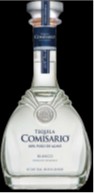 |
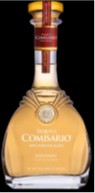 |
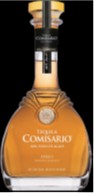 |
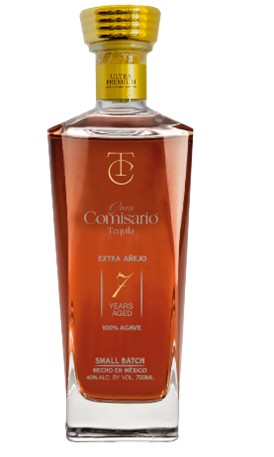 |
| • | Blanco: Blanco tequila is the blue agave spirit in its purest form. It is clear and typically un-aged, where the true flavors and the intensity of the agave are present, as well as the natural sweetness. It can be bottled directly after distillation or stored in stainless steel tanks to settle for up to 4 weeks. |
| • | Reposado: A Reposado tequila is the first stage of “rested and aged.” The tequila is aged in wood barrels or storage tanks between two months and eleven months. The spirit takes on a golden hue, and the taste becomes a good balance between the agave and wood flavors. Many different types of wood barrels are used for aging, with the most common being American or French oak. Some tequilas are aged in previously used bourbon/whiskey, cognac, or wine barrels and will inherit unique flavors from the previous spirit. Comisario® Reposado is aged in American whiskey barrels for seven months. |
| • | Añejo: After aging for at least one year, tequila can be classified as an “Añejo.” The distillers are required to age Añejo tequila in barrels that do not exceed 600 liters or approximately 159 gallons. The aging process darkens the tequila to an amber color, and the flavor can become smoother, richer, and more complex. Our Comisario® Añejo is aged in American whiskey barrels for 23 months. |
| • | Extra Añejo. Legally requiring 3 years of Aging, our current Extra Añejo is aged for 7 years and the upcoming 1st qtr. 2024 release will be aged 9 years. |
The Company’s tequila products are manufactured at Casa Tequilera de Arandas Distillery, situated within Jalisco, Mexico – a province renowned for the production of a Mexican national resource, agave tequila. Comisario® has been certified by the province of Jalisco to use the geographic distinctions of “Tequila” and/or “Tequila 100% De Agave” and continues to maintain such standards. See “Intellectual Property” for further details.
| 38 |
Yamazakura Whiskies and Sasanokawa Sakes
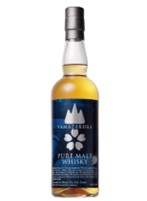 |
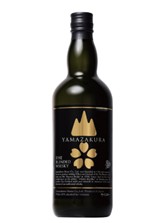 |
Japanese Whiskies are reputed to be the pinnacle of quality and craftsmanship in the Whisky world. A 10 generation old Distillery in Japan, Yamazakura provides the “top” of the category for our entry in this category. Their Sakes have been tasted by multiple industry experts / personnel and received glowing remarks. Whiskies, along with Tequilas are at the very top of the “Brown Spirits” revolution taking over the world.
One of the defining aspects of Yamazakura Whisky is the environment in which it’s crafted. The winds that blow down from Mt. Bandai, along with the seasonal shifts in temperature and humidity, play a critical role in shaping the whisky’s flavor profile. These natural factors create the perfect conditions for slow, careful aging, imparting subtle complexities to the whisky as it matures. The result is a spirit that not only captures the essence of Japanese whisky-making but also reflects the natural beauty and character of the Koriyama region. We then carefully blend a fine selection of world whiskies and single malt which adds to the connection with the natural elements of Koriyama, Yamazakura offers an experience that is both elegant and deeply nuanced.
Sasanokawa’s dedication to small-batch production allows the distillery to focus on quality over quantity, setting it apart from other whisky producers. Each batch of Yamazakura is crafted in limited quantities, allowing the distillers to carefully monitor every step of the process. This hands-on approach ensures that each bottle meets the company’s exacting standards, resulting in a whisky that offers a distinct, refined flavor with every sip.
Mezcal
Stellar Spirits will have 2 entries in this fast growing category. Also agave driven, permitted to be produced in 9 Mexican states and using up to 25 different styles of agave, Mezcals have rocketed in popularity in the past year to become a 2 million case category, with no signs of slowing its growth.
Distribution Strategy and Agreements
On February 25, 2025, the Company and Aragophene, Inc., entered into an extension agreement of the 2023 agreement to the Exclusive Distribution Agreement for the exclusive distribution rights to Yamazakura Whiskies and Sasanokawa sake (the “Yamazakura Agreement”). As per the Yamazakura Agreement the Company agrees to make its best efforts to develop the largest possible market for the [Yamazakura] Products in the Territory and shall continuously offer advertise, demonstrate and otherwise promote the sale of Products in the Territory. Best efforts are defined as selling a minimum of 50,000 bottles of Yamazakura blended whiskey, 300 bottles of Asaka single malt whiskey, and 12,000 bottles of Sasanokawa sake. The Territory is defined as North America and the Caribbean, along with all markets outside of Japan for Stellar branded products including but not limited to Overture Blended Whisky, with the potential for expansion of the Territory. The term of the Yamazakura Agreement is one year, and at the beginning of each subsequent year hereunder the parties will consult together in good faith and agree on the Annual Market Potential applicable to that year; provided, however, that if they cannot agree, the Annual Market Potential for the immediately Preceding year will apply to the current year with an increase of 15% in volume. The Yamazakura Agreement will automatically renew annually for five years provided that the Distributor meets its annual targets with annual growth of 15% during the five-year period.
| 39 |
The foregoing description of the Yamazakura Agreement does not purport to be complete and is qualified in its entirety by reference to the complete text of such agreement, which is filed hereto as Exhibit 6.2, to our Regulation A Offering, and is incorporated herein by reference.
In addition to our role as a brand owner, importer, and marketer, we have selectively chosen specific markets in which to be a distributor, such as California.
We describe below how we have developed our role as a distributor by working with wholly owned distributors and/or joint ventures in a few key domestic and international markets:
On July 1, 2024, the Company entered into a one-year sales and marketing agreement with First Step Beverage, Inc. (“First Step”), pursuant to which First Step provided nationwide sales coverage for the Company’s Comisario® Tequila and Yamazakura Whiskies through a network of over one hundred distributors’ sales personnel. The agreement required the Company to pay First Step $47,500 per month and provided for bonus payments of up to $220,000 based on achievement of sales goals, as well as up to 250,000 shares of restricted stock based on the same goals. The agreement expired on July 1, 2025 and was not renewed. The Company currently manages its sales and distribution relationships directly. The foregoing description of the First Step Beverage Agreement does not purport to be complete and is qualified in its entirety by reference to the complete text of such agreement, which is filed hereto as Exhibit 6.3, to our Regulation A Offering, and is incorporated herein by reference.
Our products are now placed for sale in 42 states through our Distributor network and their direct Sales Personnel.
The following are some of our recent highlights:
Las Vegas, Nevada/Phoenix, Arizona: We have agreements with distributors in both states, allowing us to penetrate the markets in each.
New York/New Jersey/Connecticut Tri State: We currently have relationships with several operators. Tri-Vin’s operators cover New York and New Jersey (our #1 market), and Hartley & Parker operators cover Connecticut.
Multi State agreements with the 3 leading National Distributors:
| · | Southern Glaser Wine and Spirits |
| · | RNDC (Republic National Distributing Co.) |
| · | Breakthru Beverages |
As well as a carefully created association with leading Craft Distributors across the country.
Tequila Market
The domestic and global tequila market has exploded within the past four years. According to Grand View Research the global tequila market size was estimated at USD 10.53 billion in 2023 and is projected to grow at a CAGR of 9.5% from 2024 to 2030. A significant driver is the increasing demand for premium and artisanal tequila. Consumers are shifting their focus toward quality over quantity, with many willing to pay more for high-quality, 100% agave tequilas. This trend is particularly pronounced among younger consumers, with 54% of those aged 18-34 preferring premium ones. The premium segment is projected to grow substantially, contributing significantly to revenue growth in the industry.
| 40 |
Tequila is today the #1 profit contributor in the Spirits category and outgrowing all other Spirit categories. This included a comparable growth in the high-end/ultra-premium segment of the tequila market. The Company predicts the growth trend of the high-end/ultra-premium tequila segment to continue for the foreseeable future, correlating with the greater tequila market trends. The Company believes that it is particularly well-positioned to capitalize on this segment’s growth due to the already high reputation of Comisario® tequilas in the ultra-premium tequila category.
Industry Trend Information
Tequila consumption continues to surge to new heights. According to www.ParkStreet.com (“ParkStreet”), tequila in the U.S. is currently led by mainstay brands such as Jose Cuervo, Patron, Casamigos, Don Julio, and 1800, but high-growth brands like Lunazul, Milagro, Mi Campo, and Gran Coramino are pushing the category forward. Each of these high-growth brands saw their 9-liter case volumes grow by at least 28% from 2022 to 2023, with 400 Conejos Mezcal leading at 75.9% growth in that timeframe.
The states responsible for the highest sales of 9L cases of tequila are:
| · | California – 6.3 million cases |
| · | Texas – 3.7 million cases |
| · | Florida – 1.8 million cases |
| · | Illinois – 1.1 million cases |
| · | Arizona – 1.1 million cases |
The states and territories responsible for selling the most tequila cases per capita included:
| · | Nevada – 298.0 per 1,000 adults |
| · | California – 220.2 per 1,000 adults |
| · | Colorado – 202.3 per 1,000 adults |
| · | Arizona – 197.8 per 1,000 adults |
| · | Texas – 173.0 per 1,000 adults |
Due to the aforementioned factors, the Company believes that increased consumption of tequila will continue to grow and shape the tequila market domestically and globally. The Company also believes that selling its premium products will differentiate it from the competition.
ParkStreet further stated that while a consumer preference for trading up to higher price tiers within spirits has been well-documented across categories, this trend is particularly evident within tequila. In 2023, 27.3% of Supplier Gross Revenues for Tequila/Mezcal was Premium ($100 to $175), 19.5% was High-End Premium ($175 to $255), and 48.2% was Super Premium ($255+), per the Beverage Information Group.
This increase is partially due to increased demand for añejo and extra añejo tequilas, aged for longer periods in oak barrels, as well as single-barrel aged tequilas. Consumers are now consistently trading up to fine and rare sipping tequilas, treating the category much like they treat whiskey due to the nuance and complexities attained through the aging process.
The bars and nightclubs market, severely impacted by COVID-19, saw significant recovery beginning in 2021 and continuing into 2022 and 2023. While on-premise sales have rebounded, they remain slightly below pre-pandemic levels. However, the market is showing a positive trend with increasing consumer confidence and spending in these establishments (Spirits Council).
Overall, the spirits industry and hospitality sector are on a positive trajectory, driven by consumer preferences for high-end products and an improving economic environment. This recovery and growth present robust opportunities for strategic expansion and investment in new properties.
| 41 |
Manufacturing:
Tequila, like Cognac, Champagne, Bordeaux, Scotch has a legally protected “appellation” where nowhere else in the world the Blue Weber Agave can be produced, Processed, distilled and finished, giving it the exclusivity and profit that no other can access. Mexico has agreements with 187 countries to legally respect the appellation.
Our Process:
The Highlands of Jalisco, and within it The Golden Triangle (of Tepatitlan, Arandas and Atotonilco) are now being compared to the “Petite Cognac” growing region of Cognac France. Such is the quality being produced there. While the process is typical (harvesting / cooking / fermenting / distilling / barrel aging), Comisario® Tequila goes through additional steps that are critical in it having become the most awarded Tequila since its release – Harvesting at 6 to 7 years of age, with higher sugar and lower acids (most commercial brands harvest at 4.5 to 5 years of age. Oxygenation for 36 hours giving it the softer more approachable palate feel without losing the inherent quality of agave pepper, spice and earthiness, and finally a unique barrel aging program allowing us to properly round our the balance between fruit and wood.
Current and Future Markets:
In the United States we plan on expanding to four more States (Louisiana, Washington, New Mexico and Oklahoma) in the next ninety days to bring the total number of states that we are distributing for, to a total of 46 States.
Currently our brands are available in the following foreign countries: Japan, Canada, Taiwan, Chile, Puerto Rico, and Costa Rica. We are planning to expand to Europe (Netherlands, Belgium, Luxembourg, Germany, France, Italy, Estonia) as well as Egypt and Singapore during the third quarter. We estimate that we our brands will then be available during the fourth quarter of 2025 or the first quarter of 2026 in the flowing countries: Dubai, Turkey, Israel, Spain, England, Philippines, China, Panama, Brazil, and Columbia. We currently do not have any distribution in those countries, and there is no guarantee that we will be able to expand to those countries in the time frame that we have proposed.
Raw Materials
The raw materials that go into creating different types of spirits can vary depending on the spirit, but items like bottles, caps, and labels are consistent in the make-up of the products.
For our Tequila, all of the raw materials come from within Mexico. All of our Ultra-Premium Tequila is made from 100% Blue Weber Agave, harvested in the highlands (Los Altos) of Jalisco, Mexico. The reason we harvest there has to do with the quality of the agave, as well as for the rules and regulations that govern the production of tequila, as well as price and logistical advantages. The agave used to produce the tequila comes from within the designated jurisdictions of Mexico. Agave prices can be volatile and fluctuate significantly with supply and demand forces.
For our Yamazakura Japanese Whisky, Yamazakura sources all the bottles and labels from multiple sources. The whisky is produced in Koriyama Japan, at the Asaka Distillery. The main water source and the cooling winds come from Mt. Bandai, which we feel imparts a unique quality to our whisky that is difficult to replicate elsewhere. From there we blend different whiskies from around the world, to create our final product. Our goal, and future intention, is to source all the raw whisky-related materials from Japan. We believe this will be important from quality and logistical standpoints.
The consistent components of our products—bottles, caps, and labels—experience price fluctuations, but these are generally less susceptible to market volatility. While inflationary pressures have led to some price increases, these changes have followed a steady upward trend rather than exhibiting significant volatility.
Competition
The alcoholic beverage industry is highly competitive. We believe that we compete on the basis of quality, price, brand recognition and distribution strength. Our premium brands compete with other alcoholic and nonalcoholic beverages for consumer purchases, retail shelf space, restaurant presence and wholesaler attention. We compete with numerous multinational producers and distributors of alcoholic beverage products.
| 42 |
Many of our current and potential competitors have longer operating histories and have substantially greater financial, sales, marketing and other resources than we do, as well as larger installed customer bases, greater name recognition and broader product offerings. Some of these competitors can devote greater resources to the development, promotion, sale and support of their products. As a result, it is possible that our competitors may either respond to industry conditions or consumer trends more rapidly or effectively or resort to price competition to sustain market share, which could adversely affect our sales and profitability.
Over the past ten years, the U.S. wine and spirits industry has undergone dramatic consolidation and realignment of brands and brand ownership. The number of major importers in the U.S. has declined significantly. Today there are seven major importers: Diageo PLC, Pernod Ricard S.A., Bacardi Limited, Brown-Forman Corporation, Beam Suntory Inc., Davide Campari Milano-S.p.A., and Remy Cointreau S.A.
By focusing on the premium and super-premium segments of the market, which typically have higher margins, and having an established, experienced sales force, we believe we are able to gain relatively significant attention from our distributors for a company of our size. Also, the continued consolidation among the major companies is expected to create an opportunity for small to mid-size wine and spirits companies, as the major companies contract their portfolios to focus on fewer brands.
Our Competitive Strengths
We believe that we have the following competitive strengths:
| · | Award Winning Premium Spirits in High Growth Categories |
Our spirits are award winning, high quality, premium branded spirits with potential in the higher growth categories of the distilled spirits industry. All three varieties of our Comisario® tequila (Blanco, Reposado and Añejo) have consistently garnered the highest awards and industry honors. See Exhibit 6.1 for more information about awards and rankings.
| · | Experienced Sales Force and Marketing Infrastructure |
We have developed an effective sales and marketing infrastructure, through the use of First Step Beverage and similar companies in order to efficiently execute our sales plan. We have also developed focused advertising, marketing and promotional programs and campaigns.
| · | Experienced Management |
We believe that we have a highly qualified and experienced management through our CEO, Luis Cota, who has a successful track record in brand development, the distilled spirits industry and mergers and acquisitions. Luis Cota, our Chief Executive Officer and President, started his career with the Gallo Winery and has more than 40 years of experience in the industry.
| · | Successful Track Record of Establishing Strategic Partnerships |
We have experienced recent achievements establishing strategic partnerships with the owners of alcoholic beverage brands seeking to increase sales beyond their home markets, providing the opportunity for the brands to achieve global growth. We believe this track record will allow us to attract additional brands to our portfolio.
| · | Key Distribution Relationships |
Stellar Spirits & Wines Inc. has recently signed with a North American distributor who will distribute our product to licensed retail and on-premise locations in 42 states. We are currently working on major retailers with 400+ locations to immediately increase our sales. However as of this Offering we do not have any agreements with major retailers and there can be no guarantee that we will ever enter into any agreements with them.
VIP (Vermont Information Processing) will work with all of our distributors across the United States to generate daily download sales & account information, then passed on to marketing and sales for data translational and strategic alignment.
You can purchase Tequila Comisario® online at popular spirit & wine e-retailers such as CW Spirits among others, we plan to grow our distribution through our sales and marketing strategies which will increase demand for our products among the distributors worldwide.
| 43 |
Growth and Distribution Strategy
Our objective is to continue building a distinctive portfolio of global premium spirits brands, with a primary focus on increasing both our total and individual brand case sales. To achieve this, we are well into the development of our planned mezcal and whiskey programs, pursuing associations with selected celebrity partnerships to allow for a quick scaling up of those programs. In addition, we are exploring two other new projects in the rapidly growing flavored spirits and hard seltzer segments.
| • | Develop Focused Sales Efforts in Key Markets |
| o | See “Distributor” above for review of this category. |
| • | Increase Market Penetration of our Existing Spirits Brands |
| o | We are utilizing our existing distribution relationships and sales expertise to achieve growth and gain additional market share within retail stores, bars and restaurants, both domestically and internationally; adding experienced salespeople in selected markets; increasing sales to national chain accounts; and expanding our international distribution relationships. |
| • | Build Brand Awareness through innovative Marketing, Advertising and Promotional Activities |
Our market-leading awards (Our Comisario® brand has received the most awards since its release) have opened doors for creative and compelling campaigns (Tequila Masters’ Program, leading Añejo programs, Highlands Appellation, etc.) to establish and reinforce the image of our brands domestically and globally through the coordinated efforts of our experienced internal marketing personnel and experienced third-party design and advertising firms.
Advertising, Marketing and Promotion
To build our brands, we must effectively communicate with three distinct audiences: our distributors, the retail trade and the end consumer. Advertising, marketing and promotional activities help to establish and reinforce the image of our brands in our efforts to build substantial brand value. We have budgeted $2 million for our advertising, marketing, and promotional efforts over the next 12 to 18 months. We continually review our budget and revise it according to market penetration, development, cash flow and opportunity.
The Company will be using a variety of marketing techniques to brand and market our products. With a combination of various advertising media, innovative marketing techniques, special events, telemarketing, on-site promotions, press and media coverage. The Company has created and tested a comprehensive and targeted marketing and branding strategy that rivals or exceeds the big brands, at a much lower cost per million dollars. We have positioned ourselves to utilize non-traditional forms or exposure, such as in-house custom designed graphics allowing us to place maximum expose at a minimal cost. Our brands reputation for high quality and innovative products will become the de facto leader of the ultra-premium segment.
Sales Representatives
The Company also intends to use the net proceeds from this Offering to expand traditional sales activities by utilizing and expanding its salesforce throughout the US to spread marketing message and brand awareness, conduct brand tasting and product placement via distributor partners to restaurants and retailers.
Trademarks are an important aspect of our business. We sell our products under a number of trademarks, which we own or use under license. Our brands are protected by trademark registrations or are the subject of pending applications for trademark registration in the U.S. and in other areas where we distribute, or plan to distribute, our brands as part of our planned expansion of distribution territories.
| 44 |
The Company owns the following trademarks:
| MARK | OFFICE |
REGISTRATION NO. |
TRADEMARK TYPE | |||
| Comisario - Bottles | USPTO | US D618,109S | Design Patent | |||
| Comisario | Australia | 2026833 | Trademark | |||
| Comisario | Taiwan | 02045199 | Trademark | |||
| Comisario | China | 42433587 | Trademark | |||
| Comisario | China | 42452297 | Trademark | |||
| Comisario | Int’l Registration | 1518505 | Trademark | |||
| Comisario | United Kingdom | 00801518505 | Trademark | |||
| Comisario | Mexico | MX32021 | Design Patent |
The Company has permission to use the following geographical indication:
| · | The State of Jalisco has certified that Comisario® is permitted to use the geographical indication “Tequila” and “Tequila 100% De Agave” | |
| · | “Tequila” and or “Tequila 100% De Agave” is a geographical indication for a distilled beverage made from the blue agave plant, primarily in the area surrounding the city of Tequila in the Jaliscan Highlands of the central western Mexican state of Jalisco. Tequila is the national spirit of Mexico along with one of Mexico’s largest exports. As such “Tequila” was recognized by the EU in 2019 and placed on the EU geographical indications register. |
All other intellectual property is in the form of trade secrets, business methods and know-how and is protected through intellectual property assignment and confidentiality agreements with the Company’s employees, advisors and consultants.
Seasonality
Our industry is subject to seasonality with peak retail sales generally occurring in the fourth calendar quarter, primarily due to seasonal holiday buying. Historically, this holiday demand typically resulted in higher sales for us in our first and fourth fiscal quarters.
Regulation
We face extensive government regulation both within and outside the U.S. relating to the development, manufacture, marketing, sale and distribution of our alcoholic beverage products. The following sections describe certain significant regulations that we are subject to. These are not the only regulations that our businesses must comply with. For a description of risks related to the regulations that our businesses are subject to, please refer to the section entitled “Risk Factors—Risks Related to Our Businesses.”
Federal, state, local, and foreign authorities regulate the production, storage, transportation, distribution and sale of our products. Some countries and local jurisdictions prohibit or restrict the marketing or sale of distilled spirits in whole or in part.
In the United States, at the federal level, the Alcohol and Tobacco Tax and Trade Bureau of the U.S. Department of the Treasury regulates the wine and spirits industry with respect to the production, blending, bottling, labeling, sales, advertising, and transportation of beverage alcohol. Similar regulatory regimes exist at the state level and in most non-U.S. jurisdictions where we sell our products. In addition, beverage alcohol products are subject to customs duties or excise taxation in many countries, including taxation at the federal, state, and local level in the U.S.
Laws of each nation define distilling and maturation requirements. Mexican authorities regulate the production and bottling of tequilas; they mandate minimum aging periods for extra añejo (three years), añejo (one year), and reposado (two months) tequilas. We believe that we comply with all of the above laws and regulations.
| 45 |
Environmental Regulations
Our operations and properties are subject to laws and regulations relating to environmental protection, including those governing air emissions, water discharges and waste management, and workplace health and safety. In addition, certain of our proposed products are regulated by the U.S. Environmental Protection Agency and comparable state regulatory agencies. For a discussion of risks related to compliance with environmental and health and safety laws and risks related to past or future releases of, or exposures to, hazardous substances, please refer to the section entitled “Risk Factors—Risks Related to Our Businesses.”
Property
Our principal offices are located in Anaheim, California address 970 North Tustin Avenue, Suite 100, Anaheim, California 92807. We have approximately 2,500 square feet on two floors, with an ongoing favorable lease with a base rent of $3,800 per month, ending March 31, 2024. We do not foresee any issues with extending the lease going forward at a similar rental amount.
During the fiscal years ending December 31, 2023, and 2022 the Company invested in leased property that was to be used as corporate offices in Anaheim, California. Rent from that facility for the Twelve months ended December 31, 2024, and December 31, 2023, is $38,200 respectively.
Employees
The Company’s business model relies primarily on outsourced manufacturing, distribution, sales and marketing services, with a limited number of internal employees focused on management and administrative functions. Other than our Officers and Directors we have two full-time and no part-time employees of our business or operations who are employed at will by Stellar Spirits and Wines, Inc. We anticipate adding additional employees in the next 12 months, as needed.
As of the date of this Offering Circular, we have 2 full time employees and no part time employees. The following table illustrates the allocation of these employees among the various job functions conducted at our Company:
| Department | Number of Employees | |
| Management | 1 | |
| Sales / Administrative | 1 | |
| Total | 2 | |
| And a selection of Brokers / Agents in various markets. | ||
We have good relations with all our employees, and we are not aware of any labor disputes, problems or disruptions.
Legal Proceedings
We may from time to time be involved in various claims and legal proceedings of a nature we believe are normal and incidental to our business. These matters may include product liability, intellectual property, employment, personal injury caused by our employees, and other general claims. We are not presently a party to any legal proceedings that, in the opinion of our management, are likely to have a material adverse effect on our business. Regardless of outcome, litigation can have an adverse impact on us because of defense and settlement costs, diversion of management resources and other factors.
| 46 |
__________
The following table sets forth information regarding our executive officers, directors and significant employees, including their ages as of December 31, 2025:
As of December 31, 2025, the Stellar Spirits and Wines, Inc. had 2 full-time employees, and no part-time employees.
The directors and executive officers of the Company as of December 31, 2025, are as follows:
| Name | Position | Age | Approx. Hours Per Week | |||
| Luis Cota | CEO, CFO, Secretary, Director | 75 | 40 |
Luis Cota – CEO, CFO, Secretary and Director
Luis Cota is our Chief Executive Officer and President and has held those positions since October 2021. Mr. Cota has more than 40 years of experience in the wine and spirits industry. He started his career by spending eight years with the Gallo Winery, holding various positions throughout the United States. Following his time at the Gallo Winery, Mr. Cota spent more than seven years with the Heublein Inglenook Napa Valley Company (now Diageo), managing distribution and running the Central Pacific Region. After working for a select number of Napa Valley wineries, Mr. Cota went on to work for EOS Estate as their National Sales Director for seven years, introduced Tequila Cazadores to the U.S. market, then opened his own company, The Wilkes Wine Group. From 2009 – 2020 Mr. Cota was the National Sales Director and President of EBI, Inc. Mr. Cota is fluent in Spanish, and has high level contacts and experience in Jalisco, Mexico (home of tequila). For the aforementioned reasons we believe that Mr. Cota is an excellent choice to run our Company.
None of our officers or directors in the last five years has been the subject of any conviction in a criminal proceeding or named as a defendant in a pending criminal proceeding (excluding traffic violations and other minor offenses), the entry of an order, judgment, or decree, not subsequently reversed, suspended or vacated, by a court of competent jurisdiction that permanently or temporarily enjoined, barred, suspended or otherwise limited such person’s involvement in any type of business, securities, commodities, or banking activities; a finding or judgment by a court of competent jurisdiction (in a civil action), the Securities and Exchange Commission, the Commodity Futures Trading Commission, or a state securities regulator of a violation of federal or state securities or commodities law, which finding or judgment has not been reversed, suspended, or vacated; or the entry of an order by a self-regulatory organization that permanently or temporarily barred, suspended or otherwise limited such person’s involvement in any type of business or securities activities.
There are no family relationships among and between our directors, officers, persons nominated or chosen by the Company to become directors or officers, or beneficial owners of more than five percent (5%) of the any class of the Company’s equity securities.
| 47 |
__________
The following summary compensation table sets forth all compensation awarded to, earned by, or paid to our named executive Officer paid by us during the year ended December 31, 2024, in all capacities for the accounts of our executives, including the Chief Executive Officer (CEO) and Chief Financial Officer (CFO), Chief Operating Officer (COO), President (P), and Executive Vice President (EVP).
| Name and Principal Position | Year |
Salary ($) |
Bonus ($) |
Stock Awards ($) |
Option Awards ($) |
Non-Equity Incentive Plan Compensation ($) |
Non-Qualified Deferred Compensation Earnings ($) |
All Other Compensation ($) |
Totals ($) |
||||||||||
| Luis Cota (1) | 2023 | 7,500 | 0 | 0 | 0 | 0 | 0 | 0 | 7,500 | ||||||||||
| CEO, CFO, Secretary, Director | 2024 | 7,500 | 0 | 0 | 0 | 0 | 0 | 0 | 7,500 | ||||||||||
| Aggregate Annual Compensation for All Officers and Directors (1 person) | 2024 | 7,500 | 0 | 0 | 0 | 0 | 0 | 0 | 7,500 |
| (1) | Currently we do not have any ongoing plans or arrangements with our officers or directors for any proposed compensation. We will not pay our Officers or Directors from proceeds of this Offering. In the future the Company may enter into discussions with its Officer and Directors in regards to compensation agreements but as of this Offering the Company has not entered into any compensation agreements with its Officer and Director. |
Narrative Disclosure to Summary Compensation Table
There are no compensatory plans or arrangements, including payments to be received from the Company with respect to any executive Officer, that would result in payments to such person because of his or her resignation, retirement or other termination of employment with the Company, or its subsidiaries, any change in control, or a change in the person’s responsibilities following a change in control of the Company.
Outstanding Equity Awards at Fiscal Year-End
No executive Officer received any equity awards, or holds exercisable or unexercisable options, as of the year ended December 31, 2024.
| OPTION AWARDS | STOCK AWARDS | |||||||||||||||||||
| Name | Number of Securities Underlying Unexercised Options (#) Exercisable | Number of Securities Underlying Unexercised Options (#) Unexercisable |
Equity Incentive Plan Awards: Number of Securities Underlying Unexercised Unearned Options (#) |
Option Exercise Price ($) | Option Expiration Date | Number of Shares or Shares of Stock that have not Vested (#) |
Market Value of Shares or Shares of Stock that have not Vested ($) |
Equity Incentive Plan Awards: Number of Unearned Shares, Shares or Other Rights that have not Vested ($) |
Equity Incentive Plan Awards: Market or Payout Value of Unearned Shares, Shares or Other Rights that have not Vested ($) |
|||||||||||
| (a) | (b) | (c) | (d) | (e) | (f) | (g) | (h) | (i) | (j) | |||||||||||
| None | 0 | 0 | 0 | 0 | 0 | 0 | 0 | 0 | 0 | |||||||||||
| 48 |
Long-Term Incentive Plans
There are no arrangements or plans in which the Company would provide pension, retirement or similar benefits for our Director or executive Officer.
Compensation Committee
The Company currently does not have a compensation committee of the Board of Directors. The Board of Directors as a whole determines executive compensation.
Compensation of Directors
Directors are permitted to receive fixed fees and other compensation for their services as Directors. The Board of Directors has the authority to fix the compensation of Directors. No amounts have been paid to, or accrued to, Directors in such capacity.
Director Independence
The Board of Directors is currently composed of 1 member. Luis Cota, who does not qualify as an independent Director in accordance with the published listing requirements of the NASDAQ Global Market. The NASDAQ independence definition includes a series of objective tests, such as that the Director is not, and has not been for at least three years, one of the Company’s employees and that neither the Director, nor any of his family members has engaged in various types of business dealings with us. In addition, the Board of Directors has not made a subjective determination as to the Director that no relationships exist which, in the opinion of the Board of Directors, would interfere with the exercise of independent judgment in carrying out the responsibilities of a Director, though such subjective determination is required by the NASDAQ rules. Had the Board of Directors made these determinations, the Board of Directors would have reviewed and discussed information provided by the Director and the Company with regard to our Director’s business and personal activities and relationships as they may relate to the Company and its management.
Security Holders Recommendations to Board of Directors
The Company welcomes comments and questions from the shareholders. Shareholders can direct communications to Luis Cota, our CEO, 970 North Tustin Avenue, Suite 100, Anaheim, California 92807. Our main telephone number is (714) 242-5130. However, while the Company appreciates all comments from shareholders, it may not be able to individually respond to all communications. Management attempts to address shareholder questions and concerns in press releases and documents filed with the SEC so that all shareholders have access to information about the Company at the same time. Luis Cota collects and evaluates all shareholder communications. All communications addressed to the Director and executive Officer will be reviewed by Luis Cota unless the communication is clearly frivolous.
| 49 |
CERTAIN RELATIONSHIPS AND RELATED PARTY TRANSACTIONS
__________
During the last two full fiscal years and the current fiscal year or any currently proposed transaction, there is no transaction involving the Company, in which the amount involved exceeds the lesser of $120,000 or one percent of the average of the Company’s total assets at year-end for its last three fiscal years.
Disclosure of Conflicts of Interest
Other than the aforementioned, there are no conflicts of interest between the Company and any of its officers or directors.
Stock Options
We have not issued and do not have outstanding any options to purchase shares of our Common Stock. We do not have any stock option plans.
Share Purchase Warrants
We have not issued and do not have outstanding any warrants to purchase shares of our Common Stock
Our articles of incorporation provide that no Director or Officer shall be personally liable for damages for breach of fiduciary duty for any act or omission unless such acts or omissions involve intentional misconduct, fraud, knowing violation of law, or payment of dividends in violation of the California Corporations Code.
California General Corporation Law
Under Section 317 of the California Corporations Code, or the CalCorpCode, a California corporation has the power to indemnify any person who was or is a party, or is threatened to be made a party to any proceeding (other than an action by or in the right of the corporation to procure a judgment in its favor) by reason, whether civil, criminal, administrative or investigative (other than an action by or in the right of the corporation) by reason of the fact that he or she is or was an agent of the corporation, against expenses (including attorneys’ fees), judgments, fines, settlements and other amounts actually and reasonably incurred in connection with the proceeding if that person acted in good faith and in a manner he or she reasonably believed to be in the best interests of the corporation and, in the case of a criminal proceeding, had no reasonable cause to believe his or her conduct was unlawful.
In addition, a California corporation shall have power to indemnify any person who was or is a party or is threatened to be made a party to any threatened, pending or completed action by or in the right of the corporation to procure a judgment in its favor by reason of the fact that the person is or was an agent of the corporation, against expenses actually and reasonably incurred by that person in connection with the defense or settlement of the action if the person acted in good faith, in a manner the person believed to be in the best interests of the corporation and its shareholders, provided that no indemnification shall be made for any of the following (1) with respect to any claim, issue, or matter as to which such person has been adjudged to have been liable to the corporation in the performance of that person’s duty to the corporation and its shareholders, unless and only to the extent that the court in which the proceeding is or was pending shall determine upon application that, in view of all the circumstances of the case, the person is fairly and reasonably entitled to indemnity for expenses and then only to the extent that the court shall determine; (2) of amounts paid in settling or otherwise disposing of a pending action without court approval; or (3) of expenses incurred in defending a pending action which is settled or otherwise disposed of without court approval.
Section 317 of the CalCorpCode also provides that, to the extent that an agent of a corporation has been successful on the merits in the defense of any proceeding referred to in either of the foregoing paragraphs or in defense of any claim, issue or matter therein, the agent shall be indemnified against expenses actually and reasonably incurred by the agent in connection therewith.
| 50 |
Section 317 of the CalCorpCode also provides that to the extent that an agent of a corporation has been successful on the merits in defense of any proceeding referred to above or in defense of any claim, issue, or matter therein, the agent shall be indemnified against expenses actually and reasonably incurred by the agent in connection therewith.
Except as provided in the paragraph above, any indemnification under this section shall be made by the corporation only if authorized in the specific case, upon a determination that indemnification of the agent is proper in the circumstances because the agent has met the applicable standard of conduct set forth above, by any of the following: (1) a majority vote of a quorum consisting of directors who are not parties to such proceeding, (2) if such a quorum of directors is not obtainable, by independent legal counsel in a written opinion, (3) approval of the shareholders (Section 153), with the shares owned by the person to be indemnified not being entitled to vote thereon, or (4) The court in which the proceeding is or was pending upon application made by the corporation or the agent or the attorney or other person rendering services in connection with the defense, whether or not the application by the agent, attorney or other person is opposed by the corporation.
Articles of Incorporation and Bylaws
The Company’s articles of incorporation provide that the liability of the directors of the Corporation for monetary damages shall be eliminated to the fullest extent permissible under California law. Our articles of incorporation and bylaws also provide that we are authorized to provide indemnification of agents (as defined in Section 317 of the Corporations Code) for breach of duty to the corporation and its shareholders through bylaw provisions or through agreements with agents, or both, in excess of the indemnification otherwise permitted by Section 317 of the Corporations Code, subject to the limits of such excess indemnification set forth in Section 204 of the Corporations Code.
We do not currently maintain standard policies of insurance under which coverage is provided (a) to our Director, Officer, employees and other agents against loss arising from claims made by reason of breach of duty or other wrongful act, and (b) to us with respect to payments which may be made by us to such Officers and Directors pursuant to the above indemnification provision or otherwise as a matter of law, although we may do so in the future.
Insofar as indemnification for liabilities arising under the Securities Act may be permitted to Directors, Officers and controlling persons of the Company pursuant to the foregoing provisions, or otherwise, the Company has been advised that in the opinion of the Securities and Exchange Commission such indemnification is against public policy and is, therefore, unenforceable.
Provisions Relating to Shareholder Liability - Dissolution of the Company
Cal. Corp. Code Sec. 2011(a)(1)(B) states that causes of action against a dissolved corporation, whether arising before or after the dissolution of the Company, may be enforced against Shareholders if any of the assets of the dissolved corporation have been distributed to Shareholders, to the extent of their pro rata share of the claim or to the extent of the Company’s assets distributed to them upon dissolution of the Company, whichever is less.
A Shareholder’s total liability under this section may not exceed the total amount of assets of the dissolved Company distributed to the Shareholder upon dissolution of the Company.
Cal. Corp. Code Sec. 2011(a)(2) states that except as set forth in subdivision (c) below, all causes of action against a Shareholder of a dissolved corporation arising under the California Corporations Code are extinguished unless the claimant commences a proceeding to enforce the cause of action against that Shareholder of a dissolved corporation prior to the earlier of the following:
(A) The expiration of the statute of limitations applicable to the cause of action.
(B) Four years after the effective date of the dissolution of the corporation.
| 51 |
Cal. Corp. Code Sec. 2011(a)(3) states that as a matter of procedure only, and not for purposes of determining liability, Shareholders of the dissolved corporation may be sued in the corporate name of the corporation upon any cause of action against the corporation. This section does not affect the rights of the corporation or its creditors under Section 2009, or the rights, if any, of creditors under the Uniform Voidable Transactions Act, which may arise against the shareholders of a corporation.
Review, Approval or Ratification of Transactions with Related Parties
We plan to adopt a related-party transactions policy under which our executive officers, directors, nominees for election as a director, beneficial owners of more than 5% of any class of our Common Stock, and any members of the immediate family of any of the foregoing persons are not permitted to enter into a related-party transaction with us without the consent of our audit committee. If the related party is, or is associated with, a member of our audit committee, the transaction must be reviewed and approved by another independent body of our Board of Directors, such as our governance committee. Any request for us to enter into a transaction with a related party in which the amount involved exceeds $120,000 and such party would have a direct or indirect interest must first be presented to our audit committee for review, consideration and approval. If advance approval of a related-party transaction was not feasible or was not obtained, the related-party transaction must be submitted to the audit committee as soon as reasonably practicable, at which time the audit committee shall consider whether to ratify and continue, amend and ratify, or terminate or rescind such related-party transaction. All of the transactions described above were reviewed and considered by, and were entered into with the approval of, or ratification by, our Board of Directors.
During the last two full fiscal years and the current fiscal year or any currently proposed transaction, there are transactions involving the issuer, in which the amount involved exceeds the lesser of $120,000 or one percent of the average of the issuer’s total assets at year-end for its last three fiscal years, except compensation awarded to executives.
Related Party Transactions
There are no related party transactions.
Disclosure of Conflicts of Interest
There are no conflicts of interest between the Company and its officer or director.
Legal/Disciplinary History
None of Stellar Spirits and Wines, Inc.’s Officers or Directors have been the subject of any criminal proceeding or named as a defendant in a pending criminal proceeding (excluding traffic violations and other minor offenses);
None of Stellar Spirits and Wines, Inc.’s Officers or Directors have been the subject of any entry of an order, judgment, or decree, not subsequently reversed, suspended or vacated, by a court of competent jurisdiction that permanently or temporarily enjoined, barred, suspended or otherwise limited such person’s involvement in any type of business, securities, commodities, or banking activities;
None of Stellar Spirits and Wines, Inc.’s Officers or Directors have been the subject of any finding or judgment by a court of competent jurisdiction (in a civil action), the Securities and Exchange Commission, the Commodity Futures Trading Commission, or a state securities regulator of a violation of federal or state securities or commodities law, which finding or judgment has not been reversed, suspended, or vacated; or
None of Stellar Spirits and Wines, Inc.’s Officers or Directors has been the subject of any entry of an order by a self-regulatory organization that permanently or temporarily barred, suspended or otherwise limited such person’s involvement in any type of business or securities activities.
| 52 |
Board Composition
Our board of directors currently consists of one member. Each director of the Company will serve until the next annual meeting of stockholders and until his successor is elected and duly qualified, or until his earlier death, resignation or removal. Our board is authorized to appoint persons to the offices of Chairman of the Board of Directors, President, Chief Executive Officer, one or more vice presidents, a Treasurer or Chief Financial Officer and a Secretary and such other offices as may be determined by the board.
We have no formal policy regarding board diversity. In selecting board candidates, we seek individuals who will further the interests of our stockholders through an established record of professional accomplishment, the ability to contribute positively to our collaborative culture, knowledge of our business and understanding of our prospective markets.
Board Leadership Structure and Risk Oversight
The board of directors oversees our business and considers the risks associated with our business strategy and decisions. The board currently implements its risk oversight function as a whole. Each of the board committees when established will also provide risk oversight in respect of its areas of concentration and reports material risks to the board for further consideration.
Code of Business Conduct and Ethics
Prior to one year from the date of this Offering’s qualification, we plan on adopting a written code of business conduct and ethics that applies to our directors, officers and employees, including our principal executive officer, principal financial officer and principal accounting officer or controller, or persons performing similar functions. We will post on our website a current copy of the code and all disclosures that are required by law or market rules in regard to any amendments to, or waivers from, any provision of the code.
| 53 |
__________
The following table sets forth certain information known to us regarding beneficial ownership of our capital stock as of December 31, 2025 for (i) all executive officers and directors as a group and (ii) each person, or group of affiliated persons, known by us to be the beneficial owner of more than five percent (5%) of our capital stock. The percentage of beneficial ownership in the table below is based on 323,000,000 shares of common stock deemed to be outstanding as of December 31, 2025.
The following table gives information on ownership of our securities as of December 31, 2025. The following lists ownership of our Common Stock by each person known by us to be the beneficial owner of over 5% of the outstanding Common, and by our officers and directors:
| Name of Beneficial Owner | Amount and Nature of Beneficial Ownership(1) |
Percentage of Beneficial Ownership |
||||
| Directors and Officers: | ||||||
| Luis Cota, CEO, CFO, Secretary, Director | 23,000,000 | 5.13yes pr%(2) | ||||
| All executive officers and directors as a group (1 person) | 23,000,000 | 5.13% Common Stock
5.13%(2) Total Common Vote |
||||
_____________
| (1) | Under Rule 13d-3, a beneficial owner of a security includes any person who, directly or indirectly, through any contract, arrangement, understanding, relationship, or otherwise has or shares: (i) voting power, which includes the power to vote, or to direct the voting of shares; and (ii) investment power, which includes the power to dispose or direct the disposition of shares. Certain shares may be deemed to be beneficially owned by more than one person (if, for example, persons share the power to vote or the power to dispose of the shares). In addition, shares are deemed to be beneficially owned by a person if the person has the right to acquire the shares (for example, upon exercise of an option) within 60 days of the date as of which the information is provided. In computing the percentage ownership of any person, the amount of shares outstanding is deemed to include the amount of shares beneficially owned by such person (and only such person) by reason of these acquisition rights. As a result, the percentage of outstanding shares of any person as shown in this table does not necessarily reflect the person’s actual ownership or voting power with respect to the number of shares of common stock actually outstanding. |
| (2) | Based upon 323,000,000 common shares issued and outstanding, without conversions as of December 31, 2025. |
INTEREST OF MANAGEMENT AND OTHERS IN CERTAIN TRANSACTIONS
__________
Other than as reported herein, during the last two full fiscal years and the current fiscal year or any currently proposed transaction, there is no transaction involving the Company, in which the amount involved exceeds the lesser of $120,000 or one percent of the average of the Company’s total assets at year-end for its last three fiscal years.
| 54 |
__________
The Company’s Authorized Stock
We are authorized to issue One Billion (1,000,000,000) shares of common stock with a par value of $0.0001 per share (the “Common Stock”) and Zero (0) shares of preferred stock (the “Preferred Stock”). Each share of common stock is entitled to one vote per share of common stock.
Common Stock
No shareholders of the Company holding Common Stock have any preemptive or other right to subscribe for any additional unissued or treasury shares of stock or for other securities of any class.
Subject to the potential rights of holders of Preferred Stock, holders of Common Stock shall be entitled to receive such cash dividends as may be declared thereon by the Board from time to time out of assets of funds of the Company legally available, therefore.
Cumulative Voting. Except as otherwise required by applicable law, there shall be no cumulative voting on any matter brought to a vote of stockholders of the Company.
Except as otherwise required by the California Corporations Code, the Articles of Incorporation, or any designation for a class of Preferred Stock (which may provide that an alternate vote is required), (i) all shares of capital stock of the Company shall vote together as one class on all matters submitted to a vote of the shareholders of the Company; and (ii) the affirmative vote of a majority of the voting power of all outstanding shares of voting stock entitled to vote in connection with the applicable matter shall be required for approval of such matter.
Adoption of Bylaws. In the furtherance and not in limitation of the powers conferred by statute and the Articles of Incorporation, the Board is expressly authorized to adopt, repeal, rescind. alter or amend in any respect the bylaws of the Company.
Shareholder Amendment of Bylaws. The Bylaws may also be adopted, repealed, rescinded, altered or amended in any respect by the stockholders of the Company, but only by the affirmative vote of the holders of not less than a majority of the voting power of all outstanding shares of voting stock, regardless of class and voting together as a single voting class.
Removal of Directors. Except as may otherwise be provided in connection with rights to elect additional directors under specified circumstances, which may be granted to the holders of any class or series of Preferred Stock, any director may be removed from office only by the affirmative vote of the holders of not less than a majority of the voting power of the issued and outstanding stock entitled to vote. Failure of an incumbent director to be nominated to serve an additional term of office shall not be deemed a removal from office requiring any stockholder vote.
Preferred Stock
The powers, preferences, rights, qualifications, limitations and restrictions pertaining to the Preferred Stock, or any series thereof, shall be such as may be fixed, from time to time, by the Board in its sole discretion. Authority to do so being hereby expressly vested in the Board. The authority of the Board with respect to each such series of Preferred Stock will include, without limiting the generality of the foregoing, the determination of any or all of the following:
The number of shares of any series and the designation to distinguish the shares of such series from the shares of all other series: (1) the voting powers, if any, of the shares of such series and whether such voting powers are full or limited: (2) the redemption provisions, if any, applicable to such series, including the redemption price or prices to be paid; (3) whether dividends, if any, will be cumulative or noncumulative, the dividend rate or rates of such series and the dates and preferences of dividends on such series: (4) the rights of such series upon the voluntary or involuntary dissolution of, or upon any distribution of the assets of. the Company: (5) the provisions, if any, pursuant to which the shares of such series are convertible into, or exchangeable for, shares of any other class or classes of any other series of the same other any other class or classes of stock or any other security, of the Company or any other Company or entity, and the rates or other determinants of conversion or exchange applicable thereto; (6) the right, if any, to subscribe for or to purchase any securities of the Company or any other Company or other entity; (7) the provisions, if any. of a sinking fund applicable to such series: and (8) any other relative, participating, optional or other powers, preferences or rights, and any qualifications, limitations or restrictions thereof. of such series.
| 55 |
__________
We have never declared or paid cash dividends on our capital stock. We currently intend to retain any future earnings for use in the operation of our business and do not intend to declare or pay any cash dividends in the foreseeable future. Any further determination to pay dividends on our capital stock will be at the discretion of our Board of Directors, subject to applicable laws, and will depend on our financial condition, results of operations, capital requirements, general business conditions, and other factors that our Board of Directors considers relevant.
__________
Current Offering
Stellar Spirits and Wines, Inc. (“STELLAR,” “We,” or the “Company”) is offering up to $10,000,000 total of Shares, each Share consisting of one (1) share of Common Stock, $0.0001 par value (the “Shares” or collectively the “Securities”).
Transfer Agent
Our transfer agent is Vstock Transfer LLC, whose address is 18 Lafayette Place, LLC, telephone number is (212) 828-8436, and website is www.VStockTransfer.com.
The transfer agent is registered under the Exchange Act and operates under the regulatory authority of the SEC and FINRA.
SHARES ELIGIBLE FOR FUTURE SALE
__________
Prior to this Offering, there has been no market for our Common Stock. Future sales of substantial amounts of our Common Stock, or securities or instruments convertible into our Common Stock, in the public market, or the perception that such sales may occur, could adversely affect the market price of our Common Stock prevailing from time to time. Furthermore, because there will be limits on the number of shares available for resale shortly after this Offering due to contractual and legal restrictions described below, there may be resales of substantial amounts of our Common Stock in the public market after those restrictions lapse. This could adversely affect the market price of our Common Stock prevailing at that time.
Rule 144
In general, a person who has beneficially owned restricted shares of our Common Stock for at least twelve months, in the event we are a reporting company under Regulation A, or at least six months, in the event we have been a reporting company under the Exchange Act for at least 90 days before the sale, would be entitled to sell such securities, provided that such person is not deemed to be an affiliate of ours at the time of sale or to have been an affiliate of ours at any time during the 90 days preceding the sale. A person who is an affiliate of ours at such time would be subject to additional restrictions, by which such person would be entitled to sell within any three-month period only a number of shares that does not exceed the greater of the following:
| · | 1% of the number of shares of our Common Stock then outstanding; or the average weekly trading volume of our Common Stock during the four calendar weeks preceding the filing by such person of a notice on Form 144 with respect to the sale; |
provided that, in each case, we are subject to the periodic reporting requirements of the Exchange Act for at least 90 days before the sale. Rule 144 trades must also comply with the manner of sale, notice and other provisions of Rule 144, to the extent applicable.
| 56 |
__________
Certain legal matters with respect to the shares of common stock offered hereby will be passed upon by Dovi Berger, Esq. of Berger Law Firm, LLC, Cedarhurst, N.Y.
__________
The financial statements of the Company appearing elsewhere in this Offering Circular have been prepared by management and have not been reviewed by an independent accountant.
WHERE YOU CAN FIND MORE INFORMATION
__________
We have filed with the SEC a Regulation A Offering Statement on Form 1-A under the Securities Act with respect to the shares of common stock offered hereby. This Offering Circular, which constitutes a part of the Offering Statement, does not contain all of the information set forth in the Offering Statement or the exhibits and schedules filed therewith. For further information about us and the common stock offered hereby, we refer you to the Offering Statement and the exhibits and schedules filed therewith. Statements contained in this Offering Circular regarding the contents of any contract or other document that is filed as an exhibit to the Offering Statement are not necessarily complete, and each such statement is qualified in all respects by reference to the full text of such contract or other document filed as an exhibit to the Offering Statement. Upon the completion of this Offering, we will be required to file periodic reports, proxy statements, and other information with the SEC pursuant to the Securities Exchange Act of 1934. You may read and copy this information at the SEC’s Public Reference Room, 100 F Street, N.E., Room 1580, Washington, D.C. 20549. You may obtain information on the operation of the Public Reference Room by calling the SEC at 1-800-SEC-0330. The SEC also maintains an Internet website that contains reports, proxy statements and other information about issuers, including us, that file electronically with the SEC. The address of this site is www.sec.gov.
| 57 |
TABLE OF CONTENTS
(UNAUDITED)
| F-1 |
Stellar Spirits and Wines, Inc.
(Unaudited)
| December 31, | December 31, | |||||||
| 2025 | 2024 | |||||||
| ASSETS | ||||||||
| Current Assets: | ||||||||
| Cash and cash equivalents | $ | 52,696 | $ | 45,864 | ||||
| Accounts receivable, net | 2,515,733 | 332,839 | ||||||
| Inventory | 2,202,582 | 3,213,225 | ||||||
| Total current assets | 4,771,011 | 3,591,928 | ||||||
| Other Assets: | ||||||||
| Other assets | 11,150 | 11,150 | ||||||
| Total other assets | 11,150 | 11,150 | ||||||
| TOTAL ASSETS | $ | 4,782,161 | $ | 3,603,078 | ||||
| LIABILITIES AND STOCKHOLDERS’ EQUITY | ||||||||
| Current Liabilities: | ||||||||
| Accounts payable | $ | 579,050 | $ | 578,658 | ||||
| Total current liabilities | 579,050 | 578,658 | ||||||
| Long-Term Liabilities: | ||||||||
| Notes payable - related party | 3,674,541 | 3,307,870 | ||||||
| Total long-term liabilities | 3,674,541 | 3,307,870 | ||||||
| Total Liabilities | 4,253,591 | 3,886,528 | ||||||
| Stockholders’ Equity: | ||||||||
| Common stock, $0.0001 par value; 1,000,000,000 shares authorized; 323,000,000 shares issued and outstanding | 32,300 | 32,300 | ||||||
| Additional paid-in capital | 2,921,250 | 2,921,250 | ||||||
| Accumulated deficit | (3,237,000 | ) | (3,735,524 | ) | ||||
| Net income | 812,020 | 498,524 | ||||||
| Total stockholders’ equity | 528,570 | (283,450 | ) | |||||
| TOTAL LIABILITIES AND STOCKHOLDERS’ EQUITY | $ | 4,782,161 | $ | 3,603,078 | ||||
The accompanying notes are an integral part of these financial statements.
| F-2 |
Stellar Spirits and Wines, Inc.
(Unaudited)
| Year Ended | Year Ended | |||||||
| December 31, 2025 | December 31, 2024 | |||||||
| Revenue | $ | 5,309,372 | $ | 4,427,967 | ||||
| Cost of sales | 2,454,905 | 2,314,763 | ||||||
| Gross profit | 2,854,467 | 2,113,204 | ||||||
| Operating Expenses: | ||||||||
| Administrative | 80,679 | 23,906 | ||||||
| Advertising and promotion | 356,687 | 270,968 | ||||||
| Distribution costs | 790,272 | 637,983 | ||||||
| Travel | 262,289 | 119,792 | ||||||
| Wages | 249,335 | 389,706 | ||||||
| Legal fees | 3,600 | 130,583 | ||||||
| Professional fees | 48,500 | – | ||||||
| Rent | 19,000 | 38,000 | ||||||
| Total operating expenses | 1,810,362 | 1,610,938 | ||||||
| Net operating income | 1,044,105 | 502,266 | ||||||
| Other Income (Expense): | ||||||||
| Finance and interest fees | 232,085 | 3,742 | ||||||
| Total other expense | 232,085 | 3,742 | ||||||
| NET INCOME | $ | 812,020 | $ | 498,524 | ||||
| Net income per share - basic and diluted | $ | 0.0025 | $ | 0.0015 | ||||
| Weighted average shares outstanding | 323,000,000 | 323,000,000 | ||||||
The accompanying notes are an integral part of the financial statements.
| F-3 |
Stellar Spirits and Wines, Inc.
Statements of Changes in Stockholders’ Equity
For the Years Ended December 31, 2025 and 2024
(Unaudited)
| Common Stock Shares | Common Stock Amount | Additional Capital | Accumulated Deficit | Total Stockholders’ Equity | ||||||||||||||||
| Balance, December 31, 2023 | 23,000,000 | $ | 2,300 | $ | – | $ | (3,735,524 | ) | $ | (3,733,224 | ) | |||||||||
| Shares issued for acquisition | 300,000,000 | 30,000 | 2,921,250 | – | 2,951,250 | |||||||||||||||
| Net income, year ended December 31, 2024 | – | – | – | 498,524 | 498,524 | |||||||||||||||
| Balance, December 31, 2024 | 323,000,000 | $ | 32,300 | $ | 2,921,250 | $ | (3,237,000 | ) | $ | (283,450 | ) | |||||||||
| Net income, year ended December 31, 2025 | – | – | – | 812,020 | 812,020 | |||||||||||||||
| Balance, December 31, 2025 | 323,000,000 | $ | 32,300 | $ | 2,921,250 | $ | (2,424,980 | ) | $ | 528,570 | ||||||||||
The accompanying notes are an integral part of these financial statements.
| F-4 |
Stellar Spirits and Wines, Inc.
(Unaudited)
| Year Ended | Year Ended | |||||||
| December 31, 2025 | December 31, 2024 | |||||||
| CASH FLOWS FROM OPERATING ACTIVITIES | ||||||||
| Net income | $ | 812,020 | $ | 498,524 | ||||
| Adjustments to reconcile net income to net cash from operating activities: | ||||||||
| Non-cash interest accrual | 228,670 | – | ||||||
| Changes in operating assets and liabilities: | ||||||||
| (Increase)/decrease in accounts receivable | (2,182,895 | ) | (332,839 | ) | ||||
| (Increase)/decrease in inventory | 1,008,146 | (3,210,728 | ) | |||||
| Increase/(decrease) in accounts payable | 392 | 578,658 | ||||||
| Other | – | (251 | ) | |||||
| Net cash used in operating activities | (133,667 | ) | (2,466,636 | ) | ||||
| CASH FLOWS FROM INVESTING ACTIVITIES | ||||||||
| Net cash from investing activities | – | – | ||||||
| CASH FLOWS FROM FINANCING ACTIVITIES | ||||||||
| Net proceeds/(payments) on notes payable | 138,001 | 2,518,279 | ||||||
| Other | 2,498 | – | ||||||
| Net cash from financing activities | 140,499 | 2,518,279 | ||||||
| NET INCREASE (DECREASE) IN CASH | 6,832 | 51,643 | ||||||
| Cash and cash equivalents, beginning of period | 45,864 | (5,779 | ) | |||||
| Cash and cash equivalents, end of period | $ | 52,696 | $ | 45,864 | ||||
| NON-CASH SUPPLEMENTAL DISCLOSURE: | ||||||||
| Issuance of 300,000,000 shares of common stock for acquisition of Comisario® brand and related inventory (recorded at $2,951,250) | ||||||||
The accompanying notes are an integral part of these financial statements.
| F-5 |
STELLAR SPIRITS AND WINES, INC.
For the Years Ended December 31, 2025, and 2024
(Unaudited)
NOTE 1 – SIGNIFICANT ACCOUNTING POLICIES
A. ORGANIZATION AND OPERATIONS
The Company was originally incorporated on July 9, 2021, in the State of California under the name of Stellar Spirits & Wines, Inc. The Company is a California-based producer, importer, distributor and marketer of premium brand spirits. The Company owns the Comisario® tequila brand and also has exclusive North American and Chinese distribution rights to Yamazakura Japanese Whiskies, Yamazakura Japanese Sake Wines, and Marta Tequila. The Company seeks to be a leader in providing spirits that offer better value than comparable spirits.
B. PRINCIPLES OF CONSOLIDATION
These financial statements include the accounts of the Company, based in the state of California. All material inter-company balances and transactions were eliminated upon consolidation. The accompanying financial statements have been prepared in accordance with accounting principles generally accepted in the United States of America (“U.S. GAAP”).
C. BASIS OF ACCOUNTING
The Company utilizes the accrual method of accounting, whereby revenue is recognized when earned and expenses when incurred. The financial statements have been prepared in accordance with generally accepted accounting principles. As such, the financial statements do not include all of the information and footnotes required by generally accepted accounting principles for complete financial statements. In the opinion of management, all adjustments considered necessary for a fair presentation have been included and these adjustments are of a normal recurring nature.
D. USE OF ESTIMATES
The preparation of financial statements in conformity with generally accepted accounting principles requires management to make estimates and assumptions that affect the reported amounts of assets and liabilities and disclosures of contingent assets and liabilities at the date of the financial statements and the reported amounts of revenues and expenses during the period. Actual results could differ from those estimates.
E. CASH AND CASH EQUIVALENTS
Cash and cash equivalents include cash on hand; cash in banks and any highly liquid investments with maturity of three months or less at the time of purchase. The Company maintains cash and cash equivalent balances at financial institutions, which are insured by the Federal Deposit Insurance Corporation up to $250,000.
F. COMPUTATION OF EARNINGS PER SHARE
Net income per share is computed by dividing the net income by the weighted average number of common shares outstanding during the period.
Pursuant to ASC 260-10-45, basic income per common share is computed by dividing net income by the weighted average number of shares of common stock outstanding for the periods presented. Diluted income per share is computed by dividing net income by the weighted average number of shares of common stock, common stock equivalents and potentially dilutive securities outstanding during the period.
As of December 31, 2025, the Company had 7,906,940 potentially dilutive shares related to the convertible note payable to Elite Beverage International, Inc. (see Note 6). These shares were not included in the diluted earnings per share calculation as their effect is immaterial. The Company did not have any other potentially dilutive equity securities outstanding as of December 31, 2025 and 2024.
| F-6 |
G. INCOME TAXES
The Company accounts for income taxes under the asset and liability method. Deferred tax assets and liabilities are recognized for the future tax consequences attributable to differences between the financial statement carrying amounts of existing assets and liabilities and their respective tax basis and operating loss and tax credit carry forwards. Deferred tax assets and liabilities are measured using enacted tax rates expected to apply to taxable income in the years in which those temporary differences are expected to be recovered or settled. The effect on deferred tax assets and liabilities of a change in tax rates is recognized in income in the period that includes the enactment date.
H. REVENUE RECOGNITION
The Company recognizes revenue according to ASC 606, Revenue from Contracts with Customers. Revenue is recognized when the customer obtains control over the promised goods or services, in the amount of consideration that can be expected to be received in exchange for those goods and services. Revenue from product sales is recognized at the point of shipment or delivery, depending on the terms of the customer contract.
I. FAIR VALUE MEASUREMENT
The Company determines the fair value of a financial instrument as the amount at which the instrument could be exchanged in a current transaction between willing parties, other than in a forced sale or liquidation. The carrying amounts reported in the balance sheet for cash, accounts receivable, inventory, accounts payable and notes payable approximate their fair market value based on the short-term maturity of these instruments, or in the case of the notes payable, the interest rate approximating market rates for similar instruments.
J. INTANGIBLE ASSETS
In 2024, the Company acquired the Comisario® brand, including all intellectual property, trademarks, and know-how, from Elite Beverage International, Inc. in exchange for 300,000,000 shares of common stock (see Note 5). The Company’s common stock has no established public trading market and the Company has not obtained a valuation of the brand that meets the fair value measurement standards required under ASC 820 for purposes of recording the asset under ASC 805-50. Accordingly, no value has been assigned to the intangible asset on the accompanying balance sheets.
K. INVENTORY
Inventory consists of finished goods and raw materials and is stated at the lower of cost or net realizable value, with cost determined on a first-in, first-out (FIFO) basis.
L. STOCK-BASED COMPENSATION
The Company measures and recognizes compensation expense for all share-based payment awards made to employees, consultants and directors based on estimated fair values. Stock-based compensation expense recognized for the years ended December 31, 2025 and 2024 was $0 and $0, respectively.
M. ADVERTISING COSTS
The costs of advertising are expensed as incurred. Advertising and promotion expense was $356,687 and $270,968 for the years ended December 31, 2025 and 2024, respectively.
N. RECENT ACCOUNTING PRONOUNCEMENTS
The Company reviews new accounting standards as issued. No new standards had any material effect on these financial statements. Management does not believe any recently issued pronouncements will have a material effect on these financial statements.
| F-7 |
NOTE 2 – GOING CONCERN AND LIQUIDITY CONSIDERATIONS
The accompanying financial statements have been prepared assuming that the Company will continue as a going concern. The Company has attained profitable operations for both fiscal years 2024 and 2025, generating net income of $498,524 and $812,020, respectively. As of December 31, 2025, the Company had positive working capital of $4,191,961. The Company believes that cash generated from operations, together with proceeds from its Regulation A offering, will be sufficient to fund operations and planned expansion for at least the next twelve months. However, the Company may need to raise additional capital to fund accelerated growth initiatives.
NOTE 3 – STOCKHOLDERS’ EQUITY
The Company is authorized to issue 1,000,000,000 shares of Common Stock, par value $0.0001 per share. As of December 31, 2025, and December 31, 2024, the Company had 323,000,000 shares of Common Stock issued and outstanding. Each share of common stock entitles the holder to one vote per share.
The Company had 23,000,000 shares of common stock issued and outstanding from its inception. In 2024, the Company issued 300,000,000 shares of common stock to Elite Beverage International, Inc. as consideration for the acquisition of the Comisario® brand and related assets (see Note 5).
NOTE 4 – INCOME TAXES
Deferred tax assets arising as a result of net operating loss carry forwards have been offset completely by a valuation allowance due to the uncertainty of their utilization in future periods.
Based on its evaluation, the Company has concluded that there are no significant uncertain tax positions requiring recognition in its financial statements. The Company’s evaluation was performed for the tax years ended December 31, 2025 and 2024 for U.S. Federal Income Tax.
The Company recognizes interest accrued related to unrecognized tax benefits in interest expense and penalties in operating expenses. No such interest or penalties were recognized during the periods presented. The Company had no accruals for interest and penalties at December 31, 2025. The open tax years are from 2021 through 2025.
NOTE 5 – ASSET ACQUISITION
On January 15, 2023, the Company entered into a Brand Purchase Agreement (“BPA”) with Elite Beverage International, Inc. (“Elite”) to acquire the Comisario® brand, including all intellectual property, trademarks, proprietary recipes, and know-how associated with alcoholic beverages sold under the Comisario name. The BPA contemplated share consideration, with the final share consideration to be determined. On June 1, 2024, the Company entered into an Asset Purchase Agreement (“APA”) with Elite, pursuant to which the parties finalized the consideration at 300,000,000 shares of the Company’s common stock and the Company acquired certain assets used or held for use in connection with the Comisario® brand, including inventory and related operational assets. The transaction closed effective June 1, 2024.
The Company has treated the BPA and APA together as an integrated asset acquisition transaction. The total consideration consisted of 300,000,000 shares of the Company’s common stock. Because the Company’s common stock does not have an established public trading market, and because the Company has not obtained a valuation of the Comisario® brand that satisfies the fair value measurement requirements of ASC 820 for purposes of recording the acquired asset under ASC 805-50, the Company recorded the transaction based on the fair value of the identifiable assets acquired. The inventory was recorded at $2,951,250, which approximated its fair value based on the cost of the physical goods at the time of transfer. No separate value was recorded for the Comisario® brand intangible asset.
The Company recorded the issuance of 300,000,000 shares of common stock at par value of $30,000, based on a par value of $0.0001 per share, with additional paid-in capital of $2,921,250, representing the excess of the recorded value of the acquired inventory over the par value of the shares issued.
| F-8 |
NOTE 6 – NOTES PAYABLE – RELATED PARTY
On June 26, 2025, the Company consolidated its outstanding notes payable to Elite Beverage International, Inc. into a single promissory note in the amount of $3,953,470 (the “Note”), representing the full outstanding balance of advances made by Elite to the Company. The Note bears interest at the rate of 12% per annum if paid in cash, or 15% per annum if paid in shares. The Note was originally due on February 1, 2026, and the maturity date has since been extended to February 1, 2027.
The Note is convertible at the option of the holder into shares of the Company’s common stock at a fixed conversion price of $0.50 per share, representing a potential issuance of 7,906,940 shares if fully converted at the outstanding balance as of December 31, 2025.
During the year ended December 31, 2025, the Company made cash payments of $507,599 on the Note. Of this amount, $228,670 was applied to accrued interest and $278,929 was applied to reduce the outstanding principal balance. Interest expense of $228,670 and $3,742 was recognized for the years ended December 31, 2025 and 2024, respectively.
As of December 31, 2025 and 2024, the outstanding principal balance of the Note was $3,674,541 and $3,307,870, respectively. The Note is classified as a long-term liability as the maturity date extends beyond twelve months from the balance sheet date.
Elite Beverage International, Inc. is a third-party creditor of the Company. Other than as a creditor, there is no relationship between Elite and the Company, and the Company and Elite do not have any directors or executive officers in common.
NOTE 7 – OPERATING LEASE
The Company leases office space in Anaheim, California. Rent expense for the years ended December 31, 2025 and 2024 was $19,000 and $38,000, respectively.
NOTE 8 – SUBSEQUENT EVENTS
Subsequent events were evaluated through March 18, 2026, which is the date the financial statements were available to be issued. There were no events that would require additional disclosure at the time of financial statement presentation.
| F-9 |
PART III—EXHIBITS
Index to Exhibits
| * | Incorporated by reference to Form 1-A filed on April 22, 2025. |
| ** | Incorporated by reference to Form 1-A/A filed on June 10, 2025. |
| *** | Incorporated by reference to Form 1-A/A filed on July 7, 2025. |
| **** | Incorporated by reference to Form 1-A/A filed on May 4, 2026. |
| III-1 |
SIGNATURES
Pursuant to the requirements of Regulation A, the issuer certifies that it has reasonable grounds to believe that it meets all of the requirements for filing on Form 1-A and has duly caused this Offering Statement to be signed on its behalf by the undersigned, thereunto duly authorized, in the City of Anaheim on May 29, 2026.
| (Exact name of issuer as specified in its charter): | Stellar Spirits and Wines, Inc. |
| By: | /s/ Luis Cota | |
| Title: | Luis Cota, Chief Executive Officer (Principal Executive Officer) | |
| Date: | May 4, 2026 |
This Offering Statement has been signed by the following persons in the capacities and on the dates indicated.
| By: | /s/ Luis Cota | |
| Title: |
Luis Cota, Chief Executive Officer (Principal Executive Officer) Chief Financial Officer (Principal Financial Officer, Principal Accounting Officer) |
|
| (Date): | May 29, 2026 |
| SIGNATURES OF DIRECTORS: | |||
| /s/ Luis Cota | May 29, 2026 | ||
| Luis Cota | Date |
| S-1 |