0001683168-21-000201.txt : 20210120 0001683168-21-000201.hdr.sgml : 20210120 20210120163718 ACCESSION NUMBER: 0001683168-21-000201 CONFORMED SUBMISSION TYPE: 1-A PUBLIC DOCUMENT COUNT: 17 FILED AS OF DATE: 20210120 FILER: COMPANY DATA: COMPANY CONFORMED NAME: AHP Title Holdings LLC CENTRAL INDEX KEY: 0001839212 IRS NUMBER: 850640756 FILING VALUES: FORM TYPE: 1-A SEC ACT: 1933 Act SEC FILE NUMBER: 024-11415 FILM NUMBER: 21539211 BUSINESS ADDRESS: BUSINESS PHONE: 866-247-8326 MAIL ADDRESS: STREET 1: 440 S. LASALLE STREET, SUITE 1110 CITY: CHICAGO STATE: IL ZIP: 60605 1-A 1 primary_doc.xml 1-A LIVE 0001839212 XXXXXXXX AHP Title Holdings LLC DE 2020 0001839212 6361 85-0640756 1 2 440 S. LaSalle Street, Suite 1110 Chicago IL 60605 866-247-8326 Mark Roderick, Esq. Insurance 0.00 0.00 0.00 0.00 0.00 0.00 0.00 0.00 0.00 0.00 0.00 0.00 0.00 0.00 0.00 0.00 Artesian CPA, LLC Common Shares 1000000 00000none none None 0 00000none none None 0 00000none none true true Tier2 Audited Equity (common or preferred stock) Y Y N Y N N 7500000 0 10.0000 50000000.00 0.00 0.00 0.00 50000000.00 Lex Nova Law LLC 50000.00 4950000.00 true AL AK AZ CA CO CT DE FL GA HI ID IL IN IA KS KY LA ME MD MA MI MN MS MO MT NE NV NH NJ NM NY NC ND OH OK OR PA RI SC SD TN TX UT VT VA WA WV WI WY DC PR AHP Servicing, LLC Class A Investor Shares 23105404 0 23105404 17 CFR ss.230.251(a)(2) PART II AND III 2 ahptitle_1a.htm FORM 1-A

Table of Contents

FORM 1-A

Regulation A Offering Statement

Part II – Offering Circular


AHP Title Holdings LLC

440 S. LaSalle Street, Suite 1110

Chicago, Illinois 60605

(866) AHP-TEAM

www.ahptitle.com


January 20, 2021


This Offering Circular Follows the Form 1-A Disclosure Format


AHP Title Holdings LLC is a limited liability company organized under the laws of Delaware, which we refer to as the “Company.” The Company is offering to sell up to $50,000,000 of limited liability company interests designated as “Shares” of “Series A Preferred Stock.” The initial price of the Series A Preferred Stock will be $10.00 per Share and the minimum initial investment is $100 (10 Shares).


We are selling these securities directly to the public through our websites, www.AHPTitle.com and www.AHPFund.com. Currently, we are not using a placement agent or a broker and we are not paying commissions to anyone.


  Price to Public Commissions Proceeds to Issuer Proceeds to Others
Each Share of Series A Preferred Stock $10.00 Zero $10.00 Zero
Total $50,000,000 Zero $50,000,000 Zero


We might change the price of the Series A Preferred Stock in the future. See “Securities Being Offered – Price of Series A Preferred Stock.


We refer to the offering of Series A Preferred Stock pursuant to this Offering Circular as the “Offering.” The Offering will begin as soon as our Offering Statement is “qualified” by the U.S. Securities and Exchange Commission (“SEC”) and will end on the sooner of (i) a date determined by the Company, or (ii) the date the Offering is required to terminate by law (which in no event will be later than three years from the date of Offering Statement qualification).


The purchase of these securities involves a high degree of risk. Before investing, you should read this whole Offering Circular, including “Risks of Investing.


THE UNITED STATES SECURITIES AND EXCHANGE COMMISSION DOES NOT PASS UPON THE MERITS OF OR GIVE ITS APPROVAL TO ANY SECURITIES OFFERED OR THE TERMS OF THE OFFERING. NOR DOES IT PASS UPON THE ACCURACY OR COMPLETENESS OF ANY OFFERING CIRCULAR OR OTHER SELLING LITERATURE. THESE SECURITIES ARE OFFERED PURSUANT TO AN EXEMPTION FROM REGISTRATION WITH THE COMMISSION; HOWEVER, THE COMMISSION HAS NOT MADE AN INDEPENDENT DETERMINATION THAT THE SECURITIES OFFERED HEREUNDER ARE EXEMPT FROM REGISTRATION.


GENERALLY, NO SALE MAY BE MADE TO YOU IN THIS OFFERING IF THE AGGREGATE PURCHASE PRICE YOU PAY IS MORE THAN 10% OF THE GREATER OF YOUR ANNUAL INCOME OR NET WORTH. DIFFERENT RULES APPLY TO ACCREDITED INVESTORS AND NON-NATURAL PERSONS. BEFORE MAKING ANY REPRESENTATION THAT YOUR INVESTMENT DOES NOT EXCEED APPLICABLE THRESHOLDS, WE ENCOURAGE YOU TO REVIEW RULE 251(d)(2)(i)(C) OF REGULATION A. FOR GENERAL INFORMATION ON INVESTING, WE ENCOURAGE YOU TO REFER TO WWW.INVESTOR.GOV. FOR MORE INFORMATION, SEE “Limits on How Much Non-Accredited Investors Can Invest.

NEITHER THE SECURITIES AND EXCHANGE COMMISSION NOR ANY STATE SECURITIES COMMISSION HAS APPROVED OR DISAPPROVED OF THESE SECURITIES OR PASSED UPON THE ADEQUACY OR ACCURACY OF THIS OFFERING CIRCULAR. ANY REPRESENTATION TO THE CONTRARY IS A CRIMINAL OFFENSE.


NORTH AMERICAN SECURITIES ADMINISTRATORS ASSOCIATION UNIFORM LEGEND:


YOU SHOULD MAKE YOUR OWN DECISION WHETHER THIS OFFERING MEETS YOUR INVESTMENT OBJECTIVES AND RISK TOLERANCE LEVEL. NO FEDERAL OR STATE SECURITIES COMMISSION HAS APPROVED, DISAPPROVED, ENDORSED, OR RECOMMENDED THIS OFFERING. NO INDEPENDENT PERSON HAS CONFIRMED THE ACCURACY OR TRUTHFULNESS OF THIS DISCLOSURE, NOR WHETHER IT IS COMPLETE. ANY REPRESENTATION TO THE CONTRARY IS ILLEGAL.


THESE SECURITIES ARE SUBJECT TO RESTRICTIONS ON TRANSFERABILITY AND RESALE AND MAY NOT BE TRANSFERRED OR RESOLD EXCEPT AS PERMITTED UNDER THE ACT AND APPLICABLE STATE SECURITIES LAWS, PURSUANT TO REGISTRATION OR EXEMPTION THEREFROM. YOU SHOULD BE AWARE THAT YOU WILL BE REQUIRED TO BEAR THE FINANCIAL RISKS OF THIS INVESTMENT FOR AN INDEFINITE PERIOD OF TIME.


Table of Contents


SUMMARY OF OUR BUSINESS AND THE OFFERING 1
Summary of Our Business 1
Title Insurance 1
Mortgage Loans 1
Credit improvement loans 2
Synergies 3
Summary of the Offering 3
RISKS OF INVESTING 5
Our Auditor Has Raised Questions About our Ability To Survive as a Going Concern 5
No Guaranty of Distributions 5
We Are a Newly Formed Business With No Operating History 5
We Own No Mortgage Loans and Have No Customers 6
Ability to Execute Our Growth Strategy 6
Competition 6
We Need to Innovate in the Title Business, but Innovation Carries Risks 6
We Depend On Our Management Team And Will Need To Fill Key Positions 6
We Rely on a Small Group of Employees 7
Both Our Businesses are Heavily Regulated 7
Title Insurance Licenses 7
Surplus Notes 7
Licensing Requirements Applicable to Our Mortgage Loan Business 7
Underwriting Standards 8
Risks Related to “In-Sourcing” 8
Geographic Concentration 9
Risks Relating to Technology 9
Risks Relating to Personally Identifiable Information 9
Pricing of Loans 9
Pricing of Title Insurance Premiums 9
Incomplete Due Diligence on Loans 9


 i 


Incomplete Due Diligence on Title Policies 10
Reliance on Third Parties 10
Arbitrary Pricing 10
Need For Additional Capital 10
New Securities Could have Superior Rights 10
Risks Associated with Leverage 10
Competing Objectives 11
Limitation on Rights in LLC Agreement 11
Limitation on Rights in Investment Agreement 12
Forum Selection Provision 12
Conflicts of Interest 13
Uninsured Losses 13
No Market for the Series A Preferred Stock; Limits on Transferability 13
Early Payment 14
Our Track Record Does not Guaranty Future Performance 14
Risk of Failure to Comply with Securities Laws 14
Investors Can’t See Our Actual Investments Before Investing 14
The Company Stands On Its Own 14
Breaches of Security 14
OUR COMPANY AND BUSINESS 15
Overview 15
Our Mortgage Loan Business 15
Summary 15
Restrictions on Loans 17
Investment Strategy for Non-Performing Loans 17
The Bidding Process 18
Resolutions 19
Leverage 20
Loan Servicing 21
Key Positions 22
The Trust 23


 ii 


Revenue and Expenses 23
Factors Likely to Impact our Mortgage Loan Business 24
Our Title Insurance Business 25
What is Title Insurance? 25
The Title Insurance Market 26
How We Plan to Disrupt the Title Insurance Industry 28
Purchase of Gulf Coast Title 29
Target Market 29
Competition 29
Customer Acquisition Strategy 29
Capital Requirements 30
Surplus Notes 30
Factors Likely to Affect our Title Insurance Business 30
Continuing Role of ANTIC 31
Key Positions 32
Revenue and Expenses 32
Our Credit improvement loan Business 33
What is a credit improvement loan? 33
How Big is the Market? 33
Our Customer Acquisition Strategy 34
Competition 34
Leverage 34
Factors Likely to Affect our Credit Improvement Business 34
Key Positions 35
Revenue and Expenses 35
Offices and Employees 35
Offices 35
Employees 35
PAST PERFORMANCE:  OUR TRACK RECORD SO FAR 36
Summary and Narrative Description 36


 iii 


SECURITIES BEING OFFERED 38
Description of Securities 38
Price of Series A Preferred Stock 38
Voting Rights 38
Distributions 38
Term of Series A Preferred Stock 39
How We Decide How Much To Distribute 39
Withholding 39
No Guaranty 40
Transfers 40
Mandatory Withdrawals 40
Limited Right of Liquidity 41
LIMIT ON AMOUNT A NON-ACCREDITED INVESTOR CAN INVEST 43
SALE AND DISTRIBUTION OF SECURITIES 44
HOW TO INVEST 45
ESTIMATED USE OF PROCEEDS 46
SUMMARY OF LLC AGREEMENT 47
Formation and Ownership 47
Classes of Ownership 47
Management; Voting Rights 48
Exculpation, Limitation of Liability and Indemnification of Directors and Officers 48
Obligation to Contribute Capital 49
Personal Liability 49
Death, Disability, Etc. 49
“Drag-Along” Right 49
Rights to Information 50
Electronic Delivery 50
Amendment 50


 iv 


FEDERAL INCOME TAX CONSEQUENCES 51
Classification as a Partnership 51
Federal Income Taxation of the Company and its Owners 51
Deduction of Losses 51
Tax Basis 51
20% Deduction for Pass-Through Entities 52
Limitations of Losses to Amounts at Risk 52
Limitations on Losses From Passive Activities 53
Limitation on Capital Losses 53
Limitation on Investment Interest 53
Treatment of Liabilities 54
Allocations of Profits and Losses 54
Sale or Exchange of Series A Preferred Stock 54
Treatment of Distributions 55
Alternative Minimum Tax 55
Taxable Year 55
Section 754 Election 55
Unrelated Business Taxable Income for Tax-Exempt Investors 56
Tax Returns and Tax Information; Audits; Penalties; Interest 56
Other Tax Consequences 56
MANAGEMENT DISCUSSION 57
Operating Results 57
Liquidity and Capital Resources 57
Plan of Operation 57
Trend Information 57


 v 


DIRECTORS, OFFICERS, AND SIGNIFICANT EMPLOYEES 58
Names, Ages, Etc. 58
Business Experience 58
Family Relationships 60
Ownership of Related Entities 60
Legal Proceedings 60
COMPENSATION OF DIRECTORS AND EXECUTIVE OFFICERS 61
SECURITY OWNERSHIP OF MANAGEMENT AND CERTAIN SECURITYHOLDERS 62
INTEREST OF MANAGEMENT AND OTHERS IN CERTAIN TRANSACTIONS 63
FINANCIAL STATEMENTS F-1
GLOSSARY OF DEFINED TERMS  


 vi 


SUMMARY OF OUR BUSINESS AND THE OFFERING


Summary of Our Business


We bring social responsibility, innovation, and a willingness to do-the-right-thing to title insurance, an industry dominated by four companies comfortable with the status quo and unmotivated to adopt new technologies for needed change. This will be our most significant advantage.” Jorge P. Newbery, CEO


Our business has three complementary components:


·Title Insurance


·Mortgage Loans


·Credit Improvement Loans


Title Insurance


Title insurance is a $16.4 billion industry in the United States. Yet the industry has seen little innovation for decades. Over 85% of the industry is controlled by four very profitable companies with little incentive to change.


We believe the industry is ripe for disruption. The Company was formed to deliver title insurance using state-of-the-art automated underwriting tools, online closing platforms, and artificial intelligence. Our technology will offer a faster, more efficient, digital title, closing, mortgage and real estate experience for mortgage lending, mortgage refinance, and real estate buying and selling.


The title insurance business will be conducted by the Company’s wholly-owned subsidiary, AHP Title Direct, Inc. (“Title Direct”) a title insurance company headquartered in and organized under the law of Vermont.


Mortgage Loans


Title Direct will buy (but not originate) debt instruments, typically first- and second-position residential mortgages, where the debt is secured by a physical asset, typically a house. We refer to these debt instruments as “Mortgage Loans.” Title Direct will also buy non-performing or under-performing Mortgage Loans backed by government agencies such as the Federal Housing Administration (FHA), Veterans Administration (VA) and the United States Department of Agriculture (USDA). Title Direct will also invest in performing Mortgage Loans, i.e., Mortgage Loans that are not in default.


Non-Performing Mortgage Loans


After buying a non-performing or under-performing Mortgage Loan we will contact the borrower to understand the situation (e.g., why the loan is in default) and try to reach a mutually acceptable resolution. One of five things typically happens:


1)The borrower refinances the Mortgage Loan and stays in the house.


2)We accept a discounted lump sum in full settlement of the Mortgage Loan and the borrower stays in the house.


3)We modify the terms of the Mortgage Loan and the borrower stays in the house.


4)The borrower cannot afford to stay in the house or doesn’t want to. In that case, we take ownership of the house (typically through foreclosure or a deed in lieu of foreclosure) and sell it.


5)From time to time, we sell Mortgage Loans to other investors.


 1 


We will make a profit if:


·The proceeds we receive from the sale or other dispositions of Mortgage Loans or real estate (where we have foreclosed on a Mortgage Loan), plus any payments we receive from borrowers, plus any payments we receive from a government agency (for example, where a government agency has guaranteed all or a portion of a Mortgage Loan); exceeds


·The price we paid for the Mortgages in the first place, plus all our expenses (e.g., operating costs and legal fees).


Performing Mortgage Loans


Title Direct will also buy Mortgage Loans that have either never been in default or were once in default but have been performing for at least 12 months.

With performing Mortgage Loans, we will make a profit if the total amount we receive in repayment of the Mortgage Loans and the proceeds of any sales of Mortgage Loans exceeds our cost of capital in buying the Mortgage Loans.


Credit improvement loans


Both the Company and Title Direct will invest in so-called “credit improvement loans” to consumers.


In the typical scenario, the Company and Title Direct will provide capital to lend money to a consumer with a low or no credit score. The loan proceeds will be deposited in an account at a bank or other financial institution where Title Direct has a security interest, providing 100% security for the principal of the loan. The consumer will repay the loan, plus interest, from his or her other income. Repayment of the loan is reported to credit bureaus and, if the loan is repaid in a timely manner, the consumer will likely improve his or her credit score. In addition, once the loan is repaid, the consumer keeps the money in the account, which could be used for a down payment on a house, for instance.


Synergies


We expect all three business lines to be profitable independently. However, joining them under the same corporate umbrella creates important synergies:


·As an insurance company domesticated in Vermont, Title Direct can become a member of the Federal Home Loan Bank of Boston (“FHLBB”). FHLBB provides loans and other financial assistance to its members, with loans priced at a very small spread over comparable U.S. Department of the Treasury obligations. Thus, the title insurance component of the business will provide access to cost-effective financing both to acquire Mortgage Loans and to finance credit improvement loans to consumers.


·Although the rules are not 100% clear, the values of performing Mortgage Loans and credit improvement loans could be counted toward the insurance regulatory capital requirements of Title Direct, allowing Title Direct to grow its title insurance business more rapidly.


 2 


Summary of the Offering


In this Offering, the Company is offering to sell up to $50,000,000 of its Series A Preferred Stock to the public. We refer to anyone who purchases Shares of Series A Preferred Stock in the Offering as an “Investor.”


If the Company has money after paying all of its expenses (and establishing appropriate reserves for future obligations), it intends to distribute that money to its stockholders. Distributions to Investors will be governed by the Authorizing Resolution that establishes the Series A Preferred Stock. Under the terms of the Authorizing Resolution, while any Share of Series A Preferred Stock remains outstanding, any distributions by the Company must be made in the following order of priority:


·First, to Investors until they have received a compounded return of 7% per year on their invested capital.


·Second, any remaining funds will be distributed to Investors until they have received a return of all their invested capital.


·Third, any remaining funds after Investors have received their 7% annual return and all of their invested capital will be retained by the Company’s common stockholder(s) (its management).


NOTE: The foregoing describes only the order in which distributions will be made under the terms of the Authorizing Resolution to the extent there are any distributions – it is not a guaranty that the Company will generate sufficient income to make any distributions. There is no guaranty that we will earn enough profit to distribute a 7% return to Investors, or even to return their capital. The Company has not yet commenced operations, has not generated profits, and may be unable to pay any distributions.


The Company will try to return to Investors all of their capital no later than the fifth anniversary of the purchase date, assuming there is sufficient cash flow. However, Investors might receive their capital sooner, later, or not at all.


THAT WAS ONLY A SUMMARY

PLEASE READ THE OTHER SECTIONS OF THIS OFFERING CIRCULAR
CAREFULLY FOR MORE INFORMATION


 3 


RISKS OF INVESTING


Buying our Series A Preferred Stock is speculative and involves significant risk, including the risk that you could lose some or all of your money. This section describes some of the most significant factors that make the investment risky. The order in which these factors are discussed is not intended to suggest that some factors are more important than others.


Our Auditor Has Raised Questions About our Ability To Survive as a Going Concern: In the audited financial statements attached to this Offering Circular, our auditor has noted that the Company has not yet commenced planned principal operations and has not generated revenues or profits since inception, and that these factors, among others, raise substantial doubt about the Company’s ability to continue as a “going concern.” As further noted by our auditor, the Company’s ability to continue as a going concern in the next twelve months is dependent upon its ability to obtain capital financing from investors sufficient to meet current and future obligations, and to deploy that capital effectively to produce profits. No assurance can be given that the Company will be successful in these efforts.


No Guaranty of Distributions: When you buy a certificate of deposit from a bank, the federal government (through the Federal Deposit Insurance Corporation) guaranties you will get your money back. Buying the Series A Preferred Stock of the Company is not like that at all. The ability of the Company to make the distributions you expect, and ultimately to give you your money back, depends on a number of factors, including some beyond its control. Nobody guaranties that you will receive distributions.


We Are a Newly Formed Business With No Operating History: Although our management team is composed of experienced title insurance, mortgage investment, loan servicing, and real estate professionals, the Company itself is a start-up business with no operating history, minimal operating capital, and no significant assets or revenues. Like any start-up, the Company will face a number of challenges, including:


·Developing a reputation and brand identity


·Hiring and retaining qualified personnel


·Raising capital


·Controlling costs


·Responding effectively to the offerings of existing and future competitors


·Managing growth and expansion


·Implementing adequate accounting, financial and other systems and controls


We Own No Mortgage Loans and Have No Customers: As of the date of this Offering Circular the Company does not own any Mortgage Loans, has not made any credit improvement loans, and has no title insurance customers.


Ability to Execute Our Growth Strategy: Our ability to build our business profitably will depend upon our ability to execute on our strategic initiatives and attract, retain and expand new customer relationships. This in turn will depend upon our ability to develop and market new products and services that meet customer demand in the marketplace, and to do so in a manner that is profitable to the Company on a sustainable basis. Our ability to expand will also be affected by broader economic factors and the strength or weakness of the overall housing market, which can impact demand for our services and increase competition.


 4 


Competition: We will compete with many companies to acquire Mortgage Loans, make credit improvement Loans, and sell title insurance. The business of purchasing and servicing non-performing loans is fragmented, with many small players, while the title insurance business is dominated by four very large companies with national reach, entrenched relationships, and marketing budgets of nine figures, as well as a group of smaller companies seeking to disrupt the industry through technology. There is no guaranty that we will be able to compete successfully in either business.


We Need to Innovate in the Title Business, but Innovation Carries Risks: We probably would not succeed in the title insurance business if we merely tried to copy the four large title companies; their, size, reach, and name recognition could not be matched by any newcomer. Instead, we intend to take market share by doing things differently, i.e., by innovating. By definition, however, this means that we will succeed only if we can convince title insurance customers that things can and should be done differently. Convincing customers to change their buying habits can be very difficult, even if you are selling a better mousetrap.


We Depend On Our Management Team And Will Need To Fill Key Positions: Our success depends substantially upon the talent and abilities of our executive officers and other key members of management, particularly our President. Our President’s employment agreement with the Company is terminable by either party at any time and for any reason (subject to a 90-day notice period). From time to time, there may be changes in our executive management team resulting from the hiring or departure of executives. Such changes in our executive management team may be disruptive to our business. We are also reliant on our relationship with Jorge P. Newbery, our founder, CEO and a director of the Company, and entities affiliated with Mr. Newbery. Among other things, we intend to utilize a proprietary pricing model for non-performing loans that was developed by affiliates of Mr. Newbery, and we will also rely on Mr. Newbery’s industry expertise and relationships in order to secure customers and source investment opportunities. We do not have a license or other formal arrangement regarding the use of the proprietary pricing model, and if Mr. Newbery were to resign, die or become ill, the Company and its business could suffer.


We Rely on a Small Group of Employees: The Company has a very small management team. The loss of any key employees could have a material adverse impact on our operations. Additionally, we expect that we will need to hire additional employees to scale our business and execute our growth strategy. There is no guaranty that we will be successful in identifying, hiring, training, and retaining qualified employees when and as needed.


Both Our Businesses are Heavily Regulated: Both the title insurance business and mortgage investment businesses are complex and heavily regulated. We expect to devote substantial resources to compliance matters and could incur significant ongoing costs to comply with new and existing laws and governmental regulation. If we fail to operate our business in compliance with applicable laws and regulations, our business, reputation, financial condition and results of operations could be materially and adversely affected. Our failure to comply with all applicable federal, state and local laws could result in, among other things (i) loss of our licenses to engage in our businesses, (ii) government investigations and enforcement actions against us, (iii) fines, penalties and judgments against us, (iv) civil lawsuits, including class actions, (v) criminal liability, and (vi) breaches of covenants and representations under our servicing agreements, debt agreements or other agreements.


Title Insurance Licenses: We will need to obtain licenses in all states or other jurisdictions that require a title insurance license or related business license. If we cannot obtain a title insurance license in a given state where such a license is required, we will not issue title insurance in that state, which may limit our ability to grow our business and attract and retain customers (some of whom may require that we be licensed nationally or in certain jurisdictions to do business with us).


Surplus Notes: The Company will lend money to Title Direct using Surplus Notes. Under the insurance laws of Vermont, the Company will be entitled to repayment of Surplus notes only in the discretion of the Vermont Department of Insurance.


 5 


Licensing Requirements Applicable to Our Mortgage Loan Business: Many states impose licensing requirements on investors who buy and sell Mortgage Loans secured by 1-4 family residential properties. The Company has elected to acquire loans through a Delaware statutory trust (American Homeowner Preservation Trust, or the “Trust”) with a national bank trustee because, among other reasons, we believe this structure will generally allow us to operate under either a permanent exemption from such licensing requirement in some jurisdictions, or under a temporary exemption in other jurisdictions (during which time we intend to obtain the necessary license(s)). However, one or more jurisdictions could determine that this structure does not exempt us from their licensing requirements, which may result in interruptions to our business operations or might require us to suspend or completely terminate the acquisition of loans in those jurisdictions. Any failure to be appropriately licensed may prevent us from pursuing business opportunities that could be beneficial to the Company, and could expose us to investigations, lawsuits, administrative proceedings, costs (including attorneys’ fees), fines, judgments, penalties or other consequences, which could materially and adversely affect our financial condition.


Underwriting Standards: Some large title insurance customers, such as banks and insurance companies, could ask Title Direct to assume risks beyond those we would customarily assume. In that case we might be forced to choose between assuming more risk and losing a significant customer.


Risks Related to “In-Sourcing”: Our title insurance business depends on referrals from independent title agents. There can be no assurance these title agents will use our services. Further, if an independent title agency is acquired by a large institutional title insurer, the referrals from that agency would probably disappear.


Speculative Nature of Mortgage Loans: Investments in loans backed by real estate are highly speculative. Among the risks are the following:


·We could be mistaken in our view of the value of the real estate underlying a Mortgage Loan. For example, if we paid $80 for a loan, believing that the value of the underlying real estate is $100, but the actual value is only $70, we could incur a substantial loss. Our assessment of the value of the underlying real estate could be incorrect for any number of reasons, including unknown and unanticipated environmental hazards, or falling real estate prices.


·A homeowner could tie us up in legal proceedings for a lengthy period of time, as we try to foreclose on the underlying real estate.


·A homeowner could file for bankruptcy protection, causing further delay, cost, and complication.


·Local laws we have not taken into account could hinder our ability to foreclose on the underlying real estate.


·We could learn after the fact that the original lender or prior mortgage holder had failed to comply with legal or technical requirements in the loan documents, making it more difficult or even impossible for us to collect on the loan and/or foreclose on the property.


·The homeowner might have lied on the loan application about important information, including the ownership of the underlying real estate or the existence of prior liens. If the underlying real estate securing a loan is encumbered by other liens with a higher priority, it could reduce or even eliminate the value of the loan.


·The person who sold the loan to the Company might have misrepresented or omitted important information.


·A homeowner could make claims against the Company based on a theory of “lender liability.”


Geographic Concentration: A significant portion of the Mortgage Loans that we acquire may be secured by properties concentrated in certain geographic areas of the United States, such as Florida, Illinois, Indiana, Michigan, New Jersey, New York, Ohio, and Pennsylvania. Adverse economic conditions or natural disasters affecting these markets, such as a downturn in real estate values, could disproportionately affect the Company.


 6 


Risks Relating to Technology: Both our Mortgage Loan business and our title insurance business depend on complex and sophisticated technology systems. Technology failures, defects or inadequacies, development delays, installation difficulties or security breaches could hurt our business in a number of ways. For example, a failure of technology could cause us to issue a title insurance policy that shouldn’t have been issued, or to buy a loan that we shouldn’t have bought, or fail to meet the expectations of customers, causing harm, to our reputation, or result in a breach of security and the disclosure of sensitive information.


Risks Relating to Personally Identifiable Information: We will routinely collect, process, store, use and disclose personal information of homeowners, borrowers, and title insurance customers, including but not limited to names, addresses, social security numbers, bank account numbers, credit card numbers and credit history information. That kind of personal information is subject to various federal, state and other laws regarding data privacy and protection. The regulatory framework for data privacy and protection issues in the United States and internationally is constantly evolving and is likely to remain fluid for the foreseeable future. We may be required to expend significant time, money and other resources towards compliance with such laws, and we may be subject to orders, fines, penalties or other adverse consequences from governmental authorities, as well as lawsuits from consumers, if we fail to comply with such laws. An actual or perceived failure by the Company to properly safeguard and use sensitive personal information could severely damage our reputation and harm our business.


Pricing of Loans: The success of our Mortgage Loan business depends in large part on our ability to gauge the value of loans that are in default. Although the Company and its advisors rely on various objective criteria, ultimately the value of these loans is as much an art as a science, and there is no guaranty that the Company and its advisors will be successful.


Pricing of Title Insurance Premiums: Like any insurance company, Title Direct will set premiums based on actuarial calculations that depend on assumptions about future claims. If we set premiums too high we will be uncompetitive in the market. If we set them too low we run the risk that our reserves will be insufficient to cover claims.


Incomplete Due Diligence on Loans: We perform due diligence on the loans we purchase, meaning we review some of the available information about the loans and the underlying collateral. As a practical matter, however, it is simply impossible to review all of the information about a given loan (or about anything) and there is no assurance that all of the information we have reviewed is accurate. For example, sometimes important information is omitted or unavailable, or a third party might have an incentive to conceal information or provide inaccurate information, and we cannot verify all the information we receive independently. It is also possible that we have reached inaccurate conclusions concerning the information we have reviewed.


Incomplete Due Diligence on Title Policies: As an insurer, Title Direct will perform due diligence with respect to the title of property. If we fail to identify title defects, whether because of a failure of technology, a failure of process, a misinterpretation of data, or otherwise, we could be exposed to unanticipated claims.


Reliance on Third Parties: We expect to engage third parties to provide essential services. If a third party we retain performs poorly or becomes unable to fulfill its obligations, the Company’s business could be severely disrupted and our financial condition could be adversely affected. Disputes between us and our third party service providers could disrupt our business and may result in litigation or other forms of legal proceedings (e.g. arbitration), which could require us to expend significant time, money and other Company resources, which could adversely affect the Company’s financial position. We might also be subject to, or become liable for, legal claims relating to work performed by third parties we have contracted with, even if we have sought to limit or disclaim our liability for such claims or have sought to insure the Company and its affiliates against such claims.


 7 


Arbitrary Pricing: The initial price of our Series A Preferred Stock was determined arbitrarily by our management, was not determined by an independent appraisal of the Company’s value and bears no relationship to traditional measures of value such as EBITDA (earnings before interest, taxes, depreciation, and amortization), cash flow, revenue, or book value.


Need For Additional Capital: There is no guaranty that the Company will raise sufficient capital in this Offering to cover its operating and other expenses in connection with its planned operations. Even if the Company sells all of the Series A Preferred Stock being offered, the Company may need to raise additional capital in the future through equity offerings, debt financing, strategic partnerships or by other means. Additional funding may not be available on favorable terms, or at all. If the Company is unable to obtain sufficient funding, it may be forced to reduce or terminate its operations, which may adversely affect our business and results of operations. If we issue additional capital stock in the future, this may result in dilution to Investors. If we engage in debt financing, our lenders would generally have priority over our Investors, and we may be required to accept terms that restrict our ability to incur additional indebtedness or otherwise operate our business.


New Securities Could have Superior Rights: In the future, the Company could issue securities that have rights superior to the rights of the Series A Preferred Stock. For example, the holders of new securities could have the right to receive distributions before any distributions are made to the holders of the Series A Preferred Stock.


Risks Associated with Leverage: The Company or Title Direct might borrow money from banks or other lenders, including the FHLBB, to purchase Mortgage Loans or other assets. Borrowing money to purchase assets is sometimes referred to as “leverage.” While using leverage can increase the total return on the borrower’s equity, it also increases risk because the amount borrowed has to be repaid in accordance with a schedule. To repay its loans, the Company might have to sell assets at a time when values are low, for example.


Competing Objectives: The Company has financial objectives – generating current income and capital appreciation, but has non-financial objectives as well – namely, providing viable solutions for homeowners at risk of foreclosure. Because of its dual objectives, one relating to financial returns and the other related to social betterment, the Company does not try to squeeze the maximum possible financial value from every Mortgage Loan. Similarly, while we expect our socially responsible strategies may be attractive to some mortgage holders, others may opt to contract with investors who are strictly focused on maximizing financial returns. As a result, the ability of the Company to make distributions to Investors could be impaired.


Limitation on Rights in LLC Agreement: The Company’s Limited Liability Company Agreement dated March 26, 2020 (the “LLC Agreement”) limits your rights in several important ways, including these:


·The Company is controlled by its founder, Jorge P. Newbery. The business and affairs of the Company will be managed by its Board of Directors (the “Board”), who will be selected from time to time by Mr. Newbery. Mr. Newbery will control a majority of the votes of the Board on any matters submitted to the Board for approval. Investors do not have the right to elect or remove the members of the Board or otherwise vote on or approve actions of the Company.


·The LLC Agreement does not permit Investors to transfer their shares without the prior written consent of the Board (except for certain transfers to family members or transfers to the Company), which consent may be withheld in the Board’s sole discretion.


·The LLC Agreement grants the Company a right of first refusal to purchase any shares proposed to be transferred by a stockholder (except for certain transfers to family members).


·The LLC Agreement contains a “drag-along” provision, permitting the Board to approve a sale of the Company and require each stockholder of the Company to sell his, her or its shares (each stockholder would receive its pro rata share of the net proceeds of the sale).


 8 


·The LLC Agreement significantly curtails your right to bring legal claims against management. Among other things, the LLC Agreement provides that the Company’s directors and officers shall not owe any fiduciary duties to the Company or its stockholders, and grants broad indemnification rights to the Company’s directors and officers to the fullest extent permitted by applicable law. This means that stockholders would generally be barred from bringing claims for breach of fiduciary duty, misappropriation of business opportunities, or similar claims alleging that the directors, officers and/or employees of the Company breached some duty or obligation to stockholders or the Company (but not claims based on a breach of the terms of the LLC Agreement or Authorizing Resolution). The waiver of fiduciary duties does not apply to claims made under the federal securities laws.


·The LLC Agreement provides that stockholders shall not have appraisal or “dissenter’s” rights in connection with their shares of the Company’s capital stock, and shall waive any such rights they might be deemed to have.


·The LLC Agreement limits your right to obtain information about the Company and to inspect its books and records.


·Section 13.1 of the LLC Agreement provides that the Board is permitted to amend the LLC Agreement in certain respects without your consent.


·The LLC Agreement provides that the state or federal courts located in Delaware shall be the exclusive forum for disputes relating to the LLC Agreement.


·The LLC Agreement requires that you waive the right to a trial by jury in respect of any legal action arising out of or relating to the LLC Agreement. This waiver of the right to a jury trial would not apply to claims made under the federal securities laws, however.


Limitation on Rights in Investment Agreement: To purchase Series A Preferred Stock in this Offering, you are required to sign our Investment Agreement. The Investment Agreement limits your rights in several important ways, including these:


·Any claims arising from your purchase of Series A Preferred Stock or the Investment Agreement must be brought in the state or federal courts located in Delaware, which might not be convenient to you.


·In general, you would not be entitled to recover any lost profits or special, consequential, or punitive damages. This provision would not apply to claims made under the federal securities laws.


Forum Selection Provision: Our LLC Agreement and Investment Agreement each provide that any dispute arising from such agreement (including, but not limited to, any dispute arising from the purchase of Series A Preferred Stock pursuant to the Investment Agreement) will be handled solely in the state or federal courts located in Delaware. We included this provision primarily because (i) the Company is organized under Delaware law, (ii) Delaware courts have developed significant expertise and experience in corporate and commercial law matters and investment-related disputes (which typically involve very complex legal questions), particularly with respect to alternative entities (such as LLCs), and have developed a reputation for resolving disputes in these areas in an efficient manner, and (iii) Delaware has a large and well-developed body of case law in the areas of corporate and alternative entities law and investment-related disputes, providing predictability and stability for the Company and its Investors. This provision could be unfavorable to an Investor to the extent a court in a different jurisdiction would be more likely to find in favor of an Investor, or be more geographically convenient to an Investor. It is possible that a judge would find this provision unenforceable and allow an Investor to file a lawsuit in a different jurisdiction.


 9 


Conflicts of Interest: Our interests could conflict with your interests in a number of important ways, including these:


·Your interests might be better served if our management team devoted its full attention to managing the Company. Instead, they will manage other businesses, and these other entities may compete directly with the Company. In particular, certain directors and executive officers of the Company will manage other investment programs which may compete with the Company for opportunities to purchase non-performing loan pools. These programs are discussed in “Past Performance: Our Track Record So Far,” and it is possible new such programs will be created in the future. We have not adopted any specific policies or procedures regarding conflicts of interest (including, without limitation, regarding the allocation of investment opportunities, resources, expenses or other items among the entities affiliated with our Board of Directors and executive officers).


·Members of our management team have business interests wholly unrelated to the Company and its affiliates, all of which require a commitment of time.


·We might buy loans from our affiliates. Although we will always seek to establish a fair, arm’s-length price for loans, our interests as a seller conflict with your interests as a buyer.


·The lawyer who prepared the LLC Agreement, the Investment Agreement, and this Offering Circular represents us, not you. You must hire your own lawyer (at your own expense) if you want your interests to be represented.


Uninsured Losses: We will decide what kind of insurance to purchase, and in what amounts. However, some risks cannot be insured at all, or cannot be insured on an affordable basis, and the Company might not be able to purchase or afford all the insurance it needs. Therefore, the Company could incur an uninsured loss.


No Market for the Series A Preferred Stock; Limits on Transferability: There are several obstacles to selling or otherwise transferring your Series A Preferred Stock:


·There will be no established market for your Series A Preferred Stock, meaning you could have a hard time finding a buyer.


·By its terms, the Series A Preferred Stock may not be transferred without our Board of Directors’ consent (except for certain transfers to family members or transfers to the Company).


·Although you have the right to ask us to purchase your Series A Preferred Stock, there is no guaranty that we will be able to do so.


Taking all that into account, you should be prepared to own your Series A Preferred Stock indefinitely.


Early Payment: The Company expects to pay back your capital before the fifth anniversary. Therefore, you should not expect to receive a 7% annual return for the entire five-year period.


Our Track Record Does not Guaranty Future Performance: The section captioned “Past Performance: Our Track Record So Far” illustrates the performance of certain affiliates of the Company, engaged in business similar to that which the Company plans to engage. However, there is no guaranty that the Company will do as well as its affiliates have done. The economy as a whole and the real estate market in particular have been very favorable to date; as surely as night follows day, economic conditions will change and we might not be able to adapt.


Risk of Failure to Comply with Securities Laws: Affiliates of the Company have previously sold securities relying upon the exemptions under Rule 506(c) of Regulation D and Regulation A issued by the Securities and Exchange Commission (“SEC”). The current Offering by the Company relies on the exemption under Regulation A. In all cases, we have relied on the advice of securities lawyers and believe we qualify for the exemption. If we did not qualify, we could be liable to penalties imposed by the federal government and State regulators, as well as to lawsuits from investors.


 10 


Investors Can’t See Our Actual Investments Before Investing: As of the date of this Offering Circular, the Company doesn’t own any loans or other real estate assets. As a result, Investors cannot see or evaluate our assets before making an investment decision. Instead, Investors are asked to invest first, then trust that their money will be used wisely.


The Company Stands On Its Own: The Company will either succeed or fail on its own account. Although certain affiliates of the Company have been successful, there is no guaranty that the Company will be successful. Further, neither the founder nor any other person or entity has committed to provide financial assistance to the Company should such assistance become necessary.


Breaches of Security: It is possible that our systems would be “hacked,” leading to the theft or disclosure of confidential information you have provided to us. Because techniques used to obtain unauthorized access or to sabotage systems change frequently and generally are not recognized until they are launched, we and our vendors may be unable to anticipate these techniques or to implement adequate defensive measures.


The Foregoing Are Not Necessarily The Only Risks Of Investing
Please Consult With Your Professional Advisors


 11 


OUR COMPANY AND BUSINESS


Overview


By purchasing Series A Preferred Stock, Investors will acquire an interest in AHP Title Holdings LLC, a Delaware limited liability company, which we refer to as the “Company.” The Company in turn owns all of the issued and outstanding stock of AHP Title Direct, Inc., a Vermont corporation, which we refer to as “Title Direct.”


Together, the Company and Title Direct will engage in three lines of business:


·Title insurance


·Mortgage loans


·Credit improvement loans


Our Mortgage Loan Business


Summary


Title Direct will invest in (buy) Mortgage Loans, meaning loans that are secured by a mortgage on a principal residence (i.e., somebody’s house).


Some of the Mortgage Loans we buy will be “performing” loans, meaning loans where the borrower is making payments on time. Others will be “non-performing” or “under-performing,” where the borrower (the homeowner) has failed to make one or more payments.


In the case of performing Mortgage Loans, we will either hold the Mortgage Loan until it is repaid (at maturity or via refinancing) or sell it.


We expect that, at least during the first year, at least 70% of the Mortgage Loans we buy will be non-performing. Over the last 10 years, our affiliates, including American Homeowner Preservation 2015A+, LLC and AHP Servicing, LLC have invested in more than 10,000 non-performing Mortgage Loans with an aggregate purchase price of more than $100 million. See “Past Performance: Our Track Record So Far.” The Company will invest in non-performing Mortgage Loans using the same methods, processes, and personnel that our affiliates have used.


We have two complementary goals when we invest in non-performing Mortgage Loans: to generate income for the Company and its Investors and to help struggling homeowners through a difficult time.


We typically buy non-performing Mortgage Loans through an open bidding process and have developed a proprietary model for calculating the amount we will bid. We tend to focus on smaller Mortgage Loans, with unpaid principal balances in the range of $100,000 or less.


 12 


After we buy a non-performing Mortgage Loan, we approach the homeowner, who by definition has been unable to make payments on his or her mortgage. We do not necessarily try to extract the maximum possible value from the Mortgage Loan. Instead, we work with the homeowner to achieve a quick resolution that is acceptable both to the homeowner and to us. Depending on a number of factors, including the income of the homeowner, the local market, and the value of the house, four outcomes are possible:


1)       Outcome #1: The homeowner is able to refinance the Mortgage Loan – for example, by borrowing money from a bank. We accept the refinanced amount, which is lower than the face amount of the Mortgage Loan (but still more than we paid for the Mortgage Loan) as payment in full, and the homeowner stays in his or her house.


2)       Outcome #2: Even without refinancing, the homeowner is able to pay us a lump sum that we accept a payment in full for the Mortgage Loan, and the homeowner stays in the house.


3)       Outcome #3: We and the homeowner agree to modify the terms of the Mortgage Loan, i.e., the principal amount and/or the interest rate. After the homeowner has begun to make regular payments under the new terms, we sell the Mortgage Loan to a third party, and again the homeowner stays in his or her house.


4)       Outcome #4: Where the homeowner cannot afford to stay in the house or chooses not to, we take ownership of the house and sell it. Normally, the homeowner signs the house over to us voluntarily in exchange for an incentive payment and being released from personal liability for the Mortgage Loan, without the need for legal action, but sometimes we are required to take legal action (i.e., to foreclose).


In general, our revenues from non-performing Mortgages Loans come from five sources:


1)       The proceeds we receive when a Mortgage Loan is refinanced under Outcome #1;


2)       The lump sum we received under Outcome #2;


3)       The proceeds we receive when a Mortgage Loan is sold under Outcome #3;


4)       The proceeds we receive when a house is sold under Outcome #4; and


5)       Any Mortgage Loan payments we receive from the homeowner along the way.


We will make a profit if the sum of these revenues exceeds the price we paid for the Mortgage Loans in the first place, after subtracting all our expenses (e.g., management and legal fees).


While affiliates of the Company have been engaged in this business for a number of years, neither the Company nor Title Direct owns any Mortgage Loans as of the date of this Offering Circular, performing or non-performing, and have not yet identified any Mortgage Loans to buy.


Restrictions on Loans


Because of restrictions imposed by Vermont insurance regulations, Title Direct will invest only in Mortgage Loans that are either:


·Fully-performing (Mortgage Loans that have never been in default)


·Re-performing (Mortgage Loans that were once in default but have been performing for at least 12 months)


·Guaranteed by the Federal government, e.g. by the Federal Housing Administration, the Veterans Administration, Department of Agriculture, or the Department of Housing and Urban Development.


 13 


Investment Strategy for Non-Performing Loans


We believe we can buy distressed residential Mortgage Loans at significant discounts to their unpaid principal balances and, more importantly, to their current and future market values.


Even before the COVID-19 pandemic, many depository institutions and other holders of portfolios of sub-performing or non-performing Mortgage Loans in the United States were under financial duress. The pandemic has only exacerbated the financial duress to both homeowners and the financial institutions and other investors who hold mortgage loans. According to CoreLogic, the serious delinquency rate is anticipated to quadruple in 2021, putting three million homeowners at risk.


According to the Mortgage Bankers Association (MBA), in an article on delinquencies published November 10,2020:


Certain homeowners, particularly those with FHA and VA loans, continue to be disproportionately impacted by the pandemic-driven crisis. In the Third Quarter of 2020, the FHA delinquency rate was 15.59% and the VA delinquency rate was 8.16%, the highest level since the first quarter of 2009.


Seriously delinquent loans (loans 90+ days delinquent) increased to 5.16% of all mortgage loans, the highest rate since the 4th quarter of 2013. According to Inside Mortgage Finance, from the 1st quarter 2020 to 3rd quarter 2020 the seriously delinquent rate for FHA loans increased almost 500% to 7.26% and for VA loans increased almost 400% to 4.21% (see graph below). Seriously delinquent loans historically are much more difficult for the homeowner to cure without focused loss mitigation efforts, such as those AHP Servicing employs. This already dire situation is exacerbated by the currently ongoing increases in unemployment due to a Winter 2020-21 spike in Covid-19 cases.
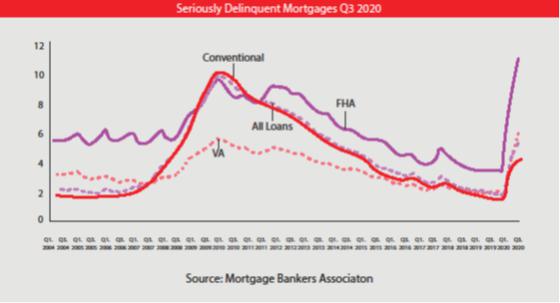


In real numbers this means that over $140B in FHA loans and over $50B in VA loans (nearly 1,000,000 households collectively) are currently delinquent with well over half of those seriously delinquent.


We intend to focus on seriously delinquent FHA, VA, and USDA Mortgage Loans.


We intend to invest primarily in mortgage loans secured by one-to-four-family homes. On occasion, we might also acquire (i) direct interests in real estate, (ii) mortgage loans secured by more than four family homes, and/or (iii) and commercial loans. Nevertheless, we expect mortgage loans secured by one-to-four-family homes will comprise more than 90% of our total portfolio focusing on FHA, VA and USDA loans.


 14 


The Bidding Process


Bidding on non-performing Mortgage Loans is both an art and a science.


Typically, the process begins when a seller provides potential buyers with a list of loans being offered for sale and requests initial bids. The seller might, or might not, provide such information as:


·A full or partial address


·The borrower’s name


·The property type


·The original loan amount


·The original appraised value


·The term of the loan and the maturity date


·The current and/or original interest rate and principal and interest payment


·The escrow balance


·The borrower’s original FICO score


·Loan modification data


·Payment history


·Foreclosure or bankruptcy status


·Property square footage and lot size


·Broker’s price opinion


·The delinquent tax amount


To help make sense of the data and make accurate bids, we have developed a proprietary pricing model that allows a detailed analysis of portfolio valuation, using different projected resolution outcomes.


If Title Direct wins the initial bid, we order two documents, a title report and a broker’s price opinion, and dig deeper into the due diligence materials, noting such items as (i) whether the original borrower is still the owner of the property, (ii) whether the loan still holds a first lien position, (iii) whether the property is occupied or vacant, and (iv) the amount of delinquent taxes and other liens. Our original bid may be adjusted upward or downward based on these and other factors. Sometimes a bid is reduced to as low as $1.


Revised bids are then submitted to the seller. The seller may counter with a higher price or drop some mortgages from the sale if the seller feels the bid is too low.


 15 


Resolutions


After we purchase a non-performing Mortgage Loan, we contact the homeowner and try to achieve a consensual, mutually-satisfactory resolution. These are the circumstances that lead to each resolution and what is expected in each case:


Reinstatement of the Loan Where the borrower is willing and able, he or she can bring the loan current either in a lump sum or by making payments over time. After the loan is current, we typically sell the loan.
Settlement of the Loan When the borrower (i) has a short sale buyer, (ii) can refinance, or (iii) otherwise has cash on hand, we might accept a payoff of the loan for less than its face amount.
Modification of the Loan When the borrower cannot bring the loan current or pay it off, we might allow a modification that involves lowering the interest rate, extending the term, or reducing the principal. After the modified loan is current, we typically sell the loan.
Deed In Lieu of Foreclosure When the property is vacant or the homeowner no longer wishes to keep the property, we might accept a voluntary deed in lieu of foreclosure, giving us ownership of the home. Depending on the circumstances, we might even pay the homeowner for the deed. In either case we will end up selling the property.
Involuntary Foreclosure As a last resort, we can foreclose on the property and sell it. Sometimes, a homeowner who has been unwilling to speak with us will change his or her mind when we begin foreclosure proceedings. Involuntary foreclosure often yields a lower recovery than consensual solutions and we try to avoid it.


Leverage


Title Direct might borrow money to buy Mortgage Loans or other assets, which is referred to as “leverage.” Where we borrow money to buy Mortgage Loans, the amount of the borrowing typically does not exceed 70% of the price.


Title Direct might borrow from banks and other traditional lenders, but also will be eligible to borrow money from the Federal Home Loan Bank of Boston (“FHLBB”). Loans from the FHLBB will bear interest at significantly lower rates (rates only slightly higher than the rates of U.S. Treasury obligations), providing a low cost of capital.


The FHLBB also imposes restrictions beyond those of normal commercial lenders. For one thing, loans from the FHLBB will be limited to 50% of the collateral (the Mortgage Loans purchased). For another thing, the FHLBB will accept as collateral only the types of Mortgage Loans described in “Our Company and Business – Our Mortgage Loan Business – Restrictions on Loans Purchased by Title Direct.”


Loan Servicing


Collecting payments on loans is referred to as loan “servicing.” Title Direct will not service the Mortgage Loans it acquires. Instead, an affiliate of the Company, AHP Servicing LLC (“AHP Servicing”) will service some Mortgage Loans while third-party loan servicers will service other Mortgage Loans.


AHP Servicing provides loan servicing services to another affiliate, American Homeowner Preservation 2015A+ LLC, pursuant to an agreement captioned “Servicing Agreement” and dated July 1, 2018 (the “Servicing Agreement”). Title Direct has become a party to the Servicing Agreement by signing an agreement captioned “Joinder Agreement.” The Servicing Agreement is attached as Exhibit 1A-6A.


 16 


The principal terms of the Servicing Agreement are as follows:


·AHP Servicing will handle all the tasks typically handled by loan servicers, including collecting payments, responding to requests from borrowers, and paying real estate taxes and insurance premiums.


·AHP Servicing will also be responsible for protecting Title Direct’s interest in each Mortgage Loan by performing inspections, securing vacant properties, and notifying Title Direct of any lien, bankruptcy, condemnation or other proceeding affecting Title Direct’s interest.


·Title Direct will pay AHP Servicing (i) a one-time loan onboarding fee of between $15-$30 depending on whether the loan is performing or not or is in bankruptcy; (ii) a one-time loan deboarding/loan term fee between $40-$50; (iii) monthly servicing fees ranging from $30-$150; (iv) a one-time “success fee” of $500 for completing various loss mitigation strategies; and (v) various miscellaneous fees ranging from $2.50 to $225, all as set forth in more detail in Exhibit A to the Servicing Agreement.


·Failure by Title Direct to comply with any of its obligations under the Servicing Agreement permits AHP Servicing to offset any amounts to be remitted by it to Title Direct in addition to any other rights and remedies available at law or in equity. Should an event of default occur, Title Direct waives any claims it may have against AHP Servicing for any losses incurred in connection with its servicing services and/or losses incurred as a result of a default or foreclosure under the Loan Documents.


·The Servicing Agreement may be terminated by either party with written notice to the other. In addition, either party may terminate the Servicing Agreement upon a breach of the agreement by the other.


Neither the Company nor Title Direct has entered into a contract with a third-party loan servicer. We expect the terms of any such third-party agreement to be substantially similar to the terms of the Servicing Agreement.


Key Positions


The following are the key positions in the operations of non-performing Mortgage Loan business:


·Due Diligence Specialists: Due Diligence Specialists run potential loan purchases through a rigorous screening process. Among other things, they seek to determine (i) an accurate value for the underlying real estate, (ii) the outstanding loan amount, (iii) the owner of the property, (iv) the amount of outstanding taxes on the underlying real estate, and (v) any encumbrances on the underlying real estate.


·Document Specialists: A Document Specialist verifies that all collateral needed to validate ownership and existence of the mortgage and property are obtained, imaged, recorded, and stored with the custodian. This includes verification on newly purchased assets and the necessary creation of assignments, allonges, and lost document affidavits, as needed.


·Asset Managers: The Asset Manager guides the homeowner through loan modification, repayment plans, deed-in-lieu, and other resolution options. Asset Management is a hybrid role that blends homeowner counseling, mortgage servicing, and property management/preservation to meet dual goals of (i) keeping Americans in their homes, and (ii) providing attractive returns to investors.


·Litigation Coordinators: Litigation Coordinators manage the Company’s relationship with its attorney-vendor network, represent the Company at hearings and mediations, and handle all servicing-related activity that is required from the attorneys while assets are litigated, including bankruptcy activity, foreclosure complaints, evictions, quiet title actions, and tax sale reviews and challenges.


·Resolution Managers: Resolution Managers report directly to Jorge Newbery, the CEO, and are responsible for providing the tools, objectives, and leadership required to meet individual and Company goals. This includes setting initial reconciliation strategies, optimizing user technologies, reviewing control reports for outliers, providing guidance on high-risk scenarios, and coordinating efforts between the separate roles.


All of these roles are filled by employees of AHP Servicing.


 17 


The Trust


Title Direct will acquire Mortgage Loans through American Homeowner Preservation Trust, a Delaware statutory trust (the “Trust”) with U.S. Bank Trust National Association (“U.S. Bank”) serving as the sole trustee and an affiliate of the Company, AHP Capital Management, LLC, serving as the administrator. The Mortgage Loans will be held in a separate series of the Trust, of which Title Direct will be the sole beneficiary.


Title Direct uses this structure to address certain state licensing and registration requirements applicable to the mortgage loan industry.


The following documents related to the Trust are attached as Exhibits:


Amended and Restated Trust Agreement dated October 29, 2014 Exhibit 1A-6B
Amendment No. 1 to Amended and Restated Trust Agreement Exhibit 1A-6C
Series Addendum Establishing Series “AHP Title Direct” Exhibit 1A-6D


Revenue and Expenses


Our revenue from Mortgage Loans will include:


·Payments we receive from homeowners


·Rental payments we receive from leased real estate


·Proceeds we receive from the sale of loans


·Proceeds we receive from the sale of houses


·Proceeds we receive when a homeowner pays off a loan


·Payments we receive from homeowners or other borrowers to accept a deed in lieu of foreclosure


Our expenses from Mortgage Loans will include:


·The purchase price of Mortgage Loans


·Commissions


·Costs incurred in finding, evaluating, and purchasing Mortgage Loans


·Commissions


·Settlement charges, including title charges


·Custodial, administrative, legal, accounting, auditing, record-keeping, appraisal, tax form preparation, compliance and consulting costs and expenses


 18 


·Loan servicing fees


·Investor communications


·Insurance premiums


·Taxes and fees imposed by governmental entities and regulatory organizations


·Bank and escrow fees


Factors Likely to Impact our Mortgage Loan Business


The ability of the Company to conduct its non-performing Mortgage Loan business successfully depends on several factors:


·Availability of Reasonably Priced Loans: For our Mortgage Loan business to succeed, we must be able to purchase distressed Mortgage Loans at a reasonable price. The volume of these loans skyrocketed during the recession of 2008-9, as homeowners were unable to make payments and financial institutions were forced to liquidate their portfolios. As the economy improved over the next 10 years the number of distressed loans declined. We believe the number of distressed loans will rise again substantially because of the COVID-19 pandemic, but there is no assurance this will be the case.


·Competition to Purchase Loans: The market for distressed Mortgage Loans has become more crowded. The more competition there is, the more difficult it could become for us to purchase loans at reasonable prices.


·Availability of Credit to Homeowners: One way we liquidate the loans in our portfolio is when the loans are refinanced by a lender and the loan we hold is paid off, in whole or in part. If credit markets tighten, as they did in 2008-9, homeowners might not be able to refinance loans, or not as easily.


·Housing Market: Another way we liquidate the loans in our portfolio is to take ownership of the house securing a loan and sell it. If housing prices fall, our profits fall along with them.


·Interest Rates: Our business is very sensitive to changes in interest rates. If interest rates fall, the value of the loans in our portfolio increases. If interest rates rise, the value of the loans in our portfolio decreases. Today, interest rates in general, and mortgage interest rates in particular, are at historic lows, suggesting that interest rates are more likely to go up from this point than to go down.


·Changes in Laws: Current law allows us to conduct our business in the manner described in this section. However, the residential housing market in general and the residential mortgage market in particular are highly regulated by both the Federal government and by State governments, with a number of states and the Federal governing offering relief to homeowners during the COVID-19 pandemic. It is possible that laws or regulations could be changed in a way adverse to our business.


·Performance of Internal Systems: We continue to improve our internal systems and to adopt new systems, including the proprietary pricing model we began to use in June 2015. We rely heavily on these systems and expect we will be required to continually update, improve, and replace them in the future.


·Ability to Attract Qualified Employees: Like many businesses, we rely on data and computer models and spreadsheets, even more so today than we did just a few years ago. Nevertheless, we are very much a “people business.” Not only do we need human eyes to review (and sometimes modify) the pricing models produced by our computers, but the real key to our success lies in our ability to interact with homeowners, who are people, not machines. As a result, we must continue to attract and retain highly skilled employees.


 19 


Our Title Insurance Business


What is Title Insurance?


The “title” to a piece of real estate is the legal evidence of ownership. The statement “I have title to this property” is roughly the same as the statement “I own this property.”


Over time the ownership of a piece of real estate can become uncertain, as the property changes hands, owners of the property borrow money using the property as security, utilities and municipalities creates easements and rights-of-way on the property, and the property is subdivided into more than one piece or joined together with other pieces.


For thousands of years governments have created mechanisms to keep track of property ownership, When William the Conqueror invaded Great Britain in 1066 one of his first acts was to figure out who owned what (and to take much of it for himself). Although the new technology of blockchain holds some promise, no government has developed an infallible system.


As a result, when real estate is bought and sold there is always a risk that the seller doesn’t really own the property or doesn’t have all the rights to the property the buyer thought she had.


Title insurance was invented to fill this gap. If a seller buys title insurance and learns that she doesn’t really own the property or doesn’t own all the rights she thought she was buying, the title insurance company pays for her damages.


Among the risks covered by title insurance:


·Mistakes in recording of legal documents, such as a deed or mortgage;


·Incomplete public records;


·Fraud and forgery;


·Errors in title search or examinations;


·Improper closing or escrow procedures; and


·Misappropriations of funds, such as through a fraudulent wire transfer.


There are two types of title insurance: owner’s title insurance and lender’s title insurance. An owner’s title policy protects the owner of the property for any defects in the property’s title and is issued only when the buyer purchases the property. A lender’s title policy covers the lender’s interest (typically a mortgage lien) and is typically required for the original home purchase and any subsequent refinances. Both types of title insurance protect the owner or lender, as applicable, for the duration of the owner’s or lender’s interest in the property.


 20 


The Title Insurance Market


Title insurance differs from other kinds of insurance in two important ways.


For one thing, while most insurance – auto insurance, homeowners’ insurance, employment insurance – protects against events that will occur in the future, such as a future fire or auto accident, title insurance protects against events that have already occurred when the insurance is purchased.


For another thing, the entire premium for title insurance is paid all at once rather than over time. Thus, the same premium covers the property owner whether she owns the property for six months or 50 years, with no opportunity to adjust. This makes it both extremely difficult and extremely important for the insurance company to price risk accurately.


Claims against title insurance policies are rare compared to other types of insurance. According to a S&P Global Market Intelligence report, an analysis of the 10-year average of claims shows that only 4.3% of title insurance policies resulted in a claim resulting in a loss to the insurer compared to 72.5% of property and casualty insurance policies.


While the number of claims resulting in losses is low for title insurance, the industry is very expensive to operate. According to a S&P Global Market Intelligence report, the 10-year average expense ratio of the title insurance industry is 98.3% compared to just 27.9% for property and casualty insurance. This means that for every dollar received on a title policy, less than two cents are retained by the title insurance industry as profit.


The biggest driver of these costs is personnel. The personnel costs of a typical title company accounts for approximately 62.6% of all costs, followed by the search process itself, which accounts for an estimated 13.6% of all costs. Collectively, these two costs dwarf the other costs associated with title insurance including rent (4.2%), depreciation (4.2%), legal (3.3.%) and other miscellaneous costs (9.6%).


Title insurance is a $16.4 billion industry in the United States dominated by four companies: First American Title Insurance Company, Fidelity National Title Insurance Company, Stewart Title Company, and Old Republic National Title Insurance Company. Together, these four companies control an estimated 85-90% of the market and have leveraged their significant financial clout to maintain dominance.


Like any industry dominated for many years by a handful of companies, the title insurance industry has not seen significant innovation, despite the disruptive technologies all around us. We believe the industry is still stuck in a technological stone age, creating a market ripe for innovation and disruption.


For example, the process for obtaining title insurance takes a huge amount of time and is inefficient for most consumers. Obtaining even a basic title insurance policy can take anywhere from 30 to 60 days and adds unnecessary time and expense to even the simplest real estate transactions. This is true regardless whether the transaction is a new home purchase or a mortgage refinance, or even if a recent title policy had been issued on the property.


Similarly, even for educated consumers title insurance is just another opaque closing cost over which they have little control. Little or no time is spent by bankers or brokers explaining the role or importance of title insurance to a transaction. Questions about costs or usefulness get buried in vague answers of “Fannie Mae” or “Freddie Mac” requirements and how all title insurance policies and companies are the same. Title insurance becomes just another line item on a disclosure form purchased from whichever title company the banker or broker has a relationship with.


Finally, the lack of competition in the title insurance industry means the infrastructure of the big four companies is ill-suited to handle the ongoing technological revolution in the broader real estate industry. Since 2013, more than $45 billion of venture capital has flowed into new “proptech” (property technology) companies such as Knock, Compass, and Opendoor that has revolutionized the residential real estate and lending market. Six of the top 10 mortgage lenders in the United States are nonbank lenders, and only two of those lenders existed even a decade ago. With so much innovation occurring in such a short time, the antiquated title/closing/accounting/client interaction platforms of many of the traditional title insurance power players is being rendered obsolete.


 21 


We believe there is a better way. With historically low mortgage interest rates and residential mortgage delinquency rates beginning to rise, 2021 and 2022 are projected to be immensely profitable years for national title insurance companies and the underwriters that support them. By leveraging our superior technology, making smart investments, and learning from others’ mistakes, we believe we can make title insurance better for everyone, including consumers, lenders, real estate agents, and title insurers themselves. In so doing, we will help drive the entire industry into the 21st century while allowing our investors to take advantage of this unprecedented moment in time.


How We Plan to Disrupt the Title Insurance Industry


We intend to position the Company as a title insurance underwriter that supports, incorporates, and develops insurance-related technology. By leveraging superior technology, we can create efficiencies that save time and money and enable us to handle a high volume of transactions. Our highly scalable and customizable platform will make it easy for our real estate brokerage partners to incorporate as much or as little of our platform as they desire. In turn, this will help them integrate a user-friendly interface that helps improve virtual transactions and reduce transaction costs to end consumers.


We intend to do this in primarily three ways: data analytics, artificial intelligence, and new technologies.


Data Analytics


Our platform will incorporate next-generation data analytics to reduce information asymmetry and increase transparency. Too many of our competitors have attempted to triage the title insurance industry’s historically low claim-rate against the need for greater speed and efficiency in the title insurance policies. This has led to cutting corners on disclosures while increasing the rate of claims made against title policies. This in turn has led to a reduction profits for title companies while greatly complicating the risk of future transactions. In some cases, agents have actually been forced to resort back to traditional, do-it-by-hand search procedures to supplement the work done by these competitors, completely negating (and sometimes increasing) the time and money spent on the title transaction.


We believe the answer to increasing efficiency in title transactions is more data rather than less. With more data, we can create a better, more comprehensive risk profile of end consumers that will allow us to reduce and streamline the title underwriting process. More data also means more opportunity for disclosures and a reduced risk that a claim will ever be made against one of our title policies.


Artificial Intelligence


We will harness the power of machine learning and artificial intelligence to help process the increase in consumer data. In so doing, we can not only discover new trends and inefficiencies in our data, but we can also increase the efficiency of the underwriting process. This means less time waiting for a title policy to be underwritten and more bandwidth available for our Company to handle even greater numbers of title transactions.


New Technologies


We will make targeted investments in other technologies that can transform various parts of the underwriting process. For example, we intend to explore the use of blockchain technology to reduce the risk of human error and vastly speed up title searches.


Purchase of Gulf Coast Title


To launch its title insurance business, the Company recently purchased all the issued and outstanding stock of Gulf Coast Title Insurance Company from Agents National Title Insurance Company (“ANTIC”). Gulf Coast Title Insurance Company has been in the title insurance business for approximately 42 years, licensed in and operating out of Alabama. The Company renamed the company to AHP Title Direct Inc. and will re-domesticate from Alabama to Vermont.


 22 


Target Market


We will focus on residential real estate transactions, both purchases and refinancing transactions. We will insure up to $500,000 transactions directly which will represent about 85% of our agents’ transactions.


Competition


Title Direct will face competition from two directions, from the four large title insurance companies that today control 85% of the market and from technology-oriented startups like us that are trying to disrupt the market, including States Title and Spruce Title.


Customer Acquisition Strategy


Today, title insurance is sold state-by-state with a strong emphasis on local markets. Typically, a local real estate agent or mortgage lender are influential in selecting the title company in a residential purchase or refinance transaction. This type of customer acquisition is very customized, difficult to scale, and very expensive.


We plan to take a different approach. We will target large multi-state title agencies that specialize in high-volume residential transactions. Limiting our distribution network to a smaller number of large, high-quality title agencies should allow us to keep costs low and reduce risk. Further, we believe these agencies will be highly receptive to the benefits we offer through automation and sophisticated technology. These title agencies’ customers would be the types of entities most able to benefit from our capabilities in automated underwriting, artificial intelligence and blockchain solutions.


Capital Requirements


As a title insurance company regulated by the Vermont Department of Financial Regulation, Title Direct will generally be required to maintain at least $5,000,000 in capital stock, invested in stable, liquid assets such as cash deposit accounts or near-cash investments. As Title Direct’s portfolio of title insurance policies grows, these capital requirements will increase.


Surplus Notes


The Company will lend money to Title Direct using a debt instrument known in the insurance industry as a “Surplus Note,” sometimes also referred to as “surplus debentures” or “capital notes.” Surplus Notes are unsecured obligations that are subordinated to the claims of policyholders and creditors, where payment of both interest and principal are subject to the approval of the state insurance commissioner, in this case the Insurance Division of the Vermont Department of Financial Regulation (the “Vermont Department of Insurance”). Although Surplus Notes have the features of debt instruments, including a stated interest rate and maturity date, they are treated as equity under statutory accounting principles. Thus, the Company will not be entitled to receive payment with respect to the Surplus Notes of Title Direct without the consent of the Vermont Department of Insurance.


 23 


Factors Likely to Affect our Title Insurance Business


The ability of Title Direct to conduct its title insurance business successfully depends on several factors:


·Health of Real Estate Market: The more real estate transactions there are – both sales and refinancing transactions – the higher the demand for title insurance. Conversely, if the number of transactions declines, whether because of COVID-19 or for other reasons, demand will be lower.


·Development and Deployment of Disruptive Technology: We would not succeed competing against the four large title insurance carriers using the same technology and methods they use, and we do not intend to try. Instead, we will need to develop new technologies and deploy them in a cost-effective manner.


·New Distribution Channels: Rather than focus on personal relationships, which is the traditional way to sell title insurance, we will focus on our technological and cost advantages in marketing to a relatively small number of large title agencies with national reach.


·Market Acceptance: The title insurance market has seen little innovation over the last 25 years. On one hand, the lack of innovation presents an opportunity for meaningful disruption. On the other hand, disrupting a market as large and important as the title insurance market means convincing many people to do things differently – to change their habits and possibly their business relationships – which is always difficult. Just as Betamax was a better technology than VHS and Zoom might not be the best technology but has gained the widest acceptance during the COVID-19 pandemic, sometimes having the best mousetrap isn’t enough.


Continuing Role of ANTIC


Title Direct has entered into an agreement with ANTIC captioned “Master Services Agreement” and dated July 24, 2020 (the “ANTIC Agreement”). A copy of the ANTIC Agreement is attached as Exhibit 1A-6E.


Pursuant to the ANTIC Agreement, ANTIC will provide services to Title Direct including:


·Assistance with re-domestication to Vermont


·Setting up the insurance company and its operations


·Assistance with obtaining financing through FHLBB


·Training, continuing education, troubleshooting, and oversight of title agents


·Underwriting services in connection with title policy issuance


·Technology services


·Accounting services


 24 


·Establishment of an investment plan


·Consultation regarding regulatory compliance


·Support services necessary for “back office” operations


All these services will be subject to the direction and control Title Direct and its executive officers.


The initial term of the ANTIC Agreement is through June 2021 unless terminated sooner by ANTIC or the Company. Thereafter, the ANTIC Agreement may be renewed by both ANTIC and the Company for successive 12 month terms. The ANTIC Agreement is governed by Missouri law and is intended to apply to both services provided above as well as any future statement of work between ANTIC and Title Direct.


Key Positions


The following are the key positions in the operations of the title insurance business:


·Underwriters: The premiums for title insurance are generated regulated and may not be negotiated. Hence, title insurance underwriters do not establish premiums for policies. Instead, underwriters evaluate the risk of transactions and determine what steps should be taken before a transaction can be insured.


·Claims Counsel: Claims Counsel are typically focused on the claims process but also assist with matters of compliance with state or federal regulation.


·Agency Manager: All our title business will be through underwritten title agencies. Agency managers are experienced at reviewing a title agency’s practices & procedures (for compliance and risk), making sure the services provided by the underwriter (policies, transaction underwriting and client support) are performed with highest quality and customer service and to conduct routine audits of the agency (financial and ongoing practices & procedures).


·Statutory Accountant: The insurance industry is subject to a number of special accounting rules. A Statutory Accountant ensures that the carriers books and records reflect these special rules.


Revenue and Expenses


Our revenue from the title insurance business will consist of:


·Payments we receive from the title agents who sell our policies (we receive a portion of the premiums they receive from the consumer)


·Payment we receive for ancillary items like closing protection letters and endorsements


·Income and appreciation we earn on investments


Our expenses will include:


·Claims made by policyholders


·Commissions


·Administrative expenses


·Legal and accounting expenses


·Compliance costs


·Insurance premiums


 25 


Our Credit improvement loan Business


What is a credit improvement loan?


Three companies in the United States, Transunion, Equifax, and Experian, sell credit information about consumers to banks and other creditors, assigning to every consumer a credit score of between 300 and 850. Consumers with low scores, or no scores at all, can find it difficult or impossible to find credit, e.g., to find a home mortgage or car loan.


The market has responded with a financial tool called a “credit improvement loan.” With a credit improvement loan, the consumer borrows money not to buy a car or a house but for the specific purpose of improving his or her credit – that is, to increase his or her credit score.


The mechanics of a credit improvement loan are simple:


1)      A lender advances money to the consumer.


2)      The money is deposited in an account with a bank or other financial institution.


3)      The lender has a first lien security interest in the account.


4)      The consumer repays the loan over time, using his or her other funds.


5)      If the loan is repaid, the consumer gets the money in the account, which can be used for any purpose, including a down payment on a house, and his or her credit score probably improves.


6)      If the loan is not repaid, the lender gets some or all of the money in the account and the consumer gets the rest.


Thus, the lender takes almost no credit risk in a credit improvement loan and realizes a profit (before administrative costs) equal to the difference between its cost of capital and the interest rate paid by the consumer.


Credit improvement loans are typically between $500 and $5,000.


How Big is the Market?


Approximately 30% of American consumers (68 million) have a credit score lower than 600, which is considered poor. But that is only the tip of the iceberg. More than 50 million American adults had no credit score at all in 2015 while roughly 26 million are “credit invisible,” meaning they have no credit history with a nationwide consumer reporting agency.


Given the importance of credit in the American economy, all of these consumers are potential customers for credit improvement loans.


Our Customer Acquisition Strategy


The $3 billion credit repair industry offers advice and services to consumers hoping to improve their credit to either qualify for certain loans or get more favorable terms on loans. The industry expects to experience significant growth as a result of the COVID-19 pandemic.


The Company will market credit improvement loans to reputable credit services companies and to consumers directly. Additionally, we will provide training to attorneys, real estate agents and mortgage professionals to identify and refer potential homebuyers who could benefit from a credit improvement loan.


 26 


Competition


Today, most credit improvement loans are made by community credit unions and through so-called “secured credit cards.”


Credit improvement loans have significant advantages over secured credit cards:


·Secured credit cards require borrowers to put cash equivalent of the entire credit limit in an account owned by the lender in exchange for their use of the card. Credit improvement loans only require borrowers to make monthly payments, not a large lump sum.


·Secured credit cards charge high interest rates, typically 20+%.


Leverage


Title Direct intends to borrow money from the FHLBB and other lenders to make credit improvement loans, subject to regulatory and underwriting approval.


Factors Likely to Affect our Credit Improvement Business


The ability of the Company to conduct its credit improvement loan business successfully depends on several factors:


·Regulation: The business of credit improvement loans is regulated at both the Federal and State levels. It is possible that future regulation could make the costs and/or risks of participating in the market too high.


·Ability to Borrow from FHLBB: If we are able to borrow money from FHLBB to make credit improvement loans, our cost of capital will be much lower.


·Ability to Reach Consumers: Although we believe tens of millions of American consumers could benefit from credit improvement loans, identifying these consumers and convincing them that our products have value could prove difficult. By definition, many consumers who would benefit from a credit improvement loan lack the means to repay such a loan.


Key Positions


The following are the key positions in the operations of the credit improvement loan business:


·Marketing Director: Our Marketing Director will develop programs to market loans directly to consumers or through credit repair partners.


·Compliance Officer: Our Compliance Officer will ensure that our loans comply with all applicable laws and regulations and meet our socially responsible goals of promoting homeownership.


Revenue and Expenses


Our revenue from credit improvement loans will consist of interest and origination fees paid by borrowers. Our expenses will consist of (i) interest and other costs of capital, (ii) marketing and distribution expenses, and (iii) administrative expenses, including servicing costs.


Offices and Employees


Offices


The Company’s office is located at 440 S LaSalle Street, Suite 1110, Chicago, IL 60605. The Company occupies approximately 1,200 square feet of office space.


Employees


The Company and its affiliates have approximately 70 employees, all located in Chicago.


 27 


PAST PERFORMANCE: OUR TRACK RECORD SO FAR


Summary and Narrative Description


Affiliates of the Company have been investing in non-performing Mortgage Loans for approximately 10 years. Through September 30, 2020, they have purchased more approximately 5,000 Mortgage Loans for an aggregate price of more than $80,000,000, in six different offerings of securities, each of which we prefer to as a “Program.” These Programs include Series 2013C, Series 2013D, Series 2014A, and Series 2014B of American Homeowner Preservation, LLC, which we refer to as the “Non-Public Programs,” and offerings under SEC Regulation A by American Homeowner Preservation 2015A+, LLC and AHP Servicing, LLC, which we refer to as the “Public Programs.”


Each of the Programs is similar to the Company in the following respects:


·They all involve raising money from investors;


·They all involve investing in and servicing non-performing Mortgage Loans (although these programs do not involve the development or operation of a special loan servicer that services loans for third parties); and


·Each of the Programs also has investment objectives that are similar to the investment objectives of the Company.


Further, none of the Programs:


·Have been registered under the Securities Act of 1933;


·Have been required to report under section 15(d) of the Securities Exchange Act of 1934;


·Have had a class of equity securities registered under section 12(g) of the Securities Exchange Act of 1934; or


·Have, or have had, 300 or more security holders (with the exception of 2015A+).


The Programs are also dissimilar to the Company in some important respects:


·None of the Programs involved the title insurance business.


·None of the Programs involved investing in performing Mortgage Loans to a material extent, as Title Direct will do.


·None of the Programs involved making credit improvement loans, as the Company and Title Direct will do.


·The Program offered by AHP Servicing, LLC involved not only investing in non-performing Mortgage Loans but also loan servicing.


Despite these differences, investors who are considering purchasing Series A Preferred Stock from the Company might find it useful to review information about the Programs. Of course, prospective investors should bear in mind that prior performance does not guaranty future results. The fact that a prior Program has been successful (or unsuccessful) does not mean the Company will experience the same results.


There have been no major adverse business developments or conditions experienced by any Program that would be material to purchasers of the Company’s Series A Preferred Stock.


 28 


The following table summarizes the Programs through September 30, 2020. All figures are unaudited and are presented on a federal income tax basis.


Program 2013C 2013D 2014A 2014B 2015A+ AHP Servicing
Start Date 12/18/2013 1/2/2014 4/16/2014 2/27/2015 6/10/2016 11/5/2018
Amount Offered $4,653,970 $643,089 $2,283,255 $4,974,024 $50,000,000 $50,000,000
Raised from Investors $4,653,970 $643,089 $2,283,255 $4,974,024 $40,520,828 $41,578,677
Length of Offering 1 Month 4 Months 10 Months 14 Months 24 Months open
Closing 1/31/2014 5/31/2014 2/28/2015 4/30/2016 5/24/2018 open
Number of Loans Purchased 248 47 377 639 3089 833
Total Purchase Price of Loans $4,633,487 $661,989 $2,268,212 $6,480,307 $34,277,191 $31,843,697
Leverage 0 0 0 0 16.73% 36.30%
Number of Loans Remaining 0 0 0 0 2076 793
Targeted Yield to Investors 9-12 % 9-12 % 9-12 % 9-12 % 12% 10%
Percentage of Investor Capital Returned 100% 100% 100% 100% 52% 9%
Remaining Investor Capital $0 $0 $0 $0 $19,275,124 $37,816,197
Cost Basis of Loans & Real Estate Assets Remaining $0 $0 $0 $0 $23,225,881 $41,926,100
Outstanding Indebtedness $0 $0 $0 $0 $1,399,058 $12,466,606


NOTE: While affiliates of the Company have substantial experience investing in non-performing Mortgage Loans, as indicated by the table above, the Company and Title Direct will engage in three lines businesses in which neither the Company nor its affiliates have experience: investing in performing Mortgage Loans; credit improvement loans; and title insurance.


 29 


SECURITIES BEING OFFERED


Description of Securities


We are offering to the public up to $50,000,000 of Series A Preferred Stock, which we refer to as the “Series A Preferred Stock.”


Price of Series A Preferred Stock


We will offer the Series A Preferred Stock at $10.00 per share.


Voting Rights


Owners of the Series A Preferred Stock – that is, Investors – will have no right to vote or otherwise participate in the management of the Company. Instead, the Company is managed by the Board of Directors exclusively. However, without the consent of a majority of the Investors, measured by the number of shares held, the Board may not amend the Company’s LLC Agreement in a manner that would reasonably be expected to have an adverse effect on the Company or its Stockholders.


Distributions


If the Company has money after paying all of its expenses (and establishing appropriate reserves for future obligations), it intends to distribute that money to its stockholders. We intend to make distributions on a monthly basis. Distributions to Investors will be governed by the Authorizing Resolution, which (together with the LLC Agreement) contains the terms of the Series A Preferred Stock. The Authorizing Resolution provides that, while any share of Series A Preferred Stock remains outstanding, any distributions by the Company must be made in the following order of priority:


·First to Investors until they have received a compounded annual return of 7% on their invested capital (the “Series A Preferred Return”).


·Second to Investors until they have received all of their invested capital.


·Third, after Investors have received their 7% annual return and all their invested capital, we will keep any remaining profit for ourselves.


The Authorizing Resolution is attached as Exhibit 1A-2C.


IMPORTANT NOTE: The distribution “waterfall” discussed above describes only the order of priority in which the Company must make distributions to the extent it has money to distribute – it is not a guaranty that the Company will generate sufficient income to make any distributions. There is no guaranty that we will have enough money to pay Investors a 10% return, or even to return their capital. The Company has not yet commenced operations, has not generated profits, and may be unable to pay distributions.


Term of Series A Preferred Stock


The Authorizing Resolution provides that the Board must try to return all of the money invested by each Investor no later than the fifth (5th) anniversary following the investment. If the Company doesn’t have enough money, holders of our Series A Preferred Stock might receive a return of their investment later than five years, or not at all. If the Company is profitable, as we expect it to be, it is very likely that investors will receive a return of their investment sooner than five years.


 30 


How We Decide How Much To Distribute


To decide how much to distribute, we start with our revenues and expenses described in “Our Company and Business – Our Mortgage Loan Business – Revenue and Expenses.” We then add any distributions or loan repayments we have received from Title Direct and subtract other cash expenditures (including contributions or advances to Title Direct) and amounts we believe should be held in reserve against future contingencies.


Withholding


In some situations, we might be required by law to withhold taxes and/or other amounts from distributions made to Investors. The amount we withhold will still be treated as part of the distribution. For example, if we distribute $100 to you and are required to withhold $10 in taxes, for our purposes you will be treated as having received a distribution of $100 even though you received a check for only $90.


For instance, as the Company operates in Illinois, Investors may generate a tax liability to the State of Illinois. The Company can file a consolidated tax return with the State of Illinois for non-Illinois residents and entities, regardless of domicile. To satisfy the Illinois tax liability, the Company may withhold the Illinois tax (equal to 4.35% of Illinois income in 2017, although subject to change) from an Investor’s distribution once per year or upon early redemption. Investors who live in states with their own income tax may be allowed to credit the Illinois tax payment against their own state’s income tax. The Illinois tax can also be claimed as an itemized deduction (for investors who itemize deductions) on Investors’ federal returns.


By filing as part of the consolidated return, investors would generally not be required to file their own State of Illinois tax returns if their only Illinois income is derived from their investment in the Company. Investors who do not want withholding and want to take responsibility for their own Illinois tax liability may choose to execute the Illinois Department of Revenue Form IL-1000-E Certificate of Exemption for Pass-through Withholding Payments. A completed IL-1000-E should be provided to the Company any time prior to December 31st of any tax year, or prior to tendering an early redemption request, in order to opt out of withholding. Once a Form IL-1000-E is received by the Company, this will remain in effect for the life of an Investor’s investment(s), unless new instructions are received from Investor.


No Guaranty


We can only distribute as much money as we have. There is no guaranty that we will have enough money, after paying expenses, to distribute enough to pay a 10% annual return to Investors or even to return all of the invested capital.


Transfers


No Investor may sell, transfer, or encumber (place a lien on) his Series A Preferred Stock unless (i) the Board, in its sole and absolute discretion, approves the transfer; or (ii) in the case of an Investor that is a natural person, such Investor dies or a court finds that he or she is legally incompetent, in which case the Series A Preferred Stock shall be transferred automatically to the heirs or personal representative of the Investor. The Company also has a right of first refusal to purchase any shares of the Company a stockholder proposes to transfer.


Certain transfers are exempt from this provision – a transfer of shares to or for the benefit of any spouse, child or grandchild of the Investor, or to a trust for their exclusive benefit, shall be exempt from these provisions, provided that (i) the transferee shall, as a condition to such transfer, deliver to the Company a written instrument confirming that such transferee shall be bound by all of the terms and conditions of the LLC Agreement, and (ii) such shares shall not thereafter be transferred in further reliance on this exemption. Transfers pursuant to the Company’s limited right of liquidity (see page 39) are also exempt from this restriction.

Before the Board consents to a transfer of Series A Preferred Stock, it may impose reasonable conditions, including but not limited to written assurance that (i) the transfer is not required to be registered under the Securities Act of 1933, (ii) the transferor or the transferee will reimburse the Company for expenses incurred in connection with the transfer, and (iii) the transfer will not cause the termination of the Company as a partnership under section 708 of the Internal Revenue Code or cause the Company to be treated as a “publicly traded partnership” under section 7704 of the Internal Revenue Code.


 31 


Mandatory Withdrawals


The Company may require an Investor to sell all or a portion of his, her or its Series A Preferred Stock back to the Company in the following circumstances:


·If the Company determines that all or any portion of the assets of the Company would, in the absence of such repurchase, more likely than not be treated as “plan assets” or otherwise become subject to the Employee Retirement Income Security Act of 1974;


·If the Company believes the Investor made a material misrepresentation to the Company;


·If legal or regulatory proceedings are commenced or threatened against the Company or any of its members arising from or relating to the Investor’s interest in the Company;


·If the Investor transferred Series A Preferred Stock in violation of the LLC Agreement;


·If the Company believes that the Investor’s ownership has caused or will cause the Company to violate any law or regulation;


·If the Investor has violated any of his, her, or its obligations to the Company or to the other Stockholders; or


·If the Investor is engaged in, or has engaged in, conduct (including but not limited to criminal conduct) that (A) brings the Company, or threatens to bring the Company, into disrepute, or (B) is adverse and fundamentally unfair to the interests of the Company or the other members of the Company.


The purchase price of the shares of series A Preferred Stock would be equal to the Investor’s capital account associated with such shares, which would be paid by wire transfer or other immediately-available funds at closing, which would be held within sixty (60) days following written notice from the Company of its election to repurchase the shares. If the Company causes an Investor to sell all of the Investor’s Series A Preferred Stock, the Investor will have no further interest in the Company.


Limited Right of Liquidity


The Authorizing Resolution that establishes the Series A Preferred Stock gives Investors a limited right of liquidity by giving them right to request that the Company purchase, or arrange for the purchase of, all or a portion of their Series A Preferred Stock. To request that the Company purchase or arrange for the purchase shares, Investors must submit a written request to the Company specifying the number of shares the Investor desires to sell. If the request is received by the fifteenth (15th) day of a calendar month, the Company will use commercially reasonable efforts to arrange for the purchase (or notify the Investor that the Company cannot accommodate the request) by the end of such month; if the request is received by the Company after the fifteenth (15th) day of a month, the Company will use commercially reasonable efforts to arrange for the purchase (or notify the Investor that the Company cannot accommodate the request) by the end of the following month.


If the Company is not able to purchase or arrange for the purchase an Investor’s shares and so notifies the Investor within the time limits described above, the Investor may either rescind the request or maintain the request on a month-to-month basis until satisfied or rescinded. Investors have the right to withdraw a purchase request in writing at any time prior to the closing of the sale, provided that if an investor withdraws the request, any subsequent request will be treated as a new request.


 32 


This limited right of liquidity is subject to important limitations:


·The Company is not required to purchase or arrange for the purchase of shares if the Company determines, in its sole discretion, that it does not have sufficient cash to do so or that doing so would be adverse to the interests of the Company or its other Stockholders.


·The Company is not required to borrow money or dispose of assets.


·During any given calendar year (i) the Company shall not be obligated to purchase or arrange for the purchase of more than 25% of an Investor’s total shares of Series A Preferred Stock (although it may choose to do so in its sole discretion), and (ii) the Company shall not be obligated to purchase or arrange for the purchase of more than 5% of the total number of shares of Series A Preferred Stock issued and outstanding (although it may choose to do so in its sole discretion).


·The Delaware Limited Liability Company Act may limit the Company’s ability to repurchase shares. Under Section 18-607 of the Delaware Limited Liability Company Act, Delaware limited liability companies are generally prohibited from making distributions that would result in the company’s liabilities exceeding the fair value of its assets.


The purchase price of Series A Preferred Stock repurchased pursuant to the limited right of liquidity will be equal to the balance of the Investor’s unreturned investment relating to such shares, subject to certain adjustments as follows. If the sale occurs within one year following the date the Investor acquired the shares being sold, the purchase price will be reduced by an amount sufficient to reduce the Investor’s annualized Series A Preferred Return through the date of the repurchase from 7% to 5% (to the extent the Investor has received distributions of the Series A Preferred Return); if the repurchase occurs more than one year but less than two years from date of acquisition, the annualized Series A Preferred Return will be reduced from 7% to 6%. For purposes of this provision, the shares purchased first in time will be treated as being sold first for purposes of calculating the applicable holding period.


If more than one Investor requests that the Company purchase its Series A Preferred Stock, the Company will consider the requests in the order received.


 33 


LIMIT ON AMOUNT A NON-ACCREDITED INVESTOR CAN INVEST


As long as you’re at least 18 years old, you can invest in this Offering. But if you’re not an “accredited” investor, the amount you can invest is limited by law.

Under 17 CFR §230.501, a regulation issued by the SEC, the term “accredited investor” means:


·A natural person who has individual net worth, or joint net worth with the person’s spouse, that exceeds $1 million at the time of the purchase, excluding the value of the primary residence of such person;


·A natural person with income exceeding $200,000 in each of the two most recent years or joint income with a spouse exceeding $300,000 for those years and a reasonable expectation of the same income level in the current year;


·A trust with assets in excess of $5 million, not formed for the specific purpose of acquiring the securities offered, whose purchase is directed by a sophisticated person;


·A business in which all the equity owners are accredited investors;


·An employee benefit plan, within the meaning of the Employee Retirement Income Security Act, if a bank, insurance company, or registered investment adviser makes the investment decisions, or if the plan has total assets in excess of $5 million;


·A bank, insurance company, registered investment company, business development company, or small business investment company;


·A charitable organization, corporation, or partnership, not formed for the specific purpose of acquiring the securities offered, with total assets exceeding $5 million; and


·A director, executive officer, or general partner of the company selling the securities, or any director, executive officer, or general partner of a general partner of that issuer.


If you fall within any of those categories, then you can invest as much as you want. If you don’t fall within any of those categories, then the most you can invest in this Offering is the greater of:


·10% of your annual income; or


·10% of your net worth.


These limits are imposed by law, not by us.


When you go to our website, www.AHPServicing.com, we will ask whether you are an accredited investor. If you are not, then we’ll ask about your annual income and net worth.


 34 


SALE AND DISTRIBUTION OF SECURITIES


In the Offering, we are offering up to $50,000,000 of our Series A Preferred Stock, which we refer to as the “Series A Preferred Stock.”


The Offering will begin as soon as our Offering Statement is “qualified” by the SEC and will end on the sooner of (i) a date determined by the Company, or (ii) the date the Offering is required to terminate by law.


Only the Company is selling securities in this Offering. None of our existing Stockholders is selling any securities.


There is no “minimum” in this Offering. Although we are trying to raise as much as $50,000,000, we will accept and deploy all the money we raise, no matter how little.


We are not using an underwriter or broker to sell the Series A Preferred Stock. Instead, we are selling Series A Preferred Stock only through our website, located at www.AHPServicing.com, which we refer to as the “Site.” We are not paying commissions to anybody for selling the Series A Preferred Stock.


We reserve the right to reject any subscription in whole or in part for any reason. If we reject your subscription, we will return all your money without interest or deduction.


After the Offering has been “qualified” by the SEC, we intend to advertise the Offering using the Site and through other means, including public advertisements and audio-visual materials, in each case only as we authorize. Although these materials will not contain information that conflicts with the information in this Offering Circular and will be prepared with a view to presenting a balanced discussion of risk and reward with respect to the Series A Preferred Stock, our advertising materials will not give a complete understanding of this Offering, the Company, or the Series A Preferred Stock and are not to be considered part of this Offering Circular. The Offering is made only by means of this Offering Circular and prospective Investors must read and rely on the information provided in this Offering Circular in connection with their decision to invest in the Series A Preferred Stock.


For instructions how to invest, see “How To Invest.


 35 


HOW TO INVEST


To buy Series A Preferred Stock, go to one of our websites, either www.AHPTitle.com or www.AHPFund.com, which we refer to as the “Site,” and follow the instructions. We will ask for certain information about you, including:


·Your name and address;


·Your social security number (for tax reporting purposes);


·Whether you are an “accredited investor”; and


·If you are not an accredited investor, your income and net worth.


We will also ask you to sign our Investment Agreement, a copy of which is attached as Exhibit 1A-4.


You will pay for your Series A Preferred Stock using one of the options described on the Site.


The information you submit, including your signed Investment Agreement, is called your “subscription.” We will review your subscription and decide whether to accept it. We have the right to accept or reject subscriptions in our sole discretion, for any reason or for no reason. If we decide not to accept your subscription, we will return your money to you.


Once we have accepted your subscription, we will notify you by email and the investment process will be complete. We will also notify you by email if we do not accept your subscription, although we might not explain why.


We will not issue you a paper certificate representing your Series A Preferred Stock.


Anyone can buy our Series A Preferred Stock. We do not intend to limit investment to people with a certain income level or net worth.


The minimum investment is $100.


 36 


ESTIMATED USE OF PROCEEDS


We expect the Offering itself to cost about $75,000, including legal and accounting fees – principally the cost of preparing this Offering Circular.

The following table illustrates how we expect to deploy the capital we raise in the Offering:


  If we Raise $10M If we Raise $25M If we Raise $50M
Offering Expenses $75,000 $75,000 $75,000
Purchase of Title Direct $750,000 $750,000 $750,000
Purchase of Non-Performing Mortgage Loans $4,018,000 $17,018,000 $40,018,000
Capital Stock $1,682,000 $1,682,000 $1,682,000
Credit Improvement Loans $3,000,000 $5,000,000 $7,000,000
Startup and Operating Expenses $350,000 $350,000 $350,000
Working Capital $125,000 $125,000 $125,000
  $10,000,000 $25,000,000 $50,000,000


These represent our best estimates as of the date of this Offering Circular and are subject to change.


We are not paying commissions to underwriters, brokers, or anybody else for selling or distributing the Series A Preferred Stock. Because we are not paying any commissions, more of your money can go to work for you.


 37 


SUMMARY OF LLC AGREEMENT


The Company is governed by an agreement captioned “Limited Liability Company Agreement” dated December 18 2020, which we refer to as the “LLC Agreement.” The following summarizes some of the key provisions of the LLC Agreement. This summary is qualified in its entirety by the LLC Agreement itself, which is included as Exhibit 1A-2B.


Formation and Ownership


The Company was formed in Delaware on March 26, 2020 pursuant to the Delaware Limited Liability Company Act.


As of the date of this Offering Circular, the only owner of the Company is American Homeowner Preservation, Inc., a Delaware corporation (“AHP”). When Investors buy Shares of Series A Preferred Stock in this Offering, they, too, will become owners.


Classes of Ownership


Under Delaware law, the ownership interests in a limited liability company are called “limited liability company interests.” The LLC Agreement creates two kinds of limited liability company interests in the Company:


·Common Shares


·Investor Shares


The LLC Agreement authorizes the Company to issue up to 1,000,000 Common Shares and up to 19,000,000 Investor Shares.


The LLC Agreement also authorizes the Company to divide the Investor Shares into classes, by way of an authorizing resolution. Pursuant to the Authorizing Resolution dated December 18, 2020 (a copy of which is attached as Exhibit 1A-2C), the Company’s Board of Directors authorized the issuance of up to 7,500,000 shares of Series A Preferred Stock (the class of shares being offered in this Offering). The Series A Preferred Stock will be owned by Investors who purchase shares of Series A Preferred Stock in the Offering. Our directors, officers and employees (and their affiliates) might also acquire Series A Preferred Stock (on the same terms as other Investors).


The Series A Preferred Stock and the Common Shares have different rights to distributions, as described under “Distributions.” Otherwise, there are no differences between the Series A Preferred Stock and the Common Shares.


The Common Shares of the Company are and will continue to be owned by AHP and its affiliates.


Management; Voting Rights


The LLC Agreement vests exclusive authority over the business and affairs of the Company in a Board of Directors, with our founder, Jorge P. Newbery, being one of the members and having the right to appoint the others. Further, the LLC Agreement gives Mr. Newbery that number of votes on any decision of the Board equal to the number of seats on the Board. Thus, Mr. Newbery will control all decisions of the Board and will have complete control over the Company. At this time, the Board is composed of Jorge P. Newbery (our Founder), Echeverria Kelly, and Patrick McLaughlin.


The LLC Agreement authorizes the Board to appoint officers of the Company from time to time and give them such duties and responsibilities as the Board shall determine.


 38 


Investors do not have voting rights, except in connection with certain stockholder approvals required in connection with certain material amendments to the LLC Agreement. Among other things, this means that Investors will not have the right to elect Board members or officers, remove Board members or officers, or generally vote on or otherwise approve or reject any decisions or actions of the Company.


Exculpation, Limitation of Liability and Indemnification of Directors and Officers


The LLC Agreement protects the directors, officers and employees of the Company and their affiliates from lawsuits brought by Investors or other parties. For example, it provides that such persons will not be responsible to Investors or the Company for mistakes, errors in judgment, or other acts or omissions (failures to act) as long as the act or omission was not the result of fraud or willful misconduct by such persons. This limitation of liability is referred to as “exculpation.”

Further, the LLC Agreement provides that the directors, officers and employees of the Company do not owe any fiduciary duties to the Company or its stockholders, and that any fiduciary duties that may be implied by applicable law are expressly waived by the stockholders (including Investors) and the Company. This means that stockholders would generally be barred from bringing claims for breach of fiduciary duty, misappropriation of business opportunities, or similar claims alleging that the directors, officers and/or employees of the Company breached some duty or obligation to stockholders or the Company (but not claims based on a breach of the terms of the LLC Agreement or Authorizing Resolution).


The waiver of fiduciary duties and the exculpation provisions discussed above do not apply to claims made under the federal securities laws.


The LLC Agreement also requires the Company to indemnify (reimburse) the directors, officers and employees of the Company and their affiliates from losses, liabilities, and expenses they incur in performing their duties, provided that they (i) acted in good faith and in a manner believed to be in, or not opposed to, the best interests of the Company and, with respect to any criminal proceeding, had no reasonable cause to believe his or her conduct was unlawful, and (ii) the challenged conduct did not constitute fraud or willful misconduct, in either case as determined by a final, non-appealable order of a court of competent jurisdiction. For example, if a third party sued the directors and officers of the Company on a matter related to the Company’s business, the Company would be required to indemnify the directors and officers for any losses or expenses they incur in connection with the lawsuit, including attorneys’ fees, judgments, etc. However, this indemnification is not available where a court or other juridical or governmental body determines that the person to be indemnified is not entitled to indemnification under the standard described in the preceding sentence.


Notwithstanding the foregoing, no exculpation or indemnification is permitted to the extent such exculpation or indemnification would be inconsistent with the requirements of federal or state securities laws or other applicable law.


The detailed rules for exculpation and indemnification are set forth in Section 6 of the LLC Agreement.


Obligation to Contribute Capital


Once an Investor pays for his, her, or its Series A Preferred Stock, he, she, or it will not be required to make any further contributions to the Company. However, if an Investor has wrongfully received a distribution, he, she, or its might have to pay back some or all of it.


Personal Liability


No Investor will be personally liable for any of the debts or obligations of the Company.


Death, Disability, Etc.


If an Investor should die or become incapacitated, his, her or its successors will continue to own the Series A Preferred Stock.


 39 


“Drag-Along” Right


If the Board wants to sell the business conducted by the Company, it may effect the transaction as a sale of the assets owned by the Company or as a sale of all the equity interests in the Company. In the latter case, Investors will be required to sell their Series A Preferred Stock as directed by the Board, receiving the same amount they would have received had the transaction been structured as a sale of assets.


Rights to Information


Each year, the Company will provide Investors with (i) a statement showing in reasonable detail the computation of the amount distributed to the Investors, (ii) a balance sheet of the Company, (iii) a statement of the income and expenses of the Company, and (iv) information for Investors to prepare their tax returns. The balance sheet and statement of income and expenses do not have to be audited, at least for purposes of the LLC Agreement.


By law, the Company also will be required to provide investors with additional information, including annual audited financial statements, annual reports filed on SEC Form 1-K, semiannual reports filed on SEC Form 1-SA, special financial reports filed on SEC Form 1-K, and current reports on SEC Form 1-U. If the Series A Preferred Stock is held “of record” by fewer than 300 persons, these reporting obligations could be terminated.


An Investor’s right to see additional information or inspect the books and records of the Company is limited by the LLC Agreement.


Electronic Delivery


All documents, including all tax-related documents, will be transmitted by the Company to Investors via electronic delivery.


Amendment


The Board may amend the LLC Agreement unilaterally (that is, without the consent of anyone else) for a variety of purposes, including to:


·Cure typographical errors, ambiguities or inconsistencies in the LLC Agreement;


·Add to its own obligations or responsibilities;


·Change the name of the Company;


·Ensure that the Company satisfies applicable laws, including tax and securities laws; or


·For other purposes the Board deems advisable.


However, the Board may not adopt any amendment that would reasonably be expected to have an adverse effect on the Company or its stockholders, without the consent of stockholders holding a majority of all issued and outstanding shares of the Company’s capital stock.


 40 


FEDERAL INCOME TAX CONSEQUENCES


The following summarizes some of the federal income tax consequences of acquiring our Series A Preferred Stock. This summary is based on the Internal Revenue Code (the “Code”), regulations issued by the Internal Revenue Service (“Regulations”), and administrative rulings and court decisions, all as they exist today. The tax laws, and therefore the federal income tax consequences of acquiring Series A Preferred Stock, could change in the future.


This is only a summary, applicable to a generic Investor. Your personal situation could differ. We encourage you to consult with your own tax advisor before investing.


Classification as a Partnership


The Company will be treated as a partnership for federal income tax purposes.


If the Company were treated as a corporation and not as a partnership for federal income tax consequences, any operating profit or gain on sale of assets would generally be subject to two levels of federal income taxation. By making the Company less profitable, this could reduce the economic return to Investors.


Federal Income Taxation of the Company and its Owners


As a partnership, the Company will not itself be subject to federal income taxes. Instead, each Investor will be required to report on his personal federal income tax return his distributive share of income, gains, losses, deductions and credits for the taxable year, whether or not actual distributions of cash or other property are made to him. Each Investor’s distributive share of such items will be determined in accordance with the LLC Agreement.


Deduction of Losses


The Company is not expected to generate significant losses for federal income tax purposes. If it does generate losses, each Investor may deduct his allocable share subject to the basis limitations of Code section 704(d), the “at risk” rules of Code section 465, and the “passive activity loss” rules of Code section 469. Unused losses generally may be carried forward indefinitely. The use of tax losses generated by the Company against other income may not provide a material benefit to Investors who do not have other taxable income from passive activities.


Tax Basis


Code section 704(d) limits an Investor’s loss to his tax “basis” in his Series A Preferred Stock. An Investor’s tax basis will initially equal his capital contribution (i.e., the purchase price for his Series A Preferred Stock). Thereafter, his basis generally will be increased by further capital contributions made by the Investor, his allocable share of the taxable and tax-exempt income of the Company, and his share of certain liabilities of the Company. His basis generally will be decreased by the amount of any distributions he receives, his allocable share of the losses and deductions of the Company, and any decrease in his share of liabilities.


 41 


20% Deduction for Pass-Through Entities


In general, the owners of a partnership, or an entity (like the Company) that is treated as a partnership for Federal income tax purposes, may deduct up to 20% of the amount of taxable income and gains allocated to them by the partnership, excluding certain items like interest and capital gains. However, the deduction claimed by any owner may not exceed the greater of:


·The owner’s share of 50% of the wages paid by the partnership; or


·The sum of:


oThe owner’s share of 20% of the wages paid by the partnership; plus


oThe owner’s share of 2.5% of the cost of certain depreciable assets of the partnership.


At least initially, the Company will not pay wages or own depreciable assets. Hence, Investors will not be entitled to any deduction under this provision.


Limitations of Losses to Amounts at Risk


In the case of certain taxpayers, Code section 465 limits the deductibility of losses from certain activities to the amount the taxpayer has “at risk” in the activities. An Investor subject to these rules will not be permitted to deduct his allocable share of the losses of the Company to the extent the losses exceed the amount he is considered to have at risk. If an Investor’s at risk amount should fall below zero, he would generally be required to “recapture” such amount by reporting additional income.


An Investor generally will be considered at risk to the extent of his cash contribution (i.e., the purchase price for his Series A Preferred Stock), his basis in other contributed property, and his personal liability for repayments of borrowed amounts. His amount at risk will generally be increased by further contributions and his allocable share of the income of the Company, and decreased by distributions he receives and his allocable share of the losses of the Company. With respect to amounts borrowed for investment in the Company, an Investor will not be considered to be at risk even if he is personally liable for repayment if the borrowing was from a person who has certain interests in the Company other than an interest as a creditor. In all events, an Investor will not be treated as at risk to the extent his investment is protected against loss through guarantees, stop loss agreements, or other similar arrangements.


Limitations on Losses From Passive Activities


In the case of certain taxpayers, Code section 469 generally provides for a disallowance of any loss attributable to “passive activities” to the extent the aggregate losses from all such passive activities exceed the aggregate income of the taxpayer from such passive activities. Losses that are disallowed under these rules for a given tax year may be carried forward to future years to be offset against passive activity income in such future years. Furthermore, upon the disposition of a taxpayer’s entire interest in any passive activity, if all gain or loss realized on such disposition is recognized, and such disposition is not to a related party, any loss from such activity which was not previously allowed as a deduction and any loss from the activity for the current year is allowable as a deduction in such year, first against income or gain from the passive activity for the taxable year of disposition, including any gain recognized on the disposition, next against net income or gain for the taxable year from all passive activities, and, finally, against any other income or gain.


The Company will be treated as a passive activity to Investors. Hence, Investors generally will not be permitted to deduct their losses from the Company except to the extent they have income from other passive activities. Similarly, tax credits arising from passive activity will be available only to offset tax from passive activity. However, all such losses, to the extent previously disallowed, will generally be deductible in the year an Investor disposes of his entire interest in the Company in a taxable transaction.


 42 


Limitation on Capital Losses


An Investor who is an individual may deduct only $3,000 of net capital losses every year (that is, capital losses that exceed capital gains). Net capital losses in excess of $3,000 per year may generally be carried forward indefinitely.


Limitation on Investment Interest


Interest that is characterized as “investment interest” generally may be deducted only against investment income. Investment interests would include, for example, interest paid by an Investor on a loan that was incurred to purchase Series A Preferred Stock and interest paid by the Company to finance investments, while investment income would include dividends and interest but would not generally include long term capital gain. Thus, it is possible that an Investor would not be entitled to deduct all of his or her investment interest. Any investment interest that could not be deducted may generally be carried forward indefinitely.


Treatment of Liabilities


If the Company borrows money or otherwise incurs indebtedness, the amount of the liability will be allocated among all of the owners of the Company (including Investors) in the manner prescribed by the Regulations. In general (but not for purposes of the “at risk” rules) each owner will be treated as having contributed cash to the Company equal to his allocable share of all such liabilities. Conversely, when an owner’s share of the Company’s liabilities is decreased (for example, if the Company repays loans or an owner disposes of Series A Preferred Stock) then such owner will be treated as having received a distribution of cash equal to the amount of such decrease.


Allocations of Profits and Losses


The profits and losses of the Company will be allocated among all of the owners of the Company (including the Investors) by the Board pursuant to the rules set forth in the LLC Agreement. In general, the Board will seek to allocate such profits and losses in a manner that corresponds with the distributions each owner is entitled to receive, i.e., so that tax allocations follow cash distributions. Such allocations will be respected by the IRS if they have “substantial economic effect” within the meaning of Code section 704(b). If they do not, the IRS could re-allocate items of income and loss among the owners.


Sale or Exchange of Series A Preferred Stock


In general, the sale of Series A Preferred Stock by an Investor will be treated as a sale of a capital asset. The amount of gain from such a sale will generally be equal to the difference between the selling price and the Investor’s basis. Such gain will generally be eligible for favorable long-term capital gain treatment if the Series A Preferred Stock were held for at least 12 months. However, to the extent any of the sale proceeds are attributable to substantially appreciated inventory items or unrealized receivables, as defined in Code section 751, the Investor will recognize ordinary income.


If, as a result of a sale of Series A Preferred Stock, an Investor’s share of the liabilities of the Company is reduced, such Investor could recognize a tax liability greater than the amount of cash received in the sale.


Code section 6050K requires any Investor who transfers Series A Preferred Stock at a time when the Company has unrealized receivables or substantially appreciated inventory items to report such transfer to the Company. If so notified, the Company must report the identity of the transferor and transferee to the IRS, together with such other information described in the Regulations. Failure by an Investor to report a transfer covered by this provision may result in penalties.


 43 


A gift of Series A Preferred Stock will be taxable if the donor-owner’s share of the Company debt is greater than his adjusted basis in the gifted interest. The gift could also give rise to federal gift tax liability. If the gift is made as a charitable contribution, the donor-owner is likely to realize gain greater than would be realized with respect to a non-charitable gift, since in general the owner will not be able to offset the entire amount of his adjusted basis in the donated Series A Preferred Stock against the amount considered to be realized as a result of the gift (i.e., the debt of the Company).


Transfer of Series A Preferred Stock by reason of death would not in general be a taxable event, although it is possible that the IRS would treat such a transfer as taxable where the decedent-owner’s share of debt exceeds the pre-death basis of his interest. The decedent-owner’s transferee will take a basis in the Series A Preferred Stock equal to its fair market value at death (or, in certain circumstances, on the date six (6) months after death), increased by the transferee’s share of debt. For this purpose, the fair market value will not include the decedent’s share of taxable income to the extent attributable to the pre-death portion of the taxable year.


Treatment of Distributions


Upon the receipt of any distribution of cash or other property, including a distribution in liquidation of the Company, an Investor generally will recognize income only to the extent that the amount of cash and marketable securities he receives exceed the basis of his Series A Preferred Stock. Any such gain generally will be considered as gain from the sale of his Series A Preferred Stock.


Alternative Minimum Tax


The Code imposes an alternative minimum tax on individuals and corporations. Certain items of the Company’s income and loss may be required to be taken into account in determining the alternative minimum tax liability of Investors.


Taxable Year


The Company will report its income and losses using the calendar year. In general, each Investor will report his, her or its share of the Company’s income and losses for the taxable year of such Investor that includes December 31st, i.e., the calendar year for individuals and other owners using the calendar year.


Section 754 Election


The Company may, but is not required to, make an election under Code section 754 on the sale of Series A Preferred Stock or the death of an Investor. The result of such an election is to increase or decrease the tax basis of the assets of the Company for purposes of allocations made to the buyer or beneficiary which would, in turn, affect depreciation deductions and gain or loss on sale, among other items.


Unrelated Business Taxable Income for Tax-Exempt Investors


A church, charity, pension fund, or other entity that is otherwise exempt from federal income tax must nevertheless pay tax on “unrelated business taxable income.” In general, interest and gains from the sale of property (other than inventory) are not treated as unrelated business taxable income. However, interest and gains from property that was acquired in whole or in part with the proceeds of indebtedness may be treated as unrelated business taxable income. Because the Company might borrow money to buy loans or other assets, some of the income of the Company could be subject to tax in the hands of tax-exempt entities.


Tax Returns and Tax Information; Audits; Penalties; Interest


The Company will furnish each Investor with the information needed to be included in his federal income tax returns. Each Investor is personally responsible for preparing and filing all personal tax returns that may be required as a result of his purchase of Series A Preferred Stock. The tax returns of the Company will be prepared by accountants selected by the Company.


 44 


If the tax returns of the Company are audited, it is possible that substantial legal and accounting fees will have to be paid to substantiate our position and such fees would reduce the cash otherwise distributable to Investors. Such an audit may also result in adjustments to our tax returns, which adjustments, in turn, would require an adjustment to each Investor’s personal tax returns. An audit of our tax returns may also result in an audit of non-Company items on each Investor’s personal tax returns, which in turn could result in adjustments to such items. The Company is not obligated to contest adjustments proposed by the IRS.


Each Investor must either report Company items on his tax return consistent with the treatment on the information return of the Company or file a statement with his tax return identifying and explaining the inconsistency. Otherwise the IRS may treat such inconsistency as a computational error and re-compute and assess the tax without the usual procedural protections applicable to federal income tax deficiency proceedings.


The Board will serve as the “tax matters partner” of the Company and will generally control all proceedings with the IRS.


The Code imposes interest and a variety of potential penalties on underpayments of tax.


Other Tax Consequences


The foregoing discussion addresses only selected issues involving federal income taxes, and does not address the impact of other taxes on an investment in the Company, including federal estate, gift, or generation-skipping taxes, or State and local income or inheritance taxes. Prospective Investors should consult their own tax advisors with respect to such matters. 


 45 


MANAGEMENT DISCUSSION


Operating Results


The Company was created on March 26, 2020. The Company has conducted only limited business activities relating to its formation and therefore has no operating results.


Liquidity and Capital Resources


The Company is seeking to raise up to $50,000,000 of capital in this Offering by selling Series A Preferred Stock to Investors.


To provide more “liquidity” – meaning cash – we might borrow money from banks or other lenders, secured by Mortgage Loans and other property owned by the Company. As a licensed insurance company, Title Direct has the ability to borrow from the FHLBB.


The Company does not currently have any capital commitments. We expect to deploy the capital we raise in this Offering as described in “Estimated Use of Proceeds.” Should we need more capital for any reason, we could either sell more Series A Preferred Stock or sell other classes of securities. In selling Series A Preferred Stock or other securities, we might be constrained by the securities laws. For example, we are not allowed to sell more than $50,000,000 of securities using Regulation A during any period of 12 months.


Plan of Operation


Having raised capital in the Offering, the Company intends to operate in the manner described in “Our Company and Business.


Whether we raise $50,000,000 in the Offering or less, we believe we have access to sufficient capital resources to begin operating our title insurance business (through Title Direct) and buying Mortgage Loans. If we raise less than $50,000,000, we will buy fewer Mortgage Loans and build out the title insurance business and the credit improvement business more slowly. In the Company’s opinion, the proceeds of the Offering will satisfy the Company’s cash requirements and the Company does not believe it will be necessary to raise additional funds in the next six months to implement its plan of operations.


Trend Information


Because the Company is a new business, management has not identified any significant recent trends in the Company’s performance. As of the date of this Offering Circular, management is not aware of any trends, uncertainties, demands, commitments or events that are reasonably likely to have a material effect on the Company’s net sales or revenues, income from continuing operations, profitability, liquidity or capital resources, or that would cause the Company’s reported financial information not necessarily to be indicative of future operating results or financial condition, other than the COVID-19 pandemic and other factors described in “Risks of Investing.”


 46 


DIRECTORS, OFFICERS, AND SIGNIFICANT EMPLOYEES


Names, Ages, Etc.


Name Age Position Term of Office Approximate House Per Week if Not Full Time*
Jorge Newbery 54 Chief Executive Officer and Director of the Company and Title Direct Mr. Newbery will remain in office until he resigns or is removed. Full Time
Patrick McLaughlin 57 President and Director of the Company and Title Direct Mr. McLaughlin serves on an “at-will” basis. Full Time
Craig Lindauer 60 Chief Financial Officer of the Company and Title Direct Mr. Lindauer serves on an “at-will” basis. 10 Hours
Echeverria Kelly 51 Director of the Company and Title Direct Ms. Kelly will remain in office until she resigns or is removed. (Director)
Charles King 33 Chief Compliance Officer Mr. King serves on an “at-will” basis. Five Hours


All the foregoing individuals are employees of AHP Servicing unless otherwise indicated.


*This column represents the individual’s full work schedule. Only a portion of the time will be devoted to the businesses of the Company and Title Direct.


Business Experience


Mr. Newbery


Chief Executive Officer and Director of the Company and Title Direct


Jorge Newbery founded American Homeowner Preservation, LLC, or “AHP,” in 2008 as a nonprofit organization with a mission of keeping families at risk of foreclosure in their homes. In 2009, AHP transitioned to a for-profit entity, but AHP and the Company continue to operate with a dual purpose: to earn returns for Investors while seeking consensual solutions to help struggling homeowners keep their homes.


Mr. Newbery brings a wealth of real estate and mortgage experience to his role. Mr. Newbery was the President of Budget Real Estate Inc. from 1995 to 2008, where he brokered over 1,000 troubled Department of Housing and Urban Development and real estate owned properties and acquired, renovated and operated over 200 distressed multi-family, single-family and commercial properties.


By 2004, Mr. Newbery owned more than 4,000 apartment units nationwide. Then financial disaster struck in the form of an ice storm on Christmas Eve 2004 which devastated Mr. Newbery’s largest holding, the 1,100 unit Woodland Meadows complex in Columbus, Ohio. Mr. Newbery wound up in extended litigation with the insurer. Although the insurer eventually settled for $32 million, the settlement was too little, too late. Mr. Newbery lost everything and emerged $26 million in debt. The lessons learned from this experience formed the foundation for the establishment of AHP.


From 1992 to 1995, Mr. Newbery co-founded and operated Sunset Mortgage, which specialized in obtaining loans for homeowners faced with challenging credit hurdles.


 47 


Patrick McLaughlin


President and Director of the Company and Title Direct


Before joining the Company, Pat was Managing Director of RockTop Partners, LLC, an alternative investment manager that specializes in distressed consumer credit markets and Ursus Holdings, LLC, which provides title curative services, consulting, investment services, analytics, and legal services to the mortgage Industry.


Prior to that, Pat was President of First American Mortgage Services, the primary provider of national title solutions for residential mortgage originators and servicers. Pat’s responsibilities included business development, operational management, expansion of strategic partnerships, and financial reporting in the lender’s services segment. Pat served in a variety of roles at First American over a 25-year period. Pat holds a bachelor’s degree from the University of California, Los Angeles, a Juris Doctor from the University of San Francisco, and is also a member of the State Bar of California.


Craig Lindauer


Chief Financial Officer and Director of the Company and Title Direct


Craig is responsible for all aspects of the financial management of the Company and its affiliates, including corporate tax strategies, treasury management, corporate and mortgage accounting and investor relations. He is a results-driven leader who offers broad management, with a concentration on internal controls and strategic planning.


Before joining the Company, Craig served as the Executive Vice President for Seneca Mortgage Services and its predecessors for 15 years. Craig has more than 30 years in the mortgage servicing industry, with a substantial focus on the financial sectors. Craig is a graduate of Canisius College with a bachelor’s degree in accounting.


Echeverria Kelly


Director of the Company and Title Direct


Ms. Kelly earned her BA from Claremont McKenna College and her MS from the University of Illinois at Urbana-Champaign.


Ms. Kelly is a principal and minority owner of AHP, which owns all the Common Shares of the Company. Ms. Kelly has contributed to AHP since its founding, most recently as Chief Operating Officer from September 2013 through March 2018.


Charles King


Chief Compliance Officer of the Company and Title Direct


Mr. King holds a Juris Doctor degree from the University of Michigan Law School and a Bachelor of the Arts degree in political science from the University of Iowa. Mr. King is licensed to practice law in the state of Illinois.  


Mr. King joined the Company in April 2018 as Vice President and Chief Compliance Officer. Prior to joining the Company, Mr. King worked at Dovenmuehle Mortgage, Inc. from January 2012 to April 2018. Mr. King served in a variety of capacities, including Staff Attorney in Dovenmuehle's corporate Legal Department where he advised on a range of legal issues, with a focus on licensing and state regulatory compliance issues.  He previously served as the Assistant Manager of the Default Litigation Department, Assistant Manager of Dovenmuehle's Attorney Oversight Department, Compliance Associate, and Default Litigation Specialist. 


 48 


Family Relationships


Mr. Newbery and Ms. Kelly are married. There are no other family relationships among the directors, executive officers and significant employees of the Company.


Ownership of Related Entities


Mr. Newbery (80%) and Ms. Kelly (20%) own all the issued and outstanding stock of AHP. They also own an interest in, and control, AHP Servicing.


Legal Proceedings


Within the last five years, no director, executive officer or significant employee of the Company has been convicted of, or pleaded guilty or no contest to, any criminal matter, excluding traffic violations and other minor offenses.

Within the last five years, no director, executive officer or significant employee of the Company, no partnership of which a director, executive officer or significant employee was a general partner, and no corporation or other business association of which a director, executive officer or significant employee was an executive officer, has been a debtor in bankruptcy or any similar proceedings.


 49 


COMPENSATION OF DIRECTORS AND EXECUTIVE OFFICERS


The table below presents the anticipated annual compensation of each of the three highest paid executive officers and directors of the Company for 2021.


Patrick McLaughlin $250,000/year
Jorge Newbery* $100,000/year
Craig Lindauer* $25,000/year


*These individuals will work for the Company on a part-time basis.


The Company’s Directors do not receive additional compensation for their service on the Board or attendance at Board meetings.


The Company does not have any ongoing plan or arrangement regarding future compensation of directors or executive officers.


 50 


SECURITY OWNERSHIP OF MANAGEMENT AND CERTAIN SECURITYHOLDERS


All the Company’s Common Shares are owned by AHP.


AHP is, in turn, owned 80% by Mr. Newbery and 20% by Ms. Kelly.


 51 


INTEREST OF MANAGEMENT AND OTHERS IN CERTAIN TRANSACTIONS


Jorge P. Newbery (the founder and a director of the Company) and Echeverria Kelly own (and Mr. Newbery controls) AHP and Neighborhoods United. Mr. Newbery and Ms. Kelly are married.


Mr. Newbery and Ms. Kelly also control various investment programs involved in investing in non-performing Mortgage Loans and real estate generally, including American Homeowner Preservation 2015A+, LLC and AHP Servicing, LLC. Title Direct has entered into loan servicing agreements with AHP Servicing, LLC. See “Our Company and Business – Our Mortgage Loan Business – Loan Servicing.”


Jorge P. Newbery is a Partner in Activist Legal LLP, a law firm based in Washington D.C. Although Mr. Newbery is not a lawyer, Washington D.C. permits non-lawyers to be partners in law firms. The firm represents creditors in several states and seeks to achieve consensual resolutions of delinquent Mortgage Loans and avoid litigation whenever possible. The firm provides these services through a network of qualified co-counsel.


Title Direct may engage Activist Legal to represent it in loan workout, foreclosure, bankruptcy and related matters in connection with its business. In doing so, Activist Legal will typically charge the Company (and its other clients) flat rates allowable under Fannie Mae rules. Hourly work is billed at $150 per hour.


 52 


FINANCIAL STATEMENTS


AHP Title Holdings, LLC


TABLE OF CONTENTS


INDEPENDENT AUDITOR’S REPORT F-2
   
BALANCE SHEET F-3
   
NOTES TO FINANCIAL STATEMENT F-4


 F-1 


To the Members of

AHP Title Holdings, LLC

Chicago, Illinois


INDEPENDENT AUDITOR’S REPORT


Report on the Financial Statement


We have audited the accompanying financial statement of AHP Title Holdings, LLC (the “Company”), which is comprised of the balance sheet as of March 26, 2020 (inception) and the related notes to the financial statement.


Management’s Responsibility for the Financial Statement


Management is responsible for the preparation and fair presentation of this financial statement in accordance with accounting principles generally accepted in the United States of America; this includes the design, implementation, and maintenance of internal control relevant to the preparation and fair presentation of financial statements that are free from material misstatement, whether due to fraud or error.


Auditor’s Responsibility


Our responsibility is to express an opinion on this financial statement based on our audit. We conducted our audit in accordance with auditing standards generally accepted in the United States of America. Those standards require that we plan and perform the audit to obtain reasonable assurance about whether the financial statement is free from material misstatements.


An audit involves performing procedures to obtain audit evidence about the amounts and disclosures in the financial statement. The procedures selected depend on the auditor’s judgment, including the assessment of the risks of material misstatement of the financial statement, whether due to fraud or error. In making those risk assessments, the auditor considers internal control relevant to the entity’s preparation and fair presentation of the financial statement in order to design audit procedures that are appropriate in the circumstances, but not for the purpose of expressing an opinion on the effectiveness of the entity’s internal control. Accordingly, we express no such opinion. An audit also includes evaluating the appropriateness of accounting policies used and the reasonableness of significant accounting estimates made by management, as well as evaluating the overall presentation of the financial statement. We believe that the audit evidence we have obtained is sufficient and appropriate to provide a basis for our audit opinion.


Opinion


In our opinion, the financial statement referred to above presents fairly, in all material respects, the financial position of AHP Title Holdings, LLC as of March 26, 2020 (inception) in accordance with accounting principles generally accepted in the United States of America.


Emphasis of Matter Regarding Going Concern


The accompanying financial statement has been prepared assuming that the Company will continue as a going concern. As described in Note 3 to the financial statement, the Company has not yet commenced planned principal operations and has not generated revenues or profits since inception. These factors, among others, raise substantial doubt about the Company’s ability to continue as a going concern. Management’s plans in regard to these matters are also described in Note 3. The financial statement does not include any adjustments that might result from the outcome of this uncertainty. Our opinion is not modified with respect to this matter.


/s/ Artesian CPA


Artesian CPA, LLC

Denver, Colorado

January 8, 2021


Artesian CPA, LLC

1624 Market Street, Suite 202 | Denver, CO 80202

p: 877.968.3330 f: 720.634.0905

info@ArtesianCPA.com | www.ArtesianCPA.com


 F-2 


AHP Title Holdings, LLC

BALANCE SHEET

As of March 26, 2020 (inception)


ASSETS   $  
         
TOTAL ASSETS   $  


LIABILITIES & MEMBERS’ EQUITY   $  
         
LIABILITIES   $  
         
MEMBERS’ EQUITY   $  
         
TOTAL LIABILITIES & MEMBERS’ EQUITY   $  


See accompanying Independent Auditor’s Report and accompanying notes, which are an integral part of this financial statement.


 F-3 


AHP Title Holdings, LLC

NOTES TO FINANCIAL STATEMENT

As of March 26, 2020 (inception)


NOTE 1: ORGANIZATION AND NATURE OF OPERATIONS


AHP Title Holdings, LLC (the “Company”) was formed on March 26, 2020 as a Delaware limited liability company. The Company was formed as holding company of AHP Title Direct, Inc. (“AHP Direct”), which is organized primarily to engage in business of selling, underwriting, and providing title insurance to third parties, and other activities, including investing in real estate assets, borrowing and lending of money to make real estate loans or other investments.


As of March 26, 2020 (inception), the Company had not commenced planned principal operations nor generated revenue. The Company’s activities since inception have consisted of formation activities and preparations to raise capital. Once the Company commences its planned principal operations, it will incur significant additional expenses. The Company is dependent upon additional capital resources for the commencement of its planned principal operations and is subject to significant risks and uncertainties, including failing to secure funding to operationalize the Company’s planned operations or failing to operate the business profitably.


NOTE 2: SUMMARY OF SIGNIFICANT ACCOUNTING POLICIES


Basis of Presentation

The accompanying financial statements have been prepared in conformity with accounting principles generally accepted in United States of America (“GAAP”) and are stated in U.S. dollars.


The Company adopted the calendar year as its basis for reporting.


Use of Estimates

The preparation of financial statements in conformity with GAAP requires management of the Company to make estimates and assumptions that affect the reported amounts of assets and liabilities at the date of the financial statements and the reported amounts of income and expenses during the reporting period. Actual results could differ from those estimates.


Cash and Cash Equivalents and Concentration of Cash Balance

The Company considers cash equivalents to be short-term, highly liquid investments, such as money market funds that are readily convertible to known amounts of cash and so near their maturity that they present insignificant risk of changes in value due to changes in interest rates, which generally includes only investments with original maturities of three months or less.


Fair Value of Financial Instruments

Financial Accounting Standards Board (“FASB”) guidance specifies a hierarchy of valuation techniques based on whether the inputs to those valuation techniques are observable or unobservable. Observable inputs reflect market data obtained from independent sources, while unobservable inputs reflect market assumptions. The hierarchy gives the highest priority to unadjusted quoted prices in active markets for identical assets or liabilities (Level 1 measurement) and the lowest priority to unobservable inputs (Level 3 measurement). The three levels of the fair value hierarchy are as follows:


Level 1 - Unadjusted quoted prices in active markets for identical assets or liabilities that the reporting entity has the ability to access at the measurement date. Level 1 primarily consists of financial instruments whose value is based on quoted market prices such as exchange-traded instruments and listed equities.


 F-4 


AHP Title Holdings, LLC

NOTES TO FINANCIAL STATEMENT

As of March 26, 2020 (inception)


Level 2 - Inputs other than quoted prices included within Level 1 that are observable for the asset or liability, either directly or indirectly (e.g., quoted prices of similar assets or liabilities in active markets, or quoted prices for identical or similar assets or liabilities in markets that are not active).


Level 3 - Unobservable inputs for the asset or liability. Financial instruments are considered Level 3 when their fair values are determined using pricing models, discounted cash flows or similar techniques, and at least one significant model assumption or input is unobservable.


The carrying amounts reported in the balance sheet approximate their fair value.


Revenue and Cost Recognition

ASC Topic 606, “Revenue from Contracts with Customers” establishes principles for reporting information about the nature, amount, timing and uncertainty of revenue and cash flows arising from the entity’s contracts to provide goods or services to customers.


Revenues are recognized when control of the promised goods or services are transferred to a customer, in an amount that reflects the consideration that the Company expects to receive in exchange for those goods or services. The Company applies the following five steps in order to determine the appropriate amount of revenue to be recognized as it fulfills its obligations under each of its agreements: 1) identify the contract with a customer; 2) identify the performance obligations in the contract; 3) determine the transaction price; 4) allocate the transaction price to performance obligations in the contract; and 5) recognize revenue as the performance obligation is satisfied. as of March 26, 2020 (inception), no revenue has been recognized.


Organizational Costs

In accordance with FASB ASC 720, organizational costs, including accounting fees, legal fees, and costs of incorporation, are expensed as incurred.


Income Taxes

The Company is a limited liability company. Accordingly, under the Internal Revenue Code, all taxable income or loss flows through to its members. Therefore, no provision for income tax has been recorded in the statements.


Income from the Company is reported and taxed to the members on their individual tax returns. The Company accounts for income taxes under FASB ASC 740, Income Taxes. FASB ASC 740 requires the recognition of deferred tax assets and liabilities for both the expected impact of differences between the financial statements and tax basis of assets and liabilities and for the expected future tax benefit to be derived from tax loss and tax credit carry forwards. FASB ASC 740 additionally requires a valuation allowance to be established when it is more likely than not that all or a portion of deferred tax assets will not be realized. FASB ASC 740 also clarifies the accounting for uncertainty in income taxes recognized in an enterprise’s financial statements and prescribes a recognition threshold and measurement process for financial statement recognition and measurement of a tax position taken or expected to be taken in a tax return. For those benefits to be recognized, a tax position must be more-likely-than-not to be sustained upon examination by taxing authorities. FASB ASC 740 also provides guidance on derecognition, classification, interest and penalties, accounting in interim periods, disclosure and transition.


Based on the Company’s evaluation, it has been concluded that there are no significant uncertain tax positions requiring recognition in the Company’s financial statements. The Company believes that its income tax positions would be sustained on audit and does not anticipate any adjustments that would result in a material change to its financial position.


 F-5 


AHP Title Holdings, LLC

NOTES TO FINANCIAL STATEMENT

As of March 26, 2020 (inception)


NOTE 3: GOING CONCERN


The accompanying balance sheet has been prepared on a going concern basis, which contemplates the realization of assets and the satisfaction of liabilities in the normal course of business. The Company is a business that has not commenced planned principal operations, plans to incur significant costs in the pursuit of its capital financing plans, and has not generated any revenues as of March 26, 2020 (inception). These factors, among others, raise substantial doubt about the ability of the Company to continue as a going concern for a reasonable period of time. The Company’s ability to continue as a going concern in the next twelve months is dependent upon its ability to obtain capital financing from investors sufficient to meet current and future obligations and deploy such capital to produce profitable operating results. No assurance can be given that the Company will be successful in these efforts. The balance sheet does not include any adjustments relating to the recoverability and classification of recorded asset amounts or the amounts and classification of liabilities that might be necessary should the Company be unable to continue as a going concern.


NOTE 4: MEMBERS’ EQUITY


The debts, obligations, and liabilities of the Company, whether arising in contract, tort, or otherwise, are solely the debts, obligations, and liabilities of the Company, and no member of the Company is obligated personally for any such debt, obligation, or liability.


The Interests in the Company are divided into two classes of interest: “Class A Interests” (or “Class A Units”) and “Class B Interests” (or “Class B Units”).


The Company has named American Homeowner Preservation, Inc. as its manager and has issued 100% of its Class A Units and 100% of its Class B Units to American Homeowner Preservation, Inc.


Distributions

The Company’s manager shall have sole discretion regarding the amounts and timing of distributions to Members, including to decide to forego payment of distributions in order to provide for the retention and establishment of reserves of, or payment to third parties of, such funds as it deems necessary with respect to the reasonable business needs of the Company.


NOTE 5: RECENT ACCOUNTING PRONOUNCEMENTS


In May 2014, the FASB issued ASU 2014-09, Revenue from Contracts with Customers (Topic 606). This ASU supersedes the previous revenue recognition requirements in ASC Topic 605—Revenue Recognition and most industry-specific guidance throughout the ASC. The core principle within this ASU is to recognize revenues when promised goods or services are transferred to customers in an amount that reflects the consideration expected to be received for those goods or services.  In August 2015, the FASB issued ASU 2015-14, Revenue from Contracts with Customers, which deferred the effective date for ASU 2014-09 by one year to fiscal years beginning after December 15, 2017, while providing the option to early adopt for fiscal years beginning after December 15, 2016. Transition methods under ASU 2014-09 must be through either (i) retrospective application to each prior reporting period presented, or (ii) retrospective application with a cumulative-effect adjustment at the date of initial application. The Company adopted this new standard effective on its inception date.


 F-6 


AHP Title Holdings, LLC

NOTES TO FINANCIAL STATEMENT

As of March 26, 2020 (inception)


In February 2016, the FASB issued ASU 2016-02, Leases (Topic 842). This ASU requires a lessee to recognize a right-of-use asset and a lease liability under most operating leases in its balance sheet. The ASU is effective for annual and interim periods beginning after December 15, 2021, including interim periods within those fiscal years. Early adoption is permitted. The Company is continuing to evaluate the impact of this new standard on its financial reporting and disclosures.


Management does not believe that any recently issued, but not yet effective, accounting standards could have a material effect on the accompanying balance sheet. As new accounting pronouncements are issued, the Company will adopt those that are applicable under the circumstances.


NOTE 6: SUBSEQUENT EVENTS


Subsequent to March 26, 2020 (inception), a related party to the Company funded the Company’s operations through advances to the Company to satisfy its cash flow needs.  As of the issuance of these financial statements, $40,000 has been advanced to the Company under this arrangement.  These advances do not bear interest and are considered payable on demand.


Management has evaluated subsequent events through January 8, 2021, the date the financial statement was available to be issued. Based on this evaluation, no additional material events were identified which require adjustment or disclosure in these financial statements.


 F-7 


GLOSSARY OF DEFINED TERMS


AHP American Homeowner Preservation, Inc., a Delaware corporation.
AHP Servicing AHP Servicing, LLC, a Delaware limited liability company.
ANTIC Agents National Title Insurance Company.
ANTIC Agreement The agreement between Title Direct and ANTIC captioned “Master Services Agreement” and dated July 24, 2020
Authorizing Resolution The Authorizing Resolution dated December 18, 2020, establishing the Series A Preferred Stock.
Code The Internal Revenue Code of 1986, as amended (i.e., the federal tax code).
Common Shares The Common Shares authorized by the LLC Agreement.
Company AHP Title Holdings, LLC a Delaware limited liability company.
FHLBB The Federal Home Loan Bank of Boston.
Investor Anyone who purchases Series A Preferred Stock in the Offering.
LLC Agreement The agreement by and among the Company and all of its members captioned “First Amended and Restated Limited Liability Company Agreement” and dated December 18, 2020.
Mortgage Loans Loans secured by a mortgage on residential real estate.
Non-Public Program The offerings of securities by Series 2013C, Series 2013D, Series 2014A, and Series 2014B of American Homeowner Preservation, LLC.
Offering The offering of Series A Preferred Stock to the public, pursuant to this Offering Circular.
Offering Circular The Offering Circular you are reading right now, which includes information about the Company, the Company, and the Offering.
Preferred Stock The Company’s Preferred Stock.
Program Offerings conducted by an affiliate of the Company for the purpose of investing in Mortgage Loans.
Public Programs The offering of securities by American Homeowner Preservation 2015A+, LLC and AHP Servicing, LLC.
Regulations Regulations issued under the Code by the Internal Revenue Service.
Servicing Agreement The agreement between the Company and AHP Servicing captioned “Residential Mortgage Special Servicing Agreement.”
Series A Preferred Return A compounded annual return of 7% on the balance of each Investor’s unreturned investment.
Series A Preferred Stock The interests in the Company that are being offered to the public in the Offering.
Servicing Agreement The loan servicing agreement between Title Direct and AHP Servicing.
Site The Internet site located at www.AHPServicing.com.
Shares The limited liability company interests offered as Series A Preferred Stock.
Surplus Notes Unsecured obligations of Title Direct that are subordinated to the claims of policyholders and creditors, where payment of both interest and principal are subject to the approval of the Vermont Department of Insurance.
Title Direct AHP Title Direct, Inc, a Vermont corporation formerly named Gulf Coast Title Insurance Company and incorporated in Alabama, which is wholly owned by the Company.
Trust American Homeowner Preservation Trust, a Delaware Statutory Trust.
U.S. Bank U.S. Bank Trust National Association.
Vermont Department of Insurance The Insurance Division of the Vermont Department of Financial Regulation.


FORM 1-A

Regulation A Offering Statement

Part III – Exhibits


AHP Title Holdings LLC

440 S. LaSalle Street, Suite 1110

Chicago, Illinois 60605

(866) AHP-TEAM

www.ahptitle.com


January 5, 2021


The following Exhibits are filed as part of this Offering Statement:


Exhibit 1A-2A Certificate of Formation of the Company filed with the Delaware Secretary of State on March 26, 2020.
Exhibit 1A-2B First Amended and Restated Limited Liability Company Agreement dated December 18, 2020.
Exhibit 1A-2C Authorizing Resolution dated December 18, 2020.
Exhibit 1A-4 Form of Investment Agreement.
Exhibit 1A-6A Servicing Agreement between Title Direct and AHP Servicing.
Exhibit 1A-6B Amended and Restated Trust Agreement dated October 29, 2014.
Exhibit 1A-6C Amendment No. 1 to Amended and Restated Trust Agreement.
Exhibit 1A-6D Series Addendum Establishing Series “AHP Title Direct.”
Exhibit 1A-6E Master Services Agreement between Title Direct and ANTIC.
Exhibit 1A-12 Legal opinion of Lex Nova Law LLC


SIGNATURES


Pursuant to the requirements of Regulation A, the issuer certifies that it has reasonable grounds to believe that it meets all of the requirements for filing on Form 1-A and has duly caused this offering statement to be signed on its behalf by the undersigned, thereunto duly authorized, in the City of Chicago, State of Illinois, on January 20, 2021.


  AHP TITLE HOLDINGS LLC
   
   
  By: /s/ Jorge P. Newbery                    
  Jorge P. Newbery, Chief Executive Officer


This offering statement has been signed by the following persons in the capacities and on the dates indicated.


/s/ Jorge P. Newbery                                      January 20, 2021
Jorge Newbery, CEO and Director    
     
     
/s/ Patrick McLaughlin                                 January 20, 2021
Patrick McLaughlin, President and Director    
     
     
/s/ Echeverria Kelly                                      January 20, 2021
Director    
     
     
/s/ Craig Lindauer                                        January 20, 2021
Chief Financial Officer    


GRAPHIC 3 image_006.jpg GRAPHIC begin 644 image_006.jpg M_]C_X 02D9)1@ ! 0$ 8 !@ #_VP!# @&!@<&!0@'!P<)"0@*#!0-# L+ M#!D2$P\4'1H?'AT:'!P@)"XG("(L(QP<*#7J#A(6&AXB)BI*3E)66EYB9FJ*CI*6FIZBIJK*SM+6VM[BYNL+#Q,7& MQ\C)RM+3U-76U]C9VN'BX^3EYN?HZ>KQ\O/T]?;W^/GZ_\0 'P$ P$! 0$! M 0$! 0 $" P0%!@<("0H+_\0 M1$ @$"! 0#! <%! 0 0)W $" M Q$$!2$Q!A)!40=A<1,B,H$(%$*1H;'!"2,S4O 58G+1"A8D-.$E\1<8&1HF M)R@I*C4V-S@Y.D-$149'2$E*4U155E=865IC9&5F9VAI:G-T=79W>'EZ@H.$ MA8:'B(F*DI.4E9:7F)F:HJ.DI::GJ*FJLK.TM;:WN+FZPL/$Q<;'R,G*TM/4 MU=;7V-G:XN/DY>;GZ.GJ\O/T]?;W^/GZ_]H # ,! (1 Q$ /P#GJ***\,_6 MPHHHH **** "BBB@ HHHH **** "BBB@ HHHH **** "BBB@ HHHI@;5[HT= MM8VSQ"YEFG4$,JCR\GMGKFJ__"/ZKYOE_8I-VW=CCI6AI_B"WTNT$=O'<2.6 M5F65@44CNHJ6Y\4B8W&&NG66-E"R%0$)],5JU#>YYRGBXOE4;KN_\NAFOH=V M\RQ6UM,S; S;\#_(JNVD:@LBHUK(&8D*".N.M:Y\16L]N+:XMYA$$09C8;LK M_2K+>++2:2.6>TF\R'<(]C#&",NI[B-+F-X M8Y%)5N,G ]*IS:7>6_FF2W=5BQN)[9Z5N)XFM42 &WFDEC!'F.5! (Z CM]: MCUW55ETFSLE='F W3.ASGT!^E$E&UT.%7$^T2E'1_P#!U :%I[-;VPN+@7<\ M/F*2HV9]/6J5MX>O9+B$3P21P.^PR#''X5<&O6"&WN5MIVO((1&NYALSZ^M6 M'\7F40.QN0R8WQ+MV-C]:JU.^IGS8M:15[]^^NWX&=<^'KG[1Y5G;SRX!)+@ M 8SC(]JK1Z#JDLLD:6,X8<#!K4N_$\5Q!+&MO(I>/9G<..YIK^+P\D,A-R-N \(*[#@=N]+EA MW'[?%O:']?>9EOX8U2:=HF@\I@A?YB,$#\:?IOA\W^E7]R9&6:VP%C !#>M3 M6WB.&*!(98)&7]X&(89PWI4>D:_'I,7EK [J9MYR1ROI0E"X3EBW%V6NEOUZ M]1^H>%YK6WL3;EYY[A-SH !LK/&@ZF6D'V-QY>-Y.,#/O6R_BR&XC>*>VDV2 M;@Q1AD*>F*K7OB**?3FLH89%0; C,PS@>M-J&Z%2GC$E&4?G_3_KF<\T.$.Y"Q.+^'DNUY?\ !.>.A:FM MN)S9R>6<<\=^G%*=!U02K&;.3\F*'R5D# 8]NU M9[>*HWOA,\EZ\.#F)MF.>W3I0X074J.)Q4KM0_/^OGU,BPTR.5;F:]=XH+;[ M^P L3Z#M5O\ L&WGDMGMKJ007 ^0M$68'T(6H+?5;99;R*6W86=RF M*OS:KI41LUMI;P0VZ_*$PKAL\Y/0TH\MM2ZDJ_-I?]-OSN8[Z?'!J[M&AMH)(_-E\V4N0?F]O:AJ/+YA"6)=176E_+Y_+M^)BT445D> M@%%%% !1110 4444 %%%% !1110 4444 %%%% !1110 4444 %:/A_\ Y&72 MO^OR'_T,5G5H^'_^1ETK_K\A_P#0Q51^)&5?^%/T?Y,]=_X170O^@9!^5'_" M*Z%_T#(/RK8HKU^2/8_,?K>(_P"?DOO?^9C_ /"*Z%_T#(/RH_X170O^@9!^ M5;%%')'L'UO$?\_)?>_\S'_X170O^@9!^5'_ BNA?\ 0,@_*MBBCDCV#ZWB M/^?DOO?^9C_\(KH7_0,@_*C_ (170O\ H&0?E6Q11R1[!];Q'_/R7WO_ #,? M_A%="_Z!D'Y4?\(KH7_0,@_*MBBCDCV#ZWB/^?DOO?\ F8__ BNA?\ 0,@_ M*C_A%="_Z!D'Y5L44P?6\1_S\E][_ ,S'_P"$5T+_ *!D'Y4?\(KH7_0, M@_*MBBCDCV#ZWB/^?DOO?^9C_P#"*Z%_T#(/RH_X170O^@9!^5;%%')'L'UO M$?\ /R7WO_,Q_P#A%="_Z!D'Y4?\(KH7_0,@_*MBBCDCV#ZWB/\ GY+[W_F8 M_P#PBNA?] R#\J/^$5T+_H&0?E6Q11R1[!];Q'_/R7WO_,Q_^$5T+_H&0?E1 M_P (KH7_ $#(/RK8HHY(]@^MXC_GY+[W_F8__"*Z%_T#(/RH_P"$5T+_ *!D M'Y5L44P?6\1_S\E][_P S'_X170O^@9!^5'_"*Z%_T#(/RK8HHY(]@^MX MC_GY+[W_ )F/_P (KH7_ $#(/RH_X170O^@9!^5;%%')'L'UO$?\_)?>_P#, MQ_\ A%="_P"@9!^5'_"*Z%_T#(/RK8HHY(]@^MXC_GY+[W_F8_\ PBNA?] R M#\J/^$5T+_H&0?E6Q11R1[!];Q'_ #\E][_S,?\ X170O^@9!^5'_"*Z%_T# M(/RK8HHY(]@^MXC_ )^2^]_YF/\ \(KH7_0,@_*C_A%="_Z!D'Y5L44P? M6\1_S\E][_S,?_A%="_Z!D'Y4?\ "*Z%_P! R#\JV**.2/8/K>(_Y^2^]_YF M/_PBNA?] R#\J/\ A%="_P"@9!^5;%%')'L'UO$?\_)?>_\ ,Q_^$5T+_H&0 M?E1_PBNA?] R#\JV**.2/8/K>(_Y^2^]_P"9C_\ "*Z%_P! R#\J/^$5T+_H M&0?E6Q11R1[!];Q'_/R7WO\ S,?_ (170O\ H&0?E1_PBNA?] R#\JV**.2/ M8/K>(_Y^2^]_YF/_ ,(KH7_0,@_*C_A%="_Z!D'Y5L44P?6\1_P _)?>_ M\S'_ .$5T+_H&0?E1_PBNA?] R#\JV**.2/8/K>(_P"?DOO?^9C_ /"*Z%_T M#(/RH_X170O^@9!^5;%%')'L'UO$?\_)?>_\S'_X170O^@9!^5'_ BNA?\ M0,@_*MBBCDCV#ZWB/^?DOO?^9C_\(KH7_0,@_*C_ (170O\ H&0?E6Q11R1[ M!];Q'_/R7WO_ #,?_A%="_Z!D'Y4?\(KH7_0,@_*MBBCDCV#ZWB/^?DOO?\ MF8__ BNA?\ 0,@_*C_A%="_Z!D'Y5L44P?6\1_S\E][_ ,S'_P"$5T+_ M *!D'Y4?\(KH7_0,@_*MBBCDCV#ZWB/^?DOO?^9C_P#"*Z%_T#(/RH_X170O M^@9!^5;%%')'L'UO$?\ /R7WO_,Q_P#A%="_Z!D'Y4?\(KH7_0,@_*MBBCDC MV#ZWB/\ GY+[W_F8_P#PBNA?] R#\J/^$5T+_H&0?E6Q11R1[!];Q'_/R7WO M_,Q_^$5T+_H&0?E4MKX9T6&\AECTZ!9$D5E8#D$'(-:=/B_UR?[PHY(]@>+Q M#T1^)K>T6=5MIH';;MY##OFC0;RZNIKU9; M@7,$4@6*8(%W''(X]#0M09M45EZ)/+.E^97+[+R1%SV48P*U* "BBB@ HHHH M **** "BBB@ HHHH **** "BBB@ HHHH **** "BBB@ HHHH **** "BBB@ MHHHH **** "BBB@ HHHH **** "BBB@ HHHH **** "BBB@ HHHH **** "B MBB@ HHHH **** "BBB@ HHHH **** "GQ?ZY/]X4RGQ?ZY/]X4 ,HHHH *** M* (9;2WGE$DD2LX4H&/4 ]145CIEGIJ,EG;K"K6-[!K@U.RB2?=%Y;QL^TCW!H T4 MU&U)5'F2.4C/E.P##ZBB/4K*4XCNX6.<<.#S7)7?AK4[MYU,,*F:7SO/+Y9> M/NU&?!MZ+=!$(8Y4M\ J?^6@.0: .R_M"S$@3[5#O)P!O&>B(N/G9@ ,FN/'A?4EO\ [9]GMW4; M?]'+C:?EQ]*CC\&:@D-R3Y)F=5\LD_<(.<"F(ZZZUJQM87E:=7",%81G)!)Q MTJ^I#*&'0C->?+X3UJ6ZDFG\H%@H)#C#8.>@KT! 5C53U HZ!U'4444@"BB MB@ HHHH **** "BBB@ HHHH **** "BBB@ HHHH **** "BBB@ HHHH **** M "BBB@ HHHH **YSQ/J-S!PN;:>>66U:V0Q1Q[#_$R MCEJ$#+OA[[FI?]?\O]*V*Q_#WW-2_P"O^7^E;% !1110 4444 %%%% !1110 M 4444 %%%% !1110 4444 %%%% #7=8T+NP51R23P*J_VMIW_/[!_P!_!7%> M,M8FO[W^QK%V"IS.R],>E9EIH>F3V)6)//N!][#\J/7%0G.;?(M$>O3RZE&E M&>(DTY;)*^G=^IZE'(DJ!XW#*>A!R*R/#?\ QX3_ /7U)_.N0CMM:\,P+?V3 M2360'SP2GD?A71>#-3@O=*;]X@G:9W:+/(R:4:FO+)69AB< Z MJZ?D=-1116AYX4444 %%%% !1110 4444 %%%% !1110 4444 %%%% !1110 M 4444 %%%% !1110 4444 %%%% !1110 4444 ]=O8^A MKKJY+PUF[\1ZO?[ $W[ #U!S76UK5T:79&]?1J/9(****R, I\7^N3_>%,I\ M7^N3_>% #**** "BBB@ HHHH Q_#WW-2_P"O^7^E;%8_A[[FI?\ 7_+_ $K8 MH **** "BBB@ HHHH **** "BBB@ HHHH **** "BBB@ K.US4TTG29[ISRJ MX4>I[5HUYIXOU5]8UA=,MQF"W;+D'[QJ)R:5EN]CNR_"_6*WO?#'5^B_SV*& MA6-QJ<\CLS":[8[F]!WKK-5\,K96,5UIH*W5L 3M_P"6F/6M/PUIHL[!9G4K M+(.A_A%;9 ((/0UM!^R2A'I^)IC,=*K7 M>/QK#UJP30KR#4]-*B\A \^!1P1W-7M0LY_#6MC4[5/]"D.)5'.WUK5OX=&U M.W%])=*D97YF#=?8TZM*,UY=/)EX?$.A-2CK![K\TS2TC5(=7TZ*ZA93N'S* M#]T^E7Z\GM]43PUKS'3[CS=.E(+ FV&I6FIVXGM)ED0^G45A"3^&6C,\ M?@G1?M*>M.6S[>3\T6ZH:IJ]KI-OYMPW)X51U-6YYDMX'FD.$09)KCM-A?Q- MKKZC<#_0X#B(>M;PBGJ]D %SQ5^T\6Z3=$+Y MYC8G 608)K6>SMG0JUO$5(P1L%9U]X:TR]A*&V6-L?*Z#!%.]-]+%XI:XNSU+5?#ZO8SV$UU&I/ENOI5^S\7PR72V][:R6C/]TOT-#I2 MZ:BEAYK6.J.EHI 00"#D&EK(P"BBB@ HHHH **** "BBB@ HHHH **** "BB MB@ HHHH **** "BBB@ HHHH *KW\ZVVGW$S-M"1D[O3BK%8GBRX%OX(?V-)<')DFE8L3WQ73UF^'[9K70K.)@-PC!./?FM M*G4=Y-CK2YJC84445!F%/B_UR?[PIE/B_P!]NX["R MENIL^7$NYL=:@TG5H-8M6G@5E"MM(8<@T[5K%M2TR>T63RS(N-V,U6T#1SHU MI)"71M\A?:@PJ^PH74&-\/?^YJ7_7_+_2MB@ HHHH *** M* "BBB@ HHHH **** "BBB@ HHHH ***9--'!&9)75$'4L<"@#/U_44TO1KB MX9MK!2$^IZ5P?A'2I+N[6>4$EVWNQ]*?XEU@>)=5MM+L@QC63EL\-7>:/I<> ME60A0EF/+$^M1#^(Y/IHO7J>U)O!X)0^W4U?HMO\S0 Z"BBBK/%&2Q)-$ MTN*Z:BJC.4=F7"I.'PNQSFJ>#M/O+)8;> M-8)$Z,!U^M<++IVM>%+_ ,RW+CT*\JU>NTUD1QAU5AZ$9J96FK3_ ."=N%S& MK0O'XHO=/J>6ZCXON=5@@L[M6M5S^]8=&%==HFKZ;::05AR(8CC=U+>];%YH M^GWZ;+FTB<8P#MP17)ZAX'>RBEGTF\>/@EHG/RD>E0IU(KE:NOQ.IU,#B8\J MO3?WQ^_='96=];W\'G6T@D3U%6*\MLO$&L:)IMM$UELMR,K(J_>'O75V/C6P MN8HLD^8P^8#L:<9QF[+?MU.6OEM>FN=+FCW6J.GK+UO1(-9M2C@+*OW)!U!K M1CE25%96&&&13ZM-Q=T<,9.#NMSD_#NM&VE.CZ@2L\1VH[?Q"NLK#\0>'X]6 MA\V+]W=IRCCO[5GZ5XBEL9%T[6E:*<<+(>A'O6LHJ:YH[]C><%57/#?JCK** MBCN8)4#QS(RGH0U2\$<=*Q9S6L<;_P )5=BSN[II+7$,QC$7.X#.,FIKSQ>8 MC?>1Y4HAA1H\'[SMVK1/ABR.GS6F3MFE\QGP,YSG%02^%M,O[L70?='E0T:8 MVMM]<4#-#0=3.K:1#=NH61AAU'0,.HK2JAI>DP:0DT=L2(I'+A#T7/I5^FQ( M****0!1110 4444 %%%% !1110 4444 %%%% !1110 5RWC=V-C:6P;"3SA7 M^E=37(>('CN/%^DVQ^?8^YJ7_7_ "_T MK8K'\/?U "T444 %%%% !1110 M4444 (2%4DG ')KA=1N)?$NI311R[-,M>9&Z9Q6WXMU0V&EF*,_OY_D4"N;U M0IH'A%;+)%Y>8+8]ZU3]G!U&>A@J#G**6\G9?J_D+X#T^*XU:]U)(R(8SLBR M_U-;-+]7GTK2E^R2*ES*X5"W;UH;&E ML$P$4RIO&.Y.#6]_;$D.HZPMP=]M;1AE3'KUIB+FA1I+X>LUD177R^C#-96J M^![&[D^T63&TN1R"G3/TJ,^+#8P>4UE'$PC$D48?AE/]::GC=I<21V.8 J-( MQ?D;CCI42@I:-&]#%5L.^:E*W]=C :\UG0]20ZMYHB4X$RC((KLK#Q-;WMRL M2+E6Z.#G--L-2A\0/=6=U:(J1G'ENIIMNH5?'0]Q^-;7H5<-4Y)Z,Y:7P1;;'^SW=Q&>=J[N!3 M/#>L/;3MH^HNPGC;$;-_$/2NMKG_ !+HC7\*W5F MY"=RL.I]JVC/F]V8X5? M:>Y4>_7L=!6-X9_Y!)_Z[2?^A&J>C>)XY$%KJ9^SW:<'?P&]ZL^%YXFT?(D0 M@S2$<_[59R@XNS,9TY0=FC\V;8R=GXYK6GM) M^1O1TC.7E^9UU%%%9& 4444 %/B_UR?[PIE/B_UR?[PH 91110 4444 9VNW M\FF:+>)MLA< <]>,=JU98HYXFCE0.C#!4] M#3+:TM[./R[>)8DSG"BA=09F^'ON:E_U_P O]*V*Y.WGU."WO3IENDSG4)MX M;L.*7[?XK_Z!T/YU:@VKW-8TG)7NOO.I>1(T+NP51U)--[""Y$<2/,@/ MSNHX%4_[#U[664ZG=^3#DYC4UT5OH&FVUHUM';)L=<,2,DU=H1^+4TY:5/XG M=^1K>*XD'V;3 ;BZ MD7Y2@R!FDZ3O[NPI8>7-[FJ?4=XGUPVD2V-DX-[,0H _A!K/\)7-W9ZK MNQ?&Y0Q[]ZN^'?#K0/\ VCJ/[R\D^8!N=O\ ]>IM=T2YN+N+4M.D$=Y$,<_Q M"KO!+D_'S-%*FDZ2^_S_ ,CH:S]4UFSTF$O<2#=V0?>-8377BV6/RA:11D\> M9GI[U/I_A11<"[U28W5QZ-]T5')&.LG]QFJ4(ZS?W$$7C0EDDFT^6.V9MOFG MI75HZR(KJ*>#*G<.U-Q M4U>"&X1J1YJ:U70["N7U[Q'(EP-.TH>9=L<%ASMJ#5/%#WZFST6-Y97X,H' M%:7A[P]'I47G3?O+Q^7<\X]A0HJ"YI_<$::I+GJ;]%_F9>A:A>Z?K[7[*N M!NS]X4VHSUO;N-JG5M*]N_\ P!L.?$7B=[Q^;"TZ'L<518CQ?XS0(I^QV@Y/ MKBM;7IX/"WAY;&S0&>X^09ZDGJ:O^$=#&CZ4K/S<3@/(3V]JY:\U5FH+9'I4 MJBP]"6)V;]V'ZLZ *H & . *6BBK/#"BJ3:E!]M%FI+2,.J]!]:S=)GU#[1 MJL,KB46[@1>IR,\TKFOL6E>6G:_4WZ*H6-_)-;L]U"8"IP2W0U>#!AE2"#W% M"=R9TY0=F+56YTZUN[B*>>(.\6=N[D#/M5JBF08R>%M)CG69;CVEC=27,*MYL@P69L\>E7Z** .6U_P?%?.+O3V%K=I MDY7@,:Q-#\37.AW#V.M1R*2?E8CJ:]$K,UC0K+6H/+NHP6 ^1QU4UDX.+YH? M\.>I0Q\9P]ABUS1Z/JO3NO(GL-3MM1C+P-TZ@]JN5Y;=VFN>%!75QR)*@>-@RGH13JU524=$SBC6J0T3.+3 M5-5\-3B'4E:XM"=J3=Q76VM[;WL0DMY5=2.QIUQ;0W41BGC61#V85S#^$)K2 MX:?2[YX#U"'IFKO&>^C-+TZBUT?X,ZRBN5^Q>+/^?^#\JB-]XGTP$W%LEU$I MR77J1[4O9WV:)]A?:2?S.OHK*T;7[76$81Y29?O1MU%:M9M-.S,I1<7:0444 M4B0HHHH **** "BBB@ HHHH **** &32>5!))C.Q2V/H*YGP2C/:WEV^O#:+ M&5B:0NX7 [5:K+OKM[;4+?=/&(6."AZYK4K+4F<4HQ"BBB@R"GQ?ZY/]X4RG MQ?ZY/]X4 ,HHHH **** "BBD5E<95@1TX- &1X>^YJ7_ %_R_P!*V*Q_#WW- M2_Z_Y?Z5L4 %%%% $-U:07L)BN(ED0]F%5;#1-/TUBUM;JK'^(\FM"BGS.UB ME*25D] HHHI$A1110 54FTRQN)#)-:Q.YZL5YJW133:V&FUL06]G;6@(MX$C MSUVC%3T44@;;W"J]]>16%G+WAU+[-! -BX+.>X]J6XTU=2:">X+IM&3&# MQFM$*% '08JM68)TZ:_F>OHO\S+GELM)O8BT1#W;[=_8&L6Q\16=KK5PKA\ M7USMB(' VC&36SXCTN75M*:"W<)< AHW/8USK^";J1=YN@LD2*(@O0L#DD_C M5(QE)RU;U.RN;=+NW:&3.UAVJC+97-GIXBT]R7#9^H.]64O(BL8E98Y'&=C'FK-59M/MKBX M2>2/,B=#FBSZ%*<)*TU;?5$YEC601EU#GHN>35%-52>[DM(HW$@R-Q' -3#3 MH/MQNSN,G;)X%65C16+*H!/4@=:-1)THK:^GI9_J9MO_ &E;PW#W!65A]P#O M3K?5'-D]Q=P-#L_6M*FNBR+M=0P]#19]!NK&7Q17RT(X+J*X@69&&QNA/%2Y M''(YJG=Z7!=PK%EHU4Y 0XJ*\TR2:WA2"X>-HNASU^M%V"A2DU[UK]UMV-*B MLR?5$L)H;:<,S,HRX'>M$.I( 89],T)ID3I2@DVM'L#HLBE74,IZ@BN1U;P' M;7#M<:;(;:?KC^$UV%%*4%+5Z4K?D_5'FDFK>(?#OEV]U QB3@.@ MR"*Z*R\;Z= M1V=_7_,[OK.#Q'\:'*^\=ON_R-6/4K.64QI.A<'&,]:MUYQ<^%M:T*1;G3YO MM2(=VT]:O:!XPN)]0%IJ1$3G.0XQ352+=GH_,FKEK<'5P\E.*[;KY;GKV/,::W.1U[09K6X_M;2M70=?AUBWP<)?EZ&M5)27++[S=3C4CRU-^C_S.DHKDCHWB.Z* MI&+J.Z:YDO+0\/N[4*FGHGJ"H)Z*2N=Q14%G=Q7MLD\+ M JX!X/2IZRM8P:L[,RM>UD:-9I*(C(\C;$7WJCX?\1RZA0.F16 M;K-T-<\26FFV[;X87W2,OJ*VM5>QYIOAH^7X9LRW $>357QM_R+]-NKB_^Q6]S!'AQS)%W(J> M9&BPT]+V5W;?J:M%0PW*2(A;".RY*,>14U48N+B[,**;O3)&X9'49ID5S!.S M+%*KE>H!Z4!RNU[$M%%% @HHHH *9-*D$32R-A%&2:?7&^*/%/D;]-LX?.GE M^0=\'Z4FU%C::DGFR2 .WH*ZO0-#AT+3Q;QG M<[YK*\(Z"FD6;W=X8S=R?,S9Y0>E="]_;I:O<"0.B=2O-9P5WSR_X9'? MC*J45A,-\">K_F?^78EFFCA3=(X0'@$U!9Q7*;S0K MY18-'@]JT0 J@#H!@5HM=3SY)4TX=>O_ '^8M%%%,Q"BBB@ HHHH **** " MBBB@ HHHH **** &/%'(0716(.1D=*JC38AJ'VS>^_\ NYXJ[12LBXU)QT3, M^&'45N)FDG0QD'RQCI264M[##,U^!MCY#+W%:-(0""",@T6+=:Z:<5TZ=BO: M7]O>Q&2)^!P<\8J22XAB4-)*J@\ D]:AN-.MY[[2OZZ&EN4XY'/3GK6'KWA>SUM Y'E7*#Y)$XY]ZO7>F"X6 M+RYGB:(84J>U1W5S>VMU$J0F6W( 9AUS2DDU:2+P[E3FIT)VEKY?\!W./\-Z MHND7MS8WX87: JA/ ?%=C9:Q!FZZX'FB.]0?(R'G/O M7--?ZEH!&GZQ:?;;0'(E3K^=2JG)I4U7?_,]&="GCO?I:3ZQV^<;Z?(]#BFC MG3=$X=>F0:DKD;:^TK5+=8M+OOLTB\^6QQDUIR7E_9+ B1?:DV_,Z\Y-;QY9 M:Q9Y=3#3IRY9*S[/0VZ9-#'/$T4JAD88(/>J0UBU61(9F,*M2!BD,=K&5PQ M7O77!E;."#CT-+5^U?5&GUB75)OO8R-#T"WT:$[3YD[??D(Y-:](2%!). .I M--BFCG3=$X=ER1_F#V=/\ G_!DGC>4#1DMP"7G ME55^HIVLZC;:7I-M#?0[U\L$C/0@?XU1F\(7\EU;E]2::)'#-YG48]*S_&,C MZMXBLM#C*[=PW,!R,]:FM.-.FK:_YL[\%0A6J0I\VBO)OLD)H^CW7BR[&IZI MN6Q'$,(/!'^%=[:VD%E L%M$L<8Z*HHM;:.SM8K>)<)&H4"IJQITU%>9S8W& MRQ$K+2"V71+_ #\PHHHK0X@I\7^N3_>%,I\7^N3_ 'A0 RBBB@ HHHH **CG MF6WA>5@Q51DA1DU#8:A;ZE TMN6PK%&##!!'8B@"AX>^YJ7_ %_R_P!*V-JX MQM&/3%9'A[[FI?\ 7_+_ $J?4M0N+)T$5JTRD9+#M32N[(J*;=D:( P**QY MM;=)H84LY&D< D'MFI/[2N_MWD?87\O=C?GM3Y&5[.1+1?M: MJ5GVMKT14M-(2VNY;AI7D+YX)XP:<-*CMXKC[&?*DE&-WI4UY?1VELTW^LQT M5>-7;"XYX]335.ZT17M:\_>OV_#R'6TEUINGR/?,TI4_+M MY.*>]Y>7&GI/9P .QY5_2I#J]B?+!F&)!E!XX$=L?O0.WTJ>75;6"5(9I-LK ';Z9K+OM1N(+ MPR3745M9IU^8$G\/6N,FU.^UC598M)1IFR^;>FAUFO>+[*SMYK>U8S7A&U40=#6%X0T6[FU*2^OHVW,I&7ZKGO]:W M/#GA"+2G^UW;">[89R1POTKJ .@ K-0E-\TMNQ<\70PM.5#"J]]Y/\ 3R,R MUT2*"":)Y'D\T88DU8M--M[.V,"+N1CD[N%M3MHXRFOL+AL M$*QP#787>FQ7-JENK-%&ISA.*9<:/;7,$<3AOW8PK9Y%)TK[MOYEK--5RVBK MO117ZG#6.LZAX=U-TUA7VOD+(/NN?6NNLO$MI>6KS '*#)"\YINJ6;PO=VVM.FAS2PJI&=WW0?\ "J4Y0T:YE^/_ 31T\+BUS2M M"5K_ -W_ #3\M3JYKZ#4]-F#2-:(I&YY.*PKGQ-IVEQQ6NG7BNR-\_&0WXU5 MM?!FIZA.W]K7TAA#G*J?O?2MW_A#-,ALYXK>!=\BXW29DZ6!H M/DG4K>YI:;K-K?6<4OGQ;WX*AN]:77I7FD_@G5+*%KBPD^=6_U.>H]: M?;>-KNWG6.[1H0N%V,O''%*-5/2>C_ FKE:G>6$ESK\5\CTBBN5M?&,4UQ\P M3R6; 8'D"M*/Q'9O(ZL'3:,C<.M:VOL>=/"UH.THLV**S+37;2ZWY)BV==_% M6H]0M92^R96V#+8-#36YFZF*Y/X?QQR7&K77)D,VT,3SMZUC/5Q]3TL)&5*AB)25G9+[V=S111 M6IY04444 %/B_P!S!3Z'C%8_E>-+& M3Y98+U6'\7 6MSP]]S4O^O\ E_I6Q4SAS=;'5A\4Z*:Y5)/NKG&?:O&N<_8; M3/KQ2)XIU]$"2Z!(\@X9EX!-=I14>SETDS?Z]2?QT(_*Z_4X9O$&J,S,?##[ MFZGO59=2OD5PGAB5=R[20QKT*BGRU/YV4L=06U!??+_,\^T[_A*HA)+:Z=&L M;GA9CR!5UY_&C*A.4'S0=F?#W3I2SVDLMNY.1@Y _"LR;P;KMK* M\UM?I/M(90_5L5Z'16;H0Z:'HT\XQ<%9RYEYI/\ X)YHSZKI]S))J6C&93\Q M,1^4"IEUS0WC>%Q=66X[@SKG/M7HI (P1D56FT^SN2#-;1.1TW*#BG&-2'PR M^\T>8T:NM6G9_P!UV_!W1YYJ.NZ=#I/D:?>/*Y)RFS;NS73^!]+?3M!5YDVS M7#>8V>N.V:V!H^FJ018P CD?(*N@8&!32DY8%%%% !3XO]&()(K>Z8P/!#),6AB<8*KC MTH0,E\/?F37T8TIYTDNGE2195 (..QJW_ &KJ?_0" MF_[_ "T ;%%8_P#:NI_] *;_ +_+1_:NI_\ 0"F_[_+0!L45C_VKJ?\ T IO M^_RT?VKJ?_0"F_[_ "T ;%%8_P#:NI_] *;_ +_+1_:NI_\ 0"F_[_+0!L45 MC_VKJ?\ T IO^_RT?VKJ?_0"F_[_ "T ;%%8_P#:NI_] *;_ +_+1_:NI_\ M0"F_[_+0!L45C_VKJ?\ T IO^_RT?VKJ?_0"F_[_ "T ;%%8_P#:NI_] *;_ M +_+1_:NI_\ 0"F_[_+0!L45C_VKJ?\ T IO^_RT?VKJ?_0"F_[_ "T ;%%8 M_P#:NI_] *;_ +_+1_:NI_\ 0"F_[_+0!L45C_VKJ?\ T IO^_RT?VKJ?_0" MF_[_ "T ;%%8_P#:NI_] *;_ +_+1_:NI_\ 0"F_[_+0!L45C_VKJ?\ T IO M^_RT?VKJ?_0"F_[_ "T ;%%8_P#:NI_] *;_ +_+1_:NI_\ 0"F_[_+0!L45 MC_VKJ?\ T IO^_RT?VKJ?_0"F_[_ "T ;%%8_P#:NI_] *;_ +_+1_:NI_\ M0"F_[_+0!L45C_VKJ?\ T IO^_RT?VKJ?_0"F_[_ "T ;%%8_P#:NI_] *;_ M +_+1_:NI_\ 0"F_[_+0!L45C_VKJ?\ T IO^_RT?VKJ?_0"F_[_ "T ;%%8 M_P#:NI_] *;_ +_+1_:NI_\ 0"F_[_+0!L45C_VKJ?\ T IO^_RT?VKJ?_0" MF_[_ "T ;%%8_P#:NI_] *;_ +_+1_:NI_\ 0"F_[_+0!L45C_VKJ?\ T IO M^_RT?VKJ?_0"F_[_ "T ;%%8_P#:NI_] *;_ +_+1_:NI_\ 0"F_[_+0!L45 MC_VKJ?\ T IO^_RT?VKJ?_0"F_[_ "T ;%%8_P#:NI_] *;_ +_+1_:NI_\ M0"F_[_+0!L45C_VKJ?\ T IO^_RT?VKJ?_0"F_[_ "T ;%%8_P#:NI_] *;_ M +_+1_:NI_\ 0"F_[_+0!L45C_VKJ?\ T IO^_RT?VKJ?_0"F_[_ "T ;%%9 M":IJ3.H;1)5!."?.7BM>@ HHHH *?%_KD_WA3*?%_KD_WA0 RBBB@ HHHH * M**I7VJ6VG%!/O)?) 102$X)'4"@#4H MJ"6[BAM#=.2(@N[..U4K?7[*YN8[=/-$DF0 R8Y'8T :E%5KV^AL(1)-N(9M MH"C))J.RU6VOY&2 L2%#8#Z*R%\ M2:>75 ?I6E8),$X9,8 MQ4E]JMMI[(L^\EAGY%S@>IH NT54L-1M]121KBH)[ MN*WM#* ON50QW+C@T 7Z*HWVJVVGNJ3;R6&?E7.!ZFIK*]AO[?SH"Q3) M'S#'2@"Q161+XCL(7=7,OR$@D(2#CKBM/SD\CSL_)MW9]J/,"2BLN'7[*>5( MU\T,[;1N3'X_2KUU4G M8/09)JI:ZY9WERMO&9!(P) 9,=* -*BJM]J$&GHK3;SN. $7)-)8ZE;ZBKFW M+$(<'<,4 6Z*H7VKVNGR!)]^2-WR+G ]34MA?P:C;^?;EBF^UT1IMYWD@ M!%R3CK0!;HJCI^K6NI^9]F+GR\;MRXZTE[J]K83+%,7W$9^5<@#WH OT5!9W M<5];+<0D[&SC(P:I7'B"QM9I(Y/-S'G)5,C(Y(% &I14"W<+60NPW[DIOR1V MJG;:]97=RD$?FB1\X#)CMFCR TZ*@N[N*RMS--G:"!A1DDGTJK8ZW9ZAUL)EBF+[B-QVKD 9QS5BSNXKZU2XASY;],C!H G MHK*N_$-C9321R^;F/ABJ9&<9Q]:T89DN($FC.4=0RGV- $E%%% !3XO]03&R*?QY%=!5"\T73[^ M;SKJW$DF-N23TH&9>F:YH,EU%'9N1-<'"@@C=QU_2H=7U#0/MK-?+,LT) 8A M2.!Z^U:]OH&EVDB20642.ARK 30(JZ+J>C&1[ M332P<+YC1X.1_P#7K.GU7PVMZTTB3"5RR,NPX+'J,>M=!;:+IUFQ:WM4C8J5 M+ &='<#=9(<=.30! NKZ1)H\S*DK6:':X*'C_ .M61;ZEX6CD#(LY M="&!*L2N>E='_8.F^0\/V9?+<@LN3SCI42^&-'5B5LD!/&033ZAT&ZOJ&F?9 M(1?+(89>495Z'ZCO698Z[X>GX5NS:-87"Q++;JRQ+M0$ MG@56'A;15=6%C'N4Y!YH6X="MKUYHYD$&HI+O"Y5E4\@^A%1:-K&@"Y6WT_> M)9%S@@\CUK6N=#TZ[E:2>V5W8 $DGH*B@\-Z1;3+-#9(DB]&&>*2!F)-JOAM M;^1Y$F$Q)1UV'!8]1CUK9M-5T][&8P)*881\PVGH?2@^&-'8Y-DA.M6U MTJR6S>T6!1 _+*.]'0.IRXO?"QG*[)B7Y"[3C@]OQKAS+!]M6;YTW1LJGD5=;PKHKYW6$9SUZU++X>TNAINI:GH"7YENUF2>)L,=A_6M2W\.:3:W"7$- MFB2I]UAVI9?#NE3LS2VB.6)8DD\F@"MI&LZ3,\EM8B0%!N*%2.GI63/?^%YK MMY98YO,R0R[3@GOQ726^BZ?:,S06RHS+L)'7%0?\(SHX_P"7)/S- %--=T6; M2Y%596M5(1AL/%5;?4O#ULJ%%FRI)4E3FMK^P-,"%!:(%+;B!GDTG_"/Z7Y0 MC^R)M&?6F!6U;4=*DM(1>K(T4HW1LJGK_C5&RU#P_9SQM DRRX"ABISBMN?1 M=/N1&);=6$:[5&3P*9_8.F90_9$RF-OMB@.AGZS?:,]W';WR3>_6ET Y MM[KPW<7+R-%,6.0Z[3C.>:VX;ZQCTV4QI)]GA^1EVY(IT>@:9$V4M$!QCO4[ MZ;:2020-"/+D.64'K1TL'4YZUNO#QD(ABF8NV0-IX/M6G>:MIIT<37"2FT8[ M#\AR/K4Z:#ID88):J-W7!-/DT73Y;6.V>W!AC.50DX!H8=3#LY?#\!$\$,Y8 M N&*G(&>>]3:IJ.BSRQB\2;S R$(1D5J?V%IODB+[,NP# &322:#IDLF][5 M6;CDD]NE,"MI^I:4+A(K5)$>;.,J0"15#4+O0+B_;[3%-YZ$A@%(S]:W8](L M8IUF2 !T^ZU94=]X M=FNI9UCEW X<%#@'-=!%I-E"7,< 4NNQN3T]*BAT#2X-WEVB#<,'KS3Z@4I= M9T:73I%)>2V63RW(4G#50M[SPU:XG D0QC<'<'CFMUM"TUEVFT0*6WD#@$^M M"Z#IBQ^7]CC*8Q@C-("IK-_I300I?+(4D&Z-E4^G8U#8:CHT4D:6Z2J[$*"5 M/)QWK3N-&T^Z*F:W5]B[%Y/ I!HNG@IBV4;"".3U'2F@,O6KS19;Y;6_2;SQ MT*J>GU]*L:3=Z3'-]GL8Y$9P3@J<''UJW-H>G7%T;F6V5IB0=Q)J2/2K**=9 MD@ D7.#GIFD@9A7>H:!-J4C31S?:(R0XV'!X[UJ:=J>G.DT5GO(A&YEQ_*GK MX?TM9C*+1=YR223SFI(M&T^!I6BMU4RKM<@GD4= ZG.?:?#%W>'B!Y$..?TJSJNJZ/-:VXO8Y]DHS$0AS6A'H. MF1)L2U0+R>_>G7.AZ==LC3VRN47:O)X%#!&9IUSHEGMDM(I@SL(=VTG)[4FK MWVBOJ"P7J3"X3!!53T_PK8CTNRB=&2!04.Y?8XQ44NAZ=/=&YEME:8G)8D]: M8%33=6T@7*6EIO6252P4J>U9UU>^'I]0F,T4_G(6$BA2 3CFMZ+1=/ANEN8[ M9%F4$!AV!J-?#^EI*9!:+O. 2+M)P"/Y52M M+WPZOSPQS8)+J2IXX[?A6TOA[2UCEC6T0+*07 )^;'2G1:%IL"[8[5%'/ZC! MH JWVLZ5+H\=Q> &4A#RO4?A5 MG2]7TEKMK.S61) 2I4J0 1SBK4GA_2Y9S,]JIDSG.33K;0].LYQ-!;*D@S\V M3WH0&%>7OAV[OY3/#.9T)$BA2,G'?\*V-%U'3;A#:Z?O"QC(# CCVH/AK2&+ M$VBY;.3D\YJU::79V$CO;0+&S\,120,N4444 %/B_P!W-CXA62^FNHM.( B>$_)N]'KJJR[[0;; M4+D2W,URT>03!YG[LD>U'4.AFMXRBC43/8RK:N6$4V\?.1[=J+OQE#;/$BV4 MTKRHCJJL!][H*LKX3TU7)/G/'\VV%I,HF>N!VJ.'P;ID4RRE[F1TV[3)+G ' M0?2A (WBD+%5FMMFRV7LLF.U6-!\57:Z1%'<02WMZH9YB&"[5!]ZWKCPMIES.9IHW9S, M)\EOXA_2HV\(Z<23&]Q$S%MQCDP6!Z@^U);#=KF9=^-99+2YDTW3WD$(4F1W M '/;%67\7M$NYM,E98RBS.LBX1F[>]:"^&=-2VN+=$=8YP P#=,=,5C7_@R: MZO%$5UY=H2ID!D8L^WU'3- BTWC6TBNYK>:W93&A92KAM_MQT-0S^.8[/S$N M].FAE4*40N#OW=.1TJPW@O3T61HC*[E6"++(2BY^E5=.\%E6GEU*Z>65]NQH MY#F/;TP30 NK>()+SPJ+^T^TVS-*J$(/G'/.*K:=XIEL-)FFNO-N=DQ4+,X6 M55]QW-=)>X= P82&3Y\CWJA)X+TR5 &DNO,R2TOF_.V>N31W#L M5QXUBDW-'83&W4JK3;Q\I;IQUJEI/C6--/NWN?,G-L[;Y,CC)X6MR/PIIL5I M);*LOER%2V7Y^7I40\&Z0H8*DJ[@=V'^]SG)H J6WC>.[>&.'3;AI96*[D:\FK)Z&V1W?)Q[4 _K[5<_X1/2E6#R(F@D@!"R0G:QSZGO40\&Z;Y2Q-)3*QYZ[1VHD\)6$T21SSW9+G:#V% &5-XVEE2 M(V=EEQ<"*56D' ]0:MMXSCBB$\NGS);ON$1U&.U6(_!^FQQ,GF7))D$ MF\R_,".G-*/"&F\JS7#QX.V-I,JF>I [4 2Z1X@_M.Y-O)9R6TAC$J;F#;E/ M?BMJJ%MH]K:727$0?S$B$(RV1M%7Z;L 4444@"BBB@ HHHH **** "BBB@ H MHHH **** "BBB@ HHHH **** "GQ?ZY/]X4RGQ?ZY/\ >% #**E^SR_W?U%' MV>7^[^HH BHJ7[/+_=_44?9Y?[OZB@"*BI?L\O\ =_44?9Y?[OZB@"*BI?L\ MO]W]11]GE_N_J* (J*E^SR_W?U%'V>7^[^HH BHJ7[/+_=_44?9Y?[OZB@"* MBI?L\O\ =_44?9Y?[OZB@"*BI?L\O]W]11]GE_N_J* (J*E^SR_W?U%'V>7^ M[^HH BHJ7[/+_=_44?9Y?[OZB@"*BI?L\O\ =_44?9Y?[OZB@"*BI?L\O]W] M11]GE_N_J* (J*E^SR_W?U%'V>7^[^HH BHJ7[/+_=_44?9Y?[OZB@"*BI?L M\O\ =_44?9Y?[OZB@"*BI?L\O]W]11]GE_N_J* (J*E^SR_W?U%'V>7^[^HH M BHJ7[/+_=_44?9Y?[OZB@"*BI?L\O\ =_44?9Y?[OZB@"*BI?L\O]W]11]G ME_N_J* (J*E^SR_W?U%'V>7^[^HH BHJ7[/+_=_44?9Y?[OZB@"*BI?L\O\ M=_44?9Y?[OZB@"*BI?L\O]W]11]GE_N_J* (J*E^SR_W?U%'V>7^[^HH BHJ M7[/+_=_44?9Y?[OZB@"*BI?L\O\ =_44?9Y?[OZB@"*BI?L\O]W]11]GE_N_ MJ* (J*E^SR_W?U%'V>7^[^HH BHJ7[/+_=_44?9Y?[OZB@"*BI?L\O\ =_44 M?9Y?[OZB@"*BI?L\O]W]11]GE_N_J* (J*E^SR_W?U%'V>7^[^HH BHJ7[/+ G_=_44?9Y?[OZB@"*GQ?ZY/\ >%.^SR_W?U%.C@D$J$KP&'<4 ?_9 end EX1A-2A CHARTER 4 ahp_ex0200a.htm CERTIFICATE OF FORMATION

Exhibit 1A-2A


I, JEFFREY W. BULLOCK, SECRETARY OF STATE OF THE STATE OF DELAWARE, DO HEREBY CERTIFY THE ATTACHED IS A TRUE AND CORRECT COPY OF THE CERTIFICATE OF FORMATION OF “AHP TITLE HOLDINGS LLC”, FILED IN THIS OFFICE ON THE TWENTY-SIXTH DAY OF MARCH, A.D. 2020, AT 2:44 O’CLOCK P.M.


 1 


State of Delaware

Secretary of State

Division of Corporations

Delivered 02:44 PM 03/26/2020

FILED 02:44 PM 03/26/2020

SR 20202397287 - File Number 7914497


CERTIFICATE OF FORMATION


OF


AHP TITLE HOLDINGS LLC


This Certificate of Formation, dated as of the 26th day of March, 2020, is being duly executed and filed by the undersigned to form a limited liability company pursuant to Section 18-201 of the Delaware Limited Liability Company Act.


FIRST: The name of the limited liability company (the “Company”) formed hereby is:


AHP Title Holdings LLC


SECOND: The registered office of the Company in the State of Delaware is located at 651 N. Broad Street, Suite 308, Middletown, DE 19709, County of New Castle. The name of its registered agent at such address is Global Virtual Agent Services, LLC.


THIRD: No member or manager shall be personally liable to the Company or its members or other managers for monetary damages for breach of fiduciary duty as a member or manager notwithstanding any provision of law imposing such liability; provided, however, that to the extent provided by applicable law, this provision shall not eliminate the liability of a member or manager for acts or omissions not in good faith or which involve intentional misconduct or a knowing violation of law.


IN WITNESS WHEREOF, the undersigned has executed this Certificate of Fonnation as of the date first written above.


  /s/ Patrick McLaughlin                   
  Patrick McLaughlin
  Authorized Person


EX1A-2A CHARTER 5 ahp_ex0200b.htm FIRST AMENDED AND RESTATED LLC AGREEMENT

Exhibit 1A-2B


AHP Title Holdings, LLC


FIRST AMENDED AND RESTATED

LIMITED LIABILITY COMPANY AGREEMENT


This is an Agreement, entered into effective on December 18, 2020, by and among AHP Title Holdings, LLC, a Delaware limited liability company (the “Company”), American Homeowner Preservation, LLC, a Delaware limited liability company (“AHP”) and the persons who acquire Investor Shares, which may include AHP and its affiliates (“Investor Members”). AHP and the Investor Members are sometimes referred to in this Agreement as the “Members.”


Background


I.       The Company was formed on March 26, 2020 and adopted a limited liability company agreement on the same date (the “Original LLC Agreement”).


II.       The Members own all of the limited liability company interests of the Company and wish to amend and restate their understandings concerning the ownership and operation of the Company in this Agreement, which they intend to be the “limited liability company agreement” of the Company within the meaning of 6 Del. C. §18-101(7).


NOW, THEREFORE, acknowledging the receipt of adequate consideration and intending to be legally bound, the parties agree as follows:


1.            ARTICLE ONE: CONTINUATION OF LIMITED LIABILITY COMPANY


1.1.            Continuation of Limited Liability Company. The Company has been formed in accordance with and pursuant to the Delaware Limited Liability Company Act (the “Act”) for the purpose set for the below. The rights and obligations of the Members to one another and to third parties shall be governed by the Act except that, in accordance with 6 Del. C. 18-1101(b), conflicts between provisions of the Act and provisions in this Agreement shall be resolved in favor of the provisions in this Agreement except where the provisions of the Act may not be varied by contract as a matter of law.


1.2.            Name. The name of the Company shall be “AHP Title Holdings, LLC” and all of its business shall be conducted under that name or such other name(s) as may be designated by the Board.


1.3.            Purpose. The purpose of the Company shall be (i) as set forth in the Offering Circular of the Company originally dated December 18, 2020, as amended and supplemented from time to time (the “Offering Circular”), and (ii) to engage in any business in which limited liability companies may lawfully engage under the Act. In carrying on its business, the Company may enter into contracts, incur indebtedness, sell, lease, or encumber any or all of its property, engage the services of others, enter into joint ventures, and take any other actions the Board deems advisable.


1.4.            Fiscal Year. The fiscal and taxable year of the Company shall be the calendar year, or such other period as the Board determines.


1  


2.            ARTICLE TWO: CONTRIBUTIONS AND LOANS


2.1.            Initial Contributions. AHP shall not be required to contribute any capital to the Company in its capacity as the owner of Common Shares. Each Investor Member will contribute to the capital of the Company the amount specified in his, her, or its Investment Agreement. The capital contributions of Members are referred to in this Agreement as “Capital Contributions.”


2.2.            Other Required Contributions. No Member shall be obligated to contribute any capital to the Company beyond the Capital Contributions described in section 2.1. Without limitation, no such Member shall, upon dissolution of the Company or otherwise, be required to restore any deficit in such Member’s capital account.


2.3.            Loans.


2.3.1.            In General. The Directors or their affiliates may, but shall not be required to, lend money to the Company in the Board’s sole discretion. No other Member may lend money to the Company without the prior written consent of the Board. Subject to applicable state laws regarding maximum allowable rates of interest, loans made by any Member or Director to the Company (“Member Loans”) shall bear interest at the higher of (i) the prime rate of interest designated in the Wall Street Journal on any date within ten (10) days of the date of the loan, plus four (4) percentage points; or (ii) the minimum rate necessary to avoid “imputed interest” under section 7872 or other applicable provisions of the Internal Revenue Code of 1986, as amended (the “Code”). Such loans shall be payable on demand and shall be evidenced by one or more promissory notes.


2.3.2.            Repayment of Loans. After payment of (i) current and past-due debt service on liabilities of the Company other than Member Loans, and (ii) all operating expenses of the Company, the Company shall pay the current and past-due debt service on any outstanding Member Loans before distributing any amount to any Member pursuant to Article Four. Such loans shall be repaid pro rata, paying all past-due interest first, then all past-due principal, then all current interest, and then all current principal.


2.4.            Other Provisions on Capital Contributions. Except as otherwise provided in this Agreement or by law:


2.4.1.            No Member shall be required to contribute any additional capital to the Company;


2.4.2.            No Member may withdraw any part of his, her, or its capital from the Company;


2.4.3.            No Member shall be required to make any loans to the Company;


2.4.4.            Loans by a Member to the Company shall not be considered a contribution of capital, shall not increase the capital account of the lending Member, and shall not result in the adjustment of the number of Shares owned by a Member, and the repayment of such loans by the Company shall not decrease the capital accounts of the Members making the loans;


2.4.5.            No interest shall be paid on any initial or additional capital contributed to the Company by any Member;


2.4.6.            Under any circumstance requiring a return of all or any portion of a capital contribution, no Member shall have the right to receive property other than cash; and


2.4.7.            No Member shall be liable to any other Member for the return of his, her, or its capital.


2  


2.5.            No Third Party Beneficiaries. Any obligation or right of the Members to contribute capital under the terms of this Agreement does not confer any rights or benefits to or upon any person who is not a party to this Agreement.


3.            ARTICLE THREE: SHARES AND CAPITAL ACCOUNTS


3.1.            Limited Liability Company Interests. The limited liability company interests of the Company shall be denominated by Twenty Million (20,000,000) “Shares,” consisting of One Million (1,000,000) “Common Shares” and Nineteen Million (19,000,000) “Investor Shares.” AHP owns all of the Common Shares.


3.2.            Classes of Investor Shares. The Board may divide the Investor Shares into one or more classes. The number of Shares of each such class of Investor Shares, and the rights and preferences of each such class, shall be as set forth in the resolution or resolutions of the Board creating such class, referencing this section 3.2 (each, an “Authorizing Resolution”). Without limitation, the Board may establish, with respect to each class of Investor Shares, its voting powers, conversion rights or obligations, redemption rights or obligations, preferences as to distributions, and other matters. The Authorizing Resolution providing for issuance of any class of Investor Shares may provide that such class shall be superior or rank equally or be junior to the Investor Shares of any other class except to the extent prohibited by the terms of the Authorizing Resolution establishing another class.


3.3.            Share Splits and Consolidations. The Board may at any time increase or decrease the authorized and/or outstanding number of Shares of any class or series, including Common Shares, provided that any increase or decrease in the number of Shares outstanding shall be made pro rata with respect to all Members owning the outstanding Shares of such class or series. The Board shall promptly notify all of the Members of any such transaction.


3.4.            Certificates. The Shares of the Company shall not be evidenced by written certificates unless the Board determines otherwise. If the Board determines to issues certificates representing Shares, the certificates shall be subject to such rules and restrictions as the Board may determine.


3.5.            Registry of Shares. The Company shall keep or cause to be kept on behalf of the Company a register of the Members of the Company. The Company may, but shall not be required to, appoint a transfer agent registered with the Securities and Exchange Commission.


3.6.            Capital Accounts. A capital account shall be established and maintained for each Member. Each Member’s capital account shall initially be credited with the amount of his, her, or its Capital Contribution. Thereafter, the capital account of a Member shall be increased by the amount of any additional contributions of the Member and the amount of income or gain allocated to the Member, and decreased by the amount of any distributions to the Member and the amount of loss or deduction allocated to the Member, including expenditures of the Company described in section 705(a)(2)(B) of the Code. Unless otherwise specifically provided herein, the capital accounts of the Members shall be adjusted and maintained in accordance with Code section 704 and the regulations thereunder.


4.            ARTICLE FOUR: DISTRIBUTIONS


4.1.            In General. The Board may, in its sole discretion, make and pay distributions of cash or other assets of the Company to the Members from time to time.


4.2.            Special Rules Governing Distributions. Except as otherwise provided in this Agreement or in an Authorizing Resolution establishing a class of Investor Shares (i) any distributions of the Company not expressly payable to the holders of a class of Investor Shares shall be payable to the holders of the Common Shares, (ii) any distributions made to the holders of any class of Investor Shares as a group shall be divided pro rata among such holders based on their respective ownership of the Shares of such class, and (iii) no Member shall have any right to distributions except as may be authorized by the Board.


3  


4.3.            Distributions to Fund Tax Liability. In the event that the Company recognizes net gain or income for any taxable year, the Company shall, taking into account its financial condition and other commitments, make a good faith effort to distribute to each Member, no later than April 15th of the following year, an amount equal to the net gain or income allocated to such Member, multiplied by the highest marginal tax rate for individuals then in effect under section 1 of the Code plus the highest rate then in effect under applicable state law, if such amount has not already been distributed to such Member pursuant to this section 4.3. If any Member receives a smaller or larger distribution pursuant to this section than he would have received had the same aggregate amount been distributed pursuant to section 4.3, then subsequent distributions shall be adjusted accordingly.


4.4.            Tax Withholding. To the extent the Company is required to pay over any amount to any federal, state, local or foreign governmental authority with respect to distributions or allocations to any Member, the amount withheld shall be deemed to be a distribution in the amount of the withholding to that Member. If the amount paid over was not withheld from an actual distribution (i) the Company shall be entitled to withhold such amounts from subsequent distributions, and (ii) if no such subsequent distributions are anticipated for six (6) months, the Member shall, at the request of the Company, promptly reimburse the Company for the amount paid over.


4.5.            Manner of Distribution. All distributions to the Members will be made as Automated Clearing House (ACH) deposits into an account designated by each Member. If a Member does not authorize the Company to make such ACH distributions into a designated Member account, distributions to such Member will be made by check and mailed to such Member after deduction by the Company from each check of a Fifty Dollar ($50) processing fee.


4.6.            Other Rules Governing Distributions. No distribution prohibited by 6 Del. C. §18-607 or not specifically authorized under this Agreement shall be made by the Company to any Member in his or its capacity as a Member. A Member who receives a distribution prohibited by 6 Del. C. §18-607 shall be liable as provided therein.


5.            ARTICLE FIVE: MANAGEMENT


5.1.            Management by Board of Directors.


5.1.1.            In General. The business and affairs of the Company shall be directed, managed, and controlled by managers, who shall be referred to individually as “Directors” and collectively as the “Board of Directors” or “Board.” Directors may, but need not be, a Member. Except for situations in which the approval of the Members is expressly required by agreement or by provisions of the Delaware Limited Liability Company Act (the “Act”) that may not be waived, the Board shall have full and complete authority, power, and discretion to manage and control the business, affairs, and properties of the Company, to make all decisions regarding those matters and to perform any and all other acts or activities customary or incidental to the management of the Company’s business.


5.1.2.            Size of Board; Voting. Initially the Board will consist of three (3) Directors. The size of the Board of Directors may be increased at the sole discretion of the then-current Board. Each Director shall be entitled to one (1) vote, except that Jorge P. Newbery shall have that number of votes equal to the total number of Directors. All matters coming before the Board shall be decided by a simple majority vote.


5.1.3.            Appointment of Directors; Removal; Term. The Director(s) shall be appointed annually by Jorge P. Newbery, who may also remove any Director with or without cause. Once appointed, each Director shall serve until removed in accordance with the preceding sentence or until his successor is duly appointed. Vacancies in the Board shall be filled by the remaining Director(s) until the next meeting of the Members.


5.1.4.            Powers of the Board. The Board shall have full and complete authority, power and discretion to manage and control the business, affairs and properties of the Company, to make all decisions regarding those matters, to execute any contracts or other instruments on behalf of the Company, and to perform any and all other acts or activities customary or incidental to the management of the Company’s business.


4  


5.1.5.            Examples of the Board’s Authority. Without limiting the grant of authority set forth in section 5.1.2, the Board shall have the power to (i) create classes of Investor Shares with such terms and conditions as the Board may determine in its sole discretion; (ii) issue Shares to any person for such consideration as the Board may determine in its sole discretion, and admit such persons to the Company as Investor Members; (iii) engage the services of third parties to perform services on behalf of the Company; (iv) enter into one or more joint ventures; (v) purchase, lease, sell, or otherwise dispose of real estate and other assets, in the ordinary course of business or otherwise; (vi) enter into leases and any other contracts of any kind; (vii) incur indebtedness on behalf of the Company, whether to banks or other lenders; (viii) determine the amount of the Company’s Available Cash and the timing and amount of distributions to Members; (ix) determine the information to be provided to the Members; (x) grant mortgages, liens, and other encumbrances on the Company’s assets; (xi) make all elections under the Code and the provisions of State and local tax laws; (xiii) file a petition in bankruptcy; (xiv) discontinue the business of the Company; and (xv) dissolve the Company.


5.1.6.            Time Commitment. Each Director shall devote such time to the Company’s business and affairs as he or she shall determine in his or her sole discretion.


5.1.7.            Resignation. Any Director may resign at any time by giving written notice to the Company. The resignation of any Director shall take effect upon receipt of notice thereof or such later time as shall be specified in such notice, and, unless otherwise specified therein, the acceptance of such resignation shall not be necessary to make it effective. The resignation of a Director who is also a Member shall not affect such person’s rights as a Member and shall not constitute a withdrawal of such person as a Member. In the event that a Director who is also a Member withdraws from the Company, he shall be treated as having resigned as a Director on the date of such withdrawal.


5.1.8.            Delegation to Committees. The Board may, from time to time, delegate to one or more Directors such authority and duties as the Board shall determine. Any such delegation shall be (i) in writing, and (ii) revocable at the will of the Board at any time.


5.1.9.            Death of Disability. A Director shall be deemed to have resigned upon the death or disability of such Director.


5.1.10.        Time and Place of Meeting. Meetings of the Board shall be held no less than annually at such time or times as may be designated by the Board. In addition, special meetings of the Board may be called at any time for any purpose by any Director. Meetings of the Board shall be held at the principal offices of the Company unless otherwise agreed to by the Directors.


5.1.11.        Call of Meetings. Any such meeting of the Board shall be held upon two (2) days’ notice if given orally, either by telephone or in person, or by email, or by five (5) days’ notice if given by depositing the notice in the United States mail, postage prepaid. Such notice shall specify the time and place of the meeting. Any such notice may be waived by a writing signed by the person or persons entitled to such notice either before or after the action with respect to which notice is waived. Any person attending a meeting without protesting, prior to its conclusion, a lack of proper notice shall be deemed to have waived notice of such meeting.


5.1.12.        Meetings by Conference Telephone, Etc. Any or all Directors may participate in a meeting by means of conference telephone or any means of communication by which all persons participating in the meeting are able to hear each other.


5.1.13.        Action without a Meeting. The Board may act without a meeting, without prior notice, and without a vote if, prior or subsequent to such action, all Directors shall consent in writing to such action.


5.2.       Restrictions on Members. Except as expressly provided otherwise in this Agreement, Members who are not also Directors shall not be entitled to participate in the management or control of the Company, nor shall any such Member hold himself out as having such authority. Unless authorized to do so by the Board, no attorney-in-fact, employee or other agent of the Company shall have any power or authority to bind the Company in any way, to pledge its credit or to render it liable pecuniarily for any purpose. No Member shall have any power or authority to bind the Company unless the Member has been authorized by the Manager in writing to act as an agent of the Company in accordance with the previous sentence.


5  


5.3.            Officers. The Board may, from time to time, designate one or more persons to serve as officers of the Company, with such titles, responsibilities, compensation, and terms of office as the Directors may designate in writing. Any officer may be removed by the Board with or without cause, provided that such removal shall be without prejudice to the contract rights, if any, of the officer so removed. The appointment of an officer shall not in itself create contract rights.


5.4.        Authorizing Resolutions. Notwithstanding the foregoing provisions of this section 5.1, an Authorizing Resolution may limit the authority of the Board and/or confer voting rights on Investor Members.


5.4.1.            Reliance by Third Parties. Anyone dealing with the Company shall be entitled to assume that the Board and any officer authorized by the Board to act on behalf of and in the name of the Company has full power and authority to encumber, sell or otherwise use in any manner any and all assets of the Company and to enter into any contracts on behalf of the Company, and shall be entitled to deal with the Board or any officer as if it were the Company’s sole party in interest, both legally and beneficially. No Member shall assert, vis-à-vis a third party, that such third party should not have relied on the apparent authority of the Board or any officer authorized by the Board to act on behalf of and in the name of the Company, nor shall anyone dealing with the Board or any of its officers or representatives be obligated to investigate the authority of such person in a given instance.


5.5.            Standard of Care. The Board shall conduct the Company’s business using its business judgment.


5.6.            Time Commitment. The Board shall devote such time to the business and affairs of the Company as the Board may determine in its sole and absolute discretion.


5.7.            Reimbursement of Formation Expenses. The Company shall reimburse the Board and its affiliates, without interest, for the actual out-of-pocket expenses it incurs in connection with the formation of the Company, the offering of Investor Shares, and the admission of investors in the Company, including, without limitation, travel, legal, accounting, filing, advertising, and all other expenses incurred in connection with the offer and sale of interests in the Company.


5.8.            Compensation of Board and its Affiliates. The Board and its affiliates shall be entitled to the compensation described in the Offering Circular.


6.            ARTICLE SIX: OTHER BUSINESSES; INDEMNIFICATION; CONFIDENTIALITY


6.1.            Other Businesses. Each Member and Director may engage in any business whatsoever, including a business that is competitive with the business of the Company, and the other Members shall have no interest in such businesses and no claims on account of such businesses, whether such claims arise under the doctrine of “corporate opportunity,” an alleged fiduciary obligation owed to the Company or its members, or otherwise. Without limiting the preceding sentence, the Members acknowledge that the Board and/or its affiliates intend to sponsor, manage, invest in, and otherwise be associated with other entities and business investing in the same asset classe(es) as the Company, some of which could be competitive with the Company. No Member shall have any claim against the Board, any Director, or its or their affiliates on account of such other entities or businesses.


6.2.            Exculpation and Indemnification


6.2.1.            Exculpation.


(a)         Covered Persons. As used in this section 6.2, the term “Covered Person” means (i) the Board and its affiliates, (ii) the members, managers, officers, employees, and agents of the Board and their affiliates, and (iii) the officers, employees, and agents of the Company, including a Representative, each acting within the scope of his, her, or its authority.


6  


(b)         Standard of Care. No Covered Person shall be liable to the Company for any loss, damage or claim incurred by reason of any action taken or omitted to be taken by such Covered Person, including actions taken or omitted to be taken in the good-faith business judgment of such Covered Person, so long as such action or omission does not constitute fraud or willful misconduct by such Covered Person.


(c)         Good Faith Reliance. A Covered Person shall be fully protected in relying in good faith upon the records of the Company and upon such information, opinions, reports, or statements (including financial statements and information) of the following persons: (i) another Covered Person; (ii) any attorney, independent accountant, appraiser, or other expert or professional employed or engaged by or on behalf of the Company; or (iii) any other person selected in good faith by or on behalf of the Company, in each case as to matters that such relying Covered Person reasonably believes to be within such other person’s professional or expert competence. The preceding sentence shall in no way limit any person's right to rely on information to the extent provided in the Act.


6.2.2.            Liabilities and Duties of Covered Persons.


(a)         Limitation of Liability. This Agreement is not intended to, and does not, create or impose any fiduciary duty on any Covered Person. Furthermore, each Member and the Company hereby waives any and all fiduciary duties that, absent such waiver, may be implied by applicable law, and in doing so, acknowledges and agrees that the duties and obligation of each Covered Person to each other and to the Company are only as expressly set forth in this Agreement. The provisions of this Agreement, to the extent that they restrict the duties and liabilities of a Covered Person otherwise existing at law or in equity, are agreed by the Members to replace such other duties and liabilities of such Covered Person.


(b)         Duties. Whenever a Covered Person is permitted or required to make a decision, the Covered Person shall be entitled to consider only such interests and factors as such Covered Person desires, including its own interests, and shall have no duty or obligation to give any consideration to any interest of or factors affecting the Company or any other person. Whenever in this Agreement a Covered Person is permitted or required to make a decision in such Covered Person’s “good faith,” the Covered Person shall act under such express standard and shall not be subject to any other or different standard imposed by this Agreement or any other applicable law.


6.2.3.            Indemnification.


(a)         Indemnification. To the fullest extent permitted by the Act, as the same now exists or may hereafter be amended, substituted or replaced (but, in the case of any such amendment, substitution or replacement only to the extent that such amendment, substitution or replacement permits the Company to provide broader indemnification rights than the Act permitted the Company to provide prior to such amendment, substitution or replacement), the Company shall indemnify, hold harmless, defend, pay and reimburse any Covered Person against any and all losses, claims, damages, judgments, fines or liabilities, including reasonable legal fees or other expenses incurred in investigating or defending against such losses, claims, damages, judgments, fines or liabilities, and any amounts expended in settlement of any claims (collectively, “Losses”) to which such Covered Person may become subject by reason of any act or omission or alleged act or omission performed or omitted to be performed by such Covered Person on behalf of the Company in connection with the business of the Company; provided, that (i) such Covered Person acted in good faith and in a manner believed by such Covered Person to be in, or not opposed to, the best interests of the Company and, with respect to any criminal proceeding, had no reasonable cause to believe his conduct was unlawful, and (ii) such Covered Person's conduct did not constitute fraud or willful misconduct, in either case as determined by a final, nonappealable order of a court of competent jurisdiction. In connection with the foregoing, the termination of any action, suit or proceeding by judgment, order, settlement, conviction, or upon a plea of nolo contendere or its equivalent, shall not, of itself, create a presumption that the Covered Person did not act in good faith or, with respect to any criminal proceeding, had reasonable cause to believe that such Covered Person’s conduct was unlawful, or that the Covered Person's conduct constituted fraud or willful misconduct.


7  


(b)         Reimbursement. The Company shall promptly reimburse (and/or advance to the extent reasonably required) each Covered Person for reasonable legal or other expenses (as incurred) of such Covered Person in connection with investigating, preparing to defend or defending any claim, lawsuit or other proceeding relating to any Losses for which such Covered Person may be indemnified pursuant to this section 6.2.3; provided, that if it is finally judicially determined that such Covered Person is not entitled to the indemnification provided by this section 6.2.3, then such Covered Person shall promptly reimburse the Company for any reimbursed or advanced expenses.


(c)         Entitlement to Indemnity. The indemnification provided by this section 6.2.3 shall not be deemed exclusive of any other rights to indemnification to which those seeking indemnification may be entitled under any agreement or otherwise. The provisions of this section 6.2.3 shall continue to afford protection to each Covered Person regardless whether such Covered Person remains in the position or capacity pursuant to which such Covered Person became entitled to indemnification under this section 6.2.3 and shall inure to the benefit of the executors, administrators, and legal representative of such Covered Person.


(d)         Insurance. To the extent available on commercially reasonable terms, the Company may purchase, at its expense, insurance to cover Losses covered by the foregoing indemnification provisions and to otherwise cover Losses for any breach or alleged breach by any Covered Person of such Covered Person’s duties in such amount and with such deductibles as the Board may determine; provided, that the failure to obtain such insurance shall not affect the right to indemnification of any Covered Person under the indemnification provisions contained herein, including the right to be reimbursed or advanced expenses or otherwise indemnified for Losses hereunder. If any Covered Person recovers any amounts in respect of any Losses from any insurance coverage, then such Covered Person shall, to the extent that such recovery is duplicative, reimburse the Company for any amounts previously paid to such Covered Person by the Company in respect of such Losses.


(e)         Funding of Indemnification Obligation. Any indemnification by the Company pursuant to this section 6.2.3 shall be provided out of and to the extent of Company assets only, and no Member shall have personal liability on account thereof or shall be required to make additional capital contributions to help satisfy such indemnification obligation.


(f)          Savings Clause. If this section 6.2.3 or any portion hereof shall be invalidated on any ground by any court of competent jurisdiction, then the Company shall nevertheless indemnify and hold harmless each Covered Person pursuant to this section 6.2.3 to the fullest extent permitted by any applicable portion of this section 6.3 that shall not have been invalidated and to the fullest extent permitted by applicable law.


6.2.4.      Amendment. The provisions of this section 6.2 shall be a contract between the Company, on the one hand, and each Covered Person who served in such capacity at any time while this section is in effect, on the other hand, pursuant to which the Company and each such Covered Person intend to be legally bound. No amendment, modification or repeal of this section that adversely affects the rights of a Covered Person to indemnification for Losses incurred or relating to a state of facts existing prior to such amendment, modification or repeal shall apply in such a way as to eliminate or reduce such Covered Person’s entitlement to indemnification for such Losses without the Covered Person’s prior written consent.


6.2.5.      Survival. The provisions of this section 6.2 shall survive the dissolution, liquidation, winding up, and termination of the Company.


6.3.            Confidentiality. For as long as he, she, or it owns an interest in the Company and at all times thereafter, no Investor Member shall divulge to any person or entity, or use for his or its own benefit or the benefit of any person, any information of the Company of a confidential or proprietary nature, including, but not limited to (i) financial information; (ii) designs, drawings, plans, and specifications; (iii) the business methods, systems, or practices used by the Company; and (iii) the identity of the Company’s Members, customers, or suppliers. The foregoing shall not apply to information that is in the public domain or that an Investor Member is required to disclose by legal process.


8  


7.            ARTICLE SEVEN: BANK ACCOUNTS; BOOKS OF ACCOUNT


7.1.            Bank Accounts. Funds of the Company may be deposited in accounts at banks or other institutions selected by the Board. Withdrawals from any such account or accounts shall be made in the Company’s name upon the signature of such persons as the Board may designate. Funds in any such account shall not be commingled with the funds of any Member.


7.2.            Books and Records of Account. The Company shall keep at its principal offices books and records of account of the Company which shall reflect a full and accurate record of each transaction of the Company.


7.3.            Annual Financial Statements and Reports. Within a reasonable period after the close of each fiscal year, the Company shall furnish to each Member with respect to such fiscal year (i) a statement showing in reasonable detail the computation of the amount distributed under section 4.1, and the manner in which it was distributed, (ii) a balance sheet of the Company, (iii) a statement of income and expenses, and (iv) such additional information as may be required by law. The financial statements of the Company need not be audited by an independent certified public accounting firm unless the Board so elects or the law so requires.


7.4.            Right of Inspection.


7.4.1.            In General. If a Member wishes additional information or to inspect the books and records of the Company for a bona fide purpose, the following procedure shall be followed: (i) such Member shall notify the Board, setting forth in reasonable detail the information requested and the reason for the request; (ii) within sixty (60) days after such a request, the Board shall respond to the request by either providing the information requested or scheduling a date (not more than 90 days after the initial request) for the Member to inspect the Company’s records; (iii) any inspection of the Company’s records shall be at the sole cost and expense of the requesting Member; and (iv) the requesting Member shall reimburse the Company for any reasonable costs incurred by the Company in responding to the Member’s request and making information available to the Member.


7.4.2.            Bona Fide Purpose. The Board shall not be required to respond to a request for information or to inspect the books and records of the Company if the Board believes such request is made to harass the Company or the Board, to seek confidential information about the Company, or for any other purpose other than a bona fide purpose.


7.4.3.            Representative. An inspection of the Company’s books and records may be conducted by an authorized representative of a Member, provided such authorized representative is an attorney or a licensed certified public accountant and is reasonably satisfactory to the Board.


7.4.4.            Restrictions. The following restrictions shall apply to any request for information or to inspect the books and records of the Company:


(a)         No Member shall have a right to a list of the Investor Members or any information regarding the Investor Members.


(b)         Before providing additional information or allowing a Member to inspect the Company’s records, the Board may require such Member to execute a confidentiality agreement satisfactory to the Board.


(c)         No Member shall have the right to any trade secrets of the Company or any other information the Board deems highly sensitive and confidential.


(d)         No Member may review the books and records of the Company more than once during any twelve (12) month period.


9  


(e)         Any review of the Company’s books and records shall be scheduled in a manner to minimize disruption to the Company’s business.


(f)          A representative of the Company may be present at any inspection of the Company’s books and records.


(g)         If more than one Member has asked to review the Company’s books and records, the Board may require the requesting Members to consolidate their request and appoint a single representative to conduct such review on behalf of all requested Members.


(h)         The Board may impose additional reasonable restrictions for the purpose of protecting the Company and the Members.


8.            ARTICLE EIGHT: TRANSFERS OF SHARES


8.1.1.            In General. Except as provided in section 8.1.2, section 8.1.3 or the terms of an Authorizing Resolution, Investor Shares may not generally be transferred without the consent of the Board. Any attempted sale, transfer, or encumbrance not permitted by this Article 8 shall be null and void and of no force or effect.


8.1.2.            First Right of Refusal.


(a)         In General. In the event an Investor Member (the “Selling Member”) receives an offer from a third party to acquire all or a portion of his, her, or its Investor Shares (the “Transfer Shares”), then he, she, or it shall notify the Board, specifying the Investor Shares to be purchased, the purchase price, the approximate closing date, the form of consideration, and such other terms and conditions of the proposed transaction that have been agreed with the proposed purchaser (the “Sales Notice”). Within thirty (30) days after receipt of the Sales Notice the Board shall notify the Selling Member whether the Company (or a person designated by the Board) elects to purchase the entire Transfer Shares on the terms set forth in the Sales Notice.


(b)         Special Rules. The following rules shall apply for purposes of this section:


(1)               If the Board elects not to purchase the Transfer Shares or fails to respond to the Sales Notice within the thirty (30) day period described above, the Selling Member may proceed with the sale to the proposed purchaser, subject to section 8.1.2.


(2)               If the Board elects to purchase the Transfer Shares, it shall do so within thirty (30) days.


(3)               If the Board elects not to purchase the Transfer Shares, or fails to respond to the Sales Notice within the thirty (30) day period described above, and the Selling Member and the purchaser subsequently agree to a reduction of the purchase price, a change in the consideration from cash or readily tradeable securities to deferred payment obligations or nontradeable securities, or any other material change to the terms set forth in the Sales Notice, such agreement between the Selling Member and the purchaser shall be treated as a new offer and shall again be subject to this section.


10  


(4)               If the Board elects to purchase the Transfer Shares in accordance with this section, such election shall have the same binding effect as the then-current agreement between the Selling Member and the proposed purchaser. Thus, for example, if the Selling Member and the purchaser have entered into a non-binding letter of intent but have not entered into a binding definitive agreement, the election of the Board shall have the effect of a non-binding letter of intent with the Selling Member. Conversely, if the Selling Member and the purchaser have entered into a binding definitive agreement, the election of the Board shall have the effect of a binding definitive agreement. If the Selling Member and the Board are deemed by this subsection to have entered into only a non-binding letter of intent, neither shall be bound to consummate a transaction if they are unable to agree to the terms of a binding agreement.


8.1.3.            Conditions of Transfer. A transfer of Investor Shares shall be effective only if:


(a)         The transferor has notified the Board of the proposed transfer at least thirty (30) business days in advance, describing the terms and conditions of the proposed transfer and any other information reasonably requested by the Board;


(b)         The transferee has executed a copy of this Agreement, agreeing to be bound by all of its terms and conditions;


(c)         A fully executed and acknowledged written transfer agreement between the Transferor and the transferee has been filed with the Company;


(d)         All costs and expenses incurred by the Company in connection with the transfer are paid by the transferor to the Company, without regard to whether the proposed transfer is consummated; and


(e)         The Board determines, and such determination is confirmed by an opinion of counsel satisfactory to the Board stating, that (i) the transfer does not violate the Securities Act of 1933 or any applicable state securities laws, (ii) the transfer will not require the Company or the Board to register as an investment company under the Investment Company Act of 1940, (iii) the transfer will not require the Board or any affiliate that is not registered under the Investment Advisers Act of 1940 to register as an investment adviser, (iv) the transfer would not pose a material risk that (A) all or any portion of the assets of the Company would constitute “plan assets” under ERISA, (B) the Company would be subject to the provisions of ERISA, section 4975 of the Code or any applicable similar law, or (C) the Company would become a fiduciary pursuant to ERISA or the applicable provisions of any similar law or otherwise, and (v) the transfer will not violate the applicable laws of any state or the applicable rules and regulations of any governmental authority; provided, that the delivery of such opinion may be waived, in whole or in part, at the sole discretion of the Board.


8.1.4.            Admission of Transferee. Any permitted transferee of Shares shall be admitted to the Company as a Member on the date agreed by the transferor, the transferee, and the Board.


8.1.5.            Exempt Transfers. The following transactions shall be exempt from the provisions of section 8.1:


(a)         A transfer to or for the benefit of any spouse, child or grandchild of an Investor Member, or to a trust for their exclusive benefit;


(b)         Any transfer pursuant to an effective registration statement filed by the Company under the Securities Act of 1933, as amended; and


(c)         The sale of all or substantially all of the interests of the Company (including pursuant to a merger or consolidation);


11  


provided, however, that in the case of a transfer pursuant to section 8.1.5(a), (i) the transferred Shares shall remain subject to this Agreement, (ii) the transferee shall, as a condition to such transfer, deliver to the Company a written instrument confirming that such transferee shall be bound by all of the terms and conditions of this Agreement, and (iii) the transferred Shares shall not thereafter be transferred further in reliance on section 8.1.5(a).


8.1.6.            Application to Certain Entities. In the case of an Investor Member that is a Special Purpose Entity, the restrictions set forth in section 8.1 shall apply to indirect transfers of interests in the Company by transfers of interests in such entity (whether by transfer of an existing interest or the issuance of new interests), as well as to direct transfers. A “Special Purpose Entity” means (i) an entity formed or availed of principally for the purpose of acquiring or holding an interest in the Company, and (ii) any entity if the purchase price of its interest in the Company represents at least seventy percent (70%) of its capital.


8.1.7.            Other Transfers Void. Transfers in contravention of this section shall be null, void and of no force or effect whatsoever, and the Members agree that any such transfer may and should be enjoined.


8.2.            Death, Insolvency, Etc. Neither the death, disability, bankruptcy, or insolvency of a Member, nor the occurrence of any other voluntary or involuntary event with respect to a Member, shall give the Company or any Member the right to purchase such Member’s Shares, nor give the Member (or his, her, or its heirs, assigns, or representatives) the right to sell such Shares to the Company or any other Member. Instead, such Member or his, her, or its heirs, assigns, or legal representatives shall remain a Member subject to the terms and conditions of this Agreement.


8.3.            Incorporation. If the Board determines that the business of the Company should be conducted in a corporation rather than in a limited liability company, whether for tax or other reasons, each Member shall cooperate in transferring the business to a newly-formed corporation and shall execute such agreements as the Board may reasonably determine are necessary or appropriate, consistent with the terms of this Agreement. In such event each Member shall receive stock in the newly formed corporation equivalent to his or its Shares.


8.4.            Drag-Along Right. In the event the Board approves a sale or other disposition of all of the interests in the Company, then, upon notice of the sale or other disposition, each Member shall execute such documents or instruments as may be requested by the Board to effectuate such sale or other disposition and shall otherwise cooperate with the Board. The following rules shall apply to any such sale or other disposition: (i) each Investor Member shall represent that he, she, or it owns his or its Shares free and clear of all liens and other encumbrances, that he, she, or it has the power to enter into the transaction, and whether he, she, or it is a U.S. person, but shall not be required to make any other representations or warranties; (ii) each Investor Member shall grant to the Company a power of attorney to act on behalf of such Investor Member in connection with such sale or other disposition; and (iii) each Investor Member shall receive, as consideration for such sale or other disposition, the same amount he, she, or it would have received had all or substantially all of the assets of the Company been sold and the net proceeds distributed in liquidation of the Company.


8.5.            Waiver of Appraisal Rights. Each Member hereby waives any contractual appraisal rights such Member may otherwise have pursuant to 6 Del. C. §18-210 or otherwise, as well as any “dissenter’s rights.”


8.6.            Mandatory Redemptions.


8.6.1.            Based on ERISA Considerations. The Board may, at any time, cause the Company to purchase all or any portion of the Investor Shares owned by a Member whose assets are governed by Title I of the Employee Retirement Income Security Act of 1974, Code section 4975, or any similar Federal, State, or local law, if the Board determines that all or any portion of the assets of the Company would, in the absence of such purchase, more likely than not be treated as “plan assets” or otherwise become subject to such laws.


12  


8.6.2.            Based on Other Bona Fide Business Reasons. The Board may, at any time, cause the Company to purchase all of the Investor Shares owned by a Member if the Board determines that (i) such Member made a material misrepresentation to the Company; (ii) legal or regulatory proceedings are commenced or threatened against the Company or any of its members arising from or relating to the Member’s interest in the Company; (iii) the Board believes that such Member’s ownership has caused or will cause the Company to violate any law or regulation; (iv) such Member has violated any of his, her, or its obligations to the Company or to the other Members; or (ii) such Member is engaged in, or has engaged in conduct (including but not limited to criminal conduct) that (A) brings the Company, or threatens to bring the Company, into disrepute, or (B) is adverse and fundamentally unfair to the interests of the Company or the other Members.


(a)         Purchase Price and Payment. Unless otherwise agreed in writing between the selling Investor Member and the Company, the price of Investor Shares purchased and sold pursuant to this section 8.6 shall be ninety percent (90%) of the unreturned investment of the Investor Member, meaning the amount of such Investor Member’s Capital Contribution less any distributions received by such Investor Member in the nature of a return of capital. The purchase price shall be paid by wire transfer or other immediately available funds at closing, which shall be held within sixty (60) days following written notice from the Board.


8.7.            Withdrawal. An Investor Member may withdraw from the Company by giving at least ninety (90) days’ notice to the Board. The withdrawing Investor Member shall be entitled to no distributions or payments from Company on account of his, her, or its withdrawal, nor shall he, she, or it be indemnified against liabilities of Company. For purposes of this section, an Investor Member who transfers Investor Shares pursuant to (i) a transfer permitted under section 8.1, or (ii) an involuntary transfer by operation of law, shall not be treated as thereby withdrawing from Company.


9.            ARTICLE NINE: DISSOLUTION AND LIQUIDATION


9.1.            Dissolution. The Company shall be dissolved upon the first to occur of (i) the determination of the Board to dissolve, or (ii) the date six (6) months following the sale of all or substantially all of the assets of the Company. The Members hereby waive the right to seek a judicial decree of dissolution pursuant to 6 Del. C. §18-802.


9.2.            Liquidation.


9.2.1.            Generally. If the Company is dissolved, the Company’s assets shall be liquidated and no further business shall be conducted by the Company except for such action as shall be necessary to wind-up its affairs and distribute its assets to the Members pursuant to the provisions of this Article Nine. Upon such dissolution, the Board shall have full authority to wind-up the affairs of the Company and to make final distribution as provided herein.


9.2.2.            Distribution of Assets. After liquidation of the Company, the assets of the Company shall be distributed as set forth in Article Two.


9.2.3.            Distributions in Kind. The assets of the Company shall be liquidated as promptly as possible so as to permit distributions in cash, but such liquidation shall be made in an orderly manner so as to avoid undue losses attendant upon liquidation. In the event that in the Board’s opinion complete liquidation of the assets of the Company within a reasonable period of time proves impractical, assets of the Company other than cash may be distributed to the Members in kind but only after all cash and cash-equivalents have first been distributed and after the Pre-Distribution Adjustment.


9.2.4.            Statement of Account. Each Member shall be furnished with a statement prepared by the Company’s accountants, which shall set forth the assets and liabilities of the Company as of the date of complete liquidation, and the capital account of each Member immediately prior to any distribution in liquidation.


13  


10.        ARTICLE TEN: POWER OF ATTORNEY


10.1.        In General. The Board shall at all times during the term of the Company have a special and limited power of attorney as the attorney-in-fact for each Investor Member, with power and authority to act in the name and on behalf of each such Investor Member, to execute, acknowledge, and swear to in the execution, acknowledgement and filing of documents which are not inconsistent with the provisions of this Agreement and which may include, by way of illustration but not by limitation, the following:


10.1.1.        This Agreement and any amendment of this Agreement authorized under section 11.1;


10.1.2.        Any other instrument or document that may be required to be filed by the Company under the laws of any state or by any governmental agency or which the Board shall deem it advisable to file;


10.1.3.        Any instrument or document that may be required to effect the continuation of the Company, the admission of new Members, or the dissolution and termination of the Company; and


10.1.4.        Any and all other instruments as the Board may deem necessary or desirable to effect the purposes of this Agreement and carry out fully its provisions.


10.2.        Terms of Power of Attorney. The special and limited power of attorney of the Board (i) is a special power of attorney coupled with the interest of the Board in the Company, and its assets, is irrevocable, shall survive the death, incapacity, termination or dissolution of the granting Investor Member, and is limited to those matters herein set forth; (ii) may be exercised by the Board by and through one or more of the officers of the Board for each of the Investor Members by the signature of a member of the Board acting as attorney-in-fact for all of the Investor Members, together with a list of all Investor Members executing such instrument by their attorney-in-fact or by such other method as may be required or requested in connection with the recording or filing of any instrument or other document so executed; and (iii) shall survive an assignment by an Investor Member of all or any portion of his, her or its Investor Shares except that, where the assignee of the Investor Shares owned by the Investor Member has been approved by the Board for admission to the Company, the special power of attorney shall survive such assignment for the sole purpose of enabling the Board to execute, acknowledge and file any instrument or document necessary to effect such substitution.


10.3.        Notice to Investor Members. The Board shall promptly furnish to each Investor Member a copy of any amendment to this Agreement executed by the Board pursuant to a power of attorney from such Investor Member.


11.        ARTICLE ELEVEN: AMENDMENTS


11.1.        Amendments Not Requiring Consent. The Board may amend this Agreement without the consent of any Member to effect:


11.1.1.        The correction of typographical errors;


11.1.2.        A change in the name of the Company, the location of the principal place of business of the Company, the registered agent of the Company or the registered office of the Company;


11.1.3.        The admission, substitution, withdrawal, or removal of Members in accordance with this Agreement;


14  


11.1.4.        An amendment that cures ambiguities or inconsistencies in this Agreement;


11.1.5.        An amendment that adds to its own obligations or responsibilities;


11.1.6.        A change in the fiscal year or taxable year of the Company and any other changes that the Board determines to be necessary or appropriate as a result of a change in the fiscal year or taxable year of the Company;


11.1.7.        A change the Board determines to be necessary or appropriate to prevent the Company from being treated as an “investment company” within the meaning of the Investment Company Act of 1940;


11.1.8.        A change to facilitate the trading of Shares, including changes required by law or by the rules of a securities exchange;


11.1.9.        A change the Board determines to be necessary or appropriate to satisfy any requirements or guidelines contained in any opinion, directive, order, ruling, or regulation of any federal or state agency or judicial authority or contained in any Federal or State statute, including but not limited to “no-action letters” issued by the Securities and Exchange Commission;


11.1.10.    A change that the Board determines to be necessary or appropriate to prevent the Company from being subject to the Employee Retirement Income Security Act of 1974;


11.1.11.    A change the Board determines to be necessary or appropriate to reflect an investment by the Company in any corporation, partnership, joint venture, limited liability company or other entity;


11.1.12.    An amendment that conforms to the Offering Circular;


11.1.13.    Any amendments expressly permitted in this Agreement to be made by the Board acting alone; or


11.1.14.    Any other amendment that does not have, and could not reasonably be expected to have, a material adverse effect on the Investor Members.


11.2.        Amendments Requiring Majority Consent. Any amendment that has, or could reasonably be expected to have, an adverse effect on the Investor Members, other than amendments described in section 11.3, shall require the consent of the Board and Investor Members holding a majority of the Investor Shares or, if an amendment affects only one class of Investor Shares, then the Investor Members holding a majority of the Investor Shares of that Series.


11.3.        Amendments Requiring Unanimous Consent. The following amendments shall require the consent of the Board and each affected Member:


11.3.1.        An amendment deleting or modifying any of the amendments already listed in this section 11.3;


11.3.2.        An amendment that would require any Investor Member to make additional Capital Contributions; and


15  


11.3.3.        An amendment that would impose personal liability on any Investor Member.


11.4.        Procedure for Obtaining Consent. If the Board proposes to make an amendment to this Agreement that requires the consent of Investor Members, the Board shall notify each affected Investor Member (who may be all Investor Members, or only Investor Members holding a given class of Investor Shares) in writing, specifying the proposed amendment and the reason(s) why the Board believes the amendment is in the best interest of the Company. At the written request of Investor Members holding at least Twenty Percent (20%) of the Investor Shares entitled to vote on the amendment, the Board shall hold an in-person or electronic meeting (e.g., a webinar) to explain and discuss the amendment. Voting may be through paper or electronic ballots. If the Board proposes an amendment that is not approved by the Investor Members within ninety (90) days from proposal, the Board shall not again propose that amendment for at least six (6) months.


12.        ARTICLE TWELVE: MISCELLANEOUS


12.1.        Notices. Any notice or document required or permitted to be given under this Agreement may be given by a party or by its legal counsel and shall be deemed to be given by electronic mail with transmission acknowledgment, to the principal business address of the Company, if to the Company or the Board, to the email address of an Investor Member provided by such Investor Member, or such other address or addresses as the parties may designate from time to time by notice satisfactory under this section.


12.2.        Electronic Delivery. Each Member hereby agrees that all communications with the Company, including all tax forms, shall be via electronic delivery.


12.3.        Governing Law.


12.3.1.        In General. This Agreement shall be governed by the internal laws of Delaware without giving effect to the principles of conflicts of laws. Each Member hereby (i) consents to the personal jurisdiction of the Delaware courts or the Federal courts located in or most geographically convenient to Wilmington, Delaware, (ii) agrees that all disputes arising from this Agreement shall be prosecuted in such courts, except as provided in section 5.6.2, (iii) agrees that any such court shall have in personam jurisdiction over such Member, (iv) consents to service of process by notice sent by regular mail to the address on file with the Company and/or by any means authorized by Delaware law, and (v) if such Member is not otherwise subject to service of process in Delaware, agrees to appoint and maintain an agent in Delaware to accept service, and to notify the Company of the name and address of such agent.


12.3.2.        Exception. The exclusive forum selection provisions in section 12.3.1 shall not apply to the extent prohibited by the Securities Act of 1933 or the Securities Exchange Act of 1934.


12.4.        Waiver of Jury Trial. EACH MEMBER ACKNOWLEDGES AND AGREES THAT ANY CONTROVERSY THAT MAY ARISE UNDER THIS AGREEMENT IS LIKELY TO INVOLVE COMPLICATED AND DIFFICULT ISSUES AND, THEREFORE, EACH MEMBER IRREVOCABLY AND UNCONDITIONALLY WAIVES ANY RIGHT IT MAY HAVE TO A TRIAL BY JURY IN RESPECT OF ANY LEGAL ACTION ARISING OUT OF OR RELATING TO THIS AGREEMENT. However, the foregoing waiver of trial by jury does not apply to claims arising under the Federal securities laws.


12.5.        Signatures. This Agreement may be signed (i) in counterparts, each of which shall be deemed to be a fully executed original; and (ii) electronically, e.g., via DocuSign. An original signature transmitted by facsimile or email shall be deemed to be original for purposes of this Agreement.


12.6.        No Third-Party Beneficiaries. Except as otherwise specifically provided in this Agreement, this Agreement is made for the sole benefit of the parties. No other persons shall have any rights or remedies by reason of this Agreement against any of the parties or shall be considered to be third party beneficiaries of this Agreement in any way.


16  


12.7.        Binding Effect. This Agreement shall inure to the benefit of the respective heirs, legal representatives and permitted assigns of each party, and shall be binding upon the heirs, legal representatives, successors and assigns of each party.


12.8.        Titles and Captions. All article, section and paragraph titles and captions contained in this Agreement are for convenience only and are not deemed a part of the context hereof.


12.9.        Pronouns and Plurals. All pronouns and any variations thereof are deemed to refer to the masculine, feminine, neuter, singular or plural as the identity of the person or persons may require.


12.10.    Execution by Investor Members. It is anticipated that this Agreement will be executed by Investor Members through the execution of a separate Investment Agreement.


12.11.    Legal Representation. The Company has been represented by Lex Nova Law LLC in connection with the preparation of this Agreement. Each Investor Member (i) represents that such Member has not been represented by Lex Nova Law LLC in connection with the preparation of this Agreement, (ii) agrees that Lex Nova Law LLC may represent the Company in the event of a dispute involving such Investor Member, and (iii) acknowledges that such Investor Member has been advised to seek separate counsel in connection with this Agreement.


12.12.    Days. Any period of days mandated under this Agreement shall be determined by reference to calendar days, not business days, except that any payments, notices, or other performance falling due on a Saturday, Sunday, or federal government holiday shall be considered timely if paid, given, or performed on the next succeeding business day.


12.13.    Relationship to Investment Agreement. In the case of an Investor Member, this Agreement governs such Investor Member’s ownership of Investor Shares and the operation of the Company, while the Investment Agreement governs such Investor Member’s purchase of Investor Shares. In the event of a conflict between the two agreements, this Agreement shall control.


12.14.    Entire Agreement. This Agreement constitutes the entire agreement among the parties with respect to its subject matter and supersedes all prior agreements and understandings.


IN WITNESS WHEREOF, the parties have executed this Agreement as of the date first written above.


  AHP TITLE HOLDINGS LLC
   
   
  By       /s/ Jorge Newbery                 
  Jorge Newbery, Chief Executive Officer
   
   
  AMERICAN HOMEOWNER PRESERVATION, INC.
   
   
  By       /s/ Jorge Newbery                                      
  Jorge Newbery, Chief Executive Officer


17  

EX1A-2A CHARTER 6 ahp_ex0200c.htm RESOLUTION

EXHIBIT 1A-2C


AHP Title Holdings LLC


AUTHORIZING RESOLUTION


Series A Preferred Shares


The undersigned, being all of the members of the Board of Directors (the “Board”) of AHP Title Holdings LLC, a Delaware limited liability company (the “Company”), hereby adopts the following as an “Authorizing Resolution” pursuant to section 3.2 of the Amended and Restated Limited Liability Company Agreement dated December 18, 2020 (the “LLC Agreement”):


1.            Definitions. Capitalized terms that are not otherwise defined in this Authorizing Resolution shall have the meanings given to them in the LLC Agreement.


2.            Authorization of Class. The Company shall have the authority to issue up to Seven Million Five Hundred Thousand (7,500,000) Investor Shares designated as “Series A Preferred Stock” having no par value, with the rights, preferences, powers, privileges and restrictions, qualifications, and limitations set forth in this Authorizing Resolution.


3.            Distributions.


3.1.            In General. While any shares of Series A Preferred Stock (the “Shares”) remain outstanding, all distributions of the Company, whether from ordinary operating income or the sale or other disposition of capital assets, shall be made in the following order of priority:


3.1.1.            First, the Company shall distribute to each Series A Stockholder (an “Investor”) an amount equal to the Series A Preferred Return with respect to the Shares of Series A Preferred Stock owned by such Investor;


3.1.2.            Second, the Company shall distribute to each Investor an amount equal to the Unreturned Investment with respect to the Shares of Series A Preferred Stock owned by such Investor; and


3.1.3.            Third, the Company shall distribute the balance to the holders of the Company’s Common Shares or a different series of Preferred Stock, authorized by the Board after the date of this Authorizing Resolution.


3.2.            Return of Capital Contribution. The Company shall endeavor to return the entire Capital Contribution of each Investor by way of distributions pursuant to section 3.1, no later than the fifth (5th) anniversary of such Capital Contribution.


3.3.            Definitions. The following definitions shall apply for purposes of this Authorizing Resolution:


3.3.1.            Affiliated Person” means American Homeowner Preservation LLC, any Director or officer of the Company, and any person who would be treated as related to any such person under section 267(b) or section 707(b) of the Internal Revenue Code of 1986.


1  


3.3.2.            Capital Contributions” means the total amount paid by the original subscriber of such Shares.


3.3.3.            Series A Preferred Return” of an Investor means an amount such that, as of the date of any distribution, the total amount paid with respect to the Shares owned by such Investor, including all amounts paid to any previous owners of such Shares, yields a compounded return of seven percent (7%) with respect to the Unreturned Investment of such Shares since the date such Shares were originally issued by the Company.


3.3.4.            Unreturned Investment” means, with respect to Shares of Series A Preferred Stock, the Capital Contribution of such Shares reduced by previous distributions made with respect to such Shares pursuant to section 3.1.2.


3.4.            Calculations. All calculations required by this section 3 shall be made by an accounting firm selected by the Board, and, in the absence of fraud, its calculation shall be final and not subject to dispute.


4.            Price. Initially, the Series A Preferred Stock shall be offered to the public for Ten Dollars ($10.00) for each Share of Series A Preferred Stock. The price may be increased or decreased by the Board in its sole discretion.


5.            Manner of Offering. Initially, the Shares shall be offered to the public in an offering under Tier 2 of Regulation A issued by the Securities and Exchange Commission. However, Shares may also be offered and sold publicly or privately in other offerings as determined by the Board.


6.            Cancellation of Shares. Once distributions have been made pursuant to Section 3.1.2 equal to the entire Unreturned Investment with respect to Shares of Series A Preferred Stock, such Shares shall be cancelled for all purposes. Without limiting the foregoing sentence, (i) no further distributions shall be made with respect to such Shares; and (ii) ownership of such Shares shall not cause any person to be treated as an Investor.


7.            Right to Request Purchase of Shares.


7.1.            In General. Subject to the provisions of this section 7, by giving notice to the Company, an Investor may request that the Company purchase, or arrange for the purchase of, all or any number of the Shares of Series A Preferred Stock owned by such Investor. If such notice does not otherwise provide, it shall be deemed to be a request for the sale of all, but not less than all, of the Shares owned by such Investor. If such notice is received by the fifteenth (15th) day of a calendar month, the Company shall use commercially reasonable efforts to arrange for such purchase by the end of such month; if such notice is after the fifteenth (15th) day of a month, the Company shall use commercially reasonable efforts to arrange for such purchase by the end of the following month.


7.2.            Limitations. In seeking to accommodate a request made pursuant to section 7.1, the Company shall not be required to (i) purchase the Shares for its own account, (ii) borrow money or dispose of assets to fund such purchase, (iii) purchase or arrange for the purchase of more than twenty-five percent (25%) of an Investor’s Shares, (iv) purchase or arrange for the purchase of more than five percent (5%) of the Investor Shares then issued and outstanding, or (v) take any other action that would, in the sole discretion of the Company, be adverse to the interests of the Company or its other Members.


7.3.            Legal Limitation. The Company shall not be obligated to seek to arrange for the purchase of Shares that the Company would not legally be permitted to redeem under Delaware law.


2  


7.4.            Priority. The Company shall consider requests made pursuant to section 7.1 in the order in which such requests are received.


7.5.            Failure to Purchase. If the Company is unable to purchase or arrange for the purchase of Series A Preferred Stock as provided in this section by the dates specified in section 7.1, the Investor may either rescind his, her, or its request or maintain the request for the following month.


7.6.            Price. Unless otherwise agreed in writing between the selling Investor and the buyer, the price of Series A Preferred Stock purchased and sold pursuant to this section 7 shall be equal to the balance of the Investor’s Unreturned Investment relating to such Shares, subject to certain limitations as follows:


7.6.1.            If the sale occurs within one (1) year following the date the Investor acquired the Shares being sold, the purchase price shall be reduced by an amount sufficient to reduce the Investor’s annualized Series A Preferred Return through the date of the repurchase from seven percent (7%) to five percent (5%) to the extent the Investor has received distributions of the Series A Preferred Return.


7.6.2.            If the sale occurs more than one (1) year but less than two (2) years from date of acquisition, the annualized Series A Preferred Return will be reduced from seven percent (7%) to six percent (6%). For purposes of this provision, the shares purchased first in time will be treated as being sold first for purposes of calculating the applicable holding period.


7.7.            Development of Redemption Plan. The Company may, but shall not be required to, develop a written plan for the redemption of Shares containing such rules, requirements, and restrictions as the Company may determine in its sole discretion.


8.            Amendment of Rights. The Company shall not amend, alter or repeal the preferences, special rights, or other powers of the Series A Preferred Stock so as to affect adversely Series A Preferred Stock vis-à-vis the Common Shares or any other series of Investor Shares, without the consent of the holders of a majority of the then-outstanding Series A Preferred Stock.


9.            Other Classes. The Company may issue one or more series of Investor Shares with rights superior to those of the Series A Preferred Stock provided that shares of such series may not be owned by any Affiliated Person. Without limiting the preceding sentence, the Company may issue a series of Investor Shares whose holders have the right to receive distributions before any distributions are made to the holders of the Series A Preferred Stock.


10.        Preemptive Rights. Holders of the Series A Preferred Stock shall have no preemptive rights or other rights to subscribe or purchase additional securities of the Company.


11.        Voting Rights. The Series A Preferred Stock shall have no voting rights.


DATED: December 18, 2020


  By /s/ Jorge Newbery
    Jorge Newbery, Director
     
     
  By /s/ Echeverria Kelly
    Echeverria Kelly, Director
     
     
  By /s/ Patrick McLaughlin
    Patrick McLaughlin, Director


3  

EX1A-4 SUBS AGMT 7 ahp_ex0400.htm FORM OF INVESTMENT AGREEMENT

Exhibit 1A-4


AHP Title Holdings LLC


INVESTMENT AGREEMENT


This is an Investment Agreement, entered into by and between AHP Title Holdings LLC, a Delaware limited liability company (the “Company”) and the purchaser identified on the Investment Questionnaire attached (“Purchaser”).


Background


I.       The Company is offering limited liability company interests pursuant to a Confidential Investor Disclosure Document dated _________________, 2020 (the “Disclosure Document”).


II.       The Company and its members are parties to an agreement captioned “Limited Liability Company Agreement” dated _________________, 2020, which they intend to be the sole “limited liability company agreement” of the Company within the meaning of 6 Del. C. §18-101(7) (the “LLC Agreement”).


NOW, THEREFORE, acknowledging the receipt of adequate consideration and intending to be legally bound, the parties hereby agree as follows:


1.            Defined Terms. Capitalized terms that are not otherwise defined in this Investment Agreement have the meanings given to them in the Disclosure Document. The Company is sometimes referred to using words like “we” and “our,” and Purchaser is sometimes referred to using words like “you,” “your,” and “its.”


2.            Purchase of LLC Interest.


2.1.            In General. Subject to the terms and conditions of this Investment Agreement, the Company hereby agrees to sell to Purchaser, and Purchaser hereby agrees to purchase from the Company, a limited liability company interest (referred to in the LLC Agreement as “Series A Preferred Stock”) for the amount set forth on the Purchaser Information Sheet (the “LLC Interest”).


2.2.            Reduction for Oversubscription. If the Company receives subscriptions from qualified investors for more than the amount we are trying to raise, we may reduce your subscription and therefore the amount of your LLC Interest. We will notify you promptly if this happens.


3.            No Right to Cancel. You do not have the right to cancel your subscription or change your mind. Once you sign this Investment Agreement, you are obligated to purchase the LLC Interest, even if the amount is reduced pursuant to section 2.2.


4.            Our Right to Reject Investment. In contrast, we have the right to reject your subscription for any reason or for no reason, in our sole discretion. If we reject your subscription, any money you have given us will be returned to you.


5.            Your LLC Interest. You will not receive a paper certificate representing your LLC Interest. Instead, your LLC Interest will be available electronically.


6.            Your Promises. You promise that:


1  


6.1.            Accuracy of Information. All of the information you have given to us, whether in this Investment Agreement or otherwise, is accurate and we may rely on it. If any of the information you have given to us changes before we accept your subscription, you will notify us immediately. If any of the information you have given to us is inaccurate and we are damaged (harmed) as a result, you will indemnify us, meaning you will pay any damages.


6.2.            Review of Information. You have read all of the information in the Disclosure Document, including all the exhibits. Without limiting that statement, you have reviewed and understand the LLC Agreement.


6.3.            Risks. You understand all the risks of investing, including the risk that you could lose all your money. Without limiting that statement, you have reviewed and understand all the risks listed under “Risks of Investing” in the Disclosure Document.


6.4.            Escrow Account. You understand that your money might first be held in an escrow account in one or more FDIC-insured banks. If any of these banks became insolvent and the FDIC insurance is insufficient, your money could be lost.


6.5.            No Representations. Nobody has made any promises or representations to you, except the information in the Disclosure Document. Nobody has guaranteed any financial outcome of your investment.


6.6.            Opportunity to Ask Questions. You have had the opportunity to ask questions about the Company and the investment. All your questions have been answered to your satisfaction.


6.7.            Your Legal Power to Sign and Invest. You have the legal power to sign this Investment Agreement and purchase the LLC Interest.


6.8.            No Government Approval. You understand that no state or federal authority has reviewed this Investment Agreement or the LLC Interest or made any finding relating to the value or fairness of the investment.


6.9.            No Transfer. You understand that under the terms of the LLC Agreement, the LLC Interest may not be transferred without our consent. Also, securities laws limit transfer of the LLC Interest. Finally, there is currently no market for the LLC Interest, meaning it might be hard to find a buyer. As a result, you should be prepared to hold the LLC Interest indefinitely.


6.10.        No Advice. We have not provided you with any investment, financial, or tax advice. Instead, we have advised you to consult with your own legal and financial advisors and tax experts.


6.11.        Tax Treatment. We have not promised you any particular tax outcome from buying or holding the LLC Interest.


6.12.        Past Performance. You understand that even if we have been successful with other projects, we might not be successful with this project.


6.13.        Acting on Your Own Behalf. You are acting on your own behalf in purchasing the LLC Interest, not on behalf of anyone else.


6.14.        Investment Purpose. You are purchasing the LLC Interest solely as an investment, not with an intent to re-sell or “distribute” any part of it.


2  


6.15.        Anti-Money Laundering Laws. Your investment will not, by itself, cause the Company to be in violation of any “anti-money laundering” laws, including, without limitation, the United States Bank Secrecy Act, the United States Money Laundering Control Act of 1986, and the United States International Money Laundering Abatement and Anti-Terrorist Financing Act of 2001.


6.16.        Additional Information. At our request, you will provide further documentation verifying the source of the money used to purchase the LLC Interest.


6.17.        Disclosure. You understand that we may release confidential information about you to government authorities if we determine, in our sole discretion after consultation with our lawyer, that releasing such information is in the best interest of the Company or if we are required to do so by such government authorities.


6.18.        Additional Documents. You will execute any additional documents we request if we reasonably believe those documents are necessary or appropriate and explain why.


6.19.        No Violations. Your purchase of the LLC Interest will not violate any law or conflict with any contract to which you are a party.


6.20.        Enforceability. This Investment Agreement is enforceable against you in accordance with its terms.


6.21.        No Inconsistent Statements. No person has made any oral or written statements or representations to you that are inconsistent with the information in this Investment Agreement and the Disclosure Document.


6.22.        Financial Forecasts. You understand that any financial forecasts or projections are based on estimates and assumptions we believe to be reasonable but are highly speculative. Given the industry, our actual results may vary from any forecasts or projections.


6.23.        Notification. If you discover at any time that any of the promises in this section 6 are untrue, you will notify us right away.


6.24.        Non-U.S. Purchasers. If you are neither a citizen or a resident (green card) of the United States, then (i) the offer and sale of Class A Shares is lawful in the country of your residence, and (ii) the Company is not required to register or file any reports or documents with the country of your residence.


6.25.        Additional Promises by Individuals. If you are a natural person (not an entity), you also promise that:


6.25.1.        Accredited Investor. At least one of the following three statements is true:


1) Your net worth, excluding your principal residence, is at least $1,000,000.


2) Your income has been at least $200,000 for each of the last two years and you expect it to be at least $200,000 this year.


3) The combined income of you and your spouse has been at least $300,000 for each of the last two years and you expect it to be at least $300,000 this year.


6.25.2.        Knowledge. You have enough knowledge, skill, and experience in business, financial, and investment matters to evaluate the merits and risks of the investment.


6.25.3.        Financial Wherewithal. You can afford this investment, even if you lose your money. You don’t rely on this money for your current needs, like rent or utilities.


3  


6.25.4.        Anti-Terrorism and Money Laundering Laws. None of the money used to purchase the LLC Interest was derived from or related to any activity that is illegal under United States law, and you are not on any list of “Specially Designated Nationals” or known or suspected terrorists that has been generated by the Office of Foreign Assets Control of the United States Department of Treasury (“OFAC”), nor are you a citizen or resident of any country that is subject to embargo or trade sanctions enforced by OFAC.


6.26.        Entity Investors. If Purchaser is a legal entity, like a corporation, partnership, or limited liability company, Purchaser also promises that:


6.26.1.        Accredited Investor. At least one of the following four statements is true:


1) Purchaser is a bank, a savings and loan association, a broker-dealer registered under section 15 of the Securities Exchange Act of 1934, an insurance company, or an investment company registered under the Investment Company Act of 1940.


2) Purchaser is a corporation, partnership, or limited liability company not formed for the specific purpose of acquiring the LLC Interest, with total assets in excess of $5,000,000.


3) Purchaser is a trust, with total assets in excess of $5,000,000, not formed for the specific purpose of acquiring the LLC Interest, whose purchase is directed by a sophisticated person.


4) Each of the equity owners of Purchaser either (i) is an individual (not an entity) and can truthfully make at least one of the statements in section 6.25.1, or (ii) is an entity and can truthfully make at least one of the foregoing statements in this section 6.26.1.


6.26.2.        Good Standing. Purchaser is validly existing and in good standing under the laws of the jurisdiction where it was organized and has full corporate power and authority to conduct its business as presently conducted and as proposed to be conducted.


6.26.3.        Other Jurisdictions. Purchaser is qualified to do business in every other jurisdiction where the failure to qualify would have a material adverse effect on Purchaser.


6.26.4.        Authorization. The execution and delivery by Purchaser of this Investment Agreement, Purchaser’s performance of its obligations hereunder, the consummation by Purchaser of the transactions contemplated hereby, and the purchase of the LLC Interest, have been duly authorized by all necessary corporate, partnership or company action.


6.26.5.        Investment Company. Purchaser is not an “investment company” within the meaning of the Investment Company Act of 1940.


6.26.6.        Information to Investors. Purchaser has not provided any information concerning the Company or its business to any actual or prospective investor, except the Disclosure Document, this Investment Agreement, and other written information that the Company has approved in writing in advance.


6.26.7.        Anti-Terrorism and Money Laundering Laws. To the best of Purchaser’s knowledge based upon appropriate diligence and investigation, none of the money used to purchase the LLC Interest was derived from or related to any activity that is illegal under United States law. Purchaser has received representations from each of its owners such that it has formed a reasonable belief that it knows the true identity of each of the ultimate investors in Purchaser. To the best of Purchaser’s knowledge, none of its ultimate investors is on any list of “Specially Designated Nationals” or known or suspected terrorists that has been generated by the Office of Foreign Assets Control of the United States Department of Treasury (“OFAC”), nor is any such ultimate investor a citizen or resident of any country that is subject to embargo or trade sanctions enforced by OFAC.


4  


7.            Confidentiality. The information we have provided to you about the Company, including the information in the Disclosure Document, is confidential. You will not reveal such information to anyone or use such information for your own benefit, except to purchase the LLC Interest.


8.            Re-Purchase of LLC Interest. If we decide that you provided us with inaccurate information or have otherwise violated your obligations, or if required by any applicable law or regulation related to terrorism, money laundering, and similar activities, we may (but shall not be required to) repurchase your LLC Interest for an amount equal to the amount you paid for it.


9.            Governing Law. Your relationship with us shall be governed by Delaware law, without considering principles of conflicts of law.


10.        Execution of LLC Agreement. If we accept your subscription, then your execution of this Investment Agreement will also serve as your signature on the LLC Agreement, just as if you had signed a paper copy of the LLC Agreement in blue ink.


11.        Arbitration.


11.1.        Right to Arbitrate Claims. If any kind of legal claim arises between us as a result of your purchase of the LLC Interest, either of us will have the right to arbitrate the claim, rather than use the courts. There are only three exceptions to this rule. First, we will not invoke our right to arbitrate a claim you bring in Small Claims Court or an equivalent court, if any, so long as the claim is pending only in that court. Second, we have the right to seek an injunction in court if you violate or threaten to violate your obligations. Third, disputes arising under the LLC Agreement will be handled in the manner described in the LLC Agreement.


11.2.        Place of Arbitration; Rules. All arbitration will be conducted in Wilmington, Delaware, unless we agree otherwise in writing in a specific case. All arbitration will be conducted before a single arbitrator in accordance with the rules of the American Arbitration Association.


11.3.        Appeal of Award. Within thirty (30) days of a final award by the single arbitrator, you or we may appeal the award for reconsideration by a three-arbitrator panel. If you or we appeal, the other party may cross-appeal within thirty (30) days after notice of the appeal. The panel will reconsider all aspects of the initial award that are appealed, including related findings of fact.


11.4.        Effect of Award. Any award by the individual arbitrator that is not subject to appeal, and any panel award on appeal, shall be final and binding, except for any appeal right under the Federal Arbitration Act, and may be entered as a judgment in any court of competent jurisdiction.


11.5.        No Class Action Claims. NO ARBITRATION SHALL PROCEED ON A CLASS, REPRESENTATIVE, OR COLLECTIVE BASIS. No party may join, consolidate, or otherwise bring claims for or on behalf of two or more individuals or unrelated corporate entities in the same arbitration unless those persons are parties to a single transaction. An award in arbitration shall determine the rights and obligations of the named parties only, and only with respect to the claims in arbitration, and shall not (i) determine the rights, obligations, or interests of anyone other than a named party, or resolve any claim of anyone other than a named party, or (ii) make an award for the benefit of, or against, anyone other than a named party. No administrator or arbitrator shall have the power or authority to waive, modify, or fail to enforce this paragraph, and any attempt to do so, whether by rule, policy, arbitration decision or otherwise, shall be invalid and unenforceable. Any challenge to the validity of this paragraph shall be determined exclusively by a court and not by the administrator or any arbitrator. If this paragraph shall be deemed unenforceable, then any proceeding in the nature of a class action shall be handled in court, not in arbitration.


12.        Consent to Electronic Delivery. You agree that we may deliver all notices, tax reports and other documents and information to you by email or another electronic delivery method we choose. You agree to tell us right away if you change your email address or home mailing address so we can send information to the new address.


5  


13.        Notices. All notices between us will be electronic. You will contact us by email at__________________. We will contact you by email at the email address you provided on the Purchaser Information Sheet. Either of us may change our email address by notifying the other (by email). Any notice will be considered to have been received on the day it was sent by email, unless the recipient can demonstrate that a problem occurred with delivery. You should designate our email address as a “safe sender” so our emails do not get trapped in your spam filter.


14.        Limitations on Damages. WE WILL NOT BE LIABLE TO YOU FOR ANY LOST PROFITS OR SPECIAL, CONSEQUENTIAL, OR PUNITIVE DAMAGES, EVEN IF YOU TELL US YOU MIGHT INCUR THOSE DAMAGES. This means that at most, you can sue us for the amount of your investment. You can’t sue us for anything else.


15.        Waiver of Jury Rights. IN ANY DISPUTE WITH US, YOU AGREE TO WAIVE YOUR RIGHT TO A TRIAL BY JURY. This means that any dispute will be heard by an arbitrator or a judge, not a jury.


16.        Effect of Acceptance. Even when we accept your subscription by counter-signing below, you will not acquire the LLC Interest until and unless we have closed on the Offering, as described in the Disclosure Document.


17.        Miscellaneous Provisions.


17.1.        No Transfer. You may not transfer your rights or obligations.


17.2.        Right to Legal Fees. If we have a legal dispute with you, the losing party will pay the costs of the winning party, including reasonable legal fees.


17.3.        Headings. The headings used in this Investment Agreement (e.g., the word “Headings” in this paragraph), are used only for convenience and have no legal significance.


17.4.        No Other Agreements. This Investment Agreement and the documents it refers to (including the LLC Agreement) are the only agreements between us.


17.5.        Electronic Signature. You will sign this Investment Agreement electronically, rather than physically.


6  


INVESTMENT QUESTIONNAIRE


Name of Purchaser


_______________________________


Number of Class A Shares


_______________________________


Investment Amount


$______________________________


Social Security Number

(If You Are an Individual)


Or


Employer Identification Number

(If You Are an Entity)


_______________________________


_______________________________


Jurisdiction of Formation

(If You Are an Entity)


_______________________________


Mailing Address


_______________________________

Street 1

_______________________________

Street 2

_______________________________

City

_______________________________

State and Zip Code

_______________________________

Country


Email Address


________________________________

Phone Number _____________________________


7  


SIGNATURE PAGE


IN WITNESS WHEREOF, the undersigned has executed this Investment Agreement and the LLC Agreement effective on the date first written above.


________________________________

Signature


________________________________

Name and Title (For Entities Only)


ACCEPTED:


AHP TITLE HOLDINGS LLC


By: American Home Preservation, Inc.,

As Manager


By:    /s/ Jorge Newbery                                          

Jorge Newbery, Chief Executive Officer


8  


EX1A-6 MAT CTRCT 8 ahp_ex0600a.htm SERVICING AGREEMENT

Exhibit 1A-6A


SPECIAL LOAN SERVICING AGREEMENT


This Special Loan Servicing Agreement (this “Agreement”) is dated __________________________, and is entered into by and between AHP Servicing LLC a Delaware limited liability company,(hereafter referred to as “Servicer”), and [CLIENT NAME], a [ENTITY TYPE], (hereafter referred to as “Client” as further defined herein). Each of Servicer and Client may be referred to herein as a "Party", and collectively, “Parties”, to this Agreement.


WHEREAS, Client, as further defined herein, is the controlling owner of certain residential (1-4 family) mortgage loans and/or the holder of certain mortgage Servicing Rights, and is acting for its own account, or for private and institutional clients, investors or lenders (collectively, “Lenders” or “Investors”), and, where required by law, is licensed as a lender, originator, loan servicer, or other entity; and


WHEREAS, Servicer is in the business of servicing residential real estate mortgage loans, and is licensed in the jurisdictions set forth in Exhibit C attached hereto and made a part hereof, and is willing to service for Client the Mortgage Loans (as defined herein below). In each instance, Client is or will be either (1) the controlling owner of the Mortgage Loans or (2) the owner of the Servicing Rights to the Mortgage Loans. For ease of reference, and to avoid repetition, both the servicing of Mortgage Loans owned by Client and the servicing of Mortgage Loans of which Client is the owner of the Servicing Rights, are referred to herein as “Servicing” by Servicer; and


WHEREAS, Client desires that Servicer service the Mortgage Loans, and Servicer desires to do so, on the terms and conditions hereinafter provided; and


WHEREAS, The Parties acknowledge that Servicer may at its discretion and with the approval of Client, have additional agreements, including sub-servicing or fee arrangements, with other entities related to servicing of the Loans and Security Instruments that comprise the Mortgage Loans subject to this Agreement, with the understanding that any such separate agreements will have no impact on any of the terms and conditions of this Agreement with Client;


NOW THREFORE in consideration of the mutual agreements below, and intending to be legally bound thereby, the Parties agree, and the Client hereby authorizes and instructs, that Servicer shall service the Mortgage Loans, and in that connection, to do the following:


1.DEFINITIONS.


(1.1) "Affiliate" means, (a) with respect to Client, any entity that controls, is controlled by, or is under common control with Client or any trust sponsored by Client or any of its other Affiliates and (b) with respect to Servicer, any entity that controls, is controlled by, or is under common control with Servicer. For purposes of this Agreement, "control" means possessing, directly or indirectly, the power to direct or cause the direction of the management, policies or operations of an entity, whether through ownership of voting securities, by contract or otherwise.


(1.2) "Agreement" means this Servicing Agreement, the Exhibits hereto, any Transaction Addendum, and any duly executed amendments thereto.


(1.3) “Ancillary Income” means all income (other than interest and prepayment penalties) derived from the Mortgage Loans (exclusive of the Servicing Fee), including, without limitation, late charges, insufficient fund fees, assumption fees, modification fees, fees associated with any repayment plan or forbearance agreement, fees associated with any discounted payoff, fees associated with receiving payments via ACH, pay by phone, bank wire, automatic bank draft, interest on any reserve accounts or Escrow Accounts (but only to the extent that applicable Requirements or the Mortgage Loan Documents do not require that such interest be paid to the applicable Mortgagor), interest and benefits received on any custodial accounts established for purposes of carrying out this Agreement, and all other incidental fees, as permitted by law.


Special Loan Servicing Agreement1 of 34 


(1.4) “Applicable Requirements” means as of the time of reference, with respect to the Mortgage Loans and the subject matter of this Agreement, all of the following: (i) all contractual obligations of Client in any agreement, including without limitation with any insurer or governmental agency with respect to the Mortgage Loans; (ii) the Mortgage Loan Documents; (iii) all federal, state and local legal and regulatory requirements applicable to the servicing of the Mortgage Loans; and (iv) this Agreement.


(1.5) "ARM" means an adjustable-rate Mortgage Loan that allows the holder of the promissory note secured thereby to periodically adjust the interest rate based on movement in a specified index.


(1.6) "Balloon" refers to a Mortgage Loan the principal of which will not fully amortize before the scheduled maturity of that Mortgage Loan.


(1.7) “Business Day" means any day other than (i) a Saturday or Sunday, or (ii) a day on which insured depository institutions in Delaware are authorized or obligated by law to be closed.


(1.8) “Client” means the controlling owner of certain residential (1-4 family) mortgage loans and/or the holder of certain mortgage Servicing Rights, and is acting for its own account, or on behalf of private and institutional clients, investors or originating lenders (collectively, “Lenders” or “Investors”), and where required, is licensed as a lender, originator, loan servicer, or other entity, and having specific authority to contract with, and direct or otherwise authorize, the Servicer to perform the Services as hereinafter defined.


(1.9) "Confidential Information" includes (a) all information, including Intellectual Property, related to the business of Servicer or Client and any of their respective Affiliates, clients and other third parties, to which Servicer or Client has access, whether in written, graphic or machine-readable form, in the course of or in connection with providing the Services; (b) all notes, analyses and studies prepared by Servicer or any of its Representatives, during the term of this Agreement or anytime thereafter, incorporating any of the information described in the Confidentiality and Non-circumvention agreement ("Non-Disclosure"), attached as Exhibit D and incorporated herein, and (c) the terms and conditions of this Agreement.


(1.10) "Effective Date" means generally, the date first stated above and (b) with respect to any Addendum, the date on which Servicer executes such Addendum, as set forth thereon.


(1.11) "Escrow Accounts" means all funds and accounts at the time of reference held under the related Mortgage Loans by or for Client on behalf of the Mortgagors, Investors or others, including but not limited to: (i) Mortgage Loan trust funds and impound accounts maintained, or controlled by or for Client for the\ purpose of paying, when due, Mortgage Loan related real estate taxes and special assessments, Hazard Insurance premiums, mortgage insurance premiums and ground rents; (ii) P&I collections (including payoff amounts) not yet remitted to the appropriate Investors; (iii) undisbursed loss draft proceeds arising from insured losses to Mortgage Loan collateral, buy-down funds and other unapplied payments; and (iv) all other Mortgage Loan funds held by or for Client in connection with the Mortgage Loans which do not constitute Client's corporate funds.


(1.12) "Exit Fee" is synonymous with the Deboarding Fee as defined in Exhibit A attached hereto and incorporated herein.


(1.13) "Exit Related Charges" means those expenses related to deboarding a Mortgage Loan for which an Exit Fee is payable in accordance with Exhibit A.


(1.14) ”Hazard Insurance" means all policies of property insurance insuring against loss or damage to any Mortgaged Premises by fire and other perils, including without limitation all endorsements and riders thereto, and including so-called fire and extended coverage insurance policies, homeowner's insurance policies and flood insurance policies.


(1.15) "Intellectual Property" means all (a) patents, patent applications, patent disclosures and inventions (whether patentable or not), (b) trademarks, service marks, trade dress, trade names, logos, corporate names, Internet domain names, and registrations and applications for the registration thereof together with all of the goodwill associated therewith, (c) copyrights and copyrightable works (including computer programs and mask works) and registrations and applications thereof, (d) databases, trade secrets, know-how and other Confidential Information, (e) waivable or assignable rights of publicity and (vi) waivable or assignable moral rights.


Special Loan Servicing Agreement2 of 34 


(1.16) “Interim Servicing Period” means with respect to any Mortgage Loan, the period commencing on the Transfer Date and ending on the related servicing transfer date to a successor servicer, which date shall generally not exceed sixty (60) days.


(1.17) “Loan Boarding” means the process by which Client submits new Mortgage Loans to Servicer for the purpose of servicing, and the conditional acceptance of such Mortgage Loans by Servicer, depending on factors including, but not limited to, the completeness of the data submitted with the files. Servicer shall notify Client of the minimum Data Requirements on a Loan Boarding Addendum attached hereto and incorporated herein as Exhibit B.


(1.18) “Loan Documents” means (i) the mortgage note, deed of trust note, security deed note or other form of promissory note executed by a Mortgagor and secured by a Security Instrument evidencing the indebtedness of the Mortgagor under a Mortgage Loan (hereinafter “Mortgage Note”), (ii) any deed of trust, security deed, mortgage, security agreement or any other security instrument which constitutes a lien on real estate (or shares of stock in the case of cooperatives) securing payment by a Mortgagor of a mortgage note (hereinafter “Security Instrument”), and (iii) such other documentation identified as required documentation in Exhibit B hereto.


(1.19) "Mortgage", "Mortgages" and "Mortgage Loans" means the residential mortgage loans or pools of residential mortgage loans (including the corresponding Loan Documents) which are identified on one or more Transaction Addendum(s) and are to be serviced by Servicer for Client pursuant to the terms and conditions of this Agreement.


(1.20) "Mortgagor" means one or more mortgagors, trustors of trust deeds and deeds of trust, the grantors of any Mortgages securing a Mortgage Loan and/or the owners of the Mortgaged Premises at the time of reference.


(1.21) “Mortgaged Premises” means the residential (1-4 family) real property that is encumbered by a Security Instrument securing the Mortgagor’s obligations under a Mortgage Loan, including all buildings and fixtures on such property and all accessions thereto, including installations of mechanical, electrical, plumbing, heating and air conditioning systems located in or affixed to such buildings, and all alterations, additions and replacements, and any such property following the completion of the foreclosure of the related Mortgage Loan.


(1.22) "Parties" means Client and Servicer, each singularly being a "Party".


(1.23) "Person" means a natural person, partnership (general or limited), corporation, limited liability company, trust, joint venture, joint stock company, association, unincorporated organization, government or agency or political subdivision thereof, or other entity.


(1.24) "Representatives" means Servicer's or Client's officers, directors, employees, agents and subcontractors (and their employees).


(1.25) "Servicing Rights" means the rights and responsibilities with respect to servicing and supervising the Mortgage Loans and the associated Escrow Accounts and Loan Documents.


(1.26) "Servicer" means the Party identified as such in the preamble to this Agreement.


(1.27) "Servicing Fee" means the fee for Services as specified in the relevant Transaction Addendum made a part hereof.


(1.28) "Services" means all services provided by Servicer to Client hereunder and all Work Product.


(1.29) "Transaction Addendum" means each duly executed Addendum to this Agreement regarding the scope of services for which Servicer has been retained by Client.


Special Loan Servicing Agreement3 of 34 


(1.30) “Transfer Date” means, as to a Mortgage Loan, the date on which Servicer commences servicing such Mortgage Loan pursuant to the terms of this Agreement.


(1.31) “Trust Account” means that bank account into which Mortgagor’s payments or principal, interest, taxes and insurance is deposited.


(1.32) “Trust Check” means a negotiable instrument used to facilitate payment from the Trust Account.


(1.33) "Work Product" means all works, materials, software, documentation, methods, apparatus, systems, designs, improvements, inventions, user interfaces, processes, formulae, products or future products, plans, devices, enhancements, refinements or works of authorship and the like (and all tangible embodiments thereof) created by, conceived, originated, prepared, developed, conceived, or delivered by Servicer, either individually or jointly with others (whether or not patented, patentable, copyrighted or copyrightable), directly or indirectly useful in any aspect whatsoever in the business of Servicer as part of or in connection with the Services; provided, that nothing shall be considered "Work Product" hereunder that Client or any third party could develop independently of Servicer's Intellectual Property or other Confidential Information (including but not limited to such Intellectual Property and Confidential Information as may be created or developed during the term of this Agreement but separate from Servicer's provision of Services hereunder).


2.SERVICES.


(2.1) Services. Servicer will perform and deliver Services in accordance with the general specifications and requirements as set forth herein and more specifically described in each Transaction Addendum(s) attached hereto from time-to-time. Except as otherwise provided in Section 4 ("Term and Termination "), Section 34 ("Limitation of Liability of Servicer") and Section 18 ("Assignment"), if any of the terms or conditions of this Agreement conflict with any of the terms or conditions of any Transaction Addendum, the terms or conditions of such Transaction Addendum will control solely with respect to the Services covered under such Transaction Addendum.


(2.2) Scope of Services. Client hereby engages Servicer to employ commercially reasonable and prudent practices to collect all scheduled payments of principal, interest and applicable deposits of taxes, assessments and other public charges that are generally impounded, Hazard Insurance premiums, and all other items on all Mortgage Loans subject to this Agreement including the enforcement of specific Lenders’ rights of processing demands, processing or coordinating foreclosures, and recording reconveyances/releases. Client must supply to Servicer all Loan Documents, including but not limited to promissory notes, Deed/Mortgages, modification agreements, forbearance agreements, assignments or any other document affecting condition of title or payment distribution (including payment history and reinstatement) and showing the correct beneficiary needed by Servicer to complete its tasks, including but not limited to, file setup, servicing functions, and to satisfy regulatory requirements, before servicing functions will be performed, continued, or funds distributed. Upon any occurrence that could impact servicing functions, including but not limited to, an assignment of a beneficial interest in the Mortgage Loan or a modification of Mortgage Loan terms, Client must notify Servicer immediately of such occurrence and provide copies of relevant documents before servicing functions will be performed, continued, or funds distributed. Servicer shall follow instructions from Client who represents and warrants that Client is fully, exclusively and solely authorized in all cases, unless specifically otherwise acknowledged and agreed to by Servicer, to direct and authorize the Servicer to perform the Services in accordance with this Agreement. If the Mortgage Loan is owned by multiple Lenders (a “Multi-Lender Loan”), Servicer shall only follow instructions from Client. A default upon any interest in the Note shall constitute a default upon all interests. Client may determine and direct the actions to be taken on behalf of all Lenders in the event of default or with respect to other matters requiring the direction or approval of Lenders, including but not limited to, designation of brokers, service providers other than Servicer, or others acting on their behalf and the sale, encumbrance or lease of any real or personal properties which may be owned by Lenders as the result of foreclosure or receipt of a deed in lieu of foreclosure, or modification or forbearance of the Mortgage Loans. For the avoidance of doubt, in the event of a conflict between Applicable Requirements and Client’s instructions, Applicable Requirements shall control.


In accordance with Applicable Requirements, Servicer shall:


1.Demand, receive and collect all Mortgage Loan payments.
2.Deposit them by the next Business Day into Servicer’s clearing account.
3.Manage principal and interest (“P&I”) accounts, Escrow Accounts, and related deposit accounts, hold any related custodial deposit accounts associated with receipt, disbursement and accumulation of principal, interest, taxes, hazard insurance, mortgage insurance, etc. as "Trustee" for Client. Any benefit or value derived from the deposits of P&I balances shall accrue to the exclusive benefit of Servicer. Any benefit or value derived from the deposits of escrow balances shall accrue to the exclusive benefit of the mortgagor.
4.Ensure all remittance and cut-off reports to be completed and payments sent by the 15th of every month.


Special Loan Servicing Agreement4 of 34 


Client acknowledges and agrees that upon Client’s authorization of servicing transfers by and between Servicer and another servicing provider, such transfer process will be handled exclusively by Servicer and the other servicing provider, without the need for further authorization(s) by Client.


Client further acknowledges and agrees that certain Mortgage Loans will become inadequately secured by collateral or will be submitted to Servicer for servicing without being secured by any, or adequate, collateral. Client shall indemnify and hold harmless Servicer from any resulting inability to enforce or collect on such Loans.


(2.3) Other. Servicer shall be responsible for further safeguarding Client’s interest in the Mortgaged Premises and rights under the Mortgage Loan by:


(a)                 Inspecting the Mortgaged Premises in accordance with Applicable Requirements, and performing such other inspections as prudence and sound business judgment dictate;


(b)            To the extent possible, upon approval and at the cost and expense of Client, securing any Mortgaged Premises found to be vacant or abandoned, and advising Client of the status thereof;


(c)            Notifying Client within 5 days if Servicer receives written notice of any lien, bankruptcy, condemnation, probate proceeding, tax sale, partition, local ordinance violation, condemnation in the nature of eminent domain or similar event that would, in Servicer's judgment, impair Client's security; and Servicer shall assist Client in undertaking appropriate action to preserve its security;


(d)             Advising Client within 5 days upon receipt of any request for a partial release, easement grant, substitution, subdivision or re-subdivision, subordination, alteration, or waiver of security instrument terms, and (if required by Applicable Requirements or if approved by the related Investor) seeking necessary consents to such request;


(e)             Advising Client within 5 days (and advising the related Investor and/or Lender, if required) of any change in ownership of the Mortgaged Premises subject to a Mortgage Loan, complying with all instructions of Client with respect to the acceleration or modification of the indebtedness.


(f)              Notifying Client within 5 days following Servicer's receipt of an inquiry concerning, or request for approval of, an assumption and supplying all information in the possession of Servicer, if requested by Client, to facilitate the preparation by Client of any required disclosures. Client, if applicable, will prepare and forward (or arrange for delivery of) all disclosures to the assumptors within the period set by Applicable Requirements and send a copy set of all disclosures to Servicer. With respect to an assumption, Servicer shall have no responsibility or liability regarding disclosures required from Client (or the Investor if other than Lender) or the accuracy of the same, except as set forth in this Section.


(g)             If Client (and the related Investor) authorize an assumption subject to qualification of the assumptors and receipt of further documentation, then Servicer shall, upon receipt of a signed contract and an assumption fee from the Mortgagor and proposed assumptors, provide a blank application form for completion by the Mortgagor and assumptors, with applicable verification forms to be signed by the proposed assumptors. Upon receipt of the completed application and signed verification forms from the Mortgagor and proposed assumptors, as applicable, Servicer will process the application (i.e., request credit reports and verify all information on the completed application) and forward the completed assumption package to Client for further processing. Client will then underwrite the requested assumption, request any required Investor and/or PMI Company, FHA or VA approval, and forward approved assumption to Servicer for final transfer and assumption.


(h)             If consent to assumption is denied, Client will prepare a proper denial letter, forward the original denial letter to the Mortgagor, and deliver a copy to Servicer.


Special Loan Servicing Agreement5 of 34 


(2.4) Analyzed Trust Account Disclosure: Client authorizes Servicer to deposit all funds received in connection with this Agreement into an analyzed trust account at an FDIC insured bank. The analyzed trust account accrues credits that are used to offset bank service charges assessed to Servicer, which provides a financial benefit to Servicer. Any unused credits not used to offset bank service charges will not benefit Client in any manner.


(2.5) Affiliate Services. Only the Client may request Services and execute Transaction Addendums under this Agreement. Affiliates of Client must execute a separate servicing agreement in order for Servicer to provide Services to such Affiliate of Client.


(2.6) Technical Direction. Servicer will report to and receive technical direction only from such Client employees or officers as may be listed in the applicable Transaction Addendum or as may be designated from time to time by Client or the applicable Affiliate.


(2.7) Servicer's Personnel. The Services will be performed by Servicer's Representatives or subcontractors. Servicer may assign or subcontract to another entity or Person any of the Services to be performed hereunder. Servicer will remain fully liable for the acts and omissions of its agents and subcontractors as if performed by Servicer. Notwithstanding the foregoing, however, if Servicer’s agents or subcontractors reside at the location of the Client and are subject to general oversight of the Client, Servicer shall not be liable for the acts or omissions of such Persons.


(2.8) Removal of Personnel. Servicer will maintain staffing levels and continuity of personnel consistent with its obligation to perform the Services. In the event that Servicer provides replacement Representatives for any reason, Servicer will not charge Client for the number of hours required to train the replacement until such Representatives are familiar with the particular project, so that such replacement Representatives are capable of performing the Services in accordance with this Agreement. Notwithstanding the foregoing, however, if Servicer’s agents or subcontractors reside at the location of the Client and are subject to general oversight of the Client, and such staff is terminated at the request of the Client, Servicer shall not be responsible for training expenses.


(2.9) Servicing Transfer Notice to Mortgagors. To the extent required by Applicable Requirements, Client shall send, or cause to be sent, to each Mortgagor a letter advising the Mortgagor of the transfer of the servicing responsibilities in connection with the related Mortgage Loan to Servicer, the form and content of which letters shall be mutually acceptable to Client and Servicer in the exercise of reasonable judgment. To the extent required by Applicable Requirements, Servicer shall send, or cause to be sent, to each Mortgagor a letter advising the Mortgagor of the transfer of servicing responsibilities in connection with the related Mortgage Loan to Servicer, the form and content of which letters shall be mutually acceptable to Client and Servicer in the exercise of reasonable judgment.


(2.10) Subcontracting. Servicer reserves the right to subcontract from time to time with, and use the services of, one or more outsource firms to perform the duties of Servicer described herein. Client agrees: (i) to exert its best efforts to support Servicer, to assure timely reparation, execution, recording and filing of appropriate release, satisfaction and reconveyance documents; and (ii) from time to time, at Servicer's request, to adopt appropriate resolutions appointing designated officers of Servicer and Servicer-designated officers of such firms as duly authorized signing officers of Client: (A) to request necessary documents from Client’s document custodians; and (B) to execute and record as applicable appropriate foreclosure, bankruptcy, eviction, reconveyance, release, and satisfaction documents, provided in each instance that Servicer has provided reasonable background information (including resumes) if requested by Client and has performed reasonable due diligence activities (including background checks) on Servicer's designees.


3.AGREEMENTS OF CLIENT AND SERVICER.


(3.1) Documentation. Client shall provide (or cause any transferor (former) servicer of any Mortgage Loans to provide) to Servicer, at no cost to Servicer:


(a)             Before the applicable Transfer Date, copies of all Loan Documents, as well as all files, documents and records which are necessary or appropriate for Servicer to receive in order to conduct the servicing of the Mortgage Loans in accordance with Applicable Requirements, as indicated in Exhibit B, with it being understood and acknowledged by the Parties that Servicer shall not receive and is not responsible for safeguarding Client's original documents unless Servicer has specifically requested and received the same;


Special Loan Servicing Agreement6 of 34 


(b)             applicable documentation for each Mortgage Loan to be serviced hereunder, to enable Servicer to convert or audit all required database fields and to continue servicing the Mortgage Loan on Servicer’s servicing system, without necessity of special enhancements, optional subsystems or special programming. All such documentation must be delivered to Servicer promptly after the related Transfer Date and, in all events, within a reasonable amount of time before any Client reporting is due from Servicer. Lender will indemnify and hold Servicer harmless from any loss or damage resulting from non-delivery of such documentation to Servicer on or before the related Transfer Date;


(c)             if applicable and as soon as possible, a complete and accurate listing of any Mortgage Loans where the Mortgage Loan payment is inclusive of a personal or group insurance, in such detail as Servicer may reasonably require, including without limitation the name of the insurance company; type of premium coverage; premium amount; and the name and telephone number of the individual at Client knowledgeable of such coverage;


(d)             written evidence (or appropriate electronic data confirming) that a Hazard Insurance policy is in force for each Mortgage Loan delivered to Servicer for servicing, allowing Servicer sufficient time, before policy expiration, to notify the Hazard Insurer to send all future notifications to or at the direction of Servicer. Lender will indemnify and hold Servicer harmless from any loss or damage resulting from lapse or insufficiency of Hazard Insurance coverage or insufficient evidence of coverage delivered to Servicer on or before the related Transfer Date; and


(e)             for each Mortgage Loan to be serviced hereunder, all at Client's cost, the transfer of any existing and transferrable real estate tax service contracts and transferable life of loan flood zone determinations to Servicer. In the event that any real estate taxes or assessments in connection with a Mortgage Loan are delinquent at the time of, or would become delinquent if not paid within twenty (20) days after the related Transfer Date, then in no event shall Servicer be responsible hereunder for any penalties or interest resulting from such delinquency.


(3.2) Client Default. If: (i) Client shall fail to pay to Servicer any sums as and when due and payable to Servicer under this Agreement, whether as compensation, reimbursement or otherwise; or (ii) any secured party holding a security interest shall demand that Servicer pay over to that secured party any sums otherwise payable to Servicer under this Agreement; or (iii) Client shall be in default hereunder in any other material respect; then Servicer shall: (A) be entitled to set off, against its damages, all sums due from Servicer to Client hereunder including monthly remittances; and (B) have and may exercise all other remedies permitted by law for breach of contract.


(3.3) Events of Default. The following shall constitute “Events of Default” hereunder by the relevant Party:


(a)           any failure by either Party to make any deposit or payment, or to remit any payment, required to be made under the terms of this Agreement which continues unremedied for a period of three (3) Business Days after the date upon which written notice of such failure, requiring the same to be remedied, shall have been given to either Party; or


(b)           failure on the part of either Party duly to observe or perform in any material respect any other of the covenants or agreements set forth in this Agreement which continues unremedied for a period of thirty (30) days after the date on which written notice of such failure, requiring the same to be remedied, shall have been given to either Party; or


(c)            entry or issuance of a decree or order of a court or agency or supervisory authority having jurisdiction in the premises in an involuntary case under any present or future federal or state bankruptcy, insolvency or similar law or appointing a conservator or receiver or liquidator in any insolvency, readjustment of debt, marshaling of assets and liabilities or similar proceedings, or for the winding-up or liquidation of its affairs, shall have been entered against either Party and such decree or order shall have remained in force undischarged or unstayed for a period of sixty (60) days; or


(d)           consent by either Party to the appointment of a trustee, conservator or receiver or liquidator in any insolvency, readjustment of debt, marshaling of assets and liabilities or similar proceedings of or relating to Servicer or of or relating to all or substantially all of the property of Servicer; or


Special Loan Servicing Agreement7 of 34 


(e)           admission in writing by either Party of an inability to pay its debts generally as they become due, to file a petition to take advantage of any applicable insolvency or reorganization statute, to make an assignment for the benefit of its creditors, or to voluntarily suspend payment of its obligations or take any action in furtherance of the foregoing; or


(f)             assignment by either Party of, or an attempt to assign, its rights hereunder or attempts to assign this Agreement or its responsibilities hereunder without the consent of the other Party, except as otherwise expressly permitted by the other terms and provisions of this Agreement; or


(g)           Any failure on the part of Client to transfer the Loan Documents in accordance with the terms of this Agreement or provide Servicer with missing collateral documents as set forth on a missing document report or have an action plan in place to secure such documents under the terms of this Agreement which continues unremedied for a period of thirty (30) days after the date on which written notice of such failure, requiring the same to be remedied, shall have been given to Client by Servicer.


(3.4) Compliance. During the Term of this Agreement, including any extensions hereof, each Party agrees to comply with its obligations under Applicable Requirements as they relate to the Mortgage Loans.


(3.5) No Advances. With the exception of advances required by law to be made by Servicer, and notwithstanding any other contrary provisions herein, the Parties acknowledge and agree that Servicer shall not be required to advance any of its own funds on behalf of others, within the scope of the Services. For those advances made by Servicer, Client shall reimburse servicer for such advances within seven (7) Business Days of request.


(3.6) Document Custodians / Expenses. Client will select the document custodian and bear the entire cost of establishing and maintaining each document custodian regime required by Client or any other Investor with respect to any of the Mortgage Loans. To the maximum extent permissible under Applicable Requirements, Client will identify each document custodian to Servicer and instruct each custodian to cooperate with reasonable requests of Servicer, especially in connection with requests for documents or information to enable Servicer to process legal matters, including but not limited to foreclosures and releases of paid in full Mortgage Loans.


(3.7) No Recourse to Servicer. Client agrees that in no event shall Servicer be liable for losses incurred by Client or any other Person in connection with the Mortgage Loans serviced hereunder, including without limitation losses incurred in connection with the default or foreclosure of such Mortgage Loans.


(3.8) Representations and Warranties. Each Party represents and warrants, with respect to itself as applicable, that as of the date hereof and each Transfer Date, as follows: (i) it is duly formed, validly existing, and has all requisite power and authority to enter into this Agreement and to perform the obligations required of it hereunder, (ii) its execution and performance of this Agreement have been duly and validly authorized by all necessary corporate action, (iii) the execution and performance of this Agreement does not and will not violate its organizational documents, any material contracts, or any Applicable Requirements, (iv) it has complied with, and has not violated, any law, ordinance, requirement, regulation, rule or order applicable to its business or properties, the violation of which reasonably could be expected to materially and adversely affect the Mortgage Loans or its operations or financial condition, (v) that Client owns the Mortgage Loans, which are valid, existing, and enforceable, or that Client is the lawful holder of the Servicing Rights to such valid, existing, and enforceable Mortgage Loans, or that Client is specifically authorized in writing to act on behalf of the individual(s) or entity(ies) that own such Mortgage Loans or the Servicing Rights thereto, in all cases free of any known fraud or wrongdoing.


4.TERM AND TERMINATION.


(4.1) This Agreement shall begin on the date first set forth above as the Effective Date. The appointment of Servicer hereunder shall continue until each Mortgage Loan is paid in full, servicing is transferred, or 30 days after either Party to this Agreement gives written notice or email notice to the other of its intent to terminate this Agreement. On an individual Mortgage Loan basis, this Agreement shall terminate as to that Mortgage Loan when any of these events occur: (a) payment in full of the Mortgage Loan and reconveyance of the related Security Instrument securing the related Mortgage Loan; (b) 30 days’ written notice by Servicer to Client; (c) 30 days’ written notice by Client to Servicer (unless a shorter period of time is permitted under certain circumstances as provided in this Agreement or applicable law); or (d) valid and authorized service transfer to a successor mortgage servicer; (e) recordation of a Trustee’s Deed or Sheriff’s Deed following a foreclosure of the Mortgage Loan. All rights and authority under this Agreement shall continue upon written authorization by the Client for Servicer to handle the property management and property liquidation resulting from foreclosure.


Special Loan Servicing Agreement8 of 34 


(4.2) Upon termination of this Agreement in its entirety or as to any one Mortgage Loan, Servicer shall deliver to Client all of Client’s funds (or if terminated only as to certain Mortgage Loan(s), all of Client’s funds relating to such Mortgage Loans), less any funds owing to Servicer. Upon termination of all Mortgage Loans or a terminated Mortgage Loan, Client shall reimburse Servicer for any outstanding advances made within seven (7) days upon written demand by Servicer to Client.


(4.3) If Client terminates or transfers servicing on any of the Mortgage Loans subject to this Agreement to another party or servicer other than Servicer, Client must first pay in full all servicing and related fees due Servicer and an additional transfer or deboarding fee as set forth in Exhibit A hereto, then Servicer will create and send the corresponding RESPA “goodbye” letters, customary reports, and transfer relevant escrow/impound amounts. Additional requests may be subject to customary and reasonable additional charges. This transfer or deboarding fee does not apply to Mortgage Loans that are paid off, or sold by Client with the servicing to remain with Servicer. If any Mortgage Loan being serviced by Servicer is government regulated, then Servicer will only transfer beneficial interest in the Mortgage Loan and/or servicing to a Lender and/or servicer meeting the regulatory requirements. Servicer’s compensation in any area is subject to change upon 30 days written notice to Client; Client may avoid changes by terminating this Agreement, and subject to the terms and conditions of any other agreement between the Parties, in writing at any time during said 30 day period, and Client shall not be liable for the foregoing transfer fee. Invoices to Client for Services provided by Servicer, or arranged through Servicer, are due upon receipt and payable within 10 days, after which time they will be considered delinquent and subject to a 10% past due charge; provided, however, that if Client disputes any amounts reflected in such invoices, Client and Servicer agree to work together in good faith to resolve such disputes. If Client’s account becomes delinquent, all activities of Servicer on behalf of Client may cease.


(4.4) Servicer’s Right of Interpretation. In accordance with various and changing State and/or Federal Laws, State and/or Federal Case Law, and Servicer’s interpretation of such laws through its legal counsel and following proper procedures and risk assessment, Servicer reserves the right to: (a) determine how any advances and/or late charges are assessed and to adjust all unpaid late charges or assessments of late charges accordingly; (b) apply the default interest rate only after the foreclosure has been recorded on owner occupied Mortgage Loans, and apply the default interest rate normally after the foreclosure has been recorded on non-owner occupied Mortgage Loans; or (c) determine the interpretation and application of other terms and conditions of the Note. By continuing to hire Servicer to service the Mortgage Loan, Client agrees that Servicer may decline to enforce certain provisions of the Note as noted above. By declining enforcement of certain provisions, Servicer may effectively waive those provisions on behalf of Client. Client agrees to such waiver by continual hire of Servicer and shall have no cause of action against Servicer due to Servicer’s determination not to act in accordance with this section. If Servicer determines that a Mortgage Loan is predatory in nature, or the Mortgage Loan does not comply with federal or state requirements, or at any time during servicing of the Mortgage Loan becomes predatory in nature or does not comply with federal or state requirements, Servicer can refuse to accept the Mortgage Loan for servicing or can cancel any existing servicing or functions by Servicer related to the Mortgage Loan as provided above by giving thirty (30) day's written notice. Servicer reserves the right not to pursue or continue any collections activity or foreclosure on any asset it services if Servicer reasonably believes that such collection, foreclosure, or the terms and conditions provided or established by Client, will violate Applicable Requirements.


5.LOAN DOCUMENTS.


Client or its custodian shall retain custody of the original Note and Deed of Trust or Mortgage for the Mortgage Loans (or assignment thereof) unless Servicer is specifically authorized by Client and agrees to retain such documentation. If Servicer is required by Applicable Requirements to maintain custody of the original Note and Security Instruments for the Mortgage Loans (or assignment thereof), there will be an additional fee payable to Servicer for this service as set forth in Exhibit A.


6.CLIENT ADVANCES.


Client may make such advances that are necessary and prudent to protect, and to collect, Client’s interest in the Loans. Client shall immediately notify Servicer in writing or by email of any such advances made by Client. As a normal course of business, Servicer will not advance any funds on behalf of Client without Client’s express pre-approval, or any other Person or entity unless mandated by law.


Special Loan Servicing Agreement9 of 34 


7.DELINQUENT LOAN PROGRAM Specific Functions.


(7.1) Servicer shall in accordance with industry standards and applicable laws, rules and regulations:


(a) issue monthly statements to the Mortgagor on each Mortgage Loan directing loan repayment to Servicer;


(b) make regular collection calls to the Mortgagor as allowable under Applicable Requirements;


(c) issue Late Notices calculating in any late fees due;


(d) issue Final Notices warning of the possibility of foreclosure if payment is not received;


(e) obtain property values and title information as agreed upon with the Client;


(f) on Mortgage Loans that do not use the Optional Escrow/Impounds service, notify Client of any known, actual or pending ineffectiveness of insurance on Mortgage Loans for which Client has related insurance coverage, and for which Client files or has filed a Loss Payee Notice with the insurer listing both Client and Servicer for notice, however Servicer will not provide forced placed insurance, but can refer Client to an independent insurance provider for direct placement, and Servicer is not responsible for the consequences of any nonpayment of insurance;


(g) on Mortgage Loans that do not use the Optional Escrow/Impounds service, receive notices of property tax delinquencies and notify Client of any known nonpayment of taxes if Client has signed up for a tax monitoring service and listed Client and Servicer for notices of nonpayment of taxes, however Servicer is not responsible for the consequences of any non-payment of taxes;


(h) use active collection efforts including outgoing collection calls at least three times at different hours on different days each month as needed to contact Mortgagor (unless satisfactory arrangements have been made), skip trace, letters of understanding, facilitate loan modification agreements at direction of Lender, facilitate forbearance agreements at direction of Lender, facilitate short payoffs at direction of Lender, facilitate short sale coordination at direction of Lender, as mutually agreed;


(i) coordinate bankruptcy relief and legal issue resolution through the attorney of Client’s if the option to do so is selected by Client, and otherwise through the attorney selected by Servicer;


(j) address known city/municipal notices and issues as agreed;


(k) manage property preservation and securing as mutually agreed by Client and Servicer;


(l) coordinate REO property management, evictions and property sale through the attorney of Client’s if the option to do so is selected by Client, and otherwise through the attorney selected by Servicer;


(m) issue payoff demands, and beneficiary statements;


Special Loan Servicing Agreement10 of 34 


(n) demand, receive and collect all loan payments, deposit them by the next Business Day into Servicer’s Trust Account and upon sufficient time to clear funds, transfer by bank wire (ACH) or check Lender’s and/or Client’s share of such funds (net proceeds) in accordance with instructions provided to Servicer, normally within ten (10) days of receipt or upon sufficient time to clear funds (but not more than twenty-five (25) days from the time funds have been cleared);


(o) issue annual income tax statements (1098. 1099-INT, 1099-C or other requisite year end tax documentation) to all Mortgagors and Lenders;


(p) answer Mortgagor inquiries, demands and requests;


(q) execute and deliver on Client’s behalf and in Client’s name any documents necessary or convenient for the exercise of any rights or duties which Client may have under the Security Instruments, including but not limited to preparing and issuing Requests for Reconveyance or Release, recording a Full or Partial Reconveyance or Release and Beneficiary Statements as permitted by law;


(r) convey Payoff Demands within two (2) Business Days of receipt by Servicer to Client for written or email approval, and if Client’s written or email approval is not received by Servicer within the following two (2) Business Days, Servicer shall possess the right to assume the Payoff Demand to be correct and accept it; and


(s) with the consent of the Client, Servicer shall process foreclosures, bankruptcies and other legal filings to the attorney of Client’s, if the option to do so is selected by Client, and otherwise to the attorney selected by Servicer, and provide Client with copies of the notice of default (if appropriate) and the notice of sale or other applicable legal filings filed by Servicer, and will have authority to act on behalf of the Client or Lenders to execute all foreclosure documents including, but not limited to, Substitution of Trustee. Servicer may produce a copy of this Agreement as evidence of its authority. When Mortgage Loans submitted as delinquent are brought current, they will automatically be switched to the Performing Loan Program.


8.DELINQUENT LOAN PROGRAM Compensation.


For its Services, Servicer shall earn servicing fees according to the attached Exhibit A. Servicer will retain: (a) 100% of Ancillary Income and all fees charged to borrowers for payoff demand statements and related documents, and returned check charges, if applicable; (b) 100% of the standard monthly loan servicing fee based on each and every Mortgage Loan as long as the Mortgage Loan is in Servicer’s servicing system, including during the foreclosure process, bankruptcy relief, , and payment process. The monthly servicing fee earned by Servicer and all hard costs incurred in the normal transaction of business, including but not limited to actual attorney’s fees, foreclosure costs, property valuations, title fees, property preservation costs, municipal charges, taxes, and agent fees may be deducted from Client or Lender’s proceeds, deducted from any established expense reserve account, or may be billed separately, as determined by Servicer. All hard costs in excess of $100 must be approved by Client in writing, or by email, before being incurred by Servicer. Extraordinary activity and special requests may be subject to reasonable additional charges. Servicer’s compensation is subject to change upon 30 days written notice to Client; Client and Lenders may avoid changes by terminating this Agreement in writing at any time during said 30 day period. If Client chooses to terminate servicing upon receipt of notice of an increase in compensation charged by Servicer then Client is not charged these fees if he deboards and service transfers within sixty (60) days of receiving such notice. Fees for certain documents and Services, if available, will be charged according to Exhibit A hereto.


Special Loan Servicing Agreement11 of 34 


9.PERFORMING LOAN PROGRAM Specific Functions.


(9.1) Mortgage Loans that are new or performing on the applicable Transfer Date will be started under the Performing Loan program. If required information is supplied and associated fees are paid, in addition to the items in Section 7 a, b, c, l, m, n, o, p, q, r and s Servicer shall:


(a) on Mortgage Loans that do not use the Optional Escrow/Impounds service, notify Client of any known, actual or pending ineffectiveness of insurance on Mortgage Loans that Client has related insurance coverage, and Client files a Loss Payee Notice with the insurer listing both Client and Servicer for notice, however Servicer will not provide forced placed insurance, but can refer Client to an independent insurance provider for direct placement, and Servicer is not responsible for the consequences of any nonpayment of insurance;


(b) on Mortgage Loans that do not use the Optional Escrow/Impounds service, receive notices of property tax delinquencies and notify Client of any known nonpayment of taxes if Client has signed up for a tax monitoring service and listed Client and Servicer for notices of nonpayment of taxes, however Servicer is not responsible for the consequences of any non-payment of taxes;


(c) attempt at least once to contact Mortgagor at any of the phone numbers in Servicer's file if Mortgage Loan is over 15 days delinquent (unless satisfactory arrangements have been made). Mortgage Loans under the Performing Loan program that do not make payments for 1 month will automatically be switched to the Delinquent Loan Program when they miss the periodic payment, and present and past due uncollected servicing fees and the Delinquent Loan Program servicing fees will be charged.


10.PERFORMING LOAN PROGRAM COMPENSATION.


For its Services, Servicer shall earn a servicing fee on each Mortgage Loan in the Servicer’s system that qualifies as performing as set forth in Exhibit A attached. Additionally, Servicer shall be entitled to: (a) all fees paid by borrower for payoff demand statements and related documents, returned check charges, if applicable; (b) 100% of Ancillary Income; (c) 100% of the standard monthly Mortgage Loan servicing fee during the foreclosure process. The monthly servicing fee earned by Servicer and all hard costs incurred in the normal transaction of business, including but not limited to actual attorney’s fees, foreclosure costs, property valuations, title fees, property preservation costs, municipal charges, taxes, and agent fees may be deducted from Client or Lender’s proceeds, charged to a Client Credit Card kept on file by Servicer, deducted from an established expense reserve account, or may be billed separately, as determined by Servicer. Extraordinary activity and special requests may be subject to reasonable additional charges. Servicer’s compensation is subject to change upon 30 days written notice to Client; Client may avoid changes by terminating this Agreement in writing at any time during said 30 day period. If Client chooses to terminate servicing upon receipt of notice of an increase in compensation charged by Servicer then Client is not charged these fees if he deboards and service transfers within sixty (60) days of receiving notice. Fees for certain documents and Services, if available, will be charged according to Exhibit A hereto.


11.Optional ESCROW / IMPOUNDS SERVICE.


(11.1) Escrow Generally. To the extent required by the Loan Documents, Client may request Servicer to provide the following property insurance and property tax monitoring service for first position Mortgage Loans in accordance with the fees structure set forth in Exhibit A hereto. This fee will be added to the monthly loan servicing fee and prorated to the respective Lenders, if appropriate. If this optional service is requested in writing or by email by Client and accepted in writing or by email by Servicer, and if all required information is supplied as reasonably required by Servicer, and associated fees are paid, when the Mortgagor’s monthly payment includes amounts for the payment of insurance and/or property taxes, Servicer will collect and hold those proceeds in a trust account insured by the Federal Deposit Insurance Corporation and disburse the scheduled payments to the respective authority as scheduled. Any funds remaining in the account after full repayment of the Mortgage Loan shall be released to the Mortgagor in accordance with Applicable Requirements. Servicer accepts no responsibility for the consequences of incorrect information supplied by Client or Lender. Servicer is not responsible for the consequences of any non-payment of insurance or property taxes. If any interest on the balances aggregated is required by Applicable Requirements to be paid to the Mortgagor for impounding Mortgagor’s monies, Client will be responsible to pay such interest on demand by Servicer. If a Mortgagor's escrow funds are insufficient to pay insurance and/or property taxes, Client shall immediately advance to Servicer's designated escrow or trust account funds sufficient to cover the shortage; Client's failure to do so may jeopardize Client's lien position due to the failure of insurance and/or property taxes, and Servicer accepts no responsibility for Client's failure to make such an advance provided such failure was not the result of an act or omission of Servicer or its agents, employees or vendors. Whenever possible, Client's advance will be recovered from Mortgagor's subsequent payments into escrow for insurance and/or property taxes proceeds.


Special Loan Servicing Agreement12 of 34 


(11.2) Insurance and Taxes. If the Mortgagor’s monthly payment does not include amounts for the payment of insurance and/or property taxes, it is the responsibility of the Client to: a) verify insurance coverage annually and send copies of insurance coverage to the Servicer, however Servicer is not responsible for the consequences of any non-payment of insurance; b) check for payment of taxes annually or use a tax monitoring service; Servicer may receive notices of property tax delinquencies and notify Client of any known nonpayment of taxes if Client has signed up for a tax monitoring service and listed Client and Servicer for notices of nonpayment of taxes, however Servicer is not responsible for the consequences of any non-payment of taxes. Servicer accepts no responsibility for the consequences of incorrect information supplied by Client.


12.OPTIONAL REO MANAGEMENT AND SALES SERVICE.


REO files will be charged a monthly fee in accordance with Exhibit A. At Client’s option, Servicer or Affiliate of Servicer can list properties with a local agent at 6% commission per property, or $1,000.00, whichever is greater, for most properties. The listing agreement would include a referral fee of 1% to Servicer or its Affiliate (or $333.33 if minimum commission is charged). Certain properties deemed by Servicer as not fitting the norm may be negotiated separately with Client, and acceptance of any order is at the sole discretion of Servicer.


13.INTERIM SERVICING.


(13.1) Interim Servicing Period. During the Interim Servicing Period, Servicer shall service the Mortgage Loans in accordance with Applicable Requirements. Client shall be, or shall cause the successor servicer to be, responsible for the payment of the Servicing Fee, as designated in Exhibit A, during the Interim Servicing Period. Within 30 days of the Transfer Date, Client shall designate in writing a successor servicer and assign a service transfer date for service transfer to a successor servicer. On the date so designated by Client, Servicer shall deliver the related Loan Documents to the successor service in the same form and content as the Servicer received from Client on the related Transfer Date.


(13.2) Subsequent Transfer. In the event that Client is unable to direct or otherwise facilitate a Mortgage Loan’s transfer to a successor servicer, or a Loan is otherwise unable to be transferred to a successor servicer in compliance with Applicable Requirements for whatever reason, within 30 days of the Transfer Date, Servicer will begin servicing the Loan in accordance with Applicable Requirements and subject to Servicer’s delinquent or performing loan program, as applicable, including billing as designated in Exhibit A hereto in addition to any Servicing Fees billed for the Interim Servicing Period.


(13.3) Interim Servicing Document Retention. If by the time of de-boarding with Servicer any required Loan Documents remain outstanding, additional charges may apply for document recovery pursuant to the fee schedule established in Exhibit A.


(13.4) No Minimum Volume. Servicer requires no minimum volume of Mortgage Loans for participation in Servicer’s interim servicing program.


14.NO ADDITIONAL OBLIGATION OF SERVICER.


Client acknowledges that Servicer has no obligation, other than described elsewhere in this Agreement, to make any payment (other than the forwarding of a Mortgagor’s payment) to or on behalf of Client, to senior liens or to otherwise protect or enforce the Client’s security or rights hereunder. In the event any payment collected for the benefit of Client is returned NSF or uncollectible in Servicer’s Trust Account, Client will within five (5) days upon notification from Servicer, return Servicer’s uncashed Trust Check, or within 5 days reimburse Servicer’s Trust Account the amount of funds returned NSF or uncollectable. In no event is Servicer obligated to cover or make good Mortgagor’s shortages in Servicer’s Trust Account. Servicer is hereby authorized to place a “Stop Payment” on Client’s Trust Check from Servicer, or reverse any ACH (Electronic Funds Transfer) whenever the representing funds, if in the amount of one thousand dollars ($1,000) or greater, are returned NSF or uncollectible in Servicer’s Trust Account. Servicer may deduct such shortage amounts resulting from NSF or uncollectible amounts from any proceeds due Client or Lenders if Client fails to return the amount determined to be NSF or uncollectable within five (5) days of notice as described herein above. Servicer is not liable for any losses related to loan adjustments from variable rate, HELOC, or other similar type loans, or changes in loan terms due to modification, unless notified in writing by the Client of the adjustment. Changes shall become effective no sooner than two weeks after this notification is received by Servicer. Servicer does not offer senior lien monitoring but can refer Client to an independent service provider. Client is responsible on junior liens for verifying insurance coverage and tax payments with senior liens. It is the responsibility of the Client to track maturity dates and, if desired, request Servicer to prepare a Maturity Notice (at the end of the Mortgage period) to the Mortgagor for a fee. It is the responsibility of the Client to periodically monitor Mortgage Loan data, Mortgagor payments and servicing activity by reading the monthly report sent by Servicer. If Client requires or requests additional reporting beyond what is provided by Servicer using its standard reporting and web login, there will be additional reasonable charges for setup, custom report templates, programming, maintenance, and regular distribution of such information.


Special Loan Servicing Agreement13 of 34 


15.INDEMNIFICATION.


(15.1) Indemnification by Servicer. Servicer shall indemnify, defend and hold Client and its Representatives, Affiliates, successors and assigns harmless from any and all claims, demands, causes of action, losses, damage, fines, penalties, liabilities, costs and expenses, including reasonable attorney’s fees and court costs, sustained or incurred by Client by reason of or arising directly from third party claims that were caused by or resulted from the Servicer’s malfeasance, willful misconduct, gross negligence, breach of Servicer’s representations and warranties in this Agreement, or a failure by Servicer to act in compliance with the terms of this Agreement, except where Servicer’s actions or omissions were pursuant to a directive of Client or were affected by a failure of Client or any prior servicer, subservicer, owner or originator of a Mortgage Loan to comply with Applicable Requirements. Servicer shall have no obligation to correct any errors or omissions of an originator or prior servicer of a Mortgage Loan unless specifically requested to do so in writing by Client, and then only if the Parties, negotiating in good faith, can agree in writing on a reasonable fee for such service. The foregoing indemnification shall survive the termination of this Agreement.


(15.2) Indemnification by Client. Client shall indemnify, defend and hold Servicer and its Representatives, vendors, Affiliates, successors and assigns harmless from any and all claims, demands, causes of action, losses, damage, fines, penalties, liabilities, costs and expenses, including reasonable attorney’s fees and court costs, sustained or incurred by Servicer by reason of or arising directly from third party claims or actions that were caused by or resulted from (A) any actions or omissions in respect of any Mortgage Loan or property of any prior servicer, subservicer, owner or originator of a Mortgage Loan or property, (B) taking any action, or refraining from taking any action, with respect to any Mortgage Loan or property, that results from the malfeasance, willful misconduct or gross negligence of Client, Client's sub servicers, contractors, or agents, or from the failure of the Client to provide Servicer the necessary Loan Documents in order to allow Servicer sufficient time to timely process satisfactions, payoffs and releases, or to otherwise comply with Applicable Requirements, (C) Servicer’s reliance on the authority of Client to direct the activity of Servicer within the scope of this Agreement, and/or (D) Client’s failure to observe or perform any of Client’s covenants, agreements, or representations contained in this Agreement, and (E) Client’s failure to comply with its regulatory obligations following Client advising Servicer that such regulatory obligation is outside the scope of the Servicer’s Services. The foregoing indemnification shall survive the termination of this Agreement.


16.TENDER OF DEFENSE.


(16.1) Each Party's obligation to indemnify the other hereunder with respect to any claim of a Mortgagor, Investor or other third party shall be conditioned upon the following: (i) the Party seeking indemnity (the "Indemnitee") shall give to the Party from whom indemnity is sought (the "lndemnitor") prompt written notice of any such claim and shall provide such detail as the Indemnitor may reasonably require; (ii) the Indemnitee shall reasonably cooperate in the defense of such action; (iii) the Indemnitor shall have full control and authority to retain counsel of its choice, defend and settle any such action or claim at its sole expense provided, however, that where the settlement is for more than monetary relief alone, the Indemnitor shall not have the right to bind Indemnitee to a settlement agreement, without the prior written consent of the Indemnitee, which consent shall not be unreasonably withheld, under which a) the Indemnitee will be required to make an admission of wrongdoing; or b) an admission of wrongdoing by Indemnitor on Indemnitee's behalf could be reasonably inferred or construed.


(16.2) No provision of, or the exercise of any right(s) under this Section shall limit the right of any Party in appropriate circumstances to: (i) exercise self-help remedies such as set-off; (ii) foreclosure against any real or personal property collateral; (iii) obtain provisional or ancillary remedies such as injunctive relief or the appointment of a receiver from any court having jurisdiction before, during or after the pendency of any arbitration. The institution and maintenance of an action for provisional remedies or pursuit of provisional or ancillary remedies or the exercise of self-help remedies shall not constitute a waiver of the right of any Party to submit the controversy or claim to arbitration. Each Party hereby consents to the exclusive jurisdiction and venue of the state court and federal district court in the State of Delaware for any provisional or ancillary relief sought pursuant to this Section and irrevocably waives all claims of immunity from jurisdiction and any right to object on the basis that any proceeding for such relief has been brought in an improper or inconvenient venue or forum. The Parties each hereby knowingly, voluntarily, and intentionally waive the right each may have to a trial by jury in respect of any litigation based hereon, or arising out of, under or in connection with this or any action of either Party. This provision is a material inducement for Parties entering into this Agreement.


Special Loan Servicing Agreement14 of 34 


17.LICENSES AND DATA STORAGE.


(17.1) Servicer represents and warrants to Client that it, any agent, employee, or any vendor hired by Servicer, holds all required and applicable federal, state and/or local licenses, certificates and other permits as may be necessary to conduct the activities required by its engagement and this Agreement and that the Servicer’s performance of such Services will not conflict with or violate any applicable agreement, law or regulation applicable to the Servicer. Servicer further represents and warrants to Client that it is not subject to any court or administrative judgments, orders, injunctions and/or rulings which would have a material adverse effect on its ability to service the Mortgage Loans and perform under this Agreement. Servicer further represents and warrants to Client that neither the Servicer nor any of its directors, officers or principals have been sued by any of the Servicer’s present or former clients, partners, co-ventures or other Persons and that the Servicer is not involved in any litigation which if resolved adversely to the Servicer would have a material negative impact on its ability to perform its obligations hereunder. Client represents and warrants to Servicer that it, any agent, employee, or any vendor hired by Client, holds all required and applicable federal, state and/or local licenses, certificates and other permits as may be necessary to conduct the activities required for Client to receive payments and proceeds collected by Servicer.


(17.2) Data. Servicer shall maintain (a) off site backup storage for the data files used in connection with the Services provided under this Agreement and (b) customary security to protect Client’s proprietary information.


18.INDEPENDENT CONTRACTOR.


At all times during the term of this Agreement, Servicer shall be an independent contractor and not an employee of Client. Client shall have the right to control Servicer only pursuant to this Agreement. Client shall not have the right to control the means by which Servicer provides its Services and carries out its duties pursuant to this Agreement. Servicer shall, at its sole cost and expense, furnish all facilities, materials and equipment that may be required for furnishing Services pursuant to this Agreement, unless otherwise specifically agreed to by Client. Nothing contained in this Agreement shall constitute Servicer and Client as members of any partnership, joint venture, association, syndicate, unincorporated business or other separate entity.


19.SERVICER NOT AGENT.


Except as otherwise provided herein or as Client may specify in writing, Servicer shall have no authority, express or implied, to act on behalf of Client in any capacity whatsoever as an agent. Except as otherwise provided herein or as Client may specify in writing, Servicer shall have no authority, express or implied, to bind Client to any obligation whatsoever.


20.Equal Employment Opportunity.


During the performance of this Agreement, Servicer agrees as follows:


(20.1) Servicer shall not discriminate against any employee or applicant for employment because of race, color, religion, sex, national origin or mental or physical disability. Servicer shall ensure that applicants are employed and that employees are treated during employment without regard to their race, color, religion, sex, national origin, or mental or physical disability. Such actions shall include, but not be limited to the following: employment upgrading, demotion or transfer, recruitment or recruitment advertising, layoff or termination, rates of pay or other forms of compensation and selection for training, including apprenticeship. Servicer agrees to post in conspicuous places, available to employees and applicants for employment, a notice setting forth provisions of this non-discrimination clause.


Special Loan Servicing Agreement15 of 34 


21.Insurance.


(21.1) The Servicer shall carry workers compensation insurance as required by law for the protection of its employees during the progress of the work.


(21.2) The Servicer will maintain, at its own expense, a blanket Fidelity Bond and an errors and omissions insurance policy, with broad coverage with a qualified insurer on all officers, employees or other Persons acting in any capacity with regard to the Mortgage Loans to handle funds, money, documents and papers relating to the Mortgage Loans. The Fidelity Bond and errors and omissions insurance will be in the form of the Mortgage Banker’s Blanket Bond and will protect and insure the Servicer against losses, including forgery, theft, embezzlement, fraud, errors and omissions and negligent acts of such Persons. Such Fidelity Bond and errors and omissions insurance policy will also protect and insure the Servicer against losses in connection with the failure to maintain any insurance policies required pursuant to this Agreement and the release or satisfaction of a Mortgage Loan without having obtained payment in full of the indebtedness secured thereby. No provision of this Section requiring the Fidelity Bond and errors and omissions insurance policy diminishes or relieves the Servicer from its duties and obligations as set forth in this Agreement. The minimum coverage under any such bond and insurance policy will be at least equal to the corresponding amounts required in the Fannie Mae Guide. Upon request of the Client, the Servicer will cause to be delivered to the Client a certified true copy of the Fidelity Bond and errors and omissions insurance policy and a statement from the surety and the insurer that such Fidelity Bond and errors and omissions insurance policy will in no event be terminated or materially modified without thirty (30) days’ prior written notice to the Owner.


(21.3) The Servicer will maintain a Broad Form Commercial General Liability Insurance (including Products /Completed Operations, Contractual, and Broad Form Property Damage coverage) in the amount of One Million ($1,000,000) Dollars.


(21.4) The Servicer will maintain an Errors and Omissions Insurance (including Technical Errors and Omissions Insurance as appropriate) in the amount of One Million ($1,000,000) Dollars.


22.Compliance with all Laws.


Servicer shall be knowledgeable of and comply with all local, state and federal laws, rules and regulations that may apply to the performance of this Agreement.


23.GOVERNING LAW.


This Agreement shall be construed in accordance with and governed by the laws of the State of Illinois and Servicer and Client agree to submit to the jurisdiction of the State and Federal courts sitting in the County of Cook in the state of Illinois.


24.WAIVER OF BREACH.


No waiver of any of the terms of this Agreement or any Transaction Addendum will be valid unless in writing and designated as such. Any waiver by any Party or a breach of any provision of this Agreement shall be in writing and will not operate as or be construed to be a waiver of any other breach of such provision or any other provision of this Agreement will not be considered a waiver or deprive any Party of the right thereafter to insist upon strict adherence to that term or any other term of this Agreement. In addition, in granting any waiver, the waiving Party will exercise its best efforts to ensure that all Parties continue to have substantially equivalent rights, benefits, privileges, duties and responsibilities. Any forbearance or delay on the part of either Party in enforcing any of its rights under this Agreement will not be construed as a waiver of such right to enforce same for such occurrence or any other occurrence.


Special Loan Servicing Agreement16 of 34 


25.CONFIDENTIAL INFORMATION; SOLICITATION.


(25.1) The Servicer acknowledges and agrees that Client and its Affiliates possess and will possess information, whether or not in writing or other tangible form, that is disclosed to or learned by Servicer as a consequence of or through performance of the Services, whether or not related to the Servicer’s specific work that is non-public information important to Client’s business, including the names and addresses of the Mortgagors (“Confidential Information”). As used herein, “Applicable Privacy Law” means the Gramm-Leach-Bliley Act, 15 U.S.C. §§ 6801-6827, Interagency Guidelines Establishing Information Security Standards, 12 C.F.R. Part 570, and other applicable law regarding privacy.


(25.2) Servicer will take all of the following measures to protect the confidentiality of the Confidential Information:


(a) Servicer will not disclose any of Client’s Confidential Information except as required by Applicable Requirements, with the prior authorization of Client, or as permitted under the Exhibit D Mutual NDA.


(b) Servicer will safeguard Client’s Confidential Information with the same degree of care to avoid unauthorized disclosure as it uses to protect its own Confidential Information of a similar nature, but in any event, no less than reasonable care, which necessarily includes the care required by Applicable Privacy Law.


(c) Servicer will not use (or assist or permit any other Person to use) any of the Confidential Information for any purpose other than in furtherance of the performance of its duties as Servicer.


(e) Servicer will maintain all consumer information subject to Applicable Privacy Law in accordance with standards required by Applicable Privacy Law.


26.EXECUTION IN COUNTERPARTS.


This Agreement and any addendum, exhibit or schedule hereto may be executed in any number of counterparts and by different Parties hereto in separate counterparts each of which when so executed and delivered shall be deemed to be an original and all of which counterparts taken together shall constitute but one and the same instrument. This Agreement may also be executed and delivered by way of facsimile or email. Photo static copies of this Agreement have the same force and effect as an original of this Agreement.


27.INTEGRATION AND MODIFICATION.


This Agreement constitutes the entire agreement of the Parties. No other agreement, oral or written, pertaining to the work to be performed under this Agreement shall be of any force or effect unless it is in writing and signed by both Parties. Any work performed that is inconsistent with or in violation of the provisions of this Agreement shall not be compensated. This Agreement may be modified only by a written agreement signed by each of the Parties hereto.


28.SEVERABILITY; INTERPRETATION.


If any provision of this Agreement is held to be invalid or unenforceable under any applicable statute or rule of law, then that provision shall be curtailed and limited only to the extent necessary to bring said provision within the legal requirements and this Agreement as so modified shall continue in full force and effect. No provision of this Agreement shall be construed against or interpreted to the disadvantage of any Party hereto by any court or other authority by reason of such Party having or being deemed to have structured, dictated or drafted such provision.


Special Loan Servicing Agreement17 of 34 


29.HEADINGS.


The headings of the various sections and paragraphs of this Agreement have been inserted for convenience and reference only and shall not be deemed to be part of this Agreement.


30.NO PUBLICITY; DISSEMINATION OF INFORMATION.


Without the prior written consent of Client, Servicer agrees not to disclose the identity of Client or its Affiliates or any of their directors, officers, managers, employees, vendors or agents as a customer or prospective customer of Servicer, or the existence or nature of this Agreement. Neither the Servicer nor Client, nor their respective Representatives, shall disseminate any oral or written advertisement, endorsement or other marketing material relating to each other’s activities under this Agreement without the prior written approval of the other Party. No Party hereto will use the name, mark or logo of the other Party in any advertisement or printed solicitation without first having prior written approval of the other Party. The Parties hereto shall take reasonable efforts to ensure that its vendors shall not disseminate any oral or written advertisement, endorsement or other marketing materials referencing or relating to the other Party without that Party’s prior written approval. Further, the Servicer will not use the information relating to any borrower of the Client in any oral or written advertisement, endorsement or other marketing materials.


31.LITIGATION RESPONSE COSTS.


Except at otherwise provided in Sections 14 and 15, if Servicer is served with a Summons and Complaint which requires Servicer to appear in person and/or give testimony on behalf of Client for any legal action against Client, Servicer is to be reimbursed for any reasonable litigation response costs, fees and expenses, including, but not limited to, hotel, airline, meals and car rental consistent with Clients travel and expense policies. Servicer is to be paid $150.00 per normal business hour from the Servicer’s main office per employee needed. Client shall not be responsible for any such costs and fees if the appearance is a result of or related to Servicer’s activity that was not a direct result of Client’s instructions or not within the scope of the Servicer’s Services contemplated under this Agreement. Servicer shall provide in writing to Client a detailed invoice outlining all items and charges to be paid by Client.


32.Limitation of Liability of Servicer.


Under no circumstances will Servicer be responsible for any indirect, incidental, special, punitive, or consequential damages. Except to the extent the validity of the Mortgage Loan is adversely affected by Servicer or its Representatives, Servicer is not responsible to Client, its successors, assigns, Lenders, or any other third party for the validity of the Mortgage Loan submitted by Client, including without limitation, (a) the Loan Documents, including notes, deeds/mortgages, or assignments, (b) whether the Mortgage Loan is a valid, enforceable or existing lien on the property, (c) the enforceability of the Mortgage Loan against the Mortgagor, (d) or any regulatory compliance or violation of any other state or federal laws, including without limitation the Real Estate Settlement Practices Act and the Truth-in-Lending Act that occurred before the transfer of Servicing Rights and obligations to Servicer.


33.Notice.


Except as otherwise provided herein, all notices required under this Agreement shall be in writing and delivered personally or by facsimile, email or by overnight delivery service or by first class mail, postage prepaid, to each Party at the address listed below. Either Party may change the notice address by notifying the other Party in writing. Notices shall be deemed received upon receipt, electronic confirmation of delivery as to facsimile or email notices, or Three (3) days after deposit in the U.S. Mail, whichever is applicable.


Special Loan Servicing Agreement18 of 34 


If to Servicer:


AHP Servicing LLC

440 S. LaSalle St, Suite 1110

Chicago, IL 60605

Attention: Jorge Newbery


If to Client:


[CLIENT NAME]

[ADDRESS LINE 1]

[ADDRESS LINE 2]

[CLIENT CONTACT]


34.WAIVER OF JURY TRIAL.


(34.1) Any dispute, controversy or claim arising out of or relating in any way to this Agreement including without limitation any dispute concerning the construction, validity, interpretation, enforceability or breach of the Agreement, shall be exclusively resolved by binding arbitration upon a Party’s submission of the dispute to arbitration. In the event of a dispute, controversy or claim arising out of or relating in any way to this Agreement, the complaining Party shall notify the other Party in writing thereof. Within thirty (30) days of such notice, management level Representatives of both Parties shall meet at an agreed upon location in Chicago, Illinois or by video conference to attempt to resolve the dispute in good faith. Should the dispute not be resolved within thirty (30) days after such notice, the complaining Party shall seek remedies exclusively through arbitration. The demand for arbitration shall be made within a reasonable time after the claim, dispute or other matter in question has arisen, and in no event shall it be made after the passage of a statute of limitation, prescriptive period or deadline in this agreement. The arbitration shall be conducted by one arbitrator. If the Parties are not able to agree upon the selection of an arbitrator, within twenty (20) days of commencement of an arbitration proceeding by service of a demand for arbitration, the arbitrator shall be selected by the American Arbitration Association which shall select the arbitrator in accordance with the terms of this Agreement. All arbitration proceedings that require attendance will be held in Chicago, Illinois.


(34.2) No legal proceeding arising out of or relating to this Agreement shall include, by consolidation, joinder with or in any other manner, an additional Person or entity not a party to this Agreement except by written consent containing a specific reference to this Agreement by both Parties hereto unless ordered by a court of competent jurisdiction. Consent to a reference involving an additional Person or entity shall not constitute consent to a reference of any claim, dispute or other matter in question not described in the written consent or with a Person or entity not named or described therein.


(34.3) The Parties agree that the arbitrator shall be a member of the American Arbitration Association, and be empowered to award to the prevailing Party a reimbursement of costs of the general reference, including, without limitation, attorney’s fees, expert fees, fees assessed by the arbitrator and the arbitrator’s compensation.


(34.4) BY EXECUTING THIS AGREEMENT, YOU ARE AGREEING TO HAVE ANY DISPUTE ARISING OUT OF THIS AGREEMENT DECIDED BY BINDING ARBITRATION, WITH AN ARBITRATOR AGREED UPON AND NOT AN ACTIVE JUDGE, AND YOU ARE GIVING UP ANY RIGHTS YOU MIGHT POSSESS TO HAVE THE DISPUTE LITIGATED IN A COURT OR BEFORE A JURY. IF YOU REFUSE TO SUBMIT TO AN ARBITRATION PROCEEDING AFTER AGREEING TO THIS PROVISION, YOU MAY BE COMPELLED TO PARTICIPATE IN THE ARBITRATION PROCEEDING UNDER THE AUTHORITY OF APPLICABLE STATE LAW.


Special Loan Servicing Agreement19 of 34 


35.OWNERSHIP OF INTELLECTUAL PROPERTY & WORK PRODUCT.


(35.1) The Parties acknowledge and agree that all Intellectual Property created, acquired, adapted, modified or improved, in whole or in part, by or through the efforts of either of the Parties during the term of this Agreement, including without limitation all copyrights, patents, trademarks, service marks, trade secrets, know-how or other Work Product in any way related to either Party’s operations and activities, shall be owned exclusively by the inventing, authoring, or creating Party, and do not constitute a work made for hire. In the event of any dispute over such ownership of Intellectual Property, inventorship, authorship, or other creation of any Intellectual Property, made or conceived during the course of the performance of activities pursuant to this Agreement, such dispute shall be resolved in accordance with the patent, copyright, trademark, or other applicable Intellectual Property laws of the United States.


(35.2) Client agrees, and will cause its Representatives and Affiliates to agree, that nothing relating to the Services, or related to any Intellectual Property or Work Product, shall be considered a work made for hire within the meaning of Title 17 of the United States Code. Client automatically assigns, and shall cause its Representatives and Affiliates, as appropriate, to assign, at the time of creation and without any requirement of future consideration, any right, title, or interest it or they may have in any Work Product or Intellectual Property, including any patent applications, patents, copyrights, or other Intellectual Property rights. Upon request of the Servicer, Client shall take such further action, and shall cause its Representatives and/or Affiliates to take such further action, including the execution and delivery of instruments of conveyance, as the Servicer reasonably may deem appropriate to give full and proper effect to such assignment. This section shall survive the term of this Agreement.


(35.3) All uses of any trademarks, service marks and trade names in the Work Product or in the performance of the Services, and the goodwill associated therewith, whether by Servicer or third parties, inures and will inure to the benefit of Servicer. Servicer hereby grants Client and its Affiliates an irrevocable, unrestricted, non-exclusive, paid-up, perpetual, worldwide license to use, duplicate, distribute and display any Work Product so as to enable the full use and/or benefit of the Work Product, provided that Client or its Affiliate obtains the prior written consent of the Servicer for any use contemplated by this Section (34.3) which consent shall not be unreasonably withheld. The license granted by this Section 37(c) shall survive by one (1) year any termination of this Agreement or any Transaction Addendum.


36.NON-EXCLUSIVITY.


This Agreement is non-exclusive and each Party may in their sole discretion enter into arrangements with third parties that are not in conflict with this Agreement.


37.AUTHORIZED CLIENT EMPLOYEES.


Servicer will accept direction only from the following authorized Client employees / officers / designated personnel: __________________________________________


38.INVOICING.


Servicer shall remit any and all invoices to Client, at and as noted below, for the Services and expenses rendered and that are considered complete according to the status of the asset and/or pool. Any and all service fees and applicable expense fees shall be paid in U.S. dollars and be remitted to Servicer within seven (7) calendar days from delivery of the invoice. Credit cards may be used for payment of invoices. Upon Client’s failure to timely comply with its payment obligations, including reimbursements for any optional advances made by Servicer, and without waiving default of Client: (i) Servicer may elect to cease remitting funds to Client and/or cease work on servicing files until Client is current; and (ii) all unpaid sums due to Servicer shall bear interest on a per diem basis based on an annual interest rate of two percent (2.00%) over the Prime Rate.


Accounts Payable Contact Information: __________________________________


EIN #: __________________________________


Special Loan Servicing Agreement20 of 34 


39.ADDENDA.


Terms and conditions of this Agreement shall incorporate and be subject to those provisions set forth in the attached Addenda (Exhibits A, B, C and D), as well as any additional addenda agreed upon by the Parties and made a part of this Agreement.


40.ATTORNEY’S FEES, COSTS.


If it is determined in an arbitration or legal proceeding that a Party hereto has failed to perform under any provision hereof, and if the other Party shall employ attorneys or incur other expenses for the enforcement, performance or observance of the terms hereof on the part of the non-performing Party, then such other Party, to the extent permitted by law, shall be reimbursed by the non-performing party on demand, for reasonable attorneys' fees and other reasonable out-of-pocket expenses.


[THE REMAINDER OF THIS PAGE IS INTENTIONALLY LEFT BLANK]


Special Loan Servicing Agreement21 of 34 


IN WITNESS WHEREOF, the Parties have caused this Agreement to be executed by their duly authorized Representatives.


For: [CLIENT NAME] For: AHP SERVICING LLC a Delaware limited liability company
   
   
By:_________________________________ By:_________________________________
   
Name: [AUTHORIZED SIGNER NAME] Name: Jorge Newbery
   
Title: [AUTHORIZED SIGNER TITLE] Title:   CEO


Special Loan Servicing Agreement22 of 34 


EXHIBIT A

FEE SCHEDULE


Loan On-boarding/Set Up Fees 1st & 2nd Liens
Performing Mortgage Loans (0-29 DPD) $15.00
Delinquent Mortgage Loans (30 DPD) $30.00
Performing Bankruptcy Loans $25.00
   
De-boarding/Loan Term Fee * 1st & 2nd Liens *
De-boarding Fee $50.00
Charged Off Loans $40.00
   
Monthly Servicing Fees 1st & 2nd Liens
Performing Mortgage Loans (0-29 DPD) $30.00
Delinquent Mortgage Loans (30-89 DPD) $40.00
Delinquent Mortgage Loans (90+ DPD) $50.00
Foreclosure $50.00
Bankruptcy $50.00
REO $50.00

Interim Servicing (anticipated servicing period

30 days or less)

$150 (includes boarding,

servicing and de-boarding).

   
Success Fees: 1st & 2nd Liens

Completed loss mitigation resolution including reinstatement, repayment plan,

loan modification, forbearance plan, short sale, or deed-in-lieu of foreclosure.

$500.00*

*can only be achieved once per loan and

can only be applied to loans that were delinquent at boarding.

   
Other Fees/Costs: 1st & 2nd Liens
Ancillary Income (e.g., Late Charges) Servicer Retains
Foreclosure set up $225.00
Bankruptcy Proof/Transfer of Claim or MFR $55.00
Eviction set up $75.00


Special Loan Servicing Agreement23 of 34 


REO set up $75.00
Escrow Monitoring & Payment $2.50
Special loan administration (ARM, HELOC, partial loans, or government loans $2.50
Claim Administration – for mortgage insurance or force placed insurance claim filings. 10%

Special Project/Ad Hoc Project Rate

(Special reports, collateral file clean-up, loan research, prior servicing error correction, collateral review, account reconciliations not covered elsewhere, QWR responses and requested due diligence)

$100.00/hour for managers


$50.00/hour for non-managers

Property Insurance, Flood Insurance, and Forced Placed Insurance Monitoring $10 Set Up. $2 monthly
Property Insurance, Flood Insurance and Forced Placed Insurance Payment Processing

$20 per payment

$36 Per Annum.

Property Tax Tracking $75 set up (or transfer fee of $25 if already set up with tax service).
Property Tax Payments Processing $20/Payment
Various Hard Costs:  Property Inspections, UPS, Preparation of Modification Documents, Indexing and Storage of Imaged Documents Hard Costs
Delinquent Tax Disbursement  $20.00
Delinquent Tax Search  $35.00
Escrow Monitoring    $5.00
Flood Certificate   $15.50


Special Loan Servicing Agreement24 of 34 


EXHIBIT B

LOAN BOARDING ADDENDUM


This Loan Boarding Addendum (“Addendum”) is entered into pursuant to, and incorporates herein by reference, the terms and conditions of the Special Loan Servicing Agreement, entered into as of the date indicated above (the "Agreement"), by and between [CLIENT NAME] ("Client") and AHP Servicing LLC. ("Servicer"). All terms defined in the Agreement, except as otherwise defined herein, shall have the same meanings when used in this Addendum.


1.       The Parties acknowledge that in order for Servicer to provide the level and scope of Services as set forth in the Agreement, Client must provide Servicer with a minimum amount of data (“Requirements”) relating to each Mortgage Loan submitted (“Submitted Loans”) to Servicer.


2.       The Requirements are set forth below, subject to the specific loan type, and corresponding terms, of the Submitted Loans. Client shall be responsible for ensuring that the Requirements are provided to Servicer with the Submitted Loans.


Requirements


I. MASTER

Client Loan Number

Current Loan Number

Loan Type

Full Name of Borrower

Full Name of co-Borrower

Property Address

Borrower Phone

Borrower Mailing Address

Borrower SSN

Co-Borrower SSN

Property Occupancy Status

Original Occupancy Status

Prepayment Penalty

Prepayment Plan Code

Prepayment Term

Prepayment Description

Prepayment Max

Original Loan Amount

Original Loan Term

Origination Date

Original Interest Rate

Maturity Date

Original LTV

First Payment Due Date

Late Charge Factor

Late Charge Type

Late Charge Payment

Late Charge Grace Period Investor Loan Number

Original Property Value

Interest Indicator

Property Type

Loan Purpose

Lien Position


II. FINAL

Current/Unpaid Principal Balance

Next Payment Due Date

P&I Monthly Amount

Escrow Indicator

County Tax

City Tax

Hazard Premium

MIP

Other Liens

Escrow Monthly Amount

A&H Monthly

Optional Life Insurance

Total Payment Amount

Current Interest Rate

Escrow Balance

Suspense Balance

NSF Balance

Late Charge Balance

Interest Paid YTD

Principal Paid YTD

Taxes Paid YTD

Recoverable Corporate Advance Balance

Third Party Recoverable Corporate Advance Balance

Deferred Interest Balance Amount

Restricted Escrow Balance


III. MISC

Last Analysis Date


IV. FLOOD

Flood Program

LOMA/LOMR

Contract Type

Determination Date

Community Number

Panel Number


IV. (FLOOD (Cont.)

Firm Suffix on FIRM

Flood Zone

Partial Zone

FIRM Date

Certificate Number


V. PMI

MI Company Code

MI Bill Code

MI Payment Frequency

MI Certificate Number

MI Guarantee Percent


VI. HAZARD

Hazard Payee

Hazard Type Code

Hazard Term

Hazard Type Pay


Special Loan Servicing Agreement25 of 34 


Hazard Coverage Type

Hazard Coverage Amount

Hazard Premium Amount

Hazard Expiration Date

Hazard Policy Number

Hazard Condo Cert Number


VII. SPECIAL

Interest Calculation Option

Daily Simple Interest Calculation Type

Daily Simple Interest Paid to Date

Daily Simple Interest Index

Daily Simple Interest Pay Option

Interest Only Flag

Interest Only Term

Interest Only End Date


VIII. MERS

MERS MIN#

MERS MIN Registration Date

MERS MIN Registration Flag

MERS MOM Flag


IX. BALLOON

Balloon Status

Balloon Type

Balloon Activation Date


X. ARM

Index Type

Look-back Period

Original Index Rate

Original P&I Payment

Original Rate Change Date

Original P&I Change Date

Next Interest Rate Change Date

Next P&I Change Date

Interest Rate Change Frequency

P&I Change Period

Pending P&I Amount

Pending P&I Effective Date

Margin Amount

Max Single Increase Percent

Min Single Increase Percent

Single Max Decrease Percent

Single Min Decrease Percent

Max P&I Increase Percent

Ceiling Interest Rate

Floor Interest Rate

Max Negative Am Percent

Interest Rate Rounding Code

Interest Rate Rounding Factor 

Record Control Number

Convertible

Convertible Type

Convertible Index

Convertible Look-back Period

Convertible Period

Original Conversion Date

Next Conversion Date

Last Conversion Date

Conversion Margin

Convertible Rounding Code

Convertible Rounding Factor

Conversion Fee


XI. TAX - SEASONED LOANS

Disbursement Type

Agency Name

Agency Address

Term

Disbursement Date

Disbursement Amount

Bill Code

Parcel Number


XII. REQUIRED LOAN DOCUMENTATION


1. Copy of Note including all endorsements.


2. Copy of Note including all endorsements.


3. Copy of Mortgage or Deed of Trust including any rider such as an ARM rider, and all recording information.


4. Copy of any Assignment of the mortgage or deed of trust including all recording information.


5. Copy of any Loan Modifications.

6. Life of loan payment history.


7. Hazard insurance policy.


8. Copy of Mortgage insurance or guaranty agreement, if applicable.


9. Copy of Deed with respect to any REO Property.


10. Any correspondence by and between the Current Servicer and the Obligor.


11. Any broker's price opinion and/or any appraisal relating to the Property.


12. Original or copy of the tax service contract, if available.


13. Originals (or copies) of all RESPA and TILA disclosure statements executed by the Obligor.


14. Settlement Statement.


15. Originals (or copies) of any integrated disclosures.


16. Loan Application and credit reports, verification of employment, tax returns, if available.


17. Documentation relating to any release of collateral.


18. Any documents required as part of the “Servicing File” pursuant to 12 C.F.R. § 1024.38(c)


19. Most recent escrow analysis.


20. Any documents related to mortgagor’s loss mitigation file and loss mitigation prior applications such that Servicer can readily identify the status of any loss mitigation application and ensure that it has adequate information to review and evaluate mortgagor for loss mitigation options in accordance with applicable Requirements.


21. Any documents related to existing litigation or mortgagor’s bankruptcy.


Special Loan Servicing Agreement26 of 34 


Exhibit B (cont.)


3.       At Client’s request, Servicer shall make available to Client a template for submitting the Requirements, the eleven (11) headers for which are set forth above. Client may use the Servicer’s Requirements template for the Submitted Loans, or forward the Requirements to Servicer in any other format acceptable to Servicer.


4.       In the event any Submitted Loans do not include the Requirements appropriate for the loan type and terms, such loans shall boarded by Servicer as “Rejected Loans”, and shall be researched by Servicer, for an additional fee (“Research Fee”), in an attempt to obtain the missing information that will complete the Requirements. Until such research is completed, and the Requirements are complete, the Rejected Loans shall otherwise remain inactive, and Servicer shall not provide any more of the Services for such loans.


5.       In addition to all other fees payable to Servicer under the Agreement, Client shall also pay to Servicer a Research Fee, as negotiated by the Parties herein.


IN WITNESS WHEREOF, the Parties have caused this Loan Boarding Addendum to be executed by their duly authorized Representatives.


For: [CLIENT NAME] For: AHP SERVICING LLC a Delaware limited liability company
   
   
By:_________________________________ By:_________________________________
   
Name: [AUTHORIZED SIGNER NAME] Name: Jorge Newbery
   
Title: [AUTHORIZED SIGNER TITLE] Title:   CEO


Special Loan Servicing Agreement27 of 34 


EXHIBIT C

LICENSED JURISDICTIONS


State


License Name License Number
Alabama Alabama Consumer Credit License 22489
Alaska Business License 1058668
Arizona Arizona Collection Agency License 948863
Arkansas Arkansas Combination Mortgage Banker-Broker-Servicer License 113385
Arkansas Arkansas Collection Agency License 5624
Colorado Colorado Mortgage Company Registration n/a
Colorado Colorado Collection Agency License 993467
Connecticut Connecticut Mortgage Servicer License MS-1651788
District of Columbia (D.C.) District of Columbia Mortgage Dual Authority License MLB1651788
Florida Florida Mortgage Lender Servicer License MLD1557
Georgia Georgia Mortgage Lender License/Registration 60068
Hawaii Hawaii Mortgage Servicer License MS212
Idaho Idaho Regulated Lender License RRL-10347
Idaho Idaho Mortgage Broker/Lender License MBL-2081651788
Idaho Idaho Collection Agency License CCA 10348
Illinois Illinois Residential Mortgage License MB.6761348
Indiana Indiana-SOS Collection Agency License 1651788
Iowa Iowa Mortgage Banker License 2018-0077
Kansas Kansas Mortgage Company License MC.0025522
Kentucky Kentucky Mortgage Company License MC405758
Louisiana Louisiana Residential Mortgage Lending License Approved
Maine Maine Supervised Lender License 1651788
Maryland Maryland Mortgage Lender License 22999
Maryland Maryland Collection Agency License 04-7809
Massachusetts Massachusetts Debt Collector DC1651788
Michgan Michigan 2nd Mortgage Broker/Lender/Servicer Registrant SR0021358
Michigan Michigan 1st Mortgage Broker/Lender/Servicer License FL0021293
Minnesota Minnesota Residential Mortgage Originator License MN-MO-1651788
Minnesota Minnesota Residential Mortgage Servicer License MN-MS-1651788
Mississippi Mississippi Mortgage Lender License 1651788
Missouri Missouri Company License 18-2369*


Special Loan Servicing Agreement28 of 34 


Montana Montana Mortgage Servicer License 1651788
Nebraska Nebraska Mortgage Banker License Approved
New Hampshire New Hampshire Mortgage Servicer License 22125-MS
Hawaii Hawaii Collection Agency License COLAX 1088
New Jersey New Jersey Collection Agency Bond Registration #16669
North Carolina North Carolina Mortgage Servicer License S-177210
North Carolina North Carolina Collection Agency License #113720
Ohio Ohio Residential Mortgage Lending Act Certificate of Registration RM.804339.000
Oregon Oregon Mortgage Servicer License MS-189
Oklahoma Oklahoma Mortgage Broker License MB011624
Pennsylvania Pennsylvania Mortgage Servicer License 72836
Puerto Rico Puerto Rico Mortgage Lender/Servicer  
Rhode Island Rhode Island Third Party Loan Servicer License 20183671LS
South Carolina South Carolina-BFI Mortgage Lender / Servicer License MLS - 1651788
South Dakota South Dakota Mortgage Lender License ML.05184
Tennessee Tennessee Mortgage License 143117
Texas Texas - SML Residential Mortgage Loan Servicer Registration n/a
Utah Collection Agency - Foreign Certificate of Registration 10464243-0131
Texas Texas Debt Collector File Number 20180169
Utah Utah-DFI Residential First Mortgage Notification n/a
Vermont Vermont Loan Servicer License 1651788-01
Washington Washington Consumer Loan Company License CL-1651788
Washington Washington Business License - Out of State Collection Agency #604-151-629
West Virginia West Virginia Mortgage Lender License ML-36080
Wisconsin Wisconsin Mortgage Banker License 1651788BA
Wyoming Wyoming Mortgage Lender/Broker License 3486
Nevada Mortgage Servicer License 4971
California California - DBO Residential Mortgage Lending Act License 41DBO-103675


Special Loan Servicing Agreement29 of 34 


EXHIBIT D


MUTUAL NON-DISCLOSURE AGREEMENT


This Mutual Non-Disclosure Agreement (the “Agreement”) is made effective as of the date of execution of the Special Loan Servicing Agreement indicated above (the “Effective Date”) by and between the company identified as set forth on the signature page (the “Company”), and AHP Servicing LLC (together with its affiliates, successors and/or assigns, all referred to herein as “AHP”), with its principal place of business at 440 S. LaSalle St, Suite 1110, Chicago IL 60605, each of which shall be referred to herein individually, as the context requires, as a “Party” and collectively as the “Parties”.


1.                   Purpose. The purpose is for AHP to explore the possibility of and potentially engage in a business relationship with the Company, which relationship may include transactions involving the purchase, sale, brokering, or servicing of assets, or other services incidental thereto, (collectively, the “Potential Transaction”) which in turn may entail the exchange or disclosure of certain information between the Parties in both the preparation for and in carrying out of the Potential Transaction.


2.                   Confidential Information. In connection with the Potential Transaction, each Party may find it necessary to disclose certain financial, technical or business information to the other Party that the disclosing party (“Disclosing Party”) desires the receiving party (“Receiving Party”) to treat as confidential. Confidential information (“Confidential Information”) means any information disclosed to a Receiving Party by the Disclosing Party on or after the Effective Date, either directly or indirectly in writing, electronically, orally or by inspection of tangible objects, including without limitation (i) financial information (including financial information regarding AHP and the Company and their respective affiliates), announced and unannounced products, disclosed and undisclosed business plans and strategies, financial data and analysis, data tapes, collateral documents, borrower information, customer names and lists, customer data, databases, specifications, formulations, computer software, identity of or details about actual or potential customers or projects, funding sources and strategies, and strategies involving strategic business combinations, (ii) any and all confidential, trade secret, or proprietary information, including but not limited to any information related to business processes, procedures, operational guidelines, proprietary formulas, proprietary methods, proprietary documents, proprietary strategies, or similar types of information, whether or not specifically identified as confidential, proprietary, or trade secret, and whether or not classified as a trade secret under applicable law, (iii) information relating to employees, contractors or customers, or mortgagors which, if released, would cause an unlawful invasion of privacy, and (iv) any compilation or summary information or data that contains or is based on Confidential Information.


The term Confidential Information shall not apply to any information which: (a) is generally available to the public or in the possession of the Receiving Party prior to the date of disclosure or through no fault of the Receiving Party; (b) is rightfully received from any third party without any obligation of confidentiality to the Disclosing Party; (c) is independently developed by the Receiving Party without use of the Confidential Information of the Disclosing Party; (d) is released with prior written consent of the Disclosing Party; or (e) is disclosed to a Potential Investor in an anonymized, general, aggregated and/or summarized manner. Notwithstanding the foregoing, Confidential Information may be disclosed to either Party’s “Representatives” (defined herein as, with respect to either Party, its and its Affiliates’ respective employees, officers, directors, agents, counsel, accountants, auditors and advisors).


Receiving Party understands that the Confidential Information may constitute Non-Public Information (“NPI”) as defined by and subject to the federal Gramm-Leach-Bliley Act, 15 U.S.C. §§ 6801 et seq., the Consumer Financial Protection Bureau’s Privacy Regulations, 12 CFR Part 1016, and Standards for Safeguarding Customer Information, 16 CFR Part 314 and other applicable federal and state privacy laws and regulations (collectively, the “NPI Rules and Regulations”) and agrees to comply with all applicable NPI Rules and Regulations and to cause all of its Representatives, to the extent possible, any other person or entity that receives the NPI to comply therewith.


Receiving Party agrees to establish, implement and maintain a comprehensive information security program that contains appropriate administrative, technical, and physical safeguards sufficient to ensure the security, confidentiality, integrity and appropriate disposal of all NPI. In the event that there is a breach of security of the Confidential Information, the Party that discovers such breach agrees to notify the other Party promptly following discovery, if NPI was, or is reasonably believed to have been acquired by any unauthorized person or third party.


Special Loan Servicing Agreement30 of 34 


3.                   Limitation on Use. The Receiving Party agrees not to use any Confidential Information for any purpose except in connection with its evaluation or execution of the Potential Transaction. The Receiving Party agrees that it shall take all commercially reasonable measures to avoid disclosure and unauthorized use of the Confidential Information, including to the Parties’ Representatives. Without limiting the foregoing, the Receiving Party shall take at least those measures that it takes to protect its own Confidential Information. The Receiving Party agrees not to disclose any Confidential Information to third parties, except to those Representatives who have a need to know such Confidential Information in order to evaluate or engage in discussions directly related to the Potential Transaction and only after first apprising such Representatives of their obligation to treat such disclosed information as Confidential Information of the Disclosing Party. The Receiving Party shall be responsible for any breach of this Agreement by its Representatives. The Receiving Party shall not knowingly remove any indicia of confidentiality that appears on the Confidential Information. Unless otherwise prohibited by applicable law, or court or administrative order, the Receiving Party shall promptly notify the Disclosing Party in the event of any unauthorized use or disclosure of the Confidential Information. Notwithstanding the foregoing, in the event that the Receiving Party or any of its Representatives has a legal obligation to disclose any of the Confidential Information to comply with applicable law or regulatory requests (the “Legal Obligation”), then, to the extent legally permissible, the Receiving Party shall provide the Disclosing Party with (a) prompt notice of such Legal Obligation (to the extent permitted by applicable law or regulatory request) so that the Disclosing Party may seek a protective order or other appropriate remedy, and (b) reasonable cooperation, at the Disclosing Party’s sole cost and expense, in seeking such remedy or otherwise protecting the Disclosing Party’s rights in and to such Confidential Information.  In the event Receiving Party is required to disclose Confidential Information, Receiving Party shall only disclose that portion of the Confidential Information that its legal counsel advises it is required to be disclosed in order to comply with Receiving Party’s Legal Obligation.


Notwithstanding anything in this Agreement to the contrary, AHP may compile, collect, copy, modify, distribute, publish, display, and use anonymized and aggregated transactional and performance data generated from or based on transactions contemplated hereunder and summary or derivative information based thereon for its analytical and other business purposes, including, without limitation, to report to third parties general trend and/or analytic information concerning the mortgage industry; provided that the Company and specific transactions (including counterparties) contemplated hereunder shall not be identified or be reasonably capable of being identified, directly or indirectly, as the source of such information.


4.                   Conduct Business. The Parties acknowledge and agree that notwithstanding anything herein to the contrary, this Agreement does not (i) restrict the ability of either Party or its Representatives to engage in its business (including developing and participating in additional lines of business), (ii) prevent a Party or its Representatives from competing with or against the other Party, and (iii) limit the Receiving Party’s or its Representatives’ use or application of any information or knowledge acquired without breach of this Agreement. Each Party further acknowledges and agrees that the other Party may already possess or have developed or market products, services, concepts, ideas or systems similar to or competitive with those of the other Party disclosed in the Confidential Information. In addition to the foregoing, the Receiving Party or its Representatives may be currently or in the future developing information, products, services, concepts, ideas and systems internally, or receiving information from other parties that may be similar to all or part of Disclosing Party’s Confidential Information. Accordingly, nothing in this Agreement shall be construed as a representation, warranty, covenant or declaration that Receiving Party or its Representatives will not develop (or has not developed) products, services, concepts, ideas or systems that, without violation of this Agreement, might compete with the products, services, concepts, ideas or systems contemplated by Disclosing Party’s Confidential Information.


5.                   Potential Investors. The Parties acknowledge and agree that notwithstanding anything herein to the contrary, this Agreement does not restrict the ability of either Party or its Representatives to provide information (not to include Confidential Information) relating to the Potential Transaction, in an anonymized, general, aggregated and/or summarized manner to potential investors which the Party reasonably believes would participate in the Potential Transaction, together with their advisors and potential financing sources (each, a “Potential Investor”).


6.                   Limitation of Legal Relationship; Disclaimer. The Parties agree and acknowledge that, other than as expressly stated herein, there is no legal relationship between them, and neither Party may obligate or bind the other under any circumstance. Additionally, nothing herein shall obligate the Disclosing Party or the Receiving Party to proceed with, accept or undertake any transaction not expressly set forth herein, and each Party reserves the right, in its sole discretion, to terminate the discussions contemplated by this Agreement at any time and for any reason. Nothing in this Agreement shall be deemed to create a fiduciary or agency relationship other than as specifically defined herein. In no event shall AHP be required by this Agreement to make decisions for the Company or to provide legal or accounting services in any respect. All final decisions with respect to acts of the Company, whether or not made pursuant to or in reliance upon information or advice furnished by AHP hereunder, shall be those of the Company, and AHP shall under no circumstances be liable for any expense incurred or loss suffered by the Company as a consequence of such decisions.


Special Loan Servicing Agreement31 of 34 


ALL CONFIDENTIAL INFORMATION PROVIDED BY EITHER PARTY HERETO IS PROVIDED “AS IS.” EXCEPT AS MAY BE OTHERWISE REFLECTED IN A DEFINITIVE AGREEMENT SIGNED BY BOTH PARTIES, NEITHER PARTY MAKES ANY WARRANTY, EXPRESS OR IMPLIED, REGARDING THE ACCURACY OR COMPLETENESS OF CONFIDENTIAL INFORMATION.


7.                   Return of Materials. All documents and other tangible objects containing or representing Confidential Information and all copies thereof which are in the possession of the Receiving Party shall be and remain the property of the Disclosing Party and shall, subject to applicable regulations and laws, be promptly returned or destroyed by the Receiving Party upon the Disclosing Party’s written request. However, the Receiving Party may retain Confidential Information (including electronic files held on automatic backup hard drives and other disaster recovery media) so as to comply with record retention requirements imposed by applicable rule, regulation or bona fide internal compliance policy and will not be required to erase or purge Confidential Information stored on such Party’s automated data backup/archival systems, unless otherwise required by law or regulation to erase or purge such Confidential Information. Notwithstanding anything to the contrary herein, such retained Confidential Information shall be held in accordance with the terms of this Agreement.


8.                   Term. This Agreement shall commence upon the above Effective Date and terminate on the second anniversary thereof. Notwithstanding the foregoing, the Receiving Party’s obligations with respect to Confidential Information shall survive any expiration or termination of this Agreement.


9.                   Remedies. The Receiving Party agrees that any violation or threatened violation of this Agreement may cause irreparable injury to the Disclosing Party, entitling the Disclosing Party to seek injunctive relief in addition to all legal remedies.


Receiving Party shall defend and indemnify Disclosing Party and each of its Representatives against any and all claims, losses, damages, liabilities, judgments, penalties, fines, forfeitures, reasonable legal fees and expenses, any and all related costs and/or expenses of litigation, administrative and/or regulatory agency proceedings, and any other costs, fees and expenses, incurred by or asserted against Disclosing Party or its Representatives arising out of or based upon (i) any breach of the terms of this Agreement by Receiving Party, or (ii) the Owner's willful misconduct, bad faith or gross negligence.


10.               Non-Circumvention. Each Party may introduce the other Party to various third parties for the Potential Transaction. Should the introducing Party (“Introducing Party”) disclose to the introduced party (“Introduced Party”) the names and intentions of those third parties, then the Parties hereto further agree that the Introduced Party shall not circumvent the Introducing Party in any manner whatsoever with regards to each such third party or any Affiliates, officers, directors, equity-holders or agents thereof.


11.               Securities. Receiving Party hereby acknowledges that United States securities laws prohibit any person with material, non-public information about an issuer of securities from purchasing or selling securities of such issuer or, subject to certain limited exceptions, from communicating such information to any other person. Receiving Party will maintain reasonable policies and procedures, taking into account the nature of Receiving Party’s business, to ensure that its directors, officers and employees will not violate laws prohibiting trading on the basis of material NPI.


Special Loan Servicing Agreement32 of 34 


12.               Miscellaneous. This Agreement shall be construed in accordance with the laws of the State of Illinois. Any legal action or proceeding relating to this Agreement will be instituted in state or federal court in Cook County, Illinois. Each Party agrees to submit to the jurisdiction of, and agrees that venue is proper in, the aforesaid courts, and waives, to the fullest extent permitted by law, any objection it has or hereafter may have to the venue of such proceeding, as well as any claim it has or may have that such proceeding is in an inconvenient forum. This document contains the entire agreement between the Parties with respect to the subject matter hereof. Any failure to enforce any provision of this Agreement shall not constitute a waiver thereof or of any other provision hereof. If any provision of this Agreement shall be held to be invalid or unenforceable, in whole or in part, the remaining provisions shall nevertheless remain in full force and effect as if the unenforceable portion or portions were deleted. This Agreement may not be amended, nor any obligation waived, except by a writing signed by both Parties hereto. Neither this Agreement nor any rights or obligations hereunder shall be assignable, delegable or otherwise transferable in whole or part by either Party. It is understood that the terms of access by the Receiving Party or its Representatives to Confidential Information contained in any data room or website provided or arranged by the Disclosing Party or on its behalf in connection with the Potential Transaction herein shall be superseded by the understandings and agreements contained herein. Each Party shall bear its own costs and expenses expended or incurred in connection with the negotiation, execution and delivery of this Agreement, the discussions concerning the Potential Transaction and such Party’s compliance with the terms and conditions contained in this Agreement. Nothing in this Agreement shall be construed to constitute an agency, partnership, joint venture, or other similar relationship between the Parties. Neither Party will, without prior approval of the other Party, make any public announcement of or otherwise disclose the existence or the terms of this Agreement.


13.               Counterparts. This Agreement may be executed in one or more counterparts, each of which shall be deemed to be an original, but all of which shall constitute the same agreement. A manually signed copy of this Agreement delivered by facsimile, email, or other means of electronic transmission shall be deemed to have the same legal effect as delivery of an original signed copy of this Agreement.


14.               Notice. Any notices required by this Agreement or given in connection with it, shall be in writing and shall be given to the appropriate Party by personal delivery or by certified mail, postage prepaid, or a recognized overnight delivery service, at the address below or such other address as either Party may designate in writing:


If to AHP:


Jorge Newbery CEO

440 S. LaSalle St., Suite 1110

Chicago, IL 60605


If to Company:


[CLIENT NAME]

[ADDRESS LINE 1]

[ADDRESS LINE 2]

[CLIENT CONTACT]

________________________________


[SIGNATURE PAGE FOLLOWS]


Special Loan Servicing Agreement33 of 34 


In concurrence with and acceptance of the foregoing, the Parties have executed this Agreement as of the Effective Date:


For: [CLIENT NAME]


For: AHP SERVICING LLC a Delaware limited liability company
By:_________________________________ By:_________________________________
   
Name: [AUTHORIZED SIGNER NAME] Name: Jorge Newbery
   
Title: [AUTHORIZED SIGNER TITLE] Title:   CEO


Special Loan Servicing Agreement34 of 34 


EX1A-6 MAT CTRCT 9 ahp_ex0600b.htm AMENDED AND RESTATED TRUST AGREEMENT

Exhibit 1A-6B


AMENDED AND RESTATED TRUST AGREEMENT


OF


AMERICAN HOMEOWNER PRESERVATION TRUST


by and among


U.S. BANK TRUST NATIONAL ASSOCIATION,


as Trustee of the Trust,


AMERICAN HOMEOWNER PRESERVATION LLC,


as the Beneficial Owner of the Trust and each Series,


and


AHP CAPITAL MANAGEMENT LLC,


as Administrator of the Trust and each Series


Dated as of October 29, 2014


Table of Contents


    Page
ARTICLE I DEFINITIONS 1
Section 1.1 Definitions 1
Section 1.2 Rules of Construction 4
     
ARTICLE II ORGANIZATION 5
Section 2.1 Name 5
Section 2.2 Office 5
Section 2.3 Purpose and Powers 5
Section 2.4 Declaration of Trust 6
Section 2.5 Trust Obligations 6
Section 2.6 Establishment of Series 6
Section 2.7 Tax Treatment; Construction 8
Section 2.8 Title to Trust Property 8
Section 2.9 Purchases of Trust Property 8
     
ARTICLE III BENEFICIAL INTERESTS 9
Section 3.1 Beneficial Interests 9
Section 3.2 Registration of and Transfers of Beneficial Interests 9
Section 3.3 Persons Deemed Beneficial Owners 10
Section 3.4 Restrictions on Initial and Subsequent Transfers 10
Section 3.5 Indemnification 10
     
ARTICLE IV DUTIES AND AUTHORITY OF TRUSTEE 11
Section 4.1 In General. 11
Section 4.2 No Duties Except as Specified in Agreement or Instructions from Beneficial Owners; Discharge of Liens by the Owner Trust Institution 12
Section 4.3 No Action Except Under Specified Documents or Instructions 12
Section 4.4 Direction by Beneficial Owners 12
Section 4.5 Direction by Requisite Holders 12
Section 4.6 Limitation on Actions of Beneficial Owners 13
Section 4.7 Limitation of Liability 13
Section 4.8 Conflict 13
Section 4.9 Deposits 13
Section 4.10 REO Property 13
     
ARTICLE V THE TRUSTEE 14
Section 5.1 Acceptance of Trusts and Duties 14
Section 5.2 Representations and Warranties 15
Section 5.3 Reliance; Employment of Agents and Advice of Counsel 16
Section 5.4 Not Acting in Individual Capacity 16


 i 


ARTICLE VI TRUSTEE COMPENSATION 17
Section 6.1 Fees; Reimbursement and Indemnification 17
Section 6.2 Claim on Trust Property 17
     
ARTICLE VII SUCCESSOR TRUSTEES AND ADDITIONAL TRUSTEES 17
Section 7.1 Resignation or Removal of Trustee; Appointment of Successor. 17
Section 7.2 Appointment of Additional Co-Trustees 18
Section 7.3 Delaware Trustee 19
     
ARTICLE VIII OPERATIONAL RESTRICTIONS 19
Section 8.1 Restrictions 19
Section 8.2 Requirements to Prevent Substantive Consolidation 20
     
ARTICLE IX APPLICATION OF TRUST FUNDS; CERTAIN DUTIES 22
Section 9.1 Application of Trust Funds 22
Section 9.2 Method of Payment 23
Section 9.3 Establishment of Series Distribution Account. 23
     
ARTICLE X DISSOLUTION, WINDING UP AND TERMINATION 23
Section 10.1 Dissolution, Winding Up and Termination 23
     
ARTICLE XI ADMINISTRATOR 24
Section 11.1 Duties with Respect to the Trust and each Series 24
     
ARTICLE XII MISCELLANEOUS 25
Section 12.1 Amendments 25
Section 12.2 Limitation on Rights of Others 25
Section 12.3 Notices 25
Section 12.4 Severability 26
Section 12.5 Separate Counterparts 26
Section 12.6 Successors and Assigns 26
Section 12.7 No Petition 26
Section 12.8 Headings 26
Section 12.9 Governing Law 26
     
Exhibits    
     
A - Series Addendum  


 ii 


AMENDED AND RESTATED TRUST AGREEMENT, dated as of October 29, 2014 by and among U.S. Bank Trust National Association, a national banking association, as trustee of the Trust (not in its individual capacity, but solely in such trustee capacity, the "Trustee"), American Homeowner Preservation LLC, a Delaware limited liability company (“AHPLLC”), as the sole initial Beneficial Owner of the Trust generally, one or more series of AHPLLC as the sole initial Beneficial Owner of each Series, and AHP Capital Management LLC, a Delaware limited liability company, as Administrator of the Trust and each Series (as each such term is defined herein).


BACKGROUND


WHEREAS, the Trust was formed pursuant to a Trust Agreement, dated as of November 27, 2013 (the "Original Trust Agreement") and the filing of the Certificate of Trust with the Secretary of State.


WHEREAS, the parties hereto wish to enter into this Amended and Restated Trust Agreement to amend and restate the Original Trust Agreement in its entirety and to govern the operations of American Homeowner Preservation Trust, a Delaware statutory trust (the "Trust").


NOW, THEREFORE, in consideration of the premises and of the mutual agreements herein contained and of other good and valuable consideration, the receipt and sufficiency of which are hereby acknowledged, the parties hereto hereby amend and restate the Original Trust Agreement in its entirety and agree as follows:


ARTICLE I

DEFINITIONS


Section 1.1 Definitions. For all purposes of this Agreement, the following terms shall have the meanings set forth below.


"Accredited Investor" means an accredited investor within the meaning of Rule 501 under the Securities Act.


"Administrator" means AHP Capital Management LLC, an Ohio limited liability company, in its capacity as the Administrator of the Trust and each Series pursuant to Article XI, together with any substitute or replacement Administrator approved by Beneficial Owner.


"Affiliate" means, with respect to any specified Person, any other Person controlling or controlled by or under common control with such specified Person. For the purposes of this definition, "control" when used with respect to any specified Person means the power to direct the management and policies of such Person, directly or indirectly, whether through the ownership of voting securities, by contract or otherwise and the terms "controlling" and "controlled" have meanings correlative to the foregoing.


"Agreement" means this Amended and Restated Trust Agreement (including each Series Addendum), as supplemented or amended pursuant to Section 12.1.


"Beneficial Interest" means the undivided beneficial interest of a Beneficial Owner in the Trust generally, or of any Series, as applicable, at any particular time, including the rights and obligations of such Beneficial Owner under this Agreement and the Statutory Trust Act.


"Beneficial Owner" means each holder of record of a Beneficial Interest in the Trust generally or a Series thereof, and as of the date hereof, American Homeowner Preservation LLC, a Delaware limited liability company, for itself and as applicable for and on behalf of one or more series thereof, as the sole holder of all Beneficial Interests. Each Beneficial Owner shall be treated for purposes of the Code as a grantor of the Trust generally, or any Series, as applicable, with respect to such Beneficial Owner's Beneficial Interest.


"Business Day" means any day, other than (i) a Saturday or Sunday, or (ii) a day on which banking institutions and trust companies in Wilmington, Delaware; New York, New York; or the location of the Corporate Trust Office designated by the Trustee (if other than Wihnington, Delaware), are authorized or obligated by law or executive order to close.


"Certificate of Trust" means the initial Certificate of Trust filed for the Trust pursuant to Section 3810(a) of the Statutory Trust Act, as it may be amended, modified, supplemented or restated from time to time.


"Code" means the Internal Revenue Code of 1986, as amended from time to time, together with the regulations thereunder, as in effect from time to time. Section references to the Code are to the Code as in effect at the date hereof and any subsequent provisions of the Code amendatory thereof, supplemental thereto or substituted therefor.


"Corporate Trust Office" has the meaning specified in Section 2.2.


"BRISA" means the Employee Retirement Income Security Act of 1974, including any successor or amendatory statutes.


"Extraordinary Expenses" has the meaning specified in Section 6.1(b).


"Financial Assets" has the meaning specified under the definition of Trust Property below. "General Assets" has the meaning specified in Section 2.6(b).


"General Liabilities" has the meaning specified in Section 2.6(c). "Indemnified Persons" has the meaning specified in Section 6.1(b ).


"Independent" when used with respect to any specified Person means such a Person who (1) is in fact independent of the Trust including each Series, as applicable, (2) does not have any direct financial interest or any material indirect financial interest in the Trust generally, or any Series, as applicable, or in any Affiliate of the Trust generally, or any Series, as applicable, and (3) is not connected with the Trust generally, or any Series, as applicable, or any Affiliate thereof as a relative or an officer, employee, promoter, underwriter, trustee, partner, advisor, director, or Person performing similar functions (other than as Trustee).


"Mortgage Loan" means a residential mortgage loan, which is secured by a senior or junior lien on a residential real property, including, without limitation, single family homes, condominiums, manufactured homes, planned urban developments and housing cooperatives.


"Owner Trust Institution" means U.S. Bank Trust National Association, together with its successors and assigns, in its individual capacity.


"Person" means a legal person, including, without limitation, any individual, corporation, estate, partnership, joint venture, association, joint stock company, limited liability company, trust, unincorporated association, government or any agency or political subdivision thereof, or any other entity of whatever nature.


 2 


"Regulations" means the Treasury Regulations promulgated under the Code, as such regulations may be amended.


"REO Property" means real property owned that previously secured a Mortgage Loan and has been acquired through foreclosure or deed in lieu of foreclosure or otherwise in connection with a defaulted Mortgage Loan.


"Requisite Holders" means a majority in interest of the Beneficial Owners of the Trust generally, or of any Series, as applicable.


"Responsible Officer" means an officer of the Trustee having direct responsibility for the administration of the Trustee's duties under this Agreement.


"Secretary of State" means the Secretary of State of the State of Delaware. "Securities Act" means the Securities Act of 1933, as amended.


"Series" means one or more separate series of Beneficial Interests in the Trust, established by the Trust pursuant to Sections 3804(a) and 3806(b)(2) of the Statutory Trust Act and Section 2.6 of this Agreement, each of which shall be separate and distinct from any other Series.


"Series Addendum" means each Addendum to this Agreement that creates a Series and covers terms specific to that particular Series, each of which shall be a part of this Agreement, in the form attached hereto as Exhibit A.


"Series Distribution Account" has the meaning specified in Section 9.3(a).


"Series Register" and "Series Registrar" mean, respectively, the register maintained and the registrar (or any successor thereto) appointed pursuant to Section 3.2(a).


"Series Registrar Office" means the office of Trustee at which at any particular time it may receive for exchange or Transfer Beneficial Interests as described herein, which office at the date hereof is located at the Corporate Trust Office.


"Servicer" means each Person acting as a servicer of Trust Property pursuant to a Servicing Agreement (including without limitation any "master" servicer, any "special" servicer, and any sub servicer (whether a "master" sub-servicer or a "special" sub-servicer)). For the avoidance of doubt, each Servicer shall be engaged pursuant to a Servicing Agreement.


"Servicing Agreement" means each Servicing Agreement (including without limitation any "master" servicing agreement, any "special" servicing agreement, and any sub-servicing agreement, including any amendment thereto or any direction letter related thereto) under which a Servicer provides servicing on behalf of the Trust generally, or any Series, as applicable, for certain Trust Property.


"Statutory Trust Act" means Chapter 38 of Title 12 of the Delaware Code, 12 Del. C. §§ 3801 et seq., as the same may be amended from time to time and including any successor statute.


 3 


"Transaction Documents" means the collective reference to any Servicing Agreement, this Agreement, and any other agreement, instrument or document to which the Trust generally, or any Series, as applicable, is a party or signatory, including without limitation any credit facility providing financing for the operation of the Trust generally, or any Series, as applicable, or the Trust Property, in each case as any of the foregoing may be modified, amended, supplemented or restated from time to time


"Transfer" means any direct or indirect transfer, sale or other assignment of the Beneficial Interest or of any interest therein, as the context requires.


"Transferee" means any Person who is acquiring by Transfer a Beneficial Interest. "Transferor" means any Person who engages in a Transfer to a Transferee.


"Trust" means American Homeowner Preservation Trust, a Delaware statutory trust which may have one or more Series, formed, constituted and governed under and pursuant to the Statutory Trust Act, the Certificate of Trust and this Agreement.


"Trust Expenses" means the ordinary expenses incurred by the Trustee, in its own capacity or on behalf of the Trust generally, or any Series, as applicable, in administering its duties with respect to the Trust generally, or any Series, as applicable.


"Trust Liabilities" means any and all costs, expenses or liabilities of the Trust generally, or any Series, as applicable, including, without limitation, Trust Expenses and Extraordinary Expenses.


"Trust Property" means any and all assets and property of the Trust generally, or any Series, as applicable, consisting of: (1) Mortgage Loans, (2) REO Properties (pending distribution) that were previously collateral for Mortgage Loans, (3) ownership interests in an entity that owns any property described by clause (2), (4) any insurance policies relating to such Mortgage Loans or REO Properties, and (5) any related rights, interests, benefits, security or proceeds associated with any of the foregoing (collectively clauses (1) through (5) are referred to as the "Financial Assets"); (6) all rights, interests and benefits of the Trust generally, or any Series, as applicable, under the Transaction Documents; (7) all other assets and rights that are related to or derived from Financial Assets; and (8) all proceeds of any nature whatsoever regarding any of the foregoing.


"U.S. Person" means (1) an individual who is a citizen or resident of the United States; (2) a corporation or partnership, including an entity treated as a corporation or partnership for United States federal income tax purposes, created in the United States or organized under the laws of the United States or any state thereof or the District of Columbia (except in the case of a partnership, as otherwise provided by Treasury regulations); (3) an estate that is subject to United States federal income taxation without regard to the source of its income; or (4) a trust whose administration is subject to the primary supervision of a United States court and which has one or more United States persons who have the authority to control all substantial decisions of the trust.


Section 1.2     Rules of Construction. Unless the context otherwise requires:


(a)         a term has the meaning assigned to it;


(b)         "or" is not exclusive;


(c)          "including" means including without limitation;


 4 


(d)          words in the singular include the plural and words in the plural include the singular;


(e)          any agreement, instrument or statute defined or referred to herein or in any instrument or certificate delivered in connection herewith means such agreement, instrument or statute as from time to time amended, modified or supplemented and includes (in the case of agreements or instruments) references to all attachments thereto and instruments incorporated therein; references to a Person are also to its permitted successors and assigns; and


(f)          the words "hereof', "herein" and "hereunder" and words of similar import when used in this Agreement shall refer to this Agreement as a whole and not to any particular provision of this Agreement. Section, subsection and Schedule references contained in this Agreement are references to Sections, subsections and Schedules in or to this Agreement unless otherwise specified.


ARTICLE II

ORGANIZATION


Section 2.1     Name. The name of the Trust shall be "American Homeowner Preservation Trust" in which name the Trustee and the Administrator, each, acting singly on behalf of the Trust or any Series, as applicable, shall be authorized and empowered, without the need for further action on the part of any Person, to exercise the power and authority of the Trust, on behalf of the Trust generally or any Series, as applicable, as set forth in this Agreement.


Section 2.2     Office. The primary office of the Trust shall be 300 Delaware Avenue, Suite 900, Wilmington, Delaware 19801, Attention: American Home Preservation Trust (the "Corporate Trust Office"). The principal office of administration shall be 60 Livingston Avenue, EP-MN-WS3D, St. Paul, Minnesota 55107, Attention: Global Structured Finance/American Home Preservation Trust, Facsimile No. (866) 831-7910 or such other address as the Trustee may designate by notice to the Beneficial Owner or Beneficial Owners.


Section 2.3     Purpose and Powers.


(a)          The Trust and each Series shall not engage in any activities except those listed in this Section 2.3. Each of the Trust and each Series will act as a passive investor of the Trust Property for the principal purpose of holding, segregating and maintaining custody of the Trust Property to obtain and facilitate the financing, holding and/or disposition of such Trust Property through one or more financing arrangements or secondary market transactions pursuant to the Transaction Documents. As a passive investor, the primary objectives of the Trust and each Series will be to acquire, own, hold, finance, sell, liquidate and dispose of the Trust Property and to retain other Persons to actively manage, service, operate and/or administer the Trust Property on behalf of the Trust generally, or any Series, as applicable, including without limitation the Administrator hereunder and the Servicer under the Servicing Agreement. Each of the Trust and each Series as a passive investor does not expect or anticipate that it will have, and subject to the terms of this Agreement will seek to operate in a manner to exclude it from having, any contact or communication with any obligor or issuer of the Trust Property or any contact with any tangible real or personal property that secures or constitutes such Trust Property, except through the Servicer or as otherwise required by applicable law. In addition, each of the Trust and each Series will not have any employees and will limit its activities to avoid incurring any liabilities, indebtedness or obligations other than liabilities, indebtedness and obligations related to the Transaction Documents.


 5 


(b)         Subject to the limitations set forth herein, the purposes for which the Trust generally and each Series are created and established are, and each of the Trust and each Series shall have the power and authority, and is hereby authorized and empowered, and the Administrator or the Trustee each acting singly on behalf of the Trust generally, or any Series, as applicable, shall have the power and authority, and is hereby authorized and empowered, all without the need for further action on the part of any Person: (i) to establish the Trust and (pursuant to Section 2.6) each Series and to issue the Beneficial Interests; (ii) to acquire, purchase, sell, transfer, convey, dispose of, contribute, hold, own, service, manage, administer and transfer title to any interest in, the Trust Property; (iii) to hold membership interests (or other equity interests) in subsidiaries, to be and act as a member, partner or stockholder of any subsidiary and to exercise the rights and privileges and perform obligations related thereto; (iv) to exercise, enforce, pursue, realize and protect any rights, interests, benefits and remedies arising from or relating to the Trust Property, and to collect, distribute and disburse the Trust Property for the benefit of the Beneficial Owners; (v) to enter into, execute and deliver each of the Transaction Documents and perform its respective obligations thereunder; (vi) to acquire, collect, hold, invest (pending distribution), distribute and disburse to the Persons entitled thereto the proceeds from the Trust Property, including without limitation the remittance of proceeds to and from each Series Distribution Account; and (vii) to engage in and perform such related, ancillary or incidental activities, that are reasonably appropriate or necessary to accomplish the foregoing or are reasonably incidental thereto or connected therewith.


(c)          The Trust and each Series shall not have power or authority to perform any act or engage in any business whatsoever, except as specified in this Section 2.3 and any activity reasonably incidental thereto or appropriate therefor. Neither the Trustee nor the Administrator shall reinvest the proceeds from the Trust Property except (i) for temporary investments pending distributions in accordance with Sections 4.9 and 9.3 or (ii) as directed by the Beneficial Owner. Effective as of the formation date of this Trust, each of the Trustee and the Administrator shall have all rights, powers and authority set forth herein and in the Statutory Trust Act for the sole purpose and to the extent necessary or desirable to accomplish the purposes of the Trust generally, or any Series, as applicable, as set forth in this Section 2.3.


Section 2.4         Declaration of Trust. The Trustee hereby declares that it will hold the Trust Property upon the trusts set forth herein and for the use and benefit of the Beneficial Owners as herein set forth, subject to the obligations of the Trust generally, or any Series, as applicable, under the Transaction Documents. It is the intention of the parties hereto that the Trust constitute a statutory trust under the Statutory Trust Act and that this Agreement constitute the governing instrument of the Trust. The Trust generally, or any Series, as applicable, shall not be deemed to be a partnership, joint venture, joint shares company or corporation. The Trustee is hereby authorized and empowered to execute the initial Certificate of Trust and file it with the Secretary of State and to execute and file any amendments to the Certificate of Trust required under the Statutory Trust Act to be filed with the Secretary of State pursuant to the Statutory Trust Act.


Section 2.5          Trust Obligations.


(a)          All Trust Liabilities, to the extent not paid by a third party, are, and shall be, obligations of the Trust generally, or any Series, as applicable, and when due and payable shall be satisfied out of the Trust Property.


(b)          Neither the Owner Trust Institution nor, except as otherwise provided in the Transaction Documents, any Beneficial Owner shall be personally liable for any Trust Liability.


Section 2.6         Establishment of Series.


 6 


The Trustee upon written instructions from the sole initial Beneficial Owner shall have full power and authority to establish one or more Series, the Beneficial Interests in each of which shall be separate and distinct from the Beneficial Interests in any other Series, by adopting a Series Addendum, in such form as is provided to the Trustee for execution, for each such Series as herein provided. References to the Trust shall be deemed to include references to each Series, as applicable. In connection with the establishment of a Series hereunder, the Trustee upon written instructions from the sole initial Beneficial Owner shall in the name and on behalf of the Trust: (i) issue Beneficial Interests, (ii) establish and designate and fix such preferences, voting powers, rights, duties and privileges and business purpose of each Series, as set forth in the Series Addendum therefor, which preferences, voting powers, rights, duties and privileges may be senior or subordinate to (or in the case of business purpose, different from) any existing Series and may be limited to specified property or obligations of the Trust or profits and losses associated with specified property or obligations of the Trust, (iii) divide or combine the Beneficial Interests of any Series into a greater or lesser number without thereby materially changing the proportionate beneficial interest of the Beneficial Interests of such Series in the assets held with respect to that Series, and (iv) combine the assets and liabilities belonging to any two or more Series into assets and liabilities belonging to a single Series. The relative rights and preferences of any Series established by the Trustee upon written instructions from the sole initial Beneficial Owner will be as set forth in the Series Addendum relating thereto, and to the extent not inconsistent therewith, as otherwise set forth herein. The Beneficial Interests of any Series that may from time to time be established and designated by the Trustee upon written instructions from the sole initial Beneficial Owner shall have the following relative rights and preferences:


(a)          Assets Belonging to Series. All consideration received by the Trust for the issue or sale of Beneficial Interests of a particular Series, together with all assets in which such consideration is invested or reinvested, all income, earnings, profits, and proceeds thereof, including any proceeds derived from the sale, exchange or liquidation of such assets, and any funds or payments derived from any reinvestment of such proceeds in whatever fonn the same may be, shall be held for the benefit of the Beneficial Owners who have Beneficial Interests in that Series and shall inevocably belong to that Series for all purposes, subject only to the rights of creditors of such Series, shall be so recorded upon the books of account of the Trust and shall be held and accounted for separately by the Administrator from the other assets of the Trust or any other Series. Such consideration, assets, income, earnings, profits, and proceeds thereof, including any proceeds derived from the sale, exchange or liquidation of such assets, and any funds or payments derived from any reinvestment of such proceeds, in whatever form the same may be, are herein refened to as "assets belonging to" that Series. In the event that there are any assets, income, earnings, profits and proceeds thereof, funds or payments which are not readily identifiable as assets held with respect to any particular Series (collectively "General Assets"), the Administrator shall allocate such General Assets to, between or among any one or more of the Series in such manner and on such basis as the Administrator upon written instructions from the Requisite Holders deems fair and equitable, and any General Assets so allocated to a particular Series shall thereupon be held with respect to that Series and be deemed assets belonging to such Series. Each such allocation by the Administrator shall be conclusive and binding upon the Beneficial Owners of all Series for all purposes. Separate and distinct records shall be maintained for each Series and the assets held with respect to each Series shall be held and accounted for separately from the assets held with respect to all other Series and the General Assets of the Trust not allocated to such Series. No Series shall have any right to or interest in the assets belonging to any other Series, and no Beneficial Owners shall have any right or interest with respect to the assets belonging to any Series in which it does not have a Beneficial Interest.


(b)          Liabilities Belonging to Series. The assets belonging to each particular Series shall be charged with the liabilities of that Series and all expenses, costs, charges and reserves attributable to that Series. The debts, liabilities, expenses, costs, charges and reserves so charged to a Series are herein referred to as "liabilities belonging to" that Series. Separate and distinct records shall be maintained by the Administrator for the liabilities belonging to each Series. The Administrator shall allocate general debts, liabilities, expenses, costs or charges of the Company that are not readily identifiable with respect to any particular Series ("General Liabilities") among the Series in such mam1er and on such basis as the Administrator upon written instructions from the Requisite Holders deems to be fair and reasonable, and any such General Liabilities so allocated to a particular Series shall thereupon be deemed to be liabilities belonging to such Series. Each such allocation by the Administrator shall be conclusive and binding upon the Beneficial Owners of all Series for all purposes.


 7 


(c)          Voting. On each matter submitted to a vote of the Beneficial Owners, if any, each Beneficial Owner who holds a Beneficial Interest in a Series shall be entitled to a vote proportionate to its Beneficial Interest in such Series as recorded on the books of the Trust and all Beneficial Owners who hold a Beneficial Interest in each Series shall vote as a separate class; provided that with respect to any vote affecting more than one Series, each of the Beneficial Owners who holds a Beneficial Interest in the affected Series, but only such Beneficial Owners, shall vote together as a single class with each Beneficial Owner entitled to a vote proportionate to the proportion that its Beneficial Interest bears to the Beneficial Interests of all Beneficial Owners of all of the affected Series and in the event of a vote affecting all Series or the Trust generally, all Beneficial Owners shall vote together as a single class with each Beneficial Owner entitled to a vote proportionate to the proportion that its Beneficial Interest bears to the Beneficial Interests of all Beneficial Owners.


(d)          Liabilities of Series. In accordance with Section 3804(a) of the Statutory Trust Act, without limitation of the provisions of Section 2.6(c) relating to the allocation of General Liabilities, the debts, liabilities, obligations and expenses incurred, contracted for or otherwise existing with respect to a particular Series shall be enforceable against the assets of such Series only, and not against the assets of the Trust generally or against any other Series, and, except to the extent provided in Section 2.6(c) relating to the allocation of the General Liabilities, none of the debts, liabilities, obligations and expenses incurred, contracted for or otherwise existing with respect to the Trust generally or any other Series shall be enforceable against the assets of such Series. Notice of the foregoing limitation on liabilities of a Series shall be set forth in the Certificate of Trust.


Section 2.7         Tax Treatment; Construction. It is the intention of the parties hereto that, solely for federal, state and local income tax purposes (a) the Trust shall be treated as a grantor trust subject to subpart E, Part I of subchapter J of chapter 1 of subtitle A of the Code, with the assets of the grantor trust being the assets held by the Trust, and the beneficial owners being the holders of the Beneficial Interests, (b) the Trust shall be treated as an investment trust described in Section 301.7701-4(c) of the Regulations and (c) each Beneficial Owner shall be treated as a grantor of the Trust with respect to such Beneficial Owner's undivided beneficial interest in the Trust. The Trust shall not elect to be treated as an association taxable as a corporation under Section 301.7701-3(a) of the regulations of the United States Department of the Treasury for federal income tax purposes. The parties agree that, unless otherwise required by appropriate tax authorities, the Trust will file or cause to be filed annual or other necessary returns, reports and other forms consistent with the characterization of the Trust as provided in the preceding sentences of this subsection for such tax purposes.


Section 2.8         Title to Trust Property.


(a)          Legal title to all the Trust Property shall be vested at all times in the Trust as a separate legal entity; provided, however, that where applicable law in any jurisdiction requires title to any part of such Trust Property to be vested in a trustee, title shall be deemed to be vested in (i) the Trustee (subject in all cases to Section 4.10), or (ii) a co-Trustee appointed under Section 7.2 of this Agreement.


(b)          No Beneficial Owner shall have legal title to any part of the Trust Property. Any Beneficial Owner shall be entitled to receive distributions with respect to its Beneficial Interest only in accordance with Article IX hereof. No transfer, by operation of law or otherwise, of any right, title or interest of any Beneficial Owner in and to its ownership interest in the Trust Property shall operate to tenninate this Agreement or the trusts hereunder or entitle any transferee to an accounting or, except as provided in Article IX hereof, to the transfer to it of legal title to any part of the Trust Property.


 8 


Section 2.9         Purchases of Trust Property. The Beneficial Owners shall from time-to-time identify Mortgage Loans to be purchased by the Trust on behalf of a particular Series. The Beneficial Owners shall notify the Administrator and the Trustee in writing requesting and directing the Administrator to, and the Administrator upon such written direction shall be fully authorized and empowered to, and shall in the name and on behalf of the Trust on behalf of a particular Series execute such documents as may be required to consummate any such acquisition of Mortgage Loans in such form as the same are presented to and approved by the Beneficial Owners. The Beneficial Owners of such Series shall contribute to the Trust on behalf of the particular Series sufficient funds to cover the purchase price and closing costs for each such acquisition not covered by any financing proceeds. The Trustee shall have no obligation to investigate whether, or ensure that, any Mortgage Loan complies with the terms of this Agreement, and the Trustee shall have no personal liability to any Person in connection with any Mortgage Loan or acquisition thereof whether or not permitted under or in accordance with this Agreement.


ARTICLE III

BENEFICIAL INTERESTS


Section 3.1         Beneficial Interests.


(a)          Each Beneficial Interest will represent an undivided beneficial interest in the Trust generally, or in a particular Series, as applicable. Each Beneficial Interest issued hereunder shall be fully paid and nonassessable. The entire Beneficial Interest in each Series of the Trust shall be authorized and issued to, and accepted by, the relevant series of AHPLLC as indicated in the relevant Series Addendum hereto. The entire Beneficial Interest in the Trust generally pursuant to the Original Trust Agreement has been authorized and issued to, and accepted by, AHPLLC for itself generally, and as of the date hereof is outstanding and held by AHPLLC for itself generally. Without any further act, acknowledgment or consent, upon a Person's acceptance of a Beneficial Interest duly registered in such Person's name pursuant to Section 3.2 hereof, such Person shall be entitled to the rights and subject to the obligations of a Beneficial Owner hereunder.


(b)          Each Beneficial Interest shall be personal property entitling the Beneficial Owner only to those rights provided in this Agreement. Except to the extent provided in Section 2.8(a) or Section 4.10 hereof, the legal ownership of the Trust Property is vested exclusively in the Trust as herein provided, and the Beneficial Owners shall have no interest therein other than the beneficial interest in the Trust generally, or any Series, as applicable, conferred by its Beneficial Interest and shall have no right to compel any partition, division, dividend or distribution of the Trust generally, or any Series, as applicable, or any of the Trust Property. The death or dissolution of a Beneficial Owner shall not terminate the Trust generally, or any Series, as applicable, or give such Beneficial Owner's legal representative any rights against the Trust Property, except the right to receive a new Beneficial Interest registered to the successor owner of such Beneficial Interest in accordance with this Agreement. The Beneficial Owner, by reason of its status as such, shall have no right to participate in or direct the management or control of the business of the Trust generally, or any Series, as applicable, or to act for or bind the Trust generally, or any Series, as applicable, or otherwise to transact any business on behalf of the Trust generally, or any Series, as applicable, except that the Beneficial Owner shall have the rights specifically provided for herein.


(c)          The Beneficial Owner shall not be liable for any debt, claim, demand, damage, loss, cost, expense, judgment, or obligation of any kind of, against or with respect to the Trust generally, or any Series, as applicable, by reason of its being a Beneficial Owner, nor shall the Beneficial Owner by reason of its status as such or because of its acts or omissions or some other reason, be subject to any personal liability whatsoever, in tort, contract or otherwise, to any Person in connection with the Trust Property or the affairs of the Trust generally, or any Series, as applicable.


 9 


Section 3.2         Registration of and Transfers of Beneficial Interests.


(a)          The Series Registrar shall cause to be kept at the Corporate Trust Office a register (the "Series Register") in which, subject to such reasonable regulations as it may prescribe, the Series Registrar shall provide for the registration of the Beneficial Interests and of Transfers and exchanges of the Beneficial Interests as herein provided. The Trustee shall be the initial "Series Registrar" for the purpose of registering the Beneficial Interests and Transfers and exchanges of the Beneficial Interests as provided in this Agreement. Upon resignation of any Series Registrar, the Administrator shall promptly appoint a successor.


(b)          Subject to Sections 3.4 and 8.1(a)(ix), a Transfer of a Beneficial Interest can only be accomplished upon a notification communicated to the Trust by the Beneficial Owner thereof which directs that such Transfer be registered and by the Series Registrar, acting solely upon such direction, making the appropriate changes to the Series Register to register such Transfer in accordance with the terms of this Agreement.


(c)          No service charge shall be made to any Beneficial Owner for any Transfer or exchange of a Beneficial Interest, but the Trustee may require payment of a sum sufficient to cover any tax or governmental charge that may be imposed in connection with any Transfer or exchange of a Beneficial Interest.


Section 3.3         Persons Deemed Beneficial Owners. The Trustee, the Series Registrar and the Administrator shall treat the Person in whose name a Beneficial Interest is registered in the Series Register as the owner of such Beneficial Interest for all purposes, and neither the Trustee nor the Series Registrar shall be bound by any notice to the contrary. The Series Registrar will furnish to the Trustee (if the Trustee is not the Series Registrar) within five (5) Business Days after receipt by the Series Registrar of a request therefor from the Trustee, in writing, a list, in such form as the Trustee may reasonably require, of the names and addresses of the Beneficial Owners as of the most recent available date. The Trustee shall be fully protected in relying on such list as may be provided to it by the Series Registrar.


Section 3.4         Restrictions on Initial and Subsequent Transfers.


(a)          Except for a Transfer to the Trust generally, or any Series, as applicable, no Transfer of a Beneficial Interest shall be made unless each of the Transferor and Transferee certifies to the Trustee (i) the facts surrounding such Transfer and that such Transfer is made in compliance with all applicable state and federal securities laws, and (ii) that such Transferee is Accredited Investor, which certification shall be made in writing and at the sole expense of the Transferor and the Transferee. Notwithstanding anything to the contrary herein or in any other Transaction Document, the number of the Beneficial Owners shall never exceed ninety (90). Any Transfer of a Beneficial Interest that would cause the total number of such Beneficial Owners to exceed ninety (90) shall be null and void. The Trustee may conclusively rely on the representations of the Transferor and Transferee, delivered to the Trustee pursuant to the terms of this Section 3.4(a) regarding the number of Beneficial Owners as a result of the Transferee's acquisition of a Beneficial Interest and none of any Beneficial Owner (other than the Transferor or Transferee, as the case may be), the Trustee or the Trust generally, or any Series, as applicable, shall be liable to any Beneficial Owner or any other Person in the event that such representation is incorrect. In addition to the letter, delivered to the Trustee pursuant to this Section 3.4(a), the Transferor and the Transferee shall each execute and deliver to the Trustee an instrument of assignment evidencing the assignment to the Transferee.


 10 


(b)          Except for a Transfer to the Trust generally, or any Series, as applicable, no Transfer of a Beneficial Interest shall be made to any Person unless each of the Transferor and Transferee also certifies to the Trustee in writing, the Series Registrar and each Beneficial Owner that the proposed Transferee and each Person owning any beneficial interest in the Beneficial Interest through such proposed Transferee (i) is a U.S. Person, unless the non-U.S. Person delivers to the Trustee an IRS Form W-8 certifying such Person's foreign status and (ii) is not (A) an employee benefit plan (as defined in Section 3(3) of ERISA), whether or not it is subject to Title I of ERISA, (B) a plan described in Section 4975(e)(l) of the Code or (C) an entity whose underlying assets include plan assets by reason of a plan's investment in the entity (within the meaning of Department of Labor Regulations§ 2510.3-101).


(c)          Transfers made in violation of this Section 3.4 or Section 8.1(a)(ix) shall be null and void.


(d)         Notwithstanding any other provision herein or elsewhere, other than to determine that any certification delivered to the Trustee or Series Registrar pursuant to this Section 3.4 substantially complies with the requirements set forth in this Section 3.4 and that the written consent required under Section 8.1(a)(ix) has been delivered, neither the Trustee nor the Series Registrar shall have any obligation to determine whether or not any Transfer or exchange or proposed or purported Transfer of a Beneficial Interest complies with applicable law or is permitted under or in accordance with this Agreement, and neither the Trustee nor the Series Registrar shall have any personal liability to any Person in connection with any Transfer or exchange or proposed or purported Transfer or exchange (and/or registration thereof) that is not permitted under or in accordance with this Agreement.


Section 3.5         Indemnification.


(a)          Each Beneficial Owner and its directors, officers, shareholders, employees and agents shall be indemnified, jointly and severally by the Trust, out of the assets of any one or more applicable Series, from and against any and all liabilities, obligations, losses, damages, taxes, claims, actions, suits, costs, expenses and disbursements (including legal fees and expenses) of any kind and nature whatsoever which may be imposed on, incurred by or asserted at any time against such Beneficial Owner or such other indemnified persons (whether or not indemnified against by other parties) in any way relating to or arising out of this Agreement, the ownership by a Beneficial Owner of a Beneficial Interest, the administration of the Trust generally, or any Series, as applicable, or the action or inaction of any Beneficial Owner hereunder, except only that a Beneficial Owner shall not be entitled to indemnity pursuant to this Section 3.5 arising or resulting from the gross negligence or willful misconduct of such indemnified Person.


(b)          The indemnities under this Section 3.5 shall survive the termination of this Agreement, the payment of the Beneficial Interest and/or the Transfer of any Beneficial Interest.


ARTICLE IV

DUTIES AND AUTHORITY OF TRUSTEE


Section 4.1         In General.


(a)           The Trustee, acting singly, shall have power and authority, and is hereby authorized and empowered, in the name and on behalf of the Trust generally, or any Series, as applicable:


 11 


(i)           to establish and maintain each Series Distribution Account and make deposits into and payments from such account, as provided in Article IX herein; and


(ii)          to hold the Trust Property and to perform the obligations of the Trustee under the provisions of this Agreement.


(b)           The Trustee, acting singly, shall have power and authority, and is hereby authorized and empowered, and (subject to and in accordance with the terms hereof) upon written instructions from the Requisite Holders shall be obligated:


(i)           on behalf of the Trust generally, or any Series, as applicable, to enforce any agreement entered into by the Trust generally, or any Series, as applicable, or pursuant to which it is a beneficiary or has any rights;


(ii)          to employ in good faith consultants, accountants, attorneys and expert persons, employ or contract for clerical and other administrative assistance, delegate to agents and employees any matter whether ministerial or discretionary and act through such agents and employees; and


(iii)         to execute and deliver in the name and on behalf of the Trust generally, or any Series, as applicable, (A) the Transaction Documents, and (B) any and all documents or instruments which may be necessary, convenient or advisable in connection with the foregoing or to accomplish the purposes of the Trust generally, or any Series, as applicable.


(iv)         on behalf of the Trust generally, or any Series, as applicable, to furnish to any Beneficial Owner, promptly upon its request therefor, duplicates or copies of all reports, returns, notices, requests, demands, certificates, financial statements and any other instruments furnished to the Trustee hereunder or under the Transaction Documents or to be provided by the Trustee hereunder.


Section 4.2         No Duties Except as Specified in Agreement or Instructions from Beneficial Owners; Discharge of Liens by the Owner Trust Institution. The Trustee shall not have any duty or obligation (including fiduciary duties or obligations that arise at law or in equity) to manage, make any payment in respect of, register, record, sell, dispose of or otherwise deal with the Trust Property, or otherwise take or refrain from taking any action under, or in connection with, the Trust generally, or any Series, as applicable, this Agreement, the other Transaction Documents or any document contemplated hereby or thereby, except as expressly provided by the terms of this Agreement, or (solely to the extent that the Trustee has expressly consented in writing to such duty or obligation) as expressly provided by any other Transaction Document or other document contemplated hereby or thereby, and no implied duties or obligations of the Trustee shall be read into this Agreement or any other document against the Trustee. Notwithstanding the foregoing, the Owner Trust Institution agrees that, acting in its individual capacity, it will, at its own cost and expense, promptly take all action necessary to discharge any liens on any part of the Trust Property which result from actions by or claims against the Owner Trust Institution that are not related to the ownership of the Trust Property, or the administration of the Trust Property, or the Owner Trust Institution serving as Trustee.


Section 4.3        No Action Except Under Specified Documents or Instructions. Subject to the terms of Section 8.2, the Trustee agrees that it will not manage, control, use, sell, dispose of or otherwise deal with any Trust Property (including, without limitation, amending, supplementing, modifying or waiving or its consenting to or approving any amendment, modification, supplement or waiver of, any provision of this Agreement, any Transaction Document or any other documents to which the Trust generally, or any Series, as applicable, is a party or pursuant to which it is a beneficiary or has rights), or acquire any additional Trust Property, except in accordance with the express terms hereof or as directed in writing by the Servicer accompanied by a certificate of the Servicer that such direction accords with the Servicing Agreement.


 12 


Section 4.4         Direction by Beneficial Owners. Whenever the Trustee is unable to decide between alternative courses of action permitted or required by the terms of this Agreement or any Transaction Document, or is unsure as to the application, intent, interpretation or meaning of any provision hereof or of any Transaction Document, the Trustee may give written notice (in such form as shall be appropriate under the circumstances) to the Beneficial Owners requesting written instructions as to the course of action to be adopted, and, to the extent the Trustee acts or refrains from acting in good faith in accordance with any such instruction received from the Requisite Holders, the Trustee shall not be liable on account of such action or inaction to any Person. If the Trustee shall not have received appropriate instructions within ten days of such notice (or within such shorter period of time as reasonably may be specified in such notice or may be necessary under the circumstances) it may, but shall be under no duty to, take or refrain from taking such action which is consistent, in its view, with this Agreement and as it shall deem to be in the best interest of the Beneficial Owners and the Trustee shall have no liability to any Person for any such action or inaction.


Section 4.5         Direction by Requisite Holders. Except as otherwise expressly provided herein, the Trustee shall act, or refrain from acting, in accordance with this Agreement and upon instructions, by an instrument or instruments in writing executed by the Requisite Holders; provided, notwithstanding any other provision hereunder or under any other document, that the Trustee shall not be required to take or refrain from taking any action hereunder or under any Transaction Document if the Trustee shall reasonably determine or shall be advised by counsel that such action (a) is likely to result in liability on the part of the Owner Trust Institution, (b) is contrary to the terms hereof or of any document contemplated hereby to which the Trustee or the Trust generally, or any Series, as applicable, is a party or by which it is bound, or (c) is contrary to applicable law, and the Trustee gives written notice of its determination to the Beneficial Owners.


Section 4.6         Limitation on Actions of Beneficial Owners. Except as otherwise required by applicable law, no Beneficial Owner shall have any right to bring an action in the right of the Trust generally, or any Series, as applicable, except in accordance with Section 3816 of the Statutory Trust Act. A Beneficial Owner's right to bring a derivative action is subject to the requirement that the Requisite Holders join in the bringing of such derivative action.


Section 4.7        Limitation of Liability. It is expressly understood and agreed by the parties hereto that (a) except for those representations and warranties set out in Section 5.2, this Agreement is executed and delivered by the Trustee, not individually or personally but solely as trustee of the Trust (generally and/or on behalf of each Series) in the exercise of the powers and authority conferred and vested in it under this Agreement, (b) each of the representations, undertakings and agreements herein made on the part of the Trust generally, or any Series, as applicable, is made and intended not as personal representations, undertakings and agreements by the Owner Trust Institution but is made and intended for the purpose of binding only the Trust generally, or any Series, as applicable, and (c) under no circumstances shall the Owner Trust Institution be personally liable for the payment of any indebtedness or expenses of the Trust generally, or any Series, as applicable, or be liable for the breach or failure of any obligation, representation, warranty or covenant made or undertaken by the Trust generally, or any Series, as applicable, under this Agreement or any other related document.


Section 4.8        Conflict. The Trustee undertakes to perform or observe only such of the covenants and obligations of the Trustee as are expressly required to be performed by it as set forth in this Agreement, and no implied covenants or obligations shall be read into this Agreement or any other documents against the Trustee (provided that this Agreement shall not eliminate the implied contractual covenant of good faith and fair dealing). To the fullest extent permitted by law, the Trustee shall not be deemed to owe any fiduciary duty to any Person, and shall not be liable to any Person, except to the Beneficial Owner and the Trust for the Trustee's own gross negligence or willful misconduct of the Trustee in the performance of its express obligations under this Agreement (provided that this Agreement shall not limit or eliminate liability for any act or omission that constitutes a bad faith violation of the implied contractual covenant of good faith and fair dealing). To the extent that the provisions of this Agreement restrict the duties and liabilities of the Trustee otherwise existing at law or in equity, such provisions shall replace such other duties and liabilities of the Trustee to the fullest extent permitted under the Statutory Trust Act.


 13 


Section 4.9        Deposits. All cash of the Trust generally, or any Series, as applicable, all interest and dividends received with respect to any Trust Property, all amounts realized on the sale, exchange or other disposition of Mortgage Loans and other assets of the Trust generally, or any Series, as applicable, and all miscellaneous income received from investment of idle funds, upon the Trustee's actual receipt thereof shall be segregated and deposited (pending distribution) by the Trustee into the relevant Series Distribution Account.


Section 4.10       REO Property.


(a)          The Trust on behalf of a particular Series (or a wholly owned subsidiary of the Trust, as directed by the Servicer) shall acquire REO Property solely upon the written direction of the Servicer. The Trustee, acting alone, is hereby authorized and empowered to, and upon the written direction of the Servicer shall, in the name of and on behalf of the Trust on behalf of a particular Series, execute and deliver such documents as may be required to consummate such acquisition of the REO Property, in such form as the same are presented to the Trustee by or on behalf of the Servicer. If the Trust on behalf of a particular Series (or any wholly owned subsidiary of the Trust, as applicable) acquires any REO Property, upon the Trustee's receipt of written notice thereof, the Trustee shall promptly notify the Beneficial Owners of such Series and Administrator. The Trustee, acting alone, is hereby authorized and empowered to, and upon the written direction of the Servicer, shall, in the name of and on behalf of the Trust on behalf of a particular Series, within five (5) Business Days of receipt of the same from the Servicer, execute and deliver such documents as may be required to consummate the transfer or other disposition of any REO Property, in such form as the same are presented to the Trustee by or on behalf of the Servicer.


(b)         Notwithstanding anything to the contrary in this Agreement or elsewhere: (i) without the express prior written consent of the Trustee in its individual capacity (which may be withheld or conditioned by the Trustee in its individual capacity for any reason in good faith), no real property of the Trust generally, or any Series, as applicable, including without limitation any REO Property, shall be taken or titled in the name of the Trustee, and no mortgage or other lien of the Trust generally, or any Series, as applicable, on any real property, including without limitation any REO Property, shall be taken or recorded in the name of the Trustee; and (ii) unless the Trustee in its individual capacity grants its express prior written consent to the contrary (which may be withheld or conditioned by the Trustee in its individual capacity for any reason in good faith), (A) any real property, including without limitation any REO Property, shall be taken and titled, and any mortgage or other lien on any real property, including without limitation any REO Property, shall be taken and recorded, only in the name of the Trust on behalf of a particular Series, in the name of a Servicer as nominee of the Trust on behalf of a particular Series, or in the name of another nominee of the Trust on behalf of a particular Series (other than the Trustee) pursuant to a nominee agreement, (B) each Servicer shall cause the deed or certificate of sale of any real property, including without limitation any REO Property, to be taken and such real property to be titled, only in the name of the Trust on behalf of a particular Series, in the name of a Servicer as nominee of the Trust on behalf of a particular Series, or in the name of another nominee of the Trust on behalf of a particular Series (other than the Trustee) pursuant to a nominee agreement, and each Servicer shall cause any mortgage or other lien on any real property, including without limitation any REO Property, to be taken and recorded only in the name of the Trust on behalf of a particular Series, in the name of a Servicer as nominee of the Trust on behalf of a particular Series, or in the name of another nominee of the Trust on behalf of a particular Series (other than the Trustee) pursuant to a nominee agreement, (C) each Servicing Agreement at all times (1) shall contain provisions to the same substantive effect as the foregoing clauses (i) and (ii)(A) and (B), (2) shall state explicitly that the Trustee (as such and in its individual capacity) is an intended third party beneficiary of such provisions, (3) shall obligate each Servicer to indemnify, defend, and hold harmless the Trustee (as·such and in its individual capacity) from and against any and all liabilities, obligations, losses, damages, taxes, claims, actions, suits, costs, expenses and disbursements (including legal fees and expenses) of any kind ·and nature whatsoever which may be imposed on, incurred by or asserted at any time against the Trustee (as such or in its individual capacity) in any way relating to or arising out of any act or omission by the Servicer inconsistent with such provisions, and (4) shall state explicitly that the Trustee (as such and in its individual capacity) is an intended third party beneficiary of the provisions so obligating Servicer, and (D) the Administrator shall comply and shall cause the Trust to comply with this Section 4.10(b).


 14 


ARTICLE V

THE TRUSTEE


Section 5.1 Acceptance of Trusts and Duties. The Trustee accepts the trusts hereby created and agrees to perform only such duties as are expressly required to be performed by the Trustee as specified in this Agreement. The Trustee also agrees to disburse all moneys actually received by it constituting part of the Trust Property upon the terms of this Agreement. The Trustee (in such capacity or in its capacity as the Owner Trust Institution) shall not be answerable or accountable under any circumstances, except to the Beneficial Owner, the Trust and each Series (a) for its own willful misconduct, gross negligence or material breach of this Agreement, (b) in the case of the inaccuracy of any representation or warranty contained in Section 5.2 hereof, or (c) for taxes, fees or other charges on, based on or measured by any fees, commissions or compensation received by the Owner Trust Institution in connection with any of the transactions contemplated by this Agreement. In particular, but not by way of limitation:


(i)           the Owner Trust Institution shall not be liable for any error of judgment made in good faith except to the extent of the Owner Trust Institution's gross negligence or willful misconduct;


(ii)          the Owner Trust Institution shall not be liable with respect to·any action taken or omitted to be taken by the Trustee in good faith in accordance with the instructions of the Beneficial Owners, the Servicer, the Administrator or other Person provided in accordance with this Agreement;


(iii)         no provision of this Agreement shall require the Owner Trust Institution to expend or risk its own funds or otherwise incur any financial liability in the performance or exercise of any of the Trustee's duties, rights or powers hereunder;


(iv)         under no circumstance shall the Owner Trust Institution be liable for payment from its own funds of distributions due to the Beneficial Owners;


(v)          the Owner Trust Institution shall not be liable with respect to any action taken or omitted to be taken by any Series Registrar hereunder if performed by a party other than the Trustee, and the Owner Trust Institution shall not be liable for performing any obligations or duties under this Agreement which are to be performed by any Series Registrar hereunder if performed by a party other than the Trustee; and


 15 


(vi)         the Owner Trust Institution shall not be responsible for or in respect of, the validity or sufficiency of this Agreement, or the form, character, genuineness, sufficiency, value or validity of any Trust Property or Transaction Document. The Owner Trust Institution shall in no event assume or incur any liability, duty or obligation to any Beneficial Owner, other than as expressly provided for herein.


Section 5.2        Representations and Warranties. The Owner Trust Institution hereby represents and warrants for the respective benefit of the Beneficial Owners (and their successors and assigns) that:


(a)          it has been duly formed and is validly existing as a banking association under the laws of the United States of America and it holds all corporate power and all material franchises, grants, authorizations, consents, orders and approvals from all governmental authorities necessary to carry on its trust business as now conducted;


(b)         the execution, delivery and performance by the Owner Trust Institution of this Agreement and its obligations hereunder are within its corporate power, have been or will have been duly authorized by all necessary corporate action on the part of the Owner Trust Institution (no action by its shareholders being required) and do not and will not (i) violate or contravene any applicable state or federal law or any judgment, decree or order binding on the Owner Trust Institution, (ii) conflict with or result in a breach of, or constitute a default under, any provision of the articles of incorporation or by-laws of the Owner Trust Institution or of any material agreement, contract, mortgage or other instrument binding on the Owner Trust Institution or (iii) result in the creation or imposition of any lien, charge or encumbrance on the Trust Property resulting from actions by or claims against the Owner Trust Institution except as expressly contemplated by this Agreement;


(c)          no consent, approval, authorization or order of, or filing with, any court or regulatory, supervisory or governmental agency or body is required under applicable state or federal law by or for the Owner Trust Institution in connection with (i) the execution, delivery and performance by the Owner Trust Institution of this Agreement and its obligations hereunder or (ii) the consummation by the Trustee of the transactions contemplated hereby (except as may be required by state or federal securities laws and under Section 3810 of the Statutory Trust Act);


(d)          this Agreement has been executed and delivered by its officers who are duly authorized to execute and deliver such document in such capacity on its behalf; and


(e)          it meets the requirements of Section 7.1(c) of this Agreement.


Section 5.3         Reliance; Employment of Agents and Advice of Counsel.


(a)          The Trustee shall incur no liability to any Person in acting upon any signature, instrument, notice, resolution, request, consent, order, certificate, report, opinion, bond or other document or paper reasonably believed by it to be genuine and reasonably believed by it to be signed by an appropriate Person in accordance with this Agreement. The Trustee may accept a certified copy of a resolution of the board of directors or other governing body of any Person as conclusive evidence that such resolution has been duly adopted by such body and that the same is in full force and effect. As to any fact or matter the manner of ascertainment of which is not specifically prescribed herein, the Trustee may for all purposes hereof require and rely on a certificate, signed by an appropriate Person, as to such fact or matter, and such certificate shall constitute full protection to the Trustee for any action taken or omitted to be taken by it in good faith in reliance thereon.


 16 


(b)          In its exercise or administration of its duties and powers hereunder, including its obligations hereunder, the Trustee may, at the expense of the Trust generally, or any one or more Series, as applicable, employ agents and attorneys and enter into agreements with any of them, provided, that the Trustee shall not be answerable for the default or misconduct of any such agents or attorneys if such agents or attorneys shall have been selected by the Trustee in good faith and with due care.


(c)          In the exercise and administration of its duties and powers hereunder, the Trustee may, at the expense of the Trust generally, or any one or more Series, as applicable, consult with counsel, accountants. and other skilled persons to be selected and employed by it in good faith, and the Trustee shall not be liable for anything done, suffered or omitted in good faith by it in accordance with the advice or opinion of any such counsel, accountants or other skilled persons.


Section 5.4         Not Acting in Individual Capacity. Except as provided in this Article V, in accepting the trusts hereby created, the Trustee acts solely as Trustee hereunder and not in its individual capacity, and all Persons asserting any claim against the Trustee or the Trust generally, or any Series, as applicable, shall look only to the Trust Property for payment or satisfaction thereof except in respect of the Trustee, acting in its individual capacity, with respect to any breach of its obligations, representations or warranties set forth in Section 5.2 herein. Without limiting the generality of the foregoing, and notwithstanding any other provision, all rights, benefits, protections, privileges, immunities, and indemnities of the Trustee under this Agreement shall apply to the Trustee as such, in its individual capacity as Owner Trust Institution, and in each other capacity in which it acts hereunder (including, without limitation, as Series Registrar).


 17 


ARTICLE VI

TRUSTEE COMPENSATION


Section 6.1          Fees; Reimbursement and Indemnification.


(a)          The Owner Trust Institution shall receive from the Trust out of the assets of the Trust generally and/or any one or more Series as compensation for its services hereunder, such fees and reimbursements of expenses as have been separately agreed upon between the Beneficial Owners and the Owner Trust Institution as set forth in the trustee fee letter, dated on or about the date hereof, between the Owner Trust Institution and the Beneficial Owners. In addition, the Owner Trust Institution shall be entitled (except with respect to any amounts payable pursuant to paragraph (b) below) to be reimbursed pursuant to Section 9.1(a) herein, but subject to paragraph (c) below, for its reasonable expenses hereunder, including, without limitation, the reasonable compensation, expenses and disbursements of such agents, representatives, experts and counsel as the Trustee may reasonably employ in connection with the exercise and performance of its powers, rights and duties under this Agreement and the Transaction Documents. To the extent the Owner Trust Institution is not fully reimbursed for such expenses pursuant to Section 9.1(a) herein, such unreimbursed expenses shall be paid by the Beneficial Owners.


(b)         The Owner Trust Institution and its affiliates, directors, officers, shareholders, employees and agents (the "Indemnified Persons") shall be defended, held harmless and indemnified by the Trust (out of the assets of the Trust generally and of all Series) as well as by the Administrator and American Homeowners Preservation Management LLC, the managing member of the Beneficial Owner, from and against any and all liabilities, obligations, losses, damages, taxes (other than taxes incurred as the result of the payment of fees and expenses pursuant to this Section 6.1 hereof), claims, actions, suits, costs, expenses and disbursements (including legal fees and expenses) of any kind and nature whatsoever (collectively, "Extraordinary Expenses") which may be imposed on, incurred by or asserted at any time against any of the Indemnified Persons (whether or not indemnified against by other parties) in any way relating to or arising out of this Agreement or any document contemplated hereby, the formation, operation, administration or termination of the Trust generally, or any Series, as applicable, the execution, delivery and performance of any agreements, instruments, or documents to which the Trust is a party, the administration of the Trust generally, or any Series, as applicable, or the action or inaction of the Trustee hereunder, except only that no Indemnified Person shall be entitled to indemnity for Extraordinary Expenses arising or resulting from any of the matters described in the third sentence of Section 5.1 hereof.


(c)         The indemnities, rights and obligations under this Section 6.1 and Section 6.2 shall survive the termination of this Agreement and the resignation or removal of the Trustee.


Section 6.2         Claim on Trust Property. The Owner Trust Institution shall have a claim, subject to the provisions of Sections 6.l(b) and 6.l(c), hereof on the Trust Property for any compensation or Trust Expenses or Extraordinary Expenses due to it hereunder which claim shall be prior to the rights of any Beneficial Owner.


ARTICLE VII

SUCCESSOR TRUSTEES AND ADDITIONAL TRUSTEES


Section 7.1         Resignation or Removal of Trustee; Appointment of Successor.


(a)          The Trustee may resign at any time without cause by giving at least sixty (60) days prior written notice to the Beneficial Owners. In addition, except as provided in Section 7.1(d) below, the Requisite Holders may remove the Trustee at any time without cause by giving at least sixty (60) days prior written notice to the Trustee. Such resignation or removal will be effective only upon the acceptance of appointment by a successor Trustee under this Section 7.1 hereof and in the case of removal without cause upon the payment to the outgoing Trustee of all fees and expenses owed to it. In case of the resignation or removal of the Trustee, the Requisite Holders may appoint a successor Trustee in accordance with Section 7.1(b) hereof. If a successor Trustee shall not have been appointed within sixty (60) days after the giving of written notice of such resignation, the Trustee or the Requisite Holders may apply to any court of competent jurisdiction to appoint a successor Trustee to act until such time, if any, as a successor shall have been appointed by the Requisite Holders as above provided. Any successor Trustee so appointed by such court shall immediately and without further act be superseded by any successor Trustee appointed by the Requisite Holders as above provided within one (I) year from the date of the appointment by such court.


 18 


(b)          Any successor Trustee, however appointed, shall execute and deliver to the predecessor Trustee an instrument accepting such appointment, and thereupon such successor Trustee, without further act, shall become vested with all the estates, properties, rights, powers, duties and trusts of the predecessor Trustee in the trusts hereunder with like effect as if originally named the Trustee herein and the predecessor Trustee shall be fully discharged from all duties and liabilities under this Agreement arising on and after such date, and such predecessor Trustee shall duly assign, transfer, deliver and pay over to such successor Trustee all moneys or other property then held or subsequently received by such predecessor Trustee upon the trusts herein expressed; provided, however, that upon the written request of such successor Trustee, such predecessor Trustee shall execute and deliver an instrument transferring to such successor Trustee, upon the trusts herein expressed, all the estates, properties, rights, powers, duties and trusts of such predecessor Trustee.


(c)          Any Trustee, successor or otherwise and however appointed, shall be a bank or trust corporation or other Person satisfying the provisions of Section 3807(a) of the Statutory Trust Act authorized to exercise corporate trust powers having a combined capital and surplus of at least $50,000,000. Additionally and notwithstanding anything herein to the contrary, any Trustee, successor or otherwise and however appointed, shall be Independent.


(d)          Any Person into which the Trustee may be merged or converted or consolidated, or any Person resulting from any merger, conversion or consolidation to which the Trustee shall be a constituent, or any Person to which substantially all the corporate trust business of the Trustee may be transferred (including this transaction), shall, subject to the terms of Section 7.l(c) hereof, be the successor Trustee under this Agreement without further act. The Requisite Holders may remove the Trustee at any time after any such merger, conversion, consolidation or transfer without providing prior written notice to the Trustee.


Section 7.2         Appointment of Additional Co-Trustees.


(a)                At any time or times for the purpose of meeting any legal requirements of any jurisdiction in which any part of the Trust Property may at the time be located, the Trustee, by an instrument in writing and after obtaining the prior written consent of the Requisite Holders, may appoint one or more Persons to act as separate co-Trustee or separate co-Trustees of all or any part of the Trust Property to the full extent that a local law makes such appointment necessary. Each separate co-Trustee or separate co-Trustees shall, to the extent permitted by law, be appointed and act subject to the following provisions and conditions:


(i)           all rights, powers, duties and obligations conferred or imposed upon the Trustee shall be conferred upon and exercised or performed by the Trustee and such separate co-Trustee jointly (it being understood that such separate co-Trustee is not authorized to act separately without the Trustee joining in such act), except to the extent that under any law of any jurisdiction in which any particular act or acts are to be performed the Trustee shall be incompetent or unqualified to perform such act or acts, in which event such rights, powers, duties and obligations (including the holding of title to the Trust Property or any portion thereof in any such jurisdiction) shall be exercised and perfonned singly by such separate co-Trustee, but solely at the written direction of the Trustee;


 19 


(ii)          no trustee under this Agreement shall be personally liable by reason of any act or omission of any other trustee under this Agreement; and


(iii)         the Trustee may at any time accept the resignation of or remove any separate co-Trustee.


(b)         Any notice, request or other writing given to the Trustee shall be deemed to have been given to each of the then separate co-Trustees, as effectively as if given to each of them. Every instrument appointing any separate co-Trustee shall refer to this Agreement and the conditions of this Article VII. Each separate co-Trustee, upon its acceptance of the trusts conferred, shall be vested with the estates or property specified in its instrument of appointment, either jointly with the Trustee or separately, as may be provided therein, subject to all the provisions of this Agreement, specifically including every provision of this Agreement relating to the conduct of, affecting the liability of, or affording protection to, the Trustee. Each such instrument shall be filed with the Trustee.


(c)          Any separate co-Trustee may at any time appoint the Trustee, its agent or attorney-in-fact with full power and authority, to the extent not prohibited by law, to do any lawful act under or in respect of this Agreement on its behalf and in its name. If any separate co-Trustee shall die, become incapable of acting, resign or be removed, all of its estates, properties, rights, remedies and trusts shall vest in and be exercised by the Trustee, to the extent permitted by law, without the appointment of a new or successor trustee.


Section 7.3         Delaware Trustee. At all times the Trust shall have at least one trustee that meets the requirements of Section 3807(a) of the Statutory Trust Act.


ARTICLE VIII

OPERATIONAL RESTRICTIONS


Section 8.1         Restrictions.


(a)          Notwithstanding any other provision of this Agreement and any provision of law that otherwise so empowers the Trust generally, or any Series, as applicable, each of the Trust and each Series shall not, and the Trustee shall not cause the Trust generally, or any Series, as applicable, to, do any of the following without the prior written consent of the Beneficial Owners:


(i)           engage in any business or activity other than those permitted or required by this Agreement;


(ii)          incur or assume any indebtedness other than pursuant to the express terms or provisions of the Transaction Documents or as approved by the Requisite Holders;


(iii)         do any act in contravention of this Agreement or the Transaction Documents;


 20 


(iv)         do any act that would make it impossible to carry on the ordinary business of the Trust generally, or any Series, as applicable;


(v)          confess a judgment against the Trust generally, or any Series, as applicable;


(vi)         possess, control, utilize, finance, assign or convey Trust Property other than for a Trust or Series purpose;


(vii)        cause the Trust generally, or any Series, as applicable, to lend any funds to any Person;


(viii)       change the purposes and powers of the Trust generally, or any Series, as applicable, from those set forth in this Agreement and the other Transaction Documents;


(ix)          the transfer or assignment of any right, title or interest of any Beneficial Owner hereunder (including Transfers of any Beneficial Interest);


(x)           any decision regarding the retention or discharge of a Servicer, or the amendment, extension, restatement, waiver or modification of any term or provision of any Servicing Agreement;


(xi)         any decision to conduct any business other than the acquisition of Mortgage Loans and the ultimate liquidation or sale thereof in accordance with the Servicing Agreements, or an action or decision of the Trust generally, or any Series, as applicable, not in the ordinary course of the Trust's business; or


(xii)         the pledge of any Trust Property.


(b)          Notwithstanding anything herein to the contrary, to the fullest extent permitted by applicable law, neither the Trust generally, or any Series, as applicable, nor any Beneficial Owner shall, without the consent of the Requisite Holders: (i) institute proceedings to have the Trust generally, or any Series, as applicable, declared or adjudicated a bankrupt or insolvent; (ii) consent to the institution of bankruptcy or insolvency proceedings against the Trust generally, or any Series, as applicable; (iii) file a petition or consent to a petition seeking reorganization or relief on behalf of the Trust generally, or any Series, as applicable, under any applicable federal or state law relating to bankruptcy; (iv) consent to the appointment of a receiver, liquidator, assignee, trustee, sequestrator (or any similar official) of the Trust generally, or any Series, as applicable, or a substantial portion of the property of the Trust generally, or any Series, as applicable; (v) make any assignment for the benefit of the Trust's or a Series' creditors; (vi) cause the Trust generally, or any Series, as applicable, to admit in writing its inability to pay its debts generally as they become due; or (vii) take any action, or cause the Trust generally, or any Series, as applicable, to take any action, in furtherance of any of the foregoing.


Section 8.2        Requirements to Prevent Substantive Consolidation. Notwithstanding any other provision of this Agreement or any Transaction Document or any other document contemplated hereby or thereby and any provision of law that otherwise so empowers the Trust generally, or any Series, as applicable, each of the Trust and each Series shall be operated in such a manner that it would not be substantially consolidated in the trust estate of any other Person in the event of a bankruptcy or insolvency of such Person and in such regard, the Trust and each Series shall:


(a)         not become involved in the day-to-day management of any other Person;


 21 


(b)          not permit any Beneficial Owner or any other Person to become involved in the day-to-day management of the Trust generally, or any Series, as applicable, except in the capacity of acting as the Administrator and/or Servicer for the Trust generally, or any Series, as applicable, and its Trust Property to the extent provided in the Transaction Documents and this Agreement;


(c)          not engage in transactions with any other Person other than those activities permitted by this Agreement, the other Transaction Documents and matters necessarily incident or ancillary thereto;


(d)         observe all formalities required of a statutory trust under the laws of the State of Delaware;


(e)          maintain separate trust records and books of account and a separate business office from any other Person;


(f)           maintain its assets separately from the assets of any other Person (including through the maintenance of a separate bank account) in a manner that is not costly or difficult to segregate, identify or ascertain such assets;


(g)         maintain separate financial statements (or if part of a consolidated group, then it will show as a separate member of such group), books and records from any other Person;


(h)          allocate and charge fairly and reasonably any common employee or overhead shared with Affiliates;


(i)           transact all business with Affiliates on an arm's length basis and pursuant to written, enforceable agreements;


(j)           not assume, pay or guarantee any other Person's obligations or advance funds to any other Person for the payment of expenses or otherwise, except pursuant to the Transaction Documents;


(k)          conduct all business correspondence of the Trust and each Series and other communications in the Trust's own name (for itself generally or on behalf of one or more Series) or Series' own name, and use separate stationery, invoices, and checks;


(l)          not act as an agent of any other Person in any capacity except pursuant to contractual documents indicating such capacity and only in respect of transactions permitted by this Agreement, the other Transaction Documents and matters and documents necessarily incident thereto;


(m)         not act as an agent of any Beneficial Owner, nor permit any Beneficial Owner, to act as its agent, except in the capacity of acting as the Administrator and/or Servicer for the Trust and each Series and its Trust Property to the extent permitted under the Transaction Documents and this Agreement;


(n)         correct any known misunderstanding regarding the Trust's and each Series' separate identity from any Beneficial Owner;


(o)         except as otherwise permitted in any Transaction Document, not permit any Affiliate to guarantee or pay its obligations other than customary indemnities and guarantees and consolidated tax liabilities;


 22 


(p)         except as otherwise permitted in any Transaction Document, compensate its employees, consultants or agents, if any, from its own funds;


(q)         maintain adequate capital in light of its contemplated business purpose, transactions and liabilities;


(r)          cause the agents and other representatives of the Trust and each Series, if any, to act at all times with respect to the Trust and each Series consistently and in furtherance of the foregoing; and


(s)         not engage in interaffiliate transactions except to the extent permitted by this Agreement and the other Transaction Documents.


ARTICLE IX

APPLICATION OF TRUST FUNDS; CERTAIN DUTIES


Section 9.1         Application of Trust Funds.


(a)          Proceeds from Trust Property. With respect to any Trust Property of any particular Series, any proceeds from such Trust Property shall be deposited into the Series Distribution Account for such Series and the Administrator shall provide to the Trustee advance written notice of any such deposit, specifying each Series to which such deposit pertains and the amount applicable to each such Series, not less than one (1) Business Day before such deposit. Within two (2) Business Days of the Trustee's actual receipt thereof, proceeds received from such Trust Property, shall be withdrawn and distributed first, to the Owner Trust Institution for all its unpaid fees, expenses and indemnities hereunder, and second, to each Beneficial Owner of such Series in accordance with its proportionate Beneficial Interest in the Trust Property.


(b)         Withholdings. In the event that any withholding tax is imposed on the Trust's payment (or allocations of income) on behalf of any particular Series to a Beneficial Owner of such Series, such tax shall reduce the amount otherwise distributable to such Beneficial Owner in accordance with this Section 9.1. The Trustee is hereby authorized to, and upon receipt of written direction from the Administrator will, retain from amounts otherwise distributable to any Beneficial Owner sufficient funds for the payment of any tax that is legally owed by the Trust on behalf of any particular Series (but such authorization shall not prevent the Trustee from contesting any such tax in appropriate proceedings, and withholding payment of such tax, if permitted by law, pending the outcome of such proceedings). The amount of any withholding tax imposed with respect to such Beneficial Owner shall be treated as cash distributed to such Beneficial Owner at the time it is withheld by the Trust on behalf of such Series and remitted to the appropriate taxing authority. In the event of any claimed overwithholding, a Beneficial Owner shall have no claim for recovery against the Trust or any Series thereof, the Owner Trust Institution or other Beneficial Owners. If the amount withheld was not withheld from actual distributions, the Trust on behalf of any particular Series may, at its option, (i) require each affected Beneficial Owner to reimburse the Trust on behalf of such Series for such withholding on its behalf (and each such Beneficial Owner agrees to reimburse the Trust on behalf of such Series promptly following such request) or (ii) reduce any subsequent distributions to such Beneficial Owner by the amount of such withholding. In the event that a Beneficial Owner wishes to apply for a refund of any such withholding tax, the Trustee shall reasonably cooperate with such Beneficial Owner in making such claim so long as such Beneficial Owner agrees to advance to the Trustee any reasonable out-of-pocket expenses to be incurred. Each Beneficial Owner shall promptly notify the Trustee in writing if any amounts to be distributed to such Beneficial Owner is subject to withholding tax and of the appropriate taxing authority. For all purposes, unless and until the Trustee receives such a written notice, the Trustee shall be entitled to assume (and shall be fully protected in assuming) that no distribution to such Beneficial Owner is subject to withholding tax. Each non-U.S. Person that is, or owns an interest in, a Beneficial Owner shall provide to the Beneficial Owners and the Trustee an IRS Form W-8 certifying foreign status.


 23 


Section 9.2         Method of Payment. Distributions required to be made pursuant to this Article IX will be made by wire transfer to an account designated by the entitled Beneficial Owner in writing to the Trustee and, if not so designated, shall be made by check to the address of such Beneficial Owner set forth in the Series Register.


Section 9.3         Establishment of Series Distribution Account.


(a)          The Trustee, for the benefit of the Beneficial Owners on behalf of each Series, has heretofore established, and shall hereafter establish and maintain an account for the Trust on behalf of each Series, each designated the "American Homeowner Preservation Trust Series _____, Series Distribution Account" (each, a "Series Distribution Account").


(b)          All of the right, title and interest of the Trustee in all funds on deposit from time to time in the Series Distribution Account and in all proceeds thereof shall be held for the benefit of the Beneficial Owners of the applicable Series subject to the rights of the Owner Trust Institution under Section 9.1(a).


(c)          Pending distribution, all amounts on deposit in the Series Distribution Account shall be invested as directed by the Beneficial Owners of the applicable Series.


ARTICLE X

DISSOLUTION, WINDING UP AND TERMINATION


Section 10.1       Dissolution, Winding Up and Termination.


(a)          Dissolution of a Series. Any Series shall be dissolved and its affairs shall be wound up at any time only upon the written election of all the Beneficial Owners of such Series, delivered to the Trustee and the Administrator, to dissolve the Series. At any time that there are no Beneficial Interests outstanding of any particular Series previously established, the Administrator on behalf of the Trust may abolish that Series and rescind the establishment and designation thereof.


(b)         Dissolution of the Trust. The Trust shall be dissolved and its affairs shall be wound up only upon the written election of all the Beneficial Owners, delivered to the Trustee and the Administrator, to dissolve the Trust. Upon dissolution of the Trust, the Trustee shall have power and authority, and is hereby authorized and empowered, to, and shall, wind up the Trust's affairs.


(c)          Winding Up, Liquidation and Distribution of Assets of the Trust Upon Dissolution of the Trust. Upon dissolution of the Trust or a Series, the Administrator shall wind up the affairs of the Trust or Series, as applicable, in accordance with applicable law. The Beneficial Owners of the Trust or Series, as applicable, shall be entitled to receive from the Administrator on behalf of the Trust or Series, as applicable, the net assets of the Trust or Series, as applicable, if any, remaining upon the completion of such winding up. The Beneficial Owners shall comply with all requirements of applicable law pertaining to the winding up of the affairs of the Trust or Series, as applicable, and the final distribution and receipt of its assets associated with the Trust or Series, as applicable.


(d)          Termination of Trust. Upon the completion of the winding up of the Trust, the Administrator shall send written notice thereof to the Trustee, and upon the Trustee's receipt of such written notice, the Trustee shall execute a certificate of cancellation, and at the expense of the Administrator file such executed certificate of cancellation with the Secretary of State, as required by the Statutory Trust Act.


 24 


(e)          Effect of Filing Certificate of Cancellation. Upon the filing of a certificate of cancellation with the Secretary of State pursuant to Section 10.1(d), the existence of the Trust (and each Series) shall cease.


ARTICLE XI

ADMINISTRATOR


Section 11.1       Duties with Respect to the Trust and each Series.


(a)          Administrator, in the capacity of administrator as provided in this Section 11.1, hereby agrees to act as an agent of the Trust and each Series and was duly appointed under the Original Trust Agreement by the current Beneficial Owners pursuant to Section 3806(b)(7) of the Statutory Trust Act (such appointment being hereby affirmed) as an independent contractor acting as an agent of the Trust and each Series, having full power, authority and authorization to manage and administer the business and affairs of the Trust and each Series; provided, however, that the Administrator may be removed, or replaced with a successor administrator, by the written instructions of the Requisite Holders to the Administrator and the Trustee. In the event the Administrator becomes unable or refuses to act as such, the Requisite Holders shall promptly remove the Administrator, and in the event of any vacancy in the office of Administrator (including without limitation if the Administrator is removed or resigns), the Requisite Holders shall promptly appoint a successor Administrator, by the written instructions of the Requisite Holders to the Successor Administrator and the Trustee. The Administrator shall, and shall have the authority and power and authorization to, act on behalf of the Trust and each Series to administer, perform, execute, manage or supervise any lawful activities of the Trust and each Series and involving the Trust Property, which are authorized pursuant to Section 2.3, and which shall include, without limitation, entering into and executing Transaction Documents on behalf of the Trust and each Series and taking all action as it shall be the right or duty of the Trust and each Series to take pursuant to this Agreement or any of the Transaction Documents. Notwithstanding any resignation or removal of the Administrator or any vacancy that may occur in the office of the Administrator, the obligations of the Trustee under Sections 2.8, 4.3 and 4.10 are hereby delegated to, and will be performed by the Administrator and in performing these duties the Administrator shall not vary the interest of the holders of the Beneficial Interest. The Administrator also shall perform such calculations and shall prepare for execution by the Trust and each Series or the Trustee or shall cause the preparation by other appropriate Persons of all such documents, reports, filings, instruments, certificates and opinions as it shall be the duty of the Trust and each Series or the Trustee to prepare, file or deliver pursuant to this Agreement or any of the Transaction Documents or under state and federal tax and securities laws, and at the written request of the Trustee shall take all appropriate action that is the right, power or duty of the Trust and each Series or Trustee to take pursuant to this Agreement or any of the Transaction Documents.


(b)         The relationship of the Administrator to the Trust, each Series and the Trustee shall be that of an independent contractor for the Trust and each Series, and the Administrator shall not be a trustee, officer, employee, member or partner of the Trust or any Series or the Trustee, and shall not be a representative, owner, or beneficiary of or for the Trustee. Nothing in this Agreement regarding the appointment and duties of the Administrator shall be deemed to constitute or define the relationship between the Administrator and the Trust, any Series or the Trustee as a joint venture, a partnership or legal representation of the other party, or to create any fiduciary relationship between the Administrator and the Trust, any Series or the Trustee.


 25 


(c)          The Administrator also shall act, or refrain from acting, in accordance with this Agreement and upon instructions, by an instrument or instruments in writing executed by the Requisite Holders; provided that the Administrator shall not be required to take or refrain from taking any action if the Administrator shall reasonably determine that such action (i) is likely to result in liability on the part of the Administrator for which adequate reimbursement or indemnity is not reasonably assured, (ii) is contrary to the terms hereof or of any document contemplated hereby to which the Administrator is a party or by which it is bound, or (iii) is contrary to applicable law, and the Administrator gives written notice of its determination to the Beneficial Owners


(d)         The Trustee shall not have any duty or obligation to manage, monitor or supervise the Administrator. The Trustee shall not have any liability or responsibility for any actions or inactions of the Administrator pursuant to this Agreement.


(e)          In carrying out the foregoing duties or any of its other obligations under this Agreement, the Administrator may enter into transactions with or otherwise deal with any of its Affiliates and any Affiliates of the Beneficial Owners; provided, however, that the terms of any such transactions or dealing shall be in accordance with any directions received from the Requisite Holders or shall be otherwise on arm's-length terms no less favorable to the Trust and each Series in any material respect.


ARTICLE XII

MISCELLANEOUS


Section 12.1       Amendments.


(a)          This Agreement (including any Series Addendum) may not be amended, and neither the Trustee nor the Administrator shall agree to any amendment or modification, without the prior written consent of the Requisite Holders, which consent may not be unreasonably withheld. The Trustee is hereby directed to execute and deliver this Agreement, and the undersigned sole Beneficial Owner of the Trust generally and of each Series hereby confirms that it has given such prior written consent to this Agreement.


(b)          Notwithstanding any other provision contained herein to the contrary, the Trustee may, but shall not be obligated to, execute any instrument of amendment or supplement that affects any right, duty, power, authority, or liability of, or benefit, protection, privilege, immunity or indemnity in favor of, the Trustee under this Agreement or any of the documents contemplated hereby to which the Trustee or the Trust or any Series is a party.


(c)          Prior to executing any amendment to this Agreement, the Trustee shall be entitled to receive an officer's certificate or an opinion of counsel (such officer's certificate or opinion of counsel to be obtained by the Beneficial Owners) as to whether the amendment is permitted by the terms of this Agreement and the Transaction Documents and any other document contemplated hereby or thereby and whether all conditions precedent have been met.


Section 12.2       Limitation on Rights of Others. Nothing in this Agreement, whether express or implied, shall be construed to give to any Person, other than the Trustee (as such and in its individual capacity) and the Beneficial Owners, any legal or equitable right, remedy or claim in the Trust Property or under or in respect of this Agreement or any covenants, conditions or provisions contained herein.


Section 12.3       Notices. All demands, notices, directions and communications under this Agreement shall be in writing personally delivered or mailed by certified mail, return receipt requested, and shall be deemed to have been duly given upon receipt in the case of (a) the Trustee, at its Corporate Trust Office, with a copy to U.S. Bank Trust National Association, 60 Livingston Avenue, EP-MN WS3D, St. Paul, Minnesota 55107, Attention: Global Structured Finance/American Homeowner Preservation Trust and (b) the Beneficial Owner, at c/o ARP Capital Management, LLC, 819 South Wabash, Suite 606, Chicago, Illinois, Attn: Jorge Newbery, (c) the Administrator, at 819 South Wabash, Suite 606, Chicago, Illinois, Attn: Jorge Newbery, and (d) each other Person, at such other address as shall be designated in writing by such Person, pursuant to the Transaction Documents. Any notice required or permitted to be mailed to a Beneficial Owner shall be given by first-class mail, postage prepaid, at the address of such Beneficial Owner as shown in the Series Register. Any notice so mailed within the time prescribed in this Agreement shall be conclusively presumed to have been duly given, whether or not the applicable Person receives such notice.


 26 


Section 12.4       Severability. Any provision of this Agreement which is prohibited or unenforceable in any jurisdiction shall, as to such jurisdiction, be ineffective to the extent of such prohibition or unenforceability without invalidating the remaining provisions hereof, and any such prohibition or unenforceability in any jurisdiction shall not invalidate or render unenforceable such provision in any other jurisdiction.


Section 12.5       Separate Counterparts. This Agreement may be executed by the parties hereto in separate counterparts, each of which when so executed and delivered shall be an original, but all such counterparts shall together constitute but one and the same instrument.


Section 12.6       Successors and Assigns. All covenants and agreements contained herein shall be binding upon, and inure to the benefit of, the Trustee and its successors and assigns and each Beneficial Owner and its successors and permitted assigns, all as herein provided. Any request, notice, direction, consent, waiver or other instrument or action by a Beneficial Owner shall bind the successors and assigns of such Beneficial Owner.


Section 12.7       No Petition. Notwithstanding any prior termination of this Agreement, each of the Trustee and each Beneficial Owner by accepting a Beneficial Interest, agrees, solely in its capacity as creditor of the Trust generally, or any Series, as applicable, that it shall not acquiesce, petition or otherwise invoke the process of any court or governmental authority for the purpose of commencing or sustaining a case against the Trust generally, or any Series, as applicable, under any federal or state bankruptcy, insolvency or similar law or appointing a receiver, liquidator, assignee, trustee, custodian, sequestrator or other similar official of the Trust generally, or any Series, as applicable, or any substantial part of its property, or making a general assignment for the benefit of creditors, or ordering the winding up or liquidation of the affairs of the Trust generally, or any Series, as applicable.


Section 12.8       Headings. The Table of Contents and the headings of the various Articles and Sections herein are for convenience of reference only and shall not define or limit any of the terms or provisions hereof.


Section 12.9       Governing Law. THIS AGREEMENT SHALL IN ALL RESPECTS BE GOVERNED BY, AND CONSTRUED IN ACCORDANCE WITH, THE LAWS OF THE STATE OF DELAWARE, INCLUDING ALL MATTERS OF CONSTRUCTION, VALIDITY AND PERFORMANCE.


signature page follows


 27 


IN WITNESS WHEREOF, each of the parties hereto has caused this Amended and Restated Trust Agreement to be duly executed, as of the day and year first above written.


  U.S. BANK TRUST NATIONAL ASSOCIATION,
  as Trustee and as Owner Trust Institution
   
  By: /s/ John L. Linssen                
  Name: John L. Linssen
  Title: Vice President


AMERICAN HOMEOWNER PRESERVATION LLC,

a Delaware limited liability company, for itself generally as sole Beneficial Owner of the Trust generally, and for and on behalf of one or more of its series as sole Beneficial Owner of each Series

   
  By: American Homeowner Preservation Management LLC, its managing member
   
  By: /s/ Jorge Newbery            
  Name: Jorge Newbery
  Title: Manager
   
   
  AHP CAPITAL MANAGEMENT LLC,
  as Administrator
   
  By: /s/ Jorge Newbery          
  Name: Jorge Newbery
  Title: Manager
   
   
  AMERICAN HOMEOWNER PRESERVATION MANAGEMENT LLC
  for purposes of Section 6.1(b)
   
  By: /s/ Jorge Newbery          
  Name: Jorge Newbery
  Title: Manager


 28 
 

EXHIBIT A


FORM OF SERIES ADDENDUM


SERIES “____________”


________ This SERIES ADDENDUM to the Amended and Restated Trust Agreement (this "Series Addendum") of American Homeowner Preservation Trust, a Delaware statutory trust (the "Trust"), is dated as of [_________], 20[__].


Reference is made to the Amended and Restated Trust Agreement of the Trust, dated as of August __, 2014 (as heretofore amended and/or supplemented, the "Trust Agreement"). Capitalized terms used but not otherwise defined herein shall have the meanings assigned thereto in the Trust Agreement.


Pursuant to written instructions from the sole initial Beneficial Owner, this Series Addendum is hereby adopted, a Series of the Trust, designated "[___________]," shall be and hereby is established and created, and the Beneficial Interests of such Series shall be and hereby are issued to the undersigned Beneficial Owner thereof.


The Assets belonging to Series [__________] shall include:


Other terms of Series [______], including preferences, voting powers, rights, duties and privileges and business purpose thereof, shall be and hereby are established, designated and fixed as set forth below and to the extent not inconsistent therewith, as otherwise set forth in the Trust Agreement:


IN WITNESS WHEREOF, acting solely upon written instructions from the sole initial Beneficial Owner, the undersigned has executed this Series Addendum in the form provided to the Trustee for execution, as of the date first above written.


  AMERICAN HOMEOWNER PRESERVATION TRUST
   
  By: U.S. Bank Trust National Association,
  not in its individual capacity, but solely as Trustt
   
  By: __________________________
  Name:
  Title:


 29 


THE TRUST AGREEMENT AND THE TERMS WITH RESPECT TO THE SERIES OF THE TRUST IDENTIFIED ABOVE ARE HEREBY AGREED TO AND ACCEPTED, AND THE BENEFICIAL INTEREST OF SUCH SERIES IS HEREBY ACCEPTED, AS OF THE DATE FIRST ABOVE WRITTEN:


AMERICAN HOMEOWNER PRESERVATION LLC, SERIES __________.

a series of interests of American Homeowner Preservation LLC, a Delaware series limited liability company, as the sole Beneficial Owner of the Beneficial Interests of Series _______ of the Trust


By: _______________________________

Name: _____________________________

Title: ______________________________


 30 


EX1A-6 MAT CTRCT 10 ahp_ex0600c.htm AMENDMENT NO.1 TO RESTATED TRUST AGR.

Exhibit 1A-6C


AMENDMENT NO. 1

TO

AMENDED AND RESTATED

TRUST AGREEMENT OF

AMERICAN HOMEOWNER PRESERVATION TRUST


THIS AMENDMENT NO. 1 TO AMENDED AND RESTATED TRUST AGREEMENT OF AMERICAN HOMEOWNER PRESERVATION TRUST, A DELAWARE STATUTORY TRUST (THE "TRUST"), dated as of July 17, 2018 (this "Amendment"), is made by and among U.S. Bank Trust National Association, a national banking association, as trustee of the Trust (not in its individual capacity, but solely in such trustee capacity, the "Trustee"), American Homeowner Preservation LLC, a Delaware limited liability company ("AHPLLC"), as the sole initial Beneficial Owner of the Trust generally, one or more series of AHPLLC as the sole initial Beneficial Owner of each outstanding Series of the Trust (in such capacity, the "Series Beneficial Owner"), and AHP Capital Management LLC, a Delaware limited liability company, as Administrator of the Trust and of each Series (the "Administrator"), and amends that certain Amended and Restated Trust Agreement, dated as of October 29, 2014 (as heretofore amended and/or supplemented, the "Trust Agreement"), by and among the Trustee, AHPLLC, the Series Beneficial Owner and the Administrator. Capitalized terms used but not otherwise defined herein shall have the respective meanings assigned thereto in the Trust Agreement.


WHEREAS, under Section 12.1 of the Trust Agreement, the Trust Agreement may not be amended, and neither the Trustee nor the Administrator shall agree to any amendment or modification, without the prior written consent in writing of the Requisite Holders;


WHEREAS, AHPLLC and the Series Beneficial Owner, constituting the Requisite Holders under the Trust Agreement, desire to consent to the amendment of the Trust Agreement as set forth in this Amendment;


WHEREAS, AHP Servicing LLC ("AHP Servicing") desires to become a beneficial owner of a new Series of the Trust to be established by the Trust, the Beneficial Interests of which shall be issued to AHP Servicing; and


WHEREAS, AHPLLC and the Series Beneficial Owner, representing the Requisite Holders, consent to the establishment by the Trust of such new Series, to the issuance of the Beneficial Interests of such Series to AHP Servicing, and to AHP Servicing becoming a beneficial owner of such Series.


NOW, THEREFORE, in consideration of the premises and of the mutual agreements herein contained and of other good and valuable consideration, the receipt and sufficiency of which are hereby acknowledged, the parties hereto hereby amend the Trust Agreement and agree as follows:


 F-1 


1.       Amendments to Trust Aereement.


(a)The preamble of the Trust Agreement is hereby amended by deleting it in its entirety and in lieu thereof inserting the following:


"AMENDED AND RESTATED TRUST AGREEMENT, dated as of October 29, 2014 by and among U.S. Bank Trust National Association, a national banking association, as trustee of the Trust (not in its individual capacity, but solely in such trustee capacity, the "Trustee"), American Homeowner Preservation LLC, a Delaware limited liability company ("AHPLLC"), as the sole initial Beneficial Owner of the Trust generally, one or more series of AHPLLC as the sole initial Beneficial Owner of each Series established by the Trust as of the date hereof, each other Beneficial Owner from time to time of Beneficial Interests in the Trust or any Series thereof, and AHP Capital Management LLC, a Delaware limited liability company, as Administrator of the Trust and each Series (as each such term is defined herein)."


(b)Section 1.1 of the Trust Agreement is hereby amended by deleting the definition of "Administrator" in its entirety and in lieu thereof inserting the following:


"' Administrator' means AHP Capital Management LLC, an Ohio limited liability company, in its capacity as the Administrator of the Trust and each Series pursuant to Article XI, together with any substitute or replacement Administrator approved by the Requisite Holders."


(c)Section 1.1 of the Trust Agreement is hereby further amended by deleting the definition of "Beneficial Owner" in its entirety and in lieu thereof inserting the following:


"'Beneficial Owner' means each holder of record of a Beneficial Interest in the Trust generally or a Series thereof, including, without limitation, American Homeowner Preservation LLC, a Delaware limited liability company, for itself and as applicable for and on behalf of one or more series thereof, as the sole initial beneficial owner of the Beneficial Interests as of the date of this Agreement. Each Beneficial Owner shall be treated for purposes of the Code as a grantor of the Trust generally, or any Series, as applicable, with respect to such Beneficial Owner's Beneficial Interest."


(d)Section 1.1 of the Trust Agreement is hereby further amended by deleting the definition of "Certificate of Trust" in its entirety and in lieu thereof inserting the following:


"'Certificate of Trust' means the initial Certificate of Trust filed for the Trust pursuant to Section 381O(a) of the Statutory Trust Act, as it may be corrected, amended, modified, supplemented or restated from time to time."


(e)Section 1.1 of the Trust Agreement is hereby further amended by deleting the definition of "Requisite Holders" in its entirety and in lieu thereof inserting the following:


"'Requisite Holders' means a majority in interest of the Beneficial Owners of the Trust generally, and of any Series, voting together as a single class, or, if so specified herein, the majority in interest of the Beneficial Owners of one or more Series voting together as a single class."


 F-2 


(f)Section 2.3(c)(ii) of the Trust Agreement is hereby amended by deleting the words Beneficial Owner" and in lieu thereof inserting "Requisite Holders."


(g)The first sentence of the first paragraph of Section 2.6 of the Trust Agreement is hereby amended by deleting it in its entirety and in lieu thereof inserting the following:


"The Trustee upon written instructions from AHPLLC, as the sole initial Beneficial Owner of the Trust generally, shall have full power and authority to establish one or more Series, the Beneficial Interests in each of which shall be separate and distinct from the Beneficial Interests in any other Series, by adopting a Series Addendum, in such form as is provided to the Trustee for execution, for each such Series as herein provided. References to the Trust shall be deemed to include references to each Series, as applicable."


(h)The second and third sentences of the first paragraph of Section 2.6 of the Trust Agreement are hereby amended by inserting "of the Trust generally" immediately after each reference to the "sole initial Beneficial Owner".


(i)The third sentence of Section 3.1(a) of the Trust Agreement is hereby amended by deleting it in its entirety and replacing it with the following:


"The entire Beneficial Interest in each Series of the Trust shall be authorized and issued to, and accepted by, such Beneficial Owner as may be indicated in the relevant Series Addendum hereto."


(j)The last sentence of Section 3.1(a) of the Trust Agreement is hereby amended by deleting it in its entirety and in lieu thereof inserting the following:


"Without any further act, acknowledgment or consent, upon a Person's acceptance of a Beneficial Interest duly registered in such Person's name pursuant to Section 3.2 hereof, such Person shall be entitled to the rights and subject to the obligations of a Beneficial Owner hereunder and shall be bound by this Agreement."


(k)The first sentence of Section 3.1(b) of the Trust Agreement is hereby amended by deleting the words "the Beneficial Owner" and in lieu thereof inserting "a Beneficial Owner".


(l)The first sentence of Section 4.4 of the Trust Agreement is hereby amended by deleting it in its entirety and in lieu thereof inserting the following:


"Whenever the Trustee is unable to decide between alternative courses of action permitted or required by the terms of this Agreement or any Transaction Document, or is unsure as to the application, intent, interpretation or meaning of any provision hereof or of any Transaction Document, the Trustee may give written notice (in such form as shall be appropriate under the circumstances) to the Beneficial Owners requesting written instructions as to the course of action to be adopted, and, to the extent the Trustee acts or refrains from acting in good faith in accordance with any instruction received from the Requisite Holders, the Trustee shall not be liable on account of such action or inaction to any Person."


 F-3 


(m)Section 4.8 of the Trust Agreement is hereby amended by deleting the words "the Beneficial Owner" and in lieu thereof inserting the Beneficial Owners".


(n)Section 6.1(a) and Section 6.1(b) of the Trust Agreement are hereby amended by deleting each reference to "the Beneficial Owners" and in lieu thereof inserting "AHPLLC".


(o)The first sentence of Section 11.1(a) of the Trust Agreement is hereby amended by deleting the words ..the current Beneficial Owners" and in lieu thereof inserting the following: "AHPLLC, for itself generally as sole initial Beneficial Owner of the Trust generally, and for and on behalf of one or more of its series as sole initial Beneficial Owner of a Series".


(p)The last sentence of Section 12.1(a) of the Trust Agreement is hereby amended by deleting it in its entirety and in lieu thereof inserting the following:


"The Trustee is hereby directed to execute and deliver this Agreement, and the undersigned AHPLLC, for itself generally as sole initial Beneficial Owner of the Trust generally, and for and on behalf of one or more of its series as sole initial Beneficial Owner of a Series, hereby confirms that it has given such prior written consent to this Agreement."


(q)Section 12.3(b) of the Trust Agreement is hereby amended by deleting the words "the Beneficial Owner," and in lieu thereof inserting "AHPLLC, for itself generally as sole initial Beneficial Owner of the Trust generally, and for and on behalf of one or more of its series as sole initial Beneficial Owner of a Series,".


(r)The second paragraph of Exhibit A to the Trust Agreement is hereby amended by deleting the date "August _, 2014" and in lieu thereof inserting "October 29, 2014, as further amended by the Amendment No. 1, dated as of July 17, 2018".


(s)The third and sixth paragraphs of Exhibit A to the Trust Agreement are hereby amended by inserting "of the Trust generally" immediately after each reference to "the sole initial Beneficial Owner".


(t)Exhibit A to the Trust Agreement is hereby further amended by deleting the existing signature block for the Beneficial Owner and in lieu thereof inserting the following:


"[[INSERT NAME OF BENEFICIAL OWNER], a [__________,] OR [AMERICAN HOMEOWNER PRESERVATION LLC, SERIES               , a series of interests of American Homeowner Preservation LLC, a Delaware series limited liability company,] as the sole Beneficial Owner of the Beneficial Interests of Series _______________ of the Trust]


By:

Name:

Title:


 F-4 


(u)Effectiveness.


This Amendment shall become effective as of the date first set forth above.


(v)Miscellaneous.


(a)Ratification of Trust Agreement.

Except as expressly amended hereby, the Trust Agreement is in all respects ratified and confirmed and all the terms, conditions and provisions thereof shall remain in full force and effect. This Amendment shall form a part of the Trust Agreement for all purposes, and every Person party hereto or that is otherwise made a party to or bound by the Trust Agreement from time to time shall be bound hereby.


(b)Consent and Trustee Direction.

The execution and delivery of this Amendment by the signatories hereto constitute the written consent of the undersigned to this Amendment as required by the Trust Agreement. The undersigned AHPLLC and the Series Beneficial Owner, constituting the Requisite Holders under the Trust Agreement, hereby authorize, empower, direct, and instruct the Trustee to execute and deliver this Amendment and hereby represent, warrant, certify, confirm and agree that such execution and delivery by the Trustee are covered by the exculpation and indemnification provisions set forth in the Trust Agreement and the Trustee (as such and in its individual capacity) shall be fully indemnified by the undersigned AHPLLC and the Series Beneficial Owner in connection with such execution and delivery.


(c)Severability.    Any provision of

this Amendment that is prohibited or unenforceable in any jurisdiction shall, as to such jurisdiction, be ineffective to the extent of such prohibition or unenforceability without invalidating the remaining provisions hereof, and any such prohibition or unenforceability in any jurisdiction shall not invalidate or render unenforceable such provision in any other jurisdiction.


(d)Separate Countemarts.    This

Amendment may be executed by the parties hereto in separate counterparts, each of which when so executed and delivered shall be an original, but all such counterparts shall together constitute but one and the same instrument.


(e)Successor and Assigns.    This

Amendment shall be binding upon, and shall inure to the benefit of, the parties hereto and their respective successors and assigns.


(f)Governing Law.     This

Amendment shall in all respects be governed by, and construed in accordance with, the laws of the State of Delaware, including all matters of construction, validity and performance.


[Signature page follows]


 F-5 


  U.S. BANK TRUST NATIONAL ASSOCIATION,
  not in its individual capacity, but solely as Trustee
   
  By: /s/ Brian Giel                         
  Name: Brian Giel
  Title: Vice President
   
   
  AMERICAN HOMEOWNER PRESERVATION LLC,
  a Delaware limited liability company, for itself generally as sole initial Beneficial Owner of the Trust, and for and on behalf of one or more of its series acting as sole initial Beneficial Owner of each outstanding Series of the Trust
   
  By: /s/ Deann O’Donovan, CEO                   
  Name: Deann O’Donovan
  Title: President & CEO
   
   
  AHP CAPITAL MANAGEMENT LLC,
  Administrator
   
  By: /s/ Deann O”Donovan, CEO                 
  Name: Deann O’Donovan
  Title: President & CEO

EX1A-6 MAT CTRCT 11 ahp_ex0600d.htm SERIES ADDENDUM

EXHIBIT 1A-6D


SERIES ADDENDUM
SERIES "AHP TITLE DIRECT"


This SERIES ADDENDUM to the Amended and Restated Trust Agreement (the "Series Addendum") of American Homeowner Preservation Trust, a Delaware statutory trust (the "Trust"), is dated as of December 11, 2020.


Reference is made to the Amended and Restated Trust Agreement of the Trust, dated as of October 29, 2014, as further amended by Amendment No. 1, dated as of July 17, 2018 (as heretofore amended and/or supplemented, the "Trust Agreement"). Capitalized terms used but not otherwise defined herein shall have the meanings assigned thereto in the Trust Agreement.


Pursuant to written instructions from the sole initial Beneficial Owner of the Trust generally, this Series Addendum is hereby adopted, a Series of the Trust, designated “Series AHP Title Direct," shall be and hereby is established and created, and the Beneficial Interests of such Series shall be and hereby are issued to the undersigned Beneficial Owner thereof.


The Assets belonging to Series AHP Title Direct shall include those listed on Schedule A to this Series Addendum, as it may be amended from time to time by the parties.


Other terms of Series AHP Title Direct, including preferences, voting powers, rights, duties and privileges and business purpose thereof, shall be and hereby are established, designated and fixed as set forth below and to the extent not inconsistent therewith, as otherwise set forth in the Trust Agreement:


None.


IN WITNESS WHEREOF, acting solely upon written instructions from the sole initial Beneficial Owner of the Trust generally, the undersigned has executed this Series Addendum in the form provided to the Trustee for execution, as of the date first above written.


AMERICAN HOMEOWNER PRESERVATION TRUST


By: U.S. Bank Trust National Association, not in its individual

capacity, but solely as Trustee


By: ________________________________


Name: ______________________________


Title:


THE TRUST AGREEMENT AND THE TERMS WITH RESPECT TO THE SERIES OF THE TRUST IDENTIFIED ABOVE ARE HEREBY AGREED TO AND ACCEPTED, AND THE BENEFICIAL INTEREST OF SUCH SERIES IS HEREBY ACCEPTED, AS OF THE DATE FIRST ABOVE WRITTEN:


AHP TITLE DIRECT INC., a Delaware limited liability company, as the sole Beneficial Owner of the Beneficial Interests of Series AHP Title Direct of the Trust.


By: ___________________________________


Name: ___________________________________


Title: ___________________________________


1  


SCHEDULE A


(as of December 11, 2020)


Loan Type Loan Number Borrower Name


2  


EX1A-6 MAT CTRCT 12 ahp_ex0600e.htm MASTER SERVICES AGREEMENT

EXHIBIT 1A-6E


MASTER SERVICES AGREEMENT


This Master Services Agreement (this "Agreement") is entered into as of July 24, 2020 (the "Effective Date"), by and between Agents National Title Insurance Company, a Missouri Corporation with offices at 1207 W. Broadway ("Vendor") and AHP Title Holdings, LLC, a limited liability company organized under the laws of the State of Delaware, with offices at 440 S. LaSalle Street, Suite 1110, Chicago, IL 60605 ("AHP") in connection with certain services for and on behalf of its subsidiary, Gulf Coast Title Insurance Company, an Alabama corporation, ("GCTIC"). AHP and/or GCTIC, as the context may require, are sometimes referred to herein as the "Company," and the Company, collectively with Vendor. are sometimes referred to herein as the "Parties").


1.Services.


(a)During the Term (as defined below) of this Agreement, the Company and Vendor may agree upon services that the Vendor will provide to the Company from time to time (the "Services"), which Services shall be set forth in a statement of work, in form similar to that set forth on Exhibit A to this Agreement (each, a "Statement of Work"). The Services may include provisions of services and/or delivery of certain deliverables, reports or other items, which will be described, along with any terms and conditions that are specific to such Services, in reasonable detail on the related Statement of Work. The terms and conditions of this Agreement will be incorporated into each Statement of Work. To the extent not set forth expressly in a fully executed Statement of Work, Vendor shall not have agreed to provide any Services to Company and Company shall have no liability to Vendor under this Agreement. In the event of any conflict between this Agreement and any Statement of Work, the terms, conditions and provisions of the Statement of Work shall control. Unless otherwise agreed. the Parties anticipate that the Statements of Work will be numbered consecutively.


(b)Provision of Services. The Vendor shall provide the Services: (a) in accordance with the terms and subject to the conditions set forth in each Statement of Work and this Agreement; (b) using personnel of required skill, experience and qualifications; (c) in a timely, workmanlike, and professional manner; (d) in accordance with generally recognized industry standards in Vendor's field; and (e) to the reasonable satisfaction of the Company. Notwithstanding anything to the Agreement to the contrary, nothing in this Agreement shall be construed to prevent the Company from itself performing or from acquiring from other provides that are similar to or identical to the Services.


2.Term, Termination and Effect.


(a)Term. The term of this Agreement (the "Initial Term") shall be for twelve (12) months commencing on the Effective Date, unless terminated pursuant to clause (b) below. This Agreement may be renewed for successive renewal terms of twelve (12) months each upon mutual written agreement of the Parties (the Initial Term, along with any renewal term, the "Term"). Each Statement of Work executed during the Term shall set forth the period of performance and the Services to be performed under such Statement of Work, which may extend beyond the Term. Any Statement of Work executed prior to the termination of this Agreement shall remain subject to the terms and conditions of this Agreement for the term of such Statement of Work.


(b)Termination for Breach. If either Party materially breaches this Agreement and such breach is incapable of cure or, for breaches capable of cure, such breach is not cured within ten (10) business days of receiving notice of breach from the non-breaching Party, the non-breaching Party may terminate this Agreement upon written notice to the breaching Party, For the avoidance of doubt, in the event of a breach of the terms of a particular Statement of Work which is not cured within ten (10) business days, the non-breaching party, in its sole discretion, may terminate only such Statement of Work in accordance with the terms thereof without terminating this Agreement in its entirety or any other Statement of Work,


1  


(c)Effect of Termination, Following service of a notice terminating this Agreement or any Statement of Work, but prior to the effective date of such termination, each Party shall continue to abide by the terms and conditions of this Agreement and such Statement of Work and comply fully with its obligations hereunder and thereunder and it shall not in any way hinder or interrupt the performance of this Agreement or such Statement of Work during any period between the date of service of a termination notice and the date of actual termination, Any termination of this Agreement shall not affect any previously executed Statement of Work, which shall be completed according to its terms unless otherwise agreed to in writing by the Parties. Termination shall be without prejudice to any rights or remedies either Party may have against the other in respect of any antecedent breach of the terms of this Agreement; provided, however, neither Party shall be liable for any claim for loss of profit or loss of contract if either Party terminates this Agreement in accordance with its terms prior to the completion of the Services.


(d)Termination Obligations. Upon termination of this Agreement or any Statement of Work for whatever reason:


(i)Vendor shall render invoice(s) in respect of any Services performed since the date of the last invoice issued;


(ii)The Company shall pay such invoice(s);


(iii)Vendor shall deliver to Company all documents, work product and other materials, whether or not complete, prepared by or on behalf of Vendor in the course of performing the Services for which Company has paid;


(iv)Vendor shall return to Company all Company-owned property, equipment, or materials in its possession or control;


(v)Vendor shall remove any Vendor-owned property, equipment, or materials located at Company's locations;


(vi)Vendor shall deliver to Company, all documents and tangible materials (and any copies) containing, reflecting, incorporating, or based on Company's Confidential Information (hereinafter defined);


(vii)Vendor shall provide reasonable cooperation and assistance to Company in transitioning the Services to an alternate service provider;


(viii)On a pro rata basis, Vendor shall repay all fees and expenses paid in advance for any Services which have not been provided;


(ix)Vendor shall permanently erase all of Company's Confidential Information from Vendor's computer systems;


(x)Vendor shall certify in writing to Company that it has complied with the requirements of this Section 2(e); and


(xi)The following Sections of this Agreement shall survive: 2(c), 2(d), 4, 5, 6, ?(b), 10, 13 and 14.


2  


3.Compensation and Invoicing.


(a)Fees. Vendor's fees in connection with the Services shall be as set forth in any applicable Statement of Work and shall be paid in accordance with the Statement of Work and this Agreement.


(b)Invoicing and Payment. Unless otherwise specified in a Statement of Work, Vendor shall invoice the Company no later than thirty (30) days after Services have been completed under the applicable Statement of Work. The Company agrees to pay all invoices, or the undisputed portions thereof, within thirty (30) days of receipt. Vendor agrees to provide Company, within five (5) business days of Company's request, any documentation reasonably requested by the Company evidencing or relating to all charges imposed in each invoice.


(c)Expense Reimbursement. If applicable to Services to be provided and specifically indicated in any Statement of Work, the Company shall reimburse Vendor in accordance with Exhibit B of this Agreement for actual and reasonable expenses incurred in connection with the Services.


(d)Disputed Invoices. If the Company disputes any invoice (or a portion thereof), it may withhold payment of any disputed amounts but agrees to pay any non disputed portions in accordance with Section 3(a). Prior to the initiation of any dispute resolution as provided in this Agreement, Company and Vendor agree to work together in good faith to resolve any disputes concerning any invoice.


(e)Changes to Fees. The Company acknowledges that the fees for Services and for reimbursement of expenses described in any Statement of Work are subject to change upon written notice; provided, however, that no such changes shall affect any previously executed Statement of Work or become effective unless agreed to in writing by the Parties.


4.Confidentiality.


(a)Confidential Information Defined. For the purposes of this Agreement and any Statement of Work, "Confidential Information" shall mean any nonpublic proprietary information of a Party (the "Disclosing Party") that is disclosed or made available to the other Party (the "Receiving Party"), including, but not limited to: (i) the terms and/or existence of this Agreement and any Statement of Work, business or technical processes, formulae, source codes, object code, product designs, sales, cost and other unpublished financial information, customer information, product and business plans, projections, marketing data or strategies, trade secrets, intellectual property rights, know-how, expertise, methods and procedures for operation, information about employees, customer names, business or technical proposals, and any other information which is or should reasonably be understood to be confidential or proprietary to the Disclosing Party; and (ii) Customer Sensitive Data (as defined in Section 5 of this Agreement). The foregoing definition of Confidential Information applies to: (x) all such information, whether tangible or intangible and regardless of the medium in which it is stored or presented; and (xi) all copies of such information, as well as all memoranda, notes, summaries, analyses, computer records, and other materials prepared by the Receiving Party or any of its employees, agents, advisors, directors, officers, affiliates, representatives and subcontractors (collectively "Representatives") that contain or reflect the Confidential Information. This Section 4(a) applies to any Confidential Information whether or not marked, designated, or otherwise identified as "confidential" in connection with this Agreement and such Confidential Information shall be used solely for said Party's use in performing its obligations under this Agreement and shall not be disclosed or copied unless authorized by such Party in writing. Upon request of a Disclosing Party, the Receiving Party shall promptly return all documents and other materials received from the Disclosing Party and the Disclosing Party is entitled to injunctive relief for any violation of this Section 4(a).


3  


(b)Use of Confidential Information. Each Party acknowledges that during the Term of this Agreement it may be exposed to or acquire Confidential Information of the other Party or its affiliates. The Receiving Party shall hold the Confidential Information of the Disclosing Party in strict confidence and will not disclose such information except to its Representatives_ who_ have a need to know such information for the purpose of effecting the terms and conditions of this Agreement or any Statement of Work and who are bound to the Receiving Party by confidentiality restrictions materially equivalent to those contained herein. The Receiving Party shall be responsible for the breach of this Agreement by any of its Representatives. The Receiving Party will protect the Disclosing Party's Confidential Information using the same degree of care that it uses to protect its own information of like import, but in no event with less than a commercially reasonable standard of care.


(c)Exceptions. Confidential Information shall not include, and this Agreement imposes no obligations with respect to, information that (i) is or becomes part of the public domain other than by disclosure by a Party in violation of this Agreement; (ii) was disclosed to a Party prior to the effective date of this Agreement without a duty of confidentiality; (iii) is independently developed by a Party outside of this Agreement and without reference to or reliance on any Confidential Information of the other Party; or (iv) was obtained from a third party not known after reasonable inquiry to be under a duty of confidentiality owed to the Disclosing Party. The foregoing exceptions shall not apply to any Customer Sensitive Data, which shall remain confidential in perpetuity in all circumstances, except as required or permitted to be disclosed by applicable law, statute, or regulation as set forth in subsection {d) hereof.


(d)Disclosure by Operation of Law. If either Party is requested to disclose all or any part of any Confidential Information under a subpoena, or inquiry issued by a court of competent jurisdiction or by a judicial or administrative agency or legislative body or committee, such Party shall (i) to the extent permitted by law, promptly notify the other Party of the existence, terms and circumstances surrounding such request; (ii) consult with the other Party on the advisability of taking legally available steps to resist or narrow such request and cooperate with such Party with respect to any steps it considers advisable; and (iii) if disclosure of the Confidential Information is required or deemed advisable, exercise commercially reasonable efforts to obtain an order, stipulation or other reliable assurance that confidential treatment shall be accorded to such portion of the Confidential Information to be disclosed. Each Party shall reimburse the other Party for reasonable and actual legal fees and expenses incurred in connection with such Party's effort to comply with this section.


(e)Return of Confidential Information. Upon the termination of this Agreement, Vendor shall return or, at the Company's option, destroy all Confidential Information to the Company provided to it pursuant to this Agreement, and, at all other times during the Term of this Agreement, upon the request of the Disclosing Party, the Receiving Party shall return or, at the Disclosing Party's option, destroy all Confidential Information to the Disclosing Party provided to it pursuant to this Agreement; provided, however, in each case, (i) the Receiving Party shall be permitted to retain copies of the Disclosing Party's Confidential Information solely for archival, audit, disaster recovery, legal and/or regulatory purposes, and (ii) neither Party will be required to search archived electronic back-up files of its computer systems for the other Party's Confidential Information in order to purge the other Party's Confidential Information from its archived files; provided further, that any Confidential Information so retained will (x) remain subject to the obligations and restrictions contained in this Agreement, (xi) be maintained in accordance with the retaining Party's document retention policies and procedures, and (xii) the retaining Party will not use the retained Confidential Information for any other purpose.


4  


 (f)Publicity. Except as mutually agreed upon by the Parties in writing, neither Party shall publicize, disclose or allow disclosure of any information about the other Party or its present or former Representatives or clients, or take any other action seeking to publicize or disclose any information about the other Party; provided, however, that nothing shall prevent a Party from making such disclosures if required by applicable law or any required regulatory filing.
   
 (g)Remedies. The Parties agree that an actual or threatened breach of this Section by it or its Representatives may cause irreparable damage to the Disclosing Party and that damages may not be an adequate remedy for any such breach. Accordingly, each Party shall be entitled to seek injunctive relief to restrain any such breach, threatened or actual, without the necessity of posting bond, in addition to any other remedies available to such Party at law or in equity.
   
 (h)Use of Deliverables. Notwithstanding anything to the contrary contained in this Agreement, the Company may, without the permission of Vendor, use any reports provided to it pursuant to a Statement of Work (each a "Deliverable"), for internal purposes in the ordinary course of its businesses.


5.Privacy, Confidentiality and Information Security. To the extent applicable, the terms and conditions of the Privacy, Confidentiality and Information Security Addendum, attached hereto as Exhibit C, are hereby incorporated by reference.


6.Ownership of Deliverables. Vendor hereby irrevocably assigns to the Company, its successors and assigns exclusive ownership rights, including without limitation all patent, copyright, and trade secret rights, in and to the Deliverables, which shall be considered works made for hire.


7.Relationship of the Parties.


(a)Independent Contractor. Vendor, in performance of this Agreement and any Statement of Work, is acting as an independent contractor and not as an employee or agent of the Company and neither Vendor, nor any employee, subcontractor, agent or representative of Vendor (the "Vendor Parties"), shall be considered an employee or agent of the Company within the meaning or the application of any Federal, State or local laws or regulations. Vendor shall be solely responsible for the payment of (i) compensation to all Vendor Parties, and (ii) any associated taxes assessed by any relevant taxing authority. Vendor shall inform all Vendor Parties that they are not entitled to any Company benefits. Vendor shall not have any right, power or authority to create, and shall not represent to any person that it has the right, power or authority to create, any obligation, express or implied, on the Company's behalf without the express prior written consent of Company.


(b)Subcontractors. Unless otherwise agreed to in a Statement of Work, Vendor is responsible for its acts and the acts of all Vendor Parties. The terms of any subcontract entered into pursuant to the terms of this Section (a "Permitted Subcontract") shall materially conform to the provisions of this Agreement, including, without limitation, the confidentiality provisions contained in this Agreement. Any Permitted Subcontract entered into by Vendor shall not relieve Vendor of its obligations under this Agreement or any Statement of Work.
   
 (d)Non-Exclusive Relationship. This Agreement is nonexclusive and Vendor is not restricted from dealing with other companies or organizations not party to this Agreement with respect to providing or securing services similar to or equivalent to the Services which are subject of this Agreement.


5  


8.Vendor Warranties. Vendor represents and warrants that:


(i)It is validly existing and in good standing under the laws of the jurisdiction of its formation and has all requisite corporate power and authority to enter into this Agreement and each Statement of Work and to provide the Deliverables and Services.


(ii)It is duly licensed to transact its current business and in good standing in each jurisdiction in which the conduct of its business requires such licensure.


(iii)It has the right to enter into this Agreement and each Statement of Work and to provide all related materials and Services required under this Agreement or any agreement entered into pursuant to this Agreement (including each Statement of Work), and its performance will not violate the terms or provisions of any other agreement or contract to which it is a party.


(iv)It shall comply with all laws and regulations applicable to the provision of the Services and/or the use of the Deliverables.


9.Taxes.


(a)Responsibility for Taxes. Prices in this Agreement do not include any applicable sales, use, ad valorem or similar taxes (each, a "Tax" and collectively, "Taxes") regardless of the taxing authority. To the extent Vendor is required by law to collect such Taxes, one hundred percent (100%) of such Taxes shall be added to invoices as separately stated charges and paid in full by Company in accordance with this Agreement, unless Company is exempt from such Taxes and furnishes Vendor with a certificate of exemption. Vendor is responsible for complying with all laws applicable to the manufacture, delivery, and export/import of any products and provision of the Services. Vendor shall be responsible for all taxes imposed on Vendor's income or property.


(b)Tax Disputes. If Company disagrees with Vendor's determination that any Tax is due with respect to transactions under this Agreement or any Statement of Work, Company shall have the right to seek an administrative determination from the applicable taxing authority, or, alternatively, Company shall have the right to contest any asserted claim for such Taxes. Vendor agrees to cooperate with Company in the event Company determines to contest any such Taxes. Company and Vendor shall promptly inform each other in writing of any assertion by a taxing authority of additional tax liability in respect of said transactions. Any legal proceedings or any other action against Vendor and with respect to such asserted liability shall be under Vendor's direction but Company shall be consulted. Any legal proceedings or any other action against Company and with respect to such asserted liability shall be under Company's direction but Vendor shall be consulted. In any event, Company and Vendor shall fully cooperate with each other as to the asserted liability. Each Party shall bear all the reasonable costs of any action undertaken by the other at that Party's request.


10.Indemnification; Limitation on Liabilities.


(a)Vendor agrees to defend, with counsel reasonably acceptable to the Company (or settle at Vendor's sole cost and expense but with the Company's consent, which may be withheld or conditioned in its sole discretion, if such settlement involves any non-monetary consideration), indemnify and hold the Company, its affiliates, and assignees and each of its and their managers, directors-, partners, officers, employees and agents (collectively, the "Company Indemnified Parties") harmless from and against any and all suits, claims and proceedings resulting in liabilities, damages, costs, losses and expenses, including court costs and attorneys' fees and expenses (collectively "Losses"), which arise from the performance by Vendor of its Services under this Agreement or any Statement of Work, including the willful misconduct or bad faith of Vendor, except to the extent such Losses arise out of or relate to (i) the Company's negligence, willful misconduct or fraud, (ii) Vendor's reliance on the Company's written instructions or (iii) the Company's breach of this Agreement.


6  


(b)The Company agrees to defend, with counsel reasonably acceptable to Vendor (or settle at the Company's sole cost and expense but with Vendor's consent, which may be withheld or conditioned in its sole discretion, if such settlement involves any non-monetary compensation), indemnify and hold Vendor, its affiliates, and assignees and each of its and their managers, directors, partners, officers, employees and agents (the "Vendor Indemnified Parties") harmless from and against any and all suits, claims and proceedings resulting in Losses which arise from (i) the performance of Vendor of its Services under this Agreement or any Statement of Work, to the extent such Losses arise out of or relate to (A) the Company's negligence, willful misconduct or fraud, (B) Vendor's reliance on the Company's written instructions or (C) the Company's breach of this Agreement, and (ii) any claim that Vendor's representatives constitute employees of the Company.


(c)Each Party shall promptly notify the other in writing of any claim or proceeding which it believes falls within the scope of this Section 10, but failure to give such notice shall not relieve the obligations of the indemnifying Party described in this Section 10. In addition to the foregoing, each Party agrees to indemnify the Company Indemnified Parties or Vendor Indemnified Parties, as applicable, for reasonable costs incurred by such Indemnified Parties in responding to subpoenas and other discovery, and/or other judicially recognized requests that are related to regulatory investigations or actions or civil or criminal actions, arbitrations and/or other administrative proceedings, whether brought by or against the indemnifying Party or in which the indemnifying Party's actions are a material issue. This Section 10 shall apply to direct and third party claims and shall survive the termination of this Agreement and/or any Statement of Work.


IN NO EVENT SHALL EITHER PARTY BE LIABLE TO THE OTHER PARTY UNDER THIS AGREEMENT OR ANY STATEMENT OF WORK FOR ANY SPECIAL, INDIRECT, INCIDENTAL, PUNITIVE, OR CONSEQUENTIAL DAMAGES, WHETHER BASED ON BREACH OF CONTRACT, BREACH OF EXPRESS OR IMPLIED WARRANTY, MISREPRESENTATION, NEGLIGENCE, STRICT LIABILITY, THIRD PARTY CLAIMS FOR LOSS OF PROFITS, LOSS OF DATA, LOSS OF CUSTOMERS, DAMAGE TO REPUTATION OR GOODWILL OR ANY OTHER LEGAL THEORY, EVEN IF IT WAS SPECIFICALLY ADVISED ABOUT THE POSSIBILITY OF SUCH LOSSES OR DAMAGES. IN NO EVENT SHALL VENDOR'S AGGREGATE LIABILITY TO THE COMPANY EXCEED AN AMOUNT EQUAL TO FEES ACTUALLY RECEIVED BY VENDOR IN THE TWELVE (12) MONTH PERIOD IMMEDIATELY PRECEDING THE CLAIM AT ISSUE.


11.Timeliness of Performance. Neither Party shall incur any liability due to failure or delay in performance of any obligation caused by Force Majeure, at least for the duration of the Force Majeure; provided, however, that the affected Party shall immediately notify the other of the existence of the Force Majeure and the effect on its ability to perform its obligations under this Agreement or any Statement of Work, and that the affected party undertakes all reasonable efforts to mitigate the impact of the Force Majeure on the other party. The term "Force Majeure" shall mean and include without limitation any Act of God or any other circumstance of a similar nature beyond the reasonable control of an affected party (but excluding any act or omission by an Affiliate of such party). If any Force Majeure endures more than five (5) days, the Company shall have the option to terminate this Agreement and any Statement(s) of Work by giving written notice of said termination to Vendor. Such termination will be without further liability to Vendor except as may otherwise be provided for herein and payment for services performed through the effective date of termination. The Company shall have the right to cover and seek a third party source for Services, at its own expense, during any event of Force Majeure, without liability to Vendor for any Services affected by the Force Majeure.


12.Background Check and Testing. If Vendor's Representatives are on-site at a Company location or have access to the Company's systems, the Company may, at the Company's sole expense, conduct a background, reference, educational, criminal record, credit and other checks, as well as finger printing and drug screens for Vendor and its employees, subcontractors and agents in connection with the performance of Services under this Agreement where such testing is permissible by law, unless otherwise stated in any Statement of Work hereto.


7  


13.Non-Solicitation. The Parties mutually agree that during the Term, and for a period of twelve (12) months thereafter, the Parties will not, directly or indirectly, solicit for employment or hire any employee of Party or its affiliates who was introduced or made known in connection with the Services: provided, however, that this Section 13 shall not preclude the Company from hiring any such employee who responds to a general solicitation through a public medium not targeted at employees of Party or its affiliates.


14.Right to Audit. Vendor will provide to the Company, and to the Company's auditors, inspectors and representatives (the "Company Auditors"), access at all reasonable times to (a) Vendor's facility, or such other location at which Vendor is performing any Services under any Statement of Work, (b) the Vendor Parties or other applicable Vendor personnel, and (c) all data and records (including directly applicable financial books and records) relating to the services for the purpose of performing periodic audits and inspections. Such audits and inspections shall be for the purpose of (x) verifying the integrity of data owned or controlled by Vendor, (y) examining the systems that process, store, support and transmit that data, and/or (z) examining Vendor's performance of the services, the accuracy of billings, and/or its compliance with the terms of this Agreement and any applicable Statements of Work. Vendor will provide to the Company Auditors all reasonable assistance that they require in connection with such audits and inspections. Upon completion of the audit, the Company will issue to Vendor an audit report and, upon request from the Company, Vendor will promptly meet with the Company to review the findings included in such audit report. Notwithstanding whether any such meeting is held, if any such audit or inspection determines that Vendor is not in compliance with the terms of this Agreement or any applicable Statement of Work, or that the billing is incorrect, Vendor will remedy such non-compliance not later than ten (10) days after the issuance of the audit report. The Company is not obligated to conduct such audits or investigations and the failure to conduct such audits or investigations will in no way relieve either Party of its obligations under this Agreement.


15.Notices. Any notice or communication required or permitted to be given by either Party under this Agreement shall be in writing and shall be hand delivered or sent by certified or registered mail, return receipt requested or by confirmed electronic transmission or by an overnight delivery service to the party receiving such communication at the address specified below or such other address as either Party may in the future specify in writing to the other Party.:


If to Vendor:


Agents National Title Insurance Company

1207 W. Broadway Suite C.

Columbia MO 65203

Attn: David Townsend, dtownsend@agentstitle.com


If to the Company:


AHP Title Holdings, LLC

440 S. LaSalle Street, Suite 1110

Chicago, IL 60605

Attn: Patrick McLaughlin, Email: pmclaughlin@ahptitle.com


With a Copy to:


Lex Nova Law LLC

1810 Chapel Avenue, Suite 200

Cherry Hill, New Jersey 08002

Attention: William Skinner, Esquire


8  


16.Insurance. Vendor shall, at its own expense, maintain and carry insurance in full force and effect with financially sound and reputable insurers, that includes, but is not limited to, commercial general liability with limits no less than $2 million per occurrence and $5 million in the aggregate, including bodily injury and property damage and completed operations and advertising liability, which policy will include contractual liability coverage insuring the activities of Vendor under this Agreement. Upon Company's request, Vendor shall provide Company with a certificate of insurance from Vendor's insurer evidencing the insurance coverage specified in this Agreement. The certificate of insurance shall name Company as an additional insured. Vendor shall provide Company with thirty (30) day's advance written notice in the event of a cancellation or material change in Vendor's insurance policy. Except where prohibited by law, Vendor shall require its insurer to waive all rights of subrogation against Company's insurers and Company or the Indemnified Parties. If ii shall have employees providing services for Company, Vendor shall also provide worker's compensation insurance covering those employees in an amount sufficient under applicable law and shall provide a certificate of insurance to Company evidencing such coverage within thirty (30) days of the effective date of this Agreement.


17.Miscellaneous.


(a)Entire Agreement: Amendment. Except as expressly set forth herein, this Agreement, including any attached Exhibits, supersedes all prior agreements and understandings between the Parties with respect to the subject matter of this Agreement and the applicable Statements of Work and, together with any Confidentiality and Non-Disclosure Agreement entered into by and between the Parties (the "NDA"), constitutes the complete agreement and understanding between the Parties unless modified in a writing signed by both Parties. The Parties agree that the term of any previously executed NDA shall run concurrently with the Term of this Agreement. When executed by both Parties thereto, each Statement of Work (with this Agreement incorporated) will constitute the entire agreement between the Parties with respect to the subject matter of the applicable Statement of Work, superseding all previous agreements, promises, proposals, representations, understandings and negotiations, whether written or oral, between the Parties pertaining to the subject matter thereof. Except as otherwise expressly provided in this Agreement or any Statement of Work, no amendment to, or change, waiver or discharge of, any provision of this Agreement or any Statement of Work shall be valid unless in writing and signed by an authorized representative of each of the Parties hereto or thereto, as applicable. If a conflict exists between the terms of this Agreement and any Statement of Work, the terms and provisions of the applicable Statement of Work shall control and supersede any conflicting terms of this Agreement.


(b)Assignment. Neither Party may assign this Agreement or any outstanding Statements of Work without the prior written consent of the other Party; provided, however, that the Company shall have the right to assign this Agreement, including any outstanding Statements of Work, to (a) any Company Affiliate or (b) any third party in connection with the sale of all or substantially all of the Company's assets. For the avoidance of doubt, any transaction resulting in the sale or transfer, directly or indirectly, of all or any portion of a Party's equity shall not be considered an assignment of this Agreement and shall not require notice to or consent of the other Party.


(c)Governing Law. This Agreement and all matters relating to or arising under this Agreement shall be governed in all respects by the laws of the State of Missouri without giving effect to principles of conflicts of law.


(d)Beneficiaries. Vendor and Company agree that this Agreement and each Statement of Work are for the benefit of Vendor and Company and are not intended to, and do not, confer any rights or benefits on any third party.


(e)Severability. If any provision of this Agreement or any Statement of Work (or any portion thereof) is determined to be invalid or unenforceable the remaining provisions of this Agreement or Statement of Work shall not be affected by such determination and shall be binding upon Company and Vendor and shall be enforceable as though said invalid or unenforceable provision (or portion thereof) were not contained in this Agreement or any Statement of Work.


9  


(f)No Waiver. The failure by either Company or Vendor to insist upon strict performance of any of the provisions of this Agreement shall in no way constitute a waiver of its rights under this Agreement, at law or in equity, or a waiver of any other provisions or subsequent default by the other party in the performance of or compliance with any of the terms of this Agreement or any Statement of Work.


(g)Section Headings. The headings of this Agreement are intended solely for convenience of reference and shall be given no effect in the interpretation or construction of this Agreement.


(h)Counterparts. This Agreement and any Statement of Work may be executed simultaneously in any number of counterparts. Each counterpart shall be deemed to be an original, and all such counterparts shall constitute one and the same instrument. Any signature delivered by a party by facsimile or other electronic transmission (including in "PDF" or similar format) shall be deemed to be an original signature.


[Signature Page Follows]


10  


IN WITNESS WHEREOF, the Parties, each acting with due and proper authority, have executed this Agreement as of the Effective Date.


  AHP TITLE HOLDINGS, LLC   AGENTS NATIONAL TITLE INSURANCE COMPANY  
         
         
  By: /s/ Patrick McLaughlin           By: /s/ David Townsend           
  Name: Patrick McLaughlin            Name: David Townsend            
  Title: President                                Title: President                            


11  


EXHIBIT A

FORM OF STATEMENT OF WORK


This Statement of Work Number 1 (the "SOW"), dated as of July 24, 2020 (the "SOW Effective Date") is made between AHP Title Holdings, LLC ("AHP") and Agents National Title Insurance Company ("Vendor") and shall be governed by the terms and conditions of the Master Services Agreement dated as of July 24, 2020 between the AHP and Vendor (the "Agreement"). Capitalized terms not otherwise defined herein shall have the meanings assigned to them in the Agreement. This SOW shall be effective on the SOW Effective Date.


1.Description of Services to be provided under this SOW: Vendor shall perform services to support and manage the Company (to be renamed AHP Title Direct Inc.).


2.Compensation/Fees. There will be three stages of fees and compensation for Vendor:


1.Stage One: Set Up: This is to include fees and compensation for Vendor based on the duties described in the below attachment. This_stage_ will also include some elements of IT Support and Agency Support Services as needed..


2.Stage Two: Underwriting Operations: When the Company is ready to do business in a given state, fees and compensation shall be paid for the duties described under the headings in Section 4 herein below: Underwriting, Agency Support Services, IT Support, and Accounting as well as ongoing state licensure, FHLB, Investment and Regulatory.


3.Stage Three: Full Operations Upon Completion of Stage One and Stage Two, the vendor shall continue support at such levels as Company shall deem necessary in accordance with the operating model that has been developed by mutual agreement of the parties.


See attached description of fees in Attachment 1


3.    Timeline / Term (e.g., specify beginning and ending dates for Services/Deliverables): The term of this SOW shall commence on the SOW Effective Date and shall continue for a period of twelve (12) months thereafter (the 'Term"). The Term may be extended for additional terms upon mutual written agreement of the Parties.


4.   Obligations of Vendor (e.g., describe specific obligations, responsibilities, requirements of Vendor):


Form A and Re-domestication: Vendor will aid in the Form A process and re-domestication of the Company to Vermont. This would include aiding in the preparation of the Form A filing and re domestication. Vendor will identify local counsel, to be engaged and paid for by the Company, to assist with such process.


FHLB: Vendor will work with the Company and its affiliates to secure funding through the Boston Federal Home Loan Bank, including oversight of discussions and materials presented.


Underwriting: Vendor will provide dedicated underwriting staff to provide service and support to contracted agents of the Company. The underwriting staff would answer questions from the agent via email and phone from a dedicated email and phone number. Underwriting staff would also make visits to agents and perform on site training and continuing education. Approval for high liability transactions (over limit review) would be performed by underwriting staff based upon criteria to be established by the Company.


Exhibit A-1  


Agency Support Services: All aspects of agency administration will be performed by Vendor, including Agency appointments and filings with the Vermont Department of Insurance. The Vendor's Agency Support team will also act as the training team for software integrations with the title agent's title production systems and the underwriter system. The Agency Support team will monitor and oversee licensing, E & O insurance and compliance with state laws, ALTA policy form licensing, and other matters necessary to maintain agents in good standing. All agency reporting to state regulatory bodies and other external parties will be performed by the Agency Support team. The Agency Support team will assist with Accounts Receivable issues and resolution of billing questions.


IT Support: Vendor will provide all updates and support for policy and reporting software based on a system chosen by mutual agreement of the part!es. This includes, but is not limited to, title production system access via Vendor integrations, system report!ng, report creation and other internal IT support matters. All external development will be the purview of a third-party vendor. This would include customization and development according to the requests of the Company.


Accounting: Vendor shall properly maintain records to support policy holder activity and premium calculations, statutory premium reserves, premium taxes, ceded and other costs associated with issuing title insurance policies on the integrated system on the Company's behalf. Additionally, Vendor will maintain accounting records to support auditing and reporting for premium tax filings, claims, and data calls. Vendor shall also prepare all quarterly and annual filings for review by Company's parent company. Vendor will work with the auditors and actuary in support of the audit and actuarial reports developed on an annual basis. Vendor will address Accounts Receivable issues and resolutions of billing questions. Vendor will work with Claims and maintain proper reporting/tracking of claim reserves and loss reporting.


Investment: Vendor will work with the Company to develop an investment plan which meets the approval of the Vermont Department of Insurance.


Regulatory: Vendor will assist Company with any communication with Departments of Insurance including but not limited to market conduct, financial examinations and rate/form filings. Vendor will assist agents with any data call requirements and filing. Bulletins will be sent to agents to maintain compliance.


3.       Company contact person name/phone number/email address: Patrick McLaughlin 714-604- 5025 pmclaughlin@ahpservicing.com


4.       Vendor contact person name/phone number/email address: Brent Scheer 573-442-3351 bscheer@agentstitlte.com


All of the terms, covenants and conditions set forth in the Agreement are incorporated herein by reference as if the same had been set forth herein in full.


  AGENTS NATIONAL TITLE INSURANCE COMPANY   AHP TITLE HOLDINGS, LLC  
         
         
  By: /s/ David Townsend           By: /s/ Patrick McLaughlin           
  Name: David Townsend            Name: Patrick McLaughlin            
  Title: President                                Title: President                            


Exhibit A-2  


Attachment 1

Fees


Stage 1 Services and Fees:


Regulatory -Monthly fee will start the next calendar month after approval of Alabama Form A.

Monthly fee will be calculated as follows:


$10,000 per year (or $833 per month) (base fee)+ $4,588 per year per licensed state (or

$382 per month per licensed state), but in no event more than $88,000 combined per year, assuming a maximum of 17 licensed states.


Re-domestication Assistance - Included in monthly regulatory fee.


State expansion - $3,500 per application (includes completion of application, submission and resolution to- approval; excludes filing fees and costs).


FHLB Application - $3,500 paid at application submission (includes completion of application, submission, and resolution to approval; excludes any filing fees or costs).


Stage 2 Services and Fees:


Accounting/IT Support: Monthly fee will start on the first day of the next calendar month after approval of Alabama Form A. Monthly fee will be calculated as follows:


$10,000 per year ($833 per month) (base fee)+ $1,515 per year per licensed state (or $126 per month per licensed state) but in no event more than $35,750 combined per year, assuming a maximum of 17 licensed states.


Technology/Integration: Development and support of platform integration and third-party fees. Monthly development and support fee will be calculated as follows:


The base fee will be $2,083 per month, payable on the first day of the next calendar month after approval of Alabama Form A, for the purpose of preparing for agency policy production. Notwithstanding the foregoing, in no event shall this fee exceed $25,000 combined per year, assuming a maximum ofup to 9,000 policies per year and 17 licensed states. A $2 per policy integration fee will be imposed in addition to the base fee and will be billed monthly on the first day of the next calendar month.


The development and support fee is exclusive of platform integration and third party fees.


Ongoing Agent Support: Monthly fee shall start in the calendar month in which GCTIC executes first agency contract. Monthly fee will be calculated as follows:


$5,000 per year ($417 per month) (base fee)+ $1,000 per year per licensed state (or $83 per month), but in no event more than $22,000 combined per year, assuming a maximum of two (2) agents that are affiliated with the Company, up to 9,000 policies per year, and a maximum of 17 licensed states.


Attachment 1-1  


Underwriting Support: Monthly fee shall start in the calendar month in which GCTIC executes first agency contract. Monthly fee will be calculated as follows:


$10,000 per year ($833 per month) (base fee)+ $4,265 per year per licensed state (or $355 per month per licensed state), but in no event more than $82,500 combined per year, assuming a maximum of up to 9,000 policies per year a maximum of 17 licensed states.


Claims Admin: Monthly fee is included in Regulatory fee per the above.


Management/Other Admin: This fee is for miscellaneous administrative services, including but not limited to, the strategic advice and counsel of ANTIC's CEO, COO and CFO and other key personnel as necessary to assist in the growth of Company. This monthly fee will start on the next calendar month after approval of Alabama Form A. Monthly fee will be calculated as follows:


$10,000 per year (base fee) ($833 per month)+ $4,265 per year per licensed state (or $355 per month per licensed state), but in no event more than $82,500, assuming a combined maximum of up to 9,000 policies per year and a maximum of 17 licensed states.


Attachment 1-2  


      Year 1       Year 2       Year 3       Year 4       Year 5  
Orders           4,000       8,500       9,000       12,000  
                                         
One-time Setup (amortize over 3 years)                                        
Amortization           $ 40,000     $ 40,000     $ 40,000          
                                         
LEGAL & AUDITING LINE ITEM DETAIL:                                        
Technology Costs           $ 25,000     $ 25,000     $ 25,000     $ 27,500  
Integration per policy             8,000       17,000       18,000       24,000  
 Tech Totals             33,000       42,000       43,000       51,500  
Monthly Maintenance of     Years 4-5                                  
 Underwriting     9,706       82,500       82,500       165,000       165,000  
 Agency Support     2,588       22,000       22,000       44,000       44,000  
 Accounting/IT Support     N/A       33,750       35,750       71,500       71,500  
 Regulation/Claims Admin     5,176       88,000       88,000       88,000       88,000  
 Mgmt/Other Admin     4,853       82,500       82,500       82,500       82,500  
 Monthly Maintenance Totals     22,324       310,750       310,750       451,000       451,000  
                                         
 State Application costs:   $ 3,500                                  
       1 FL     3,500                                  
       1 SC     3,500                                  
       1 TX     3,500                                  
       1 PA     3,500                                  
       1 CO     3,500                                  
       1 NV     3,500                                  
       1 TN     3,500                                  
       1 GA     3,500                                  
       1 OH     3,500                                  
       1 AZ     3,500                                  
       1 NC     3,500                                  
       1 VA     3,500                                  
          MI     3,500                                  
          AL (Assist Prep Form A filing)                                        
       1 IL     3,500                                  
       1 MD     3,500                                  
       1 UT     3,500                                  
          NJ     3,500                                  
       1 IN     3,500                                  
       1 KY     3,500                                  
          VT                                        
          Labor to prepare/file Apps     66,500                                  
     17 TOTAL LEGAL & AUDITING   $ 66,500     $ 343,750     $ 352,750     $ 494,000     $ 502,500  
                                         
          Miscellaneous:                                                             
         FHLB of Boston app filing fee     3,500                                  
         Expansion App Filing fees     26,500                                  
         TOTAL MISCELLANEOUS     30,000                                  


*Assumptions in the table include a regulatory approval process and file volumes as provided by Company. Service fees may be incurred earlier or later based on the above mentioned milestones for incurring fees. Above service fees reflect full year cost, but may be pro-rated on a monthly basis upon meeting milestones for incurring fees. Filing costs include the service fee for Vendor support. Additional filing fees by state may be incurred as applicable.


Attachment 1-3  


EXHIBIT B


Vendor Travel and Expense Policy


1.Vendor shall be reimbursed for any travel required by the COMPANY. The reimbursement shall be limited to actual costs incuned, such as airfare, mileage, hotel, meals, and rental cars.


Exhibit B-1


EXHIBIT C


Privacy, Confidentiality and Information Security Addendum


This Privacy, Confidentiality and Information Security Addendum ("Addendum"), by and between Company and Vendor (collectively referred to as the "Parties"), sets forth the terms and conditions relating to the privacy, confidentiality, security and protection of Personal Information (as defined below) associated with Services rendered by Vendor to the Company pursuant to the Master Services Agreement, to which this Addendum is attached (the "Agreemenf'). In the event of a conflict between this Addendum and the Agreement, the terms of this Addendum shall prevail.


1.Definitions


(a)"Information Security lncidenf' means any actual or suspected unauthorized or accidental access to or loss, use, disclosure, modification, destruction or acquisition of any Personal Information.


(b)"Personal Information" means any information that identifies, relates to, describes, is capable of being associated with, or could reasonably be linked, directly or indirectly, with a particular identified or identifiable individual or household, that may be: (i) processed at any time by Vendor in anticipation of, in connection with or incidental to the performance of the Agreement or (ii) derived by Vendor from such information. Personal Information includes, but is not limited to, the data elements listed in section 140(o)(1)(A)-(K) of the California Consumer Privacy Act of 2018 and its implementing regulations, if any such data element identifies, relates to, describes, is reasonably capable of being associated with, or could be reasonably linked, directly or indirectly, with a particular individual or household. Personal Information also includes all non-public, personally identifiable information, including, but not limited to, personal or financial information regarding the Company's former, current or prospective clients, customers or employees.


(c)"Privacy Laws" means all (i) applicable laws, rules, regulations, directives and governmental requirements currently in effect and as they become effective relating in any way to the privacy, confidentiality or security of Personal Information; (ii) all applicable industry standards concerning privacy, confidentiality or information security; and (iii) applicable provisions of Company's written requirements currently in effect and as they become effective relating in any way to the privacy, confidentiality or security of Personal Information or applicable privacy policies, statements or notices that are provided to Vendor in writing.


(d)"Process" (and its derivatives) means any operation or set of operations performed upon Personal Information, whether or not by automatic means, including without limitation, creating, collecting, aggregating, procuring, obtaining, accessing, recording, organizing, structuring, storing, adapting, altering, retrieving, consulting, using, disclosing, disseminating, making available, aligning, combining, restricting, erasing and/or destroying the information.
   
 (e)"Subcontractor' means any entity engaged by Vendor (or further Subcontractor) to Process Personal Information on behalf of Company.


Any capitalized term used but not defined herein shall have the meaning ascribed to it in the California Consumer Privacy Act of 2018 and its implementing regulations ("CCPA"), except that the definition of Personal Information set forth in this Addendum shall control in any and all cases.


Exhibit C-1


2.Privacy, Confidentiality and Information Security


(a)The Parties acknowledge and agree as follows:


(i)Company has the sole and exclusive authority to determine the purposes and means of the Processing of Personal Data Processed under the Agreement, and Vendor is acting solely as a Service Provider with respect to Personal Information.


(ii)The Personal Information that Company discloses to Vendor is provided to Vendor for a Business Purpose, and Company does not Sell Personal Information to Vendor in connection with the Agreement.


(iii)During the time the Personal Information is disclosed to Vendor, Company has no knowledge or reason to believe that Vendor is unable to comply with the provisions of this Addendum.


(b)Vendor represents, warrants and covenants as follows:


(i)Vendor shall not (1) Sell Personal Information, or (2) retain, use or disclose Personal Information (i) for any purpose other than for the specific purpose of performing the Services, or (ii) outside of the direct business relationship between Company and Vendor.


(ii)Vendor shall cooperate with Company if an individual requests (i) access to his or her Personal Information, (ii) information about the categories of sources from which the Personal Information is collected, or (iii) information about the categories or specific pieces of the individual's Personal Information, including by providing the requested information in a portable and, to the extent technically feasible, readily useable format that allows the individual to transmit the information to another entity without hindrance. Vendor shall promptly inform Company in writing of any requests it receives from individuals with respect to their Personal Information. Vendor also shall direct the requesting individual to submit the request directly to Company by contacting Company as described in Company's then-current privacy policy.


(iii)Upon Company's request, Vendor shall promptly delete a particular individual's Personal Information from Vendor's records. In the event Vendor is unable to delete the Personal Information for reasons permitted under the CCPA or other applicable law, Vendor shall (i) promptly inform Company of the reason(s) for its refusal of the deletion request, (ii) ensure the privacy, confidentiality and security of such Personal Information, and (iii) delete the Personal Information promptly after the reason(s) for Vendor's refusal has expired.


(iv)Vendor shall not share, transfer, disclose, make available or otherwise provide access to any Personal Information to any third party, or contract any of its rights or obligations concerning Personal Information, unless Company has authorized Vendor to do so in writing or under the Agreement.


(v)Vendor shall ensure that any employee, agent, consultant or contractor of Vendor ("Vendor Personnef') is granted access to Personal Information only on a need-to know basis, is subject to a confidentiality obligation, and only Processes Personal Information in accordance with this Addendum. Vendor shall exercise the necessary and appropriate supervision over Vendor Personnel to maintain appropriate privacy, confidentiality and security of Personal Information in accordance with this Addendum. Vendor shall provide training, as appropriate, regarding the requirements set forth in this Addendum to relevant Vendor Personnel who have access to Personal Information.


Exhibit C-2


(vi)Where Vendor, with the written consent of Company or as permitted under the Agreement, provides access to Personal Information to a Subcontractor, Vendor shall enter into a written agreement with each such Subcontractor that imposes obligations on the Subcontractor that are the same as those imposed on Vendor under this Addendum. Vendor shall remain fully liable to Company for its obligations under this Addendum.


(c)Vendor certifies that it understands and will comply with the requirements and restrictions set forth in this Addendum.


3.Compliance with Laws


(a)Vendor shall comply with all Privacy Laws. No applicable law, legal requirement, enforcement action, investigation, litigation or claim prohibits Vendor from (i) fulfilling its obligations under this Addendum or the Agreement, or (ii) complying with instructions it receives from Company concerning Personal Information.


(b)In the event a law, legal requirement, enforcement action, investigation, litigation or claim, or any other circumstance, is reasonably likely to adversely affect Vendor's ability to fulfill its obligations under this Addendum, Vendor shall promptly notify Company in writing and Company may, in its sole discretion and without penalty of any kind to Company, suspend the (i) transfer or disclosure of Personal Information to Vendor or (ii) access to Personal Information by Vendor, and terminate any further Processing of Personal Information by Vendor if doing so is necessary to comply with Privacy Laws.


(c)Vendor shall enter into any further agreement reasonably requested by Company for purposes of compliance with Privacy Laws. In case of any conflict between this Addendum and any such further privacy, confidentiality or information security written agreement, such further written agreement shall prevail with regard to the Processing of Personal Information covered by it.


4.Data Security


·Without limiting the obligations set forth in the Agreement, Vendor shall develop, implement and maintain reasonable and appropriate administrative, technical, physical, organizational and operational safeguards and other security measures to (i) ensure the security and confidentiality of Personal Information; (ii) protect against any anticipated threats or hazards to the security and integrity of Personal Information.


5.Information Security Incident Notification


(a)Vendor shall immediately inform Company in writing of any Information Security Incident of which Vendor becomes aware, but in no case longer than twenty-four (24) hours after it becomes aware of the Information Security Incident. The notification to Company shall include all available information regarding such Information Security Incident, including information on: (i) the nature of the Information Security Incident including where possible, the categories and approximate number of affected individuals and the categories and approximate number of affected Personal Information records; (ii) the likely consequences of the Information Security Incident; and (iii) the measures taken or proposed to be taken to address the Information Security Incident, including, where appropriate, measures to mitigate its possible adverse effects.


(b)Vendor shall promptly investigate such Information Security Incident, take all necessary and advisable corrective actions, and shall cooperate fully with Company in all reasonable and lawful efforts to prevent, mitigate or rectify such incident. Vendor shall provide Company with such assurances as Company shall request that such Information Security Incident is not likely to recur. Vendor shall provide such assistance as required to enable Company to satisfy Company's obligation under Privacy Laws. The content of any filings, communications, notices, press releases or reports related to any Information Security Incident must be approved by Company prior to any publication or communication thereof by or on behalf of Vendor.


Exhibit C-3


(c)Company shall have the right at any time after learning of an Information Security Incident to engage and involve external forensic firms in the investigation of the Information Security Incident (which will include a right to investigate Vendor's systems), and Vendor shall comply with all reasonable requests of such external forensic firm. Vendor shall use commercially reasonable efforts to preserve all applicable evidence relating to the Information Security Incident until Company has completed a forensic investigation or confirmed to Vendor that it waives its right to conduct such an investigation.


(d)In the event of an Information Security Incident involving Personal Information in Vendor's possession, custody or control or for which Vendor is otherwise responsible, Vendor shall reimburse Company on demand for all commercially reasonable Notification Related Costs (as defined below) incurred by Company arising out of or in connection with any such Information Security Incident. "Notification Related Costs" means Company's and its affiliates' internal and external costs associated with investigating, addressing and, responding to an Information Security Incident, including but not limited to: (i) preparation and mailing or other transmission of any notifications or other communications as Company deems reasonably appropriate; (ii) establishment of a call center or other communications procedures in response to such Information Security Incident; (iii) public relations and other similar crisis management services; (iv) legal, accounting, consulting and forensic expert fees and expenses associated with Company's and its affiliates' investigation of and response to such Information Security Incident; and (v) costs for commercially reasonable credit monitoring, identity protection services or similar services that Company determines are advisable under the circumstances. For the avoidance of doubt, Notification Related Costs shall be considered direct damages and not subject to any limitation of liability under the Agreement.


6.Audit


(a)Vendor shall make available to Company all information necessary to demonstrate compliance with the obligations set forth in this Addendum and allow for and contribute to audits, including inspections, conducted by Company and/or its authorized representatives.


(b)Without limiting the generality of the foregoing, on an annual basis, Vendor, at its own expense, shall require auditors to conduct an examination of the controls placed in operation and a test of operating effectiveness, as defined by Statement on Standards for Attestation Engagements No. 18, Reporting on Controls at a Service Organization (or its successors) ("SSAE 18"), of the Services performed by Vendor for or on behalf of Company and issue a SOC 1 (collectively "SOC Report") for the applicable calendar year. Vendor (including its affiliates and its and their Subcontractors) shall deliver to Company a copy of the SOC Report within six (6) weeks Vendor shall prepare and implement a corrective action plan to correct any deficiencies and resolve any problems identified in such reports. Vendor shall correct any audit control issues or weaknesses identified in any SOC Report, at no additional cost to Company. If specific audit recommendations are not implemented by Vendor, then Vendor should implement such alternative steps as are reasonably satisfactory to Company for the purposes of minimizing or eliminating the risks identified in any such SOC Report.


(c)Company shall have the right to monitor Vendor's compliance with this Addendum. During normal business hours, and reasonable prior notice, Company and/or its authorized representatives may inspect Vendor's facilities and equipment, and any information or materials in Vendor's possession, custody or control, relating in any way to Vendor's obligations under this Addendum. An inspection performed pursuant to this Addendum shall not unreasonably interfere with the normal conduct of Vendor's business or violate Vendor's confidentiality obligations to third parties. Vendor shall reasonably cooperate with any such inspection initiated by Company.


(d)Vendor shall notify Company in writing in the event of a material change to Vendor's internal security plans, controls or measures.


Exhibit C-4


7.Liability


Vendor agrees to indemnify and hold Company harmless from and against any Losses (as defined under the Agreement) that ii may incur or that arise out of or in connection with a third party claim relating to (i) any violation of this Addendum; (ii) Vendor's negligence, gross negligence, bad faith, fraudulent acts or omissions, or intentional or willful misconduct; (iii) Vendor's use of any Subcontractor providing services in connection with or relating to Vendor's performance under this Addendum; and (iv) any Information Security Incident involving Personal Information in Vendor's possession, custody or control, or for which Vendor is otherwise responsible. In no event shall Vendor's liability be excluded or limited for a violation of its obligation under this Addendum.


8.Injunctive Relief


Vendor agrees and acknowledges that any Processing of Personal Information in violation of this Addendum, Company's instructions or any Privacy Law may cause immediate and irreparable harm to Company for which money damages may not constitute an adequate remedy. Therefore, Vendor agrees that Company may obtain specific performance and injunctive or other equitable relief, in addition to its remedies at law. Company shall be entitled to such equitable relief in addition to all other remedies at law or in equity.


9.Insurance


During the Term of the Agreement, Vendor shall maintain data privacy and security insurance in the minimum amount of $50,000.00 covering any and all loss, damage, liability, cost or expense arising from, or in any way attributable to, an Information Security Incident involving Personal Information in Vendor's possession, custody or control, or for which Vendor is otherwise responsible. The insurance required to be maintained by Vendor shall include, without limitation, coverage for legal fees; notifications; investigation, forensic and restoration costs; crisis management/public relations; credit monitoring/identity protection services; call center expenses; network interruption and extra expense/business interruption; and cyber threat extortion costs. The insurance can include a waiver of the insurers' subrogation rights and coverage and shall name Company as an additional insured.


10.Survival


Vendor's obligations under this Addendum shall survive the termination of the Agreement and the completion of all Services subject thereto.


Exhibit C-5


EX1A-12 OPN CNSL 13 ahp_ex1200.htm OPINION

Exhibit 1A-12


1810 Chapel Avenue West

Suite 200

Cherry Hill, N.J. 08002

(856) 382-8550

www.lexnovalaw.com

LIMITED LIABILITY COMPANY

Markley S. Roderick, Esquire

Direct Dial (856) 382-8402

mroderick@lexnovalaw.com


January 19, 2021


AHP Title Holdings, LLC

440 S. LaSalle Street, Suite 1110

Chicago, IL 60605


Ladies and Gentlemen:


We have acted as counsel to AHP Title Holdings, LLC, a Delaware limited liability company (the “Company”), in connection with the Offering Statement on Form 1-A (the “Offering Statement”) being filed by the Company with the Securities and Exchange Commission under the Securities Act of 1933, as amended (the “Securities Act”), and Regulation A thereunder. The Offering Statement relates to the issuance and sale by the Company of up to $50,000,000 of limited liability company interests designated as “Class A Investor Shares” of the Company (the “Shares”).


We have examined such documents and such matters of fact and law that we have deemed necessary for the purpose of rendering the opinion set forth herein. As to questions of fact material to this opinion, we have relied on certificates or comparable documents of public officials and of officers and representatives of the Company. In rendering the opinion expressed below, we have assumed without verification the genuineness of all signatures, the legal capacity of natural persons, the authenticity of all documents submitted to us as originals, the conformity to the originals of all documents submitted to us as copies and the authenticity of the originals of such copies.


Based on the foregoing, and subject to the qualifications, assumptions and limitations stated herein, we are of the opinion that the Shares have been duly authorized and, when the Shares have been duly issued and delivered against payment therefore in accordance with the terms of the Purchase and Investment Agreement, the Shares will be validly issued, and purchasers of the Shares will have no obligation to make payments to the Company or its creditors (other than the purchase price for the Shares) or contributions to the Company or its creditors solely by reason of the purchasers’ ownership of the Shares.


We do not express any opinion herein concerning any law other than Delaware Limited Liability Company Act as in effect on the date of this letter.


Page 2


We hereby consent to the filing of this opinion letter as Exhibit 1A-12 to the Offering Circular included in the Offering Statement. In giving this consent, we do not hereby admit that we are in the category of persons whose consent is required under Section 7 of the Securities Act.


  Very truly yours,
   
  LEX NOVA LAW LLC
   
   
  By:       /s/Markley S. Roderick
  Markley S. Roderick


GRAPHIC 14 image_004.jpg LEX LOGO begin 644 image_004.jpg M_]C_X 02D9)1@ ! 0$ 8 !@ #_VP!# @&!@<&!0@'!P<)"0@*#!0-# L+ M#!D2$P\4'1H?'AT:'!P@)"XG("(L(QP<*#7J#A(6&AXB)BI*3E)66EYB9FJ*CI*6FIZBIJK*SM+6VM[BYNL+#Q,7& MQ\C)RM+3U-76U]C9VN'BX^3EYN?HZ>KQ\O/T]?;W^/GZ_\0 'P$ P$! 0$! M 0$! 0 $" P0%!@<("0H+_\0 M1$ @$"! 0#! <%! 0 0)W $" M Q$$!2$Q!A)!40=A<1,B,H$(%$*1H;'!"2,S4O 58G+1"A8D-.$E\1<8&1HF M)R@I*C4V-S@Y.D-$149'2$E*4U155E=865IC9&5F9VAI:G-T=79W>'EZ@H.$ MA8:'B(F*DI.4E9:7F)F:HJ.DI::GJ*FJLK.TM;:WN+FZPL/$Q<;'R,G*TM/4 MU=;7V-G:XN/DY>;GZ.GJ\O/T]?;W^/GZ_]H # ,! (1 Q$ /P#W^BBB@ HH MHH **** "J.I:SINCHKZA>PVX?[OF-@M]!U-7J\#^)OVS_A-KK[5N\O:GD9Z M;-HZ?CN_'-:4X<[LS*M4=.-TCW6SO;74+9;BSN(YX6Z/&P(KQKQ1\2]7N-6F MATFX^RV<3E$*J"TF/XB3Z^E:GP;^U^;J?WOL6U.O3S/;WQG/X5S?BGP'K&EZ MM.;6RGNK.1RT4D"%\ GH0.016L(1C-IG/5J3G34HG#M0TV^EU?4H M6MSY9CAB<88YQEB.W3'XUQGQ#^U_\)MJ'VO=]X>5GIY>/EQ[8_7-)TXRJ-(: MJSITDY+4]?TS3(['0-1E\/7[7.N:Y'X-_;/LNI[]WV/\5-XXC5KB[-XUR$DMBQV8SRNWH%Q^76O;-1T?3M7C M5-0LH;D(ZSJN@Z=?:"L,,MP4DD2Z'2,CD?GC\*NZ*+FZ\.V/]JQ!KEX$,RR+U;' M<>O]:TP,# Z5G=+U-DF^N@50U+1-,U<(-0L8+@I]TNN2/H>M7Z*A.VQ;2>C, M378YM)\(WJZ);K%+#"?)2% -OJ0!WQD_6O-OAEJ^N7?BEH9;FYN+1HV:X\UR MX7C@\]#G _&O9*R-?U-/#FA7>IQV?FF(!C'&-NXD@9)].>36D9:.-MS*4 M[V2*?CG6;G0O"MS=V?%P2L:/C.S)Z_E^N*\2TWQ=KFG:FEZFHW$C[LNDLI99 M!W!!KV_3+FV\;^$5DO;)HX;I2KQ,<]#U!^HR#7-6_P -?#>BZE'=7^IEHU;= M'#<.B!B/7^]^E:4Y1BG&2U,JT)S:E!Z'H<4GFPI)@KO4-@]1FGTBLKH&1@RD M9!!R#2USG6%%%% !1110 4444 %%%% !6/:ZEH> M%]=C\3:#;ZCY(23)61.NUQUQ^A_&O.=5^$6H'5'.F7-L;)VROFL0T8]#@'./ M6O2O#6A1>'-#@TZ)S(4RTDA&-['JBBBL#J"BB MB@ I" P((!!X(-+10!CZ;JEY<2:DEQI,MG%9N4@9CQ.HSRO'L/S%?/&JZK=Z MQJ4U]>2L\TK9// '8#V%?3]>8:]\)!=ZC)1P12MN,,JG"$]=I';VK>C. M*;OH[>]O-)D=GMA%YR G(1@P!Q]=WZ5ZU7,^#_!MMX3M9 M=LIN+N;'FS%<# Z #L/YUTU14DI2NC:C&48)2"BBBLS4**** "BBB@ HHHH M*X#XD>,KOP^EO8:Y(//;%=_7 ?$GP==^($M[_35$EU MIC>(G!=,Y&,]P2>/>M*?+S+F,JW-R/EW."T/XBZ[INHQR7=Y+>6I;][%*=V1 M['L:]U:]M8U@:2XBC$Y BWN%WD] ,]37A6A_#K7=2U&..[LY;.U#?O991MP/ M8'J:]?\ $%IH4%A;W^L1J(--8/$V6^4\ # Z\@<>U:5E!M6,<.ZBBW+\3=HJ MIIFIVFL:?%?6,HEMY0=K8(Z'!!!]ZMUS['6G?5!1110 444V21(HVDD941 6 M9F. .I- '/^.-:N-!\+7-Y:<7!*QHQ&=A)Z_EG\<5XIIOC+7=.U1+T:C<3' M=EXY92RN.X(/^17LZ:[X9\9)[GNHHVW+"Z@ _P"\>X_*NBG*,$U):G)5A.I)2@]#N1?6^;=9)HXY;AIC4W_LV MXMVLG;*&5R&0>AX.<>HZUZ5X46RAO4YKHK:YAO+:.YMY%DAE4 M,CJ>"#7G?CCX>:AK^NC4M/N( )%59$F8C:0,9& >,8KH#>V'P]\(6<%].TOE M+L4(/FEE^([[["L6>1@JC\34.+3LS2,XR5TQ+NZALK2:ZN'$ M<,*%W8]@!DUBQ7^G>-O#5]%I]RPCF1[=F*D%&([C\14/AVVTF:TU&UAUD:Q% M=2,\J/,'VJW!&!V]Z9?7WA_X=Z,%C@,22N2D$9+/(W&3DGH..3[526MEN0Y- MJ[VZG+>#_AOJFC>)HM1OYH!#;%B@B8DR$@CTX'-=C-XW\/P:S_94E^HN0_ED M[3L5O0MTJIX8\?Z7XFNC9QQRVUU@LL_NO$Y%>Q5ST73O#>DZ3J-S?V5HL5SI29NHX$65F;/S8[GN?>N/^*GAZ_U>PL[RQB>&W\4:,MBEXULRRB3=C(; (P1^.?PHN+?6M(T33;/1EAO)82D4SW+8R@' M)Z_X_C3B[-26Y,XWBX-:'E/@#PQJMUXGM+MK6:"VM9!))+(I4''\(SU)/%:' MQ>U&Z?7K;3R[+:QP"14[,Q)!/Z8_/UKV:N;\6>#;+Q7!'YTC0740(CG49X/8 MCN*M5;SYI&OY5[?116 M4YN;N=%*DJ<;(****@T"BBB@ HHHH **Y/POXHO]<\3>)-+N;:VBBTB=(5DC M9BTNX$@D'IP!Z\UTE_++;Z?(E\*F\M=-M6UF-"7LGE;8[+G(1\=\ M94D=QG% &]17,^'O%#^(_ L6NVT40NWA;=;\X29<@QGO]X8K8TA]3DTZ-]7C MMHKQAEXK9BRI[;CU^M %ZBN.\;>+=2\&M::D^FQW>@F14O98F;SK8$XW[>C+ MS[>G>ND>ZDO-(^UZ/);3M+$)+9W8^7)D97DP)/5NG '4X&:M:3?ZCJ^FI?&U2P2==\$,X+R!3]TN 0%)& M#M!./7- &O17+Z?XM;_A)W\,:S:K9:J8C-:NC;H;N,=2A."&&#E#R,<$CFJ_ MAKQ9?ZEXOU[PYJUI;6UUIHCDA,+,WVB)\X<9Z?PY'8G':@#L**P]8OM<@UK2 M[/2[.UFMKG>;F:=F'D*N.0!USG ''/MT9XK\4P>%+2PN;F)GBN;Z*T=QP(@Y MP78^@H WZ**YCQ_XFN?!_@^[UVUMX;EK9DW12L5#!G"\$=_F!H Z>BHK5Y9+ M2%YMGFL@+[,[]99\7:C:_$^'PI?6EJEK=6K7-I=(S;I=O5"#P&&&/7H!ZT =G16#J_BBVT MCQ/H.BS+^\U=IE1\X"%%W?J3BI-5O-;BUS3;33+2TEM)P[74TS,# %V\@#[V M] '$?#YM=7X/^&/[&2V(\T"X+D[Q#]H._8.F[;GK_.O5*Y;P1H&I>$_! M=EH#^?/K6GH<>K0Z1!%K6T-X/LMS$LL$T;QR1N,JZD8((]*\V\.7$_PS\5IX0U&5W\.Z MBY;1;N0Y\ERN=(OQA)!NCE ^:&0?==?<'\QD=Z .)^-#/'X"TPOG[&- M3MOM@[>5SG/MG;^E>G@@@$$$'H161-X?M]2\)+H.LXO(GM4@N&.1YA"@%@>H M.1D'J#5;P]INKZ!I\>EW%Y%J5K;J([:XES'-L'19, AB!QN&,XZ9H Y3XHHP M\5> );;_ (_AK 5,=?*.WS/PP!FG?$(?\(QXO\.>.(QM@CD_LW4R/^>$A^5C M[*V3]<5U4'AKSO$Z^(=5F6XO((VALHD7$5JC?>*YY+MW8XXX '>UXGT*'Q-X M9U'1K@A4NX&C#$9V-U5L>S '\* -"/YYY).PPB_S/^?:N?\ %^BKXI\,ZQI# M0NWVB$QPO@861?F5NO9P/RK1ALK[3/#,%AITD4UY;VR0QRW;-M9E4#9#+CYF'&#N.""2Y:/,LV<*%<-T'4_+B@#H[;_C MUB_W!_*DNG*0':&+M\JA>O/^<_A5"\36O[%,.G_88]0\H*LDS,8T;&,X R<> ME4XM.UZ+6],)N[5]*M+&&T^TGCMKV.>*XMKB3.(71L[ACOC(_&K^H:1/KWA"YTC5C M!Y]W:-!,\.2@FP_G2>%]#7PUX7T[1EE,HLX%C,A_B/<^W.>* /_9 end GRAPHIC 15 image_012.jpg ARTISAN CPA LOGO begin 644 image_012.jpg M_]C_X 02D9)1@ ! 0$ 8 !@ #_VP!# @&!@<&!0@'!P<)"0@*#!0-# L+ M#!D2$P\4'1H?'AT:'!P@)"XG("(L(QP<*#7J#A(6&AXB)BI*3E)66EYB9FJ*CI*6FIZBIJK*SM+6VM[BYNL+#Q,7& MQ\C)RM+3U-76U]C9VN'BX^3EYN?HZ>KQ\O/T]?;W^/GZ_\0 'P$ P$! 0$! M 0$! 0 $" P0%!@<("0H+_\0 M1$ @$"! 0#! <%! 0 0)W $" M Q$$!2$Q!A)!40=A<1,B,H$(%$*1H;'!"2,S4O 58G+1"A8D-.$E\1<8&1HF M)R@I*C4V-S@Y.D-$149'2$E*4U155E=865IC9&5F9VAI:G-T=79W>'EZ@H.$ MA8:'B(F*DI.4E9:7F)F:HJ.DI::GJ*FJLK.TM;:WN+FZPL/$Q<;'R,G*TM/4 MU=;7V-G:XN/DY>;GZ.GJ\O/T]?;W^/GZ_]H # ,! (1 Q$ /P#R[0=!O_$N MJ#3=-6)K@QM)^]D"*%49)R:Z#_A5_B'_ )^=%_\ !G'1\,/^1KN?^P5=_P#H MNL;POX6C\0P:A-+J5KIUOI\"333W$;,,,VT?=YZU[DI.[ULE;H9FS_PJ_P 0 M_P#/QHO_ (,XZ/\ A5_B'_GXT7_P9QU!_P (=X=_Z'W1/_ :;_"C_A#O#O\ MT/NB?^ TW^%+G?\ -^# G_X5?XA_Y^-%_P#!G'1_PJ_Q#_S\:+_X,XZ@_P"$ M.\._]#[HG_@--_A1_P (=X=_Z'W1/_ :;_"CG?\ -^# G_X5?XA_Y^-%_P#! MG'1_PJ_Q#_S\:+_X,XZ@_P"$.\._]#[HG_@--_A1_P (=X=_Z'W1/_ :;_"C MG?\ -^# G_X5?XA_Y^-%_P#!G'1_PJ_Q#_S\:+_X,XZ@_P"$.\._]#[HG_@- M-_A1_P (=X=_Z'W1/_ :;_"CG?\ -^# G_X5?XA_Y^-%_P#!G'1_PJ_Q#_S\ M:+_X,XZ@_P"$.\._]#[HG_@--_A1_P (=X=_Z'W1/_ :;_"CG?\ -^# G_X5 M?XA_Y^-%_P#!G'1_PJ_Q#_S\:+_X,XZ@_P"$.\._]#[HG_@--_A1_P (=X=_ MZ'W1/_ :;_"CG?\ -^# G_X5?XA_Y^-%_P#!G'1_PJ_Q#_S\:+_X,XZ@_P"$ M.\._]#[HG_@--_A1_P (=X=_Z'W1/_ :;_"CG?\ -^# G_X5?XA_Y^-%_P#! MG'2K\+?$3,%6?1BQ. !J4?)JM_PAWAT?\S[HG_@+-_A5>_\ #G_",^,]+L6N MH+L.]K<)/"A561V!'!YZ4#_ /D3/&W_ /_1PK*>\OE^8')T445N M445;TO2[W6M4M]-T^ SW=P^R-!Z^I/8 2Z;X>TY+UH&,;7$C[(01P0H'+ >O ^M5+\,/&[+N'A MR[Q[L@/_ *%6=?\ @SQ/I<9DO= U&&,=7\@LH_%T2^\.:W=:3J*! M+FW;!*_=<'D,OL1S6U'$1J[;B:L9U%%%;@%%%% #7^XWTKOO&/\ R/GAS_KP MTS^0K@7^XWTKOO&/_(^>'/\ KPTS^0K*?Q+Y@9'Q#_Y*-XA_Z_7_ *44?$/_ M )*-XA_Z_7_I154_@7H@+WPO_P"1LN?^P7=_^BZ@\'_\B9XV_P"P;!_Z.%3_ M O_ .1LN?\ L%W?_HNH/!__ ")GC;_L&P?^CA6<]Y?+\P.3HHHK< KV?]GO M3K>75-:U)PIN+>*.&//50Y8L1_WR!7C%='X+\9ZAX(UEK^Q1)HY4\N>WD)"R M+G(Y[$=C]?6LJ\'.FXQW!;GU\Z"2-D.0&!!QUKXR\2:))X<\2:AH\KB1K28H M''\2]5/X@BO6K[]H:1[)EL/#WE71&%>>XW(I]< G\Q7C-_?7.IZA<7][,TU MU<2&261NK,:YL)1J4V^8;=RO71> ]5DT7QWHMZCE1]J2*3'='.QA^1_2N=JY MI'_(Q\[T445[1 4444 -?[C?2N^\8_P#( M^>'/^O#3/Y"N!?[C?2N^\8_\CYX<_P"O#3/Y"LI_$OF!D?$/_DHWB'_K]?\ MI11\0_\ DHWB'_K]?^E%53^!>B O?"__ )&RY_[!=W_Z+J#P?_R)GC;_ +!L M'_HX5/\ "_\ Y&RY_P"P7=_^BZ@\'_\ (F>-O^P;!_Z.%9SWE\OS Y.BBBMP M"BBO4/@[\/[?Q1?S:QJL0DTRR<(D+=)Y<9P?55!&1W)'O45*BIQ7+CJJ>@'0MUST MQU/GJO6KRY8:%62.JG^&GPR\/1!]4C@C&,[KV^89_#<,UF0W/P5M-0MDMHM/ MDN?.01&**63#[AMYP1UQ7S]/-+=3M/<2R33,:LZ1_R'-._Z^X? M_0Q71]6E;WIMBN?:]>2_M _\B=IO_807_P!%O7K5>2_M _\ (G:;_P!A!?\ MT6]>?AOXL2GL?.U%%%>V0%%%% #7^XWTKOO&/_(^>'/^O#3/Y"N!?[C?2N^\ M8_\ (^>'/^O#3/Y"LI_$OF!D?$/_ )*-XA_Z_7_I11\0_P#DHWB'_K]?^E%5 M3^!>B O?"_\ Y&RY_P"P7=_^BZ@\'_\ (F>-O^P;!_Z.%3_"_P#Y&RY_[!=W M_P"BZ@\'_P#(F>-O^P;!_P"CA6<]Y?+\P.3HHHK< KZB^"L<8P_D!7R[7NOP&\66ZVESX7NI52<2-<6FX_ZP'[ZCW!&<>A/I7)C(MTM. M@X[GMU?$E_'-#J=Y%1[R$*JC)/SCM M7K]E^SQ,9 ;_ ,1((_2WMN3^+-Q^5=?'I'@3X0:>=0EQ]L*D)+*PDN9O]E!V M_ >IKLGBH;0U9-CT>O)?V@0?^$-TXXX&H+D_P#;-Z]+T76+/7]'M=4T^426 MUP@=#W'J#Z$'@CU%9/COPC'XU\,2Z2UQ]GE#K-#-MW!77ID=P02/QKS:4N2H MG+H4]CY!HKVK3_@(EGYMUXD\011V,*EG^RKLX'QV\-_^%_\ R-ES_P!@N[_]%U!X/_Y$SQM_V#8/_1PJ?X7_ M /(V7/\ V"[O_P!%U!X/_P"1,\;?]@V#_P!'"LY[R^7Y@F:)\I:ZHBC ><%),>[+P?Q%;C?M M#WVWY?#EN&]3=MC_ -!KQ?/-%8/#4F[N(79Z9JWQS\6ZA&T=HMEIRD8W0QEW M_-B1^E>=7M]=ZE=O=WUU-=7+_>EF;C[QN6VY^FW^M>-5I6.@:IJ6E MW^IV=F\UE8 -,1Y6HW2QV8.1:6X MV1Y[9[M^)KEJ**TC%15HH HHHJ@&O]QOI7?>,?\ D?/#G_7AIG\A7 O]QOI7 M?>,?^1\\.?\ 7AIG\A64_B7S R/B'_R4;Q#_ -?K_P!**/B'_P E&\0_]?K_ M -**JG\"]$!>^%__ "-ES_V"[O\ ]%U!X/\ ^1,\;?\ 8-@_]'"I_A?_ ,C9 M<_\ 8+N__1=0>#_^1,\;?]@V#_T<*SGO+Y?F!G^%M$LM;OKI=1U..PM;2U>Y M)=&>]MY-,E1+FUNI%E#JQ&&5U5<' MGH1V-3?#)O#R:U?-KLEE'.+1O[.>_7,"S]BPZ<<=??OBNKM-32Y\"^)] UCQ MEH]QJMV(WAQ-B"-0P) <(%SP?E4''%34G)2T\O\ @]!G"^!/#VE^*O$<.C7] MW>6LMQGR7MT5E.U2Q#9Z<#C -2ZMI'A+3]-U2UBU6_?7;"<1(&B'D7)#8?;@ M94+@\L><=.<"Q\,);/3?'5IJM_J-E:65D7\R2>8(7RC*-BGEN3Z<5B>*K=(O M$=_-%>6=W!-8MZ.@)Q'GHAWPL=334Q=HE[-Y2R)A1PQ_'\JR? GB"U\%>/H;ZX ME6ZLDWV\LUN"05;C>H(!(! /3D5* =.US6[K0K*#7;:YC63[/ MJ%W"!!,R==RA044]CN)K!\&^$7\4>([C2YY9(/LL,LTR1*&E*$Y.+:?YB)=4T_1(=-O&BBU73=4MI(T%AJ# M*3(K$Y8$*IXQR,=QS6GX9\.V.L>"?$=_'JFI6]UIUMYLUJFT0S?>*YYR1\IR M"*W-;\4#4OAO>V/BR^TW4M<65!IDEJZ2S(,C0SD_"NBVFO:V+2^U*+ M3K58GFDFD902%'W5W$#C^(/!^M:UHSWUM<:.%DF@NI$E66-L\A ME5=K#!XYZ4OPV_X1V'Q;)_PDK6@B2!Q;-* M]%USQGHL]]J-KMM4BEVVT6-V0&"A1G(^49.!14G)2T\O^#T!'G7@S0[#Q)XF MM='OKNYM?M3;(I((U?YL$X.3P,#KS736?A'P=-XQE\)2:IK#Z@;A[>*\CCC$ M"N,X4J?F;I@G@9Z</K"^O-1LK>SL)B\D\LNQ7&& V \MGZ?7% M:NGR6,7QI;5Y-6TY=-34'OOM1N!L:-B2 .Y;D?+U%.HY,?^1\\.?\ 7AIG\A6#XY,,OC#6+JVN[:ZM MKNXDN(I;>0.I5B2,XZ'U!K>\8_\ (^>'/^O#3/Y"J;OROR?Y(1D?$/\ Y*-X MA_Z_7_I11\0_^2C>(?\ K]?^E%73^!>B O?"_P#Y&RY_[!=W_P"BZ@\'_P#( MF>-O^P;!_P"CA4_PO_Y&RY_[!=W_ .BZH^#=:T?3;#6K#6TOC:ZG:QP[K((7 M7:^[/S''85G.]Y6\@.:HKLK]IY/[@..HK MM](T'PK/'+!D P10JB;M9@23^R]A2( MAL8.5.,_T-8?CKPG;>'K[1XM-AU%3J5HLWV2]"F>-RVT(=H'/X4E5BYN'[5_AO<^(S)-]LBU-+-4R-FPH&SC&23(EMIT] MVAB(!+H!@'(/'-#FDF^P'-T4T-^[#'TS7H6K:!X,\,VVDQ:LNOW5Y>Z?%>LU MI+"D8W@_* PSQBB4U&R \_HKIWC\"IKTH%UKDVCF!6C,21B99<_,K;L @#N* MM8^&G]_Q;_WS;TN?R?W <8_W&^E=]XQ_Y'SPY_UX:9_(53*_#0@C?XMY_P!F MWINNZW8:]XYTFYTR.Y2TA6SM4%R%#GRR!D[214MN4D[/J!6^(?\ R4;Q#_U^ MO_2BCXA_\E&\0_\ 7Z_]**NG\"]$!7\(^(8_"^O?VC+9?;8C;R0/!YOE[E<8 M/S8.*V!XC\" #X?O@?]1>7_ KBJ*'33=_U [7_ (23P+_T3]__ ;R_P"% M'_"2>!?^B?O_ .#>7_"N*HI>RCY_>PN=CIGC#1K&VUO39O#)FT;4IHIEM%OF M1H2G0;\$L,\U7UCQ+H-SX=?2=&\+)IIDN%G>YDNC/)P,;5)4$ \<9Q7+44>S MC>_ZA3CCFL*BGR1M8#O=.^+GB.&^+ZI]EU&RE5DNK8 MVT47GJP((+JN>^:QO$5_H=SH6AVVEZ=!;7422-=21'+$%L1J[8&YP!DGI\U< MW125**=TK!E^-?#V MAZO]LTOPG+!%+:36MQ"VI,_FJ^WD,5^7&#T]?:N&HH=*+OYA!?^B?O_X-Y?\ "N*HH]G'S^]A<[7_ (23P+_T3]__ ;R_P"% M/A\5>"+>>*>+P XDB<.A_M>0X(.1V]17#T4>RCY_>PN:7B'5O[>\1ZAJWD^1 4]LG,WE;MVS/;/>BLVBK2LK(#_]D! end GRAPHIC 16 image_013.jpg GRAPHIC begin 644 image_013.jpg M_]C_X 02D9)1@ ! 0$ 8 !@ #_VP!# @&!@<&!0@'!P<)"0@*#!0-# L+ M#!D2$P\4'1H?'AT:'!P@)"XG("(L(QP<*#7J#A(6&AXB)BI*3E)66EYB9FJ*CI*6FIZBIJK*SM+6VM[BYNL+#Q,7& MQ\C)RM+3U-76U]C9VN'BX^3EYN?HZ>KQ\O/T]?;W^/GZ_\0 'P$ P$! 0$! M 0$! 0 $" P0%!@<("0H+_\0 M1$ @$"! 0#! <%! 0 0)W $" M Q$$!2$Q!A)!40=A<1,B,H$(%$*1H;'!"2,S4O 58G+1"A8D-.$E\1<8&1HF M)R@I*C4V-S@Y.D-$149'2$E*4U155E=865IC9&5F9VAI:G-T=79W>'EZ@H.$ MA8:'B(F*DI.4E9:7F)F:HJ.DI::GJ*FJLK.TM;:WN+FZPL/$Q<;'R,G*TM/4 MU=;7V-G:XN/DY>;GZ.GJ\O/T]?;W^/GZ_]H # ,! (1 Q$ /P#W^BBB@ HK M/U/7='T7R_[5U6QL/-SY?VJX2+?CKC<1G&1^=9__ G?@_\ Z&O0_P#P8P__ M !5 '045B6_C/PM=SI!;>)='FF';+4!?7]RY3_11OCC(!)W/ MT[8XR?:NOHZ7#K8**** "BBB@ HHHH **** "BBB@ HHHH **** "BBB@ HH MHH **** &R11S1-%*BO&XVLK#((]"*^8?AIXRW/P[\&7<#0 MR>%M(56&"8K-(V_!E (_ UX_XU\&ZS\)9E\3>"M2NH]*$@^T6;N76,G@;@>& M0].>1QSW'T-6;XATZ+5O#FI:?.H:.XMI(R#[J:B3<5S+H5%)OE>QC_#_ ,:V MOCKPQ%J<2B*X0^7=0 _ZN0=<>QZBNJKYJ_9PU*6'Q7JNEY)AGM/.([!D8 ?H MYKUO7/$.J:OXO_X0_P -W*6DT,(GU+42@M:S6JMU_IF< M;ZWZ'=4R:&*XA>&:-)(G!5D=058>A!ZUY'XV\,>)_"&C7/B?P_XUUVYGM!YM MQ;:C.LT3IGYMJ;0JXZXQTSC%=G\.O&7Y'14 M5Y%X4\-Z]X]\*6WB'5_&^OVEU>!WBATR<6\,2[B "H'S=/7_ !J'X5^-/$$W MC76?!GB&\_M"2Q\PPW3*%?Y'"D''4'(//(YYJN5WY7N3?W>9;'L=%>0_&'5? M&WA"UCUS0O$4JZ?)*(I;9[.!_()'!#%,E21CG/)'-=QX=6\UCP/93CQ'>2W- MY DXOTA@#J2 2JKY>S&O-):IOL-Z-+N=-17A.D>(O'!^+LW@O6_%T\, M"[S%-#96RO,-NY<9C(&5]CTKV/6%>+0;AO[6N+$P1&1[U$C9U"C))#(5YQS\ MOTQ2;M'GZ!;WN4TZ*XOX>?\ "1R^&8=8\2ZU->S7<7G1VYMHHEB0\K]U 2Q& M,Y..>G>N(\(ZKKGQ?U36;B;7]2T31K.18X+72W$,ISD@M)@G.!R.G/:J:?-R MBNK7^1[717A5QK_B/X:_%/2O#UQKMYK6B:B8]HU!A)*@=RN=_7((SZ$'&*], M\>7WB/3/#%]?^'S8)):P-,[7*LS$*,D*!QG X)SZ8[TFTH\W3_(I)N7+U.IH MKPCX:ZMXY\>>%M4@CUV6TF:[+2ZM-&)"HV+B*) 0%Z$DC&,C )/'H/@K3-?\ M&^&]0;QAXA74HX7::.=G9S'$!D[F8;B>^.<=B:;7+>_:XM]CMJ*\WTF'7?B3 MISZQH>)O$7PC\<6.G:MK5U MK7AN_&4DO6WSQ#.&._J2I(/H0>@H2U47NP>S:UL>Z44BL'4,I!4C(([TM( H MHHH **** "OG3X6?\G >(_\ >O/_ $<*]YU?Q#HV@1+)J^J6=BK@E!<3*A?' M7:"(=3G>&QN_M!1UB9C\\@89 R>E$'^\^3'+X/ MFCZOK&\6ZQ#H/A/5-3G<*L%L[#/=L84#W)(%&8I-Q>^4H\A_O%>K<'@#Y?]JIE%R7* MNHXM)W9G?LW:-+)K&KZXZ'R8H1;(_8LQ#$?@%'YU-X4TC_A*_B[XVM[C7]:T MJX2X=D.EW?D-(JN5PW!R -N/K7MOA?PU8>$O#]MH^G(1#"/F=OO2,>K-[FO$ M?B9H^N_#[XBCQ[H43265PP:? )56(PRN!_"W7/K[XJY27.K[6L1%-P?>Z9Z% M"/ .E^ ;*ZM=*N;V:.YD$C_ M &IU8@@8XVJM<'8_M&Z!<6\2S:'JXOGP/)@6.12Q[!BP)Y_V:]&\.S7[:=?'%9->^%JWNBSI>6<=RD\KVSB1'B 8$Y'! )&?I M[5%[48_/\R[)U6O3\B]H^K>)O&UDC>'(8/#'AL?);W4D >XF0<9BCX2->HR< M]L5P'POM6L?C_K]J]S/=-$ERIGG8%Y")%^9B,D[^7RU/?/%^@Q>)_">I:/*/\ CYA*H?[KCE3^ M# 5YU\ _$#2^%+_0;[,5QHTS9#G!6-B3SGIA@U>MVLLD]K%++ T#NH9HG(+( M3V..,UX%X@\+:MIWQPFT_1BT%EXF@8W#J.%B)S-CT/!(/^W41NI./?\ -;?J M-V<;]M?ELS,^(<.J&;3OBI;22!7OPMO$0 ([=#^Y;U^?:Q/^^*]8\1ZQ%XK\ M-Z#INGN=OB1TW;3RML!OFS_P$;?JU;WB?PS;:[X*O?#ZQJD4EMY4 X1E'R$ M?0@5YI\!-'U+[#^%M6M;$D75('ZUX-\&/B)H?@[3-1T M'Q 9;*?[49$?R'W=YI46-5/G8PB*,*OMS]:]^\7?\B9KG_7A/_P"BVKP+XLZS*_Q' M\+ZY>Z=<6%@@C>+SQ^\>-)=Q8H/N]?NGG&,@'BO6?%'CG0W\ :K=S70M8;RS MF2Q%S^ZDN\IC;+BU[:+]#F?V;N55 4GJ:]G\2:+#XC\-ZAH\[;4NX&BW8SM)'!_ X-775UIV7Y(BD MTI:]SS#P#X!BUOP)H^H0^-?%]NLMN,P6NJ;(HV'!55V\ $'BM/4_@;HVM&,Z MKXG\57YBSY9NK])=F>N-T9QG _*O,O"?CK7/@YJ=UX:\1Z9-/8"0NJJV&3_; MC)X93Z.;@Z-X1TC4A=RC$MY=HBQ6B'@R':S9(YP.,FG*TG> M/42O'21Z=:6RV=G!:HSLD,:QJSG+$ 8R??BIJC@A6WMXH$SLC0(N?0#%24F[ ML$K*P4444AA1110!YOXI^-?AOPCXCN]#O[+59+JUV;W@BC*'?\ _#1W@_\ Z!NN?]^(?_CM'_#1 MW@__ *!NN?\ ?B'_ ..UZ!_P@G@__H5-#_\ !=#_ /$T?\()X/\ ^A4T/_P7 M0_\ Q- 'G_\ PT=X/_Z!NN?]^(?_ ([2-^T9X.=2K:9K;*1@@V\)!'_?VO0? M^$$\'_\ 0J:'_P""Z'_XFC_A!/!__0J:'_X+H?\ XF@#RRR^-?PRTV[:[L/" M=W:W+YW30:=;([9YY829K3_X:.\'_P#0-US_ +\0_P#QVO0/^$$\'_\ 0J:' M_P""Z'_XFHIO!W@>V:-9_#?AZ(RN$C#V,*[V/0#*\GVH X3_ (:.\'_] W7/ M^_$/_P =H/[1O@YE*MIFN$'@@P0\_P#D6O0/^$$\'_\ 0J:'_P""Z'_XFC_A M!/!__0J:'_X+H?\ XF@#S"P^.?PYTJ2633O#-_9R3',C6]A;QES[E9!G\:D_ MX7S\/CJ?]I'P]J7V_9Y?VK[%!YNW^[O\S./;->E_\()X/_Z%30__ 70_P#Q M-1#P;X(:Z:U'AOP\;A$#M$+&'>JDD D;"6N$N&T?6#.BE$E-M#N53C(!\S(!P/R%>B?\()X/\ ^A4T/_P7 M0_\ Q-'_ @G@_\ Z%30_P#P70__ !- 'G__ T=X/\ ^@;KG_?B'_X[4<'[ M0W@FV1D@T?6(E9F).I)))KT3_ (03P?\ ]"IH?_@NA_\ B:/^ M$$\'_P#0J:'_ ."Z'_XF@#S_ /X:.\'_ /0-US_OQ#_\=J@WQQ^'#ZF-3;PQ M?'4!TNC86YE'_ _,S^M>G_\ "">#_P#H5-#_ /!=#_\ $T?\()X/_P"A4T/_ M ,%T/_Q- 'FE]\>OA_J?D_;_ ]J=WY+^9%Y]E!)Y;?WES)P?<5;'[1W@\# MTW7,?]<(?_CM>@?\()X/_P"A4T/_ ,%T/_Q-'_"">#_^A4T/_P %T/\ \30! MY_\ \-'>#_\ H&ZY_P!^(?\ X[1_PT=X/_Z!NN?]^(?_ ([7H'_"">#_ /H5 M-#_\%T/_ ,31_P ()X/_ .A4T/\ \%T/_P 30!YIJ/QY^'VKP"#4O#VI7L(. M?+N;*WD7/T:0BG6/Q^\!:9;+;:?H.J6D"](K>S@C4?@) *])_P"$$\'_ /0J M:'_X+H?_ (FC_A!/!_\ T*FA_P#@NA_^)H C\%>-=-\>:--JFEP7<,$5PUNR MW2*K%@JMD;688PX[^M=)5/3=)TW1K=K?2]/M+&!G+M':PK$I; &2% &< #/L M*N4 %%%% !1110 4444 %%%% !1110!YS\4/#.C-X4UC5Y=.MI]0E> _:)HE M=T >-=JL1E1@'@>I]:K^*_"NCZ)K'AB]T72;"SNIM8@C_=0K&H 23)^49&>, M@==H^M=IXH\-Q>*M).F7&H7MI;NP:3[(8P9,$$ ET; R >,5#JOA4:P-(-QK M.I*^F3+/&\8@!ED P&?,9'0GA0HY/'3!'3[U]P2U^YG/?\)W?VT%Q97:0OJ< M>JOIRS6ME-+'@1>:)/)0LY^7@J&Z]P*Z'PEK5_KFF7#ZG82VL\%PT.Y[66W6 MX48(D5)1N (/0YP01DU1C^']DCWTK:MJCW%U>"^6?;O8XQG"J%'X "GI;^O+_@@]]#RG2M$T6/Q- MXIM?^$!M]3@758XEE2UMO+MD:.+(PQW@#<6^52/UK=UOQ=K/A]_$EG9:=IQA MT33H;FU$DTA+(=P.XXZC9PO?^]SQT>@^%1H.I:A>KK&I7CW\GFSI.Y#;'W]RH.X@\8&.]=%6WI^:_X)B>.+"^EUBPU!-(@\0:;;0NMSI#L MN_+,,3(C?*[#:0 ??'-85SJLESI7AX^&=2:"WNM>\J>'4+9WEAD^9_+<%P<* M5^[GIMP0!SZ'J&B+?7@O(=0O;&[$7DK-;.O"YR?E=60_4J<=L!]->QM MX!<7B3PWPU W:NOFR3\@LQV[3D'& .F,"ICI]_Z_U_PPWK_7D9-WXOU>S\ M46MC)_9QMYM06Q,"(SRJ"A82M(KE4R1_JV ..]9&B^*-8TO3=3N+^ZAO)[K7 M9K&W\K3Y7*,N06*(S,ZA4X10#QRW<=/_ ,(%9"8/'J>IHBZ@-1CB$D96.;G= MC*$D-DY#$^V*D/@73?(O8ENKY!<7IOXV64!K6,[>.<_>W=2.AQ0O/^MO M^"&G]?/_ (!+X1US4=:M;S^TK&6WEMIS$DS6GN-FYO3A%51^ %6Z;$@HHHI#"BBB@ HHHH **** "BBB M@ HHHH **** "BBB@ HHHH **** "BBB@ HHHH **** "BBB@ HHHH **** /"BBB@ HHHH **** /__9 end GRAPHIC 17 image_014.jpg GRAPHIC begin 644 image_014.jpg M_]C_X 02D9)1@ ! 0$ 8 !@ #_VP!# @&!@<&!0@'!P<)"0@*#!0-# L+ M#!D2$P\4'1H?'AT:'!P@)"XG("(L(QP<*#7J#A(6&AXB)BI*3E)66EYB9FJ*CI*6FIZBIJK*SM+6VM[BYNL+#Q,7& MQ\C)RM+3U-76U]C9VN'BX^3EYN?HZ>KQ\O/T]?;W^/GZ_\0 'P$ P$! 0$! M 0$! 0 $" P0%!@<("0H+_\0 M1$ @$"! 0#! <%! 0 0)W $" M Q$$!2$Q!A)!40=A<1,B,H$(%$*1H;'!"2,S4O 58G+1"A8D-.$E\1<8&1HF M)R@I*C4V-S@Y.D-$149'2$E*4U155E=865IC9&5F9VAI:G-T=79W>'EZ@H.$ MA8:'B(F*DI.4E9:7F)F:HJ.DI::GJ*FJLK.TM;:WN+FZPL/$Q<;'R,G*TM/4 MU=;7V-G:XN/DY>;GZ.GJ\O/T]?;W^/GZ_]H # ,! (1 Q$ /P#W^BBB@ HH MHH **** "BBB@ HHHH **** "BBB@ HHHH **** "BBB@ HHHH **** "BBB M@ HHHH **** "BBB@ HHHH **** "BBB@ HHHH **** "BBB@ HHHH **** M"BBB@ HHHH **** "BBB@ HHHH **** "BD)P:,T +12;J44 %%%% !1110 M4444 %%%% !1110 4444 %%%% !1110 4444 %%%% !1110 4444 %%%% !1 M110 4444 %%%% !1110 4444 %%%% !1110 4444 %%%% !1110 4444 %%% M% !1110 4444 %%%:=J$0:S>[CAM[A/\ EEOC4JKCT+;@&]>* M .OHIH//O0QV\D\4 .HKG)/$[2K6,A0Q'9,_>-/'BFSF\-V M^M6?F7$5SM$$2+\[N3C;CL0UC\RXGBA3^](X4?K6:_BWP_&1NUJPY.,^>N/YU.FD:9;(7^RPC:,EW _ M,DUC/XDT@W)LM-L'U&;H1;0@HOU;I0!OVFIV6H(7LKRVN47JT,JN!]<&LN?Q M!=7.JW&FZ+:0WEW43IKC6]OIBV,;M M%% :6.-!_$[!16*?%=K-,8K"WNKYQU,,?RC_@1P* M&3>']6A&;#Q-?(0.$N8XYE)]\J&Q]&%1Z1XAO1XC?PYJD4$E['9_:_M-H"(V M3=M 93G8QZ@9.0#4]\-?U&!8K1H=,1^'E8^;(H[[1T!^N:NZ+HMGH\#+ &DG M?!FN)3NEF;U9NYH U**** "BBB@ HHHH **** "BBB@ HHHH **** "BBB@ MHHHH **** "BBB@ HHHH **** "BBB@ HHHH **** "BBB@ HHHH **"<#)K M+N_$V@V#[+S6]-MW_NS72(?U- &I16'_ ,)GX8')\0:8JGH[72!6^A)P?PK0 MLM5T[4AFQO[6Z'K!,K_R- %RBBB@ HHHH **** "BBB@ HHHH **** "BBB@ M KDO%OAEM407UJKBY1#'-&AVF>+T_P!Y3\RGL1[UUM(1D8H Y;P%XA77O#RM M+*SWEFQM+O>NUO,3@DCL2,''O5W4Y&U34%TJWG*)#MEO&7J4.<1Y]6ZGV'O6 M3XH6U\'^9XOMK23RX@PU*"U 7[1&W20C@%U;!W'G:6YKH])LA:Z?%NVF>0"2 M>0_H/; H N111P0+''&L:*,!5& *X?PKHTB>*-;9I5-AI]](+2!>B M2RJLLC8]O,('XUWG05YW\)[F>\M=;NISN:XOC,[$\[R.0?H H_"@#LM;B230 M=1BD4,C6LBLK="-IXK%^'^ERZ;X5A5W#"Y;[6K#J?, 7C6'@+7; MI&VLEC-M/H2A _G6OI4/V;2+* #'EP(GY*!0!R6M+]A\03ZAKD5U<:-Y4:PF M,DQPGG<74<\Y'/3%=/I%QI<]I&VE26[6[+E?(P 1]!5]D#*0P!!X(-9:!?*<_P# DP?UH H^.ZTET;S=*O)B7G4@ MC EQN7KT);/0D0PWMOK-Q%/K\3JEY+&/]8FT>4R]]FWV^]O] MZJ'P%WSTS) MQF+/7GY1G[U=*DR2(KQLKHPR&4Y!'J* )**0-GL:6@ HHHH **** "BBB@ H MHHH **** "BBB@ HHHH **** "BBB@ HHHH **** "BBB@ HHHH **** "BB MB@ HHHH **** D 9)P*X[5/&KRFXM?#T"7,T;>4;V?=]F#XR53:"TSCNJ#C M!R1575-2?QB\VF6/F#2?F223&T7>&PWS=1 N,$C!(' "$*5CBP#M P6P2O/S$ K7NA7NI6:PZ_JKMIINB^';;$%M]@C1@K8>&V!)Z;O)P3D =1DX%9)CEU/3KF'6 M[1[32KNV,<8BPW)5CYJ@,2[;0C\AR"2,C:2;D?AFWU"]U&?[/)>233PM/%HQGBM'S9](\&3+8>?',MO)-;W%_AU5FRXW%, M[5&<#C [4 9\B^(=%,%SI^H+>6&0LL-W*9X\>JS >9']6\Q?4CK6]HWB:S MU>[GL"DEKJ5NH>:TFQN"GHZD95T/]Y2?0X/%GN;]Q<1:?&RR?:YG#L M58)E2R'#\ERN0PR57*9^6]JNC)K6FKY=O+;W)F$\7EMY)#@\O$W(23 )QRC\ M]0=P .WHKF?#7B9K^9M+U)X5U) SQM&"J742MM+J#RK!OE=.JL/0@UTU !11 M10 4444 %%%% !1110 44C9VG'6N8O=,\837LTEEXFL;>V9B8X9-),C(O8%O M-&?KB@#J**Y#^Q_'7_0W:;_X)?\ [=1_8_CK_H;M-_\ !+_]NH U_$-O'?06 M5C,BO%<7D8=' (8)F0@@\$?)6=X7O+JROKOPS>Q_\>"(]G<'.+BV/"]?XD(V MM_P$]ZR]0TOQLEUIHD\5Z'WU$V6_%_>/>2!L85 MF !"XZ#C/XFN>GMO&$%FMT_C33#;L%(D71\@AB #_KNG(YK$_P"$DUEIQ''X MXLI4,?F--'H+-&B88[BWG ;59OH* .S\;:%/XF\)WFCV\\<#W6Q3)("0%#@ MGIWP#6S-/=*WY5=K:*RDEB , R MY)).,>M95Y!?Z[XCTZVN?&-A/?V-S(D%NVADJ)1N!)4RGE1&2#V# _Q"@#T# M_A(GOKG[/HUC+>+D!KMQY=NG_ CRY]E!^HK1M[5U=I+F;SI3SC&$3_='./UK M@9=5\01:O=:7+XVTZ.YMEW2%]$(4#Y>_F]?G7\^,U3EN]>O Z?\ "S(+<97Y MET94!#%E!#%^F5/.1C\10!Z7?:A9Z= T]Y#8[FY.K: MS/:/8IJ=YYT%NZE7$:HL:NRGHS;=V#R,BN.T?PS?1Z[&;;Q383ZJ]O\ :(Y[ MO2)99?++$;E:28E1GTP.16E)J>OVNH7-G=>-=.M9K=D5O/T4J&+\C;F7+#@Y M/3W.#0!V^HZ+#>2PW44C6M] ?W=S$JEPO=#D'*G/0_48(!%^&-E0!V!;O@8! M_//\Z\YDUC6XD#2>/M* 925(T1CN .TD'S>1NXSW[4XZIKL<2RMX]TI5<%D) MT1AO ?8<#S>?F.!CKGB@#T=HU8$,,@\$'O6%>>%;21Q-87%UI4PZM8R;%;ZQ MD%"?1A."I] MP>E 'I8.12UYA+_PG.A:II>DW7BJTEMKP&""\?2M[F<#.QP)!U4,=_MSZUT' M]C^.O^ANTW_P2_\ VZ@#KZ*Y$:1XY!!;Q;IS =0-&(S^/G&NM484 G.!0 M% M%% !1110 4444 %%%% !1110 4444 %%%% !1110 4444 %%%% !1110 444 M4 %%%% !1110 5R/CG68[6"WTC[3-;-?+))//#D/%;1#=(5(_B(P@QR-^>U= M=7$Z?-KZXC'FK;R_95<#*JD&UF^A,SX]_)H 2],/AG0A'+"H54C^THG M\*,Q$4*G^XN"O3D#D?.35?2+*YEM!<:PIGZC8FYU:)Y$:6.61IB'#AE4 $<=-HV@J<$<''S G.2>QN=,GB6& M,K>69N+6&U-F/2W;^-= MPS6VF;+QXVZ6EA]D^PF2=Y'81RV\A!.3M.715'R@#C@=NF" =9IDEOJ,)GM& M\F22XE=0RY6;!Y+#'!4G /7Y1U'%&M&C:.X\.:JAN1H5XK6+ MNYR8"NZ$M_>P,H<]=E;D'@_0[>)XXM/14=#&PWL?D(<8Y/ Q(_'O3(IO*\?S MP@?\?.F1N>/^>[6T"20SK<#:YP75653CV#'CCGD MYJ?_ (1?2/[5;4_L*"]8NQF#$,2ZJK'KW"(/PK9HH P[OPEHU_<7%Q=V0EEN M$V2$R.,CY>F#\OW%R1@G I!X1T/Y,Z=$=C*PSDG*DD9YY&6/'3FMVB@##C\* M:3 T;P6OE21KM1UD;<%W;B,YZ9[?3TI9O"NCW%Y/=RV2M/,ZNS%VX((.0,\< M@9QC/?-;=% & _@S0'$@.G)B0DD!V'\8?C!X^8 \=*4^#]#-P+@Z=&9E& Q9 MCP'W@=>F[GZ_6MZB@#"3PGI(L6LWM%DA:Y>Z8.>3(Y)9LC']XC'3''2BZ\): M/>6D5I-9_N(69D1)77!8Y;H03D\\UNT4 <\O@O0%OA?+ID2W ).Y688);=P M)-:NFZ=;:5:_9;.%8;=22J*>!GK5RB@"A=:5;W>HVU[,A>6USY.YOE0MP M6 ]<9&?\35^BB@ HHHH **** "BBB@ HHHH **** "BBB@ HHHH **** "BB MB@ HHHH **** "BBB@ HHHH **** "BBB@ /2N#\!M%I_A=M1=1F2W2YE.[G M=*7G()/&!YX&?;G.*[P]#7#^!FF/@V/[)_Q\&PM=BGA@1 B'@]#N1@,\<4 8 MND0R/ZE5#/&-YMY &'WE4!D*E=P('WB>,"NNU"U>*POIT1--?#MYW MF%R9"I7%+NU;4DGEBFW1.&$^TK@A6VE2Q!Y'(. M<'/ -4;K7[V\T:'3UTNYGN5=5>:ZA?8W#8R5*[7;;C.< M_%P& .(\6IG0 >MA- &[=ETMGE3?F,;RH_C YV^HSZCFLBUTZSNM5O-H-X6T>>&%GBANF=EG$#-)74 MOA859%$VUYBL$F7D;,GRL#D#.3CCC/3@9Z6+Q5%JEI:V=@Y6\DD$;*[L 0%) MXDV]2 <' /!Z&@#/\-WPG\;S,(I8DEAD57D=7\X91E.ZMX^IX>.*8=_[T4OY_FW0+;^R=?LM,6Q1%CA/F&,.%679 MG?UVDE<*3C)(/)INL@S_ !&\/"+YO)OI#)C^$"T?/_HQ/^^J .ZHHHH **** M "BBB@ HHHH **** "BBB@!" 1@\BN9UK2[VQU-]=T"&&2],02ZM'RBWB@Y7 MYA]V0<@$Y!!P>V.GHH Y70?MNJZ_=:W?:3/INV!;2WBN'4R,F=[,0I( )V@# MKQ75444 %%%% !1110 4444 %%%% !1110 4444 %%%% !1110 4444 %%%% M !1110 4444 %%-=BJ,P0N0"0JXR?89XKF3XT"2S6\^@:M#=I)%$ELQMRTSN M&(52LI4'"$G;33#I.H2V>HF,6]ZA M@\MMZ[A\ID$G SGY.,&G9BN=%103@$^E-[&^L[NZ2QU%8[>%9US"K&:- MBP#*%8XY4\/M(QR!2N59G345SU_XPL[&VMIQ97UPLMK]MD$"(3!!@9=\L.!G MHNXG!P#BGVGBNRO-52RCM[H12RO##>$)Y,LB ED7YMV0 W)4#@X)IV=[$W5K MF]1112&%%%% !1110 4444 %%%% !7!^"A-H^K7^BSJ[)'RU>U\K[+=A+:82-M"3J6,+$]@^YXBSLO,EM+:)H/OR MVT?[SS1CYE09*H =S$G.TXYS0!R?Q3CD?Q5HTT3I(L:3Q,I7:(F98RN2.6R% M8\9QBM/2O!^@ZW&XT_5;MG@PLY>,#<2.& (X'#>O?T%;'B_1V\3:*D]A)(;I M61HXMX$:R#)^?TX)4GL&SVK@/"_B!-,OKF]CF$4D5J2]NT@'F.&7$;+U)P7( MQDCDCKR =M_PK&TY!U.YQV(C3/\ +'Z5R'B+1HM"UAK&&X:Y41JY,B@,I.>. M.#P!6B_Q#UY(#N-OG?NWB#G&?NXSC';U]^]8-P;GQ?KV.Q%=2]I9).;Z2W M@$RKS.4&X ?[76L2[F@T#PC';$R(/)$:!S@QJ<#!8<+@,%R<#.*Q]-OX_$=E M;6L>FG2Y9F47!MMA!39DKG!5@2K*077B*_U1Y28&!B.=RE MB0C)\A' "'@_[1XR33=+7[9XX>X*Y,%M-*Q)!'[Z54C(X_YYVV?HWO4S7EGI M'A69TE6P$KS$S!\[5#$-,-Q/ 4;AU[#G/,G@G2OL>ES:C+&\=QJ<@N#'(,-# M%M"Q1?\ 4"@^Y:@#IJ*** "BBB@ HHHH **** "BBB@ HHHH **** "BBLN MXUZTMO$%KHSK*;BXC+JX4;%ZD*QSD%@KDQA36K%Y+_ M '?9 DZL)]O!VD'!YXZ]: -FBLE/$NC^5:&XU*SM9;N+S8H9KJ+>RXR<88AL M=RI(]ZBD\8^&HK2WNVU[3C;7$WV>*9+E61I,9V[@2,T ]#;HK+'B+24C@:YU M"TM&N)7AA2>YB!D=6*D+AB"*E37-)DOY+!-4LFO(U9GMUN$,B@= M25SD =Z +]%9U[JZ6^FQWMI;3ZFDH#1+9;&WJ1G<&9E7&.<"G9[!YG2T5@2^+;2VGO([RSO MK46\)G5Y8UQ.@;;E &+?>(&&"DY&,BGS>)&M[6U:71=2%[=.RPZ?F$S-M&2V M1)Y8 '/+CTZ\4@-RBL6#Q";C6;G3H])U K:[1/<_NO+C8H'"X\S>3@@?*I&: MK?\ "86ZQ7/FZ9J,5U#+'$MHZ1^;,9/N;,UCL M([U-"U6: OY4K(;<&"42>68V#2@EMW'RA@:.VK M2W>^\^S36\T,UJ;VX*L96#,1^\PHZ\ 9.>H%8-Y\4)K*;1[5K6U>YOH(97" MW, '[R55&U6F5N4W'&#@E>< UUWB#4-4T^2T>Q^QM')-'&8)$9Y9RS88)A@% MVKELD-P#P ,U6N_F3IM_77?GLNJP/?A%V!0%$LO#C& M=YSZ$' K:L/#<&GW&F>7*3:Z99_9K6$K]TX +DYY.T =!C+>M9,7B75YM3C\ MN.Q-I=7ES86T3(ZR+)$KG>[[B"I,;E2&R1].-W<:@]K#??9 MW\AT2(NSB/S,GD,GW^H)]J%?^ON&TEHSLV&Y&4$J2,9'45QFF^";_2['4(8- M6LQ-=P^3Y@L& W;6H$D^PG3KITL2!+!VV@R'8X&1 MN)8F+.G>$&L-3@D^WJ^G6MS+=6MJ(,.DD@8-NDW?,OSO@;1UY)Q64/%& MNW?ARYO[2YL8KBTN6M"ESI4ZFZD.WRPL;2H\62P!#;O7IUVKK4]:L]=L[=O[ M/EMYD8R1(K"2,+&296I*M;E6W]+_@'1T5PF MB^)]6[TNP>VCCN#)/8RD)&0Q8%#*I=1MXE5MKA6=S MJ:Q+>2QAY%CC,8&>0-I9B#C&1D\YH::"YHT444AA1110 4444 %%%% !5/5= M+L]:TNYTV_A\VTN4,'8KO2G32C]EWI@BVP@D7#%>W8MD$8/H0<$:>LZ- M:ZYI[6MSO0@AXIXCMD@<='1NS#_ZQX)%)"]W;W*)<%42 [RC)@\C<#^\4Y)&=PR2PY & "QXD\.W> MHZC8S->$'(_U9PZ."2=H/!4CCL5QGD%@=$:-I.C:?]HNMR2!VD:2.>0.\C;N M 0=SM\Q ZDY]35>XU[2-!T][[[9YX=0HNII/W1QP%5OXN1]U S$]B:S1I6K^ M+KJ1K][JQTIHO+,@S#/,"?F5$.3#&<#4OM2GU.34;M;XW,4U MNR2R+%"L>,(8@X1_X\DC/SGI7444=;AY'$CX?NRW4$FK VDEO>V\*+;8>,7+ MAV+-O(8@@XX''YFVO@Z62>2YNM0BDN))[.9VCMM@S!V +DC=]3CWKJZ*=P?O M*S.!MOAFMO!-;G5#)$7A\DR"=V1$F64H0\S)SMQ\J)CT/2MJ+PM+;:C;WEO? M1J8[RXN'1[?(9)L;D&&&",##<_2NDHI>0/4Y'3?!]_HZ".PUF*..2T2VG9K, MM(2BL%>-MX"'YLX(8<5!IO@6\T^T?.MB:]:_BO?/EAED7*($VD/,SG(']_@] M!@8KM:*+@];G$S> )&CN(8]4C6*\CF@NQ):;V:*29Y<1G>-C#S"-Q# X!P,5 MH6OA$6>H1W<=XN^._GO ##U\R,IM)W=N#GOCM4FLZAK"^(K+3-*FL(1+:S7, MC75N\N[8T8"C:Z[<[SR=W3I5&U^(-C)-HUM6\%D4#M"04\LESY:G"@@[N!P15!OBCIU MGIEO=ZOI]SI[W$LR)%+<6^2D3;6<$R '!P-HRQ.GU#619:-J&I"VD>& MUMC<(^5VS (6^7!)]N0/;-+;4$KM(Q;GPCJ&HC5(]3U2RN8KT?(18,LD>UPT M:DF4JR+CE0JYR3D$UGR_#."32XK8RZ89$FED$;Z8&M$$@4%8X-_R8VA@=QPV M3SFK@U_6XH-1MKJ:S%[;0V]RDUMID]PNR4L-GDI(78@H?F! P\@,S;U(^7"E,#I[4+GQCJMK8VTXF5;Z'3IYXGAC S( ML$;%SDMC[^."V<5T$FOVMY:20Z5K6D-?I"LTAD?<(HR ?,:,,&VX((!(ZCFF MWI?^NX>7]=B.S\+F".P2XO?/$%U+>S@1;1-.Y)!QD[54L2%YZ+SQST-<#-XO MUQ-/>X\BSB:QT\7]XDL+YG0NX C&\>7E8RWS;L9 QWKO5.Y0?49H:=@ZBT44 M4@"BBB@ HHHH **** &2Q1SPO%*@>-U*LK#((/4&LNU\,:1:-&\=O(TD7IDM8)681?NGD8A /,9E53L5&)4L>!CDC-"WT TX/#>DVTL^G@PI.2"(W4'D#KFK-OJ MME=3K#!.'D82$ *>=C!6YQC@D?7M6;:>,]#OKQ;6WN+AI6^Z#93*#P2/F* < MX..>2"!D@T 2/X3T5[NYNC:R"6Y#B3%Q(%!<8=E4-A&(ZLH!/K48\':,-.2Q M*7KPQR"2(OJ-PTD3 8&R0ON3@D84@8)]:F@\4Z1/'O$\T9^;*36LL3@J5!!1 MU# _.N 1DY!&:=J7B?1M'2X?4+U8%M_]:61OE^0OG@*-@(AX2T= M+VWNX8[N"2WC2*,6]]/$FQ3D HKA6&2>H.>^:?'X7TN(W3 7K2W*[))GOYVD M5)Q!,(]H8K\[A#LY!&&YR.E&D>, M;/4KF]AEBEM3!X;HU'WP1\I; P21T#L]A&C;^'],M;>T@BM MB([64SQ R.Q\P@@NQ)R[?,3ELG//6HY/#.F2ZM+J;"[^TS "4"^G$3@+M :( M/L(QV*U3O/&5A9W5Q UO?'[+=+;3L+24C+1EP4VJ?,[#"\\YZ8S8A\4:=+,] T<7S7]Z\,5B!]HF-O*8T)QA=X4J7^ M8?*"6YZ57F\>Z#';1SPR7MW'(D,BM:6$THVRL%0Y"8SD_=SNXZ4]6!TU%4H#>206)!R"5 /&2.:O1^+M'EMH[I'O&MI)?* M2<6$_ED\8;=LQL.1A\[3ZT@-RBN73XA^&OM%C;7%[+:7-],\%M#=6TD;NRMM M[KP"> 3P>G4$#2NO$VD66J?V;<73)PH\P-:BN M<'C*PN55[',D921F>=)(-I781D,F[!$@((&,=,YI+OQ[X:L+*[O+O46@M[1@ MLKR6TJY)8J-N5^<95AE(M,BL;*^\Z62TO0IAGAMY)$PV,%F M52$'(Y; J&'Q3IDNEW>I.;J"VM;A[=S-:R*S.K[,(N,ODX VYR3CKD46!:FU M16"?&>A+<_9WNIHY0F\B6TF3;\F_:25 #[ 6V'YL]O8+2*:Y6>X MXC6:RFB!.W=MRZ !MO.#R1SBBP&W2,JNC(ZAE88((R"*YV\\:Z/8WUS!-,R0 M6<H8O#F MOV4:);ZG83H@X4P36Q/U\J79W/1 .G'%:8\7:"9HX1J,9DD4LB!6RP 0G QZ M2)CUW<4LGBO28O-$CWBO%,L#1FPGWEFSC:NS#S0(R;?1?$\5R\C MW<$D;<+$]_.5C]2,*&/_ )C^%-N?".LZHNR^UNW@CSC_1;/S'V^FZ=Y #[A M16II'C/P]KUI?W6F:G'<0:>2+EU1@(\ DGD#(P#R,@XJM;?$/PO=V%O?0:A( M]K<%O+D^R3 84@,Y^3Y4!(!@-B[8^%=)LIHKEH&N[R( )=7LAGD7W4M MG9]%P/:MJL>3Q)9-9&:R;[5(?+$<8!3X Y%.B\2:7+/)!YL\ MF,V+GQIX>L]/EO[C4TCMHD+NY1^ ASC&?^6B8]=PQ1L!O4 M5C:5XJT?6Y($TVYDN1/;BY1TMY-GEDD ERNU3E6&TD'@\54F\;:3%-%S0"*>2%C)8S8) M0@,P(4_(,CYNE7=/UZVU2[2*T5VB:%I-\B-&RE7VE2C ,#]:2U!Z&K1110 4 M444 %%%% !1110 4444 %%%% !1110 4444 %%%% &5JGAW3=8NH+F\2X\Z! M&C1H;N6'*L065MC#<#M'!R.*C;PIHK7]O>BS:.6W$8C6*:1(QY?W,QJP0E)E+G+A65P54D9* A<\XS6JUC XN M%D5Y$N%"2))(SJ5QC 4D@9'7'7O5BBCI8#$A\):1;6,EG M[%'(REWCU"X64 M[1A1Y@??M X"YP/2KG]BZ?\ V(VCK 4L&B,1C21E.T]?F!W9.3SG-7Z* V,( M^#]':Q2S=;Z2)'+(TFHW#2+D;2!(9-P4C@J#@^E7+W0]/U#2%TJ:%TLD"!(X M)GA*A""H#(01C Z&M&B@#"D\'Z+-]G,T-S,T *AIKV>1G7=NVR%G)D7/(5\@ M=A6[110 4444 %%%% !1110 4444 %8=UX0T.\MH;>:S8Q1-(5"3R)D2-N=6 M*L"RL>JG*GCCBMRB@#,M- TVQU.74;>*5+B52I!N)&C4$@G;&6V+DJ"=H&<4 MB>'=*3&VUQA$0?O&Z(&"CKVWM^=:E% ',6?@+0]+MM/M-+M5M;2SO3>^46>3 M>^TC[S,2.2I[_=Z=ZU+_ ,/:5JD\D]Y:+++)!]G9M[ [,[L#!X.>01R.QK3H MHW S(M T^*W:#9/*K1B)FGN99790Q8 N[%CRQ[^W2HG\.V;:I87B(JBSDGE5 M2"27E.6.2>.2QQCN,8Q6Q10!GG1-/-_)?&%_/D=9&/G/MWJI0-MSM!VG&0.> M,]!BL/"NCAK8K;RJMM(LL:"YE";U554LN[#8"+C<#C&>I-;-% &+=>$]'O)[ MN::"?==,KRA+N9%+KMPX56 5QM7YU ;CK4S^'].ELI;22.=XY5C5V:ZE,AV' M*'S-V_<#SNSGWK4HH S1H.F ?9NC!^9&/(D\S/7^^2?TZ5ES?#_ ,-7,%I! M/8S2PV1/M$@Q)D-N0[LH=PW?+CGGK6I10!@_P#"&Z&; MG[0]K-)+LV$RW?FQQFG#PK8/K$NI3^=)*6!A432(L/[L M1Y #8W8S\V-PS@&MRB@+F')X/T.6:ZEDM97:Y5EE#74I7YL;BJ[L*Q*J=R@' M(SG-,OO!>A:II3Z;J%M/=6LB*CB>\F=V56+J"Y?<<$GO[=*WZ* N8:>#M CN M8;A=.3S8?)\MB[';Y0*Q]^P)'OQG.!2:9X-T#1[JYN;"P\J:YN/M4S&:1MTN M&&[#,0.';@<=048@F,[I69TRH.UV89]L =313N#UW,N+ MP]IUO=K<01&(BX>Z9%;*O*R[2QS[$X P.3Q6;%\/_#4 O?(L9H6O9_M,[Q7D MR.TF&&0P<%>&88! (.*Z:BD!F1>'M,AN3<1P.')1L>&M)F>Z:2W=OM(<2@SR;3O #8&["YVCICUZDU;@TRSM MKI[F&';,^[