jmd_1aa.htmFile No. 024-11342
As filed with the Securities and Exchange Commission on March 26, 2021
PART II - INFORMATION REQUIRED IN OFFERING CIRCULAR
Subject to Completion. Preliminary Offering Circular dated March 26, 2021
An offering statement pursuant to Regulation A relating to these securities has been filed with the United States Securities and Exchange Commission (the “SEC”). Information contained in this Preliminary Offering Circular is subject to completion or amendment. These securities may not be sold nor may offers to buy be accepted before the offering statement filed with the SEC is qualified. This Preliminary Offering Circular shall not constitute an offer to sell or the solicitation of an offer to buy nor may there be any sales of these securities in any state in which such offer, solicitation or sale would be unlawful before registration or qualification under the laws of any such state. We may elect to satisfy our obligation to deliver a Final Offering Circular by sending you a notice within two business days after the completion of our sale to you that contains the URL where the Final Offering Circular or the offering statement in which such Final Offering Circular was filed may be obtained.
OFFERING CIRCULAR
STELLA DIAGNOSTICS, INC.
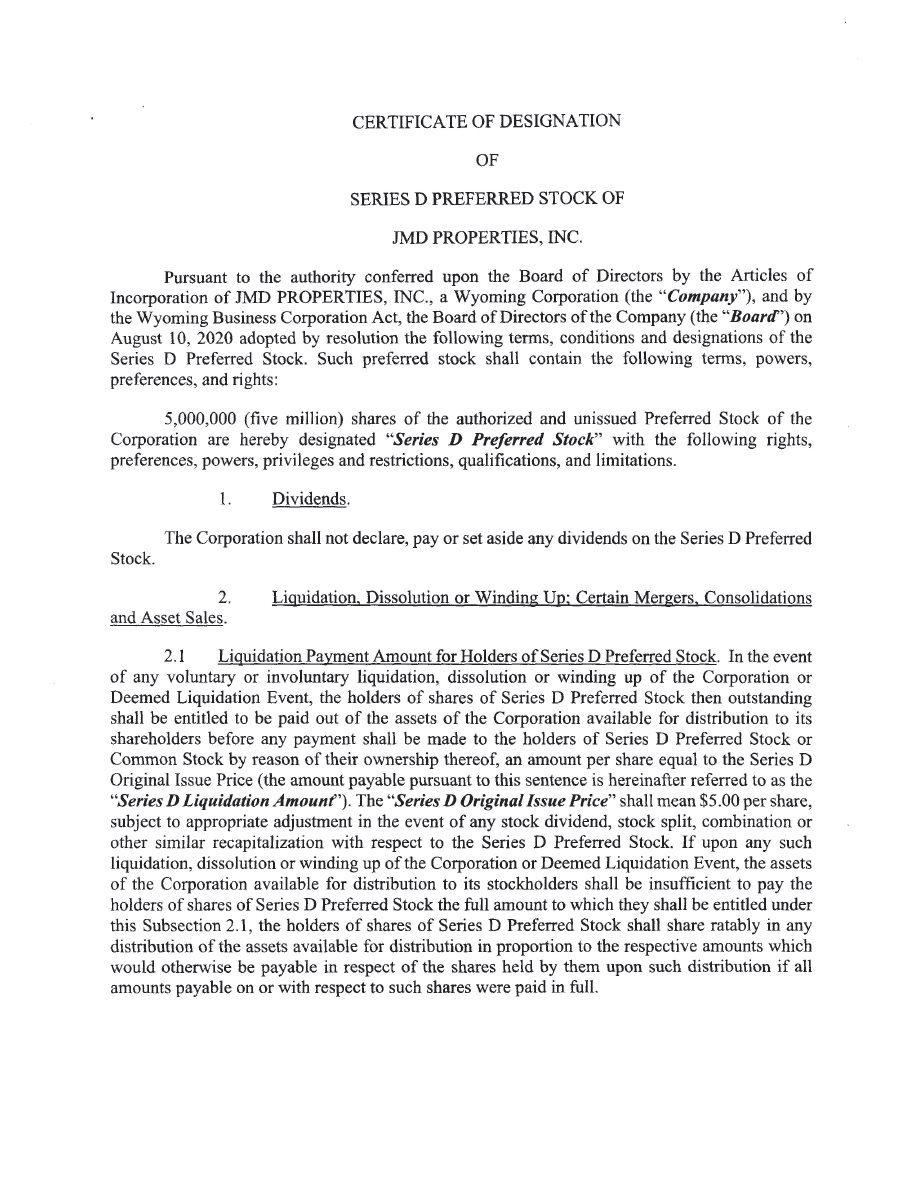
4,000,000 Shares of Series D Preferred Stock
By this Offering Circular, Stella Diagnostics, Inc., a Wyoming corporation, is offering for sale a maximum of 4,000,000 shares of its Series D Preferred Stock (the “Offered Shares”), at a price of $5.00 per share, pursuant to Tier 1 of Regulation A of the United States Securities and Exchange Commission (the “SEC”). A minimum purchase of $5,000 of the Offered Shares is required in this offering. This offering is being conducted on a best-efforts basis, which means that there is no minimum number of Offered Shares that must be sold by us for this offering to close; thus, we may receive no or minimal proceeds from this offering. 927,514 Offered Shares are being sold on behalf of selling shareholders. The proceeds from the balance of the offering, being 3,072,486 Offered Shares, will become immediately available to us and may be used as they are accepted as discussed below. Purchasers of the Offered Shares will not be entitled to a refund and could lose their entire investments. This offering will terminate at the earliest of (a) the date on which the maximum offering has been sold, (b) the date which is one year from this offering being qualified by the SEC or (c) the date on which this offering is earlier terminated by us, in our sole discretion. (See Plan of Distribution).
| | | Price to Public | | | Broker-Dealer Commissions(1) | | | Proceeds to the Company(2) | | | Proceeds to Selling Shareholders(3) | |
| Per Series D Preferred Share | | $ | 5.00 | | | $ | 0.05 | | | $ | 4.95 | | | $ | 4.95 | |
| Maximum Total Offering | | $ | 20,000,000 | | | $ | 200,000 | | | $ | 15,208,806 | | | $ | 4,591,194 | |
| (1) | The company has engaged Dalmore Group, LLC, member FINRA/SIPC (“Dalmore”), to perform administrative and technology related functions in connection with this offering, but not for underwriting or placement agent services. This includes the 1% commission, but it does not include the one-time set-up fees payable by the company to Dalmore of $28,500. See “Plan of Distribution” for details. |
| | |
| (2) | Does not account for the payment of expenses of this offering estimated at $585,000. (See Plan of Distribution). |
| | |
| (3) | As stated above and elsewhere in this offering circular, there are shareholders on behalf of whom 927,514 of the Offered Shares in this this offering are being sold. |
In this Offering Circular, unless otherwise noted or unless the context otherwise requires, references to “we,” “us,” “our,” and the “Company” refer to the activities of and the assets and liabilities of the business and operations of Stella Diagnostics, Inc.
Our common stock is quoted on the OTC Pink, which is operated by OTC Markets Group, Inc. (OTC Markets), under the ticker symbol JMDP. On March 22, 2021, the closing price of our common stock was $0.746 per share.
Investing in the Offered Shares is speculative and involves substantial risks. You should purchase Offered Shares only if you can afford a complete loss of your investment. See Risk Factors, beginning on page 8, for a discussion of certain risks that you should consider before purchasing any of the Offered Shares.
THE SEC DOES NOT PASS UPON THE MERITS OF, OR GIVE ITS APPROVAL TO, ANY SECURITIES OFFERED OR THE TERMS OF THE OFFERING, NOR DOES IT PASS UPON THE ACCURACY OR COMPLETENESS OF ANY OFFERING CIRCULAR OR OTHER SOLICITATION MATERIALS. THESE SECURITIES ARE OFFERED PURSUANT TO AN EXEMPTION FROM REGISTRATION WITH THE SEC. HOWEVER, THE SEC HAS NOT MADE AN INDEPENDENT DETERMINATION THAT THE SECURITIES OFFERED ARE EXEMPT FROM REGISTRATION.
The use of projections or forecasts in this offering is prohibited. No person is permitted to make any oral or written predictions about the benefits you will receive from an investment in the Offered Shares.
No sale may be made to you in this offering, if you do not satisfy the investor suitability standards described in this Offering Circular under Plan of Distribution-State Law Exemptions and Investor Suitability Standards (page 36). Before making any representation that you satisfy the established investor suitability standards, we encourage you to review Rule 251(d)(2)(i)(C) of Regulation A. For general information on investing, we encourage you to refer to www.investor.gov.
This Offering Circular follows the “offering circular” format, pursuant to the General Instructions of Part II(a)(1)(i) of Form 1-A.
The date of this Offering Circular is March 26, 2021.
TABLE OF CONTENTS
CAUTIONARY STATEMENT REGARDING FORWARD-LOOKING STATEMENTS
The information contained in this Offering Circular includes some statements that are not historical and that are considered forward-looking statements. Such forward-looking statements include, but are not limited to, statements regarding our development plans for our business; our strategies and business outlook; anticipated development of our company; and various other matters (including contingent liabilities and obligations and changes in accounting policies, standards and interpretations). These forward-looking statements express our expectations, hopes, beliefs and intentions regarding the future. In addition, without limiting the foregoing, any statements that refer to projections, forecasts or other characterizations of future events or circumstances, including any underlying assumptions, are forward-looking statements. The words anticipates, believes, continue, could, estimates, expects, intends, may, might, plans, possible, potential, predicts, projects, seeks, should, will, would and similar expressions and variations, or comparable terminology, or the negatives of any of the foregoing, may identify forward-looking statements, but the absence of these words does not mean that a statement is not forward-looking.
The forward-looking statements contained in this Offering Circular are based on current expectations and beliefs concerning future developments that are difficult to predict. We cannot guarantee future performance, or that future developments affecting our company will be as currently anticipated. These forward-looking statements involve a number of risks, uncertainties (some of which are beyond our control) or other assumptions that may cause actual results or performance to be materially different from those expressed or implied by these forward-looking statements.
All forward-looking statements attributable to us are expressly qualified in their entirety by these risks and uncertainties. These risks and uncertainties, along with others, are also described below in the Risk Factors section. Should one or more of these risks or uncertainties materialize, or should any of our assumptions prove incorrect, actual results may vary in material respects from those projected in these forward-looking statements. You should not place undue reliance on any forward-looking statements and should not make an investment decision based solely on these forward-looking statements. We undertake no obligation to update or revise any forward-looking statements, whether because of new information, future events or otherwise, except as may be required under applicable securities laws.
OFFERING CIRCULAR SUMMARY
The following summary highlights material information contained in this Offering Circular. This summary does not contain all of the information you should consider before purchasing our common stock. Before making an investment decision, you should read this Offering Circular carefully, including the Risk Factors section and the unaudited consolidated financial statements and the notes thereto. In this Offering Circular, unless otherwise noted or unless the context otherwise requires, references to “we,” “us,” “our,” and the “Company” refer to the activities of and the assets and liabilities of the business and operations of Stella Diagnostics Inc., a Wyoming corporation.
Our Company
JMD Properties, Inc. was incorporated in 1992 in the State of Delaware, under the name Harbour Capital Corp. On January 18, 2008, the company redomiciled in the State of Florida and on July 5, 2013 redomiciled in the State of Wyoming. Since its incorporation, it changed its name to SuperPro Vending Group, Inc., then to AFA Music Group, Ltd., then to 3D Eye Solutions, Inc., then to Oak River Technology briefly and then reverted back to 3D Eye Solutions, Inc., thereafter to JMD Properties, Inc., and recently, following our reverse acquisition by Stella Diagnostics, LLC in August 2020, to Stella Diagnostics, Inc, at which time the Company changed its business focus from real estate holdings and operations to clinical diagnostics. Prior to the reverse acquisition on August 20, 2020, Stella Diagnostics, LLC was operating as a clinical and translational research diagnostics company that was created and began operations in February 2020. Between February 2020 and August 2020, Stella Diagnostics, LLC built its core molecular diagnostics team, put together its preliminary plan of operations and sought financial backing to fund its operations, which garnered the interest of JMD Properties, Inc. in mid-2020, leading to merger discussions and consummation of a reverse acquisition in August 2020, wherein the shareholders of Stella Diagnostics, LLC became the majority holders of JMD Properties, Inc. and Stella Diagnostics, LLC became a wholly-owned subsidiary of the Company. The Company is headquartered in Salt Lake City, Utah and continues to maintain its corporate registration in Wyoming.
On August 20, 2020, pursuant to an Agreement and Plan of Merger and Reorganization, by and among JMD Properties, Inc., JMD Merger Sub LLC, acquired 100% of the issued and outstanding membership units of Stella Diagnostics, LLC, divested itself of all of its prior real estate holdings and operations, and commenced new operations under a totally new line of business, as a medical diagnostics company (the “Transaction”). On August 25, 2020, JMD Properties, Inc. as the parent company of Stella Diagnostics, LLC, changed its name to Stella Diagnostics, Inc. For accounting purposes, Stella Diagnostics, LLC was deemed the “accounting acquiror” in the Transaction.
Our primary business is as a molecular diagnostics-based organization that uses targeted mass spectrometry to determine the level of disease progression in tissue of the lower esophagus. We aim to create molecular diagnostic assays for premalignant diseases as well as diagnostic tests to assist with the identification and quantification of proteomic expression patterns associated with disease stability or progression of the distal esophagus. We have unvalidated clinical data that supports our methodologies and have received much interest from healthcare providers in a number of specialties (pathology, oncology and gastroenterology) as well as medical institutions who are interested in validating and potentially utilizing our diagnostic test technology. In the main, our proprietary technology, which we are developing into easy-to-use assays for clinical guidance, is based on rigorous research by domain experts and practicing physicians and may notify providers if common diseases of the esophagus like Gastrointestinal reflux disease (“GERD”) and Barrett’s esophagus (“BE”) express proteins associated with normal or carcinogenic processes. With our panel of biomarkers and targeted proteomics method, our tests can better inform gastroenterologists, surgical oncologists and pathologists which patients are high risk for disease progression into precancer or cancer. The predictive test panel is aimed to be offered as a Laboratory Developed Test (“LDT”) in a College of American Pathologists (“CAP”)/Clinical Laboratory Improvement Amendments (“CLIA”) Certified moderate complexity laboratory. We intend to use the majority of the proceeds of this offering for additional research and development (“R&D”). With additional R&D and the accumulation of preliminary data from our clinical efforts, we believe that we may also yield novel druggable targets to inhibit BE pathogenesis and/or treat esophageal cancer (“EC”). We believe that informing physicians, through our tests, of the biomarkers playing a role in the pathogenesis of GERD, BE and EC, early in the patient’s treatment plan will help providers extend lives.
Offering Summary
| Issuer | Stella Diagnostics, Inc. |
| Securities Offered (Offered Shares) | 3,072,486 shares of Series D Preferred Stock, par value $0.001 on behalf of the Company and 927,514 shares of Series D Preferred Stock, par value $0.001 on behalf of selling shareholders. |
| Offering Price | $5.00 per Offered Share. |
| Shares Outstanding Before this Offering | 96,365,470 shares of common stock; 100,000 shares of Series A Preferred Stock; and 927,514 shares of Series D Preferred Stock. |
| Shares Outstanding After this Offering | 96,365,470 shares of common stock; 100,000 shares of Series A Preferred Stock; and 4,000,000 shares of Series D Preferred Stock. |
| Minimum Number of Shares to Be Sold in this Offering | None. |
| Investor Suitability Standards | The Offered Shares may only be purchased by investors residing in a state in which this Offering Circular is duly qualified. Further, no sale may be made to you in this offering if the aggregate purchase price you pay is more than 10% of the greater of your annual income or net worth. Different rules apply to accredited investors and non-natural persons. Before making any representation that your investment does not exceed applicable thresholds, we encourage you to review Rule 251(d)(2)(i)(C) of Regulation A. For general information on investing, we encourage you to refer to www.investor.gov. (See “State Law Exemptions and Investor Suitability”). |
| Market for Our Stock | Our common stock is quoted on the OTC Markets Pink tier under the ticker symbol JMDP. |
| Termination of this Offering | This Offering will terminate at the earliest of (a) the date on which the maximum offering has been sold, (b) the date which is one year from this offering being qualified by the SEC and (c) the date on which this offering is earlier terminated by us, in our sole discretion. |
| Use of Proceeds | 927,514 Offered Shares are being sold on behalf of selling shareholders. Accordingly, we will apply the proceeds of 927,514 Offered Shares of this offering to said shareholders and the balance of the proceeds from this offering will broadly be applied for Product Research, Development, and Infrastructure related costs including tissue acquisition and those related to collaborative research organizations, Corporate, Governance and IP related administrative costs, and Potential Investments/Further Research and Product Development matters. If we sell less than the maximum amount of Offered Shares, we will reduce the proceeds applied to the selling shareholders on a pro rata basis, such that the selling shareholders will receive the same percentage of the total Offering amount as they would have had the Offering been fully subscribed. |
| Risk Factors | An investment in the Offered Shares involves a high degree of risk and should not be purchased by investors who cannot afford the loss of their entire investments. You should carefully consider the information included in the Risk Factors section of this Offering Circular, as well as the other information contained in this Offering Circular, prior to making an investment decision regarding the Offered Shares. (See “Risk Factors”). |
| Corporate Information | Our principal executive offices are located at 50 West Broadway, Suite 300, Salt Lake City, Utah 84101; our telephone number is (646) 490-2860; our corporate website is located at www.stelladx.com. No information found on our company’s website is part of this Offering Circular. |
Continuing Reporting Requirements Under Regulation A
As a Tier 1 issuer under Regulation A, we will be required to file with the SEC a Form 1-Z (Exit Report Under Regulation A) upon the termination of this offering. We will not be required to file any other reports with the SEC following this offering.
However, during the pendency of this offering and following this offering, we intend to file quarterly and annual financial reports and other supplemental reports with OTC Markets, which will be available at www.otcmarkets.com.
All of our future periodic reports, whether filed with OTC Markets or the SEC, will not be required to include the same information as analogous reports required to be filed by companies whose securities are listed on the NYSE or NASDAQ, for example.
RISK FACTORS
An investment in the Offered Shares involves substantial risks. You should carefully consider the following risk factors, in addition to the other information contained in this Offering Circular, before purchasing any of the Offered Shares. The occurrence of any of the following risks might cause you to lose a significant part of your investment. The risks and uncertainties discussed below are not the only ones we face but do represent those risks and uncertainties that we believe are most significant to our business, operating results, prospects, and financial condition. Some statements in this Offering Circular, including statements in the following risk factors, constitute forward-looking statements. (See Cautionary Statement Regarding Forward-Looking Statements).
Risks Related to Our Company
We have a limited operating history in our current line of business, and there are risks and uncertainties encountered by early-stage companies.
We have a limited operating history in our current line of business. We completed the Transaction with Stella Diagnostics, LLC, which operates our principal line of business, in August 2020. Prior to August 2020, our primary business was real estate. In addition, prior to the Transaction, Stella Diagnostics, LLC had only been in operation since February 2020. As a result, we have a limited operating history with which you can evaluate our business and prospects. Our prospects must be considered in light of the risks encountered by companies in the early stages of development in highly competitive markets, including, among other things, our lack of brand recognition and lack of capital. You should consider the frequency with which early-stage businesses encounter unforeseen expenses, difficulties, complications, delays and other adverse factors.
We may not be successful in executing our business plan.
The execution of our business plan poses many challenges and is based on a number of assumptions. We may not be able to successfully execute our business plan. We have currently have four tests, each based on a different set of biomarkers, all of which are in the pre-commercialization development stage. If we experience significant cost overruns on our clinical trials for our four current tests or future tests, or if our business plan is more costly than we anticipate, certain research and development activities may be delayed or eliminated, resulting in changes or delays to our commercialization plans, or we may be compelled to secure additional funding (which may or may not be available) to execute our business plan. We cannot predict with certainty our future revenues or results from our operations. If the assumptions on which our revenue or expenditure forecasts are based change, the benefits of our business plan may change as well. In addition, we may consider expanding our business beyond what is currently contemplated in our business plan. Depending on the financing requirements of a potential acquisition or new product opportunity, we may be required to raise additional capital through the issuance of equity or debt. If we are unable to raise additional capital on acceptable terms, we may be unable to pursue a potential acquisition or new product opportunity.
We may never earn a profit.
Because we lack an operating history, we are unable to offer assurance that we will ever earn a profit. Following our August 2020 Transaction with Stella Diagnostics, LLC, our current business plan is in its early stages. We have not yet generated or realized any revenues from our current business plan. To date, we have experienced negative cash flow from development of our biomarkers. We expect to incur substantial net losses for the foreseeable future to further develop and commercialize our biomarkers. We cannot predict the extent of these future net losses, or when we may attain profitability, if at all. If we are unable to generate significant revenue from our biomarkers or attain profitability, we will not be able to sustain operations.
Because of the numerous risks and uncertainties associated with further development and commercialization of our biomarkers and any future tests, we are unable to predict the extent of any future losses or when we will become profitable, if ever. We may never become profitable and you may never receive a return on an investment in our common stock. An investor in our Series D Preferred Stock must carefully consider the substantial challenges, risks and uncertainties inherent in the development and commercialization of tests in our industry. We may never successfully commercialize our biomarkers or any future tests, and our business may fail.
If we are unable to manage future expansion effectively, our business may be adversely impacted.
In the future, we may experience rapid growth in our diagnostic business, which could place a significant strain on our Company's infrastructure, in general, and our internal controls and other managerial, operating and financial resources, in particular. If we are unable to manage future expansion effectively, our business would be harmed. There is, of course, no assurance that we will enjoy rapid development in our business.
We currently only have one employee, our Chief Executive Officer, and, to execute our business plan, will be required to obtain others.
Currently, we have only one full time employee, our Chief Executive Officer Joe Abdo. Thus, our success will depend, in large part, on the skill, expertise, and acumen of Mr. Abdo. If Mr. Abdo ceases to participate in our Company’s activities for any reason, our Company’s ability to operate would be severely impaired. We are highly dependent on the continued services and performance of Mr. Abdo, and our success as a Company depends in part on his efforts and his wherewithal. In addition, much of our key technology and systems are custom made for our business by Mr. Abdo so that the loss of Mr. Abdo could disrupt the operation of our business and have an adverse effect on our ability to commercialize our tests and grow, including delays and cost increases in commercializing our tests as new or other employees gain familiarity with our technology and systems. We do not currently carry “key man” insurance on Mr. Abdo, although we may purchase such insurance in the future if it can be obtained for reasonable premiums.
In addition to Mr. Abdo, we also currently rely on several contract employee arrangements with other individuals and outsource certain services including clinical advisors. In order to execute our business plan, we expect we will be required to expand our base of employees and contractors in the future, and our future success will depend in part upon our ability to attract, motivate and retain highly skilled personnel. We may have difficulty attracting and retaining such personnel due to our lack of resources.
Our current Chief Executive Officer has limited experience managing a company which publicly sells its securities, and we currently do not have a chief financial officer or individual with financial expertise in house to oversee the internal controls and accounting functions of the Company’s operations.
Our Chief Executive Officer has limited experience managing a company whose securities are being offered publicly and complying with federal securities laws, including managing any compliance requirements on a timely basis. In addition, with only one full time employee, it is difficult for us to establish corporate governance practices, including disclosure controls and procedures and to manage internal control over financial reporting. We currently outsource these and other matters leading to reliance on third parties. Faulty judgments, simple errors or mistakes, or the failure to adhere to established controls and procedures by such third parties may make it difficult for us to ensure that the objectives of the control system are met. Our CEO may not successfully or efficiently manage these third parties.Further, compliance with securities laws and maintenance of effective controls and procedures may require significant attention from our CEO, which may result in delays or other setbacks in the commercialization of our tests.A failure of our controls and procedures to detect other than inconsequential errors or fraud could cause serious harm our business including, among other things, failure to comply with applicable laws, rules and regulations applicable to our business, delays in our ability to raise capital. In addition, to the extent that the market place perceives that we do not have a strong financial staff and financial controls, the market for, and price of, our stock may be impaired.
Further, we currently do not have a chief financial officer or an individual with financial expertise on staff to oversee the internal controls and accounting functions of the Company’s operations, and as explained above, are thus forced to outsource this function and rely on third parties for these services, which involves inherent risk in relying on others to follow our Company’s protocols, procedures and preferences. We have engaged an outside accountant to maintain our financial accounts and records and to work closely with us on relevant financial matters, however, our CEO has limited experience managing outside accountants, and managing of outside accountants may require significant amounts of his time and attention. As we continue to grow, we will likely be required to hire a full-time financial officer to assist with day-to-day financial matters, and may have difficulty attracting and hiring a qualified chief financial officer.
If it became necessary and we were unable to raise additional capital on acceptable terms in the future, it may limit our ability to develop and commercialize new tests and technologies and expand our operations.
We expect capital outlays and operating expenditures to increase over the next several years as we expand our infrastructure, commercial operations and research and development activities. Specifically, we may need to raise capital to, among other things, expand and fund the commercialization of our products, increase our selling and marketing efforts, further expand our clinical laboratory operations, technologies and research and development activities, invest in complementary businesses or assets or finance capital expenditures and general and administrative expenses.
Our present and future funding requirements will depend on many factors, including establishing reimbursement arrangements with third-party payors, costs associated with expanding our commercial and laboratory operations, spending on research and development activities, costs associated with acquiring or investing in new technologies or complementary businesses, costs associated with obtaining and protecting our intellectual property rights, if applicable, and the costs and potential delays involved with any regulatory validations or approvals.
We cannot assure you that we would be able to obtain additional funds on acceptable terms, or at all. If we raise funds by issuing equity securities, dilution to our stockholders could result. Any equity or debt securities issued also may provide for rights, preferences or privileges senior to those of holders of our common stock and could impose significant restrictions on our operations. If we raise funds through collaborations, we might be required to relinquish significant rights to our technologies or products, on terms that are not favorable to us. If we are not able to secure additional funding when needed, we may have to delay, reduce the scope of or eliminate one or more research and development programs or selling and marketing initiatives. Any or all of these factors could harm our business, operating results and financial condition.
We may be unable to manage our future growth and operational expansion effectively, which could make it difficult to execute our business strategy.
Future growth, including the development of new capabilities, infrastructure, and processes to support our commercialization efforts, will impose significant added responsibilities on management, including the need to identify, recruit, train and integrate additional employees to add new and extend existing organizational capabilities in multiple areas, including operations, R&D, quality, regulatory, commercial, finance, legal, and others. In addition, rapid and significant growth may place strain on these and other areas and functions. Our ability to manage our operations and growth will require us to continue to improve our operational, financial and management controls, reporting systems and procedures. If we are unable to manage our growth effectively, it may be difficult for us to execute our business strategy.
New diagnostic product development involves a lengthy and complex process, and we may be unable to commercialize on a timely basis, or at all, any of the tests or products we develop individually or with any collaborators in the future.
At any point, we may delay or abandon a development program, or we may be required to expend unanticipated and considerable resources conducting or repeating clinical studies, which could adversely impact potential revenue and our expenses. In addition, any delay in product development could provide our competitors with additional time to commercialize competing products before we do, which in turn may adversely affect our growth prospects and operating results. In addition, the success of the development programs that require collaboration with third parties, will be dependent on the continued success of such collaborators. There is no guarantee that any of our future collaborators will continue to be successful and, as a result, we may expend considerable time and resources developing diagnostic assays that will not ultimately be commercialized.
We are dependent on our information technology and telecommunications systems, and any failure of these systems could harm our business.
We depend on information technology, or IT, and telecommunications systems for significant aspects of our operations. In addition, in the future, once our tests are commercialized, any third-party billing and collections provider we use would be dependent upon telecommunications and data systems provided by outside vendors and information it receives from us on a regular basis. These IT and telecommunications systems would support a variety of functions, including test processing, sample tracking, quality control, customer service and support, billing and reimbursement, research and development activities, and our general and administrative activities. Failures or significant downtime of our IT or telecommunications systems or those used by such third-party service providers could prevent us from processing tests, providing test results to physicians, billing payors, processing reimbursement appeals, handling physician inquiries, conducting research and development activities, and managing the administrative aspects of our business. Any disruption or loss of IT or telecommunications systems on which critical aspects of our operations depend could have an adverse effect on our business and our product development and revenues.
Security breaches, loss of data and other disruptions could compromise sensitive information related to our business or prevent us from accessing critical information and expose us to liability, which could adversely affect our business and our reputation.
In the ordinary course of our business, we and once our tests are commercialized in the future, any third-party billing and collections providers we may use at such time, would or do collect and store sensitive data, including legally protected health information, sensitive personal data, credit card information, personally identifiable information about our employees, customers and patients, intellectual property, and our proprietary business information and that of any of our future customers, payors and collaboration partners. At such time, we may decide to manage and maintain any such applications and data utilizing a combination of on-site systems, managed data center systems and cloud-based data center systems. Such applications and data would encompass a wide variety of business-critical information including research and development information, commercial information and business and financial information. If we use these applications, we would face risks relative to protecting this critical information, including loss of access risk, inappropriate disclosure risk and inappropriate modification risk combined with the risk of our ability to identify and audit our controls over the first three risks.
It may be that the secure processing, storage, maintenance and transmission of this critical information is vital to our operations and business strategy, and as such we would need to devote significant resources to protecting such information. Although we will take measures to protect sensitive information from unauthorized access or disclosure, our information technology and infrastructure, and that of our future third-party billing and collections provider, may be vulnerable to attacks by hackers or viruses, or breached due to employee error, malfeasance or other disruptions. Any such breach or interruption could compromise our networks and the information stored therein could be accessed by unauthorized parties, publicly disclosed, lost or stolen. Any such access, disclosure or other loss of information could result in legal claims or proceedings, liability under laws that protect the privacy of personal information, such as the Health Insurance Portability and Accountability Act of 1996, similar U.S. state data protection regulations, including the California Consumer Privacy Act, the E.U. General Data Protection Regulation, or GDPR, and other regulations, the breach of which could result in significant penalties. Unauthorized access, loss or disclosure could also disrupt our operations, including our ability to process tests, provide test results, bill payors or patients, process claims and appeals, provide customer assistance services, conduct research and development activities, collect, process and prepare company financial information, provide information about our tests and other patient and physician education and outreach efforts through our website, manage the administrative aspects of our business and damage our reputation, any of which could adversely affect our business.
In addition, the interpretation and application of consumer, health-related and data protection laws in the U.S., Europe and elsewhere are often uncertain, contradictory and in flux. Complying with these various laws could in addition cause us to incur substantial costs or require us to change our business practices and compliance procedures in a manner adverse to our business.
If we were sued for product liability or professional liability, we could face substantial liabilities that exceed our resources.
The marketing, sale and use of our tests, once commercialized, could lead to the filing of product liability claims if someone were to allege that our tests failed to perform as designed. We may also be subject to liability for errors in the test results we provide to physicians or for a misunderstanding of, or inappropriate reliance upon, the information we provide. A product liability or professional liability claim could result in substantial damages and be costly and time consuming for us to defend. Although we anticipate maintaining product and professional liability insurance, we cannot assure you that any such insurance would protect us from the financial impact of defending against product liability or professional liability claims or any judgments, fines or settlement costs arising out of any such claims. Any product liability or professional liability claim brought against us, with or without merit, could increase our insurance rates or prevent us from securing insurance coverage in the future. Additionally, any product liability lawsuit could cause injury to our reputation, result in the recall of our products, or cause any of our clinical partners at such time to terminate existing agreements and potential clinical partners to seek other partners, any of which could impact our results of operations.
If we use hazardous materials in a manner that causes injury, we could be liable for damages.
Our activities currently, directly or indirectly, require the use of hazardous materials and medical specimens. We cannot eliminate the risk of accidental contamination or injury to employees or third parties from the use, storage, handling or disposal of these materials or specimens. In the event of contamination or injury, we could be held liable for any resulting damages, and any liability could exceed our resources or any applicable insurance coverage we may have. Additionally, we or such of our collaborators, as applicable, are subject on an ongoing basis to federal, state and local laws and regulations governing the use, storage, handling and disposal of these materials and specified waste products, as well as regulations relating to the safety and health of laboratory employees. The cost of compliance with these laws and regulations may become significant and could negatively affect our operating results.
Our Articles of Incorporation require us to indemnify our directors, officers and legal representatives.
Our Articles of Incorporation permit the company to indemnify any and all directors, officers and agents of the company with respect to, among other things, and to the maximum extent permitted by Wyoming law, their liability in such roles. Our Articles of Incorporation also authorize the Company to provide contractual indemnification obligations under our agreements with our directors, officers, and agents of the Company to the maximum extent permitted by law. In addition, the company has entered into contractual indemnification agreements with each of its board members. The foregoing indemnification obligations could result in our Company incurring substantial expenditures to cover the cost of settlement or damage awards that we may be unable to recoup. These provisions and resulting costs may also discourage our company from bringing a lawsuit against directors, officers and agents for breaches of their fiduciary duties, and may similarly discourage the filing of derivative litigation by our shareholders against our directors, officers and employees even though such actions, if successful, might otherwise benefit our company and shareholders.
Risks Relating to Development, Commercialization and Sales
We expect to continue to incur significant expenses to develop and market our tests, which may make it difficult for us to achieve sustained profitability.
From our inception in February 2020, we have not generated revenues but are incurring expenses. We expect to continue to invest in development of our assays for commercialization and until commercialized, anticipate operating at a loss. We also expect our expense levels to continue to increase for the foreseeable future as we seek to commercialize our tests. As a result, we will need to generate significant growth in revenues thereafter in order to achieve sustained profitability. Our failure to achieve increased revenue or sustained profitability in the future could cause the market price of our common stock to decline.
We may encounter substantial delays in future clinical trials (prospective and retrospective) or may not be able to conduct or complete clinical trials on the expected timelines, if at all.
Clinical testing is expensive, time consuming, and subject to uncertainty. We cannot guarantee that any of our ongoing and planned clinical trials will be conducted as planned or completed on schedule, if at all. Moreover, even if these trials are initiated or conducted on a timely basis, issues may arise that could result in the suspension or termination of such clinical trials. A failure of one or more clinical trials can occur at any stage of testing, and our ongoing and future clinical trials may not be successful.
Our clinical research may fail to demonstrate substantial evidence of the effectiveness of tests that we may identify and pursue for their intended uses, which would prevent, delay or limit the scope of commercialization.
Before commercial sales of any of our tests, we must demonstrate through lengthy, complex and expensive studies, preclinical studies and clinical trials that the applicable product candidate is effective for use in each target indication. Each product candidate must demonstrate an adequate risk versus benefit profile in its intended patient population and for its intended use. Clinical testing is expensive and can take many years to complete, and its outcome is inherently uncertain. Failure can occur at any time during the clinical development process.
Diagnostic test development involves a lengthy and complex process, and we may be unable to commercialize on a timely basis, or at all, any tests we may develop.
As of the date of this Offering Circular, our tests are in the development and pre-commercialization stage, and we devote considerable resources to research and development. There can be no assurance that our tests will be capable of reliably predicting the recurrence of diseases of the esophagus or other diseases for which our tests apply with the sensitivity and specificity necessary to be clinically useful and commercially viable. We also cannot be certain that the products we launch will attain use among the intended target of community medical professionals, including oncologists and pathologists. In addition, before we can develop diagnostic tests for diseases and commercialize our products, we will need to:
| | ● | conduct substantial research and development; |
| | ● | conduct validation studies; |
| | ● | expend significant funds; |
| | ● | develop and scale our laboratory processes to accommodate different tests; and |
| | ● | develop and scale our infrastructure including our operational systems, supply chain, and inventory management, and customer service to establish and add new capabilities. |
Our product development process involves a high degree of risk and may take several years. Our product development efforts may fail for many reasons, including:
| ● | failure of the product at the research or development stage; |
| ● | difficulty in accessing tissue samples; or |
| ● | lack of clinical validation data to support the effectiveness of the product. |
Few research and development projects result in commercial products, and success in early clinical trials often is not replicated in later studies. At any point, we may abandon development of a product candidate or we may be required to expend considerable resources repeating clinical trials, which would adversely impact the timing for generating potential revenues from those tests. If a clinical validation study fails to demonstrate the prospectively defined endpoints of the study, we might choose to abandon the development of the product or product feature that was the subject of the clinical trial, which could harm our business. In addition, competitors may develop and commercialize competing products faster than we are able to do so.
If we are unable to support demand for our tests, once commercialized, including successfully managing the evolution of our technology and business systems, our business could suffer.
Once we commercialize our tests, as our test volume grows and we examine additional means through which we can provide our tests, we will likely need to ramp up our testing capacity, implement increases in scale and related processing, customer service, billing and systems process improvements, and expand our internal quality assurance program, technology and manufacturing platforms to support testing on a larger scale. We will also need additional certified laboratory scientists and other scientific and technical personnel to process higher volumes of our tests. We cannot assure you that any increases in scale, related improvements and quality assurance will be successfully implemented or that appropriate personnel will be available. As our products are commercialized, we will likely need to bring new equipment on-line, implement new systems, technology, controls and procedures and hire personnel with different qualifications. We cannot assure you that any such efforts will not result in delays. Failure to implement necessary procedures, transition to new equipment or processes or to hire the necessary personnel could result in higher cost of processing or an inability to meet market demand. There can be no assurance that we will be able to perform tests on a timely basis at a level consistent with demand, that our efforts to commercialize and then scale our commercial operations will not negatively affect the quality of test results, or that we will be successful in responding to the growing complexity that testing operations demands. If we encounter difficulty meeting market demand or quality standards for our tests, our reputation could be harmed, and our future prospects and our business could suffer.
We may experience limits on our revenues if physicians decide not to order our tests.
If medical practitioners do not order the future tests developed or offered by us, we will likely not be able to create and subsequently maintain demand for our products in sufficient volume for us to achieve sustained profitability. To generate demand, we will need to make medical specialists including surgeons and pathologists aware of the benefits of each type of test through published papers, presentations at scientific conferences and one-on-one education by any salesforce we may hire or employ in the future. In addition, we will need to demonstrate our ability to, once our tests are commercialized, obtain and maintain adequate reimbursement coverage from third-party payors.
We will need to continue to educate physicians and payors about the benefits and cost-effectiveness of our tests, once commercialized and to establish reimbursement arrangements for these tests with payors. We expect to need to hire some commercial, sales, scientific, technical and other personnel to support this process. If our marketing and educational efforts do not result in sufficient physician demand, we may not be able to obtain adequate reimbursement for our tests. If we fail to successfully establish adoption of and additional reimbursement beyond Medicare for our tests, our reputation could be harmed and our business could suffer.
Some doctors may decide not to use our tests due to their price, all or part of which may be payable directly by the patient if the applicable payor denies reimbursement in full or in part. Even if medical practitioners recommend that their patients use our tests (once commercialized), patients may still decide not to use our tests. Additionally, the current economic environment in the United States and abroad could continue to negatively impact patients, resulting in higher co-payments and insurance premiums or the loss of healthcare coverage, which may result in delayed medical checkups or an inability to pay for our tests. If only a small portion of the target patient population uses our tests, we will experience limits on our revenues and our ability to achieve sustained profitability.
If we are unable to develop products to keep pace with rapid technological, medical and scientific change, our operating results could be harmed.
In recent years, there have been numerous advances in technologies relating to the diagnosis and treatment of cancer. For example, technologies now permit measurement of gene expression in fixed paraffin-embedded tissue specimens or blood or urine. There have also been advances in methods used to analyze very large amounts of genomic information, specifically NGS. These advances will require us to continuously develop our technology, develop new products and enhance products, once commercialized, to keep pace with evolving standards of care. After commercialization, our tests could become obsolete unless we continually innovate and expand those products to demonstrate recurrence and treatment benefit in patients treated with new therapies. New treatment therapies typically have only a few years of clinical data associated with them, which limits our ability to perform clinical studies to a new treatment’s effectiveness. Additionally, as new products are developed, evolving industry standards and metrics may slow the widespread adoption of any new products we may introduce. If we are unable to demonstrate the applicability of our tests to new treatments or to keep pace with new industry standards, sales of our tests, once commercialized, could decline, which would harm our revenues.
If we are unable to compete successfully, we may be unable to generate revenues or achieve sustained profitability.
We compete in a rapidly evolving and highly competitive industry, and there are a number of private and public companies that offer products or have conducted research to profile biological pathologies. As we look to expand our research, development and commercialization efforts, we may face competition from such companies. We imagine that our principal competition will come from existing diagnostic methods used by pathologists and oncologists, and such traditional diagnostic methods can be difficult to change or supplement. Once our tests are commercialized, we will likely also face competition from commercial laboratories with strong distribution networks for diagnostic tests. Other potential competitors include companies that develop diagnostic tests, as well as academic and research institutions.
In addition, competitors may develop their own versions of our tests, once commercialized, in countries where we did not apply for patents, where patents we hold at such time have not issued or where any intellectual property rights we may hold are not recognized and compete with us in those countries, including encouraging the use of their test by physicians in other countries. Many of our potential competitors have widespread brand recognition and substantially greater financial and technical resources and development, production and marketing capabilities than we do. Others may develop lower-priced tests that could be viewed by physicians and payors as functionally equivalent to our tests, or offer tests at prices designed to promote market penetration, which could force us to lower the prices we hope to charge for our tests and impact our operating margins and our ability to achieve sustained profitability. Some competitors have developed tests cleared or approved for marketing by the FDA. There may be a marketing differentiation or perception that an FDA-cleared or approved test is more desirable than the tests we are developing, which are LDTs, and that may discourage adoption of and reimbursement for our tests, once commercialized. If we are unable to compete successfully against future competitors, we may be unable to achieve market acceptance for and sales of our tests, which could prevent us from generating revenues or achieving sustained profitability and could cause the market price of our common stock to decline.
If a clinical research subject’s sample falls outside of the scope of an approved Institutional Review Board application, we could become involved in legal challenges.
We have implemented measures designed to ensure that all clinical data and biological samples that we receive from our clinical collaborators will be collected from subjects who fit the inclusion criteria for our research. We seek to ensure such data and samples will be provided to us as de-identified specimen. Our clinical collaborators conduct research in a number of different states. The collection of data and samples in many different states results in complex legal questions regarding the adequacy of exemption from informed consent due to use of de-identified samples. Therefore, in addition to the measures we will implement, we will rely on collaborating medical centers and contract laboratories to comply with the inclusion criteria for samples approved by the respective IRBs. Any future findings against us, or our clinical collaborators, could deny us access to or force us to stop using some of our clinical samples, which would hinder our molecular information product development efforts. We could become involved in legal challenges, which could consume our management and financial resources.
Risks Related to Intellectual Property
If we are unable to obtain and thereafter maintain intellectual property protection, our competitive position could be harmed.
Our ability to compete and to achieve sustained profitability is impacted by our ability to protect our proprietary discoveries and technologies. We currently have a preliminary patent for one of our tests. We also rely upon trade secret laws to protect unpatented know-how and technological innovation. Our intellectual property strategy is intended to develop and then maintain our competitive position. Our preliminary patent and any future pending applications may not result in issued patents, and we cannot assure you that our preliminary patent as of the date of this agreement might ultimately be issued by the U.S. Patent and Trademark Office, or USPTO, to protect our technology. Any patents that may be issued to us might be challenged by third parties as being invalid or unenforceable, or third parties may independently develop similar or competing technology that avoids any patents we are granted.
If patent regulations or standards are modified, such changes could have a negative impact on our business.
From time to time, the U.S. Supreme Court, other federal courts, the U.S. Congress or the USPTO may change the standards of patentability and validity of patents within the diagnostic space, and any such changes could have a negative impact on our business plan. In addition, competitors may develop their own versions of our tests, once commercialized, in countries where we do not apply for patents or where our patents have not issued and compete with us in those countries, including encouraging the use of their tests by physicians in other countries.
In December 2014, the USPTO published revised guidelines for patent examiners to apply when examining process claims for patent eligibility in view of several recent Supreme Court decisions, including Mayo Collaborative Services v. Prometheus Laboratories, Inc., Association for Molecular Pathology v. Myriad Genetics, Inc., and Alice Corporation Pty. Ltd. V. CLS Bank International, et al. The guidance indicates that claims directed to a law of nature, a natural phenomenon, or an abstract idea that do not meet the eligibility requirements should be rejected as non-statutory, patent ineligible subject matter. While these guidelines may be subject to review and modification by the USPTO over time, we cannot assure you that our preliminary patent and future patent applications will not be negatively impacted by the decisions described above, rulings in other cases or changes in guidance or procedures issued by the USPTO. Additional substantive changes to patent law, whether new or associated with the America Invents Act, may affect our ability to obtain, enforce or defend our preliminary patent and any future patents. Accordingly, it is not clear what, if any, impact the new law will ultimately have on the cost of prosecuting any of our future patent applications, our ability to obtain patents based on our discoveries and our ability to enforce or defend our preliminary patent, all of which could have a material adverse effect on our business plan.
We could face intellectual property infringement claims that could be time-consuming and costly to defend and could result in our loss of significant rights and the assessment of treble damages.
We may in the future, receive notices of claims of infringement and misappropriation or misuse of other parties’ proprietary rights. Some of these claims may lead to litigation. We cannot assure you that we will prevail in such actions, or that other actions alleging misappropriation or misuse by us of third-party trade secrets, alleging infringement by us of third-party patents and trademarks or challenging the validity of our preliminary patent or future patents, will not be asserted or prosecuted against us. If there is a successful claim of infringement against us, we may be required to pay substantial damages (including treble damages if that infringement were found to be willful) to the party claiming infringement, develop non-infringing technology, stop selling our tests (once commercialized) or using technology that contains the allegedly infringing intellectual property.
We may also initiate claims to defend our intellectual property or to seek relief on allegations that we use or offer to sell technology that incorporates third-party intellectual property. Intellectual property litigation, regardless of outcome, is expensive and time-consuming, could divert management’s attention from our business and have a material negative effect on our business, operating results or financial condition. In addition, revising our tests (once commercialized or even in the development stage) to include the non-infringing technologies would require us to re-validate any work we have already put forth towards the applicable tests, which would be costly and time consuming. Also, we may be unaware of pending third-party patent applications that relate to the tests we are developing or that may relate to our tests, once commercialized. Parties making infringement claims on future issued patents may be able to obtain an injunction that could prevent us from selling our tests (once commercialized) or using technology that contains the allegedly infringing intellectual property to develop our tests, which could harm our business plan.
It is possible that a third party or patent office might take the position that one or more patents or patent applications constitute prior art in the field of diagnostics. In such a case, we might be required to pay royalties, damages and costs to firms who own the rights to these patents, or we might be restricted from using any of the inventions claimed in those patents.
Risks Related to Third Parties
Our research and development efforts will be hindered if we are not able to contract with third parties for access to tissue for clinical trials.
Under standard clinical practice, tumor resections and endoscopic biopsies removed from patients are preserved and stored in either formalin-fixed paraffin embedded (FFPE), or fresh fixatives. In order to add additional biomarkers to the LDT products we are developing, we will need to secure access to these FFPE biopsies and esophagectomy samples, as well as non-protected health information (non-PHI) pertaining to the clinical treatments and outcomes of the patients from which the specimen were derived. Others compete with us for access to these samples. Additionally, the process of negotiating access to samples is lengthy because it typically involves numerous parties and approval levels to resolve complex issues such as usage rights, institutional review board (IRB) approval, privacy rights, publication rights, intellectual property ownership and research parameters. If we are unable to negotiate access to tissue samples on a timely basis or on commercially reasonable terms, or at all, or if other laboratories or our competitors secure access to these samples before us, our ability to research, develop and commercialize future LDT products will be limited or delayed.
If we cannot successfully enter into relationships with outside third parties, our product development could be delayed which could have an adverse effect on our financial results.
We may rely on clinical collaborators to perform portions of our clinical trial functions. If any such collaborators were to breach or terminate any agreements we may enter into with them on this basis or otherwise fail to conduct the contracted activities successfully and in a timely manner, the research, development or commercialization of the products contemplated by any such collaboration could be delayed or terminated. If any such collaboration agreements are terminated, or if we are unable to renew those agreements, once entered into, on acceptable terms, we would be required to seek alternatives. In such case, we may not be able to negotiate agreements with alternate collaborators on acceptable terms, if at all, and these collaborations may not be successful.
Our success in the future may depend in part on our ability to enter into collaboration agreements with leading research organizations. This can be difficult due to internal and external constraints placed on these organizations. Some organizations may limit the number of collaborations they have with any one company so as to not be perceived as biased or conflicted. Organizations may also have insufficient administrative and related infrastructure to enable collaborations with many companies at once, which can prolong the time it takes to develop, negotiate and implement collaboration. Additionally, organizations often insist on retaining the rights to publish the clinical data resulting from such collaboration. We believe the publication of clinical data in peer-reviewed journals is a crucial step in commercializing and obtaining reimbursement for tests such as ours (once commercialized), and our inability to control when, if ever, results are published may delay or limit our ability to derive sufficient revenues from any products that may result from a collaboration.
Currently, pre-commercialization, we rely on a limited number of suppliers or, in many cases, single suppliers, for laboratory equipment and materials and may not be able to find replacements or immediately transition to alternative suppliers, and post-commercialization, will likely continue to face similar risks.
In developing and testing our diagnostic tests pre-commercialization, we source, and, post commercialization, will likely continue to source components of our technology, including mass spectrometers, reagents, enzymes, tubes and other laboratory materials, from third parties. In particular, our proteomic hardware and many of our reagents and enzymes are solely sourced from suppliers.
For example, without access to certain high-quality mass spectrometers, we would be unable to run our tests and commercialize our products. In addition, our target product customers may be required to use certain proteomic platforms and reagents to run the tests that they develop based on our testing technology. Our failure to maintain a continuous supply of the mass spectrometers and reagents, along with the right to use certain hardware and software, which right now we receive from third parties, would adversely impact our business plan, our future financial condition, and future results of operations.
Further, while we are seeking to validate our tests on additional proteomic platforms, other than those of the third parties with whom we currently work, we have not, to date, validated any alternative proteomic platforms in which our testing could be run in a commercially viable manner. Failure to validate our tests on additional sequencing platforms, would adversely impact our business, and our future financial condition, and results of operations. Implementing any such proteomic platforms in a commercially sustainable way, will require significant resources, expenditures and time and attention of management, and there is no guarantee that we will be successful in implementing any such proteomic platforms in a commercially sustainable way. We also cannot guarantee that we will appropriately prioritize or select alternative proteomic platforms on which to focus our efforts, in particular given our limited product and research and development resources and various business initiatives to date, which could result in increased costs and delayed timelines or otherwise impact our business plan, future financial condition, and future results of operations.
We currently do and may continue to rely on third parties to conduct our clinical trials and some aspects of our research and preclinical testing, and those third parties may not perform satisfactorily, including failing to meet deadlines for the completion of such trials, research, or testing.
We currently do and may continue to rely on third parties, such as Clinical Research Organizations (“CROs”), clinical data management organizations, medical institutions, and clinical investigators, to conduct some aspects of research and preclinical testing and clinical trials, or to obtain tissue samples or otherwise for aspects of our operations. In relationships with them, any of these third parties may terminate their engagements with us or be unable to fulfill their contractual obligations towards us. If any of our relationships with these third parties terminate, we may not be able to enter into arrangements with alternative third parties on commercially reasonable terms, or at all. If we need to enter into alternative arrangements, it would delay product development activities and commercialization of those products.
In relying on these third parties for research and development activities, we are reducing our control over these activities but that does not relieve us of our responsibilities. For example, we would remain responsible for ensuring that each of our respective research trials is conducted in accordance with the general investigational plan and protocols for the trial and applicable legal, regulatory, and scientific standards, and our reliance on such third parties does not relieve us of our regulatory responsibilities. We cannot be certain that, upon inspection, such regulatory authorities like medical center IRBs will determine that any of our clinical trials complies with the outlined protocols. For any violations of protocols during the conduct of clinical research, we could be subject to untitled and warning letters or enforcement action that may include dismissal of reported results.
If these third parties do not successfully carry out their contractual duties, meet expected deadlines, or conduct clinical trials in accordance with regulatory requirements or our stated protocols, we will not be able to obtain, or may be delayed in our efforts to, successfully commercialize our assays and, once commercialized, in delivering test results. Our failure or the failure of these third parties to comply with applicable regulatory requirements or our approved protocols could also subject us to enforcement action.
We also expect to rely on other third parties to store and distribute human tissue and laboratory reagents for our clinical research. Any performance failure on the part of our distributors could delay development of any tests we may develop or commercialization of our assays, producing losses and depriving us of potential product revenue.
If third-party payors, including managed care organizations and Medicare, do not provide reimbursement for our tests, once commercialized, or at such time delay payments for our tests, or we are unable to successfully renegotiate reimbursement contracts at such time, our commercial success could be compromised.
Physicians might not order our tests, once commercialized, unless third-party payors, such as managed care organizations as well as government payors such as Medicare and Medicaid and government payors outside of the United States, pay a substantial portion of the test price. Reimbursement by a payor may depend on a number of factors, including a payor’s determination that tests using our technologies are not experimental or investigational, and that they are medically necessary, cost-effective, supported by peer-reviewed publications and included in clinical practice guidelines. There is uncertainty concerning third-party payor reimbursement of any test incorporating new technology, including tests developed using the platform we use.
Our tests, once commercialized, may receive negative assessments from the third-party medical payor community. Since each payor makes its own decision as to whether to establish a policy to reimburse tests, seeking these approvals is a time-consuming and costly process. We cannot be certain that coverage for our tests, once commercialized, will be provided by third-party payors or that we will secure contracts, agreements or policy decisions or reimbursement levels, including tests processed as out of network, from such payors. From time to time payors change processes that may affect timely payment. Such changes, once applicable to our products when commercialized, may result in uneven cash flow or impact the timing of revenue recognized with these payors.
We may only obtain limited reimbursement from private third-party payors in the United States for our tests. Until we have sufficient validated clinical data presented, the indication for our tests may be considered investigational by payors and therefore may not be covered under their reimbursement policies.
We face similar risks with obtaining Medicare reimbursement coverage for our tests for low and very-low risk patients and for favorable intermediate risk patients. We may not be able to obtain Medicare reimbursement coverage for our tests for patients with certain risk profiles or obtain other third-party payor reimbursement for our tests for patients with certain characteristics, as limited by such parties.
Under the terms of coverage determinations for tests with third party payors, it is not uncommon for coverage for tests for patients with certain risk profiles to be limited to tests ordered by physicians who agree to participate in a Certification and Training Registry, or CTR, and to provide certain information about Medicare beneficiaries who receive a certain diagnostic test. If, once applicable to us, physicians do not timely submit necessary information as part of participating in the CTR, the timeframe in which we would be eligible for reimbursement and may be accordingly delayed and thus negatively affect our results of operations, at such time.
Changes in payment rates may result in delays receiving payments and a related increase in accounts receivable balances as payors update their billing systems to reflect the changes. Additionally, on a five-year rotational basis, Medicare requests bids for its regional Medicare Administrative Contractor, or MAC, services. Once our tests are commercialized, changes in the MAC with jurisdiction over our tests may affect our ability to obtain Medicare coverage and reimbursement for products for which we have coverage, for products for which we may not yet, at such time, have coverage or for any products we may launch in the future or delay payments.
Once our tests are commercialized, we believe that it may take several years to achieve reimbursement with third-party payors for our tests. If, at such time, we fail to establish and maintain broad adoption of and reimbursement for all our tests and any future tests we may develop, our reputation could be harmed and our future prospects, revenue and our business could suffer. Additionally, will likely in the future, experience delays and temporary interruptions in the receipt of payments from third-party payors due to contracts or arrangements, contract
implementation matters, documentation requirements and other issues, which could, at such time, cause our revenues to fluctuate from period to period.
The prices at which our tests may be reimbursed once commercialized may be reduced by Medicare and private and other payors, and any such changes could have a negative impact on our revenues at such time.
Once commercialized, even if we are being reimbursed for our tests, Medicare, Medicaid and other payors may withdraw their coverage policies, cancel their contracts with us at any time, review and adjust the rate of reimbursement, require co-payments from patients or stop paying for our tests, which would reduce our revenues. In addition, insurers, including managed care organizations as well as government payors such as Medicare and Medicaid, have increased their efforts to control the cost, utilization and delivery of healthcare services. These measures have resulted in reduced payment rates for and decreased utilization of clinical laboratory services, as well as an increase in the administrative requirements for reimbursement of claims.
Further, the Protecting Access to Medicare Act of 2014, or PAMA, implements a substantial new payment system for clinical laboratory tests under the Clinical Laboratory Fee Schedule, or CLFS. Under PAMA, Medicare payment rates for tests are equal to the volume-weighted median of the private payor payment rates for such tests. The payment rates calculated under PAMA will likely apply to our tests, once commercialized, and will be reviewed annually for “advanced diagnostic laboratory tests” (and every three years for other tests), based on private payor payment rates and volumes. Laboratories that fail to report or erroneously report the required payment information may be subject to substantial civil money penalties. Once commercialized, we may or may not, seek designation as an advanced diagnostic laboratory test for our tests. There can be no assurance under PAMA that adequate Medicare payment rates will be assigned to our tests, once commercialized.
If our laboratory facilities become inoperable, we will be unable to perform our tests and our business will be harmed.
We currently rely on a third-party laboratory to perform the tests we are developing, with established state licensure and CLIA accreditation under the scope of which our tests could be performed following validation and other required procedures. We also hope to obtain our own facilities in the future.
Nonetheless, we do not have redundant clinical reference laboratory facilities for our tests currently and do not anticipate having any in the future, although that may change. In the event of a natural or man-made disaster at the facilities we use, the facilities and the equipment we use to perform our tests would be costly to replace and could require substantial lead time to repair or replace. Such facilities may be harmed or rendered inoperable by natural or man-made disasters, including earthquakes, flooding and power outages, which may render it difficult or impossible for us to perform our tests, once commercialized, for some period of time. The inability to perform our tests at such time or the backlog of tests, once we are at commercialization, that could develop if our facility is inoperable for even a short period of time may result in the loss of any customers we may have at such time or harm our reputation, and we may be unable to regain those customers in the future. Any insurance we may possess for damage to our property and the disruption of our business at such time, may not be sufficient to cover all of our potential losses and may not continue to be available to us on acceptable terms, if at all.
We also cannot assure that so long as we use third party laboratories, to the extent there is a disaster at one of them, that we would be able to find another CLIA-certified facility willing to comply with the required procedures, that such laboratory would be willing to perform the tests for us on commercially reasonable terms, or that it would be able to meet our quality or regulatory standards. In order to establish a redundant clinical reference laboratory outside of the current state in which we have such facilities, we would have to spend considerable time and money securing adequate space, constructing the facility, recruiting and training employees, and establishing the additional operational and administrative infrastructure necessary to support a second facility. Once our tests are commercialized, we may not be able, or it may take considerable time, to replicate our testing processes or results in a new facility. Additionally, any new clinical reference laboratory facility opened by us would be subject to certification under CLIA and licensing by several states, which could take a significant amount of time and result in delays in our ability to resume operations.
We may acquire other businesses, form joint ventures or make investments in other companies or technologies that could harm our operating results, dilute our stockholders’ ownership, increase our debt or cause us to incur significant expense.
As part of our business strategy, we may pursue acquisitions of complementary businesses and assets, as well other collaborations. We also may pursue strategic alliances that leverage our technology and industry experience to expand our product offerings or distribution or make investments in other companies. We may in the future experience losses related to the recognition of our portion of the net losses of equity method investees, and we may in the future experience impairment losses related to our investments in companies if we determine that the value of an investment is impaired. Losses related to our investments in other companies could have a material negative effect on our results of operations. We have no experience with respect to acquiring other companies and no experience with respect to the formation of strategic alliances and joint ventures. If we make any acquisitions, we may not be able to integrate these acquisitions successfully into our existing business, and we could assume unknown or contingent liabilities. Any future acquisitions by us also could result in significant write-offs or the incurrence of debt and contingent liabilities, any of which could harm our operating results. Integration of an acquired company also may require management resources that otherwise would be available for ongoing development of our existing business. We may not identify or complete these transactions in a timely manner, on a cost-effective basis, or at all, and we may not realize the anticipated benefits of any acquisition, strategic alliance, joint venture or investment. Additionally, although we are not currently a majority investor in any other company, we cannot guarantee that a company in whom we invest in the future will not be considered a variable interest entity, or VIE, under relevant accounting standards and guidance. If an entity in which we invest is determined to be a VIE, and we are determined to be the primary beneficiary of that VIE, we may have to consolidate that entity’s financial results with ours, and such consolidation could have a negative effect on our financial results.
To finance any acquisitions or investments, we may choose to issue shares of our common stock as consideration, which would dilute the ownership of our stockholders. Periods of upheaval in the capital markets and world economy may in the future, cause volatility in the market price of our common stock. If the price of our common stock is low or volatile, we may not be able to acquire other companies for stock. Alternatively, it may be necessary for us to raise additional funds for acquisitions through public or private financings. Additional funds may not be available on terms that are favorable to us, or at all.
Risks Related to Governmental Regulation
Healthcare policy changes, including legislation reforming the U.S. healthcare system, may have a material adverse effect on our financial condition and results of operations.
The Patient Protection and Affordable Care Act, as amended by the Health Care and Education Affordability Reconciliation Act, collectively, the Affordable Care Act, or ACA, enacted in March 2010, makes changes that significantly impact the pharmaceutical and medical device industries and clinical laboratories. Significant measures contained in the ACA include, for example, coordination and promotion of research on comparative clinical effectiveness of different technologies and procedures, initiatives to revise Medicare payment methodologies, such as bundling of payments across the continuum of care by providers and physicians, and initiatives to promote quality indicators in payment methodologies. The ACA also includes significant new fraud and abuse measures, including required disclosures of financial arrangements with physician customers, lower thresholds for violations and increasing potential penalties for such violations. In addition to the ACA, various healthcare reform proposals have also emerged from federal and state governments. Certain U.S. lawmakers have made statements about potentially repealing and/or replacing the ACA. Notably, Congress enacted legislation in 2017 that eliminates the ACA’s individual insurance mandate beginning in 2019, which may significantly impact the number of covered lives participating in exchange plans. The impact of the ACA and proposals to repeal, replace or refine the ACA will likely lead to trends and changes that may potentially impact our business over time, once our tests are commercialized.
Under the Budget Control Act of 2011, which went into effect for dates of service on or after April 1, 2013, Medicare payments, including payments to clinical laboratories, are subject to a 2% reduction due to implementation of the automatic expense reductions (sequester). Reductions made by the Congressional sequester are applied to total claims payment made. The sequester reductions do not result in a rebasing of the negotiated or established Medicare or Medicaid reimbursement rates.
Although we do not believe that individual states’ reimbursement methodology would materially affect the payment rate for our tests once they are commercialized, we cannot be certain that future changes will not affect payment rates.
If the FDA were to begin regulating the laboratory developed tests we offer, we could incur substantial costs and time delays associated with meeting requirements for pre-market clearance or approval or we could experience decreased demand for or reimbursement of our tests.
Clinical laboratory tests like those we are producing are regulated under the Clinical Laboratory Improvement Amendments of 1988, or CLIA, as well as by applicable state laws. Diagnostic kits that are sold and distributed through interstate commerce are regulated as medical devices by the FDA. Most LDTs are not currently subject to FDA regulation, although reagents or software provided by third parties and used to perform LDTs may be subject to regulation. We believe that the tests we are producing are not diagnostic kits and also believe that they are LDTs. As a result, we believe our tests should not be subject to regulation at this time under established FDA policies. The container we may provide for collection and transport of tissue samples from a pathology laboratory to our clinical reference laboratory may be a medical device subject to FDA regulation but is currently exempt from pre-market review by the FDA.
At various times since 2006, the FDA has issued documents outlining its intent to require varying levels of FDA oversight of many LDTs, including the tests we plan to commercialize. It is unclear at this time if or when the FDA will finalize its plans to end enforcement discretion for LDTs; however, the FDA may decide to regulate certain LDTs on a case-by-case basis at any time.
Legislative proposals addressing oversight of genetic testing and LDTs have been introduced in previous Congresses, and we expect that new legislative proposals will be introduced from time to time in the future. We cannot provide any assurance that FDA regulation, including pre-market review, will not be required in the future for our tests, once commercialized, whether through finalization of guidance issued by the FDA, new enforcement policies adopted by the FDA or new legislation enacted by Congress. It is possible that legislation will be enacted into law or guidance could be issued by the FDA which may result in increased regulatory burdens for us once we offer the tests we are currently developing in the commercial market or thereafter develop and introduce new tests.
If pre-market review is required for our LDTs in the future, our business plan could be negatively impacted until such review is completed and clearance or approval is obtained, and the FDA could require that we not sell our tests pending pre-market clearance or approval. If there is uncertainty about the regulatory status of tests such as those we are developing, once they are commercialized and, if at such time, they are labeled investigational by the FDA, or if labeling claims the FDA allows us to make are more limited than the claims we hope to be able to make, orders or reimbursement for our tests could differ from what we anticipate them to be at this time. The regulatory approval process may involve, among other things, successfully completing additional clinical trials and submitting a pre-market clearance notice or filing a pre-market approval application with the FDA. If pre-market review is required by the FDA, there can be no assurance that our tests, once commercialized, will be cleared or approved on a timely basis, if at all, nor can there be assurance that the labeling claims cleared or approved by the FDA will be adequate to support adoption of and reimbursement for our tests. Ongoing compliance with FDA regulations would increase the cost of conducting our business, and subject us to inspection by and the regulatory requirements of the FDA, for example registration and listing and medical device reporting, and penalties in the event we fail to comply with these requirements. We may also decide voluntarily to pursue FDA pre-market review of our tests if we determine that doing so would be appropriate.
We cannot predict the ultimate timing or form of final FDA guidance, legislation or regulation of LDTs and the potential impact on our existing tests, our tests in development or the materials used to perform our tests. While we qualify all materials used in our tests according to CLIA regulations, we cannot be certain that the FDA will not enact rules or guidance documents which could impact our ability to purchase certain materials necessary for the performance of our tests, such as products labeled for research use only. Should any of the reagents obtained by us from suppliers and used in conducting our tests be affected by future regulatory actions, our business could be adversely affected by those actions, including increasing the cost of testing or delaying and limiting or prohibiting the purchase of reagents necessary to perform testing.
If we were required to conduct additional clinical trials prior to selling the tests we are developing, beyond what is required in the current regulatory landscape, those trials could result in delays or failure to obtain necessary regulatory approvals or clearances, which could harm our business.
If the FDA decides to regulate any of our LDTs, once commercialized, they may require additional pre-market clinical testing that we are not currently accounting for before clearing or approving such tests for commercial sales. Such pre-market clinical testing could delay the commencement or completion of our clinical testing, significantly increase our test development costs and delay commercialization of any future tests. Many of the factors that may cause or lead to a delay in the commencement or completion of clinical trials may also ultimately lead to delay or denial of regulatory clearance or approval. The commencement of clinical trials may be delayed due to insufficient patient enrollment, which is a function of many factors, including the size of the patient population, the nature of the protocol, the proximity of patients to clinical sites and the eligibility criteria for the clinical trial.
We may find it necessary to engage contract research organizations to perform data collection and analysis and other aspects of our clinical trials, which might increase the cost and complexity of those trials. We may also depend on clinical investigators, medical institutions and contract research organizations to perform certain aspects of the trials. If these parties do not successfully carry out their contractual duties or obligations or meet expected deadlines, or if the quality, completeness or accuracy of the clinical data they obtain is compromised due to the failure to adhere to our clinical protocols or for other reasons, our clinical trials may have to be extended, delayed or terminated. Many of these factors would be beyond our control. We may not be able to enter into replacement arrangements without undue delays or considerable expenditures. If there are delays in testing or approvals as a result of the failure to perform by third parties, our research and development costs would increase, and we may not be able to obtain regulatory clearance or approval for our tests. In addition, we may not be able to establish or maintain relationships with these parties on favorable terms, if at all. Each of these outcomes would harm our ability to market our LDTs, or to achieve sustained profitability.
Our business could be harmed by the loss, suspension, or other restriction on a future license, certification, or accreditation, or by the imposition of a fine or penalties, under CLIA, its implementing regulations, or other state and federal laws and regulations affecting licensure or certification, or by future changes in these laws or regulations.
All the laboratories with whom we may collaborate and any laboratory we establish in the future, are or would be subject to CLIA, a federal law that regulates clinical laboratories that perform testing on specimens derived from humans for the purpose of providing information for the diagnosis, prevention or treatment of disease. CLIA regulations mandate specific standards in the areas of personnel qualifications, facilities administration, quality systems, inspections, and proficiency testing. We intend that any lab we use have a current certificate of accreditation under CLIA to perform testing through our accreditations by the College of American Pathologists, or CAP. To renew a CLIA certificate, laboratories are subject to survey and inspection every two years and inspectors may also make random inspections of clinical reference laboratories.
Although any such laboratories are required to hold a certificate of accreditation or compliance under CLIA to perform high complexity testing, laboratories are not required to hold a certificate of accreditation through CAP. The labs we use could alternatively maintain a certificate of accreditation from another accrediting organization or a certificate of compliance through inspection by surveyors acting on behalf of the CLIA program. If accreditation under CAP were to terminate, either voluntarily or involuntarily, it could be necessary to convert from a certification under CLIA to a certificate of compliance (or to a certificate of accreditation with another accreditation organization) in order to maintain our ability to perform clinical tests and to continue commercial operations. Any lab we use would be able to successfully maintain operations through either of these alternatives would depend upon the facts and circumstances surrounding the termination of the CAP accreditation, such as whether any deficiencies were identified by CAP as the basis for termination and, if so, whether these deficiencies were addressed to the satisfaction of the surveyors for the CLIA program (or another accrediting organization).
We and certain laboratories with whom we collaborate, are also required to maintain a clinical laboratory license to conduct testing in the state in which we engage in such operations. Such state laws generally establish standards for day-to-day operation of clinical reference laboratories, including the training and skills required of personnel and quality control. Clinical reference laboratories may also be required to be licensed on a test-specific basis such as in New York State. New York law also mandates proficiency testing for laboratories licensed under New York state law, regardless of whether or not such laboratories are located in New York. Moreover, Pennsylvania, Maryland and Rhode Island require that licenses are maintained to test specimens from patients in those states. Other states may have similar requirements or may adopt similar requirements in the future.
If we or any laboratory with whom we collaborate, were to lose CLIA accreditation or any applicable state license, whether as a result of a revocation, suspension or limitation, we would no longer be able to sell our tests, which would limit our revenues and harm our business. Additionally, if we or any laboratory with whom we may collaborate in the future were to lose a license in New York or in other states where a license is required, specimens from those states would not be able to be tested.
We are, and may become subject to numerous U.S. laws and governmental regulations, and any governmental enforcement action may materially affect our financial condition and business operations.
We are, or may become subject to certain regulation in the United States by both the federal government and the states in which we conduct our business, as well as in other jurisdictions outside of the United States, including:
| ● | Medicare billing and payment regulations applicable to clinical laboratories; |
| | | |
| ● | the Federal Anti-kickback Law and state anti-kickback prohibitions and the Eliminating Kickback Recovery Act of 2018; |
| | | |
| | ● | the Federal physician self-referral prohibition, commonly known as the Stark Law, and the state equivalents; |
| | | |
| | ● | the Federal Health Insurance Portability and Accountability Act of 1996 (as amended); |
| | | |
| ● | the Medicare civil money penalty and exclusion requirements; and |
| | | |
| ● | the Federal False Claims Act civil and criminal penalties and state equivalents. |
The U.S. Attorney’s Offices have increased their scrutiny over the healthcare industry in recent years. The U.S. Congress, Department of Justice, Office of Inspector General of the Department of Health and Human Services, and Department of Defense have all issued subpoenas and other requests for information to conduct investigations of, and commenced civil and criminal litigation against, healthcare companies, related to financial arrangements with health care providers, regulatory compliance, product promotional practices, and documentation, coding and billing practices. In addition, the Federal False Claims Act has led to whistleblowers filing numerous qui tam civil lawsuits against healthcare companies, in part, because a whistleblower can receive a portion of any amount obtained by the government through such a lawsuit.
Governmental enforcement action or qui tam civil litigation against us may result in material costs and occupy significant management resources, even if we ultimately prevail. In addition, governmental enforcement action may result in substantial fines, penalties or administrative remedies, including exclusion from government reimbursement programs and entry into corporate integrity agreements with governmental agencies, which would entail significant obligations and costs.
We have to the extent necessary at this time and intend in the future to adopt policies and procedures designed to comply with these laws. In the ordinary course of our business, we conduct internal reviews of our compliance with these laws. Our compliance is also subject to governmental review. The growth of our business and sales and any expansion outside of the United States may increase the potential of violating these laws or any of our internal policies and procedures, once established. The risk of our being found in violation of these or other laws and regulations is further increased by the fact that many of them have not been fully interpreted by the regulatory authorities or the courts, and their provisions are open to a variety of interpretations. Any action brought against us for violation of these or other laws or regulations, even if we successfully defend against it, could cause us to incur significant legal expenses and divert our management’s attention from the operation of our business. If our operations are found to be in violation of any of these laws and regulations, we may be subject to any applicable penalty associated with the violation, including civil and criminal penalties, damages and fines, we could be required to refund payments received by us, and we could lose the ability to bill for our tests, once commercialized and we could be required to curtail or cease our operations. Any of the foregoing consequences could seriously harm our business and our financial results.
Risks Related to Securities Law Matters
Corporate Governance Requirements for Penny Stocks.
As a company that is not listed on a national stock exchange such as the NYSE or NASDAQ conducting an exempt offering pursuant to Regulation A, we are not subject to a number of corporate governance requirements, including the requirements for independent board members.
Also, we are not subject to a number of corporate governance requirements that an issuer conducting an offering on Form S-1 or listing on a national stock exchange would be. Accordingly, we are not required to have (a) a board of directors of which a majority consists of independent directors under the listing standards of a national stock exchange, (b) an audit committee composed entirely of independent directors and a written audit committee charter meeting a national stock exchange's requirements, (c) a nominating/corporate governance committee composed entirely of independent directors and a written nominating/corporate governance committee charter meeting a national stock exchange's requirements, (d) a compensation committee composed entirely of independent directors and a written compensation committee charter meeting the requirements of a national stock exchange, and (e) independent audits of our internal controls. Accordingly, you may not have the same protections afforded to shareholders of companies that are subject to all of the corporate governance requirements of a national stock exchange.
Securities Law Regulation Generally.
We will not have reporting obligations under Sections 14 or 16 of the Securities Exchange Act of 1934, nor will any shareholders have reporting requirements of Regulation 13D or 13G, nor Regulation 14D.
So long as our common shares are not registered under the Exchange Act, our directors and executive officers and beneficial holders of 10% or more of our outstanding common shares will not be subject to Section 16 of the Exchange Act. Section 16(a) of the Exchange Act requires executive officers and directors and persons who beneficially own more than 10% of a registered class of equity securities to file with the SEC initial statements of beneficial ownership, reports of changes in ownership and annual reports concerning their ownership of common shares and other equity securities, on Forms 3, 4 and 5, respectively. Such information about our directors, executive officers and beneficial holders will only be available through periodic reports we file with OTC Markets.
Our common stock is not registered under the Exchange Act and we do not intend to register our common stock under the Exchange Act for the foreseeable future; provided, however, that we will register our common stock under the Exchange Act if we have, after the last day of any fiscal year, more than either (1) 2000 persons; or (2) 500 shareholders of record who are not accredited investors, in accordance with Section 12(g) of the Exchange Act.
Further, as long as our common stock is not registered under the Exchange Act, we will not be subject to Section 14 of the Exchange Act, which, among other things, prohibits companies that have securities registered under the Exchange Act from soliciting proxies or consents from shareholders without furnishing to shareholders and filing with the SEC a proxy statement and form of proxy complying with the proxy rules.
The reporting required by Section 14(d) of the Exchange Act provides information to the public about persons other than the company who is making the tender offer. A tender offer is a broad solicitation by a company or a third party to purchase a substantial percentage of a company's common stock for a limited period of time. This offer is for a fixed price, usually at a premium over the current market price, and is customarily contingent on shareholders tendering a fixed number of their shares.
In addition, as long as our common stock is not registered under the Exchange Act, our company will not be subject to the reporting requirements of Regulation 13D and Regulation 13G, which require the disclosure of any person who, after acquiring directly or indirectly the beneficial ownership of any equity securities of a class, becomes, directly or indirectly, the beneficial owner of more than 5% of the class.
There may be deficiencies with our internal controls that require improvements.
As a Tier 1 issuer, we will not need to provide a report on the effectiveness of our internal controls over financial reporting and we will be exempt from any independent auditor attestation requirements concerning any such report, so long as we are a Tier 1 issuer. We are in the process of evaluating whether our internal control procedures are effective and, therefore, there is a greater likelihood of undiscovered errors in our internal controls or reported financial statements as compared to issuers that have conducted such independent evaluations.
Risks Related to this Offering
There is no minimum offering and no person has committed to purchase any of the Offered Shares.
We have not established a minimum offering hereunder, which means that we will be able to accept even a nominal amount of proceeds, even if such amount of proceeds is not sufficient to permit us to achieve any of our business objectives. In this regard, there is no assurance that we will sell any of the Offered Shares or that we will sell enough of the Offered Shares necessary to achieve any of our business objectives. Additionally, no person is committed to purchase any of the Offered Shares.
You may never realize any economic benefit from a purchase of Offered Shares.
Because the market for our common stock is volatile, there is no assurance that you will ever realize any economic benefit from your purchase of Offered Shares.
We do not intend to pay dividends on our common stock or preferred stock.
The company does not have a dividend policy. The company has neither declared nor paid a dividend. To date, the company has not retained earnings for reinvestment but may do so in the future.
Our shares of common stock are Penny Stock, which may impair trading liquidity.
Disclosure requirements pertaining to penny stocks may reduce the level of trading activity in the market for our common stock and investors may find it difficult to sell their shares. Trades of our common stock will be subject to Rule 15g-9 of the SEC, which rule imposes certain requirements on broker-dealers who sell securities subject to the rule to persons other than established customers and accredited investors. For transactions covered by the rule, broker-dealers must make a special suitability determination for purchasers of the securities and receive the purchaser's written agreement to the transaction prior to sale. The SEC also has rules that regulate broker-dealer practices in connection with transactions in penny stocks. Penny stocks generally are equity securities with a price of less than $5.00 (other than securities registered on certain national securities exchanges or quoted on the NASDAQ system, provided that current price and volume information with respect to transactions in that security is provided by the exchange or system). The penny stock rules require a broker-dealer, prior to a transaction in a penny stock not otherwise exempt from the rules, to deliver a standardized risk disclosure document that provides information about penny stocks and the nature and level of risks in the penny stock market. The broker-dealer also must provide the customer with current bid and offer quotations for the penny stock, the compensation of the broker-dealer and its salesperson in the transaction, and monthly account statements showing the market value of each penny stock held in the customer's account. The bid and offer quotations, and the broker-dealer and salesperson compensation information, must be given to the customer orally or in writing prior to effecting the transaction and must be given to the customer in writing before or with the customer's confirmation.
Our common stock is thinly traded, and its market price may become highly volatile.
There is currently only a limited market for our common stock. A limited market is characterized by a relatively limited number of shares in the public float, relatively low trading volume and a small number of brokerage firms acting as market makers. The market for low priced securities is generally less liquid and more volatile than securities traded on national stock markets. Wide fluctuations in market prices are not uncommon. No assurance can be given that the market for our common stock will continue. The price of our common stock may be subject to wide fluctuations in response to factors such as the following, some of which may be beyond our control:
| | ● | actual or anticipated fluctuations in our financial condition or results of operations; |
| | | |
| | ● | variance in our financial performance from expectations of securities analysts; |
| | | |
| | ● | changes in the pricing of our products and services; |
| | | |
| | ● | changes in our projected operating and financial results; |
| | | |
| | ● | changes in laws or validation standards applicable to our products and services; |
| | | |
| | ● | the results of our clinical trials; |
| | | |
| | ● | announcements by us or our competitors of significant business developments, acquisitions, or new offerings; |
| | ● | significant data breaches of our company, providers or vendors; |
| | | |
| | ● | our involvement in litigation; |
| | | |
| | ● | future sales of our common stock by us or our stockholders; |
| | | |
| | ● | changes in senior management or key personnel; |
| | | |
| | ● | negative publicity, such as whistleblower complaints or unsupported allegations made by short sellers, about us or our products or services; |
| | | |
| | ● | the trading volume of our common stock; |
| | | |
| | ● | changes in investor perceptions of us or our industry; |
| | | |
| | ● | changes in the anticipated future size and growth rate of our market; |
| | | |
| | ● | general economic, political, regulatory, industry, and market conditions; and |
| | | |
| | ● | natural disasters or major catastrophic events. |
The terms of this offering were determined arbitrarily.
The terms of this offering were determined arbitrarily by us. The offering price for the Offered Shares does not necessarily bear any relationship to our company's assets, book value, earnings, or other established criteria of valuation. Accordingly, the offering price of the Offered Shares should not be considered as an indication of any intrinsic value of such securities. (See Dilution).
Future sales of our common stock, or the perception in the public markets that these sales may occur, could reduce the market price of our common stock.
In general, our officers and directors and major shareholders, as affiliates, under Rule 144 may not sell more than one percent of the total issued and outstanding shares in any 90-day period, and must resell the shares in an unsolicited brokerage transaction at the market price. The availability for sale of substantial amounts of our common stock under Rule 144 or otherwise could reduce prevailing market prices for our common stock.
You will suffer dilution in the net tangible book value of the Offered Shares you purchase in this offering.
If you acquire any Offered Shares, you will suffer immediate dilution, due to the lower book value per share of our common stock compared to the purchase price of the Offered Shares in this offering. (See Dilution).
Our management and principal stockholders own a significant percentage of our stock and will be able to exert significant control over matters subject to stockholder approval.
As of the date of this prospectus, our executive officers, directors and five percent or greater stockholders and their respective affiliates, beneficially own, in the aggregate, a substantial portion of our outstanding common stock, assuming the conversion of all our outstanding convertible preferred stock, including the Preferred Shares which are the subject of this offering. Upon the closing of this offering, assuming that we sell the number of shares reflected on the cover page of this prospectus, that same group will beneficially own, in the aggregate, approximately 90% of our outstanding common stock. As a result, after this offering, these stockholders, if they act together, will be able to exercise considerable influence over matters requiring stockholder approval, including the election of directors, amendments of our organizational documents and approval of any merger, sale of substantially all our assets or other significant corporate transactions. This concentration of ownership may prevent or discourage unsolicited acquisition proposals or offers for our common stock that you or other stockholders may feel are in your or their best interest as one of our stockholders.
We have broad discretion in the use of the net proceeds from this offering and may not use them effectively.
We will have broad discretion in the application of the net proceeds to us from this offering, including for any of the purposes described in the section titled “Use of Proceeds,” and you will not have the opportunity as part of your investment decision to assess whether the net proceeds are being used appropriately. Because of the number and variability of factors that will determine our use of the net proceeds from this offering, our ultimate use may vary substantially from our currently intended use. Investors will need to rely upon the judgment of our management with respect to the use of proceeds.
Pending use, we may invest the net proceeds from this offering in short-term, investment-grade, interest-bearing securities, such as money market accounts, certificates of deposit, commercial paper, and guaranteed obligations of the United States government that may not generate a high yield for our stockholders. If we do not use the net proceeds that we receive in this offering effectively, our business, financial condition, results of operations and prospects could be harmed, and the market price of our common stock could decline.
As an issuer of penny stock, the protection provided by the federal securities laws relating to forward looking statements does not apply to us.
Although federal securities laws provide a safe harbor for forward-looking statements made by a public company that files reports under the federal securities laws, this safe harbor is not available to issuers of penny stocks. As a result, we will not have the benefit of this safe harbor protection in the event of any legal action based upon a claim that the material provided by us contained a material misstatement of fact or was misleading in any material respect because of our failure to include any statements necessary to make the statements not misleading. Such an action could hurt our financial condition.
We may terminate this Offering at any time during the offering period.
We reserve the right to terminate this offering at any time, regardless of the number of common stock shares sold. In the event that we terminate this offering at any time prior to the sale of all of the common stock shares offered hereby, whatever amount of capital that we have raised at that time will have already been utilized by the Company and no funds will be returned to subscribers.
Raising additional capital may cause dilution to our existing stockholders, restrict our operations or require us to relinquish rights to our technologies on unfavorable terms.
We may seek additional capital through a combination of public and private equity offerings, debt financings, strategic partnerships and alliances. We, and indirectly, our stockholders, will bear the cost of issuing and servicing any such securities and of entering into and maintaining any such strategic partnerships or other arrangements. Because any decision by us to issue debt or equity securities in the future will depend on market conditions and other factors beyond our control, we cannot predict or estimate the amount, timing or nature of any future financing transactions. To the extent that we raise additional capital through the sale of equity or debt securities, your ownership interest will be diluted, and the terms may include liquidation or other preferences that adversely affect your rights as a stockholder. The incurrence of additional indebtedness would result in increased fixed payment obligations and could involve additional restrictive covenants, such as limitations on our ability to incur additional debt, limitations on our ability to acquire or sell intellectual property rights and other operating restrictions that could adversely impact our ability to conduct our business. Additionally, any future collaborations we enter into with third parties may provide capital in the near term but limit our potential cash flow and revenue in the future. If we raise additional funds through strategic partnerships and alliances with third parties, we may have to relinquish valuable rights to our technologies or other rights on unfavorable terms.
The Company’s exclusive forum provision in the Subscription Agreement attached as Exhibit 4.1 does not apply to claims arising under the federal securities laws and the rules and regulations thereunder, including the Securities Act and the Exchange Act, and there are risks and other potential impacts of this exclusive forum provision to investors in this Offering.
The Subscription Agreement for this Offering provides that, unless we consent in writing to the selection of an alternative forum, the state and federal courts located in New York County, New York will be the sole and exclusive forum for substantially all disputes between us and subscribers to this Offering, which could limit your ability to obtain a favorable judicial forum for disputes with us or our directors, officers, or employees. This choice of forum provision does not preclude or contract the scope of exclusive federal or concurrent jurisdiction for any actions brought under the Securities Act or the Exchange Act and does not apply to claims arising under the federal securities laws. Accordingly, our exclusive forum provision will not relieve us of our duties to comply with the federal securities laws and the rules and regulations thereunder, and you cannot waive our compliance with these laws, rules, and regulations.
Any person or entity purchasing or otherwise acquiring any interest in any of our securities pursuant hereto shall be deemed to have notice of and consented to this provision. This exclusive-forum provision may limit your ability to bring a claim in a judicial forum of your choosing for disputes with us or our directors, officers or other employees, which may discourage lawsuits against us and our directors, officers and other employees. If a court were to find the choice of forum provision contained in the Subscription Agreement, to be inapplicable or unenforceable in an action, we may incur additional costs associated with resolving such action in other jurisdictions, which could harm our business, results of operations, and financial condition. Even if we are successful in defending against these claims, litigation could result in substantial costs and be a distraction to management and other employees.
Investors in this offering may not be entitled to a jury trial with respect to claims arising under the subscription agreements, which could result in less favorable outcomes to investors in any action under the agreement.
Investors in this offering will be bound by the subscription agreement that includes a provision under which investors waive the right to a jury trial of any claim they may have against the company arising out of or relating to the subscription agreement, including any claim under the federal securities laws. If we opposed a jury trial demand based on the waiver, a court would determine whether the waiver was enforceable based on the facts and circumstances of that case in accordance with the applicable state and federal law. To our knowledge, the enforceability of a contractual pre-dispute jury trial waiver in connection with claims arising under the federal securities laws has not been finally adjudicated by a federal court. However, we believe that a contractual pre-dispute jury trial waiver provision is generally enforceable, including under the laws of the State of New York, which governs the subscription agreement, in a court of competent jurisdiction in the State of New York. In determining whether to enforce a contractual pre-dispute jury trial waiver provision, courts will generally consider whether the visibility of the jury trial waiver provision within the agreement is sufficiently prominent such that a party knowingly, intelligently, and voluntarily waived the right to a jury trial. We believe that this is the case with respect to the subscription agreement. You should consult legal counsel regarding the jury waiver provision before entering into the subscription agreement.
If you bring a claim against the Company in connection with matters arising under the subscription agreement, including claims under federal securities laws, you may not be entitled to a jury trial with respect to those claims, which may have the effect of limiting and discouraging lawsuits against the company. If a lawsuit is brought against the company under the subscription agreement, it may be heard only by a judge or justice of the applicable trial court, which would be conducted according to different civil procedures and may result in different outcomes than a trial by jury would have had, including results that could be less favorable to investors in such an action. Nevertheless, if this jury trial waiver provision is not permitted by applicable law, an action could proceed under the terms of the subscription agreement with a jury trial. No condition, stipulation or provision of the subscription agreement serves as a waiver by any holder of common shares or by us of compliance with any provision of the federal securities laws and the rules and regulations promulgated under those laws.
DILUTION
Dilution in net tangible book value per share to investors in this offering represents the difference between the amount per share paid by purchasers of the Offered Shares in this offering and the net tangible book value per share immediately after completion of this offering. In this offering, dilution is attributable primarily to our negative net tangible book value per share.
If you purchase Offered Shares in this offering, your investment will be diluted to the extent of the difference between your purchase price per Offered Share and the net tangible book value of our common stock after this offering. Our net tangible book value as of September 30, 2020 was $(10,451,905) (unaudited), or $(0.11) per then-outstanding share of common stock. Net tangible book value per share is equal to total assets minus the sum of total liabilities and intangible assets divided by the total number of shares outstanding, all as of the date specified.
If the maximum shares of preferred stock in this offering are purchased at the price of $5.00 per share, after deducting approximately $585,000 in offering expenses payable by us and excluding the amounts being paid to the selling shareholders, our pro forma as adjusted net tangible book value would be approximately $4,325,525 at September 30, 2020. This amount represents an immediate increase in pro forma net tangible book value of $0.15 per share to our existing stockholders at the date of this Offering Circular.
The following table illustrates the per share dilution to new investors discussed above, assuming the sale of, respectively, 4,000,000, 3,000,000, 2,000,000 and 1,000,000 of the shares offered for sale in this offering (after our estimated offering expenses as disclosed in “Use of Proceeds” below):
| Funding Level | | | 4,000,000 | | | | 3,000,000 | | | | 2,000,000 | | | | 1,000,000 | |
| Offering Price | | $ | 5.00 | | | $ | 5.00 | | | $ | 5.00 | | | | 5.00 | |
| Pro forma net tangible book before the Offering | | | (10,451,905 | ) | | | (10,451,905 | ) | | | (10,451,905 | ) | | | (10,451,905 | ) |
| Pro forma net tangible book value per common share before the Offering | | $ | (0.10846 | ) | | $ | (0.10846 | ) | | $ | (0.10846 | ) | | $ | (0.10846 | ) |
| Pro forma net tangible book value after the Offering | | $ | 4,325,525 | | | $ | 534,918 | | | $ | (3,255,690 | ) | | $ | (7,046,298 | ) |
| Pro forma net tangible book value per common share after the offering (1) | | $ | 0.04267 | | | $ | 0.00534 | | | $ | (0.03293 | ) | | $ | (0.07218 | ) |
| Increase per common share attributable to investors in this Offering | | $ | 0.15113 | | | $ | 0.11380 | | | $ | 0.07553 | | | $ | 0.03628 | |
| Dilution to investors | | $ | (3.95733 | ) | | $ | (3.99466 | ) | | $ | (4.03293 | ) | | $ | (4.07218 | ) |
| Dilution as a percentage of Offering Price | | | 79 | % | | | 100 | % | | | 101 | % | | | 102 | % |
| (1) | Assuming the conversion of the Series D Shares to common shares using the conversion formula as of the date of this Offering Circular the price per common share would be $4.00 per share and the number of common shares issued and outstanding would be 5,000,000, 3,750,000, 2,500,000, and 1,250,00 at each funding level above, respectively. This excludes the potential conversion of Series A Shares and convertible notes payable into common shares. |
USE OF PROCEEDS
The net proceeds of the maximum offering, after deducting total offering expenses of $585,000, would be approximately $19,415,000, $4,637,570 of which is going to the selling shareholders and the balance of $14,777,430 would be available for immediate use by the Company. The following table sets forth the use of proceeds given each funding level:
| | | Maximum Offering | | | Seventy-Five Percent (75%) of Offering | | | Fifty Percent (50%) of Offering | | | Twenty-Five Percent (25%) of Offering | |
| Offering expense | | $ | 585,000 | | | $ | 535,000 | | | $ | 485,000 | | | $ | 435,000 | |
| Product Research, Development, and Infrastructure related costs including tissue acquisition and those related to collaborative research organizations | | | 4,181,244 | | | | 3,129,683 | | | | 2,028,513 | | | | 890,135 | |
| Corporate, Governance and IP related administrative costs | | | 2,582,000 | | | | 1,930,250 | | | | 1,128,937 | | | | 215,453 | |
| Selling Shareholders | | | 4,637,570 | | | | 3,478,178 | | | | 2,318,785 | | | | 1,159,393 | |
| Potential Investments/Further Research and Product Development matters | | | 8,014,186 | | | | 5,926,889 | | | | 4,038,765 | | | | 2,300,019 | |
| TOTAL PROCEEDS | | $ | 20,000,000 | | | $ | 15,000,000 | | | $ | 10,000,000 | | | $ | 5,000,000 | |
Because the offering is a “best efforts” offering without a minimum offering amount, we may close the offering without sufficient funds for all the intended purposes set out above, or even to cover the costs of this offering. If we sell less than the maximum amount of Offered Shares, we will reduce the proceeds applied to the selling shareholders on a pro rata basis, such that the selling shareholders will receive the same percentage of the total Offering amount as they would have had the Offering been fully subscribed.
The Company reserves the right to change the above use of proceeds if management believes it is in the best interests of the Company. The allocations of the proceeds of this offering presented above constitute the current estimates of our management and are based on our current plans, assumptions made with respect to the industry, general economic conditions and our future revenue and expenditure estimates.
Investors are cautioned that expenditures may vary substantially from the estimates presented above. Investors must rely on the judgment of our management, who will have broad discretion regarding the application of the proceeds of this offering. The amounts and timing of our actual expenditures will depend upon numerous factors, including market conditions, cash generated by our operations (if any), business developments and the rate of our growth. We may find it necessary or advisable to use portions of the proceeds of this offering for other purposes.
In the event we do not obtain the entire offering amount hereunder, we may attempt to obtain additional funds through private offerings of our securities or by borrowing funds. Currently, we do not have any committed sources of financing.
Proceeds to Selling Shareholders of Series D Preferred Stock
| Shareholders | | Series D owned prior to Offering | | | Series D Offered for Sale | | | % of Class Owned | |
| Mastiff Group, LLC | | | 12,000 | | | | 12,000 | | | | 1.26 | % |
| Israel Levy Revocable Trust | | | 147,754 | | | | 147,754 | | | | 16.28 | % |
| Noah N. Levy | | | 12,000 | | | | 12,000 | | | | 5.80 | % |
| Arie Maor | | | 96,000 | | | | 96,000 | | | | 11.60 | % |
| Daniel Abramson | | | 45,600 | | | | 45,600 | | | | 5.51 | % |
| Gabriel Zelwin | | | 36,000 | | | | 36,000 | | | | 4.35 | % |
| Martin Enterprises | | | 34,800 | | | | 34,800 | | | | 4.20 | % |
| White Birch Portal, LLC | | | 261,600 | | | | 261,600 | | | | 31.60 | % |
| Albert Levy | | | 72,000 | | | | 72,000 | | | | 8.70 | % |
| Ilan Grinberg | | | 33,600 | | | | 33,600 | | | | 4.06 | % |
| Jay Parikh | | | 50,400 | | | | 50,400 | | | | 6.09 | % |
| DASA Portal | | | 113,760 | | | | 113,760 | | | | 13.74 | % |
| Daniel Dorman | | | 12,000 | | | | 12,000 | | | | 1.45 | % |
| TOTAL | | | 927,514 | | | | 927,514 | | | | 100.00 | % |
DETERMINATION OF OFFERING PRICE
Prior to the Offering, there has been a limited public market for our Common Stock. Accordingly, the price of the Offered Shares in this Offering was determined by the Company. The principal factors we considered in determining such price include:
| § | the information set forth in this Offering Circular and otherwise available; |
| § | our history and prospects and the history of and prospects for the industry in which we compete; |
| § | our past and present financial performance; |
| § | our prospects for future earnings and the present state of our development; |
| § | the general condition of the securities markets at the time of this Offering; |
| § | the recent market prices of, and demand for, publicly traded common stock of generally comparable companies; and |
| § | other factors deemed relevant by us. |
PLAN OF DISTRIBUTION
In General
Our company is offering a maximum of 4,000,000 shares of Series D Preferred Stock (the “Offered Shares”) on a best-efforts basis, at a price of $5.00 per Offered Share; any funds derived from this offering will be immediately available to us for our use; provided that 927,514 Offered Shares are being sold on behalf of selling shareholders and accordingly, we intend to apply the proceeds of 927,514 Offered Shares of this offering to said shareholders. We anticipate applying the balance of the proceeds from this offering for Product Research, Development, and Infrastructure related costs including tissue acquisition and those related to collaborative research organizations, Corporate, Governance and IP related administrative costs, and Potential Investments/Further Research and Product Development matters.
More specifically, we anticipate using such proceeds from this offering for: (a) Recombinant Proteins/Lysates Purchases; (b) Process recombinant proteins/Lysates and choose 2 tryptic peptides for further analysis; (c) Purchasing synthetic labeled heavy and light peptides; (d) Optimizing heavy peptides; (e) for analyzing biomarkers in FFPE tissue; (f) Project Management Fees; (g) Gastroenterology, Pathology, GI Oncology, Surgical Oncology Advisor Consulting Fees (IRB, MTA & Specimen Identification); (h) Tissue Block Retrieval from Archives; (i) Tissue Sectioning (Onto Slides); (j) Shipping Specimen to Collaborative Research Organizations; (k) H&E Stain of all Samples; (l) Lab space and equipment (mass spectrometer, etc.); (m) engaging a VP of R&D, two lab technicians, a Head of Corporate Development and a Head of Sales and Marketing; (n) CAP Accreditation and CLIA Certification for our Laboratory, as applicable; (o) CEO Payroll; (p) T&E Budget; (q) Clinical/Surgical KOL Engagement; (r) Academic/Basic Science KOL Engagement; (s) Accounting; (t) Corporate Consulting; (u) Board of Director expenses, including fees and insurance, as deemed appropriate; (v) The full patent application filing for the provisional patent we currently hold, including legal fees and additional R&D related to it; and (w) any other intellectual property related expenses and other general expenses needed for Company operations and the commercialization of the products we are developing.
There will be no refunds for purchases of the Offered Shares. This offering will terminate at the earliest of (a) the date on which the maximum offering has been sold, (b) the date which is one year from this offering being qualified by the SEC or (c) the date on which this offering is earlier terminated by us, in our sole discretion.
There is no minimum number of Offered Shares that we are required to sell in this offering. All funds derived by us from this offering will be immediately available for use by us, in accordance with the uses set forth in the Use of Proceeds section of this Offering Circular. No funds will be placed in an escrow account during the offering period and no funds will be returned once an investor's subscription agreement has been accepted by us.
The shares are being offered by us on a “best-efforts” basis by our officers, directors and employees, and possibly through registered broker-dealers who are members of the Financial Industry Regulatory Authority (FINRA) and finders. As of the date of this Offering Circular, unless otherwise permitted by applicable law, we do not intend to accept subscriptions from investors in this Offering who reside in certain states, unless and until the Company has complied with each such states’ registration and/or qualification requirements. We reserve the right to temporarily suspend and/or modify this offering and Offering Circular in the future, during the offering period, in order to take such actions necessary to enable the Company to accept subscriptions in this offering from investors residing in such states identified above.
The company has engaged Dalmore Group, LLC (“Dalmore”) a broker-dealer registered with the SEC and a member of FINRA, to perform the following administrative and technology related functions in connection with this offering, but not for underwriting or placement agent services:
| | · | Review investor information, including KYC (Know Your Customer) data, perform AML (Anti-Money Laundering) and other compliance background checks, and provide a recommendation to the Company whether or not to accept investor as a customer of the Company; |
| | | |
| | · | Review each investor’s subscription agreement to confirm such investor’s participation in the offering, and provide a determination to the Company whether or not to accept the use of the subscription agreement for the investor’s participation; |
| | | |
| | · | Contact and/or notify the Company, if needed, to gather additional information or clarification on an investor; |
| | | |
| | · | Not provide any investment advice nor any investment recommendations to any investor; |
| | | |
| | · | Keep investor details and data confidential and not disclose to any third-party except as required by regulators or in our performance under the agreement between the Company and Dalmore (e.g. as needed for AML and background checks); and |
| | | |
| | · | Coordinate with third party providers to ensure adequate review and compliance. |
As compensation for the services listed above, the company has agreed to pay Dalmore $28,500 in one-time set up fees, consisting of the following:
| | · | $5,000 advance payment for out-of-pocket expenses; |
| | | |
| | · | $20,000 consulting fee due and payable immediately after FINRA issues a no objection letter; and |
| | | |
| | · | $3,500 for fees to be paid to FINRA. |
In addition, the Company will pay Dalmore a commission equal to 1% of the amount raised in the offering to support the offering once the SEC has qualified the Offering Statement and the offering commences. Accordingly, the Company would be required to pay Dalmore commons of $200,000 for a fully-subscribed offering. Finally, the total fees that the Company estimates that it will pay Dalmore, pursuant to a fully-subscribed offering would be $228,500. These assumptions were used in estimating the fees due in the “Use of Proceeds.”
We may pay finder’s fees to persons who refer investors to us. We may also pay consulting fees to consultants who assist us with this offering, based on invoices submitted by them for advisory services rendered. Consulting compensation, finder’s fees and brokerage commissions may be paid in cash, common stock or warrants to purchase our common stock. To the extent we decide to engage broker-dealers we may also issue shares and grant stock options or warrants to purchase our common stock to such broker-dealers for sales of shares attributable to them, and to finders and consultants, and reimburse them for due diligence and marketing costs on an accountable or non-accountable basis. We have not entered into selling agreements with any broker-dealers to date, though we have engaged Dalmore for administrative services, as described above. Participating broker-dealers, if any, and others may be indemnified by us with respect to this offering and the disclosures made in this Offering Circular.
Procedures for Subscribing
If you decide to subscribe for Offered Shares in this offering, you should:
| | · | Electronically receive, review, execute and deliver to us a subscription agreement; and |
| | | |
| | · | Deliver funds directly by wire or electronic funds transfer via ACH to the Company’s bank account designated in the Company’s subscription agreement. |
Right to Reject Subscriptions
After we receive your complete, executed subscription agreement and the funds required under the subscription agreement have been transferred to us, we have the right to review and accept or reject your subscription in whole or in part, for any reason or for no reason. We will return all monies from rejected subscriptions immediately to you, without interest or deduction.
Acceptance of Subscriptions
Upon our acceptance of a subscription agreement, we will countersign the subscription agreement and issue the Offered Shares subscribed. Once you submit the subscription agreement and it is accepted, you may not revoke or change your subscription or request your subscription funds. All accepted subscription agreements are irrevocable.
This Offering Circular will be furnished to prospective investors upon their request via electronic PDF format and will be available for viewing and download 24 hours per day, 7 days per week on our website at www.stelladx.com, as well as on the SEC's website, www.sec.gov.
An investor will become a shareholder of our company and the Offered Shares will be issued, as of the date of settlement. Settlement will not occur until an investor's funds have cleared and we accept the investor as a shareholder.
By executing the subscription agreement and paying the total purchase price for the Offered Shares subscribed, each investor agrees to accept the terms of the subscription agreement and attests that the investor meets certain minimum financial standards. (See State Qualification and Investor Suitability Standards below).
An approved trustee must process and forward to us subscriptions made through IRAs, Keogh plans and 401(k) plans. In the case of investments through IRAs, Keogh plans and 401(k) plans, we will send the confirmation and notice of our acceptance to the trustee.
Minimum Purchase Requirements
You must initially purchase at least $5,000 of the Offered Shares in this Offering.
State Law Exemptions and Investor Suitability
State Law Exemptions
This Offering Circular does not constitute an offer to sell or the solicitation of an offer to purchase any Offered Shares in any jurisdiction in which, or to any person to whom, it would be unlawful to do so. An investment in the Offered Shares involves substantial risks and possible loss by investors of their entire investments (See Risk Factors).
The Offered Shares have not been qualified under the securities laws of any state or jurisdiction. However, in the case of each state in which we sell the Offered Shares, we may qualify the Offered Shares for sale with the applicable state securities regulatory body or we will sell the Offered Shares pursuant to an exemption from registration found in the applicable state's securities, or Blue Sky, law.
Investor Suitability Standards
The Offered Shares may only be purchased by investors residing in a state in which this Offering Circular is duly qualified who have the financial capacity to hold the investment for an indefinite amount of time.
In addition, generally, no sale may be made to you in this offering if the aggregate purchase price you pay is more than 10% of the greater of your annual income or net worth. Different rules apply to accredited investors and non-natural persons. Before making any representation that your investment does not exceed applicable thresholds, we encourage you to review Rule 251(d)(2)(i)(C) of Regulation A. For general information on investing, we encourage you to refer to www.investor.gov.
Issuance of Certificates
Upon settlement, that is, at such time as an investor's funds have cleared and we have accepted an investor's subscription agreement, we will issue a certificate or certificates representing such investor's purchased Offered Shares, but the Company reserves the right to issue the Offered Shares in “book entry” with our transfer agent. If the Offered Shares are registered in book entry, you will not receive a certificate but will receive an account statement from our transfer agent acknowledging the number of Offered Shares you own.
Transferability of the Offered Shares
The Offered Shares will be generally freely transferable, subject to any restrictions imposed by applicable securities laws or regulations.
Advertising, Sales and Other Promotional Materials
In addition to this Offering Circular, subject to limitations imposed by applicable securities laws, we expect to use additional advertising, sales and other promotional materials in connection with this offering. These materials may include information relating to this offering, articles and publications concerning industries relevant to our business operations or public advertisements and audio-visual materials, in each case only as authorized by us. In addition, the sales material may contain certain quotes from various publications without obtaining the consent of the author or the publication for use of the quoted material in the sales material. Although these materials will not contain information in conflict with the information provided by this Offering Circular and will be prepared with a view to presenting a balanced discussion of risk and reward with respect to the Offered Shares, these materials will not give a complete understanding of our company, this offering or the Offered Shares and are not to be considered part of this Offering Circular. This offering is made only by means of this Offering Circular, and prospective investors must read and rely on the information provided in this Offering Circular in connection with their decision to invest in the Offered Shares.
DESCRIPTION OF SECURITIES
General
Our authorized capital stock consists of 1,000,000,000 shares of common stock, $0.0001 par value per share, and 10,100,000 shares of preferred stock, $0.001 par value per share. As of the date of this Offering Circular, there were 96,365,470 shares of our common stock issued and outstanding held by one hundred eighty two (182) holders of record, 100,000 shares of our Series A preferred stock issued and outstanding held by six (6) holders of record, 3,500,000 shares of our Series B preferred stock are authorized though at this time zero (0) shares of our Series B preferred stock are issued and outstanding and are held by zero (0) holders of record, and 927,514 shares of our Series D preferred stock issued and outstanding held by thirteen (13) holders of record.
Series D Preferred Stock
Voting
Holders of Series D Preferred Stock of the Company vote together as a single class, such that the affirmative vote of 50% of the then outstanding shares of Series D Preferred stock is sufficient to bind all holders of Series D Preferred Stock.
Except as required by applicable law, the holders of Series D Preferred Stock are only entitled to vote on any proposed amendment to the Company’s Articles of Incorporation if such amendment would (1) Effect an exchange or reclassification of all or part of the Series D Preferred Stock into shares of another class; (2) Effect an exchange or reclassification, or create the right of exchange, of all or part of the shares of another class of the Company into shares of Series D Preferred Stock; (3) Adversely change the rights, preferences, or limitations of all or part of the shares of Series D Preferred Stock; (4) Change the shares of all or part of the Series D Preferred Stock into a different number of shares of Series D Preferred Stock; (5) Create a new class of shares having rights or preferences with respect to dissolution that are prior or superior to the shares of Series D Preferred Stock; (6) Increase the rights, preferences, or number of authorized shares of any class that, after giving effect to the amendment, have rights or preferences with respect to dissolution that are prior or superior to the shares of Series D Preferred Stock; (7) Limit or deny any existing preemptive right of all or part of the shares of the Series D Preferred Stock; or (8) Cancel or otherwise affect rights to distributions that have accumulated but not yet been authorized on all or part of the shares of the Series D Preferred Stock.
Dividends
Holders of Series D Preferred Stock are currently not entitled to receive dividends on Series D Preferred Stock.
Liquidation Preference
Upon the liquidation, dissolution and winding up of our company, whether voluntary or involuntary, Series D Preferred Stock is senior to all common stockholders and are entitled to receive an amount per share of Series D Preferred Stock equal to $5.00 per share.
Conversion
Series D Preferred Stock is voluntarily convertible by the holders thereof at any time, into shares of our Common Stock, at a 20% discount to market of the average closing price of a share of Common Stock on the principal exchange or market for which such shares are then trading for the 20 trading days immediately preceding such date, at a conversion price of $4.00 per share, such that, for example, each Series D Preferred Share worth $4.00 is convertible into five shares of our Common Stock, at a price of $0.80 per share of Common Stock.
Redemption
Series D Preferred Stock of the Company do not have redemption rights.
Common Stock
The voting, dividend and liquidation rights of holders of our Common Stock are subject to and qualified by the rights, powers and preferences of the holders of all series of preferred stock of the company.
The holders of common stock are entitled to one vote for each share of common stock held at all meetings of shareholders and there is no cumulative voting. The holders of common stock are entitled to vote on all matters submitted to a vote of common stockholders at a meeting of stockholders and all matters requiring a vote of common shareholders as required by applicable law.
Common Stock do not have a liquidation preference, redemption right or right to receive dividends other than in the discretion of the Board of Directors of the Company.
Series A Preferred Stock
Voting
Holders of Series A Preferred Stock of the Company vote together as a single class, such that the affirmative vote of 50% of the then outstanding shares of Series A Preferred stock is sufficient to bind all holders of Series A Preferred Stock. Series A Preferred stockholders of the Company are eligible to vote on any matter presented the shareholders of the Company for their action or consideration at any meeting of shareholders.
In addition, the affirmative vote of Series A Preferred stockholders is required to (1) liquidate, dissolve or wind-up the business and affairs of the Company, effect any merger or consolidation other than a Deemed Liquidation Event, as defined in the Articles of Incorporation, or consent to any of the foregoing; (2) amend, alter or repeal any provision of the Articles of Incorporation or Bylaws of the Company in a manner that adversely affects the powers, preferences or rights of the Series A Preferred Stock, (3) create, or authorize the creation of, or issue or obligate itself to issue shares of, any additional class or series of capital stock unless the same ranks junior to the Series A Preferred Stock with respect to the distribution of assets on the liquidation, dissolution or winding up of the Company, the payment of dividends and rights of redemption, or increase the authorized number of shares of Series A Preferred Stock or increase the authorized number of shares of any additional class or series of capital stock unless the same ranks junior to the Series A Preferred Stock with respect to the distribution of assets on the liquidation, dissolution or winding up of the Company, the payment of dividends and rights of redemption; (4) (i) reclassify, alter or amend any existing security of the Company that is pari passu with the Series A Preferred Stock in respect of the distribution of assets on the liquidation, dissolution or winding up of the Company, the payment of dividends or rights of redemption, if such reclassification, alteration or amendment would render such other security senior to the Series A Preferred Stock in respect of any such right, preference or privilege, or (ii) reclassify, alter or amend any existing security of the Company that is junior to the Series A Preferred Stock in respect of the distribution of assets on the liquidation, dissolution or winding up of the Company, the payment of dividends or rights of redemption, if such reclassification, alteration or amendment would render such other security senior to or pari passu with the Series A Preferred Stock in respect of any such right, preference or privilege; or (5) create any class of shares that would have greater voting rights than the voting rights of Series A Preferred Stock.
Dividends
If the Company declares, pays or sets aside a dividend, Series A Preferred Stock shall receive a dividend priority ahead of those other classes or series of stock of the Company or simultaneously receive, a dividend. If the Company declares, pays or sets aside a dividend on a class or series of stock that is convertible into Common Stock of the Company, then Series A Preferred Stock shall receive a dividend amount equal to the greater of its conversion value or the dividend amount payable on such other class or series of stock of the Company.
Liquidation Preference
Series A Preferred Stock of the company do not have a liquidation preference but are subject to mandatory conversion in the event of a liquidation, at the conversion rate set forth in the “Conversion” section below.
Conversion
Series A Preferred Stock of the company are voluntarily convertible by the holders thereof at any time, into that number of shares of our Common Stock equal to 0.01% of the total number of shares of Common Stock outstanding at the conversion time. Series A Preferred Stock of the company is also subject to mandatory conversion in the event of a Deemed Liquidation event, at the same foregoing conversion rate applicable in the event of a voluntary conversion.
Redemption
Series A Preferred Stock of the Company do not have redemption rights.
Series B Preferred Stock
Currently, no shareholders hold Series B Preferred Stock of the Company. However, those current holders of our Series D Preferred Stock, those holding 927,514 of the Offered Shares, have the contractual right that allows them to convert such Series D Preferred Stock into Series B Preferred Stock if such stock is not sold in this offering. For the avoidance of doubt, however, such right only applies in the event those shares are not sold in this offering and will not carry over to such Series D shares that are sold in this offering.
Voting
Holders of Series B Preferred Stock of the Company vote together as a single class, such that the affirmative vote of 50% of the then outstanding shares of Series B Preferred stock is sufficient to bind all holders of Series B Preferred Stock.
Series B Preferred stockholder only have the right to vote on the following matters and must consent to such matters before the Company can take such actions: (1) liquidate, dissolve or wind-up the business and affairs of the Company, effect any merger or consolidation other than a “Deemed Liquidation Event,” as defined in the Articles of Incorporation or consent to any of the foregoing; (2) amend, alter or repeal any provision of the Articles of Incorporation or Bylaws of the Company in a manner that adversely affects the powers, preferences or rights of the Series B Preferred Stock; (3) create, or authorize the creation of, or issue or obligate itself to issue shares of, any additional class or series of capital stock unless the same ranks junior to the Series B Preferred Stock with respect to the distribution of assets on the liquidation, dissolution or winding up of the Company, the payment of dividends and rights of redemption, or increase the authorized number of shares of Series B Preferred Stock or increase the authorized number of shares of any additional class or series of capital stock unless the same ranks junior to the Series B Preferred Stock with respect to the distribution of assets on the liquidation, dissolution or winding up of the Company, the payment of dividends and rights of redemption; or (4) (i) reclassify, alter or amend any existing security of the Company that is pari passu with the Series B Preferred Stock in respect of the distribution of assets on the liquidation, dissolution or winding up of the Corporation, the payment of dividends or rights of redemption, if such reclassification, alteration or amendment would render such other security senior to the Series B Preferred Stock in respect of any such right, preference or privilege, or (ii) reclassify, alter or amend any existing security of the Company that is junior to the Series B Preferred Stock in respect of the distribution of assets on the liquidation, dissolution or winding up of the Company, the payment of dividends or rights of redemption, if such reclassification, alteration or amendment would render such other security senior to or pari passu with the Series B Preferred Stock in respect of any such right, preference or privilege.
Dividends
Only to the extent that the Company declares, pays or sets aside a dividend, Series B Preferred Stock shall receive a dividend priority ahead of those other classes or series of stock of the Company, or simultaneously receive, a dividend. If the Company declares, pays or sets aside a dividend on a class or series of stock that is convertible into Common Stock of the Company, then Series B Preferred Stock shall receive a dividend amount equal to the greater of its conversion value or the dividend amount payable on such other class or series of stock of the Company.
Liquidation Preference
Upon the liquidation, dissolution and winding up of our company, whether voluntary or involuntary, Series D Preferred Stock are entitled to receive an amount per share of Series B Preferred Stock equal to $1.00 per share plus any declared but unpaid dividends thereon.
Conversion
Series B Preferred Stock is voluntarily convertible by the holders thereof at any time, into shares of our Common Stock, at a 50% discount to market of the average closing price of a share of Common Stock on the principal exchange or market for which such shares are then trading for the 20 trading days immediately preceding such date.
Redemption
Series B Preferred Stock of the Company do not have redemption rights.
Pre-emptive Rights
As of the date of this Offering Circular, no holder of any shares of our common stock or any series of preferred stock have pre-emptive or preferential rights to acquire or subscribe for any unissued shares of any class of our capital stock not disclosed herein.
Dividend Policy
We have never declared or paid any dividends on our common stock. The company does not have a dividend policy. To date, the company has not retained earnings for reinvestment but may do so in the future. As a result, we do not anticipate paying any cash dividends in the foreseeable future.
Shareholder Meetings
Annual meetings of shareholders shall be held at a time stated in or fixed in accordance with the bylaws, if any. As of the date of this Offering Circular, the Company has not adopted bylaws but may do so in the future. A special meeting of the shareholders may be called for any purpose at any time by the Board of Directors, any Chairman of the Board of Directors, any President of the Company, or upon the demand of the holders of more than 25% of the total voting power of all outstanding securities of the Company then entitled to vote at such special meeting.
Transfer Agent
Vstock Transfer, LLC is the transfer agent for our common stock. Vstock Transfer, LLC’s address is 18 Lafayette Place, Woodmere, NY 11598; its telephone number is (212) 828-8436; its website is vstockstransfer.com. No information found on Vstock Transfer, LLC’s website is part of this Offering Circular.
DESCRIPTION OF BUSINESS
Corporate Information
Our principal executive offices are located at 50 West Broadway, Suite 300, Salt Lake City, Utah 84101; our telephone number is (646) 490-2860; our corporate website is located at www.stelladx.com. No information found on our company’s website is part of this Offering Circular.
History
JMD Properties, Inc. was incorporated in 1992 in the State of Delaware, under the name Harbour Capital Corp. On January 18, 2008, the company redomiciled in the State of Florida and on July 5, 2013 redomiciled in the State of Wyoming. Since its incorporation, it changed its name to SuperPro Vending Group, Inc., then to AFA Music Group, Ltd., then to 3D Eye Solutions, Inc., then to Oak River Technology briefly and then reverted back to 3D Eye Solutions, Inc., thereafter to JMD Properties, Inc., and recently, following our Transaction with Stella Diagnostics, LLC in August 2020, to Stella Diagnostics, Inc, at which time the Company changed its business focus from real estate holdings and operations to medical diagnostics. Prior to the Transaction in August 2020, Stella Diagnostics, LLC was an operating medical research diagnostics company that was created and began operations in February 2020. Between February 2020 and August 2020, Stella Diagnostics, LLC built its core molecular diagnostics team, put together its preliminary plan of operations and sought financial backing to fund its operations, which is what piqued the interest of JMD Properties, Inc. in mid-2020, leading to merger discussions and consummation of the Transaction in August 2020. In the Transaction, a subsidiary of the Company merged with and into Stella Diagnostics, LLC, with Stella Diagnostics, LLC surviving the merger as a wholly-owned subsidiary of the Company. The Company is headquartered in Salt Lake City, Utah and continues to maintain its corporate registration in Wyoming.
Our Principal Products and Services
Our primary business is as a molecular diagnostics-based organization that uses targeted mass spectrometry to determine the level of disease progression in tissue of the lower esophagus. We are creating tests that can be commercialized and provided to doctors and medical institutions to assist with the identification of diseases related to tissue of the lower esophagus. Based upon years of robust research by the principals of the Company prior to establishing Stella Diagnostics, LLC, the proprietary panel of biomarkers in the tests we are developing can notify providers if common diseases of the esophagus like GERD and Barrett’s esophagus express proteins associated with normal or carcinogenic processes. Through our proprietary technology and targeted proteomics method in our tests, we can better inform gastroenterologists, surgical oncologists and pathologists which patients are at high risk for disease progression into precancer or cancer. The tests/ biomarker panels that we are developing are expected to be offered as a Laboratory Developed Test in a CAP/CLIA Certified moderate complexity laboratory. With additional R&D and the accumulation of data from our clinical efforts, we could also yield novel druggable targets to inhibit BE pathogenesis and/or treat EC as targeted anti-cancer therapies. We believe that informing physicians of the biomarkers playing a role in the pathogenesis of GERD, BE and EC early in the patient’s treatment plan will help providers extend lives.
We have unvalidated clinical data to support our tests. Because such unvalidated data is part of our currently pending patent application, we are not citing or discussing such unvalidated data in great depth in this Offering Circular. Currently, we have four tests in the pre-commercialization development stage, each based on different sets of biomarkers. The STLA101 panel consists of novel biomarkers that may be predictive of carcinogenesis in precancerous esophageal tissue (patent pending). STLA102 consists of biomarkers well-described in the literature as being associated with increased efficacy of resistance to all of the FDA approved chemotherapies and targeted therapies for esophageal adenocarcinoma. STLA103 panel detects and quantifies proliferation markers discovered and published by Abdo, et al (2015) in which expression trends of these markers would be indicative of rampant cellular multiplication which is a molecular hallmark of cancer. STLA104 panel detects and quantifies cell-death markers discovered and published by Abdo, et al (2015) in which expression trends of these biomarkers assess a decline in programmed-cell death or apoptosis which can be another hallmark of carcinogenesis. As explained above and elsewhere, to date, we have submitted a patent application for one these tests. Once we have completed analytical validation of the tests, we intend to commercialize the products as laboratory developed tests conducted in a moderate-to-high complexity laboratory certified by the College of American Pathologists (CAP) and the federal CLIA (Clinical Laboratory Improvement Amendments) program. Laboratory developed tests are not currently subject to pre-market review by the Food and Drug Administration.
Market
Millions of Americans suffer from gastroesophageal reflux disease (GERD), and millions of Americans develop a chronic disease of the foregut known as Barrett’s esophagus (BE). Tens of thousands of new cases of esophageal adenocarcinoma (EAC) are reported in the US each year. Esophageal cancer is not only diagnosed in the United States but is also common in other parts of the world, such as Iran, northern China, India, and southern Africa. Peer-reviewed literature states that EAC has the highest increasing rate of incidence of any cancer in the US and the overall survival is around one year. Deaths relative to incidence annually for esophageal cancer patients is very high in our understanding, making it one the deadliest cancers. As a comparative reference, our experience in the industry shows that all cancers diagnosed in the US combined have a death per incidence annual rate that is less than half the rate of EAC. The current pathology standard of prognosis for these diseases is gross and microscopic inspection of esophageal tissue and biopsies.
We have discovered the mutual intersections of many novel biomarkers that illuminate the carcinogenic proteomic milieu that leads to an increase in cellular proliferation, invasion, migration, metastasis, and cell survival as well as chemotherapeutic resistance to the most commonly prescribed drugs for EAC which yields more clinically actionable information to assist providers in optimizing patient management strategies for all three stages of disease progression.
Sales, Marketing and Market Opportunity
We intend to support the commercialization of each of our tests. Because most of our target indication are rare esophageal diseases with a concentrated cohort and a small number of key opinion leaders who influence the treatments for the relevant patient population, we currently believe that we can effectively address each market using targeted, specialty sales and marketing and distribution support. We intend to evaluate our commercialization strategy as we advance each product candidate through robust clinical research. In any core markets outside of the United States that we may identify, where appropriate, we may utilize strategic partners, distributors or contract sales forces to expand the commercial availability of our tests. We currently do not expect that we will require large biotechnology partners for the commercialization of any of our tests, although we may consider partnering in certain territories or indications or for other strategic purposes.
We believe that clinicians are eager to optimize therapy through diagnosis, prognosis and targeted therapy selection. Given the limitations of current centralized testing options, we believe empowering clinicians with a decentralized turnkey solution for patient risk stratification and therapy optimization will be a significant breakthrough in the standard of care. Our diagnostic solutions could also benefit biopharmaceutical companies across a range of applications, including patient selection and recruitment for clinical trials and potentially commercialization once the drug is approved, as well as identification of new proteomic targets for drug development.
For patient risk stratification and therapy optimization, we estimate a ~$3 billion total national market opportunity, inclusive of clinical and biopharmaceutical markets. This includes a U.S. clinical opportunity of $3.03 billion, which assumes approximately 1,600,000 upper endoscopies for Barrett’s esophageal surveillance in the United States, annually. These market figures were elucidated from publicly available sources, mainly from peer-reviewed articles in scientific and clinical journals that were published between 2011 and 2020.
We believe that clinicians are eager to expand precision oncology into early-stage cancer and/or have access to additional molecular data on their patients diseased tissue, yielding improved outcomes. We believe that our solution is capable of detecting disease burden, even when other methodologies fail because we assess the active disease drivers specific to esophageal indications based upon the proteomic profile of their diseased tissue and therefore anticipate this method is superior. We are encouraged that our approach will revolutionize how Barrett’s esophagus and esophageal adenocarcinoma is screened and managed by measuring cancer risk, cancer progression, and therapy sensitization of esophageal lesions, determining an optimal treatment regimen and potentially refining therapeutic options.
According to multiple publicly available sources, we estimate 4-6 million Barrett’s esophagus patients are eligible for personalized disease progression monitoring.
According to Grandview Research, the total global cancer diagnostics market was reported to be approximately $67.8 billion in 2018 and is expected to be $249.6 billion in 2026.
We believe we have overcome the challenges of accuracy, utility, turnaround time and economics of genomic analysis with our flexible product development platform that can generate dozens of products so precancer and/or cancer patients with almost any solid tumor cancer type, can receive patient management strategies informed by a proteomic test. In addition, we believe that have developed a turnkey solution that enables any laboratory to generate high quality and actionable proteomic data.
While we believe strongly in our product and in the statements above, we caution that we cannot guarantee the success of our product. Please see the disclaimer regarding forward looking statements elsewhere in this Offering Circular.
Competition
Generally, the biotechnology and related pharmaceutical industries, including life sciences research, clinical diagnostics and drug development, are characterized by rapidly advancing technologies, intense competition and a strong emphasis on intellectual property. Given the breadth and promise of personalized medicine, we face substantial competition from different sources, including life sciences tools and diagnostics companies and academic research institutions. Due to the significant interest and growth in comprehensive genomic profiling both in tissue and liquid biopsies and personalized medicine more broadly, it is possible for competition to increase. However, we believe our proprietary and flexible technology platform, our process capabilities and our scale will distinguish us from any competitors.
It is further possible that any of our current or potential competitors, either alone or with their collaboration partners, would have significantly greater financial resources and expertise in research and development, manufacturing, approvals and compliance, and sales and distribution than we do. Mergers and acquisitions involving life sciences research, clinical diagnostics or drug discovery companies in the personalized medicine space may result in even more resources being concentrated among a smaller number of any competitors. Smaller or early-stage companies such as ours may also prove to be significant competitors, particularly through collaborative arrangements with large and established companies. These competitors could also compete with us in recruiting and retaining qualified scientific and management personnel and in acquiring technologies complementary to, or necessary for, our programs, to the extent applicable. Our commercial opportunity could be reduced or eliminated if any competitors develop and commercialize research or diagnostic products or services that are more accurate, more convenient to use or more cost-effective than our tests. Competitor diagnostic products could also prove to be less invasive, more informative, more convenient to administer or more cost-effective than any products we may develop in-house or with our collaborators. Our competitors also may obtain approvals for their product tests more rapidly than we may obtain clearance or approval for our tests, which could result in our competitors establishing a strong market position before we are able to enter this particular market.
The current standard of care is the largest form of competition to our business model. In our experience, Barrett’s esophagus patients are monitored by gross and microscopic inspection via upper endoscopies. As such, Gastroenterologists observe the diseased distal esophagus grossly with an endoscope and retrieve pinch biopsies for inspection, typically performed by a GI-pathologist. These methods assess the cellular organization, histological classification and macroscopic architecture of the Barret’s tissue and does not yield molecular analysis on components of the disease that may be indicative of pathogenesis. These clinical concepts and sequences have been the standard screening assessment process for decades and it may be difficult to incorporate our assay into these well-established protocols.
Intellectual Property
We currently have one provisional patent that was filed on May 19, 2020 (application number 63/026,818) and that expires one year from the date of filing, and we currently do not possess a full patent yet. We are in the process of preparing the full patent application and intend to file it prior to expiration of the provisional patent. For proprietary reasons we will not discuss the details of this provisional patent in this Offering Circular. Generally, the provisional patent relates to the predictive diagnostic panel assessing the pathogenesis of Barrett’s esophagus.
As a general matter, we believe that our success depends in part on our ability to obtain and maintain intellectual property protection for our technologies, as well as to defend and enforce our intellectual property rights, preserve the confidentiality of our trade secrets, and operate without infringing, misappropriating or otherwise violating valid and enforceable intellectual property rights of others. We are seeking to protect the investments made into the development of our technologies by relying on a combination of patents, trademarks, copyrights, trade secrets, including know-how. We also seek to protect our proprietary technology, in part, by requiring our employees, consultants, contractors and other third parties to execute confidentiality agreements and invention assignment agreements.
To date, our group designed a large-scale mass spectrometric experiment to cast a molecular dragnet across our patient samples to detect overexpression and downregulation patterns that contribute to the progression mechanisms of Barrett’s esophagus (BE) and the aggressiveness of esophageal adenocarcinoma (EAC). We used FFPE tissue samples from esophagectomy surgery before chemotherapy or radiation had been administered, analyzing unadulterated EAC tissue, Barrett’s esophagus (BE) tissue, and normal esophageal squamous epithelium from 50 patients. Our platform consisted of pathologist-guided microdissection, a Liquid Tissue® process turning FFPE tissue into a digested lysate, discovery mass spectrometry (TripleTOF 6600) and conservative biostatistics including ANOVA (Benjamini-Hochberg), post hoc T-tests (Tukey-Kramer) and a series of bioinformatics.
In addition, we discovered significant expression patterns linked to pathogenic processes which explains from several perspectives which expression trends yield carcinogenesis of the pre-cancerous Barrett’s tissue as well as the biochemical mechanisms utilized by EAC to rapidly progress and resist chemotherapeutic agents. We found a high number of relevant proteomic events in which tumor suppressors are turned off, growth factors are overexpressed, chemoresistance markers are upregulated, chemosensitivity markers are downregulated as well as revealing eight new potential drug targets in which therapeutic antagonism could slow tumorigenesis in EAC. Of these oncoproteins, we deemed a number of the markers to be significantly correlated with Barrett’s esophagus pathogenesis into adenocarcinoma.
Of these markers we robustly investigated what we thought were the central upstream proteins which have mutual intersections with diagnostic and therapeutic aspects of esophageal pathogenesis. The expression levels of these proteins spiked when transitioning from normal squamous epithelium to highly dysplastic BE tissue demonstrating that BE starts to act like cancer by using more glucose for energy (Warburg effect), increasing proliferative measures, and suppressing apoptosis – cellular properties that carry over into the adenocarcinoma histology. Individual knockdown of these genes that make these proteins in our diagnostic panel yielded a significant decrease in cellular proliferation compared to untreated EAC cell lines (OE-33), while inducing a higher level of cytotoxicity over a 48-hour period. Knockdown of some of these markers also demonstrated a slower rate of EAC cell migration compared to controls. Gene knockdown of the novel markers also improved the overall oncogenic milieu of interconnecting cancer pathways – robustly downregulating associated pro-tumoral genes while upregulating many anticancer factors. The sum of these findings demonstrates the diagnostic and therapeutic clinical utility of our diagnostic panel for Barrett’s-related esophageal carcinogenesis.
Generally, the patent positions of biotechnology companies like us are generally uncertain and involve complex legal, scientific and factual questions. In addition, the coverage claimed in a patent application can be significantly reduced before the patent is issued, and patent scope can be reinterpreted by the courts after issuance. Moreover, many jurisdictions permit third parties to challenge issued patents in administrative proceedings, which may result in further narrowing or even cancellation of patent claims. We cannot predict whether the patent applications we are currently pursuing will issue as patents in any particular jurisdiction or whether the claims of any patents, if issued, will provide sufficient protection from competitors.
Because patent applications in the United States and certain other jurisdictions are maintained in secrecy for 18 months or potentially even longer, and since publication of discoveries in the scientific or patent literature often lags behind actual discoveries, we cannot be certain of the priority of inventions covered by pending patent applications. Moreover, we may have to participate in interference proceedings or derivation proceedings declared by the United States Patent and Trademark Office, or USPTO, to determine priority of invention.
Material Agreements
On February 1, 2021, we entered into a master contract services agreement with Mprobe, Inc. (the “Mprobe Agreement”). Under the Mprobe Agreement, we have entered into, and may enter into further, statements of work with Mprobe from time to time for diagnostics laboratory development services. We expect Mprobe to perform assay development, feasibility assessments, assay validation, and run our predictability and sensitivity experiments under the Mprobe Agreement. We will own all rights worldwide to any deliverables created by Mprobe in work performed under the Mprobe Agreement.The term of the Mprobe Agreement is three years, or, if later, the completion of all services under any statement(s) of work entered into under the agreement.
On February 8, 2021, we entered into a collaborative research agreement with Mayo Clinic (the “Mayo Clinic Agreement”), pursuant to which we will collaborate with Mayo Clinic to conduct research according to a research plan entitled “Mass spectroscopy analysis of protemic biomarkers in Barrett’s esophagus tissue with no history of cancer versus Barrett’s esophagus tissue with a history of cancer.” Under the Mayo Clinic Agreement, Mayo Clinic has give us the right to use certain biologic samples, and Mayo Clinic has granted us a license to certain clinical data in exchange for a $20,000 license payment.The Mayo Clinic Agreement contemplates that the Company, Mayo Clinic and Christopher Hartley, M.D. will jointly publish the results of the research.
On January 14, 2021, we entered into a collaborate research agreement with the University of Kansas Medical Center (the “KUMC Agreement”), pursuant to which we will collaborate with KUMC to conduct research according to a research plan entitled “Mass spectroscopy analysis of protemic biomarkers in Barrett’s esophagus tissue with no history of cancer versus Barrett’s esophagus tissue with a history of cancer.” Under the KUMC Agreement, KUMC has give us the right to use certain biologic samples and clinical data.The KUMC Agreement contemplates that the Company, KUMC and Dr. Ajay Bansal will jointly publish the results of the research.
Facilities
At the moment Stella Diagnostics, Inc. is outsourcing research work, assay development and validation tissue acquisition from third parties. The Company plans to assemble our own research facility, lab space, and corporate offices in 2021.
Employees
We have one full-time employee at this time, our CEO. Otherwise, we currently employ one consultant on a part-time basis. (See also “Executive Compensation”).
Website
Our company's corporate website can be found at www.stelladx.com. We intend to make to make all our reports filed with OTCMarkets.com, including our annual reports, quarterly reports, and other informational reports available on our website, free of charge These reports will be made available on our website as soon as reasonably practicable after their filing with OTCMarkets.com. No information found on our company's website is part of this Offering Circular.
MANAGEMENT’S PLAN OF OPERATIONS AND DISCUSSION AND ANALYSIS OF PRIOR FINANCIAL CONDITION
This discussion contains forward-looking statements reflecting our current expectations, whose actual outcomes involve risks and uncertainties. Actual results and the timing of events may differ materially from those stated in or implied by these forward-looking statements due to a number of factors, including those discussed in the sections entitled “Risk Factors,” "Cautionary Statement regarding Forward-Looking Statements" and elsewhere in this Offering Circular.
Plan of Operations
We are an early-stage corporation that intends to operate as a molecular diagnostics organization for cancerous and precancerous indications. We have not yet generated or realized any revenues from our business, which began in February 2020. We currently do not have significant cash on hand. Upon effectiveness of this offering and if funds are received from investors, we believe we will have sufficient capital to satisfy our cash requirements in connection with our operations. However, no assurance can be given that we will receive such funds. This capital will be used to build out our infrastructure, for research, commercialization and product development, to pay third party laboratories, to provide for the payment of advisory and accounting services, legal, lease of our office space and potentially anticipated up-listing fees to a national securities exchange as well as other items outlines below and in the Use of Proceeds section of this offering circular. However, there can be no assurance that we will qualify for either exchange or that our application will be approved.
The following discussion outlines our anticipated business plan over the next 12 months
Over the course of the 12-month period following the effectiveness of this registration statement, we plan to raise capital to support our business plan through equity financing, debt financing, or other sources, which may result in further dilution in the equity ownership of our shares. There is no assurance that we will be able to maintain operations at a level sufficient for an investor to obtain a return on their investment, or that we will be able to raise sufficient capital required to implement our business plan on acceptable terms, if at all. Even if we are successful in raising sufficient capital to implement our business plan, we may continue to be unprofitable.
Assuming the maximum number of shares are sold in this offering, we anticipate our cash requirements to be as outlined in the table below over the 12-month period following the effectiveness of this registration statement. The line items below all fall into one of the following general categories: Product Development, Production Set Up and Operations, Potential Investments/Further Research. See the Use of Proceeds Section for a general explanation of adjustments that would be made based on the funding level in this offering. To the extent we do not raise the maximum amount of proceeds in this offering, we may seek other avenues of funding in order to meet our estimated funding requirements over the next 12-months as outlined in the table below:
Estimated Funding Required During the Next Twelve Months*
| Line Item | | Description | | Total | |
| | | CRO Scope of Work | | | |
| 1 | | Recombinant Proteins/Lysates Purchase (Pass thru cost) | | $ | 8,000 | |
| 2 | | Process recombinant proteins/Lysates and choose 2 tryptic peptides for further analysis | | $ | 4,800 | |
| 3 | | Purchase synthetic labeled heavy and light peptides (Pass Thru cost) | | $ | 32,000 | |
| 4 | | Optimize heavy peptides | | $ | 4,000 | |
| 5 | | Analyze biomarkers in FFPE tissue | | $ | 540,000 | |
| 6 | | Project Management Fees (10%) | | $ | 101,000 | |
| 7 | | Total CRO Fees | | $ | 689,800 | |
| | | Tissue Acquisition from Collaborating Medical Institutions | | | | |
| 8 | | Gastroenterology, Pathology, GI Oncology, Surgical Oncology Advisor Consulting Fees (IRB, MTA & Specimen Identification) | | $ | 100,000 | |
| 9 | | Tissue Block Retrieval from Archives | | $ | 2000 | |
| 10 | | Tissue Sectioning (Onto Slides) | | $ | 3600 | |
| 11 | | Shipping Specimen to CRO | | $ | 500 | |
| 12 | | H&E Stain of all Samples | | $ | 2000 | |
| 13 | | Tissue Acquisition Total Costs | | $ | 108,100 | |
| | | Company Infrastructure | | | | |
| 14 | | Lab space and equipment (mass spectrometer, etc.) | | $ | 1,000,000 | |
| 15 | | VP of R&D | | $ | 120,000 | |
| 16 | | Lab Technician I | | $ | 48,500 | |
| 17 | | Lab Technician II | | $ | 55,500 | |
| 18 | | Head of Corporate Development | | $ | 120,000 | |
| 19 | | Head of Sales and Marketing | | $ | 120,000 | |
| 20 | | CAP Accreditation and CLIA Certification for Laboratory | | $ | 60,000 | |
| 21 | | Total Company Infrastructure Costs | | | 1,524,000 | |
| | | Corporate G&A | | | | |
| 22 | | CEO Payroll (Annual Rate) | | $ | 138,000 | |
| 23 | | T&E Budget | | $ | 20,000 | |
| 24 | | Clinical/Surgical KOL Engagement | | $ | 150,000 | |
| 25 | | Academic/Basic Science KOL Engagement | | $ | 30,000 | |
| 26 | | Accounting | | $ | 100,000 | |
| 27 | | Corporate Consulting | | $ | 120,000 | |
| 28 | | Board of Director Expenses (Fees, insurance, etc.) | | $ | 600,000 | |
| 29 | | Total Corporate G&A | | $ | 1,058,000 | |
| | | Intellectual Property | | | | |
| 30 | | Full filing for current Provisional Patent | | $ | 1000 | |
| 31 | | Legal Fees | | $ | 525,000 | |
| 32 | | Additional R&D for Full Patent | | $ | 60,000 | |
| 33 | | Total IP | | $ | 586,000 | |
| 34 | | Additional Overhead Expenses Not Specified | | $ | 1,000,000 | |
| 35 | | Total Projected Budged FY20-21* | | $ | 4,965,900 | |
*All of the above are estimated expenses. During the next 12 months, we may also use proceeds from this offering to pay selling shareholders, as discussed in the Use of Proceeds section in this offering circular. Beyond the next 12-months, we anticipate using the balance of the proceeds received from this offering (up to approximately $15,000,000) to, to the extent necessary, pay the selling shareholders in this offering as described elsewhere in this Offering Circular and to fund additional research, development and commercialization efforts for our current and future tests and for general working capital expenses.
MILESTONES
The following is a brief description of our planned activities, which we expect to commence immediately upon effectiveness of this registration statement of which this prospectus forms a part.
Months 1 to 3
The anticipated activities undertaken during months 1 to 3 immediately upon effectiveness of this registration statement assumes that we will receive proceeds upon effectiveness of this registration statement of which this prospectus forms a part, and subsequently will be able to raise additional capital through other means such as equity transactions. If we do not receive the funding, we will not be able to scale our business development accordingly. There can be no assurance that we will receive any funds at all from this offering or otherwise, to implement our business plan.
| | ● | During the first three months, we plan to: |
| | - | Submit Institutional Review Board (IRB) applications; |
| | - | Acquire Tissue from medical institutions; |
| | - | Begin validation trials assessing predictability and sensitivity of assay commenced with CRO; |
| | - | File full patent application for our current provisional patent |
| | - | Engage key opinion leaders and clinical collaborators; |
| | - | Build out stage one of our executive team; |
| | - | Engage an investor relations company and launch our corporate website. |
Months 4 to 6
| | ● | During the following three months, we plan to achieve the following: |
| | - | Complete the build out of the management team. |
| | - | Expand our clinical advisory board. |
| | - | If still needed, finalize Board of Directors and Execute Agreements. |
| | - | File second provisional patent. |
Months 7 to 12
| | ● | During the following six months, we plan to achieve the following: |
| | - | Predictability and sensitivity in human tissues assessments completed and published or presented at national medical conference(s). |
| | - | Expand our marketing efforts, our marketing personnel will endeavor to expand awareness of our brand to target providers (gastroenterologists, pathologists, etc.). |
| | - | Multi-institutional retrospective study interim data expected. |
| | - | Consider starting the road show process in anticipation of our up-listing to a national exchange. |
| | - | Consider up-list our securities from the OTCQB to a national exchange. |
Purchase of Significant Equipment
If possible, we may seek to purchase the following equipment with proceeds:
| | ■ | Q-Exactive HFX Mass Spectrometer (Thermo Fisher Scientific) |
| | ■ | Liquid Chromatography System |
| | ■ | Thermocyclers (2) |
| | ■ | Reagents and buffers and cell culture media |
| | ■ | Gloves/Gowns/ Lab Coats |
| | ■ | 0E-33 esophageal adenocarcinoma cells lines |
| | ■ | Non-neoplastic Barrett’s epithelial (BAR) cells |
| | ■ | Het-1A Squamous esophageal epithelial cell lines |
| | ■ | CO2 Incubator for cell culture |
| | ■ | Laser Capture Microdissection (LIECA) |
| | ■ | Perio AT2 – High Volume, Digital Whole Slide Scanning |
| | ■ | Water bath and/or heated incubators |
| | ■ | LIMS System |
| | ■ | Nanodrop DNA/RNA/Protein Quantification System |
Discussion and Analysis of Prior Financial Condition
Transaction with Stella Diagnostics, LLC.
On August 2020, pursuant to an Agreement and Plan of Merger, by and among JMD Properties, Inc., JMD Merger Sub LLC, and Stella Diagnostics, LLC, the Company acquired 100% of the issued and outstanding membership units of Stella Diagnostics, LLC, changed its name to Stella Diagnostics, Inc., divested itself of all of its prior real estate holdings and operations, and commenced new operations under a totally new line of business, as a medical diagnostics company (the “Transaction”).
Stella Diagnostics, LLC (which was subsequently renamed Stella DX, LLC) was deemed the “accounting acquiror” following the Transaction. As such, we believe that the Plan of Operations set forth above provides the most accurate picture of the Company’s current financial posture. Stella DX, LLC, as the accounting acquiror, has had no revenue to date. Any revenue formerly generated by JMD Properties, Inc. through its real estate operations are now, as a result of the Transaction, inapplicable to the Company’s current operations and holdings.
Substantially concurrently with the Transaction, the Company spun-out its wholly-owned subsidiary, JMD MHC, LLC, which owned the real estate assets and business of the Company and entered into a debt exchange agreement with the Israel Levy Revocable Trust (“ILRT”) whereby the Company exchanged the mortgage debt relating to its real estate assets debt for 99,754 Series D Preferred Stock shares of the Company in order to shift its business into the line of medical diagnostics.
For the avoidance of doubt and completeness, ILRT is a selling shareholder in this Offering as described in the Use of Proceeds section of this Offering Circular and elsewhere. As a Series D Preferred stockholder, ILRT has all the rights and privileges afforded to the Series D Preferred shareholders as specified in the Series D Preferred Stock Certificate of Designation filed with the State of Wyoming on August 19, 2020 and attached hereto.
DIRECTORS, EXECUTIVE OFFICERS AND CONTROL PERSONS
Directors and Executive Officers
The following table sets forth the name and age of our Company's directors and executive officers:
| Position(s) | | Name | | | Age | |
| Director | | Marissa Welner | | | 40 | |
| Director | | Daniel Wainstein | | | 41 | |
| Director and Chief Executive Officer | | Dr. Joe Abdo | | | 39 | |
| Scientific Advisor | | Dr. Devendra K. Agrawal | | | 68 | |
| Clinical Advisor | | Dr. Sumeet Mittal | | | 48 | |
| Director | | Fredric G. Zaino | | | 43 | |
| Director | | David Seaburg | | | 51 | |
| Director | | Peter Cohen | | | 74 | |
| Director | | Seth Platt | | | 46 | |
Our company's Board of Directors appoints our executive officers. Our directors serve until the earlier occurrence of the election of their respective successors at the next meeting of shareholders, death, resignation or removal by the Board of Directors. Officers serve at the discretion of our Board of Directors. There exist no family relationships between the listed officers and directors. Certain information regarding the backgrounds of each of our officers and directors is set forth below.
Joe Abdo. Chief Executive Officer and Director. Joe Abdo has over a decade of experience in molecular oncology research, and R&D and business development in both private and public biotechnology organizations. Dr. Abdo has won several awards for his research and has published over a dozen articles and a text book in the fields of molecular oncology, proteomics, genomics, immunotherapy and gastrointestinal diseases, placing advancements in patient care at the forefront of his work. He earned a PhD in Clinical and Translational Science from Creighton University where he investigated biochemical mechanisms of Barrett's-related esophageal adenocarcinoma. He also received a Masters’ degree in Biotechnology from Georgetown University where he researched genomic and proteomic expression abnormalities in patients with gastro-intestinal diseases. Most recently, he was the Senior Director of Clinical and Translational Science at PolarityTE, MD Inc.
Daniel Wainstein. Director. Daniel Wainstein has been an active investor for over fifteen years. Beginning in 2004 and continuing through his career, Mr. Daniel Wainstein focused on the identification of low risk and under-valued private investment opportunities. In 2013, Mr. Wainstein participated as a principal investor in a private investment company with offices based in New York and Florida. The company focuses on equity and debt investments for both public and private entities as well as strategic real estate acquisitions and investments. Since 2014, the company has been the main investor and general partner in a significant number of real estate transactions. In 2019, Mr. Wainstein founded Keystone Capital Partners in 2019. In his role as Managing Partner, Mr. Wainstein focuses on both identifying and structuring Keystone’s equity and debt investments for both public and private companies (www.keystone-cp.com). Mr. Wainstein graduated from Hofstra University in 2001. He received his Juris Doctorate from Hofstra University School of Law in May 2006.
Marissa Welner. Director. Marissa Welner, Esq. completed her undergraduate studies with honors at New York University with an emphasis on Economics. In 2005, she received her Juris Doctorate from Hofstra University School of Law and was admitted to the New York State Bar in May of 2007. Ms. Welner has been a practicing attorney in New York since her admission; beginning in the real estate and banking fields. Ms. Welner has additionally been an integral participant in various structured finance transactions in both the public and private sectors. These transactions have included the purchase and management of various real estate holdings across the nation.
Dr. Devendra K. Agrawal, PhD. Scientific Advisor. Devendra Agrawal is the Senior Vice President for Research & Biotechnology and Professor of Translational Research at Western University of Health Sciences. He earned an MSc in Chemistry and PhD in Biochemistry from Lucknow University, India and earned an additional PhD in Medical Sciences from McMaster University in Ontario, followed by a Postdoctoral Fellowship at the University of British Columbia. Dr. Agrawal has authored >400 original papers in peer-reviewed journals and book chapters. In collaboration with clinical scientists and physicians, Dr. Agrawal has developed active and productive research projects in many fields, including bariatric surgery, esophageal diseases, malignant melanoma, ulcerative colitis, Crohn’s disease and lung cancer.
Dr. Sumeet Mittal, MD. Clinical Advisor. Sumeet Mittal is a board-certified general surgeon and Surgical Director of the Esophageal and Foregut Program at Norton Thoracic Institute, St. Joseph’s Hospital and Medical Center. Dr. Mittal is an expert in many esophageal diseases, and his research interests include diseases of the esophagus and the foregut. Dr. Mittal completed a fellowship in thoracic and foregut surgery at the University of Southern California in Los Angeles (USC). Before he joined the team at Norton Thoracic Institute, he was the Director of Esophageal Surgery at CHI Health Bergan Mercy Medical Center.
Fredric G. Zaino. Director. Fred founded Keystone Capital Partners in 2019. As Chief Investment Officer, Mr. Zaino is responsible for identifying public and private equity investments through bottom-up fundamental analysis. Prior to founding Keystone, Fred spent more than fifteen years at multi-billion-dollar global investment management firm Millennium Management. Mr. Zaino earned his bachelor’s degree from the State University of New York at Buffalo.
David Seaburg. Director. David has served as President of PolarityTe, Inc. since August 2019. Prior to becoming President, he served as President of Corporate Development beginning in March 2019, before that as a consultant beginning in August 2018, and Board member. Prior to March 11, 2019, he served as the Managing Director and Head of Sales Trading at Cowen & Company, a diversified financial services company with a focus on biotech and healthcare issuance. Over the course of his 25-year career at Cowen in both Equity Sales Trading and Trading, Mr. Seaburg advanced to increasingly senior level roles at the firm. In 2006, Mr. Seaburg was named Head of Sales Trading and appointed to the firm’s Equity Operating Committee. Mr. Seaburg was a CNBC Fast Money Contributor and provided regular on-air commentary for the network. Mr. Seaburg holds a Bachelor of Arts degree in Business Finance and Economics from Northeastern University.
Peter Cohen. Director. Mr. Cohen is currently Chairman of two public companies, Andover National Corporation and PolarityTE. From 1994 through 2018 he was Chairman and Chief Executive Officer of Cowen Inc. a well-known financial services firm with a strong reputation in biotech and life sciences and its predecessor, Ramius Capital Group which was founded by Mr. Cohen. From November 1992 to May 1994, Mr. Cohen was Vice Chairman and Director of Republic New York Corporation, as well as Chairman of Republic’s subsidiary, Republic New York Securities Corporation. Earlier, he was Chairman of the Board and Chief Executive Officer of Shearson Lehman Brothers from 1983 to 1990. From 1971 to 1983 he served in different capacities at Shearson including Chief Administrative Officer, Chief Financial Officer, President and Chief Operating Officer. Over his career, Mr. Cohen has served on a number of corporate, industry and philanthropic boards, including the New York Stock Exchange, The Federal Reserve International Capital Markets Advisory Committee, The Depository Trust Company, The American Express Company, Olivetti SpA, Telecom Italia SpA, and Kroll Inc. He was a Trustee of Mount Sinai Medical Center and today is Vice Chairman and Lead Directory of the Board of Directors of Scientific Games Corporation. He is also currently on the Board of Directors of Quadrant Biosciences and Chairman of the Board of Trustees for the Museum of American Finance. Mr. Cohen received a Bachelor of Science from The Ohio State University in 1968 and his Masters of Business Administration from Columbia University in 1969.
Seth Platt. Director. Mr. Platt joined Brownstone Investment in 2014 and currently serves as Chief Operating Officer. Prior to joining Brownstone, Mr. Platt held a similar role with Sarissa Capital Management.Mr. Platt has also held roles as a Senior Managing Director of Strategy and Business Development at FNY Capital Management and was a founder and Chief Operating Officer at Explorer Alternative Management.He began his career in Investment Banking at Montgomery Securities.Mr. Platt has a BA from Emory University.
Conflicts of Interest
From time to time the Company may enter into non-arms’ length transactions with related parties. These transactions will be valued at historical cost with no value increase given. All transactions with related parties are in the normal course of operations and are measured at the exchange amount.
Corporate Governance
We may have informal separate Compensation Committees, Audit Committees or Nominating Committees. Mostly, however, these functions are conducted by our Board of Directors acting as a whole.
Independence of Board of Directors
Our directors are not independent, within the meaning of definitions established by the SEC or any self-regulatory organization. We are not currently subject to any law, rule or regulation requiring that all or any portion of our Board of Directors include independent directors.
Shareholder Communications with Our Board of Directors
Our Company welcomes comments and questions from our shareholders. Shareholders should direct all communications to our CEO, Dr. Joe Abdo, at our executive offices. However, while we appreciate all comments from shareholders, we may not be able to respond individually to all communications.
We attempt to address shareholder questions and concerns in our press releases and documents filed with OTC Markets, so that all shareholders have access to information about us at the same time.
Involvement in Certain Legal Proceedings
To our knowledge, none of our current directors or executive officers has, during the past ten (10) years, been the subject of:
| | ● | A conviction in a criminal proceeding or named as a defendant in a pending criminal proceeding (excluding traffic violations and other minor offenses); |
| | | |
| | ● | The entry of an order, judgment, or decree, not subsequently reversed, suspended or vacated, by a court of competent jurisdiction that permanently or temporarily enjoined, barred, suspended or otherwise limited such person’s involvement in any type of business, securities, commodities, or banking activities; |
| | | |
| | ● | A finding or judgment by a court of competent jurisdiction (in a civil action), the Securities and Exchange Commission, the Commodity Futures Trading Commission, or a state securities regulator of a violation of federal or state securities or commodities law, which finding or judgment has not been reversed, suspended, or vacated; or |
| | | |
| | ● | The entry of an order by a self-regulatory organization that permanently or temporarily barred, suspended, or otherwise limited such person’s involvement in any type of business or securities activities. |
Code of Ethics
As of the date of this Offering Circular, our Board of Directors has not adopted a code of ethics with respect to our directors, officers, and employees.
EXECUTIVE COMPENSATION
As of the date of this Offering Circular, there are no annuity, pension or retirement benefits proposed to be paid to officers, directors or employees of our company, pursuant to any presently existing plan provided by or contributed to by our company.
Employment Agreements
We have entered into an Employment Agreement with Dr. Joe Abdo dated as of June 23, 2020 whereby Dr. Abdo is entitled to compensation of $138,000 as salary per annum and an annual bonus of 20% of that annual salary amount based on a determination by the board of directors that certain targets have been achieved in the applicable year.
We have entered into a Consulting Agreement with DEVKI PLLC dated as of August 2020 for a one-year term whereby DEVKI PLLC is entitled to compensation of $30,000 per annum, paid quarterly, and in the reasonable discretion of the board of directors of the company may also receive an annual bonus of $5,000. DEVKI PLLC is an entity operated by Dr. Sumeet Mittal.
Outstanding Equity Awards
The Company has not made any equity awards to date.
Long-Term Incentive Plans
We currently have no long-term incentive plans.
Director and Executive Compensation
Compensation for our key executives is discussed above in “Employment Agreements.”
Whether or not they are also executives and have an employment agreement with the Company, we have entered into board agreements with the members of our Board of Directors, which provide for both compensation and equity to the serving board member as follows:
| a. | Fifty-Five Thousand Dollars ($55,000) per annum (the “Board Compensation”) to be paid in equal quarterly installments of Thirteen Thousand Seven Hundred Fifty Dollars ($13,750) (the “Quarterly Payment”) beginning with the initial payment to be made on January 1, 2021 (the “Initial Payment”). Following the Initial Payment, the remaining Quarterly Payments shall be due on March 30, 2021, June 30, 2021, and September 30, 2021 (the “Remaining Payment Dates”). The Board Compensation shall be paid either in readily available funds or fully paid, validly issued and non-assessable common stock of the Company (the “Common Stock”), at the sole option of the Company. In the event that a Quarterly Payment is to be remitted in Common Stock, the number of shares shall be determined by dividing the Quarterly Payment by the closing sale price of the Common Stock on the trading day preceding a Quarterly Payment due date. The closing sale price shall be defined as the last closing sale price for the common stock as reported by the principal trading market of the Company; and |
| | |
| b. | 385,462 shares of the Company’s common stock are due and payable upon the execution of any such Board Agreement, which shall be considered fully earned as of the execution date of such Board Agreement. |
SECURITY OWNERSHIP OF CERTAIN BENEFICIAL OWNERS AND MANAGEMENT
The following table sets forth, as of the date of this Offering Circular, information regarding the beneficial ownership of our Common Stock, Series A Preferred Stock and Series D Preferred Stock by the following: (a) each person, or group of affiliated persons, known by our company to be the beneficial owner of more than five percent of any class of our voting securities; (b) each of our directors known by our company to be the beneficial owner of more than five percent of other series of preferred stock of the company, which are convertible into common stock; (c) each of the named executive officers known by our company to be the beneficial owner of more than five percent of any such stock; and (d) all directors and executive officers as a group. Beneficial ownership is determined in accordance with the rules of the SEC, based on voting or investment power with respect to the securities.
| | | | | | | | | | Approximate Percentage of Preferred Stock or | |
| Name and Address of Beneficial Owner | | Nature of Beneficial Ownership | | Class of Security(2) | | Amount of Beneficial Ownership | | | Common Stock, as applicable(3) | |
| Directors and Executive Officers(1) | | | | | | | | | | |
| Joe Abdo | | Direct | | Series A Preferred | | | 17,100 | | | | 17.10 | % |
| Devki PLLC | | | | Series A Preferred | | | 17,100 | | | | 17.10 | % |
| Devandra K. Agrawal | | Direct | | Series A Preferred | | | 17,100 | | | | 17.10 | % |
| David Seaburg | | Direct | | Series A Preferred | | | 9,000 | | | | 9.00 | % |
| Fredric G. Zaino (4) | | Indirect | | Series A Preferred | | | 17,100 | | | | 17.1 | % |
| Marissa Welner & Daniel Wainstein (5)(6) | | Indirect | | Common Stock | | | 8,284,444 | | | | 8.597 | % |
| | | | | | | | | | | | | |
| Directors and executive officers (as a group) | | | | Series A Preferred | | | 77,400 | | | | 77.4 | % |
| | | | | Common Stock | | | 8,284,444 | | | | 8.597 | % |
| Other Holders | | | | | | | | | | | | |
| Mastiff Group, LLC (6) | | Direct | | Series A Preferred | | | 7,030 | | | | 7.03 | % |
| Mastiff Group, LLC (6) | | Direct | | Common Stock | | | 67,627,871 | | | | 70.179 | % |
| Paul Mann | | Direct | | Series A Preferred | | | 9,000 | | | | 9.00 | % |
| DASA Portal | | Direct | | Series D Preferred | | | 113,760 | | | | 12.27 | % |
| Jay Parikh | | Direct | | Series D Preferred | | | 50,400 | | | | 6.09 | % |
| Albert Levy | | Direct | | Series D Preferred | | | 72,000 | | | | 7.76 | % |
| White Birch Portal, LLC | | Direct | | Series D Preferred | | | 261,600 | | | | 28.20 | % |
| Arie Maor | | Direct | | Series D Preferred | | | 96,000 | | | | 10.35 | % |
| Israel Levy Revocable Trust | | Direct | | Series D Preferred | | | 147,754 | | | | 15.53 | % |
| Israel Levy Revocable Trust | | Direct | | Common Stock | | | 5,004,408 | | | | 5.193 | % |
| Noah N. Levy Revocable Trust | | Direct | | Common Stock | | | 6,762,718 | | | | 7.018 | % |
| Leslie Venokur | | Direct | | Common Stock | | | 6,762,718 | | | | 7.018 | % |
| (1) | The address of any Director or Officer is care of the Company at 50 West Broadway, Suite 300, Salt Lake City, Utah 84101. |
| | |
| (2) | Where the Nature of Beneficial Ownership is listed herein as “Series A Preferred” or “Series D Preferred” or “Common Stock” the data provided with respect such person only related to that nature of beneficial ownership listed in the corresponding column, and so on. For clarification and to reiterate, these Series of stock are convertible into Common Stock of the company. (See Common Stock, Series A Preferred Stock and Series B Preferred Stock). |
| | |
| | For clarification and to reiterate, Series A Preferred Stock of the company are voluntarily convertible by the holders thereof at any time, into that number of shares of our Common Stock equal to 0.01% of the total number of shares of Common Stock outstanding at the conversion time and, Series D Stock of the company are voluntarily convertible by the holders thereof at any time, into shares of our Common Stock, at a 20% discount to market of the average closing price of a share of Common Stock on the principal exchange or market for which such shares are then trading for the 20 trading days immediately preceding such date, with an original issuance price of $5.00 per share. |
| | |
| (3) | Approximate Percentages held by an applicable person or persons represents only that percentage of the class or series of stock held by such person or persons. |
| | |
| (4) | Fredric Zaino, Director of the Company is the manager and a beneficial owner of Keystone Capital LLC. Keystone is the owner of 18,900 Series A Preferred Shares. |
| (5) | Marissa Welner and Daniel Wainstein each have a 50% interest in Seven Knots LLC and share voting and dispositive control over the common stock held by Seven Knots |
| | |
| (6) | Marissa Welner, Director of the Company is the beneficial owner of 15% of Mastiff Group LLC. She does not have dispositive voting control over the shares held by Mastiff Group LLC. Jennifer Wainstein, the spouse of Daniel Wainstein, is the owner of 65% of Mastiff Group. Daniel Wainstein disclaims any beneficial ownership of shares held by Mastiff Group or Jennifer Wainstein. |
Common Stock, Series A Preferred Stock and Series B Preferred Stock
Currently, there are 100,000 shares of our Series A Preferred Stock issued and outstanding; no (0) shares of our Series B Preferred Stock issued and outstanding; and 96,365,470 shares of our Common Stock are issued and outstanding. Holders of more than 5% of each series or class, as applicable, are also listed in the table immediately above.
Further, for clarity, and as stated above, currently, no shareholders hold Series B Preferred Stock of the Company. However, those current holders of our Series D Preferred Stock, those holding 927,514 of the Offered Shares, have the contractual right that allows them to convert such Series D Preferred Stock into Series B Preferred Stock if such stock is not sold in this offering. For the avoidance of doubt, however, such right only applies in the event those shares are not sold in this offering and will not carry over to such Series D shares that are sold in this offering.
Series B Preferred Stock is voluntarily convertible by the holders thereof at any time, into shares of our Common Stock, at a 50% discount to market of the average closing price of a share of Common Stock on the principal exchange or market for which such shares are then trading for the 20 trading days immediately preceding such date. The table immediately above does not include any hypothetical conversion into Series B Preferred Stock as it relates to the 5% ownership threshold.
CERTAIN RELATIONSHIPS AND RELATED TRANSACTIONS
Other than compensation arrangements for our directors and named executive officers, which are described elsewhere in this prospectus, we have no such relationships or transactions to disclose.
LEGAL MATTERS
Hathaway & Kunz, LLP, will pass upon the validity of the issuance of the shares of our common stock being offered by this offering circular as our counsel.
WHERE YOU CAN FIND MORE INFORMATION
We have filed an offering statement on Form 1-A with the SEC under the Securities Act with respect to the Series D Preferred Stock offered by this Offering Circular. This Offering Circular, which constitutes a part of the offering statement, does not contain all the information set forth in the offering statement or the exhibits and schedules filed therewith. For further information with respect to us and our Series D Preferred Stock, please see the offering statement and the exhibits and schedules filed with the offering statement. Statements contained in this Offering Circular regarding the contents of any contract or any other document that is filed as an exhibit to the offering statement are not necessarily complete, and each such statement is qualified in all respects by reference to the full text of such contract or other document filed as an exhibit to the offering statement. The offering statement, including its exhibits and schedules, may be inspected without charge at the public reference room maintained by the SEC, located at 100 F Street, N.E., Room 1580, Washington, D.C. 20549, and copies of all or any part of the offering statement may be obtained from such offices upon the payment of the fees prescribed by the SEC. Please call the SEC at 1-800-SEC-0330 for further information about the public reference room. The SEC also maintains an Internet website that contains all information regarding companies that file electronically with the SEC. The address of the site is www.sec.gov.
INDEX TO CONSOLIDATED FINANCIAL STATEMENTS
STELLA DIAGNOSTICS, INC.
| | | Page | |
| UNAUDITED CONSOLIDATED FINANCIAL STATEMENTS OF STELLA DIAGOSTICS, INC. FOR THE PERIOD FEBRUARY 13, 2020 (INCEPTION) TO SEPTEMBER 30, 2020 | | | |
| Unaudited Consolidated Balance Sheet as of September 30, 2020 | | F-2 | |
| Unaudited Consolidated Statement of Operations for the period February 13, 2020 (inception) to September 30, 2020 | | F-3 | |
| Unaudited Consolidated Statement of Stockholders’ Deficit for the period February 13, 2020 (inception) to September 30, 2020 | | F-4 | |
| Unaudited Consolidated Statement of Cash Flows for the period February 13, 2020 (inception) to September 30, 2020 | | F-5 | |
| Notes to Unaudited Consolidated Financial Statements | | F-6 | |
STELLA DIAGNOSTICS, INC.
CONSOLIDATED BALANCE SHEET
AS OF SEPTEMBER 30, 2020
(Unaudited)
| | | September 30, 2020 | |
| ASSETS |
| CURRENT ASSETS | | | |
| Cash and cash equivalents | | $ | 37,475 | |
| Total current assets | | | 37,475 | |
| | | | | |
| TOTAL ASSETS | | $ | 37,475 | |
| | | | | |
| LIABILITIES AND STOCKHOLDERS’ DEFICIT |
| | | | | |
| CURRENT LIABILITIES | | | | |
| Accounts payable and other accrued liabilities | | $ | 909,131 | |
| Accrued salaries | | | 3,833,787 | |
| Derivative liability | | | 4,471,967 | |
| Convertible notes payable, current portion | | | 701,957 | |
| Total current liabilities | | | 9,916,842 | |
| | | | | |
| Convertible notes payable | | | 317,286 | |
| Liabilities to be settled with preferred stock | | | 40,000 | |
| Related party notes payable | | | 215,252 | |
| Total liabilities | | | 10,489,380 | |
| | | | | |
| STOCKHOLDERS’ DEFICIT | | | | |
| Series A Preferred Stock, par value $0.001 per share; 100,000 shares authorized; 100,000 shares issued and outstanding | | | 100 | |
| Series B Preferred Stock, par value $0.001 per share; 10,000,000 shares authorized; 0 shares issued and outstanding | | | - | |
| Series D Preferred Stock, no par value per share; 5,000,000 authorized; 927,514 shares issued and outstanding | | | 3,864,642 | |
| Common stock, par value $0.0001 per share; 1,000,000,000 shares authorized; 96,365,470 shares issued and outstanding | | | 9,637 | |
| Accumulated deficit | | | (14,326,284 | ) |
| Total stockholders' deficit | | | (10,451,905 | ) |
| TOTAL LIABILITIES AND STOCKHOLDERS’ DEFICIT | | $ | 37,475 | |
The accompanying notes are an integral part of these financial statements.
STELLA DIAGNOSTICS, INC.
CONSOLIDATED STATEMENT OF OPERATIONS FOR THE PERIOD
FEBRUARY 13, 2020 (INCEPTION) TO SEPTEMBER 30, 2020
(Unaudited)
| | | For the period February 13, 2020 (inception) to | |
| | | September 30, | |
| | | 2020 | |
| | | | |
| Operating expenses | | | |
| Research and development | | $ | 47,801 | |
| General and administration expense | | | 24,384 | |
| Total operating expenses | | | 72,185 | |
| | | | | |
| Loss from operations | | | (72,185 | ) |
| | | | | |
| Other (expense) | | | | |
| Interest expense | | | (12,365 | ) |
| Change in fair value of derivatives | | | (84,188 | ) |
| Total other (expense) | | | (96,553 | ) |
| | | | | |
| Net loss | | | (168,738 | ) |
| Net loss per common share – basic and diluted | | $ | (0.00 | ) |
| Weighted average common shares outstanding – basic and diluted | | | 96,365,470 | |
The accompanying notes are an integral part of these financial statements.
STELLA DIAGNOSTICS, INC.
CONSOLIDATED STATEMENT OF STOCKHOLDERS’ DEFICIT
FOR THE PERIOD FEBRUARY 13, 2020 (INCEPTION) TO SEPTEMBER 30, 2020
(Unaudited)
| | | Preferred Stock Series A | | | Preferred Stock Series B | | | Preferred Stock Series D | | | Common Stock | | | | | | | |
| | | Number of Shares | | | Value | | | Number of Shares | | | Value | | | Number of Shares | | | Value | | | Number of Shares | | | Value | | | Accumulated Deficit | | | Consolidated | |
| | | | | | | | | | | | | | | | | | | | | | | | | | | | | | | |
| Balance, February 13, 2020 | | | - | | | $ | - | | | | - | | | $ | - | | | | - | | | $ | - | | | | - | | | $ | - | | | $ | - | | | $ | - | |
| Effect of reverse acquistion | | | 100,000 | | | | 100 | | | | 3,449,000 | | | | 3,449,000 | | | | | | | | | | | | 96,365,470 | | | | 9,637 | | | | (14,157,546 | ) | | | (10,698,809 | ) |
| Exchange of Preferred B shares to Preferred D shares | | | | | | | | | | | (3,449,000 | ) | | | (3,449,000 | ) | | | 827,760 | | | | 3,449,000 | | | | | | | | | | | | | | | | - | |
| Conversion of mortgage liability and interest to Preferred D shares | | | | | | | | | | | | | | | | | | | 99,754 | | | | 415,642 | | | | | | | | | | | | | | | | 415,642 | |
| Net loss | | | | | | | | | | | | | | | | | | | | | | | | | | | | | | | | | | | (168,738 | ) | | | (168,738 | ) |
| | | | | | | | | | | | | | | | | | | | | | | | | | | | | | | | | | | | | | | | | |
| Balance, September 30, 2020 | | | 100,000 | | | $ | 100 | | | | - | | | $ | - | | | | 927,514 | | | $ | 3,864,642 | | | | 96,365,470 | | | $ | 9,637 | | | $ | (14,326,284 | ) | | $ | (10,451,905 | ) |
The accompanying notes are an integral part of these financial statements.
STELLA DIAGNOSTICS, INC.
CONSOLIDATED STATEMENTS OF CASH FLOWS
FOR THE PERIOD FEBRUARY 13, 2020 (INCEPTION) TO SEPTEMBER 30, 2020
(Unaudited)
| | | For the period February 13, 2020 (inception) to September 30, 2020 | |
| OPERATING ACTIVITIES: | | | |
| Net loss | | $ | (168,738 | ) |
| Adjustments to reconcile net loss to cash flows from operating activities: | | | | |
| Changes in fair value of derivatives | | | 84,188 | |
| Changes in assets and liabilities: | | | | |
| Accounts payable and accrued expenses | | | 16,425 | |
| NET CASH USED IN OPERATING ACTIVITIES | | | (68,125 | ) |
| | | | | |
| INVESTING ACTIVITIES: | | | | |
| None | | | - | |
| NET CASH USED IN INVESTING ACTIVITIES | | | - | |
| | | | | |
| FINANCING ACTIVITIES: | | | | |
| Proceeds from convertible notes payable | | | 65,000 | |
| Proceeds from investors and related parties | | | 40,600 | |
| NET CASH PROVIDED BY FINANCING ACTIVITIES | | | 105,600 | |
| | | | | |
| NET (DECREASE) INCREASE IN CASH | | | 37,475 | |
| | | | | |
| CASH – BEGINNING OF PERIOD | | | - | |
| CASH – END OF PERIOD | | $ | 37,475 | |
The accompanying notes are an integral part of these financial statements.
STELLA DIAGNOSTICS, INC.
NOTES TO CONSOLIDATED FINANCIAL STATEMENTS
FOR THE PERIOD FEBRUARY 13, 2020 (INCEPTION) TO SEPTEMBER 30, 2020
Note 1 – Organization and basis of accounting
Basis of Presentation and Organization
JMD Properties, Inc. (“JMD”) was incorporated in 1992 in the State of Delaware, under the name Harbour Capital Corp. On January 18, 2008, the company redomiciled in the State of Florida and on July 5, 2013 redomiciled in the State of Wyoming. Since its incorporation, it changed its name to SuperPro Vending Group, Inc., then to AFA Music Group, Ltd., then to 3D Eye Solutions, Inc., then to Oak River Technology briefly and then reverted back to 3D Eye Solutions, Inc., thereafter to JMD Properties, Inc.
On August 20, 2020, pursuant to a Definitive Merger and Share Exchange Agreement, JMD Properties, Inc. and JMD Merger Sub LLC acquired 100% of the issued and outstanding membership units of Stella Diagnostics, LLC, a Delaware limited liability company (“Stella LLC”), that intends to operate as a molecular diagnostics organization for cancerous and precancerous indications. See Note 3 for additional discussion of the transaction.
On August 25, 2020, JMD Properties, Inc. changed its name to Stella Diagnostics, Inc.
The accompanying financial statements are prepared on the basis of accounting principles generally accepted in the United States of America (“GAAP”). The Company is a development stage enterprise devoting substantial efforts to establishing a new business, financial planning, raising capital, and research into products which may become part of the Company’s product portfolio. The Company has not realized significant sales through since inception. A development stage company is defined as one in which all efforts are devoted substantially to establishing a new business and, even if planned principal operations have commenced, revenues are insignificant.
The accompanying financial statements have been prepared assuming the continuation of the Company as a going concern. The Company has not yet established an ongoing source of revenues sufficient to cover its operating costs and is dependent on debt and equity financing to fund its operations. Management of the Company is making efforts to raise additional funding until a registration statement relating to an equity funding facility is in effect. While management of the Company believes that it will be successful in its capital formation and planned operating activities, there can be no assurance that the Company will be able to raise additional equity capital, or be successful in the development and commercialization of the products it develops or initiates collaboration agreements thereon. The accompanying financial statements do not include any adjustments to reflect the possible future effects on the recoverability and classification of assets or the amounts and classification of liabilities that may result from the possible inability of the Company to continue as a going concern.
Note 2 – Summary of significant accounting policies
Cash and Cash Equivalents
For purposes of reporting within the statements of cash flows, the Company considers all cash on hand, cash accounts not subject to withdrawal restrictions or penalties, and all highly liquid debt instruments purchased with a maturity of three months or less to be cash and cash equivalents.
Estimates
The financial statements are prepared on the basis of accounting principles generally accepted in the United States of America. The preparation of financial statements in conformity with generally accepted accounting principles requires management to make estimates and assumptions that affect the reported amounts of assets and liabilities as of September 30, 2020, and expenses for the period February 13, 2020 (inception) to September 30, 2020. Actual results could differ from those estimates made by management.
Fair Value of Financial Instruments
The Company follows the guidance prescribed by ASC Topic 820, Fair Value Measurements (“ASC 820”), which establishes a framework for measuring fair value, and expands disclosures about fair value measurements. The standard provides a consistent definition of fair value which focuses on an exit price which is the price that would be received to sell an asset or paid to transfer a liability in an orderly transaction between market participants at the measurement date. The standard establishes a three-level hierarchy for fair value measurements based on the nature of inputs used in the valuation of an asset or liability as of the measurement date.
| Level 1: | Pricing inputs are quoted prices available in active markets for identical investments as of the reporting date. The Company does not have any instruments meeting the criteria of Level 1 inputs. |
| | |
| Level 2: | Pricing inputs are quoted prices for similar investments, or inputs that are observable, either directly or indirectly, for substantially the full term through corroboration with observable market data. The Company does not have any instruments meeting the criteria of Level 2 inputs. |
| | |
| Level 3: | Pricing inputs include unobservable inputs that reflect the reporting entity’s own assumptions about the assumptions market participants would use in pricing the asset or liability, which are developed based on the best information available. |
To the extent that valuation is based on models or inputs that are less observable or unobservable in the market, the determination of fair value requires more judgment. Accordingly, the degree of judgment exercised by the Company in determining fair value is greatest for instruments categorized in Level 3. A financial instrument’s level within the fair value hierarchy is based on the lowest level of any input that is significant to the fair value measurement.
Convertible Notes
The Company evaluates and accounts for conversion options embedded in its convertible instruments in accordance with professional standards for Financial Accounting Standards Board (“FASB”) Accounting Standards Codification (“ASC”) 815, Derivatives and Hedging (“ASC 815”).
Professional standards generally provide three criteria that, if met, require companies to bifurcate conversion options from their host instruments and account for them as free-standing derivative financial instruments. These three criteria include circumstances in which (a) the economic characteristics and risks of the embedded derivative instrument are not clearly and closely related to the economic characteristics and risks of the host contract, (b) the hybrid instrument that embodies both the embedded derivative instrument and the host contract is not re-measured at fair value under otherwise applicable generally accepted accounting principles with changes in fair value reported in earnings as they occur and (c) a separate instrument with the same terms as the embedded derivative instrument would be considered a derivative instrument. Professional standards also provide an exception to this rule when the host instrument is deemed to be conventional as defined under professional standards as “The Meaning of Conventional Convertible Debt Instrument”.
The Company accounts for convertible instruments (when it has determined that the embedded conversion options should not be bifurcated from their host instruments) in accordance with professional standards when “Accounting for Convertible Securities with Beneficial Conversion Features,” as those professional standards pertain to “Certain Convertible Instruments.” Accordingly, the Company records, when necessary, discounts to convertible notes for the intrinsic value of conversion options embedded in debt instruments based upon the differences between the fair value of the underlying common stock at the commitment date of the note transaction and the effective conversion price embedded in the note. Debt discounts under these arrangements are amortized over the term of the related debt to their earliest date of redemption. The Company also records when necessary deemed dividends for the intrinsic value of conversion options embedded in preferred shares based upon the differences between the fair value of the underlying common stock at the commitment date of the note transaction and the effective conversion price embedded in the note.
ASC 815 provides that, among other things, generally, if an event is not within the entity’s control could or require net cash settlement, then the contract shall be classified as an asset or a liability.
Income Taxes
The Company accounts for income taxes pursuant to FASB ASC Topic 740, Income Taxes. Under FASB ASC Topic 740, deferred tax assets and liabilities are determined based on temporary differences between the bases of certain assets and liabilities for income tax and financial reporting purposes. The deferred tax assets and liabilities are classified according to the financial statement classification of the assets and liabilities generating the differences.
The Company maintains a valuation allowance with respect to deferred tax assets. The Company establishes a valuation allowance based upon the potential likelihood of realizing the deferred tax asset and taking into consideration the Company’s financial position and results of operations for the current period. Future realization of the deferred tax benefit depends on the existence of sufficient taxable income within the carry-forward period under the Federal tax laws.
Changes in circumstances, such as the Company generating taxable income, could cause a change in judgment about the reliability of the related deferred tax asset. Any change in the valuation allowance will be included in income in the year of the change in estimate.
Going Concern
The accompanying financial statements have been prepared assuming the continuation of the Company as a going concern. The Company has not yet established an ongoing source of revenues sufficient to cover its operating costs and is dependent on debt and equity financing to fund its operations. Management of the Company is making efforts to raise additional funding until a registration statement relating to an equity funding facility is in effect. While management of the Company believes that it will be successful in its capital formation and planned operating activities, there can be no assurance that the Company will be able to raise additional equity capital or be successful in the development and commercialization of the products it develops or initiates collaboration agreements thereon. The accompanying financial statements do not include any adjustments to reflect the possible future effects on the recoverability and classification of assets or the amounts and classification of liabilities that may result from the possible inability of the Company to continue as a going concern.
Subsequent Events
The Company evaluated subsequent events through the date when financial statements are issued for disclosure consideration.
Recent Accounting Pronouncements
In February 2016, the FASB issued an accounting standard update (“ASU 842”) for leases. ASU 842 introduces a lessee model that brings most leases on the balance sheet. The new standard also aligns many of the underlying principles of the new lessor model with those in the current accounting guidance as well as the FASB's new revenue recognition standard. However, ASU 842 eliminates the use of bright-line tests in determining lease classification as required in the current guidance. ASU 842 also requires additional qualitative disclosures along with specific quantitative disclosures to better enable users of financial statements to assess the amount, timing, and uncertainty of cash flows arising from leases. In June 2020, the FASB issued ASU 2020-05, “Revenue from Contracts with Customers (Topic 606) and Leases (Topic 842): Effective Dates for Certain Entities”. This ASU deferred the effective date for ASU 842 for annual reporting periods beginning after December 15, 2021 and interim periods within fiscal years beginning after December 15, 2022, for nonpublic entities using a modified retrospective approach. Early adoption is permitted. The Company is still evaluating the impact that the new accounting guidance will have on its consolidated financial statements and related disclosures.
Note 3- Reverse acquisition of JMD Properties, Inc.
Agreement and Plan of Merger and Reorganization
On August 20, 2020, pursuant to an Agreement and Plan of Merger and Reorganization (the “Merger Agreement”), JMD Properties, Inc. and JMD Merger Sub LLC acquired 100% of the issued and outstanding membership units of Stella LLC (the “Transaction”), a Delaware limited liability company that intends to operate as a molecular diagnostics organization for cancerous and precancerous indications. JMD issued 90,000 new shares of JMD Series A Preferred stock (the “Series A Shares”), representing 90% of its outstanding shares of series A preferred stock, calculated post-issuance in exchange for the 100% issued and outstanding membership units of Stella LLC. On August 18, 2020 holders of the JMD Series A Preferred Stock exchanged 90% of their Series A Preferred Stock for a pro-rata share of 85% percent of the membership interests of JMD MHC, LLC, a then wholly-owned subsidiary of JMD (“JMD MHC”).
On August 20, 2020, the JMD Series B Preferred Stockholders exchanged 100% of their Series B Preferred Stock for shares of the newly issued Series D Preferred Stock at a 20% premium to JMD Series B Preferred Stock original issue price.
As a result of the Merger Agreement, Stella LLC became JMD’s wholly-owned subsidiary and JMD acquired the business and operations of Stella LLC. For financial statement reporting purposes, the Transaction has been treated as a reverse acquisition and recapitalization by Stella LLC. Stella LLC was deemed to be the accounting acquirer and JMD was deemed to be the accounting acquiree under FASB Accounting Standards Codification ("ASC") Section 805-10-55. References to the “Company” in these financial statements refer to the historical financial statements of the accounting acquiror and, post-Transaction, Stella Diagnostics, Inc.
The following is the preliminary estimate of the fair value of the assets acquired and the liabilities of JMD assumed by the Company in the Transaction on August 20, 2020:
| Assets acquired | | $ | - | |
| Liabilities assumed | | | (10,283,167 | ) |
| Net liabilities assumed | | $ | (10,283,167 | ) |
Note 4 – Convertible notes
In conjunction with the Transaction, the Company assumed several convertible note agreements which are discussed below.
At various dates between June 2014 and July 2017, JMD issued convertible notes payable totaling an aggregate of $1,321,957 in exchange for cash or services (“Convertible Notes”). The Convertible Notes accrued interest at various interest rates ranging from 5% per 10% annum with maturity dates ranging from June 2017 through June 2025. Certain of the Convertible Notes included terms in which the interest rate increased to a penalty rate ranging from 10% to 18% if the balance due was not repaid on the maturity date.
The Convertible Notes contained conversion features including qualified financing and voluntary conversion. Certain of the Convertible Notes contained a provision whereby the notes could be automatically convertible upon a qualified financing, at the election of the Company, at a conversion rate ranging from 50% to 70% of the per share price paid by investors in the financing. At certain times ranging from immediate to 1 year after issuance, the Convertible Notes were eligible for voluntary conversion into common stock at a conversion rate ranging from 20% to 70% of the per share value based on average trading prices over various periods or the future issuance of Common Stock.
The Company evaluated the settlement features included within the convertible note agreements, noting that none of the features was considered to be predominant. The Company also evaluated all features under ASC 815, and determined all features met the definition of a derivative and required bifurcation. The derivative was recorded at fair value based on the occurrence of a triggering event taking place during the term of the notes. Between June 2014 and July 2017, a derivative of $1,228,789 was identified at the date of issuance and classified as a Level 3 liability within the fair value hierarchy. Issuance costs related to the Convertible Notes were considered negligible. Between June 2014 and August 20, 2020, a total of $3,158,990 was recognized as change in fair value expense and non-cash interest expense was $852,375. As of August 20, 2020 and September 30, 2020, accrued interest totaled $453,669 and 467,267, respectively.
For the period from August 20, 2020 and September 30, 2020, non-cash interest expense was $8,699 and cash interest expense was $3,621.
The following table shows changes to the carrying values of the Convertible Notes and associated embedded derivatives for the period August 20, 2020 to September 30, 2020:
| | | Convertible Notes Payable | | | Embedded Derivatives | |
| | | | | | | |
| Balance at August 20, 2020 | | $ | 945,544 | | | $ | 4,387,779 | |
| Accretion of debt discount | | | 8,699 | | | | - | |
| Change in fair value | | | - | | | | 84,188 | |
| | | | | | | | | |
| Balance at September 30, 2020 | | $ | 954,243 | | | $ | 4,471,967 | |
During September 2020, the Company entered into six promissory note agreements totaling $65,000. Each note bears interest at 4.00% per annum and matures one year from the date of the notes. Upon the Company having a qualified Regulation A Offering, the payee may exchange each note in the amount of the then outstanding principal and accrued interest for securities sold pursuant to the Qualified Reg A offering at the price set forth therein, As of September 30, 2020, the Company recorded accrued interest of $44.
Note 5 – Accrued Salaries
The Company has assumed employment agreements with two of the former officers of JMD whereby they are accruing salaries totaling $775,000 a year, with no terms for payments to be made. None of this has been paid to date. As of September 30, 2020, the total deferred salaries are $3,833,787.
Note 6 – Related party transactions
Following the Transaction on August 20, 2020, the Company assumed $214,652 of amounts owed to related parties. During the period August 20, 2020 through September 30, 2020, certain related parties advanced the Company a net amount of $600. As of September 30, 2020, a total of $215,252 is owed to these related parties. These advances are due on demand and do not bear interest.
Note 7 – Liabilities to be settled with Preferred Stock
On July 27,2020 and August 10, 2020, the Company received $30,000 and $10,000, respectively from two third-party investors in exchange for the Company preferred stock to be designated and issued in a qualified Regulation A Offering.
Note 8 – Common stock
As of September 30, 2020, the Company has 96,365,470 shares are issued and outstanding.
Note 9 – Preferred Stock
Series A Preferred
On August 20, 2020, JMD Properties, Inc. had designated 100,000 shares of $0.001 par value Series A Preferred Stock for issuance.
On August 20, 2020, pursuant to a Definitive Merger and Share Exchange Agreement, JMD Properties, Inc. issued 90,000 shares of Series A Preferred stock, representing 90% of the JMD’s outstanding shares of Series A Preferred Stock, calculated post-issuance in exchange for the 100% issued and outstanding membership units of Stella LLC. On that same date holders of the JMD’s Series A Preferred Stock exchanged 90% of their Series A Preferred Stock for a pro-rata share of 85% of the membership interests of JMD MHC, LLC, a then wholly-owned subsidiary of the Company in a separate transaction.
As of September 30, 2020, the Company has 100,000 authorized shares of Series A Preferred Stock, no par value, of which 100,000 shares are issued and outstanding.
Series B Preferred
On August 20, 2020, JMD Properties, Inc. had designated 10,000,000 shares of Series B Preferred Stock for issuance.
As part of the Transaction on August 20, 2020, the Company acquired 3,449,000 shares of Series B Preferred Stock for each $1.00 in such member’s capital account on the day prior to closing of the merger.
On August 20, 2020, the holders of the 3,449,000 Series B Preferred Stock exchanged their shares for 827,760 shares of Series D Preferred Stock.
As of September 30, 2020, the Company has no shares of Series B Preferred Stock issued and outstanding.
Series D Preferred
On August 20, 2020 JMD Properties, Inc. had designated 5,000,000 shares of Series D Preferred Stock for issuance. Each share of Series D Preferred Stock (i) pays no dividends, (ii) is convertible into a number of common shares at a rate of $4 per share equivalent to the number of share of common stock outstanding at the time of conversion, (iii) In the event of liquidation the shareholders of Series B Each share of Series D Preferred Stock shall be convertible, at the option of the holder thereof, at any time and from time to time, and without the payment of additional consideration by the holder thereof, into that number of fully paid and nonassessable shares of Common Stock (whether whole or fractional) that have a Fair Market Value, in the aggregate, equal to the Series D Conversion Price.The "Series D Conversion Price" shall initially be equal to $4.00. Such initial Series D Conversion Price, and the rate at which shares of Series D Preferred Stock may be converted into shares of Common Stock, shall be subject to adjustment as provided below. "Fair Market Value" shall mean as of any date of determination, 80% of the average closing price of a share of Common Stock on the principal exchange or market on which such shares are then trading for the 20 trading days immediately preceding such date, and (v) has voting rights, whereby the Company must obtain written consent from at least 50% of the holders of Series B Preferred Stock.
On August 20, 2020, the holders of the 3,449,000 Series B Preferred Stock exchanged their shares for 827,760 shares of Series D Preferred Stock.
On August 20, 2020, JMD Properties, Inc. entered into a share exchange and mortgage satisfaction agreement with Israel Levy Revocable Trust LLC, (“Lender”). Pursuant to the agreement, the Lender agreed to accept 99,754 shares of the newly issued Series D Preferred Stock in exchange for satisfaction of the outstanding mortgage balance held by JMD Properties, Inc. As of the date of this share exchange and mortgage satisfaction agreement the outstanding balance of the mortgage including interest was $415,642.
Note 10 – Subsequent Event
The Company evaluated subsequent events through the date when financial statements are issued for disclosure consideration and none were noted.
PART III—EXHIBITS
Index to Exhibits
| Exhibit No. | | Exhibit Description |
| | | |
| 1.1* | | Broker-Dealer Agreement by and between Stella Diagnostics, Inc. and Dalmore Group, LLC |
| 2.1** | | Articles of Incorporation of Stella Diagnostics, Inc., as amended |
| 2.2* | | Series A Designation of Articles of Incorporation of Stella Diagnostics, Inc. |
| 2.3* | | Series B Designation of Articles of Incorporation of Stella Diagnostics, Inc. |
| 2.4* | | Series D Designation of Articles of Incorporation of Stella Diagnostics, Inc. |
| 4.1** | | Form of Subscription Agreement |
| 6.1** | | Agreement and Plan of Merger dated as of August 20, 2020 |
| 6.2** | | Employment Agreement with Dr. Joe Abdo |
| 6.3** | | Consulting Agreement with DEVKI PLLC |
| 6.4** | | Board of Director Agreements with each current Director |
| 6.5* | | Master Contract Services Agreement made on February 1, 2021 by and between Stella Diagnostics, Inc. and Mprobe, Inc. |
| 6.6* | | Collaborative Research Agreement, dated February 8, 2021, made by and between Mayo Clinic and Stella Diagnostics, Inc. |
| 6.7* | | Collaborative Research Agreement, dated January 14, 2021, made by and between the University of Kansas Medical Center and Stella Diagnostics, Inc. |
| 11.1*** | | Consent of Hathaway & Kunz, LLP (included in the opinion filed as Exhibit 12.1). |
| 12.1*** | | Opinion of Hathaway & Kunz, LLP as to legality of the offering |
* Filed herewith
** Previously filed
*** To be filed by amendment.
SIGNATURES
Pursuant to the requirements of Regulation A, the issuer certifies that it has reasonable grounds to believe that it meets all of the requirements for filing on Form 1-A and has duly caused this offering statement to be signed on its behalf by the undersigned, thereunto duly authorized, in the City of New York, New York, on March 26, 2021.
| | STELLA DIAGNOSTICS Inc. | |
| | | | |
| By: | /s/ Joe Abdo | |
| | | Joe Abdo CEO | |
This offering statement has been signed by the following persons in the capacities and on the dates indicated.
| Signature | | Title | | Date |
| | | | | |
| /s/ Joe Abdo | | Director and Chief | | March 26, 2021 |
| Joe Abdo | | Executive Officer (principal executive officer, principal financial officer and principal accounting officer) | | |
| | | | | |
| /s/ Daniel Wainstein | | Director | | March 26, 2021 |
| Daniel Wainstein | | | | |
| | | | | |
| /s/ Marissa Welner | | Director | | March 26, 2021 |
| Marissa Welner | | | | |
| | | | | |
| /s/ Fredric Zaino | | Director | | March 26, 2021 |
| Fredric Zaino | | | | |
| | | | | |
| /s/ David Seaburg | | Director | | March 26, 2021 |
| David Seaburg | | | | |
| | | | | |
| /s/ Peter Cohen | | Director | | March 26, 2021 |
| Peter Cohen | | | | |
| | | | | |
| /s/ Seth Platt | | Director | | March 26, 2021 |
| Seth Platt | | | | |