Preliminary Offering Circular, Dated September 16, 2020
AN OFFERING STATEMENT PURSUANT TO REGULATION A RELATING TO THESE SECURITIES HAS BEEN FILED WITH THE SECURITIES AND EXCHANGE COMMISSION (“COMMISSION’). INFORMATION CONTAINED IN THIS PRELIMINARY OFFERING CIRCULAR IS SUBJECT TO COMPLETION OR AMENDMENT. THESE SECURITIES MAY NOT BE SOLD NOR MAY OFFERS TO BUY BE ACCEPTED BEFORE THE OFFERING STATEMENT FILED WITH THE COMMISSION IS QUALIFIED. THIS PRELIMINARY OFFERING CIRCULAR SHALL NOT CONSTITUTE AN OFFER TO SELL OR THE SOLICITATION OF AN OFFER TO BUY NOR MAY THERE BE ANY SALES OF THESE SECURITIES IN ANY STATE IN WHICH SUCH OFFER, SOLICITATION OR SALE WOULD BE UNLAWFUL BEFORE REGISTRATION OR QUALIFICATION UNDER THE LAWS OF ANY SUCH STATE. WE MAY ELECT TO SATISFY OUR OBLIGATION TO DELIVER A FINAL OFFERING CIRCULAR BY SENDING YOU A NOTICE WITHIN TWO BUSINESS DAYS AFTER THE COMPLETION OF OUR SALE TO YOU THAT CONTAINS THE URL WHERE THE FINAL OFFERING CIRCULAR OR THE OFFERING STATEMENT IN WHICH SUCH FINAL OFFERING CIRCULAR WAS FILED MAY BE OBTAINED.

The Good Earth Organics, Inc.
30088 Redwood Hwy
Cave Junction, OR 97523
(541) 592-4855; www.thegoodearthorganics.com
UP TO 6,060,606 SHARES OF SERIES A PREFERRED
STOCK
UP TO 6,060,606 SHARES OF COMMON STOCK INTO WHICH
THE SERIES A PREFERRED STOCK MAY CONVERT*
*The Series A Preferred Stock is convertible into Common Stock either at the discretion of the investor or automatically upon the occurrence of certain events, like effectiveness of registration of the Common Stock in an initial public offering. The total number of shares of the Common Stock into which the Series A Preferred Stock may be converted will be determined by dividing the original issue price per share by the conversion price per share. See “Description of Capital Stock” at page 64 for additional details.
We are offering a minimum number of 303,030 shares of Series A Preferred Stock and a maximum number of 6,060,606 shares of Series A Preferred Stock on a “best efforts” basis to investors in this offering.
| Price to Public | Underwriting Discount and Commissions** | Proceeds to Issuer | ||||||||||
| Per Share of Series A Preferred Stock | $ | 1.65 | $ | 0.12375 | $ | 1.52625 | ||||||
| Total Minimum | $ | 500,000 | $ | 37,500 | $ | 462,500 | ||||||
| Total Maximum | $ | 10,000,000 | $ | 750,000 | $ | 9,250,000 | ||||||
**The Company has engaged SI Securities, LLC to serve as its sole and exclusive placement agent to assist in the placements of its securities. The Company will pay SI Securities, LLC in accordance with the terms of the Issuer Agreement between the Company and SI Securities, LLC, a copy of which is filed as an exhibit to the Offering Statement of which this Offering Circular is a part. If the placement agent identifies all the investors and the maximum number of shares is sold, the maximum amount the Company would pay SI Securities, LLC is $750,000. This does not include transaction fees paid directly to SI Securities, LLC by investors. See “Plan of Distribution and Selling Securityholders” for details of compensation and transaction fees to be paid to the placement agent.
The Good Earth Organics, Inc. (the “Company”) expects that the amount of expenses of the offering that it will pay will be approximately $236,000 including professional and compliance fees and other costs of the offering, not including commissions, marketing costs or state filing fees.
The Company is selling shares of Series A Preferred Stock on a best-efforts basis.
The Company has engaged The Bryn Mawr Trust Company of Delaware as an escrow agent (the “Escrow Agent”) to hold funds tendered by investors, and assuming we sell a minimum of $500,000 in securities, may hold a series of closings at which we receive the funds from the Escrow Agent and issue the securities to investors.
The offering will terminate at the earlier of: (1) the date at which the maximum offering amount has been sold, (2) the date which is three years from this offering being qualified by the Commission, or (3) the date at which the offering is earlier terminated by the Company in its sole discretion. In the event we have not sold the minimum amount of securities by [ ] or sooner terminated by the Company, any money tendered by potential investors will be promptly returned by the Escrow Agent. The Company may undertake one or more closings on a rolling basis once the minimum offering amount is sold. After each closing, funds tendered by investors will be available to the Company.
THE UNITED STATES SECURITIES AND EXCHANGE COMMISSION DOES NOT PASS UPON THE MERITS OR GIVE ITS APPROVAL OF ANY SECURITIES OFFERED OR THE TERMS OF THE OFFERING, NOR DOES IT PASS UPON THE ACCURACY OR COMPLETENESS OF ANY OFFERING CIRCULAR OR OTHER SOLICITATION MATERIALS. THESE SECURITIES ARE OFFERED PURSUANT TO AN EXEMPTION FROM REGISTRATION WITH THE COMMISSION; HOWEVER, THE COMMISSION HAS NOT MADE AN INDEPENDENT DETERMINATION THAT THE SECURITIES OFFERED ARE EXEMPT FROM REGISTRATION.
GENERALLY, NO SALE MAY BE MADE TO YOU IN THIS OFFERING IF THE AGGREGATE PURCHASE PRICE YOU PAY IS MORE THAN 10% OF THE GREATER OF YOUR ANNUAL INCOME OR NET WORTH. DIFFERENT RULES APPLY TO ACCREDITED INVESTORS AND NON-NATURAL PERSONS. BEFORE MAKING ANY REPRESENTATION THAT YOUR INVESTMENT DOES NOT EXCEED APPLICABLE THRESHOLDS, WE ENCOURAGE YOU TO REVIEW RULE 251(d)(2)(i) OF REGULATION A. FOR GENERAL INFORMATION ON INVESTING, WE ENCOURAGE YOU TO REFER TO www.investor.gov.
This offering is inherently risky. See “Risk Factors” on page 13.
Sales of these securities will commence on approximately [_, 2020].
The Company is following the “Offering Circular” format of disclosure under Regulation A.
If we become a reporting Company under the Securities Exchange Act of 1934, we intend to take advantage of the provisions that relate to “Emerging Growth Companies” under the JOBS Act of 2012. See “Implications of Being an Emerging Growth Company.”
TABLE OF CONTENTS
In this Offering Circular, the terms “The Good Earth Organics, Inc.,” “The Good Earth Organics,” “we,” “us” or “the Company” refers to The Good Earth Organics, Inc., a Delaware corporation.
i
Use of Market and Industry Data
This Offering Circular includes market and industry data that we have obtained from third-party sources, including industry publications, as well as industry data prepared by our management on the basis of its knowledge of and experience in the industries in which we operate (including our management’s estimates and assumptions relating to such industries based on that knowledge). Management has developed its knowledge of such industries through its experience and participation in these industries. While our management believes the third-party sources referred to in this Offering Circular are reliable, neither we nor our management have independently verified any of the data from such sources referred to in this Offering Circular or ascertained the underlying economic assumptions relied upon by such sources. Furthermore, internally prepared and third-party market prospective information, in particular, are estimates only and there will usually be differences between the prospective and actual results because events and circumstances frequently do not occur as expected, and those differences may be material. Also, references in this Offering Circular to any publications, reports, surveys or articles prepared by third parties should not be construed as depicting the complete findings of the entire publication, report, survey or article. The information in any such publication, report, survey or article is not incorporated by reference in this Offering Circular.
Cautionary Statement Regarding Forward-Looking Statements
This Offering Circular may contain forward-looking statements and information relating to, among other things, the Company, its business plan and strategy, and its industry. Forward-looking statements discuss matters that are not historical facts. Because they discuss future events or conditions, forward-looking statements may include words such as “anticipate,” “believe,” “estimate,” “intend,” “could,” “should,” “would,” “may,” “seek,” “plan,” “might,” “will,” “expect,” “predict,” “project,” “forecast,” “potential,” “continue” negatives thereof or similar expressions. Forward-looking statements are based on various underlying assumptions and current expectations about the future and are not guarantees. You are cautioned not to place undue reliance on these forward-looking statements, which speak only as of the date of this Offering Circular. All subsequent written and oral forward-looking statements concerning other matters addressed in this Offering Circular and attributable to us or any person acting on our behalf are expressly qualified in their entirety by the cautionary statements contained or referred to in this Offering Circular. Except to the extent required by law, we undertake no obligation to update or revise any forward-looking statements, whether as a result of new information, future events, a change in events, conditions, circumstances or assumptions underlying such statements, or otherwise.
Accordingly, forward-looking statements should not be regarded as representations that the results or conditions described in such statements will occur or that our objectives and plans will be achieved and we do not assume any responsibility for the accuracy or completeness of any of these forward-looking statements. These forward-looking statements are found at various places throughout this Offering Circular and include information concerning possible or assumed future results of our operations, including statements about business strategies, growth strategies, possible expansion by acquisitions or the opening of retail locations; future cash flows; financing plans; plans and objectives of management, any other statements regarding future acquisitions, future cash needs, future operations, business plans and future financial results, and any other statements that are not historical facts. These forward-looking statements represent our intentions, plans, expectations, assumptions and beliefs about future events and are subject to risks, uncertainties and other factors. Many of those factors are outside of our control and could cause actual results to differ materially from the results expressed or implied by those forward-looking statements. In light of these risks, uncertainties and assumptions, the events described in forward-looking statements might not occur or might occur to a different extent or at a different time than we have described.
1
Some factors that might cause such differences are described in the section entitled “Risk Factors” in this Offering Circular and in other documents that we file from time to time with the Commission, which factors include, without limitation, the following:
| · | Reductions in future sales of our products will have an adverse effect on our profitability and ability to generate cash to fund our business plan. |
| · | We expect our quarterly financial results to fluctuate. |
| · | We rely on other companies to provide materials for our products. |
| · | Disruptions in availability or increases in the prices of raw materials or fuel could adversely affect our results of operations. |
| · | If we fail to increase brand awareness, it may have an adverse effect on our results of operations. |
| · | Our future selling and marketing efforts may be costly and may not achieve desired results. |
| · | Our limited operating history makes it difficult for us to accurately forecast net sales and appropriately plan our expenses. |
| · | We may not be able to obtain sufficient capital and may be forced to limit the scope of our operations. |
| · | We may lose access to the US banking system and capital markets based on our participation in an industry related to cannabis cultivation. |
| · | We may not be able to obtain adequate supplies of raw materials from global suppliers due to fluctuations in weather, transportation, availability and government policies. |
| · | We may not successfully develop new product lines and products or improve existing product lines and products or maintain our effectiveness in reaching consumers through rapidly evolving communication vehicles. |
| · | Competition, particularly from companies with greater financial and marketing resources than ours, may adversely affect our distribution relationships and may hinder development of our existing markets, as well as prevent us from expanding our markets. |
| · | The forecasts of market growth included in this offering circular may prove to be inaccurate, and even if the markets in which we compete achieve the forecasted growth, we cannot make assurances our business will grow at similar rates, if at all. |
| · | Damage to our reputation or the reputation of our products or products we market on behalf of third parties could have an adverse effect on our business. |
| · | We will need to grow the size of our organization; we may experience difficulties in managing this growth. |
| · | The Company’s expansion into new, unfamiliar markets presents increased risks that may prevent it from being profitable in these new markets. |
2
| · | Unforeseen expenses, difficulties, and delays encountered in connection with expansion through acquisitions could inhibit the Company’s growth and negatively impact its profitability. |
| · | We have plans to sell certain of our products over the Internet through an online store and Amazon platform. If we are unable to effectively execute our e-commerce business, our reputation and operating results may be harmed. |
| · | Economic conditions could adversely affect our business. |
| · | Our success depends on our key personnel and our ability to hire, retain and motivate qualified product development, sales, marketing and finance personnel. |
| · | We could face liability from our customers, suppliers or government. |
| · | Climate change and unfavorable weather conditions could adversely impact financial results. |
| · | We may not be able to protect our intellectual property rights which may harm our business and results of operations. |
| · | Our operations may be impaired if our information technology systems fail to perform adequately or if we are the subject of a data breach or cyber-attack. |
| · | Litigation may adversely affect our operations and financial condition. |
| · | We may not obtain insurance coverage to adequately cover risk exposures. |
| · | Adverse weather conditions and natural disasters like wildfires may increase business costs, cause manufacturing delays or outages, and could materially and adversely affect our business. |
| · | Our amended and restated certificate of incorporation and bylaws limit the liability of, and provide indemnification for, our officers and directors. |
| · | Our amended and restated certificate of incorporation, as amended, provides that, unless we consent in writing to the selection of an alternative forum, the Court of Chancery of the State of Delaware will be the sole and exclusive forum for substantially all disputes between us and our stockholders, which could limit our stockholders' ability to obtain a favorable judicial forum for disputes with us or our directors, officers, or employees. |
| · | There is uncertainty around the duration and breadth of the COVID-19 pandemic, and as a result the ultimate impact on our business, financial condition or operating rules cannot be reasonably estimated at this time. |
| · | Some of our suppliers are experiencing operational difficulties as a result of COVID-19, which in turn may have an adverse effect on our ability to provide products to our customers. |
| · | The COVID-19 pandemic may have the effect of heightening many of the other risks described in the “Risk Factors” section. |
| · | Our products are marketed and may be purchased for use in new and emerging markets, including the cannabis market. Cannabis cultivation, possession, and use are currently illegal under federal law, and any change in the enforcement priorities of the federal government could render our current or planned future operations unprofitable. |
| · | Continued legislative authorization of cannabis at the state level cannot be assured, and a slowing or halting of progress in this area may have a negative impact on us. |
| · | Recent reports of vaping-associated lung injuries, some of which are believed to emanate from inorganic pesticides used to grow cannabis, may slow or halt legislative authorization of cannabis. |
| · | Laws and regulations affecting the recreational and medical sectors of the cannabis industry are constantly changing, which could detrimentally affect our current or proposed operations. |
| · | There can be no assurance that our operations will not violate state or federal law. |
| · | We and our customers operate in an evolving industry, which makes it difficult to accurately assess our future growth prospects. |
| · | The cannabis industry faces strong political opposition from an assortment of interest groups. |
| · | The offering price of our securities has been arbitrarily determined. |
3
| · | We have broad discretion in the use of the net proceeds from this Offering and our use of the net proceeds may not yield a favorable financial return from purchasing shares of our Series A Preferred Stock. |
| · | Due to the lack of a current public market for our securities, investors may have difficulty in selling stock they purchase. |
| · | Investors may have difficulty in reselling their shares due to the lack of market or state Blue Sky laws. |
| · | We may be subject to penny stock regulations and restrictions and investors may have difficulty selling shares of our common stock. |
| · | The shares you purchase in this offering may experience substantial dilution by exercises of outstanding stock options or future issuances of preferred stock and common stock and future issuances of options, warrants or convertible preferred stock that are exercisable or convertible into common stock. |
| · | We do not intend to pay dividends on our preferred stock or common stock in the foreseeable future. Consequently, the ability to achieve a financial return on the purchase of our preferred stock will depend on future appreciation in the price of our preferred stock and common stock. |
| · | Upon dissolution of our Company, investors may not recoup all or any portion of their investment. |
| · | If securities or industry analysts do not publish research or publish inaccurate or unfavorable research about our business, our stock price and trading volume could decline. |
| · | Failure to achieve and maintain internal controls in accordance with Sections 302 and 404 of the Sarbanes-Oxley Act of 2002 could have a material adverse effect on our business and stock price. |
| · | Two of our shareholders currently own approximately 86% of our common stock on a fully diluted basis. As a result, they currently have voting power in all matters submitted to our stockholders for approval. |
| · | Upon the completion of this offering, we expect to elect to become a public reporting Company under the Exchange Act, and thereafter publicly report on an ongoing basis as an “emerging growth Company” under the reporting rules set forth under the Exchange Act. If we elect not to do so, we will be required to publicly report on an ongoing basis under the reporting rules set forth in Regulation A for Tier 2 issuers. In either case, we will be subject to ongoing public reporting requirements that are less rigorous than Exchange Act rules for companies that are not “emerging growth companies”, and our stockholders could receive less information than they might expect to receive from more mature public companies. |
| · | The requirements of being a public Company may strain our resources, divert management’s attention and affect our ability to attract and retain qualified board members. |
| · | The preparation of our financial statements involves the use of estimates, judgments and assumptions, and our financial statements may be materially affected if such estimates, judgments or assumptions prove to be inaccurate. |
4
Implications of Being an Emerging Growth Company
As an issuer with less than $1 billion in total annual gross revenues during our last fiscal year, we will qualify as an “emerging growth Company” under the Jumpstart Our Business Startups Act of 2012 (the “JOBS Act”) and this status will be significant if and when we become subject to the ongoing reporting requirements of the Exchange Act upon filing a Form 8-A. An emerging growth Company may take advantage of certain reduced reporting requirements and is relieved of certain other significant requirements that are otherwise generally applicable to public companies. In particular, as an emerging growth Company, we:
| · | will not be required to obtain an auditor attestation on our internal controls over financial reporting pursuant to the Sarbanes-Oxley Act of 2002; |
| · | will not be required to provide a detailed narrative disclosure discussing our compensation principles, objectives and elements and analyzing how those elements fit with our principles and objectives (commonly referred to as “compensation discussion and analysis”); |
| · | will not be required to obtain a non-binding advisory vote from our shareholders on executive compensation or golden parachute arrangements (commonly referred to as the “say-on-pay,” “say-on-frequency” and “say-on-golden-parachute” votes); |
| · | will be exempt from certain executive compensation disclosure provisions requiring a pay-for-performance graph and CEO pay ratio disclosure; |
| · | may present only two years of audited financial statements and only two years of related Management’s Discussion and Analysis of Financial Condition and Results of Operations, or MD&A; and |
| · | will be eligible to claim longer phase-in periods for the adoption of new or revised financial accounting standards. |
We intend to take advantage of all these reduced reporting requirements and exemptions, including the longer phase-in periods for the adoption of new or revised financial accounting standards, and hereby elect to do so. Our election to use the phase-in periods may make it difficult to compare our financial statements to those of non-emerging growth companies and other emerging growth companies that have opted out of the phase-in periods under Section 107 of the JOBS Act.
Under the JOBS Act, we may take advantage of the above-described reduced reporting requirements and exemptions for up to five years after our initial sale of common equity pursuant to a registration statement declared effective under the Securities Act of 1933, as amended, or such earlier time that we no longer meet the definition of an emerging growth Company. Note that this offering, while a public offering, is not a sale of common equity pursuant to a registration statement since the offering is conducted pursuant to an exemption from the registration requirements. In this regard, the JOBS Act provides that we would cease to be an “emerging growth Company” if we have more than $1 billion in annual revenues, have more than $700 million in market value of our Common Stock held by non-affiliates, or issue more than $1 billion in principal amount of non-convertible debt over a three-year period.
Certain of these reduced reporting requirements and exemptions are also available to us due to the fact that we may also qualify, once listed, as a “smaller reporting Company” under the Commission’s rules. For instance, smaller reporting companies are not required to obtain an auditor attestation on their assessment of internal control over financial reporting; are not required to provide a compensation discussion and analysis; are not required to provide a pay-for-performance graph or CEO pay ratio disclosure; and may present only two years of audited financial statements and related MD&A disclosure.
5
This summary highlights information contained elsewhere in this offering circular. This summary does not contain all the information that you should consider before deciding to invest in our securities. You should read this entire offering circular carefully, including the "Risk Factors" section, our historical financial statements and the notes thereto, each included elsewhere in this offering circular.
A Letter from the Founders to Prospective Investors
Thank you for considering joining us as shareholders in The Good Earth Organics. We know how you feel. We were once in your position. Organic soil? Isn’t dirt dirt? Who cares? The more we learned, the more we saw what a tremendous opportunity we had in front of us. Soil is everything. Every solid ingredient in a plant comes from the soil. The purest cannabis and the healthiest foods come from the purest soils. We see a future where consumers will prefer -- and regulators will mandate – that cannabis be grown in organic soil. Cannabis growers seeking pure plants free from toxins, and amazing yields of bountiful plants increasingly use soils like ours. We saw no national brands focused on providing organic soils and nutrient amendments to cannabis growers and realized that The Good Earth Organics could win this market.
We have a strong team and have been executing a strategy to expand our distribution nationally through garden centers and digital platforms like Amazon and our own website. We have made amazing progress but we are still in the first inning. We plan to continue to hire the best possible people to join our excellent team in southern Oregon and to expand our footprint.
This offering circular contains factual information concerning our company. This letter provides an opportunity to tell you why we believe so strongly in The Good Earth Organics as you consider an investment: People, Products, Markets.
The People. Our employees are passionate about organics, homegrown medicine, growing beautiful plants, and safety. Many of our employees grew up in families that adhered to the organic growing philosophy and recognized the benefits it offers. They have carried on that tradition by helping the company develop a suite of amazing organic growing products.
The Products. The Good Earth Organics products work. They provide plants with the nutrition and healthy environment necessary for growing a harvest that is pesticide-free, while maximizing the resulting yield. Our organic potting soils and soil amendments are formulated with the highest quality organic ingredients, providing our growers with beautiful organic plants and very profitable yields.
The Market. The US consumer markets for hemp and cannabis are large, currently growing at double digit rates and expected to continue to do so for the foreseeable future. There are several reasons for this: (i) regulations that govern hemp and cannabis production are loosening (33 US states are now legal for medical and/or recreational cannabis growth and sales) , (ii) new medical uses for THC and CBD are being discovered, tested and developed, and (iii) consumers increasingly demand organic cannabis, especially those who smoke or vape the product.
Ultimately, the goal of investing capital is to earn a profit. Our experience working for leading financial firms and spending the past (combined) 30+ years acquiring and building businesses as entrepreneurs who risk our own capital gives us the necessary tools and mindset to lead The Good Earth Organics on a successful path of building a national brand, ensuring profitability, and maintaining the highest integrity among our people, products, and company reputation.
6
Thank you for considering an investment in our company. We invite you to join us as shareholders, so we can work together to build The Good Earth Organics into a company that offers a broad line of organic growing products to customers nationwide. We believe that the more you learn, the more you’ll appreciate the wonderful opportunity we have in front of us. We’d love to have you join our team.
Sincerely,
Tim Brien and Tim Clark
Co-Chairmen, The Good Earth Organics, Inc.
Our Company
Company History
The Good Earth Organics, Inc., a manufacturer of premium organic potting soils for cannabis and hemp growers, was formed in 2008 in southern Oregon, and from its founding, has served customers primarily located in northern California and southern Oregon, an area known as the Emerald Triangle. In 2016, Mr. Timothy J. Clark, our Co-Chairman, formed GEO Holdings LLC. GEO Holdings LLC was the 100% parent company of its sole operating subsidiary, The Good Earth Organics Supply LLC, which was also formed in 2016. The Good Earth Organics Supply LLC acquired the assets and certain liabilities of The Good Earth Organics LLC in 2016. In 2018, GEO Holdings LLC converted to a Delaware corporation and changed its name to The Good Earth Organics, Inc. Good Earth Organics Supply LLC is a wholly owned subsidiary of The Good Earth Organics, Inc.
Our Business
The Good Earth Organics manufactures and distributes premium branded, organic potting soils and organic soil nutrients (also known as “amendments”). Our organic potting soils are specialized living media enriched with a complex combination of minerals, micronutrients, microorganisms and decomposed organic matter. They are used by growers (i) to maximize the growth of plants and (ii) to ensure plants do not contain any inorganic compounds or chemicals such as those used in many commercially marketed growing media. Organic soil nutrients represent complex blends of decomposed organic matter typically mixed with native soil (i) to improve moisture retention, aeration, porosity, pH balance and/or disease suppressive qualities and (ii) to maximize the growth of plants. Our company is focused on two types of customers: (i) commercial cannabis and hemp growers, and (ii) smaller craft growers, both of which value the consistency and high quality of our organic line of products formulated for maximizing plant yield, ensuring organic crops, and working in harmony with the environment. We are specifically focused on marketing our products to the growing cannabis and hemp markets, which are increasingly recognizing the necessity for certified organic growing practices to assure that no inorganic impurities and pesticides make their way into consumer cannabis and hemp products. Cannabis and hemp have been grown in southern Oregon for over 100 years. Accordingly, our employees have extensive experience in formulizing organic growing products to allow our end users to achieve maximum yield while successfully growing a variety of flower types under an assortment of growing conditions.
7

We currently operate two production sites and two retail distribution centers, all located in southern Oregon. Historically, the majority of our customers have been located in Oregon and California. Our plan for growth includes (i) expanding the Company’s existing organic growing supply product line, (ii) distributing our organic potting soils and organic soil nutrients to garden center stores throughout the United States, (iii) developing a digital sales and marketing strategy involving an Amazon store and the Company website, and (iv) acquiring existing organic growing products and distributing them under our brand.
Our production facilities test, blend, package, and distribute a variety of proprietary, branded organic potting soils and organic soil nutrients formulated to maximize plant growth. Our proven product formulas have been developed over the Company’s twelve-year history. We manufacture our products using globally-sourced organic ingredients and we utilize best practices to assure consistency and high quality. We also distribute and retail other growing-related supplies developed by third parties, such as organic liquid fertilizers and organic pest control products.
We serve a sophisticated customer base that includes commercial growers in the cannabis and hemp markets and smaller craft growers who focus on growing plant-based medicines, cannabis, herbs, and leafy green vegetables. Our products enable these growers to produce crops at higher yields with attractive cost-benefit economics, including larger, more valuable flower blooms with the assurance that their crop will be free from inorganic impurities and pesticides. Our products support each of the three primary cannabis growing methods: outdoor, indoor/greenhouse, and hydroponic. We also offer our products in a variety of sizes to support all scales of cannabis and hemp cultivation.
Our management and employees have significant experience developing, producing, and distributing our line of organic products. Many of the plants grown by our customers typically are tested to ensure their organic nature, and accordingly, all of our organic potting soils are certified for organic use by the Organic Materials Review Institute ("OMRI").
8
OMRI listed products are allowed for use in certified organic operations under the USDA National Organic Program. The OMRI listed seal assures the suitability of products for certified organic production, handling, and processing. We have also obtained Clean Green certification for our soil products. The Clean Green certification is the organic growing certification developed for cannabis cultivation.
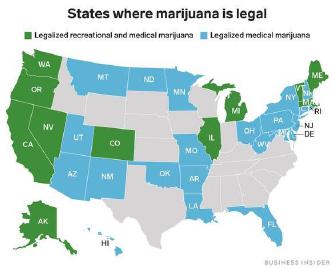
We expect to achieve significant growth in revenue and earnings over the next few years, as our served market expands beyond the Emerald Triangle to emerging markets that include (i) states that have recently legalized the growing of cannabis for medical and/or recreational purposes, and (ii) growing zones where hemp is being grown for cannabidiol ("CBD"). In addition, our future growth is likely to be derived from developing new products for growers, offering our products to online customers, developing new relationships with garden center stores, distributing our hemp-related organic soil nutrients to farm stores, and acquiring organic growing products with existing customer loyalty and marketing them under The Good Earth Organics brand.
_______
Source: Business Insider as of January 1, 2020
Our Products
We produce three primary blends of premium organic potting soils that are typically used to grow cannabis plants. The premium organic potting soils we manufacture offer many advantages over growing in regular dirt, or native soil. These advantages include ensuring our products are free from chemicals, inorganic pesticides, and plant pathogens, which allow for subsequent, successful testing confirmation that a grower’s plants are free from inorganic contamination, and therefore approved by state authorities for human consumption. Furthermore, our line of premium organic potting soils is formulated to maximize plant growth as a result of its high mineral nutrient levels, high water-holding capacity, consistency, and optimized pH range.
9
We have obtained organic certifications for the organic ingredients in our products, wherever possible. We believe that growing plants designated for healthy human consumption must be done in organic potting soil to ensure the resulting crop is free from hazardous compounds. First, we manufacture our premium organic potting soils systematically and consistently to assure the purity of our products. The consumers of cannabis and hemp produced by our customer growers will consume the products grown in our premium organic potting soils by eating, smoking or vaping them, so it is important that the potting soil be free of chemical, inorganic, and synthetic elements that could cause harm. Second, we believe organic potting soils can help plants resist pests and disease by providing the plants with nutrient and mineral rich elements formulated to enable plants to grow stronger and giving them added layers of natural protection from pests and disease. Third, we believe that organic potting soil helps retain water longer than other media which may result in less frequent watering, thereby saving growers time and money. Last, we believe our customers and growers greatly value that our products are environmentally friendly and support sustainability, as they are comprised of organic materials.
We offer our proprietary, premium potting soil products for bulk delivery and packaged distribution. All of our premium organic potting soil formulations have been field-tested for over a decade, and have developed a loyal following among growers in our current market of southern Oregon and northern California. We also offer one proprietary premium soil amendment that is used by growers of hemp and cannabis to increase crop yield. As part of our future growth strategy, we anticipate acquiring existing organic growing products to expand our product line into additional product offerings that are used by growers of cannabis and hemp. We believe that product line acquisitions will allow us to leverage our brand and to provide a larger suite of organic growing products.
Our two retail distribution centers also offer products made by third parties that are required for cannabis and hemp growing, both indoors (greenhouse and hydroponically) and outdoors. We are developing additional proprietary premium organic potting soil blends that will offer a variety of performance characteristics as well as new formulations of premium organic soil nutrients, all of which will be focused on helping growers achieve different results depending on the plants being grown, the growing media used, and the growers’ climates.

10
Our Supply Chain and Customer Base
Our premium organic potting soils and organic soil nutrients include ingredients that are purchased worldwide directly from suppliers and from distributors, such as seabird guano, blood meal, earthworm castings, bat guano, and feather meal. All of the materials used in our manufactured products are organic or natural, as required by OMRI, which has certified the integrity of our manufactured products as compliant with its organic standards. Our existing and potential customers include growers of cannabis, hemp, leafy green vegetables, and medicinal herbs, as well as retailers operating in the garden supply and farm center sectors that serve the end users of our products.
Our Competitive Advantage
We believe that the following characteristics of our product lines provide us with a competitive advantage:
| · | Brand. Our premium organic potting soils and organic soil nutrients have been relied upon by thousands of cannabis and hemp growers in northern California and southern Oregon for over ten years, proving the efficacy of our formulations and reinforcing our brand as a producer of consistent and high quality organic growing media; |
| · | Experience. Our management team is experienced at successfully introducing field-tested organic products to growers of hemp and cannabis, a customer base that demands growing products that are (i) high quality, (ii) consistently blended, and (iii) free from contamination and inorganic additives, pesticides and herbicides. |
| · | Sourcing. We have established a global network of premium suppliers for high-quality, organic raw materials, enabling our premium organic potting soils to achieve OMRI certification. |
| · | Customer Base. Our organic products are used by both craft gardeners who buy bagged potting soil products for personal use and large-scale growers who buy our products in bulk for commercial cannabis and hemp production. |
| · | Service. We provide best in class customer service and continuously analyze and adapt to market and customer needs. We have identified the need to service larger cultivation operations and have implemented a Big Buyers’ Club program providing a discount to those customers who make bulk purchases (purchases of $100,000 or more). We also provide our customers with support in the areas of business development and advice on maximizing growing yields within an organic framework. |
Our Growth Strategy
We are establishing a distribution network that will increase the size of the geographic market the Company currently serves. This network will allow large and small growers of cannabis and hemp to purchase our products from retailers, garden centers, and farm supply stores. In addition, we are developing new packaging for our products that will broaden the package size options and appearance of our products designated for the consumer and craft grower market. We are researching and field-testing new products for the burgeoning hemp growing market, which offers potentially higher market growth than that of cannabis. We are developing online distribution options for consumer and craft growers seeking smaller sized packages of our organic products. We also plan to evaluate the market for potential acquisitions of existing organic growing products that will expand our own product line and leverage our brand name with capital raised in this offering and with the possible issuance of new shares of the Company.
11
Corporate Information
Our principal executive offices are located at 30088 Redwood Highway, Cave Junction, Oregon 97523 and our telephone number is (541) 592-4855. We maintain websites at www.thegoodearthorganics.com and www.goodearthorganics.com. Information available on our website is not incorporated by reference in and is not deemed a part of this offering circular.
The Offering
| Securities offered: | Minimum of 303,030 shares of Series A Preferred Stock and 303,030 shares of common stock into which they may convert and maximum of 6,060,606 shares of Series A Preferred Stock and 6,060,606 shares of common stock into which they may convert. | |
| Offering price per share: | $1.65 per share. | |
| Minimum investment: | The minimum investment in this offering is $999.90 or 606 shares of Series A Preferred Stock. SeedInvest Auto Invest Participants have a lower investment minimum purchase of $199.65 (121 shares of Series A Preferred Stock). | |
| Shares outstanding before the offering: | Common Stock – 12,432,150 Series Seed Preferred Stock – 940,000
| |
| Shares outstanding after the offering assuming maximum raise: | Common Stock – 12,432,150 Series Seed Preferred Stock – 940,000 Series A Preferred Stock – 6,060,606 | |
| Use of proceeds: | We estimate that, at a per share price of $1.65, the net proceeds from the sale of the 6,060,606 shares in this offering will be approximately $9,013,217, after subtracting estimated offering costs of $750,000 to SI Securities, LLC in commissions, and fixed professional fees, EDGARization and compliance costs of $236,783.
We intend to use the net proceeds of this offering for working capital, brand acquisitions, marketing costs, purchase of production equipment and for product research & development. See "Use of Proceeds" for details. | |
| Market for our Series A Preferred Stock: | Our common stock is not listed for trading on any exchange or automated quotation system. We intend, upon qualification, to engage a market maker to apply for quotation on the OTC Market. There can be no assurance that a market maker will agree to file the necessary documents with the Financial Industry Regulatory Authority ("FINRA"), nor can there be any assurance that such an application for quotation will be approved. | |
| Risk factors: | Investing in our securities involves risks. See the section entitled "Risk Factors" in this offering circular and other information included in this offering circular for a discussion of factors you should carefully consider before deciding to invest in our securities. |
12
Investing in our shares involves a significant degree of risk. In evaluating the Company and an investment in the shares, careful consideration should be given to the following risk factors, in addition to the other information included in this offering circular. Each of these risk factors could materially adversely affect our business, operating results or financial condition, as well as adversely affect the value of an investment in our shares. The following is a summary of the most significant factors that make this offering speculative or substantially risky. The Company is still subject to all of the same risks that all companies in its industry, and all companies in the economy, are exposed to. These include risks relating to economic downturns, political and economic events and technological developments (such as cyber-security). Additionally, early-stage companies are inherently riskier than more developed companies. You should consider general risks as well as specific risks when deciding whether to invest.
Risks Related to our Business
Reductions in future sales of our products will have an adverse effect on our profitability and ability to generate cash to fund our business plan.
The following factors, among others, could affect future market acceptance and profitability of our products:
| · | the introduction of competitive or alternative products; |
| · | changes in customer preferences among alternative products; |
| · | the level and effectiveness of our sales and marketing efforts; |
| · | any unfavorable publicity regarding our brand; |
| · | price increases resulting from rising commodity costs; and |
| · | any changes in government policies and practices related to our products or those of our customers. |
Adverse developments with respect to the production or sale of products could significantly reduce our net sales and profitability and have a material adverse effect on our ability to maintain profitability and achieve our business plan.
We expect our quarterly financial results to fluctuate.
We expect our net sales and operating results to vary significantly from quarter to quarter due to a number of factors, including changes in:
| · | annual farming production cycles; |
| · | weather events and impacts; |
| · | demand for our products and those of our customers; |
13
| · | our ability to obtain and retain existing customers or encourage repeat purchases; |
| · | our ability to manage our product inventory; |
| · | general economic conditions; |
| · | production costs, including raw material costs and availability; |
| · | advertising and other marketing costs; and |
| · | costs of creating and expanding product lines. |
As a result of the variability of these and other factors, our operating results in future quarters may be below the expectations of public market analysts and investors.
We rely on other companies to provide materials for our products.
We depend on suppliers to meet our contractual obligations to our existing and future customers and to conduct our operations. Our ability to meet our obligations to our customers may be adversely affected if suppliers do not provide the agreed-upon supplies or perform the agreed-upon services in compliance with our requirements and in a timely and cost-effective manner. Our inability to preserve the expected economics could expose us to significant cost increases in future years, reducing profitability. Our suppliers may be less likely than us to be able to quickly recover from natural disasters and other events beyond their control and may be subject to additional risks such as financial problems that limit their ability to conduct their operations. The risk of these adverse effects may be greater in circumstances where we may rely on only one or two distributors or suppliers for a particular material. The loss of one or more of our material suppliers and subcontractors could adversely affect our results and financial condition.
Disruptions in availability or increases in the prices of raw materials or fuel could adversely affect our results of operations.
We source many of our commodities and other raw materials on a global basis. The general availability and price of those raw materials can be affected by numerous forces beyond our control, including naturally occurring events, such as weather, as well as human caused events or responses like political instability, trade restrictions and other government regulations, duties and tariffs, price controls, changes in currency exchange rates, shipping issues (including delays caused by pandemics like COVID-19), and materials shortages.
14
A significant disruption in the availability of any of our key raw materials could negatively impact our business. In addition, increases in the prices of key commodities and other raw materials could adversely affect our ability to manage our cost structure. Market conditions may limit our ability to raise selling prices to offset increases in our raw material costs.
If we fail to increase brand awareness, it may have an adverse effect on our results of operations.
Due to a variety of factors, our opportunity to achieve and maintain a significant market share may be limited. Developing and maintaining awareness of our brand name, among other factors, is critical. Further, the importance of brand recognition will increase as competition in our market increases. Successfully promoting and positioning our brand, products and services will depend largely on the effectiveness of our marketing efforts. Therefore, we may need to increase our financial commitment to creating and maintaining brand awareness. If we fail to successfully promote our brand name or if we incur significant expenses promoting and maintaining our brand name, it may have a material adverse effect on our results of operations.
Our future selling and marketing efforts may be costly and may not achieve desired results.
We plan to incur substantial expense in connection with our selling and marketing efforts. Although we plan to target our selling and marketing efforts on current and potential customers who we believe are likely to be in the market for the products we sell, we cannot assure you that our selling and marketing efforts will achieve our desired results. Due to the fact that we are small and may need to use capital for other purposes, we may need to limit our marketing activities and may not be able to make our products known to potential customers and may not be able to attract sufficient new customers to operate profitably. In addition, we will periodically adjust our marketing expenditures to optimize the return on such expenditures. Any decrease in the level of our marketing expenditures, which may be made to optimize such return, could adversely affect our revenues.
Our limited operating history makes it difficult for us to accurately forecast net sales and appropriately plan our expenses.
Although founded in 2008, we have a limited operating history under the current ownership and management team both in terms of the length of time we have been operating the business and the geographic scope of the business. There can be no assurance that we will be able to fully implement our business plan at reasonable costs or successfully operate. As a result, it is difficult to accurately forecast our net sales and plan our operating expenses. We base our current and future expense levels on our operating forecasts and estimates of future net sales. Net sales and operating results are difficult to forecast because they generally depend on the volume and timing of the orders we receive, which are uncertain. Some of our expenses are fixed, and, as a result, we may be unable to adjust our spending in a timely manner to compensate for any unexpected shortfall in net sales. This inability could cause our net income in a given quarter to be lower than expected. Since we have a limited operating history, we may not be profitable, and we may not be able to generate sufficient revenues to meet our expenses and support our anticipated activities. There are no assurances that we will be successful in raising additional capital if necessary or successfully developing and commercializing additional products. If we are not profitable in the future, the value of our preferred stock and common stock may be adversely affected.
15
We may not be able to obtain sufficient capital and may be forced to limit the scope of our operations.
As needed, if financing is unavailable at reasonable terms, we may be forced to modify our business plans accordingly. In connection with our growth strategies, we may experience increased capital needs. Accordingly, we may not have sufficient capital to fund our future operations without additional capital investments. There are no assurances that any additional financing will be available to us, or if available, will be on terms favorable to us.
We may lose access to the US banking system and capital markets based on our participation in an industry related to cannabis cultivation.
Under our current business model, The Good Earth Organics does not directly participate in the cultivation or distribution of cannabis. However, we do sell products to customers that are involved in this space. As a result, and despite recent rules issued by the United States Department of the Treasury mitigating the risk to banks who do business with cannabis companies permitted under state law, as well as recent guidance from the United States Department of Justice, we may lose access to the US banking system if banks become more wary to accept funds from businesses connected to the cannabis industry. Should we lose access to the US banking system, our operations would be materially harmed.
We may not be able to obtain adequate supplies of raw materials from global suppliers due to fluctuations in weather, transportation, availability and government policies.
We have established ourselves as a premium provider of organic potting soils and organic soil nutrients. As a result, we are sensitive about the quality of the raw materials we use for our products. By their nature, the availability of natural and organic products is dependent upon weather and climate conditions. Additionally, changes in government policies could also disincentive industry participants from making raw materials available to us. Further, we must source our raw materials from the global market. Disruptions to the dependable and efficient transportation services needed to transport our raw materials as a result of natural or human causes, would also have an effect on the supply of raw materials necessary for our products. Taken together, any of these factors, or a combination of them, could adversely impact our operations and financial results by limiting the supply or access to the raw materials we need.
We may not successfully develop new product lines and products or improve existing product lines and products or maintain our effectiveness in reaching consumers through rapidly evolving communication vehicles.
Our future success depends on creating and successfully competing in markets for our products including our ability to improve our existing product lines and products and to develop and market new product lines and products to meet evolving grower needs, as well as our ability to leverage new media such as digital media and social networks to reach existing and potential consumers. We cannot be certain that we will be successful in developing and marketing new product lines and products or product innovations which satisfy consumer needs or achieve market acceptance, or that we will develop and market new product lines and products or product innovations in a timely manner. If we fail to successfully develop and market new product lines and products or product innovations, or if we fail to reach existing and potential consumers, our ability to maintain or grow our market share may be adversely affected, which in turn could materially adversely affect our business, financial condition and results of operations. In addition, the development and introduction of new product lines and products and product innovations require substantial research, development and marketing expenditures, which we may be unable to recoup if such new product lines, products or innovations do not achieve market acceptance.
16
Competition, particularly from companies with greater financial and marketing resources than ours, may adversely affect our distribution relationships and may hinder development of our existing markets, as well as prevent us from expanding our markets.
The supply sector to the cannabis industry is highly competitive. We will compete with other suppliers not only for industrial grower and consumer grower acceptance but also for shelf space and marketing focus in garden stores, farm stores and retail outlets, all of whom also will likely stock competing products. We do not have any exclusivity agreements or distribution agreements in place with any retailers. Our products will compete with a wide range of organic growing supplies, produced by a relatively large number of producers, many of which have substantially greater financial, marketing and distribution resources than ours.
Increased competitor consolidations, market-place competition, competitive product offerings and pricing pressures could impact our earnings, market share and volume growth. If, due to such pressure or other competitive threats, we are unable to sufficiently maintain or develop our distribution channels, we may be unable to achieve our revenue and financial targets. Competition, particularly from companies with greater financial and marketing resources than ours, could have a material adverse effect on our ability to establish and expand the market for our products.
Additionally, potential competitors could duplicate our business model and processes as there is no aspect of our business which is protected by patents.
The forecasts of market growth included in this offering circular may prove to be inaccurate, and even if the markets in which we compete achieve the forecasted growth, we cannot make assurances our business will grow at similar rates, if at all.
Growth forecasts are subject to significant uncertainty and are based on assumptions and estimates that may not prove to be accurate. The forecasts contained in this offering circular may prove to be inaccurate. Even if these markets experience the forecasted growth described in this offering circular, we may not grow our business at similar rates, or at all. Our growth is subject to many factors, including our success in implementing our business strategy, which is subject to many risks and uncertainties. Accordingly, the forecasts of market growth included in this offering circular should not be taken as indicative of our future growth.
Damage to our reputation or the reputation of our products or products we market on behalf of third parties could have an adverse effect on our business.
Maintaining our strong reputation and a strong reputation of our products with both growers and our retail customers is a key component in our success. Product recalls, our inability to ship, sell or transport affected products, governmental actions, investigations or other legal proceedings, and adverse media commentary may harm our reputation and hinder the acceptance by growers of our products. In addition to effects on grower behavior, retailers could decide to stop carrying those products which may materially and adversely affect our business operations, reduce sales, and increase costs.
In addition, claims or allegations that our products or products we market on behalf of third parties are not safe could adversely affect us and contribute to the risk we will be subjected to legal action. Public commentary by media agencies or non-governmental organizations and/or litigation-related assertions, even when such commentary or assertions may be inaccurate, may lead consumers or our retail customers to believe that certain of our products or products we market on behalf of third parties may be unsafe.
Even when inaccurate, claims and allegations that our products or products we market on behalf of third parties are not safe could impair our reputation, the reputation of our products or the reputation of products we market on behalf of third parties, involve us in litigation, damage our brand names and have a material adverse effect on our business.
17
Additionally, we cannot provide assurance that our internal controls and compliance systems will always protect us from acts committed by our employees, agents or business partners in violation of U.S. federal or state laws. Any improper acts or allegations could damage our reputation and subject us to civil or criminal investigations and related shareholder lawsuits, could lead to substantial civil and criminal monetary and non-monetary penalties, and could cause us to incur significant legal and investigatory fees.
We will need to grow the size of our organization; we may experience difficulties in managing this growth.
While we believe that our business plan can be readily scaled to accommodate nationwide distribution of our products, we cannot be certain of that belief until such scaling occurs. In addition, significant growth will require more than marketing capabilities. Significant growth will require expanding our capabilities in the areas of operating and financial procedures and controls, replacing or upgrading our operational, financial and management information systems and attracting, training, motivating, managing and retaining key employees. If our executives are unable to manage growth effectively, our business, results of operations, and financial condition could be materially adversely affected.
The Company’s expansion into new, unfamiliar markets presents increased risks that may prevent it from being profitable in these new markets.
The Company intends to continue to expand nationally through a multi-prong strategy that may include the use of contract manufacturers, new distributors, retailers, online channels, acquisitions of competitors, and the opening of retail locations in new markets. As a result, the Company may have less familiarity with local consumer preferences and could encounter difficulties in attracting customers due to a reduced level of consumer familiarity with the Company’s brands. Other factors that may impact the Company’s ability to expand geographically and in new markets and operate the expanded business profitably, many of which are beyond the Company’s control, include:
| · | the Company’s ability to identify suitable acquisition opportunities at purchase prices or terms that are attractive or acceptable to the Company or new locations, including the Company’s ability to gather and assess demographic and marketing data to determine consumer demand for the Company’s products in the locations the Company selects; |
| · | the Company’s ability to negotiate favorable lease agreements; |
| · | the Company’s ability to accurately assess the profitability of potential acquisitions or new locations; |
| · | the Company’s ability to secure required governmental permits and approvals; |
| · | the Company’s ability to hire and train skilled personnel; |
| · | the Company’s ability to provide a satisfactory product mix that is responsive to the needs of its customers living in the targeted geographic areas; |
| · | the Company’s ability to supply new retail locations with inventory in a timely manner; |
| · | the presence of the Company’s competitors in the targeted markets; |
| · | regional economic and other factors in the geographic areas in which the Company expands; and |
| · | general economic and business conditions affecting consumer confidence and spending and the overall strength of the Company’s business. |
18
Once the Company decides on a new market, any delays in acquiring, opening a new retail location, or securing the proper contract manufacturer, distributor, retailer or online channel to serve the identified new market could impact the Company’s financial results. It is possible that events, such as delays in the acquisitions process or construction delays caused by permitting or licensing issues, material shortages, labor issues, weather delays or other acts of God, discovery of contaminants, accidents, deaths or injuries could delay planned openings or force the Company to abandon planned openings altogether.
As the Company grows, the Company will face the risk that its existing resources and systems, including management resources, accounting and finance personnel and operating systems, may be inadequate to support its growth. There can be no assurance that the Company will be able to retain the personnel or make the changes in its systems that may be required to support its growth. Failure to secure these resources and implement these systems on a timely basis could have a material adverse effect on the Company’s results of operations. In addition, hiring additional personnel and implementing changes and enhancements to the Company’s systems will require capital expenditures and other increased costs that could also have a material adverse impact on the Company’s results of operations.
The Company’s expansion into new markets may also create new challenges including an increase in information to be processed by the Company’s information management systems and diversion of management attention from existing operations. To the extent that the Company is not able to meet these additional challenges, the Company’s sales could decrease, and the Company’s operating expenses could increase, which could have a material adverse effect on the Company’s business, financial condition and results of operations.
Finally, the size, timing, and integration of any future acquisitions or retail locations may cause substantial fluctuations in the Company’s results of operations from quarter to quarter. Consequently, the Company’s results of operations for any quarter may not be indicative of the results that may be achieved for any subsequent quarter or for a full fiscal year. These fluctuations could have a material adverse effect on the Company’s business, financial condition and results of operations.
As a result of the above factors, there can be no assurance that the Company will be able to successfully expand to new markets on a profitable basis. The failure to successfully expand to new markets on a profitable basis could have a material adverse effect on the Company’s business, financial condition and results of operations.
Unforeseen expenses, difficulties, and delays encountered in connection with expansion through acquisitions could inhibit the Company’s growth and negatively impact its profitability.
The Company’s success will depend, in part, on the ability of the Company to make successful acquisitions and to integrate the operations of the acquired businesses, including centralizing certain functions to achieve cost savings and pursuing programs and processes that promote cooperation and the sharing of opportunities and resources among the Company’s locations and customer services and plans. Unforeseen expenses, difficulties and delays encountered in connection with rapid expansion through acquisitions could inhibit the Company’s growth, which could have a negative impact on the Company’s profitability.
Additionally, the Company may be unable to identify suitable acquisition candidates or consummate acquisitions. Increased competition for acquisition candidates or increased asking prices by acquisition candidates may increase purchase prices for acquisitions to levels beyond the Company’s financial capability or to levels that would be unlikely to provide the returns required by the Company’s acquisition criteria. Acquisitions also may become more difficult or less attractive in the future as the Company continues to focus on acquiring what it believes are the most attractive acquisition opportunities. The Company may incur expenses associated with sourcing, evaluating and negotiating acquisitions (including those that are not completed), and the Company also may pay fees and expenses associated with obtaining financing for acquisitions and with investment banks and others finding acquisitions for the Company. In addition, the Company may encounter difficulties in integrating the operations of acquired businesses with its own operations or managing acquired businesses and stores profitably without substantial costs, delays, or other operational or financial problems. The Company may not be able to achieve the anticipated operating and cost synergies or long-term strategic benefits of its acquisitions within the anticipated timing or at all. For at least the first year after a substantial acquisition and possibly longer, the benefits from the acquisition may be offset by the costs incurred in integrating the business and operations. The Company may also assume liabilities in connection with acquisitions to which the Company would otherwise not be exposed.
19
The Company’s ability to continue to grow through the acquisition of additional retail locations will depend upon various factors, including the following:
| · | the availability of suitable acquisition candidates at attractive purchase prices; |
| · | the ability to compete effectively for available acquisition opportunities; |
| · | the availability of cash on hand, borrowed funds or shares of preferred stock and/or common stock with a sufficient market price to finance acquisitions; |
| · | the ability to obtain any requisite third party or governmental approvals; and |
| · | the absence of one or more third parties attempting to impose unsatisfactory restrictions on the Company in connection with their approval of acquisitions. |
As a part of the Company’s acquisition strategy, the Company has engaged and will continue to engage in acquisition discussions with various acquisition targets. In connection with these acquisition discussions, the Company and each potential acquisition candidate exchange confidential operational and financial information, conduct due diligence inquiries, and consider the structure, terms, and conditions of the potential acquisition. Potential acquisition discussions may take place over a long period of time and involve difficult business integration and other issues, including in some cases, management succession, employee transitions and related matters. As a result of these and other factors, potential acquisitions that may from time to time appear likely to occur may not be consummated. In addition, the Company may have disagreements with potential acquisition targets, which could lead to litigation. Any of these factors or outcomes could result in a material adverse effect on the Company’s business, financial condition and results of operations.
We have plans to sell certain of our products over the internet through an online store and/or Amazon platform. If we are unable to effectively execute our e-commerce business, our reputation and operating results may be harmed.
We have plans to sell certain of our products over the Internet through an online store and/or Amazon platform. The success of our e-commerce business will depend on our investment in this platform, customer preferences and buying trends relating to e-commerce, and our ability to both maintain the continuous operation of our online store or platform and our fulfillment operations and provide a shopping experience that will generate orders and return visits to our online store or platform.
We are also vulnerable to certain additional risks and uncertainties associated with our e-commerce business, including: changes in required technology interfaces; website downtime and other technical failures; costs and technical issues associated with website software, systems and technology investments and upgrades; data and system security; system failures, disruptions and breaches and the costs to address and remedy such failures, disruptions or breaches; computer viruses; and changes in and compliance with applicable federal and state regulations. In addition, our efforts to remain competitive with technology trends, including the use of new or improved technology, creative user interfaces and other e-commerce marketing tools such as paid search and mobile applications, among others, may increase our costs and may not increase sales or attract customers. Our failure to successfully respond to these risks and uncertainties might adversely affect the sales of our e-commerce business, as well as damage our reputation and brands.
20
Additionally, the success of our e-commerce business and the satisfaction of our customers depend on their timely receipt of our products. The efficient delivery of our products to our consumers will require that our distribution centers have adequate capacity to support the level of e-commerce operations and any anticipated increased levels that may occur as a result of the growth of our e-commerce business in the future. If we encounter difficulties with our distribution centers, or if any distribution centers shut down for any reason, including as a result of fire or other natural disaster, we could face shortages of inventory, resulting in out of stock conditions in our online store, and we could incur significantly higher costs and longer lead times associated with distributing our products to our consumers and experience dissatisfaction from our consumers. Any of these issues could have a material adverse effect on our business and harm our reputation.
Economic conditions could adversely affect our business.
Uncertain global economic conditions could adversely affect our business. Negative global economic trends, such as decreased consumer and business spending, high unemployment levels, reduced rates of home ownership and housing starts, high foreclosure rates and declining consumer and business confidence pose challenges to our business and could result in declining revenues, profitability and cash flow. Although we continue to devote significant resources to support our brands, unfavorable economic conditions may negatively affect customer demand for our products. Consumers may reduce discretionary spending during periods of economic uncertainty, which could reduce sales volumes of our products or result in a shift in our product mix from higher margin to lower margin products.
Our success depends on our key personnel and our ability to hire, retain and motivate qualified product development, sales, marketing and finance personnel.
Our success depends to a significant degree upon the continued contributions of our management team and other key product development, sales, marketing and finance personnel, many of whom may be difficult to replace. The complexity of our business requires us to retain highly trained professional services, customer support and sales personnel with specific expertise related to our business. We do not maintain key man life insurance on any of our executive officers and directors. We may not be successful in attracting, integrating, or retaining qualified personnel to fulfill our current or future needs, nor may we be successful in keeping the qualified personnel we currently have. Our ability to hire and retain these personnel may be adversely affected by volatility or reductions in the price of our common stock and preferred stock, since these employees are generally granted equity-based awards. Also, to the extent we hire personnel from competitors, we may be subject to allegations that they have been improperly solicited, or that they have divulged proprietary or other confidential information, or that their former employers own their inventions or other work product.
Our future performance also depends on the continued services and continuing contributions of our senior management to execute on our business plan and to identify and pursue new opportunities and product innovations. The loss of services of senior management could significantly delay or prevent the achievement of our development and strategic objectives, which could adversely affect our business, financial condition, and operating results.
21
We could face liability from our customers, suppliers or government.
A customer, supplier or government agency may bring legal action against us based on the customer/supplier relationship. Various state and federal laws govern our relationship with customers and suppliers. If we fail to comply with these laws, we could be liable for damages to customers or suppliers and fines or other penalties. Expensive litigation with our customers/suppliers or government agencies may adversely affect both our profits and our important relations with our customer/suppliers.
Climate change and unfavorable weather conditions could adversely impact financial results.
The issue of climate change is receiving ever increasing attention worldwide. The possible effects, as described in various public accounts, could include changes in rainfall patterns, water shortages, changing storm patterns and intensities, and changing temperature levels that could adversely impact our costs and business operations and the supply and demand for our products. In addition, fluctuating climatic conditions may result in unpredictable modifications in the manner in which customers grow plants and garden or their attitudes towards growing and/or gardening, making it more difficult for us to provide appropriate products to appropriate markets in time to meet customer demand.
Because of the uncertainty of weather volatility related to climate change and any resulting unfavorable weather conditions, we cannot predict its potential impact on our financial condition, results of operations, and cash flows.
We may not be able to protect our intellectual property rights which may harm our business and results of operations.
We regard our trademarks, trade secrets, domain names, and similar intellectual property as important to our success. We rely on trademark law, trade secret protection, and confidentiality agreements with our employees, consultants, vendors, customers and others to protect our proprietary rights. Many of the trademarks that we use contain words or terms having a somewhat common usage and, as a result, we may have difficulty registering them in certain jurisdictions. If other companies have registered or have been using in commerce similar trademarks for products similar to ours, we may have difficulty in registering, or enforcing an exclusive right to use, our marks.
There can be no assurance that our efforts to protect our proprietary rights will be sufficient or effective, that any pending or future trademark applications will lead to registered trademarks in all instances, that others will not develop or patent similar or superior products, or that our trademarks and other intellectual property will not be challenged, invalidated, misappropriated or infringed by others. Additionally, the intellectual property laws and enforcement practices of other countries in which our product is or may in the future be offered may not protect our products and intellectual property rights to the same extent as the laws of the United States. If we are unable to protect our intellectual property from unauthorized use, our brand image may be harmed and our business and results of operations may suffer.
Our operations may be impaired if our information technology systems fail to perform adequately or if we are the subject of a data breach or cyber-attack.
We rely on information technology systems, networks, and services, including internet sites, data hosting and processing facilities and tools, hardware (including laptops and mobile devices), software and technical applications and platforms, some of which are managed and hosted by third party vendors to assist us in conducting and managing our business, including communicating with employees and our customers, ordering and managing materials from suppliers, shipping products to customers and analyzing and reporting results of operations. While we have taken steps to ensure the security of our information technology systems, our systems may nevertheless be vulnerable to computer viruses, security breaches and other disruptions from unauthorized users. If our information technology systems are damaged or cease to function properly for an extended period of time, whether as a result of a significant cyber incident or otherwise, our ability to communicate internally as well as with our customers could be significantly impaired, which may adversely impact our business.
22
Additionally, in the normal course of our business, we collect, store and transmit proprietary and confidential information regarding our customers, employees, suppliers and others, including personally identifiable information. An operational failure or breach of security from increasingly sophisticated cyber threats could lead to loss, misuse or unauthorized disclosure of this information about our employees or customers, which may result in regulatory or other legal proceedings, and have a material adverse effect on our business and reputation. We also may not have the resources or technical sophistication to anticipate or prevent rapidly-evolving types of cyber- attacks. Any such attacks or precautionary measures taken to prevent anticipated attacks may result in increasing costs, including costs for additional technologies, training and third party consultants. The losses incurred from a breach of data security and operational failures as well as the precautionary measures required to address this evolving risk may adversely impact our financial condition, results of operations and cash flows.
Litigation may adversely affect our operations and financial condition.
In the normal course of our business operations, it is possible we may become subject to litigation that may result in liability material to our financials. Also, it may result in adverse publicity negatively affecting customer perception of our business.
We may not obtain insurance coverage to adequately cover risk exposures.
We may be exposed to liabilities that are unique, and currently unforeseen, to the products we provide. It is not possible to obtain insurance to protect against all operational risks and liabilities. The failure to obtain adequate insurance coverage on terms favorable to us, or at all, could have a material adverse effect on our operations and financial condition.
Adverse weather conditions and natural disasters like wildfires may increase business costs, cause manufacturing delays or outages, and could materially and adversely affect our business.
The 2020 Oregon wildfire season has been one of the most destructive on record. The fires have continued for a number of days despite efforts to contain them, which creates a potential danger to our facilities. We currently operate two production sites and two retail distribution centers in southern Oregon. If the fires reach our facilities we could lose inventory, machinery and buildings, all of which would be very difficult to replace in a timely manner. We may be forced to shut down our operations in those locations and our insurance may be insufficient to cover losses and/or allow us to rebuild our facilities quickly enough to continue our business. Our financial results and our business may be materially harmed if we are required to rebuild damaged or destroyed facilities. These risks will not be limited to 2020 and are likely to continue into the future.
Our amended and restated certificate of incorporation and bylaws limit the liability of, and provide indemnification for, our officers and directors.
Our amended and restated certificate of incorporation and bylaws provide that the Company shall indemnify its officers and directors for any liability, including reasonable costs of defense arising out of any act or omission of any officer or director on behalf of the Corporation to the fullest extent allowed by Delaware law if the officer or director acted in good faith and in a manner the officer or director reasonably believed to be in, or not opposed to, the best interests of the corporation, and, with respect to any criminal action or proceeding, had no reasonable cause to believe the conduct was unlawful. Thus, the Company may be prevented from recovering damages for certain alleged errors or omissions by the officers and directors for liabilities incurred in connection with their good faith acts for our Company. Such an indemnification payment might deplete our assets.
Our amended and restated certificate of incorporation, as amended, provides that, unless we consent in writing to the selection of an alternative forum, the Court of Chancery of the State of Delaware will be the sole and exclusive forum for substantially all disputes between us and our stockholders, which could limit our stockholders' ability to obtain a favorable judicial forum for disputes with us or our directors, officers, or employees.
Our amended and restated certificate of incorporation, as amended, provides that, unless we consent in writing to the selection of an alternative forum, the Court of Chancery of the State of Delaware will be the exclusive forum for any derivative action or proceeding brought on our behalf; any action asserting a breach of fiduciary duty; any action asserting a claim against us arising pursuant to the Delaware General Corporation Law, our amended and restated certificate of incorporation or our amended and restated bylaws; or any action asserting a claim against us that is governed by the internal affairs doctrine. This choice of forum provision does not preclude or contract the scope of exclusive federal or concurrent jurisdiction for any actions brought under the Securities Act or the Exchange Act. Accordingly, our exclusive forum provision will not relieve us of our duties to comply with the federal securities laws and the rules and regulations thereunder, and our stockholders will not be deemed to have waived our compliance with these laws, rules and regulations. Any person or entity purchasing or otherwise acquiring any interest in any of our securities shall be deemed to have notice of and consented to these provisions. These exclusive-forum provisions may limit a stockholder’s ability to bring a claim in a judicial forum of its choosing for disputes with us or our directors, officers or other employees, which may discourage lawsuits against us and our directors, officers and other employees.
If a court were to find the choice of forum provision contained in our amended and restated certificate of incorporation, as amended, to be inapplicable or unenforceable in an action, we may incur additional costs associated with resolving such action in other jurisdictions, which could harm our business, results of operations, and financial condition. Even if we are successful in defending against these claims, litigation could result in substantial costs and be a distraction to management and other employees.
There is uncertainty around the duration and breadth of the COVID-19 pandemic, and as a result the ultimate impact on our business, financial condition or operating rules cannot be reasonably estimated at this time.
23
In December 2019, a novel strain of coronavirus, or COVID-19, was reported to have surfaced in Wuhan, China. COVID-19 has spread to many countries, including the United States, and was declared to be a pandemic by the World Health Organization. Efforts to contain the spread of COVID-19 have intensified and United States, Europe and Asia have implemented severe travel restrictions and social distancing. The impacts of the outbreak are unknown and rapidly evolving. A widespread health crisis has adversely affected and could continue to affect the global economy, resulting in an economic downturn that could negatively impact the value of our shares and investor demand for our shares generally.
The continued spread of COVID-19 has also led to severe disruption and volatility in the global capital markets, which could increase our cost of capital and adversely affect our ability to access the capital markets in the future. It is possible that the continued spread of COVID-19 could cause a further economic slowdown or recession or cause other unpredictable events, each of which could adversely affect our business, results of operations or financial condition.
The extent to which COVID-19 affects our financial results will depend on future developments, which are highly uncertain and cannot be predicted, including new information which may emerge concerning the severity of the COVID-19 outbreak and the actions to contain the outbreak or treat its impact, among others. Moreover, the COVID-19 outbreak has had, and may continue to have, indeterminable adverse effects on general commercial activity and the world economy, and our business and results of operations could be adversely affected to the extent that COVID-19 or any other pandemic harms the global economy generally.
Some of our suppliers are experiencing operational difficulties as a result of COVID-19, which in turn may have an adverse effect on our ability to provide products to our customers.
The measures being taken to combat the pandemic are impacting our suppliers and may destabilize our supply chain. For example, manufacturing plants have closed and work at others curtailed in many places where we source our products. Further, the ability of our suppliers to ship their goods to us has become difficult as transportation networks and distribution facilities have had reduced capacity and have been dealing with changes in the types of goods being shipped.
The difficulties experienced by our suppliers have caused disruptions in the supply of our globally-sourced raw materials, which negatively affected our inventory and delayed the delivery of merchandise to our stores and customers. This, in turn, adversely affected and can continue to affect our revenues and results of operations. If the difficulties experienced by our suppliers continue, we cannot guarantee that we will be able to locate alternative sources of supply for our merchandise on acceptable terms, or at all. If we are unable to adequately purchase appropriate amounts of inventory, our business and results of operations may be materially and adversely affected.
The COVID-19 pandemic may have the effect of heightening many of the other risks described in this ’‘Risk Factors’’ section.
To the extent the COVID-19 pandemic may adversely affect our business and financial results, it may also have the effect of heightening many of the other risks described in this ’‘Risk Factors’’ section, or other risks which we may not be currently aware of.
Risks Related to Our Industry
Our products are marketed and may be purchased for use in new and emerging markets, including the cannabis market. Cannabis cultivation, possession, and use are currently illegal under federal law, and any change in the enforcement priorities of the federal government could render our current or planned future operations unprofitable.
24
A meaningful portion of our customers operate in the cannabis industry, which is dependent on state laws and regulations pertaining to such industry; however, under federal law, cannabis cultivation, possession, and use remain illegal.
The United States federal government regulates drugs through the Controlled Substances Act (the “CSA”), which places controlled substances, including cannabis, on one of five schedules. Cannabis is currently classified as a Schedule I controlled substance, which is viewed as having a high potential for abuse and having no currently accepted medical use in treatment in the United States. No prescriptions may be written for Schedule I substances, and such substances are subject to production quotas or bans imposed by the United States Drug Enforcement Administration (the “DEA”). Because of this regulation, doctors may not prescribe cannabis for medical use under federal law, although they can recommend its use under the First Amendment.
Currently, 33 U.S. states, the District of Columbia and the U.S. territories of Guam and Puerto Rico have passed legislation allowing for the use of medical cannabis. Additionally, 11 states and the District of Columbia have legalized cannabis for adult recreational use. Such state and territorial laws are in conflict with the federal CSA, which makes cannabis use and possession illegal at the federal level. Because cannabis is a Schedule I controlled substance, however, the development of a legal cannabis industry under the laws of these states is in conflict with the CSA, which makes cannabis use and possession illegal at the federal level. The United States Supreme Court has confirmed that the federal government has the right to regulate and criminalize cannabis, including for medical purposes, and that federal law criminalizing the use of cannabis preempts state laws that legalize its use.
In light of such conflict between federal laws and state laws regarding cannabis, the previous administration under President Obama had effectively stated that it was not an efficient use of resources to direct law federal law enforcement agencies to prosecute those lawfully abiding by state-designated laws allowing the use and distribution of medical and/or recreational cannabis. For example, the prior Department of Justice (“DOJ”) Deputy Attorney General of the Obama administration, James M. Cole, issued a memorandum (the “Cole Memo”) to all United States Attorneys providing updated guidance to federal prosecutors concerning cannabis enforcement under the CSA (see “Business—Government and Industry Regulation—The Cole Memo”). In addition, the Financial Crimes Enforcement Network (“FinCEN”) provided guidelines (the “FinCEN Guidelines”) on February 14, 2014, regarding how financial institutions can provide services to cannabis-related businesses consistent with their Bank Secrecy Act (“BSA”) obligations (see “Business—Government and Industry Regulation—FinCEN”).
In 2014, the United States House of Representatives passed an amendment (the “Rohrabacher-Blumenauer Amendment”) to the Commerce, Justice, Science, and Related Agencies Appropriations Bill, which funds the United States DOJ. The Rohrabacher-Blumenauer Amendment prohibits the DOJ from spending funds to interfere with the implementation of state medical cannabis law. In August 2016, the Ninth Circuit Court of Appeals ruled in United States v. McIntosh that the Rohrabacher-Blumenauer Amendment bars the DOJ from spending funds on the prosecution of conduct that is allowed by state medical cannabis laws, provided that such conduct is in strict compliance with applicable state law. In March 2015, bipartisan legislation titled the Compassionate Access, Research Expansion, and Respect States Act (the “CARERS Act”) was introduced, proposing to allow states to regulate the medical use of cannabis by changing applicable federal law, including by reclassifying cannabis under the CSA to a Schedule II controlled substance and thereby changing the plant from a federally-criminalized substance to one that has recognized medical uses. More recently, the Respect State Marijuana Laws Act of 2017 has been introduced in the U.S. House of Representatives, which proposes to exclude persons who produce, possess, distribute, dispense, administer or deliver marijuana in compliance with state laws from the regulatory controls and administrative, civil, and criminal penalties of the CSA.
25
These developments previously were met with a certain amount of optimism in the cannabis industry, but (i) neither the CARERS Act nor the Respect State Marijuana Laws Act of 2017 have yet been adopted, (ii) the Rohrabacher-Blumenauer Amendment, being an amendment to an appropriations bill that must be renewed annually, has not currently been renewed beyond September 30, 2019, and (iii) the ruling in United States v. McIntosh is applicable precedent only in the Ninth Circuit, which covers Alaska, Arizona, California, Hawaii, Idaho, Montana, Nevada, Oregon, Washington, Guam, and the Northern Marianas Islands.
On January 4, 2018, the U.S. Attorney General, Jeff Sessions, issued a memorandum for all U.S. Attorneys (the “Sessions Memo”) stating that the Cole Memo was rescinded effectively immediately. In particular, Mr. Sessions stated that “prosecutors should follow the well-established principles that govern all federal prosecutions,” which require “federal prosecutors deciding which cases to prosecute to weigh all relevant considerations, including federal law enforcement priorities set by the Attorney General, the seriousness of the crime, the deterrent effect of criminal prosecution, and the cumulative impact of particular crimes on the community.” The Sessions Memo went on to state that given the DOJ’s well-established general principles, “previous nationwide guidance specific to marijuana is unnecessary and is rescinded, effective immediately.”
It is unclear at this time whether the Sessions Memo indicates that the Trump administration will strongly enforce the federal laws applicable to cannabis or what types of activities will be targeted for enforcement. However, a significant change in the federal government’s enforcement policy with respect to current federal laws applicable to cannabis could cause significant financial damage to us. As our business plan is primarily focused on supporting growers who cultivate cannabis, we would likely be irreparably harmed by a change in enforcement policies of the federal government depending on the nature of such change.
Continued legislative authorization of cannabis at the state level cannot be assured, and a slowing or halting of progress in this area may have a negative impact on us.
Our products are sold to growers of various crops, including cannabis. Disruption to the cannabis industry could cause some potential customers to be more reluctant to invest in growing cannabis. Continued development of the cannabis industry is dependent upon continued legislative authorization of cannabis at the state level. Any number of factors could slow or halt progress in this area. Further, progress in the cannabis industry is not assured. Numerous factors impact the legislative process. Any one of these factors could slow or halt use of cannabis, which would negatively impact our current operations and/ or growth of our business.
Recent reports of vaping-associated lung injuries, some of which are believed to emanate from inorganic pesticides used to grow cannabis, may slow or halt legislative authorization of cannabis.
Our potting soils and soil nutrients are used by growers of hemp flower and cannabidiol (“CBD”) that is or can be ultimately used in vaping products that contain CBD. As of January 7, 2020, the US. Centers for Disease Control and Prevention (the "CDC") has received reports of a total of 2,602 hospitalizations or deaths from all 50 states, the U.S. District of Columbia, Puerto Rico and the U.S. Virgin Islands stemming from e-cigarette, or vaping, product use-associated lung injury ("EVALI") and of these reports, 57 were deaths in 27 states and the District of Columbia. The research and investigation into EVALI, the causes of EVALI and forms of treatment are ongoing. Based on the CDC's research and analysis to date, it appears that THC (Tetrahydrocannabinol) is present in most of the samples tested to date and patients report a history of using THC-containing products. Vitamin E acetate has also been identified as a chemical of concern among people with EVALI. The current reported cases of EVALI as well as the ongoing research and analysis taking place may result in the delay or halting of legislative authorization of cannabis.
26
Laws and regulations affecting the recreational and medical sector of the cannabis industry are constantly changing, which could detrimentally affect our current or proposed operations.
Local, state, and federal recreational and medical cannabis laws and regulations are broad in scope and subject to evolving interpretations, which could require our customers and/or us to incur substantial costs associated with compliance or alter our business plan. In addition, violations of these laws, or allegations of such violations, could disrupt our business and/or that of our customers and result in a material adverse effect on our operations. In addition, it is possible that regulations may be enacted in the future that will be directly applicable to our current or proposed business or that of our customers. We cannot predict the nature of any future laws, regulations, interpretations, or applications, nor can we determine what effect additional governmental regulations or administrative policies and procedures, when and if promulgated, could have on our business or that of our customers.
There can be no assurance that our operations will not violate state or federal law.
We have not requested nor obtained any opinion of counsel or ruling from any authority to determine if our operations are in compliance with or violate any state or federal laws or whether we are assisting others to violate a state or federal law. In the event that our operations are deemed to violate any laws, or if we are deemed to be assisting others to violate a state or federal law, we could have liability that could cause us to modify or cease our operations.
We and our customers operate in an evolving industry, which makes it difficult to accurately assess our future growth prospects.
Although we believe our team has extensive knowledge of the cannabis industry and we closely monitor changes in legislation, the cannabis industry is an evolving industry that may not grow or achieve market acceptance as expected or in a manner that we can predict. Furthermore, our operations continue to evolve under our business plan as we continually assess new strategic opportunities for our business within the cannabis industry. Assessing the future prospects of our business is challenging in light of both known and unknown risks and difficulties we may encounter. Growth prospects in the cannabis industry can be affected by a wide variety of factors including:
| · | Competition from other similar companies; |
| · | Regulatory limitations on the products we can offer and markets we can serve; |
| · | Changes in the regulation of medical and recreational cannabis use; |
| · | Changes in underlying consumer behavior, which may affect the business of our customers; |
| · | Our ability to access adequate financing on reasonable terms and our ability to raise additional capital in order to fund our operations; |
| · | Challenges with new products, services and markets; and |
| · | Fluctuations in the credit markets and demand for credit. |
27
We may not be able to successfully address these factors, which could negatively impact our growth, harm our business and cause our operating results to be worse than expected.
The cannabis industry faces strong political opposition from an assortment of interest groups.
It is believed by many people that large well-funded businesses may have strong economic incentives to oppose the cannabis industry. We believe that the pharmaceutical industry does not want to cede control of any product that could generate significant revenue. For example, medical marijuana will likely adversely impact the existing market for the current “marijuana pill” sold by mainstream pharmaceutical companies. Further, the medical marijuana industry could face a material threat from the pharmaceutical industry, should medical marijuana displace other drugs or encroach upon the pharmaceutical industry’s products. The pharmaceutical industry is well funded with a strong and experienced lobby that dwarfs the funding of the medical marijuana movement. Any inroads the pharmaceutical industry could make in halting or impeding the marijuana industry could have a detrimental impact on our business.
Risks Related to this Offering and Our Securities
The offering price of our securities has been arbitrarily determined.
Our management has determined the number and price of securities offered by the Company. The price of the shares we are offering was arbitrarily determined based upon our estimates of the current market value, illiquidity, and volatility of our preferred stock and common stock, our current financial condition, the prospects for our future cash flows and earnings, and market and economic conditions at the time of the Offering. Unlike listed companies that are valued publicly through market-driven stock prices, the valuation of private companies, especially early-stage companies, is difficult to assess and investors may risk overpaying for their investment.
We have broad discretion in the use of the net proceeds from this Offering and our use of the net proceeds may not yield a favorable financial return from purchasing shares of our Series A Preferred Stock.
Our management will have broad discretion in the application of the net proceeds from this Offering and may spend or invest these proceeds in ways with which you may not agree. The failure by our management to apply these funds effectively or in a manner that yields a favorable return or any return, and this could have a material adverse effect on our business, financial condition and results of operations.
Due to the lack of a current public market for our securities, investors may have difficulty in selling stock they purchase.
Prior to this offering, no public trading market existed for our securities. There can be no assurance that a public trading market for our preferred stock or common stock will develop or that a public trading market, if developed, will be sustained. We intend to engage a market maker to apply for quotation on the OTC Market. There can be no assurance that a market maker will agree to file the necessary documents with FINRA, which regulates the market makers on the OTC Market; nor can there be any assurance that such an application for quotation will be approved. Thus, it is anticipated that there will be little or no market for the shares sold in this offering until we are eligible to have our common stock quoted on the OTC Market and as a result, an investor may find it difficult to dispose of any shares purchased hereunder. Because there is none currently and there may be no public market for our stock in the future, we may not be able to secure future equity financing which would have a material adverse effect on our Company.
28
Furthermore, when and if our preferred stock and common stock is eligible for quotation on the OTC Market, there can also be no assurance as to the depth or liquidity of any market for the preferred stock or common stock or the prices at which holders may be able to sell the shares. The lack of an active market impairs your ability to sell your shares at the time you wish to sell them or at a price that you consider reasonable. The lack of an active market may also reduce the fair market value of your shares. The lack of an active market may impair our ability to raise capital to continue to fund operations by selling shares, or for use as a potential accretive currency to make acquisitions and form strategic alliances.
As a result, investors could find it more difficult to trade, or to obtain accurate quotations of the market value of, the stock as compared to securities that are traded on a stock exchange. Moreover, an investor may find it difficult to dispose of any shares purchased hereunder.
Investors may have difficulty in reselling their shares due to the lack of market or state Blue Sky laws.
Our securities are currently not quoted on any market. No market may ever develop for our securities, or if developed, may not be sustained in the future. The holders of our shares of preferred stock and common stock and persons who desire to purchase them in any trading market that might develop in the future should be aware that there may be significant state law restrictions upon the ability of investors to resell our shares. Accordingly, even if we are successful in having our securities available for trading on the OTC Market, investors should consider any secondary market for our securities to be a limited one. We intend to seek coverage and publication of information regarding the Company in an accepted publication which permits a “manual exemption.” This manual exemption permits a security to be distributed in a particular state without being registered if the Company issuing the security has a listing for that security in a securities manual recognized by the state. However, it is not enough for the security to be listed in a recognized manual. The listing entry must contain (1) the names of issuers, officers, and directors, (2) an issuer’s balance sheet, and (3) a profit and loss statement for either the fiscal year preceding the balance sheet or for the most recent fiscal year of operations. We may not be able to secure a listing containing all of this information. Furthermore, the manual exemption is a non-issuer exemption restricted to secondary trading transactions, making it unavailable for issuers selling newly issued securities. Most of the accepted manuals are those published in Standard and Poor’s, Moody’s Investor Service, Fitch’s Investment Service, and Best’s Insurance Reports, and many states expressly recognize these manuals. A smaller number of states declare that they “recognize securities manuals” but do not specify the recognized manuals. The following states do not have any provisions and therefore do not expressly recognize the manual exemption: Alabama, Georgia, Illinois, Kentucky, Louisiana, Montana, South Dakota, Tennessee, Vermont and Wisconsin. Accordingly, our shares should be considered illiquid, which inhibits investors’ ability to resell their shares.
We may be subject to penny stock regulations and restrictions and investors may have difficulty selling shares of our preferred stock or common stock.
The Commission has adopted regulations which generally define so-called “penny stocks” to be an equity security that has a market price less than $5.00 per share or an exercise price of less than $5.00 per share, subject to certain exemptions. Our common stock may become a “penny stock”, and in such case would become subject to Rule 15g-9 under the Securities Exchange Act of 1934, as amended (the “Exchange Act”), or the “Penny Stock Rule.” This rule imposes additional sales practice requirements on broker-dealers that sell such securities to persons other than established customers. For transactions covered by Rule 15g-9, a broker-dealer must make a special suitability determination for the purchaser and have received the purchaser’s written consent to the transaction prior to sale. As a result, this rule may affect the ability of broker-dealers to sell our securities and may affect the ability of purchasers to sell any of our securities in the secondary market.
29
For any transaction involving a penny stock, unless exempt, the rules require delivery, prior to any transaction in a penny stock, of a disclosure schedule prepared by the Commission relating to the penny stock market. Disclosure is also required to be made about sales commissions payable to both the broker-dealer and the registered representative and current quotations for the securities. Finally, monthly statements are required to be sent disclosing recent price information for the penny stock held in the account and information on the limited market in penny stock.
If our common stock is considered a "penny stock" we do not anticipate that our common stock will qualify for exemption from the Penny Stock Rule. In any event, even if our common stock were exempt from the Penny Stock Rule, we would remain subject to Section 15(b)(6) of the Exchange Act, which gives the Commission the authority to restrict any person from participating in a distribution of penny stock, if the Commission finds that such a restriction would be in the public interest.
The shares you purchase in this offering may experience substantial dilution by exercises of outstanding stock options or future issuances of preferred stock and common stock and future issuances of options, warrants or convertible preferred stock that are exercisable or convertible into common stock.
The exercise of outstanding stock options will result in substantial dilution of your investment. In addition, you may experience additional dilution if we issue preferred stock, common stock, options, warrants or convertible preferred stock that are exercisable or convertible into common stock in the future. Any such dilution may have an adverse effect on the price of our preferred stock and common stock.
We do not intend to pay dividends on our preferred stock or common stock in the foreseeable future. Consequently, the ability to achieve a financial return on the purchase of our preferred stock will depend on appreciation in the price of our preferred stock and common stock.
Investors must rely on sales of their preferred stock or common stock after price appreciation, which may never occur, as the only way to realize any future gains on their investments. There is no guarantee that shares of our preferred stock or common stock will appreciate in value or even maintain the price at which our stockholders have purchased their shares.
Upon dissolution of our Company, investors may not recoup all or any portion of their investment.
In the event of a liquidation, dissolution or winding-up of our Company, whether voluntary or involuntary, the proceeds and/or assets of our Company remaining, after giving effect to such transaction, and the payment of all of our debts and liabilities will be distributed to the stockholders of common stock on a pro rata basis after giving effect to the payment of any preferential amounts required to be paid to the holders of preferred stock. There can be no assurance that we will have available assets to pay to the holders of preferred stock or common stock, or any amounts, upon liquidation, dissolution and winding-up of our Company. In this event, some or all of investors’ investment may be lost.
30
If securities or industry analysts do not publish research or publish inaccurate or unfavorable research about our business, our stock price and trading volume could decline.
The trading market for our preferred stock and/or common stock will depend in part on the research and reports that securities or industry analysts publish about us or our business. Securities and industry analysts do not currently, and may never, publish research on us. If no or too few securities or industry analysts commence coverage of us, the trading price for our securities would likely be negatively impacted. In the event securities or industry analysts initiate coverage, if one or more of the analysts who cover us downgrade our stock or publish inaccurate or unfavorable research about our business, our stock price would likely decline. If one or more of these analysts cease coverage of us or fail to publish reports on us regularly, demand for our stock could decrease, which might cause our stock price and trading volume to decline.
Failure to achieve and maintain internal controls in accordance with Sections 302 and 404 of the Sarbanes-Oxley Act of 2002 could have a material adverse effect on our business and stock price.
If we fail to maintain adequate internal controls or fail to implement required new or improved controls, as we grow or as such control standards are modified, supplemented or amended from time to time; we may not be able to assert that we can conclude on an ongoing basis that we have effective internal controls over financial reporting. Effective internal controls are necessary for us to produce reliable financial reports and are important in the prevention of financial fraud. If we cannot produce reliable financial reports or prevent fraud, our business and operating results could be harmed, investors could lose confidence in our reported financial information, and there could be a material adverse effect on our stock price.
We do not have the internal infrastructure necessary, and are not required, to complete an attestation about our financial controls that would be required under Section 404 of the Sarbanes-Oxley Act of 2002. There can be no assurances that there are no significant deficiencies or material weaknesses in the quality of our financial controls. We expect to incur additional expenses and diversion of management’s time when it becomes necessary to perform the system and process evaluation, testing and remediation required to comply with the management certification and auditor attestation requirements.
Two of our shareholders currently own approximately 86% of our common stock on a fully diluted basis. As a result, they have voting power in all matters submitted to our stockholders for approval.
Two of our shareholders currently own approximately 86% of our common stock on a fully diluted basis. As a result, they have voting power in all matters submitted to our stockholders for approval including:
| · | Election of our board of directors; |
| · | Removal of any of our directors; |
| · | Amendment of our Certificate of Incorporation or bylaws; |
| · | Adoption of measures that could delay or prevent a change in control or impede a merger, takeover or other business combination involving us. |
As a result of their ownership and position, they are able to direct all matters requiring stockholder approval, including the election of directors and approval of significant corporate transactions. In addition, the future prospect of sales of significant amounts of common shares held by them could affect the market price of our common stock if the marketplace does not orderly adjust to the increase in shares in the market and the value of your investment in our Company may decrease. Their stock ownership may discourage a potential acquirer from making a tender offer or otherwise attempting to obtain control of us, which in turn could reduce our stock price or prevent our stockholders from realizing a premium over our stock price.
31
Upon the completion of this offering, we expect to elect to become a public reporting Company under the Exchange Act, and thereafter publicly report on an ongoing basis as an “emerging growth Company” under the reporting rules set forth under the Exchange Act. If we elect not to do so, we will be required to publicly report on an ongoing basis under the reporting rules set forth in Regulation A for Tier 2 issuers. In either case, we will be subject to ongoing public reporting requirements that are less rigorous than Exchange Act rules for companies that are not “emerging growth companies”, and our stockholders could receive less information than they might expect to receive from more mature public companies.
Upon the completion of this offering, we expect to elect to become a public reporting Company under the Exchange Act. If we elect to do so, we will be required to publicly report on an ongoing basis as an “emerging growth Company” (as defined in the JOBS Act) under the reporting rules set forth under the Exchange Act. For so long as we remain an “emerging growth Company,” we may take advantage of certain exemptions from various reporting requirements that are applicable to other Exchange Act reporting companies that are not “emerging growth companies,” including but not limited to:
| · | not being required to comply with the auditor attestation requirements of Section 404 of the Sarbanes-Oxley Act; |
| · | taking advantage of extensions of time to comply with certain new or revised financial accounting standards; |
| · | being permitted to comply with reduced disclosure obligations regarding executive compensation in our periodic reports and proxy statements; and |
| · | being exempt from the requirement to hold a non-binding advisory vote on executive compensation and stockholder approval of any golden parachute payments not previously approved. |
We expect to take advantage of these reporting exemptions until we are no longer an emerging growth company. We would remain an “emerging growth company” for up to five years, although if the market value of our common stock that is held by non-affiliates exceeds $700 million as of any June 30 before that time, we would cease to be an “emerging growth company” as of the following December 31.
If we elect not to become a public reporting company under the Exchange Act, we will be required to publicly report on an ongoing basis under the reporting rules set forth in Regulation A for Tier 2 issuers. The ongoing reporting requirements under Regulation A are more relaxed than for “emerging growth companies” under the Exchange Act. The differences include, but are not limited to, being required to file only annual and semiannual reports, rather than annual and quarterly reports. Annual reports are due within 120 calendar days after the end of the issuer’s fiscal year, and semiannual reports are due within 90 calendar days after the end of the first six months of the issuer’s fiscal year.
In either case, we will be subject to ongoing public reporting requirements that are less rigorous than Exchange Act rules for companies that are not “emerging growth companies,” and our stockholders could receive less information than they might expect to receive from more mature public companies.
32
The requirements of being a public company may strain our resources, divert management’s attention and affect our ability to attract and retain qualified board members.
As a public company, we will incur significant legal, accounting and other expenses that we have not incurred as a private company, including costs associated with public company reporting requirements. We also will incur costs associated with the Sarbanes-Oxley Act of 2002, or the Sarbanes-Oxley Act, the Dodd-Frank Act and related rules implemented or to be implemented by the SEC. The expenses incurred by public companies generally for reporting and corporate governance purposes have been increasing. We expect the rules and regulations associated with being a public company to increase our legal and financial compliance costs and to make some activities more time-consuming and costly, although we are currently unable to estimate these costs with any degree of certainty. These laws and regulations could also make it more difficult or costly for us to obtain certain types of insurance, including director and officer liability insurance, and we may be forced to accept constraints on policy limits and coverage or incur substantially higher costs to obtain coverage. These laws and regulations could also make it more difficult for us to attract and retain qualified persons to serve on our Board, our board committees or as our executive officers and may divert management’s attention. Furthermore, if we are unable to satisfy our obligations as a public company, we could be subject to delisting of our common stock, fines, sanctions and other regulatory action and potentially civil litigation.
The preparation of our financial statements involves the use of estimates, judgments and assumptions, and our financial statements may be materially affected if such estimates, judgments or assumptions prove to be inaccurate.
Financial statements prepared in accordance with accounting principles generally accepted in the United States of America (“GAAP”) typically require the use of estimates, judgments and assumptions that affect the reported amounts. Often, different estimates, judgments and assumptions could reasonably be used that would have a material effect on such financial statements, and changes in these estimates, judgments and assumptions may occur from period to period over time. These estimates, judgments and assumptions are inherently uncertain and, if our estimates were to prove to be wrong, we would face the risk that charges to income or other financial statement changes or adjustments would be required. Any such charges or changes could harm our business, including our financial condition and results of operations and the price of our securities. See “Management’s Discussion and Analysis of Financial Condition and Results of Operations” for a discussion of the accounting estimates, judgments and assumptions that we believe are the most critical to an understanding of our consolidated financial statements and our business.
33
Dilution means a reduction in value, control or earnings of the shares the investor owns.
Immediate Dilution
An early-stage company typically sells its shares (or grants options over its shares) to its founders and early employees at a very low cash cost, because they are, in effect, putting their “sweat equity” into the company. When the company seeks cash investments from outside investors, like you, the new investors typically pay a much larger sum for their shares than the founders or earlier investors, which means that the cash value of your stake is diluted because all the shares are worth the same amount, and you paid more than earlier investors for your shares.
The following table demonstrates the dilution that new investors will experience upon investment in the company. This table uses the company’s net tangible book value as of December 31, 2019 of $(135,978) which is derived from the net equity of the Company in the December 31, 2019 audited financial statements, adjusted for intangible assets. The offering costs assumed in the following table includes up to $750,000 in commissions to SI Securities, LLC, as well as legal, accounting, and EDGARization fees incurred for this Offering. The table presents three scenarios for the convenience of the reader: a $500,000 raise from this offering, a $5,000,000 raise from this offering, and a fully subscribed $10,000,000 raise from this offering (the maximum offering).
34
| $500,000
Raise | $5,000,000 Million Raise | $10,000,000 Million Raise | ||||||||||
| Price per Share | $ | 1.65 | $ | 1.65 | $ | 1.65 | ||||||
| Shares Issued | 303,030 | 3,030,303 | 6,060,606 | |||||||||
| Capital Raised | $ | 500,000 | $ | 5,000,000 | $ | 10,000,000 | ||||||
| Less: Offering Costs | $ | 274,283 | $ | 611,783 | $ | 986,783 | ||||||
| Net Offering Proceeds | $ | 225,717 | $ | 4,388,217 | $ | 9,013,217 | ||||||
| Net Tangible Book Value Pre-financing | $ | (135,978 | ) | $ | (135,978 | ) | $ | (135,978 | ) | |||
| Net Tangible Book Value Post-financing | $ | 89,739 | $ | 4,252,239 | $ | 8,877,239 | ||||||
| Shares of Series Seed Preferred Stock issued and outstanding pre-financing (as of Dec.31 2019)(1) | 795,000 | 795,000 | 795,000 | |||||||||
| Shares of Common Stock issued and outstanding pre-financing (as of Dec. 31, 2019)(2) | 12,368,500 | 12,368,500 | 12,368,500 | |||||||||
| Total Post-Financing Shares issued and outstanding excluding note conversion (3) | 13,466,530 | 16,193,803 | 19,224,106 | |||||||||
| Total Post-Financing Shares issued and outstanding including note conversion (3) | 13,712,704 | 16,439,977 | 19,470,280 | |||||||||
| Net tangible book value per share prior to offering | $ | (0.01 | ) | $ | (0.01 | ) | $ | (0.01 | ) | |||
| Increase/(Decrease) per share attributable to new investors | $ | 0.02 | $ | 0.27 | $ | 0.47 | ||||||
| Net tangible book value per share after offering | $ | 0.01 | $ | 0.26 | $ | 0.46 | ||||||
| Dilution per share to new investors ($) | $ | 1.64 | $ | 1.39 | $ | 1.19 | ||||||
| Dilution per share to new investors (%) | 99.60 | % | 84.09 | % | 72.01 | % | ||||||
| (1) This reflects the Series Seed Preferred Stock issued and outstanding as of December 31, 2019. It does not reflect the additional 145,000 shares of Series Seed Preferred Stock issued during the course of 2020 or the number of shares of Series Seed Preferred Stock issuable pursuant to the 4% share dividend granted to the holders of the Series Seed Preferred Stock. Further, simultaneously with the first closing in this offering, each share of Series Seed Preferred Stock, including those issued pursuant to the 4% share dividend, will convert into shares of Common Stock of the Company. See “Description of Capital Stock” for more information. | |
| (2) This reflects Common Stock issued and outstanding as of December 31, 2019. It does not reflect an additional 63,650 shares of Common Stock issued during the course of 2020. | |
| (3) Pursuant to the conversion terms of an outstanding convertible note issued by the Company with the principal value of $270,000, the Company will issue approximately 246,174 shares to the holder of the note upon the first closing in this Offering. This note is included as Exhibit 6.4 to our Offering Statement of which this Offering Circular is part. |
35
Future Dilution
Another important way of looking at dilution is potential dilution due to future actions by our Company. Shareholders could be diluted due to additional share issuance. This increase in number of shares outstanding could result from a stock offering (such as a public offering, a crowdfunding round, a venture capital round or an angel investment), employees exercising stock options, or by conversion of certain instruments (such as convertible bonds, preferred shares or warrants) into stock.
If we decide to issue more shares, an investor could experience value dilution, with each share being worth less than before, and control dilution, with the total percentage an investor owns being less than before. There may also be earnings dilution, with a reduction in the amount earned per share (though this typically occurs only if we offer dividends, and most early stage companies are unlikely to offer dividends, preferring to invest any earnings into the Company).
The type of dilution that hurts early-stage investors most occurs when a company sells more shares in a "down round," meaning at a lower valuation than in earlier offerings. An example of how this might occur is as follows (numbers are for illustrative purposes only):
| · | In June 2019, an investor invests $20,000 for shares that represent 2% of a company valued at $1 million. |
| · | In December 2019, the company is doing very well and sells $5 million in shares to venture capitalists on a valuation (before the new investment) of $10 million. The investor now owns only 1.3% of the company but the investor's stake is worth $200,000. |
| · | In June 2020, the company has run into serious problems and in order to stay afloat it raises $1 million at a valuation of only $2 million (the "down round"). The investor now owns only 0.89% of the company and the investor's stake is worth only $26,660. |
This type of dilution might also happen upon conversion of convertible notes and/or convertible preferred stock (collectively, the "Convertible Instruments") into shares of common stock. Typically, the terms of Convertible Instruments notes issued by early-stage companies provide that in the event of another round of financing, the holders of the Convertible Instruments get to convert their Convertible Instruments into equity at a "discount" to the price paid by the new investors, i.e., they get more shares than the new investors would for the same price. Additionally, Convertible Instruments may have a "price cap" on the conversion price, which effectively acts as a share price ceiling. Either way, the holders of the Convertible Instruments get more shares for their money than new investors. In the event that the financing is a "down round," the holders of the Convertible Instruments will dilute existing equity holders, and even more than the new investors do, because they get more shares for their money. Investors should pay careful attention to the number of Convertible Instruments that we have issued (and may issue in the future) and the terms of those Convertible Instruments.
If you are making an investment expecting to own a certain percentage of our Company or expecting each share to hold a certain amount of value, it's important to realize how the value of those shares can decrease by actions taken by us. Dilution can make drastic changes to the value of each share, ownership percentage, voting control, and earnings per share.
36
Plan of Distribution AND SELLING SECURITYHOLDERS
Plan of Distribution
We are offering a maximum of 6,060,606 shares of Series A Preferred Stock on a “best efforts” basis.
The cash price per share of Series A Preferred Stock is set at $1.65.
The Company has engaged SI Securities, LLC as its sole and exclusive placement agent to assist in the placement of its securities. SI Securities, LLC is under no obligation to purchase any securities or arrange for the sale of any specific number or dollar amount of securities.
Commissions and Discounts
The following table shows the total discounts and commissions payable to the placement agents in connection with this offering assuming maximum raise:
| Per Share | ||||
| Public offering price | $ | 1.65 | ||
| Placement Agent commissions | $ | 0.12375 | (1) | |
| Proceeds, before expenses, to us | $ | 1.52625 | ||
(1) SI Securities, LLC will receive commissions of 7.5% of the offering proceeds.
Other Terms
Except as set forth above, the Company is not under any contractual obligation to engage SI Securities, LLC to provide any services to the Company after this offering, and has no present intent to do so. However, SI Securities, LLC may, among other things, introduce the Company to potential target businesses or assist the Company in raising additional capital, as needs may arise in the future. If SI Securities, LLC provides services to the Company after this offering, the Company may pay SI Securities, LLC fair and reasonable fees that would be determined at that time in an arm’s length negotiation.
SI Securities, LLC intends to use an online platform provided by SeedInvest Technology, LLC, an affiliate of SI Securities, LLC, at the domain name www.seedinvest.com (the “Online Platform”) to provide technology tools to allow for the sales of securities in this offering. SI Securities, LLC will charge you a non-refundable transaction fee equal to 2% of the amount you invest (up to $300) at the time you subscribe for our securities. This fee will be refunded in the event the Company does not reach its minimum fundraising goal. In addition, SI Securities, LLC may engage selling agents in connection with the offering to assist with the placement of securities.
No Selling Securityholders
There are no selling securitiyholders in this offering.
Process of Subscribing
Interested investors will be required to complete a subscription agreement in order to invest. The subscription agreement is available either through our Company or on the portal website. The subscription agreement must be delivered to us or through the portal website and the investor may transfer funds for the subscribed amount in accordance with the instructions stated in the subscription agreement.
37
Escrow Account. The funds tendered by potential investors will be held in a separate bank account maintained by The Bryn Mawr Trust Company of Delaware, as escrow agent. Upon each closing, the proceeds collected for such closing will be disbursed to us and the shares for each closing will be issued to investors.
Right to Reject Subscriptions. After we receive your complete, executed subscription agreement and the funds required under the subscription agreement have been transferred to the escrow agent, we have the right to review and accept or reject your subscription in whole or in part, for any reason or for no reason. We will return all monies from rejected subscriptions immediately to you, without interest or deduction.
Acceptance of Subscriptions. Upon our acceptance of a subscription agreement, we will countersign the subscription agreement and issue the shares subscribed. Once you submit the subscription agreement and it is accepted, you may not revoke or change your subscription or request your subscription funds. All accepted subscription agreements are irrevocable.
Under Rule 251 of Regulation A, non-accredited, non-natural investors are subject to the investment limitation and may only invest funds which do not exceed 10% of the greater of the purchaser's revenue or net assets (as of the purchaser's most recent fiscal year end). As a result, a non-accredited, natural person may only invest funds which do not exceed 10% of the greater of the purchaser's annual income or net worth (please see below on how to calculate your net worth).
How to Calculate Net Worth. For the purposes of calculating your net worth, it is defined as the difference between total assets and total liabilities. This calculation must exclude the value of your primary residence and may exclude any indebtedness secured by your primary residence (up to an amount equal to the value of your primary residence). In the case of fiduciary accounts, net worth and/or income suitability requirements may be satisfied by the beneficiary of the account or by the fiduciary, if the fiduciary directly or indirectly provides funds for the purchase of the shares in this offering.
In order to purchase the shares in this offering and prior to the acceptance of any funds from an investor, an investor will be required to represent, to our satisfaction, that he is either an accredited investor or is in compliance with the 10% of net worth or annual income limitation on investment in this offering.
Offering Period and Expiration Date
This offering will start on or after the date that the offering circular is qualified by the Commission and will terminate at the earlier of: (1) the date on which the maximum offering amount has been sold, (2) the date which is three years after this offering circular has been qualified by the Commission or (3) the date on which this offering is earlier terminated by us in our sole discretion.
Pricing of the Offering
Prior to the offering, there has been no public market for our securities. The initial public offering price was determined by our board of directors in its sole discretion without the input of an investment bank or other third party. The principal factors considered in determining the initial public offering price include:
| · | the information set forth in this offering circular; |
| · | our history and prospects and the history of and prospects for the industry in which we compete; |
| · | our past and present financial performance; |
| · | our prospects for future earnings and the present state of our development; |
| · | the general condition of the securities markets at the time of this offering; |
| · | the recent market prices of, and demand for, publicly traded securities of generally comparable companies; and |
| · | other factors deemed relevant by us. |
38
Investment Limitations
As set forth in Title IV of the JOBS Act, there are limits on how many shares an investor may purchase if the offering does not result in a listing on a national securities exchange. The following would apply unless we are able to obtain a listing on a national securities exchange.
Generally, in the case of trading on the over-the-counter markets, no sale may be made to you in this offering if the aggregate purchase price you pay is more than 10% of the greater of your annual income or net worth. Different rules apply to accredited investors and non-natural persons. Before making any representation that your investment does not exceed applicable thresholds, we encourage you to review Rule 251(d)(2)(i)(C) of Regulation A. For general information on investing, we encourage you to refer to www.investor.gov.
Because this is a Tier 2, Regulation A offering, most investors in the case of trading on the over-the-counter markets must comply with the 10% limitation on investment in the offering. The only investor in this offering exempt from this limitation is an "accredited investor" as defined under Rule 501 of Regulation D under the Securities Act. If you meet one of the following tests you should qualify as an accredited investor:
(i) You are a natural person who has had individual income in excess of $200,000 in each of the two most recent years, or joint income with your spouse in excess of $300,000 in each of these years, and have a reasonable expectation of reaching the same income level in the current year;
(ii) You are a natural person and your individual net worth, or joint net worth with your spouse, exceeds $1,000,000 at the time you purchase shares of our common stock in the offering;
(iii) You are an executive officer or general partner of the issuer or a manager or executive officer of the general partner of the issuer;
(iv) You are an organization described in Section 501(c)(3) of the Internal Revenue Code of 1986, as amended, or the Code, a corporation, a Massachusetts or similar business trust or a partnership, not formed for the specific purpose of acquiring the shares in this offering, with total assets in excess of $5,000,000;
(v) You are a bank or a savings and loan association or other institution as defined in the Securities Act, a broker or dealer registered pursuant to Section 15 of the Exchange Act, an insurance company as defined by the Securities Act, an investment company registered under the Investment Company Act of 1940, or a business development company as defined in that act, any Small Business Investment Company licensed by the Small Business Investment Act of 1958 or a private business development company as defined in the Investment Advisers Act of 1940;
39
(vi) You are an entity (including an Individual Retirement Account trust) in which each equity owner is an accredited investor;
(vii) You are a trust with total assets in excess of $5,000,000, your purchase of shares of our common stock in the offering is directed by a person who either alone or with his purchaser representative(s) (as defined in Regulation D promulgated under the Securities Act) has such knowledge and experience in financial and business matters that he is capable of evaluating the merits and risks of the prospective investment, and you were not formed for the specific purpose of investing in the shares in this offering; or
(viii) You are a plan established and maintained by a state, its political subdivisions, or any agency or instrumentality of a state or its political subdivisions, for the benefit of its employees, if such plan has assets in excess of $5,000,000.
Blue Sky Law Considerations
The holders of our shares of common stock and persons who desire to purchase them in any trading market that might develop in the future should be aware that there may be significant state law restrictions upon the ability of investors to resell our shares. Accordingly, even if we are successful in having the shares available for trading on the OTC Market, investors should consider any secondary market for the Company's securities to be a limited one. There is no guarantee that our stock will ever be quoted on the OTC Market. We intend to seek coverage and publication of information regarding the Company in an accepted publication, which permits a "manual exemption". This manual exemption permits a security to be distributed in a particular state without being registered if the Company issuing the security has a listing for that security in a securities manual recognized by the state. However, it is not enough for the security to be listed in a recognized manual. The listing entry must contain (1) the names of issuers, officers, and directors, (2) an issuer's balance sheet, and (3) a profit and loss statement for either the fiscal year preceding the balance sheet or for the most recent fiscal year of operations. We may not be able to secure a listing containing all of this information. Furthermore, the manual exemption is a non-issuer exemption restricted to secondary trading transactions, making it unavailable for issuers selling newly issued securities. Most of the accepted manuals are those published in Standard and Poor's, Moody's Investor Service, Fitch's Investment Service, and Best's Insurance Reports, and many states expressly recognize these manuals. A smaller number of states declare that they "recognize securities manuals" but do not specify the recognized manuals. The following states do not have any provisions and therefore do not expressly recognize the manual exemption: Alabama, Georgia, Illinois, Kentucky, Louisiana, Montana, South Dakota, Tennessee, Vermont and Wisconsin.
We currently do not intend to and may not be able to qualify securities for resale in other states, which require shares to be qualified before they can be resold by our shareholders.
We estimate that, at a per share price of $1.65, the net proceeds from the sale of the 6,060,606 shares in this offering will be approximately $9,013,217, after deducting the estimated offering expenses of approximately $986,783.
The following table below sets forth the uses of proceeds assuming the sale of 25%, 50% and 100% of the securities offered for sale in this offering by the Company. For further discussion, see the section entitled "Management's Discussion and Analysis of Financial Condition and Results of Operations—Plan of Operations."
Assuming a maximum raise of $10,000,000, the net proceeds of this offering would be approximately $9,013,217 after subtracting estimated offering costs of $750,000 to SI Securities, LLC in commissions, and fixed professional fees, EDGARization and compliance costs of $236,783. If the Company successfully raises the maximum amount under this raise, the Company intends to fund the expansion of its product line through both internal development and acquisition of existing organic growing products and to increase the geographic distribution of products into wholesale and online channels. The Company has identified a number of organic growing product categories, such as liquid nutrients, for example, whereby it would be more expedient to acquire an existing organic brand (“Brand Acquisitions”) rather than develop a new formulation. We have not definitive plans for undertaking any Brand Acquisitions as of the date of this Offering Circular.
Assuming a raise of $5,000,000, the net proceeds of this offering would be approximately $4,388,217 after subtracting estimated offering costs of $375,000 to SI Securities, LLC in commissions and fixed professional fees, EDGARization and compliance costs of $236,783. In such an event, GEO would adjust the expenditure of the proceeds by limiting Brand Acquisitions and the working capital associated with geographic expansion of our distribution.
40
Assuming a raise of $2,500,000, the net proceeds of this offering would be approximately $2,075,717 after subtracting estimated offering costs of $187,500 to SI Securities, LLC in commissions and fixed professional fees, EDGARization and compliance costs of $236,783. In such an event, GEO would further limit Brand Acquisitions and also limit the Company’s rate of growth into new markets.
| 25% of Offering Sold | 50% of Offering Sold | 100% of Offering Sold | ||||||||||||||||||||||
| Offering Proceeds | ||||||||||||||||||||||||
| Shares Sold | 1,515,151 | 3,030,303 | 6,060,606 | |||||||||||||||||||||
| Gross Proceeds | $ | 2,500,000 | $ | 5,000,000 | $ | 10,000,000 | ||||||||||||||||||
| SI Securities, LLC Commission (7.5%) | $ | 187,500 | $ | 375,000 | $ | 750,000 | ||||||||||||||||||
| Aggregate Offering Expenses (commissions, professional fees, EDGARization and compliance costs) | $ | 424,283 | $ | 611,783 | $ | 986,783 | ||||||||||||||||||
| Amount of Proceeds Available for Use | $ | 2,075,717 | $ | 4,388,217 | $ | 9,013,217 | ||||||||||||||||||
| Expenditures | ||||||||||||||||||||||||
| Working Capital | 830,287 | 40 | % | $ | 1,755,287 | 40 | % | $ | 1,802,643 | 20 | % | |||||||||||||
| Brand Acquisitions | 415,143 | 20 | % | $ | 877,643 | 20 | % | $ | 3,154,626 | 35 | % | |||||||||||||
| Marketing Costs | 415,143 | 20 | % | $ | 877,643 | 20 | % | $ | 2,253,304 | 25 | % | |||||||||||||
| Purchase of Production Equipment | 207,572 | 10 | % | $ | 438,822 | 10 | % | $ | 450,661 | 5 | % | |||||||||||||
| Product Research & Development | 207,572 | 10 | % | $ | 219,411 | 5 | % | $ | 450,661 | 5 | % | |||||||||||||
| Total Expenditures | 2,075,717 | $ | 4,168,806 | $ | 8,111,895 | |||||||||||||||||||
| Net Remaining Proceeds | $ | 0 | 0 | % | $ | 219,411 | 5 | % | $ | 901,322 | 10 | % | ||||||||||||
The above figures represent only estimated costs. This expected use of net proceeds from this offering represents our intentions based upon our current plans and business conditions. The amounts and timing of our actual expenditures may vary significantly depending on numerous factors, including the status of and results from operations. As a result, our management will retain broad discretion over the allocation of the net proceeds from this offering. We may find it necessary or advisable to use the net proceeds from this offering for other purposes, and we will have broad discretion in the application of net proceeds from this offering. Furthermore, we anticipate that we will need to secure additional funding in order to fully implement our business plan. Please see section entitled "Risk Factors" on page 13.
We reserve the right to change the above use of proceeds if management believes it is in the best interests of the Company.
41
Company History
The Good Earth Organics, Inc., a manufacturer of premium organic potting soils for cannabis and hemp growers, was formed in 2008 in southern Oregon, and from its founding, has served customers primarily located in northern California and southern Oregon, an area known as the Emerald Triangle. In 2016, Mr. Timothy J. Clark, our Co-Chairman, formed GEO Holdings LLC. GEO Holdings LLC was the 100% parent company of its sole operating subsidiary, The Good Earth Organics Supply LLC, which was also formed in 2016. The Good Earth Organics Supply LLC acquired the assets and certain liabilities of The Good Earth Organics LLC in 2016. In 2018, GEO Holdings LLC converted to a Delaware corporation and changed its name to The Good Earth Organics, Inc.
Our Business
The Good Earth Organics manufactures and distributes premium branded, organic potting soils and organic soil nutrients. Our organic potting soils are specialized living media enriched with a complex combination of minerals, micronutrients, microorganisms and decomposed organic matter. They are used by growers (i) to maximize the growth of plants and (ii) to ensure plants do not contain any inorganic compounds or chemicals such as those used in many commercially-marketed growing media. Organic soil nutrients represent complex blends of decomposed organic matter often mixed with native soil (i) to improve moisture retention, aeration, porosity, pH balance and/or disease suppressive qualities and (ii) to maximize the growth of plants. Our Company is focused on two types of customers: (i) commercial cannabis and hemp growers, and (ii) smaller craft growers, both of which value the consistency and high quality of our organic line of products formulated for maximizing plant yield, ensuring organic crops, and working in harmony with the environment. We are specifically focused on marketing our products to the growing cannabis and hemp markets, which are increasingly recognizing the necessity for certified organic growing practices to assure that no inorganic impurities and pesticides make their way into consumer cannabis and hemp products. Cannabis and hemp have been grown in southern Oregon for over 100 years. Accordingly, our employees have extensive experience in formulating organic growing products to allow our end users to achieve maximum yield while successfully growing a variety of flower types under an assortment of growing conditions.
We currently operate two production sites and two retail distribution centers, all located in southern Oregon. Historically, the majority of our customers have been located in Oregon and California. Our plan for growth includes (i) expanding the Company’s existing organic growing supply product line, (ii) distributing our organic potting soils and organic soil nutrients to garden center stores throughout the United States, (iii) developing a digital sales and marketing strategy involving an Amazon store and the Company website, and (iv) acquiring existing products from organic growers and distributing them under our brand.
Our production facilities test, blend, package, and distribute a variety of proprietary, branded organic potting soils and organic soil nutrients formulated to maximize plant growth. Our proven product formulas have been developed over the Company’s 12 year-long history. We manufacture our products using globally-sourced organic ingredients and we utilize best practices to assure consistency and high quality. We also distribute and retail other growing-related supplies developed by third parties, such as organic liquid fertilizers and organic pest control products.
We serve a sophisticated customer base that includes commercial growers in the cannabis and hemp markets and smaller craft growers who focus on growing plant-based medicines, cannabis, herbs, and leafy green vegetables. Management believes that our products enable these growers to produce crops at higher yields with attractive cost-benefit economics, including larger, more valuable flower blooms with the assurance that their crop will be free from inorganic impurities and pesticides. Our products support each of the three primary cannabis growing methods: outdoor, indoor/greenhouse, and hydroponic. We also offer our products in a variety of sizes to support all scales of cannabis and hemp cultivation.
42
Our management and employees have significant experience developing, producing, and distributing our line of organic products. Many of the plants grown by our customers typically are tested to ensure their organic nature, and accordingly, all of our organic potting soils are certified for organic use by the Organic Materials Review Institute ("OMRI"). OMRI listed products are allowed for use in certified organic operations under the USDA National Organic Program. The OMRI listed seal assures the suitability of products for certified organic production, handling, and processing. We have also obtained Clean Green certification for our soil products. The Clean Green certification is the organic growing certification developed for cannabis cultivation.
We expect to achieve significant growth in revenue and earnings over the next few years, as our served market expands beyond the Emerald Triangle to emerging markets that include (i) states that have recently legalized the growing of cannabis for medical and/or recreational purposes, and (ii) growing zones where hemp is being grown for Cannabidiol ("CBD"). In addition, our future growth is likely to be derived from developing new products for growers, offering our products to online customers, developing new relationships with garden center stores, distributing our hemp-related organic soil nutrients to farm stores, and acquiring products with existing customer loyalty and marketing them under The Good Earth Organics brand.
Our Products
We produce three primary blends of premium organic potting soils that are used to grow cannabis plants. The premium organic potting soils we manufacture offer many advantages to growing in regular dirt, or native soil. These advantages include ensuring our products are free from chemicals, inorganic pesticides, and plant pathogens, which allow for subsequent, successful testing confirmation that a grower’s plants are free from inorganic contamination, and therefore approved by state authorities for human consumption. Furthermore, our line of premium organic potting soils is formulated to maximize plant growth as a result of its high mineral nutrient levels, high water-holding capacity, consistency, and optimized pH ranges attributes resulting from our formulas.
In manufacturing our premium organic potting soils, we begin with a substrate of coconut coir, peat moss, and perlite and/or pumice. This substrate is ideal for cannabis growing because (i) it allows for retention of water, (i) the plant does not expend energy pushing its roots through densely packed native soil and (iii) its organic nature minimizes a plant’s need to fight off pathogens commonly found in native soil. When combined with our blend of organic nutrients selected for their abilities to provide the essential balance of nitrogen, phosphorus and potassium, our organic potting soil provides a beneficial combination resulting in significant and healthy plant growth.
The Good Earth Organics has formulated a variety of premium organic potting soils and organic soil nutrients that optimize a plant’s growth at different phases of its development, including germination, vegetative growth, transition to flowering, flowering, and harvest. For seed starts or clones, our Cloud 9 organic potting soil product provides an inert medium that promotes strong root development. Once the roots are formed, the seedling is transplanted into our Zen Blend organic potting soil product, which provides an appropriate amount of organic nutrients that support the next stage of plant growth. Once the plant is well established, it is transplanted into our Gaia’s Gift organic potting soil which provides a boost of nitrogen and other nutrients to promote strong vegetative and stalk growth. Together, the Company’s offering of organic potting soils allows a grower to deliver the optimal organic nutrients necessary to produce a healthy, rich, and economically rewarding plant.
43
As it grows, the plant will absorb the bulk of the nitrogen, potassium, phosphorous, and other specialized nutrients and minerals in our organic potting soils. The base medium will remain (and may stay intact for three to five more growing seasons) but new nitrogen, potassium and phosphorus nutrients and other essential minerals and nutrients will need to be added to the base medium in preparation for the next growing cycle. We provide an organic soil amendment specifically designed for this purpose that was introduced to the market in 2019. We have also developed new organic soil nutrients to support the unique growing requirements of the flowering and harvest stages of the plant’s development and management anticipates these will be launched in late 2020. All of the Company’s soil nutrients are formulated from organic and natural components and are specifically designed to work with the Company’s organic potting soils to provide excellent yields and meet all state testing requirements for product purity.
We have obtained organic certifications for the organic ingredients in our products, wherever possible. We believe that growing plants designated for healthy human consumption must be done in organic potting soil to ensure the resulting crop is free from hazardous compounds. First, we manufacture our premium organic potting soils systematically and consistently to assure the purity of our products. The consumers of cannabis and hemp produced by our customer growers will consume the products grown in our premium organic potting soils by eating, smoking or vaping them, so it is important that the potting soil be free of chemical, inorganic, and synthetic elements that could cause harm. Second, we believe organic potting soils can help plants resist pests and disease by providing the plants with nutrient and mineral rich elements formulated to enable plants to grow stronger and giving them added layers of natural protection from pests and disease. Third, we believe that organic potting soil helps retain water longer than other media which may result in less frequent watering, thereby saving growers time and money. Last, we believe our customers and growers greatly value that our products are environmentally friendly and support sustainability, as they are comprised of organic materials.
.
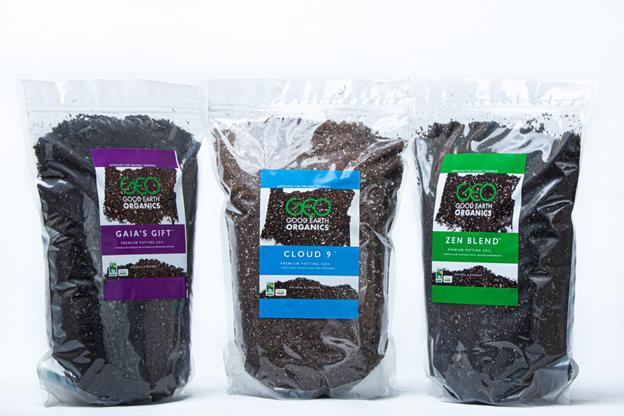
44
We offer our proprietary, premium potting soil products for bulk delivery and packaged distribution. All of our premium organic potting soil formulations have been field-tested for over a decade, and have developed a loyal following among growers in our current market of southern Oregon and northern California. We also offer one proprietary premium soil amendment that is used by growers of hemp and cannabis to increase crop yield. As part of our future growth strategy, we anticipate acquiring existing organic products to expand our product line into additional product offerings that are used by growers of cannabis and hemp. We believe that product line acquisitions will allow us to leverage our brand and to provide a larger suite of organic growing products.
Our two retail distribution centers also offer products made by third parties that are required for cannabis and hemp growing, both indoors (greenhouse and hydroponically) and outdoors. We are developing additional proprietary premium organic potting soil blends that will offer a variety of performance characteristics as well as new formulations of premium organic soil nutrients, all of which will be focused on helping growers achieve different results depending on the plants being grown, the growing media used, and the growers’ climate.
The Industry
Management believes that the success of the Company is directly tied to the growth of the cannabis sector. As such, management has evaluated the market potential for its products in part by reviewing reports and articles created by third-parties. These reports and articles were not commissioned by the company, and none are incorporated by reference.
According to management’s understanding of a report by New Frontier, U.S. cannabis retail sales are anticipated to increase from $10.3 billion in 2018 to $29.7 billion by 2025. Recreational cannabis is now fully legal in 11 states and the District of Columbia. Medical cannabis is now legal in 33 states and the District of Columbia. The market for cannabis grown for legal sale is strictly regulated, and accordingly, requires potting soils and soil nutrients that are free from chemicals that could harm consumers who will be eating, smoking or vaping products that contain cannabis.
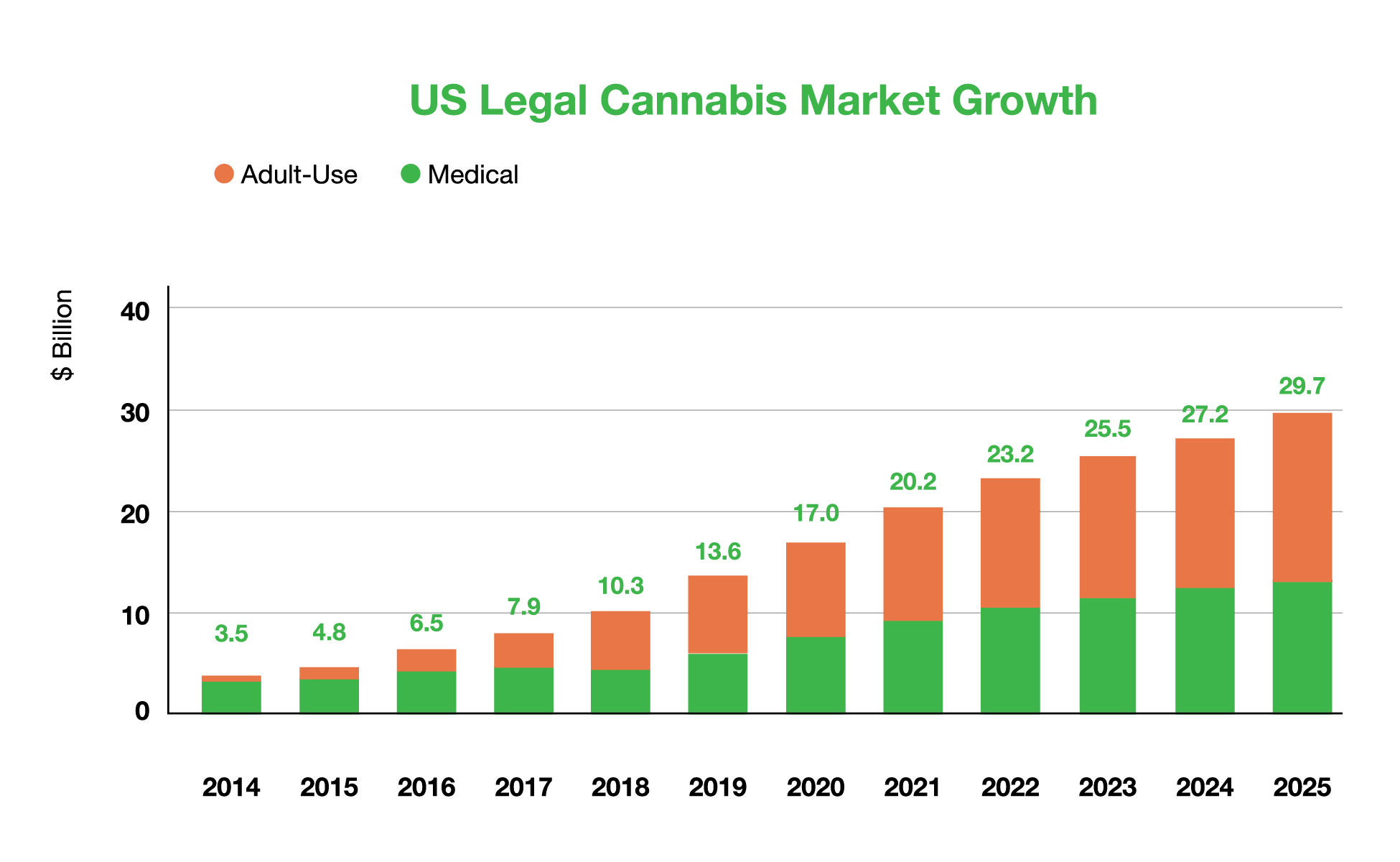
Source: New Frontier as of September 8, 2019.
45
We have relied on the projections provided by New Frontier in forming our opinions about the future of the cannabis market. We did not independently verify this information or make our own market projections.
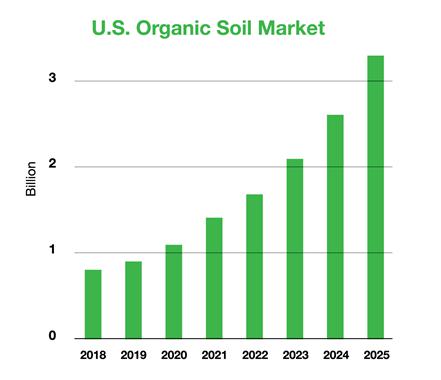
Source: Company estimates as of 2020.
46
Our Supply Chain and Customer Base
Our premium organic potting soils and organic soil nutrients include ingredients that are purchased worldwide directly from suppliers and from distributors. All of the materials used in our manufactured products are organic and natural, as required by OMRI, which has certified the integrity of our manufactured products as compliant with its organic standards. Our existing and potential customers include growers of cannabis, hemp, leafy green vegetables and medicinal herbs, as well as online retailers and retailers operating in the garden supply and farm center sectors that serve end users of our products.
47
Competition
We believe that competition in our sector is largely based on brand name recognition of the manufacturer, the quality of product, the ability of the manufacturer to make its products in a consistent method, whether the products are organic, the price of the products, and the sustainability practices of the manufacturer. We believe our primary competition includes, but is not limited to, national, regional and local producers of branded growing materials as well as producers providing non-branded growing materials in bulk. Some of our competitors offer products that are certified organic, like our products. Our competitors include the following:
| · | Fox Farm Soil & Fertilizer Company, a private maker of natural potting soils and soil nutrients based in Arcata, California and possessing a national distribution network to retailers of growing supplies, offers a broad product line and is a well-known brand to growers. |
| · | Miracle-Gro and Black Magic are two lines of potting soils and assorted growing supplies offered by The Scotts Miracle-Gro Company, a publicly-traded company based in Marysville, Ohio that generated revenue of $3.16 billion in fiscal year 2019 and offers a wide variety of lawn care products, gardening and landscape products, hydroponic products, and is the exclusive national distributor of Roundup herbicide. It distributes bagged soils and other supplies to retailers and garden centers nationwide. |
| · | Sungro Horticulture, with U.S. headquarters in Agwam, Massachusetts, produces a number of retail organic potting soils under the brand name Black Gold, as well as a line of propagation mixes for the professional grower under the brand name Sungro. The Company is owned by a private Canadian company, IKO Industries, which also engages in the manufacture and supply of roofing products. |
| · | Royal Gold is a producer of organic potting soils and soil nutrients, and is based in Arcata, California. It distributes its products both in bagged form to retailers nationwide as well as in bulk sizes of 1-yard and 2-yard bulk totes and loose by the yard. |
In addition, there are many smaller, regional makers of potting soil that distribute their products locally both under brand names as well as for private label. Most of these competitors are single-site, poorly-capitalized and are associated with complementary service or product offerings such as landscaping materials and custom blending. Some of these operations operate seasonally only. Their served geographic area is typically local or regional, yet less-than-truckload logistics offer regional operations the ability to distribute beyond their immediate geographic market.
48
Our Competitive Advantage
We believe that the following characteristics of our product lines provide us with a competitive advantage:
| · | Brand. Our premium organic potting soils and organic soil nutrients have been relied upon by thousands of cannabis and hemp growers in northern California and southern Oregon for over ten years, proving the efficacy of our formulations and reinforcing our brand as a producer of consistent and high quality organic growing media; |
| · | Experience. Our management team is experienced at successfully introducing field-tested organic products to growers of hemp and cannabis, a customer base that demands growing products that are (i) high quality, (ii) consistently blended, and (iii) free from contamination and inorganic additives, pesticides and herbicides. |
| · | Sourcing. We have established a network of premium, global suppliers for high-quality, organic raw materials, enabling our premium organic potting soils to achieve OMRI certification. |
| · | Customer Base. Our organic products are used by both craft gardeners who buy bagged potting soil products for personal use and large-scale growers who buy our products in bulk for commercial cannabis and hemp production. |
| · | Service. We provide best in class customer service and continuously analyze and adapt to market and customer needs. We have identified the need to service larger cultivation operations and have implemented a Big Buyers’ Club program providing a discount to those customers who make bulk purchases (purchases of $100,000 or more). We also provide our customers with support in the areas of business development and advice on maximizing growing yields within an organic framework. |

49
Our Growth Strategy
We are establishing a distribution network that will increase the size of the geographic market the Company currently serves. This network will allow large and small growers of cannabis and hemp to purchase our products from retailers, garden centers, and farm supply stores. In addition, we are developing new packaging for our products that will broaden the package size options and appearance of our products designated for the consumer and craft grower market. We are researching and field-testing new products for the burgeoning hemp growing market, which offers potentially higher market growth than that of cannabis. We are developing online distribution options for consumer and craft growers seeking smaller sized packages of our organic products. We also plan to acquire existing organic growing products that will expand our own product line and leverage our brand name.
Marketing
The Company’s marketing plan includes a broad range of advertising and promotional media as well as exhibiting our product line at select conferences and tradeshows directed toward growers of cannabis and hemp and retailers of growing supplies for those growers. The Good Earth Organics utilizes regional billboards, radio advertisements, print advertisements, bus advertisements, brochures, online advertisements, social media, and our website as media for reaching targeted customers. In addition, a combination of management attendance at regional and national tradeshows and exhibiting our booth at select tradeshows improves the Company’s visibility, brand and relationships with customers. We make outbound contact with retailers and distributors that operate in the cannabis and hemp supply sectors, and we directly contact the larger growers in our served market.

50
Our Intellectual Property
We currently have the following four trademarks filed with the United States Patent and Trademark Office:
| Title | Registration No. | Registration Date | Status | |||||
| The Good Earth Organics | 4,357,411 | 6/25/2013 | Issued Trademark | |||||
| Cloud Nine | 4,437,485 | 11/19/2013 | Issued Trademark | |||||
| Gaia's Gift | 4,437,484 | 11/19/2013 | Issued Trademark | |||||
| ZenBlend | 4,346,812 | 6/4/2013 | Issued Trademark | |||||
We also own the URLs www.thegoodearthorganics.com and www.goodearthorganics.com.
Employees and Contractors
As of June 30, 2020 we had 18 full-time employees and two part-time employees. We typically hire up to an additional 10 full-time and part-time employees during the second and third quarters of the year, traditionally the Company’s busiest period. Our CEO is located in New York and all other employees are located in Oregon. In addition, we use an assortment of consultants and outside professionals for marketing, legal, accounting and administrative support.
Government Regulation
Cannabis Related Regulation
We do not grow, handle, process or sell cannabis or cannabis-derived products, nor do we ever possess any such material or process any transactions related to the sale of same. We provide only premium branded organic potting soils and organic soil nutrients to our customer base, which includes commercial growers in the cannabis and hemp markets. We do not receive any commissions from sales by our customers and our revenue generation is not based on the sales of cannabis product by our customers. Marijuana is a Schedule-I controlled substance and is illegal under federal law. Even in those states in which the use of marijuana has been legalized, its use remains a violation of federal laws.
A Schedule I controlled substance is defined as a substance that has no currently accepted medical use in the United States, a lack of safety for use under medical supervision and a high potential for abuse. The Department of Justice defines Schedule 1 controlled substances as “the most dangerous drugs of all the drug schedules with potentially severe psychological or physical dependence.”
As of the date of this Offering Circular there are 33 states and the District of Columbia allow their citizens to use medical marijuana. The District of Columbia and 11 states -- Alaska, California, Colorado, Illinois, Maine, Massachusetts, Michigan, Nevada, Oregon, Vermont and Washington -- have adopted the most expansive laws legalizing marijuana for recreational use. Most recently, Illinois became the second most populous state to legalize recreational cannabis and Michigan voters approved a ballot measure permitting adults age 21 and over to purchase and possess recreational-use marijuana. Vermont became the first state earlier this year to legalize marijuana for recreational use through the legislative process, rather than via a ballot measure. Vermont's law allows for adults age 21 and over to grow and possess small amounts of cannabis. However, it does not permit the sale of nonmedical cannabis. Some other state laws similarly decriminalized marijuana but did not initially legalize retail sales.
51
The state laws are in conflict with the Federal Controlled Substances Act, which makes marijuana use and possession illegal on a national level. If the federal government decides to enforce the Controlled Substances Act with respect to marijuana, persons that are charged with distributing, possessing with intent to distribute, or growing marijuana could be subject to fines and imprisonment, the maximum being life imprisonment and a $50 million fine. Any such change in the federal government’s enforcement of current federal laws will cause significant financial damage to us. While we do not intend to harvest, distribute or sell cannabis, we may be irreparably harmed by a change in enforcement by the federal or state governments.
Previously, the Obama administration took the position that it was not an efficient use of resources to direct federal law enforcement agencies to prosecute those lawfully abiding by state-designated laws allowing the use and distribution of medical marijuana. The Trump administration has revised this policy. Specifically, the Attorney General vacated the Cole Memorandum in favor of deferral of any enforcement of federal regulation to the individual states Department of Justice/US Attorney. However, certain other protections remain in place via budgetary element embedment (Rohrabacher-Farr amendment now referred to as the Rohrabacher-Blumenauer Amendment), which limits funding of any enforcement of anti-cannabis legislation. The Department of Justice has stated that it will continue to enforce the Controlled Substance Act with respect to marijuana to prevent:
| · | the distribution of marijuana to minors; |
| · | criminal enterprises, gangs and cartels receiving revenue from the sale of marijuana; |
| · | the diversion of marijuana from states where it is legal under state law to other states; |
| · | state-authorized marijuana activity from being used as a cover or pretext for the trafficking of other illegal drugs or other illegal activity; |
| · | violence and the use of firearms in the cultivation and distribution of marijuana; |
| · | driving while impaired and the exacerbation of other adverse public health consequences associated with marijuana use; |
| · | the growing of marijuana on public lands; and |
| · | marijuana possession or use on federal property. |
Since the use of marijuana is illegal under federal law, federally chartered banks will not accept for deposit funds from businesses involved with marijuana. Consequently, businesses involved in the marijuana industry often have trouble finding a bank willing to accept their business. The inability to open bank accounts may make it difficult for some of our customers to operate. There does appears to be recent movement to allow state-chartered banks and credit unions to provide banking to the industry, but as of the date of this Offering Circular there are only nominal entities that have been formed that offer these services.
For a comprehensive and up to date perspective on this process and current states and territories cannabis laws please refer to the following link: http://www.mpp.org/states/key-marijuana-policy-reform.html.
52
Laws and regulations affecting the medical marijuana industry are constantly changing, which could detrimentally affect us. It is possible that regulations may be enacted in the future that will be directly applicable to our business.
Agricultural and Consumer Regulation
Regardless of the role of cannabis related regulation, our business is subject to regulation from governmental agencies at the state and federal level. These government agencies regulate the means we may advertise and promote our products, the composition of our products, and the way in which we produce our products.
We believe we are in compliance with all material government regulations which apply to our products and operations. We cannot predict the nature of any future laws, regulations, interpretations or applications, nor can we determine what effect additional governmental regulations or administrative policies and procedures, when and if promulgated, could have on its business.
Legal Proceedings
We know of no existing or pending legal proceedings against us, nor are we involved as a plaintiff in any proceeding or pending litigation. There are no proceedings in which any of our directors, officers or any of their respective affiliates, or any beneficial stockholder, is an adverse party or has a material interest adverse to our interest.
Corporate Information
Our principal executive offices are located at 30088 Redwood Highway, Cave Junction, Oregon 97523 and our telephone number is (541) 592-4855. We maintain a website at www.thegoodearthorganics.com and www.goodearthorganics.com. Information available on our website is not incorporated by reference in and is not deemed a part of this offering circular.
Our principal offices are located at 30088 Redwood Highway, Cave Junction, Oregon 97523. We entered into an addendum to a rental agreement between the Company’s predecessor and Paul T. Weller originally dated March 1, 2008, effective July 1, 2016 for this commercial property, which serves as our principal offices, a retail distribution center and a site for the manufacture of our products. The term of the lease is for six years with an option to renew for four additional years. The initial lease rate was for $2,000 per month and the monthly lease payment shall increase each year by $100. The current lease rate is $2,300 per month.
We entered into a commercial ground lease with the Josephine County / Illinois Valley Airport effective July 1, 2016. The leased property is approximately 3.13 acres and is located in Cave Junction, Oregon 97523. The lease term is for 10 years and the Company has an option to renew for an additional five-year period. The base term rental fee started at $1,476 per month with an annual increase on January 1st based on the Portland Oregon Consumer Price Index. The current lease rate is $2,088 per month. This site is used for the storage of inventory as well as for the manufacture of our products.
On March 15, 2017, we entered into a month-to-month lease agreement with Copeland Paving, Inc. for a two acre property located at 140 Aggregate Avenue, Murphy, Oregon for $2,000 per month. This site is used for the storage of inventory as well as for the manufacture of our products.
53
On April 19, 2017, we entered into a 10 year lease agreement with Murphy RE Holding LLC, a related party, for a commercial property located at 6891 Williams Highway, Grants Pass, OR 97527. The initial lease rate was for $4,000 per month and the monthly lease payment shall increase each year by 5%. The current lease rate is $4,630 per month. This site serves as a retail distribution center and is used for the storage of inventory. A copy of this lease is attached as Exhibit 6.3 to the Offering Statement of which this Offering Circular forms a part.
For the years ended December 31, 2019, and 2018, the Company’s aggregate rent expense totaled $139,882 and $130,435, respectively.
We believe that all our properties have been adequately maintained, are generally in good condition, and are suitable and adequate for our business.
We do not currently lease or own any other real property.
Management's Discussion and Analysis of Financial Condition and Results of Operations
You should read the following discussion and analysis of our financial condition and results of our operations together with our financial statements and related notes appearing at the end of this offering circular. This discussion contains forward-looking statements reflecting our current expectations that involve risks and uncertainties. Actual results and the timing of events may differ materially from those contained in these forward-looking statements due to a number of factors, including those discussed in the section entitled "Risk Factors" and elsewhere in this offering circular.
Overview
The Company manufactures, distributes and retails premium, organic potting soils and organic soil nutrients under its brand name The Good Earth Organics. We purchase our organic raw materials both domestically and from foreign sources, including those in Peru, Indonesia, Malaysia, and Canada. We sell the majority of our products from our two retail distribution centers in southern Oregon. In addition to our own manufactured products, the Company sells an assortment of third-party products that complement our own product line, largely to growers of cannabis and hemp.
Results of Operations
Year ended December 31, 2019 Compared to Year ended December 31, 2018
The Company’s net sales for the year ended December 31, 2019 were $3,088,256, an increase of $933,759 or 43%, from net sales of $2,154,497 in 2018. This change is attributable to a significant increase in demand for the Company’s products across its customer base. Cost of goods sold was $2,137,125 in 2019, resulting in gross profit of $951,131, and a gross margin of 31%. This compares to cost of goods sold totaling $1,620,101, gross profit of $534,396, and a gross margin of 25% in 2018. The Company raised the selling prices for its organic potting soils and benefited from bulk purchases of raw materials to expand its gross margin percentage.
The Company’s operating expenses consist of payroll and related costs, general and administrative expenses, stock-based compensation, common stock issued for services, depreciation and amortization costs. Operating expenses in 2019 were $1,975,601, compared to $1,249,664 in 2018, an increase of $725,937 or 58%, resulting from management’s actions to decrease operating costs offset by an increase in stock-based compensation costs in 2019.
Payroll and related costs decreased from $496,157 in 2018 to $482,957 in 2019, a decrease of 3%, due to headcount reduction and improved operational efficiencies. We anticipate that our payroll and related costs will increase as we hire additional experienced, senior managers who will oversee the expansion of our product distribution into new geographic markets.
General and administrative expenses increased 141% from $520,210 in 2018 to $1,251,787 in 2019 with stock-based compensation accounting for $455,668 of the increase.
54
We anticipate that our general and administrative expenses will increase as we expand geographically and hire additional experienced, senior management. In order to execute on our plan to expand the geographic distribution of our products, we may lease new locations for the manufacture of organic potting soil and organic soil nutrients. In addition, we plan to hire employees experienced in logistics and distribution as well as those experienced in national sales.
Other expenses, consisting primarily of interest expense, decreased from $153,772 to $96,757, a decrease of 37%, as the Company incurred a lower average interest rate on less outstanding indebtedness.
As a result of the foregoing factors, the Company’s net loss was $1,121,227 in 2019, an increase of $252,187 as compared to a net loss of $869,040 in 2018.
Liquidity and Capital Resources
As of December 31, 2019, the Company’s cash and equivalents was $459,160. Beginning in 2017, the Company has incurred net losses as a result of its expansion efforts and is still a “development stage company.” The Company’s total cumulative losses from January 1, 2018 through December 31, 2019 equaled $1,990,267.
In accordance with ASU No. 2014-15 Presentation of Financial Statements – Going Concern (subtopic 205-40), our management evaluates whether there are conditions or events, considered in the aggregate, that raise substantial doubt about our ability to continue as a going concern within one year after the date that the audited financial statements are issued. We have incurred substantial losses since our inception and we expect to continue to incur operating losses in the near-term. We expect that we will need to raise additional capital to meet anticipated cash requirements for the 24-month period following the filing date of this Offering Circular. In addition, we regularly consider fundraising opportunities and will determine the timing, nature and amount of financings based upon various factors, including market conditions and our operating plans. As we have done historically, we may again in the future elect to finance operations by selling equity or debt securities or borrowing money. If we raise funds by issuing equity securities, dilution to stockholders may result. Any equity securities issued may also provide for rights, preferences or privileges senior to those of holders of our common and preferred stock. If additional funding is required, we cannot assure you that additional funds will be available to us on acceptable terms on a timely basis, if at all, or that we will generate sufficient cash from operations to adequately fund our operating needs. If we are unable to raise additional capital or generate sufficient cash from operations to adequately fund our operations, we will need to curtail planned activities to reduce or defer costs, including executive salaries. Doing so will likely have an unfavorable effect on our ability to execute on our business plan, and have an adverse effect on our business, results of operations and future prospects.
In 2018, the Company issued shares of convertible preferred stock (“Seed Series Preferred Stock”) in a private placement conducted under Regulation D to accredited investors for total proceeds of $480,000. In 2019 and 2020, the company issued additional shares of the Seed Series Preferred Stock for total proceeds of $460,000. The Seed Series Preferred Stock accrues a dividend at an annual rate of 4.0%. As described below under “Description of Capital Stock,” the Seed Series Preferred Stock securities contain a conversion provision that will be triggered by this offering.
Indebtedness
The Company entered into several secured promissory notes related to purchases of various equipment, with an aggregate original principal of $627,816. The note obligations are payable generally from a minimum of 36 to 60 monthly installments with interest ranging from 2.7% to 8% per annum. As of December 31, 2019, and 2018, the aggregate principal balance outstanding was $249,224 and $372,961, respectively.
In accordance with a change of control transaction, on July 12, 2016, the Company executed an acquisition note totaling $853,000 which is payable over six years. The acquisition note is subject to a subordination agreement to the Wells Fargo Bank. As of December 31, 2019, and 2018 the aggregate principal balance outstanding on this note was $531,537 and $635,663 respectively.
On July 12, 2016, the Company entered into two secured note agreements with Wells Fargo Bank. The aggregate principal amount of the original note agreements totaled $1,015,000, including a line of credit with maximum availability of $350,000 and a term loan with an initial balance of $685,000. The line of credit includes interest of 7.5% with a maturity date of November 9, 2020. The term loan is payable in 118 monthly installments of $7,396. As of December 31, 2019, and 2018, the aggregate principal balances outstanding on the term loan were $491,488 and $551,711, respectively, and on the line of credit were $200,000 and $350,000, respectively.
55
On December 10, 2017, the Company entered into a note agreement. The principal balance of the note was $300,000. The note was to mature in 24 months and required bi-monthly payments. The interest rate was 15.49%. As of December 31, 2019, and 2018 the outstanding balance on the note was $0 and $167,780, respectively. The note was repaid in full in 2019.
On November 4, 2019 the company renewed its note agreement for a line of credit with Wells Fargo Bank, extended its maturity to November 9, 2020, and reduced the maximum principal balance from $350,000 to $250,000.
On December 31, 2019, the Company entered into a convertible note agreement for a principal balance of $270,000. The note matures on December 31, 2020 and bears interest of 8%. The note will automatically convert if the Company has an arms-length equity financing of not less than $500,000 (“Qualified Financing”). The note is convertible for the lesser of (i) the cash price paid per share for Equity Securities by the Investors in the Qualified Financing multiplied by 0.80, and (ii) the quotient resulting from dividing $16,000,000 by the number of outstanding shares of common stock of the Company immediately prior to the Qualified Financing. In the event that the Company has not consummated a Qualified Financing by the maturity date, the Company shall (i) repay the note holder in cash an amount equal to the outstanding principal amount of this note plus any unpaid accrued interest on the original principal or (ii) at the election of the note holder exercised in writing at least five days prior to the maturity date, convert the outstanding principal balance of this note and any unpaid accrued interest into share of the Company’s common stock at a conversion price equal to the quotient resulting from dividing $12,000,000 by the number of outstanding shares of common stock of the Company immediately prior to the maturity date. As of December 31, 2019, $270,000 was outstanding.
The Company currently has no material commitments for capital expenditures. The Company maintains inventory used in the normal course of business, and had $851,115 of inventory on hand as of December 31, 2019.
Trend Information
The Company has several initiatives underway to increase gross margins and improve operating margins, as follows:
Bulk Purchases – The Company can purchase some of its raw materials used in the manufacture of organic potting soil in bulk, including container-sized purchases, to decrease its cost of goods sold. With a portion of the net proceeds from this offering, the Company intends to continue to expand gross margin through further purchasing raw materials in bulk.
Consumer Sized Products – The Company is developing new packaging for its organic potting soil that will allow for customers to purchase smaller sized quantities. The Company intends to distribute these products with a digital strategy for online ordering as well as to develop a marketing channel focused on distributors of garden center products. Many of the smaller-sized products have a larger gross margin than bulk sales of the Company’s organic potting soil. Management intends to increase sales of these smaller-sized products over time, increasing the overall gross margin for the Company.
Manufacturing Economies – Management believes the Company has significant opportunity to scale its production of organic potting soil without further material investment in property, plant and equipment. The Company’s two manufacturing sites provide the Company with the ability to manufacture significantly more organic potting soil with minimal additional administrative or manufacturing-related operating expense.
56
Relaxed Ongoing Reporting Requirements
If we become a public reporting company in the future, we will be required to publicly report on an ongoing basis as an “emerging growth company” (as defined in the Jumpstart Our Business Startups Act of 2012, which we refer to as the JOBS Act) under the reporting rules set forth under the Exchange Act. For so long as we remain an “emerging growth company”, we may take advantage of certain exemptions from various reporting requirements that are applicable to other Exchange Act reporting companies that are not “emerging growth companies”, including but not limited to:
● not being required to comply with the auditor attestation requirements of Section 404 of the Sarbanes-Oxley Act;
● taking advantage of extensions of time to comply with certain new or revised financial accounting standards;
● being permitted to comply with reduced disclosure obligations regarding executive compensation in our periodic reports and proxy statements; and
● being exempt from the requirement to hold a non-binding advisory vote on executive compensation and stockholder approval of any golden parachute payments not previously approved.
If we become a public reporting company in the future, we expect to take advantage of these reporting exemptions until we are no longer an emerging growth company. We would remain an “emerging growth company” for up to five years, although if the market value of our common stock that is held by non- affiliates exceeds $700 million as of any June 30 before that time, we would cease to be an “emerging growth company” as of the following December 31.
If we do not become a public reporting company under the Exchange Act for any reason, we will be required to publicly report on an ongoing basis under the reporting rules set forth in Regulation A for Tier 2 issuers. The ongoing reporting requirements under Regulation A are more relaxed than for “emerging growth companies” under the Exchange Act. The differences include, but are not limited to, being required to file only annual and semiannual reports, rather than annual and quarterly reports. Annual reports are due within 120 calendar days after the end of the issuer’s fiscal year, and semiannual reports are due within 90 calendar days after the end of the first six months of the issuer’s fiscal year.
In either case, we will be subject to ongoing public reporting requirements that are less rigorous than Exchange Act rules for companies that are not “emerging growth companies”, and our stockholders could receive less information than they might expect to receive from more mature public companies.
57
Directors, Executive Officers and Significant Employees
The following table sets forth the name and position of each of our current executive officers, directors and significant employees.
| Name | Position | Age | Term of Office | Approximate hours per week for part-time employees | ||||||
| Executive Officers: | ||||||||||
| Elizabeth Wald | Chief Executive Officer | 53 | From June 2020 | FT | ||||||
| Travis Parker | Chief Financial Officer | 62 | From June 2020 | FT | ||||||
| Trevor Nelson | Chief Operations Officer | 39 | From July 2016 | FT | ||||||
| Scott Morrison | Director of Investor Relations | 56 | From January 2019 | 10 hours | ||||||
| Directors: | ||||||||||
| Timothy J. Clark | Co-Chairman, Director | 55 | From July 2016 | |||||||
| Timothy R. Brien | Co-Chairman, Director | 52 | From March 2018 | |||||||
| Elizabeth Wald | Director | 53 | From June 2020 | |||||||
| Roy Leon | Director | 71 | From June 2020 | |||||||
Timothy R. Brien, Co-Chairman and Director
Mr. Brien has served as our Co-Chairman and Director since March 2018. Since 2001 Mr. Brien has served as an independent private equity sponsor and he is the owner of businesses operating in a variety of industries. He has invested in growing private companies since 1989. Mr. Brien is also a director of several private companies. Mr. Brien earned a BA from Stanford University and an MBA from Harvard Business School.
58
Timothy J. Clark, Co-Chairman and Director
Mr. Clark has served as our Co-Chairman since March 2018 and previously served as our Chairman from July 2016 through March 2018. Since 2004, Mr. Clark has served as an independent private equity sponsor and he is the owner of businesses operating in a variety of industries. Mr. Clark is also a director of several private companies. Mr. Clark earned a BA from Bucknell University and an MBA from Harvard Business School.
Elizabeth Wald, Chief Executive Officer and Director
Ms. Wald has served as our Chief Executive Officer and Director since June 2020. She served as the Chief Operating Officer for Bonaverde Coffee from 2017 to 2018. Since 2018, Ms. Wald has been serving as Advisor / Chief Operation Officer, Ecosystem Development at HighVibe.Network, which is a decentralized personal development and wellness ecosystem designed to integrate immersive experiences and multidimensional learning. Ms. Wald previously worked in senior management roles for Piece & Co. in 2016 as a Chief Operating Officer, Indigogo, Inc. from 2013 to 2015, most recently as its Vice President of Technology and Design, and for Etsy, Inc. from 2009 to 2012, most recently as its Director, Marketplace Development. Ms. Wald earned a BA from Harvard University and an MBA from the J.L. Kellogg School of Management, Northwestern University.
Travis Parker, Chief Financial Officer
Mr. Parker has served as our Chief Financial Officer since June 2020. He previously worked for Masterbrand Cabinets from October 2017 to May 2020, and for Cascade Steel Rolling Mill from July 2012 to October 2017, in various accounting and financial analysis management roles. Mr. Parker earned a BS in Business and Economics from Western Oregon University.
Trevor Nelson, Chief Operations Officer
Mr. Nelson has served as our Chief Operations Officer since July 2016 and prior to this position he worked for the Company in operations starting in March 2014. Prior to joining the Company, he worked in various management and operations positions at Valley Timber Resource since 2004.
Scott Morrison, Director of Investor Relations
Mr. Morrison has spent over 25 years working with institutional and private investors including research sales roles at several major Wall Street Firms including Salomon Brothers, Schroder Wertheim and Credit Suisse. He has founded and managed several successful independent research firms, and a private placement broker dealer. Mr. Morrison earned a BA from Wake Forest University and an MBA from the Goizueta School of Business at Emory University.
Roy Leon, Director
Mr. Leon founded The Good Earth Organics LLC, a predecessor to the Company, in 2008. He served as its sole owner and general manager until its sale in 2016. He is responsible for researching, developing and branding the Company’s primary potting soil and soil nutrient products. Previously, he worked as a chemist for Applied Biosystems and Thermo Fisher Scientific. Mr. Leon earned a BS in Chemistry from the University of Montana.
59
Directors are elected until their successors are duly elected and qualified.
There are no family relationships between any director, executive officer, or any significant employee.
To the best of our knowledge, none of our directors or executive officers has, during the past five years:
| · | been convicted in a criminal proceeding (excluding traffic violations and other minor offenses); or |
| · | had any petition under the federal bankruptcy laws or any state insolvency law filed by or against, or a receiver, fiscal agent or similar officer was appointed by a court for the business or property of such person, or any partnership in which he was general partner at or within two years before the time of such filing, or any corporation or business association of which he was an executive officer at or within two years before the time of such filing. |
60
Compensation of Directors and Executive Officers
Under our management agreement with Cliffside Capital LLC and ESCP Management LLC (collectively, the “Management Entities”), which are owned by our Co-Chairmen Timothy R. Brien and Timothy J. Clark, the Company began paying a management fee to the Management Entities, equal to 0.75% of revenue each quarter to each entity, beginning on July 1, 2019. The Company also reimburses all expenses of the Co-Chairmen related to their performance of their services under the management agreement. Under the terms of this management agreement, the Company paid the Management Entities $14,339 for the year ended December 31, 2019, with the Management Entities choosing to accrue this fee. The agreement shall be renewed automatically for additional one-year terms.
61
Security Ownership of Management and Certain Securityholders
The following table sets forth information regarding beneficial ownership of our voting stock as of June 30, 2020 (i) by each of our executive officers and directors who beneficially own more than 10% of our voting stock; (ii) by all of our executive officers and directors as a group; and (iii) by each person who is known by us to beneficially own more than 10% of each class of our voting stock. Unless otherwise specified, the address of each of the persons set forth below is in care of the Company at 30088 Redwood Hwy, Cave Junction, OR 97523.
| Percent of | ||||||||||||||||||||
| Amount of Beneficial Ownership(1) | Percent of | Series Seed | Percent of Total | |||||||||||||||||
| Name and Address of Beneficial Owner | Common Stock | Series Seed Preferred Stock | Common Stock(2) | Preferred Stock(3) | Voting Stock(4) | |||||||||||||||
| Timothy R. Brien | 6,000,000 | -- | 48.26 | % | -- | 44.87 | % | |||||||||||||
| Timothy J. Clark | 6,000,000 | -- | 48.26 | % | -- | 44.87 | % | |||||||||||||
| All directors and executive officers as a group (7) | 12,000,000 | -- | 96.52 | % | -- | 89.74 | % | |||||||||||||
| (1) | Beneficial Ownership is determined in accordance with the rules of the Commission and generally includes voting or investment power with respect to securities. Each of the beneficial owners listed above has direct ownership of and sole voting power and investment power with respect to the shares. For each beneficial owner above, any securities acquirable within 60 days have been included in the denominator in accordance with Commission Rule 13d-3(d)(1). | |
| (2) | Based on 12,432,150 shares of our common stock outstanding as of June 30, 2020. | |
| (3) | Based on 940,000 shares of our Series Seed Preferred Stock outstanding as of June 30, 2020. | |
| (4) | Percentage of Total Voting Stock represents total ownership with respect to all shares of our common stock and Series Seed Preferred Stock, as a single class and on an as-converted to common stock basis. |
62
Interest of Management and Others in Certain Transactions
The following includes a summary of transactions since the beginning of our 2017 fiscal year, or any currently proposed transaction, in which we were or are to be a participant and the amount involved exceeded or exceeds the lesser of $120,000 and one percent of the average of our total assets at year-end for the last two completed fiscal years, and in which any related person had or will have a direct or indirect material interest (other than compensation described under “Compensation of Directors and Executive Officers”). We believe the terms obtained or consideration that we paid or received, as applicable, in connection with the transactions described below were comparable to terms available or the amounts that would be paid or received, as applicable, in arm’s-length transactions.
On April 19, 2017, we entered into a 10-year lease agreement with Murphy RE Holding LLC, a limited liability Company owned by Timothy J. Clark, our Co-Chairman, for a commercial property located at 6891 Williams Highway, Grants Pass, OR 97527. The initial lease rate was for $4,000 per month and the monthly lease payment shall increase each year by 5%. The current lease rate is $4,630 per month. This site serves as a retail distribution center and is used for the storage of inventory. Under the terms of this lease agreement, the Company paid $49,600 for the year ended December 31, 2018, and $52,080 for the year ending December 31, 2019. A copy of this lease is attached as Exhibit 6.3 to the Offering Statement of which this Offering Circular forms a part.
On October 1, 2018, we entered into a management agreement with Cliffside Capital LLC and ESCP Management LLC (collectively, the “Management Entities”) owned by our Co-Chairmen Timothy R. Brien and Timothy J. Clark (the “Co-Chairmen”), respectively, providing for business and financial services to the Company, including organizational strategy, management and financial services, investment management and investment banking services, with initial payment to commence July 1, 2019. Beginning July 1, 2019, the Company will pay the Management Entities a management fee equal to 1.5% of revenue each quarter, in addition to reimbursement of all expenses related to their performance of these services. Under the terms of this management agreement, the Company paid the Management Entities $14,339 for the year ended December 31, 2019, with the Management Entities choosing to accrue this fee. The agreement shall be renewed automatically for additional one-year terms.
In 2017 entities controlled by our Co-Chairman, Timothy J. Clark, (“TJC Entities”) loaned $70,000 to the Company. In 2018, TJC Entities made additional loans to the Company in the amount of $120,000 to finance increased inventory purchases. In 2018, all of these loans were subsequently either repaid or converted into shares of common stock and no loans to any shareholder are outstanding.
Additionally, the Co-Chairmen provide personal guarantees for some of the Company’s debt, including guarantees made to a number of the Company’s suppliers of raw materials.
63
General
The Company is offering Series A Preferred Stock to investors in this offering. The Series A Preferred Stock may be converted into the Common Stock of the Company at the discretion of each investor, or automatically upon the occurrence of certain events, like an Initial Public Offering. As such, under this Offering Statement, of which this Offering Circular is part, the Company is qualifying up to 6,060,606 shares of Series A Preferred Stock and up to 6,060,606 shares of common stock into which the Series A Preferred Stock may convert.
The following description summarizes important terms of our capital stock. This summary does not purport to be complete and is qualified in its entirety by the provisions of our Amended and Restated Certificate of Incorporation and our Bylaws, copies of which have been filed as Exhibits to the Offering Statement of which this Offering Circular is a part. For a complete description of our capital stock, you should refer to our Amended and Restated Certificate of Incorporation, and our Bylaws, and applicable provisions of the Delaware law.
Immediately following the completion of this offering, our authorized capital stock will consist of 22,500,000 shares of Common Stock, $0.0001 par value per share, and 7,500,000 shares of Preferred Stock, $0.0001 par value per share. The two classes of Preferred Stock are designated as Series A Preferred Stock and Series Seed Preferred Stock. 1,000,000 shares of the authorized Preferred Stock are designated Series Seed Preferred Stock and 6,500,000 shares of Preferred Stock are designated Series A Preferred Stock. Upon the first close in this offering, all outstanding shares of Series Seed Preferred Stock will convert into the Common Stock of the Company.
Series A Preferred Stock
Voting Rights. Each holder of the Company’s Series A Preferred Stock is entitled to cast the number of votes equal to the number of whole shares of Common Stock into which the shares of Preferred Stock held by such holder are convertible. Series A Preferred Stock will generally vote together with the holders of Common Stock as a single class, will have full voting rights and powers equal to the voting rights and powers of the holders of Common Stock, and will be entitled to notice of any stockholder meeting.
Conversion Rights. Shares of Series A Preferred Stock will be convertible, at the option of the holder, at any time, into fully paid and nonassessable shares of the Company’s Common Stock at the then-applicable conversion rate. Initially, the conversion rate will be one share of Common Stock per share of Series A Preferred Stock. The conversion rate is subject to adjustment in the event of stock splits, reverse stock splits or the issuance of a dividend or other distribution payable in additional shares of Common Stock.
64
Additionally, each share of Series A Preferred Stock will automatically convert into common stock upon (a) the closing of the sale of a shares of the Company’s Common Stock in a firm-commitment underwritten public offering pursuant to a registration statement under the Securities Act of 1933, as amended, (b) at the time the Company becomes an OTCQX or OTCQB company as sponsored by an SEC-registered and FINRA-approved broker-dealer through filing and approval of a Form 211, provided all officers, directors, employees and Common Stock holders of the Company are subject to a minimum 180-day lockup period in connection with the listing or (c) the date and time, or the occurrence of an event, specified by vote or written consent of the holders of a majority of the shares of Series A Preferred Stock. immediately prior to the closing of a firm commitment underwritten public offering, registered under the Securities Act or upon the affirmative election of the holders of a majority of the outstanding shares of Preferred Stock, voting as a single class on an as-converted basis. The shares will convert in the same manner as a voluntary conversion.
Transfer Restrictions. Transfers of shares of Series A Preferred Stock are subject to the same restrictions applicable to the common stock described above.
Right to Receive Liquidation Distributions. In the event of a liquidation, dissolution or winding up of the Company, whether voluntary or involuntary, or certain other events (each a “Deemed Liquidation Event”) such as the sale or merger of the company, as further set forth in the Amended and Restated Certificate of Incorporation, all holders of Series A Preferred Stock will be entitled to a liquidation preference that is senior to holders of the Common Stock. Holders of Series A Preferred Stock will receive a liquidation preference equal to the greater of (a) an amount for each share equal to the Original Issue Price for such share, adjusted for any stock dividends, combinations, splits, recapitalizations and the like plus any declared but unpaid dividends with respect to such shares or (b) such amount per share as would have been payable had all shares of Series A Preferred Stock been converted into Common Stock immediately prior to such liquidation, dissolution or winding up or Deemed Liquidation Event (the “liquidation preference”). Initially, the liquidation preferences for each share of Series A Preferred Stock will be the Original Issue Price.
If, upon such liquidation, dissolution, or winding up or Deemed Liquidation Event, the assets (or the consideration received in a transaction) that are distributable to the holders of Series A Preferred Stock are insufficient to permit the payment to such holders of the full amount of their respective liquidation preference, then all of such funds will be distributed ratably among the holders of the Series A Preferred Stock in proportion to the full amounts to which they would otherwise be entitled to receive.
After the payment of the full liquidation preference of the Series A Preferred Stock, the remaining assets of the company legally available for distribution (or the consideration received in a transaction), if any, will be distributed ratably to the holders of the Common Stock in proportion to the number of shares of Common Stock held by each such holder.
Series A Preferred Stock Protective Provisions. For so long as at least 25% of the initially issued shares of Series A Preferred Stock remain outstanding, written consent or affirmative vote of the holders of at least a majority of the outstanding shares of Preferred Stock, consenting, or voting separately as a single class, shall be required to: (a) adversely change rights of the Series A Preferred Stock; (b) authorize or create any new class or series of capital stock having rights, powers, or privileges set forth in the certificate of incorporation of the Corporation, as then in effect, that are senior to any series of Preferred Stock; (c) purchase or redeem any capital stock other than stock repurchases from former employees, officers, directors, consultants or other persons who performed services for the Company or any subsidiary in connection with the cessation of such employment or service, not to exceed $250,000 in the aggregate per year; (d) declare or pay any dividend or otherwise make a distribution to holders of Preferred Stock or Common Stock; (e) decrease the number of directors of the Company in a manner that eliminates the position of the independent director provided in the Board Composition section of the certificate of incorporation;(f) cause, permit or authorize any subsidiary of the Company to take any action that would be subject to these protective provisions if the Company were to take such action; or (g) liquidate, dissolve, or wind-up the business and affairs of the Company, effect any Deemed Liquidation Event, or consent, agree or commit to do any of the foregoing without conditioning such consent, agreement or commitment upon obtaining the requisite approval.
65
Board of Directors. For so long as at least 50% percent of the initially issued shares of Series A Preferred Stock remain outstanding: (a) the holders of record of the shares of Common Stock, exclusively and as a separate class, shall be entitled to elect two (2) directors of the Company; (b) the stockholders shall elect, by the affirmative vote of a majority of the Series A Preferred Stock and Common Stock, voting together as a single class on an as-converted basis, one (1) independent director (who shall initially be Mr. Roy Leon); and (c) any additional directors shall be elected by the affirmative vote of a majority of the Series A Preferred Stock and Common Stock, voting together as a single class on an as-converted basis.
Series Seed Preferred Stock
As of June 30, 2020, there were 940,000 shares of Series Seed Preferred Stock outstanding.
Voting Rights. Each holder of the Company’s Series Seed Preferred Stock is entitled to cast the number of votes equal to the number of whole shares of Common Stock into which the shares of Preferred Stock held by such holder are convertible. Series Seed Preferred Stock will generally vote together with the holders of Common Stock as a single class, will have full voting rights and powers equal to the voting rights and powers of the holders of Common Stock, and will be entitled to notice of any stockholder meeting. Notwithstanding the foregoing, the holders of the Series Seed Preferred Stock have granted a proxy to the President of the Company and a designee of the Selling Investors (as defined in the voting agreement), which gives them the right to vote the shares of Series Seed Preferred Stock on behalf of holders with respect to the election of persons as members of the Board of Directors, to vote to increase authorized shares, and to vote regarding any Sale of the Company (as defined in the voting agreement), if and only if the holder (a) fails to vote; or (b) attempts to vote (whether by proxy, in person or by written consent), in a manner inconsistent with the terms of the voting agreement.
Dividend Rights. Dividends shall accrue at the rate of $0.04 per share of Series Seed Preferred Stock subject to appropriate adjustment in the event of any stock dividend, stock split, combination or other similar recapitalization (the "Accruing Dividends"). The Accruing Dividends shall accrue from day to day, whether or not declared, shall be cumulative and shall compound annually. The Accruing Dividends shall be payable only when, as, and if declared by the Board of Directors and the Company shall be under no obligation to pay such Accruing Dividends unless otherwise required under the certificate of incorporation. If any dividend is paid on the outstanding common stock, the Series Seed Preferred Stock shall receive an amount at least equal to the greater of: (a) the amount of Accruing Dividends then accrued on each share of Series Seed Preferred Stock and not previously paid and (b) the dividend payable per share of Series Seed Preferred Stock calculated on a pari passu basis with the holders of common stock on an as converted to common stock basis.
66
Conversion Rights. Each share of Series Seed Preferred Stock is convertible at any time at the option of the holder into such number of shares of common stock as is determined by dividing the applicable Series Seed Original Issue Price by the applicable Series Seed Conversion Price (as defined in the certificate of incorporation) applicable to the Series Seed Preferred Stock at the time of conversion. In addition, upon either (a) the registration by the Company of a class of its securities with the Securities and Exchange Commission under Section 12 or 15 of the Securities Exchange Act of 1934, as amended, (b) the closing of the sale by the Company of a class of its equity securities pursuant to an offering statement under Regulation A that has been qualified by the Securities and Exchange Commission, or (c) the date and time, or the occurrence of an event, specified by vote or written consent of the Required Holders at the time of such vote or consent, voting as a single class on an as-converted basis, (i) all outstanding shares of Series Seed Preferred Stock shall automatically be converted into shares of common stock, at the then effective conversion rate. Accordingly, upon the closing of this offering, each outstanding share of Series Seed Preferred Stock will automatically convert into shares of our common stock at the then effective conversion rate.
Transfer Restrictions. Transfers of shares of Series Seed Preferred Stock are subject to the same restrictions applicable to the common stock described above.
Right to Receive Liquidation Distributions. In the event of a Deemed Liquidation Event such as the sale or merger of the company, as further set forth in the Amended and Restated Certificate of Incorporation, all holders of Series Seed Preferred Stock will be entitled to a liquidation preference that is senior to holders of the Common Stock. Holders of Series Seed Preferred Stock will receive a liquidation preference equal to the greater of (a) an amount for each share equal to the Original Issue Price for such share, adjusted for any stock dividends, combinations, splits, recapitalizations and the like plus any declared but unpaid dividends with respect to such shares or (b) such amount per share as would have been payable had all shares of Series Seed Preferred Stock been converted into Common Stock immediately prior to such liquidation, dissolution or winding up or Deemed Liquidation Event (the “liquidation preference”). Initially, the liquidation preferences for each share of Series Seed Preferred Stock will be the Original Issue Price.
If, upon such liquidation, dissolution, or winding up or Deemed Liquidation Event, the assets (or the consideration received in a transaction) that are distributable to the holders of Series Seed Preferred Stock are insufficient to permit the payment to such holders of the full amount of their respective liquidation preference, then all of such funds will be distributed ratably among the holders of the Series Seed Preferred Stock in proportion to the full amounts to which they would otherwise be entitled to receive.
After the payment of the full liquidation preference of the Series Seed Preferred Stock, the remaining assets of the company legally available for distribution (or the consideration received in a transaction), if any, will be distributed ratably to the holders of the Common Stock in proportion to the number of shares of Common Stock held by each such holder.
Other Rights. Holders of Series Seed Preferred Stock have no preemptive or subscription rights and there are no redemption or sinking fund provisions applicable to our Series Seed Preferred Stock.
Series Seed Preferred Stock Protective Provisions. For so long as at least 50% of the initially issued shares of Preferred Stock remain outstanding, written consent or affirmative vote of the holders of at least a majority of the outstanding shares of Preferred Stock, consenting, or voting separately as a single class, shall be required to: (a) adversely change rights of the Series A Preferred Stock; (b) increase or decrease the authorized number of shares of any class or series of capital stock; (c) authorize or create any new class or series of capital stock having rights, powers, or privileges that are senior to or on a parity with any series of Preferred Stock; (d) other than specified in the certificate of incorporation, redeem or repurchase any shares of Common Stock or Preferred Stock; (e) declare or pay any dividend or otherwise make a distribution to holders of Preferred Stock or Common Stock; (f) increase or decrease the number of directors of the company; (g) cause, permit or authorize any subsidiary of the Company to take any action the above actions.
67
Common Stock
As of June 30, 2020, there were 12,432,150 shares of Common Stock issued and outstanding.
Voting Rights. The holders of the Common Stock are entitled to one vote for each share held of record on all matters submitted to a vote of the stockholders. Under our bylaws, any corporate action to be taken by vote of stockholders other than for election of directors shall be authorized by the affirmative vote of the majority of votes cast. Directors are elected by a plurality of votes. Stockholders do not have cumulative voting rights.
Dividend Rights. Subject to preferences that may be applicable to any then-outstanding Preferred Stock, holders of common stock are entitled to receive ratably those dividends, if any, as may be declared from time to time by the board of directors out of legally available funds.
Liquidation Rights. In the event of our liquidation, dissolution or winding up, holders of common stock will be entitled to share ratably in the net assets legally available for distribution to stockholders after the payment of all of our debts and other liabilities and the satisfaction of any liquidation preference granted to the holders of any then-outstanding shares of Preferred Stock.
Transfer Restrictions. A stockholder shall not transfer, whether by sale, gift or otherwise, any shares of the Company's stock to any person unless such transfer is approved by the Board of Directors prior to such transfer, which approval may be granted or withheld in the sole and absolute discretion of the Board of Directors. This transfer restriction shall automatically terminate upon the date our securities are first offered to the public pursuant to a registration statement or offering statement filed with, and declared effective or qualified by, as applicable, the Commission under the Securities Act.
Other Rights. Holders of common stock have no preemptive, conversion or subscription rights and there are no redemption or sinking fund provisions applicable to the common stock. The rights, preferences and privileges of the holders of common stock are subject to, and may be adversely affected by, the rights of the holders of shares of any series of Preferred Stock.
Choice of Forum
Our amended and restated certificate of incorporation, as amended, provides that, unless we consent in writing to the selection of an alternative forum, the Court of Chancery of the State of Delaware will be the exclusive forum for any derivative action or proceeding brought on our behalf; any action asserting a breach of fiduciary duty; any action asserting a claim against us arising pursuant to the Delaware General Corporation Law, our amended and restated certificate of incorporation or our amended and restated bylaws; or any action asserting a claim against us that is governed by the internal affairs doctrine. These provisions would not apply to suits brought to enforce a duty or liability created by the Exchange Act, or any other claim for which the federal courts have exclusive jurisdiction. Our amended and restated certificate of incorporation will further provide that the federal district courts of the United States of America will be the exclusive forum for resolving any complaint asserting a cause of action arising under the Securities Act, subject to applicable law. Any person or entity purchasing or otherwise acquiring any interest in our securities shall be deemed to have notice of and consented to these provisions. Our exclusive forum provision will not relieve us of our duties to comply with the federal securities laws and the rules and regulations thereunder, and our shareholders will not be deemed to have waived our compliance with these laws, rules and regulations.
The provisions of the Delaware General Corporation Law, our amended and restated certificate of incorporation and our amended and restated bylaws could have the effect of discouraging others from attempting hostile takeovers and, as a consequence, they may also inhibit temporary fluctuations in the price of our common stock that often result from actual or rumored hostile takeover attempts. These provisions may also have the effect of preventing changes in our management. It is possible that these provisions could make it more difficult to accomplish transactions that stockholders may otherwise deem to be in their best interests.
Transfer Agent and Registrar
We have not yet engaged a transfer agent and registrar, but plan to do so prior to the closing of this offering. The transfer agent and registrar will maintain shareholder information on a book-entry basis. We will not issue shares in physical or paper form. Instead, our shares will be recorded and maintained on our shareholder register.
Shares Eligible for Future Sale
Prior to this offering, there was no public market for our common stock. We cannot predict the effect, if any, that market sales of shares of our common stock or the availability of shares of our common stock for sale will have on the market price of our common stock. Sales of substantial amounts of our common stock in the public market could adversely affect the market prices of our common stock and could impair our future ability to raise capital through the sale of our equity securities.
68
The 12,432,150 shares of common stock outstanding after this offering will be restricted as a result of securities laws. Restricted securities may be sold in the public market only if they have been registered or if they qualify for an exemption from registration, including under Rule 144 under the Securities Act.
Rule 144
A person who has beneficially owned restricted shares of common stock for at least six months would be entitled to sell their shares provided that (1) such person is not deemed to have been one of our affiliates at the time of, or at any time during the three months preceding, a sale and (2) we are subject to the Exchange Act periodic reporting requirements for at least three months before the sale. Persons who have beneficially owned restricted shares of common stock for at least six months but who are our affiliates at the time of, or any time during the three months preceding, a sale, would be subject to additional restrictions, by which such person would be entitled to sell within any three-month period a number of shares that does not exceed the greater of either of the following:
| · | 1% of the number of shares then outstanding, which will equal 178,770 shares of common stock immediately after this offering; and |
| · | the average weekly trading volume of the shares of common stock during the four calendar weeks preceding the filing of a notice on Form 144 with respect to the sale. |
Sales under Rule 144 are also limited by manner of sale provisions and notice requirements and to the availability of current public information about us.
69
The validity of the Series A Preferred Stock offered hereby will be passed upon for us by CrowdCheck Law, LLP.
Our financial statements for the years ended December 31, 2018 and 2019 included in this offering circular have been audited by Liggett & Webb, P.A., an independent registered public accounting firm, as stated in its report appearing herein. Such financial statements have been so included in reliance upon the report of such firm given upon its authority as an expert in accounting and auditing.
Where You Can Find More Information
We have filed with the Commission an offering statement on Form 1-A under the Securities Act with respect to the common stock offered by this offering circular. This offering circular does not contain all of the information included in the offering statement, portions of which are omitted as permitted by the rules and regulations of the Commission. For further information pertaining to us and the common stock to be sold in this offering, you should refer to the offering statement and its exhibits. Whenever we make reference in this offering circular to any of our contracts, agreements or other documents, the references are not necessarily complete, and you should refer to the exhibits attached to the offering statement for copies of the actual contract, agreement or other document filed as an exhibit to the offering statement or such other document, each such statement being qualified in all respects by such reference. Upon the closing of this offering, we will be subject to the informational requirements of Tier 2 of Regulation A and will be required to file annual reports, semi-annual reports, current reports and other information with the Commission. We anticipate making these documents publicly available, free of charge, on our website as soon as reasonably practicable after filing such documents with the Commission.
You can read the offering statement and our future filings with the Commission over the Internet at the Commission's website at www.sec.gov. You may also read and copy any document we file with the Commission at its public reference facility at 100 F Street, N.E., Room 1580, Washington, D.C. 20549. You may also obtain copies of the documents at prescribed rates by writing to the Public Reference Section of the Commission. Please call the Commission at 1-800-SEC-0330 for further information on the operation of the public reference facilities.
70
THE GOOD EARTH ORGANICS, INC.
Consolidated FINANCIAL STATEMENTS
As of
December 31, 2019 and December 31, 2018
Together with
Independent Auditors’ Report
71
THE GOOD EARTH ORGANICS, INC.
Index to Consolidated Financial Statements
72
Board of Directors and Stockholders
The Good Earth Organics, Inc. (formally known as GEO Holdings, LLC.)
Report on the Financial Statements
We have audited the accompanying consolidated balance sheet of The Good Earth Organics, Inc. (“the Company”) as of December 31, 2019 and 2018 , and the related consolidated statement of operations, changes in equity and cash flows for the years then ended, and the related notes to the financial statements.
Management’s Responsibility for the Financial Statements
Management is responsible for the preparation and fair presentation of these financial statements in accordance with accounting principles generally accepted in the United States of America; this includes the design, implementation, and maintenance of internal control relevant to the preparation and fair presentation of financial statements that are free from material misstatement, whether due to fraud or error.
Auditor’s Responsibility
Our responsibility is to express an opinion on these financial statements based on conducting the audit in accordance with auditing standards generally accepted in the United States of America. Those standards require that we plan and perform the audits to obtain reasonable assurance about whether the combining financial statements are free from material misstatement.
An audit involves performing procedures to obtain audit evidence about the amounts and disclosures in the financial statements. The procedures selected depend on the auditor’s judgment, including the assessment of the risks of material misstatement of the financial statements, whether due to fraud or error. In making those risk assessments, the auditor considers internal control relevant to the entity’s preparation and fair presentation of the financial statements in order to design audit procedures that are appropriate in the circumstances, but not for the purpose of expressing an opinion on the effectiveness of the entity’s internal control. Accordingly, we express no such opinion. An audit also includes evaluating the appropriateness of accounting policies used and the reasonableness of significant accounting estimates made by management, as well as evaluating the overall presentation of the financial statements. We believe that the audit evidence we have obtained is sufficient and appropriate to provide a basis for our qualified audit opinion.
Opinion
In our opinion, the financial statements referred to above present fairly, in all material respects, the financial position of The Good Earth Organics, Inc. as of December 31, 2019 and 2018, and the results of its operations and its cash flows for the years then ended in accordance with accounting principles generally accepted in the United States of America.
Emphasis of Matter – Going Concern
The accompanying consolidated financial statements have been prepared assuming that the Company will continue as a going concern. As discussed in Note 1 to the financial statements, the Company has a limited operating history and a reliance on financing for operations, which raise substantial doubt about the Company’s ability to continue as a going concern. Management’s evaluation of the events and conditions and management’s plans regarding these matters are also described in Note 1. The financial statements do not include any adjustments that might result from the outcome of this uncertainty. Our conclusion is not modified with respect to this matter.
| /s/ Liggett & Webb P.A. |
New York, New York
June 26, 2020, except for Notes 1 & 11 as to which the date is September 1, 2020
-F-1-
The Good Earth Organics, Inc.
As of December 31, 2019 and 2018
| ASSETS | ||||||||
| 2019 | 2018 | |||||||
| Current assets: | ||||||||
| Cash and cash equivalents | $ | 459,160 | $ | 324,681 | ||||
| Accounts receivable, net | - | 4,932 | ||||||
| Inventory | 851,115 | 1,570,191 | ||||||
| Other current assets | 23,623 | 4,055 | ||||||
| Total current assets | 1,333,898 | 1,903,859 | ||||||
| Property and equipment, net | 744,988 | 961,335 | ||||||
| Goodwill | 972,819 | 972,819 | ||||||
| Non-compete agreement, net | 2,000 | 2,800 | ||||||
| Total assets | $ | 3,053,705 | $ | 3,840,813 | ||||
| LIABILITIES AND EQUITY | ||||||||
| Current liabilities: | ||||||||
| Accounts payable, including $128,795 and $101,195 to related parties as of 2019 and 2018, respectively | $ | 322,205 | $ | 325,005 | ||||
| Accrued expenses | 61,670 | 129,900 | ||||||
| Capital lease obligation | 10,969 | 11,667 | ||||||
| Customer deposits | 69,655 | 83,063 | ||||||
| Acquisition note payable, current portion | 120,222 | 119,340 | ||||||
| Line of credit | 200,000 | 350,000 | ||||||
| Convertible note | 270,000 | - | ||||||
| Notes payable, current portion | 187,304 | 350,798 | ||||||
| Total current liabilities | 1,242,025 | 1,369,773 | ||||||
| Capital lease obligation | 21,239 | 23,663 | ||||||
| Acquisition note payable, long-term | 398,192 | 516,323 | ||||||
| Notes payable, net | 553,408 | 741,654 | ||||||
| Total long term liabilities | 972,839 | 1,281,640 | ||||||
| Total liabilities | 2,214,864 | 2,651,413 | ||||||
| COMMITMENTS AND CONTINGENCIES (See Note 8) | ||||||||
| Equity: | ||||||||
| Series Seed Convertible Preferred Stock, 1,250,000 shares authorized, $0.0001 par value; 795,000 and 480,000 shares issued and outstanding as of December 31, 2019 and 2018, respectively; | 80 | 48 | ||||||
| Common Stock, 15,000,000 shares authorized, $0.0001 par value 12,368,500 and 12,000,000 shares issued and outstanding as of December 31, 2019 and 2018, respectively; | 1,237 | 1,200 | ||||||
| Additional paid in capital | 2,491,100 | 1,720,501 | ||||||
| Accumulated deficit | (1,653,576 | ) | (532,349 | ) | ||||
| Total equity | 838,841 | 1,189,400 | ||||||
| Total liabilities and equity | $ | 3,053,705 | $ | 3,840,813 | ||||
(The accompanying notes are an integral part of these consolidated financial statements.)
-F-2-
The Good Earth Organics, Inc.
Consolidated Statements of Operations
For the Years Ended December 31, 2019 and 2018
| 2019 | 2018 | |||||||
| Revenue, net | $ | 3,088,256 | $ | 2,154,497 | ||||
| Cost of goods sold | 2,137,125 | 1,620,101 | ||||||
| Gross profit | 951,131 | 534,396 | ||||||
| Operating costs: | ||||||||
| Payroll and related costs | 482,957 | 496,157 | ||||||
| General and administrative expenses | 1,251,787 | 520,210 | ||||||
| Depreciation and amortization | 240,857 | 233,297 | ||||||
| Total operating expenses | 1,975,601 | 1,249,664 | ||||||
| Loss from operations | (1,024,470 | ) | (715,268 | ) | ||||
| Other income (expenses): | ||||||||
| Gain on sales of assets | - | 644 | ||||||
| Interest expense, net | (96,757 | ) | (154,416 | ) | ||||
| Total other income (expenses) | (96,757 | ) | (153,772 | ) | ||||
| Loss before provision for income taxes | (1,121,227 | ) | (869,040 | ) | ||||
| Income taxes | - | - | ||||||
| Net loss | $ | (1,121,227 | ) | $ | (869,040 | ) | ||
(The accompanying notes are an integral part of these consolidated financial statements.)
-F-3-
The Good Earth Organics, Inc.
Consolidated Statement of Changes in Equity
For the Years Ended December 31, 2019 and 2018
| SeriesA | Series Seed Preferred Stock | Common Stock | Additional | Accumulated | Members | |||||||||||||||||||||||||||||||
| Preferred Units | Shares | Amount | Shares | Amount | Paid in Capital | Deficit | Equity | Total | ||||||||||||||||||||||||||||
| Balance at December 31, 2017 | - | - | $ | - | - | $ | - | $ | - | $ | - | $ | 336,691 | $ | 336,691 | |||||||||||||||||||||
| Issuance of series A preferred units | 300,000 | - | - | - | - | - | - | 750,000 | 750,000 | |||||||||||||||||||||||||||
| Conversion of LLC to Corporation | (300,000 | ) | - | - | 6,000,000 | 600 | 749,400 | 336,691 | (1,086,691 | ) | - | |||||||||||||||||||||||||
| Conversion of loan payable to common stock | - | - | - | 6,000,000 | 600 | 491,149 | - | - | 491,749 | |||||||||||||||||||||||||||
| Sale of series seed convertible preferred stock | - | 480,000 | 48 | - | - | 479,952 | - | - | 480,000 | |||||||||||||||||||||||||||
| Net loss | - | - | - | - | - | - | (869,040 | ) | - | (869,040 | ) | |||||||||||||||||||||||||
| Balance at December 31, 2018 | - | 480,000 | $ | 48 | 12,000,000 | $ | 1,200 | $ | 1,720,501 | $ | (532,349 | ) | $ | - | $ | 1,189,400 | ||||||||||||||||||||
| Sale of series seed convertible preferred stock | - | 315,000 | 32 | - | - | 314,968 | - | - | 315,000 | |||||||||||||||||||||||||||
| Common stock issued for services | - | - | - | 368,500 | 37 | 368,463 | - | - | 368,500 | |||||||||||||||||||||||||||
| Stock based compensation | - | - | - | - | - | 87,168 | - | - | 87,168 | |||||||||||||||||||||||||||
| Net loss | - | - | - | - | - | - | (1,121,227 | ) | - | (1,121,227 | ) | |||||||||||||||||||||||||
| Balance at December 31, 2019 | - | 795,000 | $ | 80 | 12,368,500 | $ | 1,237 | $ | 2,491,100 | $ | (1,653,576 | ) | $ | - | $ | 838,841 | ||||||||||||||||||||
(The accompanying notes are an integral part of these consolidated financial statements.)
-F-4-
| The Good Earth Organics, Inc. |
| Consolidated Statements of Cash Flows |
| For the Years Ended December 31, 2019 and 2018 |
| 2019 | 2018 | |||||||
| CASH FLOWS FROM OPERATING ACTIVITIES: | ||||||||
| Net loss | $ | (1,121,227 | ) | $ | (869,040 | ) | ||
| Adjustments to reconcile net loss to net cash proivided by (used in) operating activities: | ||||||||
| Depreciation and amortization | 240,857 | 233,297 | ||||||
| Stock based compensation | 455,668 | - | ||||||
| (Gain) on sales of assets | - | (644 | ) | |||||
| Debt discount | 3,699 | 5,050 | ||||||
| (Increase) decrease in: | ||||||||
| Accounts receivable | 4,932 | 14,670 | ||||||
| Prepaids | (19,568 | ) | 6,751 | |||||
| Inventory | 719,076 | (169,278 | ) | |||||
| Increase (decrease) in: | ||||||||
| Accounts payable and accrued liabilities | (71,030 | ) | 72,569 | |||||
| Deferred revenue | (13,408 | ) | 70,485 | |||||
| Net cash provided by (used in) operating activities | 198,999 | (636,140 | ) | |||||
| CASH FLOWS FROM INVESTING ACTIVITIES: | ||||||||
| Proceeds from sale of fixed assets | - | 59,950 | ||||||
| Purchase of property and equipment | (23,710 | ) | (39,645 | ) | ||||
| Net cash (used in) provided by investing activities | (23,710 | ) | 20,305 | |||||
| CASH FLOWS FROM FINANCING ACTIVITIES: | ||||||||
| Proceeds from sale of Series A Preferred units | - | 750,000 | ||||||
| Proceeds from sales of Series Seed Preferred stock | 315,000 | 480,000 | ||||||
| Proceeds from convertible note | 270,000 | - | ||||||
| Repayments of note payables | (472,688 | ) | (462,991 | ) | ||||
| Repayments of line of credit | (150,000 | ) | - | |||||
| Proceeds from related party | - | 270,000 | ||||||
| Repayments of related party | - | (245,000 | ) | |||||
| Repayments of capital lease | (3,122 | ) | (12,371 | ) | ||||
| Net cash (used in) provided by financing activities | (40,810 | ) | 779,638 | |||||
| Net increase in cash and cash equivalents | 134,479 | 163,803 | ||||||
| Cash and cash equivalents, beginning of year | 324,681 | 160,878 | ||||||
| Cash and cash equivalents, end of year | $ | 459,160 | $ | 324,681 | ||||
| SUPPLEMENTAL DISCLOSURES OF CASH FLOW INFORMATION: | ||||||||
| Cash paid during the period for: | ||||||||
| Interest | $ | 86,184 | $ | 129,032 | ||||
| Income taxes | $ | - | $ | - | ||||
| SUPPLEMENTAL DISCLOSURES OF NON CASH TRANSACTIONS: | ||||||||
| Common stock issued for conversion of debt | $ | - | 491,749 | |||||
| Capital lease financing for purchase of assets | $ | - | 161,091 | |||||
(The accompanying notes are an integral part of these consolidated financial statements.)
-F-5-
| The Good Earth Organics, Inc. |
| Notes to Consolidated Financial Statements |
| For the Years Ended December 31, 2019 and 2018 |
Note 1 - Summary of Significant Accounting Policies
Organization and Nature of Business
GEO Holdings LLC (the “Company”) and its wholly-owned subsidiary The Good Earth Organics Supply LLC (the “Subsidiary”) were formed on April 22, 2016. On July 13, 2016, with an effective date of April 1, 2016, the assets of The Good Earth Organics LLC were acquired by the Subsidiary. The Good Earth Organics LLC began business in 2008 and is headquartered in Cave Junction, Oregon. On October 18, 2018 GEO Holdings LLC changed its name to The Good Earth Organics, Inc. and incorporated in Delaware.
The Company manufactures, distributes and retails a line of certified organic potting soils and organic soil nutrients. The Company’s two retail/distribution locations also sell certain organic gardening products manufactured by third parties, such as organic fertilizers and organic nutrients, as well as other products such as tools and lighting products. Customers typically order products on site and pick up orders during their visit. In some cases, the Company subcontracts with local trucking companies to transport large orders to the customer’s premises, at customer expense.
The Company’s served market generally includes customers located in southern Oregon and northern California. A majority of the Company’s customers grow cannabis and/or hemp.
Going Concern
The accompanying consolidated financial statements have been prepared on a going concern basis of accounting, which contemplates continuity of operations, realization of assets and liabilities and commitments in the normal course of business. The accompanying financial statements do not reflect any adjustments that might result if the Company is unable to continue as a going concern. The Company has a limited operating history and a reliance on financing for operations, which raises substantial doubt about the Company’s ability to continue as a going concern. The ability of the Company to continue as a going concern and appropriateness of using the going concern basis may be dependent upon, among other things, an additional cash infusion. The carrying amounts of assets and liabilities presented in the consolidated financial statements do not necessarily purport to represent realizable or settlement values. The consolidated financial statements do not include any adjustments that might result from the outcome of this uncertainty.
Principles of Consolidation
The consolidated financial statements include the accounts of the Company and the Subsidiary. All significant intercompany accounts and transactions have been eliminated in consolidation.
Use of Estimates in the Preparation of Financial Statements
The preparation of financial statements in conformity with generally accepted accounting principles requires management to make estimates and assumptions that affect the reported amounts of assets and liabilities and disclosure of contingent assets and liabilities at the date of the financial statements and the reported amounts of revenues and expenses during the period. Actual results could differ from those estimates. Significant estimates include the useful lives of long-lived assets, amortization of intangible assets, inventory allowance, revenue recognition and equity-based transactions.
Cash and Cash Equivalents
The Company considers all highly liquid debt instruments purchased with an original maturity date of three months or less to be cash equivalents.
-F-6-
| The Good Earth Organics, Inc. |
| Notes to Consolidated Financial Statements |
| For the Years Ended December 31, 2019 and 2018 |
Note 1 - Summary of Significant Accounting Policies (continued)
Accounts Receivable
Accounts receivable is stated at the amount management expects to collect. The Company evaluates its allowance for doubtful accounts monthly. Account balances are written-off against the allowance when it is probable that the receivable will not be recovered. The Company recorded an allowance for doubtful accounts of $0 at December 31, 2019 and 2018.
Concentration of credit risk
Financial instruments that potentially subject the Company to significant concentrations of credit risk consist primarily of cash equivalents.
The Company maintains cash deposits with banks that at times exceed applicable insurance limits. The Company reduces its exposure to credit risk by maintaining such deposits with more than one high quality financial institution. The Company does not believe that, as a result of this concentration, it is subject to any unusual financial risk beyond the normal risk associated with commercial banking relationships. As of December 31, 2019, cash deposits held at financial institutions in excess of FDIC insured amounts of $250,000 was $170,164.
Inventories
Inventories are stated at the lower of cost (first-in, first-out method) or net realizable value.
Property and Equipment
Property and equipment are stated at cost. The Company records depreciation on the straight-line basis over the estimated lives of the assets which are five to seven years for warehouse equipment, three to seven years for furniture, fixtures and office equipment. Leasehold improvements are amortized over the life of the related lease. The costs of repair and maintenance are expenses as incurred and improvements that extend the useful life of the assets are capitalized.
Intangible Assets and Goodwill
The Company accounts for business combinations under the acquisition method of accounting in accordance with ASC 805, “Business Combinations,” where the total purchase price is allocated to the tangible and identified intangible assets acquired and liabilities assumed based on their estimated fair values. The purchase price is allocated using the information currently available, and may be adjusted, up to one year from acquisition date, after obtaining more information regarding, among other things, asset valuations, liabilities assumed and revisions to preliminary estimates. The purchase price in excess of the fair value of the tangible and identified intangible assets acquired less liabilities assumed is recognized as goodwill.
The Company tests intangible assets and goodwill for impairment in the fourth quarter of each year and whenever events or circumstances indicate that the carrying amount of the asset exceeds its fair value and may not be recoverable. The Company has $972,819 in goodwill in connection with its acquisition of the assets of The Good Earth Organics, LLC in April 2016. In accordance with its policies, the Company performed a qualitive assessment of goodwill at December 31, 2019, and determined there is no impairment of goodwill.
-F-7-
| The Good Earth Organics, Inc. |
| Notes to Consolidated Financial Statements |
| For the Years Ended December 31, 2019 and 2018 |
Note 1 - Summary of Significant Accounting Policies (continued)
Long-Lived Assets
The Company reviews its property and equipment and any identifiable intangibles for impairment whenever events or changes in circumstances indicate that the carrying amount of an asset may not be recoverable. The test for impairment is required to be performed by management at least annually. Recoverability of assets to be held and used is measured by a comparison of the carrying amount of an asset to the future undiscounted operating cash flow expected to be generated by the asset. If such assets are considered to be impaired, the impairment to be recognized is measured by the amount by which the carrying amount of the asset exceeds the fair value of the asset. Long-lived assets to be disposed of are reported at the lower of carrying amount or fair value less costs to sell.
Revenues
For revenue from product sales, the Company recognizes revenue in accordance with Financial Accounting Standards Board “FASB” Accounting Standards Codification “ASC” 606. A five-step analysis must be met as outlined in Topic 606: (i) identify the contract with the customer, (ii) identify the performance obligations in the contract, (iii) determine the transaction price, (iv) allocate the transaction price to the performance obligations, and (v) recognize revenue when (or as) performance obligations are satisfied. Revenues consist primarily of product sales and are net of promotional discounts, if any. Promotional discounts include discounts related to a reduction in selling price for higher-volume purchases that are applied at the time of sale. Product returns are accounted for as reductions in sales. There is no provision for sales returns recorded at December 31, 2019 and 2018 because the Company has estimated this amount not to be significant. The majority of the Company’s sales are made either in advance or are paid for at the time of the order with a credit card or cash. Revenue is recognized at the time warehouse goods are picked up by the customer or delivered to the customer.
Cost of Revenues
Cost of revenues consists of costs from product sales. Cost of revenues from product sales includes the cost of products sold and freight related to these products.
Advertising
The Company's advertising costs are expensed as incurred. Advertising expense was $138,115 and $43,639 for the years ended December 31, 2019 and 2018, respectively.
Stock Based Compensation
The Company measures the cost of services received in exchange for an award of equity instruments based on the fair value of the award as measured on the grant date. The fair value amount is then recognized over the period during which services are required to be provided in exchange for the award, usually the vesting period.
Income taxes
The Company follows Accounting Standards Codification subtopic 740-10, Income Taxes (“ASC 740-10”) for recording the provision for income taxes. Deferred tax assets and liabilities are computed based upon the difference between the financial statement and income tax basis of assets and liabilities using the enacted marginal tax rate applicable when the related asset or liability is expected to be realized or settled. Deferred income tax expenses or benefits are based on the changes in the asset or liability during each period. If available evidence suggests that it is more likely than not that some portion or all of the deferred tax assets will not be realized, a valuation allowance is required to reduce the deferred tax assets to the amount that is more likely than not to be realized. Future changes in such valuation allowance are included in the provision for deferred income taxes in the period of change. Deferred income taxes may arise from temporary differences resulting from income and expense items reported for financial accounting and tax purposes in different periods. Deferred tax assets and liabilities are classified as current.
-F-8-
| The Good Earth Organics, Inc. |
| Notes to Consolidated Financial Statements |
| For the Years Ended December 31, 2019 and 2018 |
Note 1 - Summary of Significant Accounting Policies (continued)
Management has evaluated and concluded that there are no material tax positions requiring recognition in the Company’s consolidated financial statements as of December 31, 2019. The Company does not expect any significant changes in its unrecognized tax benefits within year ended of the reporting date. The Company’s 2016, 2017, 2018 and 2019 tax returns remain open for audit for Federal and State taxing authorities.
The Company’s policy is to classify assessments, if any, for tax related interest as interest expense and penalties as general and administrative expenses in the statement of operations.
From inception to October 17, 2018, the Company elected to be treated under the Internal Revenue Code as a Limited Liability Company (LLC). As a limited liability company, the Company’s taxable income or loss is allocated to members in accordance with their respective percentage ownership. On October 18, 2018 GEO Holdings LLC converted to a C-Corporation.
Fair Value of Financial Instruments
Disclosures about fair value of financial instruments, requires disclosure of the fair value information, whether or not recognized in the balance sheet, where it is practicable to estimate that value. As of December 31, 2019, and 2018, the amounts reported for cash, accrued interest and other expenses, and notes payable approximate the fair value because of their short maturities. We account for financial instruments measured as fair value on a recurring basis under ASC Topic 820. ASC Topic 820 defines fair value, established a framework for measuring fair value in accordance with accounting principles generally accepted in the United States and expands disclosures about fair value measurements.
Fair value is defined as the price that would be received to sell an asset or paid to transfer a liability in an orderly transaction between market participants at the measurement date. ASC Topic 820 established a three-tier fair value hierarchy which prioritizes the inputs used in measuring fair value. The hierarchy gives the highest priority to unadjusted quoted prices in active markets for identical assets or liabilities (level 1 measurements) and the lowest priority to unobservable inputs (level 3 measurements). These tiers include:
| · | Level 1, defined as observable inputs such as quoted prices for identical instruments in active markets; |
| · | Level 2, defined as inputs other than quoted prices in active markets that are either directly or indirectly observable such as quoted prices for similar instruments in active markets or quoted prices for identical or similar instruments in markets that are not active; and |
| · | Level 3, defined as unobservable inputs which little or no market data exists, therefore requiring an entity to develop its own assumptions, such as valuations derived from valuation techniques in which one or more significant inputs or significant value drivers are unobservable. |
Note 2 - Recent Accounting Pronouncements
In May 2014, the Financial Accounting Standards Board (the “FASB”) issued Accounting Standards Update (“ASU”) 2014-09 “Revenue from Contracts with Customers” to supersede previous revenue recognition guidance under current U.S. GAAP. The guidance presents a single five-step model for comprehensive revenue recognition that requires an entity to recognize revenue to depict the transfer of promised goods or services to customers in an amount that reflects the consideration to which the entity expects to be entitled in exchange for those goods or services. Two options are available for implementation of the standard which is either the retrospective approach or cumulative effect adjustment approach. The guidance becomes effective for annual reporting periods beginning after December 15, 2018, and interim periods beginning after December 15, 2019.
-F-9-
| The Good Earth Organics, Inc. |
| Notes to Consolidated Financial Statements |
| For the Years Ended December 31, 2019 and 2018 |
Note 2 - Recent Accounting Pronouncements (continued)
The adoption of this standard had no material impact on the Company’s financial statements.
In February 2016, the FASB issued ASU No. 2016-2, which creates ASC Topic 842, “Leases.” This update increases transparency and comparability among organizations by recognizing lease assets and lease liabilities on the balance sheet and disclosing key information about leasing arrangements. This guidance is effective for non-public entities for periods beginning after December 15, 2021. The Company is currently assessing the impact of implementing the new guidance.
In August 2016, the FASB issued ASU 2016-15, Statement of Cash Flows (Topic 230): Classification of Certain Cash Receipts and Cash Payments. Historically, there has been diversity in practice in how certain cash receipts/payments are presented and classified in the statement of cash flows under Topic 230. The purpose of the update is to reduce the existing diversity in practice by clarifying the presentation of certain types of transactions. The amendments in this Update are effective for non-public entities for fiscal years beginning after December 15, 2018. Early adoption is permitted. The adoption of this standard had no material impact on the Company’s financial statements.
Management does not believe that any other recently issued, but not yet effective, accounting standards if currently adopted would have a material effect on the accompanying consolidated financial statements.
Note 3 - Property and Equipment
Property and equipment consist of the following as of December 31, 2019 and 2018:
| 2019 | 2018 | |||||||
| Equipment | $ | 991,137 | $ | 965,656 | ||||
| Leasehold improvements | 391,922 | 366,383 | ||||||
| Office furniture and equipment | 68,517 | 96,907 | ||||||
| Subtotal | 1,451,576 | 1,428,946 | ||||||
| Accumulated depreciation | (706,588 | ) | (467,611 | ) | ||||
| Property and equipment, net | $ | 744,988 | $ | 961,335 | ||||
Depreciation of property and equipment totaled $240,057 and $232,497 for the years ended December 31, 2019 and 2018, respectively.
Note 4 – Acquisition Notes Payable, Line of Credit & Notes Payable
The Company has entered into several secured promissory notes related to the acquisition of various equipment with an aggregate original principal of $627,816. The note obligations are payable generally from a minimum of thirty-six (36) to sixty (60) monthly installments with interest ranging from 2.7% to 8% per annum. As of December 31, 2019, and 2018, the aggregate principal balance outstanding was $249,224 and $372,961, respectively.
In accordance with a change of control transaction, on July 12, 2016, the Company executed an acquisition note totaling $853,000 which is payable over six (6) years. The acquisition note is subject to a subordination agreement to the Wells Fargo Bank. As of December 31, 2019, and 2018 the aggregate principal balance outstanding was $531,537 and $635,663 respectively.
-F-10-
| The Good Earth Organics, Inc. |
| Notes to Consolidated Financial Statements |
| For the Years Ended December 31, 2019 and 2018 |
Note 4 – Acquisition Notes Payable, Line of Credit & Notes Payable (continued)
On July 12, 2016, the Company entered into two (2) secured note agreements with Wells Fargo Bank. The aggregate principal amount of the original note agreements totaled $1,015,000, including a line of credit with maximum availability of $350,000 and a term loan with an initial balance of $685,000. The line of credit includes interest of 7.5% with a maturity date of November 9, 2020. The term loan is payable in one hundred and eighteen (118) monthly installments of $7,396. As of December 31, 2019, and 2018, the aggregate principal balance outstanding on the term loan and line of credit was $491,488 and $200,000 and $551,711 and $350,000, respectively.
On December 10, 2017, the Company entered in to a note agreement. The principal balance of the note was $300,000. The note was to mature in 24 months and required bi-monthly payments. The interest rate was 15.49%. As of December 31, 2019, and 2018 was $0 and $167,780, respectively. The note was repaid in full in 2019.
Aggregate maturities of notes payable as of December 31, 2019 are as follows:
| Notes Payable | Acquisition Note | Total | ||||||||||
| 2020 | $ | 387,304 | $ | 122,322 | $ | 509,626 | ||||||
| 2021 | 173,413 | 125,385 | 298,798 | |||||||||
| 2022 | 91,756 | 283,830 | 375,586 | |||||||||
| 2023 | 79,184 | - | 79,184 | |||||||||
| 2024 | 80,358 | - | 80,358 | |||||||||
| Thereafter | 128,697 | - | 128,697 | |||||||||
| Sub total | 940,712 | 531,537 | 1,472,249 | |||||||||
| Debt discount | - | (13,123 | ) | (13,123 | ) | |||||||
| Total | 940,712 | 518,414 | 1,459,126 | |||||||||
| Less: current portion | (387,304 | ) | (120,222 | ) | (507,526 | ) | ||||||
| Total long-term | $ | 553,408 | $ | 398,192 | $ | 951,600 | ||||||
Note 5 – Convertible Note
On December 31, 2019, the Company entered in to a convertible note agreement for a principal balance of $270,000. The note matures on December 31, 2020 and bears interest at 8%. The note will automatically convert if the Company has an arms-length equity financing of not less than $500,000 (“Qualified Financing”). The note is convertible for the lesser of (i) the cash price paid per share for Equity Securities by the Investors in the Qualified Financing multiplied by 0.80, and (ii) the quotient resulting from dividing $16,000,000 by the number of outstanding shares of common stock of the Company immediately prior to the Qualified Financing. In the event that the Company has not consummated a Qualified Financing by the maturity date, the Company shall (i) repay the note holder in cash an amount equal to the outstanding principal amount of this note plus any unpaid accrued interest on the original principal or (ii) at the election of the note holder exercised in writing at least five (5) days prior to the maturity date, convert the outstanding principal balance of this note and any unpaid accrued interest into share of the Company’s common stock at a conversion price equal to the quotient resulting from dividing $12,000,000 by the number of outstanding shares of common stock of the Company immediately prior to the maturity date. As of December 31, 2019, $270,000 was outstanding.
Note 6 – Capital Leases
On February 25, 2018, the Company signed two three-year leases for point of sale system and equipment. The aggregate gross contract amount was $45,485. Interest associated with the leases range from 14.23% - 18.33%. As of December, 31, 2019 and 2018 the amount outstanding was $32,208 and $35,330.
-F-11-
| The Good Earth Organics, Inc. |
| Notes to Consolidated Financial Statements |
| For the Years Ended December 31, 2019 and 2018 |
Note 7 - Customer Deposits
Customer deposits principally consist of cleared credit card transactions received from customers which are recorded as a liability until the products are shipped and/or picked up by the customer. As of December 31, 2019, and 2018, customer deposits totaled $69,655 and $83,063, respectively.
Note 8 - Commitments and Contingencies
Operating leases
On July 1, 2016, the Company entered in to an addendum to a rental agreement between the Company’s predecessor and Paul T. Weller, in Cave Junction, Oregon. This property serves as the Company’s principal offices, a retail store and a site to manufacture products. The term of the lease is for six (6) years with an option to renew for four (4) additional years. The initial monthly lease rate is $2,000 a month and the monthly lease payment shall increase each year by $100.
On July 1, 2016, the Company entered into a lease with Josephine County/Illinois Valley Airport. This property serves as a means for storage of inventory as well as a site to manufacture products. The term of the lease is for ten (10) years and the Company has the option to renew for an additional five (5) years. The monthly rental amount is $1,476 with annual increases on January 1 based on the Portland Oregon Consumer Price Index.
On March 15, 2017, the Company entered into a lease with Copeland Paving, Inc. This property serves as a means for storage of inventory as well as a site to manufacture products. The property is located in Murphy, Oregon. The term of the lease is month to month and the monthly amount is $2,000.
Related Party Lease:
The Company entered into a ten-year lease on April 17, 2017, with Murphy RE Holding LLC, an entity wholly-owned by one of the Company’s shareholders. The Company is leasing a retail/distribution location in Murphy, Oregon with an initial triple-net monthly lease obligation of $4,000 per month with an annual increase of 5%.
For the years ended December 31, 2019, and 2018, the Company’s aggregate rent expense totaled $139,882 and $130,435, respectively.
The following is a schedule of future minimum lease payments for the years ended December 31,
| Operating lease | Related party lease | Total | ||||||||||
| 2020 | 45,912 | 54,684 | 100,596 | |||||||||
| 2021 | 38,256 | 57,418 | 95,674 | |||||||||
| 2022 | 15,000 | 60,289 | 75,289 | |||||||||
| 2023 | - | 63,304 | 63,304 | |||||||||
| Thereafter | - | 234,364 | 234,364 | |||||||||
| $ | 99,168 | $ | 470,059 | $ | 569,227 | |||||||
Litigation
The Company may, from time to time, become involved in various lawsuits and legal proceedings, which arise in the ordinary course of business. However, litigation is subject to inherent uncertainties, and an adverse result in these or other matters may arise from time to time that may harm our business. The Company is currently not aware of any such legal proceedings that it believes will have, individually or in the aggregate, a material adverse effect on its business, financial condition or operating results.
-F-12-
| The Good Earth Organics, Inc. |
| Notes to Consolidated Financial Statements |
| For the Years Ended December 31, 2019 and 2018 |
Note 9 – Related Party Transactions
Two of the shareholders personally guarantee the Company’s (i) credit cards, (ii) senior debt obligations and (iii) a number of the Company’s agreements with suppliers.
Related Party
On July 15, 2016 one of the members of the Company loaned the Company $290,000 at 4% interest. In 2017 the same member loaned the Company an additional $70,000. In 2018 the same member advanced the Company an additional $120,000 of which $20,000 was repaid. On October 18, 2018 the remaining $460,000 and $31,749 of interest was converted into 6,000,000 shares of the Company’s common stock.
In 2017 one of the members of the Company advanced the Company $575,000 of which $500,000 was repaid by the end of 2017 leaving an unpaid balance of $75,000 as of December 31, 2017. Additionally, in 2018 that same member advanced the Company an additional $150,000. In 2018 the $225,000 balance was repaid.
Two of the shareholders receive 1.5% of revenue as a management fee for management services they provided to the Company. Total expense for 2019 was $14,339.
Note 10 - Equity
The Company is authorized to issue 15,000,000 shares of common stock at $0.0001 par value per share and 1,250,000 shares of preferred stock at $0.0001 per share. The 1,250,000 shares of preferred stock is designated as Series Seed Preferred Stock.
Common Stock:
In March 2018, a member purchased 300,000 Series A preferred units for $750,000. When the Company converted to a corporation in October 2018, the 300,000 Series A preferred units were converted to 6,000,000 shares of the Company’s common stock.
In October 2018, a shareholder converted a loan payable with an outstanding balance of $460,000 and accrued interest of $31,149 into 6,000,000 shares of the Company’s common stock.
In July 2019, in connection with a settlement to an advisory agreement the Company issued 170,000 shares of common stock. Each share of common stock was valued at $1. The total expense for the year was $170,000.
Over the course of the year 2019, The Company issued an aggregate of 198,500 shares of common stock to its employees. Each share of common stock was valued at $1. An additional 18,500 shares of common stock were granted to employees that are to vest over a twelve-month period. The total expense for the year relating to common stock issued to employees was $198,500.
Series Seed:
The Series Seed Preferred Stock accrues dividends at the rate of 4% per annum. Dividends shall be payable only when declared by the Board of Directors. Additionally, the Series Seed Preferred Stock is convertible into common stock on a 1:1 basis. The Series Seed Preferred Stock have liquidation, dissolution and winding up preference. The liquidation preference and redemption rights for the benefit of the holders of the Series Seed Preferred Stock, upon the occurrence of the certain contingent events, were considered as solely within the Company's control. Accordingly, management determined that the Series Seed Preferred Stock is to be presented as an equity instrument.
-F-13-
| The Good Earth Organics, Inc. |
| Notes to Consolidated Financial Statements |
| For the Years Ended December 31, 2019 and 2018 |
Note 10 – Equity (continued)
Between the months of October and December 2018, the Company issued an aggregate of 480,000 shares of Series Seed Preferred Stock for proceeds of $480,000.
Between the months of March and December 2019, the Company issued an aggregate of 315,000 shares of Series Seed Preferred Stock for proceeds of $315,000.
No dividends have been declared by the Company during the years ended December 31, 2019 and 2018. As of December 31, 2019, the Company has $27,086 in dividend arrears that have not been declared.
Note 11 – Stock Options
In February 2019 the Company issued 330,000 stock options at an exercise price of $1 per options and 330,000 options at an exercise price of $.01 per option to the CEO of the Company. The stock options vest quarterly over four years.
In November 2019 the Company issued 165,000 stock options at an exercise of $1 per option to employees of the Company. The stock options vest quarterly over four years.
The following table presents information related to stock options at December 31, 2019:
| Options Outstanding | Options Exercisable | |||||||||||||
| Weighted | ||||||||||||||
| Average | Exercisable | |||||||||||||
| Exercise | Number of | Remaining Life | Number of | |||||||||||
| Price | Options | In Years | Options | |||||||||||
| $ | 0.01 | 330,000 | 3.2 | 68,750 | ||||||||||
| $ | 1.00 | 495,000 | 3.4 | 68,750 | ||||||||||
| 825,000 | 137,500 | |||||||||||||
Below is a summary of the stock option activity for the year ended December 31, 2019:
| Weighted-Average | Weighted-Average | |||||||||||
| Exercise | Remaining | |||||||||||
| Shares | Price | Contractual Term | ||||||||||
| Outstanding at January 1, 2019 | $ | - | - | |||||||||
| Grants | 825,000 | 0.60 | 3.30 | |||||||||
| Exercised | - | - | - | |||||||||
| Forfeited/expired | - | - | - | |||||||||
| Outstanding at December 31, 2019 | 825,000 | $ | 0.60 | 3.30 | ||||||||
| Exercisable at December 31, 2019 | 137,500 | $ | 0.51 | 3.16 | ||||||||
Total stock-based compensation expense relating to stock options was $87,168 for the year ended December 31, 2019.
The fair value of stock-based payment awards was estimated using the Black-Scholes option model with a volatility figure derived using the historical stock prices of a comparable publicly traded Company. The Company accounts for the expected life of options based on the contractual life of options. The risk-free interest rate was determined from the implied yields of U.S. Treasury zero-coupon bonds with a remaining life consistent with the expected term of the options.
The following assumptions were used in determining the fair value of employee options for the year ended December 31, 2019: Stock price $1.00; Risk-free interest rate 1.47% to 2.48%; Dividend yield 0%; Stock price volatility 24.27%; Expected life 3 to 4 years; Weighted average grant date fair value $0.20 to $0.99.
-F-14-
| The Good Earth Organics, Inc. |
| Notes to Consolidated Financial Statements |
| For the Years Ended December 31, 2019 and 2018 |
Note 12 – Income Taxes
For the years ended December 31, 2019 and 2018, the Company’s effective tax rate was as follows:
| 2019 | 2018 | |||||||
| Provision for income taxes: | ||||||||
| Federal , net of credits | $ | - | $ | - | ||||
| State | - | - | ||||||
| Uner (over) accrual of prior year taxes | - | - | ||||||
| - | - | |||||||
| Deferred: | ||||||||
| Federal | - | - | ||||||
| State | - | - | ||||||
| - | - | |||||||
| Provision for income taxes | $ | - | $ | - |
Income tax expense differs from the amounts estimated by applying the statutory income tax rates to income before income taxes as follows:
| 2019 | % | 2018 | % | |||||||||||||
| Income at Federal tax at statutory rates | $ | (210,000 | ) | 21.00 | % | $ | (183,750 | ) | 21.00 | % | ||||||
| Income at State tax at statutory rates | (62,000 | ) | 6.20 | % | (54,250 | ) | 6.20 | % | ||||||||
| Increase (decrease) in tax due to: | ||||||||||||||||
| Change in valuation allowances | 272,000 | -27.20 | % | - | 0.00 | % | ||||||||||
| Other adjustments | - | 0.00 | % | 238,000 | -27.20 | % | ||||||||||
| Provision for income taxes | $ | - | 0.00 | % | $ | - | 0.00 | % | ||||||||
The deferred tax assets and liabilities are comprised of the following:
| 2019 | 2018 | |||||||
| Net operating loss carryovers | $ | 272,000 | $ | - | ||||
| Valuation allowance | (272,000 | ) | - | |||||
| Asset (Liability) | $ | - | $ | - | ||||
As of December 31, 2019, the Company had approximately $1.0 million of federal and state net operating loss carryovers (“NOLs”). The valuation allowance increased by approximately $272,000 for the year ended December 31, 2019. From inception to October 17, 2018, the Company elected to be treated under the Internal Revenue Code as a Limited Liability Company (LLC). As a limited liability company, the Company’s taxable income or loss is allocated to members in accordance with their respective percentage ownership.
The Company, after considering all available evidence, fully reserved its deferred tax assets since it is more likely than not that such benefits may be realized in future periods. The Company has not yet established that it can generate taxable income. The Company will continue to evaluate its deferred tax assets to determine whether any changes in circumstances could affect the realization of their future benefit. If it is determined in future periods that portions of the Company’s deferred tax assets satisfy the realization standards, the valuation allowance will be reduced accordingly.
-F-15-
| The Good Earth Organics, Inc. |
| Notes to Consolidated Financial Statements |
| For the Years Ended December 31, 2019 and 2018 |
Note 13 – Subsequent Events
The Company has evaluated events and transactions for potential recognition or disclosure through June 26, 2020, which is the date the financial statements were available to be issued.
In 2020, the Company sold an aggregate of 145,000 shares of Series Seed Preferred stock for $145,000 to investors.
In 2020, the Company issued an aggregate of 33,650 shares of common stock for services to several consultants. Total expense related to this issuance was $33,650.
On March 11, 2020, the World Health Organization declared a pandemic related to the rapidly spreading coronavirus (COVID-19) outbreak, which has led to a global health emergency. The extent of the public-health impact of the outbreak is currently unknown and rapidly evolving, and the related health crisis could adversely affect the global economy, resulting in an economic downturn. At this time, there is uncertainty relating to the potential effect of the novel coronavirus on our business.
On April 1, 2020 the Company issued 15,000 shares of common stock to an employee for services. Total expense related to this issuance was $15,000.
On April 23, 2020, the Company borrowed $170,724 under the Paycheck Protection Program. Interest accrues at 1% and the loan is due in two years. Payments are to be paid monthly, however the first six months payments are deferred but not waived. Portion of the loan could be forgiven provided 75% of the proceeds are used for payroll. Subsequently in June 2020, the covered period for the loan forgiveness was extended from eight weeks to 24 weeks and the forgiveness amount was updated for 60% of the proceeds to be used for payroll.
-F-16-
PART III
INDEX TO EXHIBITS
The documents listed in the Exhibit Index of this report are incorporated by reference or are filed with this report, in each case as indicated below.
* Previously filed
73
SIGNATURES
Pursuant to the requirements of Regulation A, the issuer certifies that it has reasonable grounds to believe that it meets all of the requirements for filing on Form 1-A and has duly caused this Offering Statement to be signed on its behalf by the undersigned, thereunto duly authorized, in the Cave Junction, Oregon, on September 16, 2020.
| The Good Earth Organics, Inc. | |
| /s/ Elizabeth Wald | |
|
By Elizabeth Wald, Chief Executive Officer and Director |
This Offering Statement has been signed by the following persons in the capacities and on the dates indicated.
| /s/ Elizabeth Wald | |
| Elizabeth Wald, Chief Executive Officer and Director | |
| Date: September 16, 2020 | |
| /s/ Travis Parker | |
| Travis Parker, Chief Financial Officer | |
| Date: September 16, 2020 | |
| /s/ Timothy R. Brien | |
| Timothy R. Brien, Co-Chairman of the Board of Directors | |
| Date: September 16, 2020 | |
| /s/ Timothy J. Clark | |
| Timothy J. Clark, Co-Chairman of the Board of Directors | |
| Date: September 16, 2020 | |
| 74 |