AN OFFERING STATEMENT PURSUANT TO REGULATION A RELATING TO THESE SECURITIES HAS BEEN FILED WITH THE SECURITIES AND EXCHANGE COMMISSION. INFORMATION CONTAINED IN THIS PRELIMINARY OFFERING CIRCULAR IS SUBJECT TO COMPLETION OR AMENDMENT. THESE SECURITIES MAY NOT BE SOLD NOR MAY OFFERS TO BUY BE ACCEPTED BEFORE THE OFFERING STATEMENT FILED WITH THE COMMISSION IS QUALIFIED. THIS PRELIMINARY OFFERING CIRCULAR SHALL NOT CONSTITUTE AN OFFER TO SELL OR THE SOLICITATION OF AN OFFER TO BUY NOR MAY THERE BE ANY SALES OF THESE SECURITIES IN ANY STATE IN WHICH SUCH OFFER, SOLICITATION OR SALE WOULD BE UNLAWFUL BEFORE REGISTRATION OR QUALIFICATION UNDER THE LAWS OF SUCH STATE. THE COMPANY MAY ELECT TO SATISFY ITS OBLIGATION TO DELIVER A FINAL OFFERING CIRCULAR BY SENDING YOU A NOTICE WITHIN TWO BUSINESS DAYS AFTER THE COMPLETION OF THE COMPANY’S SALE TO YOU THAT CONTAINS THE URL WHERE THE FINAL OFFERING CIRCULAR OR THE OFFERING STATEMENT IN WHICH SUCH FINAL OFFERING CIRCULAR WAS FILED MAY BE OBTAINED.
PRELIMINARY OFFERING CIRCULAR DATED NOVEMBER 16, 2020
EPILOG IMAGING SYSTEMS, INC.

75 E. Santa Clara Street, Suite 600
San Jose, CA 95003
www.epilog.com
UP TO 3,571,429 SHARES OF COMMON STOCK PLUS UP TO 357,142 BONUS SHARES (1)
| Price to Public | Underwriting discount and commissions(2) | Proceeds to issuer | ||||||||||
| Price Per share | $ | 1.40 | $ | 0.049 | $ | 1.351 | ||||||
| Start Engine processing fee per share(3) | 0.049 | $ | -- | $ | -- | |||||||
| Price per share plus processing fee | $ | 1.449 | $ | -- | $ | -- | ||||||
| Total Minimum with processing fee | $ | 51,750 | $ | 1,750 | 48,250 | |||||||
| Total Maximum with processing fee | $ | 5,175,000 | 175,000 | 4,825,000 | ||||||||
| (1) | The company is offering up to 3,571,429 shares of Common Stock, plus up to 357,142 additional shares of Common Stock eligible to be issued as bonus shares (the “Bonus Shares”) to investors based upon an investor’s investment level. If eligible for Bonus Shares, investors will receive the greater amount of Bonus Shares for which they are eligible. Bonus Shares are not cumulative. See “Plan of Distribution” for further details. |
| (2) | The company has engaged StartEngine Primary, LLC (“StartEngine Primary”) to act as an underwriter of this offering as set forth in “Plan of Distribution” and its affiliate StartEngine Crowdfunding, Inc. to perform administrative and technology-related functions in connection with this offering. The company will pay a cash commission of 3.5% to StartEngine Primary on sales of the Common Stock. In addition, StartEngine Primary will be issued the number of shares of Common Stock equal to 2% of the gross proceeds sold through StartEngine Primary in this offering (excluding Bonus Shares), rounded to the nearest whole share. The company will also pay a $15,000 advance fee for reasonable accountable out of pocket expenses actually anticipated to be incurred by StartEngine Primary. Any unused portion of this fee not actually incurred by StartEngine Primary will be returned to the company. FINRA fees will be paid by the company. This does not include processing fees paid directly to StartEngine Primary by investors. See “Plan of Distribution” on page 15 for details of compensation payable to third parties in connection with the offering. |
| (3) | Investors will be required to pay directly to StartEngine Primary a processing fee equal to 3.5% of the investment amount at the time of the investors’ subscription. This fee will be refunded in the event the company does not raise the minimum amount of $51,750, comprised of the minimum gross proceeds to the company of $50,000 and the 3.5% processing fee, (the “Minimum Target Amount”) in this offering. See “Plan of Distribution” for additional discussion of this processing fee. Assuming the offering is fully subscribed, investors would pay StartEngine Primary total processing fees of $175,000. This amount is included in the Total Maximum offering amount since it counts towards the rolling 12-month maximum offering amount that the company is permitted to raise under Regulation A. However, it is not included in the gross proceeds received by the company. |
The company expects that the amount of expenses of the offering that it will pay will be approximately $175,000, not including commissions or state filing fees.
Investors in this offering will grant an irrevocable voting proxy to the company’s CEO that will limit their ability to vote their shares until the occurrence of certain events specified in the proxy, none of which may ever occur.
The offering will terminate at the earlier of: (i) the date at which the maximum offering amount has been sold (ii) the date at which the offering is earlier terminated by the company in its sole discretion or (iii) the date that is one year from this Offering being qualified by the United States Securities and Exchange Commission (the “Commission”). The company has engaged PrimeTrust, LLC as an escrow agent (the “Escrow Agent”) to hold funds tendered by investors. In the event the company reaches its Minimum Target Amount, the Escrow Agent may hold a series of closings on a rolling basis at which the company will receive the funds from the escrow agent and issue the shares to investors. If the Minimum Target Amount is not reached within that time, all funds tendered by investors will be promptly returned to investors in this Offering. The company may undertake one or more closings on a rolling basis once the Minimum Target Amount is sold. After each closing, funds tendered by investors will be made available to the company. After the initial closing of the Offering, the company expects to hold closings on at least a monthly basis.
THE UNITED STATES SECURITIES AND EXCHANGE COMMISSION DOES NOT PASS UPON THE MERITS OR GIVE ITS APPROVAL OF ANY SECURITIES OFFERED OR THE TERMS OF THE OFFERING, NOR DOES IT PASS UPON THE ACCURACY OR COMPLETENESS OF ANY OFFERING CIRCULAR OR OTHER SOLICITATION MATERIALS. THESE SECURITIES ARE OFFERED PURSUANT TO AN EXEMPTION FROM REGISTRATION WITH THE COMMISSION; HOWEVER THE COMMISSION HAS NOT MADE AN INDEPENDENT DETERMINATION THAT THE SECURITIES OFFERED ARE EXEMPT FROM REGISTRATION
GENERALLY NO SALE MAY BE MADE TO YOU IN THIS OFFERING IF THE AGGREGATE PURCHASE PRICE YOU PAY IS MORE THAN 10% OF THE GREATER OF YOUR ANNUAL INCOME OR NET WORTH. DIFFERENT RULES APPLY TO ACCREDITED INVESTORS AND NON-NATURAL PERSONS. BEFORE MAKING ANY REPRESENTATION THAT YOUR INVESTMENT DOES NOT EXCEED APPLICABLE THRESHOLDS, THE COMPANY ENCOURAGES YOU TO REVIEW RULE 251(d)(2)(i)(C) OF REGULATION A. FOR GENERAL INFORMATION ON INVESTING, THE COMPANY ENCOURAGES YOU TO REFER TO www.investor.gov.
This offering is inherently risky. See “Risk Factors” on page 6.
Sales of these securities will commence on approximately December [_], 2020.
The company is following the “Offering Circular” format of disclosure under Regulation A.
In the event that the company becomes a reporting company under the Securities Exchange Act of 1934, the company intends to take advantage of the provisions that relate to “Emerging Growth Companies” under the JOBS Act of 2012. See “Summary -- Implications of Being an Emerging Growth Company.”
TABLE OF CONTENTS
In this Offering Circular, the term “Epilog” or “the company” refers to Epilog Imaging Systems, Inc.
THIS OFFERING CIRCULAR MAY CONTAIN FORWARD-LOOKING STATEMENTS AND INFORMATION RELATING TO, AMONG OTHER THINGS, THE COMPANY, ITS BUSINESS PLAN AND STRATEGY, AND ITS INDUSTRY. THESE FORWARD-LOOKING STATEMENTS ARE BASED ON THE BELIEFS OF, ASSUMPTIONS MADE BY, AND INFORMATION CURRENTLY AVAILABLE TO THE COMPANY’S MANAGEMENT. WHEN USED IN THE OFFERING MATERIALS, THE WORDS “ESTIMATE,” “PROJECT,” “BELIEVE,” “ANTICIPATE,” “INTEND,” “EXPECT” AND SIMILAR EXPRESSIONS ARE INTENDED TO IDENTIFY FORWARD-LOOKING STATEMENTS, WHICH CONSTITUTE FORWARD-LOOKING STATEMENTS. THESE STATEMENTS REFLECT MANAGEMENT’S CURRENT VIEWS WITH RESPECT TO FUTURE EVENTS AND ARE SUBJECT TO RISKS AND UNCERTAINTIES THAT COULD CAUSE THE COMPANY’S ACTUAL RESULTS TO DIFFER MATERIALLY FROM THOSE CONTAINED IN THE FORWARD-LOOKING STATEMENTS. INVESTORS ARE CAUTIONED NOT TO PLACE UNDUE RELIANCE ON THESE FORWARD-LOOKING STATEMENTS, WHICH SPEAK ONLY AS OF THE DATE ON WHICH THEY ARE MADE. THE COMPANY DOES NOT UNDERTAKE ANY OBLIGATION TO REVISE OR UPDATE THESE FORWARD-LOOKING STATEMENTS TO REFLECT EVENTS OR CIRCUMSTANCES AFTER SUCH DATE OR TO REFLECT THE OCCURRENCE OF UNANTICIPATED EVENTS.
i
Implications of Being an Emerging Growth Company
The company is not subject to the ongoing reporting requirements of the Securities Exchange Act of 1934, as amended (the “Exchange Act”) because it is not registering its securities under the Exchange Act. Rather, it will be subject to the more limited reporting requirements under Regulation A, including the obligation to electronically file:
| ● | annual reports (including disclosure relating to the company’s business operations for the preceding three fiscal years, or, if in existence for less than three years, since inception, related party transactions, beneficial ownership of the issuer’s securities, executive officers and directors and certain executive compensation information, management’s discussion and analysis (“MD&A”) of the issuer’s liquidity, capital resources, and results of operations, and two years of audited financial statements), |
| ● | semi-annual reports (including disclosure primarily relating to the issuer’s interim financial statements and MD&A) and |
| ● | current reports for certain material events. |
In addition, at any time after completing reporting for the fiscal year in which this offering statement was qualified, if the securities of each class to which this offering statement relates are held of record by fewer than 300 persons and offers or sales are not ongoing, the company may immediately suspend the company’s ongoing reporting obligations under Regulation A.
If and when the company becomes subject to the ongoing reporting requirements of the Exchange Act, as an issuer with less than $1.07 billion in total annual gross revenues during its last fiscal year, it will qualify as an “emerging growth company” under the Jumpstart Our Business Startups Act of 2012 (the “JOBS Act”) and this status will be significant. An emerging growth company may take advantage of certain reduced reporting requirements and is relieved of certain other significant requirements that are otherwise generally applicable to public companies. In particular, as an emerging growth company it:
| ● | will not be required to obtain an auditor attestation on its internal controls over financial reporting pursuant to the Sarbanes-Oxley Act of 2002; |
| ● | will not be required to provide a detailed narrative disclosure discussing its compensation principles, objectives and elements and analysing how those elements fit with its principles and objectives (commonly referred to as “compensation discussion and analysis”); |
| ● | will not be required to obtain a non-binding advisory vote from its shareholders on executive compensation or golden parachute arrangements (commonly referred to as the “say-on-pay,” “say-on-frequency” and “say-on-golden-parachute” votes); |
| ● | will be exempt from certain executive compensation disclosure provisions requiring a pay-for-performance graph and CEO pay ratio disclosure; |
| ● | may present only two years of audited financial statements and only two years of related Management’s Discussion and Analysis of Financial Condition and Results of Operations, or MD&A; and |
| ● | will be eligible to claim longer phase-in periods for the adoption of new or revised financial accounting standards. |
ii
The company intends to take advantage of all of these reduced reporting requirements and exemptions, including the longer phase-in periods for the adoption of new or revised financial accounting standards under Section 107 of the JOBS Act. The company’s election to use the phase-in periods may make it difficult to compare its financial statements to those of non-emerging growth companies and other emerging growth companies that have opted out of the phase-in periods under Section 107 of the JOBS Act.
Under the JOBS Act, the company may take advantage of the above-described reduced reporting requirements and exemptions for up to five years after the company’s initial sale of common equity pursuant to a registration statement declared effective under the Securities Act of 1933, as amended, or such earlier time should it no longer meet the definition of an emerging growth company. Note that this offering, while a public offering, is not a sale of common equity pursuant to a registration statement, since the offering is conducted pursuant to an exemption from the registration requirements. In this regard, the JOBS Act provides that the company would cease to be an “emerging growth company” if the company has more than $1.07 billion in annual revenues, has more than $700 million in market value of its common stock held by non-affiliates, or issues more than $1 billion in principal amount of non-convertible debt over a three-year period.
Certain of these reduced reporting requirements and exemptions are also available to the company due to the fact that it may also qualify, once listed, as a “smaller reporting company” under the Commission’s rules. For instance, smaller reporting companies are not required to obtain an auditor attestation on their assessment of internal control over financial reporting; are not required to provide a compensation discussion and analysis; are not required to provide a pay-for-performance graph or CEO pay ratio disclosure; and may present only two years of audited financial statements and related MD&A disclosure.
iii
OFFERING CIRCULAR SUMMARY
This Offering Circular Summary highlights information contained elsewhere and does not contain all of the information that you should consider in making your investment decision. Before investing in the company’s Common Stock, you should carefully read this entire Offering Circular, including the company’s financial statements and related notes. You should also consider, among other information, the matters described under “Risk Factors” and “Management’s Discussion and Analysis of Financial Condition and Results of Operations.”
The Company
Epilog was founded by Michael and Lance Mojaver with the goal of using robotics and computer vision to help humans with repetitive/robotic tasks. Specifically, the company develops artificial intelligence (“AI”) vision products related to automobiles, self-driving, and the transportation industry. The company is seeking to bring human quality, AI based vision driver-assistance technology to millions of cars already on the road today (mobile solution) as well as queue management systems for monitoring the flow of people and vehicles (stationary solution). The company’s products offer exceptionally high-quality AI in compact and cost-efficient devices, best suited for monitoring large spaces, for example, highways, transportation hubs, parking lots and arenas.
Epilog was originally founded as Biotronix Corporation in 2010 as a Delaware holding company. It changed its name to Epilog Imaging Systems, Inc. on July 27, 2015 at which point it began operations.
1
Through extensive innovation, Epilog has developed a human-level AI vision system cost-effective for commercial use. The company calls this “an IMAX in your pocket”, it has a cost-performance improvement of about 100x compared to ordinary High-Definition television systems. The technology portfolio includes 8 patents granted (more pending) and made affordable with the advent of fast AI chips and a $100M precision robotic system (owned by Jabil with whom the company has partnered) that can assemble the company’s products in minutes.
Epilog currently addresses three main markets in which to deploy its human-level AI vision systems, listed in order of importance:
| ● | Autonomous vehicles (driver assistance) | |
| ● | Queue management (flow of people and vehicles) | |
| ● | Gigapixel video (Sports & entertainment, remote inspection) |
To date, the company has sold over $20,000 in products. A brief timeline of the company’s history and performance is listed below.
| ● | January 2015 | |
| o | The company began operations. | |
| o | The initial concept was a product Michael Mojaver licensed from his previous startup. It was a type of outdoor camera with built in computer vision | |
| ● | January 2016 | |
| o | First prototypes and key patents were filed | |
| o | The original concept was bulky and limited to tracking a single object at a time so a new solid-state concept based on new AI chips from Nvidia was developed and patented | |
| ● | March 2017 | |
| o | Word’s first 12K AI Camera was developed | |
| o | The company demonstrated 100MP prototype at ISCW17 and the made a lower cost 12K version | |
| o | The company began test-marketing VR and automotive concepts | |
| ● | May 2018 | |
| o | Jabil product sample was produced | |
| o | The company partnered with Jabil, developed production samples in Jena Germany, using DSLR type lenses and Nvidia GPUs with the goal to customize for OEMs | |
| ● | January 2019 | |
| o | The company exhibited at CES and the Jabil VIP suite, then developed Sherpa (full self-driving solution) based on feedback from major automotive OEMs | |
| ● | February 2020 | |
| o | Launched StartEngine Reg CF campaign | |
| o | Development of production driver assistance and queue management devices begins |
The Company’s Current Products
Epilog has completed two pre-production devices leveraging its ground-breaking 8K optics with integrated AI. The two products, Sherpa and Luma have been available for pre-order since 2019. The company believes the products will ship to consumers in 2021
| ● | Sherpa | |
| o | A driver assistance retrofit designed to enable self-driving capabilities in existing cars | |
| o | Can be added to millions of cars equipped with Lane Keeping Assist Systems (“LKAS”) technology. Approximately 50 million cars that are on the road in 2020 are equipped with LKAS |
2
| ● | Luma |
| o | Is designed to assist with queue management in large spaces like airports, terminals, industrial and government buildings. Tens of millions of currently installed cameras in need of retrofitting and other sites require new cameras. Luma can assist with this upgrade |
| o | Early customers are engaged at major airports, transit stations, and metro areas |
The company believes that both products, the Sherpa and Luma, demonstrate Epilog’s ability to replace or update complicated systems of cameras, fiber optics links and computational devices with fully integrated solutions at a fraction of what it would otherwise cost to update antiquated systems. The proceeds from this offering will be used to reduce the physical size of these products, weatherproof them, complete compliance testing, expand customer trials and expand testing.
The Company’s Plans for New Products:
The Covid-19 pandemic has created new opportunity for Epilog queue management system technology to screen people with Elevated Body Temperatures (EBT). Epilogs’ EBT system combines highest resolution intelligent visual tracking with thermal imaging to help detect potentially infected individuals. Two versions of the EBT product are currently in development, specifically, a large area system for detecting EBT in public areas, such as transportation hubs, theme parks and shopping centers and a low-cost small-area system is also being developed for application in lobbies/receptions, elevators, mass transit and ride sharing vehicles.
The company believes its thermal vision systems will be able to:
| o | Attain the highest accuracy radiometric measurements |
| o | Measure at short and long distances |
| o | Have a fast response |
| o | Provide programmable people tracking |
| o | Can alert an attendant via text messaging, mobile or desktop apps to take action |
An initial version of the EBT system has been fully developed with dual thermal + visual smart AI sensors that scan multiple people simultaneously and test marketed
Cinapse
Cinapse is being developed as the highest resolution digital video camera system in the world. The goal is an AI based cinematic quality system with 16K x 16K (250MP) image quality exceeding an IMAX theater or over 100x High Definition TV screens. Epilog has already completed a proof-of-concept system for a customer demonstrating an image quality of 560 Megapixels, far exceeding the requirement and the highest in the world. Th Cinapse system has approximately 20x higher resolution than the closest competitor (the Red Helium 8K S35) and 65x higher than a typical iPhone.
The Epilog Cinapse is suitable for cost-effective IMAX quality sports & entertainment productions as well as remote monitoring and inspection in airborne and drone applications.
3
The Current Offering
| Securities offered | Maximum of 3,571,429 shares of Common Stock ($5,000,000), plus up to 357,142 additional shares of Common Stock eligible to be issued as Bonus Shares. | |
| Common Stock outstanding before the offering (1) | 13,732,845 shares | |
| Preferred Stock outstanding before the offering | 0 shares | |
| Irrevocable Proxy | Investors in this offering will grant an irrevocable voting proxy to your CEO that will limit their ability to vote their shares until the occurrence of certain events specified in the proxy, none of which may ever occur. | |
| Use of proceeds | The net proceeds of this offering will be primarily used to further develop and produce Sherpa, Luma, Thermion and Cinapse into production systems. See “Use of Proceeds.” |
Summary Financial Information
To date, Epilog has completed and managed the following:
| ● | Raised $1.07M to support business operations |
| ● | Has engaged several key customers |
| ● | Has over 100 pre-orders for Sherpa devices |
| ● | Has a pipeline of approximately 10 potential business opportunities |
| ● | Preparing production versions of Thermion, Luma, Sherpa and developing the Cinapse prototype |
| ● | Raising additional funds to prepare 1K units of inventory and increasing personnel to sell and support product |
Selected Risks
The company’s business is subject to a number of risks and uncertainties, including those highlighted in the section titled “Risk Factors” immediately following this summary. These risks include, but are not limited to, the following:
| ● | The company has a limited operating history upon which you can evaluate its performance, and has not yet generated profits. Accordingly, the company’s prospects must be considered in light of the risks that any new company encounters. |
| ● | The company anticipates sustaining continued operating losses |
| ● | The company is reliant on offering and producing limited products. |
| ● | The company has only manufactured a prototype for the Sherpa and Luma and may fail to release the products. |
| ● | Delays and cost overruns could materially and adversely affect the company’s operations. |
| ● | The company relies on third parties to provide services essential to the success of its business. |
| ● | The company’s ability to sell its product or service is dependent on outside government regulation which can be subject to change at any time. |
| ● | The company may not be able to protect its intellectual property. |
| ● | The company’s success will depend on its ability to secure additional patent protection for its core technologies and be able to enforce those patents. |
| ● | The company’s trademarks, copyrights and other intellectual property could be unenforceable or ineffective. |
| ● | The company’s business projections are only projections. |
| ● | If the company cannot raise sufficient funds, it will not succeed. |
4
| ● | Future fundraising may affect the rights of investors. |
| ● | The company’s future success is dependent on the continued service of a small executive management team. |
| ● | Management discretion as to use of proceeds. |
| ● | The company faces significant market competition. |
| ● | The company could be adversely affected by product liability, personal injury, or other health and safety issues. |
| ● | Any valuation at this stage is difficult to assess. |
| ● | The company’s Consolidated Financial Statements include a going concern opinion. |
| ● | There is no current market for any shares of the company’s stock. |
| ● | Investors will hold minority interests in the company. |
| ● | Using a credit card to purchase shares may impact the return on your investment as well as subject you to other risks inherent in this form of payment. |
| ● | Investors in the company’s Common Stock have assigned their voting rights. |
| ● | Risks related to forum selection and jury waivers |
| ● | Investors will be subject to the terms of the Subscription Agreement. |
| ● | Investors in this offering may not be entitled to a jury trial with respect to claims arising under the Subscription Agreement, which could result in less favorable outcomes to the plaintiff(s) in any action under the Agreement. |
| ● | The company’s results of operations may be negatively impacted by the coronavirus outbreak. |
| ● | Actual or threatened epidemics, pandemics, outbreaks, or other public health crises may adversely affect Epilog’s business. |
5
The SEC requires the company to identify risks that are specific to its business and its financial condition. The company is still subject to all the same risks that all companies in its business, and all companies in the economy, are exposed to. These include risks relating to economic downturns, political and economic events and technological developments (such as cyber-attacks and the ability to prevent those attacks). Additionally, early-stage companies are inherently more risky than more developed companies. You should consider general risks as well as specific risks when deciding whether to invest.
Risks Related to the Company
The company has a limited operating history upon which you can evaluate its performance, and has not yet generated profits. Accordingly, the company’s prospects must be considered in light of the risks that any new company encounters. Epilog was incorporated under the laws of the State of Delaware on June 28, 2010, but did not begin operations until July 2015. The company has not yet generated sustained profits. The likelihood of its creation of a viable business must be considered in light of the problems, expenses, difficulties, complications, and delays frequently encountered in connection with the growth of a business, operation in a competitive industry, and the continued development of its technology and products. The company anticipates that its operating expenses will increase for the near future, and there is no assurance that it will be profitable in the near future. The company will only be able to pay dividends on any shares once its directors determine that it is financially able to do so. Epilog Imaging Systems, Inc has incurred a net loss and has had limited revenues generated since inception. There is no assurance that the company will be profitable in the next 3 years or generate sufficient revenues to pay dividends to the holders of the shares. You should consider the business, operations and prospects in light of the risks, expenses and challenges faced as an emerging growth company.
The company anticipates sustaining continued operating losses. It is anticipated that the company will continue to sustain operating losses. Epilog’s ability to become profitable depends on success in licensing and selling of products. There can be no assurance that this will occur. Unanticipated problems and expenses are often encountered in offering new products, which may impact whether the company is successful. Furthermore, the company may encounter substantial delays and unexpected expenses related to development, technological changes, marketing, regulatory requirements and changes to such requirements or other unforeseen difficulties. There can be no assurance that the company will ever become profitable. If the company sustains losses over an extended period of time, it may be unable to continue in business.
6
The company is reliant on offering and producing limited products. All of the company’s current services are variants on one type of service, providing products related to artificial intelligence (AI) vision systems. The company’s revenues are therefore dependent upon the market for customers and corporations interested in AI vision systems and related technology. The company may never have an operational product or service. It is possible that there may never be an operational Sherpa or Luma or that the products may never be used to engage in transactions. It is possible that the failure to release the product is the result of a change in business model upon the company making a determination that the business model, or some other factor, will not be in the best interest of company and its stockholders/members/creditors.
The company has only manufactured a prototype for the Sherpa and Luma and may fail to release the products. The company is currently in the research and development stage and has only manufactured a prototype for its Sherpa and Luma. It is possible that these products might never be operation products or that the product may never be used to engage in transactions. It is possible that the failure to release the product is the result of a change in business model upon the company’s making a determination that the business model, or some other factor, will not be in the best interest of the company and its stockholders.
Delays and cost overruns could materially and adversely affect the company’s operations. Delays or cost overruns in the development of the company’s Sherpa and/or Luma and failure of the product to meet the company’s performance estimates may be caused by, among other things, unanticipated technological hurdles, difficulties in manufacturing, changes to design and regulatory hurdles. Any of these events could materially and adversely affect the company’s operating performance and results of operations.
The company relies on third parties to provide services essential to the success of its business. The company relies on third parties to provide a variety of essential business functions for it, including manufacturing, shipping, accounting, legal work, public relations, advertising, retailing, and distribution. It is possible that some of these third parties will fail to perform their services or will perform them in an unacceptable manner. It is possible that the company will experience delays, defects, errors, or other problems with their work that will materially impact its operations and it may have little or no recourse to recover damages for these losses. A disruption in these key or other suppliers’ operations could materially and adversely affect the company’s business. As a result, your investment could be adversely impacted by the company’s reliance on third parties and their performance.
The company’s ability to sell its product or service is dependent on outside government regulation which can be subject to change at any time. The company’s ability to sell product is dependent on the outside government regulation such as the NHTSA (National Highway Traffic Safety Administration), FTC (Federal Trade Commission) and other relevant government laws and regulations. The laws and regulations concerning the selling of product may be subject to change and if they do then the selling of product may no longer be in the best interest of the company. At such point the company may no longer want to sell product and therefore your investment in the company may be affected.
The company may not be able to protect its intellectual property. Trademark and copyright litigation have become extremely expensive. Even if the company believes that a competitor is infringing on one or more of its trademarks or copyrights, the company might choose not to file suit because it lacks the cash to successfully prosecute a multi-year litigation with an uncertain outcome; or because it believes that the cost of enforcing its trademark(s) or copyright(s) outweighs the value of winning the suit in light of the risks and consequences of losing it; or for some other reason. Choosing not to enforce its trademark(s) or copyright(s) could have adverse consequences for the company, including undermining the credibility of its intellectual property, reducing its ability to enter into sublicenses, and weakening the company’s attempts to prevent competitors from entering the market. As a result, if the company is unable to enforce its trademark(s) or copyright(s) because of the cost of enforcement, your investment in the company could be significantly and adversely affected.
7
The company’s success will depend on its ability to secure additional patent protection for its core technologies and be able to enforce those patents. Some patent applications that are pending may not result in issued patents. If any patent application results in an issued patent, that patent may later be invalidated or held unenforceable as patent law changes. Further, the outsourcing of the manufacture of the company’s product may result in the unauthorized exposure of the intellectual property of the company.
The company’s trademarks, copyrights and other intellectual property could be unenforceable or ineffective. Intellectual property is a complex field of law in which few things are certain. It is possible that competitors will be able to design around the company’s intellectual property, find prior art to invalidate it, or render the patents unenforceable through some other mechanism. If competitors are able to bypass the company’s trademark and copyright protection without obtaining a sublicense, it is likely that the company’s value will be materially and adversely impacted. This could also impair the company’s ability to compete in the marketplace. Moreover, if the trademarks and copyrights are deemed unenforceable, the company will almost certainly lose any potential revenue it might be able to raise by entering into sublicenses. This would cut off a significant potential revenue stream for the company.
The company’s business projections are only projections. There can be no assurance that the company will meet its projections. There can be no assurance that the company will be able to find sufficient demand for its product, that people think it’s a better option than a competing product, or that the company will able to provide the service at a level that allows it to make a profit and still attract business.
If the company cannot raise sufficient funds, it will not succeed. Epilog is offering Common Stock in the amount of 3,571,429 shares and up to $5,000,000 million in this offering on a best-efforts basis and may not raise the complete amount. Even if the maximum amount is raised, the company is likely to need additional funds in the future in order to grow, and if it cannot raise those funds for whatever reason, including reasons relating to the company itself or to the broader economy, it may not survive. If the company manages to raise a substantially lesser amount than the Maximum Raise, it will have to find other sources of funding for some of the plans outlined in “Use of Proceeds.”
Future fundraising may affect the rights of investors. In order to expand, the company is likely to raise funds again in the future, either by offerings of securities or through borrowing from banks or other sources. The terms of future capital-raising, such as loan agreements, may include covenants that give creditors greater rights over the financial resources of the company.
The company’s future success is dependent on the continued service of a small executive management team. The company depends on the skill and experience of two individuals, Michael and Lance Mojaver. Each has a different skill set. The company’s success is dependent on their ability to manage all aspects of the business effectively. Because the company is relying on its small executive management team, it lacks certain business development resources that may hurt its ability to grow its business. Any loss of key members of the executive team could have a negative impact on the company’s ability to manage and grow its business effectively. The company does not maintain a key person life insurance policy on any of the members of its senior management team. As a result, the company would have no way to cover the financial loss if it were to lose the services of its directors or officers. In addition, if the company is unable to attract, hire and retain the right talent or make too many hiring mistakes, it is likely the business will suffer from not having the right employees in the right positions at the right time. This would likely adversely impact the value of your investment.
8
Management discretion as to use of proceeds. The company’s success will be substantially dependent upon the discretion and judgment of its management team with respect to the application and allocation of the proceeds of this Offering. The use of proceeds described in “Use of Proceeds” is an estimate based on the company’s current business plan. The company, however, may find it necessary or advisable to re-allocate portions of the net proceeds reserved for one category to another, and it will have broad discretion in doing so.
The company faces significant market competition. The company will compete with larger, established companies who currently have products on the market and/or various respective product development programs. They may have much better financial means and marketing/sales and human resources than Epilog. They may succeed in developing and marketing competing equivalent products earlier than Epilog, or superior products than those developed by the company. There can be no assurance that competitors will render the company’s technology or products obsolete or that the products developed by the company will be preferred to any existing or newly developed technologies. It should further be assumed that competition will intensify.
The company could be adversely affected by product liability, personal injury, or other health and safety issues. Manufacturing or design defects, unanticipated use of the company’s products, or inadequate disclosure of risks relating to the use of the products could lead to injury or other adverse events. These events could lead to recalls or safety alerts relating to its products (either voluntary or required by governmental authorities) and could result, in certain cases, in the removal of a product from the market. Any recall could result in significant costs as well as negative publicity that could reduce demand for its products. Personal injuries relating to the use of its products could also result in product liability claims being brought against the company. In some circumstances, such adverse events could also cause delays in new product approvals. Similarly, negligence in performing its services can lead to injury or other adverse events.
Any valuation at this stage is difficult to assess. The valuation for this Offering was established by the company. Unlike listed companies that are valued publicly through market-driven stock prices, the valuation of private companies, especially early-stage companies, is difficult to assess and you may risk overpaying for your investment.
The Company’s Consolidated Financial Statements include a Going Concern Opinion. The company’s consolidated financial statements were prepared on a “going concern” basis.
Certain matters, as described in the accompanying financial statements, indicate there may be substantial doubt about the company’s ability to continue as a going concern. Specifically, the company had a total stockholder’s deficit of $195,751 and an accumulated deficit of $777,826 as of December 31, 2019. Therefore, there is substantial doubt about the ability of the company to continue as a going concern. There can be no assurance that the company will achieve its goals and reach profitable operations and is still dependent upon its ability to obtain sufficient debt and/or equity capital and/or to generate positive cash flow from operations.
Risks Related to Securities in this Offering
There is no current market for any shares of the company’s stock. You should be prepared to hold this investment for several years or longer. More importantly, there is no established market for these securities and there may never be one. As a result, if you decide to sell these securities in the future, you may not be able to find a buyer. Investors should assume that they may not be able to liquidate their investment for some time, or be able to pledge their shares as collateral.
9
Investors will hold minority interests in the company. The company. has already issued 13,732,845 shares of its Common Stock. Investors will hold minority interests in the company and will not be able to direct its operations.
Using a credit card to purchase shares may impact the return on your investment as well as subject you to other risks inherent in this form of payment. Investors in this offering have the option of paying for their investment with a credit card, which is not usual in the traditional investment markets. Transaction fees charged by your credit card company (which can reach 5% of transaction value if considered a cash advance) and interest charged on unpaid card balances (which can reach almost 25% in some states) add to the effective purchase price of the shares you buy. See “Plan of Distribution.” The cost of using a credit card may also increase if you do not make the minimum monthly card payments and incur late fees. Using a credit card is a relatively new form of payment for securities and will subject you to other risks inherent in this form of payment, including that, if you fail to make credit card payments (e.g. minimum monthly payments), you risk damaging your credit score and payment by credit card may be more susceptible to abuse than other forms of payment. Moreover, where a third-party payment processor is used, as in this offering, your recovery options in the case of disputes may be limited. The increased costs due to transaction fees and interest may reduce the return on your investment.
The SEC’s Office of Investor Education and Advocacy issued an Investor Alert dated February 14, 2018 entitled: Credit Cards and Investments – A Risky Combination, which explains these and other risks you may want to consider before using a credit card to pay for your investment.
Investors in the company’s Common Stock have assigned their voting rights. Each investor will be required to grant an irrevocable proxy, giving the right to vote its shares of Common Stock to the company’s CEO. This irrevocable proxy will limit investors’ ability to vote their shares of Common Stock until the events specified in the proxy, which include the company’s IPO or acquisition by another entity, which may never happen.
Risks related to forum selection and jury waivers
Investors will be subject to the terms of the Subscription Agreement. As part of this investment, each investor will be required to agree to the terms of the Subscription Agreement included as Exhibit 4 to the Offering Statement of which this Offering Circular is part. The Subscription Agreement requires investors to indemnify the company for any claim of brokerage commissions, finders’ fees, or similar compensation. All legal conflicts relating to the Subscription Agreement will be heard in Delaware courts under Delaware law.
Investors in this offering may not be entitled to a jury trial with respect to claims arising under the Subscription Agreement, which could result in less favorable outcomes to the plaintiff(s) in any action under the Agreement. Investors in this offering will be bound by the Subscription Agreement, which includes a provision under which investors waive the right to a jury trial of any claim they may have against the company arising out of or relating to the Agreement, including any claims made under the federal securities laws. By signing the Agreement, the investor warrants that the investor has reviewed this waiver with his or her legal counsel, and knowingly and voluntarily waives the investor’s jury trial rights following consultation with the investor’s legal counsel.
If the company opposed a jury trial demand based on the waiver, a court would determine whether the waiver was enforceable based on the facts and circumstances of that case in accordance with the applicable state and federal law. To the company’s knowledge, the enforceability of a contractual pre-dispute jury trial waiver in connection with claims arising under the federal securities laws has not been finally adjudicated by a federal court. However, the company believes that a contractual pre-dispute jury trial waiver provision is generally enforceable, including under the laws of the State of Delaware, which governs the Agreement, by a federal or state court in the State of Delaware. In determining whether to enforce a contractual pre-dispute jury trial waiver provision, courts will generally consider whether the visibility of the jury trial waiver provision within an agreement is sufficiently prominent such that a party knowingly, intelligently, and voluntarily waived the right to a jury trial. The company believes that this is the case with respect to the Subscription Agreement. You should consult legal counsel regarding the jury waiver provision before entering into the Subscription Agreement.
If you bring a claim against the company in connection with matters arising under the Agreement, including claims under the federal securities laws, you may not be entitled to a jury trial with respect to those claims, which may have the effect of limiting and discouraging lawsuits against the company. If a lawsuit is brought against the company under the Agreement, it may be heard only by a judge or justice of the applicable trial court, which would be conducted according to different civil procedures and may result in different outcomes than a trial by jury would have had, including results that could be less favorable to the plaintiff(s) in such an action.
Nevertheless, if the jury trial waiver provision is not permitted by applicable law, an action could proceed under the terms of the Agreement with a jury trial. No condition, stipulation or provision of the Subscription Agreement serves as a waiver by any holder of the company’s securities or by the company of compliance with any substantive provision of the federal securities laws and the rules and regulations promulgated under those laws.
In addition, when the shares are transferred, the transferee is required to agree to all the same conditions, obligations, and restrictions applicable to the shares or to the transferor with regard to ownership of the shares, that were in effect immediately prior to the transfer of the shares, including but not limited to the Subscription Agreement.
10
Risks Related to Covid-19
The company’s results of operations may be negatively impacted by the coronavirus outbreak. In December 2019, a novel strain of coronavirus, or COVID-19, was reported to have surfaced in Wuhan, China. COVID-19 has spread to many countries, including the United States, and was declared to be a pandemic by the World Health Organization. Efforts to contain the spread of COVID-19 have intensified, and the U.S., Europe, and Asia have implemented severe travel restrictions and social distancing. The impacts of the outbreak are unknown and rapidly evolving. A widespread health crisis has adversely affected and could continue to affect the global economy, resulting in an economic downturn that could negatively impact the value of the Shares and investor demand for the Shares generally.
The continued spread of COVID-19 has also led to severe disruption and volatility in the global capital markets, which could increase the company’s cost of capital and adversely affect its ability to access the capital markets in the future. It is possible that the continued spread of COVID-19 could cause a further economic slowdown or recession or cause other unpredictable events, each of which could adversely affect Epilog’s business, results of operations, or financial condition.
The extent to which COVID-19 affects the company’s financial results will depend on future developments, which are highly uncertain and cannot be predicted, including new information which may emerge concerning the severity of the COVID-19 outbreak and the actions to contain the outbreak or treat its impact, among others. Moreover, the COVID-19 outbreak has had and may continue to have indeterminable adverse effects on general commercial activity and the world economy, and the company’s business and results of operations could be adversely affected to the extent that COVID-19 or any other pandemic harms the global economy generally.
Actual or threatened epidemics, pandemics, outbreaks, or other public health crises may adversely affect Epilog’s business. Epilog’s business could be materially and adversely affected by the risks, or the public perception of the risks, related to an epidemic, pandemic, outbreak, or other public health crisis, such as the recent outbreak of novel coronavirus, or COVID-19. The risk, or public perception of the risk, of a pandemic or media coverage of infectious diseases could adversely affect the value of the Common Stock and the financial condition of our investors or prospective investors, resulting in reduced demand for the Common Stock generally. “Shelter-in-place” or other such orders by governmental entities could also disrupt the company’s operations, if employees, who cannot perform their responsibilities from home, are not able to report to work.
11
Dilution means a reduction in value, control, or earnings of the shares the investor owns.
Immediate dilution
An early-stage company typically sells its shares (or grants options over its shares) to its founders and early employees at a very low cash cost, because they are, in effect, putting their “sweat equity” into the company. When the company seeks cash investments from outside investors, like you, the new investors typically pay a much larger sum for their shares than the founders or earlier investors, which means that the cash value of your stake is diluted because all the shares are worth the same amount, and you paid more than earlier investors for your shares.
The following table compares the price that new investors are paying for their shares with the effective cash price paid by existing shareholders assuming that the shares are sold at $1.40 per share. The schedule presents shares and pricing as issued and reflects all transactions since inception, which gives investors a better picture of what they will pay for their investment compared to the company’s insiders than just including such transactions for the last 12 months, which is what the SEC requires.
The following table presents the approximate effective cash price paid for all shares and potential shares issuable by the company as of October 1, 2020.
| Issued Shares | Potential Shares |
Total Issued and Potential Shares |
Effective Cash Price per Share
at Issuance or Potential Conversion |
|||||||||||||
| Common Stock: | 13,724,361 | - | 13,724,361 | $ | .0780 | |||||||||||
| Reg CF campaign | 1,426,665 | 1,426,665 | $ | 0.75 | ||||||||||||
| 2018 Issue | 12,297,696 | 12,297,696 | $ | 0.0001 | ||||||||||||
| Preferred Stock: | - | - | - | - | ||||||||||||
| Preferred Stock | ||||||||||||||||
| Warrants: | 1,340,000 | 111,429 | 1,451,429 | $ | 1.075 | |||||||||||
| 2020 | 670,000 | 111,429 | 781,429 | $ | 1.40 | |||||||||||
| 2019 | 670,000 | 670,000 | $ | 0.75 | ||||||||||||
| Total Common Share Equivalents | 15,175,790 | $ | 0.1666 | |||||||||||||
| Investors in this offering, assuming $5 Million raised | 3,571,429 | 3,571,429 | $ | 1.40 | ||||||||||||
| Total After Inclusion of this Offering | 18,867,131 | $ | 0.3467 | |||||||||||||
12
The following table illustrates the dilution that new investors will experience upon investment in the company relative to existing holders of Epilog’s securities. Because this calculation is based on the net tangible assets of the company, Epilog is calculating based on its audited net tangible book value of $(524,612) as of December 31, 2019, as included in its audited financial statements.
The offering costs assumed in the following table includes up to $350,000 in commissions to StartEngine Primary, LLC as well as legal and accounting fees incurred for this Offering.
The table presents four scenarios for the convenience of the reader: a $1.25M raise from this offering, a $2.5M raise from this offering, a $3.75M raise from this offering, and a fully subscribed $5M raise from this offering (the maximum offering).
| Percentage of funding | 100% | 75% | 50% | 25% | ||||||||||||
| Offering price | $ | 1.400 | $ | 1.400 | $ | 1.400 | $ | 1.400 | ||||||||
| Offering shares at different percentage | 3,571,429 | 2,678,572 | 1,785,715 | 892,857 | ||||||||||||
| Total Gross Proceeds | $ | 5,000,000 | $ | 3,750,000 | $ | 2,500,000 | $ | 1,250,000 | ||||||||
| Total Shares outstanding Prior to the Offering as of December 31, 2019 | 13,684,696 | 13,684,696 | 13,684,696 | 13,684,696 | ||||||||||||
| Net Tangible Book value as of December 31, 2019 | $ | (524,612 | ) | $ | (524,612 | ) | $ | (524,612 | ) | $ | (524,612 | ) | ||||
| Net Tangible Book value per share Prior to the offering | $ | (0.038336 | ) | $ | (0.038336 | ) | $ | (0.038336 | ) | $ | (0.038336 | ) | ||||
| Proforma outstanding Shares after offering | 17,256,125 | 16,363,268 | 15,470,411 | 14,577,553 | ||||||||||||
| Offering Expense | $ | 350,000 | $ | 262,500 | $ | 175,000 | $ | 87,500 | ||||||||
| Proceed from the offering (net of expenses) | $ | 4,650,000 | $ | 3,487,500 | $ | 2,325,000 | $ | 1,162,500 | ||||||||
| Proforma Net Tangible book value after offering | $ | 4,125,388 | $ | 2,962,888 | $ | 1,800,388 | $ | 637,888 | ||||||||
| Increase in book value | $ | 4,650,000 | $ | 3,487,500 | $ | 2,325,000 | $ | 1,162,500 | ||||||||
| Proforma Net tangible book value per share after offering | $ | 0.23907 | $ | 0.18107 | $ | 0.11638 | $ | 0.04376 | ||||||||
| Increase in book value per share | $ | 0.27740 | $ | 0.21941 | $ | 0.15471 | $ | 0.08209 | ||||||||
| Offering price | $ | 1.4000 | $ | 1.4000 | $ | 1.4000 | $ | 1.4000 | ||||||||
| Proforma per share after offering | $ | 0.2391 | $ | 0.1811 | $ | 0.1164 | $ | 0.0438 | ||||||||
| Dilution per share to new investors | $ | 1.1609 | $ | 1.2189 | $ | 1.2836 | $ | 1.3562 | ||||||||
| Percent dilution | 83 | % | 87 | % | 92 | % | 97 | % | ||||||||
In addition, we are providing a calculation of the dilution that investors will experience relative to existing holders based on the company’s unaudited net tangible book value of $185,425 as of June 30, 2020 using the same assumptions and scenarios as above.
| Percentage of funding | 100% | 75% | 50% | 25% | ||||||||||||
| Offering price | $ | 1.400 | $ | 1.400 | $ | 1.400 | $ | 1.400 | ||||||||
| Offering shares at different percentage | 3,571,429 | 2,678,572 | 1,785,715 | 892,857 | ||||||||||||
| Total Gross Proceeds | $ | 5,000,000 | $ | 3,750,000 | $ | 2,500,000 | $ | 1,250,000 | ||||||||
| Total Shares outstanding Prior to the Offering as of June 30, 2020 | 13,684,696 | 13,684,696 | 13,684,696 | 13,684,696 | ||||||||||||
| Net Tangible Book value June 30, 2020 | $ | 185,425 | $ | 185,425 | $ | 185,425 | $ | 185,425 | ||||||||
| Net Tangible Book value per share Prior to the offering | $ | 0.013550 | $ | 0.013550 | $ | 0.013550 | $ | 0.013550 | ||||||||
| Proforma outstanding Shares after offering | 17,256,125 | 16,363,268 | 15,470,411 | 14,577,553 | ||||||||||||
| Offering Expense | $ | 350,000 | $ | 262,500 | $ | 175,000 | $ | 87,500 | ||||||||
| Proceed from the offering (net of expenses) | $ | 4,650,000 | $ | 3,487,500 | $ | 2,325,000 | $ | 1,162,500 | ||||||||
| Proforma Net Tangible book value after offering | $ | 4,835,425 | $ | 3,672,925 | $ | 2,510,425 | $ | 1,347,925 | ||||||||
| Increase in book value | $ | 4,650,000 | $ | 3,487,500 | $ | 2,325,000 | $ | 1,162,500 | ||||||||
| Proforma Net tangible book value per share after offering | $ | 0.28021 | $ | 0.22446 | $ | 0.16227 | $ | 0.09247 | ||||||||
| Increase in book value per share | $ | 0.26667 | $ | 0.21091 | $ | 0.14872 | $ | 0.07892 | ||||||||
| Initial public offering price | $ | 1.4000 | $ | 1.4000 | $ | 1.4000 | $ | 1.4000 | ||||||||
| Proforma per share after offering | $ | 0.2802 | $ | 0.2245 | $ | 0.1623 | $ | 0.0925 | ||||||||
| Dilution per share to new investors | $ | 1.1198 | $ | 1.1755 | $ | 1.2377 | $ | 1.3075 | ||||||||
| Parent dilution | 80 | % | 84 | % | 88 | % | 93 | % | ||||||||
Future dilution
Another important way of looking at dilution is the dilution that happens due to future actions by the company. The investor’s stake in a company could be diluted due to the company issuing additional shares. In other words, when the company issues more shares, the percentage of the company that you own will go down, even though the value of the company may go up. You will own a smaller piece of a larger company. This increase in number of shares outstanding could result from a stock offering (such as an initial public offering, another crowdfunding round, a venture capital round, or an angel investment), employees exercising stock options, or by conversion of certain instruments (e.g. convertible bonds, preferred shares or warrants) into stock.
13
If the company decides to issue more shares, an investor could experience value dilution, with each share being worth less than before, and control dilution, with the total percentage an investor owns being less than before. There may also be earnings dilution, with a reduction in the amount earned per share (though this typically occurs only if the company offers dividends, and most early-stage companies are unlikely to offer dividends, preferring to invest any earnings into the company).
The type of dilution that hurts early-stage investors most occurs when the company sells more shares in a “down round,” meaning at a lower valuation than in earlier offerings. An example of how this might occur is as follows (numbers are for illustrative purposes only):
| ● | In June 2019 Jane invests $20,000 for shares that represent 2% of a company valued at $1 million. |
| ● | In December 2019 the company is doing very well and sells $5 million in shares to venture capitalists on a valuation (before the new investment) of $10 million. Jane now owns only 1.3% of the company but her stake is worth $200,000. |
| ● | In June 2020 the company has run into serious problems, and in order to stay afloat it raises $1 million at a valuation of only $2 million (the “down round”). Jane now owns only 0.89% of the company and her stake is worth only $26,660. |
This type of dilution might also happen upon conversion of convertible notes into shares. Typically, the terms of convertible notes issued by early-stage companies provide that in the event of another round of financing, the holders of the convertible notes get to convert their notes into equity at a “discount” to the price paid by the new investors, i.e., they get more shares than the new investors would for the same price. Additionally, convertible notes may have a “price cap” on the conversion price, which effectively acts as a share price ceiling. Either way, the holders of the convertible notes get more shares for their money than new investors. In the event that the financing is a “down round” the holders of the convertible notes will dilute existing equity holders, and even more than the new investors do, because they get more shares for their money. Investors should pay careful attention to the amount of convertible notes that the company has issued (and may issue in the future), and the terms of those notes.
If you are making an investment expecting to own a certain percentage of the company or expecting each share to hold a certain amount of value, it’s important to realize how the value of those shares can decrease by actions taken by the company. Dilution can cause drastic changes to the value of each share, ownership percentage, voting control, and earnings per share.
14
Plan of Distribution
The company is offering up to 3,571,429 shares of Common Stock, plus up to 357,142 additional shares of Common Stock eligible to be issued as Bonus Shares to investors based upon an investor’s investment level as described in this Offering Circular. The company has engaged StartEngine Primary, LLC (“StartEngine Primary”) as its placement agent to assist in the placement of its securities in those states it is registered to undertake such activities, including soliciting potential investors on a best efforts basis. As such, StartEngine Primary is an “underwriter” within the meaning of Section 2(a)(11) of the Securities Act. StartEngine Primary is under no obligation to purchase any securities or arrange for the sale of any specific number or dollar amount of securities. Persons who desire information about the offering may find it at www.startengine.com. This Offering Circular will be furnished to prospective investors via download 24 hours per day, 7 days per week on the startengine.com website.
Commissions, Discounts, Expenses and Fees
The following table shows the total discounts, commissions, and fees payable to StartEngine Primary in connection with this offering by the company:
| StartEngine processing fee paid by investors to StartEngine (1) | $ | 175,000 | ||
| StartEngine commission paid by the company to StartEngine (2) | $ | 175,000 | ||
| Shares issued to StartEngine (approximate Value) (3) | $ | 100,000 | ||
| StartEngine out of pocket expenses paid by the company (4) | $ | 15,000 |
| (1) | Investors will be required to pay directly to StartEngine Primary a processing fee equal to 3.5% of the investment amount at the time of the investors’ subscription. This fee will be refunded in the event the company does not raise the minimum amount of $51,750 (the “Minimum Target Amount”) in this offering. |
| (2) | StartEngine Primary will receive commissions paid by the company of 3.5% of the offering proceeds. |
| (3) | StartEngine Primary will be issued the number of shares of Common Stock equal to 2% of the gross proceeds raised through StartEngine Primary in this offering (excluding Bonus Shares), rounded to the nearest whole share. Assuming Epilog raises the maximum amount in this offering, it would issue 71,429 shares of Common Stock to StartEngine Primary valued at $100,000. |
| (4) | The company will also pay $15,000 to StartEngine Primary for out of pocket accountable expenses paid prior to commencing. This fee will be used for the purpose of coordinating filings with regulators and conducting a compliance review of the company’s offering. Any portion of this amount not expended and accounted for will be returned to the company. |
Assuming the full amount of the offering is raised, the company estimates that the total commissions, discounts, expense and fees of the offering payable or owed to the company and the investors to StartEngine Primary will be approximately $465,000.
Other Terms
StartEngine Primary has also agreed to perform the following services in exchange for the compensation discussed above:
| ● | design, build, and create the company’s campaign page, | |
| ● | provide the company with a dedicated account manager and marketing consulting services, | |
| ● | provide a standard purchase agreement to execute between the company and investors, which may be used at company’s option and | |
| ● | coordinate money transfers to the company. |
15
StartEngine Primary will charge you a non-refundable processing fee equal to 3.5% of the amount you invest at the time you subscribe for the company’s securities, equivalent to $.05 per share. This fee will be refunded in the event the company does not raise any funds in this offering.
StartEngine Primary intends to use an online platform provided by StartEngine Crowdfunding, Inc. (“StartEngine Crowdfunding”), an affiliate of StartEngine Primary, at the domain name www.startengine.com (the “Online Platform”) to provide technology tools to allow for the sales of securities in this offering. In addition, StartEngine Crowdfunding will assist with the facilitation of credit and debit card payments through the Online Platform. Fees for credit and debit card payments will be passed onto investors at cost and the company will reimburse StartEngine Crowdfunding for transaction fees and return fees that it incurs for returns and chargebacks, pursuant to a Credit Card Services Agreement.
Subscription Procedures
After the Offering Statement has been qualified by the Commission, the company will accept tenders of funds to purchase the Common Stock. The company may close on investments on a “rolling” basis (so not all investors will receive their shares on the same date). Investors may subscribe by tendering funds via wire, credit or debit card, or ACH only, checks will not be accepted, to the escrow account to be setup by the Escrow Agent. Tendered funds will remain in escrow until a closing has occurred. StartEngine Crowdfunding will assist with the facilitation of credit and debit card payments through the Online Platform. The company estimates that processing fees for credit card subscriptions will be approximately 3.5% of total funds invested per transaction, although credit card processing fees may fluctuate. The company intends to pay these fees and will reimburse StartEngine Crowdfunding for transaction fees and return fees that it incurs for returns and chargebacks. The company estimates that approximately 70% of the gross proceeds raised in this offering will be paid via credit card. This assumption was used in estimating the payment processing fees included in the total offering expenses set forth in “Use of Proceeds to Issuer.” Upon closing, funds tendered by investors will be made available to the company for its use.
The minimum investment in this offering is 179 shares of Common Stock, or $250, plus the StartEngine processing fee of 3.5%.
In order to invest you will be required to subscribe to the offering via the Online Platform and agree to the terms of the offering, Subscription Agreement, and any other relevant exhibit attached thereto.
Investors will be required to complete a subscription agreement in order to invest. The subscription agreement includes a representation by the investor to the effect that, if the investor is not an “accredited investor” as defined under securities law, the investor is investing an amount, including the StartEngine processing fee, that does not exceed the greater of 10% of his or her annual income or 10% of your net worth (excluding the investor’s principal residence).
The company has entered into an Escrow Services Agreement with Prime Trust LLC (the “Escrow Agent”) and StartEngine Primary. Investor funds will be held by the Escrow Agent pending closing or termination of the offering. All subscribers will be instructed by the company or its agents to transfer funds by wire, credit or debit card, or ACH transfer directly to the escrow account established for this offering. The company may terminate the offering at any time for any reason at its sole discretion. Investors should understand that acceptance of their funds into escrow does not necessarily result in their receiving shares; escrowed funds may be returned.
Prime Trust is not participating as an underwriter or placement agent or sales agent of this offering and will not solicit any investment in the company, recommend the company’s securities or provide investment advice to any prospective investor, and no communication through any medium, including any website, should be construed as such, or distribute this Offering Circular or other offering materials to investors. The use of Prime Trust’s technology should not be interpreted and is not intended as an endorsement or recommendation by it of the company or this offering. All inquiries regarding this offering or escrow should be made directly to the company.
In the event that the company terminates the offering while investor funds are held in escrow, those funds will promptly be refunded to each investor without deduction or interest and in accordance with Rule 10b-9 under the Exchange Act.
16
Pursuant to the company’s agreement with StartEngine Primary, the company agrees that 6% of the total funds received into escrow will be held back as a deposit hold in case of any ACH refunds or credit card chargebacks. The hold will remain in effect for 180 days following the close of the offering. 60 days after the close of the offering, 4% of the deposit hold will be released to the company. The remaining 2% will be held for the final 120 days of the deposit hold. After such further 120 days, the remaining 2% will be released to the company. Based on the assumed maximum amount that Epilog might owe StartEngine Primary, it estimates the deposit hold could be for up to $300,000.
StartEngine Secure LLC, an affiliate of StartEngine Primary, will serve as transfer agent to maintain stockholder information on a book-entry basis. The company will not issue shares in physical or paper form. Instead, its shares will be recorded and maintained on the company’s stockholder register.
In the event that it takes some time for the company to raise funds in this offering, the company will rely on income from sales, funds raised in any offerings from accredited investors.
No Selling Security Holders
No securities are being sold for the account of security holders; all net proceeds of this offering will go to the company.
Perks
At stepped investment levels, the company plans to offer certain benefits listed below at various levels of investment.
Those investors eligible for the benefits are subject to the following rules and limitations:
| ● | Investors, may be eligible to receive both Early Bird benefits and Volume Perks. |
| ● | Investors in this offering are eligible to receive up to 10% additional Bonus Shares on their investment in this Offering; Bonus Shares are not cumulative if an investor meets the conditions for multiple categories of Bonus Shares. |
| ● | First example: |
| o | An investor who invests in this offering within one week after the Offering has been qualified by the Commission is eligible for an additional 10% Bonus Shares pursuant to the Early Bird benefits. If that investor purchases $10,000 shares of Common Stock he/she is also eligible to receive the Volume Perks. In this scenario the investor will receive all of the Early Bird perks and some of the Volume Perks. The investor will not be eligible to receive the 10% Bonus Shares pursuant to the Volume Perks. |
| ● | Second example: |
| o | An investor who invests in this offering after one week but before the end of the second week after the Offering has been qualified by the Commission is eligible for an additional 5% Bonus Shares pursuant to the Early Bird benefits. If that investor purchases $10,000 shares of Common Stock he is also eligible to receive the Volume Perks. In this scenario the investor will receive all of the Early Bird perks and some of the Volume Perks. The investor will only be eligible to receive 5% Bonus Shares pursuant to the Volume Perks not the entire additional 10% Bonus Share. Investor s in this offering cannot aggregate Bonsu Share eligibility in excess of 10%. |
Early Bird
| ● | Within one week after the Offering has been qualified by the Commission: investors receive and additional 10% Bonus Shares. ● Bonus Shares are calculated as 10% of the total shares purchased by the investor. ● For example, if an investor purchases 1,000 shares of Common Stock of the company, the investor will receive an additional 100 shares of Common Stock. ● No fractional shares will be issued as Bonus Shares. For sake of clarity, fractional shares will be rounded down to the nearest whole number. ● Bonus Shares will not be subject to the investor fee. |
| ● | After one week but before the end of the second week after the Offering has been qualified by the Commission: investors receive an additional 5% Bonus Shares. ● Bonus Shares are calculated as 5% of the total shares purchased by the investor. ● For example, if an investor purchases 1,000 shares of Common Stock of the company, the investor will receive an additional 50 shares of Common Stock. ● No fractional shares will be issued as Bonus Shares. For sake of clarity, fractional shares will be rounded down to the nearest whole number. ● Bonus Shares will not be subject to the investor fee. |
17
Volume Perks
| ● | $250+ ● Receive a free exclusive owners T-shirt |
| ● | $500+ ● Receive a free exclusive owners T-shirt ● Early access to Sherpa |
| ● | $1,000+ ● Receive a free exclusive owners T-shirt ● Early access to Sherpa ● 50% off any purchase through 2025 (limit 1 item) |
| ● | $5,000+ ● Receive a free exclusive owners T-shirt ● Early access to Sherpa ● 50% off any purchase through 2025 (limit 1 item) ● Early access free Sherpa and extra 10% Bonus Shares |
| ● | $10,000+ ● Receive a free exclusive owners T-shirt ● Early access to Sherpa ● 50% off any purchase through 2025 (limit 1 item) ● Early access free Sherpa and extra 10% Bonus Shares ● Additional early access free Sherpa |
| ● | $25,000+ ● Receive a free exclusive owners T-shirt ● Early access to Sherpa ● 50% off any purchase through 2025 (limit 1 item) ● Early access free Sherpa and extra 10% Bonus Shares ● Additional early access free Sherpa ● Video call with founding team |
| ● | $50,000+ ● Receive a free exclusive owners T-shirt ● Early access to Sherpa ● 50% off any purchase through 2025 (limit 1 item) ● Early access free Sherpa and extra 10% Bonus Shares ● Additional early access free Sherpa ● Video call with founding team Dinner with founding team in San Francisco |
We are of the opinion that these perks do not have any cash value and do not alter the sales price or cost basis of the securities in this offering. Instead, the perks are a “thank you” to investors that help us achieve our mission. However, it is recommended that investors consult with a tax professional to fully understand any tax implications of receiving any perks before investing.
18
Provisions of Note in the Company’s Subscription Agreement
Restrictions on Transfer
The subscription agreement contains a “market stand-off” provision in the event of a proposed public offering. During the period, not to exceed 180 days, commencing on the effective date of a registration statement relating to the initial public offering IPO and ending on the date specified by the company and the managing underwriter of the IPO, investors agree not to transfer any shares of Common Stock, or other securities of the company held by the investor, or securities convertible or exercisable or exchangeable for Common Stock without the prior written consent of the managing underwriter. Investors agree to execute any agreements as may be reasonably requested by the underwriters of the IPO to effect the market stand-off.
Proxy
The subscription agreement grants an irrevocable proxy to the company’s CEO to (i) vote all securities held of record by the investor (including any shares of the company’s capital stock that the investor may acquire in the future), (ii) give and receive notices and communications, (iii) execute any written consent, instrument or document that the CEO determines is necessary or appropriate at the CEO’s complete discretion, and (iv) take all actions necessary or appropriate in the judgment of the CEO for the accomplishment of the foregoing. The proxy will survive the death, incompetency and disability of an individual investor and, if an investor is an entity, will survive the merger or reorganization of the investor or any other entity holding the shares of Common Stock. The proxy will also be binding upon the heirs, estate, executors, personal representatives, successors and assigns of an investor (including any transferee of the investor). Any transferee of the investors party to the subscription agreement must agree to be bound by the terms of the proxy. The proxy will terminate upon the closing of a firm-commitment underwritten public offering pursuant to an effective registration statement under the Securities Act covering the offer and sale of Common Stock or the effectiveness of a registration statement under the Exchange Act covering the Common Stock.
Inspection Rights
The subscription agreement provides a waiver for inspection rights granted under Delaware law. Delaware law specifies that shareholders have the right to inspect and to make copies and extracts from, the company’s stock ledger, a list of its stockholders, and its other books and records, and the books and records of subsidiaries of the company, if any. Delaware law specifies the circumstances and manner that these rights can be exercised, including requiring that the shareholder must provide under oath a proper purpose for the exercises of these rights. This waiver will be in effect until the initial sale of the company’s securities in any future IPO.
Forum Selection Provision
The Subscription Agreement that investors will execute in connection with the offering includes a forum selection provision that requires any claims against the company based on the Agreement to be brought in a state or federal court of competent jurisdiction in the State of Delaware, for the purpose of any suit, action or other proceeding arising out of or based upon the Agreement. Although the company believes the provision benefits us by providing increased consistency in the application of Delaware law in the types of lawsuits to which it applies and in limiting the company’s litigation costs, to the extent it is enforceable, the forum selection provision may limit investors’ ability to bring claims in judicial forums that they find favorable to such disputes and may discourage lawsuits with respect to such claims. The company has adopted the provision to limit the time and expense incurred by its management to challenge any such claims. As a company with a small management team, this provision allows its officers to not lose a significant amount of time travelling to any particular forum so they may continue to focus on operations of the company. Section 22 of the Securities Act creates concurrent jurisdiction for federal and state courts over all suits brought to enforce any duty or liability created by the Securities Act or the rules and regulations thereunder. The company believes that the exclusive forum provision applies to claims arising under the Securities Act, but there is uncertainty as to whether a court would enforce such a provision in this context. Section 27 of the Exchange Act creates exclusive federal jurisdiction over all suits brought to enforce any duty or liability created by the Exchange Act or the rules and regulations thereunder. As a result, the exclusive forum provision will not apply to suits brought to enforce any duty or liability created by the Exchange Act or any other claim for which the federal courts have exclusive jurisdiction. Investors will not be deemed to have waived the company’s compliance with the federal securities laws and the rules and regulations thereunder.
Jury Trial Waiver
The Subscription Agreement that investors will execute in connection with the offering provides that subscribers waive the right to a jury trial of any claim they may have against us arising out of or relating to the Agreement, including any claim under federal securities laws. By signing the Subscription Agreement, an investor will warrant that the investor has reviewed this waiver with the investor’s legal counsel, and knowingly and voluntarily waives his or her jury trial rights following consultation with the investor’s legal counsel. If the company opposed a jury trial demand based on the waiver, a court would determine whether the waiver was enforceable given the facts and circumstances of that case in accordance with applicable case law. In addition, by agreeing to the provision, subscribers will not be deemed to have waived the company’s compliance with the federal securities laws and the rules and regulations promulgated thereunder.
19
Assuming a maximum raise of $5,000,000 the net proceeds of this offering would be approximately $4,580,000 after subtracting estimated offering costs of $175,000 to StartEngine in commissions, $10,000 in audit fees, $13,000 in Edgarization fees, and $60,000 in legal fees. If Epilog successfully raises the maximum amount under this raise the company intends to use the proceeds to bring multiple products to market.
Assuming a raise of $3,750,000, representing 75% of the maximum offering amount, the net proceeds would be approximately $3,417,500 after subtracting estimated offering costs of $131,000 to StartEngine in commissions, $10,000 in audit fees, $13,000 in Edgarization fees, and $60,000 in legal fees. If Epilog successfully raises the maximum amount under this raise the company intends to use the proceeds to bring multiple products to market.
Assuming a raise of $2,500,000, representing 50% of the maximum offering amount, the net proceeds would be approximately $2,255,000 after subtracting estimated offering costs of $87,500 to StartEngine in commissions, $10,000 in audit fees, $13,000 in Edgarization fees, and $60,000 in legal fees. If Epilog successfully raises the maximum amount under this raise the company intends to use the proceeds to bring multiple products to market.
Assuming a raise of $1,250,000, representing 25% of the maximum offering amount, the net proceeds would be approximately $1,092,500 after subtracting estimated offering costs of $43,750 to StartEngine in commissions, $10,000 in audit fees, $13,000 in Edgarization fees, and $60,000 in legal fees. If Epilog successfully raises the maximum amount under this raise the company intends to use the proceeds to bring multiple products to market.
Please see the table below for a summary the company’s estimated intended use of proceeds from this offering:
| $1.25M Raise | $2.5M Raise | $3.75M Raise | $5M Raise | |||||||||||||
| Offering Proceeds | ||||||||||||||||
| Gross Proceeds from this Offering (1) | $ | 1,250,000 | $ | 2,500,000 | $ | 3,750,000 | $ | 5,000,000 | ||||||||
| Offering Expenses (2) | $ | 126,750 | $ | 170,500 | $ | 214,000 | $ | 258,000 | ||||||||
| Total Proceeds Available for Use | $ | 1,123,250 | $ | 2,329,500 | $ | 3,536,000 | $ | 4,742,000 | ||||||||
| Development of Production Sample | $ | 120,000 | $ | 250,000 | $ | 375,000 | $ | 500,000 | ||||||||
| Marketing | $ | 240,000 | $ | 500,000 | $ | 750,000 | $ | 1,000,000 | ||||||||
| Research and Development | $ | 120,000 | $ | 250,000 | $ | 375,000 | $ | 500,000 | ||||||||
| Company employment | $ | 183,250 | $ | 375,000 | $ | 562,500 | $ | 750,000 | ||||||||
| Operations | $ | 120,000 | $ | 250,000 | $ | 375,000 | $ | 500,000 | ||||||||
| Inventory | $ | 340,000 | $ | 700,000 | $ | 1,050,000 | $ | 1,400,000 | ||||||||
| Working Capital Reserves | $ | -- | $ | 4,500 | $ | 50,500 | $ | 92,000 | ||||||||
| (1) | Excludes proceeding fee paid by investors directly to StartEngine Primary, the maximum amount to be paid would be $43,750, $87,500, $131,000, and $175,000 for offerings of $1,250,000, $2,500,000, $3,750,000, and $5,000,000, respectively. |
| (2) | Includes commission payable by the company to StartEngine Primary, as well as legal, accounting, and Edgarization fees. |
The company reserves the right to change the above use of proceeds if management believes it is in the best interests of the company.
20
Overview
Epilog was originally founded as Biotronix Corporation in 2010 as a Delaware holding company. It changed its name to Epilog Imaging Systems, Inc. on July 27, 2015 at which point it began operations.
Epilog develops advanced robotics and computer vision technology to help humans with repetitive tasks. Specifically, the company develops artificial intelligence (“AI”) vision products related to automobiles, self-driving, and the transportation industry. The company is seeking to bring human-quality, AI based vision driver-assistance technology to millions of cars already on the road today (mobile solutions) as well as queue management systems for monitoring the flow of people and vehicles (stationary solutions). The company’s products offer exceptionally high image quality AI in the form of compact and cost-efficient devices. Epilog products were designed for and best suited to monitoring large spaces such as highways, transportation hubs, parking lots and arenas.
Epilog’s unique vision technology can clearly see the world around us with 10x-100x times better cost-performance than other systems on the market today. The technology has eight patents granted and several others pending. The company believes that it has an estimated 10-year lead over competing companies.
Currently, the company is accepting orders on the Luma evaluation system (“EVK”) in the transportation sector. The EVK has generated $9,990 in revenues from sales for the company to date.
Although the company is accepting Sherpa reservations in the automotive sector, the Sherpa is not yet commercially available, is still under development and has not yet generated revenues from sales for the company. Development initiatives include the following:
| ● | Remote connectivity functions via an iPhone app to help monitor the vehicle. |
| ● | Remote connectivity functions via an iPhone appt to provide control functions such as remote unlock or start. |
The company intends to make the Sherpa product commercially available in 2021.
The Company’s Vision
The company intends to be the brand leader in high-quality fixed and mobile AI computer vision systems. The company believes that it has a head start in AI high-definition vision systems and intends to become the leading company in that space, starting with fixed and mobile 8K AI vision systems. Research and innovation have driven the company to this point and it will continue to grow as a team and a brand as it leads the industry forward. Specifically, the company believes that it is poised to dominate the market for both mobile and fixed high-resolution AI vision systems for the following reasons:
| ● | 10 years ahead of competition. |
| ● | 8 patents granted and more pending. |
| ● | Three fully developed AI powered products. |
| ● | Ready to disrupt billion-dollar industries. |
The Problem Epilog is solving
Epilog believes that current vision systems miss vital details in many important machine vision applications. People live in a complex world and take for granted their seamless ability to process thousands of objects around them of all sizes and shapes in wide-open spaces like highways, parking lots, warehouses, etc. Current vision systems are limited in capability to detecting large objects within restricted fields of view. For example, most vision systems can detect people in a corridor or cars nearby on the road ahead, however covering larger spaces or detecting smaller objects is far too expensive and challenging.
21
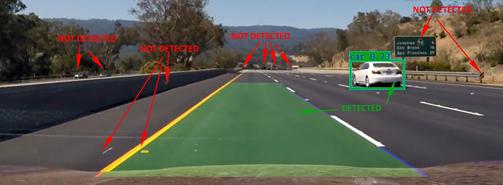
*This image is computer generated to provide an example of typical machine vision systems detection capabilities.
The leading competing solutions use a complex web of sensors, dozens of cameras, radar and unproven Lidar technologies. The company believes that this approach results in systems that are too costly, bulky, complex and unreliable for the mass markets.
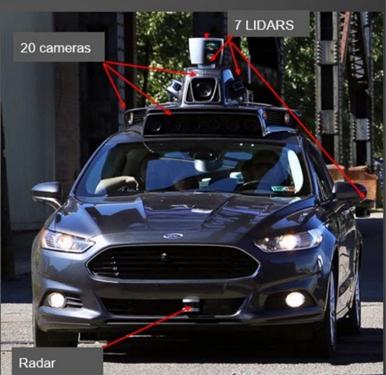
The Epilog Solution
Epilog disruptive AI technology is poised to solve real-world problems. Over the past five years, Epilog has developed and has test marketed a disruptive new vision technology specifically designed to efficiently recognize intricate details in large spaces like roads, parking lots, airports, train stations, etc. The company believes its products have 10x-100x better cost-performance than other similar technologies on the market today.
On April 24, 2018 the company entered into technology development agreement representing a partnership with Jabil to efficiently mass produce the Luma concept. Using Jabil’s $100 million precision optical robotic manufacturing process the company is poised to offer an industrial- grade vision device that is cost-effective for commercial use.
22

In 2017, Epilog completed the world’s first handheld 12K AI camera prototype - the same quality as an IMAX theater. Epilog then quickly transitioned this technology to two closely related products, Sherpa and Luma, that serve massive emerging markets.
The first product, Luma, retrofits standard camera installations with the company’s 8K AI vision to help manage the flow of vehicles and pedestrians at transportation hubs, parking lots and other similar large spaces.
The second product, Sherpa, is a driver-assistance system that can be added into millions of existing cars to make them self-driving.
Most recently, in 2020, Epilog developed large-space thermal imaging capability (Thermion) as well as the world’s first 16Kx16K 250MegaPixel imaging system proof of concept (Cinapse).
Principal Products and Services
Sherpa
The company has developed Sherpa, offering cutting-edge AI and optical capabilities in a small, windshield-mounted device that taps into a car’s computer in order to take control of gas, steering and brake, serving as a driver-assisting device. Specifically, Sherpa is a self-driving addon for your car that enables hands-free driving on most roads with driver monitoring to ensure the driver is still aware of their surroundings. Sherpa also allows the user to remotely adjust climate controls and unlock/lock their car when parked, as well as serving as a security device to monitor the car’s surroundings.
23

The company believes that Sherpa will assist with the following:
| ● | Safer Driving | |
| o | More than 94 percent of traffic accidents are caused by human error. Sherpa always monitors the road and you, and never gets tired or distracted. | |
| ● | Less Stress | |
| o | With Sherpa at the wheel, you can sit back and relax on your drive. It handles the tedious acts of freeway driving and stop-and-go traffic. | |
| ● | Connected Ecosystem | |
| o | Sherpa allows you to remotely monitor your car’s location, vitals such as tire pressure, and temperature. It also has security features such as live feeds of the car’s external cameras. |
Sherpa’s compact design combines Epilog 8K optics with the world’s most advanced AI processer to safely drive your car in all conditions. The company’s multi-layer AI is trained with thousands of hours of driving data, and the company’s secondary safety and prediction AIs ensure a smooth experience.
Special emphasis goes into making Sherpa as safe as possible. Sherpa features will be rolled out in incremental steps as they are fully proven. The initial release only has a driver monitoring system to make sure the driver is engaged at all times. The driver monitoring system may qualify the driver for insurance discounts.
Using a combination of simulation and deep learning gained from video footage contributed by each driver on a daily basis, full confidence in the system will be established prior to enabling driver assistance features. In addition, driver assistance will be rolled out in phases. It will be initially be limited to extended traffic jams (up to 45MPH). Similar to the Tesla driver assistance system, Sherpa learns from each mile and each driver adding to the collective driving intelligence additional capability.
The immediate market for Sherpa is driver assistance and retrofitting of approximately 50 million cars on the road today, and a future market is direct integration of our technology in cars 2023 and later. Operation is expected to be effectively “plug-and-play” with at least 5 million cars that already have Lane Keep Assist Systems (LKAS) already installed in the vehicle.
On Feb 29, 2020 the company began accepting Sherpa reservations at $995 (pricing subject to change). Comparatively, the cost to buy a self-driving car is approximately $50K-$100K or the estimated $3K-$5K option price that can be seen in Tesla Models. Although the company is accepting Sherpa reservations, the Sherpa is not yet commercially available and has not yet generated revenues from sales for the company.
24
Luma
Using DSLR-quality optics to cover huge areas with great precision and AI, Luma is ready to change queue management. Luma will assist with traffic queue management in large spaces like airports, terminals, industrial and government buildings. Tens of millions of currently installed cameras need retrofitting and other sites require new cameras. Luma is poised to assist with the upgrading and updating of these systems. Further, reducing camera count in spaces like airports, terminals, industrial and government buildings, improves aesthetics, reduces maintenance costs and increases the overall system performance.
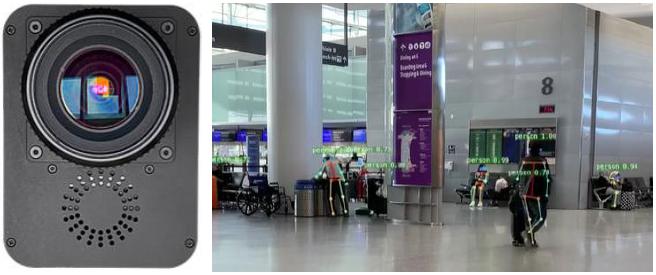
The production version of Luma will compete favorably on price with the competition. Competing products sell for approximately $10,000-$50,000. In addition, the production version will include built-in AI processing with the image quality to replace as many as ten standard cameras. Reducing camera count improves aesthetics, reduces maintenance costs and increases the overall system performance.
Since January 2019 the Luma evaluation system (EVK) has been available for purchase for $4,995. A smaller, harsh-weather ready production version of Luma is currently in development. The company intends this product to cost $2,495 (for the full AI version) and $995 (for an entry level AI device), all pricing may be subject to change.
In addition, the company has lead customers engaged in the transportation sector (airports, train stations, metro areas) to deploy Luma in queue management trials. The company anticipates that these trials will begin Q1 2021.
The Company’s Plans for New Products
Thermion
The Covid-19 pandemic has created a mass-market opportunity to expand Epilog high-resolution technology to thermal imaging systems. Epilogs’ Thermion system combines highest resolution intelligent visual tracking with thermal imaging to assist help screen people with Elevated Body Temperatures.
25
Two versions of Thermion product are currently in development.
| ● | A large area system for detecting EBT in public areas, such as transportation hubs, theme parks and shopping centers. The prototype is depicted below, on the left. |
| ● | A low-cost small-area system is also being developed for application in lobbies/receptions, elevators, mass transit and ride sharing vehicles. A depiction of its application is shown below, on the right. |
The Thermion software (right) has been developed and test-marketed with dual thermal + visual smart AI sensors that scan multiple people simultaneously.

Beyond EBT application, the company believes its Thermion vision systems will have superior performance for detection of flames in large areas as well as standard security and military applications. The Thermion system is expected to have the following:
| ● | Attain the highest accuracy radiometric measurements on the market. |
| ● | Offer the largest coverage area of any system in the market. |
| ● | Does not require blackbody calibrators for precision readings. |
| ● | Detection speed is measured in milliseconds. |
| ● | Provide programmable people and vehicle tracking. |
| ● | AI system can intelligently message an operator via a network. |
Cinapse
Cinapse is being developed for a client as the highest-resolution digital camera system in the world. The company’s goal is to build an AI based cinematic quality system with 16K x 16K (250MP) image capture quality, exceeding an IMAX theater or over 100x High Definition TV screens.
The intended use of this system is producing true-to-life content for consumption by large audiences. Epilog just completed a Proof Of Concept (“POC”) system for the aforementioned client demonstrating an image quality of 560 Megapixels, the highest in the world, about 20x higher than the closest competitor (the Red Helium 8K S35) and 65x higher than a typical iPhone. The Epilog system is suitable for production of IMAX quality sports & entertainment programming as well as remote monitoring and inspection in airborne and drone applications.
26

Marketing/Distribution Channels
As of October 1, 2020, Epilog intends to sell three distinct products: Sherpa, Luma and Thermion. These products will be sold through different channels. Epilog’s fast-to-market entry strategy will initially offer direct-to-customer sales over online channels while distribution channels are being setup. An optional online subscription packages (estimated $5 per stream) will offer customers more features and insight into their device. Each Epilog 8K device can generate up to 64 distinct standard-definition streams.
Competition
Epilog has different competitors that span multiple industries including, but not limited to the following:
| ● | Automobile manufacturers | |
| ● | Tech transportation companies | |
| ● | Thermal imaging end-product manufacturers | |
| ● | Manufacturers of professional digital cinematography cameras and accessories |
Epilog’s business strategy is focused on developing and patenting the core disruptive imaging technology and AI as opposed to producing and supporting the end products as some of the competitors do. For most of our products Epilog currently envisions proving the concept via direct online channels and then licensing the technology to established companies in each space. Manufacturing in most cases can be standardized via Epilog’s partner, Jabil.
Epilog believes that its technology offers a significant cost-performance advantage of 10x-100x over the competition. Where competing solutions use a complex patchwork of sensors and AI to increase the range/coverage of their products, a single Epilog device excels at lower cost because a fewer number of sensors and more efficient AI. For example, Tesla uses 8 cameras with 5 of them looking forward to navigating traffic in their vehicles. This creates significant safety holes, especially at night. Self-driving taxis (Waymo, Uber, etc.) add “Lidar” to see better at night but at a cost of hundreds of thousands of dollars more. High quality imaging at night is also possible from Hollywood type cameras, e.g. Red.com, but these lack any AI capability and cost tens to hundreds of thousand dollars each.
27
Epilogs’ disruptive patented AI vision technology can see during the day or night with extremely high quality and at exceptionally low cost and minimal complexity. Epilog is collaborating with car companies to build the technology in future cars (2023+) and for immediate use, has developed Sherpa an after-market solution for existing cars, as well as devices for traffic management.
The main competitor currently offering a professional grade 8K camera is Red Cinema (red.com). Red pricing varies from $25,000 - $75,000, AI is not included. Consumer 8K cameras from Sony and Panasonic are yet to be launched now and the company believes that these products will not be automotive/industrial grade.
The company believes that other after-market solutions for self-driving will lack sufficient image quality to be safe (typically 6% of Epilog resolution) and unreliable. Traffic monitoring cameras with 8K resolution cost at least $10,000. The company believes that the current technology of traffic monitoring cameras is based on old Digital Still Camera (DSC) technology with no built-in AI capability.
Similarly, in thermal imaging applications, 4K systems have an estimated end-user price of $25,000-$100,000. Epilog’s 6K thermal imaging system, which is in development now, is expected to offer significantly better performance at a lower price point.
Production/Suppliers
The company is not currently in mass production, however, when full production begins the company believes that its key components will be supplied by four United States companies:
| ● | Nvidia (Arrow) | |
| ● | DRS technologies | |
| ● | FLIR Systems | |
| ● | Digikey |
The company’s production partner Jabil is capable of manufacturing up to an estimated 15,000 units a day and is in a position to support almost unlimited OEM partnerships. On April 24, 2018 the company entered into the Jabil Circuits Service Agreement in which Jabil will provide design services to the company in the amount of approximately $350,000 to $550,000 with the value of the services to be provided in equity or amortized over the production of the initial Epilog units. Jabil and the company have not yet finalized the percentages of equity owed and/or amortization formula.
Research and Development
Research and development costs include salaries, research material, and administrative costs. During the years ended December 31, 2019 and 2018, the company recognized $8,861 and $8,819 in research and development costs, respectively. Part of these funds were allocated to further development of Luma and Sherpa.
Employees
Epilog currently has 4 full-time employees and 5 part-time employees. The companies work at the company’s San Jose and Santa Cruz offices as well as remotely.
28
Intellectual Property
The company relies on its intellectual property. As of September 2020, the company has the following patents or trademarks granted or pending:
| Filing/Issue Date: | Country | Title of Invention | Application No./Patent No. | Status | Assignment Recordals | |||||
| 7/9/2019 9/8/2015 | US | Super Resolution Binary Imaging And Tracking System | 10,348,963 14/847,886 CON of 13/236,057 | Granted | Recorded: 10/15/2015 - Epilog Imaging Systems | |||||
| 9/15/2015 9/19/2011 | US | Super Resolution Binary Imaging And Tracking System | 9,137,433 13/236,057 | Granted | Recorded: 10/15/2015 - Epilog Imaging Systems | |||||
| 11/01/2016 10/19/2011 | US | Compound Dome Camera Assembly | 9,485,395 13/276,686 | Granted | Recorded: 10/20/2015 - Epilog Imaging Systems | |||||
| 12/4/2018 10/31/2016 | US | Compound Dome Camera Assembly | 10,148,916 15/338,694 CON of 13/276,686 | Granted | Recorded: 10/31/2016 - Epilog Imaging Systems | |||||
| 09/25/2007 12/20/2004 | US | Panoramic Imaging Display System With Canonical Magnifier | 7,274,381 11/017,628 - CON of 10/005,824 | Granted | Recorded: 5/3/2011 - Tempest Microsystems to Biotronix | |||||
| 08/11/2009 06/01/2007 | US | High Density Storage System | 7,573,715 11/757,042 This application claims priority to 60/810,379 which is a CIP of 10/394,964 | Granted | Recorded: 10/16/2007- Tempest Microsystems Recorded: 05/03/2011 - Microsystems to BioTronix | |||||
| 12/21/2004 12/3/2001 | US | Panoramic Imaging Display System With Canonical Magnifier | 6,833,843 10/005,824, claiming Benefit to PCT/US02/38720 and 11/017,628 | Granted | Recorded: 4/26/2002 - Tempest Microsystems Recorded: 5/3/2011 - Biotronix | |||||
| 9/3/2019 12/19/2014 | US | Super Resolution Imaging And Tracking System | 10,404,910 14/578,098 CON of 13/236,023 | Granted | Recorded: 10/15/2015 - Epilog Imaging Systems | |||||
| 8/4/2017 | US | Method And Apparatus For Obtaining Enhanced Resolution Images | 15/669,737 claiming priority to 62/370,875 and is a CIP of 14/847,886, which is a CON of 13/236,057 | Pending | Recorded: 08/07/2017 - Epilog Imaging Systems |
29
| Trademarks | Filing/Issue Date: | Country | Title of Invention | Application No./Patent No. | Status | |||||
| 140163.10002 | 2/2/2017 | US | Quantum Definition | 87/322,329 | Granted | |||||
| 140163.10001 | 2/2/2017 | US | Epilog Imaging Systems | 87/322,319 | switching to Epilog AI |
Regulation
In the United States, driver assistance and self-driving technology is regulated by the National Highway Traffic Safety Administration (NHTSA) as well as individual states. Sherpa is an after-market system similar in capability to the partial automation found in Cadillac, Tesla, Nissan, BMW, Mercedes and Volvo cars. These systems operate within well-established and understood NHTSA regulatory boundaries. Additionally, all automotive electronics need to be Automotive Safety Integrity Level (ASIL) certified. Epilog will seek both ASIL and NHTSA approvals, and any state approvals prior to making Sherpa available on the US market.
Litigation
The company has not been a party to any litigation.
On April 1, 2020, the company entered into a 19-month operating lease agreement for office space located at 155 Dubois Street, Suite D - 2nd Floor R&D Suite, Santa Cruz, CA. Lease payments under the agreement, as of August 1, 2020 are for $2,470 per month and will increase to $2,544 per month on May 1, 20201 and continue through December 31, 2021 when the lease expires.
30
MANAGEMENT’S DISCUSSION AND ANALYSIS OF FINANCIAL CONDITION AND RESULTS OF OPERATIONS
You should read the following discussion and analysis of the financial statements, consolidated financial statements and financial condition of Epilog and results of its operations together with its financial statements and related notes appearing at the end of this Offering Circular. This discussion contains forward-looking statements reflecting the company’s current expectations that involve risks and uncertainties. Actual results and the timing of events may differ materially from those contained in these forward-looking statements due to a number of factors, including those discussed in the section entitled “Risk Factors” and elsewhere in this Offering Circular.
Overview
The company creates imaging technologies that meet and exceed the capabilities of human vision. Epilog has not generated significant revenues for the years ended December 31, 2019 and December 31, 2018.
The consolidated financial statements included in this filing as of June 30, 2020 and for the six months ended June 30, 2019 are unaudited, and may not include year-end adjustments necessary to make those consolidated financial statements comparable to audited results, although in the opinion of management all adjustments necessary to make interim consolidated statements of operations not misleading have been included.
Results of Operations
Year Ended December 31, 2019 Compared to Year Ended December 31, 2018, and the Six-Month Periods Ended June 30, 2020 and 2019
Epilog generated $9,990 in revenues for the year ended December 31, 2019 and did not generate revenues for the year ended December 31, 2018. The company’s net revenues for the six months ended June 30, 2020 (“Interim 2020”) was $10,000, compared to $9,990 for the six months ended June 30, 2019, (“Interim 2019”).
Most of Epilog’s development in 2019 was focused on software which is not capital intensive. Epilog continued to rely on an employee stock compensation program. The circumstances which led to low revenue performance on its financial statements include Epilog did not pursuit product sales opportunities where supporting the product would have be resource intensive. In addition, Epilog did not pursuit contract revenue opportunities to avoid distraction or strategic OEM misalignment.
The company is transitioning from the pure research and development phase to supporting product sales and service contracts in 2020. Historical results do not reflect future cash flows since the company was not in position to deliver products prior to 2020.
The operating expenses currently consist of General and Administrative costs, research and development, depreciation and amortization and travel. Operating expenses totaled $74,846 for the year ended December 31, 2019 compared to $56,241 for the year ended December 31, 2018, an increase of 32%, primarily due to an increase in General and Administrative expenses of approximately $10,000. In addition, the company spent $1,453 in advertising costs for the year ended December 31, 2019 and $1,000 for the year ended December 31, 2018.
For Interim 2020, operating expenses were $91,566 compared with $19,071 for Interim 2019, an increase of $72,495. Epilog attributes this change primarily due to the cost of the Ref CF offering in 2020.
31
As a result of the foregoing, the company generated a net loss of $89,952 as of June 30, 2020 as compared to a net loss of $9,081 as of June 30, 2019. An increase of $80,871 in net loss in the first half.
Liquidity and Capital Resources
The company’s current capital resources come from investments and contracts. Most company employees continue to work on equity payments to conserve cash for research & development, product development and new fundraising activities. Also being strategically located in Silicon Valley and as a result of Covid-19 the company continues to have minimal expenses related to travel.
The company has relatively low overhead. As the company transitions to delivering products to customers, traditional lines of credit and inventory financing are expected to be secured as needed.
The company has conducted a successful crowdfunding campaign that has made cash available for the purpose of initial product deliveries.
On December 31, 2019 the company’s cash on hand was $30,704. The company requires the continued infusion of new capital to continue business operations. The company has recorded losses since inception, and as of December 31, 2019, had a net loss of $(64,856) and a stockholders’ deficit of $195,751. The company plans to continue to try to raise additional capital through crowdfunding offerings, equity issuances, or any other method available to the company. Absent additional capital, the company may be forced to significantly reduce expenses and could become insolvent.
In addition, the company has a shareholder loan with the current outstanding balance of combined principal and interest, as of October 1, 2020, is of $ $223,525, with a continued interest rate of 1% per year. The company intends to have a portion of this balance repaid through Dec 31, 2020.
The company estimates that if it raised the maximum amount sought in this Offering, it could continue its current rate of operations for 12-24 months without raising additional capital. The company’s burn rate is approximately $30,000 per month.
During 2020, the company has completed the following capital raising activity:
| ● | During 2020, the CEO advanced the company an additional $4,000. | |
| ● | During 2020, the company sold a total of 1,387,231 shares of common stock to 2,774 investors for total cash proceeds of $1,040,423 pursuant to Section 4(a)(2). The company used the proceeds from that offering for general operations. | |
| ● | The company returned $30,000 to an investor for a convertible note that was not finalized | |
| ● | On June 30, 2020 signed a Reg A posting agreement with StartEngine for $15K: The agreement is to raise up to $50,000,000 with a, 7% commission based on the dollar amount received from investors, In addition 2% commission to be paid in the same securities as this offering and at the same terms. |
During 2020, the company has incurred the following expense obligations
| ● | On April 1, 2020 the company signed a one-year Lease agreement for its R&D suite located at 155 Dubois Street, Santa Cruz CA 95060. On August 1, 2020 the lease was revised to include some additional space and extended through December 31, 2021. The new monthly rate, effective August 1, 2020 is $2,470 per month and will increase to $2,544 per month on May 1, 2021. |
| ● | On April 4, 2020 the company signed a promotional agreement with StartEngine for the Epilog Regulation Crowdfunding Campaign, digital marketing for approximately $60,000. |
| ● | On April 16, 2020 the company signed a Contract with a publicly traded company for a “Proof of Concept” design services of a 16K x 16K camera system, for $37,000. |
32
Plan of Operations
Epilog intends to lead the market in two main areas: automotive vision systems and queue management. It expects the bulk of its cash-flow to come from these areas and will be supplemented by revenue from the company’s software services.
During 2018, the company entered into an agreement with Jabil, a manufacturing company to build and test prototypes. The statement of work estimates the total cost to be $541,000. Payment is through the amortization of the total cost per unit price of the product based on the forecasted volume of product to be purchased by the company during the first 24 months of full commercial production of the products. To date, no such production has occurred, and no work related to the agreement has been performed.
As of October 1, 2020, the company has achieved the following milestones:
| ● | Closed $1.0M in new funding. | |
| ● | Preparing Luma for production. | |
| ● | Is test-marketing the Thermion product line (3 variants). | |
| ● | Is developing Sherpa 2 (production version of Sherpa). | |
| ● | Has completed a POC for the world’s highest resolution Cinema quality camera (Cinapse). |
As part of its plan of operations, Epilog intends to execute the following milestones over the course of the next 12 months:
| ● | Clinical trials and regulatory approval of the Thermion product line, customer deliveries | |
| ● | Deployment of Luma system at mass transit and public utility trials, customer deliveries | |
| ● | Sherpa customer trials and deliveries | |
| ● | Development of the world’s highest resolution camera system (Cinapse) for existing client | |
| ● | Establish distribution channels and/or OEM partnership for Luma/Thermion and Sherpa |
Trend Information
The company believes that business trends are leaning towards automation and reducing laborious tasks.
| ● | Luma assists with reducing the laborious task of managing people and vehicle in queues. Therefore, the company believes that Luma positions the company perfectly with regards to these automation trends. | |
| ● | Market data suggest both young and older consumers have a preference towards driving less or not at all. Sherpa addresses this preference head on. |
| ● | In addition, in light of COVID-19, Thermion was specifically designed by the company to assist with long-term management of infectious diseases (people in queues). | |
33
Specifically, the company believes the following consumer trends contribute to a successful launch of Sherpa, Luma and Thermion:
| ● | Businesses prefer to assign repetitive tasks to machines, this saves labor costs, improves efficiency and consistency. | |
| ● | Increasing trends of urbanization mean extended commute times and traffic jams, all this favors driver assistance systems (self-driving). | |
| ● | According to kbb.com the estimated average transaction price for a light vehicle in the US was $37,876 in February 2020 (up 30% since 2010). | |
| ● | Advanced driving features are increasingly being bundled with electric cars. Not everyone wants an electric car and most everyone stuck in traffic jams could use driver assistance. | |
| ● | Thanks to Sherpa it is much cheaper to upgrade the capability of an existing newer model car than replacing it. |
Recent Offerings of Securities and Outstanding Debt
| ● | In October 2018 the company sold 2,199,608 shares of Common Stock at par value for $220 pursuant to Section 4(a)(2). The company used the proceeds from that offering for general operations. | |
| ● | In October 2018 the company sold 61,531 shares of Common Stock at par value for $6.00 pursuant to Section 4(a)(2). The company used the proceeds from that offering for general operations. |
| ● | Starting on February 27, 2020 the company initiated an offering to raise up to $1,070,000 through the issuance of Common Stock on StartEngine pursuant to Rule 506(c) of Regulation CF under the Securities Act of 1933. The offering closed on June 27, 2020 and the company raised $1,040,423. The company intends to use the proceeds from this offering for general operations. |
Previous Regulation CF Offering in 2019
In 2019, Epilog initiated a crowd fundraising campaign with the investment platform, SeedInvest, to raise funds for the development and marketing of Sherpa (the self-driving product). The campaign included concurrent offerings under Regulation Crowdfunding and Rule 506(c) of Regulation D, with a combined minimum target of $600,000. While the company reached its Regulation Crowdfunding target of $25,000, the overall campaign minimum target of $600,000 was not reached and the company decided to accept any funds in that offering.
Relaxed Ongoing Reporting Requirements
If the company becomes a public reporting company in the future, it will be required to publicly report on an ongoing basis as an “emerging growth company” (as defined in the Jumpstart Our Business Startups Act of 2012, which the company refers to as the JOBS Act) under the reporting rules set forth under the Exchange Act. For so long as the company remains an “emerging growth company,” the company may take advantage of certain exemptions from various reporting requirements that are applicable to other Exchange Act reporting companies that are not “emerging growth companies,” including but not limited to:
| ● | not being required to comply with the auditor attestation requirements of Section 404 of the Sarbanes-Oxley Act; |
| ● | taking advantage of extensions of time to comply with certain new or revised financial accounting standards; |
| ● | being permitted to comply with reduced disclosure obligations regarding executive compensation in the company’s periodic reports and proxy statements; and |
| ● | being exempt from the requirement to hold a non-binding advisory vote on executive compensation and shareholder approval of any golden parachute payments not previously approved. |
If the company becomes a public reporting company in the future, the company expects to take advantage of these reporting exemptions until it is no longer an emerging growth company. The company would remain an “emerging growth company” for up to five years, although if the market value of its Common Stock that is held by non-affiliates exceeds $700 million as of any June 30 before that time, the company would cease to be an “emerging growth company” as of the following December 31.
If the company does not become a public reporting company under the Exchange Act for any reason, the company will be required to publicly report on an ongoing basis under the reporting rules set forth in Regulation A for Tier 2 issuers. The ongoing reporting requirements under Regulation A are more relaxed than for “emerging growth companies” under the Exchange Act. The differences include, but are not limited to, being required to file only annual and semi-annual reports, rather than annual and quarterly reports. Annual reports are due within 120 calendar days after the end of the issuer’s fiscal year, and semi-annual reports are due within 90 calendar days after the end of the first six months of the issuer’s fiscal year.
In either case, the company will be subject to ongoing public reporting requirements that are less rigorous than Exchange Act rules for companies that are not “emerging growth companies,” and its shareholders could receive less information than they might expect to receive from more mature public companies.
34
DIRECTORS, EXECUTIVE OFFICERS AND SIGNIFICANT EMPLOYEES
The following table sets out the company’s officers and directors. All work with the company on a full-time basis.
| Name | Position | Age | Term of Office (if indefinite, give date appointed) | Full Time/Part Time | ||||
| Executive Officers | ||||||||
| Michael Mojaver | Co-Founder/CEO/ Secretary/Treasurer | 58 | June 28, 2010 until Present | Full Time | ||||
| Lance Mojaver | Co-Founder/CTO | 26 | June 1, 2015 until Present | Full Time | ||||
| Marc Munford | Business Development | 58 | Secretary, September 16, 2020 until present | Full Time | ||||
| Dieter Koller | R&D | 57 | Not an officer | Part Time | ||||
| Board of Directors | ||||||||
| Michael Mojaver | Director | 58 | January 1, 2015 until Present | |||||
| Rony Greenberg | Director | 60 | September 16, 2020 until present |
Michael Mojaver: Co-Founder, CEO, Treasurer and Director
Michael Mojaver is currently Epilog’s Chief Executive Officer. He has served in that position for ten years, from June 2010 to the present date. Michael’s background is in starting, funding and leading technology companies in the United States and internationally. Michael has studied and worked at UC San Diego, Cornell University from 1989-1996, Fermilab and CERN (Switzerland). Michael’s first venture in 1996 was a microchip design company for vision products. Michael’s primary area of interest and continuing research is Neural Networks, AI, AR/VR. Prior to founding Epilog, he was the CEO of GIG from 2008 until 2010. Michael holds a BS in engineering and physics from University of California San Diego, obtained in 1989.
Lance Mojaver: Co-founder, CTO
Lance Mojaver is currently Epilog’s Chief Technology Officer. He has served in that position for five years, from January 2015 to the present date. Lance is the principal architect and developer for device, client, and server software at Epilog. He has more than six years of experience in real-time video software, creating video cameras from initial hardware design to user-facing product. Lance is passionate about creating cutting-edge vision solutions for robotic and consumer use cases.
Marc Munford: Business Development
Marc Munford is Epilog’s Consumer OEM Market Channel Development. He has served in that position since 2017. Marc comes to Epilog from an extensive career in Silicon Valley startups. Previously, Marc was co-founder of NetDrive — the first Internet personal storage service (before it was called Cloud) from 1999 to 2000. Marc has built and run sales and business development for early stage companies such as Visto/Good Technology from 2000 to 2004, Funambol from 2005 to 2012, Germain Software from 2013 to 2014, Treasure Data from 2015 to 2017 , and Wollongong/Attachmate from 1995 to 1996. Marc learned to evangelize breakthrough technology when he was a software engineer early in his career working for Steve Jobs at NeXT. Marc’s younger days in football also brings Epilog connections to major sports franchise leagues.
35
Dieter Koller: Research & Algorithm Development
Dieter Koller oversees Epilog’s science program. He has served in that position since 2017. Dieter has over a decade of management experience at various levels, including VP of Engineering, CTO, and Managing Director. He has a strong technical background within all facets of imaging technologies and computer vision, with applications in biometrics, multimedia, video compression and video processing, computer graphics, embedded technologies, as well as internet applications and new emerging technologies.
Dieter finished his Post Doctorate studies in the field of video tracking at University of California at Berkeley and California Institute of Technology 1992-1997, after studying computer science and physics at Karlsruhe Institute of Technology (KIT) in Germany. Dieter currently supports Epilog remotely from Germany.
Rony Greenberg, Director
Rony Greenberg is currently a member of the board of directors of Epilog. He was appointed in September 2020. From 2011 until present, Rony has been the Vice President of business development at eyeSight Technologies. In addition, Rony was formerly the director of Intel Capital from 2000 to 2001. Rony is a business leader with a consistent track record of delivering dramatically increased revenues, gross margin and profits. He is also experienced at efficiently orchestrating and navigating complex organizations with cross functional teams located worldwide. Rony graduated from Tel Aviv University in 1990.
COMPENSATION OF DIRECTORS AND EXECUTIVE OFFICERS
For the fiscal year ended December 31, 2019 the company compensated its three highest paid directors and executive officers as follows:
| Name | Capacities in which compensation was received | Cash compensation ($) | Other compensation (shares) | Total compensation ($) | ||||||||
| Michael Mojaver | Salary | $ | 0 | 250,000 shares | $ | 187,500 | ||||||
| Lance Mojaver | Salary | $ | 0 | 200,000 shares | $ | 150,000 | ||||||
For the fiscal year ended December 31, 2019, the company paid its directors and executive officers as a group 450,000 shares. As of December 31, 2019, these shares have been allocated to the applicable directors and executives, however, the shares have not yet been issued to them. There is one director in this group.
The compensation package was determined based on market rates.
36
SECURITY OWNERSHIP OF MANAGEMENT AND CERTAIN SECURITYHOLDERS
The following table displays, as of October 1, 2020 the voting securities beneficially owned by (1) any individual director or officer who beneficially owns more than 10% of any class of the company’s capital stock, (2) all executive officers and directors as a group and (3) any other holder who beneficially owns more than 10% of any class of the company’s capital stock:
| Beneficial owner | Title of class | Name and address of beneficial owner | Amount and nature of beneficial ownership | Amount and nature of beneficial ownership acquirable | Percent of class (1) | Percent of voting power | ||||||||||||||
| Michael Mojaver | Common Stock | Michael Mojaver 318 Cliff Drive, Aptos, CA 95003 | 10,000,000 | 500,000 | 72.8 | % | 72.8 | % | ||||||||||||
| Lance Mojaver | Common Stock | Lance Mojaver 318 Cliff Drive, Aptos, CA 95003 | 1,722,865 | 400,000 | 12.6 | % | 12.6 | % | ||||||||||||
| (1) | The column “Percent of Class” includes a calculation of the amount the person owns now, plus the amount that person is entitled to acquire. That amount is then shown as a percentage of the outstanding amount of securities in that class if no other people exercised their rights to acquire those securities. The result is a calculation of the maximum amount that person could ever own based on their current and acquirable ownership, which is why the amounts in this column will not add up to 100%. |
37
INTEREST OF MANAGEMENT AND OTHERS IN CERTAIN TRANSACTIONS
| ● | During the years ending December 31, 2018 and 2017, Michael Mojaver advanced funds to the company for use with regards to operations. As of December 31, 2019 and 2018, the amount of advances outstanding is $223,525 and $186,375, respectively, and are recorded under ‘Advances – related party’ on the balance sheets. These advances accrue interest at the minimum federal statutory rate to comply with related party rules and Section 7872. The accrued interest balance at December 31, 2019 and 2018 was $94,101 and $94,101, respectively. |
| ● | During October 2018, the company’s chief technology officer, Lance Mojaver, purchased 1,716,528 common shares, at par value, for $172.29. |
| ● | As of October 2018, Nina Mojaver was awarded 122,609 shares of Common Stock. From July 1, 2016 until June 30, 2019, Epilog occupied office space at a building owned by Nina Mojaver in downtown San Diego. The equivalent rent, based on the current offering price of 75 cents a share would be approximately $92K. The shares were purchased at par value of 0.0001 for a total purchase price of $12.31. |
38
General
The company is offering Common Stock to investors in this offering. The shares of Common Stock will be subject to an irrevocable proxy whereby all voting rights will be held by the company’s CEO.
The following description summarizes important terms of the company’s capital stock. This summary does not purport to be complete and is qualified in its entirety by the provisions of the Certificate of Incorporation and its Amended and Restated Bylaws, copies of which will be filed as Exhibits to the Offering Statement of which this Offering Circular is a part. For a complete description of Epilog’s capital stock, you should refer to its Certificate of Incorporation, Amended and Restated Bylaws, and applicable provisions of the Delaware General Corporation Law.
Epilog’s authorized capital stock consists of 25,000,000 shares of Common Stock, $0.0001 par value per share, and 5,000,000 shares of Preferred Stock, $0.0001 par value per share.
As of August 28, 2020, the outstanding shares of Epilog. included:
| ● | 13,732,845 shares of Common Stock. | |
| ● | 0 shares of Preferred Stock. |
Common Stock
The amount of the Common Stock authorized is 25,000,000. A total of 13,732,845 is outstanding.
Voting Rights: Each share is entitled to 1 vote.
Material Rights: Dividends, upon the capital stock of the corporation, subject to the applicable provisions, if any, of the Certificate of Incorporation, may be declared by the board of directors at any regular or special meeting, pursuant to law. Dividends may be paid in cash, in property or in shares of capital stock, subject to the provisions of the Certificate of Incorporation. Before payment of any dividend, there may be set aside out of any funds of the corporation available for dividends such sum or sums as the Board of Directors from time to time, in their absolute discretion, think proper as a reserve or reserves to meet contingencies, or for equalizing dividends, or for repairing or maintaining any property of the corporation, or for such other purposes as the board of directors shall think conducive to the interest of the corporation, and the board of directors may modify or abolish any such reserve in the manner in which it was created.
Irrevocable Proxy: The Subscription Agreement grants an irrevocable proxy to the company’s CEO to (i) vote all securities held of record by the investor (including any shares of the company’s capital stock that the investor may acquire in the future), (ii) give and receive notices and communications, (iii) execute any written consent, instrument or document that the CEO determines is necessary or appropriate at the CEO’s complete discretion, and (iv) take all actions necessary or appropriate in the judgment of the CEO for the accomplishment of the foregoing. The proxy will survive the death, incompetency and disability of an individual investor and, if an investor is an entity, will survive the merger or reorganization of the investor or any other entity holding the shares of Common Stock. The proxy will also be binding upon the heirs, estate, executors, personal representatives, successors and assigns of an investor (including any transferee of the investor). Any transferee of the investors party to the subscription agreement must agree to be bound by the terms of the proxy. The proxy will terminate upon the closing of a firm-commitment underwritten public offering pursuant to an effective registration statement under the Securities Act covering the offer and sale of Common Stock or the effectiveness of a registration statement under the Exchange Act covering the Common Stock.
Preferred Stock
The amount of Preferred Stock authorized is 5,000,000. A total of 0 are outstanding.
Voting Rights: The voting rights of the Preferred Stock may be determined at time of designation of any such series of Preferred Stock.
39
Material Rights: The board of directors is expressly authorized to fix by resolution the designations and the powers, preferences and rights, and the qualifications, limitations and restrictions of any series of preferred stock which are permitted by the Delaware General Corporation Law.
ONGOING REPORTING AND SUPPLEMENTS TO THIS OFFERING CIRCULAR
The company will be required to make annual and semi-annual filings with the SEC. The company will make annual filings on Form 1-K, which will be due by the end of April each year and will include audited financial statements for the previous fiscal year. The company will make semi-annual filings on Form 1-SA, which will be due by September 28 each year, which will include unaudited financial statements for the six months to June 30. The company will also file a Form 1-U to announce important events such as the loss of a senior officer, a change in auditors, or certain types of capital-raising. The company will be required to keep making these reports unless it files a Form 1-Z to exit the reporting system, which it will only be able to do if it has less than 300 shareholders of record and have filed at least one Form 1-K.
At least every 12 months, the company will file a post-qualification amendment to the Offering Statement of which this Offering Circular forms a part, to include the company’s recent financial statements.
The company may supplement the information in this Offering Circular by filing a Supplement with the SEC.
All these filings will be available on the SEC’s EDGAR filing system. You should read all the available information before investing.
40
Financial Statements
For the Six Months Ended June 30, 2020
(unaudited)

Table of Contents
| Balance Sheets | F-2 |
| Statements of Operations | F-3 |
| Statements of Changes in Stockholders’ Equity | F-4 |
| Statements of Cash Flows | F-5 |
| Notes to the Financial Statements | F-6 - F-12 |
F-1
BALANCE SHEETS
| June 30, 2020 | December 31, 2019 | |||||||
| (unaudited) | (audited) | |||||||
| ASSETS | ||||||||
| Current Assets | ||||||||
| Cash and cash equivalents | $ | 715,506 | $ | 30,704 | ||||
| Inventory | - | - | ||||||
| Total Current Assets | 715,506 | 30,704 | ||||||
| Furniture and Equipment | 14,146 | - | ||||||
| Security Deposit | 2,170 | - | ||||||
| Intangible assets net | 317,361 | 328,861 | ||||||
| TOTAL ASSETS | $ | 1,049,183 | $ | 359,565 | ||||
| LIABILITIES AND STOCKHOLDERS' DEFICIT | ||||||||
| Current Liabilities | ||||||||
| Accounts payable | $ | 214,490 | $ | 197,408 | ||||
| Accrued interest related party | 94,101 | 94,101 | ||||||
| Advances - related party | 10,282 | 10,282 | ||||||
| Convertible Notes | 30,000 | 30,000 | ||||||
| Notes payable related party | 197,524 | 223,525 | ||||||
| Total Current Liabilities | 546,397 | 555,316 | ||||||
| TOTAL LIABILITIES | 546,397 | 555,316 | ||||||
| Commitments and Contingencies | ||||||||
| STOCKHOLDERS' DEFICIT | ||||||||
| Common Stock, 0.001 par value, authorized 345,000,000 shares 13,684,927 and 12,927,696 shares issued and outstanding as of June 30, 2020 and December 31, 2019 respectively | 1,365 | 1,226 | ||||||
| Additional Paid in Capital | 1,369,199 | 580,849 | ||||||
| Accumulated deficit | (867,778 | ) | (777,826 | ) | ||||
| TOTAL STOCKHOLDERS' DEFICIT | 502,786 | (195,751 | ) | |||||
| TOTAL LIABILITIES AND STOCKHOLDERS' DEFICIT | $ | 1,049,183 | $ | 359,565 | ||||
The accompanying footnotes are an integral part of these financial statements
F-2
STATEMENTS OF OPERATIONS
For the six months ended June 30,
(unaudited)
| 2020 | 2019 | |||||||
| Revenue | $ | 10,000 | $ | 9,990 | ||||
| Cost of goods sold | 8,386 | - | ||||||
| Gross profit | 1,614 | 9,990 | ||||||
| Expenses | ||||||||
| General and Administrative Expenses | 41,520 | 14,020 | ||||||
| Payroll Expense | 15,909 | - | ||||||
| Professional Fees | 18,743 | 4,942 | ||||||
| Research and development | 3,013 | 109 | ||||||
| Depreciation and Amortization | 12,381 | - | ||||||
| Total operating expenses | 91,566 | 19,071 | ||||||
| Net income (loss) from operations | (89,952 | ) | (9,081 | ) | ||||
| Other Income (expenses) | ||||||||
| Interest expense | - | - | ||||||
| Total other income (expenses) | - | - | ||||||
| Net income (loss) before income taxes | (89,952 | ) | (9,081 | ) | ||||
| Provision for income taxes | - | - | ||||||
| Net income (loss) | $ | (89,952 | ) | $ | (9,081 | ) | ||
| Net income (loss) per common share basic and diluted | $ | (0.01 | ) | $ | (0.00 | ) | ||
| Weighted average number of common shares basic and diluted | 13,684,927 | 12,297,696 | ||||||
The accompanying footnotes are an integral part of these consolidated financial statements
F-3
STATEMENT OF CHANGES IN SHAREHOLDERS' DEFICIT
For the years ended December 31, 2019 and the six months ended June 30, 2020
(unaudited)
| Additional | ||||||||||||||||||||
| Common Stock | Paid in | Accumulated | ||||||||||||||||||
| Shares | Amount | Capital | Deficit | TOTAL | ||||||||||||||||
| Balance December 31, 2018 | 12,297,696 | $ | 1,226 | $ | 580,849 | $ | (712,970 | ) | $ | (130,895 | ) | |||||||||
| Net income (loss) | - | - | - | (64,856 | ) | (64,856 | ) | |||||||||||||
| Balance December 31, 2019 | 12,297,696 | 1,226 | 580,849 | (777,826 | ) | (195,751 | ) | |||||||||||||
| New Shares issued | 1,387,231 | 139 | 788,284 | - | 788,423 | |||||||||||||||
| Professional fees | $ | 66 | 66 | |||||||||||||||||
| Net income (loss) | - | - | - | (89,952 | ) | (89,952 | ) | |||||||||||||
| Balance June 30, 2020 | 13,684,927 | 1,365 | 1,369,199 | (867,778 | ) | 502,786 | ||||||||||||||
EPILOG IMAGING SYSTEMS, INC.
STATEMENT OF CHANGES IN SHAREHOLDERS' DEFICIT
For the years ended December 31, 2018 and the six months ended June 30, 2019
(unaudited)
| Additional | ||||||||||||||||||||
| Common Stock | Paid in | Accumulated | ||||||||||||||||||
| Shares | Amount | Capital | Deficit | TOTAL | ||||||||||||||||
| Balance, December 31, 2017 | 10,000,000 | $ | 1,000 | $ | 580,849 | $ | (650,216 | ) | $ | (68,367 | ) | |||||||||
| Shares issued for cash | 2,236,391 | 220 | - | - | 220 | |||||||||||||||
| Shares issued for services | 61,305 | 6 | - | - | 6 | |||||||||||||||
| Prior period adjustment | - | - | ||||||||||||||||||
| Net income (loss) | - | - | - | (62,754 | ) | (62,754 | ) | |||||||||||||
| Balance December 31, 2018 | 12,297,696 | $ | 1,226 | $ | 580,849 | $ | (712,970 | ) | $ | (130,895 | ) | |||||||||
| Net income (loss) | - | - | - | (9,898 | ) | (9,898 | ) | |||||||||||||
| Balance June 30, 2019 | 12,297,696 | 1,226 | 580,849 | (722,868 | ) | (140,793 | ) | |||||||||||||
The accompanying footnotes are an integral part of these financial statements
F-4
CONSOLIDATED STATEMENT OF CASH FLOWS
For the six months ended June 30,
(unaudited)
| 2020 | 2019 | |||||||
| OPERATING ACTIVITIES | ||||||||
| Net Income (Loss) | $ | (89,952 | ) | $ | (9,081 | ) | ||
| Amortization | 12,381 | - | ||||||
| Stock based compensation | - | 6 | ||||||
| Professional fees expensed to additional paid in capital | 66 | |||||||
| Change in accounts payable | 17,079 | 29,363 | ||||||
| Change in other assets | (2,170 | ) | ||||||
| Change in accrued expenses | - | - | ||||||
| Net Cash Used by Operating Activities | (62,596 | ) | 20,288 | |||||
| Cashflow from investing activities | ||||||||
| Purchase of equipment | (15,024 | ) | ||||||
| Patent filings | - | (35,279 | ) | |||||
| Total Net Cash Used by Operating Activities | (15,024 | ) | (35,279 | ) | ||||
| FINANCING ACTIVITIES: | ||||||||
| Proceed from issuance of common stock | 788,423 | 220 | ||||||
| Proceed from convertible notes | - | |||||||
| Proceeds from Payments to - Related Party | (26,001 | ) | 18,223 | |||||
| Net Cash Provided by Financing Activities | 762,422 | 18,443 | ||||||
| NET INCREASE (DECREASE) IN CASH | 684,802 | 3,452 | ||||||
| CASH AT BEGINNING OF PERIOD | 30,704 | 527 | ||||||
| CASH AT END OF PERIOD | $ | 715,506 | $ | 3,979 | ||||
| Supplemental Cashflow Information | ||||||||
| Interest Paid | $ | - | $ | - | ||||
| Taxes Paid | $ | - | $ | - | ||||
The accompanying footnotes are an integral part of these consolidated financial statements
F-5
NOTES TO THE FINANCIAL STATEMENTS
For the six months ended June 30, 2020
NOTE 1 – NATURE OF BUSINESS AND SIGNIFICANT ACCOUNTING POLICIES
Nature of Business
Epilog Imaging Systems, Inc. (“the Company”) was incorporated on June 28, 2010 under the laws of the State of Delaware, and is headquartered in San Jose, CA. The Company is creating imaging technologies that meet and exceed the capabilities of human vision.
Basis of Presentation
The accompanying financial statements have been prepared in accordance with accounting principles generally accepted in the United States of America (“GAAP”). In the opinion of management, all adjustments considered necessary for a fair presentation have been included. All such adjustments are normal and recurring in nature. The Company’s fiscal year-end is December 31.
Going Concern
The financial statements have been prepared on a going concern basis, which contemplates continuity of operations, realization of assets and liquidation of liabilities in the normal course of business. The Company had a total accumulated deficit of $867,778 as of June 30, 2020. Therefore, there is substantial doubt about the ability of the Company to continue as a going concern. There can be no assurance that the Company will achieve its goals and reach profitable operations and is still dependent upon its ability (1) to obtain sufficient debt and/or equity capital and/or (2) to generate positive cash flow from operations.
In December 2019, a novel strain of coronavirus (COVID-19) was reported in Wuhan, China and has spread throughout the United States and the rest of the world. The World Health Organization has declared the outbreak to constitute a “Public Health Emergency of International Concern.” This contagious disease outbreak, which has not been contained, and is disrupting supply chains and affecting production and sales across a range of industries in United States and other companies as a result of quarantines, facility closures, and travel and logistics restrictions in connection with the outbreak, as well as the worldwide adverse effect to workforces, economies and financial markets, leading to a global economic downturn. Therefore, the Company expects this matter to negatively impact its operating results. However, the related financial impact and duration cannot be reasonably estimated at this time.
Estimates
The preparation of financial statements in conformity with accounting principles generally accepted in the United States requires management to make estimates and assumptions that affect the reported amounts of assets and liabilities, and disclosure of contingent assets and liabilities at the date of the financial statements and the reported amounts of revenue and expenses during the reporting period. Such estimates may be materially different from actual financial results. Significant estimates include the recoverability of long-lived assets, the collection of accounts receivable and valuation of inventory and reserves.
Risks and Uncertainties
As of June 30, 2020 the Company has not commenced full scale operations. The Company’s activities since inception have consisted of service and business development. Once the Company commences its planned full-scale operations, it will incur significant additional expenses. The Company is dependent upon additional capital resources for the commencement of its planned principal operations and is subject to significant risks and uncertainties; including failing to secure funding to operationalize the Company’s plans or failing to profitably operate the business; recessions, downturns, changes in local competition or market conditions; governmental policy changes; or a host of other factors beyond the Company’s control. Any of these adverse conditions could negatively impact the Company’s financial position
F-6
Cash and Cash Equivalents
We maintain the majority of our cash accounts at a commercial bank. The total cash balance is insured by the Federal Deposit Insurance Corporation (“FDIC”) up to $250,000 per commercial bank, at times we may exceed the FDIC limits. For purposes of the statement of cash flows we consider all cash and highly liquid investments with initial maturities of one year or less to be cash equivalents.
Accounts Receivable
We grant credit to our customers and do not require collateral. Our ability to collect receivables is affected by economic fluctuations in the geographic areas and industries served by us. Reserves for un-collectable amounts are provided, based on past experience and a specific analysis of the accounts. Although we expect to collect amounts due, actual collections may differ from the estimated amounts.
Inventory
Inventory is stated at the lower of cost or market value and is account for using the first-in-first-out method (“FIFO”). The Company analyzes inventory per any potential obsolescence, and records impairment and obsolescence reserve against inventory as deemed necessary.
Long –Lived Assets
Our management assesses the recoverability of its long-lived assets by determining whether the depreciation and amortization of long-lived assets over their remaining lives can be recovered through projected undiscounted future cash flows. The amount of long-lived asset impairment if any, is measured based on fair value and is charged to operations in the period in which long-lived assets impairment is determined by management. There can be no assurance however, that market conditions will not change or demand for our services will continue, which could result in impairment of long-lived assets in the future.
Advertising costs
The Company’s advertising costs are expensed as incurred. During the six months ended June 30, 2020 and 2019, the Company recognized $8,689 and $272 in advertising costs, respectively, recorded under the heading ‘General and administrative’ in the statements of operations
Intangibles
Intangible assets purchased or developed by the Company are recorded at cost. Amortization is recognized over the estimated useful life of the asset using the straight-line method for financial statement purposes. The Company reviews the recoverability of intangible assets, including the related useful lives, whenever events or changes in circumstances indicate that the carrying amount may not be recoverable. No impairment was considered necessary at June 30, 2020 or December 31, 2019.
Convertible Notes
The Company received $30,000 from an investor in December 2019 for a convertible note as part of a funding campaign. The loan was never finalized, and the funds were returned to the investor in January 2020. There was no actual note signed and therefore no specific terms.
F-7
Revenue Recognition
The Company recognizes revenue under ASU No. 2014-09, “Revenue from Contracts with Customers (Topic 606),” (“ASC 606”).
Performance Obligations Satisfied Over Time
FASB ASC 606-10-25-27 through 25-29, 25-36 through 25-37, 55-5 through 55-10
An entity transfers control of a good or service over time and satisfies a performance obligation and recognizes revenue over time if one of the following criteria is met:
a. The customer receives and consumes the benefits provided by the entity’s performance as the entity performs (as described in FASB ASC 606-10-55-5 through 55-6).
b. The entity’s performance creates or enhances an asset (for example, work in process) that the customer controls as the asset is created or enhanced (as described in FASB ASC 606-10-55-7).
c. The entity’s performance does not create an asset with an alternative use to the entity (see FASB ASC 606-10-25-28), and the entity has an enforceable right to payment for performance completed to date (as described in FASB ASC 606-10-25-29).
Performance Obligations Satisfied at a Point in Time
FASB ASC 606-10-25-30
If a performance obligation is not satisfied over time, the performance obligation is satisfied at a point in time. To determine the point in time at which a customer obtains control of a promised asset and the entity satisfies a performance obligation, the entity should consider the guidance on control in FASB ASC 606-10-25-23 through 25-26. In addition, it should consider indicators of the transfer of control, which include, but are not limited to, the following:
a. The entity has a present right to payment for the asset
b. The customer has legal title to the asset
c. The entity has transferred physical possession of the asset
d. The customer has the significant risks and rewards of ownership of the asset
e. The customer has accepted the asset
The core principle of the revenue standard is that a company should recognize revenue to depict the transfer of promised goods or services to customers in an amount that reflects the consideration to which the company expects to be entitled in exchange for those goods or services. The Company only applies the five-step model to contracts when it is probable that the Company will collect the consideration it is entitled to in exchange for the goods and services transferred to the customer. In addition a) the company also does not have an alternative use for the asset if the customer were to cancel the contract, and b.) has a fully enforceable right to receive payment for work performed (i.e., customers are required to pay as various milestones and/or timeframes are met)
For the six months ended Jun 30, 2020 and 2019 the company recognized $10,000 and $9,990 respectively. The revenue in 2019 was derived solely from one customer
Epilog was founded with the goal of using robotics and computer vision to help humans with repetitive/robotic tasks. Specifically, the company develops artificial intelligence (“AI”) vision products related to automobiles, self-driving, and the transportation industry. The company is seeking to bring human quality, AI based vision driver assistance technology to millions of cars already on the road today (mobile solution) as well as queue management system for monitoring the flow of people and vehicles (stationary solution). The company’s products offer exceptionally high image quality AI in compact and cost-efficient devices, best suited to monitoring large spaces, for example, highways, transportation hubs, parking lots and arenas.
F-8
The Company is unable to reasonably estimate future costs that will be incurred under its warranty program on revenue recognized as of June 30, 2020 and the Company anticipates the amounts associated with revenues recognized as of June 30, 2020 to be immaterial to the financial statements.
Fair Value of Financial Instruments
The Financial Accounting Standards Board issued ASC (Accounting Standards Codification) 820-10 (SFAS No. 157), “Fair Value Measurements and Disclosures” for financial assets and liabilities. ASC 820-10 provides a framework for measuring fair value and requires expanded disclosures regarding fair value measurements. FASB ASC 820-10 defines fair value as the price that would be received for an asset or the exit price that would be paid to transfer a liability in the principal or most advantageous market in an orderly transaction between market participants on the measurement date. FASB ASC 820-10 also establishes a fair value hierarchy which requires an entity to maximize the use of observable inputs, where available. The following summarizes the three levels of inputs required by the standard that the Company uses to measure fair value:
| ● | Level 1 - Unadjusted quoted prices in active markets for identical assets or liabilities that the reporting entity has the ability to access at the measurement date. Level 1 primarily consists of financial instruments whose value is based on quoted market prices such as exchange-traded instruments and listed equities. |
| ● | Level 2 - Inputs other than quoted prices included within Level 1 that are observable for the asset or liability, either directly or indirectly (e.g., quoted prices of similar assets or liabilities in active markets, or quoted prices for identical or similar assets or liabilities in markets that are not active). |
| ● | Level 3 - Unobservable inputs for the asset or liability. Financial instruments are considered Level 3 when their fair values are determined using pricing models, discounted cash flows or similar techniques and at least one significant model assumption or input is unobservable. |
The Company’s financial instruments consist of cash, prepaid expenses, inventory, accounts payable, convertible notes payable, advances from related parties. The estimated fair value of cash, prepaid expenses, investments, accounts payable, convertible notes payable and advances from related parties approximate their carrying amounts due to the short-term nature of these instruments.
The carrying amount of accounts payable and accrued expenses are considered to be representative of their respective fair values because of the short-term nature of these financial instruments.
Other Comprehensive Income
We have no material components of other comprehensive income (loss) and accordingly, net loss is equal to comprehensive loss in all periods.
Net Profit (Loss) per Common Share
Basic profit / (loss) per share is computed on the basis of the weighted average number of common shares outstanding. At June 30, 2020, we had outstanding common shares of 13,684,927 used in the calculation of basic earnings per share. Basic Weighted average common shares and equivalents for the six months ended June 30, 2020 were 13,684,927. As of June 30, 2020, there no outstanding instruments that could be dilutive and diluted weighted average common shares and equivalents were withheld from the calculation as they were considered anti-dilutive.
F-9
Research and Development
Research and development costs, including salaries, research material, and administrative costs are expensed as incurred. During the six months ended June 30, 2020 and 2019, the Company recognized $3,013 and $109 in research and development costs, respectively.
Share-Based Compensation
The Company accounts for stock-based compensation in accordance with ASC Section 718 Compensation – Stock Compensation. Under the fair value recognition provisions of ASC 718, stock-based compensation cost is measured at the grant date based on the fair value of the award.
Income Taxes
Federal Income taxes are not currently due since we have had losses since inception.
On December 22, 2018 H.R. 1, originally known as the Tax Cuts and Jobs Act, (the “Tax Act”) was enacted. Among the significant changes to the U.S. Internal Revenue Code, the Tax Act lowers the U.S. federal corporate income tax rate (“Federal Tax Rate”) from 35% to 21% effective January 1, 2018. The Company will compute its income tax expense for the six months ended June 30, 2020 using a Federal Tax Rate of 21%.
Income taxes are provided based upon the liability method of accounting pursuant to ASC 740-10-25 Income Taxes – Recognition. Under this approach, deferred income taxes are recorded to reflect the tax consequences in future years of differences between the tax basis of assets and liabilities and their financial reporting amounts at each year-end. A valuation allowance is recorded against deferred tax assets if management does not believe the Company has met the “more likely than not” standard required by ASC 740-10-25-5.
Deferred income tax amounts reflect the net tax effects of temporary differences between the carrying amounts of assets and liabilities for financial reporting purposes and the amounts used for income tax reporting purposes.
As of June 30, 2020, we had a net operating loss carry-forward of approximately $(867,778) and a deferred tax asset of $182,233 using the statutory rate of 21%. The deferred tax asset may be recognized in future periods, not to exceed 20 years. However, due to the uncertainty of future events we have booked valuation allowance of $(182,233). FASB ASC 740 prescribes recognition threshold and measurement attributes for the financial statement recognition and measurement of a tax position taken or expected to be taken in a tax return. FASB ASC 740 also provides guidance on de-recognition, classification, interest and penalties, accounting in interim periods, disclosure and transition. At June 30, 2020 the Company had not taken any tax positions that would require disclosure under FASB ASC 740.
| June
30, 2020 | December
31, 2019 | |||||||
| Deferred Tax Asset | $ | 182,233 | $ | 163,343 | ||||
| Valuation Allowance | (182,233 | ) | (163,343 | ) | ||||
| Deferred Tax Asset (Net) | $ | - | $ | - | ||||
F-10
Recently Issued Accounting Standards
The Company is reviewing the effects of following recent updates. The Company has no expectation that any of these items will have a material effect upon the financial statements.
In June 2016, the Financial Accounting Standards Board (FASB) issued Accounting Standards Update (ASU) No. 2016-13, Financial Instruments—Credit Losses [codified as Accounting Standards Codification Topic (ASC) 326]. ASC 326 adds to US generally accepted accounting principles (US GAAP) the current expected credit loss (CECL) model, a measurement model based on expected losses rather than incurred losses. Under this new guidance, an entity recognizes its estimate of expected credit losses as an allowance, which the FASB believes will result in more timely recognition of such losses. This will become effective in January 2023 and the impact on the company is under evaluation.
Update 2020-06—Debt—Debt with Conversion and Other Options (Subtopic 470-20) and Derivatives and Hedging—Contracts in Entity’s Own Equity (Subtopic 815-40): Accounting for Convertible Instruments and Contracts in an Entity’s Own Equity. This was issued in August of 2020 and will become effective for fiscal years beginning after December 15, 2021, including interim periods within those fiscal years. We are in the process of evaluating the impact to the company.
NOTE 2 – PLANT AND EQUIPMENT
Property and equipment is recorded at cost. Depreciation is provided over the estimated useful lives of the related assets using the straight-line method for financial statement purposes. Additions and improvements are capitalized while routine repairs and maintenance are charged to expense as incurred. Upon sale or disposition, the recorded asset cost and accumulated depreciation are removed from accounts and the net amount, less proceeds received from disposal, is charged or credited to other income or expense. The Company reviews the recoverability of all long-lived assets, including the related useful lives, whenever events or changes in circumstances indicate that the carrying amount of a long-lived asset might not be recoverable. No impairment was considered necessary at June 30, 2020 and December 31, 2019. Assets were fully depreciated at December 31, 2019. For the six months ended June 30, 2020 the company acquired additional equipment at a cost of $15,024. Depreciation expense for the six months ended June 30, 2020 and 2019. was $881 and $0.
| Plant and Equipment | June
30, 2020 | December
31, 2019 | ||||||
| Furniture and Equipment | $ | 70,959 | $ | 55,935 | ||||
| Warehouse Equipment | 2,489 | 2,488 | ||||||
| Total Plant and Equipment (Gross) | 73,448 | 58,423 | ||||||
| Accumulated Depreciation | (59,303 | ) | (58,423 | ) | ||||
| Total Plant and Equipment (Net) | $ | 14,145 | $ | - | ||||
NOTE 3 – INTANGIBLE ASSETS
| June
30, 2020 | December
31, 2019 | |||||||
| Patent/Super Resolution Imaging | $ | 215,187 | $ | 171,064 | ||||
| Epilog Name Purchase | 12,000 | 12,000 | ||||||
| Intangibles - Patent # 7274381 | 130,000 | 130,000 | ||||||
| Intangibles - Patent # 7573715 | 130,000 | 130,000 | ||||||
| Intangibles - Patent #6833843 | 130,000 | 130,000 | ||||||
| Intangibles - Website | 10,000 | 10,000 | ||||||
| Total Intangible Assets (Gross) | 627,187 | 583,064 | ||||||
| Accumulated Amortization | (309,826 | ) | (275,384 | ) | ||||
| Total Intangible Assets (Net) | $ | 317,361 | $ | 307,680 | ||||
F-11
Amortization expense for the six months ended June 30, 2020 and 2019, was $11,500 and $0, respectively. Other intangible assets in the table above consist of the purchase of the website and the company name. Patent filings are for patents that have not yet been issued and therefore have not yet begun being amortized.
The patents that are being amortized were purchased and recorded at cost.
Management periodically considers the need for impairment of the intangible assets and currently has no need for impairment.
NOTE 4 – COMMITMENTS AND CONTINGENCIES
During 2018, the Company entered into an agreement with a manufacturing company to build and test the prototypes. The statement of work estimates the total cost to be $541,000. Payment is through the amortization of the total cost per unit price of the product based on the forecasted volume of product to be purchased by the Company during the first 24 months of full commercial production of the products. To date, no such production has occurred, and no work related to the agreement has been performed.
On April 1, 2020 Epilog entered a lease agreement for R&D space located at 155 Dubois Street, Suite D Santa Cruz, CA 95060. The original term of the lease was April 1, 2020 through April 31, 2021 at the rate of $2,170 per month. On August 1, 2020 the lease was revised to include some additional space and extended through Dec 31, 2021. The new monthly rate effective August 1, 2020 is $2,470 per month and will increase to $2,544 per month on May 1, 2021. The total company obligation under this lease is $51,262 of which $5,182 was paid through June 30th, 2020.
| Schedule of long-term lease obligations: | ||||
| 2020 | $ | 14,520 | ||
| 2021 | 30,232 | |||
| Total | $ | 44,752 | ||
NOTE 5 – RELATED PARTY TRANSACTIONS
During the 2020 and, a shareholder of the Company advanced funds for operations. At June 30, 2020 and December 31, 2019, the amount of advances outstanding is $197,524 and $223,525, respectively, and are recorded under ‘notes payable related party’ on the balance sheets. These advances accrue interest at the minimum federal statutory rate to comply with related party rules and Section 7872. The accrued interest balance at June 30, 2020 and December 31, 2019, was $94,101 and $94,101, respectively. During October 2018, the Company’s chief technology officer purchased 1,716,528 common shares, and a family member of the CEO purchased 122,609 common shares. There were no stock issuances in 2020 or 2019.
NOTE 6 – STOCKHOLDERS’ EQUITY
The Company has authorized 25,000,000 shares of common stock at $0.0001 par value. During 2010, the Company issued 10,000,000 founders shares to the CEO at par value. In October 2018, the Company sold 2,236,391 common shares to a number of investors at par value. In October 2018, the Company issued 61,305 common shares to an advisor for services at par value. In 2020, the Company issued a total of 480,000 common shares to 731 investors for total cash proceeds of $360,000.
NOTE 7 – SUBSEQUENT EVENTS
On September 14, 2020 the board of directors approved to allocate 670,000 shares at the total price of $67.00 for services rendered in 2019 and 670,000 for services rendered in 2020 to key individuals, to be granted once the company stock options plan is in place.
In accordance with ASC 855, the Company has analyzed its operations subsequent to June 30, 2020 through the date these financial statements were issued, and has determined that it does not have any other material subsequent events to disclose in these financial statements.
F-12
Epilog Imaging Systems, Inc.
75 E. Santa Clara Ave
Suite 600
San Jose, CA 95113
EPILOG IMAGING SYSTEMS, INC.
Financial Statements
For the Years Ended December 31, 2019 and 2018
| Table of Contents | |
| Independent Accountants’ Audit Report | F-2 |
| Balance Sheets | F-3 |
| Statements of Operations | F-4 |
| Statements of Changes in Stockholders’ Equity | F-5 |
| Statements of Cash Flows | F-6 |
| Notes to the Financial Statements | F-7 - F-14 |
F-1
 | |
 |
To the Board of Directors and Management
We have audited the accompanying financial statements of Epilog Imaging Systems, Inc. (“the Company”), which comprise the balance sheets as of December 31, 2019 and 2018, and the related statements of operations, changes in shareholders’ deficit, and cash flows for the years ended December 31, 2019 and 2018, and the related notes to the financial statements.
Management’s Responsibility for the Financial Statements
Management is responsible for the preparation and fair presentation of these financial statements in accordance with accounting principles generally accepted in the United States of America; this includes the design, implementation, and maintenance of internal control relevant to the preparation and fair presentation of financial statements that are free from material misstatement, whether due to fraud or error. |
|
Members of: WSCPA AICPA PCPS
802 N. Washington PO Box 2163 Spokane, Washington 99210-2163
P 509-624-9223 TF 1-877-264-0485 mail@fruci.com www.fruci.com
|
Auditor’s Responsibility
Our responsibility is to express an opinion on these financial statements based on our audits. We conducted our audits in accordance with auditing standards generally accepted in the United States of America. Those standards require that we plan and perform the audit to obtain reasonable assurance about whether the financial statements are free from material misstatement.
An audit involves performing procedures to obtain audit evidence about the amounts and disclosures in the financial statements. The procedures selected depend on the auditor’s judgment, including the assessment of the risks of material misstatement of the financial statements, whether due to fraud or error. In making those risk assessments, the auditor considers internal control relevant to the entity’s preparation and fair presentation of the financial statements in order to design audit procedures that are appropriate in the circumstances, but not for the purpose of expressing an opinion on the effectiveness of the entity’s internal control. Accordingly, we express no such opinion. An audit also includes evaluating the appropriateness of accounting policies used and the reasonableness of significant accounting estimates made by management, as well as evaluating the overall presentation of the financial statements.
We believe that the audit evidence we have obtained is sufficient and appropriate to provide a basis for our audit opinion.
Emphasis of Matter Regarding Going Concern
The accompanying financial statements have been prepared assuming that the Company will continue as a going concern. As discussed in Note 1 to the financial statements, the Company has incurred losses from inception and has stated that substantial doubt exists about the Company’s ability to continue as a going concern. Management’s evaluation of the events and conditions and management’s plans regarding these matters are also described in Note 1. The financial statements do not include any adjustments that might result from the outcome of this uncertainty. Our conclusion is not modified with respect to this matter.
Opinion
In our opinion, the financial statements referred to above present fairly, in all material respects, the financial position of the Company as of December 31, 2019 and 2018, and the results of its operations and its cash flows for the years ended December 31, 2019 and 2018 in accordance with accounting principles generally accepted in the United States of America.
Spokane, Washington September 3, 2020 |

F-2
BALANCE SHEETS
| December 31, 2019 | December 31, 2018 | |||||||
| (audited) | (audited) | |||||||
| ASSETS | ||||||||
| Current Assets | ||||||||
| Cash and cash equivalents | $ | 30,704 | $ | 528 | ||||
| Other Assets | ||||||||
| Intangible assets net | 328,861 | 307,680 | ||||||
| TOTAL ASSETS | $ | 359,565 | $ | 308,208 | ||||
| LIABILITIES AND STOCKHOLDERS’ DEFICIT | ||||||||
| Current Liabilities | ||||||||
| Accounts payable | $ | 197,408 | $ | 151,065 | ||||
| Accrued interest related party | 94,101 | 94,101 | ||||||
| Advances - related party | 10,282 | 7,562 | ||||||
| Convertible Notes | 30,000 | - | ||||||
| Notes payable related party | 223,525 | 186,375 | ||||||
| Total Current Liabilities | 555,316 | 439,103 | ||||||
| TOTAL LIABILITIES | 555,316 | 439,103 | ||||||
| Commitments and Contingencies | - | - | ||||||
| STOCKHOLDERS’ DEFICIT | ||||||||
| Common Stock, 0.001 par value, authorized 345,000,000 shares 12,297,696 and 12,297,696 shares issued and outstanding as of December 31, 2019 and 2018 respectively | 1,226 | 1,226 | ||||||
| Additional Paid in Capital | 580,849 | 580,849 | ||||||
| Accumulated deficit | (777,826 | ) | (712,970 | ) | ||||
| TOTAL STOCKHOLDERS’ DEFICIT | (195,751 | ) | (130,895 | ) | ||||
| TOTAL LIABILITIES AND STOCKHOLDERS’ DEFICIT | $ | 359,565 | $ | 308,208 | ||||
The accompanying footnotes are an integral part of these financial statements
F-3
STATEMENTS OF OPERATIONS
For the years ended December 31,
| 2019 | 2018 | |||||||
| Revenue | $ | 9,990 | $ | - | ||||
| Cost of goods sold | - | - | ||||||
| Gross profit | 9,990 | - | ||||||
| Expenses | ||||||||
| General and Administrative Expenses | 18,902 | 11,864 | ||||||
| Professional fees | 24,141 | 12,616 | ||||||
| Research and development | 8,861 | 8,819 | ||||||
| Depreciation and Amortization | 22,942 | 22,942 | ||||||
| Total operating expenses | 74,846 | 56,241 | ||||||
| Net income (loss) from operations | (64,856 | ) | (56,241 | ) | ||||
| Other Income (expenses) | ||||||||
| Loss on Inventory write down | - | (4,584 | ) | |||||
| Interest expense | - | (1,929 | ) | |||||
| Total other income (expenses) | - | (6,513 | ) | |||||
| Net income (loss) before income taxes | (64,856 | ) | (62,754 | ) | ||||
| Provision for income taxes | - | - | ||||||
| Net income (loss) | $ | (64,856 | ) | $ | (62,754 | ) | ||
| Net income (loss) per common share basic and diluted | $ | (0.01 | ) | $ | (0.01 | ) | ||
| Weighted average number of common shares basic and diluted | 12,260,913 | 10,477,914 | ||||||
The accompanying footnotes are an integral part of these consolidated financial statements
F-4
STATEMENT OF CHANGES IN SHAREHOLDERS’ DEFICIT
For the years ended December 31, 2018 and 2019
| Common Stock | Additional Paid in | Accumulated | ||||||||||||||||||
| Shares | Amount | Capital | Deficit | TOTAL | ||||||||||||||||
| Balance, December 31, 2017 | 10,000,000 | $ | 1,000 | $ | 580,849 | $ | (650,216 | ) | $ | (68,367 | ) | |||||||||
| Shares issued for cash | 2,236,391 | 220 | - | - | 220 | |||||||||||||||
| Shares issued for services | 61,305 | 6 | - | - | 6 | |||||||||||||||
| Net income (loss) | - | - | - | (62,754 | ) | (62,754 | ) | |||||||||||||
| Balance December 31, 2018 | 12,297,696 | $ | 1,226 | $ | 580,849 | $ | (712,970 | ) | $ | (130,895 | ) | |||||||||
| Net income (loss) | - | - | - | (64,856 | ) | (64,856 | ) | |||||||||||||
| Balance December 31, 2019 | 12,297,696 | 1,226 | 580,849 | (777,826 | ) | (195,751 | ) | |||||||||||||
The accompanying footnotes are an integral part of these financial statements
F-5
STATEMENT OF CASH FLOWS
For the years ended December 31,
| 2019 | 2018 | |||||||
| OPERATING ACTIVITIES | ||||||||
| Net Income (Loss) | $ | (64,856 | ) | $ | (62,754 | ) | ||
| Amortization | 22,942 | 22,942 | ||||||
| Stock based compensation | - | 6 | ||||||
| Change in inventory | - | 4,584 | ||||||
| Change in accounts payable | 46,343 | 29,363 | ||||||
| Change in accrued expenses | 2,720 | 1,929 | ||||||
| Net Cash Provided (Used) by Operating Activities | 7,149 | (3,930 | ) | |||||
| Cashflow from investing activities | ||||||||
| Patent filings | (44,123 | ) | (15,167 | ) | ||||
| Total Net Cash Used by Operating Activities | (44,123 | ) | (15,167 | ) | ||||
| FINANCING ACTIVITIES: | ||||||||
| Proceed from issuance of common stock | - | 220 | ||||||
| Proceed from convertible notes | 30,000 | - | ||||||
| Proceeds from advances - Related Party | 37,150 | 18,800 | ||||||
| Net Cash Provided by Financing Activities | 67,150 | 19,020 | ||||||
| NET INCREASE (DECREASE) IN CASH | 30,176 | (77 | ) | |||||
| CASH AT BEGINNING OF PERIOD | 528 | 605 | ||||||
| CASH AT END OF PERIOD | $ | 30,704 | $ | 528 | ||||
| Supplemental Cashflow Information | ||||||||
| Interest Paid | $ | - | $ | - | ||||
| Taxes Paid | $ | - | $ | - | ||||
The accompanying footnotes are an integral part of these consolidated financial statements
F-6
NOTES TO THE FINANCIAL STATEMENTS
For the years ended December 31, 2019 and 2018
NOTE 1 – NATURE OF BUSINESS AND SIGNIFICANT ACCOUNTING POLICIES
Nature of Business
Epilog Imaging Systems, Inc. (“the Company”) was incorporated on June 28, 2010 under the laws of the State of Delaware, and is headquartered in San Jose, CA. The Company is creating imaging technologies that meet and exceed the capabilities of human vision.
Basis of Presentation
The accompanying financial statements have been prepared in accordance with accounting principles generally accepted in the United States of America (“GAAP”). In the opinion of management, all adjustments considered necessary for a fair presentation have been included. All such adjustments are normal and recurring in nature. The Company’s fiscal year-end is December 31.
Going Concern
The financial statements have been prepared on a going concern basis, which contemplates continuity of operations, realization of assets and liquidation of liabilities in the normal course of business. The Company had a total stockholder’s deficit of $195,751 and an accumulated deficit of $777,826 as of December 31, 2019. Therefore, there is substantial doubt about the ability of the Company to continue as a going concern. There can be no assurance that the Company will achieve its goals and reach profitable operations and is still dependent upon its ability (1) to obtain sufficient debt and/or equity capital and/or (2) to generate positive cash flow from operations.
In December 2019, a novel strain of coronavirus (COVID-19) was reported in Wuhan, China and has spread throughout the United States and the rest of the world. The World Health Organization has declared the outbreak to constitute a “Public Health Emergency of International Concern.” This contagious disease outbreak, which has not been contained, and is disrupting supply chains and affecting production and sales across a range of industries in United States and other companies as a result of quarantines, facility closures, and travel and logistics restrictions in connection with the outbreak, as well as the worldwide adverse effect to workforces, economies and financial markets, leading to a global economic downturn. Therefore, the Company expects this matter to negatively impact its operating results. However, the related financial impact and duration cannot be reasonably estimated at this time.
Estimates
The preparation of financial statements in conformity with accounting principles generally accepted in the United States requires management to make estimates and assumptions that affect the reported amounts of assets and liabilities, and disclosure of contingent assets and liabilities at the date of the financial statements and the reported amounts of revenue and expenses during the reporting period. Such estimates may be materially different from actual financial results. Significant estimates include the recoverability of long-lived assets, the collection of accounts receivable and valuation of inventory and reserves.
Risks and Uncertainties
As of December 31, 2019, the Company has not commenced full scale operations. The Company’s activities since inception have consisted of service and business development. Once the Company commences its planned full-scale operations, it will incur significant additional expenses. The Company is dependent upon additional capital resources for the commencement of its planned principal operations and is subject to significant risks and uncertainties; including failing to secure funding to operationalize the Company’s plans or failing to profitably operate the business; recessions, downturns, changes in local competition or market conditions; governmental policy changes; or a host of other factors beyond the Company’s control. Any of these adverse conditions could negatively impact the Company’s financial position
F-7
Cash and Cash Equivalents
We maintain the majority of our cash accounts at a commercial bank. The total cash balance is insured by the Federal Deposit Insurance Corporation (“FDIC”) up to $250,000 per commercial bank, at times we may exceed the FDIC limits. For purposes of the statement of cash flows we consider all cash and highly liquid investments with initial maturities of one year or less to be cash equivalents.
Accounts Receivable
We grant credit to our customers and do not require collateral. Our ability to collect receivables is affected by economic fluctuations in the geographic areas and industries served by us. Reserves for un-collectable amounts are provided, based on past experience and a specific analysis of the accounts. Although we expect to collect amounts due, actual collections may differ from the estimated amounts.
Inventory
Inventory is stated at the lower of cost or market value and is account for using the first-in-first-out method (“FIFO”). The Company analyzes inventory per any potential obsolescence, and records impairment and obsolescence reserve against inventory as deemed necessary. During the year ended December 31, 2018, the remaining inventory balance was written off.
Long –Lived Assets
Our management assesses the recoverability of its long-lived assets by determining whether the depreciation and amortization of long-lived assets over their remaining lives can be recovered through projected undiscounted future cash flows. The amount of long-lived asset impairment if any, is measured based on fair value and is charged to operations in the period in which long-lived assets impairment is determined by management. There can be no assurance however, that market conditions will not change or demand for our services will continue, which could result in impairment of long-lived assets in the future.
Advertising costs
The Company’s advertising costs are expensed as incurred. During the years ended December 31, 2019 and 2018, the Company recognized $1,453 and $1,000 in advertising costs, respectively, recorded under the heading ‘General and administrative’ in the statements of operations
Intangibles
Intangible assets purchased or developed by the Company are recorded at cost. Amortization is recognized over the estimated useful life of the asset using the straight-line method for financial statement purposes. The Company reviews the recoverability of intangible assets, including the related useful lives, whenever events or changes in circumstances indicate that the carrying amount may not be recoverable. No impairment was considered necessary at December 31, 2019 or 2018.
Convertible Notes
The Company received $30,000 from an investor in December 2019 for a convertible note as part of a funding campaign. The loan was never finalized and the funds were returned to the investor in January 2020. There was no actual note signed and therefore no specific terms.
F-8
Revenue Recognition
The Company recognizes revenue under ASU No. 2014-09, “Revenue from Contracts with Customers (Topic 606),” (“ASC 606”).
Performance Obligations Satisfied Over Time
FASB ASC 606-10-25-27 through 25-29, 25-36 through 25-37, 55-5 through 55-10
An entity transfers control of a good or service over time and satisfies a performance obligation and recognizes revenue over time if one of the following criteria is met:
a. The customer receives and consumes the benefits provided by the entity’s performance as the entity performs (as described in FASB ASC 606-10-55-5 through 55-6).
b. The entity’s performance creates or enhances an asset (for example, work in process) that the customer controls as the asset is created or enhanced (as described in FASB ASC 606-10-55-7).
c. The entity’s performance does not create an asset with an alternative use to the entity (see FASB ASC 606-10-25-28), and the entity has an enforceable right to payment for performance completed to date (as described in FASB ASC 606-10-25-29).
Performance Obligations Satisfied at a Point in Time
FASB ASC 606-10-25-30
If a performance obligation is not satisfied over time, the performance obligation is satisfied at a point in time. To determine the point in time at which a customer obtains control of a promised asset and the entity satisfies a performance obligation, the entity should consider the guidance on control in FASB ASC 606-10-25-23 through 25-26. In addition, it should consider indicators of the transfer of control, which include, but are not limited to, the following:
a. The entity has a present right to payment for the asset
b. The customer has legal title to the asset
c. The entity has transferred physical possession of the asset
d. The customer has the significant risks and rewards of ownership of the asset
e. The customer has accepted the asset
The core principle of the revenue standard is that a company should recognize revenue to depict the transfer of promised goods or services to customers in an amount that reflects the consideration to which the company expects to be entitled in exchange for those goods or services. The Company only applies the five-step model to contracts when it is probable that the Company will collect the consideration it is entitled to in exchange for the goods and services transferred to the customer. In Addition a) the company also does not have an alternative use for the asset if the customer were to cancel the contract, and b.) has a fully enforceable right to receive payment for work performed (i.e., customers are required to pay as various milestones and/or timeframes are met)
For the years ended December 31, 2019 and 2018 the company recognized $9,990 and $0 respectively. The revenue in 2019 was derived solely from one customer
F-9
Epilog was founded with the goal of using robotics and computer vision to help humans with repetitive/robotic tasks. Specifically, the company develops artificial intelligence (“AI”) vision products related to automobiles, self-driving, and the transportation industry. The company is seeking to bring human quality, AI based vision driver assistance technology to millions of cars already on the road today (mobile solution) as well as queue management system for monitoring the flow of people and vehicles (stationary solution). The company’s products offer exceptionally high image quality AI in compact and cost-efficient devices, best suited to monitoring large spaces, for example, highways, transportation hubs, parking lots and arenas.
The Company is unable to reasonably estimate future costs that will be incurred under its warranty program on revenue recognized as of December 31, 2019 and the Company anticipates the amounts associated with revenues recognized as of December 31, 2019 to be immaterial to the financial statements.
Fair Value of Financial Instruments
The Financial Accounting Standards Board issued ASC (Accounting Standards Codification) 820-10 (SFAS No. 157), “Fair Value Measurements and Disclosures” for financial assets and liabilities. ASC 820-10 provides a framework for measuring fair value and requires expanded disclosures regarding fair value measurements. FASB ASC 820-10 defines fair value as the price that would be received for an asset or the exit price that would be paid to transfer a liability in the principal or most advantageous market in an orderly transaction between market participants on the measurement date. FASB ASC 820-10 also establishes a fair value hierarchy which requires an entity to maximize the use of observable inputs, where available. The following summarizes the three levels of inputs required by the standard that the Company uses to measure fair value:
| ● | Level 1 - Unadjusted quoted prices in active markets for identical assets or liabilities that the reporting entity has the ability to access at the measurement date. Level 1 primarily consists of financial instruments whose value is based on quoted market prices such as exchange-traded instruments and listed equities. |
| ● | Level 2 - Inputs other than quoted prices included within Level 1 that are observable for the asset or liability, either directly or indirectly (e.g., quoted prices of similar assets or liabilities in active markets, or quoted prices for identical or similar assets or liabilities in markets that are not active). |
| ● | Level 3 - Unobservable inputs for the asset or liability. Financial instruments are considered Level 3 when their fair values are determined using pricing models, discounted cash flows or similar techniques and at least one significant model assumption or input is unobservable. |
The Company’s financial instruments consist of cash, prepaid expenses, inventory, accounts payable, convertible notes payable, advances from related parties. The estimated fair value of cash, prepaid expenses, investments, accounts payable, convertible notes payable and advances from related parties approximate their carrying amounts due to the short-term nature of these instruments.
The carrying amount of accounts payable and accrued expenses are considered to be representative of their respective fair values because of the short-term nature of these financial instruments.
Other Comprehensive Income
We have no material components of other comprehensive income (loss) and accordingly, net loss is equal to comprehensive loss in all periods.
Net Profit (Loss) per Common Share
Basic profit / (loss) per share is computed on the basis of the weighted average number of common shares outstanding. At December 31, 2019 and 2018, we had outstanding common shares of 12,297,696 used in the calculation of basic earnings per share. Basic Weighted average common shares and equivalents for the year ended December 31, 2019 and 2018 were 12,297,696 and 10,477,914, respectively. As of December 31, 2019, had convertible note convertible in into additional common shares. Fully diluted weighted average common shares and equivalents were withheld from the calculation as they were considered anti-dilutive.
F-10
Research and Development
Research and development costs, including salaries, research material, and administrative costs are expensed as incurred. During the years ended December 31, 2019 and 2018, the Company recognized $8,861 and $8,819 in research and development costs, respectively.
Share-Based Compensation
The Company accounts for stock-based compensation in accordance with ASC Section 718 Compensation – Stock Compensation. Under the fair value recognition provisions of ASC 718, stock-based compensation cost is measured at the grant date based on the fair value of the award.
Income Taxes
Federal Income taxes are not currently due since we have had losses since inception.
On December 22, 2018 H.R. 1, originally known as the Tax Cuts and Jobs Act, (the “Tax Act”) was enacted. Among the significant changes to the U.S. Internal Revenue Code, the Tax Act lowers the U.S. federal corporate income tax rate (“Federal Tax Rate”) from 35% to 21% effective January 1, 2018. The Company will compute its income tax expense for the months ended December 31, 2020 using a Federal Tax Rate of 21%.
Income taxes are provided based upon the liability method of accounting pursuant to ASC 740-10-25 Income Taxes – Recognition. Under this approach, deferred income taxes are recorded to reflect the tax consequences in future years of differences between the tax basis of assets and liabilities and their financial reporting amounts at each year-end. A valuation allowance is recorded against deferred tax assets if management does not believe the Company has met the “more likely than not” standard required by ASC 740-10-25-5.
Deferred income tax amounts reflect the net tax effects of temporary differences between the carrying amounts of assets and liabilities for financial reporting purposes and the amounts used for income tax reporting purposes.
As of December 31, 2020, we had a net operating loss carry-forward of approximately $(777,826) and a deferred tax asset of $163,343 using the statutory rate of 21%. The deferred tax asset may be recognized in future periods, not to exceed 20 years. However, due to the uncertainty of future events we have booked valuation allowance of $(163,343). FASB ASC 740 prescribes recognition threshold and measurement attributes for the financial statement recognition and measurement of a tax position taken or expected to be taken in a tax return. FASB ASC 740 also provides guidance on de-recognition, classification, interest and penalties, accounting in interim periods, disclosure and transition. At December 31, 2020 the Company had not taken any tax positions that would require disclosure under FASB ASC 740.
| December 31, 2020 | December 31, 2019 | |||||||
| Deferred Tax Asset | $ | 163,343 | $ | 149,724 | ||||
| Valuation Allowance | (163,343 | ) | (149,724 | ) | ||||
| Deferred Tax Asset (Net) | $ | - | $ | - | ||||
F-11
Recently Issued Accounting Standards
The Company is reviewing the effects of following recent updates. The Company has no expectation that any of these items will have a material effect upon the financial statements.
In June 2016, the Financial Accounting Standards Board (FASB) issued Accounting Standards Update (ASU) No. 2016-13, Financial Instruments—Credit Losses [codified as Accounting Standards Codification Topic (ASC) 326]. ASC 326 adds to US generally accepted accounting principles (US GAAP) the current expected credit loss (CECL) model, a measurement model based on expected losses rather than incurred losses. Under this new guidance, an entity recognizes its estimate of expected credit losses as an allowance, which the FASB believes will result in more timely recognition of such losses. This will become effective in January 2023 and the impact on the company is under evaluation.
Update 2020-06—Debt—Debt with Conversion and Other Options (Subtopic 470-20) and Derivatives and Hedging—Contracts in Entity’s Own Equity (Subtopic 815-40): Accounting for Convertible Instruments and Contracts in an Entity’s Own Equity. This was issued in August of 2020 and will become effective for fiscal years beginning after December 15, 2021, including interim periods within those fiscal years. We are in the process of evaluating the impact to the company.
NOTE 2 – PLANT AND EQUIPMENT
Property and equipment is recorded at cost. Depreciation is provided over the estimated useful lives of the related assets using the straight-line method for financial statement purposes. Additions and improvements are capitalized while routine repairs and maintenance are charged to expense as incurred. Upon sale or disposition, the recorded asset cost and accumulated depreciation are removed from accounts and the net amount, less proceeds received from disposal, is charged or credited to other income or expense. The Company reviews the recoverability of all long-lived assets, including the related useful lives, whenever events or changes in circumstances indicate that the carrying amount of a long-lived asset might not be recoverable. No impairment was considered necessary at December 31, 2019 or 2018. Assets were fully depreciated at December 31, 2019 and 2018. Depreciation expense for the years ended December 31, 2019 and 2018 was $0.
| Plant and Equipment | December 31, 2019 | December 31, 2018 | ||||||
| Furniture and Equipment | $ | 55,935 | $ | 55,935 | ||||
| Warehouse Equipment | 2,488 | 2,488 | ||||||
| Total Plant and Equipment (Gross) | 58,423 | 58,423 | ||||||
| Accumulated Depreciation | (58,423 | ) | (58,423 | ) | ||||
| Total Plant and Equipment (Net) | $ | - | $ | - | ||||
F-12
NOTE 3 – INTANGIBLE ASSETS
| December 31, 2019 | December 31, 2018 | |||||||
| Patent/Super Resolution Imaging | $ | 215,187 | $ | 171,064 | ||||
| Epilog Name Purchase | 12,000 | 12,000 | ||||||
| Intangibles - Patent # 7274381 | 130,000 | 130,000 | ||||||
| Intangibles - Patent # 7573715 | 130,000 | 130,000 | ||||||
| Intangibles - Patent #6833843 | 130,000 | 130,000 | ||||||
| Intangibles - Website | 10,000 | 10,000 | ||||||
| Total Intangible Assets (Gross) | 627,187 | 583,064 | ||||||
| Accumulated Amortization | (298,326 | ) | (275,384 | ) | ||||
| Total Intangible Assets (Net) | $ | 328,861 | $ | 307,680 | ||||
Amortization expense for the years ended December 31, 2019 and 2018, was $22,942 and $22,941, respectively. Other intangible assets in the table above consist of the purchase of the website and the company name. Patent filings are for patents that have not yet been issued and therefore have not yet begun being amortized.
The patents that are being amortized were purchased and recorded at cost.
Management periodically considers the need for impairment of the intangible assets and currently has no need for impairment.
NOTE 4 – COMMITMENTS AND CONTINGENCIES
During 2018, the Company entered into an agreement with a manufacturing company to build and test the prototypes. The statement of work estimates the total cost to be $541,000. Payment is through the amortization of the total cost per unit price of the product based on the forecasted volume of product to be purchased by the Company during the first 24 months of full commercial production of the products. To date, no such production has occurred and no work related to the agreement has been performed.
NOTE 5 – RELATED PARTY TRANSACTIONS
During the years ended December 31, 2019 and 2018, a shareholder of the Company advanced funds for operations. At December 31, 2019 and 2018, the amount of advances outstanding is $223,525 and $186,375, respectively, and are recorded under ‘notes payable related party’ on the balance sheets. These advances accrue interest at the minimum federal statutory rate to comply with related party rules and Section 7872. The accrued interest balance at December 31, 2019 and 2018 was $94,101 and $94,101, respectively. During October 2018, the Company’s chief technology officer purchased 1,716,528 common shares, and a family member of the CEO purchased 122,609 common shares. There were no stock issuances in 2019.
NOTE 6 – STOCKHOLDERS’ EQUITY
The Company has authorized 25,000,000 shares of common stock at $0.0001 par value. During 2010, the Company issued 10,000,000 founders shares to the CEO at par value. In October 2018, the Company sold 2,236,391 common shares to a number of investors at par value. In October 2018, the Company issued 61,305 common shares to an advisor for services at par value. In 2020, the Company issued a total of 480,000 common shares to 731 investors for total cash proceeds of $360,000.
F-13
NOTE 7 – SUBSEQUENT EVENTS
The Company has evaluated subsequent events through August 30, 2020, the date these financial statements were available to be issued and noted the following: During 2020, the CEO advanced the Company an additional $4,000. The Company sold a total of 1,387,231 shares of common stock to 2,774 investors for total cash proceeds of $1,040,423. The Company returned $30,000 to an investor for a convertible note that was not finalized.
In 2020 the board of directors authorized compensation of 670,000 shares to key employees for 2019 services at $0.0001 par value, to be granted once the company has a stocks options plan in place.
On April 16, 2020 the company signed a Contract with confidential client for a “Proof of Concept” design services for client by Epilog for a 16K x 16K camera system, for $37,000.
On April 4, 2020 the company signed a promotional agreement with StartEngine for the Epilog Regulation Crowdfunding Campaign, digital marketing for approximately $60,000.
On June 30, 2020 signed a Reg A posting agreement with StartEngine for $15K: The agreement is to raise up to $50,000,000 with a, 7% commission based on the dollar amount received from investors, In addition 2% commission to be paid in the same securities as this offering and at the same terms.
On April 1, 2020 the company signed a one-year Lease agreement for its R&D suite located at 155 Dubois Street, Santa Cruz CA 95060, for $25,000.
In accordance with ASC 855, the Company has analyzed its operations subsequent to December 31, 2019 through the date these financial statements were issued, and has determined that it does not have any other material subsequent events to disclose in these financial statements.
F-14
PART III
INDEX TO EXHIBITS
The documents listed in the Exhibit Index of this report are incorporated by reference or are filed with this report, in each case as indicated below.
| 1.1 | Issuer Agreement with StartEngine Primary, LLC** | |
| 2.1 | Certificate of Incorporation** | |
| 2.2 | Amended and Restated Bylaws** | |
| 4.1 | Form of Subscription Agreement | |
| 6.1 | Lease Agreement dated August 1, 2020** | |
| 6.2 | Epilog and Jabil Ultimax Prototype Statement of Work dated September 12, 2018** | |
| 8.1 | Escrow Agreement** | |
| 11.1 | Auditor’s Consent | |
| 12.1 | Opinion of CrowdCheck Law, LLP* | |
| 13. | Testing the waters materials* |
| * | To be filed by amendment |
| ** | Previously filed |
40
SIGNATURES
Pursuant to the requirements of Regulation A, the issuer certifies that it has reasonable grounds to believe that it meets all of the requirements for filing on Form 1-A/A and has duly caused this Offering Statement to be signed on its behalf by the undersigned, thereunto duly authorized, in State of Delaware, on November 16, 2020.
Epilog Imaging Systems, Inc.
| By | /s/ Michael Mojaver | |
| Michael Mojaver, Chief Executive Officer of | ||
| Epilog Imaging Systems, Inc. |
This Offering Statement has been signed by the following persons in the capacities and on the dates indicated.
| /s/ Michael Mojaver | |
| Michael Mojaver, Chief Executive Officer, Chief Financial Officer and Director | |
| Date: November 16, 2020 | |
| /s/ Lance Mojaver | |
| Lance Mojaver, CTO | |
| Date: November 16, 2020 |
| /s/ Rony Greenberg | |
| Rony Greenberg, Director | |
| Date: November 16, 2020 |
41