This Post-Qualification Amendment No. 1, referred to as PQA #1, amends the Offering Statement and Offering Circular of Future Cardia, Inc., previously qualified by the U.S. Securities and Exchange Commission, or the SEC, on June 23, 2025, to (i) add, update and/or replace information contained in the Offering Circular; and (ii) to update the audited financial statements in the previously qualified Offering Circular. We refer to this Amendment and the Offering Circular which forms a part thereof as the Offering Statement and the Offering Circular, respectively, and the sale of our securities hereby as the Offering.
AN OFFERING STATEMENT PURSUANT TO REGULATION A RELATING TO THESE SECURITIES HAS BEEN FILED WITH THE SECURITIES AND EXCHANGE COMMISSION. INFORMATION CONTAINED IN THIS PRELIMINARY OFFERING CIRCULAR IS SUBJECT TO COMPLETION OR AMENDMENT. THESE SECURITIES MAY NOT BE SOLD NOR MAY OFFERS TO BUY BE ACCEPTED BEFORE THE OFFERING STATEMENT FILED WITH THE COMMISSION IS QUALIFIED. THIS PRELIMINARY OFFERING CIRCULAR SHALL NOT CONSTITUTE AN OFFER TO SELL OR THE SOLICITATION OF AN OFFER TO BUY NOR MAY THERE BE ANY SALES OF THESE SECURITIES IN ANY STATE IN WHICH SUCH OFFER, SOLICITATION OR SALE WOULD BE UNLAWFUL BEFORE REGISTRATION OR QUALIFICATION UNDER THE LAWS OF SUCH STATE. THE COMPANY MAY ELECT TO SATISFY ITS OBLIGATION TO DELIVER A FINAL OFFERING CIRCULAR BY SENDING YOU A NOTICE WITHIN TWO BUSINESS DAYS AFTER THE COMPLETION OF THE COMPANY’S SALE TO YOU THAT CONTAINS THE URL WHERE THE FINAL OFFERING CIRCULAR OR THE OFFERING STATEMENT IN WHICH SUCH FINAL OFFERING CIRCULAR WAS FILED MAY BE OBTAINED.
PRELIMINARY OFFERING CIRCULAR
SUBJECT TO COMPLETION, DATED JUNE 1, 2026

FUTURE CARDIA, INC.
910 Woodbridge Court
Safety Harbor, FL 34695
(727) 470-3466
www.futurecardia.com/
UP TO 5,000,000 SHARES OF COMMON STOCK, PLUS UP TO 1,000,000 BONUS SHARES (1)
The minimum investment in this offering is 116 shares of common stock, or $348, plus the 3.5% transaction fee discussed below, for a total minimum investment of $360.18.
Investors in this offering will be required to grant a proxy to vote their shares to the Company’s Chief Executive Officer, and while the proxy is in effect they will have no voting rights except those required by Nevada law.
MAXIMUM OFFERING AMOUNT: $18,525,000
(Includes 1,000,000 Bonus Shares valued at $3.00 per Bonus Share for an aggregate of $3,000,000 attributable to the Bonus Shares)
This “best-efforts” offering will begin as soon as practicable after this Offering Circular has been qualified by the United States Securities and Exchange Commission (the “SEC” or the “Commission”).
| Price to Investors(3)(5) | Placement Agent Commission(2) | Proceeds to Issuer Before Expenses | ||||||||||
| Price per share(1) | $ | 3.00 | $ | 0.105 | $ | 2.895 | ||||||
| StartEngine transaction fee per share(4) | 0.105 | - | - | |||||||||
| Price per share plus transaction fee | $ | 3.105 | - | - | ||||||||
| Maximum offering amount, including transaction fee(5) | $ | 15,525,000 | 525,000 | 14,475,000 | ||||||||
| (1) | The Company is offering up to 5,000,000 shares of Common Stock, plus up to 1,000,000 additional shares of Common Stock eligible to be issued as bonus shares (the “Bonus Shares”) to investors based upon an investor’s investment level, whether an investor is entitled to the StartEngine Venture Club Bonus (f/k/a StartEngine Venture Club Bonus), and whether the investor is a prior Company investor. Investors receiving the Bonus Shares, which are valued at $3.00 per share, will effectively receive a discount to our share price, and no additional consideration will be received by the Company for the issuance of Bonus Shares. If eligible for Bonus Shares, investors will receive a cumulative amount of Bonus Shares if they qualify under multiple eligibility categories for receipt of Bonus Shares, subject to a cap of 20% of the shares they purchase. See “Plan of Distribution” for further details. |
|
The Offering commenced on June 23, 2025, and a total of 1,314,606 Shares have been sold for gross proceeds of $3,943,818, leaving a balance of 3,685,394 Shares available for sale pursuant to the Offering. Additionally, 219,376 Bonus Shares have been issued to investors in the Offering leaving a balance of 780,624 Bonus Shares available for issuance in the Offering. |
| (2) | The Company has engaged StartEngine Primary, LLC (“StartEngine Primary”) to act as a placement agent of this offering as set forth in “Plan of Distribution” and its affiliate StartEngine Crowdfunding, Inc. to perform administrative and technology-related functions in connection with this offering. The Company will pay a cash commission of 3.5% to StartEngine Primary on sales of the Common Stock. In addition, StartEngine Primary will be issued the number of shares of Common Stock equal to 2% of the gross proceeds sold in this offering (excluding Bonus Shares), rounded to the nearest whole share. Finally, the Company paid a $20,000 advance fee for accountable out of pocket expenses actually anticipated and incurred or to be incurred by StartEngine Primary. Any unused portion of this fee not actually incurred by StartEngine Primary will be returned to the Company. FINRA fees will be paid by the Company. This does not include transaction fees paid directly to StartEngine Primary by investors as discussed in footnote 4 below. |
| (3) | Does not include effective discount that would result from the issuance of Bonus Shares. See “Plan of Distribution” for further details. |
| (4) | Investors will be required to pay directly to StartEngine Primary a transaction fee equal to 3.5% of the investment amount at the time of the investors’ subscription (excluding Bonus Shares). As a result of this transaction fee, the effective price per share will be $3.105, See “Plan of Distribution” for additional discussion of this transaction fee. Assuming the offering is fully subscribed (excluding Bonus Shares), investors would pay StartEngine Primary total transaction fees of $525,000. This amount is included in the “maximum offering amount” since it counts towards the rolling 12-month maximum offering amount that the Company is permitted to raise under Regulation A. However, it is not included in the gross proceeds received by the Company. The “Proceeds to Issuer Before Expenses” excludes payment of the cash commission as well as the transaction fee. |
| (5) | Does not include the Bonus Shares. We may issue up to 1,000,000 shares of our Common Stock eligible to be issued as Bonus Shares for no additional consideration (although valued at the $3.00 per share public offering price) assuming that 100% of investors achieve the highest level of Bonus Shares are issued. For more information on Bonus Shares, see the “Plan of Distribution.” Assuming this offering is fully subscribed and the maximum number of Bonus Shares are issued, the effective purchase price per share would be $2.50 per share. |
The Company expects that the amount of expenses of the offering that it will pay will be approximately $93,000 not including commissions or state filing fees.
This is a continuous offering pursuant to Rule 251(d)(3)(i)(F) of Regulation A. The Offering commenced on June 23, 2025, and a total of 1,314,606 Shares have been sold for gross proceeds of $3,943,818, leaving a balance of 3,685,394 Shares available for sale pursuant to the Offering. Additionally, 219,376 Bonus Shares have been issued to investors in the Offering leaving a balance of 780,624 Bonus Shares available for issuance in the Offering. The offering will terminate at the earliest of: (i) the date at which the maximum offering amount has been sold (ii) the date at which the offering is earlier terminated by the Company in its sole discretion or (iii) the date that is three years from the date in which this offering was originally qualified by the Commission. At least every 12 months after this offering has been qualified by the Commission, the Company will file a post-qualification amendment to include the Company’s recent financial statements. The Offering covers an amount of securities that we reasonably expect to offer and sell within two years, although the offering statement of which this Offering Circular forms a part may be used for up to three years and 180 days from the original qualification date under certain conditions.
The Company has engaged Bryn Mawr Trust Company of Delaware LLC as the escrow agent (the “Escrow Agent”) to hold funds tendered by investors. The Offering is being conducted on a best-efforts basis without any minimum target. Provided that an investor purchases shares in the amount of the minimum investment, $348 (116 shares), or a total minimum investment of $360.18 including the 3.5% StartEngine transaction fee, there is no minimum number of shares that needs to be sold in order for funds to be released to the Company and for this offering to close, which may mean that the Company may not receive sufficient funds to cover the cost of this offering. The Company may undertake one or more closings on a rolling basis. After each closing, funds tendered by investors will be made available to the Company. After the initial closing of the offering, the Company expects to hold closings on at least a monthly basis.
Investors in this offering will be required to grant a proxy to vote the shares that they purchase to the Company’s Chief Executive Officer, and while the proxy is in effect they will have no voting rights except those required by Nevada law. This proxy is irrevocable, will survive the death or disability of the investor, or if the investor is an entity, the merger or reorganization of the entity, and will terminate on the earlier of (i) the closing of a firm-commitment underwritten public offering pursuant to an effective registration statement under the Securities Act covering the offer and sale of common stock of the Company, (ii) the effectiveness of a registration statement under the Exchange Act covering the common stock of the Company or (iii) five (5) years after the date of execution of the investor’s subscription agreement. Our Chief Executive Officer owned approximately 48.60% of our outstanding common stock as of December 31, 2025, without giving effect to shares of our common stock issuable upon conversion of outstanding convertible notes, SAFEs and Crowd Notes. This proxy will allow our Chief Executive Officer to vote your shares on all matters submitted to a vote of the stockholders, including the election of directors, amendments to our articles of incorporation, and approval of significant corporate transactions. As a result, investors in this offering will have little or no influence over our affairs.
INVESTING IN THE COMMON STOCK OF FUTURE CARDIA, INC. IS SPECULATIVE AND INVOLVES SUBSTANTIAL RISKS. YOU SHOULD PURCHASE THESE SECURITIES ONLY IF YOU CAN AFFORD A COMPLETE LOSS OF YOUR INVESTMENT. SEE “RISK FACTORS” BEGINNING ON PAGE 11 TO READ ABOUT THE MORE SIGNIFICANT RISKS YOU SHOULD CONSIDER BEFORE BUYING THE COMMON STOCK OF THE COMPANY.
THE UNITED STATES SECURITIES AND EXCHANGE COMMISSION DOES NOT PASS UPON THE MERITS OR GIVE ITS APPROVAL OF ANY SECURITIES OFFERED OR THE TERMS OF THE OFFERING, NOR DOES IT PASS UPON THE ACCURACY OR COMPLETENESS OF ANY OFFERING CIRCULAR OR OTHER SOLICITATION MATERIALS. THESE SECURITIES ARE OFFERED PURSUANT TO AN EXEMPTION FROM REGISTRATION WITH THE COMMISSION; HOWEVER, THE COMMISSION HAS NOT MADE AN INDEPENDENT DETERMINATION THAT THE SECURITIES OFFERED ARE EXEMPT FROM REGISTRATION.
GENERALLY, NO SALE MAY BE MADE TO YOU IN THIS OFFERING IF THE AGGREGATE PURCHASE PRICE YOU PAY IS MORE THAN 10% OF THE GREATER OF YOUR ANNUAL INCOME OR NET WORTH. DIFFERENT RULES APPLY TO ACCREDITED INVESTORS AND NON-NATURAL PERSONS. BEFORE MAKING ANY REPRESENTATION THAT YOUR INVESTMENT DOES NOT EXCEED APPLICABLE THRESHOLDS, WE ENCOURAGE YOU TO REVIEW RULE 251(d)(2)(i)(C) OF REGULATION A. FOR GENERAL INFORMATION ON INVESTING, WE ENCOURAGE YOU TO REFER TO www.investor.gov.
This offering circular is following the disclosure format of Part I of SEC Form S-1 pursuant to the general instructions of Part II(a)(1)(ii) of Form 1-A.
In the event that we become a reporting company under the Securities Exchange Act of 1934 (the “Exchange Act”), we intend to take advantage of the provisions that relate to “Emerging Growth Companies” under the JOBS Act of 2012. See “Summary - Implications of Being an Emerging Growth Company.”
Sales of these securities under this Offering Circular will commence on approximately __________, 2026.
TABLE OF CONTENTS
In this offering circular, the terms “Future Cardia,” “we,” “us,” “our,” “our company” or the “Company” refer to Future Cardia, Inc., a Nevada corporation.
THIS OFFERING CIRCULAR MAY CONTAIN FORWARD-LOOKING STATEMENTS AND INFORMATION RELATING TO, AMONG OTHER THINGS, THE COMPANY, ITS BUSINESS PLAN AND STRATEGY, AND ITS INDUSTRY. THESE FORWARD-LOOKING STATEMENTS ARE BASED ON THE BELIEFS OF, ASSUMPTIONS MADE BY, AND INFORMATION CURRENTLY AVAILABLE TO THE COMPANY’S MANAGEMENT. WHEN USED IN THE OFFERING MATERIALS, THE WORDS “ESTIMATE,” “PROJECT,” “BELIEVE,” “ANTICIPATE,” “INTEND,” “EXPECT” AND SIMILAR EXPRESSIONS ARE INTENDED TO IDENTIFY STATEMENTS WHICH CONSTITUTE FORWARD LOOKING STATEMENTS. THESE STATEMENTS REFLECT MANAGEMENT’S CURRENT VIEWS WITH RESPECT TO FUTURE EVENTS AND ARE SUBJECT TO RISKS AND UNCERTAINTIES THAT COULD CAUSE THE COMPANY’S ACTUAL RESULTS TO DIFFER MATERIALLY FROM THOSE CONTAINED IN THE FORWARD-LOOKING STATEMENTS. INVESTORS ARE CAUTIONED NOT TO PLACE UNDUE RELIANCE ON THESE FORWARD-LOOKING STATEMENTS, WHICH SPEAK ONLY AS OF THE DATE ON WHICH THEY ARE MADE. THE COMPANY DOES NOT UNDERTAKE ANY OBLIGATION TO REVISE OR UPDATE THESE FORWARD-LOOKING STATEMENTS TO REFLECT EVENTS OR CIRCUMSTANCES AFTER SUCH DATE OR TO REFLECT THE OCCURRENCE OF UNANTICIPATED EVENTS.
i
This summary highlights selected information contained elsewhere in this offering circular. This summary is not complete and does not contain all of the information that you should consider before deciding whether to invest in our Common Stock. You should carefully read the entire offering circular, including the risks associated with an investment in our company discussed in the “Risk Factors” section of this offering circular, before making an investment decision. Some of the statements in this offering circular are forward-looking statements. See the section titled “Cautionary Statement Regarding Forward-Looking Statements.”
Overview
Future Cardia, Inc. is a medical device company developing a miniaturized insertable cardiac monitor designed to detect arrhythmias and provide continuous, long-term monitoring of chronic heart failure. By continuously tracking heart failure-related physiological changes, the device is designed to enable early clinical interventions that may reduce costly hospitalizations. Our monitor employs a proprietary multi-sensor architecture combined with cloud-based machine learning to deliver actionable insights to physicians via telemedicine. In May 2019, Jaeson Bang, our founder and Chief Executive Officer, filed a provisional patent application covering the insertable cardiac device, software dashboard, smartphone app, and data accumulation techniques (Patent Application No. 62/853,899; non-provisional filed May 2020). Mr. Bang assigned this patent application to us in April 2021. In July 2021, we filed a second application encompassing our wireless antenna technology (Patent Application No. 17/443,899). In 2026, two additional patents are in development covering our heart failure detection algorithm and a pace-less impedance measuring capability.
Through December 2023 and the first half of 2024, we successfully implanted our devices in a total of 39 patients across clinical sites in Split and Zagreb, Croatia, and Prague, Czech Republic, enabling in-depth cardiac data analytics. In August 2024, we secured a contract with Integer (Buffalo, NY) to develop a dedicated battery for our devices. In October 2024, we initiated a Good Laboratory Practice (GLP) study with CBSET, Inc. in Massachusetts. In 2025, we completed the full suite of FDA-mandated preclinical and engineering testing required to support our 510(k) submission, including MRI compatibility testing, usability engineering studies, electromagnetic compatibility (EMC) and electromagnetic interference (EMI) testing, GLP animal studies, biocompatibility testing, and ECG validation testing on approximately 80 patients across European and U.S. clinical sites.
Our insertable monitoring device, which has not yet been cleared by the FDA, is designed with a focus on simplicity, accuracy, patient compliance, and hospital economics. The device’s integrated sensor suite captures heart rhythms, electrocardiogram (ECG/EKG) data, and seismocardiogram (SCG) data derived from a three-axis accelerometer, transmitting data in real time to our cloud platform for machine learning-based analysis and physician review.
Recent Developments
On February 27, 2026, we submitted a 510(k) application to the FDA for clearance of our atrial fibrillation (AFIB) monitoring indication, effectively entering the insertable cardiac monitoring market alongside four established incumbents. For a more detailed review of our clinical studies, see “Description of Business – Our Heart Monitor Device Clinical Studies” below.
Our Historical Performance
While we had cash of $919,993 and $113,697 as of December 31, 2024 and 2025, respectively, we had no revenue and a net loss of $4,666,858 for the year ended December 31, 2024 and no revenue and a net loss of $5,682,583 for the year ended December 31, 2025. As of December 31, 2025, we had cash of $113,697. We estimate that we will be able to conduct our planned operations using currently available capital resources for approximately the next twelve (12) months. We will seek to fund our operations through securities offerings, including private equity offerings, crowd funding, debt financings, and government or other third-party funding. However, the Company may not be able to raise adequate funds for capital expenditures, working capital and other cash requirements from capital markets on acceptable terms, or at all. Advances from an officer or stockholder may likewise be unavailable. The Company’s failure to raise capital as and when needed would impact its going concern status and would have a negative impact on its financial condition and its ability to pursue its business strategy and continue as a going concern. For further discussion, see “Management’s Discussion and Analysis of Financial Condition and Results of Operations – Liquidity and Capital Resources – Going Concern.”
1
Industry Overview
The United States remains the largest medical device market in the world. The U.S. medical devices market was valued at approximately $189 billion in 2024 and is projected to grow at a CAGR of roughly 6.8% through 2032. The industry supports almost two million jobs in the United States directly and indirectly, with medical technology directly accounting for over 500,000 of those positions.
Approximately 6.7 million Americans over the age of 20 currently live with heart failure, and prevalence is expected to rise to 8.7 million by 2030, 10.3 million by 2040, and 11.4 million by 2050. Heart failure is defined as the inability of the heart to pump sufficient blood and oxygen to support other organs in the body. Total combined direct and indirect costs of heart failure were estimated at $30.7 billion in 2012, with the American Heart Association forecasting that total direct medical costs will increase to $53 billion by 2030. Hospitalizations are the largest component of direct medical costs, representing 49% to 73% of total heart failure costs. The lifetime risk of heart failure has increased to 24%; approximately 1 in 4 persons will develop heart failure in their lifetime.
The global implantable cardiac monitor market was valued at approximately $910 million in 2024 and is expected to reach $1.7 billion by 2034, growing at a CAGR of 6.3%. Growth is driven by the rising prevalence of cardiac arrhythmias and atrial fibrillation, advances in device miniaturization, and increasing demand for continuous remote cardiac monitoring. North America currently holds the largest regional share, accounting for approximately 37% of the global market.
Our Market Opportunity
Heart failure is one of the most serious and growing public health crises in the world. Globally, more than 60 million people are living with heart failure, a figure that continues to rise as populations age and survival rates from other cardiovascular conditions improve. In the United States alone, approximately 6.7 million adults over the age of 20 currently have heart failure, with prevalence projected to climb to 8.7 million by 2030, 10.3 million by 2040, and 11.4 million by 2050. In Europe, more than 15 million people are estimated to be living with heart failure, representing approximately 2% of the total population — a number expected to grow substantially as the European population aged 65 and over is projected to increase by nearly 50% over the next 30 years.
Current Approaches
Patients’ self-tracking of daily weights — a lagging indicator of impending heart failure decompensation — has not proven effective in preventing decompensation episodes. Traditional physiologic markers such as abnormal weight gain occur late in the decompensation process, approximately five days prior to hospitalization, leaving little time to intervene. Numerous studies evaluating decompensation parameters have concluded that this methodology has failed. Traditional clinical observations and intrathoracic impedance monitoring have also not led to a decrease in hospital readmissions (see Link-HF study, Appendix A).
Wearable monitors have gained popularity but have not demonstrated meaningful improvement in patient outcomes in chronic heart failure management. Their fundamental limitation is patient compliance — devices require frequent recharging, must be worn consistently, and are routinely abandoned over time, rendering them effectively short-term tools that cannot reliably track heart failure progression over the months and years that chronic disease management requires. For a more detailed discussion of the limitations of wearable monitors, see “Description of Business – Wearable Monitors” below.
Despite their improved accuracy over wearables, invasive catheterization-based implantable devices are complex to implant, expensive, and have suffered from persistently low adoption by physicians and hospitals. The procedures required to place these devices — involving femoral vein access or sensor implantation directly inside the heart or pulmonary artery — demand specialized surgical expertise, dedicated cath lab resources, and extended patient recovery, all of which create significant barriers to routine clinical use.
The clinical evidence for physiologic data-driven monitoring is nonetheless compelling. The Burkhoff Study demonstrated that early detection of acute heart failure worsening through heart sounds as a cardiac acoustic biomarker can improve the timing of treatment interventions and reduce hospitalizations (see Appendix A). The Boston Scientific MultiSENSE clinical trial showed that a multi-parameter implantable approach detected 70% of impending heart failure events with a median 34-day advance warning. The Abbott CHAMPION trial demonstrated a $11,260 reduction in heart failure-related hospitalizations over one year using an implantable pulmonary artery pressure monitor.
2
Taken together, these trials establish a clear and well-supported clinical precedent: continuous physiologic monitoring works. The problem is not the concept — it is the delivery mechanism. Devices that require invasive implantation in a cath lab, carry high per-procedure costs, and demand specialized follow-up care will never achieve the scale that the heart failure epidemic demands. Note that none of these studies were conducted by Future Cardia, and their results do not predict outcomes for our device, which differs significantly in design and has not yet demonstrated equivalent outcomes.
Our Solution
The market for insertable cardiac monitors needs a solution that brings simplicity, improved accuracy, high patient protocol compliance, and hospital economics to long-term cardiac monitoring. We are developing a subcutaneously insertable device that captures continuous, multi-sensor cardiac data and delivers actionable insights to physicians via telemedicine and machine learning technology.
Our device is built around two core sensing modalities. The first is electrocardiogram (ECG), which provides continuous heart rhythm data and serves as the foundation for our initial AFIB monitoring indication. The second is seismocardiogram (SCG), derived from a three-axis accelerometer that records the mechanical vibrations of the heart with each beat, capturing body motion, activity, and orientation alongside precise indicators of cardiac mechanical function. Together, ECG and SCG enable the derivation of multiple simultaneous biomarkers — including heart rate variability, systolic time intervals, cardiac output proxies, and mechanical indicators of ventricular performance — that can be algorithmically combined into a composite congestion score for long-term trending of cardiac health.
Our commercial approach is phased to match clinical evidence with market opportunity. We enter the insertable cardiac monitoring space first with an AFIB indication using ECG, establishing regulatory clearance and a physician footprint before expanding into chronic heart failure monitoring, where the combination of ECG and SCG data unlocks the full multi-biomarker capability of our platform. The unmet need in heart failure — and particularly in heart failure with preserved ejection fraction (HFpEF) — is significant and growing. More than 35 clinical trials have evaluated solutions for HFpEF, and investigators have identified multiple distinct phenotypes including at-risk metabolic disorders, pulmonary vascular disease, elevated atrial pressure, coronary microvascular dysfunction, and alterations in titin physiology. Single-modality monitoring approaches have repeatedly failed to capture the full complexity of this population. We believe that our multi-biomarker platform, built on the continuous and simultaneous measurement of both electrical and mechanical cardiac activity, is uniquely positioned to enable more targeted, individualized management of heart failure patients — particularly those with HFpEF, where the physiologic signal is subtle, variable, and requires long-term trending to be clinically meaningful.
Our Product Features
Future Cardia’s insertable cardiac monitor is designed to be a super-minimally invasive solution that gives cardiologists a continuous, long-term window into their patients’ cardiac performance without disrupting their existing clinical workflow. The system comprises three interconnected components:
| ● | An under-the-skin insertable device that continuously captures ECG and SCG data and securely transmits it via advanced antenna technology to a paired smartphone; |
| ● | Smartphone automatically pushes the data up to cloud-based pattern recognition software (machine learning); and, |
| ● | Clinicians log on to a portal to assess cardiac performance. |
Insertion Procedure
What distinguishes our platform from other implantable cardiac monitoring solutions is the simplicity of the implant procedure itself. This is an office-based insertion — no cath lab, no operating room, no general anesthesia. The procedure takes approximately two minutes: the cardiologist numbs a small area, makes a quarter-inch incision, inserts the device just beneath the skin, and closes with a sterile bandage.
3
Heart Monitoring
After the minimally invasive insertion process, our insertable cardiac monitor continuously captures ECG and SCG data. Cardiologists can monitor patient data and trends in heart performance using our proprietary software dashboard. Our insertable cardiac monitoring platform uses cloud-based machine learning to analyze all of a patient’s data and help cardiologists efficiently determine the next steps in patient care.
Competition
Future Cardia competes across two distinct market segments: subcutaneous insertable cardiac monitors (SQ ICMs) and long-term implantable hemodynamic monitoring devices. We do not consider short-term wearable devices to be direct competitors, as their fundamental compliance limitations confine them to acute and short-term diagnostic use rather than the chronic, long-term monitoring that heart failure management requires. For our initial AFIB monitoring indication, we compete with four established SQ ICM devices: Medtronic LINQ II (our 510(k) predicate device), Boston Scientific LUX-Dx II+, Abbott Jot Dx, and Biotronik BioMonitor. For chronic heart failure monitoring, we also compete indirectly with catheterization-based hemodynamic monitoring systems, including the Abbott CardioMEMS HF System, Endotronix Cordella, and FIRE 1.
We believe Future Cardia occupies a distinct and underserved position in this landscape. We offer the long-term, continuous, physiologic monitoring capability of the hemodynamic implant category — without the cath lab, without the surgical complexity, and without the cost barriers that have prevented those devices from achieving broad adoption. And we offer a meaningfully richer data set than existing SQ ICMs through our combined ECG and SCG multi-biomarker platform. We believe no current competitor sits at this intersection.
Our Competitive Advantages
We believe that the following intended characteristics of our product will provide us with a competitive advantage once our implantable monitoring device is fully developed and FDA-cleared:
| ● | One Device, Two Indications. Future Cardia’s insertable cardiac monitor is a platform solution. A single implant addresses both atrial fibrillation monitoring through continuous ECG and chronic heart failure monitoring through the combined analysis of ECG and SCG-derived biomarkers. We believe no competitor currently offers a single subcutaneous device capable of serving both indications with a multi-biomarker approach. |
| ● | Simplicity of Implant. The two-minute office-based insertion requires no cath lab, no femoral vein access, and no sensor implantation inside the heart or pulmonary artery. A cardiologist can implant five to ten devices in a standard two-hour clinic session using existing staff and existing infrastructure. |
| ● | Patient Compliance by Design. Once inserted, patients do nothing. There is no device to charge, no patch to replace, no wristband to remember. Long-term monitoring compliance — the central failure point of every wearable solution — is effectively removed as a variable. |
| ● | Multi-Biomarker Accuracy. Our combined ECG and SCG sensing architecture enables the simultaneous derivation of multiple cardiac biomarkers — heart rate variability, systolic time intervals, cardiac output proxies, and mechanical ventricular performance indicators — that can be combined into a composite congestion score for long-term heart failure trending. |
| ● | Telemedicine-Native Architecture. All device data is securely transmitted from the implanted device to a paired smartphone, then automatically pushed to our cloud-based machine learning platform for analysis. Physicians access trends, alerts, and actionable insights through a dedicated clinician portal — enabling proactive, remote heart failure management without requiring in-person visits. |
FDA Approval Considerations
Our insertable monitoring device is classified by the FDA as a Class II medical device and is being developed under the FDA’s 510(k) regulatory pathway, which allows for clearance if we can demonstrate substantial equivalence to a legally marketed predicate device. Our predicate device is the Medtronic LINQ, an insertable cardiac monitoring system that received FDA clearance as a Class II device. On February 27, 2026, we submitted our 510(k) application to the FDA for clearance of our atrial fibrillation monitoring indication. Based on standard FDA review timelines for Class II devices under the 510(k) pathway, we received the FDA’s first round of questions on April 28, 2026. We expect to receive final clearance as early as Q3 2026, with Q4 2026 being the most likely timeline, although the process could extend into Q1 2027 or later. For a more detailed discussion of the FDA regulations and process, see “Business – Government Regulation and the FDA Review Process” below.
4
Implications if 510(k) Clearance is Not Obtained
We cannot guarantee that our 510(k) application will be approved. If we do not receive clearance, we will not be able to market or sell our device in the U.S. We would then need to evaluate alternative FDA approval pathways, which could include conducting additional preclinical or clinical studies to address any FDA concerns. This could result in meaningful delays and increased costs, and would adversely affect our ability to generate revenue and execute on our commercialization plans.
Human Clinical Trials — Not Required
Based on FDA requirements and the precedent set by predicate devices such as the Medtronic LINQ, human clinical trials are not required for our device under the 510(k) pathway. Our FDA submission relies on preclinical studies, bench testing, and validation data — including the GLP study conducted with CBSET, Inc. in Massachusetts — to demonstrate the safety and performance of our device.
Our Product Launch Roadmap
Our product launch roadmap reflects a deliberate, phased approach that advances three parallel workstreams: securing FDA clearance for our current device, preparing our next-generation platform for wide commercial release, and laying the regulatory groundwork for our heart failure indication expansion.
| ● | Phase 1 — FDA Clearance for AFIB (Q3/Q4 2026): On February 27, 2026, we submitted our 510(k) application to the FDA for clearance of our atrial fibrillation monitoring indication. We received the FDA’s first round of questions on April 28, 2026, and expect to receive clearance as early as Q3 2026, with Q4 2026 being the most likely timeline, although the process could extend into Q1 2027 or later. This clearance will mark Future Cardia’s formal entry into the insertable cardiac monitoring market. |
| ● | Phase 2 — Gen 1.5 Letter to File and Wide Commercial Release (Q1/Q2 2027): In parallel with our FDA review, we are integrating a next-generation battery technology into our device, clearance of which we expect to receive as early as Q3 2026, with Q4 2026 being the most likely timeline, although the process could extend into Q1 2027 or later. This upgraded device — designated Gen 1.5 — will combine the next-generation battery with minor user interface refinements. We anticipate Gen 1.5 to be ready for wide commercial release in Q1/Q2 2027. |
| ● | Phase 3 — Heart Failure Regulatory Foundation (2026–2027): Concurrent with Phases 1 and 2, we will begin establishing the regulatory and clinical foundation for our heart failure indication, including submitting Pre-Submission filings to the FDA and initiating the early-stage processes required to support a future 510(k) or De Novo submission for chronic heart failure monitoring using our combined ECG and SCG multi-biomarker platform. |
| ● | penetrate Texas and Florida markets (two of the highest insertable cardiac monitor implant volume states in the U.S.), where we have pre-existing physician relationships that we expect to accelerate early adoption; |
| ● | commercialize and expand to other high-volume regions outside of Texas and Florida, and further refine the product. |
Our Development Highlights
2019
| ● | Completed ZeroTo510 Med Tech Accelerator (GAN Accelerator). |
| ● | Proof of concept device developed in August 2019 for animal lab and human testing. |
| ● | Accepted to Johnson & Johnson’s life sciences incubator (JLABS) in November 2019. |
| ● | Signed research agreement with Maastricht University for animal and human testing. |
| ● | Jaeson Bang filed provisional patent application covering the insertable cardiac device, software dashboard, smartphone app, and data accumulation techniques (Patent Application No. 62/853,899). Mr. Bang assigned this patent application to us in April 2021. |
5
2020
| ● | Eight heart failure patient data studies completed at Maastricht University — proof of concept external device recording ECG and heart sounds. |
| ● | Non-provisional utility patent filed in May 2020. |
| ● | Accepted to Tampa Bay Wave Accelerator (GAN Accelerator) in May 2020. |
| ● | Hardware and software team identified; discussions initiated with heart failure clinics for planned human trials. |
| ● | Drs. Dan Burkhoff (MD, PhD) and Kevin Heist (MD, PhD) joined our advisory team in July 2020. |
| ● | Accepted to four-week Boot Camp at TMCx Accelerator, Texas Medical Center (October 2020). |
2021
| ● | January 2021: Commenced feasibility testing; proceeded to R&D phase for human implant. |
| ● | February 2021: Obtained key battery technology to expedite development. |
| ● | July 2021: Filed second patent application encompassing wireless antenna technology (Patent Application No. 17/443,899). |
| ● | Summer 2021: Accepted to YCombinator Summer Batch 2021 (declined in favor of ongoing capital raise). |
| ● | Q4 2021: Submitted Pre-Submission filing to FDA. |
2022
| ● | Accepted to Stanford StartX accelerator program. |
| ● | Successfully implanted prototype device in animal model; completed three additional animal implants testing sensing and detection algorithms, two-week chronic implant performance, and acute heart failure induction. |
| ● | Selected Resolution Medical (Minnesota) as device assembly and manufacturing contractor; chose EI Micro (Minnesota) as electronics components contractor. |
2023
| ● | Q1: Manufacturing of patient-ready devices commenced. |
| ● | Q2: Hired project manager to streamline process. |
| ● | Q3: Completed sterilization and human implant-related testing. |
| ● | Q4: Nine patients exhibiting symptoms of atrial fibrillation were implanted with our devices (first-in-human study). |
2024
| ● | March–May 2024: Successfully implanted devices in 30 additional patients (14 in Split, Croatia; 6 in Zagreb, Croatia; 10 in Prague, Czech Republic), bringing total patient implants to 39. |
| ● | Commenced conducting in-depth cardiac data analytics. |
| ● | August 2024: Secured contract with Integer (Buffalo, NY) for dedicated next-generation battery development. |
| ● | October 2024: Initiated Good Laboratory Practice (GLP) study with CBSET, Inc. (Massachusetts). |
6
2025
| ● | Conducted ECG validation testing on 20 patients with implanted devices across European clinical sites, generating the longitudinal cardiac rhythm data required to support our 510(k) submission. |
| ● | Conducted 24-hour external ECG validation testing on approximately 60 patients across three U.S. clinical sites — Tampa, Jacksonville, and Brooklyn — with all ECG data independently validated by three electrophysiology physicians. |
| ● | Successfully completed the full suite of FDA-mandated preclinical and engineering testing required to support our 510(k) submission, including MRI compatibility testing, usability engineering studies, electromagnetic compatibility (EMC) and electromagnetic interference (EMI) testing, Good Laboratory Practice (GLP) animal studies, biocompatibility testing, and a broad range of additional bench, safety, and performance evaluations. |
2026
| ● | On February 27, 2026, we submitted our 510(k) application to the FDA for clearance of our atrial fibrillation (AFIB) monitoring indication. |
| ● | Two additional patents are in development covering our heart failure detection algorithm and a pace-less impedance measuring capability. |
Implications of Being an Emerging Growth Company
Regulation A provides that a filer can take advantage of an extended transition period for complying with new or revised accounting standards. We have elected to avail ourselves of this exemption and, therefore, we will not be subject to the same adoption period for new or revised accounting standards as public companies.
Upon the completion of this offering, we may elect to become a public reporting company under the Exchange Act. If we elect to do so, we will be required to publicly report on an ongoing basis as an “emerging growth company” (as defined in the JOBS Act) under the reporting rules set forth under the Exchange Act. As defined in the JOBS Act, an emerging growth company is defined as a company with less than $1.235 billion in revenue during its last fiscal year. An emerging growth company may take advantage of specified reduced reporting and other burdens that are otherwise applicable generally to public companies.
For so long as we remain an “emerging growth company,” we may take advantage of certain exemptions from various reporting requirements that are applicable to other Exchange Act reporting companies that are not “emerging growth companies,” including but not limited to:
| ● | not being required to comply with the auditor attestation requirements of Section 404 of the Sarbanes-Oxley Act; |
| ● | taking advantage of extensions of time to comply with certain new or revised financial accounting standards; |
| ● | being permitted to comply with reduced disclosure obligations regarding executive compensation in our periodic reports and proxy statements; and |
| ● | being exempt from the requirement to hold a non-binding advisory vote on executive compensation and stockholder approval of any golden parachute payments not previously approved. |
If we are required to publicly report under the Exchange Act as an “emerging growth company”, we expect to take advantage of these reporting exemptions until we are no longer an emerging growth company. We would remain an “emerging growth company” for up to five years, though if the market value of our Common Stock held by non-affiliates were to exceed $700 million, we would cease to be an “emerging growth company.”
If we elect not to become a public reporting company under the Exchange Act, we will continue to publicly report on an ongoing basis under the reporting rules set forth in Regulation A for Tier 2 issuers. The ongoing reporting requirements under Regulation A are more relaxed than for “emerging growth companies” under the Exchange Act. The differences include, but are not limited to, being required to file only annual and semi-annual reports, rather than annual and quarterly reports. Annual reports are due within 120 calendar days after the end of the issuer’s fiscal year, and semi-annual reports are due within 90 calendar days after the end of the first six months of the issuer’s fiscal year.
Corporate History and Structure
On May 9, 2019, the Company was incorporated under the laws of the State of Delaware as “Oracle Health, Inc.” In June 2022, we redomiciled to Nevada to reduce franchise tax obligations and better deploy capital. In July 2022, we changed our name to “Future Cardia, Inc.” In August 2022, we amended our Articles of Incorporation to authorize up to 200,000,000 shares of common stock and 50,000,000 shares of preferred stock. The Company operates as a single entity with no subsidiaries.
Our principal executive offices are located at 910 Woodbridge Court, Safety Harbor, FL 34695, and our telephone number is (727) 470-3466. We maintain a website at https://www.futurecardia.com/. Information available on our website is not incorporated by reference in and is not deemed a part of this offering circular.
7
The Offering
| Securities being offered: | A “best-efforts” offering of up to 5,000,000 shares of Common Stock ($15,000,000), plus up to 1,000,000 additional shares of Common Stock eligible to be issued as Bonus Shares for no additional consideration. The Offering commenced on June 23, 2025, and a total of 1,314,606 Shares have been sold for gross proceeds of $3,943,818, leaving a balance of 3,685,394 Shares available for sale pursuant to the Offering. Additionally, 219,376 Bonus Shares have been issued to investors in the Offering leaving a balance of 780,624 Bonus Shares available for issuance in the Offering. | |
| Minimum subscription: | The minimum subscription amount is $348 for 116 shares of Common Stock, or a total minimum investment of $360.18 including the 3.5% StartEngine transaction fee. | |
| Best efforts offering; Rolling closings | There is no minimum number of shares of Common Stock which we must sell before conducting a closing.
We may undertake one or more closings on a rolling basis. Until we complete a closing, the proceeds for this offering will be kept in an escrow account maintained at the Escrow Agent. At each closing, the proceeds will be distributed to us and the shares of Common Stock will be issued to the investors. | |
| Shares outstanding after the offering:(1) | 23,495,815 shares of Common Stock, assuming the issuance of all Bonus Shares available to investors in this offering. | |
| Use of proceeds: | We expect to receive net proceeds of approximately $14,382,000 from this offering, assuming completion of the maximum offering amount hereunder, and after deducting estimated placement agent commissions and estimated offering expenses payable by us. | |
| We plan to use the net proceeds of this offering for: research and development, product testing, FDA submissions, patent protection, operational and administrative expenses, commercialization and working capital reserves. See “Use of Proceeds” for more information on the use of proceeds. | ||
| Risk factors: | Investing in our Common Stock involves a high degree of risk. As an investor, you should be able to bear a complete loss of your investment. You should carefully consider the information set forth in the “Risk Factors” section beginning on page 11 before deciding to invest in our Common Stock. |
| (1) | The number of shares of Common Stock outstanding immediately following this offering is based on 17,495,815 shares of our Common Stock outstanding as of May 15, 2026 and excludes: |
| ● | 1,465,000 shares of Common Stock issuable upon the exercise of options issued under our 2020 Equity Incentive Plan, or the 2020 Plan; |
| ● | 4,000,000 shares of Common Stock that are reserved for issuance under the 2020 Plan, which is inclusive of the 1,465,000 shares of Common Stock issuable upon the exercise of the options referred to above that will be issued under the Plan; |
| ● | 60,000 shares of Common Stock issuable upon the exercise of out of plan options; | |
| ● | 26,292 accrued shares of common Stock issuable to StartEngine as a commission equal to two percent (2%) of the number of shares sold in this Offering, up to a maximum of 100,000 shares; |
| ● | shares of Common Stock issuable upon the conversion of convertible notes in the aggregate principal amount of $691,000; and |
| ● | shares of Common Stock issuable upon the conversion of SAFEs and Crowd Notes in the aggregate purchase price of $412,106 and $263,606, respectively. |
8
Summary of Risk Factors
An investment in our Common Stock involves a high degree of risk. You should carefully consider the risks summarized below. These risks are discussed more fully in the “Risk Factors” section immediately following this offering circular summary. These risks include, but are not limited to, the following:
Risks Related to Our Business and Industry
| ● | We have a limited operating history upon which you can evaluate our performance, and accordingly, our prospects must be considered in light of the risks that any new company encounters. |
| ● | We have a history of operating losses and there can be no assurance that we can achieve or maintain profitability. |
| ● | The forecasts of market growth included in this offering circular may prove to be inaccurate, and even if the markets in which we compete achieve the forecasted growth, we cannot assure you our business will grow at similar rates, if at all. |
| ● | Our future profitability is uncertain. |
| ● | We will need additional financing to execute our business plan which we may not be able to secure on acceptable terms, or at all. |
| ● | Our success depends on the services of our founder and Chief Executive Officer, the loss of whom could disrupt our business; although we rely on this individual, we do not have key man life insurance. |
| ● | Our internal control over financial reporting may be ineffective. |
| ● | We rely on various intellectual property rights, including patents and trademarks in order to operate our business. |
| ● | The development and commercialization of our insertable cardiac monitor is highly competitive. |
| ● | Successful development of our products is uncertain. |
| ● | We could be adversely affected by health care reform legislation. |
| ● | Changes to government health care programs that reduce payments under Medicare and Medicaid may negatively impact our revenues. |
| ● | Privacy laws and regulations could restrict our ability or the ability of our customers to obtain, use or disseminate patient information, or could require us to incur significant additional costs to re-design our products. |
| ● | The healthcare industry is highly regulated. |
9
| ● | The manufacture, distribution, marketing and use of our products are subject to extensive regulation and increased scrutiny by the FDA and other regulatory authorities. |
| ● | The sales, marketing and pricing of products and relationships that pharmaceutical and medical device companies have with healthcare providers are under increased scrutiny by federal and state government agencies. |
| ● | The design, manufacture and marketing of our medical devices entail an inherent risk of product liability claims. |
Risks Related to This Offering and Ownership of Our Common Stock
| ● | There is no public market for our common stock. We cannot be certain that an active trading market or a specific share price will be established. Your investment may remain illiquid for an extended period. |
| ● | This offering is being conducted on a “best efforts” basis without a minimum and we may not be able to fully execute our growth strategy if this offering yields insufficient gross proceeds. |
| ● | This is a fixed price offering and the fixed offering price may not accurately represent the current value of us or our assets at any particular time. Therefore, the purchase price you pay for our shares may not be supported by the value of our assets at the time of your purchase. |
| ● | We are offering Bonus Shares, which is effectively a discount on the per share offering price, to some investors in this offering. |
| ● | The exclusive forum provisions in the subscription agreement may have the effect of limiting your ability to bring legal action against us and could limit your ability to obtain a favorable judicial forum for disputes. |
| ● | You may not be able to participate in potential merger and acquisition transactions. |
| ● | Future issuances of our common stock or securities convertible into our Common Stock could cause the market price of our Common Stock to decline and would result in the dilution of your shareholding. |
| ● | We have never paid cash dividends on our stock and we do not intend to pay dividends for the foreseeable future. |
| ● | Certain provisions of our articles of incorporation may make it more difficult for a third party to effect a change-of-control. |
| ● | We are subject to ongoing public reporting requirements that are less rigorous than rules for more mature public companies, and our stockholders receive less information. |
10
An investment in our securities involves a high degree of risk. You should carefully consider the following risk factors, together with the other information contained in the subscription package, before purchasing our securities. We have listed below (not necessarily in order of importance or probability of occurrence) what we believe to be the most significant risk factors applicable to us, but they do not constitute all of the risks that may be applicable to us. Any of the following factors could harm our business, financial condition, results of operations or prospects, and could result in a partial or complete loss of your investment. Some statements in this offering circular, including statements in the following risk factors, constitute forward-looking statements. Please refer to the section titled “Cautionary Statement Regarding Forward-Looking Statements.”
Risks Related to Our Business and Industry
We have a limited operating history upon which you can evaluate our performance, and accordingly, our prospects must be considered in light of the risks that any new company encounters.
We were incorporated in May 2019 and accordingly, we have a limited history upon which an evaluation of our prospects and future performance can be made. Our proposed operations are subject to all business risks associated with new enterprises. The likelihood of our creation of a viable business must be considered in light of the problems, expenses, difficulties, complications, and delays frequently encountered in connection with the inception of a business, operation in a competitive industry, and the continued development of advertising, promotions, and a corresponding client base. In order to succeed, our company will need to attract additional capital and additional personnel, and there can be no assurances that our company will be able to attract the needed capital and personnel.
We have a history of operating losses and there can be no assurance that we can achieve or maintain profitability.
We have experienced net losses since inception. As of December 31, 2025, we had an accumulated deficit of $19,897,132. We had net losses in the amount of $5,682,583 and $4,666,858 for the years ended December 31, 2025 and 2024, respectively.. There can be no assurance that we will achieve or maintain profitability. If we achieve profitability in the future, we may not be able to sustain profitability in subsequent periods. Failure to become and remain profitable would impair our ability to sustain operations and adversely affect the price of our common stock, once trading, and our ability to raise capital. Our operating expenses may increase as we spend resources on growing our business, and if our revenue does not correspondingly increase, our operating results and financial condition will suffer. You must consider our business and prospects in light of the risks and difficulties we will encounter as business with an early-stage technology in a new and rapidly evolving industry. We may not be able to successfully address these risks and difficulties, which could significantly harm our business, operating results and financial condition.
The forecasts of market growth included in this offering circular may prove to be inaccurate, and even if the markets in which we compete achieve the forecasted growth, we cannot assure you our business will grow at similar rates, if at all.
Growth forecasts are subject to significant uncertainty and are based on assumptions and estimates that may not prove to be accurate. The forecasts contained in this offering circular may prove to be inaccurate. Even if these markets experience the forecasted growth described in this offering circular, we may not grow our business at similar rates, or at all. Our growth is subject to many factors, including our success in implementing our business strategy, which is subject to many risks and uncertainties, including our ability to raise sufficient capital. Accordingly, the forecasts of market growth included in this offering circular should not be taken as indicative of our future growth.
Our future profitability is uncertain.
We have incurred losses since the beginning of our operations and we will continue to have losses in the future as we incur additional expenses to execute our business plan, fuel our potential growth and conduct further research and development. We expect to make significant expenditures to commercialize our product and further develop our business. We will have to begin to generate and sustain and increase revenues to achieve or maintain profitability. We may not generate sufficient revenues to achieve or maintain profitability in the future. We may incur significant losses in the future for a number of reasons, including those discussed in other risk factors and factors that we cannot foresee.
11
We will need additional financing to execute our business plan which we may not be able to secure on acceptable terms, or at all.
We currently rely on external financing to fund our operations. We expect capital outlays and operating expenditures to increase over the next few years as we expand our infrastructure, commercial operations, development activities and establish offices.
Our future funding requirements will depend on many factors, including but not limited to the following:
| ● | The cost of expanding our operations; |
| ● | The financial terms and timing of any collaborations, licensing or other arrangements into which we may enter; |
| ● | The rate of progress and cost of development activities; |
| ● | The need to respond to technological changes and increased competition; |
| ● | The costs of filing, prosecuting, defending and enforcing any patent claims and other intellectual property rights; |
| ● | The cost and delays in product development that may result from changes in regulatory requirements applicable to our products; |
| ● | Sales and marketing efforts to bring our products to market; |
| ● | Unforeseen difficulties in establishing and maintaining an effective sales and distribution network; and |
| ● | Lack of demand for and market acceptance of our products and technologies. |
We may have difficulty obtaining additional funding and we cannot assure you that additional capital will be available to us when needed, if at all, or if available, will be obtained on terms acceptable to us. If we raise additional funds by issuing additional debt securities, such debt instruments may provide for rights, preferences or privileges senior to our equity securities. In addition, the terms of debt securities that we might issue could impose significant restrictions on our operations. If we raise additional funds through collaborations and licensing arrangements, we might be required to relinquish significant rights to our technologies or product candidates, or grant licenses on terms that are not favorable to us. If adequate funds are not available, we may have to delay, scale back, or eliminate some of our operations or our research development and commercialization activities. Under these circumstances, if our company is unable to acquire additional capital or is required to raise it on terms that are less satisfactory than desired, it may have a material adverse effect on its financial condition.
In order for us to compete and grow, we must attract, recruit, retain and develop the necessary personnel who have the needed experience.
Recruiting and retaining highly qualified personnel is critical to our success. These demands may require us to hire additional personnel and will require our existing management personnel to develop additional expertise. We face intense competition for personnel. The failure to attract and retain personnel or to develop such expertise could delay or halt the sales and licensing of our product. If we experience difficulties in hiring and retaining personnel in key positions, we could suffer from delays in our development, loss of customers and sales and diversion of management resources, which could adversely affect operating results. Our future consultants may be employed by third parties and may have commitments under consulting or advisory contracts with third parties that may limit their availability to us.
Our success depends on the services of our founder and Chief Executive Officer, the loss of whom could disrupt our business; although we rely on this individual, we do not have key man life insurance.
We depend to a large extent on the services of our founder and Chief Executive Officer, Jaeson Bang. Given his knowledge and experience, he is important to our future prospects and development as we rely on his expertise in developing our business strategies and maintaining our operations. Because we are a start-up dependent on the vision of our founder, it will be critical to our prospects and successful development that he remains with us to help establish, develop and grow our business. The loss of the service of Mr. Bang and the failure to find timely replacements with comparable experience and expertise could disrupt and adversely affect our business. Additionally, we have not purchased an insurance policy with respect to Mr. Bang in the event of his death or disability. Therefore, if Mr. Bang dies or becomes disabled, we will not receive any compensation to assist us with such person’s absence.
12
Our internal control over financial reporting may be ineffective.
We do not have the internal infrastructure necessary, and are not required, to complete an attestation about our financial controls that would be required under Section 404 of the Sarbanes-Oxley Act of 2002. There can be no assurances that there are no significant deficiencies or material weaknesses in the quality of our financial controls. We expect to incur additional expenses and diversion of management’s time when it becomes necessary to perform the system and process evaluation, testing and remediation required to comply with the management certification and auditor attestation requirements.
We rely on various intellectual property rights, including patents and trademarks in order to operate our business.
Such intellectual property rights, however, may not be sufficiently broad or otherwise may not provide us a significant competitive advantage. In addition, the steps that we have taken to maintain and protect our intellectual property may not prevent it from being challenged, invalidated, circumvented or designed-around. In some circumstances, enforcement may not be available to us because an infringer has a dominant intellectual property position or for other business reasons. Our failure to obtain or maintain intellectual property rights that convey competitive advantage, adequately protect our intellectual property or detect or prevent circumvention or unauthorized use of such property, could adversely impact our competitive position and results of operations. We may also rely on nondisclosure and noncompetition agreements with employees, consultants and other parties to protect, in part, trade secrets and other proprietary rights. There can be no assurance that these agreements will adequately protect our trade secrets and other proprietary rights and will not be breached, that we will have adequate remedies for any breach, that others will not independently develop substantially equivalent proprietary information or that third parties will not otherwise gain access to our trade secrets or other proprietary rights.
As we expand our business, protecting our intellectual property will become increasingly important. The protective steps we have taken may be inadequate to deter our competitors from using our proprietary information. In order to protect or enforce our patent rights, we may be required to initiate litigation against third parties, such as infringement lawsuits. Also, these third parties may assert claims against us with or without provocation. These lawsuits could be expensive, take significant time and could divert management’s attention from other business concerns. The law relating to the scope and validity of claims in the technology field in which we operate is still evolving. We cannot assure you that we will prevail in any of these potential suits or that the damages or other remedies awarded, if any, would be commercially valuable.
We will be subject to income taxes as well as non-income based taxes, such as payroll, sales, use, value-added, net worth, property and goods and services taxes in the U.S.
Significant judgment is required in determining our provision for income taxes and other tax liabilities. In the ordinary course of our business, there are many transactions and calculations where the ultimate tax determination is uncertain. Although we believe that our tax estimates are reasonable: (i) there is no assurance that the final determination of tax audits or tax disputes will not be different from what is reflected in our income tax provisions, expense amounts for non-income based taxes and accruals and (ii) any material differences could have an adverse effect on our financial position and results of operations in the period or periods for which determination is made.
The development and commercialization of our insertable cardiac monitor is highly competitive.
We face competition in the cardiac monitors market. Our competitors may have significantly greater financial, technical and human resources than we have and superior expertise in research and development and thus may be better equipped than us to develop and commercialize cardiac monitoring technologies. Smaller or early stage companies may also prove to be significant competitors, particularly through collaborative arrangements with large and established companies. Accordingly, our competitors may commercialize products more rapidly or effectively than we are able to, which would adversely affect our competitive position.
Industry consolidation may result in increased competition.
Some of our competitors have made or may make acquisitions or may enter into partnerships or other strategic relationships to offer more comprehensive services than they individually had offered or achieve greater economies of scale. In addition, new entrants not currently considered to be competitors may enter our market through acquisitions, partnerships or strategic relationships. We expect these trends to continue as companies attempt to strengthen or maintain their market positions. The potential entrants may have competitive advantages over us, such as greater name recognition, longer operating histories, more varied services and larger marketing budgets, as well as greater financial, technical and other resources. The companies resulting from combinations or that expand or vertically integrate their business to include the market that we address may create more compelling product offerings and may offer greater pricing flexibility than we can or may engage in business practices that make it more difficult for us to compete effectively, including on the basis of price, sales and marketing programs, technology or service functionality.
13
Successful development of our products is uncertain.
Our development of current and future product candidates is subject to the risks of failure and delay inherent in the development of new products and products based on new technologies, including:
| ● | delays in product development, clinical testing, or manufacturing; |
| ● | unplanned expenditures in product development, clinical testing, or manufacturing; |
| ● | failure to receive regulatory approvals; |
| ● | inability to manufacture on our own, or through any others, product candidates on a commercial scale; |
| ● | failure to achieve market acceptance; and |
| ● | emergence of superior or equivalent products. |
Because of these risks, our research and development efforts may not result in any commercially viable products. If a significant portion of these development efforts are not successfully completed, required regulatory approvals are not obtained, or any approved products are not commercially successful, our business, financial condition, and results of operations may be materially harmed.
We could be adversely affected by health care reform and regulatory developments.
Third-party payers for medical products and services, including state, federal and foreign governments, are increasingly concerned about escalating health care costs and can indirectly affect the pricing or the relative attractiveness of our products by regulating the maximum amount of healthcare reimbursement they will provide for our products. Following years of increasing pressure, the U.S. government has enacted a series of health care reform measures that significantly impact the pharmaceutical and medical device industries, including the Patient Protection and Affordable Care Act, as amended by the Health Care and Education Reconciliation Act, and the Protecting Access to Medicare Act of 2014, which imposes additional limitations on Medicare reimbursement rates. More recently, the Inflation Reduction Act of 2022 introduced significant changes to Medicare, including a Medicare Drug Price Negotiation Program that allows the Centers for Medicare and Medicaid Services to negotiate prices for certain high-cost drugs covered under Medicare Part B and Part D, with negotiated prices for the first set of selected drugs taking effect in 2026 and additional drugs being added in subsequent years. The Inflation Reduction Act also requires drug manufacturers to pay rebates to Medicare if prices for certain drugs rise faster than the rate of inflation, caps annual out-of-pocket spending for Medicare Part D enrollees, and restructures Medicare Part D benefit design. While these provisions are primarily directed at prescription drugs, such measures reflect a broader governmental commitment to reducing health care costs that may extend to medical devices and could lead to further restrictions on Medicare reimbursement rates for our products. Any resulting reductions in reimbursement may reduce the amounts paid to hospitals or physicians and consequently could place constraints on the levels of overall pricing, which could have a material effect on our revenues.
The 2.3% medical device excise tax originally established as part of the U.S. health care reform legislation has been permanently repealed. However, we are unable to predict whether future legislative changes or developments may result in the imposition of new excise taxes or similar levies on medical devices. In addition, the regulatory landscape for medical devices continues to evolve. The FDA’s adoption of a revised Quality Management System Regulation aligned with ISO 13485:2016, effective February 2, 2026, represents the most significant update to U.S. device quality standards in several decades and may require manufacturers to undertake significant overhauls of their quality systems and documentation. The FDA has also expanded its oversight of areas such as cybersecurity for connected medical devices, artificial intelligence and machine learning in medical devices, and laboratory-developed tests. The U.S. Supreme Court’s 2024 decision to overturn the Chevron doctrine, which previously required courts to defer to federal agencies’ interpretations of ambiguous statutes, may increase legal challenges to agency actions and create greater regulatory uncertainty for the medical device industry. Additional state and federal health care reform measures and regulatory changes may be adopted in the future, any of which could have a material adverse effect on our ability to successfully commercialize our products and on our industry in general. Future significant changes in the health care system in the United States or elsewhere, and current uncertainty about whether and how changes may be implemented, could have a negative impact on the demand for our products. We are unable to predict whether health care policies, including policies stemming from legislation or regulations affecting our business, may be proposed or enacted in the future, what effect such policies would have on our business, or the effect that ongoing uncertainty about these matters will have on the purchasing decisions of our customers
14
Changes to government health care programs that reduce payments under Medicare and Medicaid may negatively impact our revenues.
Previous legislative changes have resulted in, and future legislative changes may result in, limitations on and reduced levels of payment and healthcare reimbursement for a substantial portion of hospital procedures and costs. Current or future health care reform and deficit reduction efforts, changes in laws or regulations regarding government health care programs, other changes in the administration of government health care programs and changes to commercial third-party payers in response to health care reform and other changes to government health care programs could have a material, adverse effect on our financial position and results of operations.
If third-party payors do not provide adequate coverage and healthcare reimbursement for the use of our products, our revenues will be negatively impacted.
Our success in marketing our products depends in large part on whether U.S. and international government health administrative authorities, private health insurers and other organizations will adequately cover and reimburse customers for the cost of our products. In the United States, a third-party payor’s decision to provide coverage for our products does not imply that an adequate healthcare reimbursement rate will be obtained. Further, one third-party payor’s decision to cover our products does not assure that other payors will also provide coverage for the products or provide coverage at an adequate healthcare reimbursement rate. Healthcare reimbursement systems in international markets vary significantly by country and by region within some countries, and healthcare reimbursement approvals must be obtained on a country-by-country basis. In many international markets, a product must be approved for healthcare reimbursement before it can be approved for sale in that country. Further, many international markets have government-managed healthcare systems that control healthcare reimbursement for new devices and procedures. In most markets there are private insurance systems as well as government-managed systems. If sufficient coverage and healthcare reimbursement is not available for our current or future products, in either the United States or internationally, the demand for our products and our revenues will be adversely affected.
Privacy laws and regulations could restrict our ability or the ability of our customers to obtain, use or disseminate patient information, or could require us to incur significant additional costs to re-design our products.
Certain states have also adopted data privacy and security laws and regulations, which govern the privacy, processing and protection of health-related and other personal information. Such laws and regulations will be subject to interpretation by various courts and other governmental authorities, thus creating potentially complex compliance issues for us and our future customers and strategic partners. For example, the California Consumer Privacy Act of 2018, as amended by the California Privacy Rights Act of 2020 (collectively, CCPA), imposes obligations on covered businesses. These obligations include, but are not limited to, providing specific disclosures in privacy notices, affording California residents certain rights related to their personal data, and honoring opt-out requests through universal opt-out mechanisms. The CCPA allows for statutory fines for noncompliance (up to $7,500 per violation). Although the CCPA exempts some data processed in the context of clinical trials, the CCPA may increase compliance costs and potential liability with respect to other personal data we may maintain about California residents. The California Privacy Protection Agency (CPPA) has been actively enforcing the CCPA, including issuing its first enforcement advisory on data minimization and finalizing regulations on automated decision-making technology, privacy risk assessments, and cybersecurity audits in September 2025. In addition, as of 2025, twenty states have enacted comprehensive data privacy laws, including Virginia, Colorado, Connecticut, Texas, Oregon, Montana, Delaware, Iowa, Indiana, Tennessee, Maryland, Minnesota, New Hampshire, New Jersey, Nebraska, Utah, Kentucky, Rhode Island, and Florida, with additional states considering similar legislation. These laws vary in their scope, applicability thresholds, consumer rights, and enforcement mechanisms, creating a complex and fragmented compliance landscape. Several states have also begun active enforcement. In addition, data privacy and security laws have been proposed at the federal, state, and local levels in recent years, which could further complicate compliance efforts. Although Congress has considered proposals such as the American Privacy Rights Act, no comprehensive federal privacy law has been enacted, and the absence of federal legislation continues to drive state-level activity.
Outside the United States, an increasing number of laws, regulations, and industry standards apply to data privacy and security. For example, the European Union’s General Data Protection Regulation (EU GDPR), the United Kingdom’s GDPR (UK GDPR), and the Swiss Federal Act on Data Protection impose strict requirements for processing personal data. Under the EU GDPR, government regulators may impose temporary or definitive bans on data processing, as well as fines of up to 20 million euros or 4% of annual global revenue, whichever is greater. Further, individuals or consumer protection organizations authorized by law to represent their interests may initiate litigation related to processing of individuals’ personal data. Additionally, the European Data Protection Board has continued coordinated enforcement actions focused on transparency and information obligations under the GDPR, and European courts have expanded the scope of data subjects’ rights to recover compensation for alleged loss of control over personal data.
15
Compliance with U.S. and foreign data protection laws and regulations could require us to take on more onerous obligations in our contracts, in addition to direct compliance obligations under those laws. We may be directly or contractually subject to data privacy and security obligations, including industry standards adopted by industry groups and may become subject to new data privacy and security obligations in the future. For example, certain privacy laws, such as the EU GDPR and the CCPA, require companies to impose specific contractual restrictions on their service providers. Moreover, clinical trial subjects about whom we or our potential collaborators obtain information, as well as the providers who share this information with us, may contractually limit our ability to use and disclose the information.
We may transfer personal data from Europe and other jurisdictions to the United States or other countries. Europe and other jurisdictions have enacted laws requiring data to be localized or limiting the transfer of personal data to other countries. In particular, Europe has significantly restricted the transfer of personal data to the United States and other countries whose privacy laws it believes are inadequate. In July 2023, the European Commission adopted an adequacy decision for the EU-U.S. Data Privacy Framework (DPF), which provides a mechanism for U.S. organizations that self-certify under the DPF to receive personal data from the EU without relying on other data transfer tools such as standard contractual clauses. In September 2025, the European General Court upheld the validity of the DPF adequacy decision, dismissing a legal challenge. However, additional legal challenges to the DPF remain possible, and there is no assurance that the DPF will remain in effect. Other jurisdictions may adopt similarly stringent interpretations of their data localization and cross-border data transfer laws.
Although the EU-U.S. Data Privacy Framework currently provides a mechanism for lawful transfers of personal data from Europe to the United States, and other mechanisms such as the EU and UK’s standard contractual clauses remain available, these mechanisms are subject to legal challenges, and there is no assurance that we can satisfy or rely on these measures to lawfully transfer personal data to the United States. The EU-U.S. Data Privacy Framework’s long-term viability remains uncertain, as prior frameworks (the Safe Harbor and Privacy Shield) were invalidated by the Court of Justice of the European Union.
If there is no lawful manner for us to transfer personal data from Europe or other jurisdictions to the United States, or if the requirements for a legally-compliant transfer are too onerous, we could face significant adverse consequences, including the delay of our product development, increased exposure to regulatory actions, substantial fines and penalties, the inability to transfer data and work with partners, vendors and other third parties, which could limit our ability to conduct clinical trial activities in Europe or elsewhere, and injunctions against our processing or transferring of personal data necessary to operate our business. Some European regulators have prevented companies from transferring personal data out of Europe for allegedly violating the GDPR and EU’s cross-border data transfer limitations. Moreover, the U.S. Department of Justice issued a final rule in December 2024 restricting certain transfers of bulk sensitive personal data to countries of concern, which may further complicate our data management practices.
Our insertable cardiac device product package includes a software dashboard and a smartphone app that automatically pushes the device collected data up to cloud-based pattern recognition software. This system could be susceptible to data breaches.
Our device is designed with a robust cybersecurity framework that follows the FDA’s guidance on cybersecurity in medical devices, including the “Content of Premarket Submissions for Management of Cybersecurity in Medical Devices” and “Cybersecurity in Medical Devices: Quality System Considerations and Content of Premarket Submissions” (2022 Draft Guidance). While no system is 100% immune to cybersecurity threats, we have implemented several safeguards to minimize the risk of data breaches or loss, including:
| o | Data Encryption: All data, both in transit and at rest, is encrypted using advanced encryption standards (AES-256) to prevent unauthorized access. |
| o | Authentication and Access Controls: Only authorized clinicians with unique login credentials and two-factor authentication can access the device portal. |
| o | Anonymized Patient Data: Patient-identifiable information is separated from clinical data to minimize the impact of unauthorized access. |
| o | Cloud Security: Our cloud partner complies with industry-leading standards, such as HIPAA, SOC 2, and ISO 27001, to ensure data integrity and security. |
Should our cybersecurity protections be breached resulting in the release or theft of sensitive or confidential data, or even if there were a perception of such breach (whether or not valid), or other security lapses by us, our customers could reduce demand for our heart monitoring device or otherwise expose us to financial or reputational harm or legal liability.
16
Any security breach, including personal data breaches, or incident, including cybersecurity incidents, that we or our device users experience could result in unauthorized access to, misuse of, or unauthorized acquisition of the sensitive or confidential information and data (including medical information), the loss, corruption, or alteration of this data, interruptions in our operations, or damage to our systems. Any such incidents could expose us to claims, litigation, regulatory or other governmental investigations, administrative fines and potential liability. A number of digital platforms have disclosed breaches of their security, some of which have involved sophisticated and highly targeted attacks on portions of their services. Because the techniques used to obtain unauthorized access, disable or degrade service, or sabotage systems change frequently and often are not foreseeable or recognized until launched against a target, we may be unable to anticipate these techniques or to implement adequate preventative measures. If an actual or perceived breach of our security occurs, public perception of the effectiveness of our security measures and brand could be harmed and our results of operations could be negatively affected. Data security breaches and other incidents may also result from non-technical means (e.g., actions by employees or contractors). Any compromise of our security could result in a violation of applicable security, privacy or data protection, consumer and other laws, regulatory or other governmental investigations, enforcement actions, and legal and financial exposure, including potential contractual liability. Any such compromise could also result in damage to our reputation and a loss of confidence in our security and privacy or data protection measures. Any of these effects could materially and adversely affect our business, financial condition and results of operations.
The healthcare industry is highly regulated.
We are subject to regulation in the U.S. at both the federal and state levels. In addition, the U.S. federal and state governments have allocated greater resources to the enforcement of these laws. If we fail to comply with these regulatory requirements, or if allegations are made that we failed to comply, our results of operations and financial condition could be adversely affected.
Products that we will manufacture, source, distribute or market are required to comply with regulatory requirements.
To lawfully operate our business, we are required to hold permits, licenses and other regulatory approvals from, and to comply with operating and security standards of, governmental bodies. Failure to maintain or renew necessary permits, licenses or approvals, or noncompliance or concerns over noncompliance may result in suspension of our ability to distribute or manufacture products, product recalls or seizures, or criminal and civil sanctions and could have an adverse effect on our results of operations and financial condition.
The manufacture, distribution, marketing and use of our products are subject to extensive regulation and increased scrutiny by the FDA and other regulatory authorities.
Any new product must undergo lengthy and rigorous testing and other extensive, costly and time-consuming procedures mandated by the FDA and foreign regulatory authorities. Changes to current products may be subject to vigorous review, including additional 510(k) and other regulatory submissions, and approvals are not certain. We have submitted a 510(K) application to the FDA for approval of our heart monitor device and there can be no guarantees that this 510(K) application will be approved. Even if our 510(K) application is approved, once we start manufacturing, failure to comply with the requirements of the FDA or other regulatory authorities, including a failed inspection or a failure in our adverse event reporting system, could result in adverse inspection reports, warning letters, product recalls or seizures, monetary sanctions, injunctions to halt the manufacture and distribution of products, civil or criminal sanctions, refusal of a government to grant approvals or licenses, restrictions on operations or withdrawal of existing approvals and licenses. Any of these actions could cause a loss of customer confidence in us and our products, which could adversely affect our sales and results of operations.
The sales, marketing and pricing of products and relationships that pharmaceutical and medical device companies have with healthcare providers are under increased scrutiny by federal and state government agencies.
Compliance with the Anti-Kickback Statute, False Claims Act, Food, Drug and Cosmetic Act (including as these laws relate to off-label promotion of products) and other healthcare related laws, as well as competition, data and patient privacy and export and import laws is under increased focus by the agencies charged with overseeing such activities, including FDA, Office of Inspector General (OIG), Department of Justice (DOJ) and the Federal Trade Commission. The DOJ and the Securities and Exchange Commission have also increased their focus on the enforcement of the U.S. Foreign Corrupt Practices Act (FCPA), particularly as it relates to the conduct of pharmaceutical companies, which may adversely impact our future global expansions.
17
Federal and state laws pertaining to healthcare fraud and abuse could adversely affect our business.
We are subject to various federal and state laws targeting fraud and abuse in the healthcare industry, including anti-kickback laws, false claims laws, laws constraining the sales, marketing and other promotional activities of manufacturers of medical devices by limiting the kinds of financial arrangements we may enter into with physicians, hospitals, laboratories and other potential purchasers of medical devices, laws requiring the reporting of certain transactions between us and healthcare professionals and HIPAA, as amended by HITECH, which governs the conduct of certain electronic healthcare transactions and protects security and privacy of protected health information. Violations of these laws are punishable by criminal or civil sanctions, including substantial fines, imprisonment and exclusion from participation in government healthcare programs such as Medicare and Medicaid. Many of the existing requirements are new and have not been definitively interpreted by state authorities or courts, and available guidance is limited. Unless and until we are in full compliance with these laws, we could face enforcement action and fines and other penalties, and could receive adverse publicity, all of which could materially harm our business. In addition, changes in or evolving interpretations of these laws, regulations, or administrative or judicial interpretations, may require us to change our business practices or subject our business practices to legal challenges, which could have a material adverse effect on our business, financial condition and results of operations.
If we are unable to educate physicians on the safe and effective use of our products, we may be unable to achieve our expected growth.
An important part of our sales process will include the education of physicians on the safe and effective use of our products. There is a learning process for physicians to become proficient in the use of our products and it typically takes several procedures for a physician to become comfortable using our device. If a physician experiences difficulties during an initial procedure or otherwise, that physician may be less likely to continue to use our product, or to recommend it to other physicians. It is critical to the success of our commercialization efforts to educate physicians on the proper use of the insertable heart monitor, and to provide them with adequate product support during clinical procedures. It is important for our growth that these physicians advocate for the benefits of our products in the broader marketplace. If physicians are not properly trained, they may misuse or ineffectively use our products. This may also result in unsatisfactory patient outcomes, patient injuries, negative publicity or lawsuits against us, any of which could have an adverse effect on our business.
The design, manufacture and marketing of our medical devices entail an inherent risk of product liability claims.
Manufacturing and marketing of our products, and clinical testing of our products under development, may expose us to product liability and other tort claims. Although we intend to maintain, liability insurance, the coverage limits of our insurance policies may not be adequate and one or more successful claims brought against us may have a material adverse effect on our business and results of operations. There are a number of factors that could result in an unsafe condition or injury to, or death of, a patient with respect to these or other products which we will sell, including component failures, manufacturing flaws, design defects or inadequate disclosure of product-related risks or product-related information. Product liability claims may be brought by individuals or by groups seeking to represent a class. The outcome of litigation, particularly class action lawsuits, is difficult to assess or quantify. Plaintiffs in these types of lawsuits often seek recovery of very large or indeterminate amounts, and the magnitude of the potential loss relating to such lawsuits may remain unknown for substantial periods of time. Any costs (the material components of which are settlements, judgments, legal fees and other related defense costs) not covered under the product liability insurance policies and future reserves could have a material adverse effect on our revenues, financial position and cash flows. Additionally, product liability claims could negatively affect our reputation, continued product sales, and our ability to obtain and maintain regulatory approval for our products.
Risks Related to This Offering and Ownership of Our Common Stock
There is no public market for our Common Stock. We cannot be certain that an active trading market or a specific share price will be established. Your investment may remain illiquid for an extended period.
There has been no public trading market for our securities. There can be no assurance that a public trading market for our Common Stock will develop or that a public trading market, if developed, will be sustained. If an active market for our Common Stock does not develop or is not maintained, it may be difficult for you to sell our Common Stock. An inactive trading market also may impair our ability to raise capital to continue to fund operations by selling shares. The lack of an active market also may reduce the fair market value of our Common Stock.
18
This offering is being conducted on a “best efforts” basis without a minimum and we may not be able to fully execute our growth strategy if this offering yields insufficient gross proceeds.
If you invest in the Common Stock and less than all of the offered shares are sold, the risk of losing your entire investment will be increased. We are offering our Common Stock on a “best efforts” basis without a minimum, and we can give no assurance that all of the offered Common Stock will be sold. The Offering commenced on June 23, 2025, and a total of 1,314,606 Shares have been sold for gross proceeds of $3,943,818, leaving a balance of 3,685,394 Shares available for sale pursuant to the Offering. Additionally, 219,376 Bonus Shares have been issued to investors in the Offering leaving a balance of 780,624 Bonus Shares available for issuance in the Offering. If less than the maximum offering amount is raised, we may be unable to fund all the intended uses described in this offering circular from the net proceeds anticipated from this offering without obtaining funds from alternative sources or using working capital that we generate, if any. Alternative sources of funding may not be available to us at what we consider to be a reasonable cost. No assurance can be given to you that any funds will be invested in this offering other than your own.
This is a fixed price offering and the fixed offering price may not accurately represent the current value of us or our assets at any particular time. Therefore, the purchase price you pay for our shares may not be supported by the value of our assets at the time of your purchase.
This is a fixed price offering, which means that the offering price for our shares is fixed and will not vary based on the underlying value of our assets at any time. The offering price for our shares has been determined by us and do not necessarily bear any relationship to the value of our assets, net worth, revenues or other established criteria of value, and should not be considered indicative of the actual value of such shares.
We are offering Bonus Shares, which is effectively a discount on the per share offering price, to some investors in this offering.
Certain investors in this offering are entitled to receive additional shares of Common Stock (effectively a discount) based on the amount invested as well as their status (e.g., they are a current shareholder or investor in the Company / they were waitlisted in our prior offering, they are members of the StartEngine Venture Club bonus program, or StartEngine Venture Club members, or they have indicated their interest in our offering). The number of Bonus Shares will be determined based on the amount of money they invest in this offering as well as their status and will effectively act as a discount to the price at which we are offering our shares of Common Stock. For example, an investor who decides to invest $30,000 in this offering (not including the 3.5% transaction fee), is part of the StartEngine Venture Club Bonus program, and has invested previously will qualify for the StartEngine Venture Club Bonus (10%), the Loyalty Bonus (20%), and the Volume-Based Bonus shares (20%), for a total of 50% Bonus Shares. However, given the maximum bonus is 20%, the investor would not be able to claim the additional 30% bonus and would remain at the 20% bonus level. Accordingly, that investor would receive 10,000 shares of the Company’s Common Stock plus an additional 2,000 Bonus Shares, effectively purchasing 12,000 shares of Common Stock for the same price paid for 10,000 shares of Common Stock or effectively paying a per share price of $2.50 (prior to reflecting the 3.5% transaction fee). For more details, including all of the Bonus Shares being offered, see “Plan of Distribution—Bonus Shares for StartEngine Venture Club,” “Plan of Distribution—Perks and Additional Bonus Shares,” and “Plan of Distribution—Aggregated Bonus Shares” below. Consequently, the value of shares of investors who pay the full price or are entitled to a smaller amount of Bonus Shares in this offering will be immediately diluted by investments made by investors entitled to the full discount, who will pay less for their stake in the Company.
The exclusive forum provisions in the subscription agreement may have the effect of limiting your ability to bring legal action against us and could limit your ability to obtain a favorable judicial forum for disputes.
Section 6 of the subscription agreement that investors will execute in connection with the offering includes a forum selection provision that requires any claims against the Company based on the agreement, including actions arising under the federal securities laws such that claims arising under the Securities Act, be brought in a state or federal court of competent jurisdiction in the State of Florida. Section 22 of the Securities Act creates concurrent jurisdiction for federal and state courts over all Securities Act actions. Accordingly, both state and federal courts have jurisdiction to entertain Securities Act claims.
While such choice of forum provisions may be facially valid, a stockholder may nevertheless seek to bring a claim in a venue other than those designated in the exclusive forum provisions. In such instance, we would expect to assert the validity and enforceability of the exclusive forum provisions of our subscription agreement. This may require significant additional costs associated with resolving such action in other jurisdictions and there can be no assurance that the provisions will be enforced by a court in those other jurisdictions.
19
This exclusive forum provision may limit a stockholder’s ability to bring a claim in a judicial forum that it finds favorable for disputes with us or our directors, officers, or other employees, which may discourage lawsuits against us and our directors, officers and other employees. If a court were to find the exclusive-forum provision in our subscription agreement to be inapplicable or unenforceable in an action, we may incur additional costs associated with resolving the dispute in other jurisdictions, which could materially harm our business.
Investors in this offering may not be entitled to a jury trial with respect to certain claims arising under the subscription agreement, which could result in less favorable outcomes to the plaintiff(s) in any action brought under the agreement.
Investors in this offering will be bound by the subscription agreement, which includes a provision under which investors waive the right to a jury trial of any claim they may have against the Company arising out of or relating to the agreement other than those arising under the federal securities laws.
If we opposed a jury trial demand based on the waiver, a court would determine whether the waiver was enforceable based on the facts and circumstances of that case in accordance with the applicable state and federal law. In determining whether to enforce a contractual pre-dispute jury trial waiver provision, courts will generally consider whether the visibility of the jury trial waiver provision within the agreement is sufficiently prominent such that a party knowingly, intelligently and voluntarily waived the right to a jury trial. We believe that this is the case with respect to the subscription agreement. You should consult legal counsel regarding the jury waiver provision before entering into the subscription agreement.
If you bring a claim not arising under the federal securities laws against the Company in connection with matters arising under the subscription agreement, you may not be entitled to a jury trial with respect to those claims, which may have the effect of limiting and discouraging lawsuits against the Company. If a lawsuit is brought against the Company under the agreement, it may be heard only by a judge or justice of the applicable trial court, which would be conducted according to different civil procedures and may result in different outcomes than a trial by jury would have had, including results that could be less favorable to the plaintiff(s) in such an action.
Nevertheless, if the jury trial waiver provision is not permitted by applicable law, an action could proceed under the terms of the agreement with a jury trial. No condition, stipulation or provision of the subscription agreement serves as a waiver by any holder of the Company’s securities or by the Company of compliance with any substantive provision of the federal securities laws and the rules and regulations promulgated under those laws.
In addition, when the shares are transferred, the transferee is required to agree to all the same conditions, obligations and restrictions applicable to the shares or to the transferor with regard to ownership of the shares, which were in effect immediately prior to the transfer of the shares, including but not limited to the subscription agreement.
You may not be able to participate in potential merger and acquisition transactions.
Investors should be aware that under Rule 145 under the Securities Act if they invest in a company through Regulation A and that company becomes involved in a merger or acquisition, there may be significant regulatory implications. Under Rule 145, when a company plans to acquire another and offers its shares as part of the deal, the transaction may be deemed an offer of securities to the target company’s investors, because investors who can vote (or for whom a proxy is voting) are making an investment decision regarding the securities they would receive. All investors, even those with non-voting shares, may have rights with respect to the merger depending on state laws. This means the acquirer’s “offer” to the target’s investors would require registration or an exemption from registration, the burden of which can be substantial. As a result, non-accredited investors may have their shares repurchased rather than receiving shares in the acquiring company or participating in the acquisition. This may result in investors’ shares being repurchased at a value determined by a third party, which may be at a lesser value than the original purchase price. Investors should consider the possibility of a cash buyout in such circumstances, which may not be commensurate with the long-term investment they anticipate.
Future issuances of our Common Stock or securities convertible into our Common Stock could cause the market price of our Common Stock to decline and would result in the dilution of your shareholding.
Future issuances of our common stock or securities convertible into our common stock could cause the market price of our common stock to decline, should such a public trading market for our common stock exist. We cannot predict the effect, if any, of future issuances of our common stock or securities convertible into our common stock on the price of our common stock. In all events, future issuances of our common stock would result in the dilution of your shareholding. In addition, the perception that new issuances of our common stock, or other securities convertible into our common stock, could occur, could adversely affect the market price of our common stock.
20
Future issuances of debt securities, which would rank senior to our capital stock upon our bankruptcy or liquidation, and future issuances of equity securities may adversely affect the level of return you may be able to achieve from an investment in our securities.
In the future, we may attempt to increase our capital resources by offering debt securities. Upon bankruptcy or liquidation, holders of our debt securities, and lenders with respect to other borrowings we may make, would receive distributions of our available assets prior to any distributions being made to holders of our capital stock. Moreover, if we issue additional equity securities, the holders of such equity securities could be entitled to preferences over existing holders of common stock and equity securities in respect of the payment of dividends and the payment of liquidating distributions. Because our decision to issue debt or preferred securities in any future offering, or borrow money from lenders, will depend in part on market conditions and other factors beyond our control, we cannot predict or estimate the amount, timing or nature of any such future offerings or borrowings. You must bear the risk that any future offerings we conduct or borrowings we make may adversely affect the level of return you may be able to achieve from an investment in our securities.
We have never paid cash dividends on our stock and we do not intend to pay dividends for the foreseeable future.
We have paid no cash dividends on any class of our stock to date and we do not anticipate paying cash dividends in the near term. For the foreseeable future, we intend to retain any earnings to finance the development and expansion of our business, and we do not anticipate paying any cash dividends on our stock. Accordingly, investors must be prepared to rely on sales of their shares after price appreciation to earn an investment return, which may never occur. Investors seeking cash dividends should not purchase our shares. Any determination to pay dividends in the future will be made at the discretion of our board of directors and will depend on our results of operations, financial condition, contractual restrictions, restrictions imposed by applicable law and other factors our Board deems relevant.
Our founder and Chief Executive Officer exercises significant control over us, which will limit your ability to influence corporate matters and could delay or prevent a change in corporate control.
As of the date of this offering circular, our founder, Mr. Jaeson Bang, serves as our sole executive officer and sole director. While this consolidated leadership structure reduces administrative costs and promotes management efficiency, it also concentrates decision-making authority in a single individual. Mr. Bang owned approximately 48.6% of our outstanding common stock as of December 31, 2025, without giving effect to shares of our common stock issuable upon exercise or conversion of outstanding options, convertible notes, crowd notes and SAFEs Mr. Bang’s ownership percentage will be subject to dilution upon the exercise or conversion of outstanding options, convertible notes, crowd notes, and SAFEs. However, by virtue of his current ownership stake, combined with his positions as our Chief Executive Officer and sole director, Mr. Bang is able to exercise significant influence over matters requiring stockholder or board approval, such as the election of directors, amendments to our articles of incorporation, and approval of significant corporate transactions. This concentration of control could discourage, delay, or prevent a change in control of our company, and deprive our stockholders of an opportunity to receive a premium for their shares as part of a sale of our company. As a result, our minority stockholders will have limited ability to influence our affairs.
Additionally, investors in this offering will grant the Company a proxy in Section 8 of the subscription agreement and agree to allow our Chief Executive Officer to vote their shares on all matters submitted to a vote of the stockholders, including the election of directors. The proxy will be irrevocable and will remain in effect until the closing of a firm-commitment underwritten public offering pursuant to an effective registration statement under the Securities Act covering the offer and sale of Common Stock or the effectiveness of a registration statement under the Securities Exchange Act covering the Common Stock.
Accordingly, investors in this offering should anticipate no ability to direct our operations. Our Chief Executive Officer will have complete control over the voting power intrinsic to the shares offered hereby. By signing our subscription agreement and granting the irrevocable voting proxy, investors effectively give up their direct voting rights on important corporate decisions, such as electing our board of directors, approving mergers, or changing corporate governance policies. Our Chief Executive Officer will exert disproportionate control over our corporate governance and decisions, possibly to the detriment of investors and investors will have little to no recourse if our Chief Executive Officer acts in a manner contrary to investor expectations. Our Chief Executive Officer may have different objectives or priorities that don’t align with the shareholder’s best interests. By signing our subscription agreement granting the irrevocable proxy, investors lose their ability to negotiate or align with other shareholders on important issues, eliminating their influence within our company.
21
Certain provisions of our articles of incorporation may make it more difficult for a third party to effect a change-of-control.
Our articles of incorporation as amended authorize our board of directors to issue up to 50,000,000 shares of preferred stock. The preferred stock may be issued in one or more series, the terms of which may be determined at the time of issuance by our board of directors without further action by the stockholders. These terms may include voting rights including the right to vote as a series on particular matters, preferences as to dividends and liquidation, conversion rights, redemption rights and sinking fund provisions. The issuance of any preferred stock could diminish the rights of holders of existing shares, and therefore could reduce the value of such shares. In addition, specific rights granted to future holders of preferred stock could be used to restrict our ability to merge with, or sell assets to, a third party. The ability of our board of directors to issue preferred stock could make it more difficult, delay, discourage, prevent or make it costlier to acquire or effect a change-in-control, which in turn could prevent our stockholders from recognizing a gain in the event that a favorable offer is extended and could materially and negatively affect the value of our common stock.
We have broad discretion as to the use of the net proceeds from this offering and our use of the offering proceeds may not yield a favorable return on your investment. Additionally, we may use these proceeds in ways with which you may not agree or in the most effective way.
The Company intends to use the net proceeds of this offering for research and development, product testing, FDA submissions, patent protection, operational and administrative expenses, commercialization and working capital reserves. However, management of the Company will have substantial discretion in applying the net proceeds to be received by the Company. Additionally, based on unforeseen technical, commercial or regulatory issues, we could spend the proceeds in ways with which you may not agree. Moreover, the proceeds may not be invested effectively or in a manner that yields a favorable or any return, and consequently, this could result in financial losses that could have a material adverse effect on our business, financial condition and results of operations. There can be no assurance that the Company will utilize the net proceeds in a manner that enhances value of the Company. If the Company fails to spend the proceeds effectively, the Company’s business and financial condition could be harmed, and there may be the need to seek additional financing sooner than expected.
We are subject to ongoing public reporting requirements that are less rigorous than rules for more mature public companies, and our stockholders receive less information.
We are required to publicly report on an ongoing basis under the reporting rules set forth in Regulation A for Tier 2 issuers. The ongoing reporting requirements under Regulation A are more relaxed than for public companies reporting under the Securities Exchange Act of 1934, as amended, or the Exchange Act. The differences include, but are not limited to, being required to file only annual and semiannual reports, rather than annual and quarterly reports. Annual reports are due within 120 calendar days after the end of the issuer’s fiscal year, and semiannual reports are due within 90 calendar days after the end of the first six months of the issuer’s fiscal year.
We may elect to become a public reporting company under the Exchange Act. If we elect to do so, we will be required to publicly report on an ongoing basis as an emerging growth company (as defined in the JOBS Act) under the reporting rules set forth under the Exchange Act. For so long as we remain an emerging growth company, we may take advantage of certain exemptions from various reporting requirements that are applicable to other Exchange Act reporting companies that are not emerging growth companies, including but not limited to:
| ● | not being required to comply with the auditor attestation requirements of Section 404 of the Sarbanes-Oxley Act; |
| ● | being permitted to comply with reduced disclosure obligations regarding executive compensation in our periodic reports and proxy statements; and |
| ● | being exempt from the requirement to hold a non-binding advisory vote on executive compensation and stockholder approval of any golden parachute payments not previously approved. |
22
In addition, Section 107 of the JOBS Act also provides that an emerging growth company can take advantage of the extended transition period provided in Section 7(a)(2)(B) of the Securities Act of 1933, as amended, or the Securities Act, for complying with new or revised accounting standards. In other words, an emerging growth company can delay the adoption of certain accounting standards until those standards would otherwise apply to private companies. If we elect to take advantage of the benefits of this extended transition period, our financial statements may therefore not be comparable to those of companies that comply with such new or revised accounting standards.
We would expect to take advantage of these reporting exemptions until we are no longer an emerging growth company. We would remain an emerging growth company for up to five years, or until the earliest of (i) the last day of the first fiscal year in which our total annual gross revenues exceed $1.235 billion, (ii) the date that we become a large accelerated filer as defined in Rule 12b-2 under the Exchange Act, which would occur if the market value of our common shares that is held by non-affiliates exceeds $700 million as of the last business day of our most recently completed second fiscal quarter or (iii) the date on which we have issued more than $1 billion in non-convertible debt during the preceding three year period.
If we decide to apply for the quotation of our common stock on the OTCQB or OTCQX market, we will be subject to the OTC Market’s Reporting Standards, which can be satisfied in a number of ways, including by remaining in compliance with (i) the SEC reporting requirements, if we elect to become a public reporting company under the Exchange Act, or (ii) Regulation A reporting requirements, if we elect not to become a reporting company under the Exchange Act.
In either case, we will be subject to ongoing public reporting requirements that are less rigorous than Exchange Act rules for companies that are not emerging growth companies, and our stockholders could receive less information than they might expect to receive from more mature public companies.
If our common stock becomes subject to the penny stock rules, it would become more difficult to trade our common stock.
The SEC has adopted rules that regulate broker-dealer practices in connection with transactions in penny stocks. Penny stocks are generally equity securities with a price of less than $5.00, other than securities registered on certain national securities exchanges or authorized for quotation on certain automated quotation systems, provided that current price and volume information with respect to transactions in such securities is provided by the exchange or system. If we do not obtain and retain a listing or quotation of our common stock and if the price of our common stock is less than $5.00, our common stock will be deemed a penny stock. The penny stock rules require a broker-dealer, before a transaction in a penny stock not otherwise exempt from those rules, to deliver a standardized risk disclosure document containing specified information. In addition, the penny stock rules require that before effecting any transaction in a penny stock not otherwise exempt from those rules, a broker-dealer must make a special written determination that the penny stock is a suitable investment for the purchaser and receive (i) the purchaser’s written acknowledgment of the receipt of a risk disclosure statement; (ii) a written agreement to transactions involving penny stocks; and (iii) a signed and dated copy of a written suitability statement. These disclosure requirements may have the effect of reducing the trading activity in the secondary market for our common stock, and therefore stockholders may have difficulty selling their shares.
23
Dilution means a reduction in value, control or earnings of the shares the investor owns.
We are offering up to 5,000,000 shares of our Common Stock at an offering price of $3.00 per share in this offering (not including the 3.5% transaction fee). In addition, up to an aggregate of 1,000,000 shares may be issued as Bonus Shares for which we will receive no consideration. If we sell all 5,000,000 shares of our Common Stock and issue the maximum of 1,000,000 additional shares as Bonus Shares, we would receive $15,000,000 for 6,000,000 total shares, an effective purchase price per share of $2.50.
Purchasers of our shares in this offering will experience an immediate dilution of net tangible book value per share from the effective public offering price. Dilution in net tangible book value per share represents the difference between the amount per share paid by the purchasers of shares and the net tangible book value per share immediately after this offering.
After giving effect to the sale of the shares of Common Stock to be sold in this offering, assuming the sale of the maximum number of shares offered for sale in this offering and all of the 1,000,000 Bonus Shares will also be issued, at an assumed public offering price of $2.50 per share, and after deducting the estimated offering expenses payable by us, our adjusted net tangible book value at December 31, 2025 would have been $13,152,849, or $0.56 per share. Assuming the sale of the maximum number of shares offered for sale in this offering, this represents an immediate increase in net tangible book value per share of $0.66 to the existing stockholders and dilution in net tangible book value per share of $1.94 to new investors who purchase shares in the offering.
The following table sets forth the estimated net tangible book value per share after the offering and the dilution to persons purchasing shares.
| Effective offering price per share | $ | 2.50 | ||
| Net tangible book value per share at December 31, 2025 | $ | (0.10 | ) | |
| Adjusted net tangible book value per share after this offering | $ | 0.56 | ||
| Increase in net tangible book value per share to the existing stockholders | $ | 0.66 | ||
| Dilution in net tangible book value per share to new investors | $ | 1.94 |
The above table is based on 17,495,815 shares of Common Stock issued and outstanding as of the date of this Offering Circular, but excluding:
| ● | 4,000,000 shares of Common Stock reserved for issuance under our 2020 Plan, of which 1,465,000 Shares are issuable pursuant to outstanding awards as of December 31, 2025, subject to vesting schedules, and exercisable at prices ranging from $0.59 to $3.00 per share; and | |
| ● | the 60,000 shares of Common Stock issuable upon exercise of options granted outside of the 2020 Plan; | |
| ● | 26,292 accrued shares of common Stock issuable to StartEngine as a commission equal to two percent (2%) of the number of shares sold in this Offering, up to a maximum of 100,000 shares; |
| ● | shares of Common Stock issuable upon the conversion of convertible notes in the aggregate principal amount of $691,000; and |
| ● | shares of Common Stock issuable upon the conversion of SAFEs and Crowd Notes in the aggregate purchase price of $412,106 and $263,606, respectively. |
24
The Company is offering up to 5,000,000 shares of Common Stock, plus up to 1,000,000 additional shares of Common Stock eligible to be issued as Bonus Shares to investors based upon an investor’s investment level, whether an investor is entitled to the StartEngine Venture Club Bonus, and whether the investors is a prior Company investor, as described in this offering circular. Investors receiving the Bonus Shares will effectively receive a discount to our share price, and no additional consideration will be received by the Company for the issuance of Bonus Shares. The maximum offering amount, including transaction fees payable by investors to StartEngine, is $15,525,000 (or $18,525,000 including the Bonus Shares). The Offering commenced on June 23, 2025, and a total of 1,314,606 Shares have been sold for gross proceeds of $3,943,818, leaving a balance of 3,685,394 Shares available for sale pursuant to the Offering. Additionally, 219,376 Bonus Shares have been issued to investors in the Offering leaving a balance of 780,624 Bonus Shares available for issuance in the Offering.
The Company has engaged StartEngine Primary LLC, or StartEngine Primary, as its placement agent to assist in the placement of its securities in those states it is registered to undertake such activities, including soliciting potential investors on a best efforts basis. As such, StartEngine Primary is an “underwriter” within the meaning of Section 2(a)(11) of the Securities Act. StartEngine Primary is under no obligation to purchase any securities or arrange for the sale of any specific number or dollar amount of securities. Persons who desire information about the offering may find it at www.startengine.com. This offering circular will be furnished to prospective investors via download 24 hours per day, 7 days per week on the startengine.com website.
Commissions, Discounts, Expenses and Fees
The following table shows the maximum discounts, commissions, and fees payable to StartEngine Primary in connection with this offering by the Company:
| StartEngine transaction fee payable by investors to StartEngine (1) | $ | 525,000 | ||
| StartEngine cash commission payable by the Company to StartEngine (2) | $ | 525,000 | ||
| Shares issuable to StartEngine (approximate value) (3) | $ | 300,000 | ||
| StartEngine out of pocket expenses payable by the Company (4) | $ | 20,000 | ||
| Total | $ | 1,370,000 |
| (1) | Investors will be required to pay directly to StartEngine Primary a transaction fee equal to 3.5% of the investment amount at the time of the investors’ subscription. The offering is being conducted on a best-efforts basis without any minimum target, provided that an investor purchases shares in the amount of the minimum investment, $348 (116 shares), or a total minimum investment of $360.18 including the 3.5% StartEngine transaction fee. The 3.5% transaction fee will not be refunded in any event. |
| (2) | StartEngine Primary will receive a cash commission paid by the Company equal to 3.5% of the offering proceeds. |
| (3) | StartEngine Primary will be issued the number of shares of Common Stock equal to 2% of the gross proceeds raised in this offering (excluding Bonus Shares), rounded to the nearest whole share. Assuming the Company raises the maximum amount in this offering, it would issue 100,000 shares of Common Stock to StartEngine Primary valued at $3.00. |
| (4) | The Company is required to pay $20,000 to StartEngine Primary for out of pocket accountable expenses paid prior to commencing. This fee will be used for the purpose of coordinating filings with regulators and conducting a compliance review of the Company’s offering. Any portion of this amount not expended and accounted for will be returned to the Company. |
25
Assuming the full amount of the offering is raised, the Company estimates that the total value of the commissions, discounts, expense and fees of the offering payable or owed by the Company and the investors to StartEngine Primary will be approximately $1,370,000. No fees or commissions will be paid with respect to the issuance of Bonus Shares in this offering.
The Company will pay a cash commission of 3.5% to StartEngine Primary on sales of the shares being offered hereunder, and the Company will issue StartEngine Primary a number of shares of Common Stock equal to 2% of the shares sold through StartEngine Primary (excluding Bonus Shares). The Company will also pay a $20,000 advance fee for accountable out of pocket expenses actually anticipated to be incurred by StartEngine Primary. Any unused portion of this fee not actually incurred by StartEngine Primary will be returned to the Company. FINRA fees will be paid by the Company. This does not include transaction fees paid directly to StartEngine Primary by investors. StartEngine Primary will charge you a non-refundable transaction fee equal to 3.5% of the amount you invest at the time you subscribe for our securities, unless the Company does not raise any funds in this offering.
StartEngine Primary will comply with Lock-Up Restriction required by FINRA Rule 5110(e)(1), not selling, transferring, assigning, pledging, or hypothecating or subjecting such to any hedging, short sale, derivative, put, or call transaction that would result in the effective economic disposition of the securities commission for a period of 180 days beginning on the date of commencement of sales of the offering with respect to the 2% share commission, unless FINRA Rule 5110(e)(2) applies. Pursuant to FINRA Rule 5110(g), StartEngine Primary will not accept a securities commission in options, warrants or convertibles which violates 5110(g) including but not limited to (a) is exercisable or convertible more than five years from the commencement of sales of the public offering; (b) has more than one demand registration right at the issuer’s expense; (c) has a demand registration right with a duration of more than five years from the commencement of sales of the public offering; (d) has a piggyback registration right with a duration of more than seven years from the commencement of sales of the public offering; (e) has anti-dilution terms that allow the participating members to receive more shares or to exercise at a lower price than originally agreed upon at the time of the public offering, when the public shareholders have not been proportionally affected by a stock split, stock dividend, or other similar event; or (f) has anti-dilution terms that allow the participating members to receive or accrue cash dividends prior to the exercise or conversion of the security.
Other Terms
StartEngine Primary has also agreed to perform the following services in exchange for the compensation discussed above:
| ● | design, build, and create the Company’s campaign page, | |
| ● | provide the Company with a dedicated account manager and marketing consulting services, | |
| ● | provide a standard subscription agreement to execute between the Company and investors, which may be used at Company’s option, and | |
| ● | coordinate money transfers to the Company. |
StartEngine Primary will charge you a non-refundable transaction fee equal to 3.5% of the amount you invest at the time you subscribe for the Company’s securities, equivalent to $0.105 per share, unless the Company does not raise any funds in this offering.
StartEngine Primary intends to use an online platform provided by StartEngine Crowdfunding, Inc., or StartEngine Crowdfunding, an affiliate of StartEngine Primary, at the domain name www.startengine.com (the “Online Platform”) to provide technology tools to allow for the sales of securities in this offering. In addition, StartEngine Crowdfunding will assist with the facilitation of credit and debit card payments through the Online Platform. Fees for credit and debit card payments will be passed onto investors at cost and the Company will reimburse StartEngine Crowdfunding for transaction fees and return fees that it incurs for returns and chargebacks, pursuant to a Credit Card Services Agreement.
26
Escrow Agent
We have entered into an Escrow Services Agreement with Bryn Mawr Trust Company of Delaware LLC, or the Escrow Agent, which can be found in an exhibit to the offering statement of which this offering circular is a part. Investor funds will be held by the Escrow Agent pending closing or termination of the offering. All subscribers will be instructed by us or our agents to transfer funds by wire, credit or debit card, or ACH transfer directly to the escrow account established for this offering. We may terminate the offering at any time for any reason at our sole discretion. Investors should understand that acceptance of their funds into escrow does not necessarily result in their receiving shares; escrowed funds may be returned.
The Escrow Agent is not participating as an underwriter, placement agent or sales agent of this offering and will not solicit any investments, recommend our securities, distribute this offering circular or other offering materials to investors or provide investment advice to any prospective investor, and no communication through any medium, including any website, should be construed as such. The use of the Escrow Agent’s technology should not be interpreted and is not intended as an endorsement or recommendation by it of us or this offering. All inquiries regarding this offering or escrow should be made directly to us.
No Minimum Offering Amount
The shares being offered will be issued in one or more closings. No minimum number of shares must be sold before a closing can occur. Potential investors should be aware that there can be no assurance that any other funds will be invested in this offering other than their own funds. See “Risk Factors—This offering is being conducted on a “best efforts” basis without a minimum and we may not be able to fully execute our growth strategy if this offering yields insufficient gross proceeds.”
Investors’ Tender of Funds
After the offering statement of which this offering circular forms a part has been qualified by the Commission, we will accept tenders of funds to purchase whole shares. We will conduct multiple closings on investments (so not all investors will receive their shares on the same date). Each time we accept funds transferred from the Escrow Agent is defined as a “Closing.” The funds tendered by potential investors will be held by the Escrow Agent and will be transferred to us at each Closing.
Subscription Procedures
After the offering statement has been qualified by the Commission, the Company will accept tenders of funds to purchase the shares. The Company may close on investments on a “rolling” basis (so not all investors will receive their shares on the same date). Investors may subscribe by tendering funds via wire, credit or debit card, or ACH only, checks will not be accepted, to the escrow account to be setup by the Escrow Agent. Tendered funds will remain in escrow until a closing has occurred. StartEngine Crowdfunding will assist with the facilitation of credit and debit card payments through the Online Platform. The Company estimates that transaction fees for credit card subscriptions will be approximately 4% of total funds invested per transaction, although credit card transaction fees may fluctuate. The Company intends to pay these fees and will reimburse StartEngine Crowdfunding for transaction fees and return fees that it incurs for returns and chargebacks. The Company estimates that a significant portion of the gross proceeds raised in this offering will be paid via credit card. Upon closing, funds tendered by investors will be made available to the Company for its use.
In order to invest you will be required to subscribe to the offering via the Online Platform and agree to the terms of the offering, the subscription agreement, and any other relevant exhibit attached thereto. Investors will be required to complete a subscription agreement in order to invest. The subscription agreement includes a representation by the investor to the effect that, if the investor is not an “accredited investor” as defined under securities law, the investor is investing an amount, including the StartEngine transaction fee, which does not exceed the greater of 10% of his or her annual income or 10% of your net worth (excluding the investor’s principal residence).
27
Investor funds will be held by the Escrow Agent pending closing or termination of the offering. The Company may terminate the offering at any time for any reason at its sole discretion. In the event that the Company terminates the offering while investor funds are held in escrow, those funds will promptly be refunded to each investor without deduction or interest and in accordance with Rule 10b-9 under the Exchange Act.
Pursuant to our agreement with StartEngine Primary, the Company agrees that 6% of the total funds received into escrow will be held back as a deposit hold in case of any ACH refunds or credit card chargebacks. The hold will remain in effect for 180 days following the close of the offering. 60 days after the close of the offering, 75% of the deposit hold will be released to the Company. The remaining 25% will be held for the final 120 days of the deposit hold.
No Selling Shareholders
No securities are being sold for the account of security holders; all net proceeds of this offering will go to the Company.
Bonus Shares for StartEngine Venture Club
In addition to the Volume Based Bonus, and the Loyalty Bonus described below under “Perks and Additional Bonus Shares,” certain investors who are members of the StartEngine Venture Club Bonus program (f/k/a StartEngine Venture Club Bonus program), who invest in this offering are entitled to 10% Bonus Shares of our Common Stock (effectively a discount on the price paid per share), or the StartEngine Venture Club Bonus. For example, anyone who is a member of the StartEngine Venture Club Bonus program will receive 110 shares for every 100 shares they purchase in the offering. Fractional shares will not be distributed and share bonuses will be determined by rounding down to the nearest whole share. The general public can become members of the StartEngine Venture Club Bonus program on StartEngine’s website for $275 per year. Membership will auto renew every year. A member of the program can cancel their renewal at any time. Once the individual cancels, their membership will expire on the next anniversary of their membership. With the StartEngine Venture Club Bonus, the investor will earn 10% bonus shares on all investments they make in participating campaigns on StartEngine. StartEngine Crowdfunding, Inc. will determine whether an investor qualifies as a StartEngine Venture Club member.
Perks and Additional Bonus Shares
Certain investors in this offering are eligible to receive Bonus Shares, which effectively gives them a discount on their investment. Those investors will receive, as part of their investment, Bonus Shares equal to up to 20% of the shares they purchase, depending upon whether they are a StartEngine Venture Club member and the perks described below. In order to receive volume perks from an investment, one must submit a single investment in the same offering that meets the minimum volume perk requirement. Bonus shares from volume perks will not be granted if an investor submits multiple investments that, when combined, meet the volume perk requirement. All perks occur when the offering is completed.
Loyalty Bonus
If you have previously invested in Future Cardia or were waitlisted in the Company’s prior offering under Regulation CF that ended on June 11, 2024 and the Company was unable to accept your investment, you are eligible for an additional 20% shares in Bonus Shares.
Volume Perks*
Investors who invest at least $1,000 will receive the following:
| ● | 5% Bonus Shares |
28
Investors who invest at least $2,500 will receive the following:
| ● | 7% Bonus Shares |
Investors who invest at least $5,000 will receive the following:
| ● | 10% Bonus Shares |
Investors who invest at least $10,000 will receive the following:
| ● | 15% Bonus Shares |
Investors who invest at least $20,000 will receive the following:
| ● | 20% Bonus Shares |
| * | 1n order to receive perks from an investment, one must submit a single investment in the same offering that meets the minimum perk requirement. The amount invested does not include amounts paid directly to StartEngine as part of the 3.5% transaction fee. Bonus Shares from perks will not be granted if an investor submits multiple investments that, when combined, meet the perk requirement. All perks occur when the offering is completed. Crowdfunding investments made through a self-directed IRA cannot receive perks due to tax laws. The Internal Revenue Service (IRS) prohibits self-dealing transactions in which the investor receives an immediate, personal financial gain on investments owned by their retirement account. As a result, an investor must refuse those perks because they would be receiving a benefit from their IRA account. |
Aggregated Bonus Shares
The StartEngine Venture Club Bonus, Loyal Bonus, and Volume Perks are stacked, subject to a cumulative maximum of 20%. Therefore, any investor that satisfies the requirements for any Bonus Shares, will receive the maximum aggregate amount of (a) Venture Club Bonus shares if they are part of the StartEngine Venture Club Bonus program, (b) Loyalty Bonus shares if they are prior owners, and (c) Volume-Based Bonus shares for which they qualify, up to a maximum bonus of 20%. For purposes of clarity and by way of example, if a StartEngine Venture Club member, who is a previous investor, decides to invest $30,000 in this offering (not including the StartEngine transaction fee), such investor will qualify for the StartEngine Venture Club Bonus (10%), the Loyalty Bonus (20%), and the Volume-Based Bonus shares (20%), for a total of 50% Bonus Shares. However, given the maximum bonus is 20%, the investor would not be able to claim the additional 30% bonus and would remain at the 20% bonus level. The StartEngine transaction fee will be assessed on the full share price of $3.00 for the purchased shares, and not any Bonus Shar
TAX CONSEQUENCES FOR RECIPIENTS (INCLUDING FEDERAL, STATE, LOCAL AND FOREIGN INCOME WITH RESPECT TO REWARDS AND BONUS ARE THE SOLE RESPONSIBILITY OF THE INVESTOR. INVESTORS MUST CONSULT WITH THEIR OWN PERSONAL ACCOUNTANT(S) AND/OR TAX ADVISOR(S) REGARDING THESE MATTERS.
THE COMPANY RESERVES THE RIGHT TO DISCONTINUE ANY OF THE PERKS FOR REGULATORY PURPOSES.
29
Conflicts of Interest
Prior Regulation A Offering. On January 13, 2021, we launched an offering under Regulation A of Section 3(b) of the Securities Act, for Tier 2 offerings, pursuant to which we offered up to 4,000,000 shares of Common Stock at an offering price of $2.00 per share for aggregate maximum gross proceeds of $8,000,000 (the “First Reg A Offering”). On August 25, 2021, our First Reg A Offering on the Republic platform was closed in which we sold 1,644,779 shares of Common Stock for gross proceeds of approximately $3.29 million. From December 20, 2021 to June 20, 2022, we continued our First Reg A Offering on the platform provided by StartEngine Crowdfunding, Inc. in which we sold 1,522,526 shares of Common Stock for gross proceeds of approximately $3.05 million. As a result of the First Reg A Offering, we issued StartEngine 30,436 shares of Common Stock as equity commission.
Prior Regulation CF Offering. On March 3, 2023, we launched an offering under Regulation CF of the Securities Act, pursuant to which we offered a minimum of 3,389 shares of Common Stock and a maximum of 1,694,915 shares of Common Stock, at an offering price of $2.95 per share (subject to adjustment for bonus shares as detailed in the offering statement on Form C, as amended from time to time), for aggregate minimum gross proceeds of $9,997.55 and maximum gross proceeds of $4,999,999.25. StartEngine Capital, LLC, an affiliate of StartEngine Primary, acted as the offering’s intermediary. The offering terminated on June 11, 2024, and we sold an aggregate of 1,358,312 shares of Common Stock for gross proceeds of $3,359,734.35. As a result, we will issue approximately 33,071 shares of Common Stock as equity commission to StartEngine Capital, LLC.
Investment Limitations
For individuals who are not accredited investors, no sale may be made to you in this offering if the aggregate purchase price you pay is more than 10% of the greater of your annual income or net worth (please see below under “— How to Calculate Net Worth”). Different rules apply to accredited investors and non-natural persons. Before making any representation that your investment does not exceed applicable thresholds, we encourage you to review Rule 251(d)(2)(i)(C) of Regulation A. For general information on investing, we encourage you to refer to www.investor.gov.
Because this is a Tier 2, Regulation A offering, most investors in the case of trading on the over-the-counter markets must comply with the 10% limitation on investment in this offering. The only investors in this offering exempt from this limitation, if our shares are not listed on a national securities exchange, are “accredited investors” as defined under Rule 501 of Regulation D under the Securities Act (each, an “Accredited Investor”). If you meet one of the following tests you should qualify as an Accredited Investor:
| (i) | You are a natural person who has had individual income in excess of $200,000 in each of the two most recent years, or joint income with your spouse or partner in excess of $300,000 in each of these years, and have a reasonable expectation of reaching the same income level in the current year; |
| (ii) | You are a natural person and your individual net worth, or joint net worth with your spouse or partner, exceeds $1,000,000 at the time you purchase Shares (please see below under “— How to Calculate Net Worth”); |
| (iii) | You are an executive officer or general partner of the issuer or a director, executive officer or general partner of the general partner of the issuer; |
| (iv) | You are a holder in good standing of the General Securities Representative license (Series 7), the Private Securities Offerings Representative license (Series 82), and the Licensed Investment Adviser Representative (Series 65), each as issued by FINRA; |
| (v) | You are a corporation, limited liability company, partnership or are an organization described in Section 501(c)(3) of the Internal Revenue Code of 1986, as amended, a corporation or similar business trust or a partnership, not formed for the specific purpose of acquiring the shares, with total assets in excess of $5,000,000; |
30
| (vi) | You are a bank or a savings and loan association or other institution as defined in the Securities Act, a broker or dealer registered pursuant to Section 15 of the Exchange Act, an insurance company as defined by the Securities Act, an investment company registered under the Investment Company Act of 1940 (the “Investment Company Act”), or a business development company as defined in that act, any Small Business Investment Company licensed by the Small Business Investment Act of 1958 or a private business development company as defined in the Investment Advisers Act of 1940; |
| (vii) | You are an entity (including an Individual Retirement Account trust) in which each equity owner is an accredited investor; |
| (viii) | You are a trust with total assets in excess of $5,000,000, your purchase of Shares is directed by a person who either alone or with his purchaser representative(s) (as defined in Regulation D promulgated under the Securities Act) has such knowledge and experience in financial and business matters that he is capable of evaluating the merits and risks of the prospective investment, and you were not formed for the specific purpose of investing in the shares; |
| (ix) | You are a plan established and maintained by a state, its political subdivisions, or any agency or instrumentality of a state or its political subdivisions, for the benefit of its employees, if such plan has assets in excess of $5,000,000; |
| (x) | You are a Commission or state-registered investment adviser or a federally exempt reporting adviser; |
| (xi) | You are a Rural Business Investment Company as defined in section 384A of the Consolidated Farm and Rural Development Act; |
| (xii) | You are an entity not listed above that that owns “investments,” in excess of $5 million and that was not formed for the specific purpose of investing in the securities offered; or |
| (xiii) | You are an Investor certifies that (A) it is a “family office” as defined in Rule 202(a)(11)(G)-1 under the Investment Advisers Act of 1940 (i) with at least $5 million in assets under management, (ii) not formed for the specific purpose of acquiring the securities offered and (iii) whose investment is directed by a person who has such knowledge and experience in financial and business matters that such family office is capable of evaluating the merits and risks of the prospective investment or (B) that it is a “family client” as defined in Rule 202(a)(11)(G)-1, of a family office meeting the criteria specified above. |
How to Calculate Net Worth
For the purposes of calculating your net worth, it is defined as the difference between total assets and total liabilities. This calculation must exclude the value of your primary residence and may exclude any indebtedness secured by your primary residence (up to an amount equal to the value of your primary residence). In the case of fiduciary accounts, net worth and/or income suitability requirements may be satisfied by the beneficiary of the account or by the fiduciary, if the fiduciary directly or indirectly provides funds for the purchase of the shares.
In order to purchase the shares and prior to the acceptance of any funds from an investor, for so long as our shares are not listed on a national securities exchange, an investor in our shares will be required to represent, to the Company’s satisfaction, that he or she is either an accredited investor or is in compliance with the 10% of net worth or annual income limitation on investment in this offering.
31
The Offering commenced on June 23, 2025, and a total of 1,314,606 Shares have been sold for gross proceeds of $3,943,818, leaving a balance of 3,685,394 Shares available for sale pursuant to the Offering for additional gross proceeds of up to $11,056,182. After deducting the estimated placement agent commissions and offering expenses payable by us, we expect to receive net proceeds of approximately $14,382,000 from this offering, assuming completion of the maximum offering amount hereunder.
The following table represents management’s best estimate of the uses of the net proceeds, assuming the gross proceeds of, $5,000,000, $10,000,000, and $15,000,000 (not including the 3.5% transaction fees), respectively, of common stock offered for sale in this offering.
| $5,000,000 Gross Proceeds | $10,000,000 Gross Proceeds | $15,000,000 Gross Proceeds | ||||||||||
| Gross Proceeds | $ | 5,000,000 | $ | 10,000,000 | $ | 15,000,000 | ||||||
| Sales commission (3.5%) | $ | 175,000 | $ | 350,000 | $ | 525,000 | ||||||
| Estimated offering expenses | $ | 93,000 | $ | 93,000 | $ | 93,000 | ||||||
| Net Proceeds | $ | 4,732,000 | $ | 9,557,000 | $ | 14,382,000 | ||||||
| Use of Proceeds | ||||||||||||
| Product research and development (40%) | $ | 1,892,800 | $ | 3,822,800 | $ | 5,752,800 | ||||||
| FDA preparation and filing 510k submissions and patent protection (20%) | $ | 946,400 | $ | 1,911,400 | $ | 2,876,400 | ||||||
| Operational and administrative expenses, including certain personnel salaries, and commercialization and manufacturing (30%) | $ | 1,419,600 | $ | 2,867,100 | $ | 4,314,600 | ||||||
| Sales and marketing (5%) | $ | 236,600 | $ | 477,850 | $ | 719,100 | ||||||
| Working capital and general corporate purposes (5%) | $ | 236,600 | $ | 477,850 | $ | 719,100 | ||||||
The foregoing represents our current intentions to use and allocate the net proceeds of this offering based upon our present plans and business conditions. Our management, however, will have broad discretion in the way that we use the net proceeds of this offering. Pending the final application of the net proceeds of this offering, we intend to invest the net proceeds of this offering in short-term, interest-bearing, investment-grade securities. See “Risk Factors — Risks Related to This Offering and Ownership of Our Common Stock — We have broad discretion as to the use of the net proceeds from this offering and our use of the offering proceeds may not yield a favorable return on your investment. Additionally, we may use these proceeds in ways with which you may not agree or in the most effective way.”
Our Product Research and Development Plans
As indicated in the table above, we intend to allocate a portion of the net proceeds of this offering to advancing our subcutaneously insertable cardiac monitoring device, focusing on the following key research and development (“R&D”) activities:
| ● | Product Enhancement: We intend to develop additional sensing capabilities, such as impedance and oxygen saturation (O2 sat) monitoring, to strengthen our competitive position in the heart failure monitoring market. |
| ● | Algorithm Optimization: We plan to further refine our cloud-based pattern recognition software with the objective of enhancing accuracy in detecting early signs of cardiac decompensation. |
| ● | Usability Improvements: We intend to conduct human factors engineering studies to optimize device design and ensure compliance with FDA usability requirements. |
| ● | Additional Testing. We will use a portion of the net proceeds of this offering to support ongoing and planned clinical testing. We will continue to aggregate long-term data from our initial cohort of 39 human implants (9AFIB and 30 HF) to evaluate the device’s accuracy, safety, and impact on patient outcomes. |
| ● | 501(k) submission preparation: We will work towards completing subsequent development milestones and clinical trials leading to full FDA 510(k) clearance and commercial scaling. |
We anticipate requiring additional funding beyond the net proceeds from this offering. If we are successful in raising the $15.5 million maximum amount of this offering, we estimate that these funds will be sufficient to carry on our business development efforts for 24 months. We will then need an additional $15 to $20 million to complete our currently planned R&D efforts. We Expect that additional sources of funds will come through equity financing in future public or private funding rounds and/or through strategic partnerships with industry leaders in cardiac monitoring or implantable devices. We cannot be sure, however, that additional funds will be available to us in the future on acceptable terms if at all.
32
Overview
Future Cardia, Inc. is a medical device company developing a miniaturized insertable cardiac monitor designed to detect arrhythmias and provide continuous, long-term monitoring of chronic heart failure. By continuously tracking heart failure-related physiological changes, the device is designed to enable early clinical interventions that may reduce costly hospitalizations. Our monitor employs a proprietary multi-sensor architecture combined with cloud-based machine learning to deliver actionable insights to physicians via telemedicine.
On May 9, 2019, the Company was incorporated under the laws of the State of Delaware as “Oracle Health, Inc.” In June 2022, we redomiciled to Nevada to reduce franchise tax obligations and better deploy capital. In July 2022, we changed our name to “Future Cardia, Inc.” In August 2022, we amended our Articles of Incorporation to authorize up to 200,000,000 shares of common stock and 50,000,000 shares of preferred stock. The Company operates as a single entity with no subsidiaries.
In May 2019, Jaeson Bang filed a provisional patent application covering the insertable cardiac device, software dashboard, smartphone app, and data accumulation techniques (Patent Application No. 62/853,899; non-provisional filed May 2020). Mr. Bang assigned this patent application to us in April 2021. In July 2021, we filed a second application encompassing our wireless antenna technology (Patent Application No. 17/443,899). In 2026, two additional patents are in development covering our heart failure detection algorithm and a pace-less impedance measuring capability.
Through December 2023 and the first half of 2024, we successfully implanted our devices in a total of 39 patients across clinical sites in Split and Zagreb, Croatia, and Prague, Czech Republic, enabling in-depth cardiac data analytics. In August 2024, we secured a contract with Integer (Buffalo, NY) to develop a dedicated battery for our devices. In October 2024, we initiated a Good Laboratory Practice (GLP) study with CBSET, Inc. in Massachusetts — a significant milestone, as the resulting data has been submitted to the Food and Drug Administration (“FDA”) as part of our regulatory package. On February 27, 2026, we submitted a 510(k) application to the FDA for clearance of our atrial fibrillation (AFIB) monitoring indication, effectively entering the insertable cardiac monitoring market alongside four established incumbents.
Our insertable monitoring device, which has not yet been cleared by the FDA, is designed with a focus on simplicity, accuracy, patient compliance, and hospital economics. The device’s integrated sensor suite captures heart rhythms, electrocardiogram (ECG/EKG) data, and seismocardiogram (SCG) data derived from a three-axis accelerometer, transmitting data in real time to our cloud platform for machine learning-based analysis and physician review.
Our Industry
The United States remains the largest medical device market in the world. The U.S. medical devices market was valued at approximately $189 billion in 2024 and is projected to grow at a CAGR of roughly 6.8% through 2032. The industry supports almost two million jobs in the United States directly and indirectly, with medical technology directly accounting for over 500,000 of those positions.
33
Approximately 6.7 million Americans over the age of 20 currently live with heart failure, and prevalence is expected to rise to 8.7 million by 2030, 10.3 million by 2040, and 11.4 million by 2050. Heart failure is defined as the inability of the heart to pump sufficient blood and oxygen to support other organs in the body. Total combined direct and indirect costs of heart failure were estimated at $30.7 billion in 2012, with the American Heart Association forecasting that total direct medical costs will increase to $53 billion by 2030. Hospitalizations are the largest component of direct medical costs, representing 49% to 73% of total heart failure costs. The lifetime risk of heart failure has increased to 24%; approximately 1 in 4 persons will develop heart failure in their lifetime.
The global implantable cardiac monitor market was valued at approximately $910 million in 2024 and is expected to reach $1.7 billion by 2034, growing at a CAGR of 6.3%. Growth is driven by the rising prevalence of cardiac arrhythmias and atrial fibrillation, advances in device miniaturization, and increasing demand for continuous remote cardiac monitoring. North America currently holds the largest regional share, accounting for approximately 37% of the global market.
Our Market Opportunity
Heart failure is one of the most serious and growing public health crises in the world. Globally, more than 60 million people are living with heart failure, a figure that continues to rise as populations age and survival rates from other cardiovascular conditions improve. In the United States alone, approximately 6.7 million adults over the age of 20 currently have heart failure, with prevalence projected to climb to 8.7 million by 2030, 10.3 million by 2040, and 11.4 million by 2050. In Europe, more than 15 million people are estimated to be living with heart failure, representing approximately 2% of the total population — a number expected to grow substantially as the European population aged 65 and over is projected to increase by nearly 50% over the next 30 years.
The mortality burden is severe. Worldwide, five-year mortality rates in patients with chronic advanced heart failure exceed 50%. Approximately 1 in 4 persons in the U.S. will develop heart failure in their lifetime, and the disease is now striking younger populations at an increasing rate, with age-adjusted mortality among adults aged 35 to 64 rising faster than in older age groups.
The economic cost is equally staggering. Total direct and indirect costs of heart failure in the U.S. were estimated at $30.7 billion in 2012, with the American Heart Association projecting that direct medical costs alone will reach $53 billion by 2030. Heart failure-related hospitalizations represent the single largest driver of those costs, accounting for 49% to 73% of total heart failure expenditures. In Europe, the economic and social burden is similarly enormous, with heart failure being the leading cause of hospitalization in adults aged 65 and older across the continent.
Despite decades of pharmaceutical and device innovation, the core challenge remains unchanged: most heart failure deterioration goes undetected until a patient is already in crisis. Accurate, continuous monitoring and timely detection of worsening heart failure represent the most actionable lever available to reduce avoidable admissions — and it is precisely this gap that Future Cardia’s insertable cardiac monitor is designed to close.
Current Approaches
Patients’ self-tracking of daily weights — a lagging indicator of impending heart failure decompensation — has not proven effective in preventing decompensation episodes. Traditional physiologic markers such as abnormal weight gain occur late in the decompensation process, approximately five days prior to hospitalization, leaving little time to intervene. Numerous studies evaluating decompensation parameters have concluded that this methodology has failed. Traditional clinical observations and intrathoracic impedance monitoring have also not led to a decrease in hospital readmissions (see Link-HF study, Appendix A).
34
Wearable Monitors
Wearable monitors have gained popularity but have not demonstrated meaningful improvement in patient outcomes in chronic heart failure management. Their fundamental limitation is not technical sophistication — it is patient compliance. While wearables are easy to use, that ease does not translate to sustained, long-term wear. Devices require frequent recharging, must be worn consistently, and are routinely abandoned over time, particularly by elderly and chronically ill patients for whom maintaining any long-term regimen is already a challenge.
This compliance gap renders wearables effectively short-term tools. Studies such as the mSToPS Study (Scripps Research, 2019) demonstrated utility in detecting arrhythmias over monitoring windows of up to 14 days, but confirmed that wearables cannot reliably capture paroxysmal atrial fibrillation or track heart failure progression over the months and years that chronic disease management requires. When patients stop wearing the device — or wear it inconsistently — the data becomes incomplete, the clinical picture becomes unreliable, and the opportunity for early intervention is lost.
Chronic heart failure does not pause between charges. It requires continuous, uninterrupted physiological monitoring over extended periods, which is precisely what wearables cannot consistently deliver. The American Heart Association, in collaboration with the American College of Cardiology and the Heart Failure Society of America, reflects this reality in its guidelines, assigning the routine use of wearable devices for heart failure management only a Class IIb designation — meaning usefulness is uncertain. Detailed study references are provided in Appendix A. The compliance limitations of wearables have directed the focus of leading cardiovascular technology companies toward implantable and subcutaneous solutions, which require no patient action after insertion and monitor continuously for years. We believe this reflects a broad industry consensus that effective long-term heart failure management requires a device the patient cannot forget to wear.
Cath Lab Implantables
Despite their improved accuracy over wearables, invasive catheterization-based implantable devices have introduced a different set of problems: they are complex to implant, expensive, and have suffered from persistently low adoption by physicians and hospitals. The procedures required to place these devices — involving femoral vein access or sensor implantation directly inside the heart or pulmonary artery — demand specialized surgical expertise, dedicated cath lab resources, and extended patient recovery, all of which create significant barriers to routine clinical use.
The clinical evidence for physiologic data-driven monitoring is nonetheless compelling. The Burkhoff Study demonstrated that early detection of acute heart failure worsening through heart sounds as a cardiac acoustic biomarker can improve the timing of treatment interventions and reduce hospitalizations (see Appendix A). The Boston Scientific MultiSENSE clinical trial showed that a multi-parameter implantable approach detected 70% of impending heart failure events with a median 34-day advance warning. The Abbott CHAMPION trial demonstrated a $11,260 reduction in heart failure-related hospitalizations over one year using an implantable pulmonary artery pressure monitor. The Endotronix PROACTIVE-HF trial evaluated a wireless pulmonary artery pressure sensor and similarly showed that hemodynamic-guided therapy could reduce heart failure hospitalizations, though the complexity of the implant procedure remained a barrier to broad adoption. The FIRE 1 trial, evaluating a left atrial pressure monitoring system, further reinforced the clinical value of continuous hemodynamic surveillance while again highlighting the procedural complexity and cost that limit real-world uptake.
Taken together, these trials establish a clear and well-supported clinical precedent: continuous physiologic monitoring works. The problem is not the concept — it is the delivery mechanism. Devices that require invasive implantation in a cath lab, carry high per-procedure costs, and demand specialized follow-up care will never achieve the scale that the heart failure epidemic demands. Note that none of these studies were conducted by Future Cardia, and their results do not predict outcomes for our device, which differs significantly in design and has not yet demonstrated equivalent outcomes.
35
Our Solution
The market for insertable cardiac monitors needs a solution that brings simplicity, improved accuracy, high patient protocol compliance, and hospital economics to long-term cardiac monitoring. We are developing a subcutaneously insertable device that captures continuous, multi-sensor cardiac data and delivers actionable insights to physicians via telemedicine and machine learning technology.
Our device is built around two core sensing modalities. The first is electrocardiogram (ECG), which provides continuous heart rhythm data and serves as the foundation for our initial AFIB monitoring indication. The second is seismocardiogram (SCG), derived from a three-axis accelerometer that records the mechanical vibrations of the heart with each beat, capturing body motion, activity, and orientation alongside precise indicators of cardiac mechanical function. Together, ECG and SCG enable the derivation of multiple simultaneous biomarkers — including heart rate variability, systolic time intervals, cardiac output proxies, and mechanical indicators of ventricular performance — that can be algorithmically combined into a composite congestion score for long-term trending of cardiac health.
Our commercial approach is phased to match clinical evidence with market opportunity. We enter the insertable cardiac monitoring space first with an AFIB indication using ECG, establishing regulatory clearance and a physician footprint before expanding into chronic heart failure monitoring, where the combination of ECG and SCG data unlocks the full multi-biomarker capability of our platform.
The unmet need in heart failure — and particularly in heart failure with preserved ejection fraction (HFpEF) — is significant and growing. More than 35 clinical trials have evaluated solutions for HFpEF, and investigators have identified multiple distinct phenotypes including at-risk metabolic disorders, pulmonary vascular disease, elevated atrial pressure, coronary microvascular dysfunction, and alterations in titin physiology. Single-modality monitoring approaches have repeatedly failed to capture the full complexity of this population. We believe that our multi-biomarker platform, built on the continuous and simultaneous measurement of both electrical and mechanical cardiac activity, is uniquely positioned to enable more targeted, individualized management of heart failure patients — particularly those with HFpEF, where the physiologic signal is subtle, variable, and requires long-term trending to be clinically meaningful.
Our Product Features
Future Cardia’s insertable cardiac monitor is designed to be a super-minimally invasive solution that gives cardiologists a continuous, long-term window into their patients’ cardiac performance without disrupting their existing clinical workflow. The system comprises three interconnected components:
| ● | An under-the-skin insertable device that continuously captures ECG and SCG data and securely transmits it via advanced antenna technology to a paired smartphone; |
| ● | A smartphone app that automatically pushes data to cloud-based machine learning software for pattern recognition and biomarker analysis; and |
| ● | A clinician portal through which physicians monitor cardiac performance trends and receive actionable alerts. |
36
The diagram below illustrates this structure.
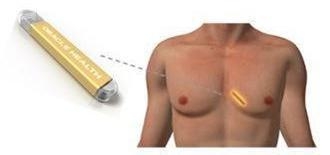
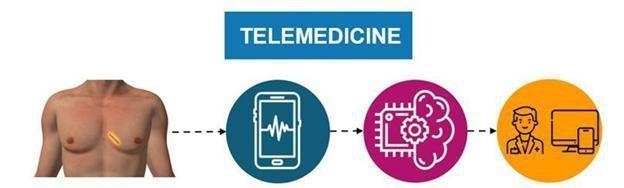
Insertion Procedure
What distinguishes our platform from other implantable cardiac monitoring solutions is the simplicity of the implant procedure itself. This is an office-based insertion — no cath lab, no operating room, no general anesthesia. The procedure takes approximately two minutes: the cardiologist numbs a small area, makes a quarter-inch incision, inserts the device just beneath the skin, and closes with a sterile bandage. A trained cardiologist can implant five to ten devices in a two-hour clinic session, fitting seamlessly into a standard cardiology practice schedule.
 | |||||
| Cardiologist
numbs a small region and then makes ¼ inch incision. |
Cardiologist
inserts the device, just under the skin. |
After device
is inserted, physician then covers the incision area with a special sterile bandage. |
|||
Heart Monitoring
 |
 |
 | ||
| Acoustic sensor listens to heart sounds to gain patient data. | ECG records heart rhythms and accumulates performance trends. | Machine learning analyzes trending heart performance and provides actionable insights. |
37
This is not a workflow disruption — it is a workflow upgrade. Cardiologists already perform office-based procedures of this nature routinely. Future Cardia’s device slots into that existing cadence, leverages the CPT reimbursement code already in place for insertable cardiac monitors (CPT 33285), and adds a powerful new monitoring capability without requiring new infrastructure, new staff training, or new facility investment. For cardiology practices looking to expand their heart failure monitoring capabilities, we believe our device represents the lowest-friction path to doing so.
Competition
Future Cardia competes across two distinct market segments: subcutaneous insertable cardiac monitors (SQ ICMs) and long-term implantable hemodynamic monitoring devices. We do not consider short-term wearable devices to be direct competitors, as their fundamental compliance limitations confine them to acute and short-term diagnostic use rather than the chronic, long-term monitoring that heart failure management requires.
Subcutaneous Insertable Cardiac Monitors (SQ ICMs)
This is our most direct competitive space. For our initial AFIB monitoring indication, we compete with four established devices:
Medtronic LINQ II is the market-leading SQ ICM and serves as our 510(k) predicate device. It is a well-validated, widely adopted platform for long-term arrhythmia monitoring with an established physician base and reimbursement pathway.
Boston Scientific LUX-Dx II+ is a newer entrant in the SQ ICM space, offering long-term monitoring for syncope, cryptogenic stroke, and atrial fibrillation. Boston Scientific has been investing actively in expanding the clinical utility of its ICM platform.
Abbott Jot Dx is Abbott’s insertable cardiac monitor, designed for long-term arrhythmia detection. Abbott brings significant commercial infrastructure and a broad cardiac portfolio that includes both rhythm management and heart failure monitoring products.
Biotronik BioMonitor rounds out the SQ ICM competitive set, offering continuous long-term monitoring with remote patient management capabilities through Biotronik’s Home Monitoring platform.
As we expand into chronic heart failure monitoring, Medtronic LINQ and Boston Scientific LUX-Dx represent our primary SQ ICM competitors in that indication as well. However, neither device currently offers the multi-biomarker SCG-based congestion scoring capability that Future Cardia is developing — meaning we believe our heart failure application represents a meaningful clinical differentiation beyond what existing SQ ICMs provide.
Long-Term Implantable Hemodynamic Monitoring
For chronic heart failure monitoring, we also compete indirectly with catheterization-based hemodynamic monitoring systems. These devices offer clinically validated outcomes but carry the procedural complexity, cost, and low adoption rates discussed earlier.
Abbott CardioMEMS HF System is a pulmonary artery pressure sensor implanted via catheterization that wirelessly transmits hemodynamic data to physicians. It has strong clinical evidence, including demonstrated reductions in heart failure hospitalizations, and generated approximately $646 million in revenue for Abbott’s Heart Failure division in 2018. However, its invasive implant procedure and high cost limit adoption to a narrow subset of high-acuity patients.
Endotronix Cordella is a wireless pulmonary artery pressure monitoring system evaluated in the PROACTIVE-HF trial. Like CardioMEMS, it offers continuous hemodynamic surveillance but faces the same procedural complexity and adoption barriers inherent to catheterization-based platforms.
38
FIRE 1 is developing a left atrial pressure monitoring system designed to provide direct hemodynamic insight into heart failure status. While the clinical rationale is sound, left atrial pressure monitoring requires an invasive transseptal implant procedure, further limiting its addressable patient population and physician adoption.
We believe Future Cardia occupies a distinct and underserved position in this landscape. We offer the long-term, continuous, physiologic monitoring capability of the hemodynamic implant category — without the cath lab, without the surgical complexity, and without the cost barriers that have prevented those devices from achieving broad adoption. And we offer a meaningfully richer data set than existing SQ ICMs through our combined ECG and SCG multi-biomarker platform. We believe no current competitor sits at this intersection.
Our Competitive Advantages
We believe that the following intended characteristics of our product will provide us with a competitive advantage once our implantable monitoring device is fully developed and FDA-cleared:
| ● | One Device, Two Indications. Future Cardia’s insertable cardiac monitor is a platform solution. A single implant addresses both atrial fibrillation monitoring through continuous ECG and chronic heart failure monitoring through the combined analysis of ECG and SCG-derived biomarkers. We believe no competitor currently offers a single subcutaneous device capable of serving both indications with a multi-biomarker approach. For cardiology practices, this means one device, one insertion procedure, one reimbursement pathway, and one clinical workflow — covering two of the most prevalent and costly cardiac conditions they manage. |
| ● | Simplicity of Implant. The two-minute office-based insertion requires no cath lab, no femoral vein access, and no sensor implantation inside the heart or pulmonary artery. A cardiologist can implant five to ten devices in a standard two-hour clinic session using existing staff and existing infrastructure. This is a drop-in addition to current practice, not a disruption of it. |
| ● | Patient Compliance by Design. Once inserted, patients do nothing. There is no device to charge, no patch to replace, no wristband to remember. Long-term monitoring compliance — the central failure point of every wearable solution — is effectively removed as a variable. The device monitors continuously for years without any patient action required. |
| ● | Multi-Biomarker Accuracy. Our combined ECG and SCG sensing architecture enables the simultaneous derivation of multiple cardiac biomarkers — heart rate variability, systolic time intervals, cardiac output proxies, and mechanical ventricular performance indicators — that can be combined into a composite congestion score for long-term heart failure trending. We believe this depth of physiologic insight goes beyond what any current SQ ICM provides, and delivers it without the invasive implant procedure required by hemodynamic monitoring competitors. |
| ● | Telemedicine-Native Architecture. All device data is securely transmitted from the implanted device to a paired smartphone, then automatically pushed to our cloud-based machine learning platform for analysis. Physicians access trends, alerts, and actionable insights through a dedicated clinician portal — enabling proactive, remote heart failure management without requiring in-person visits. |
| ● | Established Reimbursement. Our device is designed to operate under CPT code 33285, the existing reimbursement code for insertable cardiac monitors. There is no need to establish a new reimbursement pathway or educate payers on a new category. The commercial infrastructure is already in place. |
| ● | Regulatory Pathway. We are pursuing FDA clearance under the 510(k) framework, with the Medtronic LINQ as our predicate device. This is a well-established and lower-burden regulatory pathway relative to PMA-class devices, and it is the same pathway that has successfully cleared every major SQ ICM currently on the market. |
39
Taken together, we believe Future Cardia is the only platform in development that combines the procedural simplicity of an office-based SQ ICM, the multi-biomarker depth of a hemodynamic monitoring system, established reimbursement, and a single-device solution for both AFIB and heart failure — all within a 510(k) regulatory framework.
FDA Approval Considerations
Our insertable monitoring device is classified by the FDA as a Class II medical device and is being developed under the FDA’s 510(k) regulatory pathway, which allows for clearance if we can demonstrate substantial equivalence to a legally marketed predicate device. Our predicate device is the Medtronic LINQ, an insertable cardiac monitoring system that received FDA clearance as a Class II device.
On February 27, 2026, we submitted our 510(k) application to the FDA for clearance of our atrial fibrillation monitoring indication. Based on standard FDA review timelines for Class II devices under the 510(k) pathway, we received the FDA’s first round of questions on April 28, 2026. We expect to receive final clearance as early as Q3 2026, with Q4 2026 being the most likely timeline, although the process could extend into Q1 2027 or later.
Upon clearance, we will be positioned to begin commercial marketing and sale of our device in the United States, initially targeting cardiologists in Texas and Florida where we have pre-existing relationships, before expanding to other high-volume markets.
Implications If 510(k) Clearance Is Not Obtained
We cannot guarantee that our 510(k) application will be approved. If we do not receive clearance, we will not be able to market or sell our device in the U.S. We would then need to evaluate alternative FDA approval pathways, which could include conducting additional preclinical or clinical studies to address any FDA concerns. This could result in meaningful delays and increased costs, and would adversely affect our ability to generate revenue and execute on our commercialization plans.
Human Clinical Trials — Not Required
Based on FDA requirements and the precedent set by predicate devices such as the Medtronic LINQ, human clinical trials are not required for our device under the 510(k) pathway. Our FDA submission relies on preclinical studies, bench testing, and validation data — including the GLP study conducted with CBSET, Inc. in Massachusetts — to demonstrate the safety and performance of our device.
Our Product Launch Roadmap
Our product launch roadmap reflects a deliberate, phased approach that advances three parallel workstreams: securing FDA clearance for our current device, preparing our next-generation platform for wide commercial release, and laying the regulatory groundwork for our heart failure indication expansion.
Phase 1 — FDA Clearance for AFIB (Q3/Q4 2026)
On February 27, 2026, we submitted our 510(k) application to the FDA for clearance of our atrial fibrillation monitoring indication. We received the FDA’s first round of questions on April 28, 2026, and expect to receive clearance as early as Q3 2026, with Q4 2026 being the most likely timeline, although the process could extend into Q1 2027 or later. This clearance will mark Future Cardia’s formal entry into the insertable cardiac monitoring market.
Phase 2 — Gen 1.5 Letter to File and Wide Commercial Release (Q1/Q2 2027)
In parallel with our FDA review, we are integrating a next-generation battery technology into our device, clearance of which we expect to receive as early as Q3 2026, with Q4 2026 being the most likely timeline, although the process could extend into Q1 2027 or later. This upgraded device — designated Gen 1.5 — will combine the next-generation battery with minor user interface refinements based on our initial clinical experience. The battery upgrade will require a defined set of additional testing, including biocompatibility validation and updated manufacturing process qualification. Upon completion of that testing, we will submit a Letter to File to the FDA for Gen 1.5 under our existing AFIB clearance, confirming that the battery change does not affect substantial equivalence. We anticipate Gen 1.5 to be ready for wide commercial release in Q1/Q2 2027. Battery longevity is one of the most critical performance parameters in the SQ ICM category, and we believe the Gen 1.5 platform will meaningfully differentiate Future Cardia from existing competitors on device longevity, monitoring continuity, and total cost of care.
40
Phase 3 — Heart Failure Regulatory Foundation (2026–2027)
Concurrent with Phases 1 and 2, we will begin establishing the regulatory and clinical foundation for our heart failure indication. This includes submitting Pre-Submission (“Pre-Sub”) filings to the FDA to align on our heart failure monitoring protocol, obtaining FDA acceptance of our proposed U.S. human implant study design for the heart failure indication, and initiating the early-stage processes required to support a future 510(k) or De Novo submission for chronic heart failure monitoring using our combined ECG and SCG multi-biomarker platform. These activities are designed to ensure that by the time Gen 1.5 reaches wide commercial release, the pathway to our heart failure expansion is already defined and in motion.
Strategic Logic
This phased approach is intentional. AFIB clearance establishes our regulatory credibility, our physician relationships, and our commercial infrastructure. Gen 1.5 ensures we enter the market at scale with a best-in-class device rather than requiring a disruptive mid-cycle upgrade. And the parallel heart failure groundwork ensures that our most significant long-term commercial opportunity — continuous, multi-biomarker heart failure monitoring — is being actively built while our AFIB business establishes its footing.
Our Development Highlights
2019
| ● | Completed ZeroTo510 Med Tech Accelerator (GAN Accelerator). |
| ● | Proof of concept device developed in August 2019 for animal lab and human testing. |
| ● | Accepted to Johnson & Johnson’s life sciences incubator (JLABS) in November 2019. |
| ● | Signed research agreement with Maastricht University for animal and human testing. |
| ● | Jaeson Bang filed provisional patent application covering the insertable cardiac device, software dashboard, smartphone app, and data accumulation techniques (Patent Application No. 62/853,899). (Mr. Bang assigned this patent application to us in April 2021.) |
2020
| ● | Eight heart failure patient data studies completed at Maastricht University — proof of concept external device recording ECG and heart sounds. |
| ● | Non-provisional utility patent filed in May 2020. |
| ● | Accepted to Tampa Bay Wave Accelerator (GAN Accelerator) in May 2020. |
| ● | Hardware and software team identified; discussions initiated with heart failure clinics for planned human trials. |
| ● | Drs. Dan Burkhoff (MD, PhD) and Kevin Heist (MD, PhD) joined our advisory team in July 2020. |
| ● | Accepted to four-week Boot Camp at TMCx Accelerator, Texas Medical Center (October 2020). |
41
2021
| ● | January 2021: Commenced feasibility testing; proceeded to R&D phase for human implant. |
| ● | February 2021: Obtained key battery technology to expedite development. |
| ● | July 2021: Filed second patent application encompassing wireless antenna technology (Patent Application No. 17/443,899). |
| ● | Summer 2021: Accepted to YCombinator Summer Batch 2021 (declined in favor of ongoing capital raise). |
| ● | Q4 2021: Submitted Pre-Submission filing to FDA. |
2022
| ● | Accepted to Stanford StartX accelerator program. |
| ● | Successfully implanted prototype device in animal model; completed three additional animal implants testing sensing and detection algorithms, two-week chronic implant performance, and acute heart failure induction. |
| ● | Selected Resolution Medical (Minnesota) as device assembly and manufacturing contractor; chose EI Micro (Minnesota) as electronics components contractor. |
2023
| ● | Q1: Manufacturing of patient-ready devices commenced. |
| ● | Q2: Hired project manager to streamline processes. |
| ● | Q3: Completed sterilization and human implant-related testing. |
| ● | Q4: Nine patients with atrial fibrillation (AFIB) successfully implanted in Split, Croatia. |
2024
| ● | March–May 2024: Successfully implanted devices in 30 additional patients (14 in Split, Croatia; 6 in Zagreb, Croatia; 10 in Prague, Czech Republic), bringing total patient implants to 39. |
| ● | Commenced in-depth cardiac data analytics. |
| ● | May 6, 2024: Met with FDA staff to obtain guidance on our Pre-Sub filing and continuation of product development prior to 510(k) filing. |
| ● | August 2024: Secured contract with Integer (Buffalo, NY) for dedicated next-generation battery development. |
| ● | October 2024: Initiated Good Laboratory Practice (GLP) study with CBSET, Inc. (Massachusetts). |
42
2025
| ● | Conducted ECG validation testing on 20 patients with implanted devices across European clinical sites, generating the longitudinal cardiac rhythm data required to support our 510(k) submission. |
| ● | Conducted 24-hour external ECG validation testing on approximately 60 patients across three U.S. clinical sites — Tampa, Jacksonville, and Brooklyn — with all ECG data independently validated by three electrophysiology physicians. |
| ● | Successfully completed the full suite of FDA-mandated preclinical and engineering testing required to support our 510(k) submission, including MRI compatibility testing, usability engineering studies, electromagnetic compatibility (EMC) and electromagnetic interference (EMI) testing, Good Laboratory Practice (GLP) animal studies, biocompatibility testing, and a broad range of additional bench, safety, and performance evaluations. The completion of this comprehensive testing program represents a significant regulatory milestone and reflects the maturation of our device from a clinical prototype into a submission-ready medical device. |
Our Heart Monitor Device Clinical Studies
Animal Studies
| ● | Purpose: Preclinical testing to assess biocompatibility, implantation techniques, and early performance metrics. |
| ● | Dates: Conducted throughout 2022 and early 2023. |
| ● | Summary: Confirmed device safety for implantation with no significant adverse events in animal models. |
On-the-Skin (External) Testing — Maastricht University / China
| ● | Purpose: Preclinical data collection to assess heart failure heart sounds using smartphones. |
| ● | Study Partner: Maastricht University. |
| ● | Dates and Location: Conducted throughout 2022 and early 2023 at a hospital in China. |
| ● | Inclusion Criteria: Patients admitted to hospital with heart failure. |
| ● | Summary: Studies confirmed heart failure patients exhibit notable changes in heart sounds, providing validation for our analytics pipeline. |
For more information, please see “—Our Maastricht University Research Collaboration and Other Data Sources” below.
AFIB Human Implants—“Voice of the Heart” Trial (First-in-Human Study)
| ● | Objectives: Evaluate the safety and performance of our implantable device by assessing insertion procedure, sensing and detection performance, data transmission success, and complication rates over a 6-month follow-up. |
| ● | Study Partner: University Hospital of Split, Croatia (agreement dated January 27, 2023, as amended December 20, 2024). |
| ● | Dates and Location: December 2023, Split, Croatia. |
| ● | Participants: Nine (9) patients with paroxysmal atrial fibrillation (AFIB). |
43
| ● | Adverse Events: No serious adverse events (SAEs) reported during or post-implantation. |
| ● | Results: Device functioned as intended, reliably capturing and transmitting heart rhythm data across all patients. Implanted monitors automatically transmitted data to patients’ cell phones, which uploaded to cloud storage for processing. This was a critical milestone validating our system’s technical readiness. |
Heart Failure Human Implants (2024)
| ● | Dates and Locations: March–May 2024, Split, Croatia (14 patients); Zagreb, Croatia (6 patients); Prague, Czech Republic (10 patients). |
| ● | Study Partner: University Hospital of Split, Croatia. |
| ● | Participants: 30 patients with heart failure. |
| ● | Follow-Up: 12 months post-implantation. |
| ● | Adverse Events: No SAEs reported. |
| ● | Results: Early data analysis indicated consistent device functionality with 85% wireless connectivity across all patients for up to six months. |
ECG Validation Studies (2025)
| ● | Implanted Device Validation: ECG validation testing conducted on 20 patients with implanted devices across European clinical sites, generating longitudinal cardiac rhythm data submitted as part of our 510(k) application. |
| ● | U.S. External Validation: 24-hour external ECG validation testing conducted on approximately 60 patients across clinical sites in Tampa, Jacksonville, and Brooklyn. All ECG data independently validated by three electrophysiology physicians, confirming the accuracy and reliability of our sensing and detection algorithms in a U.S. patient population. |
Our Maastricht University Research Collaboration and Other Data Sources
On September 21, 2019, we entered into a research collaboration agreement with Maastricht University (Faculty of Health, Medicine and Life Sciences / School for Cardiovascular Diseases — CARIM) to investigate whether heart sound analysis is comparable or complementary to standard non-invasive assessments in diagnosing HFpEF, and whether heart sounds may contribute to better HFpEF classification. The collaboration entailed a study of a proof-of-concept model of our device in 30 patients at Maastricht University Medical Center with moderate to severe heart failure.
The Maastricht proof-of-concept device (approximately the size of a 9V battery) includes an ECG recorder and acoustic sensor. Data recorded during treadmill tests is wirelessly transmitted to a smartphone for analysis. Our insertable device is a sterile subcutaneous implant offering continuous monitoring for up to two years via Bluetooth connectivity to a cloud-based analytics platform. To date, we have collected data for over 35 patients and are currently analyzing this data to develop our heart failure sensing and detection algorithm. Under the terms of this collaboration, we agreed to pay CARIM a fee of 5,000 Euro for the study execution and data transfer. All intellectual property developed during the research project vests in us.
In addition, as part of our Maastricht collaboration, we acquired heart failure data from approximately 50 patients in China, recorded via standard smartphone with an external microphone. These recordings served as early validation of our data analytics pipeline, including heart sound recognition algorithms.
44
In 2022, we participated in a collaborative study with Duke University Lab involving animal models, validating our acoustic sensing technology. Results were presented at the Heart Failure Society of America (HFSA) conference and published in the Journal of the American College of Cardiology (JACC) in April 2023.
Our Sales and Marketing
We intend to operate a multi-distribution model for the commercial launch of our device, combining internal sales managers who will work directly with hospitals and ambulatory surgical centers (ASCs) with independent pacer representatives who have established relationships with cardiologists and electrophysiologists in their respective territories.
Our initial commercial focus will be Texas and Florida — two of the highest insertable cardiac monitor implant volume states in the country — where we already have pre-existing physician relationships that we expect to accelerate early adoption. From there, we will expand to other high-volume markets as our commercial infrastructure scales.
In anticipation of FDA clearance, we have already begun the foundational work required for a rapid commercial launch. We are currently in active discussions with ASC organizations, which represent an important and growing channel for office-based cardiac procedures given their favorable economics, scheduling flexibility, and alignment with our two-minute insertion model. We are also in discussions with experienced independent pacer representatives — specialized medical device sales professionals with deep cardiologist and electrophysiologist relationships — who we expect will be instrumental in driving device adoption at the practice level from day one.
By engaging these distribution partners ahead of clearance rather than after, we intend to ensure that our commercial engine is operational and ready to execute the moment our 510(k) clearance is received. Our goal is not to begin building a sales infrastructure at clearance — it is to have one already in place.
Our Product Engineering
Key milestones in product engineering:
2020: Conducted external wearable testing on 45 heart failure patients to assess the strengths and limitations of non-invasive monitoring approaches, providing foundational data that informed the design direction toward a subcutaneous insertable platform.
2021: Commenced engineering efforts to design and build our insertable cardiac monitor, transitioning from external proof-of-concept to a fully implantable device architecture incorporating remote monitoring technology.
2022: Successfully implanted our prototype device in four animal models to test sensing and detection algorithms, validate two-week chronic implant performance, and assess acute heart failure induction response.
2023: Achieved nine first-in-human patient implants in Split, Croatia, completing our initial clinical feasibility study and validating the safety and functionality of the device in a human implant population.
2024: Achieved an additional 30 patient implants across clinical sites in Croatia and the Czech Republic, bringing our total implant count to 39. Entered into a contract with Integer (Buffalo, NY) for the development of a dedicated next-generation battery tailored to our device specifications.
2025: Completed our comprehensive FDA-mandated testing program, marking the transition of our device from clinical prototype to submission-ready product. Key milestones included ECG validation testing on 20 implanted patients in Europe and approximately 60 patients across U.S. sites in Tampa, Jacksonville, and Brooklyn — independently validated by three electrophysiology physicians — alongside the successful completion of MRI compatibility testing, usability engineering studies, electromagnetic compatibility (EMC) and electromagnetic interference (EMI) testing, Good Laboratory Practice (GLP) animal studies, biocompatibility testing, and numerous additional bench and safety evaluations required for our 510(k) submission.
45
Our Intellectual Property
We acquired the intellectual property for our implantable heart failure monitoring device from our founder and CEO, Jaeson Bang, for consideration of $100. On April 19, 2021, Mr. Bang transferred all right, title, and interest in the patent applications listed below to the Company.
We filed our primary implantable cardiac monitor patent application with the USPTO in January 2022; it is currently pending. Based on typical USPTO prosecution timelines, we anticipate a patent decision by sometime in 2026. In 2026, two additional patents are in development covering our heart failure detection algorithm and a pace-less impedance measuring capability, which we believe will further strengthen the intellectual property foundation of our platform.
| Docket No. | Title | Application No. | Patent No. | Status | ||||
| OCL-001-PCT | Implantable Cardiac Monitor | 62/853,899 | N/A | Pending | ||||
| OCL-001-PR1 | Implantable Cardiac Monitor | PCT/US20/35171 | N/A | Pending |
In July 2021, the Company filed for a patent encompassing wireless antenna technology (Application No. 17/443,899), with David Nghiem and Jaeson Bang listed as inventors. This application is currently pending; we anticipate a decision by sometime in 2026.
If any patent applications are denied, we will continue to rely on trade secrets, proprietary know-how, and other intellectual property protection strategies. We and Mr. Bang intend to file additional patent applications to strengthen our portfolio.
On February 18, 2020, we filed a trademark application with the USPTO for the mark “Voice of the Heart.” On June 9, 2020, this application was published for opposition. On September 14, 2021, we registered “Future Cardia” as our trade name with the State of Florida. We also own the URL https://futurecardia.com/.
Employees and Advisors
We currently have five (5) full-time employees — including our Chief Executive Officer, VP of Manufacturing, and VP of Electrical Engineering — and ten (10) part-time employees. We supplement our internal team with a carefully selected network of specialized contract engineering and regulatory firms, each engaged for their deep expertise in specific aspects of medical device development, clinical research, and regulatory affairs.
Our contract partner network includes:
| ● | Nocturnal PD (Durham, NC) — software development and firmware engineering; |
| ● | Resolution Medical (Minnesota) — device assembly and manufacturing; |
| ● | EI Micro (Minnesota) — electronics components assembly and manufacturing; |
| ● | Focus SW — software engineering and development; |
| ● | MCRA — regulatory strategy and FDA submission support; |
| ● | Meditrial — clinical research organization supporting our U.S. and international clinical studies; |
| ● | NAMSA — preclinical testing, biocompatibility, and GLP study execution; |
| ● | Boulder IQ — product development and design engineering consulting; |
46
| ● | Integer (Buffalo, NY) — dedicated battery development for our next-generation device platform; and |
| ● | Western IRB — independent review board oversight for our clinical study protocols. |
This hybrid model — a lean, focused internal team supported by best-in-class specialized partners — allows us to move with the efficiency of a startup while accessing the depth of expertise that FDA-regulated medical device development demands.
Our distinguished advisory board includes:
Dr. Dan Burkhoff MD PhD — Renowned heart failure expert with medical tech startup experience including a $1.1 billion Medtronic exit. Currently Director of the Cardiovascular Research Foundation.
Dimitrios Georgakopoulos PhD — Chief science officer at multiple venture-backed biotech companies; post-doctoral fellow in Cardiology at Johns Hopkins. PhD in Cardiovascular Physiology and Biomedical Engineering from Johns Hopkins University.
Dr. Kevin Heist MD PhD — Associate Professor of Medicine at Harvard Medical School; practices at Massachusetts General Hospital. MD and PhD from Stanford University School of Medicine.
Dr. Toshimasa Okabe MD — Department of Clinical Cardiac Electrophysiology and Cardiovascular Disease, Ohio State University Medical Center. MD from the University of Tokyo.
Professor Frits Prinzen PhD — Professor of Physiology at Maastricht University (Netherlands), focused on electromechanics of the heart.
Dr. David Kraus MD — Associate Director, Cardiac Laboratories, Baptist Memorial Hospital; practices at Stern Cardiovascular, Memphis, TN.
Anatoly Yakovlev PhD — PhD in Electrical Engineering from Stanford University; expert in machine learning.
Dr. Marat Fudim — Cardiologist specializing in heart failure, currently practicing at Duke University.
Dr. Vivek Reddy MD — Practicing electrophysiologist at Mount Sinai, New York.
Properties
Our main office is located at 910 Woodbridge Court, Safety Harbor, FL 34695, which space is provided to us on a rent-free basis. From January 2020 to March 2023, we leased JLABS laboratory space at the Texas Medical Center (2450 Holcombe Boulevard, Houston, Texas 77021-2040) at an annual rate of approximately $6,000, increasing 3% annually. We ceased to lease this space after March 2023. We do not currently lease or own any real property. We believe all our properties are adequately maintained and suitable for our business.
Government Regulation and the FDA Review Process
Government regulations govern medical device design and development, clinical testing, premarket clearance and approval, listing, manufacturing, labeling, advertising, storage, promotions, sales, distribution, and post-market surveillance. The FDA classifies medical devices into three classes based on the controls necessary to ensure safety and effectiveness:
| ● | Class I: Subject to general controls (labeling, good manufacturing practices, complaint records); typically exempt from premarket notification. |
| ● | Class II: Subject to general controls and special controls such as performance standards; may require clinical testing prior to approval. |
| ● | Class III: Highest level of controls; life-sustaining or life-supporting devices. |
47
The 510(k) process requires the manufacturer to demonstrate that a device is “substantially equivalent” to an existing legally marketed predicate device. Our predicate is the Medtronic LINQ, an insertable cardiac monitoring system that received FDA clearance as a Class II device. The FDA typically takes 90 days to one year to complete the 510(k) application review process and may require clinical data.
Our Regulatory History
We submitted our device for FDA review under a Pre-Submission (Pre-Sub) filing in the fourth quarter of 2021. We met with FDA staff on May 6, 2024 to obtain guidance prior to our 510(k) filing. Key FDA feedback from that meeting included:
| ● | No concerns with our selection of the Medtronic LINQ as predicate device; substantial equivalence determination will occur with our 510(k) submission. |
| ● | Additional testing — including electrical safety and cybersecurity — may be required beyond our initial high-level summaries. |
| ● | A clinical study may be needed given our device’s differences from the predicate; however, the FDA indicated openness to bench and animal testing in lieu of clinical studies, provided such testing is well-designed. |
| ● | The FDA noted that our device, unlike the Medtronic LINQ, does not include a manual activation function, and suggested we either incorporate this feature or provide a well-supported justification for its exclusion. |
As a result of this pre-submission meeting, we took the following steps prior to our 510(k) submission: addressed all identified testing gaps; provided detailed validation plans for bench and animal testing; resolved the manual activation question; ensured consistency across all submission documents; and submitted a pre-submission supplement to align with the FDA on specific testing methodology.
510(k) Submission and Anticipated Clearance
On February 27, 2026, we submitted our 510(k) application to the FDA for clearance of our atrial fibrillation monitoring indication. Based on standard FDA review timelines for Class II devices under the 510(k) pathway, we received the FDA’s first round of questions on April 28, 2026. We expect to receive final clearance as early as Q3 2026, with Q4 2026 being the most likely timeline, although the process could extend into Q1 2027 or later.
There can be no guarantee that the FDA will approve our application. If clearance is not obtained, we will not be able to market or sell our device in the U.S. and would need to evaluate alternative regulatory pathways, which could result in meaningful delays and increased costs. Once 510(k) clearance is obtained, we will begin commercial marketing and sale of our device, initially targeting cardiologists in Texas and Florida before expanding to other high-volume markets.
We believe we are in compliance with all material government regulations applicable to our product and operations. However, we are not able to predict the nature of any future laws, regulations, interpretations, or applications, nor can we predict what effect future changes would have on our business.
Legal Proceedings
We know of no existing or pending legal proceedings against us, nor are we involved as a plaintiff in any proceeding or pending litigation. There are no proceedings in which any of our directors, officers or any of their respective affiliates is an adverse party or has a material interest adverse to our interest.
Legal Proceedings
We know of no existing or pending legal proceedings against us, nor are we involved as a plaintiff in any proceeding or pending litigation. There are no proceedings in which any of our directors, officers or any of their respective affiliates is an adverse party or has a material interest adverse to our interest.
48
Our main office is located at 910 Woodbridge Court, Safety Harbor, FL 34695.
From January 2020 to March 2023, we leased the JLABS space under a license agreement with the Texas Medical Center. Under such license, we were allowed to conduct laboratory research in a dedicated workstation area using laboratory facilities and equipment provided by the Texas Medical Center in their laboratory building located at 2450 Holcombe Boulevard, Houston, Texas 77021-2040, with an annual rental rate of approximately $6,000 which rate increased by 3% annually. We ceased to lease this space after March 2023.
We believe that all our properties are adequately maintained, are generally in good condition, and are suitable and adequate for our business.
We do not currently lease or own any real property.
49
MANAGEMENT’S DISCUSSION AND ANALYSIS OF FINANCIAL CONDITION AND RESULTS OF OPERATIONS
The following discussion and analysis summarizes the significant factors affecting our operating results, financial condition, liquidity and cash flows of our company as of and for the periods presented below. The following discussion and analysis should be read in conjunction with our financial statements and the related notes thereto included elsewhere in this offering circular. The discussion contains forward-looking statements that are based on the beliefs of management, as well as assumptions made by, and information currently available to, our management. Actual results could differ materially from those discussed in or implied by forward-looking statements as a result of various factors, including those discussed below and elsewhere in this offering circular, particularly in the sections titled “Risk Factors” and “Cautionary Statement Regarding Forward-Looking Statements”.
Overview
We are a medical device company developing a miniaturized insertable cardiac monitor designed to detect arrhythmias and provide continuous, long-term monitoring of chronic heart failure. By continuously tracking heart failure-related physiological changes, the device is designed to enable early clinical interventions that may reduce costly hospitalizations. Our monitor employs a proprietary multi-sensor architecture combined with cloud-based machine learning to deliver actionable insights to physicians via telemedicine.
Since our inception, we have devoted substantially all of our efforts to research and development, testing, product engineering and raising capital. Accordingly, we are considered to be in the development stage. We have not generated revenue from operations to date. As of December 31, 2025, we had raised approximately $18 million through private placements and equity crowd funding.
Principal Factors Affecting our Financial Performance
Our operating results are primarily affected by the following factors:
| ● | our ability to access additional capital and the size and timing of subsequent financings; |
| ● | the rate of progress and cost of development activities; |
50
| ● | costs of third-party laboratories to conduct our clinical studies; |
| ● | the financial terms and timing of any collaborations, licensing or other arrangements into which we may enter; |
| ● | the cost and delays in product development that may result from changes in regulatory requirements applicable to our products; |
| ● | personnel and facilities costs as we expand our operations; |
| ● | the costs of sales, marketing, and customer acquisition; |
| ● | willingness of healthcare providers to prescribe our device and the fees charged by them to do so; |
| ● | the costs of compliance with any unforeseen regulatory obstacles or governmental mandates in any states or countries in which we seek to operate; and |
| ● | the costs of any additional clinical studies which are deemed necessary for us to remain viable and competitive in other regions of the world. |
Recent Developments
On February 27, 2026, we submitted a 510(k) application to the FDA for clearance of our atrial fibrillation (AFIB) monitoring indication, effectively entering the insertable cardiac monitoring market alongside four established incumbents. For a more detailed review of our clinical studies, see “Description of Business – Our Heart Monitor Device Clinical Studies” below.
Our Historical Performance
While we had cash of $919,993 and $113,697 as of December 31, 2024 and 2025, respectively, we had no revenue and a net loss of $4,666,858 for the year ended December 31, 2024 and no revenue and a net loss of $5,682,583 for the year ended December 31, 2025. As of December 31, 2025, we had cash of $113,697. We estimate that we will be able to conduct our planned operations using currently available capital resources for approximately the next twelve (12) months. We will seek to fund our operations through securities offerings, including private equity offerings, crowd funding, debt financings, and government or other third-party funding. However, the Company may not be able to raise adequate funds for capital expenditures, working capital and other cash requirements from capital markets on acceptable terms, or at all. Advances from an officer or stockholder may likewise be unavailable. The Company’s failure to raise capital as and when needed would impact its going concern status and would have a negative impact on its financial condition and its ability to pursue its business strategy and continue as a going concern. For further discussion, see “Management’s Discussion and Analysis of Financial Condition and Results of Operations – Liquidity and Capital Resources – Going Concern.”
Results of Operations
Years Ended December 31, 2024 and 2025
The following table sets forth key components of our results of operations during the years ended December 31, 2024 and 2025.
| Years Ended December 31, | Change | |||||||||||||||
| 2024 | 2025 | $ | % | |||||||||||||
| Revenues | $ | - | - | - | - | % | ||||||||||
| Cost of revenues | - | - | - | - | % | |||||||||||
| Gross profit | - | - | - | - | % | |||||||||||
| Operating expenses | ||||||||||||||||
| Research and development | 2,459,097 | 2,796,734 | 337,637 | 13.7 | % | |||||||||||
| Sales, general and administrative | 2,251,834 | 2,884,889 | 633,055 | 28.1 | % | |||||||||||
| Total operating expenses | 4,710,931 | 5,654,623 | 943,692 | 20.0 | % | |||||||||||
| Loss from operations | (4,710,931 | ) | (5,654,623 | ) | (943,692 | ) | 20.0 | % | ||||||||
| Total other income (expense) | 44,073 | (27,960 | ) | (72,033 | ) | (163.4 | )% | |||||||||
| Net loss | $ | (4,666,858 | ) | (5,682,583 | ) | (1,015,725 | ) | 21.8 | % | |||||||
51
Revenues
The Company has not realized revenue as of December 31, 2024 and 2025 as the Company is still in its pre-commercialization phase.
Cost of revenues
The Company has not realized revenue and the related cost of revenues as of December 31, 2024 and 2025.
Gross profit and gross margin
The Company has not realized revenue or gross profit as of December 31, 2024 and 2025.
Sales, general and administrative expenses
The Company had sales, general and administrative expenses of $2,251,834 and $2,884,889 for the years ended December 31, 2024 and 2025, respectively. Sales, general and administrative expenses consist primarily of stock-based compensation, salaries and wages, professional fees, advertising and marketing expenses and general and administrative expenses. The increase year over year was primarily due to higher professional service costs which increased from $1,595,449 in 2024 to $1,397,383 in 2025, reflecting heightened regulatory and consulting activities.
Research and development expenses
The Company incurred research and development expenses of $2,459,097 and $2,769,734 for the years ended December 31, 2024 and 2025, respectively. Research and development expenses consist primarily of services and costs related to the development of our insertable cardiac device.
Net loss
The Company had a net loss of $4,666,858 and $5,682,583 as of December 31, 2024 and 2025, respectively. The increase in net loss was primarily a result of a substantial rise in operating expenses as the company accelerated its product development and commercialization activities.
Liquidity and Capital Resources
We have not generated any revenue from operations to date. Our sources of cash have historically included private placements of our securities and equity crowd funding. Our historical cash outflows have primarily been associated with cash used for operating activities such as research and development activities and other working capital needs. We intend to fund our operations through capital raised from investors in the near term.
Summary of Cash Flows for the Years Ended December 31, 2024 and 2025
As of December 31, 2025, we had approximately $113,697 in cash. The following table presents a summary of our cash flows for the periods indicated:
| Years Ended December 31, | ||||||||
| 2024 | 2025 | |||||||
| Net cash used in operating activities | $ | (3,979,413 | ) | $ | (4,967,407 | ) | ||
| Net cash used in investing activities | (26,160 | ) | (32,906 | ) | ||||
| Net cash provided by financing activities | 2,767,870 | 4,194,017 | ||||||
| Net increase in cash | (1,237,704 | ) | (806,296 | ) | ||||
| Cash at beginning of period | 2,157,698 | 919,993 | ||||||
| Cash at end of period | $ | 919,993 | $ | 113,697 | ||||
52
Net cash used in operating activities was $3,979,413 for the year ended December 31, 2024, as compared to $4,967,407 for the year ended December 31, 2025. The principal use of cash for operating activities was to fund our operating expenses during our development of the Company.
Net cash used in investing activities was $26,160 for the year ended December 31, 2024, as compared to $32,906 net cash used in investing activities for the year ended December 31, 2025. Net cash used in investing activities for the year ended December 31, 2024 and 2025 was used primarily to reimburse a shareholder for expenses paid on behalf of the Company.
Net cash provided by financing activities was $2,767,870 for the year ended December 31, 2024, as compared to $4,194,017 for the year ended December 31, 2025. Net cash provided by financing activities for the year ended December 31, 2024 consisted of $2,767,870 in net proceeds from issuance of convertible notes and net proceeds from the Regulation A offering via the StartEngine platform. Net cash provided by financing activities for the year ended December 31, 2025 consisted of $100,000 in net proceeds from issuance of convertible notes and net proceeds from the Regulation CF offering via the StartEngine platform.
Regulation CF and Regulation A Offerings
On March 3, 2023, we launched an offering under Regulation CF of the Securities Act of 1933, as amended, pursuant to which we offer a minimum of 3,389 shares of common stock and a maximum of 1,694,915 shares of common stock, at an offering price of $2.95 per share (subject to adjustment for bonus shares as detailed in the offering statement on Form C, as amended from time to time), for aggregate minimum gross proceeds of $9,997.55 and maximum gross proceeds of $4,999,999.25. StartEngine Capital, LLC (“StartEngine”) acted as the offering’s intermediary. This offering terminated on June 11, 2024, and we sold an aggregate of 1,358,312 shares of common stock for gross proceeds of $3,359,734.35.
On June 20, 2024, we launched an offering under the Regulation CF where Wefunder Portal LLC acted as the offering’s intermediary, and Future Cardia I, a series of Wefunder SPV, LLC and Future Cardia I EB, a series of Wefunder SPV, LLC acted as co-issuers. This offering terminated on December 19, 2024, and we sold a total of 589,292 shares of our common stock, at a per share price of $3.00, during this offering.
On December 27, 2024, we launched an offering under the Regulation CF where StartEngine Primary, LLC acted as the offering’s intermediary, at an offering price of $3.00 per share, subject to adjustment for bonus shares. This offering terminated in June 2025, and we sold an aggregate of 883,337 shares of common stock for gross proceeds of $2,650,011, and we issued an additional 159,529 shares as bonus shares.
On June 23, 2025, we launched an offering under the Regulation A where StartEngine Primary, LLC acted as the offering’s placement agent, at a per share offering price of $3.00, subject to adjustments for bonus shares. This offering will terminate at the earliest of: (i) the date at which the maximum aggregate offering price of $15,000,000 has been sold (ii) the date at which the offering is earlier terminated by the Company in its sole discretion or (iii) the date that is three years from the date in which this offering being qualified by the SEC.
Convertible Notes
On June 30, 2022, and August 2, 2022, we issued convertible promissory notes to three investors in the principal amounts of $90,000, $86,000, and $100,000, respectively, for an aggregate principal amount of $276,000. These notes accrue interest at a rate of 6% per annum, compounded annually, and mature on the earlier of a Liquidity Event or approximately two years from issuance (i.e., June 30, 2024 for the first two notes and August 2, 2024 for the third note). Upon a Qualified Equity Financing (a preferred equity financing with aggregate sales of not less than $5,000,000), the outstanding loan balances will automatically convert into shares of preferred equity securities at a conversion price equal to the lesser of (i) 80% of the price per share paid by other purchasers in such financing, and (ii) the price obtained by dividing $20,000,000 by the number of outstanding shares of our common stock immediately prior to the financing on a fully diluted basis. In the event we consummate a Liquidity Event prior to a Qualified Equity Financing, the lenders may elect to receive a cash payment of the outstanding loan balance plus an additional payment equal to 200% of the principal amount, or convert the outstanding loan balance into shares of our common stock at the $20,000,000 valuation cap. The notes contain most favored nation provisions requiring us to notify the lenders if we issue other convertible indebtedness on more favorable terms, and upon request, to amend and restate the notes to match such terms. We may not prepay the notes before their respective maturity dates without the lenders' written consent, and the notes are governed by the laws of the State of Nevada. On February 20, 2025, February 21, 2025, and February 24, 2025, respectively, the Company and each of the three lenders entered into amendments to their respective convertible promissory notes. Pursuant to these amendments, the maturity dates of the first two notes were extended to June 30, 2026, and the maturity date of the third note was extended to August 2, 2026. In addition, the amendments added a new optional conversion right permitting each lender, at any time and at its option, to convert its note, in whole or in part, into shares of common stock, preferred stock, or other equity securities of the Company at a conversion price equal to the lesser of (i) 80% of the price per share in the most recent equity financing conducted by the Company before the conversion, or (ii) the price obtained by dividing $20,000,000 by the total number of outstanding shares of common stock of the Company immediately prior to the conversion on a fully diluted basis. Except as modified by the amendments, the original notes and note purchase agreements remain unmodified and in full force and effect.
53
On December 29, 2023, we issued a convertible note in the principal amount of $10,000. This note matured on December 29, 2025, and an extension is currently being negotiated with the lender, although there can be no assurance that these negotiations will be successful. On February 29, 2024, we issued a convertible note in the principal amount of $100,000. This note matured on February 28, 2026, and an extension is currently being negotiated with the lender, although there can be no assurance that these negotiations will be successful. The two new notes accrue interest at a rate of 6% per annum, compounded annually. Prior to maturity, if the Company issues preferred equity securities in a transaction or series of related transactions resulting in aggregate gross proceeds to the Company of at least $5,000,000, excluding conversion of the new notes or other convertible securities (a "Qualified Financing"), these notes, and any accrued but unpaid interest thereon, will automatically convert at the lesser of (a) 80% of the per share price paid by the purchasers of such preferred equity securities in the Qualified Financing or (b) the price equal to the quotient of $40,000,000 divided by the aggregate number of outstanding shares of the Company's common stock prior to the Qualified Financing (assuming full conversion or exercise of all convertible and exercisable securities then outstanding, including shares reserved under any equity incentive plan of the Company and any equity incentive plan to be created in connection with the Qualified Financing but excluding conversion of the new note or other convertible securities issued for capital raising purposes), and (iv) at the option of the holder upon a liquidity event as such term is defined in the new note, the holder may elect to receive a cash payment of the principal and interest then outstanding under such new note, plus 200% of the principal of such new note or convert into shares of the Company's common stock at a valuation cap of $40,000,000.
On May 2, 2024 and May 3, 2024, we issued convertible promissory notes to two investors in the principal amounts of $15,000 and $100,000, respectively, for an aggregate principal amount of $115,000. These notes accrue interest at a rate of 6% per annum, compounded annually, and mature on the earlier of a Liquidity Event or approximately two years from issuance. Upon a Qualified Equity Financing (a preferred equity financing with aggregate sales of not less than $5,000,000), the outstanding loan balances will automatically convert into shares of preferred equity securities at a conversion price equal to the lesser of (i) 80% of the price per share paid by other purchasers in such financing, and (ii) the price obtained by dividing $40,000,000 by the number of outstanding shares of our common stock immediately prior to the financing on a fully diluted basis. In the event we consummate a Liquidity Event prior to a Qualified Equity Financing, the lenders may elect to receive a cash payment of the outstanding loan balance plus an additional payment equal to 200% of the principal amount, or convert the outstanding loan balance into shares of our common stock at the $40,000,000 valuation cap. The notes contain most favored nation provisions requiring us to notify the lenders if we issue other convertible indebtedness on more favorable terms, and upon request, to amend and restate the notes to match such terms. We may not prepay the notes before their respective maturity dates without the lenders’ written consent, and the notes are governed by the laws of the State of Nevada. Both notes have reached maturity and are currently in default. The Company intends to negotiate extensions of these notes with the respective holders; however, there can be no assurance that such negotiations will be successful.
On August 12, 2024, October 3, 2024, and October 4, 2024, we issued convertible promissory notes to three investors in the principal amounts of $30,000, $10,000, and $100,000, respectively, for an aggregate principal amount of $140,000. These notes accrue interest at a rate of 6% per annum, compounded annually, and mature on the earlier of a Liquidity Event or approximately two years from issuance. Upon a Qualified Equity Financing (a preferred equity financing with aggregate sales of not less than $5,000,000), the outstanding loan balances will automatically convert into shares of preferred equity securities at a conversion price equal to the lesser of (i) 80% of the price per share paid by other purchasers in such financing, and (ii) the price obtained by dividing $40,000,000 by the number of outstanding shares of our common stock immediately prior to the financing on a fully diluted basis. In the event we consummate a Liquidity Event prior to a Qualified Equity Financing, the lenders may elect to receive a cash payment of the outstanding loan balance plus an additional payment equal to 200% of the principal amount, or convert the outstanding loan balance into shares of our common stock at the $40,000,000 valuation cap. The notes contain most favored nation provisions requiring us to notify the lenders if we issue other convertible indebtedness on more favorable terms, and upon request, to amend and restate the notes to match such terms. We may not prepay the notes before their respective maturity dates without the lenders' written consent, and the notes are governed by the laws of the State of Nevada.
Of the $355,000 in notes sold in 2024, $50,000 was collected in 2025.
54
On September 16, 2025, we issued a Convertible Promissory Note in favor of Sixto Global Capital, LLC (“Sixto Global”) in the principal amount of $50,000, subject to the terms and conditions of a Note Purchase Agreement of even date. The Note accrues interest at a rate of 6% per annum, compounded annually, from the date of issuance until paid in full or converted. To the extent not converted into Preferred Equity Securities or prepaid, the outstanding Loan Balance is due and payable on the earlier of a Liquidity Event or September 16, 2027 (the “Maturity Date”). We are not permitted to prepay the Note before the Maturity Date without the Sixto Global's written approval, and all payments are applied first to interest and then to principal. The Note includes a most favored nation provision requiring us to notify the Sixto Global within 30 days if we issue other convertible indebtedness on more favorable terms, and, at the Sixto Global's election, to amend and restate this Note to match such terms within 30 days of the Sixto Global's request. Upon a Qualified Equity Financing (an equity financing with aggregate proceeds of at least $5,000,000), the outstanding Loan Balance will automatically convert into Preferred Equity Securities at a conversion price equal to the lesser of (i) 80% of the price per share paid by other purchasers, and (ii) a price derived from a $51,000,000 valuation cap divided by the number of fully diluted shares of our common stock outstanding immediately prior to the financing. If we consummate a non-qualified equity financing, the Sixto Global may elect to treat it as a Qualified Equity Financing on the same conversion terms. In the event of a Liquidity Event (defined broadly to include mergers, transfers of more than 50% of our voting power, or sales or exclusive licenses of substantially all of our assets or material intellectual property) occurring prior to a Qualified Equity Financing, the Sixto Global may elect either (a) to receive a cash payment of the outstanding Loan Balance plus 200% of the Principal Amount, or (b) to convert the outstanding Loan Balance into shares of our common stock at a price derived from the same $51,000,000 valuation cap. We must give the Sixto Global at least 10 days' prior notice of any Liquidity Event. Events of Default include failure to pay amounts due (subject to applicable cure periods), material breach of the Note or the Agreement (with a 30-day cure period), assignment for the benefit of creditors, and voluntary or involuntary bankruptcy proceedings. Upon a Default, the Sixto Global may accelerate the outstanding Loan Balance and pursue all available remedies, and we are responsible for all reasonable attorneys' fees and court costs incurred by the Sixto Global in enforcement. Neither party may assign its rights or obligations under the Note without the other party's prior written consent. The Note may only be amended with the written consent of both parties. The Note is governed by the laws of the State of Nevada, excluding conflict of laws principles.
In March 2026, we issued three convertible promissory notes to one lender. (the “2026 Lender”), each pursuant to a Note Purchase Agreement of even date with the respective note, in the following principal amounts and with the following maturity dates: (i) $120,000, dated March 2, 2026, maturing on March 2, 2028; (ii) $90,000, dated March 13, 2026, maturing on March 13, 2028; and (iii) $75,000, dated March 20, 2026, maturing on March 20, 2028, for an aggregate principal amount of $285,000. Each note bears interest at a rate of six percent (6%) per annum, compounded annually, calculated on the basis of a 365-day year. The outstanding loan balance under each note (principal plus accrued interest) is due and payable on the earlier of (a) a Liquidity Event or (b) the applicable maturity date, and prepayment prior to the maturity date is not permitted without the 2026 Lender's prior written consent. Upon our consummation of a Qualified Equity Financing (defined as an equity financing in which we sell preferred equity securities with aggregate proceeds of not less than $5,000,000) prior to the maturity date, the outstanding loan balance under each note will automatically convert into shares of preferred equity securities at a conversion price equal to the lesser of (x) eighty percent (80%) of the price per share paid by the other investors in such financing and (y) the price obtained by dividing $51,000,000 by the number of outstanding shares of common stock of the Company on a fully diluted basis immediately prior to such financing. In the event of a non-qualified equity financing, the 2026 Lender may elect, in its sole discretion, to treat such financing as a Qualified Equity Financing on the same conversion terms. If the Company consummates a Liquidity Event prior to a Qualified Equity Financing, the 2026 Lender may elect to either (1) receive a cash payment equal to the outstanding loan balance plus an additional payment equal to 200% of the principal amount, or (2) convert the outstanding loan balance into shares of common stock at a conversion price equal to $51,000,000 divided by the number of outstanding shares of common stock on a fully diluted basis immediately prior to the Liquidity Event. Each note includes a most favored nation provision requiring us to notify the 2026 Lender within 30 days of issuing any other convertible indebtedness on more favorable terms, and upon the 2026 Lender's request, to amend and restate the note to be substantially identical to such other indebtedness. Events of default under each note include failure to pay amounts due (subject to a 30-day cure period), material breach of the note or the related Note Purchase Agreement (subject to a 30-day cure), assignment for the benefit of creditors, and voluntary or involuntary bankruptcy proceedings (with a 90-day dismissal period for involuntary petitions), upon the occurrence of which the 2026 Lender may accelerate repayment of the entire outstanding loan balance. The notes are not transferable without the prior written consent of the Company, are governed by the laws of the State of Nevada, and the 2026 Lender has the option to extend the maturity date one or more times to preserve its conversion rights.
55
As of the date of this offering circular, we have convertible notes outstanding in the aggregate principal amount of $976,000.
Capital Expenditures and Other Obligations
We expended $175.00 capital expenditures for the year ended December 31, 2024 and $32,906 capital expenditures for the year ended December 31, 2025.
Going Concern
The accompanying consolidated financial statements have been prepared on a going concern basis, which assumes that the Company will continue in operation for the foreseeable future and will be able to realize its assets and discharge its liabilities in the normal course of business. However, substantial doubt exists about the Company’s ability to continue as a going concern due to the following factors:
| 1. | Financial Condition and Liquidity |
As of December 31, 2025, the Company had cash of $113,697 and a net loss of $5,682,583 for the year then ended. The Company has no revenue to date and has incurred substantial losses from operations, with no certainty as to when it will generate positive cash flows or profitability.
| 2. | Management’s Plans |
To address these conditions and mitigate the factors giving rise to substantial doubt, the Company has developed plans to:
| ○ | Seek additional capital through securities offerings, including this Regulation A offering and private equity investments. |
| ○ | Explore debt financings and pursue government or other third-party funding to provide sufficient liquidity. |
| ○ | Continue cost management strategies to reduce operational expenditures. |
| 3. | Evaluation of Mitigating Factors |
Management believes that successful execution of its plans will alleviate the substantial doubt raised by the Company’s current financial position. However, these plans are dependent on factors outside the Company’s control, such as the ability to secure new financing or raise additional equity capital on acceptable terms. There can be no assurance that such financing will be available or that the Company’s business operations will become profitable.
| 4. | Potential Consequences of Inadequate Financing |
If the Company is unable to secure the necessary financing, it may be forced to curtail or cease operations, which would materially harm its business and prospects. The sale of additional equity securities could result in significant dilution to existing shareholders, while additional indebtedness could increase debt service obligations and restrict operations through financial and operational covenants.
| 5. | Conclusion |
Based on the Company’s financial condition as of December 31, 2025, including cash on hand and proceeds from previous financings through private placements and equity crowdfunding totaling approximately $18 million, the Company believes it has sufficient resources to fund operations for at least the twelve (12) months subsequent to the filing date.
56
The sale of additional equity securities could result in dilution to our shareholders. The incurrence of indebtedness would result in increased debt service obligations and could require us to agree to operating and financial covenants that would restrict our operations. Financing may not be available in amounts or on terms acceptable to us, if at all. Any failure by us to raise additional funds on terms favorable to us, or at all, could limit our ability to expand our business operations and could harm our overall business prospects.
Off-Balance Sheet Arrangements
We have no off-balance sheet arrangements that have or are reasonably likely to have a current or future effect on our financial condition, changes in financial condition, revenues or expenses, results of operations, liquidity, capital expenditures or capital resources.
Critical Accounting Policies and Estimates
Our significant accounting policies are more fully described in the notes to our financial statements. We believe that the accounting policies below are critical for one to fully understand and evaluate our financial condition and results of operations.
Equity Based Compensation
The Company accounts for stock options issued to employees under ASC 718 (Stock Compensation). Under ASC 718, share-based compensation cost to employees is measured at the grant date, based on the estimated fair value of the award, and is recognized as an item of expense ratably over the employee’s requisite vesting period. The Company has elected early adoption of ASU 2018-07, which permits measurement of stock options at their intrinsic value, instead of their fair value. An option’s intrinsic value is defined as the amount by which the fair value of the underlying stock exceeds the exercise price of an option. In certain cases, this means that option compensation granted by the Company may have an intrinsic value of $0.
The Company measures compensation expense for its non-employee stock-based compensation under ASC 505 (Equity). The fair value of the option issued or committed to be issued is used to measure the transaction, as this is more reliable than the fair value of the services received. The fair value is measured at the value of the Company’s common stock on the date that the commitment for performance by the counterparty has been reached or the counterparty’s performance is complete. The fair value of the equity instrument is charged directly to expense and credited to additional paid-in capital.
Income Taxes
The Company applies ASC 740 Income Taxes (“ASC 740”). Deferred income taxes are recognized for the tax consequences in future years of differences between the tax bases of assets and liabilities and their financial statement reported amounts at each period end, based on enacted tax laws and statutory tax rates applicable to the periods in which the differences are expected to affect taxable income. Valuation allowances are established, when necessary, to reduce deferred tax assets to the amount expected to be realized. The provision for income taxes represents the tax expense for the period, if any and the change during the period in deferred tax assets and liabilities. ASC 740 also provides criteria for the recognition, measurement, presentation and disclosure of uncertain tax positions. A tax benefit from an uncertain position is recognized only if it is “more likely than not” that the position is sustainable upon examination by the relevant taxing authority based on its technical merit.
Recently Issued Accounting Pronouncements
From time to time, new accounting pronouncements are issued by the Financial Accounting Standards Board, or FASB, or other standard setting bodies and adopted by the Company as of the specified effective date. The Company believes that the impact of recently issued standards that are not yet effective will not have a material impact on its financial position or results of operations upon adoption.
Our significant accounting policies are more fully described in the notes to our financial statements included elsewhere.
57
DIRECTORS, EXECUTIVE OFFICERS AND SIGNIFICANT EMPLOYEES
Directors and Executive Officers
The following table sets forth the name and position of each of our current executive officers, directors and significant employees.
| Name | Position | Age | Term of Office | Approximate
hours per week for part-time employees | ||||
| Jaeson Bang | Chief Executive Officer, President, Treasurer, Secretary and Director | 53 | From May 9, 2019 | N/A |
Jaeson Bang is the founder of our company and has served as our Chief Executive Officer, President, Secretary, Treasurer and our sole director since our inception. Jaeson founded our company in May 2019, after approximately four years at EBR Systems, a Silicon Valley-based medical technology startup. While at EMR, Jae worked cross functionally with the CTO and R&D engineers on device development, as well as leading a national team of therapy development managers and field clinician engineers. Prior to that, he spent time consulting the business and clinical operations team at Keystone Heart, ltd., a venture-backed Israeli medical technology company. Throughout his career, Jae has worked at startups that operate at the intersection of medicine, technology, and business. These companies have been funded by investors such as Johnson& Johnson and New Enterprise Associates (NEA). Jae graduated from the Northwestern University – Kellogg School of Management with his Executive MBA in 2015.
Directors remain in office until their successors are duly elected and qualified.
There are no agreements or understandings for any of our executive officers or directors to resign at the request of another person and no officer or director is acting on behalf of nor will any of them act at the direction of any other person.
Family Relationships
There are no family relationships between any director, executive officer, person nominated or chosen to become a director or executive officer or any significant employee.
Legal Proceedings
To the best of our knowledge, none of our directors or executive officers has, during the past five years:
| ● | been convicted in a criminal proceeding (excluding traffic violations and other minor offences); or |
| ● | had any petition under the federal bankruptcy laws or any state insolvency law was filed by or against, or a receiver, fiscal agent or similar officer was appointed by a court for the business or property of such person, or any partnership in which he was general partner at or within two years before the time of such filing, or any corporation or business association of which he was an executive officer at or within two years before the time of such filing. |
Corporate Governance
Our board of directors currently consists of one members, Jaeson Bang. We currently do not have standing audit, nominating or compensation committees. Our entire board of directors handles the functions that would otherwise be handled by each of the committees.
58
COMPENSATION OF DIRECTORS AND EXECUTIVE OFFICERS
Summary Compensation Table
The following table sets forth the annual compensation of Jason Bang, the only paid executive officer or director, for in each of our last two completed fiscal years:
| Name | Capacities
in which compensation was received |
Cash Compensation ($) |
Other Compensation ($) |
Total Compensation ($) |
||||||||||
| Jaeson Bang | Chief Executive Officer | |||||||||||||
| 2025 | $ | 250,000 | $ | 0 | $ | 250,000 | ||||||||
| 2024 | $ | 250,000 | $ | 0 | $ | 250,000 | ||||||||
Cash compensation for the fiscal years ended December 31, 2024 and 2023 consisted of base salary only. Mr. Bang did not receive any other compensation during 2024 or 2023.
Employment Agreement
On February 1, 2021, we entered into an executive employment agreement with Jaeson Bang as our Chief Executive Officer (the “2021 Executive Employment Agreement”). Under this employment agreement, Mr. Bang was entitled to an annual base salary of $150,000, which could be increased annually by no less than 5% or such greater amount as determined by our board of directors. The term of this agreement was for one year automatically renewing for additional one-year periods. Mr. Bang was entitled to three weeks paid vacation for the first year and four weeks thereafter and expense reimbursement, and he was eligible to participate in all employee benefit plans, policies and practices now or hereafter maintained by us commensurate with his position with us.
On January 7, 2022, we entered into a new executive employment agreement (the “2022 Executive Employment Agreement”) with Mr. Bang which replaced and superseded the 2021 Executive Employment Agreement and which contained the same terms and provisions as the 2021 Executive Employment Agreement except that Mr. Bang’s annual base salary was increased from $150,000 to $175,000.
On March 25, 2024, we entered into third executive employment agreement (the “2024 Executive Employment Agreement”) with Mr. Bang which replaced and superseded the 2022 Executive Employment Agreement and which contains the same terms and provisions as the 2022 Executive Employment Agreement except that Mr. Bang’s annual base salary was increased to $250,000, effective from January 1, 2023. A copy of the 2024 Executive Employment Agreement is filed as an exhibit to the offering statement of which this offering circular forms a part.
Mr. Bang’s employment agreement contains restrictive covenants prohibiting him from owning or operating a business that competes with our company or soliciting our customers or employees for up to six months following the termination of his employment.
Director Compensation
During 2025, our then non-executive director, Lauren Iaslovits, did not receive any cash or equity compensation for serving as a director.
Outstanding 2020 Plan Options
During 2025, we granted a total of 300,000 options to our personnel under the 2020 plan. As of December 31, 2025, options to acquire an aggregate of 1,425,000 shares of our common stock were outstanding under the 2020 plan.
2020 Equity Incentive Plan
On February 1, 2020, our board of directors and our stockholders approved the Company’s 2020 Equity Incentive Plan. The 2020 plan is a stock-based compensation plan that provides for discretionary grants of stock options, stock awards and stock unit awards to key employees, non-employee directors and consultants. The purpose of our 2020 plan is to attract, motivate, and retain directors, employees, and others in a position to affect the financial and operational performance of our company and to recognize contributions made to our company by these persons and to provide them with additional incentive to achieve the objectives of our company.
59
On March 20, 2026, our board of directors approved the Company’s amended and restated 2020 Equity Incentive Plan, as amended and restated - our 2020 plan, to increase the number of shares available for issuance under the plan by 2,500,000 shares and increase the duration of the term through the ten-year anniversary of the adoption of the amended and restated 2020 Equity Incentive Plan by our board. The Company expects that the stockholders will approve the amended and restated 2020 Equity Incentive Plan within 12 months after March 20, 2026. Pursuant to Section 16 of the 2020 plan, no award shall be exercised (or, in the case of a stock award, shall be granted) unless and until the plan has been approved by the stockholders of the Company.
The following is a summary of our 2020 plan.
Administration. Our 2020 plan will be administered by our board of directors, unless we establish a committee of the board of directors for this purpose (we refer to the body administering our 2020 plan as the administrator). The administrator will have full authority to select the individuals who will receive awards under our 2020 plan, determine the form and amount of each of the awards to be granted and establish the terms and conditions of awards.
Number of Shares of Common Stock. The total number of shares of the common stock that may be issued under our amended and restated 2020 plan is 4,000,000. As of March 19, 2026, the number of shares remaining for grant under the 2020 plan was 35,000 shares. The total number of shares available for future awards after March 20, 2026 is 2,535,000 shares. Shares issuable under our 2020 plan may be authorized but unissued shares or treasury shares. If there is a lapse, forfeiture, expiration, termination or cancellation of any award made under our 2020 plan for any reason, the shares subject to the award will again be available for issuance. Any shares subject to an award that are delivered to us by a participant, or withheld by us on behalf of a participant, as payment for an award or payment of withholding taxes due in connection with an award will not again be available for issuance, and all such shares will count toward the number of shares issued under our 2020 plan. The number of shares of common stock issuable under our 2020 plan is subject to adjustment, in the event of any reorganization, recapitalization, stock split, stock distribution, merger, consolidation, split-up, spin-off, combination, subdivision, consolidation or exchange of shares, any change in the capital structure of our company or any similar corporate transaction. In each case, the administrator has the discretion to make adjustments it deems necessary to preserve the intended benefits under our 2020 plan. No award granted under our 2020 plan may be transferred, except by will, the laws of descent and distribution.
Eligibility. All employees designated as key employees, including consultants, for purposes of our 2020 plan and all non-employee directors and advisors are eligible to receive awards under our 2020 plan.
Awards to Participants. The Plan provides for discretionary awards of stock options, stock awards and stock unit awards to participants. Each award made under our 2020 plan will be evidenced by a written award agreement specifying the terms and conditions of the award as determined by the administrator in its sole discretion, consistent with the terms of our 2020 plan.
Stock Options. The administrator has the discretion to grant non-qualified stock options or incentive stock options to participants and to set the terms and conditions applicable to the options, including the type of option, the number of shares subject to the option and the vesting schedule; provided that the exercise price of each stock option will be the fair market value (as defined in the 2020 Plan) of the common stock on the date on which the option is granted, except that the exercise price per share under a non-qualified stock option may be less than 100% of the fair market value of such shares on the date such option is granted provided that, and only if, the board of directors approves a lower price after consideration of the application of Section 409A of the internal revenue code, each option will expire no later than ten years from the date of grant and no dividend equivalents may be paid with respect to stock options. It is intended that stock options qualify as “performance-based compensation” under Section 162(m) of the internal revenue code and thus be fully deductible by us for federal income tax purposes, to the extent permitted by law.
In addition, an incentive stock option granted to a key employee is subject to the following rules: (i) the aggregate fair market value (determined at the time the option is granted) of the shares of common stock with respect to which incentive stock options are exercisable for the first time by a key employee during any calendar year (under all incentive stock option plans of our company and its subsidiaries) cannot exceed $100,000, and if this limitation is exceeded, that portion of the incentive stock option that does not exceed the applicable dollar limit will be an incentive stock option and the remainder will be a non-qualified stock option; (ii) if an incentive stock option is granted to a key employee who owns stock possessing more than 10% of the total combined voting power of all class of stock of our company, the exercise price of the incentive stock option will be 110% of the fair market value of the common stock on the date of grant and the incentive stock option will expire no later than five years from the date of grant; and (iii) no incentive stock option can be granted after ten years from the date our 2020 plan was adopted.
Stock Awards. The administrator has the discretion to grant stock awards to participants. Stock awards will consist of shares of common stock granted without any consideration from the participant or shares sold to the participant for appropriate consideration as determined by the Board. The number of shares awarded to each participant, and the restrictions, terms and conditions of the award, will be at the discretion of the administrator. Subject to the restrictions, a participant will be a shareholder with respect to the shares awarded to him or her and will have the rights of a shareholder with respect to the shares, including the right to vote the shares and receive dividends on the shares; provided that dividends otherwise payable on any performance-based stock award will be held by us and will be paid to the holder of the stock award only to the extent the restrictions on such stock award lapse, and the administrator in its discretion can accumulate and hold such amounts payable on any other stock awards until the restrictions on the stock award lapse.
60
Stock Units. The administrator has the discretion to grant stock unit awards to participants. Each stock unit entitles the participant to receive, on a specified date or event set forth in the award agreement, one share of common stock or cash equal to the fair market value of one share on such date or event, as provided in the award agreement. The number of stock units awarded to each participant, and the terms and conditions of the award, will be at the discretion of the administrator. Unless otherwise specified in the award agreement, a participant will not be a shareholder with respect to the stock units awarded to him prior to the date they are settled in shares of common stock. The award agreement may provide that until the restrictions on the stock units lapse, the participant will be paid an amount equal to the dividends that would have been paid had the stock units been actual shares; provided that dividend equivalents otherwise payable on any performance-based stock units will be held by us and paid only to the extent the restrictions lapse, and the administrator in its discretion can accumulate and hold such amounts payable on any other stock units until the restrictions on the stock units lapse.
Payment for Stock Options and Withholding Taxes. The administrator may make one or more of the following methods available for payment of any award, including the exercise price of a stock option, and for payment of the minimum required tax obligation associated with an award: (i) cash; (ii) cash received from a broker-dealer to whom the holder has submitted an exercise notice together with irrevocable instructions to deliver promptly to us the amount of sales proceeds from the sale of the shares subject to the award to pay the exercise price or withholding tax; (iii) by directing us to withhold shares of common stock otherwise issuable in connection with the award having a fair market value equal to the amount required to be withheld; and (iv) by delivery of previously acquired shares of common stock that are acceptable to the administrator and that have an aggregate fair market value on the date of exercise equal to the exercise price or withholding tax, or certification of ownership by attestation of such previously acquired shares.
Provisions Relating to a “Change in Control” of our Company. Notwithstanding any other provision of our 2020 plan or any award agreement, in the event of a “Change in Control” of our company, the administrator has the discretion to provide that all outstanding awards will become fully exercisable, all restrictions applicable to all awards will terminate or lapse, and performance goals applicable to any stock awards will be deemed satisfied at the highest target level. In addition, upon such Change in Control, the administrator has sole discretion to provide for the purchase of any outstanding stock option for cash equal to the difference between the exercise price and the then fair market value of the common stock subject to the option had the option been currently exercisable, make such adjustment to any award then outstanding as the administrator deems appropriate to reflect such Change in Control and cause any such award then outstanding to be assumed by the acquiring or surviving corporation after such Change in Control.
Effect of Termination of Employment; Company Repurchase Right. The right to exercise an option (to the extent that it is vested) following termination of a participant’s employment or service with our company will expire thirty (30) days following the termination of employment or service, except (i) to the extent any longer period is permitted under the rules of section 422 of the internal revenue code with respect to a participant’s death or disability, and (ii) if a participant’s employment or service with our company is terminated for cause, as that term is defined in our 2020 plan, then, immediately upon the termination of the participant’s employment or service with us, all vested and unvested awards granted to participant shall be immediately forfeited and automatically terminate. With respect to an award of our restricted common stock, upon a death or disability, all of the shares of restricted common stock subject to an award shall become immediately vested. Upon the termination of a participant’s employment or service with our company for any reason, we will have the right, but not the obligation, until the first anniversary of the termination of the participant’s employment or service to repurchase some or all of the vested shares and/or the vested options from the participant, the participant’s estate (in the case of the participant’s death), or any permitted transferee of such vested shares and/or vested options. When exercising this right, we shall pay the participant an amount per share equal to the lesser of (i) the price per share paid by the participant for such shares and (ii) the lesser of the fair market value of the shares as of the date of termination of the participant’s employment with us and the date we exercise the repurchase right.
Amendment of Award Agreements; Amendment and Termination of our 2020 plan; Term of our 2020 plan. The administrator may amend any award agreement at any time, provided that no amendment may adversely affect the right of any participant under any agreement in any material way without the written consent of the participant, unless such amendment is required by applicable law, regulation or stock exchange rule.
The Board may terminate, suspend or amend our 2020 plan, in whole or in part, from time to time, without the approval of the shareholders, unless such approval is required by applicable law, regulation or stock exchange rule, and provided that no amendment may adversely affect the right of any participant under any outstanding award in any material way without the written consent of the participant, unless such amendment is required by applicable law, regulation or rule of any stock exchange on which the shares are listed.
Notwithstanding the foregoing, neither our 2020 plan nor any outstanding award agreement can be amended in a way that results in the repricing of a stock option. Repricing is broadly defined to include reducing the exercise price of a stock option or cancelling a stock option in exchange for cash, other stock options with a lower exercise price or other stock awards. (This prohibition on repricing without shareholder approval does not apply in case of an equitable adjustment to the awards to reflect changes in the capital structure of our company or similar events.)
No awards may be granted under our 2020 plan on or after the tenth (10th) anniversary of the effective date of our amended and restated 2020 plan, or March 20, 2036.
Except as set forth above, we do not have any ongoing plan or arrangement for the compensation of directors and executive officers.
61
SECURITY OWNERSHIP OF MANAGEMENT AND CERTAIN SECURITYHOLDERS
The following table sets forth information regarding beneficial ownership of our voting stock as of May 15, 2026 (i) by each of our executive officers and directors; (ii) by all of our executive officers and directors as a group; and (iii) by each person who is known by us to beneficially own more than 10% of any class of our voting securities. Unless otherwise specified, the address of each of the persons set forth below is in care of our company at 910 Woodbridge Court, Safety Harbor, FL 34695.
| Title of Class | Name and address of beneficial owner | Amount
and nature of beneficial ownership |
Amount
and nature of beneficial ownership acquirable(1) |
Percent
of class(2)(3) |
||||||||||
| Common Stock | Jaeson Bang | 8,500,000 | 0 | 48.6 | % | |||||||||
| Common Stock | All directors and officers as a group (1 person) | 8,500,000 | 0 | 48.6 | % | |||||||||
| (1) | Beneficial Ownership is determined in accordance with the rules of the SEC and generally includes voting or investment power with respect to securities. Each of the beneficial owners listed above has direct ownership of and sole voting power and investment power with respect to the shares. For each beneficial owner above, any shares of common stock acquirable within 60 days have been included in the denominator in accordance with SEC Rule 13d-3(d)(1). |
| (2) | Based on 17,495,815 shares of our common stock outstanding as of May 15, 2026. We had no preferred stock outstanding as of May 15, 2026. |
| (3) | There are no other persons who are known by us to beneficially own more than 10% of any class of our voting securities. |
62
INTEREST OF MANAGEMENT AND OTHERS IN CERTAIN TRANSACTIONS
Below are transactions or currently proposed transaction during the Company’s last two completed fiscal years and the current fiscal year, in which we were or are to be a participant and the amount involved exceeded or exceeds the lesser of $120,000 and one percent of the average of our total assets at year-end for the last two completed fiscal years, and in which any related person had or will have a direct or indirect material interest.
None.
Compensation of Directors and Executive Officers
See “Compensation of Directors and Executive Officers.”
63
General
The following description summarizes important terms of the classes of our capital stock and our outstanding convertible securities. This summary does not purport to be complete and is qualified in its entirety by the provisions of our articles of incorporation, as amended, and our bylaws which have been filed as exhibits to the offering statement of which this offering circular is a part. For more detailed information, please refer to these exhibits.
Our authorized capital stock consists of 200,000,000 shares of common stock, $0.00001 par value per share, and 50,000,000 shares of preferred stock, $0.00001 par value per share. As of May 5, 2026, there were 17,495,815 shares of our common stock outstanding and no preferred stock outstanding.
Common Stock
Voting Rights. The holders of the common stock are entitled to one vote for each share held of record on all matters submitted to a vote of the stockholders. Under our articles of incorporation and bylaws, any corporate action to be taken by vote of stockholders other than for election of directors shall be authorized by the affirmative vote of the majority of votes cast. Directors are elected by a plurality of votes. Stockholders do not have cumulative voting rights.
Dividend Rights. Subject to preferences that may be applicable to any then-outstanding preferred stock, holders of common stock are entitled to receive ratably those dividends, if any, as may be declared from time to time by the board of directors out of legally available funds.
Liquidation Rights. In the event of our liquidation, dissolution or winding up, holders of common stock will be entitled to share ratably in the net assets legally available for distribution to stockholders after the payment of all of our debts and other liabilities and the satisfaction of any liquidation preference granted to the holders of any then-outstanding shares of preferred stock.
Other Rights. Holders of common stock have no preemptive, conversion or subscription rights and there are no redemption or sinking fund provisions applicable to the common stock. The rights, preferences and privileges of the holders of common stock are subject to, and may be adversely affected by, the rights of the holders of shares of any series of preferred stock.
Common Stock Being Offered Pursuant to This Offering Circular
The Proxy
Holders of Common Stock who purchase their shares in this offering will grant the Company a proxy in Section 8 of the subscription agreement and agree to allow the Company’s chief executive officer to vote their shares on all matters submitted to a vote of the stockholders, including the election of directors. The proxy will be irrevocable, will survive the death or disability of the investor, or if the investor is an entity, the merger or reorganization of the entity, and will terminate on the earlier of (i) the closing of a firm-commitment underwritten public offering pursuant to an effective registration statement under the Securities Act covering the offer and sale of common stock of the Company, (ii) the effectiveness of a registration statement under the Exchange Act covering the common stock of the Company or (iii) five (5) years after the date of execution of the investor’s subscription agreement. This proxy will allow our Chief Executive Officer to vote your shares on all matters submitted to a vote of the stockholders, including the election of directors, amendments to our articles of incorporation, and approval of significant corporate transactions.
Forum Selection Provisions
The subscription agreement may have the effect of limiting an investor’s ability to bring legal action against the Company and could limit an investor’s ability to obtain a favorable judicial forum for disputes.
The subscription agreement that investors will execute in connection with the offering includes a forum selection provision that requires any claims against the Company based on the agreement, including actions arising under the federal securities laws such that Exchange Act and Securities Act claims, be brought in a state or federal court of competent jurisdiction in the State of Florida, as applicable. Although the Company believes the provision benefits us by limiting the Company’s litigation costs, to the extent it is enforceable, the forum selection provision may limit investors’ ability to bring claims in judicial forums that they find favorable to such disputes and may discourage lawsuits with respect to such claims. The Company has adopted the provision to limit the time and expense incurred by its management to challenge any such claims. As a company with a small management team, this provision allows its officers to not lose a significant amount of time travelling to any particular forum so they may continue to focus on operations of the Company. Section 22 of the Securities Act creates concurrent jurisdiction for federal and state courts over all suits brought to enforce any duty or liability created by the Securities Act or the rules and regulations thereunder. Section 27 of the Exchange Act creates exclusive federal jurisdiction over all suits brought to enforce any duty or liability created by the Exchange Act or the rules and regulations thereunder. Investors will not be deemed to have waived the Company’s compliance with the federal securities laws and the rules and regulations thereunder.
64
Jury Trial Waiver
The subscription agreement that investors will execute in connection with the offering provides that subscribers waive the right to a jury trial of any claim they may have against us arising out of or relating to the agreement, other than claims arising under federal securities laws. If the Company opposed a jury trial demand based on the waiver, a court would determine whether the waiver was enforceable given the facts and circumstances of that case in accordance with applicable case law. In addition, by agreeing to the provision, subscribers will not be deemed to have waived the Company’s compliance with the federal securities laws and the rules and regulations promulgated thereunder.
Preferred Stock
We are authorized to issue up to 50,000,000 shares of preferred stock. Our articles of incorporation authorize our board of directors to issue these shares in one or more series, to determine the designations and the powers, preferences and rights and the qualifications, limitations and restrictions thereof, including the dividend rights, conversion or exchange rights, voting rights (including the number of votes per share), redemption rights and terms, liquidation preferences, sinking fund provisions and the number of shares constituting the series. Our board of directors could, without stockholder approval, issue preferred stock with voting and other rights that could adversely affect the voting power and other rights of the holders of common stock and which could have the effect of making it more difficult for a third party to acquire, or of discouraging a third party from attempting to acquire, a majority of our outstanding voting stock.
2020 Equity Incentive Plan
See “Compensation of Directors and Executive Officers—2020 Equity Incentive Plan” above.
Convertible Notes
For information regarding our outstanding convertible notes, see “Management’s Discussion and Analysis of Financial Condition and Results of Operations-Liquidity and Capital Resource-Convertible Notes” above.
SAFEs – Simple Agreements for Future Equity
On or about May 9, 2019, we issued SAFEs, or simple agreements for future equity, to one service provider, two investors and our founder and Chief Executive Officer, in the aggregate principal amount of $120,000. We sold $70,000 of these SAFEs for cash, including the sale of one SAFE to our founder and chief executive officer, Jaeson Bang, in the amount of $30,000, and we issued one of the SAFEs to a service provider in exchange for services valued at $50,000.
The holders of the SAFEs are not entitled to any voting rights, the SAFEs do not pay interest and they have no fixed maturity date. They will terminate on the earlier of a conversion in accordance with their terms or on the payment of amounts due to the SAFE holders on the closing of a liquidity event or dissolution. If we pay a cash dividend to the holders of our common stock while the SAFEs are outstanding, the holders of the SAFEs will be entitled to receive that dividend as well.
If we sell preferred stock in an equity financing to raise capital, the SAFEs will automatically convert into that number of shares of the class of preferred stock sold in the equity financing equal to the greater of (i) the purchased amount of the SAFEs divided by the lowest price paid for the preferred stock in the equity offering and (ii) the purchased amount of the SAFEs divided by a valuation cap of $1,666,666 divided by our fully diluted capitalization (including all shares reserved for issuance under our 2020 plan). In the event of a liquidity event, that is, a change of control or a firm commitment underwritten initial public offering, before the SAFEs otherwise terminate, holders of the SAFES will be entitled to receive a portion of the proceeds of that liquidity event equal to the greater of (i) the purchase amount of the SAFEs and (ii) an amount that would be payable on the number of shares of our common stock equal to the purchase amount of the SAFEs divided by the $1,666,666 valuation cap divided by our fully diluted capitalization (including all shares reserved for issuance under our 2020 plan). In the event of our dissolution or the winding up of our company before the SAFEs otherwise terminate, the SAFE holders will automatically be entitled to receive, immediately prior to the consummation of the dissolution event, a portion of the proceeds of such dissolution event equal to the amount they would be entitled to under a liquidity event. In a liquidity or dissolution event, the SAFEs are treated as preferred stock and will be considered senior to our common stock. As a result of this structure, if we do not close an equity financing of preferred stock or there is never a liquidity event or a dissolution event, the SAFEs will never convert and will remain outstanding indefinitely.
On October 1, 2020, we issued an additional SAFE in the principal amount of $28,500 to an investor. This SAFE has the same terms as the prior SAFEs except that the valuation cap is $5,000,000 instead of $1,666,666.
65
The SAFEs are restricted securities and, as such, will not be freely tradable until one year from the initial purchase date.
Crowd Notes
On March 24, 2020, we completed our Regulation CF offering of our Crowd Notes on the Microventures.com Regulation CF portal operated by MicroVenture Marketplace, Inc., or MicroVenture. In this offering, we sold $289,000 in aggregate principal amount of Crowd Notes. The Crowd Notes do not pay interest and they have no fixed maturity date. They will terminate on the earlier of a conversion in accordance with their terms or on the payment of amounts due to the Crowd Note holders on the closing of a Corporate Transaction.
On the closing of a qualified equity financing, that is, a financing in which we sell at least $1,000,000 of our preferred stock, the Crowd Notes will convert into shares of that preferred stock, subject to certain liquidation preference differences, on the earlier of (i) our election and (ii) the closing of a Corporate Transaction. As a result of this structure, if we do not elect to convert the Crowd Notes or there is never a closing of a Corporate Transaction, the Crowd Notes will never convert and will remain outstanding indefinitely.
Investors who purchased the first $25,000 of our Crowd Notes have a conversion price based on the lower of 80% of the price per share paid for our preferred stock in a qualified equity financing and the price per share based on a $4 million valuation cap, instead of a $5 million valuation cap applicable to later investors.
In the event of a Corporate Transaction, if the Corporate Transaction occurs prior to a qualified equity financing, the investor will receive the higher of (i) the quotient obtained by dividing the product of (1) the outstanding principal amount of the Crowd Note and our fully-diluted capitalization immediately prior to the closing of the Corporate Transaction by the (2) the applicable valuation cap, and (ii) two times the purchase price of the Crowd Note. If the Corporate Transaction occurs after a qualified equity financing, we will convert the Crowd Notes into the preferred stock offered in the qualified equity financing, pursuant to the terms of the Crowd Notes.
For purposes of our Crowd Notes, “Corporate Transaction” means: the closing of the sale, transfer or other disposition of all or substantially all of our assets; the consummation of the merger or consolidation of our company with or into another entity (except a merger or consolidation in which the holders of equity interest of our company immediately prior to such merger or consolidation continue to hold at least 50% of the voting power of the equity interest of our company or the surviving or acquiring entity); the closing of the transfer (whether by merger, consolidation or otherwise), in one transaction or a series of related transactions, to a person or group of affiliated persons (other than an underwriter of our company’s securities), of our company’s securities if, after such closing, such person or group of affiliated persons would hold 50% or more of the outstanding voting interests of our company (or the surviving or acquiring entity); or an initial public offering, liquidation, dissolution or winding up of our company; provided, however, that a transaction shall not constitute a Corporate Transaction if its sole purpose is to change the state of our company’s incorporation or to create a holding company that will be owned in substantially the same proportions by the persons who held our company’s securities immediately prior to such transaction.
The Crowd Notes are restricted securities and, as such, will not be freely tradable until one year from the initial purchase date. Each of the investors in this Crowd Note offering granted an irrevocable proxy to MicroVenture or one of its affiliates to vote the underlying securities that they will acquire if there is a conversion of the Crowd Notes on all matters coming before our shareholders for a vote.
On November 25, 2020, we issued a convertible note in the principal amount of $50,000 in exchange for the cancellation of crowd notes in the amount of $20,000 that the Company had sold to an investor through MicroVenture and an additional investment of $30,000 by the investor. As a result, the aggregate principal amount of the Crowd Notes outstanding has decreased to $263,606.
Transfer Agent and Registrar
We have engaged StartEngine Secure LLC as our transfer agent and registrar for our common stock. StartEngine Secure LLC’s address is 4100 W Alameda Ave, 3rd floor, Burbank, CA 91505 and its telephone number is 800-469-5785. StartEngine Secure LLC maintains a website at www.vstocktransfer.com.
66
WHERE YOU CAN FIND MORE INFORMATION
We have filed with the Commission an offering statement on Form 1-A under the Securities Act with respect to the securities that we are offering. This offering circular, which constitutes a part of the offering statement, does not contain all the information set forth in the offering statement or the exhibits and schedules filed with the offering statement. For further information about us and our securities, we refer you to the offering statement and the exhibits and schedules filed with the offering statement. Statements contained in this offering circular regarding the contents of any contract or other document that is filed as an exhibit to the offering statement are not necessarily complete, and each such statement is qualified in all respects by reference to the full text of such contract or other document filed as an exhibit to the offering statement. You can read our Commission filings, including the offering statement, at the Commission’s website which contains reports, proxy and information statements and other information about issuers, like us, that file electronically with the Commission. The address of the website is www.sec.gov.
Reporting Requirements under Tier II of Regulation A for a Company not Registered under the Exchange Act
We have been required to comply with ongoing disclosure requirements under Rule 257 of Regulation A, for so long as we have not filed with the Commission a Form 8-A which would require us to comply with all of the reporting requirements of the Exchange Act. As a Regulation A reporting company, we are required to file: an annual report with the Commission on Form 1-K; a semi-annual report with the Commission on Form 1-SA; current reports with the Commission on Form 1-U; and a notice under cover of Form 1-Z. The necessity to file current reports will be triggered by certain corporate events, similar to the ongoing reporting obligation faced by issuers under the Exchange Act, however the requirement to file a Form 1-U is expected to be triggered by significantly fewer corporate events than that of the Form 8-K. Such reports and other information are available on the SEC’s website referred to above. Parts I & II of Form 1-Z will be filed by us if and when we decide to and are no longer obligated to file and provide annual reports pursuant to the requirements of Regulation A.
We make annual filings on Form 1-K, which are due by the end of April each year and must include audited financial statements for the previous fiscal year. We make semi-annual filings on Form 1-SA, which are due by the end of September each year, which include unaudited financial statements for the six months ending June 30. We are also required to file a Form 1-U to announce important events such as the loss of a senior officer, a change in auditors or certain types of capital-raising. We are required to keep making these reports unless we file a Form 1-Z to exit the reporting system, which we will only be able to do if we have less than 300 stockholders of record and have filed at least one Form 1-K.
We may supplement the information in this offering circular by filing a supplement with the SEC. You should read all the available information before investing.
67
Future Cardia Inc.
(a Delaware Corporation)
Audited Financial Statements
For the years ended December 31, 2025 and 2024
| Independent Accountant’s Auditor Report | F-2 | |
| Audited Financial Statements for the years ended December 31, 2025 and 2024: | ||
| Balance Sheet | F-4 | |
| Income Statement | F-5 | |
| Statements of Changes in Stockholders’ Equity | F-6 | |
| Statements of Cash Flows | F-7 | |
| Notes to Financial Statements | F-8 |
F-1

April 28, 2026
To the Shareholders of Future Cardia Inc.
Re: 2025-2024 Financial Statement Audit – Future Cardia Inc. Safety Harbor,
Florida
Report on the Audit of the Financial Statements
Opinion
We have audited the financial statements of Future Cardia Inc., which comprise the balance sheets as of December 31, 2025 and December 31, 2024, and the related statements of income, changes in stockholders’ equity, and cash flows for the years then ended, and the related notes to the financial statements. In our opinion, the accompanying financial statements present fairly, in all material respects, the financial position of Future Cardia Inc. as of December 31, 2025 and December 31, 2024, and the results of its operations and its cash flows for the years then ended in accordance with accounting principles generally accepted in the United States of America.
Basis for Opinion
We conducted our audits in accordance with auditing standards generally accepted in the United States of America (GAAS). Our responsibilities under those standards are further described in the Auditor’s Responsibilities for the Audit of the Financial Statements section of our report. We are required to be independent of Future Cardia Inc. and to meet our other ethical responsibilities, in accordance with the relevant ethical requirements relating to our audits. We believe that the audit evidence we have obtained is sufficient and appropriate to provide a basis for our audit opinion.
Responsibilities of Management for the Financial Statements
Management is responsible for the preparation and fair presentation of the financial statements in accordance with accounting principles generally accepted in the United States of America, and for the design, implementation, and maintenance of internal control relevant to the preparation and fair presentation of financial statements that are free from material misstatement, whether due to fraud or error. In preparing the financial statements, management is required to evaluate whether there are conditions or events, considered in the aggregate, which raise substantial doubt about Future Cardia Inc.’s ability to continue as a going concern.
Auditor’s Responsibilities for the Audit of the Financial Statements
Our objectives are to obtain reasonable assurance about whether the financial statements as a whole are free from material misstatement, whether due to fraud or error, and to issue an auditor’s report that includes our opinion. Reasonable assurance is a high level of assurance but is not absolute assurance and therefore is not a guarantee that an audit conducted in accordance with GAAS will always detect a material misstatement when it exists. The risk of not detecting a material misstatement resulting from fraud is higher than for one resulting from error, as fraud may involve collusion, forgery, intentional omissions, misrepresentations, or the override of internal control. Misstatements are considered material if there is a substantial likelihood that, individually or in the aggregate, they would influence the judgment made by a reasonable user based on the financial statements.
F-2

In performing an audit in accordance with GAAS, we:
| ● | Exercise professional judgment and maintain professional skepticism throughout the audit. |
| ● | Identify and assess the risks of material misstatement of the financial statements, whether due to fraud or error, and design and perform audit procedures responsive to those risks. Such procedures include examining, on a test basis, evidence regarding the amounts and disclosures in the financial statements. |
| ● | Obtain an understanding of internal control relevant to the audit in order to design audit procedures that are appropriate in the circumstances, but not for the purpose of expressing an opinion on the effectiveness of Future Cardia Inc.’s internal control. Accordingly, no such opinion is expressed. |
| ● | Evaluate the appropriateness of accounting policies used and the reasonableness of significant accounting estimates made by management, as well as evaluate the overall presentation of the financial statements. |
| ● | Conclude whether, in our judgment, there are conditions or events, considered in the aggregate, that raise substantial doubt about Future Cardia Inc.’s ability to continue as a going concern for a reasonable period of time. |
We are required to communicate with those charged with governance regarding, among other matters, the planned scope and timing of the audit, significant audit findings, and certain internal control–related matters that we identified during the audit.
Alice.CPA LLC
Alice.CPA LLC
Robbinsville, New Jersey
April 28, 2026

F-3
Future Cardia, Inc.
BALANCE SHEETS
December 31, 2025 and 2024
(Audited)
| 2025 | 2024 | |||||||
| ASSETS | ||||||||
| Current Assets | ||||||||
| Cash and cash equivalents | $ | 113,697 | $ | 919,993 | ||||
| Convertible note investment receivable | - | 50,000 | ||||||
| Due from related party | 10,643 | 1,766 | ||||||
| Prepaid expense | 1,285 | 372 | ||||||
| Total Current Assets | 125,625 | 972,131 | ||||||
| Property and Equipment Computers and equipment | 22,206 | 22,206 | ||||||
| Accumulated depreciation | (13,163 | ) | (6,819 | ) | ||||
| Net Property and Equipment | 9,043 | 15,387 | ||||||
| Other Assets Intangibles, net | 76,502 | 43,596 | ||||||
| Total Other Assets | 76,502 | 43,596 | ||||||
| Total Assets | $ | 211,170 | $ | 1,031,114 | ||||
| LIABILITIES AND STOCKHOLDERS’ EQUITY | ||||||||
| Current Liabilities Accounts payable | $ | 611,662 | $ | 544,904 | ||||
| Accrued expenses | 85,880 | 20,154 | ||||||
| Accrued interest | 88,171 | 49,307 | ||||||
| Convertible notes payable, short-term | 365,000 | 286,000 | ||||||
| Total Current Liabilities | 1,150,713 | 900,365 | ||||||
| Long-Term Liabilities | ||||||||
| Convertible notes payable, long-term | 326,000 | 355,000 | ||||||
| SAFE agreements | 412,106 | 412,106 | ||||||
| Total Long-Term Liabilities | 738,106 | 767,106 | ||||||
| Total Liabilities | 1,888,819 | 1,667,471 | ||||||
| Stockholders’ equity | ||||||||
| Preferred Stock, $0.00001 par value; 50,000,000 shares authorized; 0 shares issued and outstanding | - | - | ||||||
| Common Stock, $0.00001 par value; 200,000,000 authorized; 17,495,815 and 13,638,659 shares issued and outstanding as of 2025 and 2024, respectively | 175 | 156 | ||||||
| Additional Paid in Capital | 18,219,308 | 13,578,036 | ||||||
| Accumulated Deficit | (19,897,132 | ) | (14,214,549 | ) | ||||
| Total Stockholders’ Equity | (1,677,649 | ) | (636,357 | ) | ||||
| Total Liabilities and Stockholders’ Equity | $ | 211,170 | $ | 1,031,114 | ||||
The accompanying footnotes are an integral part of these financial statements.
F-4
INCOME STATEMENTS
For the Years Ended December 31, 2025 and 2024
(Audited)
| 2025 | 2024 | |||||||
| Revenues | $ | - | $ | - | ||||
| Operating Expenses Advertising and marketing | 478,705 | 30,059 | ||||||
| General and administrative | 190,997 | 150,268 | ||||||
| Salaries and wages | 264,186 | 263,721 | ||||||
| Research and development | 2,769,734 | 2,459,097 | ||||||
| Professional services | 1,397,383 | 1,595,449 | ||||||
| Stock-based compensation | 547,274 | 209,190 | ||||||
| Depreciation and amortization | 6,344 | 3,147 | ||||||
| Total Operating Expenses | 5,654,623 | 4,710,931 | ||||||
| Other Income | ||||||||
| Dividend income | 2,905 | 68,073 | ||||||
| Interest expense | (39,331 | ) | (24,000 | ) | ||||
| Interest income | 8,466 | - | ||||||
| Total Other income (expense) | (27,960 | ) | 44,073 | |||||
| Net Income (Loss) | $ | (5,682,583 | ) | $ | (4,666,858 | ) | ||
The accompanying footnotes are an integral part of these financial statements.
F-5
STATEMENTS OF CHANGES IN STOCKHOLDERS’ EQUITY
For the Years Ended December 31, 2025 and 2024
(Audited)
| Common Stock | Additional Paid | Retained Earnings/ (Accumulated | Total Stockholders’ | |||||||||||||||||
| Shares | Value ($ par) | in Capital | Deficit) | Equity | ||||||||||||||||
| Balance as of December 31, 2023 | 13,638,659 | $ | 136 | $ | 10,905,996 | $ | (9,547,691 | ) | $ | 1,358,441 | ||||||||||
| Issuance of common stock | 1,994,488 | 20 | 2,462,850 | - | 2,462,870 | |||||||||||||||
| Vesting of stock options | - | - | 209,190 | - | 209,190 | |||||||||||||||
| Net loss | - | - | - | (4,666,858 | ) | (4,666,858 | ) | |||||||||||||
| Balance as of December 31, 2024 | 15,633,147 | 156 | 13,578,036 | (14,214,549 | ) | (636,357 | ) | |||||||||||||
| Issuance of common stock | 1,862,668 | 19 | 4,093,998 | - | 4,094,017 | |||||||||||||||
| Vesting of stock options | - | - | 547,274 | - | 547,274 | |||||||||||||||
| Net loss | - | - | - | (5,682,583 | ) | (5,682,583 | ) | |||||||||||||
| Balance as of December 31, 2025 | 17,495,815 | $ | 175 | $ | 18,219,308 | $ | (19,897,132 | ) | $ | (1,677,649 | ) | |||||||||
The accompanying footnotes are an integral part of these financial statements.
F-6
STATEMENTS OF CASH FLOWS
For the Years Ended December 31, 2025 and 2024
(Audited)
| 2025 | 2024 | |||||||
| Cash Flows from Operating Activities | ||||||||
| Net Income (Loss) Adjustments to reconcile net income (loss) to net cash provided by operations: | $ | (5,682,583 | ) | $ | (4,666,858 | ) | ||
| Accrued interest | 38,864 | 23,845 | ||||||
| Depreciation and amortization | 6,344 | 3,147 | ||||||
| Stock-based compensation | 547,274 | 209,190 | ||||||
| Changes in operating assets and liabilities: | ||||||||
| Due from related party | (8,877 | ) | (1,766 | ) | ||||
| Prepaid expense | (913 | ) | 2,991 | |||||
| Accounts payable | 66,758 | 454,558 | ||||||
| Accrued expenses | 65,726 | (4,521 | ) | |||||
| Net cash provided by (used in) operating activities | (4,967,407 | ) | (3,979,414 | ) | ||||
| Cash Flows from Investing Activities | ||||||||
| Purchase of equipment | - | (175 | ) | |||||
| Purchase of intangibles | (32,906 | ) | (25,985 | ) | ||||
| Net cash used in investing activities | (32,906 | ) | (26,160 | ) | ||||
| Cash Flows from Financing Activities | ||||||||
| Issuance of convertible notes | 100,000 | 305,000 | ||||||
| Issuance of common stock | 4,094,017 | 2,462,870 | ||||||
| Net cash used in financing activities | 4,194,017 | 2,767,870 | ||||||
| Net change in cash and cash equivalents | (806,296 | ) | (1,237,704 | ) | ||||
| Cash and cash equivalents at beginning of year | 919,993 | 2,157,697 | ||||||
| Cash and cash equivalents at end of year | $ | 113,697 | $ | 919,993 | ||||
| Supplemental information | ||||||||
| Interest paid | - | - | ||||||
| Income taxes paid | - | - | ||||||
The accompanying footnotes are an integral part of these financial statements.
F-7
FUTURE CARDIA, INC.
NOTES TO FINANCIAL STATEMENTS
AS OF DECEMBER 31, 2025 AND 2024
(AUDITED)
NOTE 1 – NATURE OF OPERATIONS
Oracle Health, Inc (the “Company”) was incorporated as a Delaware corporation, on May 9, 2019. The Company is a healthcare technology company that is developing a digital cardiac monitor. The Company’s product will utilize certain proprietary research carried out by Jaeson Bang, its founder.
On June 3, 2022 Oracle Health, Inc of Delaware merged with Oracle Health Inc. of Nevada and operations continued under the Nevada entity.
On July 15, 2022, the Company changed its name to Future Cardia, Inc.
Throughout this report, the terms “our,” “we”, “us”, and the “Company” refer to Future Cardia, Inc. (formerly known as Oracle Health, Inc.)
The Company is subject to risks common to early stage and rapidly growing companies, including dependence on key personnel, the need to secure additional funding to operationalize the Company’s current technology, and successfully marketing its products. The Company has experienced recurring losses and has an accumulated deficit of approximately $19.9 million as of December 31, 2025. All of these factors are integral to the Company’s ability to continue as a going concern.
The Company believes it has sufficient capital to continue as a going concern for the next 12 months. During 2025 and 2024, the Company conducted crowdfunding activities, which provided additional liquidity to support operations. Management has evaluated these conditions and concluded that substantial doubt about the Company’s ability to continue as a going concern has been alleviated.
NOTE 2 – SUMMARY OF SIGNIFICANT ACCOUNTING POLICIES
Basis of Presentation
The accounting and reporting policies of the Company conform to accounting principles generally accepted in the United States of America (“US GAAP”). Any reference in these notes to applicable guidance is meant to refer to U.S. GAAP as found in the Accounting Standards Codification (“ASC”) and Accounting Standards Updates (“ASU”) of the Financial Accounting Standards Board (“FASB”).
Use of Estimates
The preparation of financial statements in conformity with US GAAP requires management to make certain estimates and assumptions that affect the amounts reported in the financial statements and footnotes thereto. Actual results could materially differ from these estimates. It is reasonably possible that changes in estimates will occur in the near term.
Risks and Uncertainties
The Company has a limited operating history. The Company’s business and operations are sensitive to general business and economic conditions in the United States. A host of factors beyond the Company’s control could cause fluctuations in these conditions. Adverse conditions may include recession or economic downturn, evolving regulatory requirements, adverse macro-economic conditions and financial institution or partner disruptions.
Concentration of Credit Risk
The Company maintains its cash with a major financial institution located in the United States of America, which it believes to be credit worthy. The Federal Deposit Insurance Corporation insures balances up to $250,000. At times, the Company may maintain balances in excess of the federally insured limits.
F-8
FUTURE CARDIA, INC.
NOTES TO FINANCIAL STATEMENTS
AS OF DECEMBER 31, 2025 AND 2024
(AUDITED)
Cash and Cash Equivalents
The Company considers short-term, highly liquid investments with original maturities of three months or less at the time of purchase to be cash equivalents. The Company has cash and cash equivalents as of December 31, 2025 and 2024 amounting to $113,697 and $919,993, respectively.
Prepaid Expenses
The Company capitalizes payments for future goods or services to be expensed over the course of their usefulness. Such assets are expected to be recognized in the next twelve months and thus included in current assets on the balance sheet. The Company has prepaid expenses as of December 31, 2025 and 2024 amounting to $1,285 and $372, respectively.
Property and Equipment
Property and equipment are recorded at cost. Expenditures for renewals and improvements that significantly add to the productive capacity or extend the useful life of an asset are capitalized. Expenditures for maintenance and repairs are charged to expense. When equipment is retired or sold, the cost and related accumulated depreciation are eliminated from the accounts and the resulting gain or loss is reflected in the statements of operations.
Depreciation is provided using the straight-line method, based on useful lives of the equipment which is seven years.
As of December 31, 2025 and 2024, the carrying amount of computers and equipment was $9,043 and $15,387, respectively. Intangible Assets Patents are amortized over the estimated economic useful life of 15 years. The Company’s management regularly reviews the carrying value of these assets for impairment and decline in value. Management believes that no impairment exists with respect to these assets as of December 31, 2025 and 2024.
Accounts Payable
Accounts payable represent amounts due to vendors and service providers for goods and services received in the ordinary course of business. These liabilities are recorded at their invoiced amounts and are typically settled within standard payment terms. The Company evaluates accounts payable for any disputes or adjustments and records them accordingly. The Company has accounts payable amounting to $611,661 and $544,904 as of December 31, 2025 and 2024, respectively.
Accrued Expenses
Accrued expenses represent liabilities for goods or services that have been received but not yet paid for as of the reporting date. These expenses are recognized when incurred, based on the best estimate of the amount owed, even if no formal invoice has been received. Accrued expenses are classified as current liabilities and are typically settled within the normal operating cycle. The Company has accrued expenses amounting to $88,171 and $20,154 as of December 31, 2025 and 2024, respectively.
F-9
FUTURE CARDIA, INC.
NOTES TO FINANCIAL STATEMENTS
AS OF DECEMBER 31, 2025 AND 2024
(AUDITED)
Fair Value Measurements
US GAAP defines fair value as the price that would be received to sell an asset or be paid to transfer a liability in an orderly transaction between market participants at the measurement date (exit price) and such principles also establish a fair value hierarchy that prioritizes the inputs used to measure fair value using the following definitions (from highest to lowest priority):
| ● | Level 1 – Unadjusted quoted prices in active markets that are accessible at the measurement date for identical, unrestricted assets or liabilities. |
| ● | Level 2 – Observable inputs other than quoted prices included within Level 1 that are observable for the asset or liability, either directly or indirectly, including quoted prices for similar assets and liabilities in active markets; quoted prices for identical or similar assets and liabilities in markets that are not active; or other inputs that are observable or can be corroborated by observable market data by correlation or other means. |
| ● | Level 3 – Prices or valuation techniques requiring inputs that are both significant to the fair value measurement and unobservable. |
There were no assets or liabilities requiring fair value measurement as of December 31, 2025 and 2024.
Revenue Recognition
Revenues are recognized when control of promised goods or services are transferred to a customer, in an amount that reflects the consideration that the Company expects to receive in exchange for those goods or services. The Company applies the following five steps in order to determine the appropriate amount of the revenue to be recognized as it fulfills its obligations under each of its agreements: 1) identify the contract with a customer; 2) identify the performance obligations in the contract; 3) determine the transaction price; 4) allocate the transaction price to the performance obligations in the contract; and 5) recognize revenue as the performance obligation is satisfied.
The Company is pre-revenue and has not received consideration for any future sales. Advertising
The Company expenses advertising costs as they are incurred. For the years ended December 31, 2025 and 2024, the Company has incurred advertising and marketing expenses amounting to $478,704 and $30,059, respectively.
Research and Development Costs
Research and development costs are expensed when incurred. For the years ended December 31, 2025 and 2024, the Company has incurred research and development cost amounting to $2,679,019 and $2,459,097, respectively.
Stock Based Compensation
The Company accounts for stock options issued to employes under ASC 718, Stock Compensation. Under ASC 718, share-based compensation cost to employees is measured at the grant date, based on the estimated fair value of the award, and is recognized as an item of expense ratably over the employee’s requisite vesting period. The Company recognizes stock-based compensation for all share- based payment awards made to employees based on the estimated fair values using the Black-Scholes option pricing model.
Non-employee stock-based compensation is accounted for based on the fair value of the related stock or options. The fair value of options to be granted are estimated on the date of each grant using the Black- Scholes option pricing model and amortized ratably over the option’s vesting period, which approximates the service period.
F-10
FUTURE CARDIA, INC.
NOTES TO FINANCIAL STATEMENTS
AS OF DECEMBER 31, 2025 AND 2024
(AUDITED)
The Company measures compensation expense for its non-employee stock-based compensation under ASC 718. The fair value of the option issued or committed to be issued is used to measure the transaction, as this is more reliable than the fair value of the services received. The fair value is measured at the value of the Company’s common stock on the date that the commitment for performance by the counterparty has been reached or the counterparty’s performance is complete. The fair value of the equity instrument is charged directly to expense and credit to additional paid-in capital.
Income Taxes
The Company accounts for income taxes in accordance with authoritative guidance. A requirement of the authoritative guidance is that deferred tax assets and liabilities are recorded for temporary differences between the financial reporting and tax bases of assets and liabilities using the current enacted tax rate to be in effect when the taxes are actually paid or recovered.
The Company evaluates its tax positions taken or expected to be taken in the course of preparing the Company’s tax returns to determine whether the tax positions are “more-likely-than-not” of being sustained by the applicable tax authority. Tax positions not deemed to meet the “more-likely-than-not” threshold are not recorded as a tax benefit or expense in the current year.
Management has analyzed all open tax years, as defined by the statute of limitations, for all major jurisdictions, which includes federal and certain states. Open tax years are those that are open for examination by taxing authorities. The Company has no tax examinations in progress.
Recent Accounting Pronouncements
The FASB issues ASUs to amend the authoritative literature in ASC. There have been a number of ASUs to date that amend the original text of ASC. Management believes that those issued to date either (i) provide supplemental guidance, (ii) are technical corrections, (iii) are not applicable to us or (iv) are not expected to have a significant impact our financial statements.
NOTE 3 – RELATED PARTY TRANSACTIONS
Simple Agreement for Future Equity (SAFE)
On May 6, 2019, the Company entered into a SAFE Agreement with its CEO for proceeds of $30,000 which was outstanding and reflected as a long-term liability as of December 31, 2025 and 2024. See Note 5.
Due from Related Party
The founder of the Company incurred certain business-related expenses on behalf of the Company, primarily consisting of costs associated with investor meetings and other incidental expenditures. As of December 31, 2025 and 2024, due to related party was $10,643 and $1,766, respectively.
NOTE 4 – INTANGIBLE ASSETS
The Company has capitalized legal fees related to the application of its patent for intellectual property. All legal fees capitalized will be amortized over the length of the patent when issued.
Intangible assets consisted of the following as of December 31, 2025 and 2024:
| 2025 | 2024 | |||||||
| Patents | $ | 76,502 | $ | 43,596 | ||||
| Less: accumulated amortization | (0 | ) | (0 | ) | ||||
| Net Intangibles | $ | 76,502 | $ | 43,596 | ||||
Costs to renew or extend the term of intangible assets are capitalized as incurred and amortized over the revised useful life. Amortization expense for the years ended December 31, 2025 and 2024 was $0. Future annual amortization expense to be determined upon the patent issuance.
F-11
FUTURE CARDIA, INC.
NOTES TO FINANCIAL STATEMENTS
AS OF DECEMBER 31, 2025 AND 2024
(AUDITED)
NOTE 5 - NOTES PAYABLE
Convertible Notes Payable
On June 30, 2022, the Company issued convertible promissory notes in exchange for $176,000. The convertible notes bear an interest rate of 6% per annum and will mature in twenty-four months at which the principle and all accrued interest will be due.
On August 2, 2022, the Company issued a convertible promissory note in exchange for $100,000. The convertible note bears an interest rate of 6% per annum and will mature in twenty-four months at which the principle and all accrued interest will be due.
On December 29, 2023, the Company issued a convertible promissory note in exchange for $10,000. The convertible note bears an interest rate of 6% per annum and will mature in twenty-four months at which the principle and all accrued interest will be due.
In 2024, the Company issued additional convertible promissory notes totaling $355,000. These convertible notes bears an interest rate of 6% per annum and will mature in twenty-four months at which the principle and all accrued interest will be due. The Company also has recorded a convertible note investment receivable amounting to $50,000 related to proceeds from convertible note which was collected in 2025.
On September 16, 2025, the Company issued convertible promissory notes in exchange for $50,000. The convertible notes bear an interest rate of 6% per annum and will mature in twenty-four months at which the principle and all accrued interest will be due.
As of December 31, 2025 and 2024, $691,000 and $641,000 of convertible promissory notes were outstanding, with accrued interest of $88,171 and $49,307, respectively.
Future principal repayments are as follows for the years ending December 31:
| 2026 | $ | 365,000 | ||
| 2027 and thereafter | 326,000 |
The above outstanding convertible notes payable will convert under certain pre-defined condition such as a Qualified Equity Financing or Change of Control. Upon conversion, the convertible notes payable will convert to common shares of the Company at the lesser of (i) eighty percent (80%) of the price per share paid by the other purchasers of Next Round Securities in the Qualified Equity Financing and (ii) the price obtained by dividing $5,000,000 by the number of outstanding shares of common stock of the Company immediately prior to the Qualified Equity Financing.
F-12
FUTURE CARDIA, INC.
NOTES TO FINANCIAL STATEMENTS
AS OF DECEMBER 31, 2025 AND 2024
(AUDITED)
SAFE Agreements
During the period from May 9, 2019 (inception) through December 31, 2020, the Company issued Simple Agreements for Future Equity (“SAFE”). The SAFE agreements have no maturity date and bear no interest. The SAFE agreements provide a right to the bolder to future equity in the Company in the form of SAFE Preferred Stock. SAFE Preferred Stock are shares of a series of Preferred Stock issued to the investor in an equity financing, having identical rights, privileges, preferences and restrictions as the shares of standard Preferred Stock offered to non-holders of SAFE agreements other than with respect to: (i) the per share liquidation preference and the conversion price for purposes of price-based anti-dilution protection, which will equal the Safe price (price per share equal to the valuation capitalization divided by the total capitalization of the Company); and (ii) the basis for any dividend rights, which will be based on the convcrsi-0n price. The number of shares issued to the holder is determined by either ( I) the face value of the SAFE agreement divided by the price per share of the standard preferred stock issued, if the pre-money valuation is less than or equal to the valuation capitalization (ranging from $1,666,666 and $5,000,000); or (2) a number of shares of SAFE Preferred Stock equal to the face value of the SAFE agreement divided by the price per share equal to tl1e valuation cap divided by the total capitalization of the company immediately prior to an equity financing event Total capitalization of the company includes all shares of capital stock issued and -Outstanding and outstanding vested and unvested options as :if converted.
If there is a liquidity event (as defined in the SAFE agreements), the investor will, at their option, either (i) receive a cash payment equal to the face value of the SAFE agreement (“Purchase Amount”) or (ii) automatically receive from the Company a number of shares of common stock equal to the Purchase Amount divided by the price per share equal to the valuation cap divided by the Liquidity Capitalization (“Liquidity Price”) (as defined in the SAFE agreements). If there are not enough funds to pay the holders of SAFE agreements in full, then all of the Company’s available funds will be distributed with equal priority and pro-rata among the SAFE agreement holders in proportion 10 their Purchase Amounts and they will automatically receive the number of shares of common stock equal to the remaining unpaid Purchase Amount divided by the Liquidity Price.
If there is a dissolution event (as defined in the SAFE agreements), the Company will pay an amount equal to the Purchase Amount, due and payable to the investor immediately prior to, or concurrent with, the consummation of the dissolution event. The Purchase Amount will be paid prior and in preference to any distribution of any of the assets of the Company to holders of outstanding capital stock. If immediately prior to the consummation of the dissolution event, the assets of the Company legally available for distribution to all SAFE holders, are insufficient to permit the payment to their respective Purchase Amounts, then all of the assets of the Company legally available for distribution will be distributed with equal priority and pro-rata among the SAFE holders as a single class.
The SAFE agreements will expire and terminate upon either (i) the issuance of shares to the investor pursuant to an equity financing event or (ii) the payment, or setting aside for payment, of amounts due to the investor pursuant to a liquidity or dissolution event.
As of December 31, 2025 and 2024, no SAFE agreements had been converted into equity, nor had any terminated or expired based on the terms of the agreements. The Company has $412,106 SAFE obligations outstanding as of December 31, 2025 and 2024, which includes a SAFE obligation for $30,000 to our Chief Executive Officer, with valuation caps ranging from $1,666,666 and $5,000,000.
The Company accounts for the SAFE agreements under ASC 480 (Distinguishing Liabilities from Equity), which requires that they be recorded at fair value as of the balance sheet date. Any changes in fair value are to be recorded in the statements of operations. The Company has determined that the fair value at the date of issuance, and as of December 31, 2025 and 2024, are both consistent with the proceeds received at issuance, and therefore there is no mark-to-market fair value adjustments required or reflected in income for the years ended December 31, 2025 and 2024.
F-13
FUTURE CARDIA, INC.
NOTES TO FINANCIAL STATEMENTS
AS OF DECEMBER 31, 2025 AND 2024
(AUDITED)
NOTE 6 – STOCKHOLDERS’ EQUITY
Preferred Stock
As per our Amended and Restated Certificate of Articles of Incorporation dated October 22, 2020, we are authorized to issue up to 50,000,000 shares of preferred stock Our certificate of incorporation authorize our board of directors to issue these shares in one or more series, to determine the designations and the powers, preferences and rights and the qualifications, limitations and restrictions thereof, including the dividend rights, conversion or exchange rights, voting rights (including the number of votes per share), redemption rights and terms, liquidation preferences, sinking fund provisions and the number of shares constituting the series. Our board of directors could, without stockholder approval, issue preferred stock with voting and other rights; that could adversely affect the voting power and other rights of the holders of common stock and which could have the effect of making it more difficult for a third party to acquire or of discouraging a third party from attempting to acquire, a majority of our outstanding, voting stock.
As of December 31, 2025 and 2024, no shares of preferred stock had been issued. Common Stock
Under the Amended and Restated Certificate of Articles of Incorporation, the Company is authorized to issue 200,000,000 shares of $0.00001 par value Common Stock. Common shareholders have the right to vote on certain items of Company business at the rate of one vote per share of stock.
During 2025 and 2024, the Company issued 1,862,668 and 1,994,488 common shares, respectively. The Company’s issued and outstanding common stock count as of December 31, 2025 and 2024 were 17,495,815 and 15,633,147, respectively.
NOTE 7 - STOCK OPTIONS
In 2020, the Board of Directors adopted the 2020 Equity Incentive Plan (“the Plan”). The Plan provides for the grant of equity awards to employees and consultants, including stock options, stock purchase rights and restricted stock units to purchase shares of common stock. Up to 1,500,000 shares of common stock may be issued pursuant to awards granted under the Plan. The Plan is administered by the Board of Directors, and expires ten years after adoption, unless terminated earlier by the Board. Forfeitures of stock options are recognized when occurred. New shares are issued upon option exercises.
The fair value of each option award is estimated on the date of grant using a lattice- based option valuation model that uses the assumptions noted in the table below. Because lattice- based option valuation models incorporate ranges of assumptions for inputs, those ranges are disclosed. Expected volatilities are based on implied volatilities from traded options on the Company’s stock, historical volatility of the Company’s stock, and other factors. The Company uses historical data to estimate option exercise and employee termination within its valuation model; separate groups of employees that have similar historical exercise behavior are considered separately for valuation purposes. The expected term of options granted is derived from the output of the option valuation model and represents the period of time that options granted are expected to be outstanding; the range given below results from certain groups of employees exhibiting different behavior. The risk-free rate for periods within the contractual life of the option is based on the U.S. Treasury yield curve in effect at the time of grant.
| 2025 | 2024 | |||||||
| Expected volatility | 211 | % | 2 | % | ||||
| Expected term (in years) | 5.38-6.13 years | 1.31-6.13 years | ||||||
| Expected dividends | 0 | % | 0 | % | ||||
| Risk-free rate | 4.08-4.17 | % | 1.63-4.78 | % | ||||
F-14
FUTURE CARDIA, INC.
NOTES TO FINANCIAL STATEMENTS
AS OF DECEMBER 31, 2025 AND 2024
(AUDITED)
A summary of option under the Plan as of December 31, 2025 and 2024, and changes during the years ended is presented below:
| Weighted- | ||||||||||||||||
| Weighted- | Average | |||||||||||||||
| Average | Remaining | Aggregate | ||||||||||||||
| Exercise | Contractual | Intrinsic | ||||||||||||||
| Options | Shares | Price | Term | Value | ||||||||||||
| Outstanding at December 31, 2023 | 1,055,000 | 1.08 | 3.72 | 307,500 | ||||||||||||
| Granted | 130,000 | 2.95 | ||||||||||||||
| Exercised | - | - | ||||||||||||||
| Forfeited | - | - | ||||||||||||||
| Outstanding at December 31, 2024 | 1,185,000 | 2.02 | 4.93 | 597,385 | ||||||||||||
| Granted | 370,000 | 2.99 | ||||||||||||||
| Exercised | - | - | ||||||||||||||
| Forfeited | (30,000 | ) | 2.48 | |||||||||||||
| Outstanding at December 31, 2025 | 1,525,000 | 2.49 | 5.43 | 1,696,658 | ||||||||||||
The weighted-average grant-date fair value of options granted during the years ended December 31, 2025, and 2024, was $2.96 and $2.90, respectively. The total fair value of shares vested during the years ended December 31, 2025, and 2024, was $547,274 and $209,190, respectively.
NOTE 8 – INCOME TAXES
The ultimate realization of net deferred tax assets is dependent upon the generation of sufficient future taxable income in the applicable tax jurisdictions. In assessing the realizability of the deferred tax assets, the Company considered all positive and negative evidence available for all relevant jurisdictions and determined that it is more likely than not that all of the deferred tax assets will not be realized. The Company’s cumulative losses since inception represent sufficient negative evidence to require a full valuation allowance in 2025 and 2024. The Company will maintain a valuation allowance until sufficient positive evidence exists to support its reversal.
Deferred tax assets as of December 31, 2025 and 2024, as summarized as follows:
| 2025 | 2024 | |||||||
| Deferred tax assets: | ||||||||
| Net operating loss and tax credit carryforward | $ | 4,824,770 | $ | 3,478,420 | ||||
| Deferred tax liabilities: | ||||||||
| Depreciation and amortization | (3,000 | ) | (3,800 | ) | ||||
| Less: Valuation allowance | (3,821,770 | ) | (3,474,620 | ) | ||||
| Deferred tax assets, net | $ | - | $ | - | ||||
F-15
FUTURE CARDIA, INC.
NOTES TO FINANCIAL STATEMENTS
AS OF DECEMBER 31, 2025 AND 2024
(AUDITED)
A reconciliation of the income tax rate to the Company’s effective tax rate is as follows:
| Statutory federal income tax rate | 21.0 | % | ||
| State taxes, net of federal tax benefit | 3.5 | % | ||
| Allowance valuation | (24.5 | )% | ||
| Income tax provision | 0 | % |
On December 31, 2025, the Company has federal net operating loss carryforwards of approximately $19.7M. As a result of the 2017 Tax Cuts and Jobs Act, federal net operating losses generated for tax years starting after December 31, 2017, have an indefinite life.
NOTE 9 – COMMITMENTS AND CONTINGENCIES
Leases
The Company leases office space on a month-to-month basis. The monthly payments are approximately $500.
Legal
The Company is not currently involved with and does not know of any pending or threatening litigation against the Company as of December 31, 2025 and 2024.
NOTE 10 – SUBSEQUENT EVENTS
Management’s Evaluation
Management has evaluated subsequent events through April 28, 2026, the date the financial statements were available to be issued. Based on this evaluation, no additional material events were identified which require adjustment or disclosure in the financial statements.
F-16
Appendix A
TO OFFERING CIRCULAR
The studies referred to and described in this Appendix A were conducted by the indicted parties and not by Future Cardia, Inc. None of the information provided in this Appendix A relates to Future Cardia’s heart monitoring device currently in development.
| 1. | Studies that evaluated the decompensation parameter’s ability to reduce heart failure related hospitalizations and which have indicated that this methodology has failed: |
| ● | CALM-HF (C-Pulse Heart Assist System) |
| ○ | Sponsor: Sunshine Heart (now Nuwellis) |
| ○ | Year: 2017 |
| ■ | Reason for Failure: |
| ■ | The trial was terminated early due to slow enrollment and challenges in demonstrating meaningful improvements in HF outcomes. Additionally, the device was cumbersome and had limited patient acceptance. |
| ● | NECTAR-HF (Vagus Nerve Stimulation with CardioFit) |
| ○ | Sponsor: BioControl Medical |
| ○ | Year: 2014 |
| ■ | Reason for Failure: |
| ■ | The vagus nerve stimulation device failed to improve left ventricular function or patient outcomes in HF with reduced ejection fraction (HFrEF). The trial highlighted difficulties in translating preclinical success into clinical benefit. |
| ● | FIX-HF-5 (Optimizer System for CCM Therapy) |
| ○ | Sponsor: Impulse Dynamics |
| ○ | Year: 2018 (Initial Failure; Subsequent Partial Success) |
| ■ | Reason for Initial Failure: |
| ■ | The Optimizer device for cardiac contractility modulation failed to meet its primary endpoints for improving functional capacity and quality of life in HF patients. A reanalysis led to selective approval in specific patient subsets. |
| ● | REMATCH Extension Study (Left Ventricular Assist Device - LVAD) |
| ○ | Sponsor: Thoratec (now Abbott) |
| ○ | Year: Early 2000s |
| ■ | Reason for Partial Failure: |
| ■ | Although LVADs demonstrated survival benefits in advanced HF, high rates of device-related complications (e.g., infections, bleeding, thrombosis) limited broader adoption in earlier-stage HF patients. |
A-1
| ● | MIRACLE-EF (Cardiac Resynchronization Therapy - CRT in HFpEF) |
| ○ | Sponsor: Medtronic |
| ○ | Year: 2013 |
| ■ | Reason for Failure: |
| ■ | CRT showed no significant benefit in improving exercise capacity, quality of life, or clinical outcomes in HFpEF patients. This highlighted the challenges of using device-based therapies in diastolic dysfunction. |
| ● | SYMPLICITY HTN-3 (Renal Denervation for HF with Hypertension) |
| ○ | Sponsor: Medtronic |
| ○ | Year: 2014 |
| ■ | Reason for Failure: |
| ■ | Renal denervation failed to achieve its primary endpoint of reducing blood pressure in hypertensive HF patients. This indirectly affected its viability as a therapeutic option for HF. |
| ● | BAROSTIM HOPE4HF (Baroreflex Activation Therapy) |
| ○ | Sponsor: CVRx |
| ○ | Year: 2015 (Partial) |
| ■ | Reason for Partial Failure: |
| ■ | Baroreflex activation therapy showed inconsistent improvements in quality of life and functional capacity. Subsequent redesigns of the study and patient criteria led to some FDA approvals for specific HF subgroups. |
| ● | RELAX-HF (Left Atrial Pressure Sensor - LAPTOP-HF) |
| ○ | Sponsor: CardioMEMS/Abbott |
| ○ | Year: 2016 |
| ■ | Reason for Failure: |
| ■ | The LAPTOP-HF trial was halted early due to safety concerns and limited enrollment. While the concept of monitoring left atrial pressure was promising, implementation challenges hampered success. |
| ● | MOMENTUM 3 (HeartMate 3 - Early Data Challenges) |
| ○ | Sponsor: Abbott |
| ○ | Year: 2015 (Early Challenges) |
| ■ | Reason for Initial Issues: |
| ■ | The HeartMate 3 faced initial challenges in showing superiority over earlier LVAD models due to adverse events like pump thrombosis. Subsequent design improvements addressed these issues. |
A-2
| ● | GUIDE-HF (Hemodynamic Monitoring with CardioMEMS) |
| ○ | Sponsor: Abbott |
| ○ | Year: 2021 |
| ■ | The trial was designed to demonstrate significant reductions in hospitalization and mortality for the entire study population. |
Results (Published in 2021)
| ● | Primary Endpoint: The overall results narrowly missed achieving statistical significance for reducing hospitalization and mortality in the general study population. |
| ● | However, when analyzing data collected during the pandemic, remote monitoring showed substantial benefits in reducing hospitalization and improving outcomes. |
| ● | Subgroup Analysis: Patients in earlier stages of heart failure (Class II and ambulatory Class III) appeared to benefit significantly. |
| 2. | The LINQ™ HF study was a prospective, non-randomized, multi-center, observational clinical trial sponsored by Medtronic. Its primary objective was to characterize data derived from the Reveal LINQ™ Insertable Cardiac Monitor (ICM) in patients with New York Heart Association (NYHA) Class III heart failure. Specifically, the study aimed to assess the relationship between changes in LINQ™-derived data and subsequent acute decompensated heart failure (ADHF) events. |
Smart Patients
Study Design and Methodology:
| ● | Population: The study enrolled patients aged 18 or older with NYHA Class III heart failure. Participants were required to have experienced a recent heart failure event, defined by one of the following criteria: |
| ○ | Hospital admission with a primary diagnosis of heart failure within the last six months. |
| ○ | Intravenous heart failure therapy or ultrafiltration in specific settings within the last six months. |
| ○ | Elevated B-type natriuretic peptide (BNP) or N-terminal pro b-type natriuretic peptide (NT-proBNP) levels within the last three months, with thresholds varying based on ejection fraction. |
Smart Patients
| ● | Intervention: Participants were implanted with the Reveal LINQ™ ICM, which continuously monitored physiological parameters. The study utilized an investigational RAMware download to enhance data collection related to heart failure metrics. |
Smart Patients
| ● | Follow-Up: Subjects were monitored for up to three years post-insertion, with data collected at baseline, one month, six months, and twelve months, including device transmissions and healthcare utilization assessments. |
Smart Patients
Key Objectives:
| ● | To evaluate the correlation between LINQ™-derived data and the occurrence of ADHF events. |
| ● | To gather information on heart failure-related clinical events during the study period. |
Smart Patients
A-3
Outcomes:
While specific results from the LINQ™ HF study are not detailed in the provided sources, the study’s design underscores the potential of continuous monitoring using the Reveal LINQ™ ICM to identify early indicators of worsening heart failure. Such insights could facilitate timely interventions and potentially improve patient outcomes.
Smart Patients
For more detailed information, including specific study results, you may refer to the study’s record on ClinicalTrials.gov.
Smart Patients
| 3. | HFpEF: Heart failure with preserved ejection fraction (HFpEF) is a complex syndrome characterized by diverse phenotypes, including at-risk metabolic disorders, pulmonary vascular disease, elevated atrial pressure, coronary microvascular dysfunction, and alterations in titin physiology. Numerous clinical trials have been conducted to explore potential treatments and better understand these phenotypes. Here are some notable studies: |
| 1. | At-Risk Metabolic Disorders: |
| ○ | The PARAGON-HF trial investigated the efficacy of sacubitril/valsartan in HFpEF patients. Although it did not achieve statistical significance in reducing hospitalizations or cardiovascular deaths, it provided insights into managing HFpEF with metabolic comorbidities. |
Wikipedia
| 2. | Pulmonary Vascular Disease: |
| ○ | A study titled “Clinical Phenotypes in Heart Failure With Preserved Ejection Fraction” highlighted the heterogeneity of HFpEF, including the presence of pulmonary vascular disease as a distinct phenotype. |
AHA Journals
| 3. | Elevated Atrial Pressure: |
| ○ | The TOPCAT trial evaluated the use of spironolactone in HFpEF patients, shedding light on the role of elevated atrial pressure and its management. |
arXiv
| 4. | Coronary Microvascular Dysfunction: |
| ○ | Research discussed in “Key Phenotypes of Heart Failure with Preserved Ejection Fraction” emphasizes the significance of coronary microvascular dysfunction in HFpEF patients. |
The Clinics - Cardiology
| 5. | Alterations in Titin Physiology: |
| ○ | The same study also explores the role of titin protein alterations in the pathophysiology of HFpEF, contributing to diastolic dysfunction. |
The Clinics - Cardiology
A-4
These studies underscore the complexity of HFpEF and the necessity for phenotype-specific approaches in clinical trials to develop effective therapies.
| 4. | The MultiSENSE (Multisensor Chronic Evaluation in Ambulatory Heart Failure Patients) study was an international, multicenter, non-randomized feasibility trial conducted by Boston Scientific. Its primary objective was to develop and validate a multi-sensor algorithm, known as the HeartLogic™ Heart Failure Diagnostic, for the early detection of worsening heart failure (HF). |
www.bostonscientific.com
Study Design and Goals:
| ● | Purpose: To determine how ambulatory sensor measurements change with worsening HF and to create an algorithm that can predict these changes. |
| ● | Sensors Monitored: The study evaluated multiple physiological sensors, including heart sounds, respiration rate and volume, thoracic impedance, heart rate, and activity levels. |
www.bostonscientific.com
Key Findings:
| ● | Sensitivity: The HeartLogic algorithm demonstrated a 70% sensitivity in detecting heart failure events. |
| ● | Advance Notice: It provided a median of 34 days advance notice prior to a heart failure event, allowing clinicians ample time to intervene. |
| ● | Alert Frequency: The system generated fewer than two total alerts per patient per year, indicating a low rate of false positives. |
www.bostonscientific.com
Clinical Implications:
The results from the MultiSENSE study suggest that the HeartLogic Heart Failure Diagnostic can serve as a sensitive and timely predictor of impending heart failure decompensation. By identifying high-risk patients early, clinicians can focus their attention on those who need it most, potentially improving patient outcomes and reducing hospitalizations.
www.bostonscientific.com
For more detailed information, refer to the study published in the Journal of the American College of Cardiology: Heart Failure.
AHA Journals
| 5. | The mSToPS Study (2019) (mHealth Screening to Prevent Strokes) assessed the effectiveness of a wearable electrocardiogram (ECG) patch in detecting asymptomatic atrial fibrillation (AF) among at-risk individuals and marked a critical step forward in leveraging wearable technology for preventive healthcare. Its approach to early detection of AF (atrial fibrillation) through scalable, real-world screening has several strengths: |
| 1. | Real-World Applicability: The pragmatic design allowed for broad participation, reflecting real-world patient diversity. |
A-5
| 2. | Preventive Focus: By identifying asymptomatic AF early, the study supports proactive care models, potentially reducing stroke incidence. |
| 3. | Integration of Digital Health: The study validated the role of digital health tools in large-scale population health management. |
Limitations:
| ● | Adherence to Monitoring: Participant adherence to wearing the patch could influence results. |
| ● | Long-Term Outcomes: While early detection was proven effective, more research is needed to confirm long-term benefits and cost savings. |
Overall, the mSToPS Study provided compelling evidence for incorporating wearable technology into routine cardiovascular screening, particularly for detecting asymptomatic AF in high-risk populations. Findings revealed that active monitoring led to a higher rate of new AF diagnoses compared to routine care (6.3% vs. 2.3%). Early detection facilitated timely interventions, such as the initiation of anticoagulant therapy, potentially reducing the risk of stroke and other complications associated with AF.
JAMA Network
| 6. | Additional Information on consumer wearables studies: |
While consumer-grade wearables are primarily designed for lifestyle and fitness tracking, advancements in medical-grade wearable and implantable devices have enhanced their role in complex disease management, including heart failure (HF). Notably, the CHAMPION trial (and the mSToPS study referenced above) provide evidence supporting the efficacy of such devices in clinical settings.
CHAMPION Trial:
The CHAMPION (CardioMEMS Heart Sensor Allows Monitoring of Pressure to Improve Outcomes in NYHA Class III Heart Failure Patients) trial evaluated the use of an implantable pulmonary artery pressure monitoring device in HF patients. Results demonstrated a significant reduction in HF hospitalizations for patients whose treatment was guided by data from the device. Specifically, there was a 33% annualized reduction in HF hospitalizations, indicating that hemodynamic monitoring can effectively guide therapy adjustments and improve patient outcomes.
American College of Cardiology
Conclusion:
These studies suggest that while general-purpose wearables may be limited to fitness tracking, specialized medical-grade devices, both wearable and implantable, have demonstrated potential in managing complex conditions like heart failure. They provide precise, actionable data that can inform clinical decisions, leading to improved patient outcomes.
| 7. | The American Heart Association (AHA), in collaboration with the American College of Cardiology (ACC) and the Heart Failure Society of America (HFSA), provides guidance on remote monitoring for heart failure (HF) patients. Here is an overview of their current recommendations: |
| 1. | Hemodynamic Monitoring |
| ● | Implantable Pulmonary Artery (PA) Pressure Monitors: |
| ○ | Recommendation: For patients with New York Heart Association (NYHA) Class III HF who have experienced a heart failure hospitalization within the previous year, the use of an implanted hemodynamic monitor to measure PA pressure may be considered. |
A-6
| ○ | Evidence Level: Class IIb (weak recommendation), indicating that the usefulness of this intervention is uncertain. |
| ○ | Value Assessment: The economic value of wireless PA pressure monitoring in this context is also deemed uncertain. |
| ○ | Source: AHA Journals |
| 2. | Wearable Devices and Remote Monitoring |
| ● | General Use: |
| ○ | Recommendation: The routine use of wearable devices and remote monitoring technologies for managing heart failure lacks sufficient evidence to support a strong recommendation. |
| ○ | Evidence Level: Class IIb, suggesting that while these technologies are promising, their effectiveness in improving clinical outcomes for HF patients is not well established. |
| ○ | Source: AHA Journals |
| 3. | Telemonitoring and Telehealth |
| ● | Telemonitoring: |
| ○ | Recommendation: The use of telemonitoring interventions, such as remote monitoring of weight, blood pressure, or symptoms, has not consistently demonstrated a reduction in heart failure hospitalizations or mortality. |
| ○ | Evidence Level: Class IIb, indicating that the benefit of telemonitoring in HF management is uncertain. |
| ○ | Source: AHA Journals |
| 4. | Patient Selection and Individualization |
| ● | Tailored Approach: |
| ○ | Recommendation: Remote monitoring strategies should be individualized, considering patient-specific factors such as the severity of heart failure, comorbid conditions, and the patient’s ability to adhere to monitoring protocols. |
| ○ | Clinical Judgment: Healthcare providers should use clinical judgment to determine the appropriateness of remote monitoring on a case-by-case basis. |
| ○ | Source: AHA Journals |
| 5. | Ongoing Research and Future Directions |
| ● | Need for Further Studies: |
| ○ | Recommendation: The AHA emphasizes the need for ongoing research to better define the role of remote monitoring technologies in heart failure management, aiming to establish clearer evidence regarding their impact on patient outcomes. |
| ○ | Source: AHA Journals |
A-7
PART III - EXHIBITS
Exhibit Index
| * | Filed herewith. |
III-1
SIGNATURES
Pursuant to the requirements of Regulation A, the issuer certifies that it has reasonable grounds to believe that it meets all of the requirements for filing on Form 1-A and has duly caused this offering statement to be signed on its behalf by the undersigned, thereunto duly authorized, in the City of Safety Harbor, State of Florida, on June 1, 2026.
| Future Cardia, Inc. | ||
| By: | /s/ Jaeson Bang | |
| Name: | Jaeson Bang | |
| Title: | Chief Executive Officer (Principal Executive Officer and Principal Financial and Accounting Officer) | |
III-2

