0001213900-21-050855.txt : 20210930 0001213900-21-050855.hdr.sgml : 20210930 20210930172404 ACCESSION NUMBER: 0001213900-21-050855 CONFORMED SUBMISSION TYPE: 1-A PUBLIC DOCUMENT COUNT: 21 FILED AS OF DATE: 20210930 FILER: COMPANY DATA: COMPANY CONFORMED NAME: NEXGENT Inc. CENTRAL INDEX KEY: 0001776954 IRS NUMBER: 812578749 STATE OF INCORPORATION: DE FISCAL YEAR END: 1231 FILING VALUES: FORM TYPE: 1-A SEC ACT: 1933 Act SEC FILE NUMBER: 024-11667 FILM NUMBER: 211295927 BUSINESS ADDRESS: STREET 1: 2033 GATEWAY PLACE, SUITE 460 CITY: SAN JOSE STATE: CA ZIP: 95110 BUSINESS PHONE: (408) 273-7970 MAIL ADDRESS: STREET 1: 2033 GATEWAY PLACE, SUITE 460 CITY: SAN JOSE STATE: CA ZIP: 95110 1-A 1 primary_doc.xml 1-A LIVE 0001776954 XXXXXXXX NexGenT, Inc. DE 2016 0001776954 8200 81-2578749 38 2 135 N. 2nd Avenue, 6th Floor Phoenix AZ 85003 512-648-6891 Jamie Ostrow Other 6014395.00 0.00 395217.00 103813.00 10652917.00 463004.00 0.00 1044972.00 9607945.00 10652917.00 2837386.00 1630790.00 0.00 -3207176.00 -0.06 -0.06 dbbmckennon Class A Common Stock 51433895 000000n/a n/a Preferred Stock 100204180 000000n/a n/a n/a 0 000000000 n/a true true Tier2 Audited Equity (common or preferred stock) Option, warrant or other right to acquire another security Security to be acquired upon exercise of option, warrant or other right to acquire security Y N N Y Y N 54000000 0 1.0000 72000000.00 0.00 0.00 0.00 72000000.00 Dalmore Group, LLC 540000.00 dbbmckennon 90000.00 CrowdCheck Law LLP 60000.00 136352 71460000.00 true AL AK AZ AR CA CO CT DE FL GA HI ID IL IN IA KS KY LA ME MD MA MI MN MS MO MT NE NV NH NJ NM NY NC ND OH OK OR PA RI SC SD TN TX UT VT VA WA WV WI WY DC PR AL AK AZ AR CA CO CT DE FL GA HI ID IL IN IA KS KY LA ME MD MA MI MN MS MO MT NE NV NH NJ NM NY NC ND OH OK OR PA RI SC SD TN TX UT VT VA WA WV WI WY DC PR NexGenT, Inc. SAFE 525000 0 525000 Section 4(a)(2) PART II AND III 2 ea148081-1a_nexgentinc.htm OFFERING STATEMENT


AN OFFERING STATEMENT PURSUANT TO REGULATION A RELATING TO THESE SECURITIES HAS BEEN FILED WITH THE SECURITIES AND EXCHANGE COMMISSION. INFORMATION CONTAINED IN THIS PRELIMINARY OFFERING CIRCULAR IS SUBJECT TO COMPLETION OR AMENDMENT. THESE SECURITIES MAY NOT BE SOLD NOR MAY OFFERS TO BUY BE ACCEPTED BEFORE THE OFFERING STATEMENT FILED WITH THE COMMISSION IS QUALIFIED. THIS PRELIMINARY OFFERING CIRCULAR SHALL NOT CONSTITUTE AN OFFER TO SELL OR THE SOLICITATION OF AN OFFER TO BUY NOR MAY THERE BE ANY SALES OF THESE SECURITIES IN ANY STATE IN WHICH SUCH OFFER, SOLICITATION OR SALE WOULD BE UNLAWFUL BEFORE REGISTRATION OR QUALIFICATION UNDER THE LAWS OF SUCH STATE. THE COMPANY MAY ELECT TO SATISFY ITS OBLIGATION TO DELIVER A FINAL OFFERING CIRCULAR BY SENDING YOU A NOTICE WITHIN TWO BUSINESS DAYS AFTER THE COMPLETION OF THE COMPANY’S SALE TO YOU THAT CONTAINS THE URL WHERE THE FINAL OFFERING CIRCULAR OR THE OFFERING STATEMENT IN WHICH SUCH FINAL OFFERING CIRCULAR WAS FILED MAY BE OBTAINED.


PRELIMINARY OFFERING CIRCULAR DATED SEPTEMBER 30, 2021


NexGenT, INC.



135 N. 2nd Avenue

6th Floor

Phoenix, Arizona 85003

(512) 648-6891

https://nexgent.com


Up to 36,000,000 Units, each comprising 1 share of Class B Common Stock and 1 warrant to purchase .5 share of Class B Common Stock (4)


Up to 18,000,000 shares of Class B Common Stock, issuable upon exercise of the warrants


MINIMUM INVESTMENT: $1,000

SEE “SECURITIES BEING OFFERED” AT [PAGE 34]


NexGenT, Inc. is offering a maximum of 36,000,000 Units. Each Unit consists of 1 share of Class B Common Stock of the Company, par value $0.00001 (the “Class B Common Stock”), and 1 warrant (each a “Warrant”, and collectively the “Warrants”) to purchase one-half of a share of Class B Common Stock of the Company. We will not issue fractional shares. The Units will be sold at a price of $1.00 per Unit. The shares of Class B Common Stock and the Warrants that are components of the Units will be immediately separable and issued separately but will be purchased together. This Offering Circular also relates to the 18,000,000 shares of Class B Common Stock issuable upon exercise of the Warrants. The Warrants are exercisable within 12 months from the date of qualification of this offering, after which they will expire. The Warrants will be exercisable at a price of $2.00 for one whole share of our Class B Common Stock, subject to adjustment.


The Units are being offered on a “best efforts” basis, which means that there is no guarantee that any minimum amount will be sold in this offering, and there is no minimum amount we must receive in order to accept proceeds raised in this offering. All funds received as a result of this offering will be immediately available to us for our general business purposes. Because there is no minimum dollar amount of Units that must be sold in order for this Offering to close, there is a risk that we may not receive sufficient proceeds from this Offering to fully and effectively execute on our business plan as described in this Offering Circular. See “Securities Being Offered” at page 34 for additional details.


   Total Offered   Price to Public
Per Unit or
Share
   Underwriting discount and commissions (1)   Proceeds to
issuer (2)
   Proceeds to
other persons
 
Units   36,000,000   $1.00   $0.015   $0.99   $       0 
Class B Common Stock Issuable upon Exercise of Warrants   18,000,000   $2.00   $0   $2.00   $0 
Total Maximum       $72,000,000   $540,000   $71,460,000   $0 


(1)The company has engaged Dalmore Group, LLC, member FINRA/SIPC (“Dalmore”), as broker-dealer of record, to perform broker-dealer, administrative and compliance related functions in connection with this offering, but not for underwriting or placement agent services. Dalmore will receive a 1.5% commission, a one-time advance payment for out of pocket expenses equal to $5,000, and a consulting fee of $20,000, payable by the company to Dalmore. See “Plan of Distribution and Selling Security Holders” for details.


(2)Not including legal and accounting expenses of this offering, which are estimated at approximately $135,000 for a fully-subscribed offering, not including state filing fees.

(3)No additional compensation will be received in connection with the shares of Class B Common Stock or Warrants included in the Units offered hereby, nor will any additional commissions be paid on such shares or Warrants. No additional commissions will be paid upon exercise of any Warrants.

(4)On September 16, 2021, the company effected a 5-for-1 stock split; this share number is on a post-split basis


Sales of these securities will commence on approximately [date].


This offering (the “offering”) will terminate at the earlier of the date at which the maximum offering amount has been sold or the date at which the offering is earlier terminated by the company at its sole discretion. At least every 12 months after this offering has been qualified by the United States Securities and Exchange Commission (the “Commission”), the company will file a post-qualification amendment to include the company’s recent financial statements.


The company has engaged Prime Trust, LLC as agent to hold any funds that are tendered by investors. The offering is being conducted on a best-efforts basis. After each closing, funds tendered by investors will be made available to the company. After the initial closing of this offering, we expect to hold closings on at least a monthly basis.


INVESTING IN THE UNITS OF NexGenT, INC. IS SPECULATIVE AND INVOLVES SUBSTANTIAL RISKS. YOU SHOULD PURCHASE THESE SECURITIES ONLY IF YOU CAN AFFORD A COMPLETE LOSS OF YOUR INVESTMENT. SEE “RISK FACTORS” BEGINNING ON PAGE 5 TO READ ABOUT THE MORE SIGNIFICANT RISKS YOU SHOULD CONSIDER BEFORE BUYING THE UNITS OF THE COMPANY.


THE UNITED STATES SECURITIES AND EXCHANGE COMMISSION DOES NOT PASS UPON THE MERITS OR GIVE ITS APPROVAL OF ANY SECURITIES OFFERED OR THE TERMS OF THE OFFERING, NOR DOES IT PASS UPON THE ACCURACY OR COMPLETENESS OF ANY OFFERING CIRCULAR OR OTHER SOLICITATION MATERIALS. THESE SECURITIES ARE OFFERED PURSUANT TO AN EXEMPTION FROM REGISTRATION WITH THE COMMISSION; HOWEVER THE COMMISSION HAS NOT MADE AN INDEPENDENT DETERMINATION THAT THE SECURITIES OFFERED ARE EXEMPT FROM REGISTRATION


GENERALLY NO SALE MAY BE MADE TO YOU IN THIS OFFERING IF THE AGGREGATE PURCHASE PRICE YOU PAY IS MORE THAN 10% OF THE GREATER OF YOUR ANNUAL INCOME OR NET WORTH. DIFFERENT RULES APPLY TO ACCREDITED INVESTORS AND NON-NATURAL PERSONS. BEFORE MAKING ANY REPRESENTATION THAT YOUR INVESTMENT DOES NOT EXCEED APPLICABLE THRESHOLDS, WE ENCOURAGE YOU TO REVIEW RULE 251(d)(2)(i)(C) OF REGULATION A. FOR GENERAL INFORMATION ON INVESTING, WE ENCOURAGE YOU TO REFER TO www.investor.gov.


The company is following the “Offering Circular” format of disclosure under Regulation A.


In the event that we become a reporting company under the Securities Exchange Act of 1934, we intend to take advantage of the provisions that relate to “Emerging Growth Companies” under the JOBS Act of 2012. See “Summary -- Implications of Being an Emerging Growth Company.”


TABLE OF CONTENTS


Summary   1
Risk Factors   5
Dilution   13
Plan of Distribution and Selling Securityholders   15
Use of Proceeds to Issuer   19
The Company’s Business   21
The Company’s Property   28
Management’s Discussion and Analysis of Financial Condition and Results of Operations   29
Directors, Executive Officers and Significant Employees   32
Compensation of Directors and Officers   34
Security Ownership of Management and Certain Securityholders   35
Interest of Management and Others in Certain Transactions   36
Securities Being Offered   36
Financial Statements   F-1


In this Offering Circular, the term “NexGenT” or “the company” refers to NexGenT, Inc., a Delaware corporation. On September 16, 2021, the company effected a 5-for-1 stock split; all the share numbers in this Offering Circular, and unless indicated otherwise, are on a post-split basis.


Other than in the table on the cover page, dollar amounts have been rounded to the closest whole dollar.


Cautionary Statement Regarding Forward-Looking Statements


THIS OFFERING CIRCULAR MAY CONTAIN FORWARD-LOOKING STATEMENTS AND INFORMATION RELATING TO, AMONG OTHER THINGS, THE COMPANY, ITS BUSINESS PLAN AND STRATEGY, AND ITS INDUSTRY. THESE FORWARD-LOOKING STATEMENTS ARE BASED ON THE BELIEFS OF, ASSUMPTIONS MADE BY, AND INFORMATION CURRENTLY AVAILABLE TO THE COMPANY’S MANAGEMENT. WHEN USED IN THE OFFERING MATERIALS, THE WORDS “ESTIMATE,” “PROJECT,” “BELIEVE,” “ANTICIPATE,” “INTEND,” “EXPECT” AND SIMILAR EXPRESSIONS ARE INTENDED TO IDENTIFY FORWARD-LOOKING STATEMENTS, WHICH CONSTITUTE FORWARD LOOKING STATEMENTS. THESE STATEMENTS REFLECT MANAGEMENT’S CURRENT VIEWS WITH RESPECT TO FUTURE EVENTS AND ARE SUBJECT TO RISKS AND UNCERTAINTIES THAT COULD CAUSE THE COMPANY’S ACTUAL RESULTS TO DIFFER MATERIALLY FROM THOSE CONTAINED IN THE FORWARD-LOOKING STATEMENTS. INVESTORS ARE CAUTIONED NOT TO PLACE UNDUE RELIANCE ON THESE FORWARD-LOOKING STATEMENTS, WHICH SPEAK ONLY AS OF THE DATE ON WHICH THEY ARE MADE. THE COMPANY DOES NOT UNDERTAKE ANY OBLIGATION TO REVISE OR UPDATE THESE FORWARD-LOOKING STATEMENTS TO REFLECT EVENTS OR CIRCUMSTANCES AFTER SUCH DATE OR TO REFLECT THE OCCURRENCE OF UNANTICIPATED EVENTS.


i


SUMMARY


This summary highlights selected information contained elsewhere in this Offering Circular. This summary is not complete and does not contain all the information that you should consider before deciding whether to invest in our securities. You should carefully read the entire Offering Circular, including the risks associated with an investment in the company discussed in the “Risk Factors” section of this Offering Circular, before making an investment decision. Some of the statements in this Offering Circular are forward-looking statements. See the section entitled “Cautionary Statement Regarding Forward-Looking Statements” above.


The Company


NexGenT, Inc. was formed on May 2, 2016 under the laws of the state of Delaware, and is headquartered in Phoenix, Arizona. The company was formed to train people for cyber security or networking careers via NexGenT’s immersive training programs.


Our principal place of business is 135 N. 2nd Ave., 6th Floor, Phoenix, Arizona 85003. Our corporate records will be located at this address. Our website address is https://nexgent.com. The information contained therein or accessible thereby shall not be deemed to be incorporated into this Offering Circular.


The Offering


Securities offered:  

Maximum of 36,000,000 Units at an offering price of $1.00 per Unit, each Unit consisting of:


1 share of Class B Common Stock, par value $0.00001 per share; and


1 warrant to purchase ½ a share of Class B Common Stock of the Company at an exercise price of $2.00 per share, subject to customary adjustments, over a 12-month exercise period following the date of qualification of this Offering.

     
Minimum investment:   The minimum investment in this offering is $1,000.


Shares outstanding before the offering: (1)  

Class A Common Stock – 51,433,895 (2)


Class B Common Stock – 0


Series A-1 Preferred Stock – 63,494,750


Series A-2 Preferred Stock – 547,885


Series A-3 Preferred Stock – 7,733,945


Series A-4 Preferred Stock – 9,279,690


Series A-5 Preferred Stock – 8,651,805


Series A-6 Preferred Stock – 5,417,115


Series A-7 Preferred Stock – 5,078,990


1


Shares outstanding after the offering assuming maximum raise (1):  

Class A Common Stock – 51,433,895(2)(3)


Class B Common Stock – 36,000,000


Series A-1 Preferred Stock – 63,494,750


Series A-2 Preferred Stock – 547,885


Series A-3 Preferred Stock – 7,733,945


Series A-4 Preferred Stock – 9,279,690


Series A-5 Preferred Stock – 8,651,805


Series A-6 Preferred Stock – 5,417,115


Series A-7 Preferred Stock – 5,078,990

     
Use of proceeds:  

We estimate that, at a per Unit price of 1.00, the net proceeds from the sale of the 36,000,000 Units in this offering, together with the exercise of the warrants, will be approximately $71,325,000, after subtracting estimated offering costs of $540,000 to Dalmore Group, LLC in commissions, and professional fees, EDGARization and compliance costs.


We intend to use the net proceeds of this offering to be received by the company for working capital, marketing, sales channel expansion, international and product expansion, technology development, and for the buy back of 9,261,779 shares of Class A Common Stock and Preferred Stock from certain of our stockholders. See “Use of Proceeds” for details.

     
 Risk factors:   Investing in our securities involves risks. See the section entitled “Risk Factors” in this Offering Circular and other information included in this Offering Circular for a discussion of factors you should carefully consider before deciding to invest in our securities.


(1)The share numbers provided in this section reflect the number of shares on a post-split basis.
(2)Does not include shares of Class A Common Stock of the Company issuable upon the exercise of options issued and outstanding pursuant to the Company’s 2016 Stock Option Plan.
(3)Assumes the buyback of 9,261,779 shares of Class A Common Stock and Preferred Stock from certain of our stockholders, see “Use of Proceeds”.
(3)Does not include shares issuable upon exercise of Warrants being sold in this Offering. If all Warrant holders exercise their Warrants, there will be a total of 54,000,000 shares of Class B Common Stock outstanding after this Offering, resulting from the issuance of an additional 18,000,000 shares of Class B Common Stock upon the exercise of the Warrants.


2


Implications of Being an Emerging Growth Company


We are not subject to the ongoing reporting requirements of the Securities Exchange Act of 1934, as amended (the “Exchange Act”) because we are not registering our securities under the Exchange Act.  Rather, we will be subject to the more limited reporting requirements under Regulation A, including the obligation to electronically file:


annual reports (including disclosure relating to our business operations for the preceding two fiscal years, or, if in existence for less than two years, since inception, related party transactions, beneficial ownership of the issuer’s securities, executive officers and directors and certain executive compensation information, management’s discussion and analysis (“MD&A”) of the issuer’s liquidity, capital resources, and results of operations, and two years of audited financial statements),


semiannual reports (including disclosure primarily relating to the issuer’s interim financial statements and MD&A) and


current reports for certain material events. 


In addition, at any time after completing reporting for the fiscal year in which our offering statement was qualified, if the securities of each class to which this offering statement relates are held of record by fewer than 300 persons and offers or sales are not ongoing, we may immediately suspend our ongoing reporting obligations under Regulation A. 


If and when we become subject to the ongoing reporting requirements of the Exchange Act, as an issuer with less than $1.07 billion in total annual gross revenues during our last fiscal year, we will qualify as an “emerging growth company” under the Jumpstart Our Business Startups Act of 2012 (the “JOBS Act”) and this status will be significant. An emerging growth company may take advantage of certain reduced reporting requirements and is relieved of certain other significant requirements that are otherwise generally applicable to public companies. In particular, as an emerging growth company we:


will not be required to obtain an auditor attestation on our internal controls over financial reporting pursuant to the Sarbanes-Oxley Act of 2002;


will not be required to provide a detailed narrative disclosure discussing our compensation principles, objectives and elements and analyzing how those elements fit with our principles and objectives (commonly referred to as “compensation discussion and analysis”);


will not be required to obtain a non-binding advisory vote from our shareholders on executive compensation or golden parachute arrangements (commonly referred to as the “say-on-pay,” “say-on-frequency” and “say-on-golden-parachute” votes);


will be exempt from certain executive compensation disclosure provisions requiring a pay-for-performance graph and CEO pay ratio disclosure;


may present only two years of audited financial statements and only two years of related Management’s Discussion and Analysis of Financial Condition and Results of Operations, or MD&A; and


will be eligible to claim longer phase-in periods for the adoption of new or revised financial accounting standards.


We intend to take advantage of all of these reduced reporting requirements and exemptions, including the longer phase-in periods for the adoption of new or revised financial accounting standards under Section 107 of the JOBS Act. Our election to use the phase-in periods may make it difficult to compare our financial statements to those of non-emerging growth companies and other emerging growth companies that have opted out of the phase-in periods under Section 107 of the JOBS Act.


Under the JOBS Act, we may take advantage of the above-described reduced reporting requirements and exemptions for up to five years after our initial sale of common equity pursuant to a registration statement declared effective under the Securities Act of 1933, as amended, or such earlier time that we no longer meet the definition of an emerging growth company. Note that this offering, while a public offering, is not a sale of common equity pursuant to a registration statement, since the offering is conducted pursuant to an exemption from the registration requirements. In this regard, the JOBS Act provides that we would cease to be an “emerging growth company” if we have more than $1.07 billion in annual revenues, have more than $700 million in market value of our common stock held by non-affiliates, or issue more than $1 billion in principal amount of non-convertible debt over a three-year period.


Certain of these reduced reporting requirements and exemptions are also available to us due to the fact that we may also qualify, once listed, as a “smaller reporting company” under the Commission’s rules. For instance, smaller reporting companies are not required to obtain an auditor attestation on their assessment of internal control over financial reporting; are not required to provide a compensation discussion and analysis; are not required to provide a pay-for-performance graph or CEO pay ratio disclosure; and may present only two years of audited financial statements and related MD&A disclosure.


3


Selected Risks Associated with Our Business


Our business expects to be subject to a number of risks and uncertainties, including those highlighted in the section titled “Risk Factors” immediately following this summary. These risks include, but are not limited to, the following:


Our financials were prepared on a “going concern” basis.


The company has realized significant operating losses to date and expects to incur losses in the future.


The company relies on a single product line.


We face substantial competition and our inability to compete effectively could adversely affect our sales and results of operations.


The company’s success depends on the experience and skill of the founders and key employees.


We expect to raise additional capital through equity and/or debt offerings to support our working capital requirements and operating losses.


We rely upon intellectual property protections.


Any valuation at this stage is difficult to assess. 


We have broad discretion in the use of the net proceeds from this offering and our use of the net proceeds may not yield a favorable financial return from purchasing Units.


The buyback of shares from certain stockholders will not be used for the company’s purposes.


The company has limited working capital and there may not be sufficient financial resources available to carry out planned operations.


Investors that purchase Units in this Offering later in this Offering period will have a shorter exercise period for their Warrants than investors that purchase closer to the qualification date of this Offering.


If you purchase our Units in this offering, you will incur immediate dilution in the book value of your shares.


Investors will be holders of Class B Common Stock and we have issued other classes of stock that have preferential rights over shares of Class B Common Stock.


This investment is illiquid.


You must keep records of your investment for tax purposes.  


The subscription agreement has a forum selection provision that requires disputes be resolved in state or federal courts in the State of Delaware, regardless of convenience or cost to you, the investor.


Investors in this offering may not be entitled to a jury trial with respect to claims arising under the subscription agreement, which could result in less favorable outcomes to the plaintiff(s) in any action under the agreement.


The COVID-19 pandemic has affected how we are operating our business, and the duration and extent to which this will impact our future results of operations and overall financial performance remains uncertain.


4


RISK FACTORS


The SEC requires the company to identify risks that are specific to its business and its financial condition. The company is still subject to all the same risks that all companies in its business, and all companies in the economy, are exposed to. These include risks relating to economic downturns, political and economic events and technological developments (such as cyber-attacks and the ability to prevent those attacks). Additionally, early-stage companies are inherently more risky than more developed companies. You should consider general risks as well as specific risks when deciding whether to invest.


Risks Related to our Business


Our financials were prepared on a “going concern” basis.


The company has evaluated whether there are certain conditions and events, considered in the aggregate, that raise substantial doubt and the company’s ability to continue as a going concern within one year after the date that the financial statements are issued.


The accompanying financial statements have been prepared on a going concern basis, which contemplates the realization of assets and the satisfaction of liabilities in the normal course of business. The company has generated net losses and has negative cash flows from operations. In addition, the company’s revenue recognized through Income Sharing Agreements (“ISA”) is expected to be received over an extended period of time. While the company has secured agreements with an ISA financing entity in order to sell its ISA contracts and de-risk the extended cash flow receipts; however, the company will require additional capital until revenue from operations are sufficient to cover operational costs. These matters can raise doubt about the company’s ability to continue as a going concern.


The company has realized significant operating losses to date and expects to incur losses in the future.


The company has operated at a loss since inception, and these losses are likely to continue. Our net loss for 2019 was $3,834,408 and our net loss for 2020 was $3,207,176. Until the company achieves profitability, it will have to seek other sources of capital in order to continue operations.


The company relies on a single product line.


The company’s primary product line is the cyber security and IT training programs. The company’s survival in the near term depends upon being able to sell training programs to sufficient customers to make a profit. The company’s current customer base is still small and the company will only succeed if it can attract more customers for its primary product and maintain those customers.


We face substantial competition and our inability to compete effectively could adversely affect our sales and results of operations.


We operate in intensely competitive markets, specifically the training and education markets, that experience frequent changes in industry, changes in customer requirements, and frequent new technology introductions and improvements. If we are unable to anticipate or react to these competitive challenges, or if existing or new competitors gain market share in any of our markets, our competitive position could weaken, and we could experience a decline in our revenues that could adversely affect our business and operating results. To compete successfully, we must maintain an innovative research and development effort to market what we believe are the unique attributes of our training courses and product lines, develop new solutions and enhance our existing solutions, effectively adapt to changes in the technology or product rights held by our competitors, appropriately respond to competitive strategies, and effectively adapt to technological changes. If we are unsuccessful in responding to our competitors or to changing technological and customer demands, our competitive position and our financial results could be adversely affected.


5


Many of our competitors have greater financial, technical, marketing, or other resources than we do and consequently, may have the ability to influence customers to purchase their products instead of ours. Universities with large endowments, trade schools, and other educational institutions are our main competition. As a result of this competition, the company may be unable to acquire significant market share. There can be no assurance that additional capital or other types of financing will be available if needed or that, if available, the terms of such financing will be favorable to the company. Changes in the competitive environment could result in larger competitors that compete with us. We also face competition from many smaller companies that specialize in particular segments of the market in which we compete.


The company’s success depends on the experience and skill of the founders and key employees.


In particular, the company is dependent on Terry Kim and Jacob Hess. The loss of our founders or any key members of the team could harm the company’s business, financial condition, cash flow and results of operations.


If we fail to retain and recruit key employees or qualified technical and sales personnel, our business could be harmed.


We believe our success depends on the continued employment of our senior management and other key employees, including course instructors. The current market environment is highly competitive for such talent. The loss of a significant number of our personnel and their services could be disruptive to our development efforts or customer relationships. In addition, if any of our key employees joins a competitor or decides to otherwise compete with us, we may experience a material disruption of our operations and business strategy, which may cause us to lose customers or increase operating expenses and may divert our attention as we seek to recruit replacements for the departed employees.


If we fail to develop, maintain, and enhance our brand and reputation cost-effectively, our business and financial condition may be adversely impacted.


As a company providing educational services our ability to attract students is dependent both on our reputation for with those students as well as potential employees. We believe that developing, maintaining, and enhancing awareness and integrity of our brand and reputation in a cost-effective manner are important to attracting new customers. Successful promotion of our services will depend on the effectiveness of our marketing efforts (both with students and potential employers), our ability to provide a reliable and useful programs, and the perceived value of our courses. However, brand promotion activities may not yield increased revenue, and even if they do, the increased revenue may not offset the expenses we incur in building and maintaining our brand and reputation. If we fail to promote and manage our brand successfully, or incur substantial expenses in an unsuccessful attempt to promote and grow our brand awareness and strength, we may fail to attract new customers, and our business and financial condition may be adversely affected. Any negative publicity relating to our employees, partners, or other parties associated with us or them, may tarnish our reputation simply by association and may reduce the value of our brand. Damage to our brand and reputation may result in reduced demand for our courses and increased risk of losing market share to our competitors. Any efforts to restore the value of our brand and rebuild our reputation may be costly and unsuccessful.


6


Our revenue streams are dependent upon the ability of our graduates to secure jobs.


The majority of our recent students enter into income sharing agreements with us and such agreements condition payment of tuition upon the students acquiring a job that pays them a minimum of $40,000 a year. If our graduates are unable to secure jobs or there are not enough jobs in the cyber security and IT industries, the companies and business and revenues would be impacted.


We are subject to default risk in the event our students are unable to repay the cost of tuition.


Our income is dependent, in large part, on the ability of our students to pay back their tuition at a later date. We make certain assumptions regarding the repayment of these amounts, should the actual repayment amounts deviate significantly from our assumptions our revenue and business will be adversely impacted.


A majority of the company is owned by our founders.


Prior to the offering, our founders own 65.99% of the company. Subject to any fiduciary duties owed to our other owners or investors under Delaware law, these owners may be able to exercise significant influence over matters requiring owner approval, including the election of directors and approval of significant company transactions, and will have significant control over the company’s management and policies. Some of these persons may have interests that are different from yours. For example, these owners may support proposals and actions with which you may disagree. The concentration of ownership could delay or prevent a change in control of the company or otherwise discourage a potential acquirer from attempting to obtain control of the company, which in turn could reduce the price potential investors are willing to pay for the company. In addition, these owners could use their voting influence to maintain the company’s existing management, delay or prevent changes in control of the company, or support or reject other management and board proposals that are subject to owner approval.


We expect to raise additional capital through equity and/or debt offerings to support our working capital requirements and operating losses.


In order to fund future growth and development, we will likely need to raise additional funds in the future through offering equity or debt that converts into equity, which would dilute the ownership percentage of investors in this offering. See “Dilution.” Furthermore, if we raise capital through debt, the holders of our debt would have priority over holders of equity, including the Common Stock, and we may be required to accept terms that restrict our ability to incur more debt. We cannot assure you that the necessary funds will be available on a timely basis, on favorable terms, or at all, or that such funds if raised, would be sufficient. The level and timing of future expenditures will depend on a number of factors, many of which are outside our control. If we are not able to obtain additional capital on acceptable terms, or at all, we may be forced to curtail or abandon our growth plans, which could adversely impact our business, development, financial condition, operating results or prospects.


7


We reply upon intellectual property protection to provide unique student experience on our learning platform, provide student accountability, and career mentorships.


The company’s profitability may depend in part on its ability to effectively protect its proprietary rights, including obtaining patent protection for its methods of producing the product, maintaining the secrecy of its internal workings and preserving its trade secrets, as well as its ability to operate without inadvertently infringing on the proprietary rights of others.  There can be no assurance that (i) any company-related patents will be issued from any pending or future patent applications; (ii) the scope of any patent protection will be sufficient to provide competitive advantages; (iii) any patents the company obtains will be held valid if subsequently challenged; or (iv) others will not claim rights in or ownership of the company patents and its other proprietary rights. Unauthorized parties may try to copy aspects of products and technologies or obtain and use information it considers proprietary. Policing the unauthorized use of proprietary rights is difficult and time-consuming. The company cannot guarantee that no harm or threat will be made to its intellectual property. In addition, the laws of certain countries are not expected to protect our intellectual property rights to the same extent as do the laws of the United States.  Administrative proceedings or litigation, which could result in substantial costs and uncertainty, may be necessary to enforce its patent or other intellectual property rights or to determine the scope and validity of the proprietary rights of others. There can be no assurance that third parties will not assert patent infringement claims in the future with respect to its products or technologies. Any such claims could ultimately require us to enter into license arrangements or result in litigation, regardless of the merits of such claims. Litigation with respect to any infringement claims or any other patent or intellectual property rights could be expensive and time consuming and could have a material adverse effect on our business, operating results and financial condition, regardless of the outcome of such litigation.


The company has limited working capital and there may not be sufficient financial resources available to carry out planned operations.


We depend upon timely availability of adequate working capital in order to meet the objectives of our technology development and business plans. We estimate that the additional externally-generated equity investment will allow for the company to achieve self-sustaining positive cash flow and currently plan that this funding will be provided by the proceeds of this offering, but there can be no assurance that positive cash flow will ever occur.   There can be no assurance that the company will sell the maximum number of shares offered in this offering, or that our development and commercial operations will not require additional capital greater than or sooner than currently anticipated. If the company is unable to obtain additional capital if needed, in the amount and at the time needed, this may restrict planned development and/or rate of growth of our sales; limit our ability to take advantage of future opportunities; negatively affect its ability to implement its business strategies and meet its goals; and possibly limit its ability to continue operations. The company’s working capital requirements may significantly vary from those currently anticipated.


The COVID-19 pandemic has affected how we are operating our business, and the duration and extent to which this will impact our future results of operations and overall financial performance remains uncertain.


The COVID-19 pandemic is having widespread, rapidly evolving, and unpredictable impacts on global society, economies, financial markets, and business practices. Federal and state governments have implemented measures to contain the virus, including social distancing, travel restrictions, border closures, limitations on public gatherings, work from home, and closure of non-essential businesses.


COVID has not had a major effect (positive nor negative) on how we acquire live-cohort students into our programs. COVID has postponed our in-person learning experience in our classroom from April 2020 to Q1 2022.


8


While we continue to monitor the situation and may adjust our current policies as more information and public health guidance become available, such precautionary measures could negatively affect our customer success efforts, sales and marketing efforts, or create operational or other challenges, such as a reduction in employee productivity because of the work from home requirement, any of which could harm our business and results of operations. Further, if the COVID-19 pandemic has a substantial impact on our employees, partners or third-party service providers’ health, attendance or productivity, our results of operations and overall financial performance may be adversely impacted. Additionally, if employees, partners or third-party services providers return to work during the COVID-19 pandemic, the risk of inadvertent transmission of COVID-19 through human contact could still occur and result in litigation.


Beginning in March 2020, the U.S. and global economies have reacted negatively in response to worldwide concerns due to the economic impacts of the COVID-19 pandemic. Although we have not yet experienced a material increase in customer cancellations or a material reduction in our retention rate, we may experience such an increase or reduction in the future, especially in the event of a prolonged economic down turn as a result of the COVID-19 pandemic. A prolonged economic downturn could result adversely affect demand for our offerings, retention rates and harm our business and results of operations, particularly in light of the fact that our solutions are discretionary purchases and thus may be more susceptible to macroeconomic pressures, as well impact the value of our Common Stock and Preferred Stock, ability to refinance our debt, and our access to capital. Additionally, we have faced supply chain and shipping issues as a result of the COVID-19 pandemic that could impact our ability to meet customer demands for our products. We have made efforts to address these issues and believe we will avoid them in the future.


The duration and extent of the impact from the COVID-19 pandemic depends on future developments that cannot be accurately forecasted at this time, such as the severity and transmission rate of the disease, the extent and effectiveness of containment actions and the impact of these and other factors on our employees, customers, partners and third-party service providers. If we are not able to respond to and manage the impact of such events effectively and if the macroeconomic conditions of the general economy or the industries in which we operate do not improve, or deteriorate further, our business, operating results, financial condition and cash flows could be adversely affected.


Risks Related to the Securities in this Offering


Any valuation at this stage is difficult to assess. 


The valuation for the offering was established by the company. Unlike listed companies that are valued publicly through market-driven stock prices, the valuation of private companies, especially early-stage companies, is difficult to assess, and you may risk overpaying for your investment.


9


We have broad discretion in the use of the net proceeds from this offering and our use of the net proceeds may not yield a favorable financial return from purchasing shares.


Our management will have broad discretion in the application of the net proceeds from this offering and may spend or invest these proceeds in ways with which you may not agree. The failure by our management to apply these funds effectively or in a manner that yields a favorable return or any return, and this could have a material adverse effect on our business, financial condition and results of operations.


The buyback of shares from certain stockholders will not be used for the company’s purposes.


We plan to use $9,261,779 in net proceeds from sales of Units to buy back the shares of certain of our stockholders. All such proceeds will not be used or available for use by the company in furthering its business objectives.


Investors that purchase Units in this Offering later in this Offering period will have a shorter exercise period for their Warrants than investors that purchase closer to the qualification date of this Offering.


The Warrants that comprise part of the Units being sold in this offering are exercisable within 12 months of the qualification date of this Offering Circular by the SEC. For example, if you purchase the Units in this Offering 3 months after the qualification date of this Offering, you will have 9 months to exercise the Warrants you receive as part of your Units. However, if you invest in this Offering 10 months after the qualification date, you will only have 2 months to exercise the Warrants you receive as part of your Units. You should be aware of the amount of time you have to exercise the Warrants you purchase in in this Offering, especially if you invest later in this Offering period, as the Warrants will expire and no longer be exercisable into equity securities of the Company after 12 months have passed from the date of the qualification of the Offering Statement of which this Offering Circular forms a part.


If you purchase our Unit in this offering, you will incur immediate dilution in the book value of your shares.


You will suffer immediate dilution in the net tangible book value of the shares of Class B Common Stock you purchase in this offering. Assuming an offering price of $1.00 per Unit, and assuming all 36,000,000 Units are sold for estimated net proceeds of $_____________ (after deducting estimated offering expenses), purchasers of Units in this offering will experience dilution of approximately $______ per share of Class B Common Stock in net tangible book value of the shares.


Investors will be holders of Class B Common Stock and we have issued other classes of stock that have preferential rights over shares of Class B Common Stock.


The shares of Class B Common Stock are non-voting. Therefore, investors in this Offering will have a limited ability to influence our policies or any other corporate matter, including the election of directors, changes to our company’s governance documents, approving a stock option plan or expanding the employee option pool, and any merger, consolidation, sale of all or substantially all of our assets, or other major action requiring stockholder approval. Furthermore, holders of our Preferred Stock have preferential rights to dividends and amounts distributed in a liquidation. In the event of a liquidation of our Company, you will only be paid out if there is any cash remaining after all of the creditors of our Company have been paid and after payment to the holders of our Preferred Stock. Investors in this Offering will not have these rights and, therefore, in an event of liquidation or winding up of the Company, investors in this offering would have a greater risk of loss of their investment than other shareholders in our Company. See “Securities Being Offered” for a discussion of the relative rights of the holders of our capital stock.


10


This investment is illiquid.


There is no currently established market for reselling these securities and the company currently has no plans to list any of its shares on any over-the-counter (OTC) or similar exchange. If you decide that you want to resell these securities in the future, you may not be able to find a buyer. You should assume that you may not be able to liquidate your investment for some time, or be able to pledge these shares as collateral.


You must keep records of your investment for tax purposes.  


As with all investments in securities, if you sell the Common Stock, you will probably need to pay tax on the long- or short-term capital gains that you realize if you make a profit, and record any loss to apply it to other taxable income. If you do not have a regular brokerage account, or your regular broker will not hold the Common Stock for you (and many brokers refuse to hold Regulation A securities for their customers) there will be nobody keeping records for you for tax purposes and you will have to keep your own records, and calculate the gain on any sales of the stock you sell. If you fail to keep accurate records or accurately calculate any gain on any sales of the stock, you may be subject to tax audits and penalties.


The subscription agreement has a forum selection provision that requires disputes be resolved in state or federal courts in the State of Delaware, regardless of convenience or cost to you, the investor.


In order to invest in this offering, investors agree to resolve disputes arising under the subscription agreement in state or federal courts located in the State of Delaware, for the purpose of any suit, action or other proceeding arising out of or based upon the agreement. Section 22 of the Securities Act creates concurrent jurisdiction for federal and state courts over all suits brought to enforce any duty or liability created by the Securities Act or the rules and regulations thereunder. We believe that the exclusive forum provision applies to claims arising under the Securities Act, but there is uncertainty as to whether a court would enforce such a provision in this context. Section 27 of the Exchange Act creates exclusive federal jurisdiction over all suits brought to enforce any duty or liability created by the Exchange Act or the rules and regulations thereunder. As a result, the exclusive forum provision will not apply to suits brought to enforce any duty or liability created by the Exchange Act or any other claim for which the federal courts have exclusive jurisdiction. You will not be deemed to have waived the company’s compliance with the federal securities laws and the rules and regulations thereunder. This forum selection provision may limit your ability to obtain a favorable judicial forum for disputes with us. Alternatively, if a court were to find the provision inapplicable to, or unenforceable in an action, we may incur additional costs associated with resolving such matters in other jurisdictions, which could adversely affect our business, financial condition or results of operations.


Investors in this offering may not be entitled to a jury trial with respect to claims arising under the subscription agreement, which could result in less favorable outcomes to the plaintiff(s) in any action under the agreement.


Investors in this offering will be bound by the subscription agreement, which includes a provision under which investors waive the right to a jury trial of any claim they may have against the company arising out of or relating to the agreement, including any claims made under the federal securities laws. By signing the agreement, the investor warrants that the investor has reviewed this waiver with his or her legal counsel, and knowingly and voluntarily waives the investor’s jury trial rights following consultation with the investor’s legal counsel.


11


If we opposed a jury trial demand based on the waiver, a court would determine whether the waiver was enforceable based on the facts and circumstances of that case in accordance with the applicable state and federal law. To our knowledge, the enforceability of a contractual pre-dispute jury trial waiver in connection with claims arising under the federal securities laws has not been finally adjudicated by a federal court. However, we believe that a contractual pre-dispute jury trial waiver provision is generally enforceable, including under the laws of the State of Delaware, which governs the agreement, by a federal or state court in the State of Delaware. In determining whether to enforce a contractual pre-dispute jury trial waiver provision, courts will generally consider whether the visibility of the jury trial waiver provision within the agreement is sufficiently prominent such that a party knowingly, intelligently and voluntarily waived the right to a jury trial. We believe that this is the case with respect to the subscription agreement. You should consult legal counsel regarding the jury waiver provision before entering into the subscription agreement.


If you bring a claim against the company in connection with matters arising under the agreement, including claims under the federal securities laws, you may not be entitled to a jury trial with respect to those claims, which may have the effect of limiting and discouraging lawsuits against the company. If a lawsuit is brought against the company under the agreement, it may be heard only by a judge or justice of the applicable trial court, which would be conducted according to different civil procedures and may result in different outcomes than a trial by jury would have had, including results that could be less favorable to the plaintiff(s) in such an action.


Nevertheless, if the jury trial waiver provision is not permitted by applicable law, an action could proceed under the terms of the agreement with a jury trial. No condition, stipulation or provision of the subscription agreement serves as a waiver by any holder of the company’s securities or by the company of compliance with any substantive provision of the federal securities laws and the rules and regulations promulgated under those laws.


In addition, when the shares are transferred, the transferee is required to agree to all the same conditions, obligations and restrictions applicable to the shares or to the transferor with regard to ownership of the shares, that were in effect immediately prior to the transfer of the shares, including but not limited to the subscription agreement.

12


DILUTION


Dilution means a reduction in value, control or earnings of the shares the investor owns.


Immediate dilution


An early-stage company typically sells its shares (or grants options over its shares) to its founders and early employees at a very low cash cost, because they are, in effect, putting their “sweat equity” into the company. When the company seeks cash investments from outside investors, like you, the new investors typically pay a much larger sum for their shares than the founders or earlier investors, which means that the cash value of your stake is diluted because all the shares are worth the same amount, and you paid more than earlier investors for your shares.


The following table compares the price that new investors are paying for their shares with the effective cash price paid within the last year, or to be paid, by existing shareholders and option-holders.


Class of Security (1)  Date Issued   Number of
Shares Issued
   Potential Shares
(# of shares upon conversion or exercise)
   Total Issued
and Potential Shares
   Effective Cash Price per Share at Issuance or Potential Conversion 
Common Stock:                    
Class A Common Stock   2016-2018, 2020    51,433,895(1)          51,433,895   $0.000705 
Preferred Stock:                         
Series A-1 Stock (3)   2018    63,494,750         63,494,750   $0.2362 
Series A-2 Stock (3)   2018    547,885         547,885   $0.2362 
Series A-3 Stock (3)   2018    7,733,945         7,733,945   $0.1329 
Series A-4 Stock (3)   2018    9,279,690         9,279,690   $0.0997 
Series A-5 Stock (3)   2018    8,651,805         8,651,805   $0.0665 
Series A-6 Stock (3)   2018    5,417,115         5,417,115   $0.0554 
Series A-7 Stock (3)   2018    5,078,990         5,078,990   $0.0443 
Options:                         
2016 Stock Option Plan             48,361,925    48,361,925   $0.0800 
Total Common Share Equivalents (4)        151,638,075    48,361,925    200,000,000   $0.1104 
Investors in this Offering, assuming $36,000,000 million raised             36,000,000    36,000,000   $1.00 
Total after inclusion of this Offering (3)        151,638,075    84,361,925    236,000,000   $0.25 


(1)The share numbers in this table reflect the number shares to be outstanding after the planned Stock Split of the Company described in the “Securities Being Offered - Description of Capital Stock” section of this Offering Circular is effected.
(2)48,361,925 shares of the company’s Class A Common Stock are eligible for issuance pursuant to the company’s employee stock option plan. As of July 1, 2021, 35,140,480 options or restricted shares have been issued under such plan. Assumes conversion at exercise price of all outstanding options.
(3)The Company has assumed that the Preferred Stock will be converted on a one-to-one basis into shares of Class A Common Stock, subject to certain conditions.
(4)Does not include shares issuable upon the conversion of the SAFE agreements.


13


No shares were issued to officers, directors and affiliates in the past year.


Future dilution


Another important way of looking at dilution is the dilution that happens due to future actions by the company. The investor’s stake in a company could be diluted due to the company issuing additional shares. In other words, when the company issues more shares, the percentage of the company that you own will go down, even though the value of the company may go up. You will own a smaller piece of a larger company. This increase in number of shares outstanding could result from a stock offering (such as an initial public offering, another crowdfunding round, a venture capital round, angel investment), employees exercising stock options, or by conversion of certain instruments (e.g. SAFE agreements, convertible bonds, preferred shares or warrants) into stock.


If the company decides to issue more shares, an investor could experience value dilution, with each share being worth less than before, and control dilution, with the total percentage an investor owns being less than before. There may also be earnings dilution, with a reduction in the amount earned per share (though this typically occurs only if the company offers dividends, and most early stage companies are unlikely to offer dividends, preferring to invest any earnings into the company).


The type of dilution that hurts early-stage investors most occurs when the company sells more shares in a “down round,” meaning at a lower valuation than in earlier offerings. An example of how this might occur is as follows (numbers are for illustrative purposes only):


In June 2020 Jane invests $20,000 for shares that represent 2% of a company valued at $1 million.


In December the company is doing very well and sells $5 million in shares to venture capitalists on a valuation (before the new investment) of $10 million. Jane now owns only 1.3% of the company but her stake is worth $200,000.


In June 2021 the company has run into serious problems and in order to stay afloat it raises $1 million at a valuation of only $2 million (the “down round”). Jane now owns only 0.89% of the company and her stake is worth only $26,660.


This type of dilution might also happen upon conversion of convertible notes and SAFE agreements into shares. Typically, the terms of convertible notes issued by early-stage companies provide that in the event of another round of financing, the holders of the convertible notes get to convert their notes into equity at a “discount” to the price paid by the new investors, i.e., they get more shares than the new investors would for the same price. Additionally, convertible notes may have a “price cap” on the conversion price, which effectively acts as a share price ceiling. Either way, the holders of the convertible notes get more shares for their money than new investors. In the event that the financing is a “down round” the holders of the convertible notes will dilute existing equity holders, and even more than the new investors do, because they get more shares for their money. Investors should pay careful attention to the amount of convertible notes and SAFE agreements that the company has issued (and may issue in the future, and the terms of those notes.


If you are making an investment expecting to own a certain percentage of the company or expecting each share to hold a certain amount of value, it’s important to realize how the value of those shares can decrease by actions taken by the company. Dilution can make drastic changes to the value of each share, ownership percentage, voting control, and earnings per share.


14


PLAN OF DISTRIBUTION AND SELLING SECURITYHOLDERS


Plan of Distribution


The company is offering a maximum of 36,000,000 Units on a “best efforts” basis. Each Unit consists of:


one share of Class B Common Stock, and
   
one Warrant to purchase 1/2 share of Class B Common Stock at an exercise price of $2.00 per share, subject to customary adjustments, over a 12-month exercise period following the date of qualification of this Offering.


The shares of Class B Common Stock and the Warrants that are components of the Units will be immediately separable and issued separately but will be purchased together. The minimum investment is $1,000, or 1,000 Units. Of the 54,000,000 shares of Class B Common Stock available under the Offering Statement of which this Offering Circular forms a part, up to 18,000,000 of such shares are issuable upon exercise of the Warrants.


The cash price per Unit is $1.00 and the minimum investment is $1,000.


The company intends to market the shares in this offering both through online and offline means. Online marketing may take the form of soliciting potential investors through various channels of online and electronic media whereby the Offering Circular may be delivered contemporaneously and posting “testing the waters” materials or the Offering Circular on an online investment platform.


The company’s Offering Circular will be furnished to prospective investors in this offering via download 24 hours a day, 7 days a week on the website, invest.ngt.academy and on its own website.


The offering will terminate at the earliest of: (1) the date at which the maximum offering amount has been sold, (2) the date which is three years from this offering being qualified by the Commission, and (3) the date at which the offering is earlier terminated by the company in its sole discretion. At least every 12 months after this offering has been qualified by the United States Securities and Exchange Commission, the company will file a post-qualification amendment to include the company’s recent financial statements.


The company may undertake one or more closings on an ongoing basis. After each closing, funds tendered by investors will be available to the company. After the initial closing of this offering, the company expects to hold closings on at least a monthly basis.


The company is offering its securities in all states.


The company has engaged Dalmore Group, LLC (“Dalmore”) a broker-dealer registered with the SEC and a member of FINRA, to perform the following broker-dealer, administrative and technology related functions in connection with this offering, and as broker-dealer of record, but not for underwriting or placement agent services:


Review investor information, including KYC (“Know Your Customer”) data, AML (“Anti Money Laundering”) and other compliance background checks, and provide a recommendation to the company whether or not to accept investor as a customer.


15


Review each investor’s subscription agreement to confirm such investor’s participation in the offering, and provide a determination to the company whether or not to accept the use of the subscription agreement for the investor’s participation.
   
Contact and/or notify the company, if needed, to gather additional information or clarification on an investor.
   
Not provide any investment advice nor any investment recommendations to any investor.
   
Keep investor details and data confidential and not disclose to any third-party except as required by regulators or pursuant to the terms of the agreement (e.g. as needed for AML and background checks).
   
Responsibility for all FINRA 5110 filings and updates.
   
Assessment of selection criteria for online communication channels and review of online communications for compliance with applicable rules.
   
Coordinate with third party providers to ensure adequate review and compliance.


As compensation for the services listed above, the company has agreed to pay Dalmore fees consisting of the following:


$5,000 advance payment for out of pocket expenses.
   
$20,000 consulting fee due and payable immediately after FINRA issues a no objection letter.
   
$11,750 for fees to be paid to FINRA.


In addition, the company will pay Dalmore a commission equal to 1% of the amount raised in the offering to support the offering once the Commission has qualified the Offering Statement and the offering commences. Assuming that the offering is open for 12 months, the company estimates that fees due to Dalmore pursuant to the 1.5% commission would be $540,000 for a fully-subscribed offering. These assumptions were used in estimating the fees due in the “Use of Proceeds.”


Process of Subscribing


After the Offering Statement has been qualified by the Commission, the company will accept tenders of funds to purchase shares. The company may close on investments on a “rolling” basis (so not all investors will receive their shares on the same date). Investors may subscribe by tendering funds by check, wire transfer, credit or debit card or ACH transfer to the escrow account to be setup by the company’s escrow agent, Prime Trust, LLC (the “Escrow Agent.”) The funds tendered by potential investors will be held by the Escrow Agent in a segregated account exclusively for the company’s benefit. Funds will be transferred to the company at each Closing. The escrow agreement can be found in Exhibit 8 to the Offering Statement of which this Offering Circular is a part.


Investors will be required to complete a subscription agreement in order to invest. The subscription agreement includes a representation by the investor to the effect that, if the investor is not an “accredited investor” as defined under securities law, the investor is investing an amount that does not exceed the greater of 10% of their annual income or 10% of their net worth (excluding their principal residence).


Any potential investor will have ample time to review the subscription agreement, along with their counsel, prior to making any final investment decision. Dalmore will review all subscription agreements completed by the investor. After Dalmore has completed its review of a subscription agreement for an investment in the company, the funds may be release by the escrow agent.


16


If the subscription agreement is not complete or there is other missing or incomplete information, the funds will not be released until the investor provides all required information. In the case of a debit card payment, provided the payment is approved, Dalmore will have up to three days to ensure all the documentation is complete. Dalmore will generally review all subscription agreements on the same day, but not later than the day after the submission of the subscription agreement.


All funds tendered (by check, wire, debit card, credit card, or electronic funds transfer via ACH to the specified account or deliver evidence of cancellation of debt) by investors will be deposited into an escrow account at the Escrow Agent for the benefit of the company. All funds received by wire transfer will be made available immediately while funds transferred by ACH will be restricted for a minimum of three days to clear the banking system prior to deposit into an account at the Escrow Agent.


The company maintains the right to accept or reject subscriptions in whole or in part, for any reason or for no reason, including, but not limited to, in the event that an investor fails to provide all necessary information, even after further requests from the company, in the event an investor fails to provide requested follow up information to complete background checks or fails background checks, and in the event the company receives oversubscriptions in excess of the maximum offering amount.


In the interest of allowing interested investors as much time as possible to complete the paperwork associated with a subscription, the company has not set a maximum period of time to decide whether to accept or reject a subscription. If a subscription is rejected, funds will not be accepted by wire transfer or ACH, and payments made by debit card or check will be returned to subscribers within 30 days of such rejection without deduction or interest. Upon acceptance of a subscription, the company will send a confirmation of such acceptance to the subscriber.


Dalmore has not investigated the desirability or advisability of investment in the shares or the shares comprising the shares, nor approved, endorsed or passed upon the merits of purchasing the shares. Dalmore is not participating as an underwriter and under no circumstance will it recommend the company’s securities or provide investment advice to any prospective investor, or make any securities recommendations to investors. Dalmore is not distributing any offering circulars or making any oral representations concerning this Offering Circular or this offering. Based upon Dalmore’s anticipated limited role in this Offering, it has not and will not conduct extensive due diligence of this offering and no investor should rely on the involvement of Dalmore in this offering as any basis for a belief that it has done extensive due diligence. Dalmore does not expressly or impliedly affirm the completeness or accuracy of the Offering Statement and/or Offering Circular presented to investors by the company. All inquiries regarding this offering should be made directly to the company.


Upon confirmation that an investor’s funds have cleared, the company will instruct the Transfer Agent to issue shares to the investor. The Transfer Agent will notify an investor when shares are ready to be issued and the Transfer Agent has set up an account for the investor.


Escrow Agent


The Escrow Agent has not investigated the desirability or advisability of investment in the hares nor approved, endorsed or passed upon the merits of purchasing the securities. The company has agreed to pay the Escrow Agent:


Prime Trust is a Nevada registered trust company that offers escrow services as well as an integrated technology platform for processing investment transactions. The company has agreed to pay Prime Trust: (i) technology transaction fee of $2.50 per for each subscription processed regardless if the company accepts the investment, (ii) $250 for escrow account set up fee, (iii) $25 per month for so long as the offering is being conducted, (iv) for investments over $2,000, $2 per domestic investor (individual) and $5 per domestic investor (entity) for anti-money laundering check (up to $60 for international investors (individuals) and $75 for international investors (entities)), (v) $3.00 per investor (one-time accounting fee upon receipt of funds), and (vi) any applicable fees for fund transfers (ACH $1, check $10, wire $15 or $35 for international).


17


Transfer Agent


The company has also engaged Computershare Inc., a Delaware corporation and its fully owned subsidiary Computershare Trust Company, N.A., a federally chartered trust company (the “Transfer Agent”), a registered transfer agent with the SEC, who will serve as transfer agent to maintain shareholder information on a book-entry basis; there are no set up costs for this service, fees for this service will be limited to secondary market activity.


Custodian


We have engaged Prime Trust, LLC to serve as the Custodian for the securities in this Offering. The form of custody account agreement can be found in Exhibit 3.1 the Offering Statement of which this Offering Circular forms a part.


Warrant Agent


We have engaged Computershare to act as the Warrant Agent for the Warrants pursuant to a Warrant Agreement. The form of Warrant Agreement can be found as Exhibit 3.2 to the Offering Statement of which this Offering Circular forms a part.


Forum Selection Provision


The subscription agreement that investors will execute in connection with the offering includes a forum selection provision that requires any claims against the company based on the agreement to be brought in a state or federal court of competent jurisdiction in the State of Delaware, for the purpose of any suit, action or other proceeding arising out of or based upon the agreement. Although we believe the provision benefits us by providing increased consistency in the application of Delaware law in the types of lawsuits to which it applies and in limiting our litigation costs, to the extent it is enforceable, the forum selection provision may limit investors’ ability to bring claims in judicial forums that they find favorable to such disputes and may discourage lawsuits with respect to such claims. The company has adopted the provision to limit the time and expense incurred by its management to challenge any such claims. As a company with a small management team, this provision allows its officers to not lose a significant amount of time travelling to any particular forum so they may continue to focus on operations of the company. Section 22 of the Securities Act creates concurrent jurisdiction for federal and state courts over all suits brought to enforce any duty or liability created by the Securities Act or the rules and regulations thereunder. We believe that the exclusive forum provision applies to claims arising under the Securities Act, but there is uncertainty as to whether a court would enforce such a provision in this context. Section 27 of the Exchange Act creates exclusive federal jurisdiction over all suits brought to enforce any duty or liability created by the Exchange Act or the rules and regulations thereunder. As a result, the exclusive forum provision will not apply to suits brought to enforce any duty or liability created by the Exchange Act or any other claim for which the federal courts have exclusive jurisdiction. Investors will not be deemed to have waived the company’s compliance with the federal securities laws and the rules and regulations thereunder.


Jury Trial Waiver


The subscription agreement that investors will execute in connection with the offering provides that subscribers waive the right to a jury trial of any claim they may have against us arising out of or relating to the agreement, including any claim under federal securities laws. By signing the subscription agreement an investor will warrant that the investor has reviewed this waiver with the investor’s legal counsel, and knowingly and voluntarily waives his or her jury trial rights following consultation with the investor’s legal counsel. If we opposed a jury trial demand based on the waiver, a court would determine whether the waiver was enforceable given the facts and circumstances of that case in accordance with applicable case law. In addition, by agreeing to the provision, subscribers will not be deemed to have waived the company’s compliance with the federal securities laws and the rules and regulations promulgated thereunder.


Market Stand-Off


Our subscription agreement contains a “market stand-off” provision, whereby investors will agree to a “market stand-off” provision in the event of a proposed public offering. During the period, not to exceed 180 days, commencing on the effective date of a registration statement relating to the initial public offering (IPO) and ending on the date specified by the Company and the managing underwriter of the IPO, holders agree not to transfer any shares of stock of the Company without the prior written consent of the managing underwriter. Holders agree to execute any agreements as may be reasonably requested by the underwriters of the IPO to effect the market stand-off.


18


USE OF PROCEEDS TO ISSUER


The maximum gross proceeds from the sale of Units in this offering is $72,000,000 (including the proceeds from the issuance of all Warrant Shares upon exercise of Warrants issued in this Offering). The net proceeds from the total maximum offering to the issuer are expected to be approximately $71,325,000, after deducting the payment of offering costs (including legal, accounting, printing, due diligence, marketing, selling and other costs incurred in the offering). Our estimated offering costs of $675,000 include a deduction of 1.5% of the total gross proceeds for commissions payable to Dalmore on all the shares being offered. The estimate of the budget for offering costs is an estimate only and the actual offering costs may differ. The following table represents management’s best estimate of the uses of the net proceeds, assuming the sale of, respectively, 20%, 40%, 70% and 100% of the shares offered for sale in this offering. The table does not include costs to market the offering nor credit card processing fees.


    20%   40%   70%   100%
Research & Development  $1,250,000   $2,080,109   $3,563,418   $5,438,418 
Data Center Simulation Buildout in Phoenix  $1,250,000   $2,080,109   $3,563,418   $5,438,418 
Talent Market Place  $400,000   $665,635   $1,140,294   $1,740,294 
Development of augmented reality and virtual reality training environments  $885,000   $1,472,717   $2,522,900   $3,850,400 
New Course Content Development  $500,000   $832,043   $1,425,367   $2,175,367 
New Hires  $1,405,000   $2,338,042   $4,005,281   $6,112,781 
Campus Buildout  $1,575,000   $2,620,937   $4,489,906   $6,852,406 
Working capital  $3,000,000   $4,992,261   $8,552,202   $13,052,202 
Marketing  $2,500,000   $4,160,217   $7,126,835   $10,876,835 
Mergers & Acquisition  $1,500,000   $2,496,130   $4,276,101   $6,526,101 
Share Buy Back  $-   $4,791,800   $9,261,779   $9,261,779 
Total  $14,265,000   $28,530,000   $49,927,500   $71,325,000 


This expected use of the net proceeds from this offering represents our intentions based upon our current financial condition, results of operations, business plans and conditions. As of the date of this Offering Circular, we cannot predict with certainty all of the particular uses for the net proceeds to be received upon the closing of this offering or the amounts that we will actually spend on the uses set forth above. The amounts and timing of our actual expenditures may vary significantly depending on numerous factors. As a result, our management will retain broad discretion over the allocation of the net proceeds from this offering and reserves the right to change the estimated allocation of net proceeds set forth above.


19


We believe that if we raise the maximum amount in this offering, that we will have sufficient capital to finance our operations for at least the next 36 months. However, if we do not sell the maximum number of shares offered in this offering, or if our operating and development costs are higher than expected, we will need to obtain additional financing prior to that time. Further, we expect that during or after such 36-month period, we will be required to raise additional funds to finance our operations until such time that we can conduct profitable revenue-generating activities.


Pending our use of the net proceeds from this offering, we may invest the net proceeds in a variety of capital preservation investments, including without limitation short-term, investment grade, interest bearing instruments and United States government securities and including investments in related parties. We may also use a portion of the net proceeds for the investment in strategic partnerships and possibly the acquisition of complementary businesses or mining assets, although we have no present commitments or agreements for any specific acquisitions or investments.


If the company sells more than $23,738,200 in gross proceeds from the sale of Units and/or the exercise of Warrants, it will spend the next $9,261,779 of its proceeds to buy back shares from certain shareholders after termination of the offering and completion of all closings. If the company receives gross proceeds in excess of $23,783,200 in gross proceeds, it intends to purchase shares of existing shareholders at the same price in this offering ($1). If the company does not receive net proceeds in excess of $23,783,200 in gross process, the company will not use any of the proceeds to buy back any shares from existing shareholders. Assuming this offering is fully subscribed, the company expects to purchase $9,261,779 worth of shares from existing investors, including the CEO and CAO; if less than this amount is raised, the company will have full discretion to decide as to the number of shares and shareholders to buy back shares from.


Share Buy-Back


Redeemed Stockholder  Class of Stock  Current
holdings
   Shares
available for
repurchase
   Value 
Altos*  Series A-1 Preferred Stock   29,630,885    2,444,545   $2,444,545 
SherpaVentures Fund II, LP  Series A-1 Preferred Stock   19,477,250    1,606,873   $1,606,873 
Terry Kim  Class A Common   23,934,085    3,451,771   $3,451,771 
Jacob Hess  Class A Common   10,006,395    1,469,840   $1,469,840 
Hugo Pereira  Class A Common   1,000,000    82,500   $82,500 
Bernado Cotrim  Class A Common   250,000    41,250   $41,250 
Daiki Kohara  Class A Common   2,000,000    165,000   $165,000 
TOTAL      86,298,615    9,261,779   $9,261,779 


*Altos Ventures owns 5,926,177 Series A-1 Preferred Shares through 9 different affiliated funds. The following is a list of the funds the and the number of shares subject to buyback from each such fund:


20


  Altos Hybrid 2 BF, LLC 71,898 shares
       
  Altos Hybrid 2 BL, LLC 71,898 shares
       
  Altos Hybrid 2 D, LLC 287,593 shares
       
  Altos Hybrid 2 N, LLC 143,797 shares
       
  Altos Hybrid 2 P-FIO, LLC 136,607 shares
       
  Altos Hybrid 2 P-M, LLC 111,443 shares
       
  Altos Hybrid 2 P-MSF, LLC 111,443 shares
       
  Altos Hybrid 2 V, LLC 287,593 shares
       
  Altos Hybrid 2, L.P. 1,222,273 shares


The company reserves the right to change the use of proceeds at management’s discretion.


THE COMPANY’S BUSINESS


Purpose, Vision, & Mission


The purpose for NexGenT Inc, is to provide cutting edge, next generation training and software to empower the next generation of learners globally. Our overall vision is to have these products and services that ultimately empower educators and students worldwide so that people can thrive in their lives doing what they love. And our flagship product is NGT Academy.


Business Overview


The company was incorporated in Delaware on May 2, 2016. NexGenT was founded by two Air Force veterans who trained thousands of engineers for the military. They have combined the military-style training philosophy of job readiness with over 40+ years combined working experience across network engineering, cyber security, and systems engineering while working for the government, Cisco Systems, Arista Networks, & Dimension Data into an immersive program to get people into careers in information technology in months rather than years of traditional education.


NexGenT Inc’s business plan was always to build from the bottom up. The IT professional starts as a student exploring a career in Information Technology and by offering immersive 3-6 month job readiness training programs we can take people from zero to engineer in matter of months vs years of college and without the burden of student loans and debt. Once the student earns their 1st job via our placement program, which includes career coaching and access to our employer network, or secures employment through their own efforts, the student can continue to train with us by obtaining new IT industry certifications or specialization training as they move from apprenticeship/associate level to journeyman and up skilling their skills continuously. We believe the Lifetime Value of our customers can range from $100,000-200,000 as the typical IT professional stays in this career for 20+ years. After finding product market fit and a model to scale for our LIVE cohort programs, NexGenT is thrilled to expand its next generation IT training products that can serve the student throughout his career with the employer paying for all the costs at 100%.


21


NGT Academy aims to provide individuals with the skills, experience and knowledge necessary to secure and maintain jobs in the IT industry. Its job-ready training program and in-person certifications help people master the most in-demand engineering skills in months vs years so that they can land their dream IT job. We also are all about community and also have hosted a yearly conference called NGT.LIVE that brings our community together where they can learn the latest trends, skills, and network amongst their peers and also future employers. The company was founded on the of core beliefs that:


Education is for everyone
   
The ideal education system should be based on real world skills training
   
It cannot leave people in debt with degrees that do not teach the required skills needed to succeed in the workforce


Over the next three years, NGT Academy will become the premier hub connecting the entire IT Training and Talent ecosystem with product offerings for classroom instruction (live online and in person), job placements, employer network solutions, Enterprise IT departments, Colleges & Universities, Department of Defense Contracts, and outsourced IT staffing needs.


Products and Services Our Business Model (How It Works): We Win When Our Students Win


20 to 30 Week Live Cohort Programs: Students apply to any of our program tracks completing an application form. Then they are instructed to take 4 assessment tests (Cognitive, Aptitude, Typing, Personality) and must pass our introductory pre-requisite training and pass 2 stages of phone & video interviews. For students to qualify for zero tuition upfront, they will need to pass these requirements. Once accepted they will be qualified for our income sharing agreement program which takes zero tuition upfront and we collect 10% of a student’s income for up to 4 years with a $25,000 tuition cap (*Tuition cap and collection percentages can vary depending on program).


Customized Enterprise IT Training: These can be courses, projects, or custom modules of training we sell into enterprise companies or even colleges/universities for partnership/joint ventures.


22


Talent Marketplace: The Company intends to launch a talent market place in late 2022 or early 2023. This marketplace and our matchmaking services will charge up to 10% for recruiters or companies to find their top IT talent.


Principal Products and Services
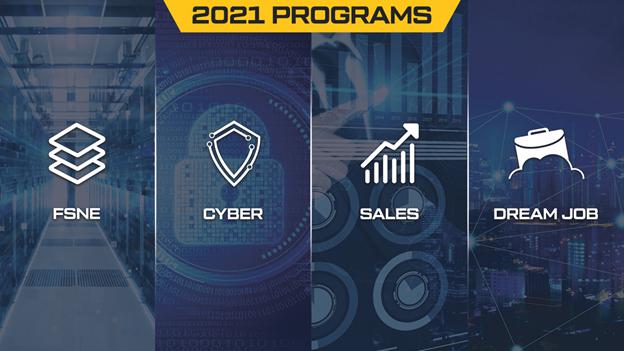


NGT Academy provides live instructed, cohort-based training programs. In 2021, NGT Academy provides the following 4 programs: Full Stack Network Engineer, Cyber Security Specialist, Sales Engineer, and Land Your Dream IT Job. We plan to continue to expand the program offerings across other high demand careers in Information Technology. The high-level details of the programs format are listed below:


20-weeks (Full-Time) or 30-weeks (Part-Time) intensive, rigorous, & immersive training curriculum


380+ hours of engaging and motivating live instruction delivered both in-person, and virtually


100+ hours of real-world project deployments where students plan, design, implement, support, and close the IT project.


Hands-on labs and robust cyber range where students develop and test real-world cyber security skills to produce job ready graduates


Real-world skills verification via a live Skills Qualification check


Professional career coaching with on-demand 1:1 check-ins, mock interviews, personal branding, resume and cover letter design, and access to industry expert guest speakers and mentors


23


Students participate in live online cohort training courses, complete in-house, enterprise level projects and labs, and obtain multiple industry recognized IT certifications. Additionally, all of our students receive career services training (job search, application, and interview skills) and 1-on-1 coaching throughout their program. Upon graduation, students can get matched with employers seeking job ready, certified IT professionals via our placement program and B2B employer network partners. Once our Talent Marketplace platform launches, our job matching services will be even more robust.


We offer the following:


  Live Cohort Full-Time and Part-Time Programs
  1. Full Stack Network Engineer
  2. Cyber Security Specialist
  3. Systems Engineer
  4. Land Your Dream IT Job
     
Certification Bootcamps
  1. Certified Ethical Hacker
  2. Certified Network Defender
  3.

CompTIA Security+

  4. Cisco Certified Network Associate
     
Self-paced Programs
  1. Full Stack Network Engineer Basic Training
  2. Full Stack Network Engineer Advanced Training
     
Certification Exam Study Groups
  1.

EC-Council Certified Ethical Hacker

  2.

EC-Council Certified Network Defender

  3.

CompTIA Security+

  4.

CompTIA Network+

  5. Cisco Certified Network Associate


24


Our Revenue Model


The costs of our programs range from $2,500 to $25,000. New students who enroll in our LIVE cohort immersive training programs and can either pay tuition in full upfront or apply to defer payment through an income share agreement or may qualify for a 100% employer veteran scholarship. Pursuant to our income share agreement, our students only pay back tuition when they are making over $40,000 a year (*Starting salary activation may change depending on program). Upon reaching an annual income of $40,000, our graduates pay their tuition back at a rate of 10% of their annual income. Graduates fulfill their obligations under the income share agreement as soon as they make 48 monthly payments or reach a payment cap of $25,000. If a graduate does not reach the minimum salary threshold after three years, the contract is void and the graduate has no obligation to make any payments.


Veteran Scholarship


Launching in 2022, NGT Academy is offering a full-ride Veteran Scholarship to help qualified service members transition from military careers into secure, well-paying civilian careers in the technology sector. Accepted students receive enrollment into one of NGT's flagship academic programs, including student housing in our downtown Phoenix headquarters during the duration of the academic program, at no cost to the student. Upon completion, students begin an associate level career path with their sponsoring employer. This initiative serves students and employers alike by supplying our veterans with the necessary skills and certifications to compete in the technology job market while providing employers with early access to top emerging talent.


Our Advantage


Students from all walks of life can apply to our programs that may have not been easily accessible to them due to the high rising costs of college education which is rising higher than inflation. In fact we’ve accumulated over $1 Trillion dollars in student loan debt over the past decade alone now totaling $1.9 trillion. And it takes the average student 20 years to pay off their loans. Our income sharing agreement model is disruptive to this crisis by offering our students zero tuition upfront option to train for free in exchange for 10% of their future income for 4 years. In addition to this, we also offer 100% employer sponsored tuition programs for eligible students who in exchange guarantee to work for the employer for 2 years. We believe education should be accessible for everyone and that the ideal education system should be based on real world skills training that employers demand. And lastly, it cannot leave people in large amounts of debt with degrees that do not prepare them to be job ready.

At the core of NexGenT programs are hands-on, real world simulations.  In our Full Stack Network Engineer program we require students to complete three different enterprise projects commonly needed by companies and their IT/Engineering teams. In our Cyber Security program students learn how to use the industry’s most prevalent Cyber Security tools in a series of labs and red/team blue team exercises.  


In addition to hands-on learning, students will get 1 on 1 guidance from a career services professional who helps with resumes, cover letters, self-marketing and interview practice. 


Lastly students will be invited to join an Employer Network with well over 100 employers (and growing) to help students find job placement in a timely fashion.  


Many companies specialize in one of these practices, but NexGenT is unique in weaving all 3 of these practices into the student experience. 


25


Additionally, NexGenT offers students the opportunity to apply for an Income Sharing Agreement, which allows students to pay back tuition ONLY after they find a job making $40,000 or more annually. 


In addition, NexGenT is in the process of building our virtual reality learning environments to help students experience immersive training remotely blending offline to online. For example students will be able to take virtual field trips to data centers and or perform scavenger hunts to aid the learning experience with virtual reality.


Finally, we are re-imagining the next generation campus which is coming soon in Q2 of 2022 where we anticipate producing top tier IT talent for enterprises growing demand. This facility will scout, recruit, and hand select the top students for the next generation IT workforce creating a top elite IT school where students can transform their lives in months rather than years truly taking people from zero to engineer. The NGT Academy campus will have 81 student housing units built, a food court, day care, wellness, and training; an all in one experience where students can live, train, eat, learn, and level up all in one building.


26


Market


Our services are primarily aimed at individuals seeking to secure networking and cybersecurity jobs or advance their skills. There will be 3.5 million unfilled cyber security jobs by end of 2022. At $25,000 per student, this creates an $80 billion dollar market opportunity.


On top of the IT skills gap job market, the edtech market is primed for acceleration to a global digital annual expenditure of $227B to $404B by 2025.


Competition


The IT education industry is highly crowded and competitive, and the company faces significant competition. As such, the company may be unable to acquire significant market share. We compete on the basis of our differentiation as a hands-on educator.


We compete with following:


3-6 Month Live-Cohort Programs. The company competes with competitors like Evolve Security, New Horizons, Global Knowledge, InfoSec Institute, Udacity and General Assembly who offer 3-6 month IT training programs.
   
Low-cost Courses or Video Base Training Alternatives. Coursera, Udemy, Pluralsight and Cybrary are just a few of the other companies we compete against. These companies offer low-cost, individual courses to their customers. We distinguish ourselves from these competitors by offering LIVE, hands-on, real world simulations and training environment that these low-cost providers can’t match.
   
Large Education Institutions. The company also competes with traditional universities that offer bootcamps such as Ed.xpro from MIT, Cybersecurity Bootcamp from Arizona State and the Cybersecurity Boot Camp at University of Texas.


Research and Development


The company is continually finding ways to improve its offerings.


Employees


We have 38 full-time employees and 2 part-time employees.


We plan to engage contractors from time to time on an as-needed basis to consult with us on specific corporate affairs, or to perform specific tasks in connection with our business development activities.


Regulation


Typically our industry is regulated at the state level. For example, as we build out our in-person campus in Phoenix, Arizona, we will be required to register with the Arizona State Board for Private Postsecondary Education.


27


Intellectual Property


We don’t have any patent filed for our business. We do have trademarks filed.


Serial Number   Mark Name   Latest Status
87452699   FNA   12/26/2017 - REGISTERED
87452731   ZERO TO ENGINEER   12/12/2017 - REGISTERED
87452759   NEXGENT   12/12/2017 - REGISTERED


Litigation


The company is involved in a lawsuit involving a lease with its former landlord, Hudson Gateway Place, LLC, brought by the landlord’s assignee, Creditors Adjustment Bureau, Inc., in the Superior Court of Santa Clara County, California. The lease was for the company’s previous space in San Jose, California, which the company was forced to leave in 2020. The complaint alleges breach of contract and sought money damages of approximately $246,000, as well as costs, attorneys’ fees, and other appropriate relief.


There are no other current legal proceedings against the company.


The Company’s Property


The company leases its office space in Phoenix, Arizona. The company leased the office space in 2021. The lease is for 5 years with an option to purchase the office space until December 31, 2021.


28


MANAGEMENT’S DISCUSSION AND ANALYSIS OF FINANCIAL CONDITION AND RESULTS OF OPERATIONS


You should read the following discussion and analysis of our financial condition and results of our operations together with our financial statements and related notes included in this offering Circular. This discussion contains forward-looking statements reflecting our current expectations that involve risks and uncertainties. Actual results and the timing of events may differ materially from those contained in these forward-looking statements due to a number of factors, including those discussed in the section entitled “Risk Factors” and elsewhere in this Offering Circular.


General


We were formed as a Delaware corporation on May 2, 2016. The company offers military grade cyber security and network engineer training programs. The company’s business model is to sell its programs directly to consumers. Most of our recent customers enter into an income sharing arrangement with the company. The company also offers its programs to enterprise customers for training and hiring purposes.


The Company receives revenues from our customers for providing educational services and related finance revenue associated with Income Sharing Agreements (ISA). Cost of revenue consists primarily of expenses associated with technology costs to store and deliver educational content. Cost of revenue also includes costs, such as salaries and non-employees whose primary responsibilities relate to supporting the delivery of educational content and overseeing guided cohorts.


Results of Operations


The following represents our performance highlights:


Revenues


Revenues increased by $303,646 (or 12%) to $2,837,386 for the year ended December 31, 2020 (“Fiscal 2020”) from $2,533,740 for the year ended December 31, 2019 (“Fiscal 2019”). The increase in revenue occurred because in February 2020 we changed the way our educational services were delivered. We went from a self-paced instruction format to a live, online, cohort-based training format. The pricing structure of our educational services was also changed resulting in a lower number of students being trained but at higher revenue per student. In addition, we introduced the ability for students to pay nothing upfront for our educational services by offering the option to sign an ISA contract. This new business model was fundamentally different from the 2019 business model and resulted in increased 2020 revenue due to the pricing structure increase.


Cost of Revenues


The cost of net revenues increased by $822,288 (or 101.7%) to $1,630,790 in Fiscal 2020 from $808,502 for Fiscal 2019. The increase in cost of revenues was due to the addition of personnel to our academic training team as well as the addition of practice lab expenses, practice exams expenses, and welcome kits expenses to our live, online, cohort-based instruction programs. Our gross margins were 42.5% and 68.1% in Fiscal 2020 and Fiscal 2019, respectively. The change in gross margins was due to the added expenses described above.


Operating Expenses


Our operating expenses consist of general and administrative expenses, sales and marketing expenses, and research and development expenses. The company recorded total operating expenses of $4,458,517 in Fiscal 2020 compared with $5,560,390 in Fiscal 2019. The decrease of $1,101,873 (or 19.8%) in our total operating expenses resulted largely from a year-over-year decrease of $2,071,863 in sales and marketing expense as we tried new marketing channels and optimized marketing expense metrics tracking. The decrease was partially offset by increases in general and administrative expenses and research and development costs of $914,168 and $55,822, respectively. The increase in general and administrative expenses was due to scaling the team with relevant hires on our marketing & grow team, career services team, admissions team, and B2B enterprise sales team as well as expenses relating to hosting our first remote user conference.


29


Net loss


Accordingly, the company’s net loss decreased to $3,207,176 in Fiscal 2020 from $3,834,408 in Fiscal 2019.


Liquidity and Capital Resources


As of the date of this Offering Circular, we have primarily been funded from revenues generated by the sale of our products, the sale of our securities, and our Series A funding  proceeds as well as the sale of $525,000 in SAFE agreements. As of December 31, 2020, the company had approximately $6,014,395 in cash and cash equivalents on hand. We believe that the proceeds from this offering, together with our cash and cash equivalent balances will be adequate to meet our liquidity and capital expenditure requirements for the next 60 months. If these sources are not sufficient to meet our cash requirements, we will need to seek additional capital, potentially through private placements of equity or debt, to fund our plan of operations.


Trend Information


Our remaining focus in 2021 will be in preparing for launching NGT Academy’s campus in downtown Phoenix with a grand opening in Q2 of 2022. We plan to recruit the brightest and capable veterans and civilians to join us for our very first elite in-person program across both Network Engineering and Cyber Security Cohorts for a truly all in one campus experience. These students will transform their lives in 4 months where they will train, live, eat, and learn the latest technologies our employers demand.


Along with these activities we plan to recruit for several key c-suite level roles. We also plan to launch over 5 IT certification bootcamps to provide continuous education to our students well after they finish our immersive programs. We will also start the R&D process for evaluating other programs we will create including but not limited to Block Engineering, Cloud, Machine/AI Learning, Technical Sales, Data Science, and Software Engineering.


Our key planned activities and milestones to achieve our next 18-month plan of operation includes the following:


-Focus on getting to cash flow positive
-Hiring experienced C-level suites
-Hiring more trainers and preparing for adding additional tracks
-Launching our FREE Basic training program for online
-Launching our Systems Engineering track
-Winning several key government IT training contracts
-Launching our Land Your Dream IT Job Course
-Launching over 10+ IT Certification Bootcamps
-Building v2 of our Learning Management System and building AI into it to maximize learning retention, accelerate training, and enhancing the online learning experience
-Preparing for Expansion to central and east coast locations
-Expand our campus in greater metro Phoenix
-Launch our apprenticeship programs with our partners
-Acquire smaller companies to accelerate growth
-Lastly launching our ‘Project VNOC’ using Virtual Reality to Blend Offline to Online


30


Relaxed Ongoing Reporting Requirements


If we become a public reporting company in the future, we will be required to publicly report on an ongoing basis as an “emerging growth company” (as defined in the Jumpstart Our Business Startups Act of 2012, which we refer to as the JOBS Act) under the reporting rules set forth under the Exchange Act. For so long as we remain an “emerging growth company”, we may take advantage of certain exemptions from various reporting requirements that are applicable to other Exchange Act reporting companies that are not “emerging growth companies”, including but not limited to:


not being required to comply with the auditor attestation requirements of Section 404 of the Sarbanes-Oxley Act;


taking advantage of extensions of time to comply with certain new or revised financial accounting standards;


being permitted to comply with reduced disclosure obligations regarding executive compensation in our periodic reports and proxy statements; and


being exempt from the requirement to hold a non-binding advisory vote on executive compensation and shareholder approval of any golden parachute payments not previously approved.


If we become a public reporting company in the future, we expect to take advantage of these reporting exemptions until we are no longer an emerging growth company. We would remain an “emerging growth company” for up to five years, although if the market value of our Common Stock that is held by non-affiliates exceeds $700 million as of any June 30 before that time, we would cease to be an “emerging growth company” as of the following December 31.


If we do not become a public reporting company under the Exchange Act for any reason, we will be required to publicly report on an ongoing basis under the reporting rules set forth in Regulation A for Tier 2 issuers. The ongoing reporting requirements under Regulation A are more relaxed than for “emerging growth companies” under the Exchange Act. The differences include, but are not limited to, being required to file only annual and semiannual reports, rather than annual and quarterly reports. Annual reports are due within 120 calendar days after the end of the issuer’s fiscal year, and semiannual reports are due within 90 calendar days after the end of the first six months of the issuer’s fiscal year.


In either case, we will be subject to ongoing public reporting requirements that are less rigorous than Exchange Act rules for companies that are not “emerging growth companies”, and our shareholders could receive less information than they might expect to receive from more mature public companies.


31


DIRECTORS, EXECUTIVE OFFICERS AND SIGNIFICANT EMPLOYEES


Name   Position   Age     Term of Office   Approximate hours per week
for part-time employees
 
Executive Officers:                    
Terry Kim   Chief Executive Officer   43     2016 – Present   Full-time
Jacob Hess   Chief Administration Officer   38     2016 – Present     Full-time
Robert Kao   Chief Operating Officer   41     2019 - Present   Full-time
Directors:                  
Terry Kim   Director   43     2016 – Present   N/A
                   
Jacob Hess   Director   38     2016 – Present   N/A


Terry Kim, Chief Executive Officer, Director:


Terry Kim is the Co-Founder and CEO of NexGenT Inc and NGT Academy creating job ready certified engineers trained on the latest technologies. Prior to founding the company, Mr. Kim has been in the IT industry for over 22 years and is passionate about inspiring, creating, and empowering the next generation IT workforce. He has worked for Cisco Systems as a Systems Engineer and Arista Networks and has trained thousands of IT engineers for the military while serving in the U.S. Air Force. Mr. Kim has also been through three startup business accelerator programs (Atlanta Ventures Accelerator, AngelPad and YCombinator), where he has furthered his knowledge in starting and growing companies.


Jacob Hess, Chief Academic Officer, Director:


Jacob Hess is Co-Founder, Chief Academic Officer, and Technical Instructor at NexGenT. Before founding NexGenT with Terry Kim in 2016, Jacob was a Systems Engineer at TekLinks Inc (2014 - 2016), Chief Operating Officer at CheckAction LLC (2013 - 2014), Network Engineer at Keesler Federal Credit Union (2008 - 2013), and a Technical Instructor at the United States Air Force (2001 - 2008) where he taught up and coming Network Engineers for the military. Jacob holds an AAS in Electronic Systems and an AAS in Technical Instruction along with a Teaching Practicum, and holds multiple IT certifications such as the Cisco Certified Network Professional from Cisco Systems. Jacob has also been through three startup business accelerator programs (Atlanta Ventures Accelerator, AngelPad and YCombinator), where he has furthered his knowledge in business development. As CAO at NexGenT, Jacob oversees the Academic Group, training program development, student success, and the instructor team. Jacob is also an instructor himself, and participates in instruction as well as course and program development in addition to overseeing the Academic Group.


Robert Kao, Chief Operating Officer


As COO, Robert oversees growth and product development. He has over 15 years as a serial entrepreneur founding multiple companies in mobile security and logistic software. Prior to joining NGT Academy in September 2019, Robert has held many positions overseeing growth of various business units. From 2018 to 2019, he served as the General Manager growing B2B business at CommonBond, a student loan refinancing company. Prior to that, Kao has helped portfolio companies grow at Citi Ventures from 2016 to 2018.


A developer at heart, Robert started out his career developing financial trading systems and BlackBerry apps for investment banks. Robert’s passion for helping others also led him to co-author many self-help tech titles and advise other startups entrepreneurs. Robert graduated from Columbia University and currently enjoys spending his spare time with wife and kids playing tennis and golf.


32


Steve Tarr, Director of Finance


Steve Tarr is the Director of Finance & Operations for NGT Academy. He is a business improvement and growth specialist with a strong financial organization, analysis, and reporting background. Steve has over 25 years of private equity, business management, and start-up experience. Prior to joining NGT Academy in February 2020, Steve was the CFO for Austin, TX based Amplifier where he helped scale revenue from $4M to over $18M in 4 years. Before Amplifier, he spent time as Head of Finance at SmithCo Investments, a Private Family Office, and as a Managing Director at Prime New Ventures, a $150M Austin-based VC group. In addition, Steve was a Founding Partner of Dominion Equities, L.P., a Private Equity consulting group, where he actively provided business, financial, and fundraising strategy to emerging growth companies for 15 years.


Steve graduated with Honors in 1991 from the University of Tulsa where he received a BS in Economics & Mathematics. In 1995, he also received his MBA with a concentration in Finance & Entrepreneurship from the McCombs Graduate School of Business at the University of Texas in Austin.


Zach Samuels, Director of Admissions


Zach Samuels joined NGT Academy in May 2018 and has overseen the evolution of the student enrollment process with the company. His mission is to standardize a multi-layer admission process that captures a high quality, motivated student.


Zach has 10 years of sales and marketing experience with 5 of those years coming in leadership positions. Zach is a specialist in sales process and sales coaching. Prior to joining NGT Academy, Zach worked as the Director of Sales and Marketing for a San Diego based sports apparel startup called Maxim Athletic (2015-2018) where he raised average sales agent bookings by 48%. Zach has also worked as a staffing consultant for Cisco’s Data Center and Collaboration Technologies teams (2013-2015).

Born and raised in the San Francisco Bay Area, Zach graduated with a Bachelor’s in Business Economics from the University of California, Santa Barbara where he also earned a full scholarship to play Division 1 baseball.


Curt Cornum, Vice President of Technology Services


Curt Cornum joined NGT Academy in October of 2020 as the Vice President of Technology Services. His mission is to build a profitable services organization that provides well-trained and cost-effective cybersecurity and network consultants to our clients while also accelerating the field experience and marketability of our top graduates.


Prior to joining NGT Academy, Curt held leadership positions with a Fortune 500 IT Reseller and a global network equipment manufacturer. Curt has also done strategic consulting work and provided technical thought leadership for financial services and high-tech manufacturing clients.


A native of Arizona and a former U.S. Marine, Curt graduated Summa Cum Laude from Arizona State University with a bachelor’s degree in Business.


33


Michael Nobiletti, Head of Employer Relations & Business Development


At NGT Academy, Michael leads the B2B sales team in selling our training and hiring solutions into enterprise organizations. He is an entrepreneur and sales leader with 15 years of experience, specializing in talent acquisition and development. He started his career selling recruitment solutions at Yahoo! HotJobs before founding Rollinglobe, an online travel platform turned recruitment firm for the world’s largest travel agencies. Rollinglobe was one of only ten companies selected to join NYC-based tech accelerator, Entrepreneurs Roundtable Accelerator, in the winter of 2015. Michael holds a Bachelor’s of Science degree from Fairfield University in Marketing with a concentration in Integrated Communications.


COMPENSATION OF DIRECTORS AND EXECUTIVE OFFICERS


For the fiscal year ended December 31, 2020 we compensated our directors and executive officers as follows:


Name  Capacities in
which
compensation
was received
  Cash
compensation
($)
   Other
compensation
($)
   Total
compensation
($)
 
Terry Kim  Chief Executive Officer  $250,000    --   $250,000 
Jacob Hess  Chief Administration Officer  $150,000   $10,000   $160,000 
Robert Kao  Chief Operating Officer  $210,000    --   $210,000 


For the fiscal year ended December 31, 2020, we did not pay our directors in their capacity as directors. There are two directors in this group.


As of the date of this offering, we have no current plans to amend the compensation of our directors and executive officers.


34


SECURITY OWNERSHIP OF MANAGEMENT AND CERTAIN SECURITYHOLDERS


The following table displays, as of July 1, 2021, the voting securities beneficially owned by (1) any individual director or officer who beneficially owns more than 10% of any class of our capital stock, (2) all executive officers and directors as a group and (3) any other holder who beneficially owns more than 10% of any class of our capital stock:


Title of class  Name and address of beneficial owner(1)  Amount and nature of
beneficial ownership
  Amount and nature of
beneficial ownership
acquirable
  Percent of class (2) 
Common Stock  Terry Kim  23,934,085 shares of Class A Common Stock   3,581,119 Options   60.34%
Common Stock  Jacob Hess  10,006,395 shares of Class A Common Stock   1,561,977 Options   30.07%
Common Stock  All executive officers and directors as a group (3 individuals)  33,940,480 shares of Class A Common Stock   28,215,480 Options  78.04%
Series A-1 Preferred Stock  Altos Ventures (3)  29,630,885 shares of Series A-1 Preferred Stock   0   46.67%
Series A-1 Preferred Stock  SherpaVentures Fund II, LP  19,477,250 shares of Series A-1 Preferred Stock   0   30.68 
Series A-2 Preferred Stock  YC Holdings II, LLC  507,920 shares of Series A-2 Preferred Stock   0   92.71%
Series A-3 Preferred Stock  G Ventures II, LP  1,880,825 shares of Series A-3 Preferred Stock   0   24.32 
Series A-3 Preferred Stock  YC Holdings II, LLC  1,880,830 shares of Series A-3 Preferred Stock   0   24.32%
Series A-4 Preferred Stock  Mandra iBase Limited  6,520,865 shares of Series A-4 Preferred Stock   0   70.27%
Series A-4 Preferred Stock  Pioneer Fund – NG LLC  1,003,210 shares of Series A-4 Preferred Stock   0   10.81%
Series A-5 Preferred Stock  5 Parts Investments LLC  1,504,660 shares of Series A-5 Preferred Stock   0   17.39%
Series A-5 Preferred Stock  Bragiel Brothers I, L.P.  1,504,660 shares of Series A-5 Preferred Stock   0   17.39%
Series A-5 Preferred Stock  Mandra iBase Limited  3,761,660 shares of Series A-5 Preferred Stock   0   43.45%
Series A-6 Preferred Stock  Liquid 2 Ventures, L.P.  4,514,265 shares of Series A-6 Preferred Stock   0   83.33%
Series A-6 Preferred Stock  Tri-Lead Capital Inc.  902,850 shares of Series A-6 Preferred Stock   0   16.66%
Series A-7 Preferred Stock  AngelPad Fund IIa, L.P.  1,128,665 shares of Series A-7 Preferred Stock   0   22.22%
Series A-7 Preferred Stock  Kevin Moore SSMTT GST Exempt Trust  1,128,665 shares of Series A-7 Preferred Stock   0   22.22%
Series A-7 Preferred Stock  Kevin Moore SSMTT GST Nonexempt Trust  1,128,665 shares of Series A-7 Preferred Stock   0   22.22%
Series A-7 Preferred Stock  Stuart Pollard  564,330 shares of Series A-7 Preferred Stock   0   11.11%
Series A-7 Preferred Stock  Tidhar Carmeli  1,128,665 shares of Series A-7 Preferred Stock   0   22.22%


(1)The address for all the executive officers, directors, and beneficial owners is c/o 135 N. 2nd Ave., 6th Floor, Phoenix, Arizona 85003.
(2)The final column (Percent of Class) includes a calculation of the amount the person owns now, plus the amount that person is entitled to acquire. That amount is then shown as a percentage of the outstanding amount of securities in that class if no other people exercised their rights to acquire those securities. The result is a calculation of the maximum amount that person could ever own based on their current and acquirable ownership, which is why the amounts in this column will not add up to 100%.
(3)Altos Ventures managers shared in the following vehicles: Altos Hybrid 2 BF, LLC, Altos Hybrid 2 BL, LLC, Altos Hybrid 2 D, LLC, Altos Hybrid 2 N, LLC, Altos Hybrid 2 P-FIO, LLC, Altos Hybrid 2 P-M, LLC, Altos Hybrid 2 P-MSF, LLC, Altos Hybrid 2 V, LLC and Altos Hybrid 2, L.P.


35


INTEREST OF MANAGEMENT AND OTHERS IN CERTAIN TRANSACTIONS


On December 15, 2020, the company lent $50,000 to Staff Ninja, LLC (“Staff Ninja”) pursuant to a signed promissory note (the “2020 Staff Ninja Note”). The 2020 Staff Ninja Note bears simple interest at a rate of 0.15% per annum and matures on December 15, 2022. Staff Ninja is owned and operated by the company’s two founders, Terry Kim and Jacob Hess.


On April 9, 2021, the company lent an additional $50,000 to Staff Ninja pursuant to a signed promissory note (the “April 2021 Staff Ninja Note”). The April 2021 Staff Ninja Note bears simple interest at a rate of 0.12% per annum and matures on April 9, 2023.


On July 14, 2021, the company lent an additional $50,000 to Staff Ninja pursuant to a signed promissory note (the “July 2021 Staff Ninja Note”). The July 2021 Staff Ninja Note bears simple interest at a rate of 0.12% per annum and matures on July 14, 2023.


SECURITIES BEING OFFERED


The Company is offering up to 36,000,000 Units, at a price of $1.00 per Unit, each consists of:


one share of Class B Common Stock; and
   
one Warrant exercisable to purchase ½ a share of Class B Common Stock.


Our Units will not be certificated and the shares of our Class B Common Stock and the Warrants that are components of such Units will be immediately separable and will be issued separately in this Offering.


The price of our Units has been arbitrarily established by us after giving consideration to numerous factors, including market conditions and the perceived valuations. The price of our Units may not be in any way indicative of the Company’s actual value or the value of the Class B Common Stock and/or the Warrants following the completion of this Offering.


Warrants


The following is a brief summary of certain terms and conditions of the Warrants included in the Units. The Warrants are subject in all respects to the provisions contained in the Warrants and the warrant agreement (the “Warrant Agreement”) between us and our warrant agent, Computershare (or “Warrant Agent”), each filed as an exhibit to the Offering Statement of which this Offering Circular forms a part.


Form


The Warrants will be issued as individual warrants to purchasers of the Units.


Amount


Each purchaser of a Unit will receive a Warrant exercisable into ½ share of Class B Common Stock at a price of $2.00 per share, subject to customary adjustments.


Exercisability


Each Warrant is exercisable to purchase one-half share of Class B Common Stock of the Company at any time commencing on the issuance date of the Warrant, and terminating at 5:00 p.m., Pacific Time, on the first anniversary of qualification of the Company’s Offering Statement for this Offering. The Warrants may be exercised upon delivery by the Custodian, upon receipt of instructions from a beneficial owner (an investor in this Offering or such investor’s transferee), of an exercise notice at the offices of the Warrant Agent. A Warrant holder may only exercise its warrants for a whole number of shares of Class B Common Stock. No fractional shares will be issued upon exercise of Warrants.


36


Transferability


Subject to applicable laws, the Warrants may be offered for sale, sold, transferred or assigned without our consent. Exercise of the Warrants will be conditional upon the Company maintaining the qualification of an Offering Statement covering such exercise. In addition, the Warrant holders will be subject to a “market stand-off” agreement in the event of a proposed public offering. During the period, not to exceed 180 days, commencing on the effective date of a registration statement relating to the IPO of the Company and ending on the date specified by the Company and the managing underwriter of the IPO, Warrant holders agree not to transfer any shares of Class B Common Stock or other securities of the Company held by the holders, or securities convertible or exercisable or exchangeable for securities of the Company, without the prior written consent of the managing underwriter. Warrant holders agree to execute any agreements as may be reasonably requested by the underwriters of the IPO to effect the market stand-off.


Rights as a Stockholder


Except as otherwise provided in the Warrants or by virtue of such holder’s ownership of shares of our Class B Common Stock, the holder of a Warrant does not have the rights or privileges of a holder of our Class B Common Stock, including any voting rights, until the holder exercises the Warrant.


Amendments


Except as set forth in the Warrant Agreement, the terms of a Warrant may be amended or waived with the written consent of the Company and the Warrant holder. The Company and the Warrant Agent may amend or supplement the Warrant Agreement without the consent of any holder for the purpose of (i) curing any ambiguity, or curing, correcting or supplementing any defective provision contained in the Warrant Agreement or the Warrants, (ii) evidencing the succession of another corporation to the Company and the assumption by any such successor of the covenants of the Company contained in the Warrant agreement and the Warrants, (iii) evidencing and providing for the acceptance of appointment by a successor Warrant Agent with respect to the Warrants, (iv) adding to the covenants of the Company for the benefit of the Warrant holders or surrendering any right or power conferred upon the Company under the Warrant Agreement, or (viii) amending the Warrant Agreement and the Warrants in any manner that the Company may deem to be necessary or desirable and that will not adversely affect the interests of the Warrant holders in any material respect.


Description of Capital Stock


The following description summarizes the most important terms of the Company’s capital stock. This summary does not purport to be complete and is qualified in its entirety by the provisions of the Company’s amended and restated certificate of incorporation, as amended, and bylaws, copies of which have been filed as Exhibits 2.1 and 2.2, respectively, to the Offering Statement of which this Offering Circular forms a part. For a complete description of the Company’s capital stock, you should refer to the amended and restated certificate of incorporation and bylaws of the Company and to the applicable provisions of Delaware law.


The Company has authorized 60,000,000 shares of Class B Common Stock of the Company and ended and Restated Certificate of Incorporation, effecting the Stock Split and authorizing the shares of Class B Common Stock. The Amended and Restated Certificate of Incorporation will also designate 63,494,750 shares of the authorized Preferred Stock of the Company as “Series A-1 Preferred Stock”, 547,885 shares as “Series A-2 Preferred Stock”, 7,733,945 as “Series A-3 Preferred Stock”, 9,279,690 as “Series A-4 Preferred Stock”, 8,651,805 as “Series A-5 Preferred Stock”, 5,417,115 as “Series A-6 Preferred Stock” and 5,078,990 as “Series A-7 Preferred Stock”. A form of the Company’s Amended and Restated Certificate of Incorporation intended to be filed with the State of Delaware prior to the qualification of this Offering is filed as Exhibit 2.1 to the Offering Statement, of which this Offering Circular forms a part.


The rights and preferences of our Class A Common Stock and Class B Common Stock are described below, giving effect to the Stock Split.


We adopted a stock plan on May 17, 2016 (the “Plan”). 48,361,925 shares of the Company’s Class A Common Stock are eligible for issuance pursuant to the Plan. As of July 1, 2021, 35,140,480 option grants have been issued under the Plan.


37


Common Stock


The Company has authorized 250,000,000 shares of Class A Common Stock, par value $0.00001 per share and 60,000,000 shares of Class B Common Stock, par value $0.00001. The rights and preferences of the Class A Common Stock and Class B Common Stock are identical, except that the Class B Common Stock does not have any voting rights in the Company. As such, the rights of the holders of our Common Stock generally (both Class A and Class B) are summarized below.


Voting Rights


Holders of shares of Class A Common Stock are entitled to one vote for each share on all matters submitted to a vote of the stockholders, including the election of directors, except that the holders of the Class A Common Stock shall not be entitled to vote on any amendment to the Company’s Certificate of Incorporation that relates solely to the terms of the Company’s Preferred Stock. Holders of Class B Common Stock have no voting rights, except as required by Delaware law.


Delaware law would permit holders of Class B Common Stock to vote, with one vote per share, on a matter if we were to:


change the par value of the common stock; or


amend our certificate of incorporation to alter the powers, preferences, or special rights of the common stock as a whole in a way that would adversely affect the holders of our Class B Common Stock.


In addition, Delaware law would permit holders of Class B Common Stock to vote separately, as a single class, if an amendment to our certificate of incorporation would adversely affect them by altering the powers, preferences, or special rights of the Class B Common Stock, but not the Class A Common Stock. As a result, in these limited instances, the holders of a majority of the Class B Common Stock could defeat any amendment to our certificate of incorporation. For example, if a proposed amendment of our certificate of incorporation provided for the Class B Common Stock to rank junior to the Class A Common Stock with respect to (i) any dividend or distribution, (ii) the distribution of proceeds were we to be acquired, or (iii) any other right, Delaware law would require the vote of the Class B Common Stock, with each share of Class B Common Stock entitled to one vote per share. In this instance, the holders of a majority of Class B Common Stock could defeat that amendment to our certificate of incorporation.


Our certificate of incorporation provides that the number of authorized shares of common stock or any class of common stock, including our Class B Common Stock, may be increased or decreased (but not below the number of shares of common stock then outstanding) by the affirmative vote of the holders of a majority of the Class A Common Stock. As a result, the holders of a majority of the outstanding Class A Common Stock can approve an increase or decrease in the number of authorized shares of Class B Common Stock without a separate vote of the holders of Class B Common Stock. This could allow us to increase and issue additional shares of Class B Common Stock beyond what is currently authorized in our certificate of incorporation without the consent of the holders of our Class B Common Stock.


The majority of the Company’s holders of Common Stock are party to the Voting Agreement between the Company and the majority of the Company’s capital stock. The material terms of this Voting Agreement are summarized below.


38


Election of Directors


The holders of the Common Stock, exclusively and as a separate class from the holders of Preferred Stock, shall be elect two directors of the Company.


Dividend Rights


Subject to preferences that may be applicable to any then outstanding class of capital stock having prior rights to dividends (including the company’s Series A Preferred Stock (defined below)), holders of the Common Stock are entitled to receive dividends, if any, as may be declared from time to time by the board of directors out of legally-available funds. Any dividends in excess of dividends payable to holders of the Series A Preferred Stock, will be paid ratably among the holders of Common Stock and Series A Preferred Stock on an as-converted basis. The company has never declared nor paid cash dividends on any of its capital stock and currently does not anticipate paying any cash dividends after this offering or in the foreseeable future on its Common Stock.


Liquidation Rights


In the event of the company’s liquidation, or winding up, whether voluntary or involuntary, subject to the rights of any senior Preferred Stock that may then be outstanding, the assets of the company legally available for distribution to stockholders shall be distributed on an equal priority, pro rata basis to the holders of Common Stock.


Preferred Stock


General


The Company has the authorized seven series of Preferred Stock, and specifically 63,494,750 shares of Series A-1 Preferred Stock, 547,885 shares of Series A-2 Preferred Stock, 7,733,945 shares of Series A-3 Preferred Stock, 9,279,690 shares of Series A-4 Preferred Stock, 8,651,805 shares of Series A-5 Preferred Stock, 5,417,115 shares of Series A-6 Preferred Stock, and 5,078,990 shares of Series A-7 Preferred Stock (together, the “Series A Preferred Stock”). Each series of the Series A Preferred Stock contains substantially similar rights and preferences.


Dividend Rights


The holders of Series A Preferred stock shall be entitled to receive a non-cumulative dividend of 8% per year on the Series A Original Issue Price prior to the declaration or payment of any dividends on shares of Common Stock The “Series A Original Issue Price” which is (i) $0.2362 per share of Series A-1 Preferred Stock, (ii) $0.2362 per Series A-2 Preferred Stock, (iii) $0.1329 per share of Series A-3 Preferred Stock, (iv) $0.0997 per share of Series A-4 Preferred Stock, (v) $0.0665 per share of Series A-5 Preferred Stock, (vi) $0.0554 per share of Series A-6 Preferred Stock, and (vii) $0.0443 per share of Series A-7 Preferred, in each case as adjusted for any stock split, stock dividend, recapitalization, or otherwise. However, the holders of the Series A Preferred Stock may waive this dividend preference by an affirmative vote of the writing consent of the holders of at least a majority of the then outstanding Series A Preferred Stock (voting together as a single class, and on an as-converted basis (the “Requisite Preferred Holders”).


The company shall not declare, pay or set aside any dividends on shares of Common Stock unless a dividend is declared and paid on the Preferred Stock as if all such Preferred Stock were converted into shares of Common Stock.


Voting Rights


On any matter presented to the stockholders of the company, each holder of outstanding shares of Preferred Stock shall be entitled to cast the number of votes equal to the number of whole shares of Common Stock into which the shares of Preferred Stock held by such holder.


The majority of the Company’s holders of preferred stock are party to the Voting Agreement, Investor Rights Agreement, and Right of First Refusal and Co-sale Agreement between the Company and holders of the company’s preferred stock (the “Investor Agreements”). The material terms of Investor Agreements are summarized below.


Voting Agreement:


Agreement to Elect Certain Directors: Pursuant to the Voting Agreement, the parties agreed to vote their shares of capital stock of the Company to elect the certain individuals as Directors of the Company (three (3) in total). For more information on these terms, see the “Directors, Executive Officers, and Significant Employees” section of this Offering Circular.


Drag-Along Right. The parties to the Voting Agreement agree to a “drag-along provision” related to certain events, such as the sale, merger or dissolution of the company (a “Liquidating Event”). The holders agree that, if the holders of at least a majority of the shares of common stock then issued or issuable upon conversion of Series A Preferred Stock and the holders of a majority of the then outstanding shares of Common Stock then held collectively by YC Holdings II, LLC and by such holders who are then providing services to the company as officers, employees or non-director consultants approve the Liquidating Event, the parties to the Voting Agreement will vote their shares in favor of the transaction if such vote is solicited, refrain from exercising dissenters’ rights with respect to the Liquidating Event, and deliver any documentation or take other actions reasonably requested by the Company or the other holders in connection with the Liquidating Event.


39


Irrevocable Proxy and Power of Attorney: The shareholders that are party to this agreement agree to grant the President of the Company (Terry Kim) a proxy to vote their shares only if they do not vote their shares in accordance with the terms of the Voting Agreement and solely with respect to the following matters:


  Election of members of the Board of Directors of the Company;


  Increasing the number of authorized shares of Common Stock of the Company; and


  Votes regarding the sale of the Company.


The President has no discretion on how to vote the shares pursuant to this proxy, and may only vote the shares according to the terms of the Voting Agreement.


A copy of this agreement is filed as Exhibit 3.3 to this Offering Statement of which this Offering Circular forms a part.


Investor Rights Agreement


Defined terms not otherwise defined herein shall have the meaning ascribed to them in the Investor Rights Agreement.


Demand Form S-1: Holders of a majority of the Registrable Securities then outstanding may demand that the Company file a Form S-1 registration statement with respect to a majority of the Registrable Securities then outstanding at any time after the earlier of (i) five (5) years after the date of the Investor Rights Agreement or (ii) one hundred eighty (180) days after the effective date of the registration statement for the IPO. Registrable Securities means the Common Stock issuable or issued upon conversion of any Preferred Stock of the Company, (ii) any Common Stock, or any Common Stock issued or issuable upon conversion and/or exercise of any Preferred Stock of the Company, and (iii) any Common Stock issued as a dividend or other distribution with respect to, or in exchange for or in replacement of, the shares referenced in parts (i) and (ii) above.


Demand Form S-3: If at any time when it is eligible to use a Form S-3 registration statement, holders of at least 30% of the Registrable Securities then outstanding may demand that the Company file a Form S-3 registration statement.


Delay of Registration: No holder shall have any right to obtain or seek an injunction restraining or otherwise delaying any registration pursuant to this Agreement as the result of any controversy that might arise with respect to the interpretation or implementation.


Right of First Offer: If the company proposes to offer or sell any New Securities, the Company shall first offer such New Securities to each Major Investor. A Major Investor shall be entitled to apportion the right of first offer hereby granted to it in such proportions as it deems appropriate, among (i) itself, (ii) its Affiliates, and (iii) its beneficial interest holders. New Securities means, collectively, equity securities of the Company, whether or not currently authorized, as well as rights, options, or warrants to purchase equity securities, or securities of any type whatsoever that are, or may become, convertible or exchangeable into or exercisable for such equity securities. Major Investors are investors that, individually or together with their affiliates, hold at least 2,500,000 shares of Registrable Securities (as adjusted for any stock split, stock dividend, combination, or other recapitalization or reclassification effected after the date hereof.


First Refusal Agreement


Defined terms not otherwise defined herein shall have the meaning ascribed to them in the First Refusal Agreement


Right of First Refusal by Key Holders: The Key Holders, constituting those investors identified on Schedule B of the agreement and any assignees of the same, grants to the Company a Right of First Refusal to purchase all or any portion of Transfer Stock that such Key Holder may propose to transfer in a Proposed Key Holder Transfer, at the same price and on the same terms and conditions as those offered to the Prospective Transferee.


Election of Directors


The holders of Series A Preferred Stock, voting together as a single class on an as converted to basis, shall be entitled to elect one director of the company.


Protective Provisions


At any time when at least a majority of the authorized shares of Series A Preferred Stock are outstanding, the company must first obtain the written consent or affirmative vote of the Requisite Preferred Holders before doing any of the following:


change the authorized number of shares of Common Stock or Preferred Stock;
   
create, or authorize the creation of, or issue or obligate itself to issue shares of any additional class or series of capital stock unless the same ranks junior to the Series A Preferred Stock with respect to distributions, dividends or rights of redemption, or increase the authorized number of shares of Series A Preferred Stock or increase the authorized number of shares of any additional class or series of capital stock unless the same ranks junior to the Series A Preferred Stock with respect to the above listed rights;
   
liquidate or dissolve the company;


40


amend, alter or repeal any provision of the certificate of incorporation or bylaws of the company in a manner that adversely affects the powers, preferences or rights of the holders of Series A Preferred Stock;
   
purchase or redeem or pay or declare any dividend or make any distribution on, any shares of capital stock of the company unless otherwise authorized in the certificate of incorporation or by the board of directors;
   
reclassify, alter or amend any existing security of the company that is pari passu with the Series A Preferred Stock with respect to distributions, dividends or rights of redemption, if such reclassification, alteration, or amendment would result in such security being senior to the Series A Preferred Stock, with respect to such rights;
   
reclassify, alter or amend any existing security of the company that is junior to the Series A Preferred Stock with respect to distributions, dividends or rights of redemption, if such reclassification, alteration, or amendment would result in such security being senior to or pari passu with the Series A Preferred Stock, with respect to such rights;
   
increase or decrease the authorized number of directors of the board of directors; or
   
sell, issue, sponsor, create or distribution any digital tokens, cryptocurrency, or other blockchain-based assets.


Liquidation Rights


In the event of the company’s liquidation, dissolution, or winding up, holders of its Series A Preferred Stock are entitled to liquidation preference superior to holders of the Common Stock. Holders of Series A Preferred Stock will receive an amount for each share equal to greater of (i) the Series A Original Issue Price plus any declared but unpaid dividends or (ii) the amount payable had all Preferred Stock been converted to Common Stock. If, upon such liquidation, dissolution or winding up, the assets and funds that are distributable to the holders of all Series A Preferred Stock are insufficient to permit the payment to such holders of the full amount of their respective liquidation preference, then all of such assets and funds will be distributed ratably among the holders of the Series A Preferred Stock in proportion to the full preferential amounts to which they would otherwise be entitled to receive.


Conversion Rights


Series A Preferred Stock is convertible into Common Stock voluntarily and automatically. Each share of Series A Preferred Stock is convertible at the option of the holder of the share at any time prior to the closing of a liquidation event. Each share of Series A Preferred Stock is currently convertible into one share of Class A Common Stock, but such conversion rate may be adjusted pursuant to the anti-dilution rights of the Series Preferred Stock set forth in Section 4.4 of the Amended and Restated Certificate of Incorporation.


Additionally, each share of the Series A Preferred Stock will automatically convert into Common Stock (i) at the closing of the sale of shares of Common Stock firm commitment underwritten public offering pursuant to an effective registration statement under the Securities Act of 1933 or (ii) at the date and time, or the occurrence of an event, specified by vote or written consent of the Requisite Preferred Holders. Preferred Stock converts into the same number of shares of Common Stock regardless of whether converted automatically or voluntarily.


ONGOING REPORTING AND SUPPLEMENTS TO THIS OFFERING CIRCULAR


We will be required to make annual and semi-annual filings with the SEC. We will make annual filings on Form 1-K, which will be due by the end of April each year and will include audited financial statements for the previous fiscal year. We will make semi-annual filings on Form 1-SA, which will be due by September 28 each year, which will include unaudited financial statements for the six months to June 30. We will also file a Form 1-U to announce important events such as the loss of a senior officer, a change in auditors or certain types of capital-raising. We will be required to keep making these reports unless we file a Form 1-Z to exit the reporting system, which we will only be able to do if we have less than 300 shareholders of record and have filed at least one Form 1-K.


At least every 12 months, we will file a post-qualification amendment to the Offering Statement of which this Offering Circular forms a part, to include the company’s recent financial statements.


We may supplement the information in this Offering Circular by filing a Supplement with the SEC.


All these filings will be available on the SEC’s EDGAR filing system. You should read all the available information before investing.


41


FINANCIAL STATEMENTS


NEXGENT, INC.


FINANCIAL STATEMENTS AND INDEPENDENT AUDITORS’ REPORT


DECEMBER 31, 2020 AND 2019


 INDEX TO FINANCIAL STATEMENTS


  Page
   
Independent Auditors’ Report F-2
Balance Sheets as of December 31, 2020 and 2019 F-3
Statements of Operations for the Years Ended December 31, 2020 and 2019 F-4
Statements of Stockholders’ Equity for the Years Ended December 31, 2020 and 2019 F-5
Statements of Cash Flows for the Years Ended December 31, 2020 and 2019 F-6
Notes to the Financial Statements F-7


F-1


INDEPENDENT AUDITORS’ REPORT


To the Board of Directors and Shareholders
of NexGenT, Inc.


Report on the Financial Statements


We have audited the accompanying financial statements of NexGenT, Inc. (the “Company”, a Delaware corporation), which comprise the balance sheets as of December 31, 2020 and 2019, and the related statements of operations, stockholders’ equity, and cash flows for the years then ended, and the related notes to the financial statements.


Management’s Responsibility for the Financial Statements


Management is responsible for the preparation and fair presentation of these financial statements in accordance with accounting principles generally accepted in the United States of America; this includes the design, implementation, and maintenance of internal control relevant to the preparation and fair presentation of financial statements that are free from material misstatement, whether due to fraud or error.


Auditor’s Responsibility


Our responsibility is to express an opinion on these financial statements based on our audits. We conducted our audits in accordance with auditing standards generally accepted in the United States of America. Those standards require that we plan and perform the audit to obtain reasonable assurance about whether the financial statements are free from material misstatement.


An audit involves performing procedures to obtain audit evidence about the amounts and disclosures in the financial statements. The procedures selected depend on the auditor’s judgment, including the assessment of the risks of material misstatement of the financial statements, whether due to fraud or error. In making those risk assessments, the auditor considers internal control relevant to the entity’s preparation and fair presentation of the financial statements in order to design audit procedures that are appropriate in the circumstances, but not for the purpose of expressing an opinion on the effectiveness of the entity’s internal control. Accordingly, we express no such opinion. An audit also includes evaluating the appropriateness of accounting policies used and the reasonableness of significant accounting estimates made by management, as well as evaluating the overall presentation of the financial statements.


We believe that the audit evidence we have obtained is sufficient and appropriate to provide a basis for our audit opinion.


Opinion


In our opinion, the financial statements referred to above present fairly, in all material respects, the financial position of NexGenT, Inc. as of December 31, 2020 and 2019, and the results of its operations and its cash flows for the years then ended in accordance with accounting principles generally accepted in the United States of America.


Emphasis of Matter Regarding Going Concern


The accompanying financial statements have been prepared assuming that the Company will continue as a going concern. As discussed in Note 1 to the financial statements, certain conditions, including losses and negative cash flows from operations, raise substantial doubt about the Company’s ability to continue as a going concern. Management’s plans in regard to these matters are also described in Note 1. The accompanying financial statements do not include any adjustments that might result from the outcome of this uncertainty. Our opinion is not modified with respect to this matter.


/s/ dbbmckennon


Newport Beach, California

September 30, 2021


F-2


NEXGENT, INC.

BALANCE SHEETS


   December 31,
2020
   December 31,
2019
 
Assets        
Current assets:        
Cash  $6,014,395   $10,944,898 
Accounts receivable, net   395,217    831,758 
Income sharing agreements receivable   1,036,094    - 
Inventory   15,087    48,051 
Prepaid expenses and other current assets   20,833    - 
Contract assets (unbilled receivables)   -    149,460 
Total current assets   7,481,626    11,974,167 
           
Accounts receivable, net of current portion   68,800    250,342 
Income sharing agreements receivable, net of current portion   921,578    - 
Property and equipment, net   103,813    143,600 
Other assets   -    33,696 
Note receivable and accrued interest - related party   50,100    - 
Note receivable and accrued interest   2,027,000    - 
Total assets  $10,652,917   $12,401,805 
           
Liabilities and Stockholders’ Equity          
Current liabilities:          
Accounts payable  $192,056   $22,075 
Accrued liabilities   270,948    131,094 
Deferred revenue   63,901    62,220 
Income sharing agreement deposits   518,067    - 
Total current liabilities   1,044,972    215,389 
           
Total liabilities   1,044,972    215,389 
           
Commitments and contingencies (Note 5)   -    - 
           
Stockholders’ Equity:          
Series A-7 convertible preferred stock, $0.00001 par, 5,078,990 shares authorized, 5,078,990 shares issued and outstanding, liquidation preference of $225,000 as of December 31, 2020 and 2019, respectively   225,000    225,000 
Series A-6 convertible preferred stock, $0.00001 par, 5,417,115 shares authorized, 5,417,115 shares issued and outstanding, liquidation preference of $300,000 as of December 31, 2020 and 2019, respectively   300,000    300,000 
Series A-5 convertible preferred stock, $0.00001 par, 8,651,805 shares authorized, 8,651,805 shares issued and outstanding, liquidation preference of $575,000 as of December 31, 2020 and 2019, respectively   575,000    575,000 
Series A-4 convertible preferred stock, $0.00001 par, 9,279,690 shares authorized, 9,279,690 shares issued and outstanding, liquidation preference of $925,000 as of December 31, 2020 and 2019, respectively   925,000    925,000 
Series A-3 convertible preferred stock, $0.00001 par, 7,733,945 shares authorized, 7,733,945 shares issued and outstanding, liquidation preference of $1,028,000 as of December 31, 2020 and 2019, respectively   1,028,000    1,028,000 
Series A-2 convertible preferred stock, $0.00001 par, 547,885 shares authorized, 547,885 shares issued and outstanding, liquidation preference of $129,434 as of December 31, 2020 and 2019, respectively   129,434    129,434 
Series A-1 convertible preferred stock, $0.00001 par, 63,494,750 shares authorized, 63,494,750 shares issued and outstanding, liquidation preference of $15,000,000 as of December 31, 2020 and 2019, respectively   15,000,000    15,000,000 
Class A common stock, $0.00001 par value- 250,000,000 shares authorized, 51,433,895 shares issued and outstanding at December 31, 2020 and December 31, 2019, respectively   514    514 
Class B common stock, $0.00001 par value- 60,000,000 shares authorized, 0 shares issued and outstanding at December 31, 2020 and December 31, 2019, respectively   -    - 
Additional paid-in capital   6,148,098    5,519,393 
Accumulated deficit   (14,723,101)   (11,515,925)
Total stockholders’ equity   9,607,945    12,186,416 
Total liabilities and stockholders’ equity  $10,652,917   $12,401,805 


See accompanying notes to these financial statements.


F-3


NEXGENT, INC.

STATEMENTS OF OPERATIONS


   Year Ended   Year Ended 
   December 31,
2020
   December 31,
2019
 
         
Revenues        
Educational services  $2,823,299   $2,533,740 
Educational services finance revenue   14,087    - 
Total revenues   2,837,386    2,533,740 
           
Cost of revenues   1,630,790    808,502 
           
Gross profit   1,206,596    1,725,238 
           
Operating Expenses:          
General and administrative   2,579,228    1,665,060 
Sales and marketing   1,436,147    3,508,010 
Research and development   443,142    387,320 
Total operating expenses   4,458,517    5,560,390 
           
Operating loss   (3,251,921)   (3,835,152)
           
Other income:          
Interest and dividend income   (45,545)   (1,544)
Total other income   (45,545)   (1,544)
           
Loss before provision for income taxes   (3,206,376)   (3,833,608)
           
Provision for income taxes   800    800 
           
Net loss  $(3,207,176)  $(3,834,408)
           
Weighted average shares outstanding - basic and diluted   51,433,895    51,986,752 
Weighted average net loss per share - basic and diluted  $(0.06)  $(0.07)


See accompanying notes to these financial statements.


F-4


NEXGENT, INC.

STATEMENTS OF STOCKHOLDERS’ EQUITY


   Series A-7   Series A-6   Series A-5   Series A-4   Series A-3   Series A-2   Series A-1   Class A Common Stock   Class B Common Stock   Additional Paid-in   Subscription   Accumulated   Total Stockholders’ 
   Shares   Amount   Shares   Amount   Shares   Amount   Shares   Amount   Shares   Amount   Shares   Amount   Shares   Amount   Shares   Amount   Shares   Amount   Capital   Receivable   deficit   Equity 
December 31, 2018   5,078,990   $225,000    5,417,115   $300,000    8,651,805   $575,000    9,279,690   $925,000    7,733,945   $1,028,000    547,885   $129,434    63,494,750   $15,000,000    52,038,065   $520           -   $       -   $5,497,835   $             -   $(7,681,517)  $15,999,272 
Shares repurchased   -    -    -    -    -    -    -    -    -    -    -    -    -    -    (604,170)   (6)   -    -    -    -    -    (6)
Stock based compensation   -    -    -    -    -    -    -    -    -    -    -    -    -    -    -    -    -    -    21,558    -    -    21,558 
Net loss   -    -    -    -    -    -    -    -    -    -    -    -    -    -    -    -    -    -    -    -    (3,834,408)   (3,834,408)
December 31, 2019   5,078,990    225,000    5,417,115    300,000    8,651,805    575,000    9,279,690    925,000    7,733,945    1,028,000    547,885    129,434    63,494,750    15,000,000    51,433,895    514    -    -    5,519,393    -    (11,515,925)   12,186,416 
Stock based compensation   -    -    -    -    -    -    -    -    -    -    -    -    -    -    -    -    -    -    628,705    -    -    628,705 
Net loss   -    -    -    -    -    -    -    -    -    -    -    -    -    -    -    -    -    -    -    -    (3,207,176)   (3,207,176)
December 31, 2020   5,078,990   $225,000    5,417,115   $300,000    8,651,805   $575,000    9,279,690   $925,000    7,733,945   $1,028,000    547,885   $129,434    63,494,750   $15,000,000    51,433,895   $514    -   $-   $6,148,098   $-   $(14,723,101)  $9,607,945 


See accompanying notes to these financial statements.


F-5


NEXGENT, INC.

STATEMENTS OF CASH FLOWS


   Year Ended   Year Ended 
   December 31,
2020
   December 31,
2019
 
CASH FLOWS FROM OPERATING ACTIVITIES:        
Net loss  $(3,207,176)  $(3,834,408)
Adjustments to reconcile net loss to net cash used in operating activities:          
Depreciation and amortization   63,026    82,704 
Stock-based compensation   628,705    21,558 
Changes in operating assets and liabilities:          
Accounts receivable   618,083    (543,265)
Income sharing agreements   (1,957,672)   - 
Inventory   32,964    (31,629)
Prepaid expenses and other current assets   (20,833)   - 
Contract assets (unbilled receivables)   149,460    14,545 
Accounts payable   169,981    11,538 
Accrued liabilities   173,550    61,634 
Deferred revenue   1,681    29,593 
Income sharing agreement deposits   518,067    - 
Net cash used in operating activities   (2,830,164)   (4,187,730)
           
CASH FLOWS FROM INVESTING ACTIVITIES:          
Purchase of property and equipment   (23,239)   (54,908)
Note receivable and accrued interest - related party   (50,100)   - 
Note receivable and accrued interest   (2,027,000)   - 
Net cash used in investing activities   (2,100,339)   (54,908)
           
CASH FLOWS FROM FINANCING ACTIVITIES:          
Repurchase of common stock   -    (6)
Net cash used in financing activities   -    (6)
           
Decrease in cash and cash equivalents   (4,930,503)   (4,242,644)
Cash and cash equivalents, beginning of year   10,944,898    15,187,542 
Cash and cash equivalents, end of year  $6,014,395   $10,944,898 
           
Supplemental disclosures of cash flow information:          
Cash paid for interest  $-   $- 
Cash paid for income taxes  $800   $800 


See accompanying notes to these financial statements.


F-6


NEXGENT, INC.

NOTES TO FINANCIAL STATEMENTS


NOTE 1 – NATURE OF OPERATIONS


NexGenT, Inc. (which may be referred to as the “Company,” “we,” “us,” or “our”) was formed on May 2, 2016 in the State of Delaware. The Company’s headquarters are in Austin, Texas.


The Company currently provides online training programs and courses in cyber security and full stack network engineering. The training programs span approximately six months (for part time students) or three months (for full time students) and students receive a certificate upon graduation, helping them secure employment in various IT fields. In addition, the company offers shorter, supplemental training courses and “bootcamps” spanning one week to eight weeks to provide training for different fields of specialty within cyber security and network engineering. Historically, the company offered a variety of self-paced training courses for various levels of full stack network engineering competency.


Stock Split


In September 2021, the Company’s board of directors and stockholders approved a 5-for-1 stock split of its issued and outstanding shares of common and preferred stock, See Note 8 for additional information. Accordingly, all share and per share amounts for all periods presented in the accompanying financial statements and notes thereto have been adjusted retroactively, where applicable, to reflect this stock split.


COVID-19


In March 2020, the World Health Organization declared coronavirus COVID-19 a global pandemic (the “Pandemic”). This contagious disease outbreak, which has continued to spread, has adversely affected workforces, customers, economies, and financial markets globally. It has also disrupted the normal operations of many businesses.


The uncertainty surrounding the Pandemic and its possible implications created some demand variability. However, we believe demand for our training courses did not suffer a significant downturn because our courses are online and the jobs available using the skills we teach can also be performed remotely. We expect demand variability for our products may continue because of the Pandemic.


As of December 31, 2020, the Company has been following the recommendations of local health authorities to minimize exposure risk for its employees, including minimizing employee activity at its corporate office and having employees work remotely. Most vendors have transitioned to electronic submission of invoices and payments.


Management’s Plan


The accompanying financial statements have been prepared assuming the Company will continue as a going concern. The Company has generated net losses and has negative cash flows from operations. In addition, the Company’s revenue recognized through Income Sharing Agreements (“ISA”) is expected to be received over an extended period of time. While the Company has secured agreements with an ISA financing entity in order to sell its ISA contracts and de-risk a portion of the extended cash flow receipts, the Company will require additional capital until revenue and cash flows from operations are sufficient to cover operational costs. These matters raise substantial doubt about the Company’s ability to continue as a going concern.


During the next 12 months, the Company intends to fund operations through debt and/or equity financing, as well as current cash on hand. There are no assurances that management will be able to raise capital on terms acceptable to the Company. If it is unable to obtain sufficient amounts of additional capital, it may be required to reduce the scope of its planned operations, which could harm its business, financial condition, and operating results. However, the Company has developed cash flow scenarios which allow the Company to reach breakeven with scaled down operations. The accompanying financial statements do not include any adjustments that might result from these uncertainties.


F-7


NOTE 2 – SUMMARY OF SIGNIFICANT ACCOUNTING POLICIES


Basis of Presentation


The accompanying financial statements are prepared in accordance with accounting principles generally accepted in the United States of America (“US GAAP”).


Use of Estimates


The preparation of financial statements in conformity with US GAAP requires management to make certain estimates and assumptions that affect the reported amounts of assets and liabilities, and the reported amount of revenues and expenses during the reporting periods. Significant estimates include the value of ISAs as discussed in Note 2, stock-based compensation, allowances for doubtful accounts, going concern analysis and impairment analysis on notes receivable. Actual results could materially differ from these estimates. It is reasonably possible that changes in estimates, especially the estimates of the value of the ISAs will occur in the near term.


Fair Value of Financial Instruments


Fair value is defined as the exchange price that would be received for an asset or paid to transfer a liability (an exit price) in the principal or most advantageous market for the asset or liability in an orderly transaction between market participants as of the measurement date. Applicable accounting guidance provides an established hierarchy for inputs used in measuring fair value that maximizes the use of observable inputs and minimizes the use of unobservable inputs by requiring that the most observable inputs be used when available. Observable inputs are inputs that market participants would use in valuing the asset or liability and are developed based on market data obtained from sources independent of the Company. Unobservable inputs are inputs that reflect the Company’s assumptions about the factors that market participants would use in valuing the asset or liability. There are three levels of inputs that may be used to measure fair value:


  Level 1 

- Observable inputs that reflect quoted prices (unadjusted) for identical assets or liabilities in active markets.


  Level 2  - Include other inputs that are directly or indirectly observable in the marketplace.


  Level 3  - Unobservable inputs which are supported by little or no market activity.


The fair value hierarchy also requires an entity to maximize the use of observable inputs and minimize the use of unobservable inputs when measuring fair value.


Fair-value estimates discussed herein are based upon certain market assumptions and pertinent information available to management as of December 31, 2020 and 2019. The Company’s financial instruments consist of cash, accounts receivable, income sharing agreement deposits, accounts payable, and accrued expenses. The carrying value of these assets and liabilities is representative of their fair market value, due to the short maturity of these instruments.


The Company’s financial assets and liabilities subject to fair value measurements on a recurring basis and the level of inputs used for such measurements were as follows:


          Fair Value Measurements Using  
          Quoted Prices     Significant        
          In Active     Other     Significant  
          Markets for     Observable     Unobservable  
    December 31,     Identical Assets     Inputs     Inputs  
    2020     (Level 1)     (Level 2)     (Level 3)  
Income sharing agreements receivable   $ 1,957,672     $               -     $       -     $ 1,957,672  
Total assets at fair value on a recurring basis   $ 1,957,672     $               -     $       -     $ 1,957,672  


As both the income sharing agreement receivable and notes receivable were entered into during 2020, there was no change in fair values during the period.


The Company measures the ISAs at fair value based on significant inputs not observable in the market, which causes it to be classified as a Level 3 measurement within the fair value hierarchy. The valuation of the ISAs uses assumptions and estimates the Company believes would be made by a market participant in making the same valuation. The Company assess these assumptions and estimates on an on-going basis as additional data impacting the assumptions and estimates are obtained. Changes in the fair value of the future equity obligations related to updated assumptions and estimates are recognized within the statements of operations.


F-8


The ISA value may change significantly as additional data is obtained, impacting the Company’s assumptions regarding probabilities of outcomes used to estimate the fair value of the asset. In evaluating this information, considerable judgment is required to interpret the data used to develop the assumptions and estimates. The estimates of fair value may not be indicative of the amounts that could be realized in a current market exchange. Accordingly, the use of different market assumptions and/or different valuation techniques may have a material effect on the estimated fair value amounts, and such changes could materially impact the Company’s results of operations in future periods. See Revenue Recognition in Note 2 for discussion of valuation of ISAs.


Cash and Cash Equivalents


For purpose of the statement of cash flows, the Company considers all highly liquid debt instruments purchased with an original maturity of three months or less to be cash equivalents.


Accounts Receivable


Accounts receivable are stated at amounts due from customers net of allowances for withdrawals, discounts, and doubtful accounts. The Company regularly reviews and revises, when deemed necessary, its estimates of withdrawals and discounts based primarily on historical results.


The Company determines its allowance for doubtful accounts by considering a number of factors including: the length of time accounts receivable are past due, the Company’s previous loss history, the customer’s current ability to pay its obligation to the Company, and the condition of the general economy. The Company provides an allowance for doubtful accounts when accounts receivable become uncollectible. Write-offs of accounts receivable are recorded against the allowance when identified. As of December 31, 2020 and 2019, the Company has not recorded an allowance for doubtful accounts.


Income Sharing Agreements Receivable


As further described below under Revenue Recognition students have the option to pay their tuition by entering into an Income Sharing Agreement (ISA). The Company either retains these contracts or sells them to a third party. This practice commenced in 2020 and as of December 31, 2020 98% of the total ISA receivables were retained whereby the debtor is the individual student and 2% were sold to a third-party financing company who becomes the debtor and is solely responsible for collecting receivables from the student per the master services agreement described below. This receivable balance is the amount the Company expects to receive.


Inventory


The Company records its inventory at the lower of cost or net realizable value. Cost is determined on a first-in, first out basis and is comprised of educational training supplies and student equipment.


Property and Equipment


Property and equipment are stated at cost. The Company’s property and equipment is depreciated using the straight-line method over the estimated useful life of three (3) to seven (7) years. At the time of retirement or other disposition of property and equipment, the cost and accumulated depreciation are removed from the accounts and any resulting gain or loss is reflected in operations.


Internal Use Software


We incur software development costs to develop software programs to be used solely to meet our internal needs and cloud-based applications used to deliver our services. In accordance with Accounting Standards Codification (“ASC”) 350-40, Internal-Use Software, we capitalize development costs related to these software applications once the preliminary project stage is complete and it is probable that the project will be completed, the software will be used to perform the function intended, and the value will be recoverable. Reengineering costs, minor modifications and enhancements that do not significantly improve the overall functionality of the software are expensed as incurred.


Impairment of Long-Lived Assets


The Company continually monitors events and changes in circumstances that could indicate the carrying amounts of long-lived assets may not be recoverable. When such events or changes in circumstances are present, the Company assesses the recoverability of long-lived assets by determining whether the carrying value of such assets will be recovered through undiscounted expected future cash flows. If the total of the future cash flows is less than the carrying amount of those assets, the Company recognizes an impairment loss based on the excess of the carrying amount over the fair value of the assets. Assets to be disposed of are reported at the lower of the carrying amount or the fair value less costs to sell.


F-9


Preferred Stock


ASC 480, Distinguishing Liabilities from Equity, includes standards for how an issuer of equity (including equity shares issued by entities) classifies and measures on its balance sheet certain financial instruments with characteristics of both liabilities and equity.


Management is required to determine the presentation for the preferred stock as a result of the redemption and conversion provisions, among other provisions in the agreement. Specifically, management is required to determine whether the embedded conversion feature in the preferred stock is clearly and closely related to the host instrument, and whether the bifurcation of the conversion feature is required and whether the conversion feature should be accounted for as a derivative instrument. If the host instrument and conversion feature are determined to be clearly and closely related (both more akin to equity), derivative liability accounting under ASC 815, Derivatives and Hedging, is not required. Management determined that the host contract of the preferred stock is more akin to equity, and accordingly, derivative liability accounting is not required by the Company.


Revenue Recognition


The Company accounts for revenue in accordance with ASC 606, Revenue from Contracts with Customers. ASC 606 contains a framework for analyzing potential revenue transactions by identifying the contract with a customer, identifying the performance obligations in the contract, determining the transaction price, allocating the transaction price to the performance obligations in the contract, and recognizing revenue when (or as) the Company satisfies a performance obligation.


The Company’s primary source of revenue is the online educational training programs and courses in cyber security and full stack network engineering. The training programs have historically ranged from approximately three months (for full time students) to six months (for part time students) and are either self-paced or as part of a set program (see Cohort Revenues below). In addition, the company offers shorter, supplemental training courses and “bootcamps” spanning one week to eight weeks to provide training for different fields of specialty within cyber security and network engineering, and self-paced pay as you go content.


Payment structures for educational training programs is provided primarily in the following ways: 1) on-demand where students buy individual classes that are delivered digitally in a self-paced environment, 2) through payment plans generally ranging from six months to seven years; 3) commencing in 2020 through ISAs (see Cohort Revenues below). These forms of revenue are considered tuition related and included in educational services revenue in the accompanying statement of operations.


On-Demand and Self Paced


On-demand classes that are paid by the student upfront are deemed earned once the payment is processed and content is delivered to the student simultaneously. Self-paced programs and guided cohorts are deemed earned over the estimated timeline to completion. Revenue is deferred to the extent collected amounts exceed the revenue recognized based on the estimated timeline to completion. Contract assets (unbilled receivables) are recorded to the extent that the Company’s right to tuition payment based on completion of educational services exceeds amounts billed. Revenue is recorded, net of refunds.


Cohort Revenues


The Company has two basic forms of payment for its tuition revenue related to guided cohorts: (1) cash received from the student at the time of instruction or receivable based on a payment plan generally less than six months (“Full Pay”) model, or (2) by entering into Income Sharing Agreement (“ISA”) between the Company and the student (“ISA Model”).


F-10


Full-Pay Model


Upon enrollment, the Company either receives full payment of tuition, or enters into a payment plan with the student that generally correlates to the timeline of the course instruction. When consideration is received or receivable from the student at the time of instruction, the only performance obligation is delivery of the course material. Such delivery occurs over the approximately six-month term of the course and revenue is recognized uniformly over that six-month term. Revenue is deferred to the extent not earned.


The Company provides discounts and refunds under certain circumstances, such discounts are netted against revenue.


ISA Model


Students have the election to enter an ISA wherein they pay no tuition up front but agree to remit a fixed percentage (generally 10% – 12.5%) of their qualifying salary for up to 48 to 60 monthly installments, not to exceed $25,000 (“Payment Cap”). Each ISA has a stated tuition of $12,500 which is the course cost of tuition for students who pay in cash in the Full Pay model as described above. Qualifying salary is defined in the ISAs as annual income over $40,000 to $50,000 based on the terms of the specific ISA. The ISAs do not bear stated interest. Each contract includes a deferral period if no qualifying salary is met, generally three (3) years, and, a contract expiration date, generally seven (7) years. If the contract ends without payments meeting the Payment Cap, no additional payments are required. If there is no qualifying salary within 36 months of student graduation, meaning the student does not have a job (of any type) paying them more than the amount specified in the ISA contract, then the ISA contract becomes void with no monies due to the company. All ISAs are initially owned by the Company (see ISAs Sold to Third Party Finance Company (“TPFC”) below for subsequent sales of ISAs).


Under ASC 606, the portion of tuition revenue related to the ISA is considered a form of variable consideration. To value the tuition revenue for ISA related contracts, the Company aggregates students based on similar characteristics, including: enrolled course type (full stack network engineering or cyber security), highest level of education, and those students who have been identified to have their contracts sold to our TPFC (see below). To value ISA contracts within these segregated groups, the Company must estimate the collection rate (rate at which students obtain jobs with qualifying salary), collection amount based on estimated average qualified salaries, default ratios, and timing of collection, which requires significant management judgment. We use publicly available information, as well as limited historical information to obtain these estimates. As there is a significant finance portion of these contracts, the Company present values the estimated revenue stream using rates between 6.9% and 9.7%.


The estimated ISA contract amount is determined at the inception of the contract and we recognize uniformly, the related revenue and ISA receivable as the student progresses through the course (generally six (6) months). Each reporting period, we update our assessment of the variable consideration associated with ISAs. Revenue has been constrained to the extent that historical operations and management’s expectations of future cash flows are believed to be supportable and not subject to reversal. Because revenue is constrained for ISA contracts as future cash flows are dependent on the occurrence or non-occurrence of an event, at times, revenue recognized for these students may be less than what the Company would record for a student who was under the Full-Pay Model.


The Company adjusts the estimate each reporting period as new information becomes available in accordance with ASC 326, Financial Instruments – Credit Losses. The Company records implied interest revenue under the effective interest method.


Students may be subject to lesser income sharing percentages based on early withdrawal from the course based on the terms of the enrollment agreement. Such percentages generally range from 1.5% to 10%. In such cases, the Company constrains the revenue to the extent it believes future cash flows are not subject to reversal. If a student cancels their program within 30 days, no revenue is recorded and the ISA is void.


ISAs – Third Party Finance Company (TPFC)


The Company entered into a Master Services Agreement (“MSA”) with a TPFC. Pursuant to the terms of the ISA financing MSA, students are pooled into groups specified in the agreement and measured on performance milestones. If the performance milestones are not met this will trigger a cash-trap event. Triggering a cash-trap event gives the TPFC the option to no longer purchase eligible ISA contracts at their discretion; however, no previously purchased ISAs can be put back to the Company. Pursuant to the terms of the MSA, the Company pays management fees of $10 per month per any active ISA, pursuant to specified limits. Additionally, the Company pays a 5% origination fee of the purchase price for each ISA, and a 5% processing fee for payments processed. Pursuant to the terms of the Master Services Agreement, the TPFC has committed to purchase up to $6 million of ISAs.


F-11


Prior to commencement of the course, certain qualified students are identified and their contracts are agreed to be sold to the TPFC after certain requirements are met by the student. The TPFC remits either 36% or 60% of the stated tuition to the Company, depending on the course taken. These payments are broken into 50% upon the student commencing the course (“ISA Deposit”) and 50% upon selling the ISA to the TPFC. The sale of the ISA occurs upon graduation from the course or upon a qualified job placement as defined by the agreement. The ISA Deposits are deferred at the time they are received as they represent a deposit that can be put back to the Company if the student fails to meet a qualifying event. Upon a qualifying event and the Company selling the ISA in full and without recourse to the TPFC, the ISA Deposit is removed and applied against the ISA receivable from the TPFC. For those contracts that are sold after a qualified placement, the revenue related to those contracts are no longer deemed constrained as it relates to the collection rate (placement rate) variable. Accordingly, the incremental revenue for such contracts is recorded as revenue immediately prior to the sale of the contract. Since these contracts were agreed to be sold up front, the Company valued the variable consideration based on the expectation they would be sold under specific conditions. Thus, there is no gain or loss on the sale of the ISA to the TPFC.


After a qualifying event and to the extent that students make payments to the TPFC, the third party deducts fees and recoups its initial investment plus an agreed upon internal rate of return per the MSA. Subsequently, if cash flows on a pooled basis permit, the Company recoups the remaining stated tuition in excess of the advance, then future payments are split between the parties to the extent realized.


Cost of Revenues


Cost of revenue consists primarily of expenses associated with technology costs to store and deliver educational content. Cost of revenue also includes costs, such as salaries and non-employees whose primary responsibilities relate to supporting the delivery of educational content and overseeing guided cohorts.


Advertising


The Company expenses the cost of advertising and promotions as incurred and are included in operating expense in the accompanying statements of operations.


Research and Development


We incur research and development costs during the process of researching and developing our technologies and future offerings. Research and development costs consist primarily of non-capitalizable software related services. We expense these costs as incurred until the resulting product has been completed, tested, and made ready for commercial use.


Stock-Based Compensation


The Company accounts for stock awards issued under ASC 718, Compensation – Stock Compensation. Under ASC 718, stock-based compensation cost is measured at the grant date, based on the estimated fair value of the award. Stock-based compensation is recognized as expense over the employee’s requisite vesting period and over the non employee’s period of providing goods or services. The fair value of each stock option or warrant award is estimated on the date of grant using the Black-Scholes option valuation model. Restricted shares are measured based on the fair market value of the underlying stock on the grant date.


Income Taxes


Income taxes are accounted for in accordance with the provisions of ASC 740, Accounting for Income Taxes. Deferred tax assets and liabilities are recognized for the future tax consequences attributable to differences between the financial statement carrying amounts of existing assets and liabilities and their respective tax bases. Deferred tax assets and liabilities are measured using enacted tax rates expected to apply to taxable income in the years in which those temporary differences are expected to be recovered or settled. The effect on deferred tax assets and liabilities of a change in tax rates is recognized in income in the period that includes the enactment date. Valuation allowances are established, when necessary, to reduce deferred tax assets to the amounts expected to be realized.


Net loss per Common and Common Equivalent Share


The computation of basic earnings per common share is computed using the weighted average number of common shares outstanding during the year. The computation of diluted earnings per common share is based on the weighted average number of shares outstanding during the year plus common stock equivalents which would arise from the exercise of securities outstanding using the treasury stock method and the average market price per share during the year. The Company excluded 33,465,480 and 3,175,000 stock options and 100,204,180 convertible preferred stock from diluted earnings per share calculations for the year ended December 31, 2020 or 2019, respectively since their effects are anti-dilutive.


F-12


Concentrations and Credit Risk


The Company maintains its cash with a major financial institution located in the United States of America which it believes to be credit worthy.  Balances are insured by the Federal Deposit Insurance Corporation up to $250,000.  At times, the Company may maintain balances in excess of the federally insured limits.


At times, the Company may have certain vendors that make up over 10% of the balance at any given time. However, the Company is not dependent on any single or group of vendors, and accordingly, the loss of any such vendors would not have a significant impact on the Company’s operations.


The Company sells a certain percentage of its ISA’s as disclosed above to a TPFC, who holds 100% of such ISAs. The loss of the TPFC would have a significant impact on the Company’s cash flow.


Risks and Uncertainties


The Company’s operations are subject to new laws, regulation and compliance. Significant changes to regulations governing the way the Company derives revenues could impact the company negatively. Technological advancements and updates as well as maintaining compliance standards are required to maintain the Company’s operations.


Leases


The Company’s lease is accounted for under the provisions of FASB ASC Topic 840, Leases, which require leases to be evaluated and classified as operating or capital leases for financial reporting purposes. Costs for operating leases that include incentives such as payment escalations or rent abatements are recognized on a straight-line basis over the term of the lease. Additionally, inducements received from lessors are treated as a reduction of costs over the term of the agreement. There were no capital leases as of December 31, 2020 and 2019.


Recent Accounting Pronouncements


In February 2016, the FASB issued ASU No. 2016-02, Leases (Topic 842). The new standard establishes a right-of-use (“ROU”) model that requires a lessee to record a ROU asset and a lease liability, measured on a discounted basis, on the balance sheet of all leases with terms greater than 12 months. Leases will be classified as either finance or operating, with classification affecting the pattern of expense recognition in the statements of operations. A modified retrospective transition approach is required for capital and operating leases existing at the date of adoption, with certain practical expedients available. The Company is currently in the process of evaluating the potential impact of this new guidance, which is effective for the Company beginning on January 1, 2022, although early adoption is permitted.


The FASB issues ASUs to amend the authoritative literature in the ASC. There have been a number of ASUs to date, including those above, that amend the original text of ASC. Management believes that those issued to date either (i) provide supplemental guidance, (ii) are technical corrections, (iii) are not applicable to us or (iv) are not expected to have a significant impact our consolidated financial statements.


F-13


NOTE 3 – NOTES RECEIVABLE


In November 2020, the Company entered into an unsecured promissory note (“the Note”) with an unrelated party (the “Obligor”) for $2,000,000, which matures November 2023. The note bears interest at 12% per annum and is due with accrued interest thereon, upon maturity. The Company recognized 27,000 interest income during 2020 from the note. The Company has evaluated the promissory for impairment and has concluded there is no impairment as of December 31, 2020. Pursuant to the terms of the promissory note, the Company has the right to warrant coverage in the future subject to a qualified financing as defined by the agreement. Pursuant to the terms of the warrant coverage, the Obligor will issue a warrant to purchase a percentage of membership interests up to 50% of the total membership interests of the Obligor equal to the quotient of (i) 100% of the amount of the Note, divided by (ii) the Next Price. The Next Round Price is 80% of the per-membership interest paid in connection with a Qualified Financing. The warrant will become exercisable on the date of the closing of the Qualified Financing and will expire 5 years from the date of issuance, or earlier upon a sale of the Obligor or upon conversion of the Note at maturity. The note is held to maturity and reflected at amortized cost.


In December 2020, the Company entered into a promissory note with a related party for $50,000, which matures December 2022. The note bears interest at 0.15% per annum and is unsecured.


NOTE 4 – PROPERTY AND EQUIPMENT


As of December 31, 2020 and 2019, property and equipment consisted of the following:


   December 31,
2020
   December 31,
2019
 
Furniture and fixtures  $138,401   $115,161 
Leasehold improvements   38,385    38,385 
Computer equipment and software   165,181    165,181 
Total property and equipment   341,967    318,727 
Accumulated depreciation   (238,153)   (175,127)
   $103,814   $143,600 


Depreciation expense for the years ended December 31, 2020 and 2019 was $63,026 and $82,704, respectively.


NOTE 5 – COMMITMENTS AND CONTINGENCIES


We are currently not involved with or know of any pending or threatening litigation against the Company or any of its officers, except as described below.


The Company leased a facility in San Jose, California under a non-cancellable operating lease that expired in June 2021. Minimum base rent ranged from $15,142 to $16,064 during the lease term. Minimum lease payments under the lease were approximately $96,000 during 2021. The Company vacated the offices in 2020 and stopped paying rent. The Company has accrued approximately $110,000 in accrued liabilities for unpaid base rent as of December 31, 2020, after deducting security deposits in the amount of approximately $33,000.


Total rent expense for the years ended December 31, 2020 and 2019 amounted to $197,909 and $240,991, respectively.


In 2021, the landlord of the San Jose lease filed a lawsuit against the Company for non-payment of rent pursuant to the terms of the lease. The Company has accrued all minimum base rent payments through the period which they are due to the lessor and does not anticipate additional expenses as it relates to the lease beyond base rent that would be due. The Company is actively negotiating with the landlord to resolve this matter.


See Note 2 for MSA entered into during 2020 for the sale of ISAs.


NOTE 6 – STOCKHOLDERS’ EQUITY


Preferred Stock


We have authorized the issuance of 100,204,180 shares of our preferred stock, $0.00001 par value per share. Of these authorized shares, 100,204,180 are designated as Series A Preferred Stock (“Series A”). The Company has further designated the Series A to Series A-1 through A-7 Preferred stock. The applicable “Series A Original Issue Price” shall mean: (i) $0.23624 per share with respect to Series A-1 Preferred Stock; (ii) $0.23624 per share with respect to Series A-2 Preferred Stock; (iii) $0.13292 per share with respect to Series A-3 Preferred Stock; (iv) $0.09968 per share with respect to Series A-4 Preferred Stock; (v) $0.06646 per share with respect to Series A-5 Preferred Stock; (vi) $0.05538 per share with respect to Series A-6 Preferred Stock and (vii) $0.0443 per share with respect to Series A-7 Preferred Stock in each case, subject to appropriate adjustment in the event of any stock dividend, stock split, combination or other similar recapitalization with respect to such series of Series A Preferred Stock.


F-14


Series A Preferred Stock


The Series A has liquidation priority over the common stock. The holders of Preferred Stock are entitled to dividends, when, as and if declared by the Board of directors and are non-cumulative, at an annual rate of 8% of the applicable Series A Original Issue Price (as adjusted for any stock splits, stock dividends, combinations, subdivisions, recapitalizations or the like) for each share of Series A Preferred Stock, calculated from the date of purchase payable in cash or in kind at the election of the Board of Directors. In the event of the liquidation, dissolution or winding up of the Company, the Series A shall be entitled to receive, out of the assets of the Company available for distribution to its stockholders, before any payment is made to common stock, liquidation distributions. Holders of Series A will receive an amount equal to the greater of the applicable Series A Original Issue Price, plus any dividends declared but unpaid thereon or such amount per share as would have been payable had all shares of such series of Preferred stock been converted into common stock immediately prior to liquidation, dissolution, winding up, or deemed liquidation event. If upon such event the assets of the Company legally available for distribution are insufficient to permit payment of the full preferential amount, the entire assets available for distribution to stockholders shall be distributed to the holders of the Series A ratably in proportion to the full preferential amounts for which they are entitled. The Series A votes on an as-converted basis. The Series A is convertible by the holder at any time after issuance at the conversion price, which equates to a one-to-one basis for common stock. The Series A is automatically convertible into common stock upon the earlier of 1) the vote or written consent of at least a majority of the voting power represented by the then outstanding shares of preferred stock or 2) the closing of a firm-commitment underwritten public offering pursuant to an effective registration statement under the Securities Act of 1933, as amended, coverts the offer and sale of common stock, with aggregate gross proceeds to the Company of not less than $20,000,000


Common Stock


We have authorized the issuance of 310,000,000 shares of common stock with par value of $0.00001. The Company has designated 250,000,000 shares as Class A Common Stock and 60,000,000 shares as Class B Common Stock. See Note 8 for stock-split in 2021.


Stock Options


In 2016, our Board of Directors adopted the NexGenT, Inc. 2016 Stock Option Plan (the “2016 Plan”).  The 2016 Plan provides for the grant of equity awards to employees, and consultants, including stock options, stock purchase rights and restricted stock units to purchase shares of our common stock.  Up to 43,097,020 shares of our common stock may be issued pursuant to awards granted under the 2016 Plan as of December 31, 2020. The authorized shares under the plan was increased in 2021 to 48,361,925. The 2016 Plan is administered by our Board of Directors, and expires ten years after adoption, unless terminated earlier by the Board. 


The Company valued options granted under the 2016 Plan under ASC 718 using the Black-Scholes pricing model. The granted options in 2020 and 2019 have an exercise price of $0.08, vest over four years and expire in ten years. The stock options granted during the year ended December 31, 2020 and 2019 were valued using the Black-Scholes pricing model using the range of inputs as indicated below:


   Year Ended December 31,
   2020  2019
Expected life in years  6.25  6.25
Stock price volatility  60.0%  60.0%
Risk free interest rate  0.63% - 1.83%  1.77%
Expected dividends  None   None
Forfeiture rate  0.0%  0.0%


F-15


The risk-free interest rate assumption for options granted is based upon observed interest rates on the United States government securities appropriate for the expected term of the options.


The expected term of stock options is based on the simplified method which takes into consideration the contractual life and vesting terms of the options. Simplified method was used by the Company due to insufficient historical data.


The Company determined the expected volatility assumption for options granted using the historical volatility of comparable public company’s common stock. The Company will continue to monitor peer companies and other relevant factors used to measure expected volatility for future stock option grants, until such time that the Company’s common stock has enough market history to use historical volatility.


The dividend yield assumption for options granted is based on the Company’s history and expectation of dividend payouts. The Company has never declared or paid any cash dividends on its common stock, and the Company does not anticipate paying any cash dividends in the foreseeable future.


The Company currently recognizes option forfeitures as they occur as there is insufficient historical data to accurately determine future forfeiture rates.


A summary of the Company’s stock option activity and related information is as follows.


           Weighted- 
           Average 
       Weighted-   Remaining 
       Average   Contractual 
       Exercise   Life 
   Options   Price   (Years) 
Outstanding at January 1, 2019   -           
Granted   3,300,000   $0.08      
Forfeited/cancelled   (125,000)   0.08      
Exercised   -           
Outstanding at December 31, 2019   3,175,000    0.08    9.90 
Granted   30,540,480    0.08      
Forfeited/cancelled   (250,000)   0.08      
Exercised   -    -      
Outstanding at December 31, 2020   33,465,480    0.08    9.24 
Vested and expected to vest at December 31, 2020   33,465,480    0.08    9.24 
Exercisable at December 31, 2020   15,102,615    0.08    9.18 


The weighted average grant date fair values of options granted during the years ended December 31, 2020 and 2019 were approximately $0.045 and $0.46, respectively.


A summary of non-vested options at the end of the year are as follows.


F-16


       Weighted 
       Average 
       Grant Date 
   Options   Fair Value 
Unvested at January 1, 2019   -      
Granted   3,300,000   $0.046 
Forfeited/cancelled   (125,000)   0.046 
Vested   (269,915)   0.046 
Unvested at December 31, 2019   2,905,085    0.046 
Granted   30,540,480    0.045 
Forfeited/cancelled   (250,000)   0.045 
Vested   (14,832,700)   0.045 
Unvested at December 31, 2020   18,362,865   $0.045 


Stock option expense for the years ended December 31, 2020 and 2019 was $628,705 and $21,558, respectively. Total unrecognized stock option compensation as of December 31, 2020 amounted to approximately $865,000 and will be recognized over a weighted average period of approximately 2.4 years.


NOTE 7 – INCOME TAXES


For the years ended December 31, 2020 and 2019, the Company only recorded state minimum taxes due to current and historical losses incurred by the Company. The Company’s losses before income taxes consist solely of losses from domestic operations.


On March 27, 2020, the United States enacted the Coronavirus Aid, Relief, and Economic Security Act (“CARES Act”). The Cares Act includes provisions relating to refundable payroll tax credits, deferment of the employer portion of certain payroll taxes, net operating loss carryback periods, alternative minimum tax credit refunds, modifications to the net interest deduction limitations and technical corrections to tax depreciation methods for qualified improvement property. The CARES Act also established a Paycheck Protection Program whereby certain small businesses are eligible for a loan to fund payroll expenses, rent, and related costs.


The Company considered the provisions under the CARES Act and elected not to take advantage of the provisions of CARES Act as the effect of such provisions was not expected to have a material impact on the Company’s results of operations, cash flows and financial statements.


The following table presents the current and deferred tax provision for federal and state income taxes for the years ended December 31, 2020 and 2019.


F-17


   2020   2019 
Current:        
Federal  $-   $- 
State   800    800 
    800    800 
Deferred:          
Federal   (461,382)   (720,585)
State   (193,341)   (301,959)
    (654,723)   (1,022,544)
Valuation allowance   654,723    1,022,544 
Total provision for income taxes  $800   $800 


Reconciliations of the U.S. federal statutory rate to the actual tax rate are as follows for the year ended December 31, 2020 and 2019.


   2020   2019 
Tax at Federal Statutory Rate   21.0%   21.0%
Meals & Entertainment   0.0%   -0.3%
Incentive Stock Options   -4.1%   -0.6%
Other   3.5%   6.6%
Change in Valuation Allowance   -20.4%   -26.7%
Provision for Taxes   0.0%   0.0%


The components of deferred tax assets (liabilities for federal and state income taxes consisted of the following as of December 31, 2020 and 2019.


   2020   2019 
Net Operating Loss Carryforwards  $2,368,195   $1,680,808 
Deferred Revenue   (35,253)   (17,392)
Depreciation & Amortization   (8)   14,794 
Gross Deferred Tax Assets   2,332,934    1,678,210 
Valuation Allowance   (2,332,934)   (1,678,210)
Net Deferred Tax Assets  $-   $- 


The Company has evaluated the positive and negative evidence bearing upon its ability to realize its deferred tax assets, which are comprised primarily of net operating loss carryforwards and tax credits. Management has considered the Company’s history of cumulative net losses, estimated future taxable income and prudent and feasible tax planning strategies and has concluded that it is more likely than not that the Company will not realize the benefits of its U.S. federal and state deferred tax assets. Accordingly, a full valuation allowance has been established against these net deferred tax assets as of December 31, 2020 and 2019, respectively. The Company reevaluates the positive and negative evidence at each reporting period. The Company’s valuation allowance during 2020 increased by $654,723 primarily due to the generation of net operating loss carryforwards.


Based on federal tax returns filed or to be filed through December 31, 2020, the Company had approximately $8,472,362 in U.S. and state tax net operating loss carryforwards, which begin to expire in 2036. The 2017 Tax Cuts and Jobs Act (“TCJA”) will generally allow losses incurred after 2017 to be carried over indefinitely, but will generally limit the net operating loss deduction to the lesser of the net operating loss carryover or 80% of a corporation’s taxable income (subject to Section 382 of the Internal Revenue Code of 1986, as amended). Also, there will be no carryback for losses incurred after 2017. Losses incurred prior to 2018 will generally be deductible to the extent of the lesser of a corporation’s net operating loss carryover or 100% of a corporation’s taxable income and be available for twenty years from the period the loss was generated. Losses starting in 2018 do not expire. The CARES Act temporarily allows the Company to carryback net operating losses arising in 2018, 2019 and 2020 to the five prior tax years. In addition, net operating losses generated in these years could fully offset prior year taxable income without the 80% of the taxable income limitation under the TCJA which was enacted on December 22, 2017. The Company has been generating losses since its inception, as such the net operating loss carryback provision under the CARES Act is not applicable to the Company.


F-18


The Company files tax returns in the United States and various states in which nexus is achieved. The Company is subject to U.S. federal and state tax examinations by tax authorities for years 2017 through present. As of December 31, 2020 and 2019, the Company has recorded no liability for unrecognized tax benefits, interest, or penalties related to federal and state income tax matters and there currently no pending tax examinations. The Company will recognize interest and penalties related to uncertain tax positions in income tax expense


NOTE 8 – SUBSEQUENT EVENTS


Simple Agreement for Future Equity (SAFE)


In September 2021, the company entered into simple agreements for future equity (SAFE) for $525,000. The SAFE will convert to preferred stock upon a qualified preferred stock financing. The agreement provides the right to future equity in the Company, based on the lesser of a valuation cap of $75 million and 20% discount rate.


If there is a preferred equity financing before the instrument expires or is terminated, the Company will automatically issue to the investors a number of shares of either a) a number of shares of Standard Preferred Stock equal to the purchase amount divided by the cash price per share of the Standard Preferred Stock, if the pre-money valuation applicable to the new investors is less than or equal to the valuation cap; or b) a number of shares of Safe Preferred Stock equal to the purchase amount divided by the Safe Price. The Safe Price is defined as the valuation cap divided by the number of dilutive shares outstanding.


If there is a liquidation event before the expiration or termination of the SAFE agreement, the investor will at its option either a) receive a cash payment equal to the purchase amount or b) automatically receive from the Company a number of shares of Common Stock equal to the Purchase Amount divided by the Liquidity Price (valuation cap dividend by the number of dilutive shares outstanding) if the investor fails to select the cash option. Thereafter the SAFE agreement will terminate. In connection with a cash payment through a liquidity event, if there are not enough funds to pay the investors and holders of the SAFE agreements in full, funds will be distributed pro-rata and based on the purchase price and the remaining amounts will be covered with common stock equal to the remaining unpaid purchase price divided by the liquidity event. In a dissolution event, SAFE Agreement holders will be paid out of remaining assets prior to holders of the Company’s capital stock. The SAFE will expire and upon either the issuance of stock to the investor pursuant to above or payment.


In April and July 2021, the Company issued unsecured promissory notes totaling $100,000 to Staff Ninja, LLC, a related party, bearing interest at 0.12% per annum, maturing in April and July 2023.


Common and Preferred Stock Split


In September 2021, the Company amended and restated its certificate of incorporation to increase the total number shares to 310,000,000 shares of common stock, $0.00001 par value per share and 100,204,180 shares of preferred stock, $0.00001 par value per share. The Company has designated 250,000,000 shares as Class A Common Stock and 60,000,000 shares as Class B Common Stock. As part of the amended and restated certificate of incorporation, prior common stock outstanding was converted to Class A Common Stock. All share and per share amounts for all periods presented in the accompanying financial statements and notes thereto have been adjusted retroactively, where applicable, to reflect this stock split.


The Company increased the authorized shares under the 2016 Plan as described in Note 6.


Lease


In August 2021, the Company entered into a lease for facilities in Phoenix, Arizona. The lease term is five years with escalating payments from $14,167 to $20,242 per month. The lease also contains an option to buy the property through December 31, 2021.


The Company has evaluated subsequent events that occurred after December 31, 2020 through September 30, 2021. There have been no other events or transactions during this time which would have a material effect on these consolidated financial statements.


F-19


PART III


INDEX TO EXHIBITS


2.1   Amended and Restated Certificate of Incorporation
2.2   Bylaws
3.1   Form of Custody Account Agreement*
3.2   Form of Warrant Agreement and Form of Warrant for shares of Class B Common Stock
3.3   Voting Agreement^
3.4   Investor Rights Agreement^
3.5   Right of First Refusal and Co-Sale Agreement^
4.1   Form of Subscription agreement
6.1   Agreement with Dalmore Group, LLC*
6.2   2016 Amended and Restated Stock Plan
6.3   2020 Staff Ninja Promissory Note
6.4   April 2021 Staff Ninja Promissory Note
6.5   July 2021 Staff Ninja Promissory Note
8.1   Escrow agreement*
11.1   Consent of Auditing Accountant
12. 1   Opinion Regarding the Legality of the Securities*
13.1   Test the waters” materials*


*To be filed by subsequent amendment.

^Portions of the exhibit has been omitted.


III-1


SIGNATURES


Pursuant to the requirements of Regulation A, the issuer certifies that it has reasonable grounds to believe that it meets all of the requirements for filing on Form 1-A and has duly caused this offering statement to be signed on its behalf by the undersigned, thereunto duly authorized, in the City of Phoenix, State of Arizona , on September 30, 2021


  NexGenT, INC.
     
  By:  /s/ Terry Kim
  Name:   Terry Kim
  Title:  CEO


This offering statement has been signed by the following persons in the capacities and on the dates indicated.


 /s/ Terry Kim  
Terry Kim,
Principal executive officer and Director
 
Date: September 30, 2021  
   
 /s/ Jacob Hess  
Jacob Hess, Principal Financial Officer and
Principal Accounting Officer, Director
 
Date: September 30, 2021  


III-2


EX1A-2A CHARTER 3 ea148081ex2-1_nexgentinc.htm AMENDED AND RESTATED CERTIFICATE OF INCORPORATION

Exhibit 2.1


  Delaware Page 1

The First State


I, JEFFREY W. BULLOCK, SECRETARY OF STATE OF THE STATE OF DELAWARE, DO HEREBY CERTIFY THE ATTACHED IS A TRUE AND CORRECT COPY OF THE RESTATED CERTIFICATE OF “NEXGENT INC.”, FILED IN THIS OFFICE ON THE SIXTEENTH DAY OF SEPTEMBER, A.D. 2021, AT 12:21 O’CLOCK P.M.


6031881 8100

SR# 20213263415


Authentication: 204180377

Date: 09-17-21

You may verify this certificate online at corp.delaware.gov/authver.shtml


State of Delaware
Secretary of State
Division of Corporations

Delivered 12:21 PM 09/16/2021
FILED 12:21 PM 09/16/2021

SR 20213263415 - FileNumber 6031881

SECOND AMENDED AND RESTATED

CERTIFICATE OF INCORPORATION

OF

NEXGENT INC.


(Pursuant to Sections 242 and 245 of the
General Corporation Law of the State of Delaware)


NEXGENT Inc., a corporation organized and existing under and by virtue of the provisions of the General Corporation Law of the State of Delaware (the “General Corporation Law”),


DOES HEREBY CERTIFY:


1. That the name of this corporation is NEXGENT Inc., and that this corporation was originally incorporated pursuant to the General Corporation Law on May 2, 2016 under the name NEXGENT Inc. This corporation filed an Amended and Restated Certificate of Incorporation was filed with the Secretary of State of the State ofDelaware on November 26, 2018.


2. That the Board of Directors duly adopted resolutions proposing to amend and restate the Certificate of Incorporation of this corporation, declaring said amendment and restatement to be advisable and in the best interests of this corporation and its stockholders, and authorizing the appropriate officers of this corporation to solicit the consent of the stockholders therefor, which resolution setting forth the proposed amendment and restatement is as follows:


RESOLVED, that the Certificate of Incorporation of this corporation be amended and restated in its entirety to read as follows:


FIRST: The name of this corporation is NEXGENT Inc. (the “Corporation”).


SECOND: The address of the Company’s registered office in the State ofDelaware is 1209 Orange Street, in the City of Wilmington, County of New Castle, Delaware 19801. The name of the registered agent at such address is The Corporation Trust Company.


THIRD: The nature of the business or purposes to be conducted or promoted is to engage in any lawful act or activity for which corporations may be organized under the General Corporation Law.


FOURTH: The total number of shares of all classes of stock which the Corporation shall have authority to issue is (i) 310,000,000 shares of Common Stock, $0.00001 par value per share (“Common Stock”) and (ii) 100,204,180 shares of Preferred Stock, $0.00001 par value per share (“Preferred Stock”).


Effective immediately upon the filing of this Second Amended and Restated Certificate of Incorporation (the “Effective Time”), each one (1) share of Common Stock that is issued and outstanding immediately prior to the Effective Time (shall be automatically split (without any further action by the stockholders or any other person) into five (5) fully paid and nonassessable shares of Class A Common Stock and each one (1) share of Preferred Stock that is issued and outstanding immediately prior to the Effective Time (shall be automatically split (without any further action by the stockholders or any other person) into five (5) fully paid and nonassessable shares of Preferred Stock of the same series of Preferred Stock as were issued prior to the Effective Time.


The following is a statement of the designations and the powers, privileges and rights, and the qualifications, limitations or restrictions thereof in respect of each class of capital stock of the Corporation.


A.COMMON STOCK.


250,000,000 shares of the Common Stock shall be hereby designated “Class A Common Stock” and 60,000,000 shares of the Common Stock shall be hereby designated “Class B Common Stock”.


I. General. The voting, dividend and liquidation rights of the holders of the Common Stock are subject to and qualified by the rights, powers and preferences of the holders of the Preferred Stock set forth herein.


2.Voting.


2.1 Class A Common Stock. The holders of the Class A Common Stock are entitled to one (1) vote for each share of Class A Common Stock held at all meetings of stockholders (and written actions in lieu of meetings): provided, however, that, except as otherwise required by law, holders of Class A Common Stock, as such, shall not be entitled to vote on any amendment to this Second Amended and Restated Certificate ofincorporation (this “Certificate”) that relates solely to the terms of one or more outstanding series of Preferred Stock if the holders of such affected series are entitled, either separately or together with the holders of one or more other such series, to vote thereon pursuant to this Certificate or pursuant to the General Corporation Law. There shall be no cumulative voting. The number of authorized shares of Common Stock may be increased or decreased (but not below the number of shares thereof then outstanding) by (in addition to any vote of the holders of one or more series of Preferred Stock that may be required by the terms of this Certificate) the affirmative vote of the holders of a majority of the outstanding shares of capital stock of the Corporation representing a majority of the votes represented by all outstanding shares of capital stock of the Corporation entitled to vote (on an as-converted basis), irrespective of the provisions of Section 242(b)(2) of the General Corporation Law.


2.2 Class B Common Stock. The Class B Common Stock shall be non- voting and the holders of Class B Common Stock shall not be entitled to vote on any matter requiring the affirmative vote or consent of stockholders of the Corporation, including, without limitation, the election of directors and for all other corporate purposes, whether contemplated by this Certificate or the General Corporation Law.


B.PREFERRED STOCK.


63,494,750 shares of the authorized and unissued Preferred Stock of the Corporation are hereby designated “Series A-1 Preferred Stock”; 547,885 shares of the authorized and unissued Preferred Stock of the Corporation are hereby designated “Series A-2 Preferred Stock”; 7,733,945 shares of the authorized and unissued Preferred Stock of the Corporation are hereby designated “Series A-3 Preferred Stock”; 9,279,690 shares of the authorized and unissued Preferred Stock of the Corporation are hereby designated “Series A-4 Preferred Stock”; 8,651,805 shares of the authorized and unissued Preferred Stock of the Corporation are hereby designated “Series A-5 Preferred Stock”; 5,417,115 shares of the authorized and unissuedPreferred Stock of the Corporation are hereby designated “Series A-6 Preferred Stock”; and 5,078,990 shares of the authorized and unissued Preferred Stock of the Corporation are hereby designated “Series A-7 Preferred Stock” (collectively, the “Series A Preferred Stock”) with the following rights, preferences, powers, privileges and restrictions, qualifications and limitations. Unless otherwise indicated, references to “sections” or “subsections” in this Part B of this Article Fourth refer to sections and subsections of Part B of this Article Fourth.


2


I.Dividends.


The holders of shares of Series A Preferred Stock shall be entitled to receive dividends out of any assets legally available therefor, prior and in preference to any declaration or payment of any dividend (payable other than in Common Stock or other securities and rights convertible into or entitling the holder thereof to receive, directly or indirectly, additional shares of Common Stock of the Corporation) on the Common Stock of the Corporation, at the Dividend Rate (as defined below), payable when, as and if declared by the Board of Directors. Such dividends shall not be cumulative. The holders of the outstanding Series A Preferred Stock can waive any dividend preference that such holders shall be entitled to receive under this Section I upon the affirmative vote or written consent of the holders of at least a majority of the then outstanding shares of Series A Preferred Stock (voting together as a single class, and on an as-converted basis) (the “Requisite Preferred Holders”). For purposes of this Section I, “Dividend Rate” shall mean an annual rate of 8% of the applicable Series A Original Issue Price (as adjusted for any stock splits, stock dividends, combinations, subdivisions, recapitalizations or the like) for each share of Series A Preferred Stock, calculated from the date of purchase payable in cash or in kind at the election of the Board of Directors. Dividends may be paid on the Common Stock when, as and if declared by the Board of Directors, subject to the prior dividend rights of the Series A Preferred Stock and to Subsection 3.3. The applicable “Series A Original Issue Price” shall mean: (i) $0.2362 per share with respect to Series A-1 Preferred Stock; (ii) $0.2362 per share with respect to Series A-2 Preferred Stock; (iii) $0.1329 per share with respect to Series A-3 Preferred Stock; (iv) $0.0997 per share with respect to Series A-4 Preferred Stock; (v) $0.0665 per share with respect to Series A-5 Preferred Stock; (vi) $0.0554 per share with respect to Series A-6 Preferred Stock and (vii) $0.0443 per share with respect to Series A-7 Preferred Stock in each case, subject to appropriate adjustment in the event of any stock dividend, stock split, combination or other similar recapitalization with respect to such series of Series A Preferred Stock.


2.Liquidation, Dissolution or Winding Up; Certain Mergers, Consolidations and Asset Sales.


2.1 Preferential Payments to Holders of Series A Preferred Stock. In the event of any voluntary or involuntary liquidation, dissolution or winding up of the Corporation or Deemed Liquidation Event, the holders of shares of Series A Preferred Stock then outstanding shall be entitled to be paid out of the assets of the Corporation available for distribution to its stockholders before any payment shall be made to the holders of Common Stock by reason of their ownership thereof, an amount per share equal to the greater of (i) the applicable Series A Original Issue Price, plus any dividends declared but unpaid thereon, or (ii) such amount per share as would have been payable had all shares of such series of Preferred Stock been converted into Class A Common Stock pursuant to Section 4 immediately prior to such liquidation, dissolution, winding up or Deemed Liquidation Event (the amount payable pursuant to this sentence is hereinafter referred to as the applicable “Series A Liquidation Amount”). If upon any such liquidation, dissolution or winding up of the Corporation or Deemed Liquidation Event, the assets of the Corporation available for distribution to its stockholders shall be insufficient to pay the holders of shares of such Series A Preferred Stock the full amount to which they shall be entitled under this Subsection 2.1, the holders of such shares of Series A Preferred Stock shall share ratably in any distribution of the assets available for distribution in proportion to the respective amounts which would otherwise be payable in respect of the shares held by them upon such distribution if all amounts payable on or with respect to such shares were paid in full.


3


2.2 Payments to Holders of Common Stock. In the event of any voluntary or involuntary liquidation, dissolution or winding up of the Corporation or Deemed Liquidation Event, after the payment of all preferential amounts required to be paid to the holders of shares of Series A Preferred Stock, the remaining assets of the Corporation available for distribution to its stockholders shall be distributed among the holders of shares of Common Stock, pro rata based on the number of shares held by each such holder.


2.3 Deemed Liquidation Events.


2.3.1 Definition. Each of the following events shall be considered a “Deemed Liquidation Event” unless the Requisite Preferred Holders elect otherwise by written notice sent to the Corporation at least 10 days prior to the effective date of any such event:


(a) a merger or consolidation in which


(i)the Corporation is a constituent party, or


(ii)a subsidiary of the Corporation is a constituent party and the Corporation issues shares of its capital stock pursuant to such merger or consolidation,


except any such merger or consolidation involving the Corporation or a subsidiary in which the shares of capital stock of the Corporation outstanding immediately prior to such merger or consolidation continue to represent, or are converted into or exchanged for shares of capital stock that represent, immediately following such merger or consolidation, at least a majority, by voting power, of the capital stock of (I) the surviving or resulting corporation, or (2) if the surviving or resulting corporation is a wholly owned subsidiary of another corporation immediately following such merger or consolidation, the parent corporation of such surviving or resulting corporation; or


(b) the sale, lease, transfer, exclusive license or other disposition, in a single transaction or series of related transactions, by the Corporation or any subsidiary of the Corporation of all or substantially all the assets of the Corporation and its subsidiaries taken as a whole, or the sale or disposition (whether by merger, consolidation or otherwise) of one or more subsidiaries of the Corporation if substantially all of the assets of the Corporation and its subsidiaries taken as a whole are held by such subsidiary or subsidiaries, except where such sale, lease, transfer, exclusive license or other disposition is to a wholly owned subsidiary of the Corporation.


2.3.2 Effecting a Deemed Liquidation Event.


(a)   The Corporation shall not have the power to effect a Deemed Liquidation Event referred to in Subsection 2.3.Ha)(i) unless the agreement or plan of merger or consolidation for such transaction (the “Merger Agreement”) provides that the consideration payable to the stockholders of the Corporation shall be allocated among the holders of capital stock of the Corporation in accordance with Subsections 2.1 and 2.2.


(b)   In the event of a Deemed Liquidation Event referred to in Subsection 2.3. l(a)(ii) or 2.3. l{b). if the Corporation does not effect a dissolution of the Corporation under the General Corporation Law within 90 days after such Deemed Liquidation Event, then: (i) the Corporation shall send a written notice to each holder of Series A Preferred Stock no later than the 90th day after the Deemed Liquidation Event advising such holders of their right (and the requirements to be met to secure such right) pursuant to the terms of the following clause; (ii) to require the redemption of such shares of Series A Preferred Stock; and (iii) if the Requisite Preferred Holders so request in a written instrument delivered to the Corporation not later than 120 days after such Deemed Liquidation Event, the Corporation shall use the consideration received by the Corporation for such Deemed Liquidation Event (net of any retained liabilities associated with the assets sold or technology licensed, as determined in good faith by the Board of Directors of the Corporation), together with any other assets of the Corporation available for distribution to its stockholders, all to the extent permitted by Delaware law governing distributions to stockholders (the “Available Proceeds”), on the 150th day after such Deemed Liquidation Event, to redeem all outstanding shares of Series A Preferred Stock at a price per share equal to the Series A Liquidation Amount. Notwithstanding the foregoing, in the event of a redemption pursuant to the preceding sentence, if the Available Proceeds are not sufficient to redeem all outstanding shares of Series A Preferred Stock, the Corporation shall ratably redeem each holder’s shares of Series A Preferred Stock to the fullest extent of such Available Proceeds, and shall redeem the remaining shares as soon as it may lawfully do so under Delaware law governing distributions to stockholders. Prior to the distribution or redemption provided for in this Subsection 2.3.2fb). the Corporation shall not expend or dissipate the consideration received for such Deemed Liquidation Event, except to discharge expenses incurred in connection with such Deemed Liquidation Event or in the ordinary course of business.


4


2.3.3 Amount Deemed Paid or Distributed. The amount deemed paid or distributed to the holders ofcapital stock of the Corporation upon any such merger, consolidation, sale, transfer, exclusive license, other disposition or redemption shall be the cash or the value of the property, rights or securities paid or distributed to such holders by the Corporation or the acquiring person, firm or other entity. The value of such property, rights or securities shall be determined in good faith by the Board of Directors of the Corporation.


2.3.4 Allocation of Escrow and Contingent Consideration. In the event of a Deemed Liquidation Event pursuant to Subsection 2.3.l(a)(i). if any portion of the consideration payable to the stockholders of the Corporation is payable only upon satisfaction of contingencies (the “Additional Consideration”), the Merger Agreement shall provide that (a) the portion of such consideration that is not Additional Consideration (such portion, the “Initial Consideration”) shall be allocated among the holders of capital stock of the Corporation in accordance with Subsections 2.1 and 2.2 as if the Initial Consideration were the only consideration payable in connection with such Deemed Liquidation Event, and (b) any Additional Consideration which becomes payable to the stockholders of the Corporation upon satisfaction of such contingencies shall be allocated among the holders of capital stock of the Corporation in accordance with Subsections 2.1 and 2.2 after taking into account the previous payment of the Initial Consideration as part of the same transaction. For the purposes of this Subsection 2.3.4, consideration placed into escrow or retained as holdback to be available for satisfaction of indemnification or similar obligations in connection with such Deemed Liquidation Event shall be deemed to be Additional Consideration.


3.Voting.


3.1 General. On any matter presented to the stockholders of the Corporation for their action or consideration at any meeting of stockholders of the Corporation (or by written consent of stockholders in lieu of meeting), each holder of outstanding shares of Series A Preferred Stock shall be entitled to cast the number of votes equal to the number of whole shares of Class A Common Stock into which the shares of Series A Preferred Stock held by such holder are convertible as of the record date for determining stockholders entitled to vote on such matter. Except as provided by law or by the other provisions of the Certificate of Incorporation, holders of Series A Preferred Stock shall vote together with the holders of Class A Common Stock as a single class.


3.2 Election of Directors. The holders of record of the shares of Series A Preferred Stock, exclusively and voting together as a single class on an as-converted to Class A Common Stock basis, shall be entitled to elect 1 director of the Corporation (the “Series A Director”) and the holders ofrecord of the shares of Class A Common Stock (not including shares of Class A Common Stock issuable upon conversion of Preferred Stock), exclusively and as a separate class, shall be entitled to elect2 directors of the Corporation. Any director elected as provided in the preceding sentence may be removed without cause by, and only by, the affirmative vote of the holders of the shares of the class or series ofcapital stock entitled to elect such director or directors, given either at a special meeting of such stockholders duly called for that purpose or pursuant to a written consent of stockholders. If the holders of shares of Series A Preferred Stock or Class A Common Stock, as the case may be, fail to elect a sufficient number of directors to fill all directorships for which they are entitled to elect directors, voting exclusively and as a separate class, pursuant to the first sentence of this Subsection 3.2, then any directorship not so filled shall remain vacant until such time as the holders of the Series A Preferred Stock or Class A Common Stock, as the case may be, elect a person to fill such directorship by vote or written consent in lieu of a meeting; and no such directorship may be filled by stockholders of the Corporation other than by the stockholders of the Corporation that are entitled to elect a person to fill such directorship, voting exclusively and as a separate class. The holders of record of the shares of Class A Common Stock and of any other class or series of voting stock (including the Series A Preferred Stock), exclusively and voting together as a single class, shall be entitled to elect the balance of the total number of directors of the Corporation. At any meeting held for the purpose of electing a director, the presence in person or by proxy of the holders of a majority of the outstanding shares of the class or series entitled to elect such director shall constitute a quorum for the purpose of electing such director. Except as otherwise provided in this Subsection 3.2, a vacancy in any directorship filled by the holders of any class or series shall be filled only by vote or written consent in lieu of a meeting of the holders of such class or series or by any remaining director or directors elected by the holders of such class or series pursuant to this Subsection 3.2.


5


3.3 Series A Preferred Stock Protective Provisions. At any time when at least a majority of the authorized shares of Series A Preferred Stock (subject to appropriate adjustment in the event of any stock dividend, stock split, combination or other similar recapitalization with respect to the Series A Preferred Stock) are outstanding, the Corporation shall not, either directly or indirectly by amendment, merger, consolidation or otherwise, do any of the following without (in addition to any other vote required by law or the Certificate of Incorporation) the written consent or affirmative vote of the Requisite Preferred Holders, given in writing or by vote at a meeting, consenting or voting (as the case may be) separately as a class, and any such act or transaction entered into without such consent or vote shall be null and void ab initio, and ofno force or effect:


(i) change the authorized number of shares of Common Stock or Preferred Stock;


(ii) create, or authorize the creation of, or issue or obligate itself to issue shares of, any additional class or series of capital stock unless the same ranks junior to the Series A Preferred Stock with respect to the distribution of assets on the liquidation, dissolution or winding up of the Corporation, the payment of dividends and rights of redemption, or increase the authorized number of shares of Series A Preferred Stock or increase the authorized number of shares of any additional class or series of capital stock unless the same ranks junior to the Series A Preferred Stock with respect to the distribution of assets on the liquidation, dissolution or winding up of the Corporation, the payment of dividends and rights ofredemption;


(iii) liquidate, dissolve or wind-up the business and affairs of the Corporation, effect any merger or consolidation or any other Deemed Liquidation Event, or consent to any of the foregoing;


(iv) amend, alter or repeal any prov1s10n of the Certificate of Incorporation or Bylaws of the Corporation in a manner that adversely affects the powers, preferences or rights of the Series A Preferred Stock;


(v) purchase or redeem (or permit any subsidiary to purchase or redeem) or pay or declare any dividend or make any distribution on, any shares of capital stock of the Corporation other than (i) redemptions of or dividends or distributions on the Series A Preferred Stock as expressly authorized herein, (ii) dividends or other distributions payable on the Common Stock solely in the form of additional shares of Common Stock, (iii) repurchases of stock from former employees, officers, directors, consultants or other persons who performed services for the Corporation or any subsidiary in connection with the cessation of such employment or service at the lower of the original purchase price or the then-current fair market value thereof, or (iv) as approved by the Board of Directors;


(vi) (a) reclassify, alter or amend any existing security of the Corporation that is pari passu with the Series A Preferred Stock in respect of the distribution of assets on the liquidation, dissolution or winding up of the Corporation, the payment of dividends or rights of redemption, if such reclassification, alteration or amendment would render such other security senior to the Series A Preferred Stock in respect of any such right, preference, or privilege or (b) reclassify, alter or amend any existing security of the Corporation that is junior to the Series A Preferred Stock in respect of the distribution of assets on the liquidation, dissolution or winding up of the Corporation, the payment of dividends or rights of redemption, if such reclassification, alteration or amendment would render such other security senior to or pari passu with the Series A Preferred Stock in respect of any such right, preference or privilege;


(vii) increase or decrease the authorized number of directors of the Board of Directors; or


(viii)   sell, issue, sponsor, create, or distribute any digital tokens, cryptocurrency, or other blockchain-based assets, directly or via a convertible instrument.


6


4.Optional Conversion.


The holders of the Series A Preferred Stock shall have conversion rights as follows (the “Conversion Rights”):


4.1Right to Convert.


4.1.1 Conversion Ratio. Each share of Series A Preferred Stock shall be convertible, at the option of the holder thereof, at any time and from time to time, and without the payment of additional consideration by the holder thereof, into such number of fully paid and non assessable shares of Class A Common Stock as is determined by dividing the applicable Series A Original Issue Price by the applicable Series A Conversion Price (as defined below) in effect at the time of conversion. The applicable “Series A Conversion Price” shall initially be equal to the applicable Series A Original Issue Price. Such initial Series A Conversion Price, and the rate at which shares of Series A Preferred Stock may be converted into shares of Class A Common Stock, shall be subject to adjustment as provided below.


4.1.2 Termination of Conversion Rights. In the event of a liquidation, dissolution or winding up of the Corporation or a Deemed Liquidation Event, the Conversion Rights shall terminate at the close of business on the last full day preceding the date fixed for the payment of any such amounts distributable on such event to the holders of Series A Preferred Stock.


4.2       Fractional Shares. No fractional shares of Class A Common Stock shall be issued upon conversion of the Series A Preferred Stock. In lieu of any fractional shares to which the holder would otherwise be entitled, the Corporation shall pay cash equal to such fraction multiplied by the fair market value of a share of Class A Common Stock as determined in good faith by the Board of Directors of the Corporation. Whether or not fractional shares would be issuable upon such conversion shall be determined on the basis of the total number of shares of Series A Preferred Stock the holder is at the time converting into Class A Common Stock and the aggregate number of shares of Class A Common Stock issuable upon such conversion.


7


4.3Mechanics of Conversion.


4.3.1  Notice of Conversion. In order for a holder of Series A Preferred Stock to voluntarily convert shares of Series A Preferred Stock into shares of Class A Common Stock, such holder shall (a) provide written notice to the Corporation’s transfer agent at the office of the transfer agent for the Series A Preferred Stock (or at the principal office of the Corporation if the Corporation serves as its own transfer agent) that such holder elects to convert all or any number of such holder’s shares of Series A Preferred Stock and, if applicable, any event on which such conversion is contingent, and (b) if such holder’s shares are certificated, surrender the certificate or certificates for such shares of Series A Preferred Stock (or if such registered holder alleges that such certificate has been lost, stolen or destroyed, a lost certificate affidavit and agreement reasonably acceptable to the Corporation to indemnify the Corporation against any claim that may be made against the Corporation on account of the alleged loss, theft or destruction of such certificate), at the office of the transfer agent for the Series A Preferred Stock (or at the principal office of the Corporation if the Corporation serves as its own transfer agent). Such notice shall state such holder’s name or the names of the nominees in which such holder wishes the shares of Class A Common Stock to be issued. If required by the Corporation, any certificates surrendered for conversion shall be endorsed or accompanied by a written instrument or instruments of transfer, in form satisfactory to the Corporation, duly executed by the registered holder or his, her or its attorney duly authorized in writing. The close of business on the date of receipt by the transfer agent (or by the Corporation if the Corporation serves as its own transfer agent) of such notice and, if applicable, certificates (or lost certificate affidavit and agreement) shall be the time of conversion (the “Conversion Time”), and the shares of Class A Common Stock issuable upon conversion of the specified shares shall be deemed to be outstanding of record as of such date. The Corporation shall, as soon as practicable after the Conversion Time (i) issue and deliver to such holder of Series A Preferred Stock, or to his, her or its nominees, a certificate or certificates for the number of full shares of Class A Common Stock issuable upon such conversion in accordance with the provisions hereof and a certificate for the number (if any) of the shares of Series A Preferred Stock represented by the surrendered certificate that were not converted into Class A Common Stock, (ii) pay in cash such amount as provided in Subsection 4.2 in lieu of any fraction ofa share of Class A Common Stock otherwise issuable upon such conversion, and (iii) pay all declared but unpaid dividends on the shares of Series A Preferred Stock converted.


4.3.2 Reservation of Shares. The Corporation shall at all times when the Series A Preferred Stock shall be outstanding, reserve and keep available out of its authorized but unissued capital stock, for the purpose of effecting the conversion of the Series A Preferred Stock, such number of its duly authorized shares of Class A Common Stock as shall from time to time be sufficient to effect the conversion of all outstanding Series A Preferred Stock; and if at any time the number of authorized but unissued shares of Class A Common Stock shall not be sufficient to effect the conversion of all then outstanding shares of the Series A Preferred Stock, the Corporation shall take such corporate action as may be necessary to increase its authorized but unissued shares of Class A Common Stock to such number of shares as shall be sufficient for such purposes, including, without limitation, engaging in best efforts to obtain the requisite stockholder approval of any necessary amendment to the Certificate oflncorporation. Before taking any action which would cause an adjustment reducing the Series A Conversion Price below the then par value of the shares of Class A Common Stock issuable upon conversion of the Series A Preferred Stock, the Corporation will take any corporate action which may, in the opinion of its counsel, be necessary in order that the Corporation may validly and legally issue fully paid and non-assessable shares of Class A Common Stock at such adjusted Series A Conversion Price.


8


4.3.3   Effect of Conversion. All shares of Series A Preferred Stock which shall have been surrendered for conversion as herein provided shall no longer be deemed to be outstanding and all rights with respect to such shares shall immediately cease and terminate at the Conversion Time, except only the right of the holders thereof to receive shares of Class A Common Stock in exchange therefor, to receive payment in lieu of any fraction of a share otherwise issuable upon such conversion as provided in Subsection 4.2 and to receive payment of any dividends declared but unpaid thereon. Any shares of Series A Preferred Stock so converted shall be retired and cancelled and may not be reissued as shares of such series, and the Corporation may thereafter take such appropriate action (without the need for stockholder action) as may be necessary to reduce the authorized number of shares of Series A Preferred Stock accordingly.


4.3.4   No Further Adjustment. Upon any such conversion, no adjustment to the Series A Conversion Price shall be made for any declared but unpaid dividends on such series of Series A Preferred Stock surrendered for conversion or on the Class A Common Stock delivered upon convers10n.


4.3.5   Taxes. The Corporation shall pay any and all issue and other similar taxes that may be payable in respect of any issuance or delivery of shares of Class A Common Stock upon conversion of shares of Series A Preferred Stock pursuant to this Section 4. The Corporation shall not, however, be required to pay any tax which may be payable in respect of any transfer involved in the issuance and delivery of shares of Class A Common Stock in a name other than that in which the shares of Series A Preferred Stock so converted were registered, and no such issuance or delivery shall be made unless and until the person or entity requesting such issuance has paid to the Corporation the amount of any such tax or has established, to the satisfaction of the Corporation, that such tax has been paid.


4.4Adjustments to Series A Conversion Price for Diluting Issues.


4.4.1   Special Definitions. For purposes of this Article Fourth, the following definitions shall apply:


(a) “Option” shall mean rights, options or warrants to subscribe for, purchase or otherwise acquire Common Stock or Convertible Securities.


(b) “Series A Original Issue Date” shall mean the date on which the first share of Series A Preferred Stock was issued.


(c) “Convertible Securities” shall mean any evidences of indebtedness, shares or other securities directly or indirectly convertible into or exchangeable for Common Stock, but excluding Options.


(d) “Additional Shares of Common Stock” shall mean all shares of Common Stock issued (or, pursuant to Subsection 4.4.3 below, deemed to be issued) by the Corporation after the Series A Original Issue Date, other than (I) the following shares of Common Stock and (2) shares of Common Stock deemed issued pursuant to the following Options and Convertible Securities (clauses (I) and (2), collectively, “Exempted Securities”):


(i) shares of Common Stock, Options or Convertible Securities issued as a dividend or distribution on Series A Preferred Stock;


9


(ii)   shares of Common Stock, Options or Convertible Securities issued by reason of a dividend, stock split, split-up or other distribution on shares of Common Stock that is covered by Subsections 4.5, 4.6, 4.7 or 4.8;


(iii) shares of Common Stock or Options issued to employees or directors of, or consultants or advisors to, the Corporation or any of its subsidiaries pursuant to a plan, agreement or arrangement approved by the Board of Directors of the Corporation;


(iv) shares of Common Stock or Convertible Securities actually issued upon the exercise of Options or shares of Common Stock actually issued upon the conversion or exchange of Convertible Securities, in each case provided such issuance is pursuant to the terms of such Option or Convertible Security;


(v) shares of Common Stock, Options or Convertible Securities issued to banks, equipment lessors or other financial institutions, or to real property lessors, pursuant to a debt financing, equipment leasing or real property leasing transaction approved by the Board of Directors of the Corporation, including the Series A Director;


(vi) shares of Common Stock, Options or Convertible Securities issued to suppliers or third party service providers in connection with the provision of goods or services pursuant to transactions approved by the Board of Directors of the Corporation, including the Series A Director;


(vii) shares of Common Stock, Options or Convertible Securities issued pursuant to the acquisition of another corporation by the Corporation by merger, purchase of substantially all of the assets or other reorganization or to a joint venture agreement, provided that such issuances are approved by the Board of Directors of the Corporation, including the Series A Director; or


(viii) shares of Common Stock, Options or Convertible Securities issued in connection with sponsored research, collaboration, technology license, development, OEM, marketing or other similar agreements or strategic partnerships approved by the Board of Directors of the Corporation, including the Series A Director.


4.4.2   No Adjustment of Series A Conversion Price. No adjustment in the Series A Conversion Price shall be made as the result of the issuance or deemed issuance of Additional Shares of Common Stock if the Corporation receives written notice from the Requisite Preferred Holders agreeing that no such adjustment shall be made as the result of the issuance or deemed issuance of such Additional Shares of Common Stock.


10


4.4.3Deemed Issue of Additional Shares of Common Stock.


(a)   If the Corporation at any time or from time to time after the Series A Original Issue Date shall issue any Options or Convertible Securities (excluding Options or Convertible Securities which are themselves Exempted Securities) or shall fix a record date for the determination of holders of any class of securities entitled to receive any such Options or Convertible Securities, then the maximum number of shares of Common Stock (as set forth in the instrument relating thereto, assuming the satisfaction of any conditions to exercisability, convertibility or exchangeability but without regard to any provision contained therein for a subsequent adjustment of such number) issuable upon the exercise of such Options or, in the case of Convertible Securities and Options therefor, the conversion or exchange of such Convertible Securities, shall be deemed to be Additional Shares of Common Stock issued as of the time of such issue or, in case such a record date shall have been fixed, as of the close of business on such record date.


(b)   If the terms of any Option or Convertible Security, the issuance of which resulted in an adjustment to the Series A Conversion Price pursuant to the terms of Subsection 4.4.4, are revised as a result of an amendment to such terms or any other adjustment pursuant to the provisions of such Option or Convertible Security (but excluding automatic adjustments to such terms pursuant to anti-dilution or similar provisions of such Option or Convertible Security) to provide for either (I) any increase or decrease in the number of shares of Common Stock issuable upon the exercise, conversion and/or exchange of any such Option or Convertible Security or (2) any increase or decrease in the consideration payable to the Corporation upon such exercise, conversion and/or exchange, then, effective upon such increase or decrease becoming effective, the Series A Conversion Price computed upon the original issue of such Option or Convertible Security (or upon the occurrence of a record date with respect thereto) shall be readjusted to such Series A Conversion Price as would have obtained had such revised terms been in effect upon the original date of issuance of such Option or Convertible Security. Notwithstanding the foregoing, no readjustment pursuant to this clause (b) shall have the effect of increasing the Series A Conversion Price to an amount which exceeds the lower of (i) the Series A Conversion Price in effect immediately prior to the original adjustment made as a result of the issuance of such Option or Convertible Security, or (ii) the Series A Conversion Price that would have resulted from any issuances of Additional Shares of Common Stock (other than deemed issuances of Additional Shares of Common Stock as a result of the issuance of such Option or Convertible Security) between the original adjustment date and such readjustment date.


(c)   If the terms of any Option or Convertible Security (excluding Options or Convertible Securities which are themselves Exempted Securities), the issuance of which did not result in an adjustment to the Series A Conversion Price pursuant to the terms of Subsection 4.4.4 (either because the consideration per share (determined pursuant to Subsection 4.4.5) of the Additional Shares of Common Stock subject thereto was equal to or greater than the Series A Conversion Price then in effect, or because such Option or Convertible Security was issued before the Series A Original Issue Date), are revised after the Series A Original Issue Date as a result of an amendment to such terms or any other adjustment pursuant to the provisions of such Option or Convertible Security (but excluding automatic adjustments to such terms pursuant to anti-dilution or similar provisions of such Option or Convertible Security) to provide for either (I) any increase in the number of shares of Common Stock issuable upon the exercise, conversion or exchange of any such Option or Convertible Security or (2) any decrease in the consideration payable to the Corporation upon such exercise, conversion or exchange, then such Option or Convertible Security, as so amended or adjusted, and the Additional Shares of Common Stock subject thereto (determined in the manner provided in Subsection 4.4.3(a) shall be deemed to have been issued effective upon such increase or decrease becoming effective.


(d)   Upon the expiration or termination of any unexercised Option or unconverted or unexchanged Convertible Security (or portion thereof) which resulted (either upon its original issuance or upon a revision of its terms) in an adjustment to the Series A Conversion Price pursuant to the terms of Subsection 4.4.4, the Series A Conversion Price shall be readjusted to such Series A Conversion Price as would have obtained had such Option or Convertible Security (or portion thereof) never been issued.


11


(e)   If the number of shares of Common Stock issuable upon the exercise, conversion and/or exchange of any Option or Convertible Security, or the consideration payable to the Corporation upon such exercise, conversion and/or exchange, is calculable at the time such Option or Convertible Security is issued or amended but is subject to adjustment based upon subsequent events, any adjustment to the Series A Conversion Price provided for in this Subsection 4.4.3 shall be effected at the time of such issuance or amendment based on such number of shares or amount of consideration without regard to any provisions for subsequent adjustments (and any subsequent adjustments shall be treated as provided in clauses (b) and (c) of this Subsection 4.4.3). If the number of shares of Common Stock issuable upon the exercise, conversion and/or exchange of any Option or Convertible Security, or the consideration payable to the Corporation upon such exercise, conversion and/or exchange, cannot be calculated at all at the time such Option or Convertible Security is issued or amended, any adjustment to the Series A Conversion Price that would result under the terms of this Subsection 4.4.3 at the time of such issuance or amendment shall instead be effected at the time such number of shares and/or amount of consideration is first calculable (even if subject to subsequent adjustments), assuming for purposes of calculating such adjustment to the Series A Conversion Price that such issuance or amendment took place at the time such calculation can first be made.


4.4.4   Adjustment of Series A Conversion Price Upon Issuance of Additional Shares of Common Stock. In the event the Corporation shall at any time after the Series A Original Issue Date issue Additional Shares of Common Stock (including Additional Shares of Common Stock deemed to be issued pursuant to Subsection 4.4.3), without consideration or for a consideration per share less than the applicable Series A Conversion Price for a series of Series A Preferred Stock in effect immediately prior to such issue, then the applicable Series A Conversion Price for such series shall be reduced, concurrently with such issue, to a price (calculated to the nearest one-hundredth of a cent) determined in accordance with the following formula:


CP2 = CP,* (A+ B) +(A+ C).


For purposes of the foregoing formula, the following definitions shall apply:


(a) “CP2” shall mean the Series A Conversion Price in effect immediately after such issue of Additional Shares of Common Stock


(b) “CP1” shall mean the Series A Conversion Price in effect immediately prior to such issue of Additional Shares of Common Stock;


(c) “A” shall mean the number of shares of Common Stock outstanding immediately prior to such issue of Additional Shares of Common Stock (treating for this purpose as outstanding all shares of Common Stock issuable upon exercise of Options outstanding immediately prior to such issue or upon conversion or exchange of Convertible Securities (including the Series A Preferred Stock) outstanding (assuming exercise ofany outstanding Options therefor) immediately prior to such issue);


(d) “B” shall mean the number of shares of Common Stock that would have been issued if such Additional Shares of Common Stock had been issued at a price per share equal to CP, (determined by dividing the aggregate consideration received by the Corporation in respect of such issue by CPi); and


(e) Common Stock issued in such transaction. “C” shall mean the number of such Additional Shares of


12


4.4.5 Determination of Consideration. For purposes of this Subsection 4.4.5, the consideration received by the Corporation for the issue of any Additional Shares of Common Stock shall be computed as follows:


(a)Cash and Property: Such consideration shall:


(i) insofar as it consists of cash, be computed at the aggregate amount of cash received by the Corporation, excluding amounts paid or payable for accrued interest;


(ii) insofar as it consists of property other than cash, be computed at the fair market value thereof at the time of such issue, as determined in good faith by the Board of Directors of the Corporation; and


(iii) in the event Additional Shares of Common Stock are issued together with other shares or securities or other assets of the Corporation for consideration which covers both, be the proportion of such consideration so received, computed as provided in clauses (i) and

(ii) above, as determined in good faith by the Board of Directors of the Corporation.


(b)         Options and Convertible Securities. The consideration per share received by the Corporation for Additional Shares of Common Stock deemed to have been issued pursuant to Subsection 4.4.3, relating to Options and Convertible Securities, shall be determined by dividing:


(i) The total amount, if any, received or receivable by the Corporation as consideration for the issue of such Options or Convertible Securities, plus the minimum aggregate amount of additional consideration (as set forth in the instruments relating thereto, without regard to any provision contained therein for a subsequent adjustment of such consideration) payable to the Corporation upon the exercise of such Options or the conversion or exchange of such Convertible Securities, or in the case of Options for Convertible Securities, the exercise of such Options for Convertible Securities and the conversion or exchange of such Convertible Securities, by


(ii) the maximum number of shares of Common Stock (as set forth in the instruments relating thereto, without regard to any provision contained therein for a subsequent adjustment of such number) issuable upon the exercise of such Options or the conversion or exchange of such Convertible Securities, or in the case of Options for Convertible Securities, the exercise of such Options for Convertible Securities and the conversion or exchange of such Convertible Securities.


4.4.6   Multiple Closing Dates. In the event the Corporation shall issue on more than one date Additional Shares of Common Stock that are a part of one transaction or a series of related transactions and that would result in an adjustment to the Series A Conversion Price pursuant to the terms of Subsection 4.4.4, and such issuance dates occur within a period of no more than 90 days from the first such issuance to the final such issuance, then, upon the final such issuance, the Series A Conversion Price shall be readjusted to give effect to all such issuances as if they occurred on the date of the first such issuance (and without giving effect to any additional adjustments as a result of any such subsequent issuances within such period).


4.5   Adjustment for Stock Splits and Combinations. If the Corporation shall at any time or from time to time after the Series A Original Issue Date effect a subdivision of the outstanding Common Stock, the Series A Conversion Price in effect immediately before that subdivision shall be proportionately decreased so that the number of shares of Class A Common Stock issuable on conversion of each share of such series shall be increased in proportion to such increase in the aggregate number of shares of Common Stock outstanding. If the Corporation shall at any time or from time to time after the Series A Original Issue Date combine the outstanding shares of Common Stock, the Series A Conversion Price in effect immediately before the combination shall be proportionately increased so that the number of shares of Class A Common Stock issuable on conversion of each share of such series shall be decreased in proportion to such decrease in the aggregate number of shares of Common Stock outstanding. Any adjustment under this Subsection 4.5 shall become effective at the close of business on the date the subdivision or combination becomes effective.


13


4.6   Adjustment for Certain Dividends and Distributions. In the event the Corporation at any time or from time to time after the Series A Original Issue Date shall make or issue, or fix a record date for the determination of holders of Common Stock entitled to receive, a dividend or other distribution payable on the Common Stock in additional shares of Common Stock, then and in each such event the Series A Conversion Price in effect immediately before such event shall be decreased as of the time of such issuance or, in the event such a record date shall have been fixed, as of the close of business on such record date, by multiplying the Series A Conversion Price then in effect by a fraction:


(I) the numerator of which shall be the total number of shares of Common Stock issued and outstanding immediately prior to the time of such issuance or the close of business on such record date, and


(2) the denominator of which shall be the total number of shares of Common Stock issued and outstanding immediately prior to the time of such issuance or the close of business on such record date plus the number of shares of Common Stock issuable in payment of such dividend or distribution.


Notwithstanding the foregoing, (a) if such record date shall have been fixed and such dividend is not fully paid or if such distribution is not fully made on the date fixed therefor, the Series A Conversion Price shall be recomputed accordingly as of the close of business on such record date and thereafter the Series A Conversion Price shall be adjusted pursuant to this Subsection 4.6 as of the time of actual payment of such dividends or distributions; and (b) that no such adjustment shall be made if the holders of Series A Preferred Stock simultaneously receive a dividend or other distribution of shares of Common Stock in a number equal to the number of shares of Common Stock as they would have received if all outstanding shares of Series A Preferred Stock had been converted into Class A Common Stock on the date of such event.


4.7  Adjustments for Other Dividends and Distributions. In the event the Corporation at any time or from time to time after the Series A Original Issue Date shall make or issue, or fix a record date for the determination of holders of Common Stock entitled to receive, a dividend or other distribution payable in securities of the Corporation (other than a distribution of shares of Common Stock in respect of outstanding shares of Common Stock) or in other property and the provisions of Section I do not apply to such dividend or distribution, then and in each such event the holders of Series A Preferred Stock shall receive, simultaneously with the distribution to the holders of Common Stock, a dividend or other distribution of such securities or other property in an amount equal to the amount of such securities or other property as they would have received if all outstanding shares of Series A Preferred Stock had been converted into Class A Common Stock on the date of such event.


4.8  Adjustment for Merger or Reorganization, etc. Subject to the provisions of Subsection 2.3, if there shall occur any reorganization, recapitalization, reclassification, consolidation or merger involving the Corporation in which the Common Stock (but not the Series A Preferred Stock) is converted into or exchanged for securities, cash or other property (other than a transaction covered by Subsections 4.4, 4.6 or ±2), then, following any such reorganization, recapitalization, reclassification, consolidation or merger, each share of Series A Preferred Stock shall thereafter be convertible in lieu of the Class A Common Stock into which it was convertible prior to such event into the kind and amount of securities, cash or other property which a holder of the number of shares of Class A Common Stock of the Corporation issuable upon conversion of one share of Series A Preferred Stock immediately prior to such reorganization, recapitalization, reclassification, consolidation or merger would have been entitled to receive pursuant to such transaction; and, in such case, appropriate adjustment (as determined in good faith by the Board of Directors of the Corporation) shall be made in the application of the provisions in this Section 4 with respect to the rights and interests thereafter of the holders of the Series A Preferred Stock, to the end that the provisions set forth in this Section 4 (including provisions with respect to changes in and other adjustments of the Series A Conversion Price) shall thereafter be applicable, as nearly as reasonably may be, in relation to any securities or other property thereafter deliverable upon the conversion of the Series A Preferred Stock. For the avoidance of doubt, nothing in this Subsection 4.8 shall be construed as preventing the holders of Series A Preferred Stock from seeking any appraisal rights to which they are otherwise entitled under the DGCL in connection with a merger triggering an adjustment hereunder, nor shall this Subsection 4.8 be deemed conclusive evidence of the fair value of the shares of Series A Preferred Stock in any such appraisal proceeding.


14


4.9      Certificate as to Adjustments. Upon the occurrence of each adjustment or readjustment of the Series A Conversion Price pursuant to this Section 4, the Corporation at its expense shall, as promptly as reasonably practicable but in any event not later than IO days thereafter, compute such adjustment or readjustment in accordance with the terms hereof and furnish to each holder of Series A Preferred Stock a certificate setting forth such adjustment or readjustment (including the kind and amount of securities, cash or other property into which the Series A Preferred Stock is convertible) and showing in detail the facts upon which such adjustment or readjustment is based. The Corporation shall, as promptly as reasonably practicable after the written request at any time of any holder of Series A Preferred Stock (but in any event not later than 10 days thereafter), furnish or cause to be furnished to such holder a certificate setting forth (i) the Series A Conversion Price then in effect, and (ii) the number of shares of Class A Common Stock and the amount, if any, of other securities, cash or property which then would be received upon the conversion of Series A Preferred Stock.


4.10Notice ofRecord Date. In the event:


(a) the Corporation shall take a record of the holders of its Common Stock (or other capital stock or securities at the time issuable upon conversion of the Series A Preferred Stock) for the purpose of entitling or enabling them to receive any dividend or other distribution, or to receive any right to subscribe for or purchase any shares of capital stock of any class or any other securities, or to receive any other security; or


(b) of any capital reorganization of the Corporation, any reclassification of the Common Stock of the Corporation, or any Deemed Liquidation Event; or


(c) of the voluntary or involuntary dissolution, liquidation or winding-up of the Corporation,


then, and in each such case, the Corporation will send or cause to be sent to the holders of the Series A Preferred Stock a notice specifying, as the case may be, (i) the record date for such dividend, distribution or right, and the amount and character of such dividend, distribution or right, or (ii) the effective date on which such reorganization, reclassification, consolidation, merger, transfer, dissolution, liquidation or winding-up is proposed to take place, and the time, if any is to be fixed, as of which the holders of record of Common Stock (or such other capital stock or securities at the time issuable upon the conversion of the Series A Preferred Stock) shall be entitled to exchange their shares of Common Stock (or such other capital stock or securities) for securities or other property deliverable upon such reorganization, reclassification, consolidation, merger, transfer, dissolution, liquidation or winding-up, and the amount per share and character of such exchange applicable to the Series A Preferred Stock and the Common Stock. Such notice shall be sent at least 10 days prior to the record date or effective date for the event specified in such notice.


15


5.Mandatory Conversion.


5.1 Trigger Events. Upon either (a) the closing of the sale of shares of Common Stock to the public (subject to appropriate adjustment in the event of any stock dividend, stock split, combination or other similar recapitalization with respect to the Common Stock), in a firm-commitment underwritten public offering pursuant to an effective registration statement under the Securities Act of 1933, as amended, resulting in at least $20,000,000 of gross proceeds, net of the underwriting discount and commissions, to the Corporation or (b) the date and time, or the occurrence of an event, specified by vote or written consent of the Requisite Preferred Holders (the time of such closing or the date and time specified or the time of the event specified in such vote or written consent is referred to herein as the “Mandatory Conversion Time”), then (i) all outstanding shares of Series A Preferred Stock shall automatically be converted into shares of Class A Common Stock, at the then effective conversion rate as calculated pursuant to Subsection 4.1.1. and (ii) such shares may not be reissued by the Corporation.


5.2 Procedural Requirements. All holders of record of shares of Series A Preferred Stock shall be sent written notice of the Mandatory Conversion Time and the place designated for mandatory conversion of all such shares of Series A Preferred Stock pursuant to this Section 5. Such notice need not be sent in advance of the occurrence of the Mandatory Conversion Time. Upon receipt of such notice, each holder of shares of Series A Preferred Stock in certificated form shall surrender his, her or its certificate or certificates for all such shares (or, if such holder alleges that such certificate has been lost, stolen or destroyed, a lost certificate affidavit and agreement reasonably acceptable to the Corporation to indemnify the Corporation against any claim that may be made against the Corporation on account of the alleged loss, theft or destruction of such certificate) to the Corporation at the place designated in such notice. If so required by the Corporation, any certificates surrendered for conversion shall be endorsed or accompanied by written instrument or instruments of transfer, in form satisfactory to the Corporation, duly executed by the registered holder or by his, her or its attorney duly authorized in writing. All rights with respect to the Series A Preferred Stock converted pursuant to Subsection 5.1, including the rights, if any, to receive notices and vote (other than as a holder of Class A Common Stock), will terminate at the Mandatory Conversion Time (notwithstanding the failure of the holder or holders thereof to surrender any certificates at or prior to such time), except only the rights of the holders thereof, upon surrender of any certificate or certificates of such holders (or lost certificate affidavit and agreement) therefor, to receive the items provided for in the next sentence of this Subsection 5.2. As soon as practicable after the Mandatory Conversion Time and, if applicable, the surrender of any certificate or certificates (or lost certificate affidavit and agreement) for Series A Preferred Stock, the Corporation shall (a) issue and deliver to such holder, or to his, her or its nominees, a certificate or certificates for the number of full shares of Class A Common Stock issuable on such conversion in accordance with the provisions hereof and (b)pay cash as provided in Subsection 4.2 in lieu of any fraction ofa share of Class A Common Stock otherwise issuable upon such conversion and the payment of any declared but unpaid dividends on the shares of Series A Preferred Stock converted. Such converted Series A Preferred Stock shall be retired and cancelled and may not be reissued as shares of such series, and the Corporation may thereafter take such appropriate action (without the need for stockholder action) as may be necessary to reduce the authorized number of shares of Series A Preferred Stock accordingly.


6. Redeemed or Otherwise Acquired Shares. Any shares of Series A Preferred Stock that are redeemed or otherwise acquired by the Corporation or any of its subsidiaries shall be automatically and immediately cancelled and retired and shall not be reissued, sold or transferred. Neither the Corporation nor any of its subsidiaries may exercise any voting or other rights granted to the holders of Series A Preferred Stock following redemption.


16


7.   Waiver. Any of the rights, powers, preferences and other terms of the Series A Preferred Stock set forth herein may be waived on behalf of all holders of Series A Preferred Stock by the affirmative written consent or vote of the Requisite Preferred Holders.


8.   Notices. Any notice required or permitted by the provisions of this Article Fourth to be given to a holder of shares of Series A Preferred Stock shall be mailed, postage prepaid, to the post office address last shown on the records of the Corporation, or given by electronic communication in compliance with the provisions of the General Corporation Law, and shall be deemed sent upon such mailing or electronic transmission.


FIFTH: Subject to any additional vote required by the Certificate of Incorporation or Bylaws, in furtherance and not in limitation of the powers conferred by statute, the Board of Directors is expressly authorized to make, repeal, alter, amend and rescind any or all of the Bylaws of the Corporation.


SIXTH: Subject to any additional vote required by the Certificate oflncorporation, the number of directors of the Corporation shall be determined in the manner set forth in the Bylaws of the Corporation.


SEVENTH: Elections of directors need not be by written ballot unless the Bylaws of the Corporation shall so provide.


EIGHTH: Meetings of stockholders may be held within or without the State of Delaware, as the Bylaws of the Corporation may provide. The books of the Corporation may be kept outside the State of Delaware at such place or places as may be designated from time to time by the Board of Directors or in the Bylaws of the Corporation.


NINTH: To the fullest extent permitted by law, a director of the Corporation shall not be personally liable to the Corporation or its stockholders for monetary damages for breach of fiduciary duty as a director. If the General Corporation Law or any other law of the State of Delaware is amended after approval by the stockholders of this Article Eighth to authorize corporate action further eliminating or limiting the personal liability of directors, then the liability of a director of the Corporation shall be eliminated or limited to the fullest extent permitted by the General Corporation Law as so amended.


Any repeal or modification of the foregoing provisions of this Article Eighth by the stockholders of the Corporation shall not adversely affect any right or protection of a director of the Corporation existing at the time of, or increase the liability of any director of the Corporation with respect to any acts or omissions of such director occurring prior to, such repeal or modification.


TENTH: To the fullest extent permitted by applicable law, the Corporation is authorized to provide indemnification of (and advancement of expenses to) directors, officers and agents of the Corporation (and any other persons to which General Corporation Law permits the Corporation to provide indemnification) through Bylaw provisions, agreements with such agents or other persons, vote of stockholders or disinterested directors or otherwise, in excess of the indemnification and advancement otherwise permitted by Section 145 of the General Corporation Law.


Any amendment, repeal or modification of the foregoing provisions of this Article Ninth shall not adversely affect any right or protection of any director, officer or other agent of the Corporation existing at the time of such amendment, repeal or modification.


17


ELEVENTH: The Corporation renounces, to the fullest extent permitted by law, any interest or expectancy of the Corporation in, or in being offered an opportunity to participate in, any Excluded Opportunity. An “Excluded Opportunity” is any matter, transaction or interest that is presented to, or acquired, created or developed by, or which otherwise comes into the possession of (i) any director of the Corporation who is not an employee of the Corporation or any of its subsidiaries, or (ii) any holder of Series A Preferred Stock or any partner, member, director, stockholder, employee or agent of any such holder, other than someone who is an employee of the Corporation or any of its subsidiaries (collectively, “Covered Persons”), unless such matter, transaction or interest is presented to, or acquired, created or developed by, or otherwise comes into the possession of, a Covered Person expressly and solely in such Covered Person’s capacity as a director of the Corporation.


TWELFTH: Unless the Corporation consents in writing to the selection of an alternative forum, the Court of Chancery in the State of Delaware shall be the sole and exclusive forum for any stockholder (including a beneficial owner) to bring (i) any derivative action or proceeding brought on behalf of the Corporation, (ii) any action asserting a claim ofbreach of fiduciary duty owed by any director, officer or other employee of the Corporation to the Corporation or the Corporation’s stockholders, (iii) any action asserting a claim against the Corporation, its directors, officers or employees arising pursuant to any provision of the Delaware General Corporation Law or the Corporation’s certificate of incorporation or bylaws or (iv) any action asserting a claim against the Corporation, its directors, officers or employees governed by the internal affairs doctrine, except for, as to each of (i) through (iv) above, any claim as to which the Court of Chancery determines that there is an indispensable party not subject to the jurisdiction of the Court of Chancery (and the indispensable party does not consent to the personal jurisdiction of the Court of Chancery within 10 days following such determination), which is vested in the exclusive jurisdiction of a court or forum other than the Court of Chancery, or for which the Court of Chancery does not have subject matter jurisdiction. If any provision or provisions of this Article Eleventh shall be held to be invalid, illegal or unenforceable as applied to any person or entity or circumstance for any reason whatsoever, then, to the fullest extent permitted by law, the validity, legality and enforceability of such provisions in any other circumstance and of the remaining provisions of this Article Eleventh (including, without limitation, each portion of any sentence of this Article Eleventh containing any such provision held to be invalid, illegal or unenforceable that is not itself held to be invalid, illegal or unenforceable) and the application of such provision to other persons or entities and circumstances shall not in any way be affected or impaired thereby.


THIRTEENTH: For purposes of Section 500 of the California Corporations Code (to the extent applicable), in connection with any repurchase of shares of Common Stock permitted under this Certificate of Incorporation from employees, officers, directors or consultants of the Corporation in connection with a termination of employment or services pursuant to agreements or arrangements approved by the Board ofDirectors (in addition to any other consent required under this Certificate oflncorporation), such repurchase may be made without regard to any “preferential dividends arrears amount” or “preferential rights amount” (as those terms are defined in Section 500 of the California Corporations Code). Accordingly, for purposes of making any calculation under California Corporations Code Section 500 in connection with such repurchase, the amount of any “preferential dividends arrears amount” or “preferential rights amount” (as those terms are defined therein) shall be deemed to be zero (0).


*      *       *


18


3.   That the foregoing amendment and restatement was approved by the holders of the requisite number of shares of this corporation in accordance with Section 228 of the General Corporation Law.


4.   That this Amended and Restated Certificate ofincorporation, which restates and integrates and further amends the provisions of this Corporation’s Certificate oflncorporation, has been duly adopted in accordance with Sections 242 and 245 of the General Corporation Law.


19


IN WITNESS WHEREOF, this charter has been executed by a duly authorized officer of this corporation on the date indicated below.


  COMPANY:

NEXGENT INC.
   
  By: /s/ Terry Kim
  Print: Terry Kim
  Title: Chief Executive Officer
  Date: September 16, 2021


SIGNATURE PAGE TO AMENDED AND RESTATED CERTIFICATE OF INCORPORATION


20


EX1A-2B BYLAWS 4 ea148081ex2-2_nexgentinc.htm BYLAWS

Exhibit 2.2


BYLAWS OF


NEXGENT INC.
 

Adopted May 17, 2016


TABLE OF CONTENTS


   Page
 ARTICLE I — MEETINGS OF STOCKHOLDERS 1
1.1Place of Meetings 1
1.2Annual Meeting 1
1.3Special Meeting 1
1.4Notice of Stockholders’ Meetings 1
1.5Quorum 2
1.6Adjourned Meeting; Notice 2
1.7Conduct of Business 2
1.8Voting 2
1.9Stockholder Action by Written Consent Without a Meeting 3
1.10Record Dates 4
1.11Proxies 5
1.12List of Stockholders Entitled to Vote 5
 ARTICLE II — DIRECTORS 6
2.1Powers 6
2.2Number of Directors 6
2.3Election, Qualification and Term of Office of Directors 6
2.4Resignation and Vacancies 6
2.5Place of Meetings; Meetings by Telephone 7
2.6Conduct of Business 7
2.7Regular Meetings 7
2.8Special Meetings; Notice 7
2.9Quorum; Voting 8
2.10Board Action by Written Consent Without a Meeting 8
2.11Fees and Compensation of Directors 8
2.12Removal of Directors 8
 ARTICLE III — COMMITTEES 8
3.1Committees of Directors 8
3.2Committee Minutes 9
3.3Meetings and Actions of Committees 9
3.4Subcommittees 9
 ARTICLE IV — OFFICERS 10
4.1Officers 10
4.2Appointment of Officers 10
4.3Subordinate Officers 10
4.4Removal and Resignation of Officers 10
4.5Vacancies in Offices 10
4.6Representation of Shares of Other Corporations 10
4.7Authority and Duties of Officers 10
 ARTICLE V — INDEMNIFICATION 11
5.1Indemnification of Directors and Officers in Third Party Proceedings 11
5.2Indemnification of Directors and Officers in Actions by or in the Right of the Company 11


i


TABLE OF CONTENTS

(Continued)


    Page
5.3Successful Defense 11
5.4Indemnification of Others 11
5.5Advanced Payment of Expenses 11
5.6Limitation on Indemnification 12
5.7Determination; Claim 12
5.8Non-Exclusivity of Rights 13
5.9Insurance 13
5.10Survival 13
5.11Effect of Repeal or Modification 13
5.12Certain Definitions 13
 ARTICLE VI — STOCK 14
6.1Stock Certificates; Partly Paid Shares 14
6.2Special Designation on Certificates 14
6.3Lost Certificates 14
6.4Dividends 14
6.5Stock Transfer Agreements 15
6.6Registered Stockholders 15
6.7Transfers 15
 ARTICLE VII — MANNER OF GIVING NOTICE AND WAIVER 15
7.1Notice of Stockholder Meetings 15
7.2Notice by Electronic Transmission 15
7.3Notice to Stockholders Sharing an Address 16
7.4Notice to Person with Whom Communication is Unlawful 16
7.5Waiver of Notice 16
 ARTICLE VIII — GENERAL MATTERS 17
8.1Fiscal Year 17
8.2Seal 17
8.3Annual Report 17
8.4Construction; Definitions 17
 ARTICLE IX — AMENDMENTS 17


ii


BYLAWS


ARTICLE I — MEETINGS OF STOCKHOLDERS


1.1 Place of Meetings. Meetings of stockholders of NEXGENT Inc. (the “Company”) shall be held at any place, within or outside the State of Delaware, determined by the Company’s board of directors (the “Board”). The Board may, in its sole discretion, determine that a meeting of stockholders shall not be held at any place, but may instead be held solely by means of remote communication as authorized by Section 211(a)(2) of the Delaware General Corporation Law (the “DGCL”). In the absence of any such designation or determination, stockholders’ meetings shall be held at the Company’s principal executive office.


1.2 Annual Meeting. Unless directors are elected by written consent in lieu of an annual meeting as permitted by Section 211(b) of the DGCL, an annual meeting of stockholders shall be held for the election of directors at such date and time as may be designated by resolution of the Board from time to time. Stockholders may, unless the certificate of incorporation otherwise provides, act by written consent to elect directors; provided, however, that, if such consent is less than unanimous, such action by written consent may be in lieu of holding an annual meeting only if all of the directorships to which directors could be elected at an annual meeting held at the effective time of such action are vacant and are filled by such action. Any other proper business may be transacted at the annual meeting.


1.3 Special Meeting. A special meeting of the stockholders may be called at any time by the Board, Chairperson of the Board, Chief Executive Officer or President (in the absence of a Chief Executive Officer) or by one or more stockholders holding shares in the aggregate entitled to cast not less than 10% of the votes at that meeting.


If any person(s) other than the Board calls a special meeting, the request shall:


(i)be in writing;


(ii)specify the time of such meeting and the general nature of the business proposed to be transacted; and


(iii)be delivered personally or sent by registered mail or by facsimile transmission to the Chairperson of the Board, the Chief Executive Officer, the President (in the absence of a Chief Executive Officer) or the Secretary of the Company.


The officer(s) receiving the request shall cause notice to be promptly given to the stockholders entitled to vote at such meeting, in accordance with these bylaws, that a meeting will be held at the time requested by the person or persons calling the meeting. No business may be transacted at such special meeting other than the business specified in such notice to stockholders. Nothing contained in this paragraph of this section 1.3 shall be construed as limiting, fixing, or affecting the time when a meeting of stockholders called by action of the Board may be held.


1.4 Notice of Stockholders’ Meetings. Whenever stockholders are required or permitted to take any action at a meeting, a written notice of the meeting shall be given which shall state the place, if any, date and hour of the meeting, the means of remote communications, if any, by which stockholders and proxy holders may be deemed to be present in person and vote at such meeting, the record date for determining the stockholders entitled to vote at the meeting, if such date is different from the record date for determining stockholders entitled to notice of the meeting, and, in the case of a special meeting, the purpose or purposes for which the meeting is called. Except as otherwise provided in the DGCL, the certificate of incorporation or these bylaws, the written notice of any meeting of stockholders shall be given not less than 10 nor more than 60 days before the date of the meeting to each stockholder entitled to vote at such meeting as of the record date for determining the stockholders entitled to notice of the meeting.


1.5 Quorum. Except as otherwise provided by law, the certificate of incorporation or these bylaws, at each meeting of stockholders the presence in person or by proxy of the holders of shares of stock having a majority of the votes which could be cast by the holders of all outstanding shares of stock entitled to vote at the meeting shall be necessary and sufficient to constitute a quorum. Where a separate vote by a class or series or classes or series is required, a majority of the outstanding shares of such class or series or classes or series, present in person or represented by proxy, shall constitute a quorum entitled to take action with respect to that vote on that matter, except as otherwise provided by law, the certificate of incorporation or these bylaws.


If, however, such quorum is not present or represented at any meeting of the stockholders, then either (i) the chairperson of the meeting, or (ii) the stockholders entitled to vote at the meeting, present in person or represented by proxy, shall have the power to adjourn the meeting from time to time, in the manner provided in section 1.6, until a quorum is present or represented.


1.6 Adjourned Meeting; Notice. Any meeting of stockholders, annual or special, may adjourn from time to time to reconvene at the same or some other place, and notice need not be given of the adjourned meeting if the time, place, if any, thereof, and the means of remote communications, if any, by which stockholders and proxy holders may be deemed to be present in person and vote at such adjourned meeting are announced at the meeting at which the adjournment is taken. At the adjourned meeting, the Company may transact any business which might have been transacted at the original meeting. If the adjournment is for more than 30 days, a notice of the adjourned meeting shall be given to each stockholder of record entitled to vote at the meeting. If after the adjournment a new record date for stockholders entitled to vote is fixed for the adjourned meeting, the Board shall fix a new record date for notice of such adjourned meeting in accordance with Section 213(a) of the DGCL and section 1.10 of these bylaws, and shall give notice of the adjourned meeting to each stockholder of record entitled to vote at such adjourned meeting as of the record date fixed for notice of such adjourned meeting.


1.7 Conduct of Business. Meetings of stockholders shall be presided over by the Chairperson of the Board, if any, or in his or her absence by the Vice Chairperson of the Board, if any, or in the absence of the foregoing persons by the Chief Executive Officer, or in the absence of the foregoing persons by the President, or in the absence of the foregoing persons by a Vice President, or in the absence of the foregoing persons by a chairperson designated by the Board, or in the absence of such designation by a chairperson chosen at the meeting. The Secretary shall act as secretary of the meeting, but in his or her absence the chairperson of the meeting may appoint any person to act as secretary of the meeting. The chairperson of any meeting of stockholders shall determine the order of business and the procedure at the meeting, including such regulation of the manner of voting and the conduct of business, and shall have the power to adjourn the meeting to another place, if any, date or time, whether or not a quorum is present.


1.8 Voting. The stockholders entitled to vote at any meeting of stockholders shall be determined in accordance with the provisions of section 1.10 of these bylaws, subject to Section 217 (relating to voting rights of fiduciaries, pledgors and joint owners of stock) and Section 218 (relating to voting trusts and other voting agreements) of the DGCL.


2


Except as may be otherwise provided in the certificate of incorporation, each stockholder entitled to vote at any meeting of stockholders shall be entitled to one vote for each share of capital stock held by such stockholder which has voting power upon the matter in question. Voting at meetings of stockholders need not be by written ballot and, unless otherwise required by law, need not be conducted by inspectors of election unless so determined by the holders of shares of stock having a majority of the votes which could be cast by the holders of all outstanding shares of stock entitled to vote thereon which are present in person or by proxy at such meeting. If authorized by the Board, such requirement of a written ballot shall be satisfied by a ballot submitted by electronic transmission (as defined in section 7.2 of these bylaws), provided that any such electronic transmission must either set forth or be submitted with information from which it can be determined that the electronic transmission was authorized by the stockholder or proxy holder.


Except as otherwise required by law, the certificate of incorporation or these bylaws, in all matters other than the election of directors, the affirmative vote of a majority of the voting power of the shares present in person or represented by proxy at the meeting and entitled to vote on the subject matter shall be the act of the stockholders. Except as otherwise required by law, the certificate of incorporation or these bylaws, directors shall be elected by a plurality of the voting power of the shares present in person or represented by proxy at the meeting and entitled to vote on the election of directors. Where a separate vote by a class or series or classes or series is required, in all matters other than the election of directors, the affirmative vote of the majority of shares of such class or series or classes or series present in person or represented by proxy at the meeting shall be the act of such class or series or classes or series, except as otherwise provided by law, the certificate of incorporation or these bylaws.


1.9 Stockholder Action by Written Consent Without a Meeting. Unless otherwise provided in the certificate of incorporation, any action required by the DGCL to be taken at any annual or special meeting of stockholders of a corporation, or any action which may be taken at any annual or special meeting of such stockholders, may be taken without a meeting, without prior notice, and without a vote, if a consent or consents in writing, setting forth the action so taken, shall be signed by the holders of outstanding stock having not less than the minimum number of votes that would be necessary to authorize or take such action at a meeting at which all shares entitled to vote thereon were present and voted.


Every written consent shall bear the date of signature of each stockholder who signs the consent, and no written consent shall be effective to take the corporate action referred to therein unless, within 60 days of the earliest dated consent delivered in the manner required by Section 228 of the DGCL to the Company, written consents signed by a sufficient number of holders to take action are delivered to the Company by delivery to its registered office in the State of Delaware, its principal place of business or an officer or agent of the Company having custody of the book in which proceedings of meetings of stockholders are recorded. Delivery made to the Company’s registered office shall be by hand or by certified or registered mail, return receipt requested. Any person executing a consent may provide, whether through instruction to an agent or otherwise, that such a consent will be effective at a future time (including a time determined upon the happening of an event), no later than 60 days after such instruction is given or such provision is made, and, for the purposes of this section 1.9, if evidence of such instruction or provision is provided to the Company, such later effective time shall serve as the date of signature. Unless otherwise provided, any such consent shall be revocable prior to its becoming effective.


An electronic transmission (as defined in section 7.2) consenting to an action to be taken and transmitted by a stockholder or proxy holder, or by a person or persons authorized to act for a stockholder or proxy holder, shall be deemed to be written, signed and dated for purposes of this section, provided that any such electronic transmission sets forth or is delivered with information from which the Company can determine (i) that the electronic transmission was transmitted by the stockholder or proxy holder or by a person or persons authorized to act for the stockholder or proxy holder and (ii) the date on which such stockholder or proxy holder or authorized person or persons transmitted such electronic transmission.


3


In the event that the Board shall have instructed the officers of the Company to solicit the vote or written consent of the stockholders of the Company, an electronic transmission of a stockholder written consent given pursuant to such solicitation may be delivered to the Secretary or the President of the Company or to a person designated by the Secretary or the President. The Secretary or the President of the Company or a designee of the Secretary or the President shall cause any such written consent by electronic transmission to be reproduced in paper form and inserted into the corporate records.


Prompt notice of the taking of the corporate action without a meeting by less than unanimous written consent shall be given to those stockholders who have not consented in writing and who, if the action had been taken at a meeting, would have been entitled to notice of the meeting if the record date for notice of such meeting had been the date that written consents signed by a sufficient number of holders to take the action were delivered to the Company as provided in Section 228 of the DGCL. In the event that the action which is consented to is such as would have required the filing of a certificate under any provision of the DGCL, if such action had been voted on by stockholders at a meeting thereof, the certificate filed under such provision shall state, in lieu of any statement required by such provision concerning any vote of stockholders, that written consent has been given in accordance with Section 228 of the DGCL.


1.10 Record Dates. In order that the Company may determine the stockholders entitled to notice of any meeting of stockholders or any adjournment thereof, the Board may fix a record date, which record date shall not precede the date upon which the resolution fixing the record date is adopted by the Board and which record date shall not be more than 60 nor less than 10 days before the date of such meeting. If the Board so fixes a date, such date shall also be the record date for determining the stockholders entitled to vote at such meeting unless the Board determines, at the time it fixes such record date, that a later date on or before the date of the meeting shall be the date for making such determination.


If no record date is fixed by the Board, the record date for determining stockholders entitled to notice of and to vote at a meeting of stockholders shall be at the close of business on the day next preceding the day on which notice is given, or, if notice is waived, at the close of business on the day next preceding the day on which the meeting is held.


A determination of stockholders of record entitled to notice of or to vote at a meeting of stockholders shall apply to any adjournment of the meeting; provided, however, that the Board may fix a new record date for determination of stockholders entitled to vote at the adjourned meeting, and in such case shall also fix as the record date for stockholders entitled to notice of such adjourned meeting the same or an earlier date as that fixed for determination of stockholders entitled to vote in accordance with the provisions of Section 213 of the DGCL and this Section 1.10 at the adjourned meeting.


In order that the Company may determine the stockholders entitled to consent to corporate action in writing without a meeting, the Board may fix a record date, which record date shall not precede the date upon which the resolution fixing the record date is adopted by the Board, and which date shall not be more than 10 days after the date upon which the resolution fixing the record date is adopted by the Board. If no record date has been fixed by the Board, the record date for determining stockholders entitled to consent to corporate action in writing without a meeting, when no prior action by the Board is required by law, shall be the first date on which a signed written consent setting forth the action taken or proposed to be taken is delivered to the Company in accordance with applicable law. If no record date has been fixed by the Board and prior action by the Board is required by law, the record date for determining stockholders entitled to consent to corporate action in writing without a meeting shall be at the close of business on the day on which the Board adopts the resolution taking such prior action.


4


In order that the Company may determine the stockholders entitled to receive payment of any dividend or other distribution or allotment of any rights or the stockholders entitled to exercise any rights in respect of any change, conversion or exchange of stock, or for the purpose of any other lawful action, the Board may fix a record date, which record date shall not precede the date upon which the resolution fixing the record date is adopted, and which record date shall be not more than 60 days prior to such action. If no record date is fixed, the record date for determining stockholders for any such purpose shall be at the close of business on the day on which the Board adopts the resolution relating thereto.


1.11 Proxies. Each stockholder entitled to vote at a meeting of stockholders or to express consent or dissent to corporate action in writing without a meeting may authorize another person or persons to act for such stockholder by proxy authorized by an instrument in writing or by a transmission permitted by law filed in accordance with the procedure established for the meeting, but no such proxy shall be voted or acted upon after three years from its date, unless the proxy provides for a longer period. The revocability of a proxy that states on its face that it is irrevocable shall be governed by the provisions of Section 212 of the DGCL.


1.12 List of Stockholders Entitled to Vote. The officer who has charge of the stock ledger of the Company shall prepare and make, at least ten days before every meeting of stockholders, a complete list of the stockholders entitled to vote at the meeting; provided, however, if the record date for determining the stockholders entitled to vote is less than 10 days before the meeting date, the list shall reflect the stockholders entitled to vote as of the tenth day before the meeting date, arranged in alphabetical order, and showing the address of each stockholder and the number of shares registered in the name of each stockholder. The Company shall not be required to include electronic mail addresses or other electronic contact information on such list. Such list shall be open to the examination of any stockholder for any purpose germane to the meeting for a period of at least ten days prior to the meeting: (i) on a reasonably accessible electronic network, provided that the information required to gain access to such list is provided with the notice of the meeting, or (ii) during ordinary business hours, at the Company’s principal place of business. In the event that the Company determines to make the list available on an electronic network, the Company may take reasonable steps to ensure that such information is available only to stockholders of the Company. If the meeting is to be held at a place, then a list of stockholders entitled to vote at the meeting shall be produced and kept at the time and place of the meeting during the whole time thereof, and may be examined by any stockholder who is present. If the meeting is to be held solely by means of remote communication, then such list shall also be open to the examination of any stockholder during the whole time of the meeting on a reasonably accessible electronic network, and the information required to access such list shall be provided with the notice of the meeting.


5


ARTICLE II — DIRECTORS


2.1 Powers. The business and affairs of the Company shall be managed by or under the direction of the Board, except as may be otherwise provided in the DGCL or the certificate of incorporation.


2.2 Number of Directors. The Board shall consist of one or more members, each of whom shall be a natural person. Unless the certificate of incorporation fixes the number of directors, the number of directors shall be determined from time to time by resolution of the Board. No reduction of the authorized number of directors shall have the effect of removing any director before that director’s term of office expires.


2.3 Election, Qualification and Term of Office of Directors. Except as provided in section 2.4 of these bylaws, and subject to sections 1.2 and 1.9 of these bylaws, directors shall be elected at each annual meeting of stockholders. Directors need not be stockholders unless so required by the certificate of incorporation or these bylaws. The certificate of incorporation or these bylaws may prescribe other qualifications for directors. Each director shall hold office until such director’s successor is elected and qualified or until such director’s earlier death, resignation or removal.


2.4 Resignation and Vacancies. Any director may resign at any time upon notice given in writing or by electronic transmission to the Company. A resignation is effective when the resignation is delivered unless the resignation specifies a later effective date or an effective date determined upon the happening of an event or events. A resignation which is conditioned upon the director failing to receive a specified vote for reelection as a director may provide that it is irrevocable. Unless otherwise provided in the certificate of incorporation or these bylaws, when one or more directors resign from the Board, effective at a future date, a majority of the directors then in office, including those who have so resigned, shall have power to fill such vacancy or vacancies, the vote thereon to take effect when such resignation or resignations shall become effective.


Unless otherwise provided in the certificate of incorporation or these bylaws:


(i)    Vacancies and newly created directorships resulting from any increase in the authorized number of directors elected by all of the stockholders having the right to vote as a single class may be filled by a majority of the directors then in office, although less than a quorum, or by a sole remaining director.


(ii)    Whenever the holders of any class or classes of stock or series thereof are entitled to elect one or more directors by the provisions of the certificate of incorporation, vacancies and newly created directorships of such class or classes or series may be filled by a majority of the directors elected by such class or classes or series thereof then in office, or by a sole remaining director so elected.


If at any time, by reason of death or resignation or other cause, the Company should have no directors in office, then any officer or any stockholder or an executor, administrator, trustee or guardian of a stockholder, or other fiduciary entrusted with like responsibility for the person or estate of a stockholder, may call a special meeting of stockholders in accordance with the provisions of the certificate of incorporation or these bylaws, or may apply to the Court of Chancery for a decree summarily ordering an election as provided in Section 211 of the DGCL.


If, at the time of filling any vacancy or any newly created directorship, the directors then in office constitute less than a majority of the whole Board (as constituted immediately prior to any such increase), the Court of Chancery may, upon application of any stockholder or stockholders holding at least 10% of the voting stock at the time outstanding having the right to vote for such directors, summarily order an election to be held to fill any such vacancies or newly created directorships, or to replace the directors chosen by the directors then in office as aforesaid, which election shall be governed by the provisions of Section 211 of the DGCL as far as applicable.


6


A director elected to fill a vacancy shall be elected for the unexpired term of his or her predecessor in office and until such director’s successor is elected and qualified, or until such director’s earlier death, resignation or removal.


2.5 Place of Meetings; Meetings by Telephone. The Board may hold meetings, both regular and special, either within or outside the State of Delaware.


Unless otherwise restricted by the certificate of incorporation or these bylaws, members of the Board, or any committee designated by the Board, may participate in a meeting of the Board, or any committee, by means of conference telephone or other communications equipment by means of which all persons participating in the meeting can hear each other, and such participation in a meeting shall constitute presence in person at the meeting.


2.6 Conduct of Business. Meetings of the Board shall be presided over by the Chairperson of the Board, if any, or in his or her absence by the Vice Chairperson of the Board, if any, or in the absence of the foregoing persons by a chairperson designated by the Board, or in the absence of such designation by a chairperson chosen at the meeting. The Secretary shall act as secretary of the meeting, but in his or her absence the chairperson of the meeting may appoint any person to act as secretary of the meeting.


2.7 Regular Meetings. Regular meetings of the Board may be held without notice at such time and at such place as shall from time to time be determined by the Board.


2.8 Special Meetings; Notice. Special meetings of the Board for any purpose or purposes may be called at any time by the Chairperson of the Board, the Chief Executive Officer, the President, the Secretary or any two directors.


Notice of the time and place of special meetings shall be:


(i)delivered personally by hand, by courier or by telephone;


(ii)sent by United States first-class mail, postage prepaid;


(iii)sent by facsimile;


(iv)sent by electronic mail; or


(v)otherwise given by electronic transmission (as defined in section 7.2),


directed to each director at that director’s address, telephone number, facsimile number, electronic mail address or other contact for notice by electronic transmission, as the case may be, as shown on the Company’s records.


If the notice is (i) delivered personally by hand, by courier or by telephone, (ii) sent by facsimile, (iii) sent by electronic mail or (iv) otherwise given by electronic transmission, it shall be delivered, sent or otherwise directed to each director, as applicable, at least 24 hours before the time of the holding of the meeting. If the notice is sent by United States mail, it shall be deposited in the United States mail at least four days before the time of the holding of the meeting. Any oral notice may be communicated to the director. The notice need not specify the place of the meeting (if the meeting is to be held at the Company’s principal executive office) nor the purpose of the meeting.


7


2.9 Quorum; Voting. At all meetings of the Board, a majority of the total authorized number of directors shall constitute a quorum for the transaction of business. If a quorum is not present at any meeting of the Board, then the directors present thereat may adjourn the meeting from time to time, without notice other than announcement at the meeting, until a quorum is present. A meeting at which a quorum is initially present may continue to transact business notwithstanding the withdrawal of directors, if any action taken is approved by at least a majority of the required quorum for that meeting.


The vote of a majority of the directors present at any meeting at which a quorum is present shall be the act of the Board, except as may be otherwise specifically provided by statute, the certificate of incorporation or these bylaws.


If the certificate of incorporation provides that one or more directors shall have more or less than one vote per director on any matter, every reference in these bylaws to a majority or other proportion of the directors shall refer to a majority or other proportion of the votes of the directors.


2.10 Board Action by Written Consent Without a Meeting. Unless otherwise restricted by the certificate of incorporation or these bylaws, any action required or permitted to be taken at any meeting of the Board, or of any committee thereof, may be taken without a meeting if all members of the Board or committee, as the case may be, consent thereto in writing or by electronic transmission and the writing or writings or electronic transmission or transmissions are filed with the minutes of proceedings of the Board or committee. Such filing shall be in paper form if the minutes are maintained in paper form and shall be in electronic form if the minutes are maintained in electronic form. Any person (whether or not then a director) may provide, whether through instruction to an agent or otherwise, that a consent to action will be effective at a future time (including a time determined upon the happening of an event), no later than 60 days after such instruction is given or such provision is made and such consent shall be deemed to have been given for purposes of this section 2.10 at such effective time so long as such person is then a director and did not revoke the consent prior to such time. Any such consent shall be revocable prior to its becoming effective.


2.11 Fees and Compensation of Directors. Unless otherwise restricted by the certificate of incorporation or these bylaws, the Board shall have the authority to fix the compensation of directors.


2.12 Removal of Directors. Unless otherwise restricted by statute, the certificate of incorporation or these bylaws, any director or the entire Board may be removed, with or without cause, by the holders of a majority of the shares then entitled to vote at an election of directors.


No reduction of the authorized number of directors shall have the effect of removing any director prior to the expiration of such director’s term of office.


ARTICLE III — COMMITTEES


3.1 Committees of Directors. The Board may designate one or more committees, each committee to consist of one or more of the directors of the Company. The Board may designate one or more directors as alternate members of any committee, who may replace any absent or disqualified member at any meeting of the committee. In the absence or disqualification of a member of a committee, the member or members thereof present at any meeting and not disqualified from voting, whether or not such member or members constitute a quorum, may unanimously appoint another member of the Board to act at the meeting in the place of any such absent or disqualified member. Any such committee, to the extent provided in the resolution of the Board or in these bylaws, shall have and may exercise all the powers and authority of the Board in the management of the business and affairs of the Company, and may authorize the seal of the Company to be affixed to all papers that may require it; but no such committee shall have the power or authority to (i) approve or adopt, or recommend to the stockholders, any action or matter (other than the election or removal of directors) expressly required by the DGCL to be submitted to stockholders for approval, or (ii) adopt, amend or repeal any bylaw of the Company.


8


3.2 Committee Minutes. Each committee shall keep regular minutes of its meetings and report the same to the Board when required.


3.3 Meetings and Actions of Committees. Meetings and actions of committees shall be governed by, and held and taken in accordance with, the provisions of:


(i)section 2.5 (Place of Meetings; Meetings by Telephone);


(ii)section 2.7 (Regular Meetings);


(iii)section 2.8 (Special Meetings; Notice);


(iv)section 2.9 (Quorum; Voting);


(v)section 2.10 (Board Action by Written Consent Without a Meeting); and


(vi)section 7.5 (Waiver of Notice)


with such changes in the context of those bylaws as are necessary to substitute the committee and its members for the Board and its members. However:


(i)the time of regular meetings of committees may be determined either by resolution of the Board or by resolution of the committee;


(ii)special meetings of committees may also be called by resolution of the Board; and


(iii)notice of special meetings of committees shall also be given to all alternate members, who shall have the right to attend all meetings of the committee. The Board may adopt rules for the government of any committee not inconsistent with the provisions of these bylaws.


Any provision in the certificate of incorporation providing that one or more directors shall have more or less than one vote per director on any matter shall apply to voting in any committee or subcommittee, unless otherwise provided in the certificate of incorporation or these bylaws.


3.4 Subcommittees. Unless otherwise provided in the certificate of incorporation, these bylaws or the resolutions of the Board designating the committee, a committee may create one or more subcommittees, each subcommittee to consist of one or more members of the committee, and delegate to a subcommittee any or all of the powers and authority of the committee.


9


ARTICLE IV — OFFICERS


4.1 Officers. The officers of the Company shall be a President and a Secretary. The Company may also have, at the discretion of the Board, a Chairperson of the Board, a Vice Chairperson of the Board, a Chief Executive Officer, one or more Vice Presidents, a Chief Financial Officer, a Treasurer, one or more Assistant Treasurers, one or more Assistant Secretaries, and any such other officers as may be appointed in accordance with the provisions of these bylaws. Any number of offices may be held by the same person.


4.2 Appointment of Officers. The Board shall appoint the officers of the Company, except such officers as may be appointed in accordance with the provisions of section 4.3 of these bylaws.


4.3 Subordinate Officers. The Board may appoint, or empower the Chief Executive Officer or, in the absence of a Chief Executive Officer, the President, to appoint, such other officers and agents as the business of the Company may require. Each of such officers and agents shall hold office for such period, have such authority, and perform such duties as are provided in these bylaws or as the Board may from time to time determine.


4.4 Removal and Resignation of Officers. Any officer may be removed, either with or without cause, by an affirmative vote of the majority of the Board at any regular or special meeting of the Board or, except in the case of an officer chosen by the Board, by any officer upon whom such power of removal may be conferred by the Board.


Any officer may resign at any time by giving written notice to the Company. Any resignation shall take effect at the date of the receipt of that notice or at any later time specified in that notice. Unless otherwise specified in the notice of resignation, the acceptance of the resignation shall not be necessary to make it effective. Any resignation is without prejudice to the rights, if any, of the Company under any contract to which the officer is a party.


4.5 Vacancies in Offices. Any vacancy occurring in any office of the Company shall be filled by the Board or as provided in section 4.3.


4.6 Representation of Shares of Other Corporations. Unless otherwise directed by the Board, the President or any other person authorized by the Board or the President is authorized to vote, represent and exercise on behalf of the Company all rights incident to any and all shares of any other corporation or corporations standing in the name of the Company. The authority granted herein may be exercised either by such person directly or by any other person authorized to do so by proxy or power of attorney duly executed by such person having the authority.


4.7 Authority and Duties of Officers. Except as otherwise provided in these bylaws, the officers of the Company shall have such powers and duties in the management of the Company as may be designated from time to time by the Board and, to the extent not so provided, as generally pertain to their respective offices, subject to the control of the Board.


10


ARTICLE V — INDEMNIFICATION


5.1 Indemnification of Directors and Officers in Third Party Proceedings. Subject to the other provisions of this Article V, the Company shall indemnify, to the fullest extent permitted by the DGCL, as now or hereinafter in effect, any person who was or is a party or is threatened to be made a party to any threatened, pending or completed action, suit or proceeding, whether civil, criminal, administrative or investigative (a “Proceeding”) (other than an action by or in the right of the Company) by reason of the fact that such person is or was a director or officer of the Company, or is or was a director or officer of the Company serving at the request of the Company as a director, officer, employee or agent of another corporation, partnership, joint venture, trust or other enterprise, against expenses (including attorneys’ fees), judgments, fines and amounts paid in settlement actually and reasonably incurred by such person in connection with such Proceeding if such person acted in good faith and in a manner such person reasonably believed to be in or not opposed to the best interests of the Company, and, with respect to any criminal action or proceeding, had no reasonable cause to believe such person’s conduct was unlawful. The termination of any Proceeding by judgment, order, settlement, conviction, or upon a plea of nolo contendere or its equivalent, shall not, of itself, create a presumption that the person did not act in good faith and in a manner which such person reasonably believed to be in or not opposed to the best interests of the Company, and, with respect to any criminal action or proceeding, had reasonable cause to believe that such person’s conduct was unlawful.


5.2 Indemnification of Directors and Officers in Actions by or in the Right of the Company. Subject to the other provisions of this Article V, the Company shall indemnify, to the fullest extent permitted by the DGCL, as now or hereinafter in effect, any person who was or is a party or is threatened to be made a party to any threatened, pending or completed action or suit by or in the right of the Company to procure a judgment in its favor by reason of the fact that such person is or was a director or officer of the Company, or is or was a director or officer of the Company serving at the request of the Company as a director, officer, employee or agent of another corporation, partnership, joint venture, trust or other enterprise against expenses (including attorneys’ fees) actually and reasonably incurred by such person in connection with the defense or settlement of such action or suit if such person acted in good faith and in a manner such person reasonably believed to be in or not opposed to the best interests of the Company; except that no indemnification shall be made in respect of any claim, issue or matter as to which such person shall have been adjudged to be liable to the Company unless and only to the extent that the Court of Chancery or the court in which such action or suit was brought shall determine upon application that, despite the adjudication of liability but in view of all the circumstances of the case, such person is fairly and reasonably entitled to indemnity for such expenses which the Court of Chancery or such other court shall deem proper.


5.3 Successful Defense. To the extent that a present or former director or officer of the Company has been successful on the merits or otherwise in defense of any action, suit or proceeding described in section 5.1 or section 5.2, or in defense of any claim, issue or matter therein, such person shall be indemnified against expenses (including attorneys’ fees) actually and reasonably incurred by such person in connection therewith.


5.4 Indemnification of Others. Subject to the other provisions of this Article V, the Company shall have power to indemnify its employees and agents to the extent not prohibited by the DGCL or other applicable law. The Board shall have the power to delegate to such person or persons the determination of whether employees or agents shall be indemnified.


5.5 Advanced Payment of Expenses. Expenses (including attorneys’ fees) actually and reasonably incurred by an officer or director of the Company in defending any Proceeding shall be paid by the Company in advance of the final disposition of such Proceeding upon receipt of a written request therefor (together with documentation reasonably evidencing such expenses) and an undertaking by or on behalf of the person to repay such amounts if it shall ultimately be determined that the person is not entitled to be indemnified under this Article V or the DGCL. Such expenses (including attorneys’ fees) actually and reasonably incurred by former directors and officers or other employees and agents of the Company or by persons serving at the request of the Company as directors, officers, employees or agents of another corporation, partnership, joint venture, trust or other enterprise may be so paid upon such terms and conditions, if any, as the Company deems appropriate. The right to advancement of expenses shall not apply to any Proceeding (or any part of any Proceeding) for which indemnity is excluded pursuant to these bylaws, but shall apply to any Proceeding (or any part of any Proceeding) referenced in section 5.6(ii) or 5.6(iii) prior to a determination that the person is not entitled to be indemnified by the Company.


11


5.6 Limitation on Indemnification. Subject to the requirements in section 5.3 and the DGCL, the Company shall not be obligated to indemnify any person pursuant to this Article V in connection with any Proceeding (or any part of any Proceeding):


(i)    for which payment has actually been made to or on behalf of such person under any statute, insurance policy, indemnity provision, vote or otherwise, except with respect to any excess beyond the amount paid;


(ii)    for an accounting or disgorgement of profits pursuant to Section 16(b) of the Securities Exchange Act of 1934, as amended, or similar provisions of federal, state or local statutory law or common law, if such person is held liable therefor (including pursuant to any settlement arrangements);


(iii)    for any reimbursement of the Company by such person of any bonus or other incentive-based or equity-based compensation or of any profits realized by such person from the sale of securities of the Company, as required in each case under the Securities Exchange Act of 1934, as amended (including any such reimbursements that arise from an accounting restatement of the Company pursuant to Section 304 of the Sarbanes-Oxley Act of 2002 (the “Sarbanes-Oxley Act”), or the payment to the Company of profits arising from the purchase and sale by such person of securities in violation of Section 306 of the Sarbanes-Oxley Act), if such person is held liable therefor (including pursuant to any settlement arrangements);


(iv)     initiated by such person, including any Proceeding (or any part of any Proceeding) initiated by such person against the Company or its directors, officers, employees, agents or other indemnitees, unless (a) the Board authorized the Proceeding (or the relevant part of the Proceeding) prior to its initiation, (b) the Company provides the indemnification, in its sole discretion, pursuant to the powers vested in the Company under applicable law, (c) otherwise required to be made under section 5.7 or (d) otherwise required by applicable law; or


(v)     if prohibited by applicable law.


5.7 Determination; Claim. If a claim for indemnification or advancement of expenses under this Article V is not paid by the Company or on its behalf within 90 days after receipt by the Company of a written request therefor, the claimant shall be entitled to an adjudication by a court of competent jurisdiction of his or her entitlement to such indemnification or advancement of expenses. To the extent not prohibited by law, the Company shall indemnify such person against all expenses actually and reasonably incurred by such person in connection with any action for indemnification or advancement of expenses from the Company under this Article V, to the extent such person is successful in such action. In any such suit, the Company shall, to the fullest extent not prohibited by law, have the burden of proving that the claimant is not entitled to the requested indemnification or advancement of expenses.


12


5.8 Non-Exclusivity of Rights. The indemnification and advancement of expenses provided by, or granted pursuant to, this Article V shall not be deemed exclusive of any other rights to which those seeking indemnification or advancement of expenses may be entitled under the certificate of incorporation or any statute, bylaw, agreement, vote of stockholders or disinterested directors or otherwise, both as to action in such person’s official capacity and as to action in another capacity while holding such office. The Company is specifically authorized to enter into individual contracts with any or all of its directors, officers, employees or agents respecting indemnification and advancement of expenses, to the fullest extent not prohibited by the DGCL or other applicable law.


5.9 Insurance. The Company may purchase and maintain insurance on behalf of any person who is or was a director, officer, employee or agent of the Company, or is or was serving at the request of the Company as a director, officer, employee or agent of another corporation, partnership, joint venture, trust or other enterprise against any liability asserted against such person and incurred by such person in any such capacity, or arising out of such person’s status as such, whether or not the Company would have the power to indemnify such person against such liability under the provisions of the DGCL.


5.10 Survival. The rights to indemnification and advancement of expenses conferred by this Article V shall continue as to a person who has ceased to be a director, officer, employee or agent and shall inure to the benefit of the heirs, executors and administrators of such a person.


5.11 Effect of Repeal or Modification. A right to indemnification or to advancement of expenses arising under a provision of the certificate of incorporation or a bylaw shall not be eliminated or impaired by an amendment to the certificate of incorporation or these bylaws after the occurrence of the act or omission that is the subject of the civil, criminal, administrative or investigative action, suit or proceeding for which indemnification or advancement of expenses is sought, unless the provision in effect at the time of such act or omission explicitly authorizes such elimination or impairment after such action or omission has occurred.


5.12 Certain Definitions. For purposes of this Article V, references to the “Company” shall include, in addition to the resulting corporation, any constituent corporation (including any constituent of a constituent) absorbed in a consolidation or merger which, if its separate existence had continued, would have had power and authority to indemnify its directors, officers, employees or agents, so that any person who is or was a director, officer, employee or agent of such constituent corporation, or is or was serving at the request of such constituent corporation as a director, officer, employee or agent of another corporation, partnership, joint venture, trust or other enterprise, shall stand in the same position under the provisions of this Article V with respect to the resulting or surviving corporation as such person would have with respect to such constituent corporation if its separate existence had continued. For purposes of this Article V, references to “other enterprises” shall include employee benefit plans; references to “fines” shall include any excise taxes assessed on a person with respect to an employee benefit plan; and references to “serving at the request of the Company” shall include any service as a director, officer, employee or agent of the Company which imposes duties on, or involves services by, such director, officer, employee or agent with respect to an employee benefit plan, its participants or beneficiaries; and a person who acted in good faith and in a manner such person reasonably believed to be in the interest of the participants and beneficiaries of an employee benefit plan shall be deemed to have acted in a manner “not opposed to the best interests of the Company” as referred to in this Article V.


13


ARTICLE VI — STOCK


6.1 Stock Certificates; Partly Paid Shares. The shares of the Company shall be represented by certificates, provided that the Board may provide by resolution or resolutions that some or all of any or all classes or series of its stock shall be uncertificated shares. Any such resolution shall not apply to shares represented by a certificate until such certificate is surrendered to the Company. Every holder of stock represented by certificates shall be entitled to have a certificate signed by, or in the name of the Company by the Chairperson of the Board or Vice-Chairperson of the Board, or the President or a Vice- President, and by the Treasurer or an Assistant Treasurer, or the Secretary or an Assistant Secretary of the Company representing the number of shares registered in certificate form. Any or all of the signatures on the certificate may be a facsimile. In case any officer, transfer agent or registrar who has signed or whose facsimile signature has been placed upon a certificate has ceased to be such officer, transfer agent or registrar before such certificate is issued, it may be issued by the Company with the same effect as if such person were such officer, transfer agent or registrar at the date of issue. The Company shall not have power to issue a certificate in bearer form.


The Company may issue the whole or any part of its shares as partly paid and subject to call for the remainder of the consideration to be paid therefor. Upon the face or back of each stock certificate issued to represent any such partly paid shares, or upon the books and records of the Company in the case of uncertificated partly paid shares, the total amount of the consideration to be paid therefor and the amount paid thereon shall be stated. Upon the declaration of any dividend on fully paid shares, the Company shall declare a dividend upon partly paid shares of the same class, but only upon the basis of the percentage of the consideration actually paid thereon.


6.2 Special Designation on Certificates. If the Company is authorized to issue more than one class of stock or more than one series of any class, then the powers, the designations, the preferences, and the relative, participating, optional or other special rights of each class of stock or series thereof and the qualifications, limitations or restrictions of such preferences and/or rights shall be set forth in full or summarized on the face or back of the certificate that the Company shall issue to represent such class or series of stock; provided that, except as otherwise provided in Section 202 of the DGCL, in lieu of the foregoing requirements there may be set forth on the face or back of the certificate that the Company shall issue to represent such class or series of stock, a statement that the Company will furnish without charge to each stockholder who so requests the powers, designations, preferences and relative, participating, optional or other special rights of each class of stock or series thereof and the qualifications, limitations or restrictions of such preferences and/or rights. Within a reasonable time after the issuance or transfer of uncertificated stock, the Company shall send to the registered owner thereof a written notice containing the information required to be set forth or stated on certificates pursuant to this section 6.2 or Sections 156, 202(a) or 218(a) of the DGCL or with respect to this section 6.2 a statement that the Company will furnish without charge to each stockholder who so requests the powers, designations, preferences and relative, participating, optional or other special rights of each class of stock or series thereof and the qualifications, limitations or restrictions of such preferences and/or rights. Except as otherwise expressly provided by law, the rights and obligations of the holders of uncertificated stock and the rights and obligations of the holders of certificates representing stock of the same class and series shall be identical.


6.3 Lost Certificates. Except as provided in this section 6.3, no new certificates for shares shall be issued to replace a previously issued certificate unless the latter is surrendered to the Company and cancelled at the same time. The Company may issue a new certificate of stock or uncertificated shares in the place of any certificate theretofore issued by it, alleged to have been lost, stolen or destroyed, and the Company may require the owner of the lost, stolen or destroyed certificate, or such owner’s legal representative, to give the Company a bond sufficient to indemnify it against any claim that may be made against it on account of the alleged loss, theft or destruction of any such certificate or the issuance of such new certificate or uncertificated shares.


6.4 Dividends. The Board, subject to any restrictions contained in the certificate of incorporation or applicable law, may declare and pay dividends upon the shares of the Company’s capital stock. Dividends may be paid in cash, in property, or in shares of the Company’s capital stock, subject to the provisions of the certificate of incorporation.


14


The Board may set apart out of any of the funds of the Company available for dividends a reserve or reserves for any proper purpose and may abolish any such reserve.


6.5 Stock Transfer Agreements. The Company shall have power to enter into and perform any agreement with any number of stockholders of any one or more classes of stock of the Company to restrict the transfer of shares of stock of the Company of any one or more classes owned by such stockholders in any manner not prohibited by the DGCL.


6.6 Registered Stockholders. The Company:


(i)    shall be entitled to recognize the exclusive right of a person registered on its books as the owner of shares to receive dividends and to vote as such owner;


(ii)  shall be entitled to hold liable for calls and assessments the person registered on its books as the owner of shares; and


(iii)    shall not be bound to recognize any equitable or other claim to or interest in such share or shares on the part of another person, whether or not it shall have express or other notice thereof, except as otherwise provided by the laws of Delaware.


6.7 Transfers. Transfers of record of shares of stock of the Company shall be made only upon its books by the holders thereof, in person or by an attorney duly authorized, and, if such stock is certificated, upon the surrender of a certificate or certificates for a like number of shares, properly endorsed or accompanied by proper evidence of succession, assignation or authority to transfer.


ARTICLE VII — MANNER OF GIVING NOTICE AND WAIVER


7.1 Notice of Stockholder Meetings. Notice of any meeting of stockholders, if mailed, is given when deposited in the United States mail, postage prepaid, directed to the stockholder at such stockholder’s address as it appears on the Company’s records. An affidavit of the Secretary or an Assistant Secretary of the Company or of the transfer agent or other agent of the Company that the notice has been given shall, in the absence of fraud, be prima facie evidence of the facts stated therein.


7.2 Notice by Electronic Transmission. Without limiting the manner by which notice otherwise may be given effectively to stockholders pursuant to the DGCL, the certificate of incorporation or these bylaws, any notice to stockholders given by the Company under any provision of the DGCL, the certificate of incorporation or these bylaws shall be effective if given by a form of electronic transmission consented to by the stockholder to whom the notice is given. Any such consent shall be revocable by the stockholder by written notice to the Company. Any such consent shall be deemed revoked if:


(i)    the Company is unable to deliver by electronic transmission two consecutive notices given by the Company in accordance with such consent; and


(ii) such inability becomes known to the Secretary or an Assistant Secretary of the Company or to the transfer agent, or other person responsible for the giving of notice.


However, the inadvertent failure to treat such inability as a revocation shall not invalidate any meeting or other action.


15


Any notice given pursuant to the preceding paragraph shall be deemed given:


(i) if by facsimile telecommunication, when directed to a number at which the stockholder has consented to receive notice;


(ii) if by electronic mail, when directed to an electronic mail address at which the stockholder has consented to receive notice;


(iii) if by a posting on an electronic network together with separate notice to the stockholder of such specific posting, upon the later of (A) such posting and (B) the giving of such separate notice; and


(iv) if by any other form of electronic transmission, when directed to the stockholder.


An affidavit of the Secretary or an Assistant Secretary or of the transfer agent or other agent of the Company that the notice has been given by a form of electronic transmission shall, in the absence of fraud, be prima facie evidence of the facts stated therein.


An “electronic transmission” means any form of communication, not directly involving the physical transmission of paper, that creates a record that may be retained, retrieved, and reviewed by a recipient thereof, and that may be directly reproduced in paper form by such a recipient through an automated process.


Notice by a form of electronic transmission shall not apply to Sections 164, 296, 311, 312 or 324 of the DGCL.


7.3 Notice to Stockholders Sharing an Address. Except as otherwise prohibited under the DGCL, without limiting the manner by which notice otherwise may be given effectively to stockholders, any notice to stockholders given by the Company under the provisions of the DGCL, the certificate of incorporation or these bylaws shall be effective if given by a single written notice to stockholders who share an address if consented to by the stockholders at that address to whom such notice is given. Any such consent shall be revocable by the stockholder by written notice to the Company. Any stockholder who fails to object in writing to the Company, within 60 days of having been given written notice by the Company of its intention to send the single notice, shall be deemed to have consented to receiving such single written notice.


7.4 Notice to Person with Whom Communication is Unlawful. Whenever notice is required to be given, under the DGCL, the certificate of incorporation or these bylaws, to any person with whom communication is unlawful, the giving of such notice to such person shall not be required and there shall be no duty to apply to any governmental authority or agency for a license or permit to give such notice to such person. Any action or meeting which shall be taken or held without notice to any such person with whom communication is unlawful shall have the same force and effect as if such notice had been duly given. In the event that the action taken by the Company is such as to require the filing of a certificate under the DGCL, the certificate shall state, if such is the fact and if notice is required, that notice was given to all persons entitled to receive notice except such persons with whom communication is unlawful.


7.5 Waiver of Notice. Whenever notice is required to be given under any provision of the DGCL, the certificate of incorporation or these bylaws, a written waiver, signed by the person entitled to notice, or a waiver by electronic transmission by the person entitled to notice, whether before or after the time of the event for which notice is to be given, shall be deemed equivalent to notice. Attendance of a person at a meeting shall constitute a waiver of notice of such meeting, except when the person attends a meeting for the express purpose of objecting at the beginning of the meeting, to the transaction of any business because the meeting is not lawfully called or convened. Neither the business to be transacted at, nor the purpose of, any regular or special meeting of the stockholders need be specified in any written waiver of notice or any waiver by electronic transmission unless so required by the certificate of incorporation or these bylaws.


16


ARTICLE VIII — GENERAL MATTERS


8.1 Fiscal Year. The fiscal year of the Company shall be fixed by resolution of the Board and may be changed by the Board.


8.2 Seal. The Company may adopt a corporate seal, which shall be in such form as may be approved from time to time by the Board. The Company may use the corporate seal by causing it or a facsimile thereof to be impressed or affixed or in any other manner reproduced.


8.3 Annual Report. The Company shall cause an annual report to be sent to the stockholders of the Company to the extent required by applicable law. If and so long as there are fewer than 100 holders of record of the Company’s shares, the requirement of sending an annual report to the stockholders of the Company is expressly waived (to the extent permitted under applicable law).


8.4 Construction; Definitions. Unless the context requires otherwise, the general provisions, rules of construction, and definitions in the DGCL shall govern the construction of these bylaws. Without limiting the generality of this provision, the singular number includes the plural, the plural number includes the singular, and the term “person” includes both a corporation and a natural person.


ARTICLE IX — AMENDMENTS


These bylaws may be adopted, amended or repealed by the stockholders entitled to vote. However, the Company may, in its certificate of incorporation, confer the power to adopt, amend or repeal bylaws upon the directors. The fact that such power has been so conferred upon the directors shall not divest the stockholders of the power, nor limit their power to adopt, amend or repeal bylaws.


A bylaw amendment adopted by stockholders which specifies the votes that shall be necessary for the election of directors shall not be further amended or repealed by the Board. 


17


NEXGENT INC.


CERTIFICATE OF ADOPTION OF BYLAWS


The undersigned certifies that he or she is the duly elected, qualified and acting Secretary or Assistant Secretary of NEXGENT Inc., a Delaware corporation (the “Company”), and that the foregoing bylaws were adopted as the bylaws of the Company on May 17, 2016.


  /s/ Terry Kim
  (signature)
   
   
  Terry Kim
  (print name)
   
   
  Secretary
  (title)
   
 
  5/17/2016
 

(date


18


EX1A-3 HLDRS RTS 5 ea148081ex3-2_nexgentinc.htm FORM OF WARRANT AGREEMENT AND FORM OF WARRANT FOR SHARES OF CLASS B COMMON STOCK

Exhibit 3.2


WARRANT Agreement


This Warrant Agreement (the “Agreement”) is made as of [___________], 2021 (the “Effective Date”), between NexGenT, Inc., a Delaware corporation (the “Company”), and Computershare Inc., a Delaware corporation (“Computershare”), and its wholly-owned subsidiary, Computershare Trust Company, N.A., a federally chartered trust company (collectively with Computershare, the “Warrant Agent”).


Statement of Purpose


The Company has determined to issue and deliver up to 36,000,000 warrants (the “Warrants”) to investors, each Warrant evidencing the right of the holder thereof to purchase one-half of one share of the Company’s Class B Common Stock, par value $0.0001 per share (the “Common Stock”), for $2.00 per share of Common Stock, subject to adjustment as described herein, which Warrants may be issued at multiple closings pursuant to an offering of securities by the Company that has been qualified by the Securities and Exchange Commission (the “SEC”) under Regulation A of the Securities Act of 1933, as amended (the “Securities Act”);


The Company desires the Warrant Agent to act on behalf of the Company, and the Warrant Agent is willing to so act, in connection with the issuance, transfer, exchange, and exercise of the Warrants, in accordance with this Agreement; and


The Company desires to provide for the form and provisions of the Warrants, the terms upon which they shall be issued and exercised, and the respective rights, limitation of rights and immunities of the Company, the Warrant Agent and the holders of the Warrants and all acts and things have been done and performed which are necessary to (i) make the Warrants, when executed on behalf of the Company, as provided herein, the legally valid and binding obligations of the Company, and to (ii) authorize the execution and delivery of this Agreement.


Agreement


In consideration of the mutual agreements herein contained, the parties hereto agree as follows:


1. Appointment of Warrant Agent. The Company hereby appoints the Warrant Agent to act as agent for the Company with respect to the Warrants in accordance with the express terms and conditions set forth hereinafter in this Agreement (and no implied terms and conditions), and the Warrant Agent hereby accepts such appointment and shall perform the same in accordance with the express terms and conditions set forth in this Agreement.


2. Warrants.


2.1 Terms of Warrants. The Warrants shall be issued to holders in registered form only, from time to time, at one or more closings (each, a “Closing”). The Warrants shall not be in certificated form. The Warrants shall be subject to this Agreement and the terms set forth in Exhibit A attached hereto (the “Warrant Terms”), the provisions of which are incorporated herein. The Company shall not issue more than 36,000,000 Warrants in the aggregate (subject to adjustment set forth in the Warrant Terms).


2.2 Registration.


2.2.1 Warrant Register. The Warrant Agent shall maintain registration books and records (the “Warrant Register”), for the registration of the original issuance and transfers of the Warrants. Upon the initial issuance of each Warrant at its respective Closing, the Warrant Agent shall issue and register the Warrant, via book-entry registration on the books and records of the Warrant Agent, in the names of the respective holders thereof in such denominations and otherwise in accordance with instructions delivered to the Warrant Agent by the Company. The Company shall provide prompt written notice to the Warrant Agent of each Closing, with all required information about the Warrants sold to investors thereat, and no Warrant shall be deemed issued until it is registered by the Warrant Agent on the Warrant Register. The Warrant Agent shall be fully indemnified and protected in relying upon the written instructions of the Company or its designees with respect to the Closings and the terms of the Warrants.


2.2.2 Registered Holder. Prior to presentment for registration of transfer of any Warrant, the Company and the Warrant Agent shall treat the person in whose name such Warrant is registered upon the Warrant Register (“Registered Holder”), as the absolute owner of such Warrant and of each Warrant represented thereby (notwithstanding any notation of ownership or other writing on any instrument that may have been delivered to the Registered Holder), for the purpose of any exercise thereof, and for all other purposes, and neither the Company nor the Warrant Agent shall be affected by any notice to the contrary.


3. Terms and Exercise of Warrants.


3.1 Exercise Price. Each Warrant shall entitle the Registered Holder thereof, subject to the provisions of such Warrant and of this Agreement, to purchase from the Company the number of shares of Common Stock and at the price set forth therein, subject to the adjustments provided in Section 4. The term “Exercise Price” as used in this Agreement refers to the price per share at which Common Stock may be purchased at the time a Warrant is exercised.


3.2 Duration of Warrants. A Warrant may be exercised only during the period commencing on the date of issuance and until expiration thereof in accordance with its terms. Each Warrant not exercised on or before its expiration date (as set forth therein) shall become void, and all rights thereunder and all rights in respect thereof under this Agreement shall cease at the close of business on such expiration date. The Company shall provide prompt written notice to the Warrant Agent of the occurrence of any event that causes the Warrants to expire, terminate or become void in accordance with the terms therein.


3.3 Exercise of Warrants.


3.3.1 Payment. Subject to the provisions of the Warrant and this Agreement, a Warrant, may be exercised by the Registered Holder thereof by delivering a properly completed and duly executed Notice of Exercise, in form attached as Exhibit A to the Statement of Terms (the “Notice of Exercise”) at the office of the Warrant Agent or at the office of its successor as Warrant Agent, and by paying in full, in lawful money of the United States, by wire transfer or check to the Warrant Agent (subject to any waiting period for clearance and deposit by the Warrant Agent for payment by check), the Exercise Price for each full share of Common Stock as to which the Warrant is exercised and any and all applicable taxes due in connection with the exercise of the Warrant, the exchange of the Warrant for the Common Stock, and the issuance of the Common Stock. In no event shall the Registered Holder of any Warrant be entitled to cashless exercise any Warrant.


2


3.3.2 Issuance of Stock. As soon as practicable after the exercise of any Warrant and the clearance of funds in payment of the Exercise Price in accordance with Section 3.3.1, the Company shall issue to the Registered Holder of such Warrant the number of full shares of Common Stock to which the Registered Holder is entitled, registered in such name or names as may be directed by such Registered Holder and, if such Warrant shall not have been exercised in full, the Warrant Agent shall reflect the balance of the Warrant as being held by the Registered Holder in the Warrant Register. Warrants may not be exercised by, or securities issued to, any Registered Holder in any state in which such exercise or issuance would be unlawful. In the event an offering statement under the Securities Act, with respect to the Common Stock underlying the Warrants is not qualified by the SEC or an offering circular is not available, or if such exercise would be unlawful with respect to a Registered Holder under applicable state or federal law, the Registered Holder shall not be entitled to exercise such Warrants. The Company shall provide the Warrant Agent with prompt written notice of the occurrence of any of the conditions in the preceding sentence, including if the Common Stock ceases to be qualified under Regulation A of the Securities Act.


3.3.3 Valid Issuance. All shares of Common Stock issued upon the proper exercise of a Warrant in conformity with this Agreement shall be validly issued, fully paid and nonassessable.


3.3.4 Date of Issuance. Each person or entity in whose name any such shares of Common Stock are issued in accordance with the terms of this Agreement shall, for all purposes, be deemed to have become the holder of record of such shares on the date on which the Notice of Exercise was delivered and payment of the Exercise Price was made in accordance with Section 3.3.1, except that, if the date of submission of the Notice of Exercise and payment is a date when the stock transfer books of the Company are closed, such person shall be deemed to have become the holder of such shares at the close of business on the next date on which the stock transfer books are open.


3.3.5 Payment; Fees; Funds. The Warrant Agent shall forward funds received for warrant exercises in a given month by the 5th business day of the following month by wire transfer to an account designated by the Company. The Company agrees to pay the Warrant Agent for its services hereunder pursuant to the fee schedule agreed by the parties, within thirty days after receipt of an invoice detailing such charges. The Warrant Agent may invoice the Company no more frequently than monthly. All funds received by Warrant Agent under this Agreement that are to be distributed or applied by Warrant Agent in the performance of services to be provided hereunder (the “Funds”) shall be held by Computershare as agent for the Company and deposited in one or more bank accounts to be maintained by Computershare in its name as agent for the Company. Until paid pursuant to the terms of this Agreement, Computershare will hold the Funds through such accounts in: deposit accounts of commercial banks with Tier 1 capital exceeding $1 billion or with an average rating above investment grade by S&P (LT Local Issuer Credit Rating), Moody’s (Long Term Rating) and Fitch Ratings, Inc. (LT Issuer Default Rating) (each as reported by Bloomberg Finance L.P.). Computershare shall have no responsibility or liability for any diminution of the Funds that may result from any deposit made by Computershare in accordance with this paragraph, including any losses resulting from a default by any bank, financial institution or other third party. Computershare may from time to time receive interest, dividends or other earnings in connection with such deposits. Computershare shall not be obligated to pay such interest, dividends or earnings to the Company, any holder or any other party.


3


3.3.6 Basis. The Warrant Agent shall record the cost basis for newly issued shares as the applicable Exercise Price.


3.4 Opinion of Counsel. The Company shall provide an opinion of counsel prior to the Effective Date to set up a reserve of Warrants and related Common Stock, that is acceptable to the Warrant Agent. The opinion shall state that all Warrants or Common Stock, as applicable, are: (i) registered under the Securities Act, or are exempt from such registration, and all appropriate state securities law filings have been made with respect to the Warrants and underlying shares of Common Stock; (ii) validly issued, fully paid and non-assessable; and (iii) that shares of Common Stock that may be issued upon the exercise of the Warrants because the shares of Common Stock underlying the Warrants have been qualified under the Regulation A under the Securities Act by the SEC.


4. Adjustments.


4.1 Notices of Changes in Warrant. Upon any adjustment of the Exercise Price or the number of shares issuable upon exercise of a Warrant, the Company shall give prompt written notice thereof to the Warrant Agent, which notice shall state the Exercise Price resulting from such adjustment and the increase or decrease, if any, in the number of shares purchasable at such price upon the exercise of a Warrant, setting forth in reasonable detail the method of calculation and the facts upon which such calculation was based. The Warrant Agent shall have no obligation under any Section of this Agreement to determine whether an adjustment event has occurred or to calculate any of the adjustments set forth herein, and shall be fully protected in relying on such certificate and on any adjustment or statement contained therein and shall have no duty or liability with respect to, and shall not be deemed to have knowledge of any such adjustment or any such event unless and until it shall have received such certificate. Upon the occurrence of any such adjustment, the Company shall give written notice to each Warrant holder, at the last address set forth for such holder in the Warrant Register, of the record date or the effective date of the event. Failure to give such notice, or any defect therein, shall not affect the legality or validity of such event.


4.2 No Fractional Shares. Notwithstanding any provision contained in this Agreement to the contrary, the Company shall not issue fractional shares upon exercise of Warrants. If, by reason of any adjustment made as described in this Section 4 or otherwise, the holder of any Warrant would be entitled, upon the exercise of such Warrant, to receive a fractional interest in a share, the Company shall, upon such exercise, round down to the nearest whole number the number of the shares of Common Stock to be issued to the Warrant holder.


4.3 Form of Warrant. The form of Warrant need not be changed because of any adjustment described in this Section 4, and Warrants issued after such adjustment may state the same Exercise Price and the same number of shares as is stated in the Warrants initially issued pursuant to this Agreement. However, the Company may, at any time, in its sole discretion, make any change in the form of Warrant that the Company may deem appropriate and that does not affect the substance thereof or adversely affect the rights, responsibilities or immunities of the Warrant Agent, and any Warrant thereafter issued, whether in exchange or substitution for an outstanding Warrant or otherwise, may be in such changed form.


4


5. Transfer of Warrants.


5.1 Registration of Transfer. The Warrant Agent shall register the transfer, from time to time, of any outstanding Warrant into the Warrant Register that is made in accordance with the terms of the Warrant, upon surrender of such Warrant for transfer, properly endorsed with signatures properly guaranteed and accompanied by appropriate instructions for transfer. Upon any such transfer, a new Warrant representing an equal aggregate number of Warrants shall be issued and the old Warrant shall be cancelled by the Warrant Agent. A party requesting transfer of warrants must provide any evidence of authority and other documentation that may be required by the Warrant Agent, including but not limited to, a signature guarantee from an eligible guarantor institution participating in a signature guarantee program approved by the Securities Transfer Association. The Warrant Agent may also require an opinion of counsel satisfactory to the Warrant Agent that the transfer of the Warrants is being made in accordance with the Securities Act and applicable state securities laws.


5.2 Fractional Warrants. The Warrant Agent shall not be required to effect any registration of transfer or exchange which will result in the issuance of a fraction of a warrant.


5.3 Warrant Execution. The Warrant Agent is hereby authorized to deliver, in accordance with the terms of this Agreement, the Warrants required to be issued pursuant to the provisions of this Section 5, and the Company, whenever required by the Warrant Agent, will supply the Warrant Agent with Warrants duly executed on behalf of the Company for such purpose. 


6. Taxes.


The Company will, from time to time, promptly pay all taxes and charges that may be imposed upon the Company or the Warrant Agent in respect of the issuance or delivery of shares of Common Stock upon the exercise of Warrants, but the Company shall not be obligated to pay any transfer taxes in respect of the Warrants or such shares.


5


7. Resignation, Consolidation, or Merger of Warrant Agent.


7.1 Appointment of Successor Warrant Agent. The Warrant Agent may resign and be discharged from its duties under this Agreement upon 60 days’ notice in writing mailed to the Company. In the event the transfer agency relationship in effect between the Company and the Warrant Agent terminates, the Warrant Agent will be deemed to have resigned automatically and be discharged from its duties under this Agreement as of the effective date of such termination, and the Company shall be responsible for sending any required notice thereunder. If the Warrant Agent resigns or is unable to act for any reason, the Company shall appoint a successor Warrant Agent. After appointment, any successor Warrant Agent shall be vested with all the authority, powers, rights, immunities, duties and obligations of its predecessor Warrant Agent as if originally named as Warrant Agent hereunder.


7.2 Notice of Successor Warrant Agent. In the event a successor Warrant Agent is appointed, the Company shall give notice thereof to the predecessor Warrant Agent and the transfer agent for the Common Stock not later than the effective date of any such appointment.


7.3 Merger or Consolidation of Warrant Agent. Any entity into which the Warrant Agent may be merged or with which it may be consolidated or any corporation resulting from any merger or consolidation to which the Warrant Agent may be a party, or any entity that purchases all or substantially all of the transfer agent business of the Warrant Agent, shall be the successor Warrant Agent under this Agreement without any further act.


8. Concerning the Warrant Agent.


8.1 The Company agrees to pay to the Warrant Agent, pursuant to the fee schedule mutually agreed upon by the parties hereto and provided separately on the date hereof, for all services rendered by it hereunder and, from time to time, its reasonable third-party expenses and disbursements actually incurred in the preparation, delivery, negotiation, amendment, administration and execution, and delivery of this Agreement and the exercise and performance of its duties hereunder.


8.2 The Company covenants and agrees to indemnify and to hold the Warrant Agent harmless against any costs, expenses (including reasonable fees of its legal counsel), losses or damages, which may be paid, incurred or suffered by or to which it may become subject, arising from or out of, directly or indirectly, any claims or liability resulting from its actions as Warrant Agent pursuant hereto; provided, that such covenant and agreement does not extend to, and the Warrant Agent shall not be indemnified with respect to, such costs, expenses, losses and damages incurred or suffered by the Warrant Agent as a result of, or arising out of, its gross negligence, bad faith, or willful misconduct (each as determined in a final non-appealable judgment by a court of competent jurisdiction). The costs and expenses incurred by the Warrant Agent in enforcing this right of indemnification shall be paid by the Company.


6


8.3 The Warrant Agent shall not be liable or responsible for any failure of the Company to comply with any of its obligations relating to any registration statement, offering statement or offering circular filed with the Commission or this Agreement, including, without limitation, obligations under applicable regulation or law.


8.4 In acting under this Warrant Agreement and in connection with the Warrants, the Warrant Agent is acting solely as agent of the Company and does not assume any obligations or relationship of agency or trust for or with any of the holders or beneficial owners of Warrants.


8.5 The Warrant Agent may consult with legal counsel satisfactory to it, which may include counsel for the Company, and the advice or opinion of such counsel shall be full and complete authorization and protection in respect of any action taken, suffered or omitted by it hereunder in accordance with the advice or opinion of such counsel.


8.6 From time to time, the Company may provide the Warrant Agent with instructions concerning the services performed by the Warrant Agent hereunder. In addition, at any time Warrant Agent may apply to any officer of Company for instruction, and may consult with legal counsel for the Warrant Agent or Company with respect to any matter arising in connection with the services to be performed by the Warrant Agent under this Agreement. The Warrant Agent and its agents and subcontractors shall not be liable and shall be indemnified by Company for any action taken or omitted by the Warrant Agent in reliance upon any Company instructions or upon the advice or opinion of such counsel.


8.7 The Warrant Agent shall have no liability for interest on any monies at any time received by it pursuant to any of the provisions of this Agreement or of the Warrants.


8.8 The Warrant Agent shall not be held to have notice of any change of authority of any person, until receipt of written notice thereof from Company. The Warrant Agent shall be protected and shall incur no liability for or in respect of any action taken or omitted by it in reliance upon any Warrant, Notice of Exercise, direction, consent, certificate, affidavit, statement or other paper or document reasonably believed by it to be genuine and to have been presented or signed by the proper parties.


8.9 A party requesting transfer of Warrants or shares of Common Stock upon exercise of Warrants must provide any evidence of authority that may be required by the Warrant Agent, including but not limited to, a signature guarantee from an eligible guarantor institution participating in a signature guarantee program approved by the Securities Transfer Association.


8.10 The Warrant Agent shall not have any duty or responsibility in the case of the receipt of any written demand from any holder of Warrants with respect to any action or default by the Company, including, without limiting the generality of the foregoing, any duty or responsibility to initiate or attempt to initiate any proceedings at law or otherwise or to make any demand upon the Company.


8.11 Notwithstanding anything contained herein to the contrary, the rights and obligations of the parties set forth in this Section 8 shall survive termination of this Agreement, the expiration of the Warrants, and the resignation, replacement or removal of the Warrant Agent.


7


9. Limitation of Liability.


9.1 Notwithstanding anything contained herein to the contrary, except in the case of Warrant Agent’s willful misconduct, the Warrant Agent’s aggregate liability during any term of this Agreement with respect to, arising from, or arising in connection with this Agreement, or from all services provided or omitted to be provided under this Agreement, whether in contract, or in tort, or otherwise, is limited to, and shall not exceed, the amounts paid hereunder by the Company to Warrant Agent as fees and charges, but not including reimbursable expenses, during the twelve (12) months immediately preceding the event for which recovery from Warrant Agent is being sought.


9.2 Neither party to this Agreement shall be liable to the other party for any consequential, indirect, punitive, special or incidental damages under any provisions of this Agreement or for any consequential, indirect, punitive, special or incidental damages arising out of any act or failure to act hereunder even if that party has been advised of or has foreseen the possibility of such damages.


9.3 The provisions of this Section 9 shall survive termination of this Agreement, the expiration of the Warrants, and the resignation, replacement or removal of the Warrant Agent.


10. Confidentiality.


The Warrant Agent and the Company agree that all books, records, information and data pertaining to the business of the other party, including inter alia, personal, non-public Warrant holder information, which are exchanged or received pursuant to the negotiation or the carrying out of this Agreement including the fees for services set forth in the attached schedule shall remain confidential, and shall not be voluntarily disclosed to any other person, except as may be required by law, including, without limitation, pursuant to subpoenas from state or federal government authorities (e.g., in divorce and criminal actions).


11. Miscellaneous.


11.1 Successors. All the covenants and provisions of this Agreement by or for the benefit of the Company or the Warrant Agent shall bind and inure to the benefit of their respective successors and assigns.


11.2 Notices. Any notice, statement or demand authorized by this Agreement to be given or made by the Warrant Agent or by the holder of any Warrant to the Company shall be delivered by hand or sent by first-class mail, postage prepaid, or overnight courier service, addressed as follows:


NexGenT, Inc.
135 N. 2nd Avenue, 6th Floor
Phoenix, AZ 85003


8


Any notice, statement or demand authorized by this Agreement to be given or made by the holder of any Warrant or by the Company to the Warrant Agent shall be delivered by hand or sent by first-class mail, postage prepaid, or overnight courier service, addressed as follows:


Computershare Inc.

Computershare Trust Company N.A.

150 Royall Street

Canton, MA 02021

Attention: Corporate Actions


Any notice, sent pursuant to this Agreement shall be effective, if delivered by hand, upon receipt thereof by the party to whom it is addressed, if sent by overnight courier, on the next business day of the delivery to the courier, and if sent by first-class mail on the third day after registration or certification thereof. A party may change its address for notices hereunder by sending written notice thereof to the other party in accordance with this section.


11.3 Applicable Law. The validity, interpretation, and performance of this Agreement and of the Warrants shall be governed in all respects by the laws of the State of Delaware, without giving effect to its conflicts of laws provisions.


11.4 Examination of the Agreement. A copy of this Agreement shall be available at all reasonable times at the office of the Company for inspection by the Registered Holder of any Warrant. The Company may require any such holder to submit his, her or its Warrant for inspection.


11.5 Counterparts. This Agreement may be executed in any number of counterparts by original or electronic signature, and each of such counterparts shall, for all purposes, be deemed to be an original, and all such counterparts shall together constitute one and the same instrument. A signature to this Agreement transmitted electronically shall have the same authority, effect, and enforceability as an original signature.


11.6 Amendments.


11.6.1 This Agreement and any Warrant may be amended by the parties hereto by executing a supplemental warrant agreement (a “Supplemental Agreement”), without the consent of any of the Warrant holders, for the purpose of (i) curing any ambiguity, or curing, correcting or supplementing any defective provision contained herein, or making any other provisions with respect to matters or questions arising under this agreement that is not inconsistent with the provisions of this Agreement or the Warrant Terms, (ii) evidencing the succession of another corporation to the Company and the assumption by any such successor of the covenants of the Company contained in this agreement and the Warrants, (iii) evidencing and providing for the acceptance of appointment by a successor Warrant Agent with respect to the Warrants, (iv) adding to the covenants of the Company for the benefit of the Holders or surrendering any right or power conferred upon the Company under this Agreement, or (viii) amending this agreement and the Warrants in any manner that the Company may deem to be necessary or desirable and that will not adversely affect the interests of the Warrant holders in any material respect.


9


11.6.2 The Company and the Warrant Agent may amend this Agreement and the Warrants by executing a Supplemental Agreement with the consent of the Holders of not fewer than a majority of the unexercised Warrants affected by such amendment (by number of shares purchasable under such Warrants), for the purpose of adding any provisions to or changing in any manner or eliminating any of the provisions of this Agreement or the Warrants or of modifying in any manner the rights of the Holders under this Agreement or the Warrants; provided, however, that, without the consent of each of the Warrant holders affected thereby, no such amendment may be made that (i) changes the Warrants so as to reduce the number of shares purchasable upon exercise of the Warrants or so as to increase the Exercise Price (other than as provided by Section 4), (ii) shortens the period of time during which the Warrants may be exercised, (iii) otherwise adversely affects the exercise rights of the Holders in any material respect, or (iv) reduces the number of unexercised Warrants the holders of which must consent for amendment of this agreement or the Warrants.


11.6.3 As a condition precedent to the Warrant Agent’s execution of any amendment, the Company shall deliver to the Warrant Agent a certificate from a duly authorized officer of the Company that states that the proposed amendment or Supplemental Agreement is in compliance with the terms of this Section 11.6. The Warrant Agent is entitled to receive at its request, and will be fully protected in relying upon, an opinion of counsel stating that the execution of any amendment, supplement or waiver authorized pursuant to this Section 11.6 is authorized or permitted by this Agreement. Notwithstanding anything contained in this Agreement, the Warrant Agent may, but is not obligated to, execute any amendment, supplement or waiver that affects the Warrant Agent’s own rights, duties or immunities under this Agreement. No supplement or amendment to this Agreement shall be effective unless duly executed by the Warrant Agent.


11.7 Severability. This terms and provisions of this Agreement shall be deemed severable, and the invalidity or unenforceability of any term or provision hereof shall not affect the validity or enforceability of this Agreement or of any other term or provision hereof. Furthermore, in lieu of any such invalid or unenforceable term or provision, the parties hereto intend that there shall be added as a part of this Agreement a provision as similar in terms to such invalid or unenforceable provision as may be possible and be valid and enforceable provided, however, that if such prohibited and invalid provision shall adversely affect the rights, immunities, liabilities, duties or obligations of the Warrant Agent, the Warrant Agent shall be entitled to resign immediately upon written notice to the Company.


11.8 Further Assurances. The Company shall perform, acknowledge and deliver or cause to be performed, acknowledged and delivered all such further and other acts, documents, instruments and assurances as may be reasonably required by the Warrant Agent for the carrying out or performing by the Warrant Agent of the provisions of this Agreement.


11.9 Force Majeure. Notwithstanding anything to the contrary contained herein, the Warrant Agent will not be liable for any delays or failures in performance resulting from acts beyond its reasonable control including, without limitation, acts of God, terrorist acts, pandemics, epidemics, shortage of supply, breakdowns or malfunctions, interruptions or malfunction of computer facilities, or loss of data due to power failures or mechanical difficulties with information storage or retrieval systems, labor difficulties, war, or civil unrest.


[Signature Page follows]


10


This Warrant Agreement has been duly executed by the parties hereto as of the Effective Date.


  NEXGENT, INC.
     
  By:  
  Terry Kim  
  Chief Executive Officer
     
  COMPUTERSHARE INC and COMPUTERSHARE TRUST COMPANY, N.A.
  On behalf of both entities
     
  [Computershare], as Warrant Agent
     
  By:  
     
  Name:                
     
  Title:  


EXHIBIT B


Statement of Terms of Warrant


THE WARRANT AND THE UNDERLYING SECURITIES HAVE NOT BEEN REGISTERED UNDER THE SECURITIES ACT OF 1933, AS AMENDED (THE “ACT”), OR UNDER THE SECURITIES LAWS OF ANY STATE. THESE SECURITIES MAY NOT BE OFFERED, SOLD OR OTHERWISE TRANSFERRED, PLEDGED OR HYPOTHECATED EXCEPT AS PERMITTED UNDER THE ACT AND APPLICABLE STATE SECURITIES LAWS IN ACCORDANCE WITH APPLICABLE REGISTRATION REQUIREMENTS OR AN EXEMPTION THEREFROM.


STATEMENT OF TERMS OF THE

WARRANTS TO PURCHASE SHARES OF CLASS B COMMON STOCK

of

NEXGENT, INC.


Each Warrant is Dated as of the Closing with Respect to Such Warrant

Void after the date specified in Section 7


  Up to 36,000,000 Warrants to Purchase
Up to 18,000,000 Shares of
Class B Common Stock
(subject to adjustment)


Each Registered Holder or its registered assigns in accordance with the terms hereof and the Warrant Agreement (the “Holder”), is entitled to purchase from NexGenT, Inc., a Delaware corporation (the “Company”), shares of the Company’s Class B Common Stock, $0.0001 par value per share (the “Shares”), in the amounts, at such times and at the price per share set forth in Section 1, subject to the provisions and upon the terms and conditions set forth herein and in the Warrant Agreement dated as of ______, 2021 (the “Warrant Agreement”) between the Company and Computershare Inc., a Delaware corporation, and its wholly-owned subsidiary, Computershare Trust Company, N.A., a federally chartered trust company (collectively, the Warrant Agent), as may be amended from time to time in accordance with the terms therein. The term “Warrant” as used herein means the right to purchase one-half of one Share in accordance with the terms of these Warrant Terms, and as further set forth in one or more Warrant Notices issued as provided herein. Up to 36,000,000 Warrants (subject to any adjustment provided for herein) may be issued as part of an offering of securities by the Company pursuant to Regulation A (the “Regulation A Offering”) under the Securities Act of 1933, as amended (the “Securities Act”), pursuant to an offering circular dated ______, 2021 as supplemented or amended and the Subscription Agreement between the Company and each Holder. Capitalized terms used but not defined herein shall have the meanings given to them in the Warrant Agreement.


All of the Warrants are issued and maintained in book-entry form by the Warrant Agent, and no physical certificate representing the Warrants shall be delivered to any Holder. This Statement of Terms (the “Warrant Terms”) reflects the terms governing each Warrant.


The following is a statement of the rights of each Holder and the conditions to which its Warrants are subject, and to which each Holder, by acceptance of its respective Warrants, agrees:


1. Number and Price of Shares; Exercise Period.


(a) Warrant Notice. In connection with each sale of Units in the Regulation A Offering, the Company shall issue to each Holder a number of Warrants equal to the number of Units purchased by such Holder in the Regulation A Offering, by delivery of a Warrant Notice to the Holder in the form of Exhibit A hereto, a copy of which shall also be promptly delivered to the Warrant Agent. Each “Warrant Notice” shall include the name and address of the Holder, the number of Warrants issued to such Holder hereunder, and the issue date of such Warrants.


(b) Number of Shares. Subject to any previous exercise of Warrants and any adjustment provided for herein, Holders of Warrants hereunder shall have the right to purchase, collectively, up to a maximum of 18,000,000 Shares.


(c) Exercise Price. The exercise price per Share shall be $2.00, subject to adjustment pursuant hereto (the “Exercise Price”).


(d) Exercise Period. Each Holder may exercise the Warrants issued to such Holder under a Warrant Notice hereunder, in whole or in part, after the date of the Closing with respect to such Warrant (the “Warrant Date”) and prior to (or in connection with) the expiration of the Warrant as set forth in Section 7. The Company may terminate these Warrant Terms by written notice to Warrant Agent at any time that no Warrants remain exercisable under any Warrant Notice issued hereunder, after which the Company shall not issue any additional Warrants under the Warrant Agreement or these Warrant Terms.


2. Exercise of the Warrant.


(a) Exercise. The purchase rights represented by Warrants issued hereunder may be exercised at the election of the Holder, in whole or in part, by:


(i) the tender to the Warrant Agent at its principal office (or such other office or agency as the Warrant Agent may designate) of a notice of exercise in the form of Exhibit B (the “Notice of Exercise”), properly completed and duly executed by or on behalf of the Holder; and


(ii) the payment to the Company of an amount equal to (x) the Exercise Price multiplied by (y) the number of Shares being purchased, by wire transfer or check to the Warrant Agent (subject to any waiting period for clearance and deposit by the Warrant Agent for payment by check).


(b) Stock Certificates. The rights under any Warrants issued hereunder shall be deemed to have been exercised and the Shares issuable upon such exercise shall be deemed to have been issued immediately prior to the close of business on the date such Warrants are exercised in accordance with their terms, and the person entitled to receive the Shares issuable upon such exercise shall be treated for all purposes as the holder of record of such Shares as of the close of business on such date. As promptly as reasonably practicable on or after such date, the Company shall cause to be issued and delivered to the person or persons entitled to receive the same a notice of issuance of uncertificated shares for that number of Shares issuable upon such exercise.


(c) No Fractional Shares or Scrip. No fractional shares or scrip representing fractional shares shall be issued upon the exercise of the rights under any Warrants. In lieu of such fractional Share to which a Holder would otherwise be entitled, the Company shall round down to the nearest whole Share.


(d) Reservation of Stock. The Company agrees during the term the rights under the Warrants are exercisable to take all reasonable action to reserve and keep available from its authorized and unissued shares of Class B Common Stock solely for the purpose of effecting the exercise of the Warrants such number of shares as shall from time to time be sufficient to effect the exercise of the rights under the Warrants; and if at any time the number of authorized but unissued shares of Class B Common Stock shall not be sufficient for purposes of the exercise of the Warrants in accordance with these Warrant Terms, without limitation of such other remedies as may be available to any Holder, the Company will use reasonable best efforts to take such corporate action as may, in the opinion of counsel, be necessary to increase its authorized and unissued shares of its Class B Common Stock to a number of shares as shall be sufficient for such purposes. The Company represents and warrants that all Shares that may be issued upon the exercise of the Warrants will, when issued in accordance with the terms hereof, be validly issued, fully paid and nonassessable.


(e) Qualification of Stock. The Company agrees that it shall use its best efforts to maintain the qualification of its offering statement (SEC File No. _______) (the “Offering Statement”), and a current offering circular relating thereto, until the expiration of the Warrants in accordance with the provisions of Section 7 of these Warrant Terms. In addition, the Company agrees to use its best efforts to register the shares of Class B Common Stock issuable upon exercise of the Warrants under state blue sky laws, to the extent an exemption is not available.


3. Transfer of Warrants.


(a) Warrant Register. Pursuant to Section 2.2 of the Warrant Agreement, the Warrant Agent, on behalf of the Company, shall maintain a register (the “Warrant Register”) containing the name and address of each Holder. Until Warrants issued hereunder are transferred on the Warrant Register in accordance herewith, the Company and the Warrant Agent may treat each Holder as shown on the Warrant Register as the absolute owner of the Warrants held by such Holder for all purposes, notwithstanding any notice to the contrary. Any Holder of Warrants may change its address as shown on the Warrant Register by written notice to the Warrant Agent requesting a change.


(b) Transferability of Warrants. Subject to the provisions of these Warrant Terms with respect to compliance with the Securities Act and limitations on assignments and transfers, including without limitation compliance with the provisions of the Warrant Agreement and Section 5 of these Warrant Terms, title to any Warrants issued hereunder may be transferred by endorsement (by the transferor and the transferee executing the assignment form attached as Exhibit C (the “Assignment Form”)) and delivery in the same manner as a negotiable instrument transferable by endorsement and delivery. Each Holder must provide any evidence of authority and other documentation that may be required by the Warrant Agent, including but not limited to, a signature guarantee from an eligible guarantor institution participating in a signature guarantee program approved by the Securities Transfer Association. The Warrant Agent may also require an opinion of counsel satisfactory to the Warrant Agent that the transfer of the Warrants is being made in accordance with the Securities Act and applicable state securities laws.


(c) Exchange of Warrants upon a Transfer. On delivery of a properly endorsed Assignment Form for exchange, subject to the provisions of these Warrant Terms with respect to compliance with the Securities Act and limitations on assignments and transfers, the Warrant Agent shall issue to or on the order of the Holder a new Warrant Notice of like tenor, in the name of the Holder or as the Holder (on payment by the Holder of any applicable transfer taxes) may direct, for the number of Shares issuable upon exercise of such Warrants, and the Warrant Agent shall register any such transfer upon the Warrant Register.


(d) Taxes. In no event shall the Company be required to pay any tax which may be payable in respect of any transfer involved in the making of a book entry in a name other than that of the Holder, and the Warrant Agent shall not be required to make such book entry, unless and until the person or persons requesting the entry thereof shall have paid to the Company the amount of such tax or shall have established to the satisfaction of the Company that such tax has been paid or is not payable.


4. Compliance with Securities Laws; Market Stand-off. By acceptance of a Warrant Notice hereunder, each Holder agrees to comply with the following:


(a) Securities Laws. Except as specifically set forth in the Warrant Agreement (including these Warrant Terms), no Warrants may be transferred or assigned in whole or in part, and any such attempt by any Holder to transfer or assign any rights, duties or obligations that arise under the Warrants shall be void. Any transfer of Warrants or the Shares issuable pursuant to the exercise thereof (the “Securities”) must be in compliance with all applicable federal and state securities laws. Each Holder agrees not to make any sale, assignment, transfer, pledge or other disposition of all or any portion of the Securities, or any beneficial interest therein, unless and until such Holder shall have given prior written notice to the Company of such Holder’s intention to make such disposition.


(b) Investment Representation Statement. Unless the rights under the Warrants are exercised pursuant to an effective registration statement under the Securities Act that includes the Shares with respect to which any Warrants were exercised, it shall be a condition to any exercise of the rights under these Warrant Terms that each Holder shall have executed the Investment Representation Statement, substantially in the form attached as Exhibit B-1.


(c) Market Stand-off Legend. In addition to a customary Securities Act legend, each certificate, instrument or book entry representing the Shares issued upon exercise hereof shall also be notated with a legend in substantially the following form:


THE SECURITIES REPRESENTED HEREBY ARE SUBJECT TO RESTRICTIONS ON TRANSFERABILITY AND RESALE, INCLUDING A LOCK-UP PERIOD IN THE EVENT OF A PUBLIC OFFERING, AS SET FORTH IN THE WARRANT TERMS PURSUANT TO WHICH THESE SHARES WERE ISSUED, A COPY OF WHICH MAY BE OBTAINED AT THE PRINCIPAL OFFICE OF THE COMPANY.


5. AdjustmentsSubject to the expiration of the Warrants pursuant to Section 7 hereof, the number and kind of shares purchasable under any Warrant Notice issued hereunder and the Exercise Price therefor are subject to adjustment from time to time, as follows:


(a) Merger or Reorganization. If at any time there shall be any reorganization, recapitalization, merger or consolidation (a “Reorganization”) involving the Company (other than as otherwise provided for herein or as would cause the expiration of the Warrants under Section 7 hereof) in which shares of the Company’s stock are converted into or exchanged for securities, cash or other property, then, as a part of such Reorganization, lawful provision shall be made so that each Holder shall thereafter be entitled to receive upon exercise of any Warrants, the kind and amount of securities, cash or other property of the successor corporation resulting from such Reorganization, equivalent in value to that which a holder of the Shares deliverable upon exercise of such Warrants would have been entitled in such Reorganization if the right to purchase the Shares hereunder had been exercised immediately prior to such Reorganization. In any such case, appropriate adjustment (as determined in good faith by the Board of Directors of the successor corporation) shall be made in the application of the provisions of these Warrant Terms with respect to the rights and interests of the Holder after such Reorganization to the end that the provisions of these Warrant Terms shall be applicable after the event, as near as reasonably may be, in relation to any shares or other securities deliverable after that event upon the exercise of any Warrants issued hereunder.


(b) Reclassification of Shares. If the securities issuable upon exercise of any Warrants are changed into the same or a different number of securities of any other class or classes by reclassification, capital reorganization or otherwise (other than as otherwise provided for herein) (a “Reclassification”), then, in any such event, in lieu of the number of Shares which a Holder would otherwise have been entitled to receive, such Holder shall have the right thereafter to exercise such Warrants for a number of shares of such other class or classes of stock that a holder of the number of securities deliverable upon exercise of such Holder’s Warrants immediately before that change would have been entitled to receive in such Reclassification, all subject to further adjustment as provided herein with respect to such other shares.


(c) Subdivisions and Combinations. In the event that the outstanding shares of common stock are subdivided (by stock split, by payment of a stock dividend or otherwise) into a greater number of shares of such securities, the number of Shares issuable upon exercise of the rights under any Warrants immediately prior to such subdivision shall, concurrently with the effectiveness of such subdivision, be proportionately increased, and the Exercise Price shall be proportionately decreased, and in the event that the outstanding shares of common stock are combined (by reclassification or otherwise) into a lesser number of shares of such securities, the number of Shares issuable upon exercise of the rights under any Warrants immediately prior to such combination shall, concurrently with the effectiveness of such combination, be proportionately decreased, and the Exercise Price shall be proportionately increased.


(d) Notice of Adjustments. Upon any adjustment in accordance with this Section 5, the Company shall give notice thereof to the Holders and the Warrant Agent, which notice shall state the event giving rise to the adjustment, the Exercise Price as adjusted and the number of securities or other property purchasable upon the exercise of the rights under any Warrants issued hereunder, setting forth in reasonable detail the method of calculation of each


6. Notification of Certain Events. Prior to the expiration of the Warrants pursuant to Section 7, in the event that the Company shall authorize:


(a) the issuance of any dividend or other distribution on the capital stock of the Company (other than (i) dividends or distributions otherwise provided for in Section 5, (ii) repurchases of common stock issued to or held by employees, officers, directors or consultants of the Company or its subsidiaries; or (iii) repurchases of capital stock of the Company in connection with the settlement of disputes with any stockholder), whether in cash, property, stock or other securities;


(b) the voluntary liquidation, dissolution or winding up of the Company; or


(c) any transaction resulting in the expiration of the Warrants pursuant to Section 7(b) or 7(c),


the Company shall send to each Holder of Warrants and the Warrant Agent at least ten (10) days prior written notice of the date on which a record shall be taken for any such dividend or distribution specified in clause (a) or the expected effective date of any such other event specified in clause (b) or (c), as applicable. The notice provisions set forth in this section may be shortened or waived prospectively or retrospectively by the consent of the Holder of such Warrants.


7. Expiration of the Warrant. Each Warrant shall expire and shall no longer be exercisable as of the earlier of:


(a) 5:00 p.m., Eastern Time, on the twelve-month anniversary of the effectiveness of the Offering Statement;


(b) (i) the acquisition of the Company by another entity by means of any transaction or series of related transactions to which the Company is a party (including, without limitation, any stock acquisition, reorganization, merger or consolidation, but excluding any sale of stock for capital raising purposes and any transaction effected primarily for purposes of changing the Company’s jurisdiction of incorporation) other than a transaction or series of related transactions in which the holders of the voting securities of the Company outstanding immediately prior to such transaction or series of related transactions retain, immediately after such transaction or series of transactions, as a result of shares in the Company held by such holders prior to such transaction or series of transactions, at least a majority of the total voting power represented by the outstanding voting securities of the Company or such other surviving or resulting entity (or if the Company or such other surviving or resulting entity is a wholly-owned subsidiary immediately following such acquisition, its parent), or (ii) a sale, lease or other disposition of all or substantially all of the assets of the Company and its subsidiaries taken as a whole by means of any transaction or series of related transactions, except where such sale, lease or other disposition is to a wholly-owned subsidiary of the Company; or


(c) Immediately prior to the closing of a firm commitment underwritten public offering pursuant to an effective registration statement filed under the Securities Act covering the offering and sale of the Company’s common stock.


8. No Rights as a Stockholder. Nothing contained herein shall entitle any Holder to any rights as a stockholder of the Company or to be deemed the holder of any securities that may at any time be issuable on the exercise of the rights hereunder for any purpose nor shall anything contained herein be construed to confer upon any Holder, as such, any right to receive notice of meetings, or to receive dividends or subscription rights or any other rights of a stockholder of the Company until the rights under any Warrants shall have been exercised and the Shares purchasable upon exercise thereof shall have become deliverable as provided herein.


9. Market Stand-off. By acceptance of Warrants, each Holder hereby agrees that that it will not, without the prior written consent of the managing underwriter, during the period commencing on the date of the final prospectus relating to the registration by the Company of shares of its common stock or any other equity security, and ending on the date specified by the Company and the managing underwriter (such period not to exceed one hundred eighty (180) days in the case of the Company’s first underwritten offering of its common stock under the Securities Act (“IPO”), which period may be extended upon the request of the managing underwriter, to the extent required by FINRA rules, for an additional period of up to eighteen (18) days if the Company issues or proposes to issue an earnings or other public release within eighteen (18) days after the expiration of the 180-day lockup period), (i) lend, offer, pledge, sell, contract to sell, sell any option or contract to purchase, purchase any option or contract to sell, grant any option, right, or warrant to purchase, or otherwise transfer or dispose of, directly or indirectly, any shares of Class B Common Stock or any securities convertible into or exercisable or exchangeable (directly or indirectly) for Class B Common Stock held immediately before the effective date of the registration statement for such offering; or (ii) enter into any swap or other arrangement that transfers to another, in whole or in part, any of the economic consequences of ownership of such securities, whether any such transaction described in clause (i) or (ii) above is to be settled by delivery of Class B Common Stock or other securities, in cash, or otherwise. The foregoing provisions of this Section 9 shall not apply to the sale of any shares to an underwriter pursuant to an underwriting agreement, or the transfer of any shares to any trust for the direct or indirect benefit of the Holder or the immediate family of the Holder, provided that the trustee of the trust agrees to be bound in writing by the restrictions set forth herein, and provided further that any such transfer shall not involve a disposition for value; and (y) be applicable to the Holder only if all officers and directors are subject to the same restrictions and the Company uses commercially reasonable efforts to obtain a similar agreement from all stockholders individually owning more than five percent (5%) of the Company’s outstanding common stock (after giving effect to conversion into common stock of all the Company’s outstanding preferred stock and other securities or rights convertible into, or exercisable or exchangeable for (in each case, directly or indirectly), common stock, including options and warrants). The underwriters, in connection with such registration, are intended third-party beneficiaries of this Section 9 and shall have the right, power, and authority to enforce the provisions hereof as though they were a party hereto. Holder further agrees to execute such agreements as may be reasonably requested by the underwriters in connection with such registration that are consistent with this Section 9 or that are necessary to give further effect thereto.


10. Miscellaneous.


(a) Amendments. Except as set forth in the Warrant Agreement, neither these Warrant Terms nor any term hereof may be amended, waived, discharged or terminated other than by a written instrument referencing these Warrant Terms and signed by the Company and countersigned by the Warrant Agent.


(b) Waivers. No waiver of any single breach or default shall be deemed a waiver of any other breach or default theretofore or thereafter occurring.


(c) Notices. All notices and other communications required or permitted hereunder shall be in writing and shall be mailed by first-class mail, postage prepaid, sent by facsimile or electronic mail (if to the Holder), or otherwise delivered by hand, messenger or courier service addressed:


(i) if to a Holder, to such Holder at such Holder’s address, facsimile number or electronic mail address as shown in the Company’s records, as may be updated in accordance with the provisions hereof, or until any such Holder so furnishes an address, facsimile number or electronic mail address to the Company, then to and at the address, facsimile number or electronic mail address of the last holder of such Warrants for which the Company has contact information in its records; or


(ii) if to the Company, to the attention of the President or Chief Financial Officer of the Company at the Company’s address as shown on the signature page hereto, or at such other current address as the Company shall have furnished to the Warrant Agent and such Holder.


Each such notice or other communication shall for all purposes of these Warrant Terms be treated as effective or having been given (i) if delivered by hand, messenger or courier service, when delivered (or if sent via a nationally-recognized overnight courier service, freight prepaid, specifying next-business-day delivery, one business day after deposit with the courier), or (ii) if sent via mail, at the earlier of its receipt or five days after the same has been deposited in a regularly-maintained receptacle for the deposit of the United States mail, addressed and mailed as aforesaid, or (iii) if sent via facsimile, upon confirmation of facsimile transfer or, if sent via electronic mail, upon confirmation of delivery when directed to the relevant electronic mail address, if sent during normal business hours of the recipient, or if not sent during normal business hours of the recipient, then on the recipient’s next business day. In the event of any conflict between the Company’s books and records and these Warrant Terms or any notice delivered hereunder, the Company’s books and records will control absent fraud or error.


(d) Governing Law. These Warrant Terms and all actions arising out of or in connection with the Warrants shall be governed by and construed in accordance with the laws of the State of Delaware, without regard to the conflicts of law provisions of the State of Delaware or of any other state.


(e) Jurisdiction and Venue. Each Holder and the Company irrevocably consents to the exclusive jurisdiction and venue of any court within State of Delaware, in connection with any matter based upon or arising out of these Warrant Terms or the Warrants or the matters contemplated herein, and agrees that process may be served upon them in any manner authorized by the laws of the State of Delaware for such persons.


(f) Severability. If any provision of these Warrant Terms becomes or is declared by a court of competent jurisdiction to be illegal, unenforceable or void, portions of such provision, or such provision in its entirety, to the extent necessary, shall be severed from these Warrant Terms, and such illegal, unenforceable or void provision shall be replaced with a valid and enforceable provision that will achieve, to the extent possible, the same economic, business and other purposes of the illegal, unenforceable or void provision. The balance of these Warrant Terms shall be enforceable in accordance with its terms.


(g) Saturdays, Sundays and Holidays. If the last or appointed day for the taking of any action or the expiration of any right required or granted herein shall be a Saturday, Sunday or U.S. federal holiday, then such action may be taken or such right may be exercised on the next succeeding day that is not a Saturday, Sunday or U.S. federal holiday.


(h) Entire Agreement. Except as expressly set forth herein and in the Warrant Agreement, these Warrant Terms (including the exhibits attached hereto, including without limitation any Warrant Notice issued to a Holder hereunder) and the Warrant Agreement constitute the entire agreement and understanding of the Company and each Holder with respect to the subject matter hereof and supersede all prior agreements and understandings relating to the subject matter hereof.


(i) Benefits of the Warrants. Nothing in these Warrant Terms shall be construed to give any Person other than the Company, a Holder and the Warrant Agent any legal or equitable right, remedy or claim under these Warrant Terms; but these Warrant Terms shall be for the sole and exclusive benefit of the Company, the Warrant Agent and the Holder.


(j) Warrant Agreement. The Warrant is issued subject to the Warrant Agreement. To the extent any provision of these Warrant Terms conflicts with the express provisions of the Warrant Agreement, the provisions of the Warrant Agreement shall govern and be controlling.


EXHIBIT A


WARRANT NOTICE


This Warrant Notice is issued under those certain Warrant Terms to Purchase Shares of Class B Common Stock of NexGenT Inc. dated as of [DATE].


Issue Date:______________________________________________________________

Name of Holder: __________________________________________________________

Holder Address:__________________________________________________________

Number of Warrants:_______________________________________________________


  NEXGENT, INC.
     
  By: /s/
    [                  ]
    Chief Executive Officer


EXHIBIT B


NOTICE OF EXERCISE


To: NEXGENT, INC. (the “Company”)
   
And To: Computershare Inc. and Computershare Trust Company, N.A. (the “Warrant Agent”)


(1)Exercise. The undersigned elects to purchase the following pursuant to the terms of the Warrants (the “Warrants”) registered in the name of the undersigned pursuant to that certain Warrant Agreement, dated as of ______, 2021, between the Company and the Warrant Agent:


Warrant Notice Date:___________________


Number of shares:_____________________


Type of security: Class B Common Stock


(2)Method of Exercise. The undersigned elects to exercise the Warrant pursuant to:


oA cash payment, and tenders herewith payment of the purchase price for such shares in full, together with all applicable transfer taxes, if any.


(3)Stock. Please make a book entry in the name of:


oThe undersigned


oOther - Name:_______________________________________


Address:____________________________________


___________________________________________


(5)Unexercised Portion of the Warrants. Please make a book entry for the unexercised portion of the Warrants in the name of:


oThe undersigned


oOther - Name:_______________________________________


Address:____________________________________


___________________________________________


oNot applicable


(6)Representations. The undersigned represents and warrants that all representations and warranties of the undersigned set forth in Section 4 of the subscription agreement pursuant to which the Warrants were purchased, are true and correct as of the date hereof.


(7)Investment Representation Statement and Market Stand-Off Agreement. The undersigned has executed, and delivers herewith, an Investment Representation Statement and Market Stand-Off Agreement in a form substantially similar to the form attached to the Warrant Terms as Exhibit B-1.


(8)Consent to Receipt of Electronic Notice. Subject to the limitations set forth in Delaware General Corporation Law §232(e), the undersigned consents to the delivery of any notice to stockholders given by the Company under the Delaware General Corporation Law or the Company’s certificate of incorporation or bylaws by (i) facsimile telecommunication to the facsimile number provided below (or to any other facsimile number for the undersigned in the Company’s records), (ii) electronic mail to the electronic mail address provided below (or to any other electronic mail address for the undersigned in the Company’s records), (iii) posting on an electronic network together with separate notice to the undersigned of such specific posting or (iv) any other form of electronic transmission (as defined in the Delaware General Corporation Law) directed to the undersigned. This consent may be revoked by the undersigned by written notice to the Company and may be deemed revoked in the circumstances specified in Delaware General Corporation Law §232.


  (Print name of the warrant holder)
   
  (Signature)
   
  (Name and title of signatory, if applicable)
   
  (Date)
   
  (Email address)


EXHIBIT B-1


INVESTMENT REPRESENTATION STATEMENT
AND
MARKET STAND-OFF AGREEMENT


INVESTOR:    
   
COMPANY: NexGenT, INC.
   
SECURITIES:  THE WARRANTS ISSUED ON [INSERT DATE] (THE “WARRANTS”) AND THE SECURITIES ISSUED OR ISSUABLE UPON EXERCISE THEREOF
   
DATE:    


In connection with the purchase or acquisition of the above-listed Securities, the undersigned Investor represents and warrants to, and agrees with, the Company as follows:


1. No Registration. The Investor understands that the Securities have not been, and will not be, registered under the Securities Act of 1933, as amended (the “Securities Act”), by reason of a specific exemption from the registration provisions of the Securities Act, the availability of which depends upon, among other things, the bona fide nature of the investment intent and the accuracy of the Investor’s representations as expressed herein or otherwise made pursuant hereto.


2. Illiquidity and Continued Economic Risk. The Investor acknowledges and agrees that there is no ready public market for the Securities and that there is no guarantee that a market for their resale will ever exist. The undersigned must bear the economic risk of this investment indefinitely and the Company has no obligation to list the Securities on any market or take any steps (including registration under the Securities Act or the Securities Exchange Act of 1934, as amended) with respect to facilitating trading or resale of the Securities. The Investor acknowledges that it is able to bear the economic risk of losing the undersigned’s entire investment in the Securities. The Investor also understands that an investment in the Company involves significant risks and has taken full cognizance of and understands all of the risk factors relating to the purchase of Securities.


3. Accredited Investor Status or Investment Limits. The Investor represents that either:


(i) it is an “accredited investor” within the meaning of Rule 501 of Regulation D under the Securities Act; or


(ii) The purchase price, together with any other amounts previously used to purchase Securities in this offering, does not exceed 10% of the greater of the Investor’s annual income or net worth (or in the case where it is a non-natural person, their revenue or net assets for such it’s most recently completed fiscal year end).


4. Company Information. The Investor understands that the Company is subject to all the risks that apply to early-stage companies, whether or not those risks are explicitly set out in the Offering Circular. Investor has had such opportunity as it deems necessary (which opportunity may have presented through online chat or commentary functions) to discuss the Company’s business, management and financial affairs with managers, officers and management of the Company and has had the opportunity to review the Company’s operations and facilities. The Investor has also had the opportunity to ask questions of and receive answers from the Company and its management regarding the terms and conditions of this investment. The Investor acknowledges that except as set forth herein, no representations or warranties have been made to Investor, or to Investor’s advisors or representative, by the Company or others with respect to the business or prospects of the Company or its financial condition.


5. Domicile. The Investor maintains Investor’s domicile (and is not a transient or temporary resident) at the address shown on the signature page hereto.


6. No Brokerage Fees. There are no claims for brokerage commission, finders’ fees or similar compensation in connection with the transactions contemplated by the Warrants or related documents based on any arrangement or agreement binding upon the Investor.


7. Market Stand-off. The Investor agrees that the Investor shall not sell or otherwise transfer, make any short sale of, grant any option for the purchase of, or enter into any hedging or similar transaction with the same economic effect as a sale, of any common stock (or other securities) of the Company held by the Investor (other than those included in the registration) during the one hundred eighty (180) day period following the effective date of a registration statement of the Company filed under the Securities Act (or such other period as may be requested by the Company or an underwriter to accommodate regulatory restrictions on (i) the publication or other distribution of research reports and (ii) analyst recommendations and opinions, including, but not limited to, the restrictions contained in NYSE Rule 472(f)(4), or any successor provisions or amendments thereto). The Company may impose stop-transfer instructions and may notate each such certificate, instrument or book entry with a legend with respect to the shares of common stock (or other securities) subject to the foregoing restriction until the end of such one hundred eighty (180) day (or other) period. The Investor agrees to execute a market stand-off agreement with the relevant underwriters in customary form consistent with the provisions of this section.


[Signature Page Follows]


The Investor is signing this Investment Representation Statement and Market Stand-Off Agreement on the date first written above.


  INVESTOR
   
  (Print name of the investor)
   
  (Signature)
   
  (Name and title of signatory, if applicable)
   
  (Street address)
   
  (City, state and zip code)


EXHIBIT C


ASSIGNMENT FORM


ASSIGNOR:


COMPANY: NexGenT, INC.
   

WARRANT:

THE WARRANTS TO PURCHASE SHARES OF CLASS B COMMON STOCK ISSUED ON [INSERT DATE] (THE “WARRANTS”)

   
DATE:    


1. Assignment. The undersigned registered holder of the Warrant (“Assignor”) assigns and transfers to the assignee named below (“Assignee”) all of the rights of Assignor under the Warrant, with respect to the number of shares set forth below:


Name of Assignee:___________________________________________


Address of Assignee:_________________________________________


__________________________________________________________


Number of Shares Assigned:____________________________________


and does irrevocably constitute and appoint ______________________ as attorney to make such transfer on the books of NexGenT, Inc., maintained for the purpose, with full power of substitution in the premises.


2. Obligations of Assignee. Assignee agrees to take and hold the Warrant and any shares of stock to be issued upon exercise of the rights thereunder (the “Securities”) subject to, and to be bound by, the terms and conditions set forth in the Warrants to the same extent as if Assignee were the original holder thereof.


3. Representations. Assignee represents and warrants that all representations and warranties set forth in Section 4 of the subscription agreement pursuant to which the Warrants were purchased, are true and correct as to Assignee as of the date hereof.


4. Investment Representation Statement and Market Stand-Off Agreement. Assignee has executed, and delivers herewith, an Investment Representation Statement and Market Stand-Off Agreement in a form substantially similar to the form attached to the Warrant Terms as Exhibit B-1.


Assignor and Assignee are signing this Assignment Form on the date first set forth above.


The Assignor may be required to provide evidence of authority and other documentation upon request by Computershare Inc. and Computershare Trust Company, N.A., the Warrant Agent with respect to the Warrants, including but not limited to, a signature guarantee from an eligible guarantor institution participating in a signature guarantee program approved by the Securities Transfer Association.


ASSIGNOR   ASSIGNEE
     
(Print name of Assignor)   (Print name of Assignee)
     
(Signature of Assignor)   (Signature of Assignee)
     
(Print name of signatory, if applicable)   (Print name of signatory, if applicable)
     
(Print title of signatory, if applicable)   (Print title of signatory, if applicable)
     
Address:   Address:


EX1A-3 HLDRS RTS 6 ea148081ex3-3_nexgentinc.htm VOTING AGREEMENT

Exhibit 3.3


Certain identified information has been excluded from the exhibit because it is both (i) not material and (ii) and is the type that the registrant treats as private or confidential.

Execution Version


VOTING AGREEMENT


THIS VOTING AGREEMENT (this “Agreement”), is made and entered into as of November 27, 2018, by and among NEXGENT Inc., a Delaware corporation (the “Company”), each holder of the Company’s Series A-1 Preferred Stock, Series A-2 Preferred Stock, Series A-3 Preferred Stock, Series A- 4 Preferred Stock, Series A-5 Preferred Stock, Series A-6 Preferred Stock, or Series A-7 Preferred Stock, each $0.0001 par value per share (collectively, the “Series A Preferred Stock”) (referred to herein, as the “Preferred Stock”), listed on Schedule A (together with any subsequent investors, or transferees, who become parties hereto as “Investors” pursuant to Subsections 7.1(a) or 7.2 below, the “Investors”), those certain stockholders of the Company listed on Schedule B (together with any subsequent stockholders, or any transferees, who become parties hereto as “Key Holders” pursuant to Subsections 7.1(b) or 7.2 below, the “Key Holders,” and together collectively with the Investors, the “Stockholders”).


RECITALS


A. Concurrently with the execution of this Agreement, the Company and the Investors are entering into a Series A Preferred Stock Purchase Agreement (the “Purchase Agreement”) providing for the sale of shares of the Company’s Series A Preferred Stock, and in connection with that agreement the parties desire to provide the Investors with the right, among other rights, to designate the election of certain members of the board of directors of the Company (the “Board”) in accordance with the terms of this Agreement.


B. The Amended and Restated Certificate of Incorporation of the Company (the “Restated Certificate”) provides that (a) the holders of record of the shares of the Company’s Series A Preferred Stock, exclusively and as a separate class, shall be entitled to elect 1 director of the Company (the “Series A Director”); (b) the holders of record of the shares of common stock of the Company, $0.0001 par value (“Common Stock”), exclusively and as a separate class, shall be entitled to elect 2 directors of the Company; and (c) the holders of record of the shares of Common Stock and of any other class or series of voting stock (including Series A Preferred Stock), exclusively and voting together as a single class, shall be entitled to elect the balance of the total number of directors of the Company.


C. The parties also desire to enter into this Agreement to set forth their agreements and understandings with respect to how shares of the Company’s capital stock held by them will be voted on, or tendered in connection with, an acquisition of the Company.


AGREEMENT


NOW, THEREFORE, the parties agree as follows:


1.Voting Provisions Regarding Board of Directors.


1.1 Size of the Board. Each Stockholder agrees to vote, or cause to be voted, all Shares (as defined below) owned by such Stockholder, or over which such Stockholder has voting control, from time to time and at all times, in whatever manner as shall be necessary to ensure that the size of the Board shall be set and remain at three (3) directors. For purposes of this Agreement, the term “Shares” shall mean and include any securities of the Company the holders of which are entitled to vote for members of the Board, including without limitation, all shares of Common Stock and Series A Preferred Stock, by whatever name called, now owned or subsequently acquired by a Stockholder, however acquired, whether through stock splits, stock dividends, reclassifications, recapitalizations, similar events or otherwise.


1.2 Board Composition. Each Stockholder agrees to vote, or cause to be voted, all Shares owned by such Stockholder, or over which such Stockholder has voting control, from time to time and at all times, in whatever manner as shall be necessary to ensure that at each annual or special meeting of stockholders at which an election of directors is held or pursuant to any written consent of the stockholders, the following persons shall be elected to the Board:


(a) One (1) person (the “Series A Designee”) designated by Altos Hybrid 2, L.P. or its affiliated investment funds, which individual shall initially be Hodong Nam, for so long as Altos Hybrid 2, L.P. or its affiliated investment funds continue to own beneficially at least of a majority of the initially held shares of Series A Preferred Stock of the Company (including shares of Common Stock issued or issuable upon conversion of Series A Preferred Stock), which number is subject to appropriate adjustment for all stock splits, dividends, combinations, recapitalizations and the like; and


(b) Two (2) individuals designated by Terry Kim (the “Common Designees”), which individuals shall initially be Jacob Hess and Terry Kim.


To the extent that any of clauses (a) through (b) above shall not be applicable, any member of the Board who would otherwise have been designated in accordance with the terms thereof shall instead be voted upon by all the stockholders of the Company entitled to vote thereon in accordance with, and pursuant to, the Company’s Restated Certificate.


For purposes of this Agreement, an individual, firm, corporation, partnership, association, limited liability company, trust or any other entity (collectively, a “Person”) shall be deemed an “Affiliate” of another Person who, directly or indirectly, controls, is controlled by or is under common control with such Person, including, without limitation, any general partner, managing member, officer or director of such Person or any venture capital fund now or hereafter existing that is controlled by one or more general partners or managing members of, or shares the same management company with, such Person.


1.3 Failure to Designate a Board Member. In the absence of any designation from the Persons or groups with the right to designate a director as specified above, the director previously designated by them and then serving shall be reelected if still eligible to serve as provided herein.


1.4 Removal of Board Members. Each Stockholder also agrees to vote, or cause to be voted, all Shares owned by such Stockholder, or over which such Stockholder has voting control, from time to time and at all times, in whatever manner as shall be necessary to ensure that:


(a) no director elected pursuant to Section 1.2 of this Agreement may be removed from office unless (i) such removal is directed or approved by the affirmative vote of the Person, or of the holders of at least a majority of the shares of stock, entitled under Sections 1.2 to designate that director; or (ii) the Person(s) originally entitled to designate or approve such director pursuant to Section 1.2 is no longer so entitled to designate or approve such director;


(b) any vacancies created by the resignation, removal or death of a director elected pursuant to Sections 1.2 shall be filled pursuant to the provisions of this Section 1; and


(c) upon the request of any party entitled to designate a director as provided in Subsection 1.2(a), 1.2(b), or 1.2(b) to remove such director, such director shall be removed.


All Stockholders agree to execute any written consents required to perform the obligations of this Agreement, and the Company agrees at the request of any party entitled to designate directors to call a special meeting of stockholders for the purpose of electing directors.


2


1.5 No Liability for Election of Recommended Directors. No Stockholder, nor any Affiliate of any Stockholder, shall have any liability as a result of designating a person for election as a director for any act or omission by such designated person in his or her capacity as a director of the Company, nor shall any Stockholder have any liability as a result of voting for any such designee in accordance with the provisions of this Agreement.


1.6 No “Bad Actor” Designees. Each Person with the right to designate or participate in the designation of a director as specified above hereby represents and warrants to the Company that, to such Person’s knowledge, none of the “bad actor” disqualifying events described in Rule 506(d)(1)(i)-(viii) promulgated under the Securities Act of 1933, as amended (the “Securities Act”) (each, a “Disqualification Event”), is applicable to such Person’s initial designee named above except, if applicable, for a Disqualification Event as to which Rule 506(d)(2)(ii) or (iii) or (d)(3) is applicable. Any director designee to whom any Disqualification Event is applicable, except for a Disqualification Event as to which Rule 506(d)(2)(ii) or (iii) or (d)(3) is applicable, is hereinafter referred to as a “Disqualified Designee”. Each Person with the right to designate or participate in the designation of a director as specified above hereby covenants and agrees (A) not to designate or participate in the designation of any director designee who, to such Person’s knowledge, is a Disqualified Designee and (B) that in the event such Person becomes aware that any individual previously designated by any such Person is or has become a Disqualified Designee, such Person shall as promptly as practicable take such actions as are necessary to remove such Disqualified Designee from the Board and designate a replacement designee who is not a Disqualified Designee.


2. Vote to Increase Authorized Common Stock. Each Stockholder agrees to vote or cause to be voted all Shares owned by such Stockholder, or over which such Stockholder has voting control, from time to time and at all times, in whatever manner as shall be necessary to increase the number of authorized shares of Common Stock from time to time to ensure that there will be sufficient shares of Common Stock available for conversion of all of the shares of Preferred Stock outstanding at any given time.


3. Drag-Along Right.


3.1 Definitions. A “Sale of the Company” shall mean either: (a) a transaction or series of related transactions in which a Person, or a group of related Persons, acquires from stockholders of the Company shares representing more than 50% of the outstanding voting power of the Company (a “Stock Sale”); or (b) a transaction that qualifies as a “Deemed Liquidation Event” as defined in the Restated Certificate.


3.2 Actions to be Taken. In the event that (i) the holders of at least a majority of the shares of Common Stock then issued or issuable upon conversion of the shares of Series A Preferred Stock (the “Selling Investors”); and (ii) the holders of a majority of the then outstanding shares of Common Stock (other than those issued or issuable upon conversion of the shares of Series A Preferred Stock) then held collectively by YC Holdings II, LLC (“YCI”) and by such holders who are then providing services to the Company as officers, employees or non-director consultants (collectively, the “Electing Holders”) approve a Sale of the Company in writing, specifying that this Section 3 shall apply to such transaction, then each Stockholder and the Company hereby agree:


(a) if such transaction requires stockholder approval, with respect to all Shares that such Stockholder owns or over which such Stockholder otherwise exercises voting power, to vote (in person, by proxy or by action by written consent, as applicable) all Shares in favor of, and adopt, such Sale of the Company (together with any related amendment to the Restated Certificate required in order to implement such Sale of the Company) and to vote in opposition to any and all other proposals that could reasonably be expected to delay or impair the ability of the Company to consummate such Sale of the Company;


3


(b) if such transaction is a Stock Sale, to sell the same proportion of shares of capital stock of the Company beneficially held by such Stockholder as is being sold by the Selling Investors to the Person to whom the Selling Investors propose to sell their Shares, and, except as permitted in Subsection 3.3 below, on the same terms and conditions as the Selling Investors;


(c) to execute and deliver all related documentation and take such other action in support of the Sale of the Company as shall reasonably be requested by the Company or the Selling Investors in order to carry out the terms and provision of this Section 3, including, without limitation, executing and delivering instruments of conveyance and transfer, and any purchase agreement, merger agreement, indemnity agreement, escrow agreement, consent, waiver, governmental filing, share certificates duly endorsed for transfer (free and clear of impermissible liens, claims and encumbrances), and any similar or related documents;


(d) not to deposit, and to cause their Affiliates not to deposit, except as provided in this Agreement, any Shares of the Company owned by such party or Affiliate in a voting trust or subject any Shares to any arrangement or agreement with respect to the voting of such Shares, unless specifically requested to do so by the acquirer in connection with the Sale of the Company;


(e) to refrain from exercising any dissenters’ rights or rights of appraisal under applicable law at any time with respect to such Sale of the Company;


(f) if the consideration to be paid in exchange for the Shares pursuant to this Section 3 includes any securities and due receipt thereof by any Stockholder would require under applicable law, (x) the registration or qualification of such securities or of any person as a broker or dealer or agent with respect to such securities; or (y) the provision to any Stockholder of any information other than such information as a prudent issuer would generally furnish in an offering made solely to “accredited investors” as defined in Regulation D promulgated under the Securities Act, the Company may cause to be paid to any such Stockholder in lieu thereof, against surrender of the Shares which would have otherwise been sold by such Stockholder, an amount in cash equal to the fair value (as determined in good faith by the Company) of the securities which such Stockholder would otherwise receive as of the date of the issuance of such securities in exchange for the Shares; and


(g) in the event that the Selling Investors, in connection with such Sale of the Company, appoint a stockholder representative (the “Stockholder Representative”) with respect to matters affecting the Stockholders under the applicable definitive transaction agreements following consummation of such Sale of the Company, (x) to consent to (i) the appointment of such Stockholder Representative, (ii) the establishment of any applicable escrow, expense or similar fund in connection with any indemnification or similar obligations, and (iii) the payment of such Stockholder’s pro rata portion (from the applicable escrow or expense fund or otherwise) of any and all reasonable fees and expenses to such Stockholder Representative in connection with such Stockholder Representative’s services and duties in connection with such Sale of the Company and its related service as the representative of the Stockholders; and (y) not to assert any claim or commence any suit against the Stockholder Representative or any other Stockholder with respect to any action or inaction taken or failed to be taken by the Stockholder Representative in connection with its service as the Stockholder Representative, absent fraud or willful misconduct.


4


3.3 Exceptions. Notwithstanding the foregoing, a Stockholder will not be required to comply with Subsection 3.2 above in connection with any proposed Sale of the Company (the “Proposed Sale”), unless:


(a) any representations and warranties to be made by such Stockholder in connection with the Proposed Sale are limited to representations and warranties related to authority, ownership and the ability to convey title to such Shares, including, but not limited to, representations and warranties that (i) the Stockholder holds all right, title and interest in and to the Shares such Stockholder purports to hold, free and clear of all liens and encumbrances, (ii) the obligations of the Stockholder in connection with the transaction have been duly authorized, if applicable, (iii) the documents to be entered into by the Stockholder have been duly executed by the Stockholder and delivered to the acquirer and are enforceable against the Stockholder in accordance with their respective terms; and (iv) neither the execution and delivery of documents to be entered into in connection with the transaction, nor the performance of the Stockholder’s obligations thereunder, will cause a breach or violation of the terms of any agreement, law or judgment, order or decree of any court or governmental agency;


(b) the Stockholder shall not be liable for the inaccuracy of any representation or warranty made by any other Person in connection with the Proposed Sale, other than the Company (except to the extent that funds may be paid out of an escrow established to cover breach of representations, warranties and covenants of the Company as well as breach by any stockholder of any of identical representations, warranties and covenants provided by all stockholders);


(c) the liability for indemnification, if any, of such Stockholder in the Proposed Sale and for the inaccuracy of any representations and warranties made by the Company or its Stockholders in connection with such Proposed Sale, is several and not joint with any other Person (except to the extent that funds may be paid out of an escrow established to cover breach of representations, warranties and covenants of the Company as well as breach by any stockholder of any of identical representations, warranties and covenants provided by all stockholders), and subject to the provisions of the Restated Certificate related to the allocation of the escrow, is pro rata in proportion to, and does not exceed, the amount of consideration paid to such Stockholder in connection with such Proposed Sale;


(d) liability shall be limited to such Stockholder’s applicable share (determined based on the respective proceeds payable to each Stockholder in connection with such Proposed Sale in accordance with the provisions of the Restated Certificate) of a negotiated aggregate indemnification amount that applies equally to all Stockholders but that in no event exceeds the amount of consideration otherwise payable to such Stockholder in connection with such Proposed Sale, except with respect to claims related to fraud by such Stockholder, the liability for which need not be limited as to such Stockholder;


(e) upon the consummation of the Proposed Sale (i) each holder of each class or series of the Company’s stock will receive the same form of consideration for their shares of such class or series as is received by other holders in respect of their shares of such same class or series of stock, (ii) each holder of a series of Preferred Stock will receive the same amount of consideration per share of such series of Preferred Stock as is received by other holders in respect of their shares of such same series, (iii) each holder of Common Stock will receive the same amount of consideration per share of Common Stock as is received by other holders in respect of their shares of Common Stock, and (iv) unless the holders of at least a majority of the Series A Preferred Stock (voting together as a single class on an as-converted to Common Stock basis) elect to receive a lesser amount by written notice given to the Company at least 10 days prior to the effective date of any such Proposed Sale, the aggregate consideration receivable by all holders of the Preferred Stock and Common Stock shall be allocated among the holders of Preferred Stock and Common Stock on the basis of the relative liquidation preferences to which the holders of each respective series of Preferred Stock and the holders of Common Stock are entitled in a Deemed Liquidation Event (assuming for this purpose that the Proposed Sale is a Deemed Liquidation Event) in accordance with the Company’s Certificate of Incorporation in effect immediately prior to the Proposed Sale; provided, however, that, notwithstanding the foregoing, if the consideration to be paid in exchange for the Key Holder Shares or Investor Shares, as applicable, pursuant to this Subsection 3.3(e) includes any securities and due receipt thereof by any Key Holder or Investor would require under applicable law (x) the registration or qualification of such securities or of any person as a broker or dealer or agent with respect to such securities; or (y) the provision to any Key Holder or Investor of any information other than such information as a prudent issuer would generally furnish in an offering made solely to “accredited investors” as defined in Regulation D promulgated under the Securities Act, the Company may cause to be paid to any such Key Holder or Investor in lieu thereof, against surrender of the Key Holder Shares or Investor Shares, as applicable, which would have otherwise been sold by such Key Holder or Investor, an amount in cash equal to the fair value (as determined in good faith by the Company) of the securities which such Key Holder or Investor would otherwise receive as of the date of the issuance of such securities in exchange for the Key Holder Shares or Investor Shares, as applicable; and


5


(f) subject to clause (e) above, requiring the same form of consideration to be available to the holders of any single class or series of capital stock, if any holders of any capital stock of the Company are given an option as to the form and amount of consideration to be received as a result of the Proposed Sale, all holders of such capital stock will be given the same option; provided, however, that nothing in this Subsection 3.3(f) shall entitle any holder to receive any form of consideration that such holder would be ineligible to receive as a result of such holder’s failure to satisfy any condition, requirement or limitation that is generally applicable to the Company’s stockholders.


3.4 Restrictions on Sales of Control of the Company. No Stockholder shall be a party to any Stock Sale unless all holders of Preferred Stock are allowed to participate in such transaction and the consideration received pursuant to such transaction is allocated among the parties thereto in the manner specified in the Company’s Certificate of Incorporation in effect immediately prior to the Stock Sale (as if such transaction were a Deemed Liquidation Event), unless the holders of at least a majority of the Series A Preferred Stock (voting together as a single class on an as-converted to Common Stock basis) elect otherwise by written notice given to the Company at least 10 days prior to the effective date of any such transaction or series of related transactions.


4.Remedies.


4.1 Covenants of the Company. The Company agrees to use its best efforts, within the requirements of applicable law, to ensure that the rights granted under this Agreement are effective and that the parties enjoy the benefits of this Agreement. Such actions include, without limitation, the use of the Company’s best efforts to cause the nomination and election of the directors as provided in this Agreement.


4.2 Irrevocable Proxy and Power of Attorney. Each party to this Agreement hereby constitutes and appoints as the proxies of the party and hereby grants a power of attorney to the President of the Company, and a designee of the Selling Investors, and each of them, with full power of substitution, with respect to the matters set forth herein, including, without limitation, election of persons as members of the Board in accordance with Section 1 hereto, votes to increase authorized shares pursuant to Section 2 hereof and votes regarding any Sale of the Company pursuant to Section 3 hereof, and hereby authorizes each of them to represent and vote, if and only if the party (i) fails to vote, or (ii) attempts to vote (whether by proxy, in person or by written consent), in a manner which is inconsistent with the terms of this Agreement, all of such party’s Shares in favor of the election of persons as members of the Board determined pursuant to and in accordance with the terms and provisions of this Agreement or the increase of authorized shares or approval of any Sale of the Company pursuant to and in accordance with the terms and provisions of Sections 2 and 3, respectively, of this Agreement or to take any action necessary to effect Sections 2 and 3, respectively, of this Agreement. Each of the proxy and power of attorney granted pursuant to the immediately preceding sentence is given in consideration of the agreements and covenants of the Company and the parties in connection with the transactions contemplated by this Agreement and, as such, each is coupled with an interest and shall be irrevocable unless and until this Agreement terminates or expires pursuant to Section 6 hereof. Each party hereto hereby revokes any and all previous proxies or powers of attorney with respect to the Shares and shall not hereafter, unless and until this Agreement terminates or expires pursuant to Section 6 hereof, purport to grant any other proxy or power of attorney with respect to any of the Shares, deposit any of the Shares into a voting trust or enter into any agreement (other than this Agreement), arrangement or understanding with any person, directly or indirectly, to vote, grant any proxy or give instructions with respect to the voting of any of the Shares, in each case, with respect to any of the matters set forth herein.


6


4.3 Specific Enforcement. Each party acknowledges and agrees that each party hereto will be irreparably damaged in the event any of the provisions of this Agreement are not performed by the parties in accordance with their specific terms or are otherwise breached. Accordingly, it is agreed that each of the Company and the Stockholders shall be entitled to an injunction to prevent breaches of this Agreement, and to specific enforcement of this Agreement and its terms and provisions in any action instituted in any court of the United States or any state having subject matter jurisdiction.


4.4 Remedies Cumulative. All remedies, either under this Agreement or by law or otherwise afforded to any party, shall be cumulative and not alternative.


5.Bad Actor” Matters.


5.1 Representation. Each Person with the right to designate or participate in the designation of a director pursuant to this Agreement hereby represents that none of the “bad actor” disqualifying events described in Rule 506(d)(1)(i)-(viii) promulgated under the Securities Act (a “Disqualification Event”) is applicable to such Person or any of its Rule 506(d) Related Parties, except, if applicable, for a Disqualification Event as to which Rule 506(d)(2)(ii) or (iii) or (d)(3) is applicable. For purposes of this Agreement, “Rule 506(d) Related Party” shall mean with respect to any Person any other Person that is a beneficial owner of such first Person’s securities for purposes of Rule 506(d) of the Securities Act.


5.2 Covenant. Each Person with the right to designate or participate in the designation of a director pursuant to this Agreement hereby agrees that it shall notify the Company promptly in writing in the event a Disqualification Event becomes applicable to such Person or any of its Rule 506(d) Related Parties, except, if applicable, for a Disqualification Event as to which Rule 506(d)(2)(ii) or (iii) or (d)(3) is applicable.


6. Term. This Agreement shall be effective as of the date hereof and shall continue in effect until and shall terminate upon the earliest to occur of (a) the consummation of the Company’s first underwritten public offering of its Common Stock (other than a registration statement relating either to the sale of securities to employees of the Company pursuant to its stock option, stock purchase or similar plan or an SEC Rule 145 transaction); (b) the consummation of a Sale of the Company and distribution of proceeds to or escrow for the benefit of the Stockholders in accordance with the Restated Certificate, provided that the provisions of Section 3 hereof will continue after the closing of any Sale of the Company to the extent necessary to enforce the provisions of Section 3 with respect to such Sale of the Company; and (c) termination of this Agreement in accordance with Subsection 7.8 below.


7


7.Miscellaneous.


7.1 Additional Parties.


(a) Notwithstanding anything to the contrary contained herein, if the Company issues additional shares of Series A Preferred Stock after the date hereof, as a condition to the issuance of such shares the Company shall require that any purchaser of shares of Series A Preferred Stock become a party to this Agreement by executing and delivering (i) the Adoption Agreement attached to this Agreement as Exhibit A, or (ii) a counterpart signature page hereto agreeing to be bound by and subject to the terms of this Agreement as an Investor and Stockholder hereunder. In either event, each such person shall thereafter shall be deemed an Investor and Stockholder for all purposes under this Agreement.


(b) In the event that after the date of this Agreement, the Company enters into an agreement with any Person to issue shares of capital stock to such Person (other than to a purchaser of Preferred Stock described in Subsection 7.1(a) above), following which such Person shall hold Shares constituting one percent (1%) or more of the Company’s then outstanding capital stock (treating for this purpose all shares of Common Stock issuable upon exercise of or conversion of outstanding options, warrants or convertible securities, as if exercised and/or converted or exchanged), then, the Company shall cause such Person, as a condition precedent to entering into such agreement, to become a party to this Agreement by executing an Adoption Agreement in the form attached hereto as Exhibit A, agreeing to be bound by and subject to the terms of this Agreement as a Stockholder and thereafter such person shall be deemed a Stockholder for all purposes under this Agreement.


7.2 Transfers. Each transferee or assignee of any Shares subject to this Agreement shall continue to be subject to the terms hereof, and, as a condition precedent to the Company’s recognizing such transfer, each transferee or assignee shall agree in writing to be subject to each of the terms of this Agreement by executing and delivering an Adoption Agreement substantially in the form attached hereto as Exhibit A. Upon the execution and delivery of an Adoption Agreement by any transferee, such transferee shall be deemed to be a party hereto as if such transferee were the transferor and such transferee’s signature appeared on the signature pages of this Agreement and shall be deemed to be an Investor and Stockholder, or Key Holder and Stockholder, as applicable. The Company shall not permit the transfer of the Shares subject to this Agreement on its books or issue a new certificate representing any such Shares unless and until such transferee shall have complied with the terms of this Subsection 7.2. Each certificate instrument, or book entry representing the Shares subject to this Agreement if issued on or after the date of this Agreement shall be notated by the Company with the legend set forth in Subsection 7.12.


7.3 Successors and Assigns. The terms and conditions of this Agreement shall inure to the benefit of and be binding upon the respective successors and assigns of the parties. Nothing in this Agreement, express or implied, is intended to confer upon any party other than the parties hereto or their respective successors and assigns any rights, remedies, obligations, or liabilities under or by reason of this Agreement, except as expressly provided in this Agreement.


7.4 Governing Law. This Agreement shall be governed by the internal law of the State of Delaware.


7.5 Counterparts. This Agreement may be executed in two (2) or more counterparts, each of which shall be deemed an original, but all of which together shall constitute one and the same instrument. Counterparts may be delivered via facsimile, electronic mail (including pdf or any electronic signature complying with the U.S. federal ESIGN Act of 2000, e.g., www.docusign.com) or other transmission method and any counterpart so delivered shall be deemed to have been duly and validly delivered and be valid and effective for all purposes.


8


7.6 Titles and Subtitles. The titles and subtitles used in this Agreement are used for convenience only and are not to be considered in construing or interpreting this Agreement.


7.7 Notices. All notices and other communications given or made pursuant to this Agreement shall be in writing and shall be deemed effectively given upon the earlier of actual receipt or (a) personal delivery to the party to be notified, (b) five days after having been sent by registered or certified mail, return receipt requested, postage prepaid, or (c) one (1) business day after the business day of deposit with a nationally recognized overnight courier, freight prepaid, specifying next business day delivery, with written verification of receipt. All communications shall be sent to the respective parties at their address as set forth on Schedule A or Schedule B hereto, or to such address as subsequently modified by written notice given in accordance with this Subsection 7.7. If notice is given to the Company, a copy shall also be sent to Atrium LLP, 260 Townsend Street, Suite 400, San Francisco, CA 94107 Attn: Atrium Counsel/NEXGENT Inc. and notices@atrium.co and if notice is given to Stockholders, a copy (which shall not constitute notice) shall also be given to White Knight Legal, 300 3rd Street, Suite 5, Los Altos, CA 94022.


7.8 Consent Required to Amend, Terminate or Waive. This Agreement may be amended or terminated and the observance of any term hereof may be waived (either generally or in a particular instance and either retroactively or prospectively) only by a written instrument executed by (a) the Company; (b) the Key Holders holding a majority of the Shares then held by the Key Holders then providing services to the Company as officers, employees or non-director consultants; and (c) the holders of a majority of the shares of Common Stock issued or issuable upon conversion of the shares of Series A Preferred Stock held by the Investors (voting as a single class and on an as-converted basis). Notwithstanding the foregoing:


(a) this Agreement may not be amended or terminated and the observance of any term of this Agreement may not be waived with respect to any Investor or Key Holder without the written consent of such Investor or Key Holder unless such amendment, termination or waiver applies to all Investors or Key Holders, as the case may be, in the same fashion;


(b) the consent of the Key Holders shall not be required for any amendment or waiver if such amendment or waiver either (A) is not directly applicable to the rights of the Key Holders hereunder; or (B) does not adversely affect the rights of the Key Holders in a manner that is different than the effect on the rights of the other parties hereto;


(c) Schedules A hereto may be amended by the Company from time to time in accordance with Subsection 1.3 of the Purchase Agreement to add information regarding additional Purchasers (as defined in the Purchase Agreement) without the consent of the other parties hereto;


(d) any provision hereof may be waived by the waiving party on such party’s own behalf, without the consent of any other party; and


(e) Subsection 1.2(a) of this Agreement shall not be amended or waived without the written consent of Altos Hybrid 2, L.P. or its affiliated investment funds, and Subsection 1.2(b) of this Agreement shall not be amended or waived without the written consent of Terry Kim.


The Company shall give prompt written notice of any amendment, termination, or waiver hereunder to any party that did not consent in writing thereto. Any amendment, termination, or waiver effected in accordance with this Subsection 7.8 shall be binding on each party and all of such party’s successors and permitted assigns, whether or not any such party, successor or assignee entered into or approved such amendment, termination or waiver. For purposes of this Subsection 7.8, the requirement of a written instrument may be satisfied in the form of an action by written consent of the Stockholders circulated by the Company and executed by the Stockholder parties specified, whether or not such action by written consent makes explicit reference to the terms of this Agreement.


9


7.9 Delays or Omissions. No delay or omission to exercise any right, power or remedy accruing to any party under this Agreement, upon any breach or default of any other party under this Agreement, shall impair any such right, power or remedy of such non-breaching or non-defaulting party nor shall it be construed to be a waiver of any such breach or default, or an acquiescence therein, or of or in any similar breach or default thereafter occurring; nor shall any waiver of any single breach or default be deemed a waiver of any other breach or default previously or thereafter occurring. Any waiver, permit, consent or approval of any kind or character on the part of any party of any breach or default under this Agreement, or any waiver on the part of any party of any provisions or conditions of this Agreement, must be in writing and shall be effective only to the extent specifically set forth in such writing. All remedies, either under this Agreement or by law or otherwise afforded to any party, shall be cumulative and not alternative.


7.10 Severability. The invalidity or unenforceability of any provision hereof shall in no way affect the validity or enforceability of any other provision.


7.11 Entire Agreement. This Agreement (including the Exhibits hereto), the Restated Certificate and the other Transaction Agreements (as defined in the Purchase Agreement) constitute the full and entire understanding and agreement between the parties with respect to the subject matter hereof, and any other written or oral agreement relating to the subject matter hereof existing between the parties is expressly canceled.


7.12 Share Certificate Legend. Each certificate, instrument, or book entry representing any Shares issued after the date hereof shall be notated by the Company with a legend reading substantially as follows:


“THE SHARES REPRESENTED HEREBY ARE SUBJECT TO A VOTING AGREEMENT, AS MAY BE AMENDED FROM TIME TO TIME, (A COPY OF WHICH MAY BE OBTAINED UPON WRITTEN REQUEST FROM THE COMPANY), AND BY ACCEPTING ANY INTEREST IN SUCH SHARES THE PERSON ACCEPTING SUCH INTEREST SHALL BE DEEMED TO AGREE TO AND SHALL BECOME BOUND BY ALL THE PROVISIONS OF THAT VOTING AGREEMENT, INCLUDING CERTAIN RESTRICTIONS ON TRANSFER AND OWNERSHIP SET FORTH THEREIN.”


The Company, by its execution of this Agreement, agrees that it will cause the certificates instruments, or book entry evidencing the Shares issued after the date hereof to be notated with the legend required by this Subsection 7.12 of this Agreement, and it shall supply, free of charge, a copy of this Agreement to any holder of such Shares upon written request from such holder to the Company at its principal office. The parties to this Agreement do hereby agree that the failure to cause the certificates, instruments, or book entry evidencing the Shares to be notated with the legend required by this Subsection 7.12 herein and/or the failure of the Company to supply, free of charge, a copy of this Agreement as provided hereunder shall not affect the validity or enforcement of this Agreement.


7.13 Stock Splits, Stock Dividends, etc. In the event of any issuance of Shares of the Company’s voting securities hereafter to any of the Stockholders (including, without limitation, in connection with any stock split, stock dividend, recapitalization, reorganization, or the like), such Shares shall become subject to this Agreement and shall be notated with the legend set forth in Subsection 7.12.


10


7.14 Manner of Voting. The voting of Shares pursuant to this Agreement may be effected in person, by proxy, by written consent or in any other manner permitted by applicable law. For the avoidance of doubt, voting of the Shares pursuant to the Agreement need not make explicit reference to the terms of this Agreement.


7.15 Further Assurances. At any time or from time to time after the date hereof, the parties agree to cooperate with each other, and at the request of any other party, to execute and deliver any further instruments or documents and to take all such further action as the other party may reasonably request in order to evidence or effectuate the consummation of the transactions contemplated hereby and to otherwise carry out the intent of the parties hereunder.


7.16 Dispute Resolution. The parties (a) hereby irrevocably and unconditionally submit to the jurisdiction of the state courts of California and to the jurisdiction of the United States District Court for the District of Northern California for the purpose of any suit, action or other proceeding arising out of or based upon this Agreement, (b) agree not to commence any suit, action or other proceeding arising out of or based upon this Agreement except in the state courts of California or the United States District Court for the District of Northern California, and (c) hereby waive, and agree not to assert, by way of motion, as a defense, or otherwise, in any such suit, action or proceeding, any claim that it is not subject personally to the jurisdiction of the above-named courts, that its property is exempt or immune from attachment or execution, that the suit, action or proceeding is brought in an inconvenient forum, that the venue of the suit, action or proceeding is improper or that this Agreement or the subject matter hereof may not be enforced in or by such court.


WAIVER OF JURY TRIAL: EACH PARTY HEREBY WAIVES ITS RIGHTS TO A JURY TRIAL OF ANY CLAIM OR CAUSE OF ACTION BASED UPON OR ARISING OUT OF THIS AGREEMENT, THE OTHER TRANSACTION DOCUMENTS, THE SECURITIES OR THE SUBJECT MATTER HEREOF OR THEREOF. THE SCOPE OF THIS WAIVER IS INTENDED TO BE ALL- ENCOMPASSING OF ANY AND ALL DISPUTES THAT MAY BE FILED IN ANY COURT AND THAT RELATE TO THE SUBJECT MATTER OF THIS TRANSACTION, INCLUDING, WITHOUT LIMITATION, CONTRACT CLAIMS, TORT CLAIMS (INCLUDING NEGLIGENCE), BREACH OF DUTY CLAIMS, AND ALL OTHER COMMON LAW AND STATUTORY CLAIMS. THIS SECTION HAS BEEN FULLY DISCUSSED BY EACH OF THE PARTIES HERETO AND THESE PROVISIONS WILL NOT BE SUBJECT TO ANY EXCEPTIONS. EACH PARTY HERETO HEREBY FURTHER WARRANTS AND REPRESENTS THAT SUCH PARTY HAS REVIEWED THIS WAIVER WITH ITS LEGAL COUNSEL, AND THAT SUCH PARTY KNOWINGLY AND VOLUNTARILY WAIVES ITS JURY TRIAL RIGHTS FOLLOWING CONSULTATION WITH LEGAL COUNSEL.


7.17 Costs of Enforcement. If any party to this Agreement seeks to enforce its rights under this Agreement by legal proceedings, the non-prevailing party shall pay all costs and expenses incurred by the prevailing party, including, without limitation, all reasonable attorneys’ fees.


7.18 Aggregation of Stock. All Shares held or acquired by a Stockholder and/or its Affiliates shall be aggregated together for the purpose of determining the availability of any rights under this Agreement, and such Affiliated persons may apportion such rights as among themselves in any manner they deem appropriate.


7.19 Spousal Consent. If any individual Stockholder is married on the date of this Agreement, such Stockholder’s spouse shall execute and deliver to the Company a consent of spouse in the form of Exhibit B hereto (“Consent of Spouse”), effective on the date hereof. Notwithstanding the execution and delivery thereof, such consent shall not be deemed to confer or convey to the spouse any rights in such Stockholder’s Shares that do not otherwise exist by operation of law or the agreement of the parties. If any individual Stockholder should marry or remarry subsequent to the date of this Agreement, such Stockholder shall within 30 days thereafter obtain his/her new spouse’s acknowledgement of and consent to the existence and binding effect of all restrictions contained in this Agreement by causing such spouse to execute and deliver a Consent of Spouse acknowledging the restrictions and obligations contained in this Agreement and agreeing and consenting to the same.


[Remainder of Page Intentionally Left Blank.]


11


IN WITNESS WHEREOF, the parties have executed this Voting Agreement as of the date first written above.


  COMPANY:
   
  NEXGENT INC.
   
  By: /s/ Terry Kim       
  Name: Terry Kim                        
  Title: Chief Executive Officer


Address: 2033 Gateway Place, Suite 460

San Jose, CA 95110

   
  Email: [________________ ]


SIGNATURE PAGE TO VOTING AGREEMENT


IN WITNESS WHEREOF, the parties have executed this Agreement as of the date first written above.


KEY HOLDER: 


/s/ Brooks Hering 

  Brooks Hering
  Email:[________________ ]


SIGNATURE PAGE TO VOTING AGREEMENT


IN WITNESS WHEREOF, the parties have executed this Agreement as of the date first written above.


KEY HOLDER: 


/s/ Jacob Hess

Jacob Hess
  Email:[________________ ]


SIGNATURE PAGE TO VOTING AGREEMENT


IN WITNESS WHEREOF, the parties have executed this Agreement as of the date first written above.


  KEY HOLDER:
   
  LATTICE VENTURES, LLC
   
  /s/ Brittany Laughlin
   
  Name: Brittany Laughlin
  Title: Partner
  Email: [________________ ]


SIGNATURE PAGE TO VOTING AGREEMENT


IN WITNESS WHEREOF, the parties have executed this Agreement as of the date first written above.


  KEY HOLDER:
   
  /s/ Stu B. Pollard
   
  Print: Stu B. Pollard
  Email: [________________ ]


SIGNATURE PAGE TO VOTING AGREEMENT


IN WITNESS WHEREOF, the parties have executed this Agreement as of the date first written above.


  KEY HOLDER:
   
  /s/ Terry Kim
  Terry Kim
  Email: [________________ ]


SIGNATURE PAGE TO VOTING AGREEMENT


SCHEDULE B


KEY HOLDERS


1.Terry Kim
2.Jacob Hess
3.Brooks Hering
4.Lattice Ventures, LLC
5.Stu B. Pollard


EXHIBIT A


ADOPTION AGREEMENT


THIS ADOPTION AGREEMENT (this “Adoption Agreement”) is executed on , by the undersigned (the “Holder”) pursuant to the terms of that certain Voting Agreement dated as of November 27, 2018 (the “ Agreement”), by and among the Company and certain of its Stockholders, as such Agreement may be amended or amended and restated hereafter. Capitalized terms used but not defined in this Adoption Agreement shall have the respective meanings ascribed to such terms in the Agreement. By the execution of this Adoption Agreement, the Holder agrees as follows.


1.1. Acknowledgement. Holder acknowledges that Holder is acquiring certain shares of the capital stock of the Company (the “Stock”) or options, warrants, or other rights to purchase such Stock (the “Options”), for one of the following reasons (Check the correct box):


As a transferee of Shares from a party in such party’s capacity as an “Investor” bound by the Agreement, and after such transfer, Holder shall be considered an “Investor” and a “Stockholder” for all purposes of the Agreement.
   
As a transferee of Shares from a party in such party’s capacity as a “Key Holder” bound by the Agreement, and after such transfer, Holder shall be considered a “Key Holder” and a “Stockholder” for all purposes of the Agreement.
   
As a new Investor in accordance with Subsection 7.1(a) of the Agreement, in which case Holder will be an “Investor” and a “Stockholder” for all purposes of the Agreement.
   
In accordance with Subsection 7.1(b) of the Agreement, as a new party who is not a new Investor, in which case Holder will be a “Stockholder” for all purposes of the Agreement.


1.2. Agreement. Holder hereby (a) agrees that the Stock Options, and any other shares of capital stock or securities required by the Agreement to be bound thereby, shall be bound by and subject to the terms of the Agreement and (b) adopts the Agreement with the same force and effect as if Holder were originally a party thereto.


1.3. Notice. Any notice required or permitted by the Agreement shall be given to Holder at the address or facsimile number listed below Holder’s signature hereto.


HOLDER:   ACCEPTED AND AGREED:
     
    NEXGENT INC.
       
By:                   By:                     
Title:     Name: Terry Kim
         
Address:   Title: Chief Executive Officer
      Email:  


Email:        


EXHIBIT B


CONSENT OF SPOUSE


I, , spouse of , acknowledge that I have read the Voting Agreement, dated as of November 27, 2018 to which this Consent is attached as Exhibit B (the “Agreement”), and that I know the contents of the Agreement. I am aware that the Agreement contains provisions regarding the voting and transfer of shares of capital stock of the Company that my spouse may own, including any interest I might have therein.


I hereby agree that my interest, if any, in any shares of capital stock of the Company subject to the Agreement shall be irrevocably bound by the Agreement and further understand and agree that any community property interest I may have in such shares of capital stock of the Company shall be similarly bound by the Agreement.


I am aware that the legal, financial and related matters contained in the Agreement are complex and that I am free to seek independent professional guidance or counsel with respect to this Consent. I have either sought such guidance or counsel or determined after reviewing the Agreement carefully that I will waive such right.


Dated as of__________, 2018.


  Signature
   
   
  Print Name


EX1A-3 HLDRS RTS 7 ea148081ex3-4_nexgentinc.htm INVESTOR RIGHTS AGREEMENT

Exhibit 3.4


Certain identified information has been excluded from the exhibit because it is both (i) not material and (ii) and is the type that the registrant treats as private or confidential.

Execution Version


INVESTORS’ RIGHTS AGREEMENT


THIS INVESTORS’ RIGHTS AGREEMENT (this “Agreement”), is made as of November 27, 2018 by and among NEXGENT Inc., a Delaware corporation (the “Company”), each of the investors listed on Schedule A hereto, each of which is referred to in this Agreement as an “Investor”, and any Additional Purchaser (as defined in the Purchase Agreement) that becomes a party to this Agreement in accordance with Section 6.9 hereof.


RECITALS


WHEREAS, the Company and the Investors are parties to the Series A Preferred Stock Purchase Agreement of even date herewith (the “Purchase Agreement”); and


WHEREAS, in order to induce the Company to enter into the Purchase Agreement and to induce the Investors to invest funds in the Company pursuant to the Purchase Agreement, the Investors and the Company hereby agree that this Agreement shall govern the rights of the Investors to cause the Company to register shares of Common Stock issuable to the Investors, to receive certain information from the Company, and to participate in future equity offerings by the Company, and shall govern certain other matters as set forth in this Agreement.


AGREEMENT


NOW, THEREFORE, the parties hereby agree as follows:


1.Definitions. For purposes of this Agreement:


1.1 “Affiliate” means, with respect to any specified Person, any other Person who, directly or indirectly, controls, is controlled by, or is under common control with such Person, including without limitation any general partner, managing member, officer or director of such Person or any venture capital fund now or hereafter existing that is controlled by one or more general partners or managing members of, or shares the same management company with, such Person.


1.2 “Common Stock” means shares of the Company’s common stock, par value $0.0001 per share.


1.3 “Competitor” means a Person engaged, directly or indirectly (including through any partnership, limited liability company, corporation, joint venture or similar arrangement (whether now existing or formed hereafter)), in the business of education technology related to the information technology industry, but shall not include any financial investment firm or collective investment vehicle that, together with its Affiliates, holds less than 20% of the outstanding equity of any Competitor and does not, nor do any of its Affiliates, have a right to designate any members of the Board of Directors of any Competitor.


1.4 “Damages” means any loss, damage, claim or liability (joint or several) to which a party hereto may become subject under the Securities Act, the Exchange Act, or other federal or state law, insofar as such loss, damage, claim or liability (or any action in respect thereof) arises out of or is based upon: (i) any untrue statement or alleged untrue statement of a material fact contained in any registration statement of the Company, including any preliminary prospectus or final prospectus contained therein or any amendments or supplements thereto; (ii) an omission or alleged omission to state therein a material fact required to be stated therein, or necessary to make the statements therein not misleading; or (iii) any violation or alleged violation by the indemnifying party (or any of its agents or Affiliates) of the Securities Act, the Exchange Act, any state securities law, or any rule or regulation promulgated under the Securities Act, the Exchange Act, or any state securities law.


1.5 “Derivative Securities” means any securities or rights convertible into, or exercisable or exchangeable for (in each case, directly or indirectly), Common Stock, including options and warrants.


1.6 “Exchange Act” means the Securities Exchange Act of 1934, as amended, and the rules and regulations promulgated thereunder.


1.7 “Excluded Registration” means (i) a registration relating to the sale of securities to employees of the Company or a subsidiary pursuant to a stock option, stock purchase, or similar plan; (ii) a registration relating to an SEC Rule 145 transaction; (iii) a registration on any form that does not include substantially the same information as would be required to be included in a registration statement covering the sale of the Registrable Securities; or (iv) a registration in which the only Common Stock being registered is Common Stock issuable upon conversion of debt securities that are also being registered.


1.8 “Form S-1” means such form under the Securities Act as in effect on the date hereof or any successor registration form under the Securities Act subsequently adopted by the SEC.


1.9 “Form S-3” means such form under the Securities Act as in effect on the date hereof or any registration form under the Securities Act subsequently adopted by the SEC that permits incorporation of substantial information by reference to other documents filed by the Company with the SEC.


1.10 GAAP” means generally accepted accounting principles in the United States.


1.11 “Holder” means any holder of Registrable Securities who is a party to this Agreement.


1.12 “Immediate Family Member” means a child, stepchild, grandchild, parent, stepparent, grandparent, spouse, sibling, mother-in-law, father-in-law, son-in-law, daughter-in-law, brother-in-law, or sister-in-law, including, adoptive relationships, of a natural person referred to herein.


1.13 “Initiating Holders” means, collectively, Holders who properly initiate a registration request under this Agreement.


1.14 “IPO” means the Company’s first underwritten public offering of its Common Stock under the Securities Act.


1.15 Key Employees” means Jacob Hess and Terry Kim.


1.16 “Major Investor” means any Investor that, individually or together with such Investor’s Affiliates, holds at least 2,500,000 shares of Registrable Securities (as adjusted for any stock split, stock dividend, combination, or other recapitalization or reclassification effected after the date hereof).


1.17 “New Securities” means, collectively, equity securities of the Company, whether or not currently authorized, as well as rights, options, or warrants to purchase such equity securities, or securities of any type whatsoever that are, or may become, convertible or exchangeable into or exercisable for such equity securities.


2


1.18 “Person” means any individual, corporation, partnership, trust, limited liability company, association or other entity.


1.19 Preferred Stock” means shares of the Company’s Series A Preferred Stock.


1.20 “Registrable Securities” means (i) the Common Stock issuable or issued upon conversion of the Series A Preferred Stock; (ii) any Common Stock, or any Common Stock issued or issuable (directly or indirectly) upon conversion and/or exercise of any other securities of the Company, acquired by the Investors after the date hereof; and (iii) any Common Stock issued as (or issuable upon the conversion or exercise of any warrant, right, or other security that is issued as) a dividend or other distribution with respect to, or in exchange for or in replacement of, the shares referenced in clauses (i) and (ii) above; excluding in all cases, however, any Registrable Securities sold by a Person in a transaction in which the applicable rights under this Agreement are not assigned pursuant to Subsection 6.1, and excluding for purposes of Section 2 any shares for which registration rights have terminated pursuant to Subsection

2.13 of this Agreement.


1.21 “Registrable Securities then outstanding” means the number of shares determined by adding the number of shares of outstanding Common Stock that are Registrable Securities and the number of shares of Common Stock issuable (directly or indirectly) pursuant to then exercisable and/or convertible securities that are Registrable Securities.


1.22 “Restricted Securities” means the securities of the Company required to be notated with the legend set forth in Subsection 2.12(b) hereof.


1.23 SEC” means the Securities and Exchange Commission.


1.24 “SEC Rule 144” means Rule 144 promulgated by the SEC under the Securities Act.


1.25 “SEC Rule 145” means Rule 145 promulgated by the SEC under the Securities Act.


1.26 “Securities Act” means the Securities Act of 1933, as amended, and the rules and regulations promulgated thereunder.


1.27 “Selling Expenses” means all underwriting discounts, selling commissions, and stock transfer taxes applicable to the sale of Registrable Securities, and fees and disbursements of counsel for any Holder, except for the fees and disbursements of the Selling Holder Counsel borne and paid by the Company as provided in Subsection 2.6.


1.28 “Series A Director” means any director of the Company that the holders of record of the Series A Preferred Stock are entitled to elect pursuant to the Company’s Certificate of Incorporation.


1.29 “Series A Preferred Stock” collectively means shares of the Company’s Series A-1 Preferred Stock, Series A-2 Preferred Stock, Series A-3 Preferred Stock, Series A-4 Preferred Stock, Series A-5 Preferred Stock, Series A-6 Preferred Stock, and Series A-7 Preferred Stock each par value

$0.0001 per share.


3


2.Registration Rights. The Company covenants and agrees as follows:


2.1Demand Registration.


(a)  Form S-1 Demand. If at any time after the earlier of (i) 5 years after the date of this Agreement or (ii) 180 days after the effective date of the registration statement for the IPO, the Company receives a request from Holders of a majority of the Registrable Securities then outstanding that the Company file a Form S-1 registration statement with respect to at least 40% of the Registrable Securities then outstanding, then the Company shall (x) within ten days after the date such request is given, give notice thereof (the “Demand Notice”) to all Holders other than the Initiating Holders; and (y) as soon as practicable, and in any event within 60 days after the date such request is given by the Initiating Holders, file a Form S-1 registration statement under the Securities Act covering all Registrable Securities that the Initiating Holders requested to be registered and any additional Registrable Securities requested to be included in such registration by any other Holders, as specified by notice given by each such Holder to the Company within 20 days of the date the Demand Notice is given, and in each case, subject to the limitations of Subsections 2.1(c) and 2.3.


(b)  Form S-3 Demand. If at any time when it is eligible to use a Form S-3 registration statement, the Company receives a request from Holders of at least 30% of the Registrable Securities then outstanding that the Company file a Form S-3 registration statement with respect to outstanding Registrable Securities of such Holders having an anticipated aggregate offering price, net of Selling Expenses, of at least $5,000,000, then the Company shall (i) within ten days after the date such request is given, give a Demand Notice to all Holders other than the Initiating Holders; and (ii) as soon as practicable, and in any event within 45 days after the date such request is given by the Initiating Holders, file a Form S-3 registration statement under the Securities Act covering all Registrable Securities requested to be included in such registration by any other Holders, as specified by notice given by each such Holder to the Company within 20 days of the date the Demand Notice is given, and in each case, subject to the limitations of Subsections 2.1(c) and 2.3.


(c)  Notwithstanding the foregoing obligations, if the Company furnishes to Holders requesting a registration pursuant to this Subsection 2.1 a certificate signed by the Company’s chief executive officer stating that in the good faith judgment of the Company’s Board of Directors it would be materially detrimental to the Company and its stockholders for such registration statement to either become effective or remain effective for as long as such registration statement otherwise would be required to remain effective, because such action would (i) materially interfere with a significant acquisition, corporate reorganization, or other similar transaction involving the Company; (ii) require premature disclosure of material information that the Company has a bona fide business purpose for preserving as confidential; or (iii)  render the Company unable to comply with requirements under the Securities Act or Exchange Act, then the Company shall have the right to defer taking action with respect to such filing, and any time periods with respect to filing or effectiveness thereof shall be tolled correspondingly, for a period of not more than 120 days after the request of the Initiating Holders is given; provided, however, that the Company may not invoke this right more than once in any 12 month period other than an Excluded Registration.


(d)  The Company shall not be obligated to effect, or to take any action to effect, any registration pursuant to Subsection 2.1(a)(i) during the period that is 60 days before the Company’s good faith estimate of the date of filing of, and ending on a date that is 180 days after the effective date of, a Company-initiated registration, provided that the Company is actively employing in good faith commercially reasonable efforts to cause such registration statement to become effective; (ii) after the Company has effected one registration pursuant to Subsection 2.1(a); or (iii) if the Initiating Holders propose to dispose of shares of Registrable Securities that may be immediately registered on Form S-3 pursuant to a request made pursuant to Subsection 2.1(b). The Company shall not be obligated to effect, or to take any action to effect, any registration pursuant to Subsection 2.1(b) (i) during the period that is 30 days before the Company’s good faith estimate of the date of filing of, and ending on a date that is 90 days after the effective date of, a Company-initiated registration, provided that the Company is actively employing in good faith commercially reasonable efforts to cause such registration statement to become effective; or (ii) if the Company has effected two registrations pursuant to Subsection 2.1(b) within the 12 month period immediately preceding the date of such request. A registration shall not be counted as “effected” for purposes of this Subsection 2.1(d) until such time as the applicable registration statement has been declared effective by the SEC, unless the Initiating Holders withdraw their request for such registration, elect not to pay the registration expenses therefor, and forfeit their right to one demand registration statement pursuant to Subsection 2.6, in which case such withdrawn registration statement shall be counted as “effected” for purposes of this Subsection 2.1(d).


4


2.2  Company Registration. If the Company proposes to register (including, for this purpose, a registration effected by the Company for stockholders other than the Holders) any of its Common Stock under the Securities Act in connection with the public offering of such securities solely for cash (other than in an Excluded Registration), the Company shall, at such time, promptly give each Holder notice of such registration. Upon the request of each Holder given within 20 days after such notice is given by the Company, the Company shall, subject to the provisions of Subsection 2.3, cause to be registered all of the Registrable Securities that each such Holder has requested to be included in such registration. The Company shall have the right to terminate or withdraw any registration initiated by it under this Subsection 2.2  before the effective date of such registration, whether or not any Holder has elected to include Registrable Securities in such registration. The expenses (other than Selling Expenses) of such withdrawn registration shall be borne by the Company in accordance with Subsection 2.6.


2.3 Underwriting Requirements.


(a)  If, pursuant to Subsection 2.1, the Initiating Holders intend to distribute the Registrable Securities covered by their request by means of an underwriting, they shall so advise the Company as a part of their request made pursuant to Subsection 2.1, and the Company shall include such information in the Demand Notice. The underwriter(s) will be selected by the Company and shall be reasonably acceptable to a majority in interest of the Initiating Holders. In such event, the right of any Holder to include such Holder’s Registrable Securities in such registration shall be conditioned upon such Holder’s participation in such underwriting and the inclusion of such Holder’s Registrable Securities in the underwriting to the extent provided herein. All Holders proposing to distribute their securities through such underwriting shall (together with the Company as provided in Subsection 2.4(e)) enter into an underwriting agreement in customary form with the underwriter(s) selected for such underwriting. Notwithstanding any other provision of this Subsection 2.3, if the managing underwriter(s) advise(s) the Initiating Holders in writing that marketing factors require a limitation on the number of shares to be underwritten, then the Initiating Holders shall so advise all Holders of Registrable Securities that otherwise would be underwritten pursuant hereto, and the number of Registrable Securities that may be included in the underwriting shall be allocated among such Holders of Registrable Securities, including the Initiating Holders, in proportion (as nearly as practicable) to the number of Registrable Securities owned by each Holder or in such other proportion as shall mutually be agreed to by all such selling Holders; provided, however, that the number of Registrable Securities held by the Holders to be included in such underwriting shall not be reduced unless all other securities are first entirely excluded from the underwriting. To facilitate the allocation of shares in accordance with the above provisions, the Company or the underwriters may round the number of shares allocated to any Holder to the nearest 100 shares.


(b)  In connection with any offering involving an underwriting of shares of the Company’s capital stock pursuant to Subsection 2.2, the Company shall not be required to include any of the Holders’ Registrable Securities in such underwriting unless the Holders accept the terms of the underwriting as agreed upon between the Company and its underwriters, and then only in such quantity as the underwriters in their sole discretion determine will not jeopardize the success of the offering by the Company. If the total number of securities, including Registrable Securities, requested by stockholders to be included in such offering exceeds the number of securities to be sold (other than by the Company) that the underwriters in their reasonable discretion determine is compatible with the success of the offering, then the Company shall be required to include in the offering only that number of such securities, including Registrable Securities, which the underwriters and the Company in their sole discretion determine will not jeopardize the success of the offering. If the underwriters determine that less than all of the Registrable Securities requested to be registered can be included in such offering, then the Registrable Securities that are included in such offering shall be allocated among the selling Holders in proportion (as nearly as practicable to) the number of Registrable Securities owned by each selling Holder or in such other proportions as shall mutually be agreed to by all such selling Holders. To facilitate the allocation of shares in accordance with the above provisions, the Company or the underwriters may round the number of shares allocated to any Holder to the nearest 100 shares. Notwithstanding the foregoing, in no event shall (i) the number of Registrable Securities included in the offering be reduced unless all other securities (other than securities to be sold by the Company) are first entirely excluded from the offering, or (ii) the number of Registrable Securities included in the offering be reduced below 20% of the total number of securities included in such offering, unless such offering is the IPO, in which case the selling Holders may be excluded further if the underwriters make the determination described above and no other stockholder’s securities are included in such offering. For purposes of the provision in this Subsection 2.3(b) concerning apportionment, for any selling Holder that is a partnership, limited liability company, or corporation, the partners, members, retired partners, retired members, stockholders, and Affiliates of such Holder, or the estates and Immediate Family Members of any such partners, retired partners, members, and retired members and any trusts for the benefit of any of the foregoing Persons, shall be deemed to be a single “selling Holder,” and any pro rata reduction with respect to such “selling Holder” shall be based upon the aggregate number of Registrable Securities owned by all Persons included in such “selling Holder,” as defined in this sentence.


(c)  For purposes of Subsection 2.1, a registration shall not be counted as “effected” if, as a result of an exercise of the underwriter’s cutback provisions in Subsection 2.3(a), fewer than 50% of the total number of Registrable Securities that Holders have requested to be included in such registration statement are actually included.


5


2.4  Obligations of the Company. Whenever required under this Section 2 to effect the registration of any Registrable Securities, the Company shall, as expeditiously as reasonably possible:


(a)  prepare and file with the SEC a registration statement with respect to such Registrable Securities and use its commercially reasonable efforts to cause such registration statement to become effective and, upon the request of the Holders of a majority of the Registrable Securities registered thereunder, keep such registration statement effective for a period of up to 120 days or, if earlier, until the distribution contemplated in the registration statement has been completed; provided, however, that (i) such 120 day period shall be extended for a period of time equal to the period the Holder refrains, at the request of an underwriter of Common Stock (or other securities) of the Company, from selling any securities included in such registration, and (ii) in the case of any registration of Registrable Securities on Form S-3 that are intended to be offered on a continuous or delayed basis, subject to compliance with applicable SEC rules, such 120 day period shall be extended for up to 30 days, if necessary, to keep the registration statement effective until all such Registrable Securities are sold;


(b)  prepare and file with the SEC such amendments and supplements to such registration statement, and the prospectus used in connection with such registration statement, as may be necessary to comply with the Securities Act in order to enable the disposition of all securities covered by such registration statement;


(c)  furnish to the selling Holders such numbers of copies of a prospectus, including a preliminary prospectus, as required by the Securities Act, and such other documents as the Holders may reasonably request in order to facilitate their disposition of their Registrable Securities;


(d)  use its commercially reasonable efforts to register and qualify the securities covered by such registration statement under such other securities or blue-sky laws of such jurisdictions as shall be reasonably requested by the selling Holders; provided that the Company shall not be required to qualify to do business or to file a general consent to service of process in any such states or jurisdictions, unless the Company is already subject to service in such jurisdiction and except as may be required by the Securities Act;


(e)  in the event of any underwritten public offering, enter into and perform its obligations under an underwriting agreement, in usual and customary form, with the underwriter(s) of such offering;


(f)  use its commercially reasonable efforts to cause all such Registrable Securities covered by such registration statement to be listed on a national securities exchange or trading system and each securities exchange and trading system (if any) on which similar securities issued by the Company are then listed;


(g)  provide a transfer agent and registrar for all Registrable Securities registered pursuant to this Agreement and provide a CUSIP number for all such Registrable Securities, in each case not later than the effective date of such registration;


(h)  promptly make available for inspection by the selling Holders, any managing underwriter(s) participating in any disposition pursuant to such registration statement, and any attorney or accountant or other agent retained by any such underwriter or selected by the selling Holders, all financial and other records, pertinent corporate documents, and properties of the Company, and cause the Company’s officers, directors, employees, and independent accountants to supply all information reasonably requested by any such seller, underwriter, attorney, accountant, or agent, in each case, as necessary or advisable to verify the accuracy of the information in such registration statement and to conduct appropriate due diligence in connection therewith;


(i)  notify each selling Holder, promptly after the Company receives notice thereof, of the time when such registration statement has been declared effective or a supplement to any prospectus forming a part of such registration statement has been filed; and


6


(j)  after such registration statement becomes effective, notify each selling Holder of any request by the SEC that the Company amend or supplement such registration statement or prospectus.


In addition, the Company shall ensure that, at all times after any registration statement covering a public offering of securities of the Company under the Securities Act shall have become effective, its insider trading policy shall provide that the Company’s directors may implement a trading program under Rule 10b5-1 of the Exchange Act.


2.5  Furnish Information. It shall be a condition precedent to the obligations of the Company to take any action pursuant to this Section 2 with respect to the Registrable Securities of any selling Holder that such Holder shall furnish to the Company such information regarding itself, the Registrable Securities held by it, and the intended method of disposition of such securities as is reasonably required to effect the registration of such Holder’s Registrable Securities.


2.6  Expenses of Registration. All expenses (other than Selling Expenses) incurred in connection with registrations, filings, or qualifications pursuant to Section 2, including all registration, filing, and qualification fees; printers’ and accounting fees; fees and disbursements of counsel for the Company; and the reasonable fees and disbursements, not to exceed $25,000, of one counsel for the selling Holders (“Selling Holder Counsel”), shall be borne and paid by the Company; provided, however, that the Company shall not be required to pay for any expenses of any registration proceeding begun pursuant to Subsection 2.1 if the registration request is subsequently withdrawn at the request of the Holders of a majority of the Registrable Securities to be registered (in which case all selling Holders shall bear such expenses pro rata based upon the number of Registrable Securities that were to be included in the withdrawn registration), unless the Holders of a majority of the Registrable Securities agree to forfeit their right to one registration pursuant to Subsections 2.1(a) or 2.1(b), as the case may be; provided further that if, at the time of such withdrawal, the Holders shall have learned of a material adverse change in the condition, business, or prospects of the Company from that known to the Holders at the time of their request and have withdrawn the request with reasonable promptness after learning of such information then the Holders shall not be required to pay any of such expenses and shall not forfeit their right to one registration pursuant to Subsections 2.1(a) or 2.1(b). All Selling Expenses relating to Registrable Securities registered pursuant to this Section 2 shall be borne and paid by the Holders pro rata on the basis of the number of Registrable Securities registered on their behalf.


2.7  Delay of Registration. No Holder shall have any right to obtain or seek an injunction restraining or otherwise delaying any registration pursuant to this Agreement as the result of any controversy that might arise with respect to the interpretation or implementation of this Section 2.


2.8 Indemnification. If any Registrable Securities are included in a registration statement under this Section 2:


(a)  To the extent permitted by law, the Company will indemnify and hold harmless each selling Holder, and the partners, members, officers, directors, and stockholders of each such Holder; legal counsel and accountants for each such Holder; any underwriter (as defined in the Securities Act) for each such Holder; and each Person, if any, who controls such Holder or underwriter within the meaning of the Securities Act or the Exchange Act, against any Damages, and the Company will pay to each such Holder, underwriter, controlling Person, or other aforementioned Person any legal or other expenses reasonably incurred thereby in connection with investigating or defending any claim or proceeding from which Damages may result, as such expenses are incurred; provided, however, that the indemnity agreement contained in this Subsection 2.8(a) shall not apply to amounts paid in settlement of any such claim or proceeding if such settlement is effected without the consent of the Company, which consent shall not be unreasonably withheld, nor shall the Company be liable for any Damages to the extent that they arise out of or are based upon actions or omissions made in reliance upon and in conformity with written information furnished by or on behalf of any such Holder, underwriter, controlling Person, or other aforementioned Person expressly for use in connection with such registration.


7


(b)  To the extent permitted by law, each selling Holder, severally and not jointly, will indemnify and hold harmless the Company, and each of its directors, each of its officers who has signed the registration statement, each Person (if any), who controls the Company within the meaning of the Securities Act, legal counsel and accountants for the Company, any underwriter (as defined in the Securities Act), any other Holder selling securities in such registration statement, and any controlling Person of any such underwriter or other Holder, against any Damages, in each case only to the extent that such Damages arise out of or are based upon actions or omissions made in reliance upon and in conformity with written information furnished by or on behalf of such selling Holder expressly for use in connection with such registration; and each such selling Holder will pay to the Company and each other aforementioned Person any legal or other expenses reasonably incurred thereby in connection with investigating or defending any claim or proceeding from which Damages may result, as such expenses are incurred; provided, however, that the indemnity agreement contained in this Subsection 2.8(b) shall not apply to amounts paid in settlement of any such claim or proceeding if such settlement is effected without the consent of the Holder, which consent shall not be unreasonably withheld; and provided further that in no event shall the aggregate amounts payable by any Holder by way of indemnity or contribution under Subsections 2.8(b) and 2.8(d) exceed the proceeds from the offering received by such Holder (net of any Selling Expenses paid by such Holder), except in the case of fraud or willful misconduct by such Holder.


(c)  Promptly after receipt by an indemnified party under this Subsection 2.8 of notice of the commencement of any action (including any governmental action) for which a party may be entitled to indemnification hereunder, such indemnified party will, if a claim in respect thereof is to be made against any indemnifying party under this Subsection 2.8, give the indemnifying party notice of the commencement thereof. The indemnifying party shall have the right to participate in such action and, to the extent the indemnifying party so desires, participate jointly with any other indemnifying party to which notice has been given, and to assume the defense thereof with counsel mutually satisfactory to the parties; provided, however, that an indemnified party (together with all other indemnified parties that may be represented without conflict by one counsel) shall have the right to retain one separate counsel, with the fees and expenses to be paid by the indemnifying party, if representation of such indemnified party by the counsel retained by the indemnifying party would be inappropriate due to actual or potential differing interests between such indemnified party and any other party represented by such counsel in such action. The failure to give notice to the indemnifying party within a reasonable time of the commencement of any such action shall relieve such indemnifying party of any liability to the indemnified party under this Subsection 2.8, to the extent that such failure materially prejudices the indemnifying party’s ability to defend such action. The failure to give notice to the indemnifying party will not relieve it of any liability that it may have to any indemnified party otherwise than under this Subsection 2.8.


(d)  To provide for just and equitable contribution to joint liability under the Securities Act in any case in which either: (i) any party otherwise entitled to indemnification hereunder makes a claim for indemnification pursuant to this Subsection 2.8 but it is judicially determined (by the entry of a final judgment or decree by a court of competent jurisdiction and the expiration of time to appeal or the denial of the last right of appeal) that such indemnification may not be enforced in such case, notwithstanding the fact that this Subsection 2.8 provides for indemnification in such case, or (ii) contribution under the Securities Act may be required on the part of any party hereto for which indemnification is provided under this Subsection 2.8, then, and in each such case, such parties will contribute to the aggregate losses, claims, damages, liabilities, or expenses to which they may be subject (after contribution from others) in such proportion as is appropriate to reflect the relative fault of each of the indemnifying party and the indemnified party in connection with the statements, omissions, or other actions that resulted in such loss, claim, damage, liability, or expense, as well as to reflect any other relevant equitable considerations. The relative fault of the indemnifying party and of the indemnified party shall be determined by reference to, among other things, whether the untrue or allegedly untrue statement of a material fact, or the omission or alleged omission of a material fact, relates to information supplied by the indemnifying party or by the indemnified party and the parties’ relative intent, knowledge, access to information, and opportunity to correct or prevent such statement or omission; provided, however, that, in any such case (x) no Holder will be required to contribute any amount in excess of the public offering price of all such Registrable Securities offered and sold by such Holder pursuant to such registration statement, and (y) no Person guilty of fraudulent misrepresentation (within the meaning of Section 11(f) of the Securities Act) will be entitled to contribution from any Person who was not guilty of such fraudulent misrepresentation; and provided further that in no event shall a Holder’s liability pursuant to this Subsection 2.8(d), when combined with the amounts paid or payable by such Holder pursuant to Subsection 2.8(b), exceed the proceeds from the offering received by such Holder (net of any Selling Expenses paid by such Holder), except in the case of willful misconduct or fraud by such Holder.


8


(e)  Notwithstanding the foregoing, to the extent that the provisions on indemnification and contribution contained in the underwriting agreement entered into in connection with the underwritten public offering are in conflict with the foregoing provisions, the provisions in the underwriting agreement shall control.


(f)  Unless otherwise superseded by an underwriting agreement entered into in connection with the underwritten public offering, the obligations of the Company and Holders under this Subsection 2.8 shall survive the completion of any offering of Registrable Securities in a registration under this Section 2, and otherwise shall survive the termination of this Agreement.


2.9  Reports Under Exchange Act. With a view to making available to the Holders the benefits of SEC Rule 144 and any other rule or regulation of the SEC that may at any time permit a Holder to sell securities of the Company to the public without registration or pursuant to a registration on Form S-3, the Company shall:


(a)  make and keep available adequate current public information, as those terms are understood and defined in SEC Rule 144, at all times after the effective date of the registration statement filed by the Company for the IPO;


(b)  use commercially reasonable efforts to file with the SEC in a timely manner all reports and other documents required of the Company under the Securities Act and the Exchange Act (at any time after the Company has become subject to such reporting requirements); and


(c)  furnish to any Holder, so long as the Holder owns any Registrable Securities, forthwith upon request (i) to the extent accurate, a written statement by the Company that it has complied with the reporting requirements of SEC Rule 144 (at any time after 90 days after the effective date of the registration statement filed by the Company for the IPO), the Securities Act, and the Exchange Act (at any time after the Company has become subject to such reporting requirements), or that it qualifies as a registrant whose securities may be resold pursuant to Form S-3 (at any time after the Company so qualifies); (ii) a copy of the most recent annual or quarterly report of the Company and such other reports and documents so filed by the Company; and (iii) such other information as may be reasonably requested in availing any Holder of any rule or regulation of the SEC that permits the selling of any such securities without registration (at any time after the Company has become subject to the reporting requirements under the Exchange Act) or pursuant to Form S-3 (at any time after the Company so qualifies to use such form).


2.10  Limitations on Subsequent Registration Rights. From and after the date of this Agreement, the Company shall not, without the prior written consent of the Holders of a majority of the Registrable Securities then outstanding, enter into any agreement with any holder or prospective holder of any securities of the Company that (i) would allow such holder or prospective holder (i) to include such securities in any registration unless, under the terms of such agreement, such holder or prospective holder may include such securities in any such registration only to the extent that the inclusion of such securities will not reduce the number of the Registrable Securities of the Holders that are included; or (ii) allow such holder or prospective holder to initiate a demand for registration of any securities held by such holder or prospective holder; provided that this limitation shall not apply to any additional Investor who becomes a party to this Agreement in accordance with Subsection 6.9.


9


2.11 “Market Stand-off” Agreement. Each Holder hereby agrees that it will not, without the prior written consent of the managing underwriter, during the period commencing on the date of the final prospectus relating to the registration by the Company of shares of its Common Stock or any other equity securities under the Securities Act on a registration statement on Form S-1 or Form S-3, and ending on the date specified by the Company and the managing underwriter (such period not to exceed 180 days in the case of the IPO):


(i) lend; offer; pledge; sell; contract to sell; sell any option or contract to purchase; purchase any option or contract to sell; grant any option, right, or warrant to purchase; or otherwise transfer or dispose of, directly or indirectly, any shares of Common Stock or any securities convertible into or exercisable or exchangeable (directly or indirectly) for Common Stock (whether such shares or any such securities are then owned by the Holder or are thereafter acquired), or


(ii) enter into any swap or other arrangement that transfers to another, in whole or in part, any of the economic consequences of ownership of such securities, whether any such transaction described in clause (i) or (ii) above is to be settled by delivery of Common Stock or other securities, in cash, or otherwise.


The foregoing provisions of this Subsection 2.11 shall apply only to the IPO, and shall not apply to the sale of any shares to an underwriter pursuant to an underwriting agreement, or the transfer of any shares to any trust for the direct or indirect benefit of the Holder or the immediate family of the Holder, provided that the trustee of the trust agrees to be bound in writing by the restrictions set forth herein, and provided further that any such transfer shall not involve a disposition for value, and shall be applicable to the Holders only if all officers and directors are subject to the same restrictions. The underwriters in connection with such registration are intended third-party beneficiaries of this Subsection 2.11 and shall have the right, power and authority to enforce the provisions hereof as though they were a party hereto. Each Holder further agrees to execute such agreements as may be reasonably requested by the underwriters in connection with such registration that are consistent with this Subsection 2.11 or that are necessary to give further effect thereto. Any discretionary waiver or termination of the restrictions of any or all of such agreements by the Company or the underwriters shall apply pro rata to all Holders subject to such agreements, based on the number of shares subject to such agreements.


2.12 Restrictions on Transfer.


(a) The Preferred Stock and the Registrable Securities shall not be sold, pledged, or otherwise transferred, and the Company shall not recognize and shall issue stop-transfer instructions to its transfer agent with respect to any such sale, pledge, or transfer, except upon the conditions specified in this Agreement, which conditions are intended to ensure compliance with the provisions of the Securities Act. A transferring Holder will cause any proposed purchaser, pledgee, or transferee of the Preferred Stock and the Registrable Securities held by such Holder to agree to take and hold such securities subject to the provisions and upon the conditions specified in this Agreement.


(b) Each certificate, instrument, or book entry representing (i) the Preferred Stock, (ii) the Registrable Securities, and (iii) any other securities issued in respect of the securities referenced in clauses (i) and (ii), upon any stock split, stock dividend, recapitalization, merger, consolidation, or similar event, shall (unless otherwise permitted by the provisions of Subsection 2.12(c)) be notated with a legend substantially in the following form:


“THE SHARES REPRESENTED HEREBY HAVE NOT BEEN REGISTERED UNDER THE SECURITIES ACT OF 1933, AND HAVE BEEN ACQUIRED FOR INVESTMENT AND NOT WITH A VIEW TO, OR IN CONNECTION WITH, THE SALE OR DISTRIBUTION THEREOF. NO SUCH TRANSFER MAY BE EFFECTED WITHOUT AN EFFECTIVE REGISTRATION STATEMENT RELATED THERETO OR AN OPINION OF COUNSEL IN A FORM SATISFACTORY TO THE COMPANY THAT SUCH REGISTRATION IS NOT REQUIRED UNDER THE SECURITIES ACT OF 1933.”


10


“THE SECURITIES REPRESENTED HEREBY MAY BE TRANSFERRED ONLY IN ACCORDANCE WITH THE TERMS OF AN AGREEMENT BETWEEN THE COMPANY AND THE STOCKHOLDER, A COPY OF WHICH IS ON FILE WITH THE SECRETARY OF THE COMPANY.”


The Holders consent to the Company making a notation in its records and giving instructions to any transfer agent of the Restricted Securities in order to implement the restrictions on transfer set forth in this Subsection 2.12.


(c) The holder of such Restricted Securities, by acceptance of ownership thereof, agrees to comply in all respects with the provisions of this Section 2. Before any proposed sale, pledge, or transfer of any Restricted Securities, unless there is in effect a registration statement under the Securities Act covering the proposed transaction, the Holder thereof shall give notice to the Company of such Holder’s intention to effect such sale, pledge, or transfer. Each such notice shall describe the manner and circumstances of the proposed sale, pledge, or transfer in sufficient detail and, if reasonably requested by the Company, shall be accompanied at such Holder’s expense by either (i) a written opinion of legal counsel who shall, and whose legal opinion shall, be reasonably satisfactory to the Company, addressed to the Company, to the effect that the proposed transaction may be effected without registration under the Securities Act; (ii) a “no action” letter from the SEC to the effect that the proposed sale, pledge, or transfer of such Restricted Securities without registration will not result in a recommendation by the staff of the SEC that action be taken with respect thereto; or (iii) any other evidence reasonably satisfactory to counsel to the Company to the effect that the proposed sale, pledge, or transfer of the Restricted Securities may be effected without registration under the Securities Act, whereupon the Holder of such Restricted Securities shall be entitled to sell, pledge, or transfer such Restricted Securities in accordance with the terms of the notice given by the Holder to the Company. The Company will not require such a legal opinion or “no action” letter (x) in any transaction in compliance with SEC Rule 144; or (y) in any transaction in which such Holder distributes Restricted Securities to an Affiliate of such Holder for no consideration; provided that each transferee agrees in writing to be subject to the terms of this Subsection 2.12. Each certificate, instrument, or book entry representing the Restricted Securities transferred as above provided shall be notated with, except if such transfer is made pursuant to SEC Rule 144, the appropriate restrictive legend set forth in Subsection 2.12(b), except that such certificate instrument, or book entry shall not be notated with such restrictive legend if, in the opinion of counsel for such Holder and the Company, such legend is not required in order to establish compliance with any provisions of the Securities Act.


2.13 Termination of Registration Rights. The right of any Holder to request registration or inclusion of Registrable Securities in any registration pursuant to Subsections 2.1 or 2.2 shall terminate upon the earliest to occur of:


(a) the closing of a Deemed Liquidation Event, as such term is defined in the Company’s Certificate of Incorporation;


(b) such time as Rule 144 or another similar exemption under the Securities Act is available for the sale of all of such Holder’s shares without limitation during a three month period without registration; and


(c) the fifth anniversary of the IPO.


11


3. Information Rights.


3.1 Delivery of Financial Statements. The Company shall deliver to each Major Investor, provided that the Board of Directors has not reasonably determined that such Major Investor is a Competitor of the Company:


(a) as soon as practicable, but in any event within 90 days after the end of each fiscal year of the Company the following unaudited financial statements (the “Annual Financial Statements”): (i) a balance sheet as of the end of such year; (ii) statements of income and of cash flows for such year; and (iii) a statement of stockholders’ equity as of the end of such year; provided, however, if approved by the Board, then the Annual Financial Statements shall be audited by an independent accounting firm;


(b) as soon as practicable, but in any event within 30 days of the end of each month, an unaudited income statement and statement of cash flows for such month, and an unaudited balance sheet and statement of stockholders’ equity as of the end of such month, all prepared in accordance with GAAP (except that such financial statements may (i) be subject to normal year-end audit adjustments and (ii) not contain all notes thereto that may be required in accordance with GAAP);


(c) as soon as practicable, but in any event 30 days before the end of each fiscal year, a budget and business plan for the next fiscal year (collectively, the “Budget”), prepared on a monthly basis, including balance sheets, income statements, and statements of cash flow for such months and, promptly after prepared, any other budgets or revised budgets prepared by the Company; and


(d) such other information relating to the financial condition, business, prospects, or corporate affairs of the Company as any Major Investor may from time to time reasonably request; provided, however, that the Company shall not be obligated under this Subsection 3.1 to provide information (i) that the Company reasonably determines in good faith to be a trade secret or confidential information (unless covered by an enforceable confidentiality agreement, in a form acceptable to the Company); or (ii) the disclosure of which would adversely affect the attorney-client privilege between the Company and its counsel.


If, for any period, the Company has any subsidiary whose accounts are consolidated with those of the Company, then in respect of such period the financial statements delivered pursuant to the foregoing sections shall be the consolidated and consolidating financial statements of the Company and all such consolidated subsidiaries.


Notwithstanding anything else in this Subsection 3.1 to the contrary, the Company may cease providing the information set forth in this Subsection 3.1 during the period starting with the date 60 days before the Company’s good-faith estimate of the date of filing of a registration statement if it reasonably concludes it must do so to comply with the SEC rules applicable to such registration statement and related offering; provided that the Company’s covenants under this Subsection 3.1 shall be reinstated at such time as the Company is no longer actively employing its commercially reasonable efforts to cause such registration statement to become effective.


3.2 Inspection. The Company shall permit each Major Investor (provided that the Board of Directors has not reasonably determined that such Major Investor is a Competitor of the Company), at such Major Investor’s expense, to visit and inspect the Company’s properties; examine its books of account and records; and discuss the Company’s affairs, finances, and accounts with its officers, during normal business hours of the Company as may be reasonably requested by the Major Investor; provided, however, that the Company shall not be obligated pursuant to this Subsection 3.2 to provide access to any information that it reasonably and in good faith considers to be a trade secret or confidential information (unless covered by an enforceable confidentiality agreement, in form acceptable to the Company) or the disclosure of which would adversely affect the attorney-client privilege between the Company and its counsel.


12


3.3 Termination of Information Rights. The covenants set forth in Subsection 3.1 and Subsection 3.2 shall terminate and be of no further force or effect (i) upon the consummation of the IPO, or (ii) when the Company first becomes subject to the periodic reporting requirements of Section 12(g) or 15(d) of the Exchange Act, or (iii) upon a Deemed Liquidation Event, as such term is defined in the Company’s Certificate of Incorporation, whichever event occurs first.


3.4 Confidentiality. Each Investor agrees that such Investor will keep confidential and will not disclose, divulge, or use for any purpose (other than to monitor its investment in the Company) any confidential information obtained from the Company pursuant to the terms of this Agreement (including notice of the Company’s intention to file a registration statement), unless such confidential information (a) is known or becomes known to the public in general (other than as a result of a breach of this Subsection 3.4 by such Investor), (b) is or has been independently developed or conceived by the Investor without use of the Company’s confidential information, or (c) is or has been made known or disclosed to the Investor by a third party without a breach of any obligation of confidentiality such third party may have to the Company; provided, however, that an Investor may disclose confidential information (i) to its attorneys, accountants, consultants, and other professionals to the extent necessary to obtain their services in connection with monitoring its investment in the Company; (ii) to any prospective purchaser of any Registrable Securities from such Investor, if such prospective purchaser agrees to be bound by the provisions of this Subsection 3.4; (iii) to any existing Affiliate, partner, member, stockholder, or wholly owned subsidiary of such Investor in the ordinary course of business, provided that such Investor informs such Person that such information is confidential and directs such Person to maintain the confidentiality of such information; or (iv) as may otherwise be required by law, provided that the Investor promptly notifies the Company of such disclosure and takes reasonable steps to minimize the extent of any such required disclosure.


4. Rights to Future Stock Issuances.


4.1 Right of First Offer. Subject to the terms and conditions of this Subsection 4.1 and applicable securities laws, if the Company proposes to offer or sell any New Securities, the Company shall first offer such New Securities to (a) each Major Investor and (b) each Investor listed on Schedule B that qualifies as an accredited investor at the time the Company offers such New Securities (the “Accredited SAFE Investors”). For the purposes of this Section 4 only, the term “Major Investor” shall include each of the Accredited SAFE Investors. A Major Investor shall be entitled to apportion the right of first offer hereby granted to it. in such proportions as it deems appropriate, among (i) itself, and (ii) its Affiliates.


(a) The Company shall give notice (the “Offer Notice”) to each Major Investor, stating (i) its bona fide intention to offer such New Securities, (ii) the number of such New Securities to be offered, and (iii) the price and terms, if any, upon which it proposes to offer such New Securities.


(b) By notification to the Company within 20 days after the Offer Notice is given, each Major Investor may elect to purchase or otherwise acquire, at the price and on the terms specified in the Offer Notice, up to that portion of such New Securities which equals the proportion that the Common Stock then held by such Major Investor (including all shares of Common Stock then issuable (directly or indirectly) upon conversion and/or exercise, as applicable, of the Preferred Stock and any other Derivative Securities then held by such Major Investor) bears to the total Common Stock of the Company then outstanding (assuming full conversion and/or exercise, as applicable, of all Preferred Stock and other Derivative Securities. At the expiration of such 20 day period, the Company shall promptly notify each Major Investor that elects to purchase or acquire all the shares available to it (each, a “Fully Exercising Investor”) of any other Major Investor’s failure to do likewise. During the ten day period commencing after the Company has given such notice, each Fully Exercising Investor may, by giving notice to the Company, elect to purchase or acquire, in addition to the number of shares specified above, up to that portion of the New Securities for which Major Investors were entitled to subscribe but that were not subscribed for by the Major Investors which is equal to the proportion that the Common Stock issued and held, or issuable (directly or indirectly) upon conversion and/or exercise, as applicable, of Preferred Stock and any other Derivative Securities then held, by such Fully Exercising Investor bears to the Common Stock issued and held, or issuable (directly or indirectly) upon conversion and/or exercise, as applicable, of the Preferred Stock and any other Derivative Securities then held, by all Fully Exercising Investors who wish to purchase such unsubscribed shares. The closing of any sale pursuant to this Subsection 4.1(b) shall occur within the later of 120 days of the date that the Offer Notice is given and the date of initial sale of New Securities pursuant to Subsection 4.1(c).


13


(c) If all New Securities referred to in the Offer Notice are not elected to be purchased or acquired as provided in Subsection 4.1(b), the Company may, during the 90 day period following the expiration of the periods provided in Subsection 4.1(b), offer and sell the remaining unsubscribed portion of such New Securities to any Person or Persons at a price not less than, and upon terms no more favorable to the offeree than, those specified in the Offer Notice. If the Company does not enter into an agreement for the sale of the New Securities within such period, or if such agreement is not consummated within 30 days of the execution thereof, the right provided hereunder shall be deemed to be revived and such New Securities shall not be offered unless first reoffered to the Major Investors in accordance with this Subsection 4.1.


(d) The right of first offer in this Subsection 4.1 shall not be applicable to (i) Exempted Securities (as defined in the Company’s Certificate of Incorporation); (ii) shares of Common Stock issued in the IPO; and (iii) the issuance of shares of Preferred Stock to Additional Purchasers pursuant to Subsection 1.3 of the Purchase Agreement.


(e) Notwithstanding any provision hereof to the contrary, in lieu of complying with the provisions of this Subsection 4.1, the Company may elect to give notice to the Major Investors within 30 days after the issuance of New Securities. Such notice shall describe the type, price, and terms of the New Securities. Each Major Investor shall have 20 days from the date notice is given to elect to purchase up to the number of New Securities that would, if purchased by such Major Investor, maintain such Major Investor’s percentage-ownership position, calculated as set forth in Subsection 4.1(b) before giving effect to the issuance of such New Securities. The closing of such sale shall occur within 60 days of the date notice is given to the Major Investors.


4.2 Termination. The covenants set forth in Subsection 4.1 shall terminate and be of no further force or effect (i) upon the consummation of the IPO, (ii) when the Company first becomes subject to the periodic reporting requirements of Section 12(g) or 15(d) of the Exchange Act, or (iii) upon a Deemed Liquidation Event, as such term is defined in the Company’s Certificate of Incorporation, whichever event occurs first.


5. Additional Covenants.


5.1 Insurance. The Company shall use its commercially reasonable efforts to obtain, within 120 days of the date hereof, from financially sound and reputable insurers Directors and Officers liability insurance in an amount and on terms and conditions satisfactory to the Board of Directors, and will use commercially reasonable efforts to cause such insurance policy to be maintained until such time as the Board of Directors determines that such insurance should be discontinued.


5.2 Employee Stock. Unless otherwise approved by the Board of Directors, all employees and consultants of the Company who purchase, receive options to purchase, or receive awards of shares of the Company’s capital stock after the date hereof shall be required to execute restricted stock or option agreements, as applicable, providing for (i) vesting of shares over a 4 year period, with the first 25% of such shares vesting following 12 months of continued employment or service, and the remaining shares vesting in equal monthly installments over the following 36 months, (ii) no accelerated vesting upon an acquisition of the Company, and (iii) a market stand-off provision substantially similar to that in Subsection 2.11. In addition, unless otherwise approved by the Board of Directors, the Company shall retain a “right of first refusal” on employee transfers until the Company’s IPO and shall have the right to repurchase unvested shares at cost upon termination of employment of a holder of restricted stock.


14


5.3 Successor Indemnification. If the Company or any of its successors or assignees consolidates with or merges into any other Person and is not the continuing or surviving corporation or entity of such consolidation or merger, then to the extent necessary, proper provision shall be made so that the successors and assignees of the Company assume the obligations of the Company with respect to indemnification of members of the Board of Directors as in effect upon such transaction, whether such obligations are contained in the Company’s Bylaws, its Certificate of Incorporation, or elsewhere, as the case may be.


5.4 Termination of Covenants. The covenants set forth in this Section 5 shall terminate and be of no further force or effect (i) upon the consummation of the IPO or (ii) when the Company first becomes subject to the periodic reporting requirements of Section 12(g) or 15(d) of the Exchange Act, or

(iii) upon a Deemed Liquidation Event, as such term is defined in the Company’s Certificate of Incorporation, whichever event occurs first.


5.5 Qualified Small Business Stock. The Company hereby agrees not to make any purchases of its stock or to take any other actions that will render the stock of the company ineligible as “Qualified Small Business Stock” as defined under Section 1202 of the Internal Revenue Code.


5.6 Stock Plan Increases. The Company hereby agrees not to increase the number of shares authorized for issuance under the Company’s 2016 Stock Plan without the prior consent of the Series A Director.


6. Miscellaneous.


6.1 Successors and Assigns. The rights under this Agreement may be assigned (but only with all related obligations) by a Holder to a transferee of Registrable Securities that (i) is an Affiliate of a Holder; (ii) is a Holder’s Immediate Family Member or trust for the benefit of an individual Holder or one or more of such Holder’s Immediate Family Members; or (iii) after such transfer, holds at least 10,000 shares of Registrable Securities (subject to appropriate adjustment for stock splits, stock dividends, combinations, and other recapitalizations); provided, however, that (x) the Company is, within a reasonable time after such transfer, furnished with written notice of the name and address of such transferee and the Registrable Securities with respect to which such rights are being transferred; and (y) such transferee agrees in a written instrument delivered to the Company to be bound by and subject to the terms and conditions of this Agreement, including the provisions of Subsection 2.11. For the purposes of determining the number of shares of Registrable Securities held by a transferee, the holdings of a transferee (1) that is an Affiliate or stockholder of a Holder; (2) who is a Holder’s Immediate Family Member; or (3) that is a trust for the benefit of an individual Holder or such Holder’s Immediate Family Member shall be aggregated together and with those of the transferring Holder; provided further that all transferees who would not qualify individually for assignment of rights shall have a single attorney-in-fact for the purpose of exercising any rights, receiving notices, or taking any action under this Agreement. The terms and conditions of this Agreement inure to the benefit of and are binding upon the respective successors and permitted assignees of the parties. Nothing in this Agreement, express or implied, is intended to confer upon any party other than the parties hereto or their respective successors and permitted assignees any rights, remedies, obligations or liabilities under or by reason of this Agreement, except as expressly provided herein.


15


6.2 Governing Law. This Agreement shall be governed by the internal law of the State of Delaware.


6.3 Counterparts. This Agreement may be executed in two or more counterparts, each of which shall be deemed an original, but all of which together shall constitute one and the same instrument. Counterparts may be delivered via facsimile, electronic mail (including pdf or any electronic signature complying with the U.S. federal ESIGN Act of 2000, e.g., www.docusign.com) or other transmission method and any counterpart so delivered shall be deemed to have been duly and validly delivered and be valid and effective for all purposes.


6.4 Titles and Subtitles. The titles and subtitles used in this Agreement are for convenience only and are not to be considered in construing or interpreting this Agreement.


6.5 Notices. All notices and other communications given or made pursuant to this Agreement shall be in writing and shall be deemed effectively given upon the earlier of actual receipt or (i) personal delivery to the party to be notified; (ii) five days after having been sent by registered or certified mail, return receipt requested, postage prepaid; or (iii) one business day after the business day of deposit with a nationally recognized overnight courier, freight prepaid, specifying next-day delivery, with written verification of receipt. All communications shall be sent to the respective parties at their addresses as set forth on the signature page or Schedule A or Schedule B, or to such address as subsequently modified by written notice given in accordance with this Subsection 6.5. If notice is given to the Company, a copy shall also be sent to Atrium LLP, 260 Townsend Street, Suite 400, San Francisco, CA 94107 Attn: Atrium Counsel/NEXGENT Inc. and notices@atrium.co and if notice is given to Stockholders, a copy (which shall not constitute notice) shall also be given to White Knight Legal, 300 3rd Street, Suite 5, Los Altos, CA 94022.


6.6 Amendments and Waivers. Any term of this Agreement may be amended and the observance of any term of this Agreement may be waived (either generally or in a particular instance, and either retroactively or prospectively) only with the written consent of the Company and the holders of a majority of the Registrable Securities then outstanding; provided that the Company may in its sole discretion waive compliance with Subsection 2.12(c) (and the Company’s failure to object promptly in writing after notification of a proposed assignment allegedly in violation of Subsection 2.12(c) shall be deemed to be a waiver); and provided further that any provision hereof may be waived by any waiving party on such party’s own behalf, without the consent of any other party. Notwithstanding the foregoing, this Agreement may not be amended or terminated and the observance of any term hereof may not be waived with respect to any Investor without the written consent of such Investor, unless such amendment, termination, or waiver applies to all Investors in the same fashion (it being agreed that a waiver of the provisions of Section 4 with respect to a particular transaction shall be deemed to apply to all Investors in the same fashion if such waiver does so by its terms, notwithstanding the fact that certain Investors may nonetheless, by agreement with the Company, purchase securities in such transaction). The Company shall give prompt notice of any amendment or termination hereof or waiver hereunder to any party hereto that did not consent in writing to such amendment, termination, or waiver. Any amendment, termination, or waiver effected in accordance with this Subsection 6.6 shall be binding on all parties hereto, regardless of whether any such party has consented thereto. No waivers of or exceptions to any term, condition, or provision of this Agreement, in any one or more instances, shall be deemed to be or construed as a further or continuing waiver of any such term, condition, or provision.


16


6.7 Severability. In case any one or more of the provisions contained in this Agreement is for any reason held to be invalid, illegal or unenforceable in any respect, such invalidity, illegality, or unenforceability shall not affect any other provision of this Agreement, and such invalid, illegal, or unenforceable provision shall be reformed and construed so that it will be valid, legal, and enforceable to the maximum extent permitted by law.


6.8 Aggregation of Stock. All shares of Registrable Securities held or acquired by Affiliates shall be aggregated together for the purpose of determining the availability of any rights under this Agreement and such Affiliated persons may apportion such rights as among themselves in any manner they deem appropriate.


6.9 Additional Investors. Notwithstanding anything to the contrary contained herein, if the Company issues additional shares of the Company’s Series A Preferred Stock after the date hereof pursuant to Section 1.3 of the Purchase Agreement, any purchaser of such shares of Series A Preferred Stock may become a party to this Agreement by executing and delivering an additional counterpart signature page to this Agreement, and thereafter shall be deemed an “Investor” for all purposes hereunder. No action or consent by the Investors shall be required for such joinder to this Agreement by such additional Investor, so long as such additional Investor has agreed in writing to be bound by all of the obligations as an “Investor” hereunder.


6.10 Entire Agreement. This Agreement (including any Schedules and Exhibits hereto) constitutes the full and entire understanding and agreement among the parties with respect to the subject matter hereof, and any other written or oral agreement relating to the subject matter hereof existing between the parties is expressly canceled.


6.11 Dispute Resolution. Any parties (a) hereby irrevocably and unconditionally submit to the jurisdiction of the state courts of California and to the jurisdiction of the United States District Court for the District of the Northern District of California for the purpose of any suit, action or other proceeding arising out of or based upon this Agreement, (b) agree not to commence any suit, action or other proceeding arising out of or based upon this Agreement except in the state courts of California or the United States District Court for the Northern District of California, and (c) hereby waive, and agree not to assert, by way of motion, as a defense, or otherwise, in any such suit, action or proceeding, any claim that it is not subject personally to the jurisdiction of the above-named courts, that its property is exempt or immune from attachment or execution, that the suit, action or proceeding is brought in an inconvenient forum, that the venue of the suit, action or proceeding is improper or that this Agreement or the subject matter hereof may not be enforced in or by such court.


WAIVER OF JURY TRIAL: EACH PARTY HEREBY WAIVES ITS RIGHTS TO A JURY TRIAL OF ANY CLAIM OR CAUSE OF ACTION BASED UPON OR ARISING OUT OF THIS AGREEMENT, THE OTHER TRANSACTION DOCUMENTS, THE SECURITIES OR THE SUBJECT MATTER HEREOF OR THEREOF. THE SCOPE OF THIS WAIVER IS INTENDED TO BE ALL- ENCOMPASSING OF ANY AND ALL DISPUTES THAT MAY BE FILED IN ANY COURT AND THAT RELATE TO THE SUBJECT MATTER OF THIS TRANSACTION, INCLUDING, WITHOUT LIMITATION, CONTRACT CLAIMS, TORT CLAIMS (INCLUDING NEGLIGENCE), BREACH OF DUTY CLAIMS, AND ALL OTHER COMMON LAW AND STATUTORY CLAIMS. THIS SECTION HAS BEEN FULLY DISCUSSED BY EACH OF THE PARTIES HERETO AND THESE PROVISIONS WILL NOT BE SUBJECT TO ANY EXCEPTIONS. EACH PARTY HERETO HEREBY FURTHER WARRANTS AND REPRESENTS THAT SUCH PARTY HAS REVIEWED THIS WAIVER WITH ITS LEGAL COUNSEL, AND THAT SUCH PARTY KNOWINGLY AND VOLUNTARILY WAIVES ITS JURY TRIAL RIGHTS FOLLOWING CONSULTATION WITH LEGAL COUNSEL.


6.12 Delays or Omissions. No delay or omission to exercise any right, power, or remedy accruing to any party under this Agreement, upon any breach or default of any other party under this Agreement, shall impair any such right, power, or remedy of such nonbreaching or nondefaulting party, nor shall it be construed to be a waiver of or acquiescence to any such breach or default, or to any similar breach or default thereafter occurring, nor shall any waiver of any single breach or default be deemed a waiver of any other breach or default theretofore or thereafter occurring. All remedies, whether under this Agreement or by law or otherwise afforded to any party, shall be cumulative and not alternative.


6.13 Acknowledgment. The Company acknowledges that the Investors are in the business of venture capital investing and therefore review the business plans and related proprietary information of many enterprises, including enterprises which may have products or services which compete directly or indirectly with those of the Company. Nothing in this Agreement shall preclude or in any way restrict the Investors from investing or participating in any particular enterprise whether or not such enterprise has products or services which compete with those of the Company.


[Remainder of Page Intentionally Left Blank.]


17


IN WITNESS WHEREOF, the parties have executed this Investors’ Rights Agreement as of the date first written above.


COMPANY:


NEXGENT INC.

     
  By: /s/ Terry Kim                                    
  Name:  Terry Kim
  Title: Chief Executive Officer
   
  Address:
  2033 Gateway Place, Suite 460 San Jose, CA 95110
   
  Email: [________________ ]


SIGNATURE PAGE TO INVESTORS’ RIGHTS AGREEMENT


18


EX1A-3 HLDRS RTS 8 ea148081ex3-5_nexgentinc.htm RIGHT OF FIRST REFUSAL AND CO-SALE AGREEMENT

Exhibit 3.5


Certain identified information has been excluded from the exhibit because it is both (i) not material and (ii) and is the type that the registrant treats as private or confidential.


Execution Version


RIGHT OF FIRST REFUSAL AND CO-SALE AGREEMENT


THIS RIGHT OF FIRST REFUSAL AND CO-SALE AGREEMENT (this “Agreement”), is made as of November 27, 2018 by and among NEXGENT Inc., a Delaware corporation (the “Company”), the Investors listed on Schedule A and the Key Holders listed on Schedule B.


RECITALS


WHEREAS, each Key Holder is the beneficial owner of the number of shares of Capital Stock, or of options to purchase Common Stock, set forth opposite the name of such Key Holder on Schedule B;


WHEREAS, the Company and the Investors are parties to the Series A Preferred Stock Purchase Agreement, of even date herewith (the “Purchase Agreement”), pursuant to which the Investors have agreed to purchase shares of Series A Preferred Stock of the Company; and


WHEREAS, the Key Holders and the Company desire to further induce the Investors to purchase the Series A Preferred Stock.


AGREEMENT


NOW, THEREFORE, the Company, the Key Holders and, the Investors agree as follows:


1. Definitions.


1.1 Affiliate” means, with respect to any specified Investor, any other Investor who directly or indirectly, controls, is controlled by or is under common control with such Investor, including, without limitation, any general partner, managing member, officer or director of such Investor, or any venture capital fund now or hereafter existing which is controlled by one or more general partners or managing members of, or shares the same management company with, such Investor.


1.2 Capital Stock” means (a) shares of Common Stock and Preferred Stock (whether now outstanding or hereafter issued in any context), (b) shares of Common Stock issued or issuable upon conversion of Preferred Stock, and (c) shares of Common Stock issued or issuable upon exercise or conversion, as applicable, of stock options, warrants or other convertible securities of the Company, in each case now owned or subsequently acquired by any Key Holder, any Investor, or their respective successors or permitted transferees or assigns. For purposes of the number of shares of Capital Stock held by an Investor or Key Holder (or any other calculation based thereon), all shares of Preferred Stock shall be deemed to have been converted into Common Stock at the then-applicable conversion ratio.


1.3 Change of Control” means a transaction or series of related transactions in which a person, or a group of related persons, acquires from stockholders of the Company shares representing more than fifty percent (50%) of the outstanding voting power of the Company.


1.4 Common Stock” means shares of Common Stock of the Company, $0.0001 par value per share.


1.5 Company Notice” means written notice from the Company notifying the selling Key Holders that the Company intends to exercise its Right of First Refusal as to some or all of the Transfer Stock with respect to any Proposed Key Holder Transfer.


1.6 Investor Notice” means written notice from an Investor notifying the Company and the selling Key Holder that such Investor intends to exercise its Secondary Refusal Right as to a portion of the Transfer Stock with respect to any Proposed Key Holder Transfer.


1.7 Investors” means the persons named on Schedule A hereto, each person to whom the rights of an Investor are assigned pursuant to Subsection 5.9, each person who hereafter becomes a signatory to this Agreement pursuant to Subsection 5.11 and any one of them, as the context may require.


1.8 Key Holders” means the persons named on Schedule B hereto, each person to whom the rights of a Key Holder are assigned pursuant to Subsection 3.1, each person who hereafter becomes a signatory to this Agreement pursuant to Subsection 5.9 or 5.17 and any one of them, as the context may require.


1.9Preferred Stock” means all shares of Series A Preferred Stock.


1.10 Proposed Key Holder Transfer” means any assignment, sale, offer to sell, pledge, mortgage, hypothecation, encumbrance, disposition of or any other like transfer or encumbering of any Transfer Stock (or any interest therein) proposed by any of the Key Holders.


1.11 Proposed Transfer Notice” means written notice from a Key Holder setting forth the terms and conditions of a Proposed Key Holder Transfer.


1.12 Prospective Transferee” means any person to whom a Key Holder proposes to make a Proposed Key Holder Transfer.


1.13 Restated Certificate” means the Company’s Amended and Restated Certificate of Incorporation, as amended from time to time.


1.14 Right of Co-Sale” means the right, but not an obligation, of an Investor to participate in a Proposed Key Holder Transfer on the terms and conditions specified in the Proposed Transfer Notice.


1.15 Right of First Refusal” means the right, but not an obligation, of the Company, or its permitted transferees or assigns, to purchase some or all of the Transfer Stock with respect to a Proposed Key Holder Transfer, on the terms and conditions specified in the Proposed Transfer Notice.


1.16 Secondary Notice” means written notice from the Company notifying the Investors and the selling Key Holder that the Company does not intend to exercise its Right of First Refusal as to all shares of Transfer Stock with respect to any Proposed Key Holder Transfer.


1.17 Secondary Refusal Right” means the right, but not an obligation, of each Investor to purchase up to its pro rata portion (based upon the total number of shares of Capital Stock then held by all Investors) of any Transfer Stock not purchased pursuant to the Right of First Refusal, on the terms and conditions specified in the Proposed Transfer Notice.


1.18 Series A Preferred Stock” collectively means shares of the Company’s Series A-1 Preferred Stock, Series A-2 Preferred Stock, Series A-3 Preferred Stock, Series A-4 Preferred Stock, Series A-5 Preferred Stock, Series A-6 Preferred Stock, and Series A-7 Preferred Stock, each par value $0.0001 per share.


1.19 Transfer Stock” means shares of Capital Stock owned by a Key Holder, or issued to a Key Holder after the date hereof (including, without limitation, in connection with any stock split, stock dividend, recapitalization, reorganization, or the like), but does not include any shares of Preferred Stock or of Common Stock that are issued or issuable upon conversion of Preferred Stock.


1.20 Undersubscription Notice” means written notice from an Investor notifying the Company and the selling Key Holder that such Investor intends to exercise its option to purchase all or any portion of the Transfer Stock not purchased pursuant to the Right of First Refusal or the Secondary Refusal Right.


2. Agreement Among the Company, the Investors and the Key Holders.


2.1 Right of First Refusal.


(a) Grant. Subject to the terms of Section 3 below, each Key Holder hereby unconditionally and irrevocably grants to the Company a Right of First Refusal to purchase all or any portion of Transfer Stock that such Key Holder may propose to transfer in a Proposed Key Holder Transfer, at the same price and on the same terms and conditions as those offered to the Prospective Transferee.


2


(b) Notice. Each Key Holder proposing to make a Proposed Key Holder Transfer must deliver a Proposed Transfer Notice to the Company and each Investor not later than 45 days prior to the consummation of such Proposed Key Holder Transfer. Such Proposed Transfer Notice shall contain the material terms and conditions (including price and form of consideration) of the Proposed Key Holder Transfer, the identity of the Prospective Transferee and the intended date of the Proposed Key Holder Transfer. To exercise its Right of First Refusal under this Section 2, the Company must deliver a Company Notice to the selling Key Holder within 15 days after delivery of the Proposed Transfer Notice. In the event of a conflict between this Agreement and any other agreement that may have been entered into by a Key Holder with the Company that contains a preexisting right of first refusal, the Company and the Key Holder acknowledge and agree that the terms of this Agreement shall control and the preexisting right of first refusal shall be deemed satisfied by compliance with Subsection 2.1(a) and this Subsection 2.1(b).


(c) Grant of Secondary Refusal Right to Investors. Subject to the terms of Section 3 below, each Key Holder hereby unconditionally and irrevocably grants to the Investors a Secondary Refusal Right to purchase all or any portion of the Transfer Stock not purchased by the Company pursuant to the Right of First Refusal, as provided in this Subsection 2.1(c). If the Company does not intend to exercise its Right of First Refusal with respect to all Transfer Stock subject to a Proposed Key Holder Transfer, the Company must deliver a Secondary Notice to the selling Key Holder and to each Investor to that effect no later than 15 days after the selling Key Holder delivers the Proposed Transfer Notice to the Company. To exercise its Secondary Refusal Right, an Investor must deliver an Investor Notice to the selling Key Holder and the Company within 10 days after the Company’s deadline for its delivery of the Secondary Notice as provided in the preceding sentence.


(d) Undersubscription of Transfer Stock. If options to purchase have been exercised by the Company and the Investors with respect to some but not all of the Transfer Stock by the end of the 10 day period specified in the last sentence of Subsection 2.1(c) (the “Investor Notice Period”), then the Company shall, immediately after the expiration of the Investor Notice Period, send written notice (the “Company Undersubscription Notice”) to those Investors who fully exercised their Secondary Refusal Right within the Investor Notice Period (the “Exercising Investors”). Each Exercising Investor shall, subject to the provisions of this Subsection 2.1(d), have an additional option to purchase all or any part of the balance of any such remaining unsubscribed shares of Transfer Stock on the terms and conditions set forth in the Proposed Transfer Notice. To exercise such option, an Exercising Investor must deliver an Undersubscription Notice to the selling Key Holder and the Company within 10 days after the expiration of the Investor Notice Period. In the event there are 2+ or more such Exercising Investors that choose to exercise the last-mentioned option for a total number of remaining shares in excess of the number available, the remaining shares available for purchase under this Subsection 2.1(d) shall be allocated to such Exercising Investors pro rata based on the number of shares of Transfer Stock such Exercising Investors have elected to purchase pursuant to the Secondary Refusal Right (without giving effect to any shares of Transfer Stock that any such Exercising Investor has elected to purchase pursuant to the Company Undersubscription Notice). If the options to purchase the remaining shares are exercised in full by the Exercising Investors, the Company shall immediately notify all of the Exercising Investors and the selling Key Holder of that fact.


(e) Consideration; Closing. If the consideration proposed to be paid for the Transfer Stock is in property, services or other non-cash consideration, the fair market value of the consideration shall be as determined in good faith by the Company’s Board of Directors and as set forth in the Company Notice. If the Company or any Investor cannot for any reason pay for the Transfer Stock in the same form of non-cash consideration, the Company or such Investor may pay the cash value equivalent thereof, as determined in good faith by the Board of Directors and as set forth in the Company Notice. The closing of the purchase of Transfer Stock by the Company and the Investors shall take place, and all payments from the Company and the Investors shall have been delivered to the selling Key Holder, by the later of (i) the date specified in the Proposed Transfer Notice as the intended date of the Proposed Key Holder Transfer; and (ii) 45 days after delivery of the Proposed Transfer Notice.


2.2 Right of Co-Sale.


(a) Exercise of Right. If any Transfer Stock subject to a Proposed Key Holder Transfer is not purchased pursuant to Subsection 2.1 above and thereafter is to be sold to a Prospective Transferee, each respective Investor may elect to exercise its Right of Co-Sale and participate on a pro rata basis in the Proposed Key Holder Transfer as set forth in Subsection 2.2(b) below and, subject to Subsection 2.2(d), otherwise on the same terms and conditions specified in the Proposed Transfer Notice. Each Investor who desires to exercise its Right of Co-Sale (each, a “Participating Investor”) must give the selling Key Holder written notice to that effect within 15 days after the deadline for delivery of the Secondary Notice described above, and upon giving such notice such Participating Investor shall be deemed to have effectively exercised the Right of Co-Sale.


3


(b) Shares Includable. Each Participating Investor may include in the Proposed Key Holder Transfer all or any part of such Participating Investor’s Capital Stock equal to the product obtained by multiplying (i) the aggregate number of shares of Transfer Stock subject to the Proposed Key Holder Transfer (excluding shares purchased by the Company or the Participating Investors pursuant to the Right of First Refusal or the Secondary Refusal Right) by (ii) a fraction, the numerator of which is the number of shares of Capital Stock owned by such Participating Investor immediately before consummation of the Proposed Key Holder Transfer and the denominator of which is the total number of shares of Capital Stock owned, in the aggregate, by all Participating Investors immediately prior to the consummation of the Proposed Key Holder Transfer plus the number of shares of Transfer Stock held by the selling Key Holder. To the extent one or more of the Participating Investors exercise such right of participation in accordance with the terms and conditions set forth herein, the number of shares of Transfer Stock that the selling Key Holder may sell in the Proposed Key Holder Transfer shall be correspondingly reduced.


(c) Purchase and Sale Agreement. The Participating Investors and the selling Key Holder agree that the terms and conditions of any Proposed Key Holder Transfer in accordance with Subsection 2.2 will be memorialized in, and governed by, a written purchase and sale agreement with the Prospective Transferee (the “Purchase and Sale Agreement”) with customary terms and provisions for such a transaction, and the Participating Investors and the selling Key Holder further covenant and agree to enter into such Purchase and Sale Agreement as a condition precedent to any sale or other transfer in accordance with this Subsection 2.2.


(d) Allocation of Consideration.


(i) Subject to Subsection 2.2(d)(ii), the aggregate consideration payable to the Participating Investors and the selling Key Holder shall be allocated based on the number of shares of Capital Stock sold to the Prospective Transferee by each Participating Investor and the selling Key Holder as provided in Subsection 2.2(b), provided that if a Participating Investor wishes to sell Preferred Stock, the price set forth in the Proposed Transfer Notice shall be appropriately adjusted based on the then-effective conversion ratio of the Preferred Stock into Common Stock, as applicable.


(ii) In the event that the Proposed Key Holder Transfer constitutes a Change of Control, the terms of the Purchase and Sale Agreement shall provide that the aggregate consideration from such transfer shall be allocated to the Participating Investors and the selling Key Holder in accordance with Sections 2.1 and 2.2 of Article IV(B) of the Restated Certificate as if (A) such transfer were a Deemed Liquidation Event (as defined in the Restated Certificate), and (B) the Capital Stock sold in accordance with the Purchase and Sale Agreement were the only Capital Stock outstanding. In the event that a portion of the aggregate consideration payable to the Participating Investor(s) and selling Key Holder is placed into escrow, the Purchase and Sale Agreement shall provide that (x) the portion of such consideration that is not placed in escrow (the “Initial Consideration”) shall be allocated in accordance with Sections 2.1 and 2.2 of Article IV(B) of the Restated Certificate as if the Initial Consideration were the only consideration payable in connection with such transfer, and (y) any additional consideration which becomes payable to the Participating Investor(s) and selling Key Holder upon release from escrow shall be allocated in accordance with Sections 2.1 and 2.2 of Article IV(B) of the Restated Certificate after taking into account the previous payment of the Initial Consideration as part of the same transfer.


(e) Purchase by Selling Key Holder; Deliveries. Notwithstanding Subsection 2.2(c) above, if any Prospective Transferee or Transferees refuse(s) to purchase securities subject to the Right of Co-Sale from any Participating Investor or Investors or upon the failure to negotiate in good faith a Purchase and Sale Agreement reasonably satisfactory to the Participating Investors, no Key Holder may sell any Transfer Stock to such Prospective Transferee or Transferees unless and until, simultaneously with such sale, such Key Holder purchases all securities subject to the Right of Co-Sale from such Participating Investor or Investors on the same terms and conditions (including the proposed purchase price) as set forth in the Proposed Transfer Notice and as provided in Subsection 2.2(d)(i); provided, however, if such sale constitutes a Change of Control, the portion of the aggregate consideration paid by the selling Key Holder to such Participating Investor or Investors shall be made in accordance with Subsection 2.2(d)(ii). In connection with such purchase by the selling Key Holder, such Participating Investor or Investors shall deliver to the selling Key Holder any stock certificate or certificates, properly endorsed for transfer, representing the Capital Stock being purchased by the selling Key Holder (or request that the Company effect such transfer in the name of the selling Key Holder). Any such shares transferred to the selling Key Holder will be transferred to the Prospective Transferee against payment therefor in consummation of the sale of the Transfer Stock pursuant to the terms and conditions specified in the Proposed Transfer Notice, and the selling Key Holder shall concurrently therewith remit or direct payment to each such Participating Investor the portion of the aggregate consideration to which each such Participating Investor is entitled by reason of its participation in such sale as provided in this Subsection 2.2(e).


(f) Additional Compliance. If any Proposed Key Holder Transfer is not consummated within 45 days after receipt of the Proposed Transfer Notice by the Company, the Key Holders proposing the Proposed Key Holder Transfer may not sell any Transfer Stock unless they first comply in full with each provision of this Section 2. The exercise or election not to exercise any right by any Investor hereunder shall not adversely affect its right to participate in any other sales of Transfer Stock subject to this Subsection 2.2.


4


2.3 Effect of Failure to Comply.


(a) Transfer Void; Equitable Relief. Any Proposed Key Holder Transfer not made in compliance with the requirements of this Agreement shall be null and void ab initio, shall not be recorded on the books of the Company or its transfer agent and shall not be recognized by the Company. Each party hereto acknowledges and agrees that any breach of this Agreement would result in substantial harm to the other parties hereto for which monetary damages alone could not adequately compensate. Therefore, the parties hereto unconditionally and irrevocably agree that any non-breaching party hereto shall be entitled to seek protective orders, injunctive relief and other remedies available at law or in equity (including, without limitation, seeking specific performance or the rescission of purchases, sales and other transfers of Transfer Stock not made in strict compliance with this Agreement).


(b) Violation of First Refusal Right. If any Key Holder becomes obligated to sell any Transfer Stock to the Company or any Investor under this Agreement and fails to deliver such Transfer Stock in accordance with the terms of this Agreement, the Company and/or such Investor may, at its option, in addition to all other remedies it may have, send to such Key Holder the purchase price for such Transfer Stock as is herein specified and transfer to the name of the Company or such Investor (or request that the Company effect such transfer in the name of an Investor) on the Company’s books any certificates, instruments, or book entry representing the Transfer Stock to be sold.


(c) Violation of Co-Sale Right. If any Key Holder purports to sell any Transfer Stock in contravention of the Right of Co-Sale (a “Prohibited Transfer”), each Investor who desires to exercise its Right of Co-Sale under Subsection 2.2 may, in addition to such remedies as may be available by law, in equity or hereunder, require such Key Holder to purchase from such Investor the type and number of shares of Capital Stock that such Investor would have been entitled to sell to the Prospective Transferee had the Prohibited Transfer been effected in compliance with the terms of Subsection 2.2. The sale will be made on the same terms, including, without limitation, as provided in Subsection 2.2(d)(i) and the first sentence of Subsection 2.2(d)(ii), as applicable, and subject to the same conditions as would have applied had the Key Holder not made the Prohibited Transfer, except that the sale (including, without limitation, the delivery of the purchase price) must be made within 90 days after the Investor learns of the Prohibited Transfer, as opposed to the timeframe proscribed in Subsection 2.2. Such Key Holder shall also reimburse each Investor for any and all reasonable and documented out-of-pocket fees and expenses, including reasonable legal fees and expenses, incurred pursuant to the exercise or the attempted exercise of the Investor’s rights under Subsection 2.2.


3. Exempt Transfers.


3.1 Exempted Transfers. Notwithstanding the foregoing or anything to the contrary herein, the provisions of Subsections 2.1 and 2.2 shall not apply (a) in the case of a Key Holder that is an entity, upon a transfer by such Key Holder to its stockholders, members, partners or other equity holders, (b) to a repurchase of Transfer Stock from a Key Holder by the Company at a price no greater than that originally paid by such Key Holder for such Transfer Stock and pursuant to an agreement containing vesting and/or repurchase provisions approved by a majority of the Board of Directors, (c) to a pledge of Transfer Stock that creates a mere security interest in the pledged Transfer Stock, provided that the pledgee thereof agrees in writing in advance to be bound by and comply with all applicable provisions of this Agreement to the same extent as if it were the Key Holder making such pledge, or (d) in the case of a Key Holder that is a natural person, upon a transfer of Transfer Stock by such Key Holder made for bona fide estate planning purposes, either during his or her lifetime or on death by will or intestacy to his or her spouse, child (natural or adopted), or any other direct lineal descendant of such Key Holder (or his or her spouse) (all of the foregoing collectively referred to as “family members”), or any other relative/person approved by unanimous consent of the Board of Directors of the Company, or any custodian or trustee of any trust, partnership or limited liability company for the benefit of, or the ownership interests of which are owned wholly by such Key Holder or any such family members; (e) to the sale by the Key Holder of up to 10% of the Transfer Stock held by such Key Holder as of the date that such Key Holder first became party to this Agreement; or (f) to a sale by Jacob Hess or Terry Kim of Transfer Stock to certain individuals in an aggregate amount of no more than 600,000 shares of Common Stock in connection with the Series A financing; provided that in the case of clause(s) (a), (c), (d) or (e), the Key Holder shall deliver prior written notice to the Investors of such pledge, gift or transfer and such shares of Transfer Stock shall at all times remain subject to the terms and restrictions set forth in this Agreement and such transferee shall, as a condition to such issuance, deliver a counterpart signature page to this Agreement as confirmation that such transferee shall be bound by all the terms and conditions of this Agreement as a Key Holder (but only with respect to the securities so transferred to the transferee), including the obligations of a Key Holder with respect to Proposed Key Holder Transfers of such Transfer Stock pursuant to Section 2.


3.2 Exempted Offerings. Notwithstanding the foregoing or anything to the contrary herein, the provisions of Section 2 shall not apply to the sale of any Transfer Stock (a) to the public in an offering pursuant to an effective registration statement under the Securities Act of 1933, as amended (a “Public Offering”); or (b) pursuant to a Deemed Liquidation Event (as defined in the Restated Certificate).


5


4. Legend. Each certificate, instrument, or book entry representing shares of Transfer Stock held by the Key Holders or issued to any permitted transferee in connection with a transfer permitted by Subsection 3.1 hereof shall be notated with the following legend:


“THE SALE, PLEDGE, HYPOTHECATION, OR TRANSFER OF THE SECURITIES REPRESENTED HEREBY IS SUBJECT TO, AND IN CERTAIN CASES PROHIBITED BY, THE TERMS AND CONDITIONS OF A CERTAIN RIGHT OF FIRST REFUSAL AND CO-SALE AGREEMENT BY AND AMONG THE STOCKHOLDER, THE CORPORATION AND CERTAIN OTHER HOLDERS OF STOCK OF THE CORPORATION. COPIES OF SUCH AGREEMENT MAY BE OBTAINED UPON WRITTEN REQUEST TO THE SECRETARY OF THE CORPORATION.”


Each Key Holder agrees that the Company may instruct its transfer agent to impose transfer restrictions on the shares notated with the legend referred to in this Section 4 above to enforce the provisions of this Agreement, and the Company agrees to promptly do so. The legend shall be removed upon termination of this Agreement at the request of the holder.


5. Miscellaneous.


5.1 Term. This Agreement shall automatically terminate upon the earlier of (a) immediately prior to a Public Offering; and (b) the consummation of a Deemed Liquidation Event (as defined in the Restated Certificate).


5.2 Stock Split. All references to numbers of shares in this Agreement shall be appropriately adjusted to reflect any stock dividend, split, combination or other recapitalization affecting the Capital Stock occurring after the date of this Agreement.


5.3 Ownership. Each Key Holder represents and warrants that such Key Holder is the sole legal and beneficial owner of the shares of Transfer Stock subject to this Agreement and that no other person or entity has any interest in such shares (other than a community property interest as to which the holder thereof has acknowledged and agreed in writing to the restrictions and obligations hereunder).


5.4 Dispute Resolution. The parties (a) hereby irrevocably and unconditionally submit to the jurisdiction of the state courts of California and to the jurisdiction of the United States District Court for the District of Northern California for the purpose of any suit, action or other proceeding arising out of or based upon this Agreement, (b) agree not to commence any suit, action or other proceeding arising out of or based upon this Agreement except in the state courts of California or the United States District Court for the District of Northern California, and (c) hereby waive, and agree not to assert, by way of motion, as a defense, or otherwise, in any such suit, action or proceeding, any claim that it is not subject personally to the jurisdiction of the above-named courts, that its property is exempt or immune from attachment or execution, that the suit, action or proceeding is brought in an inconvenient forum, that the venue of the suit, action or proceeding is improper or that this Agreement or the subject matter hereof may not be enforced in or by such court.


WAIVER OF JURY TRIAL: EACH PARTY HEREBY WAIVES ITS RIGHTS TO A JURY TRIAL OF ANY CLAIM OR CAUSE OF ACTION BASED UPON OR ARISING OUT OF THIS AGREEMENT, THE OTHER TRANSACTION DOCUMENTS, THE SECURITIES OR THE SUBJECT MATTER HEREOF OR THEREOF. THE SCOPE OF THIS WAIVER IS INTENDED TO BE ALL- ENCOMPASSING OF ANY AND ALL DISPUTES THAT MAY BE FILED IN ANY COURT AND THAT RELATE TO THE SUBJECT MATTER OF THIS TRANSACTION, INCLUDING, WITHOUT LIMITATION, CONTRACT CLAIMS, TORT CLAIMS (INCLUDING NEGLIGENCE), BREACH OF DUTY CLAIMS, AND ALL OTHER COMMON LAW AND STATUTORY CLAIMS. THIS SECTION HAS BEEN FULLY DISCUSSED BY EACH OF THE PARTIES HERETO AND THESE PROVISIONS WILL NOT BE SUBJECT TO ANY EXCEPTIONS. EACH PARTY HERETO HEREBY FURTHER WARRANTS AND REPRESENTS THAT SUCH PARTY HAS REVIEWED THIS WAIVER WITH ITS LEGAL COUNSEL, AND THAT SUCH PARTY KNOWINGLY AND VOLUNTARILY WAIVES ITS JURY TRIAL RIGHTS FOLLOWING CONSULTATION WITH LEGAL COUNSEL.


5.5 Notices. All notices and other communications given or made pursuant to this Agreement shall be in writing and shall be deemed effectively given upon the earlier of actual receipt or (a) personal delivery to the party to be notified, (b) five days after having been sent by registered or certified mail, return receipt requested, postage prepaid, or (c) one (1) business day after deposit with a nationally recognized overnight courier, freight prepaid, specifying next business day delivery, with written verification of receipt. All communications shall be sent to the respective parties at their address as set forth on Schedule A or Schedule B hereof, as the case may be, or to such address as subsequently modified by written notice given in accordance with this Section 5.5. If notice is given to the Company, it shall be sent to 2033 Gateway Place, Suite 460, San Jose, CA 95110 Attn: Chief Executive Officer; and a copy (which shall not constitute notice) shall also be sent to Atrium LLP, 260 Townsend Street, San Francisco, CA 94107 Attn: Atrium Counsel/NEXGENT Inc. and notices@atrium.co, and if notice is given to the Investors, a copy (which shall not constitute notice) shall also be given to White Knight Legal, 300 3rd Street, Suite 5, Los Altos, CA 94022.


6


5.6 Entire Agreement. This Agreement (including, the Exhibits and Schedules hereto) constitutes the full and entire understanding and agreement between the parties with respect to the subject matter hereof, and any other written or oral agreement relating to the subject matter hereof existing between the parties are expressly canceled.


5.7 Delays or Omissions. No delay or omission to exercise any right, power or remedy accruing to any party under this Agreement, upon any breach or default of any other party under this Agreement, shall impair any such right, power or remedy of such non-breaching or non-defaulting party nor shall it be construed to be a waiver of any such breach or default, or an acquiescence therein, or of or in any similar breach or default thereafter occurring; nor shall any waiver of any single breach or default be deemed a waiver of any other breach or default theretofore or thereafter occurring. Any waiver, permit, consent or approval of any kind or character on the part of any party of any breach or default under this Agreement, or any waiver on the part of any party of any provisions or conditions of this Agreement, must be in writing and shall be effective only to the extent specifically set forth in such writing. All remedies, either under this Agreement or by law or otherwise afforded to any party, shall be cumulative and not alternative.


5.8 Amendment; Waiver and Termination. This Agreement may be amended, modified or terminated (other than pursuant to Section 5.1 above) and the observance of any term hereof may be waived (either generally or in a particular instance and either retroactively or prospectively) only by a written instrument executed by (a) the Company, (b) the Key Holders holding a majority of the shares of Transfer Stock then held by all of the Key Holders, and (c) the holders of a majority of the shares of Common Stock issued or issuable upon conversion of the then outstanding shares of Preferred Stock held by the Investors (voting as a single class and on an as-converted basis). Any amendment, modification, termination or waiver so effected shall be binding upon the Company, the Investors, the Key Holders and all of their respective successors and permitted assigns whether or not such party, assignee or other shareholder entered into or approved such amendment, modification, termination or waiver. Notwithstanding the foregoing, (i) this Agreement may not be amended, modified or terminated and the observance of any term hereunder may not be waived with respect to any Investor or Key Holder without the written consent of such Investor or Key Holder unless such amendment, modification, termination or waiver applies to all Investors and Key Holders, respectively, in the same fashion, and (ii) the consent of the Key Holders shall not be required for any amendment, modification, termination or waiver if such amendment, modification, termination or waiver does not apply to the Key Holders, and (iii) Schedule A hereto may be amended by the Company from time to time in accordance with the Purchase Agreement to add information regarding Additional Purchasers (as defined in the Purchase Agreement) without the consent of the other parties hereto. The Company shall give prompt written notice of any amendment, modification or termination hereof or waiver hereunder to any party hereto that did not consent in writing to such amendment, modification, termination or waiver. No waivers of or exceptions to any term, condition or provision of this Agreement, in any one or more instances, shall be deemed to be, or construed as, a further or continuing waiver of any such term, condition or provision.


5.9 Assignment of Rights.


(a) The terms and conditions of this Agreement shall inure to the benefit of and be binding upon the respective successors and permitted assigns of the parties. Nothing in this Agreement, express or implied, is intended to confer upon any party other than the parties hereto or their respective successors and permitted assigns any rights, remedies, obligations, or liabilities under or by reason of this Agreement, except as expressly provided in this Agreement.


(b) Any successor or permitted assignee of any Key Holder, including any Prospective Transferee who purchases shares of Transfer Stock in accordance with the terms hereof, shall deliver to the Company and the Investors, as a condition to any transfer or assignment, a counterpart signature page hereto pursuant to which such successor or permitted assignee shall confirm their agreement to be subject to and bound by all of the provisions set forth in this Agreement that were applicable to the predecessor or assignor of such successor or permitted assignee.


(c) The rights of the Investors hereunder are not assignable without the Company’s written consent (which shall not be unreasonably withheld, delayed or conditioned), except (i) by an Investor to any Affiliate, or (ii) to an assignee or transferee who acquires at least 20% of the shares of Capital Stock (as adjusted for any stock combination, stock split, stock dividend, recapitalization or other similar transaction), it being acknowledged and agreed that any such assignment, including an assignment contemplated by the preceding clauses (i) or (ii) shall be subject to and conditioned upon any such assignee’s delivery to the Company and the other Investors of a counterpart signature page hereto pursuant to which such assignee shall confirm their agreement to be subject to and bound by all of the provisions set forth in this Agreement that were applicable to the assignor of such assignee.


7


(d) Except in connection with an assignment by the Company by operation of law to the acquirer of the Company, the rights and obligations of the Company hereunder may not be assigned under any circumstances.


5.10 Severability. The invalidity or unenforceability of any provision hereof shall in no way affect the validity or enforceability of any other provision.


5.11 Additional Investors. Notwithstanding anything to the contrary contained herein, if the Company issues additional shares of the Company’s Series A Preferred Stock after the date hereof, any purchaser of such shares of Series A Preferred Stock may become a party to this Agreement by executing and delivering an additional counterpart signature page to this Agreement and thereafter shall be deemed an “Investor” for all purposes hereunder.


5.12 Governing Law. This Agreement shall be governed by the internal law of the State of Delaware.


5.13 Titles and Subtitles. The titles and subtitles used in this Agreement are used for convenience only and are not to be considered in construing or interpreting this Agreement.


5.14 Counterparts. This Agreement may be executed in two or more counterparts, each of which shall be deemed an original, but all of which together shall constitute one and the same instrument. Counterparts may be delivered via facsimile, electronic mail (including pdf or any electronic signature complying with the U.S. federal ESIGN Act of 2000, e.g., www.docusign.com) or other transmission method and any counterpart so delivered shall be deemed to have been duly and validly delivered and be valid and effective for all purposes.


5.15 Aggregation of Stock. All shares of Capital Stock held or acquired by Affiliated entities or persons shall be aggregated together for the purpose of determining the availability of any rights under this Agreement and such Affiliated persons may apportion such rights as among themselves in any manner they deem appropriate.


5.16 Specific Performance. In addition to any and all other remedies that may be available at law in the event of any breach of this Agreement, each Investor shall be entitled to specific performance of the agreements and obligations of the Company and the Key Holders hereunder and to such other injunction or other equitable relief as may be granted by a court of competent jurisdiction.


5.17 Additional Key Holders. In the event that after the date of this Agreement, the Company issues shares of Common Stock, or options to purchase Common Stock, to any employee or consultant, which shares or options would collectively constitute with respect to such employee or consultant (taking into account all shares of Common Stock, options and other purchase rights held by such employee or consultant) 1% or more of the Company’s then outstanding Common Stock (treating for this purpose all shares of Common Stock issuable upon exercise of or conversion of outstanding options, warrants or convertible securities, as if exercised or converted), the Company shall, as a condition to such issuance, cause such employee or consultant to execute a counterpart signature page hereto as a Key Holder, and such person shall thereby be bound by, and subject to, all the terms and provisions of this Agreement applicable to a Key Holder. Notwithstanding the foregoing, this Section 5.17 shall not apply to YC Holdings II, LLC (“YCI”), which is expressly not a party to this Agreement as a Key Holder.


5.18 Consent of Spouse. If any Key Holder is married on the date of this Agreement, such Key Holder’s spouse shall execute and deliver to the Company a Consent of Spouse in the form of Exhibit A hereto (“Consent of Spouse”), effective on the date hereof. Notwithstanding the execution and delivery thereof, such consent shall not be deemed to confer or convey to the spouse any rights in such Key Holder’s shares of Transfer Stock that do not otherwise exist by operation of law or the agreement of the parties. If any Key Holder should marry or remarry subsequent to the date of this Agreement, such Key Holder shall within 30 days thereafter obtain his/her new spouse’s acknowledgement of and consent to the existence and binding effect of all restrictions contained in this Agreement by causing such spouse to execute and deliver a Consent of Spouse acknowledging the restrictions and obligations contained in this Agreement and agreeing and consenting to the same.


[Remainder of Page Intentionally Left Blank.]


8


IN WITNESS WHEREOF, the parties have executed this Right of First Refusal and Co- Sale Agreement as of the date first written above.


  COMPANY:


NEXGENT INC.

     
  By: /s/ Terry Kim
  Name: Terry Kim
  Title: Chief Executive Officer
     
  Address:
  2033 Gateway Place, Suite 460
  San Jose, CA 95110
     
  Email: [                                         ]


SIGNATURE PAGE TO RIGHT OF FIRST REFUSAL AND CO-SALE AGREEMENT


9


IN WITNESS WHEREOF, the parties have executed this Agreement as of the date first written above.


  KEY HOLDER:
     
  By: /s/ Brooks Hering
  Brooks Hering
   
  Email: [[________________ ]


SIGNATURE PAGE TO RIGHT OF FIRST REFUSAL AND CO-SALE AGREEMENT


10


IN WITNESS WHEREOF, the parties have executed this Agreement as of the date first written above.


  KEY HOLDER:
     
  By: /s/ Jacob Hess
  Jacob Hess
   
  Email:  jacob@nexgent.com


SIGNATURE PAGE TO RIGHT OF FIRST REFUSAL AND CO-SALE AGREEMENT


11


IN WITNESS WHEREOF, the parties have executed this Agreement as of the date first written above.


  KEY HOLDER:
     
  LATTICE VENTURES, LLC
     
  /s/ Brittany Laughlin
  Name: Brittany Laughlin
  Title: Partner
  Email:  [________________ ]


SIGNATURE PAGE TO RIGHT OF FIRST REFUSAL AND CO-SALE AGREEMENT


12


IN WITNESS WHEREOF, the parties have executed this Agreement as of the date first written above.


  KEY HOLDER:
     
  /s/ Stu B. Pollard
  Print: Stu B. Pollard
  Email:  [________________ ]


SIGNATURE PAGE TO RIGHT OF FIRST REFUSAL AND CO-SALE AGREEMENT


13


IN WITNESS WHEREOF, the parties have executed this Agreement as of the date first written above.


  KEY HOLDER:
     
  /s/ Terry Kim
  Terry Kim
  Email:  [________________ ]


SIGNATURE PAGE TO RIGHT OF FIRST REFUSAL AND CO-SALE AGREEMENT


14


SCHEDULE B


KEY HOLDERS


1.Terry Kim


2.Jacob Hess


3.Brooks Hering


4.Lattice Ventures, LLC


5.Stu B. Pollard


15


EXHIBIT A


CONSENT OF SPOUSE


I,                                       , spouse of                                               , acknowledge that I have read the Right of First Refusal and Co-Sale Agreement, dated as of November [    ], 2018, to which this Consent is attached as Exhibit A (the “Agreement”), and that I know the contents of the Agreement. I am aware that the Agreement contains provisions regarding certain rights to certain other holders of Capital Stock of the Company upon a Proposed Key Holder Transfer of shares of Transfer Stock of the Company which my spouse may own including any interest I might have therein.


I hereby agree that my interest, if any, in any shares of Transfer Stock of the Company subject to the Agreement shall be irrevocably bound by the Agreement and further understand and agree that any community property interest I may have in such shares of Transfer Stock of the Company shall be similarly bound by the Agreement.


I am aware that the legal, financial and related matters contained in the Agreement are complex and that I am free to seek independent professional guidance or counsel with respect to this Consent. I have either sought such guidance or counsel or determined after reviewing the Agreement carefully that I will waive such right.


Dated as of               , 2018.


  Signature
 
   
  Print Name


16


EX1A-4 SUBS AGMT 9 ea148081ex4-1_nexgentinc.htm FORM OF SUBSCRIPTION AGREEMENT

Exhibit 4.1


SUBSCRIPTION AGREEMENT


THIS INVESTMENT INVOLVES A HIGH DEGREE OF RISK. THIS INVESTMENT IS SUITABLE ONLY FOR PERSONS WHO CAN BEAR THE ECONOMIC RISK FOR AN INDEFINITE PERIOD OF TIME AND WHO CAN AFFORD TO LOSE THEIR ENTIRE INVESTMENT. FURTHERMORE, INVESTORS MUST UNDERSTAND THAT SUCH INVESTMENT IS ILLIQUID AND IS EXPECTED TO CONTINUE TO BE ILLIQUID FOR AN INDEFINITE PERIOD OF TIME. NO PUBLIC MARKET EXISTS FOR THE SECURITIES, AND NO PUBLIC MARKET IS EXPECTED TO DEVELOP FOLLOWING THIS OFFERING.


THE SECURITIES OFFERED HEREBY HAVE NOT BEEN REGISTERED UNDER THE SECURITIES ACT OF 1933, AS AMENDED (THE “ACT”), OR ANY STATE SECURITIES OR BLUE SKY LAWS AND ARE BEING OFFERED AND SOLD IN RELIANCE ON EXEMPTIONS FROM THE REGISTRATION REQUIREMENTS OF THE ACT AND STATE SECURITIES OR BLUE SKY LAWS. ALTHOUGH AN OFFERING STATEMENT HAS BEEN FILED WITH THE SECURITIES AND EXCHANGE COMMISSION (THE “SEC”), THAT OFFERING STATEMENT DOES NOT INCLUDE THE SAME INFORMATION THAT WOULD BE INCLUDED IN A REGISTRATION STATEMENT UNDER THE ACT. THE SECURITIES HAVE NOT BEEN APPROVED OR DISAPPROVED BY THE SEC, ANY STATE SECURITIES COMMISSION OR OTHER REGULATORY AUTHORITY, NOR HAVE ANY OF THE FOREGOING AUTHORITIES PASSED UPON THE MERITS OF THIS OFFERING OR THE ADEQUACY OR ACCURACY OF THE SUBSCRIPTION AGREEMENT OR ANY OTHER MATERIALS OR INFORMATION MADE AVAILABLE TO SUBSCRIBER IN CONNECTION WITH THIS OFFERING OVER THE WEB-BASED PLATFORM MAINTAINED BY THE COMPANY OR THROUGH DALMORE GROUP LLC (THE “BROKER”). ANY REPRESENTATION TO THE CONTRARY IS UNLAWFUL.


INVESTORS WHO ARE NOT “ACCREDITED INVESTORS” (AS THAT TERM IS DEFINED IN SECTION 501 OF REGULATION D PROMULGATED UNDER THE ACT) ARE SUBJECT TO LIMITATIONS ON THE AMOUNT THEY MAY INVEST, AS SET OUT IN SECTION 4. THE COMPANY IS RELYING ON THE REPRESENTATIONS AND WARRANTIES SET FORTH BY EACH SUBSCRIBER IN THIS SUBSCRIPTION AGREEMENT AND THE OTHER INFORMATION PROVIDED BY SUBSCRIBER IN CONNECTION WITH THIS OFFERING TO DETERMINE THE APPLICABILITY TO THIS OFFERING OF EXEMPTIONS FROM THE REGISTRATION REQUIREMENTS OF THE ACT.


THE OFFERING MATERIALS MAY CONTAIN FORWARD-LOOKING STATEMENTS AND INFORMATION RELATING TO, AMONG OTHER THINGS, THE COMPANY, ITS BUSINESS PLAN AND STRATEGY, AND ITS INDUSTRY. THESE FORWARD-LOOKING STATEMENTS ARE BASED ON THE BELIEFS OF, ASSUMPTIONS MADE BY, AND INFORMATION CURRENTLY AVAILABLE TO THE COMPANY’S MANAGEMENT. WHEN USED IN THE OFFERING MATERIALS, THE WORDS “ESTIMATE,” “PROJECT,” “BELIEVE,” “ANTICIPATE,” “INTEND,” “EXPECT” AND SIMILAR EXPRESSIONS ARE INTENDED TO IDENTIFY FORWARD-LOOKING STATEMENTS, WHICH CONSTITUTE FORWARD LOOKING STATEMENTS. THESE STATEMENTS REFLECT MANAGEMENT’S CURRENT VIEWS WITH RESPECT TO FUTURE EVENTS AND ARE SUBJECT TO RISKS AND UNCERTAINTIES THAT COULD CAUSE THE COMPANY’S ACTUAL RESULTS TO DIFFER MATERIALLY FROM THOSE CONTAINED IN THE FORWARD-LOOKING STATEMENTS. INVESTORS ARE CAUTIONED NOT TO PLACE UNDUE RELIANCE ON THESE FORWARD-LOOKING STATEMENTS, WHICH SPEAK ONLY AS OF THE DATE ON WHICH THEY ARE MADE. THE COMPANY DOES NOT UNDERTAKE ANY OBLIGATION TO REVISE OR UPDATE THESE FORWARD-LOOKING STATEMENTS TO REFLECT EVENTS OR CIRCUMSTANCES AFTER SUCH DATE OR TO REFLECT THE OCCURRENCE OF UNANTICIPATED EVENTS.


THE COMPANY MAY NOT BE OFFERING THE SECURITIES IN EVERY STATE. THE OFFERING MATERIALS DO NOT CONSTITUTE AN OFFER OR SOLICITATION IN ANY STATE OR JURISDICTION IN WHICH THE SECURITIES ARE NOT BEING OFFERED.


THE COMPANY RESERVES THE RIGHT IN ITS SOLE DISCRETION AND FOR ANY REASON WHATSOEVER TO MODIFY, AMEND AND/OR WITHDRAW ALL OR A PORTION OF THE OFFERING AND/OR ACCEPT OR REJECT IN WHOLE OR IN PART ANY PROSPECTIVE INVESTMENT IN THE SECURITIES OR TO ALLOT TO ANY PROSPECTIVE INVESTOR LESS THAN THE AMOUNT OF SECURITIES SUCH INVESTOR DESIRES TO PURCHASE. EXCEPT AS OTHERWISE INDICATED, THE OFFERING MATERIALS SPEAK AS OF THEIR DATE. NEITHER THE DELIVERY NOR THE PURCHASE OF THE SECURITIES SHALL, UNDER ANY CIRCUMSTANCES, CREATE ANY IMPLICATION THAT THERE HAS BEEN NO CHANGE IN THE AFFAIRS OF THE COMPANY SINCE THAT DATE.


TO:NexGenT, Inc.
135 N. 2nd Avenue, 6th Floor
Phoenix, AZ 85003


Ladies and Gentlemen:


1. Subscription.


(a) The undersigned (“Subscriber”) hereby irrevocably subscribes for and agrees to purchase units comprised of one share of Class B Common Stock of NexGenT, Inc., a Delaware corporation (the “Company”), and a warrant to purchase one-half share of Class B Common Stock (the “Warrant”), of the Company (the “Units”), at a purchase price of $1.00 per Unit (the “Per Security Price”), upon the terms and conditions set forth herein. The minimum subscription is $1,000. The shares of Class B Common Stock, the Warrants and the Units being subscribed for under this Subscription Agreement and the Class B Common Stock, issuable upon exercise of the Warrants are also referred to as the “Securities.” The rights of the Class B Common Stock are as set forth in Amended and Restated Certificate of Incorporation filed as Exhibit 2.1 to the Offering Statement of the Company filed with the SEC (the “Offering Statement”) and the terms of the Warrants are as set forth in the Warrant and Warrant Agreement attached as Appendix B to this Subscription Agreement. In this Subscription Agreement, the shares of Class B Common Stock issuable as part of a Unit are referred to as the “Unit Shares” and the shares of Class B Common Stock issuable upon exercise of the Warrants are referred to as the “Warrant Shares.”


(b) Subscriber understands that the Securities are being offered pursuant to an offering circular dated [DATE] (the “Offering Circular”) filed with the SEC as part of the Offering Statement. By executing this Subscription Agreement, Subscriber acknowledges that Subscriber has received this Subscription Agreement, copies of the Offering Circular and Offering Statement including exhibits thereto and any other information required by the Subscriber to make an investment decision.


(c) The Subscriber’s subscription may be accepted or rejected in whole or in part, at any time prior to a Closing Date (as hereinafter defined), by the Company at its sole discretion. In addition, the Company, at its sole discretion, may allocate to Subscriber only a portion of the number of Securities Subscriber has subscribed for. The Company will notify Subscriber whether this subscription is accepted (whether in whole or in part) or rejected. If Subscriber’s subscription is rejected, Subscriber’s payment (or portion thereof if partially rejected) will be returned to Subscriber without interest and all of Subscriber’s obligations hereunder shall terminate.


2


(d) The aggregate number of Securities sold shall not exceed 36,000,000 Units (the “Maximum Offering”). The Company may accept subscriptions until the termination of the Offering in accordance with its terms (the “Termination Date”). The Company may elect at any time to close all or any portion of this offering, on various dates at or prior to the Termination Date (each a “Closing Date”).


(e) In the event of rejection of this subscription in its entirety, or in the event the sale of the Securities (or any portion thereof) is not consummated for any reason, this Subscription Agreement shall have no force or effect, except for Section 5 hereof, which shall remain in force and effect.


(f) The terms of this Subscription Agreement shall be binding upon Subscriber and its transferees, heirs, successors and assigns (collectively, “Transferees”); provided that for any such transfer to be deemed effective, the Transferee shall have executed and delivered to the Company in advance an instrument in a form acceptable to the Company in its sole discretion, pursuant to which the proposed Transferee shall be acknowledge, agree, and be bound by the representations and warranties of Subscriber, terms of this Subscription Agreement


2. Purchase Procedure.


(a) Payment. The purchase price for the Securities shall be paid simultaneously with the Subscriber’s subscribing to the Offering. Subscriber shall deliver payment for the aggregate purchase price of the Securities by a check for available funds made payable to “NexGenT, Inc.”, by ACH electronic transfer or wire transfer to an account designated by the Company, or by any combination of such methods.


(b) Escrow arrangements. Payment for the Securities shall be received by Prime Trust, LLC (the “Escrow Agent”) from the undersigned by transfer of immediately available funds, check, ACH electronic transfer, wire transfer or other means approved by the Company at least two days prior to the applicable Closing Date, in the amount as set forth on the signature page hereto. Upon such Closing Date, the Escrow Agent shall release such funds to the Company. The undersigned shall receive notice and evidence of the digital entry of the number of the Securities owned by undersigned reflected on the books and records of the Company and verified by Computershare, Inc., (the “Transfer Agent”), which books and records shall bear a notation that the Securities were sold in reliance upon Regulation A.


3. Representations and Warranties of the Company.


The Company represents and warrants to Subscriber that the following representations and warranties are true and complete in all material respects as of the date of each Closing Date, except as otherwise indicated. For purposes of this Agreement, an individual shall be deemed to have “knowledge” of a particular fact or other matter if such individual is actually aware of such fact. The Company will be deemed to have “knowledge” of a particular fact or other matter if one of the Company’s current officers has, or at any time had, actual knowledge of such fact or other matter.


(a) Organization and Standing. The Company is a corporation duly formed, validly existing and in good standing under the laws of the State of Delaware. The Company has all requisite power and authority to own and operate its properties and assets, to execute and deliver this Subscription Agreement and any other agreements or instruments required hereunder. The Company is duly qualified and is authorized to do business and is in good standing as a foreign corporation in all jurisdictions in which the nature of its activities and of its properties (both owned and leased) makes such qualification necessary, except for those jurisdictions in which failure to do so would not have a material adverse effect on the Company or its business.


3


(b) Issuance of the Securities. The issuance, sale and delivery of the Units and Unit Shares in accordance with this Subscription Agreement has been duly authorized by all necessary corporate action on the part of the Company. The Unit Shares, when so issued, sold and delivered against payment therefor in accordance with the provisions of this Subscription Agreement, will be duly and validly issued, fully paid and non-assessable. The Warrants have been duly authorized by all necessary corporate action on the part of the Company. Upon due exercise of the Warrants and payment of the exercise price therefor and when issued in compliance with provisions of applicable law, the Warrant Shares will be validly issued, fully paid and non-assessable.


(c) Authority for Agreement. The execution and delivery by the Company of this Subscription Agreement and the Warrants and the consummation of the transactions contemplated hereby (including the issuance, sale and delivery of the Securities) are within the Company’s powers and have been duly authorized by all necessary corporate action on the part of the Company. Upon the full execution of this Subscription Agreement and the Warrants, this Subscription Agreement and the Warrants shall constitute valid and binding agreements of the Company, enforceable against the Company in accordance with their terms, except (i) as limited by applicable bankruptcy, insolvency, reorganization, moratorium, and other laws of general application affecting enforcement of creditors’ rights generally, (ii) as limited by laws relating to the availability of specific performance, injunctive relief, or other equitable remedies and (iii) with respect to provisions relating to indemnification and contribution, as limited by considerations of public policy and by federal or state securities laws.


(d) No filings. Assuming the accuracy of the Subscriber’s representations and warranties set forth in Section 4 hereof, no order, license, consent, authorization or approval of, or exemption by, or action by or in respect of, or notice to, or filing or registration with, any governmental body, agency or official is required by or with respect to the Company in connection with the execution, delivery and performance by the Company of this Subscription Agreement and the Warrants except (i) for such filings as may be required under Regulation A or under any applicable state securities laws, (ii) for such other filings and approvals as have been made or obtained, or (iii) where the failure to obtain any such order, license, consent, authorization, approval or exemption or give any such notice or make any filing or registration would not have a material adverse effect on the ability of the Company to perform its obligations hereunder.


(e) Capitalization. The authorized and outstanding securities of the Company immediately prior to the initial investment in the Securities is as set forth “Securities Being Offered” in the Offering Circular. Except as set forth in the Offering Circular, there are no outstanding options, warrants, rights (including conversion or preemptive rights and rights of first refusal), or agreements of any kind (oral or written) for the purchase or acquisition from the Company of any of its securities.


4


(f) Financial statements. Complete copies of the Company’s financial statements consisting of the balance sheets of the Company as at December 31, 2021 and the related statements of income, stockholders’ equity and cash flows for the two-year period then ended (the “Financial Statements”) have been made available to the Subscriber and appear in the Offering Circular. The Financial Statements are based on the books and records of the Company and fairly present in all material respects the financial condition of the Company as of the respective dates they were prepared and the results of the operations and cash flows of the Company for the periods indicated. Dbbmckennon which has audited the Financial Statements, is an independent accounting firm within the rules and regulations adopted by the SEC.


(g) Proceeds. The Company shall use the proceeds from the issuance and sale of the Securities as set forth in “Use of Proceeds to issuer” in the Offering Circular.


(h) Litigation. Except as set forth in the Offering Circular, there is no pending action, suit, proceeding, arbitration, mediation, complaint, claim, charge or investigation before any court, arbitrator, mediator or governmental body, or to the Company’s knowledge, currently threatened in writing (a) against the Company or (b) against any consultant, officer, manager, director or key employee of the Company arising out of his or her consulting, employment or board relationship with the Company or that could otherwise materially impact the Company.


4. Representations and Warranties of Subscriber. By executing the Subscription Agreement, Subscriber (and, if Subscriber is purchasing the Securities subscribed for hereby in a fiduciary capacity, the person or persons for whom Subscriber is so purchasing) represents and warrants, which representations and warranties are true and complete in all material respects as of such Subscriber’s respective Closing Date(s):


(a) Requisite Power and Authority. Such Subscriber has all necessary power and authority under all applicable provisions of law to execute and deliver this Subscription Agreement and other agreements required hereunder and to carry out their provisions. All action on Subscriber’s part required for the lawful subscription to the Offering and other agreements required hereunder have been or will be effectively taken prior to the Closing Date. Upon execution of the Subscription Agreement, this Subscription Agreement and other agreements required hereunder will be valid and binding obligations of Subscriber, enforceable in accordance with their terms, except (a) as limited by applicable bankruptcy, insolvency, reorganization, moratorium or other laws of general application affecting enforcement of creditors’ rights and (b) as limited by general principles of equity that restrict the availability of equitable remedies.


(b) Investment Representations. Subscriber understands that the Securities have not been registered under the Securities Act of 1933, as amended (the “Securities Act”). Subscriber also understands that the Securities are being offered and sold pursuant to an exemption from registration contained in the Securities Act based in part upon Subscriber’s representations contained in this Subscription Agreement.


5


(c) Illiquidity and Continued Economic Risk. Subscriber acknowledges and agrees that there is no ready public market for the Securities and that there is no guarantee that a market for their resale will ever exist. Subscriber must bear the economic risk of this investment indefinitely and the Company has no obligation to list the Securities on any market or take any steps (including registration under the Securities Act or the Securities Exchange Act of 1934, as amended) with respect to facilitating trading or resale of the Securities. Subscriber acknowledges that Subscriber is able to bear the economic risk of losing Subscriber’s entire investment in the Securities. Subscriber also understands that an investment in the Company involves significant risks and has taken full cognizance of and understands all of the risk factors relating to the purchase of Securities.


(d) Accredited Investor Status or Investment Limits. Subscriber represents that either:


(i) Subscriber is an “accredited investor” within the meaning of Rule 501 of Regulation D under the Securities Act; or


(ii) The purchase price of the Securities (including any fee to be paid by the Subscriber), together with any other amounts previously used to purchase Securities in this offering, does not exceed 10% of the greater of the Subscriber’s annual income or net worth.


Subscriber represents that to the extent it has any questions with respect to its status as an accredited investor, or the application of the investment limits, it has sought professional advice.


(e) Shareholder information. Within five days after receipt of a request from the Company, the Subscriber hereby agrees to provide such information with respect to its status as a shareholder (or potential shareholder) and to execute and deliver such documents as may reasonably be necessary to comply with any and all laws and regulations to which the Company is or may become subject. Subscriber further agrees that in the event it transfers any Securities, it will require the transferee of such Securities to agree to provide such information to the Company as a condition of such transfer.


(f) Company Information. Subscriber understands that the Company is subject to all the risks that apply to early-stage companies, whether or not those risks are explicitly set out in the Offering Circular. Subscriber has had such opportunity as it deems necessary (which opportunity may have presented through online chat or commentary functions) to discuss the Company’s business, management and financial affairs with managers, officers and management of the Company and has had the opportunity to review the Company’s operations and facilities. Subscriber has also had the opportunity to ask questions of and receive answers from the Company and its management regarding the terms and conditions of this investment. Subscriber acknowledges that except as set forth herein, no representations or warranties have been made to Subscriber, or to Subscriber’s advisors or representative, by the Company or others with respect to the business or prospects of the Company or its financial condition.


6


(g) Valuation. The Subscriber acknowledges that the price of the Securities was set by the Company on the basis of the Company’s internal valuation and no warranties are made as to value. The Subscriber further acknowledges that future offerings of Securities may be made at lower valuations, with the result that the Subscriber’s investment will bear a lower valuation.


(h) Domicile. Subscriber maintains Subscriber’s domicile (and is not a transient or temporary resident) at the address provided with Subscribers subscription.


(i) No Brokerage Fees. There are no claims for brokerage commission, finders’ fees or similar compensation in connection with the transactions contemplated by this Subscription Agreement or related documents based on any arrangement or agreement binding upon Subscriber.


(j) Foreign Investors. If Subscriber is not a United States person (as defined by Section 7701(a)(30) of the Internal Revenue Code of 1986, as amended), Subscriber hereby represents that it has satisfied itself as to the full observance of the laws of its jurisdiction in connection with any invitation to subscribe for the Securities or any use of this Subscription Agreement, including (i) the legal requirements within its jurisdiction for the purchase of the Securities, (ii) any foreign exchange restrictions applicable to such purchase, (iii) any governmental or other consents that may need to be obtained, and (iv) the income tax and other tax consequences, if any, that may be relevant to the purchase, holding, redemption, sale, or transfer of the Securities. Subscriber’s subscription and payment for and continued beneficial ownership of the Securities will not violate any applicable securities or other laws of the Subscriber’s jurisdiction.


5. Survival of Representations and Indemnity. The representations, warranties and covenants made by the Subscriber herein shall survive the Termination Date of this Agreement. The Subscriber agrees to indemnify and hold harmless the Company and its respective officers, directors and affiliates, and each other person, if any, who controls the Company within the meaning of Section 15 of the Securities Act against any and all loss, liability, claim, damage and expense whatsoever (including, but not limited to, any and all reasonable attorneys’ fees, including attorneys’ fees on appeal) and expenses reasonably incurred in investigating, preparing or defending against any false representation or warranty or breach of failure by the Subscriber to comply with any covenant or agreement made by the Subscriber herein or in any other document furnished by the Subscriber to any of the foregoing in connection with this transaction.


6. Market Stand-off. Subscriber hereby agrees that it will not, without the prior written consent of the managing underwriter, during the period commencing on the date of the final prospectus relating to the registration by the Company of shares of its common stock or any other equity security, and ending on the date specified by the Company and the managing underwriter (such period not to exceed one hundred eighty (180) days in the case of the Company’s first underwritten offering of its common stock under the Securities Act (“IPO”), which period may be extended upon the request of the managing underwriter, to the extent required by FINRA rules, for an additional period of up to eighteen (18) days if the Company issues or proposes to issue an earnings or other public release within eighteen (18) days after the expiration of the 180-day lockup period), (i) lend, offer, pledge, sell, contract to sell, sell any option or contract to purchase, purchase any option or contract to sell, grant any option, right, or warrant to purchase, or otherwise transfer or dispose of, directly or indirectly, any shares of Class B Common Stock or any securities convertible into or exercisable or exchangeable (directly or indirectly) for Class B Common Stock held immediately before the effective date of the registration statement for such offering; or (ii) enter into any swap or other arrangement that transfers to another, in whole or in part, any of the economic consequences of ownership of such securities, whether any such transaction described in clause (i) or (ii) above is to be settled by delivery of Class B Common Stock or other securities, in cash, or otherwise. The foregoing provisions of this Section 6 shall not apply to the sale of any shares to an underwriter pursuant to an underwriting agreement, or the transfer of any shares to any trust for the direct or indirect benefit of the Subscriber or the immediate family of the Subscriber, provided that the trustee of the trust agrees to be bound in writing by the restrictions set forth herein, and provided further that any such transfer shall not involve a disposition for value; and (y) be applicable to the Subscriber only if all officers and directors are subject to the same restrictions and the Company uses commercially reasonable efforts to obtain a similar agreement from all stockholders individually owning more than five percent (5%) of the Company’s outstanding common stock (after giving effect to conversion into common stock of all the Company’s outstanding preferred stock and other securities or rights convertible into, or exercisable or exchangeable for (in each case, directly or indirectly), common stock, including options and warrants). The underwriters, in connection with such registration, are intended third-party beneficiaries of this Section 6 and shall have the right, power, and authority to enforce the provisions hereof as though they were a party hereto. Subscriber further agrees to execute such agreements as may be reasonably requested by the underwriters in connection with such registration that are consistent with this Section 6 or that are necessary to give further effect thereto.


7


7. Governing Law; Jurisdiction. This Subscription Agreement shall be governed and construed in accordance with the laws of the State of Delaware.


EACH OF THE SUBSCRIBER AND THE COMPANY CONSENTS TO THE JURISDICTION OF ANY STATE OR FEDERAL COURT OF COMPETENT JURISDICTION LOCATED WITHIN THE DELAWARE AND NO OTHER PLACE AND IRREVOCABLY AGREES THAT ALL ACTIONS OR PROCEEDINGS RELATING TO THIS SUBSCRIPTION AGREEMENT NOT ARISING UNDER THE FEDERAL SECURITIES LAWS MAY BE LITIGATED IN SUCH COURTS. EACH OF SUBSCRIBER AND THE COMPANY ACCEPTS FOR ITSELF AND HIMSELF AND IN CONNECTION WITH ITS AND HIS RESPECTIVE PROPERTIES, GENERALLY AND UNCONDITIONALLY, THE EXCLUSIVE JURISDICTION OF THE AFORESAID COURTS AND WAIVES ANY DEFENSE OF FORUM NON CONVENIENS, AND IRREVOCABLY AGREES TO BE BOUND BY ANY JUDGMENT RENDERED THEREBY IN CONNECTION WITH THIS SUBSCRIPTION AGREEMENT NOT ARISING UNDER THE FEDERAL SECURITIES LAWS. EACH OF SUBSCRIBER AND THE COMPANY FURTHER IRREVOCABLY CONSENTS TO THE SERVICE OF PROCESS OUT OF ANY OF THE AFOREMENTIONED COURTS IN THE MANNER AND IN THE ADDRESS SPECIFIED IN SECTION 8 AND THE SIGNATURE PAGE OF THIS SUBSCRIPTION AGREEMENT.


EACH OF THE PARTIES HERETO HEREBY IRREVOCABLY WAIVES ALL RIGHT TO TRIAL BY JURY IN ANY ACTION, PROCEEDING OR COUNTERCLAIM (WHETHER BASED IN CONTRACT, TORT OR OTHERWISE AND INCLUDING CLAIMS UNDER THE FEDERAL SECURITIES LAWS) ARISING OUT OF OR RELATING TO THIS SUBSCRIPTION AGREEMENT OR THE ACTIONS OF EITHER PARTY IN THE NEGOTIATION, ADMINISTRATION, PERFORMANCE AND ENFORCEMENT THEREOF. EACH OF THE PARTIES HERETO ALSO WAIVES ANY BOND OR SURETY OR SECURITY UPON SUCH BOND WHICH MIGHT, BUT FOR THIS WAIVER, BE REQUIRED OF SUCH PARTY. EACH OF THE PARTIES HERETO FURTHER WARRANTS AND REPRESENTS THAT IT HAS REVIEWED THIS WAIVER WITH ITS LEGAL COUNSEL, AND THAT IT KNOWINGLY AND VOLUNTARILY WAIVES ITS JURY TRIAL RIGHTS FOLLOWING CONSULTATION WITH LEGAL COUNSEL. THIS WAIVER IS IRREVOCABLE, MEANING THAT IT MAY NOT BE MODIFIED EITHER ORALLY OR IN WRITING, AND THIS WAIVER SHALL APPLY TO ANY SUBSEQUENT AMENDMENTS, RENEWALS, SUPPLEMENTS OR MODIFICATIONS TO THIS SUBSCRIPTION AGREEMENT. IN THE EVENT OF LITIGATION, THIS SUBSCRIPTION AGREEMENT MAY BE FILED AS A WRITTEN CONSENT TO A TRIAL BY THE COURT. BY AGREEING TO THIS WAIVER, THE SUBSCRIBER IS NOT DEEMED TO WAIVE THE COMPANY’S COMPLIANCE WITH THE FEDERAL SECURITIES LAWS AND THE RULES AND REGULATIONS PROMULGATED THEREUNDER.


8. Notices. Notice, requests, demands and other communications relating to this Subscription Agreement and the transactions contemplated herein shall be in writing and shall be deemed to have been duly given if and when (a) delivered personally, on the date of such delivery; or (b) mailed by registered or certified mail, postage prepaid, return receipt requested, in the third day after the posting thereof; or (c) emailed, telecopied or cabled, on the date of such delivery to the address of the respective parties as follows:


If to the Company, to:


NexGenT, Inc.
135 N. 2nd Avenue, 6th Floor
Phoenix, AZ 85003


with a required copy to:


  If to a Subscriber, to Subscriber’s address provided with Subscriber’s subscription


or to such other address as may be specified by written notice from time to time by the party entitled to receive such notice. Any notices, requests, demands or other communications by telecopy or cable shall be confirmed by letter given in accordance with (a) or (b) above.


8


9. Miscellaneous.


(a) All pronouns and any variations thereof shall be deemed to refer to the masculine, feminine, neuter, singular or plural, as the identity of the person or persons or entity or entities may require.


(b) This Subscription Agreement is not transferable or assignable by Subscriber.


(c) The representations, warranties and agreements contained herein shall be deemed to be made by and be binding upon Subscriber and its heirs, executors, administrators and successors and shall inure to the benefit of the Company and its successors and assigns.


(d) None of the provisions of this Subscription Agreement may be waived, changed or terminated orally or otherwise, except as specifically set forth herein or except by a writing signed by the Company and Subscriber.


(e) In the event any part of this Subscription Agreement is found to be void or unenforceable, the remaining provisions are intended to be separable and binding with the same effect as if the void or unenforceable part were never the subject of agreement.


(f) The invalidity, illegality or unenforceability of one or more of the provisions of this Subscription Agreement in any jurisdiction shall not affect the validity, legality or enforceability of the remainder of this Subscription Agreement in such jurisdiction or the validity, legality or enforceability of this Subscription Agreement, including any such provision, in any other jurisdiction, it being intended that all rights and obligations of the parties hereunder shall be enforceable to the fullest extent permitted by law.


(g) This Subscription Agreement supersedes all prior discussions and agreements between the parties with respect to the subject matter hereof and contains the sole and entire agreement between the parties hereto with respect to the subject matter hereof.


(h) The terms and provisions of this Subscription Agreement are intended solely for the benefit of each party hereto and their respective successors and assigns, and it is not the intention of the parties to confer, and no provision hereof shall confer, third-party beneficiary rights upon any other person.


(i) The headings used in this Subscription Agreement have been inserted for convenience of reference only and do not define or limit the provisions hereof.


(j) This Subscription Agreement may be executed in any number of counterparts, each of which will be deemed an original, but all of which together will constitute one and the same instrument.


(k) If any recapitalization or other transaction affecting the stock of the Company is effected, then any new, substituted or additional securities or other property which is distributed with respect to the Securities shall be immediately subject to this Subscription Agreement, to the same extent that the Securities, immediately prior thereto, shall have been covered by this Subscription Agreement.


(l) No failure or delay by any party in exercising any right, power or privilege under this Subscription Agreement shall operate as a waiver thereof nor shall any single or partial exercise thereof preclude any other or further exercise thereof or the exercise of any other right, power or privilege. The rights and remedies herein provided shall be cumulative and not exclusive of any rights or remedies provided by law.


10. Subscription Procedure. Each Subscriber, by providing his or her name and subscription amount and clicking “accept” and/or checking the appropriate box on the Platform (“Online Acceptance”), confirms such Subscriber’s investment through the Platform and confirms such Subscriber’s electronic signature to this Agreement. Subscriber agrees that his or her electronic signature as provided through Online Acceptance is the legal equivalent of his or her manual signature on this Agreement and Online Acceptance establishes such Subscriber’s acceptance of the terms and conditions of this Agreement.


9


APPENDIX A


An accredited investor, as defined in Rule 501(a) of the Securities Act of 1933, as amended, includes the following categories of investor:


(1) Any bank as defined in section 3(a)(2) of the Act, or any savings and loan association or other institution as defined in section 3(a)(5)(A) of the Act whether acting in its individual or fiduciary capacity; any broker or dealer registered pursuant to section 15 of the Securities Exchange Act of 1934; any investment adviser registered pursuant to section 203 of the Investment Advisers Act of 1940 or registered pursuant to the laws of a state; any investment adviser relying on the exemption from registering with the Commission under section 203(l) or (m) of the Investment Advisers Act of 1940; any insurance company as defined in section 2(a)(13) of the Act; any investment company registered under the Investment Company Act of 1940 or a business development company as defined in section 2(a)(48) of that Act; any Small Business Investment Company licensed by the U.S. Small Business Administration under section 301(c) or (d) of the Small Business Investment Act of 1958; any Rural Business Investment Company as defined in section 384A of the Consolidated Farm and Rural Development Act; any plan established and maintained by a state, its political subdivisions, or any agency or instrumentality of a state or its political subdivisions, for the benefit of its employees, if such plan has total assets in excess of $5,000,000; any employee benefit plan within the meaning of the Employee Retirement Income Security Act of 1974 if the investment decision is made by a plan fiduciary, as defined in section 3(21) of such act, which is either a bank, savings and loan association, insurance company, or registered investment adviser, or if the employee benefit plan has total assets in excess of $5,000,000 or, if a self-directed plan, with investment decisions made solely by persons that are accredited investors;


(2) Any private business development company as defined in section 202(a)(22) of the Investment Advisers Act of 1940;


(3) Any organization described in section 501(c)(3) of the Internal Revenue Code, corporation, Massachusetts or similar business trust, or partnership, or limited liability company, not formed for the specific purpose of acquiring the securities offered, with total assets in excess of $5,000,000;


(4) Any director, executive officer, or general partner of the issuer of the securities being offered or sold, or any director, executive officer, or general partner of a general partner of that issuer;


(5) Any natural person whose individual net worth, or joint net worth with that person’s spouse or spousal equivalent, exceeds $1,000,000.


(i) Except as provided in paragraph (5)(ii) of this section, for purposes of calculating net worth under this paragraph (5):


(A) The person’s primary residence shall not be included as an asset;


(B) Indebtedness that is secured by the person’s primary residence, up to the estimated fair market value of the primary residence at the time of the sale of securities, shall not be included as a liability (except that if the amount of such indebtedness outstanding at the time of sale of securities exceeds the amount outstanding 60 days before such time, other than as a result of the acquisition of the primary residence, the amount of such excess shall be included as a liability); and


(C) Indebtedness that is secured by the person’s primary residence in excess of the estimated fair market value of the primary residence at the time of the sale of securities shall be included as a liability;


10


(ii) Paragraph (5)(i) of this section will not apply to any calculation of a person’s net worth made in connection with a purchase of securities in accordance with a right to purchase such securities, provided that:


(A) Such right was held by the person on July 20, 2010;


(B) The person qualified as an accredited investor on the basis of net worth at the time the person acquired such right; and


(C) The person held securities of the same issuer, other than such right, on July 20, 2010.


(6) Any natural person who had an individual income in excess of $200,000 in each of the two most recent years or joint income with that person’s spouse or spousal equivalent in excess of $300,000 in each of those years and has a reasonable expectation of reaching the same income level in the current year;


(7) Any trust, with total assets in excess of $5,000,000, not formed for the specific purpose of acquiring the securities offered, whose purchase is directed by a sophisticated person as described in §230.506(b)(2)(ii);


(8) Any entity in which all of the equity owners are accredited investors;


(9) Any entity, of a type of not listed in paragraphs (1), (2), (3), (7), or (8), not formed for the specific purpose of acquiring the securities offered, owning investments in excess of $5,000,000;


(10) Any natural person holding in good standing one or more professional certifications or designations or credentials from an accredited educational institution that the Commission has designated as qualifying an individual for accredited investor status;


(11) Any natural person who is a “knowledgeable employee,” as defined in rule 3c-5(a)(4) under the Investment Company Act of 1940 (17 CFR 270.3c-5(a)(4)), of the issuer of the securities being offered or sold where the issuer would be an investment company, as defined in section 3 of such act, but for the exclusion provided by either section 3(c)(1) or section 3(c)(7) of such act;


(12) Any “family office,” as defined in rule 202(a)(11)(G)-1 under the Investment Advisers Act of 1940 (17 CFR 275.202(a)(11)(G)-1):


(i) With assets under management in excess of $5,000,000,


(ii) That is not formed for the specific purpose of acquiring the securities offered, and


(iii) Whose prospective investment is directed by a person who has such knowledge and experience in financial and business matters that such family office is capable of evaluating the merits and risks of the prospective investment; and


(13) Any “family client,” as defined in rule 202(a)(11)(G)-1 under the Investment Advisers Act of 1940 (17 CFR 275.202(a)(11)(G)-1)), of a family office meeting the requirements in paragraph (12) of this section and whose prospective investment in the issuer is directed by such family office pursuant to paragraph (12)(iii).


11


EX1A-6 MAT CTRCT 10 ea148081ex6-2_nexgentinc.htm 2016 AMENDED AND RESTATED STOCK PLAN

Exhibit 6.2


NEXGENT INC.


2016 EQUITY INCENTIVE PLAN


1.  Purposes of the Plan. The purposes of this Plan are:


to attract and retain the best available personnel for positions of substantial responsibility,


to provide additional incentive to Employees, Directors and Consultants, and


to promote the success of the Company’s business.


The Plan permits the grant of Incentive Stock Options, Nonstatutory Stock Options, Stock Appreciation Rights, Restricted Stock and Restricted Stock Units.


2.  Definitions. As used herein, the following definitions will apply:


(a)  Administrator” means the Board or any of its Committees as will be administering the Plan, in accordance with Section 4 of the Plan.


(b)  Applicable Laws” means the requirements relating to the administration of equity-based awards under U.S. state corporate laws, U.S. federal and state securities laws, the Code, any stock exchange or quotation system on which the Common Stock is listed or quoted and the applicable laws of any foreign country or jurisdiction where Awards are, or will be, granted under the Plan.


(c)  Award” means, individually or collectively, a grant under the Plan of Options, Stock Appreciation Rights, Restricted Stock, or Restricted Stock Units.


(d)  Award Agreement” means the written or electronic agreement setting forth the terms and provisions applicable to each Award granted under the Plan. The Award Agreement is subject to the terms and conditions of the Plan.


(e)  Board” means the Board of Directors of the Company.


(f)   Change in Control” means the occurrence of any of the following events:


(i)  Change in Ownership of the Company. A change in the ownership of the Company which occurs on the date that any one person, or more than one person acting as a group (“Person”), acquires ownership of the stock of the Company that, together with the stock held by such Person, constitutes more than 50% of the total voting power of the stock of the Company, except that any change in the ownership of the stock of the Company as a result of a private financing of the Company that is approved by the Board will not be considered a Change in Control; or


(ii)  Change in Effective Control of the Company. If the Company has a class of securities registered pursuant to Section 12 of the Exchange Act, a change in the effective control of the Company which occurs on the date that a majority of members of the Board is replaced during any twelve (12) month period by Directors whose appointment or election is not endorsed by a majority of the members of the Board prior to the date of the appointment or election. For purposes of this clause (ii), if any Person is considered to be in effective control of the Company, the acquisition of additional control of the Company by the same Person will not be considered a Change in Control; or


(iii)  Change in Ownership of a Substantial Portion of the Company’s Assets. A change in the ownership of a substantial portion of the Company’s assets which occurs on the date that any Person acquires (or has acquired during the twelve (12) month period ending on the date of the most recent acquisition by such person or persons) assets from the Company that have a total gross fair market value equal to or more than 50% of the total gross fair market value of all of the assets of the Company immediately prior to such acquisition or acquisitions. For purposes of this subsection (iii), gross fair market value means the value of the assets of the Company, or the value of the assets being disposed of, determined without regard to any liabilities associated with such assets.


For purposes of this Section 2(f), persons will be considered to be acting as a group if they are owners of a corporation that enters into a merger, consolidation, purchase or acquisition of stock, or similar business transaction with the Company.


Notwithstanding the foregoing, a transaction will not be deemed a Change in Control unless the transaction qualifies as a change in control event within the meaning of Code Section 409A, as it has been and may be amended from time to time, and any proposed or final Treasury Regulations and Internal Revenue Service guidance that has been promulgated or may be promulgated thereunder from time to time.


Further and for the avoidance of doubt, a transaction will not constitute a Change in Control if: (i) its sole purpose is to change the jurisdiction of the Company’s incorporation, or (ii) its sole purpose is to create a holding company that will be owned in substantially the same proportions by the persons who held the Company’s securities immediately before such transaction.


(g)  Code” means the Internal Revenue Code of 1986, as amended. Any reference to a section of the Code herein will be a reference to any successor or amended section of the Code.


(h)  Committee” means a committee of Directors or of other individuals satisfying Applicable Laws appointed by the Board, or by the compensation committee of the Board, in accordance with Section 4 hereof.


(i) Common Stock” means the common stock of the Company.


(j) Company” means NEXGENT Inc., a Delaware corporation, or any successor thereto.


-2-


(k)  Consultant” means any person, including an advisor, engaged by the Company or a Parent or Subsidiary to render bona fide services to such entity, provided the services (i) are not in connection with the offer or sale of securities in a capital-raising transaction, and (ii) do not directly promote or maintain a market for the Company’s securities.


(l) Director” means a member of the Board.


(m)   Disability” means total and permanent disability as defined in Code Section 22(e)(3), provided that in the case of Awards other than Incentive Stock Options, the Administrator in its discretion may determine whether a permanent and total disability exists in accordance with uniform and non-discriminatory standards adopted by the Administrator from time to time.


(n)  Employee” means any person, including officers and Directors, employed by the Company or any Parent or Subsidiary of the Company. Neither service as a Director nor payment of a director’s fee by the Company will be sufficient to constitute “employment” by the Company.


(o)  Exchange Act” means the Securities Exchange Act of 1934, as amended.


(p)  Exchange Program” means a program under which (i) outstanding Awards are surrendered or cancelled in exchange for Awards of the same type (which may have higher or lower exercise prices and different terms), Awards of a different type, and/or cash, (ii) Participants would have the opportunity to transfer any outstanding Awards to a financial institution or other person or entity selected by the Administrator, and/or (iii) the exercise price of an outstanding Award is reduced or increased. The Administrator will determine the terms and conditions of any Exchange Program in its sole discretion.


(q)  Fair Market Value” means, as of any date, the value of Common Stock determined as follows:


(i)  If the Common Stock is listed on any established stock exchange or a national market system, including without limitation the Nasdaq Global Select Market, the Nasdaq Global Market or the Nasdaq Capital Market of The Nasdaq Stock Market, its Fair Market Value will be the closing sales price for such stock (or the closing bid, if no sales were reported) as quoted on such exchange or system on the day of determination, as reported in The Wall Street Journal or such other source as the Administrator deems reliable;


(ii)  If the Common Stock is regularly quoted by a recognized securities dealer but selling prices are not reported, the Fair Market Value of a Share will be the mean between the high bid and low asked prices for the Common Stock on the day of determination (or, if no bids and asks were reported on that date, as applicable, on the last trading date such bids and asks were reported), as reported in The Wall Street Journal or such other source as the Administrator deems reliable; or


(iii)  In the absence of an established market for the Common Stock, the Fair Market Value will be determined in good faith by the Administrator.


-3-


(r)   Incentive Stock Option” means an Option that by its terms qualifies and is otherwise intended to qualify as an incentive stock option within the meaning of Code Section 422 and the regulations promulgated thereunder.


(s)   Nonstatutory Stock Option” means an Option that by its terms does not qualify or is not intended to qualify as an Incentive Stock Option.


(t) Option” means a stock option granted pursuant to the Plan.


(u)  Parent” means a “parent corporation,” whether now or hereafter existing, as defined in Code Section 424(e).


(v)  Participant” means the holder of an outstanding Award.


(w)   Period of Restriction” means the period during which the transfer of Shares of Restricted Stock are subject to restrictions and therefore, the Shares are subject to a substantial risk of forfeiture. Such restrictions may be based on the passage of time, the achievement of target levels of performance, or the occurrence of other events as determined by the Administrator.


(x)  Plan” means this 2016 Equity Incentive Plan.


(y)  Restricted Stock” means Shares issued pursuant to an Award of Restricted Stock under Section 8 of the Plan, or issued pursuant to the early exercise of an Option.


(z)  Restricted Stock Unit” means a bookkeeping entry representing an amount equal to the Fair Market Value of one Share, granted pursuant to Section 9. Each Restricted Stock Unit represents an unfunded and unsecured obligation of the Company.


(aa)  Service Provider” means an Employee, Director or Consultant.


(bb) Share” means a share of the Common Stock, as adjusted in accordance with Section 13 of the Plan.


(cc)  Stock Appreciation Right” means an Award, granted alone or in connection with an Option, that pursuant to Section 7 is designated as a Stock Appreciation Right.


(dd) Subsidiary” means a “subsidiary corporation,” whether now or hereafter existing, as defined in Code Section 424(f).


3.  Stock Subject to the Plan.


(a)  Stock Subject to the Plan. Subject to the provisions of Section 13 of the Plan, the maximum aggregate number of Shares that may be subject to Awards and sold under the Plan is 1,500,000 Shares. The Shares may be authorized but unissued, or reacquired Common Stock.


-4-


(b)  Lapsed Awards. If an Award expires or becomes unexercisable without having been exercised in full, is surrendered pursuant to an Exchange Program, or, with respect to Restricted Stock or Restricted Stock Units, is forfeited to or repurchased by the Company due to the failure to vest, the unpurchased Shares (or for Awards other than Options or Stock Appreciation Rights the forfeited or repurchased Shares) which were subject thereto will become available for future grant or sale under the Plan (unless the Plan has terminated). With respect to Stock Appreciation Rights, only Shares actually issued pursuant to a Stock Appreciation Right will cease to be available under the Plan; all remaining Shares under Stock Appreciation Rights will remain available for future grant or sale under the Plan (unless the Plan has terminated). Shares that have actually been issued under the Plan under any Award will not be returned to the Plan and will not become available for future distribution under the Plan; provided, however, that if Shares issued pursuant to Awards of Restricted Stock or Restricted Stock Units are repurchased by the Company or are forfeited to the Company due to the failure to vest, such Shares will become available for future grant under the Plan. Shares used to pay the exercise price of an Award or to satisfy the tax withholding obligations related to an Award will become available for future grant or sale under the Plan. To the extent an Award under the Plan is paid out in cash rather than Shares, such cash payment will not result in reducing the number of Shares available for issuance under the Plan. Notwithstanding the foregoing and, subject to adjustment as provided in Section 13, the maximum number of Shares that may be issued upon the exercise of Incentive Stock Options will equal the aggregate Share number stated in Section 3(a), plus, to the extent allowable under Code Section 422 and the Treasury Regulations promulgated thereunder, any Shares that become available for issuance under the Plan pursuant to Section 3(b).


(c)  Share Reserve. The Company, during the term of this Plan, will at all times reserve and keep available such number of Shares as will be sufficient to satisfy the requirements of the Plan.


4.  Administration of the Plan.


(a)  Procedure.


(i)  Multiple Administrative Bodies. Different Committees with respect to different groups of Service Providers may administer the Plan.


(ii)  Other Administration. Other than as provided above, the Plan will be administered by (A) the Board or (B) a Committee, which Committee will be constituted to satisfy Applicable Laws.


(b)  Powers of the Administrator. Subject to the provisions of the Plan, and in the case of a Committee, subject to the specific duties delegated by the Board to such Committee, the Administrator will have the authority, in its discretion:


(i)  to determine the Fair Market Value;


(ii)  to select the Service Providers to whom Awards may be granted hereunder;


(iii)  to determine the number of Shares to be covered by each Award granted hereunder;


(iv)  to approve forms of Award Agreements for use under the Plan;


-5-


(v)  to determine the terms and conditions, not inconsistent with the terms of the Plan, of any Award granted hereunder. Such terms and conditions include, but are not limited to, the exercise price, the time or times when Awards may be exercised (which may be based on performance criteria), any vesting acceleration or waiver of forfeiture restrictions, and any restriction or limitation regarding any Award or the Shares relating thereto, based in each case on such factors as the Administrator will determine;


(vi)  to institute and determine the terms and conditions of an Exchange Program;


(vii)  to construe and interpret the terms of the Plan and Awards granted pursuant to the Plan;


(viii)  to prescribe, amend and rescind rules and regulations relating to the Plan, including rules and regulations relating to sub-plans established for the purpose of satisfying applicable foreign laws or for qualifying for favorable tax treatment under applicable foreign laws;


(ix)  to modify or amend each Award (subject to Section 18(c) of the Plan), including but not limited to the discretionary authority to extend the post-termination exercisability period of Awards and to extend the maximum term of an Option (subject to Section 6(d));


(x)  to allow Participants to satisfy withholding tax obligations in a manner prescribed in Section 14;


(xi)  to authorize any person to execute on behalf of the Company any instrument required to effect the grant of an Award previously granted by the Administrator;


(xii)  to allow a Participant to defer the receipt of the payment of cash or the delivery of Shares that otherwise would be due to such Participant under an Award; and


(xiii)  to make all other determinations deemed necessary or advisable for administering the Plan.


(c)  Effect of Administrator’s Decision. The Administrator’s decisions, determinations and interpretations will be final and binding on all Participants and any other holders of Awards.


5.  Eligibility. Nonstatutory Stock Options, Stock Appreciation Rights, Restricted Stock, and Restricted Stock Units may be granted to Service Providers. Incentive Stock Options may be granted only to Employees.


6.  Stock Options.


(a)  Grant of Options. Subject to the terms and provisions of the Plan, the Administrator, at any time and from time to time, may grant Options in such amounts as the Administrator, in its sole discretion, will determine.


-6-


(b)  Option Agreement. Each Award of an Option will be evidenced by an Award Agreement that will specify the exercise price, the term of the Option, the number of Shares subject to the Option, the exercise restrictions, if any, applicable to the Option, and such other terms and conditions as the Administrator, in its sole discretion, will determine.


(c)  Limitations. Each Option will be designated in the Award Agreement as either an Incentive Stock Option or a Nonstatutory Stock Option. Notwithstanding such designation, however, to the extent that the aggregate Fair Market Value of the Shares with respect to which Incentive Stock Options are exercisable for the first time by the Participant during any calendar year (under all plans of the Company and any Parent or Subsidiary) exceeds one hundred thousand dollars ($100,000), such Options will be treated as Nonstatutory Stock Options. For purposes of this Section 6(c), Incentive Stock Options will be taken into account in the order in which they were granted, the Fair Market Value of the Shares will be determined as of the time the Option with respect to such Shares is granted, and calculation will be performed in accordance with Code Section 422 and Treasury Regulations promulgated thereunder.


(d)  Term of Option. The term of each Option will be stated in the Award Agreement; provided, however, that the term will be no more than ten (10) years from the date of grant thereof. In the case of an Incentive Stock Option granted to a Participant who, at the time the Incentive Stock Option is granted, owns stock representing more than ten percent (10%) of the total combined voting power of all classes of stock of the Company or any Parent or Subsidiary, the term of the Incentive Stock Option will be five (5) years from the date of grant or such shorter term as may be provided in the Award Agreement.


(e)  Option Exercise Price and Consideration.


(i)  Exercise Price. The per Share exercise price for the Shares to be issued pursuant to the exercise of an Option will be determined by the Administrator, but will be no less than one hundred percent (100%) of the Fair Market Value per Share on the date of grant. In addition, in the case of an Incentive Stock Option granted to an Employee who owns stock representing more than ten percent (10%) of the voting power of all classes of stock of the Company or any Parent or Subsidiary, the per Share exercise price will be no less than one hundred ten percent (110%) of the Fair Market Value per Share on the date of grant. Notwithstanding the foregoing provisions of this Section 6(e)(i), Options may be granted with a per Share exercise price of less than one hundred percent (100%) of the Fair Market Value per Share on the date of grant pursuant to a transaction described in, and in a manner consistent with, Code Section 424(a).


(ii)  Waiting Period and Exercise Dates. At the time an Option is granted, the Administrator will fix the period within which the Option may be exercised and will determine any conditions that must be satisfied before the Option may be exercised.


(iii)  Form of Consideration. The Administrator will determine the acceptable form of consideration for exercising an Option, including the method of payment. In the case of an Incentive Stock Option, the Administrator will determine the acceptable form of consideration at the time of grant. Such consideration may consist entirely of: (1) cash; (2) check; (3) promissory note, to the extent permitted by Applicable Laws, (4) other Shares, provided that such Shares have a Fair Market Value on the date of surrender equal to the aggregate exercise price of the Shares as to which such Option will be exercised and provided further that accepting such Shares will not result in any adverse accounting consequences to the Company, as the Administrator determines in its sole discretion; (5) consideration received by the Company under cashless exercise program (whether through a broker or otherwise) implemented by the Company in connection with the Plan; (6) by net exercise, (7) such other consideration and method of payment for the issuance of Shares to the extent permitted by Applicable Laws, or (8) any combination of the foregoing methods of payment. In making its determination as to the type of consideration to accept, the Administrator will consider if acceptance of such consideration may be reasonably expected to benefit the Company.


-7-


(f)   Exercise of Option.


(i)  Procedure for Exercise; Rights as a Stockholder. Any Option granted hereunder will be exercisable according to the terms of the Plan and at such times and under such conditions as determined by the Administrator and set forth in the Award Agreement. An Option may not be exercised for a fraction of a Share.


An Option will be deemed exercised when the Company receives: (i) notice of exercise (in such form as the Administrator may specify from time to time) from the person entitled to exercise the Option, and (ii) full payment for the Shares with respect to which the Option is exercised (together with applicable tax withholding). Full payment may consist of any consideration and method of payment authorized by the Administrator and permitted by the Award Agreement and the Plan. Shares issued upon exercise of an Option will be issued in the name of the Participant or, if requested by the Participant, in the name of the Participant and his or her spouse. Until the Shares are issued (as evidenced by the appropriate entry on the books of the Company or of a duly authorized transfer agent of the Company), no right to vote or receive dividends or any other rights as a stockholder will exist with respect to the Shares subject to an Option, notwithstanding the exercise of the Option. The Company will issue (or cause to be issued) such Shares promptly after the Option is exercised. No adjustment will be made for a dividend or other right for which the record date is prior to the date the Shares are issued, except as provided in Section 13 of the Plan.


Exercising an Option in any manner will decrease the number of Shares thereafter available, both for purposes of the Plan and for sale under the Option, by the number of Shares as to which the Option is exercised.


(ii)  Termination of Relationship as a Service Provider. If a Participant ceases to be a Service Provider, other than upon the Participant’s termination as the result of the Participant’s death or Disability, the Participant may exercise his or her Option within thirty (30) days of termination, or such longer period of time as is specified in the Award Agreement (but in no event later than the expiration of the term of such Option as set forth in the Award Agreement) to the extent that the Option is vested on the date of termination. Unless otherwise provided by the Administrator, if on the date of termination the Participant is not vested as to his or her entire Option, the Shares covered by the unvested portion of the Option will revert to the Plan. If after termination the Participant does not exercise his or her Option within the time specified by the Administrator, the Option will terminate, and the Shares covered by such Option will revert to the Plan.


(iii)  Disability of Participant. If a Participant ceases to be a Service Provider as a result of the Participant’s Disability, the Participant may exercise his or her Option within six (6) months of termination, or such longer period of time as is specified in the Award Agreement (but in no event later than the expiration of the term of such Option as set forth in the Award Agreement) to the extent the Option is vested on the date of termination. Unless otherwise provided by the Administrator, if on the date of termination the Participant is not vested as to his or her entire Option, the Shares covered by the unvested portion of the Option will revert to the Plan. If after termination the Participant does not exercise his or her Option within the time specified herein, the Option will terminate, and the Shares covered by such Option will revert to the Plan.


-8-


(iv)  Death of Participant. If a Participant dies while a Service Provider, the Option may be exercised within six (6) months following the Participant’s death, or within such longer period of time as is specified in the Award Agreement (but in no event later than the expiration of the term of such Option as set forth in the Award Agreement) to the extent that the Option is vested on the date of death, by the Participant’s designated beneficiary, provided such beneficiary has been designated prior to the Participant’s death in a form acceptable to the Administrator. If no such beneficiary has been designated by the Participant, then such Option may be exercised by the personal representative of the Participant’s estate or by the person(s) to whom the Option is transferred pursuant to the Participant’s will or in accordance with the laws of descent and distribution. Unless otherwise provided by the Administrator, if at the time of death Participant is not vested as to his or her entire Option, the Shares covered by the unvested portion of the Option will immediately revert to the Plan. If the Option is not so exercised within the time specified herein, the Option will terminate, and the Shares covered by such Option will revert to the Plan.


7.  Stock Appreciation Rights.


(a)  Grant of Stock Appreciation Rights. Subject to the terms and conditions of the Plan, a Stock Appreciation Right may be granted to Service Providers at any time and from time to time as will be determined by the Administrator, in its sole discretion.


(b)  Number of Shares. The Administrator will have complete discretion to determine the number of Shares subject to any Award of Stock Appreciation Rights.


(c)  Exercise Price and Other Terms. The per Share exercise price for the Shares that will determine the amount of the payment to be received upon exercise of a Stock Appreciation Right as set forth in Section 7(f) will be determined by the Administrator and will be no less than one hundred percent (100%) of the Fair Market Value per Share on the date of grant. Otherwise, the Administrator, subject to the provisions of the Plan, will have complete discretion to determine the terms and conditions of Stock Appreciation Rights granted under the Plan.


(d)  Stock Appreciation Right Agreement. Each Stock Appreciation Right grant will be evidenced by an Award Agreement that will specify the exercise price, the term of the Stock Appreciation Right, the conditions of exercise, and such other terms and conditions as the Administrator, in its sole discretion, will determine.


(e)  Expiration of Stock Appreciation Rights. A Stock Appreciation Right granted under the Plan will expire upon the date determined by the Administrator, in its sole discretion, and set forth in the Award Agreement. Notwithstanding the foregoing, the rules of Section 6(d) relating to the maximum term and Section 6(f) relating to exercise also will apply to Stock Appreciation Rights.


-9-


(f)   Payment of Stock Appreciation Right Amount. Upon exercise of a Stock Appreciation Right, a Participant will be entitled to receive payment from the Company in an amount determined by multiplying:


(i)  The difference between the Fair Market Value of a Share on the date of exercise over the exercise price; times


(ii)  The number of Shares with respect to which the Stock Appreciation Right is exercised.


At the discretion of the Administrator, the payment upon Stock Appreciation Right exercise may be in cash, in Shares of equivalent value, or in some combination thereof.


8.  Restricted Stock.


(a)  Grant of Restricted Stock. Subject to the terms and provisions of the Plan, the Administrator, at any time and from time to time, may grant Shares of Restricted Stock to Service Providers in such amounts as the Administrator, in its sole discretion, will determine.


(b)  Restricted Stock Agreement. Each Award of Restricted Stock will be evidenced by an Award Agreement that will specify the Period of Restriction, the number of Shares granted, and such other terms and conditions as the Administrator, in its sole discretion, will determine. Unless the Administrator determines otherwise, the Company as escrow agent will hold Shares of Restricted Stock until the restrictions on such Shares have lapsed.


(c)  Transferability. Except as provided in this Section 8 or as the Administrator determines, Shares of Restricted Stock may not be sold, transferred, pledged, assigned, or otherwise alienated or hypothecated until the end of the applicable Period of Restriction.


(d)  Other Restrictions. The Administrator, in its sole discretion, may impose such other restrictions on Shares of Restricted Stock as it may deem advisable or appropriate.


(e)  Removal of Restrictions. Except as otherwise provided in this Section 8, Shares of Restricted Stock covered by each Restricted Stock grant made under the Plan will be released from escrow as soon as practicable after the last day of the Period of Restriction or at such other time as the Administrator may determine. The Administrator, in its discretion, may accelerate the time at which any restrictions will lapse or be removed.


(f)   Voting Rights. During the Period of Restriction, Service Providers holding Shares of Restricted Stock granted hereunder may exercise full voting rights with respect to those Shares, unless the Administrator determines otherwise.


(g)  Dividends and Other Distributions. During the Period of Restriction, Service Providers holding Shares of Restricted Stock will be entitled to receive all dividends and other distributions paid with respect to such Shares, unless the Administrator provides otherwise. If any such dividends or distributions are paid in Shares, the Shares will be subject to the same restrictions on transferability and forfeitability as the Shares of Restricted Stock with respect to which they were paid.


-10-


(h)  Return of Restricted Stock to Company. On the date set forth in the Award Agreement, the Restricted Stock for which restrictions have not lapsed will revert to the Company and again will become available for grant under the Plan.


9.  Restricted Stock Units.


(a)  Grant. Restricted Stock Units may be granted at any time and from time to time as determined by the Administrator. After the Administrator determines that it will grant Restricted Stock Units, it will advise the Participant in an Award Agreement of the terms, conditions, and restrictions related to the grant, including the number of Restricted Stock Units.


(b)  Vesting Criteria and Other Terms. The Administrator will set vesting criteria in its discretion, which, depending on the extent to which the criteria are met, will determine the number of Restricted Stock Units that will be paid out to the Participant. The Administrator may set vesting criteria based upon the achievement of Company-wide, business unit, or individual goals (including, but not limited to, continued employment or service), or any other basis determined by the Administrator in its discretion.


(c)  Earning Restricted Stock Units. Upon meeting the applicable vesting criteria, the Participant will be entitled to receive a payout as determined by the Administrator. Notwithstanding the foregoing, at any time after the grant of Restricted Stock Units, the Administrator, in its sole discretion, may reduce or waive any vesting criteria that must be met to receive a payout.


(d)  Form and Timing of Payment. Payment of earned Restricted Stock Units will be made as soon as practicable after the date(s) determined by the Administrator and set forth in the Award Agreement. The Administrator, in its sole discretion, may settle earned Restricted Stock Units in cash, Shares, or a combination of both.


(e)  Cancellation. On the date set forth in the Award Agreement, all unearned Restricted Stock Units will be forfeited to the Company.


10. Compliance With Code Section 409A. Awards will be designed and operated in such a manner that they are either exempt from the application of, or comply with, the requirements of Code Section 409A, except as otherwise determined in the sole discretion of the Administrator. The Plan and each Award Agreement under the Plan is intended to meet the requirements of Code Section 409A and will be construed and interpreted in accordance with such intent, except as otherwise determined in the sole discretion of the Administrator. To the extent that an Award or payment, or the settlement or deferral thereof, is subject to Code Section 409A the Award will be granted, paid, settled or deferred in a manner that will meet the requirements of Code Section 409A, such that the grant, payment, settlement or deferral will not be subject to the additional tax or interest applicable under Code Section 409A.


11. Leaves of Absence/Transfer Between Locations. Unless the Administrator provides otherwise, vesting of Awards granted hereunder will be suspended during any unpaid leave of absence. A Participant will not cease to be an Employee in the case of (i) any leave of absence approved by the Company or (ii) transfers between locations of the Company or between the Company, its Parent, or any Subsidiary. For purposes of Incentive Stock Options, no such leave may exceed three (3) months, unless reemployment upon expiration of such leave is guaranteed by statute or contract. If reemployment upon expiration of a leave of absence approved by the Company is not so guaranteed, then six (6) months following the first (1st) day of such leave, any Incentive Stock Option held by the Participant will cease to be treated as an Incentive Stock Option and will be treated for tax purposes as a Nonstatutory Stock Option.


-11-


12. Limited Transferability of Awards.


(a)  Unless determined otherwise by the Administrator, Awards may not be sold, pledged, assigned, hypothecated, or otherwise transferred in any manner other than by will or by the laws of descent and distribution, and may be exercised, during the lifetime of the Participant, only by the Participant. If the Administrator makes an Award transferable, such Award may only be transferred (i) by will, (ii) by the laws of descent and distribution, or (iii) as permitted by Rule 701 of the Securities Act of 1933, as amended (the “Securities Act”).


(b)  Further, until the Company becomes subject to the reporting requirements of Section 13 or 15(d) of the Exchange Act, or after the Administrator determines that it is, will, or may no longer be relying upon the exemption from registration under the Exchange Act as set forth in Rule 12h-1(f) promulgated under the Exchange Act, an Option, or prior to exercise, the Shares subject to the Option, may not be pledged, hypothecated or otherwise transferred or disposed of, in any manner, including by entering into any short position, any “put equivalent position” or any “call equivalent position” (as defined in Rule 16a-1(h) and Rule 16a-1(b) of the Exchange Act, respectively), other than to (i) persons who are “family members” (as defined in Rule 701(c)(3) of the Securities Act) through gifts or domestic relations orders, or (ii) to an executor or guardian of the Participant upon the death or disability of the Participant. Notwithstanding the foregoing sentence, the Administrator, in its sole discretion, may determine to permit transfers to the Company or in connection with a Change in Control or other acquisition transactions involving the Company to the extent permitted by Rule 12h-1(f).


13. Adjustments; Dissolution or Liquidation; Merger or Change in Control.


(a)  Adjustments. In the event that any dividend or other distribution (whether in the form of cash, Shares, other securities, or other property), recapitalization, stock split, reverse stock split, reorganization, merger, consolidation, split-up, spin-off, combination, repurchase, or exchange of Shares or other securities of the Company, or other change in the corporate structure of the Company affecting the Shares occurs, the Administrator, in order to prevent diminution or enlargement of the benefits or potential benefits intended to be made available under the Plan, will adjust the number and class of shares of stock that may be delivered under the Plan and/or the number, class, and price of shares of stock covered by each outstanding Award; provided, however, that the Administrator will make such adjustments to an Award required by Section 25102(o) of the California Corporations Code to the extent the Company is relying upon the exemption afforded thereby with respect to the Award.


(b)  Dissolution or Liquidation. In the event of the proposed dissolution or liquidation of the Company, the Administrator will notify each Participant as soon as practicable prior to the effective date of such proposed transaction. To the extent it has not been previously exercised, an Award will terminate immediately prior to the consummation of such proposed action.


-12-


(c)  Merger or Change in Control. In the event of a merger of the Company with or into another corporation or other entity or a Change in Control, each outstanding Award will be treated as the Administrator determines (subject to the provisions of the following paragraph) without a Participant’s consent, including, without limitation, that (i) Awards will be assumed, or substantially equivalent Awards will be substituted, by the acquiring or succeeding corporation (or an affiliate thereof) with appropriate adjustments as to the number and kind of shares and prices; (ii) upon written notice to a Participant, that the Participant’s Awards will terminate upon or immediately prior to the consummation of such merger or Change in Control; (iii) outstanding Awards will vest and become exercisable, realizable, or payable, or restrictions applicable to an Award will lapse, in whole or in part prior to or upon consummation of such merger or Change in Control, and, to the extent the Administrator determines, terminate upon or immediately prior to the effectiveness of such merger or Change in Control; (iv) (A) the termination of an Award in exchange for an amount of cash and/or property, if any, equal to the amount that would have been attained upon the exercise of such Award or realization of the Participant’s rights as of the date of the occurrence of the transaction (and, for the avoidance of doubt, if as of the date of the occurrence of the transaction the Administrator determines in good faith that no amount would have been attained upon the exercise of such Award or realization of the Participant’s rights, then such Award may be terminated by the Company without payment), or (B) the replacement of such Award with other rights or property selected by the Administrator in its sole discretion; or (v) any combination of the foregoing. In taking any of the actions permitted under this subsection 13(c), the Administrator will not be obligated to treat all Awards, all Awards held by a Participant, or all Awards of the same type, similarly.


In the event that the successor corporation does not assume or substitute for the Award (or portion thereof), the Participant will fully vest in and have the right to exercise all of his or her outstanding Options and Stock Appreciation Rights, including Shares as to which such Awards would not otherwise be vested or exercisable, all restrictions on Restricted Stock and Restricted Stock Units will lapse, and, with respect to Awards with performance-based vesting, all performance goals or other vesting criteria will be deemed achieved at one hundred percent (100%) of target levels and all other terms and conditions met. In addition, if an Option or Stock Appreciation Right is not assumed or substituted in the event of a merger or Change in Control, the Administrator will notify the Participant in writing or electronically that the Option or Stock Appreciation Right will be exercisable for a period of time determined by the Administrator in its sole discretion, and the Option or Stock Appreciation Right will terminate upon the expiration of such period.


For the purposes of this subsection 13(c), an Award will be considered assumed if, following the merger or Change in Control, the Award confers the right to purchase or receive, for each Share subject to the Award immediately prior to the merger or Change in Control, the consideration (whether stock, cash, or other securities or property) received in the merger or Change in Control by holders of Common Stock for each Share held on the effective date of the transaction (and if holders were offered a choice of consideration, the type of consideration chosen by the holders of a majority of the outstanding Shares); provided, however, that if such consideration received in the merger or Change in Control is not solely common stock of the successor corporation or its Parent, the Administrator may, with the consent of the successor corporation, provide for the consideration to be received upon the exercise of an Option or Stock Appreciation Right or upon the payout of a Restricted Stock Unit, for each Share subject to such Award, to be solely common stock of the successor corporation or its Parent equal in fair market value to the per share consideration received by holders of Common Stock in the merger or Change in Control.


-13-


Notwithstanding anything in this Section 13(c) to the contrary, an Award that vests, is earned or paid-out upon the satisfaction of one or more performance goals will not be considered assumed if the Company or its successor modifies any of such performance goals without the Participant’s consent; provided, however, a modification to such performance goals only to reflect the successor corporation’s post-Change in Control corporate structure will not be deemed to invalidate an otherwise valid Award assumption.


Notwithstanding anything in this Section 13(c) to the contrary, if a payment under an Award Agreement is subject to Code Section 409A and if the change in control definition contained in the Award Agreement does not comply with the definition of “change of control” for purposes of a distribution under Code Section 409A, then any payment of an amount that is otherwise accelerated under this Section will be delayed until the earliest time that such payment would be permissible under Code Section 409A without triggering any penalties applicable under Code Section 409A.


14. Tax Withholding.


(a)  Withholding Requirements. Prior to the delivery of any Shares or cash pursuant to an Award (or exercise thereof), the Company will have the power and the right to deduct or withhold, or require a Participant to remit to the Company, an amount sufficient to satisfy federal, state, local, foreign or other taxes (including the Participant’s FICA obligation) required to be withheld with respect to such Award (or exercise thereof).


(b)  Withholding Arrangements. The Administrator, in its sole discretion and pursuant to such procedures as it may specify from time to time, may permit a Participant to satisfy such tax withholding obligation, in whole or in part by (without limitation) (i) paying cash, (ii) electing to have the Company withhold otherwise deliverable Shares having a Fair Market Value equal to the minimum statutory amount required to be withheld, (iii) delivering to the Company already-owned Shares having a Fair Market Value equal to the statutory amount required to be withheld, provided the delivery of such Shares will not result in any adverse accounting consequences, as the Administrator determines in its sole discretion, or (iv) selling a sufficient number of Shares otherwise deliverable to the Participant through such means as the Administrator may determine in its sole discretion (whether through a broker or otherwise) equal to the amount required to be withheld. The amount of the withholding requirement will be deemed to include any amount which the Administrator agrees may be withheld at the time the election is made, not to exceed the amount determined by using the maximum federal, state or local marginal income tax rates applicable to the Participant with respect to the Award on the date that the amount of tax to be withheld is to be determined. The Fair Market Value of the Shares to be withheld or delivered will be determined as of the date that the taxes are required to be withheld.


15. No Effect on Employment or Service. Neither the Plan nor any Award will confer upon a Participant any right with respect to continuing the Participant’s relationship as a Service Provider with the Company, nor will they interfere in any way with the Participant’s right or the Company’s right to terminate such relationship at any time, with or without cause, to the extent permitted by Applicable Laws.


16. Date of Grant. The date of grant of an Award will be, for all purposes, the date on which the Administrator makes the determination granting such Award, or such other later date as is determined by the Administrator. Notice of the determination will be provided to each Participant within a reasonable time after the date of such grant.


17. Term of Plan. Subject to Section 21 of the Plan, the Plan will become effective upon its adoption by the Board. Unless sooner terminated under Section 18, it will continue in effect for a term of ten (10) years from the later of (a) the effective date of the Plan, or (b) the earlier of the most recent Board or stockholder approval of an increase in the number of Shares reserved for issuance under the Plan.


-14-


18. Amendment and Termination of the Plan.


(a)  Amendment and Termination. The Board may at any time amend, alter, suspend or terminate the Plan.


(b)  Stockholder Approval. The Company will obtain stockholder approval of any Plan amendment to the extent necessary and desirable to comply with Applicable Laws.


(c)  Effect of Amendment or Termination. No amendment, alteration, suspension or termination of the Plan will impair the rights of any Participant, unless mutually agreed otherwise between the Participant and the Administrator, which agreement must be in writing and signed by the Participant and the Company. Termination of the Plan will not affect the Administrator’s ability to exercise the powers granted to it hereunder with respect to Awards granted under the Plan prior to the date of such termination.


19. Conditions Upon Issuance of Shares.


(a)  Legal Compliance. Shares will not be issued pursuant to the exercise of an Award unless the exercise of such Award and the issuance and delivery of such Shares will comply with Applicable Laws and will be further subject to the approval of counsel for the Company with respect to such compliance.


(b)  Investment Representations. As a condition to the exercise of an Award, the Company may require the person exercising such Award to represent and warrant at the time of any such exercise that the Shares are being purchased only for investment and without any present intention to sell or distribute such Shares if, in the opinion of counsel for the Company, such a representation is required.


20. Inability to Obtain Authority. The inability of the Company to obtain authority from any regulatory body having jurisdiction, which authority is deemed by the Company’s counsel to be necessary to the lawful issuance and sale of any Shares hereunder, will relieve the Company of any liability in respect of the failure to issue or sell such Shares as to which such requisite authority will not have been obtained.


21. Stockholder Approval. The Plan will be subject to approval by the stockholders of the Company within twelve (12) months after the date the Plan is adopted by the Board. Such stockholder approval will be obtained in the manner and to the degree required under Applicable Laws.


22. Information to Participants. Beginning on the earlier of (i) the date that the aggregate number of Participants under this Plan is five hundred (500) or more and the Company is relying on the exemption provided by Rule 12h-1(f)(1) under the Exchange Act and (ii) the date that the Company is required to deliver information to Participants pursuant to Rule 701 under the Securities Act, and until such time as the Company becomes subject to the reporting requirements of Section 13 or 15(d) of the Exchange Act, is no longer relying on the exemption provided by Rule 12h-1(f)(1) under the Exchange Act or is no longer required to deliver information to Participants pursuant to Rule 701 under the Securities Act, the Company shall provide to each Participant the information described in paragraphs (e)(3), (4), and (5) of Rule 701 under the Securities Act not less frequently than every six (6) months with the financial statements being not more than 180 days old and with such information provided either by physical or electronic delivery to the Participants or by written notice to the Participants of the availability of the information on an Internet site that may be password-protected and of any password needed to access the information. The Company may request that Participants agree to keep the information to be provided pursuant to this section confidential. If a Participant does not agree to keep the information to be provided pursuant to this section confidential, then the Company will not be required to provide the information unless otherwise required pursuant to Rule 12h-1(f)(1) under the Exchange Act or Rule 701 of the Securities Act.


-15-


EX1A-6 MAT CTRCT 11 ea148081ex6-3_nexgentinc.htm 2020 STAFF NINJA PROMISSORY NOTE

Exhibit 6.3


PROMISSORY NOTE


December 15, 2020

$50,000.00


FOR VALUE RECEIVED, Staff Ninja LLC (“Borrower”) promises to pay to NexGenT Inc., a Delaware corporation (the “Company”), the principal sum of $50,000.00 (the “Loan”), together with interest on the unpaid principal hereof from the date hereof at the rate of 0.15% per annum, non-compounding.


Principal and interest shall be due and payable in full on the earlier of: (a) two (2) years from the date of the Loan, as indicated above (the “Maturity Date”) or (b) immediately prior to the dissolution or winding up of Borrower. The Borrower shall have the right to prepay amounts owed hereunder at any time without penalty.


All computations of interest shall be made on the basis of a year of 365 days for the actual number of days occurring in the period for which such interest is payable. Payments of principal and interest shall be made in lawful money of the United States of America. Borrower may at any time prepay all or any portion of the principal or interest owing hereunder.


Notwithstanding anything to the contrary contained in this Note, the interest rate shall be not less than the Applicable Federal Rate set by the U.S. Treasury for determining below market loans pursuant to Section 7872 of the Internal Revenue Code of 1986, as now in effect (the “Internal Revenue Code”). This Loan is not intended as a “below market loan” as such term is used in Section 7872 of the Internal Revenue Code, or any comparable applicable state tax law (“Below Market Loan”). The parties hereby agree that if any court or governmental taxing authority having jurisdiction over Borrower or the Company shall determine that this Loan is a Below Market Loan, the interest rate payable under this Note shall then be increased to the extent necessary to remove this Loan from any otherwise applicable definition of a Below Market Loan.


This Note is a full recourse note. The Company will have full recourse against the assets of Borrower in connection with the repayment of the Principal and payment of the accrued interest thereon and other amounts owed in connection with this Note.


Payments received by the Company will be applied first to the payment of accrued interest, second to the payment of any other amounts then owing under this Note and third to the repayment of unpaid Principal


This Note is governed by the laws of the State of Delaware.


[remainder of page intentionally left blank]


IN WITNESS WHEREOF, Borrower has duly executed and delivered this Note to the Company as of the date first above written.


  Borrower:
     
  Staff Ninja LLC
   
  By: /s/ Terry Kim
  Name:  Terry Kim
  Title: Manager


Acknowledged and Agreed:  
   
NEXGENT INC.  
   
/s/ Terry Kim  
Terry Kim,
Chief Executive Officer


EX1A-6 MAT CTRCT 12 ea148081ex6-4_nexgentinc.htm APRIL 2021 STAFF NINJA PROMISSORY NOTE

Exhibit 6.4


PROMISSORY NOTE


April 9, 2021

$50,000.00


FOR VALUE RECEIVED, Staff Ninja LLC (“Borrower”) promises to pay to NexGenT Inc., a Delaware corporation (the “Company”), the principal sum of $50,000.00 (the “Loan”), together with interest on the unpaid principal hereof from the date hereof at the rate of 0.12% per annum, non-compounding.


Principal and interest shall be due and payable in full on the earlier of: (a) two (2) years from the date of the Loan, as indicated above (the “Maturity Date”) or (b) immediately prior to the dissolution or winding up of Borrower. The Borrower shall have the right to prepay amounts owed hereunder at any time without penalty.


All computations of interest shall be made on the basis of a year of 365 days for the actual number of days occurring in the period for which such interest is payable. Payments of principal and interest shall be made in lawful money of the United States of America. Borrower may at any time prepay all or any portion of the principal or interest owing hereunder.


Notwithstanding anything to the contrary contained in this Note, the interest rate shall be not less than the Applicable Federal Rate set by the U.S. Treasury for determining below market loans pursuant to Section 7872 of the Internal Revenue Code of 1986, as now in effect (the “Internal Revenue Code”). This Loan is not intended as a “below market loan” as such term is used in Section 7872 of the Internal Revenue Code, or any comparable applicable state tax law (“Below Market Loan”). The parties hereby agree that if any court or governmental taxing authority having jurisdiction over Borrower or the Company shall determine that this Loan is a Below Market Loan, the interest rate payable under this Note shall then be increased to the extent necessary to remove this Loan from any otherwise applicable definition of a Below Market Loan.


This Note is a full recourse note. The Company will have full recourse against the assets of Borrower in connection with the repayment of the Principal and payment of the accrued interest thereon and other amounts owed in connection with this Note.


Payments received by the Company will be applied first to the payment of accrued interest, second to the payment of any other amounts then owing under this Note and third to the repayment of unpaid Principal


This Note is governed by the laws of the State of Delaware.


[remainder of page intentionally left blank]


IN WITNESS WHEREOF, Borrower has duly executed and delivered this Note to the Company as of the date first above written.


  Borrower:
     
  Staff Ninja LLC
   
  By: /s/ Terry Kim
  Name:  Terry Kim
  Title: Manager


Acknowledged and Agreed: NEXGENT INC.  
   
/s/ Terry Kim  
Terry Kim,
Chief Executive Officer


EX1A-6 MAT CTRCT 13 ea148081ex6-5_nexgentinc.htm JULY 2021 STAFF NINJA PROMISSORY NOTE

Exhibit 6.5


PROMISSORY NOTE


July 14, 2021

$50,000


FOR VALUE RECEIVED, Staff Ninja LLC (“Borrower”) promises to pay to NexGenT Inc., a Delaware corporation (the “Company”), the principal sum of $50,000 (the “Loan”), together with interest on the unpaid principal hereof from the date hereof at the rate of 0.12% per annum, non-compounding.


Principal and interest shall be due and payable in full on the earlier of: (a) two (2) years from the date of the Loan, as indicated above (the “Maturity Date”) or (b) immediately prior to the dissolution or winding up of Borrower. The Borrower shall have the right to prepay amounts owed hereunder at any time without penalty.


All computations of interest shall be made on the basis of a year of 365 days for the actual number of days occurring in the period for which such interest is payable. Payments of principal and interest shall be made in lawful money of the United States of America. Borrower may at any time prepay all or any portion of the principal or interest owing hereunder.


Notwithstanding anything to the contrary contained in this Note, the interest rate shall be not less than the Applicable Federal Rate set by the U.S. Treasury for determining below market loans pursuant to Section 7872 of the Internal Revenue Code of 1986, as now in effect (the “Internal Revenue Code”). This Loan is not intended as a “below market loan” as such term is used in Section 7872 of the Internal Revenue Code, or any comparable applicable state tax law (“Below Market Loan”). The parties hereby agree that if any court or governmental taxing authority having jurisdiction over Borrower or the Company shall determine that this Loan is a Below Market Loan, the interest rate payable under this Note shall then be increased to the extent necessary to remove this Loan from any otherwise applicable definition of a Below Market Loan.


This Note is a full recourse note. The Company will have full recourse against the assets of Borrower in connection with the repayment of the Principal and payment of the accrued interest thereon and other amounts owed in connection with this Note.


Payments received by the Company will be applied first to the payment of accrued interest, second to the payment of any other amounts then owing under this Note and third to the repayment of unpaid Principal


This Note is governed by the laws of the State of Delaware.


[remainder of page intentionally left blank]


IN WITNESS WHEREOF, Borrower has duly executed and delivered this Note to the Company as of the date first above written.


  Borrower:
     
  Staff Ninja LLC
   
  By: /s/ Terry Kim
  Name:  Terry Kim
  Title: Manager


Acknowledged and Agreed:  
   
NEXGENT INC.  
   
/s/ Terry Kim  
Terry Kim,
Chief Executive Officer


EX1A-11 CONSENT 14 ea148081ex11-1_nexgentinc.htm CONSENT OF AUDITING ACCOUNTANT

Exhibit 11.1


CONSENT OF INDEPENDENT AUDITOR


We consent to the use, in this Offering Statement on Form 1-A, of our report dated September 30, 2021, with respect to our audit on the financial statements of NexGenT, Inc.. as of and for the years ended December 31, 2020 and 2019, which includes an explanatory paragraph regarding substantial doubt about its ability to continue as a going concern.


Very truly yours,


dbbmckennon

Newport Beach, California

September 30, 2021


GRAPHIC 15 ex2-1_001.jpg GRAPHIC begin 644 ex2-1_001.jpg M_]C_X 02D9)1@ ! 0$ 8 !@ #_VP!# @&!@<&!0@'!P<)"0@*#!0-# L+ M#!D2$P\4'1H?'AT:'!P@)"XG("(L(QP<*#7J#A(6&AXB)BI*3E)66EYB9FJ*CI*6FIZBIJK*SM+6VM[BYNL+#Q,7& MQ\C)RM+3U-76U]C9VN'BX^3EYN?HZ>KQ\O/T]?;W^/GZ_\0 'P$ P$! 0$! M 0$! 0 $" P0%!@<("0H+_\0 M1$ @$"! 0#! <%! 0 0)W $" M Q$$!2$Q!A)!40=A<1,B,H$(%$*1H;'!"2,S4O 58G+1"A8D-.$E\1<8&1HF M)R@I*C4V-S@Y.D-$149'2$E*4U155E=865IC9&5F9VAI:G-T=79W>'EZ@H.$ MA8:'B(F*DI.4E9:7F)F:HJ.DI::GJ*FJLK.TM;:WN+FZPL/$Q<;'R,G*TM/4 MU=;7V-G:XN/DY>;GZ.GJ\O/T]?;W^/GZ_]H # ,! (1 Q$ /P#W^BB@\4 % M(2 "2< 5B>(?%%CX?2&.1);J_NI/ KBWL]:\:3LNLR,\" MD[M+L9S':PD8^6XG'S2MZHG H ZF^\>:);W3V=D\^K7R':UMID1G93_M$?*O MXD5CR^-/$,TFV'1]+L >%%_J0>0G.,&.(-_.K$.G:59Z:8&5;BV@RSQ6@%K9 MQX]2" RN0"/?TH_MKQG!%$PN]*D5FPOVS2KJ!V]FP2JU+! MXRAO+J\MH+O49KJU2622*(P [8Y!&_RX)4\Y /4"II/%,D%O'=++J)M;B15M M9I(HF2X5MV&#':%!"DX;&*ZO+2.:[TVWOD:,$*R>5,H/ M;#9 /XBLO4=#TW5X/L,J G&([+5(RRY_V'^^I]U;CTH [.BO-XYM?\(3+#:- M-I97/\ "H&37G6B6=WXCU>;4]3C,!CES^=7M7UB*WTF M9HK91#8;/M&GHIV6T9'+2A1^\*@Y,:GZ^M-U?5@1'<6OE(UJ\:VMNX6/9&>/ MD9OE\UUQM4\A92?G6'=UW#G!QP<4 M5-.NM:GUI+^]TUDMD@6-X9 (XHSG@KN8JJ.I5N S!@5SZV?[&T74(]/L$@NM M2M(VN7M0O[J H[9*%BU;UM+;?:4&H*)7C.U& 'DQ%3@A4ZJ < ,1S MZBH4NU&M';%-+''<23!(8RV/E"=NF6#F@!]KHC6 $Z:?8HZ-))YL]T[.#)]\ MEMO>L^]M3=:(D?V-$TVS3R8FL[L@R1E0I10ZX8'[O/X&I]0U^P6ZD:_AFD<$ M"UM)4,:GC)9M^ #G/7IQCK3GUGS1%)NKM[70IK*%)=,G2V,=O/.N^.,A<*2XR,#CDUQ[1:K;1Q1V.C3>7:-*@GBN%F4B&>$%5"H^Z<@\CF@#,TC58+^%K*1?MT<+$2*JLZ"1#A MO(<\MM..#\P[$UF:EIEYIVKQ:[I-P#J$BB..Y;Y8[\ \6]R,?*_99..>#Z&; M6[:6VO;*2 II-C!)&DJ0Q9\DA6VROC[ZC"J@Z9;+9P!5RVU"T-Q=Z;J-[;WL MK;DO(H\C>@/RR< *) I!95Y P>U '0>&_$5IXETH7EJLD+HYBN+:9<26\H^\ MC#U'ZUL5YI?2S^%/$\FM%W,2+''J:K]VXM"2([G/]^,G:WJO/I7I*.KHKHP9 M6&00<@B@!U%%% '$>.IX]0OM.\/.N^U8-J&H#=C-O$00A_WW*C\#6DEE)#I5 MI:7.T3:G<[KPDXZJ691^"A/H*YNW$NK>/=9N"A9#?V^G+WVPP)YS_@79:T_& MVM"":+3]]O&J[9Y))7*MG< /+;^%ARV>>F,8)H T==\,Z-<&;49K?RIRH662 M%1OE7@!!D'&>%R,''&:AU:%KKPK?7?VB%'E7?<&5BBI&HYBR 2N,8/N3ZU!- M?ZA=7=O8N-]_IJF\DB" "\0':K+V&02?9ABHM2ES9ZA+J9FAM+BW6X^S018D M1A(/+&#G+MP"#QQ[9H ;IMQ96OA^!KU8P!&/L]["P'G$YPBAL$[5X(8?PG(X MJP=#L9)Y)8M;N+18X52=8V\I@I.X!NPY)YQD9QFO.O&,>FRZ?H"P->W"RZB) M98;Q1@.TG?.,U@S:HL,\UK/K>J65JVU&$<[MN(Q@XQG /?/6@#UC M4_#FC0^8^GRM]KMU#RI),Q613@CECMSP#D<\5!9Z8]H9I%N[6%G@9IX#@@0G MECOVD+]!VPR0ZKC5'MCY2R7$AF1P ,$ X&>?3(.:;;((99[;3! M/;2/;L'AL692(LXO// E?YN4+9 # '.#QUSUKQ2U\1WFJ:E% M[JL MUC& A,MTW$?OMQ@>Q]:[WP1#"WA77($N/LBK=SLZ292W6,,A/(Z'M0!ZA#;W MMQI5K>3K'_:D47!1OOJ>JDCCY@.W0X(J#PUX=TO3M/B:W19NN'D0!OXAEAT+ MA25+=3CFJ>G0WTF@66D17D1::!Y?M4+[D\O<-J*>#T;&1T X[4:9K*V,0BMK M"5+66#S+:%VVD.&Q(HW0NTC&>2.:Q=-9=)\=Z5&BLBWEO/IDJD=7MSYD9S_N,W M6@#T*BBB@#S3P1^^UN-Y,=,;0*OZSIVK:EK-R#%?O8R/I5'P, FLQAR$=+G5H2C<-N-TK\#O\N#^-:5W82Q^- M(KB66TBNIYP8':YVR/$HQL"]QSTZ$\]<4 /T&#R;N72[B[MX+ZV_X]$CDWR1 MJ0"RY( *]#M&<>W%3>*Q9Z;H;+=!;B>ZE4F6:9HE!'\1*D$!1_"/\:K^*].E MT^_@UFTDN6(G$AA5 8ED P7<@;\;1MVKU.*KW7B/6=5O+**ST^2WAW@2K/;; MX[KY@'"N>@"Y(X!/X&@#CO%KQ_V/X4CM[AHXFNHY5LGRS0EH78Y<\MRWZUS& MMQ3PV#W"2B1(3N$9AC=U4L-P5V'&,DCT-=A\9I94.EI%+;H%U*(+Y Q*H\M^ MOX']17GOFWF1_I][_P!]_3V]S0!I:(;BWC^RRN@AV>;&^XMG+'()/TSCMNQV MJ;5M1.DQ0:HEM'?-;2C%OG(D+*5 ..HW$$COBL4Z=)J+-(]O<7TBKCCK:Z4DL$]X^Z_N7DVQRQ ML"6C6 _="G 4]>#ZXKJOA[;I?Z'K]K)JZQ#[=-(864D1A2C;CSCMGUY]*\^$ MMV7YO[WK_?\ <>WUKTGX*Q37&AZFMR;9XIKNX5]P'GN/E')ZXH [+PO;6EQH M2&QNF\Z*>20.T/EF)G.XKL_ND'..X(JEXJE.G!?MLS>=?)]F:\2+(CCSDQQK MS\QQG)XX'I4&G:O%X4UV_P!-O48P/+YGVEW9Y=NT!6?C!4GY01T/!'>IU,^N MW.NX4 .\ 7-S(+Q+QQ))(D,Z.KJVU"@4 M*2O&1MS^-5?%2^1X@TF>,('BUZU.2.2)8C&PS] #6GX/U&YO;F]\Z)55U6?B M'9Y;,6S'T&< #KSR:S_%H,FLZL0!ZE%9F_(V(KF+8?P\Q!TQR:U/%U@8[K^T#AJSBN5M;MK-+.TL%@LK> M]D=8IYSYDLK\G<5X^]@G)/IQS5Z2ZEL+]%DU47(0 W-N50,B,<*^!R!D?YQ0 M!PGQ7CFCN]&FDMH$@.I+MF3[[?NI.O\ GL.M0Z1X-O-7TF.\%_#;S7"M);6\ MA!WI_"20G33Z?:W-U=*RW*XD^53'U4#W4L/Y=:\_P!. MU&2TEL]8TXQDP?OHQT5U(.4..@()^AH ZH_#SQ"%W)/8#_8\U]Q_'&*]L[C3-1FL;S9YL6#OADW(ZGH1W'0C![BNK^$ MEK*EK?7#6T'EO>7!68M^]QN QCTX/Y5Q>IW]PNHZO>7Q5IHYW$@4=2&("@?D M/QKU'X?Z%_9&BQ"YLYH-05-L[/T=F.]B/Q.,^U '37VF6>I6SV]Y LL;XW \ M'@Y'(YX/(K-U&&+P[X=NWTR 1D#<2' 8D\%BSG!..['M2PW-]J-Y=-:WT$,4 M,H1(FB#E@!RS<@C)#8]EK!ULW^MSBVDA@:VB8Q$.I\F67D95CW'3##&>AH U M/!D-U!8W<.]!A5U>,7%YJ3*H." MD:B"-C^)R#767)FTGPU%;6Y5KL0I:P9/#2$!1^ ZGV!KGO MM'>ZQJVN1$M: MH$TNQ8C[T4.=[CV:0MS[4 =SBBEHH S]=T>U\0:'>:5>J3!RNI[35V"7=M*EIJF3@"7 6*X Q]R5< GLP%>C5RGBOPW/>SIK M.EI$^I0PM;RVTIQ'>V[>\?< ZES_P LR&&, GD= M,5N^%O$MJ;&"WDFF\@.;='N1B2WD'_+"?T<=F/##OGKK:]H,.JH9D0"[5=JR M /CJ-K'HP/(/X=#0!6T_4+;7+)]+ENG6=1CPJ*S\26FHS+9:K;K+>6TA!6+DJRGGIPPX/3K@\#% M'ETVLV^H7374\L5M\HC6"23#Q@=FW '/0-[6+RM MMI&I+@=V"#/^?:@#B_#GA6\U'4K.^UFUF-I([,D0.YUD'220]!MQPOKR>F*[ M[6]3A\.:"Z+-.WD(#)(!YCHA;&['KSQ^?05FR>)[.V:TL-)2&UCN[@J)7=25 MXRS!<]?8X)[ XK2US0+"XT^,M/+#=0N6AN%.]V=A@AE/$@8<%2,8]* /.]/^ MUZA>17L$#-/(%>*ZM5D<@Q/M"8)"JQ0_-C) !SG=7:Z:8IK2;2;2.Y\Y[UGF M,T3J(T# [LD<9 ! [DGWK9T/0K;284\JUCMR 1'%'R(@3D@'N2>I]@.@KG_% M_BVWAL_(@::2%Y?))M_]9=R9_P"/>'U)Z,PX49YST *GBC6;G5;N#3](M8/A'P[ M=69EUK64A&LW:*ACBYCLX5^Y!'[#N>YY]*ZN@ HHHH **** .1\3^$9+VZ?6 M-$DBM]7\ORY8YEW6]\G_ #SF7O[-U%9'A_Q3-8WBZ+@SN%>BUFZSH6F:_9&TU2RBNH(9_L\,WB "6"[1DEA!D5T2,D'8HY!=BI'3"YJ]-X]NHX0A2X,Z'YH[S M0KI-P[$%-P'ZU-;^.[B>V;"W+3X_U5KHERVT>Q?&?TH 2Q\&F2,HUG+N$GR3 M33M$ @^">7"BJ6<+_ '8XQG Q^/') MKF/[4\3ZW'FTT/6VC8\?;IX]/0#W";I"/RJW!X'U:^MQ!JFK1V%H?OV>C(8S M(/1YVR[?AB@"#7/%4]Y?G1K2"2ZO7^[IEG*-X_Z^91Q"G(X!W&M;PUX.-C>) MK.LRQ7>L+%Y40B3;!9Q_\\X5[#U8\FMS1M#TSP_8K9:5916MN.2L8Y8^K'JQ 0]SS6C0 4444 %%%% '__V0$! end GRAPHIC 16 ex2-1_002.jpg GRAPHIC begin 644 ex2-1_002.jpg M_]C_X 02D9)1@ ! 0$ 8 !@ #_VP!# @&!@<&!0@'!P<)"0@*#!0-# L+ M#!D2$P\4'1H?'AT:'!P@)"XG("(L(QP<*#7J#A(6&AXB)BI*3E)66EYB9FJ*CI*6FIZBIJK*SM+6VM[BYNL+#Q,7& MQ\C)RM+3U-76U]C9VN'BX^3EYN?HZ>KQ\O/T]?;W^/GZ_\0 'P$ P$! 0$! M 0$! 0 $" P0%!@<("0H+_\0 M1$ @$"! 0#! <%! 0 0)W $" M Q$$!2$Q!A)!40=A<1,B,H$(%$*1H;'!"2,S4O 58G+1"A8D-.$E\1<8&1HF M)R@I*C4V-S@Y.D-$149'2$E*4U155E=865IC9&5F9VAI:G-T=79W>'EZ@H.$ MA8:'B(F*DI.4E9:7F)F:HJ.DI::GJ*FJLK.TM;:WN+FZPL/$Q<;'R,G*TM/4 MU=;7V-G:XN/DY>;GZ.GJ\O/T]?;W^/GZ_]H # ,! (1 Q$ /P#W^BBB@ HH MHH **** "BBB@ HHHH ***AEECAB>25E1%&69C@ >YH FHKGV\8:2S%+.2XU M!QVL;=YQ_P!]*-OZTG_"0WSR%(?#&K-@9#,8$!_.2@#H:*Y>?Q3J%FN;KPGK M>,];<0S\?19,_I5C2O%VBZO%=26]YY;V@+7,-RIAD@'JZO@@<=>E '045Y]; MP:GX]0ZA=WM[I7A]SFSM;5S#/=+VEEU 'HU%5KJZ@L[26ZN'6.WB4R.YZ #G- M88M+SQ#$9;UKBSLF;=%:Q.8WD7'!E8M9K>/?#:L5.H-D''%O*?_9:UM/TC3]*0K8V4%LIZ^5& 3]3WK0H MY]?&GAQ@"VLVL0(R//;RO_0L5K6E[:WL?F6ES#/'_>BD##]*FEBCF3;(BNOH MPR*\_P#'6D^'=+T]]1A@^PZZ^5T^335\NXGG_A4!?OC.,@@C'6@#T2BJ&D?; M_P"QK'^U/+^W^0GVKRON^;@;L>V7A@*A6FA]0K*=R^A!KU"N:\4Z+-J<-MJ&FF--6T]FDMF MD'R2 C#PO_L..#Z$ ]J -Z"XANK>.X@D62&10R.IR&!Z$5/7F7P_\16]OJMS MX599+8(#/9VLI_>6PS^\MV_W"A1@1TKTV@"O5?O*3T([@] MP0:R8?M_C1OM*7EQ8>'R3Y MG*3WH_OF0P'S'KD#BN?U#3KNZ^*>J^'( MSMTO6K2#4+]@V"(X\Q,@_P!_$8/MFO3HHHX(EBC0(B *JJ, = * .'T^[?P M;XDDTB\OYYM%N+*6]M)+J0O);F+'FQ[CR5P0PSR.15W2+"7Q+''K>N*SPW W MVFFN/W<$1Y4NO\4A&"<],X'OE_$O3_[4U+PU8@JCWDUW:>8P^Z)+:0'^GY5V M^EQRKI-FD\8CF2%5= X M^RV*&>7/N%SC\<5SOBZ0KXHLX?$$]W%X5>#[\#%(7N-W2X9>0F,8Z*3G-=EI M-II=KI\::/%:1V9&4^R*H0^_R\&@##;4O%NK%1IVC6^DP-_R\:I)OD ]H8SU M^KBN=U?PM''=6NDSZAH5R&LRI' M\1?"N]1F6&]16/9ML9Q]< _E0!U#-';0%V*QPQKDGH% '\J\LALH_$/ACQ%X MXUBV\U[RQN$TV%USY%F$;;@=F;EB?<5J_$.[GU7PMK]G8-)';6=K(UY<1L!O M8#/DJ?U;VXZDXT?$T<:>!;+1X7 6_:UT^,Q]-K%0<>VP-0 VYDDN]1\,>'LY M'V<7UZ.N4B"A5/L9&!_X!7;5P-Q'6*MC_GG-E@/H"*FTL: MWXNL8M2N[V;2M,N$\RWM+0[9Y(S]UI)#]TD8.U,8SUH ZJ^U.QTV(/>WEO;( M>AFE"Y^F>M9/_"5PW!V:9I^HZBYZ/#;E(O\ OY)A?R)JUI_AC1=+E\ZVTZ%; MC_GX<>9*?J[9/ZUM4 BQ'_GC_I,_YD!%/X-4NC^%-,TB[-[B M>]U(KM:_O9#-.1Z G[H]E %=#10 4444 %%%% !1110 4444 %%%% '$>,?" M":E<1^(](C\OQ+IR;[24' EP@\1Z-I*:>Q7^V!\ZYP\42 M_P"N!]"/N>Q-==7F.D&'0OBOJ3"V==.U.0VUO,7RL=V%$LJ@?PB3.?=HS0!Z M/#!%;0I##&J11J%55& H'0"IZ** /*M*O6N/CS>W#3$1/:36$2=CY/E,?U=O MRKU6O(O#\,D7QSU*PDA?_14NKQ9,<,LYA(_(@BO7: .&\4D7'Q&\$VF,A9KN MZ8>RPX!_-J[FN&OF^T_&;2(B!BTT>XG7/J\B)Q^ _6NYH C=%D0JP#(1@@C( M(KFI/ NBI,]QIRW&D7#G+2:=*80W.>5'RG\174U5N+N"V*+*X#R'"*.2Q]A0 M!SDD/C#2?GM[JSURV7DQ7*_9KC'LZ_(?Q45RVMZK)X\B2PTA7TO6M/(O;9;P M[)9' 92L1!PRD9!<$CD?AZ(]K)?X-X"L/>UR"&_WCW^G3ZU5U[PW8>(=/6VN M4:-XCOMKB'Y9+=^S(1T(H Q=*O\ 1?$W@RZTJT\NQ/V:2TN;&3 >T8@A@ZGG M@D\]^M8_@C4+GQ<^D3S@^1H$)MISG(GO@/+)'J%3)S_TU]JO>'M'TOQ9IIG\ M2Z187NKZ?YJYJ&DW'AS4_P"WO#]D'MV01ZCIMNH7 MSD'W98E''F*.,?Q#CJ!0!G_%*UN;:STWQ-8VINY](F;S;;G]]!*OER+Q]1^M M5_#&K:CX+T;3M)\3H_\ 9ZP1BVU6-3Y48(_U4W="O0,>",=#7=Z?J=GJEFEW M8W"3P/\ Q(>A[@^A'<'D5;EBCGB:.1%>-AAE89!'H10 L]8'_"-_$'_HH4'_@C MB_\ BZ .[HKA/^$;^(/_ $4*#_P1Q?\ Q='_ C?Q!_Z*%!_X(XO_BZ .[KA M;71$\2^!KN*5C!/>7EQ<13 8:"83-Y;CW!5:3_A&_B#_ -%"@_\ !'%_\76% MX4T/QO-XI;)SC/XT =OX1UF;7-"2:\C$6HV\ MC6M]$.B3QG#8]CP1[$5T->.WF@^,?#GB.&Z_X3*-5UR9;:YNQI*;8Y@I\K,> M['S1 M@MCDCZU+7DE_?>(-,&)_BA:,PF6$K'HD4C*Q!/(#\# /Y&EM;[7KJRCNA\5+ M")9$27;/H\,;HK?=8@R<9'//:@#T,:'9IXFDUX"3[<]J+0DM\OEAMW ]*6N+3XB))J:QR69?^PDV[(R&;^+&,R#GO^% ' M=QW/B?5V/E6D6AVI_P"6ER1/<-]$!VK^)/TK3L-(MM/+3CS;BZD&))YVWR-[ M9Z >PP*\XFOO$]OK,NE2_$=(YXF*.S: @C4A/,.6WI_=(MVS! ?667H![#)/I7GZ^"9)GBN+GXD6&IM)/Y437]BMR#)UP T MI'<=NX]:Z+1-+\5ZCIZMI'Q#LQ;IQY4>@PIL]BN[B@#L?"NB'0-!AM)9QP%;]>16E_XCNENY?\ A9,<$%J_ER3SZ%$B%MQ7 .[U M!X.#WQBKDI\20/*LWQ5TQ&BV^8#I4/&[[O\ RT[Y'YB@#T9+&UBNGN4A1)G^ M\ZC!;Z^M6Z\J\[Q#]JBMQ\5+!YI9&B55T>(_,J[F!(?C@=ZDC/B2:2"./XK: M6SW'^I4:3#E^=O W^O'UXH ]1I" 1@\BO-)+;Q7!#;SR?%'3TBNFVP.=(AQ( M?8[^:S9-1\2IHPU4?$3?:-=&TB9?#\69) 2.,OTX/)QTH [F[\'6$ERUYITL M^DWKQ?8'/^VGW7_$56GU'Q1H)_P!,TW^W+,#FXT\!+A1[PDX;_@)_"N7B MN/$DV_\ XN?:1.DB1.L^B1QE9'4,JD%NN"*DLCXEU%X%M/BC8.UPSK#&=&B# M.5)#8!?/4'\J .WT;Q)I&OA_[.O5DEB_UL#@I+'_ +Z'##\16W7E>K?#/Q-K M%[;WMSXUA%] P,=W;Z.D,JX[;U?)'L>*IV"0?TQ7;UQ7A11I_C7Q=I(;$;7$.HQKZ>:9<> ]%FLC:L;@+OBE#! MQD&*'R1U&/N<'/K7844 ">X KJZ* .2O? 6D:EJMUJ%RUP7NL MF1 R@9,7E'G&[[O;.,\XI(O .DHVZ6:[N&,F]FDD&7.Y7YP!W4?A7744 YO4GA( F68;FC 51$>/NX11Z\=:L:+X4M?#DB)IDT\5J9&EFMV M(82.1C/MZ_A72T4 <777Z?;:)?V&GS2QR7<'D>?.=Y0>87W#&/F#,2/<"NWHH M YN^\):=J%O9VTOG)%:PF!4B?;OB.W,;>QV+[\=:6X\+6"/3TKHZ* .)D^&^BRV<=KY]^((WB<1B?()C01@G(YX4?EQ MBKEOX+TJTU6WU"-IVFMVX3>F1R/4 M$=B#P1ZBN=@?;\9KR-6.'T&%G&.,B=P/YFFW7AS5M#UB?6/";VX6\?S+[2[I MRL4C=Y(V&=C^O!!J[X9T?4X=1U+6]=-NNIWQ6)8;=RT<$"9VH"0,G+,2<=Z M.KHHHH **** "BBB@ HHHH **** "BBB@ HHHH **** "BBB@ HHHH **** #/__9 end GRAPHIC 17 image_002.jpg GRAPHIC begin 644 image_002.jpg M_]C_X 02D9)1@ ! 0$ 8 !@ #_VP!# @&!@<&!0@'!P<)"0@*#!0-# L+ M#!D2$P\4'1H?'AT:'!P@)"XG("(L(QP<*#7J#A(6&AXB)BI*3E)66EYB9FJ*CI*6FIZBIJK*SM+6VM[BYNL+#Q,7& MQ\C)RM+3U-76U]C9VN'BX^3EYN?HZ>KQ\O/T]?;W^/GZ_\0 'P$ P$! 0$! M 0$! 0 $" P0%!@<("0H+_\0 M1$ @$"! 0#! <%! 0 0)W $" M Q$$!2$Q!A)!40=A<1,B,H$(%$*1H;'!"2,S4O 58G+1"A8D-.$E\1<8&1HF M)R@I*C4V-S@Y.D-$149'2$E*4U155E=865IC9&5F9VAI:G-T=79W>'EZ@H.$ MA8:'B(F*DI.4E9:7F)F:HJ.DI::GJ*FJLK.TM;:WN+FZPL/$Q<;'R,G*TM/4 MU=;7V-G:XN/DY>;GZ.GJ\O/T]?;W^/GZ_]H # ,! (1 Q$ /P#RH2@'H:D6 M=?[IJOM)IZKS78CG9/\ :%'\)J5;A2/NFJI6I8Q\N*I;B)?M"YQM-:,LBFVM MI<$[DQ^5913G-:<2[M) _P">T(':EH&I3+?[!IID7T-66C JLZ $U20KC RNX4#DG%,U M*6,7KH.B +^0JS91@W:$]%RQ_"LR;][,\A/+$FI92&>:GJ:3S4]:84I-M2,< M9%-)O&:85I<9YH 7<*4OT?Z?<>OE];_ET_D='111WKXX]0Q[WQ7H.G73VMWJMM%.GWT+ M$E?KBH!XW\,,P4:U:Y)QR2/Z5Q-WIW@K3/$6I3ZWJWVZ661F-LL3_NF+9/*G MD]JY[Q/>^#KBP6'P]8SQW?F F1@P!7!R,$G.>.U?1T,IP]5QBE4=[:V26WGK M8\^>*J1N_=]+ZGM-_J^G:5;)<7U[#;POPCNWWOIZUF?\)QX8_P"@U:_K_A7G M?BRW>2\\'Z?=AU7['"DB$X(RP#?CBNYE^'/A?RY -.93M.")GR./K7-+!8.A M3A*O*3$_$]C<7@M;9]F^9ND8PWXD_69N,9*ROW9Z/8>) M]#U2Z%M8ZI;SSD$B-6Y/TSUIUSXET.SD>.XU>SCD0X9#*,@^F*\HTE]*OOB5 MI3^'+.:*R1U9E;)((!W-U.!T[UV>O^ M!2QU;5##.]T8Y;C+3' ?!/0>]9U\ MOPM"M&%24ES).UE=-NUGKH5"O5G%N*6AUFFZK8:O;M/I]U'&/^@U:_F?\*\VT.TT2\\=:W'KQ@%L'F*>=+L&_ MS/7(YQFM3Q7I7@BV\-W4NE26?VX;?)$5R78G<,\9/;->Q++,+&K&D^=MVU25 MM?.W0Y%B*KBY*VE_70] O?$FBZ=';R7>I6\27"[X6+9#KZ@BJG_"<>&/^@U: M_F?\*\DU4@^&/"?F_7\,,]=-Q_O/2J970HP3DIR;S M:''$SDW:RVW\T=CINM:9K"2/IU]#5]0CB:D[1BE=W_ [F/QIX:ED6-=:M-S' MRQ'ZD5H:CK&FZ1"DNH7L-LCG"&1OO?0=Z\V^(/@_1=#\/1WFGVSQ3&X6,YE9 M@5(/8_2LK7(_[2U'P;;7+,TUT:'Q#JDVD:L)89+*XV6IA<,J8R,L M>#BLE@<+5HRJTN=6V;2L]4MT4Z]6,E&5OO.Z'CCPP1D:U:_F?\*?%XT\-32K M&FM6I=C@ L1S]2*\R\"+X2;3+G_A(S:^?YJ^5YQ8'9M'3'O2>.U\(KI]K_PC MIMOM'F-YOD%C\FWOGWQ75_9&'^L?5[5.U[+E^^QE]:J>SY]/3J>UUEQ>)-%F MU/\ LV/4H&O=Y3R03G<.H],\5G:QK;>'O T=[(<77V:..(-U,I4 ?ER?PKR^ M7PY?:7X3T[Q5&\@NC<>:V?X5)^1OQ(.?]X5Q8++85HMU9PD++_=;:0P_ YKR[P=K-UX5N;;49E8Z1?.8)B.0"O? MZC.?<9I8;*W7HU'>TXNR7?1MKUTT'4Q*A./9GN4DB11/)(P1$4LS,< =2:S MK7Q#H][83WUOJ,#VMN<2S;L*GU)KB_'NOS:I-'X8T5A-),GFW,B'C8!NVY], M3=KOUZ$U,4U M-QBKV3/3_P#A./#'_0:M?U_PJS8^*M!U*Z2UL]5MIIW^[&&(+?3/6O)-&UGP M7;:9!#JV@S3W:@B6*M-GTV:\TV1)4*0-%F-W!R,MD MXSTKHJY/2AS>[45D];1:T]-;,SCBYNVL?Q/7:***^7.8H>>GJWX#]<5X8UO(@R1D>N4?U?Z?>>3F6(VI+YCH /FQ4M1P_Q8Z"I*^T6QY*"EHHQ3&%%% M% ""BEHH 3%%':C- "48HHH 2C&:6DSQ2 ,FI>C1,_='Y5,$0?P+^58ZZA*.@7\J!0W:J$5^V,-&/P-)+J$F?EC7\34\KN/F5C0 MP/04QE4CE0?PK-_M.?\ YYI^=-;4Y\?#'^J3_ M +YK/.JS>7CRTW9SGMBHFU6X_NI^5/E9#:-$VT'_ #QC_P"^:C-M;_\ /%/R MK-.JW/\ L?E0VJ2; ?FSG&=HQ1J!W4UDMJ<^[ M(Q^5.CUBYC7:H3!/4B@9K75O;PQ,5MXS(^$C&.YK+N%BA;R8E)V@*S#N>]1R MZK'UKCOAYKQU71?L4[9NK(!>3RT?\)_#I^%=C@^E?E.+PT\+6E1GNOZ3^:/I* M=15(*2ZG@]A3G[ISFND@\?I:#-MX($17D>6 MNT_I'7JGS>]'S>]>E5S:E6=ZE*^WVY+;R6AS1PLH?#+\$>6^/X-0N+O0?$-O M8RR(L*.\:J6\MLAP&P,]\9]JFD^*&H/$X7PQ.'92 2S$ _\ ?%>F<^]'S>]8 MQS&BZ<*=6BIXD0Y?)R."AQ@7G_!'C'A+Q;=^%=)ELCH-W\-VNM^.M:AU6S MF:V5I9$)W("WF8Z]^":[,?#;PL#_ ,>$G_?]_P#&NMPWO1@^E:8C-L15FG"3 MBK)63[*WXDPPU.*LU<\K^)&EK#=>'[2RLV^RQ(R".)"55=R\<5TFM_#S1+S2 M9X=.L(+2\QNAE3(^8=CST/2NPPP]:,'TI/-*RA3C!M.%];O6[OJO^'#ZM"\F M];_@>6^#6EG\-ZSX:ETXVNHF&0)(8=OG<$89L M;]\9/F5T*D@ C[ISTKV?#'UHRWJ:W>:PDYJ=).,VFU=[KS_0A89JW+*S6FQX MQXF\5:MXMTZ+3$T">']\),JKN6(! 'W1ZU9\5:1JNCR>&;]+*2<6-K$D@C4L M%D1MQ4XZ=>OM7KWS>]'(Z9JHYQ&GRQI4DHJ^EV[\RL]1/"N5W*5V[?@>5W_C MY=45%O\ P6]RJ$E!*6;:3Z?)57P=87EWK^L:NNEM8V9M)E2/8552PX5<@9Z5 MZ]EO>CDU']J4X4I4Z-+EOI\3?6^ST']6 M\3!-S#+,>.PP/KFK;_#?7Y;;[-)XI+VY4+Y3!RN!T&,XQ7IGS>]&#Z5/]KU: M<(4Z"48Q75)Z][M?D/ZK&3F>)/#5Y;S#-O.T)\MMOF!2& M ..XP1]*V?!F@1:S\-YM,OHGC+W$C(60AHVXPPS7HWS>]')HKYK*HI5MQ ME=/K%6_$(891M=W237WG%>&?!2^&-*U&6>5+F_FA=?,13A4VG"C//)Z_A7)^ M%9-]3'-9OG=5*3DXMWV]WI M;L-X:.G*[63_ !/*;?Q_-]CBCO\ PFUW<*N))C%C>?7&SBL>=YO$WB_2Y;#P M\^GJDD8=4C(4X?)8G: .*]N^;WH^;WK:&;4J32:0D $D@ #))[4N#7'?$/7/[-T0V,+8N;Q2IQU6/N?QZ?G7G8/"SQ5>-" M&[_!=7\D=%:JJ4'-]#SWQ/KY\0^(KB=&)M81Y5N/]D'EOQ//Y5BSC]R:CM.K M<=ATJ6XP(23GJ.*_6*%&%"C&E!:)6/E:DW.;E+=E:#HU35' ,;JEK5;%!1BB MBF 8I,4ZDH 2BEI*!B"BEQ24@$Q012T4 -HQ3J3%(!**=BD/% "444F* %'6 MDZ&EZ4TF@#2DTZ+82A;..,FEM;*VDE"ON(96Y'8\BJ;9B?Y#@@ M[UJ5J9/1DLVG6T0!&_'UIBV%M(.&<_C4]\X>&)EZ,,T6B#:<#G9FE=V'U&QZ M= C!E:0,.00W2I$TVV##(<_\"J16IX;%*['H,&G6X/1O^^JD%A!Z-^=2L/>K&GN6BDSV[U7>1KF8LI^]\J>R]S1U"^A5BT^WD9CM;9T'S=?4 MTV>WC@8+%D#&>N:TO+\I%P,+T%4KQ?G7Z54=QK-)M/J:=M%)M'I^M7 M8L5&EC;,Z'S#_M M-WQ_I=Q_W\;_ !H^T77_ #]W')_YZ-_C3"!\OUI#@9QUS2Y(]A\S'FYNP"?M M=QTS_K6Y_6C[1=9Q]KN/^_C?XU&0,X'3'K1[XYZXSWHY(]@NQ_VBZQC[7<>O M^M;_ !H:XNAG%WP79)Y]UG'VRXZX_UC?XTW M[1=D#%W/S_TU;_&F#G!QZ@\]*0 $$<\ \TP78\W%V,G[5<_\ ?QO\::;F M['_+W>M(5^0,>3T)HY(]@NQ/M5WQ_I=QS_TU;_&D-U=Y_X^ M[CIG_6M_C2&-<]QTYZYII0#KP,XZTN2/8+L=]JN_^?NX_P"_K?XTANKO_G[N M/^_K?XU'M!Z\<^M)M''8\\9IP79/#=77VB/\ TNXX=?\ EJWK]:[9IIFR M#-+_ -]FN$@7_2H?]\;.WM(:Y[^TY[67"OO4=0:V+6^BOX2!PV.5-+D2>Q7,VC M'@DN7#;KBX)'3]ZW^-/9YB,B[N1_VU:I&MC!/(HX4X(--W9!#Y!]16BA&VQD MY2ON4/MEU_S]3_\ ?UO\:/M=UT%UW0F9?M4^,_\ /5O\:8;N[S@W,_\ W\;_ !J*?_7OR.M-!)^7\CFE MRQ[%)LMP7=SYR_Z3/G_KJW^-7!=7/ ^TS_\ ?P_XUFP ^U7&,;; M$2D^Y6BN)WG^:XF8<_><_P"-32;F1BS$\'J: &&D(IQ&*::0'43CS(LX^9:H2 *A9U)4=ZEM;O<@#GD<'^AJ5]C+C(VEJ MA::&;=]3-\Y6B2-%?"Y//O5[3RS.QZ!0!BLUU*2L%8;<_I5FUG\FZ0D_(WRM MS3>PHO4L-*B.0S M2,N,HI-U*I!A!R" ?6EROJ/SI%@'(Z4AM2%HU/WUX'K18+D;#]X?KQ5;48O+>,'J5YJ M^K1K*9"P/]W'\ZI7\@F*,.!R!GO[TX[C10VBEP/I2D\ @<]Z I/_ ->M;%7& M''%)@8J4*,=.O^32# ;GGL:5AW(]HI J\>XIX/(XI0">W'TI6 9A>..XI. ! M_GFI/+(0DXX..:#'E"20"#V':@+C/EI#M_45(R;3@8X]J/*'F]>.O3VS0%T0 MD+@Y'/%(43N*E5"SA?EY..E-",(R0,Y;'K2'1WS@'UJ,J M.O;UIY)!YR>W-.8#. !P,_CZT@(HN)D(Z@Y%2R7$DDA:0[C[BIHHU^UQ*%7E MES1>6QAF<;2 "12:(D0AE;JHHVCT/YU%T[U(C9XHN23Q6Z21[BS YJQ;V[09 MF20_+STI+8?N?Q-;=M;J;( C[PR:;LE06>(X)[=C5.X =F;&"1R/>G$4O,S+1#YZ\'D$?I5O%06PQ*IJV1@D9JDA2> MIFJO^DC_ 'ZO8JN%_P!('^]5O%"0-F7<#]^_UJ%A5R=I+J0BW;9\O(^M"V!OWM"O$A2,Y(SGI3J9#DPL3_>_I3Z:V-D%%%%,8 M4444 %%%% !1112 **** "BEHH ;12TE "&DI:2D AIN*=012 T40;P<_+W% M33Z6TR;HYB".0".M(B>E7K1R 4/;I]*EMF4;7,!K9P3F0'!]*M#3F>(9D!)? M;C'ZU8O;?RYS@?))R/KW%26"DL0EP5[V*:Z40Q!<'%6$TY@!AU ], M5>EC9'+?PF@&ES%6[E9=..PC>,9R0,XIXTQ?5?UJTA)_&I #4N3+444UTY.> M12MIZGN/RJXO4TF-I.=O./K6F0?2HFYZ]JK MF;)<4C*.F>A3\JC^P2(2%E !]*UCCFH7X8#U%.[),QK%@I9Y!T)SBF2684+M MEW<9;"GBM4(!"I==RY+$>H%599VEN"K*5!P2#Z=JI79+T*D-KO!)D"_6K"Z2 MTP(\X#D#@59@@P6.""3@"KT48@C"#D^M$I6T0XJ^Y1-I'!%\SLR*.??VJH\9 MDA#LQRSD #Z#BK%S(9I !]P=/\:9*B"R0NY7+MQC/841W"_8KI"77*@D=^*B M.5RIY[5*DK#*QR-AL9&.,TW9M^8G>1S[$5J)7OJ,P[D\'N:7RL#KDDI+ _6K(A@3'!<^K' M'Z4ICZD +].!18GG15RY4X7KQ0PD((.,$U8V+T,@Q[4A5/[[&BPM3D)G[S]::53IO8<>E/E0*9"?,SD]B>U-#%0!TZ58*J2,2?G3 M?+)[Y^AS2Y2E)=2+=E>6'!'&.E-VX P<=C@?C3S&G3I3#&0.&)'IFDXLM-$9 MC(8G/(QT%+SC!W9YYQ2@X8[B02>?Z4AVGC>><<_SJ1BM#M&XYQT&1TJ-HPRD MEF./85,[Y4#S#CZ5%N0$$2,#ZXH=@'V3 WT/S,<. .!6[J%KYRLR_>S6391) M)J,)5CGS!D8KHCSGZU$KIBDKHY"9&B;!R/K40;GM^5;>LP@1!P.YKH;;_ (]4SZ5@67_'O@^IK6LI=H:-CQU%5)7B3%VD7 ,@U0N8 M\,?0@UH+WJ"X4;234P=F.HM+F);K^\'TJX5YJ&!/WE7-F<5N]#"3U,T(?/'' M\562II1'B4'_ &JF*9Z#GTH8.5S,D4"X)(_B'%6Q&"-QX ['O390J3[C\S9' M'85)\Q8L>@I6&VWL41*5U!0HP,_GQ5H@[B*@$7^G!I"%&?QZ5<:09^1<>_>D MAM]C/MHMLP+G'!X[U;=]L;;!M&#SWJE;'-P"@ZBI[H.;<\\9'M26Q3^(KPY^S,3_?'\J6G M0@_86)_YZ@?I3:<=C4****H8M)1BB@ HHHI %':BEH **** "BBB@!#24ZD( MI -HI:,4AB8I,4[%% &BDJFK$%PB2')QD8%45)?KUIASN'K2MT9S[;&Q+-#+ M;G+J.ZY[&JPOH0$E1\,1\X'>H+41B3$B@ACW]:MRQ0)*J^4FQQP0.]39+0N[ M>I(U]!+'P_..F*C%S"1@/S@=J:DD,3LAB7V-2!HQ@^6O(%*R0[MEB*6/^^.E M2^9'_?7\Z@M65Q@J 1GBK&U?[H_*H>YI&]A@FC#$;Q0DT9+?,!SWXJ"XFCAE MVE#RN>*?:NDJ,=O?O1;2XN;6Q-YD?]]?SJNUQ$"-X I9I 6/6IK9([B%F$"#YCCBID2"8A5C7"_>.W M@GTIJR$[L2SGB*ES("2>!W J3[7"9"N\9/ /J?2J5\8(EVQJJN?3L*H(0NP[ MNC?THLGJ%VM"TTJ[^.]320F:QA;G:)7R>O85EH6,F055:3]VG)SCEL^U6XK?:1)+EG(PI;H#4X"L MCEV^8]B>E-R%?L545(QB)-OJQY/YTA"<]S[?XTDUPH)1078]%7M5:23.WS'/ M'\"?U-4B%%RU)6FC0\$ X_A'>HV=B21'@'NQQ4)EP,( ON.OYTTMELG)X[T[ M&J@B0OGK(H_W1FFDK_?<_A3/2BD6DAV4_P!O]*3*?WG'X4VB@=A^1V<'_>%( M,\?*&P>JFF4=*5V'*2"4$@-SZAA1\A']T_F*CWG;AOF^M+N!SM)7/9NGYTU+ MN+E',@QR,CL:A:,KDJ>W2I1(4(!!![@C@T\;6Z<'TIV3!-HK><",$<^F/ZTQ MXUZJ>,<''6K#H&ZY!Z9J(.$8*^[ ]OUJ&NY:\B32R3JUN,D'?C/<5NV4K2P_ M,"&4D'-9VCQ(VLVVW<07R"!['BFV&H.MYL=P49B.G0YJ&B)-W31=U:V\VV&" M00?3-8$EN\)&23GVKK+QBL#,N,BL6XO'4)E$.G3#*&JMA<([,BI MMJZX!4UDU:1T)\T#)A7$G2KBQYP.]$,2&0<8JVH"]!5SF94Z?-JRB8L/^-## M' JS.1D>M0G'K33NB)Q479&?)%^_W%MHS4KO@X7MWISQ1M+DRB3S%.#G'X5,UNS,3N7FD7SHQ[4?Z0/QJ[)C MRV^AJ.VL9DGR2I&#T-6WMI2C=.A[TUL5*2;,ZQ.&?'H*FNQFW))'4=32V=M, MK/E>PJ2Z@?[.?ERZ1!@9.!3[^10T>,8))(/K3[. M:*6-0 J.6Q@5%]"[:CK17CE8LIY':KN__9;\JC&(Y "PR1WJ3>O]X?G4/74T MCHK%.Y@DGFW(. N.:DM4:!&5@>3GBI_-16.7'YTB2*<_.I_&G=VL%E>XID_V M6_*LZ5)#(3MX#EA6CO7^\/SJH\\89LNO!]:(Z"F4W\P(24.-N,_C56Z+2D!5 M). ,8K3D>.2TD)?!VY&?6J=JZK+O=P!G@DU=[D;"132V]N8XX)#(WQBP)B>ZC^M5T)3UL9.3N4#I746*+_PCMN[#/\ I
PK2*MJ9E8R'&Q%VKTQW/U-(5D' M\!J7@7 /(_WO7%-1&60$C@>]:#N0[C020>12@$M\O6I&A=W&T9R*95T1 ,0, M TAR#R*T18CAF.<+T%. C+A4B7(49S4W1/M#,P<9QQ0 3T&:UOWAA4;5R?>H M0=\93RT+;L"/#*?D?( &<@U7E@>/&1QZBBQ<9ID526\0E MEVNVU<9S3.])CFE8MZH4"382J%X@<9(I/F5<@$J.H/44\3,83"6Q'NSP.:?) M$'D86JL0%!SFD*_<:K;UYZ=CZ4V1,C#?@::M" MLKD:MHBLQF ?4U;-N[Q.<8&.]36PBMH_+"G(/7%6#(C(1SSZBES]A^RZLK6- ML(\L22>*ND'FHXR$!+$#-.,T>/O2?Y5;0$C[Q ')-5#C^T<=!G^E7.@4= MNM26S.LY&^V *Q/!X-:+R$HPSC@\BLFQ/^F9]C6F_$#^ZFE$SEEW./, MR,#!SUJ:YFD6!CN.3U&*B4K;"OK:]CG64J<&DJWSC\0:-GHR?G3*N-HIWEMV /T(H*./X3^5(!**3!'444#%HI,TM( M S1110,****+ 7!@\BK5HRB7GKM-42I#8(*MQP:?%]\GH<5FUH@KT>S^ M$MC;6B6E_P"(2-8G!>-%*[>.H"'YF'OQ4MQ74:N^AYT2H[I51IHB6^9S(FVARS#>JOR MG?-6(!;2R.X"!1Q@CO53R9MI;:3D9!J-Y#$3@<]ZT:[&:=B_W#?+T M_6FVDBK.F6&>E4 VX$D9(&YJS&?+#J*=M+"OK<3;&O)Y-;S!?^$)LF;I_:$^%]3LCKG(XWE<*N23 M73F!XO FGATY.H7!Y/\ L1TGNAKJ8Q4;F8MA@>3[?2HVP>., #%2N0V,)@#I M3".OR]:T1)$57#8_"FLJX.,>U2^^WBF@9(&WGFF 10"20A0#TQS5\1I!&0@Y M[FG1IY46=O)ZTR66)3L(8,<8J&[L6K&31%G.!@ <_-]:1O*B928\97L:F8?, MWRM]W_&FVUI-=3QP)#)/,_RQQH"S,?8"B^FHB QAD3:O;CYJCD5?)^51NW8R M#7H$?A'2/#-K%J'C6^\DD9ATNW;=-+['']./>FC7O _B\BRO]-_X1Z6/Y+2\ MA(*;>PDP,?G^8J/:KIL:*F^IP(55B9F0$@]<_2C5(P O+ M>_:B9V2(_(*M63K(DASEP>N:Q_+D M[Q2?D:O::665E*.-P[BM&E8A7N1W',_/8/QHND82GY'QGTJ#!_NL/ MPJT]#.P[<3@9IYCP4DR2.-K8;/!QQG(- MYHYKZH+6%BD=&!CP&SUQ5HSW6-KCC'/RU4"LF"",@\'.:>&E)X; M.1@T)M TBQ!*\;N8U!^7!XS1+<221E70 $^F*C5RF<8R>I-*7=UP>1G-7<5E MN;MM&6\"R,!_S%5'_D$UE[5'5L^R\UL0+_Q;V0D?\Q_T%+@)UPS>G8?XTARQR3DU1-Q"W&U1A?3_&G;F$2C M)Y)--Q3G'"CVH CR0<@D'VI25;[PVGU _I1BD(ICN(R%>3R.Q'2FTX,5Z'KU M]Z"8V.,A&].QH*N,Q0"1T)I[H\;;75E;KAABFT#N+O)KG^S[)!O:$N%?'^VW11[=?I71^"M%T_2? M!4&M:#80ZGJTUN'+O*%9G(Y0,<[ #D8]N:\K\6Z[K^KZDT7B4O;&,Y2P*LD: M>X'\7^]S7*Y.3M$Z$N579UNN_%2PT>V_LCP78QQPKQ]L9,(/=%/+'_:;]:\Y M>X?4[J2]N[BYGO"03/))E\^Q[?A4#7%FY&[RCC@9W<5-!+;A6,8C [XS5*FD M2YW.UT#XGZ[H@6WU!3JUB.")3B91[-_%]#^==&-&\$_$)6N-!O?[-U099X H M0Y_VHCP?JM>5^?'_ +/ZU%!8SZCJ,,.EV\TMZ3F-;;.\'USV^M)T[:K07M+Z M/4W/$GA'7O"P;[9;N]KG NH?GC_$]5_&N1W$M\W.<]:^B_#\NK>%?#$D_CS7 M;62/&$60 L@_NL__ "T)] #]37SUK-U9W.N7US80F&SEG=X(R,;4)X&.WTJJ MU-)XQ@8J9N1T/ M6FGJQ (_I5DD18GT[U);+OE48X'%(>=WRGFK%KRQ.#T_*AO0"5VSG[V,XXJ" M8V^_YB?,XQG/X5.S ;AN(^8=J6.T-Y=Q10H\D\C!(T'\1/2H3L%C;TKP_:WM M[#!?:Y:V#26_VITD5BR0@;MV?NYQS@GI^5:R#;)JDT> M^5QZJ#]U?^\9W[Z[K[_ #'38)=P!_Z;2?T_0U&/&NA>(_\ 0_%6@P6<*_+:WNF+M>U7 MLI7^)1_D5PP4#?PAE]!UX?ZS1[[*([8_Y9D]/I^@KB MM!UB31KFY4/=+:7D+6]Q';R[&(88W#MN'O[BI]8OK>^:"./SE2TMQ#&\[ RO M@ELL1TY; Z "L^22EH$I1MJ1:EIU]I%[)::I:S6UP@X61>H]01P1[BL^XR= MKDF*XJ8[X V">@SBMH2< MEJ0URRT*=--.I#TZ4,V&DT^"5(VZT]-,0.&6\.0<_=JN9$6?0;?SS12G$S@>@:JPO9P/]?)^=:EUIZW1!^T M@?\ :AMO#TUY?PV-I+YUS.VV*-5Y;]>@[FA20*X;W2+DVD=JP^U7>P%-AZQX_B)] M.W6OHFVU?3[S4+NPMKR&6[M-OVB%&!:/(R,BO,?%WBW3_!&D+X2\)-!#>HNV M24L"+?/4D_Q2'KSTZGL*\GTG^V="U%-=T[4 EPDA#7#999">2KGHV>X-8-.> MIJFHZ'2?&R0I\0\!4/\ H47WE![O7G2W&R3=Y,+>Q2NB\0W>J>*]7?5-2N[- MKAD5 (_E55'0 ?B?SK(.C3Y.)H#_ ,#K2*:5B&U<@%ZO(^QVWX*1_6C[4C#F MR@_ L/ZU8_L>X&")(#_P.C^R+D'[T)'^_5:DW16\Z#J;*/\ "1J/-AW92VVC MT$AJS_8]V.T9'^_2_P!CWHZ(A'^^* .AMPC_ X=E&P?VP,Y;/\ RQ-8NX 8 M48'<]S6[#;2P?#=XY5PXUA3@'/'DFL+;6U/8B>X 4H%&*>.E69L812N/G(]. M*51E@/>D)R2?4T!<8135!E8)$"[DXPH+'\A7KWPF\/>&-9TFXFO[>WO-3CF( M:*8[C&G&TA?0\\UZY:Z=96*[;2SM[=?2*()_(5SSQ"B[)'1"DVKMGC]WX+L= M NH;"Q\$ZAXCN3 KO>37'E6^X]O3MT^E:MCH/CD@#3]"\*^'D'1A%YT@_$#! M->J45RNHWN;J*1P^K?#YO%&D:9%XBU$2ZC:%O-N[6!8S,IS\N#G Z?B/>F6/ MPA\(69!DLY[MAWN)V(_(8%=I=WEK86[3WEQ%;PKRTDKA5'XFN,N?'=SKLCV' M@BR.HS9VOJ4JE+.#WW'[Y'HM"E*UDPLCR[XKZ)HF@^);:WT=$A:2WWSVZ$D1 MG/RGVR,\>WO7"@95J]<^(G@Z/0_ D=Y).]]J37ZS7U[*,/*SJ5_!1P O05Y, M$!5BASQTQS7;1E>!A45F14 9S[44 =ZV8D!P3P,"G/SM;U'ZBD)+').32]8R M/[IS_G]*0=1E%.",R,X!VKC)I*8$)$05B,@GUYJ$QN<;1N&>U6FA7;E9 ?K3 M1&V>.?H:P:)3$20)&P9%[?P]%J4FBZFMNL(V[4;(&-T98$'/7UY_&N,U_X;ZSH;RW M.QM3@8EGN8\M(?=U.3^(S7&_>EV.Y:1[D^O_ =,L!U+PG?1W]JXW+ \@+$? M[+CAOQQ]:X6*PFL&EM+^VEMKA&^:*52K#\#5BQ\0:MX6O?/T6_>W!Y>$_-$_ M^\AX_D:]&TSXO:3J5JDVO^'RVH6QS$\$:R*6]5+Y_*NJL?&G@#P7?+H^G!MA.+B]AC\Q0P_OOU; M\,@5POB7QMK7BHO'/)]ATW/%I"WWA_MM_%].![4WPS\.]6\2$.D7V'32>;F5 M.6'^PO?Z\"I=Y*\F-6C\*.K\7_#R?Q?(?$&AZ_\ VHK@F.">8,BCTC8<+]"/ MJ:\8GMWAO9;::-DGB)1T<8*L.""/K7M4WB/PC\+;6XTO0(6U+6&_UX63/SC_ M )Z,.!C^Z!FO'[VYN]2U2ZU"\($]U(TL@4;1N;G@>E52;VZ"J6WZE)HRS?.W M;H!47EG.>#5O:-I (&.F!S48PA.!G(QS6]C+F(5BPKJD'_%NM-Q_P!!.XZ_[D=< MCYA!R(S79B0S?#C3&*X*ZE<+@=_D2B;6EBELS".3^-(0>3D8]:D*\D#/%-VY MPG3-0A69"1GK5B-7BR0I/;FB6P(>^/]6>G2H'-]4A7'E3R?:H2.A1_FX_'(_"M MK28&\3^ -6\/E2;[3'_M"R7NR'[Z#]?Q85)JT!\7?#;3=;CR^H:*/L=Z!]YH MN-K'Z#:?Q:LX/EDK^AM+5'GA#9/(]_:FX;U'/ZU9-K(<4,K<*>9MWU!;/4[P.E< MGI&@W>M:S:Z7:JPDN)0F['"K_$WX#)KT>X^S>(OB7::=#@>'O#$&9'/W<1X+ M'\6"K_P$UA6EJK&D==3G?'Y-A=Z)H:L VF:6BRJ>TC_,W\A7(3*5ML!@>0/I M5_6-6GUK6]0U5X6S=RF0*13I#3F4J M2"",4WM39LF-_*FG//2GGL::PP.]2,Z?X=[/^$]TL.,MYC;<=CL:I"7Q\LR@ M^XJ+X>@_\+!T@9/WV_\ 1;5/A_[J5C/XBD1><%.&N8@??C^M/#D\B:,_2E*E MNL<9^M1N)U_U4,!'H3C^E2!)O/\ SUCI0Q_OI4:^=CYH80?9O_K4H$N>8HOS MH 221U(Q- O^]_\ KH60G_EK ?I4+"Y=N;6U8=BS<_RJ:SL]0O;R*TM-/MY; MB9MJ1HW)/Y<#WIBN6+2WNK^\BM+.-9[F5ML<:=2?\/>O5+>WT?X6>'SJ6IO' M<:Q<+M4*0&=O[B9Z*.Y_$]A26UKI'PK\.G4=0$=QK-PNU5C^](W7RTST4=S^ M)["O*+B]U7QCXJMKC61;EKJ=(%PV1 C,!M0$=L_B>M9_%Z#;L=9H_P 8];MK MN1M0 M@?Z!9?\ ??\ ]:F_9W)_X\++/^__ /6KWX=2IY44?_$X7B-LC_4GFN;QD\ 5=-)JXI,? M3ATIARCE7X;TJ0#@UJ92!?O9] 33#T-2#@-GTI(X_-;;N50<_,W2E<$CO?A= MH.F>)&U2UNC/;WUL8Y[:\M93%-&#D$!AU&0.#D5Z0-!\=:?A+#Q;:WL0Z+J5 MB"WXLA&?RKS7X33_ -G^/HX?-1DO+:2([3W&''_H)KWZ21(8FEE=4C0%F9C@ M*!W)K@K/WV=M/X3C?LOQ)88.I^&T_P!I;68G\BU-_P"$8\8WHQJ/C=X4/5-. ML4B/_?39-,O?B[X.LK@P_P!H27!!P7MX&=1^.,'\*L77Q0\)P:$VJQ:FEP@; M8L$0_?,_]W8<$?4X'O46?8K0+;X9^'EN%N=26[UFY4Y$NIW#38/LI^7]*ZZ* M&*WB6*&-(XT&%1% 'L!7@6J_&CQ-?3E=*MK33X>:RO(\\I);A/U7&*T]C-H7/$]D^(E@=1\ :S JY9;I.5P,'H?6D0 M@-DLP]Q722D ^]3D_P!9M/1OEI\>V64 C:3W X_$4LT#PR%3@]PPHOT$]Q"J MQ1$!U?/#!6/^34-32PR#+[3M/-+%;2R %4.TC.:2=M6%[[%-(Y-K9##'0;>M M/6.0/C:?RJ>(%2KGNH::B"-944,ZH.@9#PP'Y_6MR;P/X<\4VC7_ M (0U*&)NK09)C!]"OWD/^<5QR^+WSKCI'W2*3_A OB6?+&?#/@2UCU'Q1>1W=[UBMPNX9]$3JQ]SQ]*Y[4/C'KSZJD^G6%M!IT61]F MF&YY1ZEA]T^P_6N8@L]1UW5B0+G4M2FY9F^9OQ/11^0%=]8^ =#\,V8U?QI? M0D Y6U#?N\^GK(?8>(_B7JFKP-8>&X?[*TT#8)< M!9G7V X0?3GZ5YXUHR.Q;);'))R3ZG-7233U(JO0K%0"3@^]-'L!4ZJ7+$J, MXYIL:Y/;\ZZ;F!$S.PYQG/7%$L2H"/-5B,9(Z4_R02<]N:<(8S Q&IQ3B7L^8$YK-:FKTT0]B<,1V:FMN.\@_=H;!!..-U-8;@Y MQQQ31++FEZU<>'==M=6MQN:W;YXP?OQGAE_$?KBNUCN;3P;XRBU*$K+X2\21 M_,<92/=V(]B3Q_=8^E>>2LJEE9."M=-X1U"TNK&7P;KS@:;?'=9SGG[-/VZ] M 3^I([U$XZ7*A+6Q7\7>&9O"^N&V4E[&;,EI*3GE:5_ID$OPY\7D17UO\ \@N]/.['W0">O'3U&1U%9VF^%8O":W.N^+XE M6VL)BMK:J03=R_PD?[/!1&I9:BE2N]!VEV\_@_08[C"IXGU\BWL8W./L ML)(S(WH>_P"0[&LB:^T[2?AS/8Z)=274^HWC0W]VT9C^5%#;%!YP0>ONV<9K M5TJ1KB>Y^)7BX$Q*P&F6>?\ 6N/N!0?X0>GJ6>]9 6=(8E M"QQ;N3M 'ZGDXYI13E+4J345H9\<_F;@%V@#'6@EDPS'(QZTB312*Q6/&![4 M'$; ELK_\ HMJ4QE#@N":3X>'_ (N!H_/_ "T? M_P!%M4CF-SN(Y'?O6,_B*Z#2IQPN_QJ57#+G((/ZTK M 02P)*/F'(Z'TK(U!WM\1G)W=_:MUESR/RK!UF4&=(Q]Y1S[9IQ)DM#/,C8) M7KZ9ZU[AX7NO"WPW\"1>(9+N/4-5OX@0(V!=V(SY2C^%0?O$^G/85X8>.*[/ MX5:#IOB#QPEGJ=N)[=;:27RR2 S# &<=N:4UH*+U&:;@XY/4\FM'Q#X?L?#'QCTK3-,61+3[5:2JCN6VEG&1D\X MXJSH^FVNC_M!Q:?9(8[6"\<1(6)V@Q$XR?K5OXA?\EYTG_KI9?\ H=1?6RVL M5;34D^/W_(R:+_UZO_Z&*V?CK;RW.A>'TB&3YKDY./X!6=\=45O$>CL1DBU? M'_?8K7^-LZ6^C^'W=L+YD@/_ '[%)?9!]1/'-J9O@AH4!<*0+3)QG^"FK#L_ M9JDAW9Q PS_VWJ3QU="'X)Z',$+ _9,#I_!3%FW?LUR2E2,P,W\ MJ:Z-&VUA_P#7H!Q4E#L>G-)@>E)2Y-,#L+ D?#"8KQ_Q.U_]$&L7)WC)YSS6 MW88/POE&W/\ Q.UX'_7$UC'R^Y<,#Z9K6GL3/KQ:;9E5:9SEY#A8T'+.WL!S0IK?&CQ+<3ZI%X:@D9+6*-9KH*<>8S?=4^P'./4CTKEKCQ#9:$YMO"EI:XC( M#:M>Q"6:=O[R*1A%].,U@ZAJ%YJ]_+?:E=M<7<@4/(4 ) &!TP.E8J///FMH M;2?+&Q4<#8H"CVQ4 "AR2OS=#Q5F7RQ&,EB?IBJP9-Q^4GZM6YG#9CRZ;!A2 M&_O;J6-7X(!VDXSV-1EU _U:_K3XI#P?D&#P,4KZFC6A;DEFMI;>YMI6AN(B M'BD0X96!X(K:\5I%J%OI_B:WB6,:M&PN8D'"749Q)@=@W#?B:P;B=F8;FWY@MS(9-OEHYWD 'E@>, 5#35I+<4;6LS$",1P.*-A M'4I]":ZZSN(?'7FV%W:6UOXA$326=W;1B);LJ,F*1!QN(!PPQ7((K/T7Z^U5 M&=]&6T31@-(277IV%26X03?>.,_,<!P,X;C'TI*-D*SW8T M@AG"YX/&*8Q>/YLJ#VW&K87S8ESDD@$XJO+%M W%1[=309H4!64,>A]J(F$A M8[> >":L,FU%..J@BEBMGC&V1>A^%K9]*\&V45S..)+H\Q@^I;K(?T]Z\YU&XO=:O M&O=4O)+NZ.0&D/"CT4=%'L*%18U 4 5'W/^]_6B$;:A-WT(PTL. "N1VZ# M%5I&9UE)^4J3D@U:W$ _[O?ZTY@DAVLH(9>1^%;)VUL<[BWI2) V.&P# M]*7=Y:%@@R!Q5N2S2> JCE<8(.*8UNYA95R3CCWJ[HBVQG17!9]K+DYP>:L% MXXT;H$#+)@QXQURN.:GN"HM"QX((H&UJ1)M?,I)PI&>*Z\L'^'>FD$ MD?VG<=?]Q*X^)K=K<(LC;F')/K77E OPYTWYMW_$RN.G^XE3)W2*BK-F+UP? M6G0_ZU:8P&T$=_6GP@!T.>IH>P+G8/F#.['/2F,4 MC4%]P&>O-9HU8$]SMM,N[3QUID'AS7 M+A8->M1_Q+-08X,N/X&/KQ^/4J:C)_:WQ%NI(M*T8>2(Y.#W<9;JW3UKRV4DE75F!^\I!P00>H-;&I>)-7\0FS36+][J.WCV1J1@9Z;B!U M8]S4.BT]#535KLN>)O$=WXKU1+IXOL^GV^([.T4@+$G'8?Q'C/Y=JR7'^L^0 M]/7IQ1((TS$I<,2,8_"HU5L2+(7STK6,4E9&,FV[L4B,(V(L?*>F*:0 PWIG M*Y I9?)1BK[QD''6FNJORHJ$ABJ=RY&1C(YJ*<#8OXU)PR+M+;@.E1RK MB%">I)IFD=RL::1[TXBFD C(J&;G2_#T8^(&C_\ 75__ $6U*Q'2D^'H ^(& MD#G/F/\ ^BVJ!&A+G]\^<]RM8S7O%7)S@\$ UESE[&YQ"?W1&[:>@]:ORGR5 M9V;Y%&=QXK!N[K[9-N7[@& /ZTHHB1I)J?G@B,A2.I/]/6J=S )PTBMF0<\C MDU1!VGAL$<@UH0R*\6\$;B,$#M6BL92;W,NN[^$&I66E^/XY;^ZBMHI+62-9 M)6"KN.T@9/ Z&N,NH]D@<=&_G59@",$9'O4R5U8N+ZGH\6M:8/C^=5-["-/- M\1]IW?N_]7MSGIC/&>E6_&^JZ;/\8+74H+N*6UMY+42SQMN5=K9;D=<=\5YC M;Q!V.1\JCI5HNL,)P!SP![U*I]1N?0]$^-FMV&H>(=-&G7D%UY5J?,:%PX3+ M9'([X'2KOQHUW2=8T7P_'IVH6]VX+2E87#%5* G'3GL:\C5 HX'7K3X8@\F M ,#JS=A]32Y-O(?-N>M^-M?TB\^"V@V-MJ-O+=_Z.# C@NI1"&RO48/K0GB# M2!^SN^FG4;?[?L,/V;>/,W^=NQMZ].<]*\K6&!5PL1DSR6<[<_ES5MM,.#)] MG5MXR?+ST#GU,DJ".:EM[C8P2;YH^Q]*6>'RE#)EHQP2>H/H1V-5R, MK]:N]B-R]/$)5(''=36=R.#P15VTE)0J3ROZBH;M LVX# ;^=-ZJX+1V(?>B MDHS4C.RT[_DE\WRAO^)VO!_ZX&L0%23\P'MBMJP;_BU\W'']MK[?\L#6/BWV M=9 _IPX\ICH , =J:!53=EC]>35B9B)TQW%3U"VC M)6.9)1WVTJ YQ["HW(#RG/1:>CC/X+4&VER=!3J:K#UI=P]:AFJV,W50"R?2 MI]-&+8_[U5M0<&X7!R O;GO5C3G4VS<]&Y]JT?P&:^,NU#CD_P"\?YU+D5#Y MBY(SW_K6:+D-89!S_=_K2C/FC_=_I33(I4D'^'^M&_\ ? >J_P!*LC09&#Y< MG^[4D)^<5"DF5E.>-N:= X+J*I[,S22:(G&Z5\@8SZ4YK*.YMY(B2JG!.WVH M9QEL\_%=Z:O3.I7!.?]Q*Y M??E%] :Z>8_\6^TW_L)7'_H$=.2LD.-]3$)R.OY5)"P+1BDD90KL7[CMUJNI#V'[N6R3G'<57N MAN@#*00/6G+,K;RT@SC'3K3DV#A7W#;S36A#,I^3R1QTJ6W0R2*#C YX'2FW M!C\\[<;>1^-6XY(E2,*RJ&ZFM6] ;T"9HR20W[P$8XIBEMDI=FW>X]J1S$V9 M%E!;<,8H,J%93Y@R<<8J1!<"%FS(YS@XSQ3689&QCR.<"H+AO-D&TEL>@Z5/ M\@D&U^WI3*MHB,$*J[&.[OQ4F7% M:EEI#BLS8Z7X?-_Q7^D=/]8__ * U/AEC:(\AAN(Z9IGP]4GQUI;! M20K/D^G[MN:KV!(M.3D[SWS6;5V*4K;"W=H)4/E (?\ GF?N/]1V^M9-S DM MKYT4>QX1AT Z@<'/N*WJQM44H\^TD;T5S@]\X/Y\4[&:=S+;D9%2VCXE*=F& M14*_=I83MNH_0FCJ-[%RY7= WMS6>:U)!F)Q_LFLK>N,;A3D*)?RK45D5 M0-X. !UIMDE2^ME5)ZXI;O_4?B M*5M&/JBE29I?6DJ"SK[(_P#%KIO^PTO_ *(-8T6T3)D\9YK:TX!OAG,",_\ M$Z7_ -$FL5HT68C'&1U^E:0>@F3VT)EB857TJKDM5C=$KAI-P'J M:?U(!90>O6J3"PG>GP'Y7^HJ+S!T^6G)(@WX(//:BY31)/RH^@JNQ 5> >*F M8B1-Q^5,?>-1O(B(GED,1GYC]>PI2805DD-$3%-S?*IZ9ZGZ"A) HQ&-O^T> MI_PJ(/NRQ.<]^N:0,O;&:@T+3]%^A_G3$)\EA[BAG!1>>0#_ #J-)%$3@D9R M*JY+)5.6Z]%-/)_J!)$SRX'RGO4H(:(#HQ^5,A894&E0YB/\ LM_.G<3)3)@8 M8]*FL)L3G' VU0D8E5;/))JQ P,B8QD1\X].;,L 0T,W!_W:V]7U?Q$FDW['QGX4N%6&3]Q"BF1Q@_*O/WNW MUKB](UBY\/ZO#J%@L+3PHT864$KAA@]"*S/LT)1LJH9LDD>]QCT;QGINAQQVL:-97FG#G%:&GO?1>+/MVIC2[Y'T"2 M6.:R0JMRJNIRP.>3GMQ@UP\WC_4YQ&+S2- O)$01B6XM-SD#U.:8WCK6I=0^ MUF'3X\636*01Q%8XXV()P,]>![<=*CDD5S(Z3PSHUE=^*=%\2>'5\S1IW<3V MYY>RD,9^1A_=ST/T[$58M]4ETWP%I%;W[5I4Z*639+#)S'(.V1ZCL:NV/CC4K'3(=-.G:/=V\4CR)]J@,A!=B MQ[^I--QD)2BBIXRURXU&XM$E\0Z?K2Q1L1)96XB$9)&0WKG K CEW3A<_,5X M/X5H^)=YYZ)UE M:(RH3RJ8_6I;1VEF!C&0O)'IQ6?"YEBE!_NXHM/-AN 5D(5N#CO5"LBP\^[. M#SDYR:GM)"BRJ>.E9<$N-0N#_ .0XS3ET$E9LR2W. M<'.,4ZVX< YY-0\D9_K4EN?WP&#D'UI-: MRXY^9/F'&::C85?F'%!R'4\=^ MM1/$9HMF0,G-9I(T;8_/W3N'#5U_A*];2_!WBO5X(;:2]M#"L+SQAPH8X/'X MUQL:E(D7(.UL9K4T3Q5?^'#?06]I8WEM>%?.@NTW(2.AZ^]*<6U9!&23U-NU M\:ZMJVEZQ;WNE07ACMO,AGL+95-JXR1(QR> 0#^!K5M8]"\66<'B[4)([3^S M$QK-K&O$S*,H5 [,?S'':N>O/'FIW.F7MA;Z/HVFI=1^7-+:0E'9#VZ_7\ZQ MX-9NM.\/ZMI,4,+0:D$$KL3N7;TV\X_.H4&]M"G-+?4[;POXAN-:TWQEK:KJ.A^*+O3[W19]26]A2*\\I4MF4(F:RWBV;1WFN-@TMK4)N=@?FQM'/;\, MUY4'VS!]XZ5IIK5Y'X6G\-2P6UQ9>9YT#29WVS=RASP.O!]3ZUED/O'W?NUO M2BXW3,IM2M8B24L=A. .AILQR ?K1AI2$P!CO395*QKGWK9@DKD!/7KS32>1 MUXH(.<4Y%PP=T+1J?FQ69J=1X"5XO&.ER+(-DCN&7_@#5AVMRUOCNAZK6KX+ M,8\>Z685(3>QP?\ KFU80.(P3Q]:GJ9RV1O(ZRH'0Y!K.N#'-<7#R#,,:;3S MUQR?U(%06\LY.VW) 88+8_EZG]*@O)D6,6D)!4']XP.S0_-(>_ H13))W/V24C[VTBO87\0Z?+IFDQ:#XH\.Z0L=E& MDUKJ-B-_F ,7QQ'L_O]?I772?$ZYNX+9=2\+^']1F@A6%;BYMRS ME1TSS454WL53=D=%XIT#5?$7B?PQ8SC2G-] 5%[I>=DT:D%Y",<8'(QD