AN OFFERING CIRCULAR PURSUANT TO THE REQUIREMENTS OF REGULATION A RELATING TO THESE SECURITIES HAS BEEN FILED WITH THE SECURITIES AND EXCHANGE COMMISSION. INFORMATION CONTAINED IN THIS PRELIMINARY OFFERING CIRCULAR IS SUBJECT TO COMPLETION OR AMENDMENT. THESE SECURITIES MAY NOT BE SOLD NOR MAY OFFERS TO BUY BE ACCEPTED BEFORE THE OFFERING STATEMENT FILED WITH THE COMMISSION IS QUALIFIED. THIS PRELIMINARY OFFERING CIRCULAR SHALL NOT CONSTITUTE AN OFFER TO SELL OR THE SOLICITATION OF AN OFFER TO BUY NOR ANY SALES OF THESE SECURITIES IN ANY STATE IN WHICH SUCH OFFER, SOLICITATION OR SALE WOULD BE UNLAWFUL BEFORE REGISTRATION OR QUALIFICATION UNDER THE LAWS OF ANY SUCH STATE. WE ELECT TO SATISFY OUR OBLIGATION TO DELIVER A FINAL OFFERING CIRCULAR BY SENDING INVESTORS A NOTICE WITHIN TWO BUSINESS DAYS AFTER THE COMPLETION OF OUR SALE TO YOU THAT CONTAINS THE URL WHERE THE FINAL OFFERING CIRCULAR OR THE OFFERING STATEMENT IN WHICH SUCH FINAL OFFERING CIRCULAR WAS FILED MAY BE OBTAINED.
As filed with the Securities & Exchange Commission on March 12, 2020
OFFERING CIRCULAR
For
CIRCLE OF WEALTH FUND III LLC
an Idaho Limited Liability Company
| SECURITIES OFFERED | : | 50,000 Membership Interests |
| MAXIMUM OFFERING AMOUNT | : | $49,375,000 |
| MINIMUM INVESTMENT AMOUNT | : | $1,000 |
| CONTACT INFORMATION | : | 701 E. Front Avenue, Floor 2 |
| Coeur d’Alene, ID 83814 | ||
| 800-971-5988 |
CIRCLE OF WEALTH FUND III LLC (the “Fund” or “Company”) is an Idaho limited liability company. The Company is offering (the “Offering”) by means of this offering circular (the “Offering Circular”) to repurchase __ units of limited liability company membership interests (“Membership Interests”) and further offer Membership Interests on a “best efforts” and ongoing basis to investors who meet the Investor Suitability standards as set forth herein. (See “Investor Suitability” below.) The Company will offer Membership Interests through a third party online platform https://invest.securedinvestmentcorp.com (“Platform”), without any brokers or selling commissions. (See “Terms of the Offering” below.)
The Fund is offering to repurchase 625 units of Membership Interests from members (“Members”) who purchased Membership Interests between August 30, 2019 and December 20, 2019 (the “Purchase Period”). The repurchase price is $1,000 per unit, plus interest at the current statutory rate, which varies from state to state as is set out below. The rescission offer will expire on December 20, 2020. The initial offering of Membership Interests in the Fund was made after the Offering was qualified by the Securities and Exchange Commission (“SEC”) on August 30, 2019. However, the Offering Circular submitted to the SEC omitted the Consent Order (as described below), thereby causing the Offering to be ineligible for an exemption from registration under Regulation A Tier 2. This may be a violation of the registration requirements of the Securities Act of 1933, as amended (the “Securities Act”), and, if a violation, gives rise to rescission rights under Section 12(a)(1) of the Securities Act. We are offering Members the opportunity to rescind, the transactions that occurred during the Purchase Period. Members who accept the rescission offer must also return the Membership Interests purchased. Interest will accrue on a monthly basis. We intend to use the legal rates of interest based on the state in which a Member resides on the date that the Member completed the subscription agreement (“Subscription Agreement”). If your state of residence has changed since you completed the award transaction, the applicable interest rate will be the legal rate of interest for your current state of residence. These interest rates are set forth under “Rescission Offer – Rescission Offer and Price.”
1
The minimum investment amount per Investor is One Thousand Dollars ($1,000) for a total of Fifty Thousand (50,000) units of Membership Interests. The units of Membership Interests offered by the Company may also be purchased by the Members pursuant to the reinvestment plan provided herein. The Offering price for reinvestment will be One Thousand Dollars ($1,000) per Membership Interests. The Member may purchase additional Membership Interests on a fractional basis. (See “Terms of the Offering – Election to Reinvest” below). Although the Company does not intend to list the Membership Interests for trading on a stock exchange or other trading market, the Company has adopted a redemption plan designed to provide Members with limited liquidity for their investment in the Company’s Membership Interests. (See “Terms of the Offering – Withdrawal / Redemptions” below.)
The Company will be managed by Secured Investment Corp., a Wyoming corporation (hereinafter referred to as the “Manager”). As further described in the Offering Circular, the Company has been organized to: (i) make, fund, originate, refinance, purchase, sell and/or otherwise acquire loans (“Loans”) secured by first or junior position deeds of trust or mortgages on non-owner occupied residential and commercial properties located throughout the United States; and (ii) acquire, develop, rehabilitate, and/or hold and/or sell non-owner occupied residential real estate located throughout the United States. (See “Lending Standards and Policies” and “General Standards for Purchasing Properties” below).
The Offering will commence immediately upon qualification of the Offering by the Securities and Exchange Commission (the “Effective Date”) and will terminate at the discretion of the Manager. The maximum amount of the Offering shall not exceed $49,375,000 in any Twelve (12) month period (“Maximum Offering Amount”) in accordance with Tier II of Regulation A as set forth under the Securities Act of 1933, as amended, (“Reg A Tier II”). The Company intends to offer the Membership Interests described herein on a continuous and ongoing basis pursuant to Rule 251(d)(3)(i)(f). Further, the acceptance of Investor subscriptions, may be briefly paused at times to allow the Company to effectively and accurately process and settle subscriptions that have been received. (See “Terms of the Offering” below.) The Company may increase the Maximum Offering Amount at its sole and absolute discretion, subject to qualification by the SEC of a post-qualification amendment.
Prior to this Offering, there has been no public market for the Membership Interests, and none is expected to develop. The Offering price is arbitrary and does not bear any relationship to the value of the assets of the Company. The Company does not currently have plans to list any Membership Interests on any securities market. Investing in the Membership Interests involves risk, some of which are set forth below. See the section titled “Risk Factors” to read about the factors an investor should consider prior to purchasing any Membership Interests.
Prospective investors (“Investors”) who execute a subscription agreement (“Subscription Agreement”) to invest in the Company will become a member of the Company (“Member”) once the Manager deposits the investor’s investment into the Company’s main operating bank account and subject to terms and conditions in the Offering Circular and Subscription Agreement.
Generally, no sale may be made in this Offering if the aggregate purchase price paid is more than Ten Percent (10%) of the greater of the investor’s annual income or net worth. Different rules apply to accredited investors and non-natural persons. Before making any representation that the investment does not exceed applicable thresholds, Investors are encouraged to review rule 251(d)(2)(i)(c) of Regulation A. For general information on investing, Investors are encouraged to refer to www.investor.gov.
2
In addition, an investment in the Company is subject to restrictions on withdrawal (See “Summary of the Operating Agreement – Withdrawal / Redemption” below.) Subject to the terms and conditions provided herein, Members will have the option to either receive income distributions from the Company or reinvest their distributable share of Company earnings back into the Company. As stated above, the Offering price for reinvestment will be One Thousand Dollars ($1,000) per Membership Interests. The Member may purchase fractional interests of Membership Interests provided that the Member has already purchased a minimum of One (1) Membership Interest and has elected to reinvest distributions received from the Company at the time of subscription. For example, if the Company allocated One Hundred Dollars ($100) to a Member for distribution, and the Member had elected to reinvest its shares at the time of subscription, such Member may reinvest to purchase One-Tenth of One (1/10th of 1) Membership Interests. (See “Preferred Return, Cash Distributions; Election to Reinvest” below.) Reinvestments of distributions will be allowed to the extent that the Offering remains ongoing. Members will be allowed to withdraw and redeem their Membership Interests as set forth below. (See “Terms of the Offering – Withdrawal / Redemptions” below.)
The Manager will receive compensation and income from the Company and is subject to certain conflicts of interest. (See “Risk Factors”, “Manager’s Compensation” and “Conflicts of Interest” below.) Investing in the Membership Interests is speculative and involves substantial risks. Prospective Investors should purchase these securities only if they can afford a complete loss of their investment. (See “Risk Factors” below.) There are material income tax risks associated with investing in the Company that prospective investors should consider. (See “Income Tax Considerations” below.)
As of the date of this Offering Circular, the Company has not engaged a transfer agent, and does not intend to engage a transfer agent until such time as the Company is required to do so in order to satisfy the conditional exemption contained in Rule 12g5-1(a)(7) of the Securities Exchange Act of 1934, as applicable, or the Exchange Act.
The Offering is being conducted on a “best-efforts” basis, which means the principals and officers of the Company will use commercially reasonable best efforts in an attempt to sell the Membership Interests. Such officers will not receive any commission or any other remuneration for these sales. In offering the Membership Interests on behalf of the Company, the principals and officers will rely on the safe harbor from broker-dealer registration set forth in Rule 3a4-1 under the Securities Exchange Act of 1934, as amended.
THE UNITED STATES SECURITIES AND EXCHANGE COMMISSION (“SEC”) DOES NOT PASS UPON THE MERITS OF OR GIVE ITS APPROVAL TO ANY SECURITIES OFFERED OR THE TERMS OF THE OFFERING, NOR DOES IT PASS UPON THE ACCURACY OR COMPLETENESS OF ANY OFFERING CIRCULAR OR OTHER SELLING LITERATURE. THESE SECURITIES ARE OFFERED PURSUANT TO AN EXEMPTION FROM REGISTRATION WITH THE COMMISSION; HOWEVER, THE COMMISSION HAS NOT MADE AN INDEPENDENT DETERMINATION THAT THIS INVESTMENT INVOLVES A DEGREE OF RISK THAT MAY NOT BE SUITABLE FOR ALL PERSONS. ONLY THOSE INVESTORS WHO CAN BEAR THE LOSS OF A SIGNIFICANT PORTION OF THEIR INVESTMENT SHOULD PARTICIPATE IN THE INVESTMENT. (SEE “RISK FACTORS” BELOW.)
THE SECURITIES OFFERED HAVE NOT BEEN APPROVED OR DISAPPROVED BY ANY STATE REGULATORY AUTHORITY NOR HAS ANY STATE REGULATORY AUTHORITY PASSED UPON OR ENDORSED THE MERITS OF THE OFFERING OR THE ACCURACY OR ADEQUACY OF THIS OFFERING CIRCULAR. ANY REPRESENTATION TO THE CONTRARY IS UNLAWFUL.
3
THE SECURITIES OFFERED HEREUNDER ARE EXEMPT FROM REGISTRATION. THIS OFFERING CIRCULAR CONTAINS INFORMATION AND DISCLOSURES IN ACCORDANCE TO THE FORMAT SET FORTH IN SEC FORM S-11.
GENERALLY, NO SALE MAY BE MADE TO INVESTORS IF THE AGGREGATE PURCHASE PRICE BY INVESTORS EXCEEDS $49,375,000 ANNUALLY, PURSUANT TO THE TERMS OF RULE 251 OF REGULATION A TIER II SET FORTH UNDER THE SECURITIES ACT OF 1933 (THE “ACT”).
NO PERSON HAS BEEN AUTHORIZED IN CONNECTION WITH THIS OFFERING TO GIVE ANY INFORMATION OR TO MAKE ANY REPRESENTATIONS OTHER THAN THAT INFORMATION AND THOSE REPRESENTATIONS SPECIFICALLY CONTAINED IN THIS OFFERING CIRCULAR; ANY OTHER INFORMATION OR REPRESENTATIONS SHOULD NOT BE RELIED UPON. ANY PROSPECTIVE PURCHASER OF THE SECURITIES WHO RECEIVES ANY OTHER INFORMATION OR REPRESENTATIONS SHOULD CONTACT THE COMPANY IMMEDIATELY TO DETERMINE THE ACCURACY OF SUCH INFORMATION AND REPRESENTATIONS. NEITHER THE DELIVERY OF THIS OFFERING CIRCULAR NOR ANY SALES HEREUNDER SHALL, UNDER ANY CIRCUMSTANCES, CREATE AN IMPLICATION THAT THERE HAS BEEN NO CHANGE IN THE AFFAIRS OF THE COMPANY OR IN THE INFORMATION SET FORTH HEREIN SINCE THE DATE OF THIS OFFERING CIRCULAR SET FORTH ABOVE.
PROSPECTIVE PURCHASERS SHOULD NOT REGARD THE CONTENTS OF THIS OFFERING CIRCULAR OR ANY OTHER COMMUNICATION FROM THE COMPANY AS A SUBSTITUTE FOR CAREFUL AND INDEPENDENT TAX AND FINANCIAL PLANNING. EACH POTENTIAL INVESTOR IS ENCOURAGED TO CONSULT WITH HIS, HER OR ITS OWN INDEPENDENT LEGAL COUNSEL, ACCOUNTANT AND OTHER PROFESSIONALS WITH RESPECT TO THE LEGAL AND TAX ASPECTS OF THIS INVESTMENT AND WITH SPECIFIC REFERENCE TO HIS, HER OR ITS OWN TAX SITUATION, PRIOR TO SUBSCRIBING FOR THE MEMBERSHIP INTERESTS. THE PURCHASE OF MEMBERSHIP INTERESTS BY AN INDIVIDUAL RETIREMENT ACCOUNT, KEOGH PLAN OR OTHER QUALIFIED RETIREMENT PLAN INVOLVES SPECIAL TAX RISKS AND OTHER CONSIDERATIONS THAT SHOULD BE CAREFULLY CONSIDERED. INCOME EARNED BY QUALIFIED PLANS AS A RESULT OF AN INVESTMENT IN THE COMPANY MAY BE SUBJECT TO FEDERAL INCOME TAXES, EVEN THOUGH SUCH PLANS ARE OTHERWISE TAX EXEMPT. (SEE “INCOME TAX CONSIDERATIONS” AND “ERISA CONSIDERATIONS.”)
THE INFORMATION CONTAINED IN THIS OFFERING CIRCULAR HAS BEEN SUPPLIED BY THE COMPANY. THIS OFFERING CIRCULAR CONTAINS SUMMARIES OF DOCUMENTS NOT CONTAINED IN THIS OFFERING CIRCULAR, BUT ALL SUCH SUMMARIES ARE QUALIFIED IN THEIR ENTIRETY BY REFERENCES TO THE ACTUAL DOCUMENTS. COPIES OF DOCUMENTS REFERRED TO IN THIS OFFERING CIRCULAR, BUT NOT INCLUDED AS AN EXHIBIT, WILL BE MADE AVAILABLE TO QUALIFIED PROSPECTIVE INVESTORS UPON REQUEST.
RULE 251(D)(3)(I)(F) DISCLOSURE. RULE 251(D)(3)(I)((F) PERMITS REGULATION A OFFERINGS TO CONDUCT ONGOING CONTINUOUS OFFERINGS OF SECURITIES FOR MORE THAN THIRTY (30) DAYS AFTER THE QUALIFICATION DATE IF: (1) THE OFFERING WILL COMMENCE WITHIN TWO (2) DAYS AFTER THE QUALIFICATION DATE; (2) THE OFFERING WILL BE MADE ON A CONTINUOUS AND ONGOING BASIS FOR A PERIOD THAT MAY BE IN EXCESS OF THIRTY (30) DAYS OF THE INITIAL QUALIFICATION DATE; (3) THE OFFERING WILL BE IN AN AMOUNT THAT, AT THE TIME THE OFFERING CIRCULAR IS QUALIFIED, IS REASONABLY EXPECTED TO BE OFFERED AND SOLD WITHIN TWO (2) YEARS FROM THE INITIAL QUALIFICATION DATE; AND (4) THE SECURITIES MAY BE OFFERED AND SOLD ONLY IF NOT MORE THAN THREE (3) YEARS HAVE ELAPSED SINCE THE INITIAL QUALIFICATION DATE OF THE OFFERING, UNLESS A NEW OFFERING CIRCULAR IS SUBMITTED AND FILED BY THE COMPANY PURSUANT TO RULE 251(D)(3)(I)((F) WITH THE SEC COVERING THE REMAINING SECURITIES OFFERED UNDER THE PREVIOUS OFFERING; THEN THE SECURITIES MAY CONTINUE TO BE OFFERED AND SOLD UNTIL THE EARLIER OF THE QUALIFICATION DATE OF THE NEW OFFERING CIRCULAR OR THE ONE HUNDRED EIGHTY (180) CALENDAR DAYS AFTER THE THIRD ANNIVERSARY OF THE INITIAL QUALIFICATION DATE OF THE PRIOR OFFERING CIRCULAR.
THE COMPANY INTENDS TO OFFER THE MEMBERSHIP INTERESTS DESCRIBED HEREIN ON A CONTINUOUS AND ONGOING BASIS PURSUANT TO RULE 251(D)(3)(I)(F). PURSUANT TO RULE 251(D)(3)(I)(F), THE COMPANY INTENDS TO COMMENCE THE OFFERING IMMEDIATELY AND NO LATER THAN TWO (2) DAYS FROM THE INITIAL QUALIFICATION DATE. THE COMPANY REASONABLY EXPECTS TO OFFER AND SELL THE SECURITIES STATED IN THIS OFFERING CIRCULAR WITHIN TWO (2) YEARS FROM THE INITIAL QUALIFICATION DATE.
ANY REMAINING SECURITIES THAT ARE NOT SOLD IN THIS OFFERING SHALL BE INCORPORATED INTO A FUTURE OFFERING CIRCULAR AFTER TWO (2) YEARS FROM THE INITIAL QUALIFICATION DATE TO “INCLUDE AS PART OF SUCH NEW OFFERING CIRCULAR ANY UNSOLD SECURITIES COVERED BY THE EARLIER OFFERING CIRCULAR BY IDENTIFYING ON THE COVER PAGE OF THE NEW OFFERING CIRCULAR OF THE LATEST AMENDMENT, THE AMOUNT OF SUCH UNSOLD SECURITIES BEING INCLUDED.”
4
| Price to Public 1 | Underwriting Discounts and Commissions 2 |
Proceeds
to the Company 4 |
Proceeds
to other Persons 3 | |
| Amount to be Raised Per Membership Interest | $1,000 | $0 | $1,000 | $0 |
| Minimum Investment Amount | $1,000 | $0 | $1,000 | $0 |
| Minimum Offering Amount | $1,000 | $0 | $1,000 | $0 |
| Maximum Offering Amount 7 | $49,375,000 | $0 | $49,375,000 | $0 |
1. The Offering price to investors was arbitrarily determined by the Manager.
2. The Company will not use an underwriter for the sale of any Membership Interests.
3. Membership Interests will be offered and sold directly by the Company, the Manager and the Company’s and Manager’s respective officers and employees. No commissions for selling Membership Interests will be paid to the Company, the Manager or the Company’s or Manager’s respective officers or employees. While most Membership Interests are expected to be offered and sold directly by the Company, the Manager and their respective officers and employees, the Company or Manager has reserved the right to offer and sell Membership Interests through the services of independent broker/dealers who are member firms of the Financial Industry Regulatory Authority (“FINRA”). As of the date of this Offering Circular, the Company or Manager has not engaged any broker-dealer, and has no agreement for paying a broker-dealer commissions or fees. In the event the Company enters into an agreement with a licensed broker-dealer, the Company will amend the Offering Circular and other necessary documents, and notify Investors of such engagement. It is anticipated that the customary and standard commissions of a licensed broker-dealer may be up to Eight Percent (8%) of the proceeds received for the sale of Membership Interests. Notwithstanding the foregoing, the amount and nature of commissions payable to broker/dealers is expected to vary in specific instances and may be lower than the one listed herein. The Investor who is admitted to the Company through such broker/dealer (and not the Company nor the Manager) will be responsible for all such commissions payable to broker/dealers (and such payments may reduce the Investor’s invested capital).
5
4. Net proceeds to the Company do not reflect the deduction of organization and offering expenses. The Company intends to reimburse the Manager of organization and Offering costs and expenses. As of the date of this Offering Circular, the Company or Manager has not engaged any broker-dealer, and has no agreement for paying a broker-dealer commissions or fees. In the event the Company enters into an agreement with a licensed broker-dealer, the Company will amend the Offering Circular and other necessary documents, and notify Investors of such engagement. It is anticipated that the customary and standard commissions of up to Eight Percent (8%) of the value of Membership Interests may be sold by FINRA broker/dealers, which may be paid by Investors who are in admitted to the Company through such broker/dealer. Notwithstanding the foregoing, if an investor seeks to purchase Membership Interests via an individual retirement account, 401(k), Keogh plans, or other similar tax exempt vehicles for a purchase price of less than Fifty Thousand Dollars ($50,000) the Company will charge an additional processing fee of Two Hundred Fifty Dollars ($250). Such investors will be responsible to pay this in addition to their purchase of Membership Interests.
5. The Maximum Offering Amount for the Company is $49,375,000 in any Twelve (12) month period. The Company may increase the Maximum Offering Amount at its sole and absolute discretion, subject to qualification by the SEC of a post-qualification amendment.
FOR RESIDENTS OF ALL STATES. THE PRESENCE OF A LEGEND FOR ANY GIVEN STATE REFLECTS ONLY THAT A LEGEND MAY BE REQUIRED BY THAT STATE AND SHOULD NOT BE CONSTRUED TO MEAN AN OFFER OR SALE MAY BE MADE IN ANY PARTICULAR STATE. THIS OFFERING CIRCULAR MAY BE SUPPLEMENTED BY ADDITIONAL STATE LEGENDS. IF YOU ARE UNCERTAIN AS TO WHETHER OR NOT OFFERS OR SALES MAY BE LAWFULLY MADE IN ANY GIVEN STATE, YOU ARE ADVISED TO CONTACT THE COMPANY FOR A CURRENT LIST OF STATES IN WHICH OFFERS OR SALES MAY BE LAWFULLY MADE. AN INVESTMENT IN THIS OFFERING IS SPECULATIVE AND INVOLVES A HIGH DEGREE OF FINANCIAL RISK. ACCORDINGLY, PROSPECTIVE INVESTORS SHOULD CONSIDER ALL OF THE RISK FACTORS DESCRIBED BELOW.
UNITED STATES TERRITORIES AND POSSESSIONS. THESE SECURITIES ARE NOT AUTHORIZED FOR OFFERING OR SALE IN ANY TERRITORY OR POSSESSION OF THE UNITED STATES IN LIEU OF APPLICABLE SECURITIES LAWS TO THE CONTRARY. SECURITIES AND/OR CAPITAL GUARDIANSHIPS ARE NOT AUTHORIZED FOR SALE IN SUCH TERRITORIES OR POSSESSIONS.
6
TABLE OF CONTENTS
EXHIBITS
| EXHIBIT A-1 | CERTIFICATE OF FORMATION |
| EXHIBIT A-2 | LIMITED LIABILITY COMPANY OPERATING AGREEMENT |
| EXHIBIT B | SUBSCRIPTION AGREEMENT |
| EXHIBIT C | OPINION OF COUNSEL RE: LEGALITY OF THE SECURITIES BEING QUALIFIED |
| EXHIBIT D | NON-OWNER-OCCUPIED RESIDENTIAL LOAN UNDERWRITING GUIDELINES |
| EXHIBIT E | MASTER SERVICE AGREEMENT |
| EXHIBIT F | ESCROW SERVICES AGREEMENT |
| EXHIBIT G | RESCISSION OFFER FORM |
7
STATE LAW EXEMPTION AND PURCHASE RESTRICTIONS
The Membership Interests are being offered and sold only to “qualified purchasers” (as defined in Regulation A under the Act). As a Tier 2 Offering pursuant to Regulation A under the Act, this Offering is exempt from state law “Blue Sky” review, subject to meeting certain state filing requirements and complying with certain anti-fraud provisions, to the extent that the Membership Interests offered hereby are offered and sold only to “qualified purchasers” or at a time when the Membership Interests are listed on a national securities exchange, if at all.
“Qualified purchasers” include: (i) “accredited investors” under Rule 501(a) of Regulation D; and (ii) all other non-accredited Investors so long as their investment in the Membership Interests does not represent more than Ten Percent (10%) of the greater of the Investor’s, alone or together with a spouse, annual income or net worth (excluding the value of the Investor’s primary residence and any loans secured by the residence (up to the value of the residence)), or Ten Percent (10% ) of the greater of annual revenue or net assets at fiscal year-end (for non-natural persons).
The Membership Interests are offered hereby and sold to Investors that are within the both categories (i.e., Accredited Investors and non-accredited Investors whose investment in the Membership Interests does not represent more than Ten Percent (10%) of the applicable amount). Accordingly, the Company reserves the right to reject any Investor’s subscription in whole or in part for any reason, including if the Company determines in its sole and absolute discretion that such Investor is not a “qualified purchaser” for purposes of Regulation A.
For purposes of determining whether a potential Investor is a “Qualified purchaser” (who is not an Accredited Investor), annual income and net worth should be calculated as provided in the “accredited investor” definition under Rule 501 of Regulation D. In particular, net worth in all cases should be calculated excluding the value of an Investor’s home, home furnishings and automobiles.
Investors should not rely on forward-looking statements because they are inherently uncertain. Investors should not rely on forward-looking statements in this Offering Circular. This Offering Circular contains forward-looking statements that involve risks and uncertainties. We use words such as “anticipated,” “projected”, “forecasted”, “estimated”, “prospective”, “believes,” “expects,” “plans” “future” “intends,”, “should,” “can”, “could”, “might”, “potential,” “continue,” “may,” “will,” and similar expressions to identify these forward-looking statements. Investors should not place undue reliance on these forward-looking statements, which may apply only as of the date of this Offering Circular.
Background
Under Commission rules, an issuer that is offering securities on a continuous basis under Rule 262(d) of Regulation A must include a description of any matters that would have triggered disqualification under Rule 262 (a)(3) and (5) but occurred before June 19, 2015. The company did not include in its offering statement that was qualified by the Commission on August 30, 2019 that a Washington Department of Financial Institutions (“DFI”) consent order (“Consent Order”) would have disqualified the Fund as a bad actor but for the consent order being issued prior to June 19, 2015. As a result, that offering statement omitted a material statement of fact. As soon as the omission was discovered, sale of the Membership Interests was suspended and efforts were made to amend the Offering Circular to include this disclosure and permit Members who purchased Membership Interests between August 30, 2019 and December 20, 2019 to accept a rescission offer from the Fund. Membership Interests purchased during that period may not have been exempt from the registration or qualification requirements under federal securities laws and may be subject to rescission. In order to address this issue, we are making this rescission offer to all customers who purchased Membership Interests from August 30, 2019 and December 20, 2019 inclusive, whether or not they subsequently transferred those shares.
8
Rescission Offer and Price
As of February 1, 2020, we are making the rescission offer to 60 persons who purchased Membership Interest during that period. If the rescission offer is accepted by all offerees, the Company could be required to make an aggregate payment to the Members of up to $625,000, plus statutory interest. The Company believes this amount represents our aggregate exposure under federal securities laws. We expect to use a portion of the net proceeds from our primary offering, in addition to proceeds from business operations, to fund the costs of the rescission offer (See “Management Discussion and Analysis of Financial Condition and Results of Operations – Liquidity and Capital Resources).
The rescission offer is open until 5:00 p.m. PST on December 20, 2020.
The company is offering to rescind the entire purchase of Membership Interests on behalf of Members who made purchases through the Fund. For a Member eligible to participate in the rescission offer to accept the rescission offer, we must first establish the Member’s eligibility for issuance of Membership Interest under the Offering. That means the member must:
| ● | provide name, address, and social security number as part of executing a subscription agreement, and |
| ● | needs to have complied with our terms and conditions. |
We will be conducting KYC due diligence on Members who participate in this rescission offer. As a participant in the rescission offer, you are required to complete and sign the election form that will be sent to those who qualify for the rescission offer. If you accept the rescission offer, then you must accept the rescission offer with respect to all of the Membership Interests you purchased from August 30, 2019 and December 20, 2019.
If you complete those steps, we will repurchase the Membership Interests that are subject to the rescission offer at the price of your initial capital contribution, plus interest at the current statutory rate per year, from the date they were purchased through the date the rescission offer expires.
Federal law does not provide a specific interest rate to be used in the calculation of the consideration to be received in connection with the repurchases of securities by an issuer in a rescission offer. We intend to use the legal rates of interest for the repurchase of shares based on the state in which a member resides on the date that the member completed or completes the award transaction. If your state of residence has changed since you completed the award transaction, the applicable interest rate will be the legal rate of interest for your current state of residence. These interest rates are as follows:
Acceptance
The Fund will inform affected members by email twice, once within seven days of the qualification of the rescission offer, and once halfway through the offer period. It will use the last known good email address as recorded by the member on the Fund’s records. The Fund will ignore any email preferences or membership preferences in informing qualified members of this offer.
9
The email will include the FORM OF RESCISSION OFFER ELECTION FORM, an outline of the offer, and the details specific to that member. That acceptance process will be a duplicate of the process used to purchase Membership Interests (“Subscription Process”). First, the end result will be the issuance of a check to the member, rather than issuance of Membership Interests. Second, the entire sale will be reversed. Third, the Member will need to execute a form specific to his or her agreement with the rescission offer. Finally, a statement will be issued informing the Member that there may be Federal or State income tax consequences as a result of accepting the rescission offer, along with a 1099 if appropriate.
As with the Subscription Process, if the Member fails to complete any step, the process will be suspended until the Member completes that step. If the rescission process is suspended because the Member failed to complete a step, the Fund will inform the Member by email of the suspension of the process one day prior to the expiration of the rescission offer.
We will deliver the cash representing the repurchase price for the Membership Interests in U.S. dollars by check sent via U.S. mail.
Statutory Interest Rates
| State: | Interest Rate: | State: | Interest Rate: |
| Alabama | 6% | North Carolina | 8% |
| Arizona | 10% | Ohio | 8% |
| Arkansas | 6% | Oklahoma | 6% |
| California | 7% | Pennsylvania | 6% |
| Florida | 6.77% | Tennessee | 10% |
| Georgia | 7% | Texas | 6% |
| Idaho | 7.125% | Utah | 10% |
| Illinois | 10% | Virginia | 6% |
| Montana | 10% | Washington | 8% |
| New Jersey | 2% | Wisconsin | 5% |
| New Mexico | 8.75% | North Carolina | 8% |
Solicitation
We have not retained, nor do we intend to retain, any person to make solicitations or recommendations to you in connection with the rescission offer.
Neither we nor our principals make any recommendations with respect to the rescission offer. Members covered by the rescission offer are urged to read this Offering Circular carefully and to make an independent evaluation with respect to its terms when it is available.
10
Effect of Rescission Offer
Our making the rescission offer may not terminate a purchaser’s right to rescind a sale of securities that was not registered or qualified under the Securities Act or applicable state securities laws and was not otherwise exempt from registration or qualification. If a court were to impose a greater remedy, our exposure as a result of the rescission offer could be higher.
The following information is only a brief summary of, and is qualified in its entirety by, the detailed information appearing elsewhere in this Offering. This Offering Circular, together with the exhibits attached including, but not limited to, the Limited Liability Company Operating Agreement of the Company (the “Operating Agreement”), a copy of which is attached hereto as Exhibit A-2, should be carefully read in its entirety before any investment decision is made. If there is a conflict between the terms contained in this Offering Circular and the Operating Agreement, the Operating Agreement shall prevail, and control and no Investor should rely on any reference herein to the Articles or Operating Agreement without consulting the actual underlying documents.
| THE COMPANY AND ITS BUSINESS | Circle of Wealth Fund III LLC is an Idaho limited liability company located at 701 E. Front Avenue, Floor 2, Coeur d’Alene, ID 83814. The Company is offering by means of this Offering Circular limited liability company Membership Interests on a “best efforts” basis to qualified Investors who meet the Investor Suitability standards as set forth herein. (See “Investor Suitability” below.)
As further described in the Offering Circular, the Company has been organized to: (i) make, fund, originate, refinance, purchase, sell and/or otherwise acquire Loans secured by first or junior position deeds of trust or mortgages on non-owner occupied residential and commercial properties located throughout the United States; and (ii) acquire, develop, rehabilitate, and/or hold and/or sell non-owner occupied residential real estate located throughout the United States. (See “Lending Standards and Policies” and “General Standards for Purchasing Properties” below). |
| MANAGEMENT | The Company will be managed by Secured Investment Corp., a Wyoming corporation, whose office is located at 701 E. Front Avenue, Floor 2, Coeur d’Alene, ID 83814.
The Manager is operating under various fictitious business names. These fictitious business names are not separate or distinct legal entities. Rather, they were established for purposes of operations and marketing efficiencies within the same management company. There are risks associated with operating under fictitious business names as set forth under “Risk Factors – Business Risks” below. |
| THE OFFERING | The Company is hereby offering Membership Interests in the maximum aggregate amount of $49,375,000 (the “Maximum Offering Amount”). Notwithstanding the foregoing, the Company reserves the right to increase the Maximum Offering Amount in its sole and absolute discretion, subject to qualification by the SEC of a post-qualification amendment.
The Minimum Investment Amount per Investor is One Thousand Dollars ($1,000).
The Company’s Operating Agreement allows the Company issue Membership Interests on an ongoing basis. As of the date of this Offering Circular the Company has issued Membership Interests to the Manager. |
11
| VOTING RIGHTS | Members will have substantially limited control, voting rights or involvement in the business, affairs or governance of the Company. . (See “Exhibit A-2 – Operating Agreement”.) |
| COMPENSATION TO MANAGER | The Manager and its affiliates will receive fees for managing the Company. (See “Manager’s Compensation” below.) |
| PRIOR EXPERIENCE | The Manager has prior experience in real estate, mortgage industry and securities transactions. (See “The Manager” below.) |
| CAPITALIZATION |
The Company’s Operating Agreement does not restrict the number of Membership Interests that the Company may issue. As of the date of this Offering Circular the Company has issued Membership Interests to the Manager. The Company shall limit the Offering to $49,375,000 in any Twelve (12) month period, subject to qualification by the SEC of a post-qualification amendment. The Company may, at its sole and absolute discretion, at any time during the period of the Offering, increase or decrease the Minimum Investment Amount and/or the Maximum Offering Amount. |
| INVESTOR SUITABILITY STANDARDS | Membership Interests are offered to “Qualified purchasers”. “Qualified purchasers” include: (i) “accredited investors”, as defined under Rule 501(a) of Regulation D and (ii) all other Investors who meet the investment limitations set forth in Rule 251(d)(2)(C) of Regulation A. Each Investor must execute a Subscription Agreement making certain representations and warranties to the Company, including, but not limited to, such purchaser’s qualifications as an “Accredited Investor”, or as a non-accredited investor who meets the investment limitations set forth in Rule 251(d)(2)(i)(C) of Regulation A. (See “Investor Suitability” below.) |
| LIMITATIONS ON INVESTMENT AMOUNT | This Offering is open to all Accredited and non-Accredited investors. Generally, no sale may be made to any non-Accredited Investors in this Offering if the aggregate purchase price purchased by the Investor is more than Ten Percent (10%) of the greater of the Investor’s, alone or together with a spouse, annual income or net worth. Different rules apply to accredited investors and non-natural persons. Each Investor should review to review Rule 251(d)(2)(i)(C) of Regulation A before purchasing the Membership Interests. (See “Investor Suitability” below.) |
12
| COMMISSIONS FOR SELLING MEMBERSHIP INTERESTS | Membership Interests will be offered and sold directly by the Company, the Manager and the Company’s and Manager’s respective officers and employees. No commissions for selling Membership Interests will be paid to the Company, the Manager or the Company’s or Manager’s respective officers or employees. While most Membership Interests are expected to be offered and sold directly by the Company, the Manager and their respective officers and employees, the Company or Manager may also, in limited instances, offer and sell Membership Interests through the services of independent broker/dealers who are member firms of the Financial Industry Regulatory Authority (“FINRA”). As of the date of this Offering Circular, the Company or Manager has not engaged any broker-dealer, and has no agreement for paying a broker-dealer commissions or fees. In the event the Company enters into an agreement with a licensed broker-dealer, the Company will amend the Offering Circular and other necessary documents, and notify Investors of such engagement. It is anticipated that the customary and standard commissions may be up to Eight Percent (8%) of the gross proceeds received for the sale of Membership Interests. Notwithstanding the foregoing, the amount and nature of commissions payable to broker/dealers is expected to vary in specific instances and may be lower than the one listed herein. The Investor who is admitted to the Company through such broker/dealer (and not the Company nor the Manager) will be responsible for all such commissions payable to broker/dealers (and such payments may reduce the Investor’s invested capital). |
| NO LIQUIDITY | There is no public market for the Membership Interests, and none is expected to develop. Additionally, the Membership Interests will be non-transferable, except as may be required by law, and will not be listed for trading on any exchange or automated quotation system. (See “Risk Factors” below.) The Company will not facilitate or otherwise participate in the secondary transfer of any Membership Interests. However, Members will be allowed to withdraw their investments in accordance with the terms and conditions of the Operating Agreement. Prospective investors are urged to consult their own legal advisors with respect to secondary trading of the Membership Interests. (See “Risk Factors” below.) |
| LOAN ORIGINATION AND SERVICING | Loans funded and/or otherwise acquired by the Company will be originated by the Manager, operating under the fictitious business name of Cogo Capital, in its capacity as originator. In addition, the Manager will also service the Loans (i.e., loan payments collected and other services relating to the loan), operating under the fictious business name of Lake City Servicing, in its capacity as Servicer.
Notwithstanding the foregoing, the Manager may, in its sole and absolute discretion, appoint an Affiliate or third-party loan servicer to service the Loans. The servicer, whether a third party or the Manager or its Affiliate, shall be herein referred to as the “Servicer.” The Servicer will be compensated by the Company and/or borrowers for such loan servicing activities, as is agreed upon by the Manager and Servicer. To the extent applicable, the Manager will oversee the activities and performance of the Servicer. (See “The Manager’s Compensation” below.) |
| RECOVERY OF DEFERRED COMPENSATION | If the Manager or Servicer defers or assigns to the Company any of their respective compensation, the Manager and/or Servicer may elect, in the sole and absolute discretion of the Manager, to recover the same at a later time within the same calendar year only. Notwithstanding the foregoing, the Manager and/or Servicer have no obligation to waive, defer, or assign to the Company any portion of such compensation at any time. |
13
| LEVERAGING THE PORTFOLIO | The Company may borrow funds from financiers, other lenders, or banks for the purpose of funding the Company’s investments in Loans and properties. In order to obtain such additional capital, the Company may assign part or its entire asset portfolio to the lender or investor. Such a transaction involves certain elements of risk and also entails possible adverse tax consequence as detailed later in this Offering Circular. (See “Risk Factors – Business Risks, Risks of leveraging the Company’s asset portfolio include assigning a portion of or the entire Company’s asset portfolio as security for obtaining additional capital.”, “Income Tax Considerations”, and “ERISA Considerations” below.) The terms and conditions of any credit obtained by the Company shall be negotiated by the Manager in its sole and absolute discretion.
In addition, any debt incurred by the Company will be senior in payment to the Members. (See “Lending Standards and Policies”, “Property Acquisition Guidelines and Policies”, “Risk Factors – Business Risks, Risks of leveraging the Company’s asset portfolio include assigning a portion of or the entire Company’s asset portfolio as security for obtaining additional capital.”, “Income Tax Considerations”, and “ERISA Considerations” below.) |
| PREFERRED RETURN | Members will generally be entitled to receive an annualized preferred return (the “Preferred Return”) on their investment, payable monthly (and prorated as applicable for the amount of time that a Member was a member of the Company). This Preferred Return will be payable prior to any profit participation by the Manager (however, all expenses and fees other than profit participation will be paid to the Manager prior to the Preferred Return).
The Preferred Return for any Member shall be equal to a non-cumulative annualized rate of Six Percent (6%), calculated and payable on a monthly basis. (See “Terms of the Offering – Preferred Return; Cash Distributions; Election to Reinvest” below.) |
| DISTRIBUTION OF NET PROFITS TO MEMBERS | Members will also be eligible for monthly distributions of the Company’s Net Profits (as defined below). (See “Terms of the Offering – Preferred Return, Cash Distributions; Election to Reinvest” below.) |
| REINVESTMENT | So long as the Offering is ongoing, Members will have the option of receiving their monthly income distributions or having their share of distributions credited to their capital accounts and reinvested in the Company to purchase additional Membership Interests, at One Thousand Dollars ($1,000) per Membership Interests. Fractional interests of Membership Interests may be purchased by the Member for reinvestment purposes. (See “Terms of the Offering – Preferred Return, Cash Distributions; Election to Reinvest” below.) Any Membership Interests purchased through reinvestment will be counted towards the Maximum Offering Amount.
Notwithstanding the forgoing, the Manager reserves the right to commence making cash distributions at any time to any Member(s) in order for the Company to remain exempt from the ERISA plan asset regulations. (See “ERISA Considerations” and “Summary of the Operating Agreement” below.) |
14
| RETURN OF CAPITAL | The Manager reserves the right to return part or all of the Member’s capital investment to the Member at any time during the investment and to expel any Member for cause. (See “Summary of the Operating Agreement – Redemption Policy and Other Events of Disassociation” below.) |
| LOSS RESERVE | A loss reserve may be maintained by the Company, as determined by the Manager, in its sole and absolute discretion. The loss reserve is intended to protect Members from potential unrecoverable losses on loans. (See “Risk Factors” below.) |
| RISK FACTORS | There are a number of risks associated with the purchase of Membership Interests. The risk factors set forth in this Offering Circular, including those in the “Risk Factors” section below, identify important factors that an Investor should consider before investing in the Company. A summary of the some of the risk factors is included below:
1. The Company depends on the Manager to select its investments and conducts its operations. The fees and expenses payable to the Manager were not determined on an arm’s length basis, therefore, there is no benefit of an arm’s length transactions typically conducted between unrelated parties.
2. The Company does not have an operating history. The prior performance for the Manager or its affiliated entities do not predict future results for the Company. Therefore, no assurance can be given that the Company will achieve its investment objectives;
3. National, international and local economic and business conditions that could affect the Company’s business;
4. Industry developments affecting the Company’s business, financial condition and results of operations;
5. Governmental approvals, actions and initiatives and changes in laws and regulations or the interpretation thereof, including without limitation tax laws, regulations and interpretations.
In making an investment decision Investors must rely on their own examination of the Company and the terms of the Offering, including the risks involved. The investment in Membership Interests involves a high degree of risk and Investors should purchase Membership Interests only if they can afford a complete loss of their investment. See the section “Risk Factors” below. |
15
| COMPANY EXPENSES | Except as otherwise provided herein, the Company shall bear all costs and expenses associated with the organization of the Company, costs associated with the Offering, operation of the Company, including, but not limited to, the annual tax preparation of the Company’s tax returns, any state and federal income tax due, accounting fees, filing fees, independent audit reports, foreclosure costs and expenses associated with the foreclosing on any Loans, costs associated with force placed insurance, costs and expenses associated with the acquisition, rehabilitation, holding and management of real estate and costs and expenses associated with the disposition of real estate.
The actual amount of the Company expenses may not be determined at this time, as these expenses will be dependent upon the operation of the Company. |
| FUND ADMINISTRATION | The Company intends to engage CrowdEngine, Inc., PrimeTrust LLC, and other third party service providers (collectively referred to as the “Fund Administrator”) to perform various investor-related services, including, without limitation, onboarding capital contributions from Investors, managing the Member’s investment accounts with the Company, administer distributions of Preferred Return (and/or Net Profits), record keeping, back-office accounting and administrative services for the Company and will pay the Fund Administrator market-rate fees for such services. Notwithstanding the foregoing, the Company reserves the right to retain the services of different Fund administration firms, at its sole and absolute discretion. (See “Exhibit E – Master Servicing Agreement” and “Exhibit F – Escrow Services Agreement”).
In addition, the Fund Administrator will establish an investor online portal where Members will be required to create an account in order to subscribe and access information concerning the financial performance of the Company, their investment, and any other communication directed to the Member. |
| WITHDRAWALS/REDEMPTIONS | Members will be required to hold their Membership Interests for a minimum of Twelve (12) months before they may request to withdraw from the Company and have their Membership Interests redeemed. Thereafter, a Member may request withdrawal from the Company and give at least Ninety (90) days’ prior written notice prior to the Manager. The Company will use its best efforts to return capital subject to, among other things, the Company’s then cash flow, financial condition, and prospective investments in assets. Furthermore, any Member requesting redemption will be responsible for any third-party costs incurred in effecting such redemption, including but not limited to, bank transaction charges, custody fees, and/or transfer agent charges (as applicable).
A Member’s redemption amount shall be based on the capital account balance with the Company. (See “Summary of the Operating Agreement – Membership Interest” below). In requesting for redemption, the Member shall specify the amount the Member requests to withdraw and shall be subject to the Manager’s approval. While the Company intends to allow Members to request redemptions on an ongoing basis, the Company has imposed limitations on the amount of individual redemption requests per calendar quarter in order to maintain liquidity to satisfy redemption requests without impacting the Company’s ability to invest in Loans and properties. Accordingly, each request for withdrawal or redemption shall be limited to Twenty-Five Percent (25%) of such Member’s withdrawal request such that it will take at least Four (4) quarters for a Member to withdraw the requested amount; provided, however, that the maximum aggregate amount of capital that the Company will return to the Members each fiscal year is limited to Ten Percent (10%) of the total outstanding capital of the Company. Withdrawal requests will be processed by the Company on a first-come, first-served basis.
The above requirements regarding the withdrawal amount and the timing of any specific withdrawal may be modified by the Manager, in its sole and absolute discretion, based on, amongst other things, the Company’s current cash flow, the amount of the Company’s reserves, and the Company’s then-current financial condition. However, in the event that the Company amends, suspends or terminates withdrawals, the Company will file an offering circular supplement and/or Form 1-U, as necessary, and inform Members of such amendment.
The Manager may at any time suspend the withdrawal of funds from the Company, upon the occurrence of any of the following circumstances: (i) whenever, as a result of events, conditions or circumstances beyond the control or responsibility of the Manager or the Company, disposal of the assets of the Company is not reasonably practicable without being detrimental to the interests of the Company or its Members, determined in the sole and absolute discretion of the Manager; or (ii) if the Manager has determined to dissolve the Company. Notice of any suspension will be given within Ten (10) business days from the time the decision was made to suspend distributions to any Member who has submitted a withdrawal request and to whom full payment of the redemption proceeds has not yet been remitted. If a redemption request is not rescinded by a Member following notification of a suspension, the redemption will be effected as of the last day of the calendar month in which the suspension is lifted. |
16
SUMMARY OF FINANCIAL INFORMATION
The statements of operations data set forth below with respect to the period from December 3, 2018 to December 31, 2018, are derived from, and are qualified by reference to, the audited financial statements included in this Offering Circular and should be read in conjunction with those financial statements and notes thereto.
| For the Period of December 3, 2018 through December 31, 2018 | ||||
| Cash and Cash Equivalents | $ | 25,000 | ||
| Prepaid Expenses: | $ | 3,000 | ||
| Total Assets | $ | 28,000 | ||
17
The Offering will be made to Investors through general solicitation, direct solicitation, and marketing efforts. The Company will not utilize an underwriter for the sale of the Membership Interests. The Offering is being conducted on a “best-efforts” basis, which means the principals and officers of the Company will use commercially reasonable best efforts in an attempt to sell the Membership Interests. Such officers will not receive any commission or any other remuneration for these sales. In offering the Membership Interests on behalf of the Company, the principals and officers will rely on the safe harbor from broker-dealer registration set forth in Rule 3a4-1 under the Securities Exchange Act of 1934, as amended.
Currently, the Company or Manager has not engaged any broker-dealer, and has no agreement for paying a broker-dealer commissions or fees. However, the Company may sell the Membership Interests through the services of an independent broker-dealers who are members of the Financial Industry Regulatory Authority. In the event the Company engages a licensed broker-dealer, the Company will amend the Offering Circular and notify Investors of such engagement. It is anticipated that the customary and standard commissions for FINRA member broker-dealers may be up to Eight percent (8%) of gross proceeds for the sale of the Membership Interests. These commissions will be paid by the Investor. Investors understand that these commissions may reduce their capital contribution and reduce the total Membership Interests purchased from the Company. The Membership Interests will be offered on an on-going basis and on an as-needed basis based on the demand of Loans and/or opportunities to purchase real property.
The Minimum Investment Amount is One Thousand Dollars ($1,000) and the Maximum Offering Amount is $49,375,000, subject to an increase of the Maximum Offering Amount through a qualification by the SEC of a post-qualification amendment.
The Company intends to raise Offering proceeds to engage in the following: (i) make, fund, originate, refinance, purchase, sell and/or otherwise acquire Loans secured by first or junior position deeds of trust or mortgages on non-owner occupied residential and commercial properties located throughout the United States; and (ii) acquire, develop, rehabilitate, and/or hold and/or sell non-owner occupied real estate located throughout the United States. (See “Lending Standards and Policies” and “General Standards for Purchasing Properties” below).
The net proceeds from this Offering will not be used to compensate or otherwise make payments to officers, directors or Members of the Company, unless and to the extent it is as otherwise stated below. All Offering proceeds raised by the Company and the Manager will be sourced from business conducted per the Operational Plan set forth below.
| MAXIMUM OFFERING AMOUNT | PERCENTAGE OF PROCEEDS | |
| Gross Offering Proceeds | $49,375,000 | 100% |
| Estimated Commissions 1 | $0 | 0 |
| Initial Offering Expenses 2 | $78,000 | >1% |
| Deployable Proceeds | $49,297,000 | 99% |
1. Membership Interests will be offered and sold directly by the Company, the Manager and the Company’s and Manager’s respective officers and employees. No commissions for selling Membership Interests will be paid to the Company, the Manager or the Company’s or Manager’s respective officers or employees. While most Membership Interests are expected to be offered and sold directly by the Company, the Manager and their respective officers and employees, the Company or Manager may also, in limited instances, offer and sell Membership Interests through the services of independent broker/dealers who are member firms of the Financial Industry Regulatory Authority (“FINRA”). As of the date of this Offering Circular, the Company or Manager has not engaged any broker-dealer, and has no agreement for paying a broker-dealer commissions or fees. In the event the Company enters into an agreement with a licensed broker-dealer, the Company will amend the Offering Circular and other necessary documents, and notify Investors of such engagement. It is anticipated that the customary and standard commissions may be up to Eight Percent (8%) of the gross proceeds received for the sale of Membership Interests. Notwithstanding the foregoing, the amount and nature of commissions payable to broker/dealers is expected to vary in specific instances and may be lower than the one listed herein. The Investor who is admitted to the Company through such broker/dealer (and not the Company nor the Manager) will be responsible for all such commissions payable to broker/dealers (and such payments may reduce the Investor’s invested capital).
18
2. The initial expenses associated with this Offering, including legal and accounting expenses, total approximately Seventy Eight Thousand Dollars ($78,000). The Manager has agreed to pay for all legal costs associated with the organization of the Fund. Notwithstanding the foregoing, the Company intends to reimburse the Manager for any non-legal organization and Offering costs and expenses incurred on behalf of the Company, which are approximately Ten Thousand Dollars ($10,000)
3. Net proceeds to the Company only reflect an approximation of the deduction of organization and offering expenses that may be reimbursed to the Manager. Any expenses associated with the Membership Interests, Loans and/or other investments of the Company shall be paid by the Company in accordance with the terms set forth herein and in the Operating Agreement.
The foregoing represents the Company’s best estimate of the allocation of the proceeds of this Offering based on planned use of funds for the Company’s operations and current objectives. The Company will not raise funds from other sources in order to achieve its investments. Notwithstanding the foregoing, the Company may borrow money from financiers, other lenders, or banks to fund its investments, who are not identified at this moment as the Company does not have any agreements with any financers, lender, or banks to borrow money from.
This Offering is made to Qualified purchasers to purchase Membership Interests in the Company. The Minimum Investment Amount per Investor is One Thousand Dollars ($1,000). (See “Investor Suitability” below.) While the Offering is still open, Members that have subscribed for at least the Minimum Investment Amount may purchase additional Membership Interests in increments of One Thousand Dollars ($1,000), provided that such additional purchase of Membership Interests complies with Regulation A, Tier II requirements. The Company generally shall not offer fractional Membership Interests for sale, except for Members who seek to reinvest their distributions. The Manager currently does not intend to adjust the price of the Membership Interests. However, in the event the Manager adjust the purchase price of the Membership Interests, the Manager shall update and amend the Offering Circular and other necessary documents to indicate such adjustments.
The Offering will continue until the Company has raised the Maximum Offering Amount or is terminated by the Company, in its sole and absolute discretion. At such time, the Offering will be deemed closed. The Company may, at its sole and absolute discretion, at any time during the period of the Offering, increase or decrease the Minimum Investment Amount or the Maximum Offering Amount.
Notwithstanding the foregoing in “Terms of the Offering”, the Company reserves the right, in its sole and absolute discretion to, at any time, and for any reason or no reason, accept subscriptions in a lesser amount or to require a higher amount or to reject any subscription(s) in whole or in part.
The Platform
The Platform will be hosted by CrowdEngine and operated by the Company. The following information shall be available to each Member on the Company’s website and Platform: (i) the Subscription Agreement, Offering Circular, and Operating Agreement. Investors will be required to visit the Company’s online Platform in order to receive, review, execute and deliver the Subscription Agreement electronically.
Investors will be able to transact entirely online, including executing and reviewing digital legal documentation, funds transfer, and ownership recordation. Once accepted by the Company, a Member will be able to manage and view his, her or its account, receive distributions and Company reports (such as a Member’s K-1 Form).
19
Subscription Agreements; Admission to the Company; Investor Rights prior to Admission
To subscribe with the Company and purchase any Membership Interests, an Investor must meet certain eligibility and suitability standards, some of which are set forth below. (See “Investor Suitability” below.) Additionally, an Investor who wishes to become a Member of the Company must sign and execute a subscription agreement (“Subscription Agreement”) in the form attached hereto as Exhibit B (together with a check, or a payment via Automated Clearing House (“ACH”), wire transfer, or a payment card (i.e., credit or debit card), in the amount of the purchase price payable to the Company), which shall be accepted or rejected by the Manager in its sole and absolute discretion. By executing the Subscription Agreement, an Investor makes certain representations and warranties upon which the Manager will rely on in accepting the Investor’s subscription funds. Investors are encouraged to read the Subscription Agreement carefully and in its entirety. INVESTORS SHOULD CAREFULLY READ AND COMPLETE THE SUBSCRIPTION AGREEMENT (WITH POWER OF ATTORNEY AND INVESTOR QUESTIONNAIRE).
Investors will be required to complete a Subscription Agreement on the Company’s Platform, after creating a user account. The Company reserves the sole and absolute right to reject any subscription tendered for any reason or no reason, or to accept it in part only. (See “Use of Proceeds” below.) Investors will be required to fund and receive their Membership Interests through the Platform.
Investors will be required to fund their Platform account via Automated Clearing House system (“ACH”), wire transfer, and card payment. If authorized by the Investor, the Company may also initiate an ACH transaction and draw money from the Investor’s bank account upon admission as a Member, provided the Investor has agreed to such transaction. Investors will need to indicate on the Platform the amount they would like to invest in the Company.
In order to asses each prospective Investor’s suitability as a Member, each Investor’s Subscription Agreement will be accepted or rejected by the Company within Fifteen (15) days or sooner of its receipt. In addition, Subscription Agreements are non-cancelable and irrevocable by the Investor and subscription funds are non-refundable, except with the express written consent of the Company and/or as expressly set forth herein or in the Subscription Agreement. If accepted by the Company, an Investor shall become a Member only when the Company deposits the Investor’s contribution into the Company’s Operating Account.
The Manager may reject an Investor’s Subscription Agreement for any reason or no reason at all. If accepted by the Manager, an Investor shall become a Member when the Manager deposits the Investor’s contribution into the Company’s main operating bank account (“Operating Account”). Until then, an Investor’s subscription agreement is non-revocable, and subscription funds shall be held by the Manager and may, at the sole discretion of the Manager, be deposited in a call account (the “Subscription Account”).
After funding the Platform account but prior to admission as a Member of the Company, the Investor has the right to seek (and receive) his, her, or its funds subject to the procedure provided herein. Specifically, should the process from depositing an Investor’s funds into the Operating Account and admission as a Member take longer than Fifteen (15) days, the Investor may request in writing to recover his, her or its investment funds. If, upon receipt of such request in writing, the Manager has not yet admitted the Investor as a Member, then Manager will return the Investor’s funds to the investor and revoke the Subscription Agreement within Ten (10) business days of receipt of such request from the Investor.
Subscription Agreements are non-cancelable and irrevocable by the Investor and subscription funds are non-refundable for any reason, except with the express written consent of the Manager or as expressly set forth herein or in the Subscription Agreement.
20
Preferred Return; Cash Distributions; Election to Reinvest
Preferred Return
Members will generally be entitled to receive an annualized Preferred Return on their investment, payable after the end of each month (and prorated as applicable for the amount of time that a Member was a member of the Company during such month). This Preferred Return will be payable prior to any other distributions to Members or profit participation by the Manager (however, all expenses and fees other than profit participation will be paid to the Manager and any allocation of income for a loan loss reserve will be made prior to the distribution of the Preferred Return). The Preferred Return for any Member shall be equal to a non-cumulative annualized rate of Six Percent (6%), calculated and payable on a monthly basis.
For purposes of illustration only, assume that a Member received the full annualized amount of the Preferred Return for the first monthly distribution of a fiscal year. In the remaining monthly period of such fiscal year, if the Company was unable to return to the Member the full annualized amount of the Preferred Return, such amount would not cumulate and compound into the following fiscal year as a Preferred Return distribution owing or required to be distributed to the Member in the succeeding fiscal year. In addition, in this example, if the Company had posted a substantial loss in the second monthly period, the loss may be large enough such that Members may have received too large a distribution of Preferred Return during the first monthly distribution period of the fiscal year; in such a case, there is no mechanism for the Company to necessarily claw-back or recall excess distributions already made to Members during the earlier part of the fiscal year. All investors should understand that due to differences in timing and amounts of distributions and actual income/losses and profits of the Company, there may be a significant disparity between amounts distributed to Members and their distributable share of income and losses; such amounts and disparities may fluctuate and change from year to year.
Investors should understand that Preferred Returns may necessarily fluctuate in accordance with the business and operations of the Company. At the end of the fiscal year, the Company will review all Preferred Returns paid during the year just ended and make ratable adjustments to the Preferred Return distributions paid or payable to Members in order to ensure that Members receive accurate Preferred Return distributions for the annual year in accordance with the intent and provisions of the Operating Agreement and the Offering Circular.
DISTRIBUTIONS OF THE PREFERRED RETURN ARE NOT A GUARANTEED DISTRIBUTION AND ARE SUBJECT TO THE CASH AVAILABILITY OF THE COMPANY. THE MANAGER AND THE COMPANY MAKE NO GUARANTEES, ASSURANCES OR COMMITMENTS TO THE DISTRIBUTION OF ANY RETURNS. THE MANAGER WILL ONLY MAKE DISTRIBUTIONS TO THE EXTENT CASH IS AVAILABLE AND, IN THE SOLE AND ABSOLUTE DISCRETION OF THE MANAGER, AND TO THE EXTENT THAT ANY DISTRIBUTIONS WILL NOT IMPACT THE CONTINUING OPERATIONS OF THE COMPANY.
Cash Distributions
Net Profits in excess of the Preferred Return shall be distributed to the Members on a monthly basis as follows: Fifty Percent (50%) of the Net Profits of the Company shall be distributed to the Members on a pro-rata basis, and the remaining Fifty Percent (50%) of the Net Profits shall be distributed to the Manager.
21
“Net Profits” means the Company’s monthly gross income less (1) the Company’s monthly operating expenses (including payment of outstanding debt (if any), administrative costs, legal expenses and accounting fees) (2) an allocation of income for a loan loss reserve; and (3) payment of the Asset Management Fee and any other fees to the Manager.
All distributions of Net Profits will be made on a monthly basis, in arrears, and distributions to Members shall be prorated as applicable for the amount of time that a Member was a member of the Company during such accounting period.
DISTRIBUTION OF NET PROFITS IS NOT GUARANTEED. NET PROFITS SHALL ONLY BE DISTRIBUTED TO THE EXTENT CASH IS AVAILABLE AND PROVIDED THAT THE MONTHLY NET PROFIT DISTRIBUTIONS WILL NOT IMPACT THE CONTINUING OPERATIONS OF THE COMPANY, SUBJECT TO THE SOLE AND ABSOLUTE DISCRETION OF THE MANAGER.
Election to Reinvest
Each Member has the option of receiving cash distributions for his, her or its share of the earnings of the Company (including any Preferred Return) that is payable to the Member, or having such amount(s) credited to his, her or its capital accounts and reinvested in the Company at the price of One Thousand Dollars ($1,000) per Membership Interests. Fractional interests of Membership Interests may be purchased by the Member for reinvestment purposes. For example, if the Company allocated One Hundred Dollars ($100) to a Member for distribution, and the Member had elected to reinvest such distributions, the Member may reinvest and purchase One-Tenth of One (1/10th of 1) Membership Interest. Upon reinvestment, the capital account of the Member will be increased to reflect the additional purchase of Membership Interests. Notwithstanding the foregoing, the Manager reserves the right to commence making cash distributions at any time to any Member(s) in order for the Company to remain exempt from the ERISA plan asset regulations. (See “ERISA Considerations” and “Summary of the Operating Agreement” below)
Members must select at the time of subscription to receive cash or reinvest all of their monthly income distributions including their Preferred Returns. If no election is made, then the monthly income distribution will be automatically reinvested into the Company to purchase additional Membership Interests. No partial reinvestment is permitted.
Reinvestments will be allowed to the extent that the Offering is qualified with the SEC and provided that such reinvestments do not exceed the offering amount that may be sold in any given Twelve (12) month period in accordance with Regulation A, Tier II requirements.
Members may change their election at any time upon Thirty (30) days written notice to the Company. Upon receipt and after the Thirty (30) day notice has occurred, the Member’s selection shall be changed and reflected on the following first day of the month in which the Member is entitled to receive a distribution. Notwithstanding the preceding sentences, the Manager may at any time immediately commence with income distributions in cash only (hence, suspending the reinvestment option for such Member(s)) to any Member(s) in order for the Company to remain exempt from the ERISA plan asset regulations. (See “ERISA Considerations” and “Summary of the Operating Agreement” below).
This investment is appropriate only for Investors who have no need for immediate liquidity in their investments and who have adequate means of providing for their current financial needs, obligations and contingencies, even if such investment results in a total loss. Investment in the Membership Interests involves a high degree of risk and is suitable only for an investor whose business and investment experience, either alone or together with a purchaser representative, renders the investor capable of evaluating each and every risk of the proposed investment. PROSPECTIVE INVESTORS SHOULD CAREFULLY READ THE ENTIRE “RISK FACTORS” SECTION OF THIS OFFERING CIRCULAR.
22
Member Withdrawals
Members will be required to hold their Membership Interests for a minimum of Twelve (12) months before they may request to withdraw from the Company and have their Membership Interests redeemed. Thereafter, a Member may request withdrawal from the Company and give at least Ninety (90) days’ prior written notice prior to the Manager. The Company will use its best efforts to return capital subject to, among other things, the Company’s then cash flow, financial condition, and prospective investments in assets. Furthermore, any Member requesting redemption will be responsible for any third-party costs incurred in effecting such redemption, including but not limited to, bank transaction charges, custody fees, and/or transfer agent charges (as applicable).
A Member’s redemption amount shall be based on the capital account balance with the Company. (See “Summary of the Operating Agreement – Membership Interest” below). In requesting for redemption, the Member shall specify the amount the Member requests to withdraw and shall be subject to the Manager’s approval. While the Company intends to allow Members to request redemptions on an ongoing basis, the Company has imposed limitations on the amount of individual redemption requests per calendar quarter in order to maintain liquidity to satisfy redemption requests without impacting the Company’s ability to invest in Loans and properties. Accordingly, each request for withdrawal or redemption shall be limited to Twenty-Five Percent (25%) of such Member’s withdrawal request such that it will take at least Four (4) quarters for a Member to withdraw the requested amount; provided, however, that the maximum aggregate amount of capital that the Company will return to the Members each fiscal year is limited to Ten Percent (10%) of the total outstanding capital of the Company. Withdrawal requests will be processed by the Company on a first-come, first-served basis.
The above requirements regarding the withdrawal amount and the timing of any specific withdrawal may be modified by the Manager, in its sole and absolute discretion, based on, amongst other things, the Company’s current cash flow, the amount of the Company’s reserves, and the Company’s then-current financial condition. However, in the event that the Company amends, suspends or terminates withdrawals, the Company will file an offering circular supplement and/or Form 1-U, as necessary, and inform Members of such amendment.
The Manager may at any time suspend the withdrawal of funds from the Company, upon the occurrence of any of the following circumstances: (i) whenever, as a result of events, conditions or circumstances beyond the control or responsibility of the Manager or the Company, disposal of the assets of the Company is not reasonably practicable without being detrimental to the interests of the Company or its Members, determined in the sole and absolute discretion of the Manager; or (ii) if the Manager has determined to dissolve the Company. Notice of any suspension will be given within Ten (10) business days from the time the decision was made to suspend distributions to any Member who has submitted a withdrawal request and to whom full payment of the redemption proceeds has not yet been remitted. If a redemption request is not rescinded by a Member following notification of a suspension, the redemption will be effected as of the last day of the calendar month in which the suspension is lifted.
Maximum Offering
The Maximum Offering Amount of this Offering Circular is $49,375,000, subject to qualification by the SEC of a post-qualification amendment. The Company may, at its sole and absolute discretion, at any time during the period of the Offering, increase or decrease the Maximum Offering Amount or the Minimum Investment Amount.
Subject to the limitations set forth under Regulation A Tier II, the Maximum Offering Amount will be limited to $49,375,000 annually.
The maximum gross proceeds will be the Maximum Offering Amount which will comprise, subject to adjustments as described elsewhere in this Offering Circular, the total equity capitalization of the Company. This Offering may, however, be terminated at the sole option of the Manager at any time and for any reason (or no reason) before the Maximum Offering Amount is received.
23
Restrictions on Transfer
As a condition to this Offering, restrictions have been placed upon the ability of Members to resell or otherwise transfer any Membership Interests purchased hereunder. Specifically, no Member may resell or otherwise transfer any Membership Interests without the satisfaction of certain conditions designed to ensure compliance with applicable tax and securities laws including, without limitation: (i) the requirement that certain legal opinions be provided to the Company with respect to such matters and the requirement that any transfer of shares to a transferee does not violate any state or federal securities laws; (ii) the limitation set forth under Regulation A Tier 2 limiting secondary sales by security holders who are affiliates of the Company to Fifteen Million Dollars ($15,000,000) and for all security holders to no more than Thirty Percent (30%) of the Maximum Offering Amount for the first Twelve (12) months of the Offering; and (iii) the prior written consent of the Manager, whose consent may be withheld in its sole and absolute discretion. (See “Summary of the Operating Agreement — Transfer Restrictions” below.)
Transfer Agent and Registrar
As of the date of this Offering Circular, the Company has not engaged a transfer agent, and does not intend to engage a transfer agent until such time as the Company is required to do so in order to satisfy the conditional exemption contained in Rule 12g5-1(a)(7) of the Securities Exchange Act of 1934, as applicable, or the Exchange Act.
INVESTOR SUITABILITY AND LIMITATIONS
The Membership Interests are being offered and sold only to “qualified purchasers” (as defined in Regulation A under the Act). “Qualified purchasers” include:
(i) “accredited investors” under Rule 501(a) of Regulation D (as explained below); and
(ii) all other Investors so long as their investment in the Membership Interests does not represent more than Ten Percent (10%) of the greater of the Investor’s, alone or together with a spouse, annual income or net worth (for natural persons), or Ten Percent (10%) of the greater of annual revenue or net assets at fiscal year-end (for non-natural persons).
The Membership Interests are offered hereby and sold to Investors that meet one of the categories (i.e., Accredited Investors and Investors whose investment in the Membership Interests does not represent more than Ten Percent (10%) of the applicable amount).
To qualify as an “Accredited Investor”, for purposes of satisfying one of the tests in the “qualified purchaser” definition, an Investor must meet ONE of the following conditions:
(i) Any natural person who had an individual income in excess of Two Hundred Thousand Dollars ($200,000) in each of the two most recent years or joint income with that person’s spouse in excess of Three Hundred Thousand Dollars ($300,000) in each of those years and who has a reasonable expectation of reaching the same income level in the current year;
24
(ii) Any natural person whose individual net worth or joint net worth, with that person’s spouse, at the time of their purchase exceeds One Million Dollars ($1,000,000) (excluding the value of such person’s primary residence);
(iii) Any bank as defined in Section 3(a)(2) of the Act, or any savings and loan association or other institution as defined in Section 3(a)(5)(A) of the Securities Act, whether acting in its individual or fiduciary capacity; any broker or dealer registered pursuant to Section 15 of the Securities and Exchange Act of 1934 (the “Exchange Act”); any insurance company as defined in Section 2(13) of the Exchange Act; any investment company registered under the Investment Fund Act of 1940 or a business development company as defined in Section 2(a)(48) of that Act; any Small Business Investment Fund (SBIC) licensed by the U.S. Small Business Administration under Section 301(c) or (d) of the Small Business Investment Act of 1958; any plan established and maintained by a State, its political subdivisions, or any agency or instrumentality of a state or its political subdivisions, for the benefit of its employees, if such plan has total assets in excess of Five Million Dollars ($5,000,000); any employee benefit plan within the meaning of the Employee Retirement Income Security Act of 1974, if the investment decision is made by a plan fiduciary, as defined in Section 3(21) of such Act, which is either a bank, savings and loan association, insurance company, or registered investment advisor, or if the employee benefit plan has total assets in excess of Five Million Dollars ($5,000,000) or, if a self-directed plan, with investment decisions made solely by persons who are Accredited Investors;
(iv) Any private business development company as defined in Section 202(a)(22) of the Investment Advisors Act of 1940;
(v) Any organization described in Section 501(c)(3)(d) of the Internal Revenue Code of 1986, as amended (the “Code”), corporation, Massachusetts or similar business trust, or partnership, not formed for the specific purpose of acquiring the securities offered, with total assets in excess of Five Million Dollars ($5,000,000);
(vi) Any director or executive officer, or Fund of the issuer of the securities being sold, or any director, executive officer, or Fund of a Fund of that issuer;
(vii) Any trust, with total assets in excess of Five Million Dollars ($5,000,000), not formed for the specific purpose of acquiring the securities offered, whose purchase is directed by a sophisticated person as described in Section 506(B)(b)(2)(ii) of the Code; or
(viii) Any entity in which all the equity owners are accredited investors as defined above.
For Investors who are not Accredited Investors, there are limitations on the aggregate purchase price of Membership Interests that may be paid by the Investor which is not more than Ten percent (10%) of the greater of such Investor’s:
(i) Annual income or net worth if a natural person (with annual income and net worth for such natural person purchaser determined as provided in Rule 501); or
(ii) Revenue or net assets for such purchaser’s most recently completed fiscal year end if a non-natural person.
Annual income and net worth should be calculated as provided in the Accredited Investor definition under Rule 501 of Regulation D, as explained above. In particular, net worth in all cases should be calculated excluding the value of an Investor’s home, home furnishings and automobiles.
25
DESCRIPTION OF THE BUSINESS OF THE COMPANY
The Company will use the Offering proceeds to fund the Company’s investments in Loans and/or properties. The Company will seek opportunities to fund deals in Loans and properties by advertising its services as a private lender in the market. In the event a Loan is paid off early by a borrower, the Company intends to redeploy those proceeds into funding new Loans or to acquire properties. If a Loan is paid off early and there are no new Loans or properties the Company can redeploy the capital into within a reasonable time period, the Company may redeem Membership Interests, at its discretion. The Company will do this to reduce its expenses when necessary but does not anticipate this happening very often.
The Company will fund a wide variety of Loan products, while many of the products are not of a conventional nature, the Loans must meet the standards set forth in the “Lending Standards and Policies” section below. The Company will primarily fund and/or otherwise acquire Loans secured by non-owner occupied residential and commercial property. (See “Lending Standards and Policies” below.)
Sources of income to the Company will come from the interest and fees charged to borrowers on the Loans, as well as from the sale of any properties acquired by the Company for rehabilitation and/or resale. All Loans will be owned by the Company and all revenue received from the Loans and investments in properties shall be distributed into the Company, less applicable fees to the Manager. (See “Manager’s Compensation” below.)
LENDING STANDARDS AND POLICIES
General Standards for Mortgage Loans
The Company will use the proceeds from this Offering to primarily engage in the funding, originating, acquiring, managing or selling Loans secured by first or junior position deeds of trust or mortgages secured by non-owner occupied and commercial properties located throughout the United States. The value and balance of Loans or properties will not be guaranteed by any governmental agency or private entity but may be guaranteed by affiliates and associates of the underlying borrowers.
The Company will select Loans according to the standards provided below:
1. Lien Priority. The deeds of trusts and mortgages securing the Company’s loans will be first, junior or subordinated lien positions. The Company will lend money and secure the Loan by such deeds of trusts and mortgages if the Loan-to-Value ratios in Section 8 below are met.
2. Borrowers. The Company will only make loans to borrowers who are properly formed, validly existing U.S. entities. Loans will not be made to individuals or foreign entities. The Company will make Loans to borrowers who seek to purchase and renovate or rehabilitate investment properties for the purpose of selling such properties (or holding and selling such property). The Company will identify these borrowers based on the borrower’s credit history, verifiable income, and real estate experience.
3. Location of Real Property Securing the Loans. Most deeds of trusts and mortgages will be secured by real property across the United States.
4. Loan Types. The Company will arrange business and commercial purpose loans. The Company will not make any consumer loans or transactions (i.e. personal, family or household loans). All properties must be non-owner occupied at the time of funding and for the duration of the Loan. The Company considers the property to be “owner-occupied” if any owner of the borrowing entity or any guarantor resides (or intends to reside) at the property, or if any person who is a close family member of an individual applicant or an owner of the borrowing entity or a guarantor resides (or intends to reside) at the property.
26
5. Types of Properties Securing the Loans. Investment in Loans may involve underlying assets of real property that will primarily consist of non-owner-occupied residential properties. Investments may also involve underlying assets of real property that will include mixed use properties and commercial properties.
6. Minimum Loan Amount. The Company will make loans with a minimum principal loan amount of Thirty Thousand Dollars ($30,000).
7. State Licensing Requirements. The Company will obtain a mortgage lending license in states where it intends to operate and require a mortgage lending license to originate and/or otherwise fund a Loan. The Company presently intends to obtain lending licenses in California, Arizona, Idaho, Oregon, Nevada, Utah, and Minnesota. Lending licensing requirements will vary from state to state. If required by a state, the Company will obtain all licenses prior to making or funding a Loan. To the extent that the Company is not able to obtain a license, the Company will not make and/or otherwise fund Loans in any states where it is not properly licensed as a mortgage lender (or the state’s equivalent thereof).
8. Loan-to-Value Ratio. A Loan from the Company will generally not exceed the Loan-to-Value percentage ratios set forth below. The Loan-to-Value ratio is calculated by taking the amount of the Company’s loan combined with the amount of outstanding debt secured by other liens on the property, dividing that by the value of the real property securing the deed of trust or mortgage and multiplying that figure by One Hundred (100) to come to a percentage. “Value” shall be determined by an independent certified appraiser or non-certified appraiser doing an appraisal on the real property or the Manager or commercial or residential real estate broker giving his, her, or its opinion of value of the real property. Notwithstanding the foregoing, the Company may exceed the below stated Loan-to-Value ratios if the Manager determines in its sole business judgment that a higher Loan amount is warranted by the circumstances of that particular loan, such as being able to secure multiple properties, called “cross-collateralization”, personal guaranties, prior loan history with the borrower, market conditions, if mortgage insurance is obtained, or other compensating factors that would support the Manager in making its decision in the best interest of the Company.
The Company plans to routinely re-evaluate the portfolio and Loan-to-Value ratio maximums set forth herein and may revise the Loan-to-Value ratio maximums at any time if it considers it to be in its best interests. Subject to the specific ratios set forth below, the Company will maintain a weighted Loan-to-Value ratio of no more than Seventy Percent (70%). The value of the property will be calculated on an “after completion” or post-rehabilitation basis. Prospective investors should carefully evaluate and understand that calculation of the ration using such “after completion” values exposes the Loans to additional risks in the event that the rehabilitation is not completed, or the value of the rehabilitation is not timely or ultimately achieved.
| Type of Real Property Securing loan | Target and Maximum LTV Ratios1 |
| Non-Owner-Occupied Single Family Residential | Target: 50% to 65%; Maximum: 70% |
| Multi-Family Properties | Target: 50% to 65%; Maximum: 70% |
| Commercial | Target: 50% to 65%; Maximum: 70% |
| Construction loans | Target: 50% to 65%; Maximum: 70% |
| Unimproved (but entitled) Land | Target: 45%; Maximum: 55% |
| 1. | Seventy Percent (70%) Loan-to-Value ratio applies to borrowers who have completed the specific real estate education programs (Arnold Programs) offered by the Manager. |
27
In general, the Company will seek to maintain a weighted Loan-to-Value ratio for the Company of approximately Sixty Percent to Sixty Five Percent (60% to 65%); provided that the maximum Loan-to-Value ratio for the Company shall not exceed Seventy Percent (70%), unless the Manager determines in its sole discretion that it is in the best interests of the Company to exceed such ratio in any single or multiple instances.
The foregoing Loan-to-Value ratios do not apply to purchase-money financing offered by the Company. Examples of these types of loans may be, but are not limited to, real estate owned by the Company whereby the Company decides to sell the property and carry back a loan on the property to make it cash flow positive.
9. Loan Programs. The Manager, operating under a fictious business name of The Lee Arnold System of Real Estate Investing, offers educational real estate programs and seminars to private real estate investors (“Arnold Program”). These programs and seminars operate separately and independently from the Company. The Company may make Loans to real estate investors who have attended and/or are part of the Arnold Program and need financing to make investments in real estate. Loans may also be made to borrowers who are not part of the Arnold Program.
The following represents a brief description of the Company’s non-owner occupied residential loan programs.
(a) Purchasers of Master Rehabber Certification Program, Master Lien Abatement Certification Program, Regional Real Estate Clinic, One-on-One Real Estate Mentorship, and/or Lee’s Inner Circle. The Manager has developed various real estate investing training programs under the fictitious business name of the Lee Arnold System of Real Estate Investing, which are offered for a fee. None of the fees received by the Arnold Programs will be payable to the Company.
Individuals (and entities in which the enrollee owns a majority interest in) who have become certified by the Arnold Program as a Master Rehabber, Master Lien Abatement Specialist, Regional Real Estate Clinic, One-on-One Real Estate Mentorship, or is a member of Lee’s Inner Circle (collectively referred to as the “Arnold Programs”) will receive benefits that uncertified borrowers will not be entitled to, including the following: (i) One Hundred Percent (100%) financing of the property purchase price, closing costs, and rehabilitation costs; (ii) up to Seventy Percent (70%) of the After Repair Value (“ARV”) of the property; and (iii) the certified individuals may borrow based on the LTV ratio stated herein for up to Four (4) properties concurrently. There are no additional benefits or preferential treatments to the Arnold Program participants or certified individuals. To become certified, the individuals must take certain courses offered by the Lee Arnold System of Real Estate Investing and, in certain instances, pass a written examination, as noted below. The Arnold Programs are for borrowers who have built reputational collateral with the Manager by attending advanced real estate education trainings offered by The Lee Arnold System of Real Estate Investing.
28
A more detailed explanation of the Lee Programs is provided below:
(i) Master Rehabber Certification Program: The Master Rehabber Certificate Program is a four-day training program with a written examination. The program focuses on teaching the fundamentals of identification, budgeting, project management, and marketing “fix-and-flip” investing strategies for real properties.
(ii) Master Lien Abatement Certification Program: The Master Lien Abatement Certification Program is a four-day training program with a written examination. The individuals learn the methods of procurement, market research, and negotiation with the municipalities related to investing in distressed and nuisance properties.
(iii) Regional Real Estate Clinic / One-on-One Real Estate Mentorship. The Regional Real Estate Clinic and One-on-One Real Estate Mentorship programs are each a three-day program, which involves training on how to identify and locate investment properties, marketing techniques, and exit strategies tailored to a specific geographic region.
(iv) Lee’s Inner Circle. Lee’s Inner Circle is a three-day training program held in Spokane, Washington area taught by Lee Arnold, the Manager’s President, Chief Executive Officer, and Director of the Manager. The program offers training and information related to property research, purchase and sale of properties, exit strategies, and implementation of investment strategies.
There are additional risk factors that are unique pertaining to the certified individuals or participants of Arnold Program. (See “Risk Factors – Business Risk” below).
(b) All other Borrowers. All other borrowers who are not part of or have not been certified by any of the Arnold Programs will not be able to obtain the benefits listed in (a) above.
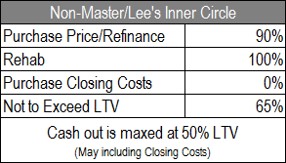
10. Terms of Loans. The terms of the Company loans will vary. Loans generally have a term between Three (3) months and Two (2) years. Notwithstanding the foregoing, loans may be shorter or longer in term if the Company decides, in its sole discretion, it is in the best interests of the Company. Many loans that the Company will originate or acquire may provide for interest-only payments followed by a balloon payment at the end of the term. For risk hedging purpose, borrowers may be required to make principal and interest payments. At the end of the term, the Company will require the borrower to pay the loan in full, to refinance the loan, or to sell the real property to pay back the loan. The Company may allow Six to Twelve (6-12) month extensions for a fee paid by Company borrowers. Finally, the Company may also charge exit fees on Loans based on the existing Loan balance at maturity. These exit fees may range from Zero Percent (0%) to Ten Percent (10%) of the remaining Loan balance at maturity.
29
11. Title Insurance. Satisfactory title insurance coverage will be obtained for all loans and will usually be paid by the borrower. The title insurance policy will name the Company as the insured and provide title insurance in an amount not less than the principal amount of the loan unless there are multiple forms of security for the loan, in which case the Manager shall use its sole business judgment in determining whether and to what extent title insurance shall be required. Title insurance insures only the validity and priority of the Company’s deed of trust or mortgage, and does not insure the Company against loss from other causes, such as diminution in the value of the secured property, loan defaults, and other such losses.
12. Fire and Casualty Insurance. Satisfactory fire and casualty insurance will be obtained for all improved real property loans which insurance will name the Company as its loss payee in the amount equal to the improvements on the real property. (See “Business Risks – Uninsured Losses” below.)
13. Mortgage Insurance. The Manager does not intend to, but may if the property otherwise qualifies, arrange for mortgage insurance, which would afford some protection against loss if the Company foreclosed on a loan and there existed insufficient equity in the security property to repay all sums owed.
14. Acquiring Loans from Third Parties. The Company may acquire Loans and/or notes secured by non-owner occupied real estate that were originated and funded by a third party. In the event the Company acquires loans from other third parties, the Company will receive assignments of all beneficial interest in any Loans purchased.
15. Fractionalized Interests in Loans. The Company may also participate in Loans with other lenders (including other businesses organized by business partners or Affiliates of the Company1), by providing funds for or purchasing a fractional undivided interest in a loan meeting the requirements set forth above.
16. Purchase of Loans from Affiliates. The Company may purchase loans from the Manager or Affiliates so long as it meets the lending requirements set forth above. For the purposes hereof, the term “Affiliates” shall mean any of the following: (1) a Person that, directly or indirectly, through one or more intermediaries, controls, is controlled by, or is under common control with the Manager, (2) a Person who, directly or indirectly, owns or controls at least Ten Percent (10%) of the outstanding voting interests of the Manager, (3) a Person who is an officer, director, manager or member of the Manager, or (4) a Person who is an officer, director, manager, member, general partner, trustee or owns at least Ten Percent (10%) of the outstanding voting interests of a Person described in clauses (1) through (3) of this sentence. The term “Person” shall mean a natural person or Entity. The term “Entity” shall mean an association, relationship or artificial person through or by means of which an enterprise or activity may be lawfully conducted, including, without limitation, a partnership, trust, limited liability company, corporation, joint venture, cooperative or association.
17. Property Acquisition. Properties acquired by the Company will be acquired through the Company’s lending activities, including but not limited to, properties acquired as a result of a borrower defaulting on a Loan. The Company may establish limited liability companies that are wholly owned subsidiaries of the Company to own and hold title of a property which the Company has acquired and intends to improve, rent, and/or sell. These wholly owned subsidiaries will be single purpose entities (“SPE”) created solely for the purpose of owning, improving, renting and/or selling the properties the Company acquires. The Manager shall serve as the sole manager of these SPEs.
1 The Company may participate and co-fund Loans with Secured Investment High Yield Fund II, LLC, an Idaho limited liability company (“SIHYF II”). SIHYF II was organized by the Manager and is currently undergoing an offering of securities exempt from SEC registration requirements under Regulation D of the Securities Act of 1933.
30
18. Foreclosure. Statutory guidelines for foreclosures in each state are to be followed by the Manager until the underlying property is liquidated and/or the account is brought current. Any costs of this process are to be posted to the borrower’s account for reimbursement to Company. If a Loan is completely foreclosed upon and the property reverts back to the Company, the Company will be responsible for paying the costs and fees associated with the foreclosure process, maintenance and repair of the property, service of senior liens and resale expenses.
Credit Evaluations
The Manager will consider the income level and general creditworthiness of a borrower to determine his, her or its ability to repay the Loan according to its terms in addition to considering the Loan-to-value ratios described above and secondary sources of security for repayment. The Company may acquire loans made to borrowers who are in default under other obligations (e.g., to consolidate their debts) or who do not have sources of income that would be sufficient to qualify for loans from other lenders such as banks or savings and loan associations.
Loan Application Process
Loans funded and/or otherwise acquired by the Company will be originated by the Manager, operating under the fictitious business name of Cogo Capital. Loan application will be reviewed on a continuous basis and may be submitted by borrowers via e-mail to a loan officer or via web based portal operated by Liquid Logics. Potential borrowers will be required to submit a completed Loan application and provide the required documents necessary to determine eligibility for a Loan. A loan officer will conduct an initial evaluation of the Loan package and potential borrowers against the guidelines set forth herein and Exhibit D (as applicable),and ensure that the Loan package and application are not subject to any disqualifying factors. Disqualifying factor may include, without limitation, a potential borrower’s adverse credit history, such as foreclosure, bankruptcy within the last Twelve (12) months, and/or unpaid tax lien or child support lien. Once a Loan is approved or denied by the Manager’s underwriting department, the loan officer will notify the potential borrower of the decision.
Loan Committee
A loan committee (“Loan Committee”) has been formed by the Manager. The Loan Committee consists of at least Five (5) individual members within the Manager, who shall review loan applications that fall outside the Company’s lending standards set forth herein, but are in the best interests of the Company to fund. If approved by the Loan Committee, the Company may participate in funding the Loan. Notwithstanding the foregoing, the majority of instances these loans will be funded by third parties and the Manager may be entitled to receive a fee for originating the loan. Any fees earned by the Manager will not be payable to the Company. Accordingly, conflict of interest exists in connection with originating certain loans that do not qualify within the Company’s lending standards as the Manager may earn fees for such transactions. (See “Conflicts of Interest” below.)
Loan Servicing
It is presently anticipated that all Company Loans will be serviced (i.e., loan payments collected and other services relating to the loan) by the Manager operating under the fictitious business name of Lake City Servicing (in its capacity as Servicer). Notwithstanding the foregoing, the Manager may, at its sole and absolute discretion, appoint an Affiliate or third party loan servicer to service the Company Loans. The servicer, whether a third party or the Manager or its Affiliate, shall be herein referred to as the “Servicer.” The Servicer will be compensated by the Company and/or borrowers for such loan servicing activities, as is agreed upon by the Manager and Servicer. (See “Manager’s Compensation” below.) To the extent applicable, the Manager will oversee the activities and performance of the Servicer. (See “The Manager and Affiliates” below.)
31
Borrowers will make Loan payments in arrears (i.e. with respect to the preceding month) and will be instructed to send their loan payments either to the Manager or to the Servicer (as applicable) for deposit in the respective party’s trust account.
The following are the servicing activities by the Manager operating under the fictitious business name of Lake City Servicing.
| 1. | Preparation, distribution, and maintenance of borrower statement of accounts; |
| 2. | Collection of interest and principal payments, and collection and payment of taxes or insurances (where applicable); |
| 3. | Recording security instruments securing the loans; |
| 4. | Maintenance of documentation of payments and recordings, storage and security; |
| 5. | Default workout structuring, including any follow-ups on delinquencies and other similar activities; |
| 6. | Collateral monitoring; and |
| 7. | Coordination of legal compliance related to foreclosures, including forbearance processing and navigation of sale or auction of foreclosure. |
Sale of Loans
The Company plans on investing in mortgage Loans for the primary purpose of reselling such Loans in the course of business. The Company may sell mortgage Loans, or fractional interests in such Loans, when the Manager determines (in its sole and absolute discretion) that it appears to be advantageous for the Company to do so, based upon then current interest rates, the length of time that the loan has been held by the Company, the Company’s investment portfolio, and the overall investment objectives of the Company.
Borrowing/Note Hypothecation
The Company will borrow funds for the purpose of making and purchasing Loans and may assign all or a portion of its Loan portfolio as security for such loan(s). The Company anticipates engaging in this type of transaction when the interest rate at which the Company can borrow funds is significantly less than the rate that can be earned by the Company on its loans, giving the Company the opportunity to earn a profit as a “spread.” Such a transaction involves certain elements of risk and also entails possible adverse tax consequences. (See herein “Risk Factors”, “Income Tax Considerations”, and “ERISA Considerations” below.) The Company may also in its sole discretion elect to finance the Company’s investments with borrowed funds.
Leveraging the Company
The Company may borrow funds from a third party lender to fund investments in loans. These loans would be secured by the Loans held by the Company. Leveraging involves additional risks that are detailed later in this Offering Circular. (See “Risk Factors – Business Risks – Risks of Leveraging the Company” below.)
32
GENERAL STANDARDS FOR PURCHASING PROPERTIES
The Company will also invest, on an opportunistic basis, in the following business: acquiring, managing, remodeling, developing, repairing, leasing and/or selling non-owner occupied residential real estate located throughout the United States. Properties may be acquired from (without limitation) individuals, entities, institutional investors, financial institutions, governmental agencies and other sellers of real or personal property and may put properties into special purpose entities for the benefit of the Company. Unless the Manager decides in its sole and absolute discretion that it is in the best interests of the Company to do otherwise, the Company intends to generally acquire, and purchase Properties based on the following criteria:
1. Location of Real Property. Properties will be located across the United States.
2. Distressed Properties. The Company will acquire distressed properties. The Company intends to acquire and otherwise invest in distressed properties for purposes of holding, developing, remodeling, rehabilitating, improving, renting and selling the associated and secured properties. Distressed properties are typically properties secured by non-performing notes, or properties impacted by specific issues such as, but not limited to, dilapidation, physical damage, devaluation caused by rezoning, and environmental contamination. The primary intent of the Company is to purchase, invest, or otherwise acquire the distressed properties and properties tied to nonperforming notes and remodel, improve, develop, rehabilitate, hold and rent, and subsequently sell the properties for profit. The Company will use an opportunistic investment strategy to identify and invest in distressed properties, unless the Manager, in its sole and absolute discretion, determines it is no longer in the best interests of the Company.
3. Remodeling Timeline. The average time it takes to remodel a property, from purchase to finished, is anticipated to last between Five (5) to Twelve (12) months. Notwithstanding the foregoing, these estimates are not guaranteed, and certain properties may take longer to remodel due to, without limitation, the following: construction issues, unexpected environmental conditions, changes in supply and demand, governmental regulations, zoning restrictions, changes in material and labor shortages, increases in the costs of labor and materials, and changes in construction plans and specifications. (See “Business Risks” below.)
4. Fire and Casualty Insurance. Satisfactory fire and casualty insurance will be obtained for all properties and will name the Company as its loss payee. (See “Business Risks – Uninsured Losses”).
5. Title Insurance. Satisfactory title insurance coverage will be obtained for all properties. The title insurance policy will name the Company as the insured and provide title insurance in an amount not less than the principal amount of the value of the property.
6. Environmental Reports. Environmental reports will not typically be ordered on properties purchased or otherwise acquired by the Company. It is presently anticipated that all Company properties will be managed by the Servicer. The Servicer will be compensated by the Company for such property management activities.
7. Property Rental. Additional sources of income to the Company may be from the potential purchase, rehabilitation and resale of Company owned properties. The Company will purchase properties that can be rehabilitated and resold for profit. The Company intends to purchase properties and distressed properties at a discount to current (or projected) fair market value and subsequently seek to sell these properties for profit. The Company will purchase and otherwise invest in distressed properties and properties in order to remodel, improve, develop, rehabilitate these properties and either (1) hold and sell the property, or (2) sell the property for profit.
33
MANAGER’S ANALYSIS AND DISCUSSION OF THE FINANCIAL CONDITION AND PLAN OF OPERATIONS
The Manager’s Discussion and Analysis may contain forward-looking statements. Investors should not place undue reliance on forward-looking statements, and should consider carefully the statements made in “Risk Factors” and elsewhere in this Offering Circular that identify important factors that could cause actual outcomes to differ from those expressed or implied in the Company’s forward-looking statements, and that could materially and adversely affect the Company’s business, operating results and financial condition.
The Manager’s Discussion and Analysis should be read together with the financial statements and notes thereto, included elsewhere in this Offering Circular.
Overview
The Company is a newly formed company formed on November 26, 2018 and has a limited operating history. The Company’s current cash balance is $179,641, with total assets at $640,675 as of December 31, 2019. The cash balance is not sufficient to fund the limited levels of operations for any period of time. In order to execute the plan of operations, the Company will require varying amounts of capital based on the Loans and/or properties the Company intends to fund or acquire. The Company intends to continuously offer Membership Interests to Investors on an ongoing basis to operate is business plan. (See “Lending Standards” above.)
Operating History of the Company
The Company has limited operating history and has not yet earned any revenues, which may make it difficult for potential Investors to evaluate the Company’s business and assess the future viability and prospects of the Company. The Company, at this time, has limited assets and resources. In addition, the Manager provides the Company with management and administrative services, as well as services relating to other support operations, administration, and accounting.
Results of Operations
As of the date of this Offering Circular, the Company has not commenced operations. Having not commenced active operations, the Manager is not aware of any material trends or uncertainties, favorable or unfavorable, other than economic conditions affecting the commercial and residential real estate industry and real estate generally, which may be reasonably anticipated to have a material impact on the capital resources and the revenue or income to be derived from the operation of our assets.
Liquidity and Capital Resources
As of the date of this Offering Circular, the Company is in the earliest stages of development and its cash balance is $179,641, with total assets at $640,675. The Company will likely have liquidity problems if it cannot raise sufficient funds to operate. In addition, in order to execute the plan of operations, the Company will require varying amounts of capital based on the Loans and/or properties the Company intends to fund or acquire. The Company intends to continuously offer Membership Interests to Investors on an as needed basis to operate its business plan.
The Company will receive income from the Loans it makes in the form of interest, fee and points and in some situations profit sharing in certain equity transactions. A loss reserve may be maintained by the Company, as determined by the Manager, in its sole and absolute discretion.
Off-balance Sheet Arrangements
None.
34
SECURITY OWNERSHIP OF MANAGEMENT AND CERTAIN SECURITYHOLDERS
As of the date of this Offering Circular Membership Interests have only been issued to the Manager. Upon admission of additional Members, the Manager may withdraw as a Member of the Company, but shall continue to serve as Manager.
The Manager of the Company is Secured Investment Corp., a Wyoming corporation. The Manager was formed under the laws of Wyoming on December 9, 2011. The Manager will manage and direct the affairs of the Company. The principals, officers, and directors of the Manager, and their biographies, are as follows:
Mr. Lee Aaron Arnold, President and CEO, and Director of the Manager
Lee Arnold is the founder and Chief Executive Officer of the Manager and has served as a Director since its inception on December 9, 2011. Mr. Arnold is an international speaker, trainer, author and licensed real estate broker who has spent many years perfecting the real estate and private money mortgage lending process through thousands of transactions. Lee is a leading expert on private money mortgages and has been featured as an investment strategy expert by Forbes, the Boston Globe, Market Watch, Reuters and Business Week. Since January 2006, Mr. Arnold is also the owner and Chief Executive Officer of Arnold Professional Holdings. Mr. Arnold has led Arnold Professional Holdings in providing variety of real estate related services, including repairing, renovation, or improvement of property. He has also consulted and taught for a number of national financial literacy companies.
Mr. Jaclyn Genemarie Olsen-Arnold, Chief Financial Officer and Director of the Manager
Jaclyn Olsen is the Chief Financial Officer and a Director of the Manager since January 2012. However, Ms. Olsen started with the Manager’s predecessor from 2007 until January 2012 as a tax and financial accounting consultant in Olsen Financial Consulting. During her service as a consultant it was immediately realized that she would bring great value and strength to the real estate investment and private mortgage loan firm. Ms. Olsen has been serving as Chief Financial Officer for the Manager. Ms. Olsen holds her BS in Accounting and her MBA in Finance and Investments. Ms. Olsen brings experience from both public and private accounting in tax, auditing, financial reporting, financial analysis and strategy. She has worked with start-ups to mature companies where her expertise guided growth and manageable, scalable, accounting infrastructure.
Mr. John Kane, Chief Operating Officer and Director of the Manager
John Kane joined the Manager as its Chief Operations Officer and has served as a Director since May 2014. With 30 years’ experience in leading real estate education companies, starting financial services and software companies, Mr. Kane lends his hand to the technology, marketing, operational and educational aspects of the Manager. Mr. Kane formerly led a publicly traded company — Whitney Information Network, now Legacy Education — to create Rich Dad Education with Robert Kiyosaki, and under his leadership grew revenues to over $250,000,000. Mr. Kane left in 2008 and has since served as a Senior Vice President and consultant in various companies. For example, from August 2012 to December 2013, he was a Senior Vice President and a consultant with Manhattan Professional Group, where he guided the company to higher revenue and overall profits. After his brief retirement in early 2014, he joined the Manager as the Chief Operations Officer.
35
Managers / Directors / Executive Officers / Significant Employees Information
| Name | Position | Age | Term
of Office |
Approximate
Hours Per Week |
| John Kane | Chief Operating Officer of the Manager | 65 | May 2014 | 70 |
| Lee Aaron Arnold | President and Director of Manager | 41 | December 2011 | 70 |
| Jaclyn Genemarie Olsen-Arnold | Chief Financial Officer and Director of Manager | 42 | December 2011 | 70 |
COMPENSATION OF DIRECTORS AND EXECUTIVE OFFICERS
| Name | Capacities
in which Compensation was Received 1 |
Cash Compensation |
Other Compensation |
Total
Compensation 2 |
| John Kane | Chief Operating Officer of the Manager | $179,188.51 | N/A | $179,188.51 |
| Jaclyn Genemarie Olsen-Arnold | Chief Financial Officer and Director of Manager | $287,354.01 | N/A | $287,354.01 |
| Lee Aaron Arnold | President and Director of Manager | $253,351.79 | N/A | $253,351.79 |
1 ..The Company has no officers or directors. It is managed solely by Secured Investment Corp., a Wyoming corporation. The Company is a newly formed entity with no operating history. For these reasons, the Manager has yet to receive any compensation.
2 No portion of the officer’s compensation was paid from or will be paid from the income generated by the Company. The Company will not directly pay any compensation to the officers of the Manager.
36
| Page No. | |
| Financial Statements of December 31, 2019, and 2018 | |
| Independent Auditor’s Report | F-4 |
| Balance Sheets | F-5 |
| Statements of Operations and Changes in Member’s Equity | F-6 |
| Statements of Cash Flows | F-7 |
| Notes to Financial Statements | F-8 |
| Financial Statements of December 31, 2018 | |
| Independent Auditor’s Report | F-21 |
| Balance Sheet | F-22 |
| Statement of Operations and Changes in Member’s Equity | F-23 |
| Statement of Cash Flows | F-24 |
| Notes to Financial Statements | F-25 |
F-1

F-2
TABLE OF CONTENTS
| Page No. | |
| Independent Auditor’s Report | F-4 |
| Balance Sheets | F-5 |
| Statements of Operations and Changes in Member’s Equity | F-6 |
| Statements of Cash Flows | F-7 |
| Notes to Financial Statements | F-8 |
F-3

To the Members
Circle of Wealth Fund III LLC
Coeur D’Alene, Idaho
We have audited the accompanying financial statements of Circle of Wealth Fund III LLC (an Idaho limited liability company) (the “Fund”), which comprise the balance sheets as of December 31, 2019 and 2018, and the related statements of operations and changes in members’ equity, and cash flows for the years then ended, and the related notes to the financial statements.
Management’s Responsibility for the Financial Statements
Management is responsible for the preparation and fair presentation of these financial statements in accordance with accounting principles generally accepted in the United States of America; this includes the design, implementation, and maintenance of internal control relevant to the preparation and fair presentation of financial statements that are free from material misstatement, whether due to fraud or error.
Auditor’s Responsibility
Our responsibility is to express an opinion on these financial statements based on our audit. We conducted our audit in accordance with auditing standards generally accepted in the United States of America. Those standards require that we plan and perform the audit to obtain reasonable assurance about whether the financial statements are free from material misstatement.
An audit involves performing procedures to obtain audit evidence about the amounts and disclosures in the financial statements. The procedures selected depend on the auditor’s judgment, including the assessment of the risks of material misstatement of the financial statements, whether due to fraud or error. In making those risk assessments, the auditor considers internal control relevant to the entity’s preparation and fair presentation of the financial statements in order to design audit procedures that are appropriate in the circumstances, but not for the purpose of expressing an opinion on the effectiveness of the entity’s internal control. Accordingly, we express no such opinion. An audit also includes evaluating the appropriateness of accounting policies used and the reasonableness of significant accounting estimates made by management, as well as evaluating the overall presentation of the financial statements.
We believe that the audit evidence we have obtained is sufficient and appropriate to provide a basis for our audit opinion.
Opinion
In our opinion, the financial statements referred to above present fairly, in all material respects, the financial position of Circle of Wealth Fund III LLC as of December 31, 2019 and 2018, and the results of its operations and its cash flows for the years then ended in conformity with accounting principles generally accepted in the United States of America.
Change in Accounting Principle
As discussed in Note 2 to the financial statements, the Fund has adopted ASU 2014-09, Revenues from Contracts with Customers. Our opinion is not modified with respect to that matter.
 | |
| Armanino LLP | |
| San Ramon, California |
March 5, 2020

F-4
Circle
of Wealth Fund III LLC
Balance Sheets
December 31, 2019, and 2018
| 2019 | 2018 | |||||||
| ASSETS | ||||||||
| Cash and cash equivalents | $ | 179,641 | $ | 25,000 | ||||
| Mortgage interest receivable | 7,062 | - | ||||||
| Mortgage loans receivable held for sale, net | 430,769 | - | ||||||
| Interest-only strip receivables, net | 7,016 | - | ||||||
| Prepaid expenses | 16,187 | 3,000 | ||||||
| Total assets | $ | 640,675 | $ | 28,000 | ||||
| LIABILITIES AND MEMBERS’ EQUITY | ||||||||
| Liabilities | ||||||||
| Accounts payable | $ | 3,000 | $ | 3,000 | ||||
| Asset management fees payable | 1,895 | - | ||||||
| Due to related party | 18,996 | - | ||||||
| Total liabilities | 23,891 | 3,000 | ||||||
| Members’ equity | 616,784 | 25,000 | ||||||
| Total liabilities and members’ equity | $ | 640,675 | $ | 28,000 | ||||
The accompanying notes are an integral part of these financial statements.
F-5
Statements
of Operations and Changes in Members’ Equity
For the Years Ended December 31, 2019 and 2018
| 2019 | 2018 | |||||||
| Revenues | ||||||||
| Gain on sales of loans | $ | 7,818 | $ | - | ||||
| Mortgage interest income | 7,639 | - | ||||||
| Loan origination fee income | 1,465 | - | ||||||
| Closing fee income | 497 | - | ||||||
| Total revenues | 17,419 | - | ||||||
| Operating expenses | ||||||||
| Asset management fees | 1,895 | - | ||||||
| Provision for losses on loans | 338 | - | ||||||
| Professional fees | 21,061 | - | ||||||
| Other operating expenses | 2,341 | - | ||||||
| Total operating expenses | 25,635 | - | ||||||
| Net loss | (8,216 | ) | - | |||||
| Members’ equity, beginning of year | 25,000 | - | ||||||
| Members’ contributions | 600,000 | 25,000 | ||||||
| Members’ equity, end of year | $ | 616,784 | $ | 25,000 | ||||
The accompanying notes are an integral part of these financial statements.
F-6
Circle
of Wealth Fund III LLC
Statements of Cash Flows
For the Years Ended December 31, 2019 and 2018
| 2019 | 2018 | |||||||
| Cash flows from operating activities | ||||||||
| Net loss | $ | (8,216 | ) | $ | - | |||
| Adjustment to reconcile net income to net cash provided by operating activities | ||||||||
| Loan origination fee income | (1,465 | ) | - | |||||
| Provision for losses on loans | 338 | - | ||||||
| Gain on sales of loans | (7,818 | ) | - | |||||
| Changes in operating assets and liabilities | ||||||||
| Mortgage interest receivable | (7,062 | ) | - | |||||
| Interest-only strip receivable, net | (7,016 | ) | - | |||||
| Prepaid expenses | (13,187 | ) | (3,000 | ) | ||||
| Accounts payable | - | 3,000 | ||||||
| Asset management fees payable | 1,895 | - | ||||||
| Due to related party | 18,996 | - | ||||||
| Net cash used in operating activities | (23,535 | ) | - | |||||
| Cash flows from investing activities | ||||||||
| Loans funded | (682,102 | ) | - | |||||
| Proceeds from sales of mortgage loans held for sale | 260,278 | - | ||||||
| Net cash used in investing activities | (421,824 | ) | - | |||||
| Cash flows from financing activities | ||||||||
| Members’ contributions | 600,000 | - | ||||||
| Net cash provided by financing activities | 600,000 | - | ||||||
| Net increase in cash | 154,641 | - | ||||||
| Cash and cash equivalents at beginning of year | 25,000 | 25,000 | ||||||
| Cash and cash equivalents at end of year | $ | 179,641 | $ | 25,000 | ||||
The accompanying notes are an integral part of these financial statements.
F-7
Circle
of Wealth Fund III LLC
Notes to Financial Statements
December 31, 2019 and 2018
| 1. | NATURE OF OPERATIONS |
Circle of Wealth Fund III, LLC (the “Fund”) is an Idaho limited liability company that was organized to make, fund, originate, refinance, purchase, sell and/or otherwise acquire loans secured by first or junior position deeds of trust or mortgages on non-owner occupied residential and commercial properties located throughout the United States; and acquire, develop, rehabilitate, and/or hold and/or sell non-owner occupied real estate located throughout the United States. The Fund is managed by Secured Investment Corp., a Wyoming corporation (the “Manager”). The Fund receives certain operating and administrative services from the Manager, some of which are not reimbursed to the Manager. The Fund’s financial position and results of operations would likely be different absent this relationship with the Manager.
The Fund was organized to continue indefinitely unless dissolved and terminated pursuant to the provisions of the Fund’s operating agreement.
| 2. | SUMMARY OF SIGNIFICANT ACCOUNTING POLICIES |
Cash
The Fund considers all highly liquid financial instruments with maturities of three months or less at the time of purchase to be cash equivalents. Cash on deposit occasionally exceeds federally insured limits. The Fund believes that it mitigates this risk by maintaining deposits with major financial institutions.
Risks and uncertainties
The Fund’s business and operations are sensitive to general business and economic conditions in the U.S. along with local, state, and federal governmental policy decisions. A host of factors beyond the Fund’s control could cause fluctuations in these conditions, including but not limited to: its ability to raise sufficient funds from investors to fund loans and acquire real estate as well as potential changes to Regulation A. Adverse developments in these general business and economic conditions could have a material adverse effect on the Fund’s financial condition and the results of its operations.
Management estimates and related risks
The preparation of financial statements in conformity with accounting principles generally accepted in the United States of America requires management to make estimates and assumptions about the reported amounts of assets and liabilities, and disclosures of contingent assets and liabilities, at the date of the financial statements and the reported amounts of revenues and expenses during the reported period. Such estimates relate principally to the determination of the allowance for loan losses, interest-only strip receivables on loans sold and fair value of real estate held and serving as collateral for Fund loans. Although these estimates reflect management’s best estimate, it is at least reasonably possible that a material change to these estimates could occur in the near term.
F-8
Circle
of Wealth Fund III LLC
Notes to Financial Statements
December 31, 2019 and 2018
| 2. | SUMMARY OF SIGNIFICANT ACCOUNTING POLICIES (continued) |
Management estimates and related risks
The fair value of real estate, in general, is impacted by current real estate and financial market conditions. Should these markets experience any significant declines, the resulting collateral values of the Fund’s loans will likely be negatively impacted. The impact to such values could be significant and as a result, the Fund’s actual loan losses could differ significantly from management’s current estimates.
Mortgage loans receivable
Mortgage loans, the majority of which the Fund intends to make available for sale to prospective investors, generally are stated at the lower of cost or fair value. Subordinate mortgage loans represent the Fund’s retained portion of certain mortgage loans sold to third-party buyers after having been originated by the Fund. The subordinate mortgage loans, which the Fund has the intent and ability to hold for the foreseeable future or to maturity, generally are stated at their outstanding principal balance with interest thereon being accrued as earned. Mortgage loans receivable make up the only class of financing receivables within the Fund’s lending portfolio. As a result, further segmentation of the loan portfolio is not considered necessary.
If the probable ultimate recovery of the carrying amount of a loan, with due consideration for the fair value of collateral, is less than amounts due according to the contractual terms of the loan agreement and the shortfall in the amounts due are not insignificant, the carrying amount of the investment shall be reduced to the present value of estimated future cash flows discounted at the loan’s effective interest rate. If a loan is collateral dependent, it is valued at the estimated fair value of the related collateral.
Interest is accrued daily on the principal of the loans. If events and or changes in circumstances cause management to have serious doubts about the further collectability of the contractual payments, a loan may be categorized as impaired and interest is no longer accrued. Any subsequent payments on impaired loans are applied to reduce the outstanding loan balances including accrued interest and advances.
F-9
Circle of Wealth Fund III LLC
Notes to Financial Statements
December 31, 2019 and 2018
| 2. | SUMMARY OF SIGNIFICANT ACCOUNTING POLICIES (continued) |
Allowance for loan losses
Loans and the related accrued interest are analyzed on a periodic basis for recoverability. Delinquencies are identified and followed as part of the loan system. A provision is made for losses on loans to adjust the allowance for loan losses to an amount considered by management to be adequate, with due consideration to collateral value, to provide for unrecoverable loans and receivables, including impaired loans, accrued interest and advances on loans. As a collateral-based lender, the Fund does not consider credit risks which may be inherent in a further segmented loan portfolio as a basis for determining the adequacy of its allowance for loan losses but rather focuses solely on the underlying collateral value of the loans in its portfolio to do so. As a result, the Fund does not consider further segmentation of its loan portfolio and related disclosures necessary. The Fund writes off uncollectible loans and related receivables directly to the allowance for loan losses once it is determined that the full amount is not collectible.
Interest-only strip receivables
Interest-only strip receivables represent the present value of residual cash flows the Fund expects to receive on mortgage loans receivable sold to third-party investors after having been originated by the Fund. The value of these receivables is determined by estimating the future cash flows using assumptions of key factors, such as prepayment and default rates and discount rates appropriate for the type of asset and risk. The value of interest-only strip receivables could be affected by external factors, such as changes in the behavior patterns of customers and changes in the strength of the economy; therefore, actual performance could differ from these assumptions. The Fund evaluates the performance of the receivables relative to these assumptions on a regular basis. The Manager negotiates the participation interest to be earned by the Fund for loans sold on a case-by-case basis. The interest-only strip rates earned by the Fund during 2019 ranged from 2% to 4%. The Fund sold and retained a beneficial interest in the interest-only strip receivables of 4 loans totaling approximately $250,000 during the year ended December 31, 2019.
Real estate owned
Real estate purchased is recorded at cost. Costs of real estate improvements are capitalized, whereas costs relating to holding real estate are expensed. The portion of interest costs relating to development of real estate is capitalized.
Impairment losses of real estate held and held for sale are measured as the amount by which the carrying amount of a property exceeds its fair value less estimated costs to sell. Impairment losses of real estate held for use are determined by comparing the expected future undiscounted cash flows of the property, including any costs that must be incurred to achieve those cash flows, to the carrying amount of the property. If those cash flows are less than the carrying amount of the property, impairment is measured as the amount by which the carrying amount of the asset exceeds its fair value. Valuations are periodically performed by management, and any subsequent write downs are recorded as a charge to operations.
F-10
Circle of Wealth Fund III LLC
Notes to Financial Statements
December 31, 2019 and 2018
| 2. | SUMMARY OF SIGNIFICANT ACCOUNTING POLICIES (continued) |
Fair value measurements
Fair value is defined as the exchange price that would be received for an asset or paid to transfer a liability (an exit price) in the principal or most advantageous market for the asset or liability in an orderly transaction between market participants on the measurement date. The Fund determines the fair values of its assets and liabilities based on a fair value hierarchy that includes three levels of inputs that may be used to measure fair value (Level 1, Level 2 and Level 3).
Level 1 inputs are quoted prices (unadjusted) in active markets for identical assets or liabilities that the Fund has the ability to access at the measurement date. An active market is a market in which transactions occur with sufficient frequency and volume to provide pricing information on an ongoing basis. Level 2 inputs are inputs other than quoted prices that are observable for the asset or liability, either directly or indirectly. Level 3 inputs are unobservable inputs for the asset or liability. Unobservable inputs reflect the Fund’s own assumptions about the assumptions market participants would use in pricing the asset or liability (including assumptions about risk). Unobservable inputs are developed based on the best information available in the circumstances and may include the Fund’s own data.
The Fund does not record loans at fair value on a recurring basis but uses fair value measurements of collateral security in the determination of its allowance for loan losses. The fair value for impaired secured loans is determined using the sales comparison, income and other commonly used valuation approaches.
The following methods and assumptions were used to estimate the fair value of financial instruments:
| ● | Secured loans (Level 2 or Level 3). For loans in which a specific allowance is established based on the fair value of the collateral, the Fund records the loan as nonrecurring Level 2 if the fair value of the collateral is based on an observable market price or a current appraised value. If an appraised value is not available or the fair value of the collateral is considered impaired below the appraised value and there is no observable market price, the Fund records the loan as nonrecurring Level 3. |
| ● | Interest-only strip receivables (Level 3). For interest-only strip receivables, the Fund estimates the fair value using internal valuation models. The fair value of these receivables is determined by estimating the future cash flows using assumptions of key factors, such as prepayment and default rates and discount rates appropriate for the type of asset and risk. |
Deferred loan origination fees
Loan origination fees represent amounts charged by the Fund to the borrowers for such things as points, loan processing fees, underwriting fees and other similar charges. As the majority of the Fund’s loans are expected to be held for sale, the Fund defers recognition of the fees until the loan is sold.
F-11
Circle of Wealth Fund III LLC
Notes to Financial Statements
December 31, 2019 and 2018
| 2. | SUMMARY OF SIGNIFICANT ACCOUNTING POLICIES (continued) |
Subscription liabilities and subscription funds in transit
The Fund accepts subscription agreements and funds from prospective investors who wish to become members of the Fund. If the subscription funds are needed in the normal course of the Fund’s operations on any day other than the first day of the month, the subscription funds will be borrowed at an annual rate of 6% for the odd days within the month the borrowing took place. There were no subscription funds held or borrowings at December 31, 2019 and 2018.
Income taxes
The Fund is a limited liability company for federal and state income tax purposes. Under the laws pertaining to income taxation of limited liability companies, no federal income tax is paid by the Fund as an entity. Each individual member reports on their federal and state income tax returns their distributive share of Fund income, gains, losses, deductions and credits, whether or not any actual distribution is made to such member during a taxable year.
The Fund has evaluated its current tax positions and has concluded that as of December 31, 2019, the Fund does not have any significant uncertain tax positions for which a reserve would be necessary.
Change in accounting principal
In May 2014, the Financial Accounting Standards Board (FASB) issued Accounting Standards Update (ASU) No. 2014-09, Revenues from Contracts with Customers (Topic 606). The standards core principle is that a company will recognize revenue when it transfers promised goods or services to customers in an amount that reflects the consideration to which the company expects to be entitled in exchange for those goods or services. In effect, companies are required to exercise further judgment and make more estimates prospectively. These may include identifying performance obligations in the contract, estimating the amount of variable consideration to include in the transaction price and allocating the transaction price to each separate performance obligation. ASU No. 2014-09 was effective January 1, 2019 for the Fund. The Fund has evaluated the new guidance and determined that interest income and income from servicing mortgage loans are outside the scope of ASC No. 606. The Fund also determined that fee income on mortgage loan originations is outside the scope of ASC No. 606 as it continues to be accounted for in accordance with ASC No. 948. As a result, the adoption of ASU No. 2014-09 did not have a material impact on its financial statements.
Subsequent events
The Fund has evaluated subsequent events through March 5, 2020, the date the financial statements were available to be issued. No subsequent events have occurred that would have a material impact on the presentation of the Fund’s financial statements.
F-12
Circle of Wealth Fund III LLC
Notes to Financial Statements
December 31, 2019 and 2018
| 3. | FUND PROVISIONS |
The Fund is an Idaho limited liability company. The rights, duties and powers of the members of the Fund are governed by the operating agreement and the Idaho Limited Liability Company Act. The following description of the Fund’s operating agreement provides only general information. Members should refer to the Fund’s operating agreement and private placement memorandum for a more complete description of the provisions. The Manager is in complete control of the Fund business, subject to the voting rights of the members on specified matters. The Manager acting alone has the power and authority to act for and bind the Fund.
Members representing a majority of the outstanding Fund membership interests may approve or disapprove any of the following matters: (i) the Fund’s merger with or conversion into another entity; (ii) causing the Fund to incur debt which would exceed the amount provided for in the offering circular; (iii) a transaction, not expressly permitted by the operating agreement or offering circular, involving a conflict of interest between the Manager and the Fund; (iv) remove the Manager if: (1) the Manager is convicted or found liable for an act of gross negligence or fraud which materially lowers the net asset value of the Fund, and (2) the holders of at least a majority of the outstanding membership interests vote in favor of such removal; (v) election of a successor manager; (vi) amendments to the operating agreement.
Profits and losses
Profits and losses accrued during any accounting period shall be allocated among the members in accordance with their respective membership interests maintained throughout that accounting period.
Fund expenses
The Fund shall bear all costs and expenses associated with the operation of the Fund, including, but not limited to, the annual tax preparation of the Fund’s tax returns, any state and federal income tax due, legal fees, accounting fees, filing fees, and any required independent audit reports required by agencies governing the business activities of the Fund, foreclosure costs and expenses associated with the foreclosing on assets, costs associated with force placed insurance, and costs and expenses associated with the disposition of assets. For the years ended December 31, 2019 and 2018, the Manager elected to absorb all operating and administrative expenses of the Fund besides those which have been reflected in the Fund’s statement of operations and changes in members’ equity.
Distributions
The Fund will make distributions of one hundred percent of net available proceeds from operations at least quarterly to all members. The Fund will make all distributions to the members in proportion to the membership interest they held during the period for which the distribution is declared until each member has received six percent (6%) cumulative annual return. If returns are higher than 6% cumulative annual return, the remaining funds will be distributed 50% to the members in proportion to their membership interest and 50% to the Manager as a performance fee.
F-13
Circle of Wealth Fund III LLC
Notes to Financial Statements
December 31, 2019 and 2018
| 3. | FUND PROVISIONS (continued) |
Liquidity, capital withdrawals and early withdrawals
There is no public market for interests of the Fund and none is expected to develop in the foreseeable future. There are substantial restrictions on transferability of membership interests. Any transferee must be a person that would have been qualified to purchase a member unit in the offering and a transferee may not become a substituted member without the consent of the Manager.
A member may withdraw as a member of the Fund and may receive a return of capital provided that the following conditions have been met: (i) the member has been a member of the Fund for a period of at least twelve (12) months; and (ii) the member provides the Manager with a written request for a return of capital at least 90 days prior to such withdrawal. Once the withdrawal is approved by the Manager, the Member may only withdraw up to 25% percent of the total withdrawal amount each following calendar quarter until the full amount is withdrawn. The Fund will use its best efforts to honor requests for a return of capital subject to, among other things, the Fund’s then cash flow, the amount of Fund reserves and the Fund’s then-current financial condition.
| 4. | MORTGAGE LOANS RECEIVABLE |
Mortgage loans receivable, net consisted of the following:
| Mortgage loans receivable held for sale | $ | 439,100 | ||
| Deferred loan origination fees | (7,993 | ) | ||
| Allowance for loan losses | (338 | ) | ||
| $ | 430,769 | |||
| Activity in the allowance for loan losses is as follows: | ||||
| Balance, beginning of year | $ | - | ||
| Provision for losses on loans | 338 | |||
| Balance, end of year | $ | 338 |
| Allocation of the allowance for loan losses by collateral type consisted of the following: | ||||
| Non-owner occupied residential (1-4 units) | $ | 338 |
F-14
Circle
of Wealth Fund III LLC
Notes to Financial Statements
December 31, 2019 and 2018
| 5. | FAIR VALUE MEASUREMENTS |
The following table sets forth by level, within the fair value hierarchy, the Funds assets measured at fair value as of December 31, 2019:
| Level 1 | Level 2 | Level 3 | Fair Value | |||||||||||||
| Interest-only strip receivables | $ | - | $ | - | $ | 7,016 | $ | 7,016 | ||||||||
| $ | - | $ | - | $ | 7,016 | $ | 7,016 | |||||||||
| 6. | RELATED PARTY TRANSACTIONS |
Loan servicing fees
Fund loans are serviced by a third-party servicer and a related party servicer selected by the Manager. The loan servicing companies will receive compensation from the Fund for performing these loan servicing activities. The loan servicing companies may also be entitled to retain up to 100% of any late fees and all fees for payoff demand statements and related documents, and return check charges. Loan servicing fees paid amounted to $95 during the year ended December 31, 2019. There were no loan servicing fees incurred during the year ended December 31, 2018.
Loan origination fees
At the closing of a target asset, a borrower will pay origination points. The origination points shall be disbursed at the closing of a target asset in the following manner: 80% to the Manager or an affiliated company and 20% to the Fund. The Fund recognized loan origination fees of $1,465 for the year ended December 31, 2019. Deferred loan origination fees of $7,993 at December 31, 2019 have been included in mortgage loans receivable held for sale, net on the accompanying balance sheet. There were no deferred loan origination fees at December 31, 2018.
Asset management fees
The Manager earns asset management fees of 1.75% of the Fund’s total asset base as of the last day of the calendar month. The asset management fees are payable beginning on the first day of the first calendar month after the first deployment. Asset management fees earned by the Manager amounted to $1,895 for the year ended December 31, 2019. Asset management fees payable to the Manager amounted to $1,895 at December 31, 2019. There were no asset management fees incurred during the year ended December 31, 2018.
Performance fees
As described in Note 3, after payment to members of a priority return, the Manager is eligible to receive performance fees. There were no performance fees earned by the Manager in 2019 and 2018.
F-15
Circle of Wealth Fund III LLC
Notes to Financial Statements
December 31, 2019 and 2018
| 7. | RELATED PARTY TRANSACTIONS (continued) |
Operating expenses
The Manager shall be entitled to reimbursement by the Fund for all reasonable and customary expenses incurred in the formation of the Fund and in the ongoing management of the Fund.
Loan brokerage fees
For its services in connection with the selection and origination of Fund loans, the Manager charges loan brokerage fees to the borrowers. These fees are paid directly by the borrowers and are not expenses of the Fund.
Rehabilitation services
Arnold Professional Holdings, Inc. (“APH”), a Washington corporation, is owned by the Chief Executive Officer (“CEO”) of the Manager. APH is a Washington licensed, bonded and insured general contractor. APH provides general construction services to the Fund in the state of Washington, which may include repairing, renovating and improving real estate investments. APH will receive compensation for its services equal to cost plus twenty percent (20%) plus an additional fifteen percent (15%) bonus on the net profit from the sale of the real estate investment after deducting all costs (including rehabilitation expenses) and selling expenses. No properties were acquired during the years ended December 31, 2019 and 2018.
Selling expenses
The CEO of the Manager, is a licensed real estate agent with Keller Williams. The CEO will be retained as the exclusive listing agent for all real estate investments in the state of Washington. The Fund will pay the customary six percent (6%) real estate commission for all real estate investment sold to be shared equally by the listing agent and buyer’s agent unless otherwise agreed.
| 8. | LOAN CONCENTRATIONS AND CHARACTERISTICS |
The loans are secured by recorded deeds of trust or mortgages with the following characteristics:
| Number of secured loans outstanding | 5 | |||
| Total secured loans outstanding | $ | 439,100 | ||
| Average secured loan outstanding | $ | 87,820 | ||
| Average secured loan as a percent of total loans | 20 | % | ||
| Average secured loan as a percent of members’ equity | 14.24 | % | ||
| Largest secured loan outstanding | $ | 129,500 | ||
| Largest secured loan as a percent of total loans | 29.49 | % |
F-16
Circle of Wealth Fund
III LLC
Notes to Financial Statements
December 31, 2019 and 2018
| 8. | LOAN CONCENTRATIONS AND CHARACTERISTICS (continued) |
| Largest secured loan as percent of members’ equity | 21.00 | % | ||
| Number of secured loans over 90 days past due in interest and still accruing | - | |||
| Approximate investment in secured loans over 90 days past due in interest and still accruing | $ | - | ||
| Number of secured loans in foreclosure | - | |||
| Approximate principal of secured loans in foreclosure | $ | - | ||
| Number of secured loans on non-accrual status | - | |||
| Approximate investment in secured loans on non-accrual status | $ | - | ||
| Number of secured loans considered to be impaired | - | |||
| Approximate investment in secured loans considered to be impaired | $ | - | ||
| Average investment in secured loans considered to be impaired | $ | - | ||
| Approximate amount of foregone interest on loans considered to be impaired | $ | - | ||
| Estimated amount of impairment on loans considered to be impaired (included in the allowance for loan losses) | $ | - | ||
| Number of secured loans over 90 days past maturity | - | |||
| Approximate principal of secured loans over 90 days past maturity | $ | - | ||
| Number of states where security is located | 5 | |||
| Number of counties where security is located | 5 |
The Fund’s secured loans are located in various states and counties as follows:
| Loan Balances | Percentage | |||||||
| State | ||||||||
| Lewis, Washington | $ | 129,500 | 29.49 | % | ||||
| Warren, New Jersey | 115,500 | 26.30 | ||||||
| Hillsbrough, Florida | 90,100 | 20.52 | ||||||
| Fairfield, Ohio | 70,000 | 15.94 | ||||||
| Lake, Illinois | $ | 34,000 | 7.74 | |||||
| $ | 439,100 | 100 | % | |||||
F-17
Circle of Wealth Fund
III LLC
Notes to Financial Statements
December 31, 2019 and 2018
| 8. | LOAN CONCENTRATIONS AND CHARACTERISTICS (continued) |
The following categories of secured loans were held as follows:
| First trust deeds or mortgages | $ | 439,100 | ||
| Loans by type of property | ||||
| Non-owner occupied residential (1-4 units) | $ | 439,100 |
The schedule below presents the status of the secured loans with regards to interest payments as follows:
| Days outstanding | ||||
| Current (0 to 30 days) | $ | 439,100 | ||
| 31 to 90 days | - | |||
| 91 days and greater | - | |||
| $ | 439,100 | |||
The future maturities of secured loans are as follows:
| Year ending December 31, 2019 | ||||
| 2020 | $ | 289,600 | ||
| 2021 | $ | 149,500 | ||
| $ | 439,100 | |||
| 9. | COMMITMENTS AND CONTINGENCIES |
Legal proceedings
The Fund is involved in various legal actions arising in the normal course of business. In the opinion of management, such matters will not have a significant adverse effect on the results of operations or financial position of the Fund.
F-18
CONSENT OF INDEPENDENT REGISTERED PUBLIC ACCOUNTING FIRM
We consent to the use in the Offering Circular constituting a part of this Offering Statement on Form 1-A, related to post-qualification amendment, of our Independent Auditor's Report dated March 5, 2020 relating to the balance sheets of Circle of Wealth Fund III LLC as of December 31, 2019 and 2018, and the related statements of operations and changes in members' equity, and cash flows for the years then ended, and the related notes to the financial statements.
| |
|
| Armanino LLP | |
| San Ramon, California | |
| March 10, 2020 |

F-19
TABLE OF CONTENTS
| Page No. | |
| Independent Auditor’s Report | F-21 |
| Balance Sheet | F-22 |
| Statement of Operations and Changes in Member’s Equity | F-23 |
| Statement of Cash Flows | F-24 |
| Notes to Financial Statements | F-25 |
F-20
To the Member of
Circle of Wealth Fund III LLC
Coeur D’Alene, Idaho
We have audited the accompanying financial statements of Circle of Wealth Fund III LLC (an Idaho limited liability company), which comprise the balance sheet as of December 31, 2018, and the related statements of operations and changes in member’s equity, and cash flows for the period from December 3, 2018 (inception) through December 31, 2018, and the related notes to the financial statements.
Management’s Responsibility for the Financial Statements
Management is responsible for the preparation and fair presentation of these financial statements in accordance with accounting principles generally accepted in the United States of America; this includes the design, implementation, and maintenance of internal control relevant to the preparation and fair presentation of financial statements that are free from material misstatement, whether due to fraud or error.
Auditor’s Responsibility
Our responsibility is to express an opinion on these financial statements based on our audit. We conducted our audit in accordance with auditing standards generally accepted in the United States of America. Those standards require that we plan and perform the audit to obtain reasonable assurance about whether the financial statements are free from material misstatement.
An audit involves performing procedures to obtain audit evidence about the amounts and disclosures in the financial statements. The procedures selected depend on the auditor’s judgment, including the assessment of the risks of material misstatement of the financial statements, whether due to fraud or error. In making those risk assessments, the auditor considers internal control relevant to the entity’s preparation and fair presentation of the financial statements in order to design audit procedures that are appropriate in the circumstances, but not for the purpose of expressing an opinion on the effectiveness of the entity’s internal control. Accordingly, we express no such opinion. An audit also includes evaluating the appropriateness of accounting policies used and the reasonableness of significant accounting estimates made by management, as well as evaluating the overall presentation of the financial statements.
We believe that the audit evidence we have obtained is sufficient and appropriate to provide a basis for our audit opinion.
Opinion
In our opinion, the financial statements referred to above present fairly, in all material respects, the financial position of Circle of Wealth Fund III LLC as of December 31, 2018, and the results of its operations and its cash flows for the period from December 3, 2018 (inception) through December 31, 2018, in accordance with accounting principles generally accepted in the United States of America.
 | |
| Armanino LLP | |
| San Ramon, California |
February 4, 2019

F-21
Circle
of Wealth Fund III LLC
Balance Sheet
December 31, 2018
| ASSETS | ||||
| Cash and cash equivalents | $ | 25,000 | ||
| Prepaid expenses | 3,000 | |||
| Total assets | $ | 28,000 | ||
| LIABILITIES AND MEMBER’S EQUITY | ||||
| Liabilities | ||||
| Accounts payable | $ | 3,000 | ||
| Total liabilities | 3,000 | |||
| Member’s equity | 25,000 | |||
| Total liabilities and member’s equity | $ | 28,000 | ||
The accompanying notes are an integral part of these financial statements.
F-22
Statement of Operations and Changes in Member’s Equity
For the Period from December 3, 2018 (Inception) through December 31, 2018
| Revenues | $ | - | ||
| Total revenues | - | |||
| Operating expenses | - | |||
| Total operating expenses | - | |||
| Net income | - | |||
| Member’s equity, beginning of period | - | |||
| Member’s contributions | 25,000 | |||
| Member’s equity, end of period | $ | 25,000 |
The accompanying notes are an integral part of these financial statements.
F-23
Statement of Cash Flows
For the Period from December 3, 2018 (Inception) through December 31, 2018
| Cash flows from operating activities | $ | - | ||
| Net income | ||||
| Adjustment to reconcile net income to net cash provided by operating activities | ||||
| Prepaid expenses | (3,000 | ) | ||
| Accounts payable | 3,000 | |||
| Net cash provided by operating activities | - | |||
| Cash flows from financing activities | ||||
| Member’s contributions | 25,000 | |||
| Net cash provided by financing activities | 25,000 | |||
| Net increase in cash | 25,000 | |||
| Cash and cash equivalents at beginning of period | - | |||
| Cash and cash equivalents at end of period | $ | 25,000 |
The accompanying notes are an integral part of these financial statements.
F-24
Circle
of Wealth Fund III LLC
Notes to Financial Statements
December 31, 2018
| 1. | NATURE OF OPERATIONS |
Circle of Wealth Fund III, LLC (the “Fund”) is an Idaho limited liability company that was organized to make, fund, originate, refinance, purchase, sell and/or otherwise acquire loans secured by first or junior position deeds of trust or mortgages on non-owner occupied residential and commercial properties located throughout the United States; and acquire, develop, rehabilitate, and/or hold and/or sell non-owner occupied real estate located throughout the United States. The Fund is managed by Secured Investment Corp., a Wyoming corporation (the “Manager”). The Fund receives certain operating and administrative services from the Manager, some of which are not reimbursed to the Manager. The Fund’s financial position and results of operations would likely be different absent this relationship with the Manager.
The Fund was organized to continue indefinitely unless dissolved and terminated pursuant to the provisions of the Fund’s operating agreement.
As of December 31, 2018, the Fund has not commenced planned principal operations nor generated revenue. The Fund’s activities since inception have consisted of formation activities and preparations for raising capital. Once the Fund commences planned principal operations, it will incur significant additional expenses. The Fund is dependent upon additional capital resources for the commencement of its planned principal operations and is subject to significant risks and uncertainties; including failing to secure funding to operationalize the Fund’s planned operations or failing to profitably operate the business.
| 2. | SUMMARY OF SIGNIFICANT ACCOUNTING POLICIES |
Cash and cash equivalents
The Fund considers all highly liquid financial instruments with maturities of three months or less at the time of purchase to be cash equivalents. Cash on deposit occasionally exceeds federally insured limits. The Fund believes that it mitigates this risk by maintaining deposits with major financial institutions.
Risks and uncertainties
The Fund has no operating history and has not generated revenue from operations. The Fund’s business and operations are sensitive to general business and economic conditions in the U.S. along with local, state, and federal governmental policy decisions. A host of factors beyond the Fund’s control could cause fluctuations in these conditions, including but not limited to: its ability to raise sufficient funds from investors to fund loans and acquire real estate as well as potential changes to Regulation A. Adverse developments in these general business and economic conditions could have a material adverse effect on the Fund’s financial conditions and the results of operations.
F-25
Circle of Wealth Fund III LLC
Notes to Financial Statements
December 31, 2018
| 2. | SUMMARY OF SIGNIFICANT ACCOUNTING POLICIES (continued) |
Management estimates and related risks
The preparation of financial statements in conformity with accounting principles generally accepted in the United States of America requires management to make estimates and assumptions about the reported amounts of assets and liabilities, and disclosures of contingent assets and liabilities, at the date of the financial statements and the reported amounts of revenues and expenses during the reported period. Such estimates will relate principally to the determination of the allowance for loan losses, interest-only strip receivables on loans sold and fair value of real estate held and serving as collateral for Fund loans. Although these estimates will reflect management’s best estimate, it is at least reasonably possible that a material change to these estimates could occur in the near term.
The fair value of real estate, in general, is impacted by current real estate and financial market conditions. Should these markets experience any significant declines, the resulting collateral values of the Fund’s loans, if any, will likely be negatively impacted. The impact to such values could be significant and as a result, the Fund’s actual loan losses could differ significantly from management’s current estimates.
Mortgage loans receivable
Mortgage loans, the majority of which the Fund intends to make available for sale to prospective investors, will generally be stated at the lower of cost or fair value. Subordinate mortgage loans will represent the Fund’s retained portion of any mortgage loans sold to third-party buyers after having been originated by the Fund. The subordinate mortgage loans, which the Fund has the intent and ability to hold for the foreseeable future or to maturity, will generally be stated at their outstanding principal balance with interest thereon being accrued as earned. Mortgage loans receivable are expected to make up the only class of financing receivables within the Fund’s lending portfolio. As a result, further segmentation of the loan portfolio will not be considered necessary.
If the probable ultimate recovery of the carrying amount of a loan, with due consideration for the fair value of collateral, is less than amounts due according to the contractual terms of the loan agreement and the shortfall in the amounts due are not insignificant, the carrying amount of the investment shall be reduced to the present value of estimated future cash flows discounted at the loan’s effective interest rate. If a loan is collateral dependent, it is valued at the estimated fair value of the related collateral.
Interest is accrued daily on the principal of the loans. If events and or changes in circumstances cause management to have serious doubts about the further collectability of the contractual payments, a loan may be categorized as impaired and interest is no longer accrued. Any subsequent payments on impaired loans are applied to reduce the outstanding loan balances including accrued interest and advances.
F-26
Circle
of Wealth Fund III LLC
Notes to Financial Statements
December 31, 2018
| 2. | SUMMARY OF SIGNIFICANT ACCOUNTING POLICIES (continued) |
Allowance for loan losses
Loans and the related accrued interest are analyzed on a periodic basis for recoverability. Delinquencies are identified and followed as part of the loan system. A provision is made for losses on loans to adjust the allowance for loan losses to an amount considered by management to be adequate, with due consideration to collateral value, to provide for unrecoverable loans and receivables, including impaired loans, accrued interest and advances on loans. As a collateral-based lender, the Fund does not consider credit risks which may be inherent in a further segmented loan portfolio as a basis for determining the adequacy of its allowance for loan losses but rather focuses solely on the underlying collateral value of the loans in its portfolio to do so. As a result, the Fund does not consider further segmentation of its loan portfolio and related disclosures necessary. The Fund writes off uncollectible loans and related receivables directly to the allowance for loan losses once it is determined that the full amount is not collectible.
Interest-only strip receivables
Interest-only strip receivables represent the present value of residual cash flows the Fund expects to receive on mortgage loans receivable sold to third-party investors after having been originated by the Fund. The value of these receivables is determined by estimating the future cash flows using assumptions of key factors, such as prepayment and default rates and discount rates appropriate for the type of asset and risk. The value of interest-only strip receivables could be affected by external factors, such as changes in the behavior patterns of customers and changes in the strength of the economy; therefore, actual performance could differ from these assumptions. The Fund evaluates the performance of the receivables relative to these assumptions on a regular basis. The Manager negotiates the participation interest to be earned by the Fund for loans sold on a case-by-case basis.
Real estate owned
Real estate purchased is recorded at cost. Costs of real estate improvements are capitalized, whereas costs relating to holding real estate are expensed. The portion of interest costs relating to development of real estate is capitalized.
Impairment losses of real estate held and held for sale are measured as the amount by which the carrying amount of a property exceeds its fair value less estimated costs to sell Impairment losses of real estate held for use are determined by comparing the expected future undiscounted cash flows of the property, including any costs that must be incurred to achieve those cash flows, to the carrying amount of the property. If those cash flows are less than the carrying amount of the property, impairment is measured as the amount by which the carrying amount of the asset exceeds its fair value. Valuations are periodically performed by management, and any subsequent write downs are recorded as a charge to operations.
F-27
Circle of Wealth Fund III LLC
Notes to Financial Statements
December 31, 2018
| 2. | SUMMARY OF SIGNIFICANT ACCOUNTING POLICIES (continued) |
Fair value measurements
Fair value is defined as the exchange price that would be received for an asset or paid to transfer a liability (an exit price) in the principal or most advantageous market for the asset or liability in an orderly transaction between market participants on the measurement date. The Fund determines the fair values of its assets and liabilities based on a fair value hierarchy that includes three levels of inputs that may be used to measure fair value (Level 1, Level 2 and Level 3).
Level 1 inputs are quoted prices (unadjusted) in active markets for identical assets or liabilities that the Fund has the ability to access at the measurement date. An active market is a market in which transactions occur with sufficient frequency and volume to provide pricing information on an ongoing basis. Level 2 inputs are inputs other than quoted prices that are observable for the asset or liability, either directly or indirectly. Level 3 inputs are unobservable inputs for the asset or liability. Unobservable inputs reflect the Fund’s own assumptions about the assumptions market participants would use in pricing the asset or liability (including assumptions about risk). Unobservable inputs are developed based on the best information available in the circumstances and may include the Fund’s own data.
The Fund does not record loans at fair value on a recurring basis but uses fair value measurements of collateral security in the determination of its allowance for loan losses. The fair value for impaired secured loans is determined using the sale comparison, income and other commonly used valuation approaches.
The following methods and assumptions were used to estimate the fair value of financial instruments:
| ● | Secured loans (Level 2 or Level 3). For loans in which a specific allowance is established based on the fair value of the collateral, the Fund records the loan as nonrecurring Level 2 if the fair value of the collateral is based on an observable market price or a current appraised value. If an appraised value is not available or the fair value of the collateral is considered impaired below the appraised value and there is no observable market price, the Fund records the loan as nonrecurring Level 3. |
| ● | Interest-only strip receivables (Level 3). For interest-only strip receivables, the Fund estimates the fair value using internal valuation models. The fair value of these receivables is determined by estimating the future cash flows using assumptions of key factors, such as prepayment and default rates and discount rates appropriate for the type of asset and risk. |
Deferred loan origination fees
Loan origination fees represent amounts charged by the Fund to the borrowers for such things as points, loan processing fees, underwriting fees and other similar charges. As the majority of the Fund’s loans are expected to be held for sale, the Fund defers recognition of the fees until the loan is sold.
F-28
Circle of Wealth Fund III LLC
Notes to Financial Statements
December 31, 2018
| 2. | SUMMARY OF SIGNIFICANT ACCOUNTING POLICIES (continued) |
Subscription liabilities and subscription funds in transit
The Fund accepts subscription agreements and funds from prospective investors who wish to become members of the Fund. If the subscription funds are needed in the normal course of the Fund’s operations on any day other than the first day of the month, the subscription funds will be borrowed at an annual rate of 6% for the odd days within the month the borrowing took place.
Income taxes
The Fund is a limited liability company for federal and state income tax purposes. Under the laws pertaining to income taxation of limited liability companies, no federal income tax is paid by the Fund as an entity. Each individual member reports on their federal and state income tax returns their distributive share of Fund income, gains, losses, deductions and credits, whether or not any actual distribution is made to such member during a taxable year.
The Fund has evaluated its current tax positions and has concluded that as of December 31, 2018, the Fund does not have any significant uncertain tax positions for which a reserve would be necessary.
Subsequent events
The Fund has evaluated subsequent events through February 4, 2019, the date the financial statements were available to be issued. No subsequent events have occurred that would have a material impact on the presentation of the Fund’s financial statements.
| 3. | FUND PROVISIONS |
The Fund is an Idaho limited liability company. The rights, duties and powers of the members of the Fund are governed by the operating agreement and the Idaho Limited Liability Company Act. The following description of the Fund’s operating agreement provides only general information. Members should refer to the Fund’s operating agreement and offering circular for a more complete description of the provisions. The Manager is in complete control of the Fund business, subject to the voting rights of the members on specified matters. The Manager acting alone has the power and authority to act for and bind the Fund.
Members representing a majority of the outstanding Fund membership interests may approve or disapprove any of the following matters: (i) the Fund’s merger with or conversion into another entity; (ii) causing the Fund to incur debt which would exceed the amount provided for in the offering circular; (iii) a transaction, not expressly permitted by the operating agreement or offering circular, involving a conflict of interest between the Manager and the Fund; (iv) remove the Manager if: (1) the Manager is convicted or found liable for an act of gross negligence or fraud which materially lowers the net asset value of the Fund, and (2) the holders of at least a majority of the outstanding membership interests vote in favor of such removal; (v) election of a successor manager; (vi) amendments to the operating agreement.
F-29
Circle
of Wealth Fund III LLC
Notes to Financial Statements
December 31, 2018
| 3. | FUND PROVISIONS (continued) |
Profits and losses
Profits and losses accrued during any accounting period shall be allocated among the members in accordance with their respective membership interests maintained throughout that accounting period.
Fund expenses
The Fund shall bear all costs and expenses associated with the operation of the Fund, including, but not limited to, the annual tax preparation of the Fund’s tax returns, any state and federal income tax due, legal fees, accounting fees, filing fees, and any required independent audit reports required by agencies governing the business activities of the Fund, foreclosure costs and expenses associated with the foreclosing on assets, costs associated with force placed insurance, and costs and expenses associated with the disposition of assets. For the period ended December 31, 2018, the Manager elected to absorb all operating and administrative expenses of the Fund.
Distributions
Members will be eligible for monthly distributions of the Fund’s net profits. The Fund will make all distributions to the members in proportion to the membership interest they held during the period for which the distribution is declared until each member has received six percent (6%) cumulative annual preferred return. If returns are higher than 6% cumulative annual preferred return, the remaining funds will be distributed 50% to the members in proportion to the membership interest and 50% to the Manager as a performance fee. In the event that the Fund is unable to pay to the members the full preferred return in any accounting period, the shortfall shall neither cumulate nor compound into the following accounting period, and the Fund shall not be required to pay the shortfall in any succeeding accounting period.
Liquidity, capital withdrawals and early withdrawals
There is no public market for interests of the Fund and none is expected to develop in the foreseeable future. There are substantial restrictions on transferability of membership interests. Any transferee must be a person that would have been qualified to purchase a member unit in the offering and a transferee may not become a substituted member without the consent of the Manager.
A member may withdraw as a member of the Fund and may receive a return of capital if approved by the Manager, and provided that the following conditions have been met: (i) the member has been a member of the Fund for a period of at least twelve (12) months; and (ii) the member provides the Manager with a written request for return of capital at least 90 days prior to such withdrawal. If a withdrawal is approved by the Manager, the member may only withdraw up to 25% of the total withdrawal amount each following calendar quarter until the full amount is withdrawn. The Fund will use its best efforts to honor requests for a return of capital subject to, among other things, the Fund’s then cash flow, the amount of Fund reserves and the Fund’s then-current financial condition.
F-30
Circle of Wealth Fund III LLC
Notes to Financial Statements
December 31, 2018
| 4. | RELATED PARTY TRANSACTIONS |
Loan servicing fees
Fund loans are serviced by a third-party servicer and a related party servicer selected by the Manager. The loan servicing companies will receive compensation from the Fund for performing these loan servicing activities. The loan servicing companies may also be entitled to retain up to 50% of any late fees and all fees for payoff demand statements and related documents and return check charges.
Loan origination fees
At the closing of a loan, a borrower will pay origination points. The origination points shall be disbursed at the closing of a loan in the following manner: 80% to the Manager or an affiliated company and 20% to the Fund.
Asset management fees
The Manager earns asset management fees of 1.75% per annum based on the Fund’s net assets under management, calculated and payable monthly. The asset management fee will typically be paid on the last day of each calendar month with respect to the net assets under management as of last day of such month.
Performance fees
As described in Note 3, after payment to members of a priority return, the Manager is eligible to receive performance fees.
Operating expenses
The Manager shall be entitled to reimbursement by the Fund for all reasonable and customary expenses incurred in the formation of the Fund and in the ongoing management of the Fund.
Loan fees
The operating agreement provides for other loan fees, such as loan processing and documentation fees, to be charged by the Manager. These fees are paid directly by the borrowers and are not expenses of the Fund.
F-31
Circle of Wealth Fund III LLC
Notes to Financial Statements
December 31, 2018
| 4. | RELATED PARTY TRANSACTIONS (continued) |
Rehabilitation services
In the event that the Fund acquires ownership of distressed real property, whether through foreclosure or otherwise, the Fund may decide to rehabilitate the property to lease or sell. To rehabilitate the property, the Fund will primarily retain the services of Arnold Professional Holdings, Inc. (“APH”), an Idaho corporation, owned by the Chief Executive Officer (“CEO”) of the Manager. APH is a licensed, bonded and insured general contractor in the state of Washington. APH will receive compensation for its services equal to a fee based on the prevailing industry rate, as agreed between the Manager and APH.
Real estate commissions
The Manager or its affiliates may earn real estate commissions to list and sell real estate that the Company has acquired through foreclosure or otherwise. The Manager or its affiliates may generally earn up to six percent (6%) for such a sale. In addition, the Manager may pay a referral fee ranging from twenty percent (20%) to forty percent (40%) of the real estate commissions paid to the Manager to third party sales agents for properties where the Manager does not presently operate in.
Property management fee
In the event that the Fund acquires any real property, the Manager may cause the Fund to engage a third party to provide property management services with respect to such real property, or may elect to provide property management services itself. In the event that the Manager or its affiliates provides any such property management services, the Fund will pay the Manager or its affiliate a market rate property management fee.
Member contributions
The Manager made member’s equity contributions totaling $25,000 for the period ended December 31, 2018.
F-32
CONSENT OF INDEPENDENT REGISTERED PUBLIC ACCOUNTING FIRM
We consent to the use in the Offering Circular constituting a part of this Offering Statement on Form 1-A, related to post-qualification amendment, of our Independent Auditor's Report dated February 4, 2019 relating to the balance sheet of Circle of Wealth Fund III LLC as of December 31, 2018, and the related statements of operations and changes in member's equity, and cash flows for the period then ended and the related notes to the financial statements.
 |
|
| Armanino LLP | |
| San Ramon, California |
February 5, 2020
PRIOR PERFORMANCE SUMMARY
The information presented in this section, and the Index to Financial Statements below, represents the historical operating results for the Company’s Manager and sponsor, Secured Investment Corp., an Idaho corporation. The Manager has prior experience in managing SIHYF and SIHYF II (collectively, “SIHYF Funds”), both of which are real estate companies with similar investment objectives with that of the Company. Investors in the Company should not assume that they will experience returns, if any, comparable to those experienced by the investors in the SIHYF Funds. Members of the Company will not acquire any ownership interests in any of the SIHYF Funds from this Offering.
As stated above, the Members will receive their returns on thir investments derived from the Company’s business operations. Although SIHYF Funds’ business objectives may be similar to that of the Company’s objectives, the Company’s portfolio may not mirror the portfolios of SIHYF Funds. Investors should also acknowledge that any past performance of the sponsor or SIHYF Funds described below will be indicative of any of the Company’s future performances.
37
APPENDIX A: PAST PERFORMANCE TABLES
The following prior performance tables provide information relating to the SIHYF Funds managed by Secured Investment Corp.. The SIHYF Funds are Two (2) separate and independent real estate companies that have been raising capital pursuant to Rule 506(c) of Regulation D of the Securities Act of 1933, as amended. The SIHYF Funds have similar investment objectives as that of the Company, in that, SIHYF Funds were formed in order to acquire, own, develop, hold, manage, sell, transfer or otherwise dispose of real estate assets, primarily loans secured by real property.
As of March 31, 2019, the total assets under management for the SIHYF Funds are $11,352,597 with a total number of accredited investors at 63. The sponsor and its affiliates are responsible for loan origination, due diligence, structuring, closing, acquiring, and asset management of all real property acquisition and loans made by the SIHYF Funds.
As of December 31, 2018, SIHYF Funds have originated approximately 1,140 real estate loans and/or real property acquisition with aggregate asset values of approximately $96 million, consisting primarily of non-owner occupied single family residential or multifamily properties secured loans.
This information should be read together with the summary information included in the “Prior Performance Summary” section of the Offering Circular.
Investors should not construe inclusion of the following tables as implying, in any manner, that we will have results comparable to those reflected in such tables. Distributions made by the Company, federal income tax deductions or other factors could be substantially different. Investors should note that by acquiring the Company’s Membership Interests, they will not be acquiring any interest in any prior program.
Description of the Tables
The information contained in Tables I and II in this Index are as of March 31, 2019. The rest of the information contained in Tables III through V in this Index are as of December 31, 2018. The following tables are included herein:
Table I — Experience in Raising and Investing Funds
Table II — Compensation to Sponsor
Table III — Operating Results of Prior Programs
Table VI — Table of Acquisition
38
TABLE I
EXPERIENCE IN RAISING AND INVESTING FUNDS
(UNAUDITED)
Table I presents information showing the experience of the Sponsor in raising and investing funds for the prior as of March 31, 2019.
| Secured Investment High Yield Fund, LLC | Secured Investment High Yield Fund II, LLC | |||||||
| Dollar Amount Offered [a] | $ | 10,000,000 | $ | 10,000,000 | ||||
| Amount Raised as of 12/31/17 [b] | $ | 3,217,600 | $ | 8,134,997 | ||||
| Date Original Offering Began | 04/25/2013 | 10/01/2014 | ||||||
| Length of Offering (In Months) [c] | 13 | [d] | ongoing | |||||
| [a] | The amount represents the maximum amount offered to the accredited investors pursuant to Rule 506(c) of Regulation D. |
| [b] | Represents the dollar amount raised in private placements. |
| [c] | Represents the shorter of (i) number of months the offering had been available as of 03/31/2019 or (ii) number of months that the offering was available before concluding upon completion. |
| [d] | SIHYF had ceased raising capital in 2014, and the figure presented represents the length of the capital raise. SIHYF is currently undergoing dissolution and has ceased its business operations. |
39
TABLE II
COMPENSATION TO SPONSOR
(UNAUDITED)
Table II presents information showing the compensation paid to the Sponsor by the SIHYF and SIHYF II as of March 31, 2019.
| Secured Investment High Yield Fund, LLC | Secured Investment High Yield Fund II, LLC | |||||||
| Date original offering commenced | 04/25/2013 | 10/01/2014 | ||||||
| Dollar amount raised | 3,217,600 | 8,134,997 | ||||||
| Amount paid to sponsor from proceeds of offering: | ||||||||
| Underwriting fees | 0 | 0 | ||||||
| Acquisition fees | 0 | 0 | ||||||
| Real estate commissions | 0 | 0 | ||||||
| Advisory fees | 0 | 0 | ||||||
| Other | 0 | 0 | ||||||
| Other | 0 | 0 | ||||||
| Amounts paid to sponsor from operations: | ||||||||
| Origination fees [a] | 1,407,733 | 2,119,550 | ||||||
| Asset management fees | 222,082 | 311,114 | ||||||
| Selling Expenses [b] | 24,716 | 154,613 | ||||||
| Property management fees [c] | 98,576 | 321,968 | ||||||
| Reimbursements | 36,597 | 26,700 | ||||||
| Profits (performance fees) | 301,252 | 513,002 | ||||||
| Loan servicing fees [d] | 11,112 | 19,028 | ||||||
| Other | 0 | 0 | ||||||
| Dollar amount of property sales and refinancing before deducting payments to sponsor | ||||||||
| Cash | 0 | 0 | ||||||
| Notes | 0 | 0 | ||||||
| Amount paid to sponsor from property sales and refinancing: | ||||||||
| Real estate commissions | 0 | 0 | ||||||
| Incentive fees | 0 | 0 | ||||||
| Other | 0 | 0 | ||||||
| [a] | This number is comprised of total origination fees paid by third party borrowers to Manager as of March 31, 2019. |
| [b] | This number is comprised of expenses and fees for listing properties for sale by an Affiliate and/or the Manager as of March 31, 2019. |
| [c] | This number is comprised of total property management fee paid to an Affiliate and/or the Manager as of March 31, 2019. |
| [d] | This number is comprised of total loan servicing fees that have been paid to the Manager under the fictitious business name of Lake City Servicing as of March 31, 2019. |
40
TABLE III
OPERATING RESULTS OF PRIOR PROGRAMS
(AUDITED)
Table III sets forth the operating results of the SIHYF Funds for the years ending in December 31, 2018, 2017, and 2016. SIHYF is currently undergoing liquidation event. Statement of Net Assets in Liquidation of Prior Programs ending in December 31, 2018, is stated below.
| Secured Investment High Yield Fund, LLC (Audited) | ||||||||
| 2017 | 2016 | |||||||
| SUMMARY BALANCE SHEET | ||||||||
| Total assets | $ | 2,418,701 | $ | 2,535,816 | ||||
| Total liabilities | 36,110 | 83,724 | ||||||
| Total members’ equity | 2,382,591 | 2,452,092 | ||||||
| SUMMARY OPERATING RESULTS | ||||||||
| Total revenues | 348,650 | 445,348 | ||||||
| Operating expense | 300,312 | 339,489 | ||||||
| Operating income | 48,338 | 105,859 | ||||||
| Other income (expense)[a] | (31,322 | ) | 9,541 | |||||
| Net income (GAAP Basis) | 17,016 | 115,400 | ||||||
| SUMMARY STATEMENTS OF CASH FLOWS | ||||||||
| Net cash provided by (used in) operating activities | (28,506 | ) | 295,991 | |||||
| Net cash provided by (used in) investing activities | (316,178 | ) | 325,549 | |||||
| Net cash provided by (used in) financing activities[b] | (86,517 | ) | (278,724 | ) | ||||
| AMOUNT AND SOURCE OF DISTRIBUTIONS | ||||||||
| Total cash distributions paid and distributions reinvested | — | |||||||
| Distribution Data | ||||||||
| Total Distributions paid to investors | $ | — | $ | — | ||||
| From operations | $ | — | $ | — | ||||
| From all other sources (financing or offering proceeds) | $ | — | $ | — | ||||
| Estimated value per share | N/A | N/A | ||||||
| [a] | Other income (expense) from loss on sales of real estate owned (“REO”). |
| [b] | Net cash provided by (used in) financing activities are Members’ earnings distributions. |
41
STATEMENT OF NET ASSETS IN LIQUIDATION OF PRIOR PROGRAMS
(AUDITED)
| Secured Investment High Yield Fund, LLC | ||||
| 2018 | ||||
| STATEMENT OF NET ASSETS IN LIQUIDATION | ||||
| Total assets | $ | 565,852 | ||
| Total liabilities | 116,807 | |||
| Net assets in liquidation | 449,045 | |||
| STATEMENT OF LIQUIDATING ACTIVITIES | ||||
| Total sources of cash | 280,607 | |||
| Total uses of cash | 354,915 | |||
| Total other gains (losses) [a] | (94,272 | ) | ||
| Decrease in net assets in liquidation before adjustments | (168,580 | ) | ||
| Total adjustments to net realizable values [b] | (259,078 | ) | ||
| Members’ liquidating distributions | ||||
| Decrease in net assets in liquidation | (427,658 | ) | ||
| Beginning net assets in liquidation | 2,382,591 | |||
| Members’ liquidating distributions | (1,505,888 | ) | ||
| Net Assets in liquidation | 449,045 | |||
| [a] | Other income (expense) includes gain on sales of REO properties or loss on sale of mortgage loan receivables. |
| [b] | Total adjustments to net realizable values includes adjustments to mortgage loans receivable and real estate owned for sale. |
42
| Secured Investment High Yield Fund II, LLC (Audited) | ||||||||||||
| 2018 | 2017 | 2016 | ||||||||||
| SUMMARY BALANCE SHEET | ||||||||||||
| Total assets | $ | 7,192,555 | $ | 6,272,736 | $ | 3,828,880 | ||||||
| Total liabilities | 571,658 | 713,084 | 381,764 | |||||||||
| Total members’ equity | 6,620,897 | 5,559,652 | 3,447,116 | |||||||||
| SUMMARY OPERATING RESULTS | ||||||||||||
| Total revenues | 1,302,048 | 845,350 | 581,492 | |||||||||
| Operating expense | 519,211 | 328,589 | 235,681 | |||||||||
| Operating income (loss) | - | - | - | |||||||||
| Other income (expense) [a] | - | - | - | |||||||||
| Net income (loss) (GAAP Basis) | 782,837 | 516,761 | 345,811 | |||||||||
| SUMMARY STATEMENTS OF CASH FLOWS | ||||||||||||
| Net cash provided by (used in) operating activities | 574,258 | 99,568 | 257,730 | |||||||||
| Net cash provided by (used in) investing activities | (153,755 | ) | (2,838,267 | ) | (1,288,855 | ) | ||||||
| Net cash provided by (used in) financing activities [b] | 79,314 | 1,959,821 | 1,776,588 | |||||||||
| AMOUNT AND SOURCE OF DISTRIBUTIONS | ||||||||||||
| Total cash distributions paid and distributions reinvested | (677,248 | ) | (463,679 | ) | (273,412 | ) | ||||||
| Distribution Data | ||||||||||||
| Total Distributions paid to investors | $ | $ | $ | - | ||||||||
| From operations | $ | - | $ | - | $ | - | ||||||
| From all other sources (financing or offering proceeds) | $ | (667,248 | ) | $ | (463,679 | ) | $ | (273,412 | ) | |||
| Estimated value per share | $ | N/A | $ | N/A | $ | N/A | ||||||
| [a] | Other income (expense) from loss on sales of real estate owned (“REO”). |
| [b] | Net cash provided by (used in) financing activities are Members’ earnings distributions, Member contributions, net borrowings (payments) on line of credit, and Member withdrawals. |
43
TABLE VI
ACQUISITION OF ASSETS
(UNAUDITED)
Table VI sets forth summary information on the properties held by the prior SIHYF Funds as of March 31, 2019.
| Property Location | Fund Name | Property Type | Date of Purchase | Date Paid Off or Sold | # of Units | Mortgage Financing at Date of Purchase* (USD$) | ||||||||
| Washington | SIHYF II | SFR | 04/24/2015 | 1 | 33,733.50 | |||||||||
| Washington | SIHYF II | SFR | 10/02/2015 | 1 | 85,500 | |||||||||
| Washington | SIHYF II | SFR | 10/02/2015 | 6/14/2016 | 1 | 140,000 | ||||||||
| Washington | SIHYF II | SFR | 11/6/2015 | 2/22/2016 | 1 | 135,000 | ||||||||
| Washington | SIHYF II | SFR | 11/30/2015 | 6/28/2016 | 1 | 74,600 | ||||||||
| Washington | SIHYF II | SFR | 12/11/2015 | 2/1/2016 | 1 | 46,001 | ||||||||
| Washington | SIHYF II | SFR | 3/11/2016 | 8/5/2016 | 1 | 61,996 | ||||||||
| Washington | SIHYF II | SFR | 3/11/2016 | 7/13/2016 | 1 | 130,000 | ||||||||
| Washington | SIHYF II | SFR | 3/11/2016 | 4/22/2016 | 1 | 60,800 | ||||||||
| Washington | SIHYF II | SFR | 4/22/2016 | 9/16/2016 | 1 | 158,000 | ||||||||
| Washington | SIHYF II | SFR | 7/1/2016 | 8/23/2016 | 1 | 197,800 | ||||||||
| Washington | SIHYF II | SFR | 8/26/2016 | 11/21/2016 | 1 | 74,000 | ||||||||
| Washington | SIHYF II | SFR | 9/2/2016 | 2/23/2017 | 1 | 130,200 | ||||||||
| Washington | SIHYF II | SFR | 9/23/2016 | 06/16/2017 | 1 | 100,001 | ||||||||
| Washington | SIHYF II | SFR | 10/14/2016 | 04/20/2018 | 1 | 54,500 | ||||||||
| Washington | SIHYF II | SFR | 10/14/2016 | 12/22/2016 | 1 | 62,000 | ||||||||
| Washington | SIHYF II | SFR | 11/4/2016 | 05/25/2017 | 1 | 175,600 | ||||||||
| Washington | SIHYF II | SFR | 11/4/2016 | 1/30/2018 | 1 | 159,696 | ||||||||
| Washington | SIHYF II | SFR | 1/6/2017 | 03/28/2017 | 1 | 25,216 | ||||||||
| Washington | SIHYF II | SFR | 1/13/2017 | 06/23/2017 | 1 | 110,000 | ||||||||
| Washington | SIHYF II | SFR | 1/13/2017 | 10/25/2018 | 1 | 130,000 | ||||||||
| Washington | SIHYF II | SFR | 1/27/2017 | 05/12/2017 | 1 | 119,200 | ||||||||
| Washington | SIHYF II | SFR | 2/3/2017 | 3/17/2017 | 1 | 106,000 | ||||||||
| Washington | SIHYF II | SFR | 2/16/2017 | 7/28/2017 | 1 | 151,000 | ||||||||
| Washington | SIHYF II | SFR | 2/24/2017 | 9/18/2018 | 1 | 136,500 | ||||||||
| Washington | SIHYF II | SFR | 3/3/2017 | 2/15/2018 | 1 | 64,000 | ||||||||
| Washington | SIHIYF II | SFR | 4/21/2017 | 11/16/2017 | 1 | 117,400 | ||||||||
| Washington | SIHIYF II | SFR | 4/21/2017 | 6/22/2017 | 1 | 80,300 | ||||||||
| Washington | SIHIYF II | SFR | 4/21/2017 | 6/6/2018 | 1 | 139.100 | ||||||||
| Pennsylvania | SIHIYF | SFR | 4/21/2017 | 8/14/2018 | 1 | 88.346 | ||||||||
| Washington | SIHIYF II | SFR | 6/2/2017 | 1/17/2018 | 1 | 169,801 | ||||||||
| Washington | SIHIYF II | SFR | 6/23/2017 | 3/6/2018 | 1 | 137,500 | ||||||||
| Washington | SIHIYF II | SFR | 8/25/2017 | 10/27/2017 | 1 | 157,300 | ||||||||
| Washington | SIHIYF | SFR | 9/22/2017 | 4/13/2018 | 1 | 124,782 | ||||||||
| Washington | SIHIYF | SFR | 1/19/2018 | 2/22/2018 | 1 | 70,570 | ||||||||
| Washington | SIHIYF | SFR | 1/19/2018 | 1/19/2018 | 1 | 58,375 | ||||||||
| Washington | SIHIYF | SFR | 2/23/2018 | 3/29/2018 | 1 | 135,300 | ||||||||
| Washington | SIHIYF | SFR | 3/9/2018 | 7/16/2018 | 1 | 152,967.65 | ||||||||
| Washington | SIHIYF II | SFR | 4/13/2018 | 8/1/2018 | 1 | 120,500 | ||||||||
| Washington | SIHIYF II | SFR | 4/13/2018 | 7/2/2018 | 1 | 142,600 | ||||||||
| Washington | SIHIYF | SFR | 4/13/2018 | 5/8/2018 | 1 | 68,001 | ||||||||
| Washington | SIHIYF II | SFR | 5/11/2018 | 5/18/2018 | 1 | 53,601 | ||||||||
| Washington | SIHIYF | SFR | 5/16/2018 | 5/31/2018 | 1 | 125,000 | ||||||||
| Washington | SIHIYF II | SFR | 6/1/2018 | 11/1/2018 | 1 | 95,100 | ||||||||
| Washington | SIHIYF II | SFR | 6/15/2018 | 2/28/2019 | 1 | 130,500 | ||||||||
| Washington | SIHIYF II | SFR | 6/29/2018 | 12/11/2018 | 1 | 120,001 | ||||||||
| Washington | SIHIYF II | SFR | 7/25/2018 | 12/14/2018 | 1 | 117,500 | ||||||||
| Washington | SIHIYF II | SFR | 8/27/2018 | 9/5/2018 | 1 | 40,001 | ||||||||
| Washington | SIHIYF II | SFR | 9/5/2018 | 11/9/2018 | 1 | 103,616 | ||||||||
| Washington | SIHIYF II | SFR | 10/19/2018 | 12/14/2018 | 1 | 147,603 | ||||||||
| Washington | SIHIYF II | SFR | 10/26/2018 | 1 | 77,185 | |||||||||
| Washington | SIHIYF II | SFR | 11/2/2018 | 12/31/2018 | 1 | 87,001 | ||||||||
| Washington | SIHIYF II | SFR | 11/2/2018 | 1 | 55,001 | |||||||||
44
| Washington | SIHIYF II | SFR | 11/26/2018 | 2/28/2019 | 1 | 105,652 | ||||||||
| Washington | SIHIYF II | SFR | 11/20/2018 | 1/11/2019 | 1 | 101,447 | ||||||||
| Washington | SIHIYF II | SFR | 12/13/2018 | 1 | 123,864 | |||||||||
| Washington | SIHIYF II | SFR | 12/21/2018 | 1 | 126,400 | |||||||||
| Washington | SIHIYF II | SFR | 1/17/2019 | 1 | 85,797 | |||||||||
| Washington | SIHIYF II | SFR | 1/25/2019 | 2/27/2019 | 1 | 75,601 | ||||||||
| Washington | SIHIYF II | SFR | 2/8/2019 | 1 | 188,203 | |||||||||
| Washington | SIHIYF II | SFR | 2/15/2019 | 1 | 107,000 | |||||||||
| Washington | SIHIYF II | SFR | 2/22/2019 | 3/1/2019 | 1 | 187,000 | ||||||||
| Washington | SIHIYF II | SFR | 2/22/2019 | 1 | 93,000 | |||||||||
| Washington | SIHIYF II | SFR | 3/1/2019 | 1 | 128,001 | |||||||||
| Washington | SIHIYF II | SFR | 3/8/2019 | 1 | 67,900 | |||||||||
| Washington | SIHIYF II | SFR | 3/8/2019 | 1 | 140,500 | |||||||||
| Washington | SIHIYF II | SFR | 3/8/2019 | 1 | 191,600 | |||||||||
| Washington | SIHIYF II | SFR | 3/15/2019 | 1 | 134,000 | |||||||||
| Washington | SIHIYF II | SFR | 3/29/2019 | 1 | 180,000 | |||||||||
| Washington | SIHIYF II | SFR | 1 | 111,998 |
| * | Originated investment represents a senior secured loan. |
| * | Originated investment represents a senior secured loan. |
45
Overview of the Manager and SIHYF Funds
The Manager (as a sponsor of SIHYF Funds) was formed under the laws of Wyoming on December 9, 2011, that manages and sponsors the SIHYF Funds. The SIHYF Funds rely on Rule 506(c) of Regulation D of the Securities Act in order to raise capital from Accredited Investors only.
The SIHYF Funds have similar investment objectives to that of the Company’s objectives. The SIHYF Funds were formed in order to acquire, own, develop, hold, manage, sell, transfer or otherwise dispose of real estate assets, primarily loans secured by real property. As of March 31, 2019, the total offering raise for the SIHYF Funds are $11,352,597 with a total number of accredited investors at 63. The sponsor and/or its affiliates are responsible for origination, due diligence, structuring, closing, acquiring, and asset management of all real property acquisition and loans made under the SIHYF Funds.
As of December 31, 2018, our sponsor had acquired, facilitated or originated approximately 1,140 real estate loans and/or real property acquisition with aggregate asset value of approximately $96 million, consisting primarily of loans secured by non-owner occupied single family residential or multi-family properties. The portfolios included in SIHYF Funds are diversified by investment size, property type and geographic region.
Please see the tables under “Prior Performance Tables” in Index to Financial Statements.
46
The following discussion summarizes some important areas of compensation to be received by the Manager operating under the fictious business names of Lake City Servicing (in its capacity as Servicer), Cogo Capital (in its capacity as Loan originator, and/for managing the Company, and in certain instances, its Affiliates). If the Manager defers or assigns to the Company any of their respective compensation, the Manager will be entitled to recover same at a later time within the same calendar year only. Notwithstanding the foregoing, the Manager has no obligation to waive, defer, or assign to the Company any portion of such compensation at any time.
| Form of Compensation | Estimated Amount or Method of Compensation | |||
| ASSET MANAGEMENT FEE | The Manager shall earn an asset management fee (“Asset Management Fee”) equal to an annualized One and Three-Quarters of One Percent (1.75%) of the Net Assets Under Management, calculated and payable monthly.
As used herein, “Net Assets Under Management” means the total Fund assets, including notes (at book value), real estate owned (at the lower of cost or fair market value), accounts receivable, advances made to protect loan security, unamortized organizational expenses, cash and any other Fund assets, less Fund liabilities. The Asset Management Fee will typically be paid on the last day of each calendar month with respect to the Net Assets Under Management as of last day of such month.
The total amount of Asset Management Fee cannot be determined at this time as it depends on the total amount of Net Assets Under Management, which are primarily dependent upon the proceeds the Company raises pursuant to this Offering. |
|||
| PROFIT PARTICIPATION | After distribution of the Preferred Return to the Members, the Manager shall participate in the distribution of Net Profits as follows: The Manager shall receive Fifty Percent (50%) of the Net Profits. Net Profits shall be non-cumulative and distributed on a monthly basis.
The actual amount of Net Profits cannot be quantified at this time as they are dependent upon the performance of the Company. |
|||
Origination and lender discount points (“Origination Fees”) are generally collected from borrowers by the Manager, as Cogo Capital on behalf of the Company. At closing, the Loan Origination Fee are collected from borrowers by the Manager in the amount of Nine Hundred and Ninety-seven Dollars ($997) for up to every Three Hundred Thousand Dollars ($300,000) principal Loan amount.
Examples of Origination Fees will be collected from borrowers as follows: |
||||
| Loan Amount | Origination Fee | |||
| Up to $300,000 | $997 | |||
| $300,001 - $600,000 | $1994 | |||
| ORIGINATION AND LENDER DISCOUNT | $600,001 - $900,000 | $2,991 | ||
| POINTS | $900,001 - $1,200,000 | $3,988 | ||
| $1,200,001-$1,500,000 | $4,985 | |||
Origination Fees shall be shared between the Manager and Fund as follows: Eighty Percent (80%) of Origination Fees will be payable to the Manager and Twenty Percent (20%) of the fees will be payable to the Company.
Loan Origination Fees consist of loan processing fees, underwriting fees, document preparation fees, escrow fees, disbursement fees, warehousing fees, administration fees and other similar charges. In addition, the Manager reserves the right to modify the Origination Fee at any time for any reason (or no reason), without Members’ consent, based upon changes in prevailing market rates charged by the Company’s competitors, in which case, the Company will amend and update the Offering Circular and other necessary documents to reflect the changes to the Origination Fees. |
||||
47
| The Loan Origination Fee is $997 per up to every $300,000 principal Loan amount. However, the total amount of the Loan Origination Fee, including the split, cannot be determined at this time, as these fees will be dependent upon the number of Loans originated by the Company. | |
| PURCHASE OF EXISTING LOANS | When the Company purchases an existing loan (or pool of loans) from a third party, the Manager or Affiliate will be paid a fee comparable to a loan Origination Fee. The amount of the purchasing fee is $997 per $300,000 principal Loan amount. However, actual fee amount cannot be determined at this time, as these fees will be dependent upon the number and the size of the existing loan amounts. |
| LOAN SERVICING FEE | The Manager (doing business as Lake City Servicing) will be entitled to a fee for servicing the Loans (the “Loan Servicing Fee”):
At closing of the Loan the borrower will pay directly to the Manager as a closing cost: Two Hundred Dollars ($200) servicing set-up fee (one-time fee) and a non-refundable fee equal to Fifteen Dollars ($15) multiplied by the number of months of the term of the Loan. The Company will not receive any of the servicing fees paid by borrowers at closing.
The Company will pay Manager the following loan servicing fee to service the loan during the life of the loan:
● Twenty Dollars ($20) for each loan, payable monthly, if the principal amount of the Loan is less than $500,000.00; or
● Thirty Dollars ($30) for each loan, payable monthly, if the principal amount of the Loan is equal to or greater than $500,000.00.
Servicing of Loans consists of the administrative aspects of a Loan from the time when funds are dispersed until the loan is paid in full. Loan servicing may include, without limitations, sending monthly payment statements, collecting payments, maintaining records of payments and balances, collecting and paying taxes and insurance (where applicable), following up on delinquencies and other similar activities. (See “Loan Servicing” above). While the aggregate fee payable by the Company is listed above, this fee may vary depending on the size of the Loan amount and the Loan term. |
48
For example, if the Loan amount is $400,000 for Twelve (12) month term, then the fee will be assessed as follows: Two Hundred Dollars ($200) servicing set-up fee, $180 non-refundable fee (based on the calculation of $15 x 12 months) and $20 per month (for 12 months), which totals to $620 during the life of the Loan.
In another example, if the Loan amount is $500,000 or more for Six (6) month term, then the fee will be assessed as follows: Two Hundred Dollars ($200) servicing set-up fee; non-refundable fee of Ninety Dollars ($90) based on calculation of $15 x 6 months; and $20 per month (for 6 months), which totals to $410.
In addition, if the Manager decides to retain the services of a third-party loan servicing company, the loan servicing fee may vary from the one listed herein based upon the contract amount charged by a third-party servicing company. The Company will update the loan servicing fee in the event the Manager decides to retain the services of a third-party loan servicing company | |
| LOAN EXTENSION AND MODIFICATION FEES | Loan extension and modification fees (collectively referred to as “Extension Fees”) are collected from borrowers and payable to the Manager. Extension Fees are charged to borrower in the following amounts: Two Hundred and Fifty Dollars ($250) for a three-month extension of the Loan term; Five Hundred Dollars ($500) for a six-month extension of the Loan term; and One Thousand Dollars ($1,000) for One (1) year extension. Notwithstanding the foregoing, Extension Fees could be higher or lower depending on market rates and conditions and such fees will be updated and amended in the Offering Circular and other necessary documents, if the Extension Fees changes. |
| LOAN PROCESSING, LOAN DOCUMENTATION AND OTHER SIMILAR FEES | Loan processing, documentation and other similar fees are collected from the borrower in the amount of Two Hundred Dollars ($200) and payable to a third-party company. Such fees will be payable at the Loan closing. |
| DEFAULT FEES | Default fees in the amount of Five Hundred Dollars ($500) paid by borrowers will be payable to the Manager in its capacity as Servicer. |
| LATE FEES AND LATE CHARGES | Late fees and late charges paid by borrowers will be shared between the Company and the Manager as follows: Fifty Percent (50%) of the late fees and charges will be payable to the Company and Fifty Percent (50%) of the late fees and charges will be payable to the Manager.
The actual amount of late fees and late charges cannot be determined at this time, as these fees are dependent upon the number of loans that are late (thereby incurring such fees). |
49
| OTHER LOAN FEES | All other fees paid by borrowers on account of the Loans will be payable to the Manager doing business as Lake City Servicing, including, but not limited to, all forbearance fees, collection fees, prepayment penalties, default interest, and all other similarly related fees incurred by borrowers (including, but not limited to, other fees authorized by loan documents for work performed regarding the subject Loan).
In addition, beneficiary statements and pay-off demands (Fifty Dollars ($50) per request), overnight charges, non-sufficient funds (“NSF”) fees of One Hundred Dollars ($100), reconveyance fees of Thirty Five Dollars ($35), advancing fees, demand fees, and other similarly related fees incurred by borrowers will also be payable to the Manager under the fictious business name of Lake City Servicing. |
| REHABILITATION FEES | In the event the Company acquires ownership of distressed real property, the Company may decide to rehabilitate the property to lease and/or sell. To rehabilitate the property, the Company will primarily retain the services of Arnold Professional Holdings, Inc., an Idaho corporation (“Arnold Professional Holdings”). Arnold Professional Holdings is an Affiliate of the Manager, and is licensed, bonded, and insured as a general contractor in Washington. Arnold Professional Holdings will provide general construction services to the Company, including repairing, renovation, or improvement of the property, and shall be entitled to a fee based on the prevailing industry rate, as agreed between the Manager and Arnold Professional Holdings. Notwithstanding the foregoing, the Company may, at its sole discretion, retain the services of a third-party general contractor, and such cost of rehabilitation will be an expense to the Company.
The actual rehabilitation fees cannot be determined at this time, as the rehabilitation fees depend on the number of distressed real properties acquired by the Company. |
| REAL ESTATE COMMISSIONS | The Manager or its Affiliates may earn real estate commissions (“Real Estate Commissions”) to list and sell real estate that the Company has acquired through foreclosure or otherwise. The Manager or its Affiliates, including The Lee Arnold Team, LLC, may generally earn up to Six percent (6%) of such a sale. In addition, the Manager may pay a referral fee ranging from Twenty Percent (20%) to Forty Percent (40%) of the Real Estate Commissions paid to the Manager to third party sales agents for properties located in states where the Manager does not presently operate in.
The actual amount of Real Estate Commissions cannot be determined at this time as these commissions are dependent upon the number of properties being sold by the Company. |
50
| PROPERTY MANAGEMENT FEE | The Manager may cause the Company to engage a third party to provide property management services with respect to properties acquired by the Company, or may elect to provide such services itself (or through an Affiliate of the Manager). In the event that the Manager (or an Affiliate thereof) provides any such property management services, the Company shall pay the Manager or its applicable Affiliate a market-rate property management fee, which is anticipated to be Seven Percent (7%) per month based on the rent amount collected.
The actual amount of property management fee cannot be determined at this time, as these fees are dependent upon the contract amount stated for services provided by the property management company, or the rent amount actually collected by the Company. |
| OPERATING EXPENSES | The Company shall pay its own general administrative and operating expenses, which may include, without limitation, legal expenses, accounting costs for the Company, and/or marketing expenses. It shall reimburse the Manager for any expenses incurred by the Manager that are properly considered ordinary and reasonable business expenses of the Company. The Manager shall not seek reimbursement from the Company for the salaries, benefits or expenses associated with its executives, officers or employees of the Manager.
The actual amount of reimbursement of ordinary and reasonable business expenses of the Company cannot be determined at this time, as these reimbursements are dependent upon the result of the Company’s operations. |
| Processing Fees | If an investor seeks to purchase Membership Interests via an individual retirement account, 401(k), Keogh plans, or other similar tax exempt vehicles for a purchase price of less than Fifty Thousand Dollars ($50,000) the Company will charge an additional processing fee of Two Hundred Fifty Dollars ($250). Such investors will be responsible to pay this in addition to their purchase of Membership Interests. |
51
PRINCIPAL SHAREHOLDERS
The following table sets forth the beneficial ownership of Membership Interests as of the date of this Offering Circular for each person or group that holds more than Five Percent (5%) of the Membership Interests, for each director and executive officer of our Manager and for the directors and executive officers of our Manager as a group. To our knowledge, each person that beneficially owns Membership Interests has sole voting and disposition power with regard to such shares. Unless otherwise indicated below, each person or entity has an address in care of the principal executive offices of the Company at 701 E. Front Avenue, Floor 2 Coeur D’Alene, ID 83814.
| Name of Beneficial Owner(1) | Number of Membership Interests Beneficially Owned | Percent of All Shares | ||||||
| Secured Investment Corp. | 25 | 100 | % | |||||
| All directors and executive officers of the Manager | 0 | 0 | % | |||||
| (1) | Under SEC rules, a person is deemed to be a “beneficial owner” of a security if that person has or shares “voting power,” which includes the power to dispose of or to direct the disposition of such security. A person also is deemed to be a beneficial owner of any securities which that person has a right to acquire within 60 days. Under these rules, more than one person may be deemed to be a beneficial owner of the same securities and a person may be deemed to be a beneficial owner of securities as to which he or she has no economic or pecuniary interest. As of the date of this Offering Circular, Secured Investment Corp. owns all of our issued and outstanding Membership Interests. |
All voting and investment decisions with respect to the Manager are held by Secured Investment Corp. are controlled by the board of directors of Secured Investment Corp. The board is comprised of three (3) members. As of the date of this Offering Circular, the members of the board of directors of Secured Investment Corporation are (i) Lee Arnold (who is also the President of Secured Investment Corporation); (ii) Jaclyn Olsen-Arnold (who is also the Chief Financial Officer of Secured Investment Corporation); and (iii) John Kane (who is also the Chief Operating Officer of Secured Investment Corporation). As of the date of this Offering Circular, the following persons own capital stock of Secured Investment Corp.:
| - | Jaclyn Genemarie Olsen-Arnold, Chief Financial Officer and Director of Secured Investment Corp., beneficially owns One Hundred Percent (100%) of the common stock of Secured Investment Corp., that entitle her to approximately One Hundred Percent (100%) of the vote of the common stockholders and approximately One Hundred Percent (100%) of the vote of all stockholders in election of board members. |
As of the date of this Offering Circular, other than the persons listed above, no other stockholder of Secured Investment Corp. beneficially owns shares of capital stock that entitle such stockholder to more than 5% of the voting power held by the common stockholders, the preferred stockholders, or all the stockholders voting as a single class. All of the foregoing stockholders, directors and executive officers disclaim beneficial ownership of our common shares that are owned by Secured Investment Corp.
52
FIDUCIARY RESPONSIBILITY OF THE MANAGEMENT COMPANY
Under applicable Idaho law, the Manager is generally accountable to the Company as a fiduciary, which means that the Manager is required to exercise good faith and integrity with respect to Company affairs and sound business judgment. This is a rapidly developing and changing area of the law, and Members should consult with their own legal counsel in this regard. The fiduciary duty of the Manager is in addition to the other duties and obligations of, and limitations on, the Manager set forth in the Operating Agreement of the Company. Investors should consult with their own independent counsel in this regard.
The Company has not been separately represented by independent legal counsel in its formation or in the dealings with the Manager, and Members must rely on the good faith and integrity of the Manager to act in accordance with the terms and conditions of this Offering.
The Operating Agreement provides that the Manager will not have any liability to the Company for losses resulting from errors in judgment or other acts or omissions unless the Manager is guilty of fraud, bad faith or willful misconduct. The Operating Agreement also provides that the Company will indemnify the Manager against liability and related expenses (including, without limitation, legal fees and costs) incurred in dealing with the Company, Members, or third parties as long as no fraud, bad faith, or willful misconduct on the part of the Manager is involved. Therefore, Members may have a more limited right of action than they would have absent these provisions in the Operating Agreement. A successful indemnification of the Manager or any litigation that may arise in connection with the Manager’s indemnification could deplete the assets of the Company. Members who believe that a breach of the Manager’s fiduciary duty has occurred should consult with their own legal counsel in the event of fraud, willful misconduct or bad faith.
It is the position of the U.S. Securities and Exchange Commission that indemnification for liabilities arising from, or out of, a violation of federal securities law is void as contrary to public policy. However, indemnification will be available for settlements and related expenses of lawsuits alleging securities law violations if a court approves the settlement and indemnification, and also for expenses incurred in successfully defending such lawsuits if a court approves such indemnification.
Although the Company will attempt (in its sole and absolute discretion) to comply with requests for the early withdrawal of the Membership Interests if the financial position of the Company can accommodate it (See “Summary of the Operating Agreement – Withdrawal” below). Any investment in the Membership Interests involves a significant degree of risk and is suitable only for investors who have NO NEED FOR LIQUIDITY in their investments. When analyzing this Offering, prospective investors should carefully consider each of the following risks.
RESCISSION RISK
We may continue to have potential liability even after this rescission offer is made.
Under Commission rules, an issuer that is offering securities on a continuous basis under Rule 262(d) of Regulation A must include a description of any matters that would have triggered disqualification under Rule 262 (a)(3) and (5) but occurred before June 19, 2015. The company failed to include in its offering statement that was qualified by the Commission on August 30, 2019 that a Washington Department of Financial Institutions (“DFI”) consent order (“Consent Order”) would have disqualified the Fund as a bad actor but for the consent order being issued prior to June 19, 2015. As a result, that offering statement omitted a material statement of fact. As soon as the omission was discovered, sale of the Membership Interests was suspended and efforts were made to amend the Offering Circular to include this disclosure and permit Members who purchased Membership Interests between August 30, 2019 and December 20, 2019 to accept a rescission offer from the Fund. Membership Interests purchased during that period may not have been exempt from the registration or qualification requirements under federal securities laws and may be subject to rescission. In order to address this issue, we are making this rescission offer to all customers who purchased Membership Interests from August 30, 2019 and December 20, 2019 inclusive, whether or not they subsequently transferred those shares. However, the Securities Act does not provide that a rescission offer will extinguish a Member’s right to rescind the issuance of Membership Interests that were not registered or exempt from the registration requirements under the Securities Act. Consequently, should any recipients of our rescission offer reject the offer, expressly or impliedly, we may remain liable under the Securities Act for the purchase price of the Membership Interests that are subject to the rescission offer.
53
Your federal right of rescission may not survive if you affirmatively reject or fail to accept the rescission offer.
If you affirmatively reject or fail to accept the rescission offer, it is unclear whether or not you will have a right of rescission under federal securities laws after the expiration of the rescission offer. Federal courts have ruled that a person who rejects or fails to accept a rescission offer is precluded from later seeking similar relief.
We cannot predict whether the amounts you would receive in the rescission offer would be greater than the fair market value of our securities.
The amount you would receive in the rescission offer is fixed and is not tied to the fair market value of our Membership Interests at the time the rescission offer closes. As a result, if you accept the rescission offer, you may receive less than the fair market value of the securities you would be tendering to us.
In order to accept this rescission offer, you will need to complete the subscription process and provide sensitive personal information.
Persons who accept the rescission offer will be required to execute the subscription agreement, which includes providing the company your name, address, and social security number.
There may a federal or state income tax consequence associated with accepting the rescission offer.
A member who accepts the rescission offer may be required to pay income tax on the amount received.
The Offering Price and Minimum Investment Amount have been arbitrarily determined by the Company and do not reflect the value of the assets that have been or will be acquired by the Company.
The Offering amount and Minimum Investment Amount have been arbitrarily determined by the Company and does not bear any relationship to the assets that have been or are to be acquired by the Company or any other established criteria or indicia for valuing a business. The Manager may, at its sole and absolute discretion, accept or require a lesser or greater Minimum Investment Amount. In addition, the assets that are to be acquired by the Company could have a higher or lower value than the Offering price, which may result in the valuation of the Company being lower of higher than the Offering price.
54
Investment in the Membership Interests is speculative, and each Investor assumes the risk of losing his, her, or its entire investment.
Investment in these Membership Interests is speculative and, by investing, each Investor assumes the risk of losing the entire investment. The Company has limited operations as of the date of this Offering Circular and will be solely dependent upon the efforts of its officers and employees the loan and asset portfolio that is developed, all of which are subject to the risks described herein. Accordingly, only investors who are able to bear the loss of their entire investment and who otherwise meet the investor suitability standards should consider purchasing these Membership Interests. (See “Investor Suitability” above.)
The Company’s ability to commence operations is dependent on its ability to raise funds.
The Company has been utilizing and may utilize funds from the Manager, which has agreed to advance funds to allow the Company to operate its business including paying for Offering costs, filing fees and professional fees. In order to execute the plan of operations, the Company will require varying amounts of capital based on the Loans and/or properties the Company intends to fund or acquire. The Company’s ability to commence operations is largely dependent on its ability to raise funds through this Offering and thereby securing Loan and property investments. Prospective Investors should be aware that there is no assurance that the Company will obtain capital investments necessary to commence operations and become profitable. In addition, receipt of capital investments of less than the Maximum Offering Amount will reduce the ability of the Company to spread investment risks through diversification of its loan portfolio.
Conflicts of interest may arise as a result of the Company primarily funding loans brokered by the Manager, who is the parent company and an affiliate of the Company.
There are important areas in which the interests of the Company and each of its principals, directors, officers and/or affiliates may conflict with one another. To see the potential conflicts of interests that may arise please refer to “Conflicts of Interest” section below. The Company will primarily fund Loans originated by the Manager and the Manager will receive compensation as a result. This represents a conflict of interest between the Manager and the Company since the principals who own and manage the Manager also indirectly manage the Company. Specifically, the Company may be conducting business primarily with the Manager by funding, acquiring, and/or purchasing loans originated by the Manager. These will be affiliate transactions and therefore, the terms of the loans may not be the same as if it were agreed upon via a third-party transaction. Notwithstanding the foregoing, the Company will only invest in those Loans that are in best interests of the Company and said loans will have terms that are commercially reasonable. It is expected that numerous transactions will occur between the Company and its principals, directors, officers and/or affiliates, and no outside or independent review of these transactions will be performed.
In addition, conflicts of interest may pose a risk to Members due to the fact that the Company and each of its principals, directors, officer, and/or affiliates may be involved in other investments or business similar to the Offering and as a result, may not always act in a manner that is advantageous to the Company and Offering if presented with similar investment or business opportunities.
There is no Federal Registration therefore there is Limited Governmental Review.
This Offering has not been registered with the U.S. Securities and Exchange Commission or with any state regulators. Although certain states require notice filing pursuant to pertinent state securities laws, the Offering is largely subject to limited governmental review.
55
There is Limited Transferability of Membership Interests and No Public Market for the Membership Interests.
Although the Company may attempt to redeem Membership Interests (when possible, in the Company’s sole and absolute discretion), there is no public market for the Membership Interests, and none is expected to develop in the future. Even if a potential buyer could be found, the transferability of these Membership Interests may be limited. Any sale or transfer of these Membership Interests also requires the prior written consent of the Company. Investors must be capable of bearing the economic risks of this investment with the understanding that these Membership Interests may not be liquidated by resale or redemption and should expect to hold their Membership Interests as a long-term investment.
There is No Guarantee of Reaching Maximum Offering Amount.
There is no assurance that the Company will obtain capital investments equal to the amount required to close the Offering. In addition, receipt of capital investments of less than the Maximum Offering Amount will reduce the ability of the Company to spread investment risks through diversification of its loan portfolio.
There may be Investment Company Act Risks which may result in the Company acquiring legal fees.
The Company intends to avoid becoming subject to the Investment Company Act of 1940, as amended (the “1940 Act”); however, the Company cannot assure prospective investors that under certain conditions, changing circumstances or changes in the law, the Company may not become subject to the 1940 Act in the future as a result of the determination that the Company is an “investment company” within the meaning of the 1940 Act that does not qualify for an exemption as set forth below. Becoming subject to the 1940 Act could have a material adverse effect on the Company. Additionally, the Company could be terminated and liquidated due to the cost of registration under the 1940 Act. In general, the 1940 Act provides that if there are 100 or more investors in a securities offering, then the 1940 Act could apply unless there is an exemption; however, the 1940 Act generally is intended to regulate entities that raise monies where the entity itself “holds itself out as being engaged primarily, or purposes to engage primarily, in the business of investing, reinvesting or trading in securities” (Section 3(a)(1)(A) of the 1940 Act).
The second key definition of an “investment company” under the 1940 Act considers the nature of an entity’s assets. Section 3(a)(1)(C) of the 1940 Act defines “investment company” as any issuer that: “...is engaged or proposes to engage in the business of investing, reinvesting, owning, holding, or trading in securities, and owns or proposes to acquire investment securities having a value exceeding 40% of the value of such issuer’s total assets (exclusive of Government securities and cash items) on an unconsolidated basis.” Section 3(b)(1) of the 1940 Act provides that a company is not an “investment company” within the meaning of the 1940 Act if it is: “[An] issuer primarily engaged, directly or through a wholly-owned subsidiary or subsidiaries, in a business or businesses other than that of investing, reinvesting, owning, holding, or trading in securities...”
56
Section 3(c) of the 1940 Act provides for the following relevant exemptions: “Notwithstanding subsection (a), none of the following persons is an investment company within the meaning of this title: (1) Any issuer whose outstanding securities (other than short- term paper) are beneficially owned by not more than one hundred persons [emphasis added] and which is not making and does not presently propose to make a public offering of its securities. Such issuer shall be deemed to be an investment company for purposes of the limitations set forth in subparagraphs (A)(i) and (B)(i) of section 12(d)(1) governing the purchase or other acquisition by such issuer of any security issued by any registered investment company and the sale of any security issued by any registered open-end investment company to any such issuer. For purposes of this paragraph: (A) Beneficial ownership by a company shall be deemed to be beneficial ownership by one person, except that, if the company owns 10 per centum or more of the outstanding voting securities of the issuer, and is or, but for the exception provided for in this paragraph or paragraph (7), would be an investment company, the beneficial ownership shall be deemed to be that of the holders of such company’s outstanding securities (other than short-term paper). (B) Beneficial ownership by any person who acquires securities or interests in securities of an issuer described in the first sentence of this paragraph shall be deemed to be beneficial ownership by the person from whom such transfer was made, pursuant to such rules and regulations as the Commission shall prescribe as necessary or appropriate in the public interest and consistent with the protection of investors and the purposes fairly intended by the policy and provisions of this title, where the transfer was caused by legal separation, divorce, death, or other involuntary event. (5) Any person who is not engaged in the business of issuing redeemable securities, face-amount certificates of the installment type or periodic payment plan certificates, and who is primarily engaged in one or more of the following businesses: (A) Purchasing or otherwise acquiring notes, drafts, acceptances, open accounts receivable, and other obligations representing part or all of the sales price of merchandise, insurance, and services; (B) making loans to manufacturers, wholesalers, and retailers of, and to prospective purchasers of, specified merchandise, insurance, and services; and (C) purchasing or otherwise acquiring mortgages and other liens on and interests in real estate [emphasis added].”
This is due to the fact that the Company does not hold itself out as an investment company and is not in the business of issuing redeemable securities, face-amount certificates or period plan certificates and will be primarily engaged in the business of purchasing, making, funding or otherwise acquiring loans secured by real property and/or personal property. Notwithstanding the foregoing, there are no assurances that this will ultimately be the case. In the event the Company becomes subject to the registration requirements of the 1940 Act, the Company may incur substantial legal fees. This may adversely affect Members in the sense that if the Company does not have funds to pay said legal fees, it may be unable to distribute income to the Members.
Investors Are Not Independently Represented by the Company’s Attorneys and should seek their own independent counsel.
The Members in the Company have not been represented by independent counsel with respect to this Offering. Attorneys assisting in the formation of the Company and the preparation of this Offering Circular have represented only the Company and its principals and affiliates. (See “Conflicts of Interest” below.)
No Assurance can be provided that the Maximum Offering Amount will be adequate working capital and/or will absolve the need for additional financing.
In the opinion of the Company, if the maximum number of Membership Interests being offered is sold, the Company may have sufficient working capital to achieve its planned operations. However, there can be no assurance that even if the maximum number of Membership Interests is sold that the Company would not be required to seek alternative or additional sources of financing. The Company is not restricted in the application of the funds as provided within this Offering Circular under the caption “Use of Proceeds”.
57
Terms of the Membership Interests may not be favorable to prospective Investors.
The Company has set the terms of the Membership Interests in a manner which is favorable to the Company and has not made an attempt to consider the favorability or suitability of such terms for any prospective Investors.
The Company may employ leverage, resulting in the Membership Interests being subordinate to any debt incurred by the Company.
Any indebtedness incurred by the Company (e.g. through a credit line, borrowing from a financer, etc.) may expose the Members to substantially greater risk. Any debt incurred by the Company will be senior to the Members and will have priority of payment. If there are no sufficient cash flows generated from the operations of the Company and the Company has to pay Members, it may affect the Company’s ability to make distribution to Members. In addition, leverage may involve restrictive covenants, interest obligations and other risks that are customary to organizations that employ leverage in financing their investments.
The Company will invest in assets that have not been identified, therefore, potential Investors will be unable to evaluate the Company’s loan portfolio prior to making their investment.
None of the specific assets in which the Company will invest in are identified at this time. Therefore, any potential investor is unable to evaluate the Loans portfolio to determine whether to invest in the Company. However, the general business goals of the Company are to make Loans as further described herein. The Company may later have specific, identifiable portfolio data which Members may review upon their prior written request to the Company.
The Company has the right to change and mix its investment profile, there is no guarantee that the investment profile will not change substantially over time.
The Company reserves the right, in its sole and absolute discretion, to modify, change or revise its typical investment profile and the mix of Loans that it invests or otherwise participates in, and accordingly, Members have no guarantee, and should not assume that the investment mix and profile of the Company will not change substantially over time.
The Loan Loss Reserve may be insufficient to cover Loan losses, which may ultimately cause the Company to be unable to distribute income to Members.
The purpose of the Loan Loss Reserve is to help insulate the Members from loss. Although the Loan Loss Reserve will help reduce the impact of Loan defaults temporarily, ultimate repayment/resale of the Loans will be jeopardized if any Loans in default are not eventually repaid or resold, whether by the applicable borrower or by the Company, which may affect available collateral. In addition, the Loan Loss Reserve may vary and will be based on reserve overages and the weighted risk levels of the Loan portfolio. This may cause reserve amounts to be reduced, eliminated or increased accordingly in the sole and absolute discretion of the Manager. Members should understand that a Loan Loss Reserve does not guarantee the Company will not incur a loss if a Loan or Loans result in default, which may ultimately cause the Company to sustain a loss and unable to distribute income to the Members.
No Escrow
The proceeds of this offering will not be placed into an escrow account.
58
BUSINESS RISKS
There is reliance on Key Personnel to make all decisions with respect to the management of the Company, therefore, Members will have very limited choice in the management decisions.
The key personnel of the Company will make virtually all decisions with respect to the management of the Company including, without limitation, the determination as to which loans to make and the terms thereof. The Members will have very limited voice in the management decisions of the Company, and can exercise only a limited (if any) amount of control over the Company. The Company gives no assurance that the Company will operate at a profit or positive cash flow. The Company is dependent to a substantial degree on the continued services of its key personnel. In the event of the death, incapacity or other termination of key personnel, the business and operations of the Company may be adversely affected. Furthermore, all investments related to specific Loans will be undertaken by the Company without the Members having any ability to directly affect such transactions.
Competition with other lenders may affect the Company’s profitability.
Because of the nature of the Company’s business, the Company’s profitability will depend to a large degree on the future availability of capital. In particular, the Company will compete with private lenders, institutional lenders and others engaged in the mortgage lending business, many of whom have greater financial resources and experience than the Company.
The competitive conditions of private lending may affect the Company’s profitability and business.
Some of the general competitive conditions in private lending include competing with other lenders with regards to fees, interest rates, reputation and/or quality of service. These conditions may affect the Company’s profitability and ability to make, fund, originate, acquire and/or purchase loans. Furthermore, other private lenders, institutional lenders and others engaged in the mortgage lending business may differ in their loan to value guidelines and criteria, which may affect the Company’s competitiveness with regards to its ability to make, fund, originate and/or acquire certain loans or the geographic area where it makes, funds, originates or acquires a loan, or the value and type of underlying property it is able to secure as collateral for a loan.
The key personnel not required to devote full-time to the business of the Company.
The Company’s key personnel and its officers and directors are not required to devote their respective individual capacities full time to the Company’s affairs, but only such time as the affairs of the Company may reasonably require.
No restriction preventing the Company or its affiliates from competing with one another by investing or sponsoring investments similar to those of the Company.
Though they currently have no intention to do so, there is no restriction preventing the Company or any of its affiliates, principals, officers, directors or management from competing with one another by investing in collateral liens or sponsoring the formation of other investment groups like the Company. The Company may make decisions that may at times favor persons other than the Company. Unless otherwise mandatorily required to the contrary by applicable law, the Company and its affiliates, principals and management are exonerated from any liability for investment opportunities given to other persons, including (without limitation) affiliates.
59
Delays in the participation in the investment yield by Investors may occur.
There may be a delay between the time subscription funds are accepted from Investors and the time when such funds are deposited into the Company and begin to participate in the investment yield offered herein. Such delays may result from the Company having to verify an Investor’s suitability and admissibility as a Member, delays while the Company raises the Minimum Offering Amount, and/or delays in depositing an Investor’s contribution into the Company’s main operating account as a result of lack of availability of Loans to fund by the Company immediately upon an Investor making a contribution to the Company. After the Minimum Offering Amount has been raised, any delays between the time subscription funds are accepted and the time when such funds are deposited into the Company shall not be longer than Fifteen (15) days.
Management and investment practices of the Company are not regulated by Federal or State authorities.
The management and investments of the Company are not supervised or regulated by any Federal or State legal or regulatory authority, except to the extent that the Offering will be qualified by the SEC. In addition, the Company’s lending activities and investments in properties are generally not regulated and supervised by state authorities in at least the states where the Company will not obtain a mortgage lending license. The Company will not be required to obtain a consumer lending license since it will not make any consumer purpose loans. Lending licensing requirements will vary from state to state. Notwithstanding the foregoing, if required by a state, the Company will obtain all licenses prior to making or funding a Loan.
While the Company will use its best efforts to comply with all laws, including federal, state and local laws and regulations, there is a possibility of governmental action to enforce any alleged violations of lending laws which may result in legal fees and damage awards that would adversely affect the Company and its ability to distribute income to Members.
Investment in the Company involves certain tax and ERISA risks Investors should be aware of.
An investment in the Company involves certain tax risks of general application to all investors and certain other risks specifically applicable to Keogh accounts, Individual Retirement Accounts and other tax-exempt investors. (See “Income Tax Considerations” and “ERISA Considerations” below).
Loan defaults and foreclosures may occur which could potentially adversely affect the profitability of the Company its ability to distribute income to Members.
The Company will invest in Loans and take the risk that borrowers will default on those loans and other risks that lenders typically face, some of which are detailed in this Offering. Loans may be made to borrowers who do not qualify for loans from more traditional sources of financing, such as (without limitation) borrowers who are in default under other obligations or in bankruptcy or who not have sources of income that would be sufficient to qualify for loans from other lenders (including but not limited to, banks and savings and loans associations). Loans may generally provide for a monthly payment from the borrower followed by a “balloon” payment at the loan’s maturity. Borrowers may be unable to pay such a balloon payment and are compelled to refinance the balloon amount into a new loan. Fluctuations in the interest rates, unavailability of mortgage funds, and a decrease in the value of the real property securing the loan could adversely affect the borrower’s ability to refinance their loans at maturity.
The Company will generally look to the underlying property securing the loan to determine whether to make the loan to the borrower and, to a lesser extent, the credit rating a borrower has. Nonetheless, borrowers will need to demonstrate adequate ability to meet its financial obligations under the terms of any loan which the Company originates or purchases.
60
To determine the fair market value of the property securing the loan, the Company will primarily rely on an appraisal, the Company’s opinion of value of the property, or other similar opinion. Appraisals are a judgment of an individual appraiser’s interpretation of a property’s value. Due to the differences in individual opinions, values may vary from one appraiser to another. Furthermore, the appraisal is merely the value of the real property at the time the loan is originated. Market fluctuations and other conditions could cause the value of real property to decline over time.
If the borrower defaults on the loan, the Company may take the deed in lieu of foreclosure or be forced to purchase the property at a foreclosure sale. If the Company cannot quickly sell the real property and the property does not produce significant income, the profitability and ability to repay the Company will be adversely affected.
Due to certain provisions of State law that may be applicable to all real estate loans, if real property security proves insufficient to repay amounts owing to the Company, it is unlikely that the Company will be able to recover any deficiency from the borrower.
Finally, the recovery of sums advanced by the Company in making or investing in mortgage loans and protecting its security may also be delayed or impaired by the operation of the federal bankruptcy laws or by irregularities in the manner in which the loan was made. Any borrower has the ability to delay a foreclosure sale for a period ranging from several months to several years by filing a petition in bankruptcy which automatically stays any actions to enforce the terms of the loan. It can be assumed that such delays and the costs associated therewith will reduce the profitability of the Company.
Arnold Program participants may borrow more loans from the Company than non-participants, which may result in a higher probability of defaulted loans.
Borrowers who have completed the Arnold Programs are eligible to receive certain preferential treatment from the Company, including, borrowing up to Four (4) loans from the Company regardless of his or her past experience in the real estate industry. Participant experience varies widely and there is no general criteria in admitting these borrowers into the Arnold Programs. Accordingly, there is a higher risk in providing a larger number of loans to participant borrowers, as the borrowers may not have the capacity or sufficient experience in the real estate industry to successfully repay their loans. Because of the increased capacity in which these participants can borrow, there is greater exposure to default in these loans.
Higher Loan-to-Value ratios of Arnold Program participants may create a higher risk related to repayment of loans and/or recoupment of fees.
Arnold Program participants may borrow loans from the Company at higher Loan-to-Value ratios, which may include fees associated with the origination of the loan in the loan’s principal balance. Preferential treatments, such as higher Loan-to-Value ratios, are generally not provided to the non-participants. Higher Loan-to-Value ratios increase the risk of loss. For example, if the real property securing the loan decreases in value to the point that the loan amount is higher than the price of the property, the Company will take a loss in the event of sale. There is generally no recourse against the borrower for the remaining unpaid loan amount, including origination fees. Accordingly, the higher the Loan-to-Value ratio, the higher the risk to the Company (and the Members), and the Members will be adversely impacted due to lower rate of return on Member investments.
61
There is no assurance that the Arnold Program participants will be successful in the real estate industry.
The principals of the Manager have developed the Arnold Programs to educate borrowers in the real estate industry. However, there is no assurance or guarantee that such participants will be successful. The success or failure of participants impacts the brand and reputation of the Arnold Programs. Adverse impact on the Arnold Program brand may severely and negatively impact the profitability of the Company.
Manager has multiple business operations under several fictitious business names which may create greater exposure of liability.
The Manager is operating under several fictitious business names, specifically, Lake City Servicing, Cogo Capital, and The Lee Arnold System of Real Estate Investing. A fictitious business name is a trade name in which a business may operate under a different name than that of a legal name, which in this case, is Secured Investment Corp. A use of fictitious business name does not create limited liability protection, as a fictitious business name is not a separate entity.
As noted above, the Manager is using various fictitious business names to operate its businesses. The fictitious business names were created simply for the purposes of operations and marketing efficiencies within the same management company. The Manager is using the name Lake City Servicing as a servicer of the Loans. The Manager is using Cogo Capital as the originator of the Loans. Lastly, the Manager is using the name The Lee Arnold System of Real Estate Investing to provide real estate educational services to its students. These fictitious business names are not separate or distinct legal entities. They are only distinguishable in name only. Accordingly, the Manager will have greater exposure of liability than it would if the Manager established three separate entities.
The Manager’s use of several fictitious business names may create confusion among investors, borrowers, or other parties.
The Manager’s use of several fictitious business names in operating its businesses may create confusion among investors, borrowers, students, or other counterparties doing business transactions with the Manager. Confusion may lead to deterrence in capital raising, lawsuits, or other events which may adversely impact the Company and the Members, including loss of income.
The Manager may restructure these business operations in the future and incur additional costs.
Even though the Manager currently does not intend to restructure the business operations from using the fictitious business names, the Manager reserves the right to do so, including cancelling the fictitious business names. In such event, the Manager may incur costs that may be greater than anticipated for restructuring, including, without limitations, cost of formation of entities, legal fees, or tax liabilities. The Manager will update the Offering Circular and notify the investors if such restructuring occurs.
The possible repeal of state usury limits could affect the Company’s profitability and cash flow.
To the extent that any Loans are arranged by or through a mortgage lending license and are therefore generally exempt from the otherwise applicable state’s usury limitation, should this exemption be repealed, the Company may no longer be able to originate loans in excess of the usury limit, potentially reducing its return on investment or forcing it to limit its lending activities or otherwise burdening its profitability and cash flow.
62
Certain real estate properties may be at risk as a result of certain losses being uninsured, underinsured or not insurable.
The Company intends to maintain comprehensive insurance coverage of the type and amount it believes is customarily obtained by any lender of real estate. There are, however, certain types of losses, generally of a catastrophic nature, such as earthquakes, war and floods, that may be uninsurable or not economically insurable from which the real estate properties may be at risk. In addition, because of coverage limits and deductibles, insurance coverage in the event of a substantial loss may not be sufficient to pay the full current market value or current replacement cost of the underlying investment. Inflation, changes in building codes and ordinances, environmental considerations and other factors also might make it unfeasible to use insurance proceeds to replace a property after it has been damaged or destroyed. Under such circumstances, the insurance proceeds received by the Company might not be adequate to restore its economic position with respect to its real estate properties. Additionally, the Company does not intend to require mortgage insurance on Loans, which would protect the Company from losses due to defaults by borrowers.
Fluctuations in interest rates may affect the profitability of the Company and may not be able to liquidate their investment to take advantage of higher available returns.
Mortgage interest rates are subject to abrupt and substantial fluctuations and the purchase of Membership Interests are a relatively illiquid investment. If prevailing interest rates rise above the average interest rate being earned by the Company’s portfolio, Members may wish to liquidate their investment to take advantage of higher available returns but may be unable to do so due to restrictions on transfer and withdrawal.
The Company, as a lender, may be exposed to the risks of litigation by a borrower, tenant, or other counter-party as a result of the Loan.
The Company will act in good faith and use reasonable judgment in selecting borrowers and making, purchasing, and managing the Loans. However, as a lender the Company is exposed to the risk of litigation by a borrower, tenant or other counter-party for any warranted or unwarranted allegations regarding the terms of any transaction or the actions or representations of the Company in making, managing or foreclosing on Loans. It is impossible to foresee the allegations that a party will bring against the Company, but the Company will use its best efforts to avoid litigation if, in its sole and absolute discretion, it is in the best interests of the Company. If the Company is required to incur legal fees and costs to respond to any lawsuit, the costs and fees could have an adverse impact on the Company’s cash flow and profitability.
Participation with other parties in a Loan may result in lack of control as to when and how to enforce a loan default.
While the Company does not expect to participate in transactions with other parties, there is a possibility that it may do so. When participating in Loans with other lenders the Company may not have control over the determination of when and how to enforce a default, depending on the terms of any participation agreement with the other lenders or owners, other lenders or owners may have varied amounts of input into such decision-making process, including (without limitation) the ultimate decision-making power on if and when to enforce a default. There is no certainty as to who will be a lead lender or lead investor (as applicable) in a situation where the Company participates in ownership of a Loan with another entity.
63
There are risks of government actions against the Company for alleged violations of lending laws (and other law) which may result in high legal fees and damage awards.
While the Company will use its best efforts to comply with all laws, including federal, state and local laws and regulations, there is a possibility of governmental action to enforce any alleged violations of (without limitation) mortgage lending laws which may result in legal fees and damage awards that would adversely affect the applicable entity.
Risks of leveraging the Company’s asset portfolio include assigning a portion of or the entire Company’s asset portfolio as security for obtaining additional capital.
The Company may borrow funds from any third party sources (including, but not limited to, lenders and investors) to fund investments in Loans and properties. These additional sources of capital may be secured by Loans and assets held by the Company. In order to obtain such additional capital, the Company may assign part or its entire asset portfolio to the lender or investor. Such money may bear interest at a variable rate, whereas the Company may be making fixed rate loans. Therefore, if prevailing interest rates rise, the cost of money could exceed the income earned from that money, thus reducing the Company’s profitability or causing losses.
Risks of real estate ownership that could affect the marketability and profitability of the properties.
There is no assurance that the Company’s owned properties will be profitable or that cash from operations will be available for distribution to the Members. Because real estate, like many other types of long-term investments, historically has experienced significant fluctuations and cycles in value, specific market conditions may result in occasional or permanent reductions in the value of property interests. The marketability and value of the properties will depend upon many factors beyond the control of the Company, including (without limitation):
| ● | changes in general or local economic conditions; |
| ● | changes in supply of or demand for competing properties in an area (e.g., as a result of over-building); |
| ● | changes in interest rates; |
| ● | the promulgation and enforcement of governmental regulations relating to land use and zoning restrictions, environmental protection and occupational safety; |
| ● | condemnation and other taking of property by the government; |
| ● | unavailability of mortgage funds that may increase borrowing costs and/or render the sale of a property difficult; |
| ● | unexpected environmental conditions; |
| ● | the financial condition of tenants, ground lessees, ground lessors, buyers and sellers of properties; |
| ● | changes in real estate taxes and any other operating expenses; |
64
| ● | energy and supply shortages and resulting increases in operating costs or the costs of materials and construction; |
| ● | various uninsured, underinsurance or uninsurable risks (such as losses from terrorist acts), including risks for which insurance is unavailable at reasonable rates or with reasonable deductibles; and |
| ● | imposition of rent controls. |
There are a number of risks involved in investing in development, redevelopment and undeveloped properties.
The Company anticipates that it will invest in existing properties that require varying degrees of development. In addition, some properties may be under construction or under contract to be developed or redeveloped. Properties that involve development or redevelopment will be subject to the general real estate risks described above and will also be subject to additional risks, such as unanticipated delays or excess costs due to factors beyond the control of the Company. These factors may include (without limitation):
| ● | strikes; |
| ● | adverse weather; |
| ● | earthquakes and other “force majeure” events; |
| ● | changes in building plans and specifications; |
| ● | zoning, entitlement and regulatory concerns, including changes in laws, regulations, elected officials and government staff; |
| ● | material and labor shortages; |
| ● | increases in the costs of labor and materials; |
| ● | changes in construction plans and specifications; |
| ● | rising energy costs; and |
| ● | delays caused by the foregoing (which could result in unanticipated inflation, the expiration of permits, unforeseen changes in laws, regulations, elected officials and government staff, and losses due to market timing of any sale that is delayed). |
Delays in completing any development or renovation project will cause corresponding delays in the receipt of operating income and, consequently, the distribution of any cash flow by the Company with respect to such property.
65
There are risks associated with buying contaminated Properties.
The Company may acquire or invest in properties with known environmental conditions for the purpose of remediating the contamination. Following completion of the remediation, such properties would generally be resold to a developer. Such investments would generally be made only in conjunction with an operating partner with specific expertise in such properties and only where the Company believes that the liabilities associated with owning an interest in such a property can be appropriately protected against through insurance, indemnification or otherwise.
Although not likely, properties invested in by the Company that may not comply with the Americans with Disabilities Act and other changes in governmental rules and regulations could have adverse consequences to the Company’s profitability.
Under the Americans with Disabilities Act of 1990 (the “ADA”), all public properties are required to meet certain federal requirements related to access and use by disabled persons. Properties acquired by the Company or in which it makes a property investment may not be in compliance with the ADA. If a property is not in compliance with the ADA, then the Company may be required to make modifications to such property to bring it into compliance, or face the possibility of imposition, or an award, of damages to private litigants. In addition, changes in governmental rules and regulations or enforcement policies affecting the use or operation of the properties, including changes to building, fire and life-safety codes, may occur which could have adverse consequences to the Company.
Unforeseen Changes
While the Company has enumerated certain material risk factors herein, it is impossible to know all risks which may arise in the future. In particular, Members may be negatively affected by changes in any of the following: (i) laws, rules and regulations; (ii) regional, national and/or global economic factors and/or real estate trends; (iii) the capacity, circumstances and relationships of partners of Affiliates, the Company or the Manager; (iv) general changes in financial or capital markets, including (without limitations) changes in interest rates, investment demand, valuations or prevailing equity or bond market conditions; or (v) the presence, availability or discontinuation of real estate and/or housing incentives.
The Company continuously encounters changes in its operating environment, and the Company may have fewer resources than many of its competitors to continue to adjust to those changes. The operating environment of the Company is undergoing rapid changes, with frequent introductions of laws, regulations, competitors, market approaches, and economic impacts. Future success will depend, in part, upon the ability of the Company to address the needs of its borrowers, sponsors and clients by adapting to those changes and providing products and services that will satisfy the demands of their respective businesses and projects. Many of the competitors have substantially greater resources to adapt to those changes. The Company may not be able to effectively react to all of the changes in its operating environment or be successful in adapting its products, services and approach.
By purchasing shares in this Offering, Members are bound by the arbitration provisions contained in the Subscription Agreement and the Operating Agreement which limit a Member’s ability to bring class action lawsuits or seek remedy on a class basis, including with respect to securities law claims.
By purchasing shares in this Offering, Members agree to be bound by the arbitration provisions contained in our subscription agreement and our operating agreement (each an “Arbitration Provision” and collectively, the “Arbitration Provisions”). Such Arbitration Provisions apply to claims under the U.S. federal securities laws and to all claims that are related to the Company, including with respect to this Offering, the Company’s holdings, its Membership Interests, ongoing operations and the management of the Company’s investments, among other matters and limit the ability of Members to bring class action lawsuits or similarly seek remedy on a class basis. Furthermore, because the Arbitration Provision is contained in the Operating Agreement, such Arbitration Provision will also apply to any purchasers of shares in a secondary transaction.
By agreeing to be subject to the Arbitration Provisions, Members are severely limiting their rights to seek redress against the Company in court. For example, a Member may not be able to pursue litigation for any claim in state or federal courts against the Company, the Manager, or their respective directors, managers, officers, and employees including with respect to securities law claims, and any awards or remedies determined by the arbitrators may not be appealed. In addition, arbitration rules generally limit discovery, which could impede a Member’s ability to bring or sustain claims, and the ability to collect attorneys’ fees or other damages may be limited in the arbitration, which may discourage attorneys from agreeing to represent parties wishing to commence such a proceeding.
66
Specifically, the Arbitration Provisions provide that either party may, at its sole election, require that the sole and exclusive forum and remedy for resolution of a claim be final and binding arbitration. The Company has not determined whether it will exercise its right to demand arbitration but reserve the right to make that determination on a case by case basis as claims arise. In this regard, the Arbitration Provision is similar to a binding arbitration provision as the Company is likely to invoke the Arbitration Provision to the fullest extent permissible.
Any arbitration brought pursuant to the Arbitration Provisions must be conducted in the State of Idaho, in Coeur D’Alene area. The term “Claim” as used in the Arbitration Provisions is very broad and includes any past, present, or future claim, dispute, or controversy involving a Member (or persons claiming through or connected with the Member), on the one hand, and the Company (or persons claiming through or connected with the Company), on the other hand, relating to or arising out of the Member’s subscription agreement, the Company and/or the activities or relationships that involve, lead to, or result from any of the foregoing, including (except an individual Claim that Member may bring in Small Claims Court or an equivalent court, if any, so long as the Claim is pending only in that court) the validity or enforceability of the Arbitration Provisions, any part thereof, or the entire subscription agreement. Claims are subject to arbitration regardless of whether they arise from contract; tort (intentional or otherwise); a constitution, statute, common law, or principles of equity; or otherwise. Claims include (without limitation) matters arising as initial claims, counter-claims, cross-claims, third-party claims, or otherwise. The scope of the Arbitration Provisions is to be given the broadest possible interpretation that will permit it to be enforceable. Based on discussions with and research performed by the Company’s counsel, the Company believes that the Arbitration Provisions are enforceable under federal law, the laws of the State of Idaho, or under any other applicable laws or regulations. However, the issue of enforceability is not free from doubt and to the extent that one or more of the provisions in the Subscription Agreement or the Operating Agreement with respect to the Arbitration Provisions or otherwise requiring Members to waive certain rights were to be found by a court to be unenforceable, the Company would abide by such decision.
Further, potential Members should consider that Subscription Agreement and the Operating Agreement restricts the ability of the Members to bring class action lawsuits or to similarly seek remedy on a class basis, unless otherwise consented to by the Company or its Manager. These restrictions on the ability to bring a class action lawsuit are likely to result in increased costs, both in terms of time and money, to individual Members who wish to pursue claims against the Company.
BY AGREEING TO BE SUBJECT TO THE ARBITRATION PROVISIONS, MEMBERS WILL NOT BE DEEMED TO WAIVE THE COMPANY’S COMPLIANCE WITH THE FEDERAL SECURITIES LAWS AND THE RULES AND REGULATIONS PROMULGATED THEREUNDER.
67
INTEREST OF MANAGEMENT AND OTHERS IN CERTAIN TRANSACTIONS
Management Fee and Expenses
The Company anticipates conducting various transactions with the Manager, a related party, including but not limited to those specified in this Offering Circular. The Company will pay the Manager a Management Fee and other fees, and the Manager is entitled to reimbursement for any Company expenses paid for by the Manager. (See “Manager’s Compensation” above and “Conflicts of Interest”.)
The following is a list of all presently known potential conflicts of interest between Company and each of its principals, directors, officers and/or affiliates. More specifically, conflicts of interest may arise in the following situations: (1) loan Origination Fees and Company profitability, (2) loan servicing and origination by the Manager, (3) allocation of management time, services, and functions between various existing Affiliates of the Company and/or Manager, (4) potential purchase, sale, hypothecation of Loans between the Company and its Affiliates (including SIHYF II), (5) conflicts with entities organized for similar purposes as the Company, (6) competition with Affiliates, (7) sale of properties to Affiliates, and (8) those resulting from the relationship between the principals of the Company and its Affiliates.
The Members must rely on the general fiduciary standards (as and if applicable) and other duties which may apply to such principals, directors, officers and affiliates to prevent unfairness by any of the aforementioned in a transaction with consequences for the Members. It is expected that numerous transactions will occur between the Company and its principals, directors, officers and/or affiliates, and no outside or independent review of these transactions will be performed. ALL PROSPECTIVE INVESTORS SHOULD UNDERSTAND THAT MEMBERS WILL HAVE SUBSTANTIALLY LIMITED CONTROL, VOTING RIGHTS OR INVOLVEMENT IN THE BUSINESS, AFFAIRS OR GOVERNANCE OF THE COMPANY. EACH PROSPECTIVE INVESTOR SHOULD UNDERSTAND THAT SELF-DEALING AND AFFILIATE-AFFILIATE TRANSACTIONS WILL ROUTINELY OCCUR AS A RESULT OF THE MATTERS CONTEMPLATED HEREIN. ALL PROSPECTIVE INVESTORS ARE STRONGLY ENCOURAGED TO CONSULT THEIR OWN INDEPENDENT LEGAL COUNSEL TO REVIEW AND ADVISE THEM WITH RESPECT TO THIS OFFERING AND OFFERING CIRCULAR. (See “Fiduciary Responsibility of the Manager” above.)
Conflicts of Interest arising from doing business with Affiliates.
Currently the Company intends to conduct most of its business of funding, making, acquiring, and/or purchasing Loans from loans that are brokered by the Manager. The Manager currently manages two separate offerings of membership interests, similar to this Offering. The Manager is raising capital on behalf of SIHYF II in order to invest in loans and acquire properties or portfolios of properties. SIHYF II’s offering is exempt from registration under Rule 506 of Regulation D of the Act. Since the Company may solely be funding Loans that are originated by the Manager, this may result in the principals of the Company engaging in transactions that are not to the best advantage of the Company and could be perceived as more financially advantageous to the Manager. Notwithstanding the foregoing, the Company intends to invest in Loans that are in best interests of the Company and the Loans will have terms that are commercially reasonable and advantageous to the Company. The Manager also manages Secured Investment High Yield Fund, LLC, a Washington limited liability company (“SIHYF”). SIHYF is also exempt from registration under Rule 506 of Regulation D of the Act. SIHYF is currently winding down its operations and is not raising any capital, or conducting any lending or acquisition activities.
68
The majority of the conflicts of interest may largely result from the Manager having to allocate management time, services and functions between the Company and other funds as well as deciding which business will be engaged by Manager or the Company, and not necessarily from one transaction being more advantageous to the Manager and not the Company.
Loan Fees were not determined through arm’s-length negotiations.
None of the compensation set forth under “Manager’s Compensation” was determined through arm’s-length negotiations. Any change in such fees may have a direct, adverse effect upon the fees that borrowers will pay to the Company, and thus, may reduce the overall profitability and cash flow of the Company. This conflict of interest will exist in connection with every Loan the Company makes.
The Company will receive compensation for servicing the Loans, but may use a third party as a loan servicer which may result in higher servicing fees.
As set forth below under “Manager’s Compensation”, the Manager and/or its Affiliates may receive compensation for servicing the Loans. The Company has reserved the right to retain other firms in addition to, or in lieu of, the Manager to perform the various brokerage services, loan servicing and other activities in connection with the Loans. Such other firms may or may not be affiliated with the Company. Loan servicing firms not affiliated with the Company may or may not provide comparable services on terms more favorable to the Company.
The Company and each of its principals, directors, officers or affiliates, may engage, for their own account or for the account of others, in other business ventures similar to that of the Company.
The Company and each of its principals, directors, officers or affiliates, may engage, for their own account or for the account of others, in other business ventures similar to that of the Company. Neither the Company nor any Member shall be entitled to any interest therein or therefrom.
The Company may have conflicts of interest in allocating management time, services and functions between various existing companies, the Company and any future companies which it may organize as well as other business ventures in which it or its managers, principals, directors, officers and/or affiliates may be or become involved.
The Company and each of its principals, directors, officers or affiliates, may sell, buy or hypothecate loans (use loans as collateral for another loan) to each other and make a profit without the assistance of independent review or assessment.
The Company and each of its principals, directors, officers or affiliates, may sell, buy or hypothecate loans (use loans as collateral for another loan) to each other, provided that such loans meet the underwriting criteria set forth above. The Company or any of its managers, principals, directors, officers and/or affiliates, may make a profit on the sale of an existing Loan to an affiliated individual or entity. There will be no independent review or assessment of the value of such Loans.
The Company, Manager and their affiliates, may join with other entities in joint venture or co-ownership in certain loans or in the ownership of real property.
The Company and its principals, directors, officers or affiliates, may join with other entities organized for similar purposes as partners, joint venturers or co-owners under some form of ownership in certain loans or in the ownership of real property. The interests such other individuals/entities may conflict, and all such individuals/entities may not be able to resolve such conflicts in a manner that serves the best interests of the Company and/or Members.
69
The Company or any of its Affiliates are not restricted from competing with the Company and may freely compete with the Company.
There is no restriction preventing the Company or any of its Affiliates, officers, directors or management from competing with the Company by investing in collateral liens or sponsoring the formation of other investment groups like the Company to invest or otherwise participate in similar areas. Subject only to limitations mandatorily imposed by corporate law, the Company and its affiliates, officers, directors and/or management may freely compete with or against the Company.
The Company may sell foreclosed properties to Affiliates and the transaction will be subject to conflicts of interest since the Company will have an interest in both parties to the transaction.
In the event that the Company becomes the owner of any real property by reason of foreclosure, the first priority will be to arrange for the sale of the property for a price that will permit the recovery of the full amount of invested capital plus accrued but unpaid interest and other charges, or so much thereof as can reasonably be obtained in light of then fair market value of the real property. In order to facilitate such a sale, the Company may, but is not required to, arrange a sale to persons or entities affiliated with it or controlled by it, (e.g. to a limited liability company formed by the Company). The Company will be subject to conflicts of interest in arranging such sales since it will represent or have an interest in both parties to the transaction. There will not be any independent review by any outside parties of such transactions. No assurance can be given that the sale price for property would be fair, reasonable or negotiated at ‘arms-length’.
CERTAIN LEGAL ASPECTS OF THE COMPANY LOANS
Each of the Company’s loans will be secured by, among other things, a deed of trust, mortgage, leasehold deed of trust or leasehold mortgage, or security agreement. The deed of trust and the mortgage are the most commonly used real property security devices. A deed of trust has three parties: a debtor, referred to as the “trustor”; a third party, referred to as the “trustee”; and the lender, referred to as the “beneficiary.” The trustor irrevocably grants the property until the debt is paid, “in trust, with power of sale” to the trustee to secure payment of the obligation. The trustee’s authority is governed by law, the express provisions of the deed of trust and the directions of the beneficiary. The Company will be the beneficiary under all deeds of trust securing Company loans. In a mortgage loan, there are only two parties: the mortgagor (borrower) and the mortgagee (lender).
In the United States, each individual State law determines how a mortgage is foreclosed. The route usually requires a judicial process, but varies from state to state. For properties located in the United States, some States have a statute known as the “one form of action” rule, which requires the beneficiary of a collateral lien to exhaust the security under the security lien (i.e., foreclose on the property) before any personal action may be brought against the borrower. Foreclosure statutes vary from State to State. Loans by the Company secured by mortgages will be foreclosed in compliance with the laws of the State where the real property collateral is located.
Special Considerations in Connection with Junior Encumbrances
In addition to the general considerations concerning trust deeds discussed above, there are certain additional considerations applicable to second and more junior deeds of trust (“junior encumbrances”). By its very nature, a junior encumbrance is less secure than a more senior lien. If a senior lien holder forecloses on its loan, unless the amount of the bid exceeds the senior encumbrances, the junior lien holder will receive nothing. Because of the limited notice and attention given to foreclosure sales, it is possible for a junior lien holder to be sold out, receiving nothing from the foreclosure sale, although all legal methods of recouping the Company’s investment will be exhausted. By virtue of anti-deficiency legislation, discussed above, a junior lien holder may be totally precluded from any further remedies.
70
Accordingly, a junior lien holder (such as the Company in certain cases) may find that the only method of protecting its security interest in the property is to take over all obligations of the trustor with respect to senior encumbrances while the junior lien holder commences its own foreclosure, making adequate arrangements either to (1) find a purchaser for the property at a price which will recoup the junior lien holder’s interest, or (2) to pay off the senior encumbrances so that the junior lien holder’s encumbrance achieves first priority. Either alternative may require the Company to make substantial cash expenditures to protect its interest. (See “Business Risks” above.)
The Company may also make wrap-around mortgage loans (sometimes called “all-inclusive loans”), which are junior encumbrances to which all the considerations discussed above will apply. A wrap-around loan is made when the borrower desires to refinance his, her, or its property but does not wish to retire the existing indebtedness for any reason, e.g., a favorable interest rate or a large prepayment penalty. A wrap-around loan will have a principal amount equal to the outstanding principal balance of the existing secured loans plus the amount actually to be advanced by the Company. The borrower will then make all payments directly to the Company, and the Company in turn will pay the holder of the senior encumbrance. The actual ultimate yield to the Company under a wrap-around mortgage loan will likely exceed the stated interest rate on the underlying senior loan, since the full principal amount of the wrap-around loan will not actually be advanced by the Company. State laws generally require that the Company be notified when any senior lien holder initiates foreclosure.
If the borrower defaults solely upon his, her or its debt to the Company while continuing to perform with regard to the senior lien, the Company (as junior lien holder) will foreclose upon its security interest in the manner discussed above in connection with deeds of trust generally. Upon foreclosure by a junior lien, the property remains subject to all liens senior to the foreclosed lien. Thus, if the Company were to purchase the security property at its own foreclosure sale, it would acquire the property subject to all senior encumbrances.
The standard form of deed of trust used by most institutional lenders, like the one that will be used by the Company or its affiliates, confers on the beneficiary the right both to receive all proceeds collected under any hazard insurance policy and all awards made in connection with any condemnation proceedings, and to apply such proceeds and awards to any indebtedness secured by the deed of trust in such order as the beneficiary may determine. Thus, in the event improvements on the property are damaged or destroyed by fire or other casualty, or in the event the property is taken by condemnation, the beneficiary under the underlying first deed of trust will have the prior right to collect any insurance proceeds payable under a hazards insurance policy and any award of damages in connection with the condemnation, and to apply the same to the indebtedness secured by the first deed of trust before any such proceeds are applied to repay the loan in respect of the Company. The amount of such proceeds may be insufficient to pay the balance due to the Company, while the debtor may fail or refuse to make further payments on the damaged or condemned property, leaving the Company with no feasible means to obtain payment of the balance due under its junior deed of trust. In addition, the borrower may have a right to require the lender to allow the borrower to use the proceeds of such insurance for restoration of the insured property.
71
“Due-on-Sale” Clauses
The Company’s forms of promissory notes and deeds of trust, like those of many lenders, contain “due-on-sale” clauses, which permits the Company to accelerate the maturity of a loan if the borrower sells, conveys or transfers all or any portion of the property, but may or may not contain “due-on-encumbrance” clauses which would permit the same action if the borrower further encumbers the property (i.e., executes further deeds of trust). The enforceability of these types of clauses has been the subject of several major court decisions and legislation in recent years.
(1) Due-on-Sale: Federal law now provides that, notwithstanding any contrary pre-existing state law, due-on-sale clauses contained in mortgage loan documents are enforceable in accordance with their terms by any lender after October 15, 1985. On the other hand, acquisition of a property by the Company by foreclosure on one of its loans may also constitute a “sale” of the property, and would entitle a senior lien holder to accelerate its loan against the Company. This would be likely to occur if then prevailing interest rates were substantially higher than the rate provided for under the accelerated loan. In that event, the Company may be compelled to sell or refinance the property within a short period of time, notwithstanding that it may not be an opportune time to do so.
(2) Due-on-Encumbrance: With respect to mortgage loans on residential property containing four or less units, federal law prohibits acceleration of the loan merely by reason of the further encumbering of the property (e.g., execution of a junior deed of trust). This prohibition does not apply to mortgage loans on other types of property. Although many of the Company’s junior lien mortgages will be on properties that qualify for the protection afforded by federal law, some loans will be secured by properties that do not qualify for the protection, including (without limitation) small apartment buildings or commercial properties. Junior lien mortgage loans made by the Company may trigger acceleration of senior loans on properties if the senior loans contain valid due-on-encumbrance clauses, although both the number of such instances and the actual likelihood of acceleration are anticipated to be minor. Failure of a borrower to pay off the senior loan would be an event of default and subject the Company (as junior lien holder) to the risks attendant thereto. It will not be customary practice of the Company to make loans on non-residential property where the senior encumbrance contains a due-on-encumbrance clause. (See “Special Considerations in Connection with Junior Encumbrances.”)
Prepayment Charges
Loans may provide for certain prepayment charges to be imposed on the borrowers in the event of certain early payments on the loan. The Manager reserves the right, but has no obligation, at its business judgment to waive collection of prepayment penalties. Applicable federal and state laws may limit the prepayment charge on residential loans. For commercial or multi-family loans there is no federal law that limits the prepayment amount charge, but applicable state laws may vary.
Bankruptcy Laws
If a borrower files for protection under the federal bankruptcy statutes, the Company will be initially barred from taking any foreclosure action on its real property security by an “automatic stay order” that goes into effect upon the borrower’s filing of a bankruptcy petition. Thereafter, the Company would be required to incur the time, delay and expense of filing a motion with the bankruptcy court for permission to foreclose on the real property security (“relief from the automatic stay order”). Such permission is granted only in limited circumstances. If permission is denied, the Company will likely be unable to foreclose on its security for the duration of the bankruptcy, which could be a period of years. During such delay, the borrower may or may not be required to pay current interest on the Company loan. The Company would therefore lack the cash flow it anticipated from the loan, and the total indebtedness secured by the security property would increase by the amount of the defaulted payments, perhaps reaching a total that would exceed the market value of the property.
72
In addition, bankruptcy courts have broad powers to permit a sale of the real property free of the Company’s lien, to compel the Company to accept an amount less than the balance due under the loan and to permit the borrower to repay the loan over a term which may be substantially longer than the original term of the loan.
The Company has not been involved in any material litigation or arbitration within the past Five (5) years. Neither the Manager nor any of its managers, principals, directors or officers of the Company or Manager are now, or within the past Five (5) years have been, involved in any material litigation or arbitration, except for the following:
| ● | Secured Investment Corp. has been contacted by counsel for the various bankruptcy estates of William Jordan and Associates regarding an outstanding $1 million promissory note made in favor of one of the William Jordan entities. No default under the promissory note has been formally declared, and the Manager is cooperating with the counsel to produce discovery and exchange information regarding the amounts remaining due under the promissory note. The Manager expects to negotiate a resolution with the William Jordan entity for final payment under the promissory note upon terms agreeable to both parties. |
| ● | In January 7, 2015, SIC and Mr. Arnold entered into a Consent Order with Washington Department of Financial Institution (“DFI”). DFI alleged various allegations, including, violation of Chapter 19.110 RCW, otherwise known as Business Opportunity Fraud Act. Under the Consent Order, the SIC and Mr. Arnold was to cease and desist from violating RCW 19.110.050, RCW 19.110.070, and RCW 19.110.120, the anti-fraud provision of the Business Opportunity Fraud Act. In addition, the SIC and Mr. Arnold was also ordered to pay $1,500 to DFI for investigation cost. SIC and Mr. Arnold fully cooperated with DFI and resolved this matter. |
The following discussion generally summarizes the material federal income tax consequences of an investment in the Company based upon the existing provisions of the Internal Revenue Code of 1986, as amended (the “Code”), and applicable Treasury regulations thereunder, current administrative rulings and procedures and applicable judicial decisions. However, it is not intended to be a complete description of all tax consequences to prospective Investors with respect to their investment in the Company. No assurance can be given that the Internal Revenue Service (the “IRS”) or any applicable State taxing authority will agree with the interpretation of the current federal income tax laws and regulations summarized below. In addition, the Company or the Investors may be subject to state and local taxes in jurisdictions in which the Company may be deemed to be doing business.
ACCORDINGLY, ALL PROSPECTIVE INVESTORS SHOULD INDEPENDENTLY SATISFY THEMSELVES REGARDING THE POTENTIAL FEDERAL AND STATE TAX CONSEQUENCES OF PARTICIPATION IN THE COMPANY AND ARE URGED TO CONSULT WITH THEIR OWN TAX ADVISORS, ATTORNEYS OR ACCOUNTANTS IN CONNECTION WITH ANY INTEREST IN THE COMPANY. EACH PROSPECTIVE INVESTOR/SHAREHOLDER SHOULD SEEK, AND RELY UPON, THE ADVICE OF THEIR OWN TAX ADVISORS IN EVALUATING THE SUITABILITY OF AN INVESTMENT IN THE COMPANY IN LIGHT OF THEIR PARTICULAR INVESTMENT AND TAX SITUATION.
73
Tax Law Subject to Change
Frequent and substantial changes have been made, and will likely continue to be made, to the federal and state income tax laws. The changes made to the tax laws by legislation are pervasive, and in many cases, have yet to be interpreted by the IRS or the courts.
State and Local Taxes
A description or analysis of the State and local tax consequences of an investment in the Company is beyond the scope of this discussion. Prospective Members are advised to consult their own tax counsel and advisors regarding these consequences and the preparation of any state or local tax returns that an Investor may be required to file. The discussion of tax consequences herein is general in nature, and then only concerns federal tax consequences, to the limited extent discussed in this Offering Circular.
Federal Partnership Treatment
The Company is likely to be treated as a partnership under the Internal Revenue Code of 1986 (the “Code”). Assuming that the Company has been properly formed under Idaho law, is operated in accordance with applicable Idaho corporate and business law and the terms of the Operating Agreement, it is the Company’s opinion (subject to the discussion regarding “Taxable Mortgage Pools” below) that, if the matter were litigated, it is more likely than not that the Company would prevail as to its classification and would be taxed as a partnership for federal income tax purposes. If the Internal Revenue Service (“the IRS”) determined that the Company was an association taxable as a corporation for federal income tax purposes, there would be significant adverse tax consequences to the Company and possibly to its investors, including (without limitation) the Company would have to pay tax on its net income and then the investor would have to pay tax on any distributions as dividends as opposed to interest income.
IRS Audits
Informational returns filed by the Company are subject to audit by the IRS. The IRS devotes considerable attention to the proper application of the tax laws to partnerships. An audit of the Company’s return may lead to adjustments which adversely affect the federal income tax treatment of Membership Interests and cause Members to be liable for tax deficiencies, interest thereon and penalties for underpayment. An audit of the Company’s tax return could also lead to an audit of their individual tax return that may not otherwise have occurred, and to the adjustment of items unrelated to the Company. Prospective investors should make their determination to invest based on the economic considerations of the Company rather than any anticipated tax benefits. Furthermore, the IRS has taken the position in Temp. Reg. 1.163-9T that any interest on income taxes owed by an individual is personal interest, subject to limitations on deduction, regardless of the nature of the activity that produced the income that was the source of the tax.
Profit Objective of the Company
Deductions will be disallowed if they result from activities not entered into for profit to the extent that such deductions exceed an amount equal to the greater of: (a) the gross income derived from the activity; or (b) deductions (such as interest and taxes) that are allowable in any event.
The applicable Treasury Department regulations indicate a transaction will be considered as entered into for profit where there is an expectation of profit in the future, either of a recurring type or from the disposition of property. In addition, the Code provides, among other things, an activity is presumed to be engaged for profit if the gross income from such activity for Three (3) of the Five (5) taxable years ending with the taxable year in question exceeds the deductions attributable to such activity. It is anticipated that the Company will satisfy this test.
74
Property Held Primarily for Sale: Potential Dealer Status
The Company has been organized to invest in loans and notes primarily secured by deeds of trust or mortgages on real property and to acquire real estate properties. However, if the Company were at any time deemed for federal tax purposes to be holding one or more Company loans, notes or properties primarily for sale to customers in the ordinary course of business (a “dealer”), any gain or loss realized upon the disposition of such loans, notes or properties would be taxable as ordinary gain or loss rather than as capital gain or loss. The federal income tax rates for ordinary income are currently higher than those for capital gains. In addition, income from sales of loans, notes and properties to customers in the ordinary course of business would also constitute unrelated business taxable income to any Members which are tax-exempt entities. Under existing law, whether or not real property is held primarily for sale to customers in the ordinary course of business must be determined from all the relevant facts and circumstances. The Company intends to make and hold the Company loans, notes and properties for investment purposes only, and to dispose of Company loans, notes and properties, by sale or otherwise, at the discretion of the Manager and as consistent with the Company’s investment objectives. It is possible that, in so doing, the Company will be treated as a “dealer” in mortgage loans, notes and properties, and that profits realized from such sales will be considered unrelated business taxable income to otherwise tax-exempt Investors in the Company.
Taxable Mortgage Pool Rules
Notwithstanding the check-the-box provisions, the IRS may still reclassify certain partnerships as corporations for federal income tax purposes, if they meet the definition of a “taxable mortgage pool” under Internal Revenue Code Section 7701(i)(2)(A)(ii). A taxable mortgage pool is any entity whose assets consist substantially of debt instruments, who is the obligor under debt obligations with two (2) or more maturities, and where there is a relationship between the debt instruments and the debt obligations of the entity. The issue of what constitutes debt obligations with Two (2) or more maturities is unclear. The regulations state that “[T]he purpose of section 7701(i) is to prevent income generated by a pool of real estate mortgages from escaping Federal income taxation when the pool is used to issue multiple class mortgage-backed securities.” The Company has only one class of Membership Interests. A literal reading of this provision could lead to the conclusion that the Company would not be reclassified as a taxable mortgage pool and taxed as a corporation. In order to further explain any such interpretation, the Manager has committed that to the extent it leverages the Company assets (i.e., borrows funds from another lender for purpose of making loans and pledges one or more loans of the Company as collateral for such borrowing), the Company will only have one line of credit at a time so that the IRS would find it difficult to make the argument that the Company has debt obligations with Two (2) or more maturities. However, due to the lack of clarity with respect to this provision, there is no assurance (and no opinion of any kind can be given) that the IRS would not attempt to tax the Company as a corporation and not a partnership. Any such taxation would have an adverse effect on the Company and the return an Investor would receive on their investment in the Company.
Portfolio Income
A primary source of Company income will be interest, which is ordinarily considered “portfolio income” under the Code. Similarly, Temporary Regulations issued by the Internal Revenue Service in 1988 (Temp. Reg. Section 1.469-2T(f)(4)(ii)) confirmed that net interest income from an equity-financed lending activity such as the Company will be treated as portfolio income, not as passive income, to Members. Therefore, Members will not be entitled to treat their proportionate share of Company income as passive income, against which passive losses (such as deductions from unrelated real estate investments) may be offset.
75
Understatement Penalties
The Company will be subject to substantial understatement penalty in the event that it understates its income tax. The IRS imposes a penalty of Twenty Percent (20%) on any substantial understatement of income tax. Furthermore, the IRS can charge interest on underpayments of income tax exceeding One Hundred Thousand Dollars ($100,000) for any tax year owing by certain corporations at a rate that is higher than the normal interest rate. The Manager strongly advises prospective investors to consult with their own tax advisor to be sure that they fully evaluate the proposed tax treatment of Company as described herein.
Unrelated Business Taxable Income
The Company may generate unrelated business taxable income for Members that are qualified plans such as self-directed IRA’s, or tax exempt organizations such as pension/benefit plan investors, colleges, universities, private foundations and charitable remainder trusts. Particularly if the Company pursues a credit facility or leverage, it is highly likely that the Company may generate unrelated business taxable income for such Members. Investors should be aware also that the issue of how the unrelated business taxable income of a qualified plan or exempt organization should be taxed is regularly under discussion by one or more committees of Congress. The Company advises that all Members, particularly Members with qualified plans or exempt organizations, consult with their own tax advisor to be sure they fully evaluate the impact of unrelated business taxable income for Members.
The following is a discussion of how certain requirements of the Employee Retirement Income Security Act of 1974, as amended (“ERISA”) and the Code relating to Employee Benefit Plans and certain Other Benefit Arrangements (each as defined below) may affect an investment in the Membership Interests. It is not, however, a complete or comprehensive discussion of all employee benefits aspects of such an investment. If the Investors are trustees or other fiduciaries of an Employee Benefit Plan or Other Benefit Arrangement, before purchasing Membership Interests, they should consult with their own independent legal counsel to assure that the investment does not violate any of the applicable requirements of ERISA or the Code, including, without limitation, the ERISA fiduciary rules and the prohibited transaction requirements of ERISA and the Code.
ERISA Fiduciary Duties
Under ERISA, persons who serve as trustees or other fiduciaries of an Employee Benefit Plan have certain duties, obligations and responsibilities with respect to the participants and beneficiaries of such plans. Among the ERISA fiduciary duties are the duty to invest the assets of the plan prudently, and the duty to diversify the investment of plan assets so as to minimize the risk of large losses. An “Employee Benefit Plan” is a plan subject to ERISA that is an employee pension benefit plan (such as a defined benefit pension plan or a section 401(k) or 403(b) plan) or any employee welfare benefit plan (such as an employee group health plan).
Prohibited Transaction Requirements
Section 406 of ERISA and Section 4975 of the Code proscribe certain dealings between Employee Benefit Plans or Other Benefit Arrangements, on the one hand, and “parties-in interest” or “disqualified persons” with respect to those plans or arrangements on the other. An “Other Benefit Arrangement” is a benefit arrangement described in Section 4975(e)(1) of the Code (such as a self-directed individual retirement account (“IRA”), other than an Employee Benefit Plan.
76
Prohibited transactions include, directly or indirectly, any of the following transactions between an Employee Benefit Plan or Other Benefit Arrangement and a party in interest or disqualified person:
(a) sales or exchanges of property;
(b) lending of money or other extension of credit;
(c) furnishing of goods, services or facilities; and
(d) transfers to, or use by or for the benefit of, a party in interest or disqualified person of any assets of the Employee Benefit Plan or Other Benefit Arrangement.
In addition, prohibited transactions include any transaction where a trustee or other fiduciary of an Employee Benefit Plan or Other Benefit Arrangement:
(a) deals with plan assets for his own account,
(b) acts on the behalf of parties whose interests are adverse to the interest of the plan, or
(c) receives consideration for his own personal account from any party dealing with the plan with respect to plan assets.
The terms “party in interest” under ERISA and “disqualified person” under the Code have similar definitions. The terms include persons who have particular relationships with respect to an Employee Benefit Plan or Other Benefit Arrangement, such as:
(a) fiduciaries;
(b) persons rendering services of any nature to the plan;
(c) employers any of whose employees are participants in the plan, as well as owners of 50% or more of the equity interests of such employers;
(d) spouses, lineal ascendants, lineal descendants, and spouses of such ascendants or descendants of any of the above persons;
(e) employees, officers, directors and 10% or more owners of such fiduciaries, service providers, employers or owners;
(f) entities in which any of the above-described parties hold interests of 50% or more; and
(g) Ten Percent (10%) or more joint venturers or partners of certain of the parties described above.
Certain transactions between Employee Benefit Plans or Other Benefit Arrangements and parties in interest or disqualified persons that would otherwise be prohibited transactions are exempt from the prohibited transaction rules due to the application of certain statutory or regulatory exemptions. In addition, the United States Department of Labor (the “DOL”) has issued class exemptions and individual exemptions for certain types of transactions. Violations of the prohibited transaction rules may require the prohibited transactions to be rescinded and will cause the parties in interest or disqualified persons to be subject to excise taxes under Section 4975 of the Code.
77
Investments in the Company
If any Investor is a fiduciary of an Employee Benefit Plan, the investor must act prudently and ensure that the plan’s assets are adequately diversified to satisfy the ERISA fiduciary duty requirements. Whether an investment in the Company is prudent and whether an Employee Benefit Plan’s investments are adequately diversified must be determined by the plan’s fiduciaries in light of all of the relevant facts and circumstances. A fiduciary should consider, among other factors, the limited marketability of the Membership Interests.
Investors also should be aware that under certain circumstances the DOL may view the underlying assets of the Company as “plan assets” for purposes of the ERISA fiduciary rules and the ERISA and Internal Revenue Code prohibited transaction rules. DOL regulations indicate that Fund assets will not be considered plan assets if less than Twenty Five Percent (25%) of the value of the Membership Interests is held by Employee Benefit Plans and Other Benefit Arrangements.
The Company anticipates that if any Investor is an Employee Benefit Plan subject to ERISA, the Company will limit the investments by all Employee Benefit Plans and Other Benefit Arrangements to ensure that the Twenty Five Percent (25%) limit is not exceeded. Because the Twenty Five Percent (25%) limit is determined after every subscription or redemption, the Company has the authority to require the redemption of all or some of the Interests held by any Member that is an Employee Benefit Plan or Other Benefit Arrangement if the continued holding of such Interests, in the sole opinion of the Company, could result in the Company being subject to the ERISA fiduciary rules.
If there are no Employee Benefit Plan investors in the Company, the Company anticipates that investments by Other Benefit Arrangements (such as self-directed IRAs) may exceed the Twenty Five Percent (25%) limit. This situation may cause the underlying assets of the Company to be considered plan assets for purposes of the Code prohibited transaction rules. In such a case, the Other Benefit Arrangement investors must ensure that their investments do not constitute prohibited transactions under Section 4975 of the Code. Such investors should consult with independent legal counsel on these issues.
Special Limitations
The discussion of the ERISA fiduciary aspects and the ERISA and Code prohibited transaction rules contained in this Offering Circular is not intended as a substitute for careful planning. The applicability of ERISA fiduciary rules and the ERISA or Code prohibited transaction rules to Investors may vary from one Investor to another, depending upon that Investor’s situation. Accordingly, Investors should consult with their own attorneys, accountants and other personal advisors as to the effect of ERISA and the Code on their situation of a purchase and ownership of the Membership Interests and as to potential changes in the applicable law.
SUMMARY OF THE OPERATING AGREEMENT
The following is a summary of the Operating Agreement, and is qualified in its entirety by the terms of the Operating Agreement itself. In the event of any conflict, misunderstanding or ambivalence between, or resulting from, the summary below and the actual terms of the Operating Agreement, the latter shall govern. Potential investors are urged to carefully read the entire Operating Agreement, which is set forth as Exhibit A to this Offering Circular.
78
Accounting and Reports
Annual reports concerning the Company’s business affairs, including the Company’s annual income tax return, will be provided to Members who request them in writing. Each Member will receive his, her, or its respective K-1 Form as required by applicable law. The Manager may, at its sole and absolute discretion, designate any person or entity to outside provide tax and accounting advice to the Company, at any time and for any reason.
The Manager presently intends to maintain the Company’s books and records on the accrual basis for bookkeeping and accounting purposes, and also intends to use the accrual basis method of reporting income and losses for federal income tax purposes. The Manager reserves the right to change such methods of accounting upon written notice to Members. Any Member may inspect the books and records of the Company at reasonable times.
Membership Interests
As set forth in the Operating Agreement, “Membership Interests” represent a Member’s interests in the Company. Membership Interests do not represent any fixed or absolute percentage interest representing ownership in the Company, but instead Membership Interests represent a fluctuating percentage interest in the Company. The amount of any Member’s actual percentage interest at any time representing ownership in the Company shall generally be determined at such time by the amount of such Member’s capital account balance divided by the total amount of all Members’ capital account balances outstanding (it being understood that each Member’s Membership Interests (and corresponding percentage interest in the Company) outstanding may fluctuate and change from time to time).
The Company will establish and maintain a capital account for each Member upon admission to the Company, in which the amount paid by such Member for purchase of Membership Interests will be credited with that amount to the capital account. Thereafter, Member’s capital account may be adjusted on a monthly basis by the following: (1) the Member’s capital account balance will be increased by (i) the amount of any money the Member contributes to the Company’s capital to purchase additional Membership Interests, including any reinvestment of his, her, or its portion of the Company’s distribution made by such Member; and (ii) the Member’s share of the Company’s profits and any separately stated items of income or gain. (2) the Member’s capital account balance will be decreased by: (i) the amount of any money the Company distributes to the Member; (ii) the Member’s share of the Company’s losses and any separately stated items of deduction or loss; and (iii) the amount of any withdrawals or redemption made by such Member in accordance with the “Redemption / Withdrawal” provision stated above.
Allocations of profit, gain and loss in the Company are made, as required by law, in proportion to the Members’ respective capital accounts. Voting rights are based upon the number of Membership Interests each Member owns.
Voting Rights
Members will have very limited voting rights. Members do not elect or vote on the Manager, except as otherwise set forth in the Operating Agreement, and not have any voting rights on matters affecting the Company’s business, and therefore limited ability to influence decisions regarding the Company’s business.
Other Governance Matters
The Operating Agreement vests most other decisions relating to the assets and to the business the Company, including decisions relating to acquisitions, originations and dispositions, the issuance of additional Membership Interests, and other decisions relating to the Company’s business, in the Manager.
79
Compensation to Manager and Affiliates
The Company will compensate the Manager and Affiliates as described in “Manager’s Compensation” herein above.
Manager’s Tenure
The Manager may withdraw from the management of the Company at any time upon Thirty (30) days’ written notice to all Members. However, a successor manager of the Company may only be elected by the Members. The Members may also remove the Manager if: (1) the Manager commits an act of fraud or willful misconduct which materially adversely damages the Company, and (2) the holders of at least a majority of the outstanding Membership Interests vote in favor of such removal.
Distributions
The Company will make distributions of income as described in the “Terms of the Offering – Preferred Return, Cash Distributions, Election to Reinvest”.
Operating Expenses
The Company shall pay its own general administrative and operating expenses, which may include, without limitation, legal expenses, accounting costs for the Company, and/or marketing expenses. It shall reimburse the Manager for any expenses incurred by the Manager that are properly considered ordinary and reasonable business expenses of the Company (and the Manager’s administrative and/or operating expenses). This operating expense reimbursement fee will be calculated as of the first day of the month with regards to the aggregate capital in the Company as of that day and paid out as of the first day of the following month.
Profits and Losses
The Company’s profit or loss for any taxable year, including the taxable year in which the Company is dissolved, will be allocated among the Members in proportion to their capital account balances that they held during the applicable tax reporting period.
Restrictions on Transfer
The Operating Agreement places limitations upon transferability of Membership Interests. Any transferee must be a person that would have been qualified to purchase a Membership Interests in this Offering. No Membership Interests may be transferred if, in the sole judgment of the Manager, a transfer would jeopardize the availability of exemptions from the registration requirements of federal securities laws, jeopardize the tax status of the Company as a limited liability company taxed as a partnership, or cause a termination of the Company for federal income tax purposes.
A transferee may not become a substitute Member without the consent of the Manager. Such consent may not be unreasonably withheld if the transferor and the transferee comply with all the provisions of the Operating Agreement and applicable law. A transferee who does not become a substitute Member has no right to vote in matters brought to a vote of the Members, or to receive any information regarding the Company or to inspect the Company books, but is entitled only to the share of income or return of capital to which the transferor would be entitled.
80
Rights and Liabilities of Members
The rights, duties and powers of Members are governed by the Operating Agreement and applicable Idaho corporate and business law, and the discussion herein of such rights, duties and powers is qualified in its entirety by reference to them.
Investors who become Members in the manner set forth herein will not be responsible for the obligations of the Company. They may be liable to repay capital returned to them plus interest if necessary, to discharge liabilities existing at the time of such return. Any cash distributed to Members may constitute, wholly or in part, return of capital.
Rights, Powers and Duties of Manager
Subject to the right of the Members to vote on specific matters, the Manager will have complete charge of the business of the Company. The Manager is not required to devote itself full-time to Company affairs but only such time as is required for the conduct of the business of the Company. The Manager has the power and authority to act for and bind the Company. The Manager is granted the special power of attorney of each Member for the purpose of executing any document which the Members have agreed to execute and deliver.
Company Brought to Close
The Company will not cease to exist immediately upon the occurrence of an event of dissolution, but will continue to exist until its affairs have been brought to a close. Upon dissolution of the Company, the Manager will bring to a close the Company’s affair by liquidating the Company’s assets as promptly as is consistent with obtaining the fair market value thereof, either by sale to third parties or by collecting loan payments under the terms of the loan(s) until a suitable sale can be arranged. All funds received by the Company shall be applied to satisfy or provide for Company debts and liabilities and the balance, if any, shall be distributed to Members on a pro-rata basis.
Redemption Policy and Other Events of Disassociation
The Manager may, at its sole and absolute discretion, cause the Company to repurchase Membership Interests from Members desiring to resign from membership or as a part of a plan to reduce the outstanding capital of the Company. There is no guarantee that the Company will have sufficient funds to cause the redemption of any Membership Interests. Therefore, any investment in the Company should be considered illiquid.
The Company may also expel a Member for cause if the Member has materially breached or is unable to perform the Member’s material obligations under the Operating Agreement. A Member’s expulsion from the Company will be effective upon the Member’s receipt of written notice of the expulsion by the Company.
Upon any expulsion, transfer of all of Membership Interests, withdrawal or resignation of any Member, an event of disassociation shall have occurred and (a) the Member’s right to participate in the Company’s governance, receive information concerning the Company’s affairs and inspect the Company’s books and records will terminate and (b) unless such disassociation resulted from the transfer of the Member’s Membership Interests, the Member will be entitled to receive the distributions to which the Member would have been entitled as of the effective date of the dissociation had the dissociation not occurred. The Member will remain liable for any obligation to the Company that existed prior to the effective date of the dissociation, including, without limitation, any costs or damages resulting from the Member’s breach of the Operating Agreement. Under most circumstances, the Member will have no right to any return of his or her capital prior to the termination of the Company unless the Manager elects, at its sole and absolute discretion, to return capital to a Member.
81
The effect of redemption or disassociation on Members who do not sell or return their Membership Interests will be an increase in each Member’s respective percentage interest in the Company and therefore an increase in each Member’s respective proportionate interest in the future earnings, losses and distributions of the Company and an increase in the respective relative voting power of each remaining Member. Notwithstanding anything to the contrary herein, redemption shall be at the sole and absolute discretion of the Manager and the Manager shall not be compelled to redeem or repurchase Membership Interests at any time or for any reason.
The redemption of Membership Interests shall be subject to the Company’s availability of sufficient cash to pay the expenses of the Company, maintain any loan loss reserve and pay the redemption or withdrawal amounts to other Members who requested withdrawal or redemption in the order of the request. No redemption may be made that would render the Company unable to pay its obligations as they become due. The Company shall not be required to sell its assets to raise cash to effectuate any redemption.
A redeeming Member shall have the rights of a transferee until such time as the Company has actually redeemed those Membership Interests, that is, the Member shall be entitled to receive distributions, but shall not be entitled to vote. Redeemed Membership Interests revert to authorized but unissued Membership Interests and the former holder retains no interest of any kind in such Membership Interests.
The Manager has retained Geraci Law Firm of Irvine, California to advise it in connection with the preparation of this Offering, the Operating Agreement, the Subscription Agreement and any other documents related thereto. Geraci Law Firm has not been retained to represent the interests of any Investors or Members in connection with this Offering. Investors that are evaluating or purchasing Membership Interests should retain their own independent legal counsel to review this Offering, the Offering Circular, the Operating Agreement, the Subscription Agreement and any other documents related to this Offering, and to advise them accordingly.
82
ADDITIONAL INFORMATION AND UNDERTAKINGS
The Company and Manager undertake to make available to each Investor every opportunity to obtain any additional information from them necessary to verify the accuracy of the information contained in this Offering Circular, to the extent that they possess such information or can acquire it without unreasonable effort or expense. This additional information includes all the organizational documents of the Company, recent financial statements for the Company and all other documents or instruments relating to the operation and business of the Company that are material to this Offering and the transactions described in this Offering Circular.
SIGNATURES
Pursuant to the requirements of Regulation A, as amended, the Company certifies that it has reasonable grounds to believe that it meets all of the requirements for filing on Form 1-A and has duly caused this Offering Circular and the correlating Offering Statement to be signed on its behalf, by the undersigned, thereunto duly authorized, in the city of Coeur d’Alene, Idaho.
| CIRCLE OF WEALTH FUND III LLC | ||
| By: | /s/ Lee Aaron Arnold | |
| Lee Aaron Arnold, President and CEO of Secured Investment Corp., Manager |
||
| Date: March 12, 2020 | ||
83

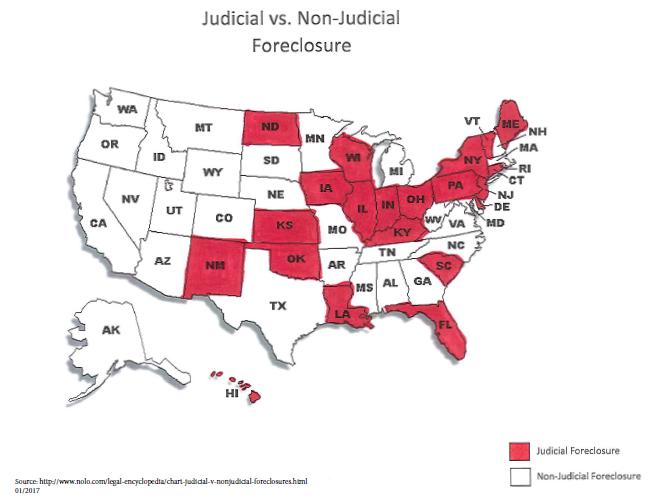
 available
here https://aws.amazon.com/aup/
and here https://www.heroku.com/policy/aup.
available
here https://aws.amazon.com/aup/
and here https://www.heroku.com/policy/aup.