U.S. SECURITIES AND EXCHANGE COMMISSION
Washington, DC 20549
FORM 1-A
Amendment #5
REGULATION A+ OFFERING CIRCULAR - - PART II -TIER II
Dated 11/22/22
PURSUANT TO REGULATION A UNDER THE SECURITIES ACT OF 1933
UNBANKED, INC.
a Delaware Corporation
Formerly TERNIO, LLC, a Delaware Limited Liability
Company
3010 Haven Reserve
Alpharetta, Georgia 30004
210-913-4445
https://unbanked.com/
54,347,827 shares of Class B Non-Voting Common Stock (the “Shares”) (Comprised of 36,347,827 Company offered Stock and 18,000,000 being offered by Selling Shareholders, consisting of executive officers) at $0.46 per Share
Maximum Offering: $25,000,000.42
See The Offering and Securities Being Offered for Further Details
18,000,000 shares of Class B Non-Voting Stock are Being Sold by Present Security Holders who are executive officers.
This Offering Will Commence Upon Qualification of this Offering by the Securities and Exchange Commission and Will Terminate 360 days from the Date of Qualification by the Securities and Exchange Commission, unless Extended or Terminated Earlier by The Issuer.
AN OFFERING STATEMENT PURSUANT TO REGULATION A RELATING TO THESE SECURITIES HAS BEEN FILED WITH THE SECURITIES AND EXCHANGE COMMISSION. INFORMATION CONTAINED IN THIS OFFERING CIRCULAR IS SUBJECT TO AMENDMENT. THESE SECURITIES MAY NOT BE SOLD NOR MAY OFFERS TO BUY BE ACCEPTED BEFORE THE OFFERING STATEMENT FILED WITH THE COMMISSION IS QUALIFIED. THIS OFFERING CIRCULAR SHALL NOT CONSTITUTE AN OFFER TO SELL OR THE SOLICITATION OF AN OFFER TO BUY NOR MAY THERE BE ANY SALES OF THESE SECURITIES IN ANY STATE IN WHICH SUCH OFFER, SOLICITATION OR SALE WOULD BE UNLAWFUL BEFORE REGISTRATION OR QUALIFICATION UNDER THE LAWS OF ANY SUCH STATE. WE MAY ELECT TO SATISFY OUR OBLIGATION TO DELIVER A FINAL OFFERING CIRCULAR BY SENDING YOU A NOTICE WITHIN TWO BUSINESS DAYS AFTER THE COMPLETION OF OUR SALE TO YOU THAT CONTAINS THE URL WHERE THE FINAL OFFERING CIRCULAR OR THE OFFERING STATEMENT IN WHICH SUCH FINAL OFFERING CIRCULAR WAS FILED MAY BE OBTAINED.
Capitalized but undefined terms used herein have the meanings set forth in the Unbanked, Inc. governance documents including the Articles of Incorporation and the By-Laws, Shareholder Agreements (the “Governance Documents”), a copy of which is attached hereto as Exhibit A. The mailing address of the Company is 310 Haven Reserve, Alpharetta, Georgia 30004 and the telephone number is (210) 913-4445.
INVESTMENT IN SMALL BUSINESSES INVOLVES A HIGH DEGREE OF RISK, AND INVESTORS SHOULD NOT INVEST ANY FUNDS IN THIS OFFERING UNLESS THEY CAN AFFORD TO LOSE THEIR ENTIRE INVESTMENT. SEE BELOW AND REVIEW ALL THE RISK FACTORS THAT MANAGEMENT BELIEVES PRESENT THE MOST SUBSTANTIAL RISKS TO AN INVESTOR IN THIS OFFERING. AN INVESTMENT IN THIS COMPANY SHOULD ONLY BE MADE IF YOU ARE CAPABLE OF EVALUATING THE RISKS AND MERITS OF THIS INVESTMENT AND IF YOU HAVE SUFFICIENT RESOURCES TO BEAR THE ENTIRE LOSS OF YOUR INVESTMENT, SHOULD THAT OCCUR.
IN MAKING AN INVESTMENT DECISION INVESTORS MUST RELY ON THEIR OWN EXAMINATION OF THE ISSUER AND THE TERMS OF THE OFFERING, INCLUDING THE MERITS AND RISKS INVOLVED. THESE SECURITIES HAVE NOT BEEN RECOMMENDED OR APPROVED BY ANY FEDERAL OR STATE SECURITIES COMMISSION OR REGULATORY AUTHORITY. FURTHERMORE, THESE AUTHORITIES HAVE NOT PASSED UPON THE ACCURACY OR ADEQUACY OF THIS DOCUMENT. ANY REPRESENTATION TO THE CONTRARY IS A CRIMINAL OFFENSE.
THE U.S. SECURITIES AND EXCHANGE COMMISSION DOES NOT PASS UPON THE MERITS OF ANY SECURITIES OFFERED OR THE TERMS OF THE OFFERING, NOR DOES IT PASS UPON THE ACCURACY OR COMPLETENESS OF ANY OFFERING CIRCULAR OR SELLING LITERATURE. THESE SECURITIES ARE OFFERED UNDER AN EXEMPTION FROM REGISTRATION. HOWEVER, THE COMMISSION HAS NOT MADE AN INDEPENDENT DETERMINATION THAT THESE SECURITIES ARE EXEMPT FROM REGISTRATION.
Because these securities are being offered on a “best efforts” basis, the following disclosures are hereby made:
| Price to Public | Commissions1 | Proceeds to Company2 | Proceeds to Selling Shareholders3 | |
| Per Share | $0.46 | $0.03 | $0.43 | $0.43 |
| Minimum Investment | $460.00 | $30.00 | $430.00 | - |
| Maximum Offering | $25,000,000.42 | $1630,434.81 | $15,629,565.61 | $7,740,000.00 |
———————
| 1 | The Shares are being offered on a “best efforts” basis through OpenDeal Broker LLC (“ODB”), a broker-dealer registered with the Commission and admitted to membership in the Financial Industry Regulatory Authority (“FINRA”) and the Securities Investor Protection Corporation (“SIPC”). As of the date of this Offering Circular, the Company is a party to a selling agreement with ODB. A cash commission of 6% of the aggregate Offering Price will be paid to ODB with respect to all Shares sold in this Offering. In addition to the 6% commission, ODB will also receive a securities commission, payable in Shares, equal to 2% of all Shares sold in this Offering. We may be required to indemnify ODB and possibly other parties with respect to disclosures made in this Offering Circular. We reserve the right, in connection with this Offering, to enter into posting agreements with equity crowdfunding firms not associated with FINRA member firms, for which we may pay non-contingent fees as compensation. See “Plan of Distribution” for details regarding the compensation payable to third-parties in connection with this Offering. |
| 2 | Does not reflect payment of expenses of this Offering, which are estimated to not exceed $50,000.00 and which include, among other things, legal fees, accounting costs, reproduction expenses, due diligence, marketing, consulting, broker-dealer out-of-pocket expenses, administrative services, technology provider fees, banking fees, other costs of blue sky compliance, and actual out-of-pocket expenses incurred by the Company selling the Shares, but which do not include any type of commissions to be paid to any broker-dealer. If the Company engages the services of additional broker-dealers in connection with the Offering, their commissions will be an additional expense of the Offering. See the “Plan of Distribution” for details regarding the compensation payable in connection with this Offering. This amount represents the proceeds of the Offering to the Company, which will be used as set out in “Use of Proceeds.” |
| 3 | The fees and commissions with respect to the Selling Stockholder Shares will be paid by the selling stockholders. See “Plan of Distribution.” |
GENERALLY, NO SALE MAY BE MADE TO YOU IN THIS OFFERING IF THE AGGREGATE PURCHASE PRICE YOU PAY IS MORE THAN 10% OF THE GREATER OF YOUR ANNUAL INCOME OR NET WORTH. DIFFERENT RULES APPLY TO ACCREDITED INVESTORS AND NON-NATURAL PERSONS. BEFORE MAKING ANY REPRESENTATION THAT YOUR INVESTMENT DOES NOT EXCEED APPLICABLE THRESHOLDS, WE ENCOURAGE YOU TO REVIEW RULE 251(D)(2)(I)(C) OF REGULATION A. FOR GENERAL INFORMATION ON INVESTING, WE ENCOURAGE YOU TO REFER TO WWW.INVESTOR.GOV.
This offering consists of Class B Non-Voting Common Stock (the “Shares” or individually, each a “Share”) that are being offered on a “best efforts” basis, which means that there is no guarantee that any minimum amount will be sold. The term “Offering” refers to the offer of Shares pursuant to this Offering Circular. The Shares are being offered and sold by Unbanked, Inc., a Delaware Corporation (“Unbanked”, “we”, “our” or the “Company”). There are 54,347,827 Shares of Class B Non-Voting Common Stock being offered at a price of $0.46 per Class B Non-Voting Common Share with a minimum purchase of One Thousand (1,000) Shares per investor. The Shares are being offered on a best-efforts basis to an unlimited number of accredited investors and an unlimited number of non-accredited investors only by the Company. The Shares are initially being offered directly through the Company. However, the Company, at its own discretion, reserves the right to engage in one or more FINRA member broker-dealers or other third-party placement agents. The maximum aggregate proceeds from the sale of the Shares offered is $25,000,000.42 (the “Maximum Offering”) with $7,740,000 being allocated to the Company and $15,629,565.61 being allocated to the Selling Shareholders. There is no minimum number of Shares (other than the per investor minimum subscription in the amount of 1,000 Shares) required to be sold in order for funds to be released to the Company and for this Offering to hold its first closing.
The Shares are being offered pursuant to Regulation A of Section 3(b) of the Securities Act of 1933, as amended, for Tier 2 offerings. The Shares will only be issued to purchasers who satisfy the requirements set forth in Regulation A. The Company has not engaged or produced any materials, including but not limited to the preparation and dissemination of any whitepapers, in any testing the waters for this Regulation A Offering. This Offering will commence after qualification by the Commission and is expected to expire on the first of: (i) all of the Shares offered are sold; (ii) the close of business 360 days from the date of qualification by the Commission, unless sooner terminated or extended by the Company’s CEO, or (iii) the date upon which a determination is made by the Company to terminate the Offering in the Company’s sole and absolute discretion. Pending each closing, payments for the Shares will be deposited in a bank account to be held for the Company. Funds will be promptly refunded without interest, for sales that are not consummated. All funds received shall be held only in a non-interest-bearing bank account. Upon closing under the terms as set out in this Offering Circular, funds will be immediately transferred to the Company where they will be available for use in the operations of the Company’s business in a manner consistent with the “Use Of Proceeds” in this Offering Circular. The Company’s website is not incorporated into this Offering Circular.
Concurrent with this offering, the Company is also offerings the Company Offered Shares in a separate offering being made pursuant Rule 506(c) of Regulation D and Regulation CF under the Securities Act. (the “Concurrent Regulation D and CF Offering”). We are not offering the Selling Shareholders’ Shares in the Concurrent Regulation D or CF Offering. We are making the Concurrent Regulation D Offering by way of a separate offering document that will be made available only to persons who can verify to us that they are “accredited investors,” as such term is defined in Regulation D or as applicable in the Regulation CF Offering through the duly authorized crowdfunding intermediary. We may commence selling the Company Offered Shares in the Concurrent Regulation D or CF Offering before the date on which this Regulation A offering is qualified by the SEC. It is our opinion that based on the current rules and regulations pertaining to the integration of offerings, that pursuant to such rules and our interpretation of Rule 157, that as the private offering under Regulation D Rule 506(c) and Crowdfunding Offerings under Section 4(a)(6) and Regulation CF that the SEC’s Five-Factor Test would not be applicable as Rule 506(c), Regulation CF and Regulation A+ all permit general solicitation and thus the public offering can no longer taint the private placements. Therefore, and as each concurrent offering being conducted by UNBANKED is being conducted in accordance with the registration, qualifications and exemption requirements, that the concurrent offerings would not be subject to integration.
THIS OFFERING CIRCULAR DOES NOT CONSTITUTE AN OFFER OR SOLICITATION IN ANY JURISDICTION IN WHICH SUCH AN OFFER OR SOLICITATION WOULD BE UNLAWFUL. NO PERSON HAS BEEN AUTHORIZED TO GIVE ANY INFORMATION OR TO MAKE ANY REPRESENTATIONS CONCERNING THE COMPANY OTHER THAN THOSE CONTAINED IN THIS OFFERING CIRCULAR, AND IF GIVEN OR MADE, SUCH OTHER INFORMATION OR REPRESENTATION MUST NOT BE RELIED UPON.
_____________________________________
PROSPECTIVE INVESTORS MUST NOT CONSTRUE THE CONTENTS OF THIS OFFERING CIRCULAR, OR OF ANY PRIOR OR SUBSEQUENT COMMUNICATIONS FROM THE COMPANY OR ANY OF ITS EMPLOYEES, AGENTS OR AFFILIATES, AS INVESTMENT, LEGAL, FINANCIAL OR TAX ADVICE.
_____________________________________
BEFORE INVESTING IN THIS OFFERING, PLEASE REVIEW ALL DOCUMENTS CAREFULLY, ASK THE COMPANY’S MANAGEMENT ANY QUESTIONS THAT YOU WOULD LIKE ANSWERED, AND CONSULT YOUR OWN COUNSEL, ACCOUNTANT AND OTHER PROFESSIONAL ADVISORS REGARDING LEGAL, TAX AND OTHER RELATED MATTERS CONCERNING THIS INVESTMENT.
_____________________________________
THERE IS NO PUBLIC MARKET FOR THE SHARES OR ANY OTHER SECURITIES OF THIS COMPANY, NOR WILL ANY SUCH MARKET DEVELOP AS A RESULT OF THIS OFFERING. A LEGALLY COMPLIANT TRADING MARKET FOR THE SHARES MAY NEVER BE DEVELOPED. TRADING OF SHARES WILL NOT BE PERMITTED UNLESS AND SHAREHOLDERS ARE NOTIFIED OTHERWISE BY THE COMPANY, WHICH MAY REQUIRE SHAREHOLDERS TO HOLD THEIR SHARES INDEFINITELY. AN INVESTMENT IN THIS OFFERING IS HIGHLY SPECULATIVE, AND YOU SHOULD ONLY INVEST IF YOU ARE PREPARED TO LOSE YOUR ENTIRE INVESTMENT.
_____________________________________
THE SHARES ARE OFFERED BY THE COMPANY SUBJECT TO THE COMPANY’S RIGHT TO REJECT ANY TENDERED SUBSCRIPTION, IN WHOLE OR IN PART, IN ITS ABSOLUTE DISCRETION, AT ANY TIME PRIOR TO THE ISSUANCE OF THE SHARES. THE COMPANY MAY REJECT ANY OFFER IN WHOLE OR IN PART AND NEED NOT ACCEPT OFFERS IN THE ORDER RECEIVED.
_____________________________________
INVESTORS WILL BE REQUIRED TO REPRESENT THAT THEY ARE ABLE TO BEAR THE ECONOMIC RISK OF THEIR INVESTMENT AND THAT THEY (OR THEIR PURCHASER REPRESENTATIVES) ARE FAMILIAR WITH AND UNDERSTAND THE TERMS AND RISKS OF THIS OFFERING. THE CONTENTS OF THIS OFFERING CIRCULAR ARE NOT AND SHALL NOT BE CONSTRUED AS LEGAL OR TAX ADVICE. EACH INVESTOR SHOULD CONSULT HIS OR HER OWN ATTORNEY, ACCOUNTANT OR BUSINESS ADVISOR FOR LEGAL, TAX AND RELATED MATTERS CONCERNING THIS INVESTMENT. ALL FINAL DECISIONS IN RESPECT TO SALES OF SECURITIES WILL BE MADE BY THE COMPANY, WHICH RESERVES THE RIGHT TO REVOKE THE OFFER AND TO REFUSE TO SELL TO ANY PROSPECTIVE INVESTOR.
_____________________________________
NO OFFERING LITERATURE OR ADVERTISING IN ANY FORM SHOULD BE RELIED ON IN CONNECTION WITH THE OFFERING EXCEPT FOR THIS OFFERING CIRCULAR, ANY EXHIBITS ATTACHED, AND THE STATEMENTS CONTAINED IN BOTH. NO PERSONS, EXCEPT THE COMPANY OR ITS AGENTS AND SUCH REGISTERED BROKER-DEALERS AS THE COMPANY MAY ELECT TO UTILIZE, HAVE BEEN AUTHORIZED TO GIVE ANY INFORMATION OR TO MAKE ANY REPRESENTATION NOT CONTAINED IN THIS MEMORANDUM AND IF GIVEN OR MADE, SUCH INFORMATION OR REPRESENTATION MUST NOT BE RELIED UPON AS HAVING BEEN AUTHORIZED BY THE COMPANY. NEITHER THE DELIVERY OF THIS OFFERING CIRCULAR NOR ANY SALE HEREUNDER SHALL, UNDER ANY CIRCUMSTANCES, CREATE THE IMPLICATION THERE HAS BEEN NO CHANGE IN THE INFORMATION CONTAINED HEREIN SUBSEQUENT TO THE DATE HEREOF.
_____________________________________
THE INVESTMENT DESCRIBED IN THIS OFFERING CIRCULAR INVOLVES RISK AND IS OFFERED ONLY TO INDIVIDUALS WHO CAN AFFORD TO ASSUME SUCH RISKS FOR AN INDEFINITE PERIOD OF TIME AND WHO AGREE TO PURCHASE THE SECURITIES THAT ARE BEING OFFERED HEREUNDER ONLY FOR INVESTMENT PURPOSES AND NOT WITH A VIEW TOWARDS A TRANSFER, RESALE, EXCHANGE OR FURTHER DISTRIBUTION OF SUCH. FEDERAL LAW AND STATE SECURITIES LAWS LIMIT THE RESALE OF SUCH SECURITIES AND IT IS THEREFORE URGED THAT EACH POTENTIAL INVESTOR SEEK COUNSEL CONCERNING SUCH LIMITATIONS.
_____________________________________
THE COMPANY AS DESCRIBED IN THIS OFFERING CIRCULAR HAS ARBITRARILY DETERMINED THE PRICE OF SECURITIES AND EACH PROSPECTIVE INVESTOR SHOULD MAKE AN INDEPENDENT EVALUATION OF THE FAIRNESS OF SUCH PRICE UNDER ALL THE CIRCUMSTANCES AS DESCRIBED IN THIS OFFERING CIRCULAR.
_____________________________________
THIS OFFERING CIRCULAR DOES NOT KNOWINGLY CONTAIN ANY UNTRUE STATEMENT OF A MATERIAL FACT OR KNOWINGLY OMIT A MATERIAL FACT, AND ANY SUCH MISSTATEMENT OR OMISSION IS DONE WITHOUT THE KNOWLEDGE OF THE PREPARERS OF THIS DOCUMENT OR THE COMPANY. AS SUCH, THE COMPANY BELIEVES THAT THIS OFFERING CIRCULAR CONTAINS A FAIR SUMMARY OF THE TERMS OF ALL MATTERS, DOCUMENTS AND CIRCUMSTANCES MATERIAL TO THIS OFFERING.
_____________________________________
PROSPECTIVE INVESTORS WHO HAVE QUESTIONS CONCERNING THE TERMS AND CONDITIONS OF THE OFFERING OR WHO DESIRE ADDITIONAL INFORMATION OR DOCUMENTATION TO VERIFY THE INFORMATION CONTAINED IN THIS OFFERING CIRCULAR SHOULD CONTACT THE CHIEF EXECUTIVE OFFICER OF THE COMPANY. ANY PROJECTIONS CONTAINED HEREIN OR OTHERWISE PROVIDED TO A POTENTIAL INVESTOR MUST BE VIEWED ONLY AS ESTIMATES. ALTHOUGH ANY PROJECTIONS ARE BASED UPON ASSUMPTIONS, WHICH THE COMPANY BELIEVES TO BE REASONABLE, THE ACTUAL PERFORMANCE OF THE COMPANY WILL DEPEND UPON FACTORS BEYOND THE CONTROL OF THE COMPANY. NO ASSURANCE CAN BE GIVEN THAT THE COMPANY’S ACTUAL PERFORMANCE WILL MATCH THE PROJECTIONS.
_____________________________________
PROSPECTIVE INVESTORS MUST NOT CONSTRUE THE CONTENTS OF THIS OFFERING CIRCULAR, OR OF ANY PRIOR OR SUBSEQUENT COMMUNICATIONS FROM THE COMPANY OR ANY OF ITS EMPLOYEES, AGENTS OR AFFILIATES, AS INVESTMENT, LEGAL, FINANCIAL OR TAX ADVICE.
_____________________________________
BEFORE INVESTING IN THIS OFFERING, PLEASE REVIEW ALL DOCUMENTS CAREFULLY, ASK ANY QUESTIONS OF THE COMPANY’S MANAGEMENT THAT YOU WOULD LIKE ANSWERED AND EACH PROSPECTIVE INVESTOR SHOULD CONSULT WITH HIS OR HER OWN PROFESSIONAL TAX, LEGAL AND INVESTMENT ADVISORS TO ASCERTAIN THE MERITS AND RISKS OF INVESTING IN THE SHARES DESCRIBED IN THIS OFFERING CIRCULAR PRIOR TO SUBSCRIBING TO SECURITIES OF THE COMPANY.
NASAA UNIFORM LEGEND
FOR RESIDENTS OF ALL STATES: THE PRESENCE OF A LEGEND FOR ANY GIVEN STATE REFLECTS ONLY THAT A LEGEND MAY BE REQUIRED BY THAT STATE AND SHOULD NOT BE CONSTRUED TO MEAN AN OFFER OR SALE MAY BE MADE IN A PARTICULAR STATE. IF YOU ARE UNCERTAIN AS TO WHETHER OR NOT OFFERS OR SALES MAY BE LAWFULLY MADE IN ANY GIVEN STATE, YOU ARE HEREBY ADVISED TO CONTACT THE COMPANY. THE SECURITIES DESCRIBED IN THIS OFFERING CIRCULAR HAVE NOT BEEN REGISTERED UNDER ANY STATE SECURITIES LAWS (COMMONLY CALLED BLUE SKY LAWS).
IN MAKING AN INVESTMENT DECISION INVESTORS MUST RELY ON THEIR OWN EXAMINATION OF THE PERSON OR ENTITY CREATING THE SECURITIES AND THE TERMS OF THE OFFERING, INCLUDING THE MERITS AND RISKS INVOLVED. THESE SECURITIES HAVE NOT BEEN RECOMMENDED BY ANY FEDERAL OR STATE SECURITIES COMMISSION OR REGULATORY AUTHORITY.
FURTHERMORE, THE FOREGOING AUTHORITIES HAVE NOT CONFIRMED THE ACCURACY OR DETERMINED THE ADEQUACY OF THIS DOCUMENT. ANY REPRESENTATION TO THE CONTRARY IS A CRIMINAL OFFENSE. THESE SECURITIES ARE SUBJECT TO RESTRICTIONS ON TRANSFERABILITY AND RESALE AND MAY NOT BE TRANSFERRED OR RESOLD EXCEPT AS PERMITTED UNDER THE ACT, AND THE APPLICABLE STATE SECURITIES LAWS, PURSUANT TO REGISTRATION OR EXEMPTION THEREFROM. INVESTORS SHOULD BE AWARE THAT THEY WILL BE REQUIRED TO BEAR THE FINANCIAL RISKS OF THIS INVESTMENT FOR AN INDEFINITE PERIOD OF TIME.
_____________________________________
NOTICE TO FOREIGN INVESTORS
IF THE PURCHASER LIVES OUTSIDE THE UNITED STATES, IT IS THE PURCHASER'S RESPONSIBILITY TO FULLY OBSERVE THE LAWS OF ANY RELEVANT TERRITORY OR JURISDICTION OUTSIDE THE UNITED STATES IN CONNECTION WITH ANY PURCHASE OF THE SECURITIES, INCLUDING OBTAINING REQUIRED GOVERNMENTAL OR OTHER CONSENTS OR OBSERVING ANY OTHER REQUIRED LEGAL OR OTHER FORMALITIES. THE COMPANY RESERVES THE RIGHT TO DENY THE PURCHASE OF THE SECURITIES BY ANY FOREIGN PURCHASER.
_____________________________________
CAUTION REGARDING FORWARD-LOOKING STATEMENTS
This Form 1-A, Offering Circular, and documents incorporated by reference contain forward-looking statements. The forward-looking statements appear in a number of places in this Offering Circular and the documents incorporated by reference and include statements regarding the intent, belief or current expectations of the Company with respect to, among others things: (i) the development of the Company and its products; (ii) the targeting of markets; (iii) trends affecting the Company’s financial condition or results of operation; (iv) the Company’s business plan and growth strategies; (v) the industries in which the Company participates; and (vi) the ability of the Company to generate sufficient cash from operations to meet its operating needs and pay off its existing indebtedness, all of which are subject to risks and uncertainties. All statements other than statements of historical fact or relating to present facts or current conditions included in this Offering Circular, and any documents incorporated by reference are forward-looking statements. Forward-looking statements give the Company's current reasonable expectations and projections relating to its financial condition, results of operations, plans, objectives, future performance and business. You can identify forward-looking statements by the fact that they do not relate strictly to historical or current facts. These statements may include words such as “may,” “could,” “will,” “should,” “can have,” “likely,” “assume,” “expect,” “anticipate,” “plan,” “intend,” “believe,” “predict,” “project,” “estimate,” “forecast,” “outlook,” “potential,” or “continue,” or the negative of these terms, and other comparable terminology and other words and terms of similar meaning in connection with any discussion of the timing or nature of future operating or financial performance or other events. Prospective investors are cautioned that any such forward-looking statements are not guarantees of future performance and involve risks and uncertainties, and that actual results may differ materially from those projected, expressed or implied, in the forward-looking statements as a result of various factors. They involve risks, uncertainties (many of which are beyond the Company's control) and assumptions, all of which are based on what the Company believes to be reasonable assumptions, however, you should be aware that many factors could affect the actual operating and financial performance of the Company and cause its performance to differ materially from the performance anticipated in the forward-looking statements. Should one or more of these risks or uncertainties materialize, or should any of these assumptions prove incorrect or change, the Company's actual operating and financial performance may vary in material respects from the performance projected in these forward-looking statements.
The Company discloses important factors that could cause its actual results to differ materially from its expectations under the caption “Risk Factors” below. These cautionary statements qualify all forward-looking statements attributable to the Company or persons acting on its behalf. The Company has based its forward-looking statements on its current expectations about future events. Although the Company believes that the expectations reflected in the forward-looking statements are reasonable, the Company cannot guarantee future results, levels of activity, performance or achievements. Although the Company believes its forward-looking statements are based on reasonable assumptions, you should be aware that many factors could affect its actual operating and financial performance and cause its performance to differ materially from the performance anticipated in the forward-looking statements. Should one or more of these risks or uncertainties materialize, or should any of these assumptions prove incorrect or change, the Company's actual operating and financial performance may vary in material respects from the performance projected in these forward-looking statements.
Any forward-looking statement made by the Company in this Offering Circular or any documents incorporated by reference speak only as of the date of this Offering Circular and that of each document incorporated by reference. Factors or events that could cause the Company’s actual operating and financial performance to differ may emerge from time to time, and it is not possible for the Company to predict all of them. The Company disclaims any obligation, and undertakes no obligation, to update or alter any forward-looking statement, whether as a result of new information, future events/developments or otherwise or to conform these statements to actual results, whether as a result of new information, future events or otherwise. You should not place undue reliance on forward looking statements. The Company urges you to carefully consider these matters, and the risk factors described in this Offering Circular, prior to making an investment in its Shares.
_____________________________________
About This Form 1-A and Offering Circular
In making an investment decision, you should rely only on the information contained in this Form 1-A and Offering Circular. The Company has not authorized anyone to provide you with information different from that contained in this Form 1-A and Offering Circular. We are offering to sell and seeking offers to buy the Stock only in jurisdictions where offers and sales are permitted. You should assume that the information contained in this Form 1-A and Offering Circular is accurate only as of the date of this Form 1-A and Offering Circular, regardless of the time of delivery or your receipt of this Form 1-A and Offering Circular. Our business, financial conditions, results of operations, and prospects may have changed since the date on this Form 1-A and Offering Circular.
Certain statements contained in this Offering Circular regarding the content of any referenced agreements, incorporated agreements, ancillary agreements or other documents are the Company's summaries of material terms and information contained in such agreements or other documents and therefore investors should review any referred information or documents in their entirety by reviewing the actual agreements or other documents so referenced. The Company will provide the opportunity to ask questions of and receive answers from the Company's management concerning terms and conditions of the Offering, the Company or any other relevant matters and any additional reasonable information to any prospective investor prior to the consummation of the sale of the Shares. This Form 1-A and Offering Circular do not purport to contain all of the information that may be required to evaluate the Offering and any recipient hereof should conduct its own independent analysis. The statements of the Company contained herein are based on information believed to be reliable. No warranty can be made as to the accuracy of such information or that circumstances have not changed since the date of this Form 1-A and Offering Circular. The Company does not expect to update or otherwise revise this Form 1-A, Offering Circular or other materials supplied herewith. The delivery of this Form 1-A and Offering Circular at any time does not imply that the information contained herein is correct as of any time subsequent to the date of this Form 1-A and Offering Circular. This Form 1-A and Offering Circular are submitted in connection with the Offering described herein and may not be reproduced or used for any other purpose.
______________________________________________________________________________
ITEM 3 - OFFERING SUMMARY AND RISK FACTORS
The following summary is qualified in its entirety by the more detailed information appearing elsewhere in this Offering Circular and/or incorporated by reference in this Offering Circular. For full offering details, please (1) thoroughly review this Form 1-A filed with the Securities and Exchange Commission (2) thoroughly review this Offering Circular and (3) thoroughly review any attached documents to or documents referenced in, this Form 1-A and Offering Circular.
| 1 |
| Concurrent Regulation CF | Concurrent with this offering, we also are offering the Company Offered Shares under Regulation CF under Title III of the Securities Act. (the “Concurrent Regulation CF Offering”). The Selling Stockholder Stock will not be offered by way of the Concurrent Regulation CF Offering. The Concurrent Regulation CF Offering will be made pursuant to a separate Form C offering document. We may commence selling the Company Offered Stock in the Concurrent Regulation CF Offering before the date on which this Regulation A offering is qualified by the SEC. We have not allocated any specific number of Company Offered Stock to the Concurrent Regulation CF Offering or this offering, which would significantly reduce the number of Company Offered Stock available for sale in this offering. See “Plan of Distribution” and “Concurrent Regulation CF Offering.” |
| Summary of Risk Factors |
This Offering involves significant risks, and you should consider the Stock highly speculative. The following important factors, and those important factors described elsewhere in this Offering Circular, including the matters set forth under the section entitled “Risk Factors,” could affect (and in some cases have affected) the Company’s actual results and could cause such results to differ materially from estimates or expectations reflected in this Offering Circular and in any forward-looking statements made herein or by the Company. These important risk factors include, but are not limited to: • The Company is a relatively newly formed entity with limited tangible assets and its continued operation requires substantial additional funding. • The Company has a short operating history and there is no assurance that the business plan can be executed, or that the Company will generate revenues or profits. • Investors in this Offering risk the loss of their entire investment. The industry in which the Company is participating is highly speculative and extremely risky. • There is no minimum number of Stock that needs to be sold in order for funds to be released to the Company and for this Offering to hold its first closing; therefore, there is no assurance the Company will receive funds sufficient to further its business plan. • If you invest and purchase the Stock, you will be acquiring a minority interest in the Company and will have little to no effective control over, or input into, the management or decisions of the Company, primarily because the Stock have no voting rights. • There is no market for the Company’s Stock at present and there is no assurance such a market will develop subsequent to this Offering. The Stock are illiquid and should be considered a long-term investment. • There are substantial restrictions on the transferability of the Stock and in all likelihood, you will not be able to liquidate some or all of your investment in the immediate future. • The Company has broad discretion in its use of proceeds and, as an investor, you are relying on management’s judgment. • The price of the Stock is arbitrary and may not be indicative of the value of the Stock or the Company. • The tax treatment of the Stock is uncertain. • The Company does not expect there to be any market makers to develop a trading market in the Stock. • The Company intends to utilize several third-party companies and/or financial institutions (including banks) to support to the Company related to the buying, selling, and storing of digital assets. To the extent service providers no longer support the Company or cannot be replaced, the operations and success of the Company may be adversely affected. • Though the Company may seek to ensure its digital asset holdings, it may not be possible, either because of a lack of available policies or because of prohibitive cost, for the Company to obtain insurance of any type that would cover losses associated with digital assets. If an uninsured loss occurs or a loss exceeds policy limits, the Fund could lose a portion or all of its assets. |
| 2 |
Our Ability to Succeed Depends on our Ability to Grow our Business and Achieve Profitability. The introduction of new products and services, and expansion of our distribution channels will contribute significantly to our operational results, and we will continue to develop new and innovative ways to manufacture our products and expand our distribution in order to maintain our growth and achieve profitability. Our future operational success and profitability will depend on a number of factors, including, but not limited to:
| · | Our ability to manage costs; |
| · | The increasing level of competition in the advertising industry; |
| · | Our ability to continuously offer new and improved products; |
| · | Our ability to maintain efficient, timely and cost-effective production and delivery of our products; |
| · | The efficiency and effectiveness of our sales and marketing efforts in building product and brand awareness; |
| · | Our ability to identify and respond successfully to emerging trends in the advertising and block card industry; |
| · | The level of consumer acceptance of our products; |
| · | Regulatory compliance costs; and |
| · | General economic conditions and consumer confidence. |
We may not be successful in executing our growth strategy, and even if we achieve targeted growth, we may not be able to sustain profitability. Failure to execute any material part of our growth strategy successfully would significantly impair our future growth and our ability to attract and sustain investments in our business.
Development Stage Business. We commenced operations in 2018. The likelihood of the Company’s success must be considered in light of the problems, expenses, difficulties, complications, and delays frequently encountered in connection with the expansion of a business, operation in a competitive industry, and the continued development of advertising, promotions and a corresponding customer base. There is a possibility that the Company could sustain losses in the future and there can be no assurances that the Company will operate profitably.
Inadequacy of Funds. Gross offering proceeds of a maximum of $15,629,565.61 may be realized. Management believes that such proceeds will capitalize and sustain the Company sufficiently to allow for the implementation of the Company’s business plan; however, this cannot be assured. Additionally, this Offering is being conducted in the Company’s best efforts and therefore there is no minimum number of subscriptions required or capital to be raised, and if only a fraction of this Offering is sold, or if certain assumptions contained in management’s business plans prove to be incorrect, the Company may have inadequate funds to develop its business fully.
Dependence on Management. The Company's success is heavily dependent upon the continued active participation of the Company's current executive officers, Daniel Gouldman and Ian Kane, as well as other key personnel and consultants. Some of them will have concurrent responsibilities at other entities. Loss of the services of one or more of these individuals could have a material adverse effect upon the Company's business, financial condition or results of operations. Further, the Company's success and achievement of the Company's growth plans depend on the Company's ability to recruit, hire, train and retain other highly qualified personnel. Competition for qualified employees and management personnel among companies in industries that the Company is participating in is intense, and the loss of any of such persons, or an inability to attract, retain and motivate any additional highly skilled employees required for the expansion of the Company's activities, could have a materially adverse effect on it. The inability to attract and retain the necessary personnel, consultants and advisors could have a material adverse effect on the Company's business, financial condition or results of operations.
| 3 |
Life Insurance Policies on Any Such People. The Company is dependent upon management in order to conduct its operations and execute its business plan, however, the Company has not purchased any insurance policies with respect to those individuals in the event of their death or disability. Therefore, should any of these key personnel, management or consultants die or become disabled, the Company will not receive any compensation that would assist with such person's absence. The loss of such person could negatively affect the Company and its operations.
Risks of Borrowing. Although the Company does not intend to incur any additional debt from the investment commitments provided in this Offering and to the contrary intends to gradually extinguish existing debt, should the Company fail to eliminate its existing debt or need to obtain secure bank debt in the future, possible risks could arise. If the Company incurs additional indebtedness, a portion of the Company’s cash flow will have to be dedicated to the payment of principal and interest on such new indebtedness. Typical loan agreements also might contain restrictive covenants, which may impair the Company’s operating flexibility. Such loan agreements would also provide for default under certain circumstances, such as failure to meet certain financial covenants. A default under a loan agreement could result in the loan becoming immediately due and payable and, if unpaid, a judgment in favor of such lender which would be senior to the rights of members of the Company. A judgment creditor would have the right to foreclose on any of the Company’s assets resulting in a material adverse effect on the Company’s business, operating results or financial condition.
The Company’s Business Plan Is Speculative. The Company’s present business and planned business are speculative and subject to numerous risks and uncertainties. There is no assurance that the Company will generate significant revenues or profits. An investment in the Company’s Common Stock is speculative and there is no assurance that investors will obtain any return on their investment. Investors will be subject to substantial risks involved in an investment in the Company, including the risk of losing their entire investment.
Unanticipated Obstacles to Execution of the Business Plan. The Company’s business plans may change significantly. Many of the Company’s potential business endeavors are capital intensive and are subject to statutory or regulatory requirements. Management believes that the Company’s chosen activities and strategies are achievable in light of current economic and legal conditions with the skills, background, and knowledge of the Company’s principals and advisors. Management reserves the right to make significant modifications to the Company’s stated strategies depending on future events.
Management Discretion as to Use of Proceeds. The net proceeds from this Offering will be used for the purposes described under “Use of Proceeds.” The Company reserves the right to use the funds obtained from this Offering for other similar purposes not presently contemplated which it deems to be in the best interests of the Company and its shareholders in order to address changed circumstances or opportunities. Because of the foregoing, the success of the Company will be substantially dependent upon the discretion and judgment of the Company’s management with respect to application and allocation of the net proceeds of this Offering. Investors for the Shares offered hereby will be entrusting their funds to the Company’s management, upon whose judgment and discretion the investors must depend.
Minimum Amount of Capital to be Raised. There is no minimum amount of Securities that need to be sold in this Offering for it to become effective (other than the 1,000 minimum number of Shares or even lots of 100 shares to be purchased by any investor) or for the Company to access the investment funds. All investor funds will be transferred from the transfer agent’s investment holding escrow account to the Company immediately upon the Company’s request after stock issuance or at regular intervals (e.g., weekly). The Company cannot assure you that subscriptions for the entire Offering will be obtained. The Company has the right to terminate this Offering at any time, regardless of the number of Shares that have sold. The Company’s ability to meet financial obligations, cash needs, and to achieve objectives, could be adversely affected if the entire offering of Shares is not fully subscribed.
| 4 |
Control by Management. As of May 15, 2022, our directors and executive officers owned approximately 97.6% of our authorized and issued Stock. Upon completion of this Offering, if all of the Stock are sold, our executive officers will own approximately 75.3% of our outstanding Stock and thus will have the ability to elect our Managers. Members will not have the ability to control the Company’s operations.
Return of Profits. The Company has never declared or paid any cash dividends on its common Stock. The Company currently intends to retain future earnings, if any, to finance the expansion of the Company’s operations and holdings. As a result, the Company does not anticipate paying any cash dividends to its shareholders for the foreseeable future.
No Assurances of Protection for Proprietary Rights; Reliance on Trade Secrets. In certain cases, the Company may rely on trade secrets to protect intellectual property, proprietary technology and processes, which the Company has acquired, developed or may develop in the future. There can be no assurances that secrecy obligations will be honored or that others will not develop similar or superior products or technology independently. The protection of intellectual property and/or proprietary technology through claims of trade secret status has been the subject of increasing claims and litigation by various companies both in order to protect proprietary rights as well as for competitive reasons even where proprietary claims are unsubstantiated. The prosecution of proprietary claims or the defense of such claims is costly and uncertain given the uncertainty and rapid development of the principles of law pertaining to this area. The Company, in common with other investment funds, may also be subject to claims by other parties with regard to the use of intellectual property, technology information and data, which may be deemed proprietary to others.
The Company’s Continuing as a Going Concern Depends Upon Financing. If the Company does not raise sufficient working capital and continues to experience operating losses, there will most likely be substantial doubt as to its ability to continue as a going concern. As reflected in the notes to our audited financial statements, we may not have significant cash or other current assets, or an established source of revenues sufficient to cover our operating costs and allow the Company to continue as a going concern. Also as discussed in the notes to our audited financial statements, the lack of additional capital, either from our inability to generate cash flow from operations or to raise capital from external sources may force the company to substantially curtail or cease operations.
The Company’s Expenses Could Increase Without a Corresponding Increase in Revenues. The Company’s operating and other expenses could increase without a corresponding increase in revenues, which could have a material adverse effect on the Company’s financial results and on your investment. Factors which could increase operating and other expenses include, but are not limited to (1) increases in the rate of inflation, (2) increases in taxes and other statutory charges, (3) changes in laws, regulations or government policies which increase the costs of compliance with such laws, regulations or policies, (4) significant increases in insurance premiums, (5) increases in borrowing costs, and (5) unexpected increases in costs of supplies, goods, materials, construction, equipment or distribution.
The Company's Business Model Is Evolving. The Company's business model is unproven and is likely to continue to evolve. Accordingly, the Company's initial business model may not be successful and may need to be changed. The Company's ability to generate significant revenues will depend, in large part, on the Company's ability to successfully market the Company's products and services to potential customers who may not be convinced of the need for the Company's products and services or who may be reluctant to rely upon third parties to develop and provide these products. The Company intends to continue to develop the Company's business model as the Company's market continues to evolve.
The Company Faces or Will Face Competition in the Company's Markets. The Company either faces, or will face significant competition in the United States and elsewhere. In some cases, the Company’s competitors have or may have longer operating histories, established ties to the market and consumers, greater brand awareness, and greater financial, technical and marketing resources. The Company's ability to compete depends, in part, upon a number of factors outside the Company's control, including the ability of the Company's competitors to develop alternatives that are superior. If the Company fails to successfully compete in its markets, or if the Company incurs significant expenses in order to compete, it would have a material adverse effect on the Company's results of operations.
| 5 |
A Data Security Breach Could Expose the Company to Liability and Protracted and Costly Litigation, And Could Adversely Affect the Company's Reputation and Operating Revenues. To the extent that the Company's activities involve the storage and transmission of confidential information and/or other data, the Company and/or third-party processors will receive, transmit and store confidential customer and other information. Encryption software and the other technologies used to provide security for storage, processing and transmission of confidential customer and other information may not be effective to protect against data security breaches by third parties. The risk of unauthorized circumvention of such security measures has been heightened by advances in computer capabilities and the increasing sophistication of hackers. Improper access to the Company's or these third parties' systems or databases could result in the theft, publication, deletion or modification of confidential customer and other information, as well as numerous other problems. A data security breach of the systems on which sensitive account information are stored could lead to fraudulent activity involving the Company's products and services, reputational damage, and claims or regulatory actions against the Company. If the Company is sued in connection with any data security breach, the Company could be involved in protracted and costly litigation. If unsuccessful in defending that litigation, the Company might be forced to pay damages and/or change the Company's business practices or pricing structure, any of which could have a material adverse effect on the Company's operating revenues and profitability. The Company would also likely have to pay fines, penalties and/or other assessments imposed as a result of any data security breach.
The Company Depends on Third-Party Providers for a Reliable Internet Infrastructure and The Failure of These Third Parties, Or the Internet in General, For Any Reason Would Significantly Impair the Company's Ability to Conduct Its Business. Computer, website and/or information system breakdowns as well as cyber security attacks could impair the Company’s ability to service its customers leading to reduced revenue from sales and/or reputational damage, which could have The Company will outsource some or all of its online presence and data management to third parties who host the actual servers and provide power and security in multiple data centers in each geographic location. These third-party facilities require uninterrupted access to the Internet. If the operation of the servers is interrupted for any reason, including natural disaster, financial insolvency of a third-party provider, or malicious electronic intrusion into the data center, its business would be significantly damaged. As has occurred with many Internet-based businesses, the Company may be subject to “denial-of-service” attacks in which unknown individuals bombard its computer servers with requests for data, thereby degrading the servers' performance. The Company cannot be certain it will be successful in quickly identifying and neutralizing these attacks. If either a third-party facility failed, or the Company's ability to access the Internet was interfered with because of the failure of Internet equipment in general, a contract with such a provider is terminated with little or no notice, or if the Company becomes subject to malicious attacks of computer intruders, its business and operating results will be materially adversely affected and the Company may not be able to find a suitable replacement in a timely manner.
The Company Depends on Third-Party Providers for Custody of Fiat Currency and Payment Processing. The Company is materially dependent on third-party banking partners and maintains contracts with each of these third-party banking partners for various financial services, including custody of fiat currency, payment card issuance, and payment processing. The Company itself does not custody fiat currencies at any time. The Company cannot guarantee but will likely be able to find suitable replacements in a timely manner if any contract for payment processing with a third-party banking partner is terminated, cancelled, or interrupted for any reason, however, it may not be able to find any such suitable replacements in a timely manner upon termination, cancellation, or interruption of any contract with any third-party banking partner for any other reason, such as custody of fiat currency or card issuance.
The Company Utilizes Third-Party Cryptocurrencies, Which May be Determined to be Securities. Some of the Company’s offerings involve support of third-party cryptocurrencies, over which the Company has no control. These cryptocurrencies may, at some time in the future, be determined to be unregistered securities. If any such cryptocurrency is determined to be an unregistered security, the Company will immediately cease support for that cryptocurrency, which may negatively affect its business prospects.
The Company is Materially Dependent on Third-Party Blockchains. The Company’s flagship product utilizes a cryptocurrency called UNBNK that is issued by the Company on third-party blockchains. 900 million UNBNK are issued on the Stellar blockchain and 100 million UNBNK are issued on the Ethereum blockchain. The Company does not own or control either Stellar or Ethereum. The company could be materially adversely affected if one or both blockchains become unavailable, though the Company will likely be able to find a suitable replacement in a timely manner.
Staking Cryptocurrencies May Cause Loss. The Company incentivizes using UNBNK cryptocurrency for “staking” in order to facilitate other blockchain transactions. The UNBNK that is used for staking may decrease in value during the period that it is being staked.
The Company Relies on Digital Asset Exchanges. The exchanges on which digital assets trade are relatively new and largely unregulated and may therefore be more exposed to theft, fraud and failure than established, regulated exchanges for other products. Digital asset exchanges may be start-up businesses with no institutional backing, limited operating history and no publicly available financial information. Exchanges generally require fiat currency funds to be deposited in advance in order to purchase digital assets, and no assurance can be given that those deposit funds can be recovered. Additionally, upon sale of digital assets, fiat currency proceeds may not be received from the exchange for several business days. The participation in exchanges requires users to take on credit risk by transferring digital assets from a personal account to a third-party's account. The Company may take credit risk of an exchange every time it transacts. Digital asset exchanges may impose daily, weekly, monthly or customer-specific transaction or distribution limits or suspend withdrawals entirely, rendering the exchange of digital assets for fiat currency difficult or impossible. Additionally, digital asset prices and valuations on digital asset exchanges have been volatile and subject to influence by many factors including the levels of liquidity on exchanges and operational interruptions and disruptions. The prices and valuation of digital assets remain subject to any volatility experienced by digital asset exchanges, and any such volatility can adversely affect the Company’s business.
| 6 |
Digital asset exchanges are appealing targets for cybercrime, hackers, and malware. It is possible that while engaging in transactions with various digital asset exchanges located throughout the world, any such exchange may cease operations due to theft, fraud, security breach, liquidity issues, or government investigation. In addition, banks may refuse to process wire transfers to or from exchanges. Exchanges may shut down or go offline voluntarily, without any recourse to investors. In many of these instances, the customers of such exchanges have not been compensated or made whole for the partial or complete loss of their account balances. An exchange may be unable to replace missing digital assets or seek reimbursement for any theft of digital assets, adversely affecting investors and an investment in the Company.
Any financial, security or operational difficulties experienced by such exchanges may result in an inability of the Company to recover fiat currency or digital assets being held by the exchange, or to pay investors upon withdrawal. Further, the Company may be unable to recover digital assets awaiting transmission into or out of the Company’s accounts, all of which could adversely affect the business of the Company. Additionally, to the extent that the digital asset exchanges representing a substantial portion of the volume in digital asset trading are involved in fraud or experience security failures or other operational issues, such digital asset exchanges' failures may result in loss or less favorable prices of digital assets, or may adversely affect the Company, its operations and investments, or the stockholders. Though digital asset markets are possibly volatile and subject to certain failures, and the Company may not be able to recover any amounts, the Company believes, though it does not guarantee, that it will be able to find a suitable replacement in a timely manner if any contract it has with a digital asset exchange is terminated, cancelled, or interrupted.
The Company's Employees May Engage in Misconduct or Improper Activities. The Company, like any business, is exposed to the risk of employee or contractor fraud or other misconduct. Misconduct by employees or contractors could include intentional failures to comply with laws or regulations, provide accurate information to regulators, comply with applicable standards, report financial information or data accurately or disclose unauthorized activities to the Company. In particular, sales, marketing and business arrangements are subject to extensive laws and regulations intended to prevent fraud, misconduct, kickbacks, self-dealing and other abusive practices. These laws and regulations may restrict or prohibit a wide range of pricing, discounting, marketing and promotion, sales commission, customer incentive programs and other business arrangements. Employee misconduct could also involve improper or illegal activities which could result in regulatory sanctions and harm to the Company's reputation.
The Company Has Not Paid Distributions in The Past and Does Not Expect to Pay Distributions in the Near Future, So Any Return on Investment May Be Limited to the value of the Common Stock. The Company has never paid cash distributions to its investors and does not anticipate paying cash distributions in the foreseeable future. The payment of distributions to the Company’s Common Stockholders will depend on earnings, financial condition and other business and economic factors affecting it at such time that management may consider relevant. While the Company intends to pay distributions in the future at such time as profitable operations are sustained and cash flow in excess of reinvestment required to achieve the Company’s business objectives is available, there is no guarantee the Company will chose to pay distributions at that time, rather than reinvest in addition growth of the Company. If the Company does not pay distributions, the Company’s Common Stock may be less valuable.
| 7 |
An Investment in the Company's Common Stock Could Result in A Loss of Your Entire Investment. An investment in the Company's Common Stock offered in this Offering involves a high degree of risk and you should not purchase the Common Stock if you cannot afford the loss of your entire investment. You may not be able to liquidate your investment for any reason in the near future.
Broker-Dealer Sales of Shares. The Shares are not included for trading on any exchange, and there can be no assurances that the Company will ultimately be registered on any exchange. It is the requirement by all U.S. exchanges and certain quotation systems that a company be a reporting company with the Securities and Exchange Commission to be eligible for listing or quotation by market makers. The Company is not and will not be a reporting company with the SEC in connection with this Offering.
No assurance can be given that the Shares or any of the common Stock of the Company will ever qualify for inclusion on any trading market. As a result, the common Stock (including the Shares) are covered by a Securities and Exchange Commission rule that imposes additional sales practice requirements on broker-dealers who sell such securities to persons other than established customers and qualified investors. For transactions covered by the rule, the broker-dealer must make a special suitability determination for the purchaser and receive the purchaser’s written agreement to the transaction prior to the sale. Consequently, the rule may affect the ability of broker-dealers to sell the Company’s securities and will affect the ability of members to sell their Shares in the secondary market.
Secondary Market. No application is currently being prepared for the Company’s securities to be admitted to the Official Listing and trading on any regulated market. No application is being prepared to include the Company’s securities to trading on an “Over-the-Counter” or “Open Market”, though the Company intends to apply for OTC-QB listing within twelve months of the close of this Offering. There can be no assurance that a liquid market for the Shares will develop or, if it does develop, that it will continue. If a market does develop, it may not be liquid. Therefore, investors may not be able to sell their Shares easily or at prices that will provide them with yield comparable to similar investments that have a developed secondary market. Illiquidity may have a severely adverse effect on the market value of the Shares and investors wishing to sell the Shares might therefore suffer losses.
Compliance with Securities Laws. The Shares are being offered for sale in reliance upon certain exemptions from the registration requirements of the Securities Act and other applicable state securities laws. If the sale of Shares were to fail to qualify for these exemptions, purchasers may seek rescission of their purchases of the Shares. If a number of purchasers were to obtain rescission, we would face significant financial demands, which could adversely affect the Company as a whole, as well as any non-rescinding purchasers.
Offering Price. The price of the Shares has been arbitrarily established by our current management, considering such matters as the state of the Company’s business development, intellectual property, and the general condition of the industry in which it operates. The Offering price bears little relationship to the assets or net worth of the Company, or any other objective criteria.
Certain investors may be entitled to pay a lower price for our Class B Non-Voting Common Stock. We and the selling shareholders are offering Shares of our Class B Non-Voting Common Stock at a per share price of $0.46 per Share. The Company has the right to enter into certain agreements with certain FINRA member broker dealers or placement agents and where such agreements may allow or permit certain Stock to be purchased at a discount, and which in certain cases have the effect of immediately diluting the investment of other investors in this offering.
Lack of Firm Underwriter. The Shares are being offered on a “best efforts” basis by the management of the Company and any FINRA-registered broker dealer who subsequently may choose assist in sale of the Offering. Accordingly, there is no assurance that the management of the Company or any FINRA-registered broker-dealer that may be engaged in the future will sell the maximum number of Shares offered in the Offering, or any lesser amount.
| 8 |
Since the offering is being conducted on a “best-efforts” basis with no minimum amount required to be sold before any closing, we may not raise sufficient funds in this Offering for us to undertake our business expansion and other development efforts. There is no minimum dollar amount of Stock that must be sold in the Offering before we can hold a closing and disburse the net proceeds to us. Accordingly, the amount of proceeds we receive through the sale of Stock in this Offering may be substantially less than the amount we require to undertake the business expansion and other development efforts described under the heading “Use of Proceeds.” We are relying upon the proceeds from this Offering, and the Concurrent Regulation D Offering, to fund our business plan for the next 12 to 24 months. If we sell less than the Maximum Amount, we may be required to still seek additional funding, which may not be available. If we do not raise sufficient funds in this Offering, or if we are not able to obtain additional funding, we may be required to modify or suspend our business plan, which could result in investors losing all or most of their investments.
The Shares in This Offering Have Limited Protective Provisions. The Shares in this Offering have limited protective provisions. As such, you will not be afforded protection, by any provision of the Shares or as a Stockholder, in the event of a transaction that may adversely affect you, including a reorganization, restructuring, merger or other similar transaction involving the Company. If there is a “liquidation event” or “change of control” for the Company, the Shares being offered do not provide you with any protection. In addition, there are no provisions attached to the Shares in the Offering that would permit you to require the Company to repurchase the Shares in the event of a takeover, recapitalization or similar transaction involving the Company. The limited protective provisions of the Company’s Governing Documents are discussed further in the section of this Offering Circular entitled “Distributions” below.
No Guarantee of Return on Investment. There is no assurance that you will realize a return on your investment or that you will not lose your entire investment. For this reason, you should read this Offering Circular and all Exhibits and referenced materials carefully and should consult with your own attorney and business advisor prior to making any investment decision.
Projections: Forward Looking Information. Management has prepared projections regarding anticipated financial performance. The Company’s projections are hypothetical and based upon a presumed financial performance of the Company, the addition of a sophisticated and well-funded marketing plan, and other factors influencing the business. The projections are based on management’s best estimate of the probable results of operations of the Company and the investments made by management, based on present circumstances, and have not been reviewed by independent accountants and/or auditing counsel. These projections are based on several assumptions, set forth therein, which management believes are reasonable. Some assumptions, upon which the projections are based, however, invariably will not materialize due the inevitable occurrence of unanticipated events and circumstances beyond management’s control. Therefore, actual results of operations will vary from the projections, and such variances may be material. Assumptions regarding future changes in sales and revenues are necessarily speculative in nature. In addition, projections do not and cannot take into account such factors as general economic conditions, unforeseen regulatory changes, the entry into a market of additional competitors, the terms and conditions of future capitalization, and other risks inherent to the Company’s business. While management believes that the projections accurately reflect possible future results of operations, those results cannot be guaranteed.
IN ADDITION TO THE RISKS LISTED ABOVE, BUSINESSES ARE OFTEN SUBJECT TO RISKS NOT FORESEEN OR FULLY APPRECIATED BY THE COMPANY’S MANAGEMENT. IT IS NOT POSSIBLE TO FORESEE ALL RISKS THAT MAY AFFECT THE COMPANY. MOREOVER, THE COMPANY CANNOT PREDICT WHETHER THE COMPANY WILL SUCCESSFULLY EFFECTUATE THE COMPANY'S CURRENT BUSINESS PLAN. EACH PROSPECTIVE INVESTOR IS ENCOURAGED TO CAREFULLY ANALYZE THE RISKS AND MERITS OF AN INVESTMENT IN THE STOCK AND SHOULD TAKE INTO CONSIDERATION WHEN MAKING SUCH ANALYSIS, AMONG OTHER FACTORS, THE RISK FACTORS DISCUSSED ABOVE, AS WELL AS OTHERS NOT DISCUSSED ABOVE.
| 9 |
The term “dilution” refers to the reduction (as a percentage of the aggregate Stock outstanding) that occurs for any given Stock when additional Stocks are issued. If all of the Class B Non-Voting Common Stock in this Offering are fully subscribed and sold, the Class B Common Stock offered herein will constitute approximately 23.3% of the total issued and outstanding Class B Common Stock of the Company; 20.9% of the total authorized Class B Common Stock of the Company; and 20.49% of the total authorized Class A Common Stock, Class B Common Stock and Preferred Stock of the Company.
The Company anticipates that subsequent to this Offering, the Company may require additional capital. Such future fund raising will further dilute the percentage ownership of the Stock sold herein in the Company. Your stake in the Company could be diluted due to the Company issuing additional Common Stock or other securities such as stock, or securities or debt convertible into stock or additional classes of Stock. When the Company issues more Stock or other securities, the percentage of the Company that you own will decrease, even though the value of the Company may increase. If this event occurs, you may own a smaller piece of a larger company. An increase in number of Stock outstanding could also result from a stock offering (such as an initial public offering, an equity crowdfunding round, a venture capital round, or an angel investment), employees or others exercising equity or Stock options, employees or others being granted Stock or equity or by conversion of certain instruments such as convertible bonds, other classes of Stock or warrants into Stock or other equity. If the Company decides to issue more Stock or other securities, an investor could experience value dilution, with each Share being worth less than before, and control dilution, with the total percentage an investor owns being less than before. There may also be earnings dilution, with a reduction in the amount earned per Share, although this typically occurs only if the Company offers dividends, and most early-stage companies like the Company are unlikely to offer dividends, preferring to invest any earnings into the Company.
The type of dilution that negatively affects early-stage investors most occurs when the Company sells more Stock or securities in a “down round” meaning at a lower valuation than in earlier offerings. This type of dilution might also happen upon conversion of convertible notes into Stock. Typically, the terms of convertible notes issued by early-stage companies provide that in the event of another round of financing, the holders of the convertible notes get to convert their notes into equity at a “discount” to the price paid by the new investors, i.e., they get more Stock than the new investors would for the same price. Additionally, convertible notes may have a “price cap” on the conversion price, which effectively acts as a Share price ceiling. Either way, the holders of the convertible notes get more Stock for their money than would new investors in that subsequent round. In the event that the financing is a “down round” the holders of the convertible notes will dilute existing equity holders, and even more than the new investors do, because they get more Stock for their money. Investors should pay careful attention to the amount of convertible notes that a company has issued and may issue in the future, and the terms of those notes.
If you are making an investment expecting to own a certain percentage of the Company or expecting each Share to hold a certain amount of value, it’s important to realize how the value of those Stock can decrease by actions taken by the Company. Dilution can make drastic changes to the value of each Share, ownership percentage, control, share of revenues and earnings per Share.
| 10 |
If you invest in the Company’s Class B Stock, your interest will be diluted immediately to the extent of the difference between the Offering price per Share and the Company provided pro forma net tangible book value per Share before and after this Offering. As of December 31, 2021, and subject to pending determinations of existing SAFE agreements and Preferred Stock, the Company has based on audited financial statements for 2021, the net tangible book value of the Company is approximately negative $1,621,517. Based on the number of Class A Common Stock (40) Class B Common Stock (195,182,800) and Preferred Stock (4,817,200) issued and outstanding as of the date of this Offering Circular, the Company equates a potential net tangible book value of a negative $.0061 per Share on a pro forma basis. Net tangible book value per Share consists of Shareholders’ equity adjusted for the retained earnings (deficit), divided by the total number of Stock outstanding. The pro forma net tangible book value, assuming full subscription in this Offering and subject to the final determination of preferred Stock and outstanding SAFE agreements, would range between $0.0710 per Share and $0.062 per Share. Thus, if the Offering is fully subscribed, the net tangible book value per Share owned by the Company’s current Shareholders will have immediately increased by approximately $0.07723 per Share without any additional investment on their part and the net tangible book value per Share for new investors will be immediately diluted. These calculations do not include the costs of the Offering, and such expenses will cause further dilution. The Company recognizes that this initial dilution substantially impacts Common Share investors. Additionally, the Company may concurrently offer Stock through a Regulation D offering pursuant to Rule 506(c), provided however, any Stock sold pursuant to the concurrent Regulation D Rule 506(c) offering shall be taken from the number of Stock allocated in connection with this Offering and as such those Stock sold per the concurrent offering will not result in a further dilution other than as described above. Upon full funding, all
| Class of Security | Shares Issued | Potential Shares (# of shares upon conversion or exercise) | Total Issued and Potential Shares |
| Class A Common Stock | 40 | 0 | 40 |
| Class B Common Stock | 195,182,800 | 65,217,362 | 260,400,162 |
| Preferred Stock | 4,817,200 | 0 | 4,817,200 |
| Total Shares | 200,000,040 | 65,217,362 | 265,217,407 |
The offering circular described a Maximum Offering of up to 54,347,827 ($25,000,000.42) of its Class B Non-Voting Common Stock (“Stock”) comprised of up to (a) 36,347,827 Company offered Stock and (b) 18,000,000 Selling Shareholders Stock that are being offered by certain selling shareholders who are affiliates of the Company, including 9,000,000 Stock being offered by Ian Kane and 9,000,000 Stock being offered by Grassroots Impact, LLC, an entity affiliated with and owned in its entirety by Daniel Gouldman.
We are offering the Company Offered Stock both pursuant to Regulation A of Section 3(b) of the Securities Act, for Tier 2 offerings, Regulation CF of Title III, and Rule 506(c) of Regulation D under the Securities Act on a concurrent basis. We may commence selling the Offering Stock in the Concurrent Regulation CF or Regulation D Offering before the date on which this Regulation A offering is qualified by the SEC. We are offering the Selling Shareholders’ Stock only pursuant to Regulation A.
Of the 54,347,827 Stock being sold in this Offering, the following table provides for the current securityholders who are selling for their own account:
| Selling Security Holder | No. of Class B Stock owned Pre-Offering | No. of Class B Stock being offered with Offering | No. of Class B Stock owned Post-Offering |
| Grassroots Impact, LLC | 98,591,400 | 9,000,000 | 89,591,400 |
| Ian Kane | 98,591,400 | 9,000,000 | 89,591,400 |
| Total number of Class B Stock being offered by security holders | 18,000,000 | ||
| Percentage of pre-offering outstanding Class B Stock being offered by security holders | 8.5% | ||
| 11 |
All of the securities being sold in this Offering were authorized as of May 15, 2022.
The Company will pay all of the expenses of the offering (other than the selling commissions payable with respect to the Selling Shareholders’ Stock sold in the offering), but will not receive any of the proceeds from the sale of Selling Stockholder Shares in the offering.
The Offering is being conducted on a best-efforts basis without any minimum number of Stock (other than the per investor minimum of 1,000 Stock) or amount of proceeds required to be sold to distribute funds to the Company.
Offering Stock will be available for purchase on the Republic platform (accessible at https://republic.co) pursuant to an agreement entered into with OpenDeal Broker LLC, or ODB, an SEC registered broker-dealer that is a member of FINRA and SIPC. See “—Online Marketing Platform.”
We intend, but are not required to, conduct an initial closing of this offering within 30 days after the qualification of this offering by the SEC. Thereafter, we intend to conduct additional closings on an intermittent basis, with at least one such closing in each subsequent 30-day period until the offering is completed or otherwise terminated as described above. At each closing, Stock will be delivered via book entry to investors who have tendered funds for their shares, and such funds will become available to us. In the event that you tender funds for shares but we do not close on your purchase before we determine this offering to be completed, we will return funds to you without deduction or interest.
Online Marketing Platform
We are utilizing an online platform operated by OpenDeal Broker LLC, (“ODB”), a Financial Industry Regulatory Authority (“FINRA”) member and SEC-registered clearing broker-dealer, in connection with the offering (the “Platform”). ODB is not affiliated with the Company. We have entered into an Amended and Restated Offering Listing Agreement with ODB (the “ODB Agreement”), under which ODB will:
| · | Provide a landing page on the Platform for our offering of the Stock and perform related services; |
| · | Review investor information, including KYC (Know Your Customer) data, perform AML (Anti-Money Laundering) and other compliance background checks, and provide a recommendation to us, vis a vis KYC and AML standards, whether or not to accept an investor’s subscription for Stock; |
| · | Provide technical services to allow us to execute and deliver evidence of the executed subscription agreements to the relevant investor; and |
| · | Provide services that allow an investor to send consideration for the Shares to the escrow agent. |
ODB has agreed, with respect to the Class B common stock issued to it as part of its commission, not to: (a) sell, transfer, assign, pledge or hypothecate such shares for a period of one hundred eighty (180) days following the date on which this offering is qualified by the SEC to anyone other than: (i) to its affiliates or any selected dealer that may participate in the offering, or (ii) a bona fide officer or partner of ODB or of any such selected dealer, in each case in accordance with FINRA Conduct Rule 5110(e)(1), or (b) cause such shares to be the subject of any hedging, short sale, derivative, put or call transaction that would result in the effective economic disposition of such shares for a period of one hundred eighty (180) days following the date on which this offering is qualified by the SEC, except as provided for in FINRA Rule 5110(e)(2).
In consideration for ODB’s services, we will pay ODB a commission in cash equal to 6% of the dollar value of the Stock issued to investors in this offering. In addition, we have agreed to issue to ODB a number of shares of Class B Non-voting common Stock equal to 2% of the Stock issued to investors in this offering and to reimburse ODB for its reasonable fees and expenses.
| 12 |
We may also have to pay ODB additional fees if we terminate this offering under certain circumstances equivalent to $25.00 per Investor as established at the time of transition, and we will be responsible for certain fees that ODB may be required to pay to third parties for expenses incurred by ODB in connection with this offering..
We have not granted ODB registration rights with respect to the Class B common stock issuable to it under the ODB Agreement.
Under the ODB Agreement, ODB is entitled to certain Non-Accountable Expenses, such Non-Accountable Expenses shall not exceed one-half percent (0.5%) of the Offering’s proceeds, and further ODB may also pass through certain ancillary costs to us up to $30,000, which could include financial consulting or advisory fees to be provided by ODB, subject to our approval. Further, under the ODB Agreement, ODB may also pass through certain administrative expenses to us up to $30,000, which could include FINRA fees and anti-money laundering, investor due diligence and accreditation service fees, which will be evidenced by the invoices third-parties sent to ODB for the incurrence of such expenses. Notwithstanding the foregoing, administrative and ancillary fees cannot and will not exceed stated amounts in the listing agreement between the Company and ODB.
Under the ODB Agreement, we have agreed to indemnify and hold harmless ODB and its affiliates on terms and conditions customary in transactions such as those contemplated by the ODB Agreement.
We will also pay commission and fees to ODB in connection with the Concurrent Regulation D Offering as described below under the heading “Concurrent Regulation D Offering.”
This Offering will commence on the qualification of this Offering Circular, as determined by the Securities and Exchange Commission and continue for a period of 360 days. The Company may extend the Offering for an additional time period unless the Offering is completed or otherwise terminated by the Company. Funds received from investors will be counted towards the Offering only if the form of payment clears the banking system and represents immediately available funds held by the Company prior to the termination of the subscription period, or prior to the termination of the extended subscription period if extended by the Company, or as otherwise set out herein.
This is an offering made under an exemption from registration via “Tier 2” of Regulation A.
Generally, no sale may be made to you in this offering if the aggregate purchase price you pay is more than 10% of the greater of your annual income or net worth. Different rules apply to accredited investors and non-natural persons. Before making any representation that your investment does not exceed applicable thresholds, we encourage you to review Rule 251(d)(2)(i)(C) of Regulation A. For general information on investing, we encourage you to refer to www.investor.gov.
As a Tier 2, Regulation A offering, investors must comply with the 10% limitation to investment in the offering, unless such investor is an accredited investor. The only investor in this offering exempt from this limitation is an “accredited investor” as defined under Rule 501 of Regulation D. If you meet one of the following tests you should qualify as an accredited investor
| · | A person who had individual income in excess of $200,000 in each of the two most recent years or joint income with their spouse or spousal equivalent in excess of $300,000 in each of those years and has a reasonable expectation of reaching the same income level in the current year; |
| · | A person whose individual net worth, or joint net worth with their spouse or spousal equivalent, exceeds $1,000,000; |
| · | A director or executive officer of our company; |
| · | A person holding one of the following licenses in good standing: General Securities Representative license (Series 7), the Private Securities Offerings Representative license (Series 82), or the Investment Adviser Representative license (Series 65); |
| 13 |
| · | An entity all of whose beneficial equity owners meet one of the conditions in the first two bullets above; |
| · | An entity that has total assets in excess of $5,000,000, was not formed for the specific purpose of acquiring the securities offered and is one or more of the following (A) an organization described in Section 501(c)(3) of the Internal Revenue Code of 1986, as amended; (B) a corporation, (C) a Massachusetts or similar business trust, (D) a partnership, or (E) a limited liability company; |
| · | A bank as defined in section 3(a)(2) of the Securities Act, or any savings and loan association or other institution as defined in section 3(a)(5)(A) of the Securities Act whether acting in its individual or fiduciary capacity; |
| · | A broker or dealer registered pursuant to section 15 of the Exchange Act; |
| · | An investment adviser registered pursuant to section 203 of the Investment Advisers Act of 1940 or registered pursuant to the laws of a state; |
| · | An investment adviser relying on the exemption from registering with the SEC under section 203(l) or (m) of the Investment Advisers Act of 1940, or the Investment Advisers Act; |
| · | An insurance company as defined in section 2(a)(13) of the Securities Act; |
| · | An investment company registered under the Investment Company Act of 1940, or the Investment Company Act, or a business development company as defined in section 2(a)(48) of the Investment Company Act; |
| · | A Small Business Investment Company licensed by the U.S. Small Business Administration under section 301(c) or (d) of the Small Business Investment Act of 1958; |
| · | A Rural Business Investment Company as defined in section 384A of the Consolidated Farm and Rural Development Act; |
| · | A plan established and maintained by a state, its political subdivisions, or any agency or instrumentality of a state or its political subdivisions, for the benefit of its employees, if such plan has total assets in excess of $5,000,000; |
| · | An employee benefit plan within the meaning of Title I of the Employee Retirement Income Security Act of 1974 and (A) the investment decision is made by a plan fiduciary, as defined therein, in Section 3(21), which is either a bank, savings and loan association, insurance company, or registered investment adviser; or (B) the employee benefit plan has total assets in excess of $5,000,000; or (C) the plan is a self-directed plan with investment decisions made solely by persons who are “accredited investors” as defined therein; |
| · | A private business development company as defined in Section 202(a)(22) of the Investment Advisers Act; |
| · | A “family office,” as defined in rule 202(a)(11)(G)-1 under the Investment Advisers Act: (A) with assets under management in excess of $5,000,000, (B) that is not formed for the specific purpose of acquiring the securities offered, and (C) whose prospective investment is directed by a person who has such knowledge and experience in financial and business matters that such family office is capable of evaluating the merits and risks of the prospective investment; |
| 14 |
| · | A “family client,” as defined in rule 202(a)(11)(G)-1 under the Investment Advisers Act, of a family office meeting the requirements in the bullet above and whose prospective investment in the issuer is directed by such family office pursuant to clause (C) of that bullet; or |
| · | An entity, of a type not listed in the bullets above for entities, not formed for the specific purpose of acquiring the securities offered, owning investments in excess of $5,000,000. |
For purposes of calculating net worth a person’s primary residence is not included as an asset; indebtedness that is secured by a primary residence, up to the estimated fair market value of the primary residence at the time of the purchase of securities, is not included as a liability (except that if the amount of such indebtedness outstanding at the time of the purchase of securities exceeds the amount outstanding 60 days before such time, other than as a result of the acquisition of the primary residence, the amount of such excess is included as a liability); and indebtedness that is secured by a primary residence in excess of the estimated fair market value of the primary residence at the time of the purchase of securities is included as a liability.
In determining income, an investor should add to the investor’s adjusted gross income any amounts attributable to tax exempt income received, losses claimed as a limited partner in any limited partnership, deduction claimed for depletion, contribution to an IRA or Keogh plan, alimony payments, and any amount by which income for long-term capital gains has been reduced in arriving at adjusted gross income.
Each investor must represent in writing that he/she/it meets the applicable requirements set forth above and in the Subscription Agreement, including, among other things, that (i) he/she/it is purchasing the Stock for his/her/its own account and (ii) he/she/it has such knowledge and experience in financial and business matters that he/she/it is capable of evaluating without outside assistance the merits and risks of investing in the Stock, or he/she/it and his/her/its purchaser representative together have such knowledge and experience that they are capable of evaluating the merits and risks of investing in the Stock. Selling broker-dealers and other persons who may participate in the offering may make additional reasonable inquiries in order to verify an investor's suitability for an investment in the Company. Transferees of the Stock may also be required to meet the above suitability standards or other standards applicable under federal and state securities law.
The Stock may not be offered, sold, transferred, or delivered, directly or indirectly, to any person who (i) is named on the list of “specially designated nationals” or “blocked persons” maintained by the U.S. Office of Foreign Assets Control (“OFAC”) at www.ustreas.gov/offices/enforcement/ofac/sdn or as otherwise published from time to time, (ii) an agency of the government of a Sanctioned Country, (iii) an organization controlled by a Sanctioned Country, or (iv) is a person residing in a Sanctioned Country, to the extent subject to a sanctions program administered by OFAC. A “Sanctioned Country” means a country subject to a sanctions program identified on the list maintained by OFAC and available at www.ustreas.gov/offices/enforcement/ofac/sdn or as otherwise published from time to time.
Furthermore, the Stock may not be offered, sold, transferred, or delivered, directly or indirectly, to any person who (i) has more than fifteen percent (15%) of its assets in Sanctioned Countries or (ii) derives more than fifteen percent (15%) of its operating income from investments in, or transactions with, sanctioned persons or Sanctioned Countries. The sale of Stock of the same class as those to be offered for the period of distribution will be limited and restricted to those sold through this Offering. Because the Common Stock being sold are not publicly or otherwise traded, the market for the securities offered is presently stabilized.
| 15 |
Subscription Procedure
Using the Platform, prospective investors will be able to access and view offering materials, including this offering circular, and submit subscription requests to purchase Shares in the offering. To purchase Shares through the Platform, a prospective investor must have a brokerage account with ODB. When submitting a subscription request, a prospective investor will be required to agree to various terms and conditions by checking boxes and will be required to review and electronically sign any necessary documents, including a Subscription Agreement in the form filed as an exhibit to the offering statement of which this offering circular is a part. In addition, before committing to purchase Stock, each potential investor must consent to receive the final offering circular and all other offering documents electronically. Prospective investors must also answer certain questions to determine compliance with the investment limitation set forth in Rule 251(d)(2)(i)(C) of Regulation A under the Securities Act, which is described above.
Prospective investors utilizing the Platform must deposit the funds intended for the purchase of Stock in the offering in their ODB accounts. The funds can be provided by check, wire transfer, Automated Clearing House (“ACH”) push, ACH pull, direct deposit, Automated Customer Account Transfer Service (“ACATS”) or non-ACATS transfer. The funds that are deposited will remain at ODB in the investors’ accounts pending instructions to release the funds to the Escrow Agent named below when all conditions and contingencies relating to the offering have been met. Until such conditions have been met and a closing occurs, the funds are owned and controlled by the prospective investors. The funds in the prospective investors’ ODB accounts are swept into FDIC-insured bank accounts on a daily basis as part of ODB’s cash sweep program until the conditions and contingencies of the offering are satisfied and the offering closes. Subject to applicable state securities laws, a subscriber may not revoke a subscription for Stock.
Because there is no minimum number of Stock we are required to sell in this offering conduct a closing, the Company will notify ODB when it will conduct such closing. All such funds will then be transferred, if not previously transferred, to an escrow account with. Prime Trust, LLC (the “Escrow Agent”) until the earlier of the date of a closing with respect to such proceeds (at which time such proceeds shall be used to complete share purchases in the offering) To the extent we do not accept a subscriber’s subscription, proceeds that we receive from such subscriber shall be returned to the applicable investor without interest or deduction. Until there is a closing with respect to escrowed proceeds in the offering, we will not have any access to such proceeds. We may begin accepting investment proceeds into escrow at any time beginning two days after this offering circular has been qualified by the SEC. After a closing, ODB will send purchase confirmations to the investors.
If you decide to subscribe for any Stock in this Offering, you must deliver a funds for acceptance or rejection. The minimum investment amount for a single investor is $460.00 for 1,000 Stock unless reduced on a case-by-case basis by the Company.
The Company maintains the right to accept or reject subscriptions in whole or in part for any reason or for no reason. The Company maintains the right to accept subscriptions below the minimum investment amount or minimum per Share investment amount in its discretion. All monies from rejected subscriptions will be returned by the Company to the investor, without interest or deductions.
We may decide to close the offering early or cancel it, in our sole discretion. If we extend the offering, we will provide that information in an amendment to this offering circular. If we close the offering early or cancel it, we may do so without notice to you, although if we cancel the offering all funds that may have been provided by any investors will be promptly returned without interest or deduction.
The price of the Stock has been determined by us and does not necessarily bear any relationship to the value of our assets, net worth, revenues or other established criteria of value, and should not be considered indicative of the actual value of such shares. See “Risk Factors”
Prior to this offering, there has been no public market for any of our securities. We do not intend to create a market for any of our securities. Consequently, investors may have to hold their shares of Class A common stock indefinitely. See “Risk Factors”
| 16 |
Concurrent Regulation D Offering
We also are offering the Company Offered Stock in the Concurrent Regulation D Offering pursuant to the exemption from the registration requirements of the Securities Act afforded by Rule 506(c) of Regulation D. We believe that certain types of institutional investors may be more attracted to Regulation D deals for a variety of reasons, and we want to provide them with the opportunity to invest in our Company. Since Regulation D is available only to the issuer of securities and not to any affiliate of that issuer or to any other person for resales of an issuer's securities, we are not permitted to offer the Selling Shareholders’ Stock in the Concurrent Regulation D Offering. We will offer and sell the Company Offered Stock in the Concurrent Regulation D Offering by way of a separate offering document that will be made available only to prospective investors who can verify to us that they are “accredited investors,” as such term is defined in Regulation D, and which provide us with documentation that will allow us to verify such prospective investor’s status as an accredited investor. These methods may include any of the methods listed in Rule 506(c)(2)(ii) or other methods that we reasonably believe will allow us to satisfy the verification requirement. Sales of Company Offered Shares in the Concurrent Regulation D Offering will be made pursuant to a subscription agreement in which the prospective investor will make certain representations and covenants to us, including that such person:
| 1. | is acquiring the Company Offered Stock for such person’s own account, for investment purposes only and not for distribution or resale to others; |
| 2. | either alone or together with its representatives, has such knowledge, sophistication and experience in business and financial matters so as to be capable of evaluating the merits and risks of the prospective investment in the Company Offered Stock; |
| 3. | has been afforded, (A) the opportunity to ask such questions as it has deemed necessary of, and to receive answers from, representatives of the Company concerning the terms and conditions of the offering, (B) access to information about the Company and its financial condition, results of operations, business, properties, management and prospects sufficient to enable it to evaluate its investment; and (C) the opportunity to obtain such additional information that the Company possesses or can acquire without unreasonable effort or expense that is necessary for it to make an informed investment decision with respect to its investment in the Company Offered Stock; |
| 4. | understands that the Company Offered Stock have not been registered under the Securities Act or any state securities laws, that the Company is under no obligation to register the Company Offered Stock for resale under the Securities Act or any state securities law and that the Company Offered Stock and are restricted securities” as such term is defined in Rule 144 under the Securities Act; |
| 5. | will not sell, assign, pledge, give, transfer or otherwise dispose of the Company Offered Stock or any interest therein, or make any offer or attempt to do any of the foregoing, except pursuant to a registration of such securities under the Securities Act and all applicable state securities laws, or in a transaction which is exempt from the registration provisions of the Securities Act and all applicable state securities laws; |
| 6. | agrees that the Company may notify its transfer agent (if any) that the Company Offered Shares acquired by such person are “restricted securities” and that a stop transfer order should be maintained as to such securities; and |
| 17 |
| 7. | agrees that the certificate representing the Company Offered Shares will bear a restrictive legend substantially the following form: |
THESE STOCK HAVE NOT BEEN REGISTERED UNDER THE SECURITIES ACT OF 1933, AS AMENDED, OR APPLICABLE STATE SECURITIES LAWS AND MAY NOT BE OFFERED FOR SALE, SOLD, TRANSFERRED, ASSIGNED, PLEDGED OR OTHERWISE DISOPSED OF (I) IN THE ABSENCE OF (A) AN EFFECTIVE REGISTRATION STATEMENT FOR SUCH SECURITIES UNDER THE SECURITIES ACT OF 1933, AS AMENDED, OR (B) AN OPINION OF COUNSEL TO THE HOLDER (IF REQUESTED BY THE COMPANY), IN A FORM REASONABLY ACCEPTABLE TO THE COMPANY, THAT REGISTRATION IS NOT REQUIRED UNDER SAID ACT OR (II) UNLESS SOLD OR ELIGIBLE TO BE SOLD PURSUANT TO RULE 144 UNDER SAID ACT
The Concurrent Regulation D Offering will be made available to prospective investors by way of a private placement memorandum (“PPM”) but only to those persons who can verify that they are accredited investors. Persons seeking to verify that they are accredited investors will be required to complete questionnaires and other forms and provide verification of their status as accredited investors in the manner described in the Private Placement Memorandum. Subscribers in the Concurrent Regulation D Offering will execute a subscription agreement appropriate for Regulation D offerings that includes the representations, warranties and covenants set forth above, among others.
We may commence selling the Company Offered Stock in the Concurrent Regulation D Offering before the date on which this Regulation A offering is qualified by the SEC. We have not allocated any specific number of Company Offered Stock to the Concurrent Regulation D Offering or this offering and we may sell up to all of the Company Offered Stock in the Concurrent Regulation D Offering which would significantly reduce the number of Offering Stock available for sale in this offering.
Concurrent Regulation CF Offering
We also are offering the Company Offered Stock in the Concurrent Regulation CF Offering pursuant to the exemption from the registration requirements of the Securities Act afforded by Title III of the JOBS act and Regulation CF. Since Regulation CF is available only to the issuer of securities and not to any affiliate of that issuer or to any other person for resales of an issuer's securities, we are not permitted to offer the Selling Shareholders’ Stock in the Concurrent Regulation CF Offering. We will offer and sell the Company Offered Stock in the Concurrent Regulation CF Offering by way of a separate offering document that will be made available only to prospective investors.
The Concurrent Regulation CF Offering will be made available to prospective investors by way of the offering circular and the Company’s Form C being offering by the qualified crowdfunding portal. Persons seeking to verify that they are accredited investors will be required to complete questionnaires and other forms in the manner described in the circular and Form C. Subscribers in the Concurrent Regulation CF Offering will execute a subscription agreement appropriate for Regulation CF offerings that includes the representations, warranties and covenants set forth above, among others.
The Company has commenced selling the Company Offered Stock in the Concurrent Regulation CF Offering as of the date on which this Regulation A offering is qualified by the SEC. We have not allocated any specific number of Company Offered Stock to the Concurrent Regulation CF Offering or this offering and we may sell up to all of the Company Offered Stock in the Concurrent Regulation CF Offering which would significantly reduce the number of Offering Stock available for sale in this offering.
| 18 |
ITEM 6 – USE OF PROCEEDS TO ISSUER
The Use of Proceeds is an estimate based on the Company’s current business plan. The Company may find it necessary or advisable to reallocate portions of the net proceeds reserved for one category to another, or to add additional categories, and the Company will have broad discretion in doing so. Because the Offering is a “best effort” offering, the Company may close the Offering without sufficient funds for all the intended purposes set out below or even to cover the costs of the Offering.
The maximum gross proceeds from the sale of the Stock in this Offering are $25,000,000.42. The net proceeds from the Offering to the Company, assuming it is fully subscribed, are expected to be approximately $15,629,565.61, after the allocating $7,740,000 to selling shareholders and the payment of offering costs and expenses. The estimate of the budget for offering costs is an estimate only and the actual offering costs may differ from those expected by management.
Management of the Company has wide latitude and discretion in the use of proceeds from this Offering. Ultimately, management of the Company intends to use a substantial portion of the net proceeds for operations, marketing and general working capital. At present, management’s best estimate of the use of proceeds is set out in the chart below. However, potential investors should note that this chart contains only the best estimates of the Company’s management based upon information available to them at the present time, and that the actual use of proceeds is likely to vary from this chart based upon circumstances as they exist in the future, various needs of the Company at different times in the future, and the discretion of the Company’s management at all times.
A portion of the proceeds from this Offering may be used to compensate or otherwise make payments to officers or managers of the issuer. The officers and managers of the Company may be paid salaries and receive benefits that are commensurate with similar companies, and a portion of the proceeds may be used to pay these ongoing business expenses.
The Company reserves the right to change the use of proceeds set out herein based on the needs of the ongoing business of the Company and the discretion of the Company’s management. The Company may reallocate the estimated use of proceeds among the various categories or for other uses if management deems such a reallocation to be appropriate.
ITEM 7 – DESCRIPTION OF BUSINESS
Unbanked is an enterprise blockchain company that started on January 1st, 2018; and while most well-known for BlockCard, a global fintech platform Unbanked provides real world interoperability between blockchain / cryptocurrency and traditional fintech / banking technology. During the first quarter of 2022, Unbanked, Inc. converted pursuant to the Delaware statutory conversion statutes from Ternio, LLC to Unbanked, Inc. Unbanked’s revenues come from the following business lines: the Unbanked cryptocurrency card currently called “BlockCard,” cryptocurrency purchase and sales, general fintech services, and whitelabel solutions. In the future, we plan to additionally offer decentralized wallets for users where they will hold their own cryptographic keys.
| 19 |
BlockCard and Cryptocurrency Purchase and Sales
In its simplest form, BlockCard is an account that allows customers to spend the value of their cryptocurrencies via a debit card like Visa or Mastercard. More information about BlockCard and the associated accounts can be found at https://unbanked.com. Customers also have access to a bank account that will allow them to buy and sell cryptocurrencies. More specifically, Unbanked offers a cryptocurrency-based debit or credit card which allows customers to spend the value of their digital assets on a Visa card, Mastercard or other similar cards associated with another network scheme. The Unbanked crypto card, “BlockCard,” requires customers to utilize the UNBNK non-security digital asset that was created by Unbanked and formerly known as TERN. There is a total supply of 1 billion UNBNK which were originally minted by Unbanked. We do not currently intend to mint additional UNBNK or any other token, but we may in the future. The UNBNK asset exists on multiple blockchains, specifically 100 million are issued on Ethereum and 900 million on Stellar. In order to use the BlockCard, a customer must hold UNBNK, which is used primarily as an intermediary currency for easy exchanges between different fiat and cryptocurrencies. UNBNK is used to purchase goods via the BlockCard anywhere Visa and MasterCard are accepted. Customers may deposit UNBNK or any other accepted cryptocurrency asset directly to their wallet connected to the card and the cryptocurrencies other than UNBNK are sold for the purchase of UNBNK upon depositing into the wallet.
Unbanked sells UNBNK from its treasury to customers who want to use the Unbanked card; customers may purchase UNBNK through a number of various options including depositing crypto assets, purchasing with a credit or debit card and also transferring fiat from their Unbanked bank account. When the customer deposits digital assets like BTC, ETH or others and when customers purchase UNBNK, Unbanked sells the digital assets into fiat currency and provides the customer with the equivalent amount of UNBNK. Due to the nature of blockchain technology, customers can own their UNBNK in their own wallet just as they would digital cash; the nature of the technology allows the customer to have more control than with non-blockchain related value. Customers may load their own holdings of UNBNK onto their BlockCard account by directly depositing UNBNK.
Customers may transfer, trade, sell or spend their UNBNK. The value of UNBNK is determined on cryptocurrency asset exchanges and the market supply and demand directly connected to those various exchanges. When customers spend UNBNK, they actually sell their UNBNK and Unbanked purchases those assets back from the customer based on the market price. The sale of UNBNK is not contingent on a repurchase from us; Unbanked reserves the right not to repurchase UNBNK back from the customer nor sell from its treasury, but is obligated to ensure the customer’s UNBNK is available to them should they wish to withdraw their assets. The purchases of UNBNK are not recognized net of repurchases as there is a time differential between purchase and spend. Unbanked redeems UNBNK based on the value associated with UNBNK and a USD peg visible; all of these transactions are visible on the Stellar blockchain. Unbanked may choose to change how it redeems UNBNK in the future.
Unbanked maintains a settlement account with its banking partners with funds held in fiat USD. When a customer initiates a BlockCard transaction, Unbanked determines the value of the customer’s digital assets and approves the transaction in real time if the customer’s UNBNK value is equal to or greater than the cost of the transaction approval with the card. If an account has insufficient funds, the transaction is declined and the account is not overdrawn. When the transaction is approved, Unbanked redeems the cost of the UNBNK transaction by purchasing UNBNK back from the customer at the market rate. The merchant receives USD from traditional settlement systems as the settlement accounts connected to Visa card transactions settle in USD. This same method is used to permit customer to withdraw cash in USD.
Customers may utilize cryptocurrencies with BlockCard and their bank account issued through Unbanked’s bank partners. The currently supported cryptocurrencies are: Basic Attention Token (BAT); Bitcoin (BTC); Bitcoin Cash (BCH); Dai (DAI); Unbanked (UNBNK); Ethereum (ETH); Litecoin (LTC); Stellar (XLM); Pax Dollar (USDP); Tether (USDT); USD Coin (USDC); Crypto Coin (CRO); and Uniswap (UNI). These currencies are converted to and held in UNBNK until a purchase is made, at which point the UNBNK is converted using the platform into fiat denominating the transaction at the point of sale. In this way, the UNBNK cryptocurrency is designed to be a medium of exchange and a store of value. Unbanked may or may not expand or change the list of crypto assets which are supported.
20
Customers are responsible for payment of any gas fees associated with the blockchain their digital assets exist on. Customers see disclosures in their account warning the customer of the cost of gas fees. Each exchange maintains its own order book that is unique to that exchange. There are often arbitrage opportunities for consumers who may see a higher price for UNBNK on one exchange and a lower price on another. Unbanked purchases the UNBNK back from the customer on the Stellar Decentralized Exchange and the price Unbanked purchases it back is determined by Unbanked. When the customer uses the Unbanked platform, they are accepting its Unbanked’s Terms of Service, which state, “The valuation of Cryptoassets such as cryptocurrencies and specifically of UNBNK will fluctuate based on the value of UNBNK, trends in the larger cryptocurrency market, and the deposit and spending behavior of users. Exchange rates are determined solely by Unbanked.”
The value of UNBNK is determined and shown to the customer from the moment of the purchase to the moment when it's spent on a card. If the value of UNBNK changes from the time of the customer’s purchase to the moment a customer spends the value associated with UNBNK, the customer bears the risk of the asset valuation just like they would with any other digital asset that is not a stablecoin. Customers may always utilize BlockCard to access liquidity or to sell their UNBNK back on the Stellar protocol or on a centralized exchange that trades UNBNK.
Customers may stake UNBNK in order to earn higher rewards on their card purchases. Generally, “staking” a cryptocurrency is a manner of placing a hold on an amount of cryptocurrency in order to verify blockchain transactions and support the blockchain network. “CryptoBack” rewards are based on the user staking UNBNK and then being credited additional UNBNK based on how much they spend on their BlockCard. Users must have a BlockCard to participate in the CryptoBack rewards program. UNBNK Staking is the process of a user holding an amount of their UNBNK tokens in an Unbanked issued wallet to gain access to rewards features on BlockCard. The percentage of CryptoBack UNBNK that users receive depends on the amount of UNBNK provided as a stake. Currently, the amounts are as follows:
1% UNBNK credits for purchases when staking 30K UNBNK
2% UNBNK credits for purchases when staking 57.5K UNBNK
3% UNBNK credits for purchases when staking 82K UNBNK
4% UNBNK credits for purchases when staking 105K UNBNK
5% UNBNK credits for purchases when staking 120K UNBNK
6% UNBNK credits for purchases when staking 145K UNBNK.
All information related to the CryptoBack reward is shown in the user's account dashboard and can be withdrawn or used to make purchases on his BlockCard at any time, just like any other UNBNK. Additionally, each transaction is also shown in the user's account dashboard for easy viewing. The user is allowed to un-enroll from the program at any time and also is free to withdraw his accumulated CryptoBack rewards, once earned, at any time. The CryptoBack rewards UNBNK earned by users are added to the user's wallet by Unbanked at the end of each 30-day period. Additional details on the CryptoBack rewards program are available on the Unbanked FAQ section of the website with examples to help users understand how the program works. CryptoBack rewards are an incentive earned for assisting the verification of transactions; rewards are not interest or an increase in value of a security. Unbanked does not utilize any third party for staking and maintains custody of staked UNBNK at all times.
While Unbanked itself is not an FDIC insured institution, Unbanked offers its customers FDIC insured bank accounts through its relationship with other U.S.-chartered banks and trusts. Customers may fund these bank accounts through wire, ACH or Plaid. Once the customer has funded their account, they have the ability to purchase cryptocurrencies or transfer funds to their BlockCard. If the customer purchases cryptocurrencies, their digital assets are sent to the personal wallet address the customer specifies. The customer’s associated fiat balance in their bank account is reduced and Unbanked receives a margin on the difference between the cost to purchase and what the customer paid for the digital asset. When the customer transfers funds to their BlockCard, they are purchasing UNBNK with their fiat balance.
21
For customers looking to purchase cryptocurrencies with their bank account or BlockCard, Unbanked utilizes Primetrust’s services. Customers who use this service must conduct KYC with one of our banking partners and the digital assets are sent from Primetrust to the customer’s personal wallet directly. Unbanked never maintains custody of the customer’s digital assets and the bank partners whom Unbanked operates with have authorized the use case for our customers. Unbanked maintains contracts and relationships with Primetrust and Paxos for custodial capabilities; Unbanked does not utilize those providers for custody but may in the future. Unbanked maintains custody of UNBNK for customers since Unbanked is the creator of the asset; Unbanked is not a crypto currency exchange and its custody of assets is only directly connected to its role in the flow of funds related to payment processing for BlockCard.
Fintech and Whitelabel Services
The Company has developed a proprietary electronic platform that is used to buy, sell or spend their cryptocurrencies through a bank approved checking account or VISA, Mastercard or Unionpay card (the "Platform"), which is distinct from but used to support the BlockCard processes; BlockCard operates on the Platform. During 2020, the company developed a white label licensing program for customers who license the Platform to develop an Internet portal in their own names (the "Portal"). The company collects white label licensing and integration fees from its customers for setting up the Platform in their own name, and collects arbitrage and other usage fees as the system is used by the customer’s clients. The company allows payments for its services in digital currencies, such as BTC and stablecoins, which are then converted into USD.
The Platform utilizes the Stellar blockchain, which is consistently and continuously improving their architecture to support Central Bank Digital Currencies (“CBDCs”) and increased regulatory compliance requirements. At an application level, Unbanked processes incoming deposits of UNBNK as well as supports outgoing withdrawals of UNBNK. Unbanked utilizes AML fraud detection technology provided by Sift for all user registrations, logins, debit card activities, checking account activities, and crypto deposit and withdrawal activities and even further, Unbanked utilizes BigCS (Blockchain Intelligence Group) to track and monitor crypto deposits and withdrawals within its application.
The company uses Blockchain Intelligence Group to perform source of funds tracking to identify any suspicious activity being conducted within or off the Platform. UNBNK can be tracked being deposited or withdrawn to Stellar using this software. The software allows the company information on where funds may have originated as well as where they ultimately end up. The software assigns a risk score to each user and wallet and alerts us to any potential red flags such as dark market activity, ransomware, stolen funds, banned wallets fraud etc.
As the UNBNK asset issuer, the Unbanked team initially configured a global distribution wallet, commonly known as a distributor wallet. This wallet has a 2 of 3 multi-sig requirement for management and disbursement of any funds and the Unbanked team is able to issue an "AUTH Revocable" flag on the asset at a global level. This allows the team to selectively and individually freeze/lock offending user wallets in the event of a security incident or upon authorized request.
When AUTHORIZATION_REVOCABLE is enabled, an issuer can revoke an existing trustline’s authorization, thereby freezing the asset held by an account. Doing so prevents that account from transferring or trading the asset and cancels the account’s open orders for the asset.
AUTHORIZATION_REVOCABLE also allows an issuer to reduce authorization from complete to limited, which prevents the account from transferring or trading the asset but does not cancel the account’s open orders for the asset. This setting is useful for issuers of regulated assets who need to authorize transactions on a case-by-case basis to ensure each conforms to certain requirements.
22
Unbanked has also developed software called Unbanked Yield that allows customers to connect their external personal wallets to various yield protocols and liquidity pools using blockchain technology. Unbanked Yield connects individual users to these decentralized finance (“DeFi”) protocols but otherwise has no relationship to or connection with these protocols. Unbanked merely works as a third-party technology allowing individuals to connect their own hosted wallets to various DeFi protocols. At no time does Unbanked have custody of funds, receive funds, rehypothecate, or transmit funds. Unbanked does not own or control the underlying value; the value is stored in a customer wallet that is not hosted by Unbanked, the customer/owner interacts directly with the DeFi protocols. There is no “staking” involved with Unbanked Yield; a customer may engage and disengage from the protocol at their own free will at any time. Unbanked does not recommend one protocol over another nor does Unbanked provide advice on them. Rates fluctuate regularly and Unbanked does not provide guarantees or insurance; Unbanked provides a design layer to make for an easier experience for our customers to engage with these various DeFi protocols and liquidity pools. Unbanked Yield was tested on a limited basis and is no longer an available product. Unbanked did not earn any profit from Unbanked Yield
Marketing Strategies and Expansion
Unbanked markets its products through commercials on Youtube and through digital advertising such as Google search ads, display ads or social media ads. Our focus is on promoting the benefits of using digital cash on the blockchain and connecting that to an FDIC insured bank account, debit card or CryptoBack rewards.
Unbanked presently targets markets where the Company’s clients propose to engage in virtual currency-related activities. As such, Unbanked is actively working on expanding its geographical footprint. We currently offer BlockCard in the United States and plan to offer BlockCard services as a Mastercard product in 31 countries in Europe. We’re actively working to partner with other banks and fintech partners in many countries across the world including Mexico, India, and Kenya. Unbanked will not offer products in countries that are currently under sanction by either the United States, the United Kingdom or Europe.
Regulation, Risk, and Dependence on Third-Parties
Unbanked works with several regulated institutions i.e., banks and credit unions, and its core business is providing accessibility to crypto friendly bank accounts and debit cards. Thus, Unbanked is required to comply with several regulations in conjunction with its banking partners that are overseen by various regulators. This includes or could include FINCEN, the FDIC, CFPB, OCC, Treasury Department, and NCUA.
The Company does not deal with securities or security tokens, and we have retained legal counsel that advises us on matters related to securities. Because Unbanked does not deal with securities other than to issue certain securities disclosed elsewhere in this Offering Circular, it is not required to register as an exchange or as a broker-dealer under the Exchange Act, and does not intend to in the future, though Unbanked has had to engage the SEC in multiple ways to raise capital. Unbanked is also aware that securities regulation of crypto assets is rapidly changing and dependent on many factors that could be outside of the company’s control. There could be future determinations by regulators or future legislation that could change the Company’s position and Unbanked may be required to work with additional partners or obtain licensing in the future.
Unbanked is registered with FINCEN as a money services business in all fifty states. Unbanked works with regulated institutions to provide these card issuance services but is not itself a card issuance service. Unbanked is a payment processor to facilitate the purchase of, or payment of a bill for, a good or service through a clearance and settlement system by agreement with the creditor or seller; FINCEN’s guidelines stipulate that payment processing is a protected category exempt from the definition of money transmitter, and as such are not required to have our own Money Transmitter Licenses because we work with partner banks that do have the licenses. Our partnership with those banks allows us to act as an agent of the bank and in essence use their licensing to legally conduct money transmission/transmitter activities. Unbanked is currently engaged in obtaining three state-based licenses in the United States: the NYDFS virtual asset license (Bitlicense), a money transmitter license in Wyoming, and a money transmitter license in Washington. Unbanked may choose to obtain money transmitter licenses from other states in the future depending on circumstances. Unbanked is in the process of applying for a license with the FCA in London regarding our involvement as a Fintech with crypto in Europe though Unbanked is not required to have a license in Europe to engage in these crypto services. Due to our flow of funds, existing services, existing partners and present US law; we are not required to maintain licenses as money transmitters.
Unbanked maintains an active and comprehensive BSA/AML program under its requirements with its banking partners. We meet NACHA standards and provide disclosures as required by our banking partners who are regulated directly by US regulators. We operate based on our ongoing relationships with regulated parties and feedback from our legal counsel a long with ongoing discussion with various regulators directly as necessary. Unbanked is not a bank. Only funds kept in USD custodied in a bank account is FDIC insured. Any funds held in the form of digital assets are not FDIC insured. As a technology company, we facilitate fintech services as requested by our customers. Unbanked does not custody fiat currencies at any time; we work with banking partners who are able to operate under such applicable laws and regulations.
23
Unbanked’s ability to provide various financial services is directly dependent on several third parties. In order to provide card issuance services, Unbanked requires access to a payment processor and currently has contracts with two separate processors as well as using a third processor through an intermediary in the United States. In the event that there is an issue with a payment processor, Unbanked would utilize a different payment processor. The payment processor’s role includes directly connecting to various card networks such as Visa, Mastercard, and American Express to confirm and effect the transaction.
Unbanked is dependent on various bank partners to provide the ability to issue credit, debit or prepaid cards. Unbanked maintains multiple contracts for the ability to issue cards in the United States. While Unbanked presently maintains the ability to issue cards from various providers, Unbanked maintains the risk that it will not be able to find bank partners who are willing to offer crypto-friendly debit, credit, or prepaid cards to consumers in which case Unbanked may not be able to offer these products without those regulated banking partners. Unbanked does not maintain multiple card-issuing partners in countries outside of the United States and finding a replacement in non-USA markets for card issuance could be very difficult to the extent that Unbanked may not be able to find alternative card issuers. The inability to issue new cards outside the United States will not affect the usage of any previously issued cards.
Unbanked is dependent on various partners to provide bank accounts; it currently maintains two different banking providers to provide bank accounts for consumers. One of those banking providers provides access to FDIC-insured bank accounts to international customers; should that relationship end, it’s possible that it would be difficult to find another banking provider who would provide access to bank accounts to as many countries. For U.S.-based consumers, Unbanked offers bank accounts from two different bank providers, but it could be difficult to find additional banking providers that would allow for bank accounts that facilitate the exchange or conversion from fiat to crypto and vice-versa.
Unbanked is materially dependent on multiple banking partners including Metropolitan Commercial Bank, Evolve Bank & Trust, Paxos, Primetrust, Community West Credit Union, Southstate Bank, i2c, Cashpass, and Tribe Payments. Unbanked maintains contracts with each of these banking partners for various financial services and products, with the exception of Paxos, whom it operates with under the Terms of Service on Paxos website. Unbanked does not require having contracts directly with Visa, Mastercard or other card networks in order to provide these services because it is not currently a Principal Member with any card networks; instead, Unbanked uses licensed members such as banks or other regulated financial institutions who have a direct contract with Visa or Mastercard in order to issue cards that allow customers to convert their crypto into fiat to be spent on a card. All cards issued stipulate who the legal issuer is.
Unbanked believes that it would be able to find suitable replacements for crypto asset exchanges should any on whom we presently rely be terminated. There are various crypto exchanges that provide the necessary services that Unbanked provides in order to operate. To further clarify, Unbanked maintains a risk with individual customer transactions as it authorizes approvals for card transactions based on the value of assets that the customer holds. When Unbanked authorizes a transaction on behalf of a customer, fiat funds from a settlement account owned by Unbanked are pulled instantly to settle the transaction. Simultaneously, Unbanked sells the digital assets held by the customer in order to recover funds. Since banks do not accept cryptocurrencies as payment, Unbanked provides the fiat dollars to the bank and then sells the crypto assets owned by the customer into fiat instantly. Unbanked maintains a credit risk as it is possible the customer’s crypto assets do not cover the value of the fiat that the transaction was approved for.
Unbanked is materially dependent on both the Stellar and Ethereum blockchains. 900 million UNBNK is issued on Stellar and 100 million UNBNK is issued on Ethereum, but this may change based on the needs of Unbanked and the capabilities of various blockchains. Unbanked did not create or develop, nor does it control, the Stellar or Ethereum blockchains. Unbanked chose to issue UNBNK on both blockchains to reduce the risk of dependence solely on one blockchain. The Stellar blockchain was built as a cheaper, faster blockchain built on proof-of-state algorithms specifically for payments related applications. All BlockCard transactions use the UNBNK issued on the Stellar blockchain, which was designed to be more regulatory friendly and has many capabilities intended to meet the needs of payments companies who are looking to comply with various laws. Ethereum, on the other hand, is the largest developer ecosystem and is the most secure blockchain that maintains smart contract technology; Unbanked views it as necessary for the company to be connected to that ecosystem and has intentions to utilize these features in the future. Ethereum recently converted to a proof-of-stake blockchain.
24
UNBNK is a utility token, not a security and all issuance of UNBNK has been done in compliance with applicable regulations, to the best of Company’s knowledge and legal advice. However, holding UNBNK is not risk-free. The value of UNBNK is subject to change and has decreased over time; the Stellar Decentralized Exchange has determined the value of UNBNK to be an average of $0.003 over the last week, down from $0.004 over the last month, and down from an average of $0.007 over the past year. UNBNK may be purchased on the Stellar protocol, an exchange, or deposited directly into a customer’s Unbanked account. Since Unbanked created the UNBNK token, it maintains the ability to lock customer wallets in the event of a security event. The Stellar blockchain maintains many regulator-friendly capabilities that we must maintain our own asset of in order to take advantage of, though the Ethereum blockchain has fewer. There are always risks associated with the custody digital assets; Unbanked maintains multi-sig protections in order to protect wallets where digital assets are held.
Unbanked accepts payment for services in the form of crypto assets. We typically convert those assets into fiat currency immediately after receipt, but will sometimes hold them on our balance sheet. When crypto assets are held, we maintain a risk that those assets will drop in value or be subject to security vulnerabilities. These crypto assets are not FDIC insured or protected. Unbanked’s calculation for revenue has been audited by third party auditors under GAAP standards. Revenues are calculated by the value of the deposited funds on the market in real time.
End users i.e., customers, would not be notified if a crypto asset exchange imposes limits on Unbanked’s ability to transact or withdraw. Unbanked only sells UNBNK on a decentralized exchange which does not have the ability to engage in transaction limits or to block access due to the nature of decentralized services. Outside of crypto exchanges that could list UNBNK, Unbanked is not presently aware of any secondary markets where UNBNK could be purchased via an OTC desk.
Additionally, we only use exchange companies who have a BitLicense, that is, they are licensed by the New York State Department of Financial Services to facilitate the conversion from crypto to fiat and therefore subject to certain regulations, and intend to continue to exclusively use such companies. For BlockCard services, we utilize American and European banks; the use of the Visa or Mastercard cards are fully compliant through that traditional form of money transmission.
Trend Analysis of Cryptocurrencies in the Global Banking Sector
Though blockchain cryptocurrencies were first developed in 2009, the industry is still well ahead of mass adoption. The Company believes that the world of digital currency is bubbling with disruptive ideas and exciting innovations.
With a $1.3 trillion market capitalization, the world of cryptocurrencies is only growing. The growth in cryptocurrencies is led by several factors in everything from a hedge against inflation, interest in cryptocurrencies as an investment and digital assets being used in many different use cases in everything from real estate, art, lending and a whole host of other applications.
Further, it is the opinion of the Company that the high cost of banking loans and services, bureaucratic and administrative barriers in the establishment of financial relationships, and data breaches are the primary manifestation of the world-wide concerns in the current banking industry, which has led to the rise in worldwide crypto adoption.
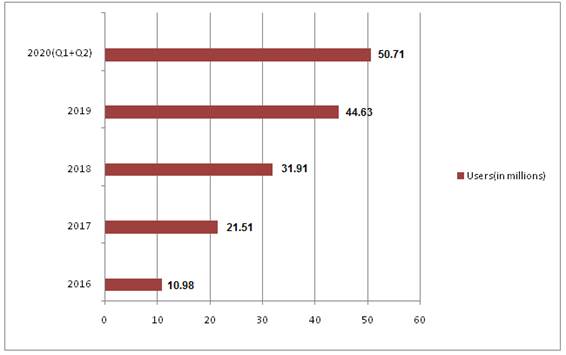
Crypto Wallet Users Growth- Reference Statista
Cryptocurrency Addressing the Imperfection in the Banking System
Unlike government issued currencies that are centralized, digital assets do not require a central clearing house because they are built on blockchain technology. A blockchain is a distributed ledger providing a real-time and shared view of all transactions, including property records, monetary transactions, or other valued digital assets between engaging parties in a fully trusted environment.
A blockchain is a distributed ledger providing a real-time and shared view of all transactions, including property records, monetary transactions, or other valued digital assets between engaging parties in a fully trusted environment.
| 25 |
The blockchain technology offers a way for two different parties to come to agreement on the state of a database, without the intervention of a middleman. By providing a ledger that nobody administers and tools like 'smart contracts', the technology can help financial institutions establish better governance and standards around data sharing and collaboration. With global banking a trillion-dollar industry, the blockchain can disintermediate key services that bank provides, including:
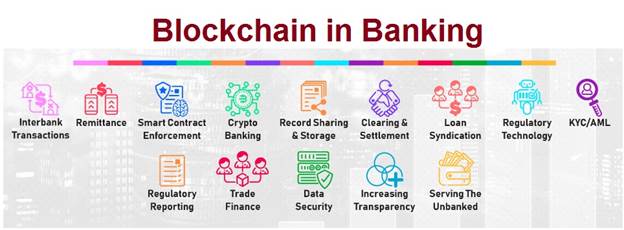
A report published by Santander FinTech suggests that implementing blockchain technology into the financial sector could reduce the infrastructure cost by $20 billion/year. The possibility to significantly reduce IT costs has led to the investment of millions of dollars into this technology each year, shows data from PwC and Statista.
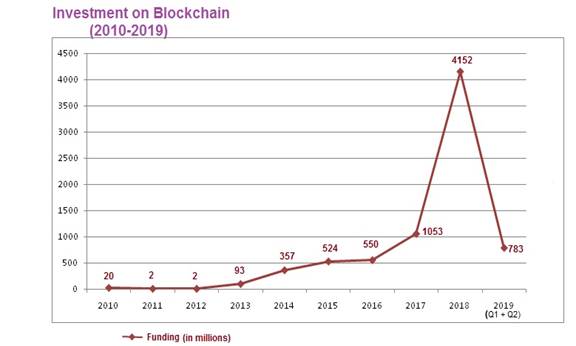
| 26 |
Blockchain also holds potential implications for global commerce by replacing current manual and paper-based processes with streamlined and automated processes. Today, the Company believes that there are trillions of dollars which slosh around the globe through an outdated system of extra fees and slow payments. A public blockchain can behave as a tool to collaborate since it’s decentralized and no single entity can own it. This can cut down on the need for third-party verification to reduce the processing time as well as fees for traditional bank transfers. Here's a comparison of cost associated with bank transfer and crypto transaction for sending $1000 to India from the US:
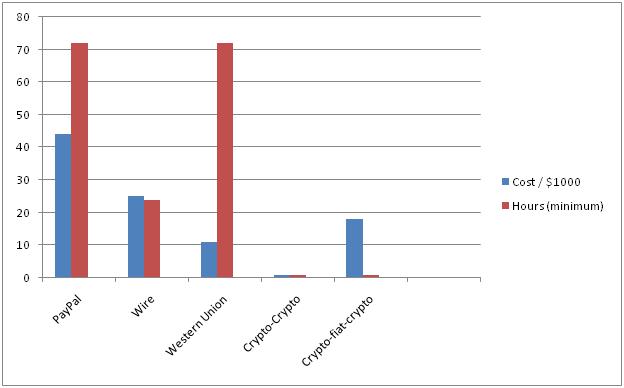
Stablecoins- To Secure the Future of Crypto World
While digital currencies are a long way from completely replacing fiat, the last few years have seen upward growth in their transaction volume. In a report published by TokenInsight, the size of the digital asset space is growing with $23 billion of daily trading and $4.081 trillion of trading volume of the overall cryptocurrency industry.
Despite seeing such growth in their volume, digital currencies have still not achieved global acceptance mainly due to-
| a) | The lack of reliability and trust. |
| b) | The uncertainty of global regulations and pressure from legislative governmental bodies. |
| c) | The volatile nature restricts the use of cryptocurrencies in day-to-day life. |
But now, a promising category of cryptocurrencies, Stablecoins- seems poised to succeed where its predecessors failed. As the name suggests, a stablecoin distinguishes itself from the more famous but highly volatile digital currency brethren, like Bitcoin, in its focus on price stability.
| 27 |
The idea has long been in the air as the concept seems quite adequate to create cryptocurrencies that serve as a value measure and can withstand significant market volatility. The very first project of stablecoins, Tether, was launched in 2015, and its market value has grown from $304k to $12 billion.
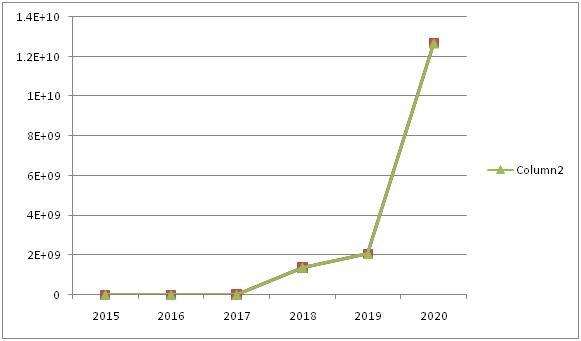
The interest in stablecoins is growing exponentially because they're backed up by real monetary assets such as USD, GBP or other fiat currency held in a bank. Some notable announcements over the past couple of years:
1) The announcement by the Federal Reserve Bank of Boston to research digital currency with the help of MIT.
2) The announcement by People's Bank of China to pilot test DCEP
3) The proposition, forward and backward movement of Libra, Facebook's blockchain project.
4) JPMorgan moving ahead with plans to offer cryptocurrency-based transactions
In addition to these news stories, many worldwide developments have also caused ripples across the global financial services sector.
Projects Around the World Driving Great Interest in Cryptocurrencies
1) As a part of the government's initiative in digitizing Tunisia, LA Post-a financial institution- issued a blockchain-based digital version of the country's currency. The project had support from local Fintech firms and a Swiss-based software company. The e-dinar launched in 2015, and it's still a successful case of a digital coin being issued by a government.
2) The Marshall Islands have used the US dollar as its official currency since 1982. In 2018, the government of the Marshall Islands put forward an idea of introducing its own digital currency called “Sovereign” as a second legal tender that can supplement the US dollar.
3) In Venezuela, the government claims that it has issued a government-sponsored digital coin. “Petro”, the digital coin was issued by the Venezuela government two years ago, which is backed by a barrel of oil from the substantial reserves of the country. As per the government, Petro is complementary to the country's currency as legal tender.
| 28 |
4) Central banks in Asia are a step ahead in launching cryptocurrencies for future payment systems and cross-border transactions, with China, Hong Kong, and Thailand set to roll out sovereign digital tokens. The People’s Bank of China states that its digital currency is progressing but hasn’t shared any word on the launch date. Contrastingly, the Hong Kong Monetary Authority and Bank of Thailand successfully completed the initial phase of their currency project in the first quarter of 2020, and are now inviting banks to participate to test the real-world application of digital currencies.
5) On October 30th, 2019, the Association of German Banks published an article that covered the details for a 'crypto-based digital Euro'. Two weeks later, European commission organized an event called “Convergence, the Global Blockchain Congress”, where an official of European Central Bank confirmed that the bank is exploring blockchain technology to work on a digital EURO.
6) A month ago, Andrew Bailey, the governor of the Bank of England, confirmed the development of a digital currency. The bank also published a paper in March 2020, stating the means by which a central bank digital currency could help meet the objectives in this digital age. As a matter of law, a UK court recognized cryptocurrencies as assets in a property ownership dispute in December 2019.
7) In March 2020, the U.S Democratic Party published a draft stimulus bill, which included a provision for digital dollars as a means to make payments to businesses and individuals hit in this pandemic. The call to create a digital dollar has grown ever since Jerome Powell, the chairman of the Federal Reserve, said he's looking into the possibilities of a CBDC.
8) Among other banking entities, the International Monetary Fund (IMF) has long been promoting the CBDC and believes cryptocurrencies can reduce the reliance on government-issued money. The former managing director of the IMF, Christine Lagarde has urged central banks in November 2018 to consider creating their own digital currency, which could satisfy public policy goals, including but not limited to, security and/or consumer protection, financial inclusion, and privacy in payments.
An Asymmetric Threat
Up until the end of 2016, digital currencies were not that well known. However, multiple developments in the industry brought forward the fact that there is a whole new industry being built in real time. This was admitted by the Bank of America in 2018 when they accepted that the threat posed by decentralization is real. While many can argue that crypto hasn't proved itself, the growth of cryptocurrency and blockchain space in 2020 is proof that decentralisation will.
The age of self-custody is upon us. Consumers are changing their habits – that’s happening. People can self-custody their own digital cash in a way that they never could before. This is not only leading to new business models for Decentralized Finance (“DEFI”) and lending Peer-to-Peer (“P2P”) but also giving customers more control over their own decisions and eliminates the need for people to be stuck between either banks or cash money handlers like Western Union.
Customers will have the ability and desire to engage in mobile banking built on 21st century technology – not tech built in the 1970’s. They demand immediacy and convenience in their transactions which can be solved with blockchain. There’s reason to believe that financial institutions including banks may soon provide financial vehicles for investors to buy and trade digital assets.
ITEM 8 – DESCRIPTION OF PROPERTY
The Company owns no real property.
The Company is not involved in any litigation
| 29 |
ITEM 9 – MANAGEMENT DISCUSSION, ANALYSIS OF FINANCIAL CONDITION AND RESULTS OF OPERATIONS
MANAGEMENT'S DISCUSSION AND ANALYSIS OF FINANCIAL CONDITION AND RESULTS OF OPERATIONS.
You should read the following discussion and analysis of our financial condition and results of our operations together with our financial statements and related notes appearing at the end of this Offering Circular. This discussion contains forward-looking statements reflecting our current expectations that involve risks and uncertainties. Actual results and the timing of events may differ materially from those contained in these forward-looking statements due to a number of factors, including those discussed in the section entitled “Risk Factors” and elsewhere in this Offering Circular.
Unbanked, Inc. fka Ternio, LLC was registered in the state of Delaware on January 1, 2018 as a Limited Liability Company under the name of Ternio, LLC on January 4, 2022 pursuant to Certificate of Conversion Ternio was converted to a corporation and renamed to Unbanked, Inc (which may be referred to as the “Company,” “we,” “us,” or “our”). The Company provides a debit card for cryptocurrency holders to use where major credit cards are accepted. The Company is headquartered in Georgia.
Unbanked, Inc. is presently wholly owned by original founders, previous option holders, preferred shareholders and investors from our previous Regulation CF offering, but as Shares in the Company are issued pursuant to this Offering, Unbanked founders’ ownership as well as prior investors in the Company will be diluted. If the maximum amount is raised in this Offering, original founders will own 73.2% of the Company, prior investors from the first Regulation CF offering will own 1.86% and new investors from this Regulation A offering will own 22.5%. 98.1% of shares in the Company are Class B Non-Voting Common Stock with the same rights and privileges as set out herein with 1.9% preferred shareholders.
RESULTS OF OPERATIONS
Management's plans and basis of presentation:
The Company has experienced recurring losses and negative cash flows from operations. At December 31, 2021, the Company had approximate balances of cash and cash equivalents of $0.93 million compared to $0.89 million at December 31, 2020, total shareholders equity at December 31, 2021 of ($0.65) million compared to ($0.98) million at December 31, 2020 and an accumulated deficit at December 31, 2021 of ($1.46) million compared to ($1.38) million at December 31, 2020. To date, the Company has in large part relied on equity financing to fund its operations.
The Company’s current focus is on its BlockCard program, which has experienced significant growth since its launch in 2019. The Company's current strategy will continue to expose the Company to the numerous risks and volatility associated within the cryptocurrency sector.
The Company expects to continue to incur losses from operations for the near-term and these losses could be significant as the Company incurs costs and expenses associated with growth, as well as public company, legal and administrative related expenses being incurred. The Company is closely monitoring its cash balances, cash needs and expense levels.
Management's strategic plans include the following:
· continuing expansion of its BlockCard program in the United States and internationally across Europe and Asia;
· expansion of its white label program to other fintech companies;
· additional financial services offerings to its existing customer base;
· exploring other possible strategic options and financing opportunities available to the Company;
· evaluating options to monetize, partner or license the Company's assets; and
· continuing to implement cost control initiatives to conserve cash.
| 30 |
Revenues
Revenues for the years ended December 31, 2021 and 2020, totaled approximately $19.9 million and $9.4 million, respectively. Revenues from BlockCard sales are impacted significantly from period to period by the changes in cryptocurrency prices.
| Revenues | 2021 | 2020 | VAR |
| UNBNK Sales | $19,246,696 | $8,734,750 | $10,511,946 |
| White Label Partnership Fees | $435,803 | $ 195,000 | $240,803 |
| Card Issuer Commissions | $149,578 | $63,316 | $86,262 |
| Total Revenues | $19,832,077 | $8,993,066 | $10,839,011 |
Sales for 2021 versus 2020 increased by $10,511,946 which accounted for 414 additional sales transactions at a 121% increase per sale in 2021 over 2020.
White Label Partnership Fees for Year Ended December 31, 2021 versus 2020 increased by $240,803 as that program started in 2020.
Card Issuer Commissions increased by $86,262 as that program ramped up in 2021 with 1,799 more transactions in 2021.
The sources of revenue for Fiscal year 2020 are as follows:
| Sources of Revenue for Fiscal 2020 | Amount | Total Activity | Geography | Weighted Avg |
| UNBNK sales: | ||||
| Sales to customers via BlockCard accounts | $8,734,749.54 | 42561 | US | 0.008026553 |
| Sales without BlockCard accounts | $0.00 | |||
| $8,734,749.54 | ||||
| Other revenue: | ||||
| Cashpass commission sales | $63,316.20 | |||
| White label program sales | $195,000.00 | |||
| TOTAL REVENUE | $8,993,065.74 |
The sources of revenue for Fiscal year 2021 are as follows:
| Sources of Revenue for Fiscal 2020 | Amount | Total Activity | Geography | Weighted Avg |
| UNBNK sales: | ||||
| Sales to customers via BlockCard accounts | $18,846,696.32 | 41728 | US | 0.008026553 |
| Sales without BlockCard accounts | $0.00 | |||
| $18,846,696.32 | ||||
| Other revenue: | ||||
| Cashpass commission sales | $135,366.05 | |||
| White label program sales | $435,803.00 | |||
| Other revenue | $400,000.00 | |||
| LTC program sales | $14,211.75 | |||
| TOTAL REVENUE | $19,832,077.12 |
Cost of Revenues
Cost of revenue for the year ended December 31, 2021 of approximately $14.7 million consisted primarily of direct purchases of Unbanked’s cryptocurrency or “TERN” now known as “UNBNK" from BlockCard holders to facilitate liquidity in the program. The cost of revenue for the year ended December 31, 2020 was approximately $7.1 million. The approximate increase of $7.6 million arose primarily from increases in BlockCard sales and increased cardholders in 2021 as compared to 2020.
| COGS | 2021 | 2020 | VAR |
| Market Making | $14,664,406 | $7,105,963 | $ 7,558,443 |
| Card Issuer Commissions | $36,100 | $39,000 | ($2,900) |
| Total Cost of Goods Sold | $14,700,506 | $7,144,963 | $ 7,555,543 |
BlockCard Usage costs for 2021 versus 2020 increased significantly by $7,558,443 which accounted for 98,114 additional customer card swipes in 2021 over 2020. One time Physical Card Cost for issuance in 2021 cost $36,100 compared to $39,000 in 2020.
| 31 |
The cost of revenue, including total transactions, geography, and weighted average cryptocurrency prices for fiscal years 2020 and 2021 are as follows:
| Cost of Revenue for Fiscal 2020 | Amount | Total Activity | Geography | Weighted Avg |
| Market making: | ||||
| Cost of goods sold | $7,105,962.81 | 153518 | US | 0.007016048 |
| $7,105,962.81 | ||||
| Cost of Revenue for Fiscal 2021 | Amount | Total Activity | Geography | Weighted Avg |
| Market making: | ||||
| Cost of goods sold | $14,664,406.33 | 175734 | US | 0.009567225 |
| Other cost of goods sold | $36,099.96 | |||
| $14,700,506.29 |
Selling, General and Administrative Expenses
Selling, general and administrative expenses for the year ended December 31, 2021 totaled approximately $4.1 million compared to $2.1 million during the year ending December 31, 2020. The increase consisted primarily of outside contractors and compensation as the company expands, which increased to $3.1 million in 2021 compared to $1.6 million in 2020.
| 2021 | 2020 | Var | Comments | |
| General and Administrative Expenses | $ 4,160,426 | $ 2,154,065 | $ 2,006,361 | |
| Bank Charges & Fees | $ 4,437 | $ 39,598 | ($35,161) | |
| Contractors | $ 2,082,883 | $ 1,221,390 | $ 861,493 | Aggressive hiring, mostly of engineers began in 2020 as business grew due to an increase in Crypto market and BlockCard interest |
| Cost of Labor | $ 1,030,595 | $ 372,936 | $ 657,659 | W2 employees increased by 3X, from 4 in 2020 to 12 by end of 2021. |
| Dues & Subscriptions | $ 4,786 | $ 479 | $ 4,307 | |
| Insurance | $ 10,600 | $ 4,788 | $ 5,812 | Increased activity correlates with increased business growth |
| Legal & Professional Services | $ 215,565 | $81,611 | $ 133,954 | As business continued to grow into new lines business and geographies, additional legal coverage was invested in |
| Meal & Entertainment | $ 4,472 | $ 1,019 | $ 3,453 | Meals and entertainment increased due to the pandemic beginning to gradually subside. |
| Miscellaneous | ($2,891) | $ 139 | ($3,030) | Miscellaneous. expenses decrease continues to have to do less outside work due to the pandemic |
| Office Expense | $ 1,926 | $ 0 | $ 1,926 | Office expenses increased due to work from home office setups due to pandemic |
| HR Expenses | $ 23,405 | $ 0 | $ 23,405 | Due to doubling the number of contractors and employes, HR expenses increasedi |
| Postage | $ 5,688 | $ 2,364 | $ 3,324 | Due to pandemic and working from home, much more employees and contractors using postage for business needs |
| Supplies | $ 405 | $ 4,4447 | ($4,042) | Supplies decreased due to out fitting key executive in 2020 |
| Taxes & Licenses | $ 8,401 | $ 18,414 | ($10,013) | Significant decrease related to regulatory body in UK for business expansion in 2020 |
| Technical Services | $ 704,122 | $ 403,348 | $ 300,774 | Due to additional headcount, growth in crypto market and BlockCard business, significant investment added to Technical services |
| Travel | $ 7,726 | $ 3,532 | $4,194 | Travel began to increase due to pandemic slowly improving |
| 32 |
Net Income (Loss)
During the year ended December 31, 2021, we recognized gains from operations of approximately $0.11 million compared to net loss of ($1.27) million for the year ended December 31, 2020.
LIQUIDITY AND CAPITAL RESOURCES
At December 31, 2021 we had working capital of approximately $1.8 million, which included cash and cash equivalents of $0.9 million. We reported a net income of $0.11 million during the year ended December 31, 2021.
We understand that there is always the risk that we will incur losses from operations for either the near-term or long-term and these losses could be significant as we incur costs and expenses associated with recent and potential future growth, as well as public company, legal and administrative related expenses being incurred. We are closely monitoring our cash balances, cash needs and expense levels.
Funding our operations on a go-forward basis will rely significantly on our ability to continue to grow our BlockCard and while label programs. We expect to generate ongoing revenues from the sale of UNBNK cryptocurrency and our ability to provide a vehicle to use cryptocurrency for consumer transactions to generate cash for operations. Furthermore, regardless of our ability to generate revenue from the sale of our cryptocurrency assets, we will need to raise additional capital in the form of equity or debt to fund our operations and pursue our business strategy.
The ability to raise funds as equity, debt or conversion of cryptocurrency to maintain our operations is subject to many risks and uncertainties and, even if we were successful, future equity issuances would result in dilution to our existing stockholders and any future debt or debt securities may contain covenants that limit our operations or ability to enter into certain transactions. Our ability to realize revenue through BlockCard and white label sales involve a number of risks, including regulatory, financial and business risks, many of which are beyond our control. Additionally, the value of cryptocurrency has been extremely volatile recently and such volatility has recently been lower and future prices cannot be predicted.
If we are unable to generate sufficient revenue from our BlockCard and whitelabel program when needed or secure additional sources of funding, it may be necessary to significantly reduce our current rate of spending or explore other strategic alternatives.
Plan of Operations
Our plan of operation for the 12 months following the commencement of this Offering is as follows:
We intend to focus on expansion of our BlockCard platform, expansion of our whitelabel business, expansion into other geographical areas, deployment of Unbanked Yield program, and to add more services for our customers to use.
There is always the reality that the proceeds from this Offering may not satisfy our cash requirements and it could be necessary to raise additional funds in the next twelve to eighteen months to implement the plan of operations. We also anticipate that we will have additional capital requirements after the next twelve months and throughout 2022. During that time frame, we understand the Company may not satisfy our cash requirements through sales and the proceeds from this Offering alone, and therefore we anticipate we may attempt to raise additional capital through the sale of additional securities in additional offerings, or through other methods of obtaining financing such as through loans or other debt. We cannot assure that we will have sufficient capital to finance our growth and business operations or that such capital will be available on terms that are favorable to us or at all. We could incur operating deficits in the foreseeable future.
| 33 |
Trend Information
Based on the results in 2021, the Company believes there is a market for its products in North America and other parts of the world. However, it is difficult to predict changing consumer preferences in cryptocurrency and the broader banking/fintech industries. If we are unable to react to changing consumer preferences, our sales could decrease.
The cryptocurrency market has seen a steady increase in adoption over the past several years and the Covid pandemic has led to an increase in customers looking to use digital services. The Company has experienced significant growth in the use of its BlockCard platform since May 2019. While the Company’s release of BlockCard was one of the earlier so called “crypto debit cards” to be live in the marketplace – there have been a number of companies that have announced an interest in launching comparable products. The Company feels this demonstrates sufficient demand in the marketplace for a product like BlockCard. The Company understands they could be incorrect and/or there could be current or future changes in the marketplace which make their products no longer viable in the marketplace.
Critical Accounting Policies
The preparation of financial statements in conformity with accounting principles generally accepted in the United States of America (GAAP) requires management to make estimates and assumptions about future events that affect the amounts reported in the financial statements and accompanying notes. Future events and their effects cannot be determined with absolute certainty. Therefore, the determination of estimates requires the exercise of judgment. Actual results inevitably will differ from those estimates, and such differences may be material to the financial statements. The most significant accounting estimates inherent in the preparation of our financial statements include estimates associated with revenue recognition, intangible assets, and stock-based compensation.
The Company's financial position, results of operations and cash flows are impacted by the accounting policies the Company has adopted. In order to get a full understanding of the Company's financial statements, one must have a clear understanding of the accounting policies employed. A summary of the Company's critical accounting policies follows:
Cryptocurrencies
Cryptocurrencies, (including bitcoin, bitcoin cash and litecoin) are included in current assets in the consolidated balance sheets as intangible assets with indefinite useful lives. Cryptocurrencies are recorded at cost less impairment.
An intangible asset with an indefinite useful life is not amortized but assessed for impairment annually, or more frequently, when events or changes in circumstances occur indicating that it is more likely than not that the indefinite-lived asset is impaired. Impairment exists when the carrying amount exceeds its fair value, which is measured using the quoted price of the cryptocurrency at the time its fair value is being measured. In testing for impairment, the Company has the option to first perform a qualitative assessment to determine whether it is more likely than not that an impairment exists. If it is determined that it is not more likely than not that an impairment exists, a quantitative impairment test is not necessary. If the Company concludes otherwise, it is required to perform a quantitative impairment test. To the extent an impairment loss is recognized, the loss establishes the new cost basis of the asset. Subsequent reversal of impairment losses is not permitted.
Revenue Recognition
The Company recognizes revenue under ASC 606, Revenue from Contracts with Customers. The core principle of the new revenue standard is that a company should recognize revenue to depict the transfer of promised goods or services to customers in an amount that reflects the consideration to which the company expects to be entitled in exchange for those goods or services. The following five steps are applied to achieve that core principle:
· Step 1: Identify the contract with the customer
· Step 2: Identify the performance obligations in the contract
| 34 |
· Step 3: Determine the transaction price
· Step 4: Allocate the transaction price to the performance obligations in the contract
· Step 5: Recognize revenue when the Company satisfies a performance obligation
In order to identify the performance obligations in a contract with a customer, a company must assess the promised goods or services in the contract and identify each promised good or service that is distinct. A performance obligation meets ASC 606’s definition of a “distinct” good or service (or bundle of goods or services) if both of the following criteria are met: The customer can benefit from the good or service either on its own or together with other resources that are readily available to the customer (i.e., the good or service is capable of being distinct), and the entity’s promise to transfer the good or service to the customer is separately identifiable from other promises in the contract (i.e., the promise to transfer the good or service is distinct within the context of the contract).
If a good or service is not distinct, the good or service is combined with other promised goods or services until a bundle of goods or services is identified that is distinct.
The transaction price is the amount of consideration to which an entity expects to be entitled in exchange for transferring promised goods or services to a customer. The consideration promised in a contract with a customer may include fixed amounts, variable amounts, or both. When determining the transaction price, an entity must consider the effects of all of the following:
· Variable consideration
· Constraining estimates of variable consideration
· The existence of a significant financing component in the contract
· Noncash consideration
· Consideration payable to a customer
Variable consideration is included in the transaction price only to the extent that it is probable that a significant reversal in the amount of cumulative revenue recognized will not occur when the uncertainty associated with the variable consideration is subsequently resolved. The transaction price is allocated to each performance obligation on a relative standalone selling price basis. The transaction price allocated to each performance obligation is recognized when that performance obligation is satisfied, at a point in time or over time as appropriate.
The Company has entered contracts with several companies to provide whitelabel services of the BlockCard platform. These whitelabel contracts allow for their clients to withdraw from the agreement based on certain various criteria and understands that these partnerships may not prove to have a positive material impact on the Company’s financials and could potentially lead to negative material impacts to the Company itself due to any number of various factors including a lack of financial viability, regulatory risks, security lapses or other issues.
Providing received, at which time revenue is recognized. There is no significant financing component in these transactions.
Fair value of the cryptocurrency award received is determined using the market rate of the related cryptocurrency at the time of receipt.
There is currently no specific definitive guidance under GAAP or alternative accounting framework for the accounting for cryptocurrencies recognized as revenue or held, and management has exercised significant judgment in determining the appropriate accounting treatment. In the event authoritative guidance is enacted by the FASB, the Company may be required to change its policies, which could have an effect on the Company’s consolidated financial position and results from operations.
| 35 |
Stock-based Compensation
The Company accounts for share-based payment awards exchanged for services at the estimated grant date fair value of the award. Stock options issued under the Company’s incentive plans are granted with an exercise price equal to no less than the market price of the Company’s stock at the date of grant. These options generally vest on the grant date or over a three- year period.
The Company estimates the fair value of stock option grants using the Black-Scholes option pricing model and the assumptions used in calculating the fair value of stock-based awards represent management’s best estimates and involve inherent uncertainties and the application of management’s judgment.
Expected Term - The expected term of options represents the period that the Company’s stock-based awards are expected to be outstanding based on the simplified method, which is the half-life from vesting to the end of its contractual term.
Expected Volatility - The Company computes stock price volatility over expected terms based on its historical common stock trading prices.
Risk-Free Interest Rate - The Company bases the risk-free interest rate on the implied yield available on U. S. Treasury zero-coupon issues with an equivalent remaining term.
Expected Dividend - The Company has never declared or paid any cash dividends on its common shares and does not plan to pay cash dividends in the foreseeable future, and, therefore, uses an expected dividend yield of zero in its valuation models.
The Company elected to account for forfeited awards as they occur, as permitted by Accounting Standards Update (“ASU”) 2016-09. Ultimately, the actual expenses recognized over the vesting period will be for those shares that vested.
Recently issued and adopted accounting pronouncements
The Company continually assesses any new accounting pronouncements to determine their applicability. When it is determined that a new accounting pronouncement affects the Company's financial reporting, the Company undertakes a review to determine the consequences of the change to its financial statements and believes that there are proper controls in place to ascertain that the Company's financial statements properly reflect the change.
We have considered recently issued accounting pronouncements and do not believe the adoption of such pronouncements will have a material impact on our consolidated financial statements.
See Note 4 to our financial statements beginning on page F-1 of this Form 10-K for a description of recent accounting pronouncements applicable to our financial statements.
Off-Balance Sheet Arrangements
We do not have any off-balance sheet arrangements.
Additional Company Matters
The Company has not filed for bankruptcy protection nor has it ever been involved in receivership or similar proceedings. The Company is not presently involved in any legal proceedings material to the business or financial condition of the Company. The Company does not anticipate any material reclassification, merger, consolidation, or purchase or sale of a significant amount of assets not in the ordinary course of business, in the next 12 months.
| 36 |
DIRECTORS, EXECUTIVE OFFICERS AND SIGNIFICANT EMPLOYEES
As of December 31, 2021, Unbanked, Inc. had 23 full-time contractors and employees, who were not an executive officer of the Company.
The directors and executive officers of the Company as of December 31, 2021 are as follows:
| Name | Position | Start Date | Age | Term of Office | Approx. hours per week |
|
Executive Officers: Daniel Gouldman Ian Kane |
Co-CEO Co-CEO |
Sept. 2017 Sept. 2017 |
43 36 |
Until terminated Until terminated |
75 75 |
|
Directors: Daniel Gouldman Ian Kane Mark Morales |
Director Director Director |
Sept. 2017 Sept. 2017 Jan. 2018 |
43 36 |
Until terminated Until terminated Until terminated |
As needed As needed As needed |
|
Significant Employees Corey Ballou Keith Johnson Dontrail Cotlage |
March 2018 July 2018 Jan. 2018 |
| 37 |
ITEM 10 – DIRECTORS, EXECUTIVE OFFICERS and SIGNIFICANT EMPLOYEES
Daniel Gouldman
Co-CEO and Co-Founder
Director
Alpharetta, Georgia
Summary
Daniel Gouldman is a founder and CEO of Unbanked, Inc. Mr. Gouldman has co-founded multiple successful multimillion-dollar digital companies over the past several years in the online media space. Based out of Atlanta, he has assisted the digital efforts of the ACLU, political and non-political organizations. Prior to that, Daniel was a Vice President for a 40 billion company where he was responsible for over $55 million in annual revenues. In the past 20 years, Daniel has hired over 500 employees as he managed operations for mostly large multi-national corporations like Blockbuster Video, Axcess Financial and Public Storage. Prior to founding Unbanked, Inc. Daniel was employed as Regional Vice President responsible for over $55m in revenues under his P&L at a large REIT and publicly traded company - Public Storage to manage, and then was employed at an adtech startup that he founded before co-founding Unbanked in 2018. Additionally, Mr. Gouldman is affiliated with and is the owner and manager of Grassroots Impact, LLC the Selling Shareholder. Mr. Gouldman concurrently maintains his ownership in Grassroots Impact, LLC, where he is a manager. Grassroots Impact, LLC has an ownership stake in Unbanked, Inc and is a holding company for other business interests that are maintained by Mr. Gouldman and Grassroots Impact, LLC’s other members, including online publishing, social media marketing, consulting, and real estate.
Co-CEO and Co-Founder
Director
Charlotte, North Carolina Area
Summary
Ian Kane is one the founders and serves as the Co-CEO of Unbanked, Inc. Mr. Kane has worked in technology & digital media for over 10 years with a heavy focus on business development, sales, and strategy. Prior to founding Unbanked, Inc., Mr. Kane’s career started as the first employee in a media startup which grew into a $50mm a year business during his tenure. Mr. Kane had the opportunity to work in both early stage and mature organizations, be a part of acquisitions on the buy and sell side, and drive go-to-market strategy for various data and media products. As an advisor and investor in other ad tech companies, Mr. Kane always looks to create value and continually broaden his knowledge of the everchanging landscape. Mr. Kane’s background enables him to bring unique insight and experience to the next set of challenges.
| 38 |
Corey Ballou
Chief Technology Officer
Charlotte, North Carolina
Summary
Mr. Ballou oversees the development of Unbanked's core product, BlockCard.
Mr. Ballou is a seasoned developer who has been custom building websites and applications for over two decades. Mr. Ballou has five years of fast paced development experience at two leading design and development agencies in Charlotte followed by an additional six years working on building and launching startups for some amazing companies. Most notable is his work as lead developer for COInternet. Briefly following a successful Super Bowl ad launch with partner GoDaddy, .CO was sold to Neustar for $109M in 2014. Mr. Ballou has owned and operated his own web development consultancy since 2012. Since then, Corey has had the pleasure of working with several successful startups to build out their custom web applications.
Mr. Ballou’s interest in the blockchain and crypto space came in 2014 upon hearing his favorite online payment processor, Stripe, had backed a crypto newcomer: Stellar. It was at this point in time, Mr. Ballou fully grasped the potential impact Stellar could have on both improved settlement time and lower processing fees of online transactions. He started building custom applications in the crypto/blockchain space in 2017 and won a Stellar Build Challenge prize for his open-source work on Lumenous.org (https://github.com/lumenousorg/lumenous) in early 2018. Mr. Ballou has no other current occupations or employment.
Product Leader
Greater Atlanta Area
Summary
Keith Johnson is a disciplined and results driven Business Partner and engineer with demonstrated achievement in product management, strategy, and business development. Mr. Johnson has led both hardware, software, and managed services product teams with annual revenue in excess of $100M dollars. Mr. Johnson has proven credibility to create bottom-line oriented product roadmaps and business plans. Mr. Johnson was previously employed by Comcast Business, a telecommunications business, as Director or Product Management Mr. Johnson has no other current occupations or employment.
| 39 |
Dontrail Cotlage
Chief Information Security Officer
San Diego, California
Dontrail Cotlage is a highly experienced programmer, web, application, and network penetration tester with a focus on threat emulation and pushing the boundaries of information security. Prior to joining Unbanked, Mr. Cotlage founded BTNOMB.com, a social media content publishing company. Mr. Cotlage was also a Penetration Testing Engineer for the National Security Agency; he was responsible for threat detection and prevention. Mr. Cotlage has no other current occupations or employment.
Mark Morales
Director
Texas
Summary
Mark Morales was born and raised in Austin, Texas. He began his career as an Assistant District Attorney after graduating from the Texas Tech School of Law in 2001. In his lengthy career, he has been honored by many awards and recognitions. Mark was nominated by his peers and then selected by Thompson Reuters to be featured in Texas Monthly magazine as a SUPER LAWYER in 2016. Mr. Morales has spent the majority of his career, defending citizens accused of crimes. For the last 5 years, Mr. Morales has been a self-employed attorney under Mark Morales and Associates, which is his principal business.
ITEM 11 – COMPENSATION OF DIRECTORS AND EXECUTIVE OFFICERS
Board of Directors
The Company’s board of managers currently consists of three directors: Daniel Gouldman, Ian Kane; and Mark Morales.
None of the Company’s directors are “independent” as defined in Rule 4200 of FINRA’s listing standards. The Company may appoint an independent director(s) to its board of directors in the future, particularly to serve on appropriate committees should they be established.
Committees of the Board of Directors
The Company may establish an audit committee, compensation committee, a nominating and governance committee and other committees to its board of managers in the future, but has not done so as of the date of this Offering Circular. Until such committees are established, matters that would otherwise be addressed by such committees will be acted upon by the entire board of directors.
Director Compensation
The Company currently does not pay its directors any compensation for their services as board members, with the exception of reimbursing board related expenses. In the future, the Company may compensate directors, particularly those who are not also employees and who act as independent board members, on either a per meeting or fixed compensation basis.
| 40 |
Executive Officer Compensation
| Name | Capacities in which compensation was received
|
Cash Compensation | Other Compensation | Total Compensation |
Daniel Gouldman
|
Chief Executive Officer | $150,000.00 per year | $20,000.00 | $170,000.00 |
Ian Kane
|
Chief Executive Officer | $150,000.00 per year | $20,000.00 | $170,000.00 |
John DeRussy
|
Director of Finance | $135,000.00 per year | 0 | $135,000.00 |
Keith Johnson
|
Product Lead | $135,000.00 per year | $5,000.00 | $140,000.00 |
Corey Ballou
|
Chief Technology Officer | $142,000.00 per year | $5,000.00 | $147,000.00 |
Limitation of Liability and Indemnification of Officers and Directors
The Company’s Governing Documents limits the liability of directors and officers of the Company to the maximum extent permitted by Delaware law. The Governing Documents states that the Company shall indemnify its directors and officers for all costs, losses, liabilities, and damages paid or incurred by such directors and/or officers in connection with the business of the Company, to the fullest extent provided or allowed by Delaware law. Expenses, including attorneys' fees, incurred with respect to any claim, action, suit, proceeding, or investigation will be advanced by the Company prior to the final disposition upon receipt of an undertaking by or on behalf of the director and/or officer to repay such amount if it is ultimately determined that he, she or it was not entitled to indemnification or, where indemnification is granted, to the extent the expenses so advanced exceed the indemnification to which he, she or it was entitled. The Company may also take steps deemed appropriate by the President to provide and secure indemnification of any director and/or officer, including, without limitation, the execution of agreements for indemnification between the Company and individual officers or directors which may provide rights to indemnification which are broader or otherwise different than the rights authorized by Company’s Governing Documents.
For additional information on indemnification and limitations on liability of the Company’s managers, officers, and others, please review the Company’s Governing Documents, which are attached as Exhibit 1A-2B to this Offering Circular.
There is no pending litigation or proceeding involving any of the Company’s directors or officers as to which indemnification is required or permitted, and the Company is not aware of any threatened litigation or proceeding that may result in a claim for indemnification.
ITEM 12 – SECURITY OWNERSHIP OF MANAGEMENT AND CERTAIN SECURITY HOLDERS
The following capitalization table sets forth information regarding beneficial ownership of the Company’s Stock as of the date of this Offering Circular. There is beneficial ownership of the Company Stock at the time of this Offering by its directors or executive officers as set out below in the capitalization table.
Beneficial ownership and percentage ownership are determined in accordance with the rules of the Securities and Exchange Commission and include voting or investment power with respect to Stock. This information does not necessarily indicate beneficial ownership for any other purpose. Unless otherwise indicated and subject to applicable community property laws, to the Company’s knowledge, each Shareholder named below possesses sole voting and investment power over their Shares, where applicable. Percentage of beneficial ownership before the offering is based on 215,900,040 Shares outstanding as of the date of this Offering Circular.
| 41 |
The following capitalization table sets forth information regarding beneficial ownership of all classes of the Company’s Stock as of the date of this Offering Circular. Percentages in the table have been rounded to the nearest tenth after the decimal.
| Stockholder |
Percentage |
Percentage (Fully Diluted) |
Voting Series A Preferred Stock |
Voting Class A Common Stock |
Non- Voting Class B Common Stock |
Total Stock (Preferred, Voting, Non- Voting) | |
| Total Authorized | 4,817,200 | 40 | 260,400,162 |
265,217,402 | |||
| Ian Kane |
48.8% |
37.2% | 0 | 20 | 98,591,420 |
98,591,420 | |
| Grassroots Impact, LLC |
48.8% |
37.2% | 0 | 20 | 98,591,420 |
98,591,420 | |
|
Mark Morales |
2.4% |
1.8% | 4,817,200 | 0 | 0 |
4,817,200 | |
| Total Issued | 100% | 76.2% | 4,817,200 | 40 | 197,182,800 | 202,000,040 |
Daniel Gouldman, Co-Chief Executive Officer and Director of Unbanked, Inc., has beneficial ownership of 48.8% of the Company as of the date of this Offering Circular, such interest is owned by Grassroots Impact, LLC where Daniel Gouldman is has all of the controlling and beneficial interest of Grassroots Impact, LLC. Ian Kane, Co-Chief Executive Officer and Manager of Unbanked, Inc., has beneficial ownership of 48.8% of the Company as of the date of this Offering Circular. Mark Morales is a Director of Unbanked, Inc. and has a beneficial ownership of 2.4% of the Company as of the date of this Offering Circular.
No other officer or manager of the Company has beneficial ownership of the Company as of the date of this Offering Circular. As noted in the table above, 40 Voting Class A Common Stock, 197,182,800 Non-Voting Class B Common Stock, and 4,817,200 Series A Preferred Stock are outstanding as of the date of this Offering Circular.
ITEM 13 – INTEREST OF MANAGEMENT AND OTHERS IN CERTAIN TRANSACTIONS
There are no related party agreements or transactions between the Company and its Managers or its Executors.
ITEM 14 – SECURITIES BEING OFFERED
General
The Securities being offered are up to 54,347,827 of its Class B Non-Voting Common Stock to investors in this Offering at $0.46 per Share for gross offering proceeds of $25,000,000.42. The Stock are comprised of 36,347,827 of its Class B Non-Voting Common Stock being offered by the Company and 18,000,000 being offered by Selling Shareholders. The Stock being offered are Stock of equity in the Company as set out in the Governing Documents. There are three classes of Stock: Class A Voting Common Stock, Class B Non-Voting Common Stock and Preferred Stock. The Class B Non-Voting Common Stock, when issued, will be fully paid and non-assessable. This Offering Circular and this section provides for a complete disclosure of material terms, the Offering Circular do not purport to give a complete discussion of all rights and privileges related to the Stock, and investors in the Offering should read and review the provisions of the Company’s Amended and Restated Operating Agreement in its entirety, a copy of which have been attached as Exhibits to this Offering Circular.
| 42 |
If all of the Class B Common Stock in this Offering are sold, the Class B Non-Voting Common Stock would represent approximately 98.0% of the issued and outstanding combined Stock of the Company. The Offering will remain open for 360 days from the date of this Offering Circular, unless terminated for any reason at the discretion of the Company, or unless extended for up to an additional three hundred sixty (360) days by the Company.
The Company reserves the unqualified discretionary right to reject any subscription for Stock, in whole or in part. If the Company rejects any offer to subscribe for the Common Stock, it will return the subscription payment, without interest or reduction. The Company's acceptance of your subscription will be effective when an authorized representative of the Company signs the Subscription Agreement.
There are three classes of Stock: Class A Voting Common Stock, Class B Non-Voting Common Stock and Series A Preferred Stock. In this Offering, the Company is only selling Class B Non-Voting Common Stock. The Company does not expect to create any additional classes of Stock during the next 12 months, but the Company is not limited from creating additional classes which may have preferred dividend, voting and/or liquidation rights or other benefits not available to holders of its Stock if it chooses to do so. The holders of the Class A Voting Common Stock, Class B Non-Voting Common Stock and Preferred Stock have equal rights, preferences and privileges except that (a) as to certain distributions to Preferred Stockholders include a cumulative 8% preferred return and (b) the holders of Class B Non-Voting Common Stock (which are being sold in this Offering) have no voting rights (c) Class A Common Stock nor Class B Non-Voting Common Stock have no voting rights on matters submitted to Preferred Stockholders for a vote. The rights, preferences and privileges of the Common Stock and Preferred Stock are set forth in the Company’s Governing Documents and are described in summary form in this section of the Offering Circular.
Subscription Price
The price per Share in this Offering is $0.46 per Common Share. The minimum subscription that will be accepted from an investor is Four Hundred Sixty Dollars ($460.00) (the “Minimum Subscription”), however, the Company reserves the right to accept a lower amount in the Company’s absolute discretion.
A subscription for Four Hundred Sixty Dollars ($460.00) or more in Class B Non-Voting Common Stock may be made only by tendering to the Company an executed Subscription Agreement delivered with this Offering Circular and the subscription price in a form acceptable to the Company. The execution and tender of the documents required, as detailed in the materials, constitutes a binding offer to purchase the number of Common Stock stipulated therein and an agreement to hold the offer open until the offer is accepted or rejected by the Company.
The subscription price of the Stock has been arbitrarily determined by the Company's management without regard to the Company's assets or earnings or the lack thereof, book value or other generally accepted valuation criteria and does not represent nor is it intended to imply that the Stock being offered have a market value or could be resold at that price, even if a sale were permissible. The valuation was arbitrarily determined by the Company, and not by an independent third party applying a specified valuation criteria. The subscription price is payable in check, wire transfer, ACH, credit or debit card payment or some other form acceptable to the Company as set out in this Offering Circular.
Voting Rights
The Class B Non-Voting Common Stock being offered in this Offering Circular have limited or no voting rights in accordance with the Governing Documents. Control of the Company and nearly all management decisions affecting the Company will be exercised by the Executives and Directors who hold 76.7% of the voting Stock of the Company. Because the securities being sold in this Offering have limited voting rights and limited ability to affect the control and direction of the Company, holders of these non-Voting Stock should not expect to be able to influence any decisions by management of the Company through voting on Company matters as a result.
Distributions
The Company does not expect to make distributions for holders of the Company’s Stock in the foreseeable future. Distributions will be made, if at all (and subject to the rights of holders of additional classes of securities, if any), in the discretion of the Company’s Board of Directors , except as noted below.. To the extent such excess exists, the Company may make distributions to the Stockholders in accordance with the Governing Documents, where such distributions shall be subject to the cumulative preferred dividend allocated to the holders of the Series A Preferred Stock Holders.
| 43 |
In the event of the dissolution of the Company, the Company’s property will be sold and any funds of the Company remaining after winding up the affairs of the Company will be distributed to creditors, including shareholders who are creditors, to the extent permitted by law, in satisfaction of the Company’s liabilities and after payment or provision for payment of the debts and other liabilities of the Company and the rights of the Preferred StockHolders, the holders of Class B Common Stock will be entitled to receive, in proportion to their Sharing Ratios, the remaining net assets of the Company. Only Preferred Stockholders shall have a liquidation preference.
Additional Matters
The Stock will not be subject to further calls or assessment by the Company. There are no restrictions on alienability of the Stock in the corporate documents other than those disclosed in this Offering Circular. The Stock are uncertificated and, as such, will not contain legends, as such would exist on a traditional stock certificate. However, the language of any such legends applicable to the Stock and as set out in this Offering Circular, will apply to each Unit and shall govern the purchaser and holder of each such share.
The above summaries of certain material rights and privileges are intended to provide requisite information and complete description of all material rights and privileges of the Stock. However, all prospective investors should refer to and read the Governing Documents for a complete discussion of all rights and privileges related to the Stock.
DISQUALIFYING EVENTS DISCLOSURE
Recent changes to Regulation A promulgated under the Securities Act prohibit an issuer from claiming an exemption from registration of its securities under such rule if the issuer, any of its predecessors, any affiliated issuer, any manager, executive officer, other officer participating in the offering of the interests, general partner or managing member of the issuer, any beneficial owner of 20% or more of the voting power of the issuer’s outstanding voting equity securities, any promoter connected with the issuer in any capacity as of the date hereof, any investment manager of the issuer, any person that has been or will be paid (directly or indirectly) remuneration for solicitation of purchasers in connection with such sale of the issuer’s interests, any general partner or managing member of any such investment manager or solicitor, or any manager, executive officer or other officer participating in the offering of any such investment manager or solicitor or general partner or managing member of such investment manager or solicitor has been subject to certain “Disqualifying Events” described in Rule 506(d)(1) of Regulation D subsequent to September 23, 2013, subject to certain limited exceptions. The Company is required to exercise reasonable care in conducting an inquiry to determine whether any such persons have been subject to such Disqualifying Events and is required to disclose any Disqualifying Events that occurred prior to September 23, 2013 to investors in the Company. The Company believes that it has exercised reasonable care in conducting an inquiry into Disqualifying Events by the foregoing persons and is aware of the no such Disqualifying Events.
It is possible that (a) Disqualifying Events may exist of which the Company is not aware and (b) the SEC, a court or other finder of fact may determine that the steps that the Company has taken to conduct its inquiry were inadequate and did not constitute reasonable care. If such a finding were made, the Company may lose its ability to rely upon exemptions under Regulation A, and, depending on the circumstances, may be required to register the Offering of the Company’s Stock with the SEC and under applicable state securities laws or to conduct a rescission offer with respect to the securities sold in the Offering.
INVESTOR ELIGIBILITY STANDARDS
The Common Stock will be sold only to a person who is not an accredited investor if the aggregate purchase price paid by such person is no more than 10% of the greater of such person’s annual income or net worth, not including the value of his primary residence, as calculated under Rule 501 of Regulation D promulgated under Section 4(a)(2) of the Securities Act of 1933, as amended. In the case of sales to fiduciary accounts (Keogh Plans, Individual Retirement Accounts (IRAs) and Qualified Pension/Profit Sharing Plans or Trusts), the above suitability standards must be met by the fiduciary account, the beneficiary of the fiduciary account, or by the donor who directly or indirectly supplies the funds for the purchase of the Common Stock. Investor suitability standards in certain states may be higher than those described in this Offering Circular. These standards represent minimum suitability requirements for prospective investors, and the satisfaction of such standards does not necessarily mean that an investment in the Company is suitable for such persons.
| 44 |
Each investor must represent in writing that he/she meets the applicable requirements set forth above and in the Subscription Agreement, including, among other things, that (i) he/she is purchasing the Common Stock for his/her own account and (ii) he/she has such knowledge and experience in financial and business matters that he/she is capable of evaluating without outside assistance the merits and risks of investing in the Common Stock, or he/she and his/her purchaser representative together have such knowledge and experience that they are capable of evaluating the merits and risks of investing in the Common Stock. Transferees of the Common Stock will be required to meet the above suitability standards.
All potential purchasers of the Common Stock will be required to comply with know-your-customer and anti-money laundering procedures to comply with various laws and regulations, including the USA Patriot Act. The USA Patriot Act is designed to detect, deter and punish terrorists in the United States and abroad. The Act imposes anti-money laundering requirements on brokerage firms and financial institutions. Since April 24, 2002, all United States brokerage firms have been required to have comprehensive anti-money laundering programs in effect. To help you understand these efforts, the Company wants to provide you with some information about money laundering and the Company’s efforts to help implement the USA Patriot Act.
Money laundering is the process of disguising illegally obtained money so that the funds appear to come from legitimate sources or activities. Money laundering occurs in connection with a wide variety of crimes, including illegal arms sales, drug trafficking, robbery, fraud, racketeering and terrorism. The use of the United States financial system by criminals to facilitate terrorism or other crimes could taint its financial markets. According to the United States State Department, one recent estimate puts the amount of worldwide money laundering activity at $1 trillion a year. As a result, the Company believes it is very important to fully comply with these laws.
By submitting a subscription agreement to the Company, you will be agreeing to the following representations. You should check the Office of Foreign Assets Control (the “OFAC”) website at http://www.treas.gov/ofac before making the following representations:
| (1) | You represent that the amounts invested by you in this Offering were not and are not directly or indirectly derived from any activities that contravene federal, state or international laws and regulations, including anti-money laundering laws and regulations. Federal regulations and Executive Orders administered by the OFAC prohibit, among other things, the engagement in transactions with, and the provision of services to, certain foreign countries, territories, entities and individuals. The lists of the OFAC-prohibited countries, territories, individuals and entities can be found on the OFAC website at http://www.treas.gov/ofac. In addition, the programs administered by the OFAC (the “OFAC Programs”) prohibit dealing with individuals (including specially designated nationals, specially designated narcotics traffickers and other parties subject to OFAC sanctions and embargo programs) or entities in certain countries, regardless of whether such individuals or entities appear on any OFAC list; |
| (2) | You represent and warrant that none of: (a) you; (b) any person controlling or controlled by you; (c) if you are a privately-held entity, any person having a beneficial interest in you; or (d) any person for whom you are acting as agent or nominee in connection with this investment is a country, territory, entity or individual named on an OFAC list, or a person or entity prohibited under the OFAC Programs. Please be advised that the Company may not accept any subscription amounts from a prospective purchaser if such purchasers cannot make the representation set forth in the preceding sentence. You agree to promptly notify the Company should you become aware 8 These individuals include specially designated nationals, specially designated narcotics traffickers and other parties subject to OFAC sanctions and embargo programs. of any change in the information set forth in any of these representations. You are advised that, by law, the Company may be obligated to “freeze the account” of any purchaser, either by prohibiting additional subscriptions from it, declining any redemption requests and/or segregating the assets in the account in compliance with governmental regulations, and that the Company may also be required to report such action and to disclose such purchaser’s identity to the OFAC; |
| (3) | You represent and warrant that none of: (a) you; (b) any person controlling or controlled by you; (c) if you are a privately-held entity, any person having a beneficial interest in you; or (d) any person for whom you are acting as agent or nominee in connection with this investment is a senior foreign political figure9, or any immediate family10 member or close associate11 of a senior foreign political figure, as such terms are defined in the footnotes below; and |
| 45 |
The Company is entitled to rely upon the accuracy of your representations. The Company may, but under no circumstances will it be obligated to, require additional evidence that a prospective purchaser meets the standards set forth above at any time prior to its acceptance of a prospective purchaser’s subscription. You are not obligated to supply any information so requested by the Company, but the Company may reject a subscription from you or any person who fails to supply such information.
TAXATION ISSUES
As noted above, this Offering Circular is not providing, or purporting to provide any tax advice to anyone. Every potential investor is advised to seek the advice of his, her or its own tax professionals before making this investment. The securities sold in this Offering may have issues related to taxation at many levels, including tax laws and regulations at the state, local and federal levels in the Unites States, and at all levels of government in non-U.S. jurisdictions.
| 46 |
Unbanked Inc.
and subsidiaries
(a Delaware Corporation; formerly known as
Ternio LLC, a Delaware Limited Liability Company)
Audited Consolidated Financial Statements
Period of January 1, 2021
through December 31, 2021
with Comparative Financial Statements Audited by Predecessor Auditor
Period of January 1, 2020
through December 31, 2020
Table of Contents
| Independent Accountant’s Audit Report - TaxDrop LLC | F-2 |
| Independent Accountant’s Audit Report - Sensiba San Filippo LLP | F-4 |
| Financial Statements and Supplementary Notes | |
| Consolidated Balance Sheet as of December 31, 2021 and December 31, 2020 | F-6 |
| Consolidated Income Statement for the period of January 1, 2020 through December 31, 2021 | F-7 |
| Consolidated Statement of Changes in Members’ Equity for the period of January 1, 2020 through December 31, 2021 | F-8 |
| Consolidated Statement of Cash Flows for the period of January 1, 2020 through December 31, 2021 | F-9 |
| Notes and Additional Disclosures to the Financial Statements as of December 31, 2021 | F-10 |
| F-1 |

Independent Auditor's Report
April 15, 2022
To: Board of Directors of Unbanked Inc.
Attn: Ian Kane, CEO
Re: 2021 Consolidated Financial Statement Audit – Unbanked Inc. and subsidiaries
Report on the Audit of the Consolidated Financial Statements
Opinion
We have audited the consolidated financial statements of Unbanked Inc. and subsidiaries, which comprise the consolidated balance sheets as of December 31, 2021, and the related statements of income, changes in members' equity, and cash flows for the year then ended, and the related notes to the financial statements. In our opinion, the accompanying consolidated financial statements present fairly, in all material respects, the financial position of Unbanked Inc. as of December 31, 2021, and the results of its operations and its cash flows for the year then ended in accordance with accounting principles generally accepted in the United States of America.
Basis for Opinion
We conducted our audits in accordance with auditing standards generally accepted in the United States of America (GAAS). Our responsibilities under those standards are further described in the Auditor's Responsibilities for the Audit of the Financial Statements section of our report. We are required to be independent of Unbanked Inc. and to meet our other ethical responsibilities, in accordance with the relevant ethical requirements relating to our audits. We believe that the audit evidence we have obtained is sufficient and appropriate to provide a basis for our audit opinion.
Other Matter
The financial statements of Unbanked Inc. for the year ended December 31, 2020, were audited by another auditor, who expressed an unmodified opinion on those statements on June 15, 2021, except for an update to Note 4 within their audited financial statements, as to which date is December 17, 2021.
Responsibilities of Management for the Financial Statements
Management is responsible for the preparation and fair presentation of the financial statements in accordance with accounting principles generally accepted in the United States of America, and for the design, implementation, and maintenance of internal control relevant to the preparation and fair presentation of financial statements that are free from material misstatement, whether due to fraud or error. In preparing the financial statements, management is required to evaluate whether there are conditions or events, considered in the aggregate, that raise substantial doubt about Unbanked Inc.'s ability to continue as a going concern.
Auditor’s Responsibilities for the Audit of the Financial Statements
Our objectives are to obtain reasonable assurance about whether the financial statements as a whole are free from material misstatement, whether due to fraud or error, and to issue an auditor's report that includes our opinion. Reasonable assurance is a high level of assurance but is not absolute assurance and therefore is not a guarantee that an audit conducted in accordance with GAAS will always detect a material misstatement when it exists. The risk of not detecting a material misstatement resulting from fraud is higher than for one resulting from error, as fraud may involve collusion, forgery, intentional omissions, misrepresentations, or the override of internal control. Misstatements are considered material if there is a substantial likelihood that, individually or in the aggregate, they would influence the judgment made by a reasonable user based on the financial statements.
In performing an audit in accordance with GAAS, we:
| · | Exercise professional judgment and maintain professional skepticism throughout the audit. |
| · | Identify and assess the risks of material misstatement of the financial statements, whether due to fraud or error, and design and perform audit procedures responsive to those risks. Such procedures include examining, on a test basis, evidence regarding the amounts and disclosures in the financial statements. |
| · | Obtain an understanding of internal control relevant to the audit in order to design audit procedures that are appropriate in the circumstances, but not for the purpose of expressing an opinion on the effectiveness of Unbanked Inc.'s internal control. Accordingly, no such opinion is expressed. |
| F-2 |
| · | Evaluate the appropriateness of accounting policies used and the reasonableness of significant accounting estimates made by management, as well as evaluate the overall presentation of the financial statements. |
| · | Conclude whether, in our judgment, there are conditions or events, considered in the aggregate, that raise substantial doubt about Unbanked Inc.'s ability to continue as a going concern for a reasonable period of time. |
We are required to communicate with those charged with governance regarding, among other matters, the planned scope and timing of the audit, significant audit findings, and certain internal control–related matters that we identified during the audit.
Sincerely,
TaxDrop LLC
TaxDrop LLC
Robbinsville, New Jersey
April 15, 2022
| F-3 |
S E N S I B A S A N F I L IP P O L L P
CERTIFIED PUBLIC ACCOUNTANTS AND BUSINESS ADVISORS
INDEPENDENT AUDITORS' REPORT
To the Board of Directors of
Ternio, LLC
We have audited the accompanying financial statements of Ternio, LLC (the "Company"), which comprise the balance sheet as of December 31, 2020 and 2019, and the related statements of operations, changes in membership unitholders' equity, and cash flows for the years ended December 31, 2020 and 2019, and the related notes to the financial statements.
Management's Responsibility for the Financial Statements
Management is responsible for the preparation and fair presentation of these financial statements in accordance with accounting principles generally accepted in the United States of America; this includes the design, implementation, and maintenance of internal control relevant to the preparation and fair presentation of financial statements that are free from material misstatement, whether due to fraud or error.
Auditors' Responsibility
Our responsibility is to express an opinion on these financial statements based on our audit. We conducted our audit in accordance with auditing standards generally accepted in the United States of America. Those standards require that we plan and perform the audit to obtain reasonable assurance about whether the financial statements are free from material misstatement.
An audit involves performing procedures to obtain audit evidence about the amounts and disclosures in the financial statements. The procedures selected depend on the auditors' judgment, including the assessment of the risks of material misstatement of the financial statements, whether due to fraud or error. In making those risk assessments, the auditor considers internal control relevant to the entity's preparation and fair presentation of the financial statements in order to design audit procedures that are appropriate in the circumstances, but not for the purpose of expressing an opinion on the effectiveness of the entity's internal control. Accordingly, we express no such opinion. An audit also includes evaluating the appropriateness of accounting policies used and the reasonableness of significant accounting estimates made by management, as well as evaluating the overall presentation of the financial statements.
We believe that the audit evidence we have obtained is sufficient and appropriate to provide a basis for our audit opinion.
| F-4 |
Opinion
In our opinion, the financial statements referred to above present fairly, in all material respects, the financial position of the Company as of December 31, 2020 and 2019, and the results of its operations and its cash flows for the year then ended in accordance with accounting principles generally accepted in the United States of America.
Other Matter
As described in Note 4, Basis of Presentation, Summary of Significant Accounting Policies and Recent Accounting Pronouncements, the Company has revised its financial statements to correct an error in classification of the Company's Simple Agreements for Future Equity ("SAFE"). The previously issued financial statements as of December 31, 2020 have been restated. Our opinion is not modified with respect to this matter.

San Jose, California
June 15, 2021 except for Note 4, as to which the date is December 17, 2021
| F-5 |
UNBANKED, INC
CONSOLIDATED BALANCE SHEET
As of December 31, 2021 and December 31, 2020
(Audited)
| (Audited) | (Presented for Comparative Purposes - Audited by Predecessor Auditor) | |||||||
| 2021 | 2020 | |||||||
| ASSETS | ||||||||
| Current Assets | ||||||||
| Cash and cash equivalents | $ | 928,804 | $ | 893,707 | ||||
| Cash and securities segregated under federal and other regulations | 4,555,031 | — | ||||||
| Accounts receivable | 79,000 | — | ||||||
| Other current assets | 72,572 | 114,166 | ||||||
| Digital assets | 757,448 | 151,042 | ||||||
| TERN cryptocurrency | 218,062 | 183,822 | ||||||
| Total Current Assets | 6,610,918 | 1,342,737 | ||||||
| Property and Equipment | ||||||||
| Computer equipment | 71,781 | 63,614 | ||||||
| Blockcard platform | 142,000 | 95,000 | ||||||
| Web domain | 87,312 | 16,689 | ||||||
| Accumulated depreciation & amortization | (104,475 | ) | (77,889 | ) | ||||
| Total Property and Equipment | 196,617 | 97,414 | ||||||
| Total Assets | $ | 6,807,535 | $ | 1,440,151 | ||||
| LIABILITIES AND STOCKHOLDERS' EQUITY | ||||||||
| Current Liabilities | ||||||||
| Accounts payable | $ | — | $ | — | ||||
| Member payable | 53,038 | 53,038 | ||||||
| Credit cards | 17,105 | 5,195 | ||||||
| Accrued expenses | 70,003 | 42,394 | ||||||
| Accrued performance awards - TERN | 188,287 | 150,198 | ||||||
| Custody Accounts Payable to Users | 4,555,031 | — | ||||||
| Deferred Revenue | 152,000 | — | ||||||
| Total Current Liabilities | 5,035,464 | 250,826 | ||||||
| Long-Term Liabilities | ||||||||
| EIDL loan | 154,153 | 150,000 | ||||||
| PPP loan | 4,280 | 4,280 | ||||||
| SAFE agreements | 2,178,000 | 1,957,823 | ||||||
| Dividends Payable | 81,645 | 54,430 | ||||||
| Total Long-Term Liabilities | 2,418,078 | 2,166,533 | ||||||
| Total Liabilities | $ | 7,453,542 | $ | 2,417,359 | ||||
| Members' equity (deficit) | ||||||||
| Series A Preferred 8% Membership Units 240,860 issued and outstanding as of December 31, 2021 and 2020 | 318,126 | 318,126 | ||||||
| Additional Paid in Capital - Member Unit Options | 412,348 | 167,995 | ||||||
| Retained Earnings | (1,376,482 | ) | (1,463,329 | ) | ||||
| Total Stockholders' Equity | (646,008 | ) | (977,208 | ) | ||||
| Total Liabilities and Stockholders' Equity | $ | 6,807,535 | $ | 1,440,151 | ||||
The accompanying footnotes are an integral part of the financial statements.
| F-6 |
UNBANKED, INC
CONSOLIDATED INCOME STATEMENT
Years Ended December 31, 2021 and 2020
(Audited)
| (Audited) | (Presented
for | |||||||
| 2021 | 2020 | |||||||
| Revenues | $ | 19,850,760 | $ | 9,385,513 | ||||
| Less: Cost of Tern Repurchases | 14,700,506 | 7,144,963 | ||||||
| Net Profit | 5,150,254 | 2,240,551 | ||||||
| Operating Expenses | ||||||||
| General and administrative | 68,956 | 74,780 | ||||||
| Payroll and Contractors | 3,171,783 | 1,594,326 | ||||||
| Legal & Professional Services | 919,687 | 484,959 | ||||||
| Sales and marketing | 537,766 | 403,830 | ||||||
| Total Operating Expenses | 4,698,192 | 2,557,895 | ||||||
| Other Income/(Expense) | ||||||||
| Other income | — | 10,000 | ||||||
| Interest Expense | (8,539 | ) | — | |||||
| Depreciation and amortization | (26,587 | ) | (42,778 | ) | ||||
| Impairment - Digital Assets | (82,696 | ) | — | |||||
| SAFE Valuation True Up Expense | (220,177 | ) | (923,000 | ) | ||||
| Total Operating Expenses | (337,999 | ) | (955,778 | ) | ||||
| Net Income (Loss) | $ | 114,063 | $ | (1,273,122 | ) | |||
The accompanying footnotes are an integral part of the financial statements.
| F-7 |
UNBANKED, INC
CONSOLIDATED STATEMENT OF MEMBERS’ EQUITY
Years Ended December 31, 2021 and 2020
(Audited)
| Preferred Membership Units ($) |
Common Membership Units ($) |
Additional Paid in Capital - Membership Unit Options |
Retained Earnings/ (Accumulated Deficit) |
Total Members' Equity |
|||||||||||||||||
| (Presented for Comparative Purposes - Audited by Predecessor Auditor) | Balance as of December 31, 2019 | $ | 318,126 | $ | — | $ | 19,007 | $ | (162,992 | ) | $ | 174,141 | |||||||||
| Issuance of Cumulative Preferred Dividend | — | — | — | (27,215 | ) | (27,215 | ) | ||||||||||||||
| APIC - Membership Unit Options | — | — | 148,988 | — | 148,988 | ||||||||||||||||
| Net loss | — | — | — | (1,273,122 | ) | (1,273,122 | ) | ||||||||||||||
| Balance as of December 31, 2020 | 318,126 | — | 167,995 | (1,463,329 | ) | (977,208 | ) | ||||||||||||||
| (Audited) | APIC - Membership Unit Options | — | — | 244,353 | — | 244,353 | |||||||||||||||
| Issuance of Cumulative Preferred Dividend | — | — | — | (27,215 | ) | (27,215 | ) | ||||||||||||||
| Net loss | — | — | — | 114,063 | 114,063 | ||||||||||||||||
| Balance as of December 31, 2021 | $ | 318,126 | $ | — | $ | 412,348 | $ | (1,376,482 | ) | $ | (646,008 | ) | |||||||||
The accompanying footnotes are an integral part of the financial statements.
| F-8 |
UNBANKED, INC
CONSOLIDATED STATEMENTS OF CASH FLOWS
Years Ended December 31, 2021 and 2020
(Audited)
| (Audited) | (Presented for Comparative Purposes - Audited by Predecessor Auditor) | |||||||
| 2021 | 2020 | |||||||
| Cash Flows from Operating Activities | ||||||||
| Net Income (Loss) | $ | 114,063 | $ | (1,273,122 | ) | |||
| Adjustments to reconcile net income (loss) to net cash provided by operations: | ||||||||
| Depreciation & Amortization | 26,587 | 42,778 | ||||||
| Fair market value adjustment of SAFE agreements | 220,177 | 923,000 | ||||||
| Mark to market adjustment on cryptocurrency awards | 38,089 | (8,279 | ) | |||||
| Membership-unit option award compensation expense | 244,353 | 148,988 | ||||||
| Impairment of digital assets | (82,696 | ) | — | |||||
| Accrued Interest | 5,662 | — | ||||||
| Changes in operating assets and liabilities: | ||||||||
| Accounts receivable | (79,000 | ) | — | |||||
| Other current assets | 41,594 | (48,367 | ) | |||||
| Digital assets | (523,711 | ) | (45,516 | ) | ||||
| TERN cryptocurrency | (34,240 | ) | (15,989 | ) | ||||
| Cash and securities segregated under federal and other regulations | (4,555,031 | ) | — | |||||
| Custody Accounts Payable to Users | 4,555,031 | — | ||||||
| Accounts Payable | — | 659 | ||||||
| Credit cards | 11,910 | — | ||||||
| Accrued expenses | 27,609 | 10,505 | ||||||
| Deferred Revenue | 152,000 | — | ||||||
| Net cash provided by (used in) operating activities | 162,396 | (265,343 | ) | |||||
| Cash Flows from Investing Activities | ||||||||
| Acquisition of Fixed assets | (125,790 | ) | (29,430 | ) | ||||
| Net cash used in investing activities | (125,790 | ) | (29,430 | ) | ||||
| Cash Flows from Financing Activities | ||||||||
| Proceeds from EIDL Loan | — | 150,000 | ||||||
| Proceeds from PPP Loan | — | 4,280 | ||||||
| Proceeds from Simple Agreements for Future Equity (SAFE) | — | 1,009,823 | ||||||
| Repayment of Member Payable | — | (18,528 | ) | |||||
| Repayment of EIDL Loan | (1,509 | ) | — | |||||
| Interest on EIDL Loan | — | — | ||||||
| Net cash used in financing activities | (1,509 | ) | 1,145,575 | |||||
| Net change in cash and cash equivalents | 35,097 | 850,802 | ||||||
| Cash and cash equivalents at beginning of period | 893,707 | 42,904 | ||||||
| Cash and cash equivalents at end of period | $ | 928,804 | $ | 893,707 | ||||
| Supplemental Cash Flow Disclosure | ||||||||
| Cash paid on interest | $ | 2,877 | — | |||||
| Preferred Membership Unit Dividends | $ | — | 27,215 | |||||
The accompanying footnotes are an integral part of the financial statements.
| F-9 |
UNBANKED, INC.
NOTES TO CONSOLIDATED FINANCIAL STATEMENTS AS OF DECEMBER 31, 2021
NOTE 1 – NATURE OF OPERATIONS AND CONSOLIDATION
Unbanked, Inc. was registered in Delaware on January 1, 2018, formally known as Ternio LLC as a limited liability company which later incorporated into a Delaware C Corporation as of January 1, 2022 and changing its name to Unbanked, Inc. (see Note 10). The Company provides a debit card for cryptocurrency holders to use where major credit cards are accepted. The company issues bank accounts, debit cards and financial toolkit APIs - middleware enabling cryptocurrencies to be spent at 40 million merchants world-wide. Unbanked, Inc. supports multiple coins including Paxful, Nexo and Litcoin and is the only company enabling users to hold crypto until the point of sale. Other cards take a user’s cryptocurrency, convert to fiat, and place the USD value on a card which is the equivalent of buying a gift card. Deposit accounts made easy with a modern and intuitive interface that handles everything from tracking spend, purchasing or selling cryptocurrencies, or transferring funds. Unbanked enables companies to build and scale financial products by bringing a suite of product APIs that will integrate seamlessly within your company's current or future technology needs. The Company’s headquarters are in Alpharetta, Georgia. The company began operations in 2018.
The Company has two wholly owned subsidiaries:
| · | Ternio Ltd, a United Kingdom corporation formed on September 26, 2019 |
| · | Ternio Ireland Limited, an Ireland corporation formed on July 12, 2021 |
The financials herein comprise the consolidated results of Unbanked Inc. and its two subsidiaries (collectively which may be referred to as the “Company”, “we,” “us,” “our,” or “Unbanked”).
Since Inception, the Company has relied on contributions from owners, the issuance of SAFE notes, and securing loans to fund its operations. During the next twelve months, the Company intends to fund its operations with funding from a crowdfunding campaign (see Note 10), and funds from revenue producing activities, when such can be realized. These financial statements and related notes thereto do not include any adjustments that might result from these uncertainties.
NOTE 2 – SUMMARY OF SIGNIFICANT ACCOUNTING POLICIES
Basis of Presentation
The accounting and reporting policies of the Company conform to accounting principles generally accepted in the United States of America ("US GAAP"). Any reference in these notes to applicable guidance is meant to refer to U.S. GAAP as found in the Accounting Standards Codification (“ASC”) and Accounting Standards Updates (“ASU”) of the Financial Accounting Standards Board (“FASB”).
Use of Estimates
The preparation of financial statements in conformity with accounting principles generally accepted in the United States requires management to make certain estimates and assumptions that affect the amounts reported in the financial statements and footnotes thereto. Actual results could materially differ from these estimates. It is reasonably possible that changes in estimates will occur in the near term. The most significant accounting estimates inherent in the preparation of the Company's financial statements include estimates associated with asset valuations including the Company's cryptocurrency holdings, impairment analysis of intangibles, valuation of the Company, valuation of its SAFEs, membership unit-based compensation and awards of intangible assets.
Risks and Uncertainties
The Company has a limited operating history. The Company's business and operations are sensitive to general business and economic conditions in the United States. A host of factors beyond the Company's control could cause fluctuations in these conditions. Adverse conditions may include recession, downturn or otherwise, local competition or changes in consumer taste. These adverse conditions could affect the Company's financial condition and the results of its operations.
| F-10 |
The Company participates in the cryptocurrency industry. As such, it may be exposed to changing regulations in the industry that could impact the financial performance of the Company because of the inherent risk of the industry and its participants. Changes in government regulation could adversely impact our business. The Company is subject to legislation and regulation at the federal and local levels and, in some instances, at the state level. The Federal Communications Commissions (FCC) and/or Congress may attempt to change the classification of or change the way that our online content platforms are regulated and/or change the framework under which Internet service providers are provided Safe Harbor for claims of copyright infringement, introduce changes to how digital advertising is regulated and consumer information is handled, changing rights and obligations of our competitors.
The Company is subject to a highly evolving regulatory landscape and any adverse changes to, or failure to comply with, any laws and regulations could adversely affect the brand, reputation, business, operating results, and financial condition. Our business is subject to extensive laws, rules, regulations, policies, orders, determinations, directives, treaties, and legal and regulatory interpretations and guidance in the markets in which we operate, including those governing financial services and banking, broker-dealers and ATS, crypto asset custody, exchange, and transfer, cross- border and domestic money and crypto asset transmission, privacy, data governance, data protection, cybersecurity, fraud detection, payment services (including payment processing and settlement services), consumer protection, tax, and anti-money laundering. Many of these legal and regulatory regimes were adopted prior to the advent of the internet, mobile technologies, crypto assets, and related technologies. As a result, they do not contemplate or address unique issues associated with the cryptocurrency industry, are subject to significant uncertainty, and vary widely across U.S. federal, state, and local and international jurisdictions. Moreover, the complexity and evolving nature of our business and the significant uncertainty surrounding the regulation of the cryptocurrency industry requires us to exercise our judgement as to whether certain laws, rules, and regulations apply to us, and it is possible that governmental bodies and regulators may disagree with our conclusions. To the extent we have not complied with such laws, rules, and regulations, we could be subject to significant fines, revocation of licenses, limitations on our products and services, reputational harm, and other regulatory consequences, each of which may be significant and could adversely affect our business, operating results, and financial condition. Modifications to existing requirements or imposition of new requirements or limitations could have an adverse impact on our business.
As discussed in Note 9, COVID-19 has been determined to be a global pandemic and as a result there may be a slowdown in the economy in the United States and globally which could adversely affect the results of the Company.
Concentration of Credit Risk
The Company maintains its cash with a major financial institution located in the United States of America, which it believes to be credit worthy. The Federal Deposit Insurance Corporation insures balances up to $250,000. At times, the Company may maintain balances in excess of the federally insured limits.
Cryptocurrency holdings and cash equivalents may subject the Company to a concentration of risk. The largest portion of Company holdings of cryptocurrency are in its TERN holdings and various other crypto currencies, acquired from selling users TERN in exchange for other crypto currencies. The Company holding of TERN is 30,428,520 tokens with an adjusted-for-impairment basis of $218,062 at December 31, 2021. The Company's cash equivalent consists primarily of deposit account or money market funds. Certain bank deposits may at times be in excess of the Federal Deposit Insurance Commission (FDIC) insurance limits.
Cash and Cash Equivalents
The Company considers short-term, highly liquid investment with original maturities of three months or less at the time of purchase to be cash equivalents. Cash consists of funds held in the Company’s checking account. As of December 31, 2021, the Company had $928,804 of cash on hand.
| F-11 |
Cash and securities segregated under federal and other regulations
The Company holds via omnibus cash and crypto wallet accounts its customers’ funds set aside to satisfy requirements under Securities Exchange Act Rule 15c3-3 (the Customer Protection Rule) of the SEC. The Company lists these balances separately as it does not hold title or rights to these customer funds. The balance of cash or crypto currencies held on behalf of customers is also listed as a liability account payable to users for an equal amount. As of December 31, 2021, the Company held $4,555,031 in omnibus accounts on behalf of its users), of that amount $986,990 was held in cash.
In 2021, the Company began recording its balance of customer custody balances and corresponding payable balance to users. Because of this new adoption in 2021, the previously audited financial statements did not carry any custody account asset balance nor payable liability balance to users. Accordingly, the fluctuation within the change of balance in each account from 2020 to 2021 appears to be the full balance of cash and crypto held in custody at the end of 2021. The Company recognizes that this fluctuation is not entirely factual but does not have a reliable estimate to restate the 2020 ending custody and payable to users balance due to lack of recording and design surrounding these balances as of December 31, 2020. For future years, the Company’s cash flow change in custody and payable to users balance year over year will accurately reflect the change in customer account balances. The Company does not believe that this fluctuation has a material impact on users of the financial statements’ understanding of its underlying positions.
Receivables and Credit Policy
Trade receivables from customers are uncollateralized customer obligations due under normal trade terms, primarily requiring pre-payment before services are rendered. Trade receivables are stated at the amount billed to the customer. Payments of trade receivables are allocated to the specific invoices identified on the customer’s remittance advice or, if unspecified, are applied to the earliest unpaid invoice. The Company, by policy, routinely assesses the financial strength of its customer. As a result, the Company believes that its accounts receivable credit risk exposure is limited, and it has not experienced significant write-downs in its accounts receivable balances. As of December 31, 2021, the Company had $79,000 in accounts receivable due from white-label sales.
Cryptocurrencies
Cryptocurrencies, (including the Company's Unbanked, Inc, formally Ternio "TERN", bitcoin, and other 3rd party cryptocurrencies) are included in current assets in the accompanying balance sheet. Cryptocurrencies purchased are recorded at cost and sale of the Company's cryptocurrencies are accounted for in connection with the Company's revenue recognition policy disclosed below.
Cryptocurrencies held are accounted for as intangible assets with indefinite useful lives. An intangible asset with an indefinite useful life is not amortized but assessed for impairment annually, or more frequently, when events or changes in circumstances occur indicating that it is more likely than not that the indefinite-lived asset is impaired. Impairment exists when the carrying amount exceeds its fair value, which is measured using the quoted price of the cryptocurrency at the time its fair value is being measured. In testing for impairment, the Company has the option to first perform a qualitative assessment to determine whether it is more likely than not that an impairment exists. If it is determined that it is not more likely than not that an impairment exists, a quantitative impairment test is not necessary. If the Company concludes otherwise, it is required to perform a quantitative impairment test. To the extent an impairment loss is recognized, the loss establishes the new cost basis of the asset. Subsequent reversal of impairment losses is not permitted.
Purchases of cryptocurrencies by the Company are included within operating activities in the accompanying statement of cash flows. The sales of cryptocurrencies are included within operating activities in the accompanying statement of cash flows and any realized gains or losses from such sales are included in operating expenses in the statement of operations. The Company accounts for its gains or losses in accordance with specific identification. However, in the absence of the ability to specifically identify the cryptocurrency being sold, the Company will use the first in first out (FIFO) method of accounting in those cases.
| F-12 |
As of December 31, 2021, the Company has $975,510 in cryptocurrency. Of this, $218,062 for its own TERN currency in 2021.
| 1-Jan-21 | 1-Jan-21 | 1-Jan-21 | ||||||||||
| Crypto Balance | FIFO Value | Fair Market Value | ||||||||||
| Beginning Balance: | in Crypto | in USD | in USD | |||||||||
| TERN | 26,978,281 | 183,822 | 172,364 | |||||||||
| BTC | 1 | 26,164 | 30,320 | |||||||||
| XLM | 285 | — | 37 | |||||||||
| USDT | 80,373 | 80,373 | 80,373 | |||||||||
| BMX | 70 | 2 | 2 | |||||||||
| ETH | 14 | 9,685 | 10,818 | |||||||||
| BAT | 1 | — | — | |||||||||
| USDC | 1,002 | 33,149 | 1,002 | |||||||||
| DAI | 1,400 | 1,400 | 1,400 | |||||||||
| LTC | — | 7 | 20 | |||||||||
| XRP | 1,189 | 262 | 261 | |||||||||
| WETH | — | — | — | |||||||||
| UNBNK | — | — | — | |||||||||
| USDP | — | — | — | |||||||||
| TUSD | — | — | — | |||||||||
| Jan 1 - Dec 31, 2021 | Jan 1 - Dec 31, 2021 | Jan 1 - Dec 31, 2021 | ||||||||||
| Crypto Balance | FIFO Value | Fair Market Value | ||||||||||
(Sales)/Purchases of Crypto: | in Crypto | in USD | in USD | |||||||||
| TERN | 7,026,710 | |||||||||||
| BTC | 1 | |||||||||||
| XLM | 94,296 | |||||||||||
| USDT | (80,373 | ) | ||||||||||
| BMX | (70 | ) | ||||||||||
| ETH | 29 | |||||||||||
| BAT | (0 | ) | ||||||||||
| USDC | 9,710 | |||||||||||
| DAI | (1,400 | ) | ||||||||||
| LTC | 21 | |||||||||||
| XRP | (1,189 | ) | ||||||||||
| WETH | 94 | |||||||||||
| UNBNK | 314 | |||||||||||
| USDP | 60,452 | |||||||||||
| TUSD | 18,930 | |||||||||||
| 31-Dec-21 | 31-Dec-21 | 31-Dec-21 | ||||||||||
| Crypto Balance | FIFO Value | Fair Market Value | ||||||||||
Impairment of Crypto: | in Crypto | in USD | in USD | |||||||||
| TERN | — | |||||||||||
| BTC | (23,151 | ) | ||||||||||
| XLM | (2,407 | ) | ||||||||||
| USDT | — | |||||||||||
| BMX | — | |||||||||||
| ETH | (3,536 | ) | ||||||||||
| BAT | — | |||||||||||
| USDC | — | |||||||||||
| F-13 |
| DAI | — | |||||||||||
| LTC | (46 | ) | ||||||||||
| XRP | — | |||||||||||
| WETH | (52,882 | ) | ||||||||||
| UNBNK | (673 | ) | ||||||||||
| USDP | — | |||||||||||
| TUSD | — |
| 31-Dec-21 | 31-Dec-21 | 31-Dec-21 | ||||||||||
| Crypto Balance | FIFO Value | Fair Market Value | ||||||||||
| Ending Balance: | in Crypto | in USD | in USD | |||||||||
| TERN | 34,004,991 | 245,065 | 256,921 | |||||||||
| BTC | 2 | 109,260 | 109,260 | |||||||||
| XLM | 94,581 | 24,757 | 24,757 | |||||||||
| USDT | — | — | — | |||||||||
| BMX | — | — | — | |||||||||
| ETH | 43 | 154,295 | 156,998 | |||||||||
| BAT | 1 | 1 | 1 | |||||||||
| USDC | 10,712 | 10,712 | 10,712 | |||||||||
| DAI | — | — | — | |||||||||
| LTC | 21 | 3,077 | 3,077 | |||||||||
| XRP | — | — | — | |||||||||
| WETH | 94 | 347,118 | 347,118 | |||||||||
| UNBNK | 314 | 1,815 | 1,815 | |||||||||
| USDP | 60,452 | 60,482 | 60,482 | |||||||||
| TUSD | 18,930 | 18,928 | 18,928 | |||||||||
Fixed Assets
Property and equipment are recorded at cost. Expenditures for renewals and improvements that significantly add to the productive capacity or extend the useful life of an asset are capitalized. Expenditures for maintenance and repairs are charged to expense. When equipment is retired or sold, the cost and related accumulated depreciation are eliminated from the accounts and the resultant gain or loss is reflected in income.
Depreciation is provided using the straight-line method, based on useful lives of the assets which is three to five years.
The Company reviews the carrying value of property and equipment for impairment whenever events and circumstances indicate that the carrying value of an asset may not be recoverable from the estimated future cash flows expected to result from its use and eventual disposition. In cases where undiscounted expected future cash flows are less than the carrying value, an impairment loss is recognized equal to an amount by which the carrying value exceeds the fair value of assets. The factors considered by management in performing this assessment include current operating results, trends and prospects, the manner in which the property is used, and the effects of obsolescence, demand, competition, and other economic factors.
Impairment of Long-Lived Assets
As per ASC 350-30-50, management reviews long-lived assets for impairment whenever events or changes in circumstances indicate that the carrying amount of an asset may not be recoverable. Recoverability of assets to be held and used is measured by a comparison of the carrying amount of an asset to undiscounted future cash flows expected to be generated by the asset. If such assets are considered to be impaired, the impairment to be recognized is measured by the amount by which the carrying amount of the assets exceeds the fair value of the assets. Based on its reviews, management determined that digital assets were impaired by a total of $82,696 based upon an assessment as of December 31, 2021.
| F-14 |
Other Assets
As of December 31, 2021, the Company’s other assets were comprised of Unbanked physical Blockcards in inventory for future customers and prepaid expenses. The balance decrease was driven by reduction in prepaid expenses year over year. The fluctuation of this account varies based on various service periods for prepaid expenses.
Fair Value Measurements
Generally accepted accounting principles define fair value as the price that would be received to sell an asset or be paid to transfer a liability in an orderly transaction between market participants at the measurement date (exit price) and such principles also establish a fair value hierarchy that prioritizes the inputs used to measure fair value using the following definitions (from highest to lowest priority):
| · | Level 1 – Unadjusted quoted prices in active markets that are accessible at the measurement date for identical, unrestricted assets or liabilities. |
| · | Level 2 – Observable inputs other than quoted prices included within Level 1 that are observable for the asset or liability, either directly or indirectly, including quoted prices for similar assets and liabilities in active markets; quoted prices for identical or similar assets and liabilities in markets that are not active; or other inputs that are observable or can be corroborated by observable market data by correlation or other means. |
| · | Level 3 – Prices or valuation techniques requiring inputs that are both significant to the fair value measurement and unobservable. |
Income Taxes
The Company is a limited liability company and is treated as a partnership for tax purposes. Effective January 2022, the Company will file taxes as Corporation. Accordingly, under the Internal Revenue Code, all taxable income or loss flows through to its members. Therefore, no provision for income tax has been recorded in these financial statements. Income from the Company is reported and taxed to the members on their individual tax returns. We intend for each Series to elect and qualify to be taxed as a separate real estate investment trust, or REIT, for U.S. federal income tax purposes, commencing with the taxable year ending after the completion of the initial offering of interests of such Series.
The Company complies with FASB ASC 740 for accounting for uncertainty in income taxes recognized in a company’s financial statements, which prescribes a recognition threshold and measurement process for financial statement recognition and measurement of a tax position taken or expected to be taken in a tax return. For those benefits to be recognized, a tax position must be more-likely-than-not to be sustained upon examination by taxing authorities. FASB ASC 740 also provides guidance on derecognition, classification, interest and penalties, accounting in interim periods, disclosure and transition. Based on the Company’s evaluation, it has been concluded that there are no significant uncertain tax positions requiring recognition in the Company’s consolidated financial statements. The Company believes that its income tax positions would be sustained on audit and does not anticipate any adjustments that would result in a material change to its financial position. The Company may in the future become subject to federal, state and local income taxation though it has not been since its inception. The Company is not presently subject to any income tax audit in any taxing jurisdiction.
Leases
Effective January 1, 2019, the Company accounts for its leases under ASC 842, Leases (ASC 842). Under this guidance, arrangements meeting the definition of a lease are classified as operating or financing leases and are recorded on the balance sheet as both a right of use asset and lease liability, calculated by discounting fixed lease payments over the lease term at the rate implicit in the lease or the Company's incremental borrowing rate. Lease liabilities are increased by interest and reduced by payments each period, and the right of use asset is amortized over the lease term. For operating leases, interest on the lease liability and the amortization of the right of use asset result in straight-line rent expense over the lease term.
| F-15 |
In calculating the right of use asset and lease liability, the Company elects to combine lease and non-lease components as permitted under ASC 842. The Company excludes short-term leases having initial terms of 12 months or less from the new guidance as an accounting policy election and recognizes rent expense on a straight-line basis over the lease term.
As of December 31, 2021, the Company had no leases.
Revenue Recognition
The Company adopted ASU 2014-09, Revenue from Contracts with Customers, and its related amendments (collectively known as “ASC 606”), effective January 1, 2018. The Company determines revenue recognition through the following steps:
| · | Identification of a contract with a customer; |
| · | Identification of the performance obligations in the contract; |
| · | Determination of the transaction price; |
| · | Allocation of the transaction price to the performance obligations in the contract; and |
| · | Recognition of revenue when or as the performance obligations are satisfied. |
Revenue is recognized when performance obligations are satisfied through the transfer of services to the Company's customers in an amount that reflects the consideration expected to be received in exchange for transferring services to customers. Control transfers once a customer has the ability to direct the use of, and obtain substantially all of the benefits from, the product. This includes the transfer of legal title, physical possession, the risks and rewards of ownership, and customer acceptance.
If a good or service is not distinct, the good or service is combined with other promised goods or services until a bundle of goods or services is identified that is distinct.
The transaction price is the amount of consideration to which an entity expects to be entitled in exchange for transferring promised goods or services to a customer. The consideration promised in a contract with a customer may include fixed amounts, variable amounts, or both. When determining the transaction price, an entity must consider the effects of all of the following:
| · | Variable consideration |
| · | Constraining estimates of variable consideration |
| · | The existence of a significant financing component in the contract |
| · | Noncash consideration |
| · | Consideration payable to a customer |
Variable consideration is included in the transaction price only to the extent that it is probable that a significant reversal in the amount of cumulative revenue recognized will not occur when the uncertainty associated with the variable consideration is subsequently resolved. The transaction price is allocated to each performance obligation on a relative standalone selling price basis. The transaction price allocated to each performance obligation is recognized when that performance obligation is satisfied, at a point in time or overtime as appropriate.
The Company’s revenue includes sales of its cryptocurrency TERN, transaction fees generated from customers using its BlockCard debit card and from the licensing (white label) of its BlockCard platform to outside parties. The sale of TERN is not contingent on a repurchase. Many customers purchase TERN to withdraw to their own wallets. Ternio does however make it easy for customers to spend their TERN on the Blockcard; customers are able to deposit TERN directly onto the card and spend TERN when it's converted into USD at point of sale.
The transaction consideration the Company receives, if any, is non-cash cryptocurrency in many cases, which the Company measures at fair value on the date received. For the year ended December 31, 2021, the Company had recognized revenue of $19,396,274 respectively for the delivery of TERN cryptocurrency which is considered complete at the point of exchange at the timestamped point of transaction when the deposit of the purchased asset is received. The price of TERN is sold at either $.008 or the market price as determined by the Stellar Decentralized Exchange whichever is greater.
| F-16 |
For the white label partnerships, the transaction consideration is made up of two parts, the tri-phasic implementation stage for a non- refundable fixed fee and revenue share of transactions after the white label partnership is implemented. The performance obligation under the company’s white label program is considered complete once the following 3 phases of implementation are completed prior to initializing transactions and recognizing revenue in the same manner as for the sales of TERN:
| · | Phase 1 - Microsite setup (if needed) |
| · | Phase 2 - Compliance document compilation |
| · | Phase 3 - Bank submission approval/denial |
There is currently no specific definitive guidance under GAAP or alternative accounting framework for the accounting for cryptocurrencies recognized as revenue or held, and management has exercised significant judgment in determining the appropriate accounting treatment. In the event authoritative guidance is enacted by the FASB, the Company may be required to change its policies, which could have an effect on the Company's financial position and results from operations.
For the year ended December 31, 2021, the Company had recognized revenue of $435,803 from white label partnerships, with unearned revenue balances totaling $152,000.
Cost of Revenue
The Company's cost of revenue consists primarily of the cost per token of its cryptocurrency TERN which is accounted for on first in first out (FIFO) cost basis for the wallets used to purchase TERN, independent of TERN Treasury holdings but is reviewed for impairment periodically as discussed in the section Cryptocurrency above and as per ASU guidance 2015-11 topic 330. As the company is in the business of selling TERN cryptocurrency, the repurchases of TERN are treated as a Cost of Sales as they replenish the company’s inventory of TERN. The cost per token is obtained from third parties such as the exchange used at the time of the transaction. Also included would be any other direct costs to obtain the revenue but excluding depreciation and amortization, which are separately stated in the Company's statement of operations.
Organizational Costs
In accordance with FASB ASC 720, organizational costs, including accounting fees, legal fee, and costs of incorporation, are expensed as incurred.
Advertising
The Company expenses advertising costs as they are incurred. Such costs approximated $537,766, for the year ended December 31, 2021.
SAFE Valuation True Up Expense (previously labeled part of Interest Expense)
The Company’s non-cash true up expense for the year December 31, 2021 was $220,177 to account for the change in fair value of the SAFE agreements.
Contingent Liabilities
The Company recognizes contingent liabilities when it is probable that an asset has been impaired or a liability has been incurred at the date of the financial statements and the amount of the loss can be reasonably estimated. Disclosure in the notes to the financial statements is required for loss contingencies that do not meet both these conditions if there is a reasonable possibility that a loss may have been incurred. The Company expenses as incurred the costs of defending legal claims against the Company.
| F-17 |
Software Development Costs - Internal Use
Preliminary project stage costs are expensed as they are incurred. If a decision is made to move forward with application development, this portion of the project is to be capitalized. Training costs are expensed as incurred as well as data conversion costs.
Capitalization of costs begin when the preliminary project stage is completed and management with relevant authority implicitly or explicitly authorize and commit to funding a project and it is probable that the project will be completed and the software will be used to perform the function intended. When it is no longer probable the software will be completed and placed in service no further costs shall be capitalized and impairment is applied to existing balances. Capitalization ceases no later than the point at which the project is substantially complete and ready for its intended use after all substantial testing is completed.
Once the development has been substantially completed, post-implementation operation stage costs including maintenance costs are expensed as incurred.
Upgrades and enhancements are defined as modifications to existing internal-use software that result in additional functionality-that is, modifications to enable the software to perform tasks that it was previously incapable of performing. Upgrades and enhancements normally require new software specifications and may require a change to all or part of the existing software specifications. In order for costs of specified upgrades and enhancements to internal use computer software to be capitalized it must be probable that those expenditures will result in additional functionality.
These upgrades and enhancements follow the same process of evaluation for capital and expense as typical software development costs. As we cannot separate on a reasonably cost-effective basis between maintenance and relatively minor upgrades and enhancements, those costs are expensed as incurred.
New software development activities trigger consideration of remaining useful lives of software that is to be replaced. When replacing software, unamortized costs are expensed when the new software is ready for its intended use.
Web domain registration and software development costs for the BlockCard platform eligible to be capitalized were
$229,312 for the year ending December 31, 2021, respectively. Amortization cost was $11,695 for 2021.
Patents and Trademarks
Cost to acquire a patent and trademark are recorded only if the amount spent is above capitalization thresholds. Once they do, costs other than R&D are capitalized and amortized over the lifespan protected by the patent or trademark or its useful life, if shorter. The company does have a patent System and Methods for Operating a Blockchain Network. It also has two trademarks: BlockCardTM and LexiconTM. No costs have been capitalized as the expenditures have not reached the capitalization threshold at the balance sheet dates.
Recent Accounting Pronouncements
In February 2016, the FASB issued ASU 2016-02, Leases (Topic 842) in order to increase transparency and comparability among organizations by, among other provisions, recognizing lease assets and lease liabilities on the balance sheet for those leases classified as operating leases under previous U.S. GAAP. For public companies, ASU 2016-02 is effective for fiscal years beginning after December 15, 2018 (including interim periods within those periods) using a modified retrospective approach and early adoption is permitted. In transition, entities may also elect a package of practical expedients that must be applied in its entirety to all leases commencing before the adoption date, unless the lease is modified, and permits entities to not reassess (a) the existence of a lease, (b) lease classification or (c) determination of initial direct costs, as of the adoption date, effectively allowing entities to carryforward accounting conclusions under previous U.S. GAAP. In July 2018, the FASB issued ASU 2018-11, Leases (Topic 842): Targeted Improvements, which provides entities an optional transition method to apply the guidance under Topic 842 as of the adoption date, rather than as of the earliest period presented. The Company adopted Topic 842 on January 1, 2019, using the optional transition method to apply the new guidance as of January 1, 2019, rather than as of the earliest period presented, and elected the package of practical expedients described above. Based on the analysis, on January 1, 2019, the Company recorded right of use assets and lease liabilities of approximately $0.
| F-18 |
In June 2018, the FASB issued ASU 2018-07, Improvements to Nonemployee Share-Based Payment Accounting, which simplifies the accounting for share-based payments granted to nonemployees for goods and services. Under the ASU, most of the guidance on such payments to nonemployees would be aligned with the requirements for share- based payments granted to employees. The amendments are effective for fiscal years beginning after December 15, 2019, and interim periods within fiscal years beginning after December 15, 2020. Early adoption is permitted, but no earlier than an entity's adoption date of Topic 606. The Company adopted this new standard on January 1, 2019 and the adoption did not have a material impact on its financial statements and related disclosures.
In August 2018, the FASB issued ASU No. 2018-13, "Fair Value Measurement (Topic 820): Disclosure Framework- Changes to the Disclosure Requirements for Fair Value Measurement" ("ASU 2018-13"), which makes a number of changes meant to add, modify or remove certain disclosure requirements associated with the movement amongst or hierarchy associated with Level 1, Level 2 and Level 3 fair value measurements. This guidance is effective for fiscal years, and interim periods within those fiscal years, beginning after December 15, 2019. The Company adopted ASU 2018-13 on January 1, 2020 and its adoption did not have any impact on the Company's financial statements and related disclosures.
In December 2019, the FASB issued ASU No. 2019-12, "Income Taxes (Topic 740): Simplifying the Accounting for Income Taxes (ASU 2019-12) which is intended to simplify various aspects related to accounting for income taxes. ASU 2019-12 removes certain exceptions to the general principles in Topic 740 and also clarifies and amends existing guidance to improve consistent application. This guidance is effective for fiscal years, and interim periods within those fiscal years, beginning after December 15, 2020, with early adoption permitted. The Company is currently evaluating the impact of this standard on its financial statements and related disclosures.
The FASB issues ASUs to amend the authoritative literature in ASC. There have been a number of ASUs to date, including those above, that amend the original text of ASC. Management believes that those issued to date either (i) provide supplemental guidance, (ii) are technical corrections, (iii) are not applicable to us or (iv) are not expected to have a significant impact our financial statements.
Member Unit Based Compensation
The Company accounts for unit-based payment awards exchanged for services at the estimated grant date fair value of the award. Membership unit options issued under the Company's long-term incentive plan is granted with an exercise price equal to no less than the market price of the Company's membership unit at the date of grant and expire within 30 days after termination of agreement with applicable suppliers. These options generally vest over a three - year period.
The Company estimates the fair value of membership unit option grants using the Black-Scholes option pricing model and the assumptions used in calculating the fair value of membership unit-based awards represent management's best estimates and involve inherent uncertainties and the application of management's judgment.
Expected Term - The expected term of options represents the period that the Company's membership unit-based awards are expected to be outstanding based on the simplified method, which is the half-life from vesting to the end of its contractual term.
Expected Volatility - The Company computes membership unit price volatility over expected terms based on industry/competitor volatility levels in absence of trading price ranges being readily available for the Company. Risk- Free Interest Rate - The Company bases the risk-free interest rate on the implied yield available on U.S. Treasury zero-coupon issues with an equivalent remaining term.
Expected Dividend - The Company has never declared or paid any cash dividends on its common units and does not plan to pay cash dividends in the foreseeable future, and, therefore, uses an expected dividend yield of zero in its valuation models.
| F-19 |
The Company elected to account for forfeited awards as they occur, as permitted by Accounting Standards Update ("ASU") 2016- 09. Ultimately, the actual expenses recognized over the vesting period will be for those units that vested.
NOTE 3 – FIXED ASSETS
Fixed assets at December 31, 2021 consists of the following:
| 2021 | ||||
| Blockcard Platform | 142,000 | |||
| Computer Equipment | 71,781 | |||
| Web Domain | 87,312 | |||
| Accumulated Depreciation/Amortization | (104,475 | ) | ||
| Total | $ | 196,617 | ||
Depreciation expenses totaled $14,892 for the year ended December 31, 2021, respectively (see Note 2 – Fixed Assets).
NOTE 4 – OTHER OBLIGATIONS
Economic Injury Disaster Loan (EIDL)
In July 2020, the Company received an Economic Injury Disaster Loan ("EIDL") for $150,000 subject to a 30-year repayment schedule beginning 12 months after loan inception and at an interest rate of 3.75%. The monthly payments are $731 per month over the repayment term and can be paid back early without penalty. The collateral in which this security interest is granted includes the following property that Company now owns or shall acquire or create immediately upon the acquisition or creation thereof: all tangible In Process and intangible personal property, including, but not limited to: (a) inventory, (b) equipment, (c) instruments, including promissory notes, (d) chattel paper, including tangible chattel paper and electronic chattel paper, (e) documents, (f) letter of credit rights, (g) accounts, including health-care insurance receivables and credit card receivables, (h) deposit accounts, (i) commercial tort claims, (j) general intangibles, including payment intangibles and software, and (k) as-extracted collateral as such terms may from time to time be defined in the Uniform Commercial Code. The security interest Company grants includes all accessions, attachments, accessories, parts, supplies and replacements for the Collateral, all products, proceeds and collections thereof and all records and data relating thereto.
Simple Agreements for Future Equity (SAFE)
2019 SAFES
On May 21, 2019, the Company issued SAFE agreements for future equity for fair market value of $25,000. The agreement is not equity but provides for conversion to preferred membership units in the event of an equity financing or liquidity event and also carries a 20% discount to share price for the future equity based on a $15million post- money valuation cap. In a dissolution event the holder will receive similar preference as common unitholders.
1. Events
(a) Equity Financing.
(i) If an Equity Financing occurs before this instrument terminates in accordance with Sections 1(b)-(d) (“First Equity Financing”), the Company shall notify the Investor of the closing of the First Equity Financing and of the Company’s discretionary decision to either (1) continue the term of this Crowd SAFE without converting the Purchase Amount to Capital Stock; or (2) issue to the Investor a number of units of the CF Shadow Series of the Capital Stock (whether Preferred Securities or another class issued by the Company), as applicable, sold in the First Equity Financing. The number of shares of the CF Shadow Series of such Capital Stock shall equal the quotient obtained by dividing (x) the Purchase Amount by (y) the applicable Conversion Price (such applicable Conversion Price, the “First Equity Financing Price”).
| F-20 |
(ii) If the Company elects to continue the term of this Crowd SAFE past the First Equity Financing and another Equity Financing occurs before the termination of this Crowd SAFE in accordance with Sections 1(b)-(d) (each, a “Subsequent Equity Financing”), the Company shall notify the Investor of the closing of the Subsequent Equity Financing and of the Company’s discretionary decision to either (1) continue the term of this Crowd SAFE without converting the Investor’s Purchase Amount to Capital Stock; or (2) issue to the Investor a number of shares of the CF Shadow Series of Preferred Stock sold in the Subsequent Equity Financing. The number of shares of the CF Shadow Series of the Capital Stock (whether Preferred Securities or another class issued by the Company) shall equal to the quotient obtained by dividing (x) the Purchase Amount by (y) the First Equity Financing Price.
(b) Liquidity Event.
(i) If there is a Liquidity Event before the termination of this instrument and before any Equity Financing, the Investor will, at its option, either (i) receive a cash payment equal to the Purchase Amount (subject to the following paragraph) or (ii) automatically receive from the Company a number of shares of Common Stock equal to the Purchase Amount divided by the Liquidity Price, if the Investor fails to select the cash option. In connection with this Section 1(b)(i), the Purchase Amount will be due and payable by the Company to the Investor immediately prior to, or concurrent with, the consummation of the Liquidity Event. If there are not enough funds to pay the Investor and holders of other Crowd SAFEs (collectively, the “Cash-Out Investors”) in full, then all of the Company’s available funds will be distributed with equal priority and pro rata among the Cash-Out Investors in proportion to their Purchase Amounts.
(ii) If there is a Liquidity Event after one or more Equity Financings have occurred but before the termination of this instrument, the Investor will, at its option, either (i) receive a cash payment equal to the Purchase Amount (as described in the foregoing paragraph) or (ii) automatically receive from the Company a number of units of the most recent issued Capital Stock (whether Preferred Securities or another class issued by the Company) equal to the Purchase Amount divided by the First Equity Financing Price, if the Investor fails to select the cash option. Shares of Capital Stock granted in connection therewith shall have the same liquidation rights and preferences as the shares of Capital Stock issued in connection with the Company’s most recent Equity Financing.
(c) Dissolution Event. If there is a Dissolution Event before this instrument terminates in accordance with Sections 1(a) or 1(b), subject to the preferences applicable to any series of Preferred Securities, the Company will distribute its entire assets legally available for distribution with equal priority among the (i) Investors (on an as converted basis based on a valuation of Common Securities as determined in good faith by the Company’s board of directors at the time of Dissolution Event), (ii) all other holders of instruments sharing in the assets of the Company at the same priority as holders of Common Securities upon a Dissolution Event and (iii) and all holders of Common Securities.
(d) Termination. This instrument will terminate (without relieving the Company or the Investor of any obligations arising from a prior breach of or non-compliance with this instrument) upon the earlier to occur: (i) the issuance of units in the CF Shadow Series or Common Securities to the Investor pursuant to Section 1(a) or Section 1(b); or (ii) the payment, or setting aside for payment, of amounts due to the Investor pursuant to Sections 1(b) or 1(c).
2020 SAFES
In 2020, the Company held a successful crowdfunded offering ("Crowdfunded Offering") of $1,070,000 of Simple Agreements for Future Equity ("SAFEs"). The Crowdfunded Offering is being made through OpenDeal Portal Inc. (the "Intermediary" aka "Republic" or "Republic.co"). The Intermediary will be entitled to receive a 6% commission fee of the amount raised and 2% of the securities issued in this offering.
The SAFEs are not currently equity interests in the Company and can be thought of as the right to receive equity at some point in the future upon the occurrence of certain events. The securities do not entitle the Investors to any dividends. Currently, there is no specific guideline from the FASB for the accounting treatment of the SAFE agreements. SAFE agreements can be thought of as naked warrants for the future purchase of equity in the company. The FASB directs for warrants to be recorded as equity. Since the SAFE agreements would not be refunded in the case the company does not issue equity in the future and because the Company is confident it will be issuing equity in the near term, the Company has elected to treat the aggregate amount raised under the SAFE Agreements as equity with the actual quantity of shares allocated to be determined at a later date using the guidance outlined below.
| F-21 |
Upon each future equity financing of greater than $1,000,000 (an "Equity Financing"), the SAFEs are convertible at the option of the Company, into CF Shadow Series Securities, which are securities identical to those issued in such future Equity Financing except 1) they do not have the right to vote on any matters except as required by law, 2) they must vote in accordance with the majority of the investors in such future Equity Financing with respect to any such required vote and 3) they are not entitled to any inspection or information rights (other than those contemplated by Regulation CF). The Company has no obligation to convert the SAFEs in any/future financing.
If the Company elects to convert the SAFEs upon the first Equity Financing following the issuance of the securities, the Investor will receive the number of CF Shadow Series Securities equal to the greater of the quotient obtained by dividing the amount the Investor paid for the SAFEs (the "Purchase Amount") by:
(a) the quotient of $15,000,000 divided by the aggregate number of issued and outstanding shares of capital membership unit, assuming full conversion or exercise of all convertible and exercisable Securities then outstanding, including shares of convertible. preferred membership unit and all outstanding vested or unvested options or warrants to purchase capital membership unit, but excluding (i) the issuance of all shares of capital membership unit reserved and available for future issuance under any of the Company's existing equity incentive plans, (ii) convertible promissory notes issued by the Company, (iii) any Simple Agreements for Future Equity, including the Securities (collectively, "Safes''), and (iv) any equity Securities that are issuable upon conversion of any outstanding convertible promissory notes or Safes,
OR
(b) the lowest price per share of the Securities sold in such Equity Financing multiplied by 80%. The price (either (a) or (b)) determined immediately above shall be deemed the "First Financing Price" and may be used to establish the conversion price of the Securities at a later date, even if the Company does not choose to convert the Securities upon the first Equity Financing following the issuance of the Securities. The preferential or discounted rate is included as standard part of the SAFE agreements for downside protection for the investor in case of a subsequent round at a discounted valuation. If the Company elects to convert the SAFEs upon an Equity Financing after the first Equity Financing following the issuance of the Securities, the Investor will receive the number of CF Shadow Series Securities equal to the quotient obtained by dividing: (a) the Purchase Amount by (b) the First Financing Price.
In the case of an initial public offering of the Company ("IPO") or Change of Control (see below) (either of these events, a "Liquidity Event") of the Company prior to any Equity Financing, the Investor will receive, at the option of the Investor, either (i) a cash payment equal to the Purchase Amount (subject to the following paragraph) or (ii) a number of shares of common membership unit of the Company equal to the Purchase Amount divided by the quotient of (a) $15,000,000 divided by (b) the number, as of immediately prior to the Liquidity Event, of shares of the Company's capital membership unit (on an as-converted basis) outstanding, assuming exercise or conversion of all outstanding vested and unvested options, warrants and other convertible securities, but excluding: (i) shares of common membership unit reserved and available for future grant under any equity incentive or similar plan; (ii) any Safes; and (iii) convertible promissory notes.
In connection with a cash payment described in the preceding paragraph, the Purchase Amount will be due and payable by the Company to the Investor immediately prior to, or concurrent with, the consummation of the Liquidity Event. If there are not enough funds to pay the Investors and holders of other SAFEs (collectively, the "Cash-Out Investors'') in full, then all of the Company's available funds will be distributed with equal priority and pro rata among the Cash- Out Investors in proportion to their Purchase Amounts. "Change of Control'' as used above and throughout this section, means (i) a transaction or transactions in which any person or group becomes the beneficial owner of more than 50% of the outstanding voting securities entitled to elect the Company's board of directors, (ii) any reorganization, merger or consolidation of the Company, in which the outstanding voting security holders of the Company fail to retain at least a majority of such voting securities following such transaction(s) or (iii) a sale, lease or other disposition of all or substantially all of the assets of the Company.
| F-22 |
In the case of a Liquidity Event following any Equity Financing, the Investor will receive, at the option of the Investor, either (i) a cash payment equal to the Purchase Amount (as described above) or (ii) a number of shares of the most recently issued preferred membership unit equal to the Purchase Amount divided by the First Financing Price. Shares of preferred membership unit granted in connection therewith shall have the same liquidation rights and preferences as the shares of preferred membership unit issued in connection with the Company's most recent Equity Financing.
If there is a Dissolution Event (see below) before the Securities terminate, the Company will distribute, subject to the preferences applicable to any series of preferred membership unit then outstanding, all of its assets legally available for distribution with equal priority among the Investors, all holders of other SAFEs (on an as converted basis based on a valuation of common membership unit as determined in good faith by the Company's board of directors at the time of the Dissolution Event) and all holders of common membership unit. A "Dissolution Event" means (i) a voluntary termination. of operations by the Company, (ii) a general assignment for the benefit of the Company's creditors or (iii) any other liquidation, dissolution or winding up of the Company (excluding a Liquidity Event), whether voluntary or involuntary.
Per SEC guidance, the SAFE instruments are recorded as a long-term liability of the Company rather than equity. The Company has elected to apply the level 3 fair value option to account for the SAFE instruments and on December 31, 2021 estimated the fair value of these to be $1,957,823. For as long as the SAFE instruments remain outstanding, the Company will continue to record changes in fair value as an increase or decrease to interest expense.
Fair value is defined as the price that would be received to sell an asset or paid to transfer a liability in an orderly transaction between market participants at the measurement date (i.e., an exit price). The accounting guidance includes a fair value hierarchy that prioritizes the inputs to valuation techniques used to measure fair value. The three levels of the fair value hierarchy are as follows:
| · | Level 1 — Unadjusted quoted prices for identical assets or liabilities in active markets; |
| · | Level 2 — Inputs other than quoted prices in active markets for identical assets and liabilities that are observable either directly or indirectly for substantially the full term of the asset or liability; and |
| · | Level 3 — Unobservable inputs for the asset or liability, which include management's own assumption about the assumptions market participants would use in pricing the asset or liability, including assumptions about risk. |
The following reconciles the SAFEs’ principal balance to the amounts presented on the balance sheet at December 31:
| Years Ended December 31, | ||||
| 2021 | ||||
| Principal Balance Outstanding | $ | 2,018,000 | ||
| Estimated Fair Value adjustment at December 31, 2021 | $ | 220,177 | ||
| Estimated Fair Value at December 31, 2021 | 2,213,117 | |||
| Less: unamortized issuance costs | (60,177 | ) | ||
| Balance at December 31, 2021 | $ | 2,178,000 | ||
As of the date of management evaluation, the 2021 Company valuation had not yet been finalized. To adjust the SAFEs for current valuation, management reviewed the prior year's externally prepared valuation report to understand its forecasted 2021 financials compared to actuals. Management also performed an analysis of the market cap for BTC which at the end of 2021 increased approximately 63% year over year. The prior year valuation provided a range for the SAFEs of $1.858-2.178 M. In 2020, the adjustment recorded brought the value of the SAFEs to the lower end of the range valuing it at $1.947M. Based in the information analyzed it was deemed the best estimate for 2021 would be to adjust the value of SAFEs to the high end of the 2020 range as such increasing the SAFE balance by approximately $220,000 and also increasing the expense on SAFE valuation. Management plans to revise the valuation true up expense when the 2021 valuation report is available.
| F-23 |
NOTE 5 – ACCRUED PERFORMANCE AWARDS
The Company has entered into agreements for several contractors to pay them performance awards most which vest over a one-to-three-year period. The awards are denominated in TERN. The company recognizes expenses over the vesting period and the liability is adjusted to fair market value at the date of the balance sheet for awards not issued. The mark to market adjustment was $38,089 in expense for 2021.
NOTE 6 – MEMBERS’ EQUITY
Unit Split During the Reporting Period
On February 20, 2021, the Company’s board of directors declared a twenty-for-one unit split, effected in the form of a unit dividend, on all units of the Company’s unit classes. Each member of record on February 1, 2021 received additional units of their respective units held until 20x of their original balances for each unit of respective unit class was then held. The units were issued June 24, 2021. The prior period amounts presented in the financial statements have been restated to effective the twenty-for-one unit split.
Non-Voting Class B Common Units
As of December 31, 2021, the Company had 186,182,800 units of non-voting class B common units issued to its two founders.
Voting Class A Common Units
As of December 31, 2021, the Company had 40 units of voting class A common units issued to its two founders.
Redeemable Preferred Membership Units
As of December 31, 2021, the Company has issued and outstanding 4,817,200 shares of 8% Series A $0.46 par value preferred membership unit for $318,126. The membership units have full voting rights and antidilutive rights upon new issuances up to $15 million valuation and no anti-dilutive rights above that level. There is a cumulative preferred dividend which as of December 31, 2021 is $81,645. The accrued dividend payable is listed under long term liabilities.
In the event of any liquidation, dissolution or winding up of the Company, the proceeds shall be paid as follows: Owners of the Preferred Units will be entitled to return of their capital contribution (i.e., the purchase price) plus accrued dividends in respect of the Units before owners of the Company's Preferred units will be entitled to return on their capital contributions in respect of the Preferred units. Upon a liquidation event and after the owners of Preferred units have received a return of their capital contributions, all owners of the Company's membership interests (i.e., preferred and Common units) will share in the remaining proceeds of the Company pro rata based on the number of units owned. A merger or consolidation (other than one in which stockholders of the Company own a majority by voting power of the outstanding units of the surviving or acquiring corporation) and a sale, lease, transfer, exclusive licensor other disposition of all or substantially all of the assets of the Company will be treated as a liquidation event (a "Deemed Liquidation Event"), thereby triggering payment of the liquidation preferences described above.
Except with respect to certain protective provisions, the holders of Preferred vote together with Common stock on all matters on an as- converted basis. So long as ten (10%) percent, of Preferred Units are outstanding, in addition to any other vote or approval required under the Company's Charter or Bylaws, the Company will not, without the written consent of the holders of at least 51% of the Company's Preferred Units, either directly or by amendment, merger, consolidation, or otherwise: (i) liquidate, dissolve / wind-up the affairs of the Company, or effect any merger or consolidation or any other Deemed Liquidation Event; (ii) amend, alter, or repeal any provision of the Certificate of Incorporation or Bylaws in a manner adverse to the Preferred Units; (iii) create or authorize the creation of or issue any other security convertible into or exercisable for any equity security, having rights, preferences or privileges senior to or on parity with the Preferred Units, or increase the authorized number of shares of Preferred Units; (iv) purchase or redeem or pay any dividend on any capital stock prior to the Preferred Units, other than units repurchased from former employees or consultants in connection with the cessation of their employment/services, at the lower of fair market value or cost; other than as approved by the Board; or (v) create or authorize the creation of any debt security if the Company's aggregate indebtedness would exceed $250,000 other than equipment leases or bank lines of credit unless such debt security has received the prior approval of the Board of Directors; (vii) create or hold membership interests in any subsidiary that is not a wholly-owned subsidiary or dispose of any subsidiary stock or all or substantially all of any subsidiary assets; or (vii) increase or decrease the size of the Board of Directors.
| F-24 |
In the event that the Company issues additional securities at a purchase price less than the current Preferred Units conversion price, such conversion price shall be adjusted in accordance with the following formula: ''Typical" weighted average: CP2= CP1*(A+B) / (A+C) CP2=Preferred Unit Conversion Price in effect immediately after new issue. CP1=Preferred Unit Conversion Price in effect immediately prior to new issue. A=Number of units of Class A and Class B units deemed to be outstanding immediately prior to new issue (includes all shares of outstanding Class A and Class B units, all units of outstanding preferred units on an as-converted basis, and all outstanding options on an as-exercised basis; and does not include any convertible securities converting into this round of financing). B=Aggregate consideration received by the Corporation with respect to the new issue divided by CP1C=Number of membership units issued in the subject transaction. The following issuances shall not trigger anti-dilution adjustment:(i) securities issuable upon conversion of any of the Preferred Units, or as a dividend or distribution on the Preferred Units; (ii) securities issued upon the conversion of any debenture, warrant, option, or other convertible security; (iii) Preferred units issuable upon a unit split, unit dividend, or any subdivision of units of Preferred; and (iv) units of Preferred units (or options to purchase such units of Preferred units) issued or issuable to employees or directors of, or consultants to, the Company pursuant to any plan approved by the Company's Board of Directors.
Each Preferred Unit will automatically be converted into Common units at the then applicable conversion rate in the event of the closing of a firm commitment underwritten public offering with a price of three (3x) times the Original Purchase Price (subject to adjustments for stock dividends, splits, combinations and similar events) and gross proceeds to the Company of not less than $30,000,000 (a "QPO"), or (ii) upon the written consent of the holders of 51%of the Preferred Units.
Unless prohibited by Delaware law governing distributions to stockholders, the Series A Preferred shall be redeemable at the option of holders of at least 51% of the Series A Preferred commencing any time after five (5) years at a price equal to the Original Purchase Price plus all accrued but unpaid dividends. Upon a redemption request from the holders of the required percentage of the Series A Preferred, all Series A Preferred shares shall be redeemed.
NOTE 7 - MEMBERSHIP OPTIONS, WARRANTS AND RESTRICTED COMMON UNITS
In December 2019, the Company's members approved its 2019 Equity Incentive Plan (the"2019 Plan"), which allows the Company to issue options to purchase common units of the Company at fair market value. As of December 31, 2020 and 2019, 550,000 and 450,000 options were granted to contractors of the Company allowing them to purchase a common membership unit at $1.50 per unit. The restricted membership unit rights have a grant date fair value of approximately $687,500 or $1.25 per unit and vest over a period of three years and one month. No new options were granted in 2021.
Membership Unit-based Compensation
The Company's membership unit-based compensation expenses recognized during the year ended December 31, 2021 were attributable to general and administrative expenses, which are included in the accompanying statement of operations.
The Company recognized total membership unit-based compensation expense during the years ended December 31, 2021 of $244,353.
Membership Unit Incentive Plan Options
The Company estimates the fair value of the unit-based option awards on the date of grant using the Black-Scholes option-pricing model (the "Black-Scholes model"). Using the Black-Scholes model, the value of the award that is ultimately expected to vest is recognized over the requisite service period in the statement of operations. The Company attributes compensation to expense using the straight-line single option method for all options granted. The Company's determination of the estimated fair value of unit-based payment awards on the date of grant under the 2019 Plan is affected by the following variables and assumptions:
| · | The grant date exercise price - the estimated market price of the Company's common membership units on the date of the grant; |
| · | Expected option term - based on similar companies due to lack of historical experience with existing option holders estimated at 3 years; |
| · | Estimated dividend rates - based on historical and anticipated dividends over the life of the option; Legal term of the option grants have legal lives of continuous employment +30 days; |
| · | Risk-free interest rates - with maturities that approximate the expected life of the options granted; |
| · | Calculated membership unit price volatility - calculated over the expected life of the options granted, which is calculated based on similar company experience in the same industry; |
| · | Option exercise behaviors - based on actual and projected employee membership unit option exercises and forfeitures. The Company accounts for forfeitures as they occur. |
| F-25 |
The Company currently provides membership unit-based compensation to contractors and consultants under the 2019 Plan. There were no new membership unit options issued during the year ended December 31, 2021. The Company utilized assumptions in the estimation of fair value of membership unit-based compensation for the year ended December 31, 2021, as follows:
| December 31, 2021 | ||||
| Dividend Yield | 0 | % | ||
| Expected Price Volatility | 152%-159% | |||
| Risk Free Interest Rate | 1.60 | % | ||
| Expected Term | 3.08 Years | |||
A summary of membership unit option activity under the 2019 Plan for options to contractors, for the year ended December 31, 2021 is presented below:
| Units Underlying | Weighted Average Exercise | Weighted Average Remaining Contractual | |||||||||||
| Options | Price | Term (Years) | |||||||||||
| Outstanding at December 31, 2018 | 0 | $ | 0.00 | ||||||||||
| Granted | 450,000 | $ | 1.50 | ||||||||||
| Exercised | 0 | $ | 0.00 | ||||||||||
| Forfeited | 0 | $ | 0.00 | ||||||||||
| Outstanding at December 31, 2019 | 450,000 | $ | 1.50 | 3 | |||||||||
| Granted | 100,000 | $ | 0.00 | ||||||||||
| Exercised | 0 | $ | 0.00 | ||||||||||
| Forfeited | 0 | $ | 0.00 | ||||||||||
| Outstanding at December 31, 2020 | 550,000 | $ | 1.50 | 2 | |||||||||
| Granted | 0 | $ | 0.00 | ||||||||||
| Exercised | 0 | $ | 0.00 | ||||||||||
| Forfeited | 0 | $ | 0.00 | ||||||||||
| Outstanding at December 31, 2021 | 550,000 | $ | 1.50 | 1 | |||||||||
| Vested at December 31, 2021 | 329,878 | $ | 1.50 | 1 | |||||||||
As of December 31, 2021 total compensation cost related to non-vested options unamortized is $275,152 in 2021.
NOTE 8 – RELATED PARTY TRANSACTIONS
Member Payable
The Company has taken an advance from its member of $53,038 as of December 31, 2021. These advances do not have a specified maturity date, and no interest rate is specified or being charged currently. These balances had been forgiven by the Company’s founder subsequent to year end.
| F-26 |
NOTE 9 – COMMITMENTS AND CONTINGENCIES
The Company is subject at times to various claims, lawsuits and governmental proceedings relating to the Company's business and transactions arising in the ordinary course of business. The Company cannot predict the final outcome of such proceedings. Where appropriate, the Company vigorously defends such claims, lawsuits and proceedings. Some of these claims, lawsuits and proceedings seek damages, including, consequential, exemplary or punitive damages, in amounts that could, if awarded, be significant. Certain of the claims, lawsuits and proceedings arising in ordinary course of business are covered by the Company's insurance program. The Company maintains property, and various types of liability insurance in an effort to protect the Company from such claims. In terms of any matters where there is no insurance coverage available to the Company, or where coverage is available and the Company maintains a retention or deductible associated with such insurance, the Company may establish an accrual for such loss, retention or deductible based on current available information. In accordance with accounting guidance, if it is probable that an asset has been impaired, or a liability has been incurred as of the date of the financial statements, and the amount of loss is reasonably estimable, then an accrual for the cost to resolve or settle these claims is recorded by the Company in the accompanying balance sheet. If it is reasonably possible that an asset may be impaired as of the date of the financial statement, then the Company discloses the range of possible loss. Expenses related to the defense of such claims are recorded by the Company as incurred and included in the accompanying statement of operations. Management, with the assistance of outside counsel, may from time to time adjust such accruals according to new developments in the matter, court rulings, or changes in the strategy affecting the Company's defense of such matters. On the basis of current. information, the Company does not believe there is a reasonable possibility that any material loss, if any, will result from any claims, lawsuits and proceedings to which the Company is subject to either individually, or in the aggregate.
The Company is not currently involved with and does not know of any pending or threatening litigation against the Company as of December 31, 2021.
COVID-19
In January 2020, the World Health Organization has declared the outbreak of a novel coronavirus (COVID-19) as a “Public Health Emergency of International Concern,” which continues to spread throughout the world and has adversely impacted global commercial activity and contributed to significant declines and volatility in financial markets. The coronavirus outbreak and government responses are creating disruption in global supply chains and adversely impacting many industries. The outbreak could have a continued material adverse impact on economic and market conditions and trigger a period of global economic slowdown. The rapid development and fluidity of this situation precludes any prediction as to the ultimate material adverse impact of the coronavirus outbreak. Nevertheless, the outbreak presents uncertainty and risk with respect to the Company, its performance, and its financial results.
NOTE 10 – SUBSEQUENT EVENTS
Legal Entity Classification Reorganization
On January 1, 2022, the Company converted from an LLC to a C corporation and, as a result, became subject to corporate federal and state income taxes (see Note 1).
Crowdfunded Offering
The Company is offering (the “Crowdfunded Offering”) up to $5,000,000 in Simple Agreements for Future Equity (SAFEs). The Company is attempting to raise a minimum amount of $25,000 in this offering and up to $5,000,000 maximum. The Company must receive commitments from investors totaling the minimum amount by the offering deadline listed in the Form C, as amended in order to receive any funds. As of April 22, 2022, the Company had raised a growing total of approximately $2,700,000.
The Crowdfunded Offering is being made through OpenDeal Portal LLC (the “Intermediary” aka “Republic” or “Republic.co”). The Intermediary will be entitled to receive a 6% commission fee and 2% of the securities issued in this offering.
Management’s Evaluation
Management has evaluated subsequent events through April 15, 2022, the date the financial statements were available to be issued. Based on this evaluation, no additional material events were identified which require adjustment or disclosure in the financial statements.
| F-27 |
Index to Exhibits
| Filed Herewith |
Previously Filed |
To be Filed by Amendment | ||||
| Underwriting agreement | x | |||||
| Articles and bylaws | ||||||
| 2.1 Articles of Incorporation | x | |||||
| 2.2 Certificate of Conversion | x | |||||
| 2.3 Bylaws | x | |||||
| Subscription agreement | ||||||
| 4.1 Subscription agreement | x | |||||
| Shareholder agreement | x | |||||
| Material contracts | ||||||
| 6.1 ACB Ternio MTL Letter | x | |||||
| 6.2 Atlantic Capital Treasury Agreement | x | |||||
| 6.3 Bitmart User Agreement | x | |||||
| 6.4 Paxos – Exchange Agreement | x | |||||
| 6.5 MSB Registration | x | |||||
| 6.7 Primetrust API technology Services Agreement | x | |||||
| 6.8 Terms of Service | x | |||||
| 6.9 US Dollar Backed Stablecoin Terms and Conditions : Paxos | x | |||||
| 6.10 User Agreement: Bibox | x | |||||
| 6.11 User Agreement: Coinbase | x | |||||
| 6.12 Engagement Agreement | x | |||||
| Letter re change in certifying accountant | ||||||
| 9.1 Letter from Sensiba San Filippo LLP | x | |||||
| Consents | ||||||
| 11.1 Consent of TaxDrop LLC | x | |||||
| 11.2 Consent of Sensiba San Filippo LLP | x | |||||
| 11.3. Consent of Lerman Law Associates, PC (included in Exhibit 12.1) | x | |||||
| Legal Opinion | ||||||
| 12.1 Opinion of Lerman Law Associates, PC | x | |||||
III-1
SIGNATURES
Pursuant to the requirements of Regulation A, the issuer certifies that it has reasonable grounds to believe that it meets all of the requirements for filing on Offering Circular and has duly caused this offering statement to be signed on its behalf by the undersigned, thereunto duly authorized, in the City of Alpharetta, State of Georgia, on November 22, 2022.
Unbanked, Inc.
By: /s/ Daniel Gouldman
Chief Executive Officer and Manager
This offering statement has been signed by the following persons in the capacities and on the dates indicated.
By: /s/ Daniel Gouldman
Name: Daniel Gouldman
Title: Chief Executive Officer and Director
Date: November 22, 2022
By: /s/ Ian Kane
Name: Ian Kane
Title: Chief Executive Officer and Director
Date: November 22, 2022
By: /s/ Mark Morales
Name: Mark Morales
Title: Director
Date: November 22, 2022
III-2
ACKNOWLEDGEMENT ADOPTING TYPED SIGNATURES
The undersigned hereby authenticate, acknowledge and otherwise adopt the typed signatures above and as otherwise appear in this filing and Offering.
By: /s/ Daniel Gouldman
Name: Daniel Gouldman
Title: Chief Executive Officer, Financial Officer and Director
Date: November 22, 2022
By: /s/ Ian Kane
Name: Ian Kane
Title: Chief Operating Officer, Financial Officer and Director
Date: November 22, 2022
By: /s/ Mark Morales
Name: Mark Morales
Title: Director
Date: November 22, 2022
III-3