PART II — INFORMATION REQUIRED IN OFFERING CIRCULAR
An offering statement pursuant to Regulation A relating to these securities has been filed with the Securities and Exchange Commission. Information contained in this Preliminary Offering Circular is subject to completion or amendment. These securities may not be sold nor may offers to buy be accepted before the Offering Statement filed with the Commission is qualified. This Preliminary Offering Circular shall not constitute an offer to sell or the solicitation of an offer to buy nor may there be any sales of these securities in any state in which such offer, solicitation or sale would be unlawful before registration or qualification under the laws of any such state. We may elect to satisfy our obligation to deliver a Final Offering Circular by sending you a notice within two business days after the completion of our sale to you that contains the URL where the Final Offering Circular or the Offering Statement in which such Final Offering Circular was filed may be obtained.
Subject to Completion, dated August 16, 2019
Preliminary Offering Circular

FAT Brands Inc.
1,200,000 shares of 8.25% Series B Cumulative Preferred Stock
(Liquidation Preference $25 Per Share)
Warrants to Purchase 720,000 Shares of Common Stock
We are offering up to 1,200,000 shares of our 8.25% Series B Cumulative Preferred Stock (which we refer to as the “Series B Preferred Stock”) and warrants (which we refer to as the “Warrants”) initially exercisable to purchase up to an aggregate of 720,000 shares of our common stock, par value $0.0001 per share (which we refer to as the “Common Stock”), and the shares of Common Stock issuable upon exercise of the Warrants. Each share of Series B Preferred Stock that we sell in this Offering will be accompanied by a Warrant to purchase 0.60 shares of Common Stock at an exercise price of $8.50 per share of Common Stock. Each share of Series B Preferred Stock and accompanying Warrant is being offered at a price of $25.00, for an aggregate offering amount of up to $30,000,000. The shares of Series B Preferred Stock and Warrants will be issued separately but can only be purchased together in this Offering. Each Warrant will be immediately exercisable and will expire on the five year anniversary of the date of issuance.
We will pay cumulative dividends on the Series B Preferred Stock from and including the date of original issuance in the amount of $2.0625 per share each year, which is equivalent to 8.25% of the $25.00 liquidation preference per share. Dividends on the Series B Preferred Stock will be payable quarterly in arrears based on the Company’s fiscal quarters, beginning with the fiscal quarter ended September 29, 2019.
We may not redeem the Series B Preferred Stock before the first anniversary of the initial issuance date, or , 2020. After the first anniversary of the initial issuance date we may, at our option, redeem the Series B Preferred Stock, in whole or in part, by paying $25.00 per share, plus any accrued and unpaid dividends to the date of redemption, and plus a redemption premium equal to 10% of liquidation preference prior to the second anniversary ( , 2021) or 5% of liquidation preference after the second anniversary and prior to the third anniversary ( , 2022). The Series B Preferred Stock will mature on the five-year anniversary of the initial issuance date ( , 2024) or the earlier liquidation, dissolution or winding-up of the Company. Upon maturity, the holders of Series B Preferred Stock will be entitled to receive cash redemption of their shares in an amount equal to $25.00 per share plus any accrued and unpaid dividends.
Holders of Series B Preferred Stock may optionally cause the Company to redeem all or any portion of their Series B Preferred Stock following the first anniversary of the initial issuance date, or , 2021, for an amount equal to $25.00 per share, plus any accrued and unpaid dividends, minus an early redemption fee equal to 12% of liquidation preference prior to the second anniversary ( , 2021), 10% of liquidation preference after the second anniversary and prior to the third anniversary ( , 2022), or 8% of liquidation preference after the third anniversary and prior to the fourth anniversary ( , 2023). There will be no redemption premium charged after the fourth anniversary of the initial issuance date.
Our Common Stock is traded on NASDAQ under the symbol “FAT.” There is no established public trading market for the Series B Preferred Stock or the Warrants, and we do not expect a market to develop for the Series B Preferred Stock or the Warrants. We do not intend to apply for listing of the Series B Preferred Stock or Warrants on any securities exchange, and we do not expect that the Series B Preferred Stock or the Warrants will be quoted on NASDAQ. On July 29, 2019, the last reported sale price of our Common Stock was $3.70 per share.
The Offering will terminate at the earlier of: (1) the date at which $30,000,000 of Series B Preferred Stock and Warrants has been sold, (2) the date which is one year after this Offering being qualified by the U.S. Securities and Exchange Commission (which we refer to as the “SEC” or the “Commission”), or (3) the date on which this Offering is earlier terminated by the Company in its sole discretion (which we refer to as the “Termination Date”).
This Offering is being conducted on a “best efforts” basis pursuant to Regulation A of Section 3(6) of the Securities Act of 1933, as amended (the “Securities Act”), for Tier 2 offerings. The Company may undertake one or more closings on a rolling basis. Until we complete a closing, the proceeds for the Offering will be kept in an escrow account. At a closing, the proceeds will be distributed to the Company and the associated Series B Preferred Stock will be issued to investors. If there are no closings or if funds remain in the escrow account upon termination of this Offering without any corresponding closing, the investments for this Offering will be promptly returned to investors, without deduction and generally without interest. Wilmington Trust, N.A. will serve as the escrow agent. There is a minimum purchase requirement for an investor of $500 of Series B Preferred Stock in order to participate in the Offering.
TriPoint Global Equities, LLC and Digital Offering, LLC have agreed to act as our exclusive selling agents (which we refer to as the “Selling Agents”) to offer the Series B Preferred Stock to prospective investors on a “best efforts” basis. In addition, the Selling Agents may engage one or more sub-Selling Agents or selected dealers. The Selling Agents are not purchasing the Series B Preferred Stock offered by us, and are not required to sell any specific number or dollar amount of the Series B Preferred Stock in the Offering. We expect to commence the offer and sale of the Series B Preferred Stock as of the date on which the Offering Statement of which this Offering Circular is a part (the “Offering Statement”) is qualified by the SEC.
Investing in the Series B Preferred Stock involves risks. See “Risk Factors” beginning on page 11 of this Offering Circular to read about important factors you should consider before buying the Series B Preferred Stock.
Neither the Securities and Exchange Commission nor any state securities commission has approved or disapproved these securities or determined if this Offering Circular is accurate or complete. Any representation to the contrary is a criminal offense.
| Per Share (1) | Total | |||||||
| Public Offering Price | $ | 25.00 | $ | 30,000,000 | ||||
| Selling Agents’ Commissions (2) | $ | 1.82 | $ | 2,184,000 | ||||
| Proceeds to FAT Brands Inc. (before expenses) (3) | $ | 23.18 | $ | 27,816,000 | ||||
| (1) | Per share price represents the offering price for one share of Series B Preferred Stock and a Warrant to purchase 0.60 shares of Common Stock at $8.50 per share. |
| (2) | We have agreed to pay the Selling Agents a fee of 7.28% of the gross proceeds received by the Company in the Offering, and to issue to the Selling Agents a warrant to purchase units equal to 1.25% of the total securities sold in the Offering (the “Unit Purchase Warrant”), each unit consisting of one share of Series B Preferred Stock and one Warrant to purchase 0.60 shares of Common Stock at $8.50 per share. The Selling Agents’ Unit Purchase Warrant is exercisable at a price per unit of $25.00, commencing one year after the date of the applicable closing, and will be exercisable for five years after the effective date of the offering. We have also agreed to reimburse certain expenses to our Selling Agents. Please refer to the section entitled “Plan of Distribution” in this Offering Circular for additional information regarding total Selling Agents compensation. |
| (3) | We estimate that our total expenses for the Offering will be approximately $266,000, in addition to Selling Agents’ commissions. |
NO SALE MAY BE MADE TO YOU IN THIS OFFERING IF THE AGGREGATE PURCHASE PRICE YOU PAY IS MORE THAN 10% OF THE GREATER OF YOUR ANNUAL INCOME OR NET WORTH. DIFFERENT RULES APPLY TO ACCREDITED INVESTORS AND NON-NATURAL PERSONS. BEFORE MAKING ANY REPRESENTATION THAT YOUR INVESTMENT DOES NOT EXCEED APPLICABLE THRESHOLDS, WE ENCOURAGE YOU TO REVIEW RULE 251(d)(2)(i)(C) OF REGULATION A. FOR GENERAL INFORMATION ON INVESTING, WE ENCOURAGE YOU TO REFER TO www.investor.gov.
THE UNITED STATES SECURITIES AND EXCHANGE COMMISSION DOES NOT PASS UPON THE MERITS OF OR GIVE ITS APPROVAL TO ANY SECURITIES OFFERED OR THE TERMS OF THE OFFERING, NOR DOES IT PASS UPON THE ACCURACY OR COMPLETENESS OF ANY OFFERING CIRCULAR OR OTHER SOLICITATION MATERIALS. THESE SECURITIES ARE OFFERED PURSUANT TO AN EXEMPTION FROM REGISTRATION WITH THE COMMISSION; HOWEVER, THE SEC HAS NOT MADE AN INDEPENDENT DETERMINATION THAT THE SECURITIES OFFERED ARE EXEMPT FROM REGISTRATION.
For more information concerning the procedures of the Offering, please refer to “Plan of Distribution” beginning on page 58, including the sections “— Investment Limitations” and “— Procedures for Subscribing.”
This Offering Circular follows the disclosure format of Part I of Form S-1 pursuant to the general instructions of Part II(a)(1)(ii) of Form 1-A.
Book-Running Manager
Tripoint Global Equities
Co-Manager
Digital Offering
The date of this Offering Circular is 2019.


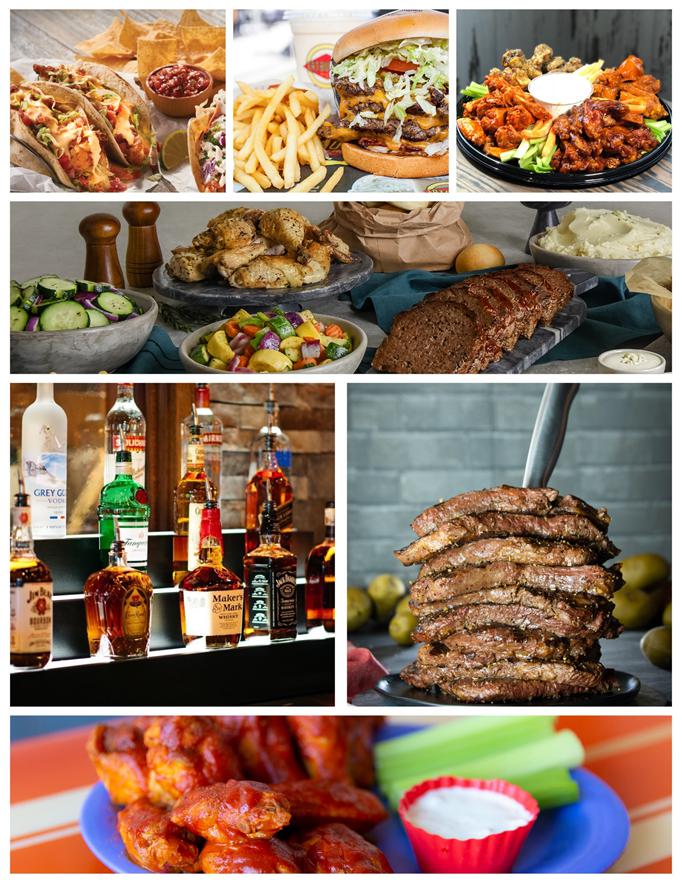
TABLE OF CONTENTS
We include cross references in this Offering Circular to captions elsewhere in these materials where you can find further related discussions. The following table of contents tells you where to find these captions:
INCORPORATION OF DOCUMENTS BY REFERENCE
The SEC allows us to incorporate by reference the information we file with it, which means that we can disclose important information to you by referring you to another document that we have filed separately with the SEC. We hereby incorporate by reference the following information or documents into this Offering Circular:
| ● | the following sections of our Annual Report on Form 10-K for the fiscal year ended December 30, 2018, filed with the SEC on March 29, 2019: |

Any information in any of the foregoing documents will automatically be deemed to be modified or superseded to the extent that information in this Offering Circular or in a later filed document that is incorporated or deemed to be incorporated herein by reference modifies or replaces such information.
We urge you to carefully read this Offering Circular and the documents incorporated by reference herein, before buying any of the securities being offered under this Offering Circular. This Offering Circular may add or update information contained in the documents incorporated by reference herein. To the extent that any statement that we make in this Offering Circular is inconsistent with statements made in the documents incorporated by reference herein, you should rely on the information in this Offering Circular and the statements made in this Offering Circular will be deemed to modify or supersede those made in the documents incorporated by reference herein.
You should rely only on the information contained in this Offering Circular or incorporated herein by reference. We have not authorized anyone to provide you with different information. No dealer, salesperson or other person is authorized to give any information or to represent anything not contained in this Offering Circular or incorporated herein by reference. You should not rely on any unauthorized information or representation. This Offering Circular is an offer to sell only the securities offered hereby, and only under circumstances and in jurisdictions where it is lawful to do so. You should assume that the information in this Offering Circular is accurate only as of the date on the front of the applicable document and that any information we have incorporated by reference is accurate only as of the date of the document incorporated by reference, regardless of the time of delivery of this Offering Circular, or any sale of a security.
We further note that the representations, warranties and covenants made by us in any agreement that is filed as an exhibit to any document that is incorporated by reference in this Offering Circular were made solely for the benefit of the parties to such agreement, including, in some cases, for the purpose of allocating risk among the parties to such agreements, and should not be deemed to be a representation, warranty or covenant to you. Moreover, such representations, warranties or covenants were accurate only as of the date when made. Accordingly, such representations, warranties and covenants should not be relied on as accurately representing the current state of our affairs.
Unless otherwise mentioned or unless the context requires otherwise, all references in this Offering Circular to “FAT Brands,” “the Company,” “we,” “us,” and “our” refer to FAT Brands Inc., a Delaware corporation, and its subsidiaries.
Upon written or oral request, we will provide you without charge a copy of any or all of the documents that are incorporated by reference into this Offering Circular, including exhibits which are specifically incorporated by reference into such documents. Requests should be directed to: FAT Brands Inc., Attention: Investor Relations, 9720 Wilshire Blvd., Suite 500, Beverly Hills, CA 90212, telephone (310) 319-1850.
| i |
CAUTIONARY STATEMENT REGARDING FORWARD-LOOKING STATEMENTS
Certain statements contained in this Offering Circular may not be based on historical facts and are “Forward-Looking Statements” within the meaning of Section 27A of the Securities Act of 1933, as amended, and Section 21E of the Securities Exchange Act of 1934, as amended. All statements other than statements of historical facts contained in this Offering Circular may be forward-looking statements. Statements regarding our future results of operations and financial position, business strategy and plans and objectives of management for future operations, including, among others, statements regarding expected new franchisees, brands, store openings and future capital expenditures are forward-looking statements. In some cases, you can identify forward-looking statements by terms such as “may,” “will,” “should,” “expects,” “plans,” “anticipates,” “could,” “intends,” “targets,” “projects,” “contemplates,” “believes,” “estimates,” “predicts,” “potential” or “continue” or the negative of these terms or other similar expressions.
Forward-looking statements are subject to significant business, economic and competitive risks, uncertainties and contingencies, many of which are difficult to predict and beyond our control, which could cause our actual results to differ materially from the results expressed or implied in such forward-looking statements. These and other risks, uncertainties and contingencies are described elsewhere in this Offering Circular, including under “Risk Factors,” and in the documents incorporated by reference herein, and include the following factors:
| ● | our inability to manage our growth; | |
| ● | the actions of our franchisees; | |
| ● | our inability to maintain good relationships with our franchisees; | |
| ● | our inability to successfully add franchisees, brands and new stores, and timely develop and expand our operations; | |
| ● | our inability to protect our brands and reputation; | |
| ● | our ability to adequately protect our intellectual property; | |
| ● | success of our advertising and marketing campaigns; | |
| ● | our inability to protect against security breaches of confidential guest information; | |
| ● | our business model being susceptible to litigation; | |
| ● | competition from other restaurants; | |
| ● | shortages or interruptions in the supply or delivery of food products; | |
| ● | our vulnerability to increased food commodity costs; | |
| ● | our failure to prevent food safety and food-borne illness incidents; | |
| ● | changes in consumer tastes and nutritional and dietary trends; | |
| ● | our dependence on key executive management; | |
| ● | our inability to identify qualified individuals for our workforce; | |
| ● | our vulnerability to labor costs; | |
| ● | our inability to comply with governmental regulation; | |
| ● | violations of the U.S. Foreign Corrupt Practices Act and similar worldwide anti-bribery and anti-kickback laws; | |
| ● | our inability to maintain sufficient levels of cash flow, or access to capital, to meet growth expectations; | |
| ● | control of our Company by Fog Cutter Capital Group, Inc.; and | |
| ● | the additional risks referred to in the section entitled “Risk Factors.” |
You should not put undue reliance on any forward-looking statements. Forward-looking statements speak only as of the date they are made, and we undertake no obligation to update them in light of new information or future events except to the extent required by Federal securities laws.
| ii |
This summary highlights selected information about us, this Offering and information appearing elsewhere in this Offering Circular and in the documents incorporated by reference herein. This summary is not complete and does not contain all of the information that you should consider before investing in the securities offered by this Offering Circular. You should read this summary together with the entire Offering Circular, including our financial statements, the notes to those financial statements and the other documents that we include in and/or have incorporated by reference in this Offering Circular, before making an investment decision. See the Risk Factors section of this Offering Circular beginning on page 11 and risk factors discussed in documents that we incorporate by reference in this Offering Circular, for a discussion of the risks involved in investing in our securities.
FAT Brands Inc.
FAT Brands Inc., formed in March 2017, is a leading multi-brand restaurant franchising company that develops, markets, and acquires predominantly fast casual restaurant concepts around the world. As a franchisor, we generally do not own or operate restaurant locations, but rather generate revenue by charging franchisees initial up-front fees as well as ongoing royalties. This asset light franchisor model provides the opportunity for strong profit margins and an attractive free cash flow profile while minimizing restaurant operating company risk, such as long-term real estate commitments or capital investments. Our scalable management platform enables us to add new stores and restaurant concepts to our portfolio with minimal incremental corporate overhead cost, while taking advantage of significant corporate overhead synergies. The acquisition of additional brands and restaurant concepts as well as expansion of our existing brands are key elements of our growth strategy.
As of the date of this Offering Circular, we were the owner and franchisor of the following restaurant brands:
Fatburger. Founded in Los Angeles, California in 1947, Fatburger (The Last Great Hamburger StandTM) has, throughout its history, maintained its reputation as an iconic, all-American, Hollywood favorite hamburger restaurant serving a variety of freshly made-to-order, customizable, big, juicy, and tasty Fatburgers, Turkeyburgers, Chicken Sandwiches, Impossible™ Burgers, Veggieburgers, French fries, onion rings, soft-drinks and milkshakes. With a legacy spanning over 70 years, Fatburger’s dedication to superior quality inspires robust loyalty amongst its customer base and has long appealed to American cultural and social leaders. We have counted many celebrities and athletes as past franchisees and customers, and we believe this prestige has been a principal driver of the brand’s strong growth. Fatburger offers a premier dining experience, demonstrating the same dedication to serving gourmet, homemade, custom-built burgers as it has since 1947. As of June 30, 2019, there were 164 franchised and sub-franchised Fatburger locations across 6 states and 18 countries.
Buffalo’s Cafe. Established in Roswell, Georgia in 1985, Buffalo’s Cafe (Where Everyone is FamilyTM) is a family-themed casual dining concept known for its chicken wings and 13 distinctive homemade wing sauces, burgers, wraps, steaks, salads and other classic American cuisine. Featuring a full bar and table service, Buffalo’s Cafe offers a distinctive dining experience affording friends and family the flexibility to share an intimate dinner together or to casually watch sporting events while enjoying extensive menu offerings. Beginning in 2011, Buffalo’s Express was developed and launched within the Buffalo’s Cafe brand as a fast-casual, smaller footprint variant of Buffalo’s Café, offering a limited version of the full menu with an emphasis on chicken wings, wraps and salads. Current Buffalo’s Express outlets are co-branded with Fatburger locations, providing our franchisees with complementary concepts that share kitchen space and result in a higher average unit volume (compared to stand-alone Fatburger locations). As of June 30, 2019, there were 17 franchised Buffalo’s Cafe and 92 co-branded Fatburger / Buffalo’s Express locations globally.
Ponderosa & Bonanza Steakhouse. Ponderosa Steakhouse, founded in 1965, and Bonanza Steakhouse, founded in 1963 (collectively, “Ponderosa”), offer the quintessential American steakhouse experience, for which there is strong and growing demand in international markets, particularly in Asia and the Middle East. Ponderosa and Bonanza Steakhouses offer guests a high-quality buffet and broad array of great tasting, affordably-priced steak, chicken and seafood entrées. Buffets at Ponderosa and Bonanza Steakhouses feature a large variety of all you can eat salads, soups, appetizers, vegetables, breads, hot main courses and desserts. An additional variation of the brand, Bonanza Steak & BBQ, offers a full-service steakhouse with fresh farm-to-table salad bar and a menu showcase of USDA flame-grilled steaks and house-smoked BBQ, with contemporized interpretations of traditional American classics. As of June 30, 2019, there were 83 Ponderosa and 14 Bonanza restaurants operating under franchise and sub-franchise agreements in 16 states and 5 countries.
Hurricane Grill & Wings. Founded in Fort Pierce, Florida in 1995, Hurricane Grill & Wings is a tropical beach themed casual dining restaurant known for its fresh, jumbo, chicken wings, 35 signature sauces, burgers, bowls, tacos, salads and sides. Featuring a full bar and table service, Hurricane Grill & Wings laid-back, casual, atmosphere affords family and friends the flexibility to enjoy dining experiences together regardless of the occasion. The acquisition of Hurricane Grill & Wings has been complementary to FAT Brands existing portfolio chicken wing brands, Buffalo’s Cafe and Buffalo’s Express. As of June 30, 2019, there were 55 franchised Hurricane Grill & Wings and 3 franchised Hurricane BTWs (Hurricane’s fast-casual burgers, tacos & wings concept), across 8 states.
| 1 |
Yalla Mediterranean. Founded in 2014, Yalla Mediterranean is a Los Angeles-based restaurant chain specializing in authentic, healthful, Mediterranean cuisine with an environmentally conscience and focus on sustainability. The word “yalla” which means “let’s go” is embraced in every aspect of Yalla Mediterranean’s culture and is a key component of our concept. Yalla Mediterranean offers a healthful Mediterranean menu of wraps, plates, and bowls in a fast-casual setting, with cuisine prepared fresh daily using, GMO-free, local ingredients for a menu that includes vegetarian, vegan, gluten-free and dairy-free options accommodating customers with a wide variety of dietary needs and preferences. The brand demonstrates its commitment to the environment by using responsibly-sourced proteins and utensils, bowls and serving trays made from compostable materials. Each of Yalla’s seven locations across California also feature on-tap selections of craft beers and fine wines. We intend to sell all of the existing Yalla locations to franchisees and expand the business through additional franchising.
Elevation Burger. Established in Northern Virginia in 2002, Elevation Burger is a fast-casual burger, fries, and shakes chain that provides its customers with healthier, “elevated” food options. Serving grass-fed beef, organic chicken, and French fries cooked using a proprietary olive oil-based frying method, Elevation maintains environmentally-friendly operating practices including responsible sourcing of ingredients, robust recycling programs intended to reduce carbon footprint, and store décor constructed of eco-friendly materials. The acquisition of Elevation Burger in June 2019 aligns with our corporate mission of providing fresh, authentic and tasty products to the customers of our franchisees and complements our existing burger brand, Fatburger. As of June 30, 2019, there were 43 franchised Elevation Burger stores located in 8 states plus the District of Columbia and 4 countries.
Systemwide, across all of the Company’s brands, store level sales approximated $100 million in the second quarter of 2019.
Beyond our current brand portfolio, we intend to acquire other restaurant franchise concepts that will allow us to offer additional food categories and expand our geographic footprint. In evaluating potential acquisitions, we specifically seek concepts with the following characteristics:
| ● | established, widely-recognized brands; | |
| ● | steady cash flows; | |
| ● | track records of long-term, sustainable operating performance; | |
| ● | good relationships with franchisees; | |
| ● | sustainable operating performance; | |
| ● | geographic diversification; and | |
| ● | growth potential, both geographically and through co-branding initiatives across our portfolio. |
Leveraging our scalable management platform, we expect to achieve cost synergies post-acquisition by reducing the corporate overhead of the acquired company – most notably in the legal, accounting and finance functions. We also plan to grow the top line revenues of newly acquired brands through support from our management and systems platform, including public relations, marketing and advertising, supply chain assistance, site selection analysis, staff training and operational oversight and support.
Our franchisee base consisted of 194 franchisees as of June 30, 2019. Of these franchisees, 157 operate in North America and 46 own multiple restaurant locations. Our franchisees operated a total of 381 restaurants as of June 30, 2019, 295 of which were located in North America. As of June 30, 2019, we had commitments for development of over 200 new stores which remain to be completed.
The FAT Brands Difference – Fresh. Authentic. Tasty.
Our name represents the values that we embrace as a company and the food that we provide to customers – Fresh. Authentic. Tasty (which we refer to as “FAT”). The success of our franchisor model is tied to consistent delivery by our restaurant operators of freshly prepared, made-to-order food that our customers desire. With the input of our customers and franchisees, we continually strive to keep a fresh perspective on our brands by enhancing our existing menu offerings and introducing appealing new menu items. When enhancing our offerings, we ensure that any changes are consistent with the core identity and attributes of our brands, although we do not intend to adapt our brands to be all things to all people. In conjunction with our restaurant operators (which means the individuals who manage and/or own our franchised restaurants), we are committed to delivering authentic, consistent brand experiences that have strong brand identity with customers. Ultimately, we understand that we are only as good as the last meal served, and we are dedicated to having our franchisees consistently deliver tasty, high-quality food and positive guest experiences in their restaurants.
In pursuing acquisitions and entering new restaurant brands, we are committed to instilling our FAT Brands values into new restaurant concepts. As our restaurant portfolio continues to grow, we believe that both our franchisees and diners will recognize and value this ongoing commitment as they enjoy a wider concept offering.
| 2 |
Competitive Strengths
We believe that our competitive strengths include:
| ● | Management Platform Built for Growth. We have developed a robust and comprehensive management and systems platform designed to support the expansion of our existing brands while enabling the accretive and efficient acquisition and integration of additional restaurant concepts. We dedicate our considerable resources and industry knowledge to promote the success of our franchisees, offering them multiple support services such as public relations, marketing and advertising, supply chain assistance, site selection analysis, staff training and operational oversight and support. Furthermore, our platform is scalable and adaptable, allowing us to incorporate new concepts into the FAT Brands family with minimal incremental corporate costs. We intend to grow our existing brands as well as make strategic and opportunistic acquisitions that complement our existing portfolio of concepts providing an entrance into targeted restaurant segments. We believe that our platform is a key differentiator in pursuing this strategy. | |
| ● | Asset Light Business Model Driving High Free Cash Flow Conversion. We maintain an asset light business model requiring minimal capital expenditures by franchising our restaurant concepts to our owner/operators. The multi-brand franchisor model also enables us to efficiently scale the number of restaurant locations with very limited incremental corporate overhead and minimal exposure to store-level risk, such as long-term real estate commitments and increases in employee wage costs. Our multi-brand approach also gives us the organizational depth to provide a host of services to our franchisees, which we believe enhances their financial and operational performance. As a result, new store growth and accelerating financial performance of the FAT Brands network drive increases in our initial up-front fee and royalty revenue streams while expanding profit and free cash flow margins. | |
| ● | Strong Brands Aligned with FAT Brands Vision. We have an enviable track record of delivering Fresh, Authentic, and Tasty meals across our franchise system. Our Fatburger and Buffalo’s concepts have built distinctive brand identities within their respective segments, providing made-to-order, high-quality food at competitive prices. The Ponderosa and Bonanza brands deliver an authentic American steakhouse experience with which customers identify. Hurricane Grill & Wings offer customers fresh, jumbo chicken wings with an assortment of sauces and rubs in a casual dining atmosphere, while Yalla Mediterranean offers a healthful Mediterranean menu of wraps, plates, and bowls in a fast-casual setting. By maintaining alignment with the FAT Brands vision across an expanding platform, we believe that our concepts will appeal to a broad base of domestic and global consumers. | |
| ● | Experienced and Diverse Global Franchisee Network. We have new restaurant commitments of over 200 locations across our brands. We anticipate that our current franchisees will open more than 30 new restaurants annually for at least the next five years. The acquisition of additional restaurant franchisors will also increase the number of restaurants operated by our existing franchisee network. Additionally, our franchise development team has built an attractive pipeline of new potential franchisees, with many experienced restaurant operators and new entrepreneurs eager to join the FAT Brands family. | |
| ● | Ability to Cross-Sell Existing Franchisees Concepts from the FAT Brands Portfolio. Our ability to easily, and efficiently, cross-sell our existing franchisees new brands from our FAT Brands portfolio affords us the ability to grow more quickly and satisfy our existing franchisees’ demands to expand their organizations. By having the ability to offer our franchisees a variety of concepts (i.e., a fast-casual better-burger concept, a fast-casual chicken wing concept, a casual dining concept, a healthful Mediterranean menu concept and steakhouse concepts) from the FAT Brands portfolio, our existing franchisees are able to acquire the rights to, and develop, their respective markets with a well-rounded portfolio of FAT Brands concept offerings affording them the ability to strategically satisfy their respective market demands by developing our various concepts where opportunities are available. | |
| ● | Seasoned and Passionate Management Team. Our management team and employees are critical to our success. Our senior leadership team has more than 200 years of combined experience in the restaurant industry, and many have been a part of our team since the acquisition of the Fatburger brand in 2003. We believe that our management team has the track record and vision to leverage the FAT Brands platform to achieve significant future growth. In addition, through their holdings in Fog Cutter Capital Group, Inc., or “FCCG”), our senior executives own a significant equity interest in the company, ensuring long-term commitment and alignment with our public shareholders. Our management team is complemented by an accomplished Board of Directors. |
| 3 |
Growth Strategy
The principal elements of our growth strategy include:
| ● | Opportunistically Acquire New Brands. Our management platform was developed to cost-effectively and seamlessly scale with new restaurant concept acquisitions. Our recent acquisitions of the Hurricane Grill & Wings, Yalla Mediterranean and Elevation Burger brands are a continuation of this growth strategy. We have identified food categories that appeal to a broad international base of customers, targeting the burgers, chicken, pizza, steak, coffee, sandwich and dessert segments for future growth. We have developed a strong and actionable pipeline of potential acquisition opportunities to achieve our objectives. We seek concepts with established, widely-recognized brands; steady cash flows; track records of long-term, good relationships with franchisees; sustainable operating performance; geographic diversification; and growth potential, both geographically and through co-branding initiatives across our portfolio. We approach acquisitions from a value perspective, targeting modest multiples of franchise-level cash flow valuations to ensure that acquisitions are immediately accretive to our earnings prior to anticipated synergies. | |
| ● | Optimize Capital Structure to Enable Profitable Growth through Acquisitions. While we believe our existing business can be funded through cash generated from current operations, we intend to finance future acquisitions of restaurant brands through the issuance of debt and equity financing placed with investors and issued directly to sellers of restaurant brands. We are actively pursuing various financing alternatives, with the goal of reducing and optimizing our all-in cost of capital and providing us with the means to pursue larger and more profitable acquisitions. | |
| ● | Accelerate Same-Store Sales Growth. Same-store sales growth reflects the change in year-over-year of sales for the comparable store base, which we define as the number of stores open for at least one full fiscal year. To optimize restaurant performance, we have embraced a multi-faceted same-store sales growth strategy. We utilize customer feedback and closely analyze sales data to introduce, test and perfect existing and new menu items. In addition, we regularly utilize public relations and experiential marketing, which we leverage via social media and targeted digital advertising to expand the reach of our brands and to drive traffic to our stores. Furthermore, we have embraced emerging technology to develop our own brand-specific mobile applications, allowing guests to find restaurants, order online, earn rewards and join our e-marketing providers. We have also partnered with third-party delivery service providers, including UberEATS, Grub Hub, Amazon Restaurants and Postmates, which provide online and app-based delivery services and constitute a new sales channel for our existing locations. Finally, many of our franchisees are pursuing a robust capital expenditure program to remodel legacy restaurants and to opportunistically co-brand them with our Buffalo’s Express and / or Fat Bar concepts (serving beer, wine, spirits and cocktails). | |
| ● | Drive Store Growth through Co-Branding, Virtual Restaurants, and Cloud Kitchens. We franchise co-branded Fatburger / Buffalo’s Express locations, giving franchisees the flexibility of offering multiple concepts, while sharing kitchen space, resulting in a higher average check (compared to stand-alone Fatburger locations). Franchisees benefit by serving a broader customer base, and we estimate that co-branding results in a 20%-30% increase in average unit volume compared to stand-alone locations with minimal incremental cost to franchisees. Our acquisition strategy reinforces the importance of co-branding, as we expect to offer each of the complementary brands that we acquire to our existing franchisees on a co-branded basis. | |
| In addition to driving growth through co-branding opportunities, we are leveraging the current industry trend of virtual restaurants, whereby one (or more) of our brands serves its food out of the kitchen of another brand for online delivery only, and cloud kitchens, whereby restaurants open without a customer-facing store-front solely for the purpose of servicing delivery or virtual kitchens. Virtual restaurants and cloud kitchens allow us to introduce our brands in geographic areas where previously unknown such as introducing selected menu items from Hurricane Grill & Wings to the southern California market through the preparation in and delivery from Fatburger franchised restaurants via a program with UberEats. | ||
| ● | Extend Brands into New Segments. We have a strong track record of extending our brands into new segments, and we believe that we have a significant opportunity to capture new markets by strategically adapting our concepts while reinforcing the brand identity. In addition to dramatically expanding the traditional Buffalo’s Cafe customer base through Fatburger / Buffalo’s Express co-branding, we have also begun evaluating opportunities to leverage the Buffalo’s brand by promoting Buffalo’s Express on a stand-alone basis. Furthermore, we have also begun the roll-out of Fat Bars (serving beer, wine, spirits and cocktails), which we are opportunistically introducing to select existing Fatburger locations on a modular basis. Similarly, we plan to create smaller-scale, fast casual Ponderosa and Bonanza concepts, to drive new store growth, particularly internationally. |
| 4 |
| ● | Continue Expanding FAT Brands Internationally. We have a significant global presence, with international franchised stores in Canada, China, Qatar, Taiwan, Iraq, the United Kingdom, Indonesia, Tunisia, Singapore, Philippines, Panama, the United Arab Emirates, Kuwait, Saudi Arabia, Malaysia, Japan, Pakistan, and Egypt. We believe that the appeal of our Fresh, Authentic, and Tasty concepts is global, and we are targeting further penetration of Middle Eastern and Asian markets, particularly through leveraging the Buffalo’s, Ponderosa and Hurricane brands. | |
| ● | Enhance Footprint in Existing Markets through Current Franchisee Networks. We had 194 franchisees who collectively operated more than 380 restaurants as of June 30, 2019. As noted, our existing and new franchisees have made new store commitments of over 200 locations across our brands, and we anticipate that our new and existing franchisees will open more than 30 new stores annually for at least the next four years. Beyond these existing commitments, we have found that many of our franchisees have grown their businesses over time, increasing the number of stores operated in their organizations and expanding their concept offerings across the FAT Brands portfolio of concepts. | |
| ● | Attract New Franchisees in Existing and Unpenetrated Markets. In addition to the large pipeline of new store commitments from current franchisees, we believe the existing markets for Fatburger, Elevation Burger, Buffalo’s Cafe, Buffalo’s Express, Ponderosa, Bonanza, Hurricane, and Yalla locations are far from saturated and can support a significant increase in units. Furthermore, new franchisee relationships represent the optimal way for our brands to penetrate geographic markets where we do not currently operate. In many cases, prospective franchisees have experience in and knowledge of markets where we are not currently active, facilitating a smoother brand introduction than we or our existing franchisees could achieve independently. We generate franchisee leads through various channels, including franchisee referrals, traditional and non-traditional franchise brokers and broker networks, franchise development advertising, and franchise trade shows and conventions. |
Summary Risk Factors
We are subject to a number of risks, including risks that may prevent us from achieving our business objectives or that may adversely affect our business, financial condition, results of operations, cash flows and prospects. You should carefully consider the risks discussed in the section entitled “Risk Factors,” including the following risks, before investing in our Series B Preferred Stock:
| ● | Our operating results and growth strategies are closely tied to the success and cooperation of our franchisees, and we have experienced volatility in unit economics of our franchisees in recent years. | |
| ● | Our franchisees could take actions that could harm our business, and may not accurately report sales which drives our royalties. | |
| ● | We may not open new domestic and international franchisee-owned restaurants on a timely basis. | |
| ● | We may not successfully identify, recruit and contract with a sufficient number of qualified franchisees. | |
| ● | We may not achieve our target development goals, aggressive development could cannibalize existing sales and new restaurants and acquisitions of new brands may not be successful or profitable. | |
| ● | Food safety and foodborne illness concerns may have an adverse effect on our business. | |
| ● | Our business may be adversely impacted by changes in consumer discretionary spending and general economic conditions in our franchisee markets. | |
| ● | Our international operations subject us to operating and geographic risks and foreign currency risks that could negatively affect our business and financial results. | |
| ● | We depend on key executive management. | |
| ● | We expect that FCCG will remain a significant stockholder, whose interests may differ from those of our public stockholders. | |
| ● | Given our market capitalization, there is limited trading liquidity in our Common Stock. | |
| ● | We are a “controlled company” within the meaning of the NASDAQ listing standards and, as a result, will qualify for exemptions from certain corporate governance requirements. You may not have the same protections afforded to stockholders of companies that are subject to such requirements. |
| 5 |
| ● | We may issue additional shares of preferred stock in the future, which could make it difficult for another company to acquire us or could otherwise adversely affect holders of our Common Stock and the Series B Preferred Stock. | |
| ● | Our ability to pay regular dividends to our stockholders is subject to the discretion of our Board of Directors and may be limited by our holding company structure and applicable provisions of Delaware law. |
Our Corporate Information
FAT Brands Inc., the issuer of the Series B Preferred Stock in this Offering, was incorporated as a Delaware corporation on March 21, 2017. Our corporate headquarters are located at 9720 Wilshire Blvd., Suite 500, Beverly Hills, California 90212. Our main telephone number is (310) 319-1850. Our principal Internet website address is www.fatbrands.com. The information on our website is not incorporated by reference into, or a part of, this Offering Circular.
Implications of Being an Emerging Growth Company
As a company with less than $1.07 billion in revenue during our last fiscal year, we qualify as an “emerging growth company” as defined in the Jumpstart Our Business Startups Act of 2012, or JOBS Act. An emerging growth company may take advantage of specified reduced reporting and other requirements that are otherwise applicable generally to public companies. These provisions include the following:
| ● | we are required to have only two years of audited financial statements and only two years of related Management’s Discussion and Analysis of Financial Condition and Results of Operations disclosure; | |
| ● | we are not required to engage an auditor to report on our internal controls over financial reporting pursuant to Section 404(b) of the Sarbanes-Oxley Act of 2002 (which we refer to as the “Sarbanes-Oxley Act”); | |
| ● | we are not required to comply with any requirement that may be adopted by the Public Company Accounting Oversight Board (which we refer to as the “PCAOB”) regarding mandatory audit firm rotation or a supplement to the auditor’s report providing additional information about the audit and the financial statements (i.e., an auditor discussion and analysis); | |
| ● | we are not required to submit certain executive compensation matters to stockholder advisory votes, such as “say-on-pay,” “say-on-frequency” and “say-on-golden parachutes;” and | |
| ● | we are not required to disclose certain executive compensation related items such as the correlation between executive compensation and performance and comparisons of the chief executive officer’s compensation to median employee compensation. |
We may take advantage of these provisions until the last day of our fiscal year following the fifth anniversary of the consummation of our initial public offering or such earlier time that we are no longer an emerging growth company. We would cease to be an emerging growth company if we have more than $1.07 billion in annual revenue, have more than $700 million in market value of our Common Stock held by non-affiliates, or issue more than $1.0 billion of non-convertible debt over a three-year period (as such amounts may be adjusted from time-to-time). We may choose to take advantage of some but not all of these reduced burdens. We have elected to adopt the reduced disclosure with respect to financial statements and the related Management’s Discussion and Analysis of Financial Condition and Results of Operations disclosure. As a result of this election, the information that we provide stockholders may be different than you might get from other public companies in which you hold equity.
The JOBS Act permits an emerging growth company like us to take advantage of an extended transition period to comply with new or revised accounting standards applicable to public companies. We are choosing to “opt out” of this provision and, as a result, we will comply with new or revised accounting standards as required when they are adopted. This decision to opt out of the extended transition period is irrevocable.
| 6 |
The following is a brief summary of certain terms of this offering. For a more complete description of the terms of the Series B Preferred Stock and Warrants, see “Description of the Securities We Are Offering–Series B Cumulative Preferred Stock” and “Description of the Securities We Are Offering–Warrants” in this Offering Circular.
| Issuer | FAT Brands Inc. | |
| Securities Offered | We are offering up to 1,200,000 shares of 8.25% Series B Cumulative Preferred Stock, and Warrants initially exercisable to purchase up to an aggregate of 720,000 shares of Common Stock at an exercise price of $8.50 per share.
Each share of Series B Preferred Stock that we sell in this Offering will be accompanied by a Warrant to purchase 0.60 shares of Common Stock at an exercise price of $8.50 per share of Common Stock. | |
| Price | Each share of Series B Preferred Stock and accompanying Warrant is being offered at a price of $25.00. | |
| Warrants | We are offering Warrants to purchase up to an aggregate of 720,000 shares of common stock that will be exercisable for five years from the date of initial issuance ( , 2019) at an exercise price of $8.50 per share, subject to adjustment. This Offering Circular also relates to the offering of the shares of Common Stock issuable upon exercise of the Warrants. There is presently no public market for the Warrants and it is not anticipated that a public market for the Warrants will develop in the future.
| |
| The Warrants will be governed by the laws of the State of New York, and any disputes against the Company arising from the Warrants must be brought and enforced in the State and Federal courts in the State of New York. However, we do not intend that the foregoing provisions would apply to actions arising under the Securities Act of 1933, as amended, or the Securities Exchange Act of 1934, as amended | ||
| Liquidation preference of Series B Preferred Stock | If we liquidate, dissolve or wind up, holders of the Series B Preferred Stock will have the right to receive $25.00 per share, plus all accumulated, accrued and unpaid dividends (whether or not earned or declared) to and including the date of payment, before any payments are made to the holders of our Common Stock or to the holders of equity securities the terms of which provide that such equity securities will rank junior to the Series B Preferred Stock. The rights of holders of Series B Preferred Stock to receive their liquidation preference also will be subject to the proportionate rights of our Series A Fixed Rate Cumulative Preferred Stock and any other class or series of our capital stock ranking in parity with the Series B Preferred Stock as to liquidation. | |
Dividends on Series B Preferred Stock |
Holders of the Series B Preferred Stock will be entitled to receive, when, as and if declared by our Board of Directors, cumulative cash dividends payable quarterly in an amount per share of Series B Preferred Stock equal to $2.0625 per share each year, which is equivalent to 8.25% of the $25.00 liquidation preference per share. Dividends on the Series B Preferred Stock will be payable quarterly in arrears based on the Company’s fiscal quarters, beginning with the fiscal quarter ended September 29, 2019. To the extent declared by our Board of Directors, dividends will be payable not later than twenty (20) days after the end of each quarter. Dividends on the Series B Preferred Stock will accumulate whether or not we have earnings, whether or not there are funds legally available for the payment of such dividends and whether or not such dividends are declared by our Board of Directors. Dividends on the Series B Preferred Stock will increase to $2.50 per share each year, which is equivalent to 10% of the $25.00 liquidation preference per share, to the extent the Company fails to make a cash dividend payment of four or more consecutive or non-consecutive quarterly dividends. | |
| Maturity of Series B Preferred Stock | The Series B Preferred Stock will mature on the five-year anniversary of the initial issuance date ( , 2024) or the earlier liquidation, dissolution or winding-up of the Company. Upon maturity, the holders of Series B Preferred Stock will be entitled to receive cash redemption of their shares in an amount equal to $25.00 per share plus any accrued and unpaid dividends. | |
Call Feature of Series B Preferred Stock |
We may not redeem the Series B Preferred Stock before the first anniversary of the initial issuance date, or , 2020. After the first anniversary of the initial issuance date we may, at our option, redeem the Series B Preferred Stock, in whole or in part, by paying $25.00 per share, plus any accrued and unpaid dividends to the date of redemption and a redemption premium equal to 10% of liquidation preference prior to the second anniversary ( , 2021) or 5% of liquidation preference after the second anniversary and prior to the third anniversary ( , 2022). | |
| Early redemption by holder | Holders of Series B Preferred Stock may optionally cause the Company to redeem all or any portion of their Series B Preferred Stock following the first anniversary of the initial issuance date, or , 2021, for an amount equal to $25.00 per share, plus any accrued and unpaid dividends, minus an early redemption fee equal to 12% of liquidation preference prior to the second anniversary ( , 2021), 10% of liquidation preference after the second anniversary and prior to the third anniversary ( , 2022), or 8% of liquidation preference after the third anniversary and prior to the fourth anniversary ( , 2023). There will be no redemption premium charged after the fourth anniversary of the initial issuance date. |
| 7 |
| Information rights | During any period in which we are not subject to the reporting requirements of Section 13 or 15(d) of the Exchange Act and any shares of our Series B Preferred Stock are outstanding, we will (i) transmit by mail to all holders of the Series B Preferred Stock, copies of the annual reports and quarterly reports that we would have been required to file with the SEC pursuant to Section 13 or 15(d) of the Exchange Act if we were subject to those sections (other than any exhibits that would have been required) and (ii) promptly upon written request, make available copies of such reports to any prospective holder of Series B Preferred Stock. We will mail the reports to the holders of Series B Preferred Stock within 15 days after the respective dates by which we would have been required to file the reports with the SEC if we were subject to Section 13 or 15(d) of the Exchange Act. | |
| Form | The Series B Preferred Stock and Warrants will be maintained in book-entry form registered in the name of the nominee of The Depository Trust Company, except under limited circumstances where certificated shares may be issued. | |
| Ranking | The Series B Preferred Stock, with respect to dividend rights and rights upon our voluntary or involuntary liquidation, dissolution or winding up, will rank: |
| ● | senior to our Common Stock, our Series A-1 Preferred Stock, and any other class of equity securities the terms of which provide that such equity securities will rank junior to the Series B Preferred Stock; | |
| ● | on a parity (pari passu) with our Series A Preferred Stock, and any other equity securities the terms of which provide that such equity securities will rank without preference or priority over the other; and | |
| ● | junior to any equity securities the terms of which provide that such equity securities will rank senior to the Series B Preferred Stock, and to all of our existing and future debt, including, prior to conversion of such debt, any debt convertible into our equity securities. |
| Voting rights | The Series B Preferred Stock will not vote with the Common Stock, but will have voting rights as required by law and majority consent rights to (i) merger, consolidation or share exchange that materially and adversely affects the rights, preferences or privileges of the Series B Preferred Stock, unless full redemption price is paid in cash; (ii) amending the certificate of incorporation to materially and adversely affect the Series B Preferred Stock; and (iii) declaring or paying any junior dividends or repurchasing any junior securities during any time that all dividends on the Series B Preferred Stock have not been paid in full in cash. | |
| Absence of a trading market | The Series B Preferred Stock and Warrants are new issues of securities with no established trading market. Accordingly, we cannot provide any assurance as to the development or liquidity of any market for the Series B Preferred Stock or Warrants. | |
| Listing | We do not intend to apply for listing of the Series B Preferred Stock or Warrants on any securities exchange, and we do not expect that the Series B Preferred Stock or the Warrants will be quoted on NASDAQ. | |
| Use of proceeds | We intend to use the net proceeds for general corporate purposes and possible future acquisitions and growth opportunities. See “Use of Proceeds.” | |
| Settlement date | We expect that the shares of Series B Preferred Stock and Warrants to be issued in this Offering will initially be ready for delivery to purchasers on or about , 2019 and thereafter at each closing, on a rolling basis, until the Termination Date. | |
| Risk factors | Investing in our Series B Preferred Stock and Warrants involves a number of risks. See “Risk Factors” beginning on page 11 of this Offering Circular and in our Annual Report on Form 10-K for the year ended December 30, 2018 for information about important risks you should consider before making an investment decision regarding the Series B Preferred Stock. | |
| Selling Agents | TriPoint Global Equities, LLC and Digital Offering, LLC have agreed to act as our exclusive, lead managing selling agents (which we refer to as the “Selling Agents”) to offer the Series B Preferred Stock and Warrants to prospective investors on a “best efforts” basis. In addition, the Selling Agents may engage one or more sub-Selling Agents or selected dealers. The Selling Agents are not purchasing the Series B Preferred Stock or Warrants offered by us, and is not required to sell any specific number or dollar amount of the Series B Preferred Stock and Warrants in the Offering. |
| 8 |
Existing Structure
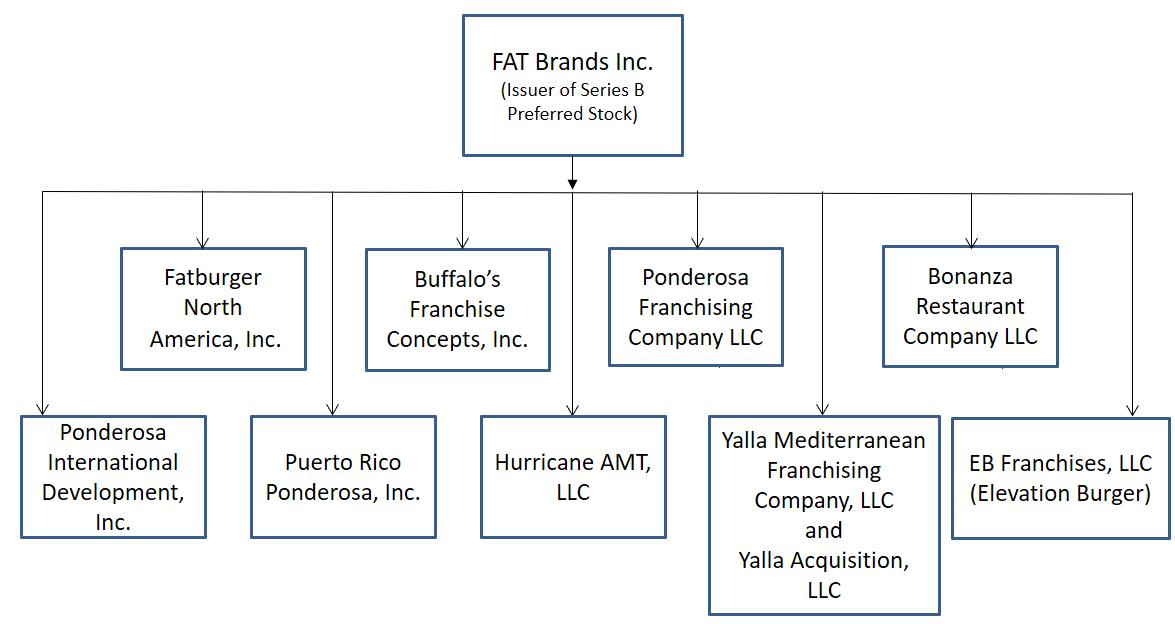
The following diagram shows our organizational structure at the time of this Offering Circular:
| 9 |
SUMMARY HISTORICAL AND PRO FORMA CONSOLIDATED FINANCIAL AND OTHER DATA
The following tables summarize the consolidated historical financial data for FAT Brands Inc.
The summary statements of operations data for each of the twenty-six weeks ended June 30, 2019 and July 1, 2018 are derived from the unaudited financial statements of FAT Brands Inc. filed on the Company’s Form 10-Q with the SEC on August 14, 2019. The summary statement of operations data for each of the years in the two-year period ended December 30, 2018 and December 31, 2017 are derived from the audited financial statements of FAT Brands Inc. filed on the Company’s Form 10-K with the SEC on March 29, 2019. We completed our initial public offering on October 20, 2017, and the statement of operations data for 2017 represents the period from our inception (March 21, 2017) through December 31, 2017.
The results of operations for the periods presented below are not necessarily indicative of the results to be expected for any future periods and the results for any interim period are not necessarily indicative of the results that may be expected for a full fiscal year. The information set forth below should be read together with the “Selected Historical Financial and Other Data” and “Management’s Discussion and Analysis of Financial Condition and Results of Operations” and the financial statements and the accompanying notes appearing elsewhere in this Offering Circular.
In thousands, except net income (loss) per share data
| 26 weeks ended | Fiscal Year ended | |||||||||||||||
| June 30, 2019 | July 1, 2018 | December 30, 2018 | December 31, 2017 | |||||||||||||
| (unaudited) | (unaudited) | (audited) | (audited) | |||||||||||||
| Statements of operations data: | ||||||||||||||||
| Revenues | ||||||||||||||||
| Royalties | $ | 7,127 | $ | 5,432 | $ | 12,097 | $ | 2,023 | ||||||||
| Franchise fees | 1,306 | 698 | 2,136 | 140 | ||||||||||||
| Store opening fees | 289 | 105 | 352 | - | ||||||||||||
| Advertising fees | 2,008 | 1,226 | 3,182 | - | ||||||||||||
| Management fees and other revenue | 38 | 32 | 600 | 10 | ||||||||||||
| Total revenues | 10,768 | 7,493 | 18,367 | 2,173 | ||||||||||||
| Costs and expenses | ||||||||||||||||
| General and administrative | 5,542 | 4,499 | 10,949 | 2,123 | ||||||||||||
| Advertising expenses | 2,008 | 1,226 | 3,182 | - | ||||||||||||
| Refranchising restaurant costs and expense, net of revenue | 1,021 | - | - | - | ||||||||||||
| Costs and expenses | 8,571 | 5,725 | 14,131 | 2,123 | ||||||||||||
| Income from operations | 2,197 | 1,768 | 4,236 | 50 | ||||||||||||
| Other expense, net | (2,790 | ) | (590 | ) | (6,309 | ) | (256 | ) | ||||||||
| Income (loss) before income tax expense | (593 | ) | 1,178 | (2,073 | ) | (206 | ) | |||||||||
| Income tax expense (benefit) | 625 | 296 | (275 | ) | 407 | |||||||||||
| Net income (loss) | $ | (1,218 | ) | $ | 882 | $ | (1,798 | ) | $ | (613 | ) | |||||
| EBITDA (1) | $ | 3,067 | $ | 1,765 | $ | 3,055 | $ | 22 | ||||||||
| Adjusted EBITDA (2) | $ | 3,598 | $ | 2,010 | $ | 4,902 | $ | 111 | ||||||||
| Basic (loss) income per common share | $ | (0.10 | ) | $ | 0.09 | $ | (0.16 | ) | $ | (0.07 | ) | |||||
| Basic weighted average shares outstanding | 11,726 | 10,304 | 10,971 | 8,686 | ||||||||||||
| Diluted (loss) income per common share | $ | (0.10 | ) | $ | 0.09 | $ | (0.16 | ) | $ | (0.07 | ) | |||||
| Diluted weighted average shares outstanding | 11,726 | 10,304 | 10,971 | 8,686 | ||||||||||||
| (1) | EBITDA is defined as earnings before interest, taxes, depreciation and amortization. We use the term EBITDA, as opposed to income from operations, as it is widely used by analysts, investors and other interested parties to evaluate companies in our industry. We believe that EBITDA is an appropriate measure of operating performance because it eliminates the impact of expenses that do not relate to business performance. EBITDA is not a measure of our financial performance or liquidity that is determined in accordance with generally accepted accounting principles (“GAAP”), and should not be considered as an alternative to net income (loss) as a measure of financial performance or cash flows from operations as measures of liquidity, or any other performance measure derived in accordance with GAAP. | |
| (2) | Adjusted EBITDA is defined as EBITDA (as defined above), excluding expenses related to acquisitions, refranchising restaurant costs and expenses, net of revenue, and certain non-recurring or non-cash items that the Company does not believe directly reflect its core operations and may not be indicative of the Company’s recurring business operations. |
A reconciliation of net income to EBITDA is set forth below:
| 26 weeks ended | Fiscal Year ended | |||||||||||||||
| June 30, 2019 | July 1, 2018 | December 30, 2018 | December 31, 2017 | |||||||||||||
| (unaudited) | (unaudited) | (unaudited) | (unaudited) | |||||||||||||
| Net income (loss) | $ | (1,218 | ) | $ | 882 | $ | (1,798 | ) | $ | (613 | ) | |||||
| Depreciation expense | 278 | 73 | 358 | 23 | ||||||||||||
| Interest expense, net | 3,382 | 514 | 4,770 | 205 | ||||||||||||
| Income tax expense (benefit) | 625 | 296 | (275 | ) | 407 | |||||||||||
| EBITDA | $ | 3,067 | $ | 1,765 | $ | 3,055 | $ | 22 | ||||||||
| Share-based compensation expenses | 159 | 245 | 439 | 89 | ||||||||||||
| Non-cash lease expenses | 124 | - | - | - | ||||||||||||
| Acquisition costs and non-recurring legal costs | 197 | - | 1,408 | - | ||||||||||||
| Refranchising restaurant costs and expenses, net of revenue | 1,021 | - | - | - | ||||||||||||
| Gain on sale of refranchised restaurants | (970 | ) | - | - | - | |||||||||||
| Adjusted EBITDA | $ | 3,598 | $ | 2,010 | $ | 4,902 | $ | 111 | ||||||||
| 10 |
An investment in the Series B Preferred Stock is subject to various risks that may adversely affect the value of the Series B Preferred Stock. Before making an investment decision, you should carefully consider the risks described below together with the risks described in our Annual Report on Form 10-K for the year ended December 30, 2018, in particular under the caption “Risk Factors”, and in other documents that we subsequently file with the SEC, all of which are incorporated by reference into this Offering Circular. Additional risks and uncertainties not presently known to us or that we currently deem insignificant or remote also may adversely affect our business, financial condition and results of operations, perhaps materially.
Risks Related to the Series B Preferred Stock and this Offering
We may not be able to generate sufficient cash to service our obligations, including our obligations under the Series B Preferred Stock.
Our ability to make dividend payments on our outstanding shares of preferred stock, including the Series B Preferred Stock, and outstanding indebtedness will depend on our financial and operating performance, which is subject to prevailing economic and competitive conditions and to certain financial, business and other factors beyond our control. We may be unable to maintain a level of cash flows from operating activities sufficient to permit us to pay the liquidation preference, premium, if any, and dividends on our preferred stock, including the Series B Preferred Stock, as well as principal and interest on our outstanding indebtedness, including our senior secured credit facility.
We may need to refinance our redeemable preferred stock prior to the maturity of the Series B Preferred Stock.
Upon the five-year anniversary of the initial issuance date of our Series A Preferred Stock (June 8, 2023), the holders of Series A Preferred Stock will be entitled to cash redemption of their shares in an amount equal to $25.00 per share, or an aggregate of $10,000,000, plus any accrued and unpaid dividends. In addition, upon the five-year anniversary of the initial issuance date (July 3, 2023) of our Series A-1 Preferred Stock, the holders of Series A-1 Preferred Stock will be entitled to cash redemption of their shares in an amount equal to $25.00 per share, or an aggregate of $4,500,000, plus any accrued and unpaid dividends. Although we expect to refinance or otherwise repay the holders of Series B Preferred Stock, we may not be able to refinance this amount on commercially reasonable terms or at all. The financial terms or covenants of any new credit facility, preferred stock or other indebtedness may not be as favorable as those under our existing Series A Preferred Stock and Series A-1 Preferred Stock. Our ability to complete a refinancing of our preferred stock will depend on our financial and operating performance, as well as a number of conditions beyond our control. For example, if disruptions in the financial markets were to exist at the time that we intended to refinance these amounts, we might be restricted in our ability to access the financial markets. If we are unable to refinance our preferred stock, our alternatives would include negotiating an extension of the maturities of our preferred stock with investors and seeking or raising new equity capital. If we were unsuccessful, the lenders under our senior secured credit facility and the holders of our existing Preferred Stock could demand repayment of the amounts owed to them on the relevant maturity date. As a result, our ability to pay the principal of and interest on the Series B Preferred Stock would be adversely affected.
We may incur additional indebtedness and obligations to pay cumulative dividends on preferred stock.
We and our subsidiaries may incur additional indebtedness and obligations to pay cumulative dividends on preferred stock in the future. The terms of the Series B Preferred Stock do not prohibit us or our subsidiaries from incurring additional indebtedness or issuing additional shares of preferred with cumulative dividends. Also, our subsidiaries could incur additional indebtedness that is structurally senior to the Series B Preferred Stock or we and our subsidiaries could incur indebtedness secured by a lien on assets that do not constitute collateral, including assets of ours and our subsidiaries, and the holders of such indebtedness will have the right to be paid first from the proceeds of such assets. If we issue any additional preferred stock that ranks equally with the Series B Preferred Stock, the holders of those shares will be entitled to share ratably with the holders of the Series B Preferred Stock in any proceeds distributed in connection with our insolvency, liquidation, reorganization or dissolution. This may have the effect of reducing the amount of proceeds paid to the holders of Series B Preferred Stock. If new indebtedness is added to our current debt levels, the related risks that we and our subsidiaries now face could materially increase.
Our ability to meet our obligations under the Series B Preferred Stock depends on the earnings and cash flows of our subsidiaries and the ability of our subsidiaries to pay dividends or advance or repay funds to us.
We conduct all of our business operations through our subsidiaries. In servicing dividend payments to be made on the Series B Preferred Stock, we will rely on cash flows from these subsidiaries, mainly dividend payments and other distributions. The ability of these subsidiaries to make dividend payments to us will be affected by, among other factors, the obligations of these entities to their creditors, requirements of corporate and other law, and restrictions contained in agreements entered into by or relating to these entities.
| 11 |
We may not be able to redeem the Series B Preferred Stock upon an early redemption request.
The holders of Series B Preferred Stock will be entitled to early redemption following the first anniversary of the initial issuance date, or , 2021, subject to an early redemption fee. We may not have sufficient funds available to redeem all of the Series B Preferred Stock tendered pursuant to any such early redemption.
The Series B Preferred Stock are a new issue and do not have an established trading market, which may, among several other factors, negatively affect their liquidity or market value.
The Series B Preferred Stock are a new issue of securities and there is no established trading market for the Series B Preferred Stock. We do not intend to apply for listing of the Series B Preferred Stock on NASDAQ, we cannot make any assurances as to the development or sustainability of an active trading market, the liquidity of any trading market that may develop, the ability of holders to sell their Preferred Stock in a timely manner or at all, or the price at which the holders might be able to sell their Preferred Stock.
If a trading market does develop for the Series B Preferred Stock, the future trading price of the Series B Preferred Stock will depend on many factors, including:
| ● | prevailing dividend rates being paid by other companies similar to us; | |
| ● | the market for preferred shares similar to the Series B Preferred Stock; | |
| ● | the total amount owed by us under our outstanding indebtedness and preferred stock, which could be affected by our future incurrence of additional debt or issuances of preferred stock; | |
| ● | our financial condition, results of operations and prospects; | |
| ● | general economic conditions in our markets; and | |
| ● | the overall condition of the financial markets, many of which have experienced substantial turbulence from time to time over the last several years. |
Risks Related to Our Business and Industry
Our operating and financial results and growth strategies are closely tied to the success of our franchisees.
Our restaurants are operated by our franchisees, which makes us dependent on the financial success and cooperation of our franchisees. We have limited control over how our franchisees’ businesses are run, and the inability of franchisees to operate successfully could adversely affect our operating and financial results through decreased royalty payments. If our franchisees incur too much debt, if their operating expenses or commodity prices increase or if economic or sales trends deteriorate such that they are unable to operate profitably or repay existing debt, it could result in their financial distress, including insolvency or bankruptcy. If a significant franchisee or a significant number of our franchisees become financially distressed, our operating and financial results could be impacted through reduced or delayed royalty payments. Our success also depends on the willingness and ability of our franchisees to implement major initiatives, which may include financial investment. Our franchisees may be unable to successfully implement strategies that we believe are necessary for their further growth, which in turn may harm the growth prospects and financial condition of the company. Additionally, the failure of our franchisees to focus on the fundamentals of restaurant operations, such as quality service and cleanliness (even if such failures do not rise to the level of breaching the related franchise documents), could have a negative impact on our business.
Our franchisees could take actions that could harm our business and may not accurately report sales.
Our franchisees are contractually obligated to operate their restaurants in accordance with the operations, safety, and health standards set forth in our agreements with them and applicable laws. However, although we will attempt to properly train and support all our franchisees, they are independent third parties whom we do not control. The franchisees own, operate, and oversee the daily operations of their restaurants, and their employees are not our employees. Accordingly, their actions are outside of our control. Although we have developed criteria to evaluate and screen prospective franchisees, we cannot be certain that our franchisees will have the business acumen or financial resources necessary to operate successful franchises at their approved locations, and state franchise laws may limit our ability to terminate or not renew these franchise agreements. Moreover, despite our training, support and monitoring, franchisees may not successfully operate restaurants in a manner consistent with our standards and requirements or may not hire and adequately train qualified managers and other restaurant personnel. The failure of our franchisees to operate their franchises in accordance with our standards or applicable law, actions taken by their employees or a negative publicity event at one of our franchised restaurants or involving one of our franchisees could have a material adverse effect on our reputation, our brands, our ability to attract prospective franchisees, our company-owned restaurants, and our business, financial condition or results of operations.
Franchisees typically use a point of sale, or POS, cash register system to record all sales transactions at the restaurant. We require franchisees to use a specific brand or model of hardware or software components for their restaurant system. Currently, franchisees report sales manually and electronically, but we do not have the ability to verify all sales data electronically by accessing their POS cash register systems. We have the right under our franchise agreement to audit franchisees to verify sales information provided to us, and we have the ability to indirectly verify sales based on purchasing information. However, franchisees may underreport sales, which would reduce royalty income otherwise payable to us and adversely affect our operating and financial results.
| 12 |
If we fail to identify, recruit and contract with a sufficient number of qualified franchisees, our ability to open new franchised restaurants and increase our revenues could be materially adversely affected.
The opening of additional franchised restaurants depends, in part, upon the availability of prospective franchisees who meet our criteria. Most of our franchisees open and operate multiple restaurants, and our growth strategy requires us to identify, recruit and contract with a significant number of new franchisees each year. We may not be able to identify, recruit or contract with suitable franchisees in our target markets on a timely basis or at all. In addition, our franchisees may not have access to the financial or management resources that they need to open the restaurants contemplated by their agreements with us, or they may elect to cease restaurant development for other reasons. If we are unable to recruit suitable franchisees or if franchisees are unable or unwilling to open new restaurants as planned, our growth may be slower than anticipated, which could materially adversely affect our ability to increase our revenues and materially adversely affect our business, financial condition and results of operations.
If we fail to open new domestic and international franchisee-owned restaurants on a timely basis, our ability to increase our revenues could be materially adversely affected.
A significant component of our growth strategy includes the opening of new domestic and international franchised restaurants. Our franchisees face many challenges associated with opening new restaurants, including:
| ● | identification and availability of suitable restaurant locations with the appropriate size; visibility; traffic patterns; local residential neighborhood, retail and business attractions; and infrastructure that will drive high levels of customer traffic and sales per restaurant; | |
| ● | competition with other restaurants and retail concepts for potential restaurant sites and anticipated commercial, residential and infrastructure development near new or potential restaurants; | |
| ● | ability to negotiate acceptable lease arrangements; | |
| ● | availability of financing and ability to negotiate acceptable financing terms; | |
| ● | recruiting, hiring and training of qualified personnel; | |
| ● | construction and development cost management; | |
| ● | completing their construction activities on a timely basis; | |
| ● | obtaining all necessary governmental licenses, permits and approvals and complying with local, state and federal laws and regulations to open, construct or remodel and operate our franchised restaurants; | |
| ● | unforeseen engineering or environmental problems with the leased premises; | |
| ● | avoiding the impact of adverse weather during the construction period; and | |
| ● | other unanticipated increases in costs, delays or cost overruns. |
As a result of these challenges, our franchisees may not be able to open new restaurants as quickly as planned or at all. Our franchisees have experienced, and expect to continue to experience, delays in restaurant openings from time to time and have abandoned plans to open restaurants in various markets on occasion. Any delays or failures to open new restaurants by our franchisees could materially and adversely affect our growth strategy and our results of operations.
Our growth strategy includes pursuing opportunistic acquisitions of additional brands, and we may not find suitable acquisition candidates or successfully operate or integrate any brands that we may acquire.
As part of our growth strategy, we intend to opportunistically acquire new brands and restaurant concepts, such as our recently acquired brands Yalla Mediterranean and Elevation Burger. Although we believe that opportunities for future acquisitions may be available from time to time, competition for acquisition candidates may exist or increase in the future. Consequently, there may be fewer acquisition opportunities available to us as well as higher acquisition prices. There can be no assurance that we will be able to identify, acquire, manage or successfully integrate additional brands or restaurant concepts without substantial costs, delays or operational or financial problems.
The difficulties of integration include coordinating and consolidating geographically separated systems and facilities, integrating the management and personnel of the acquired brands, maintaining employee morale and retaining key employees, implementing our management information systems and financial accounting and reporting systems, establishing and maintaining effective internal control over financial reporting, and implementing operational procedures and disciplines to control costs and increase profitability.
| 13 |
In the event we are able to acquire additional brands or restaurant concepts, including our recently acquired brands Yalla Mediterranean and Elevation Burger, the integration and operation of such acquisitions may place significant demands on our management, which could adversely affect our ability to manage our existing restaurants. In addition, we may be required to obtain additional financing to fund future acquisitions, but there can be no assurance that we will be able to obtain additional financing on acceptable terms or at all.
We may not achieve our target development goals and the addition of new franchised restaurants may not be profitable.
Our growth strategy depends in part on our ability to add franchisees and our franchisees’ ability to increase our net restaurant count in domestic and international markets. The successful development and retention of new restaurants depends in large part on our ability to attract franchisee investment commitments and the ability of our franchisees to open new restaurants and operate these restaurants profitably. We cannot guarantee that we or our current or future franchisees will be able to achieve our expansion goals or that new restaurants will be operated profitably. Further, there is no assurance that any new restaurant will produce operating results similar to those of our franchisees’ existing restaurants.
Expansion into target markets could also be affected by our franchisees’ ability to obtain financing to construct and open new restaurants. If it becomes more difficult or more expensive for our franchisees to obtain financing to develop new restaurants, the expected growth rate of our system could slow, and our future revenues and operating cash flows could be adversely impacted.
Opening new franchise restaurants in existing markets and aggressive development could cannibalize existing sales and may negatively affect sales at existing franchised restaurants.
We intend to continue opening new franchised restaurants in our existing markets as a core part of our growth strategy. Expansion in existing markets may be affected by local economic and market conditions. Further, the customer target area of our franchisees’ restaurants varies by location, depending on a number of factors, including population density, other local retail and business attractions, area demographics and geography. As a result, the opening of a new restaurant in or near markets in which our franchisees’ restaurants already exist could adversely affect the sales of these existing franchised restaurants. Our franchisees may selectively open new restaurants in and around areas of existing franchised restaurants. Sales cannibalization between restaurants may become significant in the future as we continue to expand our operations and could affect sales growth, which could, in turn, materially adversely affect our business, financial condition or results of operations. There can be no assurance that sales cannibalization will not occur or become more significant in the future as we increase our presence in existing markets.
The number of new franchised restaurants that actually open in the future may differ materially from the number of signed commitments from potential new franchisees.
The number of new franchised restaurants that actually open in the future may differ materially from the number of signed commitments from potential new franchisees. Historically, a portion of our commitments sold have not ultimately opened as new franchised restaurants. The historic conversion rate of signed commitments to new franchised locations may not be indicative of the conversion rates we will experience in the future and the total number of new franchised restaurants actually opened in the future may differ materially from the number of signed commitments disclosed at any point in time.
Termination of development agreements with certain franchisees could adversely impact our revenues.
We enter into development agreements with certain franchisees that plan to open multiple restaurants in a designated area. These franchisees are granted certain rights with respect to specified territories, and at their discretion, these franchisees may open more restaurants than specified in their agreements. The termination of development agreements with a franchisee or a lack of expansion by these franchisees could result in the delay of the development of franchised restaurants, discontinuation or an interruption in the operation of one of our brands in a particular market or markets. We may not be able to find another operator to resume development activities in such market or markets. While termination of development agreements may result in a short-term recognition of forfeited deposits as revenue, any such development delay, discontinuation or interruption would result in a delay in, or loss of, long-term royalty income to us by way of reduced sales and could materially and adversely affect our business, financial condition or results of operations.
| 14 |
Our brands may be limited or diluted through franchisee and third-party activity.
Although we monitor and regulate franchisee activities under the terms of our franchise agreements, franchisees or other third parties may refer to or make statements about our brands that do not make proper use of our trademarks or required designations, that improperly alter trademarks or branding, or that are critical of our brands or place our brands in a context that may tarnish our reputation. This may result in dilution of, or harm to, our intellectual property or the value of our brands. Franchisee noncompliance with the terms and conditions of our franchise agreements may reduce the overall goodwill of our brands, whether through the failure to meet health and safety standards, engage in quality control or maintain product consistency, or through the participation in improper or objectionable business practices. Moreover, unauthorized third parties may use our intellectual property to trade on the goodwill of our brands, resulting in consumer confusion or dilution. Any reduction of our brands’ goodwill, consumer confusion, or dilution is likely to impact sales, and could materially and adversely impact our business and results of operations.
Our success depends substantially on our corporate reputation and on the value and perception of our brands.
Our success depends in large part upon our and our franchisees’ ability to maintain and enhance the value of our brands and our customers’ loyalty to our brands. Brand value is based in part on consumer perceptions on a variety of subjective qualities. Business incidents, whether isolated or recurring, and whether originating from us, franchisees, competitors, suppliers or distributors, can significantly reduce brand value and consumer trust, particularly if the incidents receive considerable publicity or result in litigation. For example, our brands could be damaged by claims or perceptions about the quality or safety of our products or the quality or reputation of our suppliers, distributors or franchisees, regardless of whether such claims or perceptions are true. Similarly, entities in our supply chain may engage in conduct, including alleged human rights abuses or environmental wrongdoing, and any such conduct could damage our or our brands’ reputations. Any such incidents (even if resulting from actions of a competitor or franchisee) could cause a decline directly or indirectly in consumer confidence in, or the perception of, our brands and/or our products and reduce consumer demand for our products, which would likely result in lower revenues and profits. Additionally, our corporate reputation could suffer from a real or perceived failure of corporate governance or misconduct by a company officer, or an employee or representative of us or a franchisee.
Our success depends in part upon successful advertising and marketing campaigns and franchisee support of such advertising and marketing campaigns.
We believe our brands are critical to our business. We expend resources in our marketing efforts using a variety of media, including social media. We expect to continue to conduct brand awareness programs and customer initiatives to attract and retain customers. Additionally, some of our competitors have greater financial resources, which enable them to spend significantly more on marketing and advertising than us. Should our competitors increase spending on marketing and advertising, or should our advertising and promotions be less effective than our competitors, our business, financial condition and results of operations could be materially adversely affected.
The support of our franchisees is critical for the success of our advertising and marketing campaigns we seek to undertake, and the successful execution of these campaigns will depend on our ability to maintain alignment with our franchisees. Our franchisees are required to spend approximately 1%-3% of net sales directly on local advertising or contribute to a local fund managed by franchisees in certain market areas to fund the purchase of advertising media. Our franchisees are also required to contribute a percentage of their net sales to a national fund to support the development of new products, brand development and national marketing programs. In addition, we, our franchisees and other third parties have contributed additional advertising funds in the past. While we maintain control over advertising and marketing materials and can mandate certain strategic initiatives pursuant to our franchise agreements, we need the active support of our franchisees if the implementation of these initiatives is to be successful. Additional advertising funds are not contractually required, and we, our franchisees and other third parties may choose to discontinue contributing additional funds in the future. Any significant decreases in our advertising and marketing funds or financial support for advertising activities could significantly curtail our marketing efforts, which may in turn materially adversely affect our business, financial condition and results of operations.
Our inability or failure to recognize, respond to and effectively manage the accelerated impact of social media could adversely impact our business.
In recent years, there has been a marked increase in the use of social media platforms, including blogs, chat platforms, social media websites, and other forms of Internet based communications which allow individuals access to a broad audience of consumers and other interested persons. The rising popularity of social media and other consumer-oriented technologies has increased the speed and accessibility of information dissemination. Many social media platforms immediately publish the content their subscribers and participants post, often without filters or checks on accuracy of the content posted. Information posted on such platforms at any time may be adverse to our interests and/or may be inaccurate. The dissemination of information via social media could harm our business, reputation, financial condition, and results of operations, regardless of the information’s accuracy. The damage may be immediate without affording us an opportunity for redress or correction.
| 15 |
In addition, social media is frequently used to communicate with our customers and the public in general. Failure by us to use social media effectively or appropriately, particularly as compared to our brands’ respective competitors, could lead to a decline in brand value, customer visits and revenue. Other risks associated with the use of social media include improper disclosure of proprietary information, negative comments about our brands, exposure of personally identifiable information, fraud, hoaxes or malicious dissemination of false information. The inappropriate use of social media by our customers or employees could increase our costs, lead to litigation or result in negative publicity that could damage our reputation and adversely affect our results of operations.
Negative publicity relating to one of our franchised restaurants could reduce sales at some or all of our other franchised restaurants.
Our success is dependent in part upon our ability to maintain and enhance the value of our brands, consumers’ connection to our brands and positive relationships with our franchisees. We may, from time to time, be faced with negative publicity relating to food quality, public health concerns, restaurant facilities, customer complaints or litigation alleging illness or injury, health inspection scores, integrity of our franchisees or their suppliers’ food processing, employee relationships or other matters, regardless of whether the allegations are valid or whether we are held to be responsible. The negative impact of adverse publicity relating to one franchised restaurant may extend far beyond that restaurant or franchisee involved to affect some or all of our other franchised restaurants. The risk of negative publicity is particularly great with respect to our franchised restaurants because we are limited in the manner in which we can regulate them, especially on a real-time basis. The considerable expansion in the use of social media over recent years can further amplify any negative publicity that could be generated by such incidents. A similar risk exists with respect to unrelated food service businesses, if consumers associate those businesses with our own operations. Additionally, employee claims against us based on, among other things, wage and hour violations, discrimination, harassment or wrongful termination may also create negative publicity that could adversely affect us and divert our financial and management resources that would otherwise be used to benefit the future performance of our operations. A significant increase in the number of these claims or an increase in the number of successful claims would have a material adverse effect on our business, financial condition and results of operations. Consumer demand for our products and our brands’ value could diminish significantly if any such incidents or other matters create negative publicity or otherwise erode consumer confidence in us or our products, which would likely result in lower sales and could have a material adverse effect on our business, financial condition and results of operations.
Failure to protect our service marks or other intellectual property could harm our business.
We regard our Fatburger®, Buffalo’s Cafe®, Ponderosa®, Bonanza®, Hurricane®, Yalla Mediterranean®, and Elevation Burger® service marks, and other service marks and trademarks related to our franchise restaurant businesses, as having significant value and being important to our marketing efforts. We rely on a combination of protections provided by contracts, copyrights, patents, trademarks, service marks and other common law rights, such as trade secret and unfair competition laws, to protect our franchised restaurants and services from infringement. We have registered certain trademarks and service marks in the U.S. and foreign jurisdictions. However, from time to time we become aware of names and marks identical or confusingly similar to our service marks being used by other persons. Although our policy is to oppose any such infringement, further or unknown unauthorized uses or other misappropriation of our trademarks or service marks could diminish the value of our brands and adversely affect our business. In addition, effective intellectual property protection may not be available in every country in which our franchisees have, or intend to open or franchise, a restaurant. There can be no assurance that these protections will be adequate and defending or enforcing our service marks and other intellectual property could result in the expenditure of significant resources. We may also face claims of infringement that could interfere with the use of the proprietary knowhow, concepts, recipes, or trade secrets used in our business. Defending against such claims may be costly, and we may be prohibited from using such proprietary information in the future or forced to pay damages, royalties, or other fees for using such proprietary information, any of which could negatively affect our business, reputation, financial condition, and results of operations.
If our franchisees are unable to protect their customers’ credit card data and other personal information, our franchisees could be exposed to data loss, litigation, and liability, and our reputation could be significantly harmed.
Privacy protection is increasingly demanding, and the use of electronic payment methods and collection of other personal information expose our franchisees to increased risk of privacy and/or security breaches as well as other risks. The majority of our franchisees’ restaurant sales are by credit or debit cards. In connection with credit or debit card transactions in-restaurant, our franchisees collect and transmit confidential information by way of secure private retail networks. Additionally, our franchisees collect and store personal information from individuals, including their customers and employees.
Although our franchisees use secure private networks to transmit confidential information and debit card sales, their security measures and those of technology vendors may not effectively prohibit others from obtaining improper access to this information. The techniques used to obtain unauthorized access, disable or degrade service, or sabotage systems change frequently and are often difficult to detect for long periods of time, which may cause a breach to go undetected for an extensive period of time. Advances in computer and software capabilities, new tools, and other developments may increase the risk of such a breach. Further, the systems currently used for transmission and approval of electronic payment transactions, and the technology utilized in electronic payment themselves, all of which can put electronic payment at risk, are determined and controlled by the payment card industry, not by us, through enforcement of compliance with the Payment Card Industry-Data Security Standards. Our franchisees must abide by the Payment Card Industry-Data Security Standards, as modified from time to time, in order to accept electronic payment transactions. Furthermore, the payment card industry is requiring vendors to become compatible with smart chip technology for payment cards, referred to as EMV-Compliant, or else bear full responsibility for certain fraud losses, referred to as the EMV Liability Shift, which could adversely affect our business. To become EMV-Compliant, merchants must utilize EMV-Compliant payment card terminals at the point of sale and also obtain a variety of certifications.
| 16 |
If a person is able to circumvent our franchisees’ security measures or those of third parties, he or she could destroy or steal valuable information or disrupt our operations. Our franchisees may become subject to claims for purportedly fraudulent transactions arising out of the actual or alleged theft of credit or debit card information, and our franchisees may also be subject to lawsuits or other proceedings relating to these types of incidents. Any such claim or proceeding could cause our franchisees to incur significant unplanned expenses, which could have an adverse impact on our financial condition, results of operations and cash flows. Further, adverse publicity resulting from these allegations could significantly harm our reputation and may have a material adverse effect on us and our franchisees’ business.
We and our franchisees rely on computer systems to process transactions and manage our business, and a disruption or a failure of such systems or technology could harm our ability to effectively manage our business.
Network and information technology systems are integral to our business. We utilize various computer systems, including our franchisee reporting system, by which our franchisees report their weekly sales and pay their corresponding royalty fees and required advertising fund contributions. When sales are reported by a franchisee, a withdrawal for the authorized amount is initiated from the franchisee’s bank on a set date each week based on net sales during the week ended the prior Sunday. This system is critical to our ability to accurately track sales and compute royalties and advertising fund contributions and receive timely payments due from our franchisees. Our operations depend upon our ability to protect our computer equipment and systems against damage from physical theft, fire, power loss, telecommunications failure or other catastrophic events, as well as from internal and external security breaches, viruses, worms and other disruptive problems. Any damage or failure of our computer systems or network infrastructure that causes an interruption in our operations could have a material adverse effect on our business and subject us to litigation or actions by regulatory authorities. Despite the implementation of protective measures, our systems are subject to damage and/or interruption as a result of power outages, computer and network failures, computer viruses and other disruptive software, security breaches, catastrophic events, and improper usage by employees. Such events could result in a material disruption in operations, a need for a costly repair, upgrade or replacement of systems, or a decrease in, or in the collection of, royalties and advertising fund contributions paid to us by our franchisees. To the extent that any disruption or security breach were to result in a loss of, or damage to, our data or applications, or inappropriate disclosure of confidential or proprietary information, we could incur liability which could materially affect our results of operations. It is also critical that we establish and maintain certain licensing and software agreements for the software we use in our day-to-day operations. A failure to procure or maintain these licenses could have a material adverse effect on our business operations.
Failure in our information technology and storage systems could significantly disrupt the operation of our business.
Our ability to execute our business plan and maintain operations depends on the continued and uninterrupted performance of our information technology (“IT”) systems. IT systems are vulnerable to risks and damages from a variety of sources, including telecommunications or network failures, malicious human acts and natural disasters. Moreover, despite network security and back-up measures, some of our and our vendors’ servers are potentially vulnerable to physical or electronic break-ins, including cyber-attacks, computer viruses and similar disruptive problems. These events could lead to the unauthorized access, disclosure and use of non-public information. The techniques used by criminal elements to attack computer systems are sophisticated, change frequently and may originate from less regulated and remote areas of the world. As a result, we may not be able to address these techniques proactively or implement adequate preventative measures. If our computer systems are compromised, we could be subject to fines, damages, litigation and enforcement actions, and we could lose trade secrets, the occurrence of which could harm our business. Despite precautionary measures to prevent unanticipated problems that could affect our IT systems, sustained or repeated system failures that interrupt our ability to generate and maintain data could adversely affect our ability to operate our business.
| 17 |
We may engage in litigation with our franchisees.
Although we believe we generally enjoy a positive working relationship with the vast majority of our franchisees, the nature of the franchisor-franchisee relationship may give rise to litigation with our franchisees. In the ordinary course of business, we are the subject of complaints or litigation from franchisees, usually related to alleged breaches of contract or wrongful termination under the franchise arrangements. We may also engage in future litigation with franchisees to enforce the terms of our franchise agreements and compliance with our brand standards as determined necessary to protect our brands, the consistency of our products and the customer experience. We may also engage in future litigation with franchisees to enforce our contractual indemnification rights if we are brought into a matter involving a third party due to the franchisee’s alleged acts or omissions. In addition, we may be subject to claims by our franchisees relating to our franchise disclosure document, including claims based on financial information contained in our franchise disclosure document. Engaging in such litigation may be costly and time-consuming and may distract management and materially adversely affect our relationships with franchisees and our ability to attract new franchisees. Any negative outcome of these or any other claims could materially adversely affect our results of operations as well as our ability to expand our franchise system and may damage our reputation and brands. Furthermore, existing and future franchise-related legislation could subject us to additional litigation risk in the event we terminate or fail to renew a franchise relationship.
The retail food industry in which we operate is highly competitive.
The retail food industry in which we operate is highly competitive with respect to price and quality of food products, new product development, advertising levels and promotional initiatives, customer service, reputation, restaurant location, and attractiveness and maintenance of properties. If consumer or dietary preferences change, if our marketing efforts are unsuccessful, or if our franchisees’ restaurants are unable to compete successfully with other retail food outlets in new and existing markets, our business could be adversely affected. We also face growing competition as a result of convergence in grocery, convenience, deli and restaurant services, including the offering by the grocery industry of convenient meals, including pizzas and entrees with side dishes. Competition from delivery aggregators and other food delivery services has also increased in recent years, particularly in urbanized areas. Increased competition could have an adverse effect on our sales, profitability or development plans, which could harm our financial condition and operating results.
Shortages or interruptions in the availability and delivery of food and other supplies may increase costs or reduce revenues.
The food products sold by our franchisees are sourced from a variety of domestic and international suppliers. We, along with our franchisees, are also dependent upon third parties to make frequent deliveries of food products and supplies that meet our specifications at competitive prices. Shortages or interruptions in the supply of food items and other supplies to our franchisees’ restaurants could adversely affect the availability, quality and cost of items we use and the operations of our franchisees’ restaurants. Such shortages or disruptions could be caused by inclement weather, natural disasters, increased demand, problems in production or distribution, restrictions on imports or exports, the inability of vendors to obtain credit, political instability in the countries in which suppliers and distributors are located, the financial instability of suppliers and distributors, suppliers’ or distributors’ failure to meet our standards, product quality issues, inflation, the price of gasoline, other factors relating to the suppliers and distributors and the countries in which they are located, food safety warnings or advisories or the prospect of such pronouncements, the cancellation of supply or distribution agreements or an inability to renew such arrangements or to find replacements on commercially reasonable terms, or other conditions beyond our control or the control of our franchisees.
A shortage or interruption in the availability of certain food products or supplies could increase costs and limit the availability of products critical to our franchisees’ restaurant operations, which in turn could lead to restaurant closures and/or a decrease in sales and therefore a reduction in royalty fees to us. In addition, failure by a key supplier or distributor to our franchisees to meet its service requirements could lead to a disruption of service or supply until a new supplier or distributor is engaged, and any disruption could have an adverse effect on our franchisees and therefore our business. See “Business—Supply Chain.”
An increase in food prices may have an adverse impact on our and our franchisees’ profit margins.
Our franchisees’ restaurants depend on reliable sources of large quantities of raw materials such as protein (including beef and poultry), cheese, oil, flour and vegetables (including potatoes and lettuce). Raw materials purchased for use in our franchisees’ restaurants are subject to price volatility caused by any fluctuation in aggregate supply and demand, or other external conditions, such as weather conditions or natural events or disasters that affect expected harvests of such raw materials. As a result, the historical prices of raw materials used in the operation of our franchisees’ restaurants have fluctuated. We cannot assure you that we or our franchisees will continue to be able to purchase raw materials at reasonable prices, or that prices of raw materials will remain stable in the future. In addition, a significant increase in gasoline prices could result in the imposition of fuel surcharges by our distributors.
Because our franchisees provide competitively priced food, we may not have the ability to pass through to customers the full amount of any commodity price increases. If we and our franchisees are unable to manage the cost of raw materials or to increase the prices of products proportionately, it may have an adverse impact on our and our franchisees’ profit margins and their ability to remain in business, which would adversely affect our results of operations.
| 18 |
Food safety and foodborne illness concerns may have an adverse effect on our business.
Foodborne illnesses, such as E. coli, hepatitis A, trichinosis and salmonella, occur or may occur within our system from time to time. In addition, food safety issues such as food tampering, contamination and adulteration occur or may occur within our system from time to time. Any report or publicity linking one of our franchisee’s restaurants, or linking our competitors or our industry generally, to instances of foodborne illness or food safety issues could adversely affect our brands and reputations as well as our revenues and profits, and possibly lead to product liability claims, litigation and damages. If a customer of one of our franchisees’ restaurants becomes ill as a result of food safety issues, restaurants in our system may be temporarily closed, which would decrease our revenues. In addition, instances or allegations of foodborne illness or food safety issues, real or perceived, involving our franchised restaurants, restaurants of competitors, or suppliers or distributors (regardless of whether we use or have used those suppliers or distributors), or otherwise involving the types of food served at our franchisees’ restaurants, could result in negative publicity that could adversely affect our revenues or the sales of our franchisees. The occurrence of foodborne illnesses or food safety issues could also adversely affect the price and availability of affected ingredients, which could result in disruptions in our supply chain and/or lower margins for us and our franchisees.
Health concerns arising from outbreaks of viruses or other diseases may have an adverse effect on our business.
Our business could be materially and adversely affected by the outbreak of a widespread health epidemic. The occurrence of such an outbreak of an epidemic illness or other adverse public health developments could materially disrupt our business and operations. Such events could also significantly impact our industry and cause a temporary closure of restaurants, which would severely disrupt our operations and have a material adverse effect on our business, financial condition and results of operations.
Furthermore, viruses may be transmitted through human contact, and the risk of contracting viruses could cause employees or guests to avoid gathering in public places, which could adversely affect restaurant guest traffic or the ability to adequately staff franchised restaurants. We could also be adversely affected if jurisdictions in which our franchisees’ restaurants operate impose mandatory closures, seek voluntary closures or impose restrictions on operations of restaurants. Even if such measures are not implemented and a virus or other disease does not spread significantly, the perceived risk of infection or health risk may affect our business.
New information or attitudes regarding diet and health could result in changes in regulations and consumer consumption habits that could adversely affect our results of operations.
Government regulation and consumer eating habits may impact our business as a result of changes in attitudes regarding diet and health or new information regarding the health effects of consuming certain menu offerings. These changes have resulted in, and may continue to result in, laws and regulations requiring us to disclose the nutritional content of our food offerings, and they have resulted, and may continue to result in, laws and regulations affecting permissible ingredients and menu offerings. For example, a number of states, counties and cities have enacted menu labeling laws requiring multi-unit restaurant operators to disclose to consumers certain nutritional information or have enacted legislation restricting the use of certain types of ingredients in restaurants. These requirements may be different or inconsistent with requirements under the Patient Protection and Affordable Care Act of 2010 (which we refer to as the “PPACA”), which establishes a uniform, federal requirement for certain restaurants to post nutritional information on their menus. Specifically, the PPACA requires chain restaurants with 20 or more locations operating under the same name and offering substantially the same menus to publish the total number of calories of standard menu items on menus and menu boards, along with a statement that puts this calorie information in the context of a total daily calorie intake. These inconsistencies could be challenging for us to comply with in an efficient manner. The PPACA also requires covered restaurants to provide to consumers, upon request, a written summary of detailed nutritional information for each standard menu item, and to provide a statement on menus and menu boards about the availability of this information upon request. An unfavorable report on, or reaction to, our menu ingredients, the size of our portions or the nutritional content of our menu items could negatively influence the demand for our products and materially adversely affect our business, financial condition and results of operations.
Compliance with current and future laws and regulations regarding the ingredients and nutritional content of our menu items may be costly and time-consuming. Additionally, if consumer health regulations or consumer eating habits change significantly, we may be required to modify or discontinue certain menu items, and we may experience higher costs associated with the implementation of those changes. We cannot predict the impact of the new nutrition labeling requirements under the PPACA until final regulations are promulgated. The risks and costs associated with nutritional disclosures on our menus could also impact our operations, particularly given differences among applicable legal requirements and practices within the restaurant industry with respect to testing and disclosure, ordinary variations in food preparation among our own restaurants, and the need to rely on the accuracy and completeness of nutritional information obtained from third-party suppliers.
Our business may be adversely impacted by changes in consumer discretionary spending and general economic conditions.
Purchases at our franchisees’ restaurants are generally discretionary for consumers and, therefore, our results of operations are susceptible to economic slowdowns and recessions. Our results of operations are dependent upon discretionary spending by consumers of our franchisees’ restaurants, which may be affected by general economic conditions globally or in one or more of the markets we serve. Some of the factors that impact discretionary consumer spending include unemployment rates, fluctuations in the level of disposable income, the price of gasoline, stock market performance and changes in the level of consumer confidence. These and other macroeconomic factors could have an adverse effect on sales at our franchisees’ restaurants, which could lead to an adverse effect on our profitability or development plans and harm our financial condition and operating results.
| 19 |
Our expansion into international markets exposes us to a number of risks that may differ in each country where we have franchised restaurants.
We currently have franchised restaurants in Canada, China, Qatar, Taiwan, Iraq, the United Kingdom, Indonesia, Tunisia, Singapore, Philippines, Panama, the United Arab Emirates, Kuwait, Saudi Arabia, Malaysia, Japan, Pakistan, and Egypt and plan to continue to grow internationally. Expansion in international markets may be affected by local economic and market as well as geopolitical conditions. Therefore, as we expand internationally, our franchisees may not experience the operating margins we expect, and our results of operations and growth may be materially and adversely affected. Our financial condition and results of operations may be adversely affected if global markets in which our franchised restaurants compete are affected by changes in political, economic or other factors. These factors, over which neither our franchisees nor we have control, may include:
| ● | recessionary or expansive trends in international markets; | |
| ● | changing labor conditions and difficulties in staffing and managing our foreign operations; | |
| ● | increases in the taxes we pay and other changes in applicable tax laws; | |
| ● | legal and regulatory changes, and the burdens and costs of our compliance with a variety of foreign laws; | |
| ● | changes in inflation rates; | |
| ● | changes in exchange rates and the imposition of restrictions on currency conversion or the transfer of funds; | |
| ● | difficulty in protecting our brand, reputation and intellectual property; | |
| ● | difficulty in collecting our royalties and longer payment cycles; | |
| ● | expropriation of private enterprises; | |
| ● | increases in anti-American sentiment and the identification of our brands as American brands; | |
| ● | political and economic instability; and | |
| ● | other external factors. |
Our international operations subject us to risks that could negatively affect our business.
A significant portion of our franchised restaurants are operated in countries and territories outside of the United States, including in emerging markets, and we intend to continue expansion of our international operations. As a result, our business is increasingly exposed to risks inherent in international operations. These risks, which can vary substantially by country, include political instability, corruption and social and ethnic unrest, as well as changes in economic conditions (including consumer spending, unemployment levels and wage and commodity inflation), the regulatory environment, income and non-income based tax rates and laws, foreign exchange control regimes, consumer preferences and the laws and policies that govern foreign investment in countries where our franchised restaurants are operated. In addition, our franchisees do business in jurisdictions that may be subject to trade or economic sanction regimes. Any failure to comply with such sanction regimes or other similar laws or regulations could result in the assessment of damages, the imposition of penalties, suspension of business licenses, or a cessation of operations at our franchisees’ businesses, as well as damage to our and our brands’ images and reputations, all of which could harm our profitability.
Foreign currency risks and foreign exchange controls could adversely affect our financial results.
Our results of operations and the value of our foreign assets are affected by fluctuations in currency exchange rates, which may adversely affect reported earnings. More specifically, an increase in the value of the U.S. dollar relative to other currencies could have an adverse effect on our reported earnings. Our Canadian franchisees pay us franchise fees as a percentage of sales denominated in Canadian dollars, which are then converted to U.S. dollars at the prevailing exchange rate. This exposes us to risk of an increase in the value of the U.S. dollar relative to the Canadian dollar. There can be no assurance as to the future effect of any changes in currency exchange rates on our results of operations, financial condition or cash flows.
We depend on key executive management.
We depend on the leadership and experience of our relatively small number of key executive management personnel, and in particular key executive management, particularly our Chief Executive Officer, Andrew Wiederhorn. The loss of the services of any of our executive management members could have a material adverse effect on our business and prospects, as we may not be able to find suitable individuals to replace such personnel on a timely basis or without incurring increased costs, or at all. We do not maintain key man life insurance policies on any of our executive officers. We believe that our future success will depend on our continued ability to attract and retain highly skilled and qualified personnel. There is a high level of competition for experienced, successful personnel in our industry. Our inability to meet our executive staffing requirements in the future could impair our growth and harm our business.
| 20 |
Labor shortages or difficulty finding qualified employees could slow our growth, harm our business and reduce our profitability.
Restaurant operations are highly service-oriented and our success depends in part upon our franchisees’ ability to attract, retain and motivate a sufficient number of qualified employees, including restaurant managers and other crew members. The market for qualified employees in our industry is very competitive. Any future inability to recruit and retain qualified individuals may delay the planned openings of new restaurants by our franchisees and could adversely impact our existing franchised restaurants. Any such delays, material increases in employee turnover rate in existing franchised restaurants or widespread employee dissatisfaction could have a material adverse effect on our and our franchisees’ business and results of operations.
In addition, strikes, work slowdowns or other job actions may become more common in the United States. Although none of the employees employed by our franchisees are represented by a labor union or are covered by a collective bargaining agreement, in the event of a strike, work slowdown or other labor unrest, the ability to adequately staff our restaurants could be impaired, which could result in reduced revenue and customer claims, and may distract our management from focusing on our business and strategic priorities.
Changes in labor and other operating costs could adversely affect our results of operations.
An increase in the costs of employee wages, benefits and insurance (including workers’ compensation, general liability, property and health) could result from government imposition of higher minimum wages or from general economic or competitive conditions. In addition, competition for qualified employees could compel our franchisees to pay higher wages to attract or retain key crew members, which could result in higher labor costs and decreased profitability. Any increase in labor expenses, as well as increases in general operating costs such as rent and energy, could adversely affect our franchisees’ profit margins, their sales volumes and their ability to remain in business, which would adversely affect our results of operations.
A broader standard for determining joint employer status may adversely affect our business operations and increase our liabilities resulting from actions by our franchisees.
In 2015, the National Labor Relations Board (which we refer to as the “NLRB”) adopted a new and broader standard for determining when two or more otherwise unrelated employers may be found to be a joint employer of the same employees under the National Labor Relations Act. In addition, the general counsel’s office of the NLRB has issued complaints naming McDonald’s Corporation as a joint employer of workers at its franchisees for alleged violations of the U.S. Fair Labor Standards Act. In June 2017, the U.S. Department of Labor announced the rescission of these guidelines. However, there can be no assurance that future changes in law, regulation or policy will cause us or our franchisees to be liable or held responsible for unfair labor practices, violations of wage and hour laws, or other violations or require our franchises to conduct collective bargaining negotiations regarding employees of our franchisees. Further, there is no assurance that we or our franchisees will not receive similar complaints as McDonald’s Corporation in the future, which could result in legal proceedings based on the actions of our franchisees. In such events, our operating expenses may increase as a result of required modifications to our business practices, increased litigation, governmental investigations or proceedings, administrative enforcement actions, fines and civil liability.
We could be party to litigation that could adversely affect us by increasing our expenses, diverting management attention or subjecting us to significant monetary damages and other remedies.
We may become involved in legal proceedings involving consumer, employment, real estate related, tort, intellectual property, breach of contract, securities, derivative and other litigation. Plaintiffs in these types of lawsuits often seek recovery of very large or indeterminate amounts, and the magnitude of the potential loss relating to such lawsuits may not be accurately estimated. Regardless of whether any such claims have merit, or whether we are ultimately held liable or settle, such litigation may be expensive to defend and may divert resources and management attention away from our operations and negatively impact reported earnings. With respect to insured claims, a judgment for monetary damages in excess of any insurance coverage could adversely affect our financial condition or results of operations. Any adverse publicity resulting from these allegations may also adversely affect our reputation, which in turn could adversely affect our results of operations.
In addition, the restaurant industry around the world has been subject to claims that relate to the nutritional content of food products, as well as claims that the menus and practices of restaurant chains have led to customer health issues, including weight gain and other adverse effects. These concerns could lead to an increase in the regulation of the content or marketing of our products. We may also be subject to such claims in the future and, even if we are not, publicity about these matters (particularly directed at the quick service and fast casual segments of the retail food industry) may harm our reputation and adversely affect our business, financial condition and results of operations.
| 21 |
We have been named as a party to purported class action and shareholder derivative lawsuits and we may be named in additional litigation, all of which could require significant management time and attention and result in significant legal expenses. An unfavorable outcome in one or more of these lawsuits could have a material adverse effect on our business, financial condition, results of operations and cash flows.
On June 7, 2018, August 2, 2018 and August 24, 2018, separate, but similar, complaints were filed against the Company, Andrew Wiederhorn, Ron Roe, Fog Cutter Capital Group, Inc., Tripoint Global Equities, LLC and members of the Company’s board of directors, alleging that the defendants are responsible for false and misleading statements and omitted material facts in connection with our initial public offering, which resulted in declines in the price of our common stock. The plaintiffs stated that they intend to certify the complaint as a class action and are seeking compensatory damages in an amount to be determined at trial.
The Company and other defendants dispute the allegations of the lawsuits and intend to vigorously defend against the claims. Regardless of the merits, the expense of defending such litigation may have a substantial impact if our insurance carrier fails to cover the cost of the litigation, and the time required to defend the actions could divert management’s attention from the day-to-day operations of our business, which could adversely affect our business and results of operations. In addition, an unfavorable outcome in such litigation in an amount which is not covered by our insurance carrier could have a material adverse effect on our business and results of operations.
Changes in, or noncompliance with, governmental regulations may adversely affect our business operations, growth prospects or financial condition.
We and our franchisees are subject to numerous laws and regulations around the world. These laws change regularly and are increasingly complex. For example, we and our franchisees are subject to:
| ● | The Americans with Disabilities Act in the U.S. and similar state laws that give civil rights protections to individuals with disabilities in the context of employment, public accommodations and other areas. | |
| ● | The U.S. Fair Labor Standards Act, which governs matters such as minimum wages, overtime and other working conditions, as well as family leave mandates and a variety of similar state laws that govern these and other employment law matters. | |
| ● | Laws and regulations in government mandated health care benefits such as the Patient Protection and Affordable Care Act. | |
| ● | Laws and regulations relating to nutritional content, nutritional labeling, product safety, product marketing and menu labeling. | |
| ● | Laws relating to state and local licensing. | |
| ● | Laws relating to the relationship between franchisors and franchisees. | |
| ● | Laws and regulations relating to health, sanitation, food, workplace safety, child labor, including laws prohibiting the use of certain “hazardous equipment” by employees younger than the age of 18 years of age, and fire safety and prevention. | |
| ● | Laws and regulations relating to union organizing rights and activities. | |
| ● | Laws relating to information security, privacy, cashless payments, and consumer protection. | |
| ● | Laws relating to currency conversion or exchange. | |
| ● | Laws relating to international trade and sanctions. | |
| ● | Tax laws and regulations. | |
| ● | Antibribery and anticorruption laws. | |
| ● | Environmental laws and regulations. | |
| ● | Federal and state immigration laws and regulations in the U.S. |
Compliance with new or existing laws and regulations could impact our operations. The compliance costs associated with these laws and regulations could be substantial. Any failure or alleged failure to comply with these laws or regulations by our franchisees or indirectly by us could adversely affect our reputation, international expansion efforts, growth prospects and financial results or result in, among other things, litigation, revocation of required licenses, internal investigations, governmental investigations or proceedings, administrative enforcement actions, fines and civil and criminal liability. Publicity relating to any such noncompliance could also harm our reputation and adversely affect our revenues.
Failure to comply with antibribery or anticorruption laws could adversely affect our business operations.
The U.S. Foreign Corrupt Practices Act and other similar applicable laws prohibiting bribery of government officials and other corrupt practices are the subject of increasing emphasis and enforcement around the world. Although we have implemented policies and procedures designed to promote compliance with these laws, there can be no assurance that our employees, contractors, agents, franchisees or other third parties will not take actions in violation of our policies or applicable law, particularly as we expand our operations in emerging markets and elsewhere. Any such violations or suspected violations could subject us to civil or criminal penalties, including substantial fines and significant investigation costs, and could also materially damage our reputation, brands, international expansion efforts and growth prospects, business and operating results. Publicity relating to any noncompliance or alleged noncompliance could also harm our reputation and adversely affect our revenues and results of operations.
| 22 |
Tax matters, including changes in tax rates, disagreements with taxing authorities and imposition of new taxes could impact our results of operations and financial condition.
We are subject to income taxes as well as non-income-based taxes, such as payroll, sales, use, value added, net worth, property, withholding and franchise taxes in both the U.S. and various foreign jurisdictions. We are also subject to regular reviews, examinations and audits by the U.S. Internal Revenue Service (which we refer to as the “IRS”) and other taxing authorities with respect to such income and non-income-based taxes inside and outside of the U.S. If the IRS or another taxing authority disagrees with our tax positions, we could face additional tax liabilities, including interest and penalties. Payment of such additional amounts upon final settlement or adjudication of any disputes could have a material impact on our results of operations and financial position.
In addition, we are directly and indirectly affected by new tax legislation and regulation and the interpretation of tax laws and regulations worldwide. Changes in legislation, regulation or interpretation of existing laws and regulations in the U.S. and other jurisdictions where we are subject to taxation could increase our taxes and have an adverse effect on our operating results and financial condition.
Conflict or terrorism could negatively affect our business.
We cannot predict the effects of actual or threatened armed conflicts or terrorist attacks, efforts to combat terrorism, military action against any foreign state or group located in a foreign state or heightened security requirements on local, regional, national or international economies or consumer confidence. Such events could negatively affect our business, including by reducing customer traffic or the availability of commodities.
Risks Related to Our Company and Our Organizational Structure
We will be included in FCCG’s consolidated group for federal income tax purposes and, as a result, may be liable for any shortfall in FCCG’s federal income tax payments
For so long as Fog Cutter Capital Group, Inc. (“FCCG”) continues to own at least 80% of the total voting power and value of our capital stock, we expect to be included in FCCG’s consolidated group for federal income tax purposes. By virtue of its controlling ownership and the Tax Sharing Agreement that we have entered into with FCCG, FCCG effectively controls all of our tax decisions. Moreover, notwithstanding the Tax Sharing Agreement, federal tax law provides that each member of a consolidated group is jointly and severally liable for the group’s entire federal income tax obligation. Thus, to the extent FCCG or other members of the group fail to make any federal income tax payments required of them by law, we would be liable for the shortfall. Similar principles generally apply for income tax purposes in some state, local and foreign jurisdictions.
We are controlled by FCCG, whose interests may differ from those of our public stockholders, and may prevent you and other minority stockholders from influencing significant corporate decisions and may result in conflicts of interest.
FCCG controls approximately 81.9% of the combined voting power of our Common Stock. FCCG will, for the foreseeable future, have significant influence over corporate management and affairs, and will be able to control virtually all matters requiring stockholder approval. FCCG is able to, subject to applicable law, elect a majority of the members of our Board of Directors and control actions to be taken by us, including amendments to our certificate of incorporation and bylaws and approval of significant corporate transactions, including mergers and sales of substantially all of our assets. It is possible that the interests of FCCG may in some circumstances conflict with our interests and the interests of our other stockholders. For example, FCCG may have different tax positions from us, especially in light of the Tax Sharing Agreement, that could influence its decisions regarding whether and when to dispose of assets, whether and when to incur new or refinance existing indebtedness. In addition, the determination of future tax reporting positions, the structuring of future transactions and the handling of any future challenges by any taxing authority to our tax reporting positions may take into consideration FCCG’s tax or other considerations, which may differ from the considerations of us or our other stockholders. See “Note 8. Income Taxes” to the financial statements included in our Annual Report on Form 10-K for the fiscal year ended December 30, 2018.
| 23 |
We are a “controlled company” within the meaning of the NASDAQ listing standards and, as a result, will qualify for exemptions from certain corporate governance requirements. You may not have the same protections afforded to stockholders of companies that are subject to such requirements.
Because of the aggregate voting power of FCCG, we are considered a “controlled company” for the purposes of the listing standards of The Nasdaq Stock Market LLC. As such, we are exempt from certain corporate governance requirements of NASDAQ, including (i) the requirement that a majority of the board of directors consist of independent directors, (ii) the requirement that we have a nominating and corporate governance committee that is composed entirely of independent directors and (iii) the requirement that we have a compensation committee that is composed entirely of independent directors. We do not currently rely on these exemptions and have the same requisite independent directors and board committee structure as non-controlled companies, but we may in the future choose to not maintain a majority of independent directors or compensation and nominating and corporate governance committees consisting entirely of independent directors. Accordingly, in the future you may not have the same protections afforded to stockholders of companies that are subject to all of the corporate governance requirements of NASDAQ.
Our anti-takeover provisions could prevent or delay a change in control of our company, even if such change in control would be beneficial to our stockholders.
Provisions of our amended and restated certificate of incorporation and bylaws as well as provisions of Delaware law could discourage, delay or prevent a merger, acquisition or other change in control of our company, even if such change in control would be beneficial to our stockholders. These provisions include:
| ● | net operating loss protective provisions, which require that any person wishing to become a “5% shareholder” (as defined in our certificate of incorporation) must first obtain a waiver from our board of directors, and any person that is already a “5% shareholder” of ours cannot make any additional purchases of our stock without a waiver from our board of directors; | |
| ● | authorizing the issuance of “blank check” preferred stock that could be issued by our Board of Directors to increase the number of outstanding shares and thwart a takeover attempt; | |
| ● | limiting the ability of stockholders to call special meetings or amend our bylaws; | |
| ● | providing for a classified board of directors with staggered, three-year terms; | |
| ● | requiring all stockholder actions to be taken at a meeting of our stockholders; and | |
| ● | establishing advance notice and duration of ownership requirements for nominations for election to the board of directors or for proposing matters that can be acted upon by stockholders at stockholder meetings. |
These provisions could also discourage proxy contests and make it more difficult for you and other stockholders to elect directors of your choosing and cause us to take other corporate actions you desire. In addition, because our Board of Directors is responsible for appointing the members of our management team, these provisions could in turn affect any attempt by our stockholders to replace current members of our management team.
In addition, the Delaware General Corporation Law, or the DGCL, to which we are subject, prohibits us, except under specified circumstances, from engaging in any mergers, significant sales of stock or assets or business combinations with any stockholder or group of stockholders who owns at least 15% of our common stock.
We may issue additional shares of preferred stock in the future, which could make it difficult for another company to acquire us or could otherwise adversely affect holders of our Common Stock and the Series B Preferred Stock.
Our amended and restated certificate of incorporation authorizes us to issue one or more series of preferred stock. Our board of directors has the authority to determine the preferences, limitations and relative rights of the shares of preferred stock and to fix the number of shares constituting any series and the designation of such series, without any further vote or action by our stockholders. Our preferred stock could be issued with voting, liquidation, dividend and other rights superior to the rights of our Common Stock and the Series B Preferred Stock. The potential issuance of preferred stock may delay or prevent a change in control of us, discourage bids for our Common Stock at a premium to the market price, and materially and adversely affect the market price and the voting and other rights of the holders of our Common Stock and the Series B Preferred Stock.
The provision of our certificate of incorporation requiring exclusive venue in the state and federal courts located in Delaware for certain types of lawsuits may have the effect of discouraging lawsuits against our directors and officers.
Our amended and restated certificate of incorporation require, to the fullest extent permitted by law, that (i) any derivative action or proceeding brought on our behalf, (ii) any action asserting a claim of breach of a fiduciary duty owed by any of our directors, officers or other employees to us or our stockholders, (iii) any action asserting a claim against us arising pursuant to any provision of the DGCL or our amended and restated certificate of incorporation or the bylaws or (iv) any action asserting a claim against us governed by the internal affairs doctrine will have to be brought only in the Court of Chancery in the State of Delaware (or, if the Court of Chancery does not have jurisdiction, another state court located within the State of Delaware or, if no court located within the State of Delaware has jurisdiction, the federal district court for the District of Delaware). Although we believe this provision benefits us by providing increased consistency in the application of Delaware law in the types of lawsuits to which it applies, the provision may have the effect of discouraging lawsuits against our directors and officers. The courts in Delaware may also reach different judgments or results than would other courts, including courts where a stockholder considering an action may be located or would otherwise choose to bring the action, and such judgments or results may be more favorable to us than to our stockholders. Alternatively, if a court were to find the choice of forum provision contained in our amended and restated certificate of incorporation to be inapplicable or unenforceable in an action, we may incur additional costs associated with resolving such action in other jurisdictions, which could adversely affect our business and financial condition. However, we do not intend that this forum selection provision would apply to actions arising under the Securities Act of 1933, as amended, or the Securities Exchange Act of 1934, as amended.
| 24 |
Risks Related to Ownership of Our Common Stock
A limited public trading market may cause volatility in the price of our Common Stock.
While our Common Stock is listed on the Nasdaq Capital Market, there can be no assurance that our Common Stock will continue to be quoted on NASDAQ or that a meaningful, consistent and liquid trading market will exist in the future. As a result, our stockholders may not be able to sell or liquidate their holdings of Common Stock received upon exercise of the Warrants in a timely manner or at the then-prevailing trading price of our Common Stock. In addition, sales of substantial amounts of our Common Stock, or the perception that such sales might occur, could adversely affect prevailing market prices of our common stock and our stock price may decline substantially in a short time and our stockholders could suffer losses or be unable to liquidate their holdings.
If our operating and financial performance in any given period does not meet the guidance that we provide to the public, our stock price may decline.
We may provide public guidance on our expected operating and financial results for future periods. Any such guidance will be comprised of forward-looking statements subject to the risks and uncertainties described in our public filings and public statements. Our actual results may not always be in line with or exceed any guidance we have provided, especially in times of economic uncertainty. If, in the future, our operating or financial results for a particular period do not meet any guidance we provide or the expectations of investment analysts or if we reduce our guidance for future periods, the market price of our Common Stock may decline as well.
If securities analysts do not publish research or reports about our business or if they publish negative evaluations of our Common Stock, the price of our Common Stock could decline.
The trading market for our Common Stock relies in part on the research and reports that industry or financial analysts publish about us or our business. If one or more of the analysts covering our business downgrade their evaluations of our stock, the price of our Common Stock could decline. If one or more of these analysts cease to cover our Common Stock, we could lose visibility in the market for our stock, which in turn could cause our Common Stock price to decline.
Taking advantage of the reduced disclosure requirements applicable to “emerging growth companies” may make our Common Stock less attractive to investors.
The JOBS Act provides that, so long as a company qualifies as an “emerging growth company,” it will, among other things:
| ● | be exempt from the provisions of Section 404(b) of the Sarbanes-Oxley Act requiring that its independent registered public accounting firm provide an attestation report on the effectiveness of its internal control over financial reporting; | |
| ● | be exempt from the “say on pay” and “say on golden parachute” advisory vote requirements of the Dodd-Frank Wall Street Reform and Customer Protection Act (which we refer to as the “Dodd-Frank Act”); | |
| ● | be exempt from certain disclosure requirements of the Dodd-Frank Act relating to compensation of its executive officers and be permitted to omit the detailed compensation discussion and analysis from proxy statements and reports filed under the Securities Exchange Act of 1934, as amended (which we refer to as the “Exchange Act”); and | |
| ● | be exempt from any rules that may be adopted by the PCAOB requiring mandatory audit firm rotations or a supplement to the auditor’s report on the financial statements. |
We currently take advantage of each of the exemptions described above. We have irrevocably elected not to take advantage of the extension of time to comply with new or revised financial accounting standards available under Section 107(b) of the JOBS Act. Investors may find our Common Stock less attractive if we continue to rely on these exemptions, and taking advantage of these exemptions may result in a less active trading or more volatility in the price of our Common Stock.
Our ability to pay regular dividends to our stockholders is subject to the discretion of our Board of Directors and may be limited by our holding company structure and applicable provisions of Delaware law.
Our board of directors may, in its sole discretion, decrease the amount or frequency of dividends or discontinue the payment of dividends entirely. In addition, as a holding company, we will be dependent upon the ability of our operating subsidiaries to generate earnings and cash flows and distribute them to us so that we may pay dividends to our stockholders. Our ability to pay dividends will be subject to our consolidated operating results, cash requirements and financial condition, the applicable provisions of Delaware law which may limit the amount of funds available for distribution to our stockholders, our compliance with covenants and financial ratios related to existing or future indebtedness, and our other agreements with third parties. In addition, each of the companies in the corporate chain must manage its assets, liabilities and working capital in order to meet all of its cash obligations, including the payment of dividends or distributions.
| 25 |
Our estimated net proceeds from this Offering are approximately $27,550,000, assuming the sale of the maximum offering size or an aggregate offering price of $25.00 per share, and after deducting commissions and estimated expenses of the offering.
We intend to use the net proceeds that we receive from this offering as follows: (i) $25,312,000 to repay our Term loan debt and (ii) $2,238,000 for general corporate purposes and possible future acquisitions and growth opportunities. Pending allocation to specific uses, we intend to invest the proceeds in short-term interest-bearing investment grade securities.
These amounts assume that at least $27,550,000 in net proceeds is raised in the Offering. If less than $27,550,000 is raised in the Offering, the amounts allocated to general corporate purposes and possible future acquisitions and growth opportunities would be reduced first. If less than $25,312,000 in net proceeds is raised in the Offering, we would first use the net amount raised to repay portions of our Term loan debt.
| 26 |
The following table sets forth our consolidated capitalization as of June 30, 2019:
| ● | On an actual basis; and | |
| ● | As adjusted to give effect to the sale of the maximum Offering size, or $30,000,000 in aggregate principal amount of Series B Preferred Stock pursuant to this Offering and the application of the net proceeds therefrom, but without giving effect to the exercise of the Warrants that are issued in the Offering or the amendments to our Term loan debt which occurred subsequent to the end of the period. |
This information should be read together with our consolidated financial statements and other financial information set forth herein and in our Quarterly Report on Form 10-Q for the quarter ended June 30, 2019 incorporated by reference in this Offering Circular.
| As of June 30, 2019 | ||||||||
| (unaudited, $ in thousands, except share data) | Actual | As Adjusted for Preferred Offering (1) | ||||||
| Cash | $ | 540 | 3,278 | |||||
| Liabilities | ||||||||
| Accrued interest payable | 1,066 | 43 | ||||||
| Dividend payable on mandatorily redeemable preferred shares (includes amounts due to related parties of $74) | 768 | 768 | ||||||
| Term loan, net (2) | 23,194 | - | ||||||
| Series Preferred B, net | - | 27,550 | ||||||
| Mandatorily redeemable preferred shares, net | 14,223 | 14,223 | ||||||
| Deferred dividend payable on mandatorily redeemable preferred shares (includes amounts due to related parties of $38) | 428 | 428 | ||||||
| Convertible subordinated promissory note | 6,159 | 6,159 | ||||||
| Stockholders’ equity | ||||||||
| Common stock, $.0001 par value; 25,000,000 shares authorized; 11,826,765 issued and outstanding at June 30, 2019 | 11,094 | 11,094 | ||||||
| Accumulated deficit | (6,236 | ) | (6,831 | ) | ||||
| Total stockholders’ equity | 4,858 | 4,263 | ||||||
| Total Capitalization | $ | 50,696 | 53,434 | |||||
| (1) | Assumes that the Company closed on the Preferred Series B on June 30, 2019. A portion of the proceeds from the Offering would be used to repay the current Term loan balance and associated interest expense payable with the remainder of the proceeds being utilized for general corporate purposes and possible future acquisitions and growth opportunities. | |
| (2) | On July 24, 2019, the Company entered into another amendment to its Term loan which increased borrowings under the Term loan by $500,000. The additional Term loan proceeds are excluded from this table. |
| 27 |
We declared the following dividends on common stock during the fiscal year ended December 30, 2018:
| Declaration Date | Record Date | Payment Date | Dividend per Share | Amount of Dividend | ||||||||
| February 8, 2018 | March 30, 2018 | April 16, 2018 | $ | 0.12 | $ | 1,200,000 | ||||||
| June 27, 2018 | July 6, 2018 | July 16, 2018 | $ | 0.12 | 1,351,517 | |||||||
| October 8, 2018 | October 18, 2018 | October 31, 2018 | $ | 0.12 | 1,362,362 | |||||||
| $ | 3,913,879 | |||||||||||
Subsequently, on February 7, 2019, we declared a stock dividend equal to 2.13% on our common stock, representing the number of shares equal to $0.12 per share of common stock based on the closing price as of February 6, 2019. The stock dividend was paid on February 28, 2019 to stockholders of record as of the close of business on February 19, 2019. We issued 245,376 shares of common stock at a per share price of $5.64 in satisfaction of the dividend. No fractional shares were issued, instead we paid stockholders cash-in-lieu of shares.
The declaration and payment of future dividends on our common stock and our various series of preferred stock will be at the sole discretion of the board of directors and may be discontinued at any time. In determining the amount of any future dividends, the board of directors will take into account: (i) our consolidated financial results, available cash, future cash requirements and capital requirements, (ii) any contractual, legal, tax or regulatory restrictions on the payment of dividends to stockholders, (iii) general economic and business conditions, and (iv) any other factors that the board of directors may deem relevant. The ability to pay dividends may also be restricted by the terms of any future credit agreement or any future debt or preferred equity securities of the Company or its subsidiaries.
| 28 |
MANAGEMENT’S
DISCUSSION AND ANALYSIS OF FINANCIAL CONDITION
AND RESULTS OF OPERATIONS
Executive Overview
Business overview
FAT Brands Inc., formed in March 2017 as a wholly-owned subsidiary of Fog Cutter Capital Group, Inc. (“FCCG”), is a leading multi-brand restaurant franchising company that develops, markets, and acquires predominantly fast casual restaurant concepts around the world. As a franchisor, we generally do not own or operate restaurant locations, but rather generate revenue by charging franchisees initial up-front fees as well as ongoing royalties. This asset light franchisor model provides the opportunity for strong profit margins and an attractive free cash flow profile while minimizing restaurant operating company risk, such as long-term real estate commitments or capital investments. Our scalable management platform enables us to add new stores and restaurant concepts to our portfolio with minimal incremental corporate overhead cost, while taking advantage of significant corporate overhead synergies. The acquisition of additional brands and restaurant concepts as well as expansion of our existing brands are key elements of our growth strategy.
As of June 30, 2019, the Company owns the following restaurant brands: Fatburger, Buffalo’s Cafe, Buffalo’s Express, Hurricane Grill & Wings, Ponderosa and Bonanza Steakhouses, Yalla Mediterranean, and Elevation Burger. As of such date, these brands have over 380 locations open and over 200 under development in 32 countries. We acquired the Elevation Burger brand in June 2019.
Operating segments
Substantially all of our operations are comprised of franchising a growing portfolio of restaurant brands. Our growth strategy is centered on expanding the footprint of existing brands and acquiring new brands through a centralized management organization which provides substantially all executive leadership, marketing, training and accounting services. While there are variations in the brands, the nature of our business is fairly consistent across our portfolio. Consequently, our management assesses the progress of our operations as a whole, rather than by brand or location, which has become more significant as the number of brands has increased.
As part of our ongoing franchising efforts, we will, from time to time, make opportunistic acquisitions of operating restaurants in order to convert them to franchise locations. During the refranchising period, the Company may operate the restaurants.
Our chief operating decision maker (“CODM”) is our Chief Executive Officer. Our CODM reviews financial performance and allocates resources at an overall level on a recurring basis. Therefore, management has determined that the Company has one operating and reportable segment.
Results of Operations
We operate our franchising business on a 52 or a 53 week calendar, and the fiscal year ends on the last Sunday of December. Consistent with industry practice, we measure our stores’ performance based upon 7-day work weeks. Using the 52-week cycle ensures consistent weekly reporting for operations and ensures that each week has the same days, since certain days are more profitable than others. The use of this fiscal year means a 53rd week is added to the fiscal year every 5 or 6 years. In a 52-week year, all four quarters are comprised of 13 weeks. In a 53-week year, one extra week is added to the fourth quarter. Both the year 2019 and the year 2018 are 52-week years; while 2017 was a 53-week year.
| 29 |
Twenty-six Weeks Ended June 30, 2019 and July 1, 2018
The following table summarizes key components of our combined results of operations for the thirteen weeks and twenty-six weeks ended June 30, 2019 and July 1, 2018. The results of Hurricane, Elevation, and Yalla were not included in the operating results for the thirteen and twenty-six week periods ended July 1, 2018 because those transactions occurred subsequent to that date.
(In thousands)
| Thirteen Weeks Ended | Twenty-six Weeks Ended | |||||||||||||||
| June 30, 2019 | July 1, 2018 | June 30, 2019 | July 1, 2018 | |||||||||||||
| Statement of operations data: | ||||||||||||||||
| Revenues | ||||||||||||||||
| Royalties | $ | 3,663 | $ | 2,860 | $ | 7,127 | $ | 5,432 | ||||||||
| Franchise fees | 994 | 299 | 1,306 | 698 | ||||||||||||
| Store opening fees | 184 | 105 | 289 | 105 | ||||||||||||
| Advertising fees | 1,031 | 630 | 2,008 | 1,226 | ||||||||||||
| Management fees and other income | 23 | 14 | 38 | 32 | ||||||||||||
| Total revenues | 5,895 | 3,908 | 10,768 | 7,493 | ||||||||||||
| Costs and expenses | ||||||||||||||||
| General and administrative expenses | 2,959 | 2,451 | 5,542 | 4,499 | ||||||||||||
| Advertising expenses | 1,031 | 630 | 2,008 | 1,226 | ||||||||||||
| Refranchising restaurant costs and expenses, net of revenue | 503 | - | 1,021 | - | ||||||||||||
| Costs and expenses | 4,493 | 3,081 | 8,571 | 5,725 | ||||||||||||
| Income from operations | 1,402 | 827 | 2,197 | 1,768 | ||||||||||||
| Other expense, net | (566 | ) | (342 | ) | (2,790 | ) | (590 | ) | ||||||||
| Income (loss) before income tax expense | 836 | 485 | (593 | ) | 1,178 | |||||||||||
| Income tax expense | 1,344 | 112 | 625 | 296 | ||||||||||||
| Net (loss) income | $ | (508 | ) | $ | 373 | $ | (1,218 | ) | $ | 882 | ||||||
Net (loss) income - Net loss for the twenty-six weeks ended June 30, 2019 totaled $1,218,000 consisting of revenues of $10,768,000 less costs and expenses of $8,571,000, other expense of $2,790,000 and income tax expense of $625,000. Net income for the twenty-six weeks ended July 1, 2018 totaled $882,000 consisting of revenues of $7,493,000 less general and administrative expenses of $5,725,000, other expense of $590,000 and income taxes of $296,000.
Revenues - Revenues consist of royalties, franchise fees, store opening fees, advertising fees and management fees and other income. We had revenues of $10,768,000 for the twenty-six weeks ended June 30, 2019 compared to $7,493,000 for the twenty-six weeks ended July 1, 2018. The increase of $3,275,000 was primarily the result of an increase in royalties of $1,695,000 which was largely the result of the acquisition of Hurricane; an increase in franchise and store opening fees of $792,000 and an increase in advertising revenue of $782,000.
Costs and Expenses – Costs and expenses consist primarily of general and administrative costs, advertising expense and refranchising restaurant operating costs, net of associated sales. Our costs and expenses increased from $5,725,000 in the first half of 2018 to $8,571,000 in the first half of 2019.
For the twenty-six weeks ended June 30, 2019, our general and administrative expenses totaled $5,542,000. For the twenty-six weeks ended July 1, 2018, our general and administrative expenses totaled $4,499,000. The increase in the amount of $1,043,000 was primarily the result of increases in compensation expenses and professional fees.
During the twenty-six weeks ended June 30, 2019, the refranchising efforts resulted in restaurant operating costs and expenses, net of associated sales in the amount of $1,021,000. We did not have comparable refranchising activity in the prior period.
Advertising expenses totaled $2,008,000 during the first half of 2019, with $1,226,000 during the prior year period, representing an increase in advertising expense of $782,000. These expenses vary in relation to the advertising revenue recognized.
Other Expense – Other net expense for the twenty-six weeks ended June 30, 2019 totaled $2,790,000 and consisted primarily of net interest expense of $3,382,000, which was partially offset by the gain on sale of two refranchised restaurants in the amount of $970,000. Other expense for the twenty-six weeks ended July 1, 2018 totaled $590,000 and consisted primarily of net interest expense of $514,000. An increase in total debt outstanding and the related costs resulted in the higher interest expense.
Income Tax Expense – We recorded income tax expense of $625,000 for the twenty-six weeks ended June 30, 2019 and a provision for income taxes of $296,000 for the twenty-six weeks ended July 1, 2018. These tax results were based on a net loss before taxes of $593,000 for 2019 compared to net income before taxes of $1,178,000 for 2018. However, non-deductible expenses, such as dividends paid on preferred stock, contributed to the higher tax expense for 2019.
Thirteen weeks Ended June 30, 2019 and July 1, 2018
Net (loss) income - Net loss for the thirteen weeks ended June 30, 2019 totaled $508,000 consisting of revenues of $5,895,000 less costs and expenses of $4,493,000, other expense of $566,000 and income tax expense of $1,344,000. Net income for the thirteen weeks ended July 1, 2018 totaled $373,000 consisting of revenues of $3,908,000 less general and administrative expenses of $3,081,000, other expense of $342,000 and income taxes of $112,000.
Revenues - Revenues consist of royalties, franchise fees, store opening fees, advertising fees and management fees and other income. We had revenues of $5,895,000 for the thirteen weeks ended June 30, 2019 compared to $3,908,000 for the thirteen weeks ended July 1, 2018. The increase of $1,987,000 was primarily the result of an increase in royalties of $803,000 which was largely the result of the acquisition of Hurricane; an increase in franchise fees and store opening fees of $774,000 and an increase in advertising revenue of $401,000. The majority of the increase in recognized franchise fees was primarily the result of the forfeiture of non-refundable deposits.
| 30 |
Costs and Expenses – Costs and expenses consist primarily of general and administrative costs, advertising expense and refranchising restaurant operating costs, net of associated sales. Our costs and expenses increased from $3,081,000 in the second quarter of 2018 to $4,493,000 in the second quarter of 2019.
For the thirteen weeks ended June 30, 2019, our general and administrative expenses totaled $2,959,000. For the thirteen weeks ended July 1, 2018, our general and administrative expenses totaled $2,451,000. The increase in the amount of $508,000 was primarily the result of increases in compensation expenses and professional fees.
During the second quarter of 2019, our refranchising efforts resulted in restaurant operating costs and expenses, net of associated sales in the amount of $503,000. We did not have comparable refranchising activity in the prior year period.
Advertising expenses totaled $1,031,000 during the second quarter of 2019, compared with $630,000 during the prior year period, representing an increase in advertising expense of $401,000. These expenses vary in relation to the advertising revenue recognized.
Other Expense – Other net expense for the thirteen weeks ended June 30, 2019 totaled $566,000 and consisted primarily of net interest expense of $1,265,000. Other expense for the thirteen weeks ended July 1, 2018 totaled $342,000 and consisted primarily of net interest expense of $300,000. An increase in total debt outstanding and the related costs resulted in the higher interest expense.
Income Tax Expense – We recorded an income tax expense of $1,344,000 for the thirteen weeks ended June 30, 2019 and a provision for income taxes of $112,000 for the thirteen weeks ended July 1, 2018. These tax results were based on a net income before taxes of $836,000 for 2019 compared to net income before taxes of $485,000 for 2018. Non-deductible expenses, such as dividends paid on preferred stock, contributed to the higher tax expense for 2019.
Fiscal Years Ended December 30, 2018 and December 31, 2017
The following table summarizes key components of our consolidated results of operations for the fiscal year ended December 30, 2018 and for the period beginning March 21, 2017 (inception) through December 31, 2017, which includes the consolidated operating results of Fatburger, Buffalo’s and Ponderosa for the period from October 20, 2017 (acquisition) through December 31, 2017. Because 2017 consisted of only a partial year of operations, meaningful comparisons with the 2018 fiscal year cannot be made.
(In thousands)
| For the fiscal years ended: | ||||||||
| December 30, 2018 | December 31, 2017 | |||||||
| Statements of operations data: | ||||||||
| Revenues | ||||||||
| Royalties | $ | 12,097 | $ | 2,023 | ||||
| Franchise fees | 2,136 | 140 | ||||||
| Store opening fees | 352 | - | ||||||
| Advertising fees | 3,182 | - | ||||||
| Other income | 600 | 10 | ||||||
| Total revenues | 18,367 | 2,173 | ||||||
| General and administrative expenses | 14,131 | 2,123 | ||||||
| Income from operations | 4,236 | 50 | ||||||
| Other expense, net | (6,309 | ) | (256 | ) | ||||
| Loss before income tax (benefit) expense | (2,073 | ) | (206 | ) | ||||
| Income tax (benefit) expense | (275 | ) | 407 | |||||
| Net loss | $ | (1,798 | ) | $ | (613 | ) | ||
Net Loss - Net loss for the 2018 fiscal year totaled $1,798,000 consisting of revenues of $18,367,000 less general and administrative expenses of $14,131,000; other expense of $6,309,000 and income tax benefit of $275,000. Net loss for the period from March 21, 2017 (inception) through December 31, 2017 (the “2017 Fiscal Year”) totaled $613,000 consisting of revenues of $2,173,000 less general and administrative expenses of $2,123,000; other expense of $256,000 and income taxes of $407,000.
Revenues - Our revenues consist of royalty fees, franchise fees, store opening fees, restaurant sales and management fees. We had revenues of $18,367,000 for the 2018 fiscal year compared to $2,173,000 in the 2017 Fiscal Year.
In 2018, our royalty fee revenue totaled $12,097,000 compared to $2,023,000 in the 2017 Fiscal Year. Royalty fee revenue in 2018 included 26 weeks of royalty fee revenue related to Hurricane without comparable revenue in 2017, and a full year of royalty revenue attributed to Fatburger, Buffalo’s and Ponderosa without comparable activity in the 2017 Fiscal Year.
In 2018, our franchise fee revenue totaled $2,136,000 compared to $140,000 in the 2017 Fiscal Year. This increase reflects the acquisition of Hurricane in July 2018 as well as the adoption of the new revenue recognition standards under ASC 606 on January 1, 2018.
Pursuant to the adoption of the new revenue recognition standards under ASC 606 on January 1, 2018, franchisee contributions to and subsequent expenditures for advertising are now record on the statement of operations. Prior to the adoption of the new revenue recognition standards under ASC 606, we did not include these contributions and expenditures in our consolidated statements of operations. In 2018, advertising fee revenue totaled were $3,182,000, without comparable activity in the 2017 Fiscal Year.
| 31 |
Other income includes the income from the restaurant operations from Yalla as well as fees earned through the management of certain stores. In 2018, other income totaled $600,000, primarily due to the Yalla acquisition without comparable activity in 2017.
General and Administrative Expenses - General and administrative expenses consist primarily of compensation expense, advertising fee expense, professional fees expense and public company expense. For fiscal year ended December 31, 2018, our general and administrative expenses totaled $14,131,000 compared to $2,123,000 in the 2017 Fiscal Year.
In 2018, compensation expense totaled $5,884,000 compared to $1,337,000 in the 2017 Fiscal Year reflecting the shorter period of operations in the 2017 Fiscal Year.
Pursuant to the adoption of the new revenue recognition standards under ASC 606 on January 1, 2018, franchisee contributions to and subsequent expenditures for advertising are now record on the statement of operations. Prior to the adoption of the new revenue recognition standards under ASC 606, we did not include these contributions and expenditures in our consolidated statements of operations. In 2018, advertising expense totaled were $3,182,000, without comparable activity in the 2017 Fiscal Year.
In 2018, professional fees expense totaled $1,529,000 and public company expense totaled $1,108,000 compared to $117,000 and $273,000, respectively, in the 2017 Fiscal Year reflecting the shorter period of operations in the 2017 Fiscal Year.
Other Expense, net – Other expense, net for the 2018 fiscal year totaled $6,309,000 and consisted primarily of interest expense of $5,939,000, which was partially offset by interest income of $1,170,000, and acquisition and other non-operating costs of $1,164,000. Other expense for the 2017 Fiscal Year totaled $256,000 and consisted primarily of interest expense of $405,000 which was partially offset by interest income of $200,000.
Income Tax (Benefit) Expense – We recorded an income tax benefit of $275,000 for the 2018 fiscal year. We recorded a provision for income taxes of $407,000 for the 2017 Fiscal Year. On December 22, 2017, the Tax Cuts and Jobs Act (the “TCJ Act”) was enacted into law. The reduction in the corporate tax rate under the TCJ Act required a one-time revaluation of our deferred tax assets and liabilities to reflect their value at the lower corporate tax rate of 21%. As a result of the Tax Reform Act, we recorded a tax expense of $505,000 due to a remeasurement of deferred tax assets and liabilities in 2017.
Liquidity and Capital Resources
Liquidity is a measurement of our ability to meet potential cash requirements, including ongoing commitments to repay borrowings, fund business operations, acquisitions, and expansion of franchised restaurant locations and for other general business purposes. In addition to our cash on hand, our primary sources of funds for liquidity during the thirteen weeks ended June 30, 2019 consisted of net proceeds from the refinance of our long-term debt which contributed to the total cash provided by financing activities of $1,874,000.
We are involved in a world-wide expansion of franchise locations, which will require significant liquidity, primarily from our franchisees. If real estate locations of sufficient quality cannot be located and either leased or purchased, the timing of restaurant openings may be delayed. Additionally, if we or our franchisees cannot obtain capital sufficient to fund this expansion, the timing of restaurant openings may be delayed.
We also plan to acquire additional restaurant concepts. These acquisitions typically require capital investments in excess of our normal cash on hand. We would expect that future acquisitions will necessitate financing with additional debt or equity transactions. If we are unable to obtain acceptable financing, our ability to acquire additional restaurant concepts may be negatively impacted.
Comparison of Cash Flows
Twenty-six Weeks Ended June 30, 2019 and July 1, 2018
Our cash balance was $540,000 as of June 30, 2019, compared to $653,000 as of December 30, 2018.
The following table summarize key components of our consolidated cash flows for the twenty-six weeks ended June 30, 2019 and July 1, 2018 :
(In thousands)
For the Twenty-six Weeks Ended
| June 30, 2019 | July 1, 2018 | |||||||
| Net cash used in operating activities | $ | (491 | ) | $ | (503 | ) | ||
| Net cash used in investing activities | (1,496 | ) | (88 | ) | ||||
| Net cash provided by financing activities | 1,874 | 1,514 | ||||||
| Increase (decrease) in cash flows | $ | (113 | ) | $ | 923 | |||
Operating Activities
Net cash used in operating activities decreased $12,000 during the twenty-six weeks ended June 30, 2019 compared to the same period in 2018. There were variations in the components of the cash from operations between the two periods. Our net loss in 2019 was $1,218,000 compared to a net income in the 2018 period of $882,000. Non-cash items included in the reported net loss for the twenty-six weeks ended June 30, 2019 netted to positive $727,000 and had the effect of increasing the net cash provided by operating activities.
The primary components of these adjustments included:
| ● | An upward adjustment due to accretion expense of a long-term loan, mandatorily redeemable preferred shares, and acquisition purchase price payable of $1,388,000 in 2019. There was no comparable activity in the 2018 quarterly period; |
| ● | An upward adjustment due to an increase in accounts payable and accrued expenses of $2,337,000 in 2019 compared to a decrease of $410,000 in the 2018 quarterly period; |
| ● | A downward adjustment due to a decrease in accrued interest payable of $1,185,000 in 2019 compared to $405,000 in the 2018 quarterly period, primarily due to the payoff of our term loan; |
| ● | A downward adjustment for the recognized gain on sale of refranchised restaurants of $970,000. There was no comparable activity in the 2018 quarterly period. The cash received relating to the sales is classified in Investing Activities; |
| ● | A downward adjustment due to a decrease in deferred income of $1,335,000 in 2019 compared to $290,000 in the 2018 quarterly period, due to the recognition of income related to cash collected in a prior period. |
Investing Activities
Net cash used in investing activities totaled $1,496,000 during the twenty-six weeks ended June 30, 2019 compared to $88,000 during the comparable 2018 period. The 2019 expenditures primarily included the net cash used to acquire Elevation Burger of $2,332,000 which was partially offset by cash proceeds from the sale of refranchised restaurants in the amount of $870,000.
Financing Activities
Net cash provided by financing activities increased by $360,000 during the twenty-six weeks ended June 30, 2019 compared to the comparable 2018 period. During 2019, our net cash provided by financing activities included proceeds from a new loan in the amount of $23,053,000, which was partially offset by the repayment of the term loan in the amount of $16,417,000 and increases in amounts due from affiliates of $4,760,000. During the 2018 quarterly period, our net cash provided by financing activities was comprised primarily from the issuance of preferred stock in the amount of $8,000,000 and proceeds from borrowings in the amount of $1,882,000 net of the repayment of $8,121,000 of certain related party borrowings.
Dividends
Our Board of Directors declared a stock dividend on February 7, 2019 equal to 2.13% on its common stock, representing the number of shares equal to $0.12 per share of common stock based on the closing price as of February 6, 2019. The stock dividend was paid on February 28, 2019 to stockholders of record as of the close of business on February 19, 2019. The Company issued 245,376 shares of common stock at a per share price of $5.64 in satisfaction of the dividend. No fractional shares were issued, instead the Company paid stockholders cash totaling $1,670 for fractional shares based on the market value of the common stock on the record date.
The declaration and payment of future dividends, as well as the amount thereof, are subject to the discretion of our Board of Directors. The amount and size of any future dividends will depend upon our future results of operations, financial condition, capital levels, cash requirements and other factors. There can be no assurance that we will declare and pay dividends in future periods.
| 32 |
Loan and Security Agreement
On January 29, 2019, we refinanced the Term Loan. The Company as borrower, and its subsidiaries and affiliates as guarantors, entered into a new Loan and Security Agreement (the “Loan and Security Agreement”) with The Lion Fund, L.P. and The Lion Fund II, L.P. (“Lion”). Pursuant to the Loan and Security Agreement, the we borrowed $20.0 million from Lion, and utilized the proceeds to repay the existing $16.0 million term loan from FB Lending, LLC plus accrued interest and fees, and provide additional general working capital to the Company.
The obligation under the Loan and Security Agreement, as amended, matures on June 30, 2020. Interest on the term loan accrues at an annual fixed rate of 20.0% and is payable quarterly. We may prepay all or a portion of the outstanding principal and accrued unpaid interest under the Loan and Security Agreement at any time upon prior notice to Lion without penalty, other than a make-whole provision providing for a minimum of six months’ interest.
In connection with the Loan and Security Agreement, we issued to Lion a warrant to purchase up to 1,167,404 shares of the Company’s Common Stock at $0.01 per share (the “Lion Warrant”), exercisable only if the amounts outstanding under the Loan and Security Agreement are not repaid in full prior to October 1, 2019. If the Loan and Security Agreement is repaid in full prior to October 1, 2019, the Lion Warrant will terminate in its entirety.
As security for its obligations under the Loan Agreement, we granted a lien on substantially all of its assets to Lion. In addition, certain of our direct and indirect subsidiaries and affiliates entered into a Guaranty (the “Guaranty”) in favor of Lion, pursuant to which they guaranteed our obligations under the Loan and Security Agreement and granted as security for their guaranty obligations a lien on substantially all of their assets.
The Loan and Security Agreement contains customary affirmative and negative covenants, including covenants that limit or restrict our ability to, among other things, incur other indebtedness, grant liens, merge or consolidate, dispose of assets, pay dividends or make distributions, in each case subject to customary exceptions. The Loan and Security Agreement also includes customary events of default that include, among other things, non-payment, inaccuracy of representations and warranties, covenant breaches, events that result in a material adverse effect (as defined in the Loan and Security Agreement), cross default to other material indebtedness, bankruptcy, insolvency and material judgments. The occurrence and continuance of an event of default could result in the acceleration of our obligations under the Loan and Security Agreement and an increase in the interest rate by 5.0% per annum.
On June 19, 2019, we amended our existing loan facility with Lion. We entered into a First Amendment to Loan and Security Agreement (the “First Amendment”), which amends the Loan and Security Agreement originally dated January 29, 2019. Pursuant to the First Amendment, we increased our borrowings by $3,500,000 in order to fund the Elevation Buyer Note in connection with the acquisition of Elevation, acquire other assets and pay fees and expenses of the transactions. The First Amendment also added the acquired Elevation-related entities as guarantors and loan parties.
Subsequent to the quarter end, on July 24, 2019, we entered into a first amendment to the Lion Warrant, which extends the date on which the Lion Warrant was initially exercisable from October 1, 2019 to June 30, 2020, which coincides with the maturity date of the loan made under the Loan and Security Agreement. The Lender Warrant is only exercisable if the amounts outstanding under the Loan Agreement are not repaid in full prior to the extended Exercise Date.
We agreed to pay Lion an extension fee of $500,000 in the form of an increase in the principal amount loaned under the Loan and Security Agreement, and on July 24, 2019 entered into a second amendment to the Loan Agreement (the “Second Amendment”) to reflect this increase. Under the Second Amendment, the parties also agreed to amend the Loan and Security Agreement to provide for a late fee of $400,000 payable if we fail to make any quarterly interest payment by the fifth business day after the end of each fiscal quarter beginning in the third quarter of 2019.
Capital Expenditures
As of June 30, 2019, we do not have any material commitments for capital expenditures.
Fiscal Years Ended December 30, 2018 and December 31, 2017
Our cash balance was $653,000 as of December 30, 2018, compared to $32,000 as of December 31, 2017.
The following table summarize key components of our consolidated cash flows for the fiscal year ended December 30, 2018 and for the period beginning March 21, 2017 (inception) through December 31, 2017, which includes the consolidated operating results of Fatburger, Buffalo’s and Ponderosa for the period from October 20, 2017 (acquisition) through December 31, 2017. Because 2017 consisted of only a partial year of operations, meaningful comparisons with the 2018 fiscal year cannot be made:
(In thousands)
For the Fiscal Years Ended
| December 30, 2018 | December 31, 2017 | |||||||
| Net cash provided by operating activities | $ | 1,837 | $ | 1,499 | ||||
| Net cash used in investing activities | (7,743 | ) | (10,522 | ) | ||||
| Net cash provided by financing activities | 6,527 | 9,055 | ||||||
| Increase in cash flows | $ | 621 | $ | 32 | ||||
| 33 |
Operating Activities
Net cash provided by operating activities increased $338,000 in 2018 compared to the 2017 Fiscal Year. There were variations in the components of the cash from operations between the two periods. Our net loss in 2018 was $1,798,000 compared to a net loss in the 2017 Fiscal Year of $613,000. The adjustments to reconcile these net losses to net cash provided were $3,635,000 in 2018 compared to $2,112,000 in the 2017 Fiscal Year. The primary components of the adjustments included:
| ● | A deferred income tax benefit of $504,000 in 2018 compared to expense of $232,000 in the 2017 Fiscal Year; | |
| ● | Shared based compensation expense of $439,000 in 2018 compared to $89,000 in the 2017 Fiscal Year; | |
| ● | Accretion expense of the term loan, mandatorily redeemable preferred shares, and acquisition purchase price payable of $624,000 in 2018. There was no comparable activity in the 2017 Fiscal Year; | |
| ● | An increase in accounts payable and accrued expenses of $2,226,000 in 2018 compared to $1,604,000 in the 2017 Fiscal Year; | |
| ● | An increase in accrued interest payable of $2,232,000 in 2018 compared to $405,000 in the 2017 Fiscal Year, primarily due to the pre-payment penalties and additional principal related to the term loan; | |
| ● | An increase in dividends payable of $619,000 in 2018 without comparable activity in the 2017 Fiscal Year; and | |
| ● | A decrease in deferred income of $1,659,000 in 2018 compared to $50,000 in the 2017 Fiscal Year related to the acquisition of Hurricane and adjustments due to the adoption of the new revenue recognition standards under ASC 606 |
Investing Activities
Net cash used in investing activities decreased by $2,779,000 in 2018 compared to 2017 based on the relative size of the cash portion of the purchase price of the Ponderosa and Bonanza acquisition in 2017 compared to the Hurricane and Yalla acquisition in 2018.
Financing Activities
Net cash provided by financing activities decreased by $2,528,000 in 2018 compared to 2017. During 2017, our net cash provided by financing activities included the net proceeds of our initial public offering offset by the repayment of certain related party loans. During 2018, our net cash provided by financing activities was comprised of net proceeds from the issuance of the mandatorily redeemable Series A Preferred shares and the term loan offset by the repayment of certain related party borrowings and the preferred capital investment in Homestyle Dining LLC.
Dividends
Our Board of Directors declared a stock dividend on February 7, 2019 equal to 2.13% on its common stock, representing the number of shares equal to $0.12 per share of common stock based on the closing price as of February 6, 2019. The stock dividend was paid on February 28, 2019 to stockholders of record as of the close of business on February 19, 2019. The Company issued 245,376 shares of common stock at a per share price of $5.64 in satisfaction of the dividend. No fractional shares were issued, instead the Company paid stockholders cash totaling $1,670 for fractional interests based on the market value of the common stock on the record date.
Our Board of Directors declared three cash dividends of $0.12 per share of common stock, each payable on April 16, 2018, July 16, 2018 and October 31, 2018.
On each dividend payment date, FCCG elected to reinvest all, or a significant portion of, its dividend from its common shares of the Company at the closing market price of the shares on the payment date. As a result:
| ● | On April 16, 2018, the Company issued 153,600 shares of common stock to FCCG at a price of $6.25 per share in satisfaction of $960,000 dividend payable. | |
| ● | On July 16, 2018, the Company issued 157,765 shares of common stock to FCCG at a price of $6.085 per share in satisfaction of $960,000 dividend payable. | |
| ● | On October 31, 2018, the Company issued 176,877 shares of common stock to FCCG at a price of $6.31 per share in satisfaction of the $1,116,091 dividend payable. |
| 34 |
The declaration and payment of future dividends, as well as the amount thereof, are subject to the discretion of our Board of Directors. The amount and size of any future dividends will depend upon our future results of operations, financial condition, capital levels, cash requirements and other factors. There can be no assurance that we will declare and pay dividends in future periods.
Term Loan
On July 3, 2018, the Company as borrower, and certain of the Company’s direct and indirect subsidiaries and affiliates as guarantors, entered into a new Loan and Security Agreement (the “Loan Agreement”) with FB Lending, LLC (the “Lender”). Pursuant to the Loan Agreement, the Company borrowed $16.0 million in a term loan (“Term Loan”) from the Lender. The Company used a portion of the loan proceeds to fund (i) the cash payment of $8.0 million to the members of Hurricane and closing costs in connection with the acquisition of Hurricane, and (ii) to repay borrowings of $2.0 million plus interest and fees. The Company used the remaining proceeds for general working capital purposes.
On January 29, 2019, the Company refinanced the Term Loan. The Company as borrower, and its subsidiaries and affiliates as guarantors, entered into a new Loan and Security Agreement (the “Loan and Security Agreement”) with The Lion Fund, L.P. and The Lion Fund II, L.P. (“Lion”). Pursuant to the Loan and Security Agreement, the Company borrowed $20.0 million from Lion, and utilized the proceeds to repay the existing $16.0 million term loan from FB Lending, LLC plus accrued interest and fees, and provide additional general working capital to the Company.
The loan under the Loan and Security Agreement matures on June 30, 2020. Interest on the term loan accrues at an annual fixed rate of 20.0% and is payable quarterly. The Company may prepay all or a portion of the outstanding principal and accrued unpaid interest under the Loan and Security Agreement at any time upon prior notice to Lion without penalty, other than a make-whole provision providing for a minimum of six months’ interest.
In connection with the Loan and Security Agreement, the Company issued to Lion a warrant to purchase up to 1,167,404 shares of the Company’s Common Stock at $0.00979 per share (the “Lion Warrant”), exercisable only if the amounts outstanding under the Loan and Security Agreement are not repaid in full prior to October 1, 2019. If the Loan and Security Agreement is repaid in full prior to October 1, 2019, the Lion Warrant will terminate in its entirety.
As security for its obligations under the Loan Agreement, the Company granted a lien on substantially all of its assets to Lion. In addition, certain of the Company’s direct and indirect subsidiaries and affiliates entered into a Guaranty (the “Guaranty”) in favor of Lion, pursuant to which they guaranteed the obligations of the Company under the Loan and Security Agreement and granted as security for their guaranty obligations a lien on substantially all of their assets.
The Loan and Security Agreement contains customary affirmative and negative covenants, including covenants that limit or restrict the Company’s ability to, among other things, incur other indebtedness, grant liens, merge or consolidate, dispose of assets, pay dividends or make distributions, in each case subject to customary exceptions. The Loan and Security Agreement also includes customary events of default that include, among other things, non-payment, inaccuracy of representations and warranties, covenant breaches, events that result in a material adverse effect (as defined in the Loan and Security Agreement), cross default to other material indebtedness, bankruptcy, insolvency and material judgments. The occurrence and continuance of an event of default could result in the acceleration of the Company’s obligations under the Loan and Security Agreement and an increase in the interest rate by 5.0% per annum.
Capital Expenditures
As of June 30, 2019, we do not have any material commitments for capital expenditures.
Critical Accounting Policies and Estimates
Royalties: In addition to franchise fee and store opening fee revenue, we collect a royalty calculated as a percentage of net sales from our franchisees. Royalties range from 0.75% to 6% and are recognized as revenue when the related sales are made by the franchisees. Royalties are recognized as revenue when the related sales are made by the franchisees. Royalties collected in advance of sales are classified as deferred income until earned.
Franchise Fees: Franchise fee revenue from the sale of individual franchises is recognized over the term of the individual franchise agreement. Unamortized non-refundable deposits collected in relation to the sale of franchises are recorded as deferred franchise fees.
The franchise fee may be adjusted at management’s discretion or in a situation involving store transfers. Deposits are non-refundable upon acceptance of the franchise application. In the event a franchisee does not comply with their development timeline for opening franchise stores, the franchise rights may be terminated, and franchise fee revenue is recognized for non-refundable deposits.
| 35 |
Store opening fees: We recognize store opening fees from $35,000 to $60,000 depending on brand and domestic versus international stores, from the up-front fees collected from franchisees. The remaining balance of the up-front fees are then amortized as franchise fees over the life of the franchise agreement. If the fees collected are less than the respective store opening fee amounts, the full up-front fees are recognized at opening. The store opening fees are based on our out-of-pocket costs for each store opening and are primarily comprised of labor expenses associated with training, store design, and supply chain setup. International fees recognized are higher due to the additional cost of travel.
The store opening fee may be adjusted at management’s discretion or in a situation involving store transfers. Deposits are non-refundable upon acceptance of the franchise application. In the event a franchisee does not comply with their development timeline for opening franchise stores, the franchise rights may be terminated, and store opening fee revenue is recognized for non-refundable deposits.
Advertising: We require advertising payments based on a percent of net sales from franchisees. We also receive, from time to time, payments from vendors that are to be used for advertising. Advertising funds collected are required to be spent for specific advertising purposes. Advertising revenue and associated expense is recorded on the statement of operations. Assets and liabilities associated with the related advertising fees are consolidated on the Company’s balance sheet.
Goodwill and other intangible assets: Goodwill and other intangible assets with indefinite lives, such as trademarks, are not amortized but are reviewed for impairment annually, or more frequently if indicators arise. No impairment has been identified as of June 30, 2019.
Assets classified as held for sale: Assets are classified as held for sale when we commit to a plan to sell the asset, the asset is available for immediate sale in its present condition and an active program to locate a buyer at a reasonable price has been initiated. The sale of these assets is generally expected to be completed within one year. The combined assets are valued at the lower of their carrying amount or fair value, net of costs to sell and included as current assets on the Company’s consolidated balance sheet, net of related liabilities. Assets classified as held for sale are not depreciated. However, interest and other expenses attributable to the liabilities associated with assets classified as held for sale continue to be accrued.
Income taxes: We account for income taxes under the asset and liability method. Under this method, deferred tax assets and liabilities are determined based on the differences between financial reporting and tax reporting bases of assets and liabilities and are measured using enacted tax rates and laws that are expected to be in effect when the differences are expected to reverse. Realization of deferred tax assets is dependent upon future earnings, the timing and amount of which are uncertain.
We utilize a two-step approach to recognize and measure uncertain tax positions. The first step is to evaluate the tax position for recognition by determining if the weight of available evidence indicates that it is more likely than not that the position will be sustained upon tax authority examination, including resolution of related appeals or litigation processes, if any. The second step is to measure the tax benefit as the largest amount that is more than 50% likely of being realized upon the ultimate settlement.
Share-based compensation: We have a stock option plan which provides for options to purchase shares of our common stock. For grants to employees and directors, we recognize an expense for the value of options granted at their fair value at the date of grant over the vesting period in which the options are earned. Cancellations or forfeitures are accounted for as they occur. Fair values are estimated using the Black-Scholes option-pricing model. For grants to non-employees for services, we revalue the options each reporting period while the services are being performed. The adjusted value of the options is recognized as an expense over the service period. See Note 15 in our consolidated financial statements for more details on our share-based compensation.
Use of estimates: The preparation of financial statements in conformity with accounting principles generally accepted in the United States of America requires management to make estimates and assumptions that affect the reported amounts of assets and liabilities and disclosures of contingent assets and liabilities at the date of the financial statements, as well as the reported amounts of revenues and expenses during the reported periods. Actual results could differ from those estimates.
Recently Adopted Accounting Standards
In June 2018, the FASB issued ASU No. 2018-07, Compensation - Stock Compensation (Topic 718): Improvements to Nonemployee Share-Based Payment Accounting. The amendments in this update expand the scope of Topic 718 to include share-based payment transactions for acquiring goods and services from nonemployees. Prior to this update, Topic 718 applied only to share-based transactions to employees. Consistent with the accounting requirements for employee share-based payment awards, nonemployee share-based payment awards within the scope of Topic 718 are measured at grant-date fair value of the equity instruments that an entity is obligated to issue when the good has been delivered or the service has been rendered and any other conditions necessary to earn the right to benefit from the instruments have been satisfied. The Company adopted Topic 718 on December 31, 2018. The adoption of this accounting standard did not have a material effect on the Company’s consolidated financial statements.
| 36 |
In July 2018, the FASB issued ASU 2018-09, Codification Improvements. This ASU makes amendments to multiple codification Topics. The transition and effective date guidance is based on the facts and circumstances of each amendment. Some of the amendments in this ASU do not require transition guidance and will be effective upon issuance of this ASU. The Company adopted ASU 2018-09 on December 31, 2018. The adoption of this ASU did not have a material effect on the Company’s financial position, results of operations, and disclosures.
In February 2016, the FASB issued ASU 2016-02, Leases (Topic 842), requiring a lessee to recognize on the balance sheet the assets and liabilities for the rights and obligations created by those leases with a lease term of more than twelve months. Leases will continue to be classified as either financing or operating, with classification affecting the recognition, measurement and presentation of expenses and cash flows arising from a lease. This ASU is effective for interim and annual period beginning after December 15, 2018 and requires a modified retrospective approach to adoption for lessees related to capital and operating leases existing at, or entered into after, the earliest comparative period presented in the financial statements, with certain practical expedients available. The adoption of this standard on December 31, 2018 resulted in the Company recording Right of Use Assets and Lease Liabilities on its consolidated financial statements in the amount of $4,313,000 and $4,225,000, respectively. The adoption of this standard did not have a significant effect on the amount of lease expense recognized by the Company.
Recently Issued Accounting Standards
In August 2018, the FASB issued ASU 2018-13, Fair Value Measurement (Topic 820): Disclosure Framework – Changes to the Disclosure Requirements for Fair Value Measurement.” This ASU adds, modifies and removes several disclosure requirements relative to the three levels of inputs used to measure fair value in accordance with Topic 820, “Fair Value Measurement.” This guidance is effective for fiscal years beginning after December 15, 2019, including interim periods within that fiscal year. Early adoption is permitted. The Company is currently assessing the effect that this ASU will have on its financial position, results of operations, and disclosures.
The FASB issued ASU No. 2018-15, Intangibles-Goodwill and Other-Internal-Use Software (Subtopic 350-40). The new guidance reduces complexity for the accounting for costs of implementing a cloud computing service arrangement and aligns the requirements for capitalizing implementation costs incurred in a hosting arrangement that is a service contract with the requirements for capitalizing implementation costs incurred to develop or obtain internal-use software (and hosting arrangements that include an internal use software license). For public companies, the amendments in this ASU are effective for fiscal years, and interim periods within those fiscal years, beginning after December 15, 2019, with early adoption permitted. Implementation should be applied either retrospectively or prospectively to all implementation costs incurred after the date of adoption. The effects of this standard on the Company’s financial position, results of operations or cash flows are not expected to be material.
Off-Balance Sheet Arrangements
As of June 30, 2019 and December 30, 2018, we had no off-balance sheet arrangements.
| 37 |
FAT Brands Inc., formed in March 2017, is a leading multi-brand restaurant franchising company that develops, markets, and acquires predominantly fast casual restaurant concepts around the world. As a franchisor, we generally do not own or operate restaurant locations, but rather generate revenue by charging franchisees initial up-front fees as well as ongoing royalties. This asset light franchisor model provides the opportunity for strong profit margins and an attractive free cash flow profile while minimizing restaurant operating company risk, such as long-term real estate commitments or capital investments. Our scalable management platform enables us to add new stores and restaurant concepts to our portfolio with minimal incremental corporate overhead cost, while taking advantage of significant corporate overhead synergies. The acquisition of additional brands and restaurant concepts as well as expansion of our existing brands are key elements of our growth strategy.
As of the date of this Offering Circular, we were the owner and franchisor of the following restaurant brands:
Fatburger. Founded in Los Angeles, California in 1947, Fatburger (The Last Great Hamburger StandTM) has, throughout its history, maintained its reputation as an iconic, all-American, Hollywood favorite hamburger restaurant serving a variety of freshly made-to-order, customizable, big, juicy, and tasty Fatburgers, Turkeyburgers, Chicken Sandwiches, Impossible™ Burgers, Veggieburgers, French fries, onion rings, soft-drinks and milkshakes. With a legacy spanning over 70 years, Fatburger’s dedication to superior quality inspires robust loyalty amongst its customer base and has long appealed to American cultural and social leaders. We have counted many celebrities and athletes as past franchisees and customers, and we believe this prestige has been a principal driver of the brand’s strong growth. Fatburger offers a premier dining experience, demonstrating the same dedication to serving gourmet, homemade, custom-built burgers as it has since 1947. As of June 30, 2019, there were 164 franchised and sub-franchised Fatburger locations across 6 states and 18 countries.
Buffalo’s Cafe. Established in Roswell, Georgia in 1985, Buffalo’s Cafe (Where Everyone is FamilyTM) is a family-themed casual dining concept known for its chicken wings and 13 distinctive homemade wing sauces, burgers, wraps, steaks, salads and other classic American cuisine. Featuring a full bar and table service, Buffalo’s Cafe offers a distinctive dining experience affording friends and family the flexibility to share an intimate dinner together or to casually watch sporting events while enjoying extensive menu offerings. Beginning in 2011, Buffalo’s Express was developed and launched within the Buffalo’s Cafe brand as a fast-casual, smaller footprint variant of Buffalo’s Café, offering a limited version of the full menu with an emphasis on chicken wings, wraps and salads. Current Buffalo’s Express outlets are co-branded with Fatburger locations, providing our franchisees with complementary concepts that share kitchen space and result in a higher average unit volume (compared to stand-alone Fatburger locations). As of June 30, 2019, there were 17 franchised Buffalo’s Cafe and 92 co-branded Fatburger / Buffalo’s Express locations globally.
Ponderosa & Bonanza Steakhouse. Ponderosa Steakhouse, founded in 1965, and Bonanza Steakhouse, founded in 1963 (collectively, “Ponderosa”), offer the quintessential American steakhouse experience, for which there is strong and growing demand in international markets, particularly in Asia and the Middle East. Ponderosa and Bonanza Steakhouses offer guests a high-quality buffet and broad array of great tasting, affordably-priced steak, chicken and seafood entrées. Buffets at Ponderosa and Bonanza Steakhouses feature a large variety of all you can eat salads, soups, appetizers, vegetables, breads, hot main courses and desserts. An additional variation of the brand, Bonanza Steak & BBQ, offers a full-service steakhouse with fresh farm-to-table salad bar and a menu showcase of USDA flame-grilled steaks and house-smoked BBQ, with contemporized interpretations of traditional American classics. As of June 30, 2019, there were 83 Ponderosa and 14 Bonanza restaurants operating under franchise and sub-franchise agreements in 16 states and 5 countries.
Hurricane Grill & Wings. Founded in Fort Pierce, Florida in 1995, Hurricane Grill & Wings is a tropical beach themed casual dining restaurant known for its fresh, jumbo, chicken wings, 35 signature sauces, burgers, bowls, tacos, salads and sides. Featuring a full bar and table service, Hurricane Grill & Wings laid-back, casual, atmosphere affords family and friends the flexibility to enjoy dining experiences together regardless of the occasion. The acquisition of Hurricane Grill & Wings has been complementary to FAT Brands existing portfolio chicken wing brands, Buffalo’s Cafe and Buffalo’s Express. As of June 30, 2019, there were 55 franchised Hurricane Grill & Wings and 3 franchised Hurricane BTWs (Hurricane’s fast-casual burgers, tacos & wings concept), across 8 states.
Yalla Mediterranean. Founded in 2014, Yalla Mediterranean is a Los Angeles-based restaurant chain specializing in authentic, healthful, Mediterranean cuisine with an environmentally conscience and focus on sustainability. The word “yalla” which means “let’s go” is embraced in every aspect of Yalla Mediterranean’s culture and is a key component of our concept. Yalla Mediterranean offers a healthful Mediterranean menu of wraps, plates, and bowls in a fast-casual setting, with cuisine prepared fresh daily using, GMO-free, local ingredients for a menu that includes vegetarian, vegan, gluten-free and dairy-free options accommodating customers with a wide variety of dietary needs and preferences. The brand demonstrates its commitment to the environment by using responsibly-sourced proteins and utensils, bowls and serving trays made from compostable materials. Each of Yalla’s seven locations across California also feature on-tap selections of craft beers and fine wines. We intend to sell all of the existing Yalla locations to franchisees and expand the business through additional franchising.
Elevation Burger. Established in Northern Virginia in 2002, Elevation Burger is a fast-casual burger, fries, and shakes chain that provides its customers with healthier, “elevated” food options. Serving grass-fed beef, organic chicken, and French fries cooked using a proprietary olive oil-based frying method, Elevation maintains environmentally-friendly operating practices including responsible sourcing of ingredients, robust recycling programs intended to reduce carbon footprint, and store décor constructed of eco-friendly materials. The acquisition of Elevation Burger in June 2019 aligns with our corporate mission of providing fresh, authentic and tasty products to the customers of our franchisees and complements our existing burger brand, Fatburger. As of June 30, 2019, there were 43 franchised Elevation Burger stores located in 8 states plus the District of Columbia and 4 countries.
Systemwide, across all of the Company’s brands, store level sales approximated $100 million in the second quarter of 2019.
| 38 |
Beyond our current brand portfolio, we intend to acquire other restaurant franchise concepts that will allow us to offer additional food categories and expand our geographic footprint. In evaluating potential acquisitions, we specifically seek concepts with the following characteristics:
| ● | established, widely-recognized brands; | |
| ● | steady cash flows; | |
| ● | track records of long-term, sustainable operating performance; | |
| ● | good relationships with franchisees; | |
| ● | sustainable operating performance; | |
| ● | geographic diversification; and | |
| ● | growth potential, both geographically and through co-branding initiatives across our portfolio. |
Leveraging our scalable management platform, we expect to achieve cost synergies post-acquisition by reducing the corporate overhead of the acquired company – most notably in the legal, accounting and finance functions. We also plan to grow the top line revenues of newly acquired brands through support from our management and systems platform, including public relations, marketing and advertising, supply chain assistance, site selection analysis, staff training and operational oversight and support.
Our franchisee base consisted of 194 franchisees as of June 30, 2019. Of these franchisees, 157 operate in North America and 46 own multiple restaurant locations. Our franchisees operated a total of 381 restaurants as of June 30, 2019, 300 of which were located in North America. As of June 30, 2019, we had commitments for development of over 200 new units which remain to be completed.
The FAT Brands Difference – Fresh. Authentic. Tasty.
Our name represents the values that we embrace as a company and the food that we provide to customers – Fresh. Authentic. Tasty (which we refer to as “FAT”). The success of our franchisor model is tied to consistent delivery by our restaurant operators of freshly prepared, made-to-order food that our customers desire. With the input of our customers and franchisees, we continually strive to keep a fresh perspective on our brands by enhancing our existing menu offerings and introducing appealing new menu items. When enhancing our offerings, we ensure that any changes are consistent with the core identity and attributes of our brands, although we do not intend to adapt our brands to be all things to all people. In conjunction with our restaurant operators (which means the individuals who manage and/or own our franchised restaurants), we are committed to delivering authentic, consistent brand experiences that have strong brand identity with customers. Ultimately, we understand that we are only as good as the last meal served, and we are dedicated to having our franchisees consistently deliver tasty, high-quality food and positive guest experiences in their restaurants.
In pursuing acquisitions and entering new restaurant brands, we are committed to instilling our FAT Brands values into new restaurant concepts. As our restaurant portfolio continues to grow, we believe that both our franchisees and diners will recognize and value this ongoing commitment as they enjoy a wider concept offering.
Competitive Strengths
We believe that our competitive strengths include:
| ● | Management Platform Built for Growth. We have developed a robust and comprehensive management and systems platform designed to support the expansion of our existing brands while enabling the accretive and efficient acquisition and integration of additional restaurant concepts. We dedicate our considerable resources and industry knowledge to promote the success of our franchisees, offering them multiple support services such as public relations, marketing and advertising, supply chain assistance, site selection analysis, staff training and operational oversight and support. Furthermore, our platform is scalable and adaptable, allowing us to incorporate new concepts into the FAT Brands family with minimal incremental corporate costs. We intend to grow our existing brands as well as make strategic and opportunistic acquisitions that complement our existing portfolio of concepts providing an entrance into targeted restaurant segments. We believe that our platform is a key differentiator in pursuing this strategy. | |
| ● | Asset Light Business Model Driving High Free Cash Flow Conversion. We maintain an asset light business model requiring minimal capital expenditures by franchising our restaurant concepts to our owner/operators. The multi-brand franchisor model also enables us to efficiently scale the number of restaurant locations with very limited incremental corporate overhead and minimal exposure to store-level risk, such as long-term real estate commitments and increases in employee wage costs. Our multi-brand approach also gives us the organizational depth to provide a host of services to our franchisees, which we believe enhances their financial and operational performance. As a result, new store growth and accelerating financial performance of the FAT Brands network drive increases in our initial up-front fee and royalty revenue streams while expanding profit and free cash flow margins. |
| 39 |
| ● | Strong Brands Aligned with FAT Brands Vision. We have an enviable track record of delivering Fresh, Authentic, and Tasty meals across our franchise system. Our Fatburger and Buffalo’s concepts have built distinctive brand identities within their respective segments, providing made-to-order, high-quality food at competitive prices. The Ponderosa and Bonanza brands deliver an authentic American steakhouse experience with which customers identify. Hurricane Grill & Wings offer customers fresh, jumbo chicken wings with an assortment of sauces and rubs in a casual dining atmosphere, while Yalla Mediterranean offers a healthful Mediterranean menu of wraps, plates, and bowls in a fast-casual setting. By maintaining alignment with the FAT Brands vision across an expanding platform, we believe that our concepts will appeal to a broad base of domestic and global consumers. | |
| ● | Experienced and Diverse Global Franchisee Network. We have new restaurant commitments of over 200 locations across our brands. We anticipate that our current franchisees will open more than 30 new restaurants annually for at least the next five years. The acquisition of additional restaurant franchisors will also increase the number of restaurants operated by our existing franchisee network. Additionally, our franchise development team has built an attractive pipeline of new potential franchisees, with many experienced restaurant operators and new entrepreneurs eager to join the FAT Brands family. | |
| ● | Ability to Cross-Sell Existing Franchisees Concepts from the FAT Brands Portfolio. Our ability to easily, and efficiently, cross-sell our existing franchisees new brands from our FAT Brands portfolio affords us the ability to grow more quickly and satisfy our existing franchisees’ demands to expand their organizations. By having the ability to offer our franchisees a variety of concepts (i.e., a fast-casual better-burger concept, a fast-casual chicken wing concept, a casual dining concept, a healthful Mediterranean menu concept and steakhouse concepts) from the FAT Brands portfolio, our existing franchisees are able to acquire the rights to, and develop, their respective markets with a well-rounded portfolio of FAT Brands concept offerings affording them the ability to strategically satisfy their respective market demands by developing our various concepts where opportunities are available. | |
| ● | Seasoned and Passionate Management Team. Our management team and employees are critical to our success. Our senior leadership team has more than 200 years of combined experience in the restaurant industry, and many have been a part of our team since the acquisition of the Fatburger brand in 2003. We believe that our management team has the track record and vision to leverage the FAT Brands platform to achieve significant future growth. In addition, through their holdings in Fog Cutter Capital Group, Inc., (“FCCG”), our senior executives own a significant equity interest in the company, ensuring long-term commitment and alignment with our public shareholders. Our management team is complemented by an accomplished Board of Directors. |
Growth Strategy
The principal elements of our growth strategy include:
| ● | Opportunistically Acquire New Brands. Our management platform was developed to cost-effectively and seamlessly scale with new restaurant concept acquisitions. Our recent acquisitions of the Hurricane Grill & Wings, Yalla Mediterranean and Elevation Burger brands are a continuation of this growth strategy. We have identified food categories that appeal to a broad international base of customers, targeting the burgers, chicken, pizza, steak, coffee, sandwich and dessert segments for future growth. We have developed a strong and actionable pipeline of potential acquisition opportunities to achieve our objectives. We seek concepts with established, widely-recognized brands; steady cash flows; track records of long-term, good relationships with franchisees; sustainable operating performance; geographic diversification; and growth potential, both geographically and through co-branding initiatives across our portfolio. We approach acquisitions from a value perspective, targeting modest multiples of franchise-level cash flow valuations to ensure that acquisitions are immediately accretive to our earnings prior to anticipated synergies. | |
| ● | Optimize Capital Structure to Enable Profitable Growth through Acquisitions. While we believe our existing business can be funded through cash generated from current operations, we intend to finance future acquisitions of restaurant brands through the issuance of debt and equity financing placed with investors and issued directly to sellers of restaurant brands. We are actively pursuing various financing alternatives, with the goal of reducing and optimizing our all-in cost of capital and providing us with the means to pursue larger and more profitable acquisitions. |
| 40 |
| ● | Accelerate Same-Store Sales Growth. Same-store sales growth reflects the change in year-over-year of sales for the comparable store base, which we define as the number of stores open for at least one full fiscal year. To optimize restaurant performance, we have embraced a multi-faceted same-store sales growth strategy. We utilize customer feedback and closely analyze sales data to introduce, test and perfect existing and new menu items. In addition, we regularly utilize public relations and experiential marketing, which we leverage via social media and targeted digital advertising to expand the reach of our brands and to drive traffic to our stores. Furthermore, we have embraced emerging technology to develop our own brand-specific mobile applications, allowing guests to find restaurants, order online, earn rewards and join our e-marketing providers. We have also partnered with third-party delivery service providers, including UberEATS, Grub Hub, Amazon Restaurants and Postmates, which provide online and app-based delivery services and constitute a new sales channel for our existing locations. Finally, many of our franchisees are pursuing a robust capital expenditure program to remodel legacy restaurants and to opportunistically co-brand them with our Buffalo’s Express and / or Fat Bar concepts (serving beer, wine, spirits and cocktails). | |
| ● | Drive Store Growth through Co-Branding, Virtual Restaurants, and Cloud Kitchens. We franchise co-branded Fatburger / Buffalo’s Express locations, giving franchisees the flexibility of offering multiple concepts, while sharing kitchen space, resulting in a higher average check (compared to stand-alone Fatburger locations). Franchisees benefit by serving a broader customer base, and we estimate that co-branding results in a 20%-30% increase in average unit volume compared to stand-alone locations with minimal incremental cost to franchisees. Our acquisition strategy reinforces the importance of co-branding, as we expect to offer each of the complementary brands that we acquire to our existing franchisees on a co-branded basis. | |
| In addition to driving growth through co-branding opportunities, we are leveraging the current industry trend of virtual restaurants, whereby one (or more) of our brands serves its food out of the kitchen of another brand for online delivery only, and cloud kitchens, whereby restaurants open without a customer-facing store-front solely for the purpose of servicing delivery or virtual kitchens. Virtual restaurants and cloud kitchens allow us to introduce our brands in geographic areas where previously unknown such as introducing selected menu items from Hurricane Grill & Wings to the southern California market through the preparation in and delivery from Fatburger franchised restaurants via a program with UberEats. | ||
| ● | Extend Brands into New Segments. We have a strong track record of extending our brands into new segments, and we believe that we have a significant opportunity to capture new markets by strategically adapting our concepts while reinforcing the brand identity. In addition to dramatically expanding the traditional Buffalo’s Cafe customer base through Fatburger / Buffalo’s Express co-branding, we have also begun evaluating opportunities to leverage the Buffalo’s brand by promoting Buffalo’s Express on a stand-alone basis. Furthermore, we have also begun the roll-out of Fat Bars (serving beer, wine, spirits and cocktails), which we are opportunistically introducing to select existing Fatburger locations on a modular basis. Similarly, we plan to create smaller-scale, fast casual Ponderosa and Bonanza concepts, to drive new store growth, particularly internationally. | |
| ● | Continue Expanding FAT Brands Internationally. We have a significant global presence, with international franchised stores in Canada, China, Qatar, Taiwan, Iraq, the United Kingdom, Indonesia, Tunisia, Singapore, Philippines, Panama, the United Arab Emirates, Kuwait, Saudi Arabia, Malaysia, Japan, Pakistan, and Egypt. We believe that the appeal of our Fresh, Authentic, and Tasty concepts is global, and we are targeting further penetration of Middle Eastern and Asian markets, particularly through leveraging the Buffalo’s, Ponderosa and Hurricane brands. | |
| ● | Enhance Footprint in Existing Markets through Current Franchisee Networks. We had 158 franchisees who collectively operated more than 380 restaurants as of June 30, 2019. As noted, our existing and new franchisees have made new store commitments of over 200 locations across our brands, and we anticipate that our new and existing franchisees will open more than 30 new stores annually for at least the next four years. Beyond these existing commitments, we have found that many of our franchisees have grown their businesses over time, increasing the number of stores operated in their organizations and expanding their concept offerings across the FAT Brands portfolio of concepts. | |
| ● | Attract New Franchisees in Existing and Unpenetrated Markets. In addition to the large pipeline of new store commitments from current franchisees, we believe the existing markets for Fatburger, Buffalo’s Cafe, Buffalo’s Express, Ponderosa, Bonanza, Hurricane, and Yalla locations are far from saturated and can support a significant increase in units. Furthermore, new franchisee relationships represent the optimal way for our brands to penetrate geographic markets where we do not currently operate. In many cases, prospective franchisees have experience in and knowledge of markets where we are not currently active, facilitating a smoother brand introduction than we or our existing franchisees could achieve independently. We generate franchisee leads through various channels, including franchisee referrals, traditional and non-traditional franchise brokers and broker networks, franchise development advertising, and franchise trade shows and conventions. |
| 41 |
Franchise Program – FAT Brands
General. We utilize a franchise development strategy as our primary method for new store growth by leveraging the interest of our existing franchisees and those potential franchisees with an entrepreneurial spirit looking to launch their own business. We have a rigorous franchisee qualification and selection process to ensure that each franchisee meets our strict brand standards.
Fatburger Franchise Agreements. For Fatburger locations, the current franchise agreement provides for initial up-front fees of $50,000 per store ($65,000 per store internationally) and a royalty fee of 2% to 6% of net sales on a 15-year term. For 2018, the average royalty rate was 4.9%. In addition, the franchisee must also pay an advertising fee of approximately 3% of net sales on local marketing and approximately 1% of net sales on international marketing.
Buffalo’s Franchise Agreements. For Buffalo’s Cafe and Buffalo’s Express locations, the current franchise agreement provides for initial up-front fees of $50,000 per store and a royalty fee of 2.5% to 6% of net sales on a 15-year term. For 2018, the average royalty rate was 3.9%. In addition, the Buffalo’s Cafe franchisee agrees to pay an advertising fee of 2% of net sales on local marketing and 2% of net sales to the Buffalo’s Cafe advertising fund. For Buffalo’s Express locations, the franchisee pays approximately 1% of net sales on local store marketing and approximately 3% of net sales to the Buffalo’s Express advertising fund.
Ponderosa / Bonanza Franchise Agreements. For Ponderosa locations, the current franchise agreement provides for initial up-front fees of $40,000 per store and a royalty fee of 0.75% to 4% of net sales on a 15-year term. For 2018, the average royalty rate was 2.6%. In addition, currently franchisees are paying approximately 0.5% of net sales to a pooled advertising fund. For Bonanza locations, the current franchise agreement provides for initial up-front fees of $40,000 per store and a royalty fee of 0.75% to 4% of net sales on a 15-year term. For 2018, the average royalty rate was 2.1%. In addition, currently franchisees are paying approximately 0.5% of net sales to a pooled advertising fund.
Hurricane Franchise Agreements. For Hurricane locations, the current franchise agreement provides for initial up-front fees of $50,000 per store and a royalty fee of 6% of net sales on a 15-year term. For 2018, the average royalty rate was 4.2%. In addition, the franchisee must also pay an advertising fee of 2% of net sales to a pooled advertising fund.
Yalla Mediterranean Franchise Agreements. Prior to our acquisition of Yalla Mediterranean in December 2018, the brand did not have a franchising program. We are currently in the process of converting the seven existing Yalla restaurants to franchise locations and developing a worldwide franchising effort similar to those of our other brands.
Development Agreements. We use development agreements to facilitate the planned expansion of Fatburger and Buffalo’s restaurants through single and multiple unit development. During 2018, almost all of our new Fatburger and Buffalo’s openings occurred as a result of existing development agreements. Each development agreement gives a developer the exclusive right to construct, own and operate Fatburger or Buffalo’s stores within a defined area. In exchange, the franchisee agrees to open a minimum number of stores in the area in a prescribed time period. Franchisees that enter into development agreements are required to pay a fee, which is credited against franchise fees due when the store is opened in the future. Franchisees may forfeit such fees and lose their rights to future development if they do not maintain the required schedule of openings.
Franchisee Support – FAT Brands
Marketing
Our Fresh, Authentic and Tasty values are the anchor that inspires our marketing efforts. Our resolve to maintain our premium positioning, derived from the FAT Brands’ values, is reinforced by our management platform, capital light business model, experienced and diverse global franchisee network and seasoned and passionate management team. Although our marketing and advertising programs are concept-specific, we believe that our patrons appreciate the value of their experiences visiting our establishments and, thus, the core of our marketing strategy is to engage and dialogue with customers at our restaurant locations as well as through social media.
Our Fresh, Authentic and Tasty values are an invitation for our guests to align with FAT Brands’ commitment to consistently deliver freshly prepared, made-to-order food that customers desire. We are dedicated to keeping a fresh perspective on our concepts, perfecting our existing menu offerings as well as introducing appealing new items. We ensure that any changes are consistent with the core identity of our brands, and we will not adapt our brands to be all things to all people.
| 42 |
Our marketing initiatives include a robust mix of local community marketing, in-store campaigns, product placements, partnerships, promotions, social media, influencer marketing, traditional media and word of mouth advertising. Corresponding with the evolutionary shift in how customers receive content and engage with media and brands today, we have also dramatically increased our focus on mobile, social, and digital advertising to leverage the content we generate from public relations and experiential marketing in order to better connect with customers, sharing information about new menu offerings, promotions, new store openings and other relevant FAT Brands information. Currently, across our brands, we have over 17,500 Twitter followers, 75,000 Instagram followers and over 1,000,000 Facebook likes. We communicate with customers in creative and organic ways that fortify our connections with them and increase brand awareness.
Site Selection and Development.
Our franchisees work alongside our franchise development department during the search, review, leasing and development process for a new restaurant location. Typically, it takes between 60 and 90 days from the time we sign an agreement with a franchisee until that franchisee signs a lease. When selecting a location, our team assists franchisees in seeking locations with the following site characteristics:
| ● | Average Daily Traffic: 35,000+ people | |
| ● | Access: Easy, distinguishable, and preferably with signaled entry and intersection; two-to-three curb cuts to center and entry from two streets | |
| ● | Activity Generators: Going home traffic side, easily accessible for lunchtime traffic (pedestrian and automobile), high-frequency specialty retail and storefront urban corridors with convenient parking | |
| ● | Lease Terms: Five-year minimum with four five-year options; fixed rates preferred | |
| ● | Visibility: Site and signage must be highly visible from street and/or traffic generators, ideally visible from at least 500 feet in two directions |
Supply Chain Assistance
FAT Brands has always been committed to seeking out and working with best-in-class suppliers and distribution networks. Our Fresh, Authentic and Tasty vision guides us in how we source and develop our ingredients, always looking for the best ways to provide top quality food that is as competitively priced as possible for our franchisees and customers. We utilize a third-party purchasing and consulting company that provides distribution, rebate collection, product negotiations, audits and sourcing services focusing on negotiating distributor, vendor and manufacturer contracts, thereby ensuring that our brands receive meaningful buying power for our franchisees. Our Supply Chain team has developed a reliable supply chain and continues to focus on identifying additional back-ups to avoid any possible interruption of service and product globally. We have a regional strategy for ground beef supply to ensure that we are always serving our proprietary blend of freshly ground and never frozen beef in our stores in the continental United States. Internationally, we utilize the same strategy market-by-market in each country in which our franchisees operate. Only when a fresh never frozen beef option is unavailable do we procure frozen beef, which is then freshly ground in stores. Domestically, we have the same, Southern California based, beef supplier for all of our U.S. Fatburger locations. We have the same, South East United States based, beef supplier for Buffalo’s Cafe. Ponderosa and Bonanza Steakhouses utilize contracted beef suppliers as does our Hurricane brand. Internationally, we have a select group of beef suppliers providing product to our franchisees market-by-market for each brand. We utilize the same procurement strategies for our poultry (chicken and turkey), veggie, hotdog and Mediterranean offerings.
Domestically, FAT Brands has distribution agreements with broadline national distributors as well as regional providers. Internationally, our franchisees have distribution agreements with different providers market-by-market. We utilize distribution centers operated by our distributors. Our broadline national distributors are the main purchasing link in the United States among many of our suppliers, and distribute most of our dry, refrigerated and frozen goods, non-alcoholic beverages, paper goods and cleaning supplies. Internationally, distributors are also used to provide the majority of products to our franchisees.
Food Safety and Quality Assurance. Food safety is a top priority of FAT Brands. As such, we maintain rigorous safety standards for our menu offerings. We have carefully selected preferred suppliers that adhere to our safety standards, and our franchisees are required to source their ingredients from these approved suppliers. Furthermore, our commitment to food safety is strengthened through the direct relationship between our Supply Chain and Field Consultant Assistance teams.
| 43 |
Management Information Systems. FAT Brands restaurants utilize a variety of back-office, computerized and manual, point-of-sale systems and tools, which we believe are scalable to support our growth plans. We utilize these systems following a multi-faceted approach to monitor restaurants operational performance, food safety, quality control, customer feedback and profitability.
The point-of-sale systems are designed specifically for the restaurant industry and we use many customized features to evaluate and increase operational performance, provide data analysis, marketing promotional tracking, guest and table management, high-speed credit card and gift card processing, daily transaction data, daily sales information, product mix, average transaction size, order modes, revenue centers and other key business intelligence data. Utilizing these point-of-sale systems back-end, web-based, enterprise level, software solution dashboards, our home office and Franchise Operations Consultant Support staff are provided with real-time access to detailed business data which allows for our home office and Franchise Operations Consultant Support staff to closely, and remotely, monitor stores performance and assist in providing focused and timely support to our franchisees. Furthermore, these systems supply sales, bank deposit and variance data to our accounting department on a daily basis, and we use this data to generate daily sales information and weekly consolidated reports regarding sales and other key measures for each restaurant with final reports following the end of each period.
In addition to utilizing these point-of-sale systems, FAT Brands utilizes systems which provide detailed, real-time (and historical) operational data for all locations, allowing our management team to track product inventories, equipment temperatures, repair and maintenance schedules, intra-shift team communications, consistency in following standard operating procedures and tracking of tasks. FAT Brands also utilizes a web-based employee scheduling software program providing franchisees, and their management teams, increased flexibility and awareness of scheduling needs allowing them to efficiently, and appropriately, manage their labor costs and store staffing requirements/needs. Lastly, FAT Brands utilizes a proprietary customer feedback system allowing customers to provide feedback in real-time to our entire management team, franchisees and store managers.
Field Consultant Assistance.
In conjunction with utilizing the FAT Brands Management Information Systems, FAT Brands has a team of dedicated Franchise Operations Consultant Support staff who oversee designated market areas and specific subsets of restaurants. Our Franchise Operations Consultant Support staff work in the field daily with franchisees, and their management teams, to ensure that the integrity of all FAT Brands concepts are upheld and that franchisees are utilizing the tools and systems FAT Brands requires in order to optimize and accelerate franchisee profitability. FAT Brands Franchise Operations Consultant Support staff responsibilities include (but are not limited to):
| ● | Conducting announced and un-announced store visits and evaluations | |
| ● | Continuous training and re-training of new and existing franchise operations | |
| ● | Conducting quarterly workshops for franchisees and their management teams | |
| ● | Development and collection of monthly profit and loss statements for each store | |
| ● | Store set-up, training, oversight and support for pre- and post- new store openings | |
| ● | Training, oversight and implementation of in-store marketing initiatives | |
| ● | Inspections of equipment, temperatures, food-handling procedures, customer service, products in store, cleanliness, and team member attitude |
Training, Pre-Opening Assistance and Opening Support
FAT Brands offers Executive level and Operational level training programs to its franchisees, pre-opening assistance and opening assistance. Once open, FAT Brands constantly provides ongoing operational and marketing support to our franchisees by assisting their management teams in effectively operating their restaurants and increasing their stores financial profitability.
Competition
As a franchisor, our most important customers are our franchisees, who own and operate FAT Brands restaurants. Our direct competitors for franchisees include well-established national, regional or local franchisors with franchises in the geographies or restaurant segments in which we operate or in which we intend to operate.
Our franchisees compete in the fast casual and casual dining segments of the restaurant industry, a highly competitive industry in terms of price, service, location, and food quality. The restaurant industry is often affected by changes in consumer trends, economic conditions, demographics, traffic patterns, and concern about the nutritional content of fast casual foods. Furthermore, there are many well-established competitors with substantially greater financial resources, including a number of national, regional, and local fast casual, casual dining, and convenience stores. The restaurant industry also has few barriers to entry and new competitors may emerge at any time.
| 44 |
Seasonality
Our franchisees have not historically experienced significant seasonal variability in their financial performance.
Intellectual Property
We own, domestically and internationally, valuable intellectual property including trademarks, service marks, trade secrets and other proprietary information related to our restaurant and corporate brands. This intellectual property includes logos and trademarks which are of material importance to our business. Depending on the jurisdiction, trademarks and service marks generally are valid as long as they are used and/or registered. We seek to actively protect and defend our intellectual property from infringement and misuse.
Employees
As of June 30, 2019, our company, including our subsidiaries, employed approximately 54 people. We believe that we have good relations with our employees.
Government Regulation
U.S. Operations. Our U.S. operations are subject to various federal, state and local laws affecting our business, primarily laws and regulations concerning the franchisor/franchisee relationship, marketing, food labeling, sanitation and safety. Each of our franchised restaurants in the U.S. must comply with licensing and regulation by a number of governmental authorities, which include health, sanitation, safety, fire and zoning agencies in the state and/or municipality in which the restaurant is located. To date, we have not been materially adversely affected by such licensing and regulation or by any difficulty, delay or failure to obtain required licenses or approvals.
International Operations. Our restaurants outside the U.S. are subject to national and local laws and regulations which are similar to those affecting U.S. restaurants. The restaurants outside the U.S. are also subject to tariffs and regulations on imported commodities and equipment and laws regulating foreign investment, as well as anti-bribery and anti-corruption laws.
See “Risk Factors” for a discussion of risks relating to federal, state, local and international regulation of our business.
Legal Proceedings
The Company is a party to certain litigation arising out of its initial public offering in October 2017. For a discussion of these matters, see “Note 18. Commitments and Contingencies” to Unaudited Interim Financial Statements beginning on page F-75 of this Offering Circular, which is incorporated herein by this reference.
In addition, the Company is involved in other claims and legal proceedings from time-to-time that arise in the ordinary course of business. The Company does not believe that the ultimate resolution of these actions will have a material adverse effect on its business, financial condition, results of operations, liquidity or capital resources.
Our Corporate Information
FAT Brands Inc. was formed as a Delaware corporation on March 21, 2017. Our corporate headquarters are located at 9720 Wilshire Blvd., Suite 500, Beverly Hills, California 90212. Our main telephone number is (310) 319-1850. Our principal Internet website address is www.fatbrands.com. The information on our website is not incorporated by reference into, or a part of, this Offering Circular.
| 45 |
Below is a list of the names and ages, as of June 30, 2019, of our directors and executive officers (the “named executive officers”), and a description of the business experience of each of them.
| Name | Age | Position | ||
| Andrew A. Wiederhorn | 53 | President and Chief Executive Officer, Director | ||
| Rebecca D. Hershinger | 45 | Chief Financial Officer | ||
| Donald J. Berchtold | 73 | Executive Vice President and Chief Concept Officer | ||
| Ron Roe | 42 | Senior Vice President of Finance | ||
| Edward H. Rensi | 74 | Chairman of the Board of Directors | ||
| Marc L. Holtzman | 59 | Director | ||
| Squire Junger | 69 | Director | ||
| Silvia Kessel | 73 | Director | ||
| Jeff Lotman | 58 | Director | ||
| James Neuhauser | 60 | Director |
Executive Officers and Directors
Andrew A. Wiederhorn has served as a director and President and Chief Executive Officer of FAT Brands Inc. since its formation. Mr. Wiederhorn has served as the Chairman of the board of directors and Chief Executive Officer of Fatburger North America, Inc. since 2006 and Buffalo’s Franchise Concepts, Inc. since 2011. He also served as the Chairman of the board of directors and Chief Executive Officer of Fog Cutter Capital Group Inc. since its formation in 1997. Mr. Wiederhorn previously founded and served as the Chairman of the board of directors and Chief Executive Officer of Wilshire Financial Services Group Inc. and Wilshire Credit Corporation. Mr. Wiederhorn received his B.S. degree in Business Administration from the University of Southern California in 1987, with an emphasis in Finance and Entrepreneurship. He previously served on the board of directors of Fabricated Metals, Inc., The Boy Scouts of America Cascade Pacific Council, The Boys and Girls Aid Society of Oregon, University of Southern California Associates, Citizens Crime Commission of Oregon, and Economic Development Council for the City of Beverly Hills Chamber of Commerce. Mr. Wiederhorn was featured as the Fatburger CEO on the CBS television program “Undercover Boss” in 2013. Mr. Wiederhorn was selected to our Board of Directors because of his role in our founding and long career in hospitality, and because he possesses particular knowledge and experience in strategic planning and leadership of complex organizations and hospitality businesses.
Rebecca D. Hershinger has served as our Chief Financial Officer and Corporate Secretary since August 16, 2018. Ms. Hershinger previously served as the Chief Financial Officer of Genius Brands International, Inc., a publicly traded global children’s media company that creates and licenses animated entertainment content, from April 2016 to April 2018. She also served as the Chief Financial Officer of Genius from October 2014 through June 2015 after consulting with the company beginning in March 2014. In 2012, she founded CFO Advisory Services Inc., an accounting and business advisory services firm, headquartered in Park City, UT. From 2008 through 2012, Ms. Hershinger was Chief Financial Officer and Vice President, Finance & Corporate Development for SpectrumDNA, Inc., a publicly traded, but currently inactive, social media marketing and application development company that had been located in Park City, UT. Ms. Hershinger was an independent financial consultant in San Francisco between 2007 and 2008. Ms. Hershinger was employed by Metro-Goldwyn-Mayer, Inc. in Los Angeles, California from 1999 to 2005, holding various positions ultimately rising to the level of Vice President, Finance & Corporate Development. Between 1995 and 1998, Ms. Hershinger worked as an analyst for JP Morgan Chase & Co. in Los Angeles and New York. Ms. Hershinger received her Bachelor of Science in Business Administration from Georgetown University, McDonough School of Business, in Washington, D.C. and a Masters in Business Administration from The Wharton School, University of Pennsylvania. She also completed studies at the International Finance & Comparative Business Policy Program at Oxford University, Oxford England.
Donald J. Berchtold currently serves as our Executive Vice President and Chief Concept Officer. Prior to February 20, 2018, Mr. Berchtold served as the President and Chief Operating Officer of Fatburger North America. Mr. Berchtold has also served as the President and Chief Operating Officer of FCCG since 2006 and in various other positions at FCCG prior to 2006. From 1991 to 1999, Mr. Berchtold served as Senior Vice President of Wilshire Financial Services Group Inc. and its sister company Wilshire Credit Corporation. Prior to 1990, Mr. Berchtold was the owner-operator of his own business that included a dinner house, catering company and other food service concepts, and was active in the Restaurants of Oregon Association. Mr. Berchtold holds a BSC degree in Finance and Marketing from the University of Santa Clara.
Ron Roe currently serves as our Senior Vice President of Finance. Prior to August 16, 2018, Mr. Roe served as our Chief Financial Officer since 2009 and served as our Vice President of Finance from 2007 to 2009. Prior to 2007, Mr. Roe was an acquisitions associate for FCCG. He began his career as an investment banking analyst with Piper Jaffray. Mr. Roe attended UC Berkeley, where he earned a Bachelor of Arts in Economics.
| 46 |
Edward H. Rensi has served on the board of directors of FAT Brands Inc. since its formation and became Chairman of the Board on October 20, 2017. Mr. Rensi is the retired president and chief executive officer of McDonald’s USA. Prior to his retirement in 1997, Mr. Rensi devoted his entire professional career to McDonald’s, joining the company in 1966 as a “grill man” and part-time manager trainee in Columbus, Ohio. He was promoted to restaurant manager within a year, and went on to hold nearly every position in the restaurant and field offices, including franchise service positions in Columbus, Ohio and Washington, D.C. In 1972, he was named Philadelphia district manager, and later became regional manager and regional vice president. In 1978, he transferred from the field to the company’s home office in Oak Brook, Illinois, as vice president of Operations and Training, where he was responsible for personnel and product development. In 1980, he became executive vice president and chief operations officer, and was appointed senior executive vice president in 1982. Mr. Rensi was promoted to president and chief operating office of McDonald’s USA in 1984. In 1991, he was named chief executive officer. As president and chief executive officer, his responsibilities included overseeing all domestic company-owned and franchisee operations, in addition to providing direction relative to sales, profits, operations and service standards, customer satisfaction, product development, personnel, and training. Mr. Rensi was directly responsible for management of McDonald’s USA, which consisted of eight geographic zones and 40 regional offices. During his 13-year term as president, McDonald’s experienced phenomenal growth. U.S. sales doubled to more than $16 billion, the number of the U.S. restaurants grew from nearly 6,600 to more than 12,000, and the number of U.S. franchisees grew from 1,600 to more than 2,700. Since his retirement, Mr. Rensi has held consulting positions. From January 2014 to July 2015, Mr. Rensi served as director and interim CEO of Famous Dave’s of America, Inc. Mr. Rensi received his B.S. in Business Education from Ohio State University in Columbus, Ohio. Mr. Rensi was selected to our Board of Directors because of his long career in hospitality and restaurant franchising, and because he possesses particular knowledge and experience in strategic planning and leadership of complex organizations and hospitality businesses.
Marc L. Holtzman became a member of the board of directors of FAT Brands Inc. on October 20, 2017. Mr. Holtzman currently serves as a Chairman of The Bank of Kigali, Rwanda’s largest financial institution, and a director of TeleTech (NASDAQ: TTEC), the world’s leading provider of analytics-driven technology-enabled services. Following a successful transformation and sale in July 2017 of Kazkommertsbank (LSE: KKB:LI), Kazakhstan’s largest bank, Mr. Holtzman recently stepped down as Chief Executive Officer, having joined as Chairman in March 2015. He previously served as Chairman of Meridian Capital HK, a Hong Kong private equity firm. From 2012 through 2015, he served on the Board of Directors of FTI Consulting, Inc., (NYSE:FCN) a global financial and strategic consulting firm, and Sistema, Russia’s largest listed private company (London Stock Exchange). Between 2008 and 2012, Mr. Holtzman served as the executive vice chairman of Barclays Capital. From 2006 to 2008, he served as vice chairman of the investment banking division of ABN AMRO Bank. Between 1989 and 1998, Mr. Holtzman lived and worked in Eastern Europe and Russia, as co-founder and president of MeesPierson EurAmerica (a firm acquired by ABN AMRO) and as senior adviser to Salomon Brothers. Mr. Holtzman serves as a director of Sistema JSFC, (LONDON:SSA;GDR), a Russian listed investment company. Between 2003 and 2005, Mr. Holtzman was President of the University of Denver; and between 1999 and 2003 he served in the Cabinet of Governor Bill Owens as Colorado’s First Secretary of Technology. Mr. Holtzman holds a B.A. degree in Economics from Lehigh University. Mr. Holtzman was selected to our Board of Directors because he brings financial experience and possesses particular knowledge and experience in strategic planning and leadership of complex organizations.
Squire Junger became a member of the board of directors of FAT Brands Inc. on October 20, 2017. Mr. Junger is a co-founder and a managing member of Insight Consulting LLC, a management consulting firm based in the Los Angeles area, providing advice in mergers and acquisitions, corporate divestitures, business integration diagnostics, real estate investment, acquisition, development and construction and litigation support services. Prior to co-founding Insight in 2003 he was a partner at Arthur Andersen LLP, which he joined in 1972. Mr. Junger co-developed and managed the west coast Transaction Advisory Services practice at Andersen, providing comprehensive merger and acquisition consulting services to both financial and strategic buyers and sellers. Mr. Junger is a certified public accountant in California, and received Bachelor of Science and M.B.A. degrees from Cornell University. Mr. Junger was selected to our Board of Directors because he brings substantial expertise in financial and strategic planning, mergers and acquisitions, and leadership of complex organizations.
Silvia Kessel became a member of the board of directors of FAT Brands Inc. on October 20, 2017. Ms. Kessel is Senior Vice President, Chief Financial Officer and Treasurer of Metromedia Company. Metromedia Company is a management and investment company founded by the late John W. Kluge, which manages and invests in a variety of industries, including medical research, restaurants and outdoor visual displays. Ms. Kessel has served in various executive positions at Metromedia Company and affiliated companies since 1984. Ms. Kessel has previously served as a director of LDDS Communications Inc. (and its successor) (1993-1996), Orion Pictures (1993-1997), AboveNet/Metromedia Fiber Network (1997-2001), Big City Radio (1997-2002), and Liquid Audio (1998-2002), and served on the Board of Governors and Competition Committee of Major League Soccer (1996-2001). Ms. Kessel attended the University of Miami and received an MBA in Finance from Columbia University. From 1981 to 1988, Ms. Kessel taught Finance at Pace University. Ms. Kessel was selected to our Board of Directors because she brings substantial expertise in finance, financial and strategic planning, complex transactions and leadership of complex organizations.
| 47 |
Jeff Lotman became a member of the board of directors of FAT Brands Inc. on October 20, 2017. Mr. Lotman is the Chief Executive Officer of Global Icons, LLC, a company which he founded in 1998. Global Icons is a premier brand licensing agency specializing in the development and extension of corporate brands and trademarks. Prior to launching Global Icons, Mr. Lotman was Chief Operating Officer for Keystone Foods, a multi-billion dollar manufacturing company that developed and supplied food products for companies such as McDonald’s and Kraft. Mr. Lotman guided the international expansion of Keystone Foods and established manufacturing and distribution operations in over a dozen countries. Mr. Lotman has been a featured guest speaker at many leading industry events, including Entertainment Marketing Conference, Young Presidents’ Organization, SPLICE, Licensing Show, Restaurant Industry Conference, LA Roadshow, UCLA and others. He has also been profiled numerous times, including in The New York Times, The Los Angeles Times, The Wall St. Journal, CNBC, and FOX. He is a distinguished member of the Licensing Industry Merchandisers’ Association (LIMA) and the Licensing Executives Society (LES). Mr. Lotman received a B.A. degree in Business and Marketing from Curry College. Mr. Lotman was selected to our board of directors because he brings substantial expertise in retail marketing, branding and licensing opportunities for consumer brands.
James Neuhauser has served on the board of directors of FAT Brands Inc. since its formation. Mr. Neuhauser is a Senior Managing Director in the Private Capital Markets Group of Stifel Nicolas & Company. Mr. Neuhauser is also the Managing Member of Turtlerock Capital, LLC, a company that finances and invests in real estate development projects. He previously worked for FBR & Co. for more than 24 years, including positions as Chief Investment Officer, Head of Investment Banking and Head of the Real Estate and Financial Services groups in Investment Banking through October 2016. He also served as Head of FBR’s Commitment Committee and was a member of the firm’s Executive Committee. Prior to joining FBR, Mr. Neuhauser was a Senior Vice President of Trident Financial Corporation for seven years, where he specialized in managing stock offerings for mutual to stock conversions of thrift institutions. Before joining Trident, he worked in commercial banking with the Bank of New England. Mr. Neuhauser is a CFA charter holder and a member of the Society of Financial Analysts. He received a Bachelor of Arts from Brown University and an M.B.A. from the University of Michigan. Mr. Neuhauser was selected to our Board of Directors because he brings substantial expertise in financial and strategic planning, investment banking complex financial transactions, mergers and acquisitions, and leadership of complex organizations.
Family Relationships
Donald J. Berchtold is the former father-in-law of our Chief Executive Officer, Andrew A. Wiederhorn.
Past Legal Proceedings involving Mr. Wiederhorn
Mr. Wiederhorn, our President/Chief Executive Officer and director, was formerly the founder and Chief Executive Officer of Wilshire Financial Services Group (“WFSG”), founded in 1987, and its affiliate Wilshire Credit Corporation (“WCC”), founded in 1989. In 1998, WFSG’s primary business was acquiring and syndicating interests in portfolios of loans, many of which were non-performing or underperforming. WCC’s primary business was servicing the portfolios of loans for WFSG subsidiaries and others. In addition, Donald J. Berchtold, President and Chief Operating Officer of our Fatburger subsidiary, previously served as senior vice president of WCC.
In 1998, a crisis in the international debt markets severely affected WFSG’s business and created a cash-flow crisis that required WFSG and WCC to renegotiate borrowing relationships with their lenders, including many Wall Street firms and WFSG and WCC’s primary lender Capital Consultants, Inc. (“CCI”), an investment advisor and money-manager for private individuals and union pensions. In addition to their borrower-lender relationship, on occasion WCC and WFSG would acquire underperforming loans from CCI. In connection with the acquisition of one such loan, with a face value of approximately $3,400,000, WCC required that CCI’s principal personally guarantee repayment. In October 1998, during negotiations to modify their borrowing relationship, CCI’s principal demanded that WCC release him from this personal guaranty as a condition to any re-negotiation. Following consultation and approval of outside corporate counsel, who served both WFSG and WCC, WCC acquiesced in this demand.
In September 2000, CCI was placed in receivership by the SEC and Department of Labor for improper handling of ERISA funds, finding that CCI’s principal’s mismanagement resulted in significant losses to the private individuals and union pension funds CCI was managing. During the subsequent investigation by federal authorities, it was argued by federal authorities that WCC’s release of the loan guarantee given by CCI’s principal was a violation of 18 USC §1954, a federal ERISA statute that prohibits giving an improper benefit to a pension fund advisor. The government further argued that the advice of legal counsel and other professionals, which WCC received at the time, was not a defense to a violation of the statute, and that it was irrelevant that WCC was unaware that it had violated the statute. Because Mr. Wiederhorn was the CEO of WCC, the government viewed him as responsible for WCC’s violation of the statute and thereafter pursued criminal charges against Mr. Wiederhorn for violation of the statute.
In an effort to recover the losses sustained by CCI’s mismanagement of funds, the individuals and union pensions initiated multiple lawsuits against WCC, Mr. Wiederhorn, Mr. Berchtold, and other officers of WCC. These lawsuits asserted allegations against Mr. Wiederhorn, including breach of fiduciary duty under the Employee Retirement Income Security Act of 1974 (“ERISA”), participation in a fiduciary breach under ERISA, knowing participation in a prohibited transaction under ERISA, knowing transfer of assets under ERISA, and other claims. Following a consolidated mediation of the CCI Lawsuits, the claims against most of the defendants and third-party defendants, including Mr. Wiederhorn, were settled for a total of approximately $120,000,000, of which WFSG, WCC, certain of their officers, directors and shareholders, including Mr. Wiederhorn and FCCG, agreed to pay in the aggregate $45,000,000.
In connection with these matters, in 2004 Mr. Wiederhorn pleaded guilty to one count of filing a false tax return and one count of violating 18 USC §1954 by causing WCC to release the loan guarantee given by CCI’s principal, which was an improper benefit to such person. He served a 14-month sentence in 2004-2005 and paid $2.0 million in fines and restitutions. Also, in November 1998, WFSG underwent a pre-packaged bankruptcy (WCC was merged into WFSG as part of the process), from which it emerged in 1999.
Code of Ethics
We have adopted a written code of business ethics that applies to our directors, officers and employees, including our principal executive officer, principal financial officer, principal accounting officer or controller, or persons performing similar functions. We have posted a current copy of the code under the Corporate Governance section of our website at https://ir.fatbrands.com. In addition, we intend to post on our website all disclosures that are required by law or the NASDAQ listing standards concerning any amendments to, or waivers from, any provision of the code.
Board Committees
During 2018, our Board of Directors held four meetings.
The following table sets forth the three standing committees of our Board and the members of each committee and the number of meetings held by our Board of Directors and the committees during 2018:
| Director | Board | Audit Committee | Compensation Committee | Nominating and Corporate Governance Committee | ||||
| Edward H. Rensi | Chair | - | X | Chair | ||||
| James Neuhauser | X | Chair | X | - | ||||
| Marc L. Holtzman | X | - | Chair | X | ||||
| Squire Junger | X | X | - | - | ||||
| Silvia Kessel | X | X | - | - | ||||
| Jeff Lotman | X | - | - | X | ||||
| Andrew A. Wiederhorn | X | - | - | - | ||||
| Meetings in 2018: | 4 | 7 | 1 | 1 |
To assist it in carrying out its duties, the Board of Directors has delegated certain authority to an Audit Committee, a Compensation Committee and a Nominating and Governance Committee, the functions of which are described below.
| 48 |
Audit Committee
The Audit Committee is responsible for, among other matters:
| ● | appointing, compensating, retaining, evaluating, terminating and overseeing our independent registered public accounting firm; | |
| ● | discussing with our independent registered public accounting firm their independence from management; | |
| ● | reviewing with our independent registered public accounting firm the scope and results of their audit; | |
| ● | approving all audit and permissible non-audit services to be performed by our independent registered public accounting firm; | |
| ● | overseeing the financial reporting process and discussing with management and our independent registered public accounting firm the interim and annual financial statements that we file with the SEC; | |
| ● | reviewing and monitoring our accounting principles, accounting policies, financial and accounting controls and compliance with legal and regulatory requirements; and | |
| ● | establishing procedures for the confidential anonymous submission of concerns regarding questionable accounting, internal controls or auditing matters. |
Our Audit Committee is comprised of Mr. Junger, Ms. Kessel and Mr. Neuhauser, with Mr. Neuhauser serving as the chair. Our board of directors has affirmatively determined that each member of the Audit Committee meets the definition of “independent director” for purposes of serving on an audit committee under Rule 10A-3 and NASDAQ rules. In addition, our board of directors has determined that both Ms. Kessel and Mr. Neuhauser qualify as an “audit committee financial expert,” as such term is defined in Item 407(d)(5) of Regulation S-K.
The Board of Directors adopted a charter for the Audit Committee on October 19, 2017. A copy of the Audit Committee charter is available in the Corporate Governance section of our website at https://ir.fatbrands.com. The Audit Committee reviews and reassesses the adequacy of the charter on an annual basis.
Compensation Committee
Our compensation committee is comprised of Mr. Rensi, Mr. Neuhauser and Mr. Holtzman, with Mr. Holtzman serving as the chair. Our Compensation Committee’s main functions are assisting our Board of Directors in discharging its responsibilities relating to the compensation of outside directors, the Chief Executive Officer and other executive officers, as well as administering any stock incentive plans we may adopt.
The Compensation Committee’s responsibilities include the following:
| ● | reviewing and recommending to our board of directors the compensation of our Chief Executive Officer and other executive officers and the outside directors; | |
| ● | conducting a performance review of our Chief Executive Officer; | |
| ● | administering the Company’s incentive-compensation plans and equity-based plans as in effect or as adopted from time to time by the Board of Directors; | |
| ● | approving any new equity compensation plan or material change to an existing plan where stockholder approval has not been obtained; | |
| ● | reviewing our compensation policies; and | |
| ● | if required, preparing the report of the Compensation Committee for inclusion in our annual proxy statement. |
The Board of Directors has adopted a charter for the Compensation Committee on October 19, 2017. A copy of the Compensation Committee charter is available in the Corporate Governance section of our website at https://ir.fatbrands.com. The Compensation Committee reviews and reassesses the adequacy of the charter on an annual basis.
| 49 |
Nominating and Corporate Governance Committee
Our Nominating and Corporate Governance committee is comprised of Mr. Holtzman, Mr. Lotman and Mr. Rensi, with Mr. Rensi serving as the chair.
The Nominating and Corporate Governance Committee’s responsibilities include:
| ● | identify qualified individuals to serve as members of the Company’s board of directors; | |
| ● | review the qualifications and performance of incumbent directors; | |
| ● | review and consider candidates who may be suggested by any director or executive officer or by any stockholder of the Company; | |
| ● | review considerations relating to board composition, including size of the board, term, and the criteria for membership on the board; |
The Board of Directors has adopted a charter for the Nominating and Corporate Governance Committee on October 19, 2017. A copy of the Compensation Committee charter is available in the Corporate Governance section of our website at https://ir.fatbrands.com. The Nominating and Corporate Governance Committee reviews and reassesses the adequacy of the charter on an annual basis.
| 50 |
DESCRIPTION OF THE SECURITIES WE ARE OFFERING
The following summary of the terms and provisions of the Series B Preferred Stock and Warrants does not purport to be complete and is qualified in its entirety by reference to our Certificate of Incorporation and the Certificate of Designation establishing the Series B Preferred Stock, each of which is or will be incorporated by reference in this Offering Circular.
Series B Cumulative Preferred Stock
Dividends. Holders of the Series B Preferred Stock will be entitled to receive, when, as and if declared by our Board of Directors, cumulative cash dividends payable quarterly in an amount per share of Series B Preferred Stock equal to $2.0625 per share each year, which is equivalent to 8.25% of the $25.00 liquidation preference per share. Dividends on the Series B Preferred Stock will be payable quarterly in arrears based on the Company’s fiscal quarters, beginning with the fiscal quarter ended September 29, 2019. Dividends on the Series B Preferred Stock will increase to $2.50 per share each year, which is equivalent to 10% of the $25.00 liquidation preference per share, to the extent the Company fails to make a cash dividend payment of our or more consecutive or non-consecutive quarterly dividends. To the extent declared by our Board of Directors, dividends will be payable not later than twenty (20) days after the end of each quarter. Dividends on the Series B Preferred Stock will accumulate whether or not we have earnings, whether or not there are funds legally available for the payment of such dividends and whether or not such dividends are declared by our Board of Directors.
Voting Rights. As long as any shares of Series B Preferred Stock are outstanding and remain unredeemed, the Company may not, without the majority vote of the Series B Preferred Stock, engage in a (i) merger, consolidation or share exchange that materially and adversely affects the rights, preferences or privileges of the Series B Preferred Stock, unless full redemption price is paid in cash; (ii) amend the certificate of incorporation to materially and adversely affect the Series B Preferred Stock; or (iii) declare or pay any junior dividends or repurchase any junior securities during any time that all dividends on the Series B Preferred Stock have not been paid in full in cash.
Maturity and Call Feature. Upon (i) the five-year anniversary of the initial issuance date ( , 2024), or (ii) the earlier liquidation, dissolution or winding-up of the Company (the “Series B Mandatory Redemption Date”), the holders of Series B Preferred Stock will be entitled to cash redemption of their Series B Preferred Stock in an amount equal to $25.00 per share plus any accrued and unpaid dividends. The rights of holders of Series B Preferred Stock to receive their liquidation preference also will be subject to the proportionate rights of our Series A Fixed Rate Cumulative Preferred Stock, and any other class or series of our capital stock ranking senior to or in parity with the Series B Preferred Stock as to liquidation.
In addition, prior to the Series B Mandatory Redemption Date, the Company may optionally call the Series B Preferred Stock, in whole or in part, at the following redemption prices per share, plus any accrued and unpaid dividends:
| (i) | After , 2020 and on or prior to , 2021: $27.50 per share (10% premium). | |
| (ii) | After , 2021 and on or prior to , 2022: $26.125 per share (5% premium). | |
| (iii) | After , 2022: $25.00 per share. |
Early Redemption by Holder. Holders of Series B Preferred Stock may optionally cause the Company to redeem all or any portion of their Series B Preferred Stock following the first anniversary of the initial issuance date at the following redemption prices per share:
| (i) | After , 2020 and on or prior to , 2021: $22.00 per share (12% redemption fee). | |
| (ii) | After , 2021 and on or prior to , 2022: $22.50 per share (10% redemption fee). | |
| (iii) | After , 2022 and on or prior to , 2023: $23.00 per share (8% redemption fee). | |
| (iv) | After , 2023: $25.00 per share (no redemption fee). |
However, the Company may not allow redemptions by holders at any time that (A) the terms of any other class or series of our capital stock ranking senior to the Series B Preferred Stock as to liquidation, or any agreement of the Company, including loan agreements and other borrowings, prohibit such redemption, or such redemption, purchase or acquisition would constitute a breach thereof or a default thereunder, (B) if such redemption is restricted or prohibited under the Delaware General Corporation Law or other law applicable to the Company, or (C) at any time that any optional or mandatory redemption has been triggered for any other shares of Series B Preferred Stock or other classes or series of our capital stock ranking on a parity with the Series B Preferred Stock has reached the final time required for payment.
Ranking. The Series B Preferred Stock, with respect to dividend rights and rights upon our voluntary or involuntary liquidation, dissolution or winding up, will rank:
| ● | senior to our Series A-1 Preferred Stock, Common Stock and any other class of equity securities the terms of which provide that such equity securities will rank junior to the Series B Preferred Stock; | |
| ● | junior to any equity securities the terms of which provide that such equity securities will rank senior to the Series B Preferred Stock, and to all of our existing and future debt, including, prior to conversion of such debt, any debt convertible into our equity securities; and | |
| ● | on a parity with our Series A Preferred Stock, and any other equity securities the terms of which provide that such equity securities will rank without preference or priority over the other. |
Exchange Listing. We do not intend to apply for listing of the Series B Preferred Stock on any securities exchange, and we do not expect that the Series B Preferred Stock will be quoted on NASDAQ or any other securities exchange.
| 51 |
Information Rights. During any period in which we are not subject to the reporting requirements of Section 13 or 15(d) of the Exchange Act and any shares of our Series B Preferred Stock are outstanding, we will (i) transmit by mail to all holders of the Series B Preferred Stock, copies of the annual reports and quarterly reports that we would have been required to file with the SEC pursuant to Section 13 or 15(d) of the Exchange Act if we were subject to those sections (other than any exhibits that would have been required) and (ii) promptly upon written request, make available copies of such reports to any prospective holder of Series B Preferred Stock. We will mail the reports to the holders of Series B Preferred Stock within 15 days after the respective dates by which we would have been required to file the reports with the SEC if we were subject to Section 13 or 15(d) of the Exchange Act.
Transfer and Dividend Paying Agent. V Stock Transfer, LLC will act as the transfer and dividend payment agent and registrar in respect of the Series B Preferred Stock.
Warrants
Form. The Warrants will be issued under a Warrant Agency Agreement between us and VStock Transfer, LLC, as warrant agent (the “Warrant Agent”). The material terms and provisions of the warrants offered hereby are summarized below. The following description is subject to, and qualified in its entirety by, the form of warrant, which is attached as an exhibit to this Offering Circular. You should review a copy of the form of warrant for a complete description of the terms and conditions applicable to the warrants.
Exercisability. The warrants are exercisable beginning on the date of issuance, and at any time up to five (5) years from the date of issuance. The warrants will be exercisable, at the option of each holder, in whole or in part by delivering to us a duly executed exercise notice accompanied by payment in full for the number of shares of our common stock purchased upon such exercise (except in the case of a cashless exercise as discussed below). No fractional shares of common stock will be issued in connection with the exercise of a warrant. In lieu of fractional shares, we will, at our option, either (i) pay the holder an amount in cash equal to the fractional amount multiplied by the market value of a share of common stock or (ii) round up to the next whole share. The holder will not have the right to exercise any portion of the warrant if the holder (together with its affiliates) would beneficially own in excess of 4.99% or 9.99% of the number of shares of our common stock outstanding immediately after giving effect to the exercise, as such percentage ownership is determined in accordance with the terms of the warrants.
Cashless Exercise. If, at any time during the term of the warrants, the issuance of shares of our common stock upon exercise of the warrants is not covered by an effective registration statement, the holder is permitted to effect a cashless exercise of the warrants (in whole or in part) by having the holder deliver to us a duly executed exercise notice, canceling a portion of the warrant in payment of the purchase price payable in respect of the number of shares of our common stock purchased upon such exercise.
Failure to Timely Deliver Shares. If we fail to deliver to the investor a certificate representing shares issuable upon exercise of a warrant by the third trading day after the exercise date as required by the warrant, and if the investor purchases the shares of our common stock after that third trading day to deliver in satisfaction of a sale by the investor of the underlying warrant shares that the investor anticipated receiving from us, then, within three trading days of receipt of the investor’s request, we, at the investor’s option, will either (i) pay cash to the investor in an amount equal to the investor’s total purchase price (including brokerage commissions, if any) for the shares of common stock purchased less the exercise price (as described below), or the buy-in price, at which point our obligation to deliver the warrant (and to issue the underlying common stock) will terminate, (ii) reinstate the portion of the warrant and equivalent number of warrant shares for which such exercise was not honored (in which case such exercise shall be deemed rescinded) or (iii) promptly honor our obligation to deliver to the investor a certificate or certificates representing the underlying common stock and pay cash to the investor in an amount equal to the excess (if any) of the buy-in price over the product of (A) the number of shares of common stock, times (B) the per share closing price of our common stock on the date of the event giving rise to our obligation to deliver the certificate.
Exercise Price. Each warrant represents the right to purchase a share of common stock at an exercise price equal to $8.50 per share, subject to adjustment as described below. The exercise price is subject to appropriate adjustment in the event of certain stock dividends and distributions, stock splits, stock combinations, reclassifications or similar events affecting our common stock and also upon any distributions of assets, including cash, stock or other property to our stockholders.
Transferability. Subject to applicable laws, the warrants may be offered for sale, sold, transferred or assigned without our consent.
Exchange Listing. The shares of Common Stock issuable upon exercise of the Warrants will be listed for trading on NASDAQ or such other exchange on which our Common Stock is listed. We do not intend to apply for listing of the Warrants on any securities exchange or other trading system. There is no public trading market for the Warrants, and we do not expect a market to develop.
Rights as a Stockholder. Except as otherwise provided in the Warrants or by virtue of such holder’s ownership of shares of our Common Stock, the holder of a Warrant does not have the rights or privileges of a holder of our Common Stock, including any voting rights, until the holder exercises the Warrant.
Governing Law and Jurisdiction. The Warrant Agency Agreement provides that the validity, interpretation, and performance of the Warrants and the Warrant Agency Agreement will be governed by the laws of the State of New York, without giving effect to conflicts of law principles that would result in the application of the substantive laws of another jurisdiction. In addition, the Warrant Agency Agreement provides that any action, proceeding or claim against the Company arising out of or relating to the Warrants or the Warrant Agency Agreement must be brought and enforced in the courts of the State of New York or the United States District Court for the Southern District of New York. Investors in this offering will be bound by these provisions. However, we do not intend that the foregoing provisions would apply to actions arising under the Securities Act of 1933, as amended, or the Securities Exchange Act of 1934, as amended.
Warrant Agent. VStock Transfer, LLC will act as our Warrant Agent for the Warrants.
| 52 |
MATERIAL U.S. FEDERAL TAX CONSIDERATIONS FOR HOLDERS OF
SERIES B PREFERRED STOCK AND WARRANTS
The following discussion describes the material U.S. federal income tax consequences of the acquisition, ownership, disposition and conversion of our Series B Preferred Stock, Warrants acquired in this offering and any Common Stock received upon exercise of the Warrants. This discussion is based on the current provisions of the Internal Revenue Code of 1986, as amended, referred to as the Code, existing and proposed U.S. Treasury regulations promulgated thereunder, and administrative rulings and court decisions in effect as of the date hereof, all of which are subject to change at any time, possibly with retroactive effect. No ruling has been or will be sought from the Internal Revenue Service, or IRS, with respect to the matters discussed below, and there can be no assurance the IRS will not take a contrary position regarding the tax consequences of the acquisition, ownership or disposition of our Series B Preferred Stock, Common Stock or Warrants, or that any such contrary position would not be sustained by a court.
We assume in this discussion that the shares of our Series B Preferred Stock, Common Stock and Warrants will be held as capital assets (generally, property held for investment). This discussion does not address all aspects of U.S. federal income taxes, does not discuss the potential application of the Medicare contribution tax or the alternative minimum tax and does not address state or local taxes or U.S. federal gift and estate tax laws, except as specifically provided below with respect to non-U.S. holders, or any non-U.S. tax consequences that may be relevant to holders in light of their particular circumstances. This discussion also does not address the special tax rules applicable to particular holders, such as financial institutions, brokers or dealers in securities, tax-exempt organizations, pension plans, regulated investment companies, owners that hold our Series B Preferred Stock, Common Stock or Warrants as part of a straddle, hedge, conversion transaction, synthetic security or other integrated investment, insurance companies, controlled foreign corporations, passive foreign investment companies, or corporations that accumulate earnings to avoid U.S. federal income tax, and certain U.S. expatriates.
In addition, this discussion does not address the tax treatment of partnerships or other pass-through entities or persons who hold our Series B Preferred Stock, Common Stock or Warrants through partnerships or other entities which are pass-through entities for U.S. federal income tax purposes. A partner in a partnership or other pass-through entity that will hold our Series B Preferred Stock, Common Stock or Warrants should consult his, her or its own tax advisor regarding the tax consequences of the ownership and disposition of our Series B Preferred Stock, Common Stock or Warrants through a partnership or other pass-through entity, as applicable.
This discussion of U.S. federal income tax considerations is for general information purposes only and is not tax advice. Prospective investors should consult their own tax advisors regarding the U.S. federal, state, local and non-U.S. income and other tax considerations of acquiring, holding and disposing of our securities.
For the purposes of this discussion, a “U.S. Holder” means a beneficial owner of our Series B Preferred Stock, Common Stock or Warrants that is for U.S. federal income tax purposes (a) an individual citizen or resident of the United States, (b) a corporation (or other entity taxable as a corporation for U.S. federal income tax purposes), created or organized in or under the laws of the United States, any state thereof or the District of Columbia, (c) an estate the income of which is subject to U.S. federal income taxation regardless of its source, or (d) a trust if it (1) is subject to the primary supervision of a court within the United States and one or more U.S. persons (within the meaning of Section 7701(a)(30) of the Code) has the authority to control all substantial decisions of the trust or (2) has a valid election in effect under applicable U.S. Treasury regulations to be treated as a U.S. person. A “Non-U.S. Holder” is, for U.S. federal income tax purposes, a beneficial owner of Series B Preferred Stock, Common Stock or Warrants that is not a U.S. Holder or a partnership for U.S. federal income tax purposes.
Tax Cuts and Jobs Act
Under tax legislation signed into law in December 2017 commonly known as the Tax Cuts and Jobs Act of 2017, U.S. Holders that use an accrual method of accounting for tax purposes and have certain financial statements generally will be required to include certain amounts in income no later than the time such amounts are taken into account as revenue in such financial statements. The application of this rule thus may require the accrual of income earlier than would be the case under the general tax rules described below, although the precise application of this rule is unclear at this time. U.S. Holders that use an accrual method of accounting should consult with their tax advisors regarding the potential applicability of this legislation to their particular situation.
Allocation of Purchase Price Between our Series B Preferred Stock and Warrants
For U.S. federal income tax purposes, the Series B Preferred Stock and Warrants issued pursuant to this offering will be treated as an “investment unit” consisting of one share of Series B Preferred Stock and the accompanying Warrants to acquire our Common Stock. The purchase price for each investment unit will be allocated between these two components in proportion to their relative fair market values at the time the unit is purchased by the holder. This allocation of the purchase price for each unit will establish the holder’s initial tax basis for U.S. federal income tax purposes in the share of Common Stock and the Warrants included in each unit. The separation of the share of Common Stock and the Warrants included in each unit should not be a taxable event for U.S. federal income tax purposes. Each holder should consult his, her or its own tax advisor regarding the allocation of the purchase price between the Series B Preferred Stock and the Warrants.
| 53 |
Election not to Accept Warrants
This discussion does not address the federal income tax consequences to an opt-out investor of electing not to accept Warrants. Each holder should consult his, her or its own tax advisor regarding the federal income tax consequences of electing not to accept Warrants, including the impact on the holder’s tax basis in its Series B Preferred Stock and Warrants, if any.
Tax Considerations Applicable to U.S. Holders
Exercise and Expiration of Warrants
In general, a U.S. Holder will not recognize gain or loss for U.S. federal income tax purposes upon exercise of a Warrant. The U.S. Holder will take a tax basis in the shares acquired on the exercise of a Warrant equal to the exercise price of the Warrant, increased by the U.S. Holder’s adjusted tax basis in the Warrant exercised (as determined pursuant to the rules discussed above). The U.S. Holder’s holding period in the shares of our Common Stock acquired on exercise of the Warrant will begin on the date of exercise of the Warrant or possibly the day after such exercise, and will not include any period for which the U.S. Holder held the Warrant.
The lapse or expiration of a Warrant will be treated as if the U.S. Holder sold or exchanged the Warrant and recognized a capital loss equal to the U.S. Holder’s tax basis in the Warrant. The deductibility of capital losses is subject to limitations.
Distributions
Distributions paid on our Series B Preferred Stock or Common Stock to a U.S. Holder generally will constitute dividends for U.S. tax purposes to the extent paid out of our current or accumulated earnings and profits (as determined under U.S. federal income tax principles). Distributions in excess of our current and accumulated earnings and profits will constitute a return of capital that is applied against and reduces, but not below zero, a U.S. Holder’s adjusted tax basis in our Series B Preferred Stock or Common Stock. Any remaining excess will be treated as gain realized on the sale or exchange of our Series B Preferred Stock or Common Stock as described below under the section titled “—Disposition of Our Series B Preferred Stock, Common Stock or Warrants.”
Certain Adjustments to Warrants
The number of shares of Common Stock issued on the exercise of the Warrants and the exercise price of Warrants are subject to adjustment in certain circumstances. Adjustments (or failure to make adjustments) that have the effect of increasing a U.S. Holder’s proportionate interest in our assets or earnings and profits may, in some circumstances, result in a constructive distribution to the U.S. Holder. Adjustments to the conversion rate made pursuant to a bona fide reasonable adjustment formula which has the effect of preventing the dilution of the interest of the holders of our Warrants generally will not be deemed to result in a constructive distribution. If an adjustment is made that does not qualify as being made pursuant to a bona fide reasonable adjustment formula, a U.S. Holder of Warrants may be deemed to have received a constructive distribution from us, even though such U.S. Holder has not received any cash or property as a result of such adjustment. The tax consequences of the receipt of a distribution from us are described above under “Distributions.”
Disposition of Our Series B Preferred Stock, Common Stock or Warrants
Upon a sale or other taxable disposition (other than a redemption treated as a distribution, which will be taxed as described above under “Distributions”) of our Series B Preferred Stock, Common Stock or Warrants, a U.S. Holder generally will recognize capital gain or loss in an amount equal to the difference between the amount realized and the U.S. Holder’s adjusted tax basis in the Series B Preferred Stock, Common Stock or Warrants. Capital gain or loss will constitute long-term capital gain or loss if the U.S. Holder’s holding period for the Series B Preferred Stock, Common Stock or Warrants exceeds one year. The deductibility of capital losses is subject to certain limitations. U.S. Holders who recognize losses with respect to a disposition of our Series B Preferred Stock, Common Stock or Warrants should consult their own tax advisors regarding the tax treatment of such losses.
Information Reporting and Backup Reporting
Information reporting requirements generally will apply to payments of dividends (including constructive dividends) on the Series B Preferred Stock, Common Stock and Warrants and to the proceeds of a sale or other disposition of Series B Preferred Stock, Common Stock and Warrants paid by us to a U.S. Holder unless such U.S. Holder is an exempt recipient, such as a corporation. Backup withholding will apply to those payments if the U.S. Holder fails to provide the holder’s taxpayer identification number, or certification of exempt status, or if the holder otherwise fails to comply with applicable requirements to establish an exemption.
| 54 |
Backup withholding is not an additional tax. Rather, any amounts withheld under the backup withholding rules will be allowed as a refund or a credit against the U.S. Holder’s U.S. federal income tax liability provided the required information is timely furnished to the IRS. U.S. Holders should consult their own tax advisors regarding their qualification for exemption from information reporting and backup withholding and the procedure for obtaining such exemption.
Tax Considerations Applicable to Non-U.S. Holders
Exercise and Expiration of Warrants
In general, a Non-U.S. Holder will not recognize gain or loss for U.S. federal income tax purposes upon the exercise of Warrants into shares of Common Stock.
The expiration of a Warrant will be treated as if the Non-U.S. Holder sold or exchanged the Warrant and recognized a capital loss equal to the Non-U.S. Holder’s tax basis in the Warrant. However, a Non-U.S. Holder will not be able to utilize a loss recognized upon expiration of a Warrant against the Non-U.S. Holder’s U.S. federal income tax liability unless the loss is effectively connected with the Non-U.S. Holder’s conduct of a trade or business within the United States (and, if an income tax treaty applies, is attributable to a permanent establishment or fixed base in the United States) or is treated as a U.S.-source loss and the Non-U.S. Holder is present 183 days or more in the taxable year of disposition and certain other conditions are met.
Certain Adjustments to Series B Preferred Stock and Warrants
As described above under “—U.S. Holders—Certain Adjustments to Warrants,” an adjustment to the terms of the Warrants could result in a constructive distribution to a Non-U.S. Holder, which would be treated as described under “Distributions” below. Any resulting withholding tax attributable to deemed dividends would be collected from other amounts payable or distributable to the Non-U.S. Holder. Non-U.S. Holders should consult their tax advisors regarding the proper treatment of any adjustments to the terms of the Warrants.
Distributions
Distributions on our Series B Preferred Stock or Common Stock to a Non-U.S. Holder will constitute dividends for U.S. federal income tax purposes as described in “—U.S. Holders—Distributions.” Any distribution (including constructive distributions) on our Series B Preferred Stock or Common Stock that is treated as a dividend paid to a Non-U.S. Holder that is not effectively connected with the holder’s conduct of a trade or business in the United States will generally be subject to withholding tax at a 30% rate or such lower rate as may be specified by an applicable income tax treaty between the United States and the Non-U.S. Holder’s country of residence. To obtain a reduced rate of withholding under a treaty, a Non-U.S. Holder generally will be required to provide the applicable withholding agent with a properly executed IRS Form W-8BEN, IRS Form W-8BEN-E or other appropriate form, certifying the Non-U.S. Holder’s entitlement to benefits under that treaty. Such form must be provided prior to the payment of dividends and must be updated periodically. If a Non-U.S. Holder holds stock through a financial institution or other agent acting on the holder’s behalf, the holder will be required to provide appropriate documentation to such agent. The holder’s agent may then be required to provide certification to the applicable withholding agent, either directly or through other intermediaries. If you are eligible for a reduced rate of U.S. withholding tax under an income tax treaty, you should consult with your own tax advisor to determine if you are able to obtain a refund or credit of any excess amounts withheld by timely filing an appropriate claim for a refund with the IRS.
We generally are not required to withhold tax on dividends paid (or constructive dividends deemed paid) to a Non-U.S. Holder that are effectively connected with the holder’s conduct of a trade or business within the United States (and, if required by an applicable income tax treaty, are attributable to a permanent establishment or fixed base that the holder maintains in the United States) if a properly executed IRS Form W-8ECI, stating that the dividends are so connected, is furnished to us (or, if stock is held through a financial institution or other agent, to the applicable withholding agent). In general, such effectively connected dividends will be subject to U.S. federal income tax on a net income basis at the regular tax rates applicable to U.S. persons. A corporate Non-U.S. Holder receiving effectively connected dividends may also be subject to an additional “branch profits tax,” which is imposed, under certain circumstances, at a rate of 30% (or such lower rate as may be specified by an applicable treaty) on the corporate Non-U.S. Holder’s effectively connected earnings and profits, subject to certain adjustments.
See also the sections below titled “—Backup Withholding and Information Reporting” and “—Foreign Accounts” for additional withholding rules that may apply to dividends paid to certain foreign financial institutions or non-financial foreign entities.
| 55 |
Disposition of Our Series B Preferred Stock, Common Stock or Warrants
Subject to the discussions below under the sections titled “—Backup Withholding and Information Reporting” and “—Foreign Accounts,” a Non-U.S. Holder generally will not be subject to U.S. federal income or withholding tax with respect to gain, if any, recognized on a sale, conversion or other disposition (other than a redemption treated as a distribution, which will be taxed as described above under “Distributions”) of our Series B Preferred Stock, Common Stock or Warrants unless:
| ● | the gain is effectively connected with the Non-U.S. Holder’s conduct of a trade or business in the United States, and if an applicable income tax treaty so provides, the gain is attributable to a permanent establishment or fixed base maintained by the Non-U.S. Holder in the United States; in these cases, the Non-U.S. Holder will be taxed on a net income basis at the regular | |
| ● | tax rates and in the manner applicable to U.S. persons, and if the Non-U.S. Holder is a corporation, an additional branch profits tax at a rate of 30%, or a lower rate as may be specified by an applicable income tax treaty, may also apply; | |
| ● | the Non-U.S. Holder is a nonresident alien present in the United States for 183 days or more in the taxable year of the disposition and certain other requirements are met, in which case the Non-U.S. Holder will be subject to a 30% tax (or such lower rate as may be specified by an applicable income tax treaty between the United States and such holder’s country of residence) on the net gain derived from the disposition, which may be offset by certain U.S.-source capital losses of the Non-U.S. Holder, if any; or | |
| ● | our Common Stock constitutes a U.S. real property interest because we are, or have been at any time during the five-year period preceding such disposition (or the Non-U.S. Holder’s holding period of the Series B Preferred Stock, Common Stock or Warrants, if shorter), a “U.S. real property holding corporation,” unless our Common Stock is regularly traded on an established securities market and the Non-U.S. Holder held no more than 5% of our outstanding Common Stock, directly or indirectly, during the shorter of the five-year period ending on the date of the disposition or the period that the Non-U.S. Holder held our Series B Preferred Stock or Common Stock. Special rules may apply to the determination of the 5% threshold in the case of a holder of Warrants. Non-U.S. Holders are urged to consult their own tax advisors regarding the effect of holding our Warrants on the calculation of such 5% threshold. Generally, a corporation is a “U.S. real property holding corporation” if the fair market value of its “U.S. real property interests” (as defined in the Code and applicable regulations) equals or exceeds 50% of the sum of the fair market value of its worldwide real property interests plus its other assets used or held for use in a trade or business. Although there can be no assurance, we believe that we are not currently, and we do not anticipate becoming, a “U.S. real property holding corporation” for U.S. federal income tax purposes. No assurance can be provided that our Common Stock will be regularly traded on an established securities market for purposes of the rules described above. Non-U.S. Holders are urged to consult their own tax advisors regarding the U.S. federal income tax considerations that could result if we are, or become, a “U.S. real property holding corporation.” |
See the sections titled “—Backup Withholding and Information Reporting” and “—Foreign Accounts” for additional information regarding withholding rules that may apply to proceeds of a disposition of our Series B Preferred Stock, Common Stock or Warrants paid to foreign financial institutions or non-financial foreign entities.
Backup Withholding and Information Reporting
We must report annually to the IRS and to each Non-U.S. Holder the gross amount of the distributions (including constructive distributions) on our Series B Preferred Stock, Common Stock or Warrants paid to such holder and the tax withheld, if any, with respect to such distributions. Non-U.S. Holders may have to comply with specific certification procedures to establish that the holder is not a U.S. person (as defined in the Code) in order to avoid backup withholding at the applicable rate, currently 24%, with respect to dividends (or constructive dividends) on our Series B Preferred Stock, Common Stock or Warrants. Generally, a holder will comply with such procedures if it provides a properly executed IRS Form W-8BEN (or other applicable Form W-8) or otherwise meets documentary evidence requirements for establishing that it is a Non-U.S. Holder, or otherwise establishes an exemption. Dividends paid to Non-U.S. Holders subject to withholding of U.S. federal income tax, as described above under the heading “Dividends,” will generally be exempt from U.S. backup withholding.
Information reporting and backup withholding generally will apply to the proceeds of a disposition of our Series B Preferred Stock, Common Stock or Warrants by a Non-U.S. Holder effected by or through the U.S. office of any broker, U.S. or foreign, unless the holder certifies its status as a Non-U.S. Holder and satisfies certain other requirements, or otherwise establishes an exemption. Generally, information reporting and backup withholding will not apply to a payment of disposition proceeds to a Non-U.S. Holder where the transaction is effected outside the United States through a non-U.S. office of a broker. However, for information reporting purposes, dispositions effected through a non-U.S. office of a broker with substantial U.S. ownership or operations generally will be treated in a manner similar to dispositions effected through a U.S. office of a broker. Non-U.S. Holders should consult their own tax advisors regarding the application of the information reporting and backup withholding rules to them.
Copies of information returns may be made available to the tax authorities of the country in which the Non-U.S. Holder resides or is incorporated under the provisions of a specific treaty or agreement.
| 56 |
Backup withholding is not an additional tax. Any amounts withheld under the backup withholding rules from a payment to a Non-U.S. Holder can be refunded or credited against the Non-U.S. Holder’s U.S. federal income tax liability, if any, provided that an appropriate claim is timely filed with the IRS.
Foreign Accounts
The Foreign Account Tax Compliance Act, or FATCA, generally imposes a 30% withholding tax on dividends (including constructive dividends) on, and gross proceeds from the sale or other disposition of, our Series B Preferred Stock, Common Stock and Warrants if paid to a non-U.S. entity unless (i) if the non-U.S. entity is a “foreign financial institution,” the non-U.S. entity undertakes certain due diligence, reporting, withholding, and certification obligations, (ii) if the non-U.S. entity is not a “foreign financial institution,” the non-U.S. entity identifies certain of its U.S. investors, if any, or (iii) the non-U.S. entity is otherwise exempt under FATCA.
Withholding under FATCA generally will apply to payments of dividends (including constructive dividends) on our Series B Preferred Stock, Common Stock and Warrants. While withholding under FATCA may apply to payments of gross proceeds from a sale or other disposition of our Series B Preferred Stock, Common Stock or Warrants, under recently proposed U.S. Treasury Regulations withholding on payments of gross proceeds is not required. Although such regulations are not final, applicable withholding agents may rely on the proposed regulations until final regulations are issued.
An intergovernmental agreement between the United States and an applicable foreign country may modify the requirements described in this section. Under certain circumstances, a holder may be eligible for refunds or credits of the tax. Holders should consult their own tax advisors regarding the possible implications of FATCA on their investment in our Series B Preferred Stock, Common Stock or Warrants.
Federal Estate Tax
Series B Preferred Stock or Common Stock owned or treated as owned by an individual who is not a citizen or resident of the United States (as specially defined for U.S. federal estate tax purposes) at the time of death will be included in the individual’s gross estate for U.S. federal estate tax purposes and, therefore, may be subject to U.S. federal estate tax, unless an applicable estate tax or other treaty provides otherwise. The foregoing may also apply to Warrants. A Non-U.S. Holder should consult his, her, or its own tax advisor regarding the U.S. federal estate tax consequences of the ownership or disposition of shares of our Series B Preferred Stock, Common Stock and Warrants.
The preceding discussion of material U.S. federal tax considerations is for information only. It is not tax advice. Prospective investors should consult their own tax advisors regarding the particular U.S. federal, state, local and non-U.S. tax consequences of purchasing, holding and disposing of our Series B Preferred Stock, Common Stock or Warrants, including the consequences of any proposed changes in applicable laws.
| 57 |
Selling Agency Agreement with the Selling Agents
We anticipate entering into a selling agency agreement with Tripoint Global Equities, LLC and Digital Offering, LLC (collectively, the “Selling Agents”), upon qualification.
Offering Expenses. We are responsible for all Offering fees and expenses, including the following: (i) fees and disbursements of our legal counsel, accountants, and other professionals we engage; (ii) fees and expenses incurred in the production of Offering documents, including design, printing, photograph, and written material procurement costs; (iii) all filing fees, including those charged by the Financial Industry Regulatory Authority (“FINRA”); (iv) all of the legal fees related to FINRA clearance; (v) our transportation, accommodation, and other roadshow expenses (up to a maximum of $10,000 which will be pre-approved by the Company, $5,000 of which was already paid to the Selling Agents as an advance against reimbursable expenses); and (vi) a $20,000 due diligence fee payable on the first closing. We have agreed to reimburse the Selling Agents for their reasonable and documented legal costs (the Company must pre-approve any expenses in excess of $1,000) up to a maximum of $75,000, including legal fees related to FINRA clearance.
Reimbursable Expenses in the Event of Termination. In the event the Offering does not close or the selling agency agreement is terminated for any reason, we have agreed to reimburse the Selling Agents for all unreimbursed, reasonable, documented, out-of-pocket fees, expenses, and disbursements, including the Selling Agents’ legal fees, up to $75,000.
Selling Agents Fee. We have agreed that the definitive selling agency agreement will provide for us to pay a fee of 7.28% of the gross proceeds received by the Company in the Offering, which shall be allocated by the Selling Agents to members of the selling group and soliciting dealers in their sole discretion.
Selling Agents’ Unit Purchase Warrant
We have agreed to issue to the Selling Agents a Unit Purchase Warrant, which allows the Selling Agent to purchase units, each comprised of one share of Series B Preferred Stock and a one Warrant to purchase 0.60 shares of Common Stock at $8.50 per share. The units are identical to the securities being offered to potential investors in this Offering. The Selling Agents’ Unit Purchase Warrants are exercisable commencing one year after the date of the applicable closing, and will be exercisable for five years from the effective date of the Offering. The exercise price for the Selling Agents’ Unit Purchase Warrants will be $25.00 per unit. The Selling Agents’ Unit Purchase Warrant will be exercisable for 1.25% of the total units sold in this offering.
The Selling Agents’ Unit Purchase Warrant is deemed compensation by FINRA and are therefore subject to a 360-day lock-up pursuant to Rule 5110(g)(1) of FINRA. The Selling Agents, or permitted assignees under such rule, may not exercise, sell, transfer, assign, pledge, or hypothecate the Selling Agents’ Unit Purchase Warrant or the securities underlying the Selling Agents’ Unit Purchase Warrant, nor will the Selling Agents or permitted assignees engage in any hedging, short sale, derivative, put, or call transaction that would result in the effective economic disposition of the Selling Agents’ Unit Purchase Warrant or the underlying securities for a period of 360 days immediately following the date of qualification or commencement of sales of the Offering, except as provided in FINRA Rule 5110 (g)(2). The Selling Agents’ Unit Purchase Warrant will provide for adjustment in the number and price of the Selling Agents’ Unit Purchase Warrant and the securities underlying such Selling Agents’ Unit Purchase Warrant in the event of recapitalization, merger, stock split, or other structural transaction, or a future financing undertaken by us.
Pricing of the Offering
Prior to the Offering, there has been no public market for our Series B Preferred Stock. The offering price was determined by negotiation between us and the Selling Agents. The principal factors considered in determining the offering price include:
| ● | the information set forth in this Offering Circular and otherwise available to the Selling Agents; | |
| ● | our history and prospects and the history of and prospects for the industry in which we compete; | |
| ● | our past and present financial performance; | |
| ● | our prospects for future earnings and the present state of our development; | |
| ● | the general condition of the securities markets at the time of this Offering; | |
| ● | the recent market prices of, and demand for, publicly traded common stock of generally comparable companies; and | |
| ● | other factors deemed relevant by the Selling Agents and us. |
| 58 |
Indemnification and Control
We have agreed to indemnify the Selling Agents against certain liabilities, including liabilities under the Securities Act. If we are unable to provide this indemnification, we will contribute to the payments the Selling Agents and their respective affiliates and controlling persons may be required to make in respect of these liabilities.
The Selling Agents and their respective affiliates are engaged in various activities, which may include securities trading, commercial and investment banking, financial advisory, investment management, investment research, principal investment, hedging, financing and brokerage activities. The Selling Agents and their respective affiliates may in the future perform various financial advisory and investment banking services for us, for which they received or will receive customary fees and expenses.
Our Relationship with the Selling Agents
In the ordinary course of their various business activities, the Selling Agents and their respective affiliates may make or hold a broad array of investments and actively trade debt and equity securities (or related derivative securities) and financial instruments (including bank loans) for their own account and for the accounts of their customers, and such investment and securities activities may involve securities and/or instruments of the issuer. The Selling Agents and their respective affiliates may also make investment recommendations and/or publish or express independent research views in respect of such securities or instruments, or recommend to clients that they acquire, long and/or short positions in such securities and instruments.
Investment Limitations
As set forth in Title IV of the JOBS Act, there would be no limits on how many shares an investor may purchase if the Offering results in a listing of our Series B Preferred Stock on the Nasdaq Capital Market or other national securities exchange. However, our Series B Preferred Stock will not be listed on NASDAQ upon the initial qualification of this Offering by the SEC.
Therefore, for individuals who are not accredited investors, no sale may be made to you in this Offering if the aggregate purchase price you pay is more than 10% of the greater of your annual income or net worth (please see under “How to Calculate Net Worth”). Different rules apply to accredited investors and non-natural persons. Before making any representation that your investment does not exceed applicable thresholds, we encourage you to review Rule 251(d)(2)(i)(C) of Regulation A. For general information on investing, we encourage you to refer to www.investor.gov.
Because this is a Tier 2, Regulation A offering, most investors must therefore comply with the 10% limitation on investment in the Offering. The only type of investor in this Offering exempt from this limitation is an “accredited investor” as defined under Rule 501 of Regulation D under the Securities Act (an “Accredited Investor”). If you meet one of the following tests, you should qualify as an Accredited Investor:
(i) You are a natural person who has had individual income in excess of $200,000 in each of the two most recent years, or joint income with your spouse in excess of $300,000 in each of these years, and have a reasonable expectation of reaching the same income level in the current year;
(ii) You are a natural person and your individual net worth, or joint net worth with your spouse, exceeds $1,000,000 at the time you purchase Shares (please see below under “How to Calculate Net Worth”);
(iii) You are an executive officer or general partner of the issuer or a manager or executive officer of the general partner of the issuer;
(iv) You are an organization described in Section 501(c)(3) of the Internal Revenue Code of 1986, as amended, or the Code, a corporation, a Massachusetts or similar business trust or a partnership, not formed for the specific purpose of acquiring the shares in this Offering, with total assets in excess of $5,000,000;
(v) You are a bank or a savings and loan association or other institution as defined in the Securities Act, a broker or dealer registered pursuant to Section 15 of the Exchange Act, an insurance company as defined by the Securities Act, an investment company registered under the Investment Company Act of 1940 (the “Investment Company Act”), or a business development company as defined in that act, any Small Business Investment Company licensed by the Small Business Investment Act of 1958 or a private business development company as defined in the Investment Advisers Act of 1940;
| 59 |
(vi) You are an entity (including an Individual Retirement Account trust) in which each equity owner is an accredited investor;
(vii) You are a trust with total assets in excess of $5,000,000, your purchase of Shares is directed by a person who either alone or with his purchaser representative(s) (as defined in Regulation D promulgated under the Securities Act) has such knowledge and experience in financial and business matters that he is capable of evaluating the merits and risks of the prospective investment, and you were not formed for the specific purpose of investing in the shares in this Offering; or
(viii) You are a plan established and maintained by a state, its political subdivisions, or any agency or instrumentality of a state or its political subdivisions, for the benefit of its employees, if such plan has assets in excess of $5,000,000.
Offering Period and Expiration Date
The Offering will terminate at the earlier of: (1) the date at which $30,000,000 of Series B Preferred Stock has been sold, (2) the date which is one year after this Offering being qualified by the U.S. Securities and Exchange Commission (which we refer to as the “SEC” or the “Commission”), or (3) the date on which this Offering is earlier terminated by the Company in its sole discretion (which we refer to as the “Termination Date”).
Procedure for Indications of Interest
Below is a summary of the specific steps involved in the “indication of interest” process:
Step 1. Upon initial qualification of the Offering by the SEC, investors may place an indication of interest for the amount of securities the investor intends to purchase through the BANQ website. The prospective investor must electronically complete and execute a subscription agreement.
Step 2. Investors must fund the Wilmington Trust Escrow Account with sufficient funds to purchase shares if their indication is confirmed and the allocation is approved by the Company and the Selling Agents. Indications of interest will not be finalized without sufficient funds in the Wilmington Trust Escrow Account. The Company intends to complete one closing of this Offering, but may undertake one or more closings on a rolling basis. Therefore, investor funds that are held in escrow will be released to the Company in its sole discretion at any time, and without regard to meeting any particular contingency.
Step 3. Approximately forty-eight (48) hours prior to closing of the Offering, each investor that has money deposited with the Wilmington Trust Escrow Account for this Offering will be notified by BANQ via e-mail that the indication of the amount of securities such investor wishes to purchase is confirmed and will be finalized on closing. The investor may cancel such investor’s desired investment within the required timeframe, in which case no funds will be withdrawn, no securities will be provided and the investor’s indication will not be confirmed.
Step 4. Upon closing, investor funds will be debited from the Wilmington Trust Escrow Account, and shares will held in the amount of the allocation granted at the transfer agent. If this Offering fails to close, no funds will be withdrawn, no securities will be provided, the investor’s indication will not be confirmed, and the funds in the investor’s funds in the Wilmington Trust Escrow Account will be promptly returned to the investor.
Procedures for Subscribing Using BANQ
Investors may participate in this Offering by indicating interest at BANQ, an online brokerage division of TriPoint Global Equities, LLC, a Selling Agent. The BANQ website may be found at Banq.co. Investors must electronically complete and execute a subscription agreement.
| 60 |
During the marketing period for the Offering, the investor will provide an indication of interest as to the amount of securities the investor intends to purchase and must electronically complete and execute a subscription agreement, however subscriptions can only be made after the Offering Statement has been qualified. Forty-eight (48) hours prior to the close of the Offering, each investor that has money deposited with Wilmington Trust Escrow Account for this Offering will be notified by BANQ via e-mail that the indication of the amount of securities such investor wishes to purchase, or such lesser amount as may be determined by the Company and the Selling Agents in their discretion, is confirmed and will be finalized on closing. Indications will not be finalized without sufficient funds in Wilmington Trust Escrow Account or if the investor elects to cancel such indication.
Procedures for Subscribing through Cambria Capital or the My IPO Platform
Cambria Capital is an SEC registered broker-dealer and member of FINRA and SIPC. Cambria Capital has been appointed by us and Digital Offering, as a soliciting dealer for this offering. Cambria Capital operates the My IPO platform as a separate unincorporated business division.
In order to subscribe to purchase the shares of Series B Preferred Stock through Cambria Capital or My IPO, a prospective investor must electronically complete and execute a subscription agreement and provide payment to the Wilmington Trust Escrow Account. When submitting the subscription request through Cambria Capital or My IPO, a prospective investor is required to agree to various terms and conditions by checking boxes and to review and electronically sign any necessary documents. We will not accept any subscription agreements prior to the SEC’s qualification of this offering.
Selected Dealers with clearing agreements shall provide the Selling Agents with executed indications and delivery sheets from their customers and shall settle the transaction with the Selling Agents thru DTC on closing. Selected Dealers who are unable to participate in an over the counter security may withdraw their subscriptions prior to closing.
Right to Reject Subscriptions. After we receive your complete, executed subscription agreement (the form of which is attached to the Offering Statement as Exhibit 4.1) and the funds required under the subscription agreement have been transferred to the escrow account, we have the right to review and accept or reject your subscription in whole or in part, for any reason or for no reason. We will return all monies from rejected subscriptions immediately to you, without interest or deduction.
Acceptance of Subscriptions. Upon our acceptance of a subscription agreement, we will countersign the subscription agreement and issue the shares subscribed at closing. Once you submit the subscription agreement and it is accepted, you may not revoke or change your subscription or request your subscription funds. All accepted subscription agreements are irrevocable.
Under Rule 251 of Regulation A, non-accredited, non-natural person investors are subject to the investment limitation and may only invest funds which do not exceed 10% of the greater of the purchaser’s revenue or net assets (as of the purchaser’s most recent fiscal year end). In addition, non-accredited, natural person investors may only invest funds which do not exceed 10% of the greater of the purchaser’s annual income or net worth (please see below on how to calculate your net worth).
How to Calculate Net Worth: For the purposes of calculating your net worth, it is defined as the difference between total assets and total liabilities. This calculation must exclude the value of your primary residence and may exclude any indebtedness secured by your primary residence (up to an amount equal to the value of your primary residence). In the case of fiduciary accounts, net worth and/or income suitability requirements may be satisfied by the beneficiary of the account or by the fiduciary, if the fiduciary directly or indirectly provides funds for the purchase of the shares in this Offering.
In order to purchase the shares in this Offering and prior to the acceptance of any funds from an investor, an investor will be required to represent, to the Company’s satisfaction, that he is either an accredited investor or is in compliance with the 10% of net worth or annual income limitation on investment in this Offering.
| 61 |
Certain legal matters with respect to the shares of Series B Preferred Stock offered hereby will be passed upon by Loeb & Loeb LLP, Los Angeles, California. Hunter Taubman Fischer & Li LLC, New York, New York is acting as counsel to the Selling Agents.
Hutchinson and Bloodgood LLP, our independent registered public accounting firm, has audited our consolidated financial statements included in our Annual Report on Form 10-K for the years ended December 30, 2018 and December 31, 2017 as set forth in their report, which is incorporated by reference in this Offering Circular. Our consolidated financial statements are incorporated by reference in reliance on Hutchinson and Bloodgood LLP’s reports, given on its authority as experts in accounting and auditing.
WHERE YOU CAN FIND MORE INFORMATION
We are subject to the information requirements of the Securities Exchange Act of 1934, as amended (the “Exchange Act”). Accordingly, we file annual, quarterly and current reports, proxy statements and other information with the SEC. We also filed an Offering Statement on Form 1-A under the Securities Act of 1933, as amended (the “Securities Act”) relating to the securities offered by this Offering Circular. This Offering Circular, which forms part of the Offering Statement, does not contain all of the information included in the Offering Statement. For further information, you should refer to the Offering Statement and its exhibits.
You may read and copy the Offering Statement and any document we file with the SEC at the SEC’s Public Reference Room at 100 F Street, N.E., Washington, D.C. 20549. Please call the SEC at 1-800-SEC-0330 for further information on the operation of the Public Reference Room. You can also review our filings by accessing the website maintained by the SEC at http://www.sec.gov. The site contains reports, proxy and information statements and other information regarding issuers that file electronically with the SEC. In addition, to the foregoing, we maintain a website at www.fatbrands.com. Our website content is made available for informational purposes only. It should neither be relied upon for investment purposes nor is it incorporated by reference into this Offering Circular. We make available on our website copies of our Annual Reports on Form 10-K, Quarterly Reports on Form 10-Q, Current Reports on Form 8-K and any amendments to such document as soon as practicable after we electronically file such material with or furnish such documents to the SEC.
| 62 |
| F-1 |
Report of Independent Registered Public Accounting Firm
Stockholders and Board of Directors
FAT Brands Inc.
Beverly Hills, California
Opinion on the Consolidated Financial Statements
We have audited the accompanying consolidated balance sheets of FAT Brands Inc. (the “Company”) and subsidiaries as of December 30, 2018 and December 31, 2017, and the related consolidated statements of operations, stockholders’ equity, and cash flows for the year ended December 30, 2018 and the period March 21, 2017 (inception) through December 31, 2017, and the related notes to the financial statements (collectively, the “consolidated financial statements”). In our opinion, the consolidated financial statements referred to above present fairly, in all material respects, the financial position of the Company and its subsidiaries as of December 31, 2017, and the results of their operations and their cash flows for the year ended December 30, 2018 and the period March 21, 2017 (inception) through December 31, 2017 in conformity with accounting principles generally accepted in the United States of America.
Change in Accounting Principle
As discussed in Note 2 to the consolidated financial statements, the Company has changed its method of accounting for revenue during the year ended December 30, 2018 due to the adoption of the Accounting Standards Codification 606, “Revenue from Contracts with Customers.”
Basis for Opinion
These consolidated financial statements are the responsibility of the Company’s management. Our responsibility is to express an opinion on the Company’s consolidated financial statements based on our audits. We are a public accounting firm registered with the Public Company Accounting Oversight Board (United States) (“PCAOB”) and are required to be independent with respect to the Company in accordance with U.S. federal securities laws and the applicable rules and regulations of the Securities and Exchange Commission and the PCAOB.
We conducted our audits in accordance with the standards of the PCAOB. Those standards require that we plan and perform the audit to obtain reasonable assurance about whether the consolidated financial statements are free of material misstatement, whether due to error or fraud. The Company is not required to have, nor were we engaged to perform, an audit of its internal control over financial reporting. As part of our audits we are required to obtain an understanding of internal control over financial reporting but not for the purpose of expressing an opinion on the effectiveness of the Company’s internal control over financial reporting. Accordingly, we express no such opinion.
Our audits included performing procedures to assess the risks of material misstatement of the consolidated financial statements, whether due to error or fraud, and performing procedures that respond to those risks. Such procedures included examining, on a test basis, evidence regarding the amounts and disclosures in the consolidated financial statements. Our audits also included evaluating the accounting principles used and significant estimates made by management, as well as evaluating the overall presentation of the consolidated financial statements. We believe that our audits provide a reasonable basis for our opinion.
Supplemental Information
The supplementary information contained in Schedule II (the Supplemental Information) has been subjected to audit procedures performed in conjunction with the audit of the Company’s consolidated financial statements. The Supplemental Information is the responsibility of the Company’s management. Our audit procedures included determining whether the Supplemental Information reconciles to the consolidated financial statements or the underlying accounting and other records, as applicable, and performing procedures to test the completeness and accuracy of the information presented in the Supplemental Information. In forming our opinion on the Supplemental Information, we evaluated whether the Supplemental Information, including its form and content, is presented in conformity with Rule 17a-5 under the Securities Exchange Act of 1934. In our opinion, the supplementary information contained in Schedule II is fairly stated, in all material respects, in relation to the consolidated financial statements as a whole.
We, or a firm acquired by us in 2012, have continuously served as auditor for the two predecessors of the Company since 2007 and 2011, respectively.
/s/ Hutchinson and Bloodgood LLP
Glendale, California
March 29, 2019
| F-2 |
CONSOLIDATED BALANCE SHEETS
(dollars in thousands, except share data)
| December 30, 2018 | December 31, 2017 | |||||||
| (Audited) | (Audited) | |||||||
| Assets | ||||||||
| Current assets | ||||||||
| Cash | $ | 653 | $ | 32 | ||||
| Accounts receivable, net of allowance for doubtful accounts of $595 and $679, respectively | 1,779 | 918 | ||||||
| Trade notes receivable, net of allowance for doubtful accounts of $37 and $17, respectively | 65 | 77 | ||||||
| Other current assets | 1,042 | 153 | ||||||
| Total current assets | 3,539 | 1,180 | ||||||
| Notes receivable – noncurrent, net of allowance for doubtful accounts of $112 and $17, respectively | 212 | 346 | ||||||
| Due from affiliates | 15,514 | 7,963 | ||||||
| Deferred income taxes | 2,236 | 937 | ||||||
| Goodwill | 10,391 | 7,356 | ||||||
| Other intangible assets, net | 23,289 | 11,011 | ||||||
| Other assets | 2,779 | 7 | ||||||
| Buffalo’s creative and advertising fund | - | 436 | ||||||
| Total assets | $ | 57,960 | $ | 29,236 | ||||
| Liabilities and Stockholders’ Equity | ||||||||
| Liabilities | ||||||||
| Accounts payable | $ | 4,415 | $ | 2,439 | ||||
| Deferred income | 1,076 | 1,772 | ||||||
| Accrued expenses | 3,705 | 1,761 | ||||||
| Accrued advertising | 369 | 348 | ||||||
| Accrued interest payable | 2,250 | 405 | ||||||
| Dividend payable on mandatorily redeemable preferred shares | 391 | - | ||||||
| Term loan | 15,400 | - | ||||||
| Total current liabilities | 27,606 | 6,725 | ||||||
| Deferred income - noncurrent | 6,621 | 1,941 | ||||||
| Acquisition purchase price payable | 3,497 | - | ||||||
| Mandatorily redeemable preferred shares, net | 14,191 | - | ||||||
| Deferred dividend payable on mandatorily redeemable preferred shares | 228 | - | ||||||
| Notes payable to FCCG | - | 18,125 | ||||||
| Other liabilities | 78 | - | ||||||
| Buffalo’s creative and advertising fund-contra | - | 436 | ||||||
| Total liabilities | 52,221 | 27,227 | ||||||
| Commitments and contingencies (Note 17) | ||||||||
| Stockholders’ equity | ||||||||
| Common stock, $.0001 par value; 25,000,000 shares authorized; 11,546,589 and 10,000,000 shares issued and outstanding at December 30, 2018 and December 31, 2017, respectively | 10,757 | 2,622 | ||||||
| Accumulated deficit | (5,018 | ) | (613 | ) | ||||
| Total stockholders’ equity | 5,739 | 2,009 | ||||||
| Total liabilities and stockholders’ equity | $ | 57,960 | $ | 29,236 | ||||
The accompanying notes are an integral part of these consolidated financial statements.
| F-3 |
CONSOLIDATED STATEMENTS OF OPERATIONS
(dollars in thousands, except share data)
For the Fiscal Year Ended December 30, 2018 and the Period beginning March 21, 2017 (inception) through December 31, 2017
| 2018 | 2017 | |||||||
| Revenue | ||||||||
| Royalties | $ | 12,097 | $ | 2,023 | ||||
| Franchise fees | 2,136 | 140 | ||||||
| Store opening fees | 352 | - | ||||||
| Advertising fees | 3,182 | - | ||||||
| Other income | 600 | 10 | ||||||
| Total revenue | 18,367 | 2,173 | ||||||
| General and administrative expenses | ||||||||
| Compensation expense | 5,884 | 1,337 | ||||||
| Professional fees expense | 1,529 | 117 | ||||||
| Public company expense | 1,108 | 273 | ||||||
| Advertising expense | 3,182 | - | ||||||
| Other | 2,428 | 396 | ||||||
| Total general and administrative expenses | 14,131 | 2,123 | ||||||
| Income from operations | 4,236 | 50 | ||||||
| Other income (expense) | ||||||||
| Interest expense, net | (3,816 | ) | (205 | ) | ||||
| Interest expense related to mandatorily redeemable preferred shares | (954 | ) | - | |||||
| Depreciation and amortization | (358 | ) | (23 | ) | ||||
| Other expense, net | (1,181 | ) | (28 | ) | ||||
| Total other expense, net | (6,309 | ) | (256 | ) | ||||
| Loss before income tax (benefit) expense | (2,073 | ) | (206 | ) | ||||
| Income tax (benefit) expense | (275 | ) | 407 | |||||
| Net loss | $ | (1,798 | ) | $ | (613 | ) | ||
| Basic and diluted loss per common share | $ | (0.16 | ) | $ | (0.07 | ) | ||
| Basic and diluted weighted average shares outstanding | 10,970,814 | 8,686,008 | ||||||
| Cash dividends declared per common share | $ | 0.36 | $ | - | ||||
The accompanying notes are an integral part of these consolidated financial statements
| F-4 |
CONSOLIDATED STATEMENT OF STOCKHOLDERS’ EQUITY
(dollars in thousands, except share data)
| Common Stock | ||||||||||||||||||||||||
| Additional | ||||||||||||||||||||||||
| Par | paid-in | Accumulated | ||||||||||||||||||||||
| Shares | value | capital | Total | Deficit | Total | |||||||||||||||||||
| Balance at March 21, 2017 (inception) | 100 | $ | $ | - | $ | - | $ | - | $ | - | ||||||||||||||
| Forward split of common stock | 7,999,900 | - | - | - | - | - | ||||||||||||||||||
| Issuance of shares | 2,000,000 | 1 | 20,929 | 20,930 | - | 20,930 | ||||||||||||||||||
| Distribution to FCCG in excess of historical cost basis of assets received | - | - | (18,397 | ) | (18,397 | ) | - | (18,397 | ) | |||||||||||||||
| Net loss | - | - | - | - | (613 | ) | (613 | ) | ||||||||||||||||
| Share-based compensation | - | - | 89 | 89 | - | 89 | ||||||||||||||||||
| Balance at December 31, 2017 | 10,000,000 | 1 | 2,621 | 2,622 | (613 | ) | 2,009 | |||||||||||||||||
| Cumulative-effect adjustment from adoption of ASU 2014-09, Revenue from Contracts with Customers | - | - | - | - | (2,607 | ) | (2,607 | ) | ||||||||||||||||
| Net loss | - | - | - | - | (1,798 | ) | (1,798 | ) | ||||||||||||||||
| Dividends on common stock | - | - | (3,914 | ) | (3,914 | ) | - | (3,914 | ) | |||||||||||||||
| Issuance of common stock in lieu of director fees payable | 68,952 | - | 510 | 510 | - | 510 | ||||||||||||||||||
| Issuance of common stock in payment of related party note | 989,395 | - | 7,272 | 7,272 | - | 7,272 | ||||||||||||||||||
| Issuance of common stock in lieu of dividends payable to FCCG | 488,242 | - | 3,036 | 3,036 | - | 3,036 | ||||||||||||||||||
| Issuance of warrants to purchase common stock | - | - | 774 | 774 | - | 774 | ||||||||||||||||||
| Stock offering costs | - | - | (150 | ) | (150 | ) | (150 | ) | ||||||||||||||||
| Issuance of warrants to placement agents | - | - | 78 | 78 | - | 78 | ||||||||||||||||||
| Value of common stock beneficial conversion feature of Series A-1 Preferred Stock | - | - | 90 | 90 | - | 90 | ||||||||||||||||||
| Share-based compensation | - | - | 439 | 439 | - | 439 | ||||||||||||||||||
| Balance at December 30, 2018 | 11,546,589 | $ | 1 | $ | 10,756 | $ | 10,757 | $ | (5,018 | ) | $ | 5,739 | ||||||||||||
The accompanying notes are an integral part of these consolidated financial statements.
| F-5 |
CONSOLIDATED STATEMENT OF CASH FLOWS
(dollars in thousands)
For the Fiscal Year Ended December 30, 2018 and the Period beginning March 21, 2017 (inception) through December 31, 2017
| 2018 | 2017 | |||||||
| Cash flows from operating activities | ||||||||
| Net loss | $ | (1,798 | ) | $ | (613 | ) | ||
| Adjustments to reconcile net loss to net cash provided by operations: | ||||||||
| Deferred income taxes | (504 | ) | 232 | |||||
| Depreciation and amortization | 358 | 23 | ||||||
| Share-based compensation | 439 | 89 | ||||||
| Accretion of term loan | 583 | - | ||||||
| Accretion of mandatorily redeemable preferred shares | 34 | - | ||||||
| Accretion of purchase price liability | 7 | - | ||||||
| Provision for bad debts | 76 | 124 | ||||||
| Change in: | ||||||||
| Accounts receivable | (301 | ) | (221 | ) | ||||
| Trade notes receivable | 58 | 8 | ||||||
| Prepaid expenses | (242 | ) | (145 | ) | ||||
| Other | (20 | ) | - | |||||
| Accounts payables and accrued expense | 2,226 | 1,604 | ||||||
| Accrued advertising | (271 | ) | 43 | |||||
| Accrued interest payable | 2,232 | 405 | ||||||
| Dividend payable on mandatorily redeemable preferred shares | 619 | - | ||||||
| Deferred income | (1,659 | ) | (50 | ) | ||||
| Total adjustments | 3,635 | 2,112 | ||||||
| Net cash provided by operating activities | 1,837 | 1,499 | ||||||
| Cash flows from investing activities | ||||||||
| Payments made in connection with acquisitions, net | (7,595 | ) | (10,515 | ) | ||||
| Additions to property and equipment | (148 | ) | - | |||||
| Other | - | (7 | ) | |||||
| Net cash used in investing activities | (7,743 | ) | (10,522 | ) | ||||
| Cash flows from financing activities | ||||||||
| Proceeds from borrowings and associated warrants, net of issuance costs | 17,066 | - | ||||||
| Proceeds from issuance of common stock from initial public offering, net of issuance costs | - | 20,930 | ||||||
| Issuance of mandatorily redeemable preferred shares and associated warrants, net | 7,984 | - | ||||||
| Repayments of borrowings | (10,853 | ) | (11,875 | ) | ||||
| Change in due from affiliates | (6,742 | ) | - | |||||
| Dividends paid in cash | (878 | ) | - | |||||
| Other | (50 | ) | - | |||||
| Net cash provided by financing activities | 6,527 | 9,055 | ||||||
| Net increase in cash | 621 | 32 | ||||||
| Cash at beginning of period | 32 | - | ||||||
| Cash at end of period | $ | 653 | $ | 32 | ||||
| Supplemental disclosures of cash flow information: | ||||||||
| Cash paid for interest | $ | 2,495 | $ | - | ||||
| Cash paid for income taxes | $ | 220 | $ | 17 | ||||
| Supplemental disclosure of non-cash financing and investing activities: | ||||||||
| Dividends reinvested in common stock | $ | 3,036 | $ | - | ||||
| Note payable issued in exchange for contributed subsidiaries | $ | - | $ | 30,000 | ||||
| Net non-cash assets received from FCCG | $ | - | $ | 11,568 | ||||
| Note payable to FCCG converted to common and preferred stock | $ | 9,272 | $ | - | ||||
| Director fees converted to common stock | $ | 510 | $ | - | ||||
| Income taxes payable offset against amounts due from affiliates | $ | 195 | $ | 134 | ||||
The accompanying notes are an integral part of these consolidated financial statements.
| F-6 |
NOTES TO CONSOLIDATED FINANCIAL STATEMENTS
NOTE 1. ORGANIZATION AND RELATIONSHIPS
FAT Brands Inc. (the “Company”) was formed on March 21, 2017 as a wholly-owned subsidiary of Fog Cutter Capital Group Inc. (“FCCG”). On October 20, 2017, the Company completed an initial public offering and issued additional shares of common stock representing 20 percent of its ownership (the “Offering”). The net proceeds of the Offering were approximately $20,930,000 after deducting the selling agent fees and offering expenses. The Company’s common stock trades on the Nasdaq Capital Market under the symbol “FAT.”
Concurrent with the Offering, two subsidiaries of FCCG, Fatburger North America, Inc. (“Fatburger”) and Buffalo’s Franchise Concepts, Inc. (“Buffalo’s”) were contributed to the Company by FCCG in exchange for a $30,000,000 note payable (the “Related Party Debt”). FCCG also contributed the newly acquired operating subsidiaries of Homestyle Dining LLC: Ponderosa Franchising Company, Bonanza Restaurant Company, Ponderosa International Development, Inc. and Puerto Rico Ponderosa, Inc. (collectively, “Ponderosa”). These subsidiaries conduct the worldwide franchising of the Ponderosa Steakhouse Restaurants and the Bonanza Steakhouse Restaurants. The Company provided $10,550,000 of the net proceeds from the Offering to FCCG to consummate the acquisition of Homestyle Dining LLC.
On July 3, 2018, the Company completed the acquisition of Hurricane AMT, LLC, a Florida limited liability company (“Hurricane”), for a purchase price of $12,500,000. Hurricane is the franchisor of Hurricane Grill & Wings and Hurricane BTW Restaurants.
On December 3, 2018, the Company acquired the intellectual property and restaurant operations of Yalla Mediterranean, LLC (the “Yalla Business”). Yalla Mediterranean, LLC has developed, designed, created and operates a fast-casual restaurant business under the brand name “Yalla Mediterranean” specializing in fresh and healthy Mediterranean menu items, with seven upscale fast food restaurants located in Northern and Southern California. The purchase price for the Yalla Business was valued at $3,490,000.
The Company did not begin operations until October 20, 2017. Consequently, the partial year results presented for 2017 in the accompanying consolidated statements of operations and statements of cash flows are for informational purposes and not intended to be comparative of the full-year consolidated results presented for fiscal 2018.
At December 30, 2018, FCCG controlled a significant voting majority of the Company.
NOTE 2. SUMMARY OF SIGNIFICANT ACCOUNTING POLICIES
Nature of operations – FAT Brands Inc. is a multi-brand franchising company specializing in fast casual and casual dining restaurant concepts around the world through its subsidiaries: Fatburger, Buffalo’s, Ponderosa, Hurricane and Yalla. Each subsidiary licenses the right to use its brand name and provides franchisees with operating procedures and methods of merchandising. Upon signing a franchise agreement, the franchisor is committed to provide training, some supervision and assistance, and access to operations manuals. As needed, the franchisor will also provide advice and written materials concerning techniques of managing and operating the restaurants.
The Company operates on a 52-week calendar and its fiscal year ends on the last Sunday of the calendar year. Consistent with the industry practice, the Company measures its stores’ performance based upon 7-day work weeks. Using the 52-week cycle ensures consistent weekly reporting for operations and ensures that each week has the same days, since certain days are more profitable than others. The use of this fiscal year means a 53rd week is added to the fiscal year every 5 or 6 years. In a 52-week year, all four quarters are comprised of 13 weeks. In a 53-week year, one extra week is added to the fourth quarter. The year 2018 was a 52-week year and the year 2017 was a 53-week year.
Principles of consolidation – The accompanying consolidated financial statements include the accounts of the Company and its subsidiaries: Fatburger, Buffalo’s and Ponderosa. The accounts of Hurricane have been included since its acquisition by the Company on July 3, 2018. The accounts of the Yalla Business have been included since its acquisition on December 3, 2018. Intercompany accounts have been eliminated in consolidation.
| F-7 |
Use of estimates in the preparation of the consolidated financial statements – The preparation of the consolidated financial statements in conformity with accounting principles generally accepted in the United States of America requires management to make estimates and assumptions that affect the reported amounts of assets and liabilities and disclosure of contingent assets and liabilities at the date of the consolidated financial statements and the reported amounts of revenues and expenses during the reporting period. Significant estimates include the determination of fair values of certain financial instruments for which there is no active market, the allocation of basis between assets acquired, sold or retained, and valuation allowances for notes receivable and accounts receivable. Estimates and assumptions also affect the reported amounts of revenues and expenses during the reporting period. Actual results could differ from those estimates.
Financial statement reclassification – Certain account balances from prior periods have been reclassified in these consolidated financial statements to conform to current period classifications.
Accounts receivable – Accounts receivable are recorded at the invoiced amount and are stated net of an allowance for doubtful accounts. The allowance for doubtful accounts is the Company’s best estimate of the amount of probable credit losses in the existing accounts receivable. The allowance is based on historical collection data and current franchisee information. Account balances are charged off against the allowance after all means of collection have been exhausted and the potential for recovery is considered remote.
Trade notes receivable – Trade notes receivable are created when an agreement to settle a delinquent franchisee receivable account is reached and the entire balance is not immediately paid. Generally, trade notes receivable include personal guarantees from the franchisee. The notes are made for the shortest time frame negotiable and will generally carry an interest rate of 6% to 7.5%. Reserve amounts on the notes are established based on the likelihood of collection.
Goodwill and other intangible assets – Intangible assets are stated at the estimated fair value at the date of acquisition and include goodwill, trademarks, and franchise agreements. Goodwill and other intangible assets with indefinite lives, such as trademarks, are not amortized but are reviewed for impairment annually or more frequently if indicators arise. All other intangible assets are amortized over their estimated weighted average useful lives, which range from nine to twenty-five years. Management assesses potential impairments to intangible assets at least annually, or when there is evidence that events or changes in circumstances indicate that the carrying amount of an asset may not be recovered. Judgments regarding the existence of impairment indicators and future cash flows related to intangible assets are based on operational performance of the acquired businesses, market conditions and other factors.
Income taxes – Effective October 20, 2017, the Company entered into a Tax Sharing Agreement with FCCG that provides that FCCG will, to the extent permitted by applicable law, file consolidated federal, California and Oregon (and possibly other jurisdictions where revenue is generated, at FCCG’s election) income tax returns with the Company and its subsidiaries. The Company will pay FCCG the amount that its tax liability would have been had it filed a separate return. As such, the Company accounts for income taxes as if it filed separately from FCCG.
The Company accounts for income taxes under the asset and liability method. Under this method, deferred tax assets and liabilities are determined based on the differences between financial reporting and tax reporting bases of assets and liabilities and are measured using enacted tax rates and laws that are expected to be in effect when the differences are expected to reverse. Realization of deferred tax assets is dependent upon future earnings, the timing and amount of which are uncertain.
A two-step approach is utilized to recognize and measure uncertain tax positions. The first step is to evaluate the tax position for recognition by determining if the weight of available evidence indicates that it is more likely than not that the position will be sustained upon tax authority examination, including resolution of related appeals or litigation processes, if any. The second step is to measure the tax benefit as the largest amount that is more than 50% likely of being realized upon the ultimate settlement.
Franchise fees and royalty revenue – Franchise fee revenue from the sale of individual franchises is recognized over the term of the individual franchise agreement. Unamortized non-refundable deposits collected in relation to the sale of franchises are recorded as deferred franchise fees. In addition to franchise fee revenue, the Company collects a royalty ranging from 0.75% to 6% of gross sales from restaurants operated by franchisees. Royalties are recorded as revenue as the related sales are made by the franchisees. Any royalties received prior to the related sales are deferred and recognized when earned. Costs relating to continuing franchise support are expensed as incurred.
| F-8 |
Store opening fees – The Company recognizes store opening fees of $45,000 and $60,000 for domestic and international stores, respectively, from the up-front fees collected from franchisees. The remaining balance of the up-front fees are then amortized as franchise fees over the life of the franchise agreement. If the fees collected are less than the respective store opening fee amounts, the full up-front fees are recognized at opening. The $45,000 and $60,000 are based on out-of-pocket costs to the Company for each store opening and are primarily comprised of labor expenses associated with training, store design, and supply chain setup. International fees recognized are higher due to the additional cost of travel.
Advertising – The Company requires advertising payments from franchisees based on a percent of net sales. The Company also receives, from time to time, payments from vendors that are to be used for advertising. Advertising funds collected are required to be spent for specific advertising purposes. Advertising revenue and associated expense is recorded on the statement of operations. Assets and liabilities associated with the related advertising fees are consolidated on the Company’s balance sheet.
Share-based compensation – The Company has a stock option plan which provides for options to purchase shares of the Company’s common stock. Options issued under the plan may have a variety of terms as determined by the Board of Directors including the option term, the exercise price and the vesting period. Options granted to employees and directors are valued at the date of grant and recognized as an expense over the vesting period in which the options are earned. Cancellations or forfeitures are accounted for as they occur. Stock options issued to non-employees as compensation for services are accounted for based upon the estimated fair value of the stock option. The Company recognizes this expense over the period in which the services are provided. Management utilizes the Black-Scholes option-pricing model to determine the fair value of the stock options issued by the Company. See Note 14 for more details on the Company’s share-based compensation.
Earnings per share – The Company reports basic earnings or loss per share in accordance with FASB ASC 260, “Earnings Per Share”. Basic earnings per share is computed using the weighted average number of common shares outstanding during the reporting period. Diluted earnings per share is computed using the weighted average number of common shares outstanding plus the effect of dilutive securities during the reporting period. Any potentially dilutive securities that have an anti-dilutive impact on the per share calculation are excluded. During periods in which the Company reports a net loss, diluted weighted average shares outstanding are equal to basic weighted average shares outstanding because the effect of all potentially dilutive securities would be anti-dilutive.
Subsequent to December 30, 2018, the Company declared a stock dividend on February 7, 2019 and issued 245,376 shares of common stock in satisfaction of the dividend (See Note 20). Earnings per share for 2018 and 2017 have been adjusted retrospectively to reflect the impact of the stock dividend.
Recently Adopted Accounting Standards
In May 2014, the Financial Accounting Standards Board (FASB) issued Accounting Standards Update (ASU) 2014-09, Revenue from Contracts With Customers (Topic 606), requiring an entity to recognize the amount of revenue to which it expects to be entitled for the transfer of promised goods and services to customers. The updated standard replaces most existing revenue recognition guidance in U.S. GAAP. These standards became effective for the Company on January 1, 2018.
These standards require that the transaction price received from customers be allocated to each separate and distinct performance obligation. The transaction price attributable to each separate and distinct performance obligation is then recognized as the performance obligations are satisfied as specified in the contract. The services we provide related to store openings contain separate and distinct performance obligations from the franchise right and thus those store opening fees will be recognized as revenue upon store opening. The balance of any upfront fees collected from franchisee not related to the store opening are amortized over the term of each respective franchise agreement. Previously, we recognized upfront franchise fees such as initial and renewal fees when the related services have been provided, which is when a store opened for initial fees and when renewal options became effective for renewal fees. These standards require any unamortized portion of fees received prior to adoption be presented in the consolidated balance sheet as a contract liability.
| F-9 |
The new standards also had an impact on transactions previously not included in the Company’s revenues and expenses such as franchisee contributions to and subsequent expenditures from advertising arrangements with franchisees. The Company did not previously include these contributions and expenditures in its consolidated statements of operations or cash flows. Under the new standards, the Company will recognize advertising fees and the related expense in its consolidated statements of operations or cash flows. The Company will also consolidate the assets and liabilities related to advertising funds on its balance sheet.
These standards will not impact the recognition of our sales-based royalties from franchisees, which is generally our largest source of revenue. We have implemented internal controls related to the recognition and presentation of the Company’s revenues under these new standards.
The Company adopted ASU 2014-09 on January 1, 2018 using the modified retrospective method, in which the cumulative effect of applying the standard would be recognized at the date of initial application. An adjustment to increase deferred revenue in the amount of $3,400,000 was established on the date of adoption relating to fees received through December 31, 2017 that would have been deferred and recognized over the term of each respective franchise store agreement if the new guidance had been applied in the past. A deferred tax asset of $793,000 related to this contract liability was also established on the date of adoption. These adjustments had the net effect of increasing beginning accumulated deficit by approximately $2,607,000.
Adopting the new accounting standards for revenue affected several financial statement line items for the fiscal year ended December 30, 2018. The following tables provide the affected amounts as reported in these Unaudited Consolidated Financial Statements compared with what they would have been if the previous accounting guidance had remained in effect.
As of December 30, 2018 (in thousands)
| Amounts As Reported | Amounts Under Previous Accounting Guidance | |||||||
| Unaudited Consolidated Balance Sheet: | ||||||||
| Cash | $ | 653 | $ | 501 | ||||
| Accounts receivable | $ | 1,779 | $ | 1,406 | ||||
| Other current assets | $ | 1,042 | $ | 1,038 | ||||
| Due from affiliates | $ | 15,514 | $ | 15,144 | ||||
| Deferred income taxes | $ | 2,236 | $ | 1,440 | ||||
| Buffalo’s Creative and Advertising Fund | $ | - | $ | 428 | ||||
| Buffalo’s Creative and Advertising Fund - Contra | $ | - | $ | (428 | ) | |||
| Accounts payable | $ | 4,415 | $ | 3,984 | ||||
| Deferred income | $ | 7,697 | $ | 4,644 | ||||
| Accrued expenses | $ | 3,705 | $ | 3,487 | ||||
| Accrued advertising | $ | 369 | $ | 463 | ||||
| Accumulated deficit | $ | (5,018 | ) | $ | (3,092 | ) | ||
For the fiscal year ended December 30, 2018 (in thousands except per share data)
| Amounts As Reported | Amounts Under Previous Accounting Guidance | |||||||
| Unaudited Consolidated Statement of Operations: | ||||||||
| Franchise fees and store opening fees | $ | 2,488 | $ | 1,809 | ||||
| Advertising fees | $ | 3,182 | $ | - | ||||
| Advertising expense | $ | (3,182 | ) | $ | - | |||
| Net loss | $ | (1,798 | ) | $ | (2,478 | ) | ||
| Earnings per common share - basic | $ | (0.16 | ) | $ | (0.23 | ) | ||
| Earnings per common share - diluted | $ | (0.16 | ) | $ | (0.23 | ) | ||
| F-10 |
For the fiscal year ended December 30, 2018 (in thousands)
| Amounts As Reported | Amounts Under Previous Accounting Guidance | |||||||
| Unaudited Consolidated Statement of Cash Flows: | ||||||||
| Net loss | $ | (1,798 | ) | $ | (2,478 | ) | ||
| Adjustments to reconcile net income to net cash provided by operating activities: | ||||||||
| Accounts receivable | $ | (301 | ) | $ | (488 | ) | ||
| Deferred income | $ | (1,659 | ) | $ | 931 | |||
| Accounts payable and accrued expenses | $ | 2,226 | $ | 3,258 | ||||
| Accrued advertising | $ | (271 | ) | $ | 115 | |||
| Change in due from affiliates | $ | (6,742 | ) | $ | (7,181 | ) | ||
In August 2016, the FASB issued ASU 2016-15, Statement of Cash Flows (Topic 230): Classification of Certain Cash Receipts and Cash Payments. The new guidance is intended to reduce diversity in practice in how transactions are classified in the statement of cash flows. This ASU is effective for fiscal years, and for interim periods within those fiscal years, beginning after December 15, 2017. The adoption of this standard did not have a material impact on the Company’s consolidated financial statements.
Recently Issued Accounting Standards
In February 2016, the FASB issued ASU 2016-02, Leases (Topic 842), requiring a lessee to recognize on the balance sheet the assets and liabilities for the rights and obligations created by those leases with a lease term of more than twelve months. Leases will continue to be classified as either financing or operating, with classification affecting the recognition, measurement and presentation of expenses and cash flows arising from a lease. This ASU is effective for interim and annual period beginning after December 15, 2018 and requires a modified retrospective approach to adoption for lessees related to capital and operating leases existing at, or entered into after, the earliest comparative period presented in the financial statements, with certain practical expedients available. The adoption of this standard will result in the Company recording Right of Use Assets and Lease Liabilities on its consolidated financial statements. The dollar amount of the Right of Use Assets is projected to be approximately equal to the amount of the Lease Liabilities. The adoption of this standard is not expected to have a significant effect on the amount of lease expense recognized by the Company.
In June 2018, the FASB issued ASU No.2018-07, Compensation - Stock Compensation (Topic 718): Improvements to Nonemployee Share-Based Payment Accounting. The amendments in this update expand the scope of Topic 718 to include share-based payment transactions for acquiring goods and services from nonemployees. Prior to this update, Topic 718 applied only to share-based transactions to employees. Consistent with the accounting requirements for employee share-based payment awards, nonemployee share-based payment awards within the scope of Topic 718 are measured at grant-date fair value of the equity instruments that an entity is obligated to issue when the good has been delivered or the service has been rendered and any other conditions necessary to earn the right to benefit from the instruments have been satisfied. The amendments in the update are effective for public business entities form fiscal years beginning after December 15, 2018, including interim periods within that fiscal year. Early adoption is permitted, but no earlier than an entity’s adoption date of Topic 606. The adoption of this accounting standard is not expected to have a material effect on the Company’s consolidated financial statements.
In July 2018, the FASB issued ASU 2018-09, Codification Improvements. This ASU makes amendments to multiple codification Topics. The transition and effective date guidance is based on the facts and circumstances of each amendment. Some of the amendments in this ASU do not require transition guidance and will be effective upon issuance of this ASU. However, many of the amendments in this ASU do have transition guidance with effective dates for annual periods beginning after December 15, 2018. The Company is currently assessing the effect that this ASU will have on its financial position, results of operations, and disclosures.
| F-11 |
In August 2018, the FASB issued ASU 2018-13, Fair Value Measurement (Topic 820): Disclosure Framework – Changes to the Disclosure Requirements for Fair Value Measurement.” This ASU adds, modifies and removes several disclosure requirements relative to the three levels of inputs used to measure fair value in accordance with Topic 820, “Fair Value Measurement.” This guidance is effective for fiscal years beginning after December 15, 2019, including interim periods within that fiscal year. Early adoption is permitted. The Company is currently assessing the effect that this ASU will have on its financial position, results of operations, and disclosures.
NOTE 3. ACQUISITIONS
Hurricane AMT, LLC
On July 3, 2018, the Company completed the acquisition of Hurricane AMT, LLC, a Florida limited liability company (“Hurricane”), for a purchase price of $12,500,000. Hurricane is the franchisor of Hurricane Grill & Wings and Hurricane BTW Restaurants. The purchase price of $12,500,000 was delivered through the payment of $8,000,000 in cash and the issuance to the Sellers of $4,500,000 of equity units of the Company valued at $10,000 per unit, or a total of 450 units. Each unit consists of (i) 100 shares of the Company’s newly designated Series A-1 Fixed Rate Cumulative Preferred Stock (the “Series A-1 Preferred Stock”) and (ii) a warrant to purchase 125 shares of the Company’s Common Stock at $8.00 per share (the “Hurricane Warrants”).
Holders of Series A-1 Preferred Stock will be entitled to receive cumulative dividends on the $100.00 per share stated liquidation preference of the Series A-1 Preferred Stock, in the amount of cash dividends at a rate of 6.0% per year. Upon (i) the five-year anniversary of the initial issuance date (July 3, 2023), or (ii) the earlier liquidation, dissolution or winding-up of the Company (the “Series A-1 Mandatory Redemption Date”), the holders of Series A-1 Preferred Stock will be entitled to cash redemption of their shares in an amount equal to $100.00 per share plus any accrued and unpaid dividends. In addition, prior to the Series A-1 Mandatory Redemption Date, the Company may optionally redeem the Series A-1 Preferred Stock, in whole or in part, at par plus any accrued and unpaid dividends.
Holders of Series A-1 Preferred Stock may also optionally cause the Company to redeem all or any portion of their shares of Series A-1 Preferred Stock beginning any time after the two-year anniversary of the initial issuance date for an amount equal to $100.00 per share plus any accrued and unpaid dividends, which amount may be settled in cash or Common Stock of the Company, at the option of the holder. If a holder elects to receive Common Stock, shares will be issued as payment for redemption at the rate of $12.00 per share of Common Stock.
Fees and expenses related to the Hurricane acquisition totaled approximately $206,000 consisting primarily of professional fees, all of which are classified as other expenses in the accompanying consolidated statement of operations. These fees and expenses were funded through cash on hand and proceeds from borrowings. The allocation of consideration to the net tangible and intangible assets acquired is presented in the table below (in thousands):
| Cash | $ | 358 | ||
| Accounts receivable | 352 | |||
| Other assets | 883 | |||
| Intangible assets | 11,020 | |||
| Goodwill | 2,772 | |||
| Accounts payable and accrued expenses | (643 | ) | ||
| Deferred franchise fees | (1,885 | ) | ||
| Other liabilities | (357 | ) | ||
| Total net identifiable assets | $ | 12,500 |
| F-12 |
The following table provides information regarding the revenue and earnings of Hurricane included in the accompanying consolidated financial statements since July 3, 2018 (in thousands):
| Hurricane | ||||
| Revenues | ||||
| Royalties | $ | 1,589 | ||
| Franchise fees | 22 | |||
| Advertising fees | 868 | |||
| Other income | 7 | |||
| Total revenues | 2,486 | |||
| Expenses | ||||
| General and administrative | 2,164 | |||
| Income from operations | 322 | |||
| Other expense | (217 | ) | ||
| Income before income tax expense | 105 | |||
| Income tax benefit | (1 | ) | ||
| Net income | $ | 106 | ||
The following unaudited pro forma information presents the revenue and earnings of Hurricane as if it had been acquired on January 1, 2018 (the beginning of the Company’s fiscal year) through December 30, 2018 (in thousands):
Pro Forma Hurricane | ||||
| Revenues | ||||
| Royalties | $ | 3,282 | ||
| Franchise fees | 54 | |||
| Advertising fees | 1,751 | |||
| Other income | 7 | |||
| Total revenues | 5,094 | |||
| Expenses | ||||
| General and administrative | 5,282 | |||
| Loss from operations | (188 | ) | ||
| Other expense | (347 | ) | ||
| Loss before income tax benefit | (535 | ) | ||
| Income tax benefit | (150 | ) | ||
| Net loss | $ | (385 | ) | |
| F-13 |
The unaudited pro forma income statement reflects actual results of Hurricane for the fiscal year ended December 30, 2018 with the following adjustments:
| Revenue – The unaudited pro forma income statement presents franchise fee revenue and advertising revenue in accordance with ASU 2014-09, Revenue from Contracts with Customers (“ASU 2014-09”). As a non-public company, Hurricane was not required to adopt ASU 2014-09 until its 2019 fiscal year. However, had the acquisition occurred on January 1, 2018, Hurricane would have adopted ASU 2014-09 on that date. | |
Selling, general and administrative expenses – Prior to the acquisition, Hurricane incurred costs associated with a closed, company owned restaurant. These expenses have been eliminated in the pro forma adjustments since the acquisition did not include the company owned restaurant.
The pro forma adjustments also include advertising expenses in accordance with ASU 2014-09. | |
| Interest expense, net – The pro forma interest expense has been adjusted to exclude actual Hurricane interest expense incurred prior to the acquisition. All interest-bearing liabilities were paid off at the Acquisition date. | |
| Depreciation and amortization – The pro forma adjustments include the amortization of the intangible asset relating to acquired franchise agreements over their average remaining term of 13 years. | |
| Income tax benefit – The tax benefit of the pro forma net loss is calculated using an effective tax rate of 28%. Upon acquisition, Hurricane became subject to the Tax Sharing Agreement with FCCG. |
Had the Company owned Hurricane as of January 1, 2018, the unaudited pro forma consolidated net loss of the Company would have been a loss of approximately $2,983,000 instead of a loss of $1,798,000. This pro forma loss includes the additional financing carrying costs (net of tax benefits) in the amount of 694,000 that would have been incurred by FAT Brands had the acquisition been consummated as of January 1, 2018.
Yalla Mediterranean
On December 3, 2018, the Company entered into an Intellectual Property Purchase Agreement and License (the “IP Agreement”), and Master Transaction Agreement (the “Master Agreement”) with Yalla Mediterranean, LLC (“Yalla Med”), under which the Company agreed to acquire the intellectual property of the restaurant business of Yalla Mediterranean, LLC (the “Yalla Business”) and to acquire in the future seven restaurants currently owned by Yalla Med. Yalla Med owns and operates a fast-casual restaurant business under the brand name “Yalla Mediterranean,” specializing in fresh and healthy Mediterranean menu items, with seven upscale fast casual restaurants located in Northern and Southern California.
The Company, through a subsidiary, acquired the intellectual property used in connection with the Yalla Business pursuant to the IP Agreement. Under the terms of the IP Agreement, the purchase price for the intellectual property will be paid in the form of an earn-out, calculated as the greater of $1,500,000 or 400% of Yalla Income, all as described in the IP Agreement. The seller can require the Company to pay the purchase price in up to two installments during the ten-year period following the acquisition. At the time of the acquisition, the purchase price recorded for the intellectual property was $1,790,000.
Additionally, pursuant to the Master Agreement, the Company agreed to acquire the assets, agreements and other properties of each of the seven existing Yalla Mediterranean restaurants during a marketing period specified in the Master Agreement (the “Marketing Period”). The purchase price will be the greater of $1,000,000 or the sum of (i) the first $1,750,000 of gross sale proceeds received from the sale of the Yalla Mediterranean restaurants to franchisee/purchasers, plus (ii) the amount, if any, by which fifty percent (50%) of the net proceeds (after taking into consideration operating income or loss and transaction costs and expenses) from the sale of the Yalla Mediterranean restaurants exceeds $1,750,000. At the time of the acquisition, the purchase price recorded for the net tangible assets relating to the seven existing Yalla Mediterranean restaurants was $1,700,000.
The Company also entered into a Management Agreement under which its subsidiary will manage the operations of the seven Yalla Mediterranean restaurants and market them for sale to franchisees during the Marketing Period. Once a franchisee/purchaser has been identified, Yalla Med will transfer legal ownership of the specific restaurant to the Company’s subsidiary, which will then transfer the restaurant to the ultimate franchisee/purchaser who will own and operate the location. During the term of the Management Agreement, the Company’s subsidiary is responsible for operating expenses and has the right to receive operating income from the restaurants.
Based on the structure of the transactions outlined in the Master Agreement, the IP Agreement, and the Management Agreement, the Company has accounted for the transactions as a business combination under ASC 805.
| F-14 |
The allocation of the total consideration recognized of $3,490,000 to the net tangible and intangible assets acquired in the Yalla Business is presented in the table below (in thousands):
| Cash | $ | 82 | ||
| Accounts receivable | 77 | |||
| Inventory | 95 | |||
| Other assets | 90 | |||
| Property and equipment | 2,521 | |||
| Intangible assets | 1,530 | |||
| Goodwill | 262 | |||
| Accounts payable and accrued expenses | (1,167 | ) | ||
| Total net identifiable assets | $ | 3,490 |
Note 4. Trade NOTES RECEIVABLE
Trade notes receivable are created when the settlement of a delinquent franchisee receivable account is reached, and the entire balance is not immediately paid. Trade notes receivable generally include personal guarantees from the franchisee. The notes are made for the shortest time frame negotiable and will generally carry an interest rate of 6% to 7.5%. Reserve amounts, on the notes, are established based on the likelihood of collection. As of December 30, 2018, these trade notes receivable totaled $277,000, which was net of reserves of $149,000.
Note 5. GOODWILL
Goodwill consists of the following (in thousands):
| December 30, 2018 | December 31, 2017 | |||||||
| Goodwill: | ||||||||
| Fatburger | $ | 529 | $ | 529 | ||||
| Buffalo’s | 5,365 | 5,365 | ||||||
| Hurricane | 2,772 | - | ||||||
| Ponderosa | 1,462 | 1,462 | ||||||
| Yalla | 263 | - | ||||||
| Total goodwill | $ | 10,391 | $ | 7,356 | ||||
Note 6. OTHER INTANGIBLE ASSETS
Intangible assets consist of the following (in thousands):
| December 30, 2018 | December 31, 2017 | |||||||
| Trademarks: | ||||||||
| Fatburger | $ | 2,135 | $ | 2,135 | ||||
| Buffalo’s | 27 | 27 | ||||||
| Hurricane | 6,840 | - | ||||||
| Ponderosa | 7,230 | 7,230 | ||||||
| Yalla | 1,530 | - | ||||||
| Total trademarks | 17,762 | 9,392 | ||||||
| Franchise agreements: | ||||||||
| Hurricane – cost | 4,180 | - | ||||||
| Hurricane – accumulated amortization | (161 | ) | - | |||||
| Ponderosa – cost | 1,640 | 1,640 | ||||||
| Ponderosa – accumulated amortization | (132 | ) | (21 | ) | ||||
| Total franchise agreements | 5,527 | 1,619 | ||||||
| Total | $ | 23,289 | $ | 11,011 | ||||
| F-15 |
The expected future amortization of the Company’s capitalized franchise agreements is as follows (in thousands):
| Fiscal year: | ||||
| 2019 | $ | 432 | ||
| 2020 | 432 | |||
| 2021 | 432 | |||
| 2022 | 432 | |||
| 2023 | 432 | |||
| Thereafter | 3,367 | |||
| Total | $ | 5,527 |
Note 7. DEFERRED INCOME
Deferred income is as follows (in thousands):
| December 30, 2018 | December 31, 2017 | |||||||
| Deferred franchise fees | $ | 6,711 | $ | 2,781 | ||||
| Deferred royalties | 653 | 932 | ||||||
| Deferred advertising revenue | 333 | - | ||||||
| Total | $ | 7,697 | $ | 3,713 | ||||
Note 8. Income Taxes
Effective October 20, 2017, the Company entered into a Tax Sharing Agreement with FCCG that provides that FCCG will, to the extent permitted by applicable law, file consolidated federal, California and Oregon (and possibly other jurisdictions where revenue is generated, at FCCG’s election) income tax returns with the Company and its subsidiaries. The Company will pay FCCG the amount that its current tax liability would have been had it filed a separate return. To the extent the Company’s required payment exceeds its share of the actual combined income tax liability (which may occur, for example, due to the application of FCCG’s net operating loss carryforwards), the Company will be permitted, in the discretion of a committee of its board of directors comprised solely of directors not affiliated with or having an interest in FCCG, to pay such excess to FCCG by issuing an equivalent amount of its common stock in lieu of cash, valued at the fair market value at the time of the payment. An inter-company receivable of approximately $15,514,000 due from FCCG and its affiliates will be applied first to reduce excess income tax payment obligations to FCCG under the Tax Sharing Agreement.
As of December 30, 2018, FCCG had a federal net operating loss carryforward (the “NOL”) of approximately $88,913,000, which may be used to offset future consolidated taxable income. The NOL expires if not used within twenty years of origination. The following schedule reflects the timing and amount of the NOL that is subject to potential expiration if unused by the end of the indicated fiscal year (in thousands):
| Fiscal year: | ||||
| 2019 | $ | 12,654 | ||
| 2020 | 25,045 | |||
| 2021 | 2,844 | |||
| 2022 | 46 | |||
| 2023 | 76 | |||
| Thereafter | 48,248 | |||
| Total | $ | 88,913 |
For financial reporting purposes, the Company has recorded a tax provision calculated as if the Company files its tax returns on a stand-alone basis. The amount payable to FCCG determined by this calculation of $195,000 was offset against amounts due from FCCG as of December 30, 2018 (See Note 12).
| F-16 |
Deferred taxes reflect the net effect of temporary differences between the carrying amount of assets and liabilities for financial reporting purposes and the amounts used for calculating taxes payable on a stand-alone basis. Significant components of the Company’s deferred tax assets and liabilities are as follows (in thousands):
| December 30, 2018 | December 31, 2017 | |||||||
| Deferred tax assets (liabilities) | ||||||||
| Deferred income | $ | 1,779 | $ | 882 | ||||
| Reserves and accruals | 346 | 451 | ||||||
| Intangibles | (532 | ) | (372 | ) | ||||
| Deferred state income tax | (72 | ) | (25 | ) | ||||
| Tax credits | 126 | - | ||||||
| Share-based compensation | 131 | - | ||||||
| Interest expense | 439 | - | ||||||
| Other | 19 | 1 | ||||||
| Total | $ | 2,236 | $ | 937 | ||||
Components of the income tax (benefit) expense are as follows (in thousands):
| Fiscal
Year Ended December 30, 2018 | Fiscal
Year Ended December 31, 2017 | |||||||
| Current | ||||||||
| Federal | $ | (79 | ) | $ | 134 | |||
| State | 88 | 24 | ||||||
| Foreign | 220 | 17 | ||||||
| 229 | 175 | |||||||
| Deferred | ||||||||
| Federal | (381 | ) | 320 | |||||
| State | (123 | ) | (88 | ) | ||||
| (504 | ) | 232 | ||||||
| Total income tax (benefit) expense | $ | (275 | ) | $ | 407 | |||
On December 22, 2017, the Tax Cuts and Jobs Act (the “TCJ Act”) was enacted into law. One major provision of the TCJ Act was the reduction of the corporate tax rate from 34% to 21%, effective January 1, 2018. Income tax provision related to continuing operations differ from the amounts computed by applying the statutory income tax rate to pretax income as follows (in thousands):
| Fiscal Year Ended | Fiscal Year Ended | |||||||
| December 30, 2018 | December 31, 2017 | |||||||
| Tax benefit at statutory rate | $ | (435 | ) | $ | (70 | ) | ||
| State and local income taxes | (27 | ) | (41 | ) | ||||
| Foreign taxes | 216 | - | ||||||
| Tax credits | (203 | ) | - | |||||
| Dividends on mandatorily redeemable preferred stock | 200 | - | ||||||
| Tax law changes | - | 505 | ||||||
| Other | (26 | ) | 13 | |||||
| Total income tax (benefit) expense | $ | (275 | ) | $ | 407 | |||
As of December 30, 2018, the Company’s subsidiaries’ annual tax filings for the prior three years are open for audit by Federal and for the prior four years for state tax agencies. The Company is the beneficiary of indemnification agreements from the prior owners of the subsidiaries for tax liabilities related to periods prior to its ownership of the subsidiaries. Management evaluated the Company’s overall tax positions and has determined that no provision for uncertain income tax positions is necessary as of December 30, 2018.
| F-17 |
Note 9. DEBT
Senior Secured Redeemable Debentures
On April 27, 2018, the Company established a credit facility with TCA Global Credit Master Fund, LP (“TCA”). The Company entered into a Securities Purchase Agreement (the “Purchase Agreement”) with TCA, pursuant to which TCA agreed to lend the Company up to $5,000,000 through the purchase of Senior Secured Redeemable Debentures issued by the Company (the “Debentures”).
A total of $2,000,000 was funded by TCA in connection with the initial closing on April 27, 2018, and the Company issued to TCA an initial Debenture with a face amount of $2,000,000, maturing on October 27, 2019 and bearing interest at the rate of 15% per annum. The Company had the right to prepay the Debentures, in whole or in part, at any time prior to maturity without penalty. The Debentures required interest only payments during the first four months, followed by fully amortizing payments for the balance of the term. The Company paid a commitment fee of 2% of issued Debentures for the facility and agreed to pay an investment banking fee of $170,000 upon maturity of the Debentures. The Company used the net proceeds for working capital purposes and repayment of other indebtedness.
The amounts borrowed under the Purchase Agreement were guaranteed by the Company’s operating subsidiaries and by FCCG, pursuant to a Guaranty Agreement in favor of TCA. The Company’s obligations under the Debentures were also secured by a Security Agreement, granting TCA a security interest in substantially all of its assets. In addition, FCCG’s obligations under the Guaranty Agreement were secured by a pledge in favor of TCA of certain shares of common stock that Fog Cutter holds in the Company. During the term of the Purchase Agreement, the Company was prohibited from incurring additional indebtedness, with customary exceptions for ordinary course financing arrangements and subordinated indebtedness.
The entire balance of the Debenture was paid in full on July 3, 2018, and the credit facility was terminated.
The Company recognized interest expense of $62,000 for the fiscal year ended December 30, 2018. Additionally, the Company recognized debt offering costs of $143,000 and the investment banking fee of $170,000.
Term Loan
On July 3, 2018, the Company as borrower, and certain of the Company’s direct and indirect subsidiaries and affiliates as guarantors, entered into a new Loan and Security Agreement (the “Loan Agreement”) with FB Lending, LLC (the “Lender”). Pursuant to the Loan Agreement, the Company borrowed $16.0 million in a term loan (“Term Loan”) from the Lender. The Company used a portion of the loan proceeds to fund (i) the cash payment of $8.0 million to the members of Hurricane and closing costs in connection with the acquisition of Hurricane, and (ii) to repay borrowings of $2.0 million plus interest and fees owing under the Company’s existing loan facility with TCA Global Credit Master Fund, LP. The Company used the remaining proceeds for general working capital purposes.
The term loan under the Loan Agreement matures on June 30, 2020. Interest on the term loan accrues at an annual fixed rate of 15.0%. The Company may prepay all or a portion of the outstanding principal and accrued unpaid interest under the Loan Agreement at any time upon prior notice to the Lender, subject to a prepayment penalty of 10% in the first year and 5% in the second year of the term loan. The Company is required to prepay all or a portion of the outstanding principal and accrued unpaid interest under the Loan Agreement in connection with certain dispositions of assets, extraordinary receipts, issuances of additional debt or equity, or a change of control of the Company. In connection with the Loan Agreement, the Company also issued warrants to purchase up to 499,000 shares of the Company’s Common Stock at $7.35 per share to the Lender (the “Lender Warrant”). Warrants were also issued to certain loan placement agents to purchase 65,306 shares of the Company’s common stock at $7.35 per share (the “Placement Agent Warrants”). (See Note 15)
| F-18 |
As security for its obligations under the Loan Agreement, the Company granted a lien on substantially all of its assets to the Lender. In addition, certain of the Company’s direct and indirect subsidiaries and affiliates entered into a Guaranty (the “Guaranty”) in favor of the Lender, pursuant to which they guaranteed the obligations of the Company under the Loan Agreement and granted as security for their guaranty obligations a lien on substantially all of their assets.
The Loan Agreement contains customary affirmative and negative covenants, including covenants that limit or restrict the Company’s ability to, among other things, incur other indebtedness, grant liens, merge or consolidate, dispose of assets, pay dividends or make distributions, in each case subject to customary exceptions. The Loan Agreement also includes customary events of default that include, among other things, non-payment, inaccuracy of representations and warranties, covenant breaches, events that result in a material adverse effect (as defined in the Loan Agreement), cross default to other material indebtedness, bankruptcy, insolvency and material judgments. The occurrence and continuance of an event of default could result in the acceleration of the Company’s obligations under the Loan Agreement and an increase in the interest rate by 5.0% per annum.
On the issuance date, the Company allocated the proceeds between Term Loan and the Lender Warrant based on the relative fair values of each. The aggregate values assigned upon issuance of each component were as follows (in thousands):
Warrants (equity component) | Term Loan (debt component) | Total | ||||||||||
| Gross proceeds | $ | 571 | $ | 15,429 | $ | 16,000 | ||||||
| Issuance costs | - | 868 | 868 | |||||||||
| Net proceeds | $ | 571 | $ | 14,561 | $ | 15,132 | ||||||
| Balance sheet impact at issuance: | ||||||||||||
| Long-term debt, net of discount and offering costs | $ | - | $ | 14,561 | $ | 14,561 | ||||||
| Additional paid-in capital | $ | 571 | $ | 78 | $ | 649 | ||||||
As of December 30, 2018, the total principal amount due under the Term Loan was $16,400,000. As of the same date, the net carrying value of the Term Loan $15,400,000, which includes an unaccreted debt discount of $349,000 associated with the warrants and unamortized debt offering costs of $651,000. The Term Loan was repaid in full on January 29, 2019 and is categorized as “Term loan” in the accompanying financial statements.
The Company recognized interest expense on the Term Loan of $3,301,000 for the fiscal year ended December 30, 2018, which includes $400,000 of additional principal and $1,360,000 of prepayment penalties, $222,000 in accretion expense and $217,000 for amortization of debt offering costs.
Note 10. NOTE PAYABLE To FCCG
Effective October 20, 2017, FCCG contributed two of its operating subsidiaries, Fatburger and Buffalo’s, to the Company in exchange for an unsecured promissory note with a principal balance of $30,000,000, bearing interest at a rate of 10.0% per annum, and maturing in five years (the “Related Party Debt”). The contribution was consummated pursuant to a Contribution Agreement between the Company and FCCG. Approximately $19,778,000 of the note payable to FCCG was subsequently repaid, reducing the balance to $10,222,000 at June 26, 2018. On June 27, 2018, the Company entered into the Note Exchange Agreement, as amended, under which it agreed with FCCG to exchange $9,272,053 of the remaining balance of the Company’s outstanding Related Party Debt for shares of capital stock of the Company in the following amounts:
| ● | $2,000,000 of the Related Party Debt balance was exchanged for 20,000 shares of Series A Fixed Rate Cumulative Preferred Stock of the Company at $100 per share and warrants to purchase 25,000 of the Company’s common stock with an exercise price of $8.00 per share; and |
| F-19 |
| ● | A portion of the remaining Related Party Debt balance of $7,272,053 was exchanged for 989,395 shares of Common Stock of the Company, representing an exchange price of $7.35 per share, which was the closing trading price of the Common Stock on June 26, 2018. |
Following the exchange, the remaining balance of the Related Party Debt was $950,000. As of December 30, 2018, the Related Party Debt had been repaid in full.
The transactions described above were exempt from the registration requirements of the Securities Act of 1933, as amended (the “Securities Act”) pursuant to the exemption for transactions by an issuer not involving any public offering under Section 4(a)(2) of the Securities Act and Rule 506 of Regulation D of the Securities Act and in reliance on similar exemptions under applicable state laws.
The Company recognized interest expense on the note payable to FCCG of $888,000 for the fiscal year ended December 30, 2018 and $405,000 for the fiscal year ended December 31, 2017, respectively.
Note 11. MANDaTORilY REDEEMABLE PREFERRED STOCK
Series A Fixed Rate Cumulative Preferred Stock
On June 8, 2018, the Company filed a Certificate of Designation of Rights and Preferences of Series A Fixed Rate Cumulative Preferred Stock (“Series A Preferred Stock”) with the Secretary of State of the State of Delaware (the “Certificate of Designation”), designating a total of 100,000 shares of Series A Preferred Stock. The Certificate of Designation contains the following terms pertaining to the Series A Preferred Stock:
Dividends - Holders of Series A Preferred Stock will be entitled to receive cumulative dividends on the $100.00 per share stated liquidation preference of the Series A Preferred Stock, in the amount of (i) cash dividends at a rate of 9.9% per year, plus (ii) deferred dividends equal to 4.0% per year, payable on the Mandatory Redemption Date (defined below).
Voting Rights - As long as any shares of Series A Preferred Stock are outstanding and remain unredeemed, the Company may not, without the majority vote of the Series A Preferred Stock, (a) alter or change adversely the rights, preferences or voting power given to the Series A Preferred Stock, (b) enter into any merger, consolidation or share exchange that adversely affects the rights, preferences or voting power of the Series A Preferred Stock, (c) authorize or increase any other series or class of stock that has rights senior to the Series A Preferred Stock, or (d) waive or amend the dividend restrictions in Sections 3(d) or 3(e) of the Certificate of Designation. The Series A Preferred Stock will not have any other voting rights, except as may be provided under applicable law.
Liquidation and Redemption - Upon (i) the five-year anniversary of the initial issuance date (June 8, 2023), or (ii) the earlier liquidation, dissolution or winding-up of the Company (the “Series A Mandatory Redemption Date”), the holders of Series A Preferred Stock will be entitled to cash redemption of their shares in an amount equal to $100.00 per share plus any accrued and unpaid dividends.
In addition, prior to the Series A Mandatory Redemption Date, the Company may optionally redeem the Series A Preferred Stock, in whole or in part, at the following redemption prices per share, plus any accrued and unpaid dividends:
| (i) | On or prior to June 30, 2021: $115.00 per share. | |
| (ii) | After June 30, 2021 and on or prior to June 30, 2022: $110.00 per share. | |
| (iii) | After June 30, 2022: $100.00 per share. |
| F-20 |
Holders of Series A Preferred Stock may also optionally cause the Company to redeem all or any portion of their shares of Series A Preferred Stock beginning any time after the two-year anniversary of the initial issuance date for an amount equal to $100.00 per share plus any accrued and unpaid dividends, which amount may be settled in cash or Common Stock of the Company, at the option of the holder. If a holder elects to receive Common Stock, the shares will be issued based on the 20-day volume weighted average price of the Common Stock immediately preceding the date of the holder’s redemption notice.
As of December 30, 2018, there were 100,000 shares of Series A Preferred stock outstanding, issued in the following two transactions:
| (i) | On June 7, 2018, the Company entered into a Subscription Agreement for the issuance and sale (the “Offering”) of 800 units (the “Units”), with each Unit consisting of (i) 100 shares of the Company’s newly designated Series A Fixed Rate Cumulative Preferred Stock (the “Series A Preferred Stock”) and (ii) warrants (the “Series A Warrants”) to purchase 125 shares of the Company’s Common Stock at $8.00 per share. The sales price of each Unit was $10,000, resulting in gross proceeds to the Company from the initial closing of $8,000,000 and the issuance of 80,000 shares of Series A Preferred Stock and Series A Warrants to purchase 100,000 shares of common stock (the “Subscription Warrants”). |
| (ii) | On June 27, 2018, the Company entered into a Note Exchange Agreement, as amended, under which it agreed with FCCG to exchange all but $950,000 of the remaining balance of the Company’s outstanding Promissory Note issued to the FCCG on October 20, 2017, in the original principal amount of $30,000,000 (the “Note”). At the time, the Note had an estimated outstanding balance of principal plus accrued interest of $10,222,000 (the “Note Balance”). On June 27, 2018, $9,272,053 of the Note Balance was exchanged for shares of capital stock of the Company and warrants in the following amounts (the “Exchange Shares”): |
| ● | $2,000,000 of the Note Balance was exchanged for 200 Units consisting of 20,000 shares of Series A Fixed Rate Cumulative Preferred Stock of the Company at $100 per share and Series A Warrants to purchase 25,000 of the Company’s common stock at an exercise price of $8.00 per share (the “Exchange Warrants”); and | ||
| ● | $7,272,053 of the Note Balance was exchanged for 989,395 shares of Common Stock of the Company, representing an exchange price of $7.35 per share, which was the closing trading price of the Common Stock on June 26, 2018. |
The Company classified the Series A Preferred Stock as long-term debt because it contains an unconditional obligation requiring the Company to redeem the instruments at $100.00 per share on the Mandatory Redemption Date. The Series A Warrants have been recorded as additional paid-in capital. On the issuance date, the Company allocated the proceeds between the Series A Preferred Stock and the Series A Warrants based on the relative fair values of each. The aggregate values assigned upon issuance of each component were as follows (amounts in thousands, except price per unit):
Series A Warrants (equity component) | Mandatorily Redeemable Series A Preferred Stock (debt component) | Total | ||||||||||
| Subscription Agreement: | ||||||||||||
| Gross proceeds | $ | 87 | $ | 7,913 | $ | 8,000 | ||||||
| Issuance costs | - | 15 | 15 | |||||||||
| Net proceeds | 87 | 7,898 | 7,985 | |||||||||
| Exchange Shares: | 25 | 1,975 | 2,000 | |||||||||
| Total proceeds | $ | 112 | $ | 9,873 | $ | 9,985 | ||||||
| Subscription price per unit | $ | 108.75 | $ | 9,891.25 | $ | 10,000 | ||||||
| Balance sheet impact at issuance: | ||||||||||||
| Long-term debt, net of debt discount and offering costs | $ | - | $ | 9,873 | $ | 9,873 | ||||||
| Additional paid-in capital | $ | 112 | $ | - | $ | 112 | ||||||
| F-21 |
As of December 30, 2018, the net Series A Preferred Stock balance was $9,888,000 including an unaccreted debt discount of $99,000 associated with the warrants and unamortized debt offering costs of $14,000.
The Company recognized interest expense on the Series A Preferred Stock of $785,000 for the fiscal year ended December 30, 2018. Also, the Company recognized accretion expense on the Series A Preferred Stock of $13,000 for the fiscal year ended December 30, 2018, as well as $2,000 for the amortization of debt offering costs.
Each of these stock issuances was exempt from the registration requirements of the Securities Act of 1933, as amended (the “Securities Act”) pursuant to the exemption for transactions by an issuer not involving any public offering under Section 4(a)(2) of the Securities Act and Rule 506 of Regulation D of the Securities Act and in reliance on similar exemptions under applicable state laws. Each of the investors in the Offering represented that it is an accredited investor within the meaning of Rule 501(a) of Regulation D and was acquiring the securities for investment only and not with a view towards, or for resale in connection with, the public sale or distribution thereof. The securities were offered without any general solicitation by the Company or its representatives.
Series A-1 Fixed Rate Cumulative Preferred Stock
On July 3, 2018, the Company filed with the Secretary of State of the State of Delaware a Certificate of Designation of Rights and Preferences of Series A-1 Fixed Rate Cumulative Preferred Stock (the “Series A-1 Certificate of Designation”), designating a total of 200,000 shares of Series A-1 Fixed Rate Cumulative Preferred Stock (the “Series A-1 Preferred Stock”). As of December 30, 2018, there were 45,000 shares of Series A-1 Preferred Stock issued and outstanding. The Series A-1 Certificate of Designation contains the following terms pertaining to the Series A-1 Preferred Stock:
Dividends. Holders of Series A-1 Preferred Stock will be entitled to receive cumulative dividends on the $100.00 per share stated liquidation preference of the Series A-1 Preferred Stock, in the amount of cash dividends at a rate of 6.0% per year.
Voting Rights. As long as any shares of Series A-1 Preferred Stock are outstanding and remain unredeemed, the Company may not, without the majority vote of the Series A-1 Preferred Stock, (a) materially and adversely alter or change the rights, preferences or voting power given to the Series A-1 Preferred Stock, (b) enter into any merger, consolidation or share exchange that materially and adversely affects the rights, preferences or voting power of the Series A-1 Preferred Stock, or (c) waive or amend the dividend restrictions in Sections 3(d) or 3(e) of the Certificate of Designation. The Series A-1 Preferred Stock will not have any other voting rights, except as may be provided under applicable law.
Liquidation and Redemption. Upon (i) the five-year anniversary of the initial issuance date (July 3, 2023), or (ii) the earlier liquidation, dissolution or winding-up of the Company (the “Series A-1 Mandatory Redemption Date”), the holders of Series A-1 Preferred Stock will be entitled to cash redemption of their shares in an amount equal to $100.00 per share plus any accrued and unpaid dividends. In addition, prior to the Mandatory Redemption Date, the Company may optionally redeem the Series A-1 Preferred Stock, in whole or in part, at par plus any accrued and unpaid dividends.
| F-22 |
Holders of Series A-1 Preferred Stock may also optionally cause the Company to redeem all or any portion of their shares of Series A-1 Preferred Stock beginning any time after the two-year anniversary of the initial issuance date for an amount equal to $100.00 per share plus any accrued and unpaid dividends, which amount may be settled in cash or Common Stock of the Company, at the option of the holder. If a holder elects to receive Common Stock, shares will be issued as payment for redemption at the rate of $12.00 per share of Common Stock.
As of December 30, 2018, there were 45,000 shares of Series A-1 Preferred Stock outstanding, issued in connection with the acquisition of Hurricane. On July 3, 2018, in connection with the acquisition of Hurricane, the Company agreed to issue $4,500,000 of equity units of the Company valued at $10,000 per unit, or a total of 450 units. Each unit consists of (i) 100 shares of the Company’s newly designated Series A-1 Preferred Stock and (ii) a warrant to purchase 125 shares of the Company’s Common Stock at $8.00 per share (the “Hurricane Warrants”). The Company also entered into a Registration Rights Agreement with the Sellers under which the Company agreed to prepare and file a registration statement with the Securities and Exchange Commission to register for resale the Series A-1 Preferred Stock and shares of Common Stock issuable upon exercise of the Hurricane Warrants and upon conversion of the Series A-1 Preferred Stock.
The Company classified the Series A-1 Preferred Stock as long-term debt because it contains an unconditional obligation requiring the Company to redeem the instruments at $100.00 per share on the Series A-1 Mandatory Redemption Date. The associated Hurricane Warrants have been recorded as additional paid-in capital. On the issuance date, the Company allocated the proceeds between the Series A-1 Preferred Stock and the Hurricane Warrants based on the relative fair values of each. In addition, because the effective conversion price of the Series A-1 Preferred Stock is lower than the contractual conversion price, the Company also recorded a beneficial conversion feature to additional paid in capital. The aggregate values assigned upon issuance of each component were as follows (amounts in thousands, except price per unit):
| Conversion Feature (equity component) | Hurricane Warrants (equity component) | Mandatorily Redeemable Series A-1 Preferred Stock (debt component) | Total | |||||||||||||
| Hurricane Acquisition: | ||||||||||||||||
| Gross proceeds | $ | 90 | $ | 91 | $ | 4,319 | $ | 4,500 | ||||||||
| Issuance costs | - | - | 35 | 35 | ||||||||||||
| Net proceeds | $ | 90 | $ | 91 | $ | 4,284 | $ | 4,465 | ||||||||
| Subscription price per unit | $ | 201.07 | $ | 201.07 | $ | 9,597.86 | $ | 10,000.00 | ||||||||
| Balance sheet impact at issuance: | ||||||||||||||||
| Long-term debt, net of debt discount and offering costs | $ | - | $ | - | $ | 4,284 | $ | 4,284 | ||||||||
| Additional paid-in capital | $ | 90 | $ | 91 | $ | - | $ | 181 | ||||||||
As of December 30, 2018, the net Series A-1 Preferred Stock balance was $4,303,000 including an unaccreted debt discount of $166,000 associated with the warrants and beneficial conversion feature and unamortized debt offering costs of $31,000.
The Company recognized interest expense on the Series A-1 Preferred Stock of $135,000 for the fiscal year ended December 30, 2018. Also, the Company recognized accretion expense on the Series A-1 Preferred Stock of $15,000, as well as $4,000 for the amortization of debt offering costs.
Each of these stock issuances was exempt from the registration requirements of the Securities Act of 1933, as amended (the “Securities Act”) pursuant to the exemption for transactions by an issuer not involving any public offering under Section 4(a)(2) of the Securities Act and Rule 506 of Regulation D of the Securities Act and in reliance on similar exemptions under applicable state laws. Each of the investors in the Offering represented that it is an accredited investor within the meaning of Rule 501(a) of Regulation D and was acquiring the securities for investment only and not with a view towards, or for resale in connection with, the public sale or distribution thereof. The securities were offered without any general solicitation by the Company or its representatives.
| F-23 |
Note 12. Related Party Transactions
The Company had open accounts with affiliated entities under the common control of FCCG resulting in net amounts due to the Company of $15,514,000 as of December 30, 2018. Beginning October 20, 2017, the receivable from FCCG bears interest at a rate of 10% per annum. During the fiscal year ended December 30, 2018, $1,125,000 of accrued interest income was added to the balance of the receivable from FCCG.
The balance of Due From Affiliates includes a preferred capital investment in Homestyle Dining LLC, a Delaware limited liability corporation (“HSD”) in the amount of $4.0 million made effective July 5, 2018 (the “Preferred Interest”). FCCG owns all of the common interests in HSD.
The holder of the Preferred Interest is entitled to a 15% priority return on the outstanding balance of the investment (the “Preferred Return”). Any available cash flows from HSD on a quarterly basis are to be distributed to pay the accrued Preferred Return and repay the Preferred Interest until fully retired.
On or before the five-year anniversary of the investment, the Preferred Interest is to be fully repaid, together with all previously accrued but unpaid Preferred Return. FCCG has unconditionally guaranteed repayment of the Preferred Interest in the event HSD fails to do so.
Prior to the Offering, the Company’s operations were insignificant other than structuring the Offering. During this time, FCCG provided executive administration and accounting services for the Company. The Company reimbursed FCCG for out-of-pocket costs associated with these services, but there was no allocation of FCCG’s overhead costs. Effective with the Offering, the Company assumed all direct and indirect administrative functions relating to its business.
During the fiscal year ended December 30, 2018, the Company recognized payables to FCCG in the amount of $195,000 for use of FCCG’s net operating losses for tax purposes (See Note 8).
Note 13. SHAREHOLDERS’ EQUITY
As of December 30, 2018 and December 31, 2017, the total number of authorized shares of common stock was 25,000,000, and there were 11,546,589 and 10,000,000 shares of common stock outstanding, respectively.
Below are the changes to the Company’s common stock during the fiscal year ended December 30, 2018:
| ● | On April 16, 2018, the Company issued 153,600 shares of common stock at a value of $6.25 per share to FCCG in lieu of cash for payment of common stock dividends (See Note 16). | |
| ● | On June 15, 2018, the Company issued a total of 41,772 shares of common stock at a value of $7.90 per share to the non-employee members of the board of directors as consideration for accrued directors’ fees. | |
| ● | One June 27, 2018, the Company and FCCG agreed to exchange $7,272,053 of an outstanding promissory note due to FCCG from the Company for 989,395 shares of Common Stock at a value of $7.35 per share. (See Note 10). | |
| ● | On July 16, 2018, the Company issued 157,765, shares of common stock at a value of $6.085 per share to FCCG in lieu of cash for payment of common stock dividends (See Note 16). |
| F-24 |
| ● | On September 20, 2018, the Company issued a total of 10,482 shares of common stock at a value of $8.59 per share to the non-employee members of the board of directors as consideration for accrued directors’ fees. | |
| ● | On October 31, 2018, the Company issued 176,877, shares of common stock at a value of $6.31 per share to FCCG in lieu of cash for payment of common stock dividends (See Note 16). | |
| ● | On December 10, 2018, the Company issued a total of 16,698 shares of common stock at a value of $5.39 per share to the non-employee members of the board of directors as consideration for accrued directors’ fees. |
Note 14. SHARE-BASED COMPENSATION
Effective September 30, 2017, the Company adopted the 2017 Omnibus Equity Incentive Plan (the “Plan”). The Plan is a comprehensive incentive compensation plan under which the Company can grant equity-based and other incentive awards to officers, employees and directors of, and consultants and advisers to, FAT Brands Inc. and its subsidiaries. The Plan provides a maximum of 1,000,000 shares available for grant.
All of the stock options issued by the Company to date have included a vesting period of three years, with one-third of each grant vesting annually. The Company’s stock option activity for the fiscal year ended December 30, 2018 can be summarized as follows:
| Number of Shares | Weighted
Average Exercise Price | Weighted
Average Remaining Contractual Life (Years) | ||||||||||
| Stock options outstanding at December 31, 2017 | 362,500 | $ | 12.00 | 8.8 | ||||||||
| Grants | 335,000 | $ | 6.08 | 9.9 | ||||||||
| Forfeited | (30,000 | ) | $ | 12.00 | 9.1 | |||||||
| Expired | - | $ | - | - | ||||||||
| Stock options outstanding at December 30, 2018 | 667,500 | $ | 9.03 | 9.3 | ||||||||
| Stock options exercisable at December 30, 2018 | 119,173 | $ | 12.00 | 8.8 | ||||||||
The assumptions used in the Black-Scholes valuation model to record the stock-based compensation are as follows:
| Including
Non-Employee Options | ||||
| Expected dividend yield | 4.00% - 8.91 | % | ||
| Expected volatility | 30.23% - 31.73 | % | ||
| Risk-free interest rate | 1.60% - 2.85 | % | ||
| Expected term (in years) | 5.50 – 5.75 |
The Company recognized share-based compensation expense in the amount of $439,000 during the fiscal year ended December 30, 2018. There remains $433,000 of related share-based compensation expense relating to these non-vested grants, which will be recognized over the remaining vesting period, subject to future forfeitures.
Note 15. WARRANTS
From the Offering through December 30, 2018, the Company has issued the following outstanding warrants to purchase shares of its common stock:
| ● | Warrants issued on October 20, 2017 to purchase 80,000 shares of the Company’s stock granted to the selling agent in the Company’s initial public offering (the “Common Stock Warrants”). The Common Stock Warrants are exercisable commencing April 20, 2018 through October 20, 2022. The exercise price for the Common Stock Warrants is $15 per share, and the Common Stock Warrants are valued at $124,000. The Common Stock Warrants provide that upon exercise, the Company may elect to redeem the Common Stock Warrants in cash by paying the difference between the applicable exercise price and the then-current fair market value of the common stock. |
| F-25 |
| ● | Warrants issued on June 7, 2018 to purchase 100,000 shares of the Company’s common stock at $8.00 per share (the “Subscription Warrants”). The Subscription Warrants were issued as part of the Subscription Agreement (see Note 11). The Subscription Warrants are valued at $87,000. The Subscription Warrants may be exercised at any time or times beginning on the issue date and ending on the five-year anniversary of the issue date. | |
| ● | Warrants issued on June 27, 2018 to purchase 25,000 shares of the Company’s common stock at $8.00 per share (the “Exchange Warrants”). The Exchange Warrants were issued as part of the Exchange (See Notes 10 and 11). The Exchange Warrants are valued at $25,000. The Exchange Warrants may be exercised at any time or times beginning on the issue date and ending on the five-year anniversary of the issue date. | |
| ● | Warrants issued on July 3, 2018 to purchase 56,250 shares of the Company’s common stock at $8.00 per share (the “Hurricane Warrants”). The Hurricane Warrants were issued as part of the acquisition of Hurricane (See Notes 3 and 11). The Hurricane Warrants are valued at $58,000. The Hurricane Warrants may be exercised at any time or times beginning on the issue date and ending on the five-year anniversary of the issue date. | |
| ● | Warrants issued on July 3, 2018 to purchase 499,000 shares of the Company’s common stock at $7.35 per share (the “Lender Warrant”). The Lender Warrant was issued as part of the $16 million credit facility with FB Lending, LLC (See Note 9). The Lender Warrant is valued at $592,000. The Lender Warrant may be exercised at any time or times beginning on the issue date and ending on the five-year anniversary of the issue date. | |
| ● | Warrants issued on July 3, 2018 to purchase 65,306 shares of the Company’s common stock at $7.35 per share (the “Placement Agent Warrants”). The Placement Agent Warrants were issued to the placement agents of the $16 million credit facility with FB Lending, LLC (See Note 9). The Placement Agent Warrants are valued at $78,000. The Placement Agent Warrants may be exercised at any time or times beginning on the issue date and ending on the five-year anniversary of the issue date. |
The Company’s warrant activity for the fiscal year ended December 30, 2018 is as follows:
| Number of Shares | Weighted
Average Exercise Price | Weighted
Average Remaining Contractual Life (Years) | ||||||||||
| Warrants outstanding at December 31, 2017 | 80,000 | $ | 15.00 | 3.81 | ||||||||
| Grants | 745,556 | $ | 7.51 | 4.50 | ||||||||
| Exercised | - | $ | - | - | ||||||||
| Forfeited | - | $ | - | - | ||||||||
| Expired | - | $ | - | - | ||||||||
| Warrants outstanding at December 30, 2018 | 825,556 | $ | 8.23 | 4.43 | ||||||||
| Warrants exercisable at December 30, 2018 | 825,556 | $ | 8.23 | 4.43 | ||||||||
The weighted average fair value of the warrants granted from the Offering through December 30, 2018 and the assumptions used in the Black-Scholes valuation model are as follows:
| Warrants | ||||
| Expected dividend yield | 4.00% - 6.63 | % | ||
| Expected volatility | 31.73 | % | ||
| Risk-free interest rate | 0.99% - 1.91 | % | ||
| Expected term (in years) | 5.00 | |||
| F-26 |
Note 16. DIVIDENDS ON COMMON STOCK
The Company’s Board of Directors has declared the following quarterly dividends on common stock during the fiscal year ended December 30, 2018:
| Declaration Date | Record Date | Payment Date | Dividend per Share | Amount of Dividend | ||||||||
| February 8, 2018 | March 30, 2018 | April 16, 2018 | $ | 0.12 | $ | 1,200,000 | ||||||
| June 27, 2018 | July 6, 2018 | July 16, 2018 | $ | 0.12 | 1,351,517 | |||||||
| October 8, 2018 | October 18, 2018 | October 31, 2018 | $ | 0.12 | 1,362,362 | |||||||
| $ | 3,913,879 | |||||||||||
Subsequent to fiscal 2018, the Company declared a stock dividend on February 7, 2019 equal to 2.13% on its common stock, representing the number of shares equal to $0.12 per share of common stock based on the closing price as of February 6, 2019. The stock dividend was paid on February 28, 2019 to stockholders of record as of the close of business on February 19, 2019. The Company issued 245,376 shares of common stock at a per share price of $5.64 in satisfaction of the dividend. No fractional shares were issued, instead the Company paid stockholders cash-in-lieu of shares.
On each dividend payment date, FCCG elected to reinvest all, or a significant portion of, its dividend from its common shares of the Company at the closing market price of the shares on the payment date. As a result, on April 16, 2018, the Company issued 153,600 shares of common stock to FCCG at a price of $6.25 per share in satisfaction of $960,000 dividend payable. On July 16, 2018, the Company issued 157,765 shares of common stock to FCCG at a price of $6.085 per share in satisfaction of $960,000 dividend payable. On October 31, 2018, the Company issued 176,877 shares of common stock to FCCG at a price of $6.31 per share in satisfaction of the $1,116,091 dividend payable.
The issuance of these shares to FCCG was exempt from registration under the Securities Act in reliance on Section 4(a)(2) of the Securities Act and Rule 506 promulgated under Regulation D under the Securities Act as transactions by an issuer not involving a public offering. FCCG acquired the securities for investment only and not with a view to or for sale in connection with any distribution thereof.
Note 17. Commitments and Contingencies
Litigation
Eric Rojany, et al. v. FAT Brands Inc., et al., Superior Court of California for the County of Los Angeles, Case No. BC708539, and Daniel Alden, et al. v. FAT Brands Inc., et al., Superior Court of California for the County of Los Angeles, Case No. BC716017.
On June 7, 2018, plaintiff Eric Rojany, a putative investor in the Company, filed a putative class action lawsuit against the Company, Andrew Wiederhorn, Ron Roe, Fog Cutter Capital Group, Inc., Tripoint Global Equities, LLC and members of the Company’s board of directors, entitled Rojany v. FAT Brands Inc., in the Superior Court of California for the County of Los Angeles, Case No. BC708539. The complaint asserted claims under Sections 12(a)(2) and 15 of the Securities Act of 1933, alleging that the defendants were responsible for false and misleading statements and omitted material facts in connection with the Company’s initial public offering, which resulted in declines in the price of the Company’s common stock. Plaintiff alleged that he intended to certify the complaint as a class action and sought compensatory damages in an amount to be determined at trial. On August 2, 2018, plaintiff Daniel Alden, another putative investor in the Company, filed a second putative class action lawsuit against the same defendants, entitled Alden v. FAT Brands, Inc., in the same court, Case No. BC716017. On September 17, 2018, Rojany and Alden were consolidated under the Rojany case caption and number. On October 10, 2018, plaintiffs Eric Rojany, Daniel Alden, Christopher Hazelton-Harrington and Byron Marin filed a First Amended Consolidated Complaint (“FAC”) against the Company, Andrew Wiederhorn, Ron Roe, James Neuhauser, Edward H. Rensi, Fog Cutter Capital Group Inc. and Tripoint Global Equities, LLC (collectively, “Defendants”), thereby removing Marc L. Holtzman, Squire Junger, Silvia Kessel and Jeff Lotman as defendants. The FAC asserted the same claims as asserted in the original complaint. On November 13, 2018, Defendants filed a demurrer to the FAC. On January 25, 2019, the Court sustained Defendants’ demurrer to the FAC, with leave to amend in part. On February 25, 2019, Plaintiffs filed a Second Amended Consolidated Complaint (“SAC”) against Defendants. On March 27, 2019, Defendants filed a demurrer to the SAC. A stay of discovery in the action remains in effect pending resolution of Defendants’ demurrer to the SAC.
| F-27 |
The Company and other defendants dispute the allegations of the lawsuit and intend to vigorously defend against the claims.
Adam Vignola, et al. v. FAT Brands Inc., et al., United States District Court for the Central District of California, Case No. 2:18-cv-07469.
On August 24, 2018, plaintiff Adam Vignola, a putative investor in the Company, filed a putative class action lawsuit against the Company, Andrew Wiederhorn, Ron Roe, Fog Cutter Capital Group, Inc., Tripoint Global Equities, LLC and members of the Company’s board of directors, entitled Vignola v. FAT Brands Inc., in the United States District Court for the Central District of California, Case No. 2:18-cv-07469. The complaint asserted claims under Sections 12(a)(2) and 15 of the Securities Act of 1933, alleging that the defendants are responsible for false and misleading statements and omitted material facts in connection with the Company’s initial public offering, which resulted in declines in the price of the Company’s common stock. The plaintiff alleged that he intended to certify the complaint as a class action and is seeking compensatory damages in an amount to be determined at trial. On October 23, 2018, Charles Jordan and David Kovacs (collectively, “Lead Plaintiffs”) moved to be appointed lead plaintiffs, and the Court granted Lead Plaintiffs’ motion on November 16, 2018. On January 15, 2019, Lead Plaintiffs filed a First Amended Class Action Complaint against the Defendants, thereby removing Marc L. Holtzman, Squire Junger, Silvia Kessel and Jeff Lotman as defendants. The allegations and claims for relief asserted in Vignola are substantively identical to those asserted in the FAC filed in Rojany. On March 18, 2019, Defendants filed a motion to dismiss the FAC or, in the alternative, to stay the action in favor of Rojany. The hearing on Defendants’ motion is scheduled for June 17, 2019. All discovery and other proceedings in this action are currently stayed by operation of the Private Securities Litigation Reform Act of 1995.
The Company and other defendants dispute the allegations of the lawsuit and intend to vigorously defend against the claims.
The Company is obligated to indemnify its officers and directors to the extent permitted by applicable law in connection with the above actions, and has insurance for such individuals, to the extent of the limits of the applicable insurance policies and subject to potential reservations of rights. The Company is also obligated to indemnify Tripoint Global Equities, LLC under certain conditions relating to the Rojany and Vignola matters . These proceedings are in their early stages and the Company is unable to predict the ultimate outcome of these matters. There can be no assurance that the defendants will be successful in defending against these actions.
| F-28 |
The Company is involved in other claims and legal proceedings from time-to-time that arise in the ordinary course of business. The Company does not believe that the ultimate resolution of these actions will have a material adverse effect on its business, financial condition, results of operations, liquidity or capital resources.
Operating Leases
The Company leases corporate headquarters located in Beverly Hills, California comprising 5,478 square feet of space, pursuant to a lease that expires on April 30, 2020. The Company also leases 1,775 square feet of space in Plano, TX for our administrative and culinary operations for Bonanza and Ponderosa pursuant to a lease that expires on June 30, 2021.
Our subsidiary, Yalla Acquisition, LLC, leases seven properties in California being operated as Yalla Mediterranean restaurants. It is our intention to identify franchisees who will operate these restaurants and assume the related lease liabilities.
The Company believes that all existing facilities are in good operating condition and adequate to meet current and foreseeable needs.
Note 18. geographic information AND MAJOR FRANCHISEES
Revenues by geographic area are as follows (in thousands):
| Fiscal
Year Ended December 30, 2018 | Fiscal
Year Ended December 31, 2017 | |||||||
| United States | $ | 14,023 | $ | 1,681 | ||||
| Other countries | 4,344 | 492 | ||||||
| Total revenues | $ | 18,367 | $ | 2,173 | ||||
Revenues are shown based on the geographic location of our licensee restaurants. All our assets are located in the United States.
During the fiscal years ended December 30, 2018 and December 31, 2017, no individual franchisee accounted for more than 10% of the Company’s revenues.
NOTE 19. OPERATING SEGMENTS
With minor exceptions, the Company’s operations are comprised exclusively of franchising a growing portfolio of restaurant brands. This growth strategy is centered on expanding the footprint of existing brands and acquiring new brands through a centralized management organization which provides substantially all executive leadership, marketing, training and accounting services. While there are variations in the brands, the nature of the Company’s business is fairly consistent across its portfolio. Consequently, management assesses the progress of the Company’s operations as a whole, rather than by brand or location which become more significant as the number of brands has increased.
The Company’s chief operating decision maker (“CODM”) is the Chief Executive Officer. The CODM reviews financial performance and allocates resources at an overall level on a recurring basis. Therefore, management has determined that the Company has one operating and reportable segment.
NOTE 20. SUBSEQUENT EVENTS
Pursuant to FASB ASC 855, Management has evaluated all events and transactions that occurred from December 30, 2018 through the date of issuance of these financial statements. During this period, the Company did not have any significant subsequent events, except as disclosed below:
| F-29 |
Loan Agreement
On January 29, 2019, the Company refinanced its existing lending facility with FB Lending, LLC (See Note 9). The Company as borrower, and its subsidiaries and affiliates as guarantors, entered into a new Loan and Security Agreement (the “Loan and Security Agreement”) with The Lion Fund, L.P. and The Lion Fund II, L.P. (“Lion”). Pursuant to the Loan and Security Agreement, the Company borrowed $20.0 million from Lion, and utilized the proceeds to repay the existing $16.0 million term loan from FB Lending, LLC plus accrued interest and fees, and provide additional general working capital to the Company.
The term loan under the Loan and Security Agreement matures on June 30, 2020. Interest on the term loan accrues at an annual fixed rate of 20.0% and is payable quarterly. The Company may prepay all or a portion of the outstanding principal and accrued unpaid interest under the Loan and Security Agreement at any time upon prior notice to Lion without penalty, other than a make-whole provision providing for a minimum of six months’ interest. The Company is required to prepay all or a portion of the outstanding principal and accrued unpaid interest under the Loan and Security Agreement in connection with certain dispositions of assets, extraordinary receipts, issuances of additional debt or equity, or a change of control of the Company.
In connection with the Loan and Security Agreement, the Company issued to Lion a warrant to purchase up to 1,143,112 shares of the Company’s Common Stock at $0.01 per share (the “Lion Warrant”), exercisable only if the amounts outstanding under the Loan and Security Agreement are not repaid in full prior to October 1, 2019. If the Loan and Security Agreement is repaid in full prior to October 1, 2019, the Lion Warrant will terminate in its entirety.
As security for its obligations under the Loan Agreement, the Company granted a lien on substantially all of its assets to Lion. In addition, certain of the Company’s direct and indirect subsidiaries and affiliates entered into a Guaranty (the “Guaranty”) in favor of Lion, pursuant to which they guaranteed the obligations of the Company under the Loan and Security Agreement and granted as security for their guaranty obligations a lien on substantially all of their assets.
The Loan and Security Agreement contains customary affirmative and negative covenants, including covenants that limit or restrict the Company’s ability to, among other things, incur other indebtedness, grant liens, merge or consolidate, dispose of assets, pay dividends or make distributions, in each case subject to customary exceptions. The Loan and Security Agreement also includes customary events of default that include, among other things, non-payment, inaccuracy of representations and warranties, covenant breaches, events that result in a material adverse effect (as defined in the Loan and Security Agreement), cross default to other material indebtedness, bankruptcy, insolvency and material judgments. The occurrence and continuance of an event of default could result in the acceleration of the Company’s obligations under the Loan and Security Agreement and an increase in the interest rate by 5.0% per annum.
Dividend Payable
On February 7, 2019, the Company declared a stock dividend equal to 2.13% on its common stock, representing the number of shares equal to $0.12 per share of common stock based on the closing price as of February 6, 2019. The stock dividend was paid on February 28, 2019 to stockholders of record as of the close of business on February 19, 2019. The Company issued 245,376 shares of common stock at a per share price of $5.64 in satisfaction of the dividend. No fractional shares were issued, instead the Company paid stockholders cash-in-lieu of shares.
Share Issuance
On February 22, 2019, the Company issued a total of 15,384 shares of common stock at a value of $5.85 per share to the non-employee members of the board of directors as consideration for accrued directors’ fees.
| F-30 |
FAT BRANDS INC.
SCHEDULE II – VALUATION AND QUALIFYING ACCOUNTS
FOR THE FISCAL YEAR ENDED DECEMBER 30, 2018
| Dollars in thousands | ||||||||||||||||
| Balance
at Beginning of Period | Charged
to Costs and Expenses | Deductions/ Recoveries | Balance
at End of Period | |||||||||||||
| Allowance for: | ||||||||||||||||
| Trade notes and accounts receivable | $ | 713 | $ | 89 | $ | (58 | ) | $ | 744 | |||||||
| F-31 |
Report of Independent Registered Public Accounting Firm
Stockholder and Board of Directors
Fatburger North America Inc.
Beverly Hills, California
Opinion on the Financial Statements
We have audited the accompanying balance sheet of Fatburger North America, Inc. (the “Company”) as of October 19, 2017, and the related statements of income, stockholder’s equity, and cash flows for the period December 26, 2016 through October 19, 2017, and the related notes to the financial statements (collectively, the “financial statements”). In our opinion, the financial statements referred to above present fairly, in all material respects, the financial position of the Company as of October 19, 2017, and the results of its operations and its cash flows for the period December 26, 2016 through October 19, 2017 in conformity with accounting principles generally accepted in the United States of America.
Basis for Opinion
These financial statements are the responsibility of the Company’s management. Our responsibility is to express an opinion on the Company’s financial statements based on our audit. We are a public accounting firm registered with the Public Company Accounting Oversight Board (United States) (“PCAOB”) and are required to be independent with respect to the Company in accordance with U.S. federal securities laws and the applicable rules and regulations of the Securities and Exchange Commission and the PCAOB.
We conducted our audit in accordance with the standards of the PCAOB. Those standards require that we plan and perform the audit to obtain reasonable assurance about whether the financial statements are free of material misstatement, whether due to error or fraud. The Company is not required to have, nor were we engaged to perform, an audit of its internal control over financial reporting. As part of our audit we are required to obtain an understanding of internal control over financial reporting but not for the purpose of expressing an opinion on the effectiveness of the Company’s internal control over financial reporting. Accordingly, we express no such opinion.
Our audit included performing procedures to assess the risks of material misstatement of the financial statements, whether due to error or fraud, and performing procedures that respond to those risks. Such procedures included examining, on a test basis, evidence regarding the amounts and disclosures in the financial statements. Our audit also included evaluating the accounting principles used and significant estimates made by management, as well as evaluating the overall presentation of the financial statements. We believe that our audit provides a reasonable basis for our opinion.
/s/ Hutchinson and Bloodgood LLP
We, or a firm acquired by us in 2012, have continuously served as auditor for the Company since 2007.
Glendale, California
April 2, 2018
| F-32 |
Balance Sheet
October 19, 2017
| Assets | ||||
| Current assets | ||||
| Cash | $ | - | ||
| Accounts receivable, net of allowance for doubtful accounts of $463,506 | 350,320 | |||
| Other current assets | 8,358 | |||
| Total current assets | 358,678 | |||
| Due from affiliates | 7,087,473 | |||
| Trademarks | 2,134,800 | |||
| Goodwill | 529,400 | |||
| Deferred income taxes | 1,592,694 | |||
| Total assets | $ | 11,703,045 | ||
| Liabilities and STOCKholder’s Equity | ||||
| Current liabilities | ||||
| Deferred income | $ | 1,892,397 | ||
| Accounts payable | 1,447,741 | |||
| Accrued expenses | 882,828 | |||
| Accrued advertising | 334,864 | |||
| Total current liabilities | 4,557,830 | |||
| Deferred income – noncurrent | 1,480,500 | |||
| Total liabilities | 6,038,330 | |||
| Commitments and contingencies (Note 6) | ||||
| Stockholder’s equity | ||||
| Common stock, $.01 par value, 1,000 shares authorized, issued and outstanding | 10 | |||
| Additional paid-in capital | 3,500,000 | |||
| Retained earnings | 2,164,705 | |||
| Total stockholder’s equity | 5,664,715 | |||
| Total liabilities and stockholder’s equity | $ | 11,703,045 |
The accompanying notes are integral part of these financial statements.
| F-33 |
Statement of Income
For the interim period from December 26, 2016 through October 19, 2017
| Revenues | ||||
| Royalties | $ | 3,797,297 | ||
| Franchise fees | 1,731,659 | |||
| Management fees | 51,115 | |||
| Total revenues | 5,580,071 | |||
| Expenses | ||||
| General and administrative | 1,929,551 | |||
| Total expenses | 1,929,551 | |||
| Income from operations | 3,650,520 | |||
| Other income | 211,471 | |||
| Income before income tax expense | 3,861,991 | |||
| Income tax expense | 1,344,247 | |||
| Net income | $ | 2,517,744 | ||
| Net income per common share - Basic | $ | 2,517.74 | ||
| Shares used in computing net income per common share | 1,000 |
The accompanying notes are integral part of these financial statements.
| F-34 |
Statement of Stockholder’s Equity
For the interim period from December 26, 2016 through October 19, 2017
| Additional | ||||||||||||||||||||
| Common Stock | Paid-In | Retained | ||||||||||||||||||
| Shares | Amount | Capital | Earnings | Total | ||||||||||||||||
| Balance at December 25, 2016 | 1,000 | $ | 10 | $ | 3,500,000 | $ | 4,326,961 | $ | 7,826,971 | |||||||||||
| Net income | - | - | - | 2,517,744 | 2,517,744 | |||||||||||||||
| Dividends paid | - | - | - | (4,680,000 | ) | (4,680,000 | ) | |||||||||||||
| Balance at October 19, 2017 | 1,000 | $ | 10 | $ | 3,500,000 | $ | 2,164,705 | $ | 5,664,715 | |||||||||||
The accompanying notes are integral part of these financial statements.
| F-35 |
FATBURGER NORTH AMERICA, INC.
Statement of Cash Flows
For the interim period from December 26, 2016 through October 19, 2017
| Cash flows from operating activities | ||||
| Net income | $ | 2,517,744 | ||
| Adjustments to reconcile net income to net cash provided by operating activities: | ||||
| Deferred income taxes | 2,172 | |||
| Provision for bad debt expense | 182,465 | |||
| Changes in operating assets and liabilities: | ||||
| Accounts receivable | (124,130 | ) | ||
| Accounts payable | 377,188 | |||
| Accrued expenses | (254,700 | ) | ||
| Accrued advertising | 485,864 | |||
| Deferred income | (780,871 | ) | ||
| Total adjustments | (112,012 | ) | ||
| Net cash provided by operating activities | 2,405,732 | |||
| Cash flows from financing activities | ||||
| Dividends paid | (4,680,000 | ) | ||
| Change in due from affiliates | 2,274,268 | |||
| Net cash used in financing activities | (2,405,732 | ) | ||
| Net increase in cash | - | |||
| Cash, beginning of year | - | |||
| Cash, end of year | $ | - | ||
| Supplemental Disclosure of cash flow Information | ||||
| Cash paid for income taxes | $ | - | ||
| Supplemental Disclosure of Noncash INVESTINg and Financing Activities | ||||
| Income tax payable offset against amounts due from affiliates | $ | 1,338,681 |
The accompanying notes are integral part of these financial statements.
| F-36 |
Notes to Financial Statements
For the interim period from December 26, 2016 through October 19, 2017 (the “Interim Period”)
| Note 1. | Nature of Business |
Fatburger North America, Inc. (the Company), a Delaware corporation, was formed on March 28, 1990 and is a wholly-owned subsidiary of Fog Cutter Capital Group Inc. (the Parent). Prior to its transfer to the Parent on March 24, 2011, the Company was owned by Fatburger Holdings, Inc. (Holdings) as the result of a stock purchase transaction in August 2001.
Subsequent to the date of these financial statements, on October 20, 2017, the Parent contributed the Company to FAT Brands, Inc. as a wholly owned subsidiary. The Parent owns majority control of FAT Brands Inc. These financial statements have been produced to reflect the interim period beginning December 26, 2016 and ending on the date prior to the contribution to Fat Brands Inc.
The Company franchises and licenses the right to use the Fatburger name, operating procedures and method of merchandising to franchisees. Upon signing a franchise agreement, the Company is committed to provide training, some supervision and assistance, and access to Operations Manuals. As needed, the Company will also provide advice and written materials concerning techniques of managing and operating the restaurants. The franchises are operated under the name “Fatburger.” Each franchise agreement term is typically for 15 years with two additional 10-year options available. Additionally, the Company conducts a multi-market advertising campaign to enhance the corporate name and image, which is funded through advertising revenues received from its franchisees and to a lesser extent, other restaurant locations owned and operated by subsidiaries of the Parent.
As of October 19, 2017, there were 153 franchise restaurant locations operated by third parties in Arizona, California, Colorado, Nevada, Washington, Canada, China, UAE, the UK, Kuwait, Saudi Arabia, Egypt, Iraq, Pakistan, Philippines, Indonesia, Malaysia, Qatar, Panama and Tunisia (the Franchisees).
| Note 2. | Summary of Significant Accounting Policies |
Fiscal Year End: The Company operates on a 52-week calendar and its fiscal year ends on the last Sunday closest to December 31. Consistent with the industry, the Company measures its stores’ performance based upon 7-day work weeks. Using the 52-week cycle ensures consistent weekly reporting for operations and ensures that each week has the same days, since certain days are more profitable than others. The use of this fiscal year method means a 53rd week is added to the fiscal year every 5 or 6 years. The accompanying financial statements reflect the Company’s interim period beginning December 26, 2016 and ending on October 19, 2017, the date prior to the contribution to Fat Brands Inc.
Accounts Receivable: Accounts receivable consist primarily of royalty and advertising fees from franchisees reduced by reserves for the estimated amount deemed uncollectible due to bad debts.
Credit and Depository Risks: Financial instruments that potentially subject the Company to concentrations of credit risk consist principally of cash and accounts receivable. The Company’s customer base consists of franchisees located in Arizona, California, Colorado, Nevada, Washington, Canada, China, UAE, the UK, Kuwait, Saudi Arabia, Egypt, Iraq, Pakistan, Philippines, Indonesia, Malaysia, Qatar, Panama and Tunisia. Management reviews each of its customer’s financial conditions prior to signing a franchise agreement and believes that it has adequately provided for any exposure to potential credit losses.
The Company maintains cash deposits in national financial institutions. The Company has not experienced any losses in such accounts and believes its cash balances are not exposed to significant risk of loss.
| F-37 |
Compensated Absences: Employees of the Parent who provide reimbursed services to the Company earn vested rights to compensation for unused vacation time. Accordingly, the Company accrues the amount of vacation compensation that employees have earned but not yet taken at the end of each fiscal year.
Goodwill and Other Intangible Assets: Goodwill and other intangible assets with indefinite lives, such as trademarks, are not amortized but are reviewed for impairment annually, or more frequently if indicators arise. No impairment has been identified for the Interim Period ended October 19, 2017 and prior.
Revenue Recognition: Franchise fee revenue from sales of individual franchises is recognized upon completion of training and the actual opening of a location. Typically, franchise fees are $50,000 for each domestic location and are collected 50% upon signing a deposit agreement and 50% at the signing of a lease and related franchise agreement. International franchise fees are typically $65,000 for each location and are payable 100% upon signing a deposit agreement. The franchise fee may be adjusted at management’s discretion or in situations involving store transfers. Deposits are non-refundable upon acceptance of the franchise application. These deposits are recorded as deferred income – current and noncurrent based upon the expected franchise restaurant openings dates. In situations where franchisees have not complied with their development timelines for opening franchise stores, the franchise rights are terminated and franchise fee revenue is recognized for non-refundable deposits.
During the Interim Period ended October 19, 2017, fifteen franchise locations were opened and twenty were closed or otherwise left the franchise system. Of the new franchise locations, four were in Canada, three were in the United States, three were in China, and one in each of Qatar, the UK, Egypt, Pakistan and Panama. Of the closed locations, three were in Canada, three were in California, two were in Washington, two were in Bahrain, two were in Saudi Arabia, and one in each of Hawaii, Pakistan, Fiji, China, Indonesia, India, Oman and Egypt.
In addition to franchise fee revenue, the Company collects a royalty of 3% to 6% of net sales from its franchisees. Royalties are recognized as revenue as the related sales are made by the franchisees. Royalties collected in advance are classified as deferred income until earned.
Segment information: The Company owns international and domestic licensed operations. Our chief operating decision maker (“CODM”) is our Chief Executive Officer; our CODM reviews financial performance and allocates resources at an overall level on a recurring basis. Therefore, management has determined that the Company has one reportable operating segment and one reportable segment.
Advertising: The Company requires advertising payments of 1.95% of net sales from Fatburger restaurants located in the Los Angeles marketing area and up to 0.95% of net sales from stores located outside of the Los Angeles marketing area. International locations pay 0.20% to 0.95%. The Company also receives, from time to time, payments from vendors that are to be used for advertising. Since advertising funds collected are required to be spent for specific advertising purposes, no revenue or expense is recorded for advertising funds.
Cumulative advertising expenditures in excess of collections are recorded as current assets and will be reimbursed by future advertising payments from franchises and other Fatburger affiliates.
Income Taxes: The Company accounts for income taxes under the asset and liability method. Under this method, deferred tax assets and liabilities are determined based on the differences between financial reporting and tax reporting bases of assets and liabilities and are measured using enacted tax rates and laws that are expected to be in effect when the differences are expected to reverse. Realization of deferred tax assets is dependent upon future earnings, the timing and amount of which are uncertain.
A two-step approach is used to recognize and measure uncertain tax positions. The first step is to evaluate the tax position for recognition by determining if the weight of available evidence indicates that it is more likely than not that the position will be sustained upon tax authority examination, including resolution of related appeals or litigation processes, if any. The second step is to measure the tax benefit as the largest amount that is more than 50% likely of being realized upon the ultimate settlement.
| F-38 |
Income Per Common Share: Income per share data was computed using the weighted-average number of shares outstanding during each reporting period.
Use of Estimates: The preparation of financial statements in conformity with GAAP requires management to make estimates and assumptions that affect the reported amounts of assets and liabilities and disclosures of contingent assets and liabilities at the date of the financial statements, as well as the reported amounts of revenues and expenses during the reported periods. Actual results could differ from those estimates.
Recently Issued Accounting Standards: In May 2014, the Financial Accounting Standards Board (FASB) issued Accounting Standards Update (ASU) 2014-09, Revenue From Contracts With Customers (Topic 606), requiring an entity to recognize the amount of revenue to which it expects to be entitled for the transfer of promised goods and services to customers. The updated standard will replace most existing revenue recognition guidance in U.S. GAAP when it becomes effective and permits the use of either a full retrospective or retrospective with cumulative effect transition method. These standards are effective for the Company in our first quarter of 2018 and will be adopted using the modified retrospective method.
These standards require that the transaction price received from customers be allocated to each separate and distinct performance obligation. The transaction price attributable to each separate and distinct performance obligation is then recognized as the performance obligations are satisfied. The services provided by the Company related to upfront fees received from franchisees such as initial or renewal fees do not currently contain separate and distinct performance obligations from the franchise right and thus those upfront fees will be recognized as revenue over the term of each respective franchise agreement. We currently recognize upfront franchise fees such as initial and renewal fees when the related services have been provided, which is when a store opens for initial fees and when renewal options become effective for renewal fees. These standards require any unamortized portion of fees received prior to adoption be presented in the balance sheet as a contract liability. The Company is evaluating the effect the adoption of these standards will have on future financial statements.
These standards will also have an impact on transactions currently not included in the Company’s revenues and expenses such as franchisee contributions to and subsequent expenditures from advertising cooperatives that we are required to consolidate and other cost reimbursement arrangements we have with our franchisees. We do not currently include these contributions and expenditures in our Consolidated Statements of Income or Cash Flows. The new standards will impact the principal/agent determinations in these arrangements by superseding industry-specific guidance included in current GAAP. When we are the principal in these transactions we will include the related contributions and expenditures within our statements of income and cash flows. As a result of this change, we expect the increase in both total revenues and total costs and expenses, with no significant impact to net income.
These standards will not impact the recognition of our sales-based royalty fees from franchisees, which is generally our largest source of revenue. We are currently implementing internal controls related to the recognition and presentation of the Company’s revenues under these new standards.
In February 2016, the FASB issued ASU 2016-02, Leases, requiring a lessee to recognize on the balance sheet the assets and liabilities for the rights and obligations created by those leases with a lease term of more than twelve months. Leases will continue to be classified as either financing or operating, with classification affecting the recognition, measurement and presentation of expenses and cash flows arising from a lease. This ASU is effective for interim and annual period beginning after December 15, 2018 and requires a modified retrospective approach to adoption for lessees related to capital and operating leases existing at, or entered into after, the earliest comparative period presented in the financial statements, with certain practical expedients available. Early adoption is permitted. The Company does not currently have any leases that will have an impact on the financial statements or disclosures as a result of the adoption of this ASU.
In August 2016, the FASB issued ASU 2016-15, Statement of Cash Flows (Topic 230): Classification of Certain Cash Receipts and Cash Payments. The new guidance is intended to reduce diversity in practice in how transactions are classified in the statement of cash flows. This ASU is effective for fiscal years, and for interim periods within those fiscal years, beginning after December 15, 2017. The adoption of this standard is not expected to have a material impact on the Company’s financial statements.
| F-39 |
In January 2017, the FASB issued ASU 2017-04, Intangibles — Goodwill and Other (Topic 350): Simplifying the Accounting for Goodwill Impairment, which simplifies the accounting for goodwill impairment. This ASU removes Step 2 of the goodwill impairment test, which requires hypothetical purchase price allocation. A goodwill impairment will now be the amount by which a reporting unit’s carrying value exceeds its fair value, not to exceed the carrying amount of goodwill. The new guidance also requires disclosure of the amount of goodwill at reporting units with zero or negative carrying amounts. ASU 2017-04 is effective for the Company beginning January 1, 2020. The Company elected to early adopt this standard when performing its annual goodwill impairment test in 2017. The adoption of this ASU did not have a significant financial impact on the Company’s financial statements.
| Note 3. | DEFERRED INCOME |
Deferred income is as follows:
| October 19, 2017 | ||||
| Deferred franchise fees | $ | 2,366,267 | ||
| Deferred royalties | 1,006,630 | |||
| Total | $ | 3,372,897 | ||
| Note 4. | Income Taxes |
The Company files its Federal and most state income tax returns on a consolidated basis with the Parent. For financial reporting purposes, the Company has recorded a tax provision calculated as if the Company files all of its tax returns on a stand-alone basis. The taxes payable to the Parent determined by this calculation of $1,338,681 was offset against amounts due from affiliates as of October 19, 2017 (see Note 5). Deferred taxes reflect the net effect of temporary differences between the carrying amount of assets and liabilities for financial reporting purposes and the amounts used for calculating taxes payable on a stand-alone basis. Significant components of the Company’s deferred tax assets are as follows:
| October 19, 2017 | ||||
| Current deferred tax assets (liabilities) | ||||
| Deferred revenue | $ | 1,187,260 | ||
| Reserves and accruals | 423,967 | |||
| Deferred state income tax | (18,533 | ) | ||
| Total | $ | 1,592,694 | ||
Components of the income tax provision (benefit) are as follows:
| Interim Period Ended | ||||
| October 19, 2017 | ||||
| Current | ||||
| Federal | $ | 976,631 | ||
| State | 36,262 | |||
| Foreign | 38,851 | |||
| 1,051,744 | ||||
| Deferred | ||||
| Federal | 282,365 | |||
| State | 10,138 | |||
| 292,503 | ||||
| Total income tax provision | $ | 1,344,247 | ||
| F-40 |
The income tax provision related to continuing operations differ from amounts computed by applying the statutory income tax rate of 34% to pretax income is as follows:
| October 19, 2017 | ||||
| Tax provision at statutory rate | $ | 1,313,078 | ||
| State and local income taxes | 31,169 | |||
| Total income tax provision | $ | 1,344,247 | ||
As of October 19, 2017, the Company’s annual tax filings for the prior three years are open for audit by Federal and for the prior four years for state tax agencies. Management evaluated the Company’s overall tax positions and has determined that no provision for uncertain income tax positions is necessary as of October 19, 2017.
| Note 5. | Related Party Transactions |
The Company had open accounts with affiliated entities under the common control of the Parent resulting in net amounts due to the Company of $7,087,473 as of October 19, 2017. These advances are expected to be recovered from credits for the use of the Parents’ tax net operating losses, and to the lesser extent, from repayment by the affiliates from proceeds generated by their operations and investments.
During the Interim Period ended October 19, 2017, the receivable from affiliates was reduced in the amount of $2,274,268.
Effective in 2012, the Parent’s operations were structured in such a way that significant direct and indirect administrative functions were provided to the Company. These services include operational personnel to sell franchise rights, assist with training franchisees and assisting franchises with opening restaurants. The Parent also provides executive administration and accounting services for the Company.
The Company reimbursed the Parent for these expenses in the approximate amounts of $1,097,132 for the Interim Period ended October 19, 2017. Management reviewed the expenses recorded at the Parent and identified the common expenses that shall be allocated to the subsidiaries. These expenses were allocated based on an estimate of management’s time spent on the activities of the Parent and its subsidiaries, and further allocated among the subsidiaries pro rata based on each subsidiary’s respective revenues as a percentage of overall revenues of the subsidiaries. The Company believes that the allocation of expenses is not materially different from what it would have been if the Company was a stand-alone entity.
During the Interim Period ended October 19, 2017, the Company recognized payables to the Parent in the amount of $1,338,681 for use of the Parent’s net operating losses for tax purposes.
During the Interim Period ended October 19, 2017, the Company declared and paid dividends in the amount of $ 4,680,000 to the Parent.
| Note 6. | Commitments and Contingencies |
Litigation
Periodically, the Company is involved in litigation in the normal course of business. The Company believes that the result of any potential litigation will not have a material adverse effect on the Company’s financial condition.
| Note 7. | geographic information AND MAJOR FRANCHISEES |
Revenues by geographic area are as follows (dollars in thousands):
| Interim
Period Ended October 19, 2017 | ||||
| United States | $ | 2,855,347 | ||
| Other countries | 2,724,724 | |||
| Total revenues | $ | 5,580,071 | ||
Revenues are shown based on the geographic location of our licensees. All of our assets are located in the United States.
During the interim period ended October 19, 2017, there were no franchisees which accounted for more than 10% of the Company’s revenues.
| F-41 |
Report of Independent Registered Public Accounting Firm
Stockholder and Board of Directors
Buffalo’s Franchise Concepts, Inc. and Subsidiary
Beverly Hills, California
Opinion on the Consolidated Financial Statements
We have audited the accompanying consolidated balance sheet of Buffalo’s Franchise Concepts, Inc. (the “Company”) and subsidiary as of October 19, 2017, and the related statements of income, stockholder’s equity, and cash flows for the period December 26, 2016 through October 19, 2017, and the related notes to the financial statements (collectively, the “consolidated financial statements”). In our opinion, the consolidated financial statements referred to above present fairly, in all material respects, the financial position of the Company and its subsidiary as of October 19, 2017, and the results of their operations and their cash flows for the period December 26, 2016 through October 19, 2017 in conformity with accounting principles generally accepted in the United States of America.
Basis for Opinion
These consolidated financial statements are the responsibility of the Company’s management. Our responsibility is to express an opinion on the Company’s consolidated financial statements based on our audit. We are a public accounting firm registered with the Public Company Accounting Oversight Board (United States) (“PCAOB”) and are required to be independent with respect to the Company in accordance with U.S. federal securities laws and the applicable rules and regulations of the Securities and Exchange Commission and the PCAOB.
We conducted our audit in accordance with the standards of the PCAOB. Those standards require that we plan and perform the audit to obtain reasonable assurance about whether the consolidated financial statements are free of material misstatement, whether due to error or fraud. The Company is not required to have, nor were we engaged to perform, an audit of its internal control over financial reporting. As part of our audit we are required to obtain an understanding of internal control over financial reporting but not for the purpose of expressing an opinion on the effectiveness of the Company’s internal control over financial reporting. Accordingly, we express no such opinion.
Our audit included performing procedures to assess the risks of material misstatement of the consolidated financial statements, whether due to error or fraud, and performing procedures that respond to those risks. Such procedures included examining, on a test basis, evidence regarding the amounts and disclosures in the consolidated financial statements. Our audit also included evaluating the accounting principles used and significant estimates made by management, as well as evaluating the overall presentation of the consolidated financial statements. We believe that our audit provides a reasonable basis for our opinion.
/s/ Hutchinson and Bloodgood LLP
We, or a firm acquired by us in 2012, have continuously served as auditor for the Company since 2011.
Glendale, California
April 2, 2018
| F-42 |
BUFFALO’S FRANCHISE CONCEPTS, INC. AND SUBSIDIARY
Consolidated Balance Sheet
October 19, 2017
| Assets | ||||
| Current assets | ||||
| Cash | $ | 35,335 | ||
| Accounts receivable, net of allowance for doubtful accounts of $15,616 | 31,753 | |||
| Other current assets | 11 | |||
| Total current assets | 67,099 | |||
| Due from affiliates | 904,197 | |||
| Trademarks | 27,000 | |||
| Goodwill | 5,365,100 | |||
| Deferred tax assets | 104,011 | |||
| Buffalo’s creative and advertising fund | 397,995 | |||
| Total assets | $ | 6,865,402 | ||
| Liabilities and Stockholder’s Equity | ||||
| Current liabilities | ||||
| Accounts payable | $ | 182,682 | ||
| Accrued expenses | 81,570 | |||
| Deferred income | 116,958 | |||
| Total current liabilities | 381,210 | |||
| Deferred income – noncurrent | 147,980 | |||
| Buffalo’s creative and advertising fund - contra | 397,995 | |||
| Total liabilities | 927,185 | |||
| Commitments and contingencies (Notes 6 and 7) | ||||
| Stockholder’s equity | ||||
| Common stock, $.001 par value, 50,000,000 shares authorized | — | |||
| Additional paid-in capital | 5,138,946 | |||
| Retained earnings | 799,271 | |||
| Total stockholder’s equity | 5,938,217 | |||
| Total liabilities and stockholder’s equity | $ | 6,865,402 |
The accompanying notes are an integral part of these consolidated financial statements.
| F-43 |
BUFFALO’S FRANCHISE CONCEPTS, INC. AND SUBSIDIARY
Consolidated Statement of Operations
For the interim period from December 26, 2016 through October 19, 2017
| Revenues | ||||
| Royalties | $ | 992,855 | ||
| Franchise fees | 529,944 | |||
| Total revenues | 1,522,799 | |||
| Expenses | ||||
| General and administrative | 568,167 | |||
| Total expenses | 568,167 | |||
| Income from operations | 954,632 | |||
| Other income | - | |||
| Income before taxes | 954,632 | |||
| Income tax expense | 353,330 | |||
| Net income | $ | 601,302 |
The accompanying notes are an integral part of these consolidated financial statements.
| F-44 |
BUFFALO’S FRANCHISE CONCEPTS, INC. AND SUBSIDIARY
Consolidated Statements of Stockholder’s Equity
For the interim period from December 26, 2016 through October 19, 2017
| Additional | ||||||||||||
| Paid-In | Retained | |||||||||||
| Capital | Earnings | Total | ||||||||||
| Balance, December 25, 2016 | $ | 5,138,946 | $ | 1,847,969 | $ | 6,986,915 | ||||||
| Net income | — | 601,302 | 601,302 | |||||||||
| Dividend distribution | — | (1,650,000 | ) | (1,650,000 | ) | |||||||
| Balance, October 19, 2017 | $ | 5,138,946 | $ | 799,271 | $ | 5,938,217 | ||||||
The accompanying notes are an integral part of these consolidated financial statements.
| F-45 |
BUFFALO’S FRANCHISE CONCEPTS, INC. AND SUBSIDIARY
Consolidated Statement of Cash Flows
For the interim period from December 26, 2016 through October 19, 2017
| Cash flows from operating activities | ||||
| Net income | $ | 601,302 | ||
| Adjustments to reconcile net income to net cash flows provided by operating activities: | ||||
| Provision for bad debt expense | 15,616 | |||
| Deferred income taxes | 146,033 | |||
| Changes in current operating assets and liabilities: | ||||
| Accounts receivable | 6,145 | |||
| Other current assets | - | |||
| Accounts payable | 85,298 | |||
| Accrued expenses | (6,086 | ) | ||
| Deferred income | (551,319 | ) | ||
| Total adjustments | (304,313 | ) | ||
| Net cash flows provided by operating activities | 296,989 | |||
| Cash flows from financing activities | ||||
| Change in advances to affiliates | 1,388,346 | |||
| Dividend distribution | (1,650,000 | ) | ||
| Net cash flows used in financing activities | (261,654 | ) | ||
| Net increase in cash | 35,335 | |||
| Cash, beginning of year | — | |||
| Cash, end of year | $ | 35,335 | ||
| Supplemental Disclosure of cash flow Information | ||||
| Cash paid for income taxes | $ | - | ||
| Supplemental Disclosure of Noncash INVESTING and Financing Activities | ||||
| Income tax payable offset against amounts due from affiliates | $ | 187,702 |
The accompanying notes are an integral part of these consolidated financial statements.
| F-46 |
BUFFALO’S FRANCHISE CONCEPTS, INC. AND SUBSIDIARY
Notes to Consolidated Financial Statements
For the interim period from December 26, 2016 through October 19, 2017 (the “Interim Period”)
Note 1. Nature of business
Buffalo’s Franchise Concepts, Inc. is a Nevada corporation formed in June 2006. On December 8, 2006, the Nevada corporation acquired all the issued and outstanding common stock of Buffalo’s Franchise Concepts, Inc., a Georgia corporation (BFCI-GA), which became a wholly-owned subsidiary. On November 28, 2011, all the issued and outstanding stock of the Nevada corporation was acquired by Fog Cap Development LLC (Fog Cap), a wholly-owned subsidiary of Fog Cutter Capital Group Inc. (the “Parent”).
Subsequent to the date of these financial statements, on October 20, 2017, the Parent contributed the Company to FAT Brands, Inc. as a wholly-owned subsidiary. The Parent owns majority control FAT Brands Inc. These financial statements have been produced to reflect the interim period beginning December 26, 2017 and ending on the date prior to the contribution to FAT Brands.
Buffalo’s Franchise Concepts, Inc., through its wholly-owned subsidiary, grants store franchise and development agreements for the operation of casual dining restaurants (Buffalo’s Southwest Cafés) and quick service restaurants outlets (Buffalo’s Express). The restaurants specialize in the sale of Buffalo-Style chicken wings, chicken tenders, burgers, ribs, wrap sandwiches, and salads. Franchisees are licensed to use the Company’s trade name, service marks, trademarks, logos, and unique methods of food preparation and presentation.
In 2012, the Parent began co-branding its Buffalo’s Express restaurants with Fatburger restaurants, the Parent’s other fast casual brand. These co-branded restaurants sell products of both brands and share back-of-the-house facilities.
At October 19, 2017, there were 18 operating Buffalo’s Southwest Cafés restaurants and 72 co-branded Buffalo’s Express restaurants. All these restaurants were franchise locations except for one Buffalo’s Southwest Café restaurant which was owned by an affiliate.
Note 2. Summary of significant accounting policies
Principles of Consolidation: The accompanying consolidated financial statements include the accounts of Buffalo’s Franchise Concepts, Inc. and its wholly-owned subsidiary, Buffalo’s Franchise Concepts, Inc., a Georgia corporation, (collectively, the Company). All significant intercompany accounts have been eliminated in consolidation.
Accounts Receivable: Accounts receivable consist of royalty fees from franchisees reduced by reserves for the estimated amount deemed uncollectible due to bad debts. As of October 19, 2017, the accounts receivable was net of an allowance for doubtful accounts in the amount of $15,616.
Credit and Depository Risks: The Company maintains its cash accounts at high credit quality financial institutions. The balances, at times, may exceed federally insured limits. The Company has not experienced any losses in such accounts and believes its cash balances are not exposed to significant risk of loss.
The Company’s customer base consists of franchisees located in Georgia, Texas, California, Canada, the UK, Qatar, Saudi Arabia, Tunisia, Malaysia, Panama, and the Philippines. Management reviews each of its customer’s financial conditions prior to signing a franchise agreement and believes that it has adequately provided for any exposure to potential credit losses.
| F-47 |
Fiscal Year End: The Company operates on a 52-week calendar year. The fiscal year ends on the Sunday closest to December 31. Consistent with the industry, Buffalo measures its stores’ performance based upon 7 day work weeks. Using the 52-week cycle ensures consistent weekly reporting for operations and ensures that each week has the same days, since certain days are more profitable than others. The use of this fiscal year method means a 53rd week is added to the fiscal year every 5 or 6 years. The accompanying consolidated financial statements reflect the Company’s interim period beginning December 26, 2016 and ending on October 19, 2017, the date prior to the contribution to FAT Brands.
Goodwill and Other Intangible Assets: Goodwill and other intangible assets with indefinite lives, such as trademarks, are not amortized but are reviewed for impairment annually or more frequently if indicators arise. Intangible assets that are not deemed to have indefinite lives are amortized over their useful lives and are also reviewed for impairment annually or more frequently if indications arise. No impairment has been identified as of October 19, 2017.
Franchise rights are amortized over the remaining lives of the agreements at the date of acquisition. All franchise rights were fully amortized prior to the Interim Period.
Revenue Recognition: The Company recognizes revenues from franchise sales upon commencement of operations by a franchisee. Franchise fee revenue from sales of individual franchises is recognized upon completion of training and the actual opening of a location. Typically, franchise fees are $50,000 for each domestic location and are collected 50% upon signing a deposit agreement and 50% at the signing of a lease and related franchise agreement. International franchise fees are typically $65,000 for each location and are payable 100% upon signing a deposit agreement. The Company typically charges a $25,000 co-brand conversion fee.
The franchise fee may be adjusted at management’s discretion or in a situation involving store transfers. Deposits are non-refundable upon acceptance of the franchise application. These deposits are recorded as deferred income – current and noncurrent based upon the expected franchise restaurant opening dates. In situations where franchisees have not complied with their development timelines for opening franchise stores, the franchise rights are terminated and franchise fee revenue is recognized for non-refundable deposits.
In addition to franchise fee revenue, the Company collects a royalty calculated as a percentage of net sales from its franchisees. Royalties are recognized as revenue when the related sales are made by the franchisees.
During 2008 and 2009, the Company received a total of $500,000 from a franchisee of three restaurants in exchange for an exclusive area agreement for ten counties in the state of Georgia and reduced service fees for the franchisee’s restaurants for a ten-year period. The franchisee is required to open four new franchise restaurants in the exclusive territory during the ten-year term of the agreement. The deferred fee is being amortized into income ratably over the ten-year term. Service fee revenues recognized in the Interim Period pursuant to the agreement totaled $36,375. As of October 19, 2017, there remained deferred fees of $32,333 relating to the exclusive area agreement.
Advertising: The Company generally requires advertising payments of 2.0% of net sales from Buffalo’s Southwest Café restaurants. Co-branded restaurants generally pay 0.20% to 1.95%. The Company also receives, from time to time, payments from vendors that are to be used for advertising. Since the Company acts in a fiduciary role to collect and disburse these advertising funds, no revenue or expense is recorded.
Advertising funds are segregated from other Company assets and the balance of the Buffalo’s Creative and Advertising Fund is recorded as an asset by the Company with the offsetting advertising obligation recorded as a liability, Buffalo’s Creative and Advertising Fund – Contra.
Income Taxes: The Company accounts for income taxes under the asset and liability method. Under this method, deferred tax assets and liabilities are determined based on the differences between financial reporting and tax reporting bases of assets and liabilities and are measured using enacted tax rates and laws that are expected to be in effect when the differences are expected to reverse. Realization of deferred tax assets is dependent upon future earnings, the timing and amount of which are uncertain.
| F-48 |
A two-step approach is used to recognize and measure uncertain tax positions. The first step is to evaluate the tax position for recognition by determining if the weight of available evidence indicates that it is more likely than not that the position will be sustained upon tax authority examination, including resolution of related appeals or litigation processes, if any. The second step is to measure the tax benefit as the largest amount that is more than 50% likely of being realized upon the ultimate settlement.
Estimates: The preparation of financial statements in accordance with GAAP requires the use of estimates in determining assets, liabilities, revenues and expenses. Actual results may differ from those estimates.
Recently Issued Accounting Standards: In May 2014, the Financial Accounting Standards Board (FASB) issued Accounting Standards Update (ASU) 2014-09, Revenue From Contracts With Customers (Topic 606), requiring an entity to recognize the amount of revenue to which it expects to be entitled for the transfer of promised goods and services to customers. The updated standard will replace most existing revenue recognition guidance in U.S. GAAP when it becomes effective and permits the use of either a full retrospective or retrospective with cumulative effect transition method. These standards are effective for the Company in our first quarter of 2018 and will be adopted using the modified retrospective method.
These standards require that the transaction price received from customers be allocated to each separate and distinct performance obligation. The transaction price attributable to each separate and distinct performance obligation is then recognized as the performance obligations are satisfied. The services provided by the Company related to upfront fees received from franchisees such as initial or renewal fees do not currently contain separate and distinct performance obligations from the franchise right and thus those upfront fees will be recognized as revenue over the term of each respective franchise agreement. We currently recognize upfront franchise fees such as initial and renewal fees when the related services have been provided, which is when a store opens for initial fees and when renewal options become effective for renewal fees. These standards require any unamortized portion of fees received prior to adoption be presented in the consolidated balance sheet as a contract liability. The Company is evaluating the effect the adoption of these standards will have on the future financial statements.
These standards will also have an impact on transactions currently not included in the Company’s revenues and expenses such as franchisee contributions to and subsequent expenditures from advertising cooperatives that we are required to consolidate and other cost reimbursement arrangements we have with our franchisees. We do not currently include these contributions and expenditures in our consolidated statements of income or cash flows. The new standards will impact the principal/agent determinations in these arrangements by superseding industry-specific guidance included in current GAAP. When we are the principal in these transactions we will include the related contributions and expenditures within our consolidated statements of income and cash flows. As a result of this change, we expect the increase in both total revenues and total costs and expenses, with no significant impact to Net Income. The assets and liabilities held by advertising cooperatives, which have historically been reported as Buffalo’s Creative and Advertising Fund is recorded as an asset by the Company with the offsetting advertising obligation recorded as a liability, Buffalo’s Creative and Advertising Fund – Contra, respectively, will be included within the respective balance sheet caption to which the assets and liabilities relate.
These standards will not impact the recognition of our sales-based royalty fees from franchisees, which is generally our largest source of revenue. We are currently implementing internal controls related to the recognition and presentation of the Company’s revenues under these new standards.
In February 2016, the FASB issued ASU 2016-02, Leases, requiring a lessee to recognize on the balance sheet the assets and liabilities for the rights and obligations created by those leases with a lease term of more than twelve months. Leases will continue to be classified as either financing or operating, with classification affecting the recognition, measurement and presentation of expenses and cash flows arising from a lease. This ASU is effective for interim and annual period beginning after December 15, 2018 and requires a modified retrospective approach to adoption for lessees related to capital and operating leases existing at, or entered into after, the earliest comparative period presented in the financial statements, with certain practical expedients available. Early adoption is permitted. The Company does not currently have any leases that will have an impact on the consolidated financial statements or disclosures as a result of the adoption of this ASU.
| F-49 |
In August 2016, the FASB issued ASU 2016-15, Statement of Cash Flows (Topic 230): Classification of Certain Cash Receipts and Cash Payments. The new guidance is intended to reduce diversity in practice in how transactions are classified in the statement of cash flows. This ASU is effective for fiscal years, and for interim periods within those fiscal years, beginning after December 15, 2017. The adoption of this standard is not expected to have a material impact on the Company’s consolidated financial statements.
In January 2017, the FASB issued ASU 2017-04, Intangibles — Goodwill and Other (Topic 350): Simplifying the Accounting for Goodwill Impairment, which simplifies the accounting for goodwill impairment. This ASU removes Step 2 of the goodwill impairment test, which requires hypothetical purchase price allocation. A goodwill impairment will now be the amount by which a reporting unit’s carrying value exceeds its fair value, not to exceed the carrying amount of goodwill. The new guidance also requires disclosure of the amount of goodwill at reporting units with zero or negative carrying amounts. ASU 2017-04 is effective for the Company beginning January 1, 2020. The Company elected to early adopt this standard when performing its annual goodwill impairment test in 2017. The adoption of this ASU did not have a significant financial impact on the Company’s financial statements.
Note 3. Related party transactions
The Company has made cumulative net advances to affiliated entities under the common control of the Parent in the amount of $904,197 as of October 19, 2017. These advances are expected to be recovered through repayment for the use of the Parent’s tax net operating losses and from proceeds generated by the affiliates’ operations and investments.
Effective in 2013, the Parent’s operations were structured in such a way that significant direct and indirect administrative functions were provided to the Company. These services include operational personnel to sell franchise rights, assist with training franchisees and assisting franchisees with opening restaurants. The Parent also provides executive administration and accounting services for the Company. Expenses are allocated based on an estimate of management’s time spent on the activities of the Parent and its subsidiaries, and further allocated among the subsidiaries pro rata based on each subsidiary’s respective revenues as a percentage of overall revenues of the subsidiaries. The Company believes that the allocation of expenses is not materially different from what it would have been if the Company was a stand-alone entity. These expenses were $236,108 for the 2017 Interim Period and were reimbursed to the Parent in cash.
During the Interim Period, the Company recorded obligations to the Parent in the amount of $187,702 for use of the Parent’s net operating losses for tax purposes.
During the Interim Period, the Company declared and paid dividends in the amount of $1,650,000.
Note 4. Income taxes
The Company files its Federal and most state income tax returns on a consolidated basis with the Parent. For financial reporting purposes, the Company calculates its tax provision as if the Company files its tax returns on a stand-alone basis. The taxes payable to the Parent determined by this calculation of $187,702 were offset against the balances due from affiliates as of October 19, 2017.
Deferred taxes reflect the net effect of temporary differences between the carrying amount of assets and liabilities for financial reporting purposes and the amounts used for calculating taxes payable on a stand-alone basis.
| F-50 |
Significant components of the Company’s net deferred tax assets are as follows:
| October 19, 2017 | ||||
| Net deferred tax assets (liabilities) | ||||
| Deferred revenue | $ | 102,028 | ||
| Reserves and accruals | 6,285 | |||
| Deferred state income tax | (4,302 | ) | ||
| Total | $ | 104,011 | ||
Components of the income tax provision are as follows for the years ended:
| October 19, 2017 | ||||
| Current | ||||
| Federal | $ | 136,048 | ||
| State | 19,594 | |||
| 155,642 | ||||
| Deferred | ||||
| Federal | 173,718 | |||
| State | 23,969 | |||
| 197,687 | ||||
| Total income tax expense | $ | 353,329 | ||
Income tax provision (benefit) related to continuing operations differ from the amounts computed by applying the statutory income tax rate of 34% to pretax loss as follows:
| October 19, 2017 | ||||
| Tax provision at statutory rate | $ | 324,574 | ||
| State taxes | 28,755 | |||
| Total income tax provision | $ | 353,329 | ||
As of October 19, 2017, the Company’s annual tax filings for the prior three years are open for audit by Federal and for the prior four years for state tax agencies. Management evaluated the Company’s overall tax positions and has determined that no provision for uncertain income tax positions is necessary as of October 19, 2017.
Note 5. Buffalo’s creative and advertising fund
Under the terms of its franchise agreements, the Company collects fees for creative development and advertising from its franchisees based on percentages of sales as outlined in franchise agreements. The Company is to oversee all advertising and promotional programs and is to have sole discretion over expenditures from the fund.
During the Interim Period, the Company collected advertising fees and vender contributions of $430,098. Advertising expenditures for the same period totaled $222,159. The accompanying consolidated financial statements reflect the year-end balance of the advertising fund and the related advertising obligation, which was approximately $397,995 as of October 19, 2017.
Note 6. commitments AND CONTINGENCIES
Litigation: Periodically, the Company is involved in litigation in the normal course of business. The Company believes that the result of any potential litigation will not have a material adverse effect on the Company’s financial condition.
Note 7. Retirement plan
The Company has a profit sharing plan (the Plan) with a 401(k) feature covering substantially all employees. There were no contributions made by the Company under the Plan for the Interim Period.
Note 8. geographic location and major franchisees
Revenues by geographic area are as follows:
| Interim Period Ended | ||||
| October 19, 2017 | ||||
| United States | $ | 849,139 | ||
| Other countries | 673,660 | |||
| Total revenues | $ | 1,522,799 | ||
Revenues are shown based on the geographic location of our licensees. All our assets are located in the United States.
During the 2017 Interim Period, four franchisees each accounted for more than 10% of the Company’s revenues, with total revenues of $197,429, $176,428, $230,757 and $325,000.
| F-51 |
CONSOLIDATED BALANCE SHEETS
(dollars in thousands, except share data)
| June 30, 2019 | December 30, 2018 | |||||||
| (Unaudited) | (Audited) | |||||||
| Assets | ||||||||
| Current assets | ||||||||
| Cash | $ | 540 | $ | 653 | ||||
| Accounts receivable, net of allowance for doubtful accounts of $641 and $595, respectively | 3,046 | 1,779 | ||||||
| Notes receivable, net of allowance of $37 | 227 | 65 | ||||||
| Assets classified as held for sale | 5,226 | - | ||||||
| Other current assets | 367 | 1,042 | ||||||
| Total current assets | 9,406 | 3,539 | ||||||
| Notes receivable – noncurrent, net of allowance for doubtful accounts of $86 and $112, respectively | 1,930 | 212 | ||||||
| Due from affiliates | 20,275 | 15,514 | ||||||
| Deferred income taxes | 2,566 | 2,236 | ||||||
| Operating lease right of use assets | 1,147 | - | ||||||
| Goodwill | 11,992 | 10,391 | ||||||
| Other intangible assets, net | 30,199 | 23,289 | ||||||
| Other assets | 673 | 2,779 | ||||||
| Total assets | $ | 78,188 | $ | 57,960 | ||||
| Liabilities and Stockholders’ Equity | ||||||||
| Liabilities | ||||||||
| Accounts payable | $ | 6,472 | $ | 4,415 | ||||
| Accrued expenses | 4,774 | 3,705 | ||||||
| Accrued advertising | 208 | 369 | ||||||
| Accrued interest payable | 1,066 | 2,250 | ||||||
| Deferred income | 1,020 | 1,076 | ||||||
| Dividend payable on mandatorily redeemable preferred shares (includes amounts due to related parties of $74 and $42 as of June 30, 2019 and December 30, 2018, respectively) | 768 | 391 | ||||||
| Liabilities related to assets classified as held for sale | 3,371 | - | ||||||
| Current portion of operating lease liability | 461 | - | ||||||
| Current portion of long-term debt | 23,836 | 15,400 | ||||||
| Total current liabilities | 41,976 | 27,606 | ||||||
| Deferred income - noncurrent | 6,151 | 6,621 | ||||||
| Acquisition purchase price payable | 4,291 | 3,497 | ||||||
| Operating lease liability, net of current portion | 706 | - | ||||||
| Mandatorily redeemable preferred shares, net | 14,223 | 14,191 | ||||||
| Deferred dividend payable on mandatorily redeemable preferred shares (includes amounts due to related parties of $30 and $17 as of June 30, 2019 and December 30, 2018, respectively) | 428 | 228 | ||||||
| Long-term debt, net of current portion | 5,555 | - | ||||||
| Other liabilities | - | 78 | ||||||
| Total liabilities | 73,330 | 52,221 | ||||||
| Commitments and contingencies (Note 18) | ||||||||
| Stockholders’ equity | ||||||||
| Common stock, $.0001 par value; 25,000,000 shares authorized; 11,826,765 and 11,546,589 shares issued and outstanding at June 30, 2019 and December 30, 2018, respectively | 11,094 | 10,757 | ||||||
| Accumulated deficit | (6,236 | ) | (5,018 | ) | ||||
| Total stockholders’ equity | 4,858 | 5,739 | ||||||
| Total liabilities and stockholders’ equity | $ | 78,188 | $ | 57,960 | ||||
The accompanying notes are an integral part of these consolidated financial statements.
| F-52 |
CONSOLIDATED STATEMENTS OF OPERATIONS
(dollars in thousands, except per share data)
For the thirteen and twenty-six weeks ended June 30, 2019 and July 1, 2018 (Unaudited)
| Thirteen Weeks Ended | Twenty-six Weeks Ended | |||||||||||||||
| June 30, 2019 | July 1, 2018 | June 30, 2019 | July 1, 2018 | |||||||||||||
| Revenue | ||||||||||||||||
| Royalties | $ | 3,663 | $ | 2,860 | $ | 7,127 | $ | 5,432 | ||||||||
| Franchise fees | 994 | 299 | 1,306 | 698 | ||||||||||||
| Store opening fees | 184 | 105 | 289 | 105 | ||||||||||||
| Advertising fees | 1,031 | 630 | 2,008 | 1,226 | ||||||||||||
| Management fees and other income | 23 | 14 | 38 | 32 | ||||||||||||
| Total revenue | 5,895 | 3,908 | 10,768 | 7,493 | ||||||||||||
| Costs and expenses | ||||||||||||||||
| Compensation expense | 1,675 | 1,459 | 3,222 | 2,790 | ||||||||||||
| Professional fees expense | 580 | 348 | 1,047 | 558 | ||||||||||||
| Public company expense | 266 | 261 | 549 | 481 | ||||||||||||
| Advertising expense | 1,031 | 630 | 2,008 | 1,226 | ||||||||||||
| Refranchising restaurant costs and expenses, net of revenue | 503 | - | 1,021 | - | ||||||||||||
| Other | 438 | 383 | 724 | 670 | ||||||||||||
| Total costs and expenses | 4,493 | 3,081 | 8,571 | 5,725 | ||||||||||||
| Income from operations | 1,402 | 827 | 2,197 | 1,768 | ||||||||||||
| Other income (expense), net | ||||||||||||||||
| Interest expense, net | (834 | ) | (222 | ) | (2,520 | ) | (436 | ) | ||||||||
| Interest expense related to mandatorily redeemable preferred shares | (431 | ) | (78 | ) | (862 | ) | (78 | ) | ||||||||
| Depreciation and amortization | (147 | ) | (40 | ) | (278 | ) | (73 | ) | ||||||||
| Other income (expense), net | 846 | (2 | ) | 870 | (3 | ) | ||||||||||
| Total other expense, net | (566 | ) | (342 | ) | (2,790 | ) | (590 | ) | ||||||||
| Income (loss) before income tax expense | 836 | 485 | (593 | ) | 1,178 | |||||||||||
| Income tax expense | 1,344 | 112 | 625 | 296 | ||||||||||||
| Net (loss) income | $ | (508 | ) | $ | 373 | $ | (1,218 | ) | $ | 882 | ||||||
| Basic (loss) income per common share | $ | (0.04 | ) | $ | 0.04 | $ | (0.10 | ) | $ | 0.09 | ||||||
| Basic weighted average shares outstanding | 11,726 | 10,395 | 11,726 | 10,304 | ||||||||||||
| Diluted (loss) income per common share | $ | (0.04 | ) | $ | 0.04 | $ | (0.10 | ) | $ | 0.09 | ||||||
| Diluted weighted average shares outstanding | 11,726 | 10,395 | 11,726 | 10,304 | ||||||||||||
| Cash dividends declared per common share | $ | - | $ | 0.12 | $ | - | $ | 0.24 | ||||||||
The accompanying notes are an integral part of these consolidated financial statements.
| F-53 |
CONSOLIDATED STATEMENT OF STOCKHOLDERS’ EQUITY
(dollars in thousands, except share data)
Unaudited
For the twenty-six weeks ended June 30, 2019
| Common Stock | ||||||||||||||||||||||||
| Additional | ||||||||||||||||||||||||
| Par | paid-in | Accumulated | ||||||||||||||||||||||
| Shares | value | capital | Total | deficit | Total | |||||||||||||||||||
| Balance at December 30, 2018 | 11,546,589 | $ | 1 | $ | 10,756 | $ | 10,757 | $ | (5,018 | ) | $ | 5,739 | ||||||||||||
| Net loss | - | - | - | - | (1,218 | ) | (1,218 | ) | ||||||||||||||||
| Common stock dividend | 245,376 | - | - | - | - | - | ||||||||||||||||||
| Cash paid in lieu of fractional shares | - | - | (2 | ) | (2 | ) | - | (2 | ) | |||||||||||||||
| Issuance of common stock in lieu of director fees payable | 34,800 | - | 180 | 180 | - | 180 | ||||||||||||||||||
| Share-based compensation | - | - | 159 | 159 | - | 159 | ||||||||||||||||||
| Balance at June 30, 2019 | 11,826,765 | $ | 1 | $ | 11,093 | $ | 11,094 | $ | (6,236 | ) | $ | 4,858 | ||||||||||||
For the twenty-six weeks ended July 1, 2018
| Common Stock | ||||||||||||||||||||||||
| Shares | Par value | Additional paid-in
capital | Total | Accumulated Deficit | Total | |||||||||||||||||||
| Balance at December 31, 2017 | 10,000,000 | $ | 1 | $ | 2,621 | $ | 2,622 | $ | (613 | ) | $ | 2,009 | ||||||||||||
| Cumulative-effect adjustment from adoption of ASU 2014-09, Revenue from Contracts with Customers | - | - | - | - | (2,672 | ) | (2,672 | ) | ||||||||||||||||
| Net income | - | - | - | - | 882 | 882 | ||||||||||||||||||
| Dividends on common stock | - | - | (2,551 | ) | (2,551 | ) | - | (2,551 | ) | |||||||||||||||
| Issuance of stock in lieu of director fees payable | 41,772 | - | 330 | 330 | - | 330 | ||||||||||||||||||
| Issuance of common stock in payment of related party note | 989,395 | - | 7,272 | 7,272 | - | 7,272 | ||||||||||||||||||
| Issuance of stock in lieu of dividend payable to FCCG | 153,600 | - | 960 | 960 | - | 960 | ||||||||||||||||||
| Issuance of warrants to purchase common stock | - | - | 112 | 112 | - | 112 | ||||||||||||||||||
| Share-based compensation | - | - | 245 | 245 | - | 245 | ||||||||||||||||||
| Balance at July 1, 2018 | 11,184,767 | $ | 1 | $ | 8,989 | $ | 8,990 | $ | (2,403 | ) | $ | 6,587 | ||||||||||||
For the thirteen weeks ended June 30, 2019
| Common Stock | ||||||||||||||||||||||||
| Additional | ||||||||||||||||||||||||
| Par | paid-in | Accumulated | ||||||||||||||||||||||
| Shares | value | capital | Total | deficit | Total | |||||||||||||||||||
| Balance at March 31, 2019 | 11,807,349 | $ | 1 | $ | 10,925 | $ | 10,926 | $ | (5,728 | ) | $ | 5,198 | ||||||||||||
| Net loss | - | - | - | - | (508 | ) | (508 | ) | ||||||||||||||||
| Issuance of common stock in lieu of director fees payable | 19,416 | - | 90 | 90 | - | 90 | ||||||||||||||||||
| Share-based compensation | - | - | 78 | 78 | - | 78 | ||||||||||||||||||
| Balance at June 30, 2019 | 11,826,765 | $ | 1 | $ | 11,093 | $ | 11,094 | $ | (6,236 | ) | $ | 4,858 | ||||||||||||
For the thirteen weeks ended July 1, 2018
| Common Stock | ||||||||||||||||||||||||
| Shares | Par value | Additional paid-in
capital | Total | Accumulated Deficit | Total | |||||||||||||||||||
| Balance at April 1, 2018 | 10,000,000 | $ | 1 | $ | 1,546 | $ | 1,547 | $ | (2,776 | ) | $ | (1,229 | ) | |||||||||||
| Net income | - | - | - | - | 373 | 373 | ||||||||||||||||||
| Dividends on common stock | - | - | (1,351 | ) | (1,351 | ) | - | (1,351 | ) | |||||||||||||||
| Issuance of stock in lieu of director fees payable | 41,772 | - | 330 | 330 | - | 330 | ||||||||||||||||||
| Issuance of common stock in payment of related party note | 989,395 | - | 7,272 | 7,272 | - | 7,272 | ||||||||||||||||||
| Issuance of stock in lieu of dividend payable to FCCG | 153,600 | - | 960 | 960 | - | 960 | ||||||||||||||||||
| Issuance of warrants to purchase common stock | - | - | 112 | 112 | - | 112 | ||||||||||||||||||
| Share-based compensation | - | - | 120 | 120 | - | 120 | ||||||||||||||||||
| Balance at July 1, 2018 | 11,184,767 | $ | 1 | $ | 8,989 | $ | 8,990 | $ | (2,403 | ) | $ | 6,587 | ||||||||||||
The accompanying notes are an integral part of these consolidated financial statements.
| F-54 |
CONSOLIDATED STATEMENTS OF CASH FLOWS
(dollars in thousands)
For the twenty-six weeks ended June 30, 2019 and July 1, 2018 (Unaudited)
| Twenty-six Weeks Ended | ||||||||
| June 30, 2019 | July 1, 2018 | |||||||
| Cash flows from operating activities | ||||||||
| Net (loss) income | $ | (1,218 | ) | $ | 882 | |||
| Adjustments to reconcile net (loss) income to net cash provided by operations: | ||||||||
| Deferred income taxes | (330 | ) | (66 | ) | ||||
| Depreciation and amortization | 271 | 85 | ||||||
| Share-based compensation | 159 | 245 | ||||||
| Accretion of debt discount | 1,093 | |||||||
| Change in operating right of use assets and lease liabilities | 194 | - | ||||||
| Gain on sale refranchised restaurants | (970 | ) | - | |||||
| Accretion of mandatorily redeemable preferred shares | 32 | - | ||||||
| Accretion of purchase price liability | 263 | |||||||
| Recovery of bad debts | (91 | ) | (8 | ) | ||||
| Change in: | ||||||||
| Accounts receivable | (456 | ) | (264 | ) | ||||
| Trade notes receivable | 22 | 27 | ||||||
| Other current assets | 681 | (201 | ) | |||||
| Accounts payable and accrued expense | 2,337 | (410 | ) | |||||
| Accrued advertising | (352 | ) | (176 | ) | ||||
| Accrued interest payable | (1,185 | ) | (405 | ) | ||||
| Deferred income | (1,335 | ) | (290 | ) | ||||
| Dividend payable on mandatorily redeemable preferred shares | 577 | 78 | ||||||
| Other | (183 | ) | - | |||||
| Total adjustments | 727 | (1,385 | ) | |||||
| Net cash used in operating activities | (491 | ) | (503 | ) | ||||
| Cash flows from investing activities | ||||||||
| Additions to property and equipment | (34 | ) | (88 | ) | ||||
| Proceeds from sale of refranchised restaurants | 870 | |||||||
| Acquisition of Elevation Burger, net of cash acquired | (2,332 | ) | ||||||
| Net cash used in investing activities | (1,496 | ) | (88 | ) | ||||
| Cash flows from financing activities | ||||||||
| Proceeds from borrowings and associated warrants, net of issuance costs | 23,053 | 1,882 | ||||||
| Issuance of mandatorily redeemable preferred shares and associated warrants | - | 8,000 | ||||||
| Repayments of borrowings | (16,417 | ) | - | |||||
| Repayments of loans from FCCG | - | (7,903 | ) | |||||
| Change in due from affiliates | (4,760 | ) | (218 | ) | ||||
| Dividends paid in cash | (2 | ) | (240 | ) | ||||
| Other | - | (7 | ) | |||||
| Net cash provided by financing activities | 1,874 | 1,514 | ||||||
| Net (decrease) increase in cash | (113 | ) | 923 | |||||
| Cash at beginning of period | 653 | 32 | ||||||
| Cash at end of period | $ | 540 | $ | 955 | ||||
| Supplemental disclosures of cash flow information: | ||||||||
| Cash paid for interest | $ | 3,436 | $ | 1,319 | ||||
| Cash paid for income taxes | $ | 135 | $ | 116 | ||||
| Supplemental disclosure of non-cash financing and investing activities: | ||||||||
| Assets acquired under capital lease | $ | - | $ | 121 | ||||
| Dividends declared and payable | $ | - | $ | 1,352 | ||||
| Note payable to FCCG converted to common and preferred stock | - | 9,272 | ||||||
| Dividends reinvested in common stock | - | 960 | ||||||
| Director fees converted to common stock | $ | 180 | $ | 330 | ||||
| Income taxes payable adjusting amounts due from affiliates | $ | 46 | $ | 204 | ||||
The accompanying notes are an integral part of these consolidated financial statements.
| F-55 |
NOTES TO CONSOLIDATED FINANCIAL STATEMENTS (Unaudited)
NOTE 1. ORGANIZATION AND RELATIONSHIPS
Organization and Nature of Business
FAT Brands Inc. (the “Company”) was formed on March 21, 2017 as a wholly owned subsidiary of Fog Cutter Capital Group Inc. (“FCCG”). On October 20, 2017, the Company completed an initial public offering and issued additional shares of common stock representing 20 percent of its ownership (the “Offering”). The Company’s common stock trades on the Nasdaq Capital Market under the symbol “FAT.” As of June 30, 2019, FCCG continues to control a significant voting majority of the Company.
The Company is a multi-brand franchisor specializing in fast casual and casual dining restaurant concepts around the world. As of June 30, 2019, the Company owns and franchises eight restaurant brands: Fatburger, Buffalo’s Cafe, Buffalo’s Express, Hurricane Grill & Wings, Ponderosa Steakhouses, Bonanza Steakhouses, Yalla Mediterranean and Elevation Burger. Combined, these brands have over 380 locations open and more than 200 under development.
The Company licenses the right to use its brand names and provides franchisees with operating procedures and methods of merchandising. Upon signing a franchise agreement, the franchisor is committed to provide training, some supervision and assistance, and access to operations manuals. As needed, the franchisor will also provide advice and written materials concerning techniques of managing and operating the restaurants.
Liquidity
The Company recognized income from operations of $1,402,000 and $827,000 during the thirteen weeks ended June 30, 2019 and July 1, 2018, respectively, and $2,197,000 and $1,768,000 during the twenty-six weeks ended June 30, 2019 and July 1, 2018, respectively. Despite the profitability of the brands and their operations, the Company recognized net losses of $508,000 and $1,218,000 during the thirteen weeks and the twenty-six weeks ended June 30, 2019, respectively. These losses are primarily due to:
| · | Higher net interest expense during 2019 as compared to the prior year periods related to higher debt balances which include our term loan debt that matures on June 30, 2020 (See Note 11); and | |
| · | Higher interim period income tax expense during 2019 as compared to the prior year periods which will not be satisfied in cash but rather through a reduction in the inter-company receivable (See Note 9). |
While the Company anticipates refinancing the term loan debt at a lower cost of capital prior to its maturity, if the Company is unable to obtain acceptable financing, its ability to fund the organic growth of the Company or to acquire additional restaurant concepts may be negatively impacted.
NOTE 2. SUMMARY OF SIGNIFICANT ACCOUNTING POLICIES
Nature of operations – The Company operates its franchising business on a 52 or a 53 week calendar and the fiscal year ends on the last Sunday of December. Consistent with industry practice, the Company measures its stores’ performance based upon 7-day work weeks. Using the 52-week cycle ensures consistent weekly reporting for operations and ensures that each week has the same days, since certain days are more profitable than others. The use of this fiscal year means a 53rd week is added to the fiscal year every 5 or 6 years. In a 52-week year, all four quarters are comprised of 13 weeks. In a 53-week year, one extra week is added to the fourth quarter. Both the fiscal year 2019 and the fiscal year 2018 are 52-week years.
Principles of consolidation – The accompanying consolidated financial statements include the accounts of the Company and its subsidiaries: Fatburger North America, Inc. (“Fatburger”); Buffalo’s Franchise Concepts, Inc. (“Buffalo’s”); Ponderosa Franchising Company, Bonanza Restaurant Company, Ponderosa International Development, Inc. and Puerto Rico Ponderosa, Inc. (collectively, “Ponderosa”); Hurricane AMT, LLC (“Hurricane”); Yalla Mediterranean Franchising Company, LLC and Yalla Acquisition, LLC (collectively, the “Yalla Business”) and EB Franchises, LLC (“Elevation Burger”).
The accounts of Hurricane have been consolidated since its acquisition by the Company on July 3, 2018. The accounts of the Yalla Business have been consolidated since December 3, 2018. The accounts of Elevation Burger have been consolidated since its acquisition on June 19, 2019. Intercompany accounts have been eliminated in consolidation.
Use of estimates in the preparation of the consolidated financial statements – The preparation of the consolidated financial statements in conformity with accounting principles generally accepted in the United States of America requires management to make estimates and assumptions that affect the reported amounts of assets and liabilities and disclosure of contingent assets and liabilities at the date of the consolidated financial statements and the reported amounts of revenues and expenses during the reporting period. Significant estimates include the determination of fair values of certain financial instruments for which there is no active market, the allocation of basis between assets acquired, sold or retained, and valuation allowances for notes receivable and accounts receivable. Estimates and assumptions also affect the reported amounts of revenues and expenses during the reporting period. Actual results could differ from those estimates.
Financial statement reclassification – Certain account balances from prior periods have been reclassified in these consolidated financial statements to conform to current period classifications.
Cash - The Company’s cash is maintained at multiple financial institutions and from time to time the balances for one or more of its accounts may exceed the Federal Deposit Insurance Corporation’s (“FDIC’s”) insured amount. Balances on interest bearing deposits at banks in the United States are insured by the FDIC up to $250,000 per account. As of June 30, 2019, the Company had no accounts that exceeded the insured limit. As of December 30, 2018, the Company had one account with a balance that exceeded the insured limit.
| F-56 |
Accounts receivable – Accounts receivable are recorded at the invoiced amount and are stated net of an allowance for doubtful accounts. The allowance for doubtful accounts is the Company’s best estimate of the amount of probable credit losses in the existing accounts receivable. The allowance is based on historical collection data and current franchisee information. Account balances are charged off against the allowance after all means of collection have been exhausted and the potential for recovery is considered remote.
Trade notes receivable – Trade notes receivable are created when an agreement to settle a delinquent franchisee receivable account is reached and the entire balance is not immediately paid. Generally, trade notes receivable include personal guarantees from the franchisee. The notes are made for the shortest time frame negotiable and will generally carry an interest rate of 6% to 7.5%. Reserve amounts on the notes are established based on the likelihood of collection.
Assets classified as held for sale – Assets are classified as held for sale when the Company commits to a plan to sell the asset, the asset is available for immediate sale in its present condition and an active program to locate a buyer at a reasonable price has been initiated. The sale of these assets is generally expected to be completed within one year. The combined assets are valued at the lower of their carrying amount or fair value, net of costs to sell and included as current assets on the Company’s consolidated balance sheet. Assets classified as held for sale are not depreciated. However, interest attributable to the liabilities associated with assets classified as held for sale and other related expenses continue to be accrued.
Goodwill and other intangible assets – Intangible assets are stated at the estimated fair value at the date of acquisition and include goodwill, trademarks, and franchise agreements. Goodwill and other intangible assets with indefinite lives, such as trademarks, are not amortized but are reviewed for impairment annually or more frequently if indicators arise. All other intangible assets are amortized over their estimated weighted average useful lives, which range from nine to twenty-five years. Management assesses potential impairments to intangible assets at least annually, or when there is evidence that events or changes in circumstances indicate that the carrying amount of an asset may not be recovered. Judgments regarding the existence of impairment indicators and future cash flows related to intangible assets are based on operational performance of the acquired businesses, market conditions and other factors.
Income taxes – Effective October 20, 2017, the Company entered into a Tax Sharing Agreement with FCCG that provides that FCCG will, to the extent permitted by applicable law, file consolidated federal and California (and possibly other jurisdictions where revenue is generated, at FCCG’s election) income tax returns with the Company and its subsidiaries. The Company will pay FCCG the amount that its tax liability would have been had it filed a separate return. As such, the Company accounts for income taxes as if it filed separately from FCCG.
The Company accounts for income taxes under the asset and liability method. Under this method, deferred tax assets and liabilities are determined based on the differences between financial reporting and tax reporting bases of assets and liabilities and are measured using enacted tax rates and laws that are expected to be in effect when the differences are expected to reverse. Realization of deferred tax assets is dependent upon future earnings, the timing and amount of which are uncertain.
A two-step approach is utilized to recognize and measure uncertain tax positions. The first step is to evaluate the tax position for recognition by determining if the weight of available evidence indicates that it is more likely than not that the position will be sustained upon tax authority examination, including resolution of related appeals or litigation processes, if any. The second step is to measure the tax benefit as the largest amount that is more than 50% likely of being realized upon the ultimate settlement.
Royalties: In addition to franchise fee revenue, we collect a royalty calculated as a percentage of net sales from our franchisees. Royalties range from 0.75% to 6% and are recognized as revenue when the related sales are made by the franchisees. Royalties collected in advance of sales are classified as deferred income until earned.
| F-57 |
Franchise Fees: Franchise fee revenue from the sale of individual franchises is recognized over the term of the individual franchise agreement. Unamortized non-refundable deposits collected in relation to the sale of franchises are recorded as deferred franchise fees.
The franchise fee may be adjusted at management’s discretion or in a situation involving store transfers. Deposits are non-refundable upon acceptance of the franchise application. In the event a franchisee does not comply with their development timeline for opening franchise stores, the franchise rights may be terminated, and franchise fee revenue is recognized for non-refundable deposits.
Store opening fees – The Company recognizes store opening fees from $35,000 to $60,000 depending on brand and domestic versus international stores, from the up-front fees collected from franchisees. The remaining balance of the up-front fees are then amortized as franchise fees over the life of the franchise agreement. If the fees collected are less than the respective store opening fee amounts, the full up-front fees are recognized at opening. The store opening fees are based on out-of-pocket costs to the Company for each store opening and are primarily comprised of labor expenses associated with training, store design, and supply chain setup. International fees recognized are higher due to the additional cost of travel.
Advertising – The Company requires advertising payments from franchisees based on a percent of net sales. The Company also receives, from time to time, payments from vendors that are to be used for advertising. Advertising funds collected are required to be spent for specific advertising purposes. Advertising revenue and associated expense is recorded on the statement of operations. Assets and liabilities associated with the related advertising fees are consolidated on the Company’s balance sheet.
Share-based compensation – The Company has a stock option plan which provides for options to purchase shares of the Company’s common stock. Options issued under the plan may have a variety of terms as determined by the Board of Directors including the option term, the exercise price and the vesting period. Options granted to employees and directors are valued at the date of grant and recognized as an expense over the vesting period in which the options are earned. Cancellations or forfeitures are accounted for as they occur. Stock options issued to non-employees as compensation for services are accounted for based upon the estimated fair value of the stock option. The Company recognizes this expense over the period in which the services are provided. Management utilizes the Black-Scholes option-pricing model to determine the fair value of the stock options issued by the Company. See Note 15 for more details on the Company’s share-based compensation.
Earnings per share – The Company reports basic earnings or loss per share in accordance with FASB ASC 260, “Earnings Per Share”. Basic earnings per share is computed using the weighted average number of common shares outstanding during the reporting period. Diluted earnings per share is computed using the weighted average number of common shares outstanding plus the effect of dilutive securities during the reporting period. Any potentially dilutive securities that have an anti-dilutive impact on the per share calculation are excluded. During periods in which the Company reports a net loss, diluted weighted average shares outstanding are equal to basic weighted average shares outstanding because the effect of all potentially dilutive securities would be anti-dilutive.
The Company declared a stock dividend on February 7, 2019 and issued 245,376 shares of common stock in satisfaction of the dividend (See Note 17). Unless otherwise noted, earnings per share and other share-based information for 2019 and 2018 have been adjusted retrospectively to reflect the impact of the stock dividend.
Recently Adopted Accounting Standards
In June 2018, the Financial Accounting Standards Board (“FASB”) issued Accounting Standards Update (“ASU”) No. 2018-07, Compensation – Stock Compensation (Topic 718): Improvements to Nonemployee Share-Based Payment Accounting. The amendments in this update expand the scope of Topic 718 to include share-based payment transactions for acquiring goods and services from nonemployees. Prior to this update, Topic 718 applied only to share-based transactions to employees. Consistent with the accounting requirements for employee share-based payment awards, nonemployee share-based payment awards within the scope of Topic 718 are measured at grant-date fair value of the equity instruments that an entity is obligated to issue when the good has been delivered or the service has been rendered and any other conditions necessary to earn the right to benefit from the instruments have been satisfied. The Company adopted Topic 718 on December 31, 2018. The adoption of this accounting standard did not have a material effect on the Company’s consolidated financial statements.
| F-58 |
In July 2018, the FASB issued ASU 2018-09, Codification Improvements. This ASU makes amendments to multiple codification Topics. The transition and effective date guidance is based on the facts and circumstances of each amendment. Some of the amendments in this ASU do not require transition guidance and will be effective upon issuance of this ASU. The Company adopted ASU 2018-09 on December 31, 2018. The adoption of this ASU did not have a material effect on the Company’s financial position, results of operations, and disclosures.
In February 2016, the FASB issued ASU 2016-02, Leases (Topic 842), requiring a lessee to recognize on the balance sheet the assets and liabilities for the rights and obligations created by those leases with a lease term of more than twelve months. Leases will continue to be classified as either financing or operating, with classification affecting the recognition, measurement and presentation of expenses and cash flows arising from a lease. This ASU is effective for interim and annual periods beginning after December 15, 2018 and requires a modified retrospective approach to adoption for lessees related to capital and operating leases existing at, or entered into after, the earliest comparative period presented in the financial statements, with certain practical expedients available. The Company adopted Topic 842 using the modified retrospective approach, using a date of initial application of December 31, 2018. The Company also elected the package of practical expedients permitted under the standard, which allowed the company to carry forward historical lease classifications. The adoption of this standard on December 31, 2018 resulted in the Company recording Operating Lease Right of Use Assets and Operating Lease Liabilities on its consolidated financial statements as of that date in the amount of $4,313,000 and $4,225,000, respectively. The adoption of this standard did not have a significant effect on the amount of lease expense recognized by the Company.
Adopting the new accounting standard for leases affected various financial statement line items for the thirteen and twenty-six weeks ended June 30, 2019. The following table provides the affected amounts as reported in these unaudited consolidated financial statements compared with what they would have been if the previous accounting guidance had remained in effect.
As of June 30, 2019 (in thousands)
| Amounts As Reported | Amounts Under Previous Accounting Guidance | |||||||
| Unaudited Consolidated Balance Sheet: | ||||||||
| Operating lease right of use assets | $ | 1,147 | $ | - | ||||
| Operating lease right of use assets classified as held for sale | $ | 3,312 | $ | - | ||||
| Operating lease liabilities | $ | 1,167 | $ | - | ||||
| Operating lease liabilities associated with operating lease right of use assets classified as held for sale | $ | 3,371 | $ | - | ||||
Recently Issued Accounting Standards
In August 2018, the FASB issued ASU 2018-13, Fair Value Measurement (Topic 820): Disclosure Framework – Changes to the Disclosure Requirements for Fair Value Measurement.” This ASU adds, modifies and removes several disclosure requirements relative to the three levels of inputs used to measure fair value in accordance with Topic 820, “Fair Value Measurement.” This guidance is effective for fiscal years beginning after December 15, 2019, including interim periods within that fiscal year. Early adoption is permitted. The Company is currently assessing the effect that this ASU will have on its financial position, results of operations, and disclosures.
The FASB issued ASU No. 2018-15, Intangibles-Goodwill and Other-Internal-Use Software (Subtopic 350-40). The new guidance reduces complexity for the accounting for costs of implementing a cloud computing service arrangement and aligns the requirements for capitalizing implementation costs incurred in a hosting arrangement that is a service contract with the requirements for capitalizing implementation costs incurred to develop or obtain internal-use software (and hosting arrangements that include an internal use software license). For public companies, the amendments in this ASU are effective for fiscal years, and interim periods within those fiscal years, beginning after December 15, 2019, with early adoption permitted. Implementation should be applied either retrospectively or prospectively to all implementation costs incurred after the date of adoption. The effects of this standard on the Company’s financial position, results of operations or cash flows are not expected to be material.
| F-59 |
NOTE 3. ACQUISITIONS AND SIGNIFICANT TRANSACTIONS
Acquisition of Elevation Burger
On June 19, 2019, the Company completed the acquisition of EB Franchises, LLC, a Virginia limited liability company, and its related companies (collectively, “Elevation Burger”) for a purchase price of up to $10,050,000. Elevation Burger is the franchisor of Elevation Burger restaurants, with 44 locations in the U.S. and internationally.
The purchase price consists of $50,000 in cash, a contingent warrant to purchase 46,875 shares of the Company’s common stock at $8.00 per share (the “Elevation Warrant”), and the issuance to the Seller of a convertible subordinated promissory note (the “Elevation Note”) with a principal amount of $7,509,816.24, bearing interest at 6.0% per year and maturing in July 2026. The Elevation Warrant is only exercisable in the event that the Company merges with FCCG. The Seller Note is convertible under certain circumstances into shares of the Company’s common stock at $12.00 per share. In addition, the Seller will be entitled to receive earn-out payments of up to $2,500,000 if Elevation Burger realizes royalty fee revenue in excess of certain amounts. In connection with the purchase, the Company also loaned $2,300,000 in cash to the Seller under a subordinated promissory note (the “Elevation Buyer Note”) bearing interest at 6.0% per year and maturing in August 2026. The balance owing to the Company under the Elevation Buyer Note may be used by the Company to offset amounts owing to the Seller under the Elevation Note under certain circumstances.
The purchase documents contain customary representations and warranties of the Seller and provides that the Seller will, subject to certain limitations, indemnify the Company against claims and losses incurred or suffered by the Company as a result of, among other things, any inaccuracy of any representation or warranty of the Seller contained in the purchase documents.
The preliminary assessment of the fair value of the net consideration incurred by the Company for the acquisition of Elevation Burger was estimated at $7,193,000. The allocation of the consideration to the preliminary valuation of net tangible and intangible assets acquired is presented in the table below (in thousands):
| Cash | $ | 18 | ||
| Accounts receivable | 50 | |||
| Other assets | 446 | |||
| Intangible assets | 7,140 | |||
| Goodwill | 1,601 | |||
| Amounts payable to franchising agent | (1,065 | ) | ||
| Deferred franchise fees | (758 | ) | ||
| Other liabilities | (239 | ) | ||
| Total net identifiable assets | $ | 7,193 |
The assessment of fair value is preliminary and is based on information that was available to management at the time these unaudited consolidated financial statements were prepared. If additional information becomes available to management related to assets acquired or liabilities assumed subsequent to this preliminary assessment of fair value but not later than one year after the date of the acquisition, measurement period adjustments will be recorded in the period in which they are determined, as if they had been completed at the acquisition date.
Yalla Mediterranean Transactions
On December 3, 2018, the Company entered into an Intellectual Property Purchase Agreement and License (the “IP Agreement”), and Master Transaction Agreement (the “Master Agreement”) with Yalla Mediterranean, LLC (“Yalla Med”), under which the Company agreed to acquire the intellectual property of the restaurant business of Yalla Mediterranean, LLC (the “Yalla Business”) and to acquire in the future seven restaurants currently owned by Yalla Med. Yalla Med owns and operates a fast-casual restaurant business under the brand name “Yalla Mediterranean,” specializing in fresh and healthy Mediterranean menu items, with seven upscale fast casual restaurants located in Northern and Southern California.
| F-60 |
The Company, through a subsidiary, acquired the intellectual property used in connection with the Yalla Business pursuant to the IP Agreement. Under the terms of the IP Agreement, the purchase price for the intellectual property will be paid in the form of an earn-out, calculated as the greater of $1,500,000 or 400% of Yalla Income, which includes gross franchise royalties as well as other items, as defined in the IP Agreement. The seller can require the Company to pay the purchase price in up to two installments during the ten-year period following the acquisition. At the time of the acquisition, the purchase price recorded for the intellectual property was $1,790,000. As of June 30, 2019, the purchase price payable totaled $1,985,000 which includes the accretion of interest expense at an effective interest rate of 19%.
Additionally, pursuant to the Master Agreement, the Company agreed to acquire the assets, agreements and other properties of each of the seven existing Yalla Mediterranean restaurants during a marketing period specified in the Master Agreement (the “Marketing Period”). The purchase price will be the greater of $1,000,000 or the sum of (i) the first $1,750,000 of gross sale proceeds received from the sale of the Yalla Mediterranean restaurants to franchisee/purchasers, plus (ii) the amount, if any, by which fifty percent (50%) of the net proceeds (after taking into consideration operating income or loss and transaction costs and expenses) from the sale of the Yalla Mediterranean restaurants exceeds $1,750,000. At the time of the acquisition, the purchase price recorded for the net tangible assets relating to the seven existing Yalla Mediterranean restaurants was $1,700,000. As of June 30, 2019, the purchase price payable totaled $1,722,000 which includes the accretion of interest expense at an effective interest rate of 5.4%.
The Company also entered into a Management Agreement under which its subsidiary will manage the operations of the seven Yalla Mediterranean restaurants and market them for sale to franchisees during the Marketing Period. Once a franchisee/purchaser has been identified, Yalla Med will transfer legal ownership of the specific restaurant to the Company’s subsidiary, which will then transfer the restaurant to the ultimate franchisee/purchaser who will own and operate the location. During the term of the Management Agreement, the Company’s subsidiary is responsible for operating expenses and has the right to receive operating income from the restaurants.
Based on the structure of the transactions outlined in the Master Agreement, the IP Agreement, and the Management Agreement, the Company has accounted for the transactions as a business combination under ASC 805.
The allocation of the total consideration recognized of $3,490,000 to the net tangible and intangible assets acquired in the Yalla Business is presented in the table below (in thousands):
| Cash | $ | 82 | ||
| Accounts receivable | 77 | |||
| Inventory | 95 | |||
| Other assets | 90 | |||
| Property and equipment | 2,521 | |||
| Intangible assets | 1,530 | |||
| Goodwill | 263 | |||
| Accounts payable and accrued expenses | (1,168 | ) | ||
| Total net identifiable assets | $ | 3,490 |
Acquisition of Hurricane AMT, LLC
On July 3, 2018, the Company completed the acquisition of Hurricane AMT, LLC, a Florida limited liability company (“Hurricane”), for a purchase price of $12,500,000. Hurricane is the franchisor of Hurricane Grill & Wings and Hurricane BTW Restaurants. The purchase price of $12,500,000 was delivered through the payment of $8,000,000 in cash and the issuance to the Sellers of $4,500,000 of equity units of the Company valued at $10,000 per unit, or a total of 450 units. Each unit consists of (i) 100 shares of the Company’s newly designated Series A-1 Fixed Rate Cumulative Preferred Stock (the “Series A-1 Preferred Stock”) and (ii) a warrant to purchase 125 shares of the Company’s Common Stock at $8.00 per share (the “Hurricane Warrants”).
| F-61 |
The allocation of consideration to the net tangible and intangible assets acquired is presented in the table below (in thousands):
| Cash | $ | 358 | ||
| Accounts receivable | 352 | |||
| Other assets | 883 | |||
| Intangible assets | 11,020 | |||
| Goodwill | 2,772 | |||
| Accounts payable and accrued expenses | (643 | ) | ||
| Deferred franchise fees | (1,885 | ) | ||
| Other liabilities | (357 | ) | ||
| Total net identifiable assets | $ | 12,500 |
nOTE 4. ASSETS CLASSIFIED AS HELD FOR SALE
As part of its ongoing franchising efforts, the Company will, from time to time, make opportunistic acquisitions of operating restaurants in order to convert them to franchise locations. During the first quarter of 2019, the Company met all of the criteria requiring that certain assets used in the operation of certain restaurants be classified as held for sale. It is the intention of the Company to sell the restaurant assets to owners who will operate them as franchises. During the twenty-six weeks ended June 30, 2019, the Company sold two of the restaurants and recognized a gain on the sales of $970,000.
As a result, the following remaining assets have been classified as held for sale on the accompanying consolidated balance sheet as of June 30, 2019 (in thousands):
| June 30, 2019 | ||||
| Property, plant and equipment | $ | 1,914 | ||
| Operating lease right of use assets | 3,312 | |||
| Total | $ | 5,226 | ||
Operating lease liabilities related to the assets classified as held for sale in the amount of $3,371,000, have been classified as current liabilities on the accompanying balance sheet as of June 30, 2019.
During the refranchising period, the Company is operating these restaurants. During the thirteen and twenty-six weeks ended June 30, 2019, the restaurants incurred refranchising restaurant costs and expenses, net of revenue of $503,000 and $1,021,000, respectively, as follows, with no comparable activity in the prior periods (in thousands):
| Thirteen Weeks Ended June 30, 2019 | Twenty-six Weeks Ended June 30, 2019 | |||||||
| Restaurant sales | $ | 1,598 | $ | 3,430 | ||||
| Cost of restaurant sales | (520 | ) | (1,150 | ) | ||||
| Other restaurant operating costs | (1,581 | ) | (3,301 | ) | ||||
| $ | (503 | ) | $ | (1,021 | ) | |||
| F-62 |
Note 5. NOTES RECEIVABLE
Notes receivable consist of trade notes receivable and the Elevation Buyer Note.
Trade notes receivable are created when the settlement of a delinquent franchisee receivable account is reached, and the entire balance is not immediately paid. Trade notes receivable generally include personal guarantees from the franchisee. The notes are made for the shortest time frame negotiable and will generally carry an interest rate of 6% to 7.5%. Reserve amounts, on the notes, are established based on the likelihood of collection. As of June 30, 2019, these trade notes receivable totaled $377,000, which was net of reserves of $123,000.
The Elevation Buyer Note was funded in connection with the purchase of Elevation Burger. The Company loaned $2,300,000 in cash to the Seller under a subordinated promissory note bearing interest at 6.0% per year and maturing in August 2026. This Note is subordinated in right of payment to all indebtedness of the Seller arising under any agreement or instrument to which the Seller or any of its affiliates is a party that evidences indebtedness for borrowed money that is senior in right of payment to the Elevation Buyer Note, whether existing on the effective date of the Elevation Buyer Note or arising thereafter. The balance owing to the Company under the Elevation Buyer Note may be used by the Company to offset amounts owing to the Seller under the Elevation Note under certain circumstances. As part of the total consideration for the Elevation acquisition, the Elevation Buyer Note was recorded at a net carrying value of $1,903,000, net of a discount of $397,000. During the thirteen and twenty-six weeks ended June 30, 2019, the Company recognized $4,200 in interest income, with no comparable activity in 2018.
Note 6. GOODWILL
Goodwill consists of the following (in thousands):
| June 30, 2019 | December 30, 2018 | |||||||
| Goodwill: | ||||||||
| Fatburger | $ | 529 | $ | 529 | ||||
| Buffalo’s | 5,365 | 5,365 | ||||||
| Hurricane | 2,772 | 2,772 | ||||||
| Ponderosa | 1,462 | 1,462 | ||||||
| Yalla | 263 | 263 | ||||||
| Elevation Burger | 1,601 | - | ||||||
| Total Goodwill | $ | 11,992 | $ | 10,391 | ||||
Note 7. OTHER INTANGIBLE ASSETS
Intangible assets consist of the following (in thousands):
| June 30, 2019 | December 30, 2018 | |||||||
| Trademarks: | ||||||||
| Fatburger | $ | 2,135 | $ | 2,135 | ||||
| Buffalo’s | 27 | 27 | ||||||
| Hurricane | 6,840 | 6,840 | ||||||
| Ponderosa | 7,230 | 7,230 | ||||||
| Yalla | 1,530 | 1,530 | ||||||
| Elevation Burger | 4,690 | - | ||||||
| Total trademarks | 22,452 | 17,762 | ||||||
| Franchise agreements: | ||||||||
| Hurricane – cost | 4,180 | 4,180 | ||||||
| Hurricane – accumulated amortization | (322 | ) | (161 | ) | ||||
| Ponderosa – cost | 1,640 | 1,640 | ||||||
| Ponderosa – accumulated amortization | (187 | ) | (132 | ) | ||||
| Elevation Burger – cost | 2,450 | - | ||||||
| Elevation Burger – accumulated amortization | (14 | ) | - | |||||
| Total franchise agreements | 7,747 | 5,527 | ||||||
| Total Other Intangible Assets | $ | 30,199 | $ | 23,289 | ||||
| F-63 |
The expected future amortization of the Company’s capitalized franchise agreements is as follows (in thousands):
| Fiscal year: | ||||
| 2019 | $ | 466 | ||
| 2020 | 932 | |||
| 2021 | 932 | |||
| 2022 | 932 | |||
| 2023 | 932 | |||
| Thereafter | 3,553 | |||
| Total | $ | 7,747 | ||
Note 8. DEFERRED INCOME
Deferred income is as follows (in thousands):
| June 30, 2019 | December 30, 2018 | |||||||
| Deferred franchise fees | $ | 6,253 | $ | 6,711 | ||||
| Deferred royalties | 534 | 653 | ||||||
| Deferred advertising revenue | 384 | 333 | ||||||
| Total | $ | 7,171 | $ | 7,697 | ||||
Note 9. Income Taxes
Effective October 20, 2017, the Company entered into a Tax Sharing Agreement with FCCG that provides that FCCG will, to the extent permitted by applicable law, file consolidated federal and California (and possibly other jurisdictions where revenue is generated, at FCCG’s election) income tax returns with the Company and its subsidiaries. The Company will pay FCCG the amount that its current tax liability would have been had it filed a separate return. To the extent the Company’s required payment exceeds its share of the actual combined income tax liability (which may occur, for example, due to the application of FCCG’s net operating loss carryforwards), the Company will be permitted, in the discretion of a committee of its board of directors comprised solely of directors not affiliated with or having an interest in FCCG, to pay such excess to FCCG by issuing an equivalent amount of its common stock in lieu of cash, valued at the fair market value at the time of the payment. An inter-company receivable of approximately $20,275,000 due from FCCG and its affiliates will be applied first to reduce excess income tax payment obligations to FCCG under the Tax Sharing Agreement.
As of June 30, 2019, FCCG had a federal net operating loss carryforward (the “NOL”) of approximately $88,913,000, which may be used to offset future consolidated taxable income. The NOL expires if not used within twenty years of origination. The following schedule reflects the timing and amount of the NOL that is subject to potential expiration if unused by the end of the indicated fiscal year (in thousands):
| Fiscal year: | ||||
| 2019 | $ | 12,654 | ||
| 2020 | 25,045 | |||
| 2021 | 2,844 | |||
| 2022 | 46 | |||
| 2023 | 76 | |||
| Thereafter | 48,248 | |||
| Total | $ | 88,913 | ||
For financial reporting purposes, the Company has recorded a tax provision calculated as if the Company files its tax returns on a stand-alone basis. The amount payable to FCCG determined by this calculation of $46,000 was subtracted from amounts due from FCCG as of June 30, 2019 (See Note 13).
| F-64 |
Deferred taxes reflect the net effect of temporary differences between the carrying amount of assets and liabilities for financial reporting purposes and the amounts used for calculating taxes payable on a stand-alone basis. Significant components of the Company’s deferred tax assets and liabilities are as follows (in thousands):
| June 30, 2019 | December 30, 2018 | |||||||
| Deferred tax assets (liabilities) | ||||||||
| Deferred income | $ | 3,066 | $ | 1,779 | ||||
| Reserves and accruals | 455 | 346 | ||||||
| Intangibles | (806 | ) | (532 | ) | ||||
| Deferred state income tax | (122 | ) | (72 | ) | ||||
| Tax credits | (53 | ) | 126 | |||||
| Share-based compensation | 132 | 131 | ||||||
| NOL carryforward | 267 | - | ||||||
| Interest expense | (347 | ) | 439 | |||||
| Other | (26 | ) | 19 | |||||
| Total | $ | 2,566 | $ | 2,236 | ||||
Components of the income tax expense are as follows (in thousands):
| Twenty-six
Weeks Ended June 30, 2019 |
Twenty-six
Weeks Ended July 1, 2018 |
|||||||
| Current | ||||||||
| Federal | $ | 318 | $ | 204 | ||||
| State | 262 | 49 | ||||||
| Foreign | 375 | 109 | ||||||
| 955 | 362 | |||||||
| Deferred | ||||||||
| Federal | (89 | ) | (46 | ) | ||||
| State | (241 | ) | (20 | ) | ||||
| (330 | ) | (66 | ) | |||||
| Total income tax expense | $ | 625 | $ | 296 | ||||
Income tax provision related to continuing operations differ from the amounts computed by applying the statutory income tax rate to pretax income as follows (in thousands):
| Twenty-six Weeks Ended | Twenty-six Weeks Ended | |||||||
| June 30, 2019 | July 1, 2018 | |||||||
| Tax benefit at statutory rate | $ | (124 | ) | $ | 247 | |||
| State and local income taxes | 14 | 24 | ||||||
| Foreign taxes | 375 | - | ||||||
| Tax credits | (375 | ) | - | |||||
| Dividends on mandatorily redeemable preferred stock | 643 | - | ||||||
| Other | 92 | 25 | ||||||
| Total income tax (benefit) expense | $ | 625 | $ | 296 | ||||
As of June 30, 2019, the Company’s annual tax filings for the prior three years are open for audit by Federal and for the prior four years for state tax agencies. The Company is the beneficiary of indemnification agreements from the prior owners of the subsidiaries for tax liabilities related to periods prior to its ownership of the subsidiaries. Management evaluated the Company’s overall tax positions and has determined that no provision for uncertain income tax positions is necessary as of June 30, 2019.
| F-65 |
NOTE 10. LEASES
The Company records nine operating leases for corporate offices and for certain restaurant properties that are being refranchised. The leases have remaining lease terms ranging from 1.1 years to 8.3 years. Five of the leases also have options to extend the term for 5 to 10 years. The Company recognized lease expense of $702,000 and $112,000 for the twenty-six weeks ended June 30, 2019 and July 1, 2018, respectively. The Company recognized lease expense of $355,000 and $59,000 for the thirteen weeks ended June 30, 2019 and July 1, 2018, respectively. The weighted average remaining lease term of the operating leases (not including optional lease extensions) at June 30, 2019 was 6.0 years.
Operating lease right of use assets and operating lease liabilities relating to the operating leases as of June 30, 2019 are as follows (in thousands):
| June 30, 2019 | December 30, 2018 | |||||||
| Right of use assets | $ | 4,459 | $ | - | ||||
| Lease liabilities | $ | 4,538 | $ | - | ||||
The operating lease right of use assets and operating lease liabilities include obligations relating to the optional term extensions available on five of the leases based on management’s intention to exercise the options. The weighted average discount rate used to calculate the carrying value of the right of use assets and lease liabilities was 15.9%.
The contractual future maturities of the Company’s operating lease liabilities as of June 30, 2019, including anticipated lease extensions, are as follows (in thousands):
| Fiscal year: | ||||
| 2019 | $ | 653 | ||
| 2020 | 1,126 | |||
| 2021 | 887 | |||
| 2022 | 899 | |||
| 2023 | 924 | |||
| Thereafter | 5,565 | |||
| Total lease payments | 10,054 | |||
| Less imputed interest | 5,516 | |||
| Total | $ | 4,538 | ||
Supplemental cash flow information for the twenty-six weeks ended June 30, 2019 related to leases is as follows (in thousands):
| Cash paid for amounts included in the measurement of operating lease liabilities: | ||||
| Operating cash flows from operating leases | $ | 584 | ||
| Operating lease right of use assets obtained in exchange for new lease obligations: | ||||
| Operating lease liabilities | $ | 187 | ||
Note 11. DEBT
Term Loan
On July 3, 2018, the Company as borrower, and certain of the Company’s direct and indirect subsidiaries and affiliates as guarantors, entered into a new Loan and Security Agreement (the “Loan Agreement”) with FB Lending, LLC (the “Lender”). Pursuant to the Loan Agreement, the Company borrowed $16.0 million in a term loan (“Term Loan”) from the Lender. The Company used a portion of the loan proceeds to fund (i) the cash payment of $8.0 million to the members of Hurricane and closing costs in connection with the acquisition of Hurricane, and (ii) to repay borrowings of $2.0 million plus interest and fees owing under the Company’s existing loan facility with TCA Global Credit Master Fund, LP. The Company used the remaining proceeds for general working capital purposes.
| F-66 |
In connection with the Loan Agreement, the Company also issued warrants to purchase up to 509,604 shares of the Company’s Common Stock at $7.20 per share to the Lender (the “Lender Warrant”). Warrants were also issued to certain loan placement agents to purchase 66,691 shares of the Company’s common stock at $7.20 per share (the “Placement Agent Warrants”) (See Note 16).
As security for its obligations under the Loan Agreement, the Company granted a lien on substantially all of its assets to the Lender. In addition, certain of the Company’s direct and indirect subsidiaries and affiliates entered into a Guaranty (the “Guaranty”) in favor of the Lender, pursuant to which they guaranteed the obligations of the Company under the Loan Agreement and granted as security for their guaranty obligations a lien on substantially all of their assets.
On January 29, 2019, the Company refinanced the FB Lending term loan. The payoff amount was $18,095,000 which included principal in the amount of $16,400,000 and accrued interest and prepayment fees of $1,695,000. During the thirteen and twenty-six weeks ended June 30, 2019, the Company recorded interest expense of $0 and $1,337,000, respectively, primarily relating to the charge off of unaccreted debt discount of $349,000 and unamortized debt offering costs of $651,000, with no comparable activity in the prior period. The effective interest rate for the Term Loan was 29.8%.
Loan and Security Agreement
On January 29, 2019, the Company as borrower, and its subsidiaries and affiliates as guarantors, entered into a new Loan and Security Agreement (the “Loan and Security Agreement”) with The Lion Fund, L.P. and The Lion Fund II, L.P. (“Lion”). Pursuant to the Loan and Security Agreement, the Company borrowed $20.0 million from Lion, and utilized the proceeds to repay the existing $16.0 million term loan from FB Lending, LLC plus accrued interest and fees, and provide additional general working capital to the Company.
The term loan under the Loan and Security Agreement, as amended, matures on June 30, 2020. Interest on the term loan accrues at an annual fixed rate of 20.0% and is payable quarterly. The Company may prepay all or a portion of the outstanding principal and accrued and unpaid interest under the Loan and Security Agreement at any time upon prior notice to Lion without penalty, other than a make-whole provision providing for a minimum of six months’ interest. The Company is required to prepay all or a portion of the outstanding principal and accrued unpaid interest under the Loan and Security Agreement in connection with certain dispositions of assets, extraordinary receipts, issuances of additional debt or equity, or a change of control of the Company.
In connection with the Loan and Security Agreement, the Company issued to Lion a warrant to purchase up to 1,167,404 shares of the Company’s Common Stock at $0.01 per share (the “Lion Warrant”), exercisable only if the amounts outstanding under the Loan and Security Agreement are not repaid in full prior to October 1, 2019. If the Loan and Security Agreement is repaid in full prior to October 1, 2019, the Lion Warrant will terminate in its entirety.
As security for its obligations under the Loan Agreement, the Company granted a lien on substantially all of its assets to Lion. In addition, certain of the Company’s direct and indirect subsidiaries and affiliates entered into a Guaranty (the “Guaranty”) in favor of Lion, pursuant to which they guaranteed the obligations of the Company under the Loan and Security Agreement and granted as security for their guaranty obligations a lien on substantially all of their assets.
The Loan and Security Agreement contains customary affirmative and negative covenants, including covenants that limit or restrict the Company’s ability to, among other things, incur other indebtedness, grant liens, merge or consolidate, dispose of assets, pay dividends or make distributions, in each case subject to customary exceptions. The Loan and Security Agreement also includes customary events of default that include, among other things, non-payment, inaccuracy of representations and warranties, covenant breaches, events that result in a material adverse effect (as defined in the Loan and Security Agreement), cross default to other material indebtedness, bankruptcy, insolvency and material judgments. The occurrence and continuance of an event of default could result in the acceleration of the Company’s obligations under the Loan and Security Agreement and an increase in the interest rate by 5.0% per annum.
| F-67 |
On the issuance date, the Company evaluated the allocation of the proceeds between the Loan and Security Agreement and the Lion Warrant based on the relative fair values of each. Since the Lion Warrant only becomes effective if the amounts outstanding under the Loan and Security Agreement are not repaid in full prior to October 1, 2019, no value was assigned to it as of the grant date. The Company intends to refinance the debt prior to the beginning of the exercise period of the Lion Warrant. Accordingly, the aggregate values assigned upon issuance of each component were as follows (in thousands):
Warrants (equity component) | Loan and Security Agreement (debt component) | Total | ||||||||||
| Gross proceeds | $ | - | $ | 20,000 | $ | 20,000 | ||||||
| Issuance costs | - | (275 | ) | (275 | ) | |||||||
| Net proceeds | $ | - | $ | 19,725 | $ | 19,725 | ||||||
| Balance sheet impact at issuance: | ||||||||||||
| Long-term debt, net of discount and offering costs | $ | - | $ | 19,725 | $ | 19,725 | ||||||
On June 19, 2019, the Company amended its existing loan facility with Lion. The Company entered into a First Amendment to Loan and Security Agreement (the “First Amendment”), which amends the Loan and Security Agreement originally dated January 29, 2019. Pursuant to the First Amendment, the Company increased its borrowings by $3,500,000 in order to fund the Elevation Buyer Note in connection with the acquisition of Elevation, acquire other assets and pay fees and expenses of the transactions. The First Amendment also added the acquired Elevation-related entities as guarantors and loan parties.
As of June 30, 2019, the total principal amount due under the Loan and Security Agreement was $23,500,000 and the net carrying value of obligation under the Loan and Security Agreement was $23,194,000, which is net of unamortized debt offering costs of $306,000.
The Company recognized interest expense on the Loan and Security Agreement of $1,796,000 for the twenty-six weeks ended June 30, 2019, which includes $85,000 for amortization of debt offering costs, with no comparable activity in 2018. The Company recognized interest expense of $1,076,000 for the thirteen weeks ended June 30, 2019, which included $52,000 for the amortization of debt offering costs, with no comparable activity in 2018. The effective interest rate for the facility under the Loan and Security Agreement is 20.9%.
Subsequent to the quarter end, on July 24, 2019, the Company entered into a first amendment to the Lion Warrant, which extends the date on which the Lion Warrant was initially exercisable from October 1, 2019 to June 30, 2020, which coincides with the maturity date of the loan made under the Loan and Security Agreement. The Lender Warrant is only exercisable if the amounts outstanding under the Loan Agreement are not repaid in full prior to the extended Exercise Date.
The Company agreed to pay Lion an extension fee of $500,000 in the form of an increase in the principal amount loaned under the Loan and Security Agreement, and on July 24, 2019 entered into a second amendment to the Loan Agreement (the “ Second Amendment “) to reflect this increase. Under the Second Amendment, the parties also agreed to amend the Loan and Security Agreement to provide for a late fee of $400,000 payable if the Company fails to make any quarterly interest payment by the fifth business day after the end of each fiscal quarter beginning in the third quarter of 2019.
| F-68 |
Elevation Note
On June 19, 2019, the Company completed the acquisition of Elevation Burger. A portion of the purchase price included the issuance to the Seller of a convertible subordinated promissory note (the “Elevation Note”) with a principal amount of $7,509,816, bearing interest at 6.0% per year and maturing in July 2026. The Elevation Note is convertible under certain circumstances into shares of the Company’s common stock at $12.00 per share. In connection with the valuation of the acquisition of Elevation Burger, the Elevation Note was recorded on the financial statements of the Company at $6,185,000, which is net of a loan discount of $1,295,000 and debt offering costs of $30,000. As of June 30, 2019, the carrying value of the Elevation Note was $6,159,000 which is net of the loan discount of $1,286,000 and debt offering costs of $30,000. The Company recognized interest expense relating to the Elevation Note during the thirteen and twenty-six weeks ended June 30, 2019 in the amount of $23,000, which included amortization of the loan discount of $9,000 and de minimis amortization of debt offering costs, with no comparable activity is 2018. The effective interest rate for the Elevation Note is 10.1%.
The Company is required to make fully amortizing payments of $110,000 per month during the term of the Elevation Note. The Elevation Note is a general unsecured obligation of Company and is subordinated in right of payment to all indebtedness of the Company arising under any agreement or instrument to which Company or any of its Affiliates is a party that evidences indebtedness for borrowed money that is senior in right of payment. FCCG has guaranteed payment of the Elevation Note.
Note 12. MANDaTORilY REDEEMABLE PREFERRED STOCK
Series A Fixed Rate Cumulative Preferred Stock
On June 8, 2018, the Company filed a Certificate of Designation of Rights and Preferences of Series A Fixed Rate Cumulative Preferred Stock (“Series A Preferred Stock”) with the Secretary of State of the State of Delaware (the “Certificate of Designation”), designating a total of 100,000 shares of Series A Preferred Stock. The Certificate of Designation contains the following terms pertaining to the Series A Preferred Stock:
Dividends - Holders of Series A Preferred Stock will be entitled to receive cumulative dividends on the $100.00 per share stated liquidation preference of the Series A Preferred Stock, in the amount of (i) cash dividends at a rate of 9.9% per year, plus (ii) deferred dividends equal to 4.0% per year, payable on the Mandatory Redemption Date (defined below).
Voting Rights - As long as any shares of Series A Preferred Stock are outstanding and remain unredeemed, the Company may not, without the majority vote of the Series A Preferred Stock, (a) alter or change adversely the rights, preferences or voting power given to the Series A Preferred Stock, (b) enter into any merger, consolidation or share exchange that adversely affects the rights, preferences or voting power of the Series A Preferred Stock, (c) authorize or increase any other series or class of stock that has rights senior to the Series A Preferred Stock, or (d) waive or amend the dividend restrictions in Sections 3(d) or 3(e) of the Certificate of Designation. The Series A Preferred Stock will not have any other voting rights, except as may be provided under applicable law.
Liquidation and Redemption - Upon (i) the five-year anniversary of the initial issuance date (June 8, 2023), or (ii) the earlier liquidation, dissolution or winding-up of the Company (the “Series A Mandatory Redemption Date”), the holders of Series A Preferred Stock will be entitled to cash redemption of their shares in an amount equal to $100.00 per share plus any accrued and unpaid dividends.
In addition, prior to the Series A Mandatory Redemption Date, the Company may optionally redeem the Series A Preferred Stock, in whole or in part, at the following redemption prices per share, plus any accrued and unpaid dividends:
| (i) | On or prior to June 30, 2021: $115.00 per share. | |
| (ii) | After June 30, 2021 and on or prior to June 30, 2022: $110.00 per share. | |
| (iii) | After June 30, 2022: $100.00 per share. |
| F-69 |
Holders of Series A Preferred Stock may also optionally cause the Company to redeem all or any portion of their shares of Series A Preferred Stock beginning any time after the two-year anniversary of the initial issuance date for an amount equal to $100.00 per share plus any accrued and unpaid dividends, which amount may be settled in cash or Common Stock of the Company, at the option of the holder. If a holder elects to receive Common Stock, the shares will be issued based on the 20-day volume weighted average price of the Common Stock immediately preceding the date of the holder’s redemption notice.
As of June 30, 2019, there were 100,000 shares of Series A Preferred stock outstanding, issued in the following two transactions:
| (i) | On June 7, 2018, the Company entered into a Subscription Agreement for the issuance and sale (the “Offering”) of 800 units (the “Units”), with each Unit consisting of (i) 100 shares of the Company’s newly designated Series A Fixed Rate Cumulative Preferred Stock (the “Series A Preferred Stock”) and (ii) warrants (the “Series A Warrants”) to purchase 125 shares of the Company’s Common Stock at $8.00 per share. The sales price of each Unit was $10,000, resulting in gross proceeds to the Company from the initial closing of $8,000,000 and the issuance of 80,000 shares of Series A Preferred Stock and Series A Warrants to purchase 100,000 shares of common stock (the “Subscription Warrants”). | |
| (ii) | On June 27, 2018, the Company entered into a Note Exchange Agreement, as amended, under which it agreed with FCCG to exchange all but $950,000 of the remaining balance of the Company’s outstanding Promissory Note issued to the FCCG on October 20, 2017, in the original principal amount of $30,000,000 (the “Note”). At the time, the Note had an estimated outstanding balance of principal plus accrued interest of $10,222,000 (the “Note Balance”). On June 27, 2018, $9,272,053 of the Note Balance was exchanged for shares of capital stock of the Company and warrants in the following amounts (the “Exchange Shares”): |
| ● | $2,000,000 of the Note Balance was exchanged for 200 Units consisting of 20,000 shares of Series A Fixed Rate Cumulative Preferred Stock of the Company at $100 per share and Series A Warrants to purchase 25,000 of the Company’s common stock at an exercise price of $8.00 per share (the “Exchange Warrants”); and | |
| ● | $7,272,053 of the Note Balance was exchanged for 989,395 shares of Common Stock of the Company, representing an exchange price of $7.35 per share, which was the closing trading price of the Common Stock on June 26, 2018. |
The Company classifies the Series A Preferred Stock as long-term debt because it contains an unconditional obligation requiring the Company to redeem the instruments at $100.00 per share on the Mandatory Redemption Date. As of June 30, 2019, the net Series A Preferred Stock balance was $9,900,000 including an unaccreted debt discount of $88,000 and unamortized debt offering costs of $12,000.
The Company recognized interest expense on the Series A Preferred Stock of $708,000 for the twenty-six weeks ended June 30, 2019, which includes accretion expense of $11,000 as well as $2,000 for the amortization of debt offering costs. For the thirteen weeks ended June 30, 2019, the Company recognized interest expense of $354,000, which includes accretion expense of $5,500 as well as $1,000 for the amortization of the debt offering costs. For the thirteen and twenty-six weeks ended July 1, 2018, the Company recognized $80,000 of interest expense, which includes accretion expense of $1,800. The effective interest rate for the Series A Preferred Stock is 14.2%.
| F-70 |
Series A-1 Fixed Rate Cumulative Preferred Stock
On July 3, 2018, the Company filed with the Secretary of State of the State of Delaware a Certificate of Designation of Rights and Preferences of Series A-1 Fixed Rate Cumulative Preferred Stock (the “Series A-1 Certificate of Designation”), designating a total of 200,000 shares of Series A-1 Fixed Rate Cumulative Preferred Stock (the “Series A-1 Preferred Stock”). As of June 30, 2019, there were 45,000 shares of Series A-1 Preferred Stock issued and outstanding. The Series A-1 Certificate of Designation contains the following terms pertaining to the Series A-1 Preferred Stock:
Dividends. Holders of Series A-1 Preferred Stock will be entitled to receive cumulative dividends on the $100.00 per share stated liquidation preference of the Series A-1 Preferred Stock, in the amount of cash dividends at a rate of 6.0% per year.
Voting Rights. As long as any shares of Series A-1 Preferred Stock are outstanding and remain unredeemed, the Company may not, without the majority vote of the Series A-1 Preferred Stock, (a) materially and adversely alter or change the rights, preferences or voting power given to the Series A-1 Preferred Stock, (b) enter into any merger, consolidation or share exchange that materially and adversely affects the rights, preferences or voting power of the Series A-1 Preferred Stock, or (c) waive or amend the dividend restrictions in Sections 3(d) or 3(e) of the Certificate of Designation. The Series A-1 Preferred Stock will not have any other voting rights, except as may be provided under applicable law.
Liquidation and Redemption. Upon (i) the five-year anniversary of the initial issuance date (July 3, 2023), or (ii) the earlier liquidation, dissolution or winding-up of the Company (the “Series A-1 Mandatory Redemption Date”), the holders of Series A-1 Preferred Stock will be entitled to cash redemption of their shares in an amount equal to $100.00 per share plus any accrued and unpaid dividends. In addition, prior to the Mandatory Redemption Date, the Company may optionally redeem the Series A-1 Preferred Stock, in whole or in part, at par plus any accrued and unpaid dividends.
Holders of Series A-1 Preferred Stock may also optionally cause the Company to redeem all or any portion of their shares of Series A-1 Preferred Stock beginning any time after the two-year anniversary of the initial issuance date for an amount equal to $100.00 per share plus any accrued and unpaid dividends, which amount may be settled in cash or Common Stock of the Company, at the option of the holder. If a holder elects to receive Common Stock, shares will be issued as payment for redemption at the rate of $12.00 per share of Common Stock.
As of June 30, 2019, there were 45,000 shares of Series A-1 Preferred Stock outstanding.
The Company classifies the Series A-1 Preferred Stock as long-term debt because it contains an unconditional obligation requiring the Company to redeem the instruments at $100.00 per share on the Series A-1 Mandatory Redemption Date.
As of June 30, 2019, the net Series A-1 Preferred Stock balance was $4,323,000 including an unaccreted debt discount of $149,000 and unamortized debt offering costs of $28,000.
The Company recognized interest expense on the Series A-1 Preferred Stock of $154,000 for the twenty-six weeks ended June 30, 2019, which included recognized accretion expense of $16,000, as well as $3,000 for the amortization of debt offering costs, with no comparable activity in 2018. The Company recognized interest expense on the Series A-1 Preferred Stock of $77,000 for the thirteen weeks ended June 30, 2019, which included recognized accretion expense of $8,000, as well as $1,700 for the amortization of debt offering costs, with no comparable activity in 2018.The effective interest rate for the Series A-1 Preferred Stock is 6.9%.
The issuance of the Series A Preferred Stock and Series A-1 Preferred Stock was exempt from the registration requirements of the Securities Act of 1933, as amended (the “Securities Act”) pursuant to the exemption for transactions by an issuer not involving any public offering under Section 4(a)(2) of the Securities Act and Rule 506 of Regulation D of the Securities Act and in reliance on similar exemptions under applicable state laws. Each of the investors in the Offering represented that it is an accredited investor within the meaning of Rule 501(a) of Regulation D and was acquiring the securities for investment only and not with a view towards, or for resale in connection with, the public sale or distribution thereof. The securities were offered without any general solicitation by the Company or its representatives.
| F-71 |
Note 13. Related Party Transactions
The Company had open accounts with affiliated entities under the common control of FCCG resulting in net amounts due to the Company of $20,275,000 as of June 30, 2019. The receivable from FCCG bears interest at a rate of 10% per annum. During the twenty-six weeks ended June 30, 2019, $623,000 of accrued interest income was added to the balance of the receivable from FCCG.
The balance of Due From Affiliates includes a preferred capital investment in Homestyle Dining LLC, a Delaware limited liability corporation (“HSD”) in the amount of $4.0 million made effective July 5, 2018 (the “Preferred Interest”). FCCG owns all of the common interests in HSD. The holder of the Preferred Interest is entitled to a 15% priority return on the outstanding balance of the investment (the “Preferred Return”). Any available cash flows from HSD on a quarterly basis are to be distributed to pay the accrued Preferred Return and repay the Preferred Interest until fully retired. On or before the five-year anniversary of the investment, the Preferred Interest is to be fully repaid, together with all previously accrued but unpaid Preferred Return. FCCG has unconditionally guaranteed repayment of the Preferred Interest in the event HSD fails to do so.
During the twenty-six weeks ended June 30, 2019, the Company recorded a payable to FCCG in the amount of $46,000 under the Tax Sharing Agreement. (See Note 9).
Note 14. SHAREHOLDERS’ EQUITY
As of June 30, 2019 and December 30, 2018, the total number of authorized shares of common stock was 25,000,000, and there were 11,826,765 and 11,546,589 (unadjusted for the issuance of shares related to the common stock dividend during the first quarter of 2019) shares of common stock outstanding, respectively.
Below are the changes to the Company’s common stock during the twenty-six weeks ended June 30, 2019:
| ● | On February 7, 2019, the Company declared a stock dividend equal to 2.13% on its common stock, representing the number of shares equal to $0.12 per share of common stock based on the closing price as of February 6, 2019. The stock dividend was paid on February 28, 2019 to stockholders of record as of the close of business on February 19, 2019. The Company issued 245,376 shares of common stock at a per share price of $5.64 in satisfaction of the dividend. The number of common shares issued prior to the record date of the stock dividend have been adjusted retrospectively for the effects of the stock dividend. | |
| ● | On February 22, 2019, the Company issued a total of 15,384 shares of common stock at a value of $5.85 per share to the non-employee members of the board of directors as consideration for accrued directors’ fees. | |
| ● | On May 21, 2019, the Company issued a total of 19,416 shares of common stock at a value of $4.64 per share to the non-employee members of the board of directors as consideration for accrued directors’ fees. |
Note 15. SHARE-BASED COMPENSATION
Effective September 30, 2017, the Company adopted the 2017 Omnibus Equity Incentive Plan (the “Plan”). The Plan is a comprehensive incentive compensation plan under which the Company can grant equity-based and other incentive awards to officers, employees and directors of, and consultants and advisers to, FAT Brands Inc. and its subsidiaries. The Plan provides a maximum of 1,021,250 shares available for grant.
All of the stock options issued by the Company to date have included a vesting period of three years, with one-third of each grant vesting annually. The Company’s stock option activity for the twenty-six weeks ended June 30, 2019 can be summarized as follows:
| Number of Shares | Weighted Average Exercise Price | Weighted Average Remaining Contractual Life (Years) | ||||||||||
| Stock options outstanding at December 30, 2018 | 681,633 | $ | 8.84 | 9.1 | ||||||||
| Grants | 15,000 | $ | 8.00 | 10.0 | ||||||||
| Forfeited | - | $ | - | - | ||||||||
| Expired | - | $ | - | - | ||||||||
| Stock options outstanding at June 30, 2019 | 696,633 | $ | 8.82 | 8.9 | ||||||||
| Stock options exercisable at June 30, 2019 | 121,693 | $ | 11.75 | 8.3 | ||||||||
| F-72 |
The assumptions used in the Black-Scholes valuation model to record the stock-based compensation are as follows:
Including Non-Employee Options | ||||
| Expected dividend yield | 4.00% - 10.43 | % | ||
| Expected volatility | 30.23% - 31.73 | % | ||
| Risk-free interest rate | 1.60% - 2.85 | % | ||
| Expected term (in years) | 5.50 – 5.75 |
The Company recognized share-based compensation expense in the amount of $78,000 and $159,000 during the thirteen and twenty-six weeks ended June 30, 2019, respectively. The Company recognized share-based compensation expense in the amount of $120,000 and $245,000 during the thirteen and twenty-six weeks ended July 1, 2018. As of June 30, 2019, there remains $267,000 of related share-based compensation expense relating to these non-vested grants, which will be recognized over the remaining vesting period, subject to future forfeitures.
Note 16. WARRANTS
As of June 30, 2019, the Company had issued the following outstanding warrants to purchase shares of its common stock:
| ● | Warrants issued on October 20, 2017 to purchase 81,700 shares of the Company’s stock granted to the selling agent in the Company’s initial public offering (the “Common Stock Warrants”). The Common Stock Warrants are exercisable commencing April 20, 2018 through October 20, 2022. The exercise price for the Common Stock Warrants is $14.69 per share, and the Common Stock Warrants were valued at $124,000 at the date of grant. The Common Stock Warrants provide that upon exercise, the Company may elect to redeem the Common Stock Warrants in cash by paying the difference between the applicable exercise price and the then-current fair market value of the common stock. | |
| ● | Warrants issued on June 7, 2018 to purchase 102,125 shares of the Company’s common stock at $7.83 per share (the “Subscription Warrants”). The Subscription Warrants were issued as part of the Subscription Agreement (see Note 12). The Subscription Warrants were valued at $87,000 at the date of grant. The Subscription Warrants may be exercised at any time or times beginning on the issue date and ending on the five-year anniversary of the issue date. | |
| ● | Warrants issued on June 27, 2018 to purchase 25,530 shares of the Company’s common stock at $7.83 per share (the “Exchange Warrants”). The Exchange Warrants were issued as part of the Exchange (See Note 12). The Exchange Warrants were valued at $25,000 at the date of grant. The Exchange Warrants may be exercised at any time or times beginning on the issue date and ending on the five-year anniversary of the issue date. | |
| ● | Warrants issued on July 3, 2018 to purchase 57,439 shares of the Company’s common stock at $7.83 per share (the “Hurricane Warrants”). The Hurricane Warrants were issued as part of the acquisition of Hurricane. The Hurricane Warrants were valued at $58,000 at the date of grant. The Hurricane Warrants may be exercised at any time or times beginning on the issue date and ending on the five-year anniversary of the issue date. |
| F-73 |
| ● | Warrants issued on July 3, 2018 to purchase 509,604 shares of the Company’s common stock at $7.20 per share (the “Lender Warrant”). The Lender Warrant was issued as part of the $16 million credit facility with FB Lending, LLC (See Note 11). The Lender Warrant was valued at $592,000 at the date of grant. The Lender Warrant may be exercised at any time or times beginning on the issue date and ending on the five-year anniversary of the issue date. | |
| ● | Warrants issued on July 3, 2018 to purchase 66,691 shares of the Company’s common stock at $7.20 per share (the “Placement Agent Warrants”). The Placement Agent Warrants were issued to the placement agents of the $16 million credit facility with FB Lending, LLC (See Note 11). The Placement Agent Warrants were valued at $78,000 at the date of grant. The Placement Agent Warrants may be exercised at any time or times beginning on the issue date and ending on the five-year anniversary of the issue date. | |
| ● | Warrants issued on January 29, 2019, in connection with the Loan and Security Agreement (See Note 11), to purchase up to 1,167,404 shares of the Company’s Common Stock at $0.01 per share (the “Lion Warrant”), exercisable at any time between October 1, 2019 and January 29, 2024, but only if the amounts outstanding under the Loan and Security Agreement are not repaid in full prior to October 1, 2019. If the Loan and Security Agreement is repaid in full prior to October 1, 2019, the Lion Warrant will terminate in its entirety. The Lion Warrants were not valued at the date of grant due to the contingency relating to their exercise. | |
| ● | Warrants issued on June 19, 2019, in connection with the acquisition of Elevation Burger (See Note 3), to purchase 46,875 shares of the Company’s common stock at $8.00 per share (the “Elevation Warrant”), exercisable for a period of five years, but only in the event of a merger of the Company and FCCG, commencing on the second business day following the potential merger and ending on the five year anniversary thereafter, at which time the Elevation Warrant shall terminate The Elevation Warrants were not valued at the date of grant due to the contingency relating to their exercise. |
The Company’s warrant activity for the twenty-six weeks ended June 30, 2019, as adjusted for the February 2019 stock dividend, is as follows:
| Number of Shares | Weighted Average Exercise Price | Weighted Average Remaining Contractual Life (Years) | ||||||||||
| Warrants outstanding at December 30, 2018 | 843,089 | $ | 8.06 | 4.0 | ||||||||
| Grants | 1,214,279 | $ | 0.32 | 4.3 | ||||||||
| Exercised | - | $ | - | - | ||||||||
| Forfeited | - | $ | - | - | ||||||||
| Expired | - | $ | - | - | ||||||||
| Warrants outstanding at June 30, 2019 | 2,057,368 | $ | 3.49 | 4.3 | ||||||||
| Warrants exercisable at June 30, 2019 | 843,089 | $ | 8.23 | 3.9 | ||||||||
The range of assumptions used in the Black-Scholes valuation model to record basis of the warrants as of the grant dates are as follows:
| Warrants | ||||
| Expected dividend yield | 4.00% - 6.63 | % | ||
| Expected volatility | 31.73 | % | ||
| Risk-free interest rate | 0.99% - 1.91 | % | ||
| Expected term (in years) | 5.00 | |||
| F-74 |
Note 17. DIVIDENDS ON COMMON STOCK
The Company declared a stock dividend on February 7, 2019 equal to 2.13% on its common stock, representing the number of shares equal to $0.12 per share of common stock based on the closing price as of February 6, 2019. The stock dividend was paid on February 28, 2019 to stockholders of record as of the close of business on February 19, 2019. The Company issued 245,376 shares of common stock at a per share price of $5.64 in satisfaction of the dividend. As no fractional shares were issued, the Company paid stockholders cash in lieu of fractional shares.
Note 18. Commitments and Contingencies
Litigation
Eric Rojany, et al. v. FAT Brands Inc., et al., Superior Court of California for the County of Los Angeles, Case No. BC708539, and Daniel Alden, et al. v. FAT Brands Inc., et al., Superior Court of California for the County of Los Angeles, Case No. BC716017.
On June 7, 2018, plaintiff Eric Rojany, a putative investor in the Company, filed a putative class action lawsuit against the Company, Andrew Wiederhorn, Ron Roe, Fog Cutter Capital Group, Inc., Tripoint Global Equities, LLC and members of the Company’s board of directors, entitled Rojany v. FAT Brands Inc., in the Superior Court of California for the County of Los Angeles, Case No. BC708539. The complaint asserted claims under Sections 12(a)(2) and 15 of the Securities Act of 1933, alleging that the defendants were responsible for false and misleading statements and omitted material facts in connection with the Company’s initial public offering, which resulted in declines in the price of the Company’s common stock. Plaintiff alleged that he intended to certify the complaint as a class action and sought compensatory damages in an amount to be determined at trial. On August 2, 2018, plaintiff Daniel Alden, another putative investor in the Company, filed a second putative class action lawsuit against the same defendants, entitled Alden v. FAT Brands, Inc., in the same court, Case No. BC716017. On September 17, 2018, Rojany and Alden were consolidated under the Rojany case caption and number. On October 10, 2018, plaintiffs Eric Rojany, Daniel Alden, Christopher Hazelton-Harrington and Byron Marin filed a First Amended Consolidated Complaint (“FAC”) against the Company, Andrew Wiederhorn, Ron Roe, James Neuhauser, Edward H. Rensi, Fog Cutter Capital Group Inc. and Tripoint Global Equities, LLC (collectively, “Defendants”), thereby removing Marc L. Holtzman, Squire Junger, Silvia Kessel and Jeff Lotman as defendants. The FAC asserted the same claims as asserted in the original complaint. On November 13, 2018, Defendants filed a demurrer to the FAC. On January 25, 2019, the Court sustained Defendants’ demurrer to the FAC, with leave to amend in part. On February 25, 2019, Plaintiffs filed a Second Amended Consolidated Complaint (“SAC”) against Defendants. On March 27, 2019, Defendants filed a demurrer to the SAC. On July 31, 2019, the Court overruled in part and sustained in part Defendants’ demurrer to the SAC, with leave to amend. Plaintiffs must file any amended pleading by August 30, 2019. A stay of discovery in the action remains in effect. A status conference is set for September 11, 2019.
The Company and other defendants dispute the allegations of the lawsuit and intend to vigorously defend against the claims.
Adam Vignola, et al. v. FAT Brands Inc., et al., United States District Court for the Central District of California, Case No. 2:18-cv-07469.
On August 24, 2018, plaintiff Adam Vignola, a putative investor in the Company, filed a putative class action lawsuit against the Company, Andrew Wiederhorn, Ron Roe, Fog Cutter Capital Group, Inc., Tripoint Global Equities, LLC and members of the Company’s board of directors, entitled Vignola v. FAT Brands Inc., in the United States District Court for the Central District of California, Case No. 2:18-cv-07469. The complaint asserted claims under Sections 12(a)(2) and 15 of the Securities Act of 1933, alleging that the defendants are responsible for false and misleading statements and omitted material facts in connection with the Company’s initial public offering, which resulted in declines in the price of the Company’s common stock. The plaintiff alleged that he intended to certify the complaint as a class action and is seeking compensatory damages in an amount to be determined at trial. On October 23, 2018, Charles Jordan and David Kovacs (collectively, “Lead Plaintiffs”) moved to be appointed lead plaintiffs, and the Court granted Lead Plaintiffs’ motion on November 16, 2018. On January 15, 2019, Lead Plaintiffs filed a First Amended Class Action Complaint against the Defendants, thereby removing Marc L. Holtzman, Squire Junger, Silvia Kessel and Jeff Lotman as defendants, asserting allegations and claims for relief substantively identical to those asserted in the FAC filed in Rojany. On March 18, 2019, Defendants filed a motion to dismiss the FAC or, in the alternative, to stay the action in favor of Rojany. On June 14, 2019, the Court denied the motion to stay and granted the motion to dismiss, with leave to amend. On August 5, 2019, Lead Plaintiffs filed a Second Amended Class Action Complaint reducing the scope of the allegations previously asserted. Unless extended by the Court, Defendants’ response to the Second Amended Class Action Complaint is due August 19, 2019. All discovery and other proceedings in this action are currently stayed by operation of the Private Securities Litigation Reform Act of 1995.
| F-75 |
The Company and other defendants dispute the allegations of the lawsuit and intend to vigorously defend against the claims.
The Company is obligated to indemnify its officers and directors to the extent permitted by applicable law in connection with the above actions, and has insurance for such individuals, to the extent of the limits of the applicable insurance policies and subject to potential reservations of rights. The Company is also obligated to indemnify Tripoint Global Equities, LLC under certain conditions relating to the Rojany and Vignola matters. These proceedings are in their early stages and the Company is unable to predict the ultimate outcome of these matters. There can be no assurance that the defendants will be successful in defending against these actions.
The Company is involved in other claims and legal proceedings from time-to-time that arise in the ordinary course of business. The Company does not believe that the ultimate resolution of these actions will have a material adverse effect on its business, financial condition, results of operations, liquidity or capital resources.
Operating Leases
The Company leases corporate headquarters located in Beverly Hills, California comprising 5,478 square feet of space, pursuant to a lease that expires on April 30, 2020, as well as an additional 2,915 square feet of space pursuant to a lease amendment that expires on February 29, 2024. The Company leases 1,775 square feet of space in Plano, TX for pursuant to a lease that expires on March 31, 2021. The Company also leases 5,057 square feet of space in Falls Church, VA pursuant to a lease that expires on April 30, 2020. Elevation subleases approximately 2,500 square feet of its lease to an unrelated third party.
The Company believes that all existing facilities are in good operating condition and adequate to meet current and foreseeable needs.
Note 19. geographic information AND MAJOR FRANCHISEES
R evenues by geographic area are as follows (in thousands):
| Thirteen Weeks Ended | Twenty-six Weeks Ended | |||||||||||||||
| June 30, 2019 | July 1, 2018 | June 30, 2019 | July 1, 2018 | |||||||||||||
| United States | $ | 5,059 | $ | 2,895 | $ | 9,070 | $ | 5,643 | ||||||||
| Other countries | 836 | 1,013 | 1,698 | 1,850 | ||||||||||||
| Total revenues | $ | 5,895 | $ | 3,908 | $ | 10,768 | $ | 7,493 | ||||||||
Revenues are shown based on the geographic location of our licensee restaurants. All our assets are located in the United States.
During the thirteen and twenty-six weeks ended June 30, 2019 and July 1, 2018, no individual franchisee accounted for more than 10% of the Company’s revenues.
NOTE 20. OPERATING SEGMENTS
With minor exceptions, the Company’s operations are comprised exclusively of franchising a growing portfolio of restaurant brands. This growth strategy is centered on expanding the footprint of existing brands and acquiring new brands through a centralized management organization which provides substantially all executive leadership, marketing, training and accounting services. While there are variations in the brands, the nature of the Company’s business is fairly consistent across its portfolio. Consequently, management assesses the progress of the Company’s operations as a whole, rather than by brand or location which become more significant as the number of brands has increased.
| F-76 |
As part of its ongoing franchising efforts, the Company will, from time to time, make opportunistic acquisitions of operating restaurants in order to convert them to franchise locations. During the refranchising period, the Company may operate the restaurants.
The Company’s chief operating decision maker (“CODM”) is the Chief Executive Officer. The CODM reviews financial performance and allocates resources at an overall level on a recurring basis. Therefore, management has determined that the Company has one operating and reportable segment.
NOTE 21. SUBSEQUENT EVENTS
Pursuant to FASB ASC 855, Management has evaluated all events and transactions that occurred from June 30, 2019 through the date of issuance of these financial statements. During this period, the Company did not have any significant subsequent events.
Loan and Security Agreement
On July 24, 2019, the Company entered into a first amendment to the Lion Warrant, which extends the date on which the Lion Warrant was initially exercisable from October 1, 2019 to June 30, 2020, which coincides with the maturity date of the loans made under the Loan Agreement. The Lender Warrant is only exercisable if the amounts outstanding under the Loan Agreement are not repaid in full prior to the Exercise Date.
The Company agreed to pay the Lenders an extension fee of $500,000 in the form of an increase in the principal amount loaned under the Loan and Security Agreement, and on July 24, 2019 entered into a second amendment to the Loan Agreement (the “ Second Amendment “) to reflect this increase. Under the Second Amendment, the parties also agreed to amend the Loan and Security Agreement to provide for a late fee of $400,000 payable if the Company fails to make any quarterly interest payment by the fifth business day after the end of each fiscal quarter.
| F-77 |
PART III OF FORM 1-A
INDEX TO EXHIBITS
| (1) | Previously filed with this Offering Statement on Form 1-A. |
SIGNATURES
Pursuant to the requirements of Regulation A, the issuer certifies that it has reasonable grounds to believe that it meets all of the requirements for filing on Form 1-A and has duly caused this Offering statement to be signed on its behalf by the undersigned, thereunto duly authorized, in the City of Beverly Hills, CA on August 16, 2019.
| FAT BRANDS INC. | ||
| By: | /s/ Andrew A. Wiederhorn | |
| Andrew A. Wiederhorn, President and Chief Executive Officer | ||
This offering statement has been signed by the following persons in the capacities and on the dates indicated.
| Signature | Title | Date | ||
| /s/ Andrew A. Wiederhorn | President/Chief Executive Officer and Director | August 16, 2019 | ||
| Andrew A. Wiederhorn | (Principal Executive Officer) | |||
| /s/ Rebecca D. Hershinger | Chief Financial Officer | August 16, 2019 | ||
| Rebecca D. Hershinger | (Principal Financial and Accounting Officer) | |||
| * | Director | August 16, 2019 | ||
| Marc L. Holtzman | ||||
| * | Director | August 16, 2019 | ||
| Squire Junger | ||||
| * | Director | August 16, 2019 | ||
| Silvia Kessel | ||||
| * | Director | August 16, 2019 | ||
| Jeff Lotman | ||||
| * | Director | August 16, 2019 | ||
| James Neuhauser | ||||
| * | Director | August 16, 2019 | ||
| Edward H. Rensi |
| * By: | /s/ Rebecca D. Hershinger | |
| Rebecca D. Hershinger | ||
| Attorney-in fact |
