An offering statement pursuant to Regulation A relating to these securities has been filed with the Securities and Exchange Commission. Information contained in this Preliminary Offering Circular is subject to completion or amendment. These securities may not be sold nor may offers to buy be accepted prior to the time an offering circular that is not designated as a Preliminary Offering Circular is delivered and the offering statement filed with the Commission becomes qualified. This Preliminary Offering Circular shall not constitute an offer to sell or the solicitation of an offer to buy nor shall there be any sales of these securities in any state in which such offer, solicitation or sale would be unlawful prior to registration or qualification under the laws of any such state. We may elect to satisfy our obligation to deliver a Final Offering Circular by sending you a notice within two business days after the completion of our sale to you that contains the URL where the Final Offering Circular or the offering statement in which such Final Offering Circular was filed may be obtained.
| Preliminary Offering Circular (Subject to Completion) | Dated October 6, 2022 |
Fig Publishing, Inc.

Fig Gaming Shares – Atari
Up to 30,000 Shares
$500 per Share
This offering circular relates to one or more offerings of securities under Regulation A, Tier 2. Each offering is being conducted on a best efforts basis by Fig Publishing, Inc., a Delaware corporation (the “Company” or “Fig”). In each such offering, Fig offers investors the opportunity to buy shares of different series of its non-voting preferred stock, par value $0.0001 per share, all of which series we refer to as “Fig Gaming Shares” or “Fig Portfolio Shares” and collectively as “Fig Shares”. We designate each separate series of Fig Shares by a name that relates to the economic success of one or more specific video games, products or systems the Fig Shares are designed to pay dividends based on, as more fully described below.
We are a publisher of video games and related products and systems. We have in the past sold, and continue to sell, different series of non-voting preferred stock, par value $0.0001 per share, all of which series we refer to collectively as “Fig Gaming Shares.” Each different series of Fig Gaming Shares is designed to pay dividends based on the economic success of one or more specific, pre-determined video games, products or systems.
This offering circular has multiple parts. Every investor should read the main part, which describes Fig generally. After the main part, there are different schedules. Each schedule describes a different series of Fig Gaming Shares being offered. Each investor should read the schedule or schedules that describe the particular series of Fig Gaming Shares in which they may invest. As of the date of this offering circular, we are offering the following series of Fig Gaming Shares under this offering circular:
| ● | Fig Gaming Shares – AT: We are offering a maximum of 15,000 Fig Gaming Shares – Atari (“FGS – AT”) at $500 per share. FGS – AT are shares of capital stock of Fig with no voting rights, which are designed to reflect the economic performance of a particular co-publishing and revenue sharing agreement that we have entered into with video gaming developer Atari, Inc. (“Atari”). Under this agreement (the “Atari License Agreement”), we will co-publish the video games developed by Atari to which Fig agrees to contribute development funds and to act as a publisher to (“Licensed Games” or “Atari Games”). Provided Atari Games are successfully developed and published, sales receipts from Atari Games will be shared as follows: |
| ● | Receipts will be allocated into a revenue share for Atari and a revenue share for Fig, in the proportions described in greater detail in this offering circular. See “Atari Products, Atari and the Shares.” |
| ● | Fig will pay a minimum of 85% of its revenue share to the holders of FGS – AT, in the form of dividends, subject to our dividend policy. |
| ● | Fig’s Board of Directors may, in its sole discretion, from time to time, pay more than 85% (and up to 100%) of Fig’s revenue share to the holders of FGS – AT, if in the board’s view business conditions so permit. |
In all events, our Board of Directors may decide not to declare (or, if already declared, not to pay) some or all of a dividend, if it believes that it would be necessary or prudent to retain such earnings in order to avoid a material adverse effect on Fig’s financial condition or results of operations (in which case the unpaid minimum dividend amount will accrue for future payment), and dividends will not be declared or paid if prohibited under applicable law.
Amounts will only become available for revenue sharing and the payment of dividends if and when Atari Games generate sales receipts, and the total amount available for Fig’s revenue share – and consequently for dividends – will depend on the amount of such sales receipts. Dividends on FGS – AT will be declared every six months, as of every May 15 and November 15, and paid thereafter, in all events after such time (if ever) as Atari Games are successfully developed and published and Fig begins to receive Atari Games sales receipts. Aggregate dividend amounts will be distributed equally among all holders of FGS – AT, in proportion to the number of shares held. All proceeds raised will remain in a non-interest bearing escrow account (the “Escrow Account”) maintained on our behalf by Provident Bank until such funds are deployed for previously disclosed purposes. In the event Fig does not contribute all of the Fig Funds (as defined below) to the developer for Licensed Games, any Fig Funds not otherwise used for previously disclosed fees related to the offering will be returned to holders of FGS – AT on a pro-rata basis, without interest or deduction, on the third anniversary of the final closing of this offering (the “Escrow Expiration Date”).
| ○ | Receipts will be allocated into a revenue share for Atari and a revenue share for Fig, in the proportions described in greater detail in this offering circular schedule. See “Atari Products, Atari and the Shares” in this offering circular schedule. |
| ○ | Fig will pay a minimum of 85% of its revenue share to the holders of FGS – Atari, in the form of dividends, subject to our dividend policy. |
| ○ | Fig’s Board of Directors may, in its sole discretion, from time to time, pay more than 85% (and up to 100%) of Fig’s revenue share to the holders of FGS – Atari, if in the Board’s view business conditions so permit. |
Dividends on FGS – Atari will be declared every six months, as of every May 15 and November 15, and paid thereafter, in all events after such time (if ever) as Atari Products are successfully developed and published and sales receipts begin to be received. Aggregate dividend amounts will be distributed equally among all holders of FGS – Atari, in proportion to the number of shares held. In the event Fig does not contribute all of the proceeds of the Offering as Fig Funds for the previously disclosed purposes, any proceeds of the Offering as Fig Funds not otherwise used for previously disclosed fees related to the offering will be returned to holders of FGS – Atari on a pro rata basis, without interest or deduction except for any transaction costs incurred by BankProv, the Escrow Agent, which we believe will be approximately 1.0% of the funds, in returning the funds and any outstanding expenses related to the Escrow Account, on the second anniversary of the final closing of this offering (the “Escrow Expiration Date”). As the Escrow Expiration Date will be on the second anniversary of the final closing of this offering, in the event that any proceeds are not used to support Atari Products, investors who participate may not receive their pro rata return of their unutilized investment amount for over three years, depending on the length of time the offering is open. There is no minimum amount of FGS – Atari that we need to sell, meaning we could raise a very small amount of money to deploy into Atari Products.
For more information on FGS – Atari, please read Schedule Atari, as well as the main part of this offering circular.
There is no trading market for any Fig Gaming Shares and we do not expect one to develop, in part because we have imposed certain transfer restrictions on all of them. As a result, investors should be prepared to retain their Fig Gaming Shares for as long as the shares remain outstanding, and should not expect to benefit from any share price appreciation. The principal economic benefit of holding Fig Gaming Shares is the opportunity to receive dividends, if the games, products or systems associated with the particular Fig Gaming Shares held are a commercial success.
Each offering of a series of Fig Gaming Shares shall continue until the earlier of (i) 240 days after qualification of the offering statement or offering statement amendment for that series (which date we may extend one time for up to an additional 240 days, in our sole discretion, with any such extension to be reported on our platform, Fig.co, Republic.com and the filing of an offering supplement pursuant to SEC Rule 253(g)), and (ii) the date on which all of the offered shares in that series have been sold, or such earlier time as we may determine in our sole discretion. We intend, but are not required, to conduct an initial closing of each offering within 30 days after the qualification of the offering statement or offering statement amendment for that series, and thereafter conduct additional closings on an intermittent basis, with at least one, but no more than two, such closings being conducted in each subsequent 30-day period until that offering is completed. At each closing, Fig Gaming Shares will be delivered via book-entry to investors who have tendered funds for their shares, and such funds will become available to us.
Fig Gaming Shares will be issued in book-entry electronic form only. Computershare Trust Company, N.A. is the transfer agent and registrar for all series of Fig Gaming Shares.
Generally, no sale may be made to you in this offering if the aggregate purchase price you pay is more than 10% of the greater of your annual income or your net worth. Different rules apply to accredited investors and non-natural persons. Before making any representation that your investment does not exceed applicable thresholds, we encourage you to review Rule 251(d)(2)(i)(C) of Regulation A. For general information on investing, we encourage you to refer to www.investor.gov.
These are speculative securities. Investing in them involves significant risks. You should invest in them only if you can afford a complete loss of your investment. See “Risk Factors” beginning on page 6.
FGS-Atari will be available for purchase on Fig.co and related websites, such as Republic.com (none of which constitute part of this offering circular). Fig Gaming Shares will be offered principally by us, affiliates of ours and employees of ours or our affiliates, in reliance upon the exemption from registration contained in Rule 3a4-1 of the Securities Exchange Act of 1934. We do not intend to use commissioned sales agents or underwriters, except that investors in Alabama, Florida, New Jersey, North Dakota, Texas and Washington will be required by state law to purchase shares of FGS – Atari through a broker-dealer of record. At this time we have not engaged a broker dealer of record. Because we have not yet engaged a broker of record, investors in Alabama, Florida, New Jersey, North Dakota, Texas or Washington will not be able to participate in the offering until we do so.
| Number of Shares | Price to Public | Underwriting Discounts and Commissions | Proceeds to Fig | |||||||||||||
| FGS – Atari (1) | ||||||||||||||||
| Per Share | 1 | $ | 500 | $ | 0.00 | $ | 500 | |||||||||
| Total Maximum (2) | 30,000 | $ | 15,000,000 | $ | 0.00 | $ | 15,000,000 | |||||||||
| (1) | Shares of FGS – Atari will be offered principally by us, affiliates of ours and employees of ours or of our affiliates, in reliance upon the exemption from registration contained in Rule 3a4-1 of the Securities Exchange Act of 1934. We do not intend to use commissioned sales agents or underwriters, except that investors in Alabama, Florida, New Jersey, North Dakota, Texas and Washington will be required by state law to purchase shares of FGS – Atari through a broker-dealer of record. At this time we have not engaged a broker dealer of record. Because we have not yet engaged a broker of record, investors in Alabama, Florida, New Jersey, North Dakota, Texas or Washington will not be able to participate in the offering until we do so. |
THE U.S. SECURITIES AND EXCHANGE COMMISSION DOES NOT PASS UPON THE MERITS OF OR GIVE ITS APPROVAL TO ANY SECURITIES OFFERED OR THE TERMS OF THE OFFERING, NOR DOES IT PASS UPON THE ACCURACY OR COMPLETENESS OF ANY OFFERING CIRCULAR OR OTHER SOLICITATION MATERIALS. THESE SECURITIES ARE OFFERED PURSUANT TO AN EXEMPTION FROM REGISTRATION WITH THE COMMISSION; HOWEVER, THE COMMISSION HAS NOT MADE AN INDEPENDENT DETERMINATION THAT THE SECURITIES OFFERED ARE EXEMPT FROM REGISTRATION.
Fig Publishing, Inc., 149 5th Avenue, Suite 2E, New York, NY 10010, USA, +1-212-401-6930
This offering circular follows the offering circular disclosure format of Part II of Form 1-A.
The date of this offering circular is October 6, 2022
TABLE OF CONTENTS
We are offering to sell, and seeking offers to buy, our securities only in jurisdictions where such offers and sales are permitted. You should rely only on the information contained in this offering circular. We have not authorized anyone to provide you with any information other than the information contained in this offering circular. The information contained in this offering circular is accurate only as of its date, regardless of the time of its delivery or of any sale or delivery of our securities. Neither the delivery of this offering circular nor any sale or delivery of our securities shall, under any circumstances, imply that there has been no change in our affairs since the date of this offering circular. This offering circular will be updated only to the extent required by the federal securities laws.
As part of our crowd-publishing business model, we use our platform to offer and sell separate series of our capital stock, each of which reflects the economic performance of a specific video game or other product or system. We previously called such shares “Fig Game Shares.” We have now rebranded them as “Fig Gaming Shares”. We designate each series with a specific designation, such as “Fig Gaming Shares – [code name for product]” or “FGS – [code name for product]”. We have also historically offered Fig Gaming Shares, a novel take on FGS, which are intended to allow Fig to quickly and efficiently co-publish multiple games, products and systems with multiple developers. This is an offering of Fig Gaming Shares with one developer which may publish multiple games with Fig. In addition, unless the context requires otherwise, references to “Shares” refer only to the particular series of Fig Gaming Shares being discussed.
This offering circular contains trademarks, service marks and trade names that are the property of their respective owners.
Some of the statements in this offering circular constitute forward-looking statements. These statements relate to future events or our future financial performance, plans and objectives. In some cases, you can identify forward-looking statements by terminology such as “may,” “should,” “expect,” “intend,” “plans,” “anticipates,” “believes,” “estimates,” “predicts,” “potential,” “continue,” “will,” and similar words or phrases or the negative or other variations thereof or comparable terminology. All forward-looking statements are predictions or projections and involve known and unknown risks, estimates, assumptions, uncertainties and other factors that may cause our actual transactions, results, performance, achievements and outcomes to differ adversely from those expressed or implied by such forward-looking statements.
i
You should not place undue reliance on forward-looking statements. The cautionary statements set forth in this offering circular, including in “Risk Factors” and elsewhere, identify important factors that you should consider in evaluating our forward-looking statements. These factors include, among other things:
| ● | national, international and local economic and business conditions that could affect our business; | |
| ● | markets for our products and services; | |
| ● | our financing activities, including through the continuing sale of Fig Shares; |
| ● | our tax status; | |
| ● | industry developments affecting our business, financial condition and results of operations; | |
| ● | our ability to compete effectively; | |
| ● | governmental approvals, actions and initiatives and changes in laws and regulations or the interpretation thereof, including without limitation tax laws, regulations and interpretations; | |
| ● | our ability to continue as a going concern; and | |
| ● | our ability to continue to source and finance the development of, and our ability to successfully publish, video games and other products and systems. |
Although we believe that the expectations reflected in our forward-looking statements are reasonable, we cannot guarantee future transactions, results, performance, achievements or outcomes. No assurance can be given to any investor by anyone that the expectations reflected in our forward-looking statements will be attained or that deviations from them will not be material and adverse. We undertake no obligation, other than as may be required by law, to re-issue this offering circular or otherwise make public statements in order to update our forward-looking statements beyond the date of this offering circular.
ii
This offering circular has multiple parts. Every investor should read the main part, which describes Fig generally. After the main part, there are different schedules. Each schedule describes a different series of Fig Gaming Shares being offered. Each investor should read the schedule or schedules that describe the particular series of Fig Gaming Shares in which they may consider investing.
The following summary highlights selected information contained in the main part of this offering circular. This summary does not contain all the information that may be important to you. You should read all the information contained in the main part of this offering circular, including, but not limited to, the “Risk Factors” section, and all of the schedule or schedules that describe the particular series of Fig Gaming Shares in which they may consider investing.
Our Business
Fig is a crowd-publisher of video games and related products and systems, including video games that may accompany or be associated with such products or systems. We identify, license, contribute funds to the development of, market, arrange distribution for, and earn receipts from sales of, video games and other products and systems developed by third party developers with whom we enter into publishing and co-publishing license agreements.
We work with the developers of video games, products and systems through all phases of such products’ publication and distribution, from the funding of development to supporting commercial release. Initially, we work to identify and source video games, products and systems that we believe are likely to be commercial successes and whose development we can fund in whole or in substantial part. We then work with the developer to create a crowd-publishing campaign, which we host on our website, Fig.co. Each campaign has a fundraising goal, and if the goal is reached, we agree to fund the development of and publish the video game, product or system. Following the campaign, we work with the developer while they develop their game, product or system to help make sure it will do well commercially, taking a light touch compared to traditional publishers and allowing the developer creative freedom. When the game, product or system is ready for commercial launch, we publicize it and work with the developer and any co-publishers to distribute and sell it.
We believe that our crowd-publishing model, involving pledges and investments from the gaming and fan community, provides us with several advantages: the ability to assess public interest in a game, product or system before it is developed, solicit feedback for a game, product or system and reduce marketing costs and the overall cost of capital required to create a game, product or system. In particular:
| ● | By generally requiring a certain threshold of public support for a game, product or system prior to being committed to publish it, we believe we are better able to publish products that have a higher likelihood of being commercially successful. Additionally, we believe that generally basing our greenlighting decisions, in part, on public support allows us to publish innovative and non-traditional games, products and systems that may not fit the commercial requirements of a traditional publisher, but which nevertheless resonate with the public. |
| ● | We do not exert creative control over the games, products or systems we publish, unlike traditional publishers. We believe that the public commentary and feedback provided to developers on our platform, throughout the campaign and throughout the development process help to provide creative input to developers while letting them stay true to their vision for the game, product or system. |
| ● | A typical successful crowd-publishing campaign on our platform has hundreds or thousands of individual participants, between rewards pledgees and those who invest in securities. We believe that this broad-based involvement allows us to spend less on marketing than traditional publishers, while still achieving positive results. |
| ● | We believe that the securities we offer, which are tied to the economic success of particular games, products or systems, allow us to raise capital at a lower cost and on a better scale, compared to our capital requirements, than we might otherwise be able to achieve. |
We believe that involving the community of gamers and fans in our game, product and system publishing will result in games, products and systems that are more aligned with consumer demand, more creatively innovative and more commercially successful.
Our platform, Fig.co, has attracted over 120,000 crowd-publishing backers as of June 30, 2022. Backers are people who have made a pledge in the rewards portion of a crowd-publishing campaign, or have invested in securities in the investment portion of a crowd-publishing campaign. Our video game email newsletter list consists of approximately 130,000 contacts. Our crowd-publishing campaigns have a success rate of over 68%, measured in terms of fundraising goals reached, compared to a 27% crowdfunding success rate on Kickstarter in 2019 for the video game category, as reported by ICO Partners in January 2022. From January 1, 2016 through December 31, 2020, we hosted three of the top ten successful crowdfunding campaigns in support of video game development, measured in terms of aggregate rewards pledged and investments reserved or made, as applicable, on the major platforms for video game crowdfunding, including Kickstarter, IndieGoGo, BackerKit and Patreon (but not including pre-order sites; pre-release sites such as Steam’s Early Access program or when a developer receives funds through its own site, such as Robert Space Industries received for its game Star Citizen; or sites that sell games for cryptocurrency). Since 2016, we have generated approximately $6,000,000 in revenue, consisting almost entirely of our shares of revenue from game sales to consumers and the gains we made selling our rights to publish certain games to other publishers, such as Microsoft.
1
Our Process
We work with game, product and system developers through all phases of a product’s development, from funding to the completion of development to commercial launch.
Sourcing
We work to identify and source game, product and system development projects that we believe are likely to result in commercially successful products and whose development we can fund in whole or in substantial part. We do not require developers to transfer their core intellectual property rights, or rights to derivative works, including prequels, sequels, spinoffs, or successors, in order to get us to publish their games, products or systems. For the six-month period ended June 30, 2022, we entered into agreements with developers and launched campaigns for approximately 3% of the projects for which we reviewed pitches.
Crowd-Publishing
Once we have sourced a video game, product or system, we work with the developer to create a crowd-publishing campaign, which we host on our platform, Fig.co. We work with the developer to set a fundraising goal, which is the amount we believe the developer needs, in addition to whatever amounts are available to it from other funding sources, to successfully develop the product. Our input into the setting of the fundraising goal is based on a number of factors, including our assessment of the developer’s business and experience, our discussions with the developer, our knowledge of the video game industry, our discussions with contacts in the video game industry and our preliminary estimation of the product’s commercial potential.
The funding portion of our platform has two principal aspects: pledges and investment. Pledges operate through a traditional rewards-based crowdfunding mechanism, in which funds are pledged to the developer by users of our platform, whom we call “backers,” in exchange for rewards – for example, digital downloads, t-shirts, figurines, posters or in-game content that enhance the game-playing experience. Pledged amounts go directly to the developer, minus processing fees that we charge for hosting the campaign. Additionally, we use our platform to offer and sell specific series of our capital stock, which have dividend rights that reflect the economic performance of the associated video game, product or system. We generally solicit and receive investment reservations, and accept investments, directly through Fig.co and the site maintained for our benefit on republic.com by our Parent. Only after a crowd-publishing campaign has succeeded in reaching its fundraising goal and we have otherwise closed on all or part of the offering of the securities do we release the associated investment proceeds to ourselves.
Generally, pursuant to our publishing license agreements with developers, once a rewards campaign has reached its fundraising goal, we are committed to funding the development and publishing of the game, product or system although from time to time we forego the rewards campaign and commit to fund the development and publishing of the game, product or system at the time the Atari License Agreement is entered into. The aggregate of the rewards-based contributions, investment amounts (both reservations and investments, as applicable) and additional amounts that we may decide to commit all count towards the campaign’s fundraising goal. We maintain discretion to deem a campaign a success by contributing additional funds to cover any shortfall in a campaign’s fundraising goal. We then set the amount of development funds to be provided to the developer. We refer to this amount as the Fig Funds (“Fig Funds”). Fig Funds may come from the offering of securities or the Company’s capital account, Fig Funds will never come from rewards campaigns. We set the Fig Funds based on a further assessment of the same factors we considered in setting the fundraising goal with the developer, now further informed by our assessment of the gaming and fan community’s reaction to the product through its participation in the crowd-publishing campaign. As a result, Fig Funds are largely correlated to the amount of proceeds we have raised from the sale of the securities associated with the game. Historically, Fig Funds have at least equaled the aggregate proceeds from the offering of the associated securities, and have in several cases been significantly greater.
Development
We call the stage following greenlighting and the provision of Fig Funds to the developer the “development phase” of the game, product or system. During this phase, we are in regular contact with the developer and receive prototypes of the game, product or system. We do not take creative control, as traditional publishers frequently do. Additionally, we do not emphasize milestones as much as traditional publishers. While this potentially may result in delayed or over-budget games, products or systems, we believe that the reduction in a developer’s overhead costs as a result of our lighter approach can lead to lower overall game, product or system development costs and a final product that is better aligned with what the developer envisions and what consumers want. Throughout the development process, we help to facilitate community and customer awareness of the game, product or system and we encourage active engagement between developers and fans through our platform. For example, through our platform, developers can solicit feedback on development and design choices made during the course of development. We may also help developers with localization and other distribution-related development efforts, such as porting to other game systems, or qualifying on a distribution platform. We intend, jointly with our publishing partners, to label and market our products in accordance with the applicable principles and guidelines of the Entertainment Software Rating Board, or ESRB, an independent self-regulatory body that assigns ratings and enforces advertising guidelines for the interactive software industry.
2
In addition to the foregoing, we provide general advice and consultation to developers, including in regard to which technologies to use for developing games, products and systems, which platforms to focus on and other matters of business strategy. We do this most extensively when dealing with less experienced developers. We also connect developers with third-party vendors to assist with development, and provide ongoing advice and assistance.
Commercial Launch
When a game, product or system is ready to be commercially launched, we assist with storefront certifications and approvals, help publicize the game, product or system and facilitate distribution, both through our platform and through storefronts, such as Steam. We offer games, products and systems for sale through our Fig.co platform and also help the developer distribute through storefronts. If requested by a developer, we can assist with quality assurance and certification efforts, for which we may charge an additional fee. Our level of involvement varies by developer and by distribution channel, ranging from providing the developer with our advice and input, to us completely handling the commercial launch.
Our crowd-publishing campaigns help raise awareness of a game, product or system and galvanize fans, which helps to build a community. We amplify the marketing and promotion of our crowd-publishing campaigns through our own marketing and public relations efforts. We aim to involve the community of Fig backers in the marketing of game, product or system as much as we can, because we believe that genuine grassroots involvement, driven by loyal and invested fans, represents a powerful marketing asset for our games, products and systems.
We expect our website, Fig.co will continue to have a strong search engine optimization, or SEO, ranking for each of our games, products and systems, due in part to the fact that each game, product or system will have already been the subject of a completed crowd-publishing campaign on Fig.co. For our games, products and systems, Fig.co is usually a high, and occasionally the top, search result. As part of our standard publishing license agreement terms, Fig.co is a pre-approved distribution channel through which we can sell games, products and systems to the public. We believe that Fig.co has the potential to grow into an important distribution channel for our games, products and systems. We have also featured links and content from Fig.co on our Parent’s website, Republic.com which has provided a connection to hundreds of thousands additional potential visitors to Fig.co.
Products Licensed
As of June 30, 2022, we had signed thirteen (13) license agreements for publishing video games, products or systems. This does not include licenses that have expired, that we have not begun funding, to which we have sold our rights, or from which we otherwise do not have a right to future revenue. Of the twelve (12) license agreements all are in development, with one (1) pending the receipt of minimum Fig Funds. We may generate revenue from video games, products and systems prior to their commercial launch if, for example, the game is released in a pre-launch state on a service such as Steam Early Access. In addition to the foregoing, license agreements we have entered into since June 30, 2022 may include those discussed in each of the game-specific, product-specific or system-specific schedules included in this offering circular.
Products in Development
As of June 30, 2022, we had fourteen (14) video games, products and systems in development. For example, Amico is a novel video game console. We also have one (1) license agreement under which we expect to publish multiple video games, products or systems, which we have completed funding through the Regulation A offering of FGS – Digital Eclipse and have provided funds to develop three licensed games at this time.
We may generate revenue from games prior to their commercial launch if, for example, the game is released in a pre-launch state on a service such as Steam Early Access.
3
Ongoing Offerings
We currently have no ongoing offerings of securities other than this offering of FGS – Atari.
Market Opportunity
Our goal is to provide developers and video game fans a more balanced and sustainable approach to game, product and system publishing. We aspire to provide a publishing solution that retains the best, and discards the worst, of traditional publishing and of self-publishing through rewards-only crowdfunding. The following are anecdotal views based on our industry experience.
Traditional Publishing Arrangements
In traditional publishing arrangements, particularly with large video game publishers, a publisher provides funding to a developer for a particular product’s development in exchange for the intellectual property rights to the product, which include distribution rights as well as rights to sequels and other derivative works, including film and merchandise rights. The intellectual property rights are a developer’s most important asset, and we believe that turning those rights over to a publisher not only relinquishes creative control but also creates a developer-publisher relationship that is similar to an employment relationship. A developer is paid a royalty that is typically less than half of the net revenue earned from a game. The formulas by which developers earn royalties can be disproportionately favorable to the publisher. Most publishing deals require the developer to effectively “pay back” development advances, with the result that the publisher takes all the revenue until it has received, typically, two to three times the amount advanced; and only thereafter does the developer receive any proceeds from sales.
Smaller and mid-tier video game publishers and developers sometimes enter into co-publishing arrangements. In a co-publishing arrangement, there may be a syndicate of publishers who may, in conjunction with the developer, manage the distribution of the product in ways that vary from product to product and from distribution channel to distribution channel. This allows the syndicate to take advantage of the expertise or focus of each publisher, including the relationships that the developer and any co-publishers may have with specific distributors or channels, in order to help ensure successful distribution of the product.
Self-Publishing through Rewards-Only Crowdfunding
Rewards-only crowdfunding has made the self-publishing of video games and other products or systems a more viable option for developers, but rewards-only crowdfunding alone has its limits. We believe developers have found it difficult to raise enough money through rewards-only crowdfunding to meet an entire development budget and additionally finance post-development marketing and distribution efforts.
Our Alternative: Crowd-Publishing
As described above in “—Our Process”, our crowd-publishing model is intended to bridge the gap between traditional publishing models and self-publishing through rewards-only crowdfunding.
Our Parent
We were incorporated on October 8, 2015, in Delaware as a wholly owned subsidiary of Loose Tooth Industries, Inc., a Delaware corporation (“Loose Tooth”). On April 16, 2020, OpenDeal Inc. dba Republic (our “Parent”), a holding company for various companies in the alternative finance and capital formation space, completed its acquisition of us, purchasing 100% of our voting common stock. We rely substantially on our Parent for support in the conduct of our business. We have not recognized significant revenue to date and we have little operating history. We have, at this time, limited assets and resources and receive substantial ongoing support from our Parent.
4
Fig Gaming Shares
We intend to offer Fig Gaming Shares in order to collect capital for the development and publication of games, products and systems, which we choose to co-publish during a set period following the conclusion of the offering with the developer, Atari, as well as future developers which we may incorporate into this Form 1-A via post qualification amendment and related schedule thereto. Fig Gaming Shares will pay returns on the economic performance of each of the games, products and systems to which the monies raised from the sale of Fig Gaming Shares are used for Fig Funds
Sharing of Sales Receipts and Determination of Dividends
Provided the games, products and/or systems are successfully developed and published, sales receipts received from the sales of the games, products or systems funded by the sale of Fig Funds are generally shared as follows:
| (1) | receipts net of distributor fees and sales taxes are allocated into a revenue share for the developer and a revenue share for Fig, in the proportions specified in the license agreement that Fig has entered into with the developer; | |
| (2) | we may or may not also be paid a service fee, depending on the particular crowd-publishing campaign; | |
| (3) | to the extent we provide Fig Funds to the developer in excess of the aggregate gross proceeds from the sale of the associated series of Fig Gaming Shares, we may keep a portion of the Fig revenue share for ourselves. The remainder of the Fig revenue share is available for distribution to holders of the associated series of Fig Gaming Shares; | |
| (4) | we pay that remainder of the Fig revenue share to holders of the associated series of Fig Gaming Shares in the form of dividends, subject to our dividend policy. |
The steps above are governed by the relevant license agreement and our dividend policy — together, these determine the ultimate amounts that will be paid to holders of Fig Gaming Shares.
Other Key Aspects of Fig Gaming Shares
Fig Gaming Shares are all capital stock of Fig without any rights to vote on any matters. All Fig Gaming Shares are designed to pay dividends. But each separate series of Fig Gaming Shares pays dividends based on the commercial success of the different video games, products or systems we enter into license agreements for an allocate certain proceeds of such series as Fig Funds.
Fig’s Board of Directors retains the right to cancel the shares at any time in its discretion, including before any developer’s game, product or system has been delivered or has started generating revenues that could result in dividends to the holders of Fig Gaming Shares, provided that no cancellation will occur before the fifth anniversary of the final closing of the offering if any Fig Funds have been deployed, and in no event will Fig’s Board of Directors cancel shares if the associated license agreement remains outstanding; and, in any event, any proceeds from the sale of such Fig Gaming Shares that are still held in the relevant Escrow Account or not otherwise deployed to the development of games, products or systems will be returned to the relevant series participants pro rata, less any transaction costs incurred by the escrow agent to disburse such funds. We may limit our right to cancel in the case of specific series of Fig Gaming Shares.
Update on the Progress of Fig Gaming Shares Post Offering
We will disclose entering into an Atari License Agreement, the material terms of the Atari License Agreement and information about Atari Products through the Regulation A reporting regime and through bi-annual emails to investors.
5
Fig Gaming Shares offered hereby are highly speculative and involve a high degree of risk of loss, including the possibility of loss of your entire investment. Before deciding to invest, you should carefully consider the following risk factors as well as other information included in this offering circular.
The sections “Risks Related to Our Business” and “Risks Related to Fig Gaming Shares,” below, contain risks that apply generally to all series of Fig Gaming Shares. For a description of the specific risks that additionally apply to each particular series of Fig Gaming Shares being offered through this offering circular, see the schedule in this offering circular describing that series of Fig Gaming Shares.
Risks Related to Our Business
We have a limited operating history, which may make it difficult to evaluate the potential success of our business and to assess our future viability.
We were incorporated in Delaware on October 8, 2015, as a wholly owned subsidiary of our former parent, Loose Tooth Industries, Inc. (“Loose Tooth”). On April 16, 2020, our parent, OpenDeal Inc. dba Republic (“Parent”), a holding company for various companies in the alternative finance and capital formation space, completed its acquisition of Fig. Our current Parent was incorporated on April 11, 2016 and has a more limited operating history than we do. We have to date relied substantially on our former parent and current Parent for support in the conduct of our business. We have not yet earned significant revenue and we have a limited operating history, which may make it difficult to evaluate our business and assess our future viability and prospects. Investing in our Fig Gaming Shares is highly speculative because it entails significant risk that we may never become commercially viable. We have limited experience to date successfully marketing and distributing games. We are transitioning from a company focused on identifying developers, negotiating license agreements and raising funds, including through the sale of Fig Gaming Shares, to a company that is also capable of publishing, distributing and earning revenue from games. We may not be successful in our transition. As a new business, we may encounter unforeseen expenses, difficulties, complications, delays and other known and unknown factors. As a result of these and other factors, you could lose your entire investment. Please consider this risk carefully before deciding to invest.
Our independent auditor has expressed in its report on our audited financial statements a substantial doubt about our ability to continue as a going concern.
We have not yet generated sufficient revenue from our operations to fund our activities and are therefore dependent upon external sources for financing our operations. To date, we have depended substantially on our Parent to fund our operations and there is a risk that we and our Parent may be unable to obtain the financing, on acceptable terms or at all, necessary to continue our operations. As a result, our independent auditor has expressed in its auditors’ report on the financial statements included as part of this offering circular a substantial doubt regarding our ability to continue as a going concern. Our financial statements do not include any adjustments that might result were we unable to continue as a going concern. If we cannot continue as a going concern, holders of our Fig Gaming Shares may lose their entire investments.
We may encounter limitations on the effectiveness of our internal controls and a failure of our internal controls to prevent error or fraud may harm our business and holders of Fig Gaming Shares.
Because we operate with no employees of our own and depend on our Parent for the conduct of a material portion of our administrative operations, we may encounter limitations on the effectiveness of our internal controls over financial reporting, public disclosures and other matters. For example, as a result of our staffing, our processing of financial information may suffer from a lack of segregation of duties, such that journal entries and account reconciliations are not reviewed by someone other than the preparer. If we encounter limitations on the effectiveness of our internal controls and are unable to remediate them, we may not be able to report our financial results accurately, prevent fraud or file our periodic reports as a public company in an accurate, complete and timely manner. This could harm our business and holders of our Fig Gaming Shares.
As an issuer of securities under Regulation A, we do not expect to be required to assess the effectiveness of our internal control over financial reporting pursuant to Section 404 of the Sarbanes-Oxley Act. In addition, our independent auditor has not assessed the effectiveness of our internal control over financial reporting and will not as a result of this offering be required to assess the effectiveness of our internal control over financial reporting. As a result of the foregoing, for the foreseeable future, there will not be any attestation from us or our independent auditor concerning our internal control over financial reporting.
100% of retained revenues from activities the Company undertook prior to Parent’s acquisition are payable to Loose Tooth and, after our Parent is reimbursed for certain acquisition costs, 50% of retained revenues from activities originated between December 29, 2019 and January 1, 2022 are payable to Loose Tooth.
On April 16, 2020, our business was acquired by our current Parent, OpenDeal Inc. dba Republic, a holding company for various companies in the alternative finance and capital formation space. Our current Parent acquired from Loose Tooth, in exchange for $350,000 in cash as well as additional conditional compensation, all of the outstanding shares of our common stock, assets held by Loose Tooth that related to our business, including web domains, websites, intellectual property rights, properties and certain other assets. In return, our Parent agreed to pay, or to direct us to pay, to Loose Tooth specified amounts of cash and securities; 100% of all accounts receivable (being amounts, including future cash flows, under then-existing license agreements with developers, which we expect to be de minimis and will be net of certain expenses); and 50% of all future accounts receivable, after distributions to applicable stockholders, until January 1, 2022 (being amounts received from development projects which begin raising capital on Fig.co or sites controlled by the Company in 2020 or 2021) after repayment of Parent in the amount of $350,000. That time period has now expired, and we now retain all accounts receivable for all projects developed now or in the future after distributions to applicable stockholders, subject to other agreements we enter into in the normal course of business. Any future development projects we publish or co-publish, not otherwise funded by existing and outstanding Fig Games Shares, are not subject to any revenue sharing arrangement with Loose Tooth.
6
A significant portion of our operations have been and will continue to be conducted with the assistance of, including the financial assistance of, our Parent, which is also in the early stages of its business. Our Parent has no obligation to continue to support our operations.
Our Parent was formed in April of 2016 and began operating in May of 2016 as a Securities and Exchange Commission (“SEC”)-registered, FINRA-member, regulation crowdfunding portal. In December of 2018 our Parent contributed its SEC registration and the license associated with such registration to a subsidiary (OpenDeal Portal LLC) and continued operating as a holding company. Our Parent is currently in the early stages of its business and has a limited operating history. Our Parent has numerous other subsidiaries which may require its resources and employees’ attention. We are dependent on the continued support of our Parent. A significant portion of our operations has been and will continue to be conducted with the assistance of, including the financial assistance of our Parent. Therefore, risks regarding our operations and financial condition are also subject to the risk that our Parent may reduce its operational or financial support.
The games, products and systems that we publish, including those associated with Fig Gaming Shares, typically have lengthy development cycles of one to three years before they are ready to be sold commercially. For the anticipated delivery date of the game associated with each particular series of Fig Gaming Shares being offered through this offering circular, see the schedule in this offering circular describing that series of Fig Gaming Shares. If we fail to generate sufficient revenue or we have liquidity problems, our Parent may be unwilling or unable to continue assisting us operationally or financially. In any such case, we may be forced to significantly delay, scale back or discontinue our operations.
In order to support our general operations and working capital needs for the next 12 months, we may need to raise additional capital. Such financing may be expensive and time-consuming to obtain, and there may not be sufficient investor or commercial interest to enable us to obtain such funds on attractive terms or at all.
At the current stage of our business, we cannot rely on existing Fig Service Fee arrangements, and we likely cannot rely on existing revenue sharing arrangements, to finance our operations. In order to support our projected operating expenses for the next 12 months, we may need to raise additional capital, from our Parent, which has been an ongoing source of support for our business, or from other sources including the sale of Fig Gaming Shares, or from a combination of sources. Financing is expensive and time-consuming, and there may not be sufficient investor or commercial interest to enable us, or our Parent, to obtain such funds on attractive terms or at all. There can be no assurance that financial support from our Parent or from other sources will be available in the amounts and at the times needed for us to continue to operate and grow our revenue-generating operations and improve our financial position.
In the event we breach the terms of a license agreement, we would have limited recourse and holders of our Fig Shares could be adversely affected.
If we were to breach our license agreement with a developer, the developer would have the right to terminate the license agreement. If a license agreement were terminated, we would no longer have rights to publish the game associated with such agreement or to receive royalties from sales of the game. If a developer terminated a license agreement due to our material breach, there would not be any mechanism for us to receive development funds we previously provided to that developer. It is part of our business strategy to attract talented developers by offering them license terms that are less restrictive than terms available from more traditional publishers. However, these less restrictive terms – such as not requiring developers to give us ownership rights to their intellectual property – mean that we will have fewer means available to us than a traditional publisher to enforce our rights under the license agreement or compel a developer to continue with development, return development funds or take other actions beneficial to us.
In the event a developer breaches the terms of a license agreement, we would have limited recourse and the game may not be developed as expected, on time or at all.
Each license agreement is between us and a developer. Holders of our Fig Shares have no rights under our license agreements, whether as third-party beneficiaries or otherwise. In the event that we terminate any license agreement due to a material breach by a developer – for example, if it fails to deliver a game on time or at all – there unlikely to be any funds available to make dividend payments to holders of the relevant series of Fig Shares.
7
We intend to enforce all contractual obligations to the extent we deem necessary and in our best interests and those of our stockholders, including but not limited to holders of our Fig Shares. However, there can be no assurance that a developer can or will honor the terms of its license agreement or successfully develop the game. Even if a developer or a substituted party were able to resume performance under the associated license agreement and we decided to make or resume making dividend payments to the holders of associated Fig Shares, the delay might effectively reduce the value of any recovery that holders of such Fig Shares might receive.
Furthermore, in the event that a developer defaults or breaches the terms of a license agreement and we elect to terminate the license agreement, we would no longer have rights to publish the game or receive sales receipts. Holders of the associated FigShares may lose their entire investment and their opportunity to receive dividends in the event a developer defaults or breaches the terms of a license agreement.
We may not have the right to distribute a game on all platforms on which it may be played. In addition, developers are not typically required to deliver their respective games for all of the licensed platforms.
Each license agreement with respect to a game grants us the right to publish and distribute a game on certain platforms, which may not include all potential platforms on which such game, product or system may be played. Furthermore, a license agreement may limit the exclusivity of the distribution rights with respect to the licensed platforms to a specific distribution, which for example, may include a specified geographic region. A game may be successful on platforms that are not the licensed platforms, the revenue from the sale of which we may not share in. Holders of Fig Shares will not benefit from any dividends from sales of a game on platforms that are not the licensed platforms.
We may not have the right to distribute a game console through all retailers on which it may be sold. In addition, developers are not typically required to deliver their respective games console to and through all of the possible retailers.
Each license agreement with respect to a game console grants us the right to publish and distribute a game console through certain retailers, which may not include all potential retailers on which such game, product or system may be sold. Furthermore, a license agreement may limit the exclusivity of the distribution rights with respect to certain retailers to a specific distribution, which for example, may include a specified geographic region. A game console may be sold through retailers that are not covered by the license agreement, the revenue from the sale of which we may not share in. Holders of Fig Shares will not benefit from any dividends from sales of a game on platforms that are not the licensed platforms.
We expect that, in order to maintain and grow our operations, we will need to publish multiple games, products and systems. There can be no assurance that we will be able to publish enough games to sustain our business model.
The selection of commercially successful games, products and systems from undeveloped or incompletely developed candidate games, products and systems is a difficult undertaking, subject to numerous risks, including the risks of failing to correctly anticipate market preferences, failing to publish a game at a time when it can attract market attention and sales, failing to develop a game, product or system to a sufficiently sophisticated level so that it can win a lucrative audience, overdeveloping a game so that its initial costs cannot be recouped and other risks. We intend to hedge these risks in part by developing multiple games and so giving ourselves multiple chances of publishing successful games, products and systems. Expanding the number of games that we publish should also allow us to achieve certain economies of scale in regard to marketing, distribution and other functions. However, if we fail to publish enough games, products and systems, we may fail to publish a sufficient number of successful games to support our business model and we may fail to achieve economies of scale. There can be no assurance that we will be able to publish a sufficient number of successful games to achieve revenues that exceed our costs and margins that justify our continued operations.
8
Our license agreements omit many of the restrictive provisions contained in traditional publisher and distributor agreements with developers. The omission of these provisions reduces the means available to us to enforce the performance of a developer under the license agreement and may increase the risk that a developer may not develop a game on time and as planned.
In many traditional publishing deals, the publisher takes an ownership interest in the developer’s intellectual property rights in the game being developed. Our license agreements are not secured by any such ownership interests or guaranteed or insured by any third party. Therefore, we will be more limited than a traditional publisher in our ability to pursue remedies against the developer if a game, product or system is not developed on time or as planned.
Many traditional video publishing deals involve “advances against royalties”, pursuant to which the funding provided by the publisher to the developer to develop their product is treated as pre-paid royalties and the developer must effectively “pay back” such funding through reductions of up to 100% in post-development royalties. We do not treat the Fig Funds, paid to developers to assist in the development of the games, in this way. Fig Funds are non-recoupable (except in certain circumstances if the license agreement is terminated). As a result, we do not recoup our development expenses as the “first money out” from the game’s sales revenue, and a developer may generate profit prior to our being repaid our Fig Funds development expenses.
In many traditional publishing deals, the publisher provides funding to the developer subject to strict milestone provisions. Typically, our license agreements do not involve milestone provisions. Without milestone provisions or with less strict milestone provisions, a developer receiving Fig Funds payments may feel less incentive to develop the game at a pace and to the standards (and in particular, to the intermediate standards imposed prior to the completion of development) that a traditional publisher might be able to impose.
Our license agreements typically relate to one game title only and not to any derivative works stemming from such game, product or system, including prequels, sequels or spin-offs.
The license agreements we enter into do not permit us to publish any derivative works of a developer’s game, including any prequels, sequels, spin-offs or other video games, products and systems based upon or otherwise featuring any of the settings, characters or “universe” of the game created by a developer. Neither we nor the holders of our Fig Shares will benefit from sales of any of the foregoing and these sales may reduce sales of the game we are publishing on the licensed platforms. Even when our license agreements cover the publication of multiple games, those games are limited to the specified games and will not include any prequels, sequels, spin-offs or other video games, products and systems based upon or otherwise featuring any of the settings, characters or “universe” of the game created by a developer.
We may experience significant fluctuations in game, product or system receipts due to a variety of factors.
Sales of games, products and systems we publish may experience significant fluctuations due to a variety of factors, including the timing of a game’s release, a game’s popularity, seasonality of demand, competitive new game, product or system launches and other factors. In addition, the retail price of a game is subject to discounting by the publisher, co-publishers and by distributors (typically, but not always, with the acquiescence of the publisher). A game, product or system that sells well may maintain its retail price for a year or more, although games with lower sales are typically discounted faster, in order to spur sales volumes. Our expectations of game, product or system sales are based on certain assumptions and projections and our operating results will be adversely affected by a failure of the games we publish to meet sales expectations. There can be no assurance that we can maintain consistent sales receipts for any game and any significant fluctuations in sales of a particular game, product or system may adversely affect the amount of, our ability to make, dividend payments to the holders of the associated Fig Shares.
A game, product or system may have a short life cycle or otherwise fail to generate significant sales receipts.
The video game industry is characterized by short shelf-lives and the frequent introduction of new games, products and systems. Many video games, products and systems do not achieve sustained market acceptance or do not generate a sufficient level of sales to offset the costs associated with product development and distribution. A significant percentage of the sales of new games generally occurs within the first three months following the release of a game. Any competitive, financial, technological or other factor which impairs our ability to introduce and sell games at commercial launch could adversely affect our business and the amount of, or our ability to pay, dividends to holders of Fig Shares.
9
Our ability to increase the sales of any game, product or system may be limited and unsuccessful publishing of any game, product or system may reduce or eliminate the dividends that might otherwise have been paid to holders of Fig Shares based on the sales receipts from such game, product or system.
There can be no assurance that we will publish any game in a manner that creates value for the associated Fig Shares. A game may be marketed through a diverse spectrum of advertising and promotional programs and strategies. Our ability and the ability of any other co-publishers and distributors on the licensed platforms to publish and distribute a game is dependent in part upon the success of these programs and strategies. If the marketing for a game fails to resonate with consumers or advertising rates or other media placement costs increase, game sales may fail to grow or may decline, which could ultimately negatively affect our business and our ability to pay dividends to holders of Fig Shares.
If a developer delivers its game for some but not all licensed platforms, this may result in reduced game sales. Similarly, if a developer is only able to sell its game console or other product or system in a limited number of jurisdictions, this may result in reduced sales.
In order for us to successfully distribute a game and receive revenue from game sales, a developer may need to develop versions of its game which are not yet optimized for some or all of the licensed platforms or updated versions of the licensed platforms. Owners of licensed platforms may establish restrictive conditions for a developer and the game and as a result the game may not work well or at all on that licensed platform. As new platforms are released or updated, a developer may encounter problems developing versions of the game for use on those platforms and may need to devote resources to the creation, support and maintenance of the game on those platforms. If a developer is unable to successfully increase the number of platforms on which the game is made available or if the versions of a game created for new platforms do not function well, are not attractive to consumers or do not work as well on newer versions of the platforms, our business could suffer and our ability to pay dividends to holders of Fig Gaming Shares could be adversely affected.
The process of developing and publishing new video games, products and systems is lengthy, expensive and uncertain.
Considerable time, effort and resources are required to complete the development of a new video game. A developer may experience delays in developing a game. Delays, expenses, technical problems or difficulties could force the abandonment of, or compel material changes to the design and build of, the game. In addition, the costs associated with developing a game for new platforms could increase development expenses. Additionally, if a developer does not provide a game on a timely basis, we may be unable to publish such game, product or system within our expected cost parameters or at all. We include agreed-upon game delivery dates in the license agreements that we enter into with game developers. However, game developers may not always be able to achieve those delivery dates, and if they fail to do so, we may have little practical recourse for maximizing the value of our rights. Additionally, the costs of publishing a game may be higher than anticipated. Any financial, technological or other factor which delays or impairs our ability to introduce and sell a game in a timely and cost-effective manner could adversely affect our business and our ability to pay dividends to holders of Fig Shares.
Many independent video game, product or system developers may from time to time experience business difficulties.
Difficulties can arise for developers in the development of games, products or systems for a number of reasons. For example, development of a video game product is a lengthy process, which must be financed by funding sources other than presales of the game. In addition, game development can be a complex process, subject to creative and technical challenges. Unforeseen delays can often arise, putting stress on timetables, budgets and funding resources. By working with developers and providing them with game development funds in advance of a product’s completion, we are exposed to the risks of our developers experiencing such difficulties.
There can be no assurance that that any particular game, product or system that we agree to publish will succeed in the market.
The selection of commercially successful games, products and systems from among undeveloped or incompletely developed games, products and systems is a difficult undertaking, subject to numerous risks, including the risks of failing to correctly anticipate market preferences, failing to publish a game, product or system at a time when it can attract market attention and sales, failing to develop a game to a sufficiently sophisticated level so that it can win a lucrative audience, overdeveloping a game, product or system so that its initial costs cannot be recouped and other, similar risks. There can be no assurance that any particular game that we agree to publish will succeed in the market. To the extent we are unable to pick a sufficient number of commercially successful games, products or systems, our business would suffer and our ability to pay dividends to holders of Fig Shares would be adversely affected.
10
We may allocate time and resources across any of the games, products or systems we publish, in our discretion.
Holders of a particular series of Fig Shares, as applicable, will receive dividends from us pursuant to our dividend policy, to the extent that we receive revenue from sales of that game, product or system or the games sold on such systems that such series of Fig Shares, as applicable, is related to. The success of games, products or systems not associated with a given series of Fig Shares, as applicable, would not, under our dividend policy, support the payment of dividends to that series of Fig Gaming Shares. Therefore, the holders of a particular series of Fig Shares, as applicable, may have an interest in us devoting as much of our marketing and other publishing resources as possible to the game, product or system associated with their series of Fig Shares, as applicable, rather than to other games, in order to maximize that game, product or system’s sales. However, we intend to distribute our marketing and other publishing efforts across our games, products and systems in a manner that serves our interests and those of our stockholders as a whole. As a result, we may allocate resources among games in a way that holders of particular series of Fig Shares, as applicable, may disagree with. None of our series of Fig Shares, as applicable, provide their holders with voting rights.
Any loss or deterioration of our relationships with developers may adversely affect our business.
We work closely with each developer to distribute and market a game, product or system. We believe that strong relationships with developers are crucial to successfully publish a game, product or system and to build and expand our business. However, we may not be able to maintain good and mutually beneficial relationships with all our developers. Any loss or deterioration of a relationship with a developer could adversely affect the development of the associated game, our efforts to successful publish the game and, ultimately, the availability of dividends for the holders of the Fig Gaming Shares associated with that game.
A developer may have a limited operating history, which could make it difficult for us to evaluate the developer’s future prospects and for the developer to deliver a developed game on time and as planned.
It may be especially difficult for us to select a commercially successful game, product or system before it is developed if the developer has a limited operating history. A new developer frequently faces unanticipated problems, expenses and delays when facing not only the challenges of developing a new game but also establishing and growing a new business. A new developer may present additional risk compared to an established developer. If a developer fails to develop a game on time and as planned, it could harm our business and adversely affect the availability of dividends for the holders of the Fig Shares, as applicable, associated with that game, product or system.
The procedures we use to evaluate and select a potential developer and game, product or system may not reveal all relevant risks or other information regarding the developer or game, product or system and may result in an inaccurate assessment of the commercial prospects of a game.
Prior to entering into a license agreement with a developer, we conduct due diligence on the developer and, among other things, seek to estimate game, product or system sales. However, our evaluation process and due diligence may not uncover all facts necessary to accurately project the sales of a particular game or otherwise judge the commercial prospects of a game accurately. We may make an inaccurate assessment of the commercial prospects of a game, product or system, which could adversely affect our performance and the availability of dividends for the holders of the Fig Shares, as applicable, associated with that game, product or system.
A developer, or we, may fail to anticipate changing consumer preferences.
Our business is subject to all of the risks generally associated with the video game industry, which is cyclical in nature and characterized by periods of significant growth and rapid declines. Our future operating results and ability to pay dividends to holders of Fig Shares, as applicable, will depend on numerous factors beyond our control, including:
| ● | Critical reviews and public tastes and preferences, all of which change rapidly and cannot be predicted; | |
| ● | The ability of distributors on licensed platforms to generate cash receipts from sales of games; | |
| ● | The ability of any co-publishers to successfully publish games on their licensed platforms; | |
| ● | Each developer’s ability to maintain technological solutions and employee expertise sufficient to respond to changes in demand in regard to their games and licensed platforms; | |
| ● | International, national and regional economic conditions, particularly economic conditions adversely affecting discretionary consumer spending; | |
| ● | Changes in consumer demographics; and | |
| ● | The availability of other forms of entertainment competing for the time of game consumers. |
11
In order to plan for promotional activities, we, each developer, any other co-publishers and the licensed platforms must each anticipate and respond to rapid changes in consumer tastes and preferences. A decline in the popularity of a technological type of video game console, video game, video game genre or the video game industry as a whole could cause sales of a game to decline dramatically, or never materialize at all. The period of time necessary to develop a game or enter into agreements with licensed platforms is difficult to predict. During this period, the projected consumer appeal of a particular game could decrease, which could adversely affect our business and the availability of dividends for the holders of the Fig Shares, as applicable, associated with that game, system or product.
If a developer were to experience a change of control during the development of a game, product or system, the impact on our business would be uncertain.
If a developer were to be acquired or experience a change of control, directly or indirectly, during the development of a game, product or system, the development of that game, product or system may be disrupted. We typically do not permit developers to assign our agreements to another party without our consent. In change of control scenarios not involving the assignment of our agreements, we would likely have less influence, and possibly none, on the extent to which the change of control would affect performance under the license agreement. For example, we could not guarantee that the new management or controlling parties of the developer would adequately perform under the license agreement, and we might not have sufficient resources to pursue successful remedies against the developer. If a change of control in a developer led to a termination of the license agreement, we would under certain circumstances require that the developer repay the Fig Funds. However, we might not have sufficient resources to pursue successful remedies against the developer. This may adversely affect our business and our ability to pay dividends on the Fig Shares, as applicable, associated with that game, product or system.
A developer may seek additional funding to develop its game, product or system for which it has received Fig Funds, in addition to the Fig Funds payments that we provide.
A developer may seek funding to develop a game, product or system associated with a series of Fig Shares, as applicable, from various sources and not all of those sources may be certain at the time we enter into a license agreement with a developer and begin providing Fig Funds. These sources may be subject to milestone payments and other restrictive provisions or may not materialize in a timely manner or at all. We endeavor to work with developers who are able to source an entire development and distribution budget (including the Fig Funds and amounts raised from the rewards portion of the crowd-publishing campaign on Fig.co). However, there can be no assurance that developers will be ready, willing or able to obtain the funds that are necessary to complete the development of a game, product or system, as applicable, as and when they are needed. Shortfalls in funding for the development of a game, product or system, as applicable could adversely affect our business and the availability of dividends for the holders of the Fig Shares, as applicable, associated with that game, system or product.
We, in consultation with a developer, may sell a game, product or system, as applicable in a pre-launch state prior to its completion, at a price lower than the anticipated retail price of the completed game, product or system, as applicable, which would result in lower revenue generated by those sales.
In part for marketing purposes and in part to assist with bug testing, we, in consultation with a developer, may offer a game, product or system, as applicable for sale in a pre-launch state on a third-party platform such as Steam Early Access at a price that is lower than what is expected to be the retail price of the completed game, product or system, as applicable. Revenue generated from these pre-launch sales would be subject to the revenue share of the developer’s license agreement with us; however, it is likely that pre-launch sales would replace post-launch sales that might have generated more revenue. To the extent that pre-launch sales at a lower price replace post-launch sales at a higher price, and the marketing effort represented by the pre-launch sales does not ultimately generate a sufficient sales increase, the overall revenue received from a game, product or system, as applicable could be adversely affected.
In the event we sell a game, product or system, as applicable in a pre-launch state prior to its completion, any reviews or impressions generated by players’ experience with the pre-launch version of the game, product or system, as applicable may generate negative publicity for the game, product or system, as applicable.
In part for marketing purposes and in part to assist with bug testing, we, in consultation with a developer, may offer a game, product or system, as applicable for sale in a pre-launch state on a third-party platform such as Steam Early Access. Testing and debugging typically requires that a game, product or system be played for an extended number of hours. By distributing a game, product or system, as applicable in a pre-launch state to a large number of players, a developer can benefit from such players’ playing time to help test and debug the game, product or system, as applicable prior to its completion and launch. However, exposing the game, product or system, as applicable to a large number of players in a pre-launch state runs the risk of generating negative publicity due to the game’s lack of polish or incomplete condition. Any negative publicity due to the release of a game, product or system, as applicable in its pre-launch state could negatively affect sales of the game, product or system, as applicable.
12
Our business strategy depends on our maintaining productive relationships with many distributors. Certain distributors may control a disproportionate share of the market for the delivery of video games, products and systems, which may result in distribution arrangements with unfavorable terms.
We cannot predict whether and under what terms and conditions distributors on licensed platforms will agree to distribute a game, and we and any other co-publishers may not be able to attract a sufficient number of distributors to sell such game, product or system. For example, distributors may not view an agreement to sell a game as an attractive value proposition due to any number of factors, such as the assumptions and estimates used to determine the estimated future sales receipts of such game, product or system. As a result, we or any other co-publishers may be forced to revise the terms of distribution agreements. There are many third-party distributors that make video games, products and systems available for sale, but certain of these distributors control a disproportionate share of the market for the distribution of video game products, which could lead to unfavorable terms with such distributors. If we or any other co-publishers fail to attract distributors on the licensed platforms or such distributors demand terms that substantially reduce the potential cash receipts from a game, our business and the availability of dividends for the holders of the Fig Shares, as applicable, associated with that game, product or system could be adversely affected.
Furthermore, under our license agreements, a developer must typically consent to our use of each distributor (other than Fig.co), which consent may not be unreasonably withheld. If we are unable to secure developer consent for a particular distributor, sales of the game, product or system may be adversely affected.
There is intense competition among publishers for promotional support from distributors. Promotional support includes, for example, highlighting a game, product or system on a distributor’s storefront landing page. To the extent that the numbers of games, game consoles and game platforms increase, competition may intensify which may require us to increase our marketing expenditure. Distributors typically devote the most and highest quality promotional support to those products expected to be best sellers or editorially featured. We cannot be certain that a game, product or system will achieve or maintain “best seller” status or be editorially featured. Due to increased competition for promotional support from distributors, distributors are in an increasingly better position to negotiate favorable terms of sale, including significant price discounts. Each game, product or system will constitute a small percentage of most distributors’ sales volume. We cannot be certain that distributors will provide the games, products and systems we publish with adequate levels of promotional support on acceptable terms.
If the developer or a co-publisher receives the sales receipts before Fig under a license agreement, it may refuse, fail or become unable to make payments to which we are entitled.
If a developer or co-publisher receives sales receipts before Fig in compliance with the applicable license arrangements, our future success will depend in part on our receiving payments from them equal to Fig’s agreed revenue share. A developer or co-publisher may dispute its obligations to pay us, or may be unwilling or unable to make payments to which we are entitled. In such an event, although we may have direct or indirect audit rights with a developer or co-publisher, we may become involved in a dispute regarding the payment of such amounts, including possible litigation. Disputes of this nature could harm relationships and could be costly and time-consuming to pursue. Payment defaults by, or the insolvency or business failure of, developers or co-publishers could negatively affect our business and the availability of dividends for the holders of the Fig Shares, as applicable, associated with that game. Where applicable, and only when a game is distributable in a solely digital format, to hedge against these risks, we seek under our license agreements to have the developer deliver to us an agreed number of valid Steam game keys for the associated game on agreed licensed platforms. A Steam game key is used in the sale and digital distribution of a game, and unlocks a game for use and ownership once it is purchased and activated by the end-user consumer. In the event we are underpaid in this particular situation, we can then sell the Steam game keys in an amount sufficient to offset any underpayments. However, there can be no assurance that this will be an effective or sufficient way to offset the lost revenue we may experience from underpayments from developers or co-publishers and this mitigant will not always be available to us depending on the game, product or system in question.
We are dependent upon the key executives and personnel of our Company and our Parent.
Our success is dependent on the efforts of certain key personnel, including our President and director, Chuck Pettid, and our director, Justin Bailey, who is also an advisor tasked with identifying prospective developers and viable games, products and systems to license. Our success is also dependent on the efforts of certain other personnel of our Parent. The loss of the services of one or more of our, or our Parent’s, key employees could adversely affect our business and prospects. Our success is also dependent upon our ability, and the ability of our Parent, to hire and retain additional qualified operating, marketing, technical and financial personnel. Competition for qualified personnel in the video game industry is intense and we and our Parent may each have difficulty hiring or retaining necessary personnel. If we or our Parent fails to hire and retain the necessary personnel, our business could be adversely affected along with the availability of dividends for the holders of our Fig Shares, as applicable.
13
There may be actual, potential or perceived conflicts of interest among Fig, our Parent, developers and their respective directors, officers, employees, members and managers and these conflicts may not be resolved in your favor.
Chuck Pettid, our President and a director, receives a salary, benefits and equity compensation from our Parent for his role as the CEO of our Parent’s subsidiary crowdfunding portal. Mr. Bailey is the CEO of Loose Tooth, our former parent. OpenDeal Inc., our Parent, holds all the outstanding shares of our common stock, which is our only voting security, and thus our Parent has sole control over us. Our Parent provides us with management and administrative services, including the services of Mr. Pettid and our other director, Peter Green, and they are compensated for the provision of such services. See “Interests of Management and Others in Certain Transactions”. These relationships may represent actual, potential or perceived conflicts of interest between us and our Parent, for example in circumstances where our officers and director are faced with decisions that could have different implications for us and our Parent. Any such conflicts may not be resolved in your favor.
Our Parent owns all of our common stock, and therefore has effective control over our decision-making.
Our Parent owns, and will be able to exercise voting rights with respect to, all of our outstanding common stock. Our common stock is entitled to one vote per share, while the holders of Fig Shares will not have voting rights. As a result, our Parent will continue to hold all of the voting power of our outstanding capital stock following each offering of Fig Shares. This gives our Parent effective control over our decision-making. Our Parent is entitled to vote its shares in its own interest, which may not always be in the interests of our stockholders generally or in the interest of holders of a particular series of Fig Shares.
Dependence on third parties may adversely affect our business.
Our success may depend in part upon the capacity, reliability and performance of third-party network infrastructures. Distributors of physical consoles depend on third parties to provide, ship, deliver and then sell consoles to customers. Distributors on licensed platforms depend on third parties to provide uninterrupted and error-free service through their telecommunications networks in order to distribute a game or for customers to play a game. This service is subject to physical, technological, security and other risks. These risks include physical damage, power loss, telecommunications failure, capacity limitation, hardware or software failures, defects and breaches of physical and cyber security by computer viruses, system break-ins, pandemics and others. In any such event, players of games we publish may experience interruptions or delays in their ability to purchase or play such game, product or system. Any failure on the part of distributors or their third-party suppliers to ensure that a high data transmission capacity is achieved and maintained could significantly reduce customer demand for any particular game we publish and adversely affect our business and the availability of dividends for the holders of the Fig Shares associated with that game.
The video game industry is subject to the increasing regulation of content, consumer privacy and distribution. Non-compliance with laws and regulations could adversely affect our business and our ability to pay dividends to holders of Fig Gaming Shares.
The video game industry is subject to increasing regulation of content, consumer privacy, distribution and online hosting and delivery in the various countries where we intend to publish games. Such regulation could harm our business by limiting the size of the potential market for our publishing activities and by requiring additional efforts on our part to address varying regulations. For example, data protection laws in the United States and Europe impose various restrictions on websites. If we, a developer, any co-publishers and distributors on the licensed platforms do not successfully respond to these regulations, game sales may decrease and our business may suffer. Generally, any failure by us, any developer, any co-publishers or any distributors on the licensed platforms to comply with laws and regulatory requirements applicable to our business may, among other things, adversely affect our ability to collect game sales receipts and could subject us to damages, lawsuits, administrative enforcement actions and civil and criminal liability.
Competition in the video game industry is intense and, as a result, we may not be able to achieve our publishing goals, which could adversely affect our business.
Competition in the video game industry is intense. Many new games are introduced each year on a variety of platforms, but only a relatively small number of “hit” titles account for a significant portion of total sales. Competitors of ours range from large established companies to emerging start-ups and we expect new competitors to continue to emerge throughout the world. If competing publishers publish games more successfully than us or distribute games more successfully than our distributors, our sales receipts may decline, which may adversely affect our ability to pay dividends to holders of Fig Shares.
Relatively few games achieve significant market acceptance in the video game industry. Each game competes with games that may be developed and published by companies that are substantially larger and have better access to funds than we do. In addition, other companies not currently in the video game industry, including media companies and film studios, may increase their focus on the video game industry and may become significant competitors of ours. Current and future competitors may also gain access to wider distribution networks than we can. Increased competition may also result in price reductions, reduced gross margins and loss of market share for games, any of which could ultimately have a material adverse effect on sales of the games we publish and may adversely affect our ability to pay dividends to holders of Fig Shares.
14
Game sales may depend upon the performance, popularity and availability of particular platforms or consoles.
Our revenue is dependent on a small number of platforms that may decline in popularity for reasons beyond our control and in the case of a Fig Shares related to a console, the adoption and continued use of a console. Additional development costs to adapt to a new platform may be high and require a complete redesign of a video game’s code base. If a new platform for which new software is developed or modified does not attain significant market penetration, our business could be harmed. From time to time, shortages of physical consoles that may be used to access a game on a licensed platform may negatively affect the sales of games. For example, in 2017, Nintendo acknowledged a shortage of its Switch consoles. We cannot ensure that any platform will be available in sufficient quantity, maintain its popularity or that a game will be playable on any new platform. If a developer is developing a game console, supply shortages, manufacturing problems, delays or freezes due to foreseeable or unforeseeable circumstances, which may negatively affect the sales of the console and any related games.
If a game contains defects, the game’s reputation and our reputation could be harmed and game sales could be adversely affected.
A game is a complex software program and is difficult to develop, manufacture (in the case of games distributed in physical copy) and distribute. Although a developer and distributors may have quality controls in place to detect defects in the software or physical copies of a game, these quality controls may be subject to human error, overriding and resource constraints and may not be effective in detecting defects in a game before it has been reproduced and released into the marketplace. The occurrence of defects or malfunctions could result in product recalls, product returns and the diversion of our resources, which could adversely affect game sales and our results of operations. Any of these occurrences could also result in the loss of or delay in market acceptance of the game and a loss of sales, which could adversely affect our business and our ability to pay dividends to holders of Fig Gaming Shares.
If a game console contains defects, the game console’s reputation and our reputation could be harmed and sales could be adversely affected.
A game console is a complex hardware devise relying on a central software program; it is difficult to develop, manufacture and distribute. Although a developer and distributors may have quality controls in place to detect defects in the hardware, software and the interaction between the two, these quality controls may be subject to human error, overriding and resource constraints and may not be effective in detecting defects in a game console before it has been reproduced and released into the marketplace. For example, Microsoft was forced to recall certain versions of the XBOX 360 counsel due to manufacturing defects. The occurrence of defects or malfunctions could result in product recalls, product returns and the diversion of our resources, which could adversely affect game sales and our results of operations. Any of these occurrences could also result in the loss of or delay in market acceptance of the game and a loss of sales, which could adversely affect our business and our ability to pay dividends to holders of Fig Gaming Shares.
Sales receipts from a game may be reduced by the proliferation of “cheating” programs and scam offers that may seek to exploit a game and its players, which could affect the game-playing experience and lead players to stop playing the game.
Unrelated third parties may develop “cheating” programs that enable players to exploit vulnerabilities in a game, play them in an automated way or obtain unfair advantages over other players of a game who do play fairly. These programs degrade the experience of players who play the game fairly. In addition, unrelated third parties may attempt to scam players of a game with fake offers of game benefits. If a developer or distributor is unable to devote their resources to discover and disable these programs quickly, a game’s reputation may become damaged and players may stop playing the game. This may result in lost sales receipts from players who may have purchased a game, increased costs relating to developing technological measures to combat such programs and activities, legal claims relating to the diminution in value of the game’s virtual currency and goods and increased customer service costs needed to respond to dissatisfied players. These occurrences could adversely affect our business and our ability to pay dividends to holders of Fig Shares.
Games may be subject to piracy by a variety of organizations and individuals and if a developer and platforms are not successful in combating and preventing piracy, our business could be harmed.
Highly organized pirate operations in the video game industry have been expanding globally. In addition, the proliferation of technology designed to circumvent the protection measures integrated into games, the availability of broadband access to the Internet and the ability to download pirated copies of games from various Internet sites all have contributed to ongoing and expanded piracy. Although developers and platforms take steps to make the unauthorized copying and distribution of a game more difficult, their efforts may not be successful. This could adversely affect our business and our ability to pay dividends to holders of Fig Shares.
15
If a game was found to contain hidden, objectionable content, sales of a game could drop and our business could suffer.
Throughout the history of the video game industry, many video games, products and systems have been designed to include certain hidden content and gameplay features that are accessible through the use of in-game cheat codes or other technological means that are intended to enhance the gameplay experience. However, in several cases, the hidden content or features were included but unauthorized. From time to time, such hidden content and features have contained profanity, graphic violence and sexually explicit or otherwise objectionable material. If such content or features are included in any game that we publish, this may adversely affect the game’s reputation, causing our business to suffer.
To the extent a game is distributed as a physical copy, we may be subject to various additional risks.
To the extent a distributor on a licensed platform distributes a game in physical copy, the distributor must work with physical retailers, secure adequate supplies of physical copies of the game and ensure that retailers maintain effective inventory and cost controls. Physical copies of games generally require working with independent manufacturers and if those manufacturers do not provide physical copies of a game on favorable terms without delays, the distributor will be unable to deliver the game on competitive terms to retailers when they require them. Additionally, video game retailers typically have a limited amount of physical shelf space and marketing and promotional resources. We cannot be certain that manufacturers will provide physical copies of a game on favorable terms without delays and that retailers will provide a game with adequate levels of shelf space and promotional support on acceptable terms.
If a developer or its game infringes the intellectual property rights of others, disputes and litigation could negatively affect sales of the game.
Some of the images and other content in a developer’s game may inadvertently infringe the intellectual property rights of others. Although developers make efforts to ensure that games do not violate the intellectual property rights of others, it is possible that third parties may still claim infringement. Infringement claims against a developer or us, whether valid or not, may be time consuming and expensive to defend. Such claims or litigation could require us to stop publishing a game, require a developer to redesign the game or require an additional license to distribute the game, all of which would be costly and may adversely affect our business and our ability to pay dividends to holders of Fig Gaming Shares.
The COVID-19 pandemic and containment efforts across the globe have materially altered how individuals interact with each other and have materially affected how businesses operate. The extent to which this situation will affect our results of operations and financial condition remains uncertain.
In December 2019, a novel coronavirus disease (“COVID-19”) was reported, and in January 2020, the World Health Organization (“WHO”) declared it a Public Health Emergency of International Concern. On February 28, 2020, the WHO raised its assessment of the COVID-19 threat from high to very high at a global level due to the continued increase in the number of cases and affected countries, and on March 11, 2020, the WHO characterized COVID-19 as a pandemic. This pandemic and resulting shelter-in-place, quarantine and similar governmental orders put in place around the world have caused widespread disruption in global economies, productivity and markets and have materially altered the way in which we conduct our day-to-day business.
The full extent to which the COVID-19 pandemic and the various responses to it may affect our business, results of operations and financial condition will depend on numerous evolving factors that we may not be able to accurately predict, including: the duration and scope of the pandemic, including any potential future waves of the pandemic; governmental, business and individual actions that have been and continue to be taken in response to the pandemic; the availability of and the cost to access the capital markets; the effect on video gamers and other retail customers for our products and their willingness and ability to pay for our products; disruptions in or restrictions on our employees’ ability to work and travel; and interruptions related to our cloud networking, gaming infrastructure and partners, including impacts on mobile application platform providers, advertising partners and customer service and support providers. During the COVID-19 crisis, we may not be able to provide the same level of product features and customer support that retail customers expect from us, which could negatively impact our business and operations. While substantially all of our business operations can be performed remotely, employees may need to juggle additional work-related and personal challenges, including adjusting communications and work practices to collaborate remotely with work colleagues and business partners, managing the technical and communications challenges of working from home on a daily basis, looking after children as a result of remote-learning and school closures, making plans for childcare during the summer and caring for themselves, family members or other dependents who are or may become ill. There can be no assurance that financing and credit may be available on attractive terms, if at all. We will continue to actively monitor the issues raised by the COVID-19 pandemic and may take further actions that alter our business operations, including as may be required by federal, state, local or foreign authorities or that we determine are in the best interests of our employees, developers, retail customers, partners and stockholders.
The COVID-19 pandemic and resulting shelter-in-place and similar restrictions have also led to increased engagement from current, lapsed and new video game consumers and players. However, current increases in activity may not be indicative of our operating results in future periods. The long-term effects of the COVID-19 pandemic on consumer behavior are highly uncertain, and there is no assurance that consumer and player engagement will not decrease, including below historic levels, as the full impacts of the pandemic on society and the global economy become clearer.
16
In addition to the potential direct impacts to our business, the global economy has been, and is likely to continue to be, significantly weakened as a result of the actions taken in response to COVID-19. A weakened global economy may impact players of our games, products and systems and their purchasing decisions, including within our games, the allocation of advertising investments and the ability of our business partners to navigate the complex social, health and economic environment, any of which could result in disruption to our business and adversely affect our results of operations. Currently, physical stores account for a material amount of sales of mainstream games, products and systems, and longstanding shelter-in-place and store closure orders may lead to a decrease in consumer purchases of games, products and systems. However, we expect to see a move to more online distribution of games, products and systems, and therefore we anticipate that physical store closures may not have a long term material effect on the Company’s business, especially considering the Company’s focus on niche and otherwise novel video games, products and systems. We are aware that the global pandemic has made certain developers delay or pause their development efforts, sales and distributions of games, products and systems. However, we believe many of these delays and pauses may be short-lived, as developers adjust to the current environment.
The duration and extent of the impact from the COVID-19 pandemic depends on future developments that cannot be accurately predicted at this time, such as the severity and transmission rate of the virus, the existence of any additional waves of the pandemic, the extent and effectiveness of containment actions and the impact of these and other factors on our employees, developers, retail customers, players and business partners. To date, we have not experienced any material harm to our business as a result of the COVID-19 pandemic. However, if we are not able to respond to and manage the continued impact of such events effectively, our business may be harmed.
If a developer is not granted trademark, patent and copyright protection for its game, product or system, such developer may have difficulty safeguarding its designs, potentially resulting in competitors adopting them and undercutting game, product or system sales.
Our success will depend, in part, on each developer’s ability to obtain and enforce intellectual property rights over its game, product or system. No assurance can be given that any intellectual property rights of a developer will not be challenged, invalidated or circumvented or that any rights granted will provide competitive advantages. Any challenge, invalidation or circumvention of the intellectual property rights in a game, product or system may adversely affect our right to publish the game, product or system pursuant to our license agreement. There is no assurance that we or any developer will have sufficient resources to successfully prosecute our interests in any litigation that may be brought. A developer’s failure to adequately protect its intellectual property could result in competitors using its game, product or system designs, which would impair our ability to successfully publish the game, product or system. Such an event could adversely affect our business and our ability to pay dividends to holders of Fig Gaming Shares.
A game console’s physical distribution may subject us to various additional risks.
To the extent a distributor on a licensed platform distributes a game console, the distributor must work with physical retailers or product shippers, secure adequate supplies of the console and ensure that retailers maintain effective inventory and cost controls. The production of game consoles requires working with independent manufacturers, and if those manufacturers do not provide game consoles on favorable terms without delays, the distributor will be unable to deliver the game console on competitive terms when required. Additionally, retailers typically have a limited amount of physical shelf space and marketing and promotional resources. We cannot be certain that manufacturers will provide game consoles on favorable terms without delays and that retailers will provide game consoles with adequate levels of shelf space and promotional support on acceptable terms.
If the financial condition of wholesalers, retailers, other resellers and third-party distributors weaken, if they stop distributing our or our developers’ products, or if they reduce their ordering, marketing, subsidizing or distributing of such products, our operating results and financial condition may be adversely affected. For example, starting in the beginning of the 2020 calendar year, the spread of COVID-19 led to the closure of retail stores and other businesses globally. Physical retailers who must remain closed due to the spread of COVID-19 will order fewer products to resell. Currently, as orders from physical stores only constitute a very small portion of orders for our games, products and systems, the impact of closures of physical stores is not expected to have a material impact on our results of operations or financial condition.
17
You may not have remedies if the actions of our director or officers adversely affect the value of any particular series of our Fig Shares, as applicable.
Holders of a particular series of Fig Shares may not have any remedies if any action by our director or officers has an adverse effect on only that series of Fig Gaming Shares. Principles of Delaware law established in cases involving differing treatment of multiple classes or series of stock provide that, subject to any applicable provisions of a company’s certificate of incorporation, a board of directors generally owes an equal duty to all stockholders and does not have separate or additional duties to any subset of stockholders. Judicial opinions in Delaware involving stock that track interests of a particular asset have established that decisions by directors or officers involving differing treatment of holders of such shares may be judged under the business judgment rule. In some circumstances, our director or officers may be required to make a decision that is viewed as adverse to the holders of a particular series of Fig Shares. Under the principles of Delaware law and the business judgment rule referred to above, you may not be successful in challenging such a decision on the grounds that it had a disparate impact upon the holders of one series of Fig Gaming Shares.
If a developer or its game console infringes the intellectual property rights of others, disputes and litigation could negatively affect sales of the game console.
Some of the software or design features used in a developer’s game console may inadvertently infringe the intellectual property rights of others. Although developers make efforts to ensure that games consoles do not violate the intellectual property rights of others, it is possible that third parties may still claim infringement. Infringement claims against a developer or us, whether valid or not, may be time consuming and expensive to defend. Such claims or litigation could require us to stop publishing a game console, require a developer to redesign the game console or require an additional license to distribute the game consoles, all of which would be costly and may adversely affect our business and our ability to pay dividends to holders of Fig Shares.
We may dispose of our assets without your approval.
Our amended and restated certificate of incorporation does not provide voting rights to holders of Fig Shares. As a result, we, or all or substantially all of our assets, may be sold or otherwise disposed of, without any person having to seek the approval of any holders of Fig Shares, as applicable. The only stockholder approval that would be required for a sale or other disposal of all or substantially all of our assets would be the approval of the holders of our common stock.
The requirements of complying on an ongoing basis with Regulation A under the Securities Act may strain our resources, aid competitors and divert management’s attention.
Because we are conducting, and have in the past conducted, an offering pursuant to Regulation A under the Securities Act, we are subject to certain ongoing reporting requirements. Compliance with these rules and regulations increase our legal and financial compliance costs, make some activities more difficult, time-consuming or costly and increase demand on our resources compared to non-reporting companies. The requirements of Regulation A make it more expensive for us to obtain director and officer liability insurance and we may be required to accept reduced coverage or incur substantially higher costs to obtain coverage. These factors could also make it more difficult for us to attract and retain qualified members of our Board of Directors, as well as qualified officers. Moreover, as a result of the disclosure of information in this offering circular and in other public filings we make, our business operations, operating results and financial condition will become more visible, including to competitors and other third parties. In the video game industry, in particular, commercial agreements, including publishing agreements, are highly confidential. Because we publicly file the license agreements associated with our series of Fig Gaming Shares, our competitors and those with whom we do business may have an advantage when negotiating terms with us or competing with us to publish the same game.
If we become subject to regulations governing investment companies, broker-dealers or investment advisers, our ability to conduct business could be adversely affected.
The SEC regulates to a substantial degree the manner in which “investment companies,” “broker-dealers” and “investment advisers” are permitted to conduct their business activities. We believe we have conducted our business in a manner that does not make us an investment company, broker-dealer or investment adviser, and we intend to continue to conduct our business to avoid any such characterizations. If, however, we are deemed to be an investment company, broker-dealer or investment adviser, we may be required to institute burdensome compliance requirements and our activities may be restricted, which would adversely affect our business and our ability to pay dividends to holders of Fig Shares.
18
Risks Related to Fig Gaming Shares
There are numerous risks with respect to how we structure our business and the structure of our Fig Gaming Shares. Only investors who can bear the loss of their entire investment should purchase our Fig Gaming Shares.
Our business model and licensing approach, and the terms of our Fig Gaming Shares, are novel. As with any new business model, and any new investment opportunity, there are numerous risks, including the risks outlined in this “Risk Factors” section. However, because of the newness of our business model, and our securities, there may possibly be additional risks and uncertainties that we are unable to reasonably foresee at this time. An investment in our Fig Gaming Shares is highly risky and speculative. Our Fig Gaming Shares are suitable for purchase only for investors of adequate financial means. If you cannot afford to lose all of the money you plan to invest in our Fig Gaming Shares, you should not purchase them.
Any dividends paid to holders of a particular series of Fig Gaming Shares typically reflect the economic performance of only one game or games. Therefore, any decrease in the popularity of such game or games and/or gaming console would adversely affect the financial performance of the associated Fig Gaming Shares.
Because any dividends paid to holders of Fig Gaming Shares typically reflect the economic performance of only one game or group of games or gaming console, any decrease in the popularity of such game or games and/or gaming console would adversely affect the financial performance of the Fig Gaming Shares associated with that game or games or gaming console. The receipts we may receive with respect to a particular game or games or gaming console will be driven by the performance and popularity of the game or gaming console. We cannot guarantee how long each game, games or gaming console that we publish will sustain its level of popularity. To prolong the lifespan of a game, the game’s developer may need to improve and update it from time to time, on a timely basis, with new features that appeal to existing game players and attract new game players. Nevertheless, consumers may lose interest in a game over time, or competitors may introduce more popular games or gaming console that compete with such game or gaming console, the game may lose its popularity and this may cause our sales receipts for such game or gaming console to decrease. Poor or mediocre reviews of such game or games or gaming console on a distributor’s website or in other media could cause sales of the game or games or gaming console to significantly decrease, which may ultimately adversely affect our ability to pay dividends to holders of the associated Fig Gaming Shares.
An investment in our Fig Gaming Shares is not an investment in any game and/or gaming console, game developer or license agreement. Proceeds from this offering may be used to fund the development of other products, as well as other expenditures not related to the product that is associated with the series of Fig Gaming Shares being offered.
An investment in our Fig Gaming Shares represents an investment in Fig and will be used for our general operations and working capital needs. An investment in any series of our Fig Gaming Shares represents an opportunity for investors to support the development and publication of all the games we license and all of our business activities generally, in return for the opportunity to receive dividends from us that reflect a portion of our revenue, if any, from sales of a particular game.
The Fig Gaming Shares do not provide investors with an interest in any game, game console, or the games related to the game console or developer, nor do they represent an interest in any license agreement, distribution agreement or other agreement, obligation or asset associated with any particular game or developer. The developers and distributors with which we contract are entities separate and distinct from us, and the Fig Gaming Shares do not represent any obligation on the part of or any interest in any such third parties. Holders of Fig Gaming Shares may look only to us for dividend payments with respect to any Fig Gaming Shares held by them.
Our Board of Directors may decide not to pay a dividend or to reduce the size of a dividend if our Board of Directors believes it would be necessary or prudent to retain such earnings in order to avoid a material adverse effect on Fig’s financial condition or results of operations.
We have and intend to continue to issue multiple series of Fig Gaming Shares and to pay dividends to the holders of each series of Fig Gaming Shares separately, in each case based on the economic performance of a game to which that particular series of Fig Gaming Shares relates. Our Board of Directors may decide not to pay a dividend or to reduce the size of a dividend if it believes doing so would be necessary or prudent in order to avoid a material adverse effect on our financial condition or results of operations. If that occurs, the unpaid dividend amount would accrue for future payment. However, if our Board of Directors decides not to pay a dividend or to reduce the size of a dividend because we were facing difficult financial or operating conditions, there can be no assurance as to whether or when those conditions might improve and whether or when we would reinstate dividend payments or pay past-due dividend amounts. In addition, dividends will not be declared or paid if prohibited under applicable law. See “Our Dividend Policy”.
19
If we fail to provide a sufficiently large Fig Funds amount to support the development of a game, game console or other product, or otherwise fail to provide sufficient support to the publication of the product, the product may not reach its full commercial potential, and our ability to pay dividends to holders of the related Fig Gaming Shares could be adversely affected.
In order to maximize the amount from which our Board of Directors may declare dividends to the holders of a particular series of Fig Gaming Shares, we must succeed in maximizing the commercial potential of the related product. We may fail to maximize the commercial potential of a particular product for a variety of reasons, including, for example, failing to provide Fig Funds large enough to support the development of the product to a commercially attractive level of sophistication, failing to market the product effectively or failing to provide other publishing services in an effective manner. If we are unable to deploy the Fig Funds and our other services in a way that helps a product reach its full commercial potential, our ability to pay dividends to holders of the related Fig Gaming Shares, and the size of the amount from which our Board of Directors may declare dividends to the holders of the related Fig Gaming Shares, could be adversely affected. In particular, if we were to raise proceeds from the offering of a particular series of Fig Gaming Shares, and then pay Fig Funds in an amount that did not reflect the extent of the proceeds raised, the holders of those Fig Gaming Shares would still be eligible to receive dividends pursuant to our dividend policy, but to the extent the Fig Funds were too small to successfully develop the product, the commercial success of the product would suffer and the size of the amount from which our Board of Directors may declare dividends would likely be reduced.
We do not plan to subject our allocation of sales receipts, determination of dividends or allocation of Gaming Shares Assets to stand-alone audits.
The determination of the amount of dividends (if any) to pay to holders of a particular series of Fig Gaming Shares will be made by the application of Fig’s formula for allocating sales receipts from the related product, and determining the portion of Fig’s revenue share that will be payable as dividends to such holders. The application of this revenue sharing and dividend formula for a particular series of Fig Gaming Shares will be undertaken on a regular basis by Fig’s accounting staff, which may include Parent’s accounting staff. In addition, the determination of the particular Fig assets and liabilities attributable to a particular product, over which the holders of the related series of Fig Gaming Shares would have preferential rights in our liquidation, or from which such holders may receive distributions, will be made by the application of the definition of “Gaming Shares Asset” set forth in the certificate of designations for that series of Fig Gaming Shares to Fig’s assets and liabilities.
We have not had, and do not plan to have, the calculations resulting from, or the methodologies underlying, our revenue sharing and dividend formula, or our application of the Gaming Shares Assets definition, subjected to stand-alone audits. As a result, our allocations of revenue and assets to each series of Fig Gaming Shares will not be audited. There can be no assurance that there will not be errors or misstatements in those calculations, methodologies and applications, which could reduce our revenue share from a particular game or console, the dividends available to holders of the related series of Fig Gaming Shares or the assets attributed to a specific game or console, or increase the liabilities attributed to a specific game or console, or some combination of the foregoing.
If we were to enter bankruptcy or similar proceedings, there could be no assurance that holders of Fig Gaming Shares would be able to recover their investments.
If we were to enter a bankruptcy or similar proceeding, there could be no assurance that holders of Fig Gaming Shares would be able to recover their investments. In the event of our liquidation or similar occurrence, after the payment or provision for payment of our debts and other liabilities, the holders of a particular series of Fig Gaming Shares will have preferred rights over dividend amounts declared or accrued in respect of their Fig Gaming Shares but not yet paid, and assets and liabilities related to the associated game, but no rights with respect to our other assets, and in some circumstances, holders of our common stock (including our Parent) could receive more assets than holders of preferred stock. See “Description of Company Securities – Preferred Stock – Liquidation, Dissolution, etc.” We could be compelled to enter such a bankruptcy or similar proceeding if we became unable to pay our debts as they became due. In any such circumstance, after the payment or provision for payment of our debts and other liabilities, there might be limited or no assets remaining for distribution to holders of our Fig Gaming Shares. In any such case, holders of Fig Gaming Shares would lose some or all of their investments.
No market or other independent valuation has been used to set the offering price of the Fig Gaming Shares.
The offering price of the Fig Gaming Shares has been determined solely by us, based on a number of factors, some of which bear no relation to established, formal valuation criteria such as assets, earnings, net worth or book value. We make no representations, whether express or implied, as to the value of our Fig Gaming Shares and there can be no assurance that the offering price of our Fig Gaming Shares represents the fair value of such stock. No independent fair market valuation of Fig or any of our capital stock has been used to set the offering price of the Fig Gaming Shares.
There is no trading market for Fig Gaming Shares.
There is no trading market for our Fig Gaming Shares and we do not expect that any such market will ever develop, in part because we have imposed restrictions on the transfer of the Fig Gaming Shares. As a result, investors should be prepared to retain their Fig Gaming Shares for so long as they remain outstanding and should not expect to benefit from share price appreciation. Potential investors should consider their investment in our Fig Gaming Shares as a long-term, illiquid investment of indefinite duration.
20
We have the right to void a sale of Fig Gaming Shares under certain circumstances.
We have the right to void a sale of Fig Gaming Shares, and cancel the shares at any time or compel a stockholder to return them to us, if we have reason to believe that such stockholder acquired Fig Gaming Shares as a result of a false representation, including with respect to such stockholder’s representation that it is a “qualified purchaser” or an “accredited investor” as defined pursuant to Regulation A or Regulation D, promulgated under the Securities Act, respectively, or if such stockholder or the sale to such stockholder is otherwise in breach of the requirements set forth in our amended and restated certificate of incorporation, certificates of designations or bylaws.
We retain the right to cancel the associated series of Fig Gaming Shares at any time, even before a Developer’s product is delivered.
We have the right to cancel the associated series of Fig Gaming Shares at any time. We maintain a cancellation right for each series of our Fig Gaming Shares in order to be able to withdraw a series and avoid the costs of continuing to have such series outstanding after the associated product has lost most or all of its earning power. In general, we expect that we would cancel a series of Fig Gaming Shares will become effective after the product has failed to meet a pre-determined earnings floor for a period of time (typically, a number of years). For a description of our cancellation right with respect to the Fig Gaming Shares being offered in this offering, see “Atari products, Atari and the Shares”. Although the purpose of our cancellation right is to help us avoid incurring unnecessary administrative costs, and thereby benefit us and our stockholders as a whole, there can be no assurance that we will not cancel a series of Fig Gaming Shares before the earning power of the associated game has been completely and irreversibly exhausted, and thereby deny the holders of such Fig Gaming Shares some dividends.
We may allow the participation of non-U.S. investors in this offering, based in part on their representations to us that their participation will not violate the laws of their home jurisdictions. There can be no assurance that such representations will be accurate and no assurance that we will not suffer harm or have to rescind sales made in this offering if such participation violates non-U.S. laws.
We may allow the participation of non-U.S. investors in this offering, based on, among other things, their representations to us that their participation will be in compliance with non-U.S. laws that may govern their actions. Regardless of these representations and any other checks we may undertake, there can be no assurance that such participation will always be in compliance with applicable non-U.S. laws. If there is such non-compliance, there can be no assurance that we will not be harmed as a result, by any required rescission of sales or the withdrawal of investors, the attempt by U.S. or foreign jurisdictions to impose penalties or fines on us, or otherwise.
If the security of confidential information relating to investors or users of Fig.co is breached or otherwise subjected to unauthorized access, such information could be stolen or misused.
Fig.co stores users’ and investors’ personally identifiable, sensitive data. Fig.co is hosted in data centers that are generally compliant with industry security standards and Fig.co uses security monitoring services; however, any accidental or willful security breach or other unauthorized access could cause secure information to be stolen or misused, including misuse for criminal purposes such as fraud or identity theft. Because techniques used to obtain unauthorized access to systems change frequently, and generally are not recognized until they are launched against a target, the system administrators of Fig.co and Fig.co’s third-party hosting facilities may be unable to anticipate these techniques or implement adequate preventive measures. In addition, many jurisdictions have enacted laws requiring companies to notify individuals of data security breaches involving their personal data. These mandatory disclosures regarding a security breach are costly to implement and often lead to widespread negative publicity, which may cause investors and developers to lose confidence in the effectiveness of Fig.co. Any security breach, whether actual or perceived, could harm Fig.co’s and our reputation and could adversely affect our business.
21
There can be no assurance as to the total amount of proceeds we will raise in any particular offering of Fig Gaming Shares being made through this offering circular. Because each such offering is being made on a best efforts basis and without a minimum offering amount, we may close any such offering at any level of proceeds raised. Our anticipated use of proceeds for each particular series of Fig Gaming Shares being offered through this offering circular is discussed in further detail in the schedule included in this offering circular describing that series of Fig Gaming Shares.
In order to support our general operations and working capital needs for the next 12 months, we may need to raise additional capital. Frequent fundraising through the sale of Fig Gaming Shares is integral to our business model. Such financing may be expensive and time-consuming, and there may not be sufficient investor or commercial interest to enable us to obtain such funds on attractive terms or at all. See “Risk Factors”.
Our Parent owns 100% of our outstanding shares of common stock and will continue to do so after this offering. The Fig Gaming Shares are shares of capital stock of Fig with no voting rights. Any officer, director, promoter, employee or affiliate of ours, or any game developer, or any friends or family of any of the foregoing, may purchase shares in any of our Fig Gaming Shares offerings, but only at the same price and on the same terms as other investors in that offering. We have not reserved any portion of any Fig Gaming Shares being offered hereby for sale to any officer, director, promoter, employee or affiliate of ours, or any game developer, any friends or family of any of the foregoing, or any other person.
The following table sets forth our cash, long-term debt and total capitalization as of March 31, 2022 (unaudited) and as of September 30, 2021 (audited), on an actual basis. You should read this table together with “Management’s Discussion and Analysis of Financial Conditions and Results of Operations” and our financial statements and the related notes thereto, included elsewhere in this offering circular.
| March 31, 2022 | September 30, 2021 | |||||||
| (Unaudited) | ||||||||
| ASSETS | ||||||||
| Current Assets | ||||||||
| Cash and cash equivalents | $ | 1,283,797 | $ | 265,680 | ||||
| Cash held in escrow (see Note 6) | 1,872,364 | 10,843,112 | ||||||
| Accounts receivable | 1,294 | 743 | ||||||
| Due from Loose Tooth, Inc. | 0 | |||||||
| Total Current Assets | 3,157,455 | 11,109,535 | ||||||
| Total Assets | $ | 3,157,455 | $ | 11,109,535 | ||||
| LIABILITIES AND STOCKHOLDERS’ EQUITY (DEFICIENCY) | ||||||||
| Current Liabilities | ||||||||
| Accounts payable | $ | 3,270 | $ | 4,297 | ||||
| Accrued liabilities | 207,992 | 17,995 | ||||||
| Intercompany revolver with Parent | 1,230,466 | 992,936 | ||||||
| Accrued game development expenses | 0 | 292,080 | ||||||
| Distributions payable to preferred stockholders | 9,446 | 9,446 | ||||||
| Total Current Liabilities | 1,451,174 | 1,316,754 | ||||||
| Redeemable preferred stock | 11,452,967 | 10,391,196 | ||||||
| Commitments and Contingencies (see Note 8) | ||||||||
| STOCKHOLDERS’ EQUITY (DEFICIENCY) | ||||||||
| Preferred Stock, $0.0001 par value, 100,000 shares authorized; 25,781 and 23,210 shares issued and outstanding as of March 31, 2022 and September 30, 2021, respectively | 2 | 2 | ||||||
| Common Stock, $0.0001 par value, 10,000 shares authorized; 1,000 shares issued and outstanding as of March 31, 2022 and September 30, 2021 | 0 | 0 | ||||||
| Additional paid in capital | 18,394,015 | 18,455,196 | ||||||
| Accumulated deficit | (28,140,703 | ) | (19,053,613 | ) | ||||
| Total Stockholders’ Equity (Deficiency) | (9,746,686 | ) | (598,415 | ) | ||||
| Total Liabilities and Stockholders’ Equity (Deficiency) | $ | 3,157,455 | $ | 11,109,535 | ||||
22
Fig is a crowd-publisher of video games and related products and systems, including video games that may accompany or be associated with such products or systems. We identify, license, contribute funds to the development of, market, arrange distribution for, and earn receipts from sales of, video games and other products and systems developed by third party developers with whom we enter into publishing and co-publishing license agreements.
We work with the developers of video games, products and systems through all phases of such products’ publication and distribution, from the funding of development to supporting commercial release. Initially, we work to identify and source video games, products and systems that we believe are likely to be commercial successes and whose development we can fund in whole or in substantial part. We then work with the developer to create a crowd-publishing campaign, which we host on our website, Fig.co and the site maintained for our benefit on Republic.com by our Parent. Each campaign has a fundraising goal, and if the goal is reached, we agree to fund the development of and publish the video game, product or system. Following the campaign, we work with the developer while they develop their game, product or system to help make sure it will do well commercially, taking a light touch compared to traditional publishers and allowing the developer creative freedom. When the game, product or system is ready for commercial launch, we publicize it and work with the developer and any co-publishers to distribute and sell it.
We believe that our crowd-publishing model, involving pledges and investments from the gaming and fan community, provides us with several advantages: the ability to assess public interest in a game, product or system before it is developed, solicit feedback for a game, product or system and reduce marketing costs and the overall cost of capital required to create a game, product or system. Our platform, Fig.co, has attracted over 120,000 crowd-publishing backers as of June 30, 2022. Backers are people who have made a pledge in the rewards portion of a crowd-publishing campaign, or have invested in securities in the investment portion of a crowd-publishing campaign. Our video game email newsletter list consists of approximately 130,000 contacts. Our crowd-publishing campaigns have a success rate of over 68%, measured in terms of fundraising goals reached, compared to a 27% crowdfunding success rate on Kickstarter in 2019 for the video game category, as reported by ICO Partners in January 2020. From January 1, 2016 through December 31, 2020, we hosted three of the top ten successful crowdfunding campaigns in support of video game development, measured in terms of aggregate rewards pledged and investments reserved or made, as applicable, on the major platforms for video game crowdfunding, including Kickstarter, IndieGoGo, BackerKit and Patreon (but not including pre-order sites; pre-release sites such as Steam’s Early Access program or when a developer receives funds through its own site, such as Robert Space Industries received for its game Star Citizen; or sites that sell games for cryptocurrency). Since 2016, we have generated approximately $6,000,000 in revenue, consisting almost entirely of our shares of revenue from game sales to consumers and the gains we made selling our rights to publish certain games to other publishers, such as Microsoft.
We are evolving the video game publishing model in a number of key ways:
| ● | Crowd-Publishing Campaigns. As part of the process through which we decide which video games, products and systems to publish or not, which we also refer to as greenlighting, we host crowd-publishing campaigns on our website, Fig.co. Each crowd-publishing campaign allows the developer to raise funds directly, through the pre-sale of video games, products and systems, digital items, merchandise and experiences, in what we refer to as the rewards portion of the campaign. Additionally, each campaign allows us to offer specific series of our capital stock that will pay dividends that reflect the economic performance of the game, once published. We solicit and receive indications of investment interest, which we call reservations, and accept investments, directly through Fig.co, from accredited investors in Regulation D offerings and from qualified purchasers in Regulation A offerings. Funds pledged in the rewards portion of the campaign are held in escrow and only disbursed to the developer if the campaign succeeds in reaching its fundraising goal. Fig also has Open Access Campaigns, where funds are collected immediately but the purchaser will typically have access to the current build of the game immediately following the purchase or shortly thereafter. Invested funds, which in the case of Regulation A offerings may only be collected after the Regulation A offering is qualified by the SEC, are held in escrow until the campaign succeeds in reaching its fundraising goal and we close the offering. |
| The campaigns allow us to assess consumer interest in specific video games, products and systems. A crowd-publishing campaign must be successful by our measure before we will greenlight the associated game, product or system. This allows us to reject products that do not sufficiently interest gamers and also allows us to calibrate the amount of funding we contribute to the development of specific products. In this manner, the voice of the gaming community is heard in our publishing decisions. | ||
| ● | Focused Curation. We conduct crowd-publishing campaigns for only a small number of games, products and systems each month. We believe this focus helps the gaming community concentrate their attention on each game, product or system, which we believe provides better game marketing than is available on existing rewards-only crowdfunding platforms, where individual game campaigns can get lost in the multitude of concurrent game and non-game campaigns. |
23
| ● | Fig Gaming Shares. We offer the opportunity for gamers and fans to connect with games in a new way, by investing in Fig and, in exchange, receiving securities which will pay dividends that reflect the economic performance of a particular game, product or system. | |
| ● | Fig Portfolio Shares. We offer the opportunity for gamers and fans to connect with games in a new way, by investing in Fig and, in exchange, receiving securities which will pay dividends that reflect the economic performance of a group of games, products or systems we select over a fixed period of time, which may or may not also be coordinated with certain Fig Portfolio Shares offering. | |
| ● | Preservation of Developers’ Intellectual Property Ownership. We do not require developers to transfer their core intellectual property rights, or rights to derivative works including prequels, sequels, spinoffs and follow-up products, in order to have their games, products or systems. We believe that this deference to the intellectual property rights of developers provides us with an advantage over traditional publishers in attracting talented developers with exciting ideas for games, products and systems. |
We believe that these aspects of our publishing model, including in particular our involvement of the gaming and fan community in our publishing decisions, will result in games, products and systems that are more aligned with consumer demand, more creatively innovative and more commercially successful.
Our Process
We work with game, product and system developers through all phases of a product’s development, from funding to the completion of development to commercial launch.
Sourcing
We work to identify and source game, product and system development projects that we believe are likely to result in commercially successful products and whose development we can fund in whole or in substantial part. We do not require developers to transfer their core intellectual property rights, or rights to derivative works, including prequels, sequels, spinoffs, or successors, in order to get us to publish their games, products or systems. For the six-month period ended June 30, 2021, we entered into agreements with developers and launched campaigns for approximately 3% of the projects for which we reviewed pitches.
Crowd-Publishing
Once we have sourced a video game, product or system, we work with the developer to create a crowd-publishing campaign, which we host on our platform, Fig.co. We work with the developer to set a fundraising goal, which is the amount we believe the developer needs, in addition to whatever amounts are available to it from other funding sources, to successfully develop the product. Our input into the setting of the fundraising goal is based on a number of factors, including our assessment of the developer’s business and experience, our discussions with the developer, our knowledge of the video game industry, our discussions with contacts in the video game industry and our preliminary estimation of the product’s commercial potential.
The funding portion of our platform has two principal aspects: pledges and investment. Pledges operate through a traditional rewards-based crowdfunding mechanism, in which funds are pledged to the developer by backers in exchange for rewards – for example, digital downloads, t-shirts, figurines, posters or in-game content that enhance the game-playing experience. Pledged amounts go directly to the developer, minus processing fees that we charge for hosting the campaign. Additionally, we use our platform to offer and sell specific series of our capital stock, which have dividend rights that reflect the economic performance of the associated video game, product or system. We generally solicit and receive investment reservations, and accept investments, directly through Fig.co. Only after a crowd-publishing campaign has succeeded in reaching its fundraising goal and we have otherwise closed on all or part of the offering of the securities do we release the associated investment proceeds to ourselves.
Generally, pursuant to our publishing license agreements with developers, once a rewards campaign has reached its fundraising goal, we are committed to funding the development and publishing of the game, product or system although from time to time we forego the rewards campaign and commit to fund the development and publishing of the game, product or system at the time the license agreement is entered into. The aggregate of the rewards-based contributions, investment amounts (both reservations and investments, as applicable) and additional amounts that we may decide to commit all count towards the campaign’s fundraising goal. We maintain discretion to deem a campaign a success by contributing additional funds to cover any shortfall in a campaign’s fundraising goal. We then set the amount of development funds to be provided to the developer. We refer to this amount as the Fig Funds (“Fig Funds”). Fig Funds may come from the offering of securities or the Company’s capital account, Fig Funds will never come from rewards campaigns. We set the Fig Funds based on a further assessment of the same factors we considered in setting the fundraising goal with the developer, now further informed by our assessment of the gaming and fan community’s reaction to the product through its participation in the crowd-publishing campaign. As a result, Fig Funds are largely correlated to the amount of proceeds we have raised from the sale of the securities associated with the game. Historically, Fig Funds have at least equaled the aggregate proceeds from the offering of the associated securities, and have in several cases been significantly greater.
24
We believe that our crowd-publishing model, involving pledges and investments from the gaming and fan community, provides us with several advantages: the ability to assess public interest in a game, product or system before it is developed, solicit feedback for a game, product or system, and reduce marketing costs and the overall cost of capital required to create a game, product or system. In particular:
| ● | By requiring a certain threshold of public support for a game, product or system prior to being committed to publish it, we believe we are better able to publish products that have a higher likelihood of being commercially successful. Additionally, we believe that basing our greenlighting decisions, in part, on public support allows us to publish innovative or non-traditional games, products and systems that may not fit the commercial requirements of a traditional publisher, but which nevertheless resonate with the public. |
| ● | We do not exert creative control over the games, products or systems we publish, unlike traditional publishers. We believe that the public commentary and feedback provided to developers on our platform, throughout the campaign and throughout the development process help to provide creative input to developers while letting them stay true to their vision for the game, product or system’s development. |
| ● | A typical successful crowd-publishing campaign on our platform has hundreds or thousands of individual participants, between rewards pledgees and those who invest in securities. We believe that this broad-based involvement allows us to spend less on marketing than traditional publishers, while still achieving positive results. |
| ● | We believe that the securities we offer, which are tied to the economic success of particular game, product or system, allow us to raise capital at a lower cost, and on a better scale compared to our capital requirements, than we might otherwise be able to achieve. |
Development
We call the stage following greenlighting and the provision of Fig Funds to the developer the “development phase” of the game, product or system. During this phase, we are in regular contact with the developer and receive prototypes of the game, product or system. We do not take creative control, as traditional publishers frequently do. Additionally, we do not emphasize milestones as much as traditional publishers. While this potentially may result in delayed or over-budget games, products or systems, we believe that the reduction in a developer’s overhead costs as a result of our lighter approach can lead to lower overall game, product or system development costs and a final product that is better aligned with what the developer envisions and what consumers want. Throughout the development process, we help to facilitate community and customer awareness of the game, product or system and we encourage active engagement between developers and fans through our platform. For example, through our platform, developers can solicit feedback on development and design choices made during the course of development. We may also help developers with localization and other distribution-related development efforts, such as porting to other game systems, or qualifying on a distribution platform. We intend, jointly with our publishing partners, to label and market our products in accordance with the applicable principles and guidelines of the Entertainment Software Rating Board, or ESRB, an independent self-regulatory body that assigns ratings and enforces advertising guidelines for the interactive software industry.
In addition to the foregoing, we provide general advice and consultation to developers, including in regard to which technologies to use for developing games, products and systems, which platforms to focus on and other matters of business strategy. We do this most extensively when dealing with less experienced developers. We also connect developers with third-party vendors to assist with development, and provide ongoing advice and assistance.
Commercial Launch
When a game, product or system is ready to be commercially launched, we assist with storefront certifications and approvals, help publicize the game, product or system and facilitate distribution, both through our platform and through storefronts, such as Steam. We offer games, products and systems for sale through our Fig.co platform and also help the developer distribute through storefronts. If requested by a developer, we can assist with quality assurance and certification efforts, for which we may charge an additional fee. Our level of involvement varies by developer and by distribution channel, ranging from providing the developer with our advice and input, to us completely handling the commercial launch.
Marketing. Our crowd-publishing campaigns help raise awareness of a game, product or system and galvanize fans, which helps to build a community. We amplify the marketing and promotion of our crowd-publishing campaigns through our own marketing and public relations efforts. We aim to involve the community of Fig backers in the marketing of game, product or system as much as we can, because we believe that genuine grassroots involvement, driven by loyal and invested fans, represents a powerful marketing asset for our games, products and systems.
25
Distribution. Where applicable, we identify and secure agreements with third-party distributors to distribute, deliver, transmit, stream, resell, wholesale or otherwise exploit the games, products or systems we fund. A typical distributor fee is 30% of the amount the consumer pays. Major third-party digital distributors of games, also known as storefronts, include Steam, Xbox One Store, PlayStation Store, Apple App Store, Google Play Store, Gog.com, EA Origin and Humble Bundle.
We expect our website, Fig.co, which we expect will continue to have a strong search engine optimization, or SEO, ranking for each of our games, due in part to the fact that each game will have already been the subject of a completed crowd-publishing campaign on Fig.co. For our games, products and systems, Fig.co is usually a high, and occasionally the top, search result. As part of our standard publishing license agreement terms, Fig.co is a pre-approved distribution channel through which we can sell games, products and systems to the public. We believe that Fig.co has the potential to grow into an important distribution channel for our games, products and systems. Some of the products we publish are only distributed by third parties such as “big box” retailers, in which case we provide guidance on the marketing of such units with such retailers.
Products Licensed
As of June 30, 2022, we had signed thirteen (13) license agreements for publishing video games, products or systems. This does not include licenses that have expired, that we have not begun funding, to which we have sold our rights, or from which we otherwise do not have a right to future revenue. Of the twelve (12) license agreements all are in development, with one (1) pending the receipt of minimum Fig Funds. We may generate revenue from video games, products and systems prior to their commercial launch if, for example, the game is released in a pre-launch state on a service such as Steam Early Access. In addition to the foregoing, license agreements we have entered into since June 30, 2022 may include those discussed in each of the game-specific, product-specific or system-specific schedules included in this offering circular.
Products in Development
As of June 30, 2022, we had fourteen (14) video games, products and systems in development. For example,. Amico is a novel video game console. We also have one (1) license agreement under which we expect to publish multiple video games, products or systems, which we have completed funding through the Regulation A offering of FGS – Digital Eclipse and have provided funds to develop three licensed games at this time.
We may generate revenue from games prior to their commercial launch if, for example, the game is released in a pre-launch state on a service such as Steam Early Access.
Ongoing Offerings
We currently have no ongoing offerings of securities absent this offering of FGS – Atari.
Historical Products. We and our affiliates have also licensed additional games to which we no longer have ongoing royalty rights, because either our royalty term expired or we sold our publishing rights to the game.
26
Uncompleted Games. We have never had any games (a) whose development has been abandoned, (b) that have been completed but not published, or (c) that have been subject to license termination, although we have sold our publishing rights in certain games to other publishers. The Company has several games which have taken longer in development than expected, or have stayed in pre-release state (available on an “Early Access”, discounted basis) longer than expected.
These delays are often due to complexities of development, the expansion of the game’s scope during development or the need for additional development financing. When more financing is needed, game developers will often take on work-for-hire contracts to generate the funds they need, which can slow the development of the title. For example, the release of Consortium: The Tower (CTT) has been delayed, but is available in a pre-release state and the development team has signed on to do work-for-hire contracts to help secure funds to complete the game. Historically, games whose development is funded primarily from Regulation A offerings are no more prone to developmental delays than games whose development is funded primarily from Regulation D offerings. Regardless of the method of funding, none of our games (a) has had development abandoned, (b) was completed but not published, or (c) was ever subject to license termination (unless due to our selling our publishing rights in the game to another publisher).
The Company has in the past clearly disclosed in its offering circulars, and continues to disclose in this offering circular, that the process of developing and publishing new video games can be lengthy, expensive and uncertain. In particular, the Company has disclosed that a game developer may experience delays in developing a game, and when it does so the Company may have little practical recourse for maximizing the value of its rights. See “Risk Factors”.
Fig Gaming Shares
As part of our crowd-publishing business model, we use our platform to offer and sell specific series of our capital stock, each of which reflects the economic performance of a particular video game, product or system. We previously called such shares “Fig Game Shares” and we have now rebranded them as “Fig Gaming Shares”. We designate each series with a specific designation such as “Fig Gaming Shares – [code name for product]” or “FGS – [code name for product]”.
Fig Gaming Shares are stock of Fig without any rights to vote on any matters relating to our Company, any Fig Gaming Shares or otherwise. See “Description of Company Securities”. Different series of Fig Gaming Shares differ from each other in that each series pays holders of those securities dividends based on the revenue share we receive from sales of a particular associated game, product or system, as specified by each license agreement associated with such Fig Gaming Shares.
When we agree to publish a game, product or system, we receive through our publishing license agreement a right to a portion of that product’s future revenue. Generally, following the deduction of distributor fees and sales taxes, and a Fig Service Fee (if any), the product’s revenue is divided among: (1) the developer and any co-publishers and (2) Fig. From Fig’s revenue share, we calculate an allocation for holders of the associated series of Fig Gaming Shares, by multiplying the revenue share by the ratio of (x) the gross proceeds raised from that series of Fig Gaming Shares over (y) the Fig Funds provided to the developer. For example, if we sold a particular series of Fig Gaming Shares for gross proceeds of $0.8 million and we provided Fig Funds of $1.0 million, we would allocate 80% of Fig’s revenue share from the associated product to the holders of those Fig Gaming Shares. Alternatively, if the gross proceeds and the Fig Funds were identical, we would allocate 100% of Fig’s revenue share from the associated product to the holders of those Fig Gaming Shares. We have not and will not collect more in gross proceeds from the sale of a particular series of Fig Gaming Shares than the amount of Fig Funds we provide to the developer of the associated product.
From the portion of our revenue share allocated to holders of Fig Gaming Shares, we are obligated to dividend out a specified percentage, such as 85%, to those holders, subject to applicable law. The specific revenue sharing and dividend details for each series of Fig Gaming Shares, and the terms of the associated license agreement, are specified in the offering disclosure document associated with the sale of that series of Fig Gaming Shares. When the series of Fig Gaming Shares is offered in a Regulation A offering, the associated license agreement is filed with the SEC.
For greater detail regarding game revenue sharing and the payment of dividends generally, see “Our Dividend Policy”. For greater detail regarding game revenue sharing and the payment of dividends for each particular series of Fig Gaming Shares being offered through this offering circular, see the schedule included in this offering circular describing that series of Fig Gaming Shares.
Proceeds from the offering of a particular series of Fig Gaming Shares may be used to fund the development of games, products or systems other than the game, product or system with which that series of Fig Gaming Shares is associated, as well as other expenditures not related to that associated product. However, the amount of funds we provide to a developer is typically correlated to the proceeds from the sale of the associated Fig Gaming Shares.
27
Fig Portfolio Shares
As part of our crowd-publishing business model, we now intend to use our platform to also offer and sell specific series of our capital stock, each of which reflects the economic performance of a one or more video games, products or systems we select during a specified period. We call such shares “Fig Portfolio Shares”. We designate each series with a specific designation related to the series such as “Fig Portfolio Shares – [year of series]” or “FPS – [year of series]”.
Fig Portfolio Shares are stock of Fig without any rights to vote on any matters relating to our Company, any Fig Portfolio Shares or otherwise. See “Description of Company Securities”. Different series of Fig Portfolio Shares differ from each other in that each series pays holders of those securities dividends based on the revenue share we receive from sales of a one or more video games, products or systems we select during a specified period, as specified by the license agreements associated with such Fig Portfolio Shares.
When we agree to publish a game, product or system, we receive through our publishing license agreement a right to a portion of that product’s future revenue. Generally, following the deduction of distributor fees and sales taxes, and a Fig Service Fee (if any), the product’s revenue is divided among: (1) the developer and any co-publishers and (2) Fig. From Fig’s revenue share, we calculate an allocation for holders of the associated series of Fig Portfolio Shares, by multiplying the revenue share by the ratio of (x) the gross proceeds raised from that series of Fig Portfolio Shares and allocated to that game, product or system license, in our discretion, over (y) the Fig Funds provided to the developer. For example, if we sold a particular series of Fig Portfolio Shares for gross proceeds of $8.0 million and we provided Fig Funds of $4.0 million, designating $2.0 million from the relevant series of Fig Portfolio Shares and the other $2.0 million from the sale of Fig Portfolio Shares or from other capital of Fig, we would allocate 50% of Fig’s revenue share from the associated product to the holders of those Fig Portfolio Shares as all of the funding came from that series of Fig Portfolio Shares. Alternatively, if the gross proceeds of the Fid Portfolio Funds were allocated in a manner that for any one license agreement they were all from such proceeds with respect to the Fig Funds, we would allocate 100% of Fig’s revenue share from the associated product to the holders of those Fig Portfolio Shares. We intend to collect more in gross proceeds from the sale of a particular series of Fig Portfolio Shares than the amount of Fig Funds we provide to any one developer of the associated products as Fig Portfolio Shares are meant to allow for the provision of Fig Funds to one or more developers.
From the portion of our revenue share allocated to holders of Fig Portfolio Shares, we are obligated to dividend out a specified percentage, such as 85%, to those holders, subject to applicable law. The specific revenue sharing and dividend details for each series of Fig Portfolio Shares, and the terms of the associated license agreement, are specified in the offering disclosure document associated with the sale of that series of Fig Portfolio Shares. When the series of Fig Portfolio Shares is offered in a Regulation A offering, a form license agreement is filed with the SEC but the actual license agreements we will enter into to attempt to earn dividends for the Fig Portfolio Shares will not be provided to investors unless and until a regulatory reporting update after the offering closes.
For greater detail regarding game revenue sharing and the payment of dividends generally, see “Our Dividend Policy”. For greater detail regarding game revenue sharing and the payment of dividends for each particular series of Fig Portfolio Shares being offered through this offering circular, see the schedule included in this offering circular describing that series of Fig Portfolio Shares.
Proceeds from the offering of a particular series of Fig Portfolio Shares may be used to fund the development of games, products or systems other than the games, products or systems with which that series of Fig Portfolio Shares becomes associated with, as well as other expenditures not related to that associated product. However, the amount of funds we provide to a developer is typically correlated to the proceeds from the sale of the associated Fig Portfolio Shares.
28
Market Opportunity
Our goal is to provide developers and video game fans a more balanced and sustainable approach to game, product and system publishing. We aspire to provide a publishing solution that retains the best, and discards the worst, of traditional publishing and of self-publishing through rewards-only crowdfunding. The following are anecdotal views based on our industry experience.
Traditional Publishing Arrangements
In traditional publishing arrangements, particularly with large video game publishers, a publisher provides funding to a developer for a particular product’s development in exchange for the intellectual property rights to the product, which include distribution rights as well as rights to sequels and other derivative works, including film and merchandise rights. The intellectual property rights are a developer’s most important asset, and we believe that turning those rights over to a publisher not only relinquishes creative control but also creates a developer-publisher relationship that is similar to an employment relationship. A developer is paid a royalty that is typically less than half of the net revenue earned from a game. The formulas by which developers earn royalties can be disproportionately favorable to the publisher. Most publishing deals require the developer to effectively “pay back” development advances, with the result that the publisher takes all the revenue until it has received, typically, two to three times the amount advanced; and only thereafter does the developer receive any proceeds from sales.
Smaller and mid-tier video game publishers and developers sometimes enter into co-publishing arrangements. In a co-publishing arrangement, there may be a syndicate of publishers who may, in conjunction with the developer, manage the distribution of the product in ways that vary from product to product and from distribution channel to distribution channel. This allows the syndicate to take advantage of the expertise or focus of each publisher, including the relationships that the developer and any co-publishers may have with specific distributors or channels, in order to help ensure successful distribution of the product.
Self-Publishing through Rewards-Only Crowdfunding
Rewards-only crowdfunding has made the self-publishing of video games and other products or systems a more viable option for developers, but rewards-only crowdfunding alone has its limits. We believe developers have found it difficult to raise enough money through rewards-only crowdfunding to meet an entire development budget and additionally finance post-development marketing and distribution efforts.
Our Alternative: Crowd-Publishing
As described above in “—Our Process”, our crowd-publishing model is intended to bridge the gap between traditional publishing models and self-publishing through rewards-only crowdfunding.
Personnel
Certain members of our management team have extensive experience in the business of publishing video game products, while other members are relatively new to the publishing of video game products but have years of experience in the crowdfunding space. Justin Bailey, our former CEO and a director, has been active in the video game industry for many years. He has published a wide variety of free-to-play, premium and mobile games. He has also helped to secure millions of dollars in game financing from publishers, investors and crowdfunding participants in recent years. Chuck Pettid, our President and a director, has substantial experience in crowdfunding. Mr. Pettid is also the CEO of OpenDeal Portal LLC dba Republic, our Parent’s SEC-registered securities crowdfunding subsidiary. Peter Green, a director and head of design, is employed by our Parent and has substantially experience in user experience, design and gamification with respect to interactive products such as websites and applications.
Our management team is supported by employees and contractors of our Parent, including individuals dedicated to marketing, accounting, legal, design, community relations and developer relations functions. As of June 30, 2022, eight such individuals provided such support.
29
Fig and Our Parent
Fig was incorporated on October 8, 2015 in Delaware as a wholly owned subsidiary of Loose Tooth Industries, Inc., a Delaware corporation (our “Loose Tooth”). On April 16, 2020, OpenDeal Inc. dba Republic, a holding company for various companies in the alternative finance and capital formation space, completed its acquisition of Fig. Our Parent owns all of our common stock, which is our only outstanding voting security. We have to date relied substantially on our former parent and current Parent for support in the conduct of our business. Fig was previously operating under a cost sharing agreement entered into between us and our former Parent, which was terminated at the time of our current Parent’s acquisition.
Our Parent was incorporated on April 11, 2016 and began operations in May 2016. Our Parent was formed to be an SEC-registered, FINRA-member, regulation crowdfunding portal. In December of 2018 our Parent contributed its SEC registration and the license associated with such registration to a subsidiary (OpenDeal Portal LLC) and continued operating as a holding company. Our Parent is currently in the early stages of its business and has a limited operating history. Our Parent has numerous other subsidiaries which may require its resources and employees’ attention. We depend on Parent for financial and technical support to maintain Fig.co and our operations.
Our Acquisition by Republic
From fiscal 2018 to fiscal 2019, our former parent, Loose Tooth, sought to reduce its financial support for our operations and we in turn sought to cut back on the scale of our operations by shifting to less expensive game licensing opportunities and the acquisition of fewer new game licenses than we had previously intended under our long-term business planning. Notwithstanding this reduction in the scale of our operations, Loose Tooth, and we, considered our business model to have proven itself successful over the years of our operation, and to be capable of continuing to generate operational and financial successes. As a result, Loose Tooth determined to investigate strategic alternatives that could provide us with more support than Loose Tooth itself was providing. In pursuing such a strategic alternative, Loose Tooth and we sought a partner that would support us in continuing to operate, or have others operate on our behalf, the portion of our business dedicated to collecting revenue shares from sales of published games and paying dividends on our outstanding Fig Gaming Shares and other dividend-paying securities.
On April 16, 2020, our business was acquired by our current Parent, OpenDeal Inc. dba Republic, a holding company for various companies in the alternative finance and capital formation space. Our current Parent acquired from Loose Tooth in exchange for $350,000 in cash as well as additional conditional compensation, all of the outstanding shares of our common stock, assets held by Loose Tooth that related to our business, including web domains, websites, intellectual property rights, properties, and certain other assets. In return, our Parent agreed to pay, or direct us to pay, to Loose Tooth specified amounts of cash and securities; 100% of all accounts receivable (being amounts, including future cash flows, under then-existing license agreements with developers, which we expect to be de minimis and will be net of certain expenses); and 50% of all future accounts receivable, after distributions to applicable stockholders, until January 1, 2022 (being amounts received from development projects which begin raising capital on Fig.co or sites controlled by the Company in 2020 or 2021) after repayment of Parent in the amount of $350,000. That time period has now expired, and we now retain all accounts receivable for all projects developed now or in the future after distributions to applicable stockholders, subject to other agreements we enter into in the normal course of business. Any future development projects we publish or co-publish, not otherwise funded by existing and outstanding Fig Shares, are not subject to any revenue sharing arrangement with Loose Tooth.
The Company incurs substantial cost at the time it enters into a license agreement in exchange for future revenue rights, which may take years to be realized, if ever. The Company incurs such costs to run its operations and assist in the development of the games and products it co-publishes.
The Company does not expect that the revenue-sharing terms of its current Parent’s transaction with Loose Tooth will have a material impact on its results of operations or liquidity, or on holders of the Company’s Fig Gaming Shares, whose economic interest is limited to receiving a share of the Company’s revenue from the sale of particular licensed games and other products (unaffected by the Company’s payment obligations to Loose Tooth). Although Loose Tooth retains 100% of revenues under license agreements existing at the time the Company was sold, net of certain expenses, this legacy revenue share (which is classified as accounts receivable) is not expected to be material, because the legacy games remaining in the Company’s publishing portfolio are in the late stages of their commercial lives. In addition, although Loose Tooth holds a revenue share (classified as accounts receivable) of 50% of Fig’s future gross income from projects that begin raising capital on Fig.co or sites controlled by the Company in 2020 or 2021, this future revenue share is payable only when the applicable gross income is actually realized, which the Company expects will occur only after a delay, as the relevant games are developed, and then over an extended period of time, after the relevant games are commercially released. Finally, the Company expects that any shortfall in its operating results or cash flow would rarely, if ever, be so severe as to actually have an effect on the portion of its ongoing operations that are of material interest to holders of Fig Shares – specifically, the Company’s ability to maintain Fig Shares ownership records, collect revenue from games and other products that have already been commercially launched and distribute that revenue in the form of dividends to Fig Shares holders on a timely basis.
30
Cost Sharing Agreement with Our Parent
We are dependent on our Parent for the salaries of our executives and those contractors and other persons that provide ancillary support, and funding of our operations. Our President and director, Chuck Pettid, draws 100% of his salary from our Parent, as does another one of our directors, Peter Green. We rely on our Parent for operational, accounting, legal and administrative support associated with our business. These services are provided to us by our Parent without cost, as our Parent expects to profit from our revenues, as the sole owner of our common stock and therefore the only party potentially entitled to dividend distributions from our aggregate operations.
On January 1, 2021, the Company entered into a master services agreement with our Parent. Under the agreement, the Parent allocates to the Company the services of certain employees of the Parent. Overall, the Parent provides Fig with management and administrative services, services relating to information technology provision and support, distribution rights management and other support operations, facilities, human resources services, tax planning and administration, accounting, and insurance. Under the agreement, for these services and other benefits, the Company pays the Parent $45,000 quarterly, in arrears, at the conclusion of each calendar quarter. The agreement has an initial term through December 31, 2021, and will automatically renew for successive one-year terms each December 31, unless either party provides the other party with written notice of its intent not to renew at least three months prior to the renewal date.
Competition
We operate in a highly competitive industry. Principally, we compete with:
Traditional publishers and traditional game and related product developers. We face competition for publishing licenses from traditional sources such as established video game publishers, which include some of the largest corporations in the world. These competitors may be in a stronger position to respond quickly to new technologies and may be able to undertake more extensive marketing campaigns. In addition, these competitors have longer operating histories, greater name recognition and more extensive financial resources than we do. Traditional game console makers range in size and cost structure from the very small, with limited resources, to the very large, with extensive financial, marketing, technical and other resources, including Microsoft, Sony and Nintendo. Smaller game console makers include Sega, RetroGames, Ouya and Panic.
Existing rewards-only crowdfunding platforms. Developers may choose to self-publish using rewards-only crowdfunding on other platforms.
Other games and forms of entertainment. The games, products and systems we publish compete with other online computer, console and mobile games. They will also compete with other, non-game forms of entertainment.
Competition in the entertainment software industry is based on innovation, features, playability and product quality, name recognition, compatibility with popular platforms, access to distribution channels, price, marketing and customer service. The video game industry is driven by hit titles, which require large budgets for development and marketing. Competition for any game, product or system is influenced by the timing of competitive product releases and the similarity of such products to the relevant game.
31
Seasonality
Our business is highly seasonal, with the highest levels of consumer demand for video game products, and a significant percentage of sales, occurring in the holiday season in the quarter ending December 31, and seasonal lows in sales volume occurring in the quarter ending June 30. Although sales of our products generally follow these seasonal trends, there can be no assurance that this will continue. Our financial results may vary based on a number of factors, including the release date of a product, cancellation or delay of a product’s release and consumer demand for a particular product and for video games, products and systems generally.
Conflicts of Interest
We expect to do business with entities owned or controlled by affiliates. We may, in our discretion, conduct business with such parties. See “Plan of Distribution” and “Interests of Management and Others in Certain Transactions” and, for detail regarding any actual or perceived conflicts of interest relating to each particular series of Fig Shares being offered through this offering circular, see the schedule included in this offering circular describing that series of Fig Shares.
Properties and Company Location
We are located at 149 5th Avenue, New York, NY 10010, in a space that is rented and paid for by our Parent. We do not own any real property.
Government Regulation Related to Conducting Business on the Internet
We are subject to a number of foreign and domestic laws and regulations that affect companies conducting business on the Internet. In addition, laws and regulations relating to user privacy, data collection and retention, content, advertising and information security have been adopted or are being considered for adoption by many countries throughout the world. Set forth below are descriptions of various U.S. laws and regulations applicable to our business on the Internet.
Electronic Signatures in Global and National Commerce Act/Uniform Electronic Transactions Act
The Federal Electronic Signatures in Global and National Commerce Act (“E-SIGN”) and similar state laws, particularly the Uniform Electronic Transactions Act (“UETA”), authorize the creation of legally binding and enforceable agreements using electronic records and signatures. E-SIGN and UETA require businesses that wish to use electronic records or signatures in consumer transactions to obtain the consumer’s consent. When a developer or potential investor registers on Fig.co, the website is designed to obtain his, her or its consent to the transaction of business electronically and the maintenance of electronic records in compliance with E-SIGN and UETA requirements.
Electronic Fund Transfer Act and NACHA Rules
The federal Electronic Fund Transfer Act (“EFTA”) and Regulation E, which implements it, provide guidelines and restrictions regarding the electronic transfer of funds from consumers’ bank accounts. In addition, transfers performed by ACH electronic transfers are subject to detailed timing and notification rules and guidelines administered by NACHA. It is our policy to obtain necessary electronic authorization from developers and investors for transfers in compliance with such rules. Transfers of funds through Fig.co are intended to conform to the EFTA and its regulations and NACHA guidelines.
32
MANAGEMENT’S DISCUSSION AND ANALYSIS
OF
FINANCIAL CONDITION AND RESULTS OF OPERATIONS
The following discussion of our financial condition and results of operations should be read in conjunction with our financial statements and the related notes included elsewhere in this offering circular. This discussion contains forward-looking statements that involve risks and uncertainties. Our actual results could differ materially from those discussed below. Factors that could cause or contribute to such differences include, but are not limited to, those identified below and those discussed in “Risk Factors” included elsewhere in this offering circular
Overview
Fig is a crowd-publisher of video games and related products and systems, including video games that may accompany or be associated with such products or systems. We identify, license and contribute funds to the development, marketing, and arrangement of distribution for, and earn receipts from sales of, video games and other products and systems developed by third party developers with whom we enter into publishing and co-publishing license agreements.
We work with the developers of video games, products and systems through all phases of such products’ publication and distribution, from the funding of development to supporting commercial release. Initially, we work to identify and source video games, products and systems that we believe are likely to be commercial successes and whose development we can fund in whole or in substantial part. We then work with the developer to create a crowd-publishing campaign, which we host on our website, Fig.co. Each campaign has a fundraising goal, and if the goal is reached, we agree to fund the development of and publish the video game, product or system. Following the campaign, we work with the developer while they develop their game, product or system to assist them to help make the game, product or system achieve profitability, taking a light touch compared to traditional publishers and allowing the developer creative freedom. When the game, product or system is ready for commercial launch, we publicize it and work with the developer and any co-publishers to distribute and sell it.
We were incorporated on October 8, 2015 in Delaware as a wholly owned subsidiary of Loose Tooth Industries, Inc. (“Loose Tooth” or our “former parent”). On April 16, 2020, we were acquired by OpenDeal Inc. dba Republic, our Parent. We rely substantially on our Parent for support in the conduct of our business. We have not recognized significant revenue to date and we have little operating history. We have, at this time, limited assets and resources and receive substantial ongoing support from our Parent.
Our Acquisition by Republic
From fiscal 2018 to fiscal 2019, our former parent, Loose Tooth, sought to reduce its financial support for our operations and we in turn sought to cut back on the scale of our operations by shifting to less expensive game licensing opportunities and the acquisition of fewer new game licenses than we had previously intended under our long-term business planning. Notwithstanding this reduction in the scale of our operations, Loose Tooth, and we, considered our business model to have proven itself successful over the years of our operation, and to be capable of continuing to generate operational and financial successes. As a result, Loose Tooth determined to investigate strategic alternatives that could provide us with more support than Loose Tooth itself was providing. In pursuing such a strategic alternative, Loose Tooth and we sought a partner that would support us in continuing to operate, or have others operate on our behalf, the portion of our business dedicated to collecting revenue shares from sales of published games and paying dividends on our outstanding Fig Gaming Shares and other dividend-paying securities.
On April 16, 2020, our business was acquired by our current Parent, OpenDeal Inc. dba Republic, a holding company for various companies in the alternative finance and capital formation space. Our current Parent acquired from Loose Tooth for $350,000 in cash as well as additional conditional compensation, all of the outstanding shares of our common stock, assets held by Loose Tooth that related to our business, including web domains, websites, intellectual property rights, properties, and certain other assets. In return, our Parent agreed to pay, or direct us to pay, to Loose Tooth specified amounts of cash and securities; 100% of all accounts receivable (being amounts, including future cash flows, under then-existing license agreements with developers, which we expect to be de minimis and will be net of certain expenses); and 50% of all future accounts receivable, after distributions to applicable stockholders, until January 1, 2022 (being amounts received from development projects which begin raising capital on Fig.co or sites controlled by the Company in 2020 or 2021) after repayment of Parent in the amount of $350,000. That time period has now expired, and we now retain all accounts receivable for all projects developed now or in the future after distributions to applicable stockholders, subject to other agreements we enter into in the normal course of business. Any future development projects we publish or co-publish, not otherwise funded by existing and outstanding Fig Shares, are not subject to any revenue sharing arrangement with Loose Tooth.
33
The Company incurs substantial cost at the time it enters into a license agreement in exchange for future revenue rights, which may take years to be realized, if ever. The Company incurs such costs to run its operations and assist in the development of the games and products it co-publishes.
The Company does not expect that the revenue-sharing terms of its current Parent’s transaction with Loose Tooth will have a material impact on its results of operations or liquidity, or on holders of the Company’s Fig Shares, whose economic interest is limited to receiving a share of the Company’s revenue from the sale of particular licensed games and other products (unaffected by the Company’s payment obligations to Loose Tooth). Although Loose Tooth retains 100% of revenues under license agreements existing at the time the Company was sold, net of certain expenses, this legacy revenue share (which is classified as accounts receivable) is not expected to be material, because the legacy games remaining in the Company’s publishing portfolio are in the late stages of their commercial lives. In addition, although Loose Tooth holds a revenue share (classified as accounts receivable) of 50% of Fig’s future gross income from projects that begin raising capital on Fig.co or sites controlled by the Company in 2020 or 2021, this future revenue share is payable only when the applicable gross income is actually realized, which the Company expects will occur only after a delay, as the relevant games are developed, and then over an extended period of time, after the relevant games are commercially released. Finally, the Company expects that any shortfall in its operating results or cash flow would rarely, if ever, be so severe as to actually have an effect on the portion of its ongoing operations that are of material interest to holders of Fig Shares – specifically, the Company’s ability to maintain Fig Shares ownership records, collect revenue from games and other products that have already been commercially launched and distribute that revenue in the form of dividends to Fig Shares holders on a timely basis.
We recognized revenue of $0.5 million and $0.4 million in the six months ended March 31, 2022 and 2021, respectively. Our net loss during the six months ending March 31, 2022 was $9.1 million and our net loss during the six months ending March 31, 2021 was $6.2 million. As of March 31, 2022, we had an accumulated deficit of $28.1 million. Because we have not yet generated sufficient revenue from our operations to fully fund our activities, we have to date depended to a significant extent on the offering of Fig Shares and on our Parent to fund our operations. This exposes us to the risk that our Parent may be unable to provide us with financing necessary to continue our operations. To mitigate this risk, we have begun reviewing strategic alternatives, including reducing new game campaigns and other game publishing activities; reducing employee headcount; seeking joint ventures or mergers with other businesses; and considering disposals of assets or businesses. In pursuing any such strategic alternatives, we would seek to continue operating, or have others operate, the portion of our business dedicated to collecting our revenue shares from sales of published games and paying dividends on outstanding Fig Shares and other dividend-paying securities.
Our Regulation A Reporting Status
Starting soon after our inception until October 1, 2019, we became a reporting company under the Regulation A public reporting regime. As a Regulation A reporting company, we incurred substantial ongoing costs relating to legal, accounting and other fees and expenses arising from our ongoing public filing and reporting obligations. Then, on October 1, 2019, consistent with then-applicable regulations and as part of our ongoing effort to reduce expenses, we filed a Form 1-Z with the SEC and exited the Regulation A reporting regime. Thereafter, we were acquired by our current Parent and began offering Fig Gaming Shares in furtherance of supporting the development of and publishing our games, products and systems. On June 8, 2020, we filed a Regulation A offering statement for the offering of the FGS – Amico series of Fig Gaming Shares. When that offering statement, as amended, was qualified by the SEC on October 21, 2020, we re-entered the Regulation A reporting regime. As a result of the foregoing, we incurred significantly lower legal, accounting and other reporting-related fees and expenses for the period from October 1, 2019 until early 2020, when the preparation of our FGS – Amico offering statement began. Upon the FGS – Amico offering’s qualification, we re-entered the Regulation A reporting regime.
COVID-19
In March 2020, the World Health Organization (WHO) characterized COVID-19 as a global pandemic. This pandemic has resulted in significant business disruption and uncertainty in U.S. and global markets. The Company, like any other business, is dependent for its operating and financial health upon functioning supply chains and sustained customer demand. The Company’s management (“Management”) believes that, in the short term, the Company is not likely to face serious disruptions to customer demand or to its supply of new products at either the development or commercialization stages, although there may occasionally be instances of supply delay. In the long term, Management cannot determine whether the pandemic will negatively affect developers the Company enters into license agreements with or the Company’s business.
Recent increases in inflation in the United States and elsewhere could also impact our operations. Increases in inflation may lead to other national, regional and international economic disruptions and could affect consumer behavior, which could have a material impact on our business.
The condensed financial statements included in this report as of March 31, 2022 and for the six months ended March 31, 2022 and 2021 are unaudited, and may not include year-end adjustments necessary to make those financial statements comparable to audited results, although in the opinion of management all adjustments necessary to make our interim financial statements not misleading have been included.
34
Results of Operations
For the six months ended March 31, 2022 and 2021
For the six months ended March 31, 2022 we recognized revenue of $0.5 million, consisting principally of the service fee received from the developer after providing them Fig Funds via the offering of Fig Gaming Shares - Amico, compared to $0.4 million of revenue for the six months ended March 31, 2021. Revenue for the six months ended March 31, 2021 consisted principally the service fee received from the developer after providing them Fig Funds via the offering of Fig Gaming Shares - Amico. In addition, during fiscal 2020, we ramped down most of our operations until we were purchased by our Parent, after which we began to reinvigorate and expand our operations. General and administrative expenses were approximately $0.1 million and $0.4 million for the six months ended March 31, 2022 and 2021, respectively. The decrease of approximately $0.3 million in general and administrative expenses was principally due to a decrease in legal, accounting and other professional expenses.
We incurred a net loss of $9.1 million for the six months ended March 31, 2022, compared to a net loss of $6.2 million for the six months ended March 31, 2021. The increase in the net loss was due to the increase in game development expenses, from $6.2 million to $9.1 million during a period the Company was developing multiple games, which was partially offset by the increase in revenue discussed in more detail above. The Company launched larger Fig Portfolio Shares offerings in size, scope and preparation cost and time during the six months ended March 31, 2022 which resulted in higher game development expenses and losses for the Company.
See Note 3 to our consolidated financial statements for our basis of presentation.
Liquidity and Capital Resources of the Company
For the six months ended March 31, 2022 and 2021, we had a net loss of $9.1 million and $6.2 million, respectively. We expect to incur additional losses in the future. To date, we have generated only limited revenue, and we may never achieve revenue sufficient to offset our expenses. The Company incurs substantial cost at the time it enters into a license agreement in exchange for future revenue rights, which may take years to be realized, if ever.
To date, we have relied on our Parent and Loose Tooth for liquidity and capital resources, and on issuances of Fig Gaming Shares. Prior to 2018 we also relied on issuances of membership interests in limited liability companies in which we are the managing member, which we call LLC Units. On October 1, 2020, the Company and its Parent entered into an intercompany revolving credit agreement. The terms of the agreement provide the Company, upon the Company’s request, up to $1,000,000 in borrowings at an interest rate of 2.0% through December 31, 2020, and the short-term applicable federal rate as published by the Internal Revenue Service on the first month of each subsequent year until the revolving credit agreement is repaid in full. The intercompany revolving credit agreement was amended and restated to allow for up to up to $1,500,000 in borrowings at an interest rate of 2.0% through December 31, 2022. The revolving credit agreement terminates on October 1, 2023, unless terminated prior to this date or extended by mutual agreement of the Company and Parent. As of March 31, 2022, the Company had a balance of $1.2 million under the intercompany revolving credit agreement. See “—Overview”.
For the six months ended March 31, 2022, we have been financed by $0.2 million in cash transfers from our Parent under the intercompany revolving credit agreement and $1.3 million in net proceeds from issuances of Fig Shares. For the six months ended March 31, 2021, we have been financed by $0.4 million in cash transfers from our Parent under the intercompany revolving credit agreement and $6.0 million in net proceeds from issuances of Fig Gaming Shares.
As of March 31, 2022 and September 30, 2021, we had approximately $1.3 million and $0.3 million, respectively, in unrestricted cash. Our primary uses of cash are for legal, accounting, and publishing consultants, game development expenditures, and marketing for both our crowd-publishing campaigns and the games when they are released.
Net cash used in operating activities during the six months ended March 31, 2022 and 2021 was approximately $9.2 million and $5.7 million, respectively. The increase in use of cash was due to a net loss of $9.1 million for the six months ended March 31, 2022 compared to a net loss of $6.2 million for the six months ended March 31, 2021. During the six months ended March 31, 2022, the losses consisted primarily of the $9.1 million of game development due principally to a successful raise of multiple video games during the six months ended March 31, 2022 and general and administrative expenses of $0.1 million offset by revenue of $0.5 million during the same period.
Net cash provided by financing activities for the six months ended March 31, 2022 and 2021, was approximately $1.2 million and $6.4 million, respectively. Financing activities during the six months ended March 31, 2022 consisted primarily of net loss of $1.0 million from the issuance of Fig Shares, $0.2 million from our Parent under an intercompany revolving credit agreement. Financing activities during the six months ended March 31, 2021 consisted primarily of net proceeds of $6.0 million from the issuance of Fig Gaming Shares and the receipt of capital of $0.4 million from our Parent.
For the year ending September 30, 2022, we expect our revenue to increase as we release more video games that we have licensed for publication, including higher budget games and the first system published by the Company. We have incurred substantial losses since our inception and we expect to continue to incur operating losses in the future. As a result, there is substantial doubt that we will be able to satisfy our liquidity needs over the 12 months ending September 30, 2022, and we will need additional financing, including from our Parent if available, to continue our operations over that period.
35
On January 1, 2021, the Company entered into a master services agreement with our Parent. Under the agreement, the Parent allocates to the Company certain services of employees of the Parent. Overall, the Parent provides Fig with management and administrative services, services relating to information technology provision and support, distribution rights management and other support operations, facilities, human resources services, tax planning and administration, accounting and insurance. Under the agreement, for these services and other benefits, the Company pays the Parent $45,000 quarterly, in arrears, at the conclusion of each calendar quarter. The agreement has an initial term through December 31, 2021 and will automatically renew for successive one-year terms each December 31, unless either party provides the other party with written notice of its intent not to renew at least three months prior to the renewal date.
Prior to April 2020, Loose Tooth’s employees provided services to us, and the allocation of expenses to pay the salaries of such employees was set forth in the Cost Sharing Agreement, which was terminated in April 2020 upon the sale of Fig to our Parent. Our Parent currently provides services and we record a direct allocation of expenses as appropriate under the Company’s intercompany revolving credit agreement. We share operating space with our Parent, in New York.
Provided a game or product co-produced by the Company is successfully developed and published, sales receipts from the game or product will be shared as follows:
| ● | Receipts will be allocated into a revenue share for the developer and a revenue share for Fig, in the proportions described in greater detail in each offering circular. |
| ● | Fig will pay a minimum of percentage of its revenue share to the holders of Fig Shares, in the form of dividends, subject to our dividend policy. |
| ● | Fig’s Board of Directors may, in its sole discretion, from time to time, pay more than 85% (and up to 100%) of Fig’s revenue share to the holders of Fig Shares, if in the Board’s view business conditions so permit. |
In all events, our Board of Directors may decide not to declare (or, if already declared, not to pay) some or all of a dividend, if it believes that it would be necessary or prudent to retain such earnings in order to avoid a material adverse effect on Fig’s financial condition or results of operations (in which case the unpaid minimum dividend amount will accrue for future payment), and dividends will not be declared or paid if prohibited under applicable law.
Amounts will only become available for revenue sharing and the payment of dividends if and when a game or product we co-publish generates sales receipts, and the total amount available for Fig’s revenue share – and consequently for dividends – will depend on the amount of such sales receipts. Subject to the foregoing limitations, dividends on Fig Shares will be declared every six months, as of every May 15 and November 15, and paid thereafter, in all events after such time (if ever) as a game or product is successfully developed and published and Fig begins to receive a game or product’s sales receipts. Aggregate dividend amounts, to the extent declared, will be distributed equally among all holders of Fig Shares, in proportion to the number of shares held.
Going Concern
Our ability to continue as a going concern depends upon our ability to successfully accomplish the plans embodied in our business model and eventually secure other sources of financing and attain profitable operations. To date, we have had minimal revenue and significant losses. Accordingly, we have depended on Loose Tooth and our Parent and sales of Fig Gaming Shares to fund our operations, and there is a risk that we and our Parent may be unable to obtain the financing, on acceptable terms or at all, necessary to continue our operations. The accompanying consolidated financial statements do not include any adjustments that might be necessary if we are unable to continue as a going concern. These consolidated financial statements do not include any adjustments relating to the recoverability and classification of recorded asset amounts or classification of liabilities that might result from this uncertainty.
Contractual Commitments
We are not committed to make any material capital expenditures, and other current agreements relating to our operations, such as rental commitments, are in the name of our Parent.
The following represent out outstanding contractual commitments as of July 30, 2022:
During calendar year 2021 and through March 31, 2022, we entered into two additional license agreements. On June 8, 2020, we filed a Regulation A offering statement for the offering of the FGS – Amico series of Fig Gaming Shares. That offering statement, as amended, was qualified by the SEC on October 21, 2020. As of the date of this filing, the Fig Gaming Shares - Amico offering has had its final closing on April 16, 2021 and, upon final accounting, sold 11,590 shares or $11,590,940 over its Regulations A+ and D, 506(c), offerings. Shortly thereafter, we commenced an offering of Fig Gaming Shares - Digital Eclipse, in a $15,000,000 best efforts offering qualified by the SEC on October 28, 2020, which had its final closing on September 15, 2021 and, upon final accounting sold 10,390.45 shares or $10,390,455. Thereafter, we commenced an offering of Fig Gaming Shares - Marauder, a $500,000 best efforts offering qualified by the SEC on December 29, 2020. The Company entered into a termination agreement with Maurauder whereby the Company received $28,000 to cover the Company’s legal, accounting and banking costs to execute the offering in exchange for terminating its license agreement with Marauder. Investors who had entered into subscription agreements with the Company and provided funds received 100% of their funds as the investment was terminated prior to closing. During calendar year 2022, we entered into an additional license agreement for which we are currently raising capital via securities offerings pursuant to Tier 2 of Regulation A. Thereafter, we commenced an offering of Fig Gaming Shares - Moonray in a $500,000 best efforts offering qualified by the SEC on March 23, 2021. Fig Gaming Shares - Moonray had its first closing for 84 shares or $84,000 in June of 2021, and had its final closing on August 25, 2021 and, upon final accounting sold 418 shares or $209,000. On August 18, 2021, Fig Portfolio Shares – Series 2021, a securities offering pursuant to Tier 2 of Regulation A with a maximum offering amount of $15,000,000, was qualified. The Fig Portfolio Shares – Series 2021 offering concluded on April 16, 2022, having sold 2,283.25 shares resulting in gross proceeds of $2,283,250. As part of Fig Portfolio Shares – Series 2021, we entered into a license agreement as of February 10, 2022 with Rose City Game Consulting, LLC to publish Project Treefarm, pursuant to which Fig is obligated to provide between $170,000 and $550,000 of funding toward Project Treefarm. As of the date of this Form 1-SA, Fig has provided $220,000 Fig Funds to Rose City Game Consulting, LLC to publish Project Treefarm.
36
Game-Specific Accounting
Accounting for a Particular Game’s Sales and Assets and Liabilities
We receive sales receipts for each particular game that we publish net of payments to distributors and certain other fees. We deposit the amounts we receive for each game into a separate account or sub-account under our control. We then allocate receipts into a revenue share for the developer and a revenue share for ourselves; depending on the particular campaign, deduct the Fig Service Fee; depending on the particular campaign, apply the Fig Gaming Shares Allotment Percentage; and pay a specified portion of the Fig Gaming Shares allotment to the holders of the associated Fig Gaming Shares, in the form of dividends, subject to our dividend policy.
The application of revenue sharing and dividend formulas to sales receipts, and the allocation of relevant assets and liabilities to particular games, is reflected in our accounting records and subject to our internal accounting controls. This process and the tables below are not prepared in accordance with generally accepted accounting principles, or GAAP. Non-GAAP disclosures have limitations as analytical tools; they should not be viewed as a substitute for or in isolation from GAAP financial measures, and they may not be comparable to other companies’ non-GAAP financial measures. In addition, we do not subject the calculations resulting from, or the methodologies underlying, the foregoing procedures to stand-alone audits. Our allocations of revenues and assets to each game and series of Fig Gaming Shares are not audited.
The table below sets forth the sharing of sales receipts by game for each of our principal games as of the date of the table.
Sharing of Sales Receipts from Principal Games
For Six Months Ended March 31, 2022 (Unaudited) (1)
| Fig Game (2) | Gross Receipts to Fig | Fig Service Fee | Adjusted Gross Receipts | Fig’s Revenue Share (3) | Specified Portion for Dividends on Related Fig Game Shares | Aggregate Dividends on Related Fig Game Shares (4) | ||||||||||||||||||
| Psychonauts 2 | $ | 0 | $ | 0 | $ | 0 | $ | 0 | 70 | % | $ | 0 | ||||||||||||
| Wasteland 3 | $ | 0 | $ | 0 | $ | 0 | $ | 0 | 70 | % | $ | 0 | ||||||||||||
| Pillars of Eternity II: Deadfire | $ | 0 | $ | 0 | $ | 0 | $ | 0 | 85 | % | $ | 0 | ||||||||||||
| Phoenix Point | $ | 0 | $ | 0 | $ | 0 | $ | 0 | 85 | % | $ | 0 | ||||||||||||
| Amico | $ | 0 | $ | 0 | $ | 0 | $ | 0 | 85 | % | $ | 0 | ||||||||||||
| Digital Eclipse(5) | $ | 0 | $ | 0 | $ | 0 | $ | 0 | 85 | % | $ | 0 | ||||||||||||
| Moonray | $ | 0 | $ | 0 | $ | 0 | $ | 0 | 85 | % | $ | 0 | ||||||||||||
| Fig Portfolio Shares - 2021(5) | $ | 0 | $ | 0 | $ | 0 | $ | 0 | 85 | % | $ | 0 | ||||||||||||
| (1) | This table has not been prepared in accordance with GAAP. Non-GAAP disclosures have limitations as analytical tools, and should not be viewed as a substitute for or in isolation from measures of financial performance, financial position or cash flows determined in accordance with GAAP; nor are they necessarily comparable to non-GAAP financial measures that may be presented by other companies. |
| (2) | We have also entered into license agreements to publish additional games; however, such games are not related to any securities sold by us pursuant to Regulation A. |
| (3) | Amounts are included in licensed game revenue share in our accompanying consolidated statement of operations for the six months ended March 31, 2022. The difference between the total of these amounts as shown above and the total licensed game revenue share shown in our accompanying consolidated statement of operations for the six months ended March 31, 2022 represents revenue share from licensed games whose development and publishing efforts were not financed in part by the issuance of Fig Gaming Shares in Regulation A offerings. |
| (4) | Includes application of the dividend rate and the applicable Allocation Percentage for such shares. Dividend amounts are included in dividends payable to preferred stockholders in our accompanying consolidated balance sheet as of March 31, 2022. The difference between the total of these amounts as shown above and the total dividends payable to preferred stockholders shown in our accompanying consolidated balance sheet as of March 31, 2022 represents dividends payable in respect of Fig securities that were not issued in Regulation A offerings. |
| (5) | The terms of the offering allow for Fig to allocate funds to multiple games or devices, subject to certain terms and conditions. |
37
The table below sets forth the attribution of assets and liabilities by game for each of our principal games as of the date of the table.
Allocation of Assets and Liabilities by Game
As of March 31, 20212 (Unaudited) (1)
| Fig Game (2) | License Agreement Assets (3) | Other Assets (4) | License Agreement Liabilities (5) | Other Liabilities (6) | Net Equity (7) | |||||||||||||||
| Psychonauts 2 (8) | $ | 0 | $ | 0 | $ | 0 | $ | 0 | $ | 0 | ||||||||||
| Wasteland 3 (8) | $ | 0 | $ | 0 | $ | 0 | $ | 0 | $ | 0 | ||||||||||
| Pillars of Eternity II: Deadfire (8) | $ | 0 | $ | 0 | $ | 0 | $ | 0 | $ | 0 | ||||||||||
| Phoenix Point(9) | $ | 0 | $ | 0 | $ | 0 | $ | 0 | $ | 0 | ||||||||||
| Amico(10) | $ | 434,179 | $ | 0 | $ | 396,132 | $ | 0 | $ | 38,047 | ||||||||||
| Digital Eclipse) | $ | 0 | $ | 0 | $ | 0 | $ | 0 | $ | 0 | ||||||||||
| Moonray | $ | 0 | $ | 0 | $ | 0 | $ | 0 | $ | 0 | ||||||||||
| Fig Portfolio Shares - 2021 | $ | 0 | $ | 0 | $ | 0 | $ | 0 | $ | 0 | ||||||||||
| (1) | This table has not been prepared in accordance with GAAP. Non-GAAP disclosures have limitations as analytical tools, and should not be viewed as a substitute for or in isolation from measures of financial performance, financial position or cash flows determined in accordance with GAAP; they are not necessarily comparable to non-GAAP financial measures that may be presented by other companies. |
| (2) | We have also entered into license agreements to publish additional games; however, such games are not related to any securities sold by us pursuant to Regulation A. |
| (3) | Includes cash on hand, accounts receivable, prepaid expenses and other assets of Fig to the extent attributed to the publishing rights held by us under the related game license agreement. |
| (4) | Includes assets acquired or assumed by Fig for the account of the publishing rights held by Fig under the related game license agreement, or contributed, allocated or transferred to Fig in connection with such publishing rights (including the net proceeds of any issuances, sales or incurrences in connection with such publishing rights), in each case, after the date of the corresponding preferred stock designation, and the proceeds of any disposition of any License Agreement Assets or Other Assets. |
| (5) | Includes accrued liabilities, accounts payable and other liabilities of Fig to the extent attributed to the publishing rights held by Fig under the related game license agreement. |
| (6) | Includes liabilities acquired or assumed by Fig for the account of the publishing rights held by Fig under the related game license agreement, or contributed, allocated or transferred to Fig in connection with such publishing rights (including indebtedness of Fig incurred in connection with such publishing rights), in each case, after the date of the corresponding preferred stock designation. |
| (7) | Equals the sum of the amounts in the columns to the left. |
| (8) | License Agreement terminated during fiscal year 2020. |
| (9) | License Agreement terminated during fiscal year 2021. |
| (10) | Represents certain of the amounts retained by Fig when making the initial deployment of Fig Funds to developer Intellivision. |
38
DIRECTORS, EXECUTIVE OFFICERS AND OTHER SIGNIFICANT INDIVIDUALS
Our Executive Officers and Directors
Our directors, executive officers and other significant individuals, and their positions and ages as of June 30, 2022, terms of office, and approximate hours of work per week are as follows:
| Name | Position | Age | Term of Office | Approximate hours per week for part-time employees | ||||
| Chuck Pettid | President and Director | 43 | Began April 17, 2020 | (1) | ||||
| Justin Bailey | Director | 45 | Began October 8, 2015 | (2) | ||||
| Peter Green | Director | 36 | Began April 17, 2020 | (1) |
| (1) | Chuck Pettid, and Peter Green are employees at OpenDeal Inc. dba Republic, our Parent. Chuck Pettid serves as the CEO of our Parent’s wholly owned funding portal, OpenDeal Portal LLC, and Peter Green is a Senior Vice President at both our Parent and OpenDeal Portal LLC. Each devotes a substantial portion of his working time to our Parent and to OpenDeal Portal LLC and to us. |
| (2) | Justin Bailey is also the CEO and a director of our former parent, Loose Tooth. Mr. Bailey provides services to the Company as a advisor, focused on identifying prospective developers and viable games, products and systems to license. He devotes a substantial portion of his working time to Loose Tooth, to his vineyard and to us. |
There are no family relationships between any two or more of our directors, executive officers or significant employees. During the past five years, none of the persons identified above has been involved in any bankruptcy or insolvency proceeding or convicted in a criminal proceeding, excluding traffic violations and other minor offenses.
Chuck Pettid has served as our President and a director since April 2020. Mr. Pettid is also a Senior Partner at our Parent and the CEO of the Republic securities crowdfunding platform operated by OpenDeal Portal LLC. Mr. Pettid received his MBA from Fordham’s Gabelli School of Business and holds a bachelor’s from the University of Nebraska. Mr. Pettid is also a noted venture capitalist, holding positions and board seats at Pantry Prop and Riders Share and acting as the General Partner of RainmakeMe.
Justin Bailey is our founder and currently serves as a director. Mr. Bailey has also served as Chief Executive Officer of Loose Tooth since he founded Loose Tooth in late 2014. Mr. Bailey currently provides services to the Company as an advisor, focused on identifying prospective developers and viable games, products and systems to license. He devotes a substantial portion of his working time to Loose Tooth, to his vineyard and to us. Mr. Bailey’s work in video games includes experience publishing a variety of premium, free-to-play and mobile games, such as Broken Age (formerly known as Double Fine Adventures), Massive Chalice and Middle Manager of Justice. Mr. Bailey currently serves as a director of Double Fine Productions, Inc., a position he has held since September 2013, and he previously served as the Chief Operating Officer of Double Fine Productions, Inc., a position he held from July 2012 to March 2015, where he established a new independent publishing label called “Double Fine Presents”. Mr. Bailey holds a Bachelor of Business Administration degree from the M.J. Neeley School of Business, Texas Christian University.
Peter Green has served as a director since April of 2020. Mr. Green is a designer at our Parent. Mr. Green is also the co-founder of MeetingPulse, Free Money Studio and Volga Verdi. Mr. Green holds a bachelor’s in economics and management from Lomonosov Moscow State University.
39
COMPENSATION OF DIRECTORS AND EXECUTIVE OFFICERS
The following table includes the total compensation for the last completed fiscal year of our directors and executive officers.
| Name | Capacities in which Compensation was Received | Salary | Other Compensation (3) | Total Compensation | ||||||||||
| Chuck Pettid (1) | President and Director | $ | - | $ | - | $ | - | |||||||
| Justin Bailey (2) | Director | $ | 40,000 | $ | - | $ | - | |||||||
| Peter Green (1) | Director | $ | - | $ | - | $ | - | |||||||
| (1) | Chuck Pettid and Peter Green are employees at our Parent OpenDeal Inc. dba Republic. Chuck Pettid serves as the CEO of our Parent’s wholly owned funding portal, OpenDeal Portal LLC, and Peter Green is a Senior Vice President at both our Parent and OpenDeal Portal LLC. Each devotes substantial time to these other ventures and to us. Neither is compensated by Fig. On January 1, 2021, we entered into a master services agreement with our Parent. Under the agreement, our Parent allocates to us (i) 30% of the salary of each of Mr. Pettid and Mr. Green, who also work for our Parent and (ii) the services of six other Parent employees. |
| (2) | Justin Bailey is also the CEO and a director of our former parent, Loose Tooth. Mr. Bailey provides services to the Company as a as an advisor, focused on identifying prospective developers and viable games, products and systems to license. He devotes a substantial portion of his working time to Loose Tooth, to his vineyard and to us. |
| (3) | During our last completed fiscal year, none of our officers or directors received any stock-based compensation, either from us, our current Parent or our previous parent, Loose Tooth Industries, Inc., in respect of services rendered to us. |
Indemnification Agreements
Our amended and restated certificate of incorporation and our bylaws provide that we will indemnify and advance expenses to our directors and officers to the fullest extent permitted under the Delaware General Corporation Law. In addition, we have entered into separate indemnification agreements with our directors and executive officer.
40
Security Ownership of Management and OTHERS
The following table sets forth the numbers and percentages of our outstanding voting securities beneficially owned both immediately before and immediately after the closing of this offering (as qualified in the footnotes thereto) by:
| ● | each person known to us to be the beneficial owner of more than 10% of any class of our outstanding voting securities; | |
| ● | each of our directors; | |
| ● | each of our executive officers; and | |
| ● | all of our directors and executive officers as a group. |
Our voting securities consist solely of our common stock. Neither the Fig Shares being offered hereby nor any other series of Fig Shares have or will have any voting rights. Therefore, the numbers and percentages below are the same both before and after the closing of this offering.
Beneficial ownership is determined in accordance with SEC rules and generally includes sole or shared voting or investment power with respect to voting securities. For purposes of this table, a person or group of persons is deemed to have “beneficial ownership” of any voting securities that such person or any member of such group has the right to acquire within 60 days of the date of this offering circular. For purposes of computing the percentage of our outstanding voting securities held by each person or group of persons named above, any securities that such person or persons has the right to acquire within 60 days of the date of this offering circular are deemed to be outstanding for such person, but not deemed to be outstanding for the purpose of computing the percentage ownership of any other person. Beneficial ownership as determined under SEC rules is not necessarily indicative of beneficial or other ownership for any other purpose. The inclusion herein of any securities listed as beneficially owned does not constitute an admission of beneficial ownership by any person.
Unless otherwise indicated, the business address of each person listed is c/o Fig Publishing, Inc., 149 5th Avenue, Suite 2E, New York, NY 10010.
| Common Stock (1) | ||||||||||||||||
| Before the Offering (2) | After the Offering | |||||||||||||||
| Name and Address of Beneficial Owner | Number of Shares Beneficially Owned | Percentage Shares Beneficially Owned (3) | Number of Shares Beneficially Owned | Percentage Shares Beneficially Owned (3) | ||||||||||||
| OpenDeal Inc. dba Republic (4) | 1,000 | 100.0 | % | 1,000 | 100.0 | % | ||||||||||
| (1) | The persons named in this table have sole voting and investment power with respect to all shares of common stock shown as being beneficially owned by them, subject to community property laws where applicable and any other information contained in the footnotes to this table. |
| (2) | As of June 30, 2022. |
| (3) | Based on 1,000 shares of common stock issued and outstanding as of June 30, 2022. |
| (4) | OpenDeal Inc. dba Republic holds 100% of our outstanding common stock. Kendrick Nguyen is the Chief Executive Officer, a director and the largest individual shareholder with voting rights of OpenDeal Inc. dba Republic and has voting and dispositive power with respect to our common stock held by OpenDeal Inc. dba Republic. By virtue of the foregoing, Mr. Nguyen is deemed for the purposes hereof to beneficially own all of our outstanding voting securities. Mr. Nguyen does not hold any director, officer or employee position with us. |
41
We expect that the Fig Gaming Shares offered hereby may be purchased by certain of our directors, officers, employees and affiliates, as well as certain directors, officers, employees and affiliates of the developer of the game whose sales receipts may support the declaration of dividends to holder of the Fig Shares. We have not reserved any Fig Gaming Shares for any such persons, and will not allocate Fig Shares to any such persons on any preferential basis. Any Fig Gaming Shares purchased in this offering by any such persons will be offered and sold on the same terms offered to other investors. All Fig Gaming Shares sold in this offering will be subject to the same transfer restrictions. In addition, we may impose additional transfer restrictions required by operation of law or, in the case of our directors, officers, employees and affiliates, by operation of our internal policies against insider trading, on such persons.
INTERESTS OF MANAGEMENT AND OTHERS IN CERTAIN TRANSACTIONS
For detail regarding any actual or perceived conflicts of interest relating to each particular series of Fig Shares being offered through this offering circular, see the schedule included in this offering circular describing that series of Fig Shares.
On October 1, 2020, we entered into a revolving debt facility with our Parent (the “Intercompany Revolving Credit Agreement”). The Intercompany Revolving Credit Agreement allows us to borrow from time to time from our Parent, up to a maximum amount outstanding at any time equal to $1,000,000. We must pay interest at a rate equal to: (i) 2.00%, for the period beginning on October 1, 2020 and ending on December 31, 2020, and (ii) the short term applicable federal rate promulgated by the U.S. Internal Revenue Service effective on the first day of the first month of each subsequent year that any indebtedness is outstanding. Interest accrues on the unpaid principal amount borrowed and is compounded annually (computed on the basis of a 365-day year for the actual number of days elapsed) until the entire principal amount and all accrued interest has been paid in full. The intercompany revolving credit agreement was amended and restated to allow for up to up to $1,500,000 in borrowings at an interest rate of 2.0% through December 31, 2022. The revolving credit agreement terminates on October 1, 2023, unless terminated prior to this date or extended by mutual agreement of the Company and Parent. As of March 31, 2022, the Company had a balance of $1.2 million under the intercompany revolving credit agreement. We believe that our borrowing terms under the agreement are more favorable to us than we could secure from a third party.
For the six months ended March 31, 2022, we have been financed by $0.2 million in cash transfers from our Parent under the intercompany revolving credit agreement and $1.3 million in net proceeds from issuances of Fig Shares. For the six months ended March 31, 2021, we have been financed by $0.4 million in cash transfers from our Parent under the intercompany revolving credit agreement and $6.0 million in net proceeds from issuances of Fig Gaming Shares.
On January 1, 2021, we entered into a master services agreement with our Parent. Under the agreement, our Parent allocates to us (i) 30% of the salary of our President, Mr. Lee Charles (Chuck) Pettid, who also works for our Parent, and (ii) the services of seven other Parent employees. Overall, our Parent provides Fig with management and administrative services, services relating to information technology provision and support, distribution rights management and other support operations, facilities, human resources services, tax planning and administration, accounting, treasury and insurance. Under the agreement, for these services and other benefits, we will pay our Parent $45,000 quarterly, in arrears, at the conclusion of each calendar quarter. The agreement has an initial term through December 31, 2021, and will automatically renew for successive one-year terms each December 31, unless either party provides the other party with written notice of its intent not to renew at least three months prior to such date.
Loose Tooth Industries, Inc., our former parent, has retained a right to fifty percent of all retained revenues we generate until 2022. Mr. Justin Bailey remains the Chief Executive Officer of Loose Tooth Industries, Inc.
42
Fig Shares are shares of capital stock of Fig with no voting rights. We issue them in separate series, and each separate series reflects the economic performance of a different, particular co-publishing license agreement that we have entered into with a third-party video game, product or system developer for a particular game, product or system.
Provided the game that is the subject of the license agreement is successfully developed and published, sales receipts will thereafter be received from the game and will generally be shared as follows: (i) receipts will be allocated into a revenue share for the developer and a revenue share for Fig, in the proportions specified in the license agreement for the game; (ii) depending on the particular campaign, Fig may be paid a service fee; (iii) depending on the particular campaign, Fig may allot part of its revenue share to the Fig Shares and another part to separate securities, issued by a Fig affiliate, that are also designed to reflect the economic performance of the same game, and to the extent Fig provides additional funds to support the development of the same game, it may keep a third proportional allotment for itself; (iv) Fig will pay a specified portion of the Fig Shares allotment to the holders of the Fig Shares, in the form of dividends, subject to our dividend policy; and (v) Fig’s Board of Directors may in its discretion from time to time pay more than the specified portion of the Fig Shares allotment (and up to 100%) to the holders of the Fig Shares, if in its view business conditions permit it. In all events, our Board of Directors may decide not to pay a dividend or to reduce the size of a dividend if it believes it would be necessary or prudent to retain such earnings in order to avoid a material adverse effect on Fig’s financial condition or results of operations (in which case the unpaid dividend amount will accrue for future payment), and dividends will not be declared or paid if prohibited under applicable law. Under applicable law, we are prohibited from paying any dividend to the extent that, immediately following payment of such dividend, there would be no statutory surplus (meaning that our net assets would not exceed the par value of our issued securities).
Aggregate dividend amounts will be distributed equally among all holders of the same series of Fig Shares, in proportion to the number of shares held, without regard to whether the shares were bought in this offering or otherwise, or under Regulation A, Regulation D or another exemption from registration under the Securities Act.
Fig will allocate the sales receipts from a particular game and determine the amount from which dividends will be declared on the Fig Shares associated with that game, in conformance with the policy set forth below:
Step 1: Sales Receipts
All sales receipts received by Fig in respect of sales of each of the games, products or systems to which Fig Funds linked to a particular class of Fig Shares that are the subject of those certain license agreements between Fig and the developers, will be deposited into a separate account or sub-account under Fig’s control (each, a “sub-account”).
43
In respect of most games , Fig expects that most or all sales will be made through digital distribution platforms, or “storefronts” (such as Steam), which will sell the game, take a share of the retail sales price (typically 30%) as their fee and remit the remainder to Fig. In the case of game consoles, the physical distributors take a share of the retail sales price (typically 30%) as their fee and remit the remainder to the relevant developer or Fig, to be settled between them. However, in the case of certain games, products or systems, distribution arrangements may be more elaborate, may involve co-publishers or other parties and may result in additional charges being deducted from the sales receipts received by Fig. For example, if Fig or the particular developer can arrange for the game to be configured for and sold over Sony’s PlayStation Network, that would likely generate substantially increased games sales receipts for Fig and its investors. But it may also require the designation of Sony as a co-publisher of the game; it may involve paying Sony an additional portion or portions of the sales receipts; and it may involve sales receipts flowing among Fig, the developer and any co-publishers before being received by Fig and deposited in the appropriate sub-account. Any such distribution arrangements will be reflected in the associated license agreement and described in the associated offering circular. Any such arrangements applicable to any particular series of Fig Shares being offered through this offering circular will be described in the schedule in this offering circular describing that series of Fig Shares.
Step 2: Developer and Fig Revenue Shares
If Fig receives sales receipts first, it will periodically pay, from the sub-account, the developer’s revenue share to the developer. If the developer receives the sales receipts first, it will periodically pay Fig’s revenue share to Fig.
The developer’s revenue share and Fig’s revenue share in respect of a particular game (typically calculated pursuant to a formula) will be set forth in the license agreement relating to that game. Their respective revenue shares may change over time, if such a change is embodied in the revenue share formula. For example, the developer’s revenue share may increase after certain aggregate sales thresholds have been met. The revenue share provisions applicable to each particular series of Fig Shares being offered through this offering circular are described in the schedule in this offering circular describing that series of Fig Shares.
Step 3: Fig Service Fee
Depending on the particular campaign, if Fig is to be paid a Fig Service Fee, Fig will retain the fee for itself from the balance in the sub-account, after removal of the developer’s revenue share (unless otherwise specified).
Depending on the particular campaign, Fig may retain a percentage, generally expected to be 10%, of sales receipts, which we refer to as the “Fig Service Fee”. The Fig Service Fee will serve as compensation toward the cost of platform and publishing services, in campaigns in which Fig imposes such a fee. The percentage amount will be set forth in the license agreement relating to that game. Fig may negotiate for a higher, or accept a lower, Fig Service Fee depending on the degree of services and corresponding expenses that Fig predicts will be necessary to successfully publish a game, as well as other factors. In certain cases, Fig may determine that, because it is still building its business, because it desires to attract high quality developers, because the desirability of publishing the particular game is especially high, or for other reasons relating to Fig’s assessment of the business advantages that may accrue to Fig and its security holders, the Fig Service Fee maybe lower than this range or nominal, or there may be no such fee. The particular Fig Service Fee being charged in respect of the license agreement associated with each particular series of Fig Shares being offered in this offering, if any, is described in the schedule in this offering circular describing that series of Fig Shares.
Step 4: Fig Shares Allotment Percentage
Next, the Fig Shares Allotment Percentage will be applied, in campaigns in which the total amount of Fig Funds is greater than the proceeds of the Fig Shares offering. This is expected to occur if, in addition to the Fig Shares offering, there has been an offering of separate securities, issued by a Fig through Fig Shares, which are also designed to reflect the economic performance of the same game, and to the extent Fig provides additional funds to support the development of the same game. The allotments will be made in the same proportions that the proceeds from these separate securities offerings and the additional funding from Fig, as applicable, bear to the total Fig Funds amount. In such circumstances, the allotment of revenue among the Fig Shares, the other securities and Fig, as applicable, will represent an equitable division of Fig’s revenue share among the different sources of funding that have made it possible to prudently provide the particular Fig Funds amount.
Step 4 is a mathematical application only, and should not be read to suggest that proceeds from the sale of any particular series of Fig Shares are being used to fund the development of the associated game, or of any other particular game.
44
Fig will have to wait until after a particular Fig Shares offering is completed to finally determine the Fig Shares Allotment Percentage that will apply to those Fig Shares. This is because it is only at that time that Fig will know the precise amount of proceeds raised from that offering. However, Fig expects to know the amount of proceeds raised from the offering of the other securities, and the amount of the additional funds that it will provide to support the development of the game, at an earlier time, and prior to the qualification of the Fig Shares offering. Consequently, Fig will use that information to provide prospective investors in the Fig Shares offering with an approximation of the Fig Shares Allotment Percentage, or a sensitivity analysis presenting the effect of applying one or more different Fig Shares Allotment Percentages, or similar information with which prospective investors can consider the application of the Fig Shares Allotment Percentage before that percentage is finally known.
The Fig Shares Allotment Percentage, if any, that will be applied in respect of any particular series of Fig Shares being offered in this offering is described in the schedule in this offering circular describing that series of Fig Shares.
Step 5: Dividend Rate
From the allotment to the holders of the Fig Shares, Fig will allocate the applicable specified portion for dividends to those holders.
The applicable specified portion for dividends will be set forth in the offering circular for that series of Fig Shares, and in the certificate of designations for that series of Fig Shares filed by Fig with the State of Delaware. The applicable specified portion for dividends in respect of each particular series of Fig Shares being offered in this offering is described in the schedule in this offering circular describing that series of Fig Shares.
Step 6: Declaration of Dividends
No dividend will be payable unless (1) declared by our Board of Directors, or unless (2) it accrues because a date for the declaration of dividends on the relevant series of Fig Shares, as specified in the certificate of designations relating to such series of Fig Shares, has passed without a dividend being declared and the declaration and payment of such dividend is not prohibited under applicable law. In the event of a dividend accruing under the foregoing clause (2), the amount of the dividend shall be the applicable specified portion for dividends in respect of such series of Fig Shares, minus any partial amounts that Fig may pay toward the dividend.
We expect that, typically, our Board of Directors will declare each dividend in respect of a particular series of Fig Shares in an aggregate amount equal to the specified portion that has been allocated for dividends in respect of such series of Fig Shares. However, Fig’s Board of Directors may in its discretion from time to time pay more than the specified portion of the Fig Shares allotment (and up to 100%) to the holders of the Fig Shares, if in its view business conditions permit it. In all events, our Board of Directors may decide not to pay a dividend or to reduce the size of a dividend if it believes it would be necessary or prudent to retain such earnings in order to avoid a material adverse effect on Fig’s financial condition or results of operations (in which case the unpaid dividend amount will accrue for future payment), and dividends will not be declared or paid if prohibited under applicable law. To the extent our Board of Directors determines not to pay a dividend or to reduce the size of a dividend, it will impose the underpayment in a manner equitable to all of its then-outstanding series of Fig Shares (which will be presumed to mean imposing the underpayment proportionally across all of Fig’s then-outstanding series of Fig Shares, by reducing the dividend amounts to all such series in proportion to the dividend amounts they would otherwise have received; but which may mean imposing the underpayment in some other manner if our Board of Directors concludes that such other manner would be clearly more equitable than such proportional imposition).
Fig expects that dividends on Fig Shares will typically be declared every six months and paid thereafter, in all events after such time (if ever) as the related game is successfully developed and published and Fig begins to receive sales receipts for the game. The dates for the declaration of dividends in respect of each particular series of Fig Shares being offered in this offering are specified in the schedule in this offering circular describing that series of Fig Shares.
Any dividends ultimately declared on a series of Fig Shares will be distributed equally among all the holders of shares of such series of Fig Shares, in proportion to the number of shares each such investor holds, without regard to whether the investor bought such shares under Regulation A or in an accredited investor offering or otherwise.
Fig will retain for itself the remaining funds in each sub-account that are not distributed as dividends to holders of the related Fig Shares.
Timing of Dividends
Each of these steps will generally be performed at or near the end of each fiscal six-month period, or more frequently as required by contract or business needs (e.g., revenue share payments to developers may be required by contract to be made more frequently). Our Board may also, in its discretion, determine to pay dividends on one or more series of Fig Shares more or less frequently than once every six-month period.
45
DESCRIPTION OF COMPANY SECURITIES
Our authorized capital stock consists of 10,000 shares of common stock, par value $0.0001 per share, and 100,000 shares of preferred stock, par value $0.0001 per share. Shares of our capital stock may be issued from time to time in one or more classes or series. Our Board of Directors is authorized by our amended and restated certificate of incorporation to establish such classes or series, issue shares of each such class or series and fix the powers, designations, preferences and relative, participating, optional or other special rights, and the qualifications, limitations and restrictions, applicable to each such class or series, without any vote or other action by any holders of any of our capital stock. Each such class or series will have the terms set forth in a certificate of designations relating to such class or series filed with the State of Delaware or otherwise made a part of our amended and restated certificate of incorporation, as it may be amended and restated from time to time.
As of March 31, 2022, we had 1,000 shares of common stock and 25,781 shares of non-voting preferred stock outstanding. Our Parent holds all of our outstanding shares of common stock, and thus has sole control of Fig.
The following is a summary of the rights and limitations of our capital stock provided for in our amended and restated certificate of incorporation and the certificates of designations relating to separate classes or series of our capital stock filed with the State of Delaware or otherwise made a part of our amended and restated certificate of incorporation, as amended and restated from time to time. For more detailed information, see our amended and restated certificate of incorporation and certificates of designations, which are exhibits hereto.
Voting Common Stock
Equal Rights per Share. All shares of our common stock have identical terms and each share entitles the holder thereof to the same powers, designations, preferences and relative, participating, optional or other special rights, and the qualifications, limitations and restrictions, applicable to each other share of our common stock.
Voting. Holders of shares of our common stock have one vote per share of common stock held by them. Except as otherwise required by law, our amended and restated certificate of incorporation or our certificates of designations, at any annual or special meeting of our stockholders, the holders of shares of our common stock have the exclusive right to vote for the election of directors and on all other matters properly submitted to a vote of the stockholders, and vote together as a single class on all such matters. Notwithstanding the foregoing, except as otherwise required by law, our amended and restated certificate of incorporation or our certificates of designations, the holders of shares of our common stock are not be entitled to vote on any amendment to our amended and restated certificate of incorporation or any certificate of designations that relates solely to the terms of one or more outstanding series of preferred stock, if the holders of shares of such affected series of preferred stock are entitled, either separately or together with the holders of shares of one or more other class or series of our capital stock, to vote thereon pursuant to our amended and restated certificate of incorporation or our certificates of designations.
Dividends. Our Board of Directors retains the discretion to pay dividends, or not, on our common stock. There is no minimum semi-annual, annual or other dividend requirement on our common stock.
Liquidation, Dissolution, etc. Subject to and qualified by the rights of the holders of shares of any other class or series of our capital stock, in the event of our voluntary or involuntary liquidation, dissolution, distribution of assets or our winding, after the payment or provision for payment of our debts and other liabilities, and after the holders of shares of any other class or series of our capital stock have received the amounts owed and available for distribution to them on a preferential basis, if any, the holders of shares of our common stock are entitled to receive all of our remaining assets that are available for distribution to stockholders.
No Preemptive or Subscription Rights. No holder of shares of common stock is entitled to preemptive or subscription rights.
Preferred Stock
Series Designations. Each series of our Fig Shares is a separately designated series of our non-voting preferred stock. In connection with the establishment of each such series of Fig Shares, our Board of Directors fixes the number of shares comprising such series, the voting powers, and such other powers, designations, preferences and relative, participating, optional or other special rights, and the qualifications, limitations and restrictions applicable thereto, including without limitation dividend rights, liquidation, dissolution, etc., rights and our powers of cancellation of the outstanding shares of such series, as is stated in the certificate of designations relating to such series filed with the State of Delaware or otherwise made a part of our amended and restated certificate of incorporation, consistent with the other provisions of our amended and restated certificate of incorporation, as it may be amended and restated from time to time. The powers, designations, preferences and relative, participating, optional or other special rights, and the qualifications, limitations and restrictions applicable thereto, may be different from those of any other class or series of our capital stock at any time outstanding.
46
Characterization of Fig Portfolio Shares as “Preferred”. We characterize our Fig Gaming Shares as “preferred” stock because, in the event of our voluntary or involuntary liquidation, dissolution, distribution of assets or our winding up, after payment or provision for payment of our debts and other liabilities, the holders of each separate series of Fig Gaming Shares have a preference over holders of our other securities to receive (x) declared or accrued but unpaid distributions on such series of Fig Gaming Shares, plus (y) an amount equal to the value of the total assets of the Portfolio Asset (as defined below) corresponding to such series of Fig Gaming Shares, less the total liabilities of such Portfolio Asset, and, depending on the particular series, subject to the application of the Fig Gaming Shares Allotment Percentage, as described below in the definition of “Portfolio Asset”. Holders of Fig Gaming Shares are not entitled to any additional amount. As a result, in the event of our liquidation or a similar occurrence, the holders of a particular series of Fig Gaming Shares will have preferred rights over specific declared or accrued dividend amounts and related assets and liabilities, but no rights with respect to our other assets, and no rights with respect to our assets generally, and in some circumstances, holders of our common stock (including our Parent) could receive more assets than holders of preferred stock. See “– Liquidation, Dissolution, etc.”
As used herein, “Portfolio Asset” means, as of any date, with respect to any series of preferred stock, unless otherwise specified in the corresponding preferred stock designation, an undivided percentage interest in the following: (i) all assets, liabilities and businesses of Fig to the extent attributed to the publishing rights held by Fig under the particular license agreement with a developer associated with such series of preferred stock as of such date; (ii) all assets, liabilities and businesses acquired or assumed by Fig for the account of such publishing rights, or contributed, allocated or transferred to Fig in connection with such publishing rights (including the net proceeds of any issuances, sales or incurrences in connection with such publishing rights, or indebtedness of the Company incurred in connection with such publishing rights), in each case, after the date of the corresponding preferred stock designation; and (iii) the proceeds of any disposition of any of the foregoing. The “undivided percentage interest” referred to in the preceding sentence will in the case of some series of Fig Gaming Shares be 100%. However, in the case of Fig Gaming Shares issued in connection with crowd-publishing campaigns in which the total amount of Fig Funds is greater than the proceeds of the associated Fig Gaming Shares offering, the “undivided percentage interest” will be equal to the Fig Games Shares Allotment Percentage applicable to associated Fig Gaming Shares. This occurs in instances where we provide funds in excess of the proceeds from an associated series of Fig Gaming Shares to support the development of the game. The allotments of will be made in the same proportions that the proceeds from the additional funding from Fig bears to the total Fig Funds amount. In such circumstances, the allotment of the Fig Portfolio Asset among the Fig Gaming Shares and Fig will represent an equitable division of the Fig Portfolio Asset.
In keeping with our game publishing model, Gaming Shares Assets do not include intellectual property rights in the associated game. We do not plan to have our applications of the definition of “Portfolio Asset”, for the purpose of allocating assets and liabilities among different series of Fig Gaming Shares, subjected to stand-alone audits. As a result, allocations of assets to each series of Fig Gaming Shares will not be audited. There can be no assurance that there will not be errors or misstatements in those applications, which could reduce the assets attributed to a specific game, or increase the liabilities attributed to a specific game, or both.
Characterization of Fig Gaming Shares as “Preferred”. We characterize our Fig Gaming Shares as “preferred” stock because, in the event of our voluntary or involuntary liquidation, dissolution, distribution of assets or our winding up, after payment or provision for payment of our debts and other liabilities, the holders of each separate series of Fig Shares have a preference over holders of our other securities to receive (x) declared or accrued but unpaid distributions on such series of Fig Shares, plus (y) an amount equal to the value of the total assets of the Gaming Shares Assets (as defined below) corresponding to such series of Fig Shares, less the total liabilities of such relevant assets, and, depending on the particular series, subject to the application of the Fig Shares Allotment Percentage, as described below in the definition of “Gaming Shares Asset”. Holders of Fig Shares are not entitled to any additional amount. As a result, in the event of our liquidation or a similar occurrence, the holders of a particular series of Fig Shares will have preferred rights over specific declared or accrued dividend amounts and related assets and liabilities, but no rights with respect to our other assets, and no rights with respect to our assets generally, and in some circumstances, holders of our common stock (including our Parent) could receive more assets than holders of preferred stock. See “– Liquidation, Dissolution, etc.”
47
As used herein, “Gaming Shares Asset” means, as of any date, with respect to any series of preferred stock, unless otherwise specified in the corresponding preferred stock designation, an undivided percentage interest in the following: (i) all assets, liabilities and businesses of Fig to the extent attributed to the publishing rights held by Fig under the particular license agreements with a developers associated with such series of preferred stock as of such date; (ii) all assets, liabilities and businesses acquired or assumed by Fig for the account of such publishing rights, or contributed, allocated or transferred to Fig in connection with such publishing rights (including the net proceeds of any issuances, sales or incurrences in connection with such publishing rights, or indebtedness of the Company incurred in connection with such publishing rights), in each case, after the date of the corresponding preferred stock designation; and (iii) the proceeds of any disposition of any of the foregoing. The “undivided percentage interest” referred to in the preceding sentence will in the case of some series of Fig Shares be 100%. However, in the case of Fig Shares issued in connection with crowd-publishing campaigns in which the total amount of Fig Funds is greater than the proceeds of the associated Fig Shares offering, the “undivided percentage interest” will be equal to the Fig Shares Allotment Percentage applicable to associated Fig Shares. This occurs in instances where we provide funds in excess of the proceeds from an associated series of Fig Shares to support the development of the game. The allotments of will be made in the same proportions that the proceeds from the additional funding from Fig bears to the total Fig Funds amount. In such circumstances, the allotment of the Gaming Shares Assets among the Fig Shares and Fig will represent an equitable division of the Gaming Shares Asset.
In keeping with our game publishing model, Gaming Shares Assets do not include intellectual property rights in the associated game. We do not plan to have our applications of the definition of “Gaming Shares Asset”, for the purpose of allocating assets and liabilities among different series of Fig Shares, subjected to stand-alone audits. As a result, allocations of assets to each series of Fig Shares will not be audited. There can be no assurance that there will not be errors or misstatements in those applications, which could reduce the assets attributed to a specific game, or increase the liabilities attributed to a specific game, or both.
Equal Rights per Share within a Series. All shares within a series of Fig Shares, as applicable, have identical terms and each such share entitles the holder thereof to the same powers, designations, preferences and relative, participating, optional or other special rights, and the qualifications, limitations and restrictions, applicable to each other share of that series.
No Voting Rights. Except as otherwise provided in our amended and restated certificate of incorporation or the certificate of designations relating to such series of Fig Shares, or as otherwise required by law, holders of shares of Fig Shares have no voting rights.
Dividends, Fig Gaming Shares. Each series of Fig Gaming Shares is designed to reflect the economic performance of a particular co-publishing license agreement that we have entered into with a third-party video game or video game developer for a particular game, product or system. Provided the game is successfully developed and published, sales receipts will thereafter be received from the game and will generally be shared as follows: (i) receipts will be allocated into a revenue share for the developer and a revenue share for Fig, in the proportions specified in the license agreement for the game; (ii) depending on the particular campaign, Fig may be paid a service fee; (iii) to the extent Fig provides additional funds to support the development of the game beyond the proceeds from the sale of the associated series of Fig Gaming Shares, we may keep a third proportional allotment for ourselves; (iv) Fig will pay a specified portion of the Fig Gaming Shares allotment to the holders of the Fig Gaming Shares, in the form of dividends, subject to our dividend policy; and (v) Fig’s Board of Directors may in its discretion from time to time pay more than the specified portion of the Fig Gaming Shares allotment (and up to 100%) to the holders of the Fig Gaming Shares, if in its view business conditions permit it. Our Board of Directors may decide not to pay a dividend or to reduce the size of a dividend if it believes it would be necessary or prudent to retain such earnings in order to avoid a material adverse effect on Fig’s financial condition or results of operations (in which case the unpaid dividend amount will accrue for future payment), and dividends will not be declared or paid if prohibited under applicable law. See “Our Dividend Policy”.
Dividends, Fig Shares. Each series of Fig Shares is designed to reflect the economic performance of a certain co-publishing license agreements that we have entered into with a third-party video game or video game developer for a certain games, products or systems. Provided the relevant games, products or systems are successfully developed and published, sales receipts will thereafter be received from the game and will generally be shared as follows: (i) receipts will be allocated into a revenue share for the developer and a revenue share for Fig, in the proportions specified in the license agreement for the game; (ii) depending on the particular campaign, Fig may be paid a service fee; (iii) to the extent Fig provides additional funds to support the development of those certain games, products or systems beyond the proceeds from the sale of the associated series of Fig Shares allocated to the relevant Fig Funds, we may keep a third proportional allotment for ourselves; (iv) Fig will pay a specified portion of the Fig Shares allotment to the holders of the Fig Shares, in the form of dividends, subject to our dividend policy; and (v) Fig’s Board of Directors may in its discretion from time to time pay more than the specified portion of the Fig Shares allotment (and up to 100%) to the holders of the Fig Shares, if in its view business conditions permit it. Our Board of Directors may decide not to pay a dividend or to reduce the size of a dividend if it believes it would be necessary or prudent to retain such earnings in order to avoid a material adverse effect on Fig’s financial condition or results of operations (in which case the unpaid dividend amount will accrue for future payment), and dividends will not be declared or paid if prohibited under applicable law. See “Our Dividend Policy”.
48
Cancellation by Fig. Our Board of Directors may, in its discretion, cancel the associated series of Fig Shares, as described below. We will maintain our cancellation rights in order to be able to withdraw the cancelled series from the market and avoid the costs of continuing to have the series outstanding after the associated game has lost most or all of its earning power. In general, we would expect to cancel a series of Fig Shares, as applicable, if the associated game or games has failed to meet a minimum earnings floor following a sufficiently extensive period of time. For a description of our cancellation right with respect to each particular series of Fig Shares, as applicable, see the schedule to the relevant offering circular describing that series of Fig Shares, as applicable. Although the purpose of our cancellation right is to help us avoid incurring unnecessary administrative costs, and thereby benefit us and stockholders as a whole, there can be no assurance that we will not cancel a series of Fig Shares, as applicable, before the earning power of the associated game has been completely and irreversibly exhausted, and thereby deny the holders of such Fig Shares, as applicable, additional dividends.
Fig’s Board of Directors retains the right to cancel any series of Fig Shares at any time in its discretion, including before any developer’s game, product or system has been delivered or has started generating revenues that could result in dividends to the holders of such Fig Shares, provided that no cancellation will occur before the fifth anniversary of the final closing of the offering if any Fig Funds have been deployed, and in no event will Fig’s Board of Directors cancel shares if the associated license agreement remains outstanding; and, in any event, any proceeds from the sale of such Fig Shares that are still held in the relevant Escrow Account or not otherwise deployed to the development of games, products or systems will be returned to the relevant series participants pro rata, less any transaction costs incurred by the escrow agent to disburse such funds. We may limit our right to cancel in the case of specific series of Fig Shares.
Our Board of Directors, in its discretion, may also cancel a series of Fig Shares, as applicable, in connection with paying a dividend or redeeming such Fig Shares, as applicable, in the event of a Disposition Event in which all or substantially all of the relevant assets corresponding to such series of Fig Shares, as applicable, is disposed of. See “—Dividend or Redemption upon Disposition of Corresponding Assets”.
Dividend or Redemption upon Disposition of Corresponding assets, Fig Gaming Shares. For each series of Fig Gaming Shares, unless otherwise specified in the certificate of designations relating to such series filed with the State of Delaware or otherwise made a part of our amended and restated certificate of incorporation, in the event of a Disposition Event (as defined below), in which the assets corresponding to such series are disposed of, on or prior to the 120th day following the consummation of such Disposition Event, our Board of Directors may, in its discretion, but is not required to:
| (i) | declare and pay a dividend in cash, securities (other than shares of the series of Fig Gaming Shares) or other assets of the Company, or any combination thereof, to the holders of shares of the series of Fig Gaming Shares, with an aggregate Fair Value (as defined in our amended and restated certificate of incorporation) equal to the Allocable Net Proceeds (as defined in our amended and restated certificate of incorporation) of such Disposition Event as of the Determination Date (as defined in our amended and restated certificate of incorporation), such dividend to be paid on all shares of such series of Fig Gaming Shares outstanding as of the Determination Date; and thereafter, in its discretion, cancel the series of Fig Gaming Shares if permitted under the terms described above under “ – Cancellation by Fig”; or |
| (ii) | if such Disposition Event involves all (and not merely substantially all) of the Gaming Asset corresponding to the series of Fig Gaming Shares, redeem all outstanding shares of such series of Fig Gaming Shares for cash, securities (other than shares of the series of Fig Gaming Shares) or other assets of the Company, or any combination thereof, with an aggregate Fair Value equal to the Allocable Net Proceeds of such Disposition Event as of the Determination Date, such aggregate amount to be allocated among all shares of such series of Fig Gaming Shares outstanding as of the Determination Date on an equal per share basis; or |
| (iii) | combine all or any portions of (i) or (ii) above on a pro rata basis among all holders of such series of Fig Gaming Shares. |
“Disposition Event” means the sale, transfer, exchange, assignment or other disposition (whether by merger, consolidation, sale or contribution of assets or stock or otherwise) by us or any of our affiliates, in one transaction or a series of related transactions, of all or substantially all of the assets, or any of our or any of our affiliate’s interests therein, to one or more persons or entities.
49
Dividend or Redemption upon Disposition of Corresponding Gaming Shares Asset, Fig Shares. For each series of Fig Shares, unless otherwise specified in the certificate of designations relating to such series filed with the State of Delaware or otherwise made a part of our amended and restated certificate of incorporation, in the event of a Disposition Event (as defined below), in which the Gaming Shares Assets corresponding to such series is disposed of, on or prior to the 120th day following the consummation of such Disposition Event, our Board of Directors may, in its discretion, but is not required to:
| (i) | declare and pay a dividend in cash, securities (other than shares of the series of Fig Shares) or other assets of the Company, or any combination thereof, to the holders of shares of the series of Fig Shares, with an aggregate Fair Value (as defined in our amended and restated certificate of incorporation) equal to the Allocable Net Proceeds (as defined in our amended and restated certificate of incorporation) of such Disposition Event as of the Determination Date (as defined in our amended and restated certificate of incorporation), such dividend to be paid on all shares of such series of Fig Shares outstanding as of the Determination Date; and thereafter, in its discretion, cancel the series of Fig Shares if permitted under the terms described above under “ – Cancellation by Fig”; or |
| (ii) | if such Disposition Event involves all (and not merely substantially all) of the relevant assets corresponding to the series of Fig Shares, redeem all outstanding shares of such series of Fig Shares for cash, securities (other than shares of the series of Fig Shares) or other assets of the Company, or any combination thereof, with an aggregate Fair Value equal to the Allocable Net Proceeds of such Disposition Event as of the Determination Date, such aggregate amount to be allocated among all shares of such series of Fig Shares outstanding as of the Determination Date on an equal per share basis; or |
| (iii) | combine all or any portions of (i) or (ii) above on a pro rata basis among all holders of such series of Fig Shares. |
“Disposition Event” means the sale, transfer, exchange, assignment or other disposition (whether by merger, consolidation, sale or contribution of assets or stock or otherwise) by us or any of our affiliates, in one transaction or a series of related transactions, of all or substantially all of the relevant assets, or any of our or any of our affiliate’s interests therein, to one or more persons or entities.
Liquidation, Dissolution, etc. In the event of our voluntary or involuntary liquidation, dissolution, distribution of assets or our winding up, after payment or provision for payment of our debts and other liabilities, the holders of shares of each series of Fig Shares, as applicable, outstanding are entitled to receive (x) declared or accrued but unpaid distributions on such series of Fig Shares, as applicable, plus (y) an amount equal to the value of the total assets of the relevant assets corresponding to such series of Fig Gaming Shares, less the total liabilities of such Portfolio Asset or Gaming Shares Assets, as applicable, and, depending on the particular campaign, subject to the application of the Fig Gaming Shares Allotment Percentage. Holders of Fig Shares, as applicable, are not entitled to any additional amounts. As a result, in the event of our liquidation or a similar occurrence, the holders of a particular series of Fig Shares, as applicable, will have preferred rights over specific declared dividend amounts and related assets and liabilities, but no rights to our other assets, and no rights to our assets generally, and in some circumstances, holders of our common stock (including our Parent) could receive more assets than holders of preferred stock.
In connection with the establishment of each series of Fig Shares, as applicable, our Board of Directors specifically identifies the corresponding Portfolio Asset or Gaming Shares Assets, as applicable, in the certificate of designations relating to such series filed with the State of Delaware or otherwise made a part of our amended and restated certificate of incorporation.
Our Ability to Void a Sale of Fig Shares. We have the right to void our sale of Fig Shares and cancel the shares or compel the purchaser to return them to us, if we have reason to believe that such purchaser acquired the Fig Shares, as applicable, as a result of a false representation, including with respect to such purchaser’s representation that it is a “qualified purchaser” or an “accredited investor” as defined pursuant to Regulation A or Regulation D promulgated under the Securities Act, respectively, or if such purchaser or such purchase is otherwise in breach of the requirements set forth in our amended and restated certificate of incorporation, certificates of designations or bylaws.
No Preemptive or Subscription Rights. No holder of shares of preferred stock is entitled to preemptive or subscription rights.
50
This offering circular relates to one or more offerings of securities under Regulation A, Tier 2. Each offering is being conducted on a best efforts basis by Fig. In each offering, Fig offers shares of a different series of its Fig Shares.
This offering circular has multiple parts. Every investor should read the main part, which describes Fig generally. After the main part, there are different schedules. Each schedule describes a different series of Fig Gaming Shares being offered. For more information as to the plan of distribution for each particular series of Fig Gaming Shares being offered through this offering circular, see the schedule in this offering circular describing that series of Fig Gaming Shares.
There is no trading market for any of the Fig Gaming Shares and we do not expect one to develop, in part because we have imposed certain transfer restrictions on all of them. As a result, investors should be prepared to retain their Fig Shares for as long as the shares remain outstanding, and should not expect to benefit from any share price appreciation. The principal economic benefit of holding Fig Gaming Shares is the opportunity to receive dividends, if the games, products or systems associated with the particular Fig Gaming Shares held are a commercial success. As Fig Gaming Shares are not tradeable and are subject to transfer restrictions, the primary economic benefit of holders of Fig Gaming Shares is the opportunity to receive dividends. Each series of Fig Gaming Shares will pay dividends based on the revenue the Company receives under a publishing licensing agreement with yet-to-be identified developers from sales of particular video games, products or systems funded by the sales of such series once they are developed and commercially available. However, since the Company’s management will decide which products to publish after investors purchase the shares of Fig Gaming Shares, investors will not be able to evaluate the video games, products or systems, their stage of development, the developers, the potential for commercial success or the terms of the publishing license agreement before investing in the Fig Gaming Shares. Therefore, investors will not be able to assess the likelihood, potential amount or timing of any dividends that may be paid on the series of Fig Gaming Shares. If investors do not approve of how the Company’s management is using the proceeds of an offering of Fig Gaming Shares, including the developer, the product or the terms of the license agreement selected by the management, investors will be unable to exit their investment since Fig Gaming Shares are not tradable or transferrable. Furthermore, while investors will have the right to the return of any funds raised through the sale of the series of Fig Gaming Shares deposited in an Escrow Account (as defined herein) net of fees and expenses if not used in a specified period, the Company’s management may have the incentive to use all the funds even if their choices could yield lower returns for investors or result in long delays before any games, products or systems are fully developed or capable of generating revenues. If investors do not approve of how the Company’s management is using the proceeds of an offering of Fig Gaming Shares, including the developer, the product or the terms of the license agreement selected by the management, investors will be unable to exit their investment since Fig Gaming Shares are not tradable or transferrable. Furthermore, while investors will have the right to the return of any funds deposited in an Escrow Account (as defined herein) net of fees and expenses if not used in a specified period, the Company’s management may have the incentive to use all the funds even if their choices could yield lower returns for investors or result in long delays before any games, products or systems are fully developed or capable of generating revenues.
Each offering of a series of Fig Gaming Shares shall continue until the earlier of (i) 240 days after qualification of the offering statement or offering statement amendment for that series (which date we may extend one time for up to an additional 240 days, in our sole discretion, with any such extension to be reported on our platform, Fig.co, Republic.com and the filing of an offering supplement pursuant to SEC Rule 253(g)), and (ii) the date on which all of the offered shares in that series have been sold, or such earlier time as we may determine in our sole discretion. We intend, but are not required, to conduct an initial closing of each offering within 30 days after the qualification of the offering statement or offering statement amendment for that series, and thereafter conduct additional closings on an intermittent basis, with at least one, but no more than two, such closings being conducted in each subsequent 30-day period until that offering is completed. At each closing, Fig Shares will be delivered to investors who have tendered funds for their shares, and such funds will become available to us. Fig Gaming Shares will be issued in book-entry electronic form only. Computershare Trust Company, N.A. is the transfer agent and registrar for all series of Fig Shares.
Fig Gaming Shares will be available for purchase on Fig.co and related websites, such as Republic.com (none of which constitute part of this offering circular). Fig Shares will be offered principally by us, affiliates of ours and employees of ours or our affiliates, in reliance upon the exemption from registration contained in Rule 3a4-1 of the Securities Exchange Act of 1934. We do not intend to use commissioned sales agents or underwriters, except that investors in Alabama, Florida, New Jersey, North Dakota, Texas and Washington will be required by state law to purchase shares of FGS – Atari through a broker-dealer of record. At this time, we have not engaged a broker dealer of record. Because we have not yet engaged a broker of record, investors in Alabama, , Florida, New Jersey, North Dakota, Texas or Washington will not be able to participate in the offering until we do so.
We reserve the right to reject, in whole or in part, any orders for securities made in this offering, for any reason or for no reason in our sole discretion.
51
All net proceeds raised will remain in a non-interest bearing Escrow Account maintained on our behalf by Provident Bank until such funds are deployed for previously disclosed purposes. Fig will determine the amount of funds to be deployed per the terms of the relevant license agreement, at which point Fig will draw the full amount of Fig Funds allocable to the relevant series of Fig Gaming Shares to deploy per the terms of the license agreement. In the event a license agreement is amended, terminated or otherwise cancelled, Fig will return any unused funds to the Escrow Account if they cannot be otherwise deployed to another license agreement for the benefit of holders of Fig Gaming Shares within 30 calendar days of the relevant license agreement amendment, termination or cancellation. In the event Fig does not contribute all of the Fig Funds to the Developer for Licensed Games, any Fig Funds not otherwise used for previously disclosed fees related to the offering will be returned to holders of Fig Gaming Shares on a pro rata basis, without interest or deduction except for any transaction costs incurred by the escrow agent in returning the funds, on the second anniversary of the final closing of this offering (the “Escrow Expiration Date”). Investors will not receive any interest on any funds remaining that are returned after the Escrow Expiration Date occurs.
The Company anticipates it will take up to 30 calendar days to return funds following the Escrow Expiration Date. Provident Bank has required that any fees associated with returning the funds to investors, as well as any outstanding fees associated with the Escrow Account, which we estimate to be cumulatively less than 1.0% of the Offering’s proceeds, be paid out of the Escrow Account prior to its closing, which could further reduce each investors’ pro rata return of funds in the event they are so entitled thereto. The agreement governing the terms of the Escrow Account has been filed an exhibit to this offering statement schedule. The Company intends to pay Escrow Account fees from the proceeds of the Offering deposited in such Escrow Account. Therefore, at most, we estimate investors would receive 96.3% of their funds back if the Company does not use any of the proceeds from the offering in connection with co-publishing and revenue share agreements they enter into within two years after the last closing of the Offering.
This offering circular and the offering documents specific to this offering will be available to prospective investors for viewing 24 hours a day, 7 days a week through Fig.co and other sites controlled by Fig. Before committing to purchase Fig Shares, each potential investor must consent to receive the final offering circular and all other offering documents electronically. In order to purchase Fig Shares, a prospective investor must complete and electronically sign and deliver to us a subscription agreement, the form of which is an exhibit to the offering statement of which this offering circular is a part, and send payment to us as described in the subscription agreement. Prospective investors must also have agreed to the Terms of Use and Privacy Policy of Fig.co. Prospective investors must also answer certain questions to determine compliance with the investment limitation set forth in Rule 251(d)(2)(i)(C) of Regulation A under the Securities Act, which is described more fully below. This investment limitation does not apply to “accredited investors,” as that term is defined in Rule 501 of Regulation D under the Securities Act.
The price and terms of the Fig Gaming Shares have been determined by us and do not necessarily bear any relationship to the value of our assets, net worth, revenues or other established criteria of value, and should not be considered indicative of the actual value of such Fig Shares.
Prospective investors must read and rely on the information provided in this offering circular in connection with any decision to invest in Fig Gaming Shares.
Limitations on Your Investment Amount
Generally, no sale may be made to you in this offering if the aggregate purchase price you pay is more than 10% of the greater of your annual income or your net worth. Different rules apply to accredited investors and to non-natural persons. Before making any representation that your investment does not exceed applicable thresholds, we encourage you to review Rule 251(d)(2)(i)(C) of Regulation A, which states:
“In a Tier 2 offering of securities that are not listed on a registered national securities exchange upon qualification, unless the purchaser is either an accredited investor (as defined in Rule 501 (§230.501)) or the aggregate purchase price to be paid by the purchaser for the securities (including the actual or maximum estimated conversion, exercise, or exchange price for any underlying securities that have been qualified) is no more than ten percent (10%) of the greater of such purchaser’s:
(1) Annual income or net worth if a natural person (with annual income and net worth for such natural person purchasers determined as provided in Rule 501 (§230.501)); or
(2) Revenue or net assets for such purchaser’s most recently completed fiscal year end if a non-natural person”.
For general information on investing, we encourage you to refer to www.investor.gov.
State Blue Sky Information
We intend to offer and sell our securities in this offering to retail customers in every state in the United States plus the District of Columbia and Puerto Rico. In each of the foregoing jurisdictions in which we intend to make offers and sales, we have made notice filings where required in respect of our intentions to make offers and sales there. Investors in the state of Arizona must either be accredited investors within the meaning of Rule 501 under Regulation D under the Securities Act or meet the qualified purchaser definition in Arizona Administrative Code Rule 13.9.
Investors in Alabama, Arizona, Florida, New Jersey, North Dakota, Texas and Washington will be required by state law to purchase our securities in this offering through a broker-dealer of record. At this time, we have not engaged a broker dealer of record. Because we have not yet engaged a broker of record, investors in Alabama, , Florida, New Jersey, North Dakota, Texas or Washington will not be able to participate in the offering until we do so.
52
The National Securities Markets Improvement Act of 1996 (“NSMIA”), which is a U.S. federal statute, preempts the states from regulating transactions in certain securities, which are referred to as “covered securities”. NSMIA nevertheless allows the states to investigate if there is a suspicion of fraud or deceit, or unlawful conduct by a broker or dealer, in connection with the sale of securities. If there is a finding of fraudulent activity, the states can bar the sale of covered securities in a particular case.
Following this offering, we intend to file periodic and current reports as required by Regulation A. Therefore, under NSMIA, the states and other jurisdictions of the United States are preempted from regulating the resale by security holders of the Shares. However, NSMIA does allow states and territories to require notice filings and collect fees with regard to resale transactions, and a state may suspend the offer and resale of our securities within such state if any such required filing is not made or fee is not paid. As of the date of this offering circular, the following states and territories do not require any resale notice filings or fee payments and security holders may resell our securities: Alabama, Alaska, Arizona, Arkansas, California, Colorado, Connecticut, Delaware, Florida, Georgia, Hawaii, Idaho, Indiana, Iowa, Kansas, Kentucky, Louisiana, Maine, Massachusetts, Michigan, Minnesota, Mississippi, Missouri, Nebraska, Nevada, New Jersey, New Mexico, New York, North Carolina, Ohio, Oklahoma, Pennsylvania, Rhode Island, South Carolina, South Dakota, Utah, Virginia, Washington, West Virginia, Wisconsin and Wyoming.
As of the date of this offering circular, in the following states, district and territories, security holders may resell our securities if the proper notice filings have been made and fees paid: the District of Columbia, Illinois, Maryland, Montana, New Hampshire, North Dakota, Oregon, Puerto Rico, Tennessee, Texas and Vermont. As of the date of this offering circular, we have not determined in which of these states and other jurisdictions, if any, we will submit the required filings or pay the required fees. Additionally, if any additional states or other jurisdictions adopt a statute, rule or regulation requiring a filing or fee, or if any state amends its existing statutes, rules or regulations with respect to its requirements, we would likely need to comply with those new requirements in order for our securities to become eligible, or continue to be eligible, for resale by security holders in those states or other jurisdictions.
In addition, aside from the exemption from registration provided by NSMIA, we believe that our securities may be eligible for resale in various states without any notice filings or fee payments, based upon the availability of applicable exemptions from such states’ registration requirements, in certain instances subject to waiting periods, notice filings or fee payments.
The various states and other jurisdictions can impose fines on us or take other regulatory actions against us if we fail to comply with their securities laws. Although we are taking steps to help insure that we will conduct all offers and sales in this offering in compliance with all Blue Sky laws, there can be no assurance that we will be able to achieve such compliance in all instances, or avoid fines or other regulatory actions if we do not achieve compliance.
Foreign Restrictions on Purchase of Shares
We have not taken any action to permit a public offering of the securities offered hereby outside the United States or to permit the possession or distribution of this offering circular outside the United States. Our securities may not be offered or sold, directly or indirectly, nor may this offering circular or any other offering material or advertisements in connection with the offer and sale of our securities be distributed or published in any jurisdiction, except under circumstances that will result in compliance with the applicable rules and regulations of that jurisdiction. Persons outside the United States who come into possession of this offering circular must inform themselves about and observe any restrictions relating to this offering and the distribution of this offering circular in the jurisdictions outside the United States relevant to them.
European Economic Area
In relation to each Member State of the European Economic Area which has implemented the Prospectus Directive (each, a “Relevant Member State”), from and including the date on which the European Union Prospectus Directive (the “EU Prospectus Directive”) was implemented in that Relevant Member State (the “Relevant Implementation Date”) an offer of securities described in this offering circular may not be made to the public in that Relevant Member State prior to the publication of a prospectus in relation to the securities which has been approved by the competent authority in that Relevant Member State or, where appropriate, approved in another Relevant Member State and notified to the competent authority in that Relevant Member State, all in accordance with the EU Prospectus Directive, except that, with effect from and including the Relevant Implementation Date, an offer of securities described in this offering circular may be made to the public in that Relevant Member State at any time:
| ● | to any legal entity which is a qualified investor as defined under the EU Prospectus Directive; |
| ● | to fewer than 100 or, if the Relevant Member State has implemented the relevant provision of the 2010 PD Amending Directive, 150 natural or legal persons (other than qualified investors as defined in the EU Prospectus Directive); or |
| ● | in any other circumstances falling within Article 3(2) of the EU Prospectus Directive, provided that no such offer of securities described in this offering circular shall result in a requirement for the publication by us of a prospectus pursuant to Article 3 of the EU Prospectus Directive. |
53
For the purposes of this provision, the expression an “offer of securities to the public” in relation to any securities in any Relevant Member State means the communication in any form and by any means of sufficient information on the terms of the offer and the securities to be offered so as to enable an investor to decide to purchase or subscribe for the securities, as the same may be varied in that Member State by any measure implementing the EU Prospectus Directive in that Member State. The expression “EU Prospectus Directive” means Directive 2003/71/EC (and any amendments thereto, including the 2010 PD Amending Directive, to the extent implemented in the Relevant Member State) and includes any relevant implementing measure in each Relevant Member State, and the expression “2010 PD Amending Directive” means Directive 2010/73/EU.
United Kingdom
No offer of securities has been made or will be made to the public in the United Kingdom within the meaning of Section 102B of the Financial Services and Markets Act 2000, as amended, or FSMA, except to legal entities which are authorized or regulated to operate in the financial markets or, if not so authorized or regulated, whose corporate purpose is solely to invest in securities or otherwise in circumstances which do not require the publication by us of a prospectus pursuant to the Prospectus Rules of the Financial Conduct Authority. The Company: (i) has only communicated or caused to be communicated and will only communicate or cause to be communicated an invitation or inducement to engage in investment activity (within the meaning of Section 21 of FSMA) to persons who have professional experience in matters relating to investments falling within Article 19(5) of the Financial Services and Markets Act 2000 (Financial Promotion) Order 2005 or in circumstances in which Section 21 of FSMA does not apply to us; and (ii) has complied with, and will comply with all applicable provisions of FSMA with respect to anything done by it in relation to the securities offered hereby in, from or otherwise involving the United Kingdom.
Germany
The offering of the securities offered hereby is not a public offering in the Federal Republic of Germany. The securities may only be acquired in accordance with the provisions of the Securities Sales Prospectus Act (Wertpapier-Verkaufsprospektgesetz), as amended, and any other applicable German law. No application has been made under German law to publicly market the securities in or out of the Federal Republic of Germany. The securities are not registered or authorized for distribution under the Securities Sales Prospectus Act and accordingly may not be, and are not being, offered or advertised publicly or by public promotion. Therefore, this offering circular is strictly for private use and the offering is only being made to recipients to whom the document is personally addressed and does not constitute an offer or advertisement to the public. The securities will only be available to persons who, by profession, trade or business, buy or sell the securities offered hereby for their own or a third-party’s account.
Canada
Each purchaser of the securities offered hereby that is resident in Canada or otherwise subject to the requirements of Canadian securities laws in connection with its purchase will be deemed to have represented and warranted to the issuer that it is: (i) an “accredited investor” as defined in National Instrument 45-106 Prospectus and Registration Exemptions of the Canadian Securities Administrators (other than an “accredited investor” relying on subsection (j), (k) or (l) of the definition of that term) and, if relying on subsection (m) of the definition of that term, is not a person created or being used solely to purchase or hold securities as an accredited investor, (ii) a “permitted client” as defined in National Instrument 31-103 Registration Requirements, Exemptions and Ongoing Registrant Obligations and (iii) either purchasing the securities as principal for its own account or is deemed to be purchasing the securities as principal by applicable law. Each such purchaser further acknowledges that the securities have not been and will not be qualified for sale to the public under applicable Canadian securities laws and that any resale of the securities must be made in accordance with, or pursuant to an exemption from, or in a transaction not subject to, the prospectus requirements of those laws.
54
Australia
No placement document, prospectus, product disclosure statement or other disclosure document has been lodged with the Australian Securities and Investments Commission in relation to the offering. This offering circular does not constitute a prospectus, product disclosure statement or other disclosure document under the Corporations Act 2001 (the “Corporations Act”), and does not purport to include the information required for a prospectus, product disclosure statement or other disclosure document under the Corporations Act.
Any offer in Australia of our securities may only be made to persons (the “Exempt Investors”) who are “sophisticated investors” (within the meaning of section 708(8) of the Corporations Act), “professional investors” (within the meaning of section 708(11) of the Corporations Act) or otherwise pursuant to one or more exemptions contained in section 708 of the Corporations Act so that it is lawful to offer our securities without disclosure to investors under Chapter 6D of the Corporations Act.
The securities applied for by Exempt Investors in Australia must not be offered for sale in Australia in the period of 12 months after the date of allotment under the offering, except in circumstances where disclosure to investors under Chapter 6D of the Corporations Act would not be required pursuant to an exemption under section 708 of the Corporations Act or otherwise or where the offer is pursuant to a disclosure document which complies with Chapter 6D of the Corporations Act. Any person acquiring our securities must observe such Australian on-sale restrictions.
This offering circular contains general information only and does not take account of the investment objectives, financial situation or particular needs of any particular person. It does not contain any securities recommendations or financial product advice. Before making an investment decision, investors need to consider whether the information in this offering circular is appropriate to their needs, objectives and circumstances, and, if necessary, seek expert advice on those matters.
Singapore
This offering circular has not been registered as a prospectus with the Monetary Authority of Singapore. Accordingly, this offering circular and any other document or material in connection with the offer or sale, or invitation for subscription or purchase, of the securities offered hereby may not be circulated or distributed, nor may the securities be offered or sold, or be made the subject of an invitation for subscription or purchase, whether directly or indirectly, to persons in Singapore other than (i) to an institutional investor under Section 274 of the Securities and Futures Act, Chapter 289 of Singapore (the “SFA”), (ii) to a relevant person pursuant to Section 275(1), or any person pursuant to Section 275(1A), and in accordance with the conditions specified in Section 275, of the SFA, or (iii) otherwise pursuant to, and in accordance with the conditions of, any other applicable provision of the SFA.
Where the securities are subscribed or purchased under Section 275 of the SFA by a relevant person which is:
| (a) | a corporation (which is not an accredited investor (as defined in Section 4A of the SFA)) the sole business of which is to hold investments and the entire share capital of which is owned by one or more individuals, each of whom is an accredited investor; or | |
| (b) | a trust (where the trustee is not an accredited investor) whose sole purpose is to hold investments and each beneficiary of the trust is an individual who is an accredited investor, |
securities (as defined in Section 239(1) of the SFA) of that corporation or the beneficiaries’ rights and interest (howsoever described) in that trust shall not be transferred within six months after that corporation or that trust has acquired the securities pursuant to an offer made under Section 275 of the SFA except:
| i. | to an institutional investor or to a relevant person defined in Section 275(2) of the SFA, or to any person arising from an offer referred to in Section 275(1A) or Section 276(4)(i)(B) of the SFA; |
55
| ii. | where no consideration is or will be given for the transfer; | |
| iii. | where the transfer is by operation of law; | |
| iv. | as specified in Section 276(7) of the SFA; or | |
| v. | as specified in Regulation 32 of the Securities and Futures (Offers of Investments) (Shares and Debentures) Regulations 2005 of Singapore. |
France
Neither this prospectus nor any other offering material relating to the shares described in this prospectus has been submitted to the clearance procedures of the Autorité des Marchés Financiers or of the competent authority of another member state of the European Economic Area and notified to the Autorité des Marchés Financiers. The shares have not been offered or sold and will not be offered or sold, directly or indirectly, to the public in France. Neither this prospectus nor any other offering material relating to the shares has been or will be:
| ● | released, issued, distributed or caused to be released, issued or distributed to the public in France; or |
| ● | used in connection with any offer for subscription or sale of the shares to the public in France. |
Such offers, sales and distributions will be made in France only:
| ● | to qualified investors (investisseurs qualifiés) and/or to a restricted circle of investors (cercle restreint d’investisseurs), in each case investing for their own account, all as defined in and in accordance with articles L.411-2, D.411-1, D.411-2, D.734-1, D.744-1, D.754-1 and D.764-1 of the French Code monétaire et financier; |
| ● | to investment services providers authorized to engage in portfolio management on behalf of third parties; or |
| ● | in a transaction that, in accordance with article L.411-2-II-1°-or-2°-or 3° of the French Code monétaire et financier and article 211-2 of the General Regulations (Règlement Général) of the Autorité des Marchés Financiers, does not constitute a public offer (appel public à l’épargne). |
The shares may be resold directly or indirectly, only in compliance with articles L.411-1, L.411-2, L.412-1 and L.621-8 through L.621-8-3 of the French Code monétaire et financier.
Korea
This offering shall not constitute a public offering in Korea and is limited to KRW 1,000 million and no more than 50 offerees in Korea. The shares have not been and will not be registered under the Financial Investment Services and Capital Markets Act of Korea and no shares may be offered or sold, directly or indirectly, in Korea or to any resident of Korea, or to any persons for reoffering or resale, directly or indirectly, in Korea or to, or for the account of or benefit of, any resident of Korea (as such term defined in the Foreign Exchange Transaction Law of Korea and rules and regulations promulgated thereunder), except as otherwise permitted under applicable laws and regulations.
56
CERTAIN U.S. FEDERAL INCOME TAX CONSIDERATIONS
U.S. Federal Income Tax Treatment of the Shares
The Fig Shares being offered (the “Shares”) should be treated as stock of the Company for U.S. federal income tax purposes. There are, however, no court decisions or other authorities directly bearing on the tax effects of the issuance and classification of stock with the features of the Shares, so the matter is not free from doubt. In addition, the Internal Revenue Service (the “IRS”) has announced that it will not issue advance rulings on the classification of an instrument with characteristics similar to those of the Shares. Accordingly, no assurance can be given that the views expressed in this paragraph, if contested, would be sustained by a court.
If the Shares are considered property other than a series of preferred stock of the Company, the Company would generally be taxed on a portion of the appreciation of the assets, if any, attributable to the Shares upon the issuance of such stock. In addition, income, gain, losses and deductions of one Share would not be offset against the income, gain, losses and deductions of another Share. Prospective investors are urged to consult their tax advisors regarding the tax consequences of an investment in Shares. The remainder of this discussion assumes the Shares will be treated as preferred stock of the Company.
Taxation of Non-U.S. Holders
The following discussion sets forth the material U.S. federal income tax consequences to non-U.S. holders (as defined below) of the purchase, ownership and disposition of Shares that are issued pursuant to this offering, but does not purport to be a complete analysis of all potential tax effects. The effects of other U.S. federal tax laws, such as estate and gift tax laws, and any applicable state, local or foreign tax laws are not discussed. This discussion is based on the Internal Revenue Code of 1986, as amended (the “Code”), Treasury Regulations promulgated thereunder, judicial decisions, and published rulings and administrative pronouncements of the IRS in effect as of the date of this offering circular. These authorities may change or be subject to differing interpretations. Any such change may be applied retroactively in a manner that could adversely affect a non-U.S. holder of Shares. We have not sought and will not seek any rulings from the IRS regarding the matters discussed below. There can be no assurance the IRS or a court will not take a contrary position regarding the tax consequences of the purchase, ownership and disposition of Shares.
This discussion is limited to non-U.S. holders that hold Shares as a “capital asset” within the meaning of Section 1221 of the Code (property held for investment). This discussion does not address all U.S. federal income tax consequences relevant to a non-U.S. holder’s particular circumstances, including the impact of the unearned income Medicare contribution tax. In addition, it does not address consequences relevant to non-U.S. holders subject to particular rules, including, without limitation:
| ● | U.S. expatriates and certain former citizens or long-term residents of the United States; |
| ● | persons subject to the alternative minimum tax; |
| ● | persons holding Shares as part of a hedge, straddle or other risk reduction strategy or as part of a conversion transaction or other integrated investment; | |
| ● | banks, insurance companies, and other financial institutions; |
| ● | real estate investment trusts or regulated investment companies; |
| ● | brokers, dealers or traders in securities; |
| ● | “controlled foreign corporations,” “passive foreign investment companies,” and corporations that accumulate earnings to avoid U.S. federal income tax; |
| ● | S corporations, partnerships or other entities or arrangements treated as partnerships for U.S. federal income tax purposes; |
| ● | tax-exempt organizations or governmental organizations; |
| ● | persons deemed to sell Shares under the constructive sale provisions of the Code; |
| ● | persons who hold or receive Shares pursuant to the exercise of any employee stock option or otherwise as compensation; and |
| ● | tax-qualified retirement plans. |
57
If a partnership (or other entity treated as a partnership for U.S. federal income tax purposes) holds Shares, the tax treatment of a partner in the partnership will depend on the status of the partner, the activities of the partnership and certain determinations made at the partner level. Accordingly, partnerships holding Shares and the partners in such partnerships should consult their tax advisors regarding the U.S. federal income tax consequences to them.
THIS DISCUSSION IS NOT INTENDED AS TAX ADVICE. INVESTORS SHOULD CONSULT THEIR TAX ADVISORS WITH RESPECT TO THE APPLICATION OF THE U.S. FEDERAL INCOME TAX LAWS TO THEIR PARTICULAR SITUATIONS AS WELL AS ANY TAX CONSEQUENCES OF THE PURCHASE, OWNERSHIP AND DISPOSITION OF FIG SHARES ARISING UNDER THE U.S. FEDERAL ESTATE OR GIFT TAX LAWS OR UNDER THE LAWS OF ANY STATE, LOCAL OR NON-U.S. TAXING JURISDICTION OR UNDER ANY APPLICABLE INCOME TAX TREATY.
Definition of a Non-U.S. Holder
For purposes of this discussion, a “non-U.S. holder” is any beneficial owner of Shares that is neither a “U.S. person” nor a partnership for United States federal income tax purposes. A U.S. person is any of the following:
| ● | an individual who is a citizen or resident of the United States; |
| ● | a corporation (or other entity taxable as a corporation for U.S. federal income tax purposes) created or organized under the laws of the United States, any state thereof, or the District of Columbia; |
| ● | an estate, the income of which is subject to U.S. federal income tax regardless of its source; or |
| ● | a trust that (1) is subject to the primary supervision of a U.S. court and the control of one or more United States persons (within the meaning of Section 7701(a)(30) of the Code), or (2) has made a valid election under applicable Treasury Regulations to continue to be treated as a United States person. |
Dividends and Distributions
If we make distributions of cash or property on the Shares, such distributions will constitute dividends for U.S. federal income tax purposes to the extent paid from our current or accumulated earnings and profits, as determined under U.S. federal income tax principles. Amounts not treated as dividends for U.S. federal income tax purposes will constitute a return of capital and first be applied against and reduce a non-U.S. holder’s adjusted tax basis in its Shares, but not below zero. Any excess will be treated as capital gain and will be treated as described below under “—Sale or Other Taxable Disposition”.
Subject to the discussion below on backup withholding and foreign accounts, dividends paid to a non-U.S. holder of Shares that are not effectively connected with the non-U.S. holder’s conduct of a trade or business within the United States will be subject to U.S. federal withholding tax at a rate of 30% of the gross amount of the dividends (or such lower rate specified by an applicable income tax treaty).
Non-U.S. holders will be entitled to a reduction in or an exemption from withholding on dividends as a result of either (a) an applicable income tax treaty or (b) the non-U.S. holder holding Shares in connection with the conduct of a trade or business within the United States and dividends being paid in connection with that trade or business. To claim such a reduction in or exemption from withholding, the non-U.S. holder must provide the applicable withholding agent with a properly executed (a) IRS Form W-8BEN claiming an exemption from or reduction of the withholding tax under the benefit of an income tax treaty between the United States and the country in which the non-U.S. holder resides or is established, or (b) IRS Form W-8ECI stating that the dividends are not subject to withholding tax because they are effectively connected with the conduct by the non-U.S. holder of a trade or business within the United States, as may be applicable. These certifications must be provided to the applicable withholding agent prior to the payment of dividends and must be updated periodically. Non-U.S. holders that do not timely provide the applicable withholding agent with the required certification, but that qualify for a reduced rate under an applicable income tax treaty, may obtain a refund of any excess amounts withheld by timely filing an appropriate claim for refund with the IRS.
Subject to the discussion below on backup withholding and foreign accounts, if dividends paid to a non-U.S. holder are effectively connected with the non-U.S. holder’s conduct of a trade or business within the United States (and, if required by an applicable income tax treaty, the non-U.S. holder maintains a permanent establishment in the United States to which such dividends are attributable), then, although exempt from U.S. federal withholding tax (provided the non-U.S. holder provides appropriate certification, as described above), the non-U.S. holder will be subject to U.S. federal income tax on such dividends on a net income basis at the regular graduated U.S. federal income tax rates. In addition, a non-U.S. holder that is a corporation may be subject to a branch profits tax at a rate of 30% (or such lower rate specified by an applicable income tax treaty) on its effectively connected earnings and profits for the taxable year that are attributable to such dividends, as adjusted for certain items. Non-U.S. holders should consult their tax advisors regarding their entitlement to benefits under any applicable income tax treaty.
58
Sale or Other Taxable Disposition
Subject to the discussions below on backup withholding and foreign accounts, a non-U.S. holder will not be subject to U.S. federal income tax on any gain realized upon the sale or other disposition of Shares unless:
| ● | the gain is effectively connected with the non-U.S. holder’s conduct of a trade or business within the United States (and, if required by an applicable income tax treaty, the non-U.S. holder maintains a permanent establishment in the United States to which such gain is attributable); |
| ● | the non-U.S. holder is a nonresident alien individual present in the United States for 183 days or more during the taxable year of the disposition and certain other requirements are met; or |
| ● | the Shares constitute a U.S. real property interest (“USRPI”) by reason of our status as a U.S. real property holding corporation (a “USRPHC”) for U.S. federal income tax purposes. |
Gain described in the first bullet point above will generally be subject to U.S. federal income tax on a net income basis at the regular graduated U.S. federal income tax rates. A non-U.S. holder that is a foreign corporation also may be subject to a branch profits tax at a rate of 30% (or such lower rate specified by an applicable income tax treaty) of a portion of its effectively connected earnings and profits for the taxable year, as adjusted for certain items.
A non-U.S. holder described in the second bullet point above will be subject to U.S. federal income tax at a rate of 30% (or such lower rate specified by an applicable income tax treaty) on any gain derived from the disposition, which may be offset by certain U.S. source capital losses of the non-U.S. holder (even though the individual is not considered a resident of the United States) provided the non-U.S. holder has timely filed U.S. federal income tax returns with respect to such losses.
With respect to the third bullet point above, we believe we are not currently and do not anticipate becoming a USRPHC. Because the determination of whether we are a USRPHC depends on the fair market value of our USRPIs relative to the fair market value of our other business assets and our non-U.S. real property interests, however, there can be no assurance we are not a USRPHC or will not become one in the future. Even if we are or were to become a USRPHC, gain arising from the sale or other taxable disposition by a non-U.S. holder of Shares will not be subject to U.S. federal income tax if such class of stock is “regularly traded,” as defined by applicable Treasury Regulations, on an established securities market, and such non-U.S. holder owned, actually or constructively, 5% or less of such class of our stock throughout the shorter of the five-year period ending on the date of the sale or other disposition or the non-U.S. holder’s holding period for such stock.
Non-U.S. holders should consult their tax advisors regarding potentially applicable income tax treaties that may provide for different rules.
Information Reporting and Backup Withholding
Subject to the discussion below on foreign accounts, a non-U.S. holder will not be subject to backup withholding with respect to payments of dividends on the Shares we make to the non-U.S. holder, provided the applicable withholding agent does not have actual knowledge or reason to know such holder is a United States person and the holder certifies its non-U.S. status, such as by providing a valid IRS Form W-8BEN or W-8ECI, or other applicable certification. However, information returns will be filed with the IRS in connection with any dividends on the Shares paid to the non-U.S. holder, regardless of whether any tax was actually withheld. Copies of these information returns may also be made available under the provisions of a specific treaty or agreement to the tax authorities of the country in which the non-U.S. holder resides or is established.
Information reporting and backup withholding may apply to the proceeds of a sale of Shares within the United States, and information reporting may (although backup withholding generally will not) apply to the proceeds of a sale of Shares outside the United States conducted through certain U.S.-related financial intermediaries, in each case, unless the beneficial owner certifies under penalty of perjury that it is a non-U.S. holder on IRS Form W-8BEN or other applicable form (and the payor does not have actual knowledge or reason to know that the beneficial owner is a United States person) or such owner otherwise establishes an exemption.
Backup withholding is not an additional tax. Any amounts withheld under the backup withholding rules may be allowed as a refund or a credit against a non-U.S. holder’s U.S. federal income tax liability, provided the required information is timely furnished to the IRS.
59
Additional Withholding Tax on Payments Made to Foreign Accounts
Withholding taxes may be imposed under Sections 1471 through 1474 of the Code (commonly referred to as FATCA) on certain types of payments made to non-U.S. financial institutions and certain other non-U.S. entities. Specifically, a 30% withholding tax may be imposed on dividends on, or gross proceeds from the sale or other disposition of, Shares paid to a “foreign financial institution” or a “non-financial foreign entity” (each as defined in the Code), unless (1) the foreign financial institution undertakes certain diligence and reporting obligations, (2) the non-financial foreign entity either certifies it does not have any “substantial United States owners” (as defined in the Code) or furnishes identifying information regarding each substantial United States owner, or (3) the foreign financial institution or non-financial foreign entity otherwise qualifies for an exemption from these rules. If the payee is a foreign financial institution and is subject to the diligence and reporting requirements in (1) above, it must enter into an agreement with the U.S. Department of the Treasury requiring, among other things, that it undertake to identify accounts held by certain “specified United States persons” or “United States-owned foreign entities” (each as defined in the Code), annually report certain information about such accounts, and withhold 30% on payments to non-compliant foreign financial institutions and certain other account holders. Foreign financial institutions located in jurisdictions that have an intergovernmental agreement with the United States governing FATCA may be subject to different rules.
Under the applicable Treasury Regulations, withholding under FATCA generally will apply to payments of dividends on the Shares made on or after July 1, 2014, and withholding under FATCA may apply to payments of gross proceeds from the sale or other disposition of such stock on or after January 1, 2019.
Prospective investors should consult their tax advisors regarding the potential application of withholding under FATCA to their investment in Shares.
Certain legal matters with respect to our Fig Shares offered will be passed upon by the law firm of Ellenoff Grossman & Schole LLP, New York, New York.
60
TABLE OF CONTENTS
September 30, 2020 and 2019
F-1

To the Stockholders
Fig Publishing, Inc.
We have audited the accompanying consolidated financial statements of Fig Publishing, Inc. and Subsidiaries which comprise the consolidated balance sheets as of September 30, 2020 and 2019 and the related consolidated statements of operations, changes in stockholders’ equity (deficiency) and cash flows for the years then ended, and the related notes to the consolidated financial statements.
Management’s Responsibility for the Financial Statements
Management is responsible for the preparation and fair presentation of these consolidated financial statements in accordance with accounting principles generally accepted in the United States of America; this includes the design, implementation, and maintenance of internal control relevant to the preparation and fair presentation of consolidated financial statements that are free from material misstatement whether due to fraud or error.
Auditor’s Responsibility
Our responsibility is to express an opinion on these consolidated financial statements based on our audit. We conducted our audit in accordance with the auditing standards generally accepted in the United States of America. Those standards require that we plan and perform the audit to obtain reasonable assurance whether the consolidated financial statements are free of material misstatement.
An audit involves performing procedures to obtain audit evidence about the amounts and disclosures in the consolidated financial statements. The procedures selected depend on the auditor’s judgment, including the assessment of the risks of material misstatement of the consolidated financial statements, whether due to fraud or error. In making those risk assessments, the auditor considers internal control relevant to the entity’s preparation and fair presentation of the consolidated financial statements in order to design audit procedures that are appropriate in the circumstances, but not for the purposes of expressing an opinion on the effectiveness of the entity’s internal control. Accordingly, we express no such opinion. An audit also includes evaluating the appropriateness of accounting policies used and the reasonableness of significant accounting estimates made by management, as well as evaluating the overall presentation of the consolidated financial statements.
We believe that the audit evidence we have obtained is sufficient and appropriate to provide a basis for our audit opinion.

F-2
Opinion
In our opinion, the consolidated financial statements referred to above present fairly, in all material respects, the financial position of Fig Publishing, Inc. and Subsidiaries as of September 30, 2020 and 2019 and the results of its operations and its cash flows for the years then ended in conformity with accounting principles generally accepted in the United States of America.
Going Concern
The accompanying consolidated financial statements have been prepared assuming that the Company will continue as a going concern. As more fully described in Note 2, the Company has previously incurred significant losses and needs to raise additional funds to meet its obligations and sustain its operations. These conditions raise substantial doubt about the Company’s ability to continue as a going concern. Management’s plans in regard to these matters are also described in Note 2. The consolidated financial statements do not include any adjustments that might result from the outcome of this uncertainty.
Lear & Pannepacker, LLP
Princeton, New Jersey
January 26, 2021, except for Note 1,
as to which the date is January 30, 2021,
and Note 11, as to which the date is March 23, 2021

F-3
FIG PUBLISHING, INC.
CONSOLIDATED BALANCE SHEETS
September 30, 2020 and 2019
| 2020 | 2019 | |||||||
| ASSETS | ||||||||
| Current Assets | ||||||||
| Cash and cash equivalents | $ | 238,228 | $ | 20,440 | ||||
| Accounts receivable | 14,224 | 13,231 | ||||||
| Due from Loose Tooth, Inc. | 16,250 | 0 | ||||||
| Total Current Assets | 268,702 | 33,671 | ||||||
| Total Assets | $ | 268,702 | $ | 33,671 | ||||
| LIABILITIES AND STOCKHOLDERS’ EQUITY (DEFICIENCY) | ||||||||
| Current Liabilities | ||||||||
| Accounts payable | $ | 28,578 | $ | 41,324 | ||||
| Accrued liabilities | 53,533 | 0 | ||||||
| Accrued game development expenses | 60,083 | 0 | ||||||
| Dividends payable to preferred stockholders | 11,555 | 0 | ||||||
| Distributions payable to LLC Unit holders | 25,052 | 21,518 | ||||||
| Total Current Liabilities | 178,801 | 62,842 | ||||||
| Commitments and Contingencies (see Note 9) | ||||||||
| STOCKHOLDERS’ EQUITY (DEFICIENCY) | ||||||||
| Preferred Stock, $0.0001 par value, 100,000 shares authorized; 3,480 and 1,811 shares issued and outstanding as of September 30, 2020 and 2019, respectively | 0 | 0 | ||||||
| Common Stock, $0.0001 par value, 10,000 shares authorized; 1,000 shares issued and outstanding as of September 30, 2020 and 2019 | 0 | 0 | ||||||
| Additional paid in capital | 8,098,175 | 6,816,100 | ||||||
| Stock subscription receivable | 0 | 0 | ||||||
| Accumulated deficit | (8,008,274 | ) | (6,828,490 | ) | ||||
| Noncontrolling interest in consolidated entities | 0 | (16,781 | ) | |||||
| Total Stockholders’ Equity (Deficiency) | 89,901 | (29,171 | ) | |||||
| Total Liabilities and Stockholders’ Equity (Deficiency) | $ | 268,702 | $ | 33,671 | ||||
See accompanying notes to consolidated financial statements
F-4
FIG PUBLISHING, INC.
CONSOLIDATED STATEMENTS OF OPERATIONS
Years Ended September 30, 2020 and 2019
| 2020 | 2019 | |||||||
| Licensed game revenue share | $ | 609,127 | $ | 5,093,706 | ||||
| Operating expenses | ||||||||
| General and administrative | 229,315 | 954,510 | ||||||
| Game development | 1,539,281 | 47,295 | ||||||
| Total operating expenses | 1,768,596 | 1,001,805 | ||||||
| Net Income (Loss) | $ | (1,159,469 | ) | $ | 4,091,901 | |||
| Net Income (Loss) attributable to non-controlling interests | 20,315 | 1,305,913 | ||||||
| Net Income (Loss) attributable to controlling interest | (1,179,784 | ) | 2,785,988 | |||||
| Preferred stock dividends | (421,240 | ) | (2,989,380 | ) | ||||
| Net Income (Loss) attributable to controlling interest after preferred stock dividends | $ | (1,601,024 | ) | $ | (203,392 | ) | ||
| Weighted average shares outstanding, basic and diluted | 1,000 | 1,000 | ||||||
| Basic and diluted net income (loss) per share | $ | (1,601.02 | ) | $ | (203.39 | ) | ||
See accompanying notes to consolidated financial statements
F-5
FIG PUBLISHING, INC.
CONSOLIDATED STATEMENTS OF CHANGES IN STOCKHOLDERS’ EQUITY (DEFICIENCY)
Years Ended September 30, 2020 and 2019
| Preferred Stock | Common Stock | Additional | Stock | Total Stockholders’ | ||||||||||||||||||||||||||||||||
| Shares | Par Value | Shares | Par Value | Paid-in Capital | Subscription Receivable | Accumulated Deficit | Noncontrolling Interest | Equity (Deficiency) | ||||||||||||||||||||||||||||
| Balance as of September 30, 2018 | 5,096 | $ | 0 | 1,000 | $ | 0 | $ | 9,933,150 | $ | (4,363 | ) | $ | (9,614,478 | ) | $ | (20,754 | ) | $ | 293,555 | |||||||||||||||||
| Issuance of preferred stock | 57 | 0 | 0 | 0 | 51,480 | 4,363 | 0 | 0 | 55,843 | |||||||||||||||||||||||||||
| Repurchase of preferred stock | (32 | ) | 0 | 0 | 0 | (29,512 | ) | 0 | 0 | 0 | (29,512 | ) | ||||||||||||||||||||||||
| Cancellation of preferred stock | (3,310 | ) | 0 | 0 | 0 | 0 | 0 | 0 | 0 | 0 | ||||||||||||||||||||||||||
| Stock based compensation contributed by Former Parent | 0 | 0 | 0 | 0 | 11,778 | 0 | 0 | 0 | 11,778 | |||||||||||||||||||||||||||
| Other contributions by Former Parent, net of cash repaid to Former Parent | 0 | 0 | 0 | 0 | (161,416 | ) | 0 | 0 | 0 | (161,416 | ) | |||||||||||||||||||||||||
| Dividends to Fig Gaming Shareholders | 0 | 0 | 0 | 0 | (2,989,380 | ) | 0 | 0 | 0 | (2,989,380 | ) | |||||||||||||||||||||||||
| Distributions to LLC Unit holders | 0 | 0 | 0 | 0 | 0 | 0 | 0 | (1,301,940 | ) | (1,301,940 | ) | |||||||||||||||||||||||||
| Net Income | 0 | 0 | 0 | 0 | 0 | 0 | 2,785,988 | 1,305,913 | 4,091,901 | |||||||||||||||||||||||||||
| Balance as of September 30, 2019 | 1,811 | 0 | 1,000 | 0 | 6,816,100 | 0 | (6,828,490 | ) | (16,781 | ) | (29,171 | ) | ||||||||||||||||||||||||
See accompanying notes to consolidated financial statements
F-6
FIG PUBLISHING, INC.
CONSOLIDATED STATEMENTS OF CHANGES IN STOCKHOLDERS’ EQUITY (DEFICIENCY)
Years Ended September 30, 2020 and 2019
(Continued)
| Preferred Stock | Common Stock | Additional | Stock | Total Stockholders’ | ||||||||||||||||||||||||||||||||
| Shares | Par Value | Shares | Par Value | Paid-in Capital | Subscription Receivable | Accumulated Deficit | Noncontrolling Interest | Equity (Deficiency) | ||||||||||||||||||||||||||||
| Balance as of September 30, 2019 | 1,811 | 0 | 1,000 | 0 | 6,816,100 | 0 | (6,828,490 | ) | (16,781 | ) | (29,171 | ) | ||||||||||||||||||||||||
| Issuance of preferred stock | 1,669 | 0 | 0 | 0 | 1,527,512 | 0 | 0 | 0 | 1,527,512 | |||||||||||||||||||||||||||
| Stock based compensation contributed by Former Parent | 0 | 0 | 0 | 0 | 3,243 | 0 | 0 | 0 | 3,243 | |||||||||||||||||||||||||||
| Other contributions by Parent and Former Parent, net of cash repaid to Parent and Former Parent | 0 | 0 | 0 | 0 | 180,143 | 0 | 0 | 0 | 180,143 | |||||||||||||||||||||||||||
| Dividends to Fig Gaming Shareholders | 0 | 0 | 0 | 0 | (428,823 | ) | 0 | 0 | 0 | (428,823 | ) | |||||||||||||||||||||||||
| Dividends to LLC Unit holders | 0 | 0 | 0 | 0 | 0 | 0 | 0 | (3,534 | ) | (3,534 | ) | |||||||||||||||||||||||||
| Net loss | 0 | 0 | 0 | 0 | 0 | 0 | (1,179,784 | ) | 20,315 | (1,159,469 | ) | |||||||||||||||||||||||||
| Balance as of September 30, 2020 | 3,480 | $ | 0 | 1,000 | $ | 0 | $ | 8,098,175 | $ | 0 | $ | (8,008,274 | ) | $ | (0 | ) | $ | 89,901 | ||||||||||||||||||
See accompanying notes to consolidated financial statements
F-7
FIG PUBLISHING, INC.
CONSOLIDATED STATEMENTS OF CASH FLOWS
Years Ended September 30, 2020 and 2019
| 2020 | 2019 | |||||||
| Cash Flow from Operating Activities | ||||||||
| Net Income (Loss) | $ | (1,159,469 | ) | $ | 4,091,901 | |||
| Adjustments to reconcile net income (loss) to net cash provided by (used in) operations: | ||||||||
| Stock based compensation contributed by Parent and Former Parent | 3,243 | 11,778 | ||||||
| Other expenses contributed by Parent and Former Parent | 128,646 | 673,100 | ||||||
| Changes in operating assets and liabilities: | ||||||||
| (Increase) Decrease in accounts receivable | (993 | ) | 338,160 | |||||
| Decrease in prepaid expenses | 0 | 28,060 | ||||||
| (Increase) in due from Loose Tooth, Inc. | (16,250 | ) | 0 | |||||
| Decrease in accounts payable | (12,746 | ) | (69,601 | ) | ||||
| Increase (Decrease) in accrued game development expenses | 60,083 | 0 | ||||||
| Increase (Decrease) in other accrued liabilities | 53,533 | (24,534 | ) | |||||
| Net cash provided by (used in) operating activities | (943,953 | ) | 5,048,864 | |||||
| Cash Flows from Financing Activities | ||||||||
| Proceeds received from issuance of preferred game shares, net of repurchase | 1,665,032 | 26,331 | ||||||
| Cash contribution from Parent | 130,000 | 0 | ||||||
| Return of capital to Former Parent | (78,503 | ) | (834,516 | ) | ||||
| Payment of offering costs | (137,520 | ) | 0 | |||||
| Distribution payments to preferred stockholders | (417,268 | ) | (3,287,784 | ) | ||||
| Distribution payments to LLC Unit holders | 0 | (1,301,940 | ) | |||||
| Net cash provided by (used in) financing activities | 1,161,741 | (5,397,909 | ) | |||||
| Net change in cash and cash equivalents | 217,788 | (349,045 | ) | |||||
| Cash and cash equivalents at beginning of period | 20,440 | 369,485 | ||||||
| Cash and cash equivalents at end of period | $ | 238,228 | $ | 20,440 | ||||
| Non-cash activities: | ||||||||
| Accrual of dividends due to preferred stockholders | $ | 11,555 | $ | 0 | ||||
| Accrual of dividends due to LLC Unit holders | 3,534 | 0 | ||||||
| Cash paid for interest | $ | 0 | $ | 0 | ||||
| Cash paid for income taxes | $ | 0 | $ | 0 | ||||
See accompanying notes to consolidated financial statements
F-8
FIG PUBLISHING, INC.
NOTES TO CONSOLIDATED FINANCIAL STATEMENTS
September 30, 2020 and 2019
NOTE 1 – NATURE OF OPERATIONS
Fig Publishing, Inc. was incorporated in the State of Delaware on October 8, 2015 and is a wholly-owned subsidiary of OpenDeal Inc. dba Republic (the “Parent”). Fig Publishing, Inc. is an early-stage entity and has relied significantly on its parent companies for support in the conduct of business since its inception. References below to the “Company” or “Fig” are to Fig Publishing, Inc. and its consolidated subsidiaries, unless the context requires otherwise.
The Company’s former parent, Loose Tooth Industries, Inc.(“Former Parent”) sold all of the outstanding common stock in the Company to OpenDeal Inc. dba Republic as of April 16, 2020 for $300,000 in cash, a right to all accounts receivable, fifty percent of all future accounts payable until January 1, 2022, when, and if, revenues and accounts receivable allow for the repayment of Parent in the amount of $350,000 (increased from $300,000 pursuant to a letter agreement entered into as of January 30, 2021) and certain other rights.
Fig is a community powered publisher of video games. Fig’s business is to identify, license, contribute funds to the development of, market, arrange distribution for, and earn cash receipts from sales of video games developed by third- party video game developers with whom Fig enters into license agreements to publish those games. The Company hosts the crowd-publishing campaigns on its website, Fig.co, an online technology platform to facilitate fundraising for video game development. On Fig.co, investors can purchase securities, in both public and private offerings, which offer returns tied to our revenue from a specific game. The returns are distributed to investors in proportion to their respective holdings.
NOTE 2 – GOING CONCERN
The Company’s consolidated financial statements have been prepared assuming the Company will continue as a going concern, which contemplates the realization of assets and the settlement of liabilities and commitments through the normal course of business and use of cash in its operations.
To date, the Company has relied significantly on its parent companies for liquidity and capital resources. During the six months ended March 31, 2021, the Company received $405,811 from the Parent under an intercompany revolving agreement (see Note 6) which included expenses paid on behalf of the Company by the Parent. During the six months ended March 31, 2020, the Parent contributed approximately $88,000 to the Company for working capital and the Parent Company paid for $100,133 of expenses on behalf of the Company.
Management believes that the Company will continue to incur losses for the foreseeable future and will need equity or debt financing or will need to generate revenue from the distribution of products to be able to sustain its operations until it can achieve profitability and positive cash flows, if ever. The Parent and/or the Company intend to raise funds through various potential sources, such as equity or debt financings; however, the Parent and/or the Company can provide no assurance that such financing will be available on acceptable terms, or at all. If adequate financing is not available, the Company may be required to terminate or significantly curtail or cease its operations, and its business would be jeopardized.
Management has determined that these matters, among others, raise substantial doubt about the Company’s ability to continue as a going concern for a period of at least one year from the date these consolidated financial statements are issued. The accompanying consolidated financial statements do not include any adjustments that might result from the outcome of this uncertainty.
F-9
FIG PUBLISHING, INC.
NOTES TO CONSOLIDATED FINANCIAL STATEMENTS
September 30, 2020 and 2019
NOTE 3 – SUMMARY OF SIGNIFICANT ACCOUNTING POLICIES
Basis of Presentation
The accompanying consolidated financial statements are presented in U.S. dollars and has been prepared in accordance with the accounting principles generally accepted in the United States of America (“U.S. GAAP”).
Principles of Consolidation
The consolidated financial statements include the accounts of Fig Publishing, Inc. and those variable interest entities where the Company has a controlling financial interest, which include Fig Small Batch, LLC, a Delaware limited liability company, and Fig WL3, LLC, a Delaware limited liability company. Fig WL3, LLC was dissolved September 25, 2019. All intercompany transactions have been eliminated. Noncontrolling interests in consolidated variable interest entities are reflected within stockholders’ equity on the Company’s consolidated balance sheets.
Variable Interest Entities
The Company consolidates entities in which it has a controlling financial interest. The Company determines whether it has a controlling financial interest in an entity by first evaluating whether the entity is a voting interest entity or a variable interest entity (“VIE”). Voting interest entities are entities in which (i) the total equity investment at risk is sufficient to enable the entity to finance its activities independently, (ii) the equity holders have the power to direct the activities of the entity that most significantly impact its economic performance, the obligation to absorb the losses of the entity and the right to receive the residual returns of the entity and (iii) the legal entity is structured with substantive voting rights. A VIE is an entity that lacks one or more of the characteristics of a voting interest entity. The Company has a controlling financial interest in a VIE when the Company has a variable interest or interests that provide it with (i) the power to direct the activities of the VIE that most significantly impact the VIE’s economic performance and (ii) the obligation to absorb losses of the VIE or the right to receive benefits from the VIE that could potentially be significant to the VIE.
Use of Estimates
The preparation of the consolidated financial statements in conformity with U.S. GAAP requires management to make estimates and assumptions that affect the reported amounts of assets and liabilities and disclosure of contingent assets and liabilities at the date of the consolidated financial statements.
The Company’s significant estimates are related to share-based compensation, expense allocations, contingencies, and the valuation allowance associated with its deferred tax assets. Actual results could differ from those estimates.
Risks and Uncertainties
The Company has a limited operating history. The Company’s business and operations are sensitive to general business and economic conditions in the United States. A host of factors beyond the Company’s control could cause fluctuations in these conditions. Adverse conditions may include recession, downturn or otherwise, local competition or changes in consumer taste. These adverse conditions could affect the Company’s financial condition and the results of its operations.
F-10
FIG PUBLISHING, INC.
NOTES TO CONSOLIDATED FINANCIAL STATEMENTS
September 30, 2020 and 2019
NOTE 3 – SUMMARY OF SIGNIFICANT ACCOUNTING POLICIES (continued)
Concentration of Credit Risk
The Company maintains its cash with a major financial institution located in the United States of America, which it believes to be credit worthy. The Federal Deposit Insurance Corporation insures balances up to $250,000. At times, the Company may maintain balances in excess of the federally insured limits.
Cash and Cash Equivalents
The Company considers short-term, highly liquid investments with original maturities of three months or less at the time of purchase to be cash equivalents. Cash consists of funds held in the Company’s checking account. As of September 30, 2020 and 2019, the Company had $238,228 and $20,440 of cash on hand, respectively.
Accounts Receivable
As of September 30, 2020 and 2019, all of the Company’s accounts receivable are licensed game revenues due from developers or distributors. Management has evaluated the receivables and believes they are collectable based on the nature of the receivables, historical experience of credit losses, and all other currently available evidence. As of September 30, 2020 and 2019, no allowance was necessary for uncollectible accounts.
Fair Value Measurements
The Company follows accounting guidance on fair value measurements for financial assets and liabilities measured at fair value on a recurring basis. Under the accounting guidance, fair value is defined as an exit price, representing the amount that would be received to sell an asset or paid to transfer a liability in an orderly transaction between market participants at the measurement date. As such, fair value is a market-based measurement that should be determined based on assumptions that market participants would use in pricing an asset or a liability.
The accounting guidance requires fair value measurements be classified and disclosed in one of the following three categories:
| ● | Level 1 – Quoted prices in active markets for identical assets or liabilities |
| ● | Level 2 – Observable inputs other than Level 1 prices, for similar assets or liabilities that are directly or indirectly observable in the marketplace |
| ● | Level 3 – Unobservable inputs which are supported by little or no market activity and that are financial instruments whose values are determined using pricing models, discounted cash flow methodologies, or similar techniques, as well as instruments for which the determination of fair value requires significant judgment or estimation |
The fair value hierarchy also requires an entity to maximize the use of observable inputs and minimize the use of unobservable inputs when measuring fair value. Assets and liabilities measured at fair value are classified in their entirety based on the lowest level of input that is significant to the fair value measurement. The Company’s assessment of the significance of a particular input to the fair value measurement in its entirety requires management to make judgments and consider factors specific to the asset or liability.
F-11
FIG PUBLISHING, INC.
NOTES TO CONSOLIDATED FINANCIAL STATEMENTS
September 30, 2020 and 2019
NOTE 3 – SUMMARY OF SIGNIFICANT ACCOUNTING POLICIES (continued)
Income Taxes
The Company is included in the consolidated federal income tax return of the Parent. For purposes of the consolidated financial statements, the Company’s income tax expense and deferred tax balances have been recorded as if it filed tax returns on a stand-alone basis separate from the Parent. The Company has a tax sharing agreement with its Parent to equitably allocate income tax outcomes.
Deferred tax assets and liabilities are determined based on the difference between the consolidated financial statements and tax bases of assets and liabilities measured at the enacted tax rates in effect for the year in which these items are expected to reverse. Deferred tax assets are reduced by valuation allowances if, based on the consideration of all available evidence, it is more likely than not that some portion or all of the deferred tax asset will not be realized.
The Company’s policy for recording interest and penalties associated with audits is to record such expense as a component of income tax expense. There were no amounts accrued for penalties or interest as of or during the years ended September 30, 2020 and 2019. Management is currently unaware of any issues under review that could result in significant payments, accruals or material deviations from its position.
Fair Value of Financial Instruments
The Financial Accounting Standards Board (“FASB”) issued the Accounting Standards Codification (“ASC”) 820, Fair Value Measurement and Disclosures, requires all entities to disclose the fair value of financial instruments, both assets and liabilities for which it is practicable to estimate fair value, and defines fair value of a financial instrument as the amount at which the instrument could be exchanged in a current transaction between willing parties. As of September 30, 2020 and 2019 the recorded values of receivables, accounts payable and other liabilities approximated their fair value due to the short-term nature of the instruments.
Stock Based Compensation
The Former Parent’s employees provided services to Fig, and the allocation of stock-based compensation expense and payroll expense for such employees was set forth in the Cost Sharing Agreement. Fig expensed stock-based compensation over the requisite service period based on the estimated grant-date fair value of the awards granted by the Former Parent. The assumptions the Former Parent used in calculating the fair value of stock-based awards represent their best estimates and involve inherent uncertainties and the application of its judgment. As it relates to any modifications made of previously outstanding awards, the Former Parent accounted for the incremental increase in the fair value over the original award on the date of the modification as an expense for vested awards or over the remaining service (vesting) period for unvested awards and allocates the incremental cost to Fig accordingly. The incremental compensation cost is the excess of the fair value-based measure of the modified award on the date of modification over the fair value of the original award immediately before the modification.
The Former Parent granted stock options or warrants to purchase its common stock to non-employees for acquiring goods or providing services that benefit Fig. The Former Parent recognized stock-based compensation at fair value when the goods are obtained or over the service period, which is generally the vesting period, and allocated a portion of the expense to Fig based on the terms of the cost sharing agreement. If the award contains performance conditions, the measurement date of the award is the earlier of the date at which a commitment for performance by the non- employee is reached or the date at which performance is reached. A performance commitment is reached when performance by the non-employee is probable because of sufficiently large disincentives for nonperformance.
F-12
FIG PUBLISHING, INC.
NOTES TO CONSOLIDATED FINANCIAL STATEMENTS
September 30, 2020 and 2019
NOTE 3 – SUMMARY OF SIGNIFICANT ACCOUNTING POLICIES (continued)
Revenue Recognition
The Company generates revenues through non-exclusive licenses of video games from developers and, to a lesser extent, through the provision of marketing services. The Company recognizes revenue upon the satisfaction of performance obligations, which occurs upon the sale of the video game on the storefront or by a distributor.
The Company adopted Financial Accounting Standards Board (“FASB”) Accounting Standard Update (“ASU”) 2014-09, as amended Revenue from Contracts with Customers (Topic 606) on October 1, 2018 using the modified retrospective approach, and prior period amounts were not restated. There was no impact on the Company’s consolidated financial statements as a result of adopting this new standard for periods prior to October 1, 2018 because the Company enters into sales-based license contracts, and therefore, recognizes its revenue share upon the sale of the video game on the storefront or by a distributor.
Licensed Game Revenue
The Company licenses video games from third party developers on a non-exclusive basis. Provided a game is successfully developed and published, sales receipts generated from the games will be shared with the Company in the proportions specified in each non-exclusive license agreement. Games licensed with the developer are sold via digital channel storefronts. The storefront is responsible for delivery/fulfillment of the game, cash collection, and refunds to the end customer. The storefront will remit cash receipts net of refunds, value added taxes, and its distribution fee to the Company or the developer. The net receipts are then allocated between the Company and the developer in the proportions specified in the license agreement. Since the Company does not act as the primary obligor in the sale to the end customer, the Company reports revenue related to these arrangements net of the fees retained by the storefront and net of the developer’s revenue share. The Company generally requires payment from developers or distributors within 30 to 90 days from the period’s sales.
Game Development Expenses
Pursuant to the Company’s publishing license agreements with developers, once a campaign has reached its fundraising goal, the Company is committed to funding the development of and publishing the game. Costs related to design and development of a video game are expensed when the Company can reasonably estimate the amount of Fig Funds to be provided to the developer in connection with campaigns that have succeeded. This estimate is based on management’s analysis of a number of factors, including discussions with the developer, management’s analysis of the game’s commercial potential, results of the crowd-publishing campaign, and the results of the related securities offering. As a result, Fig Funds are correlated to the amount of proceeds the Company has raised from the sale of the securities associated with the game.
The Company’s license agreements with some developers include minimum guaranteed Fig Funds. These minimum amounts are accrued when the campaign goals are met pursuant to the license agreement. Fig Funds are released to the developer shortly after the related securities offering is closed or in various amounts over time to fund the development of the game until it is ready for commercial launch.
Joint and Several Obligations with Parent
The Company measures its obligations, from arrangements in which it is jointly and severally liable with its Parent, as the sum of the amount the Company has agreed with its Parent that it will pay, and any additional amount the Company expects to pay on behalf of its Parent.
F-13
FIG PUBLISHING, INC.
NOTES TO CONSOLIDATED FINANCIAL STATEMENTS
September 30, 2020 and 2019
NOTE 3 – SUMMARY OF SIGNIFICANT ACCOUNTING POLICIES (continued)
Advertising
The Company expenses advertising costs as they are incurred. Advertising expenses totaled $1,317 and $9,260 for the years ended September 30, 2020 and 2019, respectively.
Recent Accounting Pronouncements
In February 2016, FASB issued ASU No. 2016-02, Leases, that requires organizations that lease assets, referred to as “lessees”, to recognize on the balance sheet the assets and liabilities for the rights and obligations created by those leases with lease terms of more than 12 months. ASU 2016-02 will also require disclosures to help investors and other financial statement users better understand the amount, timing, and uncertainty of cash flows arising from leases and will include qualitative and quantitative requirements. The new standard for nonpublic entities will be effective for fiscal years beginning after December 15, 2021, and interim periods within those fiscal years, and early application is permitted. We are currently evaluating the effect that the updated standard will have on the consolidated financial statements and related disclosures.
In June 2018, the FASB issued ASU 2018-07, “Compensation - Stock Compensation (Topic 718): Improvements to Nonemployee Share-Based Payment Accounting,” which simplifies the accounting for share-based payments granted to nonemployees for goods and services. Under the ASU, most of the guidance on such payments to nonemployees would be aligned with the requirements for share-based payments granted to employees. This update is effective for fiscal years beginning after December 15, 2019 and interim periods within fiscal years beginning after December 15, 2020. Early adoption is permitted. The Company does not anticipate that the adoption will have a material impact on its consolidated financial statements.
In August 2018, amendments to existing accounting guidance were issued through Accounting Standards Update
2018-15 to clarify the accounting for implementation costs for cloud computing arrangements. The amendments specify that existing guidance for capitalizing implementation costs incurred to develop or obtain internal-use software also applies to implementation costs incurred in a hosting arrangement that is a service contract. The guidance is effective for fiscal years beginning after December 15, 2020, and interim periods within fiscal years beginning after December 15, 2021, and early application is permitted. We are currently evaluating the effect that the updated standard will have on the consolidated financial statements and related disclosures.
In August 2018, the FASB issued ASU 2018-13, “Fair Value Measurement (Topic 820), Disclosure Framework- Changes to the Disclosure Requirements for Fair Value Measurement.” This update changes the fair value measurement disclosure requirements. It summarizes the key provisions including the new, eliminated, and modified disclosure requirements. This update is effective for the Company beginning in the first quarter of fiscal year 2021. Early adoption is permitted. The Company is currently evaluating the timing of adoption and impact of this new standard on its consolidated financial statements and related disclosures.
The FASB issues ASUs to amend the authoritative literature in ASC. There have been a number of ASUs to date, including those above, that amend the original text of ASC. Management believes that those issued to date either (i) provide supplemental guidance, (ii) are technical corrections, (iii) are not applicable to us or (iv) are not expected to have a significant impact on our consolidated financial statements.
F-14
FIG PUBLISHING, INC.
NOTES TO CONSOLIDATED FINANCIAL STATEMENTS
September 30, 2020 and 2019
NOTE 4 – ASSUMPTIONS AND COST SHARING ALLOCATIONS
On December 3, 2015, the Company, on behalf of itself and the subsidiaries, entered into a master services agreement with the Former Parent. In June 2016, this agreement was superseded and replaced with the Cost Sharing Agreement with the Former Parent. Certain expenses incurred by the Company to date were paid by the Former Parent and allocated to the Company according to, in most instances, pre-determined formulas pursuant to the Cost Sharing Agreement. The Former Parent allocated (i) 50% of the salary of the Chief Executive Officer, Mr. Justin Bailey, to Fig; (ii) 100% of the salary of the Chief Operating Officer, Mr. Jonathan Chan, to Fig and (iii) 50% to 100% of the salaries of supporting staff to Fig, as determined by each employee’s role and responsibilities.
As the Former Parent provided Fig with management and administrative services, as well as services relating to information technology provision and support, distribution rights management and other support operations, facilities, human resources, tax planning and administration, accounting, treasury and insurance, the costs of these activities are allocated 50% to the Former Parent and 50% to the Company. The Company also has a tax sharing agreement with the Former Parent, which requires the Company to calculate an income tax provision and deferred income tax balances and make a tax payment to the Former Parent equal to its tax liability/(benefit) as if the Company filed its own separate tax return.
The Cost Sharing Agreement was terminated in April 2020 upon the sale of the Company to OpenDeal Inc. Messrs. Bailey and Chan resigned their executive roles on or before the sale. (See Note 1).
Certain of the Company’s expenses for the years ended September 30, 2020 and 2019, including executive compensation, have been allocated by management between the Company and the Parent and the Former Parent based either on agreed pre-determined formulas, or, where necessary and appropriate, based on management’s best estimate of an appropriate proportional allocation in accordance with the Cost Sharing Agreement between the Company and the Parent and the Former Parent. Certain corporate expenditures of the Parent and the Former Parent have not been allocated to the Company since they did not provide a direct or material benefit to the Company. In addition, the Parent and the Former Parent paid for certain expenses on the Company’s behalf as contribution to capital.
The following table summarizes expenses included in the accounting records of the Parent and the Former Parent allocated by management to the operations of the Company and the Company’s expenses paid by the Parent as contribution to capital:
| Years Ended September 30, | ||||||||
| 2020 | 2019 | |||||||
| Contributed General and Administrative (G&A) | ||||||||
| Expenses: | ||||||||
| Salaries and benefits | $ | 55,434 | $ | 427,841 | ||||
| Occupancy | 20,464 | 59,613 | ||||||
| Professional fees | 29,155 | 98,980 | ||||||
| Stock based compensation | 3,243 | 11,778 | ||||||
| Marketing and promotion | 6,430 | 27,218 | ||||||
| Travel expense | 1,283 | 13,785 | ||||||
| Other general and administrative expenses | 15,880 | 45,663 | ||||||
| Total Contributed G&A Expenses | $ | 131,889 | $ | 684,878 | ||||
The following table summarizes expenses included in the accounting records of the Former Parent allocated by management to the operations of the Company and the Company’s expenses paid by the Parent as contribution to capital:
For the Six March 31, | ||||
| Contributed General and Administrative (G&A) | ||||
| Expenses: | ||||
| Salaries and benefits | $ | 29,884 | ||
| Occupancy | 1,159 | |||
| Professional fees | 35,584 | |||
| Stock based compensation | 3,243 | |||
| Marketing and promotion | 6,430 | |||
| Travel expense | 1,283 | |||
| Other general and administrative expenses | 25,793 | |||
| Total Contributed G&A Expenses | $ | 103,376 | ||
F-15
FIG PUBLISHING, INC.
NOTES TO CONSOLIDATED FINANCIAL STATEMENTS
September 30, 2020 and 2019
NOTE 5 – NONCONTROLLING INTERESTS
The Company is a managing member of Fig Small Batch, LLC and Fig WL3, LLC, each a Delaware limited liability company. These entities sell LLC Units related to a specified game. Each LLC Unit is a contractual right to share in the economic performance of a specific video game license agreement that the Company has entered into with a third- party video game developer. From the portion of Fig’s revenue share, the Company is obligated to distribute out the revenue share allocated to holders of LLC units, subject to applicable law. The specific revenue sharing and distribution details for each LLC series, and the terms of the associated publishing license agreement, are specified in the offering disclosure document associated with the sale of that LLC series.
As of September 30, 2020 and 2019, Fig Small Batch, LLC had 82 LLC Units outstanding. Fig WL3, LLC was dissolved September 25, 2019. LLC Units for Fig Small Batch, LLC and Fig WL3, LLC were issued during fiscal year 2017 for total proceeds of approximately $1.1 million, net of offering costs of approximately $20,000. No additional LLC Units were issued after fiscal year 2017.
For the year ended September 30, 2020, Fig Small Batch, LLC had total net income of $20,315. For the year ended September 30, 2019, the LLCs had total net income of approximately $1,306,000, comprised primarily of revenue from sales of the game Wasteland 3. Distributions totaling $1,548,485 have been paid to LLC Unit holders through September 30, 2020.
For the six months ended March 31, 2021, Fig Small Batch, LLC had total net income of $0.
NOTE 6 – INTERCOMPANY REVOLVING CREDIT AGREEMENT
On October 1, 2020 the Company and its Parent entered into an intercompany revolving credit agreement. The terms of the agreement provide the Company, upon the Company’s request, up to $1,000,000 in borrowings at an interest rate of 2% through December 31, 2020 and the short-term applicable federal rate as published by the Internal Revenue Service on the first month of each subsequent year until the revolving credit agreement is repaid in full. The revolving credit agreement terminates on October 1, 2023 unless terminated prior to this date or extended by mutual agreement of the Company and the Parent. As of March 31, 2021, the balance on the intercompany revolving credit agreement was $405,811 at the short term applicable federal rate promulgated by the US Internal Revenue Service effective on the first day of the first month of each subsequent year that the debt is outstanding thereafter.
NOTE 7 – LICENSE AGREEMENTS
The Company enters into game co-publishing license agreements with third party developers for each crowd- publishing campaign that it hosts on its Parent’s website, Fig.co. These crowd-publishing campaigns allow the developers to raise funds for their games through sales of rewards, and they allow the Company to gauge interest in an offering of Fig Gaming Shares that would reflect its economic returns as a publisher of the game. A crowdfunding campaign must be successful before the Company will greenlight its publishing of a game.
A campaign is successful if the goals in the license agreements are met through a combination of rewards pledges to developers and Fig Gaming Shares reservations. If a crowd-publishing campaign meets its goal, the developer receives the proceeds of all the rewards pledges directly from a third-party payment processor. Fig is not involved in the payment and fulfillment of rewards pledges. The Company pays to the developer various amounts over time to fund the development of the game until it is ready for commercial marketing and sale (“Fig Funds”). Fig Funds may come from the offering of securities or the Company’s capital account, Fig Funds will never come from rewards campaigns. The amount of the Fig Funds is determined by the Company’s analysis of a number of factors, including discussions with the developer, management’s analysis of the game’s commercial potential, results of the crowd-publishing campaign, and results of the related securities offering. Historically, Fig Funds have at least equaled the aggregate proceeds from the offering of the associated securities. In exchange for funding the development of the game, the Company receives its share of revenue from the sales receipts and sometimes an additional service fee from sales of the game as compensation. If the campaign is not successful, the license agreement terminates, and the rewards pledges are not collected.
As of March 31, 2021, 25 crowd-publishing campaigns conducted on Fig.co for games to be published by Fig successfully met their goals.
F-16
FIG PUBLISHING, INC.
NOTES TO CONSOLIDATED FINANCIAL STATEMENTS
September 30, 2020 and 2019
NOTE 8 – STOCKHOLDERS’ EQUITY
Capital Stock
Pursuant to the Company’s amended and restated certificate of incorporation, the Company is authorized to issue 10,000 shares of common stock, par value $0.0001 per share, and 100,000 shares of preferred stock, par value of $0.0001 per share.
Common Stock
As of March 31, 2021, the Parent held 1,000 shares of the Company’s common stock, representing 100% of the then issued and outstanding shares of common stock. As a result, the Parent holds all of the voting power and has sole control of the Company.
Preferred Stock
As of March 31, 2021 and September 30, 2020, the Company had 8,694 and 3,480 shares of preferred stock, all being Fig Gaming Shares, outstanding, respectively. In the six months ended March 31, 2021, the Company issued 6,252 shares of non-voting preferred stock, from the series of preferred stock known as Fig Gaming Shares – Amico for net proceeds of approximately $6.0 million. Also, during the six months ended March 31, 2021, the Company cancelled 1,038 Fig Gaming Shares that were outstanding as of September 30, 2020 for What the Golf, Etherborn and Phoenix Point. During the six months ended March 31, 2020, the Company authorized and designated 500 shares of non-voting preferred stock, from the series of preferred stock known as Fig Gaming Shares – Chorus. At the completion of the offering of such preferred stock, the Company issued 377 shares of Fig Game Shares – Chorus for net proceeds of $365,310.
As of March 31, 2021, the Company had the following number of authorized and outstanding Fig Gaming Shares:
| Authorized Number of Shares | Outstanding Number of Shares | |||||||
| Fig Gaming Shares – Amico | 15,000 | 7,544 | ||||||
| Fig Gaming Shares – Marauder | 1,000 | 0 | ||||||
| Fig Gaming Shares – Digital Eclipse | 10,000 | 0 | ||||||
| Fig Gaming Shares – JASB | 1,600 | 328 | ||||||
| Fig Gaming Shares – CTT | 1,200 | 248 | ||||||
| Fig Gaming Shares – KnightOut | 50 | 21 | ||||||
| Fig Gaming Shares – Crazy Justice | 50 | 49 | ||||||
| Fig Gaming Shares – Bounty Battle | 30 | 23 | ||||||
| Fig Gaming Shares – Pig Eat Ball | 13 | 13 | ||||||
| Fig Gaming Shares – Xenosis | 34 | 34 | ||||||
| Fig Gaming Shares – Soundfall | 100 | 57 | ||||||
| Fig Gaming Shares – Chorus | 500 | 377 | ||||||
| Total | 29,577 | 8,694 | ||||||
F-17
FIG PUBLISHING, INC.
NOTES TO CONSOLIDATED FINANCIAL STATEMENTS
September 30, 2020 and 2019
NOTE 8 – STOCKHOLDERS’ EQUITY (continued)
The Company’s preferred stock are designed to reflect or “track” the economic performance of a particular video game co-publishing license agreement that the Company has entered into with video game developer, rather than the economic performance of the Company as a whole.
Holders of Fig Gaming Shares have no voting powers and no direct claim to the Company’s net assets and are not represented by separate boards of directors. Instead, holders of Fig Gaming Shares are stockholders of the Company, with a single board of directors and subject to all of the risks and liabilities of the Company. If the games are successfully developed and published, the board of directors (the “Board of Directors”) may declare dividends to allot part of its revenue shares to holders of Fig Gaming Shares. In the event of a voluntary or involuntary liquidation, dissolution, distribution of assets or winding up of the Company, after payment or provision for payment of liabilities of the Company, holder of Fig Gaming Shares will be entitled to received (i) all dividends and other distributions declared or accrued on such series by the Board of Directors but not yet paid, plus (ii) an amount equal to the value of the net assets attributed to the publishing rights under the License Agreements.
Dividends to the holders of each series of Fig Gaming Shares are typically paid every six months in May and November of each year. During the six months ended March 31, 2021, the Company paid $9,774 of dividends for Fig Gaming Shares. During the six months ended March 31, 2020, the Company did not declare nor pay any dividends for Fig Gaming Shares.
Stock Based Compensation
The Former Parent allocated $3,243 and $11,778 of stock-based compensation expense to the Company for the years ended September 30, 2020 and 2019, respectively.
NOTE 9 – COMMITMENTS AND CONTINGENCIES
Lease
The Company is not a party to any leases. Rent expense for the years ended September 30, 2020 and 2019 of $1,159 and $15,641, respectively, resulted from an allocation of the Former Parent’s rent expense, in accordance with the Cost Sharing Agreement.
Litigation
The Company recognizes a liability for a contingency when it is probable that liability has been incurred and when the amount of loss can be reasonably estimated. When a range of probable loss can be estimated, the Company accrues the most likely amount of such loss, and if such amount is not determinable, then the Company accrues the minimum of the range of probable loss. As of September 30, 2020 and through the date these consolidated financial statements are issued, there were no such matters.
F-18
FIG PUBLISHING, INC.
NOTES TO CONSOLIDATED FINANCIAL STATEMENTS
September 30, 2020 and 2019
NOTE 10 – INCOME TAXES
On March 27, 2020, the U.S. government signed into law the Coronavirus Aid, Relief, and Economic Security Act (“CARES Act”). The CARES Act repealed the 80% income limitation for net operating loss carryforwards for tax years beginning before January 1, 2021. Therefore, the Company is able to use existing net operating loss carryforwards to offset current year taxable income. As the Company had recorded a 100% valuation allowance for net operating loss carryforwards as of September 30, 2018, the Company has not recognized income tax expense or benefit during the fiscal year ended September 30, 2020 and 2019.
The Company is included in the consolidated federal income tax return of the Parent. The Company has a tax sharing agreement, which requires it to make tax payments to the Parent equal to the Company’s liability/(benefit) as if it filed a separate return. The Company calculated an income tax provision and deferred income tax balances as if the Company had filed its own separate tax return under Sub-chapter C of the Internal Revenue Code.
A reconciliation of the statutory U.S. federal rate to the Company’s effective tax rate is as follows:
| Years Ended September 30, | ||||||||
| 2020 | 2019 | |||||||
| Statutory U.S. Federal rate | 21.0 | % | 21.0 | % | ||||
| State income tax, net of Federal benefit | 7.0 | % | 7.0 | % | ||||
| Meals and entertainment | 0.0 | % | 0.0 | % | ||||
| Other | 0.0 | % | 0.1 | % | ||||
| Valuation allowance | (28.0 | )% | (28.1 | )% | ||||
| Provision for income taxes | 0.0 | % | 0.0 | % | ||||
The components of the net deferred tax asset are as follows:
| As of September 30, | ||||||||
| Deferred tax assets: | 2020 | 2019 | ||||||
| Net operating loss carryforwards | $ | 2,123,716 | $ | 1,793,376 | ||||
| Valuation allowance | (2,123,716 | ) | (1,793,376 | ) | ||||
| Net deferred tax assets | $ | 0 | $ | 0 | ||||
The Company has determined, based upon available evidence, that it is more likely than not that the net deferred tax asset will not be realized and, accordingly, has provided a full valuation allowance.
The Company’s operations are included in the US federal and state tax returns of the Parent. These tax returns when filed are subject to examination by tax authorities for periods beginning with the Parent’s calendar year ended December 31, 2014, however, this footnote has been presented as if the Company is filing its tax returns on a separate, stand-alone basis. The net operating loss carry forwards of the Parent will not expire and can be carried indefinitely.
The Parent’s major tax jurisdictions are the United States and California during the years ended September 30, 2020 and 2019. The Company’s evaluation of uncertain tax matters was performed for the tax period for the year ended September 30, 2020. The Company has elected to reflect interest and penalties attributable to income taxes, to the extent they arise, as a component of its income tax provision or benefit, as well as its outstanding income tax assets and liabilities.
The Company only recognizes tax benefits from an uncertain tax position if it is more likely than not that the tax position will be sustained on examination by the taxing authorities, based on the technical merits of the position. The tax benefits recognized in the consolidated financial statements from such a position are measured based on the largest benefit that has a greater than fifty percent likelihood of being realized upon ultimate resolution. To date, the Company has not recognized such tax benefits in its consolidated financial statements.
F-19
FIG PUBLISHING, INC.
NOTES TO CONSOLIDATED FINANCIAL STATEMENTS
September 30, 2020 and 2019
NOTE 11 – SUBSEQUENT EVENTS
Intercompany Revolving Credit Agreement
On October 1, 2020 the Company and its parent company, OpenDeal, Inc., entered into an intercompany revolving credit agreement. The terms of the agreement provide the Company, upon the Company’s request, up to $1,000,000 in borrowings at an interest rate of 2% through December 31, 2020 and the short-term applicable federal rate as published by the Internal Revenue Service on the first month of each subsequent year until the revolving credit agreement is repaid in full. The revolving credit agreement terminates on October 1, 2023 unless terminated prior to this date or extended by mutual agreement of the Company and OpenDeal, Inc.
Dissolution of Fig Small Batch, LLC
On December 31, 2020, the Company dissolved Fig Small Batch, LLC a Delaware limited liability company in which the Company has a controlling financial interest and served as the Manager. The amounts payable to investors from amounts received by Fig Small Batch, LLC have been included in the balance sheet account titled “Dividends Payable to LLC Unit Holders” as of September 30, 2020. Amounts owed to investors were distributed prior to dissolution of Fig Small Batch, LLC.
Cancellation of Fig Gaming Shares
On December 31, 2020, the Company cancelled a total of 1,050 shares of authorized non-voting preferred stock of Fig Gaming Shares – Phoenix Point and Fig Gaming Shares – What the Golf of which 1,009 shares were outstanding as of the date of cancellation.
COVID-19
In March 2020, the World Health Organization (WHO) declared COVID-19 a global pandemic. This pandemic event has resulted in significant business disruption and uncertainty in both global and US markets. The Company, like any other business, is dependent upon functioning supply chains and sustained customer demand for service. While management believes the Company is an appropriate position to weather the potential short-term effects of these world-wide events, the direct and long-term impact to the Company and its consolidated financial statements is undetermined at this time.
Digital Eclipse
On October 21, 2020, the Securities and Exchange Commission (the “SEC”) qualified the Regulation A offering of up to $13,708,000 of shares of non-voting preferred stock, from the series of preferred stock known as Fig Gaming Shares – Amico at a price of $1,000 per share. The Company anticipates offering up to 13,708 shares of non-voting preferred stock known as Fig Gaming Shares – Amico at a price of $1,000 per share through this Regulation A offering. As of March 31, 2021, the Company had issued 6,252 shares of non-voting preferred stock and received net proceeds of approximately $6.0 million (see Note 8). The offering statement was originally filed on June 8, 2020 with the Securities and Exchange Commission.
On October 29, 2020, the SEC qualified the Regulation A offering of up to $10,000,000 of shares of non-voting preferred stock known as Fig Gaming Shares – Digital Eclipse (“FGS-DE”), at a price of $1,000 per share. All proceeds raised will remain in a non-interest-bearing Escrow Account maintained on the Company’s behalf until such funds are deployed for the development of particular games agreed to by the Company and Digital Eclipse Entertainment Partners, LLC (“Digital Eclipse”). In the event the Company does not contribute all of such funds to Digital Eclipse for the development of games, such funds not otherwise used to pay previously disclosed fees related to the offering will be returned to holders of FGS – DE on a pro rata basis, without interest or deduction, on the third anniversary of the final closing of that offering. The securities will be accounted for on the Company’s consolidated balance sheet as redeemable preferred stock between liabilities and stockholders’ equity. The offering statement was originally filed on August 27, 2020 with the SEC and the offering closed on September 16, 2021.
On March 23, 2021, the SEC qualified the Regulation A offering of up to $500,000 of shares of non-voting preferred stock, from the series of preferred stock known as Fig Gaming Shares – Moonray at a price of $500 per share. The Company anticipates offering up to 1,000 shares of non-voting preferred stock known as Fig Gaming Shares – Moonray at a price of $500 per share through this Regulation A offering. The offering statement was originally filed on June 8, 2020 with the SEC.
Management’s Evaluation
Management has evaluated subsequent events through June 30, 2021, the date the consolidated financial statements were available to be issued. Based on this evaluation, no additional material events were identified which require adjustment or disclosure in the consolidated financial statements.
F-20
FIG PUBLISHING, INC.
TABLE OF CONTENTS
Six Months Ended March 31, 2021 and 2020
F-21
FIG PUBLISHING, INC.
CONSOLIDATED BALANCE SHEETS
As of March 31, 2021 and September 30, 2020
| March 31, 2021 | September 30, 2020 | |||||||
| (Unaudited) | ||||||||
| ASSETS | ||||||||
| Current Assets | ||||||||
| Cash and cash equivalents | $ | 914,728 | $ | 238,228 | ||||
| Accounts receivable | 29,525 | 14,224 | ||||||
| Due from Loose Tooth, Inc. | 0 | 16,250 | ||||||
| Total Current Assets | 944,253 | 268,702 | ||||||
| Deferred offering costs | 25,000 | 0 | ||||||
| Total Assets | $ | 969,253 | $ | 268,702 | ||||
| LIABILITIES AND STOCKHOLDERS’ EQUITY (DEFICIENCY) | ||||||||
| Current Liabilities | ||||||||
| Accounts payable | $ | 865 | $ | 28,578 | ||||
| Accrued liabilities | 217,995 | 53,533 | ||||||
| Intercompany revolver with Parent | 405,811 | 0 | ||||||
| Accrued game development expenses | 396,132 | 60,083 | ||||||
| Distributions payable to preferred stockholders | 1,781 | 11,555 | ||||||
| Distributions payable to LLC Unit holders | 0 | 25,052 | ||||||
| Total Current Liabilities | 1,022,584 | 178,801 | ||||||
| Commitments and Contingencies (see Note 9) | ||||||||
| STOCKHOLDERS’ EQUITY (DEFICIENCY) | ||||||||
| Preferred Stock, $0.0001 par value, 100,000 shares authorized; 8,694 and 3,480 shares issued and outstanding as of March 31, 2021 and September 30, 2020, respectively | 1 | 0 | ||||||
| Common Stock, $0.0001 par value, 10,000 shares authorized; 1,000 shares issued and outstanding as of March 31, 2021 and September 30, 2020 | 0 | 0 | ||||||
| Additional paid in capital | 15,151,777 | 8,098,175 | ||||||
| Stock subscription receivable | 0 | 0 | ||||||
| Accumulated deficit | (15,205,109 | ) | (8,008,274 | ) | ||||
| Noncontrolling interest in consolidated entities | 0 | 0 | ||||||
| Total Stockholders’ Equity (Deficiency) | (53,331 | ) | 89,901 | |||||
| Total Liabilities and Stockholders’ Equity (Deficiency) | $ | 969,253 | $ | 268,702 | ||||
See accompanying notes to consolidated financial statements
F-22
FIG PUBLISHING, INC.
CONSOLIDATED STATEMENTS OF OPERATIONS
Six Months Ended March 31, 2021 and 2020
(Unaudited)
| 2021 | 2020 | |||||||
| Licensed game revenue share | $ | 405,187 | $ | 106,862 | ||||
| Operating expenses | ||||||||
| General and administrative | 413,168 | 126,949 | ||||||
| Game development | 6,167,446 | 333,023 | ||||||
| Total operating expenses | 6,580,614 | 459,972 | ||||||
| Net Income (Loss) | $ | (6,175,427 | ) | $ | (353,110 | ) | ||
| Net Income (Loss) attributable to non-controlling interests | 0 | 3,280 | ||||||
| Net Income (Loss) attributable to controlling interest | (6,167,446 | ) | (356,390 | ) | ||||
| Preferred stock dividends | 0 | (81,252 | ) | |||||
| Net Income (Loss) attributable to controlling interest after preferred stock dividends | $ | (6,167,446 | ) | $ | (437,642 | ) | ||
| Weighted average shares outstanding, basic and diluted | 1,000 | 1,000 | ||||||
| Basic and diluted net income (loss) per share | $ | (6,167.45 | ) | $ | (437.64 | ) | ||
See accompanying notes to consolidated financial statements
F-23
FIG PUBLISHING, INC.
CONSOLIDATED STATEMENTS OF CHANGES IN STOCKHOLDERS’ EQUITY (DEFICIENCY)
Six Months Ended March 31, 2021 and 2020
(Unaudited)
| Preferred Stock | Common Stock | Additional | Stock | Total Stockholders’ | ||||||||||||||||||||||||||||||||
| Shares | Par Value | Shares | Par Value | Paid-in Capital | Subscription Receivable | Accumulated Deficit | Noncontrolling Interest | Equity (Deficiency) | ||||||||||||||||||||||||||||
| Balance as of September 30, 2020 | 3,480 | $ | 0 | 1,000 | $ | 0 | $ | 8,098,175 | $ | 0 | $ | (8,008,274 | ) | $ | 0 | $ | 89,901 | |||||||||||||||||||
| Issuance of preferred stock | 6,252 | 1 | 0 | 0 | 6,032,194 | 0 | 0 | 0 | 6,032,195 | |||||||||||||||||||||||||||
| Cancellation of preferred stock | (1,038 | ) | 0 | 0 | 0 | 1,021,408 | 0 | (1,021,408 | ) | 0 | 0 | |||||||||||||||||||||||||
| Net Income | 0 | 0 | 0 | 0 | 0 | 0 | (6,175,427 | ) | 0 | (6,175,427 | ) | |||||||||||||||||||||||||
| Balance as of March 31, 2021 | 8,694 | 1 | 1,000 | 0 | 15,151,777 | 0 | (15,205,109 | ) | 0 | (53,331 | ) | |||||||||||||||||||||||||
See accompanying notes to consolidated financial statements
F-24
FIG PUBLISHING, INC.
CONSOLIDATED STATEMENTS OF CHANGES IN STOCKHOLDERS’ EQUITY (DEFICIENCY)
Six Months Ended March 31, 2021 and 2020
(Unaudited)
(Continued)
| Preferred Stock | Common Stock | Additional | Stock | Total Stockholders’ | ||||||||||||||||||||||||||||||||
| Shares | Par Value | Shares | Par Value | Paid-in Capital | Subscription Receivable | Accumulated Deficit | Noncontrolling Interest | Equity (Deficiency) | ||||||||||||||||||||||||||||
| Balance as of September 30, 2019 | 1,811 | 0 | 1,000 | 0 | 6,816,100 | 0 | (6,828,490 | ) | (16,781 | ) | (29,171 | ) | ||||||||||||||||||||||||
| Issuance of preferred stock | 377 | 0 | 0 | 0 | 365,310 | 0 | 0 | 0 | 365,310 | |||||||||||||||||||||||||||
| Stock based compensation contributed by Former Parent | 0 | 0 | 0 | 0 | 3,241 | 0 | 0 | 0 | 3,241 | |||||||||||||||||||||||||||
| Other contributions by Parent and Former Parent, net of cash repaid to Parent and Former Parent | 0 | 0 | 0 | 0 | 188,096 | 0 | 0 | 0 | 188,096 | |||||||||||||||||||||||||||
| Dividends to Fig Gaming Shareholders | 0 | 0 | 0 | 0 | (81,252 | ) | 0 | 0 | 0 | (81,252 | ) | |||||||||||||||||||||||||
| Dividends to LLC Unit holders | 0 | 0 | 0 | 0 | 0 | 0 | 0 | (3,280 | ) | (3,280 | ) | |||||||||||||||||||||||||
| Net loss | 0 | 0 | 0 | 0 | 0 | 0 | (356,390 | ) | 3,280 | (353,110 | ) | |||||||||||||||||||||||||
| Balance as of March 31, 2020 | 2,188 | $ | 0 | 1,000 | $ | 0 | $ | 7,291,495 | $ | 0 | $ | (7,184,880 | ) | $ | (16,781 | ) | $ | 89,834 | ||||||||||||||||||
See accompanying notes to consolidated financial statements
F-25
FIG PUBLISHING, INC.
NOTES TO UNAUDITED CONDENSED CONSOLIDATED FINANCIAL STATEMENTS
For the Six Months Ended March 31, 2021 and 2020
| 2021 | 2020 | |||||||
| (Unaudited) | ||||||||
| Cash Flow from Operating Activities | ||||||||
| Net Income (Loss) | $ | (6,175,427 | ) | $ | (353,110 | ) | ||
| Adjustments to reconcile net income (loss) to net cash provided by (used in) operations: | ||||||||
| Stock based compensation contributed by Parent and Former Parent | 0 | 3,241 | ||||||
| Other expenses contributed by Parent and Former Parent | 0 | 100,133 | ||||||
| Changes in operating assets and liabilities: | ||||||||
| (Increase) Decrease in accounts receivable | (15,301 | ) | (11,023 | ) | ||||
| (Increase) in due from Loose Tooth, Inc. | 16,250 | 0 | ||||||
| Increase (Decrease) in accounts payable | (27,713 | ) | (35,198 | ) | ||||
| Increase (Decrease) in accrued game development expenses | 336,049 | 0 | ||||||
| Increase (Decrease) in other accrued liabilities | 164,462 | 0 | ||||||
| Net cash provided by (used in) operating activities | (5,701,680 | ) | (295,957 | ) | ||||
| Cash Flows from Financing Activities | ||||||||
| Proceeds received from issuance of preferred game shares, net of repurchase | 6,252,778 | 365,310 | ||||||
| Cash contribution from Parent | 405,811 | 87,963 | ||||||
| Payment of offering costs | (245,583 | ) | 0 | |||||
| Distribution payments to preferred stockholders | (9,774 | ) | 0 | |||||
| Distribution payments to LLC Unit holders | (25,052 | ) | 0 | |||||
| Net cash provided by (used in) financing activities | 6,378,180 | 453,273 | ||||||
| Net change in cash and cash equivalents | 676,500 | 157,316 | ||||||
| Cash and cash equivalents at beginning of period | 238,228 | 20,440 | ||||||
| Cash and cash equivalents at end of period | $ | 914,728 | $ | 177,756 | ||||
| Non-cash activities: | ||||||||
| Accrual of dividends due to preferred stockholders | $ | 0 | $ | 0 | ||||
| Accrual of dividends due to LLC Unit holders | 0 | 0 | ||||||
| Cash paid for interest | $ | 0 | $ | 0 | ||||
| Cash paid for income taxes | $ | 0 | $ | 0 | ||||
See accompanying notes to consolidated financial statements
F-26
FIG PUBLISHING, INC.
NOTES TO UNAUDITED CONDENSED CONSOLIDATED FINANCIAL STATEMENTS
For the Six Months Ended March 31, 2021 and 2020
NOTE 1 – NATURE OF OPERATIONS
Fig Publishing, Inc. was incorporated in the State of Delaware on October 8, 2015 and is a wholly-owned subsidiary of OpenDeal Inc. dba Republic (the “Parent”). Fig Publishing, Inc. is an early-stage entity and has relied significantly on its parent companies for support in the conduct of business since its inception. References below to the “Company” or “Fig” are to Fig Publishing, Inc. and its consolidated subsidiaries, unless the context requires otherwise.
The Company’s former parent, Loose Tooth Industries, Inc.(“Former Parent”) sold all of the outstanding common stock in the Company to OpenDeal Inc. dba Republic as of April 16, 2020 for $300,000 in cash, a right to all accounts receivable, fifty percent of all future accounts payable until January 1, 2022, when, and if, revenues and accounts receivable allow for the repayment of Parent in the amount of $350,000 (increased from $300,000 pursuant to a letter agreement entered into as of January 30, 2021) and certain other rights.
Fig is a community powered publisher of video games. Fig’s business is to identify, license, contribute funds to the development of, market, arrange distribution for, and earn cash receipts from sales of video games developed by third- party video game developers with whom Fig enters into license agreements to publish those games. The Company hosts the crowd-publishing campaigns on its website, Fig.co, an online technology platform to facilitate fundraising for video game development. On Fig.co, investors can purchase securities, in both public and private offerings, which offer returns tied to our revenue from a specific game. The returns are distributed to investors in proportion to their respective holdings.
NOTE 2 – GOING CONCERN
The Company’s consolidated financial statements have been prepared assuming the Company will continue as a going concern, which contemplates the realization of assets and the settlement of liabilities and commitments through the normal course of business and use of cash in its operations.
To date, the Company has relied significantly on its parent companies for liquidity and capital resources. During the six months ended March 31, 2021, the Company received $405,811 from the Parent under an intercompany revolving agreement (see Note 6) which included expenses paid on behalf of the Company by the Parent. During the six months ended March 31, 2020, the Parent contributed approximately $88,000 to the Company for working capital and the Parent Company paid for $100,133 of expenses on behalf of the Company.
Management believes that the Company will continue to incur losses for the foreseeable future and will need equity or debt financing or will need to generate revenue from the distribution of products to be able to sustain its operations until it can achieve profitability and positive cash flows, if ever. The Parent and/or the Company intend to raise funds through various potential sources, such as equity or debt financings; however, the Parent and/or the Company can provide no assurance that such financing will be available on acceptable terms, or at all. If adequate financing is not available, the Company may be required to terminate or significantly curtail or cease its operations, and its business would be jeopardized.
Management has determined that these matters, among others, raise substantial doubt about the Company’s ability to continue as a going concern for a period of at least one year from the date these consolidated financial statements are issued. The accompanying consolidated financial statements do not include any adjustments that might result from the outcome of this uncertainty.
F-27
FIG PUBLISHING, INC.
NOTES TO UNAUDITED CONDENSED CONSOLIDATED FINANCIAL STATEMENTS
For the Six Months Ended March 31, 2021 and 2020
NOTE 3 – SUMMARY OF SIGNIFICANT ACCOUNTING POLICIES
Basis of Presentation
The accompanying consolidated financial statements are presented in U.S. dollars and has been prepared in accordance with the accounting principles generally accepted in the United States of America (“U.S. GAAP”).
Principles of Consolidation
The consolidated financial statements include the accounts of Fig Publishing, Inc. and those variable interest entities where the Company has a controlling financial interest, which include Fig Small Batch, LLC, a Delaware limited liability company, and Fig WL3, LLC, a Delaware limited liability company. Fig WL3, LLC was dissolved September 25, 2019. All intercompany transactions have been eliminated. Noncontrolling interests in consolidated variable interest entities are reflected within stockholders’ equity on the Company’s consolidated balance sheets.
Variable Interest Entities
The Company consolidates entities in which it has a controlling financial interest. The Company determines whether it has a controlling financial interest in an entity by first evaluating whether the entity is a voting interest entity or a variable interest entity (“VIE”). Voting interest entities are entities in which (i) the total equity investment at risk is sufficient to enable the entity to finance its activities independently, (ii) the equity holders have the power to direct the activities of the entity that most significantly impact its economic performance, the obligation to absorb the losses of the entity and the right to receive the residual returns of the entity and (iii) the legal entity is structured with substantive voting rights. A VIE is an entity that lacks one or more of the characteristics of a voting interest entity. The Company has a controlling financial interest in a VIE when the Company has a variable interest or interests that provide it with (i) the power to direct the activities of the VIE that most significantly impact the VIE’s economic performance and (ii) the obligation to absorb losses of the VIE or the right to receive benefits from the VIE that could potentially be significant to the VIE.
Use of Estimates
The preparation of the consolidated financial statements in conformity with U.S. GAAP requires management to make estimates and assumptions that affect the reported amounts of assets and liabilities and disclosure of contingent assets and liabilities at the date of the consolidated financial statements.
The Company’s significant estimates are related to share-based compensation, expense allocations, contingencies, and the valuation allowance associated with its deferred tax assets. Actual results could differ from those estimates.
Risks and Uncertainties
The Company has a limited operating history. The Company’s business and operations are sensitive to general business and economic conditions in the United States. A host of factors beyond the Company’s control could cause fluctuations in these conditions. Adverse conditions may include recession, downturn or otherwise, local competition or changes in consumer taste. These adverse conditions could affect the Company’s financial condition and the results of its operations.
F-28
FIG PUBLISHING, INC.
NOTES TO UNAUDITED CONDENSED CONSOLIDATED FINANCIAL STATEMENTS
For the Six Months Ended March 31, 2021 and 2020
NOTE 3 – SUMMARY OF SIGNIFICANT ACCOUNTING POLICIES (continued)
Concentration of Credit Risk
The Company maintains its cash with a major financial institution located in the United States of America, which it believes to be credit worthy. The Federal Deposit Insurance Corporation insures balances up to $250,000. At times, the Company may maintain balances in excess of the federally insured limits.
Cash and Cash Equivalents
The Company considers short-term, highly liquid investments with original maturities of three months or less at the time of purchase to be cash equivalents. Cash consists of funds held in the Company’s checking account. As of September 30, 2020 and 2019, the Company had $238,228 and $20,440 of cash on hand, respectively.
Accounts Receivable
As of September 30, 2020 and 2019, all of the Company’s accounts receivable are licensed game revenues due from developers or distributors. Management has evaluated the receivables and believes they are collectable based on the nature of the receivables, historical experience of credit losses, and all other currently available evidence. As of September 30, 2020 and 2019, no allowance was necessary for uncollectible accounts.
Fair Value Measurements
The Company follows accounting guidance on fair value measurements for financial assets and liabilities measured at fair value on a recurring basis. Under the accounting guidance, fair value is defined as an exit price, representing the amount that would be received to sell an asset or paid to transfer a liability in an orderly transaction between market participants at the measurement date. As such, fair value is a market-based measurement that should be determined based on assumptions that market participants would use in pricing an asset or a liability.
The accounting guidance requires fair value measurements be classified and disclosed in one of the following three categories:
| ● | Level 1 – Quoted prices in active markets for identical assets or liabilities |
| ● | Level 2 – Observable inputs other than Level 1 prices, for similar assets or liabilities that are directly or indirectly observable in the marketplace |
| ● | Level 3 – Unobservable inputs which are supported by little or no market activity and that are financial instruments whose values are determined using pricing models, discounted cash flow methodologies, or similar techniques, as well as instruments for which the determination of fair value requires significant judgment or estimation |
The fair value hierarchy also requires an entity to maximize the use of observable inputs and minimize the use of unobservable inputs when measuring fair value. Assets and liabilities measured at fair value are classified in their entirety based on the lowest level of input that is significant to the fair value measurement. The Company’s assessment of the significance of a particular input to the fair value measurement in its entirety requires management to make judgments and consider factors specific to the asset or liability.
F-29
FIG PUBLISHING, INC.
NOTES TO UNAUDITED CONDENSED CONSOLIDATED FINANCIAL STATEMENTS
For the Six Months Ended March 31, 2021 and 2020
NOTE 3 – SUMMARY OF SIGNIFICANT ACCOUNTING POLICIES (continued)
Income Taxes
The Company is included in the consolidated federal income tax return of the Parent. For purposes of the consolidated financial statements, the Company’s income tax expense and deferred tax balances have been recorded as if it filed tax returns on a stand-alone basis separate from the Parent. The Company has a tax sharing agreement with its Parent to equitably allocate income tax outcomes.
Deferred tax assets and liabilities are determined based on the difference between the consolidated financial statements and tax bases of assets and liabilities measured at the enacted tax rates in effect for the year in which these items are expected to reverse. Deferred tax assets are reduced by valuation allowances if, based on the consideration of all available evidence, it is more likely than not that some portion or all of the deferred tax asset will not be realized.
The Company’s policy for recording interest and penalties associated with audits is to record such expense as a component of income tax expense. There were no amounts accrued for penalties or interest as of or during the years ended September 30, 2020 and 2019. Management is currently unaware of any issues under review that could result in significant payments, accruals or material deviations from its position.
Fair Value of Financial Instruments
The Financial Accounting Standards Board (“FASB”) issued the Accounting Standards Codification (“ASC”) 820, Fair Value Measurement and Disclosures, requires all entities to disclose the fair value of financial instruments, both assets and liabilities for which it is practicable to estimate fair value, and defines fair value of a financial instrument as the amount at which the instrument could be exchanged in a current transaction between willing parties. As of September 30, 2020 and 2019 the recorded values of receivables, accounts payable and other liabilities approximated their fair value due to the short-term nature of the instruments.
Stock Based Compensation
The Former Parent’s employees provided services to Fig, and the allocation of stock-based compensation expense and payroll expense for such employees was set forth in the Cost Sharing Agreement. Fig expensed stock-based compensation over the requisite service period based on the estimated grant-date fair value of the awards granted by the Former Parent. The assumptions the Former Parent used in calculating the fair value of stock-based awards represent their best estimates and involve inherent uncertainties and the application of its judgment. As it relates to any modifications made of previously outstanding awards, the Former Parent accounted for the incremental increase in the fair value over the original award on the date of the modification as an expense for vested awards or over the remaining service (vesting) period for unvested awards and allocates the incremental cost to Fig accordingly. The incremental compensation cost is the excess of the fair value-based measure of the modified award on the date of modification over the fair value of the original award immediately before the modification.
The Former Parent granted stock options or warrants to purchase its common stock to non-employees for acquiring goods or providing services that benefit Fig. The Former Parent recognized stock-based compensation at fair value when the goods are obtained or over the service period, which is generally the vesting period, and allocated a portion of the expense to Fig based on the terms of the cost sharing agreement. If the award contains performance conditions, the measurement date of the award is the earlier of the date at which a commitment for performance by the non- employee is reached or the date at which performance is reached. A performance commitment is reached when performance by the non-employee is probable because of sufficiently large disincentives for nonperformance.
F-30
FIG PUBLISHING, INC.
NOTES TO UNAUDITED CONDENSED CONSOLIDATED FINANCIAL STATEMENTS
For the Six Months Ended March 31, 2021 and 2020
NOTE 3 – SUMMARY OF SIGNIFICANT ACCOUNTING POLICIES (continued)
Revenue Recognition
The Company generates revenues through non-exclusive licenses of video games from developers and, to a lesser extent, through the provision of marketing services. The Company recognizes revenue upon the satisfaction of performance obligations, which occurs upon the sale of the video game on the storefront or by a distributor.
The Company adopted Financial Accounting Standards Board (“FASB”) Accounting Standard Update (“ASU”) 2014-09, as amended Revenue from Contracts with Customers (Topic 606) on October 1, 2018 using the modified retrospective approach, and prior period amounts were not restated. There was no impact on the Company’s consolidated financial statements as a result of adopting this new standard for periods prior to October 1, 2018 because the Company enters into sales-based license contracts, and therefore, recognizes its revenue share upon the sale of the video game on the storefront or by a distributor.
Licensed Game Revenue
The Company licenses video games from third party developers on a non-exclusive basis. Provided a game is successfully developed and published, sales receipts generated from the games will be shared with the Company in the proportions specified in each non-exclusive license agreement. Games licensed with the developer are sold via digital channel storefronts. The storefront is responsible for delivery/fulfillment of the game, cash collection, and refunds to the end customer. The storefront will remit cash receipts net of refunds, value added taxes, and its distribution fee to the Company or the developer. The net receipts are then allocated between the Company and the developer in the proportions specified in the license agreement. Since the Company does not act as the primary obligor in the sale to the end customer, the Company reports revenue related to these arrangements net of the fees retained by the storefront and net of the developer’s revenue share. The Company generally requires payment from developers or distributors within 30 to 90 days from the period’s sales.
Game Development Expenses
Pursuant to the Company’s publishing license agreements with developers, once a campaign has reached its fundraising goal, the Company is committed to funding the development of and publishing the game. Costs related to design and development of a video game are expensed when the Company can reasonably estimate the amount of Fig Funds to be provided to the developer in connection with campaigns that have succeeded. This estimate is based on management’s analysis of a number of factors, including discussions with the developer, management’s analysis of the game’s commercial potential, results of the crowd-publishing campaign, and the results of the related securities offering. As a result, Fig Funds are correlated to the amount of proceeds the Company has raised from the sale of the securities associated with the game.
The Company’s license agreements with some developers include minimum guaranteed Fig Funds. These minimum amounts are accrued when the campaign goals are met pursuant to the license agreement. Fig Funds are released to the developer shortly after the related securities offering is closed or in various amounts over time to fund the development of the game until it is ready for commercial launch.
Joint and Several Obligations with Parent
The Company measures its obligations, from arrangements in which it is jointly and severally liable with its Parent, as the sum of the amount the Company has agreed with its Parent that it will pay, and any additional amount the Company expects to pay on behalf of its Parent.
F-31
FIG PUBLISHING, INC.
NOTES TO UNAUDITED CONDENSED CONSOLIDATED FINANCIAL STATEMENTS
For the Six Months Ended March 31, 2021 and 2020
NOTE 3 – SUMMARY OF SIGNIFICANT ACCOUNTING POLICIES (continued)
Advertising
The Company expenses advertising costs as they are incurred. Advertising expenses totaled $1,317 and $9,260 for the years ended September 30, 2020 and 2019, respectively.
Recent Accounting Pronouncements
In February 2016, FASB issued ASU No. 2016-02, Leases, that requires organizations that lease assets, referred to as “lessees”, to recognize on the balance sheet the assets and liabilities for the rights and obligations created by those leases with lease terms of more than 12 months. ASU 2016-02 will also require disclosures to help investors and other financial statement users better understand the amount, timing, and uncertainty of cash flows arising from leases and will include qualitative and quantitative requirements. The new standard for nonpublic entities will be effective for fiscal years beginning after December 15, 2021, and interim periods within those fiscal years, and early application is permitted. We are currently evaluating the effect that the updated standard will have on the consolidated financial statements and related disclosures.
In June 2018, the FASB issued ASU 2018-07, “Compensation - Stock Compensation (Topic 718): Improvements to Nonemployee Share-Based Payment Accounting,” which simplifies the accounting for share-based payments granted to nonemployees for goods and services. Under the ASU, most of the guidance on such payments to nonemployees would be aligned with the requirements for share-based payments granted to employees. This update is effective for fiscal years beginning after December 15, 2019 and interim periods within fiscal years beginning after December 15, 2020. Early adoption is permitted. The Company does not anticipate that the adoption will have a material impact on its consolidated financial statements.
In August 2018, amendments to existing accounting guidance were issued through Accounting Standards Update
2018-15 to clarify the accounting for implementation costs for cloud computing arrangements. The amendments specify that existing guidance for capitalizing implementation costs incurred to develop or obtain internal-use software also applies to implementation costs incurred in a hosting arrangement that is a service contract. The guidance is effective for fiscal years beginning after December 15, 2020, and interim periods within fiscal years beginning after December 15, 2021, and early application is permitted. We are currently evaluating the effect that the updated standard will have on the consolidated financial statements and related disclosures.
In August 2018, the FASB issued ASU 2018-13, “Fair Value Measurement (Topic 820), Disclosure Framework- Changes to the Disclosure Requirements for Fair Value Measurement.” This update changes the fair value measurement disclosure requirements. It summarizes the key provisions including the new, eliminated, and modified disclosure requirements. This update is effective for the Company beginning in the first quarter of fiscal year 2021. Early adoption is permitted. The Company is currently evaluating the timing of adoption and impact of this new standard on its consolidated financial statements and related disclosures.
The FASB issues ASUs to amend the authoritative literature in ASC. There have been a number of ASUs to date, including those above, that amend the original text of ASC. Management believes that those issued to date either (i) provide supplemental guidance, (ii) are technical corrections, (iii) are not applicable to us or (iv) are not expected to have a significant impact on our consolidated financial statements.
F-32
FIG PUBLISHING, INC.
NOTES TO UNAUDITED CONDENSED CONSOLIDATED FINANCIAL STATEMENTS
For the Six Months Ended March 31, 2021 and 2020
NOTE 4 – ASSUMPTIONS AND COST SHARING ALLOCATIONS
On December 3, 2015, the Company, on behalf of itself and the subsidiaries, entered into a master services agreement with the Former Parent. In June 2016, this agreement was superseded and replaced with the Cost Sharing Agreement with the Former Parent. Certain expenses incurred by the Company to date were paid by the Former Parent and allocated to the Company according to, in most instances, pre-determined formulas pursuant to the Cost Sharing Agreement. The Former Parent allocated (i) 50% of the salary of the Chief Executive Officer, Mr. Justin Bailey, to Fig; (ii) 100% of the salary of the Chief Operating Officer, Mr. Jonathan Chan, to Fig and (iii) 50% to 100% of the salaries of supporting staff to Fig, as determined by each employee’s role and responsibilities.
As the Former Parent provided Fig with management and administrative services, as well as services relating to information technology provision and support, distribution rights management and other support operations, facilities, human resources, tax planning and administration, accounting, treasury and insurance, the costs of these activities are allocated 50% to the Former Parent and 50% to the Company. The Company also has a tax sharing agreement with the Former Parent, which requires the Company to calculate an income tax provision and deferred income tax balances and make a tax payment to the Former Parent equal to its tax liability/(benefit) as if the Company filed its own separate tax return.
The Cost Sharing Agreement was terminated in April 2020 upon the sale of the Company to OpenDeal Inc. Messrs. Bailey and Chan resigned their executive roles on or before the sale. (See Note 1).
Certain of the Company’s expenses for the years ended September 30, 2020 and 2019, including executive compensation, have been allocated by management between the Company and the Parent and the Former Parent based either on agreed pre-determined formulas, or, where necessary and appropriate, based on management’s best estimate of an appropriate proportional allocation in accordance with the Cost Sharing Agreement between the Company and the Parent and the Former Parent. Certain corporate expenditures of the Parent and the Former Parent have not been allocated to the Company since they did not provide a direct or material benefit to the Company. In addition, the Parent and the Former Parent paid for certain expenses on the Company’s behalf as contribution to capital.
The following table summarizes expenses included in the accounting records of the Parent and the Former Parent allocated by management to the operations of the Company and the Company’s expenses paid by the Parent as contribution to capital:
The following table summarizes expenses included in the accounting records of the Former Parent allocated by management to the operations of the Company and the Company’s expenses paid by the Parent as contribution to capital:
For the Six March 31, | ||||
| Contributed General and Administrative (G&A) | ||||
| Expenses: | ||||
| Salaries and benefits | $ | 29,884 | ||
| Occupancy | 1,159 | |||
| Professional fees | 35,584 | |||
| Stock based compensation | 3,243 | |||
| Marketing and promotion | 6,430 | |||
| Travel expense | 1,283 | |||
| Other general and administrative expenses | 25,793 | |||
| Total Contributed G&A Expenses | $ | 103,376 | ||
F-33
FIG PUBLISHING, INC.
NOTES TO UNAUDITED CONDENSED CONSOLIDATED FINANCIAL STATEMENTS
For the Six Months Ended March 31, 2021 and 2020
NOTE 5 – NONCONTROLLING INTERESTS
The Company is a managing member of Fig Small Batch, LLC and Fig WL3, LLC, each a Delaware limited liability company. These entities sell LLC Units related to a specified game. Each LLC Unit is a contractual right to share in the economic performance of a specific video game license agreement that the Company has entered into with a third- party video game developer. From the portion of Fig’s revenue share, the Company is obligated to distribute out the revenue share allocated to holders of LLC units, subject to applicable law. The specific revenue sharing and distribution details for each LLC series, and the terms of the associated publishing license agreement, are specified in the offering disclosure document associated with the sale of that LLC series.
As of September 30, 2020 and 2019, Fig Small Batch, LLC had 82 LLC Units outstanding. Fig WL3, LLC was dissolved September 25, 2019. LLC Units for Fig Small Batch, LLC and Fig WL3, LLC were issued during fiscal year 2017 for total proceeds of approximately $1.1 million, net of offering costs of approximately $20,000. No additional LLC Units were issued after fiscal year 2017.
For the year ended September 30, 2020, Fig Small Batch, LLC had total net income of $20,315. For the year ended September 30, 2019, the LLCs had total net income of approximately $1,306,000, comprised primarily of revenue from sales of the game Wasteland 3. Distributions totaling $1,548,485 have been paid to LLC Unit holders through September 30, 2020.
For the six months ended March 31, 2021, Fig Small Batch, LLC had total net income of $0.
NOTE 6 – INTERCOMPANY REVOLVING CREDIT AGREEMENT
On October 1, 2020 the Company and its Parent entered into an intercompany revolving credit agreement. The terms of the agreement provide the Company, upon the Company’s request, up to $1,000,000 in borrowings at an interest rate of 2% through December 31, 2020 and the short-term applicable federal rate as published by the Internal Revenue Service on the first month of each subsequent year until the revolving credit agreement is repaid in full. The revolving credit agreement terminates on October 1, 2023 unless terminated prior to this date or extended by mutual agreement of the Company and the Parent. As of March 31, 2021, the balance on the intercompany revolving credit agreement was $405,811 at the short term applicable federal rate promulgated by the US Internal Revenue Service effective on the first day of the first month of each subsequent year that the debt is outstanding thereafter.
NOTE 7 – LICENSE AGREEMENTS
The Company enters into game co-publishing license agreements with third party developers for each crowd- publishing campaign that it hosts on its Parent’s website, Fig.co. These crowd-publishing campaigns allow the developers to raise funds for their games through sales of rewards, and they allow the Company to gauge interest in an offering of Fig Gaming Shares that would reflect its economic returns as a publisher of the game. A crowdfunding campaign must be successful before the Company will greenlight its publishing of a game.
A campaign is successful if the goals in the license agreements are met through a combination of rewards pledges to developers and Fig Gaming Shares reservations. If a crowd-publishing campaign meets its goal, the developer receives the proceeds of all the rewards pledges directly from a third-party payment processor. Fig is not involved in the payment and fulfillment of rewards pledges. The Company pays to the developer various amounts over time to fund the development of the game until it is ready for commercial marketing and sale (“Fig Funds”). Fig Funds may come from the offering of securities or the Company’s capital account, Fig Funds will never come from rewards campaigns. The amount of the Fig Funds is determined by the Company’s analysis of a number of factors, including discussions with the developer, management’s analysis of the game’s commercial potential, results of the crowd-publishing campaign, and results of the related securities offering. Historically, Fig Funds have at least equaled the aggregate proceeds from the offering of the associated securities. In exchange for funding the development of the game, the Company receives its share of revenue from the sales receipts and sometimes an additional service fee from sales of the game as compensation. If the campaign is not successful, the license agreement terminates, and the rewards pledges are not collected.
As of March 31, 2021, 25 crowd-publishing campaigns conducted on Fig.co for games to be published by Fig successfully met their goals.
F-34
FIG PUBLISHING, INC.
NOTES TO UNAUDITED CONDENSED CONSOLIDATED FINANCIAL STATEMENTS
For the Six Months Ended March 31, 2021 and 2020
NOTE 8 – STOCKHOLDERS’ EQUITY
Capital Stock
Pursuant to the Company’s amended and restated certificate of incorporation, the Company is authorized to issue 10,000 shares of common stock, par value $0.0001 per share, and 100,000 shares of preferred stock, par value of $0.0001 per share.
Common Stock
As of March 31, 2021, the Parent held 1,000 shares of the Company’s common stock, representing 100% of the then issued and outstanding shares of common stock. As a result, the Parent holds all of the voting power and has sole control of the Company.
Preferred Stock
As of March 31, 2021 and September 30, 2020, the Company had 8,694 and 3,480 shares of preferred stock, all being Fig Gaming Shares, outstanding, respectively. In the six months ended March 31, 2021, the Company issued 6,252 shares of non-voting preferred stock, from the series of preferred stock known as Fig Gaming Shares – Amico for net proceeds of approximately $6.0 million. Also, during the six months ended March 31, 2021, the Company cancelled 1,038 Fig Gaming Shares that were outstanding as of September 30, 2020 for What the Golf, Etherborn and Phoenix Point. During the six months ended March 31, 2020, the Company authorized and designated 500 shares of non-voting preferred stock, from the series of preferred stock known as Fig Gaming Shares – Chorus. At the completion of the offering of such preferred stock, the Company issued 377 shares of Fig Game Shares – Chorus for net proceeds of $365,310.
As of March 31, 2021, the Company had the following number of authorized and outstanding Fig Gaming Shares:
| Authorized Number of Shares | Outstanding Number of Shares | |||||||
| Fig Gaming Shares – Amico | 15,000 | 7,544 | ||||||
| Fig Gaming Shares – Marauder | 1,000 | 0 | ||||||
| Fig Gaming Shares – Digital Eclipse | 10,000 | 0 | ||||||
| Fig Gaming Shares – JASB | 1,600 | 328 | ||||||
| Fig Gaming Shares – CTT | 1,200 | 248 | ||||||
| Fig Gaming Shares – KnightOut | 50 | 21 | ||||||
| Fig Gaming Shares – Crazy Justice | 50 | 49 | ||||||
| Fig Gaming Shares – Bounty Battle | 30 | 23 | ||||||
| Fig Gaming Shares – Pig Eat Ball | 13 | 13 | ||||||
| Fig Gaming Shares – Xenosis | 34 | 34 | ||||||
| Fig Gaming Shares – Soundfall | 100 | 57 | ||||||
| Fig Gaming Shares – Chorus | 500 | 377 | ||||||
| Total | 29,577 | 8,694 | ||||||
F-35
FIG PUBLISHING, INC.
NOTES TO UNAUDITED CONDENSED CONSOLIDATED FINANCIAL STATEMENTS
For the Six Months Ended March 31, 2021 and 2020
NOTE 8 – STOCKHOLDERS’ EQUITY (continued)
The Company’s preferred stock are designed to reflect or “track” the economic performance of a particular video game co-publishing license agreement that the Company has entered into with video game developer, rather than the economic performance of the Company as a whole.
Holders of Fig Gaming Shares have no voting powers and no direct claim to the Company’s net assets and are not represented by separate boards of directors. Instead, holders of Fig Gaming Shares are stockholders of the Company, with a single board of directors and subject to all of the risks and liabilities of the Company. If the games are successfully developed and published, the Board of Directors may declare dividends to allot part of its revenue shares to holders of Fig Gaming Shares. In the event of a voluntary or involuntary liquidation, dissolution, distribution of assets or winding up of the Company, after payment or provision for payment of liabilities of the Company, holder of Fig Gaming Shares will be entitled to received (i) all dividends and other distributions declared or accrued on such series by the Board of Directors but not yet paid, plus (ii) an amount equal to the value of the net assets attributed to the publishing rights under the License Agreements.
Dividends to the holders of each series of Fig Gaming Shares are typically paid every six months in May and November of each year. During the six months ended March 31, 2021, the Company paid $9,774 of dividends for Fig Gaming Shares. During the six months ended March 31, 2020, the Company did not declare nor pay any dividends for Fig Gaming Shares.
Stock Based Compensation
The Former Parent allocated $3,243 and $11,778 of stock-based compensation expense to the Company for the years ended September 30, 2020 and 2019, respectively.
NOTE 9 – COMMITMENTS AND CONTINGENCIES
Lease
The Company is not a party to any leases. Rent expense for the years ended September 30, 2020 and 2019 of $1,159 and $15,641, respectively, resulted from an allocation of the Former Parent’s rent expense, in accordance with the Cost Sharing Agreement.
Litigation
The Company recognizes a liability for a contingency when it is probable that liability has been incurred and when the amount of loss can be reasonably estimated. When a range of probable loss can be estimated, the Company accrues the most likely amount of such loss, and if such amount is not determinable, then the Company accrues the minimum of the range of probable loss. As of September 30, 2020 and through the date these consolidated financial statements are issued, there were no such matters.
F-36
FIG PUBLISHING, INC.
NOTES TO UNAUDITED CONDENSED CONSOLIDATED FINANCIAL STATEMENTS
For the Six Months Ended March 31, 2021 and 2020
NOTE 10 – INCOME TAXES
On March 27, 2020, the U.S. government signed into law the Coronavirus Aid, Relief, and Economic Security Act (“CARES Act”). The CARES Act repealed the 80% income limitation for net operating loss carryforwards for tax years beginning before January 1, 2021. Therefore, the Company is able to use existing net operating loss carryforwards to offset current year taxable income. As the Company had recorded a 100% valuation allowance for net operating loss carryforwards as of September 30, 2018, the Company has not recognized income tax expense or benefit during the fiscal year ended September 30, 2020 and 2019.
The Company is included in the consolidated federal income tax return of the Parent. The Company has a tax sharing agreement, which requires it to make tax payments to the Parent equal to the Company’s liability/(benefit) as if it filed a separate return. The Company calculated an income tax provision and deferred income tax balances as if the Company had filed its own separate tax return under Sub-chapter C of the Internal Revenue Code.
A reconciliation of the statutory U.S. federal rate to the Company’s effective tax rate is as follows:
| Years Ended September 30, | ||||||||
| 2020 | 2019 | |||||||
| Statutory U.S. Federal rate | 21.0 | % | 21.0 | % | ||||
| State income tax, net of Federal benefit | 7.0 | % | 7.0 | % | ||||
| Meals and entertainment | 0.0 | % | 0.0 | % | ||||
| Other | 0.0 | % | 0.1 | % | ||||
| Valuation allowance | (28.0 | )% | (28.1 | )% | ||||
| Provision for income taxes | 0.0 | % | 0.0 | % | ||||
The components of the net deferred tax asset are as follows:
| As of September 30, | ||||||||
| Deferred tax assets: | 2020 | 2019 | ||||||
| Net operating loss carryforwards | $ | 2,123,716 | $ | 1,793,376 | ||||
| Valuation allowance | (2,123,716 | ) | (1,793,376 | ) | ||||
| Net deferred tax assets | $ | 0 | $ | 0 | ||||
The Company has determined, based upon available evidence, that it is more likely than not that the net deferred tax asset will not be realized and, accordingly, has provided a full valuation allowance.
The Company’s operations are included in the US federal and state tax returns of the Parent. These tax returns when filed are subject to examination by tax authorities for periods beginning with the Parent’s calendar year ended December 31, 2014, however, this footnote has been presented as if the Company is filing its tax returns on a separate, stand-alone basis. The net operating loss carry forwards of the Parent will not expire and can be carried indefinitely.
The Parent’s major tax jurisdictions are the United States and California during the years ended September 30, 2020 and 2019. The Company’s evaluation of uncertain tax matters was performed for the tax period for the year ended September 30, 2020. The Company has elected to reflect interest and penalties attributable to income taxes, to the extent they arise, as a component of its income tax provision or benefit, as well as its outstanding income tax assets and liabilities.
The Company only recognizes tax benefits from an uncertain tax position if it is more likely than not that the tax position will be sustained on examination by the taxing authorities, based on the technical merits of the position. The tax benefits recognized in the consolidated financial statements from such a position are measured based on the largest benefit that has a greater than fifty percent likelihood of being realized upon ultimate resolution. To date, the Company has not recognized such tax benefits in its consolidated financial statements.
F-37
FIG PUBLISHING, INC.
NOTES TO UNAUDITED CONDENSED CONSOLIDATED FINANCIAL STATEMENTS
For the Six Months Ended March 31, 2021 and 2020
NOTE 11 – SUBSEQUENT EVENTS
Intercompany Revolving Credit Agreement
On October 1, 2020 the Company and its parent company, OpenDeal, Inc., entered into an intercompany revolving credit agreement. The terms of the agreement provide the Company, upon the Company’s request, up to $1,000,000 in borrowings at an interest rate of 2% through December 31, 2020 and the short-term applicable federal rate as published by the Internal Revenue Service on the first month of each subsequent year until the revolving credit agreement is repaid in full. The revolving credit agreement terminates on October 1, 2023 unless terminated prior to this date or extended by mutual agreement of the Company and OpenDeal, Inc.
Dissolution of Fig Small Batch, LLC
On December 31, 2020, the Company dissolved Fig Small Batch, LLC a Delaware limited liability company in which the Company has a controlling financial interest and served as the Manager. The amounts payable to investors from amounts received by Fig Small Batch, LLC have been included in the balance sheet account titled “Dividends Payable to LLC Unit Holders” as of September 30, 2020. Amounts owed to investors were distributed prior to dissolution of Fig Small Batch, LLC.
Cancellation of Fig Gaming Shares
On December 31, 2020, the Company cancelled a total of 1,050 shares of authorized non-voting preferred stock of Fig Gaming Shares – Phoenix Point and Fig Gaming Shares – What the Golf of which 1,009 shares were outstanding as of the date of cancellation.
COVID-19
In March 2020, the World Health Organization (WHO) declared COVID-19 a global pandemic. This pandemic event has resulted in significant business disruption and uncertainty in both global and US markets. The Company, like any other business, is dependent upon functioning supply chains and sustained customer demand for service. While management believes the Company is an appropriate position to weather the potential short-term effects of these world-wide events, the direct and long-term impact to the Company and its consolidated financial statements is undetermined at this time.
Digital Eclipse
On October 21, 2020, the Securities and Exchange Commission (the “SEC”) qualified the Regulation A offering of up to $13,708,000 of shares of non-voting preferred stock, from the series of preferred stock known as Fig Gaming Shares – Amico at a price of $1,000 per share. The Company anticipates offering up to 13,708 shares of non-voting preferred stock known as Fig Gaming Shares – Amico at a price of $1,000 per share through this Regulation A offering. As of March 31, 2021, the Company had issued 6,252 shares of non-voting preferred stock and received net proceeds of approximately $6.0 million (see Note 8). The offering statement was originally filed on June 8, 2020 with the Securities and Exchange Commission.
On October 29, 2020, the SEC qualified the Regulation A offering of up to $10,000,000 of shares of non-voting preferred stock known as Fig Gaming Shares – Digital Eclipse (“FGS-DE”), at a price of $1,000 per share. All proceeds raised will remain in a non-interest-bearing Escrow Account maintained on the Company’s behalf until such funds are deployed for the development of particular games agreed to by the Company and Digital Eclipse Entertainment Partners, LLC (“Digital Eclipse”). In the event the Company does not contribute all of such funds to Digital Eclipse for the development of games, such funds not otherwise used to pay previously disclosed fees related to the offering will be returned to holders of FGS – DE on a pro rata basis, without interest or deduction, on the third anniversary of the final closing of that offering. The securities will be accounted for on the Company’s consolidated balance sheet as redeemable preferred stock between liabilities and stockholders’ equity. The offering statement was originally filed on August 27, 2020 with the SEC and the offering closed on September 16, 2021.
On March 23, 2021, the SEC qualified the Regulation A offering of up to $500,000 of shares of non-voting preferred stock, from the series of preferred stock known as Fig Gaming Shares – Moonray at a price of $500 per share. The Company anticipates offering up to 1,000 shares of non-voting preferred stock known as Fig Gaming Shares – Moonray at a price of $500 per share through this Regulation A offering. The offering statement was originally filed on June 8, 2020 with the SEC.
Management’s Evaluation
Management has evaluated subsequent events through June 30, 2021, the date the consolidated financial statements were available to be issued. Based on this evaluation, no additional material events were identified which require adjustment or disclosure in the consolidated financial statements.
F-38
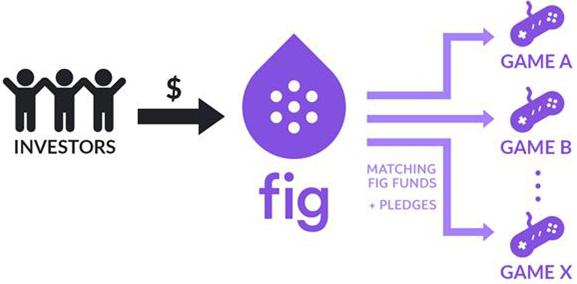
Fig Gaming Shares – Atari
Up to 30,000 Shares
$500 per Share
This is a schedule included in an offering circular that relates to one or more offerings of securities under Regulation A, Tier 2. Each offering is being conducted on a best efforts basis by Fig Publishing, Inc., a Delaware corporation (together with all consolidated entities, “we”, our “Company” or “Fig”). Every investor should read the main part of the offering circular, which describes Fig generally. In addition, this schedule describes the offering of Fig Gaming Shares – Atari.
We are offering a maximum of 30,000 Fig Gaming Shares – Atari (“FGS – Atari”) at $500 per share. FGS – Atari are designed to pay dividends based on the economic success of multiple video games, products or systems that are not pre-determined at the time of investment, but are instead determined by Fig’s management over the course of using the proceeds of this offering, subject to deadlines described herein. We have in the past sold, and continue to sell, different series of non-voting preferred stock, par value $0.0001 per share, all of which series we refer to collectively as “Fig Gaming Shares.” Each different series of Fig Gaming Shares is designed to pay dividends based on the economic success of one or more specific, pre-determined video games, products or systems. If investors do not like how the Company’s management is using the proceeds of an offering of Fig Gaming Shares, including the developer, the product or the terms of the license agreement selected by the management, investors will be unable to exit their investment since Fig Gaming Shares are not tradable or transferrable. Furthermore, while investors will have the right to the return of any funds deposited in an Escrow Account (as defined herein) net of fees and expenses if not used in a specified period, the Company’s management may have the incentive to use all the funds even if their choices could yield lower returns for investors or result in long delays before any games, products or systems are fully developed or capable of generating revenues.
FGS – Atari are preferred shares of capital stock of Fig with no voting rights, which are designed to reflect the economic performance of a co-publishing and revenue sharing agreement that we have entered into with Atari, Inc. (“Atari”). Under this co-publishing and revenue sharing agreement (the “License Agreement”), we will co-publish certain games, products and systems (collectively, the “Atari Products”), as co-developed by Atari. Provided Atari Products are successfully developed and published, sales receipts from Atari Products will be shared as follows:
| ● | Receipts will be allocated into a revenue share for Atari and a revenue share for Fig, in the proportions described in greater detail in this offering circular schedule. See “Atari Products, Atari and the Shares” in this offering circular schedule. |
| ● | Fig will pay a minimum of 85% of its revenue share to the holders of FGS – Atari, in the form of dividends, subject to our dividend policy. |
| ● | Fig’s Board of Directors may, in its sole discretion, from time to time, pay more than 85% (and up to 100%) of Fig’s revenue share to the holders of FGS – Atari, if in the Board’s view business conditions so permit. |
Atari-1
Schedule Atari
In all events, our Board of Directors may decide not to declare (or, if already declared, not to pay) some or all of a dividend, if it believes that it would be necessary or prudent to retain such earnings in order to avoid a material adverse effect on Fig’s financial condition or results of operations (in which case the unpaid minimum dividend amount will accrue for future payment), and dividends will not be declared or paid if prohibited under applicable law.
Amounts will only become available for revenue sharing and the payment of dividends if and when Atari Products generates sales receipts, and the total amount available for Fig’s revenue share – and consequently for dividends – will depend on the amount of such sales receipts. Dividends on FGS – Atari will be declared every six months, as of every May 15 and November 15, and paid thereafter, in all events after such time (if ever) as the first Atari Product is successfully developed and published and Fig begins to receive Atari Product sales receipts. Aggregate dividend amounts will be distributed equally among all holders of FGS – Atari, in proportion to the number of shares held.
FGS – Atari shares are not tradeable and are subject to transfer restrictions. Therefore, investors should be prepared to retain their FGS – Atari shares for as long as the shares remain outstanding, and should not expect to benefit from any share price appreciation. The primary economic benefit of purchasing the shares is the opportunity to receive dividends. FGS – Atari will pay dividends based on the results of the Atari License Agreements from sales of particular video games, products or systems (Atari Products) once they are developed and if they commercially available; however, since the Company’s management will decide which products to publish after investors purchase the shares of FGS – Atari, investors will not be able to evaluate the video games, products or systems, their stage of development, the developers, the potential for commercial success or the terms of the publishing license agreement before investing in the FGS – Atari. Therefore, investors will not be able to assess the likelihood, potential amount or timing of any dividends that may be paid on the FGS – Atari. There is no minimum amount of FGS – Atari shares that must be sold to investors, therefore investors will not know the amount of funds that Fig will have available to identify, evaluate and enter into publishing license agreements or the minimum amount of funds that Fig will be able to contribute to Atari under the Atari License Agreement. If investors do not approve of how the Company’s management is using the proceeds of an offering of Fig Shares, including the developer, the product or the terms of the license agreement selected by the management, investors will be unable to exit their investment since Fig Shares are not tradable or transferrable. Furthermore, while investors will have the right to the return of any funds deposited in an Escrow Account (as defined herein) net of fees and expenses if not used in a specified period, the Company’s management may have the incentive to use all the funds even if their choices could yield lower returns for investors or result in long delays before any games, products or systems are fully developed or capable of generating revenues.
We reserve the right to deploy proceeds of the offering upon the first closing; investors in the first closing will not be given a preference compared to later investors with respect to dividend rights. All proceeds raised, less 2.7% (which amount we will retain to pay transaction fees that we incur in connection with this offering), will remain in a non-interest bearing escrow account maintained on our behalf by Provident Bank until such funds are deployed as described herein (the “Escrow Account”). As the Escrow Expiration Date will be on the second anniversary of the final closing of this offering, in the event all proceeds are not used to support Atari Products, investors who participate may not receive their pro rata return of unused proceeds for over three years depending on the length that this offering is open. Investors will not receive any interest on any funds remaining in the Escrow Account that are returned after the Escrow Expiration Date occurs. The Company anticipates it will take up to 30 calendar days to return funds following the Escrow Expiration Date. Provident Bank has required that any fees associated with returning the funds to investors, as well as any outstanding fees associated with the Escrow Account, which we estimate to be cumulatively less than 1.0% of the Offering’s proceeds, be paid out of the Escrow Account prior to its closing, which could further reduce each investors’ pro rata return of funds in the event they are so entitled thereto. The agreement governing the terms of the Escrow Account has been filed an exhibit to this offering statement schedule. The Company intends to pay Escrow Account fees from the proceeds of the Offering deposited in such Escrow Account. Therefore, at most, we estimate investors would receive 96.3% of their funds back if the Company does not use any of the proceeds from the offering in connection with co-publishing and revenue share agreements they enter into within two years after the last closing of the Offering.
Atari-2
Schedule Atari
SCHEDULE SERIES 2021
TABLE OF CONTENTS
| SCHEDULE ATARI | Page | |
| (All FGS – Atari investors, please read) | ||
| SUMMARY OF FGS – ATARI | Atari-4 | |
| SUMMARY OF THE OFFERING, FGS – ATARI | Atari-4 | |
| RISK FACTORS RELATED TO ATARI PRODUCTS AND ATARI | Atari-12 | |
| USE OF PROCEEDS, FGS – ATARI | Atari-15 | |
| ATARI PRODUCTS, ATARI AND THE SHARES | Atari-16 | |
| PLAN OF DISTRIBUTION, FGS – ATARI | Atari-34 |
Atari-3
Schedule Atari
The net proceeds of the offering of Fig Gaming Shares - Atari will be held in an escrow account (the “Escrow Account”, maintained by Provident Bank until we determine how to allocate the proceeds as Fig Funds for one or more video game, product or system (each a “Atari Product”) as co-developer by Atari. Atari Products may receive Fig Funds from this offering of FGS – Atari, as well as other series of Fig Shares, other series of Fig Gaming Shares or other funds provided by Fig. Holders of FPS – Atari will receive dividends based on the pro rata portion of Fig Funds provided by the FPS – Atari proceeds relative to other sources of funding, as determined by our management.
SUMMARY OF THE OFFERING, FGS – ATARI
| Issuer | Fig Publishing, Inc. | |
| Securities Offered | A maximum of 30,000 shares of a series of non-voting preferred stock, par value $0.0001 per share, which we call our “Fig Gaming Shares – Atari” (“FGS – Atari”). FGS – Atari are all capital stock of Fig without any rights to vote on any matters. All Fig Shares are designed to pay dividends. But each separate series of Fig Shares pays dividends based on the commercial success of the different video games, products or systems we enter into license agreements for an allocate certain proceeds of such series as Fig Funds. As a result, investors can gain exposure to a variety of different dividend possibilities by investing in a series of Fig Shares, based on the games, products or systems we identify during the term of such Series and which we think will be successful when launched, as further described below under “— Sharing of Sales Receipts and Determination of Dividends”. | |
| Number of Securities Outstanding prior to this Offering | 0 | |
| Minimum number of Securities to be sold for a successful Offering | There is no minimum amount as the offering is being conducted a best efforts basis. | |
| Price per Share | $500 | |
| Offering Type | Regulation A, Tier 2 offering of shares, being made by us on a best efforts basis. | |
| Offering Proceeds | We expect to raise up to a maximum of $15,000,000 of aggregate gross proceeds from the sale of shares of FGS – Atari in this offering assuming all 25,000 of the Shares are sold at the offering price of $1,000 per share. Fig will receive all proceeds raised. Offering expenses, which we estimate will be approximately $106,000, will be paid by us. See “Plan of Distribution, FGS – Atari” in this offering circular schedule. | |
| Use of Proceeds | All net proceeds of the offering (gross proceeds less 2.7% which we will retain to pay transaction fees that we incur in connection with the offering) will remain in a non-interest bearing Escrow Account maintained on our behalf by Provident Bank until such funds are deployed for previously disclosed purposes. Fig will determine the amount of such proceeds to be deployed only after mutually agreeing with Atari per the terms of the Atari License Agreement, at which point Fig will draw the full Fig Funds amount to deploy per the terms of the Atari License Agreement. In the event Fig does not contribute all of the Fig Funds to Atari for Atari Products, any Fig Funds not otherwise used for previously disclosed fees related to the offering will be returned to holders of FGS – Atari on a pro rata basis, without interest or deduction except for any transaction costs, which we estimated to be 1.0% of the funds, incurred by the escrow agent in returning the funds and outstanding fees, on the second anniversary of the final closing of this offering (the “Escrow Expiration Date”). Investors will not receive any interest on any funds remaining that are returned after the Escrow Expiration Date occurs. The Company anticipates it will take up to 30 calendar days to return any funds remaining following the Escrow Expiration Date. The Company intends to pay Escrow Account fees from the proceeds of the Offering deposited in such Escrow Account. Therefore, at most, we estimate investors would receive 96.3% of their funds back if the Company does not use any of the proceeds from the offering in connection with co-publishing and revenue share agreements they enter into within two years after the last closing of the Offering. |
Atari-4
Schedule Atari
| We reserve the right to deploy proceeds of the offering upon the first closing if we have mutually agreed to an Atari Product at such time; investors in the first closing will not be given a preference compared to later investors with respect to dividend rights. We will disclose funded Atari Products through the Regulation A reporting regime and through bi-annual emails to investors. Through the Regulation A reporting regime and through bi-annual emails to investors we will also disclose how much of the funds in the Escrow Account the Company has used and the amount remaining in the Escrow Account. As funds from the Escrow Account will only be used to enter into license agreements with Atari for Atari Products, the combination of the material terms of each agreement and the amounts remaining in Escrow Account will provide an exact accounting at the end of each half-fiscal year with respect to the Company’s disposition of the proceeds of the offering. | ||
|
We expect to spend the offering proceeds by entering license agreements for approximately 8 to 12 Atari Products, although if we provide Atari with less than $3,000,000 of Fig Funds they may only produce one Atari Product and if we produce more than $3,000,000 of Fig Funds, Atari is required to produce 3 Atari Products. We will not use proceeds of the Offering as Fig Funds towards existing license agreements or projects. However, as disclosed above, we may contribute Fig Funds from this offering and Fig Funds from other offerings or the Company’s capital account toward a future Atari Product, which will reduce FGS – Atari dividend rights proportionately.
Fig generally charges a service fee (the Fig Service Fee) equal to five percent (5%) of the amount remaining following the deduction of distributor fees and sales taxes, from the product’s revenue payable to Fig. Fig then uses the proceeds of the Fig Service Fee for (i) outreach to find new games that we would consider publishing, including payment for licenses of intellectual property; (ii) marketing and other publishing efforts in support of the multiple games we are publishing; and (iii) other general activities and operations, such amounts constituting Fig Funds.
For the avoidance of doubt, all such uses of proceeds described above would be considered a deployment of Fig Funds as these activities support a developer and ultimately Atari Product and therefore not reduce dividend amounts investors would be entitled to.
The Company will put the net proceeds of the offering into the Escrow Account; the “net proceeds” shall constitute all capital used to purchase Fig Shares less 2.7% (which amount we will retain to pay transaction fees that we incur in connection with this offering) and will remain in a non-interest bearing Escrow Account maintained on our behalf by Provident Bank until such funds are deployed as described herein. Therefore, for each $1,000 subscription, $973.00 will be placed into the Escrow Account. In the event Fig does not contribute all the net proceeds of the offering toward the Atari License Agreement, any funds not otherwise used for previously disclosed fees related to the offering will be returned to holders of FGS – Atari on a pro rata basis, without interest or deduction except for any transaction costs incurred by the Escrow Agent in returning the funds, on the second anniversary of the final closing of this offering (the “Escrow Expiration Date”). Upon the Escrow Expiration Date, Fig will instruct the Escrow Agent to return the funds remaining in the Escrow Account (i.e., any funds that Fig has not has previously drawn down on to fulfil the terms of the Atari License Agreement), therefore the Escrow Agent will return all funds not deployed or committed to be deployed via the Atari License Agreement at the time of the Escrow Expiation Date. The net proceeds will be returned to the relevant series participants pro rata, less any transaction costs incurred by the escrow agent to disburse such funds, which we estimate to be approximately 1.0% of the offering proceeds. We expect it to take 30 days to return such funds.
The Company will not withdraw funds from the Escrow Account in anticipation of a new Atari Product unless the Company and Atari have agreed to terms per the Atari License Agreement. The Company may only withdraw net proceeds from the Escrow Account at such time as the Company and Atari have agreed to terms per the Atari License Agreement, in which case only the amount of Fig Funds related to such Atari Product will be withdrawn. In the event the Company and Atari amend, terminate or cancel the Atari License Agreement, funds to the Company and any funds returned to the Company will be returned to the Escrow Account. |
Atari-5
Schedule Atari
| Sharing of Sales Receipts and Determination of Dividends | FGS – Atari are preferred shares of capital stock of Fig with no voting rights, which are designed to reflect the economic performance of a co-publishing and revenue sharing agreement we have entered into Atari. Under the Atari license agreement (the “Atari License Agreements”), we will co-publish certain games, products and systems (collectively, the “Atari Products”), as developed by Atari. Provided Atari Products are successfully developed and published, sales receipts from Atari Products will be shared as follows: | ||
| ● | Receipts will be allocated into a revenue share for Atari and a revenue share for Fig, in the proportions described in greater detail in this offering circular schedule. See “Atari Products, Atari and the Shares” in this offering circular schedule. | ||
| ● | Fig will pay a minimum of 85% of its revenue share to holders of FGS – Atari in the form of dividends, subject to our dividend policy. | ||
| ● | Fig’s Board of Directors may in its sole discretion, from time to time, pay more than 85% (and up to 100%) of Fig’s revenue share to the holders of FGS – Atari, if in the board’s view business conditions so permit, subject to applicable law. | ||
For greater detail regarding the revenue sharing and payment of dividends described, see “Atari Products, Atari and the Shares” in this offering circular schedule and “Our Dividend Policy” in the main part of the offering circular. | |||
| Timing of Dividends | Dividends on FGS – Atari will be declared every six months, as of every May 15 and November 15, and paid thereafter, in all events after such time (if ever) as Atari Products are successfully developed and published and sales receipts begin to be received. Aggregate dividend amounts will be distributed equally among all holders of FGS – Atari, in proportion to the number of shares held. The Company has up to two years after the final closing of the offering to deploy Fig Funds for Atari Products, the amount of time before investors could receive dividends could therefore be delayed substantially depending on the development cycle of Atari Products, which have historically been lengthy. | ||
| Where to Buy |
Shares of FGS – Atari will be available for purchase on Fig.co and other related websites, such as Republic.co, a site owned by our Parent. FGS – Atari will be issued in book-entry electronic form only. Computershare Trust Company, N.A. is the transfer agent and registrar for FGS – Atari.
Fig Gaming Shares will be available for purchase on Fig.co and related websites, such as Republic.com (none of which constitute part of this offering circular). Fig Shares will be offered principally by us, affiliates of ours and employees of ours or our affiliates, in reliance upon the exemption from registration contained in Rule 3a4-1 of the Securities Exchange Act of 1934. We do not intend to use commissioned sales agents or underwriters, except that investors in Alabama, Florida, New Jersey, North Dakota, Texas and Washington will be required by state law to purchase shares of FGS – Atari through a broker-dealer of record. At this time we have not engaged a broker dealer of record. Because we have not yet engaged a broker of record, investors in Alabama, Florida, New Jersey, North Dakota, Texas or Washington will not be able to participate in the offering until we do so. | ||
Atari-6
Schedule Atari
| Duration of Offering | This offering shall continue until the earlier of (i) 240 days after qualification of the offering statement or offering statement amendment for that series (which date we may extend one time for up to an additional 240 days, in our sole discretion, with any such extension to be reported on our platform, Fig.co, Republic.com and the filing of an offering supplement pursuant to SEC Rule 253(g)), and (ii) the date when all of the Fig Shares offered hereunder are sold, or such earlier time as we may determine in our sole discretion. We intend, but are not required to, conduct an initial closing of this offering within 30 days after the qualification of the offering statement of which this offering circular schedule is a part. Thereafter, we intend to conduct additional closings on an intermittent basis, with at least one, but no more than two, such closings being conducted in each subsequent 30-day period until the offering is completed. At each closing, Fig Shares will be delivered via book entry to investors who have tendered funds for their shares, and such funds will become available to us. In the event you tender funds for shares but we do not close on your purchase before we determine this offering to be completed, we will return funds to you without deduction or interest. We will inform investors in regard to closing dates through Fig.co or certain pages found on republic.co, a site maintained for our benefit by our Parent. See “Plan of Distribution, FGS – Atari” in this offering circular schedule. | |
| No Voting Rights | Holders of FGS – Atari are not entitled to vote on any matters, including, but not limited to, any matters relating to the development of Atari Products. | |
| Limitations on Your Investment Amount |
Generally, no sale may be made to you in this offering if the aggregate purchase price you pay is more than 10% of the greater of your annual income or your net worth. Different rules apply to accredited investors and non-natural persons. Before making any representation that your investment does not exceed applicable thresholds, we encourage you to review Rule 251(d)(2)(i)(C) of Regulation A, which states:
“In a Tier 2 offering of securities that are not listed on a registered national securities exchange upon qualification, unless the purchaser is either an accredited investor (as defined in Rule 501 (§230.501)) or the aggregate purchase price to be paid by the purchaser for the securities (including the actual or maximum estimated conversion, exercise, or exchange price for any underlying securities that have been qualified) is no more than ten percent (10%) of the greater of such purchaser’s:
(1) Annual income or net worth if a natural person (with annual income and net worth for such natural person purchasers determined as provided in Rule 501 (§230.501)); or
(2) Revenue or net assets for such purchaser’s most recently completed fiscal year end if a non-natural person”.
For general information on investing, we encourage you to refer to www.investor.gov. |
Atari-7
Schedule Atari
| No Trading Market; Transfer Restrictions | There is no trading market for FGS – Atari and we do not expect one to develop, in part because we have imposed certain transfer restrictions on these shares. See “The Game Console, the developer and the Shares” in this offering circular schedule. As a result, investors should be prepared to retain FGS – Atari for as long as these shares remain outstanding, and should not expect to benefit from any share price appreciation. The principal economic benefit of holding FGS – Atari is expected to be the opportunity to receive dividends based on sales of Atari Products, on the basis described herein. | |
| Characterization of Fig Shares as “Preferred” |
We characterize our Fig Gaming Shares as “preferred” stock because, in the event of a voluntary or involuntary liquidation, dissolution, distribution of assets or winding up of our Company, after payment or provision for payment of the debts and other liabilities of the Company, the holders of each separate series of Fig Gaming Shares have a preference over holders of other securities of the Company in the receipt of (x) all dividends and other distributions declared or accrued on such series of Fig Gaming Shares by our Board of Directors but not yet paid, plus (y) an amount equal to the value of the total Gaming Shares Assets corresponding to such series of Fig Gaming Shares, less the total liabilities of such Gaming Shares Asset, and, depending on the particular campaign, subject to the application of the Fig Gaming Shares Allotment Percentage. Holders are not entitled to any additional amounts.
As a result, in the event of our liquidation or a similar event, the holders of a particular series of Fig Gaming Shares will have preferred rights over specific declared or accrued dividend amounts and related assets and liabilities, but no rights with respect to other assets of ours, and no rights with respect to our assets generally, and in some circumstances, holders of our common stock (including our Parent) could receive more assets than holders of preferred stock. |
Atari-8
Schedule Atari
| Certain U.S. Federal Income Tax Considerations | FGS – Atari should be treated as stock of our Company for U.S. federal income tax purposes. There are, however, no court decisions or other authorities directly bearing on the tax effects of the issuance and classification of stock with the features of FGS – Atari, so the matter is not free from doubt. In addition, the Internal Revenue Service has announced that it will not issue advance rulings on the classification of an instrument with characteristics similar to those of FGS – Atari. Accordingly, no assurance can be given that the views expressed in this paragraph, if contested, would be sustained by a court. In addition, it is possible that the Internal Revenue Service could successfully assert that the issuance of FGS – Atari could be taxable to us. See “Certain U.S. Federal Income Tax Considerations” in the main part of the offering circular. Before deciding whether to invest in FGS – Atari, you should consult your tax advisor regarding possible tax consequences. | |
| Risk Factors | These are speculative securities. Investing in them involves significant risks. You should invest in them only if you can afford a complete loss of your investment. See “Risk Factors” in this schedule and in the main part of the offering circular. |
The discussion below is qualified in its entirety by reference to the License Agreement itself, which is filed as an exhibit to the offering statement of which this offering circular schedule is a part. Capitalized terms not otherwise defined are defined in Atari Products License Agreement. For further discussion of the revenue sharing terms of Atari Products License Agreement, see “The Game Console, the developer and the Shares” in this offering circular schedule.
Revenue Sharing Formula
The revenue sharing formula is:
|
(Revenue from Atari Product - Atari Incidental Deductions) x (applicable Tier Calculated Rate) = Fig’s Revenue Share
|
Where:
| ● | Revenue from Atari Products equal Gross Revenue generated by sale of the relevant licensed Atari Product. |
| ● | Atari’s Incidental Deductions are uncapped. |
Atari-9
Schedule Atari
| ● | Fig’s Revenue Share will generally be determined based on the Revenue received from the relevant licensed Atari Product and the stage of commercialization of the relevant licensed Atari Product, as follows but Fig reserves the right to adjust this figure as necessary for each relevant Atari Product to maximize potential profit for Fig and FGS – Atari holders: |
The following table represents the standard terms of a license agreement for a Atari Product, however the Tiers and Tier Calculations may differ for each Atari Product associated with FGS – Atari.
| Tier | Tier Calculated Rate | |
| Before Fig has received Revenue equal to 3 times the Fig Funds provided to Atari. | 40% of Gross Receipts (the “Tier 1 Calculated Rate”). | |
| The first succeeding 60-month period. | 25% Gross Receipts (the “Tier 2 Calculated Rate”). | |
| Thereafter. | 0%. |
| ● | Atari’ Revenue Share is revenue received from the license Atari Product system minus Fig’s revenue share. |
Fig’s revenue share will generally terminate at the expiration of the Tier 2 Calculated Rate period, but Fig reserves the right to adjust the publishing terms of each Atari Product as necessary.
Fig and Atari have agreed to negotiate in good faith the allocation of Fig Funds per Atari Product. If such allocation of Fig Funds does not cover the total amount paid to third parties for the development of such Atari Product, including but not limited to, development, localization, quality assurance, music, and sound FX, but excluding Atari’s internal management costs, then the Parties further agree to negotiate in good faith a pro-rated Tier 1 Return and/or a pro-rated Tier 1 Calculate Rate and Tier 2 Calculated Rate.
Dividend Formula
The formula and discussion below describe how Fig’s revenue share, which is derived from Atari Products License Agreement as discussed above, leads to distributions to holders of FGS – Atari. For further discussion of our dividend policy, see “Our Dividend Policy” in the main part of the offering circular.
The dividend formula is:
|
(Dividend Rate) x (Fig’s Revenue
Share) x (FGS – Atari Allotment Percentage) =
|
Where:
| ● | Dividend Rate for FGS – Atari equals 85%, or such greater amount as may be declared by our Board of Directors in its sole discretion, from time to time, up to 100%, in all events subject to applicable law and our dividend policy. |
| ● | Fig’s Revenue Share is determined as discussed above under the subheading “Revenue Sharing Formula.” |
| ● | FGS – Atari Allotment Percentage - to the extent that the final Fig Funds amount exceeds the number of shares of FPS – Atari outstanding after the completion of this offering times $500, the corresponding portion of Fig’s revenue share will be retained by Fig and not made available for distribution to holders of FGS – Atari. For example, if the Fig Funds provided to all relevant Atari Products equals $6,000,000 and there are 6,000 FGS – Atari outstanding, then the Fig Funds amount would exceed the number of FGS – Atari outstanding times $500 by $3,000,000, or 50% of the total amount of Fig Funds provided to all relevant Atari Products. In such a case, the FGS – Atari Allotment Percentage would equal 50% (that is, 100% minus the 50% of the Fig Funds that came from sources other than the sale of FGS – Atari). |
Atari-10
Schedule Atari
Illustrative Revenue Sharing and Dividend Example
The table below presents an illustrative and simplified example of the revenue sharing and dividend formulas operating together. The starting amount, in the first column of the table, is the gross sales revenue, or the aggregate amount paid by consumers for copies of the game at the retail price in typical sales transactions in which, pursuant to the Atari License Agreement, the retail price, minus the distributor’s fee and sales taxes, is collected by Atari or Fig. For purposes of this table, gross receipts are assumed to be $1.0 million. The ending amount, at the bottom of the last column of the table, is the amount available for dividends per each Fig Gaming Share – Atari from that $1.0 million of gross sales revenues from licensed Atari Products.
The table below embodies a number of assumptions, and is presented for illustrative purposes only. Although we believe the assumptions represent fair estimates of how the sharing of Atari Products sales receipts will work, there can be no assurance that any one or more of these assumptions will in fact apply, and in particular there can be no assurance that Atari Products will be successfully developed, published and sold and will generate sales receipts that are sufficient to pay relevant Atari Products, Fig and the holders of Fig Gaming Shares - Atari as contemplated below.
| Assumed Gross Sales Revenue(1) | Minus Distributors’ Fees and the Fig Service Fee (33.5%)(2) | Equals Adjusted Gross Revenue | Of which, Developer’s Revenue Share(3) | Of which, Fig’s Revenue Share(3) | Of which, Amount Available to Holders of FGS – Atari (4) | Multiplied by Dividend Rate | Equals Dividends (and Dividends Per Share)(5) | |||||||||||||||||||||
| $ | 1,000,000 | $ | 335,000 | $ | 665,000 | $ | 545,300 | $ | 119,700 | $ | 59,850 | 85 | % | $50,872.50 ($16.96) | ||||||||||||||
| (1) | We expect the initial retail price of Atari Products to vary. However, the retail price of a video games, products and systems are subject to discounting by the publisher and by distributors (typically with the acquiescence of the publisher). A video game, product or system that sells well may maintain its initial retail price for a year or more, although video games, products and systems that sell less well are typically discounted faster in order to spur sales volumes. This dollar figure represents sales from one or more Atari Products. |
| (2) | 30% of the retail price is a typical amount for a distributor currently to charge for selling a Atari Product. Additionally, we will receive a service fee equal to 5% of the gross receipts net of distributor fees and sales taxes, or approximately 3.5% of the gross sales, which will not be part of Revenue. |
| (3) | Fig’s revenue share will be determined based on the Revenue received from the licensed Atari Products and the stage of commercialization of Atari Product. See “Revenue Sharing Formula”, above. This table arbitrarily assumes that Fig’s revenue share is 18%. See “Atari Products Console, Atari and the Shares” in this offering circular schedule. |
| (4) | Assumes the FGS – Atari Allotment Percentage is 50%. See “Dividend Formula”, above. |
| (5) | Assumes that the total number of outstanding shares of FGS – Atari is 6,000. |
For greater detail regarding the revenue sharing and payment of dividends described above, see “Atari Products Console, Atari and the Shares” in this offering circular schedule and “Our Dividend Policy” in the main part of the offering circular.
Atari-11
Schedule Atari
FIG GAMING SHARES AND ATARI PRODUCTS
Fig Gaming Shares - Atari allow us to determine which of Atari’s product to provide Fig Funds to without investors’ knowledge or consent to the particulars of the relevant product.
Fig Gaming Shares are highly speculative, including because they provide Fig with wide discretion as to how to use the proceeds from each series’ sale with respect to providing Fig Funds to Atari. By their terms, Fig Gaming Shares allow us to determine which products to provide Fig Funds to without investors’ knowledge or consent. Investors will only learn which Atari Products have been provided Fig Funds into after the offering has closed and no Atari Products may be co-published for a substantial period of the term of the series, or ever.
The Company has two years from the final closing of the offering to enter into license agreements that seek to produce revenues for the benefit of the holders of Fig Gaming Shares - Atari. However, games, products and services we publish can have lengthy development cycles, which, combined with the initial time it may take for the Company to license such game, product or service, may substantially delay the occurrence of dividend payments.
The games, products and services we publish can have lengthy development cycles. The Company has up to two years after the final closing of the offering to identify fund Atari Products. Therefore, the amount of time before investors could receive dividends could be delayed substantially, depending on the timing of the license agreements the Company enters into.
The terms of the Atari License Agreement entitles us to deduct out-of-pocket third-party marketing expenses that are pre-approved by Atari before calculating our revenue share with Atari. Holders of Fig Gaming Shares are entitled to dividends net of such pre-approved out-of-pocket third-party marketing expenses, therefore, an increase in such amounts will reduce the amount remaining from which dividends will be paid to holders.
Our standard license agreement terms permit us to deduct our out-of-pocket third-party marketing expenses that are pre-approved by a developer before calculating our revenue share. This allows us to share the out-of-pocket marketing costs with the developer in proportion to the revenue sharing terms. However, these amounts will reduce the revenue that we receive for publication of the associated game and therefore reduce the amount available for distribution to holders of Fig Gaming Shares. If the marketing efforts do not lead to more net sales than the cost of the out-of-pocket marketing, your investment will be adversely affected.
Under the Atari License Agreement, Fig is not required to contribute funds to Atari until the Licensed Games are mutually agreed to by Fig and Atari. Funds raised in this offering may sit idle and not be paid over to Atari and therefore not entitle to revenue participation rights unless and until the funds are provided to Atari.
The Atari License Agreement allows the Company to contribute funds only to Licensed Games mutually agreed to by Fig and Atari. If Fig raises more money through this offering than is necessary to publish one game with Atari, Fig may hold these additional funds until Fig and Atari mutually agree to deploy them to publish more games. Only funds contributed to Atari are subject to Fig’s revenue participation rights. Therefore, funds raised in this offering may sit idle and not be deployed to Atari and therefore not be subject to the revenue participation rights unless and until provided to Atari. Fig may never use the funds to publish a Licensed Game and therefore certain monies may never be subject to the Atari License Agreement, instead being returned to holders of FGS - DE at the time the share class is cancelled, without interest or return. All proceeds raised will remain in a non-interest bearing Escrow Account maintained on our behalf by Provident Bank until such funds are deployed for previously disclosed purposes. In the event Fig does not contribute all of the Fig Funds to the developer for Licensed Games, any Fig Funds not otherwise used for previously disclosed fees related to the offering will be returned to holders of FGS - DE on a pro-rata basis, without interest or deduction, on the third anniversary of the final closing of this offering.
Atari-12
Schedule Atari
Our intent is for holders of Fig Gaming Shares - Atari to earn dividends from our publication of at least 3 Atari Products, although we are under no obligation to enter into a particular number of license agreements toward any particular number of Atari Products. However, since we have not yet decided on the publication of these games, it is possible that we may fail to do so.
Our revenue, from which these shares will derive their economic benefit, will be derived from our publication of certain Atari Products, meeting certain criteria, which we intend to contract for the license and publication of in the future. We have a limited operating history, however, and may not be successful in entering into contracts for the publication of a sufficient number of games meeting the required criteria. If we publish only a small number of Atari Products, your investment may be adversely affected.
Investment amounts paid by investors may sit in whole or in part in an Escrow Account that does not bear interest for a period as long as three years or more. Therefore, investors may incur the opportunity cost of not having been able to alternatively deploy their investment amounts, even if Fig returns all the investment amounts.
In the event Fig does not contribute all of the Fig Funds for the previously disclosed purposes, any Fig Funds not otherwise used for previously disclosed fees related to the offering will be returned to holders of FGS – Atari on a pro rata basis, without interest or deduction except for any transaction costs incurred by the escrow agent in returning the funds, on the second anniversary of the final closing of this offering (the “Escrow Expiration Date”). Investors will not receive any interest on any funds remaining that are returned after the Escrow Expiration Date occurs. The Company anticipates that it will take up to 30 calendar days to return any funds remaining following the Escrow Expiration Date. The Escrow Account will return all funds not deployed or committed to be deployed under the Atari License Agreement at the time of the Escrow Expiration Date – the Company will not withdraw funds from the Escrow Account in anticipation of a new Atari Product or Publishing License Agreement unless privity and finality of contract exists. Therefore, due to the time value of money, investors may incur an opportunity cost through the inability to gain interest on unused and ultimately returned proceeds.
Atari-13
Schedule Atari
Our dependence on Atari and its suppliers may adversely affect our business.
Our success may depend in part upon the capacity, reliability and performance of third-party network infrastructures, which are principally managed by Atari for the purposes of the FGS – Atari securities. Distributors of video games depend on third parties to provide, ship, deliver and sell their game’s physical copies to customers. Distributors of products related to video games depend on third parties to provide, ship, deliver and sell their product to customers. Distributors of physical consoles depend on third parties to provide, ship, deliver and then sell consoles to customers. Distributors on licensed platforms depend on third parties to provide uninterrupted and error-free service through their telecommunications networks in order to distribute a game or for customers to play a game. This service is subject to physical, technological, security and other risks. These risks include physical damage, power loss, telecommunications failure, capacity limitation, hardware or software failures, defects and breaches of physical and cyber security by computer viruses, system break-ins, pandemics and others. In any such event, players of games we publish may experience interruptions or delays in their ability to purchase or play such game and/or game consoles. Any failure on the part of distributors or their third-party suppliers to ensure that a high data transmission capacity is achieved and maintained could significantly reduce customer demand for any particular game we publish and adversely affect our business and the availability of dividends for the holders of the Fig Gaming Shares associated with relevant Atari Products.
There can be no assurance that Atari will be able to successfully deliver Atari Products.
There can be no assurance that Atari will be able to deliver the relevant Atari Products or that such Atari Products will function as intended once delivered. Unanticipated problems, expenses and delays are often encountered in developing any game, game console and their related games and products. If Atari encounter any such problems, expenses or delays while developing Atari Products, they may not be able to successfully address them and stay on budget and on schedule. If Atari cannot stay on budget and schedule, our business and our ability to pay dividends to holders of FGS – Atari could be negatively affected.
Atari may experience quality or supply problems.
We expect that Atari Products, once successfully developed and delivered, will be a highly complex software or hardware products and as such can have defects in design, manufacture, or associated software. Atari, and therefore Fig, could incur significant expenses, lost revenue, and reputational harm as a result of recalls, safety alerts, or product liability claims if we fail to prevent, detect, or address such issues through design, testing, or warranty repairs. The games playable on Atari Products are software products and services and as such may experience quality or reliability problems. The software behind Atari Products console or its games may contain bugs and other defects that interfere with their intended operation. Any defects not detected and fixed in pre-release testing could cause reduced sales and revenue, damage to our reputation, repair or remediation costs, delays in the release of new products or versions, or legal liability. Some components of Atari Products are acquired from sole suppliers. Our competitors use some of the same suppliers and their demand for hardware components can affect the capacity available to us. If a component from a sole-source supplier is delayed or becomes unavailable, whether because of supplier capacity constraint, industry shortages, legal or regulatory changes, or other reasons, replacement supplies may not be obtained in a timely fashion, resulting in reduced sales. Component shortages, excess or obsolete inventory, or price reductions resulting in inventory adjustments may increase the cost of revenue of Atari Products sales receipts.
Business difficulties at Atari could delay or prevent the development of Atari Products.
In the event Atari experiences difficulties in its business, Atari Products may not be developed on schedule or to scope, or may otherwise fail to deliver or help maintain potentially commercially successful Atari Products.
Atari-14
Schedule Atari
Atari Products may be sold in a pre-launch state prior to completion, at a price lower than the anticipated retail price of the completed game, product or service, which would result in lower revenue generated by those sales.
We and Atari are likely to offer Atari Products for sale in a pre-launch state, at a price that is lower than what we expect to be the retail price of the completed game. While revenue generated from these pre-launch sales would be subject to the revenue share of relevant Atari Products’ License Agreements, it is possible that pre-launch sales would replace post-launch sales that might generate more revenue. To the extent that pre-launch sales at a lower price replace post-launch sales at a higher price, and the marketing and polishing efforts made possible by the pre-launch sales do not ultimately generate a sufficient increase in the number of post-launch sales, the potential return on your investment would be adversely affected.
Any negative reviews or impressions generated by players’ experience with the pre-launch version of Atari Products may generate negative publicity for Atari Products.
We and Atari may offer Atari Products for sale in a pre-launch state. In part, sales of a product in a pre-launch state are, in part, intended to assist the developer with bug testing. By distributing a Atari Product in a pre-launch state to a large number of players, a developer can use the players’ pre-launch playthrough sessions to help debug and test the game console and the games playable on such game console prior to its completion and launch. However, by exposing players to a game console and associated games in a pre-launch state, they may generate negative publicity due to the pre-launch game console and associated games’ lack of polish or incomplete condition. Any negative publicity due to the release of the game console and associated games in a pre-launch state could negatively affect sales.
Under the Atari License Agreement, Fig’s revenue share will be equal to a percentage of the revenue Atari receives, and Atari may retain the ability to enter into separate license agreements with other co-publishers, which could reduce the revenues Atari receives and thereby indirectly reduce Fig’s revenue share.
Under the Atari License Agreement, Fig’s revenue share is equal to a percentage of the revenue Atari receives, and Atari may retain the ability to enter into separate license agreements with other co-publishers. As a result, if Atari were to take steps on its own that resulted in it receiving lower game revenues, for example by entering into one or more additional co-publishing arrangements with third parties under which Atari incurs obligations that were greater than any additional revenue earned, then Fig’s revenue share from Atari Products would indirectly be reduced. Although Fig believes that the arrangements it will enter into for each Atari Products License Agreement will not adversely affect Fig’s revenue share from Atari Products, because Fig does not expect its Atari Products to take steps that might reduce relevant revenues from Atari Products, including by entering into one or more additional co-publishing arrangements with third parties, there can be no assurance that, under the arrangement, relevant Atari Products’ revenues will not go down and Fig’s revenue share thereby indirectly be reduced.
We expect to raise up to a maximum of $15,000,000 of aggregate gross proceeds from the sale of shares of FGS – Atari in this offering, assuming all 30,000 of the shares are sold at the offering price of $500 per share. Fig will receive all proceeds raised. We intend to retain 2.7% of the offerings proceeds to pay transaction fees that we incur in connection with the offering. We traditionally charge this money (the “Fig Transaction Fee”) against an individual developer when we have raised funds in connection with the publishing of a specific video game, product or system. By retaining this Fig Transaction Fee, we intend to ensure that we have sufficient capital to conduct the activities necessary as a result of the issuance of the Fig Shares, as well as to ensure economic parity in case we devote Fig Funds from the proceeds of one Fig Shares series to a developer who is also allocated Fig Funds from the proceeds of a separate Fig Shares series.
We expect to use the net proceeds raised in furtherance of publishing Atari Products developed therefrom, although the Atari License Agreements allows us to use certain funds for our general operations and deem such funds Fig Funds. We expect that the terms of each the Atari License Agreement will provide for the development of Atari Products, in return, Fig will assign a percentage of Fig’s revenue share of Atari Products equal to the amount of Fig Funds contributed by Atari proceeds divided by total amount of Fig Funds Atari Product received).
Fig generally charges a service fee (the Fig Service Fee) equal to five percent (5%) of the amount remaining following the deduction of distributor fees and sales taxes, from the product’s revenue payable to Fig. Fig then uses the proceeds of the Fig Service Fee for (i) outreach to find new games that we would consider publishing, including payment for licenses of intellectual property; (ii) marketing and other publishing efforts in support of the multiple games we are publishing; and (iii) other general activities and operations, such amounts constituting Fig Funds.
Atari-15
Schedule Atari
ATARI PRODUCTS, ATARI AND THE SHARES
FGS – Atari (also referred to as the “Shares” in this schedule) are the particular securities being offered in this offering. The Shares differ from certain other series of Fig preferred shares in that the Shares provide their holders with a dividend based on the revenue share we receive from sales of certain Atari Products, pursuant to Atari Products’ license agreements we enter into in the future with yet to be determined counterparties, and use proceeds from this offering to provide Fig Funds. Provided Atari Products are successfully developed and published, relevant Atari Products and Fig will thereafter each receive sales receipts from Atari Products pursuant to Atari Products’ license agreement and those receipts will be shared as follows:
| ● | Receipts will be allocated into a revenue share for relevant Atari Products and a revenue share for Fig, in the proportions described in greater detail in below, under the subheading “– FGS – Atari – Sharing of Sales and Determination of Dividends”. We expect that, in the ordinary course of business, we will collect most or all of Atari Products sales receipts from distributors (other than when Fig itself acts as a distributor), net of distributor fees and sales taxes, and then allocate such receipts among ourselves, Atari and any third-party co-publisher(s) that each relevant Atari Product engages. As of the date of the offering circular we have contracted with no Atari Products with respect to the FGS – Atari and, therefore, we are unaware if any future relevant Atari Products have engaged any third-party co-publishers. | |
| ● | Fig will pay a minimum of 85% of its revenue share to the holders of FGS – Atari, in the form of dividends, subject to our dividend policy. | |
| ● | Fig’s Board of Directors may in its discretion from time to time pay more than 85% (and up to 100%) of its revenue share to holders to FGS – Atari, if in its view business conditions so permit, subject to applicable law. |
Atari and Atari Products targeted by Fig
Fig has entered into a video game co-publishing and revenue share agreement (the “Atari License Agreement”) with Atari Interactive, Inc, a Delaware corporation (“Atari”), to co-publish Atari Products. The Atari License Agreement sets forth the terms and conditions under which Fig will provide funding in support of the development of certain mutually agreed upon Game Products (Atari Products) and which governs the distribution of receipts from distributors that result from sales of Atari Products. If and when Fig receives cash receipts after each of Atari Products goes on sale, a portion of such cash will become available for the payment of dividends to the holders of FGS - Atari.
Atari was incorporated on December 8, 1995. Atari is a wholly owned subsidiary of Atari SA. The “Atari” brand and company is owned by Atari SA, which is a French corporation incorporated in 1987. Atari will work with third party game developers to develop various game products with Fig’s consent that will be subject to the Atari License Agreement (each such game product being deemed an “Atari Product” when mutually agreed by Fig and Atari).
Atari, known for classic video games like Pong, Tempest, Centipede, Breakout and many more, has found success in releasing and remastering those classic games. Most recently their Recharged series of games (which includes Centipede: Recharged, Black Widow: Recharged, Asteroids: Recharged, and Breakout: Recharged) has seen a collective 70% return-on-investment after less than a year on the market.
Atari intends to select well known video games from its catalog, and work with notable third party game developers, to reimagine what these games for next generation consoles. The intent is to create games that are faithful to the original IP, while also allowing the third party game developers to make changes, such as: changing the art style, changing core game mechanics and even changing the genre. Instead of a “remaster” or a “remake”, Atari calls this a “Reimagining” of the games.
Atari will need to secure agreements with these third party developers to have these games developed. It expects to be able to secure a sufficient number of such agreements on commercially acceptable terms to develop the necessary amount of Atari Products.
Atari-16
Atari Corporate History and Key Persons
Atari was founded in 1972 by Nolan Bushnell and Ted Dabney, and is one of the most recognized and celebrated brands in the world. Since inception, Atari played an integral role in the development of the arcade gaming, game console, and personal computer industries in the 1970s and 1980s, which launched the video games industry as we know it.
Over its history, Atari built a valuable and extensive intellectual property portfolio of more than 200 games. Atari’s iconic games, including Pong®, Breakout®, Asteroids®, Missile Command® and Centipede®, have been played by millions and enjoy a wide following to this day.
After being sold to Warner Communications (1976), Jack Trameil (1984) and Hasbro (1998), Atari assets and IP were acquired by Infogrames Entertainment (“Infogrames”), a French video game development company. Infogrames was founded in 1983 and has been listed on the Paris stock exchange since 1993. In 2009, Infogrames officially announced a name change to Atari.
In early 2013, the Infogrames US subsidiaries were placed in court-supervised receivership under Chapter 11 proceedings. Ker Ventures, LLC and Alden Capital Group acquired from creditors their stake in the Company in February 2013. The US subsidiaries exited Chapter 11 at the end of 2013.
Following the reorganization, Atari Group de-leveraged the games division and concentrated its efforts on the mobile free-to-play market. It successfully published RollerCoaster Tycoon Touch, a title that reached the top of the strategy and simulation charts on Apple’s App Store and on Google Play.
In 2017, the announcement of the new Atari Video Computer System (“Atari VCS”) marked a return of Atari consoles to people’s homes with a modern gaming hardware system, combining the best of the console and PC world to delight a new generation of gamers and creators.
In March 2020, Wade J. Rosen acquired 10.46% of Atari’s share capital from Ker Ventures, before being appointed Chairman of Atari’s Board of Directors at the start of April 2020. In April 2021, Wade J. Rosen became Chairman and Chief Executive Officer. IRATA LLC, the holding company of Wade Rosen, is Atari’s main shareholder, holding 21.37% of capital and 21.18% of voting rights.
In July 2021, Atari initiated a new strategic plan, with a renewed focus on premium gaming. This initiative leverages Atari’s classic games with a clear commitment to building a strong pipeline of premium games on all platforms. This offering will also progressively strengthen the content offered on Atari VCS which was launched in July 2021. To effectively allocate its resources, Atari decided to exit its direct operations of casino and gaming in Africa. Furthermore, it streamlined its operations into four distinct business units: Games, Hardware, Licensing and Blockchain.
Atari has launched six new PC and console titles in the last eleven months, including five titles from Atari: Recharged series and the critically acclaimed puzzle-platformer Kombinera. Atari has also reintroduced classic titles to PC and streaming services over that period, as the Company returns to its roots in game development and publishing.
Today, Atari remains an incredibly recognizable and vibrant brand: it has appeared in major films such as Blade Runner 2049 and Ready Player One, as well as many TV shows like The Goldbergs and Stranger Things. Atari also operates an extensive licensing program for clothing, toys, art collections, retro consoles, arcade machines, portable gaming systems, board games, cartoons, hotels and non-fungible tokens (NFTs).
2022 marks Atari’s 50th anniversary, which the Group has celebrated by announcing several new games including Atari Mania, Atari 50th Anniversary Celebration and Yars Recharged.
Atari Officers and Key Persons
Composition of the Board of Directors
At the date of this document, the Board of Directors is composed of the following members:
| ● | Wade J. Rosen, Chairman and Chief Executive Officer, non-independent director; |
| ● | Jessica Tams, independent director; |
| ● | Kelly Bianucci, independent director; |
| ● | Alexandre Zyngier, non-independent director. |
The Board of Directors is made up of four directors appointed for a period of three years. 50% of the Board of Directors is composed of independent members (in accordance with recommendation N°3 of MiddleNext Code), and women represent 50% of the Board of Directors.
Atari-17
Atari Board of Directors

Nationality – American |
WADE J. ROSEN | ||
| Main position held with the Company | |||
| ● | Chairman and Chief Executive Officer | ||
| ● | Non-independent director | ||
| Biography | |||
| ● | Wade Rosen is the largest shareholder of Atari and controls 21.36% of Atari’s share capital through Irata LLC, a holding company managed by Wade Rosen. Wade Rosen is also a Director of Wishlist Inc., ThrivePass Inc., Blue suit, Inc., and RDI, Inc. He is also the founder of several privately held technology companies based in the United States. Since April 6, 2021, he has been Chairman of the Company’s Board of Directors and Chief Executive Officer. | ||
| ● | Wade Rosen graduated from the University of Denver with a Bachelor of Business and holds an MBA from IE Business School in Madrid. | ||
| Main offices held in the last five years | |||
| Current terms of office: | |||
| ● | General Manager - LR Interactive (United-States) | ||
| ● | General Manager – IRATA LLC (United States) | ||
| ● | Director – Wishlist, Inc (United States) | ||
| ● | Director – ThrivePass Inc. (United States) | ||
| ● | Director – Bluesuit, Inc. (United States) | ||
| ● | Director – Rosen’s Diversified, Inc & subs (United States) | ||

Nationality - American |
KELLY BIANUCCI | ||
| Main position held with the Company | |||
| ● | Independent Director | ||
| ● | Chairwoman of the Audit Committee | ||
| ● | Member of the Compensation Committee | ||
| Biography | |||
| ● | Kelly Bianucci is the owner and operating chair of the Child & Family Therapy Center in Denver. Previously, she led Impresa Financial, a financial services firm that helps technology companies and sales organizations increase revenue through custom financing solutions and Discover Capital, a private equity firm which focused on investing in the lower middle market. She was appointed Executive Director of the Colorado Innovation Network by Governor John Hickenlooper; previously she was a Channel Marketing Analyst at Take-Two Interactive Software, Inc. and a media and entertainment industry consultant for Deloitte Consulting LLP | ||
| ● | Kelly Bianucci holds a Bachelor of Science degree in Economics and Marketing from New York University’s Stern School of Business and an MBA from Northwestern University’s Kellogg School of Management. | ||
| Main offices held in the last five years | |||
| Current terms of office: | |||
| ● | Managing Member – Bianucci Enterprise LLC (United States) | ||
| ● | General Manager – The Child and Family Therapy Center of Denver (United States) | ||
Atari-18
 |
JESSICA TAMS | ||
| Main position held with the Company | |||
| ● | Independent Director | ||
| ● | Chairwoman of the Compensation Committee | ||
| Biography | |||
| ● | Jessica Tams began her career as a Software Engineer and was a Producer on the launch of Xbox Live Arcade before founding the Casual Games Association in 2005. Ms. Tams is a Strategic Advisor for Manga Productions, a subsidiary of Misk Foundation, a Strategic Advisor for Arrivant, and a General Partner for Astra Game Ventures.
| ||
Nationality - American |
● | Jessica Tams is a graduate of Utah State University with degrees in Mathematics, Physics, and Computer Science. | |
| Main offices held in the last five years | |||
| Current terms of office: | |||
| ● | Strategic Advisor – Manga Productions, a subsidiary of Misk Foundation (Saudi Arabia) | ||
| ● | Strategic Advisor – Arrivant (United States) | ||
| ● | General Partner – Astra Game Ventures (United States) | ||

Nationality - Brazilian |
ALEXANDRE ZYNGIER | ||
| Main position held with the Company | |||
| ● | Non-Independent Director | ||
| ● | Member of the Audit Committee | ||
| Biography | |||
| ● | Alexandre Zyngier began his career as Technical Director at Procter & Gamble and then as a consultant for McKinsey & Co. He worked at CRT Capital Group LLC, then Goldman Sachs & Co, and Deutsche Bank. From 2009 to 2013, he served as Portfolio Manager for Alden Global Capital. In 2013, Mr. Zyngier founded Batuta Capital Advisors LLC, where he works with a select group of companies and credit/equity investors focused on turnarounds, special situations and asset intensive businesses. He is also a director of EVO Transportation, a national transport operator for the US postal service, COFINA, a Puerto Rican public corporation that issues government bonds and uses other financing mechanisms to pay and refinance Puerto Rico’s public debt and Schmitt industries Inc, a holding company owning subsidiaries engaged in diverse business activities. | ||
| ● | Alexandre Zyngier is a graduate of the University of Campinas, Brazil in Chemical Engineering, Mr. Zyngier holds an MBA in Finance from the University of Chicago. | ||
| Main offices held in the last five years | |||
| Current terms of office: | |||
| ● | Founding Partners – Batuta Capital Advisors LLC (United States) | ||
Atari-19
Schedule Atari
Selecting Atari and Atari Products
We intend to select Atari Products from the following sources, although we may broaden or search or narrow it as we deploy the Fig Funds:
| ● | Recommendations from advisors to Fig, our former Parent, our Current Parent and our affiliates; |
| ● | Active and former developers who have worked with Fig previously; |
| ● | The networks of our directors, specifically Justin Bailey who has over a dozen years of experience in the industry working with hundreds of developers worldwide; |
| ● | Meetings at major trade shows; |
| ● | Participation in pitch competitions and game festivals; |
| ● | Networking with government grant programs; |
| ● | Monitoring game jams, the “modder” community, and pre-release titles; and |
| ● | Identifying launched games that can be expanded to new languages, platforms, and/or audiences. |
When assessing a potential Atari Products we intend to use the following criteria to determine whether or not to enter into a revenue sharing agreement with the developer.
For game titles we intend to look for indications of social proof, game or character awareness and/or executional excellence:
| ● | Social proof includes but is not limited to video views, social media followers, influencer coverage, game downloads, successful crowdfunding campaigns and existing sales; |
| ● | Game or character awareness includes sequels to existing franchises, IP extensions, Movie/TV/Comic/Film properties, spiritual successors, remasters, remakes, similarities to other popular franchises and the like; and |
| ● | Executional excellence includes achieving critical acclaim (such as a high Metacritictm score) on previous games, completing development of multiple games, working on multiple platforms, porting previous games to new platforms and/or languages, game sales, performance of work-for-hire contracts, previous work with publishers and/or IP holders and the like. |
We intend to provide quarterly updates to our shareholders on the deployment of Fig Funds as well as our bi-annual updates through our Regulation A+ reporting regime.
Atari-20
Schedule Atari
We are specifically targeting, but cannot guarantee, default terms for the license agreements of a revenue participation right of 50% of gross revenue until 3 times Fig Funds have been returned to Fig, and then half the initial amount (25% of gross revenue) with a two-year term. While each license agreement is unique, we believe these standardized terms are achievable given the Company’s plans for Fig Gaming Shares - Atari. These plans are contingent on Fig selling sufficient amounts of Fig Gaming Shares - Atari.

| Example Points | |||||||||||||
| Net Game Revenue | Revenue to Fig | Est. Distribution per Share | |||||||||||
| 1. | $ | 7,352,941 | $ | 2,941,176 | $ | 250 | |||||||
| 2. | $ | 14,705,882 | $ | 5,882,353 | $ | 500 | |||||||
| 3. | $ | 37,500,000 | $ | 15,000,000 | $ | 1,275 | |||||||
| Disclaimer above graph -----> | The graph below shows the estimated lifetime distributions for a single Fig Gaming Share – Atari ($500 price), at various levels of revenue recieved by Fig, assuming a specific breakdown of revenue from different sources related to the sale of the Atari Projects.* The lifetime distributions will vary depending on the level of investment raised, because Fig’s revenue share would be divided among the number of securities is outstanding. However, the more funds we raise, the more funds we can make available for development, which may translate into more consumer interest in the completed product. The graph assumes the Fig Funds amount is $5,000,000, although it could be between $1,000,000 and $15,000,000. If the Fig Funds amount is higher than $5,00,000, the dividend payment to stockholders would be lower than presented for any given level of revenue. Additionally any Net Game Revenue above $37,500,000 will result in Revenue to Fig at a 20% level instead of the 40% level shown in the Example Points. |
| Disclaimer below graph -----> | * This graph above presents forward-looking statements that are subject to unknown risks and uncertainties. If any assumptions behind these estimates prove to be incorrect, or if any costs not accounted for prove to be material, then the point at which an investor would break even, and other points on this graph, could be substantially higher than estimated. Be cautious and do not to place undue emphasis on forward-looking statements in making your investment decisions. |
Under the above assumptions with respect to improving the deal terms of our license agreements, we believe total revenues can be increased for every $5,000,000 of Fig Funds deployed.
Atari-21
Schedule Atari
The graph above shows the estimated lifetime distributions for a single share of Fig Gaming Shares - Atari ($500 price), at various levels of revenue received by Fig, assuming a specific breakdown of revenue from different sources related to the sale of various future products. The lifetime distributions will vary depending on the level of investment raised, because Fig’s revenue share would be divided among the number of securities outstanding. The graph assumes the Fig Funds amount is $5,000,000, although it could be between $1,000,000 and $15,000,000. The revenue being forecast in the above graph assumes a correlation between games, products or services that have 500+ rewards-campaign backers during a Fig rewards campaign; by assuming a successful rewards campaign has occurred for the game, device or product, we have projected the game, device or products improved marketability by forecasting the aggregate return of Fig Funds based on Fig’s historic publishing deals which had a game, product or service that attracted 500 or more backers. The graph therefore displays back-testing of Fig’s historical license agreement data and calculates the return for an investor who hypothetically invested $500 or one share of Fig Gaming Shares - Atari.
This graph above presents forward-looking statements that are subject to unknown risks and uncertainties. If any assumptions behind these estimates prove to be incorrect, or if any costs not accounted for prove to be material, then the point at which an investor would break even, and other points on this graph, could be substantially higher than estimated. Be cautious and do not to place undue emphasis on forward-looking statements in making your investment decisions.
Historical Results
| Released Game (1) | Fig Funds | Backers | Assumed Gross Sales Revenue(2) |
Fig’s Revenue |
Return % | (4) | ||||||||||||||
| Phoenix Point* | $ | 500,000 | 10,314 | $ | 9,000,000 | $ | 1,500,000 | 300 | % | |||||||||||
| Kingdoms and Castles* | $ | 84,000 | 6,195 | $ | 5,148,722 | $ | 252,000 | 300 | % | |||||||||||
| What The Golf?* | $ | 50,000 | 678 | $ | 3,000,000 | $ | 150,000 | 300 | % | |||||||||||
| Outer Wilds* | $ | 75,000 | 968 | $ | 2,000,000 | $ | 165,000 | 220 | % | |||||||||||
| Solstice Chronicles: MIA | $ | 16,000 | 512 | $ | 83,166 | $ | 30,538 | 191 | % | |||||||||||
| Psychonauts 2* | $ | 628,000 | 24,109 | $ | 35,000,000 | $ | 1,035,000 | 165 | % | |||||||||||
| Wasteland 3* | $ | 1,477,000 | 17,707 | $ | 9,000,000 | $ | 2,295,000 | 155 | % | |||||||||||
| Virgo vs The Zodiac* | $ | 23,000 | 497 | $ | 75,000 | $ | 30,000 | 130 | % | |||||||||||
| Flash Point | $ | 15,000 | 767 | $ | 30,265 | $ | 15,132 | 101 | % | |||||||||||
| Pillars of Eternity II: Deadfire* | $ | 1,542,000 | 33,614 | $ | 8,626,983 | $ | 948,968 | 62 | % | |||||||||||
| Solo | $ | 50,000 | 543 | $ | 12,865 | $ | 12,865 | 26 | % | |||||||||||
| Trackless | $ | 12,000 | 465 | $ | 6,774 | $ | 2,032 | 17 | % | |||||||||||
| Pig Eat Ball | $ | 22,300 | 252 | $ | 3,050 | $ | 1,524 | 7 | % | |||||||||||
| Little Bug | $ | 28,000 | 315 | $ | 2,764 | $ | 644 | 2 | % | |||||||||||
| Portfolio | $ | 4,522,300 | 96,936 | $ | 71,989,589 | $ | 6,438,703 | 142 | % | |||||||||||
| Investor Returns | $ | 5,445,938 | 123 | % | ||||||||||||||||
| (1) | “Released Games” means games that have entered full commercial release, generated revenue to Fig based on deals with third parties, or that we have sold our rights to, and does not include games in Early Access or similar pre-release sales state. |
| (2) | We expect the initial retail price of Atari Products to vary. However, the retail price of video games, products and systems are subject to discounting by the publisher and by distributors (typically with the acquiescence of the publisher). A video game, product or system that sells well may maintain its initial retail price for a year or more, although video games, products and systems that sell less well are typically discounted faster in order to spur sales volumes. This dollar figure represents sales from one or more Atari Products. |
| (3) | Fig’s revenue share will be determined based on the Revenue received from the licensed Atari Products and the stage of commercialization of the Licensed System. See “Revenue Sharing Formula”, above. Revenue sharing is not confined to a specific time period, but instead may be for the lifetime of the game or dependent on factors such as the amount of revenue generated on a monthly basis. For detailed information, please review the offering materials for each share class. |
| (4) | Are games for which Fig either sold our rights and received a lump-sum payment, or where a developer entered into a third-party agreement prior to release which led to the game reaching its return cap. |
| * | Are games for which Fig either sold our rights and received a lump-sum payment, or where a developer entered into a third-party agreement prior to release which led to the game reaching its return cap. |
Atari-22
Schedule Atari
If Fig Funds had been prioritized to games with the highest number of rewards crowdfunding backers
| Released Game (1) | Fig Funds | Backers | Assumed Gross Sales Revenue(2) | Fig’s Revenue | Return %(4) | |||||||||||||||
| Pillars of Eternity II: Deadfire* | $ | 869,500 | 33,614 | $ | 8,626,983 | $ | 535,797 | 62 | % | |||||||||||
| Psychonauts 2* | $ | 869,500 | 24,109 | $ | 35,000,000 | $ | 1,575,969 | 181 | % | |||||||||||
| Wasteland 3* | $ | 869,500 | 17,707 | $ | 9,000,000 | $ | 1,701,062 | 196 | % | |||||||||||
| Phoenix Point* | $ | 869,500 | 10,314 | $ | 9,000,000 | $ | 2,608,500 | 300 | % | |||||||||||
| Kingdoms and Castles | $ | 174,050 | 6,195 | $ | 5,148,722 | $ | 522,150 | 300 | % | |||||||||||
| Outer Wilds* | $ | 174,050 | 968 | $ | 2,000,000 | $ | 382,910 | 220 | % | |||||||||||
| Flash Point | $ | 174,050 | 767 | $ | 30,265 | $ | 15,132 | 9 | % | |||||||||||
| What the Golf?* | $ | 174,050 | 678 | $ | 3,000,000 | $ | 454,324 | 261 | % | |||||||||||
| Solo | $ | 174,050 | 543 | $ | 12,865 | $ | 12,865 | 7 | % | |||||||||||
| Solstice Chronicles: MIA | $ | 174,050 | 512 | $ | 83,166 | $ | 39,504 | 23 | % | |||||||||||
| Virgo vs The Zodiac | - | 497 | - | - | - | |||||||||||||||
| Trackless | - | 465 | - | - | - | |||||||||||||||
| Little Bug | - | 315 | - | - | - | |||||||||||||||
| Pig Eat Ball | - | 252 | - | - | - | |||||||||||||||
| Portfolio | $ | 4,522,300 | 96,936 | $ | 71,902,001 | $ | 7,848,213 | 174 | % | |||||||||||
| Investor Returns | $ | 7,025,360 | 155 | % | ||||||||||||||||
| (1) | “Released Games” means games that have entered full commercial release, generated revenue to Fig based on deals with third parties, or that we have sold our rights to, and does not include games in Early Access or similar pre-release sales state. |
| (2) | We expect the initial retail price of Atari Products to vary. However, the retail price of a video games, products and systems are subject to discounting by the publisher and by distributors (typically with the acquiescence of the publisher). A video game, product or system that sells well may maintain its initial retail price for a year or more, although video games, products and systems that sell less well are typically discounted faster in order to spur sales volumes. This dollar figure represents sales from one or more Atari Products. |
| (3) | Fig’s revenue share will be determined based on the Revenue received from the licensed Atari Products and the stage of commercialization of the Licensed System. See “Revenue Sharing Formula”, above. Revenue sharing is not confined to a specific time period, but instead may be for the lifetime of the game or dependent on factors such as the amount of revenue generated on a monthly basis. For detailed information, please review the offering materials for each share class. |
| (4) | Are games for which Fig either sold our rights and received a lump-sum payment, or where a developer entered into a third-party agreement prior to release which led to the game reaching its return cap. |
| * | Are games for which Fig either sold our rights and received a lump-sum payment, or where a developer entered into a third-party agreement prior to release which led to the game reaching its return cap. |
Atari-23
Schedule Atari
If Fig Funds had been deployed on better terms similar to those described in Revenue Sharing Formula
| Released Game (1) | Fig Funds | Backers | Assumed Gross Sales Revenue(2) |
Fig’s Revenue |
Return % | (4) | ||||||||||||||
| Pillars of Eternity II: Deadfire* | $ | 869,500 | 33,614 | $ | 8,626,983 | $ | 862,698 | 99 | % | |||||||||||
| Psychonauts 2* | $ | 869,500 | 24,109 | $ | 35,000,000 | $ | 2,293,438 | 264 | % | |||||||||||
| Wasteland 3* | $ | 869,500 | 17,707 | $ | 9,000,000 | $ | 900,000 | 104 | % | |||||||||||
| Phoenix Point* | $ | 869,500 | 10,314 | $ | 9,000,000 | $ | 2,793,438 | 321 | % | |||||||||||
| Kingdoms and Castles | $ | 174,050 | 6,195 | $ | 5,148,722 | $ | 1,395,962 | 802 | % | |||||||||||
| Outer Wilds* | $ | 174,050 | 968 | $ | 2,000,000 | $ | 608,781 | 350 | % | |||||||||||
| Flash Point | $ | 174,050 | 767 | $ | 30,265 | $ | 15,133 | 9 | % | |||||||||||
| What the Golf?* | $ | 174,050 | 678 | $ | 3,000,000 | $ | 858,781 | 493 | % | |||||||||||
| Solo | $ | 174,050 | 543 | $ | 12,865 | $ | 6,433 | 4 | % | |||||||||||
| Solstice Chronicles: MIA | $ | 174,050 | 512 | $ | 83,166 | $ | 41,583 | 24 | % | |||||||||||
| Virgo vs The Zodiac | - | 497 | - | - | - | |||||||||||||||
| Trackless | - | 465 | - | - | - | |||||||||||||||
| Little Bug | - | 315 | - | - | - | |||||||||||||||
| Pig Eat Ball | - | 252 | - | - | - | |||||||||||||||
| Portfolio | $ | 4,522,300 | 96,936 | $ | 71,902,001 | $ | 9,776,246 | 216 | % | |||||||||||
| Investor Returns | $ | 8,632,296 | 191 | % | ||||||||||||||||
| (1) | “Released Games” means games that have entered full commercial release, generated revenue to Fig based on deals with third parties, or that we have sold our rights to, and does not include games in Early Access or similar pre-release sales state. |
| (2) | We expect the initial retail price of Atari Products to vary. However, the retail price of a video games, products and systems are subject to discounting by the publisher and by distributors (typically with the acquiescence of the publisher). A video game, product or system that sells well may maintain its initial retail price for a year or more, although video games, products and systems that sell less well are typically discounted faster in order to spur sales volumes. This dollar figure represents sales from one or more Atari Products. |
| (3) | Fig’s revenue share will be determined based on the Revenue received from the licensed Atari Products and the stage of commercialization of the Licensed System. See “Revenue Sharing Formula”, above. Revenue sharing is not confined to a specific time period, but instead may be for the lifetime of the game or dependent on factors such as the amount of revenue generated on a monthly basis. For detailed information, please review the offering materials for each share class. |
| (4) | Are games for which Fig either sold our rights and received a lump-sum payment, or where a developer entered into a third-party agreement prior to release which led to the game reaching its return cap. |
License Agreement
Fig has entered into the Atari License Agreement with Atari in order to co-publish Atari Products. Under Atari Products License Agreement, we will receive certain amounts generated from the exploitation of the licensed Atari Products by Atari or any affiliate of such developers, subject to certain exclusions, or Gross Revenue. The percentage of Gross Revenue we expect to receive will be calculated based on the applicable tier and whether it is generated by the sale of the licensed Atari Products.
As of the date of the offering circular of which this schedule is a part, the Company has not entered into any license agreements with Atari to which it intends to deploy Fig Funds allocated from this series of Fig Shares.
Atari-24
Schedule Atari
The Atari License Agreement - Material Terms
| Term | Description | |
| Fig Funds |
All the money raised from the sale of securities, after subtracting the Fig Transaction Fee (equal to 2.7% of Fig Funds, inclusive of Credit Card Processing fees, ACH fees, wire charges, etc.).
The minimum amount of the Fig Funds to be provided by Fig pursuant to the Atari License Agreement is $1,000,000, and the maximum is $15,000,000.
If less than $3,000,000 of Fig Funds are provided to Atari, Atari may elect to only agree to one Licensed Game, if at least $3,000,000 of Fig Funds are provided to Atari, at least three Licensed Games will be developed, with the allocation of the Fig Funds to be mutually agreed between the Parties.
The Fig Funds are paid out of Fig’s general funds. The Fig Funds may only be used to pay for the development and publishing of Atari Products. The Fig Funds are non-recoupable (except in certain circumstances if the Atari License Agreement is terminated). | |
| Fig Service Fee | 5% of Fig Funds. |
| Developer Obligations | Among other obligations, Atari must: | ||
| ● | provide interim versions of Atari Products for inspection upon reasonable notice; | ||
| ● | notify Fig after engaging any co-publisher or distributor, however if an agreement with a third-party co-publisher would reduce Fig’s percentage of gross receipts, prior written consent is required; | ||
| ● | not grant liens over its intellectual property in Atari to third parties for a period of one year after the commercial release of Atari; and | ||
| ● | maintain records of its use of the Fig Funds, which records Fig may examine upon notice. | ||
Atari-25
Schedule Atari
| License | Fig has a non-exclusive, irrevocable, worldwide, fully paid up, sub-licensable right and license to use, license, sublicense, sell, advertise, promote, publicly perform, distribute, display, and otherwise utilize Atari solely for and solely in connection with publishing, distributing, selling, advertising, marketing and promoting the product on Fig.co to consumers and to approved distributors, including updates and enhancements to the product, subject to licenses Small Impact Games has granted or will grant to any third-party co-publisher. The license will extend to downloadable content or expansions (“DLCs”). |
|
It is possible that Small Impact Games may accept additional development funds for Atari from a third party or third parties. Both Small Impact Games and Fig are of the view that additional spending on the development of the product could result in a more commercially appealing product and thereby raise sales receipts once the product is published.
Except as expressly provided in the Atari License Agreement, Small Impact Games retains all rights, including all intellectual property rights and other proprietary rights, in and to Atari, including but not limited to the right to create, market, manufacture, distribute and sell derivative and ancillary works based thereon including, without limitation, sequels, prequels, ports, conversions, and translations, on various platforms whether now known or hereinafter devised. |
| Promotional Units | Small Impact Games will deliver to Fig 5,000 units of the Atari game (the “Promotional Units”) to Fig. |
| Licensed Game(s) | A game will only be considered a “Licensed Game” after (i) Atari has presented the game to Fig with an anticipated release date and a specific request for a certain amount of Fig Funds, and (ii) Fig mutually agrees to publish the game and to that certain amount of Fig Funds to be provided. Once a Licensed Game is approved, Atari agrees as requested by Fig to schedule a meeting with respect to each calendar quarter prior to a Release Date to discuss such the release of a Licensed Game and any other matters of concern (which meeting may be in person, by phone or by videoconference). | ||
| Tiers with respect to the Calculated Rate | Tier 1 |
40%; and | |
| Tier 2 | 25%. | ||
| Game Delivery Date | Small Impact Games currently estimates that the expected delivery date will be in the second quarter of 2021, as may be further extended only by mutual agreement of Small Impact Games and Fig. |
| Fig Share | Fig’s revenue share will be determined based on the Revenue received from the Licensed Game and the stage of commercialization of the Licensed Game, as follows:
The “Calculated Rate” (e.g. Fig’s share) relative to Atari’s Revenue during and as determined by the following:
The Tier 1 Calculated Rate or Tier 2 Calculated Rate, for the 60 months period starting on the date that is the earlier of (i) the date that the final Licensed Game under this Agreement is published or (ii) December 1, 2022, as determined below: (A) from the effective date of the Atari License Agreement the Tier 1 Calculated Rate will be in effect until the Fig Shares have reached three times the cumulative Fig Funds (as increased during the term of the Agreement as Licensed Games are mutually agreed to by the Parties) (the “Target Tier 1 Return”) provided to Atari and then the Tier 2 Calculate Rate will be in effect; then (B) the Tier 1 Calculated Rate will be in effect until the Target Tier 1 Return is achieved and then The Tier 2 Calculated Rate will be in effect for 60 months; and, (C) thereafter (for the avoidance of doubt, beginning the day after the Fig Shares Termination Date) the Calculated Rate will be 0% as this Agreement will be terminated.
Thereafter the Calculated Rate shall be 0% following the Fig Shares termination date. |
Atari-26
Schedule Atari
| The term of the Atari License Agreement expires on the last day that the Tier 2 Calculated Rate is provided to be in effect as provided above. | ||
|
“Gross Receipts” means all amounts derived from exploitation of a Licensed Game received by or for Atari or any affiliate of Atari (or by Fig or any affiliate of Fig pursuant to Fig Sales, as defined below). For purposes of clarity, “Gross Receipts” includes (i) all amounts derived from commercial exploitation of a Licensed Game, including through in-app purchases, advertising and subscriptions and any amounts received or credited by third-party publishers or distributors; (ii) any advances or upfront license fees from third-party publishers and distributors as and when such advances are recouped by such third-party publisher or distributor, as applicable, but not at the time such advances or license fees are paid to Atari; and (iii) receipts received by or for Atari pursuant to any Fig Rewards Crowdfunding campaigns that are not spent in the development or publishing of a Licensed Game (including in the securing of intellectual property or technology licenses necessary for the development of a Licensed Game); minus distributor commissions, commissions payable to advertising networks with respect to any advertisements served in a Licensed Game, sales taxes, VAT and other taxes applying to such sales, chargebacks, refunds, payment processor fees, and technology licenses necessary for the development of a Licensed Game.
In any case, Gross Receipts includes any of the foregoing amounts (i) received by Atari during the Term or (ii) received by Atari after the Term but accrued or earned during the Term.
Revenue shall also include any of the foregoing amounts received by or for developer or any affiliate of developer derived from use, license or other exploitation of all or any portion of the titles, themes, storyline, characters, settings, universe or other derivatives of any content comprising or incorporated in the Licensed Game, (i) in any interactive application including any video game (other than the Licensed Game, which for the avoidance of doubt is covered by the preceding paragraph) on any platform or media now in existence or hereafter invented and in any format, and including any prequel, sequel or follow-on application, (ii) in any non-interactive format through any media now in existence or hereafter invented, online and offline, including short-form, episodic and feature-length productions (whether or not theatrically released), terrestrial, cable and satellite television, IPTV, streaming and downloadable video and (iii) through merchandising, including both physical and digital form (any of the foregoing a “Derivative Work”). The Parties shall discuss in good faith such deductions, if any, as shall be applied for purposes of calculating Revenue for any Derivative Work, in accordance with general market practice applying to the relevant media or platform.
In any case, Revenue includes any of the foregoing amounts (i) received by developer during the Term or (ii) received by developer after the Term but accrued or earned during the Term. |
Atari-27
Schedule Atari
| Fig Shares Termination Date | The term of the agreement expires on last day that the Tier 2 Calculated Rate. | |
| Termination for Cause | Either of Fig or Atari may terminate the Atari License Agreement prior to the end of the term upon written notice to the other party: (i) upon a default or breach by the other party of any of its material obligations under this Agreement, or any material inaccuracy on such other party’s part with respect to any representation or warranty by such other party, that is not remedied within thirty (30) calendar days after written notice of such default from the terminating party; or (ii) if the other party seeks protection under any bankruptcy, receivership, trust, deed, creditor’s arrangement, or comparable proceeding, or if any such proceeding is instituted against such other party and not dismissed within ninety (90) days. | |
| Indemnification; Limitation of Liability |
The parties agree to mutual indemnification for claims arising out of: (i) breach of the license agreement; (ii) any claims by the indemnifying party’s creditors to the effect that the indemnified party is responsible or liable for the indemnifying party’s obligations; and (iii) the use of license granted pursuant to the Atari License Agreement.
Fig shall not be liable to Atari or its affiliates for indirect, special, incidental, punitive or consequential damages, or any amount in excess of the amount Fig pays to Atari under the license agreement 12 months prior to the date on which a claim giving rise to liability is made. |
Atari-28
Schedule Atari
The Shares
FGS – Atari are designed to reflect the economic performance of relevant Atari Products’ License Agreements. The FGS – Atari have the specific terms set forth in this offering circular schedule and in the general terms common to all our Fig Shares that are set forth in the main art of the offering circular in the section entitled “Description of Company Securities – Preferred Stock”. All proceeds from the sale of FGS – Atari will go into our general account, and will be used to support Fig’s operations and business activities generally.
Sharing of Sales Receipts and Determination of Dividends
The sharing of Atari Products’ sales receipts will be determined using the revenue sharing and dividend formulas illustrated below. The discussion below is qualified in its entirety by reference to the License Agreement itself, which is filed as an exhibit to the offering statement of which this offering circular schedule is a part. Capitalized terms not otherwise defined are defined in Atari Products License Agreement.
Revenue Sharing Formula
The revenue sharing formula is:
|
Revenue from Atari Products - Atari Incidental Deductions) x (applicable Tier Calculated Rate) = Fig’s Revenue Share
|
Where:
| ● | Revenue from Atari Products equal Gross Revenue generated by sale of Atari Products. |
| ● | Atari’s Incidental Deductions are uncapped. |
| ● | Fig’s Revenue Share will generally be determined based on the Revenue received from the relevant licensed Atari Product and the stage of commercialization of the relevant licensed Atari Product, as follows but Fig reserves the right to adjust this figure as necessary for each relevant Atari Product to maximize potential profit for Fig and FGS – Atari holders: |
| Tier | Tier Calculated Rate | |
| Before Fig has received Revenue equal to three times the Fig Funds provided to the developer. | 40% of Gross Receipts (the “Tier 1 Calculated Rate”). | |
| The first succeeding 60-month period after Revenue equals three times the Fig Funds provided to the developer. | 40% Gross Receipts (the “Tier 2 Calculated Rate”). | |
| Thereafter. | 0%. |
| ● | Atari’s Revenue Share is revenue received from the license Atari Product system minus Fig’s revenue share. |
Fig’s revenue share will generally terminate at the expiration of the Tier 2 Calculated Rate period, but Fig reserves the right to adjust the publishing terms of each Atari Product as necessary.
Atari-29
Schedule Atari
Dividend Formula
The formula and discussion below describe how Fig’s revenue share, which is derived from Atari Products License Agreement as discussed above, leads to distributions to holders of FGS – Atari. For further discussion of our dividend policy, see “Our Dividend Policy” in the main part of the offering circular.
The dividend formula is:
|
(Dividend Rate) x (Fig’s Revenue
Share) x (FGS – Atari Allotment Percentage) =
|
Where:
| ● | Dividend Rate for FGS – Atari equals 85%, or such greater amount as may be declared by our Board of Directors in its sole discretion, from time to time, up to 100%, in all events subject to applicable law and our dividend policy. |
| ● | Fig’s Revenue Share is determined as discussed above under the subheading “Revenue Sharing Formula.” |
| ● | FGS – Atari Allotment Percentage. To the extent that the final Fig Funds amount exceeds the number of shares of FPS – Series 2021 outstanding after the completion of this offering times $500, the corresponding portion of Fig’s revenue share will be retained by Fig and not made available for distribution to holders of FGS – Atari. For example, if the Fig Funds provided to all relevant Atari Products equals $6,000,000 and there are 6,000 FGS – Atari outstanding, then the Fig Funds amount would exceed the number of FGS – Atari outstanding times $500 by $3,000,000, or 50% of the total amount of Fig Funds provided to all relevant Atari Products. In such a case, the FGS – Atari Allotment Percentage would equal 50% (that is, 100% minus the 50% of the Fig Funds that came from sources other than the sale of FGS – Atari). |
Illustrative Revenue Sharing and Dividend Example
The table below presents an illustrative and simplified example of the revenue sharing and dividend formulas operating together. The starting amount, in the first column of the table, is the gross sales revenue, or the aggregate amount paid by consumers for copies of the game at the retail price in typical sales transactions in which, pursuant to the Atari License Agreements, the retail price, minus the distributor’s fee and sales taxes, is collected by Atari or Fig. For purposes of this table, gross receipts are assumed to be $1.0 million. The ending amount, at the bottom of the last column of the table, is the amount available for dividends per each Fig Gaming Shares – Atari from that $1.0 million of gross sales revenues from licensed Atari Products.
The table below embodies a number of assumptions, and is presented for illustrative purposes only. Although we believe the assumptions represent fair estimates of how the sharing of Atari Products sales receipts will work, there can be no assurance that any one or more of these assumptions will in fact apply, and in particular there can be no assurance that Atari Products will be successfully developed, published and sold and will generate sales receipts that are sufficient to pay relevant Atari Products, Fig and the holders of Fig Gaming Shares – Atari as contemplated below.
| Assumed Gross Sales Revenue(1) | Minus Distributors’ Fees and the Fig Service Fee (33.5%)(2) | Equals Adjusted Gross Revenue | Of which, Developer’s Revenue Share(3) | Of which, Revenue | Of which, Amount Available to Holders of FGS – Atari(4) | Multiplied by Dividend Rate | Equals Dividends (and Dividends Per Share)(5) | |||||||||||||||||||||
| $ | 1,000,000 | $ | 335,000 | $ | 665,000 | $ | 545,300 | $ | 119,700 | $ | 59,850 | 85 | % | $50,872.50 ($16.96) | ||||||||||||||
| (1) | We expect the initial retail price of Atari Products to vary. However, the retail price of a video games, products and systems are subject to discounting by the publisher and by distributors (typically with the acquiescence of the publisher). A video game, product or system that sells well may maintain its initial retail price for a year or more, although video games, products and systems that sell less well are typically discounted faster in order to spur sales volumes. This dollar figure represents sales from one or more Atari Products. |
Atari-30
Schedule Atari
| (2) | 30% of the retail price is a typical amount for a distributor currently to charge for selling a Atari Product. Additionally, we will receive a service fee equal to 5% of the gross receipts net of distributor fees and sales taxes, or approximately 3.5% of the gross sales, which will not be part of Revenue. |
| (3) | Fig’s revenue share will be determined based on the Revenue received from the licensed Atari Products and the stage of commercialization of the Licensed System. See “Revenue Sharing Formula”, above. This table arbitrarily assumes that Fig’s revenue share is 18%. See “Atari Products Console, Atari and the Shares” in this offering circular schedule. |
| (4) | Assumes the FGS – Atari Allotment Percentage is 50%. See “Dividend Formula”, above. |
| (5) | Assumes that the total number of outstanding shares of FGS – Atari is 6,000 and all proceeds of FGS – Atari are deployed before the Escrow Expiration Date. |
Amounts will only become available for such sharing and payment of dividends if and when Atari Products generates sales receipts, and the total amount available for Fig’s revenue share – and consequently for dividends – will depend on the amount of such sales receipts. Aggregate dividend amounts will be distributed equally among all holders of FGS – Atari, in proportion to the number of shares held. All net proceeds raised will remain in a non-interest bearing Escrow Account maintained on our behalf by Provident Bank until such funds are deployed for previously disclosed purposes. Fig will determine the amount of funds to be deployed only after executing a license agreement, at which point Fig will draw the full Fig Funds amount to deploy per the terms of the license agreement. In the event a license agreement is amended, terminated or otherwise cancelled, Fig will return any unused funds to the Escrow Account if they cannot be otherwise deployed to another license agreement for the benefit of holders of Fig Shares within 30 calendar days of the relevant license agreement amendment, termination or cancellation. In the event Fig does not contribute all of the Fig Funds to the developer for Licensed Games, any Fig Funds not otherwise used for previously disclosed fees related to the offering will be returned to holders of FGS – Atari on a pro rata basis, without interest or deduction except for any transaction costs incurred by the escrow agent in returning the funds, on the second anniversary of the final closing of this offering (the “Escrow Expiration Date”). Investors will not receive any interest on any funds remaining that are returned after the Escrow Expiration Date occurs. The Company anticipates it will take up to 30 calendar days to return funds following the Escrow Expiration Date. The Escrow Account will return all funds not deployed or committed to be deployed via the Atari License Agreement at the time of the Escrow Expiation Date – the Company will not withdraw funds from the Escrow Account in anticipation of a new Atari Product or Publishing License Agreement unless privity and finality of contract exists.
The tables above under the subheading “Potential Cumulative Dividends” embody assumptions, and are presented for illustrative purposes only. Although we believe the assumptions represent fair estimates, there can be no assurance that any one or more of these assumptions will in fact apply. The Tier 1 Calculated Rate is used in determining the amount of revenue to Fig. In particular:
| ● | There can be no assurance as to when Atari Products may begin to generate sales, when any Atari Product may reach any particular number of unit sales, or when its sales may begin to drop or cease. The table above does not in any way illustrate anticipated sales performance over time. | |
| ● | We are not aware of any way to reliably predict the amount of sales, or sales rate, of a console from the amount of sales, or sales rate, of another game console. Nevertheless, the information presented is estimated by us and not a complete representation of the financial performance, because it excludes, among other things, the expenses that would affect whether a game is profitable. Also, such information has not been prepared in accordance with GAAP, nor audited in accordance with GAAS. |
| ● | We expect the initial retail price of Atari Products to vary. However, the retail price of a video games, products and systems are subject to discounting by the publisher and by distributors (typically with the acquiescence of the publisher). A video game, product or system that sells well may maintain its initial retail price for a year or more, although video games, products and systems that sell less well are typically discounted faster in order to spur sales volumes. |
Atari-31
Schedule Atari
Dividends on FGS – Atari will be declared every six months, as of every May 15 and November 15, and paid thereafter, in all events after such time (if ever) as Atari Products is successfully developed and published and sales receipts begin to be received.
For a step-by-step textual explanation of our dividend policy, see “Our Dividend Policy” in the main part of the offering circular.
Transfer Restrictions Imposed on FGS – Atari
No holder of FGS – Atari shall, directly or indirectly, sell, give, assign, hypothecate, pledge, encumber, grant a security interest in or otherwise dispose of such Shares, in whole or in part, except under circumstances that would constitute compliance with the restrictions imposed by Rule 144 under the Securities Act of 1933 on the transfer of securities of issuers that are not subject to the reporting requirements of sections 13 or 15(d) of the Securities Exchange Act of 1934. Such circumstances must be demonstrated to the Company prior to such disposition, by means of a certification as to the facts of the proposed disposition and any other document or documents, including without limitation an opinion of counsel, as the Company may require in its discretion, each such document being in form and substance satisfactory to the Company and from counsel satisfactory to the Company, in each case in its discretion.
Our Ability to Void a Sale of FGS – Atari
Fig has the right to void a sale of FGS – Atari made by it, and cancel the Shares or compel the purchaser to return them to us, if Fig has reason to believe that such purchaser acquired such Fig Shares as a result of a false representation, including with respect to such purchaser’s representation that it is a “qualified purchaser” or an “accredited investor” as defined pursuant to Regulation A or Regulation D promulgated under the Securities Act, respectively, or if such purchaser or such purchase is otherwise in breach of the requirements set forth in Fig’s amended and restated certificate of incorporation, certificates of designations or bylaws, copies of which are exhibits to the offering statement in which this offering circular schedule has been filed with the SEC.
Return of Certain Funds Not Deployed to Atari
All net proceeds raised will remain in a non-interest bearing Escrow Account maintained on our behalf by Provident Bank until such funds are deployed for previously disclosed purposes. Fig will determine the amount of funds to be deployed only after executing a license agreement, at which point Fig will draw the full Fig Funds amount to deploy per the terms of the license agreement. In the event a license agreement is amended, terminated or otherwise cancelled, Fig will return any unused funds to the Escrow Account if they cannot be otherwise deployed to another license agreement for the benefit of holders of Fig Shares within 30 calendar days of the relevant license agreement amendment, termination or cancellation. In the event Fig does not contribute all of the Fig Funds to Atari for Products, any Fig Funds not otherwise used for previously disclosed fees related to the offering will be returned to holders of FGS – Atari on a pro rata basis, without interest or deduction except for any transaction costs incurred by the escrow agent in returning the funds, on the third anniversary of the final closing of this offering (the “Escrow Expiration Date”). Investors will not receive any interest on any funds remaining that are returned after the Escrow Expiration Date occurs. The Company anticipates it will take up to 30 calendar days to return funds following the Escrow Expiration Date. The Escrow Account will return all funds not deployed or committed to be deployed via the Atari License Agreement at the time of the Escrow Expiation Date – the Company will not withdraw funds from the Escrow Account in anticipation of a new Atari Product or Publishing License Agreement unless privity and finality of contract exists.
Cancellation by the Company of FGS – Atari
Fig’s Board of Directors retains the right to cancel the shares at any time in its discretion, including before any developer’s game, product or system has been delivered or has started generating revenues that could result in dividends to the holders of Fig Shares, provided that no cancellation will occur before the fifth anniversary of the final closing of the offering if any Fig Funds have been deployed, and in no event will Fig’s Board of Directors cancel shares if the associated license agreement remains outstanding; and, in any event, any proceeds from the sale of such Fig Shares that are still held in the relevant Escrow Account or not otherwise deployed to the development of games, products or systems will be returned to the relevant series participants pro rata, less any transaction costs incurred by the escrow agent to disburse such funds, which we estimate to be approximately 1.0% of the offering proceeds; we expect it to take 30 days to make the return of such funds.
Our Board of Directors, in its discretion, may also cancel the series of FGS – Atari in connection with paying a dividend in respect of or redeeming the FGS – Atari in the event of a Disposition Event in which all or substantially all of the Gaming Shares Assets corresponding to the FGS – Atari is disposed of. See “—Dividend or Redemption upon Disposition of Gaming Shares Asset”, below.
Atari-32
Schedule Atari
Dividend or Redemption upon Disposition of Gaming Shares Asset
In the event of a Disposition Event (as defined below), on or prior to the 120th day following the consummation of such Disposition Event, our Board of Directors, in its discretion, may, but is not required to:
| (i) | declare and pay a dividend in cash, securities (other than shares of FGS – Atari) or other assets of the Company, or any combination thereof, to the holders of FGS – Atari, with an aggregate Fair Value (as defined in our amended and restated certificate of incorporation) equal to the Allocable Net Proceeds (as defined in our amended and restated certificate of incorporation) of such Disposition Event as of the Determination Date (as defined in our amended and restated certificate of incorporation), such dividend to be paid on all shares of FGS – Atari outstanding as of the Determination Date on an equal per Share basis; and thereafter, in its discretion, cancel the series of FGS – Atari if permitted under the terms described above under “ – Cancellation by the Company of FGS – Atari”; or |
| (ii) | if such Disposition Event involves all (and not merely substantially all) of the Gaming Shares Assets corresponding to the FGS – Atari, redeem all outstanding shares of FGS – Atari for cash, securities (other than shares of FGS – Atari) or other assets of the Company, or any combination thereof, with an aggregate Fair Value equal to the Allocable Net Proceeds of such Disposition Event as of the Determination Date, such aggregate amount to be allocated among all shares of FGS – Atari outstanding as of the Determination Date on an equal per Share basis; or |
| (iii) | combine all or any portions of (i) or (ii) above on a pro rata basis among all holders of FGS – Atari. |
For purposes of the foregoing, “Disposition Event” means the sale, transfer, exchange, assignment or other disposition (whether by merger, consolidation, sale or contribution of assets or stock or otherwise) by the Company or any of its affiliates, in one transaction or a series of related transactions, of a Gaming Shares Asset, or substantially all of a Gaming Shares Asset, or any of the Company’s or any such affiliate’s interests therein, to one or more persons or entities.
For purposes of the foregoing, “Gaming Shares Assets corresponding to the FGS – Atari ” means, as of any date, with respect to the FGS – Atari , a percentage interest in the following: (i) all assets, liabilities and businesses of the Company to the extent attributed to the publishing rights held by the Company under Atari Products License Agreement; (ii) all assets, liabilities and businesses acquired or assumed by the Company for the account of such publishing rights, or contributed, allocated or transferred to the Company in connection with such publishing rights (including the net proceeds of any issuances, sales or incurrences in connection with such publishing rights, or indebtedness of the Company incurred in connection with such publishing rights), in each case, after the date of the FGS – Atari preferred stock designation; and (iii) the proceeds of any disposition of any of the foregoing.
Liquidation, Dissolution, etc.
In the event of a voluntary or involuntary liquidation, dissolution, distribution of assets or winding up of the Company, after payment or provision for payment of the debts and other liabilities of the Company, the holders of FGS – Atari shall be entitled to receive (x) all dividends and other distributions declared on such series of Fig Shares by our Board of Directors but not yet paid, plus (y) an amount equal to the value of the total assets of the Gaming Shares Assets corresponding to FGS – Atari less the total liabilities of such Gaming Shares Asset, in each case ratably in proportion to the number of shares of FGS – Atari held by them; but in such event such holders shall not be entitled to any additional amounts.
Other Matters Specific to the Current Game Console, Developer and Shares
Conflicts of Interest
See “Interests of Management and Others in Certain Transactions”, “Plan of Distribution” and “Risk Factors” in the main part of the offering circular, and “Risk Factors” in this offering circular schedule, for a description of significant actual, potential and perceived conflicts of interest among the Company, our Parent, and other relevant persons.
Atari-33
Schedule Atari
PLAN OF DISTRIBUTION, FGS – ATARI
This is a Regulation A, Tier 2 offering. We are offering a maximum of 30,000 Fig Gaming Shares – Atari at $500 per Share, on a best efforts basis.
Shares of FGS – Atari will be available for purchase on Fig.co and other related websites, such as Republic.co, a site owned by our Parent. FGS – Atari will be issued in book-entry electronic form only. Computershare Trust Company, N.A. is the transfer agent and registrar for FGS – Atari. Shares of FGS – Atari will be offered principally by us, affiliates of ours, and employees of ours or of our affiliates, in reliance upon the exemption from registration contained in Rule 3a4-1 of the Securities Exchange Act of 1934. We do not intend to use commissioned sales agents or underwriters, except that investors in Alabama, Florida, New Jersey, North Dakota, Texas and Washington will be required by state law to purchase shares of FGS – Atari through a broker-dealer of record. At this time we have not engaged a broker dealer of record. Because we have not yet engaged a broker of record, investors in Alabama, , Florida, New Jersey, North Dakota, Texas or Washington will not be able to participate in the offering until we do so.
Atari-34
PART III – EXHIBITS
Index to Exhibits
| * | Previously filed |
| ** | To be filed by amendment |
| # | Indicates a management contract or compensatory plan |
III-1
SIGNATURES
Pursuant to the requirements of Regulation A, the issuer certifies that it has reasonable grounds to believe that it meets all of the requirements for filing on Form 1-A and has duly caused this offering statement to be signed on its behalf by the undersigned, thereunto duly authorized, in the City of New York, State of New York , on October 6, 2022.
| FIG PUBLISHING, INC. | ||
| By: | /s/ Lee Charles (Chuck) Pettid | |
| Lee Charles (Chuck) Pettid | ||
| President | ||
This offering statement has been signed below by the following persons in the capacities and on the dates indicated.
| Signature | Title | Date | ||
| /s/ Lee Charles (Chuck) Pettid | President and Director | October 6, 2022 | ||
| Lee Charles (Chuck) Pettid | (Principal Executive Officer, Principal Financial Officer and Principal Accounting Officer) |
|||
| * | Director | October 6, 2022 | ||
| Justin Bailey | ||||
| * | Director | October 6, 2022 | ||
| Peter Green |
| * By: | /s/ Lee Charles (Chuck) Pettid | |
| Lee Charles (Chuck) Pettid | ||
| Attorney-in-Fact |
III-2
