Table of Contents
Item 1
OFFERING CIRCULAR DATED FEBRUARY 14, 2017

ManeGain, Inc.
CORPORATE:
ManeGain, Inc.
12400 West Highway 71, Suite 350-256
Austin, Texas 78738
(844) 5-REGROW
(844) 573-4769
www.manegain.com
Best Efforts Offering of up to 1,000,000 Shares of Series A Preferred Stock
Price per Share of Series A Preferred Stock: $5.00
This Offering Statement shall only be qualified upon order of the Commission, unless a subsequent amendment is filed indicating the intention to become qualified by operation of the terms of Regulation A.
See “Risk Factors” on page 5 to read about factors you should consider before buying shares of our Series A Preferred Stock. See “Securities being Offered” on page 34.
|
| ||||||||
| Price to the Public | Underwriting discount and commissions* |
Proceeds to issuer | Proceeds to other persons | |||||
| Per Security |
$5.00 | $0.00 | $5.00 | $0.00 | ||||
| Total Minimum |
$500,000 | $0.00 | $500,000 | $0.00 | ||||
| Total Maximum |
$5,000,000 | $0.00 | $5,000,000 | $0.00 | ||||
|
| ||||||||
|
| ||||||||
| * |
We do not intend to use commissioned sales agents nor underwriters. Does not include expenses of the offering, including technology services fees paid to FundAmerica, LLC and escrow fees paid to Provident Trust Group, LLC, and other offering expenses. The company estimates that it will pay cash fees of approximately $21,855 to FundAmerica and cash fees of approximately $12,500 to Provident Trust Group, LLC. See “Plan of Distribution.” |
The proposed sale will begin as soon as practicable after this Offering Circular has been qualified by the Securities and Exchange Commission. The Offering (the “Offering”) will close upon the earlier of (1) the sale of 1,000,000 shares of Series A Preferred Stock, (2) one year from the date this Offering begins, or (3) a date prior to one year from the date this Offering begins that is so determined by the Company’s management (the “Offering Period”). The Company will have 180 days to reach an investment minimum of $500,000. If the Offering terminates before the offering minimum is achieved, or if any prospective Investor’s subscription is rejected, all funds received from such Investors will be returned without interest or deduction. Proceeds received from investors will be escrowed until a minimum of $500,000 has been received, after which such amounts will be released by the Company.
Page 1
Table of Contents
GENERALLY NO SALE MAY BE MADE TO YOU IN THIS OFFERING IF THE AGGREGATE PURCHASE PRICE YOU PAY IS MORE THAN 10% OF THE GREATER OF YOUR ANNUAL INCOME OR NET WORTH. DIFFERENT RULES APPLY TO ACCREDITED INVESTORS AND NON-NATURAL PERSONS. BEFORE MAKING ANY REPRESENTATION THAT YOUR INVESTMENT DOES NOT EXCEED APPLICABLE THRESHOLDS, WE ENCOURAGE YOU TO REVIEW RULE 251(d)(2)(i)(C) OF REGULATION A. FOR GENERAL INFORMATION ON INVESTING, WE ENCOURAGE YOU TO REFER TO WWW.INVESTOR.GOV.
The company is following the “Offering Circular” format of disclosure under Regulation A.
THE UNITED STATES SECURITIES AND EXCHANGE COMMISSION DOES NOT PASS UPON THE MERITS OF OR GIVE ITS APPROVAL TO ANY SECURITIES OFFERED OR THE TERMS OF THE OFFERING, NOR DOES IT PASS UPON THE ACCURACY OR COMPLETENESS OF ANY OFFERING CIRCULAR OR OTHER SOLICITATION MATERIALS. THESE SECURITIES ARE OFFERED PURSUANT TO AN EXEMPTION FROM REGISTRATION WITH THE COMMISSION; HOWEVER, THE COMMISSION HAS NOT MADE AN INDEPENDENT DETERMINATION THAT THE SECURITIES OFFERED ARE EXEMPT FROM REGISTRATION.
THIS OFFERING CIRCULAR CONTAINS ALL OF THE REPRESENTATIONS BY THE COMPANY CONCERNING THIS OFFERING, AND NO PERSON SHALL MAKE DIFFERENT OR BROADER STATEMENTS THAN THOSE CONTAINED HEREIN. INVESTORS ARE CAUTIONED NOT TO RELY UPON ANY INFORMATION NOT EXPRESSLY SET FORTH IN THIS OFFERING CIRCULAR.
INVESTMENT IN SMALL BUSINESSES INVOLVES A HIGH DEGREE OF RISK, AND INVESTORS SHOULD NOT INVEST ANY FUNDS IN THIS OFFERING UNLESS THEY CAN AFFORD TO LOSE THEIR ENTIRE INVESTMENT. IN MAKING AN INVESTMENT DECISION, INVESTORS MUST RELY ON THEIR OWN EXAMINATION OF THE ISSUER AND THE TERMS OF THE OFFERING, INCLUDING THE MERITS AND RISKS INVOLVED.
THIS OFFERING CIRCULAR MAY NOT BE REPRODUCED IN WHOLE OR IN PART. THE USE OF THIS OFFERING CIRCULAR FOR ANY PURPOSE OTHER THAN AN INVESTMENT IN SECURITIES DESCRIBED HEREIN IS NOT AUTHORIZED AND IS PROHIBITED.
THE OFFERING PRICE OF THE SECURITIES TO WHICH THIS OFFERING CIRCULAR RELATES HAS BEEN DETERMINED BY THE COMPANY AND DOES NOT NECESSARILY BEAR ANY SPECIFIC RELATION TO THE ASSETS, BOOK VALUE OR POTENTIAL EARNINGS OF THE COMPANY OR ANY OTHER RECOGNIZED CRITERIA OF VALUE.
NASAA UNIFORM LEGEND:
IN MAKING AN INVESTMENT DECISION INVESTORS MUST RELY ON THEIR OWN EXAMINATION OF THE ISSUER AND THE TERMS OF THE OFFERING, INCLUDING THE MERITS AND RISKS INVOLVED. THESE SECURITIES HAVE NOT BEEN RECOMMENDED BY ANY FEDERAL OR STATE SECURITIES COMMISSION OR REGULATORY AUTHORITY. FURTHERMORE, THE FOREGOING AUTHORITIES HAVE NOT CONFIRMED THE ACCURACY OR DETERMINED THE ADEQUACY OF THIS DOCUMENT. ANY REPRESENTATION TO THE CONTRARY IS A CRIMINAL OFFENSE. THESE SECURITIES ARE SUBJECT TO RESTRICTIONS ON TRANSFERABILITY AND RESALE AND MAY NOT BE TRANSFERRED OR RESOLD EXCEPT AS PERMITTED UNDER THE SECURITIES ACT OF 1933, AS AMENDED, AND THE APPLICABLE STATE SECURITIES LAWS, PURSUANT TO REGISTRATION OR EXEMPTION THEREFROM. INVESTORS SHOULD BE AWARE THAT THEY WILL BE REQUIRED TO BEAR THE FINANCIAL RISKS OF THIS INVESTMENT FOR AN INDEFINITE PERIOD OF TIME.
FOR ALL RESIDENTS OF ALL STATES:
THE SHARES OFFERED HEREBY HAVE NOT BEEN REGISTERED UNDER THE SECURITIES ACT OF 1933, AS AMENDED, OR THE SECURITIES LAWS OF CERTAIN STATES AND ARE BEING OFFERED AND SOLD IN RELIANCE ON EXEMPTIONS FROM THE REGISTRATION REQUIREMENTS OF SAID ACT AND SUCH LAWS. THE SHARES ARE SUBJECT IN VARIOUS STATES TO RESTRICTION ON TRANSFERABILITY AND RESALE AND MAY NOT BE TRANSFERRED OR RESOLD EXCEPT AS PERMITTED UNDER SAID ACT AND SUCH LAWS PURSUANT TO REGISTRATION OR EXEMPTION THEREFROM. THE SECURITIES HAVE NOT BEEN APPROVED OR DISAPPROVED BY THE SECURITIES AND EXCHANGE COMMISSION, ANY STATE SECURITIES COMMISSION OR OTHER REGULATORY AUTHORITY, NOR HAVE ANY OF THE FOREGOING AUTHORITIES PASSED UPON OR ENDORSED THE MERITS OF THIS OFFERING OR THE ACCURACY OR ADEQUACY OF THE OFFERING CIRCULAR. ANY REPRESENTATION TO THE CONTRARY IS UNLAWFUL
Page 2
Table of Contents
Item 2
| Item # |
Description |
Page | ||||
| Item 1 |
1 | |||||
| Item 2 |
3 | |||||
| Item 3 |
4 | |||||
| Item 4 |
11 | |||||
| Item 5 |
13 | |||||
| Item 6 |
15 | |||||
| Item 7 |
16 | |||||
| Item 8 |
26 | |||||
| Item 9 |
Management’s Discussion and Analysis of Financial Condition and Operations |
27 | ||||
| Item 10 |
30 | |||||
| Item 11 |
31 | |||||
| Item 12 |
Security Ownership of Certain Beneficial Owners and Management |
32 | ||||
| Item 13 |
33 | |||||
| Item 14 |
34 | |||||
| Part F/S |
36 | |||||
| Item 16 |
56 | |||||
Page 3
Table of Contents
Item 3
Summary Information and Risk Factors
Summary of the Offering
The following summary highlights selected information contained in the offering circular. This summary does not contain all information that may be important to making an investment decision and is qualified in its entirety by reference to the information contained in the remainder of this offering circular, including, but not limited to, the risk factors beginning on page 5.
| The Company |
ManeGain, Inc. (“ManeGain” or the “Company”) is a Texas Corporation. As used in this document, the terms “we”, “us”, or “our” should be understood to refer to ManeGain, Inc.
| |
| Securities Offered |
Minimum of 100,000 shares of Series A Preferred Stock ($500,000)
Maximum of 1,000,000 shares of Series A Preferred Stock ($5,000,000)
Proceeds received from investors will be escrowed until a minimum of $500,000 has been received, after which such amounts will be released to the Company.
In the event that the minimum investment amount is not sold within 180 days, all funds will be refunded without interest or deduction.
| |
| Price Per Share |
$5.00
| |
| Minimum Investment |
The minimum number of shares that may be purchased by an investor in this offering is 200, a minimum purchase of $1,000.
| |
| Common Stock Outstanding Before the Offering
|
3,441,667 shares.
| |
| Preferred Stock Outstanding Before the Offering
|
0 shares.
| |
| Series A Preferred Stock Outstanding After the Offering
|
Between 100,000 and 1,000,000 shares. | |
| Use of Proceeds |
The proceeds of the offering will be used to fund the growth of the Company. Please see the “Use of Proceeds to Issuer” section beginning on page 15.
| |
| Risk Factors |
You should carefully read “Risk Factors” on page 5 in this Offering Circular for a discussion of factors you should consider before deciding to invest in our Series A Preferred Stock.
| |
| Investment Period |
The Offering will close upon the earlier of (1) the sale of 1,000,000 shares of Series A Preferred Stock, (2) one year from the date this Offering begins, or (3) a date prior to one year from the date this Offering begins that is so determined by the Company’s management (the “Offering Period”). The Company will have 180 days to reach an investment minimum of $500,000, (the sale of 100,000 shares). If the Offering terminates before the offering minimum is achieved, or if any prospective Investor’s subscription is rejected, all funds received from such Investors will be returned without interest or deduction. |
|
|
Page 4 |
Form 1-A |

Table of Contents
Risk Factors
Investing in our Series A Preferred Stock involves a high degree of risk. You should carefully consider the risks described below along with all of the other information contained in this Offering Circular, including our financial statements and the related notes, before deciding whether to purchase our Series A Preferred Stock. If any of the adverse events described in the following risk factors, as well as other factors which are beyond our control, actually occurs, our business, results of operations and financial condition may suffer significantly. As a result, the value of our Series A Preferred Stock could decline, and you may lose all or part of your investment in our Series A Preferred Stock. You should be able to bear a complete loss of your investment.
ManeGain Specific Risks
The Company is a developmental stage company with limited operating history.
The Company was originally formed in July of 2007, but only undertook substantial operations in the years 2010 through 2012, at which point operations were suspended as a result of lack of funds. Accordingly, the Company has only a limited history upon which an evaluation of its prospects and future performance can be made. The Company’s proposed operations are subject to the business risks associated with new enterprises. The likelihood of the Company’s success must be considered in light of the problems, expenses, difficulties, complications, and delays frequently encountered in connection with the expansion of a business, operating in a competitive industry, and the continued development of advertising, promotions and a corresponding customer base. There is a possibility that the Company could sustain losses in the future. There can be no assurances that the Company will operate profitably.
Hair stylists may reject the Company’s service offering.
The services a stylist or salon service provider renders to the client are very intimate by nature and stylists are very protective of their clients. Typically the stylist is a ‘gate keeper’ in the flow of information about products in general protecting the client from ineffective or even counterproductive products. Thus stylists have a strong resistance to new products and to recommending what they do not know or have not experienced. In the event that such stylists reject or have a strong resistance to our products, the Company’s business would suffer.
The ability of the Company to successfully provide its service offering to stylists and the salon system is key to achieving its sales volume and its ultimate success.
Salons may reject the Company’s business model.
High-end hair salons operate on a daily cash flow basis. Typically the salon rents chairs to stylists who are self-employed and have a following clientele. The salon collects the fees the stylist charges and typically pays the stylist a fixed fee or percentage of their typical weekly or bi-monthly revenue generation. Other than the sale of the ManeGain service offering for which the stylist may receive compensation, the stylist is not closely involved in the service offering. Typically the salon has the use of the stylist’s revenues for up to two weeks before turning their share over to them.
ManeGain would change this cash business model by billing the client directly and collecting the service offering payments as the service is rendered. ManeGain pays the salon and the commissioned salespeople their respective pieces of the sale revenue on a monthly or bi-monthly basis. Salons may not want to adopt our free installation and revenue sharing plan on a large scale or in the way management has formulated it. The Company intends to effectively run a hair growing business inside the salon in which the Company, and not the salon, has financial control.
The Company may not be able to attract celebrity stylists.
ManeGain is in the glamour and vanity business. It is an industry that today is driven (though not controlled) by celebrities and celebrity stylists. Important to the Company’s rate of growth and success are the ‘advisors’ and ‘personalities’ that add the necessary credibility and authenticity to grow in the glamour, style, vanity and fashion marketplace. A failure to attract such “brand ambassador” personalities while growing the company’s social media impact could be very detrimental to the company’s revenue growth and valuation.
|
|
Page 5 |
Form 1-A |
Table of Contents
If we fail to promote and maintain our brand in the markets in which we operate, our business, operating results, financial condition, and ability to attract customers will be materially adversely affected.
The Company’s success depends on management’s ability to create and maintain brand awareness for our product offerings. This will require a significant amount of capital to allow the Company to market its service and establish brand recognition and customer loyalty. Many of the Company’s potential competitors have substantially greater financial resources than the Company. Additionally, many of the companies offering similar products have already established their brand identity within the marketplace. The Company can offer no assurances that it will be successful in establishing awareness of its brand such that it can compete in the market. The importance of brand recognition will continue to increase because of low barriers to entry in the industries in which the Company operates. To promote the brand, management may be required to continue to increase the Company’s financial commitment to creating and maintaining brand awareness. The Company may not generate a corresponding increase in revenue to justify these costs.
Our products may require clinical trials to establish their benefits and efficacy.
While the basic technology (low-level red lasers) in our current product has undergone independent third party clinical trials to establish its benefit and efficacy with FDA approval, we believe the combination of new technologies used in our HairGrower is unique and will require the FDA to validate the Company’s benefit claims with clinical trials. Such trials can require a significant amount of resources and there is no assurance that such trials will be favorable to the Company’s claims with respect to its efficacy, or that the cumulative authority established by such trials will be sufficient to support such claims. Moreover, both the findings and methodology of all clinical trials are subject to challenge by scientific bodies. If the findings of clinical trials are challenged or found to be insufficient to support the Company’s claims, additional trials may be required in order for the Company to continue to market current products or before future products can be marketed by the Company. Furthermore, there are limited studies, if any, on the Company’s HairGrower configuration. Accordingly, there can be no assurance that our HairGrower, even when used as directed, will have the effects intended. In the event the FDA is unable to substantiate the Company’s benefit claims or efficacy with respect to its HairGrower, market acceptance for our products may decrease or not develop, which would have a detrimental effect on our business.
The Company may be unable to protect its intellectual property rights and may be subject to intellectual property litigation and infringement claims by third parties.
We intend to protect our unpatented trade secrets and know-how through confidentiality or license agreements with third parties, employees and consultants, and by controlling access to and distribution of our proprietary information. However, this method may not afford complete protection particularly in foreign countries where the laws may not protect our proprietary rights as fully as in the United States and unauthorized parties may copy or otherwise obtain and use our products, processes or technology. There can be no assurance that others will not independently develop similar know-how and trade secrets. If third parties take actions that affect our rights or the value of our intellectual property, similar proprietary rights or reputations, or we are unable to protect our intellectual property from infringement or misappropriation, other companies may be able to use our proprietary know-how to offer competitive products and ManeGain may not be able to effectively compete against these companies.
The Company’s industry is highly competitive.
The market for the Company’s products and services is highly competitive. The Company seeks to distinguish itself from other suppliers of hair growth, hair rejuvenation and hair restoration products and services, and to sustain its profitability through a business strategy focused on increasing sales at existing high end hair salons, selectively expanding its retail and distribution network, increasing sales through independent specialty retail and distributor customers, developing innovative new products, and driving operational excellence by reducing costs and increasing customer service levels. The Company believes that competition in the industry is based on product and service quality, customer service, customer experience, and product features as opposed to pricing. Sustained increases in competitive pressures could have an adverse effect on results of operations and negatively impact sales and margins.
|
|
Page 6 |
Form 1-A |
Table of Contents
Like other retailers, distributors and manufacturers of hair growth and hair rejuvenation products, we face an inherent risk of exposure to product liability claims in the event that the use of the products that we sell results in injury
While management believes the Company is currently materially compliant with regulations covering our products, we may be subjected to various product liability claims, including claims that the products we offer contain contaminants, or are improperly labeled or include inadequate instructions as to their use or inadequate warnings concerning side effects and interactions with other substances. In addition, we may be forced to defend lawsuits. While the Company’s therapy is considered ‘non-invasive’ and has never been subject to any product liability claim, management cannot predict whether product liability claims will be brought against us in the future or the effect of any resulting adverse publicity on our business. Moreover, we may not have adequate resources in the event of a successful claim against us. If our insurance protection is inadequate and our third-party vendors do not indemnify us, the successful assertion of product liability claims against us could result in potentially significant monetary damages. In addition, interactions of our products with other similar products, prescription medicines and over-the-counter drugs have not been fully explored.
We may also be exposed to claims relating to product advertising or product quality. People may purchase our service expecting certain physical results, unique to hair growth and/or hair rejuvenation products. If they do not perceive such expected results to occur, certain individuals or groups of individuals may seek monetary retribution.
Our business may be adversely affected by unfavorable publicity within the hair growth and hair rejuvenation market.
We believe that the hair growth and hair rejuvenation markets are significantly affected by national media attention. As with any retail provider, future scientific research or publicity may not be favorable to the industry or to any particular product, and may not be consistent with earlier favorable research or publicity. Because of our dependence on consumers’ perceptions, adverse publicity associated with ineffectiveness or other adverse effects resulting from the use of ManeGain products or the use of other similar products distributed by other companies or future research reports that are perceived as less favorable or that question earlier research reports, could have a material adverse effect on our business, financial condition and results of operations. The Company is highly dependent upon consumers’ perceptions of the safety and quality of its products as well as similar products distributed by other companies. Thus, the mere publication of research reports asserting that hair regrowth or rejuvenation products may be harmful or questioning their efficacy could have a material adverse effect on our business, financial condition and results of operations, regardless of whether such reports are scientifically supported or whether the claimed harmful effects would be present at the dosages recommended for such products.
Increased competition from our competitors that have substantially greater financial, technical and human resources than we do could adversely affect the Company.
Our competitors may succeed in formulating products that are more effective than those currently developed by us. Progress by other researchers in areas similar to those being explored by us may result in further competitive challenges. In addition, academic institutions, government agencies, and other public and private organizations conducting research may seek patent protection with respect to potentially competitive products. They may also establish exclusive collaborative or licensing relationships with our competitors.
In addition, large pharmaceutical companies compete with others and with us in the hair growth and hair rejuvenation product industry. Increased competition from such companies could have a material adverse effect on the Company because such companies have greater financial and other resources available to them and possess manufacturing, distribution and marketing capabilities far greater than ours.
The Company may have inadequate funds to implement its business plans.
Gross offering proceeds of a maximum of $5,000,000 may not be realized. Management believes that such proceeds will capitalize and sustain the Company sufficiently to allow for the implementation of the Company’s business plans. If only a fraction of this Offering is sold, or if certain assumptions contained in management’s business plans prove to be incorrect, the Company may have inadequate funds to fully develop its business and reach its objectives.
Although the Company believes that the proceeds from this Offering will be sufficient to help sustain operations during this growth period, there is no guarantee that the Company will raise all the funds needed to adequately fund Company Operations. The Company has determined that $500,000, in addition to cash flow from operations, will be needed to fund planned operations for the first twelve months.
|
|
Page 7 |
Form 1-A |
Table of Contents
In the event the Company does raise funds sufficient to meet the minimum and not more, the Company strategy will remain consistent with the business plan but operating with a correspondingly lower initial growth and promotion rate seeking alternative growth funding through debt based on then existing balance sheet and cash flow.
The Company depends on its management team.
In the early stages of development the Company’s business will be significantly dependent on the Company’s management team. The Company’s success will be particularly dependent upon the services of Mr. Barry Thornton, the Company’s Chairman of the Board and Chief Technology Officer, Mr. Jeffrey Fry, the Company’s Chief Executive Officer and President and Mr. Michael Schwartz, the Company’s Chief Operations Officer. If the Company is not able to call upon any of these people for any reason, its operations and development could be harmed.
Risks of borrowing.
Although the Company does not intend to incur any additional debt from the investment commitments provided in this offering, should the Company not sell all its offering of stock it may choose to obtain secured bank debt in the future, and as a result possible risks could arise. If the Company incurs additional indebtedness, a portion of the Company’s cash flow will have to be dedicated to the payment of principal and interest on such new indebtedness. Typical loan agreements also might contain restrictive covenants, which may impair the Company’s operating flexibility. Such loan agreements would also provide for default under certain circumstances, such as failure to meet certain financial covenants. A default under a loan agreement could result in the loan becoming immediately due and payable and, if unpaid, a judgment in favor of such lender which would be senior to the rights of members of the Company. A judgment creditor would have the right to foreclose on any of the Company’s assets resulting in a materially adverse effect on the Company’s business, operating results or financial condition.
The offering of securities may not be fully subscribed.
The minimum amount of Securities required to be sold in this offering for the Company to access the investment funds is 100,000 shares or $500,000. Once the minimum amount of capital required is reached, all investor funds will be transferred from the Company’s escrow account with Provident Trust Group, LLC to the Company’s bank account. The Company cannot assure an investor that subscriptions for the entire Offering will be obtained. The Company has the right to terminate this Offering of securities at any time, regardless of the number of securities that have sold. If the Offering terminates before the offering minimum is achieved, or if any prospective investor’s subscription is rejected, all funds received from such investors will be returned without interest or deduction. The Company’s ability to meet financial obligations, cash needs, and to achieve objectives, could be adversely affected if the entire offering of securities is not fully subscribed.
The Company’s success is substantially dependent on management discretion as to use of proceeds.
The net proceeds from this Offering will be used for the purposes described under “Use of Proceeds to Issuer” on page 15. The Company reserves the right to use the funds obtained from this Offering for other similar purposes not presently contemplated which it deems to be in the best interests of the Company and its investors in order to address changed circumstances or opportunities. As a result of the foregoing, the success of the Company will be substantially dependent upon the discretion and judgment of management with respect to application and allocation of the net proceeds of this Offering. Investors in the shares of Series A Preferred Stock offered hereby will be entrusting their funds to the Company’s management, upon whose judgment and discretion the investors must depend.
Unanticipated obstacles to execution of the business plan.
The Company’s business plans may change significantly. Many of the Company’s potential business endeavors are capital intensive and may be subject to statutory or regulatory requirements. Management believes that the Company’s chosen activities and strategies are achievable in light of current economic and legal conditions with the skills, background, and knowledge of the Company’s principals and advisors. Management reserves the right to make significant modifications to the Company’s stated strategies depending on future events.
Investors will not have the ability to control the Company.
The shares of Series A Preferred Stock offered hereby do not have voting rights. As of December 31, 2016 the Company’s directors and executive officers owned approximately 99% of the Company’s outstanding Shares of Common Stock. Upon completion of this Offering, The Company’s management will still own approximately 99% of the outstanding shares of Common Stock which are the only shares entitled to vote. Investors will not have the ability to control either a vote of the Company’s Board of Directors or stockholders.
|
|
Page 8 |
Form 1-A |
Table of Contents
Return of profits.
The Company has never declared or paid any cash dividends on its capital stock. The Company currently intends to retain future earnings, if any, to finance the expansion of the Company’s operations and holdings. As a result, the Company does not anticipate paying any cash dividends to its capital stock holders for the foreseeable future.
No Assurances of protection for proprietary rights; reliance on trade secrets.
In certain cases, the Company may rely on trade secrets to protect intellectual property, proprietary technology and processes, which the Company has acquired, developed or may develop in the future. There can be no assurances that secrecy obligations will be honored or that others will not independently develop similar or superior products or technology. The protection of intellectual property and/or proprietary technology through claims of trade secret status has been the subject of increasing claims and litigation by various companies both in order to protect proprietary rights as well as for competitive reasons even where proprietary claims are unsubstantiated. The prosecution of proprietary claims or the defense of such claims is costly and uncertain given the uncertainty and rapid development of the principles of law pertaining to this area. The Company may also be subject to claims by other parties with regard to the use of intellectual property, technology information and data, which may be deemed proprietary to others.
The Company’s continuing as a going concern depends upon financing.
If the Company does not raise sufficient working capital and continues to experience pre-operating losses, there will be substantial doubt as to the Company’s ability to continue as a going concern. While the Company has created limited revenues during clinical and marketing trials, all expenditures during the development stage have been recorded as pre-operating losses. Revenue operations have not commenced because the Company has not raised the necessary capital.
Secondary market.
No application is currently being prepared for the Company’s securities to be admitted to any exchange or to trade on any regulated market. No application is being prepared to include the securities to trade on an “Over-the-Counter” or “Open Market.” There can be no assurance that a liquid market for the Securities will develop or, if it does develop, that it will continue. If a market does develop, it may not be liquid. Therefore, investors may not be able to sell their securities easily or at prices that will provide them with yield comparable to similar investments that have a developed secondary market. Illiquidity may have a severely adverse effect on the market value of the securities and investors wishing to sell the securities might therefore suffer losses.
|
|
Page 9 |
Form 1-A |
Table of Contents
Certain Factors Related to Our Series A Preferred Stock
Because the company’s Series A Preferred Stock may be considered a “penny stock,” a shareholder may have difficulty selling shares in the secondary trading market, if one were to develop.
The Company’s Series A Preferred Stock securities may be subject to certain rules and regulations relating to “penny stock” (generally defined as any equity security that has a price less than $5.00 per share, subject to certain exemptions). Broker-dealers who sell penny stocks are subject to certain “sales practice requirements” for sales in certain nonexempt transactions (i.e., sales to persons other than established customers and institutional “qualified investors”), including requiring delivery of a risk disclosure document relating to the penny stock market and monthly statements disclosing recent price information for the penny stocks held in the account, and certain other restrictions. For as long as the Company’s Series A Preferred Stock is subject to the rules on penny stocks, the market liquidity for such securities could be significantly limited. This lack of liquidity may also make it more difficult for the Company to raise capital in the future through sales of equity in the public or private markets.
If a secondary trading market were to develop, the price of the Company’s Series A Preferred Stock may be volatile and a shareholder’s investment in the Company’s Series A Preferred Stock could suffer a decline in value.
If a secondary trading market were to develop, there could be significant volatility in the volume and market price of the Company’s Series A Preferred Stock. This volatility may be caused by a variety of factors, including the lack of readily available quotations, the absence of consistent administrative supervision of “bid” and “ask” quotations and generally lower trading volume. In addition, factors such as quarterly variations in our operating results, changes in financial estimates by securities analysts or our failure to meet our or their projected financial and operating results, litigation involving us, general trends relating to the hair growth, hair rejuvenation and medical technology industry, actions by governmental agencies, national economic and stock market considerations as well as other events and circumstances beyond our control could have a significant impact on the future market price of our Series A Preferred Stock and the relative volatility of such market price.
Compliance with securities laws.
The Company’s securities are being offered for sale in reliance upon certain exemptions from the registration requirements of the Securities Act of 1933, as amended, applicable Texas securities laws, and other applicable state securities laws. If the sale of securities were to fail to qualify for these exemptions, purchasers may seek rescission of their purchases of securities. If a number of purchasers were to obtain rescission, we would face significant financial demands, which could adversely affect the Company as a whole, as well as any non-rescinding purchasers.
Offering price.
The price of the securities offered has been arbitrarily established by our current Board of Directors, considering such matters as the state of the Company’s business development and the general condition of the industry in which it operates. The price of the securities offered bears little relationship to the assets, net worth, or any other objective criteria.
Dilution.
The Company, for business purposes, may from time to time issue additional shares, which may result in dilution of existing shareholders. Dilution is a reduction in the percentage of a stock caused by the issuance of new stock. Dilution can also occur when holders of stock options (such as company employees) or holders of optionable securities exercise their options. When the number of shares outstanding increases, each existing stockholder will own a smaller, or diluted, percentage of the Company, making each share less valuable. Dilution may also reduce the value of existing shares by reducing the stock’s earnings per share. There is no guarantee that dilution of the Series A Preferred Stock will not occur in the future.
|
|
Page 10 |
Form 1-A |
Table of Contents
Item 4
If you invest in our Series A Preferred Stock in this offering, your interest will be diluted to the extent of the difference between the public offering price per share of our Series A Preferred Stock and the pro forma as adjusted net tangible book value per share of our Series A Preferred Stock after this offering.
Our pro forma net tangible book value, which we have defined as our total tangible assets less total liabilities, as of September 30, 2016, was ($504,507), or ($0.15) per share of common stock, the only class of our capital stock outstanding at such time. Pro forma net tangible book value per share represents the amount of our total tangible assets less total liabilities and divided by the total number of shares of common stock outstanding as of September 30, 2016.
Dilution in pro forma net tangible book value per share of Series A Preferred Stock to new investors in this offering represents the difference between the amount per share paid by purchasers of shares of Series A Preferred Stock in this offering and the pro forma as adjusted net tangible book value per share of Series A Preferred Stock immediately after the completion of this offering. Pro forma net tangible book value per share of Series A Preferred Stock represents the amount of our total tangible assets less total liabilities, divided by the number of shares of Series A Preferred Stock outstanding, taking into account the liquidation preferences and participation rights of the Series A Preferred Stock. As the total amount of assets less total liabilities after the completion of the offering would not be sufficient to pay the total liquidation preferences of the Series A Preferred Stock, there is no increase in the net tangible book value of shares of our common stock previously purchased. After giving effect to the sale of 1,000,000 shares of Series A Preferred Stock offered in this offering at an assumed offering price of $5.00 per share, and after deducting estimated offering costs payable by us, resulting in proceeds of approximately $4,872,145, our pro forma as adjusted net tangible book value as of September 30, 2016 would have been $4,367,638, or $4.37 per share of Series A Preferred Stock. This represents an immediate dilution of ($0.63) per share to new investors, or approximately 12.6% of the assumed offering price of $5.00 per share. The following table illustrates this dilution on a per share basis:
| Assumed initial public offering price per share |
$ | 5.00 | ||
| Pro forma as adjusted net tangible book value per share after giving effect to this offering |
$ | 4.37 | ||
|
|
|
|||
| Immediate dilution in net tangible book value per share to new investors in this offering |
($ | 0.63 | ) | |
|
|
|
The following table summarizes, on a pro forma as adjusted basis as of September 30, 2016 and after giving effect to the offering, based on an assumed offering price of $5.00 per share, the differences between existing stockholders and new investors with respect to the number of shares of capital stock purchased from us, the total consideration paid to us, and the average price per share paid.
| Shares Purchased | Total Consideration | Average Price Per Share |
||||||||||||||||||
| Number | Percent | Amount | Percent | |||||||||||||||||
| Existing stockholders (Common Stock) |
3,441,667 | 77 | % | $ | 3,442 | 0.06 | % | $ | 0.001 | |||||||||||
| New investors (Series A Preferred Stock) |
1,000,000 | 23 | % | $ | 5,000,000 | 99.94 | % | $ | 5.00 | |||||||||||
|
|
|
|
|
|
|
|
|
|||||||||||||
| Total |
4,441,667 | 100 | % | $ | 5,003,442 | 100.00 | % | |||||||||||||
|
|
|
|
|
|
|
|
|
|||||||||||||
A $1.00 increase or decrease in the assumed offering price of $5.00 per share would increase or decrease, respectively, total consideration paid by new investors and total consideration paid by all stockholders by approximately $1 million, assuming that the number of shares offered by us, as set forth on the cover page of this offering circular, remains the same.
|
|
Page 11 |
Form 1-A |
Table of Contents
The discussion and tables in this section are based on 3,441,667 shares of our common stock outstanding as of September 30, 2016. The number of shares of common stock outstanding after this offering excludes:
| • |
525,000 shares of Common Stock reserved for issuance pursuant to the Company’s 2016 Stock Option/Stock Issuance Plan. |
To the extent any of these options or warrants are exercised, there will be further dilution to investors.
|
|
Page 12 |
Form 1-A |
Table of Contents
Item 5
The Company is offering a minimum of 100,000 shares of Series A Preferred Stock and a maximum of 1,000,000 shares of Series A Preferred Stock on a best efforts basis. The minimum number of shares that may be purchased is 200. If $500,000 in subscriptions is not deposited in escrow on or before 180 days from the qualification of this offering circular (the “Minimum Offering Period”), all subscriptions will be refunded to subscribers without deduction or interest. Subscribers have no right to a return of their funds during the Minimum Offering Period. If the minimum offering amount has been deposited by the Minimum Offering Period, the offering may continue until the earlier of a date that is one year from the date this offering begins (which date may be extended at our option) or the date when all shares have been sold.
ManeGain is selling the shares directly to investors. The shares will be sold by the Company’s officers, including Jeffrey Fry, Michael Schwartz and Barry Thornton, who will rely on the exemption from broker-dealer registration provided by Rule 3a-4-1(a)(4)(ii) of the Securities Exchange Act of 1934, as amended. ManeGain is not selling the shares through commissioned agents or underwriters, and no securities are offered for the account of security holders. The Company will use our existing website, www.manegain.com, to provide notification of the offering and information about the offering.
The procedure for prospective investors who, if applicable, have submitted non-binding indications of interest to subscribe in the offering shall be as follows. Submissions will be reviewed by the CEO who will contact prospective investors who have submitted non-binding indications of interest to give them an opportunity to purchase shares. The process will be through either telephone and email notification given the contact information we have with the prospective investor. Actual subscriptions will only be accepted through the website.
Once the “Invest Now” button located on the Company’s website is clicked, prospective investors will be given a comprehensive overview of the process and procedures, which will require an e-signature. Prospective investors will then begin a user-friendly process of establishing their personal and financial identity, selecting the number of shares to be purchased and how payment will be made, and executing subscription agreements. Once complete, all purchasers will be emailed a confirmation. There are no expected material delays in the payment of the proceeds of the offer to the issue with the exception of the time between initiation of the funding and the release of funds from the Escrow Account. There are no arrangements to limit or restrict the sale of the securities of the same class those offered for the period of distribution, or to stabilize the market for any of the securities to be offered.
If the minimum contingency for this offering is not satisfied or the offering is otherwise terminated, investor funds will be promptly refunded in accordance with Securities Exchange Act Rule 10b-9.
In order to subscribe to purchase the shares, a prospective investor must complete a subscription agreement and send payment by wire transfer or ACH (Automated Clearing House or electronic checking). Investors must answer certain questions to determine compliance with the investment limitation set forth in Regulation A Rule 251(d)(2)(i)(C) under the Securities Act of 1933, as amended, which states that in offerings such as this one, where the securities will not be listed on a registered national securities exchange upon qualification, the aggregate purchase price to be paid by the investor for the securities cannot exceed 10% of the greater of the investor’s annual income or net worth. In the case of an investor who is not a natural person, revenues or net assets for the investor’s most recently completed fiscal year are used instead.
The investment limitation does not apply to accredited investors, as that term is defined in Regulation D Rule 501 under the Securities Act of 1933, as amended. An individual is an accredited investor if he/she meets one of the following criteria:
| • |
a natural person whose individual net worth, or joint net worth with the undersigned’s spouse, excluding the “net value” of his or her primary residence, at the time of this purchase exceeds $1,000,000 and having no reason to believe that net worth will not remain in excess of $1,000,000 for the foreseeable future, with “net |
|
|
Page 13 |
Form 1-A |
Table of Contents
| value” for such purposes being the fair value of the residence less any mortgage indebtedness or other obligation secured by the residence, but subtracting such indebtedness or obligation only if it is a liability already considered in calculating net worth; or |
| • |
a natural person who has individual annual income in excess of $200,000 in each of the two most recent years or joint annual income with that person’s spouse in excess of $300,000 in each of those years and who reasonably expects an income in excess of those levels in the current year. |
An entity other than a natural person is an accredited investor if it falls within any one of the following categories:
| • |
an employee benefit plan within the meaning of Title I of the Employee Retirement Income Security Act of 1974, as amended, (i) if the decision to invest is made by a plan fiduciary which is either a bank, savings and loan association, insurance company, or registered investment adviser; (ii) if such employee benefit plan has total assets in excess of $5,000,000; or (iii) if it is a self-directed plan whose investment decisions are made solely by accredited investors; |
| • |
tax-exempt organization described in Section 501(c)(3) of the Internal Revenue Code, a corporation, a Massachusetts or similar business trust or a partnership, which was not formed for the specific purpose of acquiring the securities offered and which has total assets in excess of $5,000,000; |
| • |
a trust, with total assets in excess of $5,000,000, which was not formed for the specific purpose of acquiring the securities offered, whose decision to purchase such securities is directed by a “sophisticated person” as described in Rule 506(b)(2)(ii) under Regulation D; or |
| • |
certain financial institutions such as banks and savings and loan associations, registered broker-dealers, insurance companies, and registered investment companies. |
The Company has agreed to pay FundAmerica technology, licensing and services fees in the amount of $500 per month and $7.50 per transaction processed, plus fees for the use of the “Invest Now” technology in the amount of $35.00 per transactions processed in excess of $500.
We intend to engage Provident Trust Group, LLC to serve as escrow agent for the offering. Pursuant to the Escrow Services Agreement, we shall pay the following fees for services: (i) $500 escrow account set-up fee, (ii) $25 per month escrow account fee for the duration of the offering, (iii) $5.00 per investor accounting fee (due upon receipt of funds), (iv) fund transfer fees for each transaction ($10 for each wire, $15 per each check), and (v) twenty five basis points escrow servicing fee on total amount of funds remitted from the escrow account.
FASTransfer LLC may serve as transfer agent to maintain stockholder information on a book-entry basis. The fee for this service is $25.00 per month plus additional fees for services performed as a result of secondary market activity, if any.
|
|
Page 14 |
Form 1-A |
Table of Contents
Item 6
We estimate that the net proceeds to us from the sale of 1,000,000 shares of Series A Preferred Stock in this Offering will be approximately $4,872,145 based upon an assumed initial offering price of $ 5.00 per share, after deducting offering expenses payable by us. There are no underwriting fees or sales commissions at this time.
We anticipate that we will use approximately $150,000 of net proceeds from the offering to repay certain outstanding accounts payable, including trade payables, consulting and professional fees.
We anticipate that we will use the remaining net proceeds, approximately $4,722,145, from this offering to:
| • |
file and process the FDA 510(k) clearance needed for the HairGrowers estimated at $250,000 and six months time; |
| • |
file additional patents of the HairGrower and the software back-end and estimated at $100,000; |
| • |
build new inventory of FDA approved HairGrowers and set up FDA approved manufacturing $250,000; |
| • |
create and staff the educational infrastructure (ManeGain University) for the Salons for the first year $250,000; |
| • |
fund working capital of $2,500,000 for implementation of our marketing plan and commercialization of the ManeGain services and products, including placement of the HairGrower within high-end salons, a portion of which will be used for officers’ salaries; and |
| • |
we anticipate using an undetermined amount of obtaining celebrity endorsements and for other general corporate purposes. |
The expected use of net proceeds from this offering represents our intentions based upon our current plans and business conditions, which could change in the future as our plans and business conditions evolve. The amounts and timing of our actual expenditures may vary significantly depending on numerous factors, including the progress of our commercialization effort, the results from clinical trials and FDA requirements, the amount of cash available from other sources and any unforeseen cash needs. As a result, our management will retain broad discretion over the allocation of the net proceeds from this offering. Pending these uses, management intends to invest any net proceeds of this offering in short-term, interest-bearing securities.
The ManeGain management has set a $500,000 minimum of stock sales to trigger the release of funds to the company returning all funds to investors if this benchmark is not achieved. This amount was chosen because it permits us to cross a threshold to a practical minimal start. With this ‘reduced’ start amount of $500,000 the Company will spend as much as $200,000 for the FDA clearance and spend $100,000 to build FDA approved HairGrowers. Cash retention though postponement of debt servicing, minimal personnel and salaries, and postponement of the wet-goods line will permit us to focus on using the rest of the money to get salons signed up and get them into a positive cash flow status. Cash flow of course opens the doors to debt funding as well as makes us more interesting to new investors.
|
|
Page 15 |
Form 1-A |
Table of Contents
Item 7
Overview
ManeGain’s business is centered on its “HairGrower” technology, which prevents and reverses hair loss, grows new hair, and strengthens hair in both men and women. The technology utilizes a combination of cold lasers, LEDs, and pure magnetic pulse as a non-invasive, chemical-free alternative to drugs and surgery. ManeGain’s Hairgrower technology combines low level red lasers, 4 different energy levels of narrowband light, and a pure pulsed magnetic field to reduce and reverse the effects of Androgenic Alopecia (AA), the most common cause of hair loss. In addition, this same technology, delays and prevents hair loss, increases hair density, strengthens weak hair, increases keratin production, thickens hair, improves hair body and texture, maximizes volume and lift, restores hair moisture and shine, and nourishes the hair follicle.
ManeGain has further developed a process of hair volumizing with the addition of laser activated hair products that produce immediate results and will become part of the salon’s hair styling session sold to their customer base. The sale and experience are completed with take-home hair products to maintain ‘the salon look’ until the next session.
The HairGrower has been deployed in upscale salons in Austin, Houston, and San Antonio with excellent results and reviews.
Industry and Market Opportunities
The market for hair restoration services is rapidly expanding through growth in both the active and healthy aging population, as well as the more competitive and stressed image-conscious middle-aged and youthful consumers. According to the International Society of Hair Restoration Surgery, it is estimated that over 40% of people are now suffering from hair issues at some level. The same trends are becoming increasingly important in foreign markets as well. The following table shows the percentage of the U.S. population experiencing hair loss according to a recent industry publication:
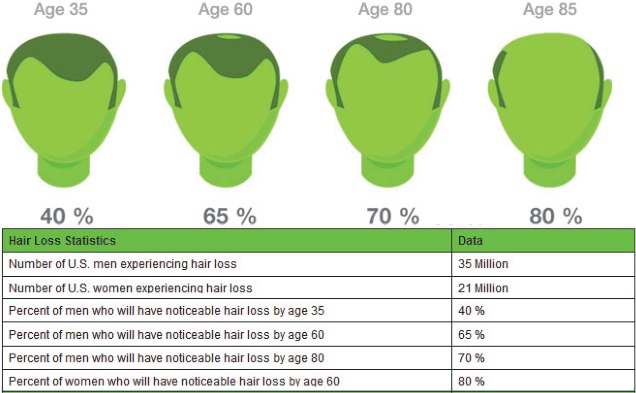
Figure 1: Percent of Population Experiencing Hair Loss
|
|
Page 16 |
Form 1-A |
Table of Contents
Traditionally, laser-based products are considered medical devices and offered exclusively through dermatologists (hair surgeons) as an add-on service post hair transplant surgery. However, as a dermatologist is not required for the delivery of therapy services from the Company’s products, ManeGain has delivered its products and services through high-end hair care salons. The Company believes that delivery into the high-end hair styling and medical spa segments will allow ManeGain to make a quick and substantial impact in sales and brand recognition.
Currently, over $2 billion is spent on hair restoration surgery annually worldwide, with an additional $1.5 billion spent on drugs and supplements to combat hair loss. But this pales in comparison to the $20 billion spent annually (predominantly by women) on hair care products, mostly to treat weak, aging, thinning or aging hair, or to add luster, fullness and body to existing hair.
Revenue Model
The Company intends to pursue two primary revenue streams. The first is to implement a revenue sharing program involving the use of the HairGrower service in high-end salons (the “Revenue Sharing Model”). The second revenue stream will be the traditional retail sales of the associated wet goods through the salon to their retail customers as well as directly through the Internet. These wet goods are a small fraction of our estimated sales and are sold separately and designed to support the actions of the HairGrower. The combination of wet goods and soft service comprise the whole product offering of ManeGain.
HairGrower Revenues
The basic revenue source for the Company is the rental of time on the Hair Grower machine. The client uses the machine in 20-minute sessions on either a scheduled basis (once or twice a week), in conjunction with regular stylist’s visits, or on a walk-in, as available basis for ‘touch-up’ and bundling with other salon services. Session costs vary on a volume basis between $50 and $75 per 25 minutes of use. “Packets” of sessions are sold at different prices as follows:
| • |
50-Pack ($50/session; $2,500 total) hair regrowth (with guarantee); |
| • |
10-Pack ($60/session; $600 total) typically for hair loss prevention and maintenance; and |
| • |
Single session ($75/session) for walk in, special salon treatments. |
During the Company’s trial period from November 2010 until March 2012 (sixteen months), we originally focused on trying to get men who were losing hair to try our Regrowth Therapy, which involved 50 sessions at two sessions per week for 25 weeks. Early on in the consumer trials in salons, we found that a large percentage of our users were female. The reason being that our HALO Therapy™ not only stopped excessive hair loss and could regrow hair, but also would increase hair density, rebuild weak or tired hair, increase keratin production, improve hair body, nourish the hair follicle and maximize volume. As such, we saw a growing demand for single session use as well as for preventative and restorative packages.
This new information led the Company to pivot from focusing exclusively on male pattern baldness to enhancing beauty and image primarily with females. During the last three months of our trials, management discovered that focusing more on hair strength, volume, and thickness was likely to provide a much greater revenue stream that we first surmised. As such, the Company formulated sales estimates that not only included Regrowth Package (50-sessions at $2,500 each) but also Restorative Package (10-sessions at $600 each) and Single Sessions ($75 each) as well. In terms of real dollars, the Company saw a 4 to 5 times increase in sales of 10-Packs and Single Sessions in real dollars over Regrowth Packages.
In the last six months of operations in 2012 the Company focused on two locations, both in Austin where we could do direct evaluations of the clients. For the last four months of operations we added a salon in San Antonio and for the last two months a salon in Houston, both with no marketing support. During those periods there were sales of seventeen male and female Regrowth Packages. In the last four months the Restorative (10 packs) and Single Sessions became available to them.
|
|
Page 17 |
Form 1-A |
Table of Contents
The two salons who came on board last were out of town (Houston and San Antonio) and were selling only Restorative Packages (10 packs) and Single Sessions. Collectively, all four salons sold 70 Single Sessions and 28 Restorative Packages (10-packs). Each of these had one stylist trained by us in the sale of this product and averaged 1.86 sales per week. Based on the available data we employed linear regressions of the data to find the following:
| 1) |
From this data we believe that an average salon should be able to sell at least one Regrowth Package per month, an above average locale should average two every month, and a below average salon should average one every two months. We believe that Regrowth’s best selling point is the Money Back Guarantee we offer with it at the end of twelve weeks, mitigating the risk for any purchaser. Our experience with pre-sales and salon sales testing tells us that roughly 10% of the qualified clients we extend the offer to will ask for it and will get their money back. The actual sales during our salon test period were an average of 1.4 Regrowth packages per salon per month. This was considered ‘average’ performance as the training was limited, and our involvement was focused on examining the scalp health of the client to train ourselves and collect data for instructional purposes for the ManeGain University curriculum, rather than marketing. |
| 2) |
We believe that Single Session sales are closely tied to the stylist’s performance and that a good stylist should sell two to three per week, and since most salons average about fifteen stylists that would equate to a run rate of 30 to 45 Single Sessions sold per week per salon on average. Some salons will have more stylists and some less. An above average salon will have more than 30 stylists and could reach 50 to 60 Single Session sales per week. This is why the ManeGain University and in-salon training is a requirement to motivate and advise stylists on how to be able to sell Single Sessions. |
| 3) |
Sales of the Restorative Packages (10 Packs) are a combination of people purchasing Single Sessions in volume (and receiving a discount), those who are using it as maintenance of the long-term treatment (supplemental for salon visits after the Regrowth Package is complete), and a discounted promotional package for spousal and friends gifting, marketing and advertising in print and via web promotion. In a three month period we saw a ramp up to three per week in Houston in the last two weeks of operations, but lower numbers of two per month elsewhere. While this is the hardest estimate for us to make, we believe that an average salon can reach a run rate of seven per week based on the above described uses but were not able to be test this due to the time available for trials. A smaller salon will be expected to do four per week, and a larger salon eleven per week, on average. |
The projections discussed here are based on the short time period during which the Company performed limited market testing. In reviewing these projections please note that the Company has had only limited revenues since its inception, and has not had any revenues since 2012 when the Company ran out of funds for its market testing. The Company has also had only a limited number of customers (50), and therefore the time period and data from which to draw conclusions is limited. This data has not been reviewed by any independent sources but is solely from the Company’s records.
Our assumptions based on historical data are as follows. We believe that with a highly trained and motivated staff, Single Sessions and Restorative Packages (10 Packs) sales will increase dramatically. Sales of Regrowth Packages may or may not increase, but we believe we can reach a steady state of 1 per month fairly quickly, as we believe sales will be aided by the money-back guarantee offered by the Company.
While we only had a short period of time to base our assumptions, Management feels that there will be three types of salons based on sales volume that can achieve the following run-rates of selling HALO Therapy™ packages. Our experience during this test period leads us to project annual per salon revenues from sales of Regrowth Package (50-sessions: $2,500/ea); Restorative Package (10-sessions: $600/ea), and Single Sessions ($75/ea) as follows:
| A) |
For the below average case, we estimate that a salon could sell 6 Regrowth (.5 per month), 208 Restorative (16 per month or 4 per week), and 1,560 Single Session packages (two per stylist per week, assuming 15 stylists) in a calendar year. This would equate to $255,000 or more in yearly revenues. We believe salons such as this would account for 25% to 30% of all placements or our HairGrowerTM. |
| B) |
For the average case, we estimate that a salon could sell 12 Regrowth (1 per month), 364 Restorative (30.33 per month or 7 per week), and 1,872 Single Session packages (2.6 per stylist per week, assuming 15 stylists) in a calendar year. This would equate to over $380,000 in yearly revenues per salon. We believe that salons such as this would be the bulk (60% to 70%) of all placements of our HairGrowerTM. |
| C) |
For the above-average case, we estimate that a salon could sell 24 Regrowth (2 per month), 550 Restorative (45.8 per month or 10.5 per week), and 3,000 Single Session packages (1.9 per stylist per week, assuming 30 stylists) in a calendar year. This would equate to over $505,000 in yearly revenues per salon. We believe that salons such as this would be no more than 10% of all placements of our HairGrowerTM. |
As a footnote, we anticipate that the Company will most likely eliminate locations that cannot achieve as a minimum $240,000 in sales annually ($20,000 monthly) within 6 to 7 months of a HairGrower™ placement.
|
|
Page 18 |
Form 1-A |
Table of Contents
The Company’s plan puts motivational training at the forefront of the salon acquisition process. There are roughly 350 major cities in the continental United States each of which is capable of supporting at least one high-end hair salon (typically distinguished by multi-hundred dollar hair cuts). We believe that we are effectively running a business inside a business, as we are collecting the money, paying the salon management for space, time, and staff, and rewarding specific trained staff members to be advocates and ‘representatives’ or ‘ambassadors’ of the company on a sales performance basis.
We have designed the ManeGain University to indoctrinate and evangelize specific employees of the salon on a reccurring basis to this end. Given a two-day initial session and a one-day refresher course we are confident that we can complete training for the representatives of several salons per week. We are engaging a field staff that can spend the time with the salons to create and manage local promotional events from the initial deployment of HairGrower™ and subsequent regular follow-up events to keep the energy and excitement level high and grow individual salon business.
We will have our own small internal FDA approved assembly facility capable building from 2 to 4 HairGrowers per week.
Accounting for holidays and seasonal conditions, we believe that there are between 40 and 48 weeks in a given year that the Company can place machines, train staff, and begin in salon operations at the rate of initially one-per-week and ramping up to as much as 4-per-week in the course of the 18 months of post-FDA approval. Our goal is to add sixty salon placements in the first year of operation post FDA approval, and to add an additional eighty salon placements in the second year.
Implementing the Model
ManeGain has created an extensive computer ‘back-end’ software application which it plans to expand and is the primary instrument of its means of doing business. The software creates a portal though which both the salon and the client can access all aspects of the ManeGain relationship. Typically the client can schedule an appointment either through a mobile app, on line, or with the salon at their front desk. When buying their first treatment, a client becomes part of the Company’s database by entering all the data for the relationship (name, address, credit card data and billing authorization, products purchased, etc.). Currently the client is issued a unique code, which is entered into the HairGrower to activate it. Every week the in salon ManeGain representative records the inventory of use for the machine that is used to verify billing records and validate the proper use of the machine.
The Company is moving this process to a more automated system, utilizing a smart phone log in and unit activation. The client will be able to use their mobile device to communicate with the Company in real-time, and, if all is well, the network will turn the machine on by remote control for the session to commence. Billing will be completed automatically through the client’s mobile device. For control, all sales are performed through a credit card. In some salons, cash is still the preferred method of payment. These salons are offered two alternatives. The first alternative is, if a customer wants to pay cash, the salon owner will use their personal or company credit card to complete the transaction and the salon owner will keep the cash. The second alternative is the amount of cash payment is deducted from the salon’s monthly compensation and the salon enters “cash” as payment in the system.
Revenue Sharing Model
As noted, the Company collects the proceeds of the sales of all the sessions. These session payments are aggregated every two weeks and the Company sends 20% of this revenue to the salon owner. In addition there are two stylists in the salon who have been trained by ManeGain (See ManeGain University on page 19) and represent the Company’s interests in the salon’s daily operations and sales (the “Representatives”). These Representatives are each given 10% of the revenues for services rendered with the remaining 60% being the Company’s income.
|
|
Page 19 |
Form 1-A |
Table of Contents
In pursuing the Revenue Sharing Model, management believes that the Company enjoys several key, sustainable competitive advantages: (i) the Company’s therapy of hair rejuvenation from follicle to tip (the whole hair); (ii) the introduction of hair restoration services into the salon environment; and (iii) a complete solution for hair restoration that salons could not previously provide. Previously, salons have been limited to hair “repair”, which includes cutting, coloring and styling. As a result of hair rejuvenation, salon clients can receive hair restoration services at approximately half of the charges for such services in a dermatologist’s office.
Competition
ManeGain competes generally within the existing hair restoration marketplace estimated to grow to $2.8 billion worldwide in 2017.
In addition, non-prescription and non-surgical solutions to hair restoration are estimated at $1.5 billion for 2015, and the global alopecia (hair loss treatment) market was valued at more than $7.2 billion in 2015, and is expected to exceed $10 billion revenue by 2024.
This is a fragmented marketplace characterized by two basic hormone-altering FDA approved drugs, various herbal offerings, mechanical agitators and lasers, with marketing and distribution accomplished via multiple channels (retail, TV and radio advertising-driven direct to and multi-level marketing, among others). Although there is no category leader, there are a number of known direct to consumer marketers including:
1 – Chemical Based Solutions (Price range of $250-$400 per year)
There are only two FDA approved drugs for hair loss: Propecia (finasteride) and Rogaine (minoxidyl). Both are based on hormone altering chemicals. Propecia is the most effective and is only available for men and by prescription. Propecia has been shown to be effective in 66% of men on the back of the scalp and only 41% on the top of the scalp. All other chemical based products available in the market are based on watered down versions of these drugs with other ingredients and are not FDA approved.
2 – Laser Based Solutions (Price range of $400-$700)
The original laser based hair-regrowing device HairMax is sold in the form of a comb-like device at a price ranging from $400 to $700 by direct sales. HairMax obtained the first FDA 510(k) for hair regrowth with lasers and opened the way for competitors with both the public and the FDA. The HairMax comb-like device is brushed through the user’s hair for several minutes each day. Several competitors producing laser combs have come on the market using direct sales with pricing from sub $100 to $400.
A recent adaptation of the laser comb is the I-Grow, a helmet worn like a set of large earphones and priced at $700 that follow up on the HairMax FDA application clinical studies. The helmet is worn every other day.
3 – Surgery Based Solution (Price Range $3,000-$25,000)
The standard and most effective solution to hair loss in men (due to women’s hair loss chemistry, this cannot be used) has been hair follicle transplant surgery done by a licensed doctor in a medial environment. Individual hair follicles are generally removed from the back of the head and surgically transplanted in a thinning area of the scalp. This process has been automated so the physician merely guides a robot to remove hair follicles and transplant them in another location.
Competitive Advantages
ManeGain offers unique and specific advantages over each competitive approach, including the following:
1 – Chemical Based Solutions: Androgenic Alopecia (genetic pattern baldness, responsible for roughly 90% of the hair loss in men and women) is based on a testosterone hormone issue, specifically a problem with a testosterone molecule attaching to the nucleus of hair follicle stem cells making the hair. The chemical based solution, which is only prescribed for men, is to alter the hormone balance in the body of the client and retard the testosterone. This can cause certain side effects (contraindications), such as men developing enlarged breasts and raised voices. It is advised that men taking these chemicals not be around pregnant women (see the contraindications on a bottle of Rogaine). It works best in the early stages of hair loss, is successful in most cases, and stops working when and if you stop using it. Simply put, the ManeGain advantage is that it grows hair without interfering with a person’s sexual hormones.
2 – Laser Based Solutions: A primary key to laser solutions is the movement of the lasers around the scalp to get laser light into all of the subcutaneous tissue holding the hair follicle and into the follicle itself. The primary drawback of the comb system is that you need to comb your hair with vigor for 15 – 20 minutes 2 to 3 times a day. This is a taxing manual task with a negative physical impact that can result in users not following the protocol to make it a successful therapy. If the comb system does not get used correctly it doesn’t produce good results.
|
|
Page 20 |
Form 1-A |
Table of Contents
The helmet system design offers stationary light. Because the helmet system design does not provide for the movement of the lasers around the scalp, spots of strong and low laser energy develop with significant hair casting shadows. The process is inefficient and slow. The units are uncomfortable as they are attached to headphones which support the weight of the laser system putting pressure on the tops of the ears and a ‘squeeze’ on the head.
ManeGain has two major advantages over other laser based solutions. The first advantage is efficacy as laser systems by themselves do not aid in increasing blood flow in the scalp needed to flush out the testosterone and stimulate cell regrowth. ManeGain combines magnetic pulse for increased blood flow stimulation, various frequencies of light for bio-stimulation and moving lasers to get laser energy penetration throughout the scalp. The second advantage is ManeGain’s far more subtle but equally important use of the salon for its HairGrower machine. Enlightened medicine today recognizes that medical issues are social and the power of healing is enhanced with social and personal support groups. The salon is a social setting with supportive patrons and staff. Just like Alcoholics Anonymous or a gym membership, it is the social aspect and acceptance that keep people coming back. In hair regrowth, repetition is the key to success. Laser based solutions administered at home alone do not take advantage of the supportive nature of a social setting and do not promote the drive to finish the protocol and achieve success. In addition, models that are sold to dermatologist range from $5,000 for a simple stationary 30 diode machine, upwards to $49,900 for a deluxe version with up to 80 diodes.
3 – Surgery Based Solutions: Surgery is expensive, invasive, and physically risky. As a surgery the issues of infection and recovery from the traumatic procedure can be substantial. A large number of transplanted hair follicles simply do not survive the process. Second and third passes of the surgical procedure are not uncommon. The primary source of new hair follicles is from somewhere else on the client’s body with the head being the first choice. When a client has used up their hair follicles on their head, there are no more available.
Surgical costs run as high as $25,000 per treatment and many clients have to come back for a 2nd or even 3rd treatment. Furthermore, there are now many varying methods of transplant surgery, so it can be hard to compare costs. For example, while the better surgeons use FUE (follicular unit extraction) or a pre-scored system (SAFE), the latest ones are using DHT (direct hair transplant) where the follicular units are outside the tissue for only minutes.
Marketing
With experience over the past three years, management has determined the best approach to generating sales is to have a dedicated, well-trained team of salon employees within each salon, preferably the principal hair stylists, to be representatives of ManeGain and share in the commissions earned by the salon. The elements of the Company’s growth strategy are detailed as follows:
| • |
ManeGain University training for in-salon staff; |
| • |
placement of HairGrower in high-end salons; |
| • |
in-salon training and promotions; |
| • |
targeted advertising (print, direct mail, TV and radio); |
| • |
celebrity stylists; and |
| • |
management of salon roll-out schedule. |
ManeGain University
Consistent in the growth of the ‘thank you’ economy and customer enchantment marketing is the care and feeding of a tribe. A tribe is a group of people that share a passion. Our passion is offering something that makes people’s lives better or much better in most cases.
ManeGain University is the way we manufacture the first level of our tribe universe.
ManeGain University is scheduled to be a three-day intensive indoctrination into ManeGain culture. The goal is to create passionate and knowledgeable advocates of the service to the clients and staff of the salon from their own best people. These Representatives carry the message back and teach the stylists that they are all artists and that good art needs a good canvas, which is in this case hair. Through local repetition, the Representatives smooth the transition of the stylist from artist to salesman and carry the message to the client. The Representatives drive the support group energy in the salon and are the marketers at the street level. They are the closers, the subject matter experts on site and are easily accessible, real people talking to real people.
This is a skill set that can be learned. ManeGain University teaches evangelism for the product and its results by example and is the primary source of energy for all the stylists in our salon base. ManeGain University trains the two representatives in the salon to be evangelists. And as stylists move from on salon to another, they carry our hair growth message along (after all they were paid well selling ManeGain).
|
|
Page 21 |
Form 1-A |
Table of Contents
Physically, the ManeGain University will consist of two small classrooms, a small ‘salon,’ video support (lighting and audio creation) and an office. People from the salons will be billeted in local hotels, educated, given a new vocabulary, taught to know when hair will grow and when it will not, practice pitching, develop confidence, party, make friends, be won over, and converted.
Placement of HairGrower in High-end Salons
The Company’s management believes that the placement of HairGrowers in high-send salons is the most important part of the Company’s marketing strategy. The only salons capable of doing this have to be in the higher-end of the hair industry spectrum. To help facilitate the placement of HairGrowers in such high-end salons, the Company’s management has identified a salon industry veteran, and Giacomo Forbes, a “seen-on-TV” celebrity hair stylist to leverage their contacts and assist in placing a HairGrower unit rapidly into these high-end salons. The Company’s management believes that placing these units will be easier than selling units as the Company employs a revenue share program requiring little upfront expense from a salon owner, other than sending two individuals for training.
In-Salon Training and Promotions
In addition to training the two salon representatives at the ManeGain University to be the points of contacts for ManeGain, management intends to have several in-salon training and demo days to get the other stylists familiar with the benefits, use, and efficacy of the HairGrower. We also will encourage every stylist in the salon to use the Hairgrower for at least 10 sessions to see how it affects their hair. Management has estimated that at least four training sessions and three to four demo and “question and answer” days will be necessary to fully introduce the HairGrower and ensure that all stylists are interested in and effective in generating sales. We have also found that in-salon promotions (meet and greet parties), where salon customers can ask questions about the product, its inventor, and sample the therapy, are extremely effective in generating interest and immediate sales.
Targeted Advertising (Print, Direct Mail, TV, Radio)
Management intends to launch a narrowly targeted advertisement campaign that involves direct email to salon customers, direct mail to area stylists, print ads in high-end fashion magazines, and a short run commercial on fashion and beauty centric programs. In addition, short run spots on specialized fashion and beauty oriented cable TV and Radio shows will be implemented.
Cultivation of Celebrity Stylists
While not an immediate need, we believe that the long term development of a network of celebrity stylists as brand ambassadors who will promote and use the ManeGain therapy will be an integral part of our upscale marketing program. The Company already has the support of one such stylist, Giacomo Forbes. He has styled the hair of a variety of film, TV and entertainment celebrities and is an avid supporter of ManeGain. A focused effort to attract and secure the endorsement of these “brand ambassador” celebrity stylists with substantially help create awareness and credibility in the marketplace.
|
|
Page 22 |
Form 1-A |
Table of Contents
Management of a Salon Roll Out Schedule
There are many moving parts to getting a salon up to speed with this product. We have spent the last two and a half years formulating and perfecting this rollout schedule (see Figure 1 below) from trial and error. The Company has placed special test HairGrowers (pre-FDA approved field testing units) in salons for both technical and marketing evaluation and evolution. On the technical side this has included unit reliability, ease of use, performance consistency, customer comfort, and acceptance, and the first level of Clinical Trials under a Medical Doctor’s review. This also has let us do market testing, learning about and develop interaction scenarios with the customers, stylists, and salons, and to create in the ‘real world’ the solution to education and evangelism we call ManeGain University. These test scenarios have lead to finding a successful engagement process that has resulted in the Salon Roll-Out Schedule. It is the expectation that the manager of each salon we bring on board will be able to execute to this schedule and we will have a dedicated ManeGain employee making sure that this schedule is adhered to. If the schedule is not adhered to, ManeGain will remove the HairGrower from the salon. Details and Expectations will get outlined in a contract with each salon the Company engages with.
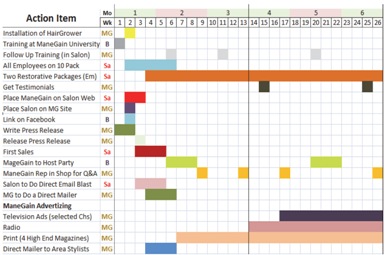
Figure 1: Roll Out Schedule (see Exhibits of a Larger Version)
Patent Information and Production and Supply
The Company’s HairGrower is a finished product. It will be modified to meet the FDA manufacturing procedures of documentation and production auditing. To-date, the Company has completed the manufacturing of 16 HairGrowers, and has six others in the “work-in-progress” stage, none of which meet the FDA requirements. While the Company is not required to provide segment information, the FDA does have reporting procedures for parts testing, manufacturing audit trails, and Quality Control (which refers to the verification of labels and warnings, and the processes testing lasers, LED light levels, magnetic-field characteristics, mechanical reliability and sampling for continuing mean-time-to-failure analysis). The Company will need 10-20 HairGrower units per month to carry out its business plan. The Company plans to have two technicians in a 1,500 square foot industrial office available to assemble, test and service all HairGrower units. The first production of HairGrowers came to a total cost of about $2,500 per unit, including all parts and labor.
The Company filed a provisional patent 3 (USPTO US 61 / 192,143), which was not able to be converted into a non-provisional patent application at the time. The Company plans to improve the design and add some additional features, and as such its patent attorney has informed Company management that the Company will be able to re-file the provisional patent as a non-provisional patent upon completion of reaching the minimum capitalization required for this Offering. The estimated cost in acquiring this patent is $10,000 USD. Upon submission of this non-provisional patent application, the Company’s HairGrower will be considered “Patent Pending.”
|
|
Page 23 |
Form 1-A |
Table of Contents
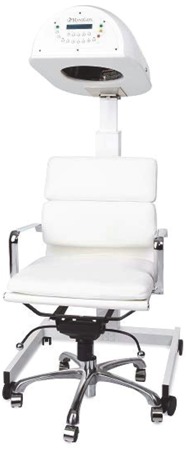
ACTUAL HAIRGROWER UNIT
PATENT 3 (USPTO US 61/192,143)
|
|
Page 24 |
Form 1-A |
Table of Contents
Testing of the Company’s Products
Laser based hair regrowth, which reverses the effects of Androgenic Alopecia (genetic pattern baldness, responsible for roughly 90% of the hair loss in men and women), has been in use with dermatologists and in hair surgeons’ offices for about 15 years. Recently, helmet versions have been offered by several companies, all whom have done clinical studies and demonstrated the veracity of the low-level laser technology to the FDA. It is our hope that because the Company uses the same basic technology, that our process will not require extensive clinical studies.
The Company believes that there is no clear analytic approach to get a specific efficacy number or percentage of success for laser hair growth. Studies submitted to the FDA on the Hairmax offer a very complex set of measurement statistics. The Company believes that these statistics make it clear that the process works, but are broadly interpretive as to quantifying the success.
In an effort to design a testing regime that focused on a more qualitative and understandable measure of efficacy, as opposed to complex measurement statistics, the Company undertook the following tests in 2011 and 2012. The Company offered a money-back guarantee for 12 weeks of treatments. At the beginning of the 12 weeks a picture was taken of the client. At the end of the 12 week treatment, the client was asked to look in the mirror and decide if the client believed the process was working well enough to continue. If the client said that they did not, they received all of their money back. Of fifty-three clients, fifty-one (or 96.2%) decided that the process was working and continued to pay for the service. Two of the clients stated that they did not believe that the process was working well enough to continue and received their money back.
The Company has not performed additional tests in the time period since 2012.
FDA Approvals
The Company is required to file a 510(k) with the FDA for its HairGrower. Section 510(k) of the Food, Drug and Cosmetic Act requires device manufacturers to register and notify the FDA of their intent to market a medical device at least 90 days in advance. This is known as Premarket Notification, also called a PMN or 510(k). Specifically, medical device manufacturers are required to submit a pre-market notification if they intend to introduce a device into commercial distribution for the first time. The intent is to ensure that the claims an applicant makes about a product or process meet expectations and are based on acceptable science. Once classified as a medical device, the HairGrower will also subject to the Medical Device Tax, a part of the Affordable Healthcare Act requiring a 3.75% tax on the wholesale value of the product payable to the IRS.
Details and requirements of the FDA process are determined by agreement between the FDA reviewers and the applicant after the application to the FDA for the 510(k) is submitted. An assessment is done based on the then determined science needed to validate the claims of the product. As each application is unique to certain scientific and implantation conditions there is no fixed process, instead an appropriate process is developed to accommodate the claims to be validated and granted by the FDA Process Review. The Company intends to employ a consulate (ex-FDA staff that guide the process through the FDA system) in the filing from start to finish. Currently the FDA is quoting a process time of 135 days from start to finish. The Hairgrower employs technologies already approved by the FDA, meaning that clinical testing is mitigated by the concept of ‘substantial equivalence’, that is the testing has already been accepted by the FDA an not need be duplicated. Once the FDA clears the claims on the product the Company will be subject to regular on-site visits and documentation reviews to verify compliance in records, fabrication, testing, compliance with labeling and processes specific to the manufacturing, and other requirements specific to the product as determined by the FDA upon the granting of the approval. These reviews will be done for the manufacturing life of the product. Failure in compliance with marketing or advertising claims granted, manufacturing of quality control audits, unauthorized changes in product or process are subject to fines or withdrawal of the 510(k) clearance.
|
|
Page 25 |
Form 1-A |
Table of Contents
Item 8
Description of Company Property
The Company does not own any real estate. The Company currently rents mail spaces at 12400 Highway 71, Suite 350-256, Austin, Texas 78738.
|
|
Page 26 |
Form 1-A |
Table of Contents
Item 9
Management’s Discussion and Analysis of Financial Condition and Operations
The following discussion and analysis of the Company’s Financial Condition and results of operations should be read in conjunction with the Company’s financial statements. In addition to historical financial information, the following discussion and analysis contains forward-looking statements that involve risks, uncertainties and assumptions. The Company’s actual results and timing may differ from those anticipated in these forward-looking statements and planning as a result of many factors, including those discussed under “Risk Factors” beginning on page 5 and elsewhere in this prospectus.
Overview
ManeGain’s products and services are centered on the Company’s HairGrower technology, which prevents hair loss, stops hair loss, and grows new hair in both men and women. The technology utilizes cold lasers, LEDs, and magnetic pulses; and is a non-invasive and chemical free alternative to drugs and surgery. The Company believes that its distribution model allows for rapid placement of the Company’s products and services, and will generate long-lasting repeat customer use of the Company’s products and services, leading to recurring revenues.
|
|
Page 27 |
Form 1-A |
Table of Contents
Use of Investor Funds Discussion
Assuming the Company raises the full $5,000,000, management believes between month 9 and 11 of operations the Company should start to go cash flow positive. Company expenditures have been divided into three buckets: Cost of Sales (which is the start-up cost associated with the launch of the first 60 salons); Cost of Goods Sold (which is the costs associated with building 60 more machines and for development of our wet product line to tie in with it); and Expenses (which is the day to day operating expenses and overhead running the company).
Management also accounts for profits that will start to accumulate during the ramp up phase. So out of the expected $5 million, only $4 million should be used in expenses, with a 20% buffer. Of course, this buffer might be less if we have to spend the budgeted money on other expenses management has not accounted for or we raise less money.
Half of the estimated expenses are operational costs, so in engaging one (1) salon or sixty (60), we are going to be spending the money on support, overhead and sunk costs in the first eighteen (18) months.
The other half is dependent on the number of salons deploying the ManeGain Hairgrower. Out of this half, about 50% is variable (dependent on the number of salons coming on line). The other 50% (25% of total costs) are ongoing costs of operations. The one exception is the possible costs associated with getting FDA approval for the device. A more detailed explanation of the per-salon start-up costs is given in the Explanation of Cost of Sales section following.
With the initial completion of the FDA requirement, the upgrading of the back-end support software, and ManeGain University, it becomes an issue of directly scaling the service base. The more money ManeGain can raise from investors or revenues, the faster and more widespread the Company can deploy its services. See Explanation of Cost of Sales below for more details.
Expenses – FDA Approval
Management cannot give specifics about the FDA 510(k) process other than that the filing fee is still under $5,000, but subject to change, and the FDA works very hard to get the applications done in 135 days. The FDA has been encouraged by Congress and the Internal Revenue Service to qualify more ‘medical devices’ as they are now covered by a special tax in the new Affordable Healthcare Law.
When we do the 510(k) filling, the FDA will determine what they want in the way of studies, the number of studies needed to be conducted, documentation, science, trials and data collection. This may require one or more studies that could cost from $10,000 to $70,000 each along with the support of consultation by companies specializing in the FDA interfacing (typically ex-FDA experts in the process). We estimated the worst case would be $250,000 and we have accounted for that amount.
It is our belief that the FDA rule of ‘substantive equivalence’ will prevail and that other studies, data, and research from previous applications (such as I-Grow and HairMax) can be incorporated into ours as part of the public record. This would considerably reduce the amount of new science we will have to show the FDA and could keep the whole cost to under $70,000.
Explanation of Cost of Sales
Based on the Company’s history, how does management think the Company can ever hope to generate $153,000 (60% of a below average salon revenue of $255,000) to or $228,000 (60% of an average salon revenue of $380,000) or $303,000 (60% of an average salon revenue of $505,000) in gross profits per year per salon.? As stated earlier, it will be done with a combination of focused marketing and disciplined execution.
First, management believes there is a demand for this non-invasive regrowth, restorative, and rejuvenative service. People want thicker, stronger, fuller, younger hair and will pay for it. The Company also believes that salons have little resistance in wanting to try a free to low cost “experiment” to gain another source of revenues with no products to stock or buy inventory.
Next, ManeGain believes that most of the high-end salons selected can support a run-rate of gross sales between $255,000 and $380,000 per year if management properly promotes and trains the staff. The Company has been working with salon industry experts, including high end salon owners and celebrity stylists to determine what needs to be done to perfect the training of the in-salon ManeGain experts and motivate a salon’s staff to offer the ManeGain Service.
Also, management believes that the Company will have to “prime the pump” in each salon that we launch our service. There is an initial cost of between $20,000 and $25,000 per salon before management can properly ascertain that a salon can generate $15,000 to $20,000 per month in revenues. When completed, the cost of support drops to less than $1,000 per month (not including
|
|
Page 28 |
Form 1-A |
Table of Contents
commissions). We should see a salon reach breakeven within 3 months of an installation, and profitability within 6 months; reaching a sales rate greater than $20,000 per month by month 9. (See Figure 2: Rollout Cost and Revenues per Salon (1 Year) on the following page for a graphic representation)
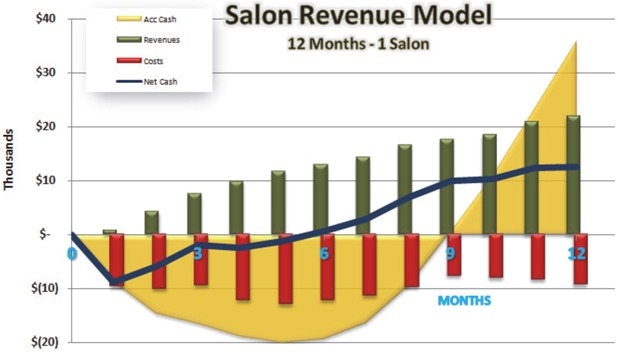
Figure 2: Rollout Cost and Revenues per Salon (1 Year)
Based on executing our marketing and awareness plan, the Company can determine within 3 months of a HairGrower installation if a salon will be able to produce revenue numbers that will lead to a $150,000 first year ramp and whether to keep or pull a location “prior” to expending the bulk of the promotional money. The four “big” expenses in the first 3 months are training the ManeGain Specialists, an in-salon “meet & greet” party, a direct mailer, and two to four, 2-month print ads in high-end local fashion magazines. This 3 month burn totals just under $25,000.
|
|
Page 29 |
Form 1-A |
Table of Contents
Item 10
Director, Executive Officers, and Significant Employees
The following table sets forth information regarding our executive officers, directors and significant employees, including their ages, as of December 31, 2016.
| Name and Principal Position |
Age | Term of Office | Approximate hours per week for part-time employees |
|||||||||
| Jeffrey Fry, |
58 | Start November 2010 | Full Time | |||||||||
| Director, Chief Executive Officer & President |
||||||||||||
| Barry Thornton, |
72 | Start June 2007 | Full Time | |||||||||
| Chairman of the Board & Chief Technology Officer |
||||||||||||
| Michael Schwartz, |
46 | Start November 2010 | Full Time | |||||||||
| Director, Chief Operating Officer & Chief Financial Officer |
||||||||||||
Notes:
1 – There are no arrangements of understandings between the person described above and any other person pursuant to which a person was or is to be selected for his or her office or position.
2 – There are no family relationships between any director, executive officer, or person nominated or chosen by the issue to become a director or executive officer or any significant employee.
3 – None of the Officers listed above has been 1) involved in any federal bankruptcy in any state, has been filed against for financial or 2) been convicted in a criminal proceeding other then traffic violations.
Jeffrey Fry has been our President and Chief Executive Officer since joining the Company in 2012. From 2001 until 2014, Mr. Fry served as either President or Executive Vice President in multiple startup companies, including Videodisgo, MyTurf Wireless, baqpak, COAX Corp, and Help Find Care. In addition, Mr. Fry helped start the Hornaday Award Weekend as part of the Boy Scouts of America’s Capital Area District in Austin, Texas. Mr. Fry received his BS in Electrical Engineering from Lafayette College in 1981 and attended St. Edwards University as part of his MBA studies from 1996 to 1998. A listing of his roles includes:
Help Find Care, Inc., CEO, Austin, Texas, June 2012 – February 2014
MyTurf Wireless, Co-Founder & EVP Marketing, Austin, Texas, April 2008 – July 2010
baqpak, inc, Founder, Austin, Texas, June 2009 – Present
Profit Prophet, LLC, Principal, Austin, Texas, June 2008 – Present
Videodisgo, Inc., CEO, Austin, Texas, February 2004 – December 2006
COAX Corporation, VP Sales & Marketing, Austin, Texas, April 2000 – February 2002
Barry Thornton founded Austin Medical Research in 2007, which evolved into ManeGain where he is now serving as Chairman of the Board and Chief Technical Officer. Mr. Thornton has previously served ManeGain as Chief Executive Officer (2007 to 20012, Chief Operations Officer (2007 to 2012), and Chief Financial Officer (2007 to 2010). In 1996 Mr. Thornton founded and served as Chief Executive Officer and then Chief Technology Officer of ClearCube Technology, Inc. until 2007. Mr. Thornton has been engaged in start-ups since 1971. Mr. Thornton is a product of the California University System with majors in Physics and Anthropology and was active in Student Nonviolent Coordinating Committee in the late 1960s. Mr. Thornton has 30 patents to his name and, in addition to starting companies, continues to mentor bootstrap startups.
Michael K Schwartz has served as Chief Operating Officer since 2012. Over the prior 22 years, Mr. Schwartz founded numerous companies spanning a variety of industries including international trade, distribution, technology, waste management and construction.
From 2009 to 2011 Mr. Schwartz served as Vice President of Business Development for Du Bray & Associates, an Australian International Procurement firm, and was tasked with expanding the geographical reach of the company and the client base. Prior to Du Bray & Associates, Mr. Schwartz founded Seville Homes, a custom home builder on the Texas Gulf Coast active from 2005 to 2007. In 2004, a waste services company founded by Mr. Schwartz, Sentinel Waste in Austin, was purchased by IESI-BFC, Ltd (NYSE: BIN).
Mr. Schwartz received his BA in Business Administration from Southwestern University in Georgetown, TX in 1990.
|
|
Page 30 |
Form 1-A |
Table of Contents
Item 11
The following table represents information regarding the total compensation earned by the three highest paid individuals who served as an executive officer or director of the Company as of December 31, 2016.
| Name |
Capacity in which compensation was received |
Cash Compensation ($) |
Other Compensation ($) |
Total Compensation($) |
||||||||||
| Jeffrey Fry |
Chief Executive Officer & President |
$ | 0 | $ | 0 | $ | 0 | |||||||
| Barry Thornton |
Chairman of the Board & Chief Technology Officer |
$ | 0 | $ | 0 | $ | 0 | |||||||
| Michael Schwartz |
Chief Operating Officer & Chief Financial Officer |
$ | 0 | $ | 0 | $ | 0 | |||||||
The aggregate annual compensation of the Company’s directors, as directors, as a group for the issuer’s last completed fiscal year was $0. The Company has three directors.
Upon reaching profitability, Officers of the Company and some selected employees may be given other compensation commensurate with their position and the amounts of revenues generated. In some cases, this amount may be equal to or exceed 50% of their total compensation.
Officer Compensation
The Company does not currently pay any cash fees to any officer of the Company beyond those listed above.
Directors and Advisors Compensation
The Company does not currently pay any cash fees to any director or advisor of the Company or any member or employee of the Company beyond those listed above.
|
|
Page 31 |
Form 1-A |
Table of Contents
Item 12
Security Ownership of Certain Beneficial Owners and Management
Set forth below is information regarding the beneficial ownership of our common stock, our only outstanding class of capital stock (as no shares of Series A Preferred Stock have been issued as of the date hereof), as of December 31, 2016 for (i) all executive officers and directors as a group and (ii) each person, or group of affiliated persons, known by us to be the beneficial owner of more than ten percent of our capital stock. The percentage of beneficial ownership in the table below is based on 3,435,000 shares of common stock deemed to be outstanding as of December 31, 2016.
| Name and address of beneficial owner (1) |
Number of Shares Beneficially Owned |
Number of Shares Acquirable |
Percent of Class |
|||||||||
| Barry Thornton |
1,145,000 | 0 | 32.27 | % | ||||||||
| Jeffrey Fry |
1,145,000 | 0 | 32.27 | % | ||||||||
| Michael Schwartz |
1,145,000 | 0 | 32.27 | % | ||||||||
| All directors and officers as a group |
3,435,000 | 0 | 98.62 | % | ||||||||
| (1) |
The address of those listed is care of Manegain, Inc., 12400 West Highway 71, Suite 50-256, Austin, TX 78738. |
|
|
Page 32 |
Form 1-A |
Table of Contents
Item 13
Interest of Management and Other in Certain Transactions
Related Party Transactions
Our majority stockholder(s) are Mr. Barry Thornton, the Company’s Chairman of the Board & Chief Technology Officer, Mr. Jeffrey Fry, the Company’s Chief Executive Officer & President and Mr. Michael Schwartz, the Company’s Chief Operations Officer, who together own the majority of the issued and outstanding shares of Common Stock of ManeGain, Inc. Consequently, these shareholders control the operations of the Company and will have the ability to control all matters submitted to stockholders for approval, including:
| • |
Election of the Board of Directors; |
| • |
Removal of any directors; |
| • |
Amendment of the Company’s certificate of incorporation or bylaws; and |
| • |
Adoption of measures that could delay or prevent a change in control or impede a merger, takeover or other business combination. |
Mr. Barry Thornton, Mr. Jeffrey Fry & Mr. Michael Schwartz will thus have complete control over the Company’s management and affairs. Accordingly, this ownership may have the effect of impeding a merger, consolidation, takeover or other business consolidation, or discouraging a potential acquirer from making a tender offer for the Common Stock.
Except as otherwise indicated herein, there have been no related party transactions, or any other transactions or relationships required to be disclosed pursuant to Item 12 of Form 1-A, Model B.
In 2010, Seda Rico, LLC loaned the Company $180,000 and received offsetting royalties of $8,169. In 2011, Seda Rico loaned an additional $20,000 and received royalties of $3,340. Further, in 2012, the Company received additional loan proceeds of $10,000 and paid $4,808 in royalties. As of September 30, 2016, the Company owed Seda Rico outstanding principal of $193,683 related to these borrowings. Mr. Fry owns 38% and Mr. Schwartz owns 14%, and together owning 52% of Seda Rico. Seda Rico LLC is owed a royalty of 25% of ManeGain’s revenue from the top performing 21 HairGrower machines. The Seda Rico promissory note is filed as an Exhibit to this Offering Statement.
Note- No expert named in this offering statement as having prepared or certified any part the offering statement was employed for such purpose on a contingent basis or, at the time of such preparations or certification, at any time thereafter, had a material interest in the issuer of any of its parents or subsidiaries or was connected with the issuer in any of subsidiary as a promoter, underwriter, voting trustee, director, office or employee.
|
|
Page 33 |
Form 1-A |
Table of Contents
Item 14
The following is a summary of the rights of our capital stock as provided in our certificate of incorporation and bylaws and are qualified in their entirety by reference to our certificate of incorporation and certificate of designation, filed as exhibits to this offering statement. For more detailed information, please see our certificate of incorporation and bylaws, which have been filed as exhibits to the offering statement of which this offering circular is a part.
Preferred Stock
The Company is offering Series A Preferred Stock to investors in this Offering. The Certificate of Designations of Series A Preferred Stock authorizes 1,000,000 shares of Series A Preferred Stock, none of which were issued and outstanding immediately prior to the Offering.
Upon a liquidation, dissolution or winding up of the Company, including the acquisition of the Company by merger, asset acquisition or otherwise, each share of Series A Preferred Stock is entitled to receive, prior and in preference to any distribution to the holders of Common Stock, an amount equal to $5.00 per share (the “Liquidation Preference”). After payment of the aggregate Liquidation Preference, any amounts remaining for distribution to the shareholders shall be distributed pro rata among the holders of Common Stock and Series A Preferred Stock, pro rata based on share ownership.
The Series A Preferred Stock, except as otherwise required by applicable law, shall not have the right to vote on matters submitted to the stockholders of the Company.
Common Stock
The Company is authorized by its certificate of incorporation to issue an aggregate of 10,000,000 shares of Common Stock, $0.001 par value per share (the “Common Stock”). As of December 31, 2016, a total of 3,441,667 shares of Common Stock were issued and outstanding.
All outstanding shares of Common Stock are of the same class and have equal rights and attributes. The holders of Common Stock are entitled to one vote per share on all matters submitted to a vote of stockholders of the Company. All common stockholders are entitled to share equally in dividends, if any, as may be declared from time to time by the Board of Directors out of funds legally available. In the event of liquidation, the holders of Common Stock are entitled to share ratably in all assets remaining after payment of all liabilities and the payment of the liquidation preference of the Series A Preferred Stock. The stockholders do not have cumulative or preemptive rights.
Security Holders
As of December 31, 2016, there were 3,441,667 shares of our Common Stock outstanding, which were held of record by approximately 4 stockholders, not including persons or entities that hold the stock in nominee or “street” name through various brokerage firms. No shares of Series A Preferred Stock were outstanding.
Dividends
The Company has never declared or paid cash dividends on its shares of capital stock. The Company currently intends to retain all available funds and future earnings for use in the operation of Company business and does not anticipate paying any cash dividends in the foreseeable future to holders of our capital stock. Any future determination to declare dividends for the Company’s shares of capital stock will be made at the discretion of our board of directors, and will depend on our financial condition, results of operations, capital requirements, general business conditions and other factors that our Board of Directors may deem relevant.
Indemnification of Directors and Officers:
The Company is incorporated under the laws of the state of Texas. The Texas General Corporation Law provides that a corporation may indemnify directors and officers as well as other employees and individuals against expenses including attorneys’ fees, judgments, fines and amounts paid in settlement in connection with various actions, suits or proceedings, whether civil, criminal, administrative or investigative other than an action by or in the right of the corporation, a derivative action, if they acted in good faith and in a manner they reasonably believed to be in or not opposed to the best interests of the corporation, and, with respect to any criminal action or proceeding, if they had no reasonable cause to believe their conduct was unlawful. A similar standard is applicable in the case of derivative actions, except that indemnification only extends to expenses including attorneys’ fees incurred in connection with the defense or settlement of such actions and the statute requires court approval before there can be any indemnification where the person seeking indemnification has been found liable to the corporation. The statute provides that it is not exclusive of other indemnification that may be granted by a corporation’s certificate of incorporation, bylaws, agreement, and a vote of stockholders or disinterested directors or otherwise.
|
|
Page 34 |
Form 1-A |
Table of Contents
The Company’s certificate of incorporation provides that it will indemnify and hold harmless, to the fullest extent permitted by the Texas General Corporation Law, as amended from time to time, each person that such section grants us the power to indemnify.
The Texas General Corporation Law permits a corporation to provide in its certificate of incorporation that a director of the corporation shall not be personally liable to the corporation or its stockholders for monetary damages for breach of fiduciary duty as a director, except for liability for:
| • |
any breach of the director’s duty of loyalty to the corporation or its stockholders; |
| • |
acts or omissions not in good faith or which involve intentional misconduct or a knowing violation of law; |
| • |
payments of unlawful dividends or unlawful stock repurchases or redemptions; or |
| • |
any transaction from which the director derived an improper personal benefit. |
The Company’s certificate of incorporation provides that, to the fullest extent permitted by applicable law, none of our directors will be personally liable to us or our stockholders for monetary damages for breach of fiduciary duty as a director. Any repeal or modification of this provision will be prospective only and will not adversely affect any limitation, right or protection of a director of our company existing at the time of such repeal or modification.
|
|
Page 35 |
Form 1-A |
Table of Contents
ManeGain, Inc. Interim Financial Statements for the Nine Months Ended September 30, 2016 and 2015
| Statement Title |
Page | |||
| Balance Sheets as of September 30, 2016 (Unaudited) and December 31, 2015 |
38 | |||
| 39 | ||||
| 40 | ||||
| 41 | ||||
| 42 | ||||
ManeGain, Inc. Financial Statements and Independent Auditor’s Report
December 31, 2015 and 2014
| Statement Title |
Page | |||
| 46 | ||||
| 48 | ||||
| 49 | ||||
| 50 | ||||
| 51 | ||||
| 52 | ||||
|
|
Page 36 |
Form 1-A |
Table of Contents
ManeGain, Inc., a Texas Corporation
Interim Financial Statements (Unaudited)
As of and for the Nine Months Ended September 30, 2016 and 2015.
Notice to Reader
Our auditors have not reviewed the unaudited interim financial statements as of and for the nine months ended September 30, 2016 and 2015. These financial statements and the notes thereto have been prepared by the Company’s management in accordance with accounting principles generally accepted in the United States of America using management’s best judgments, consistent with prior periods, and should be read in conjunction with the audited financial statements for the years ended December 31, 2015 and 2014 and the notes thereto.
|
|
Page 37 |
Form 1-A |
Table of Contents
ManeGain, Inc.
(Formerly Austin Medical Technologies Inc.)
As of September 30, 2016 (Unaudited) and December 31, 2015
| 9/30/16 | 12/31/15 | |||||||
| ASSETS |
||||||||
| Current Assets: |
||||||||
| Cash and equivalents |
$ | 112 | $ | 112 | ||||
|
|
|
|
|
|||||
| Total Current Assets |
112 | 112 | ||||||
|
|
|
|
|
|||||
| TOTAL ASSETS |
$ | 112 | $ | 112 | ||||
|
|
|
|
|
|||||
| LIABILITIES AND STOCKHOLDERS’ EQUITY |
||||||||
| Current Liabilities: |
||||||||
| Accounts payable |
$ | 120,615 | $ | 49,646 | ||||
| Accrued interest payable |
20,556 | 17,212 | ||||||
| Related party advances |
4,765 | 4,765 | ||||||
|
|
|
|
|
|||||
| Total Current Liabilities |
145,936 | 71,623 | ||||||
| Non-Current Liabilities: |
||||||||
| Notes payable |
358,683 | 358,683 | ||||||
|
|
|
|
|
|||||
| Total Non-Current Liabilities |
358,683 | 358,683 | ||||||
|
|
|
|
|
|||||
| Total Liabilities |
504,619 | 430,306 | ||||||
|
|
|
|
|
|||||
| Stockholders’ Equity: |
||||||||
| Common Stock, 10,000,000 authorized, $0.001 par, 3,441,667 and 3,441,667 issued and outstanding at each of September 30, 2016 and December 31, 2015, respectively |
3,442 | 3,442 | ||||||
| Additional Paid-In Capital |
— | — | ||||||
| Accumulated Deficit |
(507,949 | ) | (433,636 | ) | ||||
| Total Stockholders’ Equity |
(504,507 | ) | (430,194 | ) | ||||
| TOTAL LIABILITIES AND STOCKHOLDERS’ EQUITY |
$ | 112 | $ | 112 | ||||
|
|
|
|
|
|||||
|
|
Page 38 |
Form 1-A |
Table of Contents
ManeGain, Inc.
(Formerly Austin Medical Technologies Inc.)
For the periods from January 1 through September 30, 2016 and 2015 (Unaudited)
| 01/01 - 09/30 2016 |
01/01 - 09/30 2015 |
|||||||
| Revenues |
$ | — | $ | — | ||||
| Operating Expenses: |
||||||||
| Professional services |
70,969 | 409 | ||||||
|
|
|
|
|
|||||
| Total Operating Expenses |
70,969 | 409 | ||||||
|
|
|
|
|
|||||
| Loss from operations |
(70,969 | ) | (409 | ) | ||||
| Other Expenses: |
||||||||
| Interest expense |
(3,344 | ) | (2,897 | ) | ||||
| Total Other Expenses |
(3,344 | ) | (2,897 | ) | ||||
|
|
|
|
|
|||||
| Net Loss |
$ | (74,313 | ) | $ | (3,306 | ) | ||
|
|
|
|
|
|||||
| Weighted Average Common Shares Outstanding |
||||||||
| – Basic and Diluted |
3,441,667 | 3,441,667 | ||||||
| Net Loss per Share |
||||||||
| – Basic and Diluted |
$ | (0.02 | ) | $ | (0.01 | ) | ||
|
|
Page 39 |
Form 1-A |
Table of Contents
ManeGain, Inc.
(Formerly Austin Medical Technologies Inc.)
Statements of Changes in Stockholders’ Equity
For the periods from January 1 through September 30, 2016 and 2015 (Unaudited)
| Common Stock | Additional | Total | ||||||||||||||||||
| Number of | Paid-In | Accumulated | Stockholders’ | |||||||||||||||||
| Shares | Amount | Capital | Deficit | Equity | ||||||||||||||||
| Balance at December 31, 2013 |
3,441,667 | $ | 3,442 | $ | — | $ | (395,919 | ) | $ | (392,477 | ) | |||||||||
| Net Loss |
— | — | — | (33,106 | ) | (33,106 | ) | |||||||||||||
| Balance at December 31, 2014 |
3,441,667 | 3,442 | — | (429,025 | ) | $ | (425,583 | ) | ||||||||||||
| Net Loss |
— | — | — | (3,306 | ) | (3,306 | ) | |||||||||||||
| Balance at September 30, 2015 |
3,441,667 | 3,442 | — | (432,331 | ) | $ | (428,889 | ) | ||||||||||||
| Net Loss |
— | — | — | (1,305 | ) | (1,305 | ) | |||||||||||||
| Balance at December 31,2015 |
3,441,667 | 3,442 | — | (433,636 | ) | $ | (430,194 | ) | ||||||||||||
| Net Loss |
— | — | — | (74,313 | ) | (74,313 | ) | |||||||||||||
| Balance at September 30, 2016 |
3,441,667 | 3,442 | — | (507,949 | ) | $ | (504,507 | ) | ||||||||||||
|
|
Page 40 |
Form 1-A |
Table of Contents
ManeGain, Inc.
(Formerly Austin Medical Technologies Inc.)
For the periods from January 1 through September 30, 2016 and 2015 (Unaudited)
| 01/01 - 09/30 | 01/01 - 09/30 | |||||||
| 2016 | 2015 | |||||||
| Cash Flows From Operating Activities |
||||||||
| Net Loss |
$ | (74,313 | ) | $ | (3,306 | ) | ||
| Adjustments to reconcile net loss to net cash used in operating activities: |
||||||||
| Increase in payables |
$ | 70,969 | $ | 409 | ||||
| Increase in accrued interest payable |
$ | 3,344 | $ | 2,897 | ||||
| Net Cash Used In Operating Activities |
— | |||||||
|
|
|
|
|
|||||
| Net Change In Cash |
— | |||||||
| Cash at Beginning of Period |
$ | 112 | $ | 112 | ||||
|
|
|
|
|
|||||
| Cash at End of Period |
$ | 112 | $ | 112 | ||||
|
|
|
|
|
|||||
| Supplemental Disclosure of Cash Flow Information: |
||||||||
| Cash paid for interest |
$ | — | $ | — | ||||
|
|
Page 41 |
Form 1-A |
Table of Contents
ManeGain, Inc.
Notes to the Financial Statements
As of and for the nine months ended September 30, 2016 and 2015
(Unaudited)
NOTE 1: NATURE OF OPERATIONS
ManeGain, Inc. (the “Company”) formerly called Austin Medical Research (AMR – 2007), then Austin Medical Technologies (AMT – 2008), and now ManeGain Inc. is a corporation organized July 6, 2007 under the laws of Texas. The Company was formed as AMR to conduct fundamental research in non-invasive medical technologies, and to develop hardware and software technologies based on that research under the name of AMT, and finally under the name ManeGain, Inc. to commercialize those technologies as ManeGain.com.
As of September 30, 2016, the Company has not yet commenced planned principal operations nor generated significant revenue. The Company’s activities since inception have consisted of formation activities, research and development, limited market trials during a period of approximately eighteen months and preparations to raise additional capital. The Company is dependent upon additional capital resources for the commencement of its planned principal operations and is subject to significant risks and uncertainties; including failing to secure additional funding to operationalize the Company’s planned operations.
NOTE 2: SUMMARY OF SIGNIFICANT ACCOUNTING POLICIES
Basis of Presentation
The accounting and reporting policies of the Company conform to accounting principles generally accepted in the United States of America (GAAP) and Article 8 of Regulation S-X of the rules and regulations of the Securities and Exchange Commission (SEC).
The Company has elected to adopt early application of Accounting Standards Update No. 2014-10, Development Stage Entities (Topic 915): Elimination of Certain Financial Reporting Requirements; the Company does not present or disclose inception-to-date information and other remaining disclosure requirements of Topic 915.
The Company adopted the calendar year as its basis of reporting.
Use of Estimates
The preparation of financial statements in conformity with accounting principles generally accepted in the United States requires management to make estimates and assumptions that affect certain reported amounts and disclosures. Accordingly, actual results could differ from those estimates.
Cash Equivalents
For the purpose of the statement of cash flows, cash equivalents include time deposits, certificate of deposits, and all highly liquid debt instruments with original maturities of three months or less.
Accounts Receivable and Allowance for Doubtful Accounts
Accounts receivable are carried at their estimated collectible amounts. Accounts receivable are periodically evaluated for collectability based on past credit history with clients and other factors. Provisions for losses on accounts receivable are determined on the basis of loss experience, known and inherent risk in the account balance and current economic conditions. There are no accounts receivable or associated allowances for doubtful accounts established as of September 30, 2016 and December 31, 2015.
Inventory
The inventory of HairGrower units has been written off in prior periods as it was determined to be of zero value, though they are still held by the Company. Management made this decision based on the fact that the units cannot be used to generate any form of income, as they are neither FDA 510(k) approved nor manufactured in a FDA cleared and audited assembly facility. Thus, they cannot either used by, or sold to, the public in their present condition or at this time.
Property and Equipment
The Company has a policy to capitalize expenditures with useful lives in excess of one year and costs exceeding $1,000. No property and equipment has been recorded as of September 30, 2016 and December 31, 2015.
|
|
Page 42 |
Form 1-A |
Table of Contents
Fair Value of Financial Instruments
The Company discloses fair value information about financial instruments based upon certain market assumptions and pertinent information available to management. There were no financial instruments outstanding as of September 30, 2016 and December 31, 2015.
Concentrations of Credit Risks
The Company’s financial instruments that are exposed to concentrations of credit risk consist of its cash. The Company will place its cash and cash equivalents with financial institutions of high credit worthiness and has a policy to not carry a balance in excess of FDIC insurance limits. The Company’s management plans to assess the financial strength and credit worthiness of any parties to which it extends funds, and as such, it believes that any associated credit risk exposures are limited.
Revenue Recognition
The Company recognizes revenue in accordance with FASB ASC 605, Revenue Recognition, only when the price is fixed or determinable, persuasive evidence of an arrangement exists, the services have been provided, and collectability is assured. No revenues have been earned or recognized for the nine months ended September 30, 2016 and 2015.
Net Loss Per Share
Net loss per share is computed by dividing net loss by the weighted-average number of shares of common stock outstanding during the period, excluding shares subject to redemption or forfeiture. The Company presents basic and diluted earnings per share. Basic and diluted earnings per share reflect the actual weighted average of common shares issued and outstanding during the period. There are no dilutive or potentially dilutive instruments outstanding as of September 30, 2016 and December 31, 2015 the Company is in a net loss position. Accordingly, diluted loss per share is the same as basic loss per share for the periods presented.
Offering Costs
The Company complies with the requirements of FASB ASC 340-10-S99-1 with regards to offering costs. Prior to the completion of an offering, offering costs will be capitalized as deferred offering costs on the balance sheet. The deferred offering costs will be charged to stockholders’ equity upon the completion of an offering or to expense if the offering is not completed. No offering costs were incurred during the nine months ended September 30, 2016 and 2015.
Income Taxes
The Company accounts for income taxes with the recognition of estimated income taxes payable or refundable on income tax returns for the current period and for the estimated future tax effect attributable to temporary differences and carryforwards. Measurement of deferred income items is based on enacted tax laws including tax rates, with the measurement of deferred income tax assets being reduced by available tax benefits not expected to be realized in the immediate future.
The Company files U.S. federal tax returns. As each year incurred a net operating loss, no taxes were due when the returns were filed. All tax periods since inception remain open to examination by the taxing jurisdictions to which the Company is subject.
|
|
Page 43 |
Form 1-A |
Table of Contents
NOTE 3: STOCKHOLDERS’ EQUITY
Common Stock – The Company is authorized to issue 10,000,000 shares of Common Stock at $0.001 par value. The company issued 66,667 shares of common stock to Barry Thornton (60,000) and Bill Hayden (6,667) in 2007 for cash payment. No special voting rights were given to these shares. In 2012, an additional 3,375,000 shares were issued to the officers of the Company at par value.
NOTE 4: GOING CONCERN
The accompanying financial statements have been prepared on a going concern basis, which contemplates the realization of assets and the satisfaction of liabilities in the normal course of business. The Company is a business that has not commenced planned principal operations, has not generated meaningful revenues or profits since inception, and has sustained net losses of $74,312 and $3,306 for the nine months ended September 30, 2016 and 2015, respectively. The Company’s ability to continue as a going concern for the next twelve months is dependent upon its ability to generate sufficient cash flows from operations to meet its obligations, which it has not been able to accomplish to date, and/or to obtain additional capital financing from its stockholders and/or third parties. No assurance can be given that the Company will be successful in these efforts. These factors, among others, raise substantial doubt about the ability of the Company to continue as a going concern for a reasonable period of time. The financial statements do not include any adjustments relating to the recoverability and classification of recorded asset amounts or the amounts and classification of liabilities that might be necessary should the Company be unable to continue as a going concern.
NOTE 5: RELATED PARTIES AND ROYALTY COMMITMENT
SEDA RICO LOAN AND ROYALTY
Seda Rico, LLC (“Seda Rico”) was formed to fund the Company’s product development phase. It provided the Company with a no-interest unsecured loan of $210,000 in exchange for royalties of 25% of the Company’s revenues from the top performing 21 HairGrower machines. The first $210,000, plus accumulated interest of the royalty will be credited to the loan plus interest payback, from that point on it is a simple royalty payment.
Seda Rico’s ownership is composed of a group of investors that includes both Jeffrey Fry and Michael Swartz. At the time of Seda Rica’s inception, Mr. Fry was Chief Marketing Officer (he is currently CEO) and Mr. Schwartz was and still is the Chief Operations Officer. Mr. Fry owns 38% of Seda Rico, Mr. Schwartz owns 14%, together owning 52% of Seda Rico. As Mr. Fry and Mr. Schwartz are officers of the Company, Seda Rica is a related party to the Company.
In 2010, Seda Rico loaned the Company $180,000 and received offsetting royalties of $8,169. In 2011, Seda Rico loaned the Company an additional $20,000 and received royalties of $3,340. In 2012, loaned the Company an additional $10,000 and paid $4,808 in royalties.
As of each September 30, 2016 and December 31, 2015, the Company owed Seda Rico outstanding principal of $193,683 related to these borrowings.
NOTE 6: NOTES PAYABLE
In 2007, the Company entered into two promissory note agreements totaling $150,000, which called for the repayment of principal and $75,000 of interest, payable at a rate of 25% of quarterly profits, with satisfaction of principal taking priority over interest. As discussed in Note 4, there is substantial doubt about the Company’s ability to continue as a going concern. Consequently, it is unlikely that the Company will have the means to repay the principal or interest. As such, no accrued interest was outstanding at September 30, 2016 or December 31, 2015 related to these notes.
In 2010, as discussed in Note 5, Seda Rico, LLC was formed to fund ManeGain’s product development phase. It provided ManeGain with a zero interest unsecured loan of $210,000 in exchange for a royalty of 25% of ManeGain’s revenue from the top performing 21 HairGrower machines. Loan proceeds consisted of $180,000 in 2010, $20,000 in 2011 and $10,000 in 2012, for a total of $210,000. All royalty payments up to $210,000 will reduce the principal of the loan, and all subsequent royalty payments will be expensed. As of September 30, 2016 and December 31, 2015, the Company had paid $16,317 in royalties from trial revenues prior to 2014, reducing the outstanding principal to $193,683 as of each September 30, 2016 and December 31, 2015.
|
|
Page 44 |
Form 1-A |
Table of Contents
In 2010, the Company also entered into a three-month short-term promissory note agreement for $15,000, which carried a fixed interest amount of $1,500 and called for an interest rate of 15% per annum in the event of default. The Company passed the note’s due date, and interest has accrued at 15% per annum since. As of September 30, 2016 and December 31, 2015, accrued interest pertaining to this note totaled $20,556 and $17,212, respectively.
As of each September 30, 2016 and December 31, 2015, the total outstanding principal on all notes payable totaled $358,683.
NOTE 7 – COMMITMENTS AND CONTINGENCIES
As discussed in Note 6, the Company is party to notes payable that require repayment of interest based on future profitability and revenues. Should the Company produce revenues and become profitable, it will be liable for interest on those notes, which may represent a significant portion of profits.
However, the Company did not accrue interest on these notes based on interpretation of FASB ASC 450-20-25-2, which requires accruals for loss contingencies when two conditions are present: (1) probability of a loss and (2) whether a loss is estimable. Because of conditions that existed at September 30, 2016 that indicated significant doubt as to the Company’s ability to continue as a going concern, namely recurring operating losses, there is little probability that the Company will generate revenues or operating profits required to support interest repayment.
NOTE 8: RECENT ACCOUNTING PRONOUNCEMENTS
In June 2014, the FASB issued Accounting Standards Update (ASU) 2014-10 which eliminated the requirements for development stage entities to (1) present inception-to-date information in the statements of income, cash flows, and members’ equity, (2) label the financial statements as those of a development stage entity, (3) disclose a description of the development stage activities in which the entity is engaged, and (4) disclose in the first year in which the entity is no longer a development stage entity that in prior years it had been in the development stage. This ASU is effective for annual reporting periods beginning after December 15, 2014, and interim periods beginning after December 15, 2015. Early application is permitted for any annual reporting period or interim period for which the entity’s financial statements have not yet been issued. Upon adoption, entities will no longer present or disclose any information required by Topic 915. The Company has early adopted the new standard effective as of the inception date.
In August 2014, the FASB issued ASU 2014-15 on “Presentation of Financial Statements Going Concern (Subtopic 205-40) – Disclosure of Uncertainties about an Entity’s Ability to Continue as a Going Concern”. Currently, there is no guidance in U.S. GAAP about management’s responsibility to evaluate whether there is substantial doubt about an entity’s ability to continue as a going concern or to provide related footnote disclosures. The amendments in this update provide such guidance. In doing so, the amendments are intended to reduce diversity in the timing and content of footnote disclosures. The amendments require management to assess an entity’s ability to continue as a going concern by incorporating and expanding upon certain principles that are currently in U.S. auditing standards. Specifically, the amendments (1) provide a definition of the term substantial doubt, (2) require an evaluation every reporting period including interim periods, (3) provide principles for considering the mitigating effect of management’s plans, (4) require certain disclosures when substantial doubt is alleviated as a result of consideration of management’s plans, (5) require an express statement and other disclosures when substantial doubt is not alleviated, and (6) require an assessment for a period of one year after the date that the financial statements are issued (or available to be issued). The amendments in this update are effective for public and nonpublic entities for annual periods ending after December 15, 2016. Early adoption is permitted. The Company has not elected to early adopt this pronouncement.
Management does not believe that any recently issued, but not yet effective, accounting standards could have a material effect on the accompanying financial statements. As new accounting pronouncements are issued, we will adopt those that are applicable under the circumstances.
Accounts payable increased to $120,615 as of September 30, 2016, as compared to $49,646 on December 31, 2015 as a result of legal fees for the preparation of this Form 1A filing.
Legal expenses for the nine months ended September 30, 2016 totaled $70,560, as compared to $409 for the nine months ended September 30, 2015, representing a $70,559 increase resulting from processing the From 1-a application under Regulation A SEC rules.
Interest expense for the nine months ended September 30, 2016 totaled $3,344, as compared to $2,897 for the nine months ended September 30, 2015, representing a $476 increase/decrease as the interest base increased with accrued interest. Accrued interest increased from $17,003 as of December 31, 2015 to $20,556 as of September 30, 2016 with interest expense for the nine months ended September 30, 2016.
NOTE 9: SUBSEQUENT EVENTS
The Company has evaluated subsequent events through December 31, 2016, the date the financial statements were available to be issued. Based on the evaluation, no additional material events were identified which require adjustment or disclosure.
|
|
Page 45 |
Form 1-A |
Table of Contents

To the Board of Directors of
ManeGain, Inc.
Austin, Texas
Report on the Financial Statements
We have audited the accompanying financial statements of Manegain, Inc., which comprise the balance sheets as of December 31, 2015 and 2014, and the related statements of operations, changes in stockholders’ equity, and cash flows for the years then ended, and the related notes to the financial statements.
Management’s Responsibility for the Financial Statements
Management is responsible for the preparation and fair presentation of these financial statements in accordance with accounting principles generally accepted in the United States of America; this includes the design, implementation, and maintenance of internal control relevant to the preparation and fair presentation of financial statements that are free from material misstatement, whether due to fraud or error.
Auditor’s Responsibility
Our responsibility is to express an opinion on these financial statements based on our audit. We conducted our audit in accordance with auditing standards generally accepted in the United States of America. Those standards require that we plan and perform the audit to obtain reasonable assurance about whether the financial statements are free from material misstatements.
An audit involves performing procedures to obtain audit evidence about the amounts and disclosures in the financial statements. The procedures selected depend on the auditor’s judgment, including the assessment of the risks of material misstatement of the financial statements, whether due to fraud or error. In making those risk assessments, the auditor considers internal control relevant to the entity’s preparation and fair presentation of the financial statements in order to design audit procedures that are appropriate in the circumstances, but not for the purpose of expressing an opinion on the effectiveness of the entity’s internal control. Accordingly, we express no such opinion. An audit also includes evaluating the appropriateness of accounting policies used and the reasonableness of significant accounting estimates made by management, as well as evaluating the overall presentation of the financial statements. We believe that the audit evidence we have obtained is sufficient and appropriate to provide a basis for our audit opinion.
Artesian CPA, LLC
1624 Market Street, Suite 202 | Denver, CO 80202
p: 877.968.3330 f: 720.634.0905
info@ArtesianCPA.com | www.ArtesianCPA.com
|
|
Page 46 |
Form 1-A |
Table of Contents
Opinion
In our opinion, the financial statements referred to above present fairly, in all material respects, the financial position of ManeGain, Inc. as of December 31, 2015 and 2014, and the results of its operations and its cash flows for the years then ended, in accordance with accounting principles generally accepted in the United States of America.
Emphasis of Matter Regarding Going Concern
The accompanying financial statements have been prepared assuming that the Company will continue as a going concern. As described in Note 4 to the financial statements, the Company is a business that has not yet commenced planned principal operations, plans to incur significant costs in pursuit of its capital financing plans, has not generated meaningful revenues or profits since inception, and has sustained net losses of $4,611 and $33,106 for the years ended December 31, 2015 and 2014, respectively. These factors, among others, raise substantial doubt about the Company’s ability to continue as a going concern. Management’s plans in regard to these matters are also described in Note 4. The financial statements do not include any adjustments that might result from the outcome of this uncertainty. Our opinion is not modified with respect to this matter.
/s/ Artesian CPA, LLC
Denver, Colorado
August 16, 2016
Artesian CPA, LLC
1624 Market Street, Suite 202 | Denver, CO 80202
p: 877.968.3330 f: 720.634.0905
info@ArtesianCPA.com | www.ArtesianCPA.com
|
|
Page 47 |
Form 1-A |
Table of Contents
ManeGain, Inc.
(Formerly Austin Medical Technologies Inc.)
As of December 31, 2015 and 2014
| 2015 | 2014 | |||||||
| ASSETS |
||||||||
| Current Assets: |
||||||||
| Cash and equivalents |
$ | 112 | $ | 112 | ||||
|
|
|
|
|
|||||
| Total Current Assets |
112 | 112 | ||||||
|
|
|
|
|
|||||
| TOTAL ASSETS |
$ | 112 | $ | 112 | ||||
|
|
|
|
|
|||||
| LIABILITIES AND STOCKHOLDERS’ EQUITY |
| |||||||
| Current Liabilities: |
||||||||
| Accounts payable |
$ | 49,646 | $ | 49,237 | ||||
| Accrued interest payable |
17,212 | 13,010 | ||||||
| Related party advances |
4,765 | 4,765 | ||||||
|
|
|
|
|
|||||
| Total Current Liabilities |
71,623 | 67,012 | ||||||
| Non-Current Liabilities: |
||||||||
| Notes payable |
358,683 | 358,683 | ||||||
|
|
|
|
|
|||||
| Total Non-Current Liabilities |
358,683 | 358,683 | ||||||
|
|
|
|
|
|||||
| Total Liabilities |
430,306 | 425,695 | ||||||
|
|
|
|
|
|||||
| Stockholders’ Equity: |
||||||||
| Common Stock, 10,000,000 authorized, $0.001 par, 3,441,667 issued and outstanding at each December 31, 2015 and 2014, respectively |
3,442 | 3,442 | ||||||
| Additional Paid-In Capital |
— | — | ||||||
| Accumulated Deficit |
(433,636 | ) | (429,025 | ) | ||||
|
|
|
|
|
|||||
| Total Stockholders’ Equity |
(430,194 | ) | (425,583 | ) | ||||
|
|
|
|
|
|||||
| TOTAL LIABILITIES AND STOCKHOLDERS’ EQUITY |
$ | 112 | $ | 112 | ||||
|
|
|
|
|
|||||
|
|
Page 48 |
Form 1-A |
Table of Contents
ManeGain, Inc.
(Formerly Austin Medical Technologies Inc.)
For the years ended December 31, 2015 and 2014
| 2015 | 2014 | |||||||
| Revenues |
$ | — | $ | — | ||||
| Operating Expenses: |
||||||||
| Professional services |
409 | 29,452 | ||||||
|
|
|
|
|
|||||
| Total Operating Expenses |
409 | 29,452 | ||||||
|
|
|
|
|
|||||
| Loss from operations |
(409 | ) | (29,452 | ) | ||||
| Other Expenses: |
||||||||
| Interest expense |
(4,202 | ) | (3,654 | ) | ||||
|
|
|
|
|
|||||
| Total Other Expenses |
(4,202 | ) | (3,654 | ) | ||||
|
|
|
|
|
|||||
| Net Loss |
$ | (4,611 | ) | $ | (33,106 | ) | ||
|
|
|
|
|
|||||
| Weighted Average Common Shares Outstanding |
||||||||
| – Basic and Diluted |
3,441,667 | 3,441,667 | ||||||
| Net Loss per Share |
||||||||
| – Basic and Diluted |
$ | (0.00 | ) | $ | (0.01 | ) | ||
|
|
Page 49 |
Form 1-A |
Table of Contents
ManeGain, Inc.
(Formerly Austin Medical Technologies Inc.)
Statements of Changes in Stockholders’ Equity
For the years ended December 31, 2015 and 2014
| Common Stock | Additional Paid-In Capital |
Accumulated Deficit |
Total Stockholders’ Equity |
|||||||||||||||||
| Number of Shares |
Amount | |||||||||||||||||||
| Balance at December 31, 2013 |
3,441,667 | $ | 3,442 | $ | — | $ | (395,919 | ) | $ | (392,477 | ) | |||||||||
| Net Loss |
— | — | — | (33,106 | ) | (33,106 | ) | |||||||||||||
|
|
|
|
|
|
|
|
|
|
|
|||||||||||
| Balance at December 31, 2014 |
3,441,667 | 3,442 | — | (429,025 | ) | (425,583 | ) | |||||||||||||
| Net Loss |
— | — | — | (4,611 | ) | (4,611 | ) | |||||||||||||
|
|
|
|
|
|
|
|
|
|
|
|||||||||||
| Balance at December 31, 2015 |
3,441,667 | $ | 3,442 | $ | — | $ | (433,636 | ) | $ | (430,194 | ) | |||||||||
|
|
|
|
|
|
|
|
|
|
|
|||||||||||
|
|
Page 50 |
Form 1-A |
Table of Contents
ManeGain, Inc.
(Formerly Austin Medical Technologies Inc.)
For the years ended December 31, 2015 and 2014
| 2015 | 2014 | |||||||
| Cash Flows From Operating Activities |
||||||||
| Net Loss |
$ | (4,611 | ) | $ | (33,106 | ) | ||
| Adjustments to reconcile net loss to net cash used in operating activities: |
||||||||
| Increase in payables |
409 | 29,302 | ||||||
| Increase in accrued interest payable |
4,202 | 3,654 | ||||||
|
|
|
|
|
|||||
| Net Cash Used In Operating Activities |
— | (150 | ) | |||||
|
|
|
|
|
|||||
| Net Change In Cash |
— | (150 | ) | |||||
| Cash at Beginning of Period |
112 | 262 | ||||||
|
|
|
|
|
|||||
| Cash at End of Period |
$ | 112 | $ | 112 | ||||
|
|
|
|
|
|||||
| Supplemental Disclosure of Cash Flow Information: |
| |||||||
| Cash paid for interest |
$ | — | $ | — | ||||
|
|
Page 51 |
Form 1-A |
Table of Contents
ManeGain, Inc.
Notes to the Financial Statements
As of and for the years ended December 31, 2015 and 2014
NOTE 1: NATURE OF OPERATIONS
ManeGain, Inc. (the “Company”) formerly called Austin Medical Research (AMR – 2007), then Austin Medical Technologies (AMT – 2008), and now ManeGain Inc. is a corporation organized July 6, 2007 under the laws of Texas. The Company was formed as AMR to conduct fundamental research in non-invasive medical technologies, and to develop hardware and software technologies based on that research under the name of AMT, and finally under the name ManeGain, Inc. to commercialize those technologies as ManeGain.com.
As of December 31, 2015, the Company has not yet commenced planned principal operations nor generated significant revenue. The Company’s activities since inception have consisted of formation activities, research and development, and preparations to raise additional capital. The Company is dependent upon additional capital resources for the commencement of its planned principal operations and is subject to significant risks and uncertainties; including failing to secure additional funding to operationalize the Company’s planned operations.
NOTE 2: SUMMARY OF SIGNIFICANT ACCOUNTING POLICIES
Basis of Presentation
The accounting and reporting policies of the Company conform to accounting principles generally accepted in the United States of America (GAAP) and Article 8 of Regulation S-X of the rules and regulations of the Securities and Exchange Commission (SEC).
The Company has elected to adopt early application of Accounting Standards Update No. 2014-10, Development Stage Entities (Topic 915): Elimination of Certain Financial Reporting Requirements; the Company does not present or disclose inception-to-date information and other remaining disclosure requirements of Topic 915.
The Company adopted the calendar year as its basis of reporting.
Use of Estimates
The preparation of financial statements in conformity with accounting principles generally accepted in the United States requires management to make estimates and assumptions that affect certain reported amounts and disclosures. Accordingly, actual results could differ from those estimates.
Cash Equivalents
For the purpose of the statement of cash flows, cash equivalents include time deposits, certificate of deposits, and all highly liquid debt instruments with original maturities of three months or less.
Accounts Receivable and Allowance for Doubtful Accounts
Accounts receivable are carried at their estimated collectible amounts. Accounts receivable are periodically evaluated for collectability based on past credit history with clients and other factors. Provisions for losses on accounts receivable are determined on the basis of loss experience, known and inherent risk in the account balance and current economic conditions. There are no accounts receivable or associated allowances for doubtful accounts established as of December 31, 2015 and 2014.
Inventory
The inventory of HairGrower units has been written off in prior periods as it was determined to be of zero value, though they are still held by the Company. Management made this decision based on the fact that the units cannot be used to generate any form of income, as they are neither FDA 510(k) approved nor manufactured in a FDA cleared and audited assembly facility. Thus, they cannot either used by, or sold to, the public in their present condition or at this time.
Property and Equipment
The Company has a policy to capitalize expenditures with useful lives in excess of one year and costs exceeding $1,000. No property and equipment has been recorded as of December 31, 2015 and 2014.
|
|
Page 52 |
Form 1-A |
Table of Contents
Fair Value of Financial Instruments
The Company discloses fair value information about financial instruments based upon certain market assumptions and pertinent information available to management. There were no financial instruments outstanding as of December 31, 2015 and 2014.
Concentrations of Credit Risks
The Company’s financial instruments that are exposed to concentrations of credit risk consist of its cash. The Company will place its cash and cash equivalents with financial institutions of high credit worthiness and has a policy to not carry a balance in excess of FDIC insurance limits. The Company’s management plans to assess the financial strength and credit worthiness of any parties to which it extends funds, and as such, it believes that any associated credit risk exposures are limited.
Revenue Recognition
The Company recognizes revenue in accordance with FASB ASC 605, Revenue Recognition, only when the price is fixed or determinable, persuasive evidence of an arrangement exists, the services have been provided, and collectability is assured. No revenues have been earned or recognized for the years ended December 31, 2015 and 2014.
Net Loss Per Share
Net loss per share is computed by dividing net loss by the weighted-average number of shares of common stock outstanding during the period, excluding shares subject to redemption or forfeiture. The Company presents basic and diluted earnings per share. Basic and diluted earnings per share reflect the actual weighted average of common shares issued and outstanding during the period. There are no dilutive or potentially dilutive instruments outstanding as of December 31, 2015 and 2014 and the Company is in a net loss position. Accordingly, diluted loss per share is the same as basic loss per share for the periods presented.
Offering Costs
The Company complies with the requirements of FASB ASC 340-10-S99-1 with regards to offering costs. Prior to the completion of an offering, offering costs will be capitalized as deferred offering costs on the balance sheet. The deferred offering costs will be charged to stockholders’ equity upon the completion of an offering or to expense if the offering is not completed. No offering costs were incurred during the years ended December 31, 2015 and 2014.
Income Taxes
The Company accounts for income taxes with the recognition of estimated income taxes payable or refundable on income tax returns for the current period and for the estimated future tax effect attributable to temporary differences and carryforwards. Measurement of deferred income items is based on enacted tax laws including tax rates, with the measurement of deferred income tax assets being reduced by available tax benefits not expected to be realized in the immediate future. At December 31, 2015 and 2014, the Company had deferred tax assets of approximately $151,773 and $150,159, respectively, related to net operating loss carryforwards (NOL) of $433,636 and $429,025, as of December 31, 2015 and 2014, respectively. Due to the uncertainty as to the Company’s ability to generate sufficient taxable income in the future and utilize the NOL’s before they expire (beginning in 2027), the Company has recorded a valuation allowance to reduce the net deferred tax asset to zero. Under Section 382 and 383 of the Internal Revenue Code of 1986, as amended, or the Code, if a corporation undergoes an “ownership change,” the corporation’s ability to use its pre-change net operating loss carryforwards and other pre-change attributes to offset its post-change income may be limited. In general, an “ownership change” will occur if there is a cumulative change in our ownership by “5-percent shareholders” that exceeds 50 percentage points over a rolling three-year period. Utilization of the Company’s net operating loss carryforwards may be subject to annual limitations due to ownership changes. Such annual limitations could result in the expiration of net operating loss carryforwards before they are utilized.
The Company reviews tax positions taken to determine if it is more likely than not that the position would be sustained upon examination resulting in an uncertain tax position. The Company did not have any material unrecognized tax benefit as of December 31, 2015 and 2014. The Company recognizes interest accrued and penalties related to unrecognized tax benefits in tax expense. During the years ended December 31, 2015 and 2014, the Company recognized no interest and penalties.
The Company files U.S. federal tax returns. As each year incurred a net operating loss, no taxes were due when the returns were filed. All tax periods since inception remain open to examination by the taxing jurisdictions to which the Company is subject.
|
|
Page 53 |
Form 1-A |
Table of Contents
NOTE 3: STOCKHOLDERS’ EQUITY
Common Stock – The Company is authorized to issue 10,000,000 shares of Common Stock at $0.001 par value. The company issued 66,667 shares of common stock to Barry Thornton (60,000) and Bill Hayden (6,667) in 2007 for cash payment. No special voting rights were given to these shares. In 2012, an additional 3,375,000 shares were issued to the officers of the Company at par value.
NOTE 4: GOING CONCERN
The accompanying financial statements have been prepared on a going concern basis, which contemplates the realization of assets and the satisfaction of liabilities in the normal course of business. The Company is a business that has not commenced planned principal operations, has not generated meaningful revenues or profits since inception, and has sustained net losses of $4,611 and $33,106 for the years ended December 31, 2015 and 2014, respectively. The Company’s ability to continue as a going concern for the next twelve months is dependent upon its ability to generate sufficient cash flows from operations to meet its obligations, which it has not been able to accomplish to date, and/or to obtain additional capital financing from its stockholders and/or third parties. No assurance can be given that the Company will be successful in these efforts. These factors, among others, raise substantial doubt about the ability of the Company to continue as a going concern for a reasonable period of time. The financial statements do not include any adjustments relating to the recoverability and classification of recorded asset amounts or the amounts and classification of liabilities that might be necessary should the Company be unable to continue as a going concern.
NOTE 5: RELATED PARTIES AND ROYALTY COMMITMENT
SEDA RICO LOAN AND ROYALTY
Seda Rico, LLC (“Seda Rico”) was formed to fund the Company’s product development phase. It provided the Company with a no-interest unsecured loan of $210,000 in exchange for royalties of 25% of the Company’s revenues from the top performing 21 HairGrower machines. The first $210,000, plus accumulated interest of the royalty will be credited to the loan plus interest payback, from that point on it is a simple royalty payment.
Seda Rico’s ownership is composed of a group of investors that includes both Jeffrey Fry and Michael Swartz. At the time of Seda Rica’s inception, Mr. Fry was Chief Marketing Officer (he is currently CEO) and Mr. Schwartz was and still is the Chief Operations Officer. Mr. Fry owns 38% of Seda Rico, Mr. Schwartz owns 14%, together owning 52% of Seda Rico. As Mr. Fry and Mr. Schwartz are officers of the Company, Seda Rica is a related party to the Company.
In 2010, Seda Rico loaned the Company $180,000 and received offsetting royalties of $8,169. In 2011, Seda Rico loaned the Company an additional $20,000 and received royalties of $3,340. In 2012, loaned the Company an additional $10,000 and paid $4,808 in royalties.
As of each December 31, 2015 and 2014, the Company owed Seda Rico outstanding principal of $193,683 related to these borrowings.
NOTE 6: NOTES PAYABLE
In 2007, the Company entered into two promissory note agreements totaling $150,000, which called for the repayment of principal and $75,000 of interest, payable at a rate of 25% of quarterly profits, with satisfaction of principal taking priority over interest. As discussed in Note 4, there is substantial doubt about the Company’s ability to continue as a going concern. Consequently, it is unlikely that the Company will have the means to repay the principal or interest. As such, no accrued interest was outstanding at December 31, 2015 or 2015 related to these notes.
In 2010, as discussed in Note 5, Seda Rico, LLC was formed to fund ManeGain’s product development phase. It provided ManeGain with a zero interest unsecured loan of $210,000 in exchange for a royalty of 25% of ManeGain’s revenue from the top performing 21 HairGrower machines. Loan proceeds consisted of $180,000 in 2010, $20,000 in 2011 and $10,000 in 2012, for a total of $210,000. All royalty payments up to $210,000 will reduce the principal of the loan, and all subsequent royalty payments will be expensed. As of December 31, 2015 and 2014, the Company had paid $16,317 in royalties from trial revenues prior to 2014, reducing the outstanding principal to $193,683 as of each December 31, 2015 and 2014.
|
|
Page 54 |
Form 1-A |
Table of Contents
In 2010, the Company also entered into a three-month short-term promissory note agreement for $15,000, which carried a fixed interest amount of $1,500 and called for an interest rate of 15% per annum in the event of default. The Company passed the note’s due date, and interest has accrued at 15% per annum since. As of December 31, 2015 and 2014, accrued interest pertaining to this note totaled $17,212 and $13,010, respectively.
As of each December 31, 2015 and 2014, the total outstanding principal on all notes payable totaled $358,683.
NOTE 7 – COMMITMENTS AND CONTINGENCIES
As discussed in Note 6, the Company is party to notes payable that require repayment of interest based on future profitability and revenues. Should the Company produce revenues and become profitable, it will be liable for interest on those notes, which may represent a significant portion of profits.
However, the Company did not accrue interest on these notes based on interpretation of FASB ASC 450-20-25-2, which requires accruals for loss contingencies when two conditions are present: (1) probability of a loss and (2) whether a loss is estimable. Because of conditions that existed at December 31, 2015 that indicated significant doubt as to the Company’s ability to continue as a going concern, namely recurring operating losses, there is little probability that the Company will generate revenues or operating profits required to support interest repayment.
NOTE 8: RECENT ACCOUNTING PRONOUNCEMENTS
In June 2014, the FASB issued Accounting Standards Update (ASU) 2014-10 which eliminated the requirements for development stage entities to (1) present inception-to-date information in the statements of income, cash flows, and members’ equity, (2) label the financial statements as those of a development stage entity, (3) disclose a description of the development stage activities in which the entity is engaged, and (4) disclose in the first year in which the entity is no longer a development stage entity that in prior years it had been in the development stage. This ASU is effective for annual reporting periods beginning after December 15, 2014, and interim periods beginning after December 15, 2015. Early application is permitted for any annual reporting period or interim period for which the entity’s financial statements have not yet been issued. Upon adoption, entities will no longer present or disclose any information required by Topic 915. The Company has early adopted the new standard effective as of the inception date.
In August 2014, the FASB issued ASU 2014-15 on “Presentation of Financial Statements Going Concern (Subtopic 205-40) – Disclosure of Uncertainties about an Entity’s Ability to Continue as a Going Concern”. Currently, there is no guidance in U.S. GAAP about management’s responsibility to evaluate whether there is substantial doubt about an entity’s ability to continue as a going concern or to provide related footnote disclosures. The amendments in this update provide such guidance. In doing so, the amendments are intended to reduce diversity in the timing and content of footnote disclosures. The amendments require management to assess an entity’s ability to continue as a going concern by incorporating and expanding upon certain principles that are currently in U.S. auditing standards. Specifically, the amendments (1) provide a definition of the term substantial doubt, (2) require an evaluation every reporting period including interim periods, (3) provide principles for considering the mitigating effect of management’s plans, (4) require certain disclosures when substantial doubt is alleviated as a result of consideration of management’s plans, (5) require an express statement and other disclosures when substantial doubt is not alleviated, and (6) require an assessment for a period of one year after the date that the financial statements are issued (or available to be issued). The amendments in this update are effective for public and nonpublic entities for annual periods ending after December 15, 2016. Early adoption is permitted. The Company has not elected to early adopt this pronouncement.
Management does not believe that any recently issued, but not yet effective, accounting standards could have a material effect on the accompanying financial statements. As new accounting pronouncements are issued, we will adopt those that are applicable under the circumstances.
NOTE 9: SUBSEQUENT EVENTS
In June 2016, the Company adopted the 2016 Stock Option/Stock Issuance Plan and reserved 525,000 shares of common stock for issuance under the plan.
The Company has evaluated subsequent events through June 21, 2016, the date the financial statements were available to be issued. Based on the evaluation, no additional material events were identified which require adjustment or disclosure.
|
|
Page 55 |
Form 1-A |
Table of Contents
Item 16
| EXHIBIT 2.1* |
CHARTER | |
| EXHIBIT 2.2* |
BYLAWS | |
| EXHIBIT 4* |
FORM OF SUBSCRIPTION AGREEMENT | |
| EXHIBIT 6* |
SEDA RICO PROMISSORY NOTE | |
| EXHIBIT 8* |
ESCROW AGREEMENT | |
| EXHIBIT 11 |
CONSENT OF INDEPENDENT AUDITORS | |
| EXHIBIT 12 |
LEGAL OPINION | |
| * |
Previously filed. |
|
|
Page 56 |
Form 1-A |
Table of Contents
Signatures
Pursuant to the requirements of Regulation A, the issuer certifies that it has reasonable grounds to believe that it meets all of the requirements for filing on Form 1-A and has duly caused this offering statement to be signed on its behalf by the undersigned, thereunto duly authorized, in the City of Austin, State of Texas, on February 14, 2017.
| ManeGain, Inc. | ||
| By: |
/s/ Jeffrey Fry | |
| Name: Mr. Jeffrey Fry | ||
|
Title: Director, Chief Executive Officer and President | ||
This Offering Statement has been signed by the following persons in the capacities and on the dates indicated.
| /s/ Jeffrey Fry |
| Director, Chief Executive Officer & President February 14, 2017 |
| /s/ Barry Thornton |
| Chairman of the Board & Chief Technology Officer February 14, 2017 |
| /s/ Michael Schwartz |
| Director, Chief Operating Officer & Chief Financial Officer February 14, 2017 |
|
|
Page 57 |
Form 1-A |